


Twins Video
Imagine that—a Twins Daily writer is not only talking about four-seamers and sinkers, but this hurler's sinker in particular. If you haven’t already, check out Matt and Lucas’s Caretaker content on the topic.
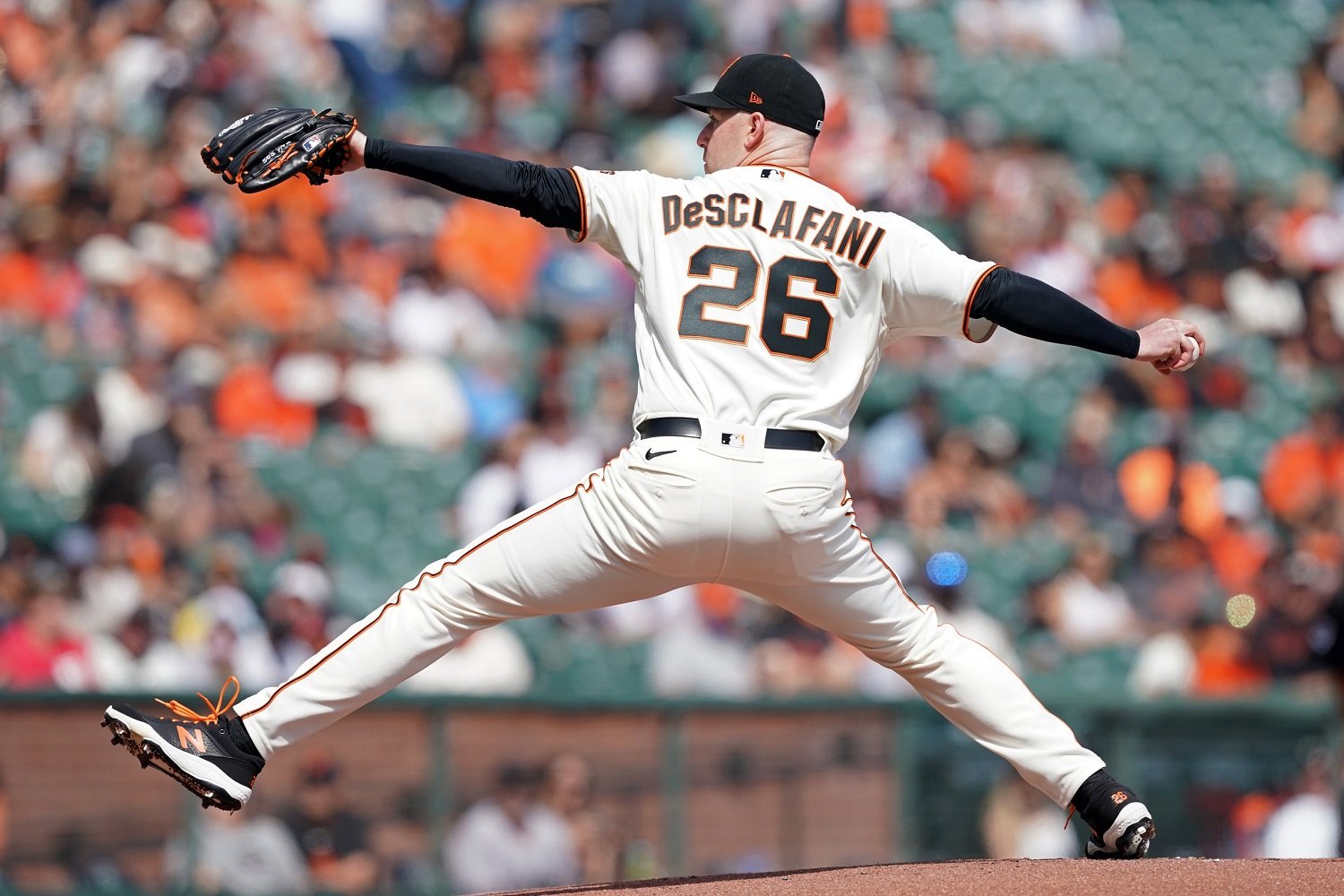
Anthony DeSclafani's career has been all over the place, with an ERA in the 3s every other year between 2015 (when he was 25) and 2022 (when he was 32)—with years in the 6s and 7s in between. He pitched well enough to earn a four-year, $48-million contract with San Francisco ahead of the 2021 season.
Early results were solid, as he had a 3.17 ERA and 3.89 FIP in 167 innings in 2021. However, in the two years following that performance, he had a 5.16 ERA and 4.43 FIP in just 118 innings. The apparent culprit could be injury, but it’s never that simple.
Part of the struggles may be an overreliance on his sinker. DeSclafani has always thrown both a sinker and a four-seamer, but he had thrown the fastball at least 50 percent more often than the sinker until 2022--at which point he began throwing the sinker twice as often as the fastball.
Those familiar with the Giants and their pitching philosophy may already know why. Brian Bannister, the San Francisco director of pitching (fancy title, wow), could be affectionately referred to as a sinker wackadoodle. If you were labeled a sinker guy, you were throwing it early and often. DeSclafani was labeled a sinker guy.
A redesign of his pitch mix may do him good, as Lucas Seehafer laid out in his Caretakers-exclusive article, relying more on his four-seamer at the expense of the sinker. His slider pairs better with it, and has been his most-thrown pitch over the last three years, and his most effective.
Another option would be to retain both pitches and deploy them based on location, throwing fastballs high and sinkers down, or sinkers predominantly to righties and four-seamers to lefties, as he has been doing in recent years.
Another less-discussed delineation that DeSclafani could make would be based on count. Blake Newberry of Viva el Birdos recently had a great breakdown of using the sinker as a pitch to get called strikes.
Most of the time, pitches are thrown in the same direction that they break. Sliders are thrown to the glove side (as opposed to the arm side) because they are already breaking that way. So a right-handed pitcher will throw a slider that breaks away from righties or inside to lefties. It makes sense.
The sinker has armside break. A righty’s sinker will move toward a right-handed batter and away from a left-handed batter. Therefore, throwing the sinker to the pitcher’s arm side has been popular—inside to righties and outside to lefties. DeSclafani has been doing both in recent years.
Given Bannister’s pitching philosophy, he has been relying on the sinker in most fastball situations. He tends to throw in two spots—arm-side sinkers up (up and in to righties, up and outside to lefties) and glove-side sinkers down (low and outside to righties, low and inside to lefties).
Newberry’s research suggests that glove-side sinkers have actually been more effective than arm-side sinkers. Beyond that, having already relied on sinkers to both sides, DeSclafani could be able to use his sinker in a way that is gaining popularity—as a strikeout pitch.
It seems antithetical to say that. Sinkers are regaining popularity because they induce weak contact and grounders, not because they fool batters into swinging and missing. The thing is, that's not what makes a sinker a potential strikeout pitch—it's that they can fool batters into not swinging.
Think about it like this: If an armside sinker breaks to the arm side, the break may bring it outside of the strike zone, preferably in on righties (if a right-handed pitcher like DeSclafani is pitching). If the batter swings, they’ll probably at least foul it off, and if it’s breaking in, it may be a ball that they can lay off.
However, if the pitch is thrown well to the glove side, it will appear to be going out of the zone before snapping back in, hopefully catching the edge of the plate. Gloveside sinkers that catch the edge of the plate are only swung at about 40 percent of the time, giving the pitcher a shot at a free strike. More significantly, with two strikes, when the batter should be looking to make contact with anything in the zone, they still only swing at a gloveside sinker 60 to 65 percent of the time.
Utilizing a good gloveside sinker in a strikeout count, at least recently, leads to a called third strike about a third of the time. And then, if the batter does swing, they’re making contact with a painted sinker, which limits the potential damage.
Given DeSclafani’s existing ability to throw sinkers both glove- and armside, he could unlock another aspect of his game, relying more on the gloveside sinkers—pairing them with his great slider, which would also be thrown glove side, to make a hitter second-guess whether that pitch is going to break out of the zone or snap back into it. The front-door sinker is a strategy employed by Corey Kluber a decade ago in Cleveland, when Derek Falvey was in the organization, so it's not an outlandish idea.
The primary question for DeSclafani in 2024 is whether the Twins can get him back to being a reliable presence in the rotation, not whether he can start a playoff game. Introducing this sinker strategy, while reincorporating his four-seamer and continuing to rely on his slider, could pay dividends in that endeavor. There are many adjustments that the organization could make to try to revive DeSclafani's career (or at least squeeze the remaining juice out of it), and this could be one of them.








Recommended Comments
Create an account or sign in to comment
You need to be a member in order to leave a comment
Create an account
Sign up for a new account in our community. It's easy!
Register a new accountSign in
Already have an account? Sign in here.
Sign In Now