


Twins Video
The Twins' 2026 draft is in the books. Let's recap it, with a thought for each of their 21 selections.
Round 1: Pick 3, Vahn Lackey, C, Georgia Tech
The Twins got their guy. Plus defensive catchers who put up a 170 wRC+ in the ACC are outlier prospects. In his draft recap, Eric Longenhagen said of Lackey’s strengths: "everything". He has a chance to solve a big problem for the Twins for at least five years. A special player.
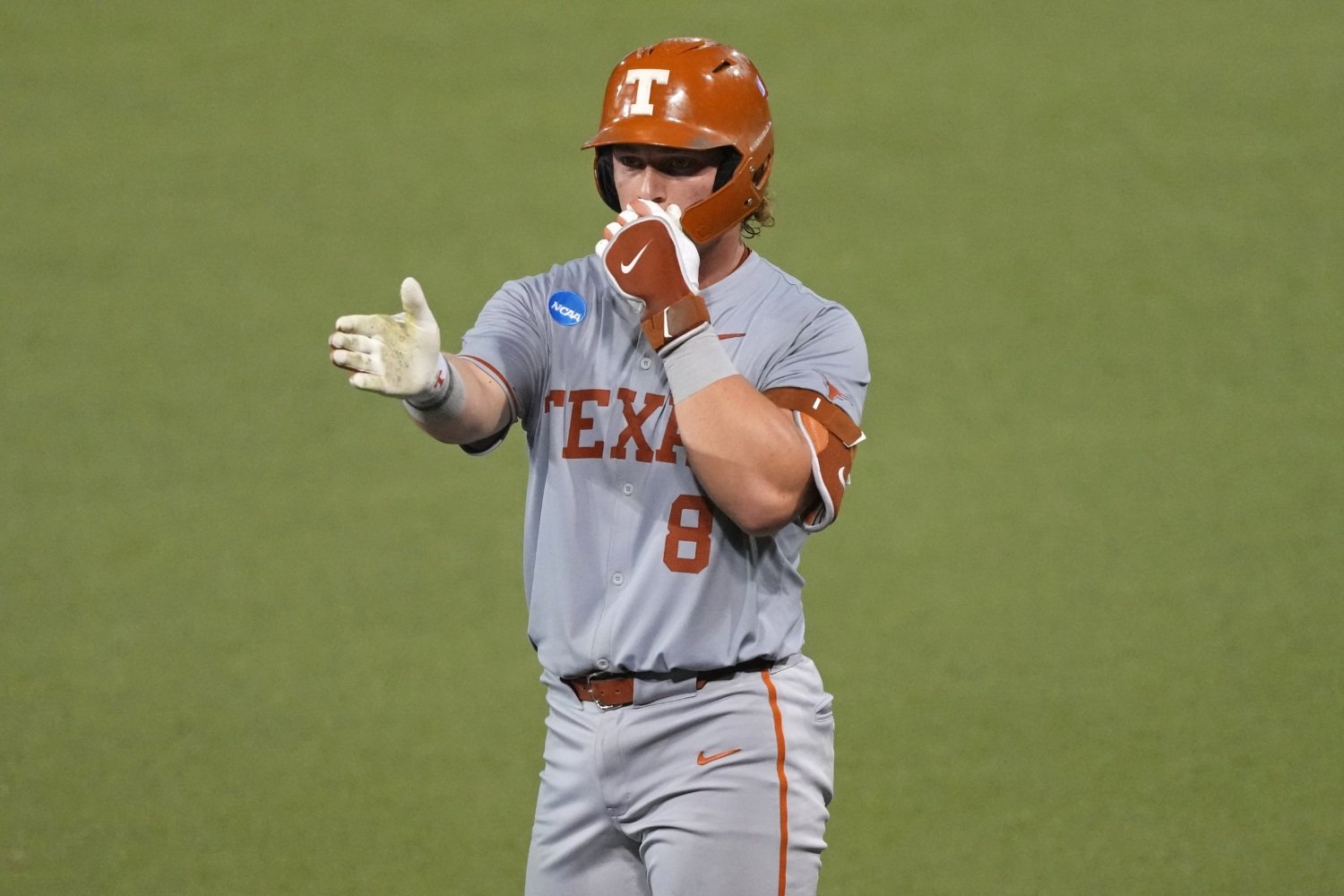
Round 2: Pick 43, Carson Tinney, C, Texas
It seems like the Twins got scooped here, on Logan Reddemann and Chase Brunson. Tinney is an extremely fun prospect, though. He hit 22 bombs in the SEC while walking about 20% of the time and putting up a 154 wRC+. The catching improved, too. If he can be viable behind the plate, great, but he’s there to endanger the lives of fans in the second deck.
Comp B: Pick 74, Brett Renfrow, RHP, Virginia Tech
Labeling Renfrow as the ‘pitchability’ arm on day one doesn’t do justice to his stuff. It’s a ton of strikes (7.9 BB%), but the fastball sits 94-96 MPH, and the Twins will have a strong game plan for pitch design with his arsenal. He should profile as a very solid fourth or fifth starter.
Round 3: Pick 79, Ethan Wachsmann, RHP, Grandview HS, CO
This is elite arm talent. Wachsmann has been up to 101 MPH with a high-spin fastball. He spins his curve around 3,000 RPM and has a nascent changeup. Despite throwing a little erratically at the combine, there were plenty of strikes in high school. Said Sean Johnson of Wachsmann: "He’s the kind of pitcher you see going to Wake Forest and coming out on the other side as a first-round pick." The Twions will pay him an overslot bonus to prevent that from happening.
Round 4: Pick 107, Tommy LaPour, RHP, TCU
LaPour has a ton of arm talent, but he needs a little more touch and feel. The fastball is a solid shape and has been up to triple digits. He hasn’t struck out as many guys in college as his arm talent indicates he might, and he’ll need to up his strike rate (62% in 2026). LaPour dealt with a flexor strain; the Twins would not have been able to access him this late but for his injury. He has a chance to start.
Round 5: Pick 139, Steele Murdock, RHP, UC San Diego
Member of the 2026 MLB Draft All Names team, Murdock is one of four college arms the Twins took out of California. His fastball is up to 99 MPH with good shape. There are two distinct, quality breaking pitches, but there’s reliever risk due to erratic command.
Round 6: Pick 168, Ethan Lay, RHP, Sacramento State
How do you sign Ethan Wachsmann? Draft three seniors in the first 10 rounds. Lay is the first in that set, It’s a track record of performance (3.78 ERA in 88 innings) and strikes (4.3% walk rate in 2026). His curveball is his best pitch. It induced a 44% whiff rate in 2026.
Round 7: Pick 197, Max Bayles, RHP, UC Santa Clara
Bayles transitioned to a starting role after beginning his collegiate career as a reliever. He put up outrageously good strikeout numbers in 2026 (34.3%). It’s a good fastball shape that gets up to 95 MPH with two breaking pitches (that blur together, right now) and not enough strikes.
Round 8: Pick 227, Thomas Burns, RHP, Texas
The first pure reliever the Twins drafted, Burns has one of the best fastballs in the entire draft. It’s a triple-digit monster that averaged 21 inches of induced vertical break. He’s a prime candidate to reduce to 2-3 pitches and move on the fast track to the bullpen.
Round 9: Pick 257, JT Raab, RHP, Georgetown
Raab has an outlier fastball, too. It averaged almost 23 inches of IVB, and he throws it for strikes over 70% of the time (up to 95 MPH). The rest of his arsenal (change, slider, cutter) needs untangling, because it all looks the same on his plot. Raab will be a savings pick, as he’s a grad player.
Round 10: Pick 287, Kole Klecker, RHP, Arizona State
One final money-saving pick to pay for Wachsmann. Klecker pitched for ASU this year after three seasons at TCU. His fastball isn’t great, but he has two interesting, distinct breaking pitches in his slider and curveball. Both had whiff rates over 35% in 2026. Feel for spin is the carrying trait here.
Round 11: Pick 317, Aidan Teel, OF, Mississippi St
Teel is the younger brother of White Sox catcher Kyle Teel. He had a down 2026, but a .979 OPS as a sophomore gives you an idea of what he can do. At his best, it’s a contact-driven offensive profile with above-average supplementary tools. He profiles as a fourth outfielder.
Round 12: Pick 347, Colby Turner, 2B, Michigan
Colby Turner’s production at Michigan is hard to come by in this portion of the draft. He managed a 1.057 OPS with 14 home runs as a junior. There’s above-average bat-to-ball skills and above-average impact here. The bad news? An insane chase rate (roughly 37%) that will only be harder to correct against pro pitchers.
Round 13: Pick 377, Isaiah Lane, SS, Hope International
Is this an un-Twins-y pick? Lane played in the same high school infield as Marcelo Mayer before stints at Oklahoma and UC San Diego—then, he was kicked off the team for violating team rules. Lane managed a 154 wRC+ in 2025 with strong bat-to-ball skills and an excellent approach. He’ll be a wild card coming into the Twins system, after spending 2026 at New Hope.
Round 14: Pick 407, Alec Bouchard, RHP, Wofford
Bouchard is a slender college righty coming off an excellent 2026 season. He managed a 3.75 FIP, striking out 29% of hitters and walking 7.5% in 86 innings for Wofford. His fastball has been up to 94 MPH with a two-seamer, changeup and slurvy breaking ball in the mix. He’s a prime "might be good with a few more ticks on the stuff" candidate.
Round 15: Pick 437, Charlie Schlovin, SS, Toledo
Every player in the draft has a superpower. Schlovin’s is getting hit by pitches (65 in 112 games in his final two seasons at Toledo). He’s the grinder, org warrior-type player in this class (think Harry Genth). He managed a 152 wRC+ in a contact-driven offensive profile.
Round 16: Pick 467, Connor Mattison, RHP, Kentucky
A combo starter/reliever from Kentucky, Mattison throws from a much lower launch than most hurlers, generating good whiff rates from his changeup and two-seamer. An east-west movement profile with some interesting release traits.
Round 17: Pick 497, Hideki Prather, C, Cal
Some are saying that the Twins draft too many catchers. Prather is a barrel magnet. Like many Twins draftees, he has an excellent average exit velocity, without registering great top-end exit velocities. Prather slugged 14 home runs and managed a 123 wRC+ for Cal, despite chasing a ton. The defensive skill set is fringy, but he’s already an air-pull master.
Round 18: Pick 527, Colter McAnelly, RHP, Utah
McAnelly was poor in 2026, but he had a strong 2025 season as a starter at Utah (3.79 ERA, 14.5 K-BB%). He’s a bit light on velo, but it's an interesting fastball shape. McAnelly has an excellent curveball, a 3,000-RPM breaker that produced a 43% whiff rate in 2026.
Round 19: Pick 557, PJ Moutzouridis, SS, Arizona State
Moutzouridis is a well-rounded college player. A contact- and approach-driven D1 average bat, he’s a good defender at shortstop (and anywhere else on the infield you care to play him). Org guy.
Round 20:, Pick 587, Michael Barnett, RHP, UCLA
Barnett threw up to seven different pitches in college, but a lot of his shapes blend together. There’s not a ton of velocity, but he did get an outrageous amount of whiff and chase on his changeup, which is easily his best pitch. Likely lower-minors starter filler.
Do you approve of the job the Twins front office is doing?

Check out our 2026 MLB Draft tracker, with scouting reports, player information, total pool allotments, and much more!
View The 2026 Draft Tracker






Recommended Comments
Create an account or sign in to comment
You need to be a member in order to leave a comment
Create an account
Sign up for a new account in our community. It's easy!
Register a new accountSign in
Already have an account? Sign in here.
Sign In Now