



Matthew Trueblood
-
Posts
1,033 -
Joined
-
Last visited
Content Type
Profiles
News
Minnesota Twins Videos
2026 Minnesota Twins Top Prospects Ranking
2022 Minnesota Twins Draft Picks
Minnesota Twins Free Agent & Trade Rumors, Notes, & Tidbits
Guides & Resources
2023 Minnesota Twins Draft Picks
The Minnesota Twins Players Project
2024 Minnesota Twins Draft Picks
2025 Minnesota Twins Draft Pick Tracker
2026 Minnesota Twins Draft Tracker: Picks & Bonuses
Forums
Blogs
Events
Store
Downloads
Gallery
Everything posted by Matthew Trueblood
-
One of the simplest innovations in player usage in decades has led the Twins to the precipice of making a very specific type of history with their catching tandem. Image courtesy of © Brad Rempel and Jordan Johnson-USA TODAY Sports As I've assiduously documented over the last year or so, the Twins alternate Ryan Jeffers and Christian Vázquez in composing their daily starting lineups. They don't kind-of, sort-of alternate them, or play matchups or pair each with a subset of the starting rotation. The Twins believe so strongly in keeping their catchers on a one-on, one-off schedule that they've only deviated from a perfect alternating pattern between them six times all season--and all of those were because injuries forced the issue. In half those instances, though, the injuries compelling a change to the pattern weren't even to the catchers. Hurt players elsewhere on the roster forced the team to start Vázquez at third base once and to slot Jeffers in as the DH a bit more often than they actually wanted to, earlier this year. With 41 games to play, Vázquez needs 16 games at catcher and 62 plate appearances to reach 80 and 300, respectively. Jeffers needs 18 turns behind the dish, and has already exceeded 300 trips to the plate. If each player gets to each of those figures, it will be the second straight season in which they've done so. Should that happen, they'll become just the third pair of teammates ever to catch 80 or more games and come to bat 300 or more times in consecutive years. The first was Joe Azcue and Duke Sims, of the 1967-68 Cleveland club. The second was Buster Posey and Nick Hundley, of the 2017-18 Giants. All of the other 32 instances of two catchers sharing work that evenly in baseball history have been one-year things, either because one of the backstops got hurt in the surrounding seasons; because one of the two seized a more regular job and consigned the other to backup duty; or because the team lucky enough to be in possession of two solid backstops cashed one in via trade. If Vázquez slides up in the order a bit the rest of the way (which wouldn't be out of line, given that he's hitting .288/.325/.523 since Jun. 1), he could even get to 325 plate appearances for the season. If he does so, he and Jeffers will become the first pair of teammates ever to have that many PAs and 80-plus games behind the dish in two straight years. There are only 12 such seasons in history as things stand, and last year's version of Jeffers and Vázquez is already the only one since 1996, when Ed Taubensee and Joe Oliver did it for the Reds. The organization's fierce belief in the value of resting catchers between appearances has paid off to an extent even they probably couldn't have predicted. This arrangement won't last another year. The team needs to clear some money this winter to accommodate other needed moves, so they'll trade one of Vázquez and Jeffers. For two seasons, though, these two have been a great yin and yang, kept constantly in balance, bringing different but equally valuable things to the team on a daily basis. Keeping catchers healthy and fresh is almost as hard as doing the same with pitchers, but the Twins are doing it, just by making sure neither of their receivers ever takes his position in a state of greater fatigue than necessary. View full article
-
"Game" isn't the same as "day". Haha. I make no assumptions about his work-life balance or what he's been through in his years on this Earth, but it's really not even controversial to say this is the biggest game he's pitched to date.
- 24 replies
-
- 1
-

-
- david festa
- tanner bibee
- (and 1 more)
-
Good question! These samples are more than enough to evaluate his movement and say that this is who he is, in terms of pitch shape, velocity, release point. The results take longer to stabilize, though you saw me cite whiff rate because that's a relatively quick one to become reliable. It's only on the edges of fair to expect from him something akin to what Glasnow and Cease are giving their teams, but it's certainly not too soon to say that the similarities between them are real, important, and likely to last.
- 24 replies
-
- 2
-

-
-
- david festa
- tanner bibee
- (and 1 more)
-
The overnight low in the Twin Cities Saturday night was 50 degrees. Nature itself wants you to feel the frisson of October as you prepare for Sunday, an August showdown that will savor heavily of September. Image courtesy of © Kamil Krzaczynski-USA TODAY Sports Baseball's many layers sometimes swirl and stack in their chaotic drifts until they look like a thoughtfully constructed painting. Even if the Twins and Guardians wanted to do so, they couldn't have consciously set a finer or more dramatic stage for the final game of this four-game weekender. Everything that has happened over the last week has set this game up to be one of the most important and hard-fought of the season to date, anywhere in MLB. Monday night in Chicago, David Festa mowed down the Cubs, striking out nine in five scoreless innings. He allowed just two hits and two walks in that outing, setting up what became a 3-0 win. Two days later, though, the Twins were in a rubber match against the sub-.500 Cubs, and Joe Ryan snapped under the tension. A strained teres major muscle will almost surely end his season, though he and the team are holding out some measure of hope for now. Losing that game meant the Twins would come home having lost two of their last three series, but losing Ryan was much more ominous. Meanwhile, though, the Guardians stumbled badly in their path to this series. They had a seven-game homestand against two very tough opponents, and after starting it with two wins over the Orioles, they lost the final two against them, then three straight against the Diamondbacks. Meanwhile, their ace, Tanner Bibee, missed a start due to shoulder soreness--almost as ominous as Ryan's departure from his start Wednesday. Then, the teams perfectly divided these last three games to maximize the drama of Sunday's. The Twins swept Friday's doubleheader, and the crowd was loud and the mood was jubilant. Cleveland flexed its impressive run-prevention muscles and hit a couple of solo home runs Saturday, though, not only clawing back half the ground the Twins gained the previous day, but making Sunday feel like a crucial test of the legitimacy of the Twins' threat. Friday ensured that they wouldn't lose ground to the Guardians during the series, on the whole, but now, there's a risk that they'll have lost half of their remaining head-to-head games with the leaders and four precious games off the remaining schedule without gaining any ground. To avoid that, poetically enough, the Twins turn to Festa, who became very much a vital cog in the rotation the moment Ryan went down. While Pablo López and Bailey Ober are a stout top two in a potential playoff starting hierarchy, Simeon Woods Richardson is the type of hurler you're only comfortable turning to in Game 4 of a series. It's Festa who can be more, and has shown that ability recently. Sunday is a chance for him to show just how high that ceiling is. Don't underestimate Festa, merely because he's a rookie with modest but non-premium prospect pedigree. The data says he belongs in a class with two aces who were traded over the offseason and are leading their teams toward the playoffs while racking up punchouts: Tyler Glasnow and Dylan Cease. Here's a scatter plot showing the horizontal and vertical movement of the four-seam fastballs of all 207 right-handed pitchers who have thrown at least 100 such pitches at 94 miles per hour or more. That might sound like an overwrought set of parameters, but it's important. When looking at movement, it's important to control for handedness and for velocity. Among hard-throwing pitchers, the most comparable to Festa in terms of movement are Cease and Glasnow. All the other points adjacent to them (guys like Jeremiah Estrada, Nick Mears, Pete Fairbanks, Ryan Pressly, and José Léclerc) are relievers. Festa, Cease, and Glasnow have the best cocktail of speed, ride, and cut on their heaters among right-handed starters. But wait, there's more! Here's a similar plot for all the right-handed pitchers who have thrown at least 100 sliders this season. These three are even more tightly clustered in this regard. Glasnow and Festa are almost perfect matches to each other. All three have tight sliders, with roughly average vertical movement that plays way up because of their high-rise heaters and considerably less sweep than most righty sliders--only further increasing the difficulty for hitters, because their fastballs already work in the same horizontal lane as those sliders. Now, each of the other two has something that separates them from Festa by a bit. Cease throws almost 2 miles per hour harder. Glasnow throws his slider at 90 miles per hour, which gives it some extra filth factor relative to Festa's, which hums in at 87. Glasnow also has a curveball and a sinker, and Cease has a curveball and a sweeper (plus show-me changeup and cutter offerings), so each is a four-pitch pitcher. Festa only has three. On the other hand, though, Festa's third pitch is a weapon Cease and Glasnow really can't match. The Twins rookie has a changeup with only a modest amount of drop, but lots of run to the arm side--particularly relative to that cut-ride heater. Against lefties, he uses the high fastball heavily, and once they're looking up and in, he throws them the changeup fading off the outside corner. The pitch is inducing whiffs on over 38% of swings by lefties so far in MLB. Even more impressively, the polished and intuitive Festa (along with his catchers and the Twins' pitching instruction team) has figured out how to effectively deploy the changeup against same-handed batters, too. With the slider featuring more heavily in those matchups, Festa really gets righty hitters looking away, away, away. That's the direction they perceive his fastball and slider to move, and where he locates them best. Then, when he throws the changeup and it skids in under their hands and under their bat speed, they're befuddled. Righties are actually whiffing even more than lefties do, in the small sample so far, when Festa uses his changeup on them. On Sunday, he'll take all this talent to the mound, in a showdown with Bibee. After a bullpen session Thursday, Cleveland cleared him to retake the bump, so presumably, his shoulder is ok. That will make Sunday something really special: one team trying to get out of town with the split they needed, turning to their ace in a triumphant return, against a pursuer needing to finish a series win and turning to a dynamo of a rookie whose upside might be very high and not far away from being realized. Festa's readiness for this role and this moment just gained a whole lot of import. It's only mid-August, but this game will inform everything that happens between now and these two teams' matchup in Cleveland in mid-September. It should also be a joy to watch, for fans of good pitching and urgent baseball. View full article
- 24 replies
-
- 1
-
-
- david festa
- tanner bibee
- (and 1 more)
-
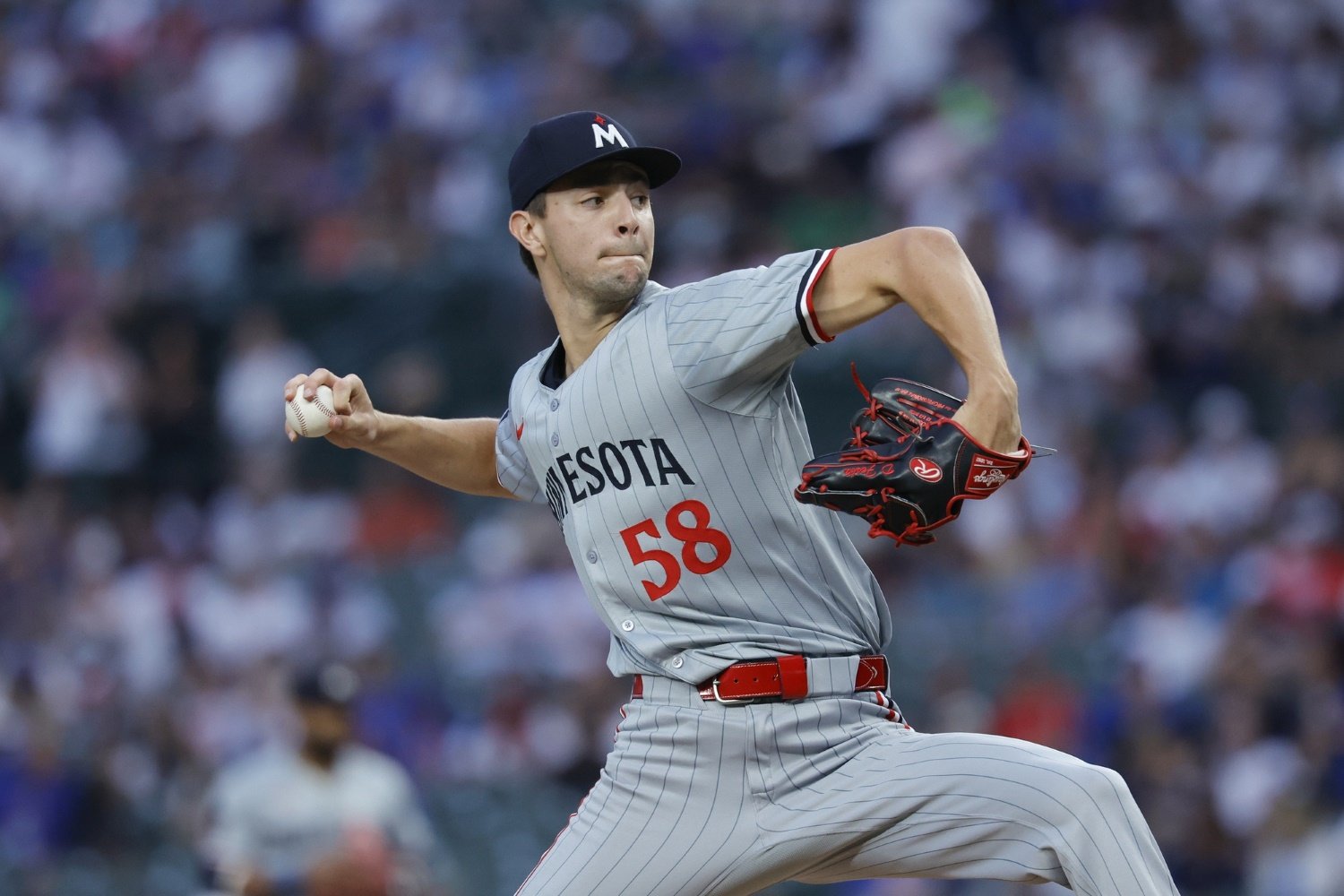 Baseball's many layers sometimes swirl and stack in their chaotic drifts until they look like a thoughtfully constructed painting. Even if the Twins and Guardians wanted to do so, they couldn't have consciously set a finer or more dramatic stage for the final game of this four-game weekender. Everything that has happened over the last week has set this game up to be one of the most important and hard-fought of the season to date, anywhere in MLB. Monday night in Chicago, David Festa mowed down the Cubs, striking out nine in five scoreless innings. He allowed just two hits and two walks in that outing, setting up what became a 3-0 win. Two days later, though, the Twins were in a rubber match against the sub-.500 Cubs, and Joe Ryan snapped under the tension. A strained teres major muscle will almost surely end his season, though he and the team are holding out some measure of hope for now. Losing that game meant the Twins would come home having lost two of their last three series, but losing Ryan was much more ominous. Meanwhile, though, the Guardians stumbled badly in their path to this series. They had a seven-game homestand against two very tough opponents, and after starting it with two wins over the Orioles, they lost the final two against them, then three straight against the Diamondbacks. Meanwhile, their ace, Tanner Bibee, missed a start due to shoulder soreness--almost as ominous as Ryan's departure from his start Wednesday. Then, the teams perfectly divided these last three games to maximize the drama of Sunday's. The Twins swept Friday's doubleheader, and the crowd was loud and the mood was jubilant. Cleveland flexed its impressive run-prevention muscles and hit a couple of solo home runs Saturday, though, not only clawing back half the ground the Twins gained the previous day, but making Sunday feel like a crucial test of the legitimacy of the Twins' threat. Friday ensured that they wouldn't lose ground to the Guardians during the series, on the whole, but now, there's a risk that they'll have lost half of their remaining head-to-head games with the leaders and four precious games off the remaining schedule without gaining any ground. To avoid that, poetically enough, the Twins turn to Festa, who became very much a vital cog in the rotation the moment Ryan went down. While Pablo López and Bailey Ober are a stout top two in a potential playoff starting hierarchy, Simeon Woods Richardson is the type of hurler you're only comfortable turning to in Game 4 of a series. It's Festa who can be more, and has shown that ability recently. Sunday is a chance for him to show just how high that ceiling is. Don't underestimate Festa, merely because he's a rookie with modest but non-premium prospect pedigree. The data says he belongs in a class with two aces who were traded over the offseason and are leading their teams toward the playoffs while racking up punchouts: Tyler Glasnow and Dylan Cease. Here's a scatter plot showing the horizontal and vertical movement of the four-seam fastballs of all 207 right-handed pitchers who have thrown at least 100 such pitches at 94 miles per hour or more. That might sound like an overwrought set of parameters, but it's important. When looking at movement, it's important to control for handedness and for velocity. Among hard-throwing pitchers, the most comparable to Festa in terms of movement are Cease and Glasnow. All the other points adjacent to them (guys like Jeremiah Estrada, Nick Mears, Pete Fairbanks, Ryan Pressly, and José Léclerc) are relievers. Festa, Cease, and Glasnow have the best cocktail of speed, ride, and cut on their heaters among right-handed starters. But wait, there's more! Here's a similar plot for all the right-handed pitchers who have thrown at least 100 sliders this season. These three are even more tightly clustered in this regard. Glasnow and Festa are almost perfect matches to each other. All three have tight sliders, with roughly average vertical movement that plays way up because of their high-rise heaters and considerably less sweep than most righty sliders--only further increasing the difficulty for hitters, because their fastballs already work in the same horizontal lane as those sliders. Now, each of the other two has something that separates them from Festa by a bit. Cease throws almost 2 miles per hour harder. Glasnow throws his slider at 90 miles per hour, which gives it some extra filth factor relative to Festa's, which hums in at 87. Glasnow also has a curveball and a sinker, and Cease has a curveball and a sweeper (plus show-me changeup and cutter offerings), so each is a four-pitch pitcher. Festa only has three. On the other hand, though, Festa's third pitch is a weapon Cease and Glasnow really can't match. The Twins rookie has a changeup with only a modest amount of drop, but lots of run to the arm side--particularly relative to that cut-ride heater. Against lefties, he uses the high fastball heavily, and once they're looking up and in, he throws them the changeup fading off the outside corner. The pitch is inducing whiffs on over 38% of swings by lefties so far in MLB. Even more impressively, the polished and intuitive Festa (along with his catchers and the Twins' pitching instruction team) has figured out how to effectively deploy the changeup against same-handed batters, too. With the slider featuring more heavily in those matchups, Festa really gets righty hitters looking away, away, away. That's the direction they perceive his fastball and slider to move, and where he locates them best. Then, when he throws the changeup and it skids in under their hands and under their bat speed, they're befuddled. Righties are actually whiffing even more than lefties do, in the small sample so far, when Festa uses his changeup on them. On Sunday, he'll take all this talent to the mound, in a showdown with Bibee. After a bullpen session Thursday, Cleveland cleared him to retake the bump, so presumably, his shoulder is ok. That will make Sunday something really special: one team trying to get out of town with the split they needed, turning to their ace in a triumphant return, against a pursuer needing to finish a series win and turning to a dynamo of a rookie whose upside might be very high and not far away from being realized. Festa's readiness for this role and this moment just gained a whole lot of import. It's only mid-August, but this game will inform everything that happens between now and these two teams' matchup in Cleveland in mid-September. It should also be a joy to watch, for fans of good pitching and urgent baseball.
- 24 comments
-
- 13
-
-

-
-
- david festa
- tanner bibee
- (and 1 more)
-
Ehh. Even granting the premise that Richards isn't a long-relief guy, you don't bring in your long relief guy (especially an injury-prone one like Winder) to replace the injured starter. You go to a short reliever who should be able to get hot in a hurry, and then you warm the long reliever to come in the following inning. I thought RB managed the miserable situation fine; sometimes it's just a bad situation and can't be ameliorated.
-
The Minnesota utility man's rookie season is a movie. You know why? Because Martin scores easy. Image courtesy of © Brad Rempel-USA TODAY Sports There's no hard analysis to be done here. Sometimes, when a very juicy and noteworthy statistical quirk pops up and grabs your attention as a baseball writer, it turns out a player is doing something exceptional and unusual. Sometimes, it's just a fluke, and there's really nothing to do but wait for it to even out. And sometimes--the funnest times--you realize that there's a glitch in the matrix; that the thin veneer of rationality trying to hide the true, chaotic nature of the universe is chipping away; and that baseball is broken again. Thus, let me limit the quasi-analysis to a paragraph or two, here. When he reaches base, this year, Austin Martin comes around to score 64.7% of the time. That's not possible. The second-highest Score Rate, if so we can phrase it, belongs to the Orioles' Jorge Mateo, at 50%. In the last 50 years, here are the only three players to match or exceed a 64.7% Score% in a season in which they had 150 or more plate appearances: Willie Wilson, 1978: 67.2% Otis Nixon, 1985: 66.0% Damian Jackson, 2003: 64.7% Two of those were accomplished back when half the league played on fields made of Flubber, by men who hardly ever got on base but didn't stop running for even a moment when they did. The third was done by a part-time scrub on one of the only seven lineups in baseball history to include six players with an OPS+ of 120 or higher, playing in an extremely rich league scoring environment and at the bandbox that is Fenway Park. Very often, no one who plays even part-time (as all of these guys did and as Martin does) scores after even 60% of their reaches. Martin, by contrast, plays for a team with a very good lineup, but not quite the best in the league, at a time when the league doesn't score a crazy number of total runs, by historical standards. So how is he even flirting with this peculiar piece of history? Well, firstly, of course, the dude is fast. Even when you're well-positioned and play the ball pretty cleanly, he can take an extra base on you. Martin Scores from First.mp4 He's also smart and aggressive. Martin has yet to be thrown out stretching on a hit, or on any non-force advancement attempt with the ball in play. Yet, he goes first-to-third and second-to-home on singles and first-to-home on doubles at higher rates than the league average. He attempts steals at roughly an average rate, and is 7-for-9 when he does. So, this isn't unearned, exactly. But honestly, most of it is voodoo. Voodoo.mp4 They say when the devil is near, the near-misses of life become unlucky hits. The wobble in a bike tire yields to a skid into traffic. You drop a knife, it slices your foot instead of bouncing harmlessly away. When Austin Martin is on base, the devil is near. Voodoo Voodoo.mp4 Defenses turn to mush when Martin is on base, and it's not because he's fast and smart. It's just how chaos works. It's voodoo. However many bases worth of errors are needed to bring him around, that's how many you're about to commit. Voodoo Voodoo Voodoo.mp4 The ball can stay in the air as long as it damn well pleases. If Austin Martin's on base, your outfielder's feet are going to be leaden. They're not getting there. It Always Falls Man.mp4 It's not evil. I'm being tongue-in-cheek about the devil stuff. It's the undirected, runaway momentum of entropy, is all. It also works for the benefit of the Twins. Ryan Jeffers is a decent overall hitter. With Austin Martin on base, he's an absolute situational ace, who always puts the ball where it needs to go. RJ Situational.mp4 Why Austin Martin? What led the ghost of Henry Chadwick to dust him with this magic? I don't know. Pray on it; discover your truth for yourself. All we can say for sure is that, when Martin gets on base, he comes around to score at a rate that can't be explained by any rationalist's set of baseball facts. You could chalk that up to randomness that will resolve itself by a week from now, but it's way more fun--and not one iota less correct, for such is the nature of randomness--to embrace it as randomness that will never resolve itself, but go on all summer and into the fall. There's no action item here. The Twins don't need to do anything. Ask the Jurassic Park people about what happens when you try to take control of the uncontrollable. Just enjoy the ride, and when Martin does reach safely, go ahead and mentally count it as a run. View full article
-
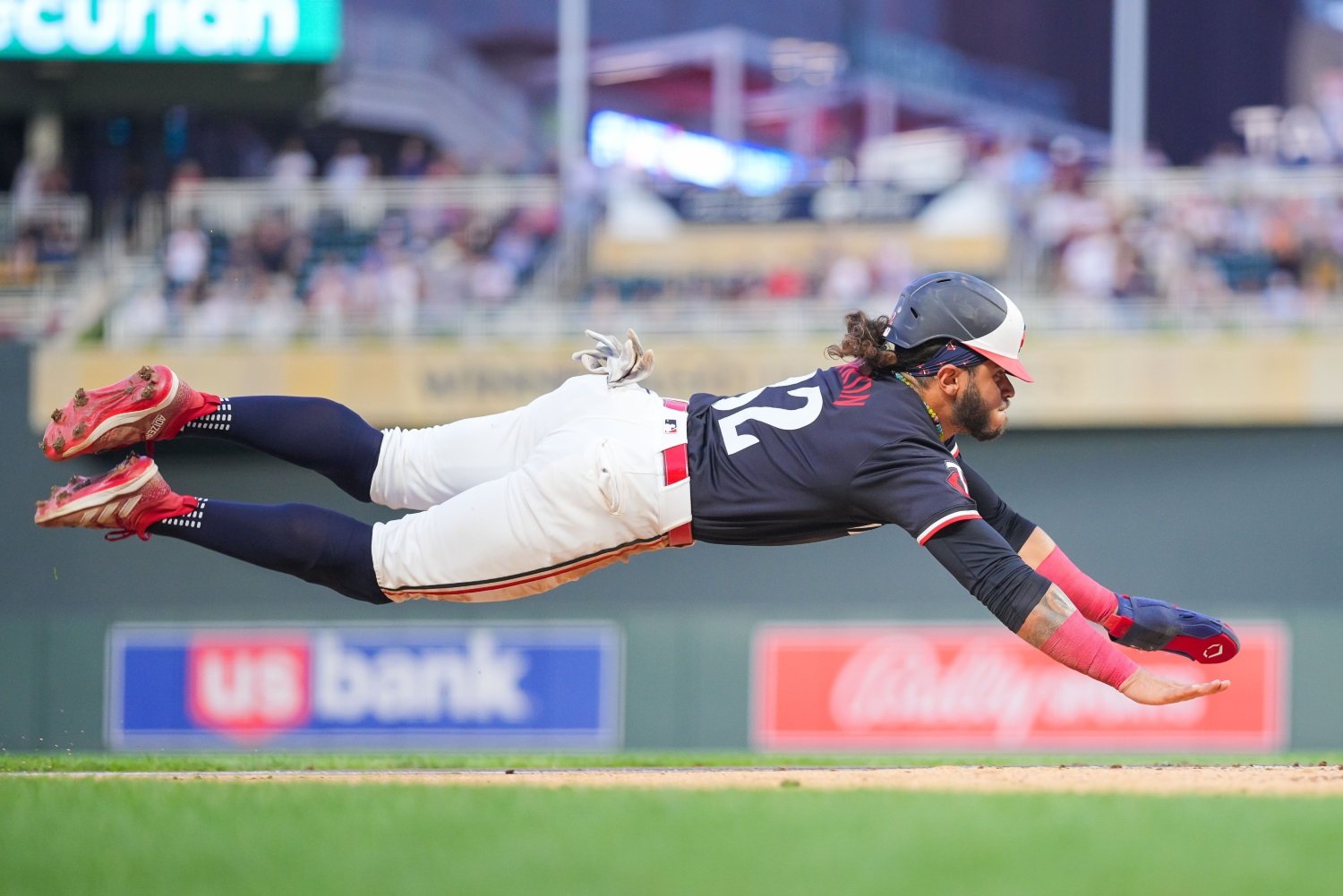 There's no hard analysis to be done here. Sometimes, when a very juicy and noteworthy statistical quirk pops up and grabs your attention as a baseball writer, it turns out a player is doing something exceptional and unusual. Sometimes, it's just a fluke, and there's really nothing to do but wait for it to even out. And sometimes--the funnest times--you realize that there's a glitch in the matrix; that the thin veneer of rationality trying to hide the true, chaotic nature of the universe is chipping away; and that baseball is broken again. Thus, let me limit the quasi-analysis to a paragraph or two, here. When he reaches base, this year, Austin Martin comes around to score 64.7% of the time. That's not possible. The second-highest Score Rate, if so we can phrase it, belongs to the Orioles' Jorge Mateo, at 50%. In the last 50 years, here are the only three players to match or exceed a 64.7% Score% in a season in which they had 150 or more plate appearances: Willie Wilson, 1978: 67.2% Otis Nixon, 1985: 66.0% Damian Jackson, 2003: 64.7% Two of those were accomplished back when half the league played on fields made of Flubber, by men who hardly ever got on base but didn't stop running for even a moment when they did. The third was done by a part-time scrub on one of the only seven lineups in baseball history to include six players with an OPS+ of 120 or higher, playing in an extremely rich league scoring environment and at the bandbox that is Fenway Park. Very often, no one who plays even part-time (as all of these guys did and as Martin does) scores after even 60% of their reaches. Martin, by contrast, plays for a team with a very good lineup, but not quite the best in the league, at a time when the league doesn't score a crazy number of total runs, by historical standards. So how is he even flirting with this peculiar piece of history? Well, firstly, of course, the dude is fast. Even when you're well-positioned and play the ball pretty cleanly, he can take an extra base on you. Martin Scores from First.mp4 He's also smart and aggressive. Martin has yet to be thrown out stretching on a hit, or on any non-force advancement attempt with the ball in play. Yet, he goes first-to-third and second-to-home on singles and first-to-home on doubles at higher rates than the league average. He attempts steals at roughly an average rate, and is 7-for-9 when he does. So, this isn't unearned, exactly. But honestly, most of it is voodoo. Voodoo.mp4 They say when the devil is near, the near-misses of life become unlucky hits. The wobble in a bike tire yields to a skid into traffic. You drop a knife, it slices your foot instead of bouncing harmlessly away. When Austin Martin is on base, the devil is near. Voodoo Voodoo.mp4 Defenses turn to mush when Martin is on base, and it's not because he's fast and smart. It's just how chaos works. It's voodoo. However many bases worth of errors are needed to bring him around, that's how many you're about to commit. Voodoo Voodoo Voodoo.mp4 The ball can stay in the air as long as it damn well pleases. If Austin Martin's on base, your outfielder's feet are going to be leaden. They're not getting there. It Always Falls Man.mp4 It's not evil. I'm being tongue-in-cheek about the devil stuff. It's the undirected, runaway momentum of entropy, is all. It also works for the benefit of the Twins. Ryan Jeffers is a decent overall hitter. With Austin Martin on base, he's an absolute situational ace, who always puts the ball where it needs to go. RJ Situational.mp4 Why Austin Martin? What led the ghost of Henry Chadwick to dust him with this magic? I don't know. Pray on it; discover your truth for yourself. All we can say for sure is that, when Martin gets on base, he comes around to score at a rate that can't be explained by any rationalist's set of baseball facts. You could chalk that up to randomness that will resolve itself by a week from now, but it's way more fun--and not one iota less correct, for such is the nature of randomness--to embrace it as randomness that will never resolve itself, but go on all summer and into the fall. There's no action item here. The Twins don't need to do anything. Ask the Jurassic Park people about what happens when you try to take control of the uncontrollable. Just enjoy the ride, and when Martin does reach safely, go ahead and mentally count it as a run.
 -
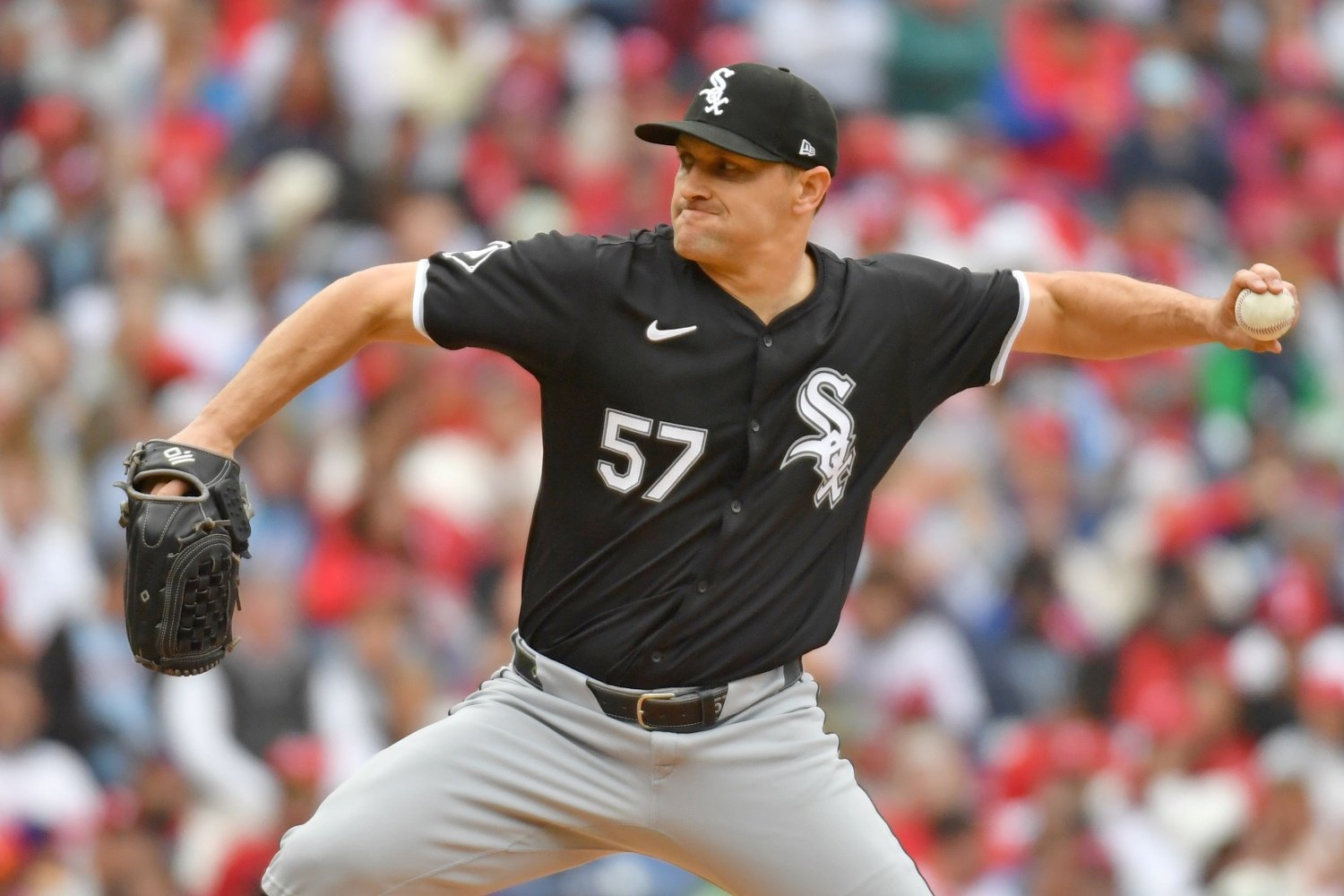 For days, now, the focus for most Twins fans has been on the tantalizing possibility of snagging a difference-making playoff starter, like Yusei Kikuchi or Jack Flaherty. Kikuchi was traded to Houston Monday, though, and Flaherty might be a tough get, given the price Kikuchi commanded and the extra hurdles that pop up when teams consider high-stakes intradivisional trades. Tanner Scott is an obvious fit for Minnesota, too, but there will be a bidding war for him over the next several hours. Let's talk, instead, about a few players you might not have thought about much, but who could fit into the Twins' plans and make a positive difference at a low cost. Joe Ross, Brewers RHP Due back this week after a prolonged rehab assignment in the wake of a lower back strain in May, Ross is as low-profile as players come right now. The 31-year-old righty made nine starts before being shelved, totaling 42 innings pitched, and notched a 4.50 ERA. That comes with a 3.94 FIP and 0.6 FanGraphs WAR. He's on a one-year deal worth a total of just $1.75 million, so he'd be a feasible addition even for the cash-strapped Twins, and because the Brewers still face a roster crunch, he'd cost virtually nothing. That said, he'd also be a bare-minimum stabilizer for the back end of the rotation. He'd help the Twins get that far, perhaps, but it's unlikely they'd want to turn to him in the postseason. Tanner Banks, White Sox LHP Theoretically, he's controllable for another four years after 2024, so the White Sox could elect to hold onto Banks. Pragmatically, he's a late bloomer who's already 32 years old, and he's unlikely to be good enough to make it through his years of team control without being waived or non-tendered. In the moment, though, he's a tough lefty, with a mid-90s fastball, a sharp slider and a big roundhouse curveball that has the zip of a typical sweeper. His changeup is lousy and righties crush him, but left-handed batters have a .492 OPS against him this year. He'd be dirt-cheap financially, but perhaps a bit pricey in terms of prospect return, given what he is. Scott Alexander, Athletics LHP The wily 35-year-old veteran signed a one-year deal worth $2.25 million, so he's financially affordable at this point. He doesn't miss bats--like, at all--but he also doesn't walk people, and everything is on the ground when he's going right. He boasts one of the league's heaviest sinker-slider-changeup combos. Like Banks, the splits are huge, and he was more valuable before the three-batter minimum came into play, but he could still have tactical value if expertly deployed. The cost should be low. LaMonte Wade Jr., Giants 1B Bring. Him. Home. The Giants have signaled that they're in sell mode. Wade has just one more year of team control after this one (time flies!), and the team might look to move him amid his most impressive OBP-crazy season yet. This one would take some real talent moved in return, and the degree of the team's need for him is slightly debatable--but Carlos Santana's platoon splits say it would be awfully nice to have a left-handed bat who can deepen the lineup from the top, rather than the bottom. Drew Smyly, Cubs LHP Smyly isn't on as cheap a deal as Ross, but the Cubs would be willing to pay down a portion of the money left on his contract just to get any value in return for the veteran. He's a good clubhouse citizen and a master of the sneaky high-rise sinker, with a deceptive curveball to pair with it. Stretched out for long relief, he's capable of sliding into the rotation for a turn or two as needed, but he'd probably be a traditional left-handed reliever for the Twins. That's fine. They need just such an arm, and he'd be almost a free upgrade to the last spot on their pitching staff hierarchy.
- 40 comments
-
- 5
-
-
-

-
- joe ross
- tanner banks
- (and 3 more)
-
Every Twins fan will carefully watch Twitter today for news about the highest-profile pitchers remaining on the market. Let's take a few minutes, though, to consider players who might not be as obvious but could land in the team's lap. Image courtesy of © Eric Hartline-USA TODAY Sports For days, now, the focus for most Twins fans has been on the tantalizing possibility of snagging a difference-making playoff starter, like Yusei Kikuchi or Jack Flaherty. Kikuchi was traded to Houston Monday, though, and Flaherty might be a tough get, given the price Kikuchi commanded and the extra hurdles that pop up when teams consider high-stakes intradivisional trades. Tanner Scott is an obvious fit for Minnesota, too, but there will be a bidding war for him over the next several hours. Let's talk, instead, about a few players you might not have thought about much, but who could fit into the Twins' plans and make a positive difference at a low cost. Joe Ross, Brewers RHP Due back this week after a prolonged rehab assignment in the wake of a lower back strain in May, Ross is as low-profile as players come right now. The 31-year-old righty made nine starts before being shelved, totaling 42 innings pitched, and notched a 4.50 ERA. That comes with a 3.94 FIP and 0.6 FanGraphs WAR. He's on a one-year deal worth a total of just $1.75 million, so he'd be a feasible addition even for the cash-strapped Twins, and because the Brewers still face a roster crunch, he'd cost virtually nothing. That said, he'd also be a bare-minimum stabilizer for the back end of the rotation. He'd help the Twins get that far, perhaps, but it's unlikely they'd want to turn to him in the postseason. Tanner Banks, White Sox LHP Theoretically, he's controllable for another four years after 2024, so the White Sox could elect to hold onto Banks. Pragmatically, he's a late bloomer who's already 32 years old, and he's unlikely to be good enough to make it through his years of team control without being waived or non-tendered. In the moment, though, he's a tough lefty, with a mid-90s fastball, a sharp slider and a big roundhouse curveball that has the zip of a typical sweeper. His changeup is lousy and righties crush him, but left-handed batters have a .492 OPS against him this year. He'd be dirt-cheap financially, but perhaps a bit pricey in terms of prospect return, given what he is. Scott Alexander, Athletics LHP The wily 35-year-old veteran signed a one-year deal worth $2.25 million, so he's financially affordable at this point. He doesn't miss bats--like, at all--but he also doesn't walk people, and everything is on the ground when he's going right. He boasts one of the league's heaviest sinker-slider-changeup combos. Like Banks, the splits are huge, and he was more valuable before the three-batter minimum came into play, but he could still have tactical value if expertly deployed. The cost should be low. LaMonte Wade Jr., Giants 1B Bring. Him. Home. The Giants have signaled that they're in sell mode. Wade has just one more year of team control after this one (time flies!), and the team might look to move him amid his most impressive OBP-crazy season yet. This one would take some real talent moved in return, and the degree of the team's need for him is slightly debatable--but Carlos Santana's platoon splits say it would be awfully nice to have a left-handed bat who can deepen the lineup from the top, rather than the bottom. Drew Smyly, Cubs LHP Smyly isn't on as cheap a deal as Ross, but the Cubs would be willing to pay down a portion of the money left on his contract just to get any value in return for the veteran. He's a good clubhouse citizen and a master of the sneaky high-rise sinker, with a deceptive curveball to pair with it. Stretched out for long relief, he's capable of sliding into the rotation for a turn or two as needed, but he'd probably be a traditional left-handed reliever for the Twins. That's fine. They need just such an arm, and he'd be almost a free upgrade to the last spot on their pitching staff hierarchy. View full article
-
The sweet spot for adding to a team at the trade deadline is a bit different for every market, every moment, and every ownership group. But it's very hard to argue that the 2024 Twins aren't in their sweet spot with 24 hours to the MLB trade deadline. Image courtesy of © Matt Blewett-USA TODAY Sports Admittedly, the Twins could do nothing before 5 PM Central Tuesday evening, when the trade deadline will hit, and they would still have a fine chance to reach October. According to FanGraphs, in fact, their current chance to make the playoffs stands at 87.0%. They're projected to win 89 games by the end of the regular season. That's exactly the right inflection point at which to push hard, though. Though they lag the Cleveland Guardians in the AL Central right now, the same projection model gives the team a 39.3% chance to win their division, and a 35.6% chance to claim a first-round bye. They have, at this moment (in other words, given the standings and the model's estimate of the strength of all teams involved, without accounting for the trades today that have landed Justin Turner on the Mariners and added young pitcher Quinn Priester to the Red Sox pitching staff), a 33.4% projected chance to reach the ALCS, and a 17.0% chance to win the pennant. Those aren't flimsy, remote figures. They signify a real and tangible shot at doing something special this fall. Given the collective trauma of the Twins fan base (a two-decade playoff losing streak newly terminated but far from forgotten), the dynamic of the market (a real opportunity to lay primary claim to the local sports fan's entertainment dollar, but creeping threats to that primacy from the Timberwolves and maybe Vikings), and the age and developmental stage of this roster, I would argue that all the numbers above point in the same direction. When you have such a robust overall playoff probability, but aren't in the 95-100% range, you gain something very real by pushing toward that ceiling, rather than risking the loss of a playoff spot that feels almost in hand and the attendant blow to fan morale. When you're just on the wrong side of a coin flip for the division title (and guaranteed playoff home games, which the second Wild Card entrant in the playoffs doesn't get), you gain meaningfully by pressing to get to the right side of it. Moreover, the exponential value of a deep playoff run for this team can't be overlooked. The fans would be heartened and the new interest engendered by last year's run concretized. In turn, the team on the field would benefit from the direct cash infusion of a bunch of playoff games at Target Field, and from greater ownership largesse as they get to revise their revenue estimates upward. An ALCS appearance might be worth $30 million to the Twins between October and the end of 2025. A World Series appearance would be worth more than $50 million. Winning it could push toward being a nine-figure boon. The Pohlad family would deny those numbers, because owners don't want you to know how much money they're making at any point. They might not reinvest the influx of cash as aggressively as fans would like. They'd quietly open the checkbook a little wider, though, because they'd be making too much more money not to do so. In turn, that would build out the fan base for the next half-decade, and make it easier for the Twins to establish the regional hegemony they really should be capable of in the AL Central, with long-lasting salutary effects. Ownership doesn't seem to understand or agree with this, so the front office will have to be flexible, creative, and a little bit less risk-averse than they tend to be, in order to make a significant upgrade. So be it. They should try to make one anyway. The numbers say the Twins have one shot in three to play in the ALCS for the first time since Joe Mauer was a teenager, and one shot in six to reach the World Series for the first time since he was in elementary school. They can idle for another day, and watch those chances fade just a bit, down to one in four and one in seven or something--or they can seize this opportunity, try to make those chances two in five and one in five, and plant the seeds of a new dynasty for a team that hasn't felt dynastic since Mauer's long-gone prime. View full article
-
 Admittedly, the Twins could do nothing before 5 PM Central Tuesday evening, when the trade deadline will hit, and they would still have a fine chance to reach October. According to FanGraphs, in fact, their current chance to make the playoffs stands at 87.0%. They're projected to win 89 games by the end of the regular season. That's exactly the right inflection point at which to push hard, though. Though they lag the Cleveland Guardians in the AL Central right now, the same projection model gives the team a 39.3% chance to win their division, and a 35.6% chance to claim a first-round bye. They have, at this moment (in other words, given the standings and the model's estimate of the strength of all teams involved, without accounting for the trades today that have landed Justin Turner on the Mariners and added young pitcher Quinn Priester to the Red Sox pitching staff), a 33.4% projected chance to reach the ALCS, and a 17.0% chance to win the pennant. Those aren't flimsy, remote figures. They signify a real and tangible shot at doing something special this fall. Given the collective trauma of the Twins fan base (a two-decade playoff losing streak newly terminated but far from forgotten), the dynamic of the market (a real opportunity to lay primary claim to the local sports fan's entertainment dollar, but creeping threats to that primacy from the Timberwolves and maybe Vikings), and the age and developmental stage of this roster, I would argue that all the numbers above point in the same direction. When you have such a robust overall playoff probability, but aren't in the 95-100% range, you gain something very real by pushing toward that ceiling, rather than risking the loss of a playoff spot that feels almost in hand and the attendant blow to fan morale. When you're just on the wrong side of a coin flip for the division title (and guaranteed playoff home games, which the second Wild Card entrant in the playoffs doesn't get), you gain meaningfully by pressing to get to the right side of it. Moreover, the exponential value of a deep playoff run for this team can't be overlooked. The fans would be heartened and the new interest engendered by last year's run concretized. In turn, the team on the field would benefit from the direct cash infusion of a bunch of playoff games at Target Field, and from greater ownership largesse as they get to revise their revenue estimates upward. An ALCS appearance might be worth $30 million to the Twins between October and the end of 2025. A World Series appearance would be worth more than $50 million. Winning it could push toward being a nine-figure boon. The Pohlad family would deny those numbers, because owners don't want you to know how much money they're making at any point. They might not reinvest the influx of cash as aggressively as fans would like. They'd quietly open the checkbook a little wider, though, because they'd be making too much more money not to do so. In turn, that would build out the fan base for the next half-decade, and make it easier for the Twins to establish the regional hegemony they really should be capable of in the AL Central, with long-lasting salutary effects. Ownership doesn't seem to understand or agree with this, so the front office will have to be flexible, creative, and a little bit less risk-averse than they tend to be, in order to make a significant upgrade. So be it. They should try to make one anyway. The numbers say the Twins have one shot in three to play in the ALCS for the first time since Joe Mauer was a teenager, and one shot in six to reach the World Series for the first time since he was in elementary school. They can idle for another day, and watch those chances fade just a bit, down to one in four and one in seven or something--or they can seize this opportunity, try to make those chances two in five and one in five, and plant the seeds of a new dynasty for a team that hasn't felt dynastic since Mauer's long-gone prime.
 -
I think Julien has been up strictly because, actually, he's a better defender. He really has come miles in that regard. And Castillo being DFA was a matter of creating a 40-man spot, not a 26-man one. Optioning Julien wouldn't have solved that problem. But to be sure, he's struggling, and I'd guess he's going back to St. Paul tomorrow.
- 82 replies
-
- 5
-
-
- david festa
- max kepler
- (and 2 more)
-
And although they lost both to Milwaukee, those were such competitive games, could have gone either way. All with the team much less than full strength. Encouraging homestand, for sure.
- 82 replies
-
- 9
-
-
- david festa
- max kepler
- (and 2 more)
-
After five days off, the Twins and Brewers packed about five days' worth of close plays and fraught moments into a single contest. The home team gave Target Field's biggest-ever crowd two comebacks to love, but the Brewers spoiled the party. The Brewers did get to López in the third, though, and he was probably fortunate to give up just one run. A leadoff double set them up to score, and a single from ninth hitter Andruw Monasterio did bring Garrett Mitchell around, but a 108-MPH screamer off the bat of Joey Ortiz became a groundout, and a long fly ball by Brice Turang found the glove of a gliding Byron Buxton at the wall in right-center. López righted the ship with a scoreless fourth, despite more hard contact, and the game stayed taut. Meanwhile, though, Freddy Peralta frustrated the Twins at every turn. They worked two early walks and forced his pitch count to balloon, but they couldn't break through in the bottom of the third, despite putting two runners on with Buxton at bat. While the team awaits the convalescence of Correa, José Miranda, and Royce Lewis, Buxton is back in the heart of their order, and if we're honest, we have to admit that the 2-3-4 sequence of Trevor Larnach, Buxton, and Brooks Lee is conspicuously non-threatening. The team still has multiple threats and ways to score, but they're not the best lineup on the junior circuit in their current form. Working on extra rest on a perfect night, the aces of each team rode the rise and fall and clash of two fan base's cheers packed into a single venue, keeping the game 1-0 through six frames. Neither blinked, but López (slightly more economical through six) got through a tough seventh inning without letting the lead lengthen, whereas Peralta departed after 102 offerings in six frames. That would turn out to mean everything. Milwaukee reliever Bryan Hudson sailed through the seventh, but only faced two batters in the eighth, giving up well-struck balls to each. Austin Martin's fly ball nestled into the glove of Mitchell in center field, but Willi Castro laced a bounding gapper the same direction. Jackson Chourio came up throwing, and might have had a chance to nail the hustling Castro at second, but he mishandled the transfer and lost his opportunity. Next came the chess match, with Baldelli and Milwaukee manager Pat Murphy trading maneuvers. Baldelli used his second pinch-hitter of the inning and third of the game to force Murphy to lift Hudson. Elvis Peguero replaced Hudson, and on a 1-2 pitch to Diego A. Castillo, he uncorked what would turn out to be an enormous wild pitch. Castro advanced to third, forcing the Brewers infield to come up. Castillo then hit a sharp ground ball to Turang at second, but Castro was off on contact. It was an incredibly close play. Turang's throw beat the diving Castro, but Castro was aimed like a missile at the back corner of home plate. William Contreras did what catchers nearly always do on such plays, trained by years of instruction on pitch framing and following the natural momentum of a play on which they necessarily come forward to set up for the hurried throw: He snatrched it too soon. Traveling more slowly under the control of Contreras's muscles than it had been in flight, the ball didn't quite swipe Castro's side until his hand had acquired its target. A replay review confirmed the game-tying run. Castillo reached in the process, and after a Buxton strikeout, Brooks Lee reached on an infield single. It was the Twins' second-most promising rally of the game, but it didn't bear any more fruit, as Max Kepler flew out deep to center. It only felt right for the game to go to the ninth inning knotted; each team played too well to give the other a clear advantage any sooner than the game's final breath. Griffin Jax got the call for the top of the frame and took care of business, but so did Joel Payamps in the bottom half. That brought on a funny bit of baseball irony, as Frelick (who had just been picked off to record the final out of the previous inning, marking his second out on the bases in one contest) took second as the automatic runner for the 10th inning. For his sins in past innings, Frelick's penance in the extra frame was to stand mostly motionless at his station, helpless to do anything. Jhoan Durán came on (to the delight of the sellout crowd, with the effects of the lowered lights and scoreboard animations heightened by the deepening darkness) and put away three straight Milwaukee batters, without even allowing for much in the way of luck. Austin Martin was the automatic runner for the Twins' end of the 10th, but Willi Castro couldn't move him over. Leading off against an extremely aggressive bunt defense from the Brewers, Castro, instead, took a full swing--but he flied out, and Martin couldn't advance. Castillo therefore got his a chance to play hero a second time, but he struck out looking. Murphy elected to intentionally walk Byron Buxton, after Trevor Megill threw two unintentional balls to him, but Brooks Lee couldn't make the visitors pay, grounding out to first base. The tension of this game--from the stands, where warring chants of "Let's Go Brewers" and "Let's Go Twins" bounced off each other every time a sequence even hinted at the possibility of runs scoring--refused to break. In the 11th, the Brewers scored on an infield-in fielder's choice (sound familiar?) and a subsequent squeeze bunt. The Brewers play that kind of game often. The Twins don't, at all. No, the Twins get their runs this way, mostly. Down to their last strike, the Twins were saved by the seemingly unstoppably clutch Carlos Santana, and though they could do no more than tie the game, they forced a 12th inning. That would, eventually, mean turning to their seventh pitcher, on a night when their starter bravely threw seven frames, but sometimes, the game grabs ahold of you and won't let go. Though those nights are less frequent, now that there are automatic runners in play as soon as the game reaches extra innings, they're even more special when they happen. Alas, someone has to win those games, and the Brewers had the depth and the energy to do it Saturday night. A pair of infield singles (one on a nearly-botched but ultimately perfectly placed pop-up bunt) ignited a rally that finally gave the Brewers real breathing room. After a Joey Ortiz sacrifice fly, Jackson Chourio stroked his third hit of the game, bringing home an insurance run against Josh Staumont. Chourio then alertly stole second, taking the double play off the table and forcing the Twins to play the infield up again against Turang. He hit a sizzling single that probably would have punched through anyway, cleanly into right field to break the game open. By the time the relentless Brewers were done, it was a five-run cushion, and the bottom half of the frame was all protracted anticlimax. The Good: I don't need the national anthem to be played before baseball games. I'm not hungry for the fight that would be required to get there, but I'd be fine with the tradition being discontinued. I often make myself busy with something else during the song, not protesting but not concelebrating, either. As a men's quartet sang the song before the game Saturday evening, though, I was struck by something I rarely think of when it comes to the anthem: It can be a very beautiful song, when prepared and performed with loving craftsmanship. It's a challenging piece of music, but in such pieces lies the opportunity to create beauty. Sports are, ultimately, an artistic endeavor, though we rarely consider them that way. The performers Saturday evening gave a rendition as pretty as a 4-6-3 double play, setting an aesthetically wonderful tone for the event. It was one of the tiny ways that the game will surprise you, even in ways that stretch beyond the game itself. On the field, there were plenty of encouraging things. Ryan Jeffers's bat seemed to have slowed down as the summer heat hit--because it did. But Jeffers's swing looked better Saturday night, from a process standpoint. His first two at-bats yielded well-struck but not torched balls, but it was the way he swung that seemed encouraging. Pair that with the great throw to nail Frelick, and he looks somewhat rejuvenated after the break, which would be welcome news for the Twins. López, too, gave encouraging returns. He held his velocity throughout the start, survived an early wobble unfazed, found feel for his sweeper late in the going and gave the team an excellent chance to win. If he can pitch like this down the stretch, the Twins not only have a chance to catch Cleveland for the AL Central leadership, but would feel supremely confident going into almost any first-round playoff matchup. The Bad: It would be grossly unfair to blame the Twins offense for being dominated by Peralta, an ace in his own right who was one of the best pitchers in baseball in the second half of last season and still possesses every bit of the talent López does. We have to return, though, to that sense that the team is more than just depleted by the absence of (arguably) their three best hitters; they seem utterly deflated without them. That's not a knock on Baldelli or the character of the team; it's just how it goes. There's a certain amount of talent and production that, added together, creates a critical mass. No club can replace guys who were doing as much for the team as Correa, Lewis, and Miranda. They just have to wait for them to return. That's a worrisome reality, though, since there's no guarantee that any of them will be back (and at full strength) soon. Once extra innings arrived, we also saw a glimpse of the lurking issue that is the soft underbelly of the bullpen. With injuries to Chris Paddack and Brock Stewart still stretching the staff a bit out of its optimal shape, they could use some reinforcement there. Otherwise, it will be important for them to play from ahead, because games like this one (and those in which they face a narrow deficit going into the late innings) will continue to get away from them. What’s Next: Though next year's schedule will restore the annual interleague rivalry series to a pair of three-game sets, this season's Border Battle with the Brewers concludes with the fourth game between the two teams on Sunday. Joe Ryan and Milwaukee trade addition Aaron Civale will toe the rubber, for a 12:05 PM local start. It's so early for a good reason, too: The game will be on Roku, so for disenfranchised fans who want to see their team, this is a rare opportunity. Postgame Interviews: Bullpen Usage Chart TUE WED THU FRI SAT TOT Sands 0 0 0 0 10 10 Jax 0 0 0 0 14 14 Durán 0 0 0 0 12 12 Staumont 0 0 0 0 20 20 Alcalá 0 0 0 0 17 17 Funderburk 0 0 0 0 0 0 Thielbar 0 0 0 0 0 0 Okert 0 0 0 0 11 11 View full article
-
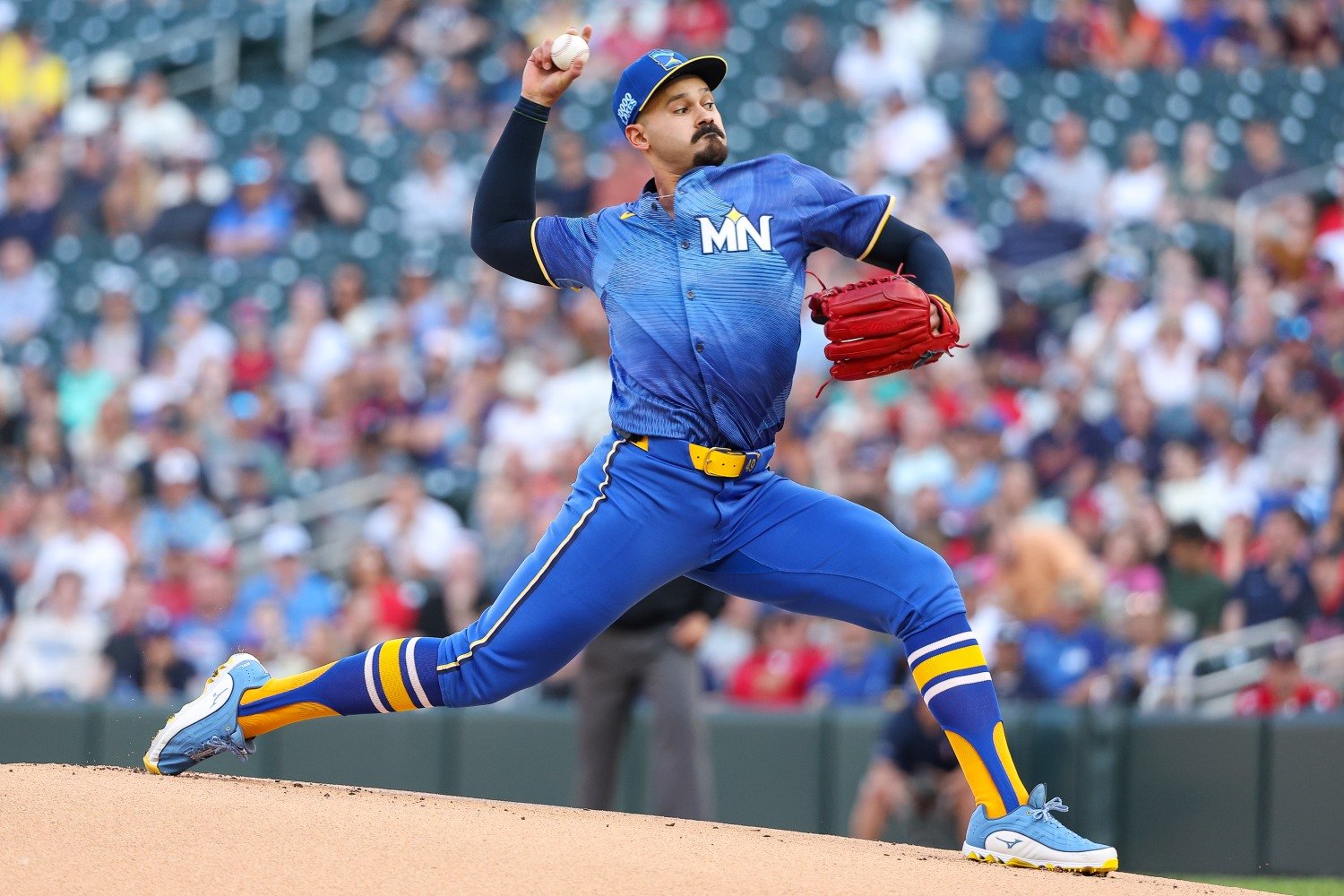 Box Score Starting Pitcher: Pablo López - 7 IP, 4 H, 1 ER, 1 BB, 7 K (109 pitches, 68 strikes) Home Runs: Carlos Santana (14) Bottom 3 WPA: Josh Staumont (-.428), Cole Sands (-.230), Ryan Jeffers (-.216) Win Probability Chart (Via Fangraphs): As an organization, the Twins weren't thrilled to have to wait five days between games for the All-Star break, thanks to the quirk of playing one of their two-game series against the rival Brewers on this weekend coming out of that layoff. As an extra poke in the eye, then, Mother Nature dropped a brief pop-up shower on Target Field minutes before the scheduled game time, pushing the season's resumption back an extra 14 minutes. Once the action began, though, it was a little slice of Baseball Heaven--and hopefully, for Joe Pohlad (who was in attendance), a reminder of what's possible. A buzzy crowd of both Twins and visiting Brewers fans packed the place to the rafters, giving the game a charge and a self-consciously inflated sense of importance right from the first pitch. The crowd was big and enthusiastic enough, on a summer Saturday evening, to sustain the cheerful thump and palaver that makes it great to take in a game when the team is winning. It's the environment the Twins should be trying to cultivate at all times. As he always does, too, Pablo López rose to the heightened occasion, striking out the first two batters in a 1-2-3 top of the first. The early stages of the game were as even as the records of the two playoff hopefuls contesting it. Through two scoreless innings, each side's hitters could console themselves by noting some tough at-bats and walks drawn, but each defense showed its quality, too. The top of the second ended when Ryan Jeffers threw out Sal Frelick attempting to steal second, and while his throw was on the money, Willi Castro (whom Rocco Baldelli said will be the everyday shortstop in Carlos Correa's absence) matched Jeffers's effort with a deft tag. The Brewers did get to López in the third, though, and he was probably fortunate to give up just one run. A leadoff double set them up to score, and a single from ninth hitter Andruw Monasterio did bring Garrett Mitchell around, but a 108-MPH screamer off the bat of Joey Ortiz became a groundout, and a long fly ball by Brice Turang found the glove of a gliding Byron Buxton at the wall in right-center. López righted the ship with a scoreless fourth, despite more hard contact, and the game stayed taut. Meanwhile, though, Freddy Peralta frustrated the Twins at every turn. They worked two early walks and forced his pitch count to balloon, but they couldn't break through in the bottom of the third, despite putting two runners on with Buxton at bat. While the team awaits the convalescence of Correa, José Miranda, and Royce Lewis, Buxton is back in the heart of their order, and if we're honest, we have to admit that the 2-3-4 sequence of Trevor Larnach, Buxton, and Brooks Lee is conspicuously non-threatening. The team still has multiple threats and ways to score, but they're not the best lineup on the junior circuit in their current form. Working on extra rest on a perfect night, the aces of each team rode the rise and fall and clash of two fan base's cheers packed into a single venue, keeping the game 1-0 through six frames. Neither blinked, but López (slightly more economical through six) got through a tough seventh inning without letting the lead lengthen, whereas Peralta departed after 102 offerings in six frames. That would turn out to mean everything. Milwaukee reliever Bryan Hudson sailed through the seventh, but only faced two batters in the eighth, giving up well-struck balls to each. Austin Martin's fly ball nestled into the glove of Mitchell in center field, but Willi Castro laced a bounding gapper the same direction. Jackson Chourio came up throwing, and might have had a chance to nail the hustling Castro at second, but he mishandled the transfer and lost his opportunity. Next came the chess match, with Baldelli and Milwaukee manager Pat Murphy trading maneuvers. Baldelli used his second pinch-hitter of the inning and third of the game to force Murphy to lift Hudson. Elvis Peguero replaced Hudson, and on a 1-2 pitch to Diego A. Castillo, he uncorked what would turn out to be an enormous wild pitch. Castro advanced to third, forcing the Brewers infield to come up. Castillo then hit a sharp ground ball to Turang at second, but Castro was off on contact. It was an incredibly close play. Turang's throw beat the diving Castro, but Castro was aimed like a missile at the back corner of home plate. William Contreras did what catchers nearly always do on such plays, trained by years of instruction on pitch framing and following the natural momentum of a play on which they necessarily come forward to set up for the hurried throw: He snatrched it too soon. Traveling more slowly under the control of Contreras's muscles than it had been in flight, the ball didn't quite swipe Castro's side until his hand had acquired its target. A replay review confirmed the game-tying run. Castillo reached in the process, and after a Buxton strikeout, Brooks Lee reached on an infield single. It was the Twins' second-most promising rally of the game, but it didn't bear any more fruit, as Max Kepler flew out deep to center. It only felt right for the game to go to the ninth inning knotted; each team played too well to give the other a clear advantage any sooner than the game's final breath. Griffin Jax got the call for the top of the frame and took care of business, but so did Joel Payamps in the bottom half. That brought on a funny bit of baseball irony, as Frelick (who had just been picked off to record the final out of the previous inning, marking his second out on the bases in one contest) took second as the automatic runner for the 10th inning. For his sins in past innings, Frelick's penance in the extra frame was to stand mostly motionless at his station, helpless to do anything. Jhoan Durán came on (to the delight of the sellout crowd, with the effects of the lowered lights and scoreboard animations heightened by the deepening darkness) and put away three straight Milwaukee batters, without even allowing for much in the way of luck. Austin Martin was the automatic runner for the Twins' end of the 10th, but Willi Castro couldn't move him over. Leading off against an extremely aggressive bunt defense from the Brewers, Castro, instead, took a full swing--but he flied out, and Martin couldn't advance. Castillo therefore got his a chance to play hero a second time, but he struck out looking. Murphy elected to intentionally walk Byron Buxton, after Trevor Megill threw two unintentional balls to him, but Brooks Lee couldn't make the visitors pay, grounding out to first base. The tension of this game--from the stands, where warring chants of "Let's Go Brewers" and "Let's Go Twins" bounced off each other every time a sequence even hinted at the possibility of runs scoring--refused to break. In the 11th, the Brewers scored on an infield-in fielder's choice (sound familiar?) and a subsequent squeeze bunt. The Brewers play that kind of game often. The Twins don't, at all. No, the Twins get their runs this way, mostly. Down to their last strike, the Twins were saved by the seemingly unstoppably clutch Carlos Santana, and though they could do no more than tie the game, they forced a 12th inning. That would, eventually, mean turning to their seventh pitcher, on a night when their starter bravely threw seven frames, but sometimes, the game grabs ahold of you and won't let go. Though those nights are less frequent, now that there are automatic runners in play as soon as the game reaches extra innings, they're even more special when they happen. Alas, someone has to win those games, and the Brewers had the depth and the energy to do it Saturday night. A pair of infield singles (one on a nearly-botched but ultimately perfectly placed pop-up bunt) ignited a rally that finally gave the Brewers real breathing room. After a Joey Ortiz sacrifice fly, Jackson Chourio stroked his third hit of the game, bringing home an insurance run against Josh Staumont. Chourio then alertly stole second, taking the double play off the table and forcing the Twins to play the infield up again against Turang. He hit a sizzling single that probably would have punched through anyway, cleanly into right field to break the game open. By the time the relentless Brewers were done, it was a five-run cushion, and the bottom half of the frame was all protracted anticlimax. The Good: I don't need the national anthem to be played before baseball games. I'm not hungry for the fight that would be required to get there, but I'd be fine with the tradition being discontinued. I often make myself busy with something else during the song, not protesting but not concelebrating, either. As a men's quartet sang the song before the game Saturday evening, though, I was struck by something I rarely think of when it comes to the anthem: It can be a very beautiful song, when prepared and performed with loving craftsmanship. It's a challenging piece of music, but in such pieces lies the opportunity to create beauty. Sports are, ultimately, an artistic endeavor, though we rarely consider them that way. The performers Saturday evening gave a rendition as pretty as a 4-6-3 double play, setting an aesthetically wonderful tone for the event. It was one of the tiny ways that the game will surprise you, even in ways that stretch beyond the game itself. On the field, there were plenty of encouraging things. Ryan Jeffers's bat seemed to have slowed down as the summer heat hit--because it did. But Jeffers's swing looked better Saturday night, from a process standpoint. His first two at-bats yielded well-struck but not torched balls, but it was the way he swung that seemed encouraging. Pair that with the great throw to nail Frelick, and he looks somewhat rejuvenated after the break, which would be welcome news for the Twins. López, too, gave encouraging returns. He held his velocity throughout the start, survived an early wobble unfazed, found feel for his sweeper late in the going and gave the team an excellent chance to win. If he can pitch like this down the stretch, the Twins not only have a chance to catch Cleveland for the AL Central leadership, but would feel supremely confident going into almost any first-round playoff matchup. The Bad: It would be grossly unfair to blame the Twins offense for being dominated by Peralta, an ace in his own right who was one of the best pitchers in baseball in the second half of last season and still possesses every bit of the talent López does. We have to return, though, to that sense that the team is more than just depleted by the absence of (arguably) their three best hitters; they seem utterly deflated without them. That's not a knock on Baldelli or the character of the team; it's just how it goes. There's a certain amount of talent and production that, added together, creates a critical mass. No club can replace guys who were doing as much for the team as Correa, Lewis, and Miranda. They just have to wait for them to return. That's a worrisome reality, though, since there's no guarantee that any of them will be back (and at full strength) soon. Once extra innings arrived, we also saw a glimpse of the lurking issue that is the soft underbelly of the bullpen. With injuries to Chris Paddack and Brock Stewart still stretching the staff a bit out of its optimal shape, they could use some reinforcement there. Otherwise, it will be important for them to play from ahead, because games like this one (and those in which they face a narrow deficit going into the late innings) will continue to get away from them. What’s Next: Though next year's schedule will restore the annual interleague rivalry series to a pair of three-game sets, this season's Border Battle with the Brewers concludes with the fourth game between the two teams on Sunday. Joe Ryan and Milwaukee trade addition Aaron Civale will toe the rubber, for a 12:05 PM local start. It's so early for a good reason, too: The game will be on Roku, so for disenfranchised fans who want to see their team, this is a rare opportunity. Postgame Interviews: Bullpen Usage Chart TUE WED THU FRI SAT TOT Sands 0 0 0 0 10 10 Jax 0 0 0 0 14 14 Durán 0 0 0 0 12 12 Staumont 0 0 0 0 20 20 Alcalá 0 0 0 0 17 17 Funderburk 0 0 0 0 0 0 Thielbar 0 0 0 0 0 0 Okert 0 0 0 0 11 11
 -
In MLB's Midsummer Classic, managers and broadcasts face all kinds of difficulty in trying to give notice to each All-Star and their career-defining achievement. Sometimes, things slip through the cracks. Image courtesy of © Jerome Miron-USA TODAY Sports It's not really the fault of American League manager Bruce Bochy, or of the commentators or production team at FOX Sports, that Willi Castro passed only briefly across the screens of watching fans Tuesday night, without a meaningful mention of his presence or his story. Late in the MLB All-Star Game, there's a scramble to get everyone who was selected for the first (or perhaps last) time onto the field to fully enjoy and celebrate their moment, and the teams covering the game have to make quick choices about which players to profile and highlight in specific at-bats. If we're being honest with ourselves, Castro was a fringe All-Star. Without diminishing what he's done, we can acknowledge that he was added to what is already a 30-man roster only as an injury replacement, and that that was fair; he wasn't snubbed in the initial voting or anything. Castro is not as bright a star as almost every other player who took the field Tuesday night, even though he's been one of the best players on the field for most of the Twins' season. He was the victim of simple math. Someone's screen time was going to get squeezed. Twins fans needn't be disappointed about the lack of a shining moment for the team Tuesday night, though, because soon enough, Castro will be back to filling up the screen and the box score in games that count. As fun and flashy as he often is, this season hasn't been about his style. It's been about his substance, and he'll get to showcase that again starting Saturday. For the moment, though, let's fill the adulation gap left by FOX. Prior to 2023, Castro had a career .245/.292/.381 batting line, with rangy but erratic defense at various positions. That was the track record that prompted a new Detroit Tigers front office to move on from him at the non-tender deadline in November 2022, and while it now looks a bit silly, it was a perfectly defensible choice at that time. The Twins, after all, only signed Castro to a minor-league deal before last season. His 2023 was fun, chaotic, and encouraging. He was a pleasant surprise for a team perennially fighting injury issues, plugging in at multiple spots and hitting .257/.339/.411, with 33 stolen bases. That's a good campaign, and it's a meaningful step forward. It's why Castro's position with the team was never really in doubt after midseason, and why he came to camp this spring with a clear path to at least similar playing time. It was good, but it was also normal. Players Castro's age improve the way he did from 2022 to 2023 all the time. They also, frequently, regress in the wake of those step-up seasons, especially when their increased production is fueled by a .328 BABIP and includes a strikeout rate on the high side of average. That's why what Castro has done this season, while superficially similar to last year, is not normal, and why we need to be sure we properly appreciate it. At .265/.352/.422, his production doesn't look wildly altered from last year, but you have to widen the lens to see the full scope of what he's done. Castro already has 386 plate appearances this year, which is just 23 fewer than all of last season. He's not being deployed strategically or selectively; he's the guy who facilitates strategic, selective usage of other players throughout the roster. That's not purely out of necessity, either. Castro has made material changes that made it possible (even preferable) for Rocco Baldelli to trust him with full-time playing time. From 2021-23, the switch-hitter averaged just under 130 plate appearances as a righty batter, facing left-handed pitchers, and his OPS was just over .660. In none of those campaigns did that number crack .700. This season, he's taken such huge strides that Baldelli has already entrusted him with 92 plate appearances against lefties. In them, he's hitting .333/.370/.540. His power has exploded. Here's a swing Castro put on a good pitch to hit against a lefty last summer. Willi Lefty Swing 23 2.mp4 Unfortunately, that's what Castro has looked like against lefties for much of his career. You can see that the hands work, and that this is still a tooled-up player, but the whole operation looked rushed, uneasy, and unintimidating. Here's Castro taking a hack at a similar offering this year. Willi Lefty Swing 24 2.mp4 You don't see changes much bigger than that, especially from a switch-hitter on his less-used side. Brooks Lee has garnered headlines for his work to be more formidable as a righty over the winter. Castro hasn't gotten quite the same credit, but he should. This is a more hitterish setup, with the almost impatient front foot and the aggressiveness of the load. Most importantly, though, his contact point has moved. He's embraced the Twins' organizational prerogative to pull the ball in the air and hit it hard, even from his weaker side of the plate. You can see him working the barrel out in front of him more than in the past, and the result is a ferocity on contact that was absent until this season. That change comes with some drawbacks, and anyway, lefties only make up about 25% of Castro's opposing batters. This is far from the only adaptation he's made this year. From the left side, he's become more patient, with a chase rate under 30% on pitches outside the zone. He's never been below 34.7% before. Thus, without any major mechanical changes on that side, he's also hitting it harder (and hitting it hard more often) from his historically stronger position. We covered the fact that he was showing power upside far beyond his previous career levels way back in spring training, and the regular season has borne that out starkly. His average exit velocity is up a whopping 2.7 miles per hour this year. His Barrel rate is way up. His weighted sweet-spot exit velocity is way up. Is Castro quite as successful on the bases as he was last year? No. Has he become a superstar? No. Still, what he's done this year isn't just a welcome development; it's genuinely remarkable. The Twins would be adrift without him. He provides versatility, value in multiple facets, and an energy that has been the missing ingredient every time the team has struggled over the last few years. They'll have to find ways to keep him fresh and healthy down the stretch. Late in 2022, he suffered a hamstring strain, and he missed time with an oblique strain last summer. There are, shockingly, few players the team could less afford to lose than Castro. That very fact, though, is a testament to the wonderful season he's having, and even if Tuesday didn't find him in a national spotlight, we can spend a bit of the remaining interstitial time before the season resumes giving him much-deserved praise for an extraordinary first half. View full article
-
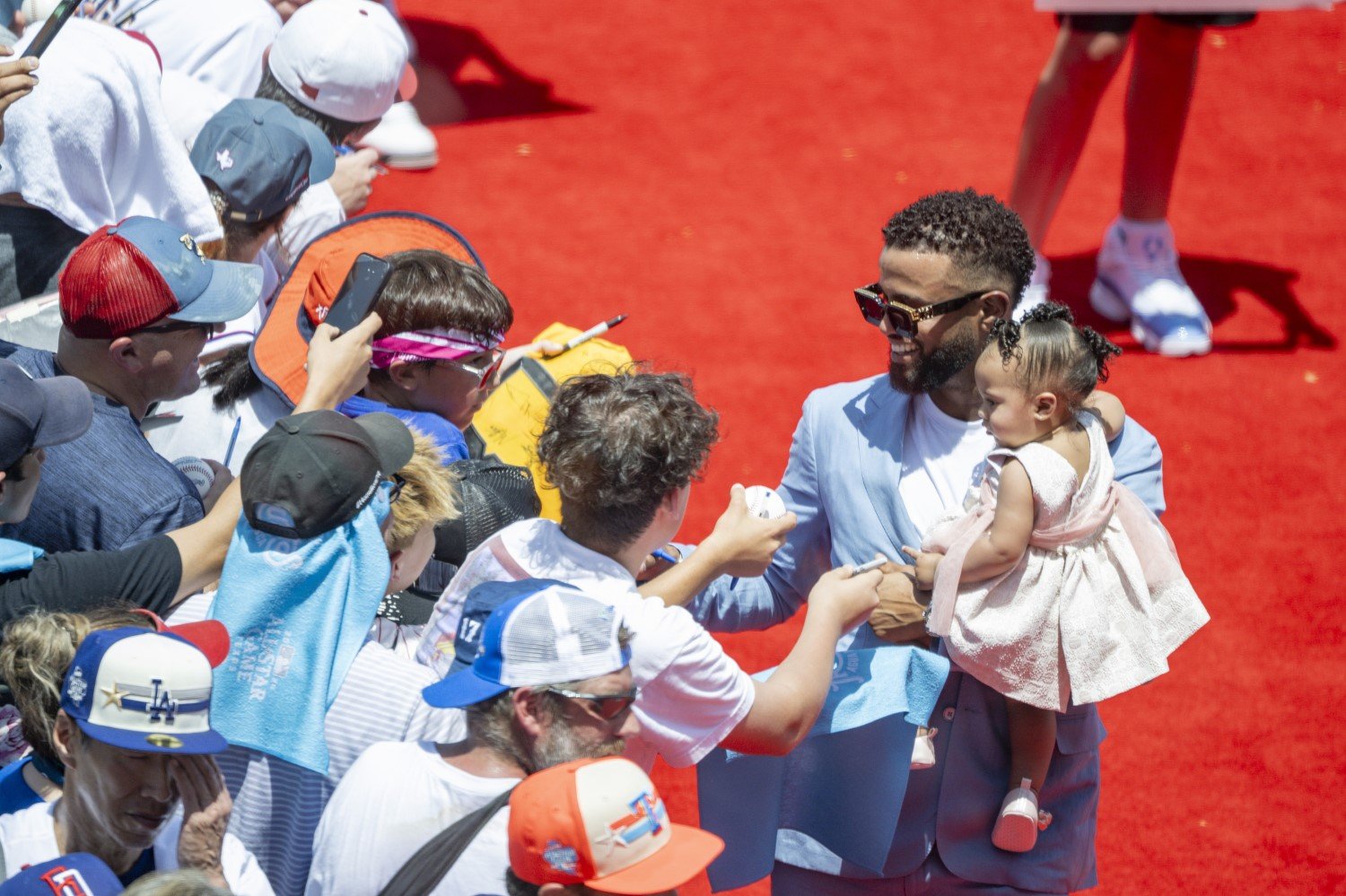 It's not really the fault of American League manager Bruce Bochy, or of the commentators or production team at FOX Sports, that Willi Castro passed only briefly across the screens of watching fans Tuesday night, without a meaningful mention of his presence or his story. Late in the MLB All-Star Game, there's a scramble to get everyone who was selected for the first (or perhaps last) time onto the field to fully enjoy and celebrate their moment, and the teams covering the game have to make quick choices about which players to profile and highlight in specific at-bats. If we're being honest with ourselves, Castro was a fringe All-Star. Without diminishing what he's done, we can acknowledge that he was added to what is already a 30-man roster only as an injury replacement, and that that was fair; he wasn't snubbed in the initial voting or anything. Castro is not as bright a star as almost every other player who took the field Tuesday night, even though he's been one of the best players on the field for most of the Twins' season. He was the victim of simple math. Someone's screen time was going to get squeezed. Twins fans needn't be disappointed about the lack of a shining moment for the team Tuesday night, though, because soon enough, Castro will be back to filling up the screen and the box score in games that count. As fun and flashy as he often is, this season hasn't been about his style. It's been about his substance, and he'll get to showcase that again starting Saturday. For the moment, though, let's fill the adulation gap left by FOX. Prior to 2023, Castro had a career .245/.292/.381 batting line, with rangy but erratic defense at various positions. That was the track record that prompted a new Detroit Tigers front office to move on from him at the non-tender deadline in November 2022, and while it now looks a bit silly, it was a perfectly defensible choice at that time. The Twins, after all, only signed Castro to a minor-league deal before last season. His 2023 was fun, chaotic, and encouraging. He was a pleasant surprise for a team perennially fighting injury issues, plugging in at multiple spots and hitting .257/.339/.411, with 33 stolen bases. That's a good campaign, and it's a meaningful step forward. It's why Castro's position with the team was never really in doubt after midseason, and why he came to camp this spring with a clear path to at least similar playing time. It was good, but it was also normal. Players Castro's age improve the way he did from 2022 to 2023 all the time. They also, frequently, regress in the wake of those step-up seasons, especially when their increased production is fueled by a .328 BABIP and includes a strikeout rate on the high side of average. That's why what Castro has done this season, while superficially similar to last year, is not normal, and why we need to be sure we properly appreciate it. At .265/.352/.422, his production doesn't look wildly altered from last year, but you have to widen the lens to see the full scope of what he's done. Castro already has 386 plate appearances this year, which is just 23 fewer than all of last season. He's not being deployed strategically or selectively; he's the guy who facilitates strategic, selective usage of other players throughout the roster. That's not purely out of necessity, either. Castro has made material changes that made it possible (even preferable) for Rocco Baldelli to trust him with full-time playing time. From 2021-23, the switch-hitter averaged just under 130 plate appearances as a righty batter, facing left-handed pitchers, and his OPS was just over .660. In none of those campaigns did that number crack .700. This season, he's taken such huge strides that Baldelli has already entrusted him with 92 plate appearances against lefties. In them, he's hitting .333/.370/.540. His power has exploded. Here's a swing Castro put on a good pitch to hit against a lefty last summer. Willi Lefty Swing 23 2.mp4 Unfortunately, that's what Castro has looked like against lefties for much of his career. You can see that the hands work, and that this is still a tooled-up player, but the whole operation looked rushed, uneasy, and unintimidating. Here's Castro taking a hack at a similar offering this year. Willi Lefty Swing 24 2.mp4 You don't see changes much bigger than that, especially from a switch-hitter on his less-used side. Brooks Lee has garnered headlines for his work to be more formidable as a righty over the winter. Castro hasn't gotten quite the same credit, but he should. This is a more hitterish setup, with the almost impatient front foot and the aggressiveness of the load. Most importantly, though, his contact point has moved. He's embraced the Twins' organizational prerogative to pull the ball in the air and hit it hard, even from his weaker side of the plate. You can see him working the barrel out in front of him more than in the past, and the result is a ferocity on contact that was absent until this season. That change comes with some drawbacks, and anyway, lefties only make up about 25% of Castro's opposing batters. This is far from the only adaptation he's made this year. From the left side, he's become more patient, with a chase rate under 30% on pitches outside the zone. He's never been below 34.7% before. Thus, without any major mechanical changes on that side, he's also hitting it harder (and hitting it hard more often) from his historically stronger position. We covered the fact that he was showing power upside far beyond his previous career levels way back in spring training, and the regular season has borne that out starkly. His average exit velocity is up a whopping 2.7 miles per hour this year. His Barrel rate is way up. His weighted sweet-spot exit velocity is way up. Is Castro quite as successful on the bases as he was last year? No. Has he become a superstar? No. Still, what he's done this year isn't just a welcome development; it's genuinely remarkable. The Twins would be adrift without him. He provides versatility, value in multiple facets, and an energy that has been the missing ingredient every time the team has struggled over the last few years. They'll have to find ways to keep him fresh and healthy down the stretch. Late in 2022, he suffered a hamstring strain, and he missed time with an oblique strain last summer. There are, shockingly, few players the team could less afford to lose than Castro. That very fact, though, is a testament to the wonderful season he's having, and even if Tuesday didn't find him in a national spotlight, we can spend a bit of the remaining interstitial time before the season resumes giving him much-deserved praise for an extraordinary first half.
 -
No team in baseball throws fewer sinkers than the Twins, but behind the scenes, members of the organization insist they don't disdain or overlook the value of the pitch. They try to help pitchers throw the best form of the fastball for them. Is that true? Image courtesy of © Bruce Kluckhohn-USA TODAY Sports There's a false binary, sometimes, in thinking about generalists and specialists; We all have to specialize a little, lest we end up standing in the middle of a room spinning in circles, remarking blandly on the great doings being done off in each corner. We also all have to be able to act as generalists, to some extent, or we corner ourselves into feeling out of our depth when we're really working on something we should be able to handle. Still and all, there's validity in the distinction between the two approaches to anything, not least because they're required in different measure when attempting things of different difficulties. The Minnesota Twins are in a highly competitive field, where the things they need to do are difficult. Like most teams, they do have to choose places where they specialize, and that means emphasizing certain skills and competencies at the expense of others. To wit: Whatever their insistence to the contrary, the Twins show less interest than any other organization in baseball in throwing the sinker. As a result of that strong preference for four-seamers and cutters when it comes to velocity-oriented offerings, they just don't seem to be very good at teaching the sinker when they do attempt to do so. That's fine, but it's an important thing to understand about what is, nonetheless, one of the better pitching development infrastructures in the league. It's hard to overstate (and, at first, hard even to conceptualize) how much of an outlier the Twins are when it comes to abstaining from the sinker. They are the team who throws the fewest sinkers in baseball, at just 5.7% of all pitches, but that doesn't quite capture it. They're also the team who throws the fewest total hard pitches (four-seamers, cutters, and sinkers, as a group), at just 48.8% of all their pitches. So is their apparent disuse of the pitch just a product of their preference for heavy use of breaking and offspeed stuff, at the expense of all types of fastballs? Or at least, is that part of the story? No. Emphatically, no. The average team makes the sinker about 29 percent of all their hard pitches. The Guardians are second-lowest in baseball in this regard, at 15.2%. The sinker only makes up 11.7% of the Twins' hard pitches. Here's a chart showing each team's use of the three hard pitch types, individually and in total. They're ranked according to the share of their hard pitches taken up by the sinker. They've chosen this as a way to maximize strikeouts--not only with all those four-seamers, but by using so much spin and changing speeds. The big question is: what happens when they do want or need to have a pitcher develop a sinker? View full article
-
Do the Twins Know How to Teach a Sinker When They Need To?
Matthew Trueblood posted an article in Caretakers
.png.a6b854a4b42e15b6c7c8e0899704acb7.png) There's a false binary, sometimes, in thinking about generalists and specialists; We all have to specialize a little, lest we end up standing in the middle of a room spinning in circles, remarking blandly on the great doings being done off in each corner. We also all have to be able to act as generalists, to some extent, or we corner ourselves into feeling out of our depth when we're really working on something we should be able to handle. Still and all, there's validity in the distinction between the two approaches to anything, not least because they're required in different measure when attempting things of different difficulties. The Minnesota Twins are in a highly competitive field, where the things they need to do are difficult. Like most teams, they do have to choose places where they specialize, and that means emphasizing certain skills and competencies at the expense of others. To wit: Whatever their insistence to the contrary, the Twins show less interest than any other organization in baseball in throwing the sinker. As a result of that strong preference for four-seamers and cutters when it comes to velocity-oriented offerings, they just don't seem to be very good at teaching the sinker when they do attempt to do so. That's fine, but it's an important thing to understand about what is, nonetheless, one of the better pitching development infrastructures in the league. It's hard to overstate (and, at first, hard even to conceptualize) how much of an outlier the Twins are when it comes to abstaining from the sinker. They are the team who throws the fewest sinkers in baseball, at just 5.7% of all pitches, but that doesn't quite capture it. They're also the team who throws the fewest total hard pitches (four-seamers, cutters, and sinkers, as a group), at just 48.8% of all their pitches. So is their apparent disuse of the pitch just a product of their preference for heavy use of breaking and offspeed stuff, at the expense of all types of fastballs? Or at least, is that part of the story? No. Emphatically, no. The average team makes the sinker about 29 percent of all their hard pitches. The Guardians are second-lowest in baseball in this regard, at 15.2%. The sinker only makes up 11.7% of the Twins' hard pitches. Here's a chart showing each team's use of the three hard pitch types, individually and in total. They're ranked according to the share of their hard pitches taken up by the sinker. They've chosen this as a way to maximize strikeouts--not only with all those four-seamers, but by using so much spin and changing speeds. The big question is: what happens when they do want or need to have a pitcher develop a sinker?
There's a false binary, sometimes, in thinking about generalists and specialists; We all have to specialize a little, lest we end up standing in the middle of a room spinning in circles, remarking blandly on the great doings being done off in each corner. We also all have to be able to act as generalists, to some extent, or we corner ourselves into feeling out of our depth when we're really working on something we should be able to handle. Still and all, there's validity in the distinction between the two approaches to anything, not least because they're required in different measure when attempting things of different difficulties. The Minnesota Twins are in a highly competitive field, where the things they need to do are difficult. Like most teams, they do have to choose places where they specialize, and that means emphasizing certain skills and competencies at the expense of others. To wit: Whatever their insistence to the contrary, the Twins show less interest than any other organization in baseball in throwing the sinker. As a result of that strong preference for four-seamers and cutters when it comes to velocity-oriented offerings, they just don't seem to be very good at teaching the sinker when they do attempt to do so. That's fine, but it's an important thing to understand about what is, nonetheless, one of the better pitching development infrastructures in the league. It's hard to overstate (and, at first, hard even to conceptualize) how much of an outlier the Twins are when it comes to abstaining from the sinker. They are the team who throws the fewest sinkers in baseball, at just 5.7% of all pitches, but that doesn't quite capture it. They're also the team who throws the fewest total hard pitches (four-seamers, cutters, and sinkers, as a group), at just 48.8% of all their pitches. So is their apparent disuse of the pitch just a product of their preference for heavy use of breaking and offspeed stuff, at the expense of all types of fastballs? Or at least, is that part of the story? No. Emphatically, no. The average team makes the sinker about 29 percent of all their hard pitches. The Guardians are second-lowest in baseball in this regard, at 15.2%. The sinker only makes up 11.7% of the Twins' hard pitches. Here's a chart showing each team's use of the three hard pitch types, individually and in total. They're ranked according to the share of their hard pitches taken up by the sinker. They've chosen this as a way to maximize strikeouts--not only with all those four-seamers, but by using so much spin and changing speeds. The big question is: what happens when they do want or need to have a pitcher develop a sinker? -
I'll grant that, but let's also remember that not ALL the damage Lewis has done has been against those two teams. He came back against the Yankees, who can pitch a little bit, and he still worked his magic.
- 34 replies
-
- 1
-
-
- royce lewis
- chris paddack
- (and 3 more)
-
The 27th man for any doubleheader is required to go back down thereafter, by rule. Now, could they still get Varland back up here in a week or so? Yeah, I think so. But he can't stick around in the immediate term, and I would guess Paddack gets at least one more start before they consider a "maintenance stint" on the IL.
- 34 replies
-
- 8
-
-
- royce lewis
- chris paddack
- (and 3 more)
-
Make It Official! Twins 8, Athletics 7: Your Money's Worth and More
Matthew Trueblood posted an article in Twins
(16).png.b945457769dc99a669d6603d96d84ede.png) Box Score: Starting Pitcher: Chris Paddack: 2 1/3 IP, 5 H, 5 ER, 1 BB, 0 K (46 Pitches, 31 Strikes, 67.4%) Home Runs: Royce Lewis (7), Trevor Larnach (7), José Miranda (7) Top 3 WPA: Miranda 0.267, Josh Staumont 0.194, Griffin Jax 0.160 Win Probability Chart (Via Fangraphs): At the very bottom of it, under all the complexities and loyalties and emotional superstructures we lay on top, you go to the park to see a major-league game in the hopes of seeing a special ball player do something truly special. Through a huge number of complex interactions between on-field talent and front-office machination; through the vicious emotional wreckage of a protracted playoff losing streak and seasons ruined by injuries to talented players; and through plenty of well-earned grumbling about a family of billionaires refusing to invest the way they should have in a team with a chance to break through, the last half-decade has featured a lot of chances to step through the gates of Target Field and see something truly special. Right now, that's Royce Lewis, and what he's doing might be not only the most special thing the Twins have offered their fans this side of Joe Mauer, but one of the most remarkable things anywhere on any MLB diamond. Lewis entered Sunday's doubleheader having played 10 games this season and clubbed five home runs. Then he homered in the first game, on the heels of Carlos Correa's first-inning two-run shot. It's not just that Lewis is doing this, but that he's doing it yet again, coming back over and over from injuries ranging from significant but moderate to career-threatening and slugging like he hadn't missed a single game. There are very few examples of this kind of relentless offensive explosiveness from a player whose career is disrupted as often and as momentously as Lewis's has been; the ones that do exist are folk heroes. Think Bo Jackson. Think Josh Hamilton. Think Mickey Mantle. When Lewis stepped in for his turn in the first inning of Game Two, you could feel that slight gather of breath in the sparse but buzzing crowd--that unfair but happy expectation that somehow, in defiance of the law of averages and the mathematical gravity of the game, the guy in the box is going to put on his cape again and be super. It's a nearly forgotten sensation, in this day and age. Fans know better. The stats and their weight sit front and center in front of the game with us. Plus, the run environment has transformed. We're more than a quarter-century past the last expansion of the league, and almost 20 years clear of what I call the Double Expansion Era (but which others call the Steroid Era). If you didn't grow up watching Ken Griffey Jr., Sammy Sosa, Mark McGwire, and Barry Bonds, you can't quite imagine how much people expected of them every day, and how (improbably) they kept meeting those insane expectations. No player since 2010 has had the same kind of anticipation attached to them, because no one has conditioned people to feel that way. Lewis is becoming the exception. Your brain knows he can't homer in every game, let alone every time he steps to the plate, but it's increasingly difficult to banish the tickle of hope from your mind, because he keeps beating the odds and blasting the ball. That's why fans got even more ecstatic than usual when Lewis launched a long fly ball down the left-field line, and were more than usually crestfallen when it hooked just foul. For a moment, it felt like another proof of Lewis's exceptionalism. Then, it was just a strike, and (how cruel!) fans knew they might have to wait another few innings to see their hero hit a dinger that counted. Or, you know, he could do it on the next pitch. Just missing once and then doing the thing immediately afterward is freakish stuff. It's the kind of showstopping moment you should only be allowed to do in the first inning or the last. Anything else would be like Skynyrd playing 'Freebird' right in the middle of the set. Lewis set a tone, as he always seems to be doing. This game, though, would be a bit less of a free-spirited frolic than the first game of the twinbill was. This time, the A's actually showed up, and Chris Paddack continued what has been a deeply troubling trend of ineffectiveness, albeit not an uninterrupted one. This would be his third start in the last four that were somewhere between disappointing and underwhelming, and the only good one mixed in there came against the Road Rockies, perennially the worst offensive team in baseball. The A's thwacked Paddack for two homers and erased two Twins leads before Rocco Baldelli had to go get his starter, who looked rather upset to be leaving despite not having had much fun at the party. Things would have been worse--much worse--but for some extraordinary defense from Austin Martin in the second inning. Some home run robberies are, secretly, pretty easy. They just require you to meander back to the wall and time up a jump, with plenty of time to do both. This was the other kind. Martin had to choose his angle wisely, feel for the wall, and get pretty high to pull the ball back. Martin looked fine in left field in his previous stint with the team, but if he can get more comfortable in center this time around, he might have more staying power with the team. Still, Paddack's outing hangs like a bit of a dark cloud over the excitement of this stretch. He's been inconsistent not only in terms of results (that's inevitable, to some extent), but in terms of sheer movements and performance. His fastball velocity has sat 90-93 MPH in three starts this year; 92-94 in three others; 93-95 in five more; and 94-97 in the other three. That's a maddening degree of inconsistency, and it's just one illustration of a rougher-grain unreliability that has plagued the righty this year. Twins Daily's winning "Make It Official!" game recaps are sponsored by Official Fried Chicken, which you can find in center field of Target Field. With a name like "Official," we know we have to be the best in the game every day, and from your first bite, you'll know that's a promise we make good on. Fortunately, Louie Varland restored order. Taking over for Paddack, he pitched out of a third-inning jam, then gave the team four scoreless innings before cracking a bit in the seventh. It was an impressive showing from Varland in his second outing of the week, helping patch and fill some innings for the busy staff, although he still hasn't faced a truly MLB-caliber lineup since he was demoted to St. Paul in the first place. Lewis wasn't alone in slugging in the nightcap for the Twins. Trevor Larnach launched a huge three-run homer in the bottom of the second, and the team pushed across single runs in the third and sixth that looked like they might stand up. Instead, after Varland wobbled badly in the seventh, the game came down to the final two frames. José Miranda had pinch-hit for Larnach in the sixth, and he came up again in the eighth. He put the right finishing touch on the masterpiece of a game Lewis started painting in the first. That just left a relatively easy clean-up for Griffin Jax, and he finished the sweep ably. The Twins are winners of five games in a row, and the vibes are very, very good. What’s Next: After an off day Monday, the Twins will welcome the Rays to town for a three-game set, with Pablo López starting the series opener. Longtime AL Central nemesis Aaron Civale will start for Tampa. Postgame Interviews: Bullpen Usage Chart: WED THU FRI SAT SUN TOT Sands 0 0 25 0 27 52 Jax 0 19 23 0 12 42 Thielbar 22 0 0 0 0 22 Durán 16 0 20 0 9 45 Staumont 0 0 15 0 15 15 Alcalá 10 13 0 0 22 45 Jackson 22 0 0 0 0 22 Okert 18 0 0 0 0 18
Box Score: Starting Pitcher: Chris Paddack: 2 1/3 IP, 5 H, 5 ER, 1 BB, 0 K (46 Pitches, 31 Strikes, 67.4%) Home Runs: Royce Lewis (7), Trevor Larnach (7), José Miranda (7) Top 3 WPA: Miranda 0.267, Josh Staumont 0.194, Griffin Jax 0.160 Win Probability Chart (Via Fangraphs): At the very bottom of it, under all the complexities and loyalties and emotional superstructures we lay on top, you go to the park to see a major-league game in the hopes of seeing a special ball player do something truly special. Through a huge number of complex interactions between on-field talent and front-office machination; through the vicious emotional wreckage of a protracted playoff losing streak and seasons ruined by injuries to talented players; and through plenty of well-earned grumbling about a family of billionaires refusing to invest the way they should have in a team with a chance to break through, the last half-decade has featured a lot of chances to step through the gates of Target Field and see something truly special. Right now, that's Royce Lewis, and what he's doing might be not only the most special thing the Twins have offered their fans this side of Joe Mauer, but one of the most remarkable things anywhere on any MLB diamond. Lewis entered Sunday's doubleheader having played 10 games this season and clubbed five home runs. Then he homered in the first game, on the heels of Carlos Correa's first-inning two-run shot. It's not just that Lewis is doing this, but that he's doing it yet again, coming back over and over from injuries ranging from significant but moderate to career-threatening and slugging like he hadn't missed a single game. There are very few examples of this kind of relentless offensive explosiveness from a player whose career is disrupted as often and as momentously as Lewis's has been; the ones that do exist are folk heroes. Think Bo Jackson. Think Josh Hamilton. Think Mickey Mantle. When Lewis stepped in for his turn in the first inning of Game Two, you could feel that slight gather of breath in the sparse but buzzing crowd--that unfair but happy expectation that somehow, in defiance of the law of averages and the mathematical gravity of the game, the guy in the box is going to put on his cape again and be super. It's a nearly forgotten sensation, in this day and age. Fans know better. The stats and their weight sit front and center in front of the game with us. Plus, the run environment has transformed. We're more than a quarter-century past the last expansion of the league, and almost 20 years clear of what I call the Double Expansion Era (but which others call the Steroid Era). If you didn't grow up watching Ken Griffey Jr., Sammy Sosa, Mark McGwire, and Barry Bonds, you can't quite imagine how much people expected of them every day, and how (improbably) they kept meeting those insane expectations. No player since 2010 has had the same kind of anticipation attached to them, because no one has conditioned people to feel that way. Lewis is becoming the exception. Your brain knows he can't homer in every game, let alone every time he steps to the plate, but it's increasingly difficult to banish the tickle of hope from your mind, because he keeps beating the odds and blasting the ball. That's why fans got even more ecstatic than usual when Lewis launched a long fly ball down the left-field line, and were more than usually crestfallen when it hooked just foul. For a moment, it felt like another proof of Lewis's exceptionalism. Then, it was just a strike, and (how cruel!) fans knew they might have to wait another few innings to see their hero hit a dinger that counted. Or, you know, he could do it on the next pitch. Just missing once and then doing the thing immediately afterward is freakish stuff. It's the kind of showstopping moment you should only be allowed to do in the first inning or the last. Anything else would be like Skynyrd playing 'Freebird' right in the middle of the set. Lewis set a tone, as he always seems to be doing. This game, though, would be a bit less of a free-spirited frolic than the first game of the twinbill was. This time, the A's actually showed up, and Chris Paddack continued what has been a deeply troubling trend of ineffectiveness, albeit not an uninterrupted one. This would be his third start in the last four that were somewhere between disappointing and underwhelming, and the only good one mixed in there came against the Road Rockies, perennially the worst offensive team in baseball. The A's thwacked Paddack for two homers and erased two Twins leads before Rocco Baldelli had to go get his starter, who looked rather upset to be leaving despite not having had much fun at the party. Things would have been worse--much worse--but for some extraordinary defense from Austin Martin in the second inning. Some home run robberies are, secretly, pretty easy. They just require you to meander back to the wall and time up a jump, with plenty of time to do both. This was the other kind. Martin had to choose his angle wisely, feel for the wall, and get pretty high to pull the ball back. Martin looked fine in left field in his previous stint with the team, but if he can get more comfortable in center this time around, he might have more staying power with the team. Still, Paddack's outing hangs like a bit of a dark cloud over the excitement of this stretch. He's been inconsistent not only in terms of results (that's inevitable, to some extent), but in terms of sheer movements and performance. His fastball velocity has sat 90-93 MPH in three starts this year; 92-94 in three others; 93-95 in five more; and 94-97 in the other three. That's a maddening degree of inconsistency, and it's just one illustration of a rougher-grain unreliability that has plagued the righty this year. Twins Daily's winning "Make It Official!" game recaps are sponsored by Official Fried Chicken, which you can find in center field of Target Field. With a name like "Official," we know we have to be the best in the game every day, and from your first bite, you'll know that's a promise we make good on. Fortunately, Louie Varland restored order. Taking over for Paddack, he pitched out of a third-inning jam, then gave the team four scoreless innings before cracking a bit in the seventh. It was an impressive showing from Varland in his second outing of the week, helping patch and fill some innings for the busy staff, although he still hasn't faced a truly MLB-caliber lineup since he was demoted to St. Paul in the first place. Lewis wasn't alone in slugging in the nightcap for the Twins. Trevor Larnach launched a huge three-run homer in the bottom of the second, and the team pushed across single runs in the third and sixth that looked like they might stand up. Instead, after Varland wobbled badly in the seventh, the game came down to the final two frames. José Miranda had pinch-hit for Larnach in the sixth, and he came up again in the eighth. He put the right finishing touch on the masterpiece of a game Lewis started painting in the first. That just left a relatively easy clean-up for Griffin Jax, and he finished the sweep ably. The Twins are winners of five games in a row, and the vibes are very, very good. What’s Next: After an off day Monday, the Twins will welcome the Rays to town for a three-game set, with Pablo López starting the series opener. Longtime AL Central nemesis Aaron Civale will start for Tampa. Postgame Interviews: Bullpen Usage Chart: WED THU FRI SAT SUN TOT Sands 0 0 25 0 27 52 Jax 0 19 23 0 12 42 Thielbar 22 0 0 0 0 22 Durán 16 0 20 0 9 45 Staumont 0 0 15 0 15 15 Alcalá 10 13 0 0 22 45 Jackson 22 0 0 0 0 22 Okert 18 0 0 0 0 18- 34 comments
-
- 3
-
-
- royce lewis
- chris paddack
- (and 3 more)
-
With a bit of thunderous slugging, a bit of yeoman's work on the mound, and one dazzling defensive moment, the Twins finished off a doubleheader sweep of the hapless visitors from Oakland as the sun set over The Lake. Image courtesy of © Bruce Kluckhohn-USA TODAY Sports Box Score: Starting Pitcher: Chris Paddack: 2 1/3 IP, 5 H, 5 ER, 1 BB, 0 K (46 Pitches, 31 Strikes, 67.4%) Home Runs: Royce Lewis (7), Trevor Larnach (7), José Miranda (7) Top 3 WPA: Miranda 0.267, Josh Staumont 0.194, Griffin Jax 0.160 Win Probability Chart (Via Fangraphs): At the very bottom of it, under all the complexities and loyalties and emotional superstructures we lay on top, you go to the park to see a major-league game in the hopes of seeing a special ball player do something truly special. Through a huge number of complex interactions between on-field talent and front-office machination; through the vicious emotional wreckage of a protracted playoff losing streak and seasons ruined by injuries to talented players; and through plenty of well-earned grumbling about a family of billionaires refusing to invest the way they should have in a team with a chance to break through, the last half-decade has featured a lot of chances to step through the gates of Target Field and see something truly special. Right now, that's Royce Lewis, and what he's doing might be not only the most special thing the Twins have offered their fans this side of Joe Mauer, but one of the most remarkable things anywhere on any MLB diamond. Lewis entered Sunday's doubleheader having played 10 games this season and clubbed five home runs. Then he homered in the first game, on the heels of Carlos Correa's first-inning two-run shot. It's not just that Lewis is doing this, but that he's doing it yet again, coming back over and over from injuries ranging from significant but moderate to career-threatening and slugging like he hadn't missed a single game. There are very few examples of this kind of relentless offensive explosiveness from a player whose career is disrupted as often and as momentously as Lewis's has been; the ones that do exist are folk heroes. Think Bo Jackson. Think Josh Hamilton. Think Mickey Mantle. When Lewis stepped in for his turn in the first inning of Game Two, you could feel that slight gather of breath in the sparse but buzzing crowd--that unfair but happy expectation that somehow, in defiance of the law of averages and the mathematical gravity of the game, the guy in the box is going to put on his cape again and be super. It's a nearly forgotten sensation, in this day and age. Fans know better. The stats and their weight sit front and center in front of the game with us. Plus, the run environment has transformed. We're more than a quarter-century past the last expansion of the league, and almost 20 years clear of what I call the Double Expansion Era (but which others call the Steroid Era). If you didn't grow up watching Ken Griffey Jr., Sammy Sosa, Mark McGwire, and Barry Bonds, you can't quite imagine how much people expected of them every day, and how (improbably) they kept meeting those insane expectations. No player since 2010 has had the same kind of anticipation attached to them, because no one has conditioned people to feel that way. Lewis is becoming the exception. Your brain knows he can't homer in every game, let alone every time he steps to the plate, but it's increasingly difficult to banish the tickle of hope from your mind, because he keeps beating the odds and blasting the ball. That's why fans got even more ecstatic than usual when Lewis launched a long fly ball down the left-field line, and were more than usually crestfallen when it hooked just foul. For a moment, it felt like another proof of Lewis's exceptionalism. Then, it was just a strike, and (how cruel!) fans knew they might have to wait another few innings to see their hero hit a dinger that counted. Or, you know, he could do it on the next pitch. Just missing once and then doing the thing immediately afterward is freakish stuff. It's the kind of showstopping moment you should only be allowed to do in the first inning or the last. Anything else would be like Skynyrd playing 'Freebird' right in the middle of the set. Lewis set a tone, as he always seems to be doing. This game, though, would be a bit less of a free-spirited frolic than the first game of the twinbill was. This time, the A's actually showed up, and Chris Paddack continued what has been a deeply troubling trend of ineffectiveness, albeit not an uninterrupted one. This would be his third start in the last four that were somewhere between disappointing and underwhelming, and the only good one mixed in there came against the Road Rockies, perennially the worst offensive team in baseball. The A's thwacked Paddack for two homers and erased two Twins leads before Rocco Baldelli had to go get his starter, who looked rather upset to be leaving despite not having had much fun at the party. Things would have been worse--much worse--but for some extraordinary defense from Austin Martin in the second inning. Some home run robberies are, secretly, pretty easy. They just require you to meander back to the wall and time up a jump, with plenty of time to do both. This was the other kind. Martin had to choose his angle wisely, feel for the wall, and get pretty high to pull the ball back. Martin looked fine in left field in his previous stint with the team, but if he can get more comfortable in center this time around, he might have more staying power with the team. Still, Paddack's outing hangs like a bit of a dark cloud over the excitement of this stretch. He's been inconsistent not only in terms of results (that's inevitable, to some extent), but in terms of sheer movements and performance. His fastball velocity has sat 90-93 MPH in three starts this year; 92-94 in three others; 93-95 in five more; and 94-97 in the other three. That's a maddening degree of inconsistency, and it's just one illustration of a rougher-grain unreliability that has plagued the righty this year. Twins Daily's winning "Make It Official!" game recaps are sponsored by Official Fried Chicken, which you can find in center field of Target Field. With a name like "Official," we know we have to be the best in the game every day, and from your first bite, you'll know that's a promise we make good on. Fortunately, Louie Varland restored order. Taking over for Paddack, he pitched out of a third-inning jam, then gave the team four scoreless innings before cracking a bit in the seventh. It was an impressive showing from Varland in his second outing of the week, helping patch and fill some innings for the busy staff, although he still hasn't faced a truly MLB-caliber lineup since he was demoted to St. Paul in the first place. Lewis wasn't alone in slugging in the nightcap for the Twins. Trevor Larnach launched a huge three-run homer in the bottom of the second, and the team pushed across single runs in the third and sixth that looked like they might stand up. Instead, after Varland wobbled badly in the seventh, the game came down to the final two frames. José Miranda had pinch-hit for Larnach in the sixth, and he came up again in the eighth. He put the right finishing touch on the masterpiece of a game Lewis started painting in the first. That just left a relatively easy clean-up for Griffin Jax, and he finished the sweep ably. The Twins are winners of five games in a row, and the vibes are very, very good. What’s Next: After an off day Monday, the Twins will welcome the Rays to town for a three-game set, with Pablo López starting the series opener. Longtime AL Central nemesis Aaron Civale will start for Tampa. Postgame Interviews: Bullpen Usage Chart: WED THU FRI SAT SUN TOT Sands 0 0 25 0 27 52 Jax 0 19 23 0 12 42 Thielbar 22 0 0 0 0 22 Durán 16 0 20 0 9 45 Staumont 0 0 15 0 15 15 Alcalá 10 13 0 0 22 45 Jackson 22 0 0 0 0 22 Okert 18 0 0 0 0 18 View full article
-
Ripples: Welcome Back Jay Jackson, and the Yankee Problem
Matthew Trueblood posted an article in Twins
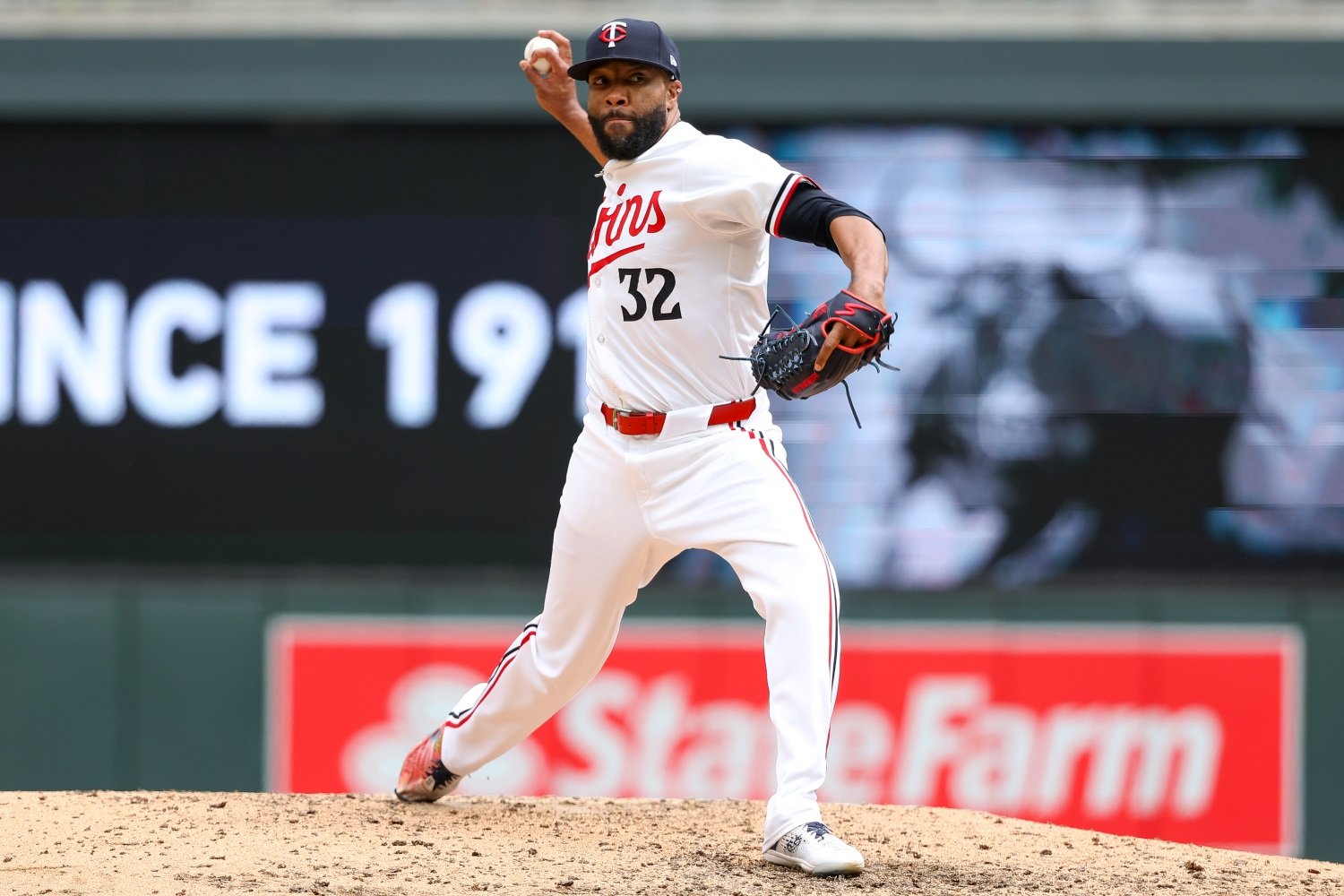 In a move that will surprise some, the Twins are recalling Jay Jackson to join their bullpen Wednesday. They had to designate Diego Castillo for assignment to do it, which the team is always loath to do, but those who read Theo Tollefson's piece here at Twins Daily earlier this week know why they made this call. Jackson has rediscovered the slider that is, more or less, his whole career. He couldn't consistently execute that offering during his first stint with the big-league team, and when that's the case, he's not an MLB-caliber pitcher. While he was in St. Paul, though, he maintained a good attitude and found the shape on that pitch that makes him not only MLB-caliber, but a valuable middle reliever. Theo gave you all you needed to realize Jackson was primed for a return, and it's no surprise that Varland is headed back to the minors after his spot start. All that remains to explain is the choice to let Castillo go in the process, but that's not a galloping shock, either. Castillo filled in adequately as the last arm on the staff for a short time, but he's past his best utility in the big leagues. Jackson is a better fit for the roster, now that he has his best weapon back. Why the Twins Can't Beat the Yankees Tuesday night, while the Twins struggled against the Rockies, the Yankees were busy thoroughly bashing the Royals. They've made a habit of that, over a not-insignificant stretch. In fact, while the Twins get the headlines, the Yankees' 116-49 record against Kansas City since the year 2000 is even better than their 114-51 against the Twins. That doesn't count their dominance over the Twins in the playoffs, of course, but not coincidentally, the Royals' two playoff appearances during that span (2014 and 2015) each came in seasons when the Yankees just didn't make it. It feels less notable that the Yankees lay such a whupping on the Royals than that they consistently drub the Twins, because the Twins have been much better than the Royals over those 25 seasons. Because the Twins are a winning team when not playing New York, their inability to beat the Bombers has become a popular enigma on which to muse. Here's the thing: it's not really a mystery at all. Ask yourself two important questions, any time one team seems to have special mastery over another: What does the team with the upper hand do especially well? What does the team getting beaten do poorly? If the answer to those two questions is the same, it makes plenty of sense for one team to dominate the other. In this case, the overlap couldn't be more perfect. The 2024 Twins are the perfect illustration of this point. Their pitching staff strikes out batters as well as almost any in baseball, and issues very, very few walks. That's what they do well. What do they do poorly? It's the same thing they've done poorly for the last 30 years, in otherwise good times and in bad ones. The Twins give up home runs. They give up lots and lots of home runs. An assemblage of fly-ball pitchers, they're vulnerable to power, even in seasons in which they do everything else well. What do the Yankees do well? They hit home runs. Much about that team has changed over the last quarter-century, just as much has changed about the Twins, but the Yankees still (always, forever) hit home runs. When one team has one of the league's greatest vulnerabilities to a particular outcome, and the other team has one of its greatest proclivities to produce that outcome, and when that outcome is the most extremely valuable (or damaging) one in baseball, it's a recipe for trouble. The Yankees' .466 SLG against the Twins since 2000 is the sixth-highest for any team against an opponent they've played at least 100 times. Three of the top five involve the Rockies. The other two are the Yankees against the Royals, and the Red Sox against the Royals. When you're just plain bad, you're going to give up power to great power-hitting teams. When you're otherwise above-average, it feels like that should be avoidable, but because the Twins remain a team that gives up power in exchange for more whiffs and fewer walks, they run into the same trouble as worse pitching staffs. No team in baseball throws fewer sinkers than the Twins. They work vertically within the zone, rather than horizontally. They do a lot of things well, but when they face the team who most consistently does well what they do a poor job of preventing, they lose. That's not a mystery, and the Yankees don't have a special hold on the team. The Twins can get the upper hand, or at least stop losing five or six games a year to the Bombers. They just have to make some adjustments that will frustrate the Yankee offense more effectively.
- 12 comments
-
- 6
-
-
- jay jackson
- diego castillo
- (and 1 more)

.png.a6b854a4b42e15b6c7c8e0899704acb7.png)
(16).png.b945457769dc99a669d6603d96d84ede.png)
