Matthew Trueblood
-
Posts
1,033 -
Joined
-
Last visited
Content Type
Profiles
News
Minnesota Twins Videos
2026 Minnesota Twins Top Prospects Ranking
2022 Minnesota Twins Draft Picks
Minnesota Twins Free Agent & Trade Rumors, Notes, & Tidbits
Guides & Resources
2023 Minnesota Twins Draft Picks
The Minnesota Twins Players Project
2024 Minnesota Twins Draft Picks
2025 Minnesota Twins Draft Pick Tracker
2026 Minnesota Twins Draft Tracker: Picks & Bonuses
Forums
Blogs
Events
Store
Downloads
Gallery
Everything posted by Matthew Trueblood
-
Image courtesy of Thomas Shea-Imagn Images The Minnesota Twins hired Rays Triple-A pitching coach Brian Reith as the team's new major-league pitching coach, the team announced Wednesday. Reith, 48, spent the last five seasons as the pitching coach of the Durham Bulls, and brings a long track record as a pitching and former hurler to the role. Reith appeared in parts of three seasons with the Reds from 2001 through 2004, with a 5.92 ERA in 127 career innings. After finishing his playing career in 2009, he transitioned into coaching and instruction. The Rays hired him as a pitching coach in A ball in 2015, and he spent three seasons with the Hudson Valley Renegades, then two with the Bowling Green Hot Rods. After spending time around the major-league team in 2021, he got the bump to Triple-A Durham in 2022 and had served as their pitching coach ever since. When Reith joined the Rays organization, Josh Kalk was still a top pitching mind in the organization. Kalk is now an assistant general manager with the Twins, and his relationship with Reith should help the team get the messages they feel need to be relayed from the front office out to the mound more smoothly than ever. Reith replaces Pete Maki, with whom the team parted ways at the end of the season after four and a half years in the same role. No word yet on whether or when the team will name an assistant pitching coach to replace Luis Ramirez, who was also let go. View full article
-
 The Minnesota Twins hired Rays Triple-A pitching coach Brian Reith as the team's new major-league pitching coach, the team announced Wednesday. Reith, 48, spent the last five seasons as the pitching coach of the Durham Bulls, and brings a long track record as a pitching and former hurler to the role. Reith appeared in parts of three seasons with the Reds from 2001 through 2004, with a 5.92 ERA in 127 career innings. After finishing his playing career in 2009, he transitioned into coaching and instruction. The Rays hired him as a pitching coach in A ball in 2015, and he spent three seasons with the Hudson Valley Renegades, then two with the Bowling Green Hot Rods. After spending time around the major-league team in 2021, he got the bump to Triple-A Durham in 2022 and had served as their pitching coach ever since. When Reith joined the Rays organization, Josh Kalk was still a top pitching mind in the organization. Kalk is now an assistant general manager with the Twins, and his relationship with Reith should help the team get the messages they feel need to be relayed from the front office out to the mound more smoothly than ever. Reith replaces Pete Maki, with whom the team parted ways at the end of the season after four and a half years in the same role. No word yet on whether or when the team will name an assistant pitching coach to replace Luis Ramirez, who was also let go.
 -
Image courtesy of Mark J. Rebilas-Imagn Images The Twins started the 2026 season with Brooks Lee at shortstop, Royce Lewis at third base, and Luke Keaschall at second. That, to say the least, didn't work. By mid-May, Lewis was at Triple-A St. Paul, and it was clear that Lee needed to move to the hot corner. Keaschall slowly got pushed to the outfield. That left a vacuum on the infield, and whne Tristan Gray proved a poor stopper for that gap, in stepped Ryan Kreidler. Over the offseason, Kreidler underwent a major swing change. He flattened the plane of his stroke, boosting his bat speed, and the early returns on those adjustments were superb. He played only sparingly, but at the end of June, Kreidler was batting .287/.357/.505. In 112 plate appearances, he had 10 extra-base hits (half of which were homers), 10 walks and just 19 strikeouts. The team never treated him like the solution to all their problems, exactly, but he certainly looked like a solution to some problems as the calendar turned to July. Meanwhile, Victor Caratini actually did look like the solution to the Twins' problems. They didn't have a choice but to install him as a regular, but when Ryan Jeffers broke his hamate bone on May 18, Caratini took over full-time catching duty, and he took off like a shot. Before Jeffers went down, Caratini had batted an execrable .192/.294/.231, but he stepped up in a huge way in Jeffers's stead. From the game in which Jeffers got hurt through the All-Star break, Caratini got 138 plate appearances. He batted .282/.370/496, with 13 extra-base hits, 16 walks and 26 strikeouts. He was the linchpin of the lineup as they improbably stayed afloat. Then, the clock struck midnight on the Cinderella stories for both Kreidler and Caratini. From July 1 through the end of the season, Kreidler was catastrophically bad. He got 155 plate appearances, but batted .169/.234/.289. In 43 more trips to the dish than he'd had in his superb first half, he produced no more extra-base hits and just one more walk, while whiffing 23 more times. He looked like a late-blooming, dynamic (albeit flawed) role player, until he didn't. Caratini's ascent was never quite as improbable. He was a low-wattage signing over the winter, but he did get a two-year deal. Depending on your feelings about him as an individual and the class as a whole, he was either the best backup available or a quasi-regular; that's why he merited more than a one-year offer. He's been around a long time. Still, his summer surge was thrilling—which made his late-season spiral even more deflating than it would otherwise have been. Caratini made Kreidler look like a fearsome slugger in the second half. After the break, he batted .179/.263/.198, with just two extra-base hits in 118 plate appearances. He walked eight times in that span; he struck out 30 times. The closest thing to a functioning offensive skill he had was getting in the way of the ball; he was hit by four pitches. These two players symbolize the Twins' season, in some ways. They performed better than expected for a while, but when they ran out of gas, it wasn't pretty. Specifically, they seemed to benefit from the Twins' offensive instruction for a while. The new hitting coach coalition the team assembled in the first year under Derek Shelton had several successes, and for a while, Kreidler and Caratini looked like they would number among them. Eventually, though, both guys ran into the same problem: a grooved swing. Unfortunately, the Twins have to come in for some of the blame on that. They helped each develop and approach and a stroke that would maximize the damage they could do when they got their pitch. Teams eventually learned not to give them that pitch, though, and neither player had the plasticity to respond successfully. Of the 338 batters with the most swings this year, Kreidler had the smallest range in average swing tilt from hacks at low pitches to those against high ones. Swing tilt is the angle between an imaginary horizontal line drawn through the handle of the bat and the actual bat position, just before contact, and while it sounds like a small thing, it's important. How much tilt a hitter has in their swing influences where they can most effectively meet the ball, and to what parts of the field they can effectively hit it. It shapes the margin for error of the swing, in a sense, and the ability to manipulate that tilt is an important part of maximizing margin for error, overall. At the opposite end of the leaderboard from Kreidler, in this metric, is exactly the person you'd expect: Luis Arraez. When he geared up to produce more bat speed and flattened out his swing this year, Kreidler lost the ability to bend that swing and hit pitches in all areas of the zone, vertically. Caratini was second-worst in the league, right behind Kreidler. Each player took some good advice from Twins coaches this year, but they also got waylaid. By engineering their swings to hammer pitches between the mid-thigh and the belly button, they made themselves more vulnerable to everything else—and, eventually, to manipulations of timing, too, as they tried to make changes but fell short. Adaptability is a vital part of hitting, and neither Caratini nor Kreidler did it well this year. They did find some benefits in the process. For a stretch, each was the best version of himself. If the Twins want to get more sustained success from next year's crop of reclamation or development projects, though, they'll need to be emphasize more flexibility as they provide feedback on mechanics and approach—or get some players with a bit more pure talent than Kreidler and Caratini possess. Both hitters focused an above-average share of their swings in the middle of the zone, which is good. They were aware that their swings weren't especially maneuverable, and they tried to devise a plan to survive that shortcoming. They couldn't outrun it, though. As the team heads into the offseason, the front office has been enthusiastic about what they achieved on the hitting side this year. There were some unequivocal successes, along with these qualified ones, so much of that self-satisfaction is justified. If they want to know where they still have some heavy lifting to do, though, they need look no further than the craters left by the way Caratini and Kreidler crashed to Earth late in the year. View full article
-
Why Breakout Turned to Bust for Victor Caratini and Ryan Kreidler
Matthew Trueblood posted an article in Twins
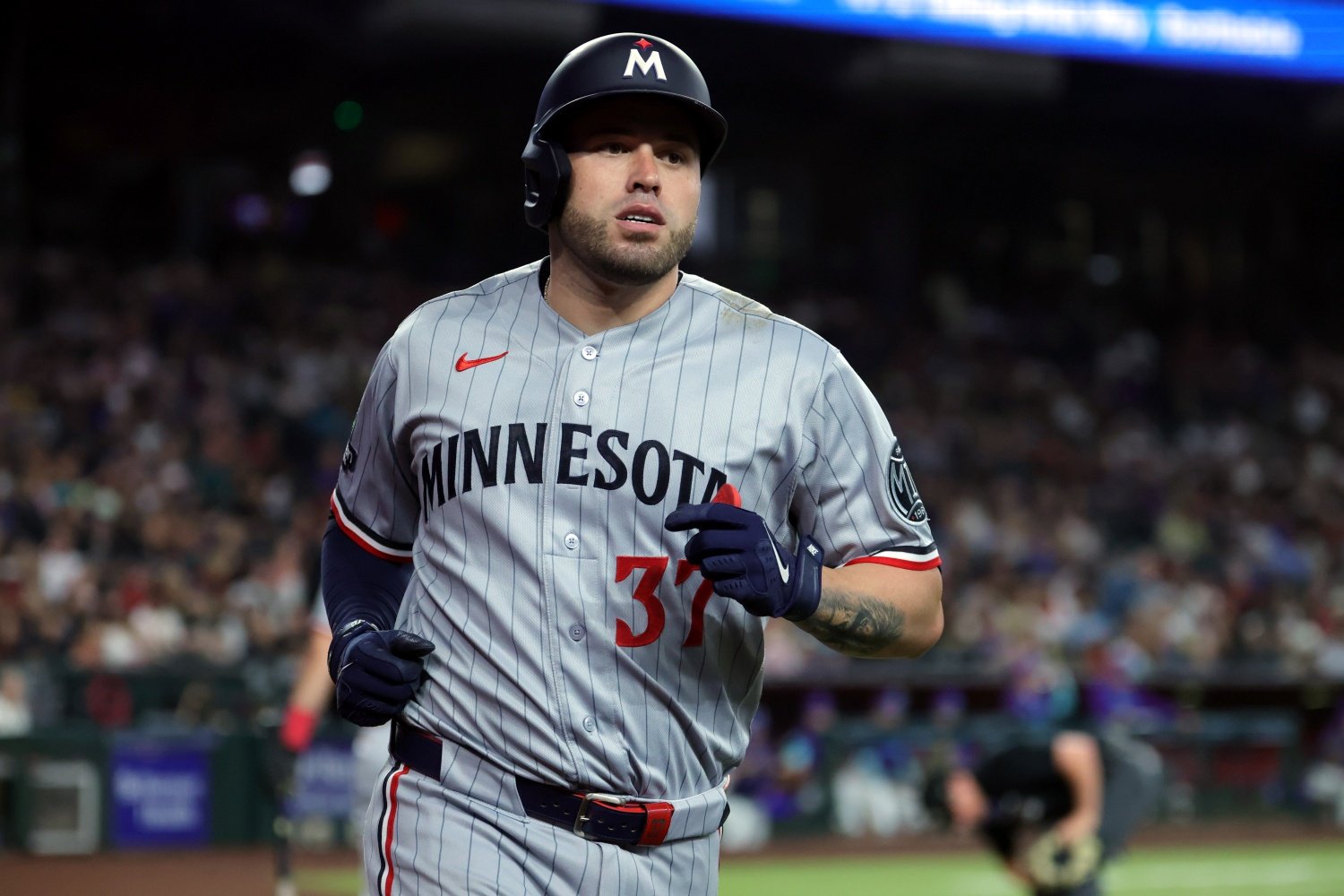 The Twins started the 2026 season with Brooks Lee at shortstop, Royce Lewis at third base, and Luke Keaschall at second. That, to say the least, didn't work. By mid-May, Lewis was at Triple-A St. Paul, and it was clear that Lee needed to move to the hot corner. Keaschall slowly got pushed to the outfield. That left a vacuum on the infield, and whne Tristan Gray proved a poor stopper for that gap, in stepped Ryan Kreidler. Over the offseason, Kreidler underwent a major swing change. He flattened the plane of his stroke, boosting his bat speed, and the early returns on those adjustments were superb. He played only sparingly, but at the end of June, Kreidler was batting .287/.357/.505. In 112 plate appearances, he had 10 extra-base hits (half of which were homers), 10 walks and just 19 strikeouts. The team never treated him like the solution to all their problems, exactly, but he certainly looked like a solution to some problems as the calendar turned to July. Meanwhile, Victor Caratini actually did look like the solution to the Twins' problems. They didn't have a choice but to install him as a regular, but when Ryan Jeffers broke his hamate bone on May 18, Caratini took over full-time catching duty, and he took off like a shot. Before Jeffers went down, Caratini had batted an execrable .192/.294/.231, but he stepped up in a huge way in Jeffers's stead. From the game in which Jeffers got hurt through the All-Star break, Caratini got 138 plate appearances. He batted .282/.370/496, with 13 extra-base hits, 16 walks and 26 strikeouts. He was the linchpin of the lineup as they improbably stayed afloat. Then, the clock struck midnight on the Cinderella stories for both Kreidler and Caratini. From July 1 through the end of the season, Kreidler was catastrophically bad. He got 155 plate appearances, but batted .169/.234/.289. In 43 more trips to the dish than he'd had in his superb first half, he produced no more extra-base hits and just one more walk, while whiffing 23 more times. He looked like a late-blooming, dynamic (albeit flawed) role player, until he didn't. Caratini's ascent was never quite as improbable. He was a low-wattage signing over the winter, but he did get a two-year deal. Depending on your feelings about him as an individual and the class as a whole, he was either the best backup available or a quasi-regular; that's why he merited more than a one-year offer. He's been around a long time. Still, his summer surge was thrilling—which made his late-season spiral even more deflating than it would otherwise have been. Caratini made Kreidler look like a fearsome slugger in the second half. After the break, he batted .179/.263/.198, with just two extra-base hits in 118 plate appearances. He walked eight times in that span; he struck out 30 times. The closest thing to a functioning offensive skill he had was getting in the way of the ball; he was hit by four pitches. These two players symbolize the Twins' season, in some ways. They performed better than expected for a while, but when they ran out of gas, it wasn't pretty. Specifically, they seemed to benefit from the Twins' offensive instruction for a while. The new hitting coach coalition the team assembled in the first year under Derek Shelton had several successes, and for a while, Kreidler and Caratini looked like they would number among them. Eventually, though, both guys ran into the same problem: a grooved swing. Unfortunately, the Twins have to come in for some of the blame on that. They helped each develop and approach and a stroke that would maximize the damage they could do when they got their pitch. Teams eventually learned not to give them that pitch, though, and neither player had the plasticity to respond successfully. Of the 338 batters with the most swings this year, Kreidler had the smallest range in average swing tilt from hacks at low pitches to those against high ones. Swing tilt is the angle between an imaginary horizontal line drawn through the handle of the bat and the actual bat position, just before contact, and while it sounds like a small thing, it's important. How much tilt a hitter has in their swing influences where they can most effectively meet the ball, and to what parts of the field they can effectively hit it. It shapes the margin for error of the swing, in a sense, and the ability to manipulate that tilt is an important part of maximizing margin for error, overall. At the opposite end of the leaderboard from Kreidler, in this metric, is exactly the person you'd expect: Luis Arraez. When he geared up to produce more bat speed and flattened out his swing this year, Kreidler lost the ability to bend that swing and hit pitches in all areas of the zone, vertically. Caratini was second-worst in the league, right behind Kreidler. Each player took some good advice from Twins coaches this year, but they also got waylaid. By engineering their swings to hammer pitches between the mid-thigh and the belly button, they made themselves more vulnerable to everything else—and, eventually, to manipulations of timing, too, as they tried to make changes but fell short. Adaptability is a vital part of hitting, and neither Caratini nor Kreidler did it well this year. They did find some benefits in the process. For a stretch, each was the best version of himself. If the Twins want to get more sustained success from next year's crop of reclamation or development projects, though, they'll need to be emphasize more flexibility as they provide feedback on mechanics and approach—or get some players with a bit more pure talent than Kreidler and Caratini possess. Both hitters focused an above-average share of their swings in the middle of the zone, which is good. They were aware that their swings weren't especially maneuverable, and they tried to devise a plan to survive that shortcoming. They couldn't outrun it, though. As the team heads into the offseason, the front office has been enthusiastic about what they achieved on the hitting side this year. There were some unequivocal successes, along with these qualified ones, so much of that self-satisfaction is justified. If they want to know where they still have some heavy lifting to do, though, they need look no further than the craters left by the way Caratini and Kreidler crashed to Earth late in the year.
 -
Absolutely correct! Certainly, to listen to him talk about it and having been around him even a little bit, I think that's right. AND, There's still no chance he comes back to play those games if there's any injury that actually forced him to be placed on the IL, as opposed to merely making him eligible to be.
-
Image courtesy of Bruce Kluckhohn-Imagn Images When the Twins called up Kaelen Culpepper to take over as their shortstop on August 7, one of the noteworthy things about the decision was that they forfeited an (admittedly remote) shot at scooping up some significant future value. Because Culpepper came up with 52 days left in the season, he was all but guaranteed to exceed the thresholds that exhaust a player's rookie eligibility: 130 at-bats, or 45 days on the active roster. That meant Culpepper would not be eligible for the 2027 Rookie of the Year Award, and that he could not net the team a prospect promotion incentive (PPI) draft pick by winning that honor or finishing well in MVP voting over the first two or three years of his career. For most players, this is a minor consideration, but it was a major talking point. Some fans believed the Twins were holding Culpepper and Walker Jenkins back from being called up purely to preserve the possibility that they might someday net them a draft pick. Calling up Culpepper just a week before the date at which they could have done so without compromising that chance was another indication that the organization felt a sense of urgency to win in 2026, adding to the indications they'd given by being moderately aggressive at the August 3 trade deadline. Then, something a little funny happened. On September 15, on a ground ball to shortstop, Culpepper came up limping slightly. He left that night's game against the Yankees, and the next day, the Twins placed him on the 10-day injured list with a left hamstring strain. By then, it was abundantly clear that the team was not going to make the playoffs, so it was equally clear that Culpepper's rookie season was over. Or was it? "I think it’s one of those situations that we think it’s best for him to make sure" it doesn't become a bigger issue, Shelton told reporters that day. “Now, on the flipside, there is a possibility he could come back with two games left. Our goal right now is that. Now, if it doesn’t happen, obviously, we will make those kind of arrangements. But the goal we’ve had for him, because it is a mild strain, is to see if the last two games are available.” In a vacuum, that was very, very strange. It jibes a bit with Shelton's unusual approach to managing the team and the clubhouse, but even taking that into account, it was strange. Teams don't bring back injured players who are important to the long-term outlook of the organization for a couple of games at the end of the season. At the time, it felt like Shelton was merely paying lip service to that option, as a way of underscoring how mild the strain was. It still seemed extremely unlikely Culpepper would play again before the year was over. He did. Throughout his minimum-length stay on the shelf, the team and the player were unwavering in their belief that he would return, and he played the final two games of the season, despite the Twins having been officially eliminated from playoff contention the previous weekend. He finished the season with a .274/.328/.393 line in 117 at-bats. He also finished, thanks to that 10-day stay on the IL, with 42 days of active roster time. Culpepper will appear on top prospect lists this winter, and he'll be Rookie of the Year- and PPI-eligible next season, after all. There is no chance—none whatsoever; do not take this to Conspiracy Theory Town—that Culpepper was not actually injured, or that the Twins acted improperly by putting him on the IL in the wake of his hamstring tweak. Now, though, I think we can safely say a couple of things: "Tweak" is a better word for it than "strain". It was as mild an issue as a high-level athlete is ever likely to have with that muscle, which is always so troublesome. If the Twins had still been in serious contention when he got hurt, Culpepper would have played through the problem. Baseball people are fond of reminding everyone that no one is 100% healthy in September, at the end of a grueling 162-game season. This is the kind of injury to which they're alluding, and it's one players push through all the time. Culpepper could have pushed through this one, too. If that weren't true—if it were actually an injury severe enough to unequivocally require 10 days off—there is no chance he would have come back for the two meaningless games at the end of the year. This highlights something that's good to keep in mind, anyway, when it comes to injuries in sports: there's almost always ambiguity. There are often perfectly sound cases for or against any particular course of action, from a routine day off to an IL placement to surgery. Health is a skill for big-league athletes, made up of two component skills: avoiding injuries, and playing through ones minor enough to permit that. The former has much to do with one's genetics, conditioning and playing style. The latter depends on those things, too, but it's a tricky needle to thread. One must be careful not to increase the chances of a more severe injury, without losing time that doesn't need to be lost. Culpepper was never going to push through this particular injury, extremely mild though it clearly was—not because he couldn't have or didn't want to, but because once that issue arose, the Twins saw an opportunity. It's unlikely that Culpepper wins an award or garners enough MVP votes to earn them a PPI draft pick someday, but it's not impossible. Why foreclose the possibility, when you've been given a sudden and unexpected chance to maintain it? You don't have to love that there were incentives for the Twins to err so much on the side of caution, but they were there. It was a kelp-and-sailboat situation—kind of. The Twins didn't fudge anything or make any unethical choices; they didn't have to. This was just a very fortuitous hamstring tweak, as well as a very mild one. It gave them a chance to add a bit of value to their long-term portfolio, and while they're unlikely to realize any actual value from it, it cost them nothing to take the opportunity. Culpepper could, perhaps, have learned a little about playing through mild injuries by staying on the field for those 10 days, but that's the kind of thing you'd rather have players learn when it's necessary—when the stakes are much higher, that is. Besides, that would have involved some risk of worsening the injury. They minimized any chance of having to worry about Culpepper's legs going into the winter, and they gave him a slightly greater chance to make extra money next season (there are bonuses for Rookie of the Year Award vote-getters, as well as value going to the winner's team in the form of a future pick) while helping themselves. They even got him back onto the field to enjoy a few last cheers from the fans at Target Field, before the campaign ended—though if those two days had tipped him over to no longer being rookie-eligible, it feels safe to guess that his hamstring issue would have been season-ending, after all. View full article
-
Kaelen Culpepper and the Mildest Hamstring Strain in Baseball History
Matthew Trueblood posted an article in Twins
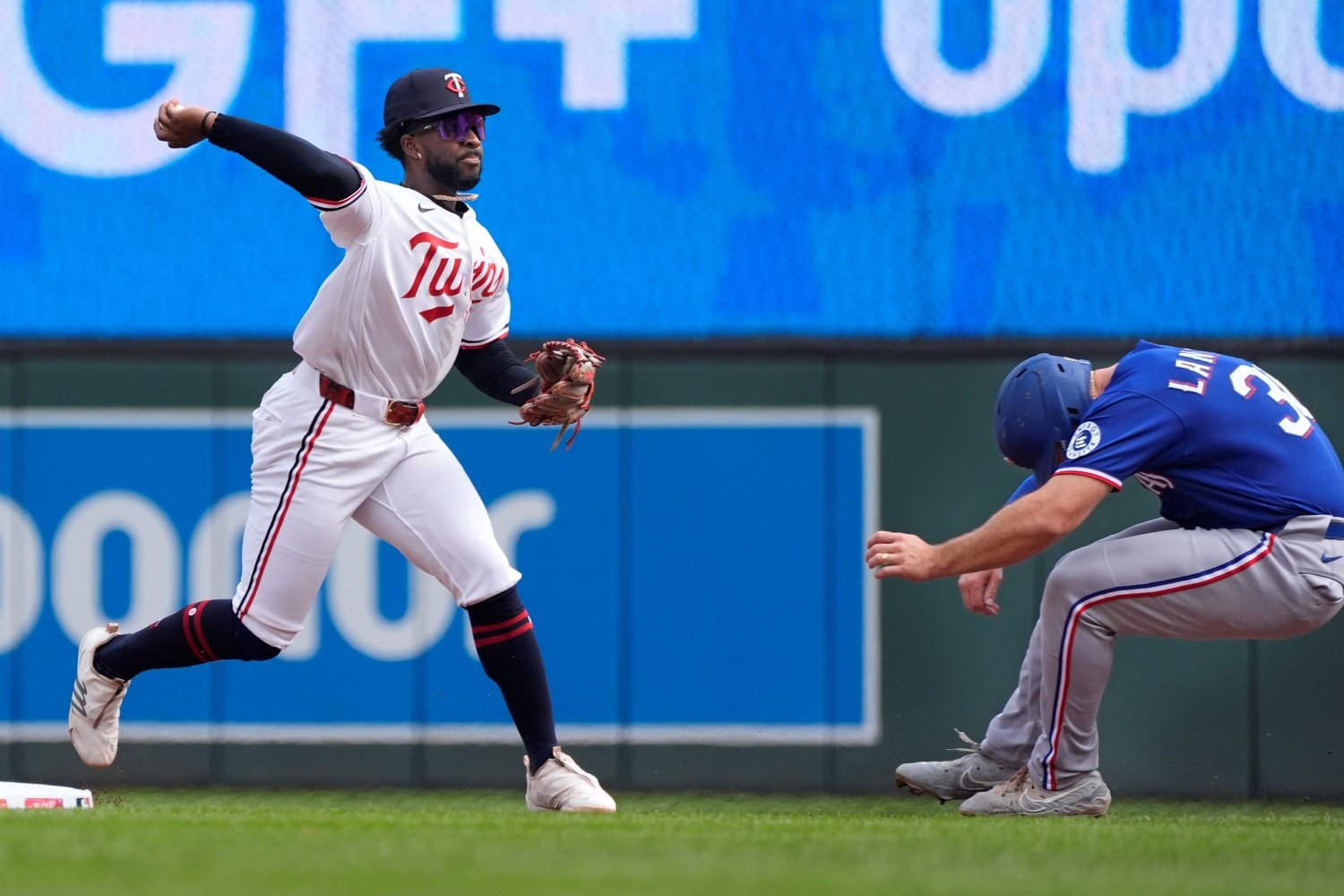 When the Twins called up Kaelen Culpepper to take over as their shortstop on August 7, one of the noteworthy things about the decision was that they forfeited an (admittedly remote) shot at scooping up some significant future value. Because Culpepper came up with 52 days left in the season, he was all but guaranteed to exceed the thresholds that exhaust a player's rookie eligibility: 130 at-bats, or 45 days on the active roster. That meant Culpepper would not be eligible for the 2027 Rookie of the Year Award, and that he could not net the team a prospect promotion incentive (PPI) draft pick by winning that honor or finishing well in MVP voting over the first two or three years of his career. For most players, this is a minor consideration, but it was a major talking point. Some fans believed the Twins were holding Culpepper and Walker Jenkins back from being called up purely to preserve the possibility that they might someday net them a draft pick. Calling up Culpepper just a week before the date at which they could have done so without compromising that chance was another indication that the organization felt a sense of urgency to win in 2026, adding to the indications they'd given by being moderately aggressive at the August 3 trade deadline. Then, something a little funny happened. On September 15, on a ground ball to shortstop, Culpepper came up limping slightly. He left that night's game against the Yankees, and the next day, the Twins placed him on the 10-day injured list with a left hamstring strain. By then, it was abundantly clear that the team was not going to make the playoffs, so it was equally clear that Culpepper's rookie season was over. Or was it? "I think it’s one of those situations that we think it’s best for him to make sure" it doesn't become a bigger issue, Shelton told reporters that day. “Now, on the flipside, there is a possibility he could come back with two games left. Our goal right now is that. Now, if it doesn’t happen, obviously, we will make those kind of arrangements. But the goal we’ve had for him, because it is a mild strain, is to see if the last two games are available.” In a vacuum, that was very, very strange. It jibes a bit with Shelton's unusual approach to managing the team and the clubhouse, but even taking that into account, it was strange. Teams don't bring back injured players who are important to the long-term outlook of the organization for a couple of games at the end of the season. At the time, it felt like Shelton was merely paying lip service to that option, as a way of underscoring how mild the strain was. It still seemed extremely unlikely Culpepper would play again before the year was over. He did. Throughout his minimum-length stay on the shelf, the team and the player were unwavering in their belief that he would return, and he played the final two games of the season, despite the Twins having been officially eliminated from playoff contention the previous weekend. He finished the season with a .274/.328/.393 line in 117 at-bats. He also finished, thanks to that 10-day stay on the IL, with 42 days of active roster time. Culpepper will appear on top prospect lists this winter, and he'll be Rookie of the Year- and PPI-eligible next season, after all. There is no chance—none whatsoever; do not take this to Conspiracy Theory Town—that Culpepper was not actually injured, or that the Twins acted improperly by putting him on the IL in the wake of his hamstring tweak. Now, though, I think we can safely say a couple of things: "Tweak" is a better word for it than "strain". It was as mild an issue as a high-level athlete is ever likely to have with that muscle, which is always so troublesome. If the Twins had still been in serious contention when he got hurt, Culpepper would have played through the problem. Baseball people are fond of reminding everyone that no one is 100% healthy in September, at the end of a grueling 162-game season. This is the kind of injury to which they're alluding, and it's one players push through all the time. Culpepper could have pushed through this one, too. If that weren't true—if it were actually an injury severe enough to unequivocally require 10 days off—there is no chance he would have come back for the two meaningless games at the end of the year. This highlights something that's good to keep in mind, anyway, when it comes to injuries in sports: there's almost always ambiguity. There are often perfectly sound cases for or against any particular course of action, from a routine day off to an IL placement to surgery. Health is a skill for big-league athletes, made up of two component skills: avoiding injuries, and playing through ones minor enough to permit that. The former has much to do with one's genetics, conditioning and playing style. The latter depends on those things, too, but it's a tricky needle to thread. One must be careful not to increase the chances of a more severe injury, without losing time that doesn't need to be lost. Culpepper was never going to push through this particular injury, extremely mild though it clearly was—not because he couldn't have or didn't want to, but because once that issue arose, the Twins saw an opportunity. It's unlikely that Culpepper wins an award or garners enough MVP votes to earn them a PPI draft pick someday, but it's not impossible. Why foreclose the possibility, when you've been given a sudden and unexpected chance to maintain it? You don't have to love that there were incentives for the Twins to err so much on the side of caution, but they were there. It was a kelp-and-sailboat situation—kind of. The Twins didn't fudge anything or make any unethical choices; they didn't have to. This was just a very fortuitous hamstring tweak, as well as a very mild one. It gave them a chance to add a bit of value to their long-term portfolio, and while they're unlikely to realize any actual value from it, it cost them nothing to take the opportunity. Culpepper could, perhaps, have learned a little about playing through mild injuries by staying on the field for those 10 days, but that's the kind of thing you'd rather have players learn when it's necessary—when the stakes are much higher, that is. Besides, that would have involved some risk of worsening the injury. They minimized any chance of having to worry about Culpepper's legs going into the winter, and they gave him a slightly greater chance to make extra money next season (there are bonuses for Rookie of the Year Award vote-getters, as well as value going to the winner's team in the form of a future pick) while helping themselves. They even got him back onto the field to enjoy a few last cheers from the fans at Target Field, before the campaign ended—though if those two days had tipped him over to no longer being rookie-eligible, it feels safe to guess that his hamstring issue would have been season-ending, after all.
 -
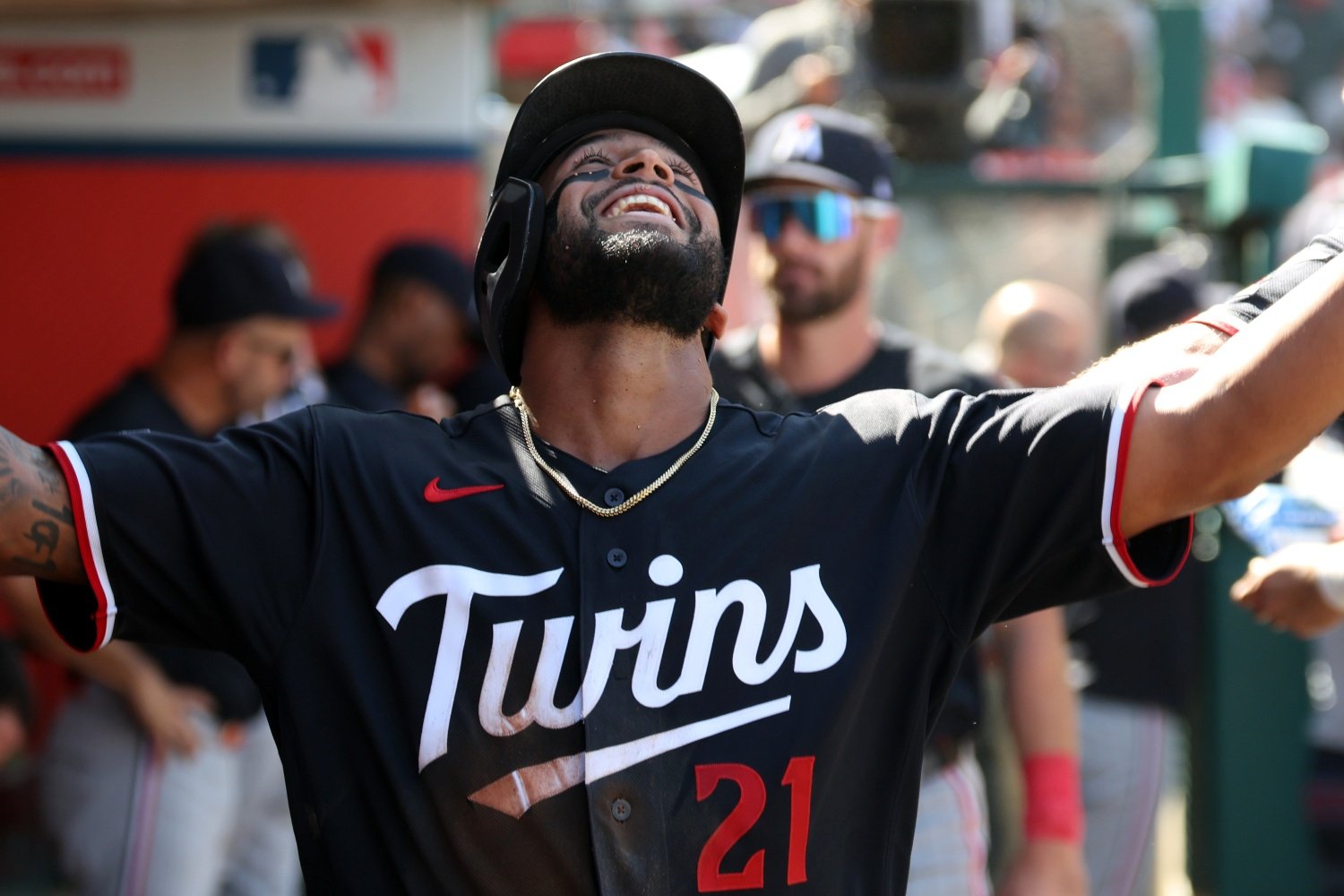 Nobody who arrives in the major leagues wants to be called 'adorable'. That's a word you use for a puppy or a kid. It's good for scarves and craft projects. It fits a brawny young athlete like a mid-2000s NBA draftee's suit. These guys are tenacious and resilient. They're competitive. They're often handsome, but they don't want to be cute. Surely, they don't want to be called 'adorable'. So, to Emmanuel Rodríguez: I'm sorry. I don't mean this as condescending or infantilizing. If I could come up with a better word for this, I would. But the English language hasn't yet found a better term for what happens when Rodríguez connects cleanly on one of his picture-perfect swings and sends a ball sailing toward the gap. It's adorable, man. First, let's go to the tape. Here's Rodríguez hitting a gorgeous two-run triple to flip the scoreboard against the Yankees on September 14. ek13azBfWGw0TUFRPT1fQUZKU1UxMEZBd1VBWFFOUlVnQUhCQVJVQUZrR1VRUUFCbFVIVWdFTUF3SlNDVk5X.mp4 We will—I promise, we will—return to an analysis of Rodríguez's swing itself; that's what I thought this article was going to be all about. But for now, just absorb that, aesthetically. Now, enjoy this double, the very next night. OTdQOEdfWGw0TUFRPT1fQVFrRFhRRlFYZ01BRDFNRkFnQUhCQVlIQUFOUlVnY0FBbGNFQXdRQUNGZFVVMVpV.mp4 I wonder if maybe you've already spotted it, but I won't assume that you have, or demand that you go back and find it. Here's another example, when he doubled (to break a miniature slump) Sunday in Anaheim. QXc3MDJfWGw0TUFRPT1fQlZkV1hBVUNVQVFBQUFRRlZBQUhCRlVIQUZrQkFnQUFWRnhYQndzQkJGRlFVd1JW.mp4 And finally, here's the homer Rodríguez hit late in Monday night's loss to the Giants. What a swing. What a hitter. ZFh2WlBfWGw0TUFRPT1fQmdFQVZnVU5YZ2NBQ0FNQlh3QUhWVkpUQUFNQVVRY0FDd1lOQ0ZjREJsY0FCd3RU.mp4 Already, it's clear that this guy will be a dynamic presence in the Twins lineup. There's some really interesting data on his swing, which we can evaluate sooner and better than ever thanks to Statcast's ever-deepening trove of great numbers. But I don't want to talk about all of that just yet. We need to talk about this, instead. You offer me a better word than 'adorable,' and I'll take it, but I'm defying you. I don't think it exists. When Rodríguez catches the sweet spot—when he really gets through one the way he wants to—he absolutely cannot help himself. Involuntarily (sometimes just momentarily; he occasionally catches himself and shuts it down fast), before he's even done following through but as he sees the ball jump off his bat the way he felt sure it would, he breaks into a big old smile. Hitting in the majors is serious business. It's damn hard, and it's no fun when you're piling up rollover grounders or strikeouts. The culture of the game still expects quite a bit of decorum, really. You're expected to be so intense that you often look dour or angry, even at your moment of triumph. But anyone who's ever picked up a bat and squeezed out the sawdust—anyone who's wiggled their fingers and swished the stick and stepped into a box and waited and watched and given their best pass at a ball—knows the truth under all that professionalism. There's maybe one better feeling in this world than hitting a baseball pure, and if you want to talk about it, you need to open an incognito tab and go discuss it on a very different website. The tactile joy of hitting a ball so cleanly that you don't really feel the contact is as close to the thrill of flight as most of us will ever feel. If you know that feeling, you're either smiling even as you read this, or fighting your own cheek muscles to stop it. Rodríguez knows that feeling when it comes, and he doesn't bother fighting his own face. The delight spreads across his visage, and we all get to share in his moment of happiness. That's a huge part of what being a sports fan should be. It's a wonderful service he's doing for Twins fans, even at the disappointing end of a squandered season. You really don't see this that much. Most hitters can hit a ball 450 feet and maintain a glower. Rodríguez can't. I propose we all agree to nickname him 'Sparkle,' because the flash of his teeth on this handful of swings has been the brightest set of scintillations to hit Twins Territory since the first time the sunlight hit the limestone at Target Field. The best part is that it's utterly unpretentious. Not one bit of it is a put-on; Rodríguez is doing it without making a conscious decision. It's just the love of the game spilling out of him, at the very moment when we all sympathize with that feeling the most. While we're here, let's talk just a little about why he's already cracked five extra-base hits and has gotten so many chances to show off the pearly whites. Rodríguez has an outlier of a swing, in addition to the impressive plate discipline that everyone knew about long before he reached the majors. By and large, the shorter a hitter's swing, the slower it is. Creating torque and bat speed takes space, and most hitters with fast swings also have long ones. Not Rodríguez, though. See that red X in the lower right portion of this chart? That's Rodríguez. For a guy who's so direct to the ball, he's shockingly good at getting the bat moving fast by the time he gets to the hitting zone. The only player with a similarly fast swing who's close to being as short to the ball as Rodríguez is the Brewers' Garrett Mitchell. You might be surprised to hear this about Rodríguez (and Mitchell, for that matter), because in general, short swings are expected to produce high contact rates. Rodríguez (and Mitchell, for that matter) whiffs a lot, which doesn't fit the narrative. The problem is pretty simple: the tradeoff he's making by getting from 0 to 76 MPH in such a short space is that he has fairly little control of the barrel when he gets near the contact point. He also hits it farther in front of his body than most players with short swings, and again, it's not a coincidence. His directness allows him to wait a long time to decide to swing, and contributes to his patience. However, it also means that if he's even slightly wrong about the pitch speed or movement he perceives, he'll be unable to make an adjustment and catch the ball with his bat, let alone his barrel. That might mean a long adjustment curve for Rodríguez as he settles into a full-time job in the majors. Hitting in the majors is hard, and his approach from the minors won't quite work here. However, his swing is a lethal, thrilling thing—and that reaction to the times when it produces the results he's looking for is (sorry) adorable.
 -
Image courtesy of Kiyoshi Mio-Imagn Images Nobody who arrives in the major leagues wants to be called 'adorable'. That's a word you use for a puppy or a kid. It's good for scarves and craft projects. It fits a brawny young athlete like a mid-2000s NBA draftee's suit. These guys are tenacious and resilient. They're competitive. They're often handsome, but they don't want to be cute. Surely, they don't want to be called 'adorable'. So, to Emmanuel Rodríguez: I'm sorry. I don't mean this as condescending or infantilizing. If I could come up with a better word for this, I would. But the English language hasn't yet found a better term for what happens when Rodríguez connects cleanly on one of his picture-perfect swings and sends a ball sailing toward the gap. It's adorable, man. First, let's go to the tape. Here's Rodríguez hitting a gorgeous two-run triple to flip the scoreboard against the Yankees on September 14. ek13azBfWGw0TUFRPT1fQUZKU1UxMEZBd1VBWFFOUlVnQUhCQVJVQUZrR1VRUUFCbFVIVWdFTUF3SlNDVk5X.mp4 We will—I promise, we will—return to an analysis of Rodríguez's swing itself; that's what I thought this article was going to be all about. But for now, just absorb that, aesthetically. Now, enjoy this double, the very next night. OTdQOEdfWGw0TUFRPT1fQVFrRFhRRlFYZ01BRDFNRkFnQUhCQVlIQUFOUlVnY0FBbGNFQXdRQUNGZFVVMVpV.mp4 I wonder if maybe you've already spotted it, but I won't assume that you have, or demand that you go back and find it. Here's another example, when he doubled (to break a miniature slump) Sunday in Anaheim. QXc3MDJfWGw0TUFRPT1fQlZkV1hBVUNVQVFBQUFRRlZBQUhCRlVIQUZrQkFnQUFWRnhYQndzQkJGRlFVd1JW.mp4 And finally, here's the homer Rodríguez hit late in Monday night's loss to the Giants. What a swing. What a hitter. ZFh2WlBfWGw0TUFRPT1fQmdFQVZnVU5YZ2NBQ0FNQlh3QUhWVkpUQUFNQVVRY0FDd1lOQ0ZjREJsY0FCd3RU.mp4 Already, it's clear that this guy will be a dynamic presence in the Twins lineup. There's some really interesting data on his swing, which we can evaluate sooner and better than ever thanks to Statcast's ever-deepening trove of great numbers. But I don't want to talk about all of that just yet. We need to talk about this, instead. You offer me a better word than 'adorable,' and I'll take it, but I'm defying you. I don't think it exists. When Rodríguez catches the sweet spot—when he really gets through one the way he wants to—he absolutely cannot help himself. Involuntarily (sometimes just momentarily; he occasionally catches himself and shuts it down fast), before he's even done following through but as he sees the ball jump off his bat the way he felt sure it would, he breaks into a big old smile. Hitting in the majors is serious business. It's damn hard, and it's no fun when you're piling up rollover grounders or strikeouts. The culture of the game still expects quite a bit of decorum, really. You're expected to be so intense that you often look dour or angry, even at your moment of triumph. But anyone who's ever picked up a bat and squeezed out the sawdust—anyone who's wiggled their fingers and swished the stick and stepped into a box and waited and watched and given their best pass at a ball—knows the truth under all that professionalism. There's maybe one better feeling in this world than hitting a baseball pure, and if you want to talk about it, you need to open an incognito tab and go discuss it on a very different website. The tactile joy of hitting a ball so cleanly that you don't really feel the contact is as close to the thrill of flight as most of us will ever feel. If you know that feeling, you're either smiling even as you read this, or fighting your own cheek muscles to stop it. Rodríguez knows that feeling when it comes, and he doesn't bother fighting his own face. The delight spreads across his visage, and we all get to share in his moment of happiness. That's a huge part of what being a sports fan should be. It's a wonderful service he's doing for Twins fans, even at the disappointing end of a squandered season. You really don't see this that much. Most hitters can hit a ball 450 feet and maintain a glower. Rodríguez can't. I propose we all agree to nickname him 'Sparkle,' because the flash of his teeth on this handful of swings has been the brightest set of scintillations to hit Twins Territory since the first time the sunlight hit the limestone at Target Field. The best part is that it's utterly unpretentious. Not one bit of it is a put-on; Rodríguez is doing it without making a conscious decision. It's just the love of the game spilling out of him, at the very moment when we all sympathize with that feeling the most. While we're here, let's talk just a little about why he's already cracked five extra-base hits and has gotten so many chances to show off the pearly whites. Rodríguez has an outlier of a swing, in addition to the impressive plate discipline that everyone knew about long before he reached the majors. By and large, the shorter a hitter's swing, the slower it is. Creating torque and bat speed takes space, and most hitters with fast swings also have long ones. Not Rodríguez, though. See that red X in the lower right portion of this chart? That's Rodríguez. For a guy who's so direct to the ball, he's shockingly good at getting the bat moving fast by the time he gets to the hitting zone. The only player with a similarly fast swing who's close to being as short to the ball as Rodríguez is the Brewers' Garrett Mitchell. You might be surprised to hear this about Rodríguez (and Mitchell, for that matter), because in general, short swings are expected to produce high contact rates. Rodríguez (and Mitchell, for that matter) whiffs a lot, which doesn't fit the narrative. The problem is pretty simple: the tradeoff he's making by getting from 0 to 76 MPH in such a short space is that he has fairly little control of the barrel when he gets near the contact point. He also hits it farther in front of his body than most players with short swings, and again, it's not a coincidence. His directness allows him to wait a long time to decide to swing, and contributes to his patience. However, it also means that if he's even slightly wrong about the pitch speed or movement he perceives, he'll be unable to make an adjustment and catch the ball with his bat, let alone his barrel. That might mean a long adjustment curve for Rodríguez as he settles into a full-time job in the majors. Hitting in the majors is hard, and his approach from the minors won't quite work here. However, his swing is a lethal, thrilling thing—and that reaction to the times when it produces the results he's looking for is (sorry) adorable. View full article
-
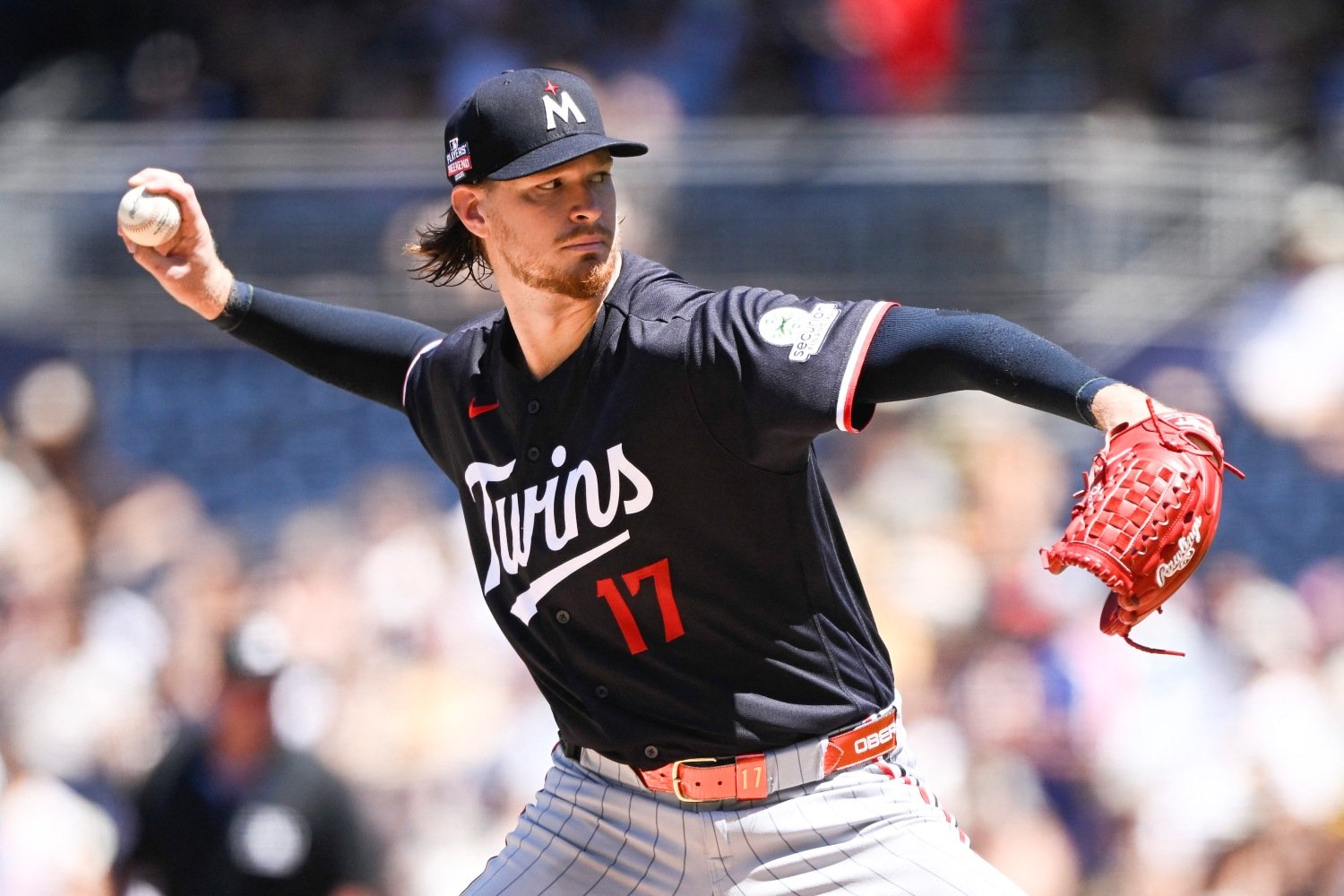 Don't look now, but Bailey Ober has (essentially) a league-average ERA. His 4.28 mark this season is about 0.82 better than the one he put up last year, and his ERA+ of 98 puts him within a whisker of the league average. He's made 22 starts, and figures to make at least two more, including one Tuesday night at Target Field. The Twins are 12-10 when he takes the mound; he's not the problem with this deeply flawed team. However, if you've watched closely of late, it's evident that the Twins are trusting him less than they did a few months ago. On August 11, Ober worked six innings, threw 100 pitches and faced 26 batters, but since then, he hasn't seen the sixth or gone past 22 batters faced. In his last three outings, Derek Shelton has removed him shy of 90 pitches. That's despite Ober allowing just six runs (five of them earned) in 18 2/3 pitches over those four appearances. August 11 was also the last time he worked on four days' rest; he's gotten five days or more between outings ever since. Why? It's relatively simple. Ober is surviving by his wits, with great feel and command but virtually no real stuff left with which to work. His fastball has lost velocity not only year by year, but month by month, which has also reduced the velocity gap between his heater and his best secondary offerings, the slider and changeup: Even that slight recovery you see at the far right of the graph above is an illusion. Ober only seems to be throwing his fastballs harder this month because he's being lifted so proactively, and because he's using that pitch less than he ever has before. His changeup isn't even a secondary pitch anymore; it's become his bread and butter. In a fairly obvious way, that loss of speed and separation produces a degradation in fastball efficacy and stuff ratings. Less obviously, though, it also compromises those slower offerings. Hitters can cover the change and the breaking stuff better because Ober is throwing considerably slower. Using FanGraphs's PitchingBot Visualizer tool (part of their wonderful FanGraphs Lab suite), we can now show more clearly how that's happening—how the loss of velocity and raw stuff reduces Ober's margin for error and has diminished the team's confidence in him late in the season. Here's a set of visualizations that illustrate his 2024 season, before he lost his velocity and when he was still striking out 26% of opposing batters with an ERA under 3.30. As the headers indicate, this shows (from left to right) the command, stuff and overall ratings of each pitch Ober threw that year, with red meaning good and blue meaning bad. On the left, you see what you should expect to see from such a model: lots of red around the edges of the strike zone, lots of blue far outside it and in the heart, and relatively little grayish in-between stuff. In the middle panel, we're looking only at the caliber of his stuff, based on velocity, release, movement and spin, so location isn't automatically governing the results. As you might guess, though, the higher you go in that graphic, the bluer things get. PitchingBot has always given Ober's fastball a low grade, even when it drew rave reviews for its deceptiveness from his low arm angle. Really, the heater has always benefited from Ober's command and execution on his other offerings, and those others are the ones that tend to show up in red on the middle panel. The right side is where the most interesting results show up, for this year and the other two we'll consider. Notice that it looks roughly (but not exactly) like the command chart. Throwing the ball well outside the zone is almost always bad; throwing it right down the middle can be even worse if you have subpar stuff. There's wiggle room, though. Mostly, it works against Ober, but not in a devastating way. There's a little more blue in what you could think of as the innermost ring around the center of the zone than there is on the command chart. Even then, Ober's underwhelming stuff could get hit pretty hard in spots that might have been safe for more electric arms. Ober is good at hitting his spots, though. You already knew that. This chart looks the way it does because he fills up those edges. In 2024, the Visualizer tells us, 4.0% of the pitches he threw were classified as Dangerous Misses—pitches with below-average stuff ratings that were in the hitter's happy zone. The league average for that is closer to 5%, so count him as ahead of the curve at avoiding hard contact for that season, at least process-wise. His Waste Miss (below-average stuff on offerings outside the zone) rate was 29.8%, which is also below the league average (around 31%). Only 8.0% of his pitches were Squandered ones, where he achieved a stuff rating in the top third of his own range but was outside the zone. That's (you guesssed it) lower than the league average, which is more like 10%. Overall, thanks to his sterling command, Ober earned a 53.3 PitchingBot rating for that season, a tick above the average of 50. Here's the same set of visuals for 2025. The middle panel says plenty, because there's both less red and lighter shades of red where it does appear. But Ober's big problem last season—as he was always quick to say—was command. He stopped hitting the edges as consistently, as he battled multiple physical issues that led to mechanical ones. His Danger Miss rate rose to 6.6%; his Waste Miss rate to 31.7%; and his Squandered rate to 9.9%. Worse stuff ratings hurt him even when he did successfully locate at the bottom and top of the zone, and being able to work east and west became more important; that's part of why his strikeout rate went down. He never adequately compensated for all that, though, which is why he ended the season with an ERA over 5.00 and an orange-flag PitchingBot rating of 48.7. Now, for 2026: There's nothing left in Ober's arsenal that grades out as above-average by stuff. He's recovered some of his command, though. He's hitting spots better, but there's a practical limit to how well anyone can do so, and at the level of lifelessness he's dealing with, that ceiling is too low. Look how big the blue in the center of the strike zone has gotten. That's not because Ober is missing there much more often, but because he's been forced to go there a bit more often after falling behind in counts (due to hitters not chasing or whiffing on his tepid stuff) and because pitches that used to be lively enough to work if he kept them out of that middle-middle zone are now just as hittable even a few inches farther in any given direction. This season, Ober's Waste Miss rate is down slightly, to 30.9%. His Squandered rate is lower, too: 9.4%. But his Danger Miss rate has spiked to 7.5%, meaning that one in every 12 pitches he throws is begging to be hit for extra bases. That's untenable. That's why the Twins are slowly giving up on him. Ober is a thoughtful and dedicated hurler. He's added a sinker and increased his comfort with the slider, to try to counteract these trends. Right now, though, he's too much of a sitting duck for Shelton to leave him in the third time through an opposing lineup—and the Twins need to start looking at other options for their 2027 starting rotation. Hopefully, further tinkering can unlock something for Ober, as he tries to change to more of a lateral-movement approach to pitching. For now, though, it's hard to fault the Twins for thinking it's time to move on.
 -
Image courtesy of Denis Poroy-Imagn Images Don't look now, but Bailey Ober has (essentially) a league-average ERA. His 4.28 mark this season is about 0.82 better than the one he put up last year, and his ERA+ of 98 puts him within a whisker of the league average. He's made 22 starts, and figures to make at least two more, including one Tuesday night at Target Field. The Twins are 12-10 when he takes the mound; he's not the problem with this deeply flawed team. However, if you've watched closely of late, it's evident that the Twins are trusting him less than they did a few months ago. On August 11, Ober worked six innings, threw 100 pitches and faced 26 batters, but since then, he hasn't seen the sixth or gone past 22 batters faced. In his last three outings, Derek Shelton has removed him shy of 90 pitches. That's despite Ober allowing just six runs (five of them earned) in 18 2/3 pitches over those four appearances. August 11 was also the last time he worked on four days' rest; he's gotten five days or more between outings ever since. Why? It's relatively simple. Ober is surviving by his wits, with great feel and command but virtually no real stuff left with which to work. His fastball has lost velocity not only year by year, but month by month, which has also reduced the velocity gap between his heater and his best secondary offerings, the slider and changeup: Even that slight recovery you see at the far right of the graph above is an illusion. Ober only seems to be throwing his fastballs harder this month because he's being lifted so proactively, and because he's using that pitch less than he ever has before. His changeup isn't even a secondary pitch anymore; it's become his bread and butter. In a fairly obvious way, that loss of speed and separation produces a degradation in fastball efficacy and stuff ratings. Less obviously, though, it also compromises those slower offerings. Hitters can cover the change and the breaking stuff better because Ober is throwing considerably slower. Using FanGraphs's PitchingBot Visualizer tool (part of their wonderful FanGraphs Lab suite), we can now show more clearly how that's happening—how the loss of velocity and raw stuff reduces Ober's margin for error and has diminished the team's confidence in him late in the season. Here's a set of visualizations that illustrate his 2024 season, before he lost his velocity and when he was still striking out 26% of opposing batters with an ERA under 3.30. As the headers indicate, this shows (from left to right) the command, stuff and overall ratings of each pitch Ober threw that year, with red meaning good and blue meaning bad. On the left, you see what you should expect to see from such a model: lots of red around the edges of the strike zone, lots of blue far outside it and in the heart, and relatively little grayish in-between stuff. In the middle panel, we're looking only at the caliber of his stuff, based on velocity, release, movement and spin, so location isn't automatically governing the results. As you might guess, though, the higher you go in that graphic, the bluer things get. PitchingBot has always given Ober's fastball a low grade, even when it drew rave reviews for its deceptiveness from his low arm angle. Really, the heater has always benefited from Ober's command and execution on his other offerings, and those others are the ones that tend to show up in red on the middle panel. The right side is where the most interesting results show up, for this year and the other two we'll consider. Notice that it looks roughly (but not exactly) like the command chart. Throwing the ball well outside the zone is almost always bad; throwing it right down the middle can be even worse if you have subpar stuff. There's wiggle room, though. Mostly, it works against Ober, but not in a devastating way. There's a little more blue in what you could think of as the innermost ring around the center of the zone than there is on the command chart. Even then, Ober's underwhelming stuff could get hit pretty hard in spots that might have been safe for more electric arms. Ober is good at hitting his spots, though. You already knew that. This chart looks the way it does because he fills up those edges. In 2024, the Visualizer tells us, 4.0% of the pitches he threw were classified as Dangerous Misses—pitches with below-average stuff ratings that were in the hitter's happy zone. The league average for that is closer to 5%, so count him as ahead of the curve at avoiding hard contact for that season, at least process-wise. His Waste Miss (below-average stuff on offerings outside the zone) rate was 29.8%, which is also below the league average (around 31%). Only 8.0% of his pitches were Squandered ones, where he achieved a stuff rating in the top third of his own range but was outside the zone. That's (you guesssed it) lower than the league average, which is more like 10%. Overall, thanks to his sterling command, Ober earned a 53.3 PitchingBot rating for that season, a tick above the average of 50. Here's the same set of visuals for 2025. The middle panel says plenty, because there's both less red and lighter shades of red where it does appear. But Ober's big problem last season—as he was always quick to say—was command. He stopped hitting the edges as consistently, as he battled multiple physical issues that led to mechanical ones. His Danger Miss rate rose to 6.6%; his Waste Miss rate to 31.7%; and his Squandered rate to 9.9%. Worse stuff ratings hurt him even when he did successfully locate at the bottom and top of the zone, and being able to work east and west became more important; that's part of why his strikeout rate went down. He never adequately compensated for all that, though, which is why he ended the season with an ERA over 5.00 and an orange-flag PitchingBot rating of 48.7. Now, for 2026: There's nothing left in Ober's arsenal that grades out as above-average by stuff. He's recovered some of his command, though. He's hitting spots better, but there's a practical limit to how well anyone can do so, and at the level of lifelessness he's dealing with, that ceiling is too low. Look how big the blue in the center of the strike zone has gotten. That's not because Ober is missing there much more often, but because he's been forced to go there a bit more often after falling behind in counts (due to hitters not chasing or whiffing on his tepid stuff) and because pitches that used to be lively enough to work if he kept them out of that middle-middle zone are now just as hittable even a few inches farther in any given direction. This season, Ober's Waste Miss rate is down slightly, to 30.9%. His Squandered rate is lower, too: 9.4%. But his Danger Miss rate has spiked to 7.5%, meaning that one in every 12 pitches he throws is begging to be hit for extra bases. That's untenable. That's why the Twins are slowly giving up on him. Ober is a thoughtful and dedicated hurler. He's added a sinker and increased his comfort with the slider, to try to counteract these trends. Right now, though, he's too much of a sitting duck for Shelton to leave him in the third time through an opposing lineup—and the Twins need to start looking at other options for their 2027 starting rotation. Hopefully, further tinkering can unlock something for Ober, as he tries to change to more of a lateral-movement approach to pitching. For now, though, it's hard to fault the Twins for thinking it's time to move on. View full article
-
Kody Clemens's Only Shortcomings Have Really Been Other People's
Matthew Trueblood posted an article in Twins
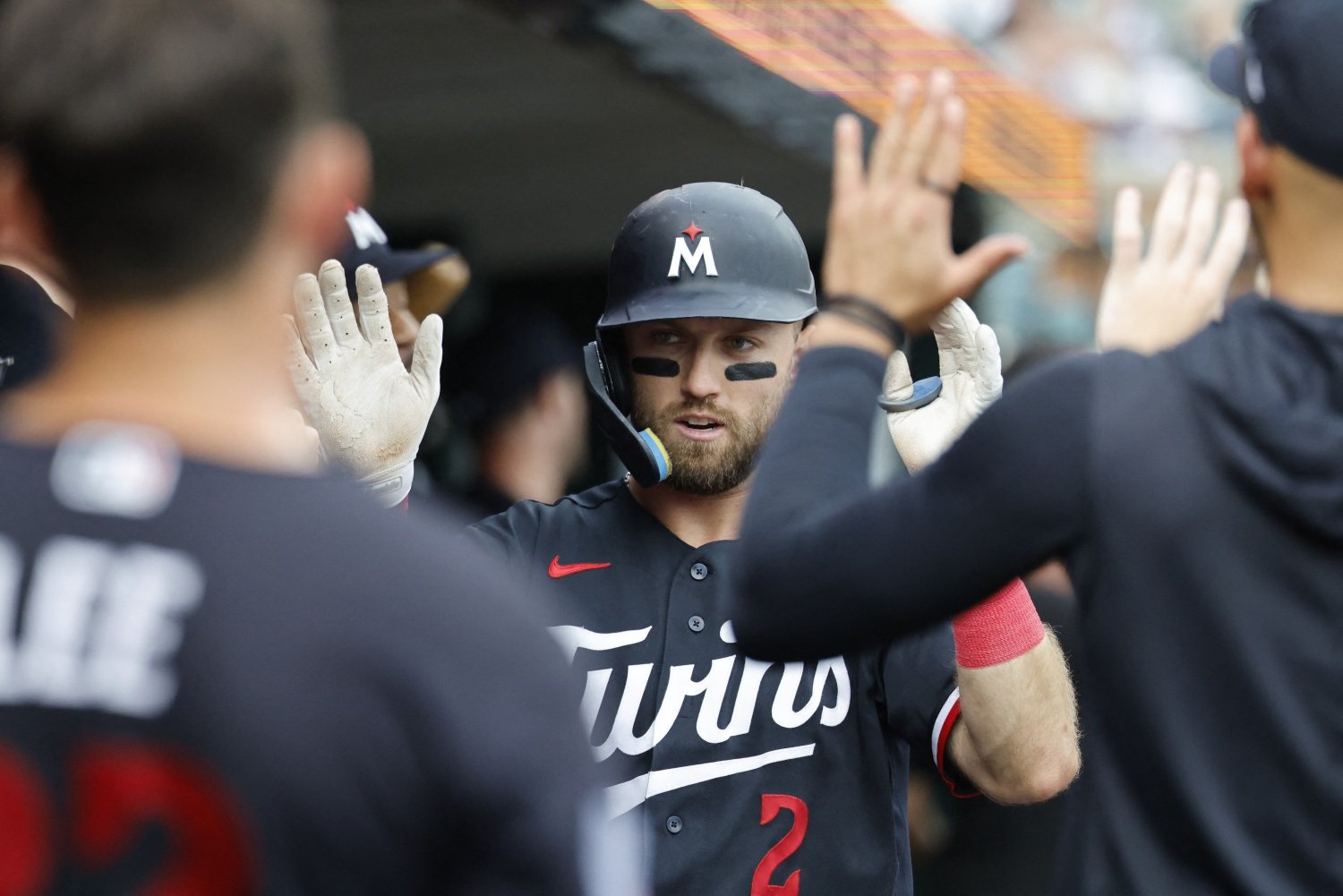 Much has been asked of Kody Clemens this season, and he's answered the call as well and as often as he could. When it became clear that the team would not trust Josh Bell or Victor Caratini with regular playing time at first base, Clemens played there for a while, even though it might be his worst defensive position. When injuries and poor performances piled up in the outfield, Clemens trotted out there, even covering center field for a short time—despite being 30 years old and lacking the raw athleticism that position demands in the modern game. He's faced more left-handed pitchers than he should, because the roster lacks good right-handed lefty-mashers. He's batted third more often than he should, because the roster has lacked offensive firepower whenever Byron Buxton and/or Ryan Jeffers were at less than their best. Through it all, Clemens has had not only the best season of his career, but a downright good one—the kind of campaign that seemed like it would never come for the late-blooming son of an early-blooming Hall of Fame hurler. He's gone from forgettable utility man to valuable super-utility man, and while he was asked to be too many things to the 2026 Twins, he delivered more than could possibly have been expected. After homering in consecutive games upon his latest return to Detroit (his first pro organization), he has 26 of those on the season, and he leads the American League with six triples. The only way to be disappointed in his .241/.302/.475 batting line is to dwell way too much on the middle number. On a properly outfitted contending team, Clemens would bat fifth or sixth on most days, and he would enjoy the platoon advantage at least 80% of the time. Twenty-five lefty batters with at least 300 plate appearances already this year have faced righty hurlers at least that often; over half of that group have had the platoon edge 85% of the time or more. Clemens hangs in better against left-handed pitchers than most lefty batters do, and his numbers wouldn't be massively inflated by seeing righties at a much higher rate, but he's only had the platoon advantage 73.6% of the time this year. He's also batted third a plurality of the time, and in over half the Twins' games this year (75), he's started in one of the top four spots in the batting order. Let Clemens rack up 137 plate appearances against southpaws, and his numbers are going to look unsexy. Ask him to hit in one of the most important spots in the lineup, and he's going to feel underwhelming. The Twins have asked more of him than should be asked of this type of player. Next season, they need to have a more robust set of right-handed hitters, and they need a more stable, impressive top half of the batting order. None of that is Clemens's problem, though. He's performed magnificently—more than well enough to get this team to October, if the rest of the roster (or the front office responsible for building it) had done its job. When Clemens succeeds, there seems to be a sense that disaster is right around the corner. When he fails, everyone seems to nod with self-satisfaction. He's been branded streaky; he's been branded lucky; and he's been branded as an undisciplined hitter. None of that is particularly accurate, though. Here's a look at Clemens's rolling weighted on-base average (wOBA) in 100-plate appearance increments for the whole season. I'm betting you expected more than one trough, where he was substantially worse than a league-average hitter. That's the narrative. The reality is that, despite that oddly lefty-heavy stretch of the schedule early and the cold start it begot him, Clemens has been steadily and solidly above-average, save for one prolonged slump. That slump could not have come at a worse time—it comprised almost the whole month of August. But it's just one letdown. To whatever extent Clemens must bear the blame for letting the team collapse during their nightmare month, he deserves at least that much credit for keeping them afloat in June and July. Lately, he's right back where he was for most of the season, and while you'd love to see a player go through a whole campaign without slumping, hardly anyone does so. Bell was just as bad for just as long early in the season. Buxton's production fell off a cliff after he began dealing with injuries in late June. Jeffers wasn't the same for the first month-plus after his return from the IL. You can look at players beyond the Twins, and the same story unfolds: slumps are inevitable. Good players survive them and produce well around them. That's what Clemens has done. As for his approach, it's true that Clemens doesn't walk very often, and that's a bit unfortunate, because his batted-ball profile will never yield a very high batting average on balls in play. He's an extreme pull hitter, especially on the ground; that makes it easy to defend him by shading the infield to the right. He's a fairly extreme fly-ball hitter, and fly balls fall in for hits less often than grounders sneak through for them. Clemens's batted balls spray around the field somewhat like Max Kepler's did for years at Target Field; we know how that worked out for Kepler. Therefore, it's essential that Clemens be ready to pounce, and to drive the first good pitch he gets in a count. He's done much better at that this year; it's his big step forward. He got beaten by four-seam fastballs consistently in 2025. Here's what his spray chart against them looked like: If you're a true pull hitter, every fly ball to center and the opposite way is a small defeat. Pitchers were beating Clemens last season with the heater. He didn't whiff at a catastrophic rate against them; he just didn't get the barrel around and through them. That's changed. According to FanGraphs, Clemens has been 8.0 runs better at the plate this year than he was in 2025. According to Baseball Savant, he's been 20 runs better on four-seamers than he was last year. You do the math. Clemens has sold out for the heater a bit, because you can't get very far in the modern game without getting your barrel cleanly to the ball even when the pitcher comes at you with their best heater. It's cost him a bit in other places, but look at all the rewards he's reaped. He hit four homers against four-seamers last season, including one that snuck out to left-center. He's hit a whopping 13 dingers against such pitches in 2026, because he's sat on that pitch with greater conviction and gotten started early enough to do so. That's what he did on the one homer in the bunch that went to left field, too—the one he hit Wednesday. He knew Keider Montero would throw him a first-pitch heater, and he rode it out, albeit not in the direction in which he usually does that kind of damage. To do that, you have to have conviction based not only on the pitch type, but on the count. That's been key to Clemens's breakout, but it's also why his on-base percentage is never likely to be that high. He swung at fewer than 20% of the first pitches he saw during his stints in the big leagues in 2023 and 2024. That figure rose to almost 30% last year, but it's ticked up again in 2026. In particular, after being more patient early, he's gotten particularly assertive—though he's moderated that slightly of late. Here are his month-by-month first-pitch swing rates for this year. March/April: 24.4% May: 38.6% June: 32.4% July: 37.4% August: 33.3% September: 28.9% Clemens does have a decent feel for the zone, but his swing is not especially adaptable. He has good hand-eye coordination, but not the freakish, bendable violence of movement that allows hitters to hammer pitches even when they're fooled isn't there. Swinging early in counts is the cure for that. Pitchers tend to be more predictable in those early counts, and Clemens can swing without worrying as much about a whiff. That produces more squared-up balls and fewer mishits. It just denies him the chance to get ahead in counts often and work walks. At home at second base, Clemens has a clear defensive fit for next season. He's also proved he can hit in the big leagues—not hit enough to stay in the bigs, but really hit in the bigs, in a way that moves a team forward toward a playoff berth. He needs a bit more rest and protection from bad matchups, and he needs better teammates. There's a ceiling here; Clemens will never be an All-Star. This season has been a monumental success for him, though, and the Twins should enter the offseason with as much conviction as Clemens now takes to the batter's box: to get him further down the lineup, but not to push him out of it.
 -
Image courtesy of Rick Osentoski-Imagn Images Much has been asked of Kody Clemens this season, and he's answered the call as well and as often as he could. When it became clear that the team would not trust Josh Bell or Victor Caratini with regular playing time at first base, Clemens played there for a while, even though it might be his worst defensive position. When injuries and poor performances piled up in the outfield, Clemens trotted out there, even covering center field for a short time—despite being 30 years old and lacking the raw athleticism that position demands in the modern game. He's faced more left-handed pitchers than he should, because the roster lacks good right-handed lefty-mashers. He's batted third more often than he should, because the roster has lacked offensive firepower whenever Byron Buxton and/or Ryan Jeffers were at less than their best. Through it all, Clemens has had not only the best season of his career, but a downright good one—the kind of campaign that seemed like it would never come for the late-blooming son of an early-blooming Hall of Fame hurler. He's gone from forgettable utility man to valuable super-utility man, and while he was asked to be too many things to the 2026 Twins, he delivered more than could possibly have been expected. After homering in consecutive games upon his latest return to Detroit (his first pro organization), he has 26 of those on the season, and he leads the American League with six triples. The only way to be disappointed in his .241/.302/.475 batting line is to dwell way too much on the middle number. On a properly outfitted contending team, Clemens would bat fifth or sixth on most days, and he would enjoy the platoon advantage at least 80% of the time. Twenty-five lefty batters with at least 300 plate appearances already this year have faced righty hurlers at least that often; over half of that group have had the platoon edge 85% of the time or more. Clemens hangs in better against left-handed pitchers than most lefty batters do, and his numbers wouldn't be massively inflated by seeing righties at a much higher rate, but he's only had the platoon advantage 73.6% of the time this year. He's also batted third a plurality of the time, and in over half the Twins' games this year (75), he's started in one of the top four spots in the batting order. Let Clemens rack up 137 plate appearances against southpaws, and his numbers are going to look unsexy. Ask him to hit in one of the most important spots in the lineup, and he's going to feel underwhelming. The Twins have asked more of him than should be asked of this type of player. Next season, they need to have a more robust set of right-handed hitters, and they need a more stable, impressive top half of the batting order. None of that is Clemens's problem, though. He's performed magnificently—more than well enough to get this team to October, if the rest of the roster (or the front office responsible for building it) had done its job. When Clemens succeeds, there seems to be a sense that disaster is right around the corner. When he fails, everyone seems to nod with self-satisfaction. He's been branded streaky; he's been branded lucky; and he's been branded as an undisciplined hitter. None of that is particularly accurate, though. Here's a look at Clemens's rolling weighted on-base average (wOBA) in 100-plate appearance increments for the whole season. I'm betting you expected more than one trough, where he was substantially worse than a league-average hitter. That's the narrative. The reality is that, despite that oddly lefty-heavy stretch of the schedule early and the cold start it begot him, Clemens has been steadily and solidly above-average, save for one prolonged slump. That slump could not have come at a worse time—it comprised almost the whole month of August. But it's just one letdown. To whatever extent Clemens must bear the blame for letting the team collapse during their nightmare month, he deserves at least that much credit for keeping them afloat in June and July. Lately, he's right back where he was for most of the season, and while you'd love to see a player go through a whole campaign without slumping, hardly anyone does so. Bell was just as bad for just as long early in the season. Buxton's production fell off a cliff after he began dealing with injuries in late June. Jeffers wasn't the same for the first month-plus after his return from the IL. You can look at players beyond the Twins, and the same story unfolds: slumps are inevitable. Good players survive them and produce well around them. That's what Clemens has done. As for his approach, it's true that Clemens doesn't walk very often, and that's a bit unfortunate, because his batted-ball profile will never yield a very high batting average on balls in play. He's an extreme pull hitter, especially on the ground; that makes it easy to defend him by shading the infield to the right. He's a fairly extreme fly-ball hitter, and fly balls fall in for hits less often than grounders sneak through for them. Clemens's batted balls spray around the field somewhat like Max Kepler's did for years at Target Field; we know how that worked out for Kepler. Therefore, it's essential that Clemens be ready to pounce, and to drive the first good pitch he gets in a count. He's done much better at that this year; it's his big step forward. He got beaten by four-seam fastballs consistently in 2025. Here's what his spray chart against them looked like: If you're a true pull hitter, every fly ball to center and the opposite way is a small defeat. Pitchers were beating Clemens last season with the heater. He didn't whiff at a catastrophic rate against them; he just didn't get the barrel around and through them. That's changed. According to FanGraphs, Clemens has been 8.0 runs better at the plate this year than he was in 2025. According to Baseball Savant, he's been 20 runs better on four-seamers than he was last year. You do the math. Clemens has sold out for the heater a bit, because you can't get very far in the modern game without getting your barrel cleanly to the ball even when the pitcher comes at you with their best heater. It's cost him a bit in other places, but look at all the rewards he's reaped. He hit four homers against four-seamers last season, including one that snuck out to left-center. He's hit a whopping 13 dingers against such pitches in 2026, because he's sat on that pitch with greater conviction and gotten started early enough to do so. That's what he did on the one homer in the bunch that went to left field, too—the one he hit Wednesday. He knew Keider Montero would throw him a first-pitch heater, and he rode it out, albeit not in the direction in which he usually does that kind of damage. To do that, you have to have conviction based not only on the pitch type, but on the count. That's been key to Clemens's breakout, but it's also why his on-base percentage is never likely to be that high. He swung at fewer than 20% of the first pitches he saw during his stints in the big leagues in 2023 and 2024. That figure rose to almost 30% last year, but it's ticked up again in 2026. In particular, after being more patient early, he's gotten particularly assertive—though he's moderated that slightly of late. Here are his month-by-month first-pitch swing rates for this year. March/April: 24.4% May: 38.6% June: 32.4% July: 37.4% August: 33.3% September: 28.9% Clemens does have a decent feel for the zone, but his swing is not especially adaptable. He has good hand-eye coordination, but not the freakish, bendable violence of movement that allows hitters to hammer pitches even when they're fooled isn't there. Swinging early in counts is the cure for that. Pitchers tend to be more predictable in those early counts, and Clemens can swing without worrying as much about a whiff. That produces more squared-up balls and fewer mishits. It just denies him the chance to get ahead in counts often and work walks. At home at second base, Clemens has a clear defensive fit for next season. He's also proved he can hit in the big leagues—not hit enough to stay in the bigs, but really hit in the bigs, in a way that moves a team forward toward a playoff berth. He needs a bit more rest and protection from bad matchups, and he needs better teammates. There's a ceiling here; Clemens will never be an All-Star. This season has been a monumental success for him, though, and the Twins should enter the offseason with as much conviction as Clemens now takes to the batter's box: to get him further down the lineup, but not to push him out of it. View full article
-
The sarcastic point he's making—which I assume is along the lines of "All this over a guy with a 5.28 ERA?"—is halfway valid. But I really do think Prielipp has shown all the markings of a guy who could end up as a future No. 2.
-
Image courtesy of Jesse Johnson-Imagn Images Athleticism spreads across a baseball diamond in predictable ways. There are always outliers, because some geniuses find ways to succeed in unexpected places via their savvy, and because teams sometimes align their talent in strange ways for any number of reasons, but we know where the best athletes need to be during baseball games—and which kinds of athletes are most needed in which places. For instance, your tall, languid guy usually shouldn't be at third base. Nor should your fast but underpowered guy play there. No, speed goes in the outfield, and it goes up the middle. Arm strength is important on the left side of the infield and in the outfield. Those are extreme examples, and extremes always make things seem obvious. Most real-life cases are more nuanced. Take, for instance, Brooks Lee. A stocky but strapping switch-hitter, Lee entered professional baseball as a shortstop. That was where he played in high school and in college, where he was an elite athlete. Even in the minors, he was an above-average runner and thrower (and hitter, for that matter), relative to all the players around him. Eventually, though, he came to the big leagues, and compared only to the 50 or so best players at each position in the Western hemisphere, his profile becomes a bit less impressive. As we know, the Twins tried Lee at shortstop. It didn't work. In fact, it didn't work twice, but the team only fully recognized the failure the second time, when he cost them several runs over the first month and a half of the 2026 season. That's when they moved him to third base, and everything changed. In 400 innings at shortstop this year, Lee was worth -9 Defensive Runs Saved (DRS), according to Sports Info Solutions. In 738 innings at third base, he's been worth 7 DRS. The change is enormous. Only J.P. Crawford and Trea Turner have hurt their teams more as shortstop defenders than Lee did, despite how short a time he spent there. Only Matt Chapman, Alex Bregman, Caleb Durbin and Maikel García have saved their clubs more runs at the hot corner than Lee has, despite 16 players logging more innings at the position than he has. Lee, as it turns out, is an extremely good fit for third base, even though he was an extremely bad fit for the spot that neighbors it on the infield. The values are extreme; so is the difference in the eye test. Yet, the reason for it is that Lee isn't extreme, himself, in any regard; he's just above- and below-average at things that make him much better-suited to one place than to the other. Here are the average sprint speeds and arm strengths of players at each position, for 2026. Position Sprint Speed (ft./sec.) Arm Strength (MPH) Catcher 26.1 80.3 First Base 26.3 79.4 Second Base 27.7 79.2 Third Base 27.1 84.9 Shortstop 27.9 86.2 Left Field 28 87.6 Center Field 28.7 89.5 Right Field 28.1 90.5 D.H. 26.1 — Pitcher — 94.7 As you would have guessed if I had asked you to do so blindly, outfielders are the fastest players on the field. Catchers, first basemen and designated hitters are the slowest. There's also an interesting hierarchy among the three more difficult infield spots, though. Shortstops are the fastest, with second basemen close behind; third basemen can be (and are) slower. Reading the arm strength column is trickier. As anyone familiar with the game already knows, outfielders need strong arms, but they also enjoy the benefit of being able to load up and fire on their most important throws, generating greater raw arm strength readings than one finds on the infield—where a quick exchange and release is paramount. The latter is even more true of catchers, whose most important throws come when trying to throw out basestealers. Thus, while infielders generate lower raw velocity readings, it's safe to say that shortstop and catcher are the positions (other than pitcher, of course) where arm strength is most important, and where teams put their strongest arms, all else equal. Even between infielders, though, these averages are apples and oranges. Players who play both second base and third base tend to throw 5-7 MPH harder from third than from second, for the obvious reason: the throw is longer. That means that it takes more oomph to get the ball to the first baseman, and that the runner has a greater chance to beat out a weak throw from the left side than from the right. We see a lower average arm strength among second basemen than among third basemen for the same reason as that which leads the same player's average throw to be harder from third than from second. Compare shortstops and third basemen, though, and the dynamic changes. As you can see, shortstops have stronger arms, on average. That's because, though the third baseman is all the way across the diamond, they're often playing shallower than a shortstop; they more often make relatively short throws with their momentum taking them in the general direction of first base; and their longest, toughest throws tend to come from more set positions and after ranging less far than a shortstop's longest and toughest throws. Yet, of the seven players who have spent meaningful time at both third and short this year, none throw harder when playing short than when playing third. On the contrary: Two (Willi Castro and J.P. Crawford) throw almost exactly as hard, regardless of position; Three (Kevin McGonigle, Bo Bichette and Joey Ortiz) throw between 1 and 2 MPH faster when playing third base; and Two (David Hamilton and Lee) throw over 3 MPH harder from the hot corner. The game demands that exceptional athletes with elite throwing arms play shortstop. It does not, however, demand that those players use every ounce of their throwing power on most plays. In fact, third base requires a stronger arm on a median play than shortstop does. The shortstop just has to be a better thrower in order to convert the occasional, fairly extreme play. Lee is an interesting case study, then. His sprint speed (26.4 feet per second) is virtually untenable for a shortstop, but just barely below-average for a third baseman. His arm is far below the average shortstop's, but not far at all below the average third baseman's—not because he's unable to uncork a strong throw, per se, but because he throws so much harder from third than from short. And why is that? Now, we've arrived at the crux of it. It's because Lee isn't fast enough. A lot of the balls on which Lee should have had to make stronger throws from shortstop ended up in left field, because he never got to them. Some others ended up in his glove, but he didn't even make a throw because he'd had to leave his feet to make the play and felt he had no chance to get his man. There were still times, even at short, where you could see that Lee is a fine low-to-the-ground athlete and has a strong arm, just as he has above-average bat speed and surprising power at the plate. He does, theoretically, have the arm for short; the raw strength and rotational capacity is there. He just needed to have the advantage of having been shaded into the hole, so he could actually reach a ball that otherwise would have eluded him, and so that he could set his feet to make that throw. UHY2TzNfWGw0TUFRPT1fVWdaU0JWTUZWUXNBQ3dFREF3QUhWQUlIQUZrQVVsWUFBbE5UVWxJTkFWZFZCRllE.mp4 Shortstops, who tend to have both kinds of baseball athleticism bound up into one body, can make that same play after having started the play a step farther toward second base. They'd have the area to their left better-covered, and they could still flag down this ball, turn enough to be accurate, and uncork a strong throw without being in the strong position Lee enjoyed when he threw out Ernie Clement on this play. That's what's missing for Lee. When he must throw on the move, he can't get much on it. When he must move a lot to get to a ball in the first place, there's a good chance he won't reach it. At shortstop, those are fatal flaws. At third, they're fairly unimportant. Most of the throws he makes on the move some as he ranges to his left, and are therefore short and fairly easy. Most of the balls that test his range are to that side, too; he can use the foul line as an extra defender. For some players forced to move off shortstop, second base makes more sense. For some, playing third doesn't solve many problems, because they have extremely good arm strength (good enough for short, even) but not the hands or the decision-making ability to be any better elsewhere on the dirt than they are at short. Lee is not elite, because his arm is still average or worse, but he's a very good third baseman, because his only shortcoming as a shortstop is being a step too slow. He's showed the utility of his arm since moving to third, and even a slight reduction in the range required of him has turned him from subpar to superb. In the long run, Marek Houston and Kaelen Culpepper might conspire to threaten Lee's playing time even at third. For now, though, he's entrenched, and his job security is well-earned. He's not a great hitter, but he looks to be above-average in the right role, batting higher in the lineup against right-handed pitchers and lower against lefties. He's already hit a career-best 22 home runs this year, and has a good chance to get to 25. On both sides of the ledger, having the right things asked of him has revealed the best version of Lee, lending us insight into what makes various roles on a team different and interesting. He began the year a fringe big-leaguer who was a drag on the team. He could finish it as a solid prospective piece of an evolving roster. View full article
-
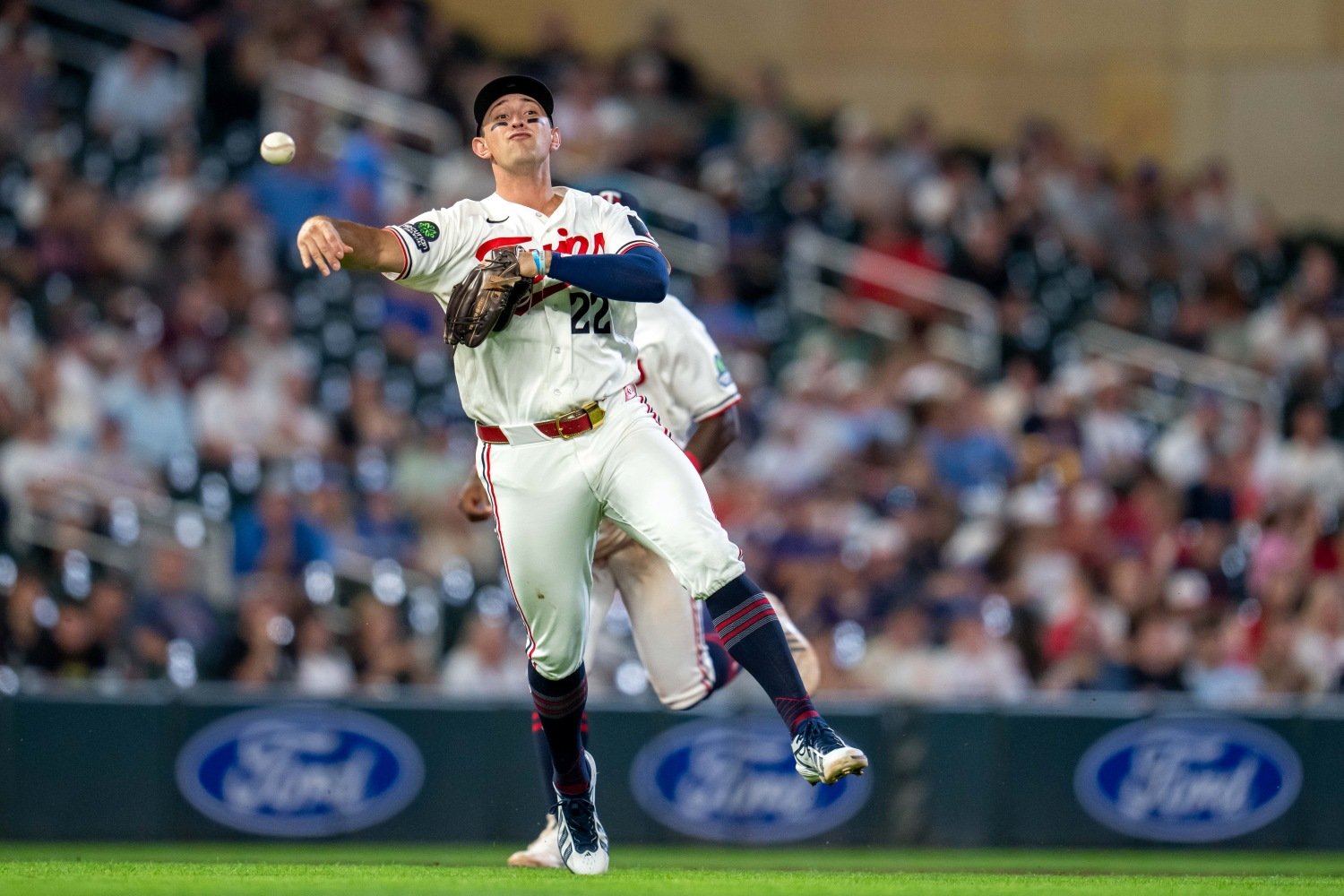 Athleticism spreads across a baseball diamond in predictable ways. There are always outliers, because some geniuses find ways to succeed in unexpected places via their savvy, and because teams sometimes align their talent in strange ways for any number of reasons, but we know where the best athletes need to be during baseball games—and which kinds of athletes are most needed in which places. For instance, your tall, languid guy usually shouldn't be at third base. Nor should your fast but underpowered guy play there. No, speed goes in the outfield, and it goes up the middle. Arm strength is important on the left side of the infield and in the outfield. Those are extreme examples, and extremes always make things seem obvious. Most real-life cases are more nuanced. Take, for instance, Brooks Lee. A stocky but strapping switch-hitter, Lee entered professional baseball as a shortstop. That was where he played in high school and in college, where he was an elite athlete. Even in the minors, he was an above-average runner and thrower (and hitter, for that matter), relative to all the players around him. Eventually, though, he came to the big leagues, and compared only to the 50 or so best players at each position in the Western hemisphere, his profile becomes a bit less impressive. As we know, the Twins tried Lee at shortstop. It didn't work. In fact, it didn't work twice, but the team only fully recognized the failure the second time, when he cost them several runs over the first month and a half of the 2026 season. That's when they moved him to third base, and everything changed. In 400 innings at shortstop this year, Lee was worth -9 Defensive Runs Saved (DRS), according to Sports Info Solutions. In 738 innings at third base, he's been worth 7 DRS. The change is enormous. Only J.P. Crawford and Trea Turner have hurt their teams more as shortstop defenders than Lee did, despite how short a time he spent there. Only Matt Chapman, Alex Bregman, Caleb Durbin and Maikel García have saved their clubs more runs at the hot corner than Lee has, despite 16 players logging more innings at the position than he has. Lee, as it turns out, is an extremely good fit for third base, even though he was an extremely bad fit for the spot that neighbors it on the infield. The values are extreme; so is the difference in the eye test. Yet, the reason for it is that Lee isn't extreme, himself, in any regard; he's just above- and below-average at things that make him much better-suited to one place than to the other. Here are the average sprint speeds and arm strengths of players at each position, for 2026. Position Sprint Speed (ft./sec.) Arm Strength (MPH) Catcher 26.1 80.3 First Base 26.3 79.4 Second Base 27.7 79.2 Third Base 27.1 84.9 Shortstop 27.9 86.2 Left Field 28 87.6 Center Field 28.7 89.5 Right Field 28.1 90.5 D.H. 26.1 — Pitcher — 94.7 As you would have guessed if I had asked you to do so blindly, outfielders are the fastest players on the field. Catchers, first basemen and designated hitters are the slowest. There's also an interesting hierarchy among the three more difficult infield spots, though. Shortstops are the fastest, with second basemen close behind; third basemen can be (and are) slower. Reading the arm strength column is trickier. As anyone familiar with the game already knows, outfielders need strong arms, but they also enjoy the benefit of being able to load up and fire on their most important throws, generating greater raw arm strength readings than one finds on the infield—where a quick exchange and release is paramount. The latter is even more true of catchers, whose most important throws come when trying to throw out basestealers. Thus, while infielders generate lower raw velocity readings, it's safe to say that shortstop and catcher are the positions (other than pitcher, of course) where arm strength is most important, and where teams put their strongest arms, all else equal. Even between infielders, though, these averages are apples and oranges. Players who play both second base and third base tend to throw 5-7 MPH harder from third than from second, for the obvious reason: the throw is longer. That means that it takes more oomph to get the ball to the first baseman, and that the runner has a greater chance to beat out a weak throw from the left side than from the right. We see a lower average arm strength among second basemen than among third basemen for the same reason as that which leads the same player's average throw to be harder from third than from second. Compare shortstops and third basemen, though, and the dynamic changes. As you can see, shortstops have stronger arms, on average. That's because, though the third baseman is all the way across the diamond, they're often playing shallower than a shortstop; they more often make relatively short throws with their momentum taking them in the general direction of first base; and their longest, toughest throws tend to come from more set positions and after ranging less far than a shortstop's longest and toughest throws. Yet, of the seven players who have spent meaningful time at both third and short this year, none throw harder when playing short than when playing third. On the contrary: Two (Willi Castro and J.P. Crawford) throw almost exactly as hard, regardless of position; Three (Kevin McGonigle, Bo Bichette and Joey Ortiz) throw between 1 and 2 MPH faster when playing third base; and Two (David Hamilton and Lee) throw over 3 MPH harder from the hot corner. The game demands that exceptional athletes with elite throwing arms play shortstop. It does not, however, demand that those players use every ounce of their throwing power on most plays. In fact, third base requires a stronger arm on a median play than shortstop does. The shortstop just has to be a better thrower in order to convert the occasional, fairly extreme play. Lee is an interesting case study, then. His sprint speed (26.4 feet per second) is virtually untenable for a shortstop, but just barely below-average for a third baseman. His arm is far below the average shortstop's, but not far at all below the average third baseman's—not because he's unable to uncork a strong throw, per se, but because he throws so much harder from third than from short. And why is that? Now, we've arrived at the crux of it. It's because Lee isn't fast enough. A lot of the balls on which Lee should have had to make stronger throws from shortstop ended up in left field, because he never got to them. Some others ended up in his glove, but he didn't even make a throw because he'd had to leave his feet to make the play and felt he had no chance to get his man. There were still times, even at short, where you could see that Lee is a fine low-to-the-ground athlete and has a strong arm, just as he has above-average bat speed and surprising power at the plate. He does, theoretically, have the arm for short; the raw strength and rotational capacity is there. He just needed to have the advantage of having been shaded into the hole, so he could actually reach a ball that otherwise would have eluded him, and so that he could set his feet to make that throw. UHY2TzNfWGw0TUFRPT1fVWdaU0JWTUZWUXNBQ3dFREF3QUhWQUlIQUZrQVVsWUFBbE5UVWxJTkFWZFZCRllE.mp4 Shortstops, who tend to have both kinds of baseball athleticism bound up into one body, can make that same play after having started the play a step farther toward second base. They'd have the area to their left better-covered, and they could still flag down this ball, turn enough to be accurate, and uncork a strong throw without being in the strong position Lee enjoyed when he threw out Ernie Clement on this play. That's what's missing for Lee. When he must throw on the move, he can't get much on it. When he must move a lot to get to a ball in the first place, there's a good chance he won't reach it. At shortstop, those are fatal flaws. At third, they're fairly unimportant. Most of the throws he makes on the move some as he ranges to his left, and are therefore short and fairly easy. Most of the balls that test his range are to that side, too; he can use the foul line as an extra defender. For some players forced to move off shortstop, second base makes more sense. For some, playing third doesn't solve many problems, because they have extremely good arm strength (good enough for short, even) but not the hands or the decision-making ability to be any better elsewhere on the dirt than they are at short. Lee is not elite, because his arm is still average or worse, but he's a very good third baseman, because his only shortcoming as a shortstop is being a step too slow. He's showed the utility of his arm since moving to third, and even a slight reduction in the range required of him has turned him from subpar to superb. In the long run, Marek Houston and Kaelen Culpepper might conspire to threaten Lee's playing time even at third. For now, though, he's entrenched, and his job security is well-earned. He's not a great hitter, but he looks to be above-average in the right role, batting higher in the lineup against right-handed pitchers and lower against lefties. He's already hit a career-best 22 home runs this year, and has a good chance to get to 25. On both sides of the ledger, having the right things asked of him has revealed the best version of Lee, lending us insight into what makes various roles on a team different and interesting. He began the year a fringe big-leaguer who was a drag on the team. He could finish it as a solid prospective piece of an evolving roster.
 -
One Weekend of Measurables on Twins Rookie Phenom Walker Jenkins
Matthew Trueblood posted an article in Twins
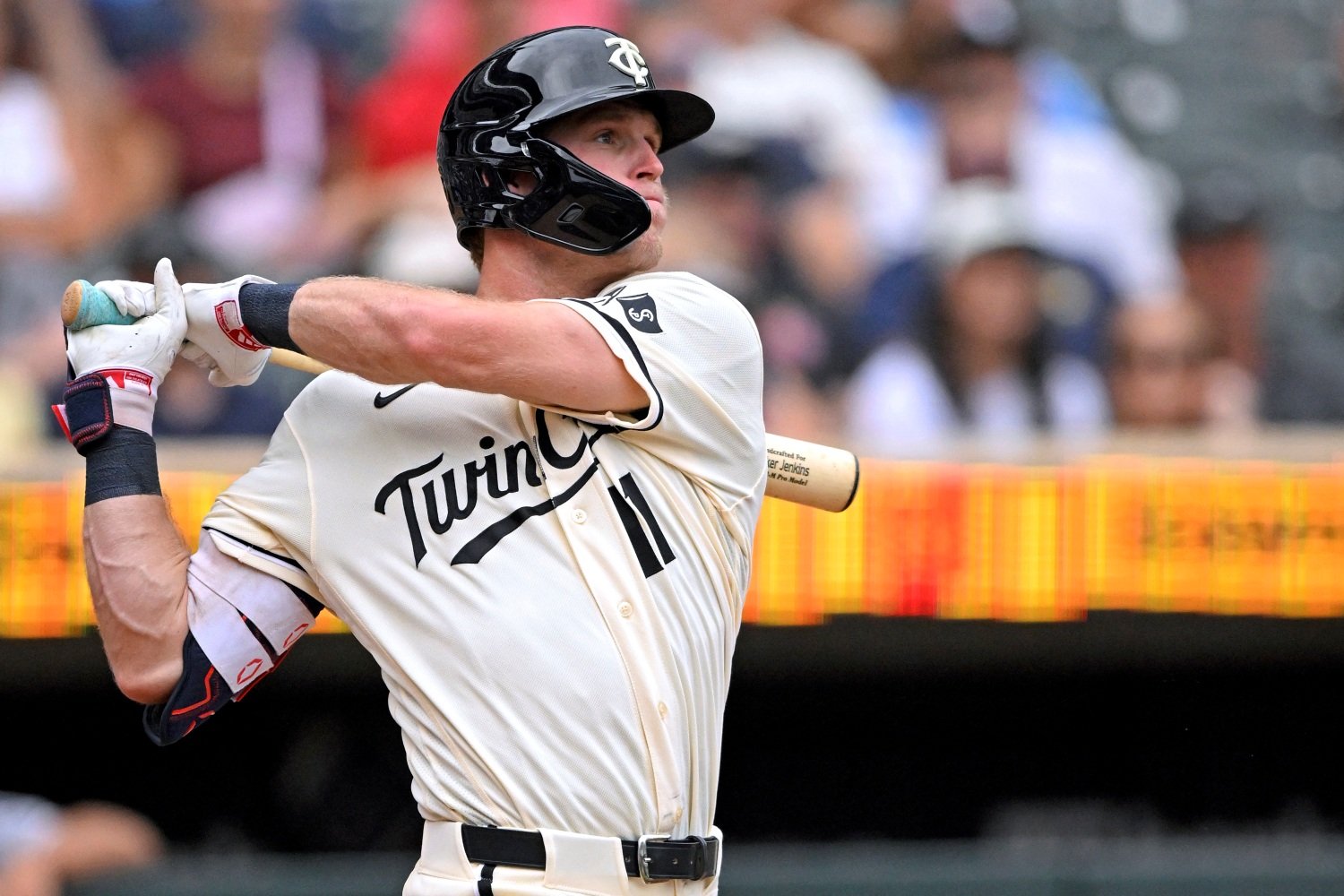 The first thing you notice about Walker Jenkins is his size. In a profession where almost everyone is big and strong, he looks big and strong even by comparison. When the Twins called him up late last week, they placed Jenkins's locker between those of Kody Clemens and Trevor Larnach in the home clubhouse, and Jenkins practically dwarfed both—no small feat, where the 6-foot-3 Larnach is concerned. It's not that Jenkins is exceptionally big, in absolute terms. He just takes up space, in that special way some athletes do. He's only as tall as Larnach, but he stands taller. He's long-limbed, broad-chested and broad-shouldered. While he moves plenty well to play center field throughout his early 20s, it's easy to see why most scouts expect him to move to right field later in his career. He's so big that he'll have to slow down a bit, in time. Bigness defines him in the batter's box, too. From the press box, watching Jenkins set up in the batter's box was eye-opening, because he's much more spread-out than might be apparent from the center-field camera. As some huge players do, he seems to take up the whole box; he's almost too big to be held. In fact, only a small handful of players who have played in the majors this year start with more space between their feet than Jenkins does, in his stance. Most notable among that group: the Mets' Juan Soto. Here's how Soto sets up in the box, using Statcast's visualization of stance data. Here's the same visual for Jenkins, who is almost exactly as open in his setup and has almost an identical distance between his feet as Soto. Jenkins's swing doesn't look anything like Soto's, though. Whereas Soto spreads out that way to get into a deep crouch and swing flat and fast, Jenkins's stroke seems geared toward loft. His average tilt on 17 competitive swings over the three games was 35°, which is steeper than average. His attack angle (the vertical angle between the ground and the movement of the barrel at the time of contact) is steeper than average, too, and his attack direction (the horizontal angle of his barrel at contact) is more to the pull side of the diamond than average. Perhaps because Jenkins landed with the Twins via the MLB Draft Lottery, he's been comped to Joe Mauer on his way up the chain to the majors. However, this stroke—which might not be the one he settles into; it was just one adrenaline-soaked weekend—looks more like a tall and lithe left-handed batter who's still active: the Yankees' Cody Bellinger. Here's a sample swing from Jenkins: cU93R2dfWGw0TUFRPT1fQWxSWlVBWlhYbEVBRGxkVVZ3QUhBRmNGQUFCWFVnVUFCVlVFQnd0V1ZGSmRCUVJT.mp4 And here's one from Bellinger, who's much more upright and has his feet much closer together in his stance but then moves so similarly to Jenkins: YVlkUW5fWGw0TUFRPT1fVXdsV0FWQU1VZ1FBWEFCVVVBQUhBVkpWQUFBRFdsRUFCUVFFQWxCUUFRZFZDUXNF.mp4 Bellinger's swing tilt and attack angle are almost identical to Jenkins's, though he doesn't average as much pull orientation as Jenkins did over his first week. It looks like Jenkins has above-average (but not elite) bat speed, and will set up in a spread-out stance to give himself stability as he attacks the ball, looking to both be patient and lift the ball with power to the pull field. It's too early to get overconfident about what kind of hitter Jenkins is, or what kind he might become. In just a few days, though, we can glean real insight into those questions, thanks to the detail and depth of new tracking data. The Twins will hope to get more actual production over the next four weeks than they got over these three games, but Jenkins deserved slightly better results than he got in his first series as a major leaguer. He's also showing some valuable and fascinating similarities to a few of the game's best hitters. Already, there's plenty to be optimistic about.
 -
Image courtesy of Nick Wosika-Imagn Images The first thing you notice about Walker Jenkins is his size. In a profession where almost everyone is big and strong, he looks big and strong even by comparison. When the Twins called him up late last week, they placed Jenkins's locker between those of Kody Clemens and Trevor Larnach in the home clubhouse, and Jenkins practically dwarfed both—no small feat, where the 6-foot-3 Larnach is concerned. It's not that Jenkins is exceptionally big, in absolute terms. He just takes up space, in that special way some athletes do. He's only as tall as Larnach, but he stands taller. He's long-limbed, broad-chested and broad-shouldered. While he moves plenty well to play center field throughout his early 20s, it's easy to see why most scouts expect him to move to right field later in his career. He's so big that he'll have to slow down a bit, in time. Bigness defines him in the batter's box, too. From the press box, watching Jenkins set up in the batter's box was eye-opening, because he's much more spread-out than might be apparent from the center-field camera. As some huge players do, he seems to take up the whole box; he's almost too big to be held. In fact, only a small handful of players who have played in the majors this year start with more space between their feet than Jenkins does, in his stance. Most notable among that group: the Mets' Juan Soto. Here's how Soto sets up in the box, using Statcast's visualization of stance data. Here's the same visual for Jenkins, who is almost exactly as open in his setup and has almost an identical distance between his feet as Soto. Jenkins's swing doesn't look anything like Soto's, though. Whereas Soto spreads out that way to get into a deep crouch and swing flat and fast, Jenkins's stroke seems geared toward loft. His average tilt on 17 competitive swings over the three games was 35°, which is steeper than average. His attack angle (the vertical angle between the ground and the movement of the barrel at the time of contact) is steeper than average, too, and his attack direction (the horizontal angle of his barrel at contact) is more to the pull side of the diamond than average. Perhaps because Jenkins landed with the Twins via the MLB Draft Lottery, he's been comped to Joe Mauer on his way up the chain to the majors. However, this stroke—which might not be the one he settles into; it was just one adrenaline-soaked weekend—looks more like a tall and lithe left-handed batter who's still active: the Yankees' Cody Bellinger. Here's a sample swing from Jenkins: cU93R2dfWGw0TUFRPT1fQWxSWlVBWlhYbEVBRGxkVVZ3QUhBRmNGQUFCWFVnVUFCVlVFQnd0V1ZGSmRCUVJT.mp4 And here's one from Bellinger, who's much more upright and has his feet much closer together in his stance but then moves so similarly to Jenkins: YVlkUW5fWGw0TUFRPT1fVXdsV0FWQU1VZ1FBWEFCVVVBQUhBVkpWQUFBRFdsRUFCUVFFQWxCUUFRZFZDUXNF.mp4 Bellinger's swing tilt and attack angle are almost identical to Jenkins's, though he doesn't average as much pull orientation as Jenkins did over his first week. It looks like Jenkins has above-average (but not elite) bat speed, and will set up in a spread-out stance to give himself stability as he attacks the ball, looking to both be patient and lift the ball with power to the pull field. It's too early to get overconfident about what kind of hitter Jenkins is, or what kind he might become. In just a few days, though, we can glean real insight into those questions, thanks to the detail and depth of new tracking data. The Twins will hope to get more actual production over the next four weeks than they got over these three games, but Jenkins deserved slightly better results than he got in his first series as a major leaguer. He's also showing some valuable and fascinating similarities to a few of the game's best hitters. Already, there's plenty to be optimistic about. View full article
-
Twins' Byron Buxton Back On Injured List
Matthew Trueblood replied to Steve Drumwright's topic in Minnesota Twins Talk
The man's base salary is $15 million a year. A $20,000 bonus is to him as $100 is to a person making $75,000 a year. Would you come to work injured, knowing you'd be criticized for underperformance as well as being in pain, for $100? -
Culpepper and Jenkins can feed off each other, if nothing else, right?
-
It's true, though the Tiggers of Twins Daily are just as dangerous imo.
-
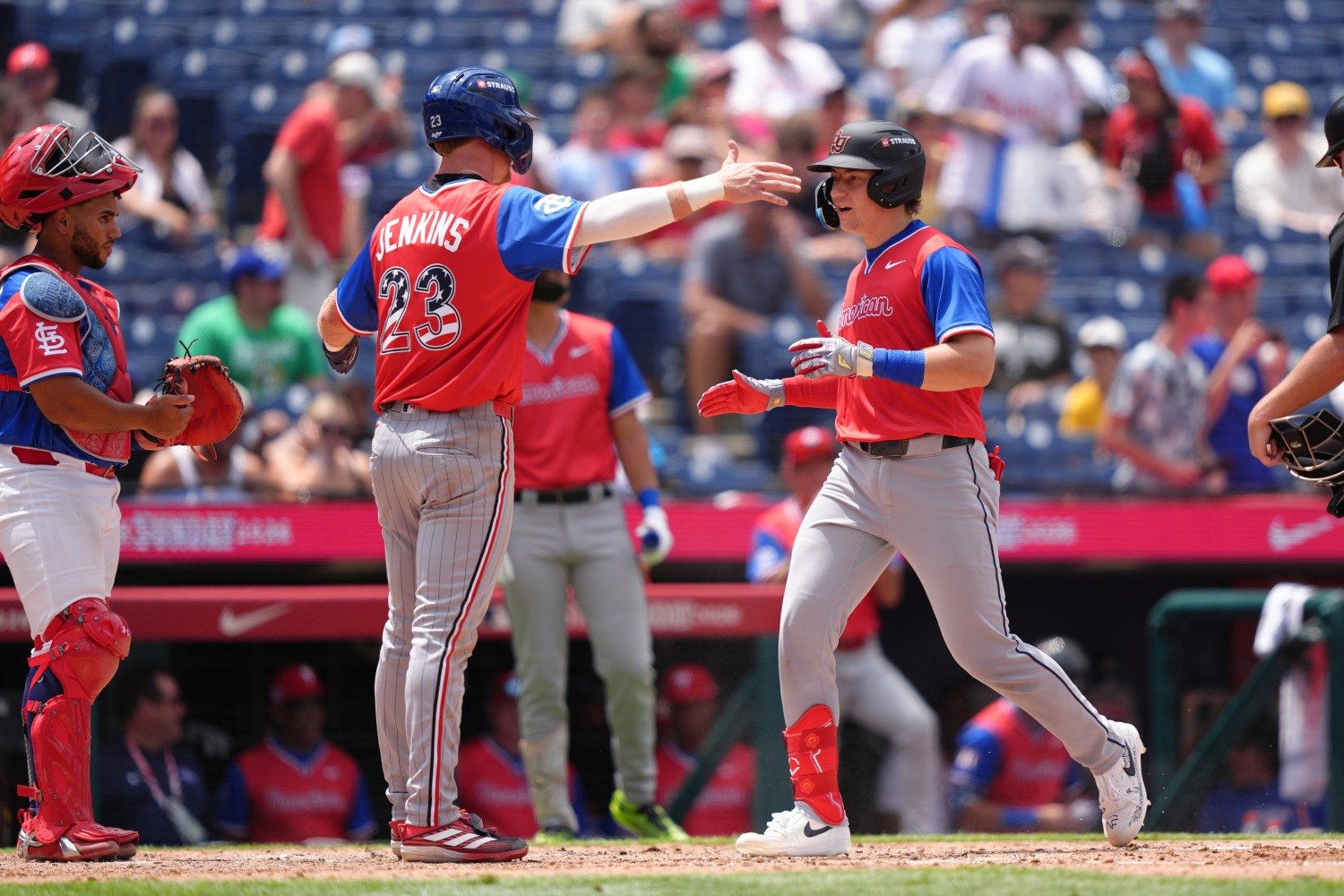 Not long ago, I made the case for appreciating Luke Keaschall as a bit of a throwback: a player who can really, really hit, and who is therefore worth making room for at all times—even though he's going to hurt you no matter where you put him in the field. However, that piece was about Keaschall, the defensive nomad, and especially Keaschall, the right fielder who might well become a left fielder next season. The time Keaschall spent in center field, while Byron Buxton was on the injured list, was on another level of awful—an untenable one, akin to his work at second base before the team moved him into the grass earlier in the season. Keaschall's bat is worth forcing into the lineup, but you have to do it by hiding him in a corner outfield spot, or at designated hitter. He can't be your center fielder. The Twins know that, too. Once Buxton returned from the IL earlier this month, they shunted Keaschall back to right. They kept playing Buxton in center whenever he was fit enough to be in the lineup, despite his own obvious limitations, because they knew they didn't have another viable center fielder on the active roster. All the while, momentum built toward a Walker Jenkins promotion, which would give the team a much more solid defensive option in center on non-Buxton days down the stretch. (For that matter, so would promoting Emmanuel Rodriguez.) If the team had been playing at home this week, Jenkins might have been called up already. Instead, though, the team has been on a six-game, eight-day road trip to San Diego and West Sacramento. They clearly preferred to survive this trip with their existing outfield options, including Buxton, Keaschall, Trevor Larnach, Alan Roden, and utility men Kody Clemens and Ryan Kreidler. It sounds silly, but even in the midst of a pennant race, teams try not to turn the roster inside-out during trips that involve difficult or lengthy travel. It's not about costs, of course. It's a little bit about logistics. Most of all, though, it's about the rhythm of the season and the tenor of a clubhouse. Big changes work best when they happen on off days, and they work best when they don't change the layout of a clubhouse in which a team is already only spending a few days. That Minnesota was playing the Athletics in quasi-minor-league surroundings made that an especially important consideration this week. Thus, when Buxton pulled up lame Tuesday night, it had to hit the top people in the Twins front office like a sock full of nickels. The timing was terrible. It was clear, even as Buxton limped off the field, that he would be unavailable Wednesday. That left the team with an unwelcome dilemma: make a quick move and get Jenkins (or Rodriguez) to West Sacramento in under 24 hours, only to leave town another few hours later; or ride it out for one more game without the only center fielder they really trust. As you already know, they chose the latter. Keaschall started in center Wednesday night. It was a copout, in a way. The team was just kicking the can down the road. That's understandable, under the circumstances, and they could easily have gotten away with it. Unfortunately, the universe was in a bad mood, and it decided to punish their choice harshly. In fairness, though, Keaschall made them an appealing target for that kind of karmic thwack to the forehead. The rubber game of a series the Twins could not afford to lose was decided in the bottom of the sixth inning. There was already danger afoot, some of it caused by Keaschall. The A;s had collected three hits in the frame, including one fly ball that landed well in front of Keaschall partially because Keaschall had been playing exceptionally deep. They'd pulled to within one run; it was 4-3 Twins. There were two outs and two on, and Andrew Morris just needed to find one more out to escape the jam. Alika Williams hit a long fly ball to center. You already know what happened. MnI5T05fWGw0TUFRPT1fQWdjSEJWVUhBZ1lBQ1ZJR0FnQUhBRkFFQUZsUkFBUUFCbGNDVlFVRkFRcFFCd0VG.mp4 Keaschall didn't take a good initial angle, and he didn't adjust quite enough. He still (basically) got there, though—and then failed to catch it, anyway. Statcast will be a bit more generous to him once it accounts for the fact that he was going back on the ball and was close to the wall, but its initial assessment is that the ball had an 85% catch probability, based on the hang time and where Keaschall began the play. Even if you call it a 50/50 proposition, the fact is that Keaschall didn't catch it. Two runs scored, and the A's had the lead they would hold onto for the rest of the game. If that ball is caught, the Twins have a 70% chance of winning the game, based on win expectancy matrices from Tom Tango. Once he didn't, the A's had a 73.8% chance. That's a difference of 43.2% in win probability for the Twins, and if we call the play a coin-flip for an average center fielder, we can say that when the ball left Williams's bat, the game itself was a near coin-flip. Keaschall's failure to make the play had a -0.216 WPA, though official WPA only assigns value to hitters and pitchers and ignores defense. Having Keaschall in center cost the Twins that game. In the wake of that loss, the team woke up Thursday with just a 7.1% chance to make the postseason, according to Baseball Prospectus's PECOTA-fueled projected standings. That figure was 31.5% just a week ago. Losing five of six on the road trip torpedoed the team's chances, and a major reason for one of those losses was a very avoidable failure based on the team being too patient—not quite desperate enough, to put it one way. This isn't the only game Keaschall has cost the team with his glove this year. In addition to some atrocious plays at second and in right, he also failed to catch a ball that has to be caught in the bottom of the eighth inning against the Brewers earlier this month. It fell in front of him for a single, and that hit later turned into the game-winning run for the Brewers. NnlNZWRfWGw0TUFRPT1fVjFkUVUxMEdWZ1FBQUZCUVhnQUhCRlJRQUZnQVdsVUFCbEFBVkZKVEJGZFZCQUlG.mp4 Playing Keaschall in center as much as they have is a case of the team being too willing to roll the dice and play the long game. That's part of the responsibility the front office faces, in a year when they're hardly a juggernaut. They have to think about the long-term future. This is not a year in which to go all-in. But another of their responsibilities is to recognize places where they can give this year's team the best possible chance to convert on their opportunity to reach the postseason, without hurting their future prospects. This was one of those chances. They should already have called up Jenkins, who could be taking playing time from their lousy left-hitting corner outfielders and covering for them defensively in center. They should certainly have called him up when Buxton got hurt Tuesday night. They didn't, and if they miss the playoffs by one game, we can also say they missed it by one play—a ball that should have been caught, and would have been, had the right player been placed there to catch it.
 -
Image courtesy of © Kyle Ross-Imagn Images Not long ago, I made the case for appreciating Luke Keaschall as a bit of a throwback: a player who can really, really hit, and who is therefore worth making room for at all times—even though he's going to hurt you no matter where you put him in the field. However, that piece was about Keaschall, the defensive nomad, and especially Keaschall, the right fielder who might well become a left fielder next season. The time Keaschall spent in center field, while Byron Buxton was on the injured list, was on another level of awful—an untenable one, akin to his work at second base before the team moved him into the grass earlier in the season. Keaschall's bat is worth forcing into the lineup, but you have to do it by hiding him in a corner outfield spot, or at designated hitter. He can't be your center fielder. The Twins know that, too. Once Buxton returned from the IL earlier this month, they shunted Keaschall back to right. They kept playing Buxton in center whenever he was fit enough to be in the lineup, despite his own obvious limitations, because they knew they didn't have another viable center fielder on the active roster. All the while, momentum built toward a Walker Jenkins promotion, which would give the team a much more solid defensive option in center on non-Buxton days down the stretch. (For that matter, so would promoting Emmanuel Rodriguez.) If the team had been playing at home this week, Jenkins might have been called up already. Instead, though, the team has been on a six-game, eight-day road trip to San Diego and West Sacramento. They clearly preferred to survive this trip with their existing outfield options, including Buxton, Keaschall, Trevor Larnach, Alan Roden, and utility men Kody Clemens and Ryan Kreidler. It sounds silly, but even in the midst of a pennant race, teams try not to turn the roster inside-out during trips that involve difficult or lengthy travel. It's not about costs, of course. It's a little bit about logistics. Most of all, though, it's about the rhythm of the season and the tenor of a clubhouse. Big changes work best when they happen on off days, and they work best when they don't change the layout of a clubhouse in which a team is already only spending a few days. That Minnesota was playing the Athletics in quasi-minor-league surroundings made that an especially important consideration this week. Thus, when Buxton pulled up lame Tuesday night, it had to hit the top people in the Twins front office like a sock full of nickels. The timing was terrible. It was clear, even as Buxton limped off the field, that he would be unavailable Wednesday. That left the team with an unwelcome dilemma: make a quick move and get Jenkins (or Rodriguez) to West Sacramento in under 24 hours, only to leave town another few hours later; or ride it out for one more game without the only center fielder they really trust. As you already know, they chose the latter. Keaschall started in center Wednesday night. It was a copout, in a way. The team was just kicking the can down the road. That's understandable, under the circumstances, and they could easily have gotten away with it. Unfortunately, the universe was in a bad mood, and it decided to punish their choice harshly. In fairness, though, Keaschall made them an appealing target for that kind of karmic thwack to the forehead. The rubber game of a series the Twins could not afford to lose was decided in the bottom of the sixth inning. There was already danger afoot, some of it caused by Keaschall. The A;s had collected three hits in the frame, including one fly ball that landed well in front of Keaschall partially because Keaschall had been playing exceptionally deep. They'd pulled to within one run; it was 4-3 Twins. There were two outs and two on, and Andrew Morris just needed to find one more out to escape the jam. Alika Williams hit a long fly ball to center. You already know what happened. MnI5T05fWGw0TUFRPT1fQWdjSEJWVUhBZ1lBQ1ZJR0FnQUhBRkFFQUZsUkFBUUFCbGNDVlFVRkFRcFFCd0VG.mp4 Keaschall didn't take a good initial angle, and he didn't adjust quite enough. He still (basically) got there, though—and then failed to catch it, anyway. Statcast will be a bit more generous to him once it accounts for the fact that he was going back on the ball and was close to the wall, but its initial assessment is that the ball had an 85% catch probability, based on the hang time and where Keaschall began the play. Even if you call it a 50/50 proposition, the fact is that Keaschall didn't catch it. Two runs scored, and the A's had the lead they would hold onto for the rest of the game. If that ball is caught, the Twins have a 70% chance of winning the game, based on win expectancy matrices from Tom Tango. Once he didn't, the A's had a 73.8% chance. That's a difference of 43.2% in win probability for the Twins, and if we call the play a coin-flip for an average center fielder, we can say that when the ball left Williams's bat, the game itself was a near coin-flip. Keaschall's failure to make the play had a -0.216 WPA, though official WPA only assigns value to hitters and pitchers and ignores defense. Having Keaschall in center cost the Twins that game. In the wake of that loss, the team woke up Thursday with just a 7.1% chance to make the postseason, according to Baseball Prospectus's PECOTA-fueled projected standings. That figure was 31.5% just a week ago. Losing five of six on the road trip torpedoed the team's chances, and a major reason for one of those losses was a very avoidable failure based on the team being too patient—not quite desperate enough, to put it one way. This isn't the only game Keaschall has cost the team with his glove this year. In addition to some atrocious plays at second and in right, he also failed to catch a ball that has to be caught in the bottom of the eighth inning against the Brewers earlier this month. It fell in front of him for a single, and that hit later turned into the game-winning run for the Brewers. NnlNZWRfWGw0TUFRPT1fVjFkUVUxMEdWZ1FBQUZCUVhnQUhCRlJRQUZnQVdsVUFCbEFBVkZKVEJGZFZCQUlG.mp4 Playing Keaschall in center as much as they have is a case of the team being too willing to roll the dice and play the long game. That's part of the responsibility the front office faces, in a year when they're hardly a juggernaut. They have to think about the long-term future. This is not a year in which to go all-in. But another of their responsibilities is to recognize places where they can give this year's team the best possible chance to convert on their opportunity to reach the postseason, without hurting their future prospects. This was one of those chances. They should already have called up Jenkins, who could be taking playing time from their lousy left-hitting corner outfielders and covering for them defensively in center. They should certainly have called him up when Buxton got hurt Tuesday night. They didn't, and if they miss the playoffs by one game, we can also say they missed it by one play—a ball that should have been caught, and would have been, had the right player been placed there to catch it. View full article


.png.0c88dbf5cb9c09f6e4f38e5dc770eba2.png)