



Matthew Trueblood
-
Posts
1,033 -
Joined
-
Last visited
Content Type
Profiles
News
Minnesota Twins Videos
2026 Minnesota Twins Top Prospects Ranking
2022 Minnesota Twins Draft Picks
Minnesota Twins Free Agent & Trade Rumors, Notes, & Tidbits
Guides & Resources
2023 Minnesota Twins Draft Picks
The Minnesota Twins Players Project
2024 Minnesota Twins Draft Picks
2025 Minnesota Twins Draft Pick Tracker
2026 Minnesota Twins Draft Tracker: Picks & Bonuses
Forums
Blogs
Events
Store
Downloads
Gallery
Everything posted by Matthew Trueblood
-
Image courtesy of © Jim Rassol-Imagn Images Top left-handed pitching prospects Kendry Rojas and Connor Prielipp will travel with the Twins to New York this week, as the team takes on the New York Mets in Queens. Rojas, 23, will officially be added to the team's roster to replace fellow southpaw Kody Funderburk, according to Dan Hayes of The Athletic. Funderburk will go on the paternity list, and could meet the team in St. Petersburg for their weekend series against the Rays. Prielipp, 25, is on the taxi squad, a COVID-era invention still utilized by teams to keep fresh players ready during road trips when there's some belief that they might need them. For Twins fans who mentally entered rebuilding mode as soon as the team undertook a selloff at the 2025 MLB trade deadline, Rojas and Prielipp have taken on outsized significance as symbols of the team's future. Rojas, at least, now looks to be part of their present, though his stay on the roster could be brief. The Twins have a travel day Monday before taking on the reeling Mets beginning on Tuesday. Some chance exists, of course, that the addition of Rojas (or even that of Prielipp, which isn't yet a true call-up but puts him at the ready for one) will prove permanent. A few weeks in, it's become suddenly clear how much the Twins need to upgrade their bullpen if they hope to remain competitive. After climbing to 11-7, they've lost four straight, and on Saturday and Sunday, they lsot consecutive games which they led by multiple runs after six innings. Justin Topa, Funderburk, Eric Orze and Cole Sands—the closest thing the team currently has to an 'A' bullpen—blew their lead one run at a time over the final three frames on Saturday. In Sunday's series finale, manager Derek Shelton tried to get a two-inning save from rookie Andrew Morris, who went to pieces in the second of those frames, giving up three runs to flip the score in the top of the ninth. Shelton hadn't trusted Garrett Acton enough to turn to him until the horses left the barn in the ninth, but he then stuck with Acton (amid a defensive meltdown) rather than turn to Anthony Banda against a left-handed batter in the Reds' three-run 10th. The Twins face a major deficit of trustworthy, bat-missing relievers. At their best, Rojas and Prielipp are eminently capable of ameliorating that. Rojas sits on the high side of 97 miles per hour with his fastball. If he makes his debut amid an electric New York atmosphere, he could touch 100 MPH. He also has a changeup and a slider that could be plus, if he can locate them well enough. So far, consistency—in location, for sure, but even in shape and broader execution—has proved too much to hope for with Rojas, but his arm is one of the system's most electric. He was the co-headliner of the Louis Varland trade with the Blue Jays last summer, and is certainly the higher-upside of the two prospects the team acquired in that deal. Prielipp is homegrown, and though he's older and doesn't throw quite as hard, he might have an even higher ceiling. Even on the other side of multiple surgeries, he flashes a top-of-the-scale slider. The two-plane curveball he's added to the mix this spring shows tremendous promise. In the long run, the Twins would like both Rojas and Prielipp to stick in the starting rotation. However, their track records with regard to both health and performance suggest that their best roles could be in the pen. For now, Rojas will be asked to reinforce a bullpen that hasn't garnered much confidence from Shelton. How long that remains his job might depend not only on when Funderburk returns, but on how Rojas and several of the incumbent arms in the pen perform in the days ahead. View full article
-
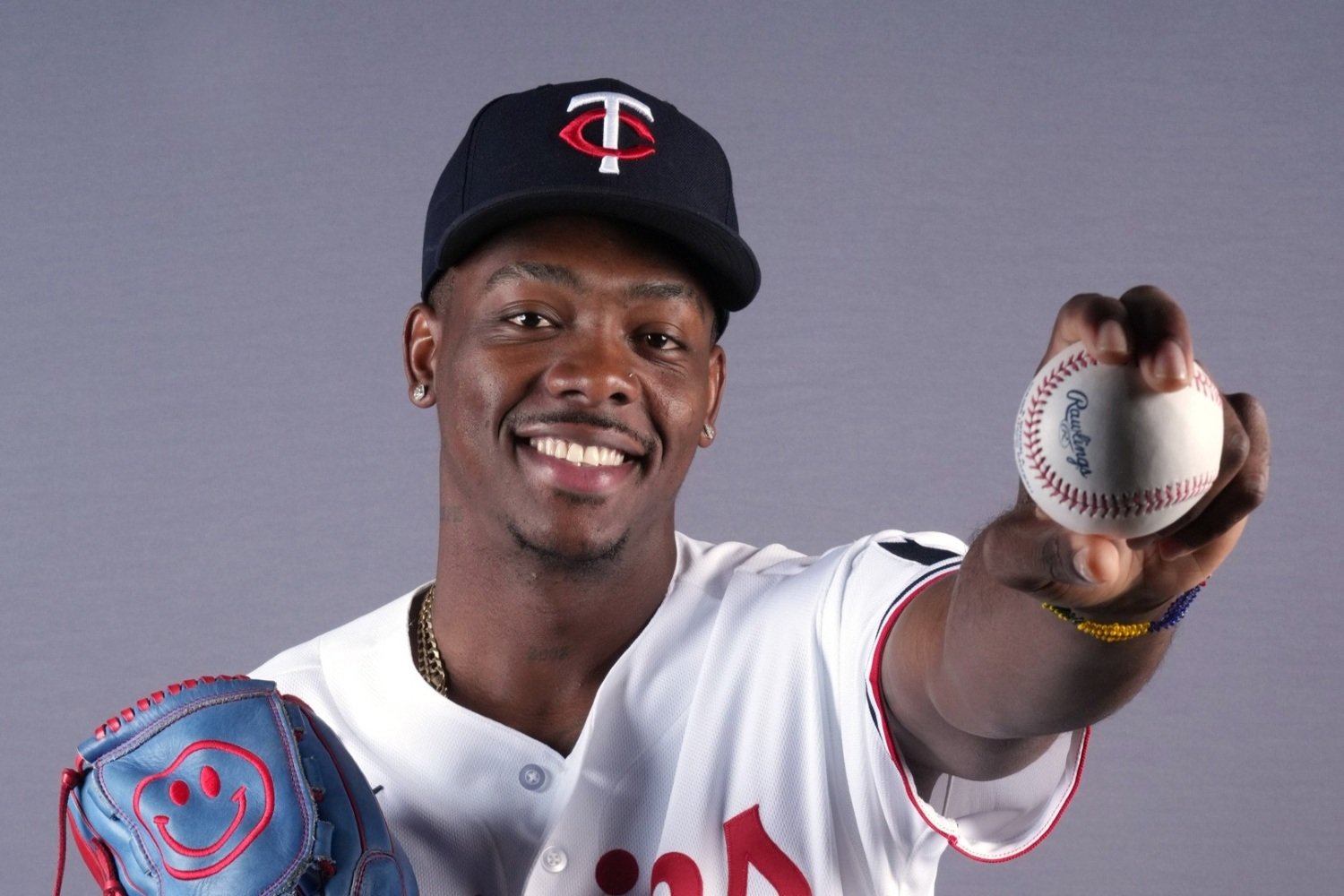 Top left-handed pitching prospects Kendry Rojas and Connor Prielipp will travel with the Twins to New York this week, as the team takes on the New York Mets in Queens. Rojas, 23, will officially be added to the team's roster to replace fellow southpaw Kody Funderburk, according to Dan Hayes of The Athletic. Funderburk will go on the paternity list, and could meet the team in St. Petersburg for their weekend series against the Rays. Prielipp, 25, is on the taxi squad, a COVID-era invention still utilized by teams to keep fresh players ready during road trips when there's some belief that they might need them. For Twins fans who mentally entered rebuilding mode as soon as the team undertook a selloff at the 2025 MLB trade deadline, Rojas and Prielipp have taken on outsized significance as symbols of the team's future. Rojas, at least, now looks to be part of their present, though his stay on the roster could be brief. The Twins have a travel day Monday before taking on the reeling Mets beginning on Tuesday. Some chance exists, of course, that the addition of Rojas (or even that of Prielipp, which isn't yet a true call-up but puts him at the ready for one) will prove permanent. A few weeks in, it's become suddenly clear how much the Twins need to upgrade their bullpen if they hope to remain competitive. After climbing to 11-7, they've lost four straight, and on Saturday and Sunday, they lsot consecutive games which they led by multiple runs after six innings. Justin Topa, Funderburk, Eric Orze and Cole Sands—the closest thing the team currently has to an 'A' bullpen—blew their lead one run at a time over the final three frames on Saturday. In Sunday's series finale, manager Derek Shelton tried to get a two-inning save from rookie Andrew Morris, who went to pieces in the second of those frames, giving up three runs to flip the score in the top of the ninth. Shelton hadn't trusted Garrett Acton enough to turn to him until the horses left the barn in the ninth, but he then stuck with Acton (amid a defensive meltdown) rather than turn to Anthony Banda against a left-handed batter in the Reds' three-run 10th. The Twins face a major deficit of trustworthy, bat-missing relievers. At their best, Rojas and Prielipp are eminently capable of ameliorating that. Rojas sits on the high side of 97 miles per hour with his fastball. If he makes his debut amid an electric New York atmosphere, he could touch 100 MPH. He also has a changeup and a slider that could be plus, if he can locate them well enough. So far, consistency—in location, for sure, but even in shape and broader execution—has proved too much to hope for with Rojas, but his arm is one of the system's most electric. He was the co-headliner of the Louis Varland trade with the Blue Jays last summer, and is certainly the higher-upside of the two prospects the team acquired in that deal. Prielipp is homegrown, and though he's older and doesn't throw quite as hard, he might have an even higher ceiling. Even on the other side of multiple surgeries, he flashes a top-of-the-scale slider. The two-plane curveball he's added to the mix this spring shows tremendous promise. In the long run, the Twins would like both Rojas and Prielipp to stick in the starting rotation. However, their track records with regard to both health and performance suggest that their best roles could be in the pen. For now, Rojas will be asked to reinforce a bullpen that hasn't garnered much confidence from Shelton. How long that remains his job might depend not only on when Funderburk returns, but on how Rojas and several of the incumbent arms in the pen perform in the days ahead.
 -
Sneaky Heat: Garrett Acton and the Twins' Wide-Open Bullpen Picture
Matthew Trueblood posted an article in Twins
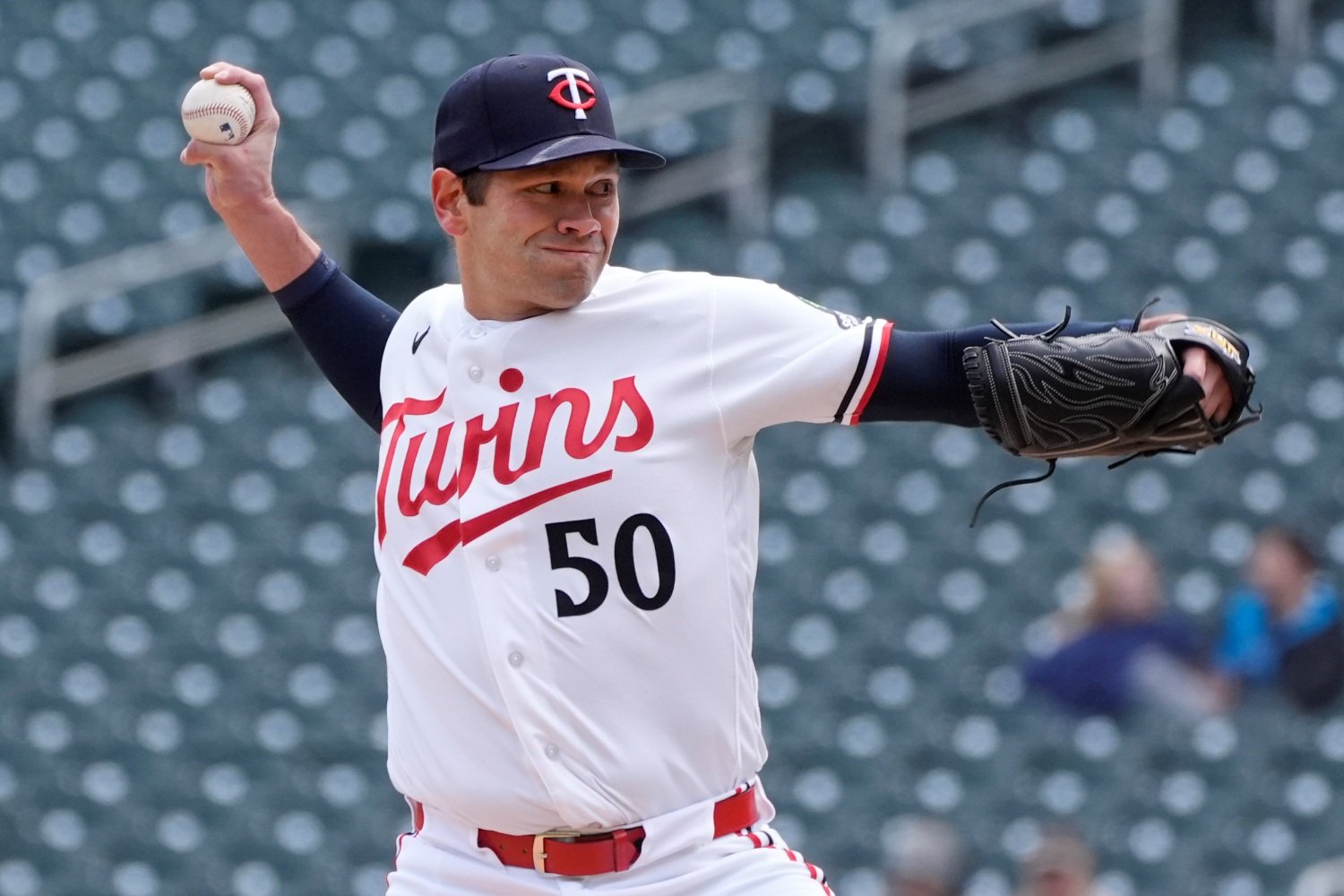 It looks pretty innocuous. Garrett Acton isn't notably big or small. He doesn't have a funky arm angle or a complicated delivery. He just kicks and delivers, and it's not like his fastball hums in at 100 miles per hour. On the contrary, in his two appearances with the Twins so far this season, he's averaging just 94 MPH with the fastball. He's only thrown fastballs and sliders, so far. It's not an elaborate or an overwhelming operation. That's probably why Acton has always been below the prospect radar. He was a 35th-round pick by the White Sox in 2016, coming out of a high school in Chicago's southwest suburbs. Instead of signing, though, he went to junior college at Parkland College in Champaign, Ill. From there, he moved on to Saint Louis University and the University of Illinois-Champaign, but he went undrafted in 2019, and again in the COVID-shortened 2020 event. He signed as an amateur free agent, with the Athletics. He stuck with the Oakland organization for almost three years, even making a brief debut in 2023, but he then became a 40-man roster casualty. He wasn't claimed on waivers at the time, and didn't find a new home until signing with the Rays that December. He underwent Tommy John surgery and missed all of 2024. Last year, he pitched just well enough at Triple-A Durham to earn one appearance with a forgettable Rays team. He didn't morph into a relief ace, or anything. Somewhere in there, though, he became an in-demand asset. The Rockies claimed him on waivers in November, and the Marlins plucked him from Colorado the same way in early February. If you're hearing the words 'Rockies', 'Marlins' and 'waivers' and thinking this guy doesn't sound all that in-demand, you're not entirely wrong, but remember: waiver priority is determined by team quality. He did end up on the waiver wire repeatedly, even though he was passing through the hands of some bad teams, but then again, he got claimed by bad teams who had good spots in the line for such players. The Twins became the third team to scoop him up, this time via a trade, at the beginning of this month. It was a minor move, for a minor arm, but it could end up making a more significant impact than you'd guess. There's a reason why Acton has become a buzzier name lately: his stuff is sneakily good. In the image above, the distributions on the left show that all four pitches Acton throws (though he hasn't yet shown his splitter or curveball in the bigs) are above-average. His fastball-slider combination, in particular, rates well on Baseball Prospectus's StuffPro model. Why? Look at how high that heater rides, on the right. It sets up the tight slider gorgeously, and vice-versa. Again, Acton's delivery is unremarkable—but that's to his advantage. The way the ball spins and carries out of his hand is unexpected, to the batter. Taj Bradley (to choose a familiar name, especially at the moment) gets lots of carry on his heater, but he does it with a very high arm slot, so hitters expect a bit more of that movement. When a pitcher's vertical movement doesn't quite match their slot, though, it creates more deception. ZFh2d2pfWGw0TUFRPT1fQVFSVVVWd0dYZ0VBWEZvTFVBQUhBMVVEQUZoVVVsa0FCbElFQXdvQkJsWUFBZ05V.mp4 Stereotypically, fastballs with that extra vertical hop achieve swings and misses at the top of the zone, as in the pitch above. It's less obvious, but this extra carry also helps at the bottom of the zone, when a pitcher locates and sequences well. It can earn you called strikes, because a hitter expects the pitch to dip low, only to see it hold on for a strike on what should have been a hittable pitch. ZFh2d2pfWGw0TUFRPT1fQkFFQ1YxeFJWbFFBRGdGVFZRQUhDUWRWQUFNQld3VUFCd1FNQUFBRVZBWlVBRkJm.mp4 For those reasons, this is a trait the Twins hunt. Bradley's rising heater appealed to them, but so do pitches with much less raw movement, like the heaters of Mick Abel, Bailey Ober and Eric Orze. Plot pitchers by arm angle and vertical movement, and you can see how unusual the movement some of those hurlers achieve really is, based on how they throw. Unlike Ober, Orze or Abel, though, Acton's fastball does something else: cut more than expected based on the arm angle, too. That cut-ride action is a shape the Twins like, and a very rare one. Most pitchers whose arm slots are low enough to allow for unexpected vertical ride have a hard time achieving that while still getting around or behind the ball enough to give it relative cut. Not Acton. In this chart, the lower a pitcher's point appears, the less arm-side movement their heater has. That characteristic is especially valuable for setting up the slider. Because the batter will struggle to distinguish the two pitches from one another out of the hand, he can miss bats with the slider even when he misses his spot with it—but it's especially devastating when well-located, moving out of the same tunnel as the fastball. ZU53T0FfWGw0TUFRPT1fQUFnRVhWZFJYMVFBWFZSV1ZnQUhWQTVYQUFNRFZBY0FCRklGQmxGVEFBSlJCQWNB.mp4 This is plus stuff. Acton didn't suddenly show up with it this spring, either. In his longish career in Triple-A, he struck out over 28% of opposing batters. The reason it's taken him until age 27 to find any lasting foothold in the big leagues is exactly the one you'd guess, given everything we've discussed so far: he struggles to throw strikes. Acton has walked roughly 10% of the batters he's seen in Triple-A. That humming fastball often rises above the zone, and his command of the slider isn't great. To be a useful big-league reliever, he has to find the zone more consistently. He might be en route to making that crucial adjustment, though. Last year, he had a bit more of a high front side, slightly increasing deception but taking some stability out of his delivery. eUxNeHdfVjBZQUhRPT1fQUFCVVZ3SUVVZ3NBRFZjRVZnQUhCVmRYQUZoVVVWQUFVMVlIVWdVR0JWY0VDQU1D.mp4 This season, he's quieted that down. A simpler delivery might beget just enough more control to allow Acton to turn the corner and establish himself as a good reliever—and if he does, for this Twins team, he'll simultaneously establish himself as a solid setup man, or more. He's one of the highest-upside arms in a bullpen with a lot of journeymen but few who still have his ability to generate whiffs. Acton has minor-league options remaining, so he doesn't have to depart the organization if the team needs his roster spot. He might have to ride the Green Line a time or two this year, but he's showing enough to make it relatively likely that he sticks with the Twins organization for a while. He might even emerge as an important cog in a pen the team will count on to keep them from collapsing into non-competitiveness as the season wears on.
 -
Image courtesy of © Bruce Kluckhohn-Imagn Images It looks pretty innocuous. Garrett Acton isn't notably big or small. He doesn't have a funky arm angle or a complicated delivery. He just kicks and delivers, and it's not like his fastball hums in at 100 miles per hour. On the contrary, in his two appearances with the Twins so far this season, he's averaging just 94 MPH with the fastball. He's only thrown fastballs and sliders, so far. It's not an elaborate or an overwhelming operation. That's probably why Acton has always been below the prospect radar. He was a 35th-round pick by the White Sox in 2016, coming out of a high school in Chicago's southwest suburbs. Instead of signing, though, he went to junior college at Parkland College in Champaign, Ill. From there, he moved on to Saint Louis University and the University of Illinois-Champaign, but he went undrafted in 2019, and again in the COVID-shortened 2020 event. He signed as an amateur free agent, with the Athletics. He stuck with the Oakland organization for almost three years, even making a brief debut in 2023, but he then became a 40-man roster casualty. He wasn't claimed on waivers at the time, and didn't find a new home until signing with the Rays that December. He underwent Tommy John surgery and missed all of 2024. Last year, he pitched just well enough at Triple-A Durham to earn one appearance with a forgettable Rays team. He didn't morph into a relief ace, or anything. Somewhere in there, though, he became an in-demand asset. The Rockies claimed him on waivers in November, and the Marlins plucked him from Colorado the same way in early February. If you're hearing the words 'Rockies', 'Marlins' and 'waivers' and thinking this guy doesn't sound all that in-demand, you're not entirely wrong, but remember: waiver priority is determined by team quality. He did end up on the waiver wire repeatedly, even though he was passing through the hands of some bad teams, but then again, he got claimed by bad teams who had good spots in the line for such players. The Twins became the third team to scoop him up, this time via a trade, at the beginning of this month. It was a minor move, for a minor arm, but it could end up making a more significant impact than you'd guess. There's a reason why Acton has become a buzzier name lately: his stuff is sneakily good. In the image above, the distributions on the left show that all four pitches Acton throws (though he hasn't yet shown his splitter or curveball in the bigs) are above-average. His fastball-slider combination, in particular, rates well on Baseball Prospectus's StuffPro model. Why? Look at how high that heater rides, on the right. It sets up the tight slider gorgeously, and vice-versa. Again, Acton's delivery is unremarkable—but that's to his advantage. The way the ball spins and carries out of his hand is unexpected, to the batter. Taj Bradley (to choose a familiar name, especially at the moment) gets lots of carry on his heater, but he does it with a very high arm slot, so hitters expect a bit more of that movement. When a pitcher's vertical movement doesn't quite match their slot, though, it creates more deception. ZFh2d2pfWGw0TUFRPT1fQVFSVVVWd0dYZ0VBWEZvTFVBQUhBMVVEQUZoVVVsa0FCbElFQXdvQkJsWUFBZ05V.mp4 Stereotypically, fastballs with that extra vertical hop achieve swings and misses at the top of the zone, as in the pitch above. It's less obvious, but this extra carry also helps at the bottom of the zone, when a pitcher locates and sequences well. It can earn you called strikes, because a hitter expects the pitch to dip low, only to see it hold on for a strike on what should have been a hittable pitch. ZFh2d2pfWGw0TUFRPT1fQkFFQ1YxeFJWbFFBRGdGVFZRQUhDUWRWQUFNQld3VUFCd1FNQUFBRVZBWlVBRkJm.mp4 For those reasons, this is a trait the Twins hunt. Bradley's rising heater appealed to them, but so do pitches with much less raw movement, like the heaters of Mick Abel, Bailey Ober and Eric Orze. Plot pitchers by arm angle and vertical movement, and you can see how unusual the movement some of those hurlers achieve really is, based on how they throw. Unlike Ober, Orze or Abel, though, Acton's fastball does something else: cut more than expected based on the arm angle, too. That cut-ride action is a shape the Twins like, and a very rare one. Most pitchers whose arm slots are low enough to allow for unexpected vertical ride have a hard time achieving that while still getting around or behind the ball enough to give it relative cut. Not Acton. In this chart, the lower a pitcher's point appears, the less arm-side movement their heater has. That characteristic is especially valuable for setting up the slider. Because the batter will struggle to distinguish the two pitches from one another out of the hand, he can miss bats with the slider even when he misses his spot with it—but it's especially devastating when well-located, moving out of the same tunnel as the fastball. ZU53T0FfWGw0TUFRPT1fQUFnRVhWZFJYMVFBWFZSV1ZnQUhWQTVYQUFNRFZBY0FCRklGQmxGVEFBSlJCQWNB.mp4 This is plus stuff. Acton didn't suddenly show up with it this spring, either. In his longish career in Triple-A, he struck out over 28% of opposing batters. The reason it's taken him until age 27 to find any lasting foothold in the big leagues is exactly the one you'd guess, given everything we've discussed so far: he struggles to throw strikes. Acton has walked roughly 10% of the batters he's seen in Triple-A. That humming fastball often rises above the zone, and his command of the slider isn't great. To be a useful big-league reliever, he has to find the zone more consistently. He might be en route to making that crucial adjustment, though. Last year, he had a bit more of a high front side, slightly increasing deception but taking some stability out of his delivery. eUxNeHdfVjBZQUhRPT1fQUFCVVZ3SUVVZ3NBRFZjRVZnQUhCVmRYQUZoVVVWQUFVMVlIVWdVR0JWY0VDQU1D.mp4 This season, he's quieted that down. A simpler delivery might beget just enough more control to allow Acton to turn the corner and establish himself as a good reliever—and if he does, for this Twins team, he'll simultaneously establish himself as a solid setup man, or more. He's one of the highest-upside arms in a bullpen with a lot of journeymen but few who still have his ability to generate whiffs. Acton has minor-league options remaining, so he doesn't have to depart the organization if the team needs his roster spot. He might have to ride the Green Line a time or two this year, but he's showing enough to make it relatively likely that he sticks with the Twins organization for a while. He might even emerge as an important cog in a pen the team will count on to keep them from collapsing into non-competitiveness as the season wears on. View full article
-
Image courtesy of © Jesse Johnson-Imagn Images In a boxing match, you don't spend your time waiting and hoping for the chance to land one haymaker. If the other person in the ring were ready to go down and never get back up on the strength of one solid blow, they wouldn't be in the ring with you. Pugilism feels outdated in the 21st century, but there's a reason it was once called the "sweet science": the challenge within it is intricate. You do want to wait and build toward something, but it's the opening to deliver six or seven telling blows, not one. That's how the Twins are turning in a devastating offensive effort so far this year, and especially during the sizzling nine-game heater on which they enter the final game of their series against the Boston Red Sox. They're patient, but they're also opportunistic—and that doesn't just mean hitting mistake pitches out of the park. "Well, I don't know if I expected, you know, multiple seven-run innings or whatever they've been," said manager Derek Shelton on Tuesday. "I think the thing that has been the most impressive is how we've done it. It hasn't been just a homer, a hit, a hit, a hit. There's walks mixed in, I mean, hit by pitches, you cannot control, but the cadence to how we're doing it and to be able to sustain innings, I think has been what's the most impressive thing." Shelton is right. When the Twins scored three runs against former Twin Sonny Gray Tuesday night in the fourth inning, the tallies came on four straight hits to start the frame. One of those was a homer, but it was just the opening volley. They hammered away at Gray while he was reeling, with three more hits. In the first inning Monday night, they scored four times on Garrett Crochet without a home run, and they already had three runs on the board against him in the second before crushing two long homers to put the game away. This is not to decry home runs, which remain a focal point of every modern offense, including the Twins'. As Shelton noted, though, it will have to be more than that, if the team wants to sustain the success they've enjoyed over the last fortnight. "We have to manufacture runs," Shelton said. "Home runs are sexy, but they don’t sustain." He went on to say that his focus within each inning is to get a runner to third base with less than two outs, however that has to be done. He believes the team can apply much more pressure to the pitcher and open holes in the defense by consistently creating those situations within innings. Vital to that endeavor is a shared focus, and lots of communication—both in the dugout, and around the batting cage. Shelton believes new lead hitting coach Keith Beauregard has prepared his charges brilliantly, and that they're able to feed off one another because they've learned to speak the same hitting language and pass information quickly. "The greatest indication is, watch our dugout for two innings [Monday]," Shelton said. "Just the enthusiasm, the excitement, the conversation. I think the thing that is imparted is, you see young players now, Keaschall, Lee, coming back, having conversations with guys on deck, guys in the hole. This is what the pitch does. That comes when you have veteran hitters and they have the ability to communicate. And we were fortunate that we were able to add some guys to our group that really have a good way about them." He's talking—everyone around the Twins is talking—about Josh Bell and Victor Caratini. Luke Keaschall and Brooks Lee are polished, smart, self-possessed hitters, and Byron Buxton and Ryan Jeffers have been leading by example for years, but Bell and Caratini have been welcome additions to a mix of hitters who had underachieved over the past two seasons. When information flows freely through the lineup, so does confidence; so does conviction; and so does production. Some of this is technical, rather than merely a vibe. The Twins have five of the biggest bat speed decliners in the sport so far this season, according to Statcast: Caratini, Bell, Buxton, Trevor Larnach and Matt Wallner. In reality, though, those guys are capable of swinging as hard as ever. As Jeffers began doing more frequently last year, they're merely modulating their swings more—not cutting them down, but changing how they start them and how they visualize finishing them. Under Beauregard's tutelage, these guys are anticipating and preparing with a greater sense of surety, which has them starting earlier and knowing what they're looking for in the box. If they get it, they're already on their way to it, and they don't have to rush their barrel, thus losing accuracy with it. If the pitch isn't what they expected, they have the faith in their preparation and in one another to either take it or whiff on it, rather than making an emergency adjustment that leads to weak contact. Bell was a perfect addition, because he was already doing that before he arrived. "They really haven't asked me to do anything different," Bell said of his approach and his mechanics. "We just talk about what we're looking for and being ready when we get it, and I have no problems with that because the results have been great." For other Twins, the adjustment has been bigger, but the rewards they're now starting to reap make it all feel worthwhile. Kody Clemens gave back the swing speed gains he made in 2025, which allowed him to hit 19 home runs in his first extended playing time in the majors. Unlike Bell, he has ugly numbers so far this year, but he's reached base five times (including hitting a home run) in his last 13 trips to the plate, as he's gotten more used to the marriage between preparation and execution under Beauregard and company. "it’s hard. It’s hard for hitting coaches," Shelton said of his staff's fight to stay on message and keep the hitters onside when the season began with more frustrating days. "And that’s the frustration of hitting coaches. Because players want immediate results. They want immediate success. So the commitment, the conversations, the communication when you’re in the cage is vital. And that’s where that trust is built. And that trust is not built easy." Clemens, at least, had the spring to implement the alterations Beauregard, Rayden Sierra and Trevor Amicone prescribed for his timing. Buxton had no such luck. "For the most part, my swing feels good [now," Buxton said, after breaking out in a massive way Tuesday night after slowly warming for the previous week. "Still a few things to figure out here and there—three weeks, eight at-bats will set you back a little bit." He's referring to his time with Team USA in the World Baseball Classic, where he only played sparingly. That also denied him time with Beauregard, Sierra and Amicone, and he admitted to trying to "rush my swing back" in the first days of the season. Now, Buxton is very much in the middle of the Twins' offensive outburst. He not only hit two long homers Tuesday night, but scored the team's first run in the style Shelton seems to prefer. He was on second when Keaschall hit a flared liner to center in the first inning. He initially froze, but saw that Red Sox center fielder Jarren Duran got a late break on the ball and turned on the jets. He scored, albeit on a close play after a highly aggressive send. Shelton called the decision to try it "elite," and both the manager and his star chuckled after the game about a shared moment in the dugout later. Buxton asked Shelton whether he thought he should have stayed at third on the play. Shelton said he trusted Buxton, and that he was the one on the field, reading it in the moment. That's the level of trust between the skipper and his offensive leaders, and the level of ownership and energy the lineup is taking, in turn. It won't always be this rosy, but for now, the Twins are rolling, thanks to a corps of hitters playing to their potential under a shaken-up coaching staff and a nice balance of new and old veteran leadership. They have patience, but once the opening comes, they want to land five knockout punches, not just one. View full article
-
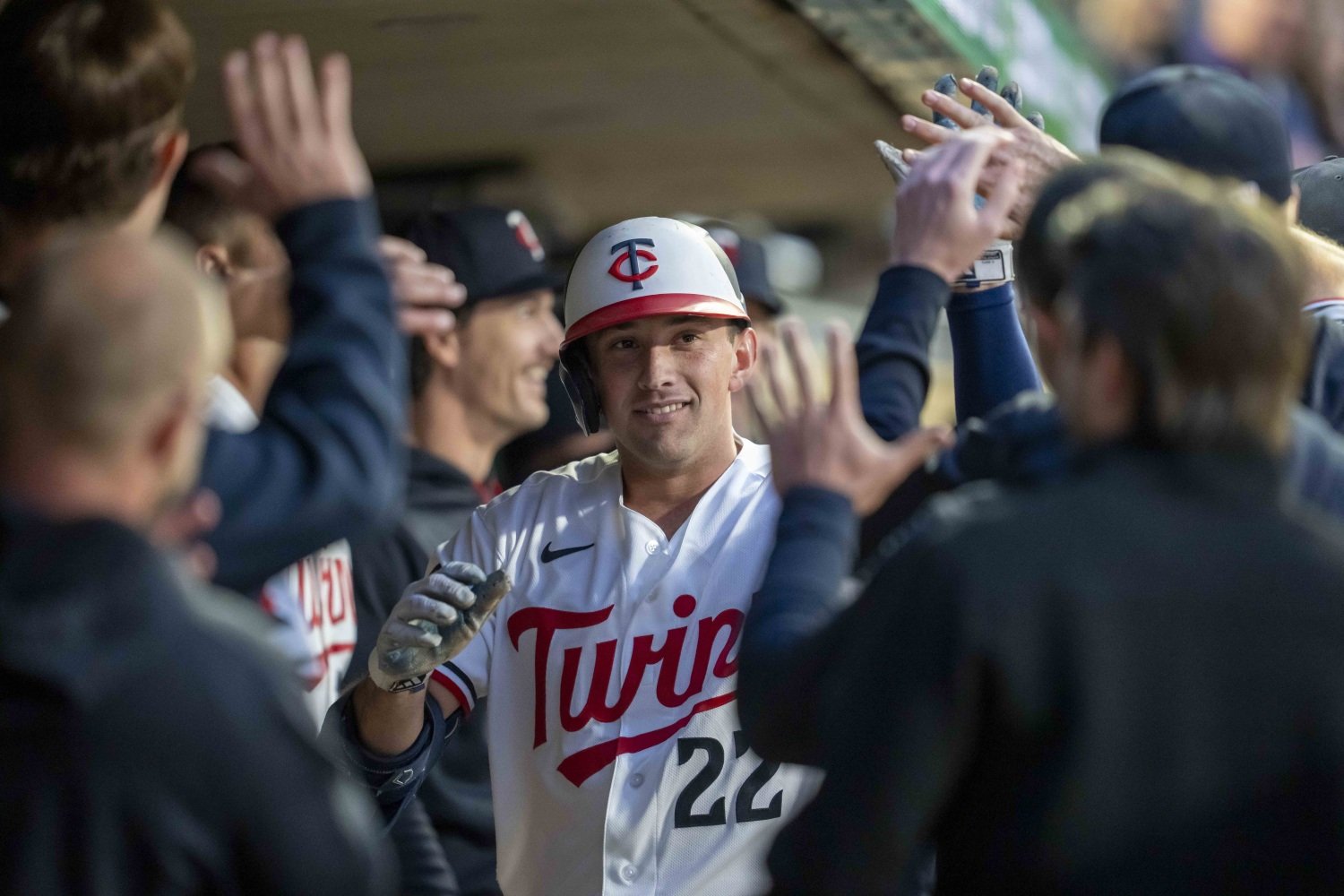 In a boxing match, you don't spend your time waiting and hoping for the chance to land one haymaker. If the other person in the ring were ready to go down and never get back up on the strength of one solid blow, they wouldn't be in the ring with you. Pugilism feels outdated in the 21st century, but there's a reason it was once called the "sweet science": the challenge within it is intricate. You do want to wait and build toward something, but it's the opening to deliver six or seven telling blows, not one. That's how the Twins are turning in a devastating offensive effort so far this year, and especially during the sizzling nine-game heater on which they enter the final game of their series against the Boston Red Sox. They're patient, but they're also opportunistic—and that doesn't just mean hitting mistake pitches out of the park. "Well, I don't know if I expected, you know, multiple seven-run innings or whatever they've been," said manager Derek Shelton on Tuesday. "I think the thing that has been the most impressive is how we've done it. It hasn't been just a homer, a hit, a hit, a hit. There's walks mixed in, I mean, hit by pitches, you cannot control, but the cadence to how we're doing it and to be able to sustain innings, I think has been what's the most impressive thing." Shelton is right. When the Twins scored three runs against former Twin Sonny Gray Tuesday night in the fourth inning, the tallies came on four straight hits to start the frame. One of those was a homer, but it was just the opening volley. They hammered away at Gray while he was reeling, with three more hits. In the first inning Monday night, they scored four times on Garrett Crochet without a home run, and they already had three runs on the board against him in the second before crushing two long homers to put the game away. This is not to decry home runs, which remain a focal point of every modern offense, including the Twins'. As Shelton noted, though, it will have to be more than that, if the team wants to sustain the success they've enjoyed over the last fortnight. "We have to manufacture runs," Shelton said. "Home runs are sexy, but they don’t sustain." He went on to say that his focus within each inning is to get a runner to third base with less than two outs, however that has to be done. He believes the team can apply much more pressure to the pitcher and open holes in the defense by consistently creating those situations within innings. Vital to that endeavor is a shared focus, and lots of communication—both in the dugout, and around the batting cage. Shelton believes new lead hitting coach Keith Beauregard has prepared his charges brilliantly, and that they're able to feed off one another because they've learned to speak the same hitting language and pass information quickly. "The greatest indication is, watch our dugout for two innings [Monday]," Shelton said. "Just the enthusiasm, the excitement, the conversation. I think the thing that is imparted is, you see young players now, Keaschall, Lee, coming back, having conversations with guys on deck, guys in the hole. This is what the pitch does. That comes when you have veteran hitters and they have the ability to communicate. And we were fortunate that we were able to add some guys to our group that really have a good way about them." He's talking—everyone around the Twins is talking—about Josh Bell and Victor Caratini. Luke Keaschall and Brooks Lee are polished, smart, self-possessed hitters, and Byron Buxton and Ryan Jeffers have been leading by example for years, but Bell and Caratini have been welcome additions to a mix of hitters who had underachieved over the past two seasons. When information flows freely through the lineup, so does confidence; so does conviction; and so does production. Some of this is technical, rather than merely a vibe. The Twins have five of the biggest bat speed decliners in the sport so far this season, according to Statcast: Caratini, Bell, Buxton, Trevor Larnach and Matt Wallner. In reality, though, those guys are capable of swinging as hard as ever. As Jeffers began doing more frequently last year, they're merely modulating their swings more—not cutting them down, but changing how they start them and how they visualize finishing them. Under Beauregard's tutelage, these guys are anticipating and preparing with a greater sense of surety, which has them starting earlier and knowing what they're looking for in the box. If they get it, they're already on their way to it, and they don't have to rush their barrel, thus losing accuracy with it. If the pitch isn't what they expected, they have the faith in their preparation and in one another to either take it or whiff on it, rather than making an emergency adjustment that leads to weak contact. Bell was a perfect addition, because he was already doing that before he arrived. "They really haven't asked me to do anything different," Bell said of his approach and his mechanics. "We just talk about what we're looking for and being ready when we get it, and I have no problems with that because the results have been great." For other Twins, the adjustment has been bigger, but the rewards they're now starting to reap make it all feel worthwhile. Kody Clemens gave back the swing speed gains he made in 2025, which allowed him to hit 19 home runs in his first extended playing time in the majors. Unlike Bell, he has ugly numbers so far this year, but he's reached base five times (including hitting a home run) in his last 13 trips to the plate, as he's gotten more used to the marriage between preparation and execution under Beauregard and company. "it’s hard. It’s hard for hitting coaches," Shelton said of his staff's fight to stay on message and keep the hitters onside when the season began with more frustrating days. "And that’s the frustration of hitting coaches. Because players want immediate results. They want immediate success. So the commitment, the conversations, the communication when you’re in the cage is vital. And that’s where that trust is built. And that trust is not built easy." Clemens, at least, had the spring to implement the alterations Beauregard, Rayden Sierra and Trevor Amicone prescribed for his timing. Buxton had no such luck. "For the most part, my swing feels good [now," Buxton said, after breaking out in a massive way Tuesday night after slowly warming for the previous week. "Still a few things to figure out here and there—three weeks, eight at-bats will set you back a little bit." He's referring to his time with Team USA in the World Baseball Classic, where he only played sparingly. That also denied him time with Beauregard, Sierra and Amicone, and he admitted to trying to "rush my swing back" in the first days of the season. Now, Buxton is very much in the middle of the Twins' offensive outburst. He not only hit two long homers Tuesday night, but scored the team's first run in the style Shelton seems to prefer. He was on second when Keaschall hit a flared liner to center in the first inning. He initially froze, but saw that Red Sox center fielder Jarren Duran got a late break on the ball and turned on the jets. He scored, albeit on a close play after a highly aggressive send. Shelton called the decision to try it "elite," and both the manager and his star chuckled after the game about a shared moment in the dugout later. Buxton asked Shelton whether he thought he should have stayed at third on the play. Shelton said he trusted Buxton, and that he was the one on the field, reading it in the moment. That's the level of trust between the skipper and his offensive leaders, and the level of ownership and energy the lineup is taking, in turn. It won't always be this rosy, but for now, the Twins are rolling, thanks to a corps of hitters playing to their potential under a shaken-up coaching staff and a nice balance of new and old veteran leadership. They have patience, but once the opening comes, they want to land five knockout punches, not just one.
- 17 comments
-
- 5
-

-
- derek shelton
- keith beauregard
- (and 3 more)
-
I never knew they existed, either, and honestly, sports fashion and collectibles are both far from my radar most of the time. Video games, equally so. And I STILL think these are cool as hell. Appreciated Cody educating me about them. Haha.
-
Image courtesy of © Jordan Johnson-Imagn Images No one can accuse Ryan Jeffers of being selfish. Though he'll sometimes hide himself away to undergo treatment during open clubhouse times, when he's near his locker, he's as generous with the media as any member of the team. He's conscientious about meetings and collaboration with his pitchers and coaches. He gives everything he can to the team, in the pursuit of wins. That said, he's always been refreshingly frank about the realities of the game and its economics. Jeffers was an underslot signing as a second-round pick in 2018. He didn't make more than $1 million in a season until 2023. He understands that he's very lucky to have earned nearly $20 million playing baseball, but he's also aware that he becomes a free agent this winter—and that that's his chance to secure generational wealth for his family. The way arbitration works and the opportunity to hit paydirt in free agency motivated his push to play more over the last two years. The same factors have influenced the way he's remade his game over the same span, and especially since the end of the 2024 season. For instance, in concert with the Twins, Jeffers made a change last summer that he believes turned him into one of the game's best receivers. It's a fairly simple one: he went exclusively to a right-knee-down catching stance. "Since July 1 of last year, when I went to right-knee-only, I've been third in baseball [in overall catcher defense]," Jeffers said Wednesday, citing the Twins' internal metrics. He's not just saying he's been better; he's positioning himself in the broader context of the league. And the data bears him out. Jeffers said he and the team agreed on the change because his framing numbers weren't where either party felt they should be, going back to the beginning of 2024. In particular, he was losing too many strikes just inside the zone, partially because he was uncomfortable with the variety of setups he was trying to use behind the plate. The league has trended toward putting the left knee down more often, and Jeffers was doing the same, but his body works a bit differently than do other catchers'. He's akways been acutely aware of his size—not just his sheer dimensions, but the proportions of his body. "I think most guys are more comfortable left-knee-down, but for me, right-knee-down is way better," he said. "I just feel like I can move better, present the ball better." It helps, Jeffers noted, that right-knee-down is the preferred stance any time a runner is on base, because it's easier to throw from that stance than when starting with the left kinee down. Still, most catchers find that the left knee being down leaves their glove arm freer to move and receive the ball smoothly. Jeffers prefers the stability he feels with the right knee down. Of the 60 catchers who have caught at least 2,500 tracked pitches since the start of last July, only four have used the left-knee-down stance less often than Jeffers—and he's been better since making the change. Here are two curves and tables, comparing Jeffers's strike rate on called pitches near the edges of the strike zone to that of Alejandro Kirk and to the league average. The top graphic is from the start of 2024 through the end of June 2025. The bottom is since July 1 of last year. There's been an across-the-board improvement. Jeffers was, previously, about average at keeping strikes that were clearly inside the zone but near the edge strikes, but below-average on and just off the edges. Now, he's average on those pitches comfortably inside the zone, and above-average on the coin-flip calls and those just off the fringes. The Statcast framing data doesn't quite line up with what Jeffers and the Twins are looking at, but he went from 54th of 55 qualifying catchers in the year and a half before going exclusively right-knee-down to being 6th of 57 qualifiers since. Even more importantly—or at least more visibly, and firing up everyone involved, including Jeffers—he's turning out to be the master of the challenge system. That's no surprise. "I think our catchers have done a really good job," manager Derek Shelton said of the early returns on the ABS system at the start of this homestand. "I think we went into spring training, knowing—because the one thing I will note, not talking about last year, but I give the Twins a lot of credit with last year in spring training—is they paid attention to it, knowing that it was probably coming in. and we knew coming in that Jeffers had done a good job during spring training [of 2025]." Though it couldn't be implemented right away in games that counted, Jeffers did dedicate himself to learning the system and anticipating the best ways to use it last spring. He talked about its eventual installation throughout last season. One reason why being so much more comfortable physically in the right-knee-down setup mattered was because it allowed Jeffers to hone his eye for the edges of the zone, an advantage he's now able to press by challenging when the umpire doesn't bite on a pitch he knows caught a corner. He's been gearing up for this for a long time, and he's been an eager and excellent user of the system since Opening Day. Jeffers ended four Tigers at-bats by appealing called balls with two strikes late in the games on Tuesday and Wednesday nights, getting overturns each time. He's flipped eight calls for third strikes this season, which not only paces the league, but leads the next-best catchers by five. Flipping pitches to finish off strikeouts and even end innings is a very obvious way for that skill to shine through, but it's not just about the outs themselves. "But what that also does is, it saves pitches, and then it could possibly save who you’re using in the bullpen, or what the actual strategy of the game [looks like]," Shelton said Wednesday. "So when you're managing the game, you think, ‘I like these matchups,’ and then all of a sudden, that pitch flips one way or another—we don't have ABS and it ends up becoming a ball, then maybe that guy doesn't go through that stretch." Jeffers believes his acuity and restraint—for instance, the Twins lost their first challenge in the first inning Wednesday night when Austin Martin wasted one at the plate, so Jeffers waited until the eighth inning to mount challenges that got Cody Laweryson two outs in that frame—will be viewed as a high-value, marketable skill this offseason. You can bet that his agent, Scott Boras, will include it in his binder of information about his client, even if that binder is now digitally delivered, rather than a physical tome. His usage of the system only boosts Jeffers's popularity with his pitchers, of course, but the affinity there runs deeper than the challenge system, or than framing in general. Taj Bradley credits Jeffers with helping him go into starts with a clearer, more detailed plan of attack against opposing batters. "I think he calls a good game," Bradley said after his 10-strikeout performance against the Tigers Tuesday night. "He does his research and his reports and stuff like that, and we sat down before the game and we talked through it, so it's not a surprise what he's calling, why he's calling it, and it's just confidence in everything he puts on the [PitchCom] buttons." It's not hard, when considering the mechanical changes he's made in setting up to receive the ball and the deftness he's shown with the system already, to see why Jeffers believes he can hit the market as an in-demand, high-end defensive backstop. Nor, based on his track record, is he a glove-only catcher. Still, to get paid the way he envisions, he'll need to show the league that he's a true two-way threat. In terms of results, he's off to a slow start, batting .226/.351/.290. The process numbers paint a finer portrait, though—and his solid games Tuesday and Wednesday night started to reward the good work. Most notably, he cracked an opposite-field two-run double against Tarik Skubal Tuesday night, the game-breaking strike. eHl3T0RfWGw0TUFRPT1fVUFsV1hGWUVWQWNBV3dSWFVnQUhDQUZRQUZrTVUxWUFWd1pRQVZWUlVGVUFCQVFI.mp4 "The Jeffers at-bat was an unbelievable at-bat," Shelton said after that game. "I mean, to foul balls off—I thought he'd taken some really good swings earlier on the fastball and got underneath it a little bit—but to go two strikes and just flatten himself out and hit that double down the line, that was a really, really good at-bat." That's a good summation of what happened, and describes something that Jeffers has changed this year that could help him do it more consistently. The slider from Skubal was actually down and out of the zone, on the outer part of the plate. Since the start of 2025, Jeffers only has four hits on pitches in that area, and this one is the only extra-base hit. Even last year, he couldn't have gotten to this ball the way he did Tuesday night. To understand why, take a look at how he was oriented when he made contact with the pitch. The flattening out Shelton is talking about is, in part, his bat path. Jeffers's swing tilt on this pitch was 29°, which is unusually flat for a pitch down around or below the knees. To hit the ball low and away, though, you have to be able to stay somewhat flat, so the barrel of the bat can reach far enough to hit the ball solidly. That's a long way of saying what every baseball fan already knows: it's hard to hit the ball down and away. At the very least, doing so usually requires anticipation and commitment. For Jeffers, though, there's been another element, too. He changed his stance this year, getting more upright in the box to start and striding longer. In this table, the distance between his feet is official, as reported by Statcast; his stride length is an estimate based on Statcast's visualization of his stance and swing. Season Dist. Between Feet (in.) Stride Length (in.) (est.) 2023 35.3 12.1 2024 37.9 11.1 2025 36.2 14.8 2026 32.0 19.4 A longer stride means Jeffers is getting into his legs more flexibly within his swing. It costs him a bit of power, based on the approach he's used the last year-plus (more on that momentarily), but it allows him to hit the ball sharply to the opposite field in a way he couldn't do as well in 2025. He's more adaptable. He can adjust and, yes, flatten himself out, because by sinking deeper into his legs, he gains the option of swinging flatter on low pitches and still reaching them with the barrel. Most of the time, of course, his plan is not to be in a 1-2 count, and thus, to let that pitch go and wait on a better one to hit. He came up with a huge hit against the two-time defending Cy Young Award winner, but the hope is that he won't always be in such a defensive position in the box. That starts with being patient. Jeffers swung at the first pitch in the at-bat roughly 30% of the time over his first five big-league seasons, but last year, that number fell to 19.1%. It's just 21.1% so far this year. Overall, Jeffers is swinging less, accepting walks, and trying to stay in counts where he can hunt for meatballs. So far, he's not generating the power that could turn him into an especially high-end free-agent prize. He only hit nine home runs last year, as he changed his approach a bit and gave up some pull power to get on base more. Unlike some players, he doesn't swing noticeably harder or catch the ball farther out in front of himself when he's ahead in the count. To get back to slugging the way he did two years ago, that might need to change. For now, though, Jeffers is happy with the swing decisions and the contact he's finding with the swing he's engineered. The results, he believes, will come. The Twins don't need Jeffers to hit 30 home runs. What he did at the plate last season was plenty, especially given how good a defender he's become at the most defense-forward position on the diamond. A catcher who adds value via run prevention and gets on base at a .350 clip, as Jeffers has done since the start of last year, can be extremely valuable even with below-average power. Though he has plenty of his own reasons to do it all, the team can be pleased with each of the adjustments he's made. They'll make Jeffers rich, but first, they'll also help the Twins win some extra games in 2026. View full article
-
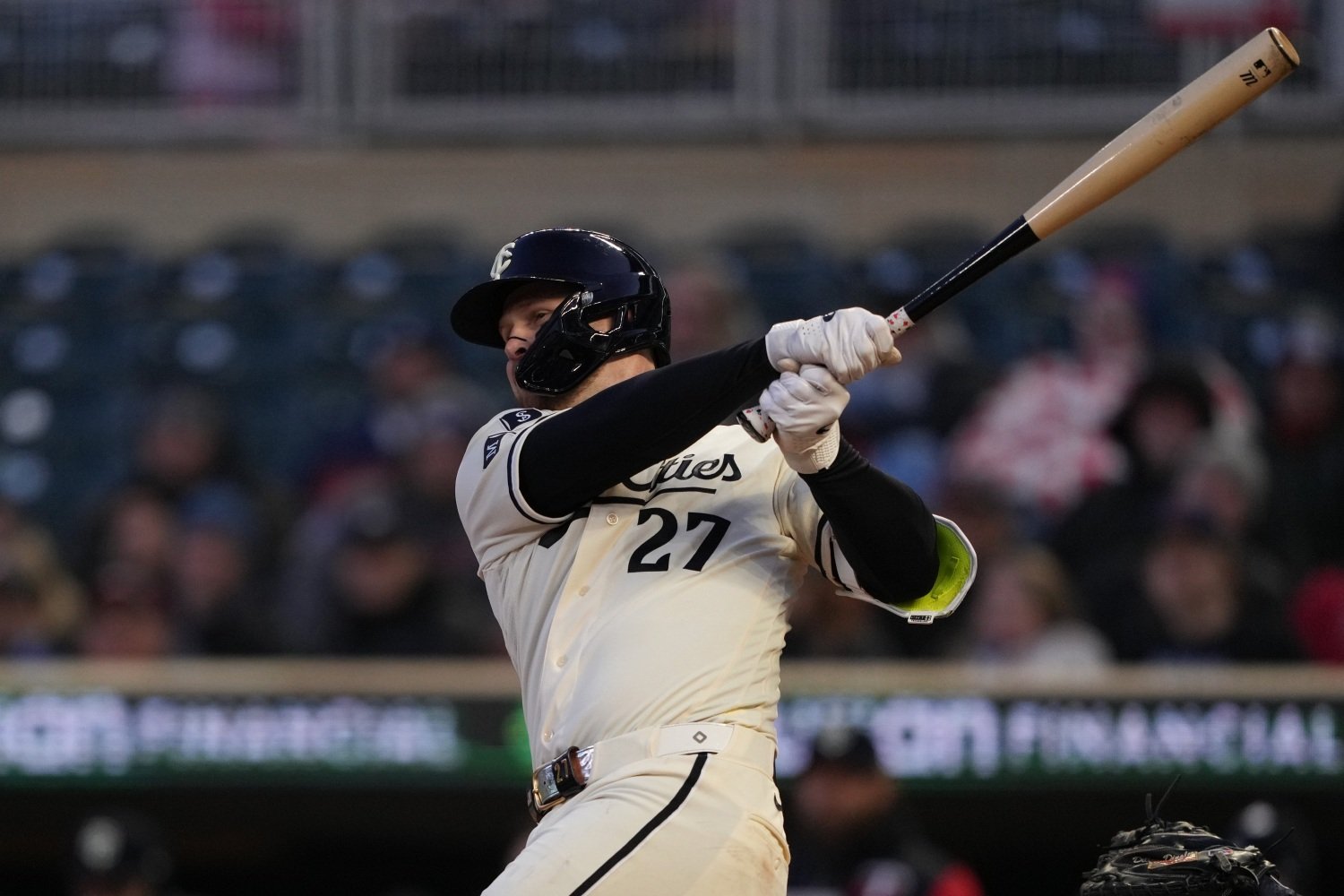 No one can accuse Ryan Jeffers of being selfish. Though he'll sometimes hide himself away to undergo treatment during open clubhouse times, when he's near his locker, he's as generous with the media as any member of the team. He's conscientious about meetings and collaboration with his pitchers and coaches. He gives everything he can to the team, in the pursuit of wins. That said, he's always been refreshingly frank about the realities of the game and its economics. Jeffers was an underslot signing as a second-round pick in 2018. He didn't make more than $1 million in a season until 2023. He understands that he's very lucky to have earned nearly $20 million playing baseball, but he's also aware that he becomes a free agent this winter—and that that's his chance to secure generational wealth for his family. The way arbitration works and the opportunity to hit paydirt in free agency motivated his push to play more over the last two years. The same factors have influenced the way he's remade his game over the same span, and especially since the end of the 2024 season. For instance, in concert with the Twins, Jeffers made a change last summer that he believes turned him into one of the game's best receivers. It's a fairly simple one: he went exclusively to a right-knee-down catching stance. "Since July 1 of last year, when I went to right-knee-only, I've been third in baseball [in overall catcher defense]," Jeffers said Wednesday, citing the Twins' internal metrics. He's not just saying he's been better; he's positioning himself in the broader context of the league. And the data bears him out. Jeffers said he and the team agreed on the change because his framing numbers weren't where either party felt they should be, going back to the beginning of 2024. In particular, he was losing too many strikes just inside the zone, partially because he was uncomfortable with the variety of setups he was trying to use behind the plate. The league has trended toward putting the left knee down more often, and Jeffers was doing the same, but his body works a bit differently than do other catchers'. He's akways been acutely aware of his size—not just his sheer dimensions, but the proportions of his body. "I think most guys are more comfortable left-knee-down, but for me, right-knee-down is way better," he said. "I just feel like I can move better, present the ball better." It helps, Jeffers noted, that right-knee-down is the preferred stance any time a runner is on base, because it's easier to throw from that stance than when starting with the left kinee down. Still, most catchers find that the left knee being down leaves their glove arm freer to move and receive the ball smoothly. Jeffers prefers the stability he feels with the right knee down. Of the 60 catchers who have caught at least 2,500 tracked pitches since the start of last July, only four have used the left-knee-down stance less often than Jeffers—and he's been better since making the change. Here are two curves and tables, comparing Jeffers's strike rate on called pitches near the edges of the strike zone to that of Alejandro Kirk and to the league average. The top graphic is from the start of 2024 through the end of June 2025. The bottom is since July 1 of last year. There's been an across-the-board improvement. Jeffers was, previously, about average at keeping strikes that were clearly inside the zone but near the edge strikes, but below-average on and just off the edges. Now, he's average on those pitches comfortably inside the zone, and above-average on the coin-flip calls and those just off the fringes. The Statcast framing data doesn't quite line up with what Jeffers and the Twins are looking at, but he went from 54th of 55 qualifying catchers in the year and a half before going exclusively right-knee-down to being 6th of 57 qualifiers since. Even more importantly—or at least more visibly, and firing up everyone involved, including Jeffers—he's turning out to be the master of the challenge system. That's no surprise. "I think our catchers have done a really good job," manager Derek Shelton said of the early returns on the ABS system at the start of this homestand. "I think we went into spring training, knowing—because the one thing I will note, not talking about last year, but I give the Twins a lot of credit with last year in spring training—is they paid attention to it, knowing that it was probably coming in. and we knew coming in that Jeffers had done a good job during spring training [of 2025]." Though it couldn't be implemented right away in games that counted, Jeffers did dedicate himself to learning the system and anticipating the best ways to use it last spring. He talked about its eventual installation throughout last season. One reason why being so much more comfortable physically in the right-knee-down setup mattered was because it allowed Jeffers to hone his eye for the edges of the zone, an advantage he's now able to press by challenging when the umpire doesn't bite on a pitch he knows caught a corner. He's been gearing up for this for a long time, and he's been an eager and excellent user of the system since Opening Day. Jeffers ended four Tigers at-bats by appealing called balls with two strikes late in the games on Tuesday and Wednesday nights, getting overturns each time. He's flipped eight calls for third strikes this season, which not only paces the league, but leads the next-best catchers by five. Flipping pitches to finish off strikeouts and even end innings is a very obvious way for that skill to shine through, but it's not just about the outs themselves. "But what that also does is, it saves pitches, and then it could possibly save who you’re using in the bullpen, or what the actual strategy of the game [looks like]," Shelton said Wednesday. "So when you're managing the game, you think, ‘I like these matchups,’ and then all of a sudden, that pitch flips one way or another—we don't have ABS and it ends up becoming a ball, then maybe that guy doesn't go through that stretch." Jeffers believes his acuity and restraint—for instance, the Twins lost their first challenge in the first inning Wednesday night when Austin Martin wasted one at the plate, so Jeffers waited until the eighth inning to mount challenges that got Cody Laweryson two outs in that frame—will be viewed as a high-value, marketable skill this offseason. You can bet that his agent, Scott Boras, will include it in his binder of information about his client, even if that binder is now digitally delivered, rather than a physical tome. His usage of the system only boosts Jeffers's popularity with his pitchers, of course, but the affinity there runs deeper than the challenge system, or than framing in general. Taj Bradley credits Jeffers with helping him go into starts with a clearer, more detailed plan of attack against opposing batters. "I think he calls a good game," Bradley said after his 10-strikeout performance against the Tigers Tuesday night. "He does his research and his reports and stuff like that, and we sat down before the game and we talked through it, so it's not a surprise what he's calling, why he's calling it, and it's just confidence in everything he puts on the [PitchCom] buttons." It's not hard, when considering the mechanical changes he's made in setting up to receive the ball and the deftness he's shown with the system already, to see why Jeffers believes he can hit the market as an in-demand, high-end defensive backstop. Nor, based on his track record, is he a glove-only catcher. Still, to get paid the way he envisions, he'll need to show the league that he's a true two-way threat. In terms of results, he's off to a slow start, batting .226/.351/.290. The process numbers paint a finer portrait, though—and his solid games Tuesday and Wednesday night started to reward the good work. Most notably, he cracked an opposite-field two-run double against Tarik Skubal Tuesday night, the game-breaking strike. eHl3T0RfWGw0TUFRPT1fVUFsV1hGWUVWQWNBV3dSWFVnQUhDQUZRQUZrTVUxWUFWd1pRQVZWUlVGVUFCQVFI.mp4 "The Jeffers at-bat was an unbelievable at-bat," Shelton said after that game. "I mean, to foul balls off—I thought he'd taken some really good swings earlier on the fastball and got underneath it a little bit—but to go two strikes and just flatten himself out and hit that double down the line, that was a really, really good at-bat." That's a good summation of what happened, and describes something that Jeffers has changed this year that could help him do it more consistently. The slider from Skubal was actually down and out of the zone, on the outer part of the plate. Since the start of 2025, Jeffers only has four hits on pitches in that area, and this one is the only extra-base hit. Even last year, he couldn't have gotten to this ball the way he did Tuesday night. To understand why, take a look at how he was oriented when he made contact with the pitch. The flattening out Shelton is talking about is, in part, his bat path. Jeffers's swing tilt on this pitch was 29°, which is unusually flat for a pitch down around or below the knees. To hit the ball low and away, though, you have to be able to stay somewhat flat, so the barrel of the bat can reach far enough to hit the ball solidly. That's a long way of saying what every baseball fan already knows: it's hard to hit the ball down and away. At the very least, doing so usually requires anticipation and commitment. For Jeffers, though, there's been another element, too. He changed his stance this year, getting more upright in the box to start and striding longer. In this table, the distance between his feet is official, as reported by Statcast; his stride length is an estimate based on Statcast's visualization of his stance and swing. Season Dist. Between Feet (in.) Stride Length (in.) (est.) 2023 35.3 12.1 2024 37.9 11.1 2025 36.2 14.8 2026 32.0 19.4 A longer stride means Jeffers is getting into his legs more flexibly within his swing. It costs him a bit of power, based on the approach he's used the last year-plus (more on that momentarily), but it allows him to hit the ball sharply to the opposite field in a way he couldn't do as well in 2025. He's more adaptable. He can adjust and, yes, flatten himself out, because by sinking deeper into his legs, he gains the option of swinging flatter on low pitches and still reaching them with the barrel. Most of the time, of course, his plan is not to be in a 1-2 count, and thus, to let that pitch go and wait on a better one to hit. He came up with a huge hit against the two-time defending Cy Young Award winner, but the hope is that he won't always be in such a defensive position in the box. That starts with being patient. Jeffers swung at the first pitch in the at-bat roughly 30% of the time over his first five big-league seasons, but last year, that number fell to 19.1%. It's just 21.1% so far this year. Overall, Jeffers is swinging less, accepting walks, and trying to stay in counts where he can hunt for meatballs. So far, he's not generating the power that could turn him into an especially high-end free-agent prize. He only hit nine home runs last year, as he changed his approach a bit and gave up some pull power to get on base more. Unlike some players, he doesn't swing noticeably harder or catch the ball farther out in front of himself when he's ahead in the count. To get back to slugging the way he did two years ago, that might need to change. For now, though, Jeffers is happy with the swing decisions and the contact he's finding with the swing he's engineered. The results, he believes, will come. The Twins don't need Jeffers to hit 30 home runs. What he did at the plate last season was plenty, especially given how good a defender he's become at the most defense-forward position on the diamond. A catcher who adds value via run prevention and gets on base at a .350 clip, as Jeffers has done since the start of last year, can be extremely valuable even with below-average power. Though he has plenty of his own reasons to do it all, the team can be pleased with each of the adjustments he's made. They'll make Jeffers rich, but first, they'll also help the Twins win some extra games in 2026.
 -
Image courtesy of © Jordan Johnson-Imagn Images It's not that the Twins don't throw hard. That's not the remarkable thing about their collection of fringy relief arms. What's remarkable—what might end up being quasi-historic, though it will probably change later this year—is how far they are from throwing hard. In Taj Bradley, they have one of the hardest-throwing starters in baseball, and Mick Abel can work in the mid-90s, too. On days when Bailey Ober or Simeon Woods Richardson starts, though—and even with Joe Ryan, who stands out for his movement, rather than his velocity—the team can go a full nine innings without touching 95 miles per hour. Two decades ago, that wouldn't be noteworthy at all. Even one decade ago, you'd have noticed it, but it wouldn't have shocked you. Now, however, it's startling. The brightline at which a relief pitcher can be said to be a hard thrower isn't 94 or 95 MPH, anymore. It's more like 97. In fact, since 2021, the median team's frequency of exceeding 95 MPH on four-seam fastballs and sinkers is 43.8%. Nearly half of all fastballs thrown by relievers are 95 or faster. Just a year ago, the Twins boasted Jhoan Duran and Louis Varland, who could each get to 100 MPH. When Griffin Jax and Brock Stewart were going well, they could sit on the high side of 95 and push toward triple digits, too. "Only" throwing 95 doesn't even register as interesting, anymore. Over the last five full seasons, the lowest percentage of reliever fastballs to eclipse 95 MPH belonged to the 2021 Diamondbacks, at 17.1%. Only they and that year's Angels were under 20%. This season, the Mets have thrown the second-fewest heaters at 95 or faster, at 56. They have several guys who can top that number—Luke Weaver, Devin Williams, Huascar Brazobán, Luis García, and Tobias Myers—but they rarely actually do so. In fact, if their current rate of 14.6% of fastballs getting to the midpoint of the 90s holds, it would be the lowest since the pandemic—except, of course, for the Twins'. Minnesota has only seen 38 fastballs reach 95 after departing the fingers of a pitcher working in relief this year. That's in over 400 heaters, pushing them down into a range not seen since the 2019 Cleveland club. Before that, only the 2015 Athletics were similarly starved for heat, in the Statcast Era. This team is an outlier, throwing slower than any pen has in a decade or more—because the truth is, even the raw numbers presented above oversell them. Of the 38 fastballs at 95+ this year from a Twins reliever, 35 were thrown by Mick Abel—who's not really a reliever. Working in tandem with Bailey Ober in the season-opening series in Baltimore, Abel furnished almost all of the honest-to-God heat the Twins pen has mustered all season. Only Justin Topa (once) and Cole Sands (twice) have even scraped 95 MPH, among real members of this bullpen. This will change, of course. With any luck, as the weather warms, Sands (and perhaps one or two others) will at least flirt more often with the upper half of the 90s. More importantly, the team is likely to call up some guys who throw harder, as the season wears on. If Zebby Matthews can't quickly find a way into the rotation in Minneapolis, maybe it's time to try him in the bullpen. Something like that will give them an infusion of velocity. Heck, even most waiver claims will have a chance to bring more juice to the relief unit. For now, though, this is borderline hilarious. The Twins are to fastballs with anything on them (by modern standards) what Charlie Bucket was to Wonka Bars. Everyone around them is counting their accumulations by dozens or hundreds. The Twins have, through 13 games, three 95+ fastballs from their relievers. Just three. I would analyze this further, but like Charlie's teacher in the movie, I don't know how to do just three. This team is blazing a new trail, when it comes to not really blazing anything in the pen. View full article
-
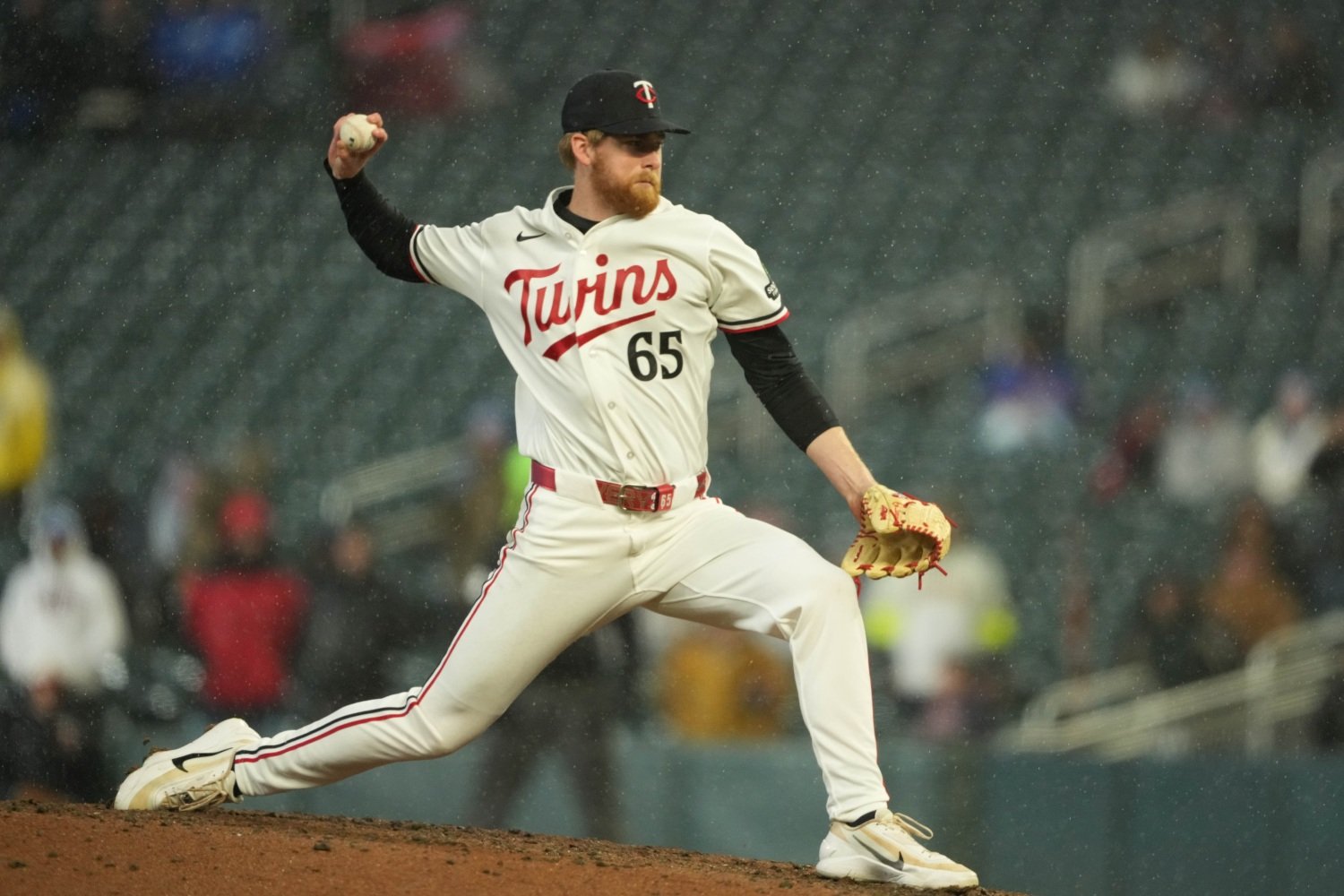 It's not that the Twins don't throw hard. That's not the remarkable thing about their collection of fringy relief arms. What's remarkable—what might end up being quasi-historic, though it will probably change later this year—is how far they are from throwing hard. In Taj Bradley, they have one of the hardest-throwing starters in baseball, and Mick Abel can work in the mid-90s, too. On days when Bailey Ober or Simeon Woods Richardson starts, though—and even with Joe Ryan, who stands out for his movement, rather than his velocity—the team can go a full nine innings without touching 95 miles per hour. Two decades ago, that wouldn't be noteworthy at all. Even one decade ago, you'd have noticed it, but it wouldn't have shocked you. Now, however, it's startling. The brightline at which a relief pitcher can be said to be a hard thrower isn't 94 or 95 MPH, anymore. It's more like 97. In fact, since 2021, the median team's frequency of exceeding 95 MPH on four-seam fastballs and sinkers is 43.8%. Nearly half of all fastballs thrown by relievers are 95 or faster. Just a year ago, the Twins boasted Jhoan Duran and Louis Varland, who could each get to 100 MPH. When Griffin Jax and Brock Stewart were going well, they could sit on the high side of 95 and push toward triple digits, too. "Only" throwing 95 doesn't even register as interesting, anymore. Over the last five full seasons, the lowest percentage of reliever fastballs to eclipse 95 MPH belonged to the 2021 Diamondbacks, at 17.1%. Only they and that year's Angels were under 20%. This season, the Mets have thrown the second-fewest heaters at 95 or faster, at 56. They have several guys who can top that number—Luke Weaver, Devin Williams, Huascar Brazobán, Luis García, and Tobias Myers—but they rarely actually do so. In fact, if their current rate of 14.6% of fastballs getting to the midpoint of the 90s holds, it would be the lowest since the pandemic—except, of course, for the Twins'. Minnesota has only seen 38 fastballs reach 95 after departing the fingers of a pitcher working in relief this year. That's in over 400 heaters, pushing them down into a range not seen since the 2019 Cleveland club. Before that, only the 2015 Athletics were similarly starved for heat, in the Statcast Era. This team is an outlier, throwing slower than any pen has in a decade or more—because the truth is, even the raw numbers presented above oversell them. Of the 38 fastballs at 95+ this year from a Twins reliever, 35 were thrown by Mick Abel—who's not really a reliever. Working in tandem with Bailey Ober in the season-opening series in Baltimore, Abel furnished almost all of the honest-to-God heat the Twins pen has mustered all season. Only Justin Topa (once) and Cole Sands (twice) have even scraped 95 MPH, among real members of this bullpen. This will change, of course. With any luck, as the weather warms, Sands (and perhaps one or two others) will at least flirt more often with the upper half of the 90s. More importantly, the team is likely to call up some guys who throw harder, as the season wears on. If Zebby Matthews can't quickly find a way into the rotation in Minneapolis, maybe it's time to try him in the bullpen. Something like that will give them an infusion of velocity. Heck, even most waiver claims will have a chance to bring more juice to the relief unit. For now, though, this is borderline hilarious. The Twins are to fastballs with anything on them (by modern standards) what Charlie Bucket was to Wonka Bars. Everyone around them is counting their accumulations by dozens or hundreds. The Twins have, through 13 games, three 95+ fastballs from their relievers. Just three. I would analyze this further, but like Charlie's teacher in the movie, I don't know how to do just three. This team is blazing a new trail, when it comes to not really blazing anything in the pen.
 -
Image courtesy of © Daniel Kucin Jr.-Imagn Images You never see a pitcher for whom things are going well practicing their stance on the rubber or the way they break their hands in front of their locker in the clubhouse. There's plenty of space in the Twins' home clubhouse at Target Field, but not so much that anyone would be tempted to move meaningful practice off the field and into that space. Big-league ballplayers love to take up space, but in front of their lockers, they instinctively make themselves small. They don't move in big, unpredictable ways. They stay out of the walkway that runs right past each row of lockers. On Tuesday afternoon, Bailey Ober had his glove on his hand and stood in front of his locker, thwacking a ball into the glove and practicing some of the key timing moments in his delivery. He was waiting for locker neighbor Mick Abel to be ready to head out to the field, but while he waited, he didn't chat breezily with the younger pitcher. They had an easy conversation going, but as Abel turned his attention to lacing up his spikes, Ober turned and became slightly absorbed by the back of his locker. It was the reverie of a man who's not happy with how his body is responding to his mind's commands, for whom that's a particularly big problem—because his body makes his living. "It's just the way the body's working," Ober said of his slight reduction in arm angle this year. "There's some things I'm trying to balance, and I'm a little late [timing-wise], which leads to that." His voice carried a peculiar mixture of optimism and frustration. Ober is a thoughtful and energetic player, though that energy manifests itself in a very quiet way. He's dedicated to his craft, and early in the season, he's excited by what's working—but it's also clear that he resents his own inability to iron out the mechanical issues he's been sifting through for the last year-plus. Some pitchers struggle, even with the guidance of pitching coaches, to identify and target flaws in their delivery. Ober, who has always been keenly aware of the challenges posed by his towering height, isn't one of those guys. He knows what he needs to do. He's doing it. Maddeningly, his body just won't hit the targets he commands it to hit, despite the best training he's been able to give it. Thence comes the deficiency of velocity that jumps out most readily to fans, but that's not the only issue created by not being on time within his delivery—or even the most important one. Ober admitted that there are pitches (not just pitch types, but combinations of pitch type and location) he can't throw with much confidence right now, which limits his options. Most of his arsenal is going through a long period of having good days and bad days; he needs to reclaim the consistency that made his deep mix great a couple years ago. For now, Ober is largely eschewing his slider to right-handed batters, because he feels he can better execute his sweeper. 'Execute,' in this case, means not only to throw the pitch where he wants to and with the shape he wants, but to tunnel its release and initial trajectory with another pitch the batter might be anticipating. The slider can't check all of those boxes right now, except in its more cutterish form, to lefty batters. Instead, Ober is going to the sweeper—but also to his changeup, even against righties. "I'm not consciously leaning on it," he said Tuesday, "but I can really trust that pitch right now. And it doesn't really matter for me, lefty or righty, because I try to throw that pitch a lot like a splitter—focused on getting that [downward movement] on it. And I know that even if it runs in on a righty, I can sometimes jam them." That's why, so far this season, Ober has thrown his changeup 48% of the time against left-handed batters and 29% of the time to righties. Last year, those numbers were 34% and 23%, respectively, and they were similar in 2024. The changeup is working. That's always been Ober's best pitch. The only problem, right now, is that it's the only one he fully trusts. Good news can still be found in the mix. Ober's sweeper and curveball have bigger break this year. If he's stuck with the lower arm slot because of the way his body is unfolding and timing up its many movements, he might find some solace in more movement on his sinker, helping him attack righties despite the lost velocity. He expressed hope that, as the sinker comes along, he can use that pitch to keep righties looking inside, making the sweeper and even the four-seamer on the outer half more effective. Ober takes the mound again Wednesday night against the Tigers, with the Twins looking to secure their first series win of the year. His stuff isn't ready to take the big step forward both Ober and fans crave. However, he's feeling out his own pitch mix with each outing, and he's coming to a better understanding of how he can win with what he has. As long as the changeup keeps obeying him, he can keep relying on it, and that itself might make his fastballs look a bit faster. View full article
-
 You never see a pitcher for whom things are going well practicing their stance on the rubber or the way they break their hands in front of their locker in the clubhouse. There's plenty of space in the Twins' home clubhouse at Target Field, but not so much that anyone would be tempted to move meaningful practice off the field and into that space. Big-league ballplayers love to take up space, but in front of their lockers, they instinctively make themselves small. They don't move in big, unpredictable ways. They stay out of the walkway that runs right past each row of lockers. On Tuesday afternoon, Bailey Ober had his glove on his hand and stood in front of his locker, thwacking a ball into the glove and practicing some of the key timing moments in his delivery. He was waiting for locker neighbor Mick Abel to be ready to head out to the field, but while he waited, he didn't chat breezily with the younger pitcher. They had an easy conversation going, but as Abel turned his attention to lacing up his spikes, Ober turned and became slightly absorbed by the back of his locker. It was the reverie of a man who's not happy with how his body is responding to his mind's commands, for whom that's a particularly big problem—because his body makes his living. "It's just the way the body's working," Ober said of his slight reduction in arm angle this year. "There's some things I'm trying to balance, and I'm a little late [timing-wise], which leads to that." His voice carried a peculiar mixture of optimism and frustration. Ober is a thoughtful and energetic player, though that energy manifests itself in a very quiet way. He's dedicated to his craft, and early in the season, he's excited by what's working—but it's also clear that he resents his own inability to iron out the mechanical issues he's been sifting through for the last year-plus. Some pitchers struggle, even with the guidance of pitching coaches, to identify and target flaws in their delivery. Ober, who has always been keenly aware of the challenges posed by his towering height, isn't one of those guys. He knows what he needs to do. He's doing it. Maddeningly, his body just won't hit the targets he commands it to hit, despite the best training he's been able to give it. Thence comes the deficiency of velocity that jumps out most readily to fans, but that's not the only issue created by not being on time within his delivery—or even the most important one. Ober admitted that there are pitches (not just pitch types, but combinations of pitch type and location) he can't throw with much confidence right now, which limits his options. Most of his arsenal is going through a long period of having good days and bad days; he needs to reclaim the consistency that made his deep mix great a couple years ago. For now, Ober is largely eschewing his slider to right-handed batters, because he feels he can better execute his sweeper. 'Execute,' in this case, means not only to throw the pitch where he wants to and with the shape he wants, but to tunnel its release and initial trajectory with another pitch the batter might be anticipating. The slider can't check all of those boxes right now, except in its more cutterish form, to lefty batters. Instead, Ober is going to the sweeper—but also to his changeup, even against righties. "I'm not consciously leaning on it," he said Tuesday, "but I can really trust that pitch right now. And it doesn't really matter for me, lefty or righty, because I try to throw that pitch a lot like a splitter—focused on getting that [downward movement] on it. And I know that even if it runs in on a righty, I can sometimes jam them." That's why, so far this season, Ober has thrown his changeup 48% of the time against left-handed batters and 29% of the time to righties. Last year, those numbers were 34% and 23%, respectively, and they were similar in 2024. The changeup is working. That's always been Ober's best pitch. The only problem, right now, is that it's the only one he fully trusts. Good news can still be found in the mix. Ober's sweeper and curveball have bigger break this year. If he's stuck with the lower arm slot because of the way his body is unfolding and timing up its many movements, he might find some solace in more movement on his sinker, helping him attack righties despite the lost velocity. He expressed hope that, as the sinker comes along, he can use that pitch to keep righties looking inside, making the sweeper and even the four-seamer on the outer half more effective. Ober takes the mound again Wednesday night against the Tigers, with the Twins looking to secure their first series win of the year. His stuff isn't ready to take the big step forward both Ober and fans crave. However, he's feeling out his own pitch mix with each outing, and he's coming to a better understanding of how he can win with what he has. As long as the changeup keeps obeying him, he can keep relying on it, and that itself might make his fastballs look a bit faster.
 -
 Joe Ryan struggled Wednesday night against the Royals. That had something to do with the weather, and it's not worth worrying much about him; the 2026 Twins give you plenty of more urgent things about which to stress out. However, as Taj Bradley takes the mound for the series finale on Thursday afternoon, he does so with a window opening for him. This guy might just be the Twins' new ace, and not because Ryan had a minor wobble or because Pablo López is hurt. He might have the upside to compete for the American League Cy Young Award—not in a few years, but right now. He could, of course, take it on the chin Thursday and make this sound quite foolish. But before he starts, let's take a moment to consider just how real the possibility is. Bradley struck out nine in his season debut Saturday in Baltimore. He did it with a four-pitch mix that has undergone some slight but important improvements since last year. His fastball sat at 97.4 miles per hour, touching 99. Despite his high arm slot, he showed impressive depth on his splitter, and what was previously a cutter has been reengineered. It's now a true slider, serving as a halfway point between his high-rise heater and a sharp knuckle-curve. All four of his offerings rated better than average, by a healthy margin, according to Baseball Prospectus's StuffPro metric. The values that make up the scale on the left are runs per 100 pitches thrown, so (for instance) for every 100 heaters like the ones he threw Saturday Bradley throws, he reduces the expected number of runs an opponent will score by 0.7. As you can see, both the splitter and that cutter-turned-slider are more than a run better than average per 100 thrown. It wasn't like this last year, or the year before that. Stuff this dominant is new, and it's special. Here are his pitch-by-pitch StuffPro values since 2024. Season StuffPro Pitch Type 2024 2025 2026 4-Seam Fastball -0.2 -0.1 -0.7 Cutter/Slider -0.3 -0.5 -1.3 Curveball 0.2 -0.2 -0.4 Splitter -0.9 -0.1 -1.4 Sinker 0.4 It's not just about Bradley improving, though. Only one starter has a better StuffPro so far this season, and it's Brewers superstar Jacob Misiorowski. Bradley can't quite hope to keep pace with him, but he's ahead of everyone else in the league—at least through one start. It's a bit more plausible that Bradley could perform the way Dylan Cease or Hunter Brown do over a full season, and that would be plenty. Cease and Brown are both high-slot right-handed hurlers with arsenals similar to Bradley's. If you wanted to distinguish them, you'd be forced to admit that Cease throws even harder and that Brown has a plus sinker, but you could also note that Bradley's splitter is better than any form of changeup thrown by either of the other two. Cease got a $200-million contract from the Blue Jays this winter. Brown finished third in AL Cy Young Award voting in 2025. Bradley, 25, isn't even arbitration-eligible yet, so if he emerges as a credible ace, it would be franchise-altering for the Twins. This is a bit of a López situation. Bradley doesn't quite have the same demonstrated upside, but he's young; he's under long-term team control; and being with the Twins has already made him better. Don't scoff too confidently at the notion that he could be the next López, or that the Twins might move to extend him now, on a deal even more team-friendly than López's. Of course, if he gives up six runs against the Royals in a few minutes, do feel free to mock me, but there's real evidence of a breakout afoot.
 -
Image courtesy of © Mitch Stringer-Imagn Images Joe Ryan struggled Wednesday night against the Royals. That had something to do with the weather, and it's not worth worrying much about him; the 2026 Twins give you plenty of more urgent things about which to stress out. However, as Taj Bradley takes the mound for the series finale on Thursday afternoon, he does so with a window opening for him. This guy might just be the Twins' new ace, and not because Ryan had a minor wobble or because Pablo López is hurt. He might have the upside to compete for the American League Cy Young Award—not in a few years, but right now. He could, of course, take it on the chin Thursday and make this sound quite foolish. But before he starts, let's take a moment to consider just how real the possibility is. Bradley struck out nine in his season debut Saturday in Baltimore. He did it with a four-pitch mix that has undergone some slight but important improvements since last year. His fastball sat at 97.4 miles per hour, touching 99. Despite his high arm slot, he showed impressive depth on his splitter, and what was previously a cutter has been reengineered. It's now a true slider, serving as a halfway point between his high-rise heater and a sharp knuckle-curve. All four of his offerings rated better than average, by a healthy margin, according to Baseball Prospectus's StuffPro metric. The values that make up the scale on the left are runs per 100 pitches thrown, so (for instance) for every 100 heaters like the ones he threw Saturday Bradley throws, he reduces the expected number of runs an opponent will score by 0.7. As you can see, both the splitter and that cutter-turned-slider are more than a run better than average per 100 thrown. It wasn't like this last year, or the year before that. Stuff this dominant is new, and it's special. Here are his pitch-by-pitch StuffPro values since 2024. Season StuffPro Pitch Type 2024 2025 2026 4-Seam Fastball -0.2 -0.1 -0.7 Cutter/Slider -0.3 -0.5 -1.3 Curveball 0.2 -0.2 -0.4 Splitter -0.9 -0.1 -1.4 Sinker 0.4 It's not just about Bradley improving, though. Only one starter has a better StuffPro so far this season, and it's Brewers superstar Jacob Misiorowski. Bradley can't quite hope to keep pace with him, but he's ahead of everyone else in the league—at least through one start. It's a bit more plausible that Bradley could perform the way Dylan Cease or Hunter Brown do over a full season, and that would be plenty. Cease and Brown are both high-slot right-handed hurlers with arsenals similar to Bradley's. If you wanted to distinguish them, you'd be forced to admit that Cease throws even harder and that Brown has a plus sinker, but you could also note that Bradley's splitter is better than any form of changeup thrown by either of the other two. Cease got a $200-million contract from the Blue Jays this winter. Brown finished third in AL Cy Young Award voting in 2025. Bradley, 25, isn't even arbitration-eligible yet, so if he emerges as a credible ace, it would be franchise-altering for the Twins. This is a bit of a López situation. Bradley doesn't quite have the same demonstrated upside, but he's young; he's under long-term team control; and being with the Twins has already made him better. Don't scoff too confidently at the notion that he could be the next López, or that the Twins might move to extend him now, on a deal even more team-friendly than López's. Of course, if he gives up six runs against the Royals in a few minutes, do feel free to mock me, but there's real evidence of a breakout afoot. View full article
-
Well that's just not true. The league struck out 14.1% of the time during Killebrew's career. The ratio of his K rate to the league's was virtually identical to the one between 30% and the league's average K rate now. And we have a handful of modern examples of players punching out about that often and having success over several-year stretches. Matt Wallner's problem is not that he strikes out too much. It's that he often can't stay healthy, and that last year, he didn't do enough damage when he did make contact.
-
Image courtesy of © Daniel Kucin Jr.-Imagn Images In the Twins' fourth game of the 2026 season, Matt Wallner connected for his first home run. It was just his second hit of the year, as he's striking out around 30% of the time and hitting into some tough luck. He's struggled with some adjustments to the ABS challenge system, though he's also walked at a high rate in the extremely limited early sample. Results mean little in snatches of a few games here and there, though, so let's talk about process. Wallner has altered two key things that became problematic for him in a poor 2025 season, and now, he's a bit better insulated against some of his glaring weaknesses than he was in the past. Firstly, as was covered pretty well this spring, Wallner's stance and stride have changed. He's noticeably less open in the batter's box, and his feet also start farther apart. That makes his stride a bit shorter to get to (more or less) the same position at contact, which produces a slightly less linear, lunging address of the ball. A shorter stride means greater balance and the ability to see the ball a bit better a bit longer, which should result in better swing decisions and a higher contact rate. Wallner swung at 26% of pitches outside the zone during spring training, which is only very slightly lower than the chase rates he posted in 2024 and 2025 (around 29%), but he's swung at barely over 14% of out-of-zone pitches in the first few games of the regular season. His strikeout rate remains high, but that's inevitable for Wallner; he swings for the fences and works deep counts. More importantly, but less certainly, Wallner seems to be letting the ball travel more this spring. His contact point is deeper (around 33 inches in front of his frame, down from 36-37 inches in the past). A deeper contact point typically leads to better contact rates but less pull power. We don't have enough data to call this signal instead of noise yet, but to whatever extent he's seeing the ball a bit deeper, that, too, makes Wallner more dangerous. Let's compare two key moments in the swing for the two pitches this year on which Wallner has put his improved process on display, with the same moments in swings against simiiar offerings last year. First, here's a comparison of his first hit of the year (a line-drive single off Orioles starter Shane Baz and his 98-MPH fastball) with a fastball from Yankees righty Luis Gil last season, on which he hit a routine flyout. The top two images show the moment when the pitcher released the ball. The bottom two show the moment when Wallner's front foot engaged with the ground, allowing him to fully execute his swing. As the animations above suggested, Wallner's tweaked stance and stride put him in better hitting positions. Last year, the former hard-throwing pitcher looked too much like he still was one, bringing his front leg all the way up past his front elbow. This year, that leg kick is slightly but vitally modulated, engaging his core and giving him a timing mechanism but not throwing off his balance. As he lands, you can see his weight is more evenly distributed this year, whereas the longer stride in 2025 left him lurching. Here's the same set of images for a sweeper on which he popped up lazily last summer in Toronto, and the one on which he tagged Kris Bubic for his first homer on Monday. The themes are the same, but you can spot one more variable. Against lefties, Wallner is better able to stay back this year, which lets him start his hands a bit earlier without overcommitting. Last season, he was starting in plenty of time against a pitch that wasn't even especially fast, but still had to rush the barrel, and he was late and flat through the hitting zone on a fat pitch. This year, he was dangerous throughout the swing and unloaded on a Bubic mistake. These changes to his lower-half mechanics relate to an important one in his actual bat path. Last summer, I noted that Wallner had flattened his swing, to the detriment of his contact quality and his overall game. A fkat swing requires that contact point way out in front of you, which can also lead to more whiffs. It was a strange and ill-fitting adjustment for a tall, patient pwoer hitter. This season, in limited looks, he appears to have reverted to a better plan. Here are his key swing characteristics for pitches in the medium bracket in terms of vertical location, according to Statcast. (I've focused on these to eliminate the distortionary influences of swing distribution by location early in the season, and because Wallner only has a meaningful number of swings in that middle tier.) Season Bat Speed Swing Tilt Contact Point (in.) 2024 77.6 31° 33.4 2025 76.8 27° 35 2026 76.4 30° 31 Without losing any meaningful amount of bat speed, Wallner has recovered his tilt and is letting the ball travel more when it's in the best segment of the zone for hitting. That's a strong indicator. He still has some key vulnerabilities that will be hard to cover: he doesn't handle velocity or the ball up in the zone well. However, his changes in setup, stride and bat path this spring give him a chance for the kind of rebound the Twins desperately need from him. A version of Wallner who bats, say, .240/.350/.520 is much closer at hand than it was last year, which is also an encouraging signal about the team's new hitting coaches. It's still unlikely that Wallner gets to that level, but after he batted .202/.311/.464 last season, the ability to even dream on such a major improvement is a testament to Wallner's openness to vital changes and the coaching staff's deftness. View full article
-
 In the Twins' fourth game of the 2026 season, Matt Wallner connected for his first home run. It was just his second hit of the year, as he's striking out around 30% of the time and hitting into some tough luck. He's struggled with some adjustments to the ABS challenge system, though he's also walked at a high rate in the extremely limited early sample. Results mean little in snatches of a few games here and there, though, so let's talk about process. Wallner has altered two key things that became problematic for him in a poor 2025 season, and now, he's a bit better insulated against some of his glaring weaknesses than he was in the past. Firstly, as was covered pretty well this spring, Wallner's stance and stride have changed. He's noticeably less open in the batter's box, and his feet also start farther apart. That makes his stride a bit shorter to get to (more or less) the same position at contact, which produces a slightly less linear, lunging address of the ball. A shorter stride means greater balance and the ability to see the ball a bit better a bit longer, which should result in better swing decisions and a higher contact rate. Wallner swung at 26% of pitches outside the zone during spring training, which is only very slightly lower than the chase rates he posted in 2024 and 2025 (around 29%), but he's swung at barely over 14% of out-of-zone pitches in the first few games of the regular season. His strikeout rate remains high, but that's inevitable for Wallner; he swings for the fences and works deep counts. More importantly, but less certainly, Wallner seems to be letting the ball travel more this spring. His contact point is deeper (around 33 inches in front of his frame, down from 36-37 inches in the past). A deeper contact point typically leads to better contact rates but less pull power. We don't have enough data to call this signal instead of noise yet, but to whatever extent he's seeing the ball a bit deeper, that, too, makes Wallner more dangerous. Let's compare two key moments in the swing for the two pitches this year on which Wallner has put his improved process on display, with the same moments in swings against simiiar offerings last year. First, here's a comparison of his first hit of the year (a line-drive single off Orioles starter Shane Baz and his 98-MPH fastball) with a fastball from Yankees righty Luis Gil last season, on which he hit a routine flyout. The top two images show the moment when the pitcher released the ball. The bottom two show the moment when Wallner's front foot engaged with the ground, allowing him to fully execute his swing. As the animations above suggested, Wallner's tweaked stance and stride put him in better hitting positions. Last year, the former hard-throwing pitcher looked too much like he still was one, bringing his front leg all the way up past his front elbow. This year, that leg kick is slightly but vitally modulated, engaging his core and giving him a timing mechanism but not throwing off his balance. As he lands, you can see his weight is more evenly distributed this year, whereas the longer stride in 2025 left him lurching. Here's the same set of images for a sweeper on which he popped up lazily last summer in Toronto, and the one on which he tagged Kris Bubic for his first homer on Monday. The themes are the same, but you can spot one more variable. Against lefties, Wallner is better able to stay back this year, which lets him start his hands a bit earlier without overcommitting. Last season, he was starting in plenty of time against a pitch that wasn't even especially fast, but still had to rush the barrel, and he was late and flat through the hitting zone on a fat pitch. This year, he was dangerous throughout the swing and unloaded on a Bubic mistake. These changes to his lower-half mechanics relate to an important one in his actual bat path. Last summer, I noted that Wallner had flattened his swing, to the detriment of his contact quality and his overall game. A fkat swing requires that contact point way out in front of you, which can also lead to more whiffs. It was a strange and ill-fitting adjustment for a tall, patient pwoer hitter. This season, in limited looks, he appears to have reverted to a better plan. Here are his key swing characteristics for pitches in the medium bracket in terms of vertical location, according to Statcast. (I've focused on these to eliminate the distortionary influences of swing distribution by location early in the season, and because Wallner only has a meaningful number of swings in that middle tier.) Season Bat Speed Swing Tilt Contact Point (in.) 2024 77.6 31° 33.4 2025 76.8 27° 35 2026 76.4 30° 31 Without losing any meaningful amount of bat speed, Wallner has recovered his tilt and is letting the ball travel more when it's in the best segment of the zone for hitting. That's a strong indicator. He still has some key vulnerabilities that will be hard to cover: he doesn't handle velocity or the ball up in the zone well. However, his changes in setup, stride and bat path this spring give him a chance for the kind of rebound the Twins desperately need from him. A version of Wallner who bats, say, .240/.350/.520 is much closer at hand than it was last year, which is also an encouraging signal about the team's new hitting coaches. It's still unlikely that Wallner gets to that level, but after he batted .202/.311/.464 last season, the ability to even dream on such a major improvement is a testament to Wallner's openness to vital changes and the coaching staff's deftness.
 -
Luke Keaschall's Increased Bat Speed, and Why it Matters
Matthew Trueblood posted an article in Twins
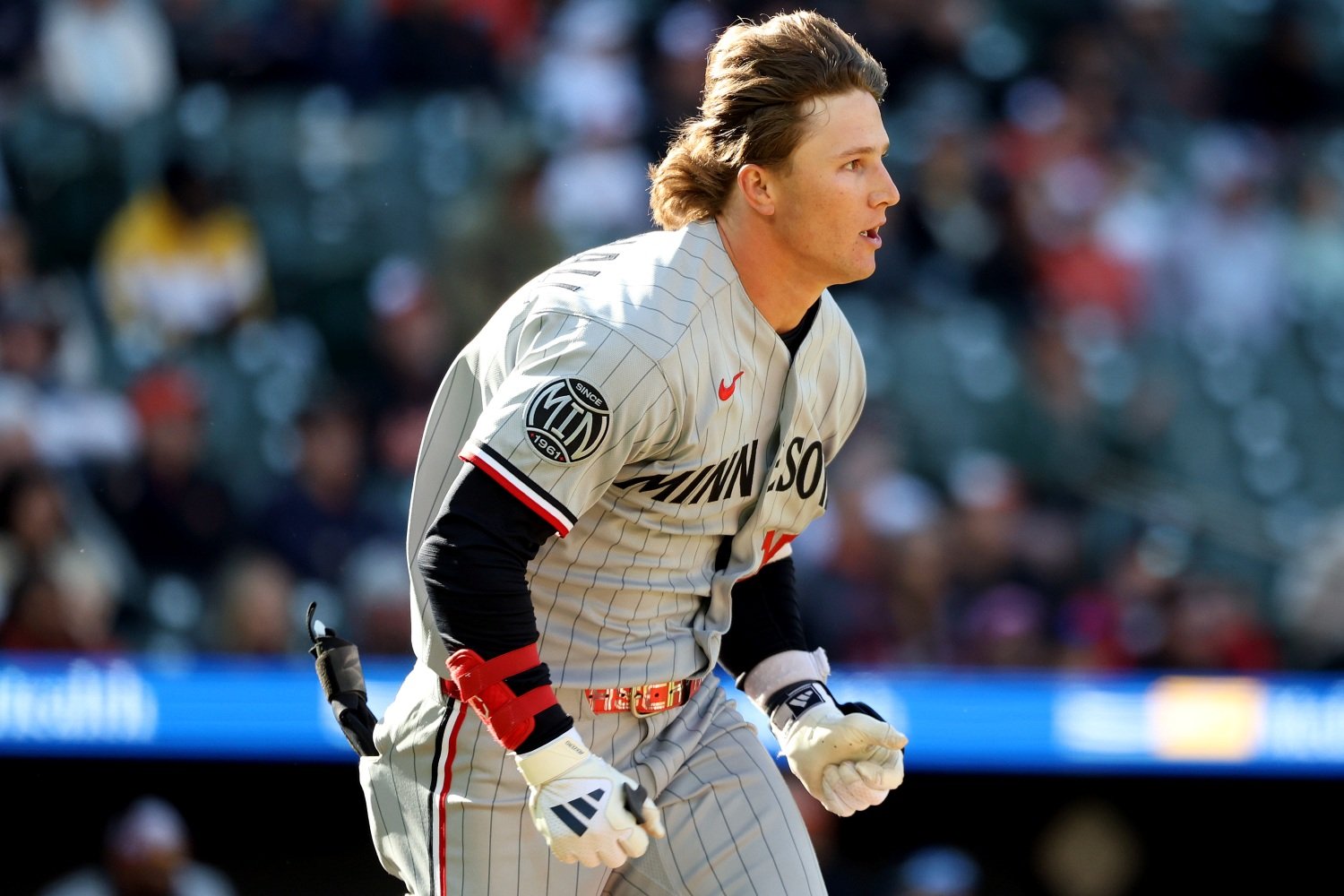 Power is not going to be the calling card for Luke Keaschall, no matter what. However, it doesn't look like defense will be, either, so the speedy and contact-savvy Twins second baseman might have to tap into a bit more pop in order to be as dynamic a player as the team needs him to be. Unfortunately, last season, he showed some of the lowest bat speed in baseball—which puts a frighteningly low ceiling on a player's power production. In his brief active stint (207 plate appearances, before and between a broken forearm and a thumb issue), Keaschall still slugged .529 on contact (SLGCON); the median hitter only had a .548 SLGCON last year. Some of that was good batted-ball luck, though, and some came from Keaschall's speed, as he had more than one hustle double. Though the hustle double is arguably the game's most delightful play, it's also one good defensive positioning often takes away—especially once the book on a given hitter gets out. Thus, coming into this season, the dearest hope for Keaschall boosters was that we would see an uptick in bat speed. That was certainly a reasonable thing for which to hope, too. Last spring, he was still technically recovering from Tommy John surgery he'd undergone in August 2024. He then broke his forearm when he was hit by a pitch, so even the longer stretch he got in the majors in August and September was marred (and his bat speed perhaps diminished) by a lingering issue in a body part essential to the swing. We only have one three-game series of data so far, but it looks like Keaschall has, indeed, found more bat speed this spring. He hasn't materially changed his stance, his bat path or his contact point, but he's swinging much faster. His average bat speed was just 66.9 MPH last year; it's up to 70.2 so far. Just as importantly, he's showing the ability to swing at a very high speed (north of, say, 74, MPH) that was missing last year. He only had 14 such swings in the big leagues in 2025; he had three this weekend in Baltimore. Now, not all swing speeds are created equal. A hitter can sometimes generate a whole lot of extra bat speed, but get no value from it, simply by cutting it loose for its own sake and disregarding making contact. We've all seen players swing from their heels and look theoretically dangerous, but not come especially near the baseball. In fact, Keaschall did do that once this weekend. eUxsQjhfVjBZQUhRPT1fVlZOWUJRZFJWUVVBRHdSUkJBQUhWVk5YQUFBQ1ZGWUFBUUFOQWdVR0J3cGRCUVVG.mp4 That was the first pitch he saw all season, and he seemed to think, "Wouldn't it be cool if I homered on the first pitch I saw?" It would have been, but he didn't come anywhere near doing it, and he exercised greater restraint the rest of the series. Still, he's also demonstrating higher functional bat speed, if you will. Consider his at-bat against Orioles closer Ryan Helsley Sunday afternoon. Keaschall was leading off the top of the ninth in a two-run game, so the goal was to get on base. With Helsley's intense stuff, though, that's no easy project—and no job for the weak or the meek. Keaschall took the first two pitches, to get ahead 2-0. Then, with Helelsy taking a bit off (the pitch was only 97 MPH), he fouled off the next offering. Here's what that looked like. bmJsMTlfVjBZQUhRPT1fQUZCVVZBSURWbEVBRDFNRkFnQUhWdzREQUZrQ1V3Y0FVMXdGVmdwUkIxWUFBd2NB.mp4 That swing was 74.9 MPH. Now, it also led to a foul ball to the right side, because Keaschall was late, so perhaps you're wondering why the bat speed matters. Wasn't he still beaten on the pitch? Yes, but in a greater sense, no. Raw bat speed is not how you hit high-velocity pitching. It matters, but (as the Statcast measurements confirm), the other guy can throw the little sphere in his hand faster than you can swing your big wooden club—especially because you have to react to him. Bat speed is often better applied in a situation like this, where a hitter anticipates a fastball, but doesn't want to start too early and end up chasing a pitch that wasn't really worth swinging at. Here, Keaschall wanted a heater, and geared up to hit one. But as the data and the result tell us, he wasn't getting antsy—not with nobody out and the tying run in the on-deck circle. It made much more sense to be patient unless he got a pitch right down the middle. He did, and he didn't do anything with it, but that doesn't make the swing a waste. This is a good example of how we can learn to use swing speed as a process stat—meaning not only that it's one input in the slow buildup to the actual result of a pitch or plate appearance, but that it tells us something about what the hitter was trying to do. In this spot, for Keaschall to swing fast but be late on a pitch in the lower range of Helsley's fastball velocity range, what we can learn is that he was laser-focused on not chasing. If he'd done everything perfectly, he still would have squared this ball up and driven it on a line somewhere, but he wasn't going to get himself out or freely give Helsley an advantage on this pitch. If he'd been one small click earlier, timing-wise, he would have gotten a hit on this pitch. If Helsley had thrown him a slider, instead of a fastball, but it had still been an in-zone pitch, Keaschall would have hit it over the wall in left field. That's the real benefit of bat speed, much of the time. It lets you start a hair later than you otherwise might, so if you guess wrong but see the ball well, you might be early in a good way. That's where a lot of extra-base hits come from. A hitter who makes a plan to take their 'A' swing on a pitch like this, or not to swing at all, is very unlikely to make the grievous mistake of (say) grounding out to shortstop on 2-0. On the next pitch, Keaschall modulated his plan a bit, knowing Helsley was back in the count. Again, though, Keaschall hadn't helped him; Helsley had just made the right pitch and gotten a bit less behind. This swing was only 68.2 MPH, but it worked gorgeously. bmJsMTlfVjBZQUhRPT1fQXdSUVhWRlhCd1VBQUFkV1VRQUhDUThDQUZoVVZ3UUFBMWRXQ1ZBRkNGSUFWQVJV.mp4 The thing not to take away from this is that swing speed isn't important. It is. It's just a complex number, disguised as a simple one. Keaschall got what could have been a rally-sparking hit Sunday on a slow swing, but it was made possible by a faster swing on the pitch before. Seeing Keaschall late on the 2-0 pitch, Helsley humped it up to 98.4 and came in on him on the next one, and Keaschall did have to shorten up to get the barrel to it. He did so, though, and he's very good at doing so. The lesson pitcher and catcher took from the previous offering was that they could beat Keaschall with velocity, but they were wrong. Keaschall had known what to look for and how hard to swing on the previous pitch, and he knew what to look for and how hard to swing on this one. The answer changed in between, but Keaschall was moving with it. Showing the ability to swing fast—especially early in counts or when ahead—is important. It forces pitchers to work differently to you. It gives you chances to unload on mistakes, even if power isn't the primary element of your game. Keaschall didn't really have that club in his bag last year, but in 2026, he looks more able to let it eat when the occasion calls for it. That will pay off, as long as he remains as adaptable and smart in the box as he's looked throughout his career to date.
 -
Image courtesy of © Daniel Kucin Jr.-Imagn Images Power is not going to be the calling card for Luke Keaschall, no matter what. However, it doesn't look like defense will be, either, so the speedy and contact-savvy Twins second baseman might have to tap into a bit more pop in order to be as dynamic a player as the team needs him to be. Unfortunately, last season, he showed some of the lowest bat speed in baseball—which puts a frighteningly low ceiling on a player's power production. In his brief active stint (207 plate appearances, before and between a broken forearm and a thumb issue), Keaschall still slugged .529 on contact (SLGCON); the median hitter only had a .548 SLGCON last year. Some of that was good batted-ball luck, though, and some came from Keaschall's speed, as he had more than one hustle double. Though the hustle double is arguably the game's most delightful play, it's also one good defensive positioning often takes away—especially once the book on a given hitter gets out. Thus, coming into this season, the dearest hope for Keaschall boosters was that we would see an uptick in bat speed. That was certainly a reasonable thing for which to hope, too. Last spring, he was still technically recovering from Tommy John surgery he'd undergone in August 2024. He then broke his forearm when he was hit by a pitch, so even the longer stretch he got in the majors in August and September was marred (and his bat speed perhaps diminished) by a lingering issue in a body part essential to the swing. We only have one three-game series of data so far, but it looks like Keaschall has, indeed, found more bat speed this spring. He hasn't materially changed his stance, his bat path or his contact point, but he's swinging much faster. His average bat speed was just 66.9 MPH last year; it's up to 70.2 so far. Just as importantly, he's showing the ability to swing at a very high speed (north of, say, 74, MPH) that was missing last year. He only had 14 such swings in the big leagues in 2025; he had three this weekend in Baltimore. Now, not all swing speeds are created equal. A hitter can sometimes generate a whole lot of extra bat speed, but get no value from it, simply by cutting it loose for its own sake and disregarding making contact. We've all seen players swing from their heels and look theoretically dangerous, but not come especially near the baseball. In fact, Keaschall did do that once this weekend. eUxsQjhfVjBZQUhRPT1fVlZOWUJRZFJWUVVBRHdSUkJBQUhWVk5YQUFBQ1ZGWUFBUUFOQWdVR0J3cGRCUVVG.mp4 That was the first pitch he saw all season, and he seemed to think, "Wouldn't it be cool if I homered on the first pitch I saw?" It would have been, but he didn't come anywhere near doing it, and he exercised greater restraint the rest of the series. Still, he's also demonstrating higher functional bat speed, if you will. Consider his at-bat against Orioles closer Ryan Helsley Sunday afternoon. Keaschall was leading off the top of the ninth in a two-run game, so the goal was to get on base. With Helsley's intense stuff, though, that's no easy project—and no job for the weak or the meek. Keaschall took the first two pitches, to get ahead 2-0. Then, with Helelsy taking a bit off (the pitch was only 97 MPH), he fouled off the next offering. Here's what that looked like. bmJsMTlfVjBZQUhRPT1fQUZCVVZBSURWbEVBRDFNRkFnQUhWdzREQUZrQ1V3Y0FVMXdGVmdwUkIxWUFBd2NB.mp4 That swing was 74.9 MPH. Now, it also led to a foul ball to the right side, because Keaschall was late, so perhaps you're wondering why the bat speed matters. Wasn't he still beaten on the pitch? Yes, but in a greater sense, no. Raw bat speed is not how you hit high-velocity pitching. It matters, but (as the Statcast measurements confirm), the other guy can throw the little sphere in his hand faster than you can swing your big wooden club—especially because you have to react to him. Bat speed is often better applied in a situation like this, where a hitter anticipates a fastball, but doesn't want to start too early and end up chasing a pitch that wasn't really worth swinging at. Here, Keaschall wanted a heater, and geared up to hit one. But as the data and the result tell us, he wasn't getting antsy—not with nobody out and the tying run in the on-deck circle. It made much more sense to be patient unless he got a pitch right down the middle. He did, and he didn't do anything with it, but that doesn't make the swing a waste. This is a good example of how we can learn to use swing speed as a process stat—meaning not only that it's one input in the slow buildup to the actual result of a pitch or plate appearance, but that it tells us something about what the hitter was trying to do. In this spot, for Keaschall to swing fast but be late on a pitch in the lower range of Helsley's fastball velocity range, what we can learn is that he was laser-focused on not chasing. If he'd done everything perfectly, he still would have squared this ball up and driven it on a line somewhere, but he wasn't going to get himself out or freely give Helsley an advantage on this pitch. If he'd been one small click earlier, timing-wise, he would have gotten a hit on this pitch. If Helsley had thrown him a slider, instead of a fastball, but it had still been an in-zone pitch, Keaschall would have hit it over the wall in left field. That's the real benefit of bat speed, much of the time. It lets you start a hair later than you otherwise might, so if you guess wrong but see the ball well, you might be early in a good way. That's where a lot of extra-base hits come from. A hitter who makes a plan to take their 'A' swing on a pitch like this, or not to swing at all, is very unlikely to make the grievous mistake of (say) grounding out to shortstop on 2-0. On the next pitch, Keaschall modulated his plan a bit, knowing Helsley was back in the count. Again, though, Keaschall hadn't helped him; Helsley had just made the right pitch and gotten a bit less behind. This swing was only 68.2 MPH, but it worked gorgeously. bmJsMTlfVjBZQUhRPT1fQXdSUVhWRlhCd1VBQUFkV1VRQUhDUThDQUZoVVZ3UUFBMWRXQ1ZBRkNGSUFWQVJV.mp4 The thing not to take away from this is that swing speed isn't important. It is. It's just a complex number, disguised as a simple one. Keaschall got what could have been a rally-sparking hit Sunday on a slow swing, but it was made possible by a faster swing on the pitch before. Seeing Keaschall late on the 2-0 pitch, Helsley humped it up to 98.4 and came in on him on the next one, and Keaschall did have to shorten up to get the barrel to it. He did so, though, and he's very good at doing so. The lesson pitcher and catcher took from the previous offering was that they could beat Keaschall with velocity, but they were wrong. Keaschall had known what to look for and how hard to swing on the previous pitch, and he knew what to look for and how hard to swing on this one. The answer changed in between, but Keaschall was moving with it. Showing the ability to swing fast—especially early in counts or when ahead—is important. It forces pitchers to work differently to you. It gives you chances to unload on mistakes, even if power isn't the primary element of your game. Keaschall didn't really have that club in his bag last year, but in 2026, he looks more able to let it eat when the occasion calls for it. That will pay off, as long as he remains as adaptable and smart in the box as he's looked throughout his career to date. View full article
-
Mentioned a little, in that those were the first words of the article.., "Though he surrendered five hits and a walk, Bailey Ober allowed just one run and struck out two over 2 2/3 innings Thursday," "Bruce Chen types" is too dismissive of what Ober can still do, imo. Chen threw 84-86. Nine guys other than Ober threw 40+% of their fastballs at 88-91 last year; four of the nine had better-than-average ERAs. I don't think velocity is the litmus test you're trying to make it; throwing slower just means you have to be better at the other stuff, as I discussed above.
-
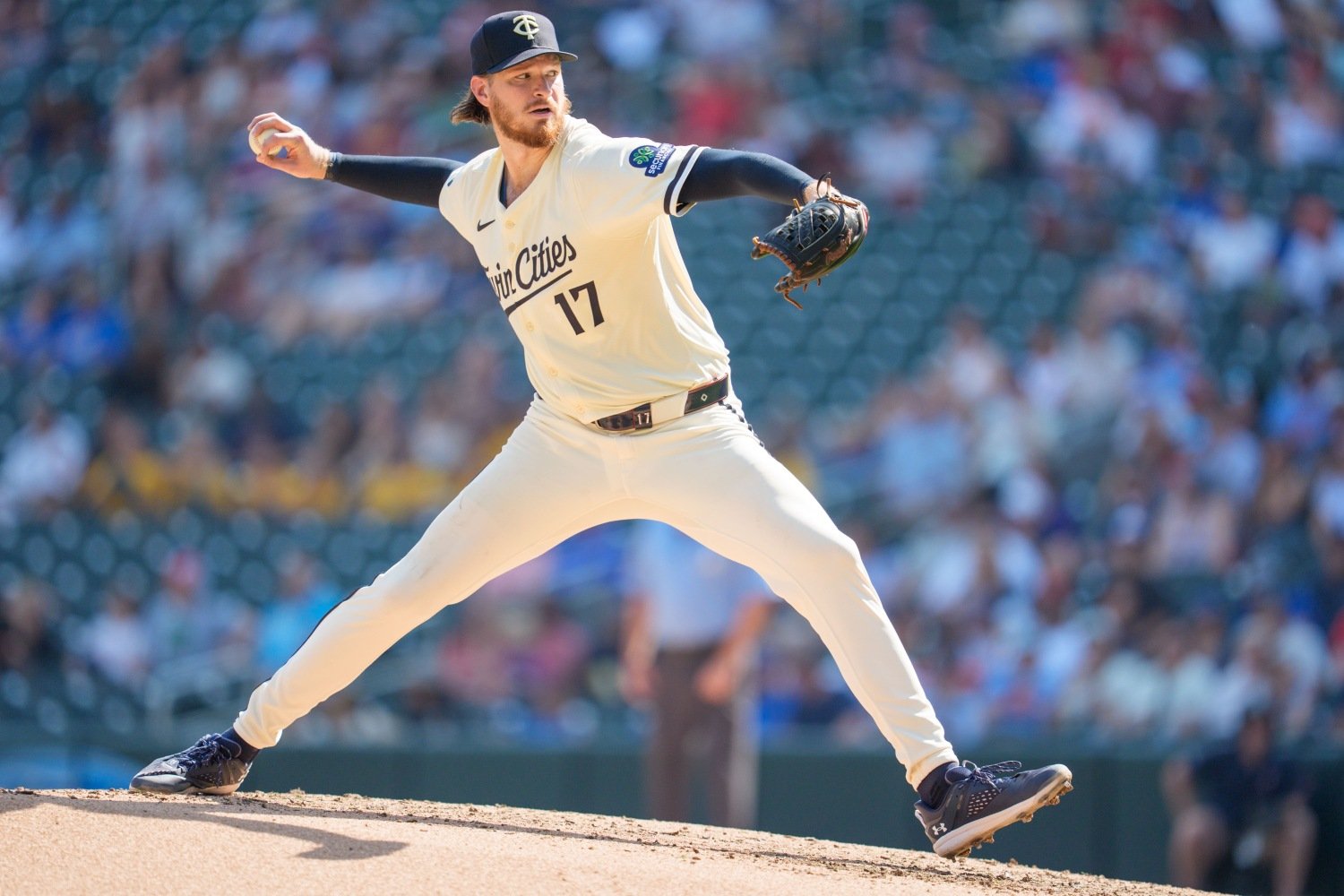 Though he surrendered five hits and a walk, Bailey Ober allowed just one run and struck out two over 2 2/3 innings Thursday, in his second appearance of the Cactus League season. He threw 53 pitches, of which the Red Sox swung at 24, and induced seven whiffs. Five of those seven whiffs came on his signature pitch: the changeup. There were encouraging signs, then, but there were also some red flags. Ober's fastball sat around 89 MPH in the first inning (though he reached 90.7 on one sinker in that frame). By the third, he was barely sitting 88. The story of Ober's 2025 was an inability to consistently show his usual, excellent command, which was a result of nagging injury issues. However, another manifestation of those hip and other problems was diminished velocity, and with Ober, any loss of speed reduces his margin for error almost to zero. When he's commanding his whole arsenal well, he can maneuver within even that zone of necessary perfection. He's dependent not on power, but on precision and execution. He has to be able to produce the pitch shapes he wants and hit his spots, more than he needs to have the ability to overpower hitters or put them on the defensive. Even last year, in an otherwise frustrating campaign, there were a few days when he was brilliant, because a pitcher who can manipulate the ball as deftly as Ober often can is a dream to watch and a nightmare to face. Some of that was on display Thursday. Ober showed good command of his changeup, which has long been the most important part of his arsenal. He induced five whiffs and got one called strike on 19 total changeups. Three of the whiffs came against one batter, the utterly stumped Marcelo Mayer, but it was still a positive sign. Ober's changeup showed great depth, and he was able to both land it in the zone and throw the strike-to-ball version designed to induce chases outside the zone. The other two whiffs came against right-handed batters, though, and so did his lone called strike with that pitch. Of the 36 total pitches he threw to righties, 12 were changeups. That's an important development. For each of the last three years, Ober has thrown the changeup a little more than a third of the time to lefties, and a little under a quarter of the time to righties. Holding those usage rates constant might work, but ideally, he could ratchet each up slightly this year, without overexposing the pitch. He needs to better protect his fastball, which doesn't miss bats the way it did two years ago and looks very unlikely to start doing so again. However, Ober's slider was a major problem last year, and doesn't look like a reliable pitch for him against either lefties or righties at this stage. His sweeper is better against righties; his curve works better against lefties. But neither of those pitches can be his main alternative to the fastball, if he wants to reduce his reliance on that offering. Throwing the changeup a bit more to lefties shouldn't be a problem, if he has command of it the way he did on Thursday. (If he doesn't have that command, he's in big trouble, anyway.) Going to the changeup in right-on-right matchups, however, is often uncomfortable for pitchers. It's easy to understand why. The natural movement of that pitch is down and in toward a same-handed batter, so if the pitch isn't well-located, it runs right into an opponent's barrel. Because it's usually a pitch used to move off the outside corner to opposite-handed batters, it can also be hard for a pitcher to get used to starting the ball in a different place. A good changeup to a same-handed batter needs to start lower but farther toward the glove side, so its movement will keep it on the plate but get below the zone. Running it off the edge the way one does against an opposite-handed batter makes for an easy take (and sometimes a relatively painless trip to first base for the batter, via plunking). Leaving it in the lower, arm-side third of the zone, the way one often does to opposite-handed batters, makes for mashed taters. Here's where Ober threw his changeups against lefty batters last season. The difference between that distribution and the same plot for righty batters is subtle, but it's there. When Ober's on (as he was Thursday), he can manipulate that changeup well enough to attack hitters on both sides with it. He changes start lines on the pitch; he changes its shape; and he still finds his targets. However, it's hard to count on having such good feel for that pitch as often as he will need to in 2026. For fans, how well he can utilize the changeup—especially to righties—is the thing to watch from start to start all spring. For Ober, the tough task ahead is to establish a new level of consistency with that offering, to make up for the diminishment of much of the rest of his repertoire.
 -
Image courtesy of © Matt Blewett-Imagn Images Though he surrendered five hits and a walk, Bailey Ober allowed just one run and struck out two over 2 2/3 innings Thursday, in his second appearance of the Cactus League season. He threw 53 pitches, of which the Red Sox swung at 24, and induced seven whiffs. Five of those seven whiffs came on his signature pitch: the changeup. There were encouraging signs, then, but there were also some red flags. Ober's fastball sat around 89 MPH in the first inning (though he reached 90.7 on one sinker in that frame). By the third, he was barely sitting 88. The story of Ober's 2025 was an inability to consistently show his usual, excellent command, which was a result of nagging injury issues. However, another manifestation of those hip and other problems was diminished velocity, and with Ober, any loss of speed reduces his margin for error almost to zero. When he's commanding his whole arsenal well, he can maneuver within even that zone of necessary perfection. He's dependent not on power, but on precision and execution. He has to be able to produce the pitch shapes he wants and hit his spots, more than he needs to have the ability to overpower hitters or put them on the defensive. Even last year, in an otherwise frustrating campaign, there were a few days when he was brilliant, because a pitcher who can manipulate the ball as deftly as Ober often can is a dream to watch and a nightmare to face. Some of that was on display Thursday. Ober showed good command of his changeup, which has long been the most important part of his arsenal. He induced five whiffs and got one called strike on 19 total changeups. Three of the whiffs came against one batter, the utterly stumped Marcelo Mayer, but it was still a positive sign. Ober's changeup showed great depth, and he was able to both land it in the zone and throw the strike-to-ball version designed to induce chases outside the zone. The other two whiffs came against right-handed batters, though, and so did his lone called strike with that pitch. Of the 36 total pitches he threw to righties, 12 were changeups. That's an important development. For each of the last three years, Ober has thrown the changeup a little more than a third of the time to lefties, and a little under a quarter of the time to righties. Holding those usage rates constant might work, but ideally, he could ratchet each up slightly this year, without overexposing the pitch. He needs to better protect his fastball, which doesn't miss bats the way it did two years ago and looks very unlikely to start doing so again. However, Ober's slider was a major problem last year, and doesn't look like a reliable pitch for him against either lefties or righties at this stage. His sweeper is better against righties; his curve works better against lefties. But neither of those pitches can be his main alternative to the fastball, if he wants to reduce his reliance on that offering. Throwing the changeup a bit more to lefties shouldn't be a problem, if he has command of it the way he did on Thursday. (If he doesn't have that command, he's in big trouble, anyway.) Going to the changeup in right-on-right matchups, however, is often uncomfortable for pitchers. It's easy to understand why. The natural movement of that pitch is down and in toward a same-handed batter, so if the pitch isn't well-located, it runs right into an opponent's barrel. Because it's usually a pitch used to move off the outside corner to opposite-handed batters, it can also be hard for a pitcher to get used to starting the ball in a different place. A good changeup to a same-handed batter needs to start lower but farther toward the glove side, so its movement will keep it on the plate but get below the zone. Running it off the edge the way one does against an opposite-handed batter makes for an easy take (and sometimes a relatively painless trip to first base for the batter, via plunking). Leaving it in the lower, arm-side third of the zone, the way one often does to opposite-handed batters, makes for mashed taters. Here's where Ober threw his changeups against lefty batters last season. The difference between that distribution and the same plot for righty batters is subtle, but it's there. When Ober's on (as he was Thursday), he can manipulate that changeup well enough to attack hitters on both sides with it. He changes start lines on the pitch; he changes its shape; and he still finds his targets. However, it's hard to count on having such good feel for that pitch as often as he will need to in 2026. For fans, how well he can utilize the changeup—especially to righties—is the thing to watch from start to start all spring. For Ober, the tough task ahead is to establish a new level of consistency with that offering, to make up for the diminishment of much of the rest of his repertoire. View full article
-
Image courtesy of © Katie Stratman-Imagn Images The Minnesota Twins are in a terrible predicament. With Pablo López likely to undergo Tommy John surgery before the end of the month, they're suddenly short a frontline starting pitcher, in a rotation mix that was meant to be the team's utmost strength heading into 2026. New chairman Tom Pohlad has issued a clear (though unfunded) mandate that the team be competitive this season, but it's hard to see how they can do so with the personnel on hand, given the staggering injury to their leader and ace. Compounding the loss of López is the fact that he is the highest-paid player on a team defined and constrained by its lack of payroll flexibility. López is due $21.5 million in 2026; the Twins won't pay any other player more than $15 million. López and Byron Buxton are the only guys making more than $6.7 million this year. It's possible that the team will recoup some of the lost salary via an insurance claim, but it's unlikely that they'll be given substantial money with which to recruit any representative replacement of their star righty. One way they could do so, however, would be to trade Trevor Larnach for pitching help. Larnach, soon to turn 29, is set to make nearly $4.5 million this year, but his role on the team has been obviated by the acquisitions of Josh Bell and Victor Caratini. He batted a respectable .254/.330/.428 against right-handed pitchers last season, but he has little defensive value and is not likely to be substantially better than Bell or Caratini as a DH in 2026. He has no place to play in the crowded (if underwhelming) Twins outfield mix, and is an injury risk even when he manages to lumber underneath a ball out in left field. With two years of team control remaining and coming off a season in which he made an apparently unconscious, ill-advised swing change, Larnach probably has some appeal to teams as a reclamation project. Until now, the Twins have been uninterested in trading him on those terms, holding out instead for a robust return that reflects the potential they saw in him when they made him a first-round pick and (over the years) a priority piece of the roster. If they come down on their asking price, though, they could match up with another team on a deal that would move them forward in the short term and the long term. Five teams stand out as having a surfeit of pitching depth and a need for left-handed help at DH or in left field. That doesn't mean they could find a perfect fit with the Twins on a trade, but these clubs make promising suitors if the team wants to offload Larnach. Moving him would need to bring back a pitcher who augments their depth, though it wouldn't bring anyone similar to López. The other, ancillary benefit of such a move would be freeing up a few million dollars to spend, perhaps on a last-second bullpen addition. Arizona Diamondbacks Somewhat shockingly, the Diamondbacks have brought back both Merrill Kelly and Zac Gallen in free agency. That leaves them with a bunch of good options in the starting rotation, especially once Corbin Burnes returns from the Tommy John surgery he underwent last spring. It wasn't really what the team initially planned to do, though. As a result, they'd already brought in Michael Soroka to round out a rotation that also includes compelling young arms Brandon Pfaadt and Ryne Nelson. Meanwhile, the team dealt away outfielder Jake McCarthy and utility option Blaze Alexander, leaving them with extremely shaky options for the corner outfield spots and at DH. They'll go with Pavin Smith as the DH against most righties, and defense-first youngster Jorge Barrosa in left field. If Corbin Carroll is at all delayed in his return from a broken hamate bone, the team's corner outfield outlook will get truly destitute. Earlier this winter, Minnesota had interest in right-handed journeyman Taylor Clarke, who ultimately signed with Arizona. The low-wattage version of a deal sending Larnach to Arizona would be to get Clarke in exchange, filling innings and giving the Twins a small amount of upside, plus the aforementioned monetary savings to put toward relief help. The alternative version would make the team more expensive, not less so, but it would be buzzier: Minnesota could take on some portion of the $46 million left on the contract of left-handed starter Eduardo Rodríguez. Rodríguez, who will turn 33 in April, has posted an ERA just over 5.00 in his first two seasons with Arizona, but when he's right, he can still be a solid mid-rotation starter. He'd be a sponge for innings, rather than a respectable candidate for a playoff rotation spot, but the Twins could find multiple ways to extract value from him, if they found the right unlocks for a misused arsenal. The Diamondbacks would have to eat much of the money owed to Rodríguez, but that's not out of the question. Chicago Cubs With a loaded rotation, the Cubs will send at least three intriguing starters to Triple-A Iowa this spring, barring a spate of injuries. If 2021 first-round pick Jordan Wicks were panning out as hoped, he'd be more in the thick of the battle for a rotation spot, but as it is, he's a sturdy lefty with a plus changeup whose velocity has ticked up into the mid-90s in recent stints. Lanky right-handed starter Ben Brown would form a perfect trio with Taj Bradley and Mick Abel: three hard-throwing righties with tantalizing starter ceilings but major risk of ending up as a reliever, instead. Kitchen-sink swingman Javier Assad is nearing age 30 and still hasn't gotten a proper chance to establish himself in Chicago, despite putting up good numbers every time the team gives him a shot. None of the three are making significant sums in 2026. All three can be optioned to the minors. Chicago projects to have an all-right-handed-hitting bench, and currently has no choice but to slot Moisés Ballesteros in as their regular DH—a daunting proposition not only because Ballesteros is young and inexperienced, but because the Venezuelan prospect hasn't yet made it to Cubs camp due to visa issues. Larnach for one of Brown, Wicks or Assad could work out perfectly for both sides. Cincinnati Reds How much are you missing Chase Petty these days? He's not looking like a future star, but he remains an optionable arm with upside. Like Wicks, he was a 2021 first-round pick but hasn't yet found his stride in the majors. Like Brown, though, he has real promise even if he needs to be converted to the bullpen. Cincinnati's top starters are too good for the Twins to snatch them up in exchange for Larnach, but in addition to Petty, they have some relief arms they could spare and who would be notable upgrades for Minnesota. Houston Astros Loaded though they are on the infield, the Astros have a sketchy outfield picture to deal with. If the season began today, they'd give lots of at-bats to the likes of Joey Loperfido and Zach Cole in the corner spots, especially when facing right-handed pitchers. Larnach is slightly better and slightly cheaper than Jesús Sánchez, whom Houston traded for Loperfido at the beginning of camp as they rearrange deck chairs. He'd be a good fit for their home park. Meanwhile, the Astros are awash in flawed but useful starting pitching. Jason Alexander, Spencer Arrighetti, AJ Blubaugh, Colton Gordon, Kai-Wei Teng and Miguel Ullola are all optionable, but none are in line for many starts in the majors with Houston. In varying degrees and ways, all six are worth a look for the Twins. Swapping Larnach for one of them would give the team more controllable pitching and that financial flexibility they might need to improve the bullpen. Washington Nationals This would be something akin to a challenge trade. The rebuilding Nationals aren't going to surrender good pitchers under long-term control for a player like Larnach. However, he would solve some problems for them in filling out the lineup on a day-to-day basis, and they have some post-hype arms who might appeal to the Twins. Former All-Star (even if it was largely an obligatory selection, based on the rule that every team must be represented) Josiah Gray hasn't recovered as hoped from an injury detour, and only has the same amount of team control left that Larnach has, but he's also set to make $1.35 million this year, so he'd bring the team substantial savings. Righty Jake Irvin comes with Minnesota connections and more team control than Gray, though he, too, has been rough lately. Larnach can't command an especially rich return in a trade. The Twins are past the point of deluding themselves on that front. However, he could still net the team some viable pitching depth, which has become a more salient and serious need in the wake of Tuesday's news about López. General manager Jeremy Zoll will have to do something to repair the rupture of his roster. Finally moving Larnach might be the best way to go about it. View full article
-
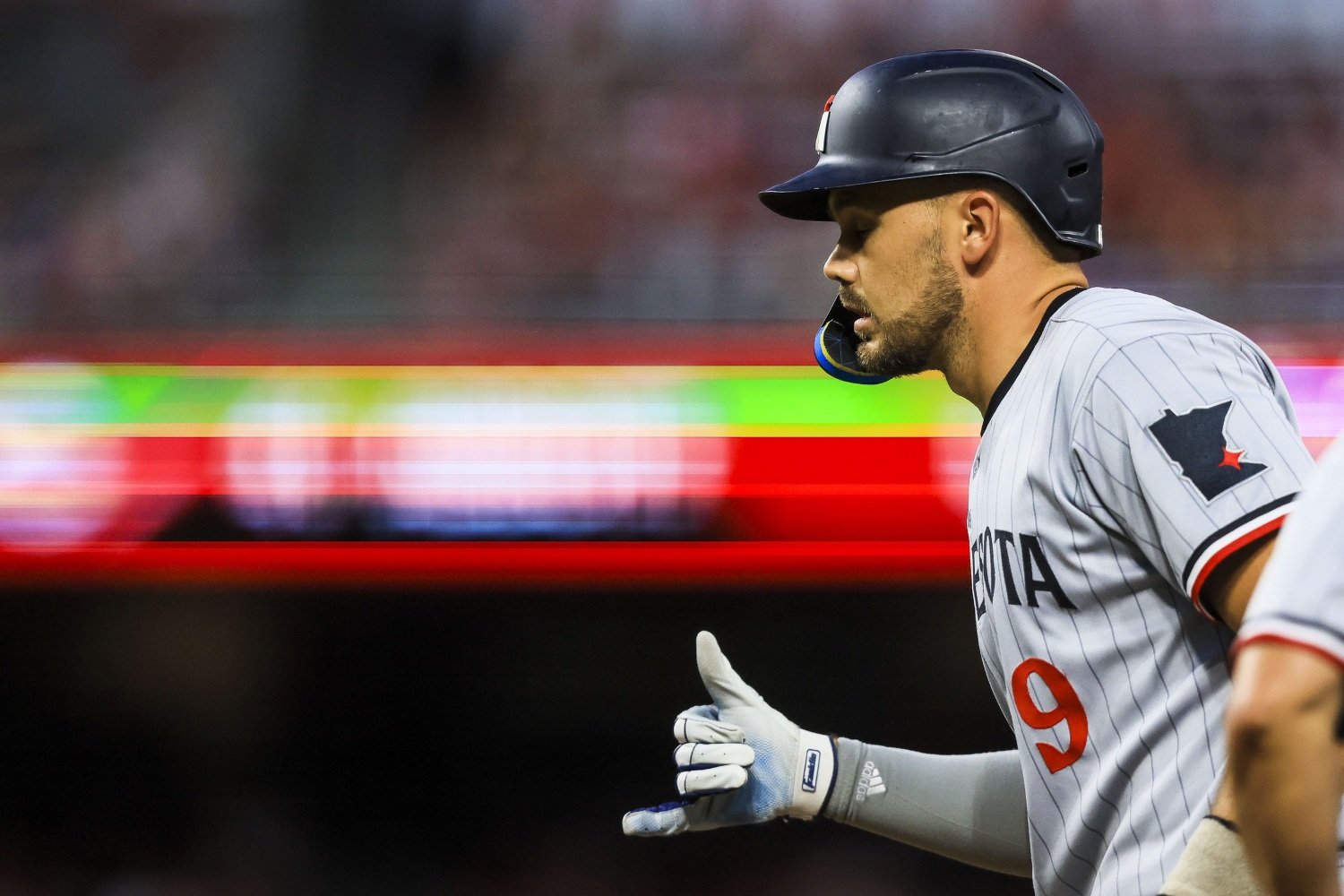 The Minnesota Twins are in a terrible predicament. With Pablo López likely to undergo Tommy John surgery before the end of the month, they're suddenly short a frontline starting pitcher, in a rotation mix that was meant to be the team's utmost strength heading into 2026. New chairman Tom Pohlad has issued a clear (though unfunded) mandate that the team be competitive this season, but it's hard to see how they can do so with the personnel on hand, given the staggering injury to their leader and ace. Compounding the loss of López is the fact that he is the highest-paid player on a team defined and constrained by its lack of payroll flexibility. López is due $21.5 million in 2026; the Twins won't pay any other player more than $15 million. López and Byron Buxton are the only guys making more than $6.7 million this year. It's possible that the team will recoup some of the lost salary via an insurance claim, but it's unlikely that they'll be given substantial money with which to recruit any representative replacement of their star righty. One way they could do so, however, would be to trade Trevor Larnach for pitching help. Larnach, soon to turn 29, is set to make nearly $4.5 million this year, but his role on the team has been obviated by the acquisitions of Josh Bell and Victor Caratini. He batted a respectable .254/.330/.428 against right-handed pitchers last season, but he has little defensive value and is not likely to be substantially better than Bell or Caratini as a DH in 2026. He has no place to play in the crowded (if underwhelming) Twins outfield mix, and is an injury risk even when he manages to lumber underneath a ball out in left field. With two years of team control remaining and coming off a season in which he made an apparently unconscious, ill-advised swing change, Larnach probably has some appeal to teams as a reclamation project. Until now, the Twins have been uninterested in trading him on those terms, holding out instead for a robust return that reflects the potential they saw in him when they made him a first-round pick and (over the years) a priority piece of the roster. If they come down on their asking price, though, they could match up with another team on a deal that would move them forward in the short term and the long term. Five teams stand out as having a surfeit of pitching depth and a need for left-handed help at DH or in left field. That doesn't mean they could find a perfect fit with the Twins on a trade, but these clubs make promising suitors if the team wants to offload Larnach. Moving him would need to bring back a pitcher who augments their depth, though it wouldn't bring anyone similar to López. The other, ancillary benefit of such a move would be freeing up a few million dollars to spend, perhaps on a last-second bullpen addition. Arizona Diamondbacks Somewhat shockingly, the Diamondbacks have brought back both Merrill Kelly and Zac Gallen in free agency. That leaves them with a bunch of good options in the starting rotation, especially once Corbin Burnes returns from the Tommy John surgery he underwent last spring. It wasn't really what the team initially planned to do, though. As a result, they'd already brought in Michael Soroka to round out a rotation that also includes compelling young arms Brandon Pfaadt and Ryne Nelson. Meanwhile, the team dealt away outfielder Jake McCarthy and utility option Blaze Alexander, leaving them with extremely shaky options for the corner outfield spots and at DH. They'll go with Pavin Smith as the DH against most righties, and defense-first youngster Jorge Barrosa in left field. If Corbin Carroll is at all delayed in his return from a broken hamate bone, the team's corner outfield outlook will get truly destitute. Earlier this winter, Minnesota had interest in right-handed journeyman Taylor Clarke, who ultimately signed with Arizona. The low-wattage version of a deal sending Larnach to Arizona would be to get Clarke in exchange, filling innings and giving the Twins a small amount of upside, plus the aforementioned monetary savings to put toward relief help. The alternative version would make the team more expensive, not less so, but it would be buzzier: Minnesota could take on some portion of the $46 million left on the contract of left-handed starter Eduardo Rodríguez. Rodríguez, who will turn 33 in April, has posted an ERA just over 5.00 in his first two seasons with Arizona, but when he's right, he can still be a solid mid-rotation starter. He'd be a sponge for innings, rather than a respectable candidate for a playoff rotation spot, but the Twins could find multiple ways to extract value from him, if they found the right unlocks for a misused arsenal. The Diamondbacks would have to eat much of the money owed to Rodríguez, but that's not out of the question. Chicago Cubs With a loaded rotation, the Cubs will send at least three intriguing starters to Triple-A Iowa this spring, barring a spate of injuries. If 2021 first-round pick Jordan Wicks were panning out as hoped, he'd be more in the thick of the battle for a rotation spot, but as it is, he's a sturdy lefty with a plus changeup whose velocity has ticked up into the mid-90s in recent stints. Lanky right-handed starter Ben Brown would form a perfect trio with Taj Bradley and Mick Abel: three hard-throwing righties with tantalizing starter ceilings but major risk of ending up as a reliever, instead. Kitchen-sink swingman Javier Assad is nearing age 30 and still hasn't gotten a proper chance to establish himself in Chicago, despite putting up good numbers every time the team gives him a shot. None of the three are making significant sums in 2026. All three can be optioned to the minors. Chicago projects to have an all-right-handed-hitting bench, and currently has no choice but to slot Moisés Ballesteros in as their regular DH—a daunting proposition not only because Ballesteros is young and inexperienced, but because the Venezuelan prospect hasn't yet made it to Cubs camp due to visa issues. Larnach for one of Brown, Wicks or Assad could work out perfectly for both sides. Cincinnati Reds How much are you missing Chase Petty these days? He's not looking like a future star, but he remains an optionable arm with upside. Like Wicks, he was a 2021 first-round pick but hasn't yet found his stride in the majors. Like Brown, though, he has real promise even if he needs to be converted to the bullpen. Cincinnati's top starters are too good for the Twins to snatch them up in exchange for Larnach, but in addition to Petty, they have some relief arms they could spare and who would be notable upgrades for Minnesota. Houston Astros Loaded though they are on the infield, the Astros have a sketchy outfield picture to deal with. If the season began today, they'd give lots of at-bats to the likes of Joey Loperfido and Zach Cole in the corner spots, especially when facing right-handed pitchers. Larnach is slightly better and slightly cheaper than Jesús Sánchez, whom Houston traded for Loperfido at the beginning of camp as they rearrange deck chairs. He'd be a good fit for their home park. Meanwhile, the Astros are awash in flawed but useful starting pitching. Jason Alexander, Spencer Arrighetti, AJ Blubaugh, Colton Gordon, Kai-Wei Teng and Miguel Ullola are all optionable, but none are in line for many starts in the majors with Houston. In varying degrees and ways, all six are worth a look for the Twins. Swapping Larnach for one of them would give the team more controllable pitching and that financial flexibility they might need to improve the bullpen. Washington Nationals This would be something akin to a challenge trade. The rebuilding Nationals aren't going to surrender good pitchers under long-term control for a player like Larnach. However, he would solve some problems for them in filling out the lineup on a day-to-day basis, and they have some post-hype arms who might appeal to the Twins. Former All-Star (even if it was largely an obligatory selection, based on the rule that every team must be represented) Josiah Gray hasn't recovered as hoped from an injury detour, and only has the same amount of team control left that Larnach has, but he's also set to make $1.35 million this year, so he'd bring the team substantial savings. Righty Jake Irvin comes with Minnesota connections and more team control than Gray, though he, too, has been rough lately. Larnach can't command an especially rich return in a trade. The Twins are past the point of deluding themselves on that front. However, he could still net the team some viable pitching depth, which has become a more salient and serious need in the wake of Tuesday's news about López. General manager Jeremy Zoll will have to do something to repair the rupture of his roster. Finally moving Larnach might be the best way to go about it.
- 40 comments
-
- 5
-
-
- trevor larnach
- pablo lopez
- (and 4 more)


