



Matthew Trueblood
-
Posts
1,033 -
Joined
-
Last visited
Content Type
Profiles
News
Minnesota Twins Videos
2026 Minnesota Twins Top Prospects Ranking
2022 Minnesota Twins Draft Picks
Minnesota Twins Free Agent & Trade Rumors, Notes, & Tidbits
Guides & Resources
2023 Minnesota Twins Draft Picks
The Minnesota Twins Players Project
2024 Minnesota Twins Draft Picks
2025 Minnesota Twins Draft Pick Tracker
2026 Minnesota Twins Draft Tracker: Picks & Bonuses
Forums
Blogs
Events
Store
Downloads
Gallery
Everything posted by Matthew Trueblood
-
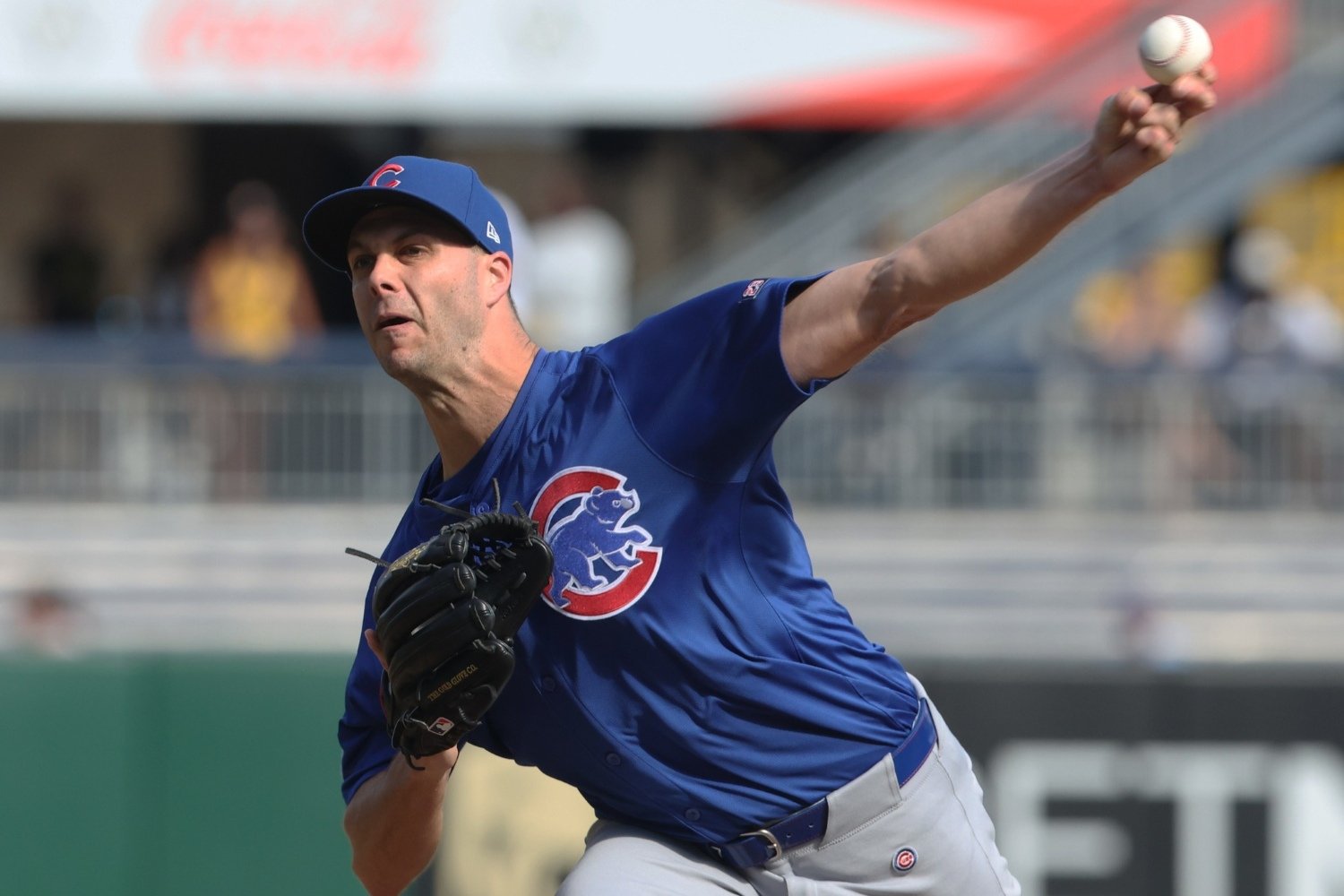 The Minnesota Twins have agreed to a one-year, major-league deal with left-handed reliever Taylor Rogers, sources tell Twins Daily. Rogers, 35, was the Twins' 11th-round draft pick in 2012 and spent the first six seasons of his major-league career with the team, posting a 3.15 ERA in 319 appearances and recording 50 saves. Last season, for the Reds and Cubs, he had a 3.38 ERA in 57 relief appearances. Once a high-strikeout control artist, Rogers misses fewer bats these days, and his walk rate has ticked up sharply in the last few years. Twins fans remember a pitcher whose fastball could play like a two-seamer with solid ride and who utilized two distinct breaking balls, but Rogers is now purely a sinker-slider guy, with age and injuries having frayed his command of each. Nonetheless, he's an effective middle reliever, especially when he can be shielded from right-handed batters. Rogers first hit free agency after the 2022 season, and signed a three-year $33-million deal with the Giants. San Francisco dumped his salary in a trade that sent Rogers to the Reds last winter, and he was technically dealt twice in July, going from the Reds to the Pirates to the Cubs without actually appearing in Pittsburgh. His strikeout rate of 24% last season was his lowest since 2017, and he's no longer in high demand, but he remains a sturdy relief option—and a cheap one, at just $2 million. Presumably, he'll slot in alongside Kody Funderburk as the main lefties in a bullpen that leans to the right. There's a chance that Rogers will even pick up some save opportunities for Minnesota; he's easily the most accomplished big-league reliever on their staff. Picking up Josh Bell, Victor Caratini and a melange of fringier players gave Derek Falvey's front office the depth they craved on the positional side. However, until now, they'd neglected the bullpen, which was emptied at last year's trade deadline and looks like the most glaring weakness for the 2026 team. This move is a small step toward fully addressing that issue, but it's a concrete one. Rogers is a familiar face, and a reliable addition to a high-variance collection of arms.
 -
Twins Acquire Utility Infielder Tristan Gray in Trade with Red Sox
Matthew Trueblood posted an article in Twins
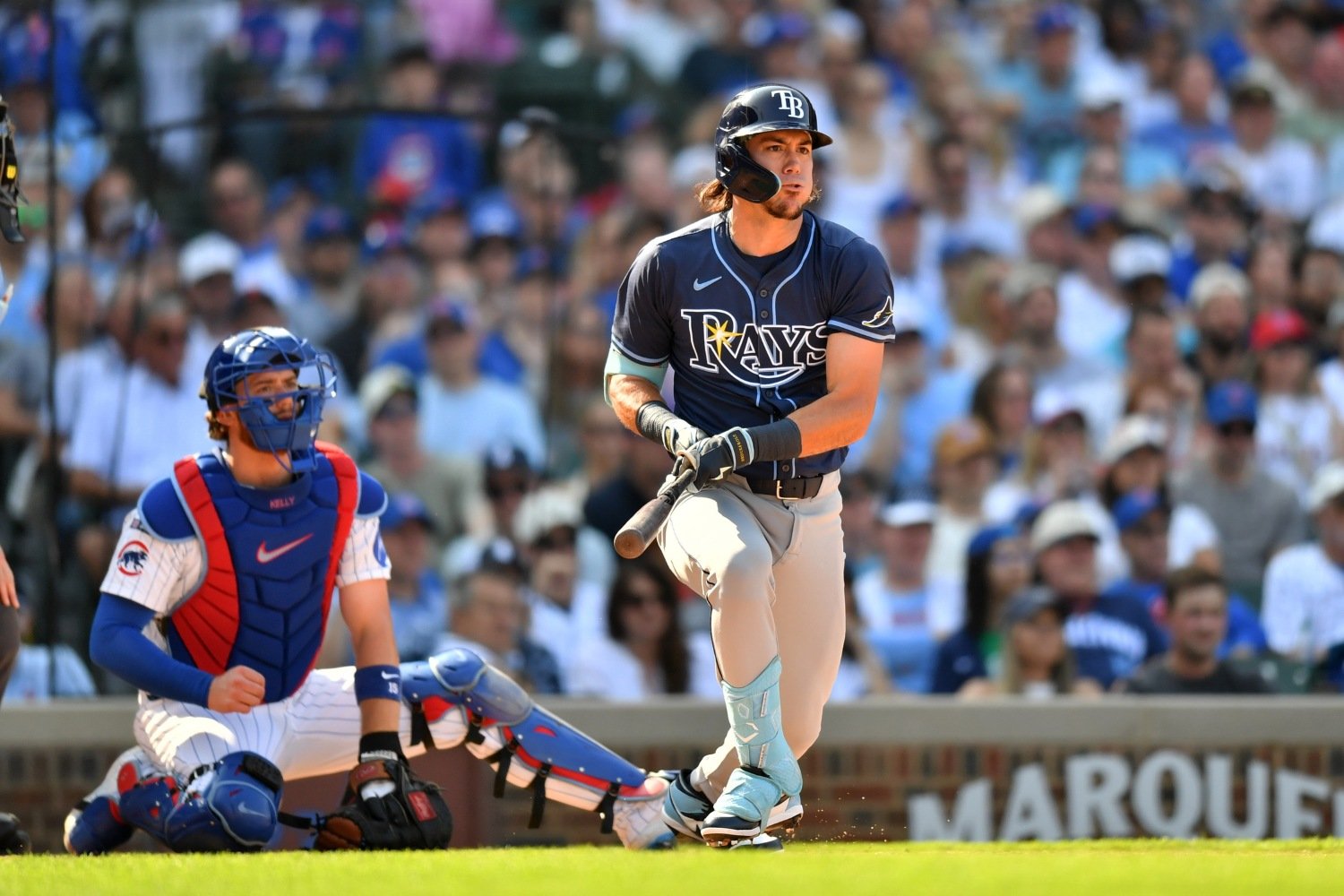 The Minnesota Twins traded minor-league catcher Nate Baez to the Boston Red Sox overnight, in exchange for infielder Tristan Gray. Jeff Passan of ESPN broke the news Wednesday morning. Gray, 29, has 122 plate appearances in parts of three big-league seasons, primarily with the Tampa Bay Rays. He's batted .207/.264/.369 in the majors, but a more robust .242/.310/.472 in over 2,000 career plate appearances at the Triple-A level. He's a left-handed batter who can play all over the infield, with 37 games at second base; 25 at third base; and 23 at shortstop in 2025. He can be optioned to the minor leagues for one more year. If the above sounds like a sketch of ex-Twins infielder Ryan Fitzgerald, that's about right. Gray is a good facsimile of Fitzgerald, with better bat speed: he averaged a swing speed of 74.4 miles per hour in the majors last year. He's unlikely to be a solid starter at any point, but he's good depth in the high minors and can be a versatile contributor off the bench. Baez, 24, is a decent prospect in his own right, with a .263/.363/.425 line in 918 professional plate appearances. He split his time between first base and catcher in 2025 and might not stick behind the plate, but if he does, he has enough thump in his bat to be valuable. He's at least a year away, though, and given his age, that introduces a risk that he'll never mature into a useful big-leaguer. The Twins, who acquired plenty of catching help on the farm at last year's trade deadline, elected to move on from Baez and bolster their big-league depth on the infield, instead. That they can option Gray to the minors makes this move easy on the Twins in the short term. He won't worsen their roster crunch at the end of spring training. On the contrary, having a player like him in the mix will give them the ability to choose the winner of the final roster spot without disproportionate consideration for positional value. It's a small move, but this deepens Minnesota's roster as they try to hold onto a competitive foothold in the wide-open AL Central.
 -
Image courtesy of © Patrick Gorski-Imagn Images The Minnesota Twins traded minor-league catcher Nate Baez to the Boston Red Sox overnight, in exchange for infielder Tristan Gray. Jeff Passan of ESPN broke the news Wednesday morning. Gray, 29, has 122 plate appearances in parts of three big-league seasons, primarily with the Tampa Bay Rays. He's batted .207/.264/.369 in the majors, but a more robust .242/.310/.472 in over 2,000 career plate appearances at the Triple-A level. He's a left-handed batter who can play all over the infield, with 37 games at second base; 25 at third base; and 23 at shortstop in 2025. He can be optioned to the minor leagues for one more year. If the above sounds like a sketch of ex-Twins infielder Ryan Fitzgerald, that's about right. Gray is a good facsimile of Fitzgerald, with better bat speed: he averaged a swing speed of 74.4 miles per hour in the majors last year. He's unlikely to be a solid starter at any point, but he's good depth in the high minors and can be a versatile contributor off the bench. Baez, 24, is a decent prospect in his own right, with a .263/.363/.425 line in 918 professional plate appearances. He split his time between first base and catcher in 2025 and might not stick behind the plate, but if he does, he has enough thump in his bat to be valuable. He's at least a year away, though, and given his age, that introduces a risk that he'll never mature into a useful big-leaguer. The Twins, who acquired plenty of catching help on the farm at last year's trade deadline, elected to move on from Baez and bolster their big-league depth on the infield, instead. That they can option Gray to the minors makes this move easy on the Twins in the short term. He won't worsen their roster crunch at the end of spring training. On the contrary, having a player like him in the mix will give them the ability to choose the winner of the final roster spot without disproportionate consideration for positional value. It's a small move, but this deepens Minnesota's roster as they try to hold onto a competitive foothold in the wide-open AL Central. View full article
-
Image courtesy of © Troy Taormina-Imagn Images The Minnesota Twins and catcher Victor Caratini are in agreement on a two-year deal, according to a report from Robert Murray of FanSided. The deal is reportedly worth $14 million. Caratini, 32, is entering his 10th big-league season, having spent time with the Cubs, Padres, Brewers and Astros. He's a career .244/.321/.371 hitter, but tapped into considerably more power during his two-year stay in Houston. He's a switch-hitter and a solid receiver, rating well as a blocker of errant pitches and receiving consistently strong reviews from pitchers with whom he works. When he first signed with Atlanta as a second-round pick in 2013, Caratini appeared to have a path to the majors that included time spent at third base. Over time, he gravitated more to catching, where his lack of speed and heavy frame are less of a problem. He makes solid contact, but has generally struggled to produce consistent power. Part of the issue was a tendency to hit too many balls on the ground; another was the fact that he was often a complementary catcher, playing far less than every day. His 12 home runs in 2025 were a career high, and the last two seasons (spent at the pull htter's haven that is Daikin Park in Houston) are the only two in which he's slugged over .400. However, he does avoid strikeouts, and rarely expands the zone at the plate. A native of Puerto Rico, he's a good handler of pitching staffs, bilingual and patient with developing arms. He should fit in nicely with the Twins' existing infrastructure, and like Josh Bell, he adds both matchup value and a veteran voice who has recently made valuable changes to his swing. In 2020 and 2021, Caratini became the first catcher ever to be behind the plate for no-hitters with no other player catching one in between. He coaxed journeyman Alec Mills through a no-no for the Cubs in Milwaukee in September 2020, then joined Joe Musgrove to author the first no-hitter in Padres history the next season. Earlier Friday, catcher J.T. Realmuto agreed to return to the Philadelphia Phillies on a lucrative three-year deal, as part of what has been an extremely busy week of signings throughout the league. Realmuto was the only catcher above Caratini in the pecking order, so once he signed, Caratini's market quickly crystallized. The Twins can plan on him as an equal partner to Ryan Jeffers, just as they arranged things with Christian Vázquez for much of the last three years, but if they get a strong offer for Jeffers (either in the next two months or come July), they could trade him and feel good about Caratini as a stopgap primary backstop. According to MLB.com's Mark Feinsand, Caratini will earn $14 million over two seasons, matching the annual salary Bell got on his one-year pact. This move certainly earns a raised eyebrow or two, because the Twins had previously acquired Alex Jackson to fill a smaller version of the role that will now surely go to Caratini. Jackson is out of minor-league options and can't be sent to Triple-A St. Paul, so the team will need to move one of Jeffers or Jackson by Opening Day. Jackson, of course, was a low-wattage pickup and has nowhere near the track record of big-league success that Caratini and Jeffers can boast, but nor does he cost anywhere near what they do. Every winter, the Twins lurk until the endgame of free agency, doing very little. Almost without fail, though, they then swoop in and make at least one or two signings of players whom the market has overlooked. Caratini wasn't far below the radar, but as his modest price indicates, this was a matter of waiting things out and letting the price tag come down to a place that was comfortable for the team. It's not surprising that Derek Falvey and his staff got involved at this level, but it invites several questions about the next step in the team's offseason. View full article
-
Minnesota Twins Sign Catcher Victor Caratini to Two-Year Deal
Matthew Trueblood posted an article in Twins
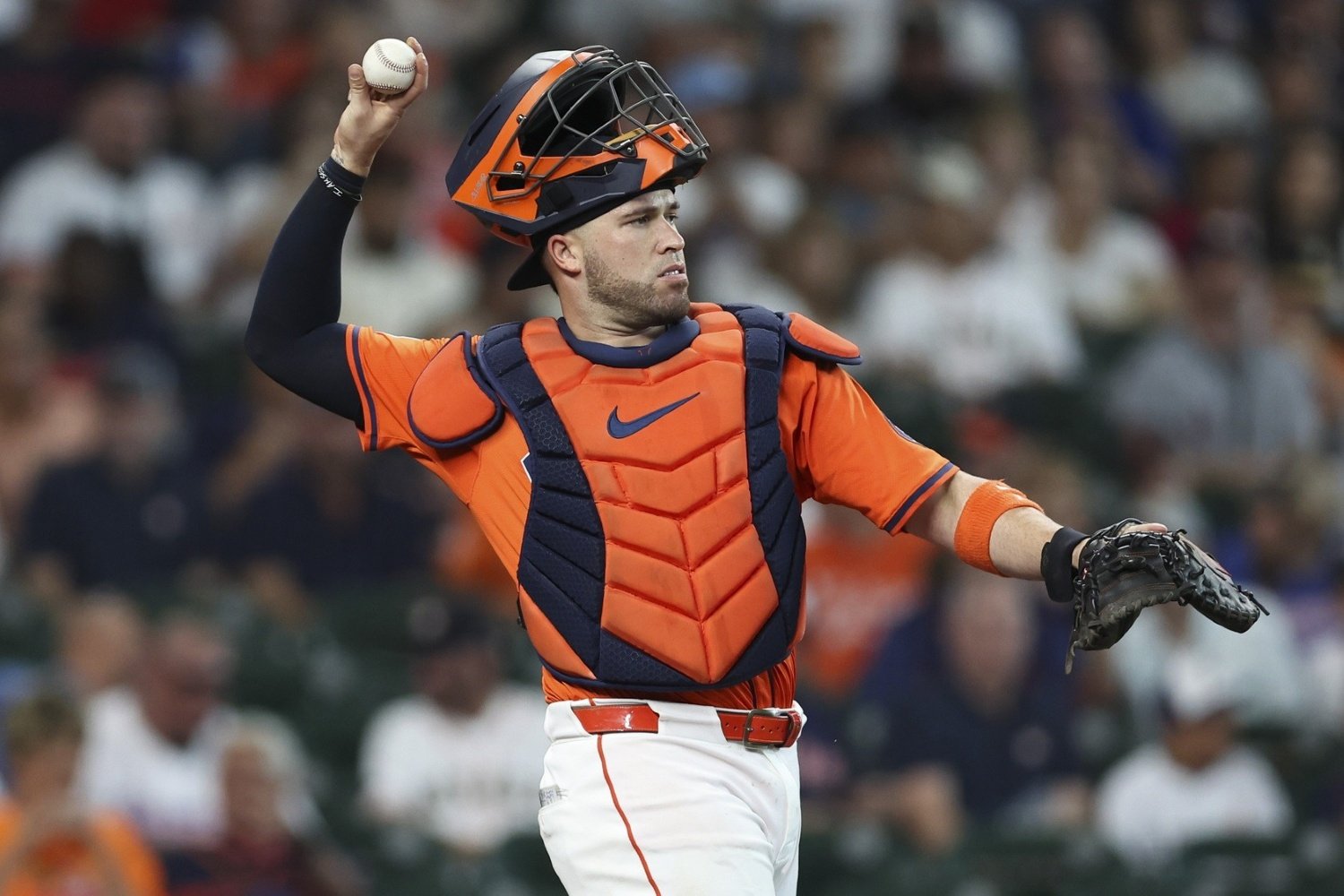 The Minnesota Twins and catcher Victor Caratini are in agreement on a two-year deal, according to a report from Robert Murray of FanSided. The deal is reportedly worth $14 million. Caratini, 32, is entering his 10th big-league season, having spent time with the Cubs, Padres, Brewers and Astros. He's a career .244/.321/.371 hitter, but tapped into considerably more power during his two-year stay in Houston. He's a switch-hitter and a solid receiver, rating well as a blocker of errant pitches and receiving consistently strong reviews from pitchers with whom he works. When he first signed with Atlanta as a second-round pick in 2013, Caratini appeared to have a path to the majors that included time spent at third base. Over time, he gravitated more to catching, where his lack of speed and heavy frame are less of a problem. He makes solid contact, but has generally struggled to produce consistent power. Part of the issue was a tendency to hit too many balls on the ground; another was the fact that he was often a complementary catcher, playing far less than every day. His 12 home runs in 2025 were a career high, and the last two seasons (spent at the pull htter's haven that is Daikin Park in Houston) are the only two in which he's slugged over .400. However, he does avoid strikeouts, and rarely expands the zone at the plate. A native of Puerto Rico, he's a good handler of pitching staffs, bilingual and patient with developing arms. He should fit in nicely with the Twins' existing infrastructure, and like Josh Bell, he adds both matchup value and a veteran voice who has recently made valuable changes to his swing. In 2020 and 2021, Caratini became the first catcher ever to be behind the plate for no-hitters with no other player catching one in between. He coaxed journeyman Alec Mills through a no-no for the Cubs in Milwaukee in September 2020, then joined Joe Musgrove to author the first no-hitter in Padres history the next season. Earlier Friday, catcher J.T. Realmuto agreed to return to the Philadelphia Phillies on a lucrative three-year deal, as part of what has been an extremely busy week of signings throughout the league. Realmuto was the only catcher above Caratini in the pecking order, so once he signed, Caratini's market quickly crystallized. The Twins can plan on him as an equal partner to Ryan Jeffers, just as they arranged things with Christian Vázquez for much of the last three years, but if they get a strong offer for Jeffers (either in the next two months or come July), they could trade him and feel good about Caratini as a stopgap primary backstop. According to MLB.com's Mark Feinsand, Caratini will earn $14 million over two seasons, matching the annual salary Bell got on his one-year pact. This move certainly earns a raised eyebrow or two, because the Twins had previously acquired Alex Jackson to fill a smaller version of the role that will now surely go to Caratini. Jackson is out of minor-league options and can't be sent to Triple-A St. Paul, so the team will need to move one of Jeffers or Jackson by Opening Day. Jackson, of course, was a low-wattage pickup and has nowhere near the track record of big-league success that Caratini and Jeffers can boast, but nor does he cost anywhere near what they do. Every winter, the Twins lurk until the endgame of free agency, doing very little. Almost without fail, though, they then swoop in and make at least one or two signings of players whom the market has overlooked. Caratini wasn't far below the radar, but as his modest price indicates, this was a matter of waiting things out and letting the price tag come down to a place that was comfortable for the team. It's not surprising that Derek Falvey and his staff got involved at this level, but it invites several questions about the next step in the team's offseason.
 -
Image courtesy of © Dale Zanine-Imagn Images Often, ballplayers erect a bulletproof facade when talking to fans or the press. Baseball is a viciously difficult game, and admitting even a brief period of real self-doubt feels a bit like pointing to the weak point in your own armor before marching into battle. To be a successful professional athlete, you have to be an extraordinary competitor. To be a successful baseball player, you have to add some swagger to that fire. Otherwise, the inevitable failure the game heaps upon every player will block your path to victory. That made it striking when, in a brief introductory press conference via Zoom last week, Josh Bell let a group of reporters he was meeting for the first time glimpse the way he'd grappled with doubt about his ability and his future, just a few months ago. "I didn't really know what to expect going into the offseason," Bell admitted. "Had a g good stretch towards the end of the season that I was pretty pleased with, so, just talking with my agent, he said that it was a good chance that I was gonna get signed, just had to wait for some bigger names to get off the board." To an outsider looking at his full-season body of work, it might have been surprising that he'd ever worried about whether he would be signed. However, Bell had struggled throughout the first half, and for the first time in four years, he wasn't traded at the deadline in July. Instead, he was left to ride things out with the lowly Nationals. A savvy veteran, Bell knew what it meant when no contending team would surrender anything of value to add him to their mix for the stretch run. At age 33, he was in real danger of seeing his playing career draw to a close. However, as he noted, Bell finished the season strongly. He batted .257/.331/.486 in August and September. There were two related keys to his midseason turnaround: ironing out some bad habits he brought to camp, and improving his bat speed and lift with a tweak to his training and practice. "[Nationals teammate] Amed Rosario had an unbelievable camp and started off the season really strong, and I just basically ordered the same bat program that he had," Bell said. "I think he went to Driveline or something like that. He explained the drills that he was doing, and I tried virtually all of them, and I stuck with the sinker machine with the heavy bat because that's when I started seeing results, on the field. It’s just one of those things where you play with veterans and then we start talking and, you know, it definitely helped out, and helped me extend my career." There, Bell is referring to hitting against a machine calibrated to fire sinkers at the batter, as opposed to the straighter launches from a typical hitting machine or the lollipops lobbed in by your average coach. He used a weighted bat for those sessions, which he found both a boon to his bat speed when swinging with his regular bat and a good way to practice getting slightly beneath the ball and generating more hard contact in the air. He also knows how to avoid the same sluggish start he had in 2025. "I’m kind of kicking myself in the foot here. I tried golfing for the first time, last offseason," said Bell, who has been a baseball-first athlete his whole life. He's learned his lesson. "So I just won't do that anymore, I think it kind of made me lose my swing over the course of the offseason. I’ve just been hitting from both sides. I told myself I'll hang up the clubs until I hang up my jersey. Hopefully that helps." The Twins took note of Bell's late-season resurgence, and they were the first team to call this winter. However, it was really new manager Derek Shelton—who skippered the last days of Bell's tenure with the Pirates—who started the conversation. "My agency said that he came up to one of our guys and was like, ‘Hey, we want Josh,' day one of the Winter Meetings," Bell said. "So I got a call from them and they said, ‘Are you interested?’ I said, ‘For sure.’ Shelton and Bell had a good rapport during their brief stint with Pittsburgh, though it was constrained by the strangeness of the COVID season. Shelton came away with conviction about Bell's leadership qualities, though, and Bell hopes to bring that skillset to bear with Minnesota. "Yeah, for sure. I mean, I did that last year," he said. "I got to watch [CJ Abrams] and James Wood up close and tried to help when I could there. I'm definitely excited to continue that role and have that leadership in the clubhouse. It's not always easy. First, you gotta get to know people, you gotta understand where people are willing to listen or if people are kind of set in their ways. But I’ll do what I can, and hopefully help people find different routines to help them progress here in the big leagues." Speaking of players who are sometimes set in their ways, the one current Twin whom Bell noted having a relationship with is Royce Lewis, whom he met through their agency and who now lives near him. "We’re actually in the same area here in Frisco, Texas, so I think we're gonna start getting together next week and taking grounders together," Bell said. "I'll watch him throw from across the diamond and get some reads there. But yeah, I met him, shoot, maybe the first or second year after he got grafted. I know he’s had a little bit of ups and downs with his career with injuries and whatnot, but hopefully I can help him out with that just a little bit, and we'll see what he can do on the field if he can get up to 140 games." To create some early on-field chemistry between the team's presumptive starters at the corner infield spots would be great, but if Bell can help Lewis embrace the mentality Bell takes—the focus on improvement, the openness to changes, and so on—it could be even more beneficial. Bell should also be a positive influence on players with more superficially similar skills to his, like Matt Wallner and Trevor Larnach. The Twins will contend for a playoff spot in 2026 only if they're able to get more out of Wallner, Larnach, Lewis and others than they've gotten in either of the last two seasons. Bell's own hitting will matter a great deal, but his greatest impact on the team could come in the form of helping those players make sound adjustments or better respond to the input of the coaching staff. He's an unusual player, not only in how intelligent and single-minded he is, but in how free of bravado or bluster he's willing to be. If the Twins' young core learns from his example, signing Bell could be remembered as a catalytic move by the front office and its new partner in the dugout. View full article
-
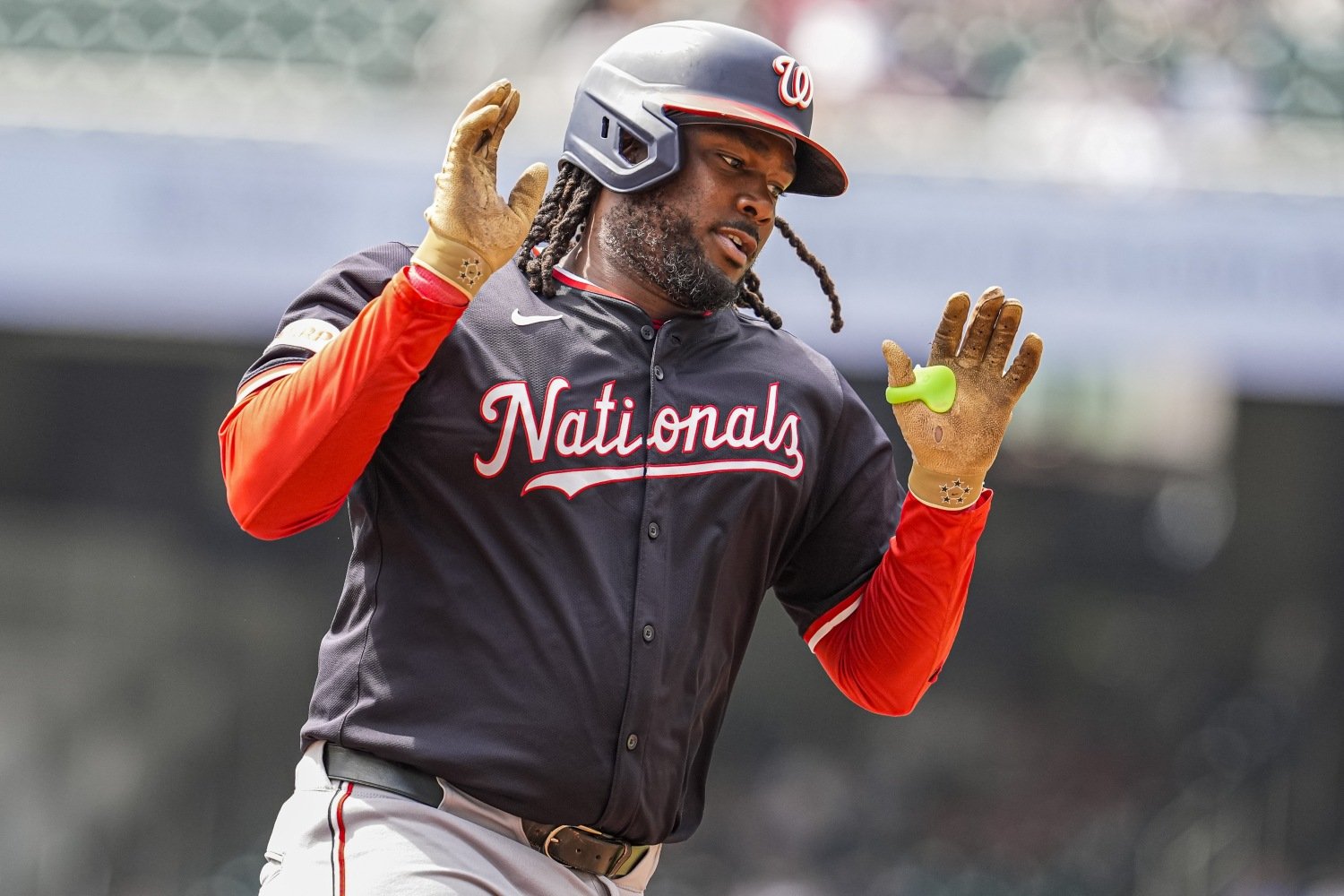 Often, ballplayers erect a bulletproof facade when talking to fans or the press. Baseball is a viciously difficult game, and admitting even a brief period of real self-doubt feels a bit like pointing to the weak point in your own armor before marching into battle. To be a successful professional athlete, you have to be an extraordinary competitor. To be a successful baseball player, you have to add some swagger to that fire. Otherwise, the inevitable failure the game heaps upon every player will block your path to victory. That made it striking when, in a brief introductory press conference via Zoom last week, Josh Bell let a group of reporters he was meeting for the first time glimpse the way he'd grappled with doubt about his ability and his future, just a few months ago. "I didn't really know what to expect going into the offseason," Bell admitted. "Had a g good stretch towards the end of the season that I was pretty pleased with, so, just talking with my agent, he said that it was a good chance that I was gonna get signed, just had to wait for some bigger names to get off the board." To an outsider looking at his full-season body of work, it might have been surprising that he'd ever worried about whether he would be signed. However, Bell had struggled throughout the first half, and for the first time in four years, he wasn't traded at the deadline in July. Instead, he was left to ride things out with the lowly Nationals. A savvy veteran, Bell knew what it meant when no contending team would surrender anything of value to add him to their mix for the stretch run. At age 33, he was in real danger of seeing his playing career draw to a close. However, as he noted, Bell finished the season strongly. He batted .257/.331/.486 in August and September. There were two related keys to his midseason turnaround: ironing out some bad habits he brought to camp, and improving his bat speed and lift with a tweak to his training and practice. "[Nationals teammate] Amed Rosario had an unbelievable camp and started off the season really strong, and I just basically ordered the same bat program that he had," Bell said. "I think he went to Driveline or something like that. He explained the drills that he was doing, and I tried virtually all of them, and I stuck with the sinker machine with the heavy bat because that's when I started seeing results, on the field. It’s just one of those things where you play with veterans and then we start talking and, you know, it definitely helped out, and helped me extend my career." There, Bell is referring to hitting against a machine calibrated to fire sinkers at the batter, as opposed to the straighter launches from a typical hitting machine or the lollipops lobbed in by your average coach. He used a weighted bat for those sessions, which he found both a boon to his bat speed when swinging with his regular bat and a good way to practice getting slightly beneath the ball and generating more hard contact in the air. He also knows how to avoid the same sluggish start he had in 2025. "I’m kind of kicking myself in the foot here. I tried golfing for the first time, last offseason," said Bell, who has been a baseball-first athlete his whole life. He's learned his lesson. "So I just won't do that anymore, I think it kind of made me lose my swing over the course of the offseason. I’ve just been hitting from both sides. I told myself I'll hang up the clubs until I hang up my jersey. Hopefully that helps." The Twins took note of Bell's late-season resurgence, and they were the first team to call this winter. However, it was really new manager Derek Shelton—who skippered the last days of Bell's tenure with the Pirates—who started the conversation. "My agency said that he came up to one of our guys and was like, ‘Hey, we want Josh,' day one of the Winter Meetings," Bell said. "So I got a call from them and they said, ‘Are you interested?’ I said, ‘For sure.’ Shelton and Bell had a good rapport during their brief stint with Pittsburgh, though it was constrained by the strangeness of the COVID season. Shelton came away with conviction about Bell's leadership qualities, though, and Bell hopes to bring that skillset to bear with Minnesota. "Yeah, for sure. I mean, I did that last year," he said. "I got to watch [CJ Abrams] and James Wood up close and tried to help when I could there. I'm definitely excited to continue that role and have that leadership in the clubhouse. It's not always easy. First, you gotta get to know people, you gotta understand where people are willing to listen or if people are kind of set in their ways. But I’ll do what I can, and hopefully help people find different routines to help them progress here in the big leagues." Speaking of players who are sometimes set in their ways, the one current Twin whom Bell noted having a relationship with is Royce Lewis, whom he met through their agency and who now lives near him. "We’re actually in the same area here in Frisco, Texas, so I think we're gonna start getting together next week and taking grounders together," Bell said. "I'll watch him throw from across the diamond and get some reads there. But yeah, I met him, shoot, maybe the first or second year after he got grafted. I know he’s had a little bit of ups and downs with his career with injuries and whatnot, but hopefully I can help him out with that just a little bit, and we'll see what he can do on the field if he can get up to 140 games." To create some early on-field chemistry between the team's presumptive starters at the corner infield spots would be great, but if Bell can help Lewis embrace the mentality Bell takes—the focus on improvement, the openness to changes, and so on—it could be even more beneficial. Bell should also be a positive influence on players with more superficially similar skills to his, like Matt Wallner and Trevor Larnach. The Twins will contend for a playoff spot in 2026 only if they're able to get more out of Wallner, Larnach, Lewis and others than they've gotten in either of the last two seasons. Bell's own hitting will matter a great deal, but his greatest impact on the team could come in the form of helping those players make sound adjustments or better respond to the input of the coaching staff. He's an unusual player, not only in how intelligent and single-minded he is, but in how free of bravado or bluster he's willing to be. If the Twins' young core learns from his example, signing Bell could be remembered as a catalytic move by the front office and its new partner in the dugout.
 -
Image courtesy of © Rick Osentoski-Imagn Images For many of us, growing up with baseball meant spending hours on the floor of our bedroom, poring over baseball cards. You might have been one of those who adored the artistry (and especially the creative adventures) of the colorful cardboard collectibles, particularly as various types of special cards became more prevalent in the 1990s. You might have been prone to dog-earing a few copies of Beckett each month, updating the value of your collection by scanning page after page of newsprint-type listings and building skyscrapers in your mind with all your future wealth. No matter what, though, if you loved baseball cards, you spent a lot of time with the numbers. Specifically, of course, you spent a lot of time with outdated numbers. Even by the time I was 11 in 2000, there were publications like Baseball Prospectus and well-known luminaries like Bill James telling everyone who would listen that OBP mattered more than batting average; that RBIs were often a function of opportunity, rather than clutchness or fortitude; and most of all, that pitcher wins are silly. Funnily enough, you'll still find some people who want to make the case for pitcher wins. It's cute. It's like meeting someone obsessed with the question of Zeppelin or Floyd, in 2005. The peak of debate over pitcher wins came a quarter-century ago, now, and it's been a dead issue for at least a decade. No one anyone takes seriously cares what's listed under 'W-L' on a pitcher's baseball card, anymore, because we can all rattle off five or six reasons why those numbers are deceiving, confusing, or just plain useless. It was conceived of at a time when one pitcher usually worked the whole game. Now, it's relatively rare that a pitcher works even two-thirds of one. Given the above, the arbitrary requirement that a starter work at least five innings to earn a win creates an unnecessary distortion in records. For any game in which the lead changes hands late, the person credited with the win is often someone who pitched poorly and left the game while trailing, only to have their offensive teammates seize the lead before someone else took the mound. A starter who pitches a gem but gets outdueled often takes a loss, which is downright foolish. Wins and losses being credited exclusively to pitchers paints the game as much more pitching-dependent than it is. Tough-luck losses and cheap wins can pile up on the records of hurlers, even when (in either direction) it was really a hitter or fielder who decided several games in a sample. Yes, that column has become obsolete for the modern fan. But it's a nice idea, right? One perfectly valid frustration for many fans (especially older ones) is that wins above replacement (WAR), win probability added (WPA) and other 21st-century stats assign value to players by treating all their plate appearances as parts of a continuous seasonal record. This overlooks the fact that each baseball game is a discrete event. While it's very hard to say whether a hitter who delivers 0.1 WPA (i.e., adds 10 percentage points to the team's chances of winning) in six different games is more or less valuable than one who delivers 0.6 WPA in one game and 0 in five others, we can all attest that those things feel very different, and have very different implications for what else needs to happen to get that player's team four wins in the six contests. The won-lost record has value, conceptually. It was just conceived well over a century ago, and doesn't hold up to scrutiny now, both because of how the game has changed and because we understand it so much better and differently now than we did then. So, let's test-drive a still-flawed but more interesting spin on the win (and the loss): WPA W-L. This is radically simple, and not a product of any especially opaque process. I went through all 162 Twins games from 2025, and did the following: If the Twins won: Credited the player with the highest WPA in the game with a win; If the Twins lost: Assigned the player with the lowest WPA in the game a loss; In all cases: Noted the WPA value for the player who earned the decision that day. This takes advantage of the fact that we now have easily searchable WPA values for every game, virtually in real time. There are a few variations between sources' specific WPA values for given games, so for the record, I used Baseball Reference to do this research and leaned on their WPA formula. For those unfamiliar with the idea, WPA simply uses a model informed by historical data to estimate the likelihood of winning for each team entering each plate appearance of a game, and gives credit or blame to the batter and pitcher involved in each encounter based on how those probabilities change from one at-bat to the next. It's far from a perfect system, because it doesn't capture fielding value and only very minimally captures baserunning, but it's something. A pitcher who throws eight innings of one-run ball is extremely unlikely to take a 'loss' under this model, not only because it more directly ties wins and losses to performance by the individual, but because hitters can gets wins and losses in this system, too. Pitchers are still much more likely to do so—hitters took just 52 of the 162 decisions for the 2025 Twins. Now, though, we know the days on which the hitters made the major difference. This still gives us strange quirks. For instance, Brooks Lee had an incredible (although, to fans who were locked in on this team last year, perhaps not an especially surprising) 10 decisions on his own. He went 7-3, showing a remarkable tendency not only to come up with the big hit now and then, but to become the game's main character in either direction. It's very rare for hitters to take losses. It requires a guy not only to go 0-for-4 or so, but to fail in at least one pivotal situation. In the games where hitters got a decision, the 2025 Twins were 37-15, but Lee still managed to lose three games. That he also won seven proves that he disproportionately came to bat in big situations, putting the game on his shoulders. Seven Twins batters had at least three decisions on the season, with most of them being the everyday players you'd expect. Byron Buxton (who, again, gets no credit for his glove and only partial credit for his speed in this framework) went 4-1. Trevor Larnach (not getting penalized for being a DH in this way of studying things, as he is when evaluated by WAR) went 4-2, delivering a bit less game-changing thump than one might have hoped for from a player whose whole game is his bat. Kody Clemens went 5-2, which might surprise his haters. The funniest in this set, though, is Luke Keaschall, who went 3-0 despite losing so much of the season to injury. That's because, in a remarkable streak in mid-August, he won three straight games for the Twins. Keaschall had a WPA of .168 on Aug. 5, a .243 on Aug. 6, and a .143 on Aug. 8. None of those is especially high for a player in a win—the Twins' median WPA for players collecting a win was .269—but he led the way on each of those three days, in his first week back from a broken wrist. If you're particularly sharp-eyed, you'll notice that those three games don't even include his walkoff home run against the Royals, on Aug. 10. It's not his fault; Keaschall was great that day. However, the win went to Michael Tonkin, who held the visitors scoreless in extra innings twice in a row to set up Keaschall's heroics. Tonkin was worth .625 WPA that day; keeping opponents off the board under the automatic-runner rule in startlingly valuable. Speaking of pitchers, it's funny how much this framework emphasizes the fact that their job is simply not to lose. Pitchers can't score, and while hanging zeroes is valuable, team wins often end up being credited to the hitters who produced the runs that decided the outcome. Over half of the Twins' wins went to hitters last year. This framework is unfair to players in a whole different way than standard wins and losses, and most of that unfairness hits relievers. Griffin Jax (0-4) was disappointing in 2025 and certainly wasn't clutch, but Louis Varland (0-4) felt like a more reliable option and gets no better credit than Jax did under this system. Jhoan Duran (1-4) had to pay the price for the fact that he was often pitching at times when a loss was available to him, but a win wasn't. Then again, regular wins and losses inflict some of the same caprices on relievers. Joe Ryan was the decisive influence on the game in about half of his appearances, going 9-7 in 31 games (30 starts). Ditto for Bailey Ober, who went 5-9 in his 27 starts, and Zebby Matthews, who went 3-5 in 16 outings. However, Pablo López (3-2 in 14 starts) and Simeon Woods Richardson (5-3 in 23 games, 22 of them starts) were much less likely to get a decision in a given game. That's not a bad thing; it's a testament to their ability to keep the team in it even when they didn't have their best stuff. That Woods Richardson only took the 'loss' three times is one of the more interesting things I gleaned from this. He really was a competitor. By contrast, you can really see the way the team's evaporated depth killed them late in the season. Beginning with a disastrous Travis Adams loss on Jul. 27, the Twins lost 38 of their final 58 games, and their median WPA by the player who took the loss went from -.277 for their first 54 losses to -.329 the rest of the way. Adams, Mick Abel, Taj Bradley, Noah Davis, Thomas Hatch and Pierson Ohl went a combined 1-12, and several times, they had WPAs of -.400 or worse in those losses, effectively denying the rest of the team a chance to make up for their failures. Players pressed into bigger roles by others' departures couldn't handle it; Justin Topa was 0-6 on the season. Austin Martin and Alan Roden combined to go 0-3. This isn't a robust new stat; it's just a toy. It's fun, though, for the ways it gives us different insights into the unfolding of games than old-fashioned pitcher wins and losses deliver. We'll track this stat in 2026, too, and see where it leads us. For the full list of WPA W-L and the WPAs of the players who got the decision each day, click here. View full article
- 8 replies
-
- 2
-

-
- luke keaschall
- bailey ober
- (and 2 more)
-
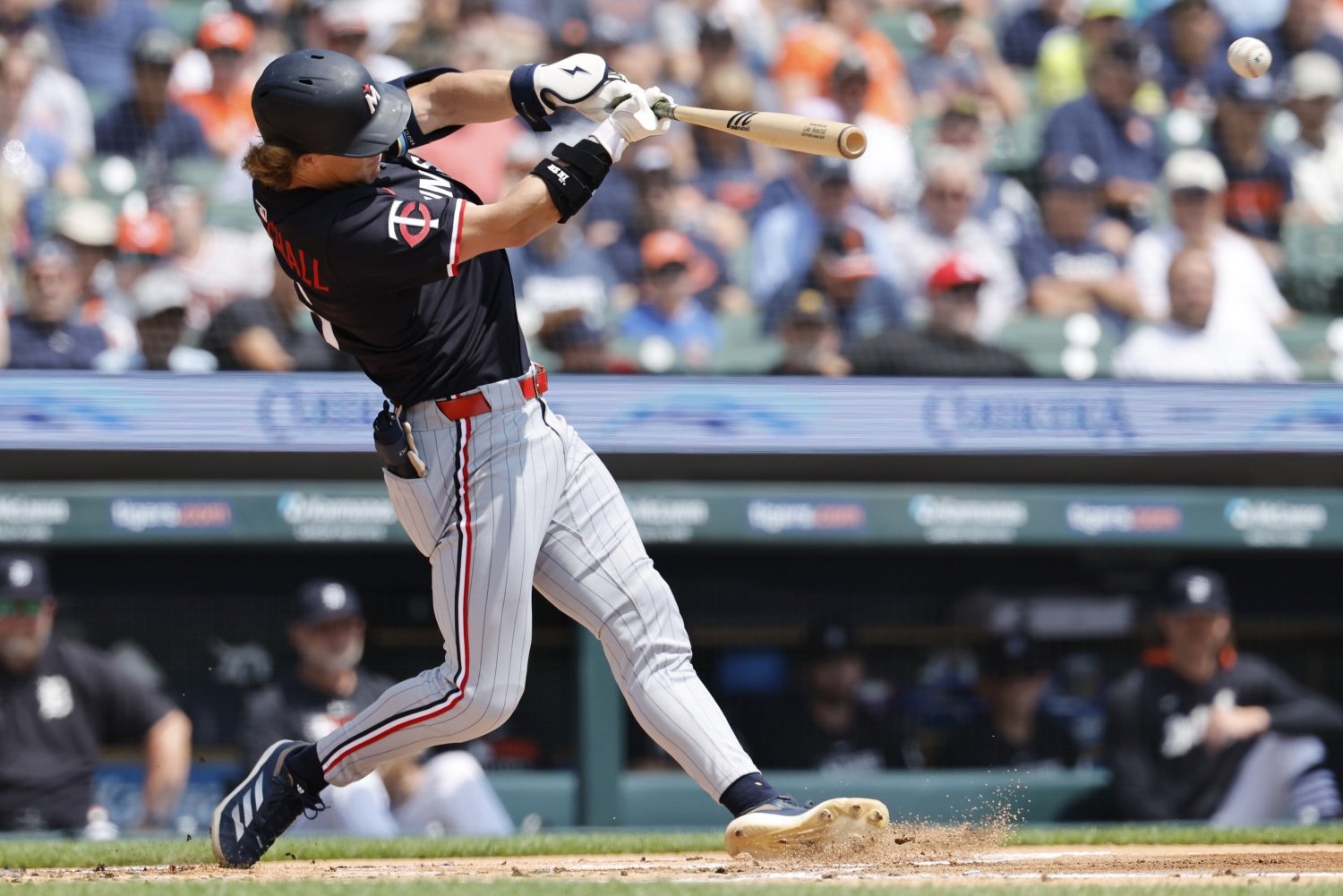 For many of us, growing up with baseball meant spending hours on the floor of our bedroom, poring over baseball cards. You might have been one of those who adored the artistry (and especially the creative adventures) of the colorful cardboard collectibles, particularly as various types of special cards became more prevalent in the 1990s. You might have been prone to dog-earing a few copies of Beckett each month, updating the value of your collection by scanning page after page of newsprint-type listings and building skyscrapers in your mind with all your future wealth. No matter what, though, if you loved baseball cards, you spent a lot of time with the numbers. Specifically, of course, you spent a lot of time with outdated numbers. Even by the time I was 11 in 2000, there were publications like Baseball Prospectus and well-known luminaries like Bill James telling everyone who would listen that OBP mattered more than batting average; that RBIs were often a function of opportunity, rather than clutchness or fortitude; and most of all, that pitcher wins are silly. Funnily enough, you'll still find some people who want to make the case for pitcher wins. It's cute. It's like meeting someone obsessed with the question of Zeppelin or Floyd, in 2005. The peak of debate over pitcher wins came a quarter-century ago, now, and it's been a dead issue for at least a decade. No one anyone takes seriously cares what's listed under 'W-L' on a pitcher's baseball card, anymore, because we can all rattle off five or six reasons why those numbers are deceiving, confusing, or just plain useless. It was conceived of at a time when one pitcher usually worked the whole game. Now, it's relatively rare that a pitcher works even two-thirds of one. Given the above, the arbitrary requirement that a starter work at least five innings to earn a win creates an unnecessary distortion in records. For any game in which the lead changes hands late, the person credited with the win is often someone who pitched poorly and left the game while trailing, only to have their offensive teammates seize the lead before someone else took the mound. A starter who pitches a gem but gets outdueled often takes a loss, which is downright foolish. Wins and losses being credited exclusively to pitchers paints the game as much more pitching-dependent than it is. Tough-luck losses and cheap wins can pile up on the records of hurlers, even when (in either direction) it was really a hitter or fielder who decided several games in a sample. Yes, that column has become obsolete for the modern fan. But it's a nice idea, right? One perfectly valid frustration for many fans (especially older ones) is that wins above replacement (WAR), win probability added (WPA) and other 21st-century stats assign value to players by treating all their plate appearances as parts of a continuous seasonal record. This overlooks the fact that each baseball game is a discrete event. While it's very hard to say whether a hitter who delivers 0.1 WPA (i.e., adds 10 percentage points to the team's chances of winning) in six different games is more or less valuable than one who delivers 0.6 WPA in one game and 0 in five others, we can all attest that those things feel very different, and have very different implications for what else needs to happen to get that player's team four wins in the six contests. The won-lost record has value, conceptually. It was just conceived well over a century ago, and doesn't hold up to scrutiny now, both because of how the game has changed and because we understand it so much better and differently now than we did then. So, let's test-drive a still-flawed but more interesting spin on the win (and the loss): WPA W-L. This is radically simple, and not a product of any especially opaque process. I went through all 162 Twins games from 2025, and did the following: If the Twins won: Credited the player with the highest WPA in the game with a win; If the Twins lost: Assigned the player with the lowest WPA in the game a loss; In all cases: Noted the WPA value for the player who earned the decision that day. This takes advantage of the fact that we now have easily searchable WPA values for every game, virtually in real time. There are a few variations between sources' specific WPA values for given games, so for the record, I used Baseball Reference to do this research and leaned on their WPA formula. For those unfamiliar with the idea, WPA simply uses a model informed by historical data to estimate the likelihood of winning for each team entering each plate appearance of a game, and gives credit or blame to the batter and pitcher involved in each encounter based on how those probabilities change from one at-bat to the next. It's far from a perfect system, because it doesn't capture fielding value and only very minimally captures baserunning, but it's something. A pitcher who throws eight innings of one-run ball is extremely unlikely to take a 'loss' under this model, not only because it more directly ties wins and losses to performance by the individual, but because hitters can gets wins and losses in this system, too. Pitchers are still much more likely to do so—hitters took just 52 of the 162 decisions for the 2025 Twins. Now, though, we know the days on which the hitters made the major difference. This still gives us strange quirks. For instance, Brooks Lee had an incredible (although, to fans who were locked in on this team last year, perhaps not an especially surprising) 10 decisions on his own. He went 7-3, showing a remarkable tendency not only to come up with the big hit now and then, but to become the game's main character in either direction. It's very rare for hitters to take losses. It requires a guy not only to go 0-for-4 or so, but to fail in at least one pivotal situation. In the games where hitters got a decision, the 2025 Twins were 37-15, but Lee still managed to lose three games. That he also won seven proves that he disproportionately came to bat in big situations, putting the game on his shoulders. Seven Twins batters had at least three decisions on the season, with most of them being the everyday players you'd expect. Byron Buxton (who, again, gets no credit for his glove and only partial credit for his speed in this framework) went 4-1. Trevor Larnach (not getting penalized for being a DH in this way of studying things, as he is when evaluated by WAR) went 4-2, delivering a bit less game-changing thump than one might have hoped for from a player whose whole game is his bat. Kody Clemens went 5-2, which might surprise his haters. The funniest in this set, though, is Luke Keaschall, who went 3-0 despite losing so much of the season to injury. That's because, in a remarkable streak in mid-August, he won three straight games for the Twins. Keaschall had a WPA of .168 on Aug. 5, a .243 on Aug. 6, and a .143 on Aug. 8. None of those is especially high for a player in a win—the Twins' median WPA for players collecting a win was .269—but he led the way on each of those three days, in his first week back from a broken wrist. If you're particularly sharp-eyed, you'll notice that those three games don't even include his walkoff home run against the Royals, on Aug. 10. It's not his fault; Keaschall was great that day. However, the win went to Michael Tonkin, who held the visitors scoreless in extra innings twice in a row to set up Keaschall's heroics. Tonkin was worth .625 WPA that day; keeping opponents off the board under the automatic-runner rule in startlingly valuable. Speaking of pitchers, it's funny how much this framework emphasizes the fact that their job is simply not to lose. Pitchers can't score, and while hanging zeroes is valuable, team wins often end up being credited to the hitters who produced the runs that decided the outcome. Over half of the Twins' wins went to hitters last year. This framework is unfair to players in a whole different way than standard wins and losses, and most of that unfairness hits relievers. Griffin Jax (0-4) was disappointing in 2025 and certainly wasn't clutch, but Louis Varland (0-4) felt like a more reliable option and gets no better credit than Jax did under this system. Jhoan Duran (1-4) had to pay the price for the fact that he was often pitching at times when a loss was available to him, but a win wasn't. Then again, regular wins and losses inflict some of the same caprices on relievers. Joe Ryan was the decisive influence on the game in about half of his appearances, going 9-7 in 31 games (30 starts). Ditto for Bailey Ober, who went 5-9 in his 27 starts, and Zebby Matthews, who went 3-5 in 16 outings. However, Pablo López (3-2 in 14 starts) and Simeon Woods Richardson (5-3 in 23 games, 22 of them starts) were much less likely to get a decision in a given game. That's not a bad thing; it's a testament to their ability to keep the team in it even when they didn't have their best stuff. That Woods Richardson only took the 'loss' three times is one of the more interesting things I gleaned from this. He really was a competitor. By contrast, you can really see the way the team's evaporated depth killed them late in the season. Beginning with a disastrous Travis Adams loss on Jul. 27, the Twins lost 38 of their final 58 games, and their median WPA by the player who took the loss went from -.277 for their first 54 losses to -.329 the rest of the way. Adams, Mick Abel, Taj Bradley, Noah Davis, Thomas Hatch and Pierson Ohl went a combined 1-12, and several times, they had WPAs of -.400 or worse in those losses, effectively denying the rest of the team a chance to make up for their failures. Players pressed into bigger roles by others' departures couldn't handle it; Justin Topa was 0-6 on the season. Austin Martin and Alan Roden combined to go 0-3. This isn't a robust new stat; it's just a toy. It's fun, though, for the ways it gives us different insights into the unfolding of games than old-fashioned pitcher wins and losses deliver. We'll track this stat in 2026, too, and see where it leads us. For the full list of WPA W-L and the WPAs of the players who got the decision each day, click here.
- 8 comments
-
- 5
-
-
- luke keaschall
- bailey ober
- (and 2 more)
-
Image courtesy of © Vincent Carchietta-Imagn Images By one metric, Royce Lewis was on time as often as any hitter in baseball in 2025. Only the Diamondbacks' Corbin Carroll edged out Lewis in Statcast's Ideal Attack Angle rate, which gives the percentage of swings on which a hitter's barrel is moving uphill at their contact point, within the range (8° to 20°) that most often generates high-value batted balls. Attack Angle is one number meant to tell us whether a hitter is on time for the pitch they're swinging at. Every swing has to start downhill, to enter the hitting zone, and to hit anything more than a weak ground ball, they almost all have to begin working upward before making contact. If the timing of the swing is right, the barrel will be usually be moving at an angle that fits in that 8-20° range, generating fly balls and line drives with high exit velocities or high-trajectory, topspin grounders when slightly miscalibrating. In theory, the fact that Lewis trailed only Carroll should tell us that he was on time exceptionally often, leading to very dangerous contact. We know that's not really how things played out. Lewis not only batted a forgettable .237/.283/.388, but ran an unimpressive BABIP (.267) for the second year in a row, and saw his power decline sharply. He's actually quite good at hitting the ball in the air and pulling it, which is a product of his swing's timing signature, but those tendencies don't translate to high-value contact—despite his above-average bat speed. Part of the problem could be an approach that was pretty aggressive and unrefined in 2025, but the issue runs deeper. The ideal attack angle for a swing by Lewis doesn't range from 8° to 20°. It's a much smaller window than that. Consider these breakdowns of swing shape and performance based on attack angle, for Lewis and for another hitter with a very high Ideal Attack Angle rate, Alex Bregman. Royce Lewis Alex Bregman Attack Angle Attack Dir. Swing Speed Contact Point Whiff Rate Exit Vel. Launch RV/100 Attack Dir. Swing Speed Contact Point Whiff Rate Exit Vel. Launch RV/100 Below 0° 19° Opp. 64.7 11.5 36.2 89.2 -8° -7.3 13° Opp. 66.2 18.6 20.4 84.9 4° 1.1 0°-5° 6° Opp. 70.8 20 22.2 90.2 11° -3.1 17° Opp. 65.5 19.5 11.3 91.7 7° 10 5°-10° 2° Pull 72.6 24.8 19.2 90.6 21° -3.3 9° Opp. 68 24.4 16.3 89.5 13° -5.5 10°-15° 9° Pull 72.9 29.2 23.4 91.2 20° 4.8 2° Pull 69.5 29.9 9.2 90.4 23° -4.1 15°-20° 18° Pull 73.7 35.2 25.3 88.1 24° -5 11° Pull 71.9 35.2 9.3 91.7 22° 0.8 20°+ 28° Pull 69.1 42.9 55 80.4 4° -3.5 26° Pull 70.2 43.6 29.8 83.4 16° -1.4 Bregman doesn't actually benefit much from hitting what Statcast has mapped onto all hitters as the Ideal Attack Angle band, but he can create lots of positive outcomes when catching the ball unusually deep and with a very flat address of the ball—in essence, when he's late. He can't be consistently beaten by velocity, because he doesn't have to get the barrel out in front of him very far or get around on it to produce solid contact. Lewis, on the other hand, has to find the ball within one small window of Attack Angle. Even in that window, he whiffs on nearly a quarter of his swings, which is an issue; most hitters whiff at a much lower rate when they're on time. More importantly, though, his swing only truly works—he only delivers the barrel to the ball in a way that results in hard, lofted contact by getting a good piece of the ball—when he gets around the ball a bit and catches it out close to 30 inches in front of his frame. Indeed, one reason why Lewis's swing so often fell into the Ideal Attack Angle range is that pitchers learned that they could beat him with fastballs. They didn't spend much time manipulating his timing; he saw fastballs more often than in any previous big-league stint. Compare that chart to this one, showing the same pitch type distribution by year for Carroll, the other guy who topped the league in Ideal Attack Angle rate. Carroll can be dangerous within a much wider range of attack angles, so pitchers tried to mess with his timing more. Yet, he was just as good at overcoming that and being on time as Lewis was: equally accurate, despite a higher degree of difficulty and a greater margin for error had he needed it. That's why Carroll batted .259/.343/.541, while Lewis struggled so much despite meeting the same threshold for being on time as often as Carroll did. It's not that hard to see why Carroll is more adaptable than Lewis, and why this number thus tells us two different things about them. To grasp it best, let's fold in one other comparator, too. William Contreras is another right-handed batter, whose swing might be easier to contrast with Lewis's at a glance. His nominal swing plane (29°) is the same as Lewis's, and he, too, has a high Ideal Attack Angle rate. Here are the swings for all three players, as visualized in composite form and frozen at the frame closest to when each makes contact. Both Contreras and Carroll stay back better, partially because they see more soft stuff and have to. Lewis's weight has crashed forward more by the time he makes contact, such that he's catching the ball deeper in his own hitting zone than the other two, despite having the same nominal attack angle. Yet, he's also come around the ball more than either of them, signaling that despite hitting it deeper in the zone, he's closer to being too early to catch it squarely and keep it fair. Contreras and Carroll are not ideals against which Lewis must be measured, but studying the different ways their bodies and bats work in space as they attack the baseball lays bare the ways that their apparently similar swing stats can mislead us when evaluating them. Lewis's unusual stride locks him into some big problems at the plate. He's unique, with a step forward as the pitcher prepares to deliver the ball, then a second, separate one going in the same direction. It amounts to something very close to a lunge, but he stays stiffly upright during it, as you can see by comparing his posture at contact to those of Contreras and Carroll. This is part of why the window within which his swing can yield a cleanly struck ball is so small, relative to many other players, and in 2025, pitchers found that they could consistently get their fastball past that window and into his kitchen, such that they didn't need to change speeds, location or movement direction as much as they do against other, similarly fearsome swingers. Contreras and Carroll are long striders; it's not about the sheer distance covered as Lewis gets going in the box. Rather, his double-forward move brings his weight forward sooner, and makes it harder for him to rotate and flatten out through the ball, producing feel for the barrel throughout the swing. The dots between each player's feet in the grids below show the player's center of mass. Notice how much farther forward Lewis's is, within his starting (black) and ending (red) foot positions, relative to those of Contreras and Carroll. The more we learn about swing metrics, the more obvious it becomes that we need to study each player's physical and mental approach in and of themselves, rather than applying broad rules to large batches of players. There's still plenty to take away from things like Ideal Attack Angle rate, attack angle and direction, and swing speed and plane, but for most players, sorting leaderboards does little to elucidate what's really happening. Bregman, Carroll and Contreras are all more selective than Lewis, not only in terms of how often they expand the zone but in terms of what they swing at within it. Just as we needed to know that pitchers stopped throwing Lewis as many offspeed and breaking pitches to understand why he fooled Statcast into thinking he was always on time, we need to know what types of pitches each hitter should be swinging at (and in what areas of the zone) based on their swing characteristics, to discern whether they're really on time or on target as much as one-size-fits-all numbers might imply. Lewis, clearly, needs to adjust both his physical moves and his plan at the plate in 2026. That's a big job for new hitting coach Keith Beauregard, but armed with data like this (and superior, proprietary metrics teams can build without trying to create a single number digestible to fans), he and the rest of the coaching staff have a chance to turn Lewis around. They just need to avoid letting anyone imply that what Lewis did last season was ideal, or league-leading. View full article
-
Royce Lewis's Attack Angle and the Illusion of the Ideal
Matthew Trueblood posted an article in Twins
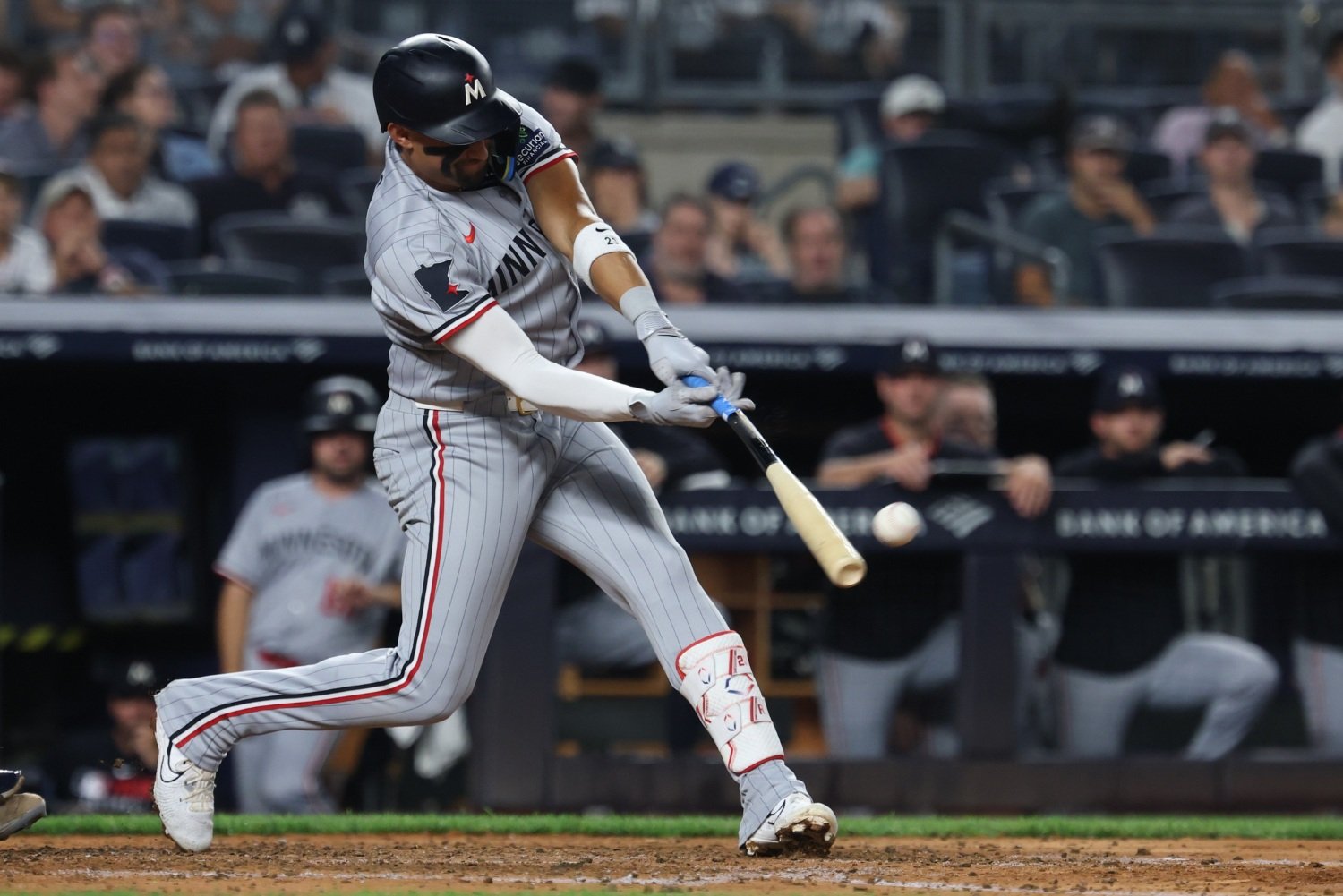 By one metric, Royce Lewis was on time as often as any hitter in baseball in 2025. Only the Diamondbacks' Corbin Carroll edged out Lewis in Statcast's Ideal Attack Angle rate, which gives the percentage of swings on which a hitter's barrel is moving uphill at their contact point, within the range (8° to 20°) that most often generates high-value batted balls. Attack Angle is one number meant to tell us whether a hitter is on time for the pitch they're swinging at. Every swing has to start downhill, to enter the hitting zone, and to hit anything more than a weak ground ball, they almost all have to begin working upward before making contact. If the timing of the swing is right, the barrel will be usually be moving at an angle that fits in that 8-20° range, generating fly balls and line drives with high exit velocities or high-trajectory, topspin grounders when slightly miscalibrating. In theory, the fact that Lewis trailed only Carroll should tell us that he was on time exceptionally often, leading to very dangerous contact. We know that's not really how things played out. Lewis not only batted a forgettable .237/.283/.388, but ran an unimpressive BABIP (.267) for the second year in a row, and saw his power decline sharply. He's actually quite good at hitting the ball in the air and pulling it, which is a product of his swing's timing signature, but those tendencies don't translate to high-value contact—despite his above-average bat speed. Part of the problem could be an approach that was pretty aggressive and unrefined in 2025, but the issue runs deeper. The ideal attack angle for a swing by Lewis doesn't range from 8° to 20°. It's a much smaller window than that. Consider these breakdowns of swing shape and performance based on attack angle, for Lewis and for another hitter with a very high Ideal Attack Angle rate, Alex Bregman. Royce Lewis Alex Bregman Attack Angle Attack Dir. Swing Speed Contact Point Whiff Rate Exit Vel. Launch RV/100 Attack Dir. Swing Speed Contact Point Whiff Rate Exit Vel. Launch RV/100 Below 0° 19° Opp. 64.7 11.5 36.2 89.2 -8° -7.3 13° Opp. 66.2 18.6 20.4 84.9 4° 1.1 0°-5° 6° Opp. 70.8 20 22.2 90.2 11° -3.1 17° Opp. 65.5 19.5 11.3 91.7 7° 10 5°-10° 2° Pull 72.6 24.8 19.2 90.6 21° -3.3 9° Opp. 68 24.4 16.3 89.5 13° -5.5 10°-15° 9° Pull 72.9 29.2 23.4 91.2 20° 4.8 2° Pull 69.5 29.9 9.2 90.4 23° -4.1 15°-20° 18° Pull 73.7 35.2 25.3 88.1 24° -5 11° Pull 71.9 35.2 9.3 91.7 22° 0.8 20°+ 28° Pull 69.1 42.9 55 80.4 4° -3.5 26° Pull 70.2 43.6 29.8 83.4 16° -1.4 Bregman doesn't actually benefit much from hitting what Statcast has mapped onto all hitters as the Ideal Attack Angle band, but he can create lots of positive outcomes when catching the ball unusually deep and with a very flat address of the ball—in essence, when he's late. He can't be consistently beaten by velocity, because he doesn't have to get the barrel out in front of him very far or get around on it to produce solid contact. Lewis, on the other hand, has to find the ball within one small window of Attack Angle. Even in that window, he whiffs on nearly a quarter of his swings, which is an issue; most hitters whiff at a much lower rate when they're on time. More importantly, though, his swing only truly works—he only delivers the barrel to the ball in a way that results in hard, lofted contact by getting a good piece of the ball—when he gets around the ball a bit and catches it out close to 30 inches in front of his frame. Indeed, one reason why Lewis's swing so often fell into the Ideal Attack Angle range is that pitchers learned that they could beat him with fastballs. They didn't spend much time manipulating his timing; he saw fastballs more often than in any previous big-league stint. Compare that chart to this one, showing the same pitch type distribution by year for Carroll, the other guy who topped the league in Ideal Attack Angle rate. Carroll can be dangerous within a much wider range of attack angles, so pitchers tried to mess with his timing more. Yet, he was just as good at overcoming that and being on time as Lewis was: equally accurate, despite a higher degree of difficulty and a greater margin for error had he needed it. That's why Carroll batted .259/.343/.541, while Lewis struggled so much despite meeting the same threshold for being on time as often as Carroll did. It's not that hard to see why Carroll is more adaptable than Lewis, and why this number thus tells us two different things about them. To grasp it best, let's fold in one other comparator, too. William Contreras is another right-handed batter, whose swing might be easier to contrast with Lewis's at a glance. His nominal swing plane (29°) is the same as Lewis's, and he, too, has a high Ideal Attack Angle rate. Here are the swings for all three players, as visualized in composite form and frozen at the frame closest to when each makes contact. Both Contreras and Carroll stay back better, partially because they see more soft stuff and have to. Lewis's weight has crashed forward more by the time he makes contact, such that he's catching the ball deeper in his own hitting zone than the other two, despite having the same nominal attack angle. Yet, he's also come around the ball more than either of them, signaling that despite hitting it deeper in the zone, he's closer to being too early to catch it squarely and keep it fair. Contreras and Carroll are not ideals against which Lewis must be measured, but studying the different ways their bodies and bats work in space as they attack the baseball lays bare the ways that their apparently similar swing stats can mislead us when evaluating them. Lewis's unusual stride locks him into some big problems at the plate. He's unique, with a step forward as the pitcher prepares to deliver the ball, then a second, separate one going in the same direction. It amounts to something very close to a lunge, but he stays stiffly upright during it, as you can see by comparing his posture at contact to those of Contreras and Carroll. This is part of why the window within which his swing can yield a cleanly struck ball is so small, relative to many other players, and in 2025, pitchers found that they could consistently get their fastball past that window and into his kitchen, such that they didn't need to change speeds, location or movement direction as much as they do against other, similarly fearsome swingers. Contreras and Carroll are long striders; it's not about the sheer distance covered as Lewis gets going in the box. Rather, his double-forward move brings his weight forward sooner, and makes it harder for him to rotate and flatten out through the ball, producing feel for the barrel throughout the swing. The dots between each player's feet in the grids below show the player's center of mass. Notice how much farther forward Lewis's is, within his starting (black) and ending (red) foot positions, relative to those of Contreras and Carroll. The more we learn about swing metrics, the more obvious it becomes that we need to study each player's physical and mental approach in and of themselves, rather than applying broad rules to large batches of players. There's still plenty to take away from things like Ideal Attack Angle rate, attack angle and direction, and swing speed and plane, but for most players, sorting leaderboards does little to elucidate what's really happening. Bregman, Carroll and Contreras are all more selective than Lewis, not only in terms of how often they expand the zone but in terms of what they swing at within it. Just as we needed to know that pitchers stopped throwing Lewis as many offspeed and breaking pitches to understand why he fooled Statcast into thinking he was always on time, we need to know what types of pitches each hitter should be swinging at (and in what areas of the zone) based on their swing characteristics, to discern whether they're really on time or on target as much as one-size-fits-all numbers might imply. Lewis, clearly, needs to adjust both his physical moves and his plan at the plate in 2026. That's a big job for new hitting coach Keith Beauregard, but armed with data like this (and superior, proprietary metrics teams can build without trying to create a single number digestible to fans), he and the rest of the coaching staff have a chance to turn Lewis around. They just need to avoid letting anyone imply that what Lewis did last season was ideal, or league-leading.
 -
Image courtesy of © Albert Cesare/ The Enquirer / USA TODAY NETWORK via Imagn Images The Minnesota Twins traded left-handed minor-league pitcher Kade Bragg to the Miami Marlins Friday, in exchange for recently-DFAd first baseman Eric Wagaman. To make room on the 40-man roster, they jettisoned shortstop Ryan Fitzgerald, who got his first-ever big-league time for the team last season. Dan Hayes of The Athletic reported the deal on Twitter. Wagaman, 28, batted .250/.296/.378 with the Marlins in 2025, in the first extended opportunity he'd ever gotten in the majors. It's not hard to see what the Twins see in him. He had solidly above-average bat speed in 2025, and it was up 2.3 miles per hour from his brief stint with the Angels in 2024. Wagaman's whole hitting process changed, as he moved his contact rate 7.2 inches farther out in front of his frame and flattened his swing to get around the ball more. Big and strong, Wagaman has a fairly short stroke for his size, which prevents him from swinging and missing at disastrous rates. The key for him is staying disciplined at the edges of and outside the strike zone, which he did better with Miami last season. He's not much of an athlete, and is not an adequate defender anywhere but first base, but he has the tools to hit for power, especially against lefties. To jump the waiver wire and snare Wagaman, the Twins sent the Marlins lefty reliever Kade Bragg, who split his 2025 between Low-A Fort Myers, High-A Cedar Rapids, and Double-A Wichita. A 17th-round pick in 2023, Bragg is a low-grade prospect, and turning him into any kind of value for the 2026 big-league roster is a nice piece of business. The bigger question, of course, is how this move affects the somewhat creaky positional roster picture for the 2026 Twins. Wagaman makes a plausibly excellent platoon partner for Kody Clemens, but if the two are manning first base all or most of the time, Josh Bell will have to DH nearly every day. That would limit the available at-bats for Ryan Jeffers and Byron Buxton, as well as Trevor Larnach—if, indeed, Larnach still fits on the roster at all. Wagaman is a poor defender in either outfield corner or at third base, so he reduces (rather than increasing) the team's expected defensive utility, and pushing backup shortstop Ryan Fitzgerald off the roster amps up existing concerns about the team's defensive depth. One possible way of making all this work could be: A trade of Larnach creating more roster flexibility, making it possible for the team to carry Ryan Kreidler as the backup shortstop; Clemens working solely as a second baseman and corner outfielder, leaving Wagaman to platoon with Bell at first base Luke Keaschall being pushed to the outfield, including some center field, leveraging his speed and giving Buxton the chance to DH on days when Bell is at first base For now, though, the trade doesn't so much answer any questions as it does confirm fans' existing notions of what the team values heading into the new season: plus bat speed, matchup value, and frugality, even if they come at the expense of clear roles on the roster or well-rounded defensive groups. View full article
-
Twins Trade for Eric Wagaman, Designate Ryan Fitzgerald for Assignment
Matthew Trueblood posted an article in Twins
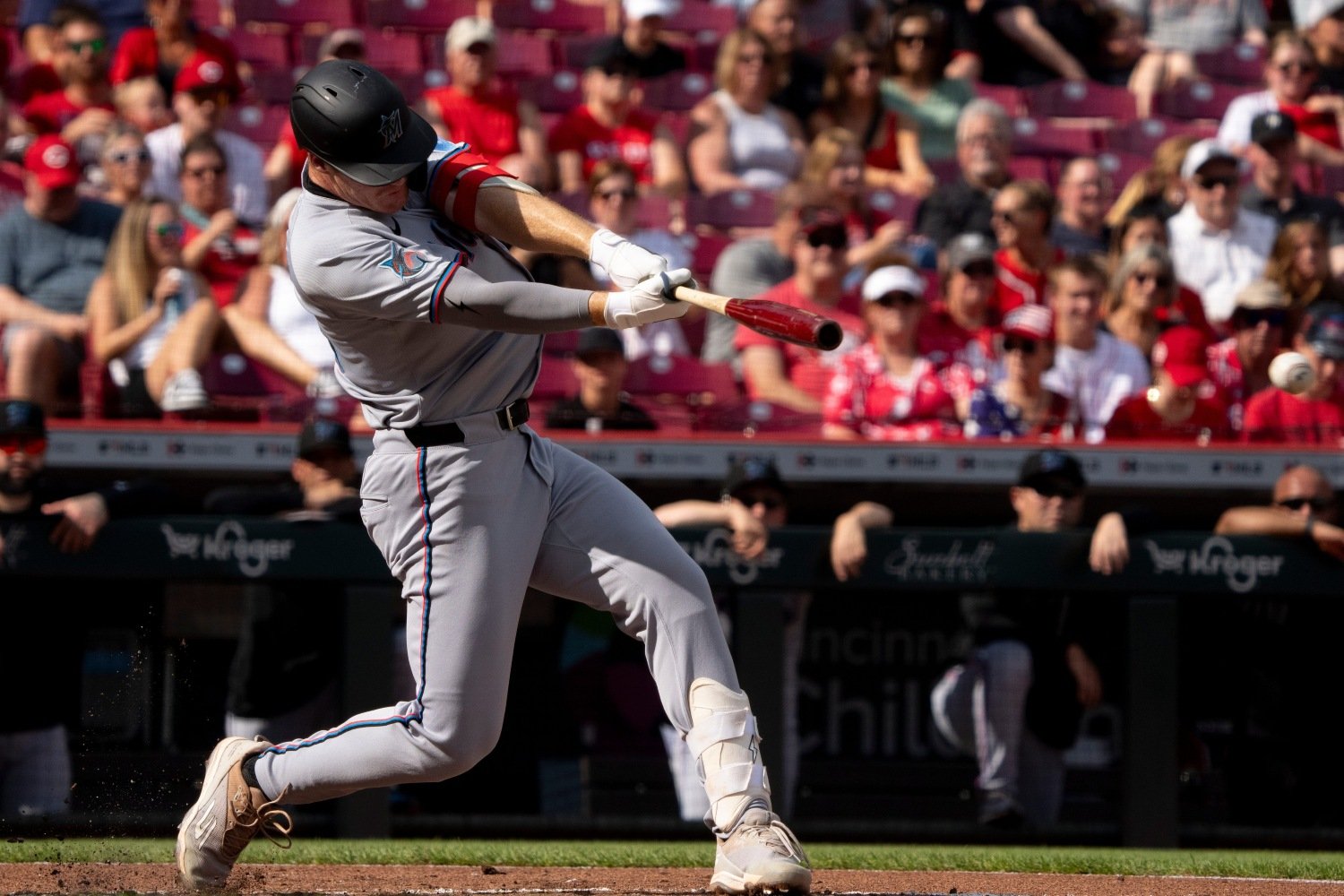 The Minnesota Twins traded left-handed minor-league pitcher Kade Bragg to the Miami Marlins Friday, in exchange for recently-DFAd first baseman Eric Wagaman. To make room on the 40-man roster, they jettisoned shortstop Ryan Fitzgerald, who got his first-ever big-league time for the team last season. Dan Hayes of The Athletic reported the deal on Twitter. Wagaman, 28, batted .250/.296/.378 with the Marlins in 2025, in the first extended opportunity he'd ever gotten in the majors. It's not hard to see what the Twins see in him. He had solidly above-average bat speed in 2025, and it was up 2.3 miles per hour from his brief stint with the Angels in 2024. Wagaman's whole hitting process changed, as he moved his contact rate 7.2 inches farther out in front of his frame and flattened his swing to get around the ball more. Big and strong, Wagaman has a fairly short stroke for his size, which prevents him from swinging and missing at disastrous rates. The key for him is staying disciplined at the edges of and outside the strike zone, which he did better with Miami last season. He's not much of an athlete, and is not an adequate defender anywhere but first base, but he has the tools to hit for power, especially against lefties. To jump the waiver wire and snare Wagaman, the Twins sent the Marlins lefty reliever Kade Bragg, who split his 2025 between Low-A Fort Myers, High-A Cedar Rapids, and Double-A Wichita. A 17th-round pick in 2023, Bragg is a low-grade prospect, and turning him into any kind of value for the 2026 big-league roster is a nice piece of business. The bigger question, of course, is how this move affects the somewhat creaky positional roster picture for the 2026 Twins. Wagaman makes a plausibly excellent platoon partner for Kody Clemens, but if the two are manning first base all or most of the time, Josh Bell will have to DH nearly every day. That would limit the available at-bats for Ryan Jeffers and Byron Buxton, as well as Trevor Larnach—if, indeed, Larnach still fits on the roster at all. Wagaman is a poor defender in either outfield corner or at third base, so he reduces (rather than increasing) the team's expected defensive utility, and pushing backup shortstop Ryan Fitzgerald off the roster amps up existing concerns about the team's defensive depth. One possible way of making all this work could be: A trade of Larnach creating more roster flexibility, making it possible for the team to carry Ryan Kreidler as the backup shortstop; Clemens working solely as a second baseman and corner outfielder, leaving Wagaman to platoon with Bell at first base Luke Keaschall being pushed to the outfield, including some center field, leveraging his speed and giving Buxton the chance to DH on days when Bell is at first base For now, though, the trade doesn't so much answer any questions as it does confirm fans' existing notions of what the team values heading into the new season: plus bat speed, matchup value, and frugality, even if they come at the expense of clear roles on the roster or well-rounded defensive groups.
- 166 comments
-
- 12
-
-

-

-
- ryan fitzgerald
- kade bragg
- (and 1 more)
-
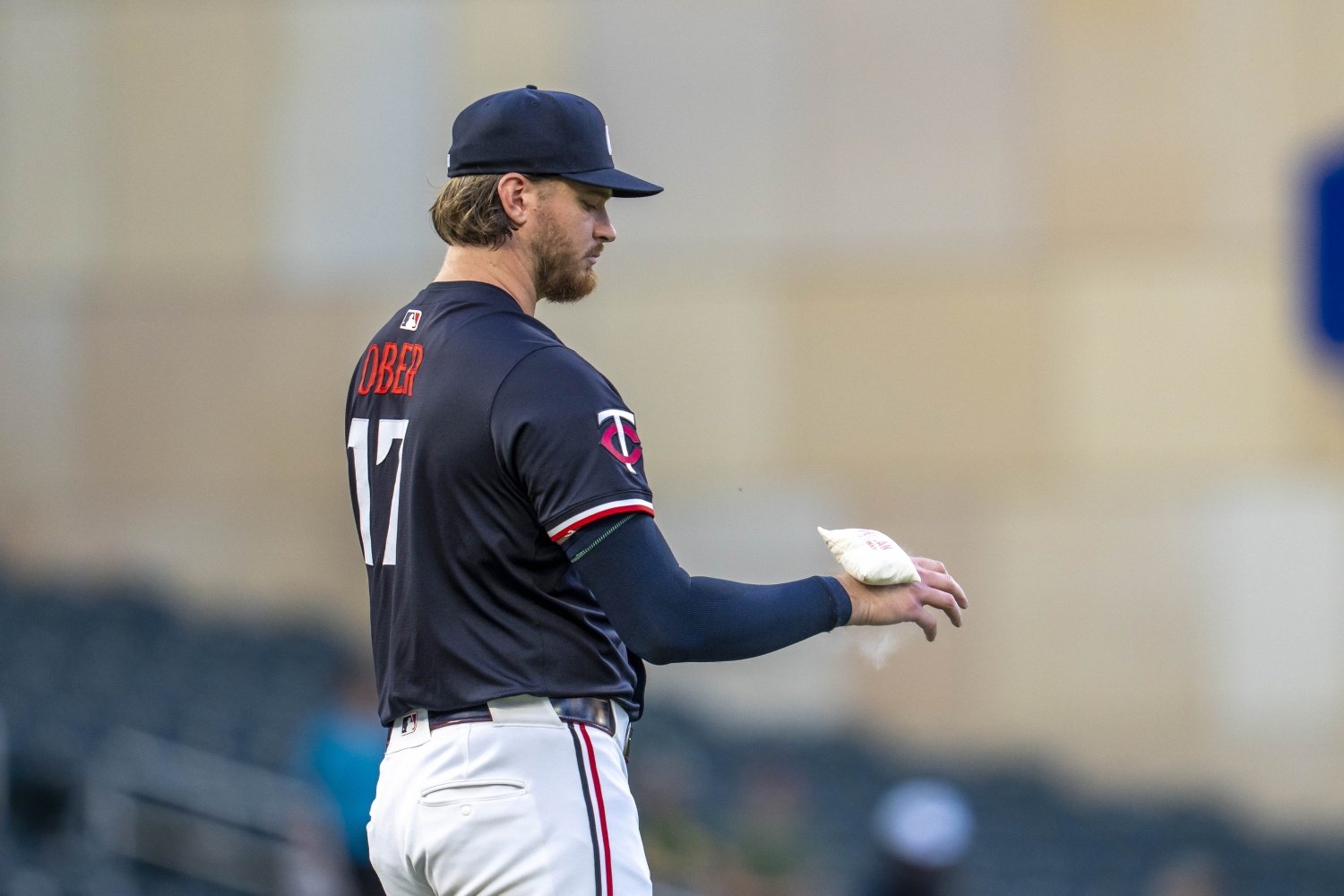 Twins righthander Bailey Ober threw 418 sliders in 2025, according to Statcast, and they cost him eight runs on their own. His -1.9 Run Value per 100 sliders was eighth-worst in baseball, by that system's accounting, and three of the seven offerings worse belonged to pitchers on the historically inept, gravity-starved Colorado Rockies. Sometimes Statcast's Run Value is misleading, because it can be heavily influenced by a bit of batted-ball luck on a pitch type that might have been put in play just 50 or 60 times in a given season. This isn't really one of those times. Baseball Prospectus offers a much more robust way to evaluate pitch quality, with their StuffPro and PitchPro metrics. These are expressed somewhat similarly to Run Value, but a negative number is good, because they're estimating the effect on run scoring exerted by that pitch, on a per-100 basis. Ober's slider was dreadful according to StuffPro this year, too. It's rare that pitch-quality metrics of any kind (be it PitchingBot, Stuff+, StuffPro or any other) dislike a pitcher's breaking balls this much. Sweepers are almost a hack of such models, to the extent that some teams mark down a pitcher on their wishlist if the strongest recommendation for them is a metrics-friendly sweeper. Ober, though, has both a sweeper and a slider that come in on the wrong side of average—and this metric, unlike Run Value, is trying to look past the results and assess the expected value of each pitch, based on release point, velocity, movement and location. In short, Ober's slider was a disaster for him this season. He never gave up on the pitch, though, throwing it just as much late in the year as at the beginning. That's because the slider isn't really an out pitch for him; it's a bridge pitch. Study the movement plot above, and it's fairly easy to see what I mean. Given his fastball shape and reliance on the changeup and sweeper, Ober used the slider to keep hitters from finding it too easy to identify his offerings out of the hand. The slider lives in between his fastballs and his curve and sweeper in terms of velocity, and it has a different spin profile than the rest of his pitches. Ober is hardly alone in using a pitch that isn't good on its own as an intermediate offering that muddies the picture for hitters trying to pick up spin and get started early on hittable pitches. He lacks the ability to spin the ball at a high rate, but he does manipulate that spin relatively well and uses grips and seam shifting to induce movement that isn't perfectly predicted by his spin axes, creating deception. Even by the standards of a bridge pitch and in Ober's unusually deft care, though, the slider isn't working at all. The solution is simple, though here, it's important not to confuse 'simple' with 'easy'. Ober needs to throw the pitch harder, and it should probably thereby transform into more of a cutter. He throws the pitch with backspin already; he just needs to modify the grip a bit and let it rip more. A firmer slider or true cutter would be a better bridge offering for Ober's mix, given the lift his sweeper achieves and the way he used the slider in 2025. He has other problems to address, but this one is especially urgent. It's one thing to have a pitch that exists only to make other pitches play better. It's another thing to have a pitch that exists only to make other pitches play better, but doesn't succeed in doing so.
 -
Image courtesy of © Jesse Johnson-Imagn Images Twins righthander Bailey Ober threw 418 sliders in 2025, according to Statcast, and they cost him eight runs on their own. His -1.9 Run Value per 100 sliders was eighth-worst in baseball, by that system's accounting, and three of the seven offerings worse belonged to pitchers on the historically inept, gravity-starved Colorado Rockies. Sometimes Statcast's Run Value is misleading, because it can be heavily influenced by a bit of batted-ball luck on a pitch type that might have been put in play just 50 or 60 times in a given season. This isn't really one of those times. Baseball Prospectus offers a much more robust way to evaluate pitch quality, with their StuffPro and PitchPro metrics. These are expressed somewhat similarly to Run Value, but a negative number is good, because they're estimating the effect on run scoring exerted by that pitch, on a per-100 basis. Ober's slider was dreadful according to StuffPro this year, too. It's rare that pitch-quality metrics of any kind (be it PitchingBot, Stuff+, StuffPro or any other) dislike a pitcher's breaking balls this much. Sweepers are almost a hack of such models, to the extent that some teams mark down a pitcher on their wishlist if the strongest recommendation for them is a metrics-friendly sweeper. Ober, though, has both a sweeper and a slider that come in on the wrong side of average—and this metric, unlike Run Value, is trying to look past the results and assess the expected value of each pitch, based on release point, velocity, movement and location. In short, Ober's slider was a disaster for him this season. He never gave up on the pitch, though, throwing it just as much late in the year as at the beginning. That's because the slider isn't really an out pitch for him; it's a bridge pitch. Study the movement plot above, and it's fairly easy to see what I mean. Given his fastball shape and reliance on the changeup and sweeper, Ober used the slider to keep hitters from finding it too easy to identify his offerings out of the hand. The slider lives in between his fastballs and his curve and sweeper in terms of velocity, and it has a different spin profile than the rest of his pitches. Ober is hardly alone in using a pitch that isn't good on its own as an intermediate offering that muddies the picture for hitters trying to pick up spin and get started early on hittable pitches. He lacks the ability to spin the ball at a high rate, but he does manipulate that spin relatively well and uses grips and seam shifting to induce movement that isn't perfectly predicted by his spin axes, creating deception. Even by the standards of a bridge pitch and in Ober's unusually deft care, though, the slider isn't working at all. The solution is simple, though here, it's important not to confuse 'simple' with 'easy'. Ober needs to throw the pitch harder, and it should probably thereby transform into more of a cutter. He throws the pitch with backspin already; he just needs to modify the grip a bit and let it rip more. A firmer slider or true cutter would be a better bridge offering for Ober's mix, given the lift his sweeper achieves and the way he used the slider in 2025. He has other problems to address, but this one is especially urgent. It's one thing to have a pitch that exists only to make other pitches play better. It's another thing to have a pitch that exists only to make other pitches play better, but doesn't succeed in doing so. View full article
-
Image courtesy of © Benny Sieu-Imagn Images It feels, looking back, like Pablo López missed practically the whole 2025 season. He was sidelined for the key stretch in which the Twins flopped out of contention and sold off the roster for parts, and with the much shorter stints he spent on the injured list early and late in the campaign, it's hard to remember the times when he was actually available. Somehow, though, he made 14 starts on the year, and he posted a stellar 2.74 ERA. Since the Twins' plan for 2026 appears to be giving it one more try with their familiar core, it will be important that López be similarly excellent (and a bit more sturdy) next season. Few players are more reliable or conscientious, though, and even fewer are more creative, so López is as good a candidate to have a great year as anyone in the projected starting rotation. He even added an interesting and valuable pitch to his mix this season: the kick-change. López was thoughtful and cautious with his implementation of that new flavor of changeup. It's a pitch that utilizes an altered grip to change the spin axis out of the hand, without a significant change in the way one manipulates the hand or forearm at release, and for López, it was extremely effective. In fact, there's significant evidence that it's better than his usual changeup. According to Baseball Prospectus's StuffPro and PitchPro, López's original changeup is an average pitch, but the kick-change is a potential dominator. It's 0.6 and 1.4 runs better than the standard change per 100 pitches thrown by those two models, respectively, which is a huge margin. That invites the question: Should López lean more into that offering (and away from the changeup he's been throwing instead) in 2026? To answer that question, let's consider the shape and the characteristics of the two distinct cambios. Prospectus shows many of those numbers distinctly, because their pitch classification system can distinguish the regular change from the kick-change, but we can find more of it by teasing out which is which even on Baseball Savant—where all of these pitches are lumped under one 'changeup' pitch type. Here's a chart showing López's horizontal and vertical movement on all his changeups, via Savant, colored by spin rate. As you might guess, the old, reliable changeup is the cluster of gray and reddish dots on the upper right. The kick change, by contrast, lives in blue. The intruding middle finger, which delivers that kick to change the spin axis for the kick-change, also kills some spin, which results in more depth on the pitch but less command. Note how much tighter the cluster of movement coordinates is for the old changeup than for the new one. The dividing line for the two pitches turns out to be right around 1,800 RPM. Draw a line there, and you can get Statcast to show you (more or less) the vitals on the two different pitches living under one umbrella. Spin Rate % of Changeups MPH Hor. Mvmt. IVB Arm Angle EV LA Zone Rate Whiff Rate xwOBA Under 1,800 (CK) 36.7 87.6 12.2 -0.3 36.5° 87 8 30.6 33.3 .183 1800+ (CH) 63.7 87.2 16.5 4.3 34.8° 86 15 40.6 24.4 .405 It's not quite as stark a situation as what we see here, because while we have almost exactly the right number of pitches in each bin (comparing the breakdown we roughed out with the count of each type of change on López's Prospectus player card), a few of the wrong ones are in each. His highest-spin kick-changes are likely to be his least effective; his lowest-spin standard changeups are likely to be the most effective. Thus, the expected weighted on-base average for the two pitches isn't actually as different as that table would imply. Still, there's a huge difference here. Notice that the kick-change has considerably less arm-side run, but (by the same amount) more vertical depth. That's why it gets more whiffs and (as implied by the much lower average launch angle) more ground balls. However, you can see why López has been a little bit reluctant to push the pedal down and make the change from one flavor of changeup to the other: it's that zone rate. Less spin and more movement make it hard for López (or anyone else) to land the kick-change in the zone with any consistency. That's a big part of why he stuck with the standard changeup almost two-thirds of the time, when he went to an offspeed pitch. Those same characteristics are also why the kick-change earns more whiffs, though. If he can consistently induce batters to chase outside the zone, then the inability to fill up the zone with the pitch will turn from a lurking weakness to a major strength. Prospectus also offers estimates of the opposing batter's ability to identify a pitch out of the pitcher's hand, based on release point, initial trajectory and other factors, and introducing the kick-change did wonders for López in terms of introducing deception and uncertainty for hitters. The kick-change gets mistaken for his sweeper a plurality of the time against righties, and for his regular changeup equally often against lefties. He matches his arm angle fairly well on both changeups, trusting the grip to do the work of steering them differently. Having both appears to beat leaning into only one, although over a larger sample, that could turn out differently. The question isn't really whether the kick-change should replace the old changeup, then, but whether it might be wisest to reverse the share of his total offspeed portfolio made up by each. Should López throw the kick-change twice as often as the regular change, because it's much more likely to draw whiffs and is a better overall pitch, based on shape and deception? Or would that lead to overexposure, and put him behind in too many counts? López implemented the pitch slowly and carefully, knowing these questions are hard to answer without experimentation—but unwilling to experiment at the cost of his teammates' chance to win on a given day. As he works this winter and goes to spring training, though, it'll be interesting to see whether the kick-change gets greater market share in López's offspeed attack in 2026. It probably should, but for that to work, he has to get the balance between inducing whiffs and letting hitters gain count leverage exactly right. View full article
-
Should Pablo López Embrace the Kick-Change's Chaos in 2026?
Matthew Trueblood posted an article in Twins
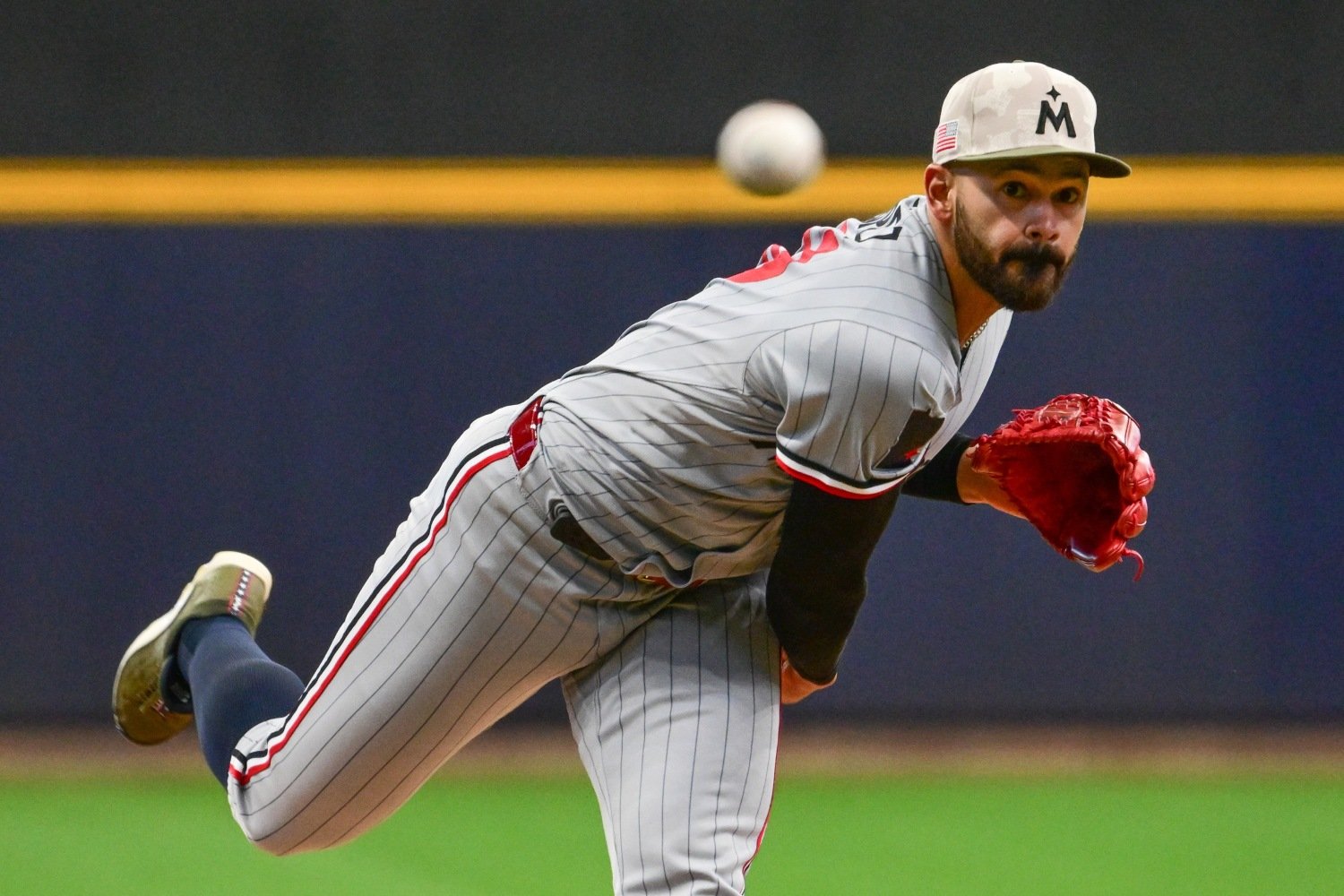 It feels, looking back, like Pablo López missed practically the whole 2025 season. He was sidelined for the key stretch in which the Twins flopped out of contention and sold off the roster for parts, and with the much shorter stints he spent on the injured list early and late in the campaign, it's hard to remember the times when he was actually available. Somehow, though, he made 14 starts on the year, and he posted a stellar 2.74 ERA. Since the Twins' plan for 2026 appears to be giving it one more try with their familiar core, it will be important that López be similarly excellent (and a bit more sturdy) next season. Few players are more reliable or conscientious, though, and even fewer are more creative, so López is as good a candidate to have a great year as anyone in the projected starting rotation. He even added an interesting and valuable pitch to his mix this season: the kick-change. López was thoughtful and cautious with his implementation of that new flavor of changeup. It's a pitch that utilizes an altered grip to change the spin axis out of the hand, without a significant change in the way one manipulates the hand or forearm at release, and for López, it was extremely effective. In fact, there's significant evidence that it's better than his usual changeup. According to Baseball Prospectus's StuffPro and PitchPro, López's original changeup is an average pitch, but the kick-change is a potential dominator. It's 0.6 and 1.4 runs better than the standard change per 100 pitches thrown by those two models, respectively, which is a huge margin. That invites the question: Should López lean more into that offering (and away from the changeup he's been throwing instead) in 2026? To answer that question, let's consider the shape and the characteristics of the two distinct cambios. Prospectus shows many of those numbers distinctly, because their pitch classification system can distinguish the regular change from the kick-change, but we can find more of it by teasing out which is which even on Baseball Savant—where all of these pitches are lumped under one 'changeup' pitch type. Here's a chart showing López's horizontal and vertical movement on all his changeups, via Savant, colored by spin rate. As you might guess, the old, reliable changeup is the cluster of gray and reddish dots on the upper right. The kick change, by contrast, lives in blue. The intruding middle finger, which delivers that kick to change the spin axis for the kick-change, also kills some spin, which results in more depth on the pitch but less command. Note how much tighter the cluster of movement coordinates is for the old changeup than for the new one. The dividing line for the two pitches turns out to be right around 1,800 RPM. Draw a line there, and you can get Statcast to show you (more or less) the vitals on the two different pitches living under one umbrella. Spin Rate % of Changeups MPH Hor. Mvmt. IVB Arm Angle EV LA Zone Rate Whiff Rate xwOBA Under 1,800 (CK) 36.7 87.6 12.2 -0.3 36.5° 87 8 30.6 33.3 .183 1800+ (CH) 63.7 87.2 16.5 4.3 34.8° 86 15 40.6 24.4 .405 It's not quite as stark a situation as what we see here, because while we have almost exactly the right number of pitches in each bin (comparing the breakdown we roughed out with the count of each type of change on López's Prospectus player card), a few of the wrong ones are in each. His highest-spin kick-changes are likely to be his least effective; his lowest-spin standard changeups are likely to be the most effective. Thus, the expected weighted on-base average for the two pitches isn't actually as different as that table would imply. Still, there's a huge difference here. Notice that the kick-change has considerably less arm-side run, but (by the same amount) more vertical depth. That's why it gets more whiffs and (as implied by the much lower average launch angle) more ground balls. However, you can see why López has been a little bit reluctant to push the pedal down and make the change from one flavor of changeup to the other: it's that zone rate. Less spin and more movement make it hard for López (or anyone else) to land the kick-change in the zone with any consistency. That's a big part of why he stuck with the standard changeup almost two-thirds of the time, when he went to an offspeed pitch. Those same characteristics are also why the kick-change earns more whiffs, though. If he can consistently induce batters to chase outside the zone, then the inability to fill up the zone with the pitch will turn from a lurking weakness to a major strength. Prospectus also offers estimates of the opposing batter's ability to identify a pitch out of the pitcher's hand, based on release point, initial trajectory and other factors, and introducing the kick-change did wonders for López in terms of introducing deception and uncertainty for hitters. The kick-change gets mistaken for his sweeper a plurality of the time against righties, and for his regular changeup equally often against lefties. He matches his arm angle fairly well on both changeups, trusting the grip to do the work of steering them differently. Having both appears to beat leaning into only one, although over a larger sample, that could turn out differently. The question isn't really whether the kick-change should replace the old changeup, then, but whether it might be wisest to reverse the share of his total offspeed portfolio made up by each. Should López throw the kick-change twice as often as the regular change, because it's much more likely to draw whiffs and is a better overall pitch, based on shape and deception? Or would that lead to overexposure, and put him behind in too many counts? López implemented the pitch slowly and carefully, knowing these questions are hard to answer without experimentation—but unwilling to experiment at the cost of his teammates' chance to win on a given day. As he works this winter and goes to spring training, though, it'll be interesting to see whether the kick-change gets greater market share in López's offspeed attack in 2026. It probably should, but for that to work, he has to get the balance between inducing whiffs and letting hitters gain count leverage exactly right.
 -
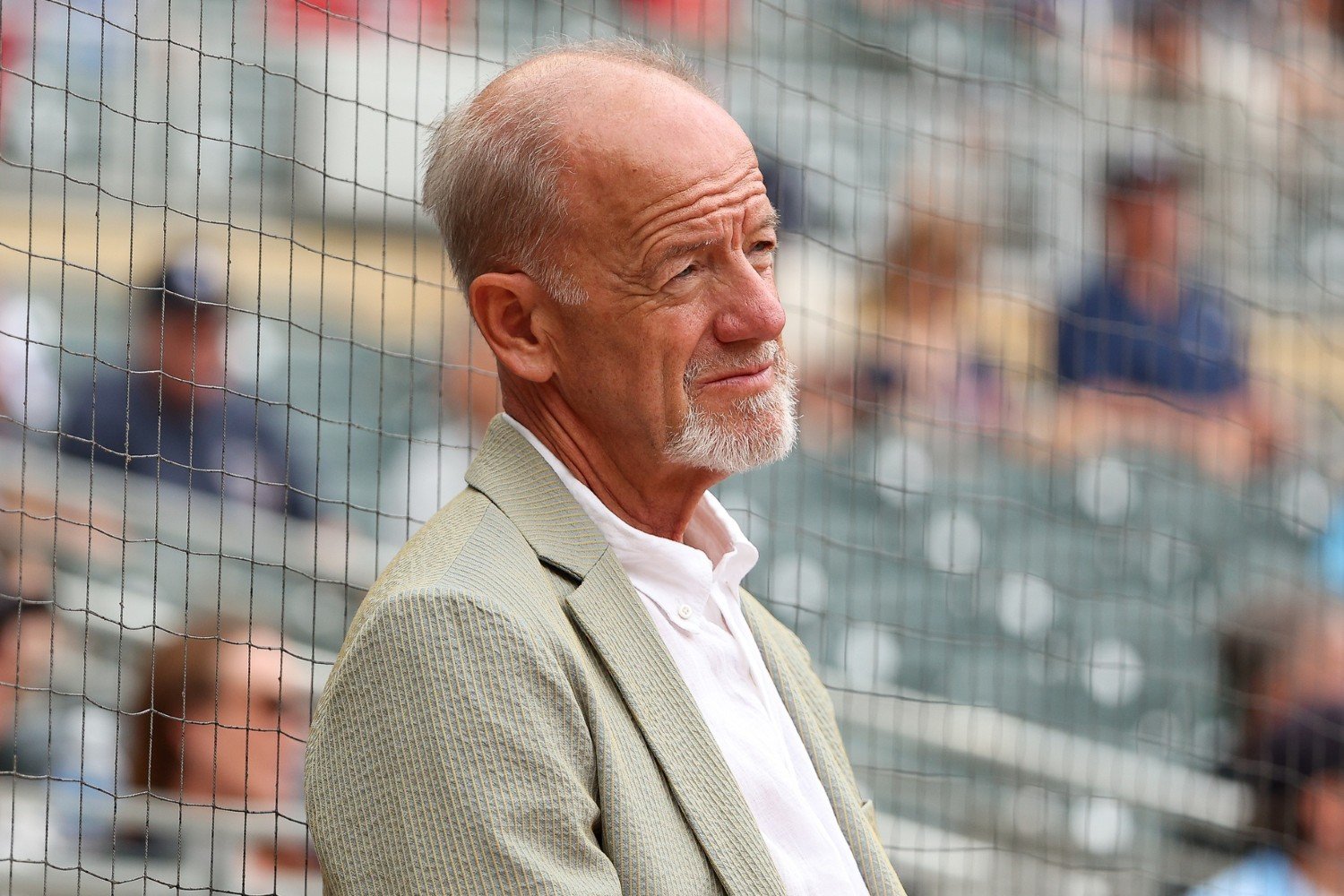 The Minnesota Twins still belong to the Pohlad family, but things are about to be very different than they've been in the past. It's much too soon to guess whether the changes will be for good or ill, but the fact that something big has changed was clear Wednesday afternoon at Target Field. Henceforth, the day-to-day operations of the team will pass from Joe Pohlad to his brother Tom, and once he's approved by MLB (likely to happen in February, Pohlad said), he will also become the official control person for the team, taking over from the brothers' uncle, Jim. This is a major consolidation of power. As Tom outlined on Wednesday, for much of the last few years, there have been three Pohlads with major roles within the team: Joe, Jim, and himself. (Tom entered the picture mostly as the person in charge of the hoped-for transaction, when the family decided to sell the team 14 months ago.) Going forward, there will be just one. "Yes," Pohlad said, when asked if he would be the only family member involved with the club. "I mean other than the advisory board, the family members that will sit on that, yes." In other words, Joe Pohlad is entirely moving out of the picture. Tom set the tone of the press conference held in the home clubhouse Wednesday with his opening statement, by characterizing the occasion as “in many ways an exciting day for this organization and for myself and for my family, and in many ways, an emotionally difficult day". Tom's control of the team comes after a month-long, family-wide deliberation the new owner repeatedly described as "difficult" and even painful. Was Joe on board with the transition, when the subject was first broached? "Joe was not on board with this at first. And he’s on board now," Tom said, when directly asked as much. "He understands. But, listen, I’ll go back to what I said at the beginning. He was the leader of this organization, he’s been here for 19 years. And as difficult as this is for me to say, all he’s ever wanted was to be a part of this organization and to lead it and to help this franchise win a world championship. Things change. We had to make a decision as a family. He understands." In short, the Pohlads felt they were failing in their stewardship of the franchise, and Joe Pohlad was identified as at least part of the reason. As Tom spoke, it became clear that the timing of this ownership transition being finalized and the leadership of the franchise passing from one brother to the other was not a coincidence. "This decision to make a transition within our family has been extremely difficult. It’s been hard on the relationship between Joe and myself," he said. "It’s been especially hard on my dad and my two uncles, and this is not the type of thing that we envisioned as we started to go from one generation to the next and continue on our family business and continue on the stewardship of the Twins. But ultimately it was what we think was in the best interest of this organization, of our fan base, and of our new partners." We've seen recent cases of other MLB clubs erupting into internecine warfare during transitions like these. The Padres are mired in a squabble between family members right now. The Dodgers went through an even uglier version of that under their previous owners, Frank and Jamie McCourt. Smaller but more public and more obviously raw rows have broken out in several ownership suites throughout the league, where family and generational ownership is common but family members with diverging interests is equally so. The family has successfully presented a quiet, fairly stoic picture of this change in direction, but Pohlad's words and tone Wednesday gave away the game: he is the winner of a Minnesota Nice spin on 'Succession'. Though the same surname is on the ownership group, this is not a cash transaction just to bail the family out of trouble. It's a wholesale change of organizational control. And there are hurt feelings behind it. The family's control of the ownership advisory board will be diluted, as new partners Craig Leipold, George Hicks and the Glick family each gain representation there. That doesn't mean that those parties will take any meaningful measure of control over the team, and Tom Pohlad said Wednesday that none of those involved were interested in a controlling stake. Clearly, though, their investments were contingent on some changes that would help the team do what they believe it can do in the future: make more money. "They believe there is an opportunity to improve the business of the Minnesota Twins," Pohlad said, in characterizing the interest each of their new partners had. "That there is revenue opportunities to grow revenue here, and that comes from reengaging our fans and winning more baseball games." It's clear that some members of the family felt Joe and the rest of the leadership group then in place squandered opportunities for the club to be healthier and more profitable. Tom intends an activist and much more change-oriented approach to his new role than what the family has traditionally taken. "My role, I think I'm going to play, if the question is, 'Are you going to be a passive owner or an active owner?' I'd say that I'm going to be an active owner," he said. "I'd say that's what this organization needs right now." Now, get ready for something you've really never heard from the Pohlads before. "We’ve got to figure out what’s keeping us from having more consistent success than we’ve had in the past," Tom said, "and I think the rub, if you will, on the organization, historically speaking, is there’s a feeling which I might share that we continue to run the same playbook over and over, thinking for a different result. The accountability factor is saying, if something doesn’t go right, if we don’t meet expectations, what are we going to do differently and then go out and do something differently.” The nephew of Jim and grandson of Carl pretty plainly disagrees with the way they've run the franchise for almost half a century. No team in baseball undertakes leadership transitions less often than the Twins. Even mid-level jobs there have traditionally had far, far more security than anywhere else in baseball. By the sound of things, that era is over. "Half-measures are not good, and you’ll probably get to know me over time: I’m not a half-measure guy," Pohlad said. "I’m a ‘go big or go home’ guy." Having elbowed his own brother out of the way in a fairly muscular takeover of his own family's flagship business, Pohlad might now find it harder to go home. He's stepping away from all other roles within the family business to focus on this one. He's going big. That might not translate into enough spending for many fans' taste, and it might backfire on Tom Pohlad and all his relations. For those who feared that the would-be sale of the team had come to nothing but a procedural move and some debt relief, though, Wednesday sent a clear message: This is something bigger.
 -
Image courtesy of © Matt Krohn-Imagn Images The Minnesota Twins still belong to the Pohlad family, but things are about to be very different than they've been in the past. It's much too soon to guess whether the changes will be for good or ill, but the fact that something big has changed was clear Wednesday afternoon at Target Field. Henceforth, the day-to-day operations of the team will pass from Joe Pohlad to his brother Tom, and once he's approved by MLB (likely to happen in February, Pohlad said), he will also become the official control person for the team, taking over from the brothers' uncle, Jim. This is a major consolidation of power. As Tom outlined on Wednesday, for much of the last few years, there have been three Pohlads with major roles within the team: Joe, Jim, and himself. (Tom entered the picture mostly as the person in charge of the hoped-for transaction, when the family decided to sell the team 14 months ago.) Going forward, there will be just one. "Yes," Pohlad said, when asked if he would be the only family member involved with the club. "I mean other than the advisory board, the family members that will sit on that, yes." In other words, Joe Pohlad is entirely moving out of the picture. Tom set the tone of the press conference held in the home clubhouse Wednesday with his opening statement, by characterizing the occasion as “in many ways an exciting day for this organization and for myself and for my family, and in many ways, an emotionally difficult day". Tom's control of the team comes after a month-long, family-wide deliberation the new owner repeatedly described as "difficult" and even painful. Was Joe on board with the transition, when the subject was first broached? "Joe was not on board with this at first. And he’s on board now," Tom said, when directly asked as much. "He understands. But, listen, I’ll go back to what I said at the beginning. He was the leader of this organization, he’s been here for 19 years. And as difficult as this is for me to say, all he’s ever wanted was to be a part of this organization and to lead it and to help this franchise win a world championship. Things change. We had to make a decision as a family. He understands." In short, the Pohlads felt they were failing in their stewardship of the franchise, and Joe Pohlad was identified as at least part of the reason. As Tom spoke, it became clear that the timing of this ownership transition being finalized and the leadership of the franchise passing from one brother to the other was not a coincidence. "This decision to make a transition within our family has been extremely difficult. It’s been hard on the relationship between Joe and myself," he said. "It’s been especially hard on my dad and my two uncles, and this is not the type of thing that we envisioned as we started to go from one generation to the next and continue on our family business and continue on the stewardship of the Twins. But ultimately it was what we think was in the best interest of this organization, of our fan base, and of our new partners." We've seen recent cases of other MLB clubs erupting into internecine warfare during transitions like these. The Padres are mired in a squabble between family members right now. The Dodgers went through an even uglier version of that under their previous owners, Frank and Jamie McCourt. Smaller but more public and more obviously raw rows have broken out in several ownership suites throughout the league, where family and generational ownership is common but family members with diverging interests is equally so. The family has successfully presented a quiet, fairly stoic picture of this change in direction, but Pohlad's words and tone Wednesday gave away the game: he is the winner of a Minnesota Nice spin on 'Succession'. Though the same surname is on the ownership group, this is not a cash transaction just to bail the family out of trouble. It's a wholesale change of organizational control. And there are hurt feelings behind it. The family's control of the ownership advisory board will be diluted, as new partners Craig Leipold, George Hicks and the Glick family each gain representation there. That doesn't mean that those parties will take any meaningful measure of control over the team, and Tom Pohlad said Wednesday that none of those involved were interested in a controlling stake. Clearly, though, their investments were contingent on some changes that would help the team do what they believe it can do in the future: make more money. "They believe there is an opportunity to improve the business of the Minnesota Twins," Pohlad said, in characterizing the interest each of their new partners had. "That there is revenue opportunities to grow revenue here, and that comes from reengaging our fans and winning more baseball games." It's clear that some members of the family felt Joe and the rest of the leadership group then in place squandered opportunities for the club to be healthier and more profitable. Tom intends an activist and much more change-oriented approach to his new role than what the family has traditionally taken. "My role, I think I'm going to play, if the question is, 'Are you going to be a passive owner or an active owner?' I'd say that I'm going to be an active owner," he said. "I'd say that's what this organization needs right now." Now, get ready for something you've really never heard from the Pohlads before. "We’ve got to figure out what’s keeping us from having more consistent success than we’ve had in the past," Tom said, "and I think the rub, if you will, on the organization, historically speaking, is there’s a feeling which I might share that we continue to run the same playbook over and over, thinking for a different result. The accountability factor is saying, if something doesn’t go right, if we don’t meet expectations, what are we going to do differently and then go out and do something differently.” The nephew of Jim and grandson of Carl pretty plainly disagrees with the way they've run the franchise for almost half a century. No team in baseball undertakes leadership transitions less often than the Twins. Even mid-level jobs there have traditionally had far, far more security than anywhere else in baseball. By the sound of things, that era is over. "Half-measures are not good, and you’ll probably get to know me over time: I’m not a half-measure guy," Pohlad said. "I’m a ‘go big or go home’ guy." Having elbowed his own brother out of the way in a fairly muscular takeover of his own family's flagship business, Pohlad might now find it harder to go home. He's stepping away from all other roles within the family business to focus on this one. He's going big. That might not translate into enough spending for many fans' taste, and it might backfire on Tom Pohlad and all his relations. For those who feared that the would-be sale of the team had come to nothing but a procedural move and some debt relief, though, Wednesday sent a clear message: This is something bigger. View full article
-
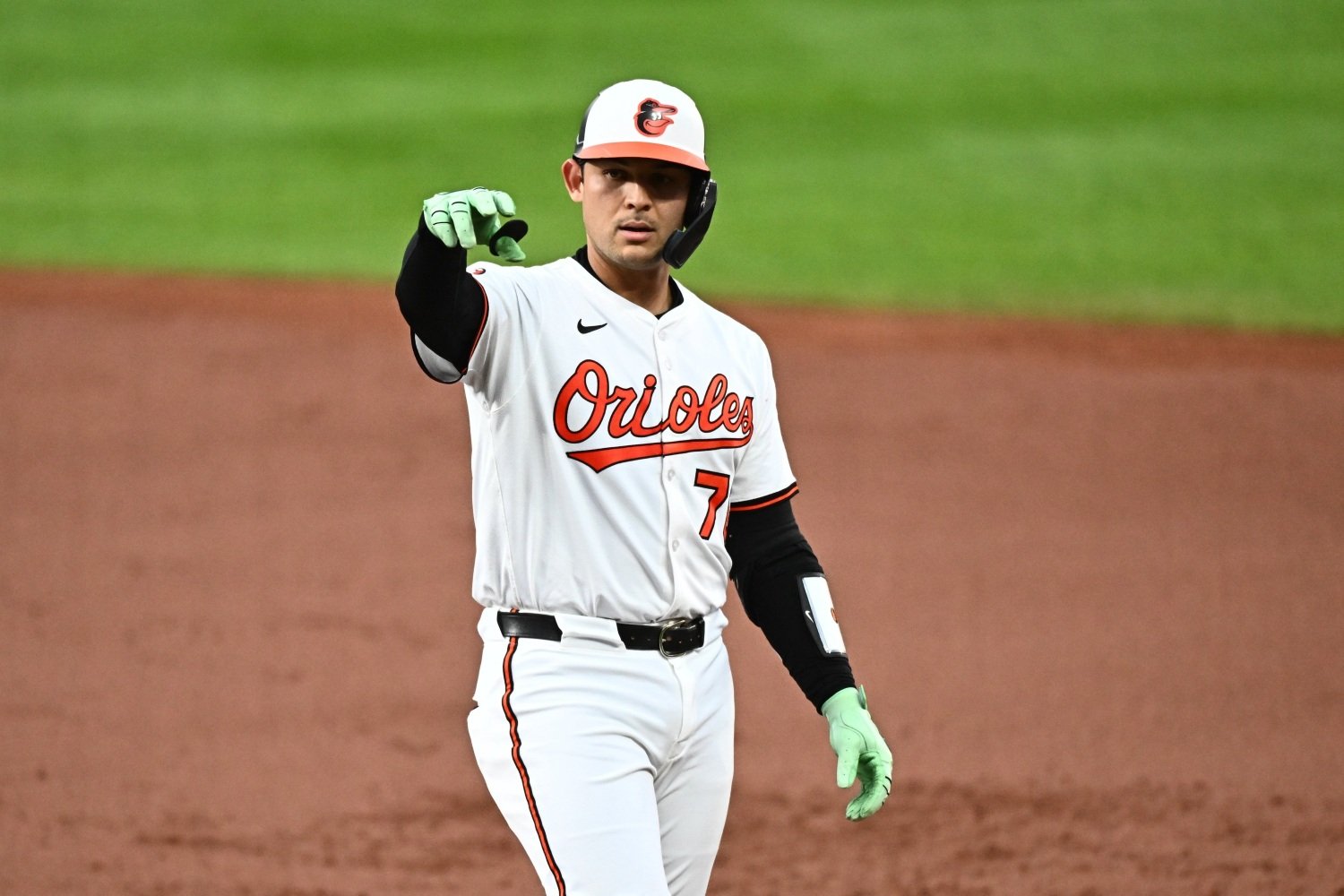 In the last 50 years, only one catcher has had at least 400 big-league plate appearances in their 20s with a materially worse OPS+ than Alex Jackson's career mark of 46. Twins fans needn't strain themselves to imagine such a player, though, for that one special case was Drew Butera (36 OPS+). That's the caliber of player the Twins acquired from the Orioles earlier this winter—one of the worst hitters in baseball history. That's a bit reductive, though. It ignores some important facts about Jackson, and it gives a bit too much credit to the past. Firstly, while Jackson has undeniably been a bust since being taken sixth overall in the 2014 MLB Draft, it hasn't been because he didn't develop as a defender, and it hasn't been because he lacked athleticism. He's an above-average framer and thrower, and he's shown plus power potential even en route to some of the ugliest stat lines in recent memory. He even runs well, especially for a catcher. Jackson is an elite rotational, explosive athlete; he just swings and misses too damn much to convert that capacity into production. Secondly, but more importantly, we live in the fastest-changing and least hidebound baseball environment the world has ever known. It's an age of technological evaluation and development, and in it, teams are not slaves to players' track records. What happens on the field still makes up the lion's share of a club's assessment of a player, to be sure, but 'what happens on the field' no longer needs to be messily summarized by an examination of the results. Teams can evaluate players' tools, skills, and approaches in ways that allow them to imagine a future even for a player with a truly moribund past. In Jackson, the Twins see at least some chance of a turnaround, despite his .153/.239/.288 career batting line and the fact that he'll turn 30 on Christmas. They have three key reasons for that hope: Jackson's bat speed increased from 74.4 miles per hour in 2024 to 76.1 this season. He got much more selective in 2025, swinging less at pitches outside the strike zone and improving his balance between patience and aggressiveness. He has an upper-tier throwing arm behind the plate and a Statcast Sprint Speed of 27.5 feet per second. Let's talk about the implications of each of those. The increase in bat speed took Jackson from plus to elite in swing speed, making him a more dangerous power hitter in 2025 than he'd ever been in the majors before. You can measure that by results (13 extra-base hits in 100 big-league plate appearances), but it's just as evident in markers of process. Jackson pulled the ball more often, especially in the air. He posted a 107-mph 90th-percentile exit velocity, up a full 5 miles per hour from 2024. His slugging average on contact shot up, from .543 to .721. Guys who swing faster than 76 mph on average don't all succeed, but they're practically all dangerous, and they tend to get lots of chances to figure things out—because swinging that fast gives one access to elite power. Of course, sheer bat speed matters little if one never comes into contact with the ball, and Jackson whiffs as much as just about any hitter in baseball. That's been his greatest limiting factor as a professional hitter, and it's not getting better, except in very limited ways. For instance, he whiffed on sliders much less often in 2025 (32% of swings, down from 43.1% and 46.2% in the previous two years), but whiffed more per swing, overall—nearly 40% of the time. That's why the changes he made to his approach this season were crucial. Taking Triple-A and big-league plate appearances together, Jackson swung at 39.6% of pitches outside the strike zone in 2023, 38.3% of them in 2024, and just 34.5% in 2025. He increased his SEAGER (a metric designed by Robert Orr of Baseball Prospectus to evaluate a hitter's selective aggressiveness, by assigning decision value to each swing/take decision based on pitch location and subtracting their share of bad takes among all pitches taken from their share of good decisions consisting of good takes) from 11.0 in 2023 to 17.0 in 2024 and 17.4 in 2025; an average SEAGER is roughly 12.5. For a player with extreme swing-and-miss issues, that ability to avoid an undue number of deep counts without getting oneself out by chasing everything is vital. In the past, he didn't do that well enough. In 2025, he was better at it. Now, though, Jackson is set to enter his 30s. Even good catchers usually aren't good in their 30s. Bad ones never, ever turn into good ones—not really. The guys who survive being execrable hitters in their 20s (Luke Maile, Jeff Mathis, Butera) are defensive specialists. You can admire the fact that Jackson swatted 13 extra-base hits in 100 big-league plate appearances in 2025, but that's in the past, now. The Twins' question, when weighing acquiring him, needed to be whether he could do something similar in 2026. To that end, it's important to know that Jackson averages 86.1 miles per hour on his throws to second base, the 12th-best figure among 84 catchers who qualified for Baseball Savant's leaderboard in 2025. It's important to know that he runs more like a left fielder than like a catcher. Jackson made adjustments to get more out of his swing last season, both by increasing its intensity and by more judiciously managing the zone. There's hope that he can make the most of that, because he also remains a plus athlete, capable of moving exceptionally well even among the cohort of big-league players. There is, actually, one relevant precedent for what Jackson and the Twins hope the catcher will be over the next few years: Christian Bethancourt. After being a highly touted young backstop in the first half of last decade, Bethancourt got a good number of opportunities in the first half of his 20s, from 2013-17. He was a disaster, batting .222/.252/.316. He crashed out of the majors and ended up playing the 2019 season in Korea. He didn't appear in a big-league game from 2018-21. However, Bethancourt also has an exceptional arm—so much so that he clawed his way back into the game at age 30 as a possible two-way player. He didn't end up making much of a run as a pitcher, but his athleticism and power shone through when he got back to the majors. From 2022-24, he batted .233/.264/.390 in the majors. That's still lousy, but it's a much bigger step forward than most bad-hitting catchers take when they reach that phase of their careers. Jackson was better than that in 2025. Could he carry that over for another few years? All the historical evidence says 'no'. In 2025 (and beyond), though, the historical evidence isn't the most salient information at hand. The Twins are looking for precedents and opportunities by studying bat speed, physical capacity, and approach to the game, rather than by studying statistics accumulated in past games. Jackson doesn't have star-level upside. On his own fundamentals, though, he does have a chance to be a viable big-league backstop—even if there's hardly anyone in baseball history on whose numbers to model that future for him.
 -
Image courtesy of © James A. Pittman-Imagn Images In the last 50 years, only one catcher has had at least 400 big-league plate appearances in their 20s with a materially worse OPS+ than Alex Jackson's career mark of 46. Twins fans needn't strain themselves to imagine such a player, though, for that one special case was Drew Butera (36 OPS+). That's the caliber of player the Twins acquired from the Orioles earlier this winter—one of the worst hitters in baseball history. That's a bit reductive, though. It ignores some important facts about Jackson, and it gives a bit too much credit to the past. Firstly, while Jackson has undeniably been a bust since being taken sixth overall in the 2014 MLB Draft, it hasn't been because he didn't develop as a defender, and it hasn't been because he lacked athleticism. He's an above-average framer and thrower, and he's shown plus power potential even en route to some of the ugliest stat lines in recent memory. He even runs well, especially for a catcher. Jackson is an elite rotational, explosive athlete; he just swings and misses too damn much to convert that capacity into production. Secondly, but more importantly, we live in the fastest-changing and least hidebound baseball environment the world has ever known. It's an age of technological evaluation and development, and in it, teams are not slaves to players' track records. What happens on the field still makes up the lion's share of a club's assessment of a player, to be sure, but 'what happens on the field' no longer needs to be messily summarized by an examination of the results. Teams can evaluate players' tools, skills, and approaches in ways that allow them to imagine a future even for a player with a truly moribund past. In Jackson, the Twins see at least some chance of a turnaround, despite his .153/.239/.288 career batting line and the fact that he'll turn 30 on Christmas. They have three key reasons for that hope: Jackson's bat speed increased from 74.4 miles per hour in 2024 to 76.1 this season. He got much more selective in 2025, swinging less at pitches outside the strike zone and improving his balance between patience and aggressiveness. He has an upper-tier throwing arm behind the plate and a Statcast Sprint Speed of 27.5 feet per second. Let's talk about the implications of each of those. The increase in bat speed took Jackson from plus to elite in swing speed, making him a more dangerous power hitter in 2025 than he'd ever been in the majors before. You can measure that by results (13 extra-base hits in 100 big-league plate appearances), but it's just as evident in markers of process. Jackson pulled the ball more often, especially in the air. He posted a 107-mph 90th-percentile exit velocity, up a full 5 miles per hour from 2024. His slugging average on contact shot up, from .543 to .721. Guys who swing faster than 76 mph on average don't all succeed, but they're practically all dangerous, and they tend to get lots of chances to figure things out—because swinging that fast gives one access to elite power. Of course, sheer bat speed matters little if one never comes into contact with the ball, and Jackson whiffs as much as just about any hitter in baseball. That's been his greatest limiting factor as a professional hitter, and it's not getting better, except in very limited ways. For instance, he whiffed on sliders much less often in 2025 (32% of swings, down from 43.1% and 46.2% in the previous two years), but whiffed more per swing, overall—nearly 40% of the time. That's why the changes he made to his approach this season were crucial. Taking Triple-A and big-league plate appearances together, Jackson swung at 39.6% of pitches outside the strike zone in 2023, 38.3% of them in 2024, and just 34.5% in 2025. He increased his SEAGER (a metric designed by Robert Orr of Baseball Prospectus to evaluate a hitter's selective aggressiveness, by assigning decision value to each swing/take decision based on pitch location and subtracting their share of bad takes among all pitches taken from their share of good decisions consisting of good takes) from 11.0 in 2023 to 17.0 in 2024 and 17.4 in 2025; an average SEAGER is roughly 12.5. For a player with extreme swing-and-miss issues, that ability to avoid an undue number of deep counts without getting oneself out by chasing everything is vital. In the past, he didn't do that well enough. In 2025, he was better at it. Now, though, Jackson is set to enter his 30s. Even good catchers usually aren't good in their 30s. Bad ones never, ever turn into good ones—not really. The guys who survive being execrable hitters in their 20s (Luke Maile, Jeff Mathis, Butera) are defensive specialists. You can admire the fact that Jackson swatted 13 extra-base hits in 100 big-league plate appearances in 2025, but that's in the past, now. The Twins' question, when weighing acquiring him, needed to be whether he could do something similar in 2026. To that end, it's important to know that Jackson averages 86.1 miles per hour on his throws to second base, the 12th-best figure among 84 catchers who qualified for Baseball Savant's leaderboard in 2025. It's important to know that he runs more like a left fielder than like a catcher. Jackson made adjustments to get more out of his swing last season, both by increasing its intensity and by more judiciously managing the zone. There's hope that he can make the most of that, because he also remains a plus athlete, capable of moving exceptionally well even among the cohort of big-league players. There is, actually, one relevant precedent for what Jackson and the Twins hope the catcher will be over the next few years: Christian Bethancourt. After being a highly touted young backstop in the first half of last decade, Bethancourt got a good number of opportunities in the first half of his 20s, from 2013-17. He was a disaster, batting .222/.252/.316. He crashed out of the majors and ended up playing the 2019 season in Korea. He didn't appear in a big-league game from 2018-21. However, Bethancourt also has an exceptional arm—so much so that he clawed his way back into the game at age 30 as a possible two-way player. He didn't end up making much of a run as a pitcher, but his athleticism and power shone through when he got back to the majors. From 2022-24, he batted .233/.264/.390 in the majors. That's still lousy, but it's a much bigger step forward than most bad-hitting catchers take when they reach that phase of their careers. Jackson was better than that in 2025. Could he carry that over for another few years? All the historical evidence says 'no'. In 2025 (and beyond), though, the historical evidence isn't the most salient information at hand. The Twins are looking for precedents and opportunities by studying bat speed, physical capacity, and approach to the game, rather than by studying statistics accumulated in past games. Jackson doesn't have star-level upside. On his own fundamentals, though, he does have a chance to be a viable big-league backstop—even if there's hardly anyone in baseball history on whose numbers to model that future for him. View full article
-
Image courtesy of © Brad Mills-Imagn Images The Twins and slugger Josh Bell agreed to a one-year deal with a mutual option for 2027, sources confirmed to Twins Daily Monday morning. The first report of the deal came from ESPN's Jeff Passan, on Twitter. Bell, 33, is a 10-year veteran. A switch-hitter, he can serve as both a first baseman and a DH for the offense-hungry Twins. Last season, Bell hit .237/.325/.417 for a moribund Nationals team, with 22 home runs in 533 plate appearances. He was a prized selection in the 2011 MLB Draft, but his career has been more peripatetic than expected. A hulking figure in the batter's box, he's nonetheless struggled to consistently generate high-level power. He's a fine (but not spectacular) defender at first base, but most of his value comes from his bat. Bell controls the strike zone well, makes more frequent contact than most hitters of his size and strength, and has the ability to hit the ball exceptionally hard. For most of his career, the limiting factor has been a tendency to hit too many ground balls. While Bell's raw numbers for 2025 might appear underwhelming, though, there was a material change this season. From each side of the plate, he increased his bat speed by roughly 2.5 miles per hour and moved his exceptionally deep contact point a bit farther in front of his frame. Those changes make it easier to project strong production from him in 2026, as long as he can maintain those gains for the Twins. For the Twins, an addition like this one this winter was almost inevitable. They were too thin offensively in 2025, and were especially below-average at the positions where the defensive demands are least and the offensive standards highest. Bell is not a star, at this stage of his career, but he's a positive clubhouse presence and a versatile offensive piece, capable of slotting into the middle of the lineup for Minnesota regardless of the handedness of that day's starting pitcher. He nudges Kody Clemens (among others) further toward roles for which they're better-suited, slightly shielded from same-handed pitching. If the Twins want to contend in 2026, this is the type of signing of wbich they need a couple more over the balance of the offseason. UPDATE: Jon Heyman of the New York Post says the deal is worth $7 million. Bell was always likely to sign for somewhere between $5 million and $10 million, on a one-year deal. The mutual option doesn't alter the functional length of the deal; it will just slide a portion of his salary out past the end of the 2026 season, when the Twins can pay it as a buyout on the option year. Bob Nightengale of USA Today has the full breakdown, along with his son, Star Tribune Twins beat reporter Bobby. That's quite cheap, as a total package. The Twins should have room, given recent reports about the extent of their financial flexibility amid an ownership transition, to make further additions at the margins of the roster. Bell is a solid pickup, and needn't be the only or even primary one of the winter. View full article
-
BREAKING: Twins Sign First Baseman Josh Bell to One-Year Deal
Matthew Trueblood posted an article in Twins
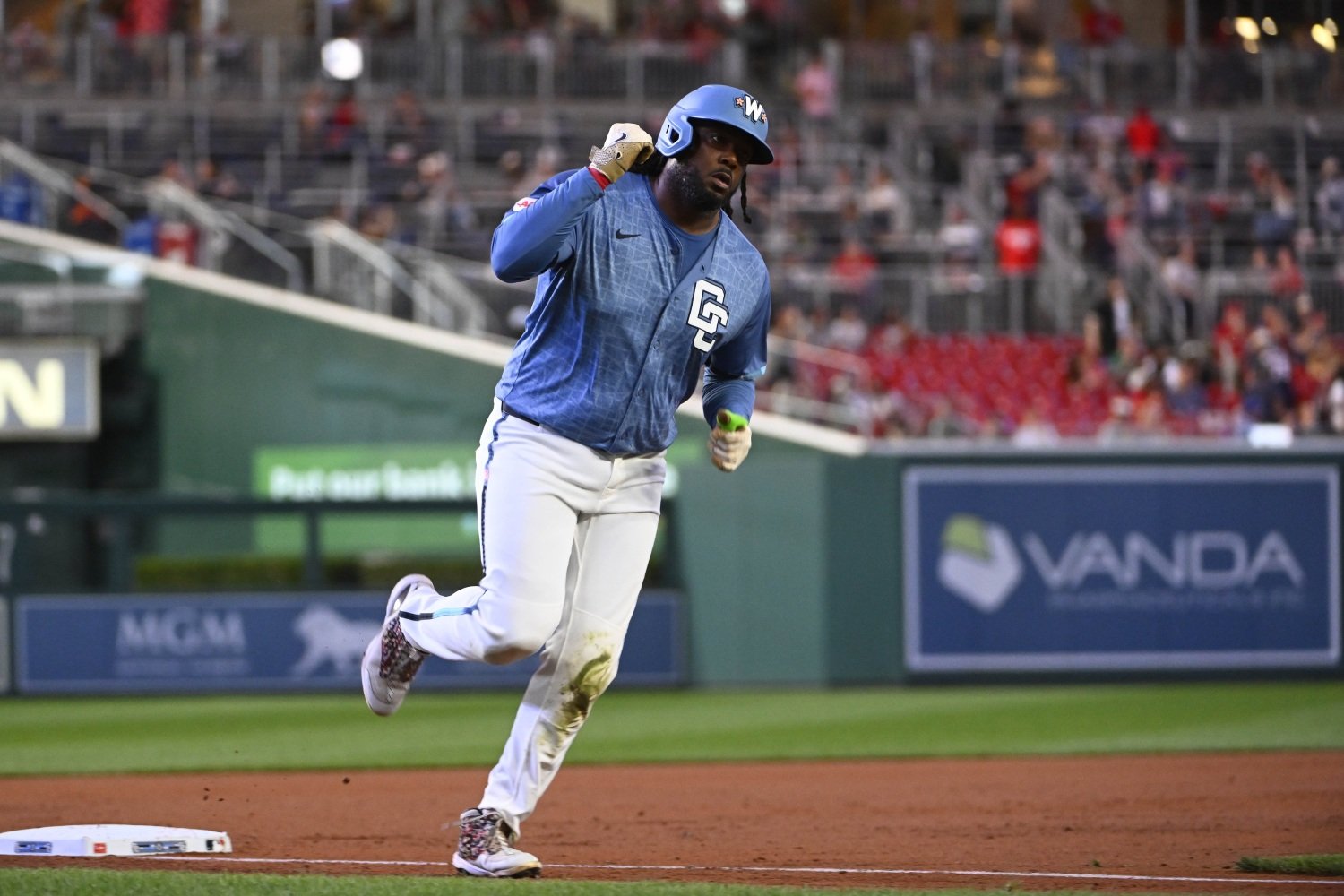 The Twins and slugger Josh Bell agreed to a one-year deal with a mutual option for 2027, sources confirmed to Twins Daily Monday morning. The first report of the deal came from ESPN's Jeff Passan, on Twitter. Bell, 33, is a 10-year veteran. A switch-hitter, he can serve as both a first baseman and a DH for the offense-hungry Twins. Last season, Bell hit .237/.325/.417 for a moribund Nationals team, with 22 home runs in 533 plate appearances. He was a prized selection in the 2011 MLB Draft, but his career has been more peripatetic than expected. A hulking figure in the batter's box, he's nonetheless struggled to consistently generate high-level power. He's a fine (but not spectacular) defender at first base, but most of his value comes from his bat. Bell controls the strike zone well, makes more frequent contact than most hitters of his size and strength, and has the ability to hit the ball exceptionally hard. For most of his career, the limiting factor has been a tendency to hit too many ground balls. While Bell's raw numbers for 2025 might appear underwhelming, though, there was a material change this season. From each side of the plate, he increased his bat speed by roughly 2.5 miles per hour and moved his exceptionally deep contact point a bit farther in front of his frame. Those changes make it easier to project strong production from him in 2026, as long as he can maintain those gains for the Twins. For the Twins, an addition like this one this winter was almost inevitable. They were too thin offensively in 2025, and were especially below-average at the positions where the defensive demands are least and the offensive standards highest. Bell is not a star, at this stage of his career, but he's a positive clubhouse presence and a versatile offensive piece, capable of slotting into the middle of the lineup for Minnesota regardless of the handedness of that day's starting pitcher. He nudges Kody Clemens (among others) further toward roles for which they're better-suited, slightly shielded from same-handed pitching. If the Twins want to contend in 2026, this is the type of signing of wbich they need a couple more over the balance of the offseason. UPDATE: Jon Heyman of the New York Post says the deal is worth $7 million. Bell was always likely to sign for somewhere between $5 million and $10 million, on a one-year deal. The mutual option doesn't alter the functional length of the deal; it will just slide a portion of his salary out past the end of the 2026 season, when the Twins can pay it as a buyout on the option year. Bob Nightengale of USA Today has the full breakdown, along with his son, Star Tribune Twins beat reporter Bobby. That's quite cheap, as a total package. The Twins should have room, given recent reports about the extent of their financial flexibility amid an ownership transition, to make further additions at the margins of the roster. Bell is a solid pickup, and needn't be the only or even primary one of the winter.
 -
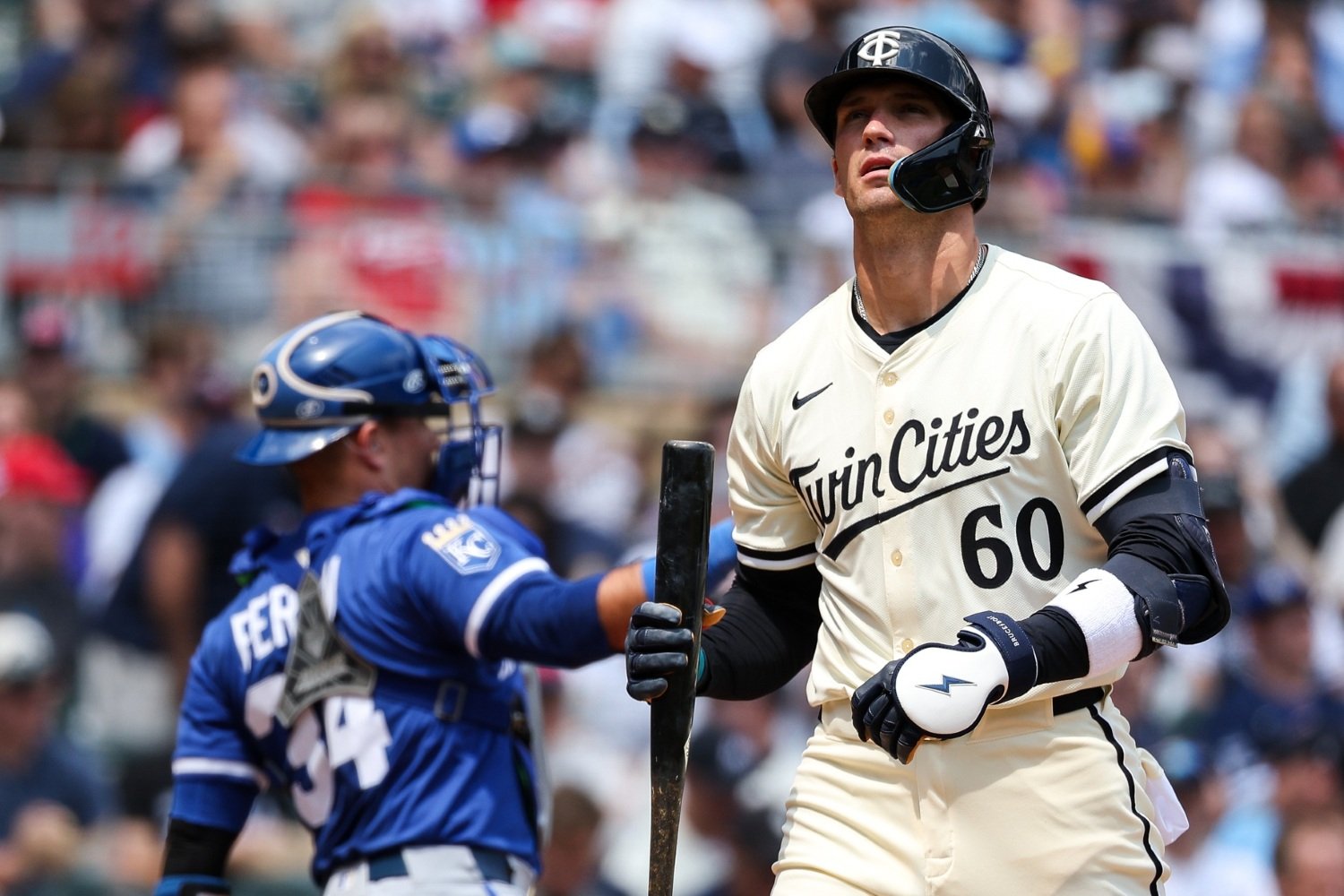 The Minnesota Twins will release Carson McCusker to pursue playing opportunities outside the United States, the team announced Wednesday. As a result, their 40-man roster now has a vacancy, clearing a logistical block as they prepare for the 2025 Rule 5 Draft, which takes place at 1 PM CT to close the Winter Meetings. For a team with a wide-open bullpen and a tight budget, the Rule 5 Draft is a great place to mine for talent. The Twins are expected to make a selection, and whichever hurler they pick up will go into the place on the 40-man reserve list cleared by releasing McCusker. That player will have to be on the team's 26-man roster throughout 2026, though, or the Twins will have to offer them back to the team from whom they select them at half the initial $100,000 acquisition fee. Neutered by a change in the Collective Bargaining Agreement in 2006-07, the draft yields fewer interesting players than it used to. The notion of a player as good as Johan Santana becoming available in the Rule 5 has become laughable, because teams can now control a player for one year longer before having to make the decision about whether to add them to the 40-man roster and shield them from the draft. Clubs have also gotten better at player development and evaluation, so fewer diamonds are left in the rough. However, the Twins' dearth of quality relief depth makes holding onto whomever they select easier than it would typically be for a team with any hope of contending in the ensuing season. Rule 5 picks rarely stick with their new team, and even more rarely become valuable contributors, but those who do are nearly all relief pitchers. The volatility and fungibility of that role means that many more semi-promising players in that demographic become available, relative to position players or starters. Minnesota didn't have much luck with last year's Rule 5 pick, Eiberson Castellano; his command wasn't good enough to merit a spot in what was then a stacked bullpen. This year, the margin for error for any draftee will be much greater—though, of course, the Twins must hope that that margin isn't needed.
 -
Image courtesy of © Matt Krohn-Imagn Images The Minnesota Twins will release Carson McCusker to pursue playing opportunities outside the United States, the team announced Wednesday. As a result, their 40-man roster now has a vacancy, clearing a logistical block as they prepare for the 2025 Rule 5 Draft, which takes place at 1 PM CT to close the Winter Meetings. For a team with a wide-open bullpen and a tight budget, the Rule 5 Draft is a great place to mine for talent. The Twins are expected to make a selection, and whichever hurler they pick up will go into the place on the 40-man reserve list cleared by releasing McCusker. That player will have to be on the team's 26-man roster throughout 2026, though, or the Twins will have to offer them back to the team from whom they select them at half the initial $100,000 acquisition fee. Neutered by a change in the Collective Bargaining Agreement in 2006-07, the draft yields fewer interesting players than it used to. The notion of a player as good as Johan Santana becoming available in the Rule 5 has become laughable, because teams can now control a player for one year longer before having to make the decision about whether to add them to the 40-man roster and shield them from the draft. Clubs have also gotten better at player development and evaluation, so fewer diamonds are left in the rough. However, the Twins' dearth of quality relief depth makes holding onto whomever they select easier than it would typically be for a team with any hope of contending in the ensuing season. Rule 5 picks rarely stick with their new team, and even more rarely become valuable contributors, but those who do are nearly all relief pitchers. The volatility and fungibility of that role means that many more semi-promising players in that demographic become available, relative to position players or starters. Minnesota didn't have much luck with last year's Rule 5 pick, Eiberson Castellano; his command wasn't good enough to merit a spot in what was then a stacked bullpen. This year, the margin for error for any draftee will be much greater—though, of course, the Twins must hope that that margin isn't needed. View full article
