



Matthew Trueblood
-
Posts
1,033 -
Joined
-
Last visited
Content Type
Profiles
News
Minnesota Twins Videos
2026 Minnesota Twins Top Prospects Ranking
2022 Minnesota Twins Draft Picks
Minnesota Twins Free Agent & Trade Rumors, Notes, & Tidbits
Guides & Resources
2023 Minnesota Twins Draft Picks
The Minnesota Twins Players Project
2024 Minnesota Twins Draft Picks
2025 Minnesota Twins Draft Pick Tracker
2026 Minnesota Twins Draft Tracker: Picks & Bonuses
Forums
Blogs
Events
Store
Downloads
Gallery
Everything posted by Matthew Trueblood
-
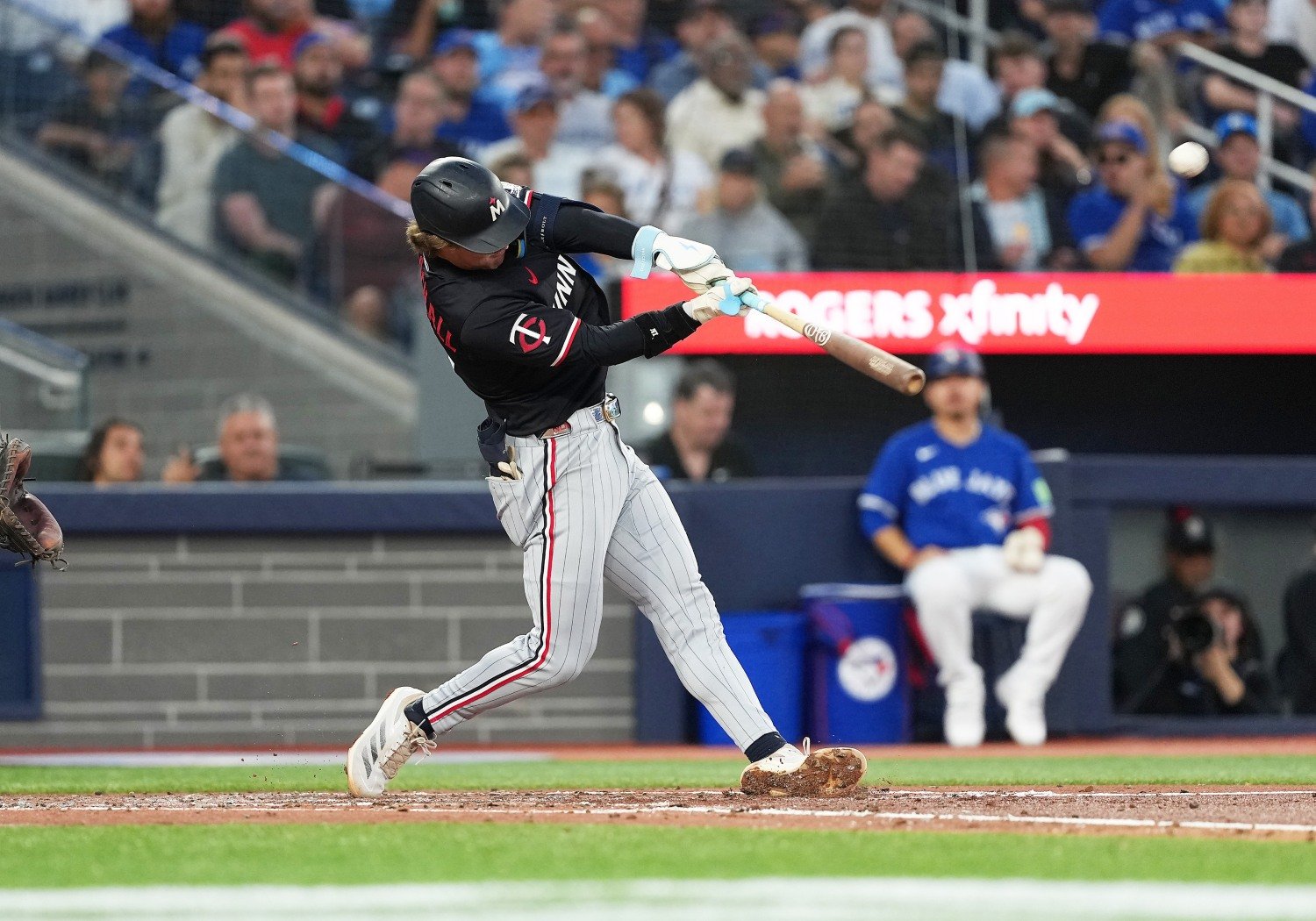 The Twins closed August with a win Sunday, beating the Padres 7-2. It was a bad month for the team, who went 11-17 as they tried (and failed) to patch the holes punched in the roster by the trade deadline fire sale the front office executed to close out July. For many fans, though, it was less frustrating to watch the team for stretches of this month, with the pressure off and some new faces in the mix. While the pitching staff was far too thin to hold most of the leads the team was able to generate, the offense began to show signs of new life. Key to that revival (they scored a respectable 4.4 runs per game for the month) were the returns of two players who hadn't been part of the lineup in May, June or July: Luke Keaschall (injured since April) and Austin Martin (stashed in Triple A all year, until the deadline). Keaschall batted .303/.380/.506 after returning from the injured list in the first week of the month, while Martin managed a .271/.363/.371 line as a restored piece of the outfield mix. For a team that has had precious few reliable on-base guys over the last two seasons, Keaschall and Martin were a breath of fresh air. Both are right-handed batters with good athleticism, but both have shown limited defensive value in their young careers. Both are potential long-term pieces, but Keaschall is viewed as a part of the core, whereas Martin is more of a complementary option—and is unlikely to enter 2026 as a regular for the team. When you watch them play, you're left with an impression of two very different players. They have contrasting approaches, and they use their bodies differently. In terms of swings, though, they're a bit like—well, twins. Cody Schoenmann wrote about the unique combination of shortness and steepness in Keaschall's swing two weeks ago. Along the way, though, he also touched on the fact that Martin shares some key swing attributes with Keaschall. Here are their average swing speed, contact point (relative to their body), swing tilt and attack angle and direction, for comparison. Keaschall: 67.1 mph, 32.0 in., 35° tilt, 8° attack angle, 0° attack direction Martin: 67.1 mph, 29.5 in., 40° tilt, 10° attack angle, 3° Pull attack direction They have, in short, identical bat speed (although it doesn't quite play that way; more on that shortly), and each is steep to the baseball. Dipping one's barrel steeply, relative to one's hands, is a consistent and noteworthy characteristic. It's usually a good way to generate loft on batted balls, and it can be great for increasing one's margin for error to find the grass with a hit even when not perfectly on time. However, as you might imagine, swinging steeply tends to make it hard to hit high pitches. It's usually a characteristic of players who want to "drop the bat head" on the ball, like this. V0FkelJfWGw0TUFRPT1fVkFaWUIxVURBZ1FBQ1ZOVVZRQUhDQTlYQUZnRlV3VUFBbEVOQVFwVFV3dFNBQUJV.mp4 That creates a particular challenge for each of them, in a league full of pitchers who can pound the top of the zone with fastballs: how do you get to those high offerings with a swing that seems geared to attack the ball down? This is where things get interesting, because the two of them could not be more different in the ways they answer that question. For Martin, it's mostly a matter of laying off. "That’s not my approach," Martin said of handling the high heater. "I don’t look to do damage on fastballs up in the zone. So I think that also helps me in terms of not chasing up, because that’s not where I’m looking—but yes, with the steep swing, that makes it a little more difficult, because I’m not as flat to the ball." The key, the second-year big-leaguer said, is to recognize that pitch but not offer at it early in counts. Once he gets to two strikes, he has to protect the whole zone, but he's learned to simply flick the ball foul and fight to get a more hittable offering. If he can avoid whiffing and keep making good swing decisions, eventually, pitchers will either give in and throw him a breaking ball down—or miss with a heater that's not as elevated as they intended. "Obviously, there’s a skill gap between a major-league pitcher and a Triple-A pitcher," Martin said. But I haven’t felt at this moment that it’s an issue. I haven’t been attacked too much that way. Even though they’re capable of locating it more [consistently], doesn’t mean that they locate it that often, so it’s not anything that I’m concerned about." Indeed, you can easily see what Martin is looking for when he steps into the box: a pitch down and out over the plate, where he can feast. That approach makes Martin a bit more prone to chasing low and away than one might expect such a patient batter to be, but he's not getting himself out by expanding at the top of the zone. At least, when he does swing at a pitch down and away, he's taking a pass at a pitch he can theoretically handle. Again, with that extreme tilt on his swing, he's much better on the ball inside—but it has to be below the belly button, or it ties him up. Here's a heat map like the one above, but instead of showing his swing rate by location, it shows his run value above average per 100 pitches, by location. The ball away is hard on him, but because he's disciplined both low and high and dangerous on the inner third, we still see a lot of red here. What Martin's doing is working, even if his swing is unthreatening by the standards of most big-league batters. Keaschall's process is very different—not just because he's much less cerebral than Martin in his approach, but because he actually goes after the high pitch. He hits it, too. "It depends on your approach, depends on what you’re trying to do," Keaschall said, by way of explaining why a guy with a steep swing seems to like the ball up. "But there’s a lot more to hitting than what angle your swing is." He's right, of course. His swing is a symphony of unusual things, and watching him prepare for games gives a glimpse into how carefully it's been engineered. His pre-batting practice routine involves several reps in which he holds the bat in one hand (each, in turn) and practices a short, shadow version of his stroke, with the lower half and the explosive rotation of it all quieted down and everything slightly slowed. He's locking in the exceptionally short hand path that seems to deliver barrel to ball consistently—and his imaginary target always seems to be chest-high. His swing gets its steepness not from an attempt to whip the bat head down through the ball, but from an assiduous effort to maximize efficiency of movement. "I’ve worked really hard on my swing since high school, so it changes a lot," Keaschall said. "But at the end of the day, you’re built the way you’re built, and you’re gonna swing the way you swing. I’ve always had a pretty short swing, pretty quick to the ball, putting an emphasis on making contact, just being a consistent hitter in the box. I’d say it’s something you’re taught, but I mean, God gave you the tools that you have and God gave you a certain type of body. I’m a very tight individual, and that helps me stay short to the ball, as opposed to a big, loose person with a longer swing." That's the crucial insight, for him, and the distinguishing feature between him and Martin. Whereas Martin is a fluid athlete whose limbs always seem to be in motion, Keaschall gives the impression of being one big muscle, moving all at once. That can be a liability in the field (he's not very adaptable or smooth when the ball gets near him at second base), but at the plate, it lets him come so cleanly to the ball that he can handle pitches other hitters otherwise like him would have no chance to attack. He takes a much more expansive approach than does Martin, for that very reason. His compact movements make everything seem hittable. It's actually the high pitch on which Keaschall does most of his damage. He's that slight bit flatter than Martin, anyway, but he also has that hardwired handpath—with the violence and the extra space creation of his hard stride and explosive rotation built back in, come game time—on his side. Pitchers have to be good enough at commanding their stuff to consistently pound him away, or to hit a target above the letters with that fastball. Otherwise, they're in big trouble. That shortness and tightness in his frame makes it hard to get the good part of the wood on the ball low and away, and you can start to see how the league might eventually figure out Keaschall and force him through a tough set of adjustments. For now, though, he's covering everything nicely. He's just not doing it anything like the way Martin does. Let's circle back to the question of their bat speed. They each swing at 67.1 mph, well below the MLB average. Neither is a budding slugger, for that reason. However, each has ways to make up for that lack of sheer swing speed, and the different ways they do so help elucidate their differences in approach. Here's how each sets up in the box and strides into the baseball. As we've talked about before, Keaschall has a high-energy stride that carries him right into the baseball. He also doesn't stand especially deep in the batter's box. He's not trying to buy himself time in there, because even though he lacks elite swing speed, he gets started early and still makes good swing decisions. He's firing early and committing himself early, which lets him catch the ball out front even with a slow swing. That directness in the path of his hands helps in that regard, too. Martin, by contrast, stands very deep in the box and takes a small stride. He's close to the plate, to maximize the extent to which he can cover the outer edge despite a swing that doesn't use the full length of his lumber, horizontally. He's a later decider than Keaschall, so he necessarily catches the ball deeper. His best swings will be the ones where he's slightly early, but he provides himself a margin for error by being willing to get there a hair later. Keaschall has shown much more power so far, but Martin is drawing walks and getting on base at a stellar rate. Each has passed the first test the league poses to a steep-swing righty batter without elite bat speed, in their own way. Each has been fun to watch and helped make the team's offense more so in their first full month with the team. While they're destined to be defined by their differences, their shared swing quirks make them an interesting shared case study and provide a good window into the problem-solving ahead as the Twins try to build a more successful lineup in 2025.
 -
Image courtesy of © John E. Sokolowski-Imagn Images Editor's Note: Welcome to the final installment of a series meant to dig deeper into the most compelling enigma on the 2025 Twins: outfielder Matt Wallner. Check out Eric Blonigen's piece about Wallner and Trevor Larnach, and Cody Pirkl's on whether Wallner deserves more respect than he gets from either fans or his employers. Today, though, we'll take the conversation down a slightly different path. This article started with an email. Almost two weeks ago, I got a note from Twins Daily co-founder John Bonnes. It came in the wake of the Twins' win over the Tigers on August 17—a good game, but one in which Matt Wallner went 0-3, with nothing but a walk after the game had long been decided. Specifically, in the bottom of the third, Wallner had come up with runners on the corners and one out, and he'd struck out. It got John thinking. "I was reminded that his WPA this year is negative," John wrote. "And, in fact, he’s never had a positive WPA greater than 0.5. Which, I think is a big discrepancy from his WAR." He was alluding to win probability added, of course. That stat apportions credit and blame to hitters and pitchers for the outcomes of games, using the expected runs and wins implied by the situations in which each plate appearance takes place and the effect of the outcome of each such battle on those expectations. Different sites measure these things very slightly differently, and I'll use Baseball Reference's framework for this piece; they did credit Wallner with 0.6 WPA in 2024. John was right, though, to note that Wallner is at -0.6 this year. Despite an OPS+ of 122 that suggests stoutly above-average production, he hasn't pushed the Twins toward wins this year. On balance, he's pushed them away from them. Naturally, John was also right that that lack of value from a context-sensitive perspective stands in stark contrast with the inputs for his WAR value at Baseball Reference, and elsewhere. The best way to view this, perhaps, is to compare his batting runs (Rbat, the number of runs the site's model estimates he's been worth relative to a league-average batter) with his RE24 (the runs he's added based on the expected runs when he came up, after accounting for the 24 possible base-out states). This doesn't account for fluctuations in game leverage, but it adjusts from measuring raw outcomes to baking in the runners on base and the number of outs each time Wallner came to bat. His Rbat this year is 10. His RE24 is just 2.4. When you hear that, surely, you think the same thing everyone else does: well, sure. That extreme high-strikeout, power-over-hit profile leads to homers and walks and pretty individual numbers, but it can't win games. "So I just looked at Joey Gallo’s stats page and found something very similar," John continued. "Gallo had a few years where his WAR was four. Overall, for his career, his WPA was negative. Even in those years that he posted a high WAR, WPA was barely positive." It's true. Gallo had -4.2 WPA for his career, though he rated as an above-average hitter before adjusting for situations. Gallo, like Wallner, had a patient approach and light-tower power, but ran a strikeout rate near the upper limit of what the league will accept. Thus, John posed the question: "Is it possible this type of player Fs with the correlation that we have between WAR and winning games? Like, if you are a player whose OPS is heavily dependent on SLG, does WPA tend to have a negative discrepancy compared to WAR? In short, are the cranks on all-or-nothing hitters right?" It's a fair question. In fact, if we want to properly value one of the presumptive core pieces of the team's medium-term future, it's one we'd better find a good answer to. So I decided to try. Offense is made up, mostly, of four components: the ability to avoid strikeouts, the ability to draw walks, the ability to get hits on balls in play, and the ability to hit for power. Strikeout rate, walk rate, BABIP and isolated power (ISO, which is just slugging average minus batting average) are the big four for a first-level analysis of any player. Here's what I did: Assembled a list of all players with at least 100 plate appearances this year (n=471) Listed their rOBA, Baseball Reference's context-neutral rate stat for offensive output; strikeout and walk rates; BABIP and ISO; and WPA/PA, which is just their win probability added divided by their number of plate appearances, to make WPA a rate stat, too. Found the correlations between (first) rOBA and (next) WPA/PA for BABIP, ISO, K% and BB% If we're onto something here—if how you generate value at the plate influences how much you contribute situationally—we should see a different relationship between those correlations for rOBA than for WPA/PA. Here's the data. Correlation to: BABIP ISO K% BB% rOBA 0.59 0.72 -0.18 0.38 WPA/PA 0.42 0.58 -0.18 0.29 Ratio 1.4 1.26 0.98 1.29 The correlations are (almost) all considerably stronger for rOBA than for WPA/PA, which makes sense. Adding things beyond the control of the hitter (the situation in which he comes to bat) adds noise to the whole system. Still, as you can see, there's something to the idea that different shapes of production matter more (or less) when you add the game state to the equation. There's evidence, here, that striking out more makes you less helpful to winning games than your simple stat line implies. On the other hand, power still appears to be pretty important. It's the ability to find holes when putting the ball in play (a noisy skill to begin with, as we know) that loses the most potency when we switch from a context-neutral to a context-dependent way of measuring batting value. The "or-nothing" in all-or-nothing hitters seems to be the broad source of their problems producing as many wins as the runs they produce would be expected to create. But that's a bit of a problem for our narrative. Wallner is hitting for more power and walking just as much this year, but he's striking out markedly less than he did in 2024. It's still a lot, but he's less extreme than he used to be. The category in which he's suffered in 2025, as our previous examinations of him this week have already shown, is BABIP, which isn't supposed to be what makes or breaks a hitter's capacity to influence WPA as much as they increase raw scoring. In Wallner's case, at least, the answer's simpler and less structural than that. Guys who depend on slug don't broadly tend to have a worse WPA than you'd expect; that's only true of certain individuals. Once we acknowledge that, we can look a bit closer. Here are Wallner's 2025 (and career) numbers in low-leverage, medium-leverage, and high-leverage situations. Low Leverage: .289/.359/.726 (.284/.380/.631) Medium Leverage: .150/.267/.260 (.195/.315/.371) High Leverage: .125/.327/.350 (.205/.339/.425) In the plate appearances that hardly matter at all, in terms of winning or losing, Wallner is a machine. When the stakes rise even modestly, though, he's pretty bad—and specifically, he becomes extremely dependent not on hitting for power, but on drawing walks to deliver any value. So, is Wallner simply un-clutch? That can, of course, be part of the answer. For that matter, that can be extrapolated a bit to other hitters, too. Even if leaning on power and striking out a lot don't fundamentally lead to less win production than run production on their own, do they make one less likely to be able to hit the better pitchers who tend to pitch more important innings? For that, perhaps, there's some evidence. If you've been trying to figure out why the Twins themselves also seem not to have much faith in Wallner, by the way, this is the time to start paying extra attention. What's one trait we can safely say most high-leverage pitchers have, to set them apart from those who work when the game is essentially decided? They throw harder. Here's the run value (per 100 pitches) for all Twins hitters on pitches at a velocity of at least 96 mph, among those who have seen at least 100 such pitches this year. Willi Castro: 0.048 Brooks Lee: -0.497 Harrison Bader: -0.855 Byron Buxton: -0.934 Carlos Correa: -1.128 Kody Clemens: -1.680 Wallner: -1.682 Royce Lewis: -1.762 Ryan Jeffers: -1.826 Trevor Larnach: -1.900 Ty France: -1.909 Christian Vázquez: -2.472 That might not look so bad—no one on the Twins has hit heaters that hot all that well this year, and Wallner falls in the middle of the pack. Maybe it's simply too hard to hit upper-90s fastballs to expect anyone to regularly hit them hard. Alas, all this really turns out to mean is that the Twins are uniquely bad at handling those fastballs. Among 138 players who have seen at least 200 such heaters this year, almost half (65) have positive run value against them, and Wallner's rate ranks 120th of the cohort. Why, though? The defining characteristic of Wallner at the plate is his elite bat speed. We could understand France or Larnach or even Jeffers getting overwhelmed a bit by pitches approaching triple digits on the radar gun, but why Wallner? That's the next question, and one we probably can't completely or perfectly answer here. This is a durable problem, though, and one tied to the nature of his swing. Over a decade ago, before Statcast gave us any insights like these, I began to suppose that what great bat speed really does for hitters is allow extra time for the swing decision—facilitating power by letting a hitter spot the spin on a breaking pitch or the telltale change in arm action on a changeup, and still (after starting late) get the barrel out in front of them and hammer the ball. Meanwhile, the hitters who handle velocity well might or might not have great bat speed, but what gets them to those high-octane heaters on time and on plane is the fact that they make early decisions. Wallner makes slightly late ones, and as good as bat speed is, the difference between someone who triggers their swing early and someone who can't is larger than that between someone with 76 mph bat speed and someone at 72. The problem with a very simple plan to start sooner, for someone with that 76-mph swing like Wallner (or Gallo), is that they might end up too early on breaking or offspeed stuff. Wallner is limited by his inability to hit good fastballs. He can do plenty of other things, but not being able to do that puts a low ceiling on his real, situational utility. That's why he bats lower in batting orders than you might otherwise guess, and it's why his raw numbers don't match his win probability metrics. When the game is on the line, teams know how to create a bad matchup for him. If he can eventually fix this—if some approach adjustment allows him to get started earlier, without ending up ahead of everything but the game's best fastballs—Wallner might well blossom into a truly lethal slugger. For now, though, the curmudgeons are at least partially right about him—even if not for the exact reasons John and I might have initially imagined. View full article
-
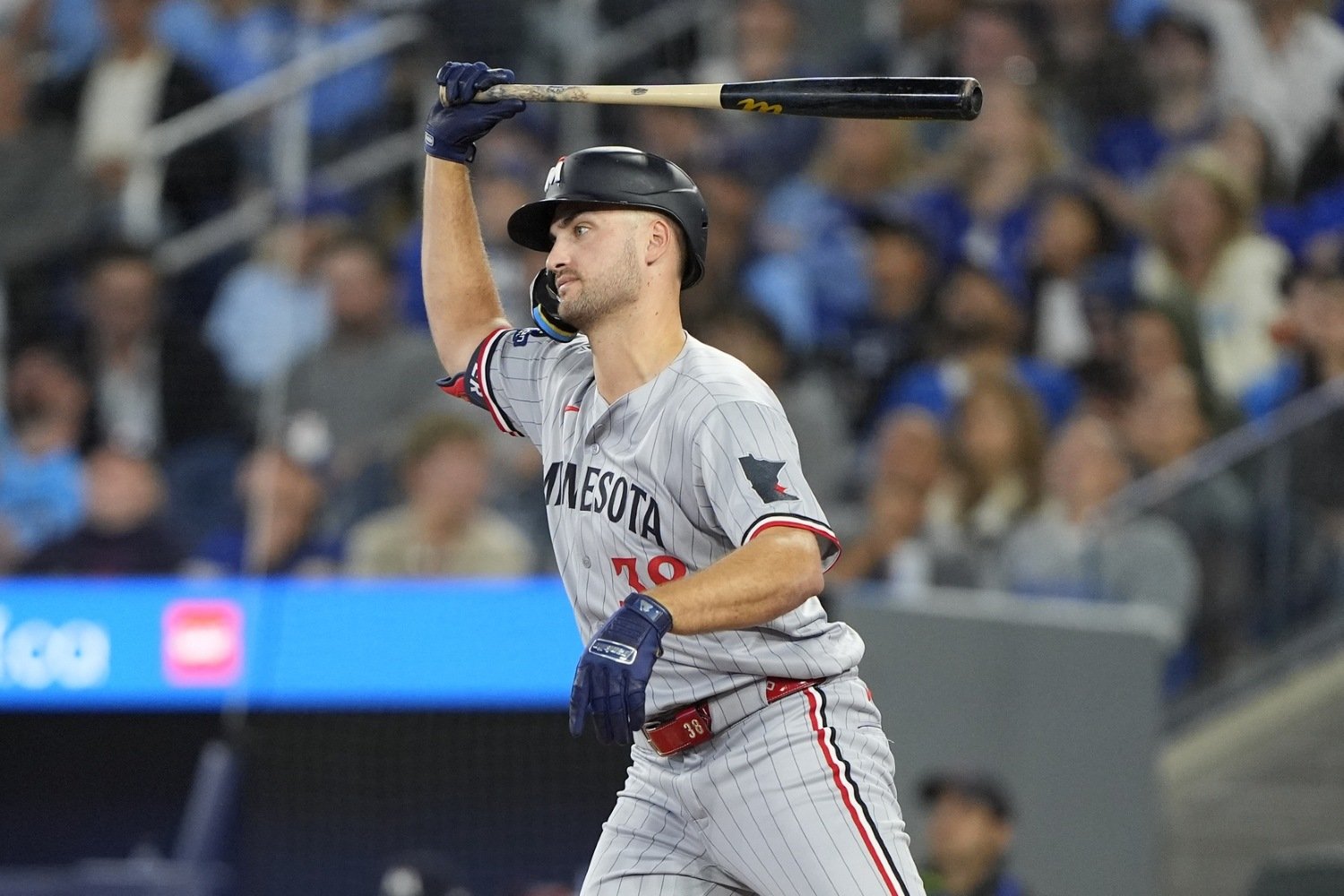 Editor's Note: Welcome to the final installment of a series meant to dig deeper into the most compelling enigma on the 2025 Twins: outfielder Matt Wallner. Check out Eric Blonigen's piece about Wallner and Trevor Larnach, and Cody Pirkl's on whether Wallner deserves more respect than he gets from either fans or his employers. Today, though, we'll take the conversation down a slightly different path. This article started with an email. Almost two weeks ago, I got a note from Twins Daily co-founder John Bonnes. It came in the wake of the Twins' win over the Tigers on August 17—a good game, but one in which Matt Wallner went 0-3, with nothing but a walk after the game had long been decided. Specifically, in the bottom of the third, Wallner had come up with runners on the corners and one out, and he'd struck out. It got John thinking. "I was reminded that his WPA this year is negative," John wrote. "And, in fact, he’s never had a positive WPA greater than 0.5. Which, I think is a big discrepancy from his WAR." He was alluding to win probability added, of course. That stat apportions credit and blame to hitters and pitchers for the outcomes of games, using the expected runs and wins implied by the situations in which each plate appearance takes place and the effect of the outcome of each such battle on those expectations. Different sites measure these things very slightly differently, and I'll use Baseball Reference's framework for this piece; they did credit Wallner with 0.6 WPA in 2024. John was right, though, to note that Wallner is at -0.6 this year. Despite an OPS+ of 122 that suggests stoutly above-average production, he hasn't pushed the Twins toward wins this year. On balance, he's pushed them away from them. Naturally, John was also right that that lack of value from a context-sensitive perspective stands in stark contrast with the inputs for his WAR value at Baseball Reference, and elsewhere. The best way to view this, perhaps, is to compare his batting runs (Rbat, the number of runs the site's model estimates he's been worth relative to a league-average batter) with his RE24 (the runs he's added based on the expected runs when he came up, after accounting for the 24 possible base-out states). This doesn't account for fluctuations in game leverage, but it adjusts from measuring raw outcomes to baking in the runners on base and the number of outs each time Wallner came to bat. His Rbat this year is 10. His RE24 is just 2.4. When you hear that, surely, you think the same thing everyone else does: well, sure. That extreme high-strikeout, power-over-hit profile leads to homers and walks and pretty individual numbers, but it can't win games. "So I just looked at Joey Gallo’s stats page and found something very similar," John continued. "Gallo had a few years where his WAR was four. Overall, for his career, his WPA was negative. Even in those years that he posted a high WAR, WPA was barely positive." It's true. Gallo had -4.2 WPA for his career, though he rated as an above-average hitter before adjusting for situations. Gallo, like Wallner, had a patient approach and light-tower power, but ran a strikeout rate near the upper limit of what the league will accept. Thus, John posed the question: "Is it possible this type of player Fs with the correlation that we have between WAR and winning games? Like, if you are a player whose OPS is heavily dependent on SLG, does WPA tend to have a negative discrepancy compared to WAR? In short, are the cranks on all-or-nothing hitters right?" It's a fair question. In fact, if we want to properly value one of the presumptive core pieces of the team's medium-term future, it's one we'd better find a good answer to. So I decided to try. Offense is made up, mostly, of four components: the ability to avoid strikeouts, the ability to draw walks, the ability to get hits on balls in play, and the ability to hit for power. Strikeout rate, walk rate, BABIP and isolated power (ISO, which is just slugging average minus batting average) are the big four for a first-level analysis of any player. Here's what I did: Assembled a list of all players with at least 100 plate appearances this year (n=471) Listed their rOBA, Baseball Reference's context-neutral rate stat for offensive output; strikeout and walk rates; BABIP and ISO; and WPA/PA, which is just their win probability added divided by their number of plate appearances, to make WPA a rate stat, too. Found the correlations between (first) rOBA and (next) WPA/PA for BABIP, ISO, K% and BB% If we're onto something here—if how you generate value at the plate influences how much you contribute situationally—we should see a different relationship between those correlations for rOBA than for WPA/PA. Here's the data. Correlation to: BABIP ISO K% BB% rOBA 0.59 0.72 -0.18 0.38 WPA/PA 0.42 0.58 -0.18 0.29 Ratio 1.4 1.26 0.98 1.29 The correlations are (almost) all considerably stronger for rOBA than for WPA/PA, which makes sense. Adding things beyond the control of the hitter (the situation in which he comes to bat) adds noise to the whole system. Still, as you can see, there's something to the idea that different shapes of production matter more (or less) when you add the game state to the equation. There's evidence, here, that striking out more makes you less helpful to winning games than your simple stat line implies. On the other hand, power still appears to be pretty important. It's the ability to find holes when putting the ball in play (a noisy skill to begin with, as we know) that loses the most potency when we switch from a context-neutral to a context-dependent way of measuring batting value. The "or-nothing" in all-or-nothing hitters seems to be the broad source of their problems producing as many wins as the runs they produce would be expected to create. But that's a bit of a problem for our narrative. Wallner is hitting for more power and walking just as much this year, but he's striking out markedly less than he did in 2024. It's still a lot, but he's less extreme than he used to be. The category in which he's suffered in 2025, as our previous examinations of him this week have already shown, is BABIP, which isn't supposed to be what makes or breaks a hitter's capacity to influence WPA as much as they increase raw scoring. In Wallner's case, at least, the answer's simpler and less structural than that. Guys who depend on slug don't broadly tend to have a worse WPA than you'd expect; that's only true of certain individuals. Once we acknowledge that, we can look a bit closer. Here are Wallner's 2025 (and career) numbers in low-leverage, medium-leverage, and high-leverage situations. Low Leverage: .289/.359/.726 (.284/.380/.631) Medium Leverage: .150/.267/.260 (.195/.315/.371) High Leverage: .125/.327/.350 (.205/.339/.425) In the plate appearances that hardly matter at all, in terms of winning or losing, Wallner is a machine. When the stakes rise even modestly, though, he's pretty bad—and specifically, he becomes extremely dependent not on hitting for power, but on drawing walks to deliver any value. So, is Wallner simply un-clutch? That can, of course, be part of the answer. For that matter, that can be extrapolated a bit to other hitters, too. Even if leaning on power and striking out a lot don't fundamentally lead to less win production than run production on their own, do they make one less likely to be able to hit the better pitchers who tend to pitch more important innings? For that, perhaps, there's some evidence. If you've been trying to figure out why the Twins themselves also seem not to have much faith in Wallner, by the way, this is the time to start paying extra attention. What's one trait we can safely say most high-leverage pitchers have, to set them apart from those who work when the game is essentially decided? They throw harder. Here's the run value (per 100 pitches) for all Twins hitters on pitches at a velocity of at least 96 mph, among those who have seen at least 100 such pitches this year. Willi Castro: 0.048 Brooks Lee: -0.497 Harrison Bader: -0.855 Byron Buxton: -0.934 Carlos Correa: -1.128 Kody Clemens: -1.680 Wallner: -1.682 Royce Lewis: -1.762 Ryan Jeffers: -1.826 Trevor Larnach: -1.900 Ty France: -1.909 Christian Vázquez: -2.472 That might not look so bad—no one on the Twins has hit heaters that hot all that well this year, and Wallner falls in the middle of the pack. Maybe it's simply too hard to hit upper-90s fastballs to expect anyone to regularly hit them hard. Alas, all this really turns out to mean is that the Twins are uniquely bad at handling those fastballs. Among 138 players who have seen at least 200 such heaters this year, almost half (65) have positive run value against them, and Wallner's rate ranks 120th of the cohort. Why, though? The defining characteristic of Wallner at the plate is his elite bat speed. We could understand France or Larnach or even Jeffers getting overwhelmed a bit by pitches approaching triple digits on the radar gun, but why Wallner? That's the next question, and one we probably can't completely or perfectly answer here. This is a durable problem, though, and one tied to the nature of his swing. Over a decade ago, before Statcast gave us any insights like these, I began to suppose that what great bat speed really does for hitters is allow extra time for the swing decision—facilitating power by letting a hitter spot the spin on a breaking pitch or the telltale change in arm action on a changeup, and still (after starting late) get the barrel out in front of them and hammer the ball. Meanwhile, the hitters who handle velocity well might or might not have great bat speed, but what gets them to those high-octane heaters on time and on plane is the fact that they make early decisions. Wallner makes slightly late ones, and as good as bat speed is, the difference between someone who triggers their swing early and someone who can't is larger than that between someone with 76 mph bat speed and someone at 72. The problem with a very simple plan to start sooner, for someone with that 76-mph swing like Wallner (or Gallo), is that they might end up too early on breaking or offspeed stuff. Wallner is limited by his inability to hit good fastballs. He can do plenty of other things, but not being able to do that puts a low ceiling on his real, situational utility. That's why he bats lower in batting orders than you might otherwise guess, and it's why his raw numbers don't match his win probability metrics. When the game is on the line, teams know how to create a bad matchup for him. If he can eventually fix this—if some approach adjustment allows him to get started earlier, without ending up ahead of everything but the game's best fastballs—Wallner might well blossom into a truly lethal slugger. For now, though, the curmudgeons are at least partially right about him—even if not for the exact reasons John and I might have initially imagined.
 -
Probably not from her perspective.
-
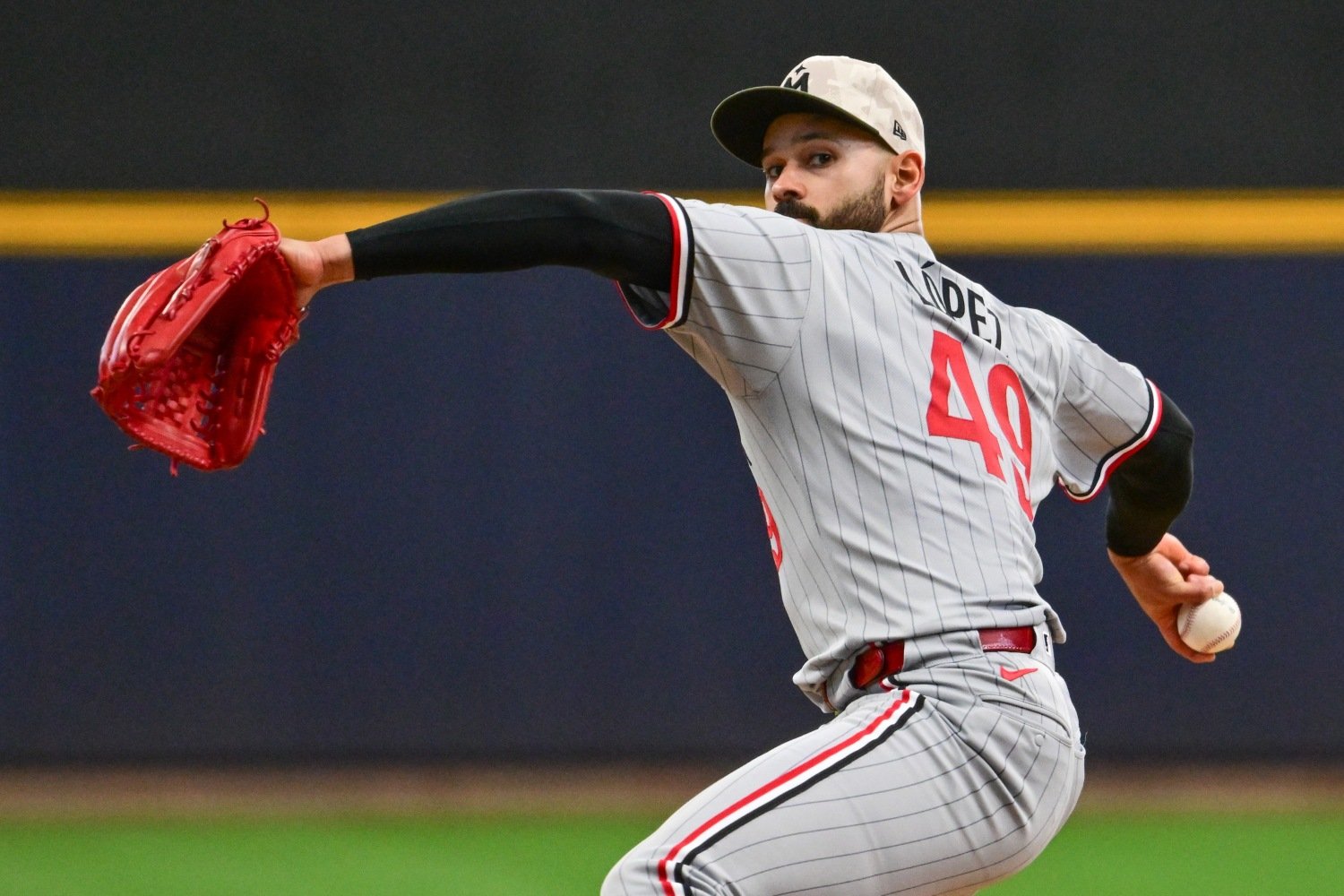 In the wake of the team's aggressive moves at the trade deadline and the subsequent announcement that the Pohlad family will retain control of the franchise, Twins fans have spent much of the last three weeks wondering whether the team will enjoy more investment from ownership over the next few years. On the contrary, when he appeared on the YouTube show "Foul Territory" on August 14, The Athletic beat writer Dan Hayes speculated that payroll will shrink in 2026—perhaps by $30 million or more. It's too early to assume this is an accurate projection; that's why Hayes himself has yet to write a story around that forecast. It will be at least mid-October before the team settles on its budget for 2026, and even then, we saw more money shake loose for the team late last offseason. Teams don't make final decisions about how to allocate resources for the coming offseason in August; Hayes's reporting is strictly based on background chatter and his own assessment of the team's payroll as it projects right now. We can already begin to do that assessment ourselves, though, and it's not terribly hard to see what Hayes is seeing—especially if one assumes, as is always wise, that he's plugged in as well as is possible to the team's thinking at this early stage of turning toward next year. Let's take a look at the current payroll picture, to understand what it means when Hayes speculates such a slashing of spending this winter. Locked-in Money It makes sense to start with the player who isn't going anywhere, and the monetary obligation that can't be traded. The former is Byron Buxton, who continues to profess his love of playing for the Twins and who has a no-trade clause. The $15 million he'll make in 2026 is a non-negotiable cornerstone of the payroll, just as he's the cornerstone of the team. The other cornerstone was supposed to be Carlos Correa, of course, but he went to Houston via trade on July 31. In the process, the Twins agreed to pay the Astros $10 million per year from 2026 through 2028. (In case you're wondering, trading obligations like those in other, later deals is not allowed.) That brings us quickly to $25 million, and there are still 25 Opening Day roster spots to fill. Let's talk, then, about the guys who will soak up the majority of the remaining money—unless they're sent packing. Big But Movable Unlike Buxton, Pablo López doesn't have a no-trade clause in the extension he signed with the team in 2023. He's set to make $21.5 million in 2026, but it's not at all clear that the Twins will be the ones paying that. López is a great pitcher and an even better presence in the clubhouse, but for those very reasons, he'll also have terrific trade value this winter. For the moment, stack him with Buxton and the ghost of Correa and we're up to $46.5 million, but it wouldn't be surprising at all if he's dealt. Two players are in line to receive smaller but substantial salaries via the arbitration process this winter, too. Ryan Jeffers will be arbitration-eligible for the final time before becoming a free agent at the end of the 2026 season, and is already making $4.55 million this year. Expect that number to be around $7.5 million next year. Joe Ryan could make just as much, despite only being in his second year of arbitration eligibility; being one year further from free agency; and making just $3 million this year. His All-Star season and career-best run of health and reliability will send that number skyward. Both Ryan and Jeffers are good candidates for contract extensions, but at this moment, it's hard to guess whether the Twins see themselves as being in position to offer them those deals. Certainly, the deadline fire sale did little to engender any interest in such a commitment from the players' side. Right now, let's call this group $36.5 million in projected salary—but write it in pencil, instead of pen. Stalled-Out Players in Arbitration Phase Ryan and Jeffers have had strong years, and Jeffers is at a stage of the arbitration cycle where players get more earning power almost by default. Thus, they're likely to get the hefty raises we just described. On the other hand, Bailey Ober ($3.55 million), Trevor Larnach ($2.1 million) and Royce Lewis ($1.625 million) are all having inconsistent, even discouraging seasons after their first trips through arbitration. None of them will get to what Jeffers and Ryan will make next year. Ober has been the best of that set and has the highest platform salary, so it's possible he'll make $7 million. Some of that, like everything else we're talking about here, depends on how the final six weeks of the season go. Larnach could be in line to make as much as $5 million, but if the Twins project him to earn that much, he's likely to be non-tendered. A better estimate might be $4.5 million. Lewis should get to the north side of $3 million, but his season has been a disaster and he has less earning power than Larnach right now. We'll use that same pencil, again, to write in $15.5 million for these three. Along with the bundles above, we're up to $77 million already. But now, we get to the part where the team racks up some savings. Locked in at the League Minimum Several players whom the team seems almost certain to retain won't be eligible for arbitration even next year. Each of them represents a roster spot for which the club will only pay roughly $800,000 over the full season. In rough order of clear utility and security as parts of the team's future, those guys are: Luke Keaschall Brooks Lee Zebby Matthews Simeon Woods Richardson Matt Wallner David Festa That's a vital sextet for the team, and it'll cost only $4.8 million. Though their places are not quite as established or secure, another handful of players in the same bracket can also be penciled in, averaging that same $800,000 per person. Alan Roden Mick Abel Taj Bradley James Outman Austin Martin Edouard Julien Kody Funderburk This is half a roster (although not a very good one) making a total of just $10.4 million. If we discount the possibility of non-tendering Larnach or trading any of the López-Jeffers-Ryan class, for now, we're at 20 roster spots accounted for and $87.4 million. There are just a few more cases to consider, before we start imagining all of this in a more concrete way. Low-Dollar Arb Dudes We're putting them last, but almost no one has a safer roster spot for next year than this small group of guys who have almost no earning power and have played major roles on the 2025 team. Kody Clemens is almost a lock to get over the line and be eligible for arbitration as a Super Two guy. Cole Sands will have more than three years of service time, so he's automatically eligible, and Justin Topa will be eligible for the final time before becoming a free agent. Even before the fire sale, these guys had roles on the big-league team, but Clemens has been the starting first baseman for weeks now and Topa and Sands are the aces of this war-torn bullpen. Multiple Twins have pointed to Clemens as one of the best teammates in the whole clubhouse. Though he's not an elite slugger, he's more than worth the paltry $1.3 million he might make next year. Ditto for Sands and Topa. As a group, these three might get to $5 million, or they might not even make it that far. It would be a mild shock to see the team non-tender any of them, although they'll probably draw a hard line with each and keep them only if they can get a deal done before arbitration figures need to be exchanged. What's Left to Do, and What's Left to Do It With We're over $92 million now, and the team we're sketching is not a good one. There are just a few roster spots left to fill, but trades or non-tenders could create another four or five such spots. It sure seems like, even if the Twins have only $100 million or $110 million to spend on 2026, they have money to spend in free agency. The question is how much—and whether those free agents will be tasked with replacing more outgoing guys, or with filling the gaps left by last month's trades (bullpen depth, the back end of the rotation, the outfield) and by expected free-agent departures (backup catcher). Twins fans are right to demand real upgrades, rather than such patches. The team has several great prospects in the upper levels of the minors who should make their debuts next year, but they also have several players penciled into major roles who were great prospects a few years ago and now look like parts of the problem, rather than the solution. If Hayes is correct in his speculation, though, no such influx of high-end talent is forthcoming. The Twins can run a payroll around $30 million lower than this year's even if they keep López, Ryan and Jeffers, but in that case, they're likely to be back in the same place next July, and perhaps those three would be traded then. For the club to move forward and have a more successful 2026, it seems as though they'll need to either match (or increase) spending or make savvy trades of at least one of that high-earning trio. Since Hayes's ballpark figure makes the former feel unlikely, the latter possibility will continue to be a hot topic as the offseason comes into view on the horizon.
- 137 comments
-
- 15
-

-

-
- pablo lopez
- joe ryan
- (and 5 more)
-
Image courtesy of © Benny Sieu-Imagn Images In the wake of the team's aggressive moves at the trade deadline and the subsequent announcement that the Pohlad family will retain control of the franchise, Twins fans have spent much of the last three weeks wondering whether the team will enjoy more investment from ownership over the next few years. On the contrary, when he appeared on the YouTube show "Foul Territory" on August 14, The Athletic beat writer Dan Hayes speculated that payroll will shrink in 2026—perhaps by $30 million or more. It's too early to assume this is an accurate projection; that's why Hayes himself has yet to write a story around that forecast. It will be at least mid-October before the team settles on its budget for 2026, and even then, we saw more money shake loose for the team late last offseason. Teams don't make final decisions about how to allocate resources for the coming offseason in August; Hayes's reporting is strictly based on background chatter and his own assessment of the team's payroll as it projects right now. We can already begin to do that assessment ourselves, though, and it's not terribly hard to see what Hayes is seeing—especially if one assumes, as is always wise, that he's plugged in as well as is possible to the team's thinking at this early stage of turning toward next year. Let's take a look at the current payroll picture, to understand what it means when Hayes speculates such a slashing of spending this winter. Locked-in Money It makes sense to start with the player who isn't going anywhere, and the monetary obligation that can't be traded. The former is Byron Buxton, who continues to profess his love of playing for the Twins and who has a no-trade clause. The $15 million he'll make in 2026 is a non-negotiable cornerstone of the payroll, just as he's the cornerstone of the team. The other cornerstone was supposed to be Carlos Correa, of course, but he went to Houston via trade on July 31. In the process, the Twins agreed to pay the Astros $10 million per year from 2026 through 2028. (In case you're wondering, trading obligations like those in other, later deals is not allowed.) That brings us quickly to $25 million, and there are still 25 Opening Day roster spots to fill. Let's talk, then, about the guys who will soak up the majority of the remaining money—unless they're sent packing. Big But Movable Unlike Buxton, Pablo López doesn't have a no-trade clause in the extension he signed with the team in 2023. He's set to make $21.5 million in 2026, but it's not at all clear that the Twins will be the ones paying that. López is a great pitcher and an even better presence in the clubhouse, but for those very reasons, he'll also have terrific trade value this winter. For the moment, stack him with Buxton and the ghost of Correa and we're up to $46.5 million, but it wouldn't be surprising at all if he's dealt. Two players are in line to receive smaller but substantial salaries via the arbitration process this winter, too. Ryan Jeffers will be arbitration-eligible for the final time before becoming a free agent at the end of the 2026 season, and is already making $4.55 million this year. Expect that number to be around $7.5 million next year. Joe Ryan could make just as much, despite only being in his second year of arbitration eligibility; being one year further from free agency; and making just $3 million this year. His All-Star season and career-best run of health and reliability will send that number skyward. Both Ryan and Jeffers are good candidates for contract extensions, but at this moment, it's hard to guess whether the Twins see themselves as being in position to offer them those deals. Certainly, the deadline fire sale did little to engender any interest in such a commitment from the players' side. Right now, let's call this group $36.5 million in projected salary—but write it in pencil, instead of pen. Stalled-Out Players in Arbitration Phase Ryan and Jeffers have had strong years, and Jeffers is at a stage of the arbitration cycle where players get more earning power almost by default. Thus, they're likely to get the hefty raises we just described. On the other hand, Bailey Ober ($3.55 million), Trevor Larnach ($2.1 million) and Royce Lewis ($1.625 million) are all having inconsistent, even discouraging seasons after their first trips through arbitration. None of them will get to what Jeffers and Ryan will make next year. Ober has been the best of that set and has the highest platform salary, so it's possible he'll make $7 million. Some of that, like everything else we're talking about here, depends on how the final six weeks of the season go. Larnach could be in line to make as much as $5 million, but if the Twins project him to earn that much, he's likely to be non-tendered. A better estimate might be $4.5 million. Lewis should get to the north side of $3 million, but his season has been a disaster and he has less earning power than Larnach right now. We'll use that same pencil, again, to write in $15.5 million for these three. Along with the bundles above, we're up to $77 million already. But now, we get to the part where the team racks up some savings. Locked in at the League Minimum Several players whom the team seems almost certain to retain won't be eligible for arbitration even next year. Each of them represents a roster spot for which the club will only pay roughly $800,000 over the full season. In rough order of clear utility and security as parts of the team's future, those guys are: Luke Keaschall Brooks Lee Zebby Matthews Simeon Woods Richardson Matt Wallner David Festa That's a vital sextet for the team, and it'll cost only $4.8 million. Though their places are not quite as established or secure, another handful of players in the same bracket can also be penciled in, averaging that same $800,000 per person. Alan Roden Mick Abel Taj Bradley James Outman Austin Martin Edouard Julien Kody Funderburk This is half a roster (although not a very good one) making a total of just $10.4 million. If we discount the possibility of non-tendering Larnach or trading any of the López-Jeffers-Ryan class, for now, we're at 20 roster spots accounted for and $87.4 million. There are just a few more cases to consider, before we start imagining all of this in a more concrete way. Low-Dollar Arb Dudes We're putting them last, but almost no one has a safer roster spot for next year than this small group of guys who have almost no earning power and have played major roles on the 2025 team. Kody Clemens is almost a lock to get over the line and be eligible for arbitration as a Super Two guy. Cole Sands will have more than three years of service time, so he's automatically eligible, and Justin Topa will be eligible for the final time before becoming a free agent. Even before the fire sale, these guys had roles on the big-league team, but Clemens has been the starting first baseman for weeks now and Topa and Sands are the aces of this war-torn bullpen. Multiple Twins have pointed to Clemens as one of the best teammates in the whole clubhouse. Though he's not an elite slugger, he's more than worth the paltry $1.3 million he might make next year. Ditto for Sands and Topa. As a group, these three might get to $5 million, or they might not even make it that far. It would be a mild shock to see the team non-tender any of them, although they'll probably draw a hard line with each and keep them only if they can get a deal done before arbitration figures need to be exchanged. What's Left to Do, and What's Left to Do It With We're over $92 million now, and the team we're sketching is not a good one. There are just a few roster spots left to fill, but trades or non-tenders could create another four or five such spots. It sure seems like, even if the Twins have only $100 million or $110 million to spend on 2026, they have money to spend in free agency. The question is how much—and whether those free agents will be tasked with replacing more outgoing guys, or with filling the gaps left by last month's trades (bullpen depth, the back end of the rotation, the outfield) and by expected free-agent departures (backup catcher). Twins fans are right to demand real upgrades, rather than such patches. The team has several great prospects in the upper levels of the minors who should make their debuts next year, but they also have several players penciled into major roles who were great prospects a few years ago and now look like parts of the problem, rather than the solution. If Hayes is correct in his speculation, though, no such influx of high-end talent is forthcoming. The Twins can run a payroll around $30 million lower than this year's even if they keep López, Ryan and Jeffers, but in that case, they're likely to be back in the same place next July, and perhaps those three would be traded then. For the club to move forward and have a more successful 2026, it seems as though they'll need to either match (or increase) spending or make savvy trades of at least one of that high-earning trio. Since Hayes's ballpark figure makes the former feel unlikely, the latter possibility will continue to be a hot topic as the offseason comes into view on the horizon. View full article
-
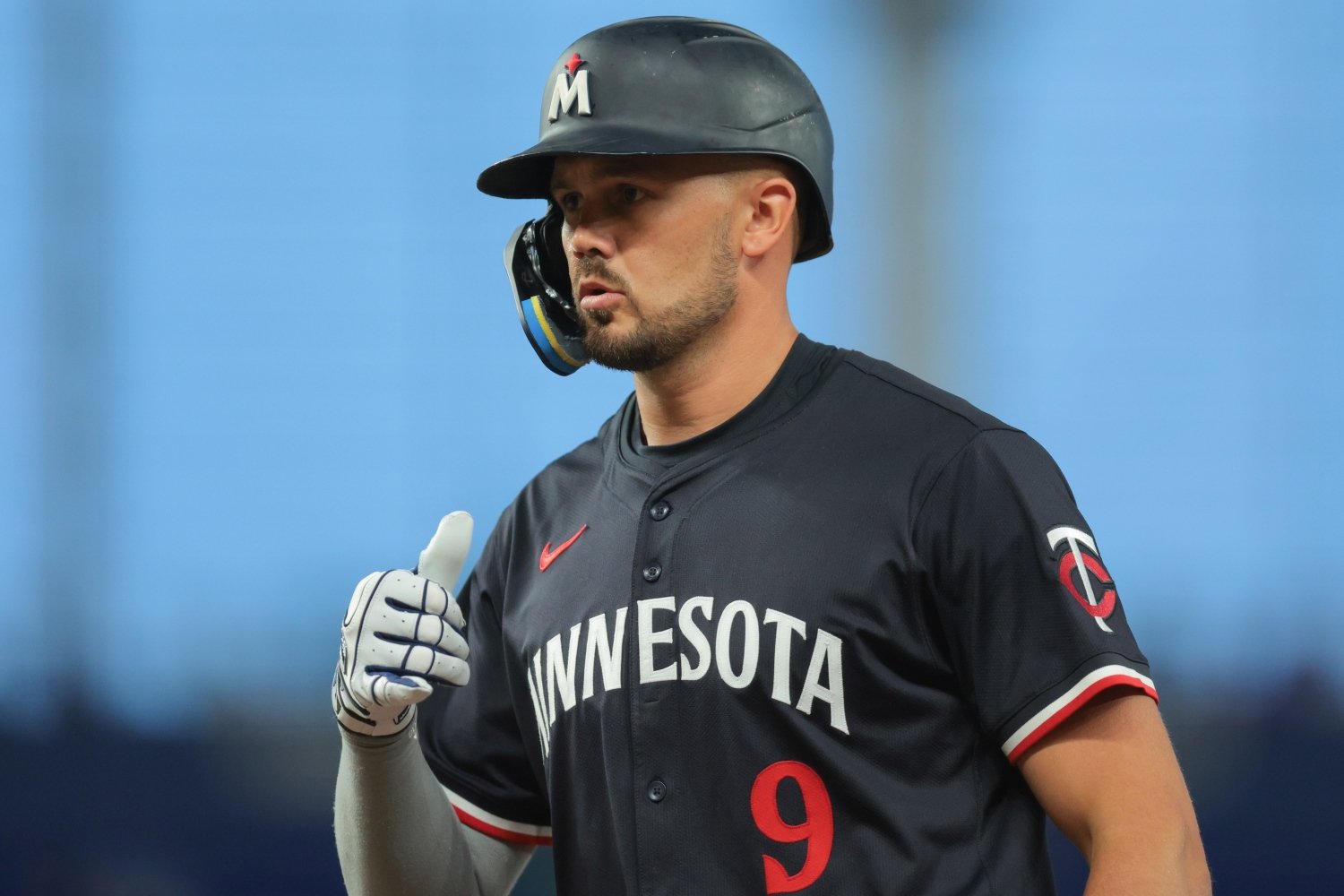 Few hitters in baseball have changed as clearly and concretely as Trevor Larnach has this season. That transformation began last year, when Larnach learned to slightly dampen his whiff rate on breaking and offspeed pitches by getting slightly more aggressive within the strike zone. It was last year that he slashed his strikeout rate (33.6% across his first three seasons, interrupted by injuries and demotions to the minor leagues; 22.3% in 2024) without seeing any attendant losses in his power or walk rate, or even the ability to find hits on balls in play. In short, he went from a frustratingly average-minus hitter (97 DRC+ in 2023, where 100 is average and higher is better) to a downright solid one (122 DRC+ in 2024) by altering his approach. He carried over some of those changes into 2025, so we can compare him to his 2023 self to see how his control of the strike zone has shifted. Here's his swing rate by pitch location for both 2023 and this year. These charts tell the story of an intelligent adjustment. Larnach still wants to do his damage on fastballs, and likes to look for the ball up, but he knows he needs to cover the bottom half of the zone to avoid being called out on strikes at a galling rate or whiffing wildly when he's fooled into fishing for something soft. His approach indicates a conscious alteration to do just that. It runs deeper, though, and big changes have happened just since last year. No hitter in baseball has flattened their swing path (as measured by Tilt, via Statcast, the degree of the angle formed by the bat relative to an imaginary line parallel to the ground and through the handle) more than Larnach has this year, and this is not one of those numbers that changes by mere coincidence. To have gone from 40° (one of the steeper swings in baseball) to 35° requires Larnach to have materially changed the way his swing works. It's had material effects on his batted-ball profile and his timing. He's also much more spread-out in the batter's box, on average, changing his stride signature and how his swing needs to work to catch the ball on the barrel. Here's the thing: Larnach says he hasn't done any of it on purpose.
 -
Image courtesy of © Sam Navarro-Imagn Images Few hitters in baseball have changed as clearly and concretely as Trevor Larnach has this season. That transformation began last year, when Larnach learned to slightly dampen his whiff rate on breaking and offspeed pitches by getting slightly more aggressive within the strike zone. It was last year that he slashed his strikeout rate (33.6% across his first three seasons, interrupted by injuries and demotions to the minor leagues; 22.3% in 2024) without seeing any attendant losses in his power or walk rate, or even the ability to find hits on balls in play. In short, he went from a frustratingly average-minus hitter (97 DRC+ in 2023, where 100 is average and higher is better) to a downright solid one (122 DRC+ in 2024) by altering his approach. He carried over some of those changes into 2025, so we can compare him to his 2023 self to see how his control of the strike zone has shifted. Here's his swing rate by pitch location for both 2023 and this year. These charts tell the story of an intelligent adjustment. Larnach still wants to do his damage on fastballs, and likes to look for the ball up, but he knows he needs to cover the bottom half of the zone to avoid being called out on strikes at a galling rate or whiffing wildly when he's fooled into fishing for something soft. His approach indicates a conscious alteration to do just that. It runs deeper, though, and big changes have happened just since last year. No hitter in baseball has flattened their swing path (as measured by Tilt, via Statcast, the degree of the angle formed by the bat relative to an imaginary line parallel to the ground and through the handle) more than Larnach has this year, and this is not one of those numbers that changes by mere coincidence. To have gone from 40° (one of the steeper swings in baseball) to 35° requires Larnach to have materially changed the way his swing works. It's had material effects on his batted-ball profile and his timing. He's also much more spread-out in the batter's box, on average, changing his stride signature and how his swing needs to work to catch the ball on the barrel. Here's the thing: Larnach says he hasn't done any of it on purpose. View full article
-
I agree that relocation is very unlikely, but there's a difference between having the fourth-newest park and having the fourth-most stable stadium situation. There will, as Peter points out, be a tricky needle to thread in the next few years as Target Field comes due for some important renovations and the team (whether owned by the Pohlads at that point or not) tries to create development space around the park itself. That's worth keeping in mind.
-
I agree. I don't think any currently in-play candidate city is a good candidate for relocation at all, in fact. I also think Rob Manfred will try hard to lay the groundwork for expansion before he leaves office, rather thsn allowing more teams to seriously consider relocating. For my money, this is not a major threat. But one thing I like about TD is that we have a variety of smart people contributing thoughtfully, and I do think Peter laid out a fair argument against my own confidence. Even if they move, though, I agree that it's unlikely to be to Portland.
-
Image courtesy of © Vincent Carchietta-Imagn Images Box Score Starting Pitcher: Joe Ryan - 6 2/3 IP, 4 H, 1 R, 2 BB, 7 K, 1 HR (102 pitches, 63 strikes) Home Runs: N/A Top 3 WPA: Ryan (.220), Byron Buxton (.171), Kody Clemens (.128) Win Probability Chart (via FanGraphs) Neither rain (a storm that delayed the game by almost two hours, with the Twins needing to get to the airport after the game to come home to Minnesota) nor heat (a trade deadline fire sale still hanging over the team) nor gloom of the future (the news, Wednesday morning, that the Pohlad family will remain in control of the Twins for the foreseeable) stays Joe Ryan from his appointed rotation spot. He took the mound in a damp and half-filled but constantly noisy Yankee Stadium on getaway night, and pitched like a man possessed. Hot Schlittler and the Ryan Express This game was the Twins' first chance to see Yankees rookie starter Cam Schlittler, and it did not start out as a fun learning experience. Firing a lively fastball that averaged 98 miles per hour and had some wiggle and adding two different breaking balls for good measure, Schlittle looked like a budding ace through the first three innings. He didn't allow a Twins baserunner that first time through the order. The top of the order couldn't get the ball out of the infield against him, and he racked up three strikeouts over the second and third innings. Worked into just as impressive a lather by the time he spent waiting out the rain, though, Ryan was just as nasty. His stuff all had more velocity than usual, including his heater sitting 95 and nearly touching 98. The pitch also had good run, and though he didn't have great feel for anything else on the night, he scarcely needed it. Cody Bellinger connected for a long home run right down the right-field line, but otherwise, Ryan matched Schlittler through the early innings—then beat him in the middle frames. Good Adjustments As good as Schlittler looked the first time through the lineup, the Twins made an impressive round of adjustments and went into grind mode the second time they got to see him. Trevor Larnach led the top of the fourth with a seven-pitch walk that required him to foul off two high, hard, outer-third fastballs meant to put him away. Byron Buxton then worked an even longer at-bat, slamming a double to left at 114 miles per hour on the 10th pitch and wheeling Larnach around to third. Luke Keaschall, batting right behind Buxton in this one, then cashed in the chance by going up there swinging. He grounded out for the second time in the game, but this one brought home Larnach to knot the score at 1-1. Schlittler buckled down and escaped the jam without allowing Buxton to come home, but the tone had changed. Ryan, on the other hand, only got stronger as the game progressed. He struck out the side in order in the bottom of the fourth, and that lively heater got three quick fly balls for outs in the fifth. Along the way, Ryan became more and more animalistic, more obviously than ever under the pale glare of the Yankee Stadium lights and with the infamously hot field mics lighting up over and over with his grunts and shouts on any pitch he didn't execute perfectly or that he felt should have been called a strike. Ryan's temperament on the mound is part of how he succeeds, but it also makes him a great showman. You can't turn away. He worked his gum mercilessly, screamed expletives a dozen times or more, and got into the habit of freezing to await called strikes he wasn't getting. He also, relentlessly, got outs. The Twins broke through in a bigger way in the top of the sixth. With Schlittler out of the game, Buxton hit a Yerry De Los Santos offering blisteringly hard toward the hole at shortstop. Anthony Volpe managed to snare the ball, but first baseman Ben Rice couldn't handle his throw, and Buxton was aboard. Keaschall played a variation on that theme, with a hard-hit ground ball that hugged the third base line. Ryan McMahon would have had to make a perfect play and an exceptionally strong, off-balance throw all the way across the diamond to get an out against the speedy Buxton or Keaschall. He didn't even complete the first part of that mission. That brought up Clemens, and it felt crucial that he get the runs home. Minnesota hadn't made much of that rally in the fourth, and had left Alan Roden on second after a stolen base in the fifth. De Los Santos hammered away at the bottom rail of the strike zone, but Clemens worked the count full and fouled off a good fastball at the knees on the outer edge. Finally, De Los Santos cracked and left a pitch up, and Clemens sent it leaning and bounding into the gap in right-center field. Buxton and Keaschall scored, and when Trent Grisham mishandled the ball, Clemens made it all the way to third base. There was still no one out, and Clemens was just 90 feet away, but after two quick and unproductive outs, the Twins were in danger of not maximizing their chance yet again. Royce Lewis took care of business, though, lobbing a fly ball down the left-field line against a Mark Leiter Jr. slow curve. Cody Bellinger had the speed and the room to make the play, but he wasn't sure enough of his position and pulled up slightly, worried about the sidewall. The ball fell in, and Clemens became the fourth run of the game for the Twins. Shutting the Door Ryan only seemed more agitated than ever when he retook the mound for the bottom of the sixth, working with a three-run lead. He evinced frustration with the high bottom of the zone against Aaron Judge and never let it go, but he didn't allow the Yankees to do any damage. He ended up getting two outs in the seventh inning, too, and stretching past 100 pitches, trying to act as his own bullpen in the absence of the one the team traded away last month. As it turned out, though, that pen had his back, anyway. Kody Funderburk and Justin Topa slammed the door on New York, amid the obnoxiously loud Yankee Stadium sound system but relatively little noise from the early-departing Bronx crowd. This was a great team win. The long at-bats and great payoffs from Larnach, Buxton and Clemens showed the approach the team needs to establish as a standard throughout the batting order. The disruptive combination of exit velocity and foot speed created the game-winning rally, as Buxton and Keaschall continue to look like the spine of the team's future. Ryan was excellent, even on a night when (other than in terms of fastball velocity) his stuff wasn't. It's too little and too late, but it was the kind of game the team must use as a blueprint as they plan their future success. What’s Next? Bleary-eyed, the Twins will roll out of bed for a 6:40 PM CT game back at Target Field Thursday night against the Tigers. The combination of the Yankees (in typical fashion) scheduling a night game ahead of their visitors' travel and the rain delay will mean they don't get into Minneapolis until the wee hours of the morning. Luckily, they only have to face—oh. Oh no. Tarik Skubal (11-3, 2.35 ERA) starts for Detroit, opposite Bailey Ober (4-7, 5.16 ERA) for the home nine. Postgame Interviews Bullpen Usage Spreadsheet FRI SAT SUN MON TUE WED TOT Hatch 0 0 0 0 99 0 99 Tonkin 0 18 38 0 0 0 56 Kriske 17 0 17 19 0 0 53 Ramírez 0 21 0 23 0 0 44 Adams 43 0 0 0 0 0 43 Ohl 0 0 36 0 0 0 36 Topa 0 15 20 0 0 26 61 Sands 9 0 9 0 16 0 34 Funderburk 0 0 9 0 13 6 28 View full article
-
 Box Score Starting Pitcher: Joe Ryan - 6 2/3 IP, 4 H, 1 R, 2 BB, 7 K, 1 HR (102 pitches, 63 strikes) Home Runs: N/A Top 3 WPA: Ryan (.220), Byron Buxton (.171), Kody Clemens (.128) Win Probability Chart (via FanGraphs) Neither rain (a storm that delayed the game by almost two hours, with the Twins needing to get to the airport after the game to come home to Minnesota) nor heat (a trade deadline fire sale still hanging over the team) nor gloom of the future (the news, Wednesday morning, that the Pohlad family will remain in control of the Twins for the foreseeable) stays Joe Ryan from his appointed rotation spot. He took the mound in a damp and half-filled but constantly noisy Yankee Stadium on getaway night, and pitched like a man possessed. Hot Schlittler and the Ryan Express This game was the Twins' first chance to see Yankees rookie starter Cam Schlittler, and it did not start out as a fun learning experience. Firing a lively fastball that averaged 98 miles per hour and had some wiggle and adding two different breaking balls for good measure, Schlittle looked like a budding ace through the first three innings. He didn't allow a Twins baserunner that first time through the order. The top of the order couldn't get the ball out of the infield against him, and he racked up three strikeouts over the second and third innings. Worked into just as impressive a lather by the time he spent waiting out the rain, though, Ryan was just as nasty. His stuff all had more velocity than usual, including his heater sitting 95 and nearly touching 98. The pitch also had good run, and though he didn't have great feel for anything else on the night, he scarcely needed it. Cody Bellinger connected for a long home run right down the right-field line, but otherwise, Ryan matched Schlittler through the early innings—then beat him in the middle frames. Good Adjustments As good as Schlittler looked the first time through the lineup, the Twins made an impressive round of adjustments and went into grind mode the second time they got to see him. Trevor Larnach led the top of the fourth with a seven-pitch walk that required him to foul off two high, hard, outer-third fastballs meant to put him away. Byron Buxton then worked an even longer at-bat, slamming a double to left at 114 miles per hour on the 10th pitch and wheeling Larnach around to third. Luke Keaschall, batting right behind Buxton in this one, then cashed in the chance by going up there swinging. He grounded out for the second time in the game, but this one brought home Larnach to knot the score at 1-1. Schlittler buckled down and escaped the jam without allowing Buxton to come home, but the tone had changed. Ryan, on the other hand, only got stronger as the game progressed. He struck out the side in order in the bottom of the fourth, and that lively heater got three quick fly balls for outs in the fifth. Along the way, Ryan became more and more animalistic, more obviously than ever under the pale glare of the Yankee Stadium lights and with the infamously hot field mics lighting up over and over with his grunts and shouts on any pitch he didn't execute perfectly or that he felt should have been called a strike. Ryan's temperament on the mound is part of how he succeeds, but it also makes him a great showman. You can't turn away. He worked his gum mercilessly, screamed expletives a dozen times or more, and got into the habit of freezing to await called strikes he wasn't getting. He also, relentlessly, got outs. The Twins broke through in a bigger way in the top of the sixth. With Schlittler out of the game, Buxton hit a Yerry De Los Santos offering blisteringly hard toward the hole at shortstop. Anthony Volpe managed to snare the ball, but first baseman Ben Rice couldn't handle his throw, and Buxton was aboard. Keaschall played a variation on that theme, with a hard-hit ground ball that hugged the third base line. Ryan McMahon would have had to make a perfect play and an exceptionally strong, off-balance throw all the way across the diamond to get an out against the speedy Buxton or Keaschall. He didn't even complete the first part of that mission. That brought up Clemens, and it felt crucial that he get the runs home. Minnesota hadn't made much of that rally in the fourth, and had left Alan Roden on second after a stolen base in the fifth. De Los Santos hammered away at the bottom rail of the strike zone, but Clemens worked the count full and fouled off a good fastball at the knees on the outer edge. Finally, De Los Santos cracked and left a pitch up, and Clemens sent it leaning and bounding into the gap in right-center field. Buxton and Keaschall scored, and when Trent Grisham mishandled the ball, Clemens made it all the way to third base. There was still no one out, and Clemens was just 90 feet away, but after two quick and unproductive outs, the Twins were in danger of not maximizing their chance yet again. Royce Lewis took care of business, though, lobbing a fly ball down the left-field line against a Mark Leiter Jr. slow curve. Cody Bellinger had the speed and the room to make the play, but he wasn't sure enough of his position and pulled up slightly, worried about the sidewall. The ball fell in, and Clemens became the fourth run of the game for the Twins. Shutting the Door Ryan only seemed more agitated than ever when he retook the mound for the bottom of the sixth, working with a three-run lead. He evinced frustration with the high bottom of the zone against Aaron Judge and never let it go, but he didn't allow the Yankees to do any damage. He ended up getting two outs in the seventh inning, too, and stretching past 100 pitches, trying to act as his own bullpen in the absence of the one the team traded away last month. As it turned out, though, that pen had his back, anyway. Kody Funderburk and Justin Topa slammed the door on New York, amid the obnoxiously loud Yankee Stadium sound system but relatively little noise from the early-departing Bronx crowd. This was a great team win. The long at-bats and great payoffs from Larnach, Buxton and Clemens showed the approach the team needs to establish as a standard throughout the batting order. The disruptive combination of exit velocity and foot speed created the game-winning rally, as Buxton and Keaschall continue to look like the spine of the team's future. Ryan was excellent, even on a night when (other than in terms of fastball velocity) his stuff wasn't. It's too little and too late, but it was the kind of game the team must use as a blueprint as they plan their future success. What’s Next? Bleary-eyed, the Twins will roll out of bed for a 6:40 PM CT game back at Target Field Thursday night against the Tigers. The combination of the Yankees (in typical fashion) scheduling a night game ahead of their visitors' travel and the rain delay will mean they don't get into Minneapolis until the wee hours of the morning. Luckily, they only have to face—oh. Oh no. Tarik Skubal (11-3, 2.35 ERA) starts for Detroit, opposite Bailey Ober (4-7, 5.16 ERA) for the home nine. Postgame Interviews Bullpen Usage Spreadsheet FRI SAT SUN MON TUE WED TOT Hatch 0 0 0 0 99 0 99 Tonkin 0 18 38 0 0 0 56 Kriske 17 0 17 19 0 0 53 Ramírez 0 21 0 23 0 0 44 Adams 43 0 0 0 0 0 43 Ohl 0 0 36 0 0 0 36 Topa 0 15 20 0 0 26 61 Sands 9 0 9 0 16 0 34 Funderburk 0 0 9 0 13 6 28
- 56 comments
-
- 6
-
-
- joe ryan
- byron buxton
- (and 2 more)
-
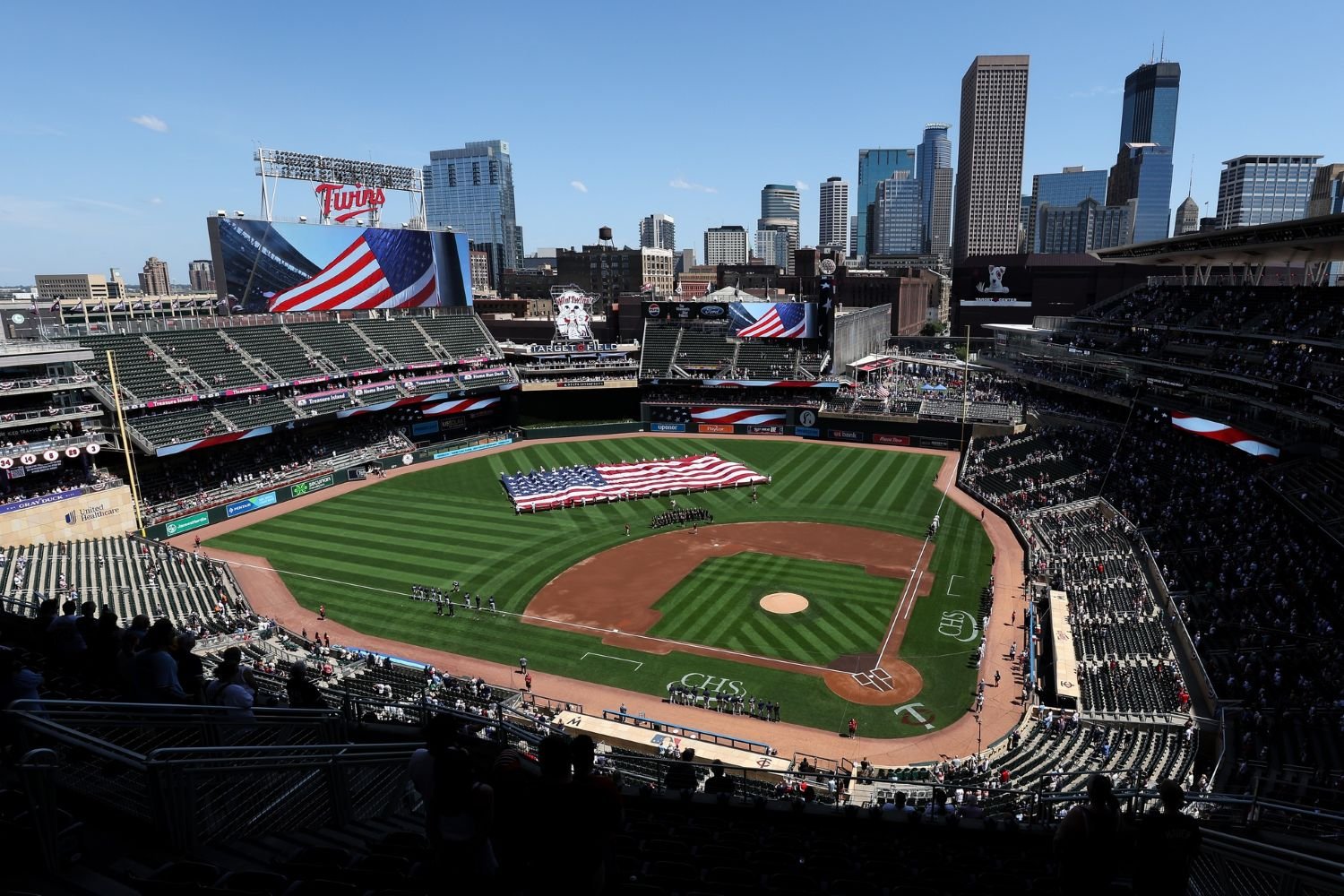 In a move sure to bring huge, largely negative reaction from Twins Territory, the Pohlad family will remain principal owners of the team, they announced via the team's official channels Wednesday morning. There will be new limited partners (presumably, sources of new capital who will receive equity in return for shares of the team, paying down the debt the family has attached to the club in recent years), but the Pohlads will remain in charge. This is an awkward and unsatisfying end to a nine-month process wherein the family announced an intention to sell the team, marketed it to multiple suitors, and eventually determined that they couldn't get the price they wanted. In the late winter, Midwestern-based billionaire Justin Ishbia seemed on the cusp of buying the team, but backed out to increase his stake in the Chicago White Sox instead. Since then, the Pohlads have balked at lower-valued offers and flirted with others, but rather than sell the franchise, they've now decided to allow minority partners to soak up some of the financial burden they faced while holding onto what is still a highly profitable company. For Twins fans, the key questions will be who comprises the new partnership groups and how much their presence alters the maddening tendency toward payroll constriction the Pohlads have shown over the last two years. Many had hoped for a fresh start with a new billionaire (or billionaire family), but while there are major downsides that must be remembered and discussed, the Pohlads looked like one of the better ownership groups in the game just a few years ago. Their financial setbacks in other family businesses became a problem for the Twins, because they began focusing on the bottom line and lost sight of the ways in which a little more spending would have generated a lot more revenue. If their new partners have enough money (and, in effect, if they help retire enough of the family's non-baseball debt by buying into the club) to loosen the purse strings again, the negative effects of the last two years of poor stewardship can be unwound fairly quickly. However, sticking around means that the Pohlads will have to find ways (beyond incrementally more spending) to repair their relationship with the fan base, after the team betrayed that fan base and broke whatever existing trust there was beginning in the fall of 2023. Whether Joe Pohlad (or anyone else in the family tree) is up for that difficult job is not at all clear. The likelihood, therefore, is that there will be a new "face" of ownership brought into the picture, as part of this transaction. Joe Pohlad might remain the control person for the team, but some member of one of the new partnership groups might be moved out front to give the community a spokesperson from whom they might be more willing to hear a message of reconciliation and renewal. For now, this change in the direction of the would-be sale raises more questions than it answers, but within a few weeks, we're likely to find out much more.
- 288 comments
-
- 12
-
-

-
-
- jim pohlad
- joe pohlad
- (and 2 more)
-
Image courtesy of © Bruce Kluckhohn-Imagn Images In a final, head-spinning fling, the Minnesota Twins finished off one of baseball history's most unrepentant and unblinking fire sales by trading both Louis Varland and Ty France to the Toronto Blue Jays. Varland was, for as much as 20 or 30 seconds, the apparent closer-in-waiting, after trades sent Jhoan Duran, Brock Stewart, Danny Coulombe and Griffin Jax to various corners of the MLB world over the final 24 hours before Thursday's trade deadline. France, signed to play first base and a hero of some early wins when the team got hot in May, got so cold by July that the team figured he'd be more comfortable in Canada. For Varland (the Minnesota native who was under team control through 2030) and France, the Twins received outfielder Alan Roden and left-handed pitcher Kendrys Rojas, according to The Athletic's Mitch Bannon. Roden has an interesting backstory—he's an astrophysicist moonlighting as a ballplayer, or the other way around—but has struggled to solve the ballistic equations required to consistently collide efficiently with the ball at the plate. Rojas, 22, is a Cuban emigre and lefty who stands 6-foot-2. He's filling out well physically, but his velocity so far sits in the low 90s most of the time. His fastball shape checks the boxes the Twins look for, though, and he shows some feel for both a slider and a changeup. Ranked 11th on Baseball America's midseason update of the Blue Jays' top 30 prospects list, he looks like a promising addition to the Twins' organizational pitching depth. The perplexing part of this trade (in contrast, say, with the Carlos Correa or Stewart or Coulombe trades) lies not in the question of why the team didn't get more back, but in why they did it at all. This move saves almost no money and gives up a local kid who made good and was under team control for the long term. Rojas is a really nice pickup, and Roden probably isn't any less valuable than France, but the push factors that prompted them to even consider the allure of the news players they acquired are harder to identify in this case. Nonetheless, it will be fun to follow the careers of these two new pieces; they're more compelling than the returns in some of the day's earlier moves. View full article
-
 In a final, head-spinning fling, the Minnesota Twins finished off one of baseball history's most unrepentant and unblinking fire sales by trading both Louis Varland and Ty France to the Toronto Blue Jays. Varland was, for as much as 20 or 30 seconds, the apparent closer-in-waiting, after trades sent Jhoan Duran, Brock Stewart, Danny Coulombe and Griffin Jax to various corners of the MLB world over the final 24 hours before Thursday's trade deadline. France, signed to play first base and a hero of some early wins when the team got hot in May, got so cold by July that the team figured he'd be more comfortable in Canada. For Varland (the Minnesota native who was under team control through 2030) and France, the Twins received outfielder Alan Roden and left-handed pitcher Kendrys Rojas, according to The Athletic's Mitch Bannon. Roden has an interesting backstory—he's an astrophysicist moonlighting as a ballplayer, or the other way around—but has struggled to solve the ballistic equations required to consistently collide efficiently with the ball at the plate. Rojas, 22, is a Cuban emigre and lefty who stands 6-foot-2. He's filling out well physically, but his velocity so far sits in the low 90s most of the time. His fastball shape checks the boxes the Twins look for, though, and he shows some feel for both a slider and a changeup. Ranked 11th on Baseball America's midseason update of the Blue Jays' top 30 prospects list, he looks like a promising addition to the Twins' organizational pitching depth. The perplexing part of this trade (in contrast, say, with the Carlos Correa or Stewart or Coulombe trades) lies not in the question of why the team didn't get more back, but in why they did it at all. This move saves almost no money and gives up a local kid who made good and was under team control for the long term. Rojas is a really nice pickup, and Roden probably isn't any less valuable than France, but the push factors that prompted them to even consider the allure of the news players they acquired are harder to identify in this case. Nonetheless, it will be fun to follow the careers of these two new pieces; they're more compelling than the returns in some of the day's earlier moves.
- 118 comments
-
- 7
-
-
-
- louis varland
- ty france
- (and 1 more)
-
Image courtesy of © Matt Krohn-Imagn Images The whole has always been a bit less than the sum of the parts for Griffin Jax. Now, that's the problem of the team who loves great parts (and summing them) more than anyone else: the Tampa Bay Rays. Jax, 30, was the Twins’ 3rd-round pick in the 2016 MLB Draft. He scaled the ladder of the system as a starting pitcher, but his stuff never popped in that role. After debuting as an extremely forgettable starter in 2021, he converted to the bullpen in 2022—and almost immediately, he flashed dominant stuff. His results and his situation management have been inconsistent ever since, but his combination of plus control and newfound, high-end movement has turned him into one of the game’s most exciting and (occasionally) dominant relief arms. He’s under team control through 2027, and is making $2.3 million as a first-year arbitration-eligible arm this year. As a non-closer, he’s unlikely to hit the jackpot during his arbitration-eligible years, which has made him even more appealing than his extraordinary strikeout and walk rates already did. In exchange for their co-relief ace, the Twins acquired starting pitcher Taj Bradley, whom the Rays recently optioned to Triple-A Durham—but who has spent significant portions of the last two seasons in the rotation for Tampa. Bradley, 24, has four more years of team control remaining after 2025, two more than Jax. He's an intriguing arm, who has shown good velocity but too often found the heart of the plate with it in his brief time in the majors. Minnesota will try to unlock an arsenal that appears to hold real promise, but which has never translated to consistent success for Bradley. They've had good luck doing this with former Rays hurlers a time or two, but getting only Bradley for the relatively accomplished and metrically beloved Jax is a surprise. View full article
-
 The whole has always been a bit less than the sum of the parts for Griffin Jax. Now, that's the problem of the team who loves great parts (and summing them) more than anyone else: the Tampa Bay Rays. Jax, 30, was the Twins’ 3rd-round pick in the 2016 MLB Draft. He scaled the ladder of the system as a starting pitcher, but his stuff never popped in that role. After debuting as an extremely forgettable starter in 2021, he converted to the bullpen in 2022—and almost immediately, he flashed dominant stuff. His results and his situation management have been inconsistent ever since, but his combination of plus control and newfound, high-end movement has turned him into one of the game’s most exciting and (occasionally) dominant relief arms. He’s under team control through 2027, and is making $2.3 million as a first-year arbitration-eligible arm this year. As a non-closer, he’s unlikely to hit the jackpot during his arbitration-eligible years, which has made him even more appealing than his extraordinary strikeout and walk rates already did. In exchange for their co-relief ace, the Twins acquired starting pitcher Taj Bradley, whom the Rays recently optioned to Triple-A Durham—but who has spent significant portions of the last two seasons in the rotation for Tampa. Bradley, 24, has four more years of team control remaining after 2025, two more than Jax. He's an intriguing arm, who has shown good velocity but too often found the heart of the plate with it in his brief time in the majors. Minnesota will try to unlock an arsenal that appears to hold real promise, but which has never translated to consistent success for Bradley. They've had good luck doing this with former Rays hurlers a time or two, but getting only Bradley for the relatively accomplished and metrically beloved Jax is a surprise.
 -
Image courtesy of © Isaiah J. Downing-Imagn Images Though Jhoan Duran was part of the organization longer and Carlos Correa's expatriation is more significant, for many Twins fans, this will be the trade that hurts most. Willi Castro endeared himself to teammates, management and the fans, with a blend of great tools, a hustling style, versatility and affability. Now, he'll pack his many gloves and his bats (just the one set, though; I asked, and Castro said he's not one of the switch-hitters who swings different sizes or shapes of lumber from each side of the plate) and try to make an impact on the pennant race. Castro, 28, will be a free agent at the end of this season. In the final year of his arbitration eligibility, he’s making $6.4 million this year, which means that just over $2 million remains to be paid. That’s a small price to pay, though, for a switch-hitting utility man who offers a modicum of both power and speed. After hitting a career-high 12 home runs last year, Castro already has 10 in 2025. In 336 plate appearances, he entered Tuesday batting .252/.343/.418. The Twins scooped Castro up off the scrap heap before the 2023 season, signing him to a minor-league deal after he’d been non-tendered by the Detroit Tigers. Since then, he’s been the Swiss Army knife for the team, playing all over the diamond and slotted in all over the lineup card. His defense has declined sharply the last two seasons, perhaps because he’s been moved around so much, and this year, he’s mainly played second base and the corner outfield spots. However, his versatility (in both halves of innings) made him appealing to multiple teams. One of those teams turned out to be the Cubs, whose struggles to cobble together a functional bench this year have held them back as the grind of the season has caught up to some of their everyday players. To add Castro to their positional rotation, Chicago sent Minnesota Double-A arms Ryan Gallagher and Sam Armstrong, according to Jesse Rogers of ESPN. Gallagher is the headliner here. He's been an arm on the rise throughout the season, climbing the ranks of the Chicago farm system after being the team's sixth-round pick in the MLB Draft last summer. In 84 innings at High-A South Bend and Double-A Knoxville, Gallagher has a 3.43 ERA and 96 strikeouts, against 20 walks. He's exactly the kind of arm with whom the Twins do well, and he's already found some success in Double A. Armstrong, 23, has also held his own in Knoxville, but he was a 13th-round pick in 2023 and doesn't have Gallagher's impressive peripheral stats. He looks like more of a candidate for a quick move to the bullpen, where his stuff might tick up and play better. View full article
-
So Long, Willi: Twins Trade Willi Castro to Chicago Cubs
Matthew Trueblood posted an article in Twins
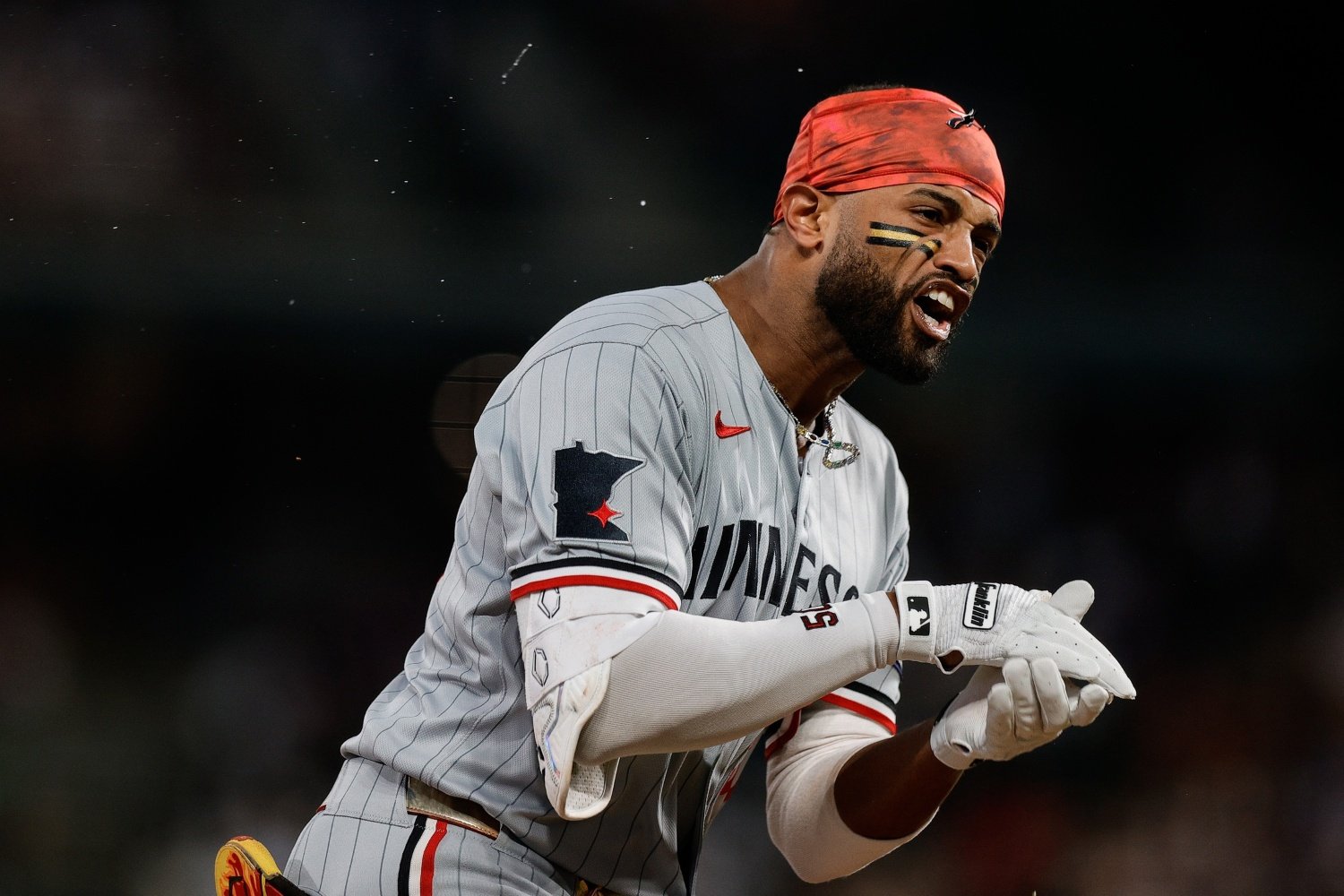 Though Jhoan Duran was part of the organization longer and Carlos Correa's expatriation is more significant, for many Twins fans, this will be the trade that hurts most. Willi Castro endeared himself to teammates, management and the fans, with a blend of great tools, a hustling style, versatility and affability. Now, he'll pack his many gloves and his bats (just the one set, though; I asked, and Castro said he's not one of the switch-hitters who swings different sizes or shapes of lumber from each side of the plate) and try to make an impact on the pennant race. Castro, 28, will be a free agent at the end of this season. In the final year of his arbitration eligibility, he’s making $6.4 million this year, which means that just over $2 million remains to be paid. That’s a small price to pay, though, for a switch-hitting utility man who offers a modicum of both power and speed. After hitting a career-high 12 home runs last year, Castro already has 10 in 2025. In 336 plate appearances, he entered Tuesday batting .252/.343/.418. The Twins scooped Castro up off the scrap heap before the 2023 season, signing him to a minor-league deal after he’d been non-tendered by the Detroit Tigers. Since then, he’s been the Swiss Army knife for the team, playing all over the diamond and slotted in all over the lineup card. His defense has declined sharply the last two seasons, perhaps because he’s been moved around so much, and this year, he’s mainly played second base and the corner outfield spots. However, his versatility (in both halves of innings) made him appealing to multiple teams. One of those teams turned out to be the Cubs, whose struggles to cobble together a functional bench this year have held them back as the grind of the season has caught up to some of their everyday players. To add Castro to their positional rotation, Chicago sent Minnesota Double-A arms Ryan Gallagher and Sam Armstrong, according to Jesse Rogers of ESPN. Gallagher is the headliner here. He's been an arm on the rise throughout the season, climbing the ranks of the Chicago farm system after being the team's sixth-round pick in the MLB Draft last summer. In 84 innings at High-A South Bend and Double-A Knoxville, Gallagher has a 3.43 ERA and 96 strikeouts, against 20 walks. He's exactly the kind of arm with whom the Twins do well, and he's already found some success in Double A. Armstrong, 23, has also held his own in Knoxville, but he was a 13th-round pick in 2023 and doesn't have Gallagher's impressive peripheral stats. He looks like more of a candidate for a quick move to the bullpen, where his stuff might tick up and play better.
 -
Image courtesy of © Matt Marton-Imagn Images No player in the Twins clubhouse looks less like a big-leaguer when they walk through the door, but Danny Coulombe carries himself so much like one that any doubt gets pulverized quickly. Certainly, whenever he took the mound, he left no doubt—across multiple tenures with the Twins. Now, he'll bring that swagger and that brilliance—with a hefty dose of matchup value to boot—to a playoff hunt. The Texas Rangers looked like sellers for much of this month, but the muddle of the American League and a well-timed charge had them hunting for ways to get a bit better without spending any more money. Jeff Passan was first with this news. Coulombe, 35, ends his second stint with the Twins having somehow managed to pitch even better than he did in his first. He's made 40 appearances on the year, totaling 31 innings. Using the loophole in the three-batter minimum rule whereby a pitcher isn’t required to return to the mound the next inning if they finish the one they enter, Rocco Baldelli frequently brought in Coulombe to face a dangerous left-handed batter in a middle-innings jam. Coulombe had eight appearances in which he faced just one batter, and three more in which he faced just two. Across those 11 outings, he inherited 15 runners and didn’t allow any to score. In fact, he’s only allowed four of 24 inherited runners to score all year. With a very high arm slot from his very short stature, the southpaw gives opponents an exceptionally difficult look. That elevated his trade value, almost as much as his superb performance and his affordable contract. He signed a one-year deal worth $3 million in early February, which will end up being roughly $3.2 million as he hits incentives based on games pitched. That leaves only about $1 million to be paid for the balance of the year. Coulombe has not allowed a home run this year. Left-handed relievers are always in demand at the deadline, and Coulombe is no exception. The Rangers, much in need of bullpen help and with no extra money to spend as they flirt with the competitive-balance tax threshold, were a perfect fit for him, and the two sides found each other with about 100 minutes left before the deadline. In exchange, the Twins will receive Texas's 6th-round pick from last year's MLB Draft, Garrett Horn. Mark Feinsand broke that news. Horn was recovering from Tommy John surgery when selected last summer, and has made just nine starts in Low A this year. He's moderately promising. One might have dared hope for a player with either more upside or more proximity to the major leagues, but he's not entirely without merit. It's unfortunate that the Twins couldn't dervie more value from having been so right to reinvest in Coulombe, but that's the nature of one-year deals with middle relievers. The way to derive big value from it would have been to win this year and have Coulombe keep getting big outs into October. View full article
-
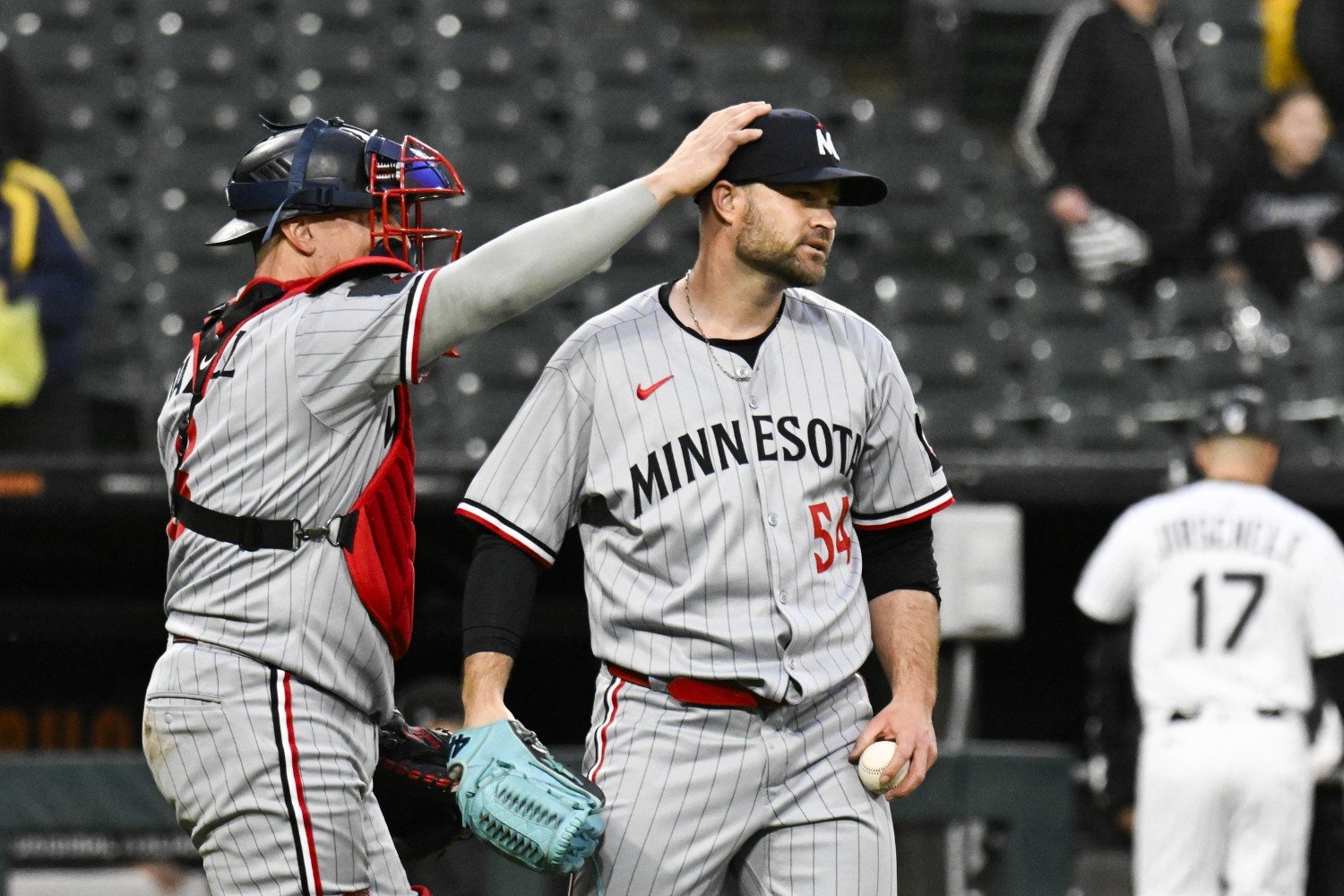 No player in the Twins clubhouse looks less like a big-leaguer when they walk through the door, but Danny Coulombe carries himself so much like one that any doubt gets pulverized quickly. Certainly, whenever he took the mound, he left no doubt—across multiple tenures with the Twins. Now, he'll bring that swagger and that brilliance—with a hefty dose of matchup value to boot—to a playoff hunt. The Texas Rangers looked like sellers for much of this month, but the muddle of the American League and a well-timed charge had them hunting for ways to get a bit better without spending any more money. Jeff Passan was first with this news. Coulombe, 35, ends his second stint with the Twins having somehow managed to pitch even better than he did in his first. He's made 40 appearances on the year, totaling 31 innings. Using the loophole in the three-batter minimum rule whereby a pitcher isn’t required to return to the mound the next inning if they finish the one they enter, Rocco Baldelli frequently brought in Coulombe to face a dangerous left-handed batter in a middle-innings jam. Coulombe had eight appearances in which he faced just one batter, and three more in which he faced just two. Across those 11 outings, he inherited 15 runners and didn’t allow any to score. In fact, he’s only allowed four of 24 inherited runners to score all year. With a very high arm slot from his very short stature, the southpaw gives opponents an exceptionally difficult look. That elevated his trade value, almost as much as his superb performance and his affordable contract. He signed a one-year deal worth $3 million in early February, which will end up being roughly $3.2 million as he hits incentives based on games pitched. That leaves only about $1 million to be paid for the balance of the year. Coulombe has not allowed a home run this year. Left-handed relievers are always in demand at the deadline, and Coulombe is no exception. The Rangers, much in need of bullpen help and with no extra money to spend as they flirt with the competitive-balance tax threshold, were a perfect fit for him, and the two sides found each other with about 100 minutes left before the deadline. In exchange, the Twins will receive Texas's 6th-round pick from last year's MLB Draft, Garrett Horn. Mark Feinsand broke that news. Horn was recovering from Tommy John surgery when selected last summer, and has made just nine starts in Low A this year. He's moderately promising. One might have dared hope for a player with either more upside or more proximity to the major leagues, but he's not entirely without merit. It's unfortunate that the Twins couldn't dervie more value from having been so right to reinvest in Coulombe, but that's the nature of one-year deals with middle relievers. The way to derive big value from it would have been to win this year and have Coulombe keep getting big outs into October.
 -
Image courtesy of © Jesse Johnson-Imagn Images The Minnesota Twins are trading Carlos Correa back to the Houston Astros, according to multiple reports. The deal will involve, principally, the cash-strapped Minnesota front office getting out from under most of the contract to which they re-signed Correa after his star-crossed free agency in the winter of 2022-23. Brian McTaggart of MLB.com had the news first. Correa is in the third of six guaranteed years on the complicated, team-friendly deal the Twins struck with him in January 2023. He’s making $36 million this year, which means there’s $12 million left for 2025 alone. After that, though, his pay gradually decreases. He’ll earn $31.5 million in 2026, $30.5 million in 2027 and $30 million in 2028, all guaranteed—then, there are four club options, with the value stepping downward in $5-million increments each year. Those options can vest based on playing time, but the Astros can manage his playing time in whichever of those seasons they’d like. This trade is, effectively, a salary dump—and, as such, a sad and embittering end to a once-promising Twins tenure for a player who joined the team when he was on a Hall of Fame career trajectory. Plantar fasciitis and other injuries have eroded his skills and curtailed his production, but as much as anything, this divorce became necessary because Correa’s deal was struck by a team anticipating a steadily increasing payroll, which then had the rug pulled out from under it by an ownership group now running for the door. Correa, for his part, has done whatever he could to foster a winning atmosphere, and will continue to do so as he returns to the organization that took him first overall in 2012. He's sliding to third base for the Astros. The full extent of the deal is still far from clear, but while the Twins are eating a portion of the nine-figure sum still owed to Correa, they've offloaded the lion's share of it. There will be a prospect coming back to the Twins. That's not really a surprise. It's unlikely to be an especially high-echelon talent, though—and that leaves more questions to answer, too. As it turns out, though, "prospect" is rather a strong word. The hurler the team will receive is Matt Mikulski, a 26-year-old organizational arm who had been pitching at High A in the Houston system. Meanwhile, according to multiple reports, the Twins will eat $33 million of the remaining money owed to Correa, so they're getting off the hook for about twice that much. In theory, the upside of a trade like this is to open space for young players and to free up money to make it easier to retain up-and-coming pieces who look like the foundations of a new core. In practice, at this moment, it looks as though the benefits of this deal redound mostly to the Pohlad family. Reinvestment of the money saved seems unlikely, in the short term, and the team certainly didn't acquire an impactful player to balance the one they're losing. On the other hand, Correa's age and recent performance remind us that the uglier half of this contract is likely ahead, not behind. The greatest source of frustration, perhaps, is that the situation arose where this measure was even considered. Once it did, making this trade was logical. Most baseball fans just don't follow the game for the logic of it. View full article
-
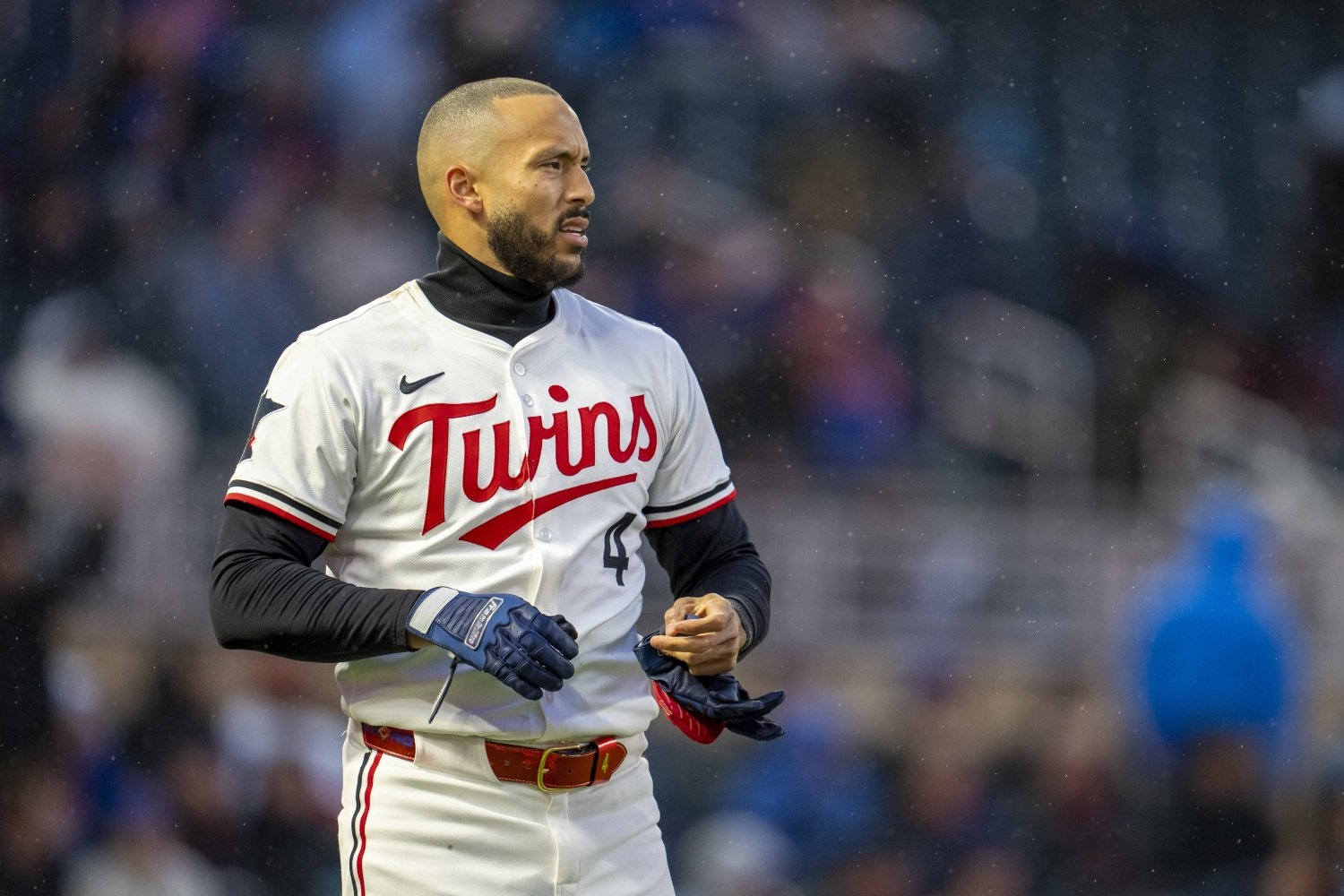 The Minnesota Twins are trading Carlos Correa back to the Houston Astros, according to multiple reports. The deal will involve, principally, the cash-strapped Minnesota front office getting out from under most of the contract to which they re-signed Correa after his star-crossed free agency in the winter of 2022-23. Brian McTaggart of MLB.com had the news first. Correa is in the third of six guaranteed years on the complicated, team-friendly deal the Twins struck with him in January 2023. He’s making $36 million this year, which means there’s $12 million left for 2025 alone. After that, though, his pay gradually decreases. He’ll earn $31.5 million in 2026, $30.5 million in 2027 and $30 million in 2028, all guaranteed—then, there are four club options, with the value stepping downward in $5-million increments each year. Those options can vest based on playing time, but the Astros can manage his playing time in whichever of those seasons they’d like. This trade is, effectively, a salary dump—and, as such, a sad and embittering end to a once-promising Twins tenure for a player who joined the team when he was on a Hall of Fame career trajectory. Plantar fasciitis and other injuries have eroded his skills and curtailed his production, but as much as anything, this divorce became necessary because Correa’s deal was struck by a team anticipating a steadily increasing payroll, which then had the rug pulled out from under it by an ownership group now running for the door. Correa, for his part, has done whatever he could to foster a winning atmosphere, and will continue to do so as he returns to the organization that took him first overall in 2012. He's sliding to third base for the Astros. The full extent of the deal is still far from clear, but while the Twins are eating a portion of the nine-figure sum still owed to Correa, they've offloaded the lion's share of it. There will be a prospect coming back to the Twins. That's not really a surprise. It's unlikely to be an especially high-echelon talent, though—and that leaves more questions to answer, too. As it turns out, though, "prospect" is rather a strong word. The hurler the team will receive is Matt Mikulski, a 26-year-old organizational arm who had been pitching at High A in the Houston system. Meanwhile, according to multiple reports, the Twins will eat $33 million of the remaining money owed to Correa, so they're getting off the hook for about twice that much. In theory, the upside of a trade like this is to open space for young players and to free up money to make it easier to retain up-and-coming pieces who look like the foundations of a new core. In practice, at this moment, it looks as though the benefits of this deal redound mostly to the Pohlad family. Reinvestment of the money saved seems unlikely, in the short term, and the team certainly didn't acquire an impactful player to balance the one they're losing. On the other hand, Correa's age and recent performance remind us that the uglier half of this contract is likely ahead, not behind. The greatest source of frustration, perhaps, is that the situation arose where this measure was even considered. Once it did, making this trade was logical. Most baseball fans just don't follow the game for the logic of it.
 -
Image courtesy of © Jesse Johnson-Imagn Images Brock Stewart was drafted by the Los Angeles Dodgers and made his big-league debut for them. Now, he returns whence he came, with plenty of team control for his new, old team to play with. Stewart, 33, has a 2.38 ERA in 39 appearances and 34 innings pitched this season, his third with the Twins. Injuries have marred his professional career and long delayed his emergence as a successful reliever, but he’s tapped into some nasty stuff since coming to the Twins and dedicating himself to the bullpen. This year, enjoying the longest stretch of good health he's had in years, he's striking out 29.5% of opposing batters and walking just 7.9%. Opponents have a meager ,612 OPS against the man Twins fans came to know, affectionately, as Beef Stew. Though out of options (and therefore always in some danger of hitting the waiver wire, should his performance wobble), Stewart is under team control through 2027 via arbitration. He's making just $870,000 in 2025, scarcely over the league-minimum salary. Between the control years and the low financial cost, the trade value on Stewart should be significant. He was one bellwether, coming into this week, of how far the Twins would go in reshaping and restocking their system. Under Derek Falvey, the Minnesota front office has (correctly, for the most part) treated even highly effective relievers as essentially replaceable. Though Stewart has been great, the team suffers from a dearth of leads for him to help protect, rather than from an inability to protect the leads they do get. Trading him to a bullpen-needy team highly adept at creating leads, like the Dodgers, is the club's way of trying to find more durable and scarce assets. For Los Angeles, though, a sturdy middle reliever is a godsend—and so much the better that he's a familiar and friendly face. Ravaged by their annual spate of injuries, the Dodgers have spent much of this week stalking the relief market. They were in on Jhoan Duran before the Twins found a match with the Philadelphia Phillies on him; Stewart figures to help stabilize a pen that will be without erstwhile relief ace Evan Phillips all year (elbow surgery) and that has had to make do without big-money offseason signing Tanner Scott for a chunk of this summer. In return for Stewart, the Twins acquired outfielder James Outman, as first reported by ESPN's Alden Gonzalez. Outman, 28, still has (theoretically) four years of team control remaining after this one—but he's spent the majority of this season in Triple A, and has a .487 OPS in the majors. Outman is a lefty batter with a great glove, even in center field, and he had 23 home runs in a very impressive rookie season in 2023. He has plus speed and plus power. He's been such a wreck at the plate, though, that it's a bit odd to hear that this is a 1-for-1 deal. Outman was a late bloomer, so the career setback he's gone through over the last year and a half has him rushing toward 30 without having proved he can consistently handle the best pitching in the world. His tools—especially the power, if he can get to it the way he did two seasons ago—sets him apart from DaShawn Keirsey Jr., but broadly, he offers a similar profile. The Twins are rolling the dice on their own player development and betting that they can turn around the struggling ex-slugger. View full article
-
ANOTHER Trade: Brock Stewart Goes to Los Angeles Dodgers
Matthew Trueblood posted an article in Twins
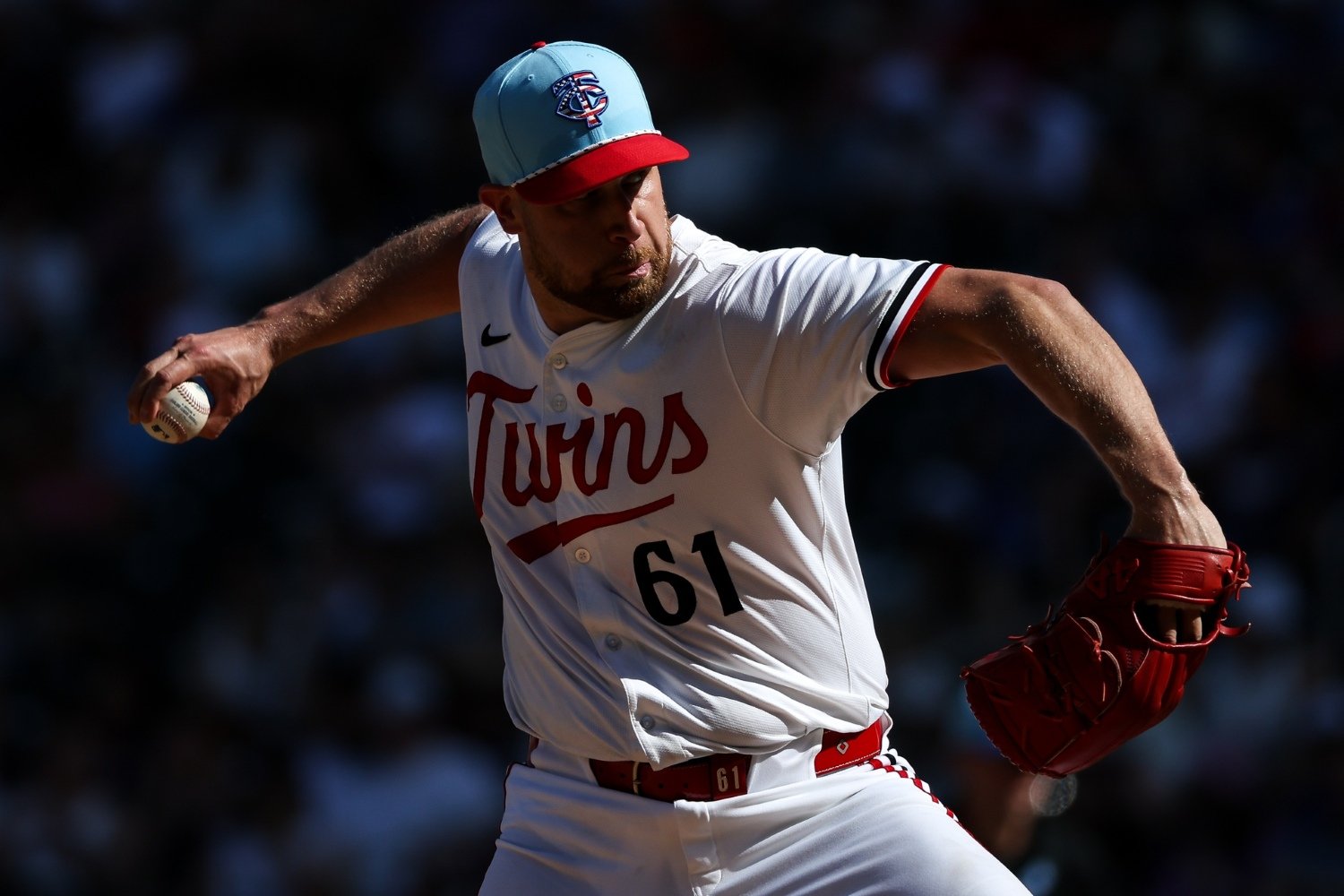 Brock Stewart was drafted by the Los Angeles Dodgers and made his big-league debut for them. Now, he returns whence he came, with plenty of team control for his new, old team to play with. Stewart, 33, has a 2.38 ERA in 39 appearances and 34 innings pitched this season, his third with the Twins. Injuries have marred his professional career and long delayed his emergence as a successful reliever, but he’s tapped into some nasty stuff since coming to the Twins and dedicating himself to the bullpen. This year, enjoying the longest stretch of good health he's had in years, he's striking out 29.5% of opposing batters and walking just 7.9%. Opponents have a meager ,612 OPS against the man Twins fans came to know, affectionately, as Beef Stew. Though out of options (and therefore always in some danger of hitting the waiver wire, should his performance wobble), Stewart is under team control through 2027 via arbitration. He's making just $870,000 in 2025, scarcely over the league-minimum salary. Between the control years and the low financial cost, the trade value on Stewart should be significant. He was one bellwether, coming into this week, of how far the Twins would go in reshaping and restocking their system. Under Derek Falvey, the Minnesota front office has (correctly, for the most part) treated even highly effective relievers as essentially replaceable. Though Stewart has been great, the team suffers from a dearth of leads for him to help protect, rather than from an inability to protect the leads they do get. Trading him to a bullpen-needy team highly adept at creating leads, like the Dodgers, is the club's way of trying to find more durable and scarce assets. For Los Angeles, though, a sturdy middle reliever is a godsend—and so much the better that he's a familiar and friendly face. Ravaged by their annual spate of injuries, the Dodgers have spent much of this week stalking the relief market. They were in on Jhoan Duran before the Twins found a match with the Philadelphia Phillies on him; Stewart figures to help stabilize a pen that will be without erstwhile relief ace Evan Phillips all year (elbow surgery) and that has had to make do without big-money offseason signing Tanner Scott for a chunk of this summer. In return for Stewart, the Twins acquired outfielder James Outman, as first reported by ESPN's Alden Gonzalez. Outman, 28, still has (theoretically) four years of team control remaining after this one—but he's spent the majority of this season in Triple A, and has a .487 OPS in the majors. Outman is a lefty batter with a great glove, even in center field, and he had 23 home runs in a very impressive rookie season in 2023. He has plus speed and plus power. He's been such a wreck at the plate, though, that it's a bit odd to hear that this is a 1-for-1 deal. Outman was a late bloomer, so the career setback he's gone through over the last year and a half has him rushing toward 30 without having proved he can consistently handle the best pitching in the world. His tools—especially the power, if he can get to it the way he did two seasons ago—sets him apart from DaShawn Keirsey Jr., but broadly, he offers a similar profile. The Twins are rolling the dice on their own player development and betting that they can turn around the struggling ex-slugger.


