Matthew Trueblood
-
Posts
1,033 -
Joined
-
Last visited
Content Type
Profiles
News
Minnesota Twins Videos
2026 Minnesota Twins Top Prospects Ranking
2022 Minnesota Twins Draft Picks
Minnesota Twins Free Agent & Trade Rumors, Notes, & Tidbits
Guides & Resources
2023 Minnesota Twins Draft Picks
The Minnesota Twins Players Project
2024 Minnesota Twins Draft Picks
2025 Minnesota Twins Draft Pick Tracker
2026 Minnesota Twins Draft Tracker: Picks & Bonuses
Forums
Blogs
Events
Store
Downloads
Gallery
Everything posted by Matthew Trueblood
-
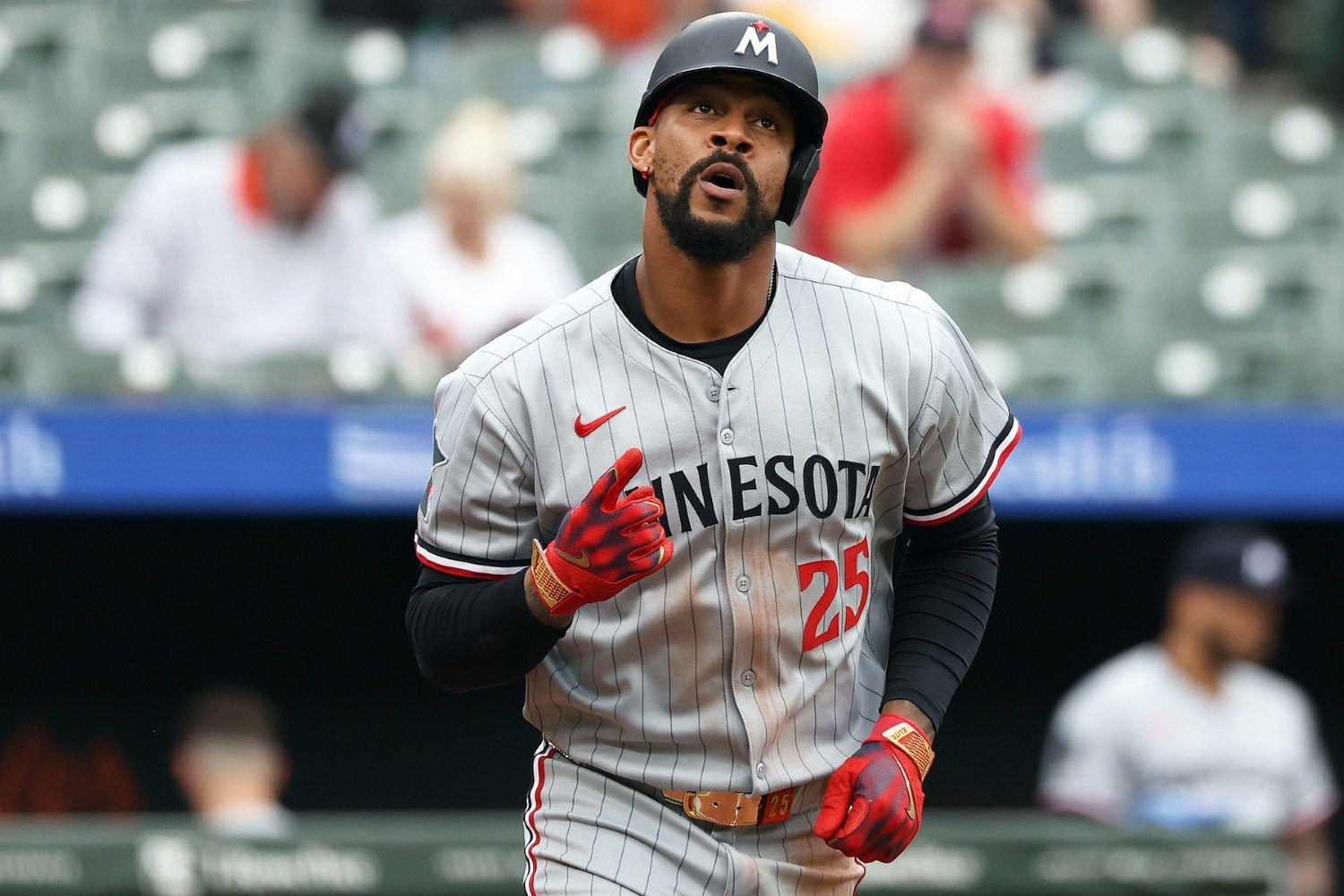 They might yet extend their winning streak to 11 games and sweep the season series against should-be contenders, but the Twins are living in limbo right now. After a third-inning fly ball on which Byron Buxton charged hard as Carlos Correa backpedaled into the outfield, both players are out of the game. Twins Territory waits with bated breath to see what the prognosis on each turns out to be. On an 0-2 count, Orioles center fielder Cedric Mullins hit a pop-up with some extra carry. (For the Twins, nothing good begins with 'Cedric Mullins...'.) Buxton had been shading Mullins toward right field, and Correa had been playing up the middle. Because the ball was well beyond the infield apron and a bit toward left field, Correa hurried out after the ball, unsure whether Buxton would be able to get there. Buxton, meanwhile, read the ball well and charged hard, at a slight angle. At the last moment, Correa tried to pull off and brace for contact, but it did little good. After a lengthy visit from the trainer and the manager, Correa left the game, while Buxton stayed in. However, by the bottom of the fourth, DaShawn Keirsey Jr. had replaced Buxton in center field. There has been no update as of the time of this writing, but each player appeared to hit their heads and be badly shaken up on the play. It's safe to guess that each will at least be evaluated for possible concussions. You couldn't draw up a worse turn of events for the Twins if you tried. These are the two players in whom they are most heavily invested, financially, and Buxton has been at the heart of everything good that has happened for the team this year. Correa's season has already been a struggle, but that's certainly not more likely to turn itself around in the wake of this. We'll all await more information. Already, this is a banged-up team. Harrison Bader left Game 2 of the doubleheader Wednesday in Baltimore, after Ty France had to leave Game 1. They have a bevy of versatile position players, but it's impossible to replace the sheer talent of Buxton and Correa—and equally daunting to replace the defensive brilliance, production and energy Buxton has provided on his own, all year. Keirsey could be in line for more playing time, in the short term, but if the team wants to complete its recovery from a dreadful start to the season, they'll need to get their stars back as soon as possible. Hopefully, the substitutions turn out to have been precautionary, and both players return to the lineup this weekend. UPDATE: The Twins announced that both players have entered Major League Baseball's concussion protocol. That confirms the fears most felt when they watched the replays of the collision. As is always the case, it's impossible to predict how this will play out. They could be cleared of concussion concerns and miss minimal time, but if either does actually have a concussion—and the violence of the crash was certainly worrisome—they could suffer medium- and long-term effects, both in terms of time missed and performance diminution when they return. For now, the team and the players just need to proceed with caution.
 -
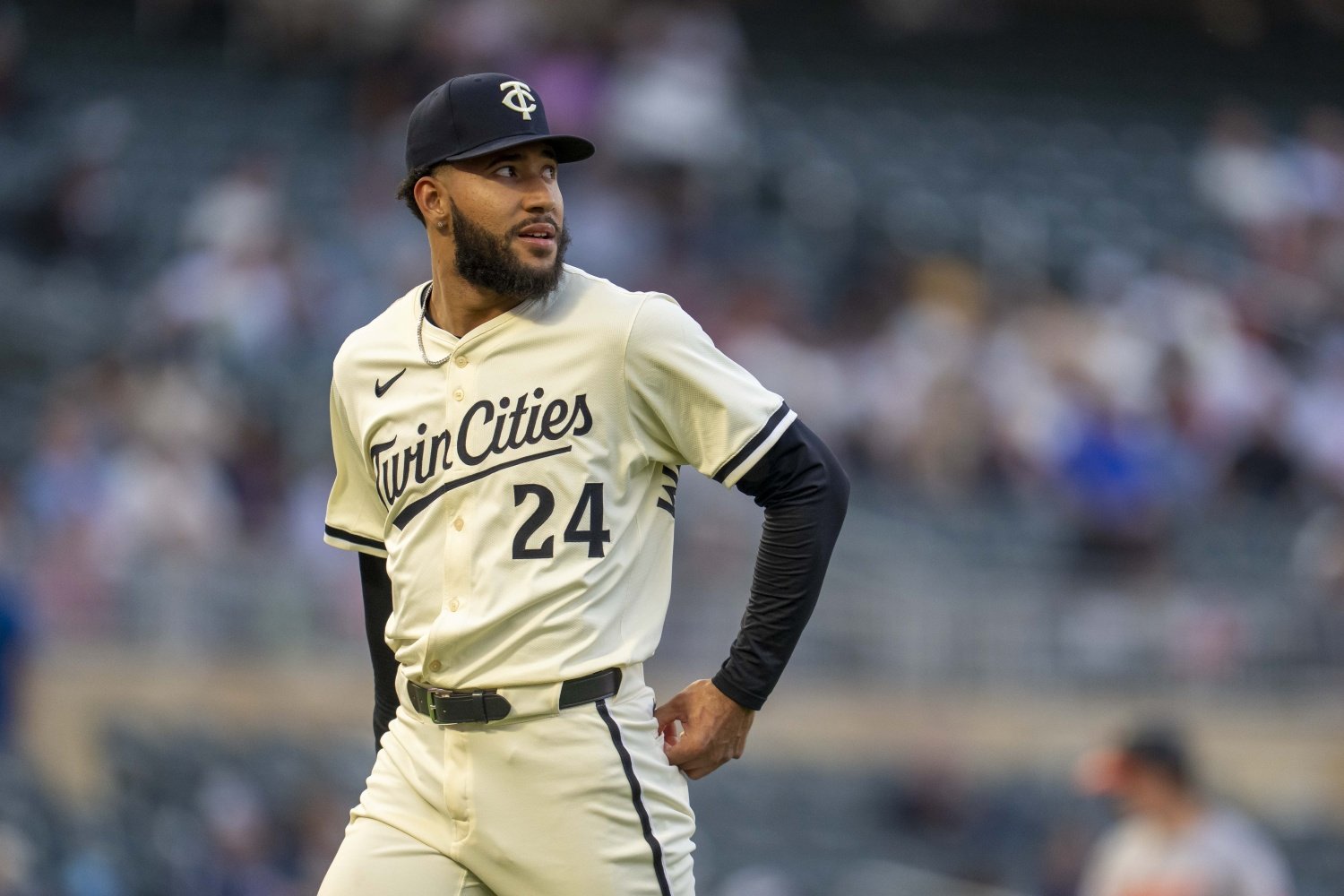 It's been a tough follow-up to what was a career-making year for Simeon Woods Richardson in 2024. He never exactly looked like a frontline starter, but he did yeoman's work at the back end of an injury-diminished Twins rotation, keeping them afloat until the final month. Alas, he then burned out pretty badly, and so far this season, he has looked more like the tired version of himself from the end of last year than like the guy who was so essential to the club until late August. Since Aug. 1, 2024, Woods Richardson has a 5.06 ERA and a 125 FIP- (where 100 is average and lower is better), according to FanGraphs. He's struck out 20.8% of opposing batters, walked 9.6% of them, and given up home runs in 4.2% of opponents' plate appearances. Those numbers just don't add up to (or point toward) success, and with 80 innings pitched in 18 total outings (17 of them starts), he's also not giving the team any semblance of length or protection for the bullpen. Whether he can turn things around from here is an open question; his big-league future might lie in the bullpen. For now, though, the team will turn to one of its young starters at Triple-A St. Paul, swapping Woods Richardson out with them. At first blush, the choices for the team to pitch in that rotation spot are Zebby Matthews, David Festa and Andrew Morris, any of whom could pitch on typical rest this weekend. In the meantime, they kept Kody Funderburk on the 26-man roster after he came up to be the 27th man for the doubleheader Wednesday, and will roll with a deeper bullpen for a couple days as they recuperate from the strain that twin bill placed on their pen. Festa would be joining the rotation for a second stint this year, while Morris would require a 40-man roster move to come up and fill the gap in the schedule. Length will be important; the team needs whoever comes up to be in a better position to both keep the team in low-scoring games and take a bit of pressure off the bullpen. For now, while Woods Richardson has been an important part of the team for the last year-plus, he could no longer fill that bill.
- 24 comments
-
- 8
-

-
- simeon woods richardson
- david festa
- (and 3 more)
-
Image courtesy of © Jesse Johnson-Imagn Images It's been a tough follow-up to what was a career-making year for Simeon Woods Richardson in 2024. He never exactly looked like a frontline starter, but he did yeoman's work at the back end of an injury-diminished Twins rotation, keeping them afloat until the final month. Alas, he then burned out pretty badly, and so far this season, he has looked more like the tired version of himself from the end of last year than like the guy who was so essential to the club until late August. Since Aug. 1, 2024, Woods Richardson has a 5.06 ERA and a 125 FIP- (where 100 is average and lower is better), according to FanGraphs. He's struck out 20.8% of opposing batters, walked 9.6% of them, and given up home runs in 4.2% of opponents' plate appearances. Those numbers just don't add up to (or point toward) success, and with 80 innings pitched in 18 total outings (17 of them starts), he's also not giving the team any semblance of length or protection for the bullpen. Whether he can turn things around from here is an open question; his big-league future might lie in the bullpen. For now, though, the team will turn to one of its young starters at Triple-A St. Paul, swapping Woods Richardson out with them. At first blush, the choices for the team to pitch in that rotation spot are Zebby Matthews, David Festa and Andrew Morris, any of whom could pitch on typical rest this weekend. In the meantime, they kept Kody Funderburk on the 26-man roster after he came up to be the 27th man for the doubleheader Wednesday, and will roll with a deeper bullpen for a couple days as they recuperate from the strain that twin bill placed on their pen. Festa would be joining the rotation for a second stint this year, while Morris would require a 40-man roster move to come up and fill the gap in the schedule. Length will be important; the team needs whoever comes up to be in a better position to both keep the team in low-scoring games and take a bit of pressure off the bullpen. For now, while Woods Richardson has been an important part of the team for the last year-plus, he could no longer fill that bill. View full article
-
Image courtesy of © Daniel Kucin Jr.-Imagn Images Kody Clemens came up big for the Twins Wednesday. with a three-run eighth-inning homer that gave the team a lead and launched them to their 10th straight win. That was fitting, because it was also a home run by Clemens (in the sixth inning of the Twins' May 3 game at Fenway Park) that effectively began the streak. A near-desperation pickup during the period when the Twins weren't sure of the statuses of either WIlli Castro or Carlos Correa and were unable to backfill their depleted roster with good options in their own system, Clemens has given them more than they might have fairly hoped for. In 25 plate appearances with the Twins, Clemens is batting .227/.320/.591. He's struck out six times, but he also has two doubles, two home runs, one walk and two times hit by pitches. Don't expect the Twins to hand him an everyday job, or anything. He's a role player, with a relatively small role, at that. If he can continue filling in this impressively, though, it will have an outsized impact on the Twins' rebound from their season's woeful start. Normally, it's a good idea to brush off a couple of big hits like this (from a player who turns 29 years old today) as fun and valuable but meaningless variance. Anchoring player evaluations to even huge homers like these two is a bad idea, and Clemens supplanting any of the younger players on the Twins roster would be foolish, if the time ever comes when several of those younger guys are hitting well and feeling healthy at the same time. In this case, though, there's some evidence that Clemens has undergone a real change. It might not make him a worthy starter, but we should try to get a firm understanding of it. In 2024, Clemens had 208 tracked, competitive swings in the big leagues. They averaged 70.5 mph of swing speed, and a 7.3-foot swing length. Only 4.3% of his swings topped 75 mph, where real damage becomes much more frequent. He generated an average exit velocity of 89.4 mph, and maxed out at 108.4 mph. His production was lousy, even for a bench player, because he strikes out too much and hits for too low a batting average to make up for such modest power indicators. This year, things are different. It's only been 42 tracked, competitive swings, but he's averaged 73.1 mph of swing speed and a slightly shorter swing length of 7.2 feet. A solid 16.7% of his swings have crossed that 75-mph threshold. His average exit velocity is 92 mph, and he's already set a new career max for exit velocity on an individual batted ball (109.0 mph), albeit by a tiny amount. Clemens doesn't have enough plate appearances to qualify for the leaderboard on Baseball Savant, but if he did, he'd have the fourth-largest change in bat speed from 2024 to 2025, behind only Nolan Schanuel, Brice Turang and Anthony Volpe. Those three younger hitters are all varying degrees of famous for having come into this season with overhauled swings, new quasi-magical bats, or a mere intention to do more damage. Turang hit just seven home runs all last season. This year, he's already cracked three. Volpe is already halfway to his total of 12 home runs from last year, and has 12 doubles to his name, too. Bat speed is good. Increasing bat speed, as long as it doesn't cost one the ability to put the bat on the ball, is a key way to reach a new gear at the plate. Without an overhauled approach, Clemens still doesn't need to be part of the regular lineup. He strikes out a lot and walks very rarely. He's a bit of a mess at the plate. This season, though, he's become a much more dangerous mess. That's worth celebrating. The Twins helped him start going out and getting the ball better; his contact point has moved 2.9 inches toward the pitcher and 1.9 inches away from his center of mass than it was when he was with the Phillies, even earlier this year. That number is still likely to fluctuate quite a bit, given how small his sample of work with Minnesota is, so let's not get bogged down in it. The change in bat speed, however, can already be said to be very real. Because it's almost entirely within the hitter's control and not something that intentionally varies as widely from one pitch to the next as, say, pitch velocity, bat speed becomes telling over even very small samples. Right now, Clemens is switching a quick stick—so much faster than in the past, and so far beyond the big-league average, that he can't help but run into some power. He's done it at truly perfect times for the Twins over the last week and a half. At this point, they have to expand his role just a little bit, to see how well he holds onto this progress and what further game-breaking value they can extract from it. This great an improvement in bat speed is worth a full scouting grade on the power scale, and if he keeps it, that pop will come in handy again before long. View full article
-
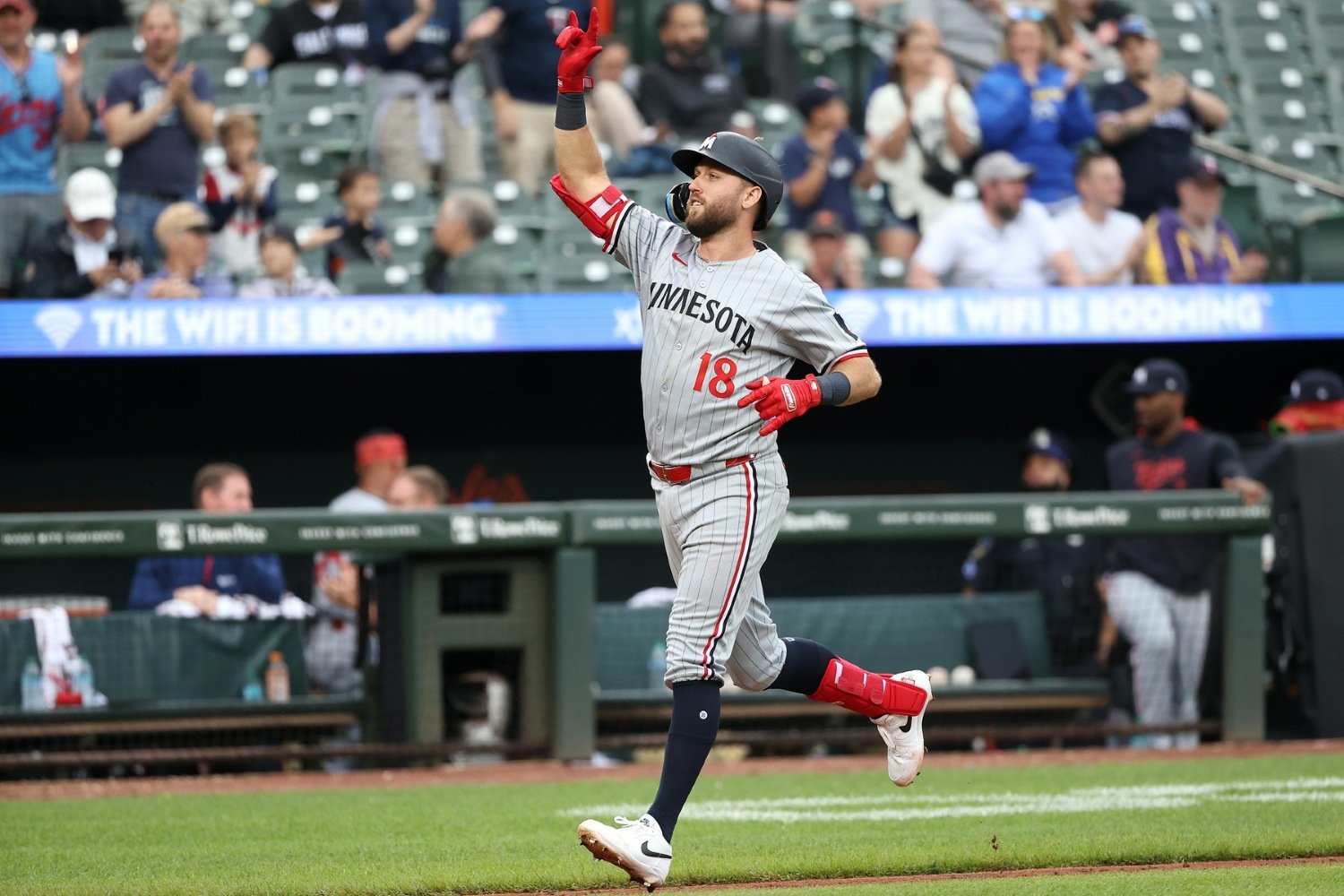 Kody Clemens came up big for the Twins Wednesday. with a three-run eighth-inning homer that gave the team a lead and launched them to their 10th straight win. That was fitting, because it was also a home run by Clemens (in the sixth inning of the Twins' May 3 game at Fenway Park) that effectively began the streak. A near-desperation pickup during the period when the Twins weren't sure of the statuses of either WIlli Castro or Carlos Correa and were unable to backfill their depleted roster with good options in their own system, Clemens has given them more than they might have fairly hoped for. In 25 plate appearances with the Twins, Clemens is batting .227/.320/.591. He's struck out six times, but he also has two doubles, two home runs, one walk and two times hit by pitches. Don't expect the Twins to hand him an everyday job, or anything. He's a role player, with a relatively small role, at that. If he can continue filling in this impressively, though, it will have an outsized impact on the Twins' rebound from their season's woeful start. Normally, it's a good idea to brush off a couple of big hits like this (from a player who turns 29 years old today) as fun and valuable but meaningless variance. Anchoring player evaluations to even huge homers like these two is a bad idea, and Clemens supplanting any of the younger players on the Twins roster would be foolish, if the time ever comes when several of those younger guys are hitting well and feeling healthy at the same time. In this case, though, there's some evidence that Clemens has undergone a real change. It might not make him a worthy starter, but we should try to get a firm understanding of it. In 2024, Clemens had 208 tracked, competitive swings in the big leagues. They averaged 70.5 mph of swing speed, and a 7.3-foot swing length. Only 4.3% of his swings topped 75 mph, where real damage becomes much more frequent. He generated an average exit velocity of 89.4 mph, and maxed out at 108.4 mph. His production was lousy, even for a bench player, because he strikes out too much and hits for too low a batting average to make up for such modest power indicators. This year, things are different. It's only been 42 tracked, competitive swings, but he's averaged 73.1 mph of swing speed and a slightly shorter swing length of 7.2 feet. A solid 16.7% of his swings have crossed that 75-mph threshold. His average exit velocity is 92 mph, and he's already set a new career max for exit velocity on an individual batted ball (109.0 mph), albeit by a tiny amount. Clemens doesn't have enough plate appearances to qualify for the leaderboard on Baseball Savant, but if he did, he'd have the fourth-largest change in bat speed from 2024 to 2025, behind only Nolan Schanuel, Brice Turang and Anthony Volpe. Those three younger hitters are all varying degrees of famous for having come into this season with overhauled swings, new quasi-magical bats, or a mere intention to do more damage. Turang hit just seven home runs all last season. This year, he's already cracked three. Volpe is already halfway to his total of 12 home runs from last year, and has 12 doubles to his name, too. Bat speed is good. Increasing bat speed, as long as it doesn't cost one the ability to put the bat on the ball, is a key way to reach a new gear at the plate. Without an overhauled approach, Clemens still doesn't need to be part of the regular lineup. He strikes out a lot and walks very rarely. He's a bit of a mess at the plate. This season, though, he's become a much more dangerous mess. That's worth celebrating. The Twins helped him start going out and getting the ball better; his contact point has moved 2.9 inches toward the pitcher and 1.9 inches away from his center of mass than it was when he was with the Phillies, even earlier this year. That number is still likely to fluctuate quite a bit, given how small his sample of work with Minnesota is, so let's not get bogged down in it. The change in bat speed, however, can already be said to be very real. Because it's almost entirely within the hitter's control and not something that intentionally varies as widely from one pitch to the next as, say, pitch velocity, bat speed becomes telling over even very small samples. Right now, Clemens is switching a quick stick—so much faster than in the past, and so far beyond the big-league average, that he can't help but run into some power. He's done it at truly perfect times for the Twins over the last week and a half. At this point, they have to expand his role just a little bit, to see how well he holds onto this progress and what further game-breaking value they can extract from it. This great an improvement in bat speed is worth a full scouting grade on the power scale, and if he keeps it, that pop will come in handy again before long.
 -
Twins 6, Orioles 3: Nine. Times.
Matthew Trueblood replied to Matthew Trueblood's topic in Twins Daily Front Page News
If he ever stayed healthy enough to play as much as he's played so far this year, he'd have finished similarly high in that regard in other seasons. He's struck out in roughly 30% of his PAs since the start of 2022.- 21 replies
-
- 1
-
-
- bailey ober
- christian vazquez
- (and 1 more)
-
Twins 6, Orioles 3: Nine. Times.
Matthew Trueblood replied to Matthew Trueblood's topic in Twins Daily Front Page News
We've seen them do that anyway, but I did wonder if that was a way to save him a few breaths and set him up to be able to play Game 2—only then, of course, he's not in the lineup for it. Go figure.- 21 replies
-
- 2
-
-
- bailey ober
- christian vazquez
- (and 1 more)
-
Image courtesy of © Daniel Kucin Jr.-Imagn Images Box Score: Starting Pitcher: Bailey Ober - 4 2/3 IP, 2 H, 3 R, 3 BB, 3 K, 1 HR (102 pitches; 57 strikes) Home Runs: Brooks Lee (4), Christian Vázquez (1) Top 3 WPA: Vázquez .322, Trevor Larnach .164, Griffin Jax .135 Win Probability Chart (Via FanGraphs): It doesn't exactly feel restful, when they come this way, but the Twins got two days off in a row before taking the field Wednesday. That's the good news. The tougher news is, they have to play twice, at the front end of a stretch in which they play three consecutive series without a day off. That means nine games in eight days, which will require some roster maneuvering and some heroic pitching performances. Tougher still, the first two pitchers tasked with delivering those innings-eating outings are Bailey Ober and Simeon Woods Richardson, each of whom just faced the Orioles last week in Minnesota. As Cody Christie documented here earlier today, that poses an especially thorny challenge for a starting pitcher. Early on, though, Ober was up to it and then some. He largely kept Baltimore batters off-balance over the first two frames, aided by a self-sacrificing, diving catch by Harrison Bader in the first on a foul ball that took him hard into the sidewall in foul territory. Ober cleverly mixed his stuff, as he always does, with some special wrinkles designed to confound Orioles hitters hunting familiar sequences. For instance, he started Ramón Laureano with three straight changeups to lead off the bottom of the third, then showed him one high heater and went back to the change for an easy groundout. Four changeups in five pitches to a right-handed batter is not the typical approach for Ober; it's emblematic of the adjustments he made to frustrate anyone sitting on a particular pitch they saw too often last week at Target Field. Immediately thereafter, though, he got himself into trouble. Against No. 9 hitter Ramón Urías (who wasn't seeing him for a second time in a short window; he was on the IL when the O's were in Minneapolis last week), Ober went back to trying to mix his fastball with the changeup, but his command of the heater faltered. On a 3-2 pitch, he missed low and away, committing the cardinal sin of issuing a bases-empty walk as the Orioles flipped over the lineup card. Jackson Holliday couldn't make him pay, but Ryan Mountcastle came up with Urías on first and two outs. He'd notched a sacrifice fly and a ringing fifth-inning double against Ober last week, the latter creating a big jame the big righty had to work out of. That double came on a slider, and when Ober fell behind 3-1 and tried to sneak another slider in the zone by him, Mountcastle did it again. Urías, running on contact with two outs, was always going to try to score, but the pace of the ball and the skill of Bader (pursuing it into the corner) made the success of that endeavor far from assured. Sadly, the ball caught a corner and dropped against the wall, whereas Bader had been anticipating a hard bounce off the barrier. By the time he reversed his deceleration and chased it all the way to its resting place, there wasn't quite time for even the well-executed relay to Carlos Correa and Christian Vázquez. That made it 1-0 Orioles. It also brought up Gunnar Henderson, the hottest hitter in the Orioles' lineup, after he'd smashed a ground ball at 106 mph in his first at-bat. Ober worked a 2-2 count on him, but (perhaps getting too cute) tried a curveball to finish the inning. It wasn't a true hanger, but Henderson was ready for it, and smashed it well over the right-field wall. Suddenly, the Twins were in a 3-0 hole. Happily, though, it didn't last even a half-inning. Brooks Lee took the first pitch of the fourth over the wall in center, just off the skyward-reaching glove of Cedric Mullins. A well-placed dribbler got Correa aboard, and Willi Castro drew a walk. Then, however, Royce Lewis struck out and Bader flied out to left. It could have been a wasted rally, and the game probably takes a very different shape from there if it had been. Instead, the most unlikely hero of this long winning streak emerged. Vázquez, also getting a meaty curveball, launched it out to left-center field for a lead the team would not relinquish. Ober didn't even make it through five innings, which is unfortunate, under these circumstances. Other than that bad wobble in the third, though, he held Baltimore at bay. Danny Coulombe got him out of a jam in the fifth, and the team's deep bullpen followed its familiar formula thereafter. Some shaky defense by Lee at second and Correa at short threatened to result in another blown lead with Griffin Jax on the mound, but Jax gutted his way through and kept the 4-3 edge. Two insurance runs (the direct result of a Trevor Larnach double against a lefty, in a showdown the Orioles created on purpose by pitching around Byron Buxton) made the bottom of the ninth low-stress for Jhoan Duran. Notes In addition to Bader's great catch (one which briefly looked like it would knock him out of the game; he hobbled around a while and looks like he'll sport a bruise on his right knee after his collision with the wall), Buxton made a fine diving play later in the game to rob what would have been a game-tying single. Those two continue to be a sparkling defensive duo, and the Twins' fly ball-oriented pitching staff really positions them to have an outsized impact. Ty France left mid-game after fouling a ball off his left instep. The initial diagnosis is a foot contusion. We'll see if he can get back into the lineup for Game 2. Kody Funderburk is the 27th man for the double-dip. Expect him to pitch in this second contest. What’s Next: The turnaround is so tight that Game 2 might be in progress by the time you read this. Simeon Woods Richardson takes the ball and will try to stretch the streak to double digits. View full article
-
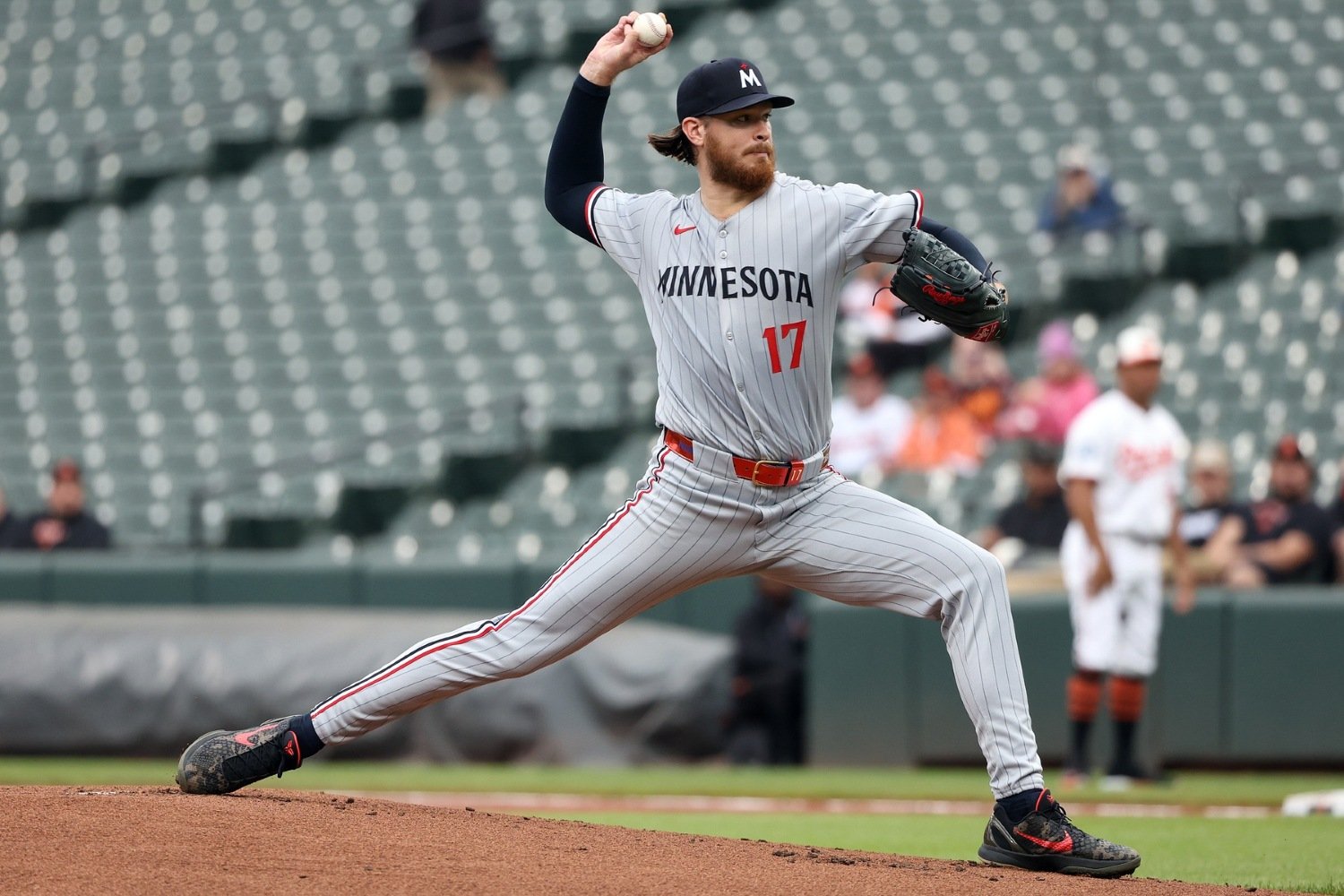 Box Score: Starting Pitcher: Bailey Ober - 4 2/3 IP, 2 H, 3 R, 3 BB, 3 K, 1 HR (102 pitches; 57 strikes) Home Runs: Brooks Lee (4), Christian Vázquez (1) Top 3 WPA: Vázquez .322, Trevor Larnach .164, Griffin Jax .135 Win Probability Chart (Via FanGraphs): It doesn't exactly feel restful, when they come this way, but the Twins got two days off in a row before taking the field Wednesday. That's the good news. The tougher news is, they have to play twice, at the front end of a stretch in which they play three consecutive series without a day off. That means nine games in eight days, which will require some roster maneuvering and some heroic pitching performances. Tougher still, the first two pitchers tasked with delivering those innings-eating outings are Bailey Ober and Simeon Woods Richardson, each of whom just faced the Orioles last week in Minnesota. As Cody Christie documented here earlier today, that poses an especially thorny challenge for a starting pitcher. Early on, though, Ober was up to it and then some. He largely kept Baltimore batters off-balance over the first two frames, aided by a self-sacrificing, diving catch by Harrison Bader in the first on a foul ball that took him hard into the sidewall in foul territory. Ober cleverly mixed his stuff, as he always does, with some special wrinkles designed to confound Orioles hitters hunting familiar sequences. For instance, he started Ramón Laureano with three straight changeups to lead off the bottom of the third, then showed him one high heater and went back to the change for an easy groundout. Four changeups in five pitches to a right-handed batter is not the typical approach for Ober; it's emblematic of the adjustments he made to frustrate anyone sitting on a particular pitch they saw too often last week at Target Field. Immediately thereafter, though, he got himself into trouble. Against No. 9 hitter Ramón Urías (who wasn't seeing him for a second time in a short window; he was on the IL when the O's were in Minneapolis last week), Ober went back to trying to mix his fastball with the changeup, but his command of the heater faltered. On a 3-2 pitch, he missed low and away, committing the cardinal sin of issuing a bases-empty walk as the Orioles flipped over the lineup card. Jackson Holliday couldn't make him pay, but Ryan Mountcastle came up with Urías on first and two outs. He'd notched a sacrifice fly and a ringing fifth-inning double against Ober last week, the latter creating a big jame the big righty had to work out of. That double came on a slider, and when Ober fell behind 3-1 and tried to sneak another slider in the zone by him, Mountcastle did it again. Urías, running on contact with two outs, was always going to try to score, but the pace of the ball and the skill of Bader (pursuing it into the corner) made the success of that endeavor far from assured. Sadly, the ball caught a corner and dropped against the wall, whereas Bader had been anticipating a hard bounce off the barrier. By the time he reversed his deceleration and chased it all the way to its resting place, there wasn't quite time for even the well-executed relay to Carlos Correa and Christian Vázquez. That made it 1-0 Orioles. It also brought up Gunnar Henderson, the hottest hitter in the Orioles' lineup, after he'd smashed a ground ball at 106 mph in his first at-bat. Ober worked a 2-2 count on him, but (perhaps getting too cute) tried a curveball to finish the inning. It wasn't a true hanger, but Henderson was ready for it, and smashed it well over the right-field wall. Suddenly, the Twins were in a 3-0 hole. Happily, though, it didn't last even a half-inning. Brooks Lee took the first pitch of the fourth over the wall in center, just off the skyward-reaching glove of Cedric Mullins. A well-placed dribbler got Correa aboard, and Willi Castro drew a walk. Then, however, Royce Lewis struck out and Bader flied out to left. It could have been a wasted rally, and the game probably takes a very different shape from there if it had been. Instead, the most unlikely hero of this long winning streak emerged. Vázquez, also getting a meaty curveball, launched it out to left-center field for a lead the team would not relinquish. Ober didn't even make it through five innings, which is unfortunate, under these circumstances. Other than that bad wobble in the third, though, he held Baltimore at bay. Danny Coulombe got him out of a jam in the fifth, and the team's deep bullpen followed its familiar formula thereafter. Some shaky defense by Lee at second and Correa at short threatened to result in another blown lead with Griffin Jax on the mound, but Jax gutted his way through and kept the 4-3 edge. Two insurance runs (the direct result of a Trevor Larnach double against a lefty, in a showdown the Orioles created on purpose by pitching around Byron Buxton) made the bottom of the ninth low-stress for Jhoan Duran. Notes In addition to Bader's great catch (one which briefly looked like it would knock him out of the game; he hobbled around a while and looks like he'll sport a bruise on his right knee after his collision with the wall), Buxton made a fine diving play later in the game to rob what would have been a game-tying single. Those two continue to be a sparkling defensive duo, and the Twins' fly ball-oriented pitching staff really positions them to have an outsized impact. Ty France left mid-game after fouling a ball off his left instep. The initial diagnosis is a foot contusion. We'll see if he can get back into the lineup for Game 2. Kody Funderburk is the 27th man for the double-dip. Expect him to pitch in this second contest. What’s Next: The turnaround is so tight that Game 2 might be in progress by the time you read this. Simeon Woods Richardson takes the ball and will try to stretch the streak to double digits.
- 21 comments
-
- 5
-
-
- bailey ober
- christian vazquez
- (and 1 more)
-
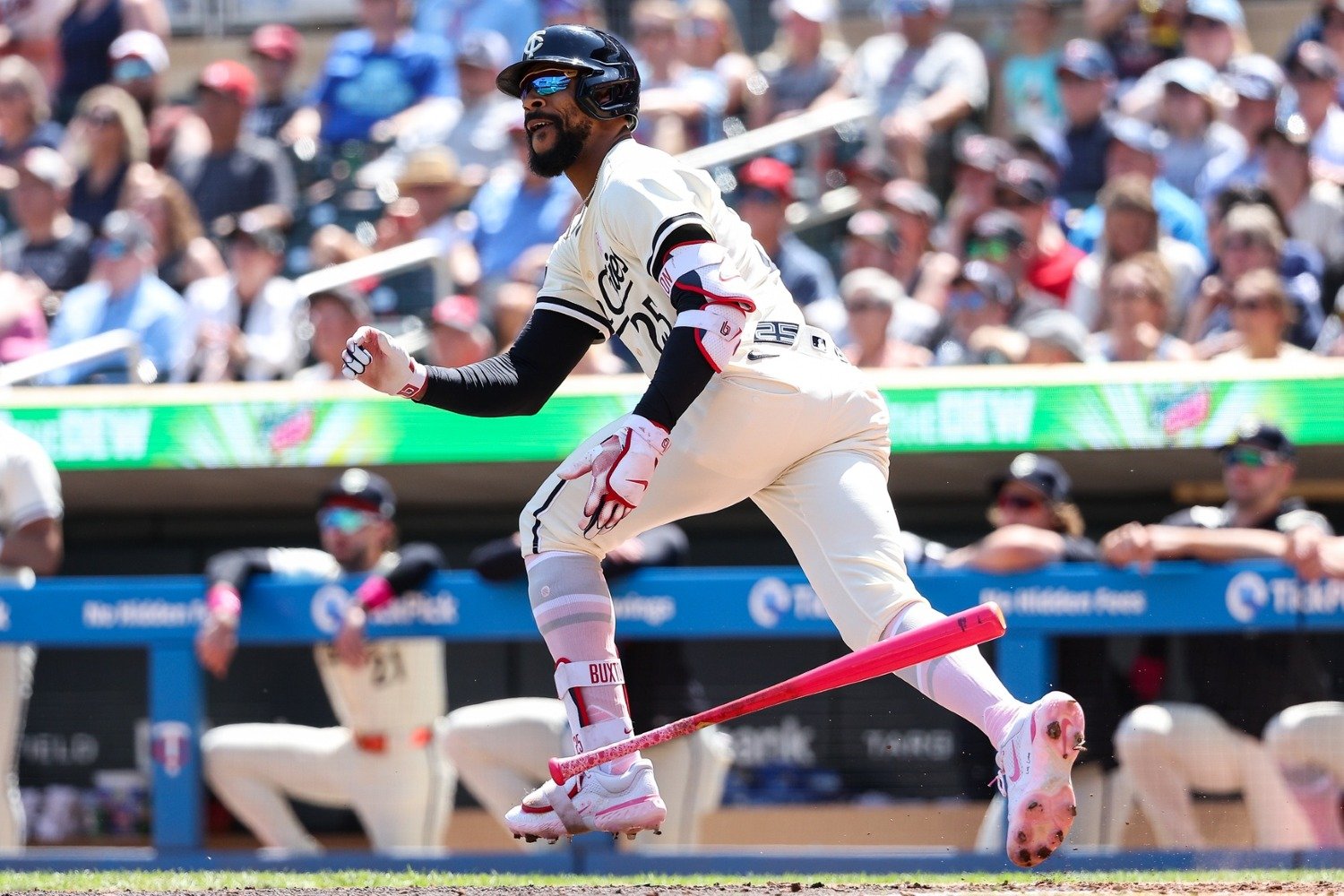 As Twins fans know far too well, injuries have been the bane of Byron Buxton throughout his professional career. They've kept him off the field for long stretches—usually at least half of any given season—and sometimes diminished him even when he's been able to gut his way through and keep playing with them. They've denied both fans and the man himself the opportunity to see just how much this extraordinary player, with a once-in-a-generation blend of tools and lovingly honed baseball skills, is capable of. Funnily, though, injuries have also sometimes shielded Buxton, in a way. They've taken him off the field, at times, just when you could see an inevitable slump developing, or they've forced him to play a more controlled, less outlandish version of his game—something better resembling what the rest of the baseball universe has to play. Players with unique talent can take unique approaches to their craft, but there's a reason why even the best players in history tended to operate in certain ways. Buxton belongs to that class of player, like Mickey Mantle and Alex Rodriguez but also like, say, Bo Jackson, who have so much talent that the challenge becomes understanding where the game does and doesn't permit extreme approaches to flourish. This year, we've gotten arguably the longest stretch of uninterrupted, undiluted healthy Buxton of his entire career—and it's not even the middle of May. He's not merely feeling well enough to stay on the field. He's actually played at his full capacity for a full quarter of a season, starting every day in center field, batting near the top of the order, and running at full speed. Naturally, therefore, he's trending toward an MVP-caliber season (albeit in a league where that award itself is already virtually locked up, by Aaron Judge). According to Baseball Reference, he's already been: 3 runs better than average at bat 2 runs better than average on the bases 1 run better than average due to his ability to avoid hitting into double plays 2 runs better than average on defense That's despite a horrendous start in which he batted .171/.209/.293 over his first 11 games, with the shadow of an illness in his family hanging over him. At the end of that stretch, when the family member passed, he was away from the team for two games to attend the funeral and be with his loved ones. Since his return, he's hitting .299/.339/.607. This is Peak Buxton, at age 31 and on the other side of such a litany of injuries. He's pushing even his own profile to new extremes, though—perhaps because the restrictor plates are off, for the moment. Buxton is swinging at the first pitch 46.3% of the time, which is the highest rate of his career (save 2020, his playing time during which he's already exceeded this year) and more than half again the league average (29.6%). He's not swinging as often as he sometimes has, overall, showing decent plate discipline: He's swung at 74.7% of the pitches he's seen inside the zone, and 29.2% of those outside it. Those numbers are typical of his last few seasons, marking him as much more aggressive than the average hitter on strikes but not especially prone to chasing. However, when he does chase, Buxton is coming up empty at a truly remarkable rate. He's only made contact on 34.8% of his swings at out-of-zone pitches this season, which is not only a career-low, but the fourth-lowest among qualified batters this year. Only Brandon Lowe, Judge, and Ryan McMahon have made less contact outside the zone, and they all chase less often than Buxton, anyway. This is why Buxton leads the majors in strikeouts. He's swinging with reckless abandon when he sees what he believes to be his pitch. He's not modulating his swing or reshaping it to make contact if it turns out to be something other than what he thought he saw. That's leading to lots and lots of whiffs, and not very many walks, and he would need to make a major approach change to see those trends reverse themselves. On the other hand, it's also leading to 55.2% of his batted balls jumping off the bat at 95 miles per hour or more, a career-high mark. He's been able to use his legs to grab extra bases and beat out a few infield hits. He's been such a menace for opposing defenses that his BABIP is a whopping .341, despite his extreme fly-ball tendencies. It's not clear how long one can play this high-octane a level of offensive baseball. It's not as neat or orderly or obviously sustainable as the way Judge is thriving—not by a long shot. Indeed, Baseball Prospectus's Deserved Runs Created model assigns him a DRC+ (where 100 is average and higher is better) of 89 this year, indicating that these fundamentals aren't supposed to add up to production this good. Buxton's talent is breaking baseball a little bit, as it often does, when he's healthy enough to put it on full display. Now, there are two questions remaining: Can he keep this up, despite the gravity of the game and its tendency to pull players back toward less extreme combinations of process and outcome? And the scarier one: can he stay healthy long enough to allow us to get an answer to the first thing?
 -
Image courtesy of © Matt Krohn-Imagn Images As Twins fans know far too well, injuries have been the bane of Byron Buxton throughout his professional career. They've kept him off the field for long stretches—usually at least half of any given season—and sometimes diminished him even when he's been able to gut his way through and keep playing with them. They've denied both fans and the man himself the opportunity to see just how much this extraordinary player, with a once-in-a-generation blend of tools and lovingly honed baseball skills, is capable of. Funnily, though, injuries have also sometimes shielded Buxton, in a way. They've taken him off the field, at times, just when you could see an inevitable slump developing, or they've forced him to play a more controlled, less outlandish version of his game—something better resembling what the rest of the baseball universe has to play. Players with unique talent can take unique approaches to their craft, but there's a reason why even the best players in history tended to operate in certain ways. Buxton belongs to that class of player, like Mickey Mantle and Alex Rodriguez but also like, say, Bo Jackson, who have so much talent that the challenge becomes understanding where the game does and doesn't permit extreme approaches to flourish. This year, we've gotten arguably the longest stretch of uninterrupted, undiluted healthy Buxton of his entire career—and it's not even the middle of May. He's not merely feeling well enough to stay on the field. He's actually played at his full capacity for a full quarter of a season, starting every day in center field, batting near the top of the order, and running at full speed. Naturally, therefore, he's trending toward an MVP-caliber season (albeit in a league where that award itself is already virtually locked up, by Aaron Judge). According to Baseball Reference, he's already been: 3 runs better than average at bat 2 runs better than average on the bases 1 run better than average due to his ability to avoid hitting into double plays 2 runs better than average on defense That's despite a horrendous start in which he batted .171/.209/.293 over his first 11 games, with the shadow of an illness in his family hanging over him. At the end of that stretch, when the family member passed, he was away from the team for two games to attend the funeral and be with his loved ones. Since his return, he's hitting .299/.339/.607. This is Peak Buxton, at age 31 and on the other side of such a litany of injuries. He's pushing even his own profile to new extremes, though—perhaps because the restrictor plates are off, for the moment. Buxton is swinging at the first pitch 46.3% of the time, which is the highest rate of his career (save 2020, his playing time during which he's already exceeded this year) and more than half again the league average (29.6%). He's not swinging as often as he sometimes has, overall, showing decent plate discipline: He's swung at 74.7% of the pitches he's seen inside the zone, and 29.2% of those outside it. Those numbers are typical of his last few seasons, marking him as much more aggressive than the average hitter on strikes but not especially prone to chasing. However, when he does chase, Buxton is coming up empty at a truly remarkable rate. He's only made contact on 34.8% of his swings at out-of-zone pitches this season, which is not only a career-low, but the fourth-lowest among qualified batters this year. Only Brandon Lowe, Judge, and Ryan McMahon have made less contact outside the zone, and they all chase less often than Buxton, anyway. This is why Buxton leads the majors in strikeouts. He's swinging with reckless abandon when he sees what he believes to be his pitch. He's not modulating his swing or reshaping it to make contact if it turns out to be something other than what he thought he saw. That's leading to lots and lots of whiffs, and not very many walks, and he would need to make a major approach change to see those trends reverse themselves. On the other hand, it's also leading to 55.2% of his batted balls jumping off the bat at 95 miles per hour or more, a career-high mark. He's been able to use his legs to grab extra bases and beat out a few infield hits. He's been such a menace for opposing defenses that his BABIP is a whopping .341, despite his extreme fly-ball tendencies. It's not clear how long one can play this high-octane a level of offensive baseball. It's not as neat or orderly or obviously sustainable as the way Judge is thriving—not by a long shot. Indeed, Baseball Prospectus's Deserved Runs Created model assigns him a DRC+ (where 100 is average and higher is better) of 89 this year, indicating that these fundamentals aren't supposed to add up to production this good. Buxton's talent is breaking baseball a little bit, as it often does, when he's healthy enough to put it on full display. Now, there are two questions remaining: Can he keep this up, despite the gravity of the game and its tendency to pull players back toward less extreme combinations of process and outcome? And the scarier one: can he stay healthy long enough to allow us to get an answer to the first thing? View full article
-
Image courtesy of © Matt Krohn-Imagn Images At a glance, it doesn't look like Trevor Larnach is doing any of the things you'd hope to see from him this season. He's hitting it on the ground more; he's pulling it in the air less. His swing speed is down; his chase rate is up. He's generating lower batting and slugging averages on contact, which makes sense, because he's not hitting it hard as often as he has in the past, and he's walking less, which makes sense because he's swinging more. When you look at his full line, though—he's hitting .245/.321/.395 for the season—things don't look so dreary. In fact, he's on a tear lately, right in line with some of the best work he did last year. Larnach credits a more balanced, consistent approach for this success, which has coincided with the Twins' rebound from a terrible start to the season that threatened to end their playoff hopes before they could even mature. "The goal is to be consistent with your moves as much as you possibly can," Larnach said Saturday. "The more you’re consistent, the more you’ll see consistent results." That day, his results were tremendous, as they've often been in recent days. He doubled and homered, and has two of each of those in the last five contests. During the Twins' current eight-game winning streak, their slugging corner outfielder is hitting .303 and slugging .545. He's struck out more lately than he did over the first five or six weeks of the campaign, but is making up for it with increased power. Under new hitting coach Matt Borgschulte, he's enjoying the fruits of a team-oriented approach. "I think each hitting coach has their own kind of philosophy that they like to follow, and Borgs’s is very simple. He tries to simplify things. Each hitting coach is different," Larnach said. "You’re gonna have a guy who likes mechanics, you’re gonna have a guy who likes approach, you’re gonna have a guy who might like both. But Borgs, specifically, I think he likes to take a team approach and help guys out in the team sense, to simplify, ‘Ok, this is what the pitcher does. Let’s all try to pass the batons, and do the right things.’" It's taken time for that collective mentality to take root, and for the team's production to match their projections. That's been happening lately, though, and it comes as no surprise to Rocco Baldelli. "Borgs is an extremely intelligent hitting guy. He’s very prepared, but he’s really good, more than anything, at how do you help guys train to prepare for what’s to come? As opposed to just honing a swing, he’s actually honing a swing combined with what a team is about to see on a given night," Baldelli said Tuesday. "He’s really into, not just taking swings, but practicing things that are going to help with things like decision-making and improving guys’ approaches at the plate." Under Borgschulte, Larnach's using the opposite field more often than in the past, and pulling the ball less than ever. On the other hand, his 20.5% strikeout rate is the lowest of his career, too. He's making contact with over 87% of the strikes at which he swings, a career-best and a mark of thorough strike zone control. The skipper believes that's a natural result of the process the team has implemented this spring. "He’s a very process-oriented guy, who’s not just there to create an ideal swing that’s going to hit a pull-side homer," Baldelli said. "Yes, that’s important, but he’s really interested in the flexibility of a swing—the ability to help a swing adapt to all the things that a pitcher is going to do. And he makes a lot of these things that are somewhat complicated really simple, as the guys are trying to prepare. He’s trying to help these guys get ready to hit major-league pitching, which is totally different than just breaking down a swing on video. It’s not a static thing, in Borgs’s mind. It’s like a living, breathing thing, the major-league swing." That flexibility is exactly what Larnach has largely lacked during his big-league career. Famously, he struggles mightily against offspeed and breaking stuff. He's also been a dead pull hitter. The new and (hopefully) improved Larnach is better able to cover the whole plate and use the whole field, which he credits not only to good coaching, but to subtle adjustments facilitated by getting to play more often against left-handed pitching this year. In the past, Larnach has strode closed, which ensured that he wouldn't lose coverage of the outer edge but also cost him some bat speed. "That happens over time, but it’s not something I’m always trying to do—because eventually, that leads you to cutting yourself off. And that’s not what you want," Larnach said of that stride pattern. "So sometimes, if I get pitched away a lot from right-handed pitchers—even last year, it happened—but if it happens a lot, it’ll be extensive. So the adjustment is to try and get back. So then, everyone is different, but sometimes for me, seeing a lot of left-handed sided stuff, that helps me even back out." Whether it's specific instruction or just more opportunities to handle varied opposition, Larnach is rounding out nicely at the plate—even if the results so far are more encouraging than outright dazzling. The team mindset has filtered through the roster. Until Matt Wallner returns to the lineup, Larnach will be badly needed as a left-handed bat, and his new hitting coach has him in a good state of mind to meet that need. View full article
-
A Team-Centric Offensive Approach Has Suited Trevor Larnach Nicely
Matthew Trueblood posted an article in Twins
 At a glance, it doesn't look like Trevor Larnach is doing any of the things you'd hope to see from him this season. He's hitting it on the ground more; he's pulling it in the air less. His swing speed is down; his chase rate is up. He's generating lower batting and slugging averages on contact, which makes sense, because he's not hitting it hard as often as he has in the past, and he's walking less, which makes sense because he's swinging more. When you look at his full line, though—he's hitting .245/.321/.395 for the season—things don't look so dreary. In fact, he's on a tear lately, right in line with some of the best work he did last year. Larnach credits a more balanced, consistent approach for this success, which has coincided with the Twins' rebound from a terrible start to the season that threatened to end their playoff hopes before they could even mature. "The goal is to be consistent with your moves as much as you possibly can," Larnach said Saturday. "The more you’re consistent, the more you’ll see consistent results." That day, his results were tremendous, as they've often been in recent days. He doubled and homered, and has two of each of those in the last five contests. During the Twins' current eight-game winning streak, their slugging corner outfielder is hitting .303 and slugging .545. He's struck out more lately than he did over the first five or six weeks of the campaign, but is making up for it with increased power. Under new hitting coach Matt Borgschulte, he's enjoying the fruits of a team-oriented approach. "I think each hitting coach has their own kind of philosophy that they like to follow, and Borgs’s is very simple. He tries to simplify things. Each hitting coach is different," Larnach said. "You’re gonna have a guy who likes mechanics, you’re gonna have a guy who likes approach, you’re gonna have a guy who might like both. But Borgs, specifically, I think he likes to take a team approach and help guys out in the team sense, to simplify, ‘Ok, this is what the pitcher does. Let’s all try to pass the batons, and do the right things.’" It's taken time for that collective mentality to take root, and for the team's production to match their projections. That's been happening lately, though, and it comes as no surprise to Rocco Baldelli. "Borgs is an extremely intelligent hitting guy. He’s very prepared, but he’s really good, more than anything, at how do you help guys train to prepare for what’s to come? As opposed to just honing a swing, he’s actually honing a swing combined with what a team is about to see on a given night," Baldelli said Tuesday. "He’s really into, not just taking swings, but practicing things that are going to help with things like decision-making and improving guys’ approaches at the plate." Under Borgschulte, Larnach's using the opposite field more often than in the past, and pulling the ball less than ever. On the other hand, his 20.5% strikeout rate is the lowest of his career, too. He's making contact with over 87% of the strikes at which he swings, a career-best and a mark of thorough strike zone control. The skipper believes that's a natural result of the process the team has implemented this spring. "He’s a very process-oriented guy, who’s not just there to create an ideal swing that’s going to hit a pull-side homer," Baldelli said. "Yes, that’s important, but he’s really interested in the flexibility of a swing—the ability to help a swing adapt to all the things that a pitcher is going to do. And he makes a lot of these things that are somewhat complicated really simple, as the guys are trying to prepare. He’s trying to help these guys get ready to hit major-league pitching, which is totally different than just breaking down a swing on video. It’s not a static thing, in Borgs’s mind. It’s like a living, breathing thing, the major-league swing." That flexibility is exactly what Larnach has largely lacked during his big-league career. Famously, he struggles mightily against offspeed and breaking stuff. He's also been a dead pull hitter. The new and (hopefully) improved Larnach is better able to cover the whole plate and use the whole field, which he credits not only to good coaching, but to subtle adjustments facilitated by getting to play more often against left-handed pitching this year. In the past, Larnach has strode closed, which ensured that he wouldn't lose coverage of the outer edge but also cost him some bat speed. "That happens over time, but it’s not something I’m always trying to do—because eventually, that leads you to cutting yourself off. And that’s not what you want," Larnach said of that stride pattern. "So sometimes, if I get pitched away a lot from right-handed pitchers—even last year, it happened—but if it happens a lot, it’ll be extensive. So the adjustment is to try and get back. So then, everyone is different, but sometimes for me, seeing a lot of left-handed sided stuff, that helps me even back out." Whether it's specific instruction or just more opportunities to handle varied opposition, Larnach is rounding out nicely at the plate—even if the results so far are more encouraging than outright dazzling. The team mindset has filtered through the roster. Until Matt Wallner returns to the lineup, Larnach will be badly needed as a left-handed bat, and his new hitting coach has him in a good state of mind to meet that need.
 -
Image courtesy of © Brad Rempel-Imagn Images For much of the last two-plus seasons, Pablo López has been the Twins rotation's Super-Man. The bad news is, the first inning has been kryptonite. Since the start of 2023, and prior to Tuesday's tangle with the visiting Orioles, López had allowed a .270/.308/.474 batting line in the first inning, with 15 home runs in 293 batters faced and a 4.43 ERA. Because the best hitters hit at the top of teams' lineups, the first inning is always higher-scoring than the rest of the game (taken as a whole), but true aces tamp down that effect. López, though stellar the rest of the time, has been milquetoast in his first frame of games since joining the Twins. That changed on Tuesday night, setting the tone for a dominant outing and a blowout Twins win. The first step was being willing to move off his fastball. The Orioles' first two hitters, Cedric Mullins and Gunnar Henderson, tried to sit on his heater—as teams often do early against López, with good reason. In general, he starts the game with heavy fastball usage, in the grand pitching tradition of establishing the heater. Here's his pitch usage by inning for the season, entering last night. This time, though, López, catcher Ryan Jeffers and pitching coach Pete Maki had a more varied plan, and it worked. The veteran righty struck out the side in order, and only seven of the 18 pitches he threw in the frame were fastballs. "The first step is just having a good plan—knowing your enemy," López said after the game. "We want to know ourselves, and we want to know our enemy. The pregame meeting with Pete and Jeffers was very specific and very thorough, which, I like to think of myself as a thorough person, so that gave me a lot of confidence." As the game progressed, the fastball took more of a leading role, reversing the pattern we saw from him before Tuesday. He was pitching backward, not just on an atomic plate appearance level, but within the game. As he discovered ways to get the Orioles looking for something else, he realized the fastball would play as a putaway pitch on this particular evening. "The fastball is traditionally the pitch that we're supposed to use the most. It's just the pitch that we should be able to command, control. Everything works off your fastball," López said. "But when you are trying to pepper the zone, and you're getting uncomfortable swings, uncomfortable takes, reads, weak contact, it's like, 'Ok, it's not only working to set things up. It's actually working today to put people away. Identifying that is really important—especially the batters that we can maneuver or exploit that a little better. So it's fun when you know it's more than a setup pitch, specific nights." At one stretch, López went with a breaking or offspeed pitch on 0-0 to seven of nine batters. He wasn't leading with his heater, against the young hands and dangerous bat speed of the Orioles lineup. He first forced them to think about his whole arsenal, then zipped in the fastball when they weren't ready. Of his 44 two-strike pitches, 18 were fastballs, and he earned seven of his 11 strikeouts with the heater. That was partially a product of that detailed pregame plan, but it was also because his new kick-change is doing some truly devastating things—thus far, alas, too devastating to be tempting. He threw seven kick-changes Tuesday night, most in leveraged counts with the hope of putting away Orioles batters, but all seven went for balls. "You look at the 11 strikeouts, and they're nice. Obviously, I didn't get the length that I like to provide the team, but a lot of times, you have to take what the game gives you," López said. "I just tried to be on the mound, competing, competing, competing." There were positives to take from the pitch even on a night when it yielded no positive results, because it's showing up as the best offering in his arsenal, according to StuffPro (Baseball Prospectus's pitch-modeling metric). Because the kick-change is not yet its own, distinct pitch classification and because López throws a separate changeup, the kick-change is labeled below as a splitter (FS). That pitch caught Rocco Baldelli's eye, even though the Orioles didn't bite on it Tuesday night. "The way that Pablo was getting swing-and-miss in the game today, you knew it was good. He put together an outing where he was missing bats with his fastball," Baldelli said in his postgame press conference. "He had some really interesting movement today on his changeup. It seemed like it was moving even more than in other outings. It almost looked like it was a curveball from the side, the way it was dropping. He had something going on today that was a little different from some of his other starts, in a good way. He wished he had a few more pitches to work with after the outing, but overall, just a fantastic outing by him." Indeed, if López wants to get deeper into games, he needs to be able to put hitters away more efficiently when he gets ahead in the count. His new changeup is nastier than his old one, but seems much harder to place where hitters will feel any need to swing at it. Maybe throwing it helps set up the fastball, but even if so, it means taking two pitches to get from strike 2 to strike 3, instead of one. The Orioles are prone to strikeouts, but one thing they do quite well is draw out at-bats in just the way we witnessed Tuesday night. The next step for the Twins' ace is to figure out why his kick-change isn't drawing swings, and see whether that can be amended. In the meantime, though, he had everything he needed to get great results, and at least for an evening, a tweak to his approach fixed his first-inning problem. With a wicked new weapon in the mix, we might see more high-strikeout performances from him in the near future. View full article
-
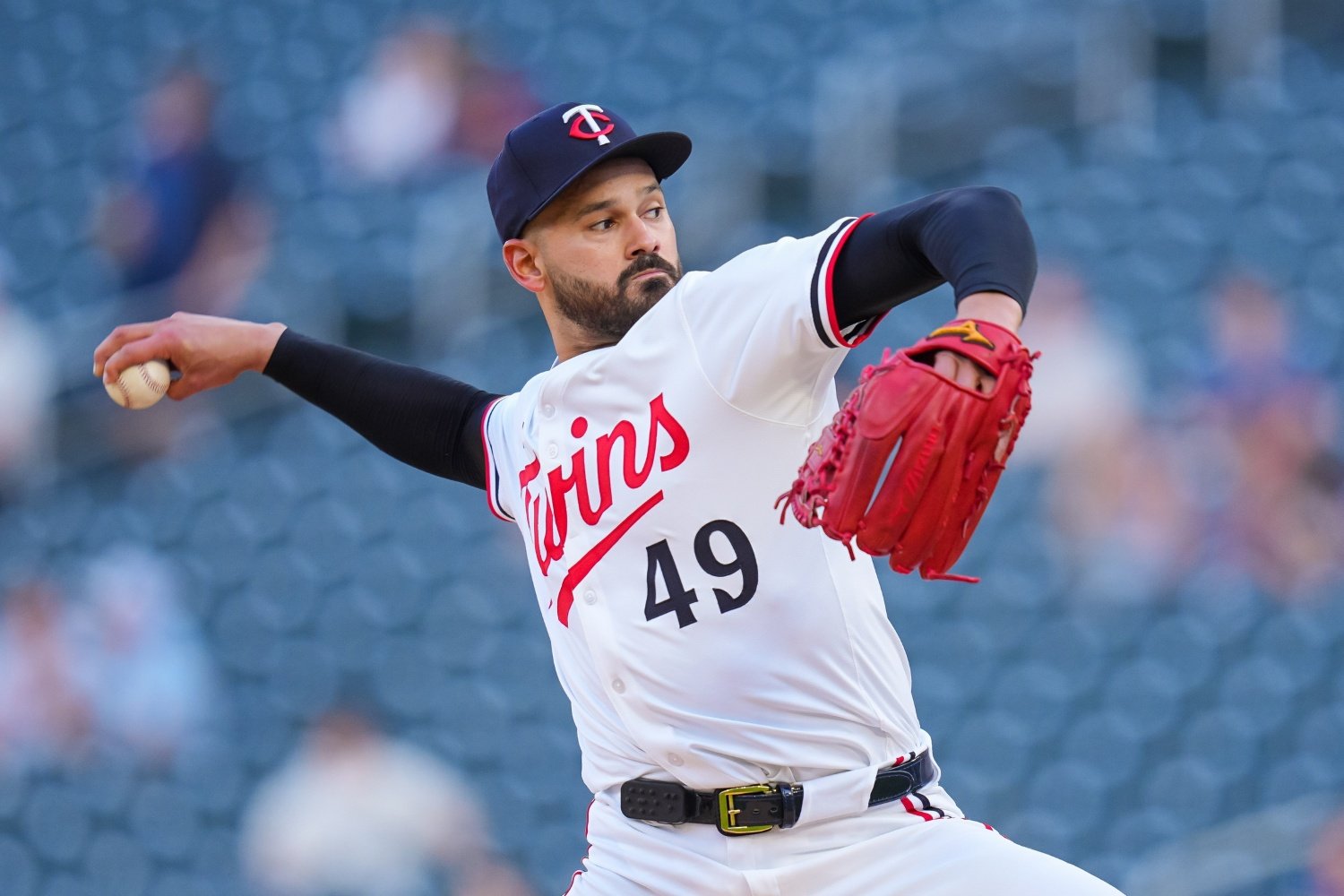 For much of the last two-plus seasons, Pablo López has been the Twins rotation's Super-Man. The bad news is, the first inning has been kryptonite. Since the start of 2023, and prior to Tuesday's tangle with the visiting Orioles, López had allowed a .270/.308/.474 batting line in the first inning, with 15 home runs in 293 batters faced and a 4.43 ERA. Because the best hitters hit at the top of teams' lineups, the first inning is always higher-scoring than the rest of the game (taken as a whole), but true aces tamp down that effect. López, though stellar the rest of the time, has been milquetoast in his first frame of games since joining the Twins. That changed on Tuesday night, setting the tone for a dominant outing and a blowout Twins win. The first step was being willing to move off his fastball. The Orioles' first two hitters, Cedric Mullins and Gunnar Henderson, tried to sit on his heater—as teams often do early against López, with good reason. In general, he starts the game with heavy fastball usage, in the grand pitching tradition of establishing the heater. Here's his pitch usage by inning for the season, entering last night. This time, though, López, catcher Ryan Jeffers and pitching coach Pete Maki had a more varied plan, and it worked. The veteran righty struck out the side in order, and only seven of the 18 pitches he threw in the frame were fastballs. "The first step is just having a good plan—knowing your enemy," López said after the game. "We want to know ourselves, and we want to know our enemy. The pregame meeting with Pete and Jeffers was very specific and very thorough, which, I like to think of myself as a thorough person, so that gave me a lot of confidence." As the game progressed, the fastball took more of a leading role, reversing the pattern we saw from him before Tuesday. He was pitching backward, not just on an atomic plate appearance level, but within the game. As he discovered ways to get the Orioles looking for something else, he realized the fastball would play as a putaway pitch on this particular evening. "The fastball is traditionally the pitch that we're supposed to use the most. It's just the pitch that we should be able to command, control. Everything works off your fastball," López said. "But when you are trying to pepper the zone, and you're getting uncomfortable swings, uncomfortable takes, reads, weak contact, it's like, 'Ok, it's not only working to set things up. It's actually working today to put people away. Identifying that is really important—especially the batters that we can maneuver or exploit that a little better. So it's fun when you know it's more than a setup pitch, specific nights." At one stretch, López went with a breaking or offspeed pitch on 0-0 to seven of nine batters. He wasn't leading with his heater, against the young hands and dangerous bat speed of the Orioles lineup. He first forced them to think about his whole arsenal, then zipped in the fastball when they weren't ready. Of his 44 two-strike pitches, 18 were fastballs, and he earned seven of his 11 strikeouts with the heater. That was partially a product of that detailed pregame plan, but it was also because his new kick-change is doing some truly devastating things—thus far, alas, too devastating to be tempting. He threw seven kick-changes Tuesday night, most in leveraged counts with the hope of putting away Orioles batters, but all seven went for balls. "You look at the 11 strikeouts, and they're nice. Obviously, I didn't get the length that I like to provide the team, but a lot of times, you have to take what the game gives you," López said. "I just tried to be on the mound, competing, competing, competing." There were positives to take from the pitch even on a night when it yielded no positive results, because it's showing up as the best offering in his arsenal, according to StuffPro (Baseball Prospectus's pitch-modeling metric). Because the kick-change is not yet its own, distinct pitch classification and because López throws a separate changeup, the kick-change is labeled below as a splitter (FS). That pitch caught Rocco Baldelli's eye, even though the Orioles didn't bite on it Tuesday night. "The way that Pablo was getting swing-and-miss in the game today, you knew it was good. He put together an outing where he was missing bats with his fastball," Baldelli said in his postgame press conference. "He had some really interesting movement today on his changeup. It seemed like it was moving even more than in other outings. It almost looked like it was a curveball from the side, the way it was dropping. He had something going on today that was a little different from some of his other starts, in a good way. He wished he had a few more pitches to work with after the outing, but overall, just a fantastic outing by him." Indeed, if López wants to get deeper into games, he needs to be able to put hitters away more efficiently when he gets ahead in the count. His new changeup is nastier than his old one, but seems much harder to place where hitters will feel any need to swing at it. Maybe throwing it helps set up the fastball, but even if so, it means taking two pitches to get from strike 2 to strike 3, instead of one. The Orioles are prone to strikeouts, but one thing they do quite well is draw out at-bats in just the way we witnessed Tuesday night. The next step for the Twins' ace is to figure out why his kick-change isn't drawing swings, and see whether that can be amended. In the meantime, though, he had everything he needed to get great results, and at least for an evening, a tweak to his approach fixed his first-inning problem. With a wicked new weapon in the mix, we might see more high-strikeout performances from him in the near future.
 -
This is almost certainly just me, but I LOVE when the Twins play the Orioles. It just feels good. I have to say, it feels slightly wrong having this series in May. I like it when there's a hint of October in the air (although that pageantry was spoiled when they visited last year). Something that goes all the way back to the Weaver O's running into the Twins in '69 and '70? The way they've almost perfectly matched up their winning windows so as never to be good at the same time, but always in a position to play spoiler? I dunno. It might just be the uniform colors. But I love it.
-
Funny you should pose the possibility. Royce to reporters a couple hours ago: "Oh, man, I just need the opportunity. You know, I might not even be 100 percent, but I'm not worried about that. I'm just worried about playing and giving it my all each and every day. And, you know, I'm looking forward to, you know, maybe hit one out. That’d be great. You know, that'd be awesome. But, you know, just have fun."
-
Image courtesy of © Paul Rutherford-Imagn Images The simplest and most effective hitter's credo goes: swing at strikes, lay off balls. It's the surest way to find success at any level of baseball, and nowhere is it invalid. It just becomes less helpful with each rung of the ladder of competition one climbs, because by the time you reach the majors, pitchers have good enough stuff and command to both bully you within the zone (even when you swing with gusto there) and lure you into bad swings beyond it. The task of every player, team, and coaching staff is to fight back against the pressure applied by such sensational pitching. You have to find ways to win within and around the zone. About 70% of pitches thrown in the majors are either squarely within the zone or close enough to the edges of it to force a difficult swing decision, even for a polished hitter. Statcast bins such pitches under the headers "Heart," which is what it sounds like, and "Shadow," which is a rectangular frame around the Heart zone that shadows the invisible edges of the rulebook strike zone. Beyond those lie "Chase," a frame around the Shadow area that identifies places pitchers might intentionally throw the ball to induce a swing but in which a hitter is unlikely to produce anything good. Finally, there is the "Waste" zone, a space so far beyond the hittable pitch territory that no one should ever swing there—and hardly anyone ever does. Because Baseball Savant presents those four categories for pitch locations, one might be tempted to treat all four zones as equally important. We often face a similar impulse with in-zone and out-of-zone pitches: to treat that binary as real and the two subsets it creates as equally worthy of our attention. Neither is a good instinct, though, of course. In the case of Heart, Shadow, Chase, and Waste, there are two reasons why the first two categories matter far, far more than the latter two: The aforementioned fact that many more pitches are thrown within them than in Chase and Waste. It's more than 2-to-1; and There's little elasticity in what happens in the Waste zone, from player to player or team to team, based on talent. You just have to not swing at those pitches, and mostly, hitters don't. All takes, at least in that area, have the same value. Aaron Judge isn't deriving more value from spitting on a slider in the dirt than Brooks Lee is, unless Judge does so more consistently and Lee occasionally goes fishing. On the other hand, when a ball is right in the heart of the zone, there's likely to be little difference in the quality of Judge's and Lee's swing decisions—but a big difference in the value of the swings they put on those pitches. When evaluating a team or a player at a glance, then, it's a pretty good idea to exclude at least the Waste category from your examination. You can winnow down to true talent (and good overall process, since the latter should lead to a more robust tapping of the former) even better by cutting out Chase pitches, too. Let's do that, for all teams in each of the last two full seasons and the early going of this one, to see where the Twins stand. Firstly, you'll notice that even the very best team in this sample (the 2023 team from unincorporated territory in Cobb County, Ga.) has a negative run value on those pitches. That's not surprising, when you think about, right? At their core, the pitches we're studying here are basically strikes. An exceptionally well-calibrated, patient approach can earn a team meaningful value from pitches taken for balls just off one corner or another, but these are mostly strikes, so the Run Value metric we're using is measuring mostly the ability to actually hit the ball and do damage. It's baking in some plate discipline, but that plays a small role here. The 2023 Twins were one of the best teams in the league at fighting back when pitchers came into the zone. They weren't quite the 2019 Bomba Squad (no team in any uniform has topped them in this metric since that season), but they could rake, and specifically, they made pitchers pay for trying to live over the plate. Last year, there was still some of that danger to them, but they faded to 13th in the majors. It wasn't an outright disaster, but the team did treat it a bit like one, firing hitting coaches and changing out their preparation paradigm for hitters. That hasn't worked, at all. The 2025 team is getting beaten in and around the zone, with a prorated Run Value that ranks 21st in baseball on those offerings. You can be a tolerable offense with that kind of ranking, but even that isn't easy. Most of the time, below-average teams in the Heart and Shadow zones are bad overall lineups. But, are the Twins making up ground by being more disciplined on the truly unworthy pitches, well beyond the bounds of the strike zone? Here's the equivalent chart for all teams since the start of 2023, in the Chase and Waste spaces. Uh, nope. As you can see, this chart is basically a mirror of the other, not with regard to the order and identity of the teams, but with regard to shape and scale. This Run Value statistic is anchored to average production, so for every run destroyed, one must be created. When pitchers work far outside the zone, they tend to issue walks—or fall behind, and end up needing to come back to the middle of the plate. Either way, it's bad for the pitchers, so the runs prevented within and around the zone are allowed on the truly errant offerings. For batters, that means what the headline of the chart says: Just don't swing, baby. There are, of course, players who hit bad balls better than others, and that can make up for some otherwise lousy swing decisions, but by and large, the teams who chase most will rank lowest here. The Twins are, in a sense, an interesting counterpoint. They were 23rd in 2023, when their offense was humming, and 14th in 2024, when things went sour. They're back to 23rd this year, but the problem isn't solely that they expand the zone too much. They do, given their skill sets, but that's not the whole story here. The Twins have built a lineup that strongly tends toward grooved swings. Their guys are wired to hammer mistakes, rather than to fight off or flare pitches outside the zone to the opposite field. The Twins might chase less than some of the teams ahead of them, especially this year, but they also produce less when they do chase than most of their rivals do. It's a double-whammy. A functioning Carlos Correa would solve a few of these problems. A healthy Royce Lewis should address them, too. Lewis and Matt Wallner are (other than Byron Buxton, perhaps) the players the team most counts on to make it hurt whenever a pitcher tries to sneak a strike by. Right now, though, the pivot to Matt Borgschulte doesn't seem to be paying any new dividends. In the places where they most need to be good (and usually have been, even in tough times), the Twins are just getting dominated at the plate. View full article
-
The Former Bomba Squad is Getting Blown Up in the Hitting Zones
Matthew Trueblood posted an article in Twins
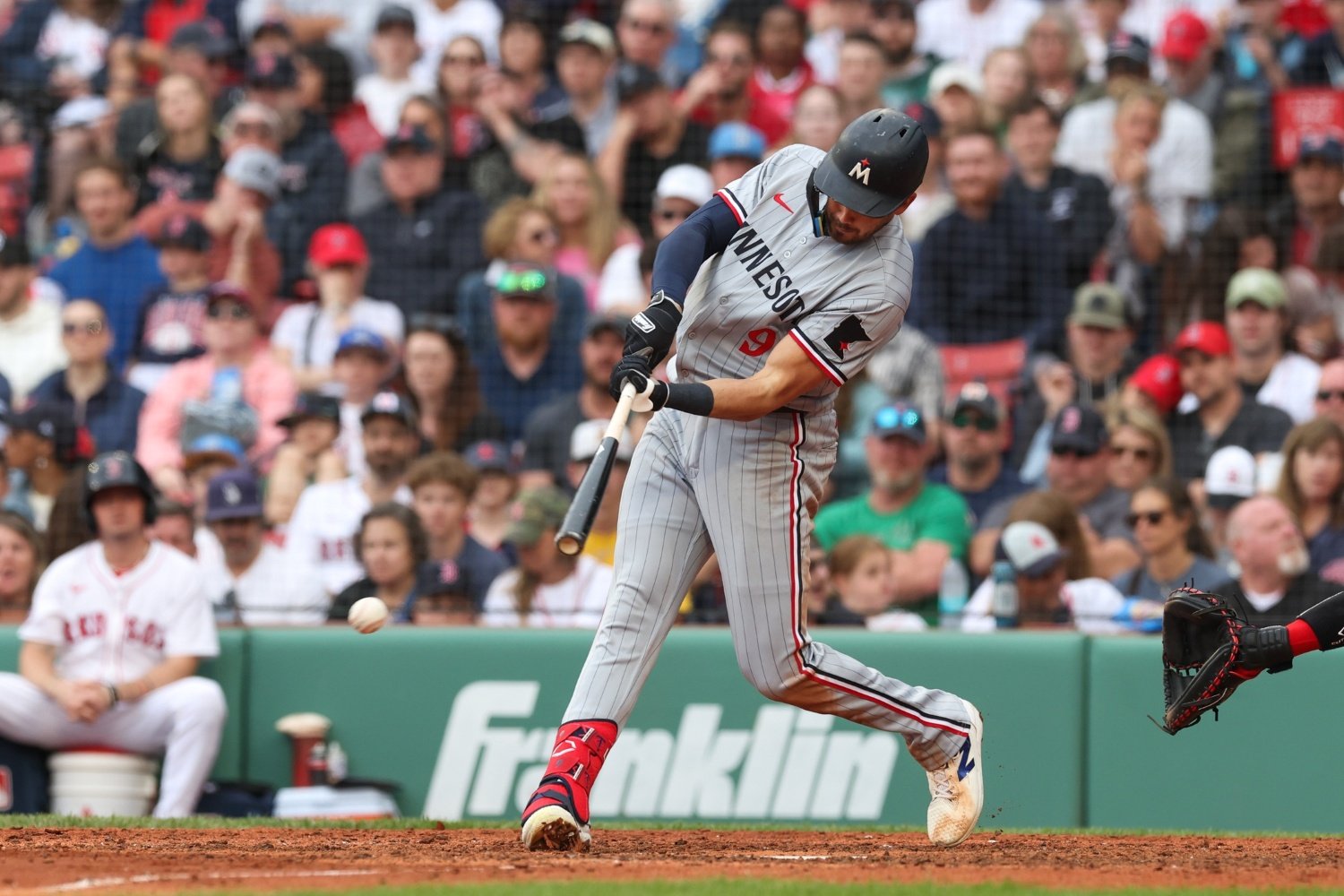 The simplest and most effective hitter's credo goes: swing at strikes, lay off balls. It's the surest way to find success at any level of baseball, and nowhere is it invalid. It just becomes less helpful with each rung of the ladder of competition one climbs, because by the time you reach the majors, pitchers have good enough stuff and command to both bully you within the zone (even when you swing with gusto there) and lure you into bad swings beyond it. The task of every player, team, and coaching staff is to fight back against the pressure applied by such sensational pitching. You have to find ways to win within and around the zone. About 70% of pitches thrown in the majors are either squarely within the zone or close enough to the edges of it to force a difficult swing decision, even for a polished hitter. Statcast bins such pitches under the headers "Heart," which is what it sounds like, and "Shadow," which is a rectangular frame around the Heart zone that shadows the invisible edges of the rulebook strike zone. Beyond those lie "Chase," a frame around the Shadow area that identifies places pitchers might intentionally throw the ball to induce a swing but in which a hitter is unlikely to produce anything good. Finally, there is the "Waste" zone, a space so far beyond the hittable pitch territory that no one should ever swing there—and hardly anyone ever does. Because Baseball Savant presents those four categories for pitch locations, one might be tempted to treat all four zones as equally important. We often face a similar impulse with in-zone and out-of-zone pitches: to treat that binary as real and the two subsets it creates as equally worthy of our attention. Neither is a good instinct, though, of course. In the case of Heart, Shadow, Chase, and Waste, there are two reasons why the first two categories matter far, far more than the latter two: The aforementioned fact that many more pitches are thrown within them than in Chase and Waste. It's more than 2-to-1; and There's little elasticity in what happens in the Waste zone, from player to player or team to team, based on talent. You just have to not swing at those pitches, and mostly, hitters don't. All takes, at least in that area, have the same value. Aaron Judge isn't deriving more value from spitting on a slider in the dirt than Brooks Lee is, unless Judge does so more consistently and Lee occasionally goes fishing. On the other hand, when a ball is right in the heart of the zone, there's likely to be little difference in the quality of Judge's and Lee's swing decisions—but a big difference in the value of the swings they put on those pitches. When evaluating a team or a player at a glance, then, it's a pretty good idea to exclude at least the Waste category from your examination. You can winnow down to true talent (and good overall process, since the latter should lead to a more robust tapping of the former) even better by cutting out Chase pitches, too. Let's do that, for all teams in each of the last two full seasons and the early going of this one, to see where the Twins stand. Firstly, you'll notice that even the very best team in this sample (the 2023 team from unincorporated territory in Cobb County, Ga.) has a negative run value on those pitches. That's not surprising, when you think about, right? At their core, the pitches we're studying here are basically strikes. An exceptionally well-calibrated, patient approach can earn a team meaningful value from pitches taken for balls just off one corner or another, but these are mostly strikes, so the Run Value metric we're using is measuring mostly the ability to actually hit the ball and do damage. It's baking in some plate discipline, but that plays a small role here. The 2023 Twins were one of the best teams in the league at fighting back when pitchers came into the zone. They weren't quite the 2019 Bomba Squad (no team in any uniform has topped them in this metric since that season), but they could rake, and specifically, they made pitchers pay for trying to live over the plate. Last year, there was still some of that danger to them, but they faded to 13th in the majors. It wasn't an outright disaster, but the team did treat it a bit like one, firing hitting coaches and changing out their preparation paradigm for hitters. That hasn't worked, at all. The 2025 team is getting beaten in and around the zone, with a prorated Run Value that ranks 21st in baseball on those offerings. You can be a tolerable offense with that kind of ranking, but even that isn't easy. Most of the time, below-average teams in the Heart and Shadow zones are bad overall lineups. But, are the Twins making up ground by being more disciplined on the truly unworthy pitches, well beyond the bounds of the strike zone? Here's the equivalent chart for all teams since the start of 2023, in the Chase and Waste spaces. Uh, nope. As you can see, this chart is basically a mirror of the other, not with regard to the order and identity of the teams, but with regard to shape and scale. This Run Value statistic is anchored to average production, so for every run destroyed, one must be created. When pitchers work far outside the zone, they tend to issue walks—or fall behind, and end up needing to come back to the middle of the plate. Either way, it's bad for the pitchers, so the runs prevented within and around the zone are allowed on the truly errant offerings. For batters, that means what the headline of the chart says: Just don't swing, baby. There are, of course, players who hit bad balls better than others, and that can make up for some otherwise lousy swing decisions, but by and large, the teams who chase most will rank lowest here. The Twins are, in a sense, an interesting counterpoint. They were 23rd in 2023, when their offense was humming, and 14th in 2024, when things went sour. They're back to 23rd this year, but the problem isn't solely that they expand the zone too much. They do, given their skill sets, but that's not the whole story here. The Twins have built a lineup that strongly tends toward grooved swings. Their guys are wired to hammer mistakes, rather than to fight off or flare pitches outside the zone to the opposite field. The Twins might chase less than some of the teams ahead of them, especially this year, but they also produce less when they do chase than most of their rivals do. It's a double-whammy. A functioning Carlos Correa would solve a few of these problems. A healthy Royce Lewis should address them, too. Lewis and Matt Wallner are (other than Byron Buxton, perhaps) the players the team most counts on to make it hurt whenever a pitcher tries to sneak a strike by. Right now, though, the pivot to Matt Borgschulte doesn't seem to be paying any new dividends. In the places where they most need to be good (and usually have been, even in tough times), the Twins are just getting dominated at the plate.
- 8 comments
-
- 4
-
-
- royce lewis
- carlos correa
- (and 1 more)
-
Image courtesy of © David Richard-Imagn Images It would take a special talent for burying one's head in the sand not to notice, by now. Bailey Ober's velocity is down in 2025. He's generally been a starter who shows his best heat early in seasons—often, even during spring training—but unless he's made a drastic change to favor holding back his real fastball until June this time around, there's simply something missing. His average four-seamer now comes in on at less than 91 miles per hour. You can see similar trends in his other pitches, too. Though he's not even 30 years old yet, the late-blooming Ober is a bit closer to going over the velocity cliff than we tend to remember. Given his huge frame, too, he could just be starting to lose a bit of raw stuff. As frustrating as that would be (for him, most of all, since he's yet to get a chance to cash in as handsomely as most pitchers in his class of performer do), it wouldn't be terribly unusual in the context of the modern game. Don't sing him too sad a song of woe, though. Ober dominated the Cleveland Guardians Monday night, and is still very much a reliable mid-rotation starter. He's just having to rely less on the hard stuff. His four-seam fastball accounts for under 37% of his pitches thrown so far this year, which would be the lowest usage rate of his career. He's introduced a sinker this spring. He's relying a bit more on the breaking stuff. In fact, over the last two seasons, Ober has cultivated two versions of the slider: a harder, tighter true slider, and a wider-moving sweeper. He's using both this year, again, as well as the curve—although in the early going, we've seen less of the sweeper than one might have expected. "Yeah, [but] the sweeper the last two games has been feeling a lot better," Ober said at Target Field last week, before his latest outing. "It's also matchup-based, kind of seeing what guys—like if I can throw a hard spin better to people, or is big spin better? So it's just kind of seeing matchup-based and kind of going off that." Because his raw stuff is not dominant, Ober needs to have a sound gameplan going into every start he makes. He's learned, though, how to make pivotal adjustments within games. The depth of that repertoire gives him, his catcher and Twins coaches options, so when one thing isn't working, they can usually find something else that will do. "I mean, if you're going to need that certain pitch, you're going to have to find it," Ober said. "That's just how it is and that's part of pitching. But usually when you have four, five, six pitches, you're able to find which ones are going to be on that day and be able to use them and be effective." In Cleveland, on Monday night, that pitch turned out to be the changeup. As always, the Guardians had their lineup chock-full of opposite-handed hitters, and early on, Ober realized (in the course of normal approaches the first time through the order) that the batters were all trying to sit on and attack the fastball. That demanded an adjustment, so the Twins made one. Ober used his changeup more often than in any other appearance this year. It's not just how often he threw the change that's telling, though, but the way he leaned into it as he reached the middle innings and discovered Cleveland's plan against him. Then, once they did start trying to hunt the change, he went to the fastball for quick outs in the late stages of his outing. Asked whether such contingency plans can be plotted out in advance or must be charted afresh to meet the exigencies of each contest, Ober broke it down. "A little bit of both," he said. "There's always stuff you see mid-game, the conversations in the dugout are key to kind of adjust and make sure you and the catcher are on the same plan. But yeah, during our meetings, we have multiple ways of how we want to pitch guys and how we want to sequence guys. So there's always different plans and then obviously, like I said, if something shows up in-game where we're like, oh, this is actually open. where we thought it wasn't, then we can go from there and adjust." Monday night was a clinic, in that regard. It was also further proof that, with his wide mix and his elite extension making up for some of the missing raw speed, Ober can excel without even approaching the mid-90s. His average fastball for the game was just 90.4 mph. More all the time, he's flirting with working in the 80s, but so far, he's been able to make that work. An impressive degree of pitchcraft, command, and mental toughness have brought him this far, even as his stuff wanes. There's a long season left, though, and the Twins would love if he rediscovered just a bit of the juice on his fastball as the weather warms. View full article
-
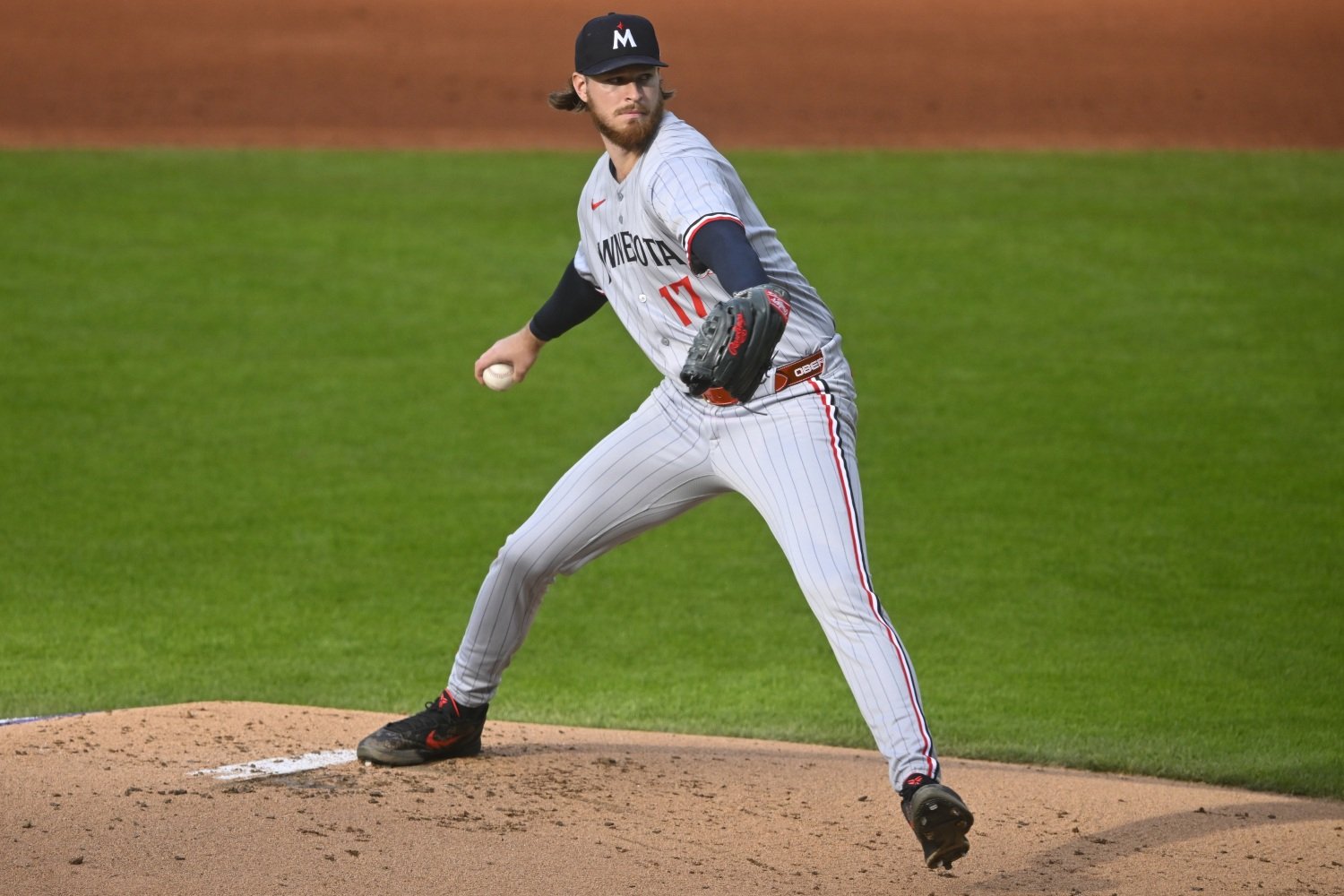 It would take a special talent for burying one's head in the sand not to notice, by now. Bailey Ober's velocity is down in 2025. He's generally been a starter who shows his best heat early in seasons—often, even during spring training—but unless he's made a drastic change to favor holding back his real fastball until June this time around, there's simply something missing. His average four-seamer now comes in on at less than 91 miles per hour. You can see similar trends in his other pitches, too. Though he's not even 30 years old yet, the late-blooming Ober is a bit closer to going over the velocity cliff than we tend to remember. Given his huge frame, too, he could just be starting to lose a bit of raw stuff. As frustrating as that would be (for him, most of all, since he's yet to get a chance to cash in as handsomely as most pitchers in his class of performer do), it wouldn't be terribly unusual in the context of the modern game. Don't sing him too sad a song of woe, though. Ober dominated the Cleveland Guardians Monday night, and is still very much a reliable mid-rotation starter. He's just having to rely less on the hard stuff. His four-seam fastball accounts for under 37% of his pitches thrown so far this year, which would be the lowest usage rate of his career. He's introduced a sinker this spring. He's relying a bit more on the breaking stuff. In fact, over the last two seasons, Ober has cultivated two versions of the slider: a harder, tighter true slider, and a wider-moving sweeper. He's using both this year, again, as well as the curve—although in the early going, we've seen less of the sweeper than one might have expected. "Yeah, [but] the sweeper the last two games has been feeling a lot better," Ober said at Target Field last week, before his latest outing. "It's also matchup-based, kind of seeing what guys—like if I can throw a hard spin better to people, or is big spin better? So it's just kind of seeing matchup-based and kind of going off that." Because his raw stuff is not dominant, Ober needs to have a sound gameplan going into every start he makes. He's learned, though, how to make pivotal adjustments within games. The depth of that repertoire gives him, his catcher and Twins coaches options, so when one thing isn't working, they can usually find something else that will do. "I mean, if you're going to need that certain pitch, you're going to have to find it," Ober said. "That's just how it is and that's part of pitching. But usually when you have four, five, six pitches, you're able to find which ones are going to be on that day and be able to use them and be effective." In Cleveland, on Monday night, that pitch turned out to be the changeup. As always, the Guardians had their lineup chock-full of opposite-handed hitters, and early on, Ober realized (in the course of normal approaches the first time through the order) that the batters were all trying to sit on and attack the fastball. That demanded an adjustment, so the Twins made one. Ober used his changeup more often than in any other appearance this year. It's not just how often he threw the change that's telling, though, but the way he leaned into it as he reached the middle innings and discovered Cleveland's plan against him. Then, once they did start trying to hunt the change, he went to the fastball for quick outs in the late stages of his outing. Asked whether such contingency plans can be plotted out in advance or must be charted afresh to meet the exigencies of each contest, Ober broke it down. "A little bit of both," he said. "There's always stuff you see mid-game, the conversations in the dugout are key to kind of adjust and make sure you and the catcher are on the same plan. But yeah, during our meetings, we have multiple ways of how we want to pitch guys and how we want to sequence guys. So there's always different plans and then obviously, like I said, if something shows up in-game where we're like, oh, this is actually open. where we thought it wasn't, then we can go from there and adjust." Monday night was a clinic, in that regard. It was also further proof that, with his wide mix and his elite extension making up for some of the missing raw speed, Ober can excel without even approaching the mid-90s. His average fastball for the game was just 90.4 mph. More all the time, he's flirting with working in the 80s, but so far, he's been able to make that work. An impressive degree of pitchcraft, command, and mental toughness have brought him this far, even as his stuff wanes. There's a long season left, though, and the Twins would love if he rediscovered just a bit of the juice on his fastball as the weather warms.
 -
I'm trying to think of any combination of two people less likely to engage in a beanball war than Pablo Lopez and Kyle Hendricks. I'm not sure I've got one. I'm not sure there's a name you could call either of their mothers that would prompt them to inflict wanton violence. It was a perfectly fine pitch. Keaschall has to protect himself better. Plain, simple, done-with.
-
The tendency, for some reason, is always to treat broken bones on pitches that hit a batter as freak accidents. Usually, they aren't. Luke Keaschall has to protect himself better in the batter's box, or he'll keep getting hurt. Image courtesy of © Jesse Johnson-Imagn Images For just a moment, there, the Twins seemed to have a thrilling rookie to give their offense its much-needed ignition. Luke Keaschall came up not only ready to run (stealing five bases in his first five big-league games), but hitting exceptionally well. He doesn't have much in-game power yet, but he had lots of good takes and an exceptionally compact swing. He batted .368 over his first six contests, and although no one can sustain that, he looked like a legitimate .300 hitter. Of the 434 hitters with at least 25 swings this season, Keaschall's is the seventh-shortest, according to Statcast. He's direct to the ball, which has allowed him to find the barrel and hit line drives, despite subpar bat speed. M3k0b3ZfWGw0TUFRPT1fVWxOUkFWUUhWUUlBQVZBQ1ZBQUhVQUZUQUFNR1YxY0FVd1pUVWdZQlZBSlFBZ01F.mp4 The brevity of that stroke is beautiful. Starting relatively close to the plate, note the way he strides into the pitch, only to create space for himself to whip the bat through and get the head out on inside offerings using his front hip and shoulder. He times up the rotation of those two body parts well, creating some torque, but the big thing is that shoulder. Watch the way he shrugs it back and upward, forcing his hands down and starting the quick flick of the bat. Once those bigger body parts initiate his rotation, the top hand on the bat just throws it through the hitting zone, in a fluid, well-controlled motion. It's not a violent swing, but he can be extremely accurate with his barrel this way. Standing so close and using that leg kick and stride pattern allow him to cover the outer edge of the plate, despite his unimposing stature and his short stroke. Alas, we didn't get long to study the joy of it all. We got a warning shot on Wednesday night. M3k0b3ZfWGw0TUFRPT1fVXdNRUJsVUNBQUVBQzFkVFVBQUhBQUFDQUFNQ1VWUUFDZ2RVQ0FCV0JnWlVBUUlI.mp4 Then, the hammer fell for real on Friday. d2VXcTNfWGw0TUFRPT1fQjFRREJ3QUhYZ29BQ1ZRTEJRQUhVRkpmQUFOUUJRSUFVMUVBVlZKUUJBZGNVZ3Rl.mp4 If you watch most good big-league hitters hit and think, "Why doesn't everyone just do that?", the answer is most often that they can't. Hitting good big-league pitching is very hard, and most hitters don't have whatever special move you notice Aaron Judge or Byron Buxton making. It takes a degree of athleticism, proprioception, explosiveness or sheer strength that others lack. When you watch what Keaschall was doing in that first clip, though, if you asked why no one else was doing it, I'd have to give you a different answer: because they know better. Standing close to the plate in a big-league game is a risk. That's not breaking news; every player who does it understands that they're taking at least some degree of risk by doing so. Still, increasingly, hitters do stand close to the plate more often than they did (say) 25 years ago. There's better equipment protecting them, without inhibiting their swings, like custom-molded elbow pads; hand and wrist pads; and C-flaps on batting helmets. There are fewer pitchers who will notice you crowding the plate and intentionally throw at you, so the risk of being injured amid a brushback is lower. Meanwhile, teams accept no substitutes for power, and even now, many hitters can only generate power on pitches they can pull. That means covering the outer edge of the plate not just with a modified, opposite-field stroke, but with your 'A' swing, and in turn, that means crowding the dish. The thing is, if you want to stand close to the plate, you need a good plan to protect yourself. You need, for instance, a stride that pulls you off the ball a bit the instant you read that the ball is coming inside. That's the approach young Cardinals hitter Thomas Saggese takes. (Saggese is among a small handful of batters who stand both similarly close to the plate and similarly far forward in the box to what Keaschall does.) Screen Recording 2025-04-29 151703.mp4 Other ways to do this include taking a longer swing—one where the bat starts its arc earlier and spends more time behind your body, even as it's coming up to speed, and where your hands therefore stay protected by your body longer, too. Those guys tend not to handle the inside pitch all that well, but they can learn to manage that part of the zone and to do their big damage on the outer half. Randy Arozarena is a good example of this type of hitter. Unfortunately, Keaschall doesn't have the bat speed (at least so far) to hit like Arozarena. He could hit more like Saggese; maybe that's what he'll need to learn to do. But if you pause any video of a pitch on which the ball is coming in high and tight and he's considering a swing at all, you can see why continuing to do things the same way when he returns isn't an option. Last month at Baseball Prospectus, I wrote a piece about the increasing incidence of batters being hit by pitches (or fouling balls off themselves) and breaking bones. It's trending up at a steep rate over the last handful of years, especially because more and more pitchers throw so hard (with such shaky command) that it's difficult to get out of the way and easy to get hurt if you can't. Keaschall, though, got hit by one of the game's soft-tossing control artists, and one of its nicest guys. Kyle Hendricks wasn't hunting for his head, or his hands, and he doesn't even throw 90 miles per hour. The problem is Keaschall. What you see in the still frame above—the way his swing mechanics and his stride signature take him right into the ball, and the way the former requires his hands to come away from his body and toward the hitting zone earlier than other hitters' hands might, exposing them for so long—is why he got hurt. His big leg kick and the direction of his move puts him in harm's way. The right one.mp4 Maybe a fully healthy Keaschall—with this injury healed, but also with Tommy John surgery all the way behind him—can find a bit more bat speed, a bit more consistently. That would open up his mechanical options box. Otherwise, though, he'll have to make a major adjustment. He's too committal, too exposed, and too obviously inviting the pitcher into his kitchen with his current swing and setup. If he doesn't make a change, he'll get hurt again within a few weeks of his return to the field. That's just the nature of the modern game. Like a boxer in the ring or a receiver going over the middle, you have to be fearless—but you also have to learn to protect yourself, or you're not going to stay on the field long enough to do anything impressive there. View full article
-
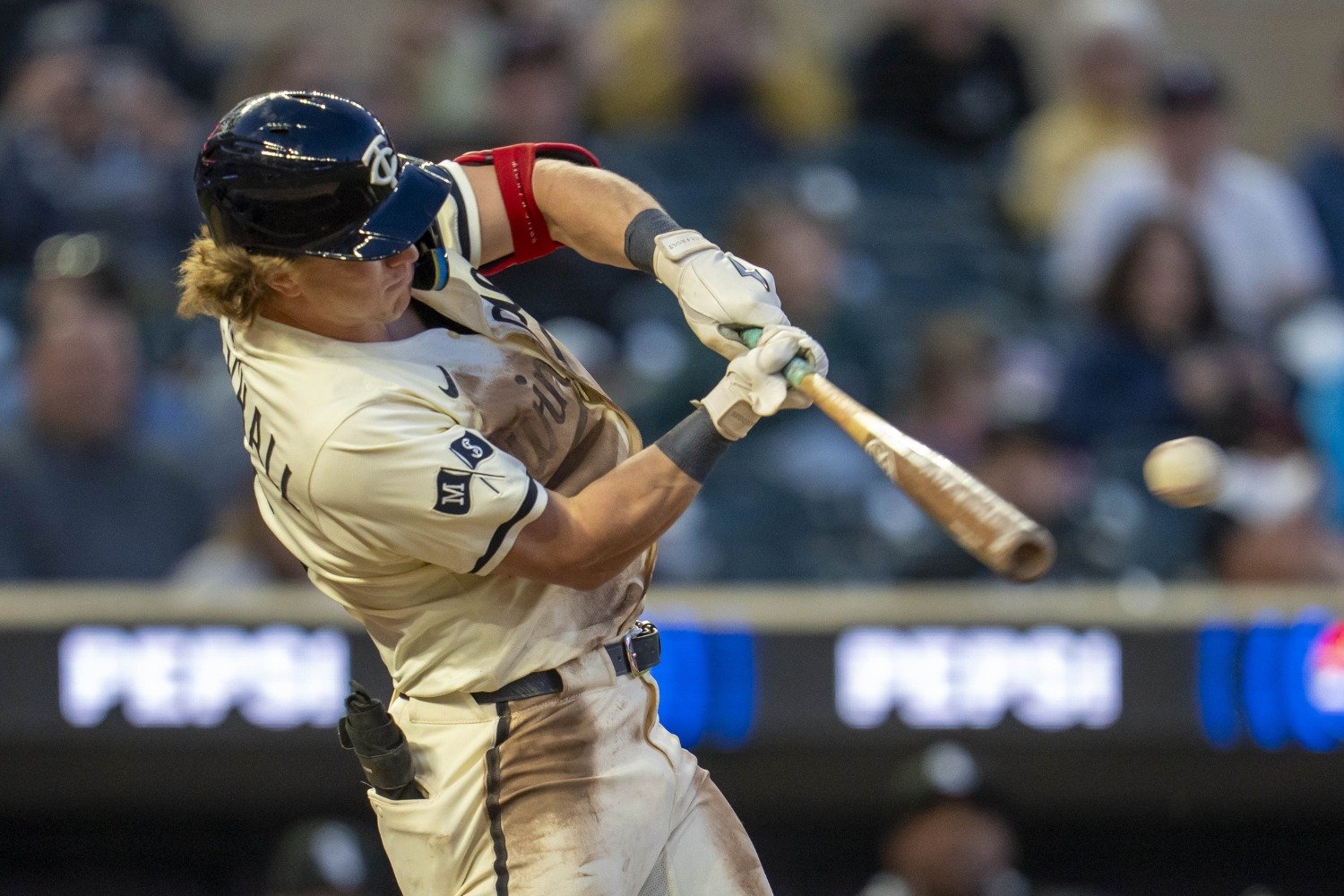 For just a moment, there, the Twins seemed to have a thrilling rookie to give their offense its much-needed ignition. Luke Keaschall came up not only ready to run (stealing five bases in his first five big-league games), but hitting exceptionally well. He doesn't have much in-game power yet, but he had lots of good takes and an exceptionally compact swing. He batted .368 over his first six contests, and although no one can sustain that, he looked like a legitimate .300 hitter. Of the 434 hitters with at least 25 swings this season, Keaschall's is the seventh-shortest, according to Statcast. He's direct to the ball, which has allowed him to find the barrel and hit line drives, despite subpar bat speed. M3k0b3ZfWGw0TUFRPT1fVWxOUkFWUUhWUUlBQVZBQ1ZBQUhVQUZUQUFNR1YxY0FVd1pUVWdZQlZBSlFBZ01F.mp4 The brevity of that stroke is beautiful. Starting relatively close to the plate, note the way he strides into the pitch, only to create space for himself to whip the bat through and get the head out on inside offerings using his front hip and shoulder. He times up the rotation of those two body parts well, creating some torque, but the big thing is that shoulder. Watch the way he shrugs it back and upward, forcing his hands down and starting the quick flick of the bat. Once those bigger body parts initiate his rotation, the top hand on the bat just throws it through the hitting zone, in a fluid, well-controlled motion. It's not a violent swing, but he can be extremely accurate with his barrel this way. Standing so close and using that leg kick and stride pattern allow him to cover the outer edge of the plate, despite his unimposing stature and his short stroke. Alas, we didn't get long to study the joy of it all. We got a warning shot on Wednesday night. M3k0b3ZfWGw0TUFRPT1fVXdNRUJsVUNBQUVBQzFkVFVBQUhBQUFDQUFNQ1VWUUFDZ2RVQ0FCV0JnWlVBUUlI.mp4 Then, the hammer fell for real on Friday. d2VXcTNfWGw0TUFRPT1fQjFRREJ3QUhYZ29BQ1ZRTEJRQUhVRkpmQUFOUUJRSUFVMUVBVlZKUUJBZGNVZ3Rl.mp4 If you watch most good big-league hitters hit and think, "Why doesn't everyone just do that?", the answer is most often that they can't. Hitting good big-league pitching is very hard, and most hitters don't have whatever special move you notice Aaron Judge or Byron Buxton making. It takes a degree of athleticism, proprioception, explosiveness or sheer strength that others lack. When you watch what Keaschall was doing in that first clip, though, if you asked why no one else was doing it, I'd have to give you a different answer: because they know better. Standing close to the plate in a big-league game is a risk. That's not breaking news; every player who does it understands that they're taking at least some degree of risk by doing so. Still, increasingly, hitters do stand close to the plate more often than they did (say) 25 years ago. There's better equipment protecting them, without inhibiting their swings, like custom-molded elbow pads; hand and wrist pads; and C-flaps on batting helmets. There are fewer pitchers who will notice you crowding the plate and intentionally throw at you, so the risk of being injured amid a brushback is lower. Meanwhile, teams accept no substitutes for power, and even now, many hitters can only generate power on pitches they can pull. That means covering the outer edge of the plate not just with a modified, opposite-field stroke, but with your 'A' swing, and in turn, that means crowding the dish. The thing is, if you want to stand close to the plate, you need a good plan to protect yourself. You need, for instance, a stride that pulls you off the ball a bit the instant you read that the ball is coming inside. That's the approach young Cardinals hitter Thomas Saggese takes. (Saggese is among a small handful of batters who stand both similarly close to the plate and similarly far forward in the box to what Keaschall does.) Screen Recording 2025-04-29 151703.mp4 Other ways to do this include taking a longer swing—one where the bat starts its arc earlier and spends more time behind your body, even as it's coming up to speed, and where your hands therefore stay protected by your body longer, too. Those guys tend not to handle the inside pitch all that well, but they can learn to manage that part of the zone and to do their big damage on the outer half. Randy Arozarena is a good example of this type of hitter. Unfortunately, Keaschall doesn't have the bat speed (at least so far) to hit like Arozarena. He could hit more like Saggese; maybe that's what he'll need to learn to do. But if you pause any video of a pitch on which the ball is coming in high and tight and he's considering a swing at all, you can see why continuing to do things the same way when he returns isn't an option. Last month at Baseball Prospectus, I wrote a piece about the increasing incidence of batters being hit by pitches (or fouling balls off themselves) and breaking bones. It's trending up at a steep rate over the last handful of years, especially because more and more pitchers throw so hard (with such shaky command) that it's difficult to get out of the way and easy to get hurt if you can't. Keaschall, though, got hit by one of the game's soft-tossing control artists, and one of its nicest guys. Kyle Hendricks wasn't hunting for his head, or his hands, and he doesn't even throw 90 miles per hour. The problem is Keaschall. What you see in the still frame above—the way his swing mechanics and his stride signature take him right into the ball, and the way the former requires his hands to come away from his body and toward the hitting zone earlier than other hitters' hands might, exposing them for so long—is why he got hurt. His big leg kick and the direction of his move puts him in harm's way. The right one.mp4 Maybe a fully healthy Keaschall—with this injury healed, but also with Tommy John surgery all the way behind him—can find a bit more bat speed, a bit more consistently. That would open up his mechanical options box. Otherwise, though, he'll have to make a major adjustment. He's too committal, too exposed, and too obviously inviting the pitcher into his kitchen with his current swing and setup. If he doesn't make a change, he'll get hurt again within a few weeks of his return to the field. That's just the nature of the modern game. Like a boxer in the ring or a receiver going over the middle, you have to be fearless—but you also have to learn to protect yourself, or you're not going to stay on the field long enough to do anything impressive there.
 -
The Twins' first baseman is the most enthusiastic new adopter of the torpedo bats, which arrived en masse in the Minnesota clubhouse this week. Here's why. Image courtesy of © Matt Blewett-Imagn Images If he wants it (or, perhaps, if he simply doesn't get as filthy-rich as this game still has a chance to make him), Ty France has a future in sales. He's got the flair for it. When the topic of his new torpedo bat is broached, he immediately effuses—and mostly, what he wants to tell you is that there's nothing to tell. "Yeah, I used it last night for the first time. Feels just like my other bat," France said Thursday morning, sounding much more excited than one normally would about something not feeling remotely different. But as he's quick to demonstrate, there's a reason for his excitement. "Actually, here, I'll do a test with you," he said. "Close your eyes." In turns, France handed me two of his 'gamers'—one an original model, with the traditional barrel, and one with the torpedo shape that moves slightly more of the batweight toward the handle and narrows the end of the shaft. He encouraged me to take a batter's stance, move each around a bit, and feel their balance. Then he asked me to identify which was which. I failed—which is the expected result, for a person a bit older than France but with perhaps 20 years less dirt between their cleats than he has. But the point, of course, is that even some pro hitters also feel no difference, as France himself doesn't. "That's what we want. We don't want something that feels drastically different," he said, simply. He's excited about the possibility of adapting the new tool of the trade, because it won't change how he feels in the box but might change how much wood is behind the ball when he meets it, at times. The magnitude of the help torpedo bats can provide has been vastly overstated, based on a fluky first series at Yankee Stadium between the Bronx Bombers and the Milwaukee Brewers and a broadcast segment that was just meant to inform—not to dramatize. There are also plenty of hitters who aren't good candidates for the change. France, however, is a superb one. "For me, personally, more of my misses are closer to the handle, so it makes sense for me," France said. "But the biggest thing was making sure it felt like my original bat." While a subtle shift in weight toward the hands can improve bat control and allow a hitter to either generate more swing speed or better manipulate a swing at the same clip, hitters themselves don't want to feel that. Rightfully, many of them worry that such a change could mess with their mechanics, leaving them in danger of whiffing on formerly friendly pitches or even hurting themselves. While they're less common than torn ligaments in pitching elbows, broken hamates haunt the nightmares of some hitters, because it can be so easy to do that on a swing that felt routine until the last moment—and the result can vary from just a few weeks' missed time to a few months', plus months more of not quite having your swing back. France is among those who feel comfortable because they don't feel a major change in the swing weight, but he's also a good fit for the new technology because of where and how he tends to hit the ball. He mentioned that most of his misses are slightly toward the handle. One way we can view that (while we all anxiously await further bat-tracking data from Statcast, perhaps as soon as next month, that might give us more direct info on it) is by looking at a hitter's contact point. France is a guy who contacts the ball deep in his hitting zone—behind the front edge of home plate, quite often, and about 27 inches in front of his center of mass. Compare that to, for instance, teammate Trevor Larnach, whose average contact point is a few inches in front of home plate and about 32 inches in front of his center of mass. I placed the blue diagonal lines here to help you see how Larnach's bat is more likely to have come around fully and be square to the path of the incoming pitch, or wrapping slightly around it. That's why Larnach is the more dangerous of the two, in terms of pull power. It's why he struggles against offspeed stuff; he has to fight to stay back enough to meet the ball squarely. France, meanwhile, is more likely to have his mishits happen deep in the hitting zone, which might mean that the bat isn't fully square to the incoming pitch yet. When that happens, the ball connects with the bat just a bit up the handle. We don't have to rely on hypotheticals to say this. Of 294 qualifying hitters, last year, France ranked 97th in the differential between his hard-hit balls and non-hard-hit balls, in terms of contact point. On the same list, Larnach was 182nd, where a lower ranking means your hard-hit balls have deeper contact points. In short, the lower you are on this list, the more likely that your mishits tend to come off the end of the bat. The higher you are, the more likely that your mishits come off the handle. Thus, Larnach would be a very poor candidate for a torpedo bat. So would Royce Lewis, one of the hitters at the extreme end of the spectrum; his mishits nearly all come off the end of the bat. France, however, is a great fit for it. That doesn't mean he'll get red-hot and start hitting like the game's elite first basemen, once he gets the torpedo bat working. It does, however, mean he's right to feel that excitement, even if it's about the absence of a feeling of difference. View full article