



Matthew Trueblood
-
Posts
1,033 -
Joined
-
Last visited
Content Type
Profiles
News
Minnesota Twins Videos
2026 Minnesota Twins Top Prospects Ranking
2022 Minnesota Twins Draft Picks
Minnesota Twins Free Agent & Trade Rumors, Notes, & Tidbits
Guides & Resources
2023 Minnesota Twins Draft Picks
The Minnesota Twins Players Project
2024 Minnesota Twins Draft Picks
2025 Minnesota Twins Draft Pick Tracker
2026 Minnesota Twins Draft Tracker: Picks & Bonuses
Forums
Blogs
Events
Store
Downloads
Gallery
Everything posted by Matthew Trueblood
-
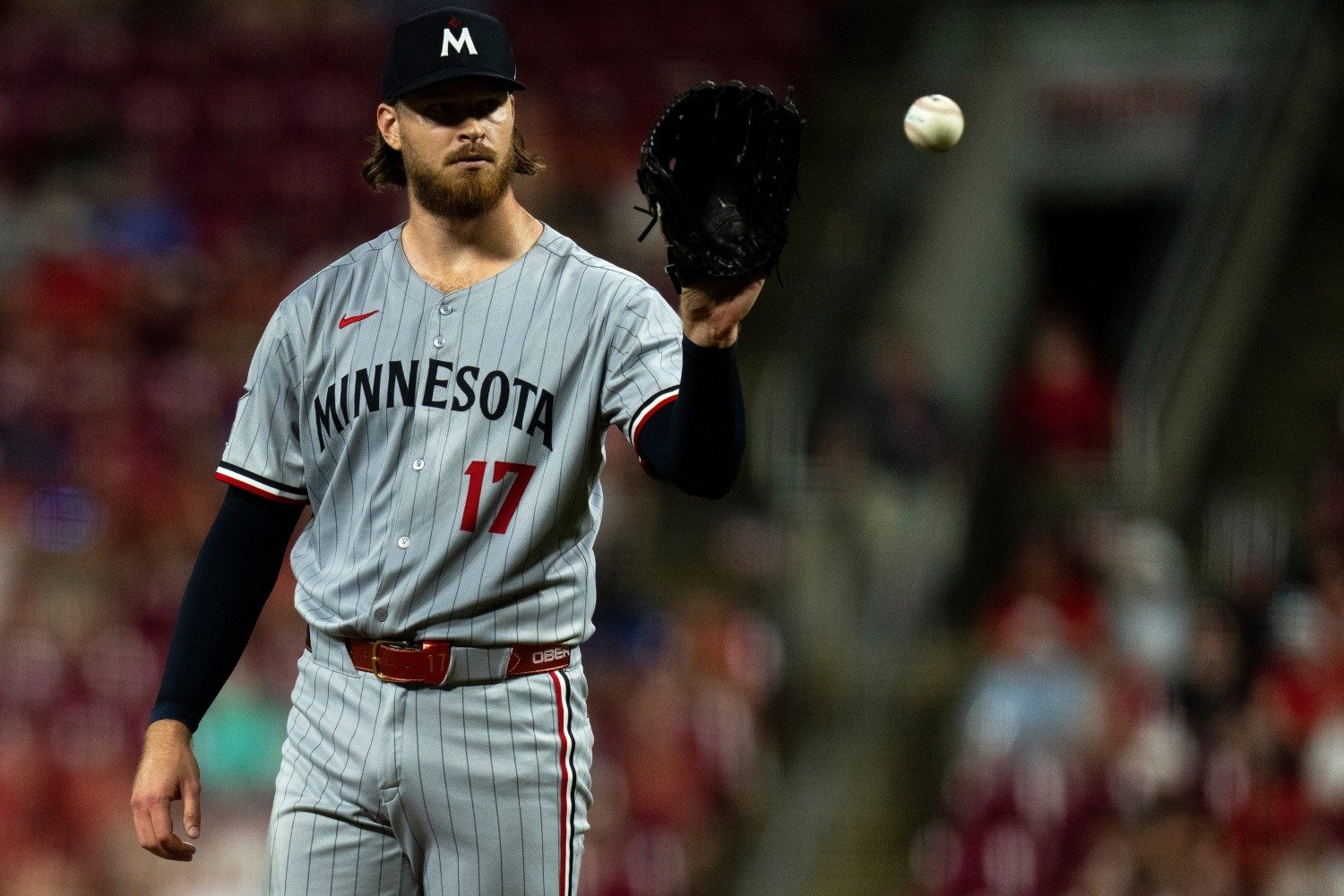 Early on, it looked like this could be another in the recent string of starts by Bailey Ober that have steadily raised the concern level around him from non-existent to very high. Byron Buxton staked his starter to a 1-0 lead with a leadoff home run, trying to burn off the humidity that lingered behind a two-hour rain delay with a rocket over the high wall in left-center field. We'll discuss Buxton a bit more later, because his continued brilliance is the best thing going on in Twins Territory right now. Right away, though, Ober gave up that lead—and then some. All season, the narrative has been there. Ober's velocity has been down since spring training, which was more notable even then than it would be for many pitchers, for multiple reasons. Firstly, of course, Ober had less margin for error, as it were; he's never been a hard thrower. Secondly, though, Ober is usually at his strongest (and his velocity is usually highest) early in the season. That he came into spring struggling to hit his usual numbers was worrisome, and indeed, he's been fighting to stay above 90 miles per hour with his heater almost all season. For several starts, he pitched around that problem, but even when his ERA didn't show the strain of his diminished speed, his strikeout rate did. In 11 starts across the months of April and May, Ober posted a 2.43 ERA, and the Twins won eight of those games. However, he only punched out 18.8% of opposing batters even during that span. After Wednesday night, he has three starts in June, and his ERA has skyrocketed to 8.31. Not missing bats has caught up to him, and we can point to an obvious reason for that inability to induce whiffs: the lost velocity. In the first inning against the Reds, he made the mistake of trying to establish his heater, and work off of it. All year, he's been (wisely) ratcheting down the usage of his fastball. With a lefty-heavy top of the lineup for the Reds, however, he tried to go after them a bit with it, so that he'd be able to go to his changeup more against the same hitters the second and third times he saw them. Try though he might, he's often been unable to find a satisfactory feel for his breaking stuff this year, which has led to slight reductions in his use of those offerings. That makes it more important that he find spots to make use of the heater to lefties, so they can't sit on his changeup. TJ Friedl singled to lead off the bottom of the first, though, and after Ober managed to get both Gavin Lux and Elly De La Cruz out, former Twins farmhand Spencer Steer stepped to the plate. Ober went after him, too, with fastballs. Big mistake. Steer saw three pitches, all of them fastballs. Ober was sitting 91-92 at that early stage of the game, but Steer rode the third pitch (a 1-1 test of the outer edge) out of the park to the opposite field, flipping the scoreboard. It was 2-1 Reds, and the Twins would never catch them. That mistake and its grave consequences illustrate the lack of a margin for error for Ober right now, but to his credit, he recovered fairly well. As the game wore on, he tweaked his approach, and perhaps his mechanics. Ober's fastball still lost velocity as the game went along, but he also began changing the way he attacked hitters. Here's a chart showing his pitch mix based on the count, for this full season. Even as he's reduced his overall fastball usage, I can make a strong case that he's leaned too much on the heater early in counts this year. On occasion, when the scouting report says that a hitter is a bit passive in a given count, he should try to sneak one by hitters, but by and large, it's time for the towering hurler to start pitching backward. It's encouraging, then, that he did just that on Wednesday night, especially after the first inning. The Reds are a very patient team, so Ober still picked spots to throw them fastballs. In fact, he tied a career high with 12 called strikes on the heater. (The other time he did so was way back in early August 2023.) As the game progressed, though, he started far more hitters with soft stuff, and used the fastball either to buy back strikes or to catch hitters looking for an offspeed pitch in a deep count. Cincinnati did put up runs in the second and third, but Ober largely regained control of the game after that Steer homer. He'd record all 17 Twins outs for the evening, before the second round of rain came and washed out the contest. His final line (5 2/3 innings, 9 hits, 4 runs, 5 strikeouts, 0 walks) is unimpressive, but he took a small step toward something viable. It appeared that he also made a slight mechanical change during the game, and there's evidence of that in the data, too. It's hard to see what he did differently from the default center-field cameras on the TV broadcasts, but Ober appeared to be more balanced as he finished his deliveries later in the game, and for the first time since roughly last July, his extension (the distance, in feet, from the front edge of the rubber to his actual release point, capturing the amount by which he shortens the distance from himself to the plate) plummeted. Interestingly, extension has not always mapped well to overall effectiveness or health for Ober, whose height and unique amount of extension have been an advantage and one way to mitigate the problem of having below-average velocity for most of his career. Whether it had to do with mound conditions, was an experiment in managing the left hip issue that has plagued him this year, or just allowed him to feel his landing foot better and stay more stable throughout his delivery, Ober seemed not to be launching himself quite as far down the mound later in his appearance, and it worked. His command of (especially) his breaking stuff improved, and so did the results. Unfortunately, for one game, that was all too little, too late. The Twins never meaningfully answered the Reds' initial volley. A pair of singles and an RBI groundout pushed across a second run against Nick Lodolo in the fourth, but the Cincinnati lefty neutralized the visitors fairly easily around that. This offense just isn't generating the kind of dangerous contact that became their trademark for most of Rocco Baldelli's tenure. It's beginning to look like a major restructuring of the offense will be required to change their fortunes, and that probably has to wait until the offseason. For now, they need to keep finding ways to create runs one or two at a time, but they should also continue working with their young core to produce the power that was expected of them just a few years ago. Buxton is the blessed exception to all of that. He hit that first-pitch home run, but he also had hard-hit balls in each of his other two plate appearances. Both were outs, but they were very well-struck air balls to the outfield. It seems like every time he steps into the box, he's hitting the ball hard. That 100-mph flyout to right field, by the way, was Buxton's 13th hard-hit ball to the opposite field this season. That's the most such batted balls he's ever had in a season, tying 2023 and 2024. It took him over 100 fewer plate appearances to get there this year than in either of the last two. He's become a pole-to-pole power threat and a better situational hitter than ever, and he's drawing walks. The Twins need several other players to follow his lead, and so far, they haven't. Nonetheless, Wednesday was a demonstration of his immense value. What's Next The good news is that the Twins didn't need their bullpen at all Wednesday night. After David Festa's start Tuesday night threatened to burn it out at the front end of a stretch in which they play 13 games without a day off, the rain gave them a nice reprieve. Chris Paddack will try to compound that relief by working deep and dominating the light-hitting Reds, while Cincinnati will trot out veteran right-hander Nick Martinez. The game starts early, at 11:40 AM Central, as the Twins wrap a miserable road trip and try to avoid having it be a winless one.
 -
Walker JenkinsLuke KeaschallEmmanuel RodriguezKaelen CulpepperAndrew MorrisDasan HillConnor PrielippKyle DeBargeCharlee SotoBrandon WinokurBilly AmickMarco RayaCJ CulpepperEduardo BeltreGabriel GonzalezCory LewisRicardo OlivarKhadim DiawDanny De AndradePayton Eeles
-
Walker JenkinsLuke KeaschallEmmanuel RodriguezKaelen CulpepperAndrew MorrisDasan HillConnor PrielippKyle DeBargeCharlee SotoBrandon WinokurBilly AmickMarco RayaCJ CulpepperEduardo BeltreGabriel GonzalezCory LewisRicardo OlivarKhadim DiawDanny De AndradePayton Eeles
-
Image courtesy of © Jesse Johnson-Imagn Images On a 2-0 pitch in the bottom of the fourth inning Tuesday night, Ryan Jeffers took a foul ball off his right hand or wrist. It caused him some immediate discomfort, but he stayed in the game for the rest of the frame. However, Christian Vázquez pinch-hit for Jeffers in the top of the fifth, and the Twins announced that Jeffers had departed with a right hand contusion. The team took X-rays, which were negative; that's good news. Still, though, Jeffers leaving helped seal the Twins' fate, as Vázquez came up with the tying and go-ahead runs on base in the ninth and made the final out in the team's fifth straight loss. Hopefully, the results of the scan mean that Jeffers avoided serious injury on the play, but this is the second time this year he's taken a hit to his throwing hand (and the top hand when he's at the plate). When there's a runner on base whom he considers a threat to steal, Jeffers will hold his bare hand in front of him, roughly in his lap. That lets him achieve a quicker transfer and release on throws to nail would-be thieves, but it also puts him at some added risk for the kind of injury he suffered Tuesday. Even without a fracture, Jeffers could miss a bit of time due to this issue. If the contusion begets swelling, it could interfere both with his efforts to generate good bat speed and with his throws from behind the plate, so the Twins are likely to have Vázquez catch at least the final two games of their series in Cincinnati. If Jeffers isn't back in the lineup (at least as the DH) by Thursday afternoon, we'll know that he's dealing with something a bit more notable. With no broken bone, Jeffers is likely to stay off the injured list, which is a relief. Vázquez is in no position, based on his age and health or on his performance, to take over as the near-full-time backstop for this team. Jeffers is an important part of the Twins lineup, for both his offensive and his defensive contributions. Without him, a weak batting order grows downright anemic. The offending batted ball came off the bat of Reds outfielder Will Benson, and appeared to hit either Jeffers's wrist or the back of his right hand. He immediately winced and spent the rest of the inning flexing and turning his hand, whenever he got an opportunity. It was no great surprise when he was lifted for Vázquez the next time his place in the order was due. The Twins were smart to get a head start on imaging, and thankfully, the absence of a break on the X-ray indicates that Jeffers should be ok. Even if he can play through this, though, expect it to have at least a minor effect on how he hits and throws. Jeffers lost a bit of bat speed in the fortnight after his previous hand issue, and William Contreras of the Brewers is severely lacking in the power department this year, largely because he's lost bat speed, too. Jeffers might be fully fine this time around, but in a frustrating loss, the Twins' most terrifying moment might have been when Jeffers had to leave the game. View full article
-
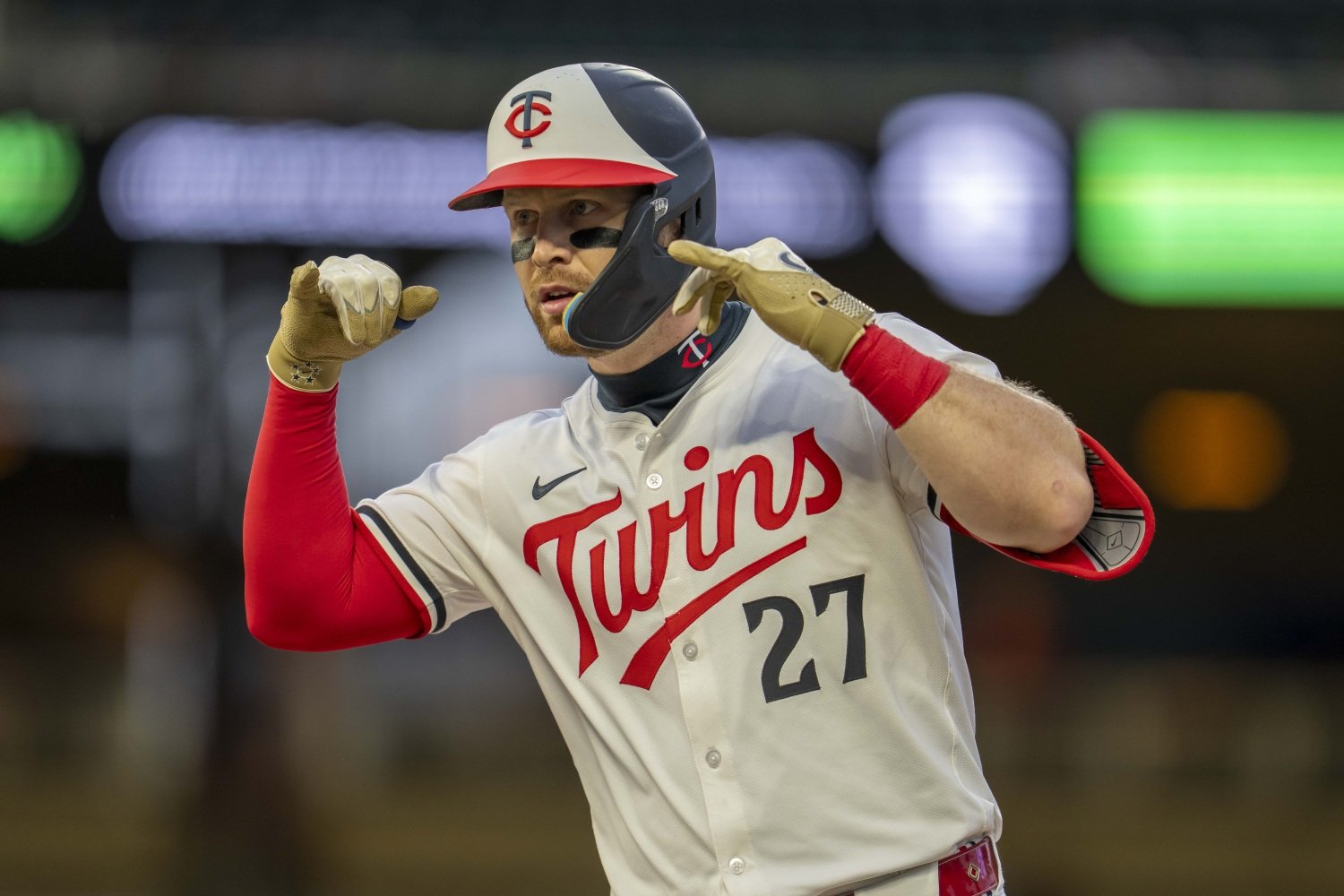 On a 2-0 pitch in the bottom of the fourth inning Tuesday night, Ryan Jeffers took a foul ball off his right hand or wrist. It caused him some immediate discomfort, but he stayed in the game for the rest of the frame. However, Christian Vázquez pinch-hit for Jeffers in the top of the fifth, and the Twins announced that Jeffers had departed with a right hand contusion. The team took X-rays, which were negative; that's good news. Still, though, Jeffers leaving helped seal the Twins' fate, as Vázquez came up with the tying and go-ahead runs on base in the ninth and made the final out in the team's fifth straight loss. Hopefully, the results of the scan mean that Jeffers avoided serious injury on the play, but this is the second time this year he's taken a hit to his throwing hand (and the top hand when he's at the plate). When there's a runner on base whom he considers a threat to steal, Jeffers will hold his bare hand in front of him, roughly in his lap. That lets him achieve a quicker transfer and release on throws to nail would-be thieves, but it also puts him at some added risk for the kind of injury he suffered Tuesday. Even without a fracture, Jeffers could miss a bit of time due to this issue. If the contusion begets swelling, it could interfere both with his efforts to generate good bat speed and with his throws from behind the plate, so the Twins are likely to have Vázquez catch at least the final two games of their series in Cincinnati. If Jeffers isn't back in the lineup (at least as the DH) by Thursday afternoon, we'll know that he's dealing with something a bit more notable. With no broken bone, Jeffers is likely to stay off the injured list, which is a relief. Vázquez is in no position, based on his age and health or on his performance, to take over as the near-full-time backstop for this team. Jeffers is an important part of the Twins lineup, for both his offensive and his defensive contributions. Without him, a weak batting order grows downright anemic. The offending batted ball came off the bat of Reds outfielder Will Benson, and appeared to hit either Jeffers's wrist or the back of his right hand. He immediately winced and spent the rest of the inning flexing and turning his hand, whenever he got an opportunity. It was no great surprise when he was lifted for Vázquez the next time his place in the order was due. The Twins were smart to get a head start on imaging, and thankfully, the absence of a break on the X-ray indicates that Jeffers should be ok. Even if he can play through this, though, expect it to have at least a minor effect on how he hits and throws. Jeffers lost a bit of bat speed in the fortnight after his previous hand issue, and William Contreras of the Brewers is severely lacking in the power department this year, largely because he's lost bat speed, too. Jeffers might be fully fine this time around, but in a frustrating loss, the Twins' most terrifying moment might have been when Jeffers had to leave the game.
 -
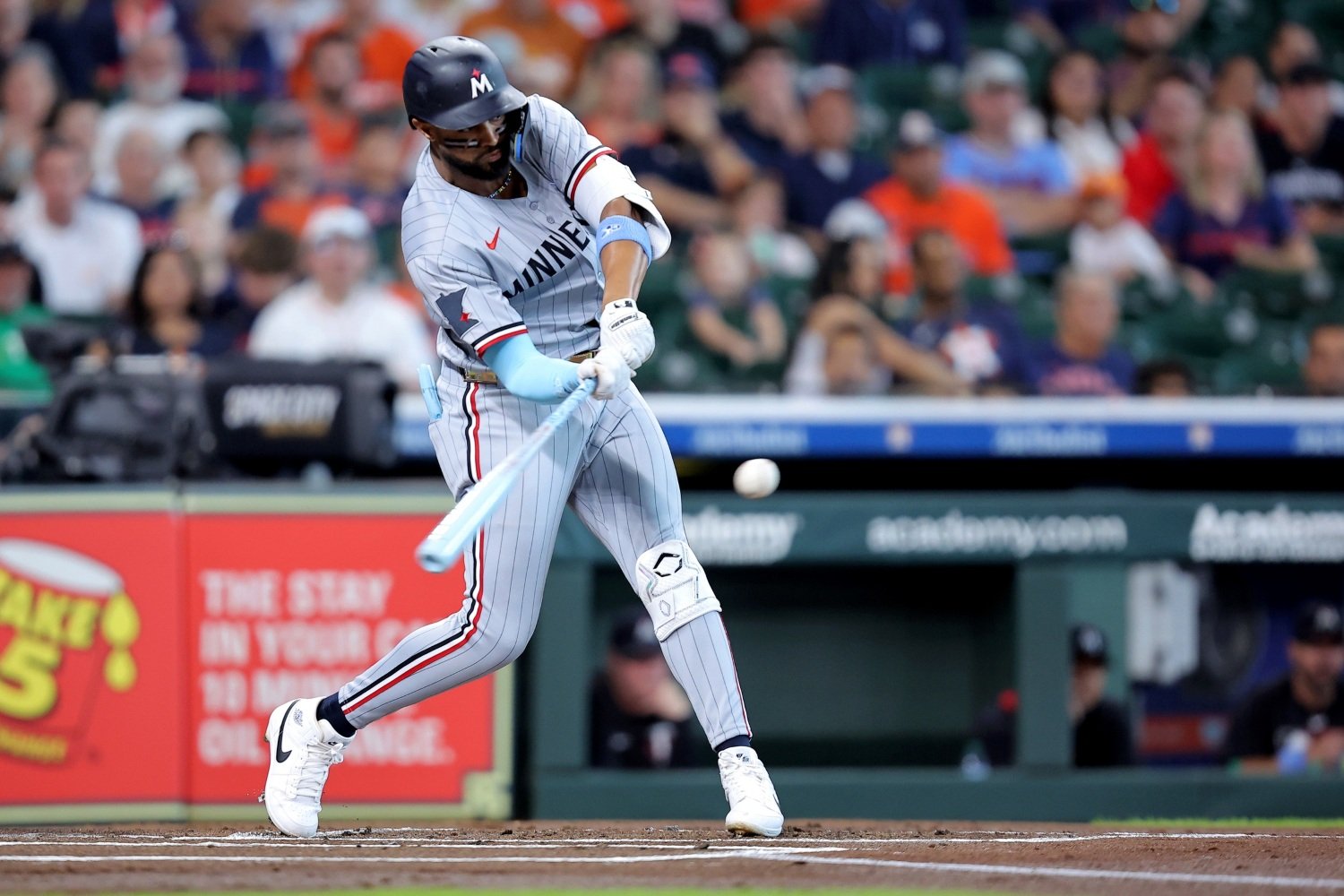 We've never seen Willi Castro quite like this. Even last year, en route to his first-ever All-Star Game, he wasn't producing the way he's done it this season. In 197 plate appearances, Castro is batting .290/.365/.483, with seven home runs. More impressively, perhaps, a bunch of that production has come against left-handed pitchers, while batting righty. The switch-hitting Castro had just a .242/.288/.386 line against lefties last year, but this year, that line is .327/.351/.618. Three of Castro's homers have been off southpaws. That's been thanks to a big spike in average bat speed from the right side, from 71.9 miles per hour in 2024 to 74.2 mph this season. This year's number is the kind of bat speed that generates plus power, something Castro has never shown from the right side—until now. The sudden surge gives him a greater margin for error; it's easier for him to be on time and the ball jumps off the bat more when he makes contact. "I think I'm more prepared on the fastball. Just be on the fastball the whole time, and I just react to the other things," Castro said Thursday at Target Field. "When you're on the fastball, you know you're not gonna miss it, so you just react. You just trust your ability. When you see a curveball pop up or something, then you'll react a bit better." Part of the difference is that Castro changed his stance this year, especially from the right side. By standing a bit more upright with his feet closer together, he's effectively working from deeper in the batter's box, giving him more time to react to the pitch. His stride length hasn't materially changed, but he's much better able to generate late torque in his swing, because his weight is beneath him. Here's where Castro set up (and how his stride worked) from the right side in 2024. Compare that to 2025, and you can see the magnitude of his changes. By moving off the plate slightly, he's given himself more room to operate. Castro says much of the increase in bat speed traces to a greater sense of aggressiveness, though, rather than any major mechanical change. "I didn't really work on bat speed. I just worked to try to be more aggressive with the fastball, because I feel like last year, it was affecting me from the right side: not being on time, not getting the barrel where I wanted to," he said. "I feel like I was rushing to the ball. I feel like the ball was already on me when I wanted to swing, and I wasn't getting enough good contact, like I am right now. So I set my sight more in front. All the damage happens in the front; you want to catch the ball in front. Nothing happens when you catch the ball back here." In other words, in Castro's approach, he's gearing up to catch the ball out front more consistently. That's where things get really interesting.
 -
Image courtesy of © Erik Williams-Imagn Images We've never seen Willi Castro quite like this. Even last year, en route to his first-ever All-Star Game, he wasn't producing the way he's done it this season. In 197 plate appearances, Castro is batting .290/.365/.483, with seven home runs. More impressively, perhaps, a bunch of that production has come against left-handed pitchers, while batting righty. The switch-hitting Castro had just a .242/.288/.386 line against lefties last year, but this year, that line is .327/.351/.618. Three of Castro's homers have been off southpaws. That's been thanks to a big spike in average bat speed from the right side, from 71.9 miles per hour in 2024 to 74.2 mph this season. This year's number is the kind of bat speed that generates plus power, something Castro has never shown from the right side—until now. The sudden surge gives him a greater margin for error; it's easier for him to be on time and the ball jumps off the bat more when he makes contact. "I think I'm more prepared on the fastball. Just be on the fastball the whole time, and I just react to the other things," Castro said Thursday at Target Field. "When you're on the fastball, you know you're not gonna miss it, so you just react. You just trust your ability. When you see a curveball pop up or something, then you'll react a bit better." Part of the difference is that Castro changed his stance this year, especially from the right side. By standing a bit more upright with his feet closer together, he's effectively working from deeper in the batter's box, giving him more time to react to the pitch. His stride length hasn't materially changed, but he's much better able to generate late torque in his swing, because his weight is beneath him. Here's where Castro set up (and how his stride worked) from the right side in 2024. Compare that to 2025, and you can see the magnitude of his changes. By moving off the plate slightly, he's given himself more room to operate. Castro says much of the increase in bat speed traces to a greater sense of aggressiveness, though, rather than any major mechanical change. "I didn't really work on bat speed. I just worked to try to be more aggressive with the fastball, because I feel like last year, it was affecting me from the right side: not being on time, not getting the barrel where I wanted to," he said. "I feel like I was rushing to the ball. I feel like the ball was already on me when I wanted to swing, and I wasn't getting enough good contact, like I am right now. So I set my sight more in front. All the damage happens in the front; you want to catch the ball in front. Nothing happens when you catch the ball back here." In other words, in Castro's approach, he's gearing up to catch the ball out front more consistently. That's where things get really interesting. View full article
-
Image courtesy of © Ed Szczepanski-Imagn Images It looks like the Minnesota Twins will be patching together a thinner starting rotation than hoped, for longer than expected. Pablo López suffered a strained teres major muscle last week during the team's visit to West Sacramento, Calif., and now, Zebby Matthews is also on the injured list, with a strained shoulder. Twins manager Rocco Baldelli called it "very likely" that Simeon Woods Richardson would be recalled to join the rotation, although that won't happen Sunday. With Matthews down, the Twins reactivated left-handed reliever Danny Coulombe, who made a rehab appearance with Triple-A St. Paul Saturday and was ready to return, anyway. They'll operate with a nine-man bullpen in the series finale with the Toronto Blue Jays. Matthews said this is his first stint on the injured list (and first time truly missing starts) in professional baseball. He began to feel the shoulder barking before his latest start, so we can rule out the mound at Sutter Health Park as the culprit for this particular malady. "I kind of felt it after the bullpen in Tampa there," Matthews said Sunday. "I was able to throw through it in Seattle and Sacramento, but ultimately, now I'm feeling it a little bit more, so gotta take a little time off. Hopefully, it's not too long." There's no constant pain. Matthews said he mainly feels the problem during the "last part of the throw" when delivering the ball. Until that's no longer the case, though, and until he starts to feel "normal", he'll pause throwing. The timeline for returning to throwing (let alone getting back onto a big-league mound) will depend on how he responds to rest and treatment. Matthews said he underwent an MRI Saturday morning, which showed the strain, but neither he nor the team had an official diagnosis to share right away. "No real details were really discussed," Matthews said of his meeting with the team about the results of his imaging. "It was more about how I feel, and a timetable of how long they think I'll be out, that sort of stuff." Baldelli said this possibility was on the team's radar for days, before they took action. "It wasn't a complete shock to us, despite the fact that it is disappointing," the manager said. "We knew that this was something that he was dealing with, going back to his start in [Sacramento]. It's something we were prepared for, and we were thinking about. So we've been assessing him over the past few days, to see what shape he's in, and then we got him looked at, got some imaging done. He's gonna be down at least for a little while." While Matthews struck an optimistic tone and Baldelli and other Twins officials were extremely circumspect, it doesn't sound like Matthews will be back at the end of the 15-day term for which he's required to be shelved. That he's shut down for the time being says that, in itself. Pitchers who have suffered shoulder strains, since the start of 2021, have averaged more than 10 weeks to return to action, and the median is right around eight weeks. The distribution of possibilities is wide with this injury, which is not especially specific. For instance, the teres major issues that Joe Ryan and López have battled can fall under the umbrella of shoulder strains, but so can more minor issues with smaller muscles that provide stability instead of power to the pitcher. It's possible Matthews returns before the end of the month, but more likely that he's not back until the All-Star break. Woods Richardson will get the first chance to replace Matthews, from the sound of things, but with both him and David Festa in a rotation that also features Bailey Ober's diminishing velocity and no longer has López at its head, there will be added pressure on the bullpen. Long man Travis Adams could make a short trip back to St. Paul after his next extended outing, to facilitate Woods Richardson's arrival. but he becomes an essential cog in the pen if the team ends up needing to lift starters earlier than has been their tendency or preference of late. "We're just gonna have to keep kind of moving, and bringing guys up and challenging guys the way we have, and we're gonna continue to operate like that," Baldelli said. "If we have to get creative with the rotation or the way that we're filling up some of these innings and winning games, then we'll do that." Ryan will be the first pitcher to take the mound in the knowledge that the team's rotation is under this much pressure. Baldelli said he hopes the newly minted Twins ace won't place undue pressure on himself. "I don't think that Joe Ryan has to do anything differently. I don't want him thinking about anything differently. I don't want him approaching his outings differently," the skipper said. "He's been pitching great. Why would he do anything more than what he's doing? All we want our guys to do is get ready for their start, go and give us a chance to win. That's it." That's all any one pitcher can do, of course, especially in the modern age. Even a top-tier starter can't generally spin a few complete games to help a tired bullpen stabilize. That's why, increasingly, the injuries to the rotation appear to threaten the viability of Jorge Alcala as the last man in the team's bullpen. How the team works around their latest setback is hard to say, but one thing is clear: the excess depth they might have hoped they had is turning out to be depth, but not excess. In fact, it might not even turn out to be enough. View full article
- 39 replies
-
- 2
-

-
- zebby matthews
- simeon woods richardson
- (and 3 more)
-
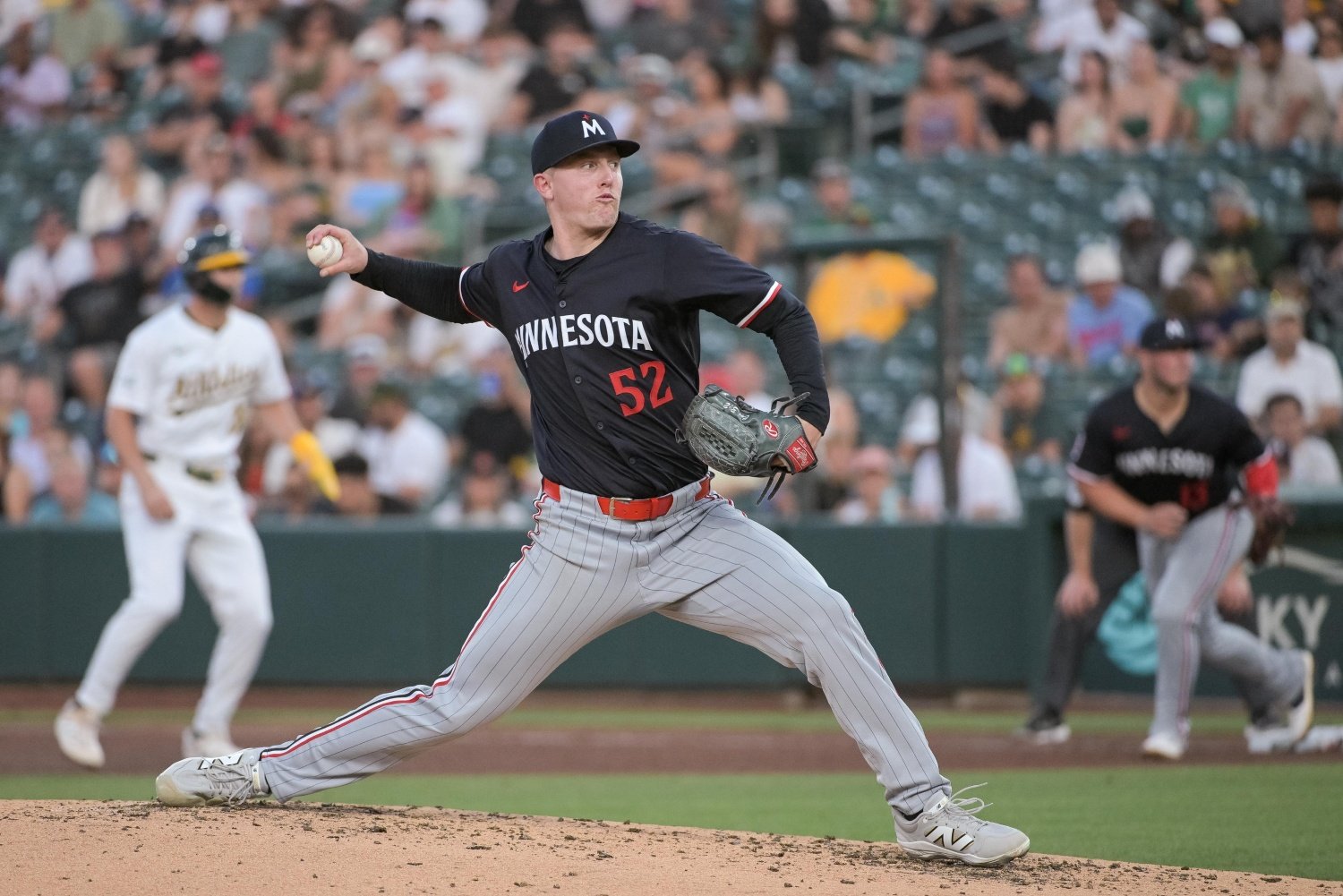 It looks like the Minnesota Twins will be patching together a thinner starting rotation than hoped, for longer than expected. Pablo López suffered a strained teres major muscle last week during the team's visit to West Sacramento, Calif., and now, Zebby Matthews is also on the injured list, with a strained shoulder. Twins manager Rocco Baldelli called it "very likely" that Simeon Woods Richardson would be recalled to join the rotation, although that won't happen Sunday. With Matthews down, the Twins reactivated left-handed reliever Danny Coulombe, who made a rehab appearance with Triple-A St. Paul Saturday and was ready to return, anyway. They'll operate with a nine-man bullpen in the series finale with the Toronto Blue Jays. Matthews said this is his first stint on the injured list (and first time truly missing starts) in professional baseball. He began to feel the shoulder barking before his latest start, so we can rule out the mound at Sutter Health Park as the culprit for this particular malady. "I kind of felt it after the bullpen in Tampa there," Matthews said Sunday. "I was able to throw through it in Seattle and Sacramento, but ultimately, now I'm feeling it a little bit more, so gotta take a little time off. Hopefully, it's not too long." There's no constant pain. Matthews said he mainly feels the problem during the "last part of the throw" when delivering the ball. Until that's no longer the case, though, and until he starts to feel "normal", he'll pause throwing. The timeline for returning to throwing (let alone getting back onto a big-league mound) will depend on how he responds to rest and treatment. Matthews said he underwent an MRI Saturday morning, which showed the strain, but neither he nor the team had an official diagnosis to share right away. "No real details were really discussed," Matthews said of his meeting with the team about the results of his imaging. "It was more about how I feel, and a timetable of how long they think I'll be out, that sort of stuff." Baldelli said this possibility was on the team's radar for days, before they took action. "It wasn't a complete shock to us, despite the fact that it is disappointing," the manager said. "We knew that this was something that he was dealing with, going back to his start in [Sacramento]. It's something we were prepared for, and we were thinking about. So we've been assessing him over the past few days, to see what shape he's in, and then we got him looked at, got some imaging done. He's gonna be down at least for a little while." While Matthews struck an optimistic tone and Baldelli and other Twins officials were extremely circumspect, it doesn't sound like Matthews will be back at the end of the 15-day term for which he's required to be shelved. That he's shut down for the time being says that, in itself. Pitchers who have suffered shoulder strains, since the start of 2021, have averaged more than 10 weeks to return to action, and the median is right around eight weeks. The distribution of possibilities is wide with this injury, which is not especially specific. For instance, the teres major issues that Joe Ryan and López have battled can fall under the umbrella of shoulder strains, but so can more minor issues with smaller muscles that provide stability instead of power to the pitcher. It's possible Matthews returns before the end of the month, but more likely that he's not back until the All-Star break. Woods Richardson will get the first chance to replace Matthews, from the sound of things, but with both him and David Festa in a rotation that also features Bailey Ober's diminishing velocity and no longer has López at its head, there will be added pressure on the bullpen. Long man Travis Adams could make a short trip back to St. Paul after his next extended outing, to facilitate Woods Richardson's arrival. but he becomes an essential cog in the pen if the team ends up needing to lift starters earlier than has been their tendency or preference of late. "We're just gonna have to keep kind of moving, and bringing guys up and challenging guys the way we have, and we're gonna continue to operate like that," Baldelli said. "If we have to get creative with the rotation or the way that we're filling up some of these innings and winning games, then we'll do that." Ryan will be the first pitcher to take the mound in the knowledge that the team's rotation is under this much pressure. Baldelli said he hopes the newly minted Twins ace won't place undue pressure on himself. "I don't think that Joe Ryan has to do anything differently. I don't want him thinking about anything differently. I don't want him approaching his outings differently," the skipper said. "He's been pitching great. Why would he do anything more than what he's doing? All we want our guys to do is get ready for their start, go and give us a chance to win. That's it." That's all any one pitcher can do, of course, especially in the modern age. Even a top-tier starter can't generally spin a few complete games to help a tired bullpen stabilize. That's why, increasingly, the injuries to the rotation appear to threaten the viability of Jorge Alcala as the last man in the team's bullpen. How the team works around their latest setback is hard to say, but one thing is clear: the excess depth they might have hoped they had is turning out to be depth, but not excess. In fact, it might not even turn out to be enough.
- 39 comments
-
- 5
-
-
- zebby matthews
- simeon woods richardson
- (and 3 more)
-
Twins 6, Athletics 1: Everyone Grab Either an Oar or a Bucket
Matthew Trueblood posted an article in Twins
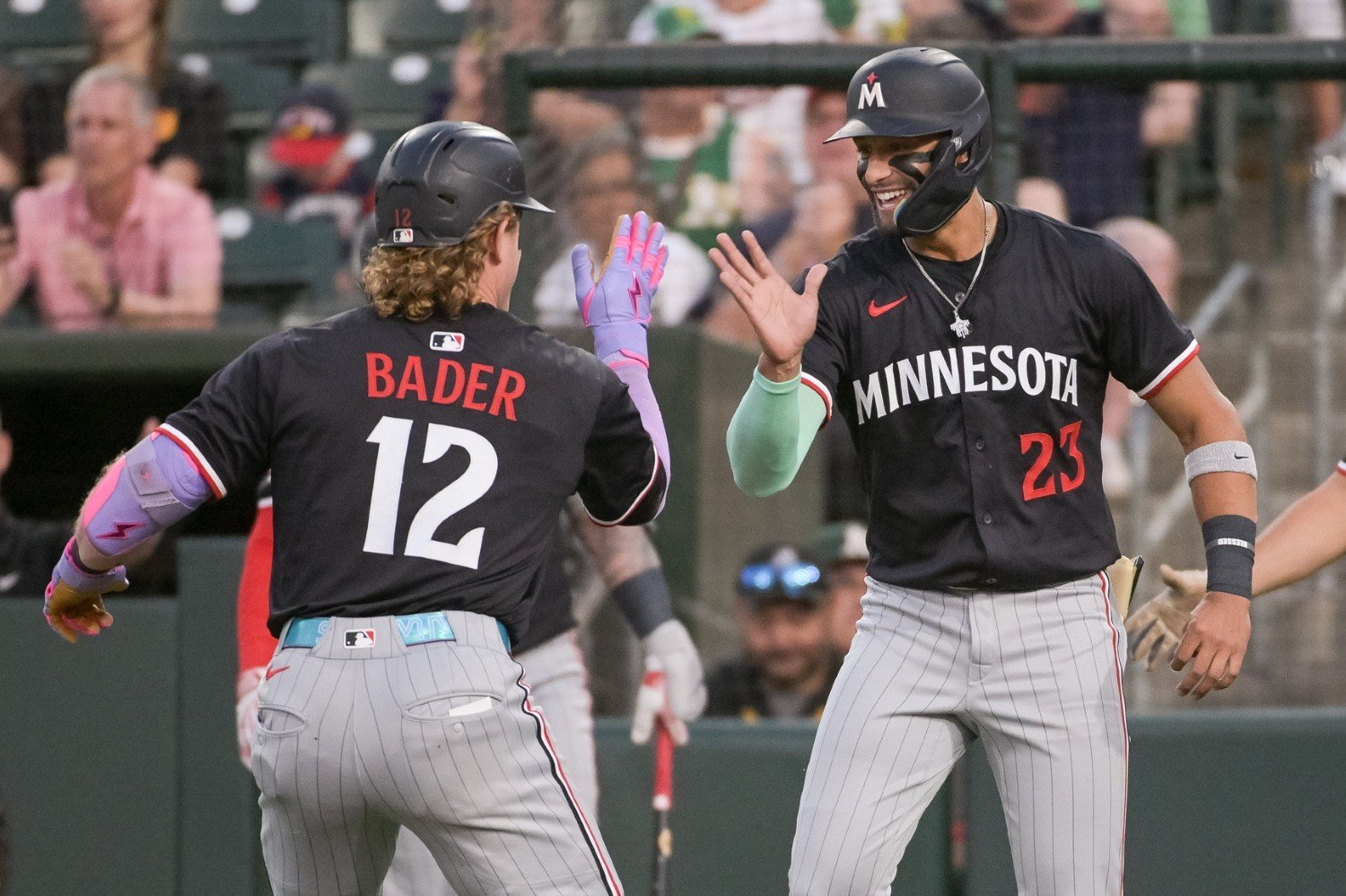 Box Score Starting Pitcher: Zebby Matthews - 5 IP, 4 H, 1 ER, 3 BB, 4 SO Home Runs: Harrison Bader (6), Ryan Jeffers (4) Top 3 WPA: Matthews (0.196), Bader (0.131), Griffin Jax (0.079) Win Probability Chart (via FanGraphs) On the surface, this looks like another easy win for Rocco Baldelli and the Twins. In some ways, it was. At the same time, viewing the day from a wide lens, it was a stern reminder that tough times still lie ahead for this team, which has already absorbed and survived considerable adversity. Call it a Zeb Gem No adversity here, at least. Zebby Matthews didn't have his best stuff, with his fastball down a tick and his control a hair off. All that did was provide a chance for him to prove (to himself, and to Twins fans) that he can win in the majors even without his 'A' game. Sitting around 95 mph but inducing just seven whiffs, Matthews nonetheless cruised through five innings of one-run ball. His arsenal is deep enough, now, that he can switch gears and make more adjustments within outings. He also had the luxury, Wednesday, of facing a team in total freefall. The rest of the night's pitching performances would prove that. Teres a Major Problem Looming Pablo López left his start Tuesday night with what the team initially believed to be a lat strain. As can often happen, though, further examination and imaging showed that the injury was actually a strain of his teres major muscle, a neighboring and similar back muscle and the one that ended Joe Ryan's season last summer. López has a Grade 2 strain, and while we'll get more details soon from injury guru @Lucas Seehafer PT, you can safely stash your Pablo Day jerseys until at least the other side of the trade deadline. That news cast a pall over the later innings of the game, for fans, as it broke on social media during the contest. Happily, the bullpen gave at least some consolation, with a rousing reminder of the potency of the pitching staff even without its ace. Four Twins relievers (Louis Varland, Griffin Jax, Brock Stewart and Jhoan Duran—the four horsemen) combined to allow two baserunners and strike out a gaudy 10 in the final four innings. Can the Twins survive without López? Sure. It just won't be easy. They'll need more nights at least somewhat like Wednesday from their pen, and despite its admirable depth and capacity for dominance, that's asking a lot. Making Up for Lost Time The pressure on the Twins offense is also a bit greater if López will be out for multiple months, as seems most likely. Fortunately, they have some hitters of whom it's still fair to expect some improvement. Harrison Bader was brought in for his glove, first and foremost, but his recent struggles at the plate were a disappointing follow-up to a tantalizing start to the season. He busted out with a long two-run home run Wednesday. Meanwhile, Ryan Jeffers cranked just his fourth homer of the campaign. While Jeffers has been adequate overall, the dearth of power production from him has been conspicuous and troublesome so far this year. If this is a sign of that tide turning, it's a very welcome development. Royce Lewis also reached twice in the contest, as he tries to climb out of the offensive chasm he's lived in for the last nine months. Missing from the lineup, however, was Carlos Correa, a late scratch. He'll sit on Thursday, too, as the Twins try to complete the four-game sweep. Correa felt his sore back flare up after slipping in the batter's box Tuesday. These (among other things) are the inconveniences and the real problems of playing big-league ball in a minor-league stadium. Take it as another reminder that the Twins have to be ready to plug a lot of holes and bail a lot of excess water as they row frantically toward the playoffs in the second half. What’s Next? At this point, success just means getting everyone onto that plane and back to Minnesota, without further injury. The series win (and a .500 road trip) is in the bag. A sweep (and a winning trip) would be lovely, though, and the Twins will ask David Festa to secure it for them. Festa is taking López's place in the rotation, and bumps back everyone else to provide an extra day of rest at the end of this grueling trip. The A's have tabbed Mitch Spence as the first hurler in what shapes up to be a bullpen game, beginning at 2:35 PM CT. Bullpen Usage SAT SUN MON TUE WED TOT Alcalá 28 0 0 28 0 56 Sands 6 0 0 25 0 31 Stewart 11 0 12 0 15 38 Jax 18 15 0 0 13 46 Varland 18 0 15 0 22 55 Topa 10 0 11 10 0 31 Durán 14 0 0 0 12 26 Funderburk 0 0 17 0 0 17
- 50 comments
-
- 6
-
-
- zebby matthews
- ryan jeffers
- (and 5 more)
-
Image courtesy of © Ed Szczepanski-Imagn Images Box Score Starting Pitcher: Zebby Matthews - 5 IP, 4 H, 1 ER, 3 BB, 4 SO Home Runs: Harrison Bader (6), Ryan Jeffers (4) Top 3 WPA: Matthews (0.196), Bader (0.131), Griffin Jax (0.079) Win Probability Chart (via FanGraphs) On the surface, this looks like another easy win for Rocco Baldelli and the Twins. In some ways, it was. At the same time, viewing the day from a wide lens, it was a stern reminder that tough times still lie ahead for this team, which has already absorbed and survived considerable adversity. Call it a Zeb Gem No adversity here, at least. Zebby Matthews didn't have his best stuff, with his fastball down a tick and his control a hair off. All that did was provide a chance for him to prove (to himself, and to Twins fans) that he can win in the majors even without his 'A' game. Sitting around 95 mph but inducing just seven whiffs, Matthews nonetheless cruised through five innings of one-run ball. His arsenal is deep enough, now, that he can switch gears and make more adjustments within outings. He also had the luxury, Wednesday, of facing a team in total freefall. The rest of the night's pitching performances would prove that. Teres a Major Problem Looming Pablo López left his start Tuesday night with what the team initially believed to be a lat strain. As can often happen, though, further examination and imaging showed that the injury was actually a strain of his teres major muscle, a neighboring and similar back muscle and the one that ended Joe Ryan's season last summer. López has a Grade 2 strain, and while we'll get more details soon from injury guru @Lucas Seehafer PT, you can safely stash your Pablo Day jerseys until at least the other side of the trade deadline. That news cast a pall over the later innings of the game, for fans, as it broke on social media during the contest. Happily, the bullpen gave at least some consolation, with a rousing reminder of the potency of the pitching staff even without its ace. Four Twins relievers (Louis Varland, Griffin Jax, Brock Stewart and Jhoan Duran—the four horsemen) combined to allow two baserunners and strike out a gaudy 10 in the final four innings. Can the Twins survive without López? Sure. It just won't be easy. They'll need more nights at least somewhat like Wednesday from their pen, and despite its admirable depth and capacity for dominance, that's asking a lot. Making Up for Lost Time The pressure on the Twins offense is also a bit greater if López will be out for multiple months, as seems most likely. Fortunately, they have some hitters of whom it's still fair to expect some improvement. Harrison Bader was brought in for his glove, first and foremost, but his recent struggles at the plate were a disappointing follow-up to a tantalizing start to the season. He busted out with a long two-run home run Wednesday. Meanwhile, Ryan Jeffers cranked just his fourth homer of the campaign. While Jeffers has been adequate overall, the dearth of power production from him has been conspicuous and troublesome so far this year. If this is a sign of that tide turning, it's a very welcome development. Royce Lewis also reached twice in the contest, as he tries to climb out of the offensive chasm he's lived in for the last nine months. Missing from the lineup, however, was Carlos Correa, a late scratch. He'll sit on Thursday, too, as the Twins try to complete the four-game sweep. Correa felt his sore back flare up after slipping in the batter's box Tuesday. These (among other things) are the inconveniences and the real problems of playing big-league ball in a minor-league stadium. Take it as another reminder that the Twins have to be ready to plug a lot of holes and bail a lot of excess water as they row frantically toward the playoffs in the second half. What’s Next? At this point, success just means getting everyone onto that plane and back to Minnesota, without further injury. The series win (and a .500 road trip) is in the bag. A sweep (and a winning trip) would be lovely, though, and the Twins will ask David Festa to secure it for them. Festa is taking López's place in the rotation, and bumps back everyone else to provide an extra day of rest at the end of this grueling trip. The A's have tabbed Mitch Spence as the first hurler in what shapes up to be a bullpen game, beginning at 2:35 PM CT. Bullpen Usage SAT SUN MON TUE WED TOT Alcalá 28 0 0 28 0 56 Sands 6 0 0 25 0 31 Stewart 11 0 12 0 15 38 Jax 18 15 0 0 13 46 Varland 18 0 15 0 22 55 Topa 10 0 11 10 0 31 Durán 14 0 0 0 12 26 Funderburk 0 0 17 0 0 17 View full article
-
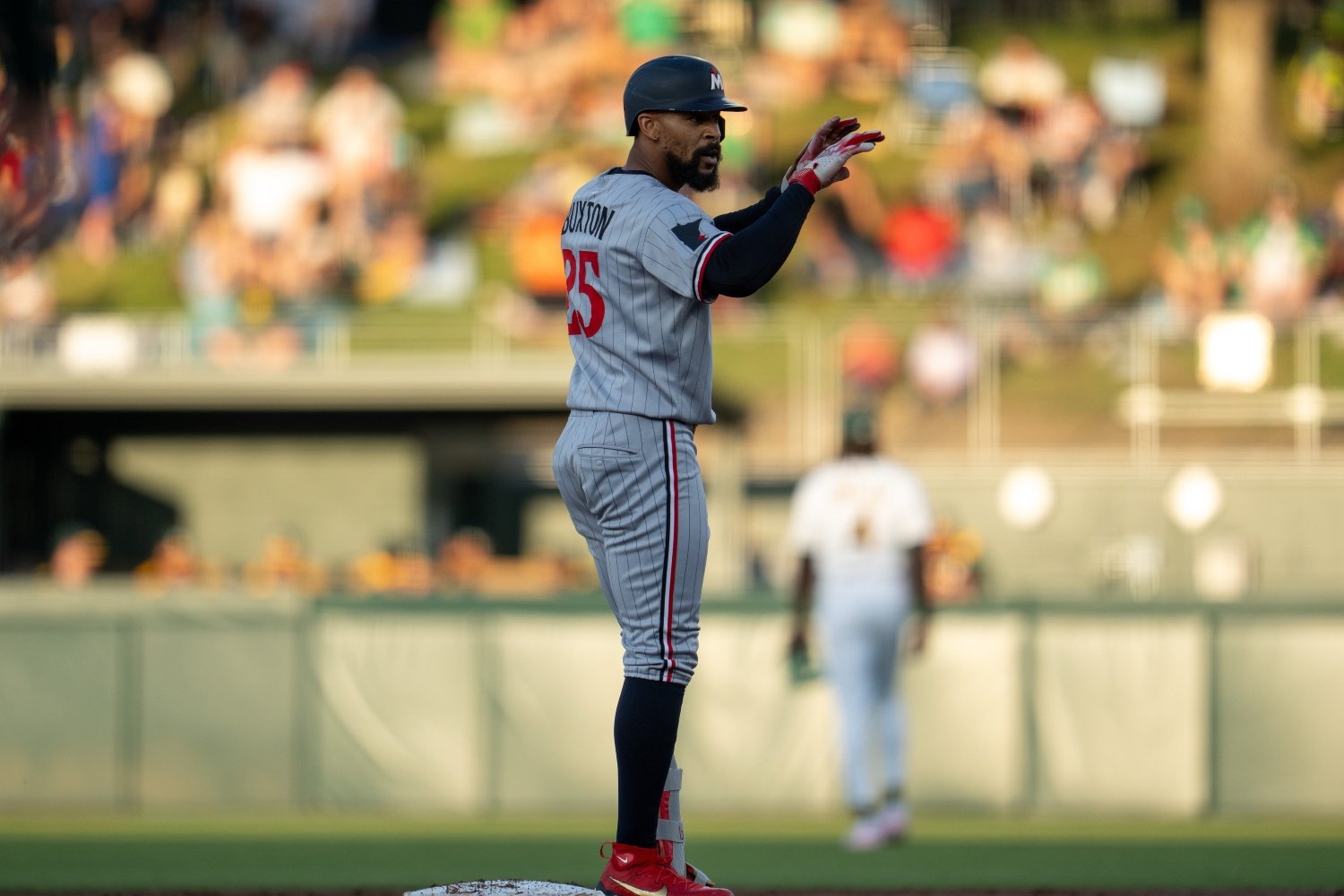 The game was, in a hidden sort of way, very much on the line when Byron Buxton stepped to the plate for the fourth time against Luis Severino Monday night. Yes, the Twins led 6-4, but they'd been stuck on their tally since the second inning, when the Athletics had gifted them about half of their sextet of runs. Meanwhile, the home team had responded with four runs against Joe Ryan, and the Twins starter had narrowly escaped big trouble in the bottom of the fifth. Momentum was flowing the A's way, and Ryan (though not officially removed, yet) was done for the night. A Kody Clemens single, a Ty France double and a Christian Vázquez walk had loaded the bases, with the last event proving especially clearly that Severino was vulnerable. He'd taken the early punch in the mouth from the Twins and outboxed them for the following few rounds, but now, he was set to face the top of the order for the fourth time. To extend the analogy, he was very much on the ropes—but the round was nearly over, and the Twins were running out of time to land the knockout blow. Even one more run would be huge, and probably decisive, but there were two outs. Severino was just one good pitch from getting back to his corner, and the rest of the fight would be between fresher combatants. Buxton smelled that. He knew his opponent very well, by then, not only having seen Severino several times before but having gotten three previous looks at him in that game. He didn't have many pitches in his memory bank, because he'd quickly put the ball in play each of the three previous times up; Severino had only thrown him seven total pitches. In fact, but for a misplay in left field, Buxton would have gotten himself out all three times, in quick at-bats. He'd spent the night playing into Severino's hands. The big righty knew Buxton as one of the league's most extreme pull hitters, and he'd teased him with stuff that could only end in lousy contact if one tried to pull it. Broadly, the scouting report is still accurate. In fact, Buxton is pulling the ball as often as ever, and of 255 qualifying batters throughout the league, only seven have a higher pull rate than he does this year. Not this time, though. Severino went right back to his work, with teasing stuff moving away from the turn-and-burn burner. On 1-0, he reached back for 97 miles per hour, with a fastball on the outside corner. Buxton flipped the script, and brought the game to an early resolution. ZFh6bEtfWGw0TUFRPT1fVlZkWUJWVlNVd01BQUZSWEF3QUhWRlZmQUZrRlVWTUFBd05XVWdNTUIxRUhCQWRV.mp4 That's a great piece of hitting, but on its own, it wouldn't be worth this article. To understand why it's so valuable and meaningful, you have to fully contextualize what Buxton can do at the plate—and, historically, what he has not been able to do. That was Buxton's fourth truly opposite-field hit this season. He had about that many last year, including one that was struck about as sharply as this ball was. Want to see it? dzcwdzVfWGw0TUFRPT1fQXdKUVVWMVhWRlFBQ1ZFSFVnQUFBd2NGQUZsUlZnVUFCZ2NFQlFvTkNWVmNCRmRX.mp4 Sometimes, in the midst of an 11-0 blowout and when the only thing at stake is an arcane scrap of team pride, you just try something strange. Yes, Buxton hit that one ball hard to the opposite field for a hit. On the very rare other occasions on which he did come up with a wrong-way hit, though, they tended to look much more like this. OGdZNndfWGw0TUFRPT1fRGxOWFVGTldCUWNBWFFaV1VBQUFVd0JTQUFOVFYxUUFBbEFFQUFRRlZ3cFdCQVZY.mp4 You can see all the difference in the world, not even in the resulting batted ball, but in Buxton's body language—the story of his movements through the swing. He was trying to whip through this 2-0 sinker and pull it on a rising line to left-center. Instead, fooled by a pitch a bit farther out over the plate than he expected, his mishit it off the top/outside half of the bat. The result was a twisting blooper, and while he did turn that into a double, it's the very definition of a non-repeatable action. If what he needed and wanted to do in that moment was to hit the ball to right field with any authority, this would have been exactly the wrong way to do it. It's an outcome, but not a process that he could port into a clutch, runners-in-scoring-position type of situation. He didn't have that club in his bag at all, not just last year, but since becoming the style of hitter he is, back in 2019. This year, when he goes the other way, it's purposeful and repeatable. He's still dead-set on being a dead pull hitter most of the time, but in some cases, he anticipates what a pitcher intends to do or adjusts dramatically to suit a situation—and it works. You know how, in the NFL, teams often script their first 15 offensive plays, taking advantage of the information they have about the other team and the relative lack of situational game pressure to do a particular thing so they can operate an optimized version of their offense to suit their opponent? In a game against the Giants last month, Buxton put a scripted swing on the first pitch of the game. He had conviction in what he'd be thrown and where (something that gets vanishingly hard to guess once you get beyond the first handful of pitches of any game), and he knew his typical swing might not get him around on a Jordan Hicks fastball in time. This one, however, did just fine. NXkyNmVfV0ZRVkV3dEdEUT09X0JBSlRWZ0JWQXdBQUQxQlVVZ0FIQTFOUUFGa01CVmdBQzFVQUJGY0ZDQWRVQlZCWA==.mp4 A first-pitch swing is an ambush, and a first-pitch swing in the first inning is especially so. Pitchers are much more ready, and are calibrating their plan against you much more closely, Buxton isn't letting them really make this part of the book on him, though, and as long as the book says he's looking to pull everything, he can sneak in the occasional wrong-way slash. Here he is going with a 1-1 sinker to take advantage of runners being on in front of him, way back in the first week of April: MnJWanhfWGw0TUFRPT1fQUFSWFVsWUhWbFFBQUFaVUJBQUhCUVVGQUZnQ0FsSUFCQU1DQ1ZBR1ZBdGRCVkZW.mp4 And here he is getting a sinker much like the one he half-missed for a hustle double last year, only this time, he was planning on that offering. He's created a swing that can reliably generate hits that way, even for extra bases. d2VXcTNfWGw0TUFRPT1fQWxRREJWSUVBMU1BWGdZRFV3QUhDUUlDQUFBQVdsWUFBVmNFQ1FCWEExQlFVd1Jl.mp4 Buxton is still a pull hitter, who knows his home-run power is in left field and that that's the most valuable play in baseball. This season, though, he's evolved. He's using an opposite-field version of his swing to get the barrel on some balls he would have never turned into hits before—or at least, that he couldn't have turned into such reliable hits. And it's not just about the opposite field, itself. In the second half of 2023, when Buxton swung at pitches over the inner third of the plate, just 1.3% of those swings had an attack direction that was even or oriented toward the opposite field. Last season, that number climbed to 24.4%. This season, it's a whopping 39.4%. This is the swing baseball people call "inside-out", willing to stay behind the ball inside and work it back through the middle of the field. Buxton only had 35 tracked swings of that type before Opening Day. This season, he already has 28 of them—including another huge, clutch swing from this very road trip. YkI5eTRfWGw0TUFRPT1fVlZOUUFWSURWbGNBQ0FZQ1ZBQUhDUUlGQUZrQVYxa0FWMVVHQkFGVUExY0RDUUJY.mp4 That zone will never be where Buxton is most dangerous, but if he can make solid contact and use the middle of the field by staying behind the ball (dragging the barrel just enough that he's more likely to make squared-up contact) without sacrificing swing speed (his average bat speed on swings like these before 2025 was under 70 mph; this year, it's over 73), Buxton becomes a more multi-dimensional hitter—and yes, a more dangerous one in the clutch. Pitchers can't plan around this, because it's just one end of the spectrum toward which he can situationally push his swing. Under the instruction of Matt Borgschulte (whom Rocco Baldelli has praised for treating the big-league swing as a "living, breathing thing"), Buxton really does seem to have found more ways to subtly vary his swing and his mode of attack, without having to guess and switch between two distinct and rigid operations. Even at 31 years old, Buxton is pretty clearly the best all-around hitter he's ever been. There was an adjustment period early in the season, as (perhaps) he was adapting to Borgschulte's style and (for certain) he was dealing with the impending family tragedy that took him away from the team for two days in mid-April. Since he came back from that brief absence, though, Buxton is batting .301/.345/.579, with nine home runs, 16 total extra-base hits, eight stolen bases, 31 RBIs and a 1.06 WPA, all in 148 plate appearances. He's had a hot streak or two this torrid before, but he's never truly posed such a threat. Short of intentionally walking him, teams don't have a good way around him in a big spot. He occasionally expands the zone, but can hurt you even when he does—and if he doesn't, or if you make a mistake over the plate anyway, he can use the whole field to do whatever form of damage the situation demands. It's a huge step forward from the player he's been even at his previous best, and as long as he keeps making sound adjustments and stays healthy, the Twins have a championship-caliber all-purpose lineup centerpiece.
 -
Image courtesy of © Neville E. Guard-Imagn Images The game was, in a hidden sort of way, very much on the line when Byron Buxton stepped to the plate for the fourth time against Luis Severino Monday night. Yes, the Twins led 6-4, but they'd been stuck on their tally since the second inning, when the Athletics had gifted them about half of their sextet of runs. Meanwhile, the home team had responded with four runs against Joe Ryan, and the Twins starter had narrowly escaped big trouble in the bottom of the fifth. Momentum was flowing the A's way, and Ryan (though not officially removed, yet) was done for the night. A Kody Clemens single, a Ty France double and a Christian Vázquez walk had loaded the bases, with the last event proving especially clearly that Severino was vulnerable. He'd taken the early punch in the mouth from the Twins and outboxed them for the following few rounds, but now, he was set to face the top of the order for the fourth time. To extend the analogy, he was very much on the ropes—but the round was nearly over, and the Twins were running out of time to land the knockout blow. Even one more run would be huge, and probably decisive, but there were two outs. Severino was just one good pitch from getting back to his corner, and the rest of the fight would be between fresher combatants. Buxton smelled that. He knew his opponent very well, by then, not only having seen Severino several times before but having gotten three previous looks at him in that game. He didn't have many pitches in his memory bank, because he'd quickly put the ball in play each of the three previous times up; Severino had only thrown him seven total pitches. In fact, but for a misplay in left field, Buxton would have gotten himself out all three times, in quick at-bats. He'd spent the night playing into Severino's hands. The big righty knew Buxton as one of the league's most extreme pull hitters, and he'd teased him with stuff that could only end in lousy contact if one tried to pull it. Broadly, the scouting report is still accurate. In fact, Buxton is pulling the ball as often as ever, and of 255 qualifying batters throughout the league, only seven have a higher pull rate than he does this year. Not this time, though. Severino went right back to his work, with teasing stuff moving away from the turn-and-burn burner. On 1-0, he reached back for 97 miles per hour, with a fastball on the outside corner. Buxton flipped the script, and brought the game to an early resolution. ZFh6bEtfWGw0TUFRPT1fVlZkWUJWVlNVd01BQUZSWEF3QUhWRlZmQUZrRlVWTUFBd05XVWdNTUIxRUhCQWRV.mp4 That's a great piece of hitting, but on its own, it wouldn't be worth this article. To understand why it's so valuable and meaningful, you have to fully contextualize what Buxton can do at the plate—and, historically, what he has not been able to do. That was Buxton's fourth truly opposite-field hit this season. He had about that many last year, including one that was struck about as sharply as this ball was. Want to see it? dzcwdzVfWGw0TUFRPT1fQXdKUVVWMVhWRlFBQ1ZFSFVnQUFBd2NGQUZsUlZnVUFCZ2NFQlFvTkNWVmNCRmRX.mp4 Sometimes, in the midst of an 11-0 blowout and when the only thing at stake is an arcane scrap of team pride, you just try something strange. Yes, Buxton hit that one ball hard to the opposite field for a hit. On the very rare other occasions on which he did come up with a wrong-way hit, though, they tended to look much more like this. OGdZNndfWGw0TUFRPT1fRGxOWFVGTldCUWNBWFFaV1VBQUFVd0JTQUFOVFYxUUFBbEFFQUFRRlZ3cFdCQVZY.mp4 You can see all the difference in the world, not even in the resulting batted ball, but in Buxton's body language—the story of his movements through the swing. He was trying to whip through this 2-0 sinker and pull it on a rising line to left-center. Instead, fooled by a pitch a bit farther out over the plate than he expected, his mishit it off the top/outside half of the bat. The result was a twisting blooper, and while he did turn that into a double, it's the very definition of a non-repeatable action. If what he needed and wanted to do in that moment was to hit the ball to right field with any authority, this would have been exactly the wrong way to do it. It's an outcome, but not a process that he could port into a clutch, runners-in-scoring-position type of situation. He didn't have that club in his bag at all, not just last year, but since becoming the style of hitter he is, back in 2019. This year, when he goes the other way, it's purposeful and repeatable. He's still dead-set on being a dead pull hitter most of the time, but in some cases, he anticipates what a pitcher intends to do or adjusts dramatically to suit a situation—and it works. You know how, in the NFL, teams often script their first 15 offensive plays, taking advantage of the information they have about the other team and the relative lack of situational game pressure to do a particular thing so they can operate an optimized version of their offense to suit their opponent? In a game against the Giants last month, Buxton put a scripted swing on the first pitch of the game. He had conviction in what he'd be thrown and where (something that gets vanishingly hard to guess once you get beyond the first handful of pitches of any game), and he knew his typical swing might not get him around on a Jordan Hicks fastball in time. This one, however, did just fine. NXkyNmVfV0ZRVkV3dEdEUT09X0JBSlRWZ0JWQXdBQUQxQlVVZ0FIQTFOUUFGa01CVmdBQzFVQUJGY0ZDQWRVQlZCWA==.mp4 A first-pitch swing is an ambush, and a first-pitch swing in the first inning is especially so. Pitchers are much more ready, and are calibrating their plan against you much more closely, Buxton isn't letting them really make this part of the book on him, though, and as long as the book says he's looking to pull everything, he can sneak in the occasional wrong-way slash. Here he is going with a 1-1 sinker to take advantage of runners being on in front of him, way back in the first week of April: MnJWanhfWGw0TUFRPT1fQUFSWFVsWUhWbFFBQUFaVUJBQUhCUVVGQUZnQ0FsSUFCQU1DQ1ZBR1ZBdGRCVkZW.mp4 And here he is getting a sinker much like the one he half-missed for a hustle double last year, only this time, he was planning on that offering. He's created a swing that can reliably generate hits that way, even for extra bases. d2VXcTNfWGw0TUFRPT1fQWxRREJWSUVBMU1BWGdZRFV3QUhDUUlDQUFBQVdsWUFBVmNFQ1FCWEExQlFVd1Jl.mp4 Buxton is still a pull hitter, who knows his home-run power is in left field and that that's the most valuable play in baseball. This season, though, he's evolved. He's using an opposite-field version of his swing to get the barrel on some balls he would have never turned into hits before—or at least, that he couldn't have turned into such reliable hits. And it's not just about the opposite field, itself. In the second half of 2023, when Buxton swung at pitches over the inner third of the plate, just 1.3% of those swings had an attack direction that was even or oriented toward the opposite field. Last season, that number climbed to 24.4%. This season, it's a whopping 39.4%. This is the swing baseball people call "inside-out", willing to stay behind the ball inside and work it back through the middle of the field. Buxton only had 35 tracked swings of that type before Opening Day. This season, he already has 28 of them—including another huge, clutch swing from this very road trip. YkI5eTRfWGw0TUFRPT1fVlZOUUFWSURWbGNBQ0FZQ1ZBQUhDUUlGQUZrQVYxa0FWMVVHQkFGVUExY0RDUUJY.mp4 That zone will never be where Buxton is most dangerous, but if he can make solid contact and use the middle of the field by staying behind the ball (dragging the barrel just enough that he's more likely to make squared-up contact) without sacrificing swing speed (his average bat speed on swings like these before 2025 was under 70 mph; this year, it's over 73), Buxton becomes a more multi-dimensional hitter—and yes, a more dangerous one in the clutch. Pitchers can't plan around this, because it's just one end of the spectrum toward which he can situationally push his swing. Under the instruction of Matt Borgschulte (whom Rocco Baldelli has praised for treating the big-league swing as a "living, breathing thing"), Buxton really does seem to have found more ways to subtly vary his swing and his mode of attack, without having to guess and switch between two distinct and rigid operations. Even at 31 years old, Buxton is pretty clearly the best all-around hitter he's ever been. There was an adjustment period early in the season, as (perhaps) he was adapting to Borgschulte's style and (for certain) he was dealing with the impending family tragedy that took him away from the team for two days in mid-April. Since he came back from that brief absence, though, Buxton is batting .301/.345/.579, with nine home runs, 16 total extra-base hits, eight stolen bases, 31 RBIs and a 1.06 WPA, all in 148 plate appearances. He's had a hot streak or two this torrid before, but he's never truly posed such a threat. Short of intentionally walking him, teams don't have a good way around him in a big spot. He occasionally expands the zone, but can hurt you even when he does—and if he doesn't, or if you make a mistake over the plate anyway, he can use the whole field to do whatever form of damage the situation demands. It's a huge step forward from the player he's been even at his previous best, and as long as he keeps making sound adjustments and stays healthy, the Twins have a championship-caliber all-purpose lineup centerpiece. View full article
-
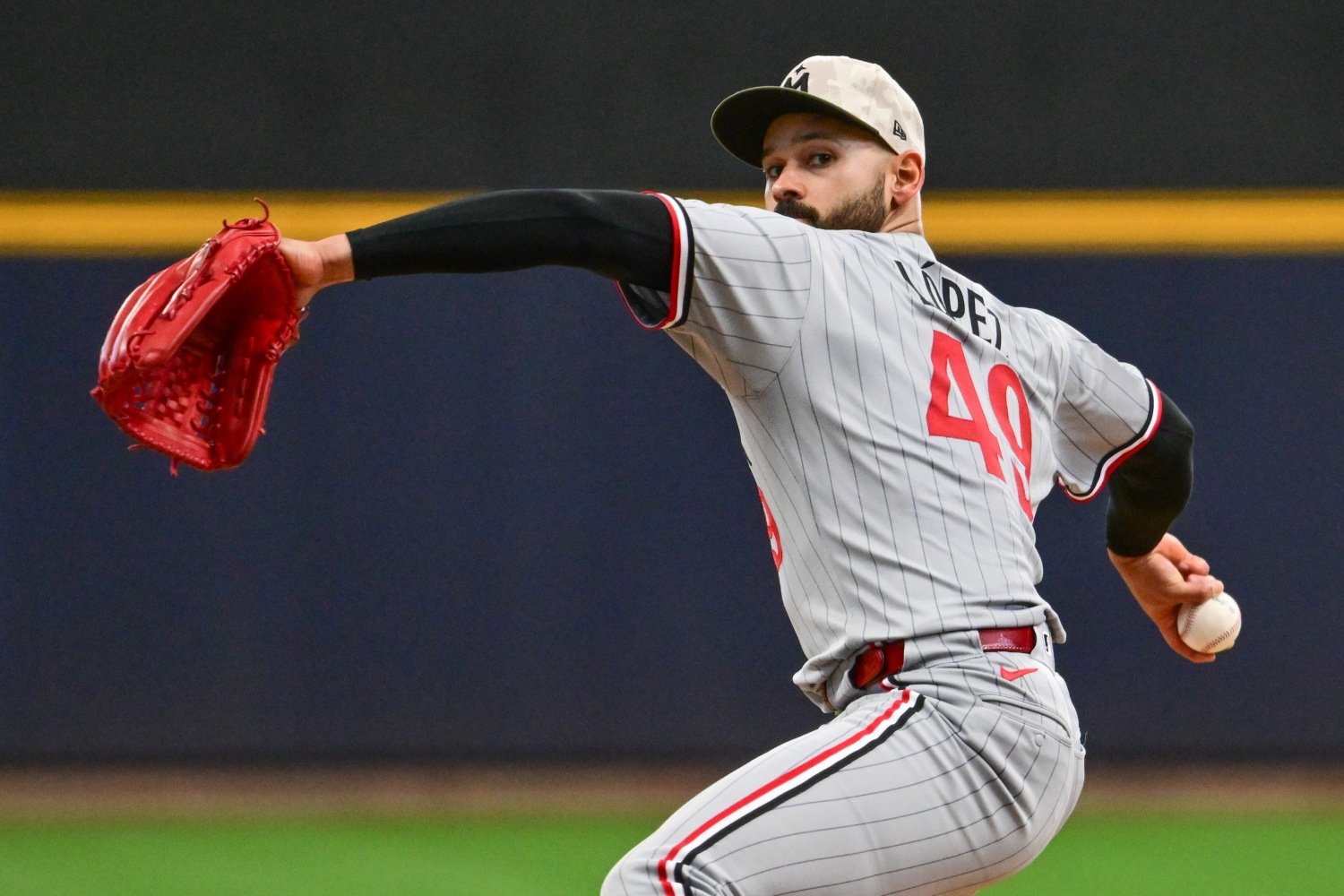 Last month, I wrote—well, in fact, I wrote twice—about Pablo López moving from the first-base side of the pitching rubber to the middle of it. It's always interesting and valuable to know when pitchers make such moves, and López himself had a lot to say about why he was trying out the move at the time. It was about finding the best way to help his breaking balls play off his four-seam fastball, as they have become the secondary pitches on which he relies most to complement the heater. It also facilitated, in some small way, the development of his newfound kick-change, a second flavor of offspeed pitch for his ever-deepening arsenal. Just a few weeks after I chronicled López's changes, though, they were history—not forgotten, and perhaps not fully scrapped, but tabled, for the time being. Since his penultimate start of April, López has been on the move back to the first-base side, and is now settled back into a spot that is very comfortable, although not quite the spot from which he started this journey in the spring. He's not where he was in 2024, exactly, but where he most often was in 2023, when he enjoyed a career year. "I mean, that's what it was—it was an experiment. That's why spring training is beautiful. You get to try, you get to tinker, you get to experiment, without letting the results make you freak out or anything, or make you want to change your entire identity," López said Sunday, at Target Field. "So I tinkered with it. I saw flashes of what it could do for me, but then I also saw things that would, long-term, not just hurt me but hurt the team, like free passes, pitches leaking over the plate, taking away from [two-strike] execution with pitches going to my glove side. Because you have to keep in mind, like, six inches on the rubber can affect either the same amount or a little bit more, and that could be the difference between the barrel and the tip of the bat, or the tip of the bat and getting a whiff or things like that." A student of his craft, López is always on the lookout for edges he can exploit, and that drove him to make a change well-founded in modern pitching theory. But he also used each game as more feedback from which to learn, and that learning led him back toward the place where he'd begun. "So I pondered, and each time I pondered, I'd shift a little bit more, shift a little bit more, up to the point that I'm on the first-base side," he said. "But it's closer to where I was in 2023 than [where] I was in 2024. In 2023, it felt like my heel was at the edge of the rubber. In 2024, my heel was beyond the rubber. So I feel like I'm closer to where I was in 2023." Acknowledging that he was better in several regards (most notably, putting hitters away) in 2023, López finds some comfort in the realization that that season's setup offers him a path back to that level of success. He also learned more about how his pitches play from different angles during his experiment, and has implemented some of those tweaks since getting back to his 2023 foothold.
 -
Image courtesy of © Benny Sieu-Imagn Images Last month, I wrote—well, in fact, I wrote twice—about Pablo López moving from the first-base side of the pitching rubber to the middle of it. It's always interesting and valuable to know when pitchers make such moves, and López himself had a lot to say about why he was trying out the move at the time. It was about finding the best way to help his breaking balls play off his four-seam fastball, as they have become the secondary pitches on which he relies most to complement the heater. It also facilitated, in some small way, the development of his newfound kick-change, a second flavor of offspeed pitch for his ever-deepening arsenal. Just a few weeks after I chronicled López's changes, though, they were history—not forgotten, and perhaps not fully scrapped, but tabled, for the time being. Since his penultimate start of April, López has been on the move back to the first-base side, and is now settled back into a spot that is very comfortable, although not quite the spot from which he started this journey in the spring. He's not where he was in 2024, exactly, but where he most often was in 2023, when he enjoyed a career year. "I mean, that's what it was—it was an experiment. That's why spring training is beautiful. You get to try, you get to tinker, you get to experiment, without letting the results make you freak out or anything, or make you want to change your entire identity," López said Sunday, at Target Field. "So I tinkered with it. I saw flashes of what it could do for me, but then I also saw things that would, long-term, not just hurt me but hurt the team, like free passes, pitches leaking over the plate, taking away from [two-strike] execution with pitches going to my glove side. Because you have to keep in mind, like, six inches on the rubber can affect either the same amount or a little bit more, and that could be the difference between the barrel and the tip of the bat, or the tip of the bat and getting a whiff or things like that." A student of his craft, López is always on the lookout for edges he can exploit, and that drove him to make a change well-founded in modern pitching theory. But he also used each game as more feedback from which to learn, and that learning led him back toward the place where he'd begun. "So I pondered, and each time I pondered, I'd shift a little bit more, shift a little bit more, up to the point that I'm on the first-base side," he said. "But it's closer to where I was in 2023 than [where] I was in 2024. In 2023, it felt like my heel was at the edge of the rubber. In 2024, my heel was beyond the rubber. So I feel like I'm closer to where I was in 2023." Acknowledging that he was better in several regards (most notably, putting hitters away) in 2023, López finds some comfort in the realization that that season's setup offers him a path back to that level of success. He also learned more about how his pitches play from different angles during his experiment, and has implemented some of those tweaks since getting back to his 2023 foothold. View full article
-
Image courtesy of © Brad Rempel-Imagn Images Memorial Day weekend turned out very well for the Twins. They couldn't quite eke out a third win and complete a sweep of the division-rival Royals, but their back-to-back walkoff victories on Friday night and Saturday afternoon showed their mettle, their well-roundedness, and their slight but clear superiority to the visitors from Kansas City. At the heart of it all was Ty France, clutch hitter extraordinaire. France's two-run home run to win Friday night's game was arguably the high point of a Twins hot streak that has wholly inverted the narrative of their season. France didn't rest on the laurels that came with that homer for even a day, though. On Saturday, he had a crucial two-run, opposite-field single to facilitate an eventual comeback win, and on Sunday, he started the scoring by flipping a single into right-center field to score Ryan Jeffers in the first inning. Last fall, I documented the fact that hitters swing faster in the postseason. Big crowds and big situations will speed up the reflexes and the muscles. France knows how to avail himself of that natural speed boost: keep things slow. "As far as the big moments and the adrenaline kicking in, I was fortunate enough to play in the playoffs in [2022], and it's a real thing," he said Sunday. "The more you can slow your heart rate down in those moments, just be under control—I'm at a point in my career now where I've been in those situations a good bit, and I'm able to control my emotions." France emphasized the importance of staying under control, and resisting the temptation to get "carried away" when the hum of the game rises to more of a roar. He's a subject matter expert, in this regard. For his career, France is a .243/.316/.391 hitter with the bases empty. Put a runner in scoring position, and those numbers leap to .310/.377/.450. In low-leverage situations, he's batted .255/.323/.400. Crank it up to high leverage, and he's at .290/.368/.434. It's against old-fashioned sabermetric orthodoxy to suggest that a hitter can be consistently clutch, but with well over 500 plate appearances in both of the samples producing such impressive numbers, France is right that he's been in that spot too many times to dismiss his success there as meaningless. Over the decades, some wise voices have even questioned the nobility of being a clutch hitter. Way back in 1960, in his moving paean to Ted Williams after his final game in Fenway Park, author John Updike rebuked that archetype. "Insofar as the clutch hitter is not a sportswriter’s myth, he is a vulgarity," Updike wrote, "like a writer who writes only for money." There's truth in that sentiment. If a hitter isn't giving their full concentration or best effort until there's a chance to cash in for some RBIs or the glory that comes with hits in the heat of the spotlight, they're not serving their team. But Updike had an ax to grind—or, more to the point, an infamously non-clutch hitter to defend. More importantly, he overlooked the reasonable hypothesis that some hitters might be well-suited to the way pitches prefer to do their business when the chips are down—and less so to the way they'll be attacked at other, lower-pressure moments. "I think when I'm at my best, I'm covering that pitch away, hitting that fastball to the right side," France said, acknowledging that pitchers often feel more comfortable working in locations they perceive as less dangerous or vulnerable to power when the pressure rises. Twins manager Rocco Baldelli echoed that basic conception of the art of clutch hitting, at which the Twins seem to be excelling over this three-week run of torrid play. "I think guys are going up there with a good plan, more than anything else," the skipper said. "We’re not trying to beat the world with one swing. Ty had a big homer for us, but most of the time we’re doing it with just hitting the ball hard, spraying the ball around the field, trying to hit line drives. But we’re taking pitches, we’re putting ourselves in good positions to hit. That’s really what it’s all about. It doesn’t mean you’re always gonna have success, but it’s the only way you can have success, to have at-bats like that." None of this quite answers the question of how France came to hammer that game-winner Friday night, though. If he's focused on going the other way, which he's done so well, where did a pulled home run come from in that moment? It was, in truth, the confluence of having a good plan and the body going faster than it otherwise might. "[Royals relief ace Lucas Erceg] throws a sinker at 98, and guy on first, one out, my thought process is, 'Ok, he's gonna try and bury me in with a sinker, get a double play ball,'" France said. "So for me, it was, 'Ok, I need to get on time for 98, get the foot down, ready to hit.' 0-0, he hung a slider, but because I was on time for the fastball, I was able to see it, react, gave me some room to work with out front, and I was able to pull a slider for a homer." Sitting on a heater and getting a slider is, in general, a bad thing for a hitter. If that hitter is dedicated to the idea of taking that fastball to the opposite field, however, they have a chance to be early in a good way, rather than a bad one, when the breaking ball comes instead. The wrinkle—the big trick, here—is that the bat is going to be moving fast, no matter what. So the hitter has to be thinking clearly enough to stay in that mindset, to studiously focus on going the other way—to trust himself. France's average bat speed this season is 70.6 miles per hour. On that first pitch from Erceg, it was 74.0 mph. His average attack angle (the vertical angle of movement, relative to the ground, of the barrel of the bat at contact) is 11°. On this swing, it was 21°, which tells us he was a bit early. His average attack direction (the horizontal angle of movement of that same portion of the bat at the contact point) is 6° toward the opposite field; it was 8° to the pull field on the fateful pitch Friday night. He typically tilts his bat 35° downward as he moves it through the hitting zone, on pitches in that vertical location range. Friday night's swing was at 32°. Expecting the fastball, thus, a flatter swing. On time for the fastball, thus, early. But, because he'd been trying to go to right field with it, early in a good way. Clutch hitting isn't solved. France won't come through every time, as Baldelli noted. This remains a game of failure. As successes in pivotal moments pile up for France, though, it's hard not to both trust and admire the way he matches his skill set and his approach to situations—or even how situations simply compel pitchers to pitch right into his strengths. View full article
-
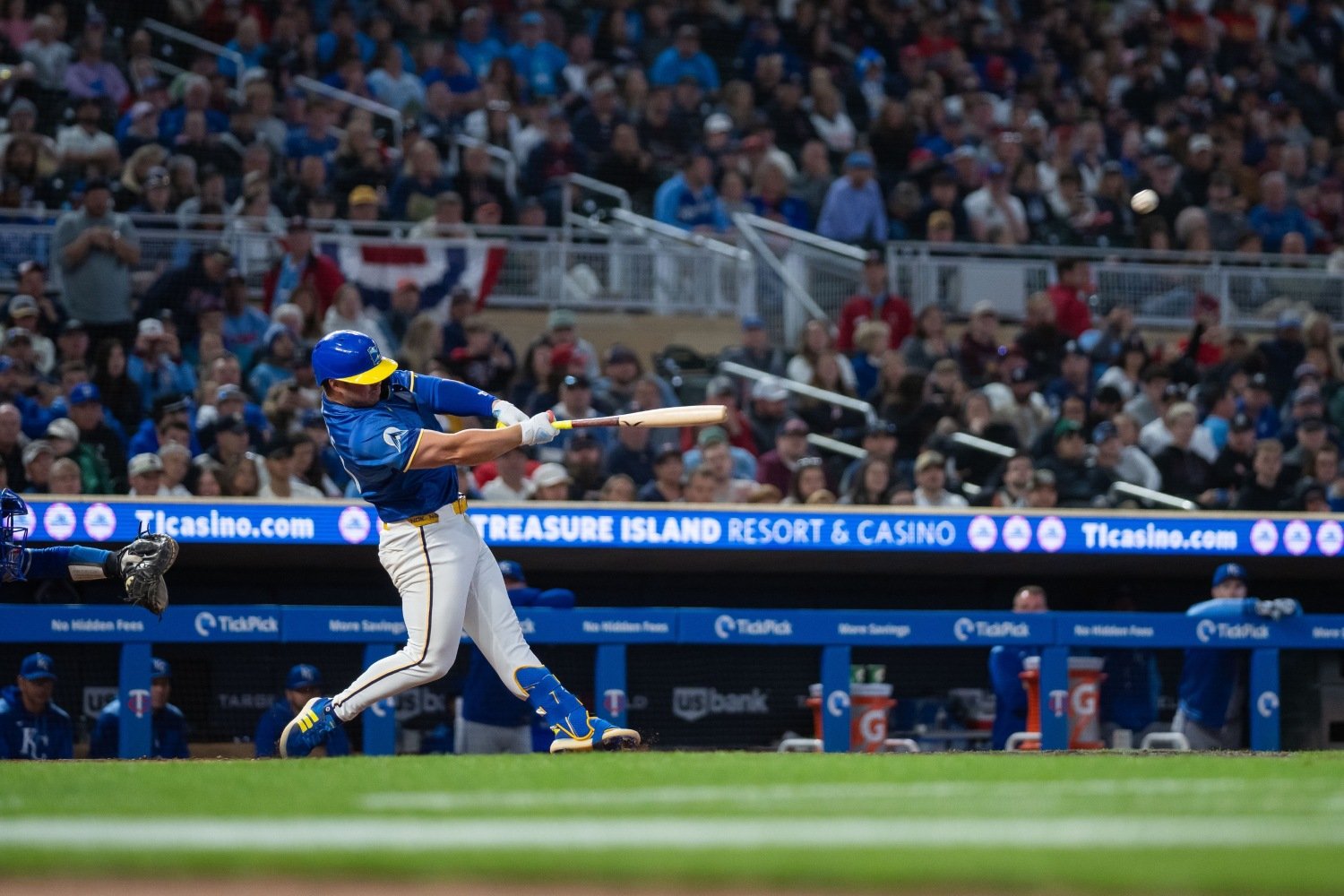 Memorial Day weekend turned out very well for the Twins. They couldn't quite eke out a third win and complete a sweep of the division-rival Royals, but their back-to-back walkoff victories on Friday night and Saturday afternoon showed their mettle, their well-roundedness, and their slight but clear superiority to the visitors from Kansas City. At the heart of it all was Ty France, clutch hitter extraordinaire. France's two-run home run to win Friday night's game was arguably the high point of a Twins hot streak that has wholly inverted the narrative of their season. France didn't rest on the laurels that came with that homer for even a day, though. On Saturday, he had a crucial two-run, opposite-field single to facilitate an eventual comeback win, and on Sunday, he started the scoring by flipping a single into right-center field to score Ryan Jeffers in the first inning. Last fall, I documented the fact that hitters swing faster in the postseason. Big crowds and big situations will speed up the reflexes and the muscles. France knows how to avail himself of that natural speed boost: keep things slow. "As far as the big moments and the adrenaline kicking in, I was fortunate enough to play in the playoffs in [2022], and it's a real thing," he said Sunday. "The more you can slow your heart rate down in those moments, just be under control—I'm at a point in my career now where I've been in those situations a good bit, and I'm able to control my emotions." France emphasized the importance of staying under control, and resisting the temptation to get "carried away" when the hum of the game rises to more of a roar. He's a subject matter expert, in this regard. For his career, France is a .243/.316/.391 hitter with the bases empty. Put a runner in scoring position, and those numbers leap to .310/.377/.450. In low-leverage situations, he's batted .255/.323/.400. Crank it up to high leverage, and he's at .290/.368/.434. It's against old-fashioned sabermetric orthodoxy to suggest that a hitter can be consistently clutch, but with well over 500 plate appearances in both of the samples producing such impressive numbers, France is right that he's been in that spot too many times to dismiss his success there as meaningless. Over the decades, some wise voices have even questioned the nobility of being a clutch hitter. Way back in 1960, in his moving paean to Ted Williams after his final game in Fenway Park, author John Updike rebuked that archetype. "Insofar as the clutch hitter is not a sportswriter’s myth, he is a vulgarity," Updike wrote, "like a writer who writes only for money." There's truth in that sentiment. If a hitter isn't giving their full concentration or best effort until there's a chance to cash in for some RBIs or the glory that comes with hits in the heat of the spotlight, they're not serving their team. But Updike had an ax to grind—or, more to the point, an infamously non-clutch hitter to defend. More importantly, he overlooked the reasonable hypothesis that some hitters might be well-suited to the way pitches prefer to do their business when the chips are down—and less so to the way they'll be attacked at other, lower-pressure moments. "I think when I'm at my best, I'm covering that pitch away, hitting that fastball to the right side," France said, acknowledging that pitchers often feel more comfortable working in locations they perceive as less dangerous or vulnerable to power when the pressure rises. Twins manager Rocco Baldelli echoed that basic conception of the art of clutch hitting, at which the Twins seem to be excelling over this three-week run of torrid play. "I think guys are going up there with a good plan, more than anything else," the skipper said. "We’re not trying to beat the world with one swing. Ty had a big homer for us, but most of the time we’re doing it with just hitting the ball hard, spraying the ball around the field, trying to hit line drives. But we’re taking pitches, we’re putting ourselves in good positions to hit. That’s really what it’s all about. It doesn’t mean you’re always gonna have success, but it’s the only way you can have success, to have at-bats like that." None of this quite answers the question of how France came to hammer that game-winner Friday night, though. If he's focused on going the other way, which he's done so well, where did a pulled home run come from in that moment? It was, in truth, the confluence of having a good plan and the body going faster than it otherwise might. "[Royals relief ace Lucas Erceg] throws a sinker at 98, and guy on first, one out, my thought process is, 'Ok, he's gonna try and bury me in with a sinker, get a double play ball,'" France said. "So for me, it was, 'Ok, I need to get on time for 98, get the foot down, ready to hit.' 0-0, he hung a slider, but because I was on time for the fastball, I was able to see it, react, gave me some room to work with out front, and I was able to pull a slider for a homer." Sitting on a heater and getting a slider is, in general, a bad thing for a hitter. If that hitter is dedicated to the idea of taking that fastball to the opposite field, however, they have a chance to be early in a good way, rather than a bad one, when the breaking ball comes instead. The wrinkle—the big trick, here—is that the bat is going to be moving fast, no matter what. So the hitter has to be thinking clearly enough to stay in that mindset, to studiously focus on going the other way—to trust himself. France's average bat speed this season is 70.6 miles per hour. On that first pitch from Erceg, it was 74.0 mph. His average attack angle (the vertical angle of movement, relative to the ground, of the barrel of the bat at contact) is 11°. On this swing, it was 21°, which tells us he was a bit early. His average attack direction (the horizontal angle of movement of that same portion of the bat at the contact point) is 6° toward the opposite field; it was 8° to the pull field on the fateful pitch Friday night. He typically tilts his bat 35° downward as he moves it through the hitting zone, on pitches in that vertical location range. Friday night's swing was at 32°. Expecting the fastball, thus, a flatter swing. On time for the fastball, thus, early. But, because he'd been trying to go to right field with it, early in a good way. Clutch hitting isn't solved. France won't come through every time, as Baldelli noted. This remains a game of failure. As successes in pivotal moments pile up for France, though, it's hard not to both trust and admire the way he matches his skill set and his approach to situations—or even how situations simply compel pitchers to pitch right into his strengths.
 -
All but definitely. They'll still see how he feels tomorrow, but as close to a sure thing as it could be.
-
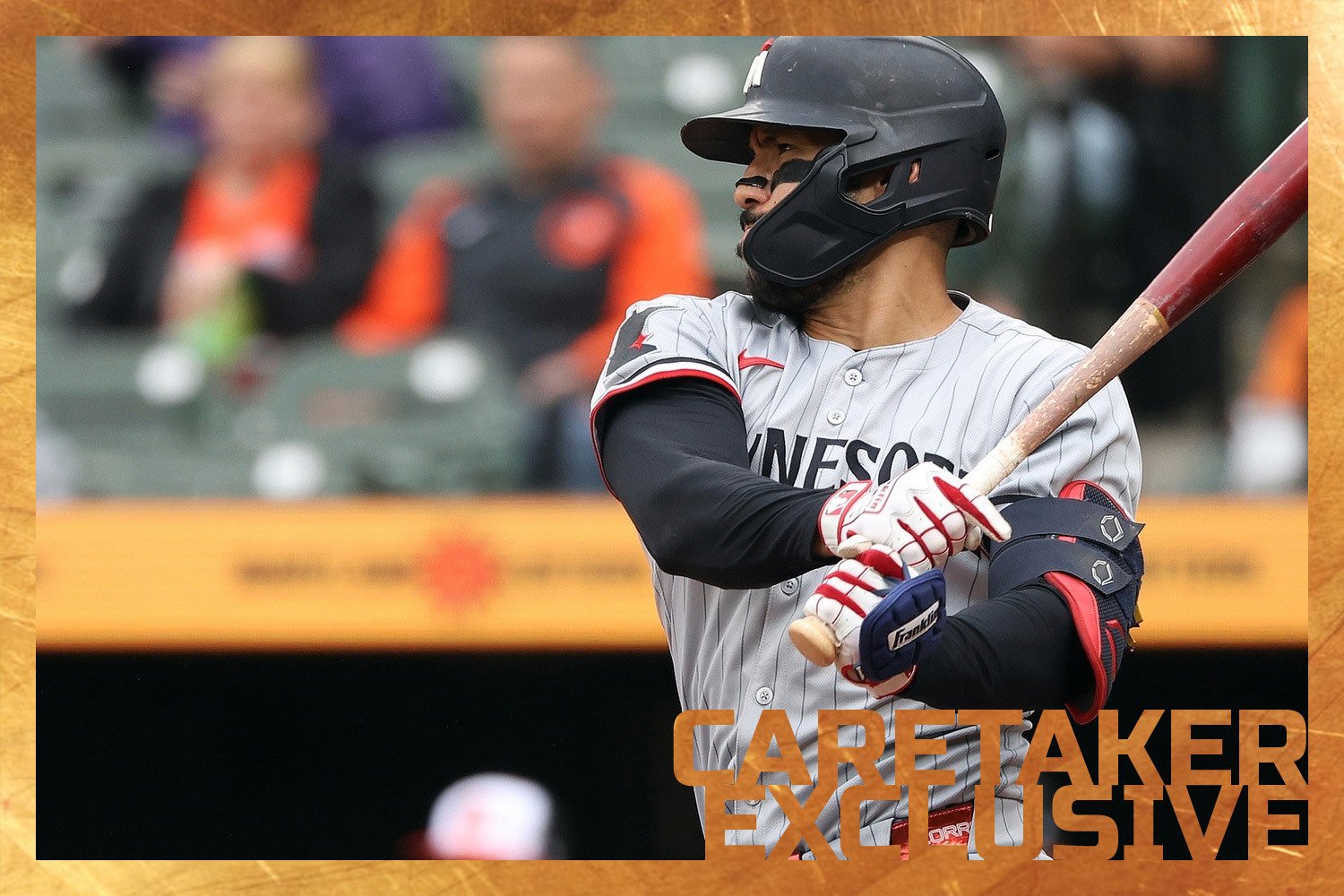 Carlos Correa isn't right at the plate. This much, you already know. Last year, though his season was effectively cut in half by plantar fasciitis, the Twins' superstar shortstop batted .310/.388/.517, earning his third All-Star nod and powering the lineup until his feet betrayed him and he had to go on the shelf at the break. This season, he had been (nominally) healthy, until his head ran into Byron Buxton's head in Baltimore, but the numbers told a clear story even while Correa was on the field. He's hitting .236/.274/.331 for the year, barely outslugging last year's batting average. It looks every bit as bad when you shift from the numbers on the page to the player in the batter's box, too. Correa left one game in April with left wrist soreness, and wasn't available to play the following day. He's been a different hitter this year, and not at all in a good way. The temptation, given all the tools we have these days, is to hunt the topline numerical differences and point at them as the clear sources of the problem. To wit: Correa's bat speed is down 1.2 miles per hour this season, and his average exit velocity has dipped by 1.4 mph. He's hitting fewer balls hard, lifting the ball less often, and chasing more outside the zone. That's a potent cocktail, if your goal is to produce failure at the plate in the major leagues. Thanks to the latest batch of new metrics from Statcast, though, we don't have to content ourselves with seeing these things and drawing assumptions about Correa's health, or (worse) wonder about what mystical problems of timing or mentality might be wrecking him despite physical fitness for the job. A whole new suite of tools is available to us, and it allows us to drill all the way to the bedrock of the issues. So, first of all: yes, Correa's wrist is affecting him. It's slowing down his swing, and it's contributing to the tendency to hit the ball on the ground more. How do I know? I'm glad you asked. One of the new tools available at Baseball Savant is a visualizer for the entire swing, from the moment the hitter's bat begins its arc toward the ball through the moments just after contact. It's not just the bat, either. We can actually see a hitter's animated skeletal avatar, and watch the way they transfer their weight and energy throughout the swing. We can notice their posture and their hand position, in addition to their bat path itself. Here's Correa just before the contact point (left) and at the contact point (right) in 2024. I'm inviting you to look at some very granular details here, but don't be intimidated by them. The thrill of these new data is that they can make us all experts on hitting, with enough time and careful study. Right now, focus in with me on that troublesome left wrist on Correa's pseudo-skeleton. (Each white ball on the seafoam figures, of course, represents a joint. We can "see" each player's shoulders, elbows, wrists and hands at work throughout the swing. Please, by all means, visit Baseball Savant and play with this tool yourself, to see the fluid motion of it all, but stills serve our analytical needs nicely right now.) See the crook of it—the way he has his hand turned toward his pinky even just before contact? By the time he gets to the contact point, however, he's extended that wrist, using it to keep the barrel whipping through the hitting zone. Meanwhile, notice how his right wrist—leading into the top hand, the one that steers the bat through the zone—stays ever-so-slightly curled through contact. That sustains bat control and the capacity to manipulate the barrel. It also means that when he meets the ball, that wrist isn't yet rolling over, which is important. You know what rolling over means: a ground ball, or if you're lucky, a topspin liner. If you're especially early, which rolling over before contact usually indicates, you're also at more risk of a whiff. Most misses on swings come because of timing, not because the batter simply aimed for the wrong spot. Now, here's Correa's swing just before and at contact (the animated ball looks more like it's gotten all the way to the barrel in the righthand image, here, but functionally, we're seeing the same two moments within the swing) in 2025: He's extending his arms a bit more by the contact point, this year. Shouldn't that be a good thing? Don't we always hear about hitters trying to get extended on the ball? Well, there are two problems. Look at the wrists again—especially the right one, this time. With a bit less strength and stability coming from that left hand, Correa's using the top hand to try to catch up, but that means that the wrist is more fully extended at contact this year—which means more of a risk that he's rolling over; and These aren't captures of any one swing. They're composites. So, yes. on average, Correa seems to be meeting the ball cleanly here. The problem is that baseball isn't scored in composites. Every hitter needs to have an adaptable swing, to address pitches at different speeds and locations differently, and every hitter will experience a distribution of successes and failures within and across those buckets and those swing modes. Just as a pitcher who averages six inches of run on a 94-mph fastball often throws one with several inches' difference in movement and a tick or two of difference in velocity, hitters aren't replicating swings perfectly. Correa has run into trouble because of specific faults within his adaptable swing modes, rather than in a way we can see by examining a single visual or a set of averages. Here's where I offer a bit of a twist: yes, Correa's wrist seems to be a problem, feeding into multiple inefficiencies in his swing. But no, it's not doing so by diminishing his swing speed. In fact, his bat speed isn't really the problem, at all. Let's dig a layer deeper.
 -
Image courtesy of © Daniel Kucin Jr.-Imagn Images Carlos Correa isn't right at the plate. This much, you already know. Last year, though his season was effectively cut in half by plantar fasciitis, the Twins' superstar shortstop batted .310/.388/.517, earning his third All-Star nod and powering the lineup until his feet betrayed him and he had to go on the shelf at the break. This season, he had been (nominally) healthy, until his head ran into Byron Buxton's head in Baltimore, but the numbers told a clear story even while Correa was on the field. He's hitting .236/.274/.331 for the year, barely outslugging last year's batting average. It looks every bit as bad when you shift from the numbers on the page to the player in the batter's box, too. Correa left one game in April with left wrist soreness, and wasn't available to play the following day. He's been a different hitter this year, and not at all in a good way. The temptation, given all the tools we have these days, is to hunt the topline numerical differences and point at them as the clear sources of the problem. To wit: Correa's bat speed is down 1.2 miles per hour this season, and his average exit velocity has dipped by 1.4 mph. He's hitting fewer balls hard, lifting the ball less often, and chasing more outside the zone. That's a potent cocktail, if your goal is to produce failure at the plate in the major leagues. Thanks to the latest batch of new metrics from Statcast, though, we don't have to content ourselves with seeing these things and drawing assumptions about Correa's health, or (worse) wonder about what mystical problems of timing or mentality might be wrecking him despite physical fitness for the job. A whole new suite of tools is available to us, and it allows us to drill all the way to the bedrock of the issues. So, first of all: yes, Correa's wrist is affecting him. It's slowing down his swing, and it's contributing to the tendency to hit the ball on the ground more. How do I know? I'm glad you asked. One of the new tools available at Baseball Savant is a visualizer for the entire swing, from the moment the hitter's bat begins its arc toward the ball through the moments just after contact. It's not just the bat, either. We can actually see a hitter's animated skeletal avatar, and watch the way they transfer their weight and energy throughout the swing. We can notice their posture and their hand position, in addition to their bat path itself. Here's Correa just before the contact point (left) and at the contact point (right) in 2024. I'm inviting you to look at some very granular details here, but don't be intimidated by them. The thrill of these new data is that they can make us all experts on hitting, with enough time and careful study. Right now, focus in with me on that troublesome left wrist on Correa's pseudo-skeleton. (Each white ball on the seafoam figures, of course, represents a joint. We can "see" each player's shoulders, elbows, wrists and hands at work throughout the swing. Please, by all means, visit Baseball Savant and play with this tool yourself, to see the fluid motion of it all, but stills serve our analytical needs nicely right now.) See the crook of it—the way he has his hand turned toward his pinky even just before contact? By the time he gets to the contact point, however, he's extended that wrist, using it to keep the barrel whipping through the hitting zone. Meanwhile, notice how his right wrist—leading into the top hand, the one that steers the bat through the zone—stays ever-so-slightly curled through contact. That sustains bat control and the capacity to manipulate the barrel. It also means that when he meets the ball, that wrist isn't yet rolling over, which is important. You know what rolling over means: a ground ball, or if you're lucky, a topspin liner. If you're especially early, which rolling over before contact usually indicates, you're also at more risk of a whiff. Most misses on swings come because of timing, not because the batter simply aimed for the wrong spot. Now, here's Correa's swing just before and at contact (the animated ball looks more like it's gotten all the way to the barrel in the righthand image, here, but functionally, we're seeing the same two moments within the swing) in 2025: He's extending his arms a bit more by the contact point, this year. Shouldn't that be a good thing? Don't we always hear about hitters trying to get extended on the ball? Well, there are two problems. Look at the wrists again—especially the right one, this time. With a bit less strength and stability coming from that left hand, Correa's using the top hand to try to catch up, but that means that the wrist is more fully extended at contact this year—which means more of a risk that he's rolling over; and These aren't captures of any one swing. They're composites. So, yes. on average, Correa seems to be meeting the ball cleanly here. The problem is that baseball isn't scored in composites. Every hitter needs to have an adaptable swing, to address pitches at different speeds and locations differently, and every hitter will experience a distribution of successes and failures within and across those buckets and those swing modes. Just as a pitcher who averages six inches of run on a 94-mph fastball often throws one with several inches' difference in movement and a tick or two of difference in velocity, hitters aren't replicating swings perfectly. Correa has run into trouble because of specific faults within his adaptable swing modes, rather than in a way we can see by examining a single visual or a set of averages. Here's where I offer a bit of a twist: yes, Correa's wrist seems to be a problem, feeding into multiple inefficiencies in his swing. But no, it's not doing so by diminishing his swing speed. In fact, his bat speed isn't really the problem, at all. Let's dig a layer deeper. View full article
-
Image courtesy of © Jesse Johnson-Imagn Images The Twins and Guardians made multiple attempts to fit ballgames in between torrents of rain Monday night at Target Field. The result was a forgettable three and a half innings of baseball, with the Twins holding a 2-1 lead in a game that will be resumed (in theory) at 5:10 PM Tuesday night. After the two teams finish that contest (if, indeed, they do), they'll play a late-night second game. Except, here's the thing: no, they won't. It has rained almost nonstop since 7 PM Monday in the Twin Cities, and the forecasts all call for that to continue through Tuesday night. It does look as though the skies will finally have emptied themselves by Wednesday afternoon, when the two teams are scheduled for the final game of this three-game series. They won't want to play a doubleheader then, though, because the Guardians have to be in Detroit for the start of a four-game weekender Thursday evening. At least one game will be washed out, here. They might try to complete the suspended one Tuesday, or just bump that to Wednesday and play a not-quite twin bill Wednesday. They might not even be able to do that; there could be 14 innings of baseball to make up when Cleveland's plane takes off Wednesday evening. The good news, of course, is that the Guardians come back to Minnesota—albeit just once, rather than the two other times a division rival would have visited under the old schedule format. These teams are scheduled to play at Target Field again on Sept. 19-21, and one of those dates now looks very likely to be a doubleheader. Alternatively (or additionally), they could make up a game on Sept. 22, when the teams have a mutual off day. The Cleveland series will be the last set of a nine-game Twins homestand, but before playing in Texas on the following Tuesday, Minnesota has a travel day scheduled. So do the Guardians, who will have a home series against Detroit right after playing the Twins. Neither team wants to push off a makeup game that far, of course. If the weather is bad again in September (always a possibility), needing to fit four games into three days or giving up a travel day to fit in a contest could become truly miserable. It could become an utterly unmanageable mess. Looking at the radar, though, it's hard to see that there will be any choice in the matter. There are 23 innings (or more) of baseball left to play in this series, and nowhere near room for them in the windows between showers. Weather has poked the league in the eye quite a bit already this year. It looks like one of those years when the league will play a good 35 or 40 doubleheaders, and the Twins figure to be overrepresented in that sample. It's frustrating, because it feels like Mother Nature is the only opponent the Twins can't beat right now. On the other hand, as Byron Buxton and Carlos Correa sit on the shelf with concussions and Willi Castro hobbles around the field with a knee contusion causing him obvious discomfort, maybe this isn't the worst time for some days on the calendar to be wiped blank. There's no way to make up these games that won't mess with the Twins' pitching schedules, but the Guardians will face an even more acute version of the same problem. As we wait to see whether the sky will clear at any juncture in the next 30 hours, both sides can merely gather and try to come up with ways to stay ready and minimize the impact of this inconvenience. For fans, it's not so bad. An occasional rainout is a miniature blessing, even amid a hot stretch for the team. It's extra time to think; to get something else done; to rest. The stress, for fans and for players, will come whenever the bill comes due for these lost games—when the schedule gets crowded and grueling late in a pennant race. The stress for executives and coaches comes right now. UPDATE: As we guessed they might, the Twins announced that there will be no baseball Tuesday night. The Twins and Guardians will make up the remainder of Monday night's game Wednesday afternoon, and then play the regularly-scheduled game. Tuesday night's contest will, indeed, become part of a doubleheader on Sept. 20. Here's hoping the weather will permit all the required innings Wednesday, so the September slate doesn't get any more jammed. View full article
-
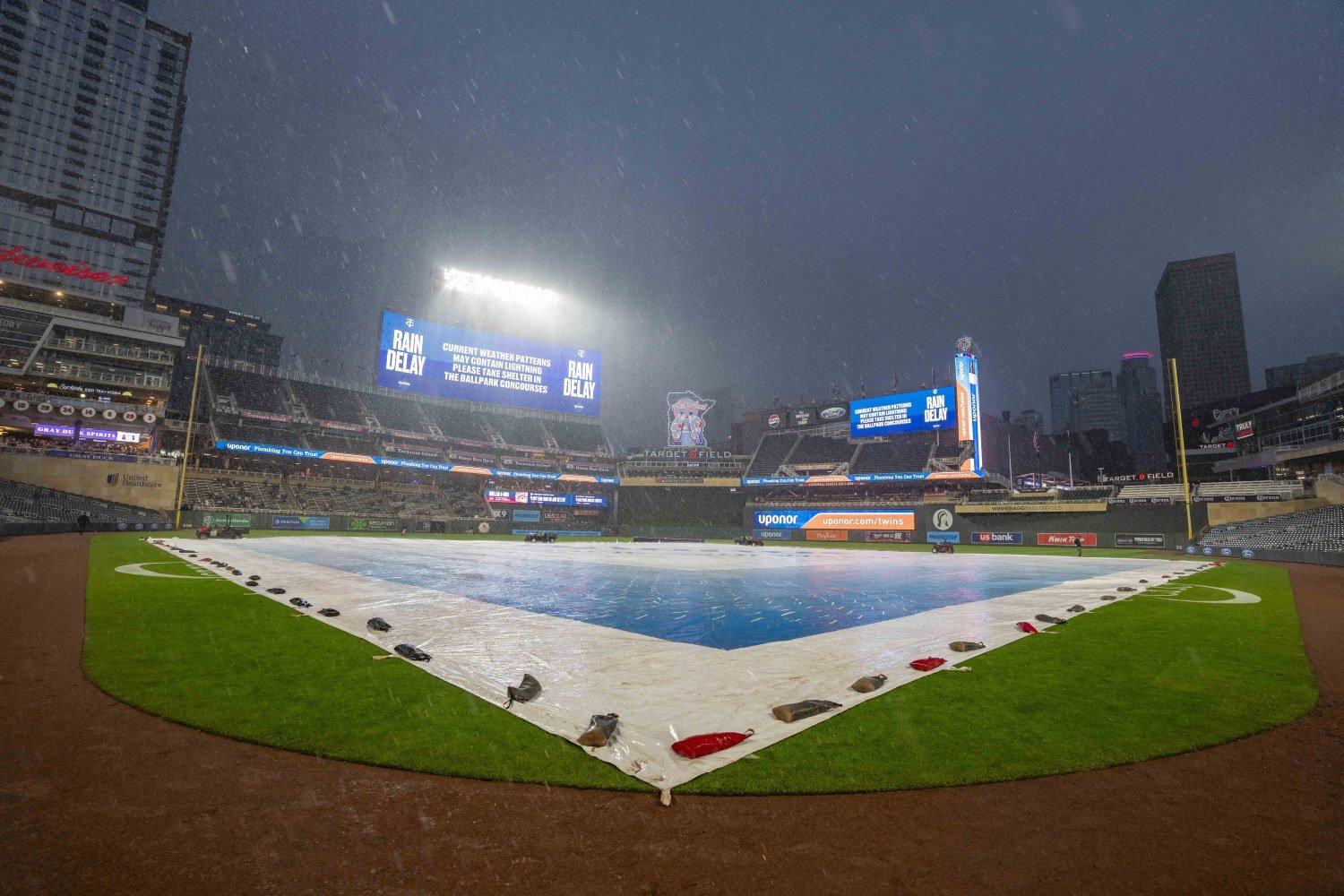 The Twins and Guardians made multiple attempts to fit ballgames in between torrents of rain Monday night at Target Field. The result was a forgettable three and a half innings of baseball, with the Twins holding a 2-1 lead in a game that will be resumed (in theory) at 5:10 PM Tuesday night. After the two teams finish that contest (if, indeed, they do), they'll play a late-night second game. Except, here's the thing: no, they won't. It has rained almost nonstop since 7 PM Monday in the Twin Cities, and the forecasts all call for that to continue through Tuesday night. It does look as though the skies will finally have emptied themselves by Wednesday afternoon, when the two teams are scheduled for the final game of this three-game series. They won't want to play a doubleheader then, though, because the Guardians have to be in Detroit for the start of a four-game weekender Thursday evening. At least one game will be washed out, here. They might try to complete the suspended one Tuesday, or just bump that to Wednesday and play a not-quite twin bill Wednesday. They might not even be able to do that; there could be 14 innings of baseball to make up when Cleveland's plane takes off Wednesday evening. The good news, of course, is that the Guardians come back to Minnesota—albeit just once, rather than the two other times a division rival would have visited under the old schedule format. These teams are scheduled to play at Target Field again on Sept. 19-21, and one of those dates now looks very likely to be a doubleheader. Alternatively (or additionally), they could make up a game on Sept. 22, when the teams have a mutual off day. The Cleveland series will be the last set of a nine-game Twins homestand, but before playing in Texas on the following Tuesday, Minnesota has a travel day scheduled. So do the Guardians, who will have a home series against Detroit right after playing the Twins. Neither team wants to push off a makeup game that far, of course. If the weather is bad again in September (always a possibility), needing to fit four games into three days or giving up a travel day to fit in a contest could become truly miserable. It could become an utterly unmanageable mess. Looking at the radar, though, it's hard to see that there will be any choice in the matter. There are 23 innings (or more) of baseball left to play in this series, and nowhere near room for them in the windows between showers. Weather has poked the league in the eye quite a bit already this year. It looks like one of those years when the league will play a good 35 or 40 doubleheaders, and the Twins figure to be overrepresented in that sample. It's frustrating, because it feels like Mother Nature is the only opponent the Twins can't beat right now. On the other hand, as Byron Buxton and Carlos Correa sit on the shelf with concussions and Willi Castro hobbles around the field with a knee contusion causing him obvious discomfort, maybe this isn't the worst time for some days on the calendar to be wiped blank. There's no way to make up these games that won't mess with the Twins' pitching schedules, but the Guardians will face an even more acute version of the same problem. As we wait to see whether the sky will clear at any juncture in the next 30 hours, both sides can merely gather and try to come up with ways to stay ready and minimize the impact of this inconvenience. For fans, it's not so bad. An occasional rainout is a miniature blessing, even amid a hot stretch for the team. It's extra time to think; to get something else done; to rest. The stress, for fans and for players, will come whenever the bill comes due for these lost games—when the schedule gets crowded and grueling late in a pennant race. The stress for executives and coaches comes right now. UPDATE: As we guessed they might, the Twins announced that there will be no baseball Tuesday night. The Twins and Guardians will make up the remainder of Monday night's game Wednesday afternoon, and then play the regularly-scheduled game. Tuesday night's contest will, indeed, become part of a doubleheader on Sept. 20. Here's hoping the weather will permit all the required innings Wednesday, so the September slate doesn't get any more jammed.
 -
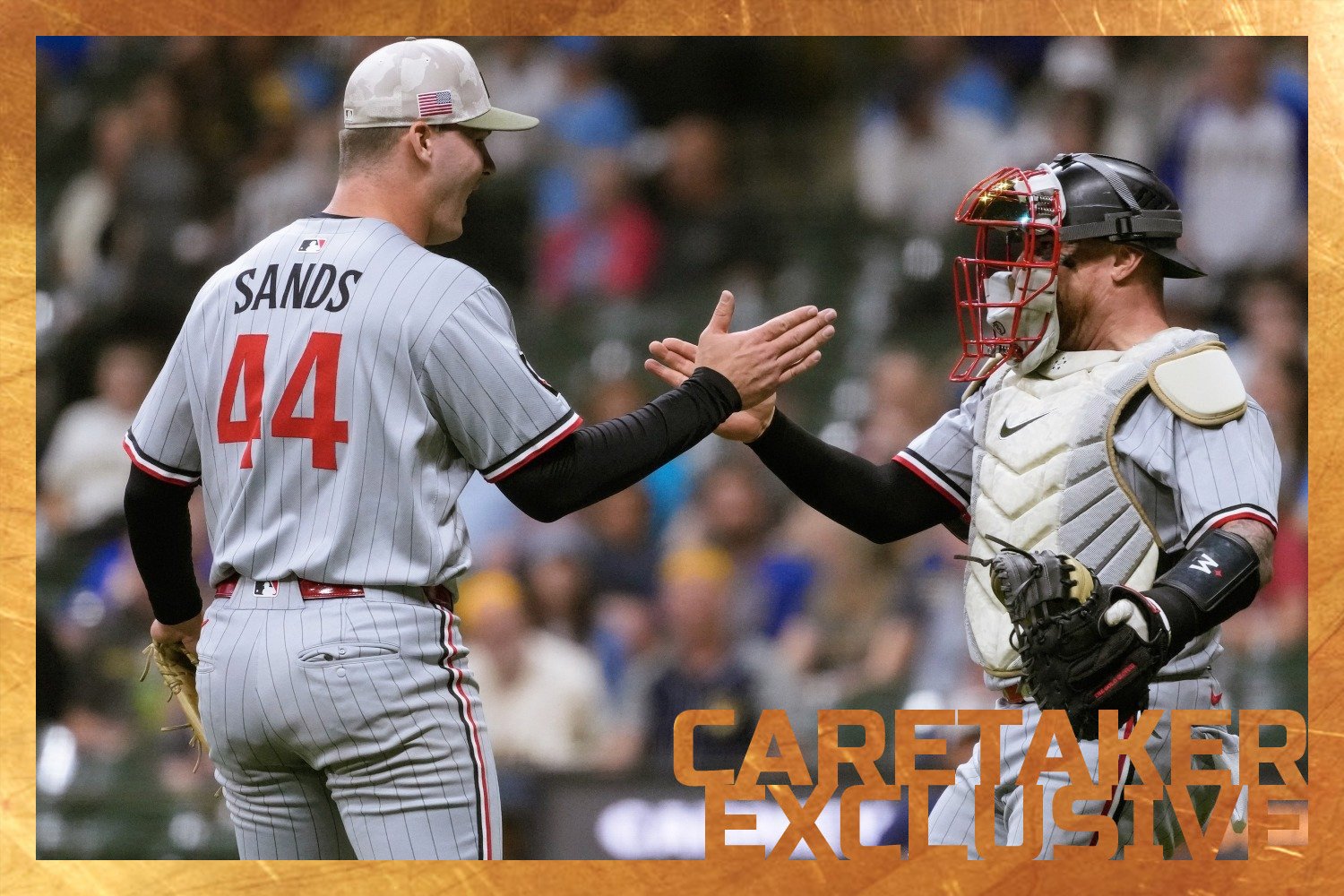 The Twins finally lost on Sunday, for the first time since May 2 in Boston. Four of the five runs they allowed were let in by starter Zebby Matthews, though, so the team still boasts a 0.89 reliever ERA since May 3. That fortnight and change, in which they've gone 13-1, has been characterized by lots of timely hits and great work from their starting pitchers. Their defense has made big plays, too. Were it not for the most dominant relief work in the league, though, they wouldn't have been able to make this charge. Beginning on that Saturday at Fenway Park (admittedly, a selective endpoint, but I'm being so balanced as to include the loss Sunday in this set), the Twins have a 29.7% strikeout rate and a 5.1% walk rate in 50 1/3 innings. They've gotten 151 outs and allowed just six runs. Only the similarly torrid Cardinals have come anywhere close to matching their run prevention, and St. Louis has done it by getting lucky. The Twins, by contrast, are pitching like a well-oiled reliever machine—because that's what they were built to be. Fans can and should feel righteous indignation when the team neglects to make proactive moves to upgrade its lineup, as they've done over the last three years. They're pinning heavy hopes on light bats, and then evincing unearned dismay at the underwhelming results. They also could have done more to bolster their starting rotation this winter, even while holding onto their superb collection of young arms. You can never have too many good starters, and you can hardly ever have enough of them. The Twins have stopped short of gathering as much top-tier talent as they should have, be that via free agency (an ownership problem) or trade (a front-office problem), and the ramifications are real. Those failures are why this team finished last year 12-27 and started this one 7-15. If we levy fair criticisms, though, we also have to dispense justice by according earned praise. This team is incredibly good at developing and sustaining the success of relief pitchers. Sometimes, in our rush to explain and grasp the high degree of variation in relief pitching and the rarity of players having long, consistent careers in those roles, we minimize or misstate the difficulty and the value of creating great bullpens. The Twins have done just that, and it's not a small thing. You know about Jhoan Duran, who's changed a great deal as a pitcher but is still generating familiarly excellent results. You know about Griffin Jax, who has buzzard luck but buzzsaw stuff. This year, the key addition to the mix has been Louis Varland, who's no longer fighting his destiny and has emerged as an immediate partner to the other two relief aces in the pen. Without a strong second line, though, the Twins wouldn't be able to maximize the value of their top arms. That's where Cole Sands comes in.
 -
Image courtesy of © Jeff Hanisch-Imagn Images The Twins finally lost on Sunday, for the first time since May 2 in Boston. Four of the five runs they allowed were let in by starter Zebby Matthews, though, so the team still boasts a 0.89 reliever ERA since May 3. That fortnight and change, in which they've gone 13-1, has been characterized by lots of timely hits and great work from their starting pitchers. Their defense has made big plays, too. Were it not for the most dominant relief work in the league, though, they wouldn't have been able to make this charge. Beginning on that Saturday at Fenway Park (admittedly, a selective endpoint, but I'm being so balanced as to include the loss Sunday in this set), the Twins have a 29.7% strikeout rate and a 5.1% walk rate in 50 1/3 innings. They've gotten 151 outs and allowed just six runs. Only the similarly torrid Cardinals have come anywhere close to matching their run prevention, and St. Louis has done it by getting lucky. The Twins, by contrast, are pitching like a well-oiled reliever machine—because that's what they were built to be. Fans can and should feel righteous indignation when the team neglects to make proactive moves to upgrade its lineup, as they've done over the last three years. They're pinning heavy hopes on light bats, and then evincing unearned dismay at the underwhelming results. They also could have done more to bolster their starting rotation this winter, even while holding onto their superb collection of young arms. You can never have too many good starters, and you can hardly ever have enough of them. The Twins have stopped short of gathering as much top-tier talent as they should have, be that via free agency (an ownership problem) or trade (a front-office problem), and the ramifications are real. Those failures are why this team finished last year 12-27 and started this one 7-15. If we levy fair criticisms, though, we also have to dispense justice by according earned praise. This team is incredibly good at developing and sustaining the success of relief pitchers. Sometimes, in our rush to explain and grasp the high degree of variation in relief pitching and the rarity of players having long, consistent careers in those roles, we minimize or misstate the difficulty and the value of creating great bullpens. The Twins have done just that, and it's not a small thing. You know about Jhoan Duran, who's changed a great deal as a pitcher but is still generating familiarly excellent results. You know about Griffin Jax, who has buzzard luck but buzzsaw stuff. This year, the key addition to the mix has been Louis Varland, who's no longer fighting his destiny and has emerged as an immediate partner to the other two relief aces in the pen. Without a strong second line, though, the Twins wouldn't be able to maximize the value of their top arms. That's where Cole Sands comes in. View full article
-
Image courtesy of © Daniel Kucin Jr.-Imagn Images They might yet extend their winning streak to 11 games and sweep the season series against should-be contenders, but the Twins are living in limbo right now. After a third-inning fly ball on which Byron Buxton charged hard as Carlos Correa backpedaled into the outfield, both players are out of the game. Twins Territory waits with bated breath to see what the prognosis on each turns out to be. On an 0-2 count, Orioles center fielder Cedric Mullins hit a pop-up with some extra carry. (For the Twins, nothing good begins with 'Cedric Mullins...'.) Buxton had been shading Mullins toward right field, and Correa had been playing up the middle. Because the ball was well beyond the infield apron and a bit toward left field, Correa hurried out after the ball, unsure whether Buxton would be able to get there. Buxton, meanwhile, read the ball well and charged hard, at a slight angle. At the last moment, Correa tried to pull off and brace for contact, but it did little good. After a lengthy visit from the trainer and the manager, Correa left the game, while Buxton stayed in. However, by the bottom of the fourth, DaShawn Keirsey Jr. had replaced Buxton in center field. There has been no update as of the time of this writing, but each player appeared to hit their heads and be badly shaken up on the play. It's safe to guess that each will at least be evaluated for possible concussions. You couldn't draw up a worse turn of events for the Twins if you tried. These are the two players in whom they are most heavily invested, financially, and Buxton has been at the heart of everything good that has happened for the team this year. Correa's season has already been a struggle, but that's certainly not more likely to turn itself around in the wake of this. We'll all await more information. Already, this is a banged-up team. Harrison Bader left Game 2 of the doubleheader Wednesday in Baltimore, after Ty France had to leave Game 1. They have a bevy of versatile position players, but it's impossible to replace the sheer talent of Buxton and Correa—and equally daunting to replace the defensive brilliance, production and energy Buxton has provided on his own, all year. Keirsey could be in line for more playing time, in the short term, but if the team wants to complete its recovery from a dreadful start to the season, they'll need to get their stars back as soon as possible. Hopefully, the substitutions turn out to have been precautionary, and both players return to the lineup this weekend. UPDATE: The Twins announced that both players have entered Major League Baseball's concussion protocol. That confirms the fears most felt when they watched the replays of the collision. As is always the case, it's impossible to predict how this will play out. They could be cleared of concussion concerns and miss minimal time, but if either does actually have a concussion—and the violence of the crash was certainly worrisome—they could suffer medium- and long-term effects, both in terms of time missed and performance diminution when they return. For now, the team and the players just need to proceed with caution. View full article

