



Matthew Trueblood
-
Posts
1,033 -
Joined
-
Last visited
Content Type
Profiles
News
Minnesota Twins Videos
2026 Minnesota Twins Top Prospects Ranking
2022 Minnesota Twins Draft Picks
Minnesota Twins Free Agent & Trade Rumors, Notes, & Tidbits
Guides & Resources
2023 Minnesota Twins Draft Picks
The Minnesota Twins Players Project
2024 Minnesota Twins Draft Picks
2025 Minnesota Twins Draft Pick Tracker
2026 Minnesota Twins Draft Tracker: Picks & Bonuses
Forums
Blogs
Events
Store
Downloads
Gallery
Everything posted by Matthew Trueblood
-
3 Right-Handed Batters the Twins Should Target This Week
Matthew Trueblood posted an article in Twins
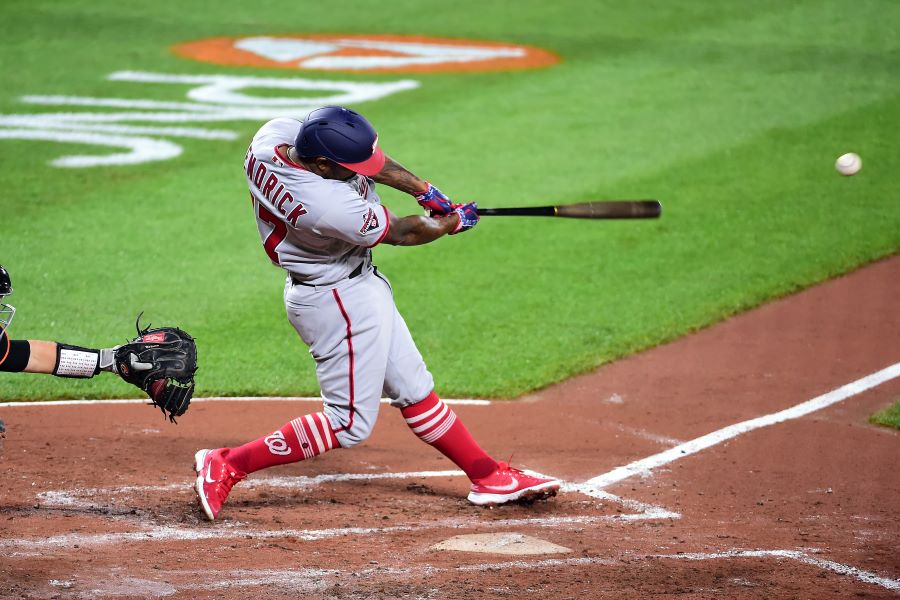 This trade deadline will be much quieter than most, and it’s hard to guess or gauge what kinds of deals will happen. Certainly, teams will approach the possibility of trading for players on expiring contracts differently than they would in other years, since this truncated season and the expanded playoffs change the payoff for a successful short-term upgrade. Clubs also figure to be a bit more wary to take on big contracts, because of the widespread uncertainty about the medium-term future of free agency and team finances. Still, moves will happen, and the Twins are a surefire playoff team with clear, low-grade needs. That could position them well to make a deal or two. It’s not just the fact that Garver, Buxton, and Donaldson are sidelined right now that puts the Twins in a position of needing some extra right-handed hitting help. Ehire Adrianza, who was a pleasant surprise as a versatile bench option in 2018 and 2019, has faded, and now looks more like the poor hitter who first made his way to Minnesota. Adrianza is also aging, with his defensive prowess fading and his speed gone, so he offers little for the Twins at this point. Luis Arraez continues to play on a sore knee, and it’s affecting his game. Marwin Gonzalez has a .673 OPS. The team should try to hedge their bets, in case some significant subset of this sextet remains unable to help the club much come October. Here are the three best guys who should be available and could fill key needs. We’ll discuss three more tomorrow. Donovan Solano, IF, San Francisco Giants: Though some teammates have nicknamed him Donny Barrels, Solano doesn’t actually generate much power. That’s almost where the bad news ends, though, because Solano has become a genuinely interesting right-handed hitter, capable of squaring the ball up as consistently as anyone in baseball and of playing all over the infield. Solano uses a toe tap/leg kick hybrid, so his swing sometimes looks a bit arrhythmic, but he makes contact within the zone and uses the whole field. He’s also one of the best players in baseball at clustering his batted balls within the launch-angle band that leads to the best outcomes. Among players with 100 or more batted balls in 2019, the Twins had the seventh-, ninth-, and 10th-best hitters at that, in Arraez, Jorge Polanco, and Jason Castro. Solano, however, was first, in a group that included 406 total players. He’s among the leaders thus far in 2020, too, which is part of the reason for his .340 batting average since the start of 2019. At either second or third base, Solano is a roughly average fielder. He’s played shortstop for 150 innings over the last two seasons, too. He’s not a good baserunner, but Solano would be a massive upgrade over Adrianza and Gonzalez, pushing the former off the roster and letting the latter play more outfield as needed. He would even make a fine platoon partner for Arraez, and failing that, he would provide insurance against Arraez needing to sit for a prolonged period with that nagging knee problem. With the ability to use the whole field but a tendency to pull the ball, and with his emphasis on getting on plane with the incoming pitch so frequently, Solano’s a perfect fit for this team and its philosophy. The only real drawback in dealing for Solano is that the Giants are in a position to ask for something meaningful in return. That doesn’t mean the Twins would need to part with any of their name-brand prospects, but Solano has a year of team control remaining beyond this year, so Minnesota would have to offer enough not only to outbid other interested teams, but to make Giants general manager Scott Harris and president of baseball operations Farhan Zaidi decide to pull the trigger now, rather than wait and see what offers they get over the winter. Erik González, SS, Pittsburgh Pirates: Twins fans are familiar with González, who was an Indians farmhand and Francisco Lindor understudy until he was traded to Pittsburgh in November 2018. He’s long been considered a good-glove, no-hit shortstop, and fairly so. He’s not a match for the physical stereotype of such players, though: he’s tall and strong. That’s why what’s happening this year is pretty exciting. Here’s the quicksheet box atop González’s player page at Baseball Savant: That’s shocking. González, who has just one home run in 2020 and seven in 497 career plate appearances, is among the league leaders in average exit velocity and in hard-hit rate this year. He’s even elevating the ball more. Nor is all of that happening by accident. He’s genuinely hammering the baseball, and it’s thanks to a new swing path. González hits with a high, early leg kick, and in the past, that led to a somewhat lunging swing in which he swung down through the point of contact. Watching his swing, especially over the last two seasons, was oddly jarring: it’s a very familiar swing path to anyone who grew up watching baseball even in the 1990s or early 2000s, but there are few players left in the game who swing that way. This year, the leg kick is the same, though he’s doing some different things with his back leg as he drives forward. He’s also creating more torque, by keeping his front shoulder closed and starting his bat barrel with a rearward movement to get his swing going. For the most part, though, he’s just changed that swing plane. He’s still not a fly-ball hitter, but he’s getting his hands down and creating a path up into the strike zone. Plate discipline is far from a strength for González; he has 14 strikeouts and no walks this year. That’s not a bad strikeout rate, though, for a hitter who is generating plenty of potential power. González’s swing is fairly grooved, at this point, with a high in-zone contact rate but a lot of whiffs when he expands the zone. The Twins have taught precisely that style of hitting recently, though, so he’d be a good fit for them, philosophically. More than Solano, González would be an option at shortstop even if Polanco were to get hurt, requiring a longer-term stopgap. He’s also a superior defender at second base. The Pirates have control over González through 2022, but they’re already trying to find playing time for Kevin Newman, Cole Tucker, and Adam Frazier, and infield prospects Ke’Bryan Hayes and Oneil Cruz are knocking on the door. That his surface-level production doesn’t yet match the change in the batted-ball data could help keep his price tag down. Pittsburgh desperately needs pitching help, and the Twins have enough depth in that area to get a deal done without feeling a major pang. Howie Kendrick, 1B/2B, Washington Nationals: No serious baseball fan needs an introduction to Kendrick at this point. If his 15-year career hadn’t previously exposed you to him, his game-winning homer in Game 7 of last year’s World Series ought to have done so. Kendrick is the prototypical “professional hitter,” with far more pure hit tool than power, but enough of the latter to come through when that’s what the team needs. At 37 years old, Kendrick is painfully slow afoot, and he hasn’t played a meaningful amount anywhere but first or second base in over half a decade. His lack of versatility would make him an imperfect replacement for Adrianza, and would limit his ability to help the team cope with Donaldson’s continued absence, but his bat is valuable all by itself. He’s exceptionally good at avoiding strikeouts. He uses the big part of the field, especially when he has an opportunity to move a runner over. He has good enough plate discipline to draw walks, especially because he’ll foul off good pitches on the edges of the zone if necessary. When the Twins face a tough left-handed pitcher in a playoff setting, either as a starter or in a key late-game situation, it’d be awfully nice to have Kendrick available. He has a mutual option for 2021, which the bizarre market might actually bring into play, but the price tag to acquire him would be lower than those on either Solano or González. MORE FROM TWINS DAILY — Latest Twins coverage from our writers — Recent Twins discussion in our forums — Follow Twins Daily via Twitter, Facebook or email
 -
It’s been a rough start for the Twins’ erstwhile finisher. After a rapid ascent to the top of the bullpen hierarchy, sometime relief ace Taylor Rogers has been much more hittable in 2020. The issue lies in his release point, but fixing the problem might be much harder than identifying it.Rogers is an unusual pitcher, in terms of pitch mix. In an age in which most of the league is moving away from sinkers and toward four-seam fastballs, Rogers is a sinkerballer. More unusually still, he throws two distinct breaking balls, a slider and a curveball. As I wrote in May, he’s better-suited to doing so than most pitchers are, but it’s hard to maintain two breaking pitches without having them cannibalize one another. This year, Rogers has spoken openly about being uncomfortable with and unable to throw his curveball. However, his slider has also been hittable, and batters are averaging almost 95 miles per hour in exit velocity against his sinker. In every possible way, Rogers is struggling to match the dominance he displayed from mid-2018 through the end of last season. To see why this is happening, one can look back at that article from May. Many of the things that were true then remain true now. Rogers is a pitcher with tremendous stability and alignment in his delivery, but less-than-excellent timing in terms of getting to his ideal release point on every pitch. That makes his misses small, but it means that they tend to be up and to Rogers’s arm side, usually within the strike zone. As was the case last year, Rogers isn’t walking anyone. The big elements of his delivery—the big muscles and the way they work together, in sequence—remain solid, so he’s around the plate as much as ever, and as much as any pitcher in baseball. The problems he’s encountered have to do, instead, with small things, but those can lead to big problems. The most significant problem is that Rogers’s release point is down, especially on the breaking stuff. Download attachment: Rogers V Rel.jpeg He’s getting around both the slider and the curveball a bit. The somewhat humped-up position he usually reaches with his shoulder at release, getting his fingers on top of the ball to create the spin he wants, hasn’t quite been there this season. The issues are mostly about hand position, and the differences are so small they can be tough to spot even on video, but they lead to an inability to get the ball down consistently and hit the spots he wants to hit, especially outside the strike zone. Download attachment: Rogers V Loc.jpeg Rogers’s slider, especially, is not supposed to finish in the strike zone. The sinker is most effective when kept close to the bottom of it, and the curveball has to be able to tumble out of the zone on occasion, in addition to sometimes falling in for a strike after appearing to be high. (With the lower release, the curve also isn’t as deceptive in that regard; it never looks like it’s going to be as high as Rogers wants it to look.) A little bit of hand position seems like a relatively easy thing to correct, but it might not be so. Let’s loop back to the pitch mix, and to the fact that he throws both the curve and the slider, in defiance of convention. As I wrote in May, throwing the two pitches requires different arm actions and a different mindset, even though he slightly simplifies the difference by throwing them both with the same grip. Here’s one more layer: when it comes to the arm action, the sinker requires something different than either pitch. At release, the sinker requires the inner forearm to be facing the plate almost perfectly, or to very slightly point toward the on-deck circle on the first base side. The curve requires the forearm to be highly supinated, with the inner portion of it facing toward Rogers’s body (or the third-base dugout). The slider, which is what Rogers is leaning on right now as the curve remains troublesome, requires the forearm angle to be about halfway between those of the other two offerings at release. When juggling those three motions, it’s not easy to fix even a slight problem with a release point. Rogers is supinating too much on the breaking balls, and modulating that can be tricky, especially when one has tinkered with muscle memory by creating multiple motions to accommodate multiple breaking pitches. It’s far from impossible for Rogers to regain his form. He’s likely to do so, because the foundations of his delivery are solid and he has shown the feel to manipulate all three of his key pitches in the past. For now, however, his struggles are real. Despite the fact that he can still strike batters out at a high rate and hardly ever issues a walk, he will continue to give up hard contact until he can make the small mechanical adjustments necessary to get his stuff down in and below the zone more consistently. MORE FROM TWINS DAILY — Latest Twins coverage from our writers — Recent Twins discussion in our forums — Follow Twins Daily via Twitter, Facebook or email Click here to view the article
-
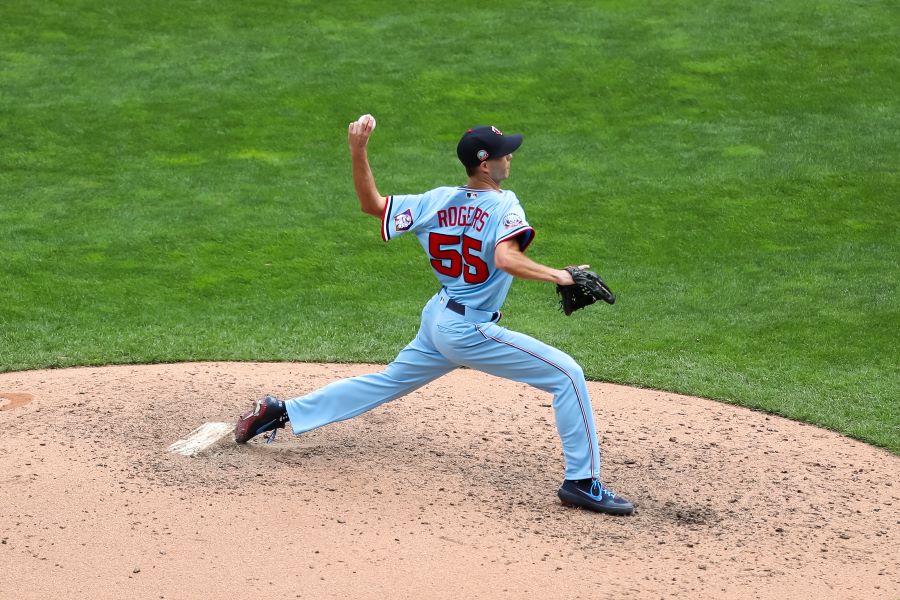 Rogers is an unusual pitcher, in terms of pitch mix. In an age in which most of the league is moving away from sinkers and toward four-seam fastballs, Rogers is a sinkerballer. More unusually still, he throws two distinct breaking balls, a slider and a curveball. As I wrote in May, he’s better-suited to doing so than most pitchers are, but it’s hard to maintain two breaking pitches without having them cannibalize one another. This year, Rogers has spoken openly about being uncomfortable with and unable to throw his curveball. However, his slider has also been hittable, and batters are averaging almost 95 miles per hour in exit velocity against his sinker. In every possible way, Rogers is struggling to match the dominance he displayed from mid-2018 through the end of last season. To see why this is happening, one can look back at that article from May. Many of the things that were true then remain true now. Rogers is a pitcher with tremendous stability and alignment in his delivery, but less-than-excellent timing in terms of getting to his ideal release point on every pitch. That makes his misses small, but it means that they tend to be up and to Rogers’s arm side, usually within the strike zone. As was the case last year, Rogers isn’t walking anyone. The big elements of his delivery—the big muscles and the way they work together, in sequence—remain solid, so he’s around the plate as much as ever, and as much as any pitcher in baseball. The problems he’s encountered have to do, instead, with small things, but those can lead to big problems. The most significant problem is that Rogers’s release point is down, especially on the breaking stuff. He’s getting around both the slider and the curveball a bit. The somewhat humped-up position he usually reaches with his shoulder at release, getting his fingers on top of the ball to create the spin he wants, hasn’t quite been there this season. The issues are mostly about hand position, and the differences are so small they can be tough to spot even on video, but they lead to an inability to get the ball down consistently and hit the spots he wants to hit, especially outside the strike zone. Rogers’s slider, especially, is not supposed to finish in the strike zone. The sinker is most effective when kept close to the bottom of it, and the curveball has to be able to tumble out of the zone on occasion, in addition to sometimes falling in for a strike after appearing to be high. (With the lower release, the curve also isn’t as deceptive in that regard; it never looks like it’s going to be as high as Rogers wants it to look.) A little bit of hand position seems like a relatively easy thing to correct, but it might not be so. Let’s loop back to the pitch mix, and to the fact that he throws both the curve and the slider, in defiance of convention. As I wrote in May, throwing the two pitches requires different arm actions and a different mindset, even though he slightly simplifies the difference by throwing them both with the same grip. Here’s one more layer: when it comes to the arm action, the sinker requires something different than either pitch. At release, the sinker requires the inner forearm to be facing the plate almost perfectly, or to very slightly point toward the on-deck circle on the first base side. The curve requires the forearm to be highly supinated, with the inner portion of it facing toward Rogers’s body (or the third-base dugout). The slider, which is what Rogers is leaning on right now as the curve remains troublesome, requires the forearm angle to be about halfway between those of the other two offerings at release. When juggling those three motions, it’s not easy to fix even a slight problem with a release point. Rogers is supinating too much on the breaking balls, and modulating that can be tricky, especially when one has tinkered with muscle memory by creating multiple motions to accommodate multiple breaking pitches. It’s far from impossible for Rogers to regain his form. He’s likely to do so, because the foundations of his delivery are solid and he has shown the feel to manipulate all three of his key pitches in the past. For now, however, his struggles are real. Despite the fact that he can still strike batters out at a high rate and hardly ever issues a walk, he will continue to give up hard contact until he can make the small mechanical adjustments necessary to get his stuff down in and below the zone more consistently. MORE FROM TWINS DAILY — Latest Twins coverage from our writers — Recent Twins discussion in our forums — Follow Twins Daily via Twitter, Facebook or email
 -
Success can be a trap. It can invite complacency. In the cases of Kenta Maeda and Wes Johnson, the Twins seem to have avoided that pitfall.When the Twins traded for Kenta Maeda in February, he looked like an immediate candidate to become the ace of their rotation. Just a handful of starts into his Minnesota career, that seems to have come to fruition. His near-no-hitter on Tuesday night was just another chapter in a fascinating reinvention, by a pitcher who manifestly did not need to reinvent himself. As I chronicled in February, Maeda was a stud for the Dodgers over the four seasons prior to this trade. His contract and the Los Angeles depth chart dictated annual mid-stream role changes, as he would slide from the starting rotation to the bullpen, but he flashed the ability to be a dominant, front-of-the-rotation starter throughout that period. Yet, it’s clear that the Twins saw some things Maeda could still do to take another step forward, and that Maeda was eager to explore his full potential, rather than operating within the framework of the Dodgers’ needs and preferences. As I said on last night’s Postgame Pint, there were adjustments of which Maeda was obviously capable, but which the Dodgers just never needed him to make. He threw a cutter in 2016 and 2017 that Los Angeles encouraged him to abandon thereafter, because it was only eating into his effectiveness as a two- or three-pitch short reliever and semi-starter. Let’s talk about how the Twins and Maeda worked together to unlock the potential for dominance that the Dodgers left untapped, out of a lack of necessity for it. Here’s Maeda’s horizontal movement profile, over time—in other words, the amount of lateral movement on each of his pitches. Download attachment: Maeda H Mov Over Time.jpeg Notice that Maeda’s curveball, this year, has lost the big lateral sweep it had in previous seasons, until it fits into the same lane as his slider. In fact, the curve has also been an average of about two miles per hour harder this year. What’s really happened is, Maeda has stopped throwing a pure curveball. The pitch now occasionally registering as a curve is really one of his many sliders (more on that shortly), thrown from a higher arm slot, giving the pitch a more vertical shape than its fellows. Notice, too, that there’s considerable lateral separation between Maeda’s cutter (again, we’ll come back to that pitch) and his four-seamer (accentuated by slightly more armside run on the four-seamer this year), between the four-seamer and the changeup, between the four-seamer and the sinker, and even between the changeup and the sinker. Few pitchers enjoy that last characteristic. In fact, if a guy’s sinker and changeup don’t have virtually identical horizontal movement, the changeup will usually be the one with more run. We’ll talk more about why the reversal there is helpful to Maeda, in a bit. Here’s his vertical movement profile, over time. Download attachment: Maeda V Mov Over Time.jpeg The cutter’s ability to consistently ride higher than the slider, of which it is just a modified version itself, is crucial. It gives Maeda two pitches (the sinker and the cutter) that move in disparate lateral directions, but work on the same plane, making them hard to read for left-handed hitters. If they read the spin on the cutter, they’re still not getting much help, because they have the unenviable job of distinguishing that pitch from the true slider. Maeda’s changeup has significantly more depth than it’s had in the past, which is a game-changing development, as we’ve seen. His split-fingered grip on the pitch is the kind that generates more depth and less lateral movement, but he’s used that grip in the past, so the improvement isn’t attributable to that kind of change. Rather, it seems as though Maeda is throwing the pitch with more conviction, using the same arm speed but getting on top of the ball a hair better, and that’s giving it some extra tumble, without steering it out of the horizontal lane in which he wants it or giving it away to the hitter out of his hand. With all of these unique things going for him, Maeda can be more adventurous and aggressive with his pitch mixing than he ever was in LA. Here’s how his pitch usage has changed, against right-handed batters, over time. Download attachment: Maeda v R Over Time.jpeg Right away, the Twins (while keeping his excellent slider at the head of his repertoire) helped Maeda expand his usage of his lesser weapons. Good horizontal movement can fool same-handed batters very effectively, and Maeda has that, with the sinker having enough separation from the fastball to work as a distinct offering. Because Maeda also throws the slider and changeup at similar speeds, he can use them off of one another as well, just on a movement basis. Batters have to beware of both changing speeds and changing locations, and when Maeda is willing to go to all four of these pitches, his opponents end up in a very defensive mindset at the plate. Here’s how Maeda’s usage has changed over time, against lefties. Download attachment: Maeda v L Over Time.jpeg This makes for the most dramatic visual yet. Against left-handed batters, Maeda is now a full-fledged six-pitch pitcher, and opponents have no chance to sit on anything truly hittable. By ramping up his slider usage against lefties, Maeda has forced them to look inside more often, and it’s gotten him called strikes and bad swings with fastballs and changeups on the outer edge. When a lefty does start to look away, the cutter comes in and breaks his bat or forces a pop-up. (Maeda is throwing the cutter at the same average height as his four-seamer, against lefties, so whether they’re seeing a fat, hanging slider or an elevated fastball over the middle of the plate, they’re ending up with a pitch they can’t handle.) As recently as 2017, he was using all six of these pitches, but lefties hit him well that year, and the Dodgers encouraged him to shelve the sinker and cutter. That, as it turns out, wasn’t why he was struggling against lefties. The key has been becoming primarily a changeup-and-slider pitcher against them. To see some of the granular ways in which Maeda’s changed his approach, let’s look at last year’s pitch usage against each species of batter, broken down by count. Download attachment: Maeda Usage 2019.PNG Against lefties, Maeda mainly threw four-seamers and curves on the first pitch, trying to steal strikes and get into a count where he could throw them a changeup. Breaking pitches were mostly backdoored, with the idea of getting a called strike to set up the change. It’s fair to say that, in 2019, Maeda felt he had just one out pitch against lefties. Against righties, he was even simpler in his approach, though harder to hit. He still went to the changeup occasionally when well ahead in the count, but for the most part, he fed right-handers a steady, balanced diet of fastballs and sliders, with the blend shifting toward sliders as he got ahead in the count. Hitters still had to deal with two pretty impressive pitches, especially when Maeda was working in relief and boasted high-spin, mid-90s heat, but they didn’t have to have many intricacies in mind. Here’s the same chart for 2020. Download attachment: Maeda Usage 2020.PNG On the first pitch, batters still tend to see something hard, but they can no longer count on it being the relatively straight four-seamer. Maeda’s comfort sinking the ball, especially early in counts, makes it hard even for hitters who decide to sit dead-red to square anything up. If they don’t make early contact, however, they’re unlikely to see anything straight late in the at-bat. Maeda’s comfort using his slider to get himself out of trouble stands out, as does the roughly mirrored ratio of sliders and changeups in two-strike counts, based on handedness. Lefties are more likely to get changeups. Righties are more likely to get sliders. Yet, neither type of batter can bank on getting either type of pitch. Maeda’s utterly unpredictable. Execution has also been a huge part of his success so far, and Maeda will certainly have stretches (be it this season, in the playoffs, or next year) during which he’s much less able to consistently command all of his offerings. By no means is he solely a product of these tweaks, as his success in Los Angeles attests. However, he’s found another gear, and it’s largely because he and the Twins have been brave enough to take something that wasn’t broken, and fix it. Click here to view the article
-
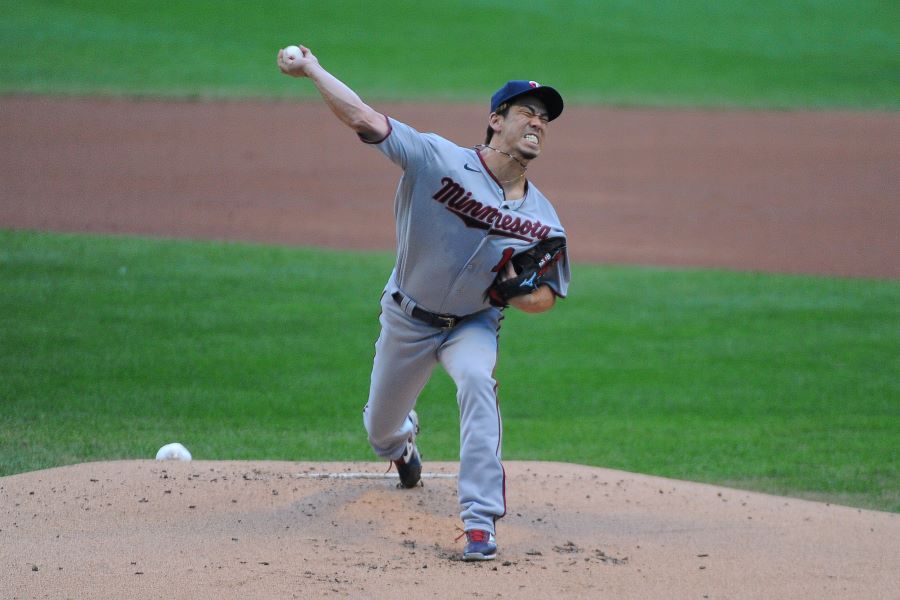 When the Twins traded for Kenta Maeda in February, he looked like an immediate candidate to become the ace of their rotation. Just a handful of starts into his Minnesota career, that seems to have come to fruition. His near-no-hitter on Tuesday night was just another chapter in a fascinating reinvention, by a pitcher who manifestly did not need to reinvent himself. As I chronicled in February, Maeda was a stud for the Dodgers over the four seasons prior to this trade. His contract and the Los Angeles depth chart dictated annual mid-stream role changes, as he would slide from the starting rotation to the bullpen, but he flashed the ability to be a dominant, front-of-the-rotation starter throughout that period. Yet, it’s clear that the Twins saw some things Maeda could still do to take another step forward, and that Maeda was eager to explore his full potential, rather than operating within the framework of the Dodgers’ needs and preferences. As I said on last night’s Postgame Pint, there were adjustments of which Maeda was obviously capable, but which the Dodgers just never needed him to make. He threw a cutter in 2016 and 2017 that Los Angeles encouraged him to abandon thereafter, because it was only eating into his effectiveness as a two- or three-pitch short reliever and semi-starter. Let’s talk about how the Twins and Maeda worked together to unlock the potential for dominance that the Dodgers left untapped, out of a lack of necessity for it. Here’s Maeda’s horizontal movement profile, over time—in other words, the amount of lateral movement on each of his pitches. Notice that Maeda’s curveball, this year, has lost the big lateral sweep it had in previous seasons, until it fits into the same lane as his slider. In fact, the curve has also been an average of about two miles per hour harder this year. What’s really happened is, Maeda has stopped throwing a pure curveball. The pitch now occasionally registering as a curve is really one of his many sliders (more on that shortly), thrown from a higher arm slot, giving the pitch a more vertical shape than its fellows. Notice, too, that there’s considerable lateral separation between Maeda’s cutter (again, we’ll come back to that pitch) and his four-seamer (accentuated by slightly more armside run on the four-seamer this year), between the four-seamer and the changeup, between the four-seamer and the sinker, and even between the changeup and the sinker. Few pitchers enjoy that last characteristic. In fact, if a guy’s sinker and changeup don’t have virtually identical horizontal movement, the changeup will usually be the one with more run. We’ll talk more about why the reversal there is helpful to Maeda, in a bit. Here’s his vertical movement profile, over time. The cutter’s ability to consistently ride higher than the slider, of which it is just a modified version itself, is crucial. It gives Maeda two pitches (the sinker and the cutter) that move in disparate lateral directions, but work on the same plane, making them hard to read for left-handed hitters. If they read the spin on the cutter, they’re still not getting much help, because they have the unenviable job of distinguishing that pitch from the true slider. Maeda’s changeup has significantly more depth than it’s had in the past, which is a game-changing development, as we’ve seen. His split-fingered grip on the pitch is the kind that generates more depth and less lateral movement, but he’s used that grip in the past, so the improvement isn’t attributable to that kind of change. Rather, it seems as though Maeda is throwing the pitch with more conviction, using the same arm speed but getting on top of the ball a hair better, and that’s giving it some extra tumble, without steering it out of the horizontal lane in which he wants it or giving it away to the hitter out of his hand. With all of these unique things going for him, Maeda can be more adventurous and aggressive with his pitch mixing than he ever was in LA. Here’s how his pitch usage has changed, against right-handed batters, over time. Right away, the Twins (while keeping his excellent slider at the head of his repertoire) helped Maeda expand his usage of his lesser weapons. Good horizontal movement can fool same-handed batters very effectively, and Maeda has that, with the sinker having enough separation from the fastball to work as a distinct offering. Because Maeda also throws the slider and changeup at similar speeds, he can use them off of one another as well, just on a movement basis. Batters have to beware of both changing speeds and changing locations, and when Maeda is willing to go to all four of these pitches, his opponents end up in a very defensive mindset at the plate. Here’s how Maeda’s usage has changed over time, against lefties. This makes for the most dramatic visual yet. Against left-handed batters, Maeda is now a full-fledged six-pitch pitcher, and opponents have no chance to sit on anything truly hittable. By ramping up his slider usage against lefties, Maeda has forced them to look inside more often, and it’s gotten him called strikes and bad swings with fastballs and changeups on the outer edge. When a lefty does start to look away, the cutter comes in and breaks his bat or forces a pop-up. (Maeda is throwing the cutter at the same average height as his four-seamer, against lefties, so whether they’re seeing a fat, hanging slider or an elevated fastball over the middle of the plate, they’re ending up with a pitch they can’t handle.) As recently as 2017, he was using all six of these pitches, but lefties hit him well that year, and the Dodgers encouraged him to shelve the sinker and cutter. That, as it turns out, wasn’t why he was struggling against lefties. The key has been becoming primarily a changeup-and-slider pitcher against them. To see some of the granular ways in which Maeda’s changed his approach, let’s look at last year’s pitch usage against each species of batter, broken down by count. Against lefties, Maeda mainly threw four-seamers and curves on the first pitch, trying to steal strikes and get into a count where he could throw them a changeup. Breaking pitches were mostly backdoored, with the idea of getting a called strike to set up the change. It’s fair to say that, in 2019, Maeda felt he had just one out pitch against lefties. Against righties, he was even simpler in his approach, though harder to hit. He still went to the changeup occasionally when well ahead in the count, but for the most part, he fed right-handers a steady, balanced diet of fastballs and sliders, with the blend shifting toward sliders as he got ahead in the count. Hitters still had to deal with two pretty impressive pitches, especially when Maeda was working in relief and boasted high-spin, mid-90s heat, but they didn’t have to have many intricacies in mind. Here’s the same chart for 2020. On the first pitch, batters still tend to see something hard, but they can no longer count on it being the relatively straight four-seamer. Maeda’s comfort sinking the ball, especially early in counts, makes it hard even for hitters who decide to sit dead-red to square anything up. If they don’t make early contact, however, they’re unlikely to see anything straight late in the at-bat. Maeda’s comfort using his slider to get himself out of trouble stands out, as does the roughly mirrored ratio of sliders and changeups in two-strike counts, based on handedness. Lefties are more likely to get changeups. Righties are more likely to get sliders. Yet, neither type of batter can bank on getting either type of pitch. Maeda’s utterly unpredictable. Execution has also been a huge part of his success so far, and Maeda will certainly have stretches (be it this season, in the playoffs, or next year) during which he’s much less able to consistently command all of his offerings. By no means is he solely a product of these tweaks, as his success in Los Angeles attests. However, he’s found another gear, and it’s largely because he and the Twins have been brave enough to take something that wasn’t broken, and fix it.
 -
The Twins’ Silver Slugger-winning catcher is struggling mightily so far in 2020, and the problem might be the very approach on which we all lavish so much praise.According to Baseball Prospectus, Mitch Garver has a 61 DRC+ through the first 30 percent of the Twins’ season. For DRC+, 100 is average, and higher is better. Garver’s award-winning 2019 campaign saw him post a 149 DRC+. Even granting that this is a small sample and a bizarre season, this slump is a red flag for a player who acted as a linchpin to the Bomba Squad last year. If you ask an average Twins fan what they know about Garver, it might be that he hit 31 homers last year, or it might be that he walks to the plate to “Shining Star,” by Earth, Wind & Fire. If you ask an average Twins Daily reader the same, they might mention Garver’s approach. Famously, he waits for his pitch, works for it, and then tries to crush it. He came in for lots of love for that throughout 2019, and with good reason. When that kind of approach is working, it can be a thing of beauty. As it happens, though, the average fan’s observation and the analytically-savvy one share something important: grooviness. There’s no denying that “Shining Star” is a groovy song, but Garver lives deep in the groove even at the plate—as in, he has a grooved swing, and he finds all of his success within it. Download attachment: Garv Slug s. 2019.gif It’s not the case that Garver only hits mistakes. Rather, he tries to use good plate discipline to force pitchers into situations wherein even when they execute a pitch well, he can hit the ball hard. That’s a good approach, when he’s going right. When he’s executing his swing well, that approach will lead to plenty of walks and hard contact, and that will make up for a large number of strikeouts. However, Garver will always strike out, because that approach and that swing are not designed to hit pitches outside the zone, or even in certain areas within the zone. Since the start of last season, 297 batters have amassed at least 300 plate appearances. Among them, Luis Arraez has the highest contact rate when swinging at pitches outside the zone, at 87.9 percent. Garver ranks 279th, at 42.1 percent. That’s a notable number by itself, but we can make it even more telling. Inside the strike zone, Garver’s contact rate since the start of 2019 is 85.2 percent, which is exactly average. As you might guess, it’s unusual to be average in one of these numbers, but extreme in the other. The correlation factor between in- and out-of-zone contact rates in the sample is 0.71, which is very strong. Here are the players with the largest ratios between the two rates. Highest Ratio of In-Zone to Out-of-Zone Contact Rate, 2019-20 (min. 300 PA) Luke Voit 2.63Aaron Judge 2.51Miguel Sanó 2.43Hunter Dozier 2.21Joey Gallo 2.20Chris Taylor 2.04Mitch Garver 2.02Jorge Soler 2.02Chris Davis 2.01Adalberto Mondesi 1.98Fernando Tatis, Jr. 1.97Brandon Lowe 1.97Michael Chavis 1.97Tim Beckham 1.96Kole Calhoun 1.94Right away, you can see the type of hitter who can make this profile work, and some of the ones who can’t. Any ratio higher than 2.1-to-1 is reserved for the game’s truly elite power hitters—the guys who produce the highest average exit velocities and most home runs, and freely trade contact for the ability to do so.The tier just below them, however, is almost as homogenous, but more interesting. Soler and Garver have obvious similarities: Soler was as selective and ruthless last year as Garver was. However, Taylor is a hitter of very different physical stature, with a different plan at the plate. Mondesi and Tatis are comparatively free swingers. Even within the group, Garver belongs to a select company. The only hitter in the set who has made contact on a higher percentage of swings within the zone than Garver is Dozier. No one on the list has swung at a lower percentage of pitches outside the zone, so in that way, Garver’s creating fewer whiffs that most of the others on this list. The ratio of his swing rate within the zone to the same outside the zone is seventh-highest in baseball, and the highest in this group of 15. That, though, might be part of the problem. Garver might be so patient as to interfere with his own consistency at the plate. Because he swings so little, even within the zone, pitchers can too easily get ahead of him in the count. Because he shrinks his zone to certain parts of the actual strike zone in most situations, he can be pitched too safely in other areas of the zone. Contrast him with Tatis, who is also right-handed, has all-fields power, shows good plate discipline, and has a nearly identical ratio of in-zone to out-of-zone contact rates. Garver swings at just over 53 percent of pitches within the zone. Tatis swings at 70 percent of such pitches. His swing, like Garver’s, has holes, and pitchers have found them at times. However, even when he’s not fully locked in, Tatis can be lethal to opposing pitchers. His aggressiveness lowers his risk of getting into deep counts, where his lowish contact rate becomes a real liability, and allows him to tap fully into his power. For Garver, the approach that brought him such success in 2019 was the result of years of professional evolution, of becoming a more complete and intelligent hitter. If a radically simpler, more primal approach were viable for him, he probably would have found it sooner. It’s unlikely that he can simply flip a mental switch and become a clone of Tatis at the plate, and of course, Tatis’s superior athleticism allows him to do some things Garver couldn’t do even if he perfectly matched that approach. Still, there’s always another difficult adjustment ahead for a big-league hitter, and for Garver, the tricky thing will be threading the needle between getting his pitch every time and not letting it go by when it comes—even if that means widening his definition of what ‘his pitch’ is. MORE FROM TWINS DAILY — Latest Twins coverage from our writers — Recent Twins discussion in our forums — Follow Twins Daily via Twitter, Facebook or email Click here to view the article
-
 According to Baseball Prospectus, Mitch Garver has a 61 DRC+ through the first 30 percent of the Twins’ season. For DRC+, 100 is average, and higher is better. Garver’s award-winning 2019 campaign saw him post a 149 DRC+. Even granting that this is a small sample and a bizarre season, this slump is a red flag for a player who acted as a linchpin to the Bomba Squad last year. If you ask an average Twins fan what they know about Garver, it might be that he hit 31 homers last year, or it might be that he walks to the plate to “Shining Star,” by Earth, Wind & Fire. If you ask an average Twins Daily reader the same, they might mention Garver’s approach. Famously, he waits for his pitch, works for it, and then tries to crush it. He came in for lots of love for that throughout 2019, and with good reason. When that kind of approach is working, it can be a thing of beauty. As it happens, though, the average fan’s observation and the analytically-savvy one share something important: grooviness. There’s no denying that “Shining Star” is a groovy song, but Garver lives deep in the groove even at the plate—as in, he has a grooved swing, and he finds all of his success within it. It’s not the case that Garver only hits mistakes. Rather, he tries to use good plate discipline to force pitchers into situations wherein even when they execute a pitch well, he can hit the ball hard. That’s a good approach, when he’s going right. When he’s executing his swing well, that approach will lead to plenty of walks and hard contact, and that will make up for a large number of strikeouts. However, Garver will always strike out, because that approach and that swing are not designed to hit pitches outside the zone, or even in certain areas within the zone. Since the start of last season, 297 batters have amassed at least 300 plate appearances. Among them, Luis Arraez has the highest contact rate when swinging at pitches outside the zone, at 87.9 percent. Garver ranks 279th, at 42.1 percent. That’s a notable number by itself, but we can make it even more telling. Inside the strike zone, Garver’s contact rate since the start of 2019 is 85.2 percent, which is exactly average. As you might guess, it’s unusual to be average in one of these numbers, but extreme in the other. The correlation factor between in- and out-of-zone contact rates in the sample is 0.71, which is very strong. Here are the players with the largest ratios between the two rates. Highest Ratio of In-Zone to Out-of-Zone Contact Rate, 2019-20 (min. 300 PA) Luke Voit 2.63 Aaron Judge 2.51 Miguel Sanó 2.43 Hunter Dozier 2.21 Joey Gallo 2.20 Chris Taylor 2.04 Mitch Garver 2.02 Jorge Soler 2.02 Chris Davis 2.01 Adalberto Mondesi 1.98 Fernando Tatis, Jr. 1.97 Brandon Lowe 1.97 Michael Chavis 1.97 Tim Beckham 1.96 Kole Calhoun 1.94 Right away, you can see the type of hitter who can make this profile work, and some of the ones who can’t. Any ratio higher than 2.1-to-1 is reserved for the game’s truly elite power hitters—the guys who produce the highest average exit velocities and most home runs, and freely trade contact for the ability to do so. The tier just below them, however, is almost as homogenous, but more interesting. Soler and Garver have obvious similarities: Soler was as selective and ruthless last year as Garver was. However, Taylor is a hitter of very different physical stature, with a different plan at the plate. Mondesi and Tatis are comparatively free swingers. Even within the group, Garver belongs to a select company. The only hitter in the set who has made contact on a higher percentage of swings within the zone than Garver is Dozier. No one on the list has swung at a lower percentage of pitches outside the zone, so in that way, Garver’s creating fewer whiffs that most of the others on this list. The ratio of his swing rate within the zone to the same outside the zone is seventh-highest in baseball, and the highest in this group of 15. That, though, might be part of the problem. Garver might be so patient as to interfere with his own consistency at the plate. Because he swings so little, even within the zone, pitchers can too easily get ahead of him in the count. Because he shrinks his zone to certain parts of the actual strike zone in most situations, he can be pitched too safely in other areas of the zone. Contrast him with Tatis, who is also right-handed, has all-fields power, shows good plate discipline, and has a nearly identical ratio of in-zone to out-of-zone contact rates. Garver swings at just over 53 percent of pitches within the zone. Tatis swings at 70 percent of such pitches. His swing, like Garver’s, has holes, and pitchers have found them at times. However, even when he’s not fully locked in, Tatis can be lethal to opposing pitchers. His aggressiveness lowers his risk of getting into deep counts, where his lowish contact rate becomes a real liability, and allows him to tap fully into his power. For Garver, the approach that brought him such success in 2019 was the result of years of professional evolution, of becoming a more complete and intelligent hitter. If a radically simpler, more primal approach were viable for him, he probably would have found it sooner. It’s unlikely that he can simply flip a mental switch and become a clone of Tatis at the plate, and of course, Tatis’s superior athleticism allows him to do some things Garver couldn’t do even if he perfectly matched that approach. Still, there’s always another difficult adjustment ahead for a big-league hitter, and for Garver, the tricky thing will be threading the needle between getting his pitch every time and not letting it go by when it comes—even if that means widening his definition of what ‘his pitch’ is. MORE FROM TWINS DAILY — Latest Twins coverage from our writers — Recent Twins discussion in our forums — Follow Twins Daily via Twitter, Facebook or email
 -
The Twins’ ace hasn’t been one through the first quarter of this 60-game season, and that’s hurt within and between his starts. His hard stuff, in particular, is failing him.José Berríos defies the modern trend among the best pitchers in the big leagues. As the league throws ever fewer sinkers and favors the four-seam fastball more strongly than it has in 50 years, Berríos has remained committed to throwing both the four-seamer and the sinker. Indeed, the sinker is an important part of his repertoire. Unfortunately, right now, it’s a pitch on which he can’t rely at all, and his four-seamer is little better. On Monday, Parker Hageman wrote a great post about Berríos creating more velocity, a project that has been ongoing for the pitcher and coach Wes Johnson since before 2019. Parker broke down Berríos’s mechanics in granular detail, and even mentioned drills that promote the kind of power the hurler has found this year. Yet, Parker also touched on the ugly numbers attached to Berríos’s fastball and his sinker thus far this year, and we should dig deeper into them, because there’s reason to believe that power just isn’t the key to success for Berríos. His efforts to throw 96 or 97 miles per hour might be doing more harm than good. So far this season, most of Berríos’s fastballs have fallen between 93 and 95 miles per hour. Let’s look at his results on those, and on heaters (for these purposes, the sinker and the four-seamer go together) at higher and lower velocities. Download attachment: Berrios.png It’s true that, when he throws harder, Berríos is able to miss bats with his hard stuff, which isn’t true in the lower velocity band where he spent much of last season. The problem is especially pronounced on his sinker, which he throws about 1.0 miles per hour less hard than the four-seamer: his whiff rate on that pitch is currently at a career-low 10.8 percent of all swings against it. However, opponents have been better able to elevate against him when he throws harder, and they’re hitting the ball harder, too. The league has just a .200 slugging average when Berríos throws less than 93, but a 1.500 mark when he cranks it up past 95. Parker isn’t wrong to observe that opening his hips a hair earlier has allowed Berríos to generate more power. However, that tweak might be causing two problems, while solving just one. Berríos is clearly fighting to command both variations of the fastball, and the more explosive delivery he’s using this year is a culprit in that. He’s sometimes late, and therefore, missing up and to the arm side. He’s sometimes overcorrecting for that, feeling the earlier release of his hips, hurrying his release, and missing down and to the glove side. The other problem this adjustment might be creating is harder to see, from a center-field camera, but the hitters are doing all they can to tell us that it’s there: Berríos has lost some of the deception he got from striding across his body and staying closed so long last year. Parker rightly wrote that that mechanical signature led to throwing around his front side, costing him power, and I wrote about the barriers to long-term success with such an unorthodox delivery this spring. On the other hand, there are clear advantages to that delivery, and deception is at the top of the list. Hitters who pick up the ball later in a pitcher’s delivery make weaker contact, when they make contact at all, because they’re a bit later getting their barrel to the hitting zone. Sheer power can make up for a loss of deception, especially if one has a good, riding four-seamer, but Berríos’s arm slot has always allowed him to create more lateral than vertical movement, and again, the sinker is an important piece of the puzzle for him. If batters are getting an earlier and more confident look at Berríos as he delivers, they’re gaining a bigger advantage than he’s gaining by throwing harder. Their bats, which might normally meet the ball at the end or the handle, especially on a good sinker, are meeting it at the barrel this year, and it’s not just bad luck. Maybe there’s another adjustment Berríos can make to unlock ace-caliber stuff and command in tandem, but in the meantime, throwing harder has made him worse, and the Twins are without a true top-of-the-rotation starter. Click here to view the article
-
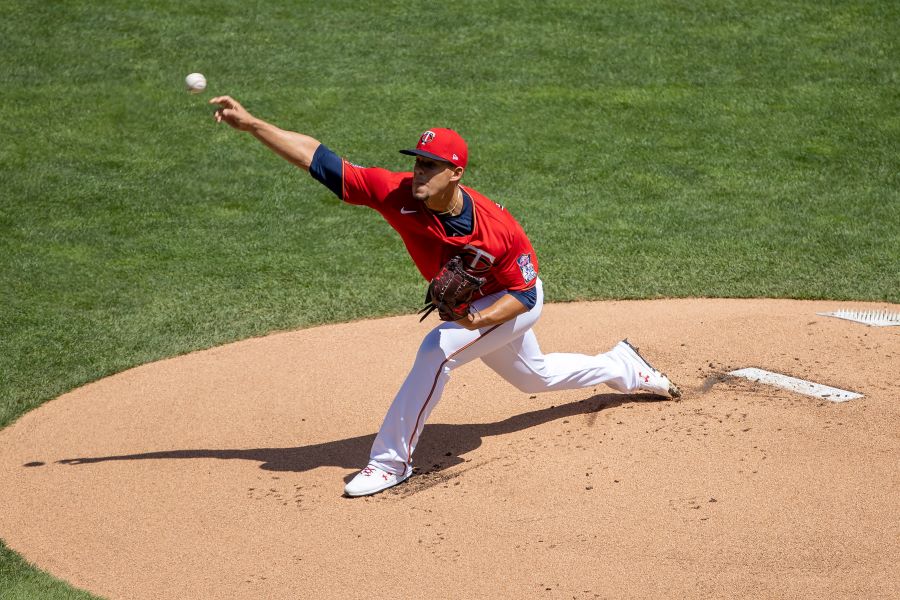 José Berríos defies the modern trend among the best pitchers in the big leagues. As the league throws ever fewer sinkers and favors the four-seam fastball more strongly than it has in 50 years, Berríos has remained committed to throwing both the four-seamer and the sinker. Indeed, the sinker is an important part of his repertoire. Unfortunately, right now, it’s a pitch on which he can’t rely at all, and his four-seamer is little better. On Monday, Parker Hageman wrote a great post about Berríos creating more velocity, a project that has been ongoing for the pitcher and coach Wes Johnson since before 2019. Parker broke down Berríos’s mechanics in granular detail, and even mentioned drills that promote the kind of power the hurler has found this year. Yet, Parker also touched on the ugly numbers attached to Berríos’s fastball and his sinker thus far this year, and we should dig deeper into them, because there’s reason to believe that power just isn’t the key to success for Berríos. His efforts to throw 96 or 97 miles per hour might be doing more harm than good. So far this season, most of Berríos’s fastballs have fallen between 93 and 95 miles per hour. Let’s look at his results on those, and on heaters (for these purposes, the sinker and the four-seamer go together) at higher and lower velocities. It’s true that, when he throws harder, Berríos is able to miss bats with his hard stuff, which isn’t true in the lower velocity band where he spent much of last season. The problem is especially pronounced on his sinker, which he throws about 1.0 miles per hour less hard than the four-seamer: his whiff rate on that pitch is currently at a career-low 10.8 percent of all swings against it. However, opponents have been better able to elevate against him when he throws harder, and they’re hitting the ball harder, too. The league has just a .200 slugging average when Berríos throws less than 93, but a 1.500 mark when he cranks it up past 95. Parker isn’t wrong to observe that opening his hips a hair earlier has allowed Berríos to generate more power. However, that tweak might be causing two problems, while solving just one. Berríos is clearly fighting to command both variations of the fastball, and the more explosive delivery he’s using this year is a culprit in that. He’s sometimes late, and therefore, missing up and to the arm side. He’s sometimes overcorrecting for that, feeling the earlier release of his hips, hurrying his release, and missing down and to the glove side. The other problem this adjustment might be creating is harder to see, from a center-field camera, but the hitters are doing all they can to tell us that it’s there: Berríos has lost some of the deception he got from striding across his body and staying closed so long last year. Parker rightly wrote that that mechanical signature led to throwing around his front side, costing him power, and I wrote about the barriers to long-term success with such an unorthodox delivery this spring. On the other hand, there are clear advantages to that delivery, and deception is at the top of the list. Hitters who pick up the ball later in a pitcher’s delivery make weaker contact, when they make contact at all, because they’re a bit later getting their barrel to the hitting zone. Sheer power can make up for a loss of deception, especially if one has a good, riding four-seamer, but Berríos’s arm slot has always allowed him to create more lateral than vertical movement, and again, the sinker is an important piece of the puzzle for him. If batters are getting an earlier and more confident look at Berríos as he delivers, they’re gaining a bigger advantage than he’s gaining by throwing harder. Their bats, which might normally meet the ball at the end or the handle, especially on a good sinker, are meeting it at the barrel this year, and it’s not just bad luck. Maybe there’s another adjustment Berríos can make to unlock ace-caliber stuff and command in tandem, but in the meantime, throwing harder has made him worse, and the Twins are without a true top-of-the-rotation starter.
 -
An early-offseason, low-level acquisition that barely moved anyone’s needle, the slider specialist is now another monster in a Twins bullpen full of them.When the Twins snapped up Matt Wisler as a free agent back in November, there was little thought that he would become an important high-leverage arm for them. In fact, if spring training had gone according to plan and everyone had stayed healthy, Wisler might well have been squeezed out of the picture before he even appeared for the Twins. He could easily be elsewhere right now, trying to make things work with a sixth team in three seasons. Instead, Wisler has pitched six scoreless innings already for the mighty Minnesota relief corps. He’s fanned nine of the 23 batters he’s faced, and he’s only allowed six total baserunners. Coming in, we knew he was a slider monster, but his track record suggested he would struggle to convert that into elite strikeout rates, let alone to manage contact and attack the zone well enough to dominate. The Twins’ vaunted pitching development machine has gotten ahold of him, though, and Wisler has made changes that give him a great chance to remain a top-tier right-handed reliever. As recently as early 2018, Wisler was a 25-year-old starter whose stuff and prospect cachet still tantalized both the Braves and other interested teams. After he was dealt to the Reds, he finally moved to the bullpen, but neither the Reds nor the Padres (to where he returned, after they’d drafted him in 2011 and traded him to Atlanta in the Craig Kimbrel deal in April 2015) could help him tap fully into his potential for missing bats and keeping the ball in the park. Both teams did help him, though, because as he got comfortable in a relief role, he started throwing his slider much, much more often. That pitch is his ticket to success in the big leagues, and throwing it well over 50 percent of the time is his only chance to be more than a fringe arm. After the Mariners purchased his contract in mid-2019, he took another small step forward, fanning 29 of the 95 batters he faced for Seattle. He also brought his walk rate down. However, he continued to give up way too many homers, and his ERA ballooned to over 6.00. That’s why he was freely available when the Twins called in November. Let’s talk about where that vulnerability came from, and how he’s worked to address it. Since moving to relief, Wisler has eliminated his windup, working out of the stretch with or without runners on base. In the past, his delivery was very quick, and often, it was hurried. He had a modified slide step, a low leg kick designed to shorten his time to home plate and control the running game, but it had knock-on effects. He would break his hands almost as soon as he lifted his leg, and before sinking into his legs, he would already be moving down the mound. He could sometimes get away with this, especially while he was younger and his arm was a bit faster, because he has a very short-arm action early in his delivery, keeping the ball fairly close to his body and his arm bent. At release, Wisler has considerable spine tilt, artificially raising his release point and arm angle but forcing him to fall off toward the first-base side of home plate. His stride pattern is fairly open, meaning that as he comes down the mound, his momentum carries him toward the first-base dugout anyway. (The spine tilt and stride pattern haven’t changed in Minnesota.) In combination with the early hand-break and rushed leg kick, that progress down the mound often led to Wisler leaving pitches up and in the middle of the strike zone. Here’s Wisler with San Diego, just as he’s begun his delivery. Note that his foot is barely off the ground, but he’s already pulled the ball out of his glove. That front leg is already starting to drift downhill. Download attachment: Wisler 19.PNG He’s a different pitcher, at the beginning of his delivery, in 2020. Here he is at the moment when he breaks his hands. Download attachment: Wisler 20.PNG The leg kick isn’t just higher. It comes with a kind of gathering, balancing tilt, before he shifts into gear and heads down the mound. As he takes the ball out of the glove, his upper body is turned more from home plate, and (because he now has time to) he tucks the ball slightly in toward his rib cage before starting the spiral-staircase arm swing that gets him to his release point. He hides the ball a bit better, but more importantly, he’s giving himself time to get his arm through to his desired release point more consistently. Even as he went slider-heavy in 2019, Wisler threw two variations of his fastball, and he rarely targeted anything more specific than “the strike zone” with it. This year, he’s purely using his slider and four-seamer, and he’s using the heat only high and on the third-base side of the plate, setting up the slider (or, as is often the case, letting the slider set up the heat). Wisler will never be a control artist or a ground-ball guy. If you’re watching him rack up strikeouts and wondering whether that success is sustainable, though, you should lean toward believing in it. The tangible mechanical and mental changes here suggest the Twins went after him for a very specific reason, and that Wisler has put together some of the pieces that refused to gel in his previous stops. Click here to view the article
-
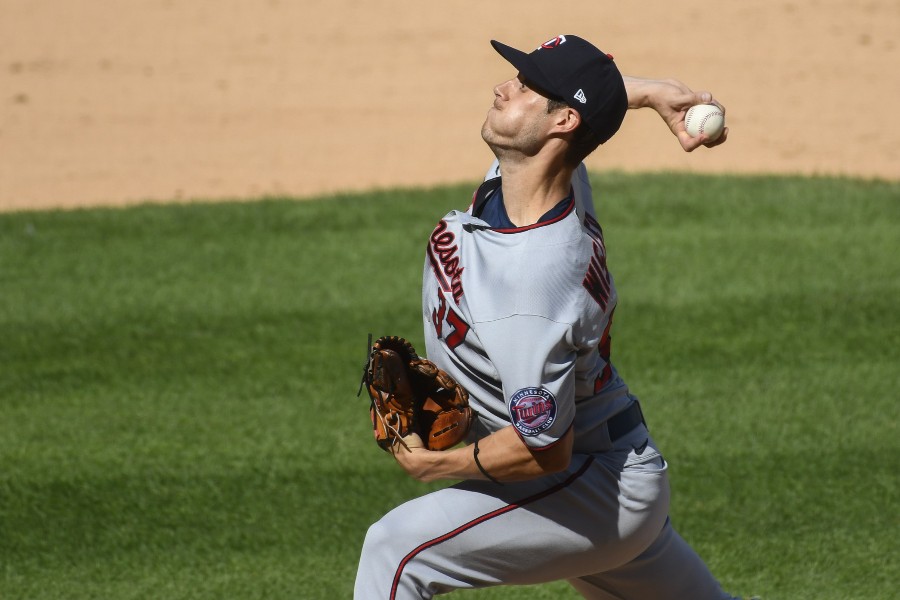 When the Twins snapped up Matt Wisler as a free agent back in November, there was little thought that he would become an important high-leverage arm for them. In fact, if spring training had gone according to plan and everyone had stayed healthy, Wisler might well have been squeezed out of the picture before he even appeared for the Twins. He could easily be elsewhere right now, trying to make things work with a sixth team in three seasons. Instead, Wisler has pitched six scoreless innings already for the mighty Minnesota relief corps. He’s fanned nine of the 23 batters he’s faced, and he’s only allowed six total baserunners. Coming in, we knew he was a slider monster, but his track record suggested he would struggle to convert that into elite strikeout rates, let alone to manage contact and attack the zone well enough to dominate. The Twins’ vaunted pitching development machine has gotten ahold of him, though, and Wisler has made changes that give him a great chance to remain a top-tier right-handed reliever. As recently as early 2018, Wisler was a 25-year-old starter whose stuff and prospect cachet still tantalized both the Braves and other interested teams. After he was dealt to the Reds, he finally moved to the bullpen, but neither the Reds nor the Padres (to where he returned, after they’d drafted him in 2011 and traded him to Atlanta in the Craig Kimbrel deal in April 2015) could help him tap fully into his potential for missing bats and keeping the ball in the park. Both teams did help him, though, because as he got comfortable in a relief role, he started throwing his slider much, much more often. That pitch is his ticket to success in the big leagues, and throwing it well over 50 percent of the time is his only chance to be more than a fringe arm. After the Mariners purchased his contract in mid-2019, he took another small step forward, fanning 29 of the 95 batters he faced for Seattle. He also brought his walk rate down. However, he continued to give up way too many homers, and his ERA ballooned to over 6.00. That’s why he was freely available when the Twins called in November. Let’s talk about where that vulnerability came from, and how he’s worked to address it. Since moving to relief, Wisler has eliminated his windup, working out of the stretch with or without runners on base. In the past, his delivery was very quick, and often, it was hurried. He had a modified slide step, a low leg kick designed to shorten his time to home plate and control the running game, but it had knock-on effects. He would break his hands almost as soon as he lifted his leg, and before sinking into his legs, he would already be moving down the mound. He could sometimes get away with this, especially while he was younger and his arm was a bit faster, because he has a very short-arm action early in his delivery, keeping the ball fairly close to his body and his arm bent. At release, Wisler has considerable spine tilt, artificially raising his release point and arm angle but forcing him to fall off toward the first-base side of home plate. His stride pattern is fairly open, meaning that as he comes down the mound, his momentum carries him toward the first-base dugout anyway. (The spine tilt and stride pattern haven’t changed in Minnesota.) In combination with the early hand-break and rushed leg kick, that progress down the mound often led to Wisler leaving pitches up and in the middle of the strike zone. Here’s Wisler with San Diego, just as he’s begun his delivery. Note that his foot is barely off the ground, but he’s already pulled the ball out of his glove. That front leg is already starting to drift downhill. He’s a different pitcher, at the beginning of his delivery, in 2020. Here he is at the moment when he breaks his hands. The leg kick isn’t just higher. It comes with a kind of gathering, balancing tilt, before he shifts into gear and heads down the mound. As he takes the ball out of the glove, his upper body is turned more from home plate, and (because he now has time to) he tucks the ball slightly in toward his rib cage before starting the spiral-staircase arm swing that gets him to his release point. He hides the ball a bit better, but more importantly, he’s giving himself time to get his arm through to his desired release point more consistently. Even as he went slider-heavy in 2019, Wisler threw two variations of his fastball, and he rarely targeted anything more specific than “the strike zone” with it. This year, he’s purely using his slider and four-seamer, and he’s using the heat only high and on the third-base side of the plate, setting up the slider (or, as is often the case, letting the slider set up the heat). Wisler will never be a control artist or a ground-ball guy. If you’re watching him rack up strikeouts and wondering whether that success is sustainable, though, you should lean toward believing in it. The tangible mechanical and mental changes here suggest the Twins went after him for a very specific reason, and that Wisler has put together some of the pieces that refused to gel in his previous stops.
 -
Byron Buxton has the kind of athleticism that makes everything seem possible. To stay healthy, though, he’s had to concede some things.The Twins’ center fielder has a multi-faceted strategy for avoiding the shoulder-subluxing, skull-scrambling wall collisions that have plagued him recently. The numbers show how he’s dramatically changed his defensive positioning to minimize those risks. Now, the question will be how much he can change his actions, without losing the adventurousness that helped make him an elite defender. There was a particular fly ball in Saturday night’s game against Cleveland on which Buxton’s chief adjustment was thrown into sharp relief. Franmil Reyes tagged a Kenta Maeda slider to dead center field, hit at 100.3 miles per hour. It flew 396 feet, but Buxton caught it easily. Here’s how Statcast mapped the play: Download attachment: Reyes to Buxton.PNG Obviously, Reyes has great power, so Buxton was playing deep against him anyway. Still, the positioning that made that an easy play has been a hallmark of Buxton’s approach to his defense all season. Here are his average starting depths for each season of his career. Byron Buxton, Average Starting Distance, 2015-20 Season Distance 2015 310 2016 313 2017 314 2018 314 2019 321 2020 334 In order to make going back on deep fly balls less threatening to his health (and, for that matter, to the structural integrity of outfield walls throughout the big leagues), Buxton has moved a full two dozen feet deeper (on average) than he played as a rookie. He began to make the adjustment last year, but as you can see, he’s gone from adjusting to fully reimagining his own position in 2020. The only center fielder who plays deeper than Buxton, on average, is Atlanta’s Ender Inciarte. This is in keeping with league-wide trends, at a collective level, even if it’s a bit unorthodox at an individual one. The fastest center fielders in the game still tend to play shallower than slower ones, and Buxton’s move certainly bucks that notion, but in general, the league has steadily been nudging its outfielders further out for at least half a decade. Anecdotally, it seems to have been going on longer than that. Some of the change, to be sure, is a response to the highly aerodynamic baseball, and to the profusion of power across all teams and positions. There are very few hitters left in the majors who can’t hit the ball 375 or 400 feet often enough to justify a respectful outfield depth. However, teams have also used Statcast data to better understand defense itself, and they’ve realized that playing outfielders shallow rarely steals enough bloop singles to make up for the extra doubles and triples that can happen on deep flies and line drives to the gaps. Outfielders who play deeper usually make more plays, prevent opponents from taking extra bases better, and stay healthier. If the Derek Falvey-Thad Levine regime has one trademark, it’s that in every season since they’ve arrived in Minnesota, the team has found a new way to get better, or has doubled down on some previous area of improvement. They never call any aspect of their organization good enough, and stop trying to improve it. They never make half the necessary changes, hit a wall, and stop. The Twins are a franchise dedicated to the growth mindset. They don’t ask whether they’ve made adequate progress, but rather, what progress might still reasonably be made. Keeping Buxton healthy is one area in which they still had room to make progress. Now, they (and Buxton himself) have done just about all they can do. Click here to view the article
-
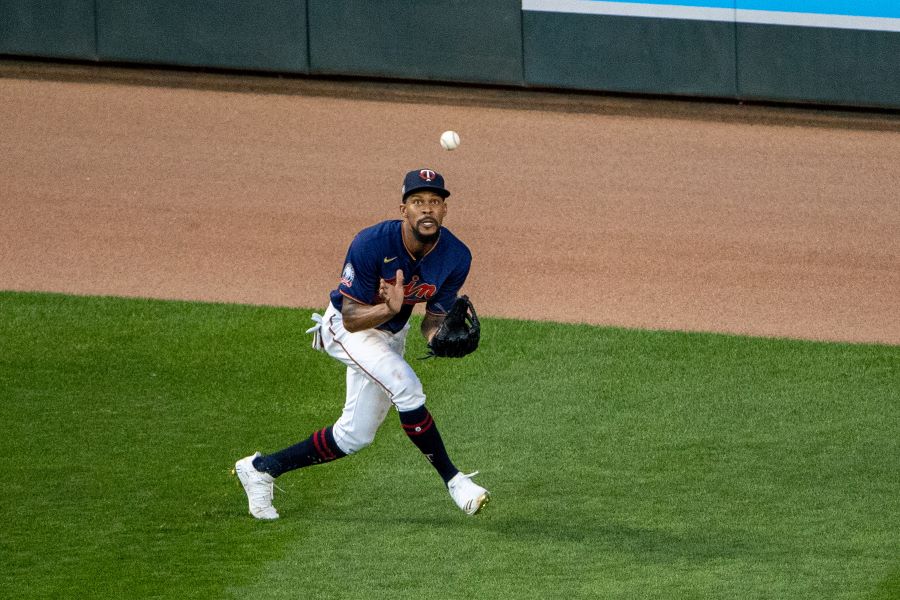 The Twins’ center fielder has a multi-faceted strategy for avoiding the shoulder-subluxing, skull-scrambling wall collisions that have plagued him recently. The numbers show how he’s dramatically changed his defensive positioning to minimize those risks. Now, the question will be how much he can change his actions, without losing the adventurousness that helped make him an elite defender. There was a particular fly ball in Saturday night’s game against Cleveland on which Buxton’s chief adjustment was thrown into sharp relief. Franmil Reyes tagged a Kenta Maeda slider to dead center field, hit at 100.3 miles per hour. It flew 396 feet, but Buxton caught it easily. Here’s how Statcast mapped the play: Obviously, Reyes has great power, so Buxton was playing deep against him anyway. Still, the positioning that made that an easy play has been a hallmark of Buxton’s approach to his defense all season. Here are his average starting depths for each season of his career. Byron Buxton, Average Starting Distance, 2015-20 Season Distance 2015 310 2016 313 2017 314 2018 314 2019 321 2020 334 In order to make going back on deep fly balls less threatening to his health (and, for that matter, to the structural integrity of outfield walls throughout the big leagues), Buxton has moved a full two dozen feet deeper (on average) than he played as a rookie. He began to make the adjustment last year, but as you can see, he’s gone from adjusting to fully reimagining his own position in 2020. The only center fielder who plays deeper than Buxton, on average, is Atlanta’s Ender Inciarte. This is in keeping with league-wide trends, at a collective level, even if it’s a bit unorthodox at an individual one. The fastest center fielders in the game still tend to play shallower than slower ones, and Buxton’s move certainly bucks that notion, but in general, the league has steadily been nudging its outfielders further out for at least half a decade. Anecdotally, it seems to have been going on longer than that. Some of the change, to be sure, is a response to the highly aerodynamic baseball, and to the profusion of power across all teams and positions. There are very few hitters left in the majors who can’t hit the ball 375 or 400 feet often enough to justify a respectful outfield depth. However, teams have also used Statcast data to better understand defense itself, and they’ve realized that playing outfielders shallow rarely steals enough bloop singles to make up for the extra doubles and triples that can happen on deep flies and line drives to the gaps. Outfielders who play deeper usually make more plays, prevent opponents from taking extra bases better, and stay healthier. If the Derek Falvey-Thad Levine regime has one trademark, it’s that in every season since they’ve arrived in Minnesota, the team has found a new way to get better, or has doubled down on some previous area of improvement. They never call any aspect of their organization good enough, and stop trying to improve it. They never make half the necessary changes, hit a wall, and stop. The Twins are a franchise dedicated to the growth mindset. They don’t ask whether they’ve made adequate progress, but rather, what progress might still reasonably be made. Keeping Buxton healthy is one area in which they still had room to make progress. Now, they (and Buxton himself) have done just about all they can do.
 -
The Twins’ co-setup man is an obsessive tinkerer. That label is often unwelcome for a pitcher, but in the age of big data and with the kind of arm Trevor May has, it’s a good thing.May has always been a cerebral hurler, as interested in the craft and the theory of pitching as in the sheer force of his fastball or the filthiness of his changeup. Through a career interrupted repeatedly by injuries, May fought to find the best possible blend of pitches to suit his talents, including his body. It was well-intentioned, but like former teammate Phil Hughes, May sometimes got criticized for spending too much time making changes and too little time perfecting what he already did. Like Hughes, though, May was undeterred by outside opinions. Last spring, he made a potentially big realization: his high arm slot didn’t need to stop him from throwing an effective slider. Long a fastball-changeup guy in a perpetual search for a more workable breaking ball, May ditched the cutter-style slider he had previously tried, opting instead for a harder variant of his curveball. He achieved more depth with the pitch, increased its spin rate, and knew he had the makings of an important fix. However, as May reflected at the time, the change had little immediate utility, because he lacked the command to maximize it. He could throw the “ball-to-strike” version of the pitch, dropping it into the zone for called strikes when batters weren’t expecting it, and he could bury it in the dirt to induce chases from extremely anxious hitters when ahead in the count, but he didn’t develop feel for the “strike-to-ball” version of the pitch—the one hitters would see as a fastball with plenty of the zone out of the hand, only to dip toward their ankles and miss their bats. That’s why, late last season, May put his breaking ball project on the shelf and threw his fastball at a career-high frequency, dominating with sheer power. In the long run, though, it was clear he would need to make another adjustment in order to take the next step toward becoming a true relief ace. (The secret is, even for pitchers who don’t realize it, the need for another adjustment is always right around the corner.) Through two appearances, it’s already clear that the tinkerer has been tinkering again, and that he’s done his homework. May’s slider has now wholly replaced his curveball, at least so far, and it’s for the best. The slider he’s throwing now has the best of his last two versions: it’s about two miles per hour harder than it was last season, but still has the vertical movement he found after making the grip change. More importantly, though, he has full command of this version. He threw the “strike-to-ball” slider a handful of times against St. Louis Tuesday night, leading to two of his strikeouts. Download attachment: Animated GIF-downsized_large.gif May’s changeup is also back in the mix, more than it had been late in 2019. He’s throwing it without the armside run that allowed hitters to differentiate it from his fastball, and thus, he’s fooling them better even without a big movement differential. If he can continue using both the slider and the changeup as this season progresses, May will hit free agency as a full-fledged relief ace with big earning potential, and the Twins will have a pitcher finally comfortable enough with his full arsenal to stop tinkering. MORE FROM TWINS DAILY — Latest Twins coverage from our writers — Recent Twins discussion in our forums — Follow Twins Daily via Twitter, Facebook or email Click here to view the article
-
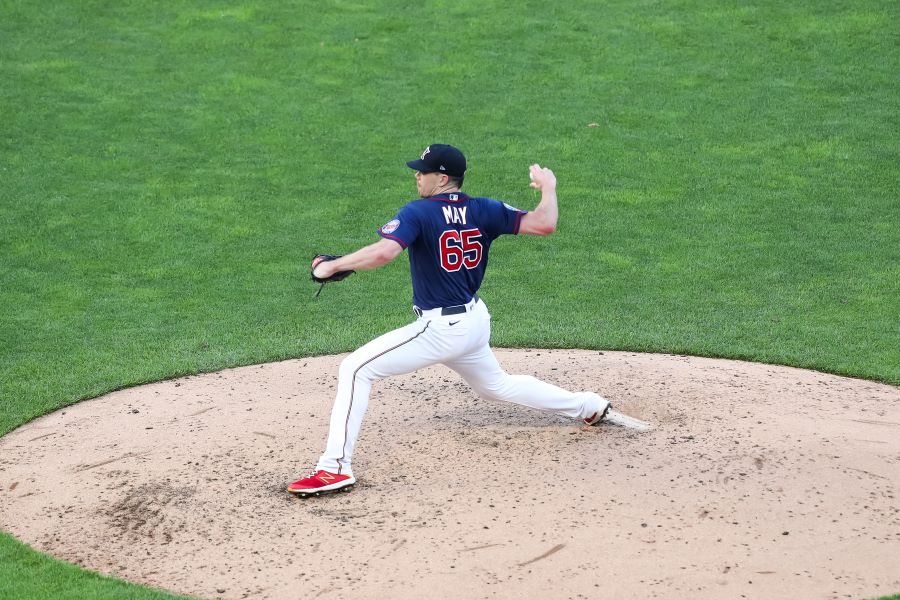 May has always been a cerebral hurler, as interested in the craft and the theory of pitching as in the sheer force of his fastball or the filthiness of his changeup. Through a career interrupted repeatedly by injuries, May fought to find the best possible blend of pitches to suit his talents, including his body. It was well-intentioned, but like former teammate Phil Hughes, May sometimes got criticized for spending too much time making changes and too little time perfecting what he already did. Like Hughes, though, May was undeterred by outside opinions. Last spring, he made a potentially big realization: his high arm slot didn’t need to stop him from throwing an effective slider. Long a fastball-changeup guy in a perpetual search for a more workable breaking ball, May ditched the cutter-style slider he had previously tried, opting instead for a harder variant of his curveball. He achieved more depth with the pitch, increased its spin rate, and knew he had the makings of an important fix. However, as May reflected at the time, the change had little immediate utility, because he lacked the command to maximize it. He could throw the “ball-to-strike” version of the pitch, dropping it into the zone for called strikes when batters weren’t expecting it, and he could bury it in the dirt to induce chases from extremely anxious hitters when ahead in the count, but he didn’t develop feel for the “strike-to-ball” version of the pitch—the one hitters would see as a fastball with plenty of the zone out of the hand, only to dip toward their ankles and miss their bats. That’s why, late last season, May put his breaking ball project on the shelf and threw his fastball at a career-high frequency, dominating with sheer power. In the long run, though, it was clear he would need to make another adjustment in order to take the next step toward becoming a true relief ace. (The secret is, even for pitchers who don’t realize it, the need for another adjustment is always right around the corner.) Through two appearances, it’s already clear that the tinkerer has been tinkering again, and that he’s done his homework. May’s slider has now wholly replaced his curveball, at least so far, and it’s for the best. The slider he’s throwing now has the best of his last two versions: it’s about two miles per hour harder than it was last season, but still has the vertical movement he found after making the grip change. More importantly, though, he has full command of this version. He threw the “strike-to-ball” slider a handful of times against St. Louis Tuesday night, leading to two of his strikeouts. May’s changeup is also back in the mix, more than it had been late in 2019. He’s throwing it without the armside run that allowed hitters to differentiate it from his fastball, and thus, he’s fooling them better even without a big movement differential. If he can continue using both the slider and the changeup as this season progresses, May will hit free agency as a full-fledged relief ace with big earning potential, and the Twins will have a pitcher finally comfortable enough with his full arsenal to stop tinkering. MORE FROM TWINS DAILY — Latest Twins coverage from our writers — Recent Twins discussion in our forums — Follow Twins Daily via Twitter, Facebook or email
 -
The Twins second baseman’s only real weakness at the plate has been a dearth of power. Now, he’s showing enough of that to keep opponents honest, and that could help him reach a new gear.Last season, Luis Arraez hit .334, showing an extraordinary feel for contact, a disciplined approach, and the uncanny ability to find open spaces in the defense where he could turn batted balls into hits. However, the weakness that kept him from becoming a higher-profile prospect during his time in the minors leagues remained clear: Arraez doesn’t hit for power. In the year of the turbocharged aeroball, Arraez hit only four homers in 366 plate appearances with the parent club. The Statcast numbers state the case even more clearly. Arraez’s average exit velocity was in the bottom sixth of the league, among all batters with at least 250 plate appearances, but even that understates the extent to which he was underpowered. There were 320 players with at least those 250 plate appearances. Arraez ranked 288th in Barrel rate, meaning he made less of the highest-value contact than 90 percent of the league, and he ranked 308th in Hard Hit rate. In no game last season did Arraez have three different balls Statcast counted as Hard Hit, meaning they left his bat at 95 miles per hour or faster. He only had six batted balls, all season, that registered at 100 miles per hour or harder. While Arraez clustered his batted balls in the optimal launch-angle band better than all but three other hitters in the game, and while he hits to all fields so well that teams can’t easily align defenses against him, his lack of power made it hard to guess how well he could sustain the high batting average so vital to his overall profile. That’s why Sunday’s game was a huge breakthrough. Arraez had two hits, just as he did in Friday night’s opener. This time, though, he did it with more hard contact, even on his outs. In the first inning, Arraez spanked a line drive into left field, a clean single in front of left fielder Eloy Jiménez, at 100.5 miles per hour. In the second, he lifted a liner slightly higher, and although he hit it more softly, he landed a single that left the bat at 83.9 miles per hour, down the left-field line. In the fourth, Gio Gonzalez threw Arraez a high fastball, and Arraez got under it. He hit it so hard, though, that Luis Robert had to run the ball down on the warning track, slightly to the left of dead center. The ball left the bat at 100.4 miles per hour. After a groundout in the seventh inning, Arraez faced Kelvin Herrera in the final frame of the Twins’ blowout win. Herrera threw him a sinker up and in, and Arraez got under it again. He flew out lazily to center field, partially because of the 45-degree launch angle. Still, the exit velocity on that batted ball was 96.3 miles per hour. Arraez’s swing gets on plane with the incoming pitch extremely well, at least on pitches down in the zone. He’ll continue to square up the ball and hit the ball on valuable trajectories, though he has an adjustment yet to make when it comes to handling high fastballs. However, his data from Sunday demonstrates that Arraez has the potential to hit for more power than he has thus far. He can also continue to run a high BABIP, because of his ability to hit the ball this hard. Showing this capacity will force outfielders to play him at normal depth, rather than pinch in and try to start stealing the flared singles he’s been dropping between infielders and outfielders since reaching the big leagues. He’s shown an unbelievable knack for making the field seem larger than it is, and impossible to defend. If he can sustain this uptick in pop off the bat while making contact and spraying the ball as consistently as he has, Arraez can still improve slightly as a hitter. Given how good he already is, that’s no small thing. Click here to view the article
-
 Last season, Luis Arraez hit .334, showing an extraordinary feel for contact, a disciplined approach, and the uncanny ability to find open spaces in the defense where he could turn batted balls into hits. However, the weakness that kept him from becoming a higher-profile prospect during his time in the minors leagues remained clear: Arraez doesn’t hit for power. In the year of the turbocharged aeroball, Arraez hit only four homers in 366 plate appearances with the parent club. The Statcast numbers state the case even more clearly. Arraez’s average exit velocity was in the bottom sixth of the league, among all batters with at least 250 plate appearances, but even that understates the extent to which he was underpowered. There were 320 players with at least those 250 plate appearances. Arraez ranked 288th in Barrel rate, meaning he made less of the highest-value contact than 90 percent of the league, and he ranked 308th in Hard Hit rate. In no game last season did Arraez have three different balls Statcast counted as Hard Hit, meaning they left his bat at 95 miles per hour or faster. He only had six batted balls, all season, that registered at 100 miles per hour or harder. While Arraez clustered his batted balls in the optimal launch-angle band better than all but three other hitters in the game, and while he hits to all fields so well that teams can’t easily align defenses against him, his lack of power made it hard to guess how well he could sustain the high batting average so vital to his overall profile. That’s why Sunday’s game was a huge breakthrough. Arraez had two hits, just as he did in Friday night’s opener. This time, though, he did it with more hard contact, even on his outs. In the first inning, Arraez spanked a line drive into left field, a clean single in front of left fielder Eloy Jiménez, at 100.5 miles per hour. In the second, he lifted a liner slightly higher, and although he hit it more softly, he landed a single that left the bat at 83.9 miles per hour, down the left-field line. In the fourth, Gio Gonzalez threw Arraez a high fastball, and Arraez got under it. He hit it so hard, though, that Luis Robert had to run the ball down on the warning track, slightly to the left of dead center. The ball left the bat at 100.4 miles per hour. After a groundout in the seventh inning, Arraez faced Kelvin Herrera in the final frame of the Twins’ blowout win. Herrera threw him a sinker up and in, and Arraez got under it again. He flew out lazily to center field, partially because of the 45-degree launch angle. Still, the exit velocity on that batted ball was 96.3 miles per hour. Arraez’s swing gets on plane with the incoming pitch extremely well, at least on pitches down in the zone. He’ll continue to square up the ball and hit the ball on valuable trajectories, though he has an adjustment yet to make when it comes to handling high fastballs. However, his data from Sunday demonstrates that Arraez has the potential to hit for more power than he has thus far. He can also continue to run a high BABIP, because of his ability to hit the ball this hard. Showing this capacity will force outfielders to play him at normal depth, rather than pinch in and try to start stealing the flared singles he’s been dropping between infielders and outfielders since reaching the big leagues. He’s shown an unbelievable knack for making the field seem larger than it is, and impossible to defend. If he can sustain this uptick in pop off the bat while making contact and spraying the ball as consistently as he has, Arraez can still improve slightly as a hitter. Given how good he already is, that’s no small thing.
 -
It’s already becoming clear that, even in a short season, the Twins are going to need more heroics from last season’s most unlikely pitching hero. Randy Dobnak is going to be called upon to pitch crucial innings early this year, including this week. Let’s consider three questions crucial to his outlook.Will batters start to pick up Dobnak better in his second trip around the league? With the schedule compressed to include just 60 games, there’s little time for teams to make big adjustments against pitchers. However, that compression also brings the Twins’ total number of opponents for the season down to nine, and four of those teams saw him down the stretch in 2019. That matters, because Dobnak isn’t a model of release-point matching and tunneling. He tweaks his arm slot and release point to maximize his control and command of each of his four pitches. Here are his average release points for each pitch type in 2019. Download attachment: Brooksbaseball-Chart (1).png On its own, that graphic isn’t overwhelmingly damning. We can see the distinctions between the points clearly, but that’s partially because I’ve zoomed in to allow us to do so; the sheer separation between each point is a few inches. However, there are two things that make it somewhat more telling in Dobnak’s case than in others. One is that he doesn’t vary his arm slot or delivery on any particular pitch, so if batters do start to figure out the keyhole for a given pitch, they can be pretty confident about what they’re looking for. His fastballs all look roughly the same out of the hand; so do his sliders. The other problem for Dobnak is that, with his low arm slot, left-handed batters get a long look at his arm action. That will make the small differences between certain pitches easier to see for them. Last year, Dobnak got good mileage out of his changeup, but that pitch doesn’t have a big movement or velocity differential from his fastball. If hitters start to recognize that change more readily as they get more looks at Dobnak, he might suddenly see opponents chase and whiff on the offering less often. In fact, more broadly, Dobnak relies on deception that might turn out to be fragile, because of his arm slot and release points. Can Dobnak change eye levels effectively? Given his low arm angle, it’s no surprise that Dobnak relies more heavily on his sinker than on his four-seamer. Some pitchers can offset that reliance by having fastballs that ride more than they appear to, even when studying the numbers. Almost any rising action on a four-seamer from a low three-quarter delivery can fool a batter. Alas, Dobnak doesn’t even have that. He has fringe-average velocity, a low average spin rate on both his fastball and his sinker, and relatively heavy action on each. That’s not bad, when he’s executing and locating both pitches effectively, but if he struggles with either on a given night, the pressure on the other becomes more than its quality can handle. Dobnak’s four-seamer is too slow, comes from too low a release and has too little rise to miss bats or induce pop-ups when thrown above the belt. He has to locate the pitch from the belt down, and keep it on the corners, except when he’s able to set it up with his other offerings. That’s the first test he’ll face, in this regard, in 2020: Can he pitch backward? If Dobnak can start lefties with the changeup or righties with the slider at times, or find counts in which they anticipate those pitches especially confidently, he should be able to sneak a fastball in at the top of the zone without having them hammer it. If he can steal strikes that way, terrific, but merely showing that pitch to opponents (without getting hurt in the process) would be huge for Dobnak. Once he’s established the ability to go up there, he can more effectively throw the turbo version of his sinker, the one that tumbles and runs right out of the strike zone. He can get called strikes with the slider. He can force hitters to cover the entire strike zone, instead of keying in on something down. Will Dobnak find both corners of the plate with his hard stuff? The other axis of movement and command is at least as important, though. Last year, Dobnak showed little ability to command his four-seamer to his arm side (inside to right-handed batters, away from lefties), and even less comfort using the sinker over the opposite edge of the plate. He needs to get more comfortable with each, in order to keep inducing weak contact and getting ground balls the way he did in 2019. Vertical movement tends to help generate whiffs; horizontal movement tends to help generate bad contact. Dobnak doesn’t have exceptional movement in either direction, but his pitches form a much more interesting and difficult array for hitters in terms of horizontal movement, which is why he allowed just one home run in 28 innings last year. However, batters will only ever need to pay cursory attention to the top half of the zone when Dobnak is on the mound. That makes it especially important that he make them guard all 17 inches of home plate, and a couple on either side. His slider works well in contrast with both his fastball and his sinker, in terms of tempting opponents to expand the zone, but they’ll have too many opportunities to square up his straight stuff if he doesn’t keep them guessing about where to hunt for it. Throwing any pitch to both sides of the plate with equal comfort and command is hard for any pitcher. It’s even harder for guys like Dobnak, who throw from a lower angle and have to wrestle with horizontal movement than others. He already sets up on the first-base side of the rubber, giving his sinker room to work back toward right-handed hitters, and that’s why he’s been able to locate his four-seamer to the opposite side. His next step will need to be finding the release point that allows him to start an occasional sinker heading right at the hip of a left-handed batter, only to run back over the inside corner, and to start painting the outside corner (to lefties) with the four-seamer. For a guy who has demonstrated excellent control, it’s possible, and neither pitch has to be one to which he turns very often. The four-seamer won’t sneak past righties on the inner part of the plate; it isn’t hard enough. If a lefty sits on the front-hip sinker, or if Dobnak misses even a bit and it wanders over the middle of the plate, it becomes a go-fer ball. Situationally, though, the ability to throw each pitch a time or two per outing, locating and sequencing them well enough not to get hurt with them, will keep hitters off-balance and unprepared when Dobnak goes back to the pitches and locations with which he’s more comfortable. With Jake Odorizzi’s back barking, Jhoulys Chacín having taken his release, and Michael Pineda still suspended, it’s not hard to imagine Dobnak being needed as a starter, and soon. In the meantime, he’ll be a key source of long relief innings. No matter which role he fills in a given appearance, these dynamics will come into play, and in a 60-game season, even small things like these could determine a division title. MORE FROM TWINS DAILY — Latest Twins coverage from our writers — Recent Twins discussion in our forums — Follow Twins Daily via Twitter, Facebook or email Click here to view the article
-
 Will batters start to pick up Dobnak better in his second trip around the league? With the schedule compressed to include just 60 games, there’s little time for teams to make big adjustments against pitchers. However, that compression also brings the Twins’ total number of opponents for the season down to nine, and four of those teams saw him down the stretch in 2019. That matters, because Dobnak isn’t a model of release-point matching and tunneling. He tweaks his arm slot and release point to maximize his control and command of each of his four pitches. Here are his average release points for each pitch type in 2019. On its own, that graphic isn’t overwhelmingly damning. We can see the distinctions between the points clearly, but that’s partially because I’ve zoomed in to allow us to do so; the sheer separation between each point is a few inches. However, there are two things that make it somewhat more telling in Dobnak’s case than in others. One is that he doesn’t vary his arm slot or delivery on any particular pitch, so if batters do start to figure out the keyhole for a given pitch, they can be pretty confident about what they’re looking for. His fastballs all look roughly the same out of the hand; so do his sliders. The other problem for Dobnak is that, with his low arm slot, left-handed batters get a long look at his arm action. That will make the small differences between certain pitches easier to see for them. Last year, Dobnak got good mileage out of his changeup, but that pitch doesn’t have a big movement or velocity differential from his fastball. If hitters start to recognize that change more readily as they get more looks at Dobnak, he might suddenly see opponents chase and whiff on the offering less often. In fact, more broadly, Dobnak relies on deception that might turn out to be fragile, because of his arm slot and release points. Can Dobnak change eye levels effectively? Given his low arm angle, it’s no surprise that Dobnak relies more heavily on his sinker than on his four-seamer. Some pitchers can offset that reliance by having fastballs that ride more than they appear to, even when studying the numbers. Almost any rising action on a four-seamer from a low three-quarter delivery can fool a batter. Alas, Dobnak doesn’t even have that. He has fringe-average velocity, a low average spin rate on both his fastball and his sinker, and relatively heavy action on each. That’s not bad, when he’s executing and locating both pitches effectively, but if he struggles with either on a given night, the pressure on the other becomes more than its quality can handle. Dobnak’s four-seamer is too slow, comes from too low a release and has too little rise to miss bats or induce pop-ups when thrown above the belt. He has to locate the pitch from the belt down, and keep it on the corners, except when he’s able to set it up with his other offerings. That’s the first test he’ll face, in this regard, in 2020: Can he pitch backward? If Dobnak can start lefties with the changeup or righties with the slider at times, or find counts in which they anticipate those pitches especially confidently, he should be able to sneak a fastball in at the top of the zone without having them hammer it. If he can steal strikes that way, terrific, but merely showing that pitch to opponents (without getting hurt in the process) would be huge for Dobnak. Once he’s established the ability to go up there, he can more effectively throw the turbo version of his sinker, the one that tumbles and runs right out of the strike zone. He can get called strikes with the slider. He can force hitters to cover the entire strike zone, instead of keying in on something down. Will Dobnak find both corners of the plate with his hard stuff? The other axis of movement and command is at least as important, though. Last year, Dobnak showed little ability to command his four-seamer to his arm side (inside to right-handed batters, away from lefties), and even less comfort using the sinker over the opposite edge of the plate. He needs to get more comfortable with each, in order to keep inducing weak contact and getting ground balls the way he did in 2019. Vertical movement tends to help generate whiffs; horizontal movement tends to help generate bad contact. Dobnak doesn’t have exceptional movement in either direction, but his pitches form a much more interesting and difficult array for hitters in terms of horizontal movement, which is why he allowed just one home run in 28 innings last year. However, batters will only ever need to pay cursory attention to the top half of the zone when Dobnak is on the mound. That makes it especially important that he make them guard all 17 inches of home plate, and a couple on either side. His slider works well in contrast with both his fastball and his sinker, in terms of tempting opponents to expand the zone, but they’ll have too many opportunities to square up his straight stuff if he doesn’t keep them guessing about where to hunt for it. Throwing any pitch to both sides of the plate with equal comfort and command is hard for any pitcher. It’s even harder for guys like Dobnak, who throw from a lower angle and have to wrestle with horizontal movement than others. He already sets up on the first-base side of the rubber, giving his sinker room to work back toward right-handed hitters, and that’s why he’s been able to locate his four-seamer to the opposite side. His next step will need to be finding the release point that allows him to start an occasional sinker heading right at the hip of a left-handed batter, only to run back over the inside corner, and to start painting the outside corner (to lefties) with the four-seamer. For a guy who has demonstrated excellent control, it’s possible, and neither pitch has to be one to which he turns very often. The four-seamer won’t sneak past righties on the inner part of the plate; it isn’t hard enough. If a lefty sits on the front-hip sinker, or if Dobnak misses even a bit and it wanders over the middle of the plate, it becomes a go-fer ball. Situationally, though, the ability to throw each pitch a time or two per outing, locating and sequencing them well enough not to get hurt with them, will keep hitters off-balance and unprepared when Dobnak goes back to the pitches and locations with which he’s more comfortable. With Jake Odorizzi’s back barking, Jhoulys Chacín having taken his release, and Michael Pineda still suspended, it’s not hard to imagine Dobnak being needed as a starter, and soon. In the meantime, he’ll be a key source of long relief innings. No matter which role he fills in a given appearance, these dynamics will come into play, and in a 60-game season, even small things like these could determine a division title. MORE FROM TWINS DAILY — Latest Twins coverage from our writers — Recent Twins discussion in our forums — Follow Twins Daily via Twitter, Facebook or email
 -
The Twins' newest right-handed starter has a complicated contract, but the team got some clarity on it for 2020 this week.When the Twins traded for Kenta Maeda in February, one of the interesting nuances of the trade was his complicated, incentive-laden contract. Now, after a massive shakeup, figuring out just what that deal will pay is harder than ever. It might also be more important. The Pohlad family, which owns the team, can certainly afford to pay everyone their prorated salaries, even allowing for whatever losses they might realize based on a truncated season in which they will not be allowed to welcome large crowds at Target Field. Still, every team figures to operate on a tight budget this season, and even into 2021, as owners put up a united front and try to maximize profit despite revenue shortfalls. A contract like Maeda’s can be especially valuable under those circumstances, but it can also become onerous. On Monday, the league and the MLB Players Association announced their agreement on the disposition of incentives and vesting options in player contracts in a short season. The terms of that agreement stipulate that both amounts paid and thresholds will be prorated. Thus, a player who needed to pitch 162 innings in order to qualify for a vesting option would need precisely 60 to do so. A player who met a prorated incentive threshold worth $250,000 would be paid $92,500 for doing so. With those things pinned down, we can now say what Maeda can make in 2020. He’ll get $1,11 million as a base salary. If and when he is on the active roster come Opening Day late next week, he will earn another $55,500. After that, things start to get really interesting. Maeda’s deal provides for incentives based both on games started and on innings pitched. Under the final agreement on such issues, he will make $370,000 each when he makes his sixth and seventh starts of the season. If he gets to nine, 11, and 12 starts, each of those will trigger additional payments of $555,000. If he’s a full-time starter, it seems reasonable to guess that he would get 11 turns during the 60-game campaign. There are 12 different innings totals that would trigger bonus payments to Maeda: 33, 37, 41, 44, 48, 52, 56, 59, 63, 67, 70, and 74. The first 11 would each net him $92,500. If he got to 74 innings, he’d cash in for an extra $277,500. Given both his track record and the ramp-up period that is leading us into the season, however, it seems optimistic to project Maeda for more than about 62 innings. If he does make 11 starts and pitch 62 frames, he’ll add $2.59 million to his earnings for the year, bringing him to a total of $3.755 million. That’s an exceptional bargain for the Twins, considering that the Dodgers kicked in $3 million as part of the trade, and paid $2.4365 million of that to the team this year. The trickiness of prorating starts and innings totals on an incentive-laden deal could make for resentment on one side or the other in a case like this. It could, in the cases of some workhorse starters, make it easier to hit those incentive thresholds, and thus tempt the team to manipulate the situation, as the Dodgers have done with Maeda in full-length seasons over the past few years. Maeda requested a trade from LA, which speaks to the effect of such fudging on player morale. A less equitable system for handling incentives and bonuses could also have left players feeling mistreated, but prorating both thresholds and bonuses was the obvious solution and both sides eventually arrived there. There’s no reason, given this structure, for the Twins to do anything but start Maeda every time his turn in the rotation comes, and to use him to the fullest extent that his health and effectiveness permit. If Michael Pineda returns to the crowded rotation in mid-September, the team could plausibly move Maeda to the bullpen, since he has more and better experience in that role than any of the other candidates for such a shift. They might even be able to do so without upsetting Maeda, given the lower stakes of the decision with prorated dollar amounts and given the strangeness of the whole season. But they should only do so if it’s the optimal baseball decision. Business need not enter into the equation. Click here to view the article
-
How COVID-Shortened Season Affects Kenta Maeda's Contract
Matthew Trueblood posted an article in Twins
 When the Twins traded for Kenta Maeda in February, one of the interesting nuances of the trade was his complicated, incentive-laden contract. Now, after a massive shakeup, figuring out just what that deal will pay is harder than ever. It might also be more important. The Pohlad family, which owns the team, can certainly afford to pay everyone their prorated salaries, even allowing for whatever losses they might realize based on a truncated season in which they will not be allowed to welcome large crowds at Target Field. Still, every team figures to operate on a tight budget this season, and even into 2021, as owners put up a united front and try to maximize profit despite revenue shortfalls. A contract like Maeda’s can be especially valuable under those circumstances, but it can also become onerous. On Monday, the league and the MLB Players Association announced their agreement on the disposition of incentives and vesting options in player contracts in a short season. The terms of that agreement stipulate that both amounts paid and thresholds will be prorated. Thus, a player who needed to pitch 162 innings in order to qualify for a vesting option would need precisely 60 to do so. A player who met a prorated incentive threshold worth $250,000 would be paid $92,500 for doing so. With those things pinned down, we can now say what Maeda can make in 2020. He’ll get $1,11 million as a base salary. If and when he is on the active roster come Opening Day late next week, he will earn another $55,500. After that, things start to get really interesting. Maeda’s deal provides for incentives based both on games started and on innings pitched. Under the final agreement on such issues, he will make $370,000 each when he makes his sixth and seventh starts of the season. If he gets to nine, 11, and 12 starts, each of those will trigger additional payments of $555,000. If he’s a full-time starter, it seems reasonable to guess that he would get 11 turns during the 60-game campaign. There are 12 different innings totals that would trigger bonus payments to Maeda: 33, 37, 41, 44, 48, 52, 56, 59, 63, 67, 70, and 74. The first 11 would each net him $92,500. If he got to 74 innings, he’d cash in for an extra $277,500. Given both his track record and the ramp-up period that is leading us into the season, however, it seems optimistic to project Maeda for more than about 62 innings. If he does make 11 starts and pitch 62 frames, he’ll add $2.59 million to his earnings for the year, bringing him to a total of $3.755 million. That’s an exceptional bargain for the Twins, considering that the Dodgers kicked in $3 million as part of the trade, and paid $2.4365 million of that to the team this year. The trickiness of prorating starts and innings totals on an incentive-laden deal could make for resentment on one side or the other in a case like this. It could, in the cases of some workhorse starters, make it easier to hit those incentive thresholds, and thus tempt the team to manipulate the situation, as the Dodgers have done with Maeda in full-length seasons over the past few years. Maeda requested a trade from LA, which speaks to the effect of such fudging on player morale. A less equitable system for handling incentives and bonuses could also have left players feeling mistreated, but prorating both thresholds and bonuses was the obvious solution and both sides eventually arrived there. There’s no reason, given this structure, for the Twins to do anything but start Maeda every time his turn in the rotation comes, and to use him to the fullest extent that his health and effectiveness permit. If Michael Pineda returns to the crowded rotation in mid-September, the team could plausibly move Maeda to the bullpen, since he has more and better experience in that role than any of the other candidates for such a shift. They might even be able to do so without upsetting Maeda, given the lower stakes of the decision with prorated dollar amounts and given the strangeness of the whole season. But they should only do so if it’s the optimal baseball decision. Business need not enter into the equation.
 -
Eddie Rosario and the Twins have been growing apart for a bit, but the shortened season and the outlook for 2021 make it especially hard to envision a good ending for them.From a player’s point of view, there’s no worse career stage at which to be right now than that of Trevor May. He’s due to hit free agency this fall, but free agency is going to be as unprofitable a proposition this fall and winter as it has been since MLB players won the right to become free agents. From a team’s point of view, though, the worst career stage is the one at which Eddie Rosario now finds himself. Rosario, 28, is two seasons of service time from becoming a free agent, but thanks to COVID-19, of course, that has effectively turned into 1.4 seasons. More saliently, the team isn’t necessarily inclined to wait that long before acting. Rosario’s persistent inconsistency at the plate and the Twins’ looming alternatives in left field have made him a trade candidate. Alex Kirilloff and Travor Larnach both seem likely to surpass Rosario in terms of performance within a year. Even if they don’t, Rosario’s poor defense in left field and increasing salary make him a cog ill-suited to operating what is a newly modernized machine. Trading him could, in theory, have been a good option for the team, either this summer or after the season. Now, however, that seems much less likely. Consider that, for players actually reaching free agency, the impact of whatever losses owners realize due to COVID-19 will be clear and straightforward. They’ll only get what the market will bear, and (for better or worse) teams will set the market in accordance with their projected budgets for 2021. For those still early in their careers (either yet to reach arbitration, or just reaching it), the impacts will be minimal, and teams will be more eager than ever to acquire and retain players in that segment of the compensation structure. Arbitration, though, is a different matter. It follows rules and procedures that will be hard, if not impossible, to adjust to fit the present circumstances. What a player earns via arbitration is determined by how much they earned the previous year, how they compare to similar players at the same stage of the process, and (in the case of players late in the process, like Rosario) how they compare to players who have recently reached free agency. The inflexibility of the arbitration system has been a problem for years now, distorting the league’s compensation structure and changing the career trajectories of several individual players. It’s an especially glaring weakness now, however, and it leaves teams and players in a bad position. Rosario was set to make $7.75 million in 2020, though that figure will now be pro-rated. Given his proximity to free agency and the way the system values the antiquated measures of offensive performance in which he excels, he could easily be in line to get an eight-figure salary in 2021. That’s part of why the Twins are interested in moving on. In a league that looks likely to spend substantially less money on players next season, though, it becomes a downright bad deal, and that torpedoes Rosario’s trade value. The only way the Twins might plausibly get something worthwhile for Rosario, at this point, is if they find a trade partner who is also saddled with a player near free agency ill-fitted to their roster and set to make an inflated arbitration-set salary. Failing that, Rosario will either stick around (making it harder to get Kirilloff, Larnach, Brent Rooker, and any other hitter who takes unexpectedly large steps forward, as Mitch Garver and Luis Arráez did just last season), or he’ll have to be traded for virtually nothing. Except in the most craven zero-sum sort of way, no team or player is really benefiting from COVID-19. They’re all being hurt in different ways, though. The Twins and Rosario now find themselves in a tricky spot, and the only really happy resolution for which they might hope is Rosario getting very hot over the course of this short season. Rosario has had All-Star-caliber half-seasons in the past. For multiple reasons, the Twins need another one in 2020. MORE FROM TWINS DAILY — Latest Twins coverage from our writers — Recent Twins discussion in our forums — Follow Twins Daily via Twitter, Facebook or email Click here to view the article
-
 From a player’s point of view, there’s no worse career stage at which to be right now than that of Trevor May. He’s due to hit free agency this fall, but free agency is going to be as unprofitable a proposition this fall and winter as it has been since MLB players won the right to become free agents. From a team’s point of view, though, the worst career stage is the one at which Eddie Rosario now finds himself. Rosario, 28, is two seasons of service time from becoming a free agent, but thanks to COVID-19, of course, that has effectively turned into 1.4 seasons. More saliently, the team isn’t necessarily inclined to wait that long before acting. Rosario’s persistent inconsistency at the plate and the Twins’ looming alternatives in left field have made him a trade candidate. Alex Kirilloff and Travor Larnach both seem likely to surpass Rosario in terms of performance within a year. Even if they don’t, Rosario’s poor defense in left field and increasing salary make him a cog ill-suited to operating what is a newly modernized machine. Trading him could, in theory, have been a good option for the team, either this summer or after the season. Now, however, that seems much less likely. Consider that, for players actually reaching free agency, the impact of whatever losses owners realize due to COVID-19 will be clear and straightforward. They’ll only get what the market will bear, and (for better or worse) teams will set the market in accordance with their projected budgets for 2021. For those still early in their careers (either yet to reach arbitration, or just reaching it), the impacts will be minimal, and teams will be more eager than ever to acquire and retain players in that segment of the compensation structure. Arbitration, though, is a different matter. It follows rules and procedures that will be hard, if not impossible, to adjust to fit the present circumstances. What a player earns via arbitration is determined by how much they earned the previous year, how they compare to similar players at the same stage of the process, and (in the case of players late in the process, like Rosario) how they compare to players who have recently reached free agency. The inflexibility of the arbitration system has been a problem for years now, distorting the league’s compensation structure and changing the career trajectories of several individual players. It’s an especially glaring weakness now, however, and it leaves teams and players in a bad position. Rosario was set to make $7.75 million in 2020, though that figure will now be pro-rated. Given his proximity to free agency and the way the system values the antiquated measures of offensive performance in which he excels, he could easily be in line to get an eight-figure salary in 2021. That’s part of why the Twins are interested in moving on. In a league that looks likely to spend substantially less money on players next season, though, it becomes a downright bad deal, and that torpedoes Rosario’s trade value. The only way the Twins might plausibly get something worthwhile for Rosario, at this point, is if they find a trade partner who is also saddled with a player near free agency ill-fitted to their roster and set to make an inflated arbitration-set salary. Failing that, Rosario will either stick around (making it harder to get Kirilloff, Larnach, Brent Rooker, and any other hitter who takes unexpectedly large steps forward, as Mitch Garver and Luis Arráez did just last season), or he’ll have to be traded for virtually nothing. Except in the most craven zero-sum sort of way, no team or player is really benefiting from COVID-19. They’re all being hurt in different ways, though. The Twins and Rosario now find themselves in a tricky spot, and the only really happy resolution for which they might hope is Rosario getting very hot over the course of this short season. Rosario has had All-Star-caliber half-seasons in the past. For multiple reasons, the Twins need another one in 2020. MORE FROM TWINS DAILY — Latest Twins coverage from our writers — Recent Twins discussion in our forums — Follow Twins Daily via Twitter, Facebook or email
 -
The last two months of 2019 saw Trevor May emerge as a dominant set-up man in the Twins’ bullpen. From August 1 through the end of the season, May not only had a 1.38 ERA, but held opponents to a pathetic .125/.181/.273 batting line. He fanned 34 of the 94 batters he faced, and walked just six. Of the 333 pitchers who threw at least 300 pitches during that span, May allowed the fourth-lowest weighted on-base average.As I documented at Baseball Prospectus last May, May turned a corner partially because he changed the grip on his slider, turning it into a harder version of his curveball instead of the cutterish offering it had previously been. However, that doesn’t mean that the slider itself fueled his newfound dominance. In fact, even at season’s end, he hadn’t found a consistently above-average breaking ball. Trevor May, Slider and Curveball Stats, 2019 Download attachment: Screenshot 2020-07-08 at 8.28.19 PM.png A good breaking ball should induce swings and misses at about half again the rate at which May’s do so. He showed the ability to reshape both pitches, and to spin them at a high rate, but he got no real results with either pitch. What changed, then? To answer that, let’s change the subject for a minute. In 2006, biological researchers at the University of Sydney performed an experiment on plasmodial slime mold. Slime mold is, most of the time, a single-cell organism, but under the right conditions, it can form a kind of glob large enough to be visible to the naked eye. It likes to latch onto and eat oats. As you might guess about something that goes by the name “plasmodial slime mold,” it doesn’t like light. The researchers first put some slime mold into a petri dish with oats at opposite ends, one with an ultraviolet light shining on it and one in relative darkness. The slime mold “chose” (it doesn’t have a brain, but we can call this behavior choosing for these purposes) the oats at the dark end of the dish, over and over again, in repeated experiments. Then, the researchers added more oats to the end where the light was. At a certain point, the greater amount of available food balanced out the aversion to light, and the slime mold began choosing the oats in the light half the time. One more twist, then we’ll get back to May. The researchers then added a third option for the slime mold: a smaller amount of oats in another dark end of the petri dish. The amounts in the original dark and light ends of the dish were held where they had been, the point at which the slime mold had shown roughly equal preference for the two options. The mold should have been expected to change almost nothing; the new option was clearly undesirable and irrelevant. That’s not what happened. Adding the extraneous, irrelevant option led the mold to choose the smaller quantity of oats in darkness (though still a larger quantity than the new option) three times as often as the larger quantity in the light. Again, slime mold doesn’t have a brain. Yet, it’s stunningly capable of irrationality, just the way humans are. May, as it turns out, is capable of the same thing. Changing the slider grip gave him two theoretically workable breaking balls. Neither actually worked, but by adding an irrelevant option to the mixture, he disrupted the overall balance of his pitch mix. Trevor May, Pitch Usage by Month, 2019 Download attachment: Brooksbaseball-Chart.png This is how May started mowing down opposing hitters like they were novice players of one of the video games he plays so well. He started pumping in his fastball about 70 percent of the time, getting pop-ups and empty swings by the bushel. May throws hard, generates good backspin, and achieves good carry on his heat because of his high arm slot. As he began throwing that pitch more often than ever, he found the success that eluded him as he tried to get his changeup, curve, and slider just right over the previous few years. It will still help if May comes into this shortened season with a breaking ball that performs the way he’d hoped one would last year. By the end of the season, the slider and curve had melded into each other in a way that ate into the effectiveness of each. If he remains as reliant on his fastball as he was down the stretch, he’ll remain vulnerable to home runs at inopportune moments. Hitters also might begin to sit on his fastball and start laying off the ones above the strike zone. For now, though, May has turned into a monster, and instead of doing so by finding a great secondary offering, he did it by turning toward what had been his best bet all along—all thanks to his inability to maintain static preferences after the addition of an irrelevant alternative. MORE FROM TWINS DAILY — Latest Twins coverage from our writers — Recent Twins discussion in our forums — Follow Twins Daily via Twitter, Facebook or email Click here to view the article
-
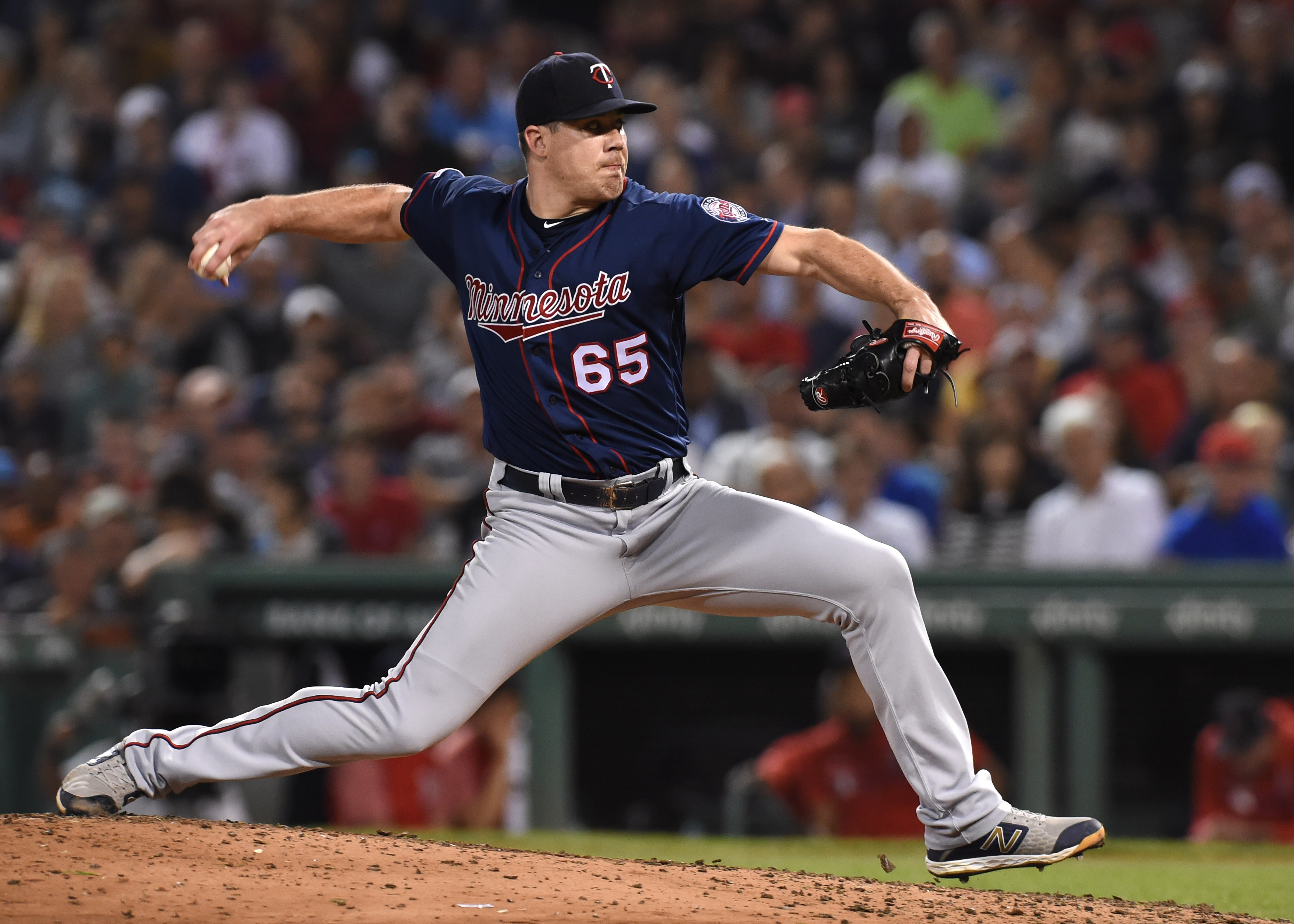 As I documented at Baseball Prospectus last May, May turned a corner partially because he changed the grip on his slider, turning it into a harder version of his curveball instead of the cutterish offering it had previously been. However, that doesn’t mean that the slider itself fueled his newfound dominance. In fact, even at season’s end, he hadn’t found a consistently above-average breaking ball. Trevor May, Slider and Curveball Stats, 2019 A good breaking ball should induce swings and misses at about half again the rate at which May’s do so. He showed the ability to reshape both pitches, and to spin them at a high rate, but he got no real results with either pitch. What changed, then? To answer that, let’s change the subject for a minute. In 2006, biological researchers at the University of Sydney performed an experiment on plasmodial slime mold. Slime mold is, most of the time, a single-cell organism, but under the right conditions, it can form a kind of glob large enough to be visible to the naked eye. It likes to latch onto and eat oats. As you might guess about something that goes by the name “plasmodial slime mold,” it doesn’t like light. The researchers first put some slime mold into a petri dish with oats at opposite ends, one with an ultraviolet light shining on it and one in relative darkness. The slime mold “chose” (it doesn’t have a brain, but we can call this behavior choosing for these purposes) the oats at the dark end of the dish, over and over again, in repeated experiments. Then, the researchers added more oats to the end where the light was. At a certain point, the greater amount of available food balanced out the aversion to light, and the slime mold began choosing the oats in the light half the time. One more twist, then we’ll get back to May. The researchers then added a third option for the slime mold: a smaller amount of oats in another dark end of the petri dish. The amounts in the original dark and light ends of the dish were held where they had been, the point at which the slime mold had shown roughly equal preference for the two options. The mold should have been expected to change almost nothing; the new option was clearly undesirable and irrelevant. That’s not what happened. Adding the extraneous, irrelevant option led the mold to choose the smaller quantity of oats in darkness (though still a larger quantity than the new option) three times as often as the larger quantity in the light. Again, slime mold doesn’t have a brain. Yet, it’s stunningly capable of irrationality, just the way humans are. May, as it turns out, is capable of the same thing. Changing the slider grip gave him two theoretically workable breaking balls. Neither actually worked, but by adding an irrelevant option to the mixture, he disrupted the overall balance of his pitch mix. Trevor May, Pitch Usage by Month, 2019 This is how May started mowing down opposing hitters like they were novice players of one of the video games he plays so well. He started pumping in his fastball about 70 percent of the time, getting pop-ups and empty swings by the bushel. May throws hard, generates good backspin, and achieves good carry on his heat because of his high arm slot. As he began throwing that pitch more often than ever, he found the success that eluded him as he tried to get his changeup, curve, and slider just right over the previous few years. It will still help if May comes into this shortened season with a breaking ball that performs the way he’d hoped one would last year. By the end of the season, the slider and curve had melded into each other in a way that ate into the effectiveness of each. If he remains as reliant on his fastball as he was down the stretch, he’ll remain vulnerable to home runs at inopportune moments. Hitters also might begin to sit on his fastball and start laying off the ones above the strike zone. For now, though, May has turned into a monster, and instead of doing so by finding a great secondary offering, he did it by turning toward what had been his best bet all along—all thanks to his inability to maintain static preferences after the addition of an irrelevant alternative. MORE FROM TWINS DAILY — Latest Twins coverage from our writers — Recent Twins discussion in our forums — Follow Twins Daily via Twitter, Facebook or email

