



Matthew Trueblood
-
Posts
1,033 -
Joined
-
Last visited
Content Type
Profiles
News
Minnesota Twins Videos
2026 Minnesota Twins Top Prospects Ranking
2022 Minnesota Twins Draft Picks
Minnesota Twins Free Agent & Trade Rumors, Notes, & Tidbits
Guides & Resources
2023 Minnesota Twins Draft Picks
The Minnesota Twins Players Project
2024 Minnesota Twins Draft Picks
2025 Minnesota Twins Draft Pick Tracker
2026 Minnesota Twins Draft Tracker: Picks & Bonuses
Forums
Blogs
Events
Store
Downloads
Gallery
Everything posted by Matthew Trueblood
-
Under Derek Falvey and Thad Levine, the Twins have prized depth on their roster and optionality in their processes. Their approach to MLB free agency has reflected that fact. Alas, that means they’re only doing half the job that a great front office must do in free agency, and it’s the less vital half. Image courtesy of © Jeffrey Becker-USA TODAY Sports MLB free agency is really one name for two overlapping but distinct tasks. One of those is finding short-term answers to immediate problems. In this aspect, a front office needs to reinforce thin areas on their roster; balance the pursuit of upside with the necessity of setting a firm floor for a given roster spot; and husband their resources as closely as possible. They need to fill holes without leaving themselves ossified or cornered when the opportunity or the need to change tack arises. The other task that makes up free agency, though, is adding high-impact talent to the franchise on a long-term basis. This is talked about too rarely, but it’s crucial. That’s because, ultimately, having star-caliber players is a non-negotiable prerequisite for consistent contention. To longtime baseball fans, this can seem like the vapid talk of a cotton-headed basketball or football fan. No individual can have the same impact on a ball club as LeBron James can have on a basketball team, or even the impact that any of several good quarterbacks can have on their rosters. One of baseball’s beautiful characteristics is that depth will out, and that good teams are unavoidably reliant upon a broader base of contributors. Every roster spot matters, and stars can’t carry subpar fellows very far. The bottom 60 percent of a 26- and a 40-man roster needs to be full of guys who hew closer to average than to the replacement level, or else a team will stall out over the long season. True though that might be when it comes to analyzing a team based on its two or three best players, it fades into irrelevance if you judge a team by its seven or eight best. Good teams need above-average players—not a couple of them, but a cadre. It’s simple math, really. If you have that army of credible, almost-good players rounding out the bottom of the roster, you’ve set a floor somewhere between 70 and 75 wins. If the top handful of batters and pitchers are each just a win above average, though, you can’t push much past 85 wins. Teams with real chances of reaching and causing trouble in the postseason, and especially those who stand any chance of doing so multiple times in a span of a few years, need to have clear paths to 90 wins or more. A deeper dive into players who post a 4+ WAR tells why the Twins have been coming up short against the more elite teams in the American League, including in the postseason. But we reward our Caretakers with the meatier stories like this, since they’re the ones that support paying writers for a more thorough examination. If you would like to join them, you can read this story and also get other perks, like a free ticket to the Winter Meltdown, meet and greets, special recognition in the comments sections, and more exclusive in-depth explorations of Twins topics. Just sign up here. We would love to have you join the hundreds of people that value having Twins stories, rumors and conversation 365 days per year. Thank you for considering it. View full article
-
The Twins' One Big Flaw in their Free Agency Approach (Preview)
Matthew Trueblood posted an article in Twins
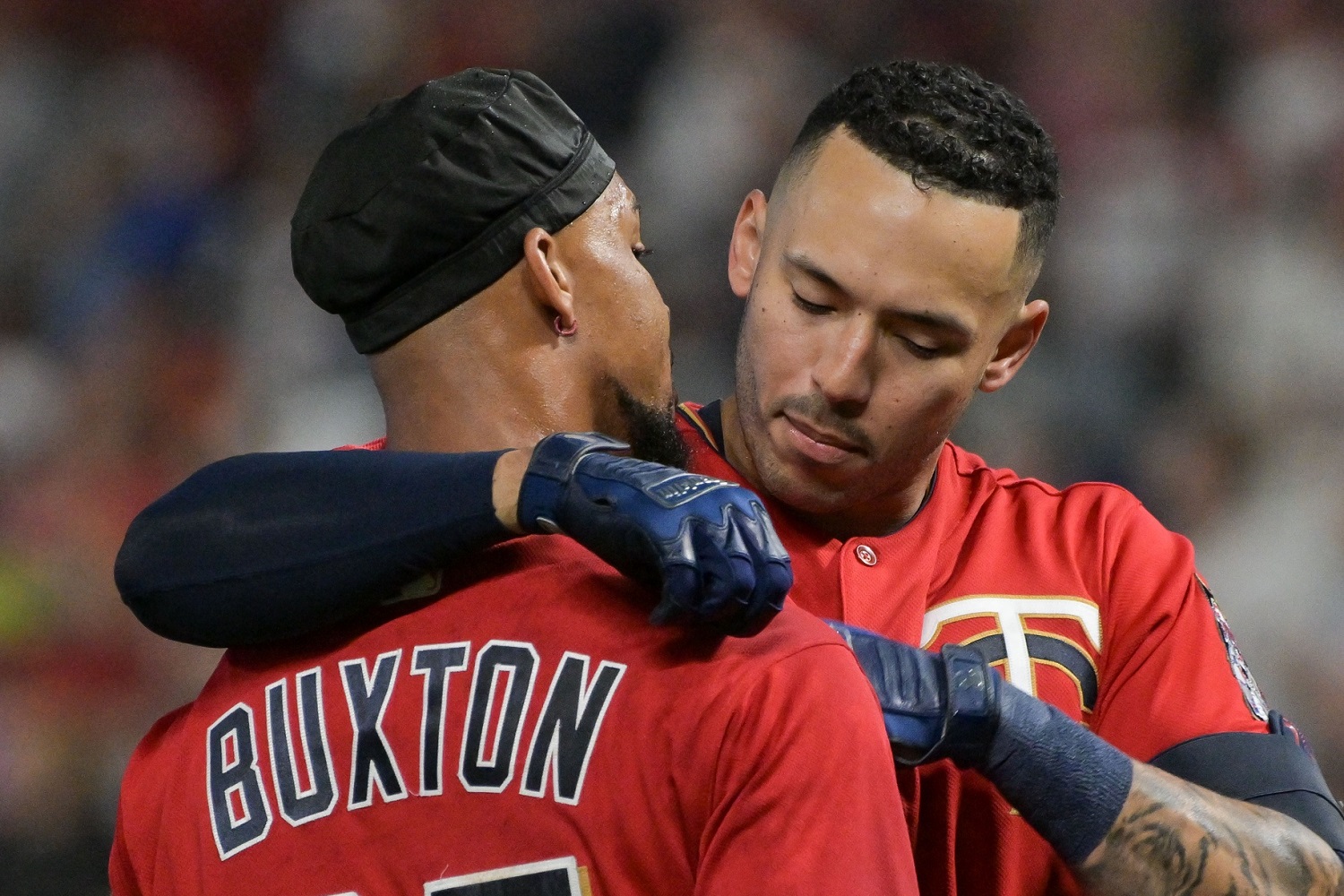 MLB free agency is really one name for two overlapping but distinct tasks. One of those is finding short-term answers to immediate problems. In this aspect, a front office needs to reinforce thin areas on their roster; balance the pursuit of upside with the necessity of setting a firm floor for a given roster spot; and husband their resources as closely as possible. They need to fill holes without leaving themselves ossified or cornered when the opportunity or the need to change tack arises. The other task that makes up free agency, though, is adding high-impact talent to the franchise on a long-term basis. This is talked about too rarely, but it’s crucial. That’s because, ultimately, having star-caliber players is a non-negotiable prerequisite for consistent contention. To longtime baseball fans, this can seem like the vapid talk of a cotton-headed basketball or football fan. No individual can have the same impact on a ball club as LeBron James can have on a basketball team, or even the impact that any of several good quarterbacks can have on their rosters. One of baseball’s beautiful characteristics is that depth will out, and that good teams are unavoidably reliant upon a broader base of contributors. Every roster spot matters, and stars can’t carry subpar fellows very far. The bottom 60 percent of a 26- and a 40-man roster needs to be full of guys who hew closer to average than to the replacement level, or else a team will stall out over the long season. True though that might be when it comes to analyzing a team based on its two or three best players, it fades into irrelevance if you judge a team by its seven or eight best. Good teams need above-average players—not a couple of them, but a cadre. It’s simple math, really. If you have that army of credible, almost-good players rounding out the bottom of the roster, you’ve set a floor somewhere between 70 and 75 wins. If the top handful of batters and pitchers are each just a win above average, though, you can’t push much past 85 wins. Teams with real chances of reaching and causing trouble in the postseason, and especially those who stand any chance of doing so multiple times in a span of a few years, need to have clear paths to 90 wins or more. A deeper dive into players who post a 4+ WAR tells why the Twins have been coming up short against the more elite teams in the American League, including in the postseason. But we reward our Caretakers with the meatier stories like this, since they’re the ones that support paying writers for a more thorough examination. If you would like to join them, you can read this story and also get other perks, like a free ticket to the Winter Meltdown, meet and greets, special recognition in the comments sections, and more exclusive in-depth explorations of Twins topics. Just sign up here. We would love to have you join the hundreds of people that value having Twins stories, rumors and conversation 365 days per year. Thank you for considering it.
 -
Under Derek Falvey and Thad Levine, the Twins have prized depth on their roster and optionality in their processes. Their approach to MLB free agency has reflected that fact. Alas, that means they’re only doing half the job that a great front office must do in free agency, and it’s the less vital half. Image courtesy of © Jeffrey Becker-USA TODAY Sports MLB free agency is really one name for two overlapping but distinct tasks. One of those is finding short-term answers to immediate problems. In this aspect, a front office needs to reinforce thin areas on their roster; balance the pursuit of upside with the necessity of setting a firm floor for a given roster spot; and husband their resources as closely as possible. They need to fill holes without leaving themselves ossified or cornered when the opportunity or the need to change tack arises. The other task that makes up free agency, though, is adding high-impact talent to the franchise on a long-term basis. This is talked about too rarely, but it’s crucial. There are a limited set of annual opportunities to make that kind of addition to an organization, and the others are radically different from free agency. International amateur free agency and the amateur draft are much lower-cost alternatives, but there’s also dramatically less certainty that the players a team acquires that way will ever be impactful players, and even if they do so, it won’t be for years. Signing a star free agent for several seasons comes with risk, especially because most such players are already nearing the end of their prime by the time they reach free agency. That risk tends to be wildly overstated, though, because it’s never compared to the risk (let alone the cost, especially in terms of time) of trying to acquire and develop teenagers into players of similar quality. Trading for players that good is even harder, because unlike free agency, it depends upon another team making the frequently irrational, ultimately unpredictable choice to make such a player available. There’s implicit risk involved, since the team that knows the player best is making that strange election. There’s also astronomical cost, because of the paucity of players that good available in that way, and because the currency with which one pays in that kind of deal (talented players on whom scouting resources and player development energy and the artificially scarce resource of signing bonus money have already been spent) is much less renewable and much more valuable than money. All that considered, it’s vital that a team see each year’s free agent class as a chance to add stars to their core. A smart team approaches free agency and the amateur scouting process with the same set of objectives in mind, even though the shapes of the costs, risks, and constraints in the two arenas are so different. That’s because, ultimately, having star-caliber players is a non-negotiable prerequisite for consistent contention. To longtime baseball fans, this can seem like the vapid talk of a cotton-headed basketball or football fan. No individual can have the same impact on a ball club as LeBron James can have on a basketball team, or even the impact that any of several good quarterbacks can have on their rosters. One of baseball’s beautiful characteristics is that depth will out, and that good teams are unavoidably reliant upon a broader base of contributors. Every roster spot matters, and stars can’t carry subpar fellows very far. The bottom 60 percent of a 26- and a 40-man roster needs to be full of guys who hew closer to average than to the replacement level, or else a team will stall out over the long season. True though that might be when it comes to analyzing a team based on its two or three best players, it fades into irrelevance if you judge a team by its seven or eight best. Good teams need above-average players—not a couple of them, but a cadre. It’s simple math, really. If you have that army of credible, almost-good players rounding out the bottom of the roster, you’ve set a floor somewhere between 70 and 75 wins. If the top handful of batters and pitchers are each just a win above average, though, you can’t push much past 85 wins. Teams with real chances of reaching and causing trouble in the postseason, and especially those who stand any chance of doing so multiple times in a span of a few years, need to have clear paths to 90 wins or more. That’s why the search for stars needs to be perpetual and multifarious. If a team creates great processes of scouting, player development, coaching, and aggressive maneuvering to lock up players who show upside at the highest level, they can stick to a largely homegrown core, and they needn’t spend much on the second, more costly task of free agency. The Twins, though, haven’t managed that at all. Since 2018, 151 position players have had a season worth at least 4.0 wins above replacement (WAR), according to FanGraphs. The Twins have had just four of those player-seasons. Eddie Rosario eked out 4.0 WAR in 2018. Jorge Polanco was worth 4.1 in 2021. Nelson Cruz got to 4.3 in 2019. And in 2022, in what still looks likely to be his only season in a Twins uniform, Carlos Correa was worth 4.4 WAR. Another 71 pitcher seasons have cleared that threshold, and the Twins were beneficiaries of just one and a half of them: José Berríos, who cleared the bar in both 2019 and 2021, was traded during the latter campaign. Along the way, Byron Buxton has sometimes looked like that caliber of player. The team signed him to a contract extension that keeps him in Minnesota and manages the risk posed by his inability to stay on the field or produce consistently enough to bring that full potential to bear. Others on whom similar hopes once hung, though, now look as unlikely to be a full-fledged star as Buxton does. Royce Lewis’s development has been twice interrupted by major knee injuries, which are likely to slow down his emergence as a top hitter and to slash his non-batting value much sooner than would have happened otherwise. Injury can be called a culprit in Alex Kirilloff’s derailment, too, and contributed to (though certainly didn’t solely cause) Jordan Balazovic’s failure to turn the corner and become Berríos Redux. Cruz’s (and Josh Donaldson’s) age made him available to the Twins in the range Falvey and Levine find palatable. Correa’s openness to what was effectively a one-year deal fitted him to their mold. Even when they have added impact-level talent, the front office has done so only because external circumstances or limitations to the player’s market made them a comfortable addition. The discomfort of a true star-caliber, long-term free agent acquisition is also where the greatest value of such a move lies. The Twins have been unwilling to withstand that discomfort in order to capture that value. This front office is very good at amassing depth, and at remaining flexible enough to pounce when unexpected opportunities present themselves. That’s how they were in position to land Correa, of course, and to trade for Kenta Maeda, and to scoop up the surprisingly affordable Lance Lynn, Marwin González, Logan Morrison, and Jake Odorizzi. They’ve also done well to reclaim and finish the development of guys like Nick Gordon, Griffin Jax, and Bailey Ober. They seem determined never to fail that first test of good teams, to have quality options on the wrong side of average even when things go a bit sideways. There’s a troubling pattern here, though, of being too unwilling to take the leap and reel in the players who raise their ceiling to the same level as those of the Astros, Yankees, Red Sox, Blue Jays, or even the Guardians. Each of those teams has enjoyed at least twice as many four-win seasons since 2018 as have the Twins. And (because the rich teams are now smart, too, and aware of the value of depth) none of them are much worse than Falvey and Levine at maximizing the utility of their 40-man roster. From a baseball standpoint, there comes a fairly early point of diminishing returns for the skill of filling the organization with guys just south of average. Roster rules designed to give players a fair chance to play where they’re most wanted or valued make the edges gained in that way hard to sustain, and talent starts to leak from the organization for purely entropic reasons. The Twins have lost LaMonte Wade, Jr., Akil Baddoo, Tyler Wells, and others recently to the numbers game, and those are just the most obvious examples. On the other hand, there is no point of diminishing returns for adding above-average players, at least until the team payroll reaches the first threshold of the competitive-balance tax bracket. The Twins are in no danger of breaching that line any time soon. There ae a few potential reasons for the Twins’ consistent preference for short-term, low-risk deals in free agency. Falvey and Levine might be miscalculating—failing to see the collective risk created by their aversion to risk within individual transactions. That seems unlikely, given their established baseball savvy and previous remarks. Alternatively, then, they might be so committed to creating stars via their farm system that they’re willing to wait out the frustrations of players like Kirilloff, Lewis, Balazovic, and Austin Martin. That’s more defensible, but the teams who can reliably produce stars that way (so much so that they don’t need to supplement that part of their roster with high-level free agents) are few, and Minnesota has yet to earn anyone’s trust in that area. The most likely explanation, then, is baseball’s oldest: ownership just doesn’t have the stomach for the higher sustained costs associated with building a winner partially through impact MLB free-agent signings. Maybe that’s sound financial thinking by the Pohlads, and maybe it isn’t. From a baseball standpoint, though, it’s inexcusably foolish. In either case, be it a front-office plan or an ownership limit, things need to change. The Twins need to be more aggressive, and to view free agency as a grander opportunity, not just this season, but every year. Failing that, they’ll remain a small-market team with mid-market resources, instead of graduating into a more dangerous and interesting club. View full article
-
 MLB free agency is really one name for two overlapping but distinct tasks. One of those is finding short-term answers to immediate problems. In this aspect, a front office needs to reinforce thin areas on their roster; balance the pursuit of upside with the necessity of setting a firm floor for a given roster spot; and husband their resources as closely as possible. They need to fill holes without leaving themselves ossified or cornered when the opportunity or the need to change tack arises. The other task that makes up free agency, though, is adding high-impact talent to the franchise on a long-term basis. This is talked about too rarely, but it’s crucial. There are a limited set of annual opportunities to make that kind of addition to an organization, and the others are radically different from free agency. International amateur free agency and the amateur draft are much lower-cost alternatives, but there’s also dramatically less certainty that the players a team acquires that way will ever be impactful players, and even if they do so, it won’t be for years. Signing a star free agent for several seasons comes with risk, especially because most such players are already nearing the end of their prime by the time they reach free agency. That risk tends to be wildly overstated, though, because it’s never compared to the risk (let alone the cost, especially in terms of time) of trying to acquire and develop teenagers into players of similar quality. Trading for players that good is even harder, because unlike free agency, it depends upon another team making the frequently irrational, ultimately unpredictable choice to make such a player available. There’s implicit risk involved, since the team that knows the player best is making that strange election. There’s also astronomical cost, because of the paucity of players that good available in that way, and because the currency with which one pays in that kind of deal (talented players on whom scouting resources and player development energy and the artificially scarce resource of signing bonus money have already been spent) is much less renewable and much more valuable than money. All that considered, it’s vital that a team see each year’s free agent class as a chance to add stars to their core. A smart team approaches free agency and the amateur scouting process with the same set of objectives in mind, even though the shapes of the costs, risks, and constraints in the two arenas are so different. That’s because, ultimately, having star-caliber players is a non-negotiable prerequisite for consistent contention. To longtime baseball fans, this can seem like the vapid talk of a cotton-headed basketball or football fan. No individual can have the same impact on a ball club as LeBron James can have on a basketball team, or even the impact that any of several good quarterbacks can have on their rosters. One of baseball’s beautiful characteristics is that depth will out, and that good teams are unavoidably reliant upon a broader base of contributors. Every roster spot matters, and stars can’t carry subpar fellows very far. The bottom 60 percent of a 26- and a 40-man roster needs to be full of guys who hew closer to average than to the replacement level, or else a team will stall out over the long season. True though that might be when it comes to analyzing a team based on its two or three best players, it fades into irrelevance if you judge a team by its seven or eight best. Good teams need above-average players—not a couple of them, but a cadre. It’s simple math, really. If you have that army of credible, almost-good players rounding out the bottom of the roster, you’ve set a floor somewhere between 70 and 75 wins. If the top handful of batters and pitchers are each just a win above average, though, you can’t push much past 85 wins. Teams with real chances of reaching and causing trouble in the postseason, and especially those who stand any chance of doing so multiple times in a span of a few years, need to have clear paths to 90 wins or more. That’s why the search for stars needs to be perpetual and multifarious. If a team creates great processes of scouting, player development, coaching, and aggressive maneuvering to lock up players who show upside at the highest level, they can stick to a largely homegrown core, and they needn’t spend much on the second, more costly task of free agency. The Twins, though, haven’t managed that at all. Since 2018, 151 position players have had a season worth at least 4.0 wins above replacement (WAR), according to FanGraphs. The Twins have had just four of those player-seasons. Eddie Rosario eked out 4.0 WAR in 2018. Jorge Polanco was worth 4.1 in 2021. Nelson Cruz got to 4.3 in 2019. And in 2022, in what still looks likely to be his only season in a Twins uniform, Carlos Correa was worth 4.4 WAR. Another 71 pitcher seasons have cleared that threshold, and the Twins were beneficiaries of just one and a half of them: José Berríos, who cleared the bar in both 2019 and 2021, was traded during the latter campaign. Along the way, Byron Buxton has sometimes looked like that caliber of player. The team signed him to a contract extension that keeps him in Minnesota and manages the risk posed by his inability to stay on the field or produce consistently enough to bring that full potential to bear. Others on whom similar hopes once hung, though, now look as unlikely to be a full-fledged star as Buxton does. Royce Lewis’s development has been twice interrupted by major knee injuries, which are likely to slow down his emergence as a top hitter and to slash his non-batting value much sooner than would have happened otherwise. Injury can be called a culprit in Alex Kirilloff’s derailment, too, and contributed to (though certainly didn’t solely cause) Jordan Balazovic’s failure to turn the corner and become Berríos Redux. Cruz’s (and Josh Donaldson’s) age made him available to the Twins in the range Falvey and Levine find palatable. Correa’s openness to what was effectively a one-year deal fitted him to their mold. Even when they have added impact-level talent, the front office has done so only because external circumstances or limitations to the player’s market made them a comfortable addition. The discomfort of a true star-caliber, long-term free agent acquisition is also where the greatest value of such a move lies. The Twins have been unwilling to withstand that discomfort in order to capture that value. This front office is very good at amassing depth, and at remaining flexible enough to pounce when unexpected opportunities present themselves. That’s how they were in position to land Correa, of course, and to trade for Kenta Maeda, and to scoop up the surprisingly affordable Lance Lynn, Marwin González, Logan Morrison, and Jake Odorizzi. They’ve also done well to reclaim and finish the development of guys like Nick Gordon, Griffin Jax, and Bailey Ober. They seem determined never to fail that first test of good teams, to have quality options on the wrong side of average even when things go a bit sideways. There’s a troubling pattern here, though, of being too unwilling to take the leap and reel in the players who raise their ceiling to the same level as those of the Astros, Yankees, Red Sox, Blue Jays, or even the Guardians. Each of those teams has enjoyed at least twice as many four-win seasons since 2018 as have the Twins. And (because the rich teams are now smart, too, and aware of the value of depth) none of them are much worse than Falvey and Levine at maximizing the utility of their 40-man roster. From a baseball standpoint, there comes a fairly early point of diminishing returns for the skill of filling the organization with guys just south of average. Roster rules designed to give players a fair chance to play where they’re most wanted or valued make the edges gained in that way hard to sustain, and talent starts to leak from the organization for purely entropic reasons. The Twins have lost LaMonte Wade, Jr., Akil Baddoo, Tyler Wells, and others recently to the numbers game, and those are just the most obvious examples. On the other hand, there is no point of diminishing returns for adding above-average players, at least until the team payroll reaches the first threshold of the competitive-balance tax bracket. The Twins are in no danger of breaching that line any time soon. There ae a few potential reasons for the Twins’ consistent preference for short-term, low-risk deals in free agency. Falvey and Levine might be miscalculating—failing to see the collective risk created by their aversion to risk within individual transactions. That seems unlikely, given their established baseball savvy and previous remarks. Alternatively, then, they might be so committed to creating stars via their farm system that they’re willing to wait out the frustrations of players like Kirilloff, Lewis, Balazovic, and Austin Martin. That’s more defensible, but the teams who can reliably produce stars that way (so much so that they don’t need to supplement that part of their roster with high-level free agents) are few, and Minnesota has yet to earn anyone’s trust in that area. The most likely explanation, then, is baseball’s oldest: ownership just doesn’t have the stomach for the higher sustained costs associated with building a winner partially through impact MLB free-agent signings. Maybe that’s sound financial thinking by the Pohlads, and maybe it isn’t. From a baseball standpoint, though, it’s inexcusably foolish. In either case, be it a front-office plan or an ownership limit, things need to change. The Twins need to be more aggressive, and to view free agency as a grander opportunity, not just this season, but every year. Failing that, they’ll remain a small-market team with mid-market resources, instead of graduating into a more dangerous and interesting club.
 -
The last thing they’ll ever do is run you. The Minnesota Twins are the worst and most conservative baserunning team in Major League Baseball. That costs them runs and wins in direct ways, and it’s about to become an even more glaring weakness, but it’s also a microcosm of the broader problems with the way the organization scouts and develops athletes. Image courtesy of © Bruce Kluckhohn-USA TODAY Sports Last year, the Twins were 20.7 runs worse than an average team on the bases, according to FanGraphs. That was the second-worst mark in MLB. They stole (or even attempted to steal) fewer bases than any other team. They took the extra base on hits at a below-average rate, and they made outs on the bases at an above-average rate. That has been a pattern throughout the Rocco Baldelli era, too. The team will point out that the whole league is moving away from steals and aggressive baserunning, and that may be true, but the Twins still stand out like a sore hamstring. Since 2019, the Twins have stolen just 134 bases. The Red Sox have stolen the second-fewest in MLB, at 191. The gap between Minnesota and Boston is larger than the gap between Boston and the Yankees, who have stolen the 14th-fewest over that span. Baserunning is a nuanced art, and when a team does it poorly, the field staff always gets the heat. In this case, though, it’s pretty clear that the front office is driving the systemic failure. It’s a part of their broader strategy. There are good reasons underpinning that strategy, too. That said, the strategy sucks. The two free agent signees most on the mind of Twins fans at the moment provide a perfect way to understand what the team is doing. Last winter, they surprised everyone by signing Carlos Correa, albeit on a short-term deal. Correa was and is a premium talent, with a long track record of brilliant play. There’s almost no weakness in his game–almost. Correa is a terrible baserunner. He’s actually quite fast, once he gets underway, but he’s so conservative on the bases (and so hesitant, after years of such overcautiousness) that he can’t avail himself of his speed most of the time. While an excellent player overall, he has hurt his teams by hitting into too many double plays and doing too little on the bases in each of the last two seasons. Why is Correa so careful? The hiccup that triggered the final twist in his second tour of free agency illustrates it. He suffered a significant lower-leg injury running the bases in the minor leagues in 2014, and some reports suggest that the San Francisco Giants’ hangup in reading his physical exam traced all the way back to that injury. This is one huge reason for the broader trend away from emphasizing baserunning, and for the Twins’ philosophy of treading lightly. Everyone, and especially the Twins, now views the risk of injury as part of the break-even calculations required when deciding whether to attempt a steal, whether to try to score from first on a double, and even how to instruct players about their mentality on the bases. Just as importantly, though, the Twins have arrived at a conclusion similar to the one articulated at the beginning of Moneyball. They think speed is overpriced, and they view it as a secondary skill set. They would rather select players for their ability to authoritatively pull the ball in the air, for instance, than select them for speed or baserunning savvy, because most games are impacted more by what one does in the batter’s box than by what one does on the basepaths. That’s why the Twins, even if only fractionally, were more willing than other teams to overlook Joey Gallo’s falling Sprint Speed. Once a comfortably above-average runner, Gallo (whose pull power- and patience-centered approach at the plate fit the Twins’ philosophy like a batting glove) has lost a step over the last few years, and is now about as slow as his huge frame would suggest. He’s still a fine defender, thanks to good reads off the bat and a strong arm, but he’s a below-average runner in either corner outfield spot, and might not be viable in center field any longer. He’s tangibly slower than Max Kepler, whose role on the club he figures to take in 2023. These things matter, because the Twins’ proclivity for accepting less speed is also why they’re perennially saddled with so many injuries, and why they often feel like a sclerotic, one-dimensional team. While it’s secondary in the degree to which it directly affects most games, speed is a primary indicator of a certain kind of athleticism. In baseball, there are two main categories of athleticism, and many players excel in one or the other, rather than both. One type is the explosive, rotational athlete. These are the guys who can throw 103 miles per hour, have excellent Bomba Rates, and generally have a knack for transferring massive energy from the ground, through themselves, and into the baseball. The Twins collect these guys. In their farm system, they train guys to be great in this sector of athleticism. They consider the batter-pitcher matchup, with its intensity and its potential for premeditation and tactical aggression, the center of the game, and they put their resources into being ready to win it as often as possible. The other main type of baseball athleticism is the one people more often mean when they use the word. It’s not about unidirectional energy flow, but about proprioception and hand-eye coordination. It encompasses balance, looseness in the hips, the ability to make last-second adjustments, and comfort doing usual things at unusual angles. This is what allows a great hitter, when fooled, to flick the ball the other way for a double. It’s the extra dimension of movement that always seems to let Javier Baez creatively slide around a tag–and the anticipatory quickness that allows Baez to thwart would-be tag evaders when he’s in the field. Straight-line speed actually belongs to the first category of athleticism, as much as the second. It’s not a coincidence that, as he’s worked out who he is as a player, Byron Buxton has become a lethal power hitter, adept at turning on the ball and driving it in the air. He uses much of the same extraordinary musculature and intuitive sense of leverage to generate both that power and his awesome speed, at full gait. Buxton, however, has become a mostly stagnant and ineffectual baserunner, because he hasn’t cultivated the other dimension of athleticism. He gets into trouble when trying to change speeds or direction suddenly. He gets hurt. While pure speed itself comes from the same place as power, speed utility—and the health benefits of being lithe and fast—comes from that second type of athleticism. Buxton, like virtually all of his teammates, is missing that. The Twins are selecting baseball-specialized athletes too often, and training the guys already in their organization to focus too much on that area. They don’t want to pay for a skill that seems to make up so little of the game, and that helps them keep up with other clubs in the power department. The tradeoff leads to all kinds of problems, though, like having two guys with below-average range and quickness on the left side of their infield in the first year without defensive shifts. (Kyle Farmer and Jose Miranda each do what the Twins want hitters to do, but both are insufficient multidirectional athletes if they’re to be paired at their current positions.) It also leads to more injuries, because the players they’re acquiring and developing are stretching their bodies to their limits in short, violent bursts, and lack the capacity for the tiny adjustments that can avert disaster. That’s all on top of the most obvious problem, which is this: The Twins let runs go unscored because they simply don’t have guys who can put pressure on defenses and fully exploit opportunities. View full article
-
How the Twins Became Terrible at Baserunning (Exclusive)
Matthew Trueblood posted an article in Caretakers
 Last year, the Twins were 20.7 runs worse than an average team on the bases, according to FanGraphs. That was the second-worst mark in MLB. They stole (or even attempted to steal) fewer bases than any other team. They took the extra base on hits at a below-average rate, and they made outs on the bases at an above-average rate. That has been a pattern throughout the Rocco Baldelli era, too. The team will point out that the whole league is moving away from steals and aggressive baserunning, and that may be true, but the Twins still stand out like a sore hamstring. Since 2019, the Twins have stolen just 134 bases. The Red Sox have stolen the second-fewest in MLB, at 191. The gap between Minnesota and Boston is larger than the gap between Boston and the Yankees, who have stolen the 14th-fewest over that span. Baserunning is a nuanced art, and when a team does it poorly, the field staff always gets the heat. In this case, though, it’s pretty clear that the front office is driving the systemic failure. It’s a part of their broader strategy. There are good reasons underpinning that strategy, too. That said, the strategy sucks. The two free agent signees most on the mind of Twins fans at the moment provide a perfect way to understand what the team is doing. Last winter, they surprised everyone by signing Carlos Correa, albeit on a short-term deal. Correa was and is a premium talent, with a long track record of brilliant play. There’s almost no weakness in his game–almost. Correa is a terrible baserunner. He’s actually quite fast, once he gets underway, but he’s so conservative on the bases (and so hesitant, after years of such overcautiousness) that he can’t avail himself of his speed most of the time. While an excellent player overall, he has hurt his teams by hitting into too many double plays and doing too little on the bases in each of the last two seasons. Why is Correa so careful? The hiccup that triggered the final twist in his second tour of free agency illustrates it. He suffered a significant lower-leg injury running the bases in the minor leagues in 2014, and some reports suggest that the San Francisco Giants’ hangup in reading his physical exam traced all the way back to that injury. This is one huge reason for the broader trend away from emphasizing baserunning, and for the Twins’ philosophy of treading lightly. Everyone, and especially the Twins, now views the risk of injury as part of the break-even calculations required when deciding whether to attempt a steal, whether to try to score from first on a double, and even how to instruct players about their mentality on the bases. Just as importantly, though, the Twins have arrived at a conclusion similar to the one articulated at the beginning of Moneyball. They think speed is overpriced, and they view it as a secondary skill set. They would rather select players for their ability to authoritatively pull the ball in the air, for instance, than select them for speed or baserunning savvy, because most games are impacted more by what one does in the batter’s box than by what one does on the basepaths. That’s why the Twins, even if only fractionally, were more willing than other teams to overlook Joey Gallo’s falling Sprint Speed. Once a comfortably above-average runner, Gallo (whose pull power- and patience-centered approach at the plate fit the Twins’ philosophy like a batting glove) has lost a step over the last few years, and is now about as slow as his huge frame would suggest. He’s still a fine defender, thanks to good reads off the bat and a strong arm, but he’s a below-average runner in either corner outfield spot, and might not be viable in center field any longer. He’s tangibly slower than Max Kepler, whose role on the club he figures to take in 2023. These things matter, because the Twins’ proclivity for accepting less speed is also why they’re perennially saddled with so many injuries, and why they often feel like a sclerotic, one-dimensional team. While it’s secondary in the degree to which it directly affects most games, speed is a primary indicator of a certain kind of athleticism. In baseball, there are two main categories of athleticism, and many players excel in one or the other, rather than both. One type is the explosive, rotational athlete. These are the guys who can throw 103 miles per hour, have excellent Bomba Rates, and generally have a knack for transferring massive energy from the ground, through themselves, and into the baseball. The Twins collect these guys. In their farm system, they train guys to be great in this sector of athleticism. They consider the batter-pitcher matchup, with its intensity and its potential for premeditation and tactical aggression, the center of the game, and they put their resources into being ready to win it as often as possible. The other main type of baseball athleticism is the one people more often mean when they use the word. It’s not about unidirectional energy flow, but about proprioception and hand-eye coordination. It encompasses balance, looseness in the hips, the ability to make last-second adjustments, and comfort doing usual things at unusual angles. This is what allows a great hitter, when fooled, to flick the ball the other way for a double. It’s the extra dimension of movement that always seems to let Javier Baez creatively slide around a tag–and the anticipatory quickness that allows Baez to thwart would-be tag evaders when he’s in the field. Straight-line speed actually belongs to the first category of athleticism, as much as the second. It’s not a coincidence that, as he’s worked out who he is as a player, Byron Buxton has become a lethal power hitter, adept at turning on the ball and driving it in the air. He uses much of the same extraordinary musculature and intuitive sense of leverage to generate both that power and his awesome speed, at full gait. Buxton, however, has become a mostly stagnant and ineffectual baserunner, because he hasn’t cultivated the other dimension of athleticism. He gets into trouble when trying to change speeds or direction suddenly. He gets hurt. While pure speed itself comes from the same place as power, speed utility—and the health benefits of being lithe and fast—comes from that second type of athleticism. Buxton, like virtually all of his teammates, is missing that. The Twins are selecting baseball-specialized athletes too often, and training the guys already in their organization to focus too much on that area. They don’t want to pay for a skill that seems to make up so little of the game, and that helps them keep up with other clubs in the power department. The tradeoff leads to all kinds of problems, though, like having two guys with below-average range and quickness on the left side of their infield in the first year without defensive shifts. (Kyle Farmer and Jose Miranda each do what the Twins want hitters to do, but both are insufficient multidirectional athletes if they’re to be paired at their current positions.) It also leads to more injuries, because the players they’re acquiring and developing are stretching their bodies to their limits in short, violent bursts, and lack the capacity for the tiny adjustments that can avert disaster. That’s all on top of the most obvious problem, which is this: The Twins let runs go unscored because they simply don’t have guys who can put pressure on defenses and fully exploit opportunities.
 -
The last thing they’ll ever do is run you. The Minnesota Twins are the worst and most conservative baserunning team in Major League Baseball. That costs them runs and wins in direct ways, and it’s about to become an even more glaring weakness, but it’s also a microcosm of the broader problems with the way the organization scouts and develops athletes. Image courtesy of © Bruce Kluckhohn-USA TODAY Sports Last year, the Twins were 20.7 runs worse than an average team on the bases, according to FanGraphs. That was the second-worst mark in MLB. They stole (or even attempted to steal) fewer bases than any other team. They took the extra base on hits at a below-average rate, and they made outs on the bases at an above-average rate. That has been a pattern throughout the Rocco Baldelli era, too. The team will point out that the whole league is moving away from steals and aggressive baserunning, and that may be true, but the Twins still stand out like a sore hamstring. Since 2019, the Twins have stolen just 134 bases. The Red Sox have stolen the second-fewest in MLB, at 191. The gap between Minnesota and Boston is larger than the gap between Boston and the Yankees, who have stolen the 14th-fewest over that span. Baserunning is a nuanced art, and when a team does it poorly, the field staff always gets the heat. In this case, though, it’s pretty clear that the front office is driving the systemic failure. It can be seen in the types of players the organization prizes. It can be seen in their pursuit of Carlos Correa, and their agreement with Joe Gallo. But maybe worse of all, it can be seen in the injuries that have hamstringed the organization repeatedly over the last few years. The Twins terrible baserunning is part of a broader strategy, and it isn’t just based in Moneyball thinking. It’s based on the type of athleticism the organization values. A deeper dive into this topic is reserved for Twins Daily Caretakers’ eyes only. But you can become a Caretaker for as low as $4/month. As soon as you signup, you’ll see this deep dive and several other stories by Matthew Trueblood and Parker Hageman. You’ll also have access to other free Twins Daily publications, Winter Meltdown tickets, and other special recognition. You can read all about it and signup here. Those benefits are all nice, but the real reason to sign up is this: 100% of all Caretaker money is channeled directly back into the site. By signing up to be a caretaker, you’re supporting writers you value, and enabling deeper dive Twins-specific content like this that isn’t dependent on ad revenue. We hope you’ll consider it. We expect you’ll love the benefits, and we would love to have you take the next step in supporting the Twins Daily community. View full article
-
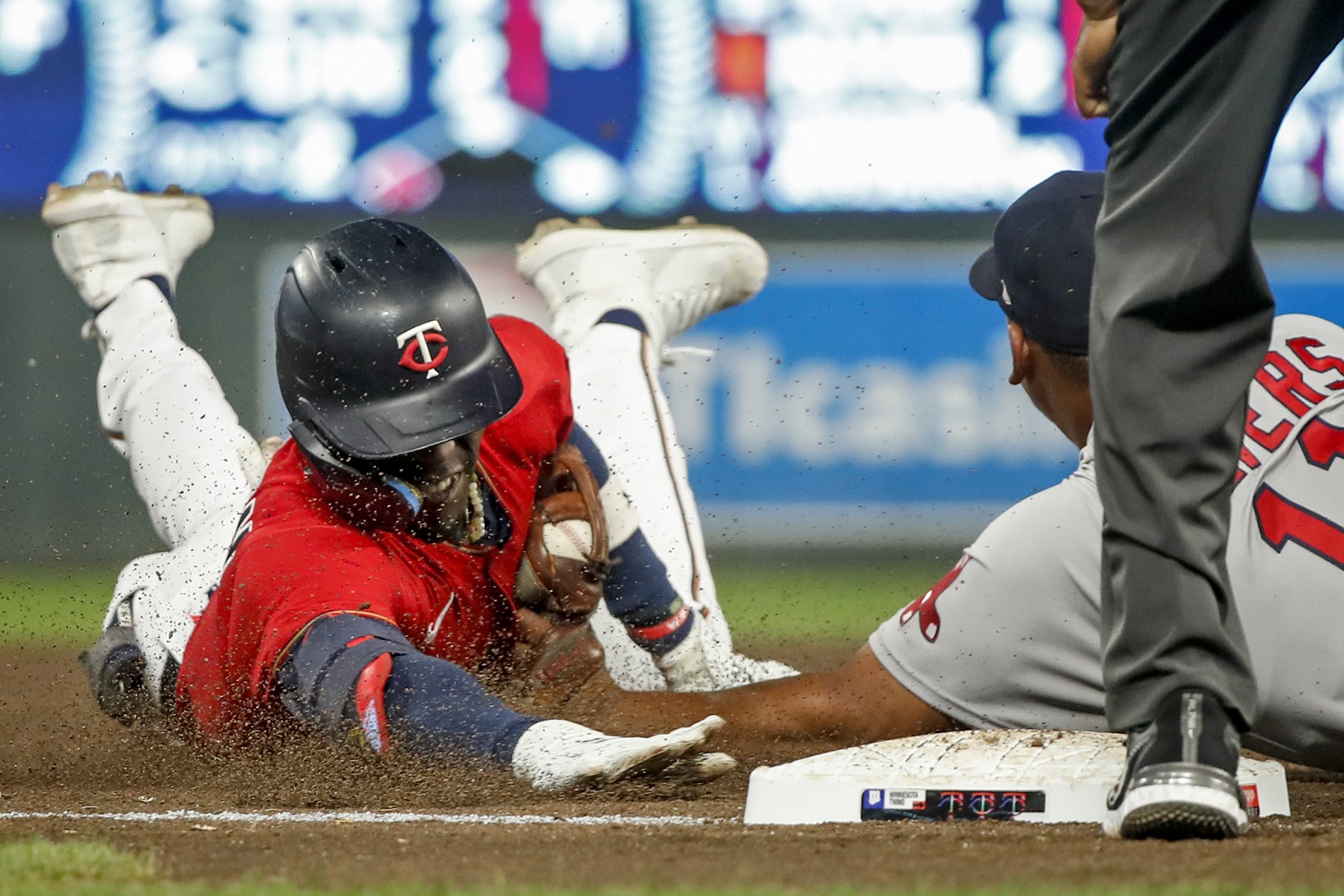 Last year, the Twins were 20.7 runs worse than an average team on the bases, according to FanGraphs. That was the second-worst mark in MLB. They stole (or even attempted to steal) fewer bases than any other team. They took the extra base on hits at a below-average rate, and they made outs on the bases at an above-average rate. That has been a pattern throughout the Rocco Baldelli era, too. The team will point out that the whole league is moving away from steals and aggressive baserunning, and that may be true, but the Twins still stand out like a sore hamstring. Since 2019, the Twins have stolen just 134 bases. The Red Sox have stolen the second-fewest in MLB, at 191. The gap between Minnesota and Boston is larger than the gap between Boston and the Yankees, who have stolen the 14th-fewest over that span. Baserunning is a nuanced art, and when a team does it poorly, the field staff always gets the heat. In this case, though, it’s pretty clear that the front office is driving the systemic failure. It can be seen in the types of players the organization prizes. It can be seen in their pursuit of Carlos Correa, and their agreement with Joe Gallo. But maybe worse of all, it can be seen in the injuries that have hamstringed the organization repeatedly over the last few years. The Twins terrible baserunning is part of a broader strategy, and it isn’t just based in Moneyball thinking. It’s based on the type of athleticism the organization values. A deeper dive into this topic is reserved for Twins Daily Caretakers’ eyes only. But you can become a Caretaker for as low as $4/month. As soon as you signup, you’ll see this deep dive and several other stories by Matthew Trueblood and Parker Hageman. You’ll also have access to other free Twins Daily publications, Winter Meltdown tickets, and other special recognition. You can read all about it and signup here. Those benefits are all nice, but the real reason to sign up is this: 100% of all Caretaker money is channeled directly back into the site. By signing up to be a caretaker, you’re supporting writers you value, and enabling deeper dive Twins-specific content like this that isn’t dependent on ad revenue. We hope you’ll consider it. We expect you’ll love the benefits, and we would love to have you take the next step in supporting the Twins Daily community.
 -
Sonny Gray and the Twins' Reverse Splits Problem (EXCLUSIVE)
Matthew Trueblood posted an article in Caretakers
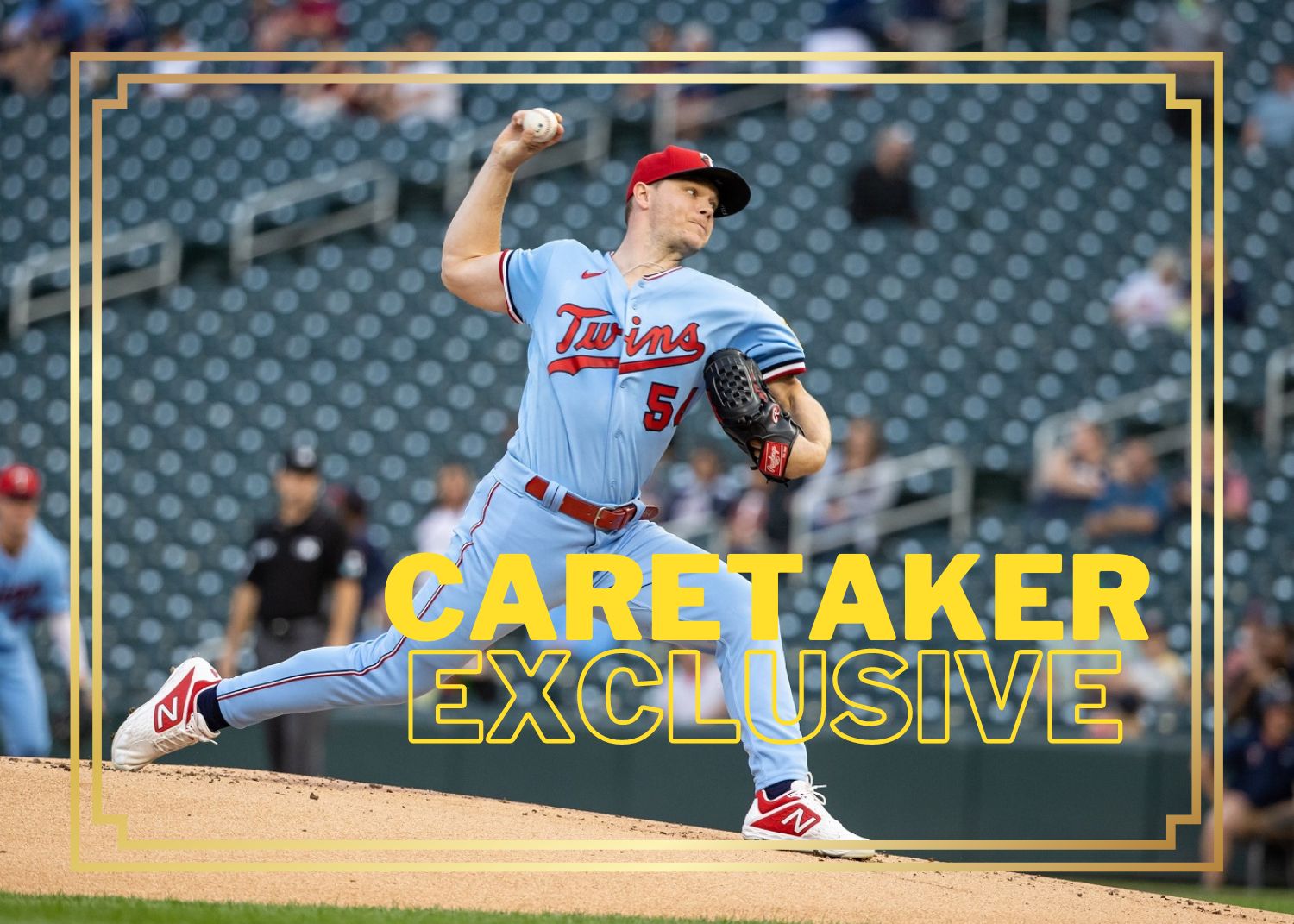 The Twins’ ace not only had reverse splits, but was a true ace against lefties, and more of a fourth starter against righties. Since he saw more righties than ever before, the latter was a real problem. This is an underrated aspect of the massive challenge that is succeeding as a starting pitcher in the major leagues. Years ago, I wrote about the fact that a switch-hitter is a strange creature, because they must maintain competence at two distinct tasks throughout the season: hitting left-handed, and hitting right-handed. For hitters who don’t thus burden themselves, though, hitting is really just one job. Hitting opposite-handed pitchers is easier than hitting same-handed ones, but the essential movements and cues aren’t so different that it qualifies as two different things. The more we learn about the craft and the science of pitching, however, the more clear it becomes that even for a pitcher who only throws with one hand, what we think of as pitching really is two distinct and disparate tasks: pitching to lefties, and pitching to righties. Gray came to Minnesota with all the tools to dominate in both of those tasks. He throws both a four-seam fastball, and a sinker. He has an excellent, high-spin curveball, and he has a slider that helped him take his career to a new level upon his arrival in Cincinnati in 2019. Talking about it that way, though, might be treating Gray too much as one pitcher. Let’s consider him as two, instead. Sonny Blue only faces left-handed batters. He’s the one who continued ace-caliber work in 2022. He doesn’t really have that slider, or at least, he rarely deploys it. That’s ok, though, because he has excellent command of his cutting, riding fastball. Of the 169 pitchers who threw at least 500 four-seamers last year, his had the 12th-most movement to the glove side–that is, in his case, toward the first-base side of home plate. Sonny Blue, Pitch Usage With that pitch, Blue can hammer the inside corner, because that’s where the pitch wants to move anyway. He can stop lefties from extending their arms against him, and limit the authority of their contact. His big-breaking curve is the second weapon in his arsenal, and the pairing is all Blue really needs. No right-handed pitcher who threw at least 750 pitches against lefties in 2022 got called strikes at as high a rate as Sonny Blue did. Hitters just couldn’t cope with his unusual movement and good control, given the angles from which he was working. Cloudy Gray, on the other hand, only faces right-handers. He struggled, because Cloudy doesn’t usually make all that much use of his four-seamer or his curve. Rather, he’s a sinker-slider guy. When Gray was dealt to the Reds after 2018, he was reunited with his collegiate pitching coach, Derek Johnson, and the two of them went to work. Sonny Gray griped about the way the Yankees forced him to throw a slider in which he had no conviction, but with better communication and a source he trusted, he reinvented the pitch, and turned it into one of the league’s best. Cloudy Gray, Pitch Usage While everything was sunshine for Sonny Blue in 2022, Cloudy Gray ran into two different problems. Firstly, his slider lost some of its sweep. Cloudy Gray, Horizontal Slider Movement, 2019-2022 Season HMov (in.) 2019 8.9 2020 9.8 2021 10.1 2022 7.5 That compromised Gray badly. Even at his worst, with the Yankees, hitters chased his slider outside the zone roughly 35 percent of the time. In his best years, it was closer to 40 percent. As he struggled to sweep the pitch out of the zone at all, and as he began to exaggerate those efforts and miss the zone by wider margins in the process, righties only chased the pitch 25 percent of the time in 2022. When they did decide to swing, it was usually because the ball hadn’t moved as much as Gray wanted it to move, and they made better and more frequent contact than in the past. All of those issues were only exacerbated by the fact that Cloudy couldn’t control his sinker. He couldn’t steer it in on righties’ hands, the way Sonny Blue could with the cutting four-seamer to lefties. Like all his offerings, the sinker lost a tick of velocity in 2022, as he moved toward his mid-30s, but unlike the others, it was neutered by that diminution. It too often found the heart of the zone, wouldn’t stay down for him, and got hit harder and higher than in previous campaigns. One problem is that whereas Sonny Blue fit perfectly into what the Twins like their pitchers to do, Cloudy Gray was a bit off script. The Twins threw four-seam fastballs at the second-highest rate in MLB last year, and sinkers at the second-lowest. They prefer higher-riding heat to facilitate greater perceived depth on breaking stuff, rather than the tilted, east-west contrast of Gray’s best and most natural sinker-slider combination. They got Cloudy to throw the four-seamer more against righties, but the pitch didn’t effectively set up the slider, and trying it interfered with the command of his sinker. Let’s reunite the split personalities, now, because it’s important to understand how these half-problems have trickle-up effects on the holistic effort to win ball games. Sonny Gray–the indivisible, corporeal man–has been known to attempt a reset during tough starts by walking back into the clubhouse and stripping down to his, er, indivisible corporeality. “Starting over,” he calls it. But how do you reset just half of yourself? When the twin tasks of getting out righties and lefties are considered as individual ones, it becomes an important question. His overall numbers suggest that Gray had a good season, splits be damned. His 3.08 ERA and 1.9 WARP in 120 innings would tell you that his only deficiency was in durability. That’s not quite true, though. Because he couldn’t get righties as well as a pitcher of his talent usually can, Gray had too many short starts. The inability to put a hitter away because the slider isn’t sliding enough costs extra pitches. Furthermore, a vulnerability to same-handed batters can leave you just as open to things snowballing or opponents outmaneuvering you as can a weakness against opposite-handed ones. An ideal starter has two pitches they can command to each side of home plate. There can be overlap between the two (a fastball you can dot on either corner, for instance), but that’s increasingly rare. You also want two pitches for each type of hitter. Opposite-handed guys will struggle more with vertical movement and changes of speeds, whereas same-handed ones are weak against good lateral movement and pure velocity. Only a few starters have that whole suite of weapons for each of their tasks, though. The rest have to grapple with their own incompleteness, and try to thrive anyway. In 2022, Gray only averaged five innings per start. He only meaningfully improved the Twins’ chances of winning (with a 0.10 or greater Win Probability Added) in 11 of 24 outings, because he wasn’t able to manage or correct that compartmental failure. This isn’t primarily a Sonny Gray problem. The Twins have to be better at making the platoon advantage an actual advantage. They had reverse splits as a team last year, for both left- and right-handed pitchers. The same was true in 2020, and in 2019 for righties. Dylan Bundy, Chris Archer, Joe Ryan, Josh Winder, and Emilio Pagan all ran reverse splits last season, just like Gray. That’s not always a bad thing, but it’s not as though these teams have been loaded with stellar changeup artists. On the contrary, they look for breaking stuff, and shape it as discussed above, on the theory that vertical disparities between the fastball and breakers will generate whiffs against batters from either side. That’s not universally true, though, and the team mismanaged its idiosyncratic cases for the second straight season in 2022. When you ask some pitchers to streamline their repertoire, you get monsters capable of mowing down opponents. When you ask others to do it, though, or when you try to conform their style to your organizational one, you hamstring guys. This is why modern big-league teams carry multiple pitching coaches, and it certainly underscores the way Wes Johnson’s departure in the middle of 2022 hurt. In 2023, the Twins could benefit by starting to think of their pitchers as containing multitudes, and by finding creative solutions to problems for each of their hurlers’ halves.
 -
Minnesota Twins starter Sonny Gray had a superb season in 2022. He struck out 26.6 percent of opposing hitters, walked just 5 percent of them, allowed very little power, and ended up with a 2.62 FIP, seventh-best of 94 qualifying hurlers. That’s the good news. The bad news is, Minnesota Twins starter Sonny Gray had a mediocre season in 2022. He struck out just 21.9 percent of opposing hitters, walked 9.2 percent of them, gave up average power, and sported a 4.12 FIP, just 98th-best of 165 qualifying hurlers. The first set of numbers is how the right-handed hurler Gray performed against lefties in 2022. The second set is how he did against righties. Image courtesy of © Jordan Johnson-USA TODAY Sports The Twins’ ace not only had reverse splits, but was a true ace against lefties, and more of a fourth starter against righties. Since he saw more righties than ever before, the latter was a real problem. This is an underrated aspect of the massive challenge that is succeeding as a starting pitcher in the major leagues. Years ago, I wrote about the fact that a switch-hitter is a strange creature, because they must maintain competence at two distinct tasks throughout the season: hitting left-handed, and hitting right-handed. For hitters who don’t thus burden themselves, though, hitting is really just one job. Hitting opposite-handed pitchers is easier than hitting same-handed ones, but the essential movements and cues aren’t so different that it qualifies as two different things. The more we learn about the craft and the science of pitching, however, the more clear it becomes that even for a pitcher who only throws with one hand, what we think of as pitching really is two distinct and disparate tasks: pitching to lefties, and pitching to righties. Gray came to Minnesota with all the tools to dominate in both of those tasks. He throws both a four-seam fastball, and a sinker. He has an excellent, high-spin curveball, and he has a slider that helped him take his career to a new level upon his arrival in Cincinnati in 2019. Talking about it that way, though, might be treating Gray too much as one pitcher. Let’s consider him as two, instead. Sonny Blue only faces left-handed batters. He’s the one who continued ace-caliber work in 2022. He doesn’t really have that slider, or at least, he rarely deploys it. That’s ok, though, because he has excellent command of his cutting, riding fastball. Of the 169 pitchers who threw at least 500 four-seamers last year, his had the 12th-most movement to the glove side–that is, in his case, toward the first-base side of home plate. Sonny Blue, Pitch Usage With that pitch, Blue can hammer the inside corner, because that’s where the pitch wants to move anyway. He can stop lefties from extending their arms against him, and limit the authority of their contact. His big-breaking curve is the second weapon in his arsenal, and the pairing is all Blue really needs. No right-handed pitcher who threw at least 750 pitches against lefties in 2022 got called strikes at as high a rate as Sonny Blue did. Hitters just couldn’t cope with his unusual movement and good control, given the angles from which he was working. Cloudy Gray, on the other hand, only faces right-handers. He struggled, because Cloudy doesn’t usually make all that much use of his four-seamer or his curve. Rather, he’s a sinker-slider guy. When Gray was dealt to the Reds after 2018, he was reunited with his collegiate pitching coach, Derek Johnson, and the two of them went to work. Sonny Gray griped about the way the Yankees forced him to throw a slider in which he had no conviction, but with better communication and a source he trusted, he reinvented the pitch, and turned it into one of the league’s best. Cloudy Gray, Pitch Usage While everything was sunshine for Sonny Blue in 2022, Cloudy Gray ran into two different problems. Firstly, his slider lost some of its sweep. Cloudy Gray, Horizontal Slider Movement, 2019-2022 Season HMov (in.) 2019 8.9 2020 9.8 2021 10.1 2022 7.5 That compromised Gray badly. Even at his worst, with the Yankees, hitters chased his slider outside the zone roughly 35 percent of the time. In his best years, it was closer to 40 percent. As he struggled to sweep the pitch out of the zone at all, and as he began to exaggerate those efforts and miss the zone by wider margins in the process, righties only chased the pitch 25 percent of the time in 2022. When they did decide to swing, it was usually because the ball hadn’t moved as much as Gray wanted it to move, and they made better and more frequent contact than in the past. All of those issues were only exacerbated by the fact that Cloudy couldn’t control his sinker. He couldn’t steer it in on righties’ hands, the way Sonny Blue could with the cutting four-seamer to lefties. Like all his offerings, the sinker lost a tick of velocity in 2022, as he moved toward his mid-30s, but unlike the others, it was neutered by that diminution. It too often found the heart of the zone, wouldn’t stay down for him, and got hit harder and higher than in previous campaigns. One problem is that whereas Sonny Blue fit perfectly into what the Twins like their pitchers to do, Cloudy Gray was a bit off script. The Twins threw four-seam fastballs at the second-highest rate in MLB last year, and sinkers at the second-lowest. They prefer higher-riding heat to facilitate greater perceived depth on breaking stuff, rather than the tilted, east-west contrast of Gray’s best and most natural sinker-slider combination. They got Cloudy to throw the four-seamer more against righties, but the pitch didn’t effectively set up the slider, and trying it interfered with the command of his sinker. Let’s reunite the split personalities, now, because it’s important to understand how these half-problems have trickle-up effects on the holistic effort to win ball games. Sonny Gray–the indivisible, corporeal man–has been known to attempt a reset during tough starts by walking back into the clubhouse and stripping down to his, er, indivisible corporeality. “Starting over,” he calls it. But how do you reset just half of yourself? When the twin tasks of getting out righties and lefties are considered as individual ones, it becomes an important question. His overall numbers suggest that Gray had a good season, splits be damned. His 3.08 ERA and 1.9 WARP in 120 innings would tell you that his only deficiency was in durability. That’s not quite true, though. Because he couldn’t get righties as well as a pitcher of his talent usually can, Gray had too many short starts. The inability to put a hitter away because the slider isn’t sliding enough costs extra pitches. Furthermore, a vulnerability to same-handed batters can leave you just as open to things snowballing or opponents outmaneuvering you as can a weakness against opposite-handed ones. An ideal starter has two pitches they can command to each side of home plate. There can be overlap between the two (a fastball you can dot on either corner, for instance), but that’s increasingly rare. You also want two pitches for each type of hitter. Opposite-handed guys will struggle more with vertical movement and changes of speeds, whereas same-handed ones are weak against good lateral movement and pure velocity. Only a few starters have that whole suite of weapons for each of their tasks, though. The rest have to grapple with their own incompleteness, and try to thrive anyway. In 2022, Gray only averaged five innings per start. He only meaningfully improved the Twins’ chances of winning (with a 0.10 or greater Win Probability Added) in 11 of 24 outings, because he wasn’t able to manage or correct that compartmental failure. This isn’t primarily a Sonny Gray problem. The Twins have to be better at making the platoon advantage an actual advantage. They had reverse splits as a team last year, for both left- and right-handed pitchers. The same was true in 2020, and in 2019 for righties. Dylan Bundy, Chris Archer, Joe Ryan, Josh Winder, and Emilio Pagan all ran reverse splits last season, just like Gray. That’s not always a bad thing, but it’s not as though these teams have been loaded with stellar changeup artists. On the contrary, they look for breaking stuff, and shape it as discussed above, on the theory that vertical disparities between the fastball and breakers will generate whiffs against batters from either side. That’s not universally true, though, and the team mismanaged its idiosyncratic cases for the second straight season in 2022. When you ask some pitchers to streamline their repertoire, you get monsters capable of mowing down opponents. When you ask others to do it, though, or when you try to conform their style to your organizational one, you hamstring guys. This is why modern big-league teams carry multiple pitching coaches, and it certainly underscores the way Wes Johnson’s departure in the middle of 2022 hurt. In 2023, the Twins could benefit by starting to think of their pitchers as containing multitudes, and by finding creative solutions to problems for each of their hurlers’ halves. View full article
-
Sonny Gray and the Twins' Reverse Splits Problem (PREVIEW)
Matthew Trueblood posted an article in Twins
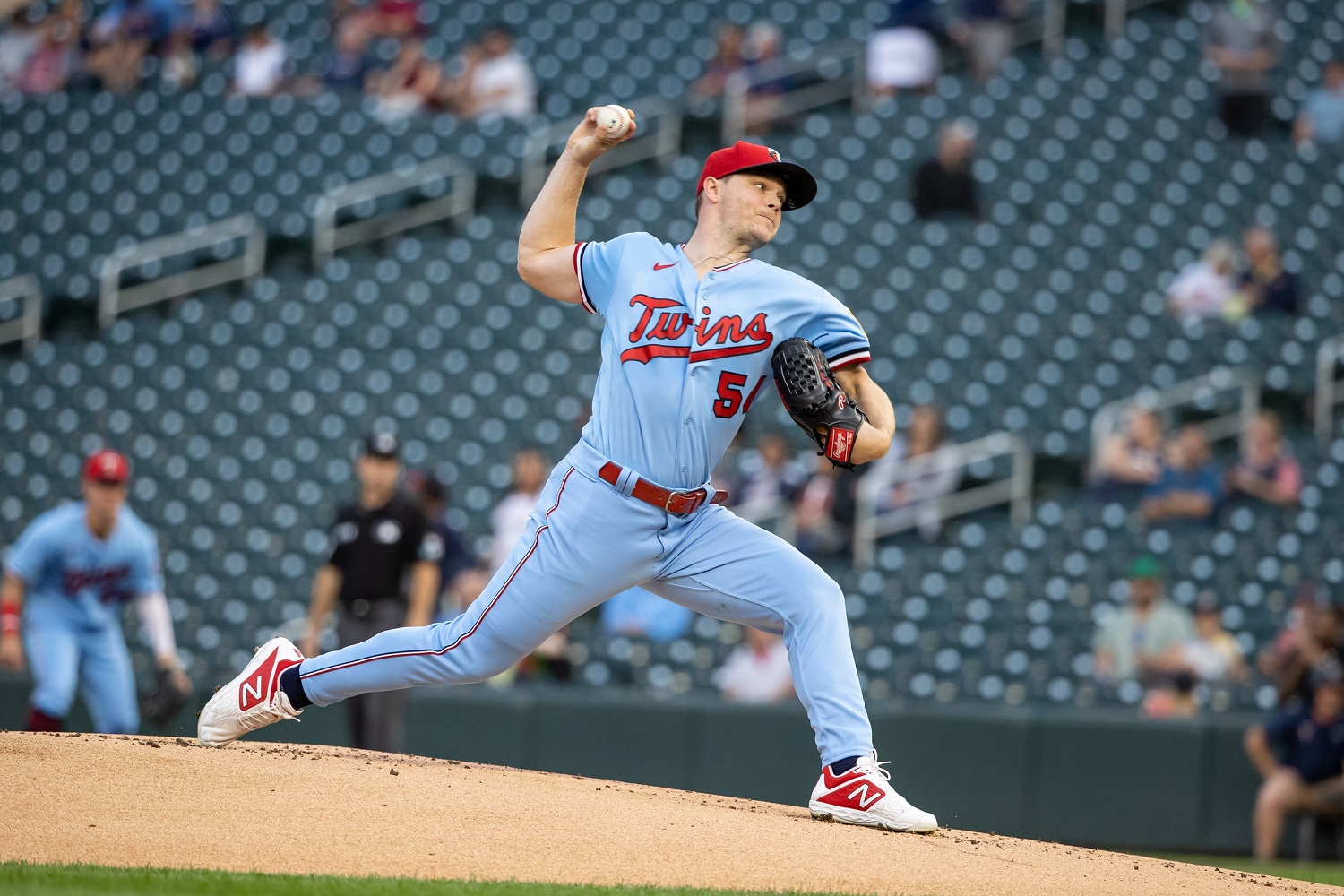 The Twins’ ace not only had reverse splits, but was a true ace against lefties, and more of a fourth starter against righties. Since he saw more righties than ever before, the latter was a real problem. This isn’t primarily a Sonny Gray problem, though. The Twins have to be better at making the platoon advantage an actual advantage. They had reverse splits as a team last year, for both left- and right-handed pitchers. The same was true in 2020, and in 2019 for righties. Dylan Bundy, Chris Archer, Joe Ryan, Josh Winder, and Emilio Pagan all ran reverse splits last season, just like Gray. That’s not always a bad thing, but it’s not as though these teams have been loaded with stellar changeup artists. On the contrary, the current Twins front office looks for fastballs with carry and breaking balls with more vertical movement than lateral, on the theory that vertical disparities between the fastball and breakers will generate whiffs against batters from either side. That’s not universally true, though, and the team mismanaged its idiosyncratic cases for the second straight season in 2022. The result was that they were 12 percent better than average against opposite-handed batters, as a team, but 11 percent worse than an average club against same-handed ones. Factor in the fact that they had the (in this case, merely hypothetical) platoon advantage more often than not, and the team gave back all the gains they got by m running reverse splits, and then some. Gray changed the way he approached righties and the usage patterns of his pitches upon joining the Twins, and his changes amount to a streamlining that only worked half the time. When you ask some pitchers to streamline their repertoire, you get monsters capable of mowing down opponents. When you ask others to do it, though, or when you try to conform their style to your organizational one, you hamstring guys. The Twins need to tweak the way they instruct their pitchers and pursue certain pitch shapes, so as to help their pitchers better conquer the difficult double task that is being a successful starting pitcher in the majors. We’ve reached the point where it’s time for a deeper dive into Sonny Gray's splits and pitch selection to see the issue he and the Twins face, but but that deeper dive is reserved for Twins Daily Caretakers’ eyes only. Fear not: You too can become a Caretaker for as low as $4/month. In addition to getting to read the rest of the Reverse Splits story, you can also read last week's meaty Bomba Rate post, plus other free Twins Daily publications, Winter Meltdown tickets, and other special recognition. You can read all about it and signup here. Those benefits are all nice, but the real reason to sign up is this: 100% of all Caretaker money is channeled directly back into the site. By signing up to be a caretaker, you’re supporting (we writers you value, and enabling deeper dive Twins-specific content like this that isn’t dependent on ad revenue. We hope you’ll consider it. We expect you’ll love the benefits, and we would love to have you take the next step in supporting the Twins Daily community.
 -
Minnesota Twins starter Sonny Gray had a superb season in 2022. He struck out 26.6 percent of opposing hitters, walked just 5 percent of them, allowed very little power, and ended up with a 2.62 FIP, seventh-best of 94 qualifying hurlers. That’s the good news. The bad news is, Minnesota Twins starter Sonny Gray had a mediocre season in 2022. He struck out just 21.9 percent of opposing hitters, walked 9.2 percent of them, gave up average power, and sported a 4.12 FIP, just 98th-best of 165 qualifying hurlers. The first set of numbers is how the right-handed hurler Gray performed against lefties in 2022. The second set is how he did against righties. Image courtesy of © Jordan Johnson-USA TODAY Sports The Twins’ ace not only had reverse splits, but was a true ace against lefties, and more of a fourth starter against righties. Since he saw more righties than ever before, the latter was a real problem. This isn’t primarily a Sonny Gray problem, though. The Twins have to be better at making the platoon advantage an actual advantage. They had reverse splits as a team last year, for both left- and right-handed pitchers. The same was true in 2020, and in 2019 for righties. Dylan Bundy, Chris Archer, Joe Ryan, Josh Winder, and Emilio Pagan all ran reverse splits last season, just like Gray. That’s not always a bad thing, but it’s not as though these teams have been loaded with stellar changeup artists. On the contrary, the current Twins front office looks for fastballs with carry and breaking balls with more vertical movement than lateral, on the theory that vertical disparities between the fastball and breakers will generate whiffs against batters from either side. That’s not universally true, though, and the team mismanaged its idiosyncratic cases for the second straight season in 2022. The result was that they were 12 percent better than average against opposite-handed batters, as a team, but 11 percent worse than an average club against same-handed ones. Factor in the fact that they had the (in this case, merely hypothetical) platoon advantage more often than not, and the team gave back all the gains they got by m running reverse splits, and then some. Gray changed the way he approached righties and the usage patterns of his pitches upon joining the Twins, and his changes amount to a streamlining that only worked half the time. When you ask some pitchers to streamline their repertoire, you get monsters capable of mowing down opponents. When you ask others to do it, though, or when you try to conform their style to your organizational one, you hamstring guys. The Twins need to tweak the way they instruct their pitchers and pursue certain pitch shapes, so as to help their pitchers better conquer the difficult double task that is being a successful starting pitcher in the majors. We’ve reached the point where it’s time for a deeper dive into Sonny Gray's splits and pitch selection to see the issue he and the Twins face, but but that deeper dive is reserved for Twins Daily Caretakers’ eyes only. Fear not: You too can become a Caretaker for as low as $4/month. In addition to getting to read the rest of the Reverse Splits story, you can also read last week's meaty Bomba Rate post, plus other free Twins Daily publications, Winter Meltdown tickets, and other special recognition. You can read all about it and signup here. Those benefits are all nice, but the real reason to sign up is this: 100% of all Caretaker money is channeled directly back into the site. By signing up to be a caretaker, you’re supporting (we writers you value, and enabling deeper dive Twins-specific content like this that isn’t dependent on ad revenue. We hope you’ll consider it. We expect you’ll love the benefits, and we would love to have you take the next step in supporting the Twins Daily community. View full article
-
Dozier is the most familiar of several really good examples of early adapters of this concept, which actually dates back to the 1950s but came into vogue anew around 12 years ago. Well before any teams were willing to take the leap of centering their hitting plans around this skill, some hitters extended or even transformed their careers by doing so. Dozier. Jose Bautista was probably the preeminent one. You know who else owes his success to this plan? Mitch Haniger. I really do think the Twins will stay in on him until the end, one way or another.
-
You’re not wrong to connect strikeouts with this approach on some level, but I would caution against exaggerating the correlation. Remember that because the denominator of the stat I concocted here is plate appearances, not batted balls, a high strikeout rate really dents your Bomba Rate. I think the Twins actually do have a strong preference for guys, like Farmer, who can sustain an above-average Bomba Rate for their position while making a lot of contact. It’s a salient conversation and a tricky balance though. Thanks for reading!
-
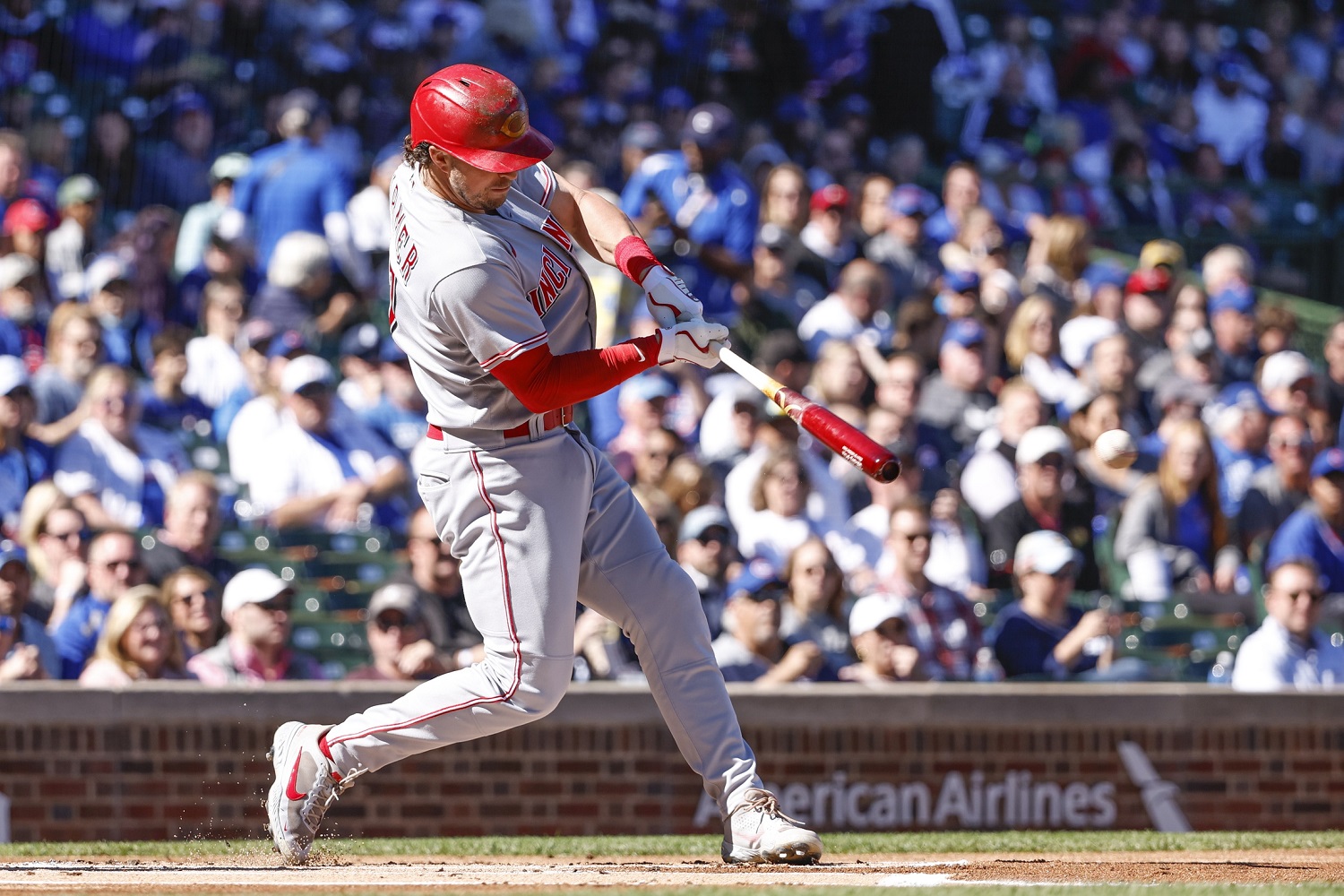 If I had to sum up the Twins’ offensive philosophy in a single sentence, it would go like this: Hit the ball in the air, to your pull field. No viable approach could ever be quite that simple, of course, but theirs comes close. And Kyle Farmer fits into that mold. No other team in MLB emphasizes this quite as clearly. Knowing that this is what they’re always doing explains almost every individual offensive move they make. This can be seen using a statistic I’ve dubbed “Bomba Rate” which reflects that philosophy. Here’s the list of all 2022 Twins who came to the plate at least 200 times, with their Bomba Rate: Bomba Rates, Minnesota Twins, 2022 Player % Rank (of 357) Byron Buxton 11.0 7 Jorge Polanco 9.7 30 Jose Miranda 9.7 33 Nick Gordon 9.5 36 Luis Arraez 9.2 42 Gary Sanchez 7.9 103 Carlos Correa 7.3 134 Ryan Jeffers 7.2 139 Max Kepler 6.7 179 Gio Urshela 6.2 205 Gilberto Celestino 2.9 347 I won’t further inundate you with numbers, but name a homegrown Twins hitter from the last several seasons–Mitch Garver, Miguel Sano, Eddie Rosario–and they rank highly in Bomba Rate. Guys like Carlos Correa come through and see their Bomba Rates rise. The few free-agent hitters in whom the team invests (Marwin Gonzalez, Josh Donaldson) run high Bomba Rates. There’s more. Jake Cave had a Celestinish 4.0-percent Bomba Rate in 2022, and was waived immediately after the season. Kyle Garlick had a Buxtonian 10.5-percent rate, and the team re-signed him. The Twins kept both of their hitting coaches and promoted a third to their big-league team from within the organization this fall. Why did they do so, even after a frustrating finish to the season? Because those coaches got their guys to keep on Bomba-ing. We’ve reached the point where it’s time for a deeper dive into Bomba Rate and how Kyle Farmer in particular fits into it so cleanly, but that content is reserved for Twins Daily Caretakers’ eyes only. Fear not: You too can become a Caretaker for as low as $4/month, and we’re having a special Black Friday sale through Monday the 28th. In addition to getting to read the rest of the meaty Bomba Rate post, you also get other free Twins Daily publications, Winter Meltdown tickets and other special recognition. You can read all about it and signup here. Those benefits are all nice, but the real reason to sign up is this: 100% of all Caretaker money is channeled directly back into the site. By signing up to be a caretaker, you’re supporting (we writers you value, and enabling deeper dive Twins-specific content like this that isn’t dependent on ad revenue. We hope you’ll consider it. We expect you’ll love the benefits, including learning more about Farmer, Bomba Rate, and why it helps show what the Twins will do next.
 -
How Kyle Farmer Explains (Almost) Everything - EXCLUSIVE
Matthew Trueblood posted an article in Caretakers
 Farmer will cost the team between $5 million and $6 million via the arbitration process, and they had to give up pitching prospect Casey Legumina to get him. No front office–least of all the one run by Derek Falvey and Thad Levine–acquires a player at that price without a good reason. Here, in a nutshell, is that reason. Batted Balls 88+ MPH, Pulled, Launch Angle 10-40 Degrees, as a Percentage of All Plate Appearances, 2022 Player % Rank (of 357) Carlos Correa 7.3 134 Dansby Swanson 7.6 119 Kyle Farmer 7.9 106 Admittedly, that’s not the world’s most elucidating nutshell. Let’s crack the nut open and take a closer look, though. This statistic (let’s call it the Bomba Rate, for reasons we’ll get into shortly) tells us at what rate a hitter hits the ball somewhat hard in the air toward their pull field. (Why 88 miles per hour? You can read this blog post from sabermetrician Tom Tango for more detail, but in short, that exit velocity best reflects the point at which batted balls begin to rise in average value.) That’s nice, you might say, (1) but surely Correa and Swanson hit their pulled flies harder than does Farmer, and anyway, (2) the differences in their rates are vanishingly small, and (3) it’s just one very small part of a hitter’s game. The first thing is true, but it turns out that it doesn’t matter that much. It’s nice to hit the ball much harder than 88 miles per hour, or to get the launch angles exactly right when pulling it, but meeting the criteria matters much more than excelling within them when you do. The second thing is also true, to some extent, but it turns out that an individual’s Bomba Rate is very sticky from year to year. We’re taking outcomes out of the equation here. It’s all about how often you generate a certain kind of contact, and the denominator is all plate appearances, so the samples are of a good size, the number captures a skill and an approach pretty cleanly, and the leaderboards tend to look quite similar from one year to the next. In fact, Correa’s Bomba Rate actually rose considerably in 2022, from a below-average 6.0 in 2021. Swanson’s was exactly 7.6 in 2021, too. Farmer, meanwhile, had an even more impressive 8.7-percent Bomba Rate in 2021. (Remember that number. We’re going to revisit it.) The third thing is superficially true, but as the rates we’ve already seen imply, it’s no smaller a share of a player’s game than walks. The league leaders hit Bombas over 10 percent of the time. The trailers do it barely 2 percent of the time. That gap matters, because Bombas have very high expected run values. In other words, while they might not be frequent, Bombas aren’t really a small part of offense. Their payoffs make them worth chasing. This is all especially important when evaluating the Farmer addition, because if I had to sum up the Twins’ offensive philosophy in a single sentence, it would go like this: Hit the ball in the air, to your pull field. No viable approach could ever be quite that simple, of course, but theirs comes close. No other team in MLB emphasizes this quite as clearly. Knowing that this is what they’re always doing explains almost every individual move they make. Here’s the list of all 2022 Twins who came to the plate at least 200 times, with the same information given for the three shortstops above. Bomba Rates, Minnesota Twins, 2022 Player % Rank (of 357) Byron Buxton 11.0 7 Jorge Polanco 9.7 30 Jose Miranda 9.7 33 Nick Gordon 9.5 36 Luis Arraez 9.2 42 Gary Sanchez 7.9 103 Carlos Correa 7.3 134 Ryan Jeffers 7.2 139 Max Kepler 6.7 179 Gio Urshela 6.2 205 Gilberto Celestino 2.9 347 I won’t further inundate you with numbers, but name a homegrown Twins hitter from the last several seasons–Mitch Garver, Miguel Sano, Eddie Rosario–and they rank highly in Bomba Rate. Guys like Correa come through and see their Bomba Rates rise. The few free-agent hitters in whom the team invests (Marwin Gonzalez, Josh Donaldson) run high Bomba Rates. There’s more. Jake Cave had a Celestinish 4.0-percent Bomba Rate in 2022, and was waived immediately after the season. Kyle Garlick had a Buxtonian 10.5-percent rate, and the team re-signed him. The Twins kept both of their hitting coaches and promoted a third to their big-league team from within the organization this fall. Why did they do so, even after a frustrating finish to the season? Because those coaches got their guys to keep on Bomba-ing. Highest Team Bomba Rates, MLB, 2022 Team Bomba Rate Dodgers 8.6 % Braves 7.8 Twins 7.7 Cardinals 7;7 Mariners 7.6 Astros 7.5 Bombas are distinct from Barrels, the Statcast statistic pushed out by the league with which you might be familiar. Bombas are more specific, and they’re about process, not reverse-engineering from results. This is a distillation of what the Twins are encouraging hitters to do at almost all times. I dubbed it the Bomba Rate because, when Minnesota had an 8.3-percent rate in 2019, that figure not only led the league by a full percentage point, but was eight tenths of a point higher than any other team had managed in any of the previous four years of the Statcast Era. The Twins led the league in this statistic again in 2021, and as you can see, even a barrage of injuries only dragged them down to third in 2022. You couldn’t, and wouldn’t want to, build your entire offensive identity around this skill, but focusing on this type of batted ball as the optimal outcome of every trip to the plate has positive knock-on effects, too. For instance, pulling your fly balls puts batted-ball spin on your side, instead of having it work against you. Also, an approach geared toward this kind of contact requires one to wait for a pitch on which this kind of contact is possible, or to find a different way to force pitchers to throw such a pitch. In addition, whiffing all the time dents your Bomba Rate just the way it dents other numbers, because you can’t hit the ball in the air to the pull field if you don’t hit it at all. Bomba Rate is a sound primary criterion around which to build an offense, and the Twins seem to use it as a firmer guide for their choices than any other team in the majors. That doesn’t mean that they won’t bring back Correa, whose Bomba Rate is still strong for a shortstop, or that Farmer’s Bomba Rate was the only reason they targeted him. This could turn out to be a placeholder move, and Farmer could end up a mere role player. Unlike the moves that brought in Correa and Urshela last winter, though, the Twins proactively sought this one out. They might also think their organizational plan can help Farmer build upon what he did in Cincinnati. For one thing, he played in pain for part of the second half last season, after a Spencer Strider fastball traveling at 100 miles per hour hit him in the hand. He was lucky to avoid fractures, but before that moment, he was batting .280/.345/.411 for the season, with an 8.7-percent Bomba Rate–identical to the one he’d posted in 2021. After missing a few days, he returned to the lineup, but he batted just .235/.290/.366 the rest of the way, and his Bomba Rate fell to 7.3 percent. Even the latter figure isn’t bad, but given better health, he’s shown that he can exceed it, and the Twins would drool over the number he posted for a season and a half before the plunking. Speaking of that plunking, there’s a little more to Farmer’s profile, too. One way that he generates so many authoritatively pulled fly balls is by crowding home plate and asserting control of the outer edge of the zone. It’s really one way for him to overcome profound struggles against right-handed pitchers, whom he’s never hit as hard as he hits lefties. Since the start of 2021, he’s batted .286/.350/.528 against southpaws, but just .250/.304/.358 against righties. His average exit velocity against lefties is 88.4 miles per hour, but against righties, it’s just 85.6. His average launch angle is 4.8 degrees higher against lefties, too. That might read like a platoon player, and it’s possible that’s exactly the role he will fill. However, Farmer’s proximity to the plate has led to 27 times being hit by pitches by righties over the last two years, which (in combination with his good contact rate) sets a higher floor for him than many marginal right-handed hitters have against same-handed hurlers. Those numbers also came while facing lefties just 25 percent of the time for the Reds. Urshela, Jeffers, and Buxton all saw lefties between 29 and 30 percent of the time in 2022, so that’s a fairer forecast of how often Farmer will have the platoon advantage within the Minnesota offense. There’s an entirely different article to be written about the various defensive and off-field considerations that went into the Twins’ pursuit of Farmer. In his offensive profile alone, though, there are several things that made him a good candidate to land with Minnesota, and seeing what they saw in him can help fans better understand what the team looks for and tries to instill in all hitters.
 -
New Minnesota Twins shortstop Kyle Farmer is not a star. That fact is inescapable, and it’s made his acquisition a source of some confusion, and even frustration. View it through the right lens, though, and Farmer’s arrival not only makes sense, but reveals much about what the front office wants, what they value, and what they might do next. Image courtesy of © Kamil Krzaczynski-USA TODAY Sports If I had to sum up the Twins’ offensive philosophy in a single sentence, it would go like this: Hit the ball in the air, to your pull field. No viable approach could ever be quite that simple, of course, but theirs comes close. And Kyle Farmer fits into that mold. No other team in MLB emphasizes this quite as clearly. Knowing that this is what they’re always doing explains almost every individual offensive move they make. This can be seen using a statistic I’ve dubbed “Bomba Rate” which reflects that philosophy. Here’s the list of all 2022 Twins who came to the plate at least 200 times, with their Bomba Rate: Bomba Rates, Minnesota Twins, 2022 Player % Rank (of 357) Byron Buxton 11.0 7 Jorge Polanco 9.7 30 Jose Miranda 9.7 33 Nick Gordon 9.5 36 Luis Arraez 9.2 42 Gary Sanchez 7.9 103 Carlos Correa 7.3 134 Ryan Jeffers 7.2 139 Max Kepler 6.7 179 Gio Urshela 6.2 205 Gilberto Celestino 2.9 347 I won’t further inundate you with numbers, but name a homegrown Twins hitter from the last several seasons–Mitch Garver, Miguel Sano, Eddie Rosario–and they rank highly in Bomba Rate. Guys like Carlos Correa come through and see their Bomba Rates rise. The few free-agent hitters in whom the team invests (Marwin Gonzalez, Josh Donaldson) run high Bomba Rates. There’s more. Jake Cave had a Celestinish 4.0-percent Bomba Rate in 2022, and was waived immediately after the season. Kyle Garlick had a Buxtonian 10.5-percent rate, and the team re-signed him. The Twins kept both of their hitting coaches and promoted a third to their big-league team from within the organization this fall. Why did they do so, even after a frustrating finish to the season? Because those coaches got their guys to keep on Bomba-ing. We’ve reached the point where it’s time for a deeper dive into Bomba Rate and how Kyle Farmer in particular fits into it so cleanly, but that content is reserved for Twins Daily Caretakers’ eyes only. Fear not: You too can become a Caretaker for as low as $4/month, and we’re having a special Black Friday sale through Monday the 28th. In addition to getting to read the rest of the meaty Bomba Rate post, you also get other free Twins Daily publications, Winter Meltdown tickets and other special recognition. You can read all about it and signup here. Those benefits are all nice, but the real reason to sign up is this: 100% of all Caretaker money is channeled directly back into the site. By signing up to be a caretaker, you’re supporting (we writers you value, and enabling deeper dive Twins-specific content like this that isn’t dependent on ad revenue. We hope you’ll consider it. We expect you’ll love the benefits, including learning more about Farmer, Bomba Rate, and why it helps show what the Twins will do next. View full article
-
New Minnesota Twins shortstop Kyle Farmer is not a star. That fact is inescapable, and it’s made his acquisition—simultaneous with the trade of Gio Urshela to the Angels, and in the context of what fans hope will be an active and splashy offseason—a source of some confusion, and even frustration. View it through the right lens, though, and Farmer’s arrival not only makes sense, but reveals much about what the front office wants, what they value, and what they might do next. Image courtesy of © Kamil Krzaczynski-USA TODAY Sports Farmer will cost the team between $5 million and $6 million via the arbitration process, and they had to give up pitching prospect Casey Legumina to get him. No front office–least of all the one run by Derek Falvey and Thad Levine–acquires a player at that price without a good reason. Here, in a nutshell, is that reason. Batted Balls 88+ MPH, Pulled, Launch Angle 10-40 Degrees, as a Percentage of All Plate Appearances, 2022 Player % Rank (of 357) Carlos Correa 7.3 134 Dansby Swanson 7.6 119 Kyle Farmer 7.9 106 Admittedly, that’s not the world’s most elucidating nutshell. Let’s crack the nut open and take a closer look, though. This statistic (let’s call it the Bomba Rate, for reasons we’ll get into shortly) tells us at what rate a hitter hits the ball somewhat hard in the air toward their pull field. (Why 88 miles per hour? You can read this blog post from sabermetrician Tom Tango for more detail, but in short, that exit velocity best reflects the point at which batted balls begin to rise in average value.) That’s nice, you might say, (1) but surely Correa and Swanson hit their pulled flies harder than does Farmer, and anyway, (2) the differences in their rates are vanishingly small, and (3) it’s just one very small part of a hitter’s game. The first thing is true, but it turns out that it doesn’t matter that much. It’s nice to hit the ball much harder than 88 miles per hour, or to get the launch angles exactly right when pulling it, but meeting the criteria matters much more than excelling within them when you do. The second thing is also true, to some extent, but it turns out that an individual’s Bomba Rate is very sticky from year to year. We’re taking outcomes out of the equation here. It’s all about how often you generate a certain kind of contact, and the denominator is all plate appearances, so the samples are of a good size, the number captures a skill and an approach pretty cleanly, and the leaderboards tend to look quite similar from one year to the next. In fact, Correa’s Bomba Rate actually rose considerably in 2022, from a below-average 6.0 in 2021. Swanson’s was exactly 7.6 in 2021, too. Farmer, meanwhile, had an even more impressive 8.7-percent Bomba Rate in 2021. (Remember that number. We’re going to revisit it.) The third thing is superficially true, but as the rates we’ve already seen imply, it’s no smaller a share of a player’s game than walks. The league leaders hit Bombas over 10 percent of the time. The trailers do it barely 2 percent of the time. That gap matters, because Bombas have very high expected run values. In other words, while they might not be frequent, Bombas aren’t really a small part of offense. Their payoffs make them worth chasing. This is all especially important when evaluating the Farmer addition, because if I had to sum up the Twins’ offensive philosophy in a single sentence, it would go like this: Hit the ball in the air, to your pull field. No viable approach could ever be quite that simple, of course, but theirs comes close. No other team in MLB emphasizes this quite as clearly. Knowing that this is what they’re always doing explains almost every individual move they make. Here’s the list of all 2022 Twins who came to the plate at least 200 times, with the same information given for the three shortstops above. Bomba Rates, Minnesota Twins, 2022 Player % Rank (of 357) Byron Buxton 11.0 7 Jorge Polanco 9.7 30 Jose Miranda 9.7 33 Nick Gordon 9.5 36 Luis Arraez 9.2 42 Gary Sanchez 7.9 103 Carlos Correa 7.3 134 Ryan Jeffers 7.2 139 Max Kepler 6.7 179 Gio Urshela 6.2 205 Gilberto Celestino 2.9 347 I won’t further inundate you with numbers, but name a homegrown Twins hitter from the last several seasons–Mitch Garver, Miguel Sano, Eddie Rosario–and they rank highly in Bomba Rate. Guys like Correa come through and see their Bomba Rates rise. The few free-agent hitters in whom the team invests (Marwin Gonzalez, Josh Donaldson) run high Bomba Rates. There’s more. Jake Cave had a Celestinish 4.0-percent Bomba Rate in 2022, and was waived immediately after the season. Kyle Garlick had a Buxtonian 10.5-percent rate, and the team re-signed him. The Twins kept both of their hitting coaches and promoted a third to their big-league team from within the organization this fall. Why did they do so, even after a frustrating finish to the season? Because those coaches got their guys to keep on Bomba-ing. Highest Team Bomba Rates, MLB, 2022 Team Bomba Rate Dodgers 8.6 % Braves 7.8 Twins 7.7 Cardinals 7;7 Mariners 7.6 Astros 7.5 Bombas are distinct from Barrels, the Statcast statistic pushed out by the league with which you might be familiar. Bombas are more specific, and they’re about process, not reverse-engineering from results. This is a distillation of what the Twins are encouraging hitters to do at almost all times. I dubbed it the Bomba Rate because, when Minnesota had an 8.3-percent rate in 2019, that figure not only led the league by a full percentage point, but was eight tenths of a point higher than any other team had managed in any of the previous four years of the Statcast Era. The Twins led the league in this statistic again in 2021, and as you can see, even a barrage of injuries only dragged them down to third in 2022. You couldn’t, and wouldn’t want to, build your entire offensive identity around this skill, but focusing on this type of batted ball as the optimal outcome of every trip to the plate has positive knock-on effects, too. For instance, pulling your fly balls puts batted-ball spin on your side, instead of having it work against you. Also, an approach geared toward this kind of contact requires one to wait for a pitch on which this kind of contact is possible, or to find a different way to force pitchers to throw such a pitch. In addition, whiffing all the time dents your Bomba Rate just the way it dents other numbers, because you can’t hit the ball in the air to the pull field if you don’t hit it at all. Bomba Rate is a sound primary criterion around which to build an offense, and the Twins seem to use it as a firmer guide for their choices than any other team in the majors. That doesn’t mean that they won’t bring back Correa, whose Bomba Rate is still strong for a shortstop, or that Farmer’s Bomba Rate was the only reason they targeted him. This could turn out to be a placeholder move, and Farmer could end up a mere role player. Unlike the moves that brought in Correa and Urshela last winter, though, the Twins proactively sought this one out. They might also think their organizational plan can help Farmer build upon what he did in Cincinnati. For one thing, he played in pain for part of the second half last season, after a Spencer Strider fastball traveling at 100 miles per hour hit him in the hand. He was lucky to avoid fractures, but before that moment, he was batting .280/.345/.411 for the season, with an 8.7-percent Bomba Rate–identical to the one he’d posted in 2021. After missing a few days, he returned to the lineup, but he batted just .235/.290/.366 the rest of the way, and his Bomba Rate fell to 7.3 percent. Even the latter figure isn’t bad, but given better health, he’s shown that he can exceed it, and the Twins would drool over the number he posted for a season and a half before the plunking. Speaking of that plunking, there’s a little more to Farmer’s profile, too. One way that he generates so many authoritatively pulled fly balls is by crowding home plate and asserting control of the outer edge of the zone. It’s really one way for him to overcome profound struggles against right-handed pitchers, whom he’s never hit as hard as he hits lefties. Since the start of 2021, he’s batted .286/.350/.528 against southpaws, but just .250/.304/.358 against righties. His average exit velocity against lefties is 88.4 miles per hour, but against righties, it’s just 85.6. His average launch angle is 4.8 degrees higher against lefties, too. That might read like a platoon player, and it’s possible that’s exactly the role he will fill. However, Farmer’s proximity to the plate has led to 27 times being hit by pitches by righties over the last two years, which (in combination with his good contact rate) sets a higher floor for him than many marginal right-handed hitters have against same-handed hurlers. Those numbers also came while facing lefties just 25 percent of the time for the Reds. Urshela, Jeffers, and Buxton all saw lefties between 29 and 30 percent of the time in 2022, so that’s a fairer forecast of how often Farmer will have the platoon advantage within the Minnesota offense. There’s an entirely different article to be written about the various defensive and off-field considerations that went into the Twins’ pursuit of Farmer. In his offensive profile alone, though, there are several things that made him a good candidate to land with Minnesota, and seeing what they saw in him can help fans better understand what the team looks for and tries to instill in all hitters. View full article
-
The Twins need a shakeup. They need an aggressive strategy for building a deep and reliable corps of both hitters and pitchers. That means setting the bar higher than they have in the past, and it means spending more money than they have to this point. It means trading a lot—here, swapping Polanco, Kepler, Garlick, and Kirilloff for Jansen, Swanson, and Canario—in addition to shelling out over $80 million in 2023 alone for free agents Correa, Bell, Drury, Stripling, and Robertson, with significant commitments to each of the first four beyond that. But this would yield the kind of team that could seriously compete immediately. C: Danny Jansen ($3.70M) 1B: Josh Bell ($17.00M) 2B: Luis Arraez ($4.50M) 3B: Gio Urshela ($9.00M) SS: Carlos Correa ($35.00M) LF: Trevor Larnach ($0.70M) CF: Byron Buxton ($15.00M) RF: Matt Wallner ($0.70M) DH: Jose Miranda ($0.70M) 4th OF: Alexander Canario ($0.70M) Utility: Brandon Drury ($11.00M) Utility: Nick Gordon ($0.70M) Backup C: Ryan Jeffers ($0.70M) SP1: Sonny Gray ($12.00M) SP2: Ross Stripling ($13.00M) SP3: Tyler Mahle ($8.00M) SP4: Joe Ryan ($0.70M) SP5: Bailey Ober ($0.70M) RP: Jhoan Duran ($0.70M) RP: Jorge Lopez ($3.00M) RP: Griffin Jax ($0.70M) RP: Jorge Alcala ($1.00M) RP: Caleb Thielbar ($2.00M) RP: Kenta Maeda ($6.00M) RP: Erik Swanson ($1.40M) RP: David Robertson ($4.50M) Payroll is 8.56% over budget
-
Twins alternate site pitching coach Mike McCarthy is a broad thinker and big doer, but right now, his professional world is very small. Nonetheless, he and the Twins are working hard to continue developing and preparing hurlers at CHS Field.McCarthy, 33, is no more naturally suited to the seclusion and sterilized atmosphere of the alternate site than are his highly competitive charges. However, he and the team have found ways to make the most of the situation. “It’s a really difficult challenge,” McCarthy said of keeping pitchers working at a high level in simulated games that often feature fewer than six fielders and a small rotation of two or three batters per half-inning. “So we add runners on base, we’ll start them with a dirty inning, we’ll try to give them as game-like an environment as possible.” By calling out various situations and asking pitchers to work within the simulated constraints, he and other Twins staffers can kindle the competitive fire a bit even under tangibly bizarre circumstances. Even so, the day-to-day work in St. Paul isn’t an adequate replacement for minor-league competition, nor a good way to keep pitchers ready for quick recall to the big leagues. To turn the strange setting to their advantage, therefore, the team treats it almost like a constant workshop. “This can be an opportunity for development--for guys to work on things like that,” McCarthy said, noting the Rapsodo camera that sits on the ground between the mound and home plate throughout sim games. “We can give them a quicker feedback loop than, say, in a game in the major leagues, where you can’t pull your TrackMan data and look at how the pitches are moving, or locations, all of those things. We can do that in real time here, and look at those things in between innings, so we’re leveraging that.” In the majors, relievers have to be ready to pitch every day. While they’re with the alternate-site crew, the pitchers are kept on regular schedules, for both health and logistical reasons. “We’ve said, ‘hey, let’s set them on a schedule, so they know when they’re throwing.’ That also keeps us more COVID-compliant, with limited facility access and keeping guys spread out, and because we are short on players and staff,” McCarthy explained. “What we’re doing is trying to stagger that so that they have opportunities to throw on set days.” To simulate the varying urgency of game situations, though, the coaches sometimes don’t tell players whether they’ll pitch the top or bottom half of an inning until the last possible moment, forcing them to get ready quickly or stay loose for a few extra throws in the bullpen, the way they’ll have to if and when they’re needed in a competitive setting. Primarily, though, the camp can be used to extend the processes the team implemented during spring training, helping pitchers become their best selves. McCarthy talked about the way he and his colleagues have continued their work with Derek Law over the first month of the season, culminating (for now) in his inclusion on the taxi squad for this week’s trip to Cleveland. “Derek obviously had a really good spring training. We really helped him understand how to utilize his mix better,” McCarthy said. “Something that has been a strength for him is his ability to throw his breaking ball for strikes, and to locate extremely well. So we’ve just tried to maximize that, and to add a little bit of carry to the fastball. He’s been phenomenal. He’s continued to do what he did in spring training, continued to work on understanding how to use his profile best, and how to pair his pitches together.” Those have been easy changes to maintain. Whether they’ve continued to tighten and are sharp enough to withstand the vicious test of a high-leverage situation in a big-league game is yet to be seen. In the meantime, McCarthy, Toby Gardenhire, and other Twins staff are doing their best to navigate the major vestigial challenges of pandemic baseball. MORE FROM TWINS DAILY — Latest Twins coverage from our writers — Recent Twins discussion in our forums — Follow Twins Daily via Twitter, Facebook or email Click here to view the article
-
How the Twins Are Keeping Pitchers Primed in St. Paul
Matthew Trueblood posted an article in Minor Leagues
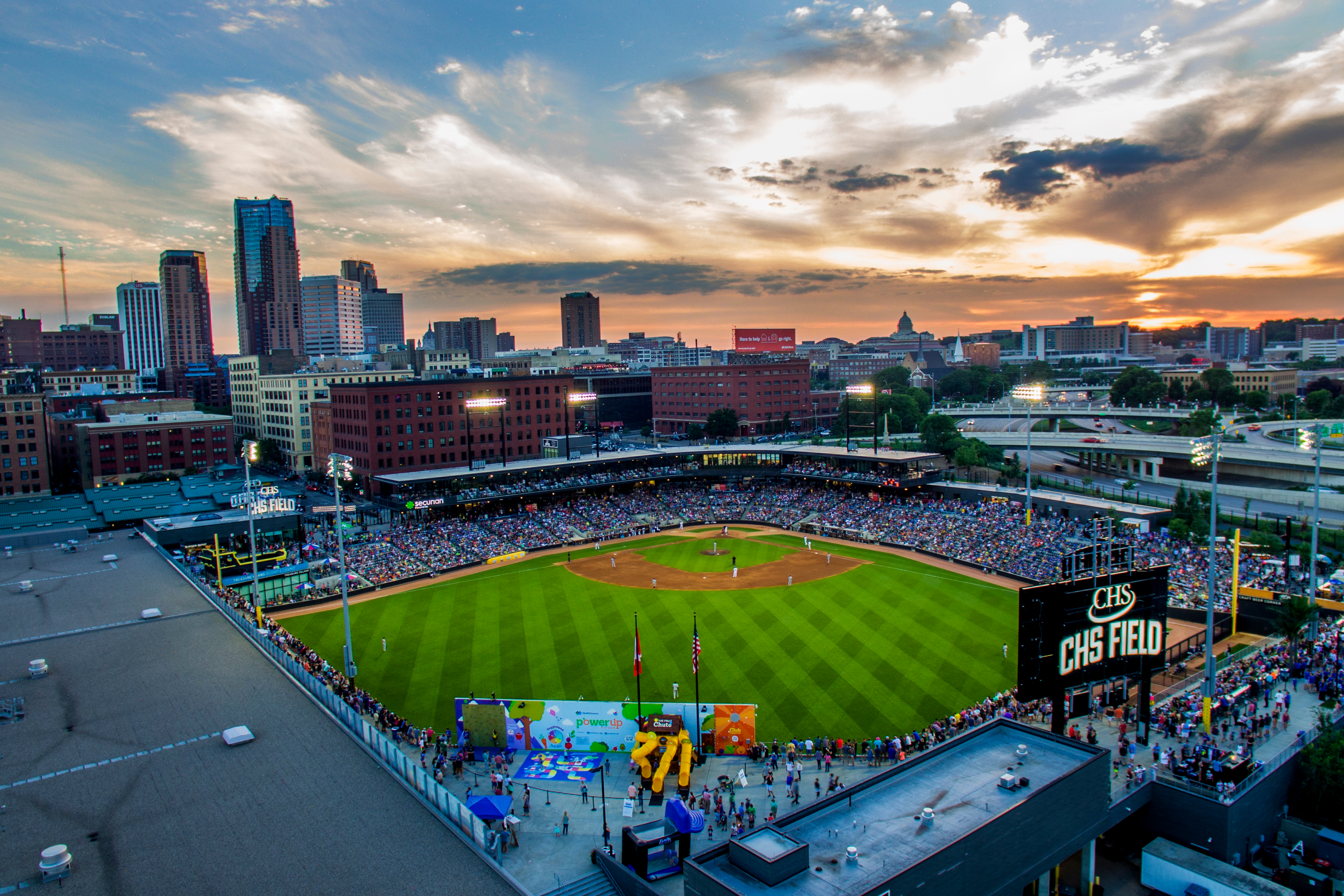 McCarthy, 33, is no more naturally suited to the seclusion and sterilized atmosphere of the alternate site than are his highly competitive charges. However, he and the team have found ways to make the most of the situation. “It’s a really difficult challenge,” McCarthy said of keeping pitchers working at a high level in simulated games that often feature fewer than six fielders and a small rotation of two or three batters per half-inning. “So we add runners on base, we’ll start them with a dirty inning, we’ll try to give them as game-like an environment as possible.” By calling out various situations and asking pitchers to work within the simulated constraints, he and other Twins staffers can kindle the competitive fire a bit even under tangibly bizarre circumstances. Even so, the day-to-day work in St. Paul isn’t an adequate replacement for minor-league competition, nor a good way to keep pitchers ready for quick recall to the big leagues. To turn the strange setting to their advantage, therefore, the team treats it almost like a constant workshop. “This can be an opportunity for development--for guys to work on things like that,” McCarthy said, noting the Rapsodo camera that sits on the ground between the mound and home plate throughout sim games. “We can give them a quicker feedback loop than, say, in a game in the major leagues, where you can’t pull your TrackMan data and look at how the pitches are moving, or locations, all of those things. We can do that in real time here, and look at those things in between innings, so we’re leveraging that.” In the majors, relievers have to be ready to pitch every day. While they’re with the alternate-site crew, the pitchers are kept on regular schedules, for both health and logistical reasons. “We’ve said, ‘hey, let’s set them on a schedule, so they know when they’re throwing.’ That also keeps us more COVID-compliant, with limited facility access and keeping guys spread out, and because we are short on players and staff,” McCarthy explained. “What we’re doing is trying to stagger that so that they have opportunities to throw on set days.” To simulate the varying urgency of game situations, though, the coaches sometimes don’t tell players whether they’ll pitch the top or bottom half of an inning until the last possible moment, forcing them to get ready quickly or stay loose for a few extra throws in the bullpen, the way they’ll have to if and when they’re needed in a competitive setting. Primarily, though, the camp can be used to extend the processes the team implemented during spring training, helping pitchers become their best selves. McCarthy talked about the way he and his colleagues have continued their work with Derek Law over the first month of the season, culminating (for now) in his inclusion on the taxi squad for this week’s trip to Cleveland. “Derek obviously had a really good spring training. We really helped him understand how to utilize his mix better,” McCarthy said. “Something that has been a strength for him is his ability to throw his breaking ball for strikes, and to locate extremely well. So we’ve just tried to maximize that, and to add a little bit of carry to the fastball. He’s been phenomenal. He’s continued to do what he did in spring training, continued to work on understanding how to use his profile best, and how to pair his pitches together.” Those have been easy changes to maintain. Whether they’ve continued to tighten and are sharp enough to withstand the vicious test of a high-leverage situation in a big-league game is yet to be seen. In the meantime, McCarthy, Toby Gardenhire, and other Twins staff are doing their best to navigate the major vestigial challenges of pandemic baseball. MORE FROM TWINS DAILY — Latest Twins coverage from our writers — Recent Twins discussion in our forums — Follow Twins Daily via Twitter, Facebook or email
 -
The Twins recalled Cody Stashak from the alternate site in St. Paul on Sunday. For Stashak, the time at CHS Field was spent honing his slider and changeup, but the key to his success might be throwing consistent, quality strikes with his fastball.Stashak’s greatest strength, as a pitcher, is the carry on his four-seam heater. With his extremely high arm slot and above-average spin rate, he can miss bats and induce weak contact at the top of the strike zone. However, his raw velocity is below-average, and his short stature and delivery combine for little extension at release. Thus, when Stashak isn’t elevating that fastball enough, the pitch flattens out and batters can tee off. In Stashak’s career, over 13 percent of the batted balls he has allowed have been classified as Barrels by Statcast, meaning that they result in hits at least half the time (and often in extra-base hits). That rate makes it hard to sustain much success at all, and especially hard to earn a high-leverage relief role, because damaging batted balls are even more problematic when the game hangs in the balance. While he was at St. Paul with the rest of the Twins’ alternate-site roster, Stashak focused primarily on his secondary stuff, according to alternate-site pitching coach Mike McCarthy. That’s one way he can keep hitters off of his fastball: by using changes of speed and eye level to keep them honest. “Throwing the changeup is still a priority for Cody,” McCarthy said. “We feel like it’s obviously an elite fastball in terms of its vertical break, but giving him an opportunity to add some depth to the changeup and get that third pitch as an option can make that [fastball] a little more of a weapon.” Stashak’s slider has also been an exceptional weapon since his big-league debut, with tight, vertical movement and a high “miss rate,” as McCarthy called it. However, the pitch has enough lateral movement to give lefties a slightly earlier hint that it’s coming, so he’s been much more effective against right-handed batters while leaning mostly on the four-seamer and breaking ball. His 35-percent career strikeout rate against righties makes him nearly elite, whereas he’s whiffed only 22 percent of lefties, an essentially average clip. Because of his vulnerability to homers, Stashak can’t be a merely average strikeout arm. He’ll be good only if his strikeout rate is great. “If we give him a third weapon and help him develop [the changeup], it’s going to be a huge advantage for him to get left-handed batters out,” McCarthy said. Last year, Stashak did increase the depth on his changeup slightly, though it still wasn’t a pitch on which he could rely consistently. His arm slot and the position he takes on the first-base side of the rubber do give him good angles for throwing the change with more vertical movement, though, and McCarthy and the Twins are optimistic that he can continue to hone that pitch while using the slider as the principal complement to his heat. Alas, one other bugaboo reared its head during Stashak’s time at the alternate site: he still makes too many mistakes with the fastball itself. No matter how well he and the team shape and tweak his other offerings, he’ll be in big trouble unless he can hammer the top of the zone with that pitch. At least twice during his stint in St. Paul, Stashak gave up home runs to teammates hitting against him. He left his appearance last Sunday at CHS Field cursing into his mitt and complaining to his catcher that he was unable to throw his fastball for strikes. In his case, that usually means missing well above the zone, or pulling the ball to the glove side and missing away from right-handed batters. Whenever that’s happening, he’s forced to use the big part of the zone with his other pitches, and the odds of hard contact rise. All three of the hard-hit balls that led to the Pirates’ multi-run rally against Stashak Sunday at Target Field came on the slider, and he didn’t throw his changeup at all during the contest. In fact, he only threw four fastballs out of his 19 pitches, a reflection of his ongoing struggle to find control and confidence on that pitch. Given his size and his style, Stashak can’t afford to trade much of his sheer power for stability or command. That doesn’t mean he can’t clean up his mechanics, but the impact of the changes he could make is likely to be small. Unless he can simply find the release point that allows him to attack the spots where he can win with that pitch, he’s going to remain an unreliable middle reliever, and he could soon find himself back in St. Paul. In the meantime, the Twins can only arm him with information and counsel patience, for a pitcher fighting both a mental and a physical battle with himself. MORE FROM TWINS DAILY — Latest Twins coverage from our writers — Recent Twins discussion in our forums — Follow Twins Daily via Twitter, Facebook or email Click here to view the article
-
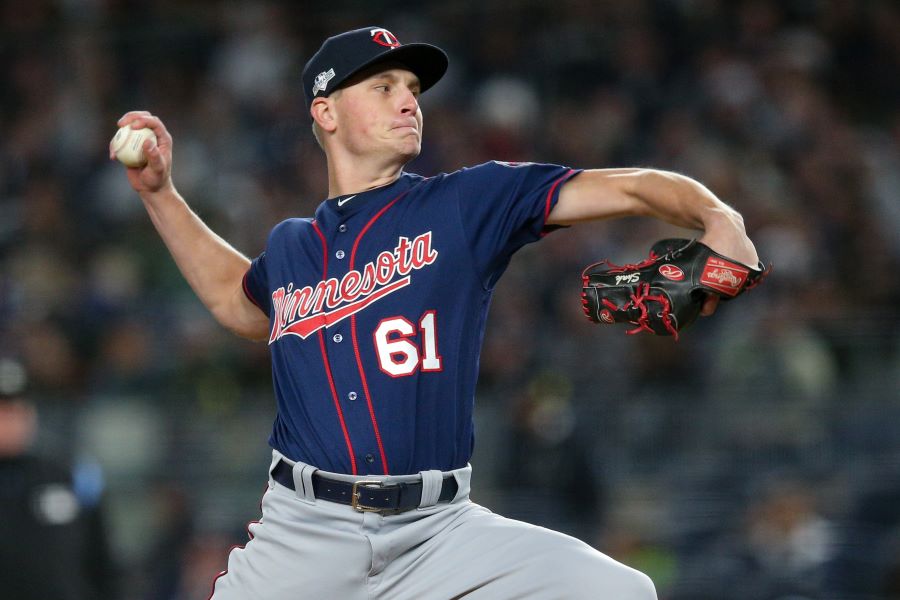 Stashak’s greatest strength, as a pitcher, is the carry on his four-seam heater. With his extremely high arm slot and above-average spin rate, he can miss bats and induce weak contact at the top of the strike zone. However, his raw velocity is below-average, and his short stature and delivery combine for little extension at release. Thus, when Stashak isn’t elevating that fastball enough, the pitch flattens out and batters can tee off. In Stashak’s career, over 13 percent of the batted balls he has allowed have been classified as Barrels by Statcast, meaning that they result in hits at least half the time (and often in extra-base hits). That rate makes it hard to sustain much success at all, and especially hard to earn a high-leverage relief role, because damaging batted balls are even more problematic when the game hangs in the balance. While he was at St. Paul with the rest of the Twins’ alternate-site roster, Stashak focused primarily on his secondary stuff, according to alternate-site pitching coach Mike McCarthy. That’s one way he can keep hitters off of his fastball: by using changes of speed and eye level to keep them honest. “Throwing the changeup is still a priority for Cody,” McCarthy said. “We feel like it’s obviously an elite fastball in terms of its vertical break, but giving him an opportunity to add some depth to the changeup and get that third pitch as an option can make that [fastball] a little more of a weapon.” Stashak’s slider has also been an exceptional weapon since his big-league debut, with tight, vertical movement and a high “miss rate,” as McCarthy called it. However, the pitch has enough lateral movement to give lefties a slightly earlier hint that it’s coming, so he’s been much more effective against right-handed batters while leaning mostly on the four-seamer and breaking ball. His 35-percent career strikeout rate against righties makes him nearly elite, whereas he’s whiffed only 22 percent of lefties, an essentially average clip. Because of his vulnerability to homers, Stashak can’t be a merely average strikeout arm. He’ll be good only if his strikeout rate is great. “If we give him a third weapon and help him develop [the changeup], it’s going to be a huge advantage for him to get left-handed batters out,” McCarthy said. Last year, Stashak did increase the depth on his changeup slightly, though it still wasn’t a pitch on which he could rely consistently. His arm slot and the position he takes on the first-base side of the rubber do give him good angles for throwing the change with more vertical movement, though, and McCarthy and the Twins are optimistic that he can continue to hone that pitch while using the slider as the principal complement to his heat. Alas, one other bugaboo reared its head during Stashak’s time at the alternate site: he still makes too many mistakes with the fastball itself. No matter how well he and the team shape and tweak his other offerings, he’ll be in big trouble unless he can hammer the top of the zone with that pitch. At least twice during his stint in St. Paul, Stashak gave up home runs to teammates hitting against him. He left his appearance last Sunday at CHS Field cursing into his mitt and complaining to his catcher that he was unable to throw his fastball for strikes. In his case, that usually means missing well above the zone, or pulling the ball to the glove side and missing away from right-handed batters. Whenever that’s happening, he’s forced to use the big part of the zone with his other pitches, and the odds of hard contact rise. All three of the hard-hit balls that led to the Pirates’ multi-run rally against Stashak Sunday at Target Field came on the slider, and he didn’t throw his changeup at all during the contest. In fact, he only threw four fastballs out of his 19 pitches, a reflection of his ongoing struggle to find control and confidence on that pitch. Given his size and his style, Stashak can’t afford to trade much of his sheer power for stability or command. That doesn’t mean he can’t clean up his mechanics, but the impact of the changes he could make is likely to be small. Unless he can simply find the release point that allows him to attack the spots where he can win with that pitch, he’s going to remain an unreliable middle reliever, and he could soon find himself back in St. Paul. In the meantime, the Twins can only arm him with information and counsel patience, for a pitcher fighting both a mental and a physical battle with himself. MORE FROM TWINS DAILY — Latest Twins coverage from our writers — Recent Twins discussion in our forums — Follow Twins Daily via Twitter, Facebook or email
 -
The Twins are in an indefinite holding pattern as they deal with an outbreak of COVID-19, but at their alternate site, action continued this weekend. Here are five takeaways from their Sunday workouts and simulated game.Blankenhorn Called Up to Taxi Squad; Kirilloff Still in St. Paul The implications of the decision are inscrutable, but the Twins added Travis Blankenhorn to their taxi squad after the postponement of their games against the Angels this weekend. Blankenhorn had not been on the initially reported taxi squad for the road trip to Anaheim and Oakland, so his absence from St. Paul is of some note, especially given the expected roster upheaval whenever the team does take the field again. Meanwhile, however, Alex Kirilloff remains in St. Paul. He took batting practice and participated in the team’s brief simulated game, getting in good swings off the likes of Derek Law and Juan Minaya. Apparently, the Twins still don’t feel that Kirilloff has built the developmental momentum they want him to have before permanently adding him to the parent club. Forgotten Man Ben Rortvedt a Solid Fallback Plan at Catcher After Ryan Jeffers’s ascendant 2020, it became easy to lose sight of Rortvedt, as the Twins appear well-fixed at catcher. Should either Jeffers or Mitch Garver suffer an injury, though, Rortvedt would be well-positioned to get the call. The lefty-swinging 23-year-old is already on the 40-man roster, which could give him a leg up over Caleb Hamilton or Tomás Telis, and on Sunday, he took Cody Stashak deep at CHS Field. He caught half the simulated game in addition to getting his licks in, and looks the part of a solid backup backstop in the majors even now. Juan Minaya’s Changeup Plays One thing CHS Field does not currently offer fans or players is a live scoreboard with velocity readings. However, it does afford fans close-up views, so it’s possible to get a quick, amateur assessment of certain pitchers’ stuff based on the way the ball comes out of their hand and on the reactions they get from hitters. Minaya was impressive in an inning-plus of work Sunday, including a changeup that flummoxed Kirilloff for a strikeout. Though he hasn’t pitched in the big leagues since 2019, Minaya was briefly an effective big-leaguer, with a fastball that sat at 94 or 95 miles per hour. His changeup was his best pitch then, too, and he used it to run reverse platoon splits. (In other words, he was better against left-handed batters than against fellow righties.) I overheard two Twins hitters talking about his stuff prior to his appearance, and they were under the impression that his fastball was sitting at 97. If true, that’s a significant development for the non-roster bullpen hopeful. Whatever speed the fastball had, though, the changeup played off it nicely. A Good Environment for Development, Perhaps; For Evaluation and Preparation, Not So Much Like the other 29 teams, the Twins are ardently making the most of the situation while they await real minor-league games. Coaches talk up the benefits of the unique setting from a development and feedback perspective. It’s not hard to buy into that, when watching a pitch sail over a Rapsodo camera a dozen feet in front of home plate, or when hearing about the way the team can offer players immediate and thorough feedback after each session. However, from every other perspective, it’s a profoundly diminished thing. Fans should attend workouts only if they’re exceptionally eager to see baseball movements and delight in the details of practice. The game-level fan experience can only be called soporific. The atmosphere is sterile. Whole swaths of the field went unmanned Sunday, as the team worked even more shorthanded than usual. No serious conclusions about any player’s ability to make key adjustments or handle game situations can be drawn from what is happening in St. Paul. Nor can any objective observer argue that those workouts are preparing players adequately for big-league contests. Everyone involved is doing their best, and it’s not a worthless exercise, but it’s even further from the optimal minor-league setting than you would imagine. Nick Gordon Doesn’t Look Like a Useful Utility Man Speaking of someone doing their best (but their best not necessarily being sufficient), Nick Gordon took some early infield practice at shortstop. It wasn’t encouraging. Persistently struggling to get off strong throws from the hole, Gordon also began dropping or mishandling balls to his backhand side at a high rate as he tried to speed up his pick and transfer. Making mistakes is why you take the extra reps, and they can make you better. At this stage of his development, though, Gordon shouldn’t be having as many problems as he was having on that play, if he’s ever to provide value with his glove on the left side of the infield. This has been the biggest problem for Gordon for a couple of years now. Ever since he settled into what looked like a low-ceiling offensive profile, the question has been whether he would be able to play anywhere but second base on a big-league infield. Unfortunately, the answer seems to be no, and the process by which he would change that at this stage is hard to envision. If the Twins hope for help from the alternate site in case of further depletion on the infield, it will probably have to come from Blankenhorn’s bat or the glove of Tzu-Wei Lin. MORE MINOR LEAGUE COVERAGE The Brightest, Anonymous Superstar: My Conversation with Tzu-Wei Lin Kirilloff Preparing for Big-League Opportunity Toby Gardenhire Is Following in His Father's Footsteps Twins Minor League Report: Depth Camp Opportunities Click here to view the article
-
5 Takeaways from Sunday's Alternate Site Action in St. Paul
Matthew Trueblood posted an article in Minor Leagues
 Blankenhorn Called Up to Taxi Squad; Kirilloff Still in St. Paul The implications of the decision are inscrutable, but the Twins added Travis Blankenhorn to their taxi squad after the postponement of their games against the Angels this weekend. Blankenhorn had not been on the initially reported taxi squad for the road trip to Anaheim and Oakland, so his absence from St. Paul is of some note, especially given the expected roster upheaval whenever the team does take the field again. Meanwhile, however, Alex Kirilloff remains in St. Paul. He took batting practice and participated in the team’s brief simulated game, getting in good swings off the likes of Derek Law and Juan Minaya. Apparently, the Twins still don’t feel that Kirilloff has built the developmental momentum they want him to have before permanently adding him to the parent club. Forgotten Man Ben Rortvedt a Solid Fallback Plan at Catcher After Ryan Jeffers’s ascendant 2020, it became easy to lose sight of Rortvedt, as the Twins appear well-fixed at catcher. Should either Jeffers or Mitch Garver suffer an injury, though, Rortvedt would be well-positioned to get the call. The lefty-swinging 23-year-old is already on the 40-man roster, which could give him a leg up over Caleb Hamilton or Tomás Telis, and on Sunday, he took Cody Stashak deep at CHS Field. He caught half the simulated game in addition to getting his licks in, and looks the part of a solid backup backstop in the majors even now. Juan Minaya’s Changeup Plays One thing CHS Field does not currently offer fans or players is a live scoreboard with velocity readings. However, it does afford fans close-up views, so it’s possible to get a quick, amateur assessment of certain pitchers’ stuff based on the way the ball comes out of their hand and on the reactions they get from hitters. Minaya was impressive in an inning-plus of work Sunday, including a changeup that flummoxed Kirilloff for a strikeout. Though he hasn’t pitched in the big leagues since 2019, Minaya was briefly an effective big-leaguer, with a fastball that sat at 94 or 95 miles per hour. His changeup was his best pitch then, too, and he used it to run reverse platoon splits. (In other words, he was better against left-handed batters than against fellow righties.) I overheard two Twins hitters talking about his stuff prior to his appearance, and they were under the impression that his fastball was sitting at 97. If true, that’s a significant development for the non-roster bullpen hopeful. Whatever speed the fastball had, though, the changeup played off it nicely. A Good Environment for Development, Perhaps; For Evaluation and Preparation, Not So Much Like the other 29 teams, the Twins are ardently making the most of the situation while they await real minor-league games. Coaches talk up the benefits of the unique setting from a development and feedback perspective. It’s not hard to buy into that, when watching a pitch sail over a Rapsodo camera a dozen feet in front of home plate, or when hearing about the way the team can offer players immediate and thorough feedback after each session. However, from every other perspective, it’s a profoundly diminished thing. Fans should attend workouts only if they’re exceptionally eager to see baseball movements and delight in the details of practice. The game-level fan experience can only be called soporific. The atmosphere is sterile. Whole swaths of the field went unmanned Sunday, as the team worked even more shorthanded than usual. No serious conclusions about any player’s ability to make key adjustments or handle game situations can be drawn from what is happening in St. Paul. Nor can any objective observer argue that those workouts are preparing players adequately for big-league contests. Everyone involved is doing their best, and it’s not a worthless exercise, but it’s even further from the optimal minor-league setting than you would imagine. Nick Gordon Doesn’t Look Like a Useful Utility Man Speaking of someone doing their best (but their best not necessarily being sufficient), Nick Gordon took some early infield practice at shortstop. It wasn’t encouraging. Persistently struggling to get off strong throws from the hole, Gordon also began dropping or mishandling balls to his backhand side at a high rate as he tried to speed up his pick and transfer. Making mistakes is why you take the extra reps, and they can make you better. At this stage of his development, though, Gordon shouldn’t be having as many problems as he was having on that play, if he’s ever to provide value with his glove on the left side of the infield. This has been the biggest problem for Gordon for a couple of years now. Ever since he settled into what looked like a low-ceiling offensive profile, the question has been whether he would be able to play anywhere but second base on a big-league infield. Unfortunately, the answer seems to be no, and the process by which he would change that at this stage is hard to envision. If the Twins hope for help from the alternate site in case of further depletion on the infield, it will probably have to come from Blankenhorn’s bat or the glove of Tzu-Wei Lin. MORE MINOR LEAGUE COVERAGE The Brightest, Anonymous Superstar: My Conversation with Tzu-Wei Lin Kirilloff Preparing for Big-League Opportunity Toby Gardenhire Is Following in His Father's Footsteps Twins Minor League Report: Depth Camp Opportunities


