


Twins Video
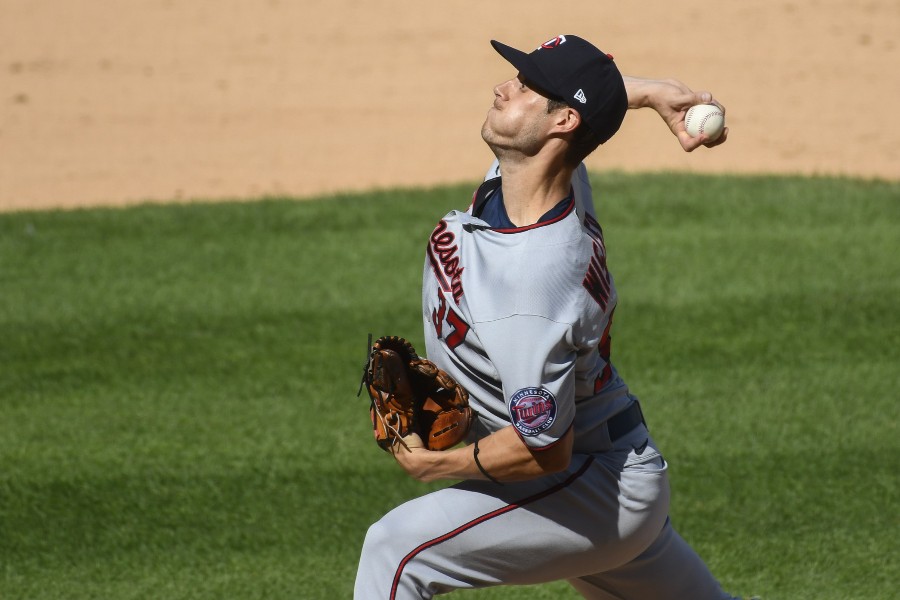
When the Twins snapped up Matt Wisler as a free agent back in November, there was little thought that he would become an important high-leverage arm for them. In fact, if spring training had gone according to plan and everyone had stayed healthy, Wisler might well have been squeezed out of the picture before he even appeared for the Twins. He could easily be elsewhere right now, trying to make things work with a sixth team in three seasons.
Instead, Wisler has pitched six scoreless innings already for the mighty Minnesota relief corps. He’s fanned nine of the 23 batters he’s faced, and he’s only allowed six total baserunners. Coming in, we knew he was a slider monster, but his track record suggested he would struggle to convert that into elite strikeout rates, let alone to manage contact and attack the zone well enough to dominate. The Twins’ vaunted pitching development machine has gotten ahold of him, though, and Wisler has made changes that give him a great chance to remain a top-tier right-handed reliever.
As recently as early 2018, Wisler was a 25-year-old starter whose stuff and prospect cachet still tantalized both the Braves and other interested teams. After he was dealt to the Reds, he finally moved to the bullpen, but neither the Reds nor the Padres (to where he returned, after they’d drafted him in 2011 and traded him to Atlanta in the Craig Kimbrel deal in April 2015) could help him tap fully into his potential for missing bats and keeping the ball in the park.
Both teams did help him, though, because as he got comfortable in a relief role, he started throwing his slider much, much more often. That pitch is his ticket to success in the big leagues, and throwing it well over 50 percent of the time is his only chance to be more than a fringe arm. After the Mariners purchased his contract in mid-2019, he took another small step forward, fanning 29 of the 95 batters he faced for Seattle. He also brought his walk rate down. However, he continued to give up way too many homers, and his ERA ballooned to over 6.00. That’s why he was freely available when the Twins called in November.
Let’s talk about where that vulnerability came from, and how he’s worked to address it. Since moving to relief, Wisler has eliminated his windup, working out of the stretch with or without runners on base. In the past, his delivery was very quick, and often, it was hurried. He had a modified slide step, a low leg kick designed to shorten his time to home plate and control the running game, but it had knock-on effects. He would break his hands almost as soon as he lifted his leg, and before sinking into his legs, he would already be moving down the mound. He could sometimes get away with this, especially while he was younger and his arm was a bit faster, because he has a very short-arm action early in his delivery, keeping the ball fairly close to his body and his arm bent.
At release, Wisler has considerable spine tilt, artificially raising his release point and arm angle but forcing him to fall off toward the first-base side of home plate. His stride pattern is fairly open, meaning that as he comes down the mound, his momentum carries him toward the first-base dugout anyway. (The spine tilt and stride pattern haven’t changed in Minnesota.) In combination with the early hand-break and rushed leg kick, that progress down the mound often led to Wisler leaving pitches up and in the middle of the strike zone.
Here’s Wisler with San Diego, just as he’s begun his delivery. Note that his foot is barely off the ground, but he’s already pulled the ball out of his glove. That front leg is already starting to drift downhill.

He’s a different pitcher, at the beginning of his delivery, in 2020. Here he is at the moment when he breaks his hands.

The leg kick isn’t just higher. It comes with a kind of gathering, balancing tilt, before he shifts into gear and heads down the mound. As he takes the ball out of the glove, his upper body is turned more from home plate, and (because he now has time to) he tucks the ball slightly in toward his rib cage before starting the spiral-staircase arm swing that gets him to his release point. He hides the ball a bit better, but more importantly, he’s giving himself time to get his arm through to his desired release point more consistently.
Even as he went slider-heavy in 2019, Wisler threw two variations of his fastball, and he rarely targeted anything more specific than “the strike zone” with it. This year, he’s purely using his slider and four-seamer, and he’s using the heat only high and on the third-base side of the plate, setting up the slider (or, as is often the case, letting the slider set up the heat).
Wisler will never be a control artist or a ground-ball guy. If you’re watching him rack up strikeouts and wondering whether that success is sustainable, though, you should lean toward believing in it. The tangible mechanical and mental changes here suggest the Twins went after him for a very specific reason, and that Wisler has put together some of the pieces that refused to gel in his previous stops.





Recommended Comments
Create an account or sign in to comment
You need to be a member in order to leave a comment
Create an account
Sign up for a new account in our community. It's easy!
Register a new accountSign in
Already have an account? Sign in here.
Sign In Now