



Matthew Trueblood
-
Posts
1,033 -
Joined
-
Last visited
Content Type
Profiles
News
Minnesota Twins Videos
2026 Minnesota Twins Top Prospects Ranking
2022 Minnesota Twins Draft Picks
Minnesota Twins Free Agent & Trade Rumors, Notes, & Tidbits
Guides & Resources
2023 Minnesota Twins Draft Picks
The Minnesota Twins Players Project
2024 Minnesota Twins Draft Picks
2025 Minnesota Twins Draft Pick Tracker
2026 Minnesota Twins Draft Tracker: Picks & Bonuses
Forums
Blogs
Events
Store
Downloads
Gallery
Everything posted by Matthew Trueblood
-
Luis Arraez put his offensive skills on full display on Opening Day, and his defensive home for the first part of 2021 became a bit clearer. Meanwhile, a contract extension 2,000 miles away further clarified what it would take for the Twins to lock up Arraez.Josh Donaldson’s hamstring tightness figures to open up even more playing time for Arraez at that position than the Twins were anticipating, at least in the short term. Manager Rocco Baldelli said even before Donaldson got hurt that he would be looking to slot Arraez into the lineup as often as possible, as the leadoff hitter. In the first game of the season, Arraez rewarded that profession of faith by collecting two hits (and having a third stolen on a dazzling defensive play) and drawing a walk. If you were dubious that the Twins would find something close to 600 plate appearances for Arraez this year (should he stay healthy enough to claim them), recent developments should have put those doubts to rest. From optioning Alex Kirilloff to starting Arraez in left field on Thursday to Baldelli’s commitment to using him as the leadoff hitter, and especially in the wake of Donaldson’s misfortune, all signs point to a vital role for Arraez in the team’s plans for the entire season. It might also be time to think beyond this season, though. In the hours just before the Angels opened their season with a 4-3 win over the White Sox, the team announced that it had signed a five-year, $26-million extension with second baseman David Fletcher. The deal could stretch to seven years and almost $40 million, as the Angels hold two club options. Fletcher, 27 next month, is three full years older than Arraez, but he’s also a year closer to free agency. Though he bats right-handed, he’s extremely similar to Arraez at the plate: below-average power, but top-tier skills in other offensive areas. No one — not even Arraez — makes contact on a higher percentage of swings than does Fletcher. He’s versatile, too, but a better defender at each infield spot than Arraez is. The Angels didn’t have extraordinary leverage over Fletcher in negotiating this deal. Though he’s a slightly late bloomer, Fletcher could have hit free agency at about the same age at which Tommy La Stella just did so. La Stella, another player very similar to Fletcher and Arraez, signed a three-year deal worth $19 million. Six and a half years ago, Fletcher signed for an above-slot $406,000 after the Angels took him in the sixth round. There’s significant value in the certainty he just gained by signing a long-term deal, but he probably would have made at least this much if he had merely gone year-to-year until reaching free agency. Moreover, he’s already made somewhere close to $1.5 million as a professional ballplayer. Though there are special circumstances involved in both Fletcher’s deal and the one Ozzie Albies signed with Atlanta two years ago, the contracts can’t be dismissed as data points in any conversation about an Arraez extension. I wrote about what an Arraez deal could look like last month, and intentionally shot a hair above the market rate, because I felt that the relevant precedents for such a deal were unfairly underselling the skill sets of the players in question, including Arraez. However, the Fletcher deal further sets that market, and at this point, I’m forced to admit that any five- or six-year deal (even with club options attached) between the Twins and Arraez would only need to guarantee the gifted hitter about $25 million. Given that reality, the Twins would be nuts not to be talking to Arraez and his representatives about getting a deal done. There is nothing to be gained by waiting. If there’s a deal to be done that will allow the Twins to capture real upside during what would otherwise be Arraez’s most expensive arbitration-eligible seasons and his early free agency, and the total cost is only the rough equivalent of Donaldson’s annual salary, then they need to pounce on the opportunity. In the meantime, Arraez will certainly be pouncing on his. However stretched he might be as an everyday third baseman, he’s secure at that position for as long as Donaldson is out, because the Twins lack a realistic alternative. Despite his limitations, Arraez is indispensable to this Twins team, and he might well prove to be a key cog for an AL Central dynasty. Given how cheaply they could ensure that, the Twins should be very excited about the prospect. MORE FROM TWINS DAILY — Latest Twins coverage from our writers — Recent Twins discussion in our forums — Follow Twins Daily via Twitter, Facebook or email Click here to view the article
-
Luis Arraez Seizes Everyday Job; Fletcher Extension Shapes Market
Matthew Trueblood posted an article in Twins
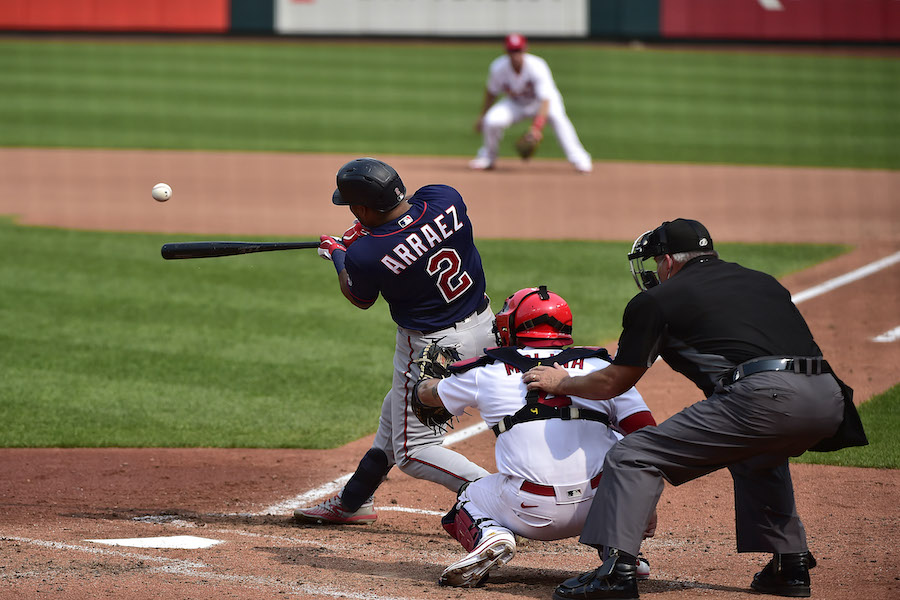 Josh Donaldson’s hamstring tightness figures to open up even more playing time for Arraez at that position than the Twins were anticipating, at least in the short term. Manager Rocco Baldelli said even before Donaldson got hurt that he would be looking to slot Arraez into the lineup as often as possible, as the leadoff hitter. In the first game of the season, Arraez rewarded that profession of faith by collecting two hits (and having a third stolen on a dazzling defensive play) and drawing a walk. If you were dubious that the Twins would find something close to 600 plate appearances for Arraez this year (should he stay healthy enough to claim them), recent developments should have put those doubts to rest. From optioning Alex Kirilloff to starting Arraez in left field on Thursday to Baldelli’s commitment to using him as the leadoff hitter, and especially in the wake of Donaldson’s misfortune, all signs point to a vital role for Arraez in the team’s plans for the entire season. It might also be time to think beyond this season, though. In the hours just before the Angels opened their season with a 4-3 win over the White Sox, the team announced that it had signed a five-year, $26-million extension with second baseman David Fletcher. The deal could stretch to seven years and almost $40 million, as the Angels hold two club options. Fletcher, 27 next month, is three full years older than Arraez, but he’s also a year closer to free agency. Though he bats right-handed, he’s extremely similar to Arraez at the plate: below-average power, but top-tier skills in other offensive areas. No one — not even Arraez — makes contact on a higher percentage of swings than does Fletcher. He’s versatile, too, but a better defender at each infield spot than Arraez is. The Angels didn’t have extraordinary leverage over Fletcher in negotiating this deal. Though he’s a slightly late bloomer, Fletcher could have hit free agency at about the same age at which Tommy La Stella just did so. La Stella, another player very similar to Fletcher and Arraez, signed a three-year deal worth $19 million. Six and a half years ago, Fletcher signed for an above-slot $406,000 after the Angels took him in the sixth round. There’s significant value in the certainty he just gained by signing a long-term deal, but he probably would have made at least this much if he had merely gone year-to-year until reaching free agency. Moreover, he’s already made somewhere close to $1.5 million as a professional ballplayer. Though there are special circumstances involved in both Fletcher’s deal and the one Ozzie Albies signed with Atlanta two years ago, the contracts can’t be dismissed as data points in any conversation about an Arraez extension. I wrote about what an Arraez deal could look like last month, and intentionally shot a hair above the market rate, because I felt that the relevant precedents for such a deal were unfairly underselling the skill sets of the players in question, including Arraez. However, the Fletcher deal further sets that market, and at this point, I’m forced to admit that any five- or six-year deal (even with club options attached) between the Twins and Arraez would only need to guarantee the gifted hitter about $25 million. Given that reality, the Twins would be nuts not to be talking to Arraez and his representatives about getting a deal done. There is nothing to be gained by waiting. If there’s a deal to be done that will allow the Twins to capture real upside during what would otherwise be Arraez’s most expensive arbitration-eligible seasons and his early free agency, and the total cost is only the rough equivalent of Donaldson’s annual salary, then they need to pounce on the opportunity. In the meantime, Arraez will certainly be pouncing on his. However stretched he might be as an everyday third baseman, he’s secure at that position for as long as Donaldson is out, because the Twins lack a realistic alternative. Despite his limitations, Arraez is indispensable to this Twins team, and he might well prove to be a key cog for an AL Central dynasty. Given how cheaply they could ensure that, the Twins should be very excited about the prospect. MORE FROM TWINS DAILY — Latest Twins coverage from our writers — Recent Twins discussion in our forums — Follow Twins Daily via Twitter, Facebook or email
 -
The Twins’ first series of 2021 finds them in a National League park, facing the NL Central favorites. Here are the probable starters, a few scouting reports, and the keys to winning the series.Probable Starting Pitchers Thursday, 1:10 PM CT: RHP Kenta Maeda vs. RHP Brandon Woodruff After giving spring test drives to some “new” pitches (he already throws them all, but was exploring the potential of increasing their usage), Maeda takes the ball for his first Opening Day start in the United States. His three-pitch mix of four-seam fastballs, sliders, and changeups was more than equal to the task of dominating the Brewers last summer, when he famously flirted with a no-hitter and struck out eight Milwaukee batters in a row. This year, the Crew has added two solid left-handed batters, in Jackie Bradley, Jr. and Kolten Wong, but Maeda’s sterling 2020 was built on becoming more unpredictable and more dominant even against lefties. If he feels good about the progress he made on his curveball throughout the Grapefruit League, he should break it out right away. Woodruff has morphed from a guy with great stuff but iffy command into a borderline ace by learning to use both his four-seam fastball and his sinker to great effect. Already armed with a nasty changeup, Woodruff becomes truly overpowering when he can command his heat. His four-seamer has exceptional rising action at the top of the zone, and misses bats as well as almost any fastball in the league. The sinker, meanwhile, manages contact and forces hitters to cover the whole plate. Saturday, 6:10 PM CT: RHP Jose Berrios vs. RHP Corbin Burnes I wrote about what I wanted to see from Berrios prior to his first start of spring training, and he checked all of those boxes. He’s showing the ability to shape his breaking ball according to the opposing hitter and the situation; the confidence to throw his changeup more often against fellow righties; and the intent to hit the outside corner against righties with his four-seamer. Now, his challenge is to carry those important developments over into games that count. When Burnes tried to be a hypermodern hurler, using his four-seamer and slider to maximize strikeouts, he was unable to stay out of the heart of the plate. Hitters noticed, and delivered ringing rebukes in the form of a barrage of home runs throughout 2019. In 2020, though, Burnes came back as a sinker-cutter guy, with the ability to aim for the middle of the plate and let the pitches veer off in opposite directions. Twins hitters will need to go to the plate knowing what they’re looking for and planning to swing early; Burnes is ruthlessly efficient about putting opponents away in two-strike counts. Sunday, 1:10 PM CT: RHP Michael Pineda vs. RHP Adrian Houser The Brewers will probably trot out their best lefty-loaded lineup against Pineda, hoping that his slider has less than its usual depth and that they can tee off on his fastball. Pineda’s changeup was quite poor in 2020, which is understandable. He’d been held out of competition for over a year, and changeups tend to rely on a level of feel and confidence that can be hard to maintain under such circumstances. Still, if Pineda wants to have a strong 2021, he needs to remaster that pitch, and his first start will be a good test. Whereas Pineda needs his changeup purely as a third pitch, though, Houser needs it just to have anything to keep left-handed hitters at bay. They bash his sinker-slider combination mercilessly, which has hampered his attempts to stick as a big-league starter—despite good velocity and movement. He tried out a new version of the change this spring, but look for the Twins to empty the bench of lefty bats (Jake Cave and Luis Arraez should almost certainly be in the lineup) to force him to prove the new offering works. Scouting the Brewers: Milwaukee breaks camp with a deeper bench than almost anyone else in the league, in terms of the sheer number of bodies Craig Counsell will have available. While Opening Day politics might dictate that Keston Hiura or Jackie Bradley, Jr. starts Thursday, Counsell will freely mix and match, platoon players, and make aggressive substitutions based on late-game situations. Dan Vogelbach, the beefy left-handed first baseman-slash-DH, lurks as a likely pinch-hitter in pretty much any key spot. If the Twins have any concerns about Hansel Robles, Jorge Alcalá, or Cody Stashak facing a tough lefty, Rocco Baldelli will need to be aware of his lineup card when he turns to them. Because of the versatility of Milwaukee’s other bench pieces, Vogelbach could bat for Hiura, or for Luis Urías, or for Lorenzo Cain. Urías takes over as the everyday shortstop, to open the season. Orlando Arcia remains in the mix, but will wait for opportunities to sub in for defense and spell Urías, whom the Brewers got in a trade with San Diego during the 2019-20 offseason. Last year. Urías didn't look like the well-respected hitting prospect he had previously been, but his bat looked much quicker this spring. Travis Shaw is back at third base, though the Brewers will use a handful of players at that position over the course of the season. His presence allows the team to load its lineup card with lefties when a righty starts, but outfielder Avisaíl García could bat for him if the Twins go to Taylor Rogers or Caleb Thielbar in a key moment. Only three teams shifted more often than did the Brewers in 2020. Look for Max Kepler to face a shift every time he steps to the plate. The same will probably be true for Miguel Sanó and for Byron Buxton. More broadly, after adding Bradley and Wong and with Cain returning from opting out of 2020, the Brewers have one of the best team defenses in baseball. The Twins will need to play some long ball in order to score. The Brewers have a deep stable of hard throwers, including all three of their starters for this series, so if Sanó’s bat remains as slow as it looked during much of the spring, he could be in for a tough series. (Then again, the sinkers Woodruff, Burnes, and Houser each throw tend to run right into Sanó’s preferred bat path.) Prediction: The first two games of this series are virtual toss-ups. The Twins are a better, deeper team, but the Brewers make excellent use of their own depth, and they have the advantage of having all of their interchangeable pieces fresh and ready for this matchup. On Sunday, though, the Twins have a clear edge, because Houser should really struggle against this Minnesota offense. If things go according to plan, the Twins should take two out of three to open 2021. Click here to view the article
-
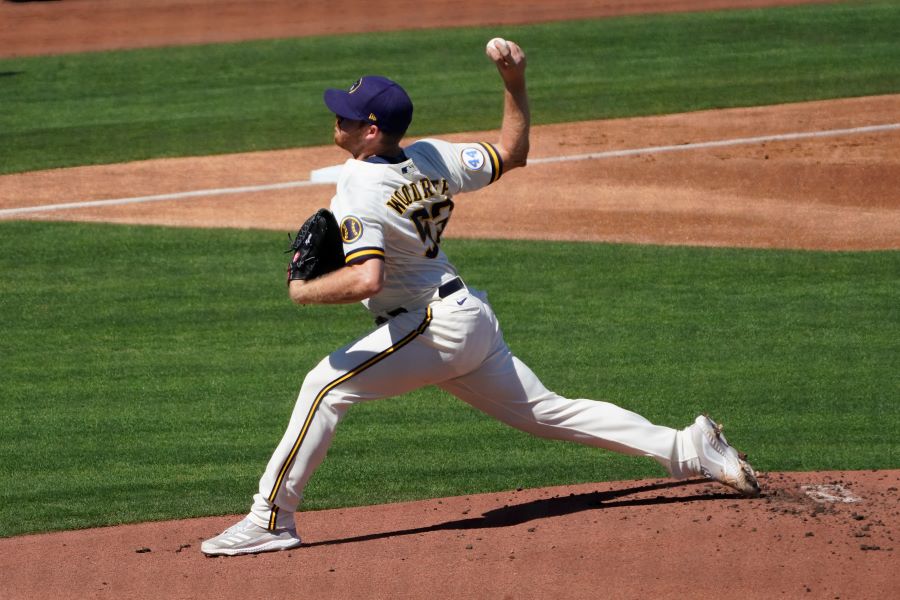 Probable Starting Pitchers Thursday, 1:10 PM CT: RHP Kenta Maeda vs. RHP Brandon Woodruff After giving spring test drives to some “new” pitches (he already throws them all, but was exploring the potential of increasing their usage), Maeda takes the ball for his first Opening Day start in the United States. His three-pitch mix of four-seam fastballs, sliders, and changeups was more than equal to the task of dominating the Brewers last summer, when he famously flirted with a no-hitter and struck out eight Milwaukee batters in a row. This year, the Crew has added two solid left-handed batters, in Jackie Bradley, Jr. and Kolten Wong, but Maeda’s sterling 2020 was built on becoming more unpredictable and more dominant even against lefties. If he feels good about the progress he made on his curveball throughout the Grapefruit League, he should break it out right away. Woodruff has morphed from a guy with great stuff but iffy command into a borderline ace by learning to use both his four-seam fastball and his sinker to great effect. Already armed with a nasty changeup, Woodruff becomes truly overpowering when he can command his heat. His four-seamer has exceptional rising action at the top of the zone, and misses bats as well as almost any fastball in the league. The sinker, meanwhile, manages contact and forces hitters to cover the whole plate. Saturday, 6:10 PM CT: RHP Jose Berrios vs. RHP Corbin Burnes I wrote about what I wanted to see from Berrios prior to his first start of spring training, and he checked all of those boxes. He’s showing the ability to shape his breaking ball according to the opposing hitter and the situation; the confidence to throw his changeup more often against fellow righties; and the intent to hit the outside corner against righties with his four-seamer. Now, his challenge is to carry those important developments over into games that count. When Burnes tried to be a hypermodern hurler, using his four-seamer and slider to maximize strikeouts, he was unable to stay out of the heart of the plate. Hitters noticed, and delivered ringing rebukes in the form of a barrage of home runs throughout 2019. In 2020, though, Burnes came back as a sinker-cutter guy, with the ability to aim for the middle of the plate and let the pitches veer off in opposite directions. Twins hitters will need to go to the plate knowing what they’re looking for and planning to swing early; Burnes is ruthlessly efficient about putting opponents away in two-strike counts. Sunday, 1:10 PM CT: RHP Michael Pineda vs. RHP Adrian Houser The Brewers will probably trot out their best lefty-loaded lineup against Pineda, hoping that his slider has less than its usual depth and that they can tee off on his fastball. Pineda’s changeup was quite poor in 2020, which is understandable. He’d been held out of competition for over a year, and changeups tend to rely on a level of feel and confidence that can be hard to maintain under such circumstances. Still, if Pineda wants to have a strong 2021, he needs to remaster that pitch, and his first start will be a good test. Whereas Pineda needs his changeup purely as a third pitch, though, Houser needs it just to have anything to keep left-handed hitters at bay. They bash his sinker-slider combination mercilessly, which has hampered his attempts to stick as a big-league starter—despite good velocity and movement. He tried out a new version of the change this spring, but look for the Twins to empty the bench of lefty bats (Jake Cave and Luis Arraez should almost certainly be in the lineup) to force him to prove the new offering works. Scouting the Brewers: Milwaukee breaks camp with a deeper bench than almost anyone else in the league, in terms of the sheer number of bodies Craig Counsell will have available. While Opening Day politics might dictate that Keston Hiura or Jackie Bradley, Jr. starts Thursday, Counsell will freely mix and match, platoon players, and make aggressive substitutions based on late-game situations. Dan Vogelbach, the beefy left-handed first baseman-slash-DH, lurks as a likely pinch-hitter in pretty much any key spot. If the Twins have any concerns about Hansel Robles, Jorge Alcalá, or Cody Stashak facing a tough lefty, Rocco Baldelli will need to be aware of his lineup card when he turns to them. Because of the versatility of Milwaukee’s other bench pieces, Vogelbach could bat for Hiura, or for Luis Urías, or for Lorenzo Cain. Urías takes over as the everyday shortstop, to open the season. Orlando Arcia remains in the mix, but will wait for opportunities to sub in for defense and spell Urías, whom the Brewers got in a trade with San Diego during the 2019-20 offseason. Last year. Urías didn't look like the well-respected hitting prospect he had previously been, but his bat looked much quicker this spring. Travis Shaw is back at third base, though the Brewers will use a handful of players at that position over the course of the season. His presence allows the team to load its lineup card with lefties when a righty starts, but outfielder Avisaíl García could bat for him if the Twins go to Taylor Rogers or Caleb Thielbar in a key moment. Only three teams shifted more often than did the Brewers in 2020. Look for Max Kepler to face a shift every time he steps to the plate. The same will probably be true for Miguel Sanó and for Byron Buxton. More broadly, after adding Bradley and Wong and with Cain returning from opting out of 2020, the Brewers have one of the best team defenses in baseball. The Twins will need to play some long ball in order to score. The Brewers have a deep stable of hard throwers, including all three of their starters for this series, so if Sanó’s bat remains as slow as it looked during much of the spring, he could be in for a tough series. (Then again, the sinkers Woodruff, Burnes, and Houser each throw tend to run right into Sanó’s preferred bat path.) Prediction: The first two games of this series are virtual toss-ups. The Twins are a better, deeper team, but the Brewers make excellent use of their own depth, and they have the advantage of having all of their interchangeable pieces fresh and ready for this matchup. On Sunday, though, the Twins have a clear edge, because Houser should really struggle against this Minnesota offense. If things go according to plan, the Twins should take two out of three to open 2021.
 -
Andrelton Simmons and Byron Buxton missing significant time is more a question of ‘when’ than one of ‘if’. That truth informed several moves the Twins made this winter, and will continue to shape their choices over the coming days and weeks.As I wrote yesterday, Simmons and Buxton rate as the two hitters facing the greatest injury risk, according to new models built by Sports Info Solutions for predicting injuries. It wasn’t the focus of yesterday’s article, but the same model also marks Josh Donaldson (unsurprisingly) as a source of above-average injury risk, thanks to his age, the chronic nature of his recent calf injuries, and his hard-nosed defensive style at third base. All three of those guys are talented enough to be worth the roll of the dice, but the Twins couldn’t rely on the trio without giving themselves more than the usual allotment of backup options. Starting second baseman Jorge Polanco is the chief backup shortstop, of course. Still, once Royce Lewis turned up with a knee injury (as it turned out, a very serious one) to open camp, the team gave a spring audition to Andrew Romine. After exercising the release clause in his deal, Romine is now a free agent again, but the Twins are comfortable with that partially thanks to Polanco’s apparent health and ease of movement this spring. Riddle does not have an immediate release clause in his minor-league deal, though, so the team can keep him around as emergency depth at that position. Keeping Luis Arraez out of left field, at least at first, was also a response to the risks associated with the infielders starting ahead of him. It was an expression of the organization’s belief (which probably still holds, for the most part) that playing time would open up for Arraez on the infield sooner than in the outfield. Speaking of the outfield, though, the team needs to have a more qualified medium-term answer for a Buxton injury than sliding Jake Cave or Max Kepler into center field. To that end, they have Keon Broxton in camp. Broxton’s non-roster deal includes a release clause, but it doesn’t kick in until midseason. That means that the Twins can carry him at the alternate site, and then as a member of the Triple-A St. Paul Saints, until the summer, unless they need him sooner. Once he’s called up, however, he can’t be optioned. For that reason, don’t expect Broxton to make the Opening Day roster; he’s being kept as dry powder for the inevitable exigency of Buxton going down. Travis Blankenhorn provides a very different shape of offensive value than Arraez, but he can be a solid left-handed batter and play a couple of infield spots if needed. Gilberto Celestino could use a healthy chunk of playing time to continue his development in the minor leagues, but he’s already on the 40-man roster. In Polanco, Arraez, Blankenhorn, Celestino, Cave, Riddle, and Broxton, the Twins have cobbled together sufficient depth to weather the injury trouble they’re likely to encounter as a result of having Simmons, Buxton, and Donaldson crowded onto one roster. That doesn’t make them invincible. Arraez or Polanco could get hurt at an interval that overlaps with the absence of Simmons or Donaldson, forcing Riddle into action early and forcing the team to waive him once everyone gets healthy. Buxton could get hurt almost right away, prompting a Broxton call-up and a subsequent DFA, leaving Celestino as the sole firewall for the rest of the year. Still, despite the significant additive, individual risks the club faces, the front office has put together a sufficiently deep and versatile crew to withstand the risks they’ve chosen. It’s tempting to think of health as a matter of pure luck; the new models from SIS belie that notion. If a team methodically assesses their health risks and builds redundancies to soften them, then it really does take a horrific streak of bad luck to turn things sour. If the Twins edge out the already-depleted White Sox in this year’s AL Central race, it might well be because they were more proactive about thwarting the likely impact of injury luck. Click here to view the article
-
How the Twins Have Hedged Against Elevated Injury Risks
Matthew Trueblood posted an article in Twins
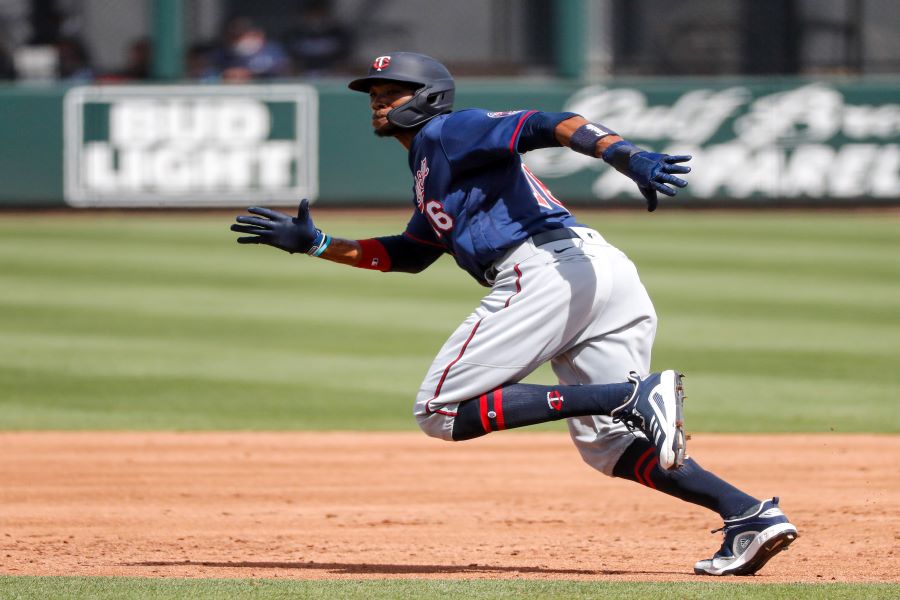 As I wrote yesterday, Simmons and Buxton rate as the two hitters facing the greatest injury risk, according to new models built by Sports Info Solutions for predicting injuries. It wasn’t the focus of yesterday’s article, but the same model also marks Josh Donaldson (unsurprisingly) as a source of above-average injury risk, thanks to his age, the chronic nature of his recent calf injuries, and his hard-nosed defensive style at third base. All three of those guys are talented enough to be worth the roll of the dice, but the Twins couldn’t rely on the trio without giving themselves more than the usual allotment of backup options. Starting second baseman Jorge Polanco is the chief backup shortstop, of course. Still, once Royce Lewis turned up with a knee injury (as it turned out, a very serious one) to open camp, the team gave a spring audition to Andrew Romine. After exercising the release clause in his deal, Romine is now a free agent again, but the Twins are comfortable with that partially thanks to Polanco’s apparent health and ease of movement this spring. Riddle does not have an immediate release clause in his minor-league deal, though, so the team can keep him around as emergency depth at that position. Keeping Luis Arraez out of left field, at least at first, was also a response to the risks associated with the infielders starting ahead of him. It was an expression of the organization’s belief (which probably still holds, for the most part) that playing time would open up for Arraez on the infield sooner than in the outfield. Speaking of the outfield, though, the team needs to have a more qualified medium-term answer for a Buxton injury than sliding Jake Cave or Max Kepler into center field. To that end, they have Keon Broxton in camp. Broxton’s non-roster deal includes a release clause, but it doesn’t kick in until midseason. That means that the Twins can carry him at the alternate site, and then as a member of the Triple-A St. Paul Saints, until the summer, unless they need him sooner. Once he’s called up, however, he can’t be optioned. For that reason, don’t expect Broxton to make the Opening Day roster; he’s being kept as dry powder for the inevitable exigency of Buxton going down. Travis Blankenhorn provides a very different shape of offensive value than Arraez, but he can be a solid left-handed batter and play a couple of infield spots if needed. Gilberto Celestino could use a healthy chunk of playing time to continue his development in the minor leagues, but he’s already on the 40-man roster. In Polanco, Arraez, Blankenhorn, Celestino, Cave, Riddle, and Broxton, the Twins have cobbled together sufficient depth to weather the injury trouble they’re likely to encounter as a result of having Simmons, Buxton, and Donaldson crowded onto one roster. That doesn’t make them invincible. Arraez or Polanco could get hurt at an interval that overlaps with the absence of Simmons or Donaldson, forcing Riddle into action early and forcing the team to waive him once everyone gets healthy. Buxton could get hurt almost right away, prompting a Broxton call-up and a subsequent DFA, leaving Celestino as the sole firewall for the rest of the year. Still, despite the significant additive, individual risks the club faces, the front office has put together a sufficiently deep and versatile crew to withstand the risks they’ve chosen. It’s tempting to think of health as a matter of pure luck; the new models from SIS belie that notion. If a team methodically assesses their health risks and builds redundancies to soften them, then it really does take a horrific streak of bad luck to turn things sour. If the Twins edge out the already-depleted White Sox in this year’s AL Central race, it might well be because they were more proactive about thwarting the likely impact of injury luck.
 -
According to a new model for injury prediction from Sports Info Solutions, Andrelton Simmons is the position player most likely to miss time due to injury in 2021. Next on the list? Byron Buxton. We talked to a co-creator of the model to find out why.Obviously, it will come as no great shock to Twins fans that Buxton is considered one of the league's biggest injury risks. He's battled concussion issues, shoulder injuries, and wrist trouble. He's suffered from back spasms, had toe trouble, and strained his groin. He's even had migraines, perhaps as a secondary symptom of repeated concussions. Simmons is also known for his fragility, but since he's new in town, Twins fans might be surprised to learn that he is not only more likely to get hurt than Buxton, but more likely than any other big-league regular. Nonetheless, the highly sophisticated system co-created by Sports Info Solutions (SIS) colleagues John Shirley and Matt Manocherian says precisely that. To find out more, I talked to Shirley about how the analysis was performed, and on what it's based. Video scouts employed by SIS watch every big-league game, every season. As far back as 2015, they have logged not only the movements and actions on every play of each game, but also all injury-related events. According to Shirley, this ranges from the obvious (and easily found elsewhere) like players being helped off the field with major leg injuries to the almost unnoticeable (and rarely logged), like a player rolling their ankle on a base but staying in the game, or being hit by a pitch in a certain body part, or grabbing their arm between pitches. All of those injury events are catalogued and cross-referenced with other sources, such as injured list transactions. Where needed, the company's injury coordinator, John Verros, follows up on the report. "For instance," Shirley said, "John might check whether a player rolled an ankle inward or outward, and adjust the prognosis on that basis. It's that level of detail." With that extremely detailed database in place, the co-creators separated hitters from pitchers, to build distinct models for the two player types. For each, they then used machine learning techniques to train the database to predict injuries over various periods—one month, two months, a full season. Shirley noted that the number of layers and data points involved make it difficult to boil down any of the model's findings to a simple explanation. That's reasonable; that web of interdependencies is one reason why it's so hard to predict injuries at all. However, with Simmons, there are certain markers that pushed him toward the top of the list. "I think just that he's such a high-usage player," Shirley said, noting that Simmons "makes a lot of diving plays, covers a lot of ground, is kind of willing to throw his body around a bit." Much of that can also describe Buxton, of course, which has fueled many of his own injury issues over the years. Shirley also noted that, since Simmons has had ankle injuries in consecutive seasons, the model takes not of the risk that such issues can become chronic, or that they can cause injuries at different points in a player's kinetic chain. Both Simmons and Buxton are elite defenders. That, as it turns out, can be a leading indicator of injury problems. Shirley's use of the term "high-usage player" is telling. In other sports, we have become accustomed to the idea that some players bear much heavier workloads than others, even on a per-play basis. Those players are more exposed to injury risk. The same is true in baseball, in ways we might not have fully appreciated until now. Because Simmons and Buxton can get to so many balls, they push their bodies to the limit in efforts to do so. That comes at a higher cost than anyone fully understood, prior to the collection of this much detailed information and the presentation of the findings it fueled. One of the surprising things they found, Shirley said, was that the model often slightly decreased injury risk as players aged. Traditionally, we imagine that players grow more vulnerable to injuries as they age; our bodies break more easily and recover more slowly after age 25. However, players also change their behavior as they age. No longer being able to make certain plays can encourage a guy not to overextend themselves, and they can become more durable even as they become (slightly) less valuable on a per-play basis. For now, Simmons and Buxton are as likely as any other players in baseball to get hurt and miss time. That should sour any solace a Twins fan was finding in the White Sox's misfortune this week. The good news, though, is that the Twins are aware of this, too, and have built their club accordingly. Tomorrow, we'll discuss the implications of these findings when mapping the roster, for Opening Day and beyond. MORE FROM TWINS DAILY — Latest Twins coverage from our writers — Recent Twins discussion in our forums — Follow Twins Daily via Twitter, Facebook or email Click here to view the article
-
New Research Shows Two Twins Are Biggest Injury Risks in MLB
Matthew Trueblood posted an article in Twins
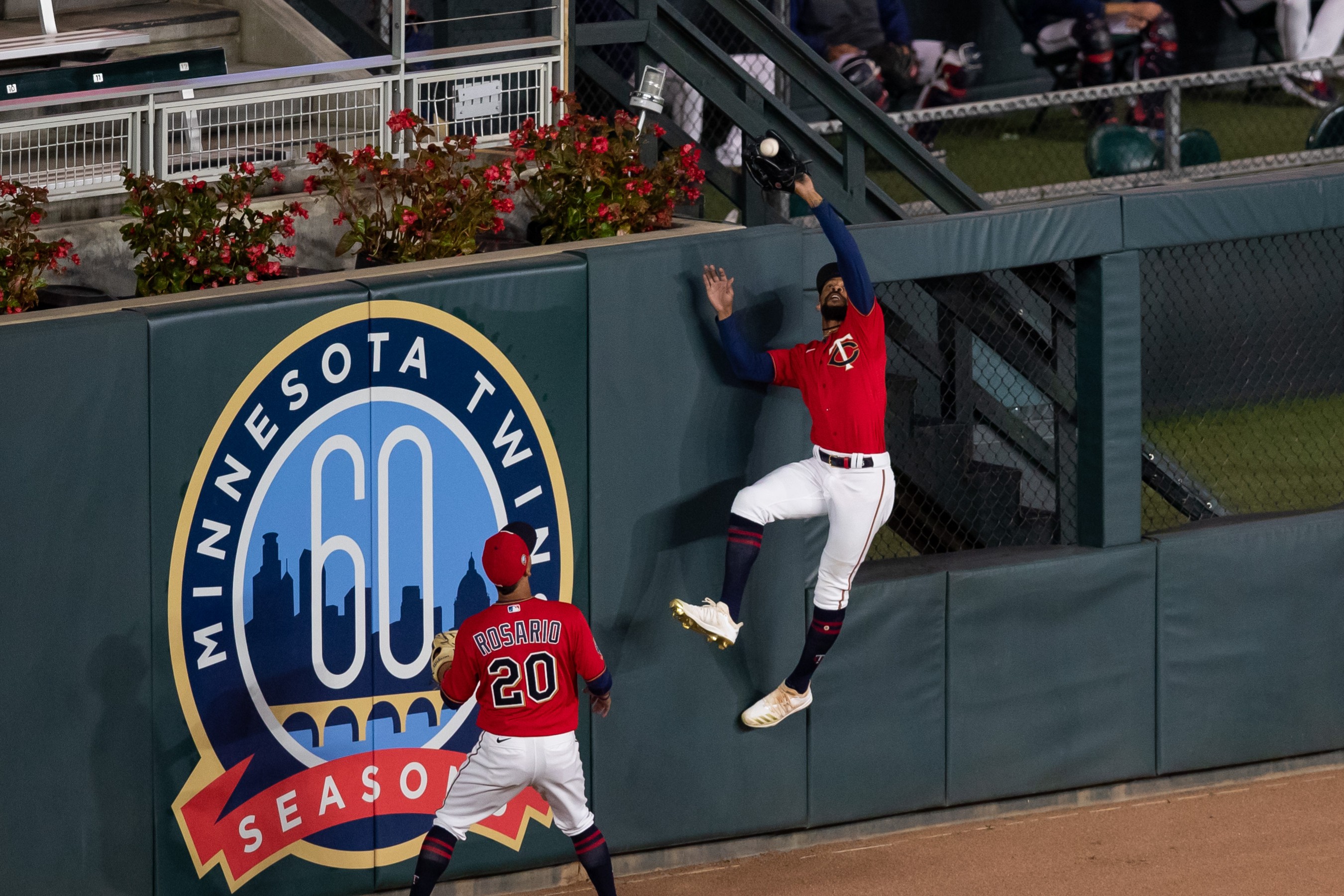 Obviously, it will come as no great shock to Twins fans that Buxton is considered one of the league's biggest injury risks. He's battled concussion issues, shoulder injuries, and wrist trouble. He's suffered from back spasms, had toe trouble, and strained his groin. He's even had migraines, perhaps as a secondary symptom of repeated concussions. Simmons is also known for his fragility, but since he's new in town, Twins fans might be surprised to learn that he is not only more likely to get hurt than Buxton, but more likely than any other big-league regular. Nonetheless, the highly sophisticated system co-created by Sports Info Solutions (SIS) colleagues John Shirley and Matt Manocherian says precisely that. To find out more, I talked to Shirley about how the analysis was performed, and on what it's based. Video scouts employed by SIS watch every big-league game, every season. As far back as 2015, they have logged not only the movements and actions on every play of each game, but also all injury-related events. According to Shirley, this ranges from the obvious (and easily found elsewhere) like players being helped off the field with major leg injuries to the almost unnoticeable (and rarely logged), like a player rolling their ankle on a base but staying in the game, or being hit by a pitch in a certain body part, or grabbing their arm between pitches. All of those injury events are catalogued and cross-referenced with other sources, such as injured list transactions. Where needed, the company's injury coordinator, John Verros, follows up on the report. "For instance," Shirley said, "John might check whether a player rolled an ankle inward or outward, and adjust the prognosis on that basis. It's that level of detail." With that extremely detailed database in place, the co-creators separated hitters from pitchers, to build distinct models for the two player types. For each, they then used machine learning techniques to train the database to predict injuries over various periods—one month, two months, a full season. Shirley noted that the number of layers and data points involved make it difficult to boil down any of the model's findings to a simple explanation. That's reasonable; that web of interdependencies is one reason why it's so hard to predict injuries at all. However, with Simmons, there are certain markers that pushed him toward the top of the list. "I think just that he's such a high-usage player," Shirley said, noting that Simmons "makes a lot of diving plays, covers a lot of ground, is kind of willing to throw his body around a bit." Much of that can also describe Buxton, of course, which has fueled many of his own injury issues over the years. Shirley also noted that, since Simmons has had ankle injuries in consecutive seasons, the model takes not of the risk that such issues can become chronic, or that they can cause injuries at different points in a player's kinetic chain. Both Simmons and Buxton are elite defenders. That, as it turns out, can be a leading indicator of injury problems. Shirley's use of the term "high-usage player" is telling. In other sports, we have become accustomed to the idea that some players bear much heavier workloads than others, even on a per-play basis. Those players are more exposed to injury risk. The same is true in baseball, in ways we might not have fully appreciated until now. Because Simmons and Buxton can get to so many balls, they push their bodies to the limit in efforts to do so. That comes at a higher cost than anyone fully understood, prior to the collection of this much detailed information and the presentation of the findings it fueled. One of the surprising things they found, Shirley said, was that the model often slightly decreased injury risk as players aged. Traditionally, we imagine that players grow more vulnerable to injuries as they age; our bodies break more easily and recover more slowly after age 25. However, players also change their behavior as they age. No longer being able to make certain plays can encourage a guy not to overextend themselves, and they can become more durable even as they become (slightly) less valuable on a per-play basis. For now, Simmons and Buxton are as likely as any other players in baseball to get hurt and miss time. That should sour any solace a Twins fan was finding in the White Sox's misfortune this week. The good news, though, is that the Twins are aware of this, too, and have built their club accordingly. Tomorrow, we'll discuss the implications of these findings when mapping the roster, for Opening Day and beyond. MORE FROM TWINS DAILY — Latest Twins coverage from our writers — Recent Twins discussion in our forums — Follow Twins Daily via Twitter, Facebook or email
 -
In his start Monday, José Berríos had an average spin rate of 2,304 revolutions per minute on his four-seam fastball. That was his highest spin rate in a start since Opening Day 2019. It’s a continuation of an encouraging change he made late last year.Because of his arm action and the other pitches in his repertoire, Berríos has never had an especially consistent feel for spinning his four-seamer at the top of the strike zone. He’s shorter than the average starting pitcher, but even adjusting for that fact, he’s tended to release the ball at a relatively low height, indicating a three-quarter arm slot and giving his fastball some tailing action, rather than pure ride. That’s been especially true since his last significant mechanical overhaul, in 2018. In his final three regular-season starts of 2020, however, Berríos changed something. He altered his arm angle slightly, raising it to a more overhand slot, and had his three highest average release points of the season in those starts. That matters, because when a pitcher releases the ball higher, with a higher arm angle, their fastball runs less to the arm side. Given Berríos’s style of delivery, a higher release point will also tend to lead to higher spin rates and more rising action, because the hurler reaches further through release, letting it off their fingertips more naturally. That’s exactly what happened at the end of 2020. Berríos had averaged under 2,190 RPM on his heater through mid-September, but that number rose to 2,291 in his September 25 start, when he had his highest single-game release point of the season, at 5.63 feet. In that game, he only got six non-contact strikes on 22 four-seam fastballs, but that was a promising game for that pitch. This spring, Berríos has only increased his emphasis on this skill. He’s had three starts tracked by Statcast, including Monday’s, and they are three of the four starts of his whole career in which he’s had the highest average release point. His spin rates are markedly higher. The results were more in line with the process on Monday, too: he got 11 non-contact strikes on 29 four-seamers. As I wrote earlier this month, Berríos came into the spring with three key mandates: to hit spots on the glove side of the plate with his four-seamer, to achieve the 12-to-6 shape he’s sought on his curveball, and to use his changeup more often against right-handed batters. He’s now doing all three. Continuing to get on top of his fastball and curve will only augment his efforts to sustain each of those skills, too, because obviously, a more overhand slot should yield a more vertical curve. That’s exactly what it’s done, and with Berríos executing better at the top of the zone because of his higher-spin heat, hitters are going to have to commit too soon to pick up the breaking ball. He’ll never have a classic overhand delivery, and that’s fine. Berríos’s deception and the tricky angles he creates by working from the third-base edge of the rubber make him a tough at-bat for opposing hitters. If he can keep his release point high, though, he’s going to hit his targets and miss bats more frequently, and he might make a leap to the next level in 2021. MORE FROM TWINS DAILY — Latest Twins coverage from our writers — Recent Twins discussion in our forums — Follow Twins Daily via Twitter, Facebook or email Click here to view the article
-
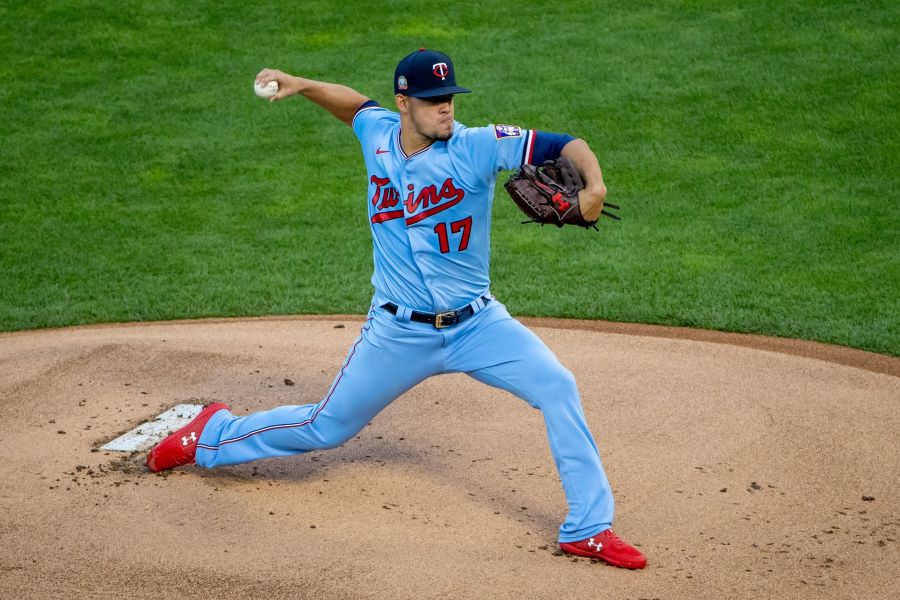 Because of his arm action and the other pitches in his repertoire, Berríos has never had an especially consistent feel for spinning his four-seamer at the top of the strike zone. He’s shorter than the average starting pitcher, but even adjusting for that fact, he’s tended to release the ball at a relatively low height, indicating a three-quarter arm slot and giving his fastball some tailing action, rather than pure ride. That’s been especially true since his last significant mechanical overhaul, in 2018. In his final three regular-season starts of 2020, however, Berríos changed something. He altered his arm angle slightly, raising it to a more overhand slot, and had his three highest average release points of the season in those starts. That matters, because when a pitcher releases the ball higher, with a higher arm angle, their fastball runs less to the arm side. Given Berríos’s style of delivery, a higher release point will also tend to lead to higher spin rates and more rising action, because the hurler reaches further through release, letting it off their fingertips more naturally. That’s exactly what happened at the end of 2020. Berríos had averaged under 2,190 RPM on his heater through mid-September, but that number rose to 2,291 in his September 25 start, when he had his highest single-game release point of the season, at 5.63 feet. In that game, he only got six non-contact strikes on 22 four-seam fastballs, but that was a promising game for that pitch. This spring, Berríos has only increased his emphasis on this skill. He’s had three starts tracked by Statcast, including Monday’s, and they are three of the four starts of his whole career in which he’s had the highest average release point. His spin rates are markedly higher. The results were more in line with the process on Monday, too: he got 11 non-contact strikes on 29 four-seamers. As I wrote earlier this month, Berríos came into the spring with three key mandates: to hit spots on the glove side of the plate with his four-seamer, to achieve the 12-to-6 shape he’s sought on his curveball, and to use his changeup more often against right-handed batters. He’s now doing all three. Continuing to get on top of his fastball and curve will only augment his efforts to sustain each of those skills, too, because obviously, a more overhand slot should yield a more vertical curve. That’s exactly what it’s done, and with Berríos executing better at the top of the zone because of his higher-spin heat, hitters are going to have to commit too soon to pick up the breaking ball. He’ll never have a classic overhand delivery, and that’s fine. Berríos’s deception and the tricky angles he creates by working from the third-base edge of the rubber make him a tough at-bat for opposing hitters. If he can keep his release point high, though, he’s going to hit his targets and miss bats more frequently, and he might make a leap to the next level in 2021. MORE FROM TWINS DAILY — Latest Twins coverage from our writers — Recent Twins discussion in our forums — Follow Twins Daily via Twitter, Facebook or email
 -
When it comes to infield shifts, teams aren’t simply all-in or out on the idea. Several teams shift more than average against certain hitters, but less than average against others. Look for the Twins to join that group in 2021.In 2020, the Miami Marlins shifted almost 42 percent of the time against right-handed batters, the highest frequency in the majors. Against lefties, however, only four teams shifted less often than Don Mattingly’s Fish. They were the only team in baseball who shifted more often against righties than against lefties, in absolute terms. Meanwhile, the Giants, Reds, and Mariners all shifted less than 11 percent of the time against right-handed batters, but over 64 percent of the time against lefties. They were clustered near the bottom of the league in terms of shifts against half of all hitters, but just as close to the top of the league against the other half. The Twins shifted seventh-most in baseball in 2020. They deployed more shifts against lefties (55 percent of the time) than against righties (31.6 percent), but in relative terms, that meant that they leaned toward righties. They were seventh in the league in shifting on righties, but 11th against lefties. That was in a season in which Josh Donaldson was often unavailable. This winter, they went out and added Andrelton Simmons as Donaldson’s partner on the left side of the infield. Meanwhile, whatever hopes the team harbored for the players they have shoved across to the right side of the diamond, Miguel Sano and Jorge Polanco do not look like a strong pairing. Expect the Twins to become much more similar to the Giants, Reds, and Mariners in 2021, in terms of defensive positioning. They might still not reach those extremes, but one reason for building as strong a left side as Simmons and Donaldson should be is to reduce the need to shift against righties. Against lefties, on the other hand, the availability of Simmons only increases the team’s incentive to shift. Putting a player with his skills on the side of the diamond where the ball is most likely to be hit is a no-brainer. Many things go into the process of mapping defensive alignments and strategies. It would be too simplistic to say that the Twins will stop shifting against right-handers because of their Fielding Bible Award-caliber shortstop and third baseman, and we can’t assume they’ll dramatically increase their rate of shifts against lefties, either. However, the direction in which both of those numbers are likely to move seems clear, and they should combine to move another number. Expect the Twins to turn more of their ground balls into outs in 2021, after they fell short of their own goals in that area in both 2019 and 2020. MORE FROM TWINS DAILY — Latest Twins coverage from our writers — Recent Twins discussion in our forums — Follow Twins Daily via Twitter, Facebook or email Click here to view the article
-
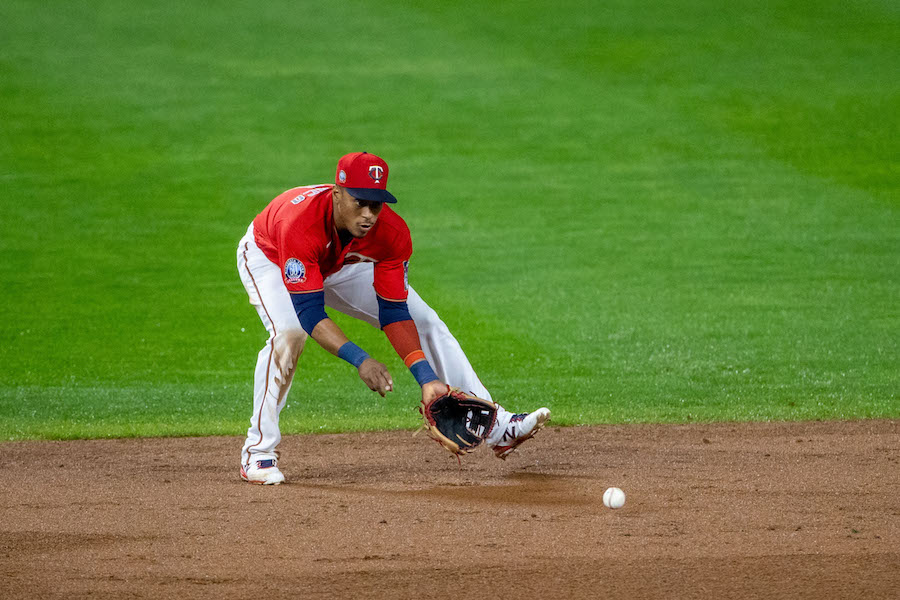 In 2020, the Miami Marlins shifted almost 42 percent of the time against right-handed batters, the highest frequency in the majors. Against lefties, however, only four teams shifted less often than Don Mattingly’s Fish. They were the only team in baseball who shifted more often against righties than against lefties, in absolute terms. Meanwhile, the Giants, Reds, and Mariners all shifted less than 11 percent of the time against right-handed batters, but over 64 percent of the time against lefties. They were clustered near the bottom of the league in terms of shifts against half of all hitters, but just as close to the top of the league against the other half. The Twins shifted seventh-most in baseball in 2020. They deployed more shifts against lefties (55 percent of the time) than against righties (31.6 percent), but in relative terms, that meant that they leaned toward righties. They were seventh in the league in shifting on righties, but 11th against lefties. That was in a season in which Josh Donaldson was often unavailable. This winter, they went out and added Andrelton Simmons as Donaldson’s partner on the left side of the infield. Meanwhile, whatever hopes the team harbored for the players they have shoved across to the right side of the diamond, Miguel Sano and Jorge Polanco do not look like a strong pairing. Expect the Twins to become much more similar to the Giants, Reds, and Mariners in 2021, in terms of defensive positioning. They might still not reach those extremes, but one reason for building as strong a left side as Simmons and Donaldson should be is to reduce the need to shift against righties. Against lefties, on the other hand, the availability of Simmons only increases the team’s incentive to shift. Putting a player with his skills on the side of the diamond where the ball is most likely to be hit is a no-brainer. Many things go into the process of mapping defensive alignments and strategies. It would be too simplistic to say that the Twins will stop shifting against right-handers because of their Fielding Bible Award-caliber shortstop and third baseman, and we can’t assume they’ll dramatically increase their rate of shifts against lefties, either. However, the direction in which both of those numbers are likely to move seems clear, and they should combine to move another number. Expect the Twins to turn more of their ground balls into outs in 2021, after they fell short of their own goals in that area in both 2019 and 2020. MORE FROM TWINS DAILY — Latest Twins coverage from our writers — Recent Twins discussion in our forums — Follow Twins Daily via Twitter, Facebook or email
 -
This spring, active Statcast systems have tracked at least some pitches for 27 MLB teams. Among them, the Twins are last in both average release extension and average spin rate on fastballs. What does that mean? What does it tell us about the team?First of all, let’s be clear: these are small, selective samples. Because only 11 teams’ home games are tracked by Statcast this spring, many clubs have only had small percentages of their total pitches measured and reported for our study. That means that certain key pitchers on a given roster might not have had any results captured at all. Meanwhile, everyone is using pitchers who won’t be factors during the regular season, and those hurlers are mixed right into the dataset. Any spring training data should be taken with a grain of salt. Still, you don’t have to trust these numbers to believe that the Twins lag the field in getting extension and imparting spin on fastballs. In 2020, they were 22nd in average release extension (in other words, the distance in front of the rubber at which the ball actually leaves a pitcher’s hand) and 25th in average spin rate. If you’ve been laboring under the belief that Minnesota actively seeks out and acquires pitchers with spin rate in mind, you’ve been using too local a lens to view what is a global phenomenon. It’s not that the Twins don’t like pitchers who release the ball closer to home plate, of course. Nor is it the case that they actively disdain high-spin heaters. They did target Rich Hill last winter, and Hill famously makes excellent use of spin to give his pedestrian fastball unexpected hop. They have long been high on Lewis Thorpe, who has by far the best extension on the roster so far this spring and led them in that category last year, too. (The next two players on that leaderboard for 2020, for the record, were Trevor May and Zack Littell. Like Hill, they departed this winter as free agents, and the team made little effort to retain any of the three.) Rather, your takeaway from this should be twofold. Firstly: every skill and trait a given player possesses has a certain price in the marketplace of baseball talent. This is related to the cliché summation of Moneyball, which reduces everything the A’s were doing at that time to the exercise of identifying and attacking market inefficiencies. To acquire pitchers who excel in the area of extension or spin, the Twins would have to outbid other teams for those traits, and they might simply feel that the cost of those traits is currently higher than is warranted. Secondly, though, it’s worth noting that the team also isn’t emphasizing extension or spin in its development of internal pitching options. Jorge Alcalá, Randy Dobnak, and Cody Stashak have well below-average extension. Dobnak, Michael Pineda, Taylor Rogers, and José Berríos are all low-spin guys. Part of that is the fact that Dobnak, Rogers, and Berríos all rely on sinkers, for which neither extension nor spin rate is as important as they each are for the four-seamer. Broadly speaking, the Twins have encouraged their pitchers to maintain two distinct fastballs, and they’ve prioritized command. Some of the mechanical changes they’ve helped pitchers make have improved their command and their ability to work east and west, at the expense of extension. It’s fairly clear that the team thinks raw velocity, deception, and location are more important than extension and spin. I agree with them on those points. Those are minority opinions in the modern game, which has allowed the team to acquire pitchers who do the things the team likes best very well, at relatively low cost. It might be that the team intends to eventually pivot to a more north-south, power-centric, spin-obsessed pitching plan. As other teams stop prioritizing those things so highly, and as automatic strike zones proliferate and eventually come to the big leagues, that shift might become advisable, or even necessary. For now, though, the Twins are quietly amassing a pitching staff that has success in old-fashioned ways, even as they use cutting-edge tools and remain open-minded about new concepts in the discipline of pitching. MORE FROM TWINS DAILY — Latest Twins coverage from our writers — Recent Twins discussion in our forums — Follow Twins Daily via Twitter, Facebook or email Click here to view the article
-
The Surprising Truth About the Twins, Spin Rate, and Release Extension
Matthew Trueblood posted an article in Twins
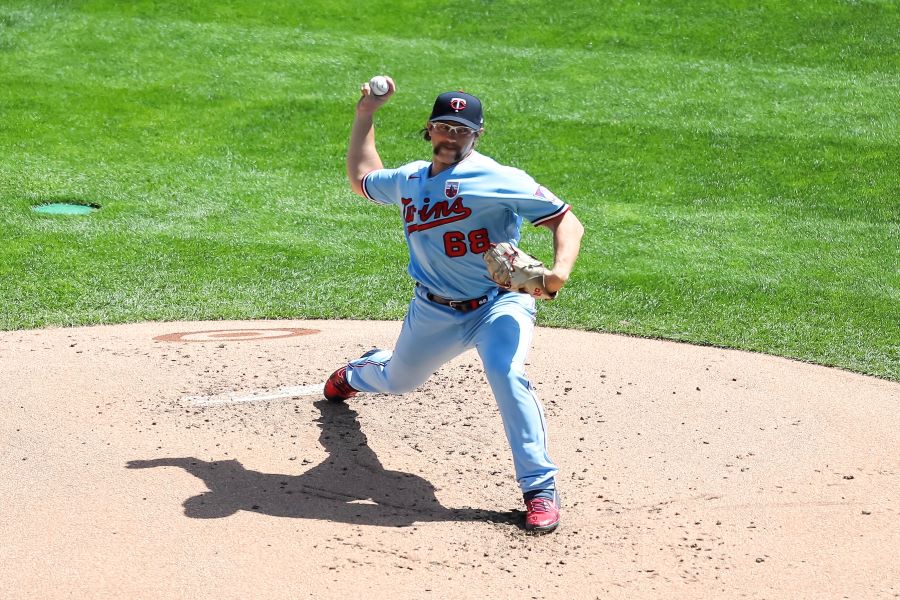 First of all, let’s be clear: these are small, selective samples. Because only 11 teams’ home games are tracked by Statcast this spring, many clubs have only had small percentages of their total pitches measured and reported for our study. That means that certain key pitchers on a given roster might not have had any results captured at all. Meanwhile, everyone is using pitchers who won’t be factors during the regular season, and those hurlers are mixed right into the dataset. Any spring training data should be taken with a grain of salt. Still, you don’t have to trust these numbers to believe that the Twins lag the field in getting extension and imparting spin on fastballs. In 2020, they were 22nd in average release extension (in other words, the distance in front of the rubber at which the ball actually leaves a pitcher’s hand) and 25th in average spin rate. If you’ve been laboring under the belief that Minnesota actively seeks out and acquires pitchers with spin rate in mind, you’ve been using too local a lens to view what is a global phenomenon. It’s not that the Twins don’t like pitchers who release the ball closer to home plate, of course. Nor is it the case that they actively disdain high-spin heaters. They did target Rich Hill last winter, and Hill famously makes excellent use of spin to give his pedestrian fastball unexpected hop. They have long been high on Lewis Thorpe, who has by far the best extension on the roster so far this spring and led them in that category last year, too. (The next two players on that leaderboard for 2020, for the record, were Trevor May and Zack Littell. Like Hill, they departed this winter as free agents, and the team made little effort to retain any of the three.) Rather, your takeaway from this should be twofold. Firstly: every skill and trait a given player possesses has a certain price in the marketplace of baseball talent. This is related to the cliché summation of Moneyball, which reduces everything the A’s were doing at that time to the exercise of identifying and attacking market inefficiencies. To acquire pitchers who excel in the area of extension or spin, the Twins would have to outbid other teams for those traits, and they might simply feel that the cost of those traits is currently higher than is warranted. Secondly, though, it’s worth noting that the team also isn’t emphasizing extension or spin in its development of internal pitching options. Jorge Alcalá, Randy Dobnak, and Cody Stashak have well below-average extension. Dobnak, Michael Pineda, Taylor Rogers, and José Berríos are all low-spin guys. Part of that is the fact that Dobnak, Rogers, and Berríos all rely on sinkers, for which neither extension nor spin rate is as important as they each are for the four-seamer. Broadly speaking, the Twins have encouraged their pitchers to maintain two distinct fastballs, and they’ve prioritized command. Some of the mechanical changes they’ve helped pitchers make have improved their command and their ability to work east and west, at the expense of extension. It’s fairly clear that the team thinks raw velocity, deception, and location are more important than extension and spin. I agree with them on those points. Those are minority opinions in the modern game, which has allowed the team to acquire pitchers who do the things the team likes best very well, at relatively low cost. It might be that the team intends to eventually pivot to a more north-south, power-centric, spin-obsessed pitching plan. As other teams stop prioritizing those things so highly, and as automatic strike zones proliferate and eventually come to the big leagues, that shift might become advisable, or even necessary. For now, though, the Twins are quietly amassing a pitching staff that has success in old-fashioned ways, even as they use cutting-edge tools and remain open-minded about new concepts in the discipline of pitching. MORE FROM TWINS DAILY — Latest Twins coverage from our writers — Recent Twins discussion in our forums — Follow Twins Daily via Twitter, Facebook or email
 -
The Twins have been fairly comfortable slotting Max Kepler in as their leadoff man over the past two seasons. It’s tempting to bat him third, to split up righties Josh Donaldson and Nelson Cruz. The best spot for him, though, is fourth in the order.As we’ve already discussed this spring, Kepler has a persistently lousy batting average on balls in play. That sets a surprisingly low ceiling on his overall on-base percentage, the crucial statistic in establishing a player’s credentials for batting leadoff. Moreover, as we’ve also recently explored, Kepler’s optimal approach is an aggressive, attacking one. That’s modestly in conflict with batting leadoff, not because it leads to fewer pitches seen to soften the ground for subsequent hitters, but because it, too, tends to dampen OBP, in exchange for a higher slugging average. However, Kepler does a lot of other things very well. He hits for solid power. He also maintains a low strikeout rate, and it’s not because of his aggressiveness early in counts. Rather, Kepler runs a very high contact rate for a fly-ball pull hitter, and (within the confines of his approach) shows good situational awareness. In my article yesterday advocating for Luis Arraez batting first on a regular basis, I referred to the research on batting order presented in The Book, from 2007. Let me present another minor finding mentioned in that same chapter. “On the one hand, you have the cleanup hitter, for whom the run value of the strikeout is .005 runs more costly than other types of outs,” the authors wrote. “[T]he preferred outs for the cleanup hitter are ‘moving runners over’ outs. … The cleanup hitter has more runners in scoring position, and so if he is to make an out, we don’t want him to strike out.” You’ll note, of course, that the magnitude of that difference is minute. For every 1,000 outs a batter makes, turning them from strikeouts to productive outs would create about five extra runs. Because of this, the authors go on to recommend that a team leave strikeout vulnerability out of their decision-making process when building a lineup. However, that assumes typical, non-extreme hitters filling the lineup card. The Twins are a special case, with non-typical, extreme hitters. Arraez, with his extraordinary contact skills, is one example. Kepler, who runs such a low BABIP but strikes out so rarely and has good extra-base thump, is another. Since the start of 2019, Kepler has grounded into a double play in only 5.0 percent of his opportunities to do so. The league-average rate is just under 11 percent. Kepler has brought runners home from third base with less than two outs in 62.1 percent of his opportunities; the league-average rate is just over 50 percent. With a runner on second and nobody out, Kepler has moved the runner over 57.1 percent of the time; the average rate is under 53 percent. Even his bad outcomes, then, can be helpful to the team if Kepler is batting fourth. Meanwhile, quite often, he will drive those runners home himself. He’s driven home 18.3 percent of all baserunners on base at the start of his plate appearances over the past two seasons; the league rate is just over 14 percent. Good power and good (but limited) on-base skills make him a clear fit for the top portion of the order, but a poor one (given the other available options, especially Arraez) for the leadoff spot itself. With the three-batter minimum in place, it’s easy to argue for using Kepler to split up Donaldson and Cruz, whom I would bat second and third, respectively. A scenario in which a team brings in a tough righty to face those two in succession comes easily to mind. To be sure, there will be times when righties are brought in to try to escape an inning against those two hitters, only to have a lefty come out to begin the next frame against Kepler. On the other hand, Donaldson has very small career platoon splits, and has even been better against righties over the last two years. Further, putting Kepler third in the order would allow a team (in theory) to bring in a lefty to pitch to both Arraez and Kepler, sandwiching only Donaldson, and then to go to a righty to go after Cruz and either Miguel Sanó or Mitch Garver. On balance, Kepler belongs in the fourth spot. When the playoffs come and the Twins need to deploy their ‘A’ lineup, the highest form of it will include Arraez, Donaldson, Cruz, and Kepler in the first four positions. MORE FROM TWINS DAILY — Latest Twins coverage from our writers — Recent Twins discussion in our forums — Follow Twins Daily via Twitter, Facebook or email Click here to view the article
-
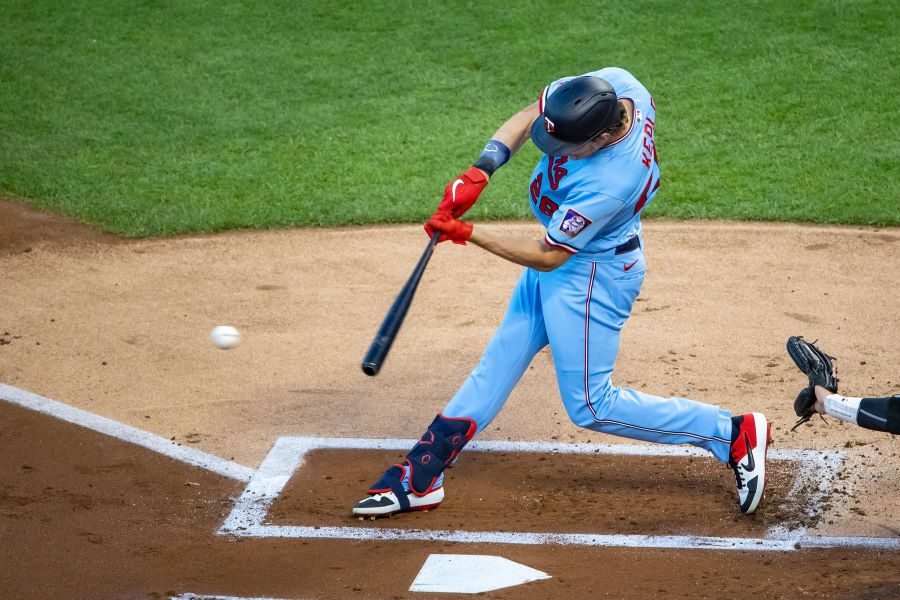 As we’ve already discussed this spring, Kepler has a persistently lousy batting average on balls in play. That sets a surprisingly low ceiling on his overall on-base percentage, the crucial statistic in establishing a player’s credentials for batting leadoff. Moreover, as we’ve also recently explored, Kepler’s optimal approach is an aggressive, attacking one. That’s modestly in conflict with batting leadoff, not because it leads to fewer pitches seen to soften the ground for subsequent hitters, but because it, too, tends to dampen OBP, in exchange for a higher slugging average. However, Kepler does a lot of other things very well. He hits for solid power. He also maintains a low strikeout rate, and it’s not because of his aggressiveness early in counts. Rather, Kepler runs a very high contact rate for a fly-ball pull hitter, and (within the confines of his approach) shows good situational awareness. In my article yesterday advocating for Luis Arraez batting first on a regular basis, I referred to the research on batting order presented in The Book, from 2007. Let me present another minor finding mentioned in that same chapter. “On the one hand, you have the cleanup hitter, for whom the run value of the strikeout is .005 runs more costly than other types of outs,” the authors wrote. “[T]he preferred outs for the cleanup hitter are ‘moving runners over’ outs. … The cleanup hitter has more runners in scoring position, and so if he is to make an out, we don’t want him to strike out.” You’ll note, of course, that the magnitude of that difference is minute. For every 1,000 outs a batter makes, turning them from strikeouts to productive outs would create about five extra runs. Because of this, the authors go on to recommend that a team leave strikeout vulnerability out of their decision-making process when building a lineup. However, that assumes typical, non-extreme hitters filling the lineup card. The Twins are a special case, with non-typical, extreme hitters. Arraez, with his extraordinary contact skills, is one example. Kepler, who runs such a low BABIP but strikes out so rarely and has good extra-base thump, is another. Since the start of 2019, Kepler has grounded into a double play in only 5.0 percent of his opportunities to do so. The league-average rate is just under 11 percent. Kepler has brought runners home from third base with less than two outs in 62.1 percent of his opportunities; the league-average rate is just over 50 percent. With a runner on second and nobody out, Kepler has moved the runner over 57.1 percent of the time; the average rate is under 53 percent. Even his bad outcomes, then, can be helpful to the team if Kepler is batting fourth. Meanwhile, quite often, he will drive those runners home himself. He’s driven home 18.3 percent of all baserunners on base at the start of his plate appearances over the past two seasons; the league rate is just over 14 percent. Good power and good (but limited) on-base skills make him a clear fit for the top portion of the order, but a poor one (given the other available options, especially Arraez) for the leadoff spot itself. With the three-batter minimum in place, it’s easy to argue for using Kepler to split up Donaldson and Cruz, whom I would bat second and third, respectively. A scenario in which a team brings in a tough righty to face those two in succession comes easily to mind. To be sure, there will be times when righties are brought in to try to escape an inning against those two hitters, only to have a lefty come out to begin the next frame against Kepler. On the other hand, Donaldson has very small career platoon splits, and has even been better against righties over the last two years. Further, putting Kepler third in the order would allow a team (in theory) to bring in a lefty to pitch to both Arraez and Kepler, sandwiching only Donaldson, and then to go to a righty to go after Cruz and either Miguel Sanó or Mitch Garver. On balance, Kepler belongs in the fourth spot. When the playoffs come and the Twins need to deploy their ‘A’ lineup, the highest form of it will include Arraez, Donaldson, Cruz, and Kepler in the first four positions. MORE FROM TWINS DAILY — Latest Twins coverage from our writers — Recent Twins discussion in our forums — Follow Twins Daily via Twitter, Facebook or email
 -
Luis Arraez would be a candidate to hit at the top of any lineup, but for the Twins, he’s an especially perfect fit in the leadoff spot. They should commit to him in that role on as close to an everyday basis as possible.Arraez, soon to turn 24, lacks speed. In all other respects, though, his offensive profile suits the modern prototype for the top of the batting order. He owns a career .390 on-base percentage in the big leagues, and in almost 1,600 plate appearances in the minors, that figure was .385. Any player who gets on base at such a rate belongs in one of the top four spots in the batting order, but one without power should be slotted in first, because the other slots need to be reserved for players whose skills allow them to consistently drive in runners even from first base. The leadoff hitter is only guaranteed to lead off once per game, though, and because of the guys who will fill the bottom two slots in the Twins’ batting order most often in 2021, Arraez (with his unique skill set) could deliver extra value and efficiency in subsequent turns at bat. Byron Buxton’s speed and Andrelton Simmons’s lack of power each serve to magnify the impact of Arraez’s exceptional contact skills and ability to use the whole field. In The Book, a sacred tome in sabermetric orthodoxy published in 2007, co-authors Tom Tango, Mitchel Lichtma, and Andrew Dolphin wrote the following about finding the best way to use great baserunners: “If you need to leverage a basestealer, put him in front of a batter who hits lots of singles and doesn’t strike out much.” Buxton is the only great runner in the projected everyday lineup, but he’s an especially good one, which makes it important that the team make the most of those skills. Because of his approach and his power, Buxton might not often find himself on first base, but when he does, the team should try to follow him with players whose only glaring weaknesses are lack of power and the risk of double plays. Simmons and Arraez both fit those criteria. The separators between the two — that Arraez is more patient, that he hits more line drives and fewer ground balls, and that he uses the whole field much better — make Simmons a bottom-of-the-order bat and Arraez a top-of-the-order one, but they’re equally excellent when it comes to fitting behind Buxton’s speed. Simmons’s lack of skills other than contact make him a candidate to bunt Buxton over at times. Arraez’s all-around profile makes him as good a candidate to be the hitter in a hit-and-run situation as any hitter in the last decade. Each hits so many singles that getting Buxton into scoring position would take on real value, in a way that having him steal in front of Max Kepler, Ryan Jeffers, or even Jorge Polanco would not. Meanwhile, of course, Arraez’s presence at the top of the order would give the Twins’ offense the kind of start it needs to put up crooked numbers more often in 2021. If the team is truly worried about his defense, Arraez could start, then be replaced by Polanco as a pinch-runner or defensive replacement roughly halfway through games. That plan might sound convoluted, but it’s no more so than going into the season planning to give more plate appearances to Kepler (.337 PECOTA-projected OBP), Polanco (.322), and Simmons (.326) than to Arraez (a team-leading .360). Any time your best out-avoider is also shy on power, and could perfectly augment the idiosyncratic strength of a bottom-of-the-order hitter, that guy has to be the regular leadoff hitter. MORE FROM TWINS DAILY — Latest Twins coverage from our writers — Recent Twins discussion in our forums — Follow Twins Daily via Twitter, Facebook or email Click here to view the article
-
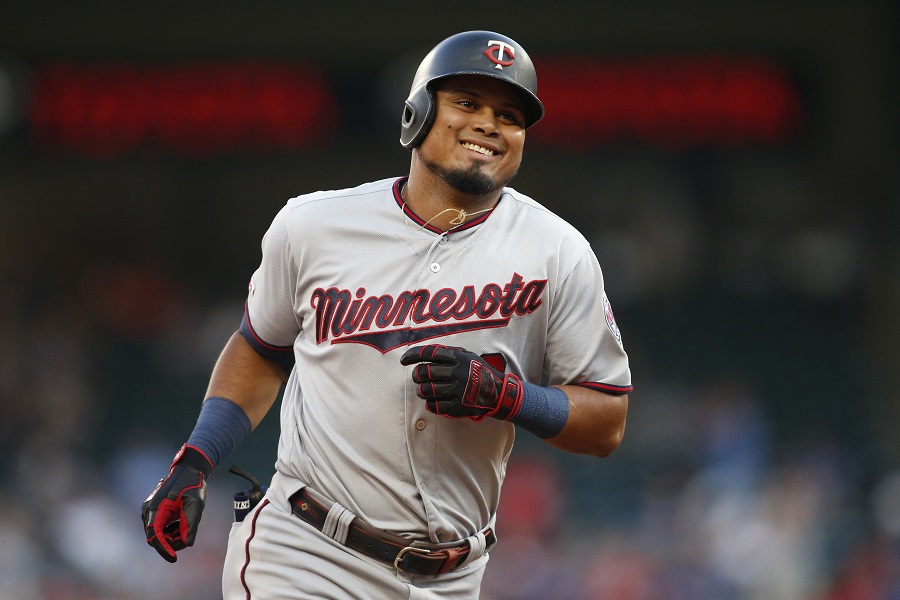 Arraez, soon to turn 24, lacks speed. In all other respects, though, his offensive profile suits the modern prototype for the top of the batting order. He owns a career .390 on-base percentage in the big leagues, and in almost 1,600 plate appearances in the minors, that figure was .385. Any player who gets on base at such a rate belongs in one of the top four spots in the batting order, but one without power should be slotted in first, because the other slots need to be reserved for players whose skills allow them to consistently drive in runners even from first base. The leadoff hitter is only guaranteed to lead off once per game, though, and because of the guys who will fill the bottom two slots in the Twins’ batting order most often in 2021, Arraez (with his unique skill set) could deliver extra value and efficiency in subsequent turns at bat. Byron Buxton’s speed and Andrelton Simmons’s lack of power each serve to magnify the impact of Arraez’s exceptional contact skills and ability to use the whole field. In The Book, a sacred tome in sabermetric orthodoxy published in 2007, co-authors Tom Tango, Mitchel Lichtma, and Andrew Dolphin wrote the following about finding the best way to use great baserunners: “If you need to leverage a basestealer, put him in front of a batter who hits lots of singles and doesn’t strike out much.” Buxton is the only great runner in the projected everyday lineup, but he’s an especially good one, which makes it important that the team make the most of those skills. Because of his approach and his power, Buxton might not often find himself on first base, but when he does, the team should try to follow him with players whose only glaring weaknesses are lack of power and the risk of double plays. Simmons and Arraez both fit those criteria. The separators between the two — that Arraez is more patient, that he hits more line drives and fewer ground balls, and that he uses the whole field much better — make Simmons a bottom-of-the-order bat and Arraez a top-of-the-order one, but they’re equally excellent when it comes to fitting behind Buxton’s speed. Simmons’s lack of skills other than contact make him a candidate to bunt Buxton over at times. Arraez’s all-around profile makes him as good a candidate to be the hitter in a hit-and-run situation as any hitter in the last decade. Each hits so many singles that getting Buxton into scoring position would take on real value, in a way that having him steal in front of Max Kepler, Ryan Jeffers, or even Jorge Polanco would not. Meanwhile, of course, Arraez’s presence at the top of the order would give the Twins’ offense the kind of start it needs to put up crooked numbers more often in 2021. If the team is truly worried about his defense, Arraez could start, then be replaced by Polanco as a pinch-runner or defensive replacement roughly halfway through games. That plan might sound convoluted, but it’s no more so than going into the season planning to give more plate appearances to Kepler (.337 PECOTA-projected OBP), Polanco (.322), and Simmons (.326) than to Arraez (a team-leading .360). Any time your best out-avoider is also shy on power, and could perfectly augment the idiosyncratic strength of a bottom-of-the-order hitter, that guy has to be the regular leadoff hitter. MORE FROM TWINS DAILY — Latest Twins coverage from our writers — Recent Twins discussion in our forums — Follow Twins Daily via Twitter, Facebook or email
 -
Though he’s still five years from free agency, Luis Arraez could be close to his first arbitration payday. Should the Twins sign him to a long-term deal? What would one look like? It’s a deal they almost can’t afford not to make.Arraez, 24 in April, could be positioned to become Super Two-eligible in 2022, depending both on where that line falls and whether the renegotiated collective bargaining agreement ahead of us alters the nature of that designation. That’s a wrinkle in any negotiations about a deal to keep Arraez around beyond his age-28 season in 2025, but it’s almost the only one. In other respects, he’s a straightforward case with a clear recent precedent. The Twins have ample reason to want to retain him, and a good bit of leverage at the bargaining table. Though he’s still only amassed 487 plate appearances in the big leagues, Arraez is a .331/.390/.430 career hitter, and has proved himself to be one of the best contact hitters in baseball. He’s earned the nickname “La Regadera,” or “The Sprinkler,” for his astounding ability to hit the ball cleanly to all fields. On the other hand, it’s become clear that his defensive value will be persistently limited. As unfair as the comparison is to any player so young and inexperienced, the profile Arraez is carving out in the big leagues is eerily evocative of that of Rod Carew. To properly contextualize that, of course, one must understand that Carew would be a bit less highly rated and a bit more limited in the modern game, because of the changes in the way the game is played between his time and now, but it’s an informative lens to keep in mind. If you believe that much in Arraez’s hit tool — and there is absolutely every reason to do so — then he’s worth keeping around into his 30s. Thanks in large part to his injury history, though, it’s taken Arraez a long time to establish himself in the majors. He signed way back in November of 2013, and notably, he only got a $40,000 signing bonus at that time. Baseball has not yet made him truly, enduringly rich, and because of his age and skill set, he runs a real risk of never reaching the point at which that changes. The Twins could absorb that risk and relieve him of it, but get a major bargain on his prime-aged seasons in return. The relevant precedents for an Arraez extension belong to two other infielders who signed as amateur international free agents, but neither is a perfect comp. Ketel Marte was five years from free agency in 2018, when he signed a five-year deal with the Arizona Diamondbacks. Marte was entering his age-24 season, just as Arraez is now. The deal bought out his full term of club control, with a steady but small salary progression from year to year. It guaranteed him $24 million, and a pair of options (for 2023 and 2024, which would have been his first two free-agent years) gave him the chance to make as much as $20 million more. Marte had signed for $100,000 seven and a half years before signing the deal. He was due to be Super Two-eligible after 2018. That all places him in a good position to compare to Arraez. However, Marte is an extremely dynamic, switch-hitting, athletic player, who provided significant defensive upside. On the other hand, he had not yet demonstrated anything close to the level of offensive competence Arraez has already shown in the big leagues. A year later, Ozzie Albies signed a seven-year deal with Atlanta, buying out his final five seasons of club control, plus two free-agent years. The total commitment was just $35 million, as he was given an even slower salary escalation en route to would-be free agency. Atlanta even secured two club options, each worth $7 million, at the end of that deal, and one of those is just a $3-million decision after the buyout is factored in. That deal was the most outrageously team-friendly of a spring replete with extensions that favored clubs, and it can’t be used as an especially serious comparison point in terms of total dollars. Nor is the length a good reflection of what the Twins and Arraez might consider, since Albies signed his deal at age 22, and is another speedy switch-hitter with a plus glove. Still, these two deals provide a basic framework. A pact between Arraez and the Twins would start by bumping his 2021 salary from the scheduled salary just above the league minimum (and just under $600,000) to something like $1 million, with another $1 million added as a signing bonus. In 2022, since he’s a borderline case to become Super Two-eligible, he would make somewhere between $1 million and $4 million. (Call it $3 million, with $2 million of that as a bonus, shielding him from the risk of a work stoppage.) In 2023, Arraez would get a bump to about $5 million, and in 2024, he’d make $7 million. In 2025 and 2026, he’d make $8.5 million each year, and the Twins could hold a $10-million option on his services for 2027, with a $1-million buyout. In total, that’s a six-year deal guaranteeing Arraez $35 million. If the Twins exercised their option, it would pay him $44 million over seven seasons. That’s a bit more fair (and less predatory) than the deals signed by Marte and Albies, yet it gives the Twins both cost certainty and real upside. It lets Arraez hit free agency at a reasonable age, but assures the Twins of the right to keep him one or two years longer than they could without signing. It even keeps his salaries low over the next two seasons, while Jorge Polanco, Miguel Sanó, and Josh Donaldson are making big money on the infield, and allows him to grow in pay as his role is likely to grow from 2023 onward. Again, this contract only makes sense if one sees Arraez as one of the game’s better pure hitters. That’s fine, because that’s precisely what he is. The Twins should lock him up, so that they can pencil him in at the top of their order for years to come. SEE ALSO What a José Berríos Contract Extension Could Look Like What a Byron Buxton Contract Extension Would Look Like Alex Kirilloff, and the Truth About Scott Boras and Contract Extensions Click here to view the article
-
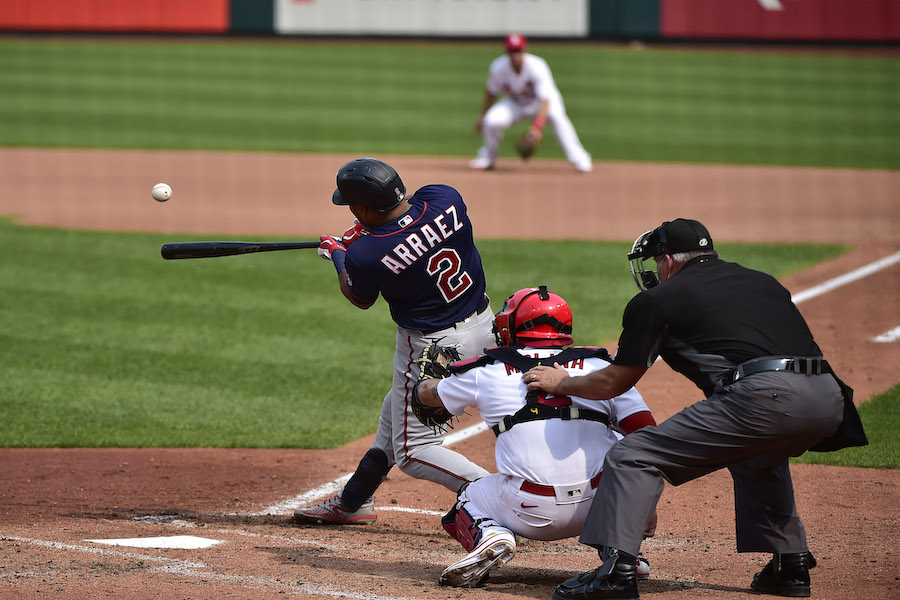 Arraez, 24 in April, could be positioned to become Super Two-eligible in 2022, depending both on where that line falls and whether the renegotiated collective bargaining agreement ahead of us alters the nature of that designation. That’s a wrinkle in any negotiations about a deal to keep Arraez around beyond his age-28 season in 2025, but it’s almost the only one. In other respects, he’s a straightforward case with a clear recent precedent. The Twins have ample reason to want to retain him, and a good bit of leverage at the bargaining table. Though he’s still only amassed 487 plate appearances in the big leagues, Arraez is a .331/.390/.430 career hitter, and has proved himself to be one of the best contact hitters in baseball. He’s earned the nickname “La Regadera,” or “The Sprinkler,” for his astounding ability to hit the ball cleanly to all fields. On the other hand, it’s become clear that his defensive value will be persistently limited. As unfair as the comparison is to any player so young and inexperienced, the profile Arraez is carving out in the big leagues is eerily evocative of that of Rod Carew. To properly contextualize that, of course, one must understand that Carew would be a bit less highly rated and a bit more limited in the modern game, because of the changes in the way the game is played between his time and now, but it’s an informative lens to keep in mind. If you believe that much in Arraez’s hit tool — and there is absolutely every reason to do so — then he’s worth keeping around into his 30s. Thanks in large part to his injury history, though, it’s taken Arraez a long time to establish himself in the majors. He signed way back in November of 2013, and notably, he only got a $40,000 signing bonus at that time. Baseball has not yet made him truly, enduringly rich, and because of his age and skill set, he runs a real risk of never reaching the point at which that changes. The Twins could absorb that risk and relieve him of it, but get a major bargain on his prime-aged seasons in return. The relevant precedents for an Arraez extension belong to two other infielders who signed as amateur international free agents, but neither is a perfect comp. Ketel Marte was five years from free agency in 2018, when he signed a five-year deal with the Arizona Diamondbacks. Marte was entering his age-24 season, just as Arraez is now. The deal bought out his full term of club control, with a steady but small salary progression from year to year. It guaranteed him $24 million, and a pair of options (for 2023 and 2024, which would have been his first two free-agent years) gave him the chance to make as much as $20 million more. Marte had signed for $100,000 seven and a half years before signing the deal. He was due to be Super Two-eligible after 2018. That all places him in a good position to compare to Arraez. However, Marte is an extremely dynamic, switch-hitting, athletic player, who provided significant defensive upside. On the other hand, he had not yet demonstrated anything close to the level of offensive competence Arraez has already shown in the big leagues. A year later, Ozzie Albies signed a seven-year deal with Atlanta, buying out his final five seasons of club control, plus two free-agent years. The total commitment was just $35 million, as he was given an even slower salary escalation en route to would-be free agency. Atlanta even secured two club options, each worth $7 million, at the end of that deal, and one of those is just a $3-million decision after the buyout is factored in. That deal was the most outrageously team-friendly of a spring replete with extensions that favored clubs, and it can’t be used as an especially serious comparison point in terms of total dollars. Nor is the length a good reflection of what the Twins and Arraez might consider, since Albies signed his deal at age 22, and is another speedy switch-hitter with a plus glove. Still, these two deals provide a basic framework. A pact between Arraez and the Twins would start by bumping his 2021 salary from the scheduled salary just above the league minimum (and just under $600,000) to something like $1 million, with another $1 million added as a signing bonus. In 2022, since he’s a borderline case to become Super Two-eligible, he would make somewhere between $1 million and $4 million. (Call it $3 million, with $2 million of that as a bonus, shielding him from the risk of a work stoppage.) In 2023, Arraez would get a bump to about $5 million, and in 2024, he’d make $7 million. In 2025 and 2026, he’d make $8.5 million each year, and the Twins could hold a $10-million option on his services for 2027, with a $1-million buyout. In total, that’s a six-year deal guaranteeing Arraez $35 million. If the Twins exercised their option, it would pay him $44 million over seven seasons. That’s a bit more fair (and less predatory) than the deals signed by Marte and Albies, yet it gives the Twins both cost certainty and real upside. It lets Arraez hit free agency at a reasonable age, but assures the Twins of the right to keep him one or two years longer than they could without signing. It even keeps his salaries low over the next two seasons, while Jorge Polanco, Miguel Sanó, and Josh Donaldson are making big money on the infield, and allows him to grow in pay as his role is likely to grow from 2023 onward. Again, this contract only makes sense if one sees Arraez as one of the game’s better pure hitters. That’s fine, because that’s precisely what he is. The Twins should lock him up, so that they can pencil him in at the top of their order for years to come. SEE ALSO What a José Berríos Contract Extension Could Look Like What a Byron Buxton Contract Extension Would Look Like Alex Kirilloff, and the Truth About Scott Boras and Contract Extensions
 -
When asked in press conferences about the readiness of the Twins’ top pitching prospects, pitching coach Wes Johnson has established a familiar refrain: “He needs to throw strikes with more than just his fastball.” Hmm. That’s interesting.It’s not like what Johnson is saying is a revolutionary, off-the-wall idea. Since the curveball was invented in the 19th century, pitchers have faced the challenge of making non-fastballs look appealing enough that batters actually swing at them, thereby capturing the advantage such changes of speed and direction are supposed to lend. Command and control are as important to success as velocity or movement, even in 2021. However, the modern trends in MLB run increasingly toward what pitchers call “chase” secondary pitches. There are still hurlers who like to buckle knees with curves for called strikes, but most of the league leans toward sliders, which tend to have more lateral movement and (therefore) can more often miss the plate. The slider mostly works by inducing hitters to swing at what looks like a strike, but turns out not to be. Ditto for the changeup. As a result, over the last three seasons, the league is throwing fewer and fewer non-fastballs for strikes. Breaking and offspeed stuff was in the zone 43.3 percent of the time in 2018, but just 41.6 percent of the time in 2019, and 41.3 percent of the time during the shortened first pandemic season. Johnson, though, seems to want his pitchers to find the zone with non-fastballs on a more regular basis. The Twins hired him after the 2018 season, in which their pitchers threw just 39.5 percent of their non-heat for strikes. That was dead last in baseball. In 2019, though, they bumped up to 22nd, at 41.0 percent. Last year, with newcomers Matt Wisler and Kenta Maeda leading the way by leaning heavily on their breaking stuff but still filling up the zone, the Twins were fourth in MLB, at 43.4 percent of non-fastballs for strikes. That’s a phenomenal turnaround, and captures the impressiveness of Johnson pretty neatly. The Twins’ pitching development infrastructure is good at several things, but this is one we hadn’t previously been able to identify and articulate. The advantages are obvious. A profile like the one that made Wisler successful last year (success which, perhaps, the Twins are hoping to replicate this year with new blood) doesn’t work if the approach involves throwing the slider only as a chase pitch. A hurler who can demonstrate the feel to reshape and locate their breaking ball or changeup based on the count and the opposing hitter is extremely valuable. Executing this strategy isn’t easy. It requires the team to scope out and acquire pitchers who do a difficult, somewhat rare thing well. It puts considerable pressure on their minor-league pitching coaches and coordinators, whom Johnson apparently tasks with getting talented young pitchers over a very advanced hump before they matriculate to the majors. Nor is it the case that throwing more breaking balls and changeups for strikes is a universal good. The Dodgers were tops in baseball last year in throwing non-fastballs in the zone, but the two teams between them and the Twins (the Angels and Red Sox) were not pitching staffs of similar quality. Meanwhile, the excellent Rays and Brewers pitching staffs finished near the bottom of the league in this regard. More than anything, then, Johnson is merely tipping us off to an organizational preference, when he talks about this. You can get a clear sense of the Twins’ style, and learn what to look for from a pitcher the team might be attempting to develop or acquire, but you can’t say for sure whether or not it will work. Even so, it’s nice to have the insight—whether Johnson meant to share as much or not. MORE FROM TWINS DAILY — Latest Twins coverage from our writers — Recent Twins discussion in our forums — Follow Twins Daily via Twitter, Facebook or email Click here to view the article
-
Has Wes Johnson Tipped Us Off on Twins' Pitching Philosophy?
Matthew Trueblood posted an article in Twins
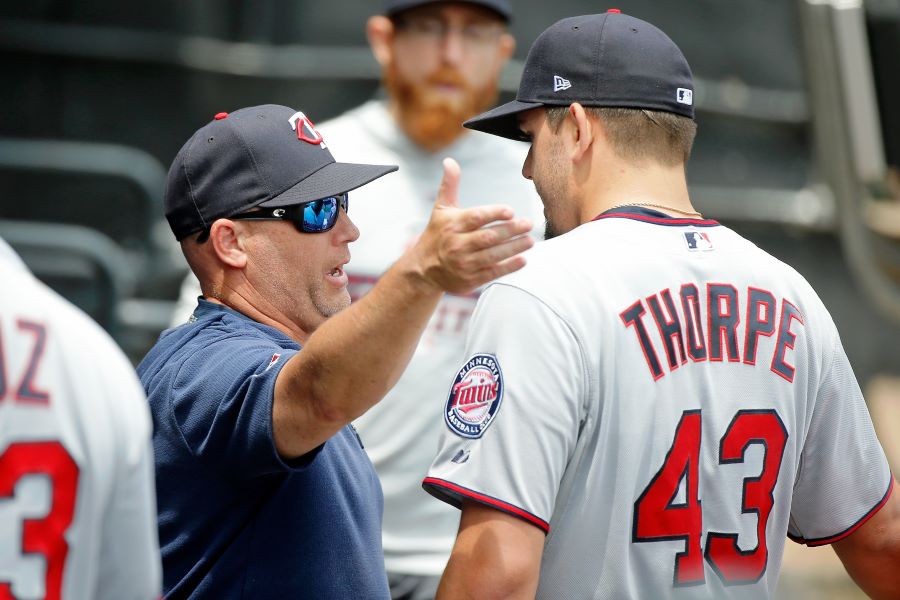 It’s not like what Johnson is saying is a revolutionary, off-the-wall idea. Since the curveball was invented in the 19th century, pitchers have faced the challenge of making non-fastballs look appealing enough that batters actually swing at them, thereby capturing the advantage such changes of speed and direction are supposed to lend. Command and control are as important to success as velocity or movement, even in 2021. However, the modern trends in MLB run increasingly toward what pitchers call “chase” secondary pitches. There are still hurlers who like to buckle knees with curves for called strikes, but most of the league leans toward sliders, which tend to have more lateral movement and (therefore) can more often miss the plate. The slider mostly works by inducing hitters to swing at what looks like a strike, but turns out not to be. Ditto for the changeup. As a result, over the last three seasons, the league is throwing fewer and fewer non-fastballs for strikes. Breaking and offspeed stuff was in the zone 43.3 percent of the time in 2018, but just 41.6 percent of the time in 2019, and 41.3 percent of the time during the shortened first pandemic season. Johnson, though, seems to want his pitchers to find the zone with non-fastballs on a more regular basis. The Twins hired him after the 2018 season, in which their pitchers threw just 39.5 percent of their non-heat for strikes. That was dead last in baseball. In 2019, though, they bumped up to 22nd, at 41.0 percent. Last year, with newcomers Matt Wisler and Kenta Maeda leading the way by leaning heavily on their breaking stuff but still filling up the zone, the Twins were fourth in MLB, at 43.4 percent of non-fastballs for strikes. That’s a phenomenal turnaround, and captures the impressiveness of Johnson pretty neatly. The Twins’ pitching development infrastructure is good at several things, but this is one we hadn’t previously been able to identify and articulate. The advantages are obvious. A profile like the one that made Wisler successful last year (success which, perhaps, the Twins are hoping to replicate this year with new blood) doesn’t work if the approach involves throwing the slider only as a chase pitch. A hurler who can demonstrate the feel to reshape and locate their breaking ball or changeup based on the count and the opposing hitter is extremely valuable. Executing this strategy isn’t easy. It requires the team to scope out and acquire pitchers who do a difficult, somewhat rare thing well. It puts considerable pressure on their minor-league pitching coaches and coordinators, whom Johnson apparently tasks with getting talented young pitchers over a very advanced hump before they matriculate to the majors. Nor is it the case that throwing more breaking balls and changeups for strikes is a universal good. The Dodgers were tops in baseball last year in throwing non-fastballs in the zone, but the two teams between them and the Twins (the Angels and Red Sox) were not pitching staffs of similar quality. Meanwhile, the excellent Rays and Brewers pitching staffs finished near the bottom of the league in this regard. More than anything, then, Johnson is merely tipping us off to an organizational preference, when he talks about this. You can get a clear sense of the Twins’ style, and learn what to look for from a pitcher the team might be attempting to develop or acquire, but you can’t say for sure whether or not it will work. Even so, it’s nice to have the insight—whether Johnson meant to share as much or not. MORE FROM TWINS DAILY — Latest Twins coverage from our writers — Recent Twins discussion in our forums — Follow Twins Daily via Twitter, Facebook or email
 -
Luis Castillo is one of baseball's best starting pitchers, and could be the first big name to hit the trading block this spring. What could the Twins give up to land him?Here's a link to Part 1 of this article. Last time, I discussed why Yankees fans currently view the Twins as an afterthought in the fight for the AL pennant, and why they might be right. I proposed Castillo as a difference-maker who could change that calculus. Today, let's talk about one package that could land the flamethrower in Minnesota. It starts with Jorge Polanco. For a Twins team trying to challenge the Yankees this year, that might be the hardest pill to swallow here, but it’s necessary. One need not believe Polanco to be much of a shortstop to believe that he would be a huge upgrade for the Reds at shortstop, because they virtually don’t have a shortstop, at all. Polanco would add balance and depth to the Reds’ lineup, and fill their most glaring positional hole. They’re not aiming for a scorched-Earth rebuild—something more along the lines of the Twins’ reconstruction would suit their ownership’s mentality—so that would be highly attractive to them. After that, the two teams would have to decide on a second piece in the deal, and there are three clear candidates. Two of those are the Twins’ top two pitching prospects, Jhoan Duran and Jordan Balazovic. However, it’s somewhat easy to imagine the Twins balking at giving up either, because after 2021, Michael Pineda, J.A. Happ, and Matt Shoemaker will all be free agents. After 2022, José Berríos will follow suit (unless the front office can convince him to sign an extension by then). Kenta Maeda is around through 2024, but since he turns 33 next month, that’s almost as much a threat as a promise. Even with Castillo in the mix, the Twins need their top-tier, close-to-the-big-leagues arms. Consider, then, another option. The Twins hold the 26th pick in the first round this year, and (of course) that pick is untradeable. However, the team’s competitive-balance pick can be dealt. Since it’s the Twins’ turn to have a pick in Competitive Balance Round A (after the first round), that’s the 36th overall selection. That could be an extremely enticing bit of bait for the Reds. Cincinnati picks 17th in July. Then, they pick again at 30, as compensation for the loss of Trevor Bauer in free agency. They, too, have a competitive-balance pick coming, at 35. If they added one at 36, they could turbocharge a rebuild that was foisted upon them by circumstance. Because of the way the MLB Draft works, four picks in the top 36 (and five in the top 53) would give them a chance to either push a couple of elite talents down the board or stockpile high-quality prospects, in a shorter draft than the league has ever seen (save last year’s). If the trade did center upon Polanco and the draft pick, another, low-level prospect would likely need to be thrown in. Even so, the deal could get done without Minnesota giving up any of its elite prospect talent, and the Reds could still justify giving up their ace, by pointing to their long-term, affordable control over a solid big-league infielder (Polanco, remember, has club options for 2024 and 2025) and to the rapid restocking of a thin farm system via the draft. Although Polanco’s 2021 salary ($4.333 million) is almost identical to that of Castillo ($4.2 million), the Twins would also have to kick in some money. The Reds lost even more than most clubs during 2020, by running a payroll far beyond their small-market standards and gambling (sensibly, but for the pandemic of it all) that a competitive team would draw large crowds. Their local TV deal is one of the league’s least valuable. Again, though, their owners don’t want to nosedive into an Astros-style rebuild. They would much rather do what Derek Falvey and Thad Levine have done for the Twins. They just need short-term financial relief; that would be a primary impetus for trading Castillo. If the Twins were willing to pay them around $5 million, the above deal would become feasible. (Of course, that would stretch the Twins’ 2021 budget a bit. So be it.) In the bargain, the Twins would leapfrog the White Sox and Cleveland and claim the title of the best starting rotation in the AL Central. In fact, they might fairly claim to have the best in the entire American League. Castillo throws in the upper 90s with his fastball, and commands it brilliantly; has one of the league’s most devastating changeups; and throws a really good slider. Wes Johnson would quickly sell him on throwing the last offering more, especially to lefties, and he could become one of the five best pitchers in baseball with that small adjustment. Losing Polanco would hurt, of course. The Twins would have to trust either that they could trade from their newfound surfeit of starters to land a capable utility player with the ability to cover shortstop, or that J.T. Riddle or Nick Gordon could competently stop the gap if (when) Andrelton Simmons misses time. Still, the deal would add clarity for the team in the starting lineup. Luis Arraez, who belongs at the top of the batting order every day, would get that opportunity again. Travis Blankenhorn would assume a limited version of the role for which Arraez is now slated, filling in at first, second, and third base to spell starters and allow nagging injuries to heal. To believe the Twins to be better than the Yankees, even after this hypothetical trade, you still have to think highly of their hitters. You have to believe that the 2019 versions of Josh Donaldson and Mitch Garver are coming back; that Byron Buxton and Simmons can stay on the field enough to have the impact of which they’re capable; and that Miguel Sanó can time fastballs properly on a more consistent basis. None of those are unreasonable things for which to hope, though. Moreover, the version of the Twins this deal would create would, in a theoretical October showdown with the Yankees’ (or White Sox’s) excellent but right-leaning lineup, counter with three of the best right-handed starting pitchers in all of baseball, with a Michael Pineda kicker. We talk often about star power versus depth. This deal would give the Twins a depth of star power that more closely matches that of New York, and that’s the kind of team that seems to find the most success in the playoffs. MORE FROM TWINS DAILY — Latest Twins coverage from our writers — Recent Twins discussion in our forums — Follow Twins Daily via Twitter, Facebook or email Click here to view the article
-
 Here's a link to Part 1 of this article. Last time, I discussed why Yankees fans currently view the Twins as an afterthought in the fight for the AL pennant, and why they might be right. I proposed Castillo as a difference-maker who could change that calculus. Today, let's talk about one package that could land the flamethrower in Minnesota. It starts with Jorge Polanco. For a Twins team trying to challenge the Yankees this year, that might be the hardest pill to swallow here, but it’s necessary. One need not believe Polanco to be much of a shortstop to believe that he would be a huge upgrade for the Reds at shortstop, because they virtually don’t have a shortstop, at all. Polanco would add balance and depth to the Reds’ lineup, and fill their most glaring positional hole. They’re not aiming for a scorched-Earth rebuild—something more along the lines of the Twins’ reconstruction would suit their ownership’s mentality—so that would be highly attractive to them. After that, the two teams would have to decide on a second piece in the deal, and there are three clear candidates. Two of those are the Twins’ top two pitching prospects, Jhoan Duran and Jordan Balazovic. However, it’s somewhat easy to imagine the Twins balking at giving up either, because after 2021, Michael Pineda, J.A. Happ, and Matt Shoemaker will all be free agents. After 2022, José Berríos will follow suit (unless the front office can convince him to sign an extension by then). Kenta Maeda is around through 2024, but since he turns 33 next month, that’s almost as much a threat as a promise. Even with Castillo in the mix, the Twins need their top-tier, close-to-the-big-leagues arms. Consider, then, another option. The Twins hold the 26th pick in the first round this year, and (of course) that pick is untradeable. However, the team’s competitive-balance pick can be dealt. Since it’s the Twins’ turn to have a pick in Competitive Balance Round A (after the first round), that’s the 36th overall selection. That could be an extremely enticing bit of bait for the Reds. Cincinnati picks 17th in July. Then, they pick again at 30, as compensation for the loss of Trevor Bauer in free agency. They, too, have a competitive-balance pick coming, at 35. If they added one at 36, they could turbocharge a rebuild that was foisted upon them by circumstance. Because of the way the MLB Draft works, four picks in the top 36 (and five in the top 53) would give them a chance to either push a couple of elite talents down the board or stockpile high-quality prospects, in a shorter draft than the league has ever seen (save last year’s). If the trade did center upon Polanco and the draft pick, another, low-level prospect would likely need to be thrown in. Even so, the deal could get done without Minnesota giving up any of its elite prospect talent, and the Reds could still justify giving up their ace, by pointing to their long-term, affordable control over a solid big-league infielder (Polanco, remember, has club options for 2024 and 2025) and to the rapid restocking of a thin farm system via the draft. Although Polanco’s 2021 salary ($4.333 million) is almost identical to that of Castillo ($4.2 million), the Twins would also have to kick in some money. The Reds lost even more than most clubs during 2020, by running a payroll far beyond their small-market standards and gambling (sensibly, but for the pandemic of it all) that a competitive team would draw large crowds. Their local TV deal is one of the league’s least valuable. Again, though, their owners don’t want to nosedive into an Astros-style rebuild. They would much rather do what Derek Falvey and Thad Levine have done for the Twins. They just need short-term financial relief; that would be a primary impetus for trading Castillo. If the Twins were willing to pay them around $5 million, the above deal would become feasible. (Of course, that would stretch the Twins’ 2021 budget a bit. So be it.) In the bargain, the Twins would leapfrog the White Sox and Cleveland and claim the title of the best starting rotation in the AL Central. In fact, they might fairly claim to have the best in the entire American League. Castillo throws in the upper 90s with his fastball, and commands it brilliantly; has one of the league’s most devastating changeups; and throws a really good slider. Wes Johnson would quickly sell him on throwing the last offering more, especially to lefties, and he could become one of the five best pitchers in baseball with that small adjustment. Losing Polanco would hurt, of course. The Twins would have to trust either that they could trade from their newfound surfeit of starters to land a capable utility player with the ability to cover shortstop, or that J.T. Riddle or Nick Gordon could competently stop the gap if (when) Andrelton Simmons misses time. Still, the deal would add clarity for the team in the starting lineup. Luis Arraez, who belongs at the top of the batting order every day, would get that opportunity again. Travis Blankenhorn would assume a limited version of the role for which Arraez is now slated, filling in at first, second, and third base to spell starters and allow nagging injuries to heal. To believe the Twins to be better than the Yankees, even after this hypothetical trade, you still have to think highly of their hitters. You have to believe that the 2019 versions of Josh Donaldson and Mitch Garver are coming back; that Byron Buxton and Simmons can stay on the field enough to have the impact of which they’re capable; and that Miguel Sanó can time fastballs properly on a more consistent basis. None of those are unreasonable things for which to hope, though. Moreover, the version of the Twins this deal would create would, in a theoretical October showdown with the Yankees’ (or White Sox’s) excellent but right-leaning lineup, counter with three of the best right-handed starting pitchers in all of baseball, with a Michael Pineda kicker. We talk often about star power versus depth. This deal would give the Twins a depth of star power that more closely matches that of New York, and that’s the kind of team that seems to find the most success in the playoffs. MORE FROM TWINS DAILY — Latest Twins coverage from our writers — Recent Twins discussion in our forums — Follow Twins Daily via Twitter, Facebook or email
 -
The Yankees and their fans are totally unafraid of the 2021 Twins. How far would you go to make them squirm?In listening to the latest episode of the Views From 314 Ft. podcast, a companion to the excellent Yankees blog of the same name, I was struck by the way co-hosts Randy Wilkins and Derek Albin (and even guest Bradford William Davis, who covers the Yankees for the New York Daily News) discussed the serious threats to the Yankees’ American League supremacy for the coming season. In short, they don’t see any. Before you crack wise about blithe or arrogant Yankees fans, let me assure you: that’s not who any of those three are. They’re sharp baseball analysts, and they were giving their honest appraisal of the competitive landscape. Hearing them weigh the Twins and find them wanting, not only because of the teams’ recent playoff history but because the Twins’ roster lacks the depth of star power the Yankees boast, helped bring the problem the Twins face into clearer focus. For my email newsletter, Penning Bull, I do weekly, tiered power rankings of all 30 teams. Almost since the inception of that project, two months ago, I have had the Yankees as the third team (and only AL club) in my top tier. The Twins have steadily crept up the rankings, and are now one of only two teams (and the only AL club) in the second tier. Overall, I rate the Yankees as the third-best team in baseball, and the Twins as the fifth-best. Despite putting the tiers into the rankings to more clearly establish where big differences exist, though, I think I’d failed to consider the full implications of having them separated by a tier. Few people are higher on the roster the Twins have built than I am, and I was startled at the way even Yankees partisans were assuming New York to have a clear path to the World Series. Yet, I’m more or less projecting the same thing. Let’s talk about how that could change. Let’s consider a trade that, while probably pushing the Twins front office beyond its comfort zone, could tilt the table in a meaningful way. Reds ace Luis Castillo came up in plenty of trade rumors this winter. Most notably, in fact, he was tied to the Yankees, when Ken Rosenthal reported that Cincinnati had demanded New York shortstop Gleyber Torres in return for him. Nothing ever came all that close to happening, though, and with the season a few weeks away, Castillo looks likely to be the Opening Day starter for the Reds. At 28 and with three years of team control left, Castillo is very much in his prime, and he’s a prime trade chip for a Reds team unlikely to be especially competitive in 2021. Over the last two seasons, he has 261 innings pitched and a DRA- of 64. A Baseball Prospectus statistic, DRA- represents a pitcher’s contribution to run prevention on an indexed scale, where 100 is league-average and lower is better. Castillo is elite. The only pitcher to qualify for the ERA title and best Castillo’s DRA- in each of the last two seasons is Jacob deGrom. As you’d imagine, acquiring Castillo would be difficult. It’s far from impossible, though, because of the Reds’ financial and competitive realities, and because of what the Twins can offer them. I have a particular package in mind, and will share it tomorrow, but for now, drop a comment and let us know what you'd be willing to surrender in order to land Castillo. Continued in Part 2. Click here to view the article

