



Matthew Trueblood
-
Posts
1,033 -
Joined
-
Last visited
Content Type
Profiles
News
Minnesota Twins Videos
2026 Minnesota Twins Top Prospects Ranking
2022 Minnesota Twins Draft Picks
Minnesota Twins Free Agent & Trade Rumors, Notes, & Tidbits
Guides & Resources
2023 Minnesota Twins Draft Picks
The Minnesota Twins Players Project
2024 Minnesota Twins Draft Picks
2025 Minnesota Twins Draft Pick Tracker
2026 Minnesota Twins Draft Tracker: Picks & Bonuses
Forums
Blogs
Events
Store
Downloads
Gallery
Everything posted by Matthew Trueblood
-
If Miguel Sanó is unavailable when the season begins, the Twins have a number of interesting candidates to bridge the gap at the cold corner.With the news that Miguel Sanó has tested positive for COVID-19 and will need to remain away from the team for some period in order to reduce the risk of spread, we should assume there’s at least some chance that Sanó will not be ready to man first base when the season begins. The most obvious potential replacement for Sanó is Marwin González, whose knee has had extra time to heal after offseason surgery, but who might still not be the best fit for any potential needs in the outfield anytime soon. González came to spring training in March with an adjusted swing, which invited Twins fans to hope he could build upon the impressive batted-ball numbers he had in 2019. However, González’s utility remains closely tied to his versatility, and there’s still no guarantee that he won’t be needed elsewhere on the diamond come Opening Day. For the moment, outside of González, there are three main candidates to play first base regularly for however long Sanó might be unavailable or unready: Alex Kirilloff, Brent Rooker, and Zander Wiel. None of those three are on the 40-man roster right now. All three would need to be added by late November in order to be protected from the Rule 5 Draft, however, so they’re on equal footing in that respect. (Trevor Larnach is both a half-step further from apparent big-league readiness and a year further from needing to be added to the 40-man, which is why he’s not much of a consideration.) The three have very different profiles and prospect statuses, though, and that could help steer the Twins brass toward a decision. Kirilloff remains a top-100 prospect in the game, and while his 2019 was far less impressive than his breakout 2018, he still looks like an all-around hitter with average power and the ability to handle advanced pitching. He also spent about 40 percent of his 2019 campaign playing first base. However, because he’s such a seemingly safe bat-first prospect, the Twins might reasonably conclude that keeping him off the roster in 2020 would be worthwhile. If they could do so, they’d have significantly better leverage in possible discussions about a long-term extension, especially given the likely financial state of the game over the next few years. It’s pennywise and (arguably) pound-foolish, and the Twins have worked hard recently to portray themselves as a more progressive organization, but that economic reality could keep Kirilloff off the big-league roster unless and until a more severe injury or illness problem forces the franchise’s hand. The opposite consideration could stand in Wiel’s way. When he’s not a part of the active roster, Wiel isn’t the kind of player teams like to carry on their 40-man roster. He’s not versatile, he’s already 27 years old, and he doesn’t offer much upside. The team would almost certainly wait until they had a clear and sustained need for a bench bat before calling upon the minor-league veteran. Rooker is the Goldilocks candidate of the set. The Twins used their competitive-balance pick to snag him at the tail end of the first round in 2017, liking his right-handed power and his mental approach to hitting. He’s played more in the outfield than at first base, but he might well be a first baseman or DH in the big leagues, anyway. If he approximates the level the team hopes he’ll attain, he’ll be well worth keeping on the roster even after Sanó returns at full strength, and he could easily become a candidate to replace Nelson Cruz as the DH in 2021. That said, Rooker is not likely to blossom so impressively that the Twins would have much interest in keeping him beyond 2026, which is when he would hit free agency if he debuts this year. He’s easier to call up than Kirilloff, and easier to keep around when he’s not actively needed than Wiel. According to PECOTA projections, Kirilloff is the best candidate for the job, on a sheer performance basis. 2020 PECOTA Projections Download attachment: 1BSheet.png One huge driver of these projections is that Kirilloff projects to strike out 22.3 percent of the time, about as often as González, whereas both Rooker and Wiel project to strike out well over 30 percent of the time. Rooker projects for the highest walk rate in the group, but because Kirilloff blends contact and a modicum of power, the system views him as more promising. The counterargument is simple: Rooker’s skill set is the one that truly mirrors Sanó’s. In fact, it mirrors the profiles of almost every offensive success story the Twins have generated over the last handful of seasons, and those of their top recent offensive acquisitions. If the team is as good as they appear to be at coaching up disciplined, pull-happy sluggers, then Rooker could find another gear. It’s also true that, in this shortened season, the variance inherent to the endeavor swamps almost all of the numbers, and makes good predictions next-to impossible. Given the variables in play and the long-term considerations that underlie the decision, the Twins might be well-served to give Rooker a long look at first base, unless and until Sanó is cleared to rejoin the team and has shaken off the rust. Their bevy of solid options, however, only serves as a reminder that their depth can be an advantage even during a shortened season. MORE FROM TWINS DAILY — Latest Twins coverage from our writers — Recent Twins discussion in our forums — Follow Twins Daily via Twitter, Facebook or email Click here to view the article
-
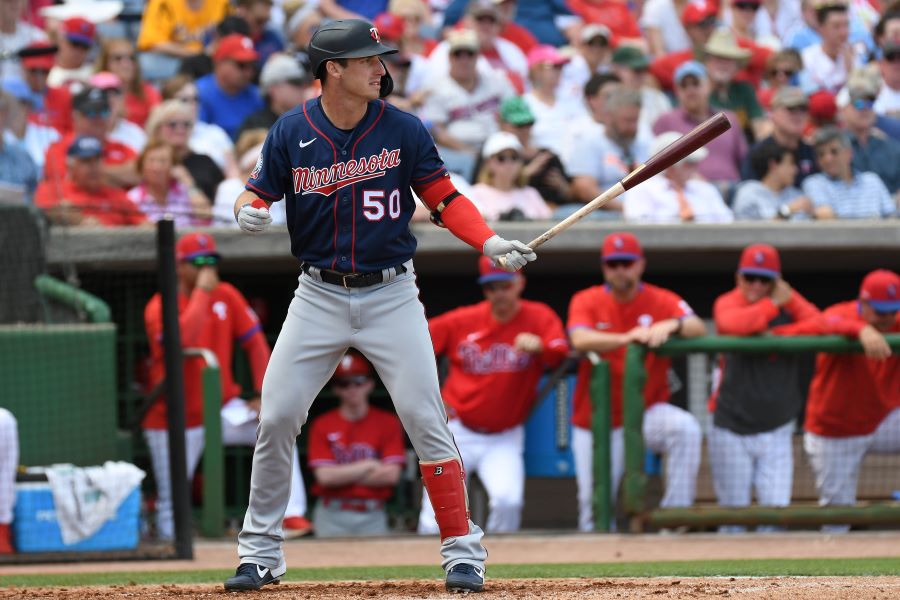 With the news that Miguel Sanó has tested positive for COVID-19 and will need to remain away from the team for some period in order to reduce the risk of spread, we should assume there’s at least some chance that Sanó will not be ready to man first base when the season begins. The most obvious potential replacement for Sanó is Marwin González, whose knee has had extra time to heal after offseason surgery, but who might still not be the best fit for any potential needs in the outfield anytime soon. González came to spring training in March with an adjusted swing, which invited Twins fans to hope he could build upon the impressive batted-ball numbers he had in 2019. However, González’s utility remains closely tied to his versatility, and there’s still no guarantee that he won’t be needed elsewhere on the diamond come Opening Day. For the moment, outside of González, there are three main candidates to play first base regularly for however long Sanó might be unavailable or unready: Alex Kirilloff, Brent Rooker, and Zander Wiel. None of those three are on the 40-man roster right now. All three would need to be added by late November in order to be protected from the Rule 5 Draft, however, so they’re on equal footing in that respect. (Trevor Larnach is both a half-step further from apparent big-league readiness and a year further from needing to be added to the 40-man, which is why he’s not much of a consideration.) The three have very different profiles and prospect statuses, though, and that could help steer the Twins brass toward a decision. Kirilloff remains a top-100 prospect in the game, and while his 2019 was far less impressive than his breakout 2018, he still looks like an all-around hitter with average power and the ability to handle advanced pitching. He also spent about 40 percent of his 2019 campaign playing first base. However, because he’s such a seemingly safe bat-first prospect, the Twins might reasonably conclude that keeping him off the roster in 2020 would be worthwhile. If they could do so, they’d have significantly better leverage in possible discussions about a long-term extension, especially given the likely financial state of the game over the next few years. It’s pennywise and (arguably) pound-foolish, and the Twins have worked hard recently to portray themselves as a more progressive organization, but that economic reality could keep Kirilloff off the big-league roster unless and until a more severe injury or illness problem forces the franchise’s hand. The opposite consideration could stand in Wiel’s way. When he’s not a part of the active roster, Wiel isn’t the kind of player teams like to carry on their 40-man roster. He’s not versatile, he’s already 27 years old, and he doesn’t offer much upside. The team would almost certainly wait until they had a clear and sustained need for a bench bat before calling upon the minor-league veteran. Rooker is the Goldilocks candidate of the set. The Twins used their competitive-balance pick to snag him at the tail end of the first round in 2017, liking his right-handed power and his mental approach to hitting. He’s played more in the outfield than at first base, but he might well be a first baseman or DH in the big leagues, anyway. If he approximates the level the team hopes he’ll attain, he’ll be well worth keeping on the roster even after Sanó returns at full strength, and he could easily become a candidate to replace Nelson Cruz as the DH in 2021. That said, Rooker is not likely to blossom so impressively that the Twins would have much interest in keeping him beyond 2026, which is when he would hit free agency if he debuts this year. He’s easier to call up than Kirilloff, and easier to keep around when he’s not actively needed than Wiel. According to PECOTA projections, Kirilloff is the best candidate for the job, on a sheer performance basis. 2020 PECOTA Projections One huge driver of these projections is that Kirilloff projects to strike out 22.3 percent of the time, about as often as González, whereas both Rooker and Wiel project to strike out well over 30 percent of the time. Rooker projects for the highest walk rate in the group, but because Kirilloff blends contact and a modicum of power, the system views him as more promising. The counterargument is simple: Rooker’s skill set is the one that truly mirrors Sanó’s. In fact, it mirrors the profiles of almost every offensive success story the Twins have generated over the last handful of seasons, and those of their top recent offensive acquisitions. If the team is as good as they appear to be at coaching up disciplined, pull-happy sluggers, then Rooker could find another gear. It’s also true that, in this shortened season, the variance inherent to the endeavor swamps almost all of the numbers, and makes good predictions next-to impossible. Given the variables in play and the long-term considerations that underlie the decision, the Twins might be well-served to give Rooker a long look at first base, unless and until Sanó is cleared to rejoin the team and has shaken off the rust. Their bevy of solid options, however, only serves as a reminder that their depth can be an advantage even during a shortened season. MORE FROM TWINS DAILY — Latest Twins coverage from our writers — Recent Twins discussion in our forums — Follow Twins Daily via Twitter, Facebook or email
 -
There are four more pitchers from off of the 40-man roster who will be at camp with the Twins. Let's break them down.Earlier this week, the Twins announced their 60-man player pool for the start of MLB’s resumed training period, and I broke down how three of the pitchers who made it into that pool (but aren’t on the 40-man roster) could help the team this season. Today, let’s talk about the other four non-roster hurlers who made the early cut. Sam Clay is, perhaps, the least known of all the players announced thus far as members of the pool. That doesn’t mean he’s the least interesting, though. In fact, he’s about as interesting as a player so thoroughly anonymous can be. The tall, round-shouldered lefty was a fourth-round pick by the Twins way back in 2014, and although he’s never been more than a remote blip on the prospect radar, he’s quietly pitched his way to the top of the minor-league ladder over the last few seasons. In the past, Clay has flashed a plus breaking ball, and the team might believe they can continue to cultivate that pitch in the controlled setting of their reserve site, under the eye of their top pitching instructors and player development staff. The really compelling thing about him, though, can be summed up in one number—the number 1. Since 2018, in 189 innings of work across the top three levels of the minor leagues, Clay has allowed one home run. He naturally pronates his forearm on his fastball, giving it heavy sink. He won’t run eye-popping strikeout-to-walk ratios, but Clay’s a ground ball machine who ran significant reverse platoon splits in 2019 (something the Twins clearly value in short relief recently, for good reason). He’ll never have the power or the dominance of Taylor Rogers, but Rogers isn’t a bad stylistic comp for him, so he’s valuable to the team as insurance against an injury. Edwar Colina is four years Clay’s junior, but has matched his recent rise through the upper levels of the system. He throws hard and he has command of an above-average slider; what else does one need from a right-handed relief candidate? Seriously, though, Colina stands out from other righties who do the same things in the Twins system for two reasons. One is his ability to go multiple innings, and maybe even to start. His changeup is below-average, but he hasn’t yet had to abandon it, and as a result, he’s been a starter most of the way up the chain. That lets him serve as a fallback plan if Randy Dobnak or Zack Littell gets hurt or ill. Dobnak and Littell were, at different but overlapping times last season, linchpins for the staff. They helped hold things together when they were threatening to fall apart. It behooves the team to consider how they might weather a stretch without one or both of them, and Colina provides an answer, in terms of both workload and quality of work. The other thing about Colina worth noting is his delivery. He’s a very thickly-built, short guy, and in the past, his fastball has underperformed its velocity. Last year, he got slightly better in that regard, striding a bit longer to create more extension. His heat will still flatten out at the top of the zone, and that will necessitate improved command if Colina wants to grow into more than a fallback role, but for now, progress is encouraging. Experience is still valuable, sometimes, and Cory Gearrin has plenty of it. He slings in a Frisbee-style slider, and that makes him very tough on right-handers, but he’s still yet to find something that works with any consistency against lefties. His movement usually keeps him off their barrels, at least, so if nothing else, he could be called upon to work without runners on base and with a right-hander due ahead of any lefties. Still, unless the team suffers multiple injuries in the rotation and/or loses Jhoulys Chacín to an opportunity to start elsewhere, Gearrin’s potential utility is limited. After a sojourn in the independent American Association (with the St. Paul Saints), former Twin Caleb Thielbar has put up video-game numbers in the minors over the last two seasons. That doesn’t mean he’s likely to make it back to the majors, let alone to dominate there, but his career ERA in MLB is still a pretty 2.74, and he’s shown the same ability to throw strikes and miss bats in relief lately that he did during that three-season stint. The Twins are bringing in multiple candidates to fill the role of left-handed middle relief, including Danny Coulombe, Clay, and Thielbar. One of them seems likely to be on the initial 30-man roster when the season begins, if not to stick thereafter. Minnesota has great pitching depth. None of the seven non-roster hurlers they’re keeping around are likely to take on large roles, precisely because of that depth. All seven of these guys have interesting characteristics and/or skills, though, which only serves to underscore the depth the team has on hand. Click here to view the article
-
How Twins' Non-Roster Player Pool Pitchers Could Help, Part II
Matthew Trueblood posted an article in Twins
 Earlier this week, the Twins announced their 60-man player pool for the start of MLB’s resumed training period, and I broke down how three of the pitchers who made it into that pool (but aren’t on the 40-man roster) could help the team this season. Today, let’s talk about the other four non-roster hurlers who made the early cut. Sam Clay is, perhaps, the least known of all the players announced thus far as members of the pool. That doesn’t mean he’s the least interesting, though. In fact, he’s about as interesting as a player so thoroughly anonymous can be. The tall, round-shouldered lefty was a fourth-round pick by the Twins way back in 2014, and although he’s never been more than a remote blip on the prospect radar, he’s quietly pitched his way to the top of the minor-league ladder over the last few seasons. In the past, Clay has flashed a plus breaking ball, and the team might believe they can continue to cultivate that pitch in the controlled setting of their reserve site, under the eye of their top pitching instructors and player development staff. The really compelling thing about him, though, can be summed up in one number—the number 1. Since 2018, in 189 innings of work across the top three levels of the minor leagues, Clay has allowed one home run. He naturally pronates his forearm on his fastball, giving it heavy sink. He won’t run eye-popping strikeout-to-walk ratios, but Clay’s a ground ball machine who ran significant reverse platoon splits in 2019 (something the Twins clearly value in short relief recently, for good reason). He’ll never have the power or the dominance of Taylor Rogers, but Rogers isn’t a bad stylistic comp for him, so he’s valuable to the team as insurance against an injury. Edwar Colina is four years Clay’s junior, but has matched his recent rise through the upper levels of the system. He throws hard and he has command of an above-average slider; what else does one need from a right-handed relief candidate? Seriously, though, Colina stands out from other righties who do the same things in the Twins system for two reasons. One is his ability to go multiple innings, and maybe even to start. His changeup is below-average, but he hasn’t yet had to abandon it, and as a result, he’s been a starter most of the way up the chain. That lets him serve as a fallback plan if Randy Dobnak or Zack Littell gets hurt or ill. Dobnak and Littell were, at different but overlapping times last season, linchpins for the staff. They helped hold things together when they were threatening to fall apart. It behooves the team to consider how they might weather a stretch without one or both of them, and Colina provides an answer, in terms of both workload and quality of work. The other thing about Colina worth noting is his delivery. He’s a very thickly-built, short guy, and in the past, his fastball has underperformed its velocity. Last year, he got slightly better in that regard, striding a bit longer to create more extension. His heat will still flatten out at the top of the zone, and that will necessitate improved command if Colina wants to grow into more than a fallback role, but for now, progress is encouraging. Experience is still valuable, sometimes, and Cory Gearrin has plenty of it. He slings in a Frisbee-style slider, and that makes him very tough on right-handers, but he’s still yet to find something that works with any consistency against lefties. His movement usually keeps him off their barrels, at least, so if nothing else, he could be called upon to work without runners on base and with a right-hander due ahead of any lefties. Still, unless the team suffers multiple injuries in the rotation and/or loses Jhoulys Chacín to an opportunity to start elsewhere, Gearrin’s potential utility is limited. After a sojourn in the independent American Association (with the St. Paul Saints), former Twin Caleb Thielbar has put up video-game numbers in the minors over the last two seasons. That doesn’t mean he’s likely to make it back to the majors, let alone to dominate there, but his career ERA in MLB is still a pretty 2.74, and he’s shown the same ability to throw strikes and miss bats in relief lately that he did during that three-season stint. The Twins are bringing in multiple candidates to fill the role of left-handed middle relief, including Danny Coulombe, Clay, and Thielbar. One of them seems likely to be on the initial 30-man roster when the season begins, if not to stick thereafter. Minnesota has great pitching depth. None of the seven non-roster hurlers they’re keeping around are likely to take on large roles, precisely because of that depth. All seven of these guys have interesting characteristics and/or skills, though, which only serves to underscore the depth the team has on hand.
 -
Several hurlers not currently on the 40-man roster were invited to the Twins' training camp at Target Field. Let's dig into how each could help the 2020 team.The Twins announced their 60-man player pool for the resumption of spring training and the eventual regular season Monday, including seven pitchers currently not on the 40-man roster. Today, let’s look at three of those seven hurlers, to see in which ways and under what circumstances the team envisions them helping during the truncated 2020 season. It was an easy call for the team to bring Jhoulys Chacín back, as he had yet to be released from his minor-league deal when spring training was halted in mid-March, and he could provide valuable depth in the starting rotation or the bullpen. His track record and past durability make the case that he could help if Rich Hill or Homer Bailey suffers an injury during the secondary training camp that opens Wednesday. However, there’s not much chance that Chacín will be better in 2020 than Randy Dobnak or Devin Smeltzer, unless he’s done something during this interregnum that he wasn’t doing even during spring training. When Chacín signed with the Twins in February, I wrote about his extraordinarily heavy slider usage, and how he seemed to have found the point of diminishing (even negative) returns on such usage as a starter in 2019. As I wrote then, however, while comparing him to fellow fringe pitching addition Matt Wisler, that inflection point is much higher for relievers. For Chacín, at this stage of his career, that might be even more true than it is in general. He’s no longer a hard thrower. His four-seam fastball flattens out on him a bit, and because of his age, body type, and past injury history, it’s unlikely the Twins will be able to help him get into his legs, change the way he transfers energy as he comes down the mound, and generate more power or life on the four-seamer. What Chacín could do, though, is transition into a short relief role, leaning entirely on his sinker and slider. With his funky delivery (featuring a stride opens him up early to home plate), and without the sheer power to be effective with his four-seamer and curve, he’s much better cast as a matchup right-hander than as a starter. The Twins would have to decide whether keeping a veteran with incentives in his deal is worth the upside of that role, and Chacín will probably have some agency there, but it seems unlikely he would want to become a free agent and try to latch on elsewhere for such a short and chaotic audition. He’ll be valuable in a one-inning opener or middle-relief role, if he comes to Target Field feeling good. Left-hander Danny Coulombe was another good bet to make the roster, but is a little less known and (in some sense) a little more interesting. At 5-foot-10, Coulombe is a diminutive left-hander. He’s pitched parts of five different seasons in the big leagues, but spent all of 2019 in the minors with the Brewers and Yankees. It’s important to note, though, that neither the Brewers nor the Yankees were ever hurting badly for bullpen help in 2019. Coulombe showed an ability to dominate in the minor leagues, with a 36.1-percent strikeout rate. He gets deep into his legs in his delivery and throws from a high three-quarters arm slot, which doesn’t allow him to live up in the zone. He doesn’t throw hard. However, both his slider and his curveball can be impressive pitches. They have distinct shapes and velocities, and his command of each is fairly good. The Twins, of course, lack a traditional matchup lefty. Taylor Rogers is a relief ace who will be asked to pitch based on leverage and to get both left-handed and right-handed batters out in every appearance. Smeltzer is closer to being a starter than to being a true reliever, and is likely to be needed in a bridge role early in the season, as pitchers continue to ramp up and innings need to be covered. Signing Tyler Clippard was nice, but having a right-handed pitcher with reverse platoon splits is not quite the same thing as having a lefty with multiple breaking balls who can befuddle lefties when needed. Batters drive a portion of the platoon split themselves, after all, and there will inevitably be left-hitting opponents against whom the best bet is a true lefty. In that sense, the three-batter minimum could be the biggest obstacle to Coulombe fitting into an expanded bullpen. On the other hand, as I wrote during the winter, Rocco Baldelli and the Twins might find chances to take calculated risks with that rule, since a lefty hitter coming up with two outs could end an inning, and the lefty reliever brought on to face them would not then be required to come back out for the following frame. The downside of that type of gambling is less scary, too, in a world where the 13-pitcher roster limit has been scrubbed and teams will have 28 or more active players for about half the season. Still, it will be important to use Coulombe wisely, if he’s to be used at all. Both of his fastballs have heavy action. They have plenty of spin, but don’t seem to rise or hop. They work downhill, and that will make Coulombe vulnerable against hitters who are good at elevating the ball. He’ll be at his best against flat-plane swingers, especially tall ones and guys who like the ball up in the zone. The opposite, if anything, is true of Ryan Garton, the right-handed reliever they signed to a non-roster deal way back at the end of November. Garton had spent his first eight pro seasons in the Tampa Bay and Seattle organizations, briefly pitching in the big leagues with each team. In 2019, he made just a pair of appearances with the Mariners, and was hit hard. Like Coulombe, he’s 5-foot-10, and he doesn’t have even average velocity. However, Garton comes directly over the top, and was able to improve his spin rate last year to get improved carry on his four-seamer. He uses a cutter and curveball off of that pitch, and has gotten better at disguising both secondary offerings. His fastball and curveball have almost identical horizontal movement and near-perfectly opposed spin axes, leading to a big movement and velocity differential without allowing hitters to see the difference between them well out of the hand. None of this is to suggest that Garton will be a dominant reliever at any point this year. That’s wildly unlikely. It’s better to think of him as insurance against Clippard being injured or ineffective. In the past, Garton had been considered almost a matchup righty, akin to the role for which Chacín could now be suited. In 2019, though, he dominated the few lefties he saw, and if he’s able to sustain the adjustments he’s made to his release point and arm action on the non-heaters this year, he could be a useful extra arm in the event of any emergent need. MORE FROM TWINS DAILY — Latest Twins coverage from our writers — Recent Twins discussion in our forums — Follow Twins Daily via Twitter, Facebook or email Click here to view the article
-
Several hurlers not currently on the 40-man roster were invited to the Twins' training camp at Target Field. Let's dig into how each could help the 2020 team.The Twins announced their 60-man player pool for the resumption of spring training and the eventual regular season Monday, including seven pitchers currently not on the 40-man roster. Today, let’s look at three of those seven hurlers, to see in which ways and under what circumstances the team envisions them helping during the truncated 2020 season. It was an easy call for the team to bring Jhoulys Chacín back, as he had yet to be released from his minor-league deal when spring training was halted in mid-March, and he could provide valuable depth in the starting rotation or the bullpen. His track record and past durability make the case that he could help if Rich Hill or Homer Bailey suffers an injury during the secondary training camp that opens Wednesday. However, there’s not much chance that Chacín will be better in 2020 than Randy Dobnak or Devin Smeltzer, unless he’s done something during this interregnum that he wasn’t doing even during spring training. When Chacín signed with the Twins in February, I wrote about his extraordinarily heavy slider usage, and how he seemed to have found the point of diminishing (even negative) returns on such usage as a starter in 2019. As I wrote then, however, while comparing him to fellow fringe pitching addition Matt Wisler, that inflection point is much higher for relievers. For Chacín, at this stage of his career, that might be even more true than it is in general. He’s no longer a hard thrower. His four-seam fastball flattens out on him a bit, and because of his age, body type, and past injury history, it’s unlikely the Twins will be able to help him get into his legs, change the way he transfers energy as he comes down the mound, and generate more power or life on the four-seamer. What Chacín could do, though, is transition into a short relief role, leaning entirely on his sinker and slider. With his funky delivery (featuring a stride opens him up early to home plate), and without the sheer power to be effective with his four-seamer and curve, he’s much better cast as a matchup right-hander than as a starter. The Twins would have to decide whether keeping a veteran with incentives in his deal is worth the upside of that role, and Chacín will probably have some agency there, but it seems unlikely he would want to become a free agent and try to latch on elsewhere for such a short and chaotic audition. He’ll be valuable in a one-inning opener or middle-relief role, if he comes to Target Field feeling good. Left-hander Danny Coulombe was another good bet to make the roster, but is a little less known and (in some sense) a little more interesting. At 5-foot-10, Coulombe is a diminutive left-hander. He’s pitched parts of five different seasons in the big leagues, but spent all of 2019 in the minors with the Brewers and Yankees. It’s important to note, though, that neither the Brewers nor the Yankees were ever hurting badly for bullpen help in 2019. Coulombe showed an ability to dominate in the minor leagues, with a 36.1-percent strikeout rate. He gets deep into his legs in his delivery and throws from a high three-quarters arm slot, which doesn’t allow him to live up in the zone. He doesn’t throw hard. However, both his slider and his curveball can be impressive pitches. They have distinct shapes and velocities, and his command of each is fairly good. The Twins, of course, lack a traditional matchup lefty. Taylor Rogers is a relief ace who will be asked to pitch based on leverage and to get both left-handed and right-handed batters out in every appearance. Smeltzer is closer to being a starter than to being a true reliever, and is likely to be needed in a bridge role early in the season, as pitchers continue to ramp up and innings need to be covered. Signing Tyler Clippard was nice, but having a right-handed pitcher with reverse platoon splits is not quite the same thing as having a lefty with multiple breaking balls who can befuddle lefties when needed. Batters drive a portion of the platoon split themselves, after all, and there will inevitably be left-hitting opponents against whom the best bet is a true lefty. In that sense, the three-batter minimum could be the biggest obstacle to Coulombe fitting into an expanded bullpen. On the other hand, as I wrote during the winter, Rocco Baldelli and the Twins might find chances to take calculated risks with that rule, since a lefty hitter coming up with two outs could end an inning, and the lefty reliever brought on to face them would not then be required to come back out for the following frame. The downside of that type of gambling is less scary, too, in a world where the 13-pitcher roster limit has been scrubbed and teams will have 28 or more active players for about half the season. Still, it will be important to use Coulombe wisely, if he’s to be used at all. Both of his fastballs have heavy action. They have plenty of spin, but don’t seem to rise or hop. They work downhill, and that will make Coulombe vulnerable against hitters who are good at elevating the ball. He’ll be at his best against flat-plane swingers, especially tall ones and guys who like the ball up in the zone. The opposite, if anything, is true of Ryan Garton, the right-handed reliever they signed to a non-roster deal way back at the end of November. Garton had spent his first eight pro seasons in the Tampa Bay and Seattle organizations, briefly pitching in the big leagues with each team. In 2019, he made just a pair of appearances with the Mariners, and was hit hard. Like Coulombe, he’s 5-foot-10, and he doesn’t have even average velocity. However, Garton comes directly over the top, and was able to improve his spin rate last year to get improved carry on his four-seamer. He uses a cutter and curveball off of that pitch, and has gotten better at disguising both secondary offerings. His fastball and curveball have almost identical horizontal movement and near-perfectly opposed spin axes, leading to a big movement and velocity differential without allowing hitters to see the difference between them well out of the hand. None of this is to suggest that Garton will be a dominant reliever at any point this year. That’s wildly unlikely. It’s better to think of him as insurance against Clippard being injured or ineffective. In the past, Garton had been considered almost a matchup righty, akin to the role for which Chacín could now be suited. In 2019, though, he dominated the few lefties he saw, and if he’s able to sustain the adjustments he’s made to his release point and arm action on the non-heaters this year, he could be a useful extra arm in the event of any emergent need. MORE FROM TWINS DAILY — Latest Twins coverage from our writers — Recent Twins discussion in our forums — Follow Twins Daily via Twitter, Facebook or email Click here to view the article
-
How Twins' Non-Roster Player Pool Pitchers Could Help, Part I
Matthew Trueblood posted an article in Twins
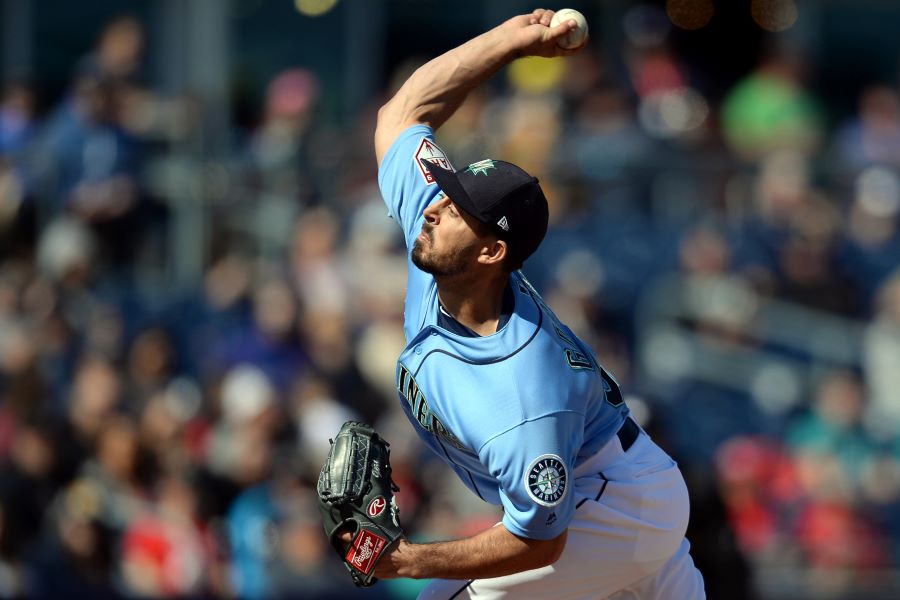 The Twins announced their 60-man player pool for the resumption of spring training and the eventual regular season Monday, including seven pitchers currently not on the 40-man roster. Today, let’s look at three of those seven hurlers, to see in which ways and under what circumstances the team envisions them helping during the truncated 2020 season. It was an easy call for the team to bring Jhoulys Chacín back, as he had yet to be released from his minor-league deal when spring training was halted in mid-March, and he could provide valuable depth in the starting rotation or the bullpen. His track record and past durability make the case that he could help if Rich Hill or Homer Bailey suffers an injury during the secondary training camp that opens Wednesday. However, there’s not much chance that Chacín will be better in 2020 than Randy Dobnak or Devin Smeltzer, unless he’s done something during this interregnum that he wasn’t doing even during spring training. When Chacín signed with the Twins in February, I wrote about his extraordinarily heavy slider usage, and how he seemed to have found the point of diminishing (even negative) returns on such usage as a starter in 2019. As I wrote then, however, while comparing him to fellow fringe pitching addition Matt Wisler, that inflection point is much higher for relievers. For Chacín, at this stage of his career, that might be even more true than it is in general. He’s no longer a hard thrower. His four-seam fastball flattens out on him a bit, and because of his age, body type, and past injury history, it’s unlikely the Twins will be able to help him get into his legs, change the way he transfers energy as he comes down the mound, and generate more power or life on the four-seamer. What Chacín could do, though, is transition into a short relief role, leaning entirely on his sinker and slider. With his funky delivery (featuring a stride opens him up early to home plate), and without the sheer power to be effective with his four-seamer and curve, he’s much better cast as a matchup right-hander than as a starter. The Twins would have to decide whether keeping a veteran with incentives in his deal is worth the upside of that role, and Chacín will probably have some agency there, but it seems unlikely he would want to become a free agent and try to latch on elsewhere for such a short and chaotic audition. He’ll be valuable in a one-inning opener or middle-relief role, if he comes to Target Field feeling good. Left-hander Danny Coulombe was another good bet to make the roster, but is a little less known and (in some sense) a little more interesting. At 5-foot-10, Coulombe is a diminutive left-hander. He’s pitched parts of five different seasons in the big leagues, but spent all of 2019 in the minors with the Brewers and Yankees. It’s important to note, though, that neither the Brewers nor the Yankees were ever hurting badly for bullpen help in 2019. Coulombe showed an ability to dominate in the minor leagues, with a 36.1-percent strikeout rate. He gets deep into his legs in his delivery and throws from a high three-quarters arm slot, which doesn’t allow him to live up in the zone. He doesn’t throw hard. However, both his slider and his curveball can be impressive pitches. They have distinct shapes and velocities, and his command of each is fairly good. The Twins, of course, lack a traditional matchup lefty. Taylor Rogers is a relief ace who will be asked to pitch based on leverage and to get both left-handed and right-handed batters out in every appearance. Smeltzer is closer to being a starter than to being a true reliever, and is likely to be needed in a bridge role early in the season, as pitchers continue to ramp up and innings need to be covered. Signing Tyler Clippard was nice, but having a right-handed pitcher with reverse platoon splits is not quite the same thing as having a lefty with multiple breaking balls who can befuddle lefties when needed. Batters drive a portion of the platoon split themselves, after all, and there will inevitably be left-hitting opponents against whom the best bet is a true lefty. In that sense, the three-batter minimum could be the biggest obstacle to Coulombe fitting into an expanded bullpen. On the other hand, as I wrote during the winter, Rocco Baldelli and the Twins might find chances to take calculated risks with that rule, since a lefty hitter coming up with two outs could end an inning, and the lefty reliever brought on to face them would not then be required to come back out for the following frame. The downside of that type of gambling is less scary, too, in a world where the 13-pitcher roster limit has been scrubbed and teams will have 28 or more active players for about half the season. Still, it will be important to use Coulombe wisely, if he’s to be used at all. Both of his fastballs have heavy action. They have plenty of spin, but don’t seem to rise or hop. They work downhill, and that will make Coulombe vulnerable against hitters who are good at elevating the ball. He’ll be at his best against flat-plane swingers, especially tall ones and guys who like the ball up in the zone. The opposite, if anything, is true of Ryan Garton, the right-handed reliever they signed to a non-roster deal way back at the end of November. Garton had spent his first eight pro seasons in the Tampa Bay and Seattle organizations, briefly pitching in the big leagues with each team. In 2019, he made just a pair of appearances with the Mariners, and was hit hard. Like Coulombe, he’s 5-foot-10, and he doesn’t have even average velocity. However, Garton comes directly over the top, and was able to improve his spin rate last year to get improved carry on his four-seamer. He uses a cutter and curveball off of that pitch, and has gotten better at disguising both secondary offerings. His fastball and curveball have almost identical horizontal movement and near-perfectly opposed spin axes, leading to a big movement and velocity differential without allowing hitters to see the difference between them well out of the hand. None of this is to suggest that Garton will be a dominant reliever at any point this year. That’s wildly unlikely. It’s better to think of him as insurance against Clippard being injured or ineffective. In the past, Garton had been considered almost a matchup righty, akin to the role for which Chacín could now be suited. In 2019, though, he dominated the few lefties he saw, and if he’s able to sustain the adjustments he’s made to his release point and arm action on the non-heaters this year, he could be a useful extra arm in the event of any emergent need. MORE FROM TWINS DAILY — Latest Twins coverage from our writers — Recent Twins discussion in our forums — Follow Twins Daily via Twitter, Facebook or email
 -
This weekend, the Twins have a roster deadline. Building their list of eligible players will be an interesting exercise.This Sunday, the Twins will need to submit a 60-person list to Major League Baseball. Only the players on that list will be eligible to play during the frantic 60-game season that begins late next month. That makes for a number of interesting decisions over the coming days, because even in a 162-game season, a team doesn’t usually use 60 players. The Twins will have to select some players to bring along for purely developmental reasons, yet keep enough talent on hand to fill unexpected vacancies. Of course, a large number of the decisions will be essentially automatic. There are 38 players on Minnesota’s 40-man roster, and all of them are ironclad locks to be among the 60. Michael Pineda, currently suspended, is another easy call, since he’ll finish his carried-over suspension and be eligible to return with a few weeks left in the season. Still, that leaves a lot of talented players who are important to the future of the franchise—and who could be important to the team in 2020—on the edge of the picture. Let’s run through a few more relatively easy calls. The 40-man roster features three catchers, but the team is likely to carry three more. Juan Graterol, signed as a non-roster invitee over the winter, offers veteran savvy in case of emergency. Ryan Jeffers had an impressive 2019, so much so that keeping him around in case the need arises for an everyday catcher at the last moment makes sense, especially because he’ll be able to continue working on his defense and developing his rapport with key pitchers throughout the system. Ben Rortvedt has neither as high a ceiling nor as short a path to playing time as Jeffers, but he’ll be Rule 5-eligible this winter, so the team needs to evaluate him as fully as possible over the next few months. Zander Wiel was in the midst of a very encouraging spring training before the world stopped in mid-March. He’s unlikely to hit enough to become a regular, given his lack of defensive value, but he can do so more than well enough to serve as a fallback bench bat option on a taxi squad. Wilfredo Tovar, who’s appeared in the big leagues for cups of coffee in three different seasons, is a fine good-glove, no-hit shortstop, an insurance policy and the kind of player who can facilitate action on the taxi squad via his general competence. Royce Lewis has such phenomenal upside that not bringing him along, if only on the chance that he breaks out in an unexpectedly brilliant and rapid way, would be silly. Wander Javier has had so much of his career derailed by injuries that he’s no threat to be taken in the Rule 5 Draft this fall, but that only makes it more important that the team finally get him into some form of uninterrupted, supervised, competitive development, a luxury that won’t be available in Fort Myers or anywhere else this summer. Alex Kirilloff and Trevor Larnach could well be needed, and could even become heroes, for the 2020 team. Both of their bats are MLB-ready; they’re much more desirable as potential replacements if the Twins lose a key hitter to injury than are Jake Cave or LaMonte Wade, Jr. Brent Rooker and Akil Baddoo are both Rule 5-eligible this December, so the team needs to get long looks at them, and their respective profiles make those looks especially valuable and important. On the other hand, and this is why the calculus will be especially intriguing, the team should (and probably will) keep Gabriel Maciel away from the taxi squad, despite his also being Rule 5-eligible this fall. Maciel is far enough from being big league-ready to be safe from selection, and the team doesn’t urgently need to see him in a competitive setting. Non-roster free-agent signee Lane Adams can do what Maciel would offer, anyway. Jhoulys Chacín looked unlikely to make the Opening Day roster as a member of the rotation, and looks even less likely to do so now, since Rich Hill seems quite likely to be ready for one of those jobs by the time the season begins. Nonetheless, the team should list him among their 60 eligible players, retaining him as depth and insurance for as long as possible. Four relievers whom the team signed to non-roster deals this winter look like good candidates to come in as further depth for the bullpen: right-handers Cory Gearrin and Juan Minaya, and lefties Danny Coulombe and Blaine Hardy. Other teams have already had chances to pluck southpaw Andrew Vasquez and righty Jake Reed, but they still seem like solid options to round out the relief corps for the time being. That leaves just two spots. With the hard-throwing likes of Jorge Alcala and Jhoan Duran already on the 40-man roster, and with guys like Randy Dobnak, Devin Smeltzer, and Lewis Thorpe around to soak up innings in bulk if needed, there aren’t urgent team needs to weigh for these final spots. The Twins should use those places on two hurlers who will be Rule 5-eligible after the season. Jordan Balazovic will be protected, no matter what, but the team should still keep him close. He’s the kind of pitcher who can benefit from close instruction and a competitive environment, and who could benefit the other players on a reserve squad by giving them a challenging but conventional opponent against whom to prepare for action. Bailey Ober will be tougher to squeeze onto the 40-man roster, and might not merit as much. However, he’s another hurler whom the team would do well to evaluate under the most normal conditions possible, and his ability to throw strikes with good extension and a deceptive delivery makes him potentially useful in a huge number of ways. There will be no conventional Minor League Baseball this year. There might be a dramatically expanded Fall League, but at the moment, even that feels like a pipe dream, given the trends in the spread of coronavirus in Arizona and in Florida, and given the continued fears of a second wave of the disease in the autumn. The Twins can’t count on having any way to evaluate their own talent, other than by keeping them around as part of their 60-player reserve list. That’s why they’ll need to weigh the Rule 5 Draft, but also their medium- and long-term future, as well as keeping the best possible players around in the event of injuries or illnesses that would otherwise threaten a very promising (however bizarre) 2020 campaign. Click here to view the article
-
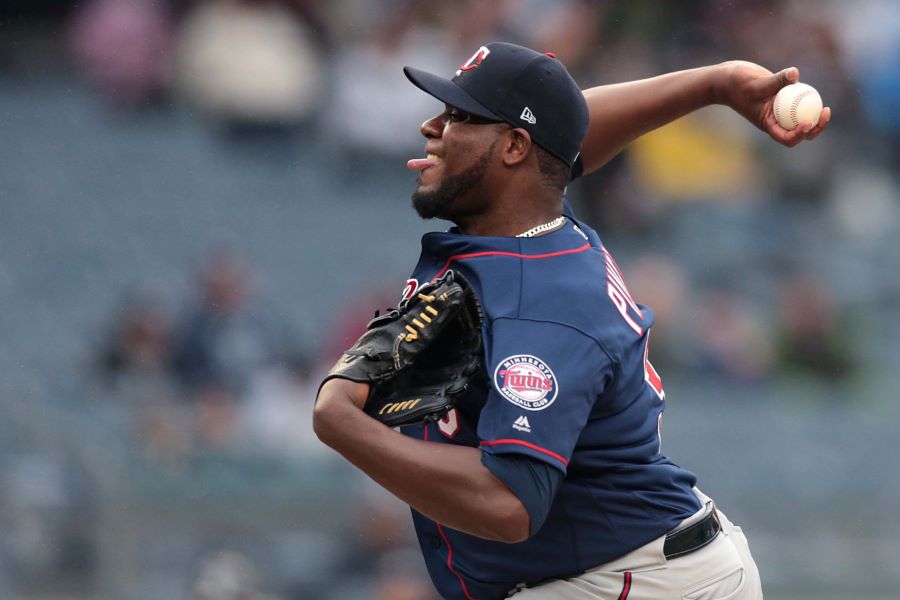 This Sunday, the Twins will need to submit a 60-person list to Major League Baseball. Only the players on that list will be eligible to play during the frantic 60-game season that begins late next month. That makes for a number of interesting decisions over the coming days, because even in a 162-game season, a team doesn’t usually use 60 players. The Twins will have to select some players to bring along for purely developmental reasons, yet keep enough talent on hand to fill unexpected vacancies. Of course, a large number of the decisions will be essentially automatic. There are 38 players on Minnesota’s 40-man roster, and all of them are ironclad locks to be among the 60. Michael Pineda, currently suspended, is another easy call, since he’ll finish his carried-over suspension and be eligible to return with a few weeks left in the season. Still, that leaves a lot of talented players who are important to the future of the franchise—and who could be important to the team in 2020—on the edge of the picture. Let’s run through a few more relatively easy calls. The 40-man roster features three catchers, but the team is likely to carry three more. Juan Graterol, signed as a non-roster invitee over the winter, offers veteran savvy in case of emergency. Ryan Jeffers had an impressive 2019, so much so that keeping him around in case the need arises for an everyday catcher at the last moment makes sense, especially because he’ll be able to continue working on his defense and developing his rapport with key pitchers throughout the system. Ben Rortvedt has neither as high a ceiling nor as short a path to playing time as Jeffers, but he’ll be Rule 5-eligible this winter, so the team needs to evaluate him as fully as possible over the next few months. Zander Wiel was in the midst of a very encouraging spring training before the world stopped in mid-March. He’s unlikely to hit enough to become a regular, given his lack of defensive value, but he can do so more than well enough to serve as a fallback bench bat option on a taxi squad. Wilfredo Tovar, who’s appeared in the big leagues for cups of coffee in three different seasons, is a fine good-glove, no-hit shortstop, an insurance policy and the kind of player who can facilitate action on the taxi squad via his general competence. Royce Lewis has such phenomenal upside that not bringing him along, if only on the chance that he breaks out in an unexpectedly brilliant and rapid way, would be silly. Wander Javier has had so much of his career derailed by injuries that he’s no threat to be taken in the Rule 5 Draft this fall, but that only makes it more important that the team finally get him into some form of uninterrupted, supervised, competitive development, a luxury that won’t be available in Fort Myers or anywhere else this summer. Alex Kirilloff and Trevor Larnach could well be needed, and could even become heroes, for the 2020 team. Both of their bats are MLB-ready; they’re much more desirable as potential replacements if the Twins lose a key hitter to injury than are Jake Cave or LaMonte Wade, Jr. Brent Rooker and Akil Baddoo are both Rule 5-eligible this December, so the team needs to get long looks at them, and their respective profiles make those looks especially valuable and important. On the other hand, and this is why the calculus will be especially intriguing, the team should (and probably will) keep Gabriel Maciel away from the taxi squad, despite his also being Rule 5-eligible this fall. Maciel is far enough from being big league-ready to be safe from selection, and the team doesn’t urgently need to see him in a competitive setting. Non-roster free-agent signee Lane Adams can do what Maciel would offer, anyway. Jhoulys Chacín looked unlikely to make the Opening Day roster as a member of the rotation, and looks even less likely to do so now, since Rich Hill seems quite likely to be ready for one of those jobs by the time the season begins. Nonetheless, the team should list him among their 60 eligible players, retaining him as depth and insurance for as long as possible. Four relievers whom the team signed to non-roster deals this winter look like good candidates to come in as further depth for the bullpen: right-handers Cory Gearrin and Juan Minaya, and lefties Danny Coulombe and Blaine Hardy. Other teams have already had chances to pluck southpaw Andrew Vasquez and righty Jake Reed, but they still seem like solid options to round out the relief corps for the time being. That leaves just two spots. With the hard-throwing likes of Jorge Alcala and Jhoan Duran already on the 40-man roster, and with guys like Randy Dobnak, Devin Smeltzer, and Lewis Thorpe around to soak up innings in bulk if needed, there aren’t urgent team needs to weigh for these final spots. The Twins should use those places on two hurlers who will be Rule 5-eligible after the season. Jordan Balazovic will be protected, no matter what, but the team should still keep him close. He’s the kind of pitcher who can benefit from close instruction and a competitive environment, and who could benefit the other players on a reserve squad by giving them a challenging but conventional opponent against whom to prepare for action. Bailey Ober will be tougher to squeeze onto the 40-man roster, and might not merit as much. However, he’s another hurler whom the team would do well to evaluate under the most normal conditions possible, and his ability to throw strikes with good extension and a deceptive delivery makes him potentially useful in a huge number of ways. There will be no conventional Minor League Baseball this year. There might be a dramatically expanded Fall League, but at the moment, even that feels like a pipe dream, given the trends in the spread of coronavirus in Arizona and in Florida, and given the continued fears of a second wave of the disease in the autumn. The Twins can’t count on having any way to evaluate their own talent, other than by keeping them around as part of their 60-player reserve list. That’s why they’ll need to weigh the Rule 5 Draft, but also their medium- and long-term future, as well as keeping the best possible players around in the event of injuries or illnesses that would otherwise threaten a very promising (however bizarre) 2020 campaign.
 -
With their flexible and exceptionally deep pitching staff, and in an expanded playoff format, the Twins are in better shape than ever for 2020—if they play.On Wednesday afternoon, the MLB Players Association and the league drew incrementally closer to an agreement on how to fit an MLB season into the second half of the summer. By all accounts, the schedule is likely to include about 60 games (perhaps a few more) in about 10 weeks, with an expanded 16-team postseason played thereafter. The Twins, who would suffer as much as or more than any other team if the season were canceled outright, are in great shape if such a season does materialize. In all likelihood, teams will try to combat the truncated runway to a season by demanding less of their starting pitchers this season, lightening the considerable workload of a full-fledged starter in a five-man rotation. Even with (perhaps) an extra day off or two on the calendar, it wouldn’t be surprising to see teams utilize six-man starting rotations. Some of the same teams, and some others, will also shorten their leashes with starters, going to their bullpens earlier and using them in lieu of starters on certain days. The Twins are in an excellent position to do just that. The delay to the start of the season virtually assures that Rich Hill will be ready come Opening Day (the tentative date for which appears to be July 19). That gives the team an enviable amount of rotation depth, however they elect to deploy it: José Berríos, Jake Odorizzi, Kenta Maeda, Hill, Homer Bailey, Devin Smeltzer, and Randy Dobnak. The best strategy for the team would be to use the first six on that list as their starters early on, with Dobnak acting as a long man and stabilizing the middle-relief corps. Then, when Michael Pineda finishes serving his suspension for PED use, he can slot into the rotation over the final few weeks, with Smeltzer sliding into a role alongside and opposite Dobnak. If there’s a weakness in the games of Maeda, Hill, or Bailey, it’s a lack of the arsenal depth and durability to dominate deep into games and seasons. In the frenetic sprint the proposed season figures to be, those are easy flaws to cover, especially given the depth of Minnesota’s bullpen. Taylor Rogers, who wore down slightly late last season after heavy multi-inning use and a few too many back-to-back outings, figures to be able to continue getting more than three outs at a time, with both a shorter season and the possibility of more off days involved. Trevor May and Tyler Duffey still feel like less-than-bulletproof setup men, despite their dominance late in 2019, but in this kind of season, only one needs to return at the level at which we last saw them. Sergio Romo and Tyler Clippard provide valuable variation, and Cody Stashak and Zack Littell could act as openers or as solid middle relief options. Again, for each of these pairs of pitchers, only one has to meet expectations in order for the Twins to get by. The inescapable weirdness of this season, and the extraordinary variance to which the season itself will be subject, will make pitching depth more important than ever, despite the lack of a draining final stretch after a long campaign. The Twins have that depth, and it will insure them against some of that violent variance. For many Twins fans, however, the expanded playoff bracket might be daunting. Given that the club hasn’t won a playoff series in almost 20 years, needing to win two or three series just to reach the World Series feels suboptimal. Still, there’s a way to see this as a bonus for the Twins. It’s exceedingly unlikely, even given the shortened season, that the Twins will fall short of the playoffs. In fact, even accounting for the variance inherent to this season, they remain very likely to finish with one of the four best records in the American League. That could well mean that the teams of whom Twins fans are (justifiably) afraid, come October, will have to avoid catching some bad luck against another, lesser team before they even earn the right to face Minnesota. It’s reasonable to expect that, with their experience and more top-heavy roster, the Astros or Yankees might overpower the Twins in the playoffs again this year. If they must first beat a respectable team like the Angels or White Sox, even in a best-of-three, though, that gives the Twins a slightly better chance of avoiding the juggernauts, and of either reaching the Series without facing a powerhouse or being knocked out just by bad luck. While the latter would be bitterly disappointing, it would be slightly less frustrating than getting flattened by a genuinely superior team yet again. The former, of course, would feel no less sweet for most Twins fans simply because it came without the suffering and David-versus-Goliath dynamic that their recent encounters with the Yankees have had. MORE FROM TWINS DAILY — Latest Twins coverage from our writers — Recent Twins discussion in our forums — Follow Twins Daily via Twitter, Facebook or email Click here to view the article
-
With their flexible and exceptionally deep pitching staff, and in an expanded playoff format, the Twins are in better shape than ever for 2020—if they play.On Wednesday afternoon, the MLB Players Association and the league drew incrementally closer to an agreement on how to fit an MLB season into the second half of the summer. By all accounts, the schedule is likely to include about 60 games (perhaps a few more) in about 10 weeks, with an expanded 16-team postseason played thereafter. The Twins, who would suffer as much as or more than any other team if the season were canceled outright, are in great shape if such a season does materialize. In all likelihood, teams will try to combat the truncated runway to a season by demanding less of their starting pitchers this season, lightening the considerable workload of a full-fledged starter in a five-man rotation. Even with (perhaps) an extra day off or two on the calendar, it wouldn’t be surprising to see teams utilize six-man starting rotations. Some of the same teams, and some others, will also shorten their leashes with starters, going to their bullpens earlier and using them in lieu of starters on certain days. The Twins are in an excellent position to do just that. The delay to the start of the season virtually assures that Rich Hill will be ready come Opening Day (the tentative date for which appears to be July 19). That gives the team an enviable amount of rotation depth, however they elect to deploy it: José Berríos, Jake Odorizzi, Kenta Maeda, Hill, Homer Bailey, Devin Smeltzer, and Randy Dobnak. The best strategy for the team would be to use the first six on that list as their starters early on, with Dobnak acting as a long man and stabilizing the middle-relief corps. Then, when Michael Pineda finishes serving his suspension for PED use, he can slot into the rotation over the final few weeks, with Smeltzer sliding into a role alongside and opposite Dobnak. If there’s a weakness in the games of Maeda, Hill, or Bailey, it’s a lack of the arsenal depth and durability to dominate deep into games and seasons. In the frenetic sprint the proposed season figures to be, those are easy flaws to cover, especially given the depth of Minnesota’s bullpen. Taylor Rogers, who wore down slightly late last season after heavy multi-inning use and a few too many back-to-back outings, figures to be able to continue getting more than three outs at a time, with both a shorter season and the possibility of more off days involved. Trevor May and Tyler Duffey still feel like less-than-bulletproof setup men, despite their dominance late in 2019, but in this kind of season, only one needs to return at the level at which we last saw them. Sergio Romo and Tyler Clippard provide valuable variation, and Cody Stashak and Zack Littell could act as openers or as solid middle relief options. Again, for each of these pairs of pitchers, only one has to meet expectations in order for the Twins to get by. The inescapable weirdness of this season, and the extraordinary variance to which the season itself will be subject, will make pitching depth more important than ever, despite the lack of a draining final stretch after a long campaign. The Twins have that depth, and it will insure them against some of that violent variance. For many Twins fans, however, the expanded playoff bracket might be daunting. Given that the club hasn’t won a playoff series in almost 20 years, needing to win two or three series just to reach the World Series feels suboptimal. Still, there’s a way to see this as a bonus for the Twins. It’s exceedingly unlikely, even given the shortened season, that the Twins will fall short of the playoffs. In fact, even accounting for the variance inherent to this season, they remain very likely to finish with one of the four best records in the American League. That could well mean that the teams of whom Twins fans are (justifiably) afraid, come October, will have to avoid catching some bad luck against another, lesser team before they even earn the right to face Minnesota. It’s reasonable to expect that, with their experience and more top-heavy roster, the Astros or Yankees might overpower the Twins in the playoffs again this year. If they must first beat a respectable team like the Angels or White Sox, even in a best-of-three, though, that gives the Twins a slightly better chance of avoiding the juggernauts, and of either reaching the Series without facing a powerhouse or being knocked out just by bad luck. While the latter would be bitterly disappointing, it would be slightly less frustrating than getting flattened by a genuinely superior team yet again. The former, of course, would feel no less sweet for most Twins fans simply because it came without the suffering and David-versus-Goliath dynamic that their recent encounters with the Yankees have had. MORE FROM TWINS DAILY — Latest Twins coverage from our writers — Recent Twins discussion in our forums — Follow Twins Daily via Twitter, Facebook or email Click here to view the article
-
How the Twins Are Well-Suited to Latest Proposed MLB Season
Matthew Trueblood posted an article in Twins
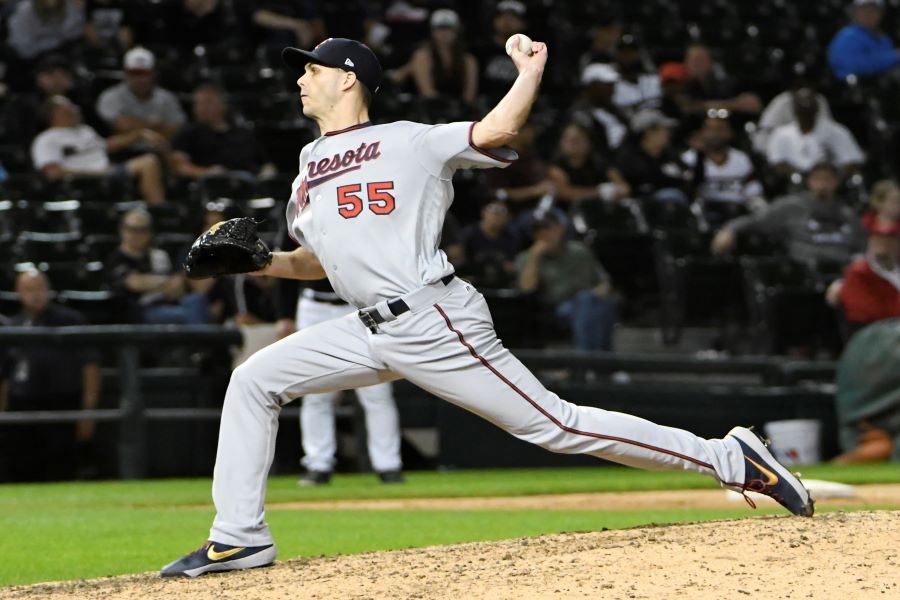 On Wednesday afternoon, the MLB Players Association and the league drew incrementally closer to an agreement on how to fit an MLB season into the second half of the summer. By all accounts, the schedule is likely to include about 60 games (perhaps a few more) in about 10 weeks, with an expanded 16-team postseason played thereafter. The Twins, who would suffer as much as or more than any other team if the season were canceled outright, are in great shape if such a season does materialize. In all likelihood, teams will try to combat the truncated runway to a season by demanding less of their starting pitchers this season, lightening the considerable workload of a full-fledged starter in a five-man rotation. Even with (perhaps) an extra day off or two on the calendar, it wouldn’t be surprising to see teams utilize six-man starting rotations. Some of the same teams, and some others, will also shorten their leashes with starters, going to their bullpens earlier and using them in lieu of starters on certain days. The Twins are in an excellent position to do just that. The delay to the start of the season virtually assures that Rich Hill will be ready come Opening Day (the tentative date for which appears to be July 19). That gives the team an enviable amount of rotation depth, however they elect to deploy it: José Berríos, Jake Odorizzi, Kenta Maeda, Hill, Homer Bailey, Devin Smeltzer, and Randy Dobnak. The best strategy for the team would be to use the first six on that list as their starters early on, with Dobnak acting as a long man and stabilizing the middle-relief corps. Then, when Michael Pineda finishes serving his suspension for PED use, he can slot into the rotation over the final few weeks, with Smeltzer sliding into a role alongside and opposite Dobnak. If there’s a weakness in the games of Maeda, Hill, or Bailey, it’s a lack of the arsenal depth and durability to dominate deep into games and seasons. In the frenetic sprint the proposed season figures to be, those are easy flaws to cover, especially given the depth of Minnesota’s bullpen. Taylor Rogers, who wore down slightly late last season after heavy multi-inning use and a few too many back-to-back outings, figures to be able to continue getting more than three outs at a time, with both a shorter season and the possibility of more off days involved. Trevor May and Tyler Duffey still feel like less-than-bulletproof setup men, despite their dominance late in 2019, but in this kind of season, only one needs to return at the level at which we last saw them. Sergio Romo and Tyler Clippard provide valuable variation, and Cody Stashak and Zack Littell could act as openers or as solid middle relief options. Again, for each of these pairs of pitchers, only one has to meet expectations in order for the Twins to get by. The inescapable weirdness of this season, and the extraordinary variance to which the season itself will be subject, will make pitching depth more important than ever, despite the lack of a draining final stretch after a long campaign. The Twins have that depth, and it will insure them against some of that violent variance. For many Twins fans, however, the expanded playoff bracket might be daunting. Given that the club hasn’t won a playoff series in almost 20 years, needing to win two or three series just to reach the World Series feels suboptimal. Still, there’s a way to see this as a bonus for the Twins. It’s exceedingly unlikely, even given the shortened season, that the Twins will fall short of the playoffs. In fact, even accounting for the variance inherent to this season, they remain very likely to finish with one of the four best records in the American League. That could well mean that the teams of whom Twins fans are (justifiably) afraid, come October, will have to avoid catching some bad luck against another, lesser team before they even earn the right to face Minnesota. It’s reasonable to expect that, with their experience and more top-heavy roster, the Astros or Yankees might overpower the Twins in the playoffs again this year. If they must first beat a respectable team like the Angels or White Sox, even in a best-of-three, though, that gives the Twins a slightly better chance of avoiding the juggernauts, and of either reaching the Series without facing a powerhouse or being knocked out just by bad luck. While the latter would be bitterly disappointing, it would be slightly less frustrating than getting flattened by a genuinely superior team yet again. The former, of course, would feel no less sweet for most Twins fans simply because it came without the suffering and David-versus-Goliath dynamic that their recent encounters with the Yankees have had. MORE FROM TWINS DAILY — Latest Twins coverage from our writers — Recent Twins discussion in our forums — Follow Twins Daily via Twitter, Facebook or email
 -
Both of the Twins' incumbent frontline starters share certain traits with hurlers who have gotten historically hot.If MLB has a 2020 season, it will be no more than half the usual length. If the owners get their way, there could be as few as 50 regular-season games. For the Twins, that could pay off, because their top two starting pitchers from last season fit the general profile of pitchers who have gotten extraordinarily hot over half-seasons in recent years. As I’ve discussed at length this offseason, José Berríos and Jake Odorizzi each became more multidimensional and demonstrated improved command in 2019. However, the specific adjustment that most sets them apart from the majority of their brethren on big-league mounds was their relatively heavy use of sinkers. Berríos threw his sinker 23 percent of the time; Odorizzi threw his 20 percent of the time. Both were in the top 30 among all big-league starters with at least 150 innings pitched, in terms of sinker frequency. Equally importantly, both hurlers had multiple other pitches on which they could comfortably rely. Odorizzi joined Yu Darvish and Joe Musgrove as the only pitchers who used six different pitches at least five percent of the time. Berríos didn’t throw any pitch more than 32.2 percent of the time. Historically, this is the kind of pitcher who can have a prolonged stretch in which he's truly unhittable: guys who have deep repertoires and good feel for their sinkers. The sinker is, somewhat counterintuitively, a “feel” pitch. The very reason why it’s gone out of fashion over the last half-decade is that, unlike the four-seam fastball, the sinker can’t be accurately evaluated by taking simple, quantitative readings. Neither spin rate nor sheer velocity determines the effectiveness of a sinker. In that way, the pitch isn’t exactly a fastball. Like off-speed offerings, sinkers are only as good as the command a pitcher exercises over them. In the last 100 years, the three lowest ERAs in any half (before or after the All-Star Game) have all come during the last decade. In 2015, Jake Arrieta had a 0.75 ERA in the second half. (As Twins fans might remember, his dominance began even earlier, when he threw a shutout against Minnesota at Target Field on June 21.) Just last season, Cardinals righty Jack Flaherty posted a 0.91 ERA in the second half. Back in 2012, it was the Braves’ Kris Medlen who took the world by storm down the stretch, with a 0.94 ERA. All three of those pitchers used pinpoint command of brilliant sinkers to scale those heights. All three of them also had four-pitch mixes that made them unpredictable and helped them induce exceptionally weak contact during their hot streaks. The sinker helped each keep his pitch counts under control, left batters unprepared for their four-seam fastballs, and made those hitters more vulnerable to changes of speed. The two most famous hot streaks in the history of pitching, of course, are Don Drysdale’s and Orel Hershiser’s streaks of nearly 60 innings without allowing a run. By coincidence (or not), both Drysdale and Hershiser were also sinkerballers with deep repertoires. Former Twins great Dean Chance had some of the best half-seasons of the 1960s, both with the Angels and with the Twins, and leaned toward a sinker. Johan Santana used the sinker as a fourth pitch, but still threw it at a representative rate during his reign of terror over the American League. The value of being able to throw multiple flavors of fastball for strikes, while also having command of one or more great off-speed pitches, is obvious. However, these great performances speak to just how dominant a pitcher possessed of those skills can be. Nonetheless, teams in the modern game are focused on training their pitchers to pair sliders with four-seam fastballs, and hardly ever encourage the development of repertoires as deep as those Wes Johnson cultivated from his charges in 2019. Hardly anyone is trying to create the type of pitcher who can be unbeatable for a few months. The reasons are simple. Firstly, there’s value in simplicity. Teams can more easily train many pitchers to throw two or three pitches well than train even one or two to be four- or five-pitch masters. In the modern handling of pitching staffs, that quantity-over-quality approach has to govern most decisions. Secondly, success with a four-seamer and slider can be more consistent, both because it’s less vulnerable to bad luck and because it’s easier to sustain success with those pitches. The four-seamer and slider typically induce more whiffs than even great sinkers, taking bad bounces off the table. The two pitches also require virtually no differences in throwing motion. On the other hand, the deep, sinker-centric arsenal requires the ability to make small changes from one pitch to the next; to maintain multiple release points without losing the ability to repeat one’s mechanics; and to keep the grip and feel of each pitch honed. That’s why guys with four pitches and a good sinker can be exceptionally devastating, but why they’re still not popping up everywhere in our age of pitching optimization. In a shortened MLB season, however, the guys whose inconsistency is typically a weakness could turn into the best candidates to take home a (tainted) Cy Young Award. Moreover, the short season means it’s less likely that such a pitcher would either wear down or lose their feel during the postseason. All of this assumes, of course, that the great feel the above-mentioned pitchers found during their legendary streaks can be found by pitchers laboring under unusual conditions, without the first half of the season to tinker and work through certain kinks. If this theory holds, though, the Twins could be better-positioned to catch the upside of a shortened season, at least when it comes to their starting pitching. MORE FROM TWINS DAILY — Latest Twins coverage from our writers — Recent Twins discussion in our forums — Follow Twins Daily via Twitter, Facebook or email Click here to view the article
-
José Berríos, Jake Odorizzi Could Be Extra Dominant in a Short Season
Matthew Trueblood posted an article in Twins
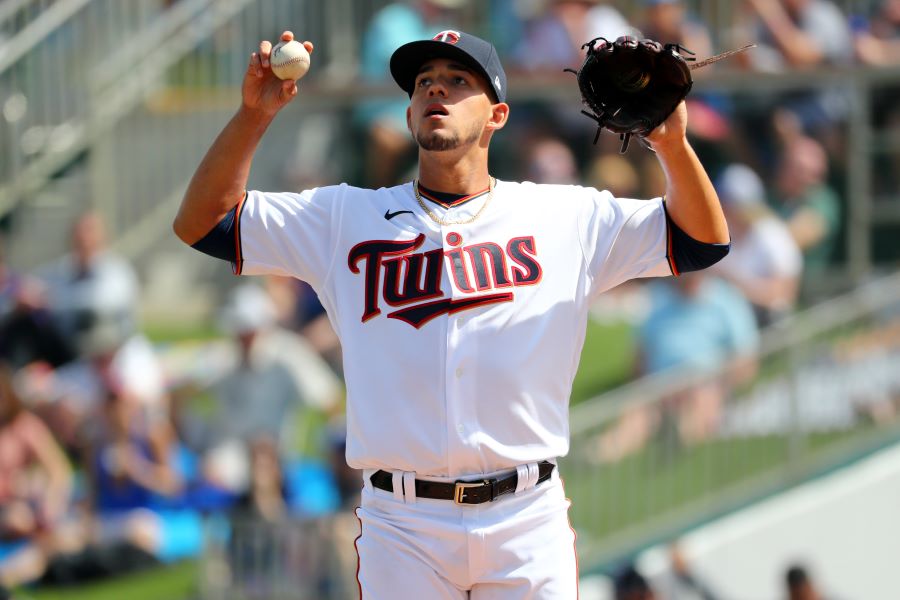 If MLB has a 2020 season, it will be no more than half the usual length. If the owners get their way, there could be as few as 50 regular-season games. For the Twins, that could pay off, because their top two starting pitchers from last season fit the general profile of pitchers who have gotten extraordinarily hot over half-seasons in recent years. As I’ve discussed at length this offseason, José Berríos and Jake Odorizzi each became more multidimensional and demonstrated improved command in 2019. However, the specific adjustment that most sets them apart from the majority of their brethren on big-league mounds was their relatively heavy use of sinkers. Berríos threw his sinker 23 percent of the time; Odorizzi threw his 20 percent of the time. Both were in the top 30 among all big-league starters with at least 150 innings pitched, in terms of sinker frequency. Equally importantly, both hurlers had multiple other pitches on which they could comfortably rely. Odorizzi joined Yu Darvish and Joe Musgrove as the only pitchers who used six different pitches at least five percent of the time. Berríos didn’t throw any pitch more than 32.2 percent of the time. Historically, this is the kind of pitcher who can have a prolonged stretch in which he's truly unhittable: guys who have deep repertoires and good feel for their sinkers. The sinker is, somewhat counterintuitively, a “feel” pitch. The very reason why it’s gone out of fashion over the last half-decade is that, unlike the four-seam fastball, the sinker can’t be accurately evaluated by taking simple, quantitative readings. Neither spin rate nor sheer velocity determines the effectiveness of a sinker. In that way, the pitch isn’t exactly a fastball. Like off-speed offerings, sinkers are only as good as the command a pitcher exercises over them. In the last 100 years, the three lowest ERAs in any half (before or after the All-Star Game) have all come during the last decade. In 2015, Jake Arrieta had a 0.75 ERA in the second half. (As Twins fans might remember, his dominance began even earlier, when he threw a shutout against Minnesota at Target Field on June 21.) Just last season, Cardinals righty Jack Flaherty posted a 0.91 ERA in the second half. Back in 2012, it was the Braves’ Kris Medlen who took the world by storm down the stretch, with a 0.94 ERA. All three of those pitchers used pinpoint command of brilliant sinkers to scale those heights. All three of them also had four-pitch mixes that made them unpredictable and helped them induce exceptionally weak contact during their hot streaks. The sinker helped each keep his pitch counts under control, left batters unprepared for their four-seam fastballs, and made those hitters more vulnerable to changes of speed. The two most famous hot streaks in the history of pitching, of course, are Don Drysdale’s and Orel Hershiser’s streaks of nearly 60 innings without allowing a run. By coincidence (or not), both Drysdale and Hershiser were also sinkerballers with deep repertoires. Former Twins great Dean Chance had some of the best half-seasons of the 1960s, both with the Angels and with the Twins, and leaned toward a sinker. Johan Santana used the sinker as a fourth pitch, but still threw it at a representative rate during his reign of terror over the American League. The value of being able to throw multiple flavors of fastball for strikes, while also having command of one or more great off-speed pitches, is obvious. However, these great performances speak to just how dominant a pitcher possessed of those skills can be. Nonetheless, teams in the modern game are focused on training their pitchers to pair sliders with four-seam fastballs, and hardly ever encourage the development of repertoires as deep as those Wes Johnson cultivated from his charges in 2019. Hardly anyone is trying to create the type of pitcher who can be unbeatable for a few months. The reasons are simple. Firstly, there’s value in simplicity. Teams can more easily train many pitchers to throw two or three pitches well than train even one or two to be four- or five-pitch masters. In the modern handling of pitching staffs, that quantity-over-quality approach has to govern most decisions. Secondly, success with a four-seamer and slider can be more consistent, both because it’s less vulnerable to bad luck and because it’s easier to sustain success with those pitches. The four-seamer and slider typically induce more whiffs than even great sinkers, taking bad bounces off the table. The two pitches also require virtually no differences in throwing motion. On the other hand, the deep, sinker-centric arsenal requires the ability to make small changes from one pitch to the next; to maintain multiple release points without losing the ability to repeat one’s mechanics; and to keep the grip and feel of each pitch honed. That’s why guys with four pitches and a good sinker can be exceptionally devastating, but why they’re still not popping up everywhere in our age of pitching optimization. In a shortened MLB season, however, the guys whose inconsistency is typically a weakness could turn into the best candidates to take home a (tainted) Cy Young Award. Moreover, the short season means it’s less likely that such a pitcher would either wear down or lose their feel during the postseason. All of this assumes, of course, that the great feel the above-mentioned pitchers found during their legendary streaks can be found by pitchers laboring under unusual conditions, without the first half of the season to tinker and work through certain kinks. If this theory holds, though, the Twins could be better-positioned to catch the upside of a shortened season, at least when it comes to their starting pitching. MORE FROM TWINS DAILY — Latest Twins coverage from our writers — Recent Twins discussion in our forums — Follow Twins Daily via Twitter, Facebook or email
 -
One adjustment that helped lead to Sanó's great 2019 could be a red flag for the balance of his career.Miguel Sanó will always strike out a lot. In fact, he’ll probably always strike out at a higher rate than that at which any player in baseball history has sustained his caliber of production at the plate. His power is extraordinary, but in order to make up for all his strikeouts, Sanó has to have success even when he isn’t hitting the ball over the walls. That poses an interesting dilemma: can Sanó thrive as a dead-pull hitter who relies on running a high BABIP? First of all, let’s establish a couple of facts about Sanó’s approach, and about the shape of offensive production. Last year, for the first time, Sanó became an extreme pull hitter. In fact, according to FanGraphs, Sanó’s pull rate on batted balls last year was the second highest in MLB among players with at least 300 plate appearances. In the last decade, out of over 2,700 player-seasons, only 14 saw a higher pull rate than Sanó had. Meanwhile, despite his overall improvement (some might even call it a breakout) during the second half of 2019, Sanó kept striking out at an exceptional rate. He fanned in 36.2 percent of his plate appearances, almost exactly matching his career rate of 36.3. In baseball history, no player with at least 2,000 career trips to the plate has struck out as often as has Sanó. Despite that, according to FanGraphs, he’s been 21 percent better than an average hitter (as signified by his 121 wRC+). There are four core skills involved in hitting. They overlap, and each contains several smaller skills that also belong in some measure to other core skills, but these four are the most concise way to capture a hitter in profile. Strikeout rate is one of them, and in that regard, Sanó is certainly well below-average, even by modern standards. In the other three, though, to this point in his career, he’s been quite good. He maintains a high walk rate, has tremendous isolated power, and owns a career .342 BABIP—a 98th-percentile figure in baseball history. Most hitters who whiff as much as Sanó does flame out of the league fairly quickly. Those who survive long enough to play even as much as he already has necessarily possess at least some of the other skills, as Sanó does, so it’s not wholly unusual for a batter to be average or better while running a high strikeout rate. Of the 50 most strikeout-prone hitters ever, however, 22 were below-average, and 19 had a wRC+ between 100 and 115. To run a great wRC+ while striking out more than a third of the time, as Sanó will need to do if he’s going to be an impact player now that he’s moved to first base, requires one to excel in the other three core skills. Considering his newfound pull-happiness, however, that might be a challenge for Sanó. Pulling the ball frequently only helps him tap into his power, and waiting for pitches he can yank in that direction can help brace his solid (if unspectacular) walk rate. Running a high BABIP while pulling the ball so often, however, is rare and difficult. For the 100 player-seasons since 2010 with the highest pull rates, the average BABIP was just .275. Sanó’s BABIP last season was .319, down considerably from his career rate, but still almost 1.5 standard deviations above the average for dead-pull hitters. Between that gap and his unprecedented rate of 0.37 home runs per fly ball, there’s plenty of cause to wonder whether Sanó’s apparent breakout represented a level he can carry forward. Advocates for Sanó could point out, correctly, that the very extremes we’re examining here make comparing him to other hitters unfair. Almost no one in baseball hits the ball harder than Sanó. Unlike many dead-pull hitters, Sanó is right-handed, making him (if only slightly) harder to defend with defensive shifts. Unlike many right-handed mashers, Sanó runs fairly well, which might help him collect an infield hit or force teams to defend him differently on occasion. Still, as has been the case in each of his big-league seasons to date, 2019 gave us insufficient data to determine what we can expect from Sanó in the future. We know he’ll strike out a ton, hit a handsome number of homers, and draw his walks. We don’t yet know what adjustments he can make, around and within those parameters, to weather the process of aging, to respond to the league’s adjustments to him, and to bring his extreme skill set in line with what we know about paths to success and failure in MLB. MORE FROM TWINS DAILY — Latest Twins coverage from our writers — Recent Twins discussion in our forums — Follow Twins Daily via Twitter, Facebook or email Click here to view the article
-
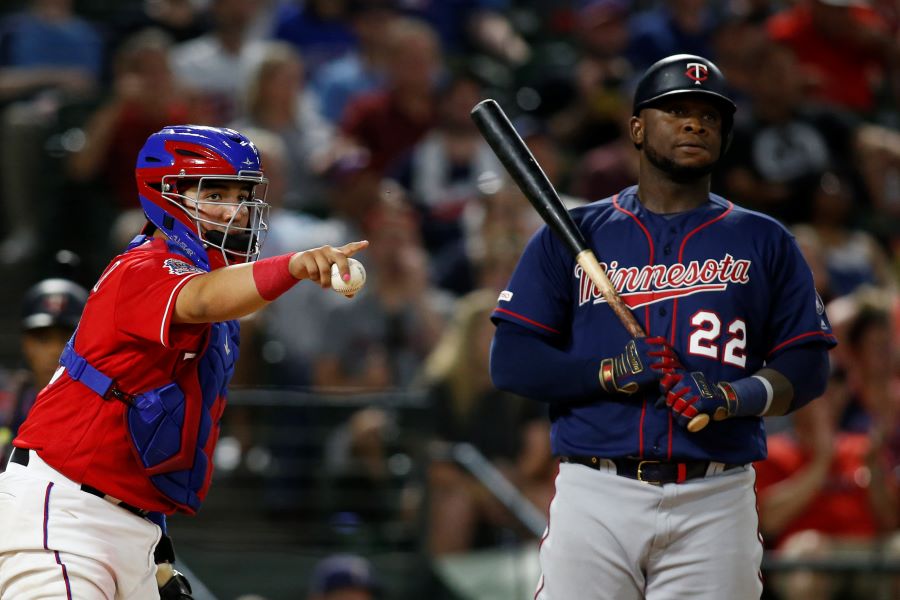 Miguel Sanó will always strike out a lot. In fact, he’ll probably always strike out at a higher rate than that at which any player in baseball history has sustained his caliber of production at the plate. His power is extraordinary, but in order to make up for all his strikeouts, Sanó has to have success even when he isn’t hitting the ball over the walls. That poses an interesting dilemma: can Sanó thrive as a dead-pull hitter who relies on running a high BABIP? First of all, let’s establish a couple of facts about Sanó’s approach, and about the shape of offensive production. Last year, for the first time, Sanó became an extreme pull hitter. In fact, according to FanGraphs, Sanó’s pull rate on batted balls last year was the second highest in MLB among players with at least 300 plate appearances. In the last decade, out of over 2,700 player-seasons, only 14 saw a higher pull rate than Sanó had. Meanwhile, despite his overall improvement (some might even call it a breakout) during the second half of 2019, Sanó kept striking out at an exceptional rate. He fanned in 36.2 percent of his plate appearances, almost exactly matching his career rate of 36.3. In baseball history, no player with at least 2,000 career trips to the plate has struck out as often as has Sanó. Despite that, according to FanGraphs, he’s been 21 percent better than an average hitter (as signified by his 121 wRC+). There are four core skills involved in hitting. They overlap, and each contains several smaller skills that also belong in some measure to other core skills, but these four are the most concise way to capture a hitter in profile. Strikeout rate is one of them, and in that regard, Sanó is certainly well below-average, even by modern standards. In the other three, though, to this point in his career, he’s been quite good. He maintains a high walk rate, has tremendous isolated power, and owns a career .342 BABIP—a 98th-percentile figure in baseball history. Most hitters who whiff as much as Sanó does flame out of the league fairly quickly. Those who survive long enough to play even as much as he already has necessarily possess at least some of the other skills, as Sanó does, so it’s not wholly unusual for a batter to be average or better while running a high strikeout rate. Of the 50 most strikeout-prone hitters ever, however, 22 were below-average, and 19 had a wRC+ between 100 and 115. To run a great wRC+ while striking out more than a third of the time, as Sanó will need to do if he’s going to be an impact player now that he’s moved to first base, requires one to excel in the other three core skills. Considering his newfound pull-happiness, however, that might be a challenge for Sanó. Pulling the ball frequently only helps him tap into his power, and waiting for pitches he can yank in that direction can help brace his solid (if unspectacular) walk rate. Running a high BABIP while pulling the ball so often, however, is rare and difficult. For the 100 player-seasons since 2010 with the highest pull rates, the average BABIP was just .275. Sanó’s BABIP last season was .319, down considerably from his career rate, but still almost 1.5 standard deviations above the average for dead-pull hitters. Between that gap and his unprecedented rate of 0.37 home runs per fly ball, there’s plenty of cause to wonder whether Sanó’s apparent breakout represented a level he can carry forward. Advocates for Sanó could point out, correctly, that the very extremes we’re examining here make comparing him to other hitters unfair. Almost no one in baseball hits the ball harder than Sanó. Unlike many dead-pull hitters, Sanó is right-handed, making him (if only slightly) harder to defend with defensive shifts. Unlike many right-handed mashers, Sanó runs fairly well, which might help him collect an infield hit or force teams to defend him differently on occasion. Still, as has been the case in each of his big-league seasons to date, 2019 gave us insufficient data to determine what we can expect from Sanó in the future. We know he’ll strike out a ton, hit a handsome number of homers, and draw his walks. We don’t yet know what adjustments he can make, around and within those parameters, to weather the process of aging, to respond to the league’s adjustments to him, and to bring his extreme skill set in line with what we know about paths to success and failure in MLB. MORE FROM TWINS DAILY — Latest Twins coverage from our writers — Recent Twins discussion in our forums — Follow Twins Daily via Twitter, Facebook or email
 -
Why the Twins' relief ace's famous new pitch was a natural addition for him, and why he's likely both to stay great for a while—but not to get better.Taylor Rogers has a unique pitching motion. Former Twins catcher Bobby Wilson once called it “his little rushed delivery,” a compliment that only sounds backhanded. Interestingly, when one delves into the details of that delivery, the dominance of Rogers’s newest pitch comes into focus, but so do his vulnerabilities. By now, the story of Rogers’s transformation from fringy lefty specialist to formidable relief ace is familiar to nearly all Twins fans. During the first third of the 2018 season, Rogers tinkered with a new offering, a slider, which he then incorporated as an extra look for hitters hoping to lock in on his sinker and curveball. Since he became comfortable using that slider, he’s been one of the best relievers in baseball. Despite Wilson’s characterization, there’s certainly nothing rushed about the initial phase of Rogers’s delivery. On the contrary, the first notable thing about Rogers’s mechanics is the long path his arm traces while it’s working behind his body. When he first brings his throwing hand out of his glove, he stabs it down and backward, behind his back, toward the shortstop. Then, as he drives forward and his hips rotate, his arm rapidly comes up and through, but flexes only very briefly. Rogers naturally stays extended for much of his delivery, right through release point. That has big implications when we begin to consider the addition of the slider to his repertoire, at first as a third pitch, then as his primary breaking ball. “On the curveball, you’re actually trying to tuck the arm and decrease the radius of the arc, which increases the spin—whereas on the slider, you maintain a full arm length and full follow-through,” then-Red Sox pitching analyst Brian Bannister told Tyler Kepner, for Kepner’s 2019 book on pitching. “All the spin [on the slider] is created by the wrist and fingertips.” That’s the key to understanding Rogers’s slider, and the ease with which he was able to incorporate it. Rogers told Dan Hayes of The Athletic that he grips the slider the same way he grips his curve, which eliminated any discomfort or confusion during that step of the process. The only real difference in the way he throws the pitch, then, is in the arm action itself. For a hurler with a relatively low natural arm slot and such natural extension in his motion, that makes the slider a more natural pitch, for reasons summed up by Bannister: that extension suits the pitch better than a true curve. By no means, however, has Rogers stopped throwing the curve, and in fact, his curve has been as effective as ever since he added the slider. For that, Bannister (at least in his interview with Kepner) can’t offer us an explanation. “Two totally different approaches, which is why some guys throw sliders well and some guys throw curveballs well and why most guys struggle to throw both,” Bannister said. “Somebody like Clayton Kershaw is very rare, to throw elite versions of both.” Is Kershaw a fair comparison point for Rogers? Not really. It’s not fair to compare much of anyone to Kershaw. However, Rogers had a 69 cFIP and a 57 DRA- last season, according to Baseball Prospectus, suggesting he was somewhere between 30 and 40 percent better than an average pitcher, on a rate basis. Those are very close to the aggregate figures Kershaw posted from 2011 through 2013—not quite at his true peak, but when he was already winning Cy Young Awards, and even an MVP. Rogers gets near Kershaw’s level of batter-for-batter effectiveness partially by not having to face batters multiple times in one game, but also by having one breaking ball (the slider) which is essentially just a combination of his other breaking ball (the curve) and his fastball: he grips the pitch like his curve but throws it like his fastball. In so doing, he works around the problem Bannister articulated: he can have two different approaches and two different breaking pitches, without either compromising the other. That’s not to say Rogers is a perfect pitcher. There is, after all, a reason why he’s not a dominant starter, like Kershaw. The aforementioned “rushed” element of his delivery can create deception for hitters, especially now that he has multiple breaking pitches, and especially because both pitches have wider-than-average velocity separation from his fastball. However, it also makes him vulnerable to missing high and to his arm side, because his arm sometimes isn’t on time at release. Nearly every pitcher experiences that mistiming of release on occasion, and many hurlers have bigger problems than Rogers does because of it. In many cases, that mistiming (which creates misses within a predictable band; imagine a scatter plot of locations mapped across the strike zone, shaped like the pitcher’s arm slot) is compounded by instability or misalignment in other elements of the delivery. That can lead to more and bigger misses. Very few pitchers in baseball can match Rogers, though, for consistent alignment and stability. As he drives down the mound, he drags his back foot longer than most pitchers, then turns the heel of that foot toward first base, keeping the back leg on line even a split-second longer. It’s an unusual motion, but it gives him tremendous balance and stability as he releases the pitch and follows through. Because of that foot drag, and because he’s increased his core strength to generate more stability in his upper half, he’s as reliably on target in everything but release point as any pitcher in the game. Even that superlative comes with a catch. Rogers’s extraordinarily low walk rate last year bespeaks his excellent control, and that’s likely to be a sticky skill for him—especially now that he’s found a second breaking pitch that he can throw for strikes or get hitters to fish for. However, pitchers who miss only because of those minute mistimings can sometimes be more hittable, and given the nastiness of Rogers’s stuff, that tendency to miss in hitter-friendly spots is the only good explanation for the above-average rate at which hitters barreled him up last year. On the whole, Rogers has plenty of tools to avoid being hit hard. His sinker has great run to the arm side, and usually induces ground balls. The twin breaking balls keep hitters off-balance and will help him miss bats when he needs to do so. He might always give up more home runs than is ideal, especially for a relief ace (with that role’s inherently minuscule margin for error), but making the adjustments necessary to reduce that vulnerability almost certainly wouldn’t be worth the lost ability to manipulate a pair of breaking balls and pound the zone as no one else in baseball can. MORE FROM TWINS DAILY — Latest Twins coverage from our writers — Recent Twins discussion in our forums — Follow Twins Daily via Twitter, Facebook or email Click here to view the article
-
- 1
-

-
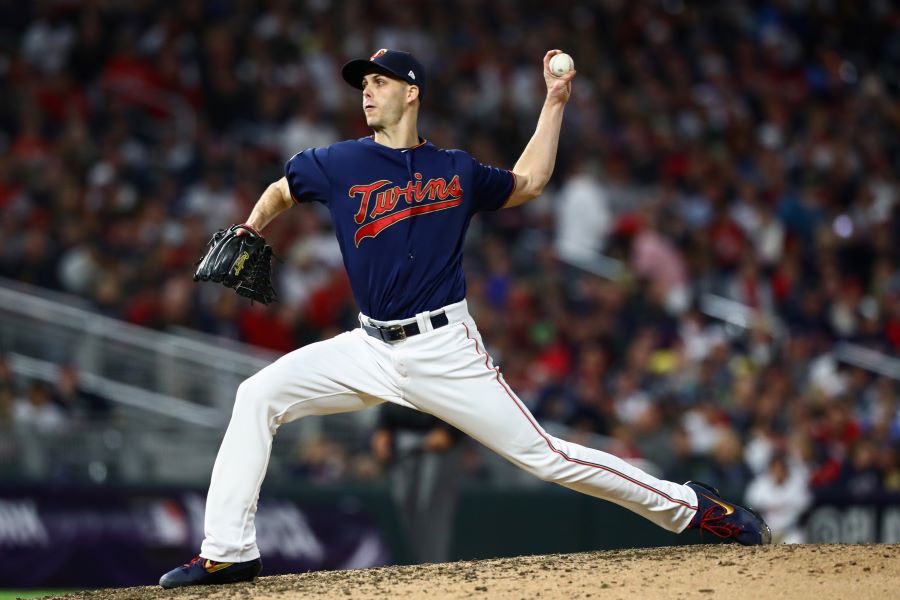 Taylor Rogers has a unique pitching motion. Former Twins catcher Bobby Wilson once called it “his little rushed delivery,” a compliment that only sounds backhanded. Interestingly, when one delves into the details of that delivery, the dominance of Rogers’s newest pitch comes into focus, but so do his vulnerabilities. By now, the story of Rogers’s transformation from fringy lefty specialist to formidable relief ace is familiar to nearly all Twins fans. During the first third of the 2018 season, Rogers tinkered with a new offering, a slider, which he then incorporated as an extra look for hitters hoping to lock in on his sinker and curveball. Since he became comfortable using that slider, he’s been one of the best relievers in baseball. Despite Wilson’s characterization, there’s certainly nothing rushed about the initial phase of Rogers’s delivery. On the contrary, the first notable thing about Rogers’s mechanics is the long path his arm traces while it’s working behind his body. When he first brings his throwing hand out of his glove, he stabs it down and backward, behind his back, toward the shortstop. Then, as he drives forward and his hips rotate, his arm rapidly comes up and through, but flexes only very briefly. Rogers naturally stays extended for much of his delivery, right through release point. That has big implications when we begin to consider the addition of the slider to his repertoire, at first as a third pitch, then as his primary breaking ball. “On the curveball, you’re actually trying to tuck the arm and decrease the radius of the arc, which increases the spin—whereas on the slider, you maintain a full arm length and full follow-through,” then-Red Sox pitching analyst Brian Bannister told Tyler Kepner, for Kepner’s 2019 book on pitching. “All the spin [on the slider] is created by the wrist and fingertips.” That’s the key to understanding Rogers’s slider, and the ease with which he was able to incorporate it. Rogers told Dan Hayes of The Athletic that he grips the slider the same way he grips his curve, which eliminated any discomfort or confusion during that step of the process. The only real difference in the way he throws the pitch, then, is in the arm action itself. For a hurler with a relatively low natural arm slot and such natural extension in his motion, that makes the slider a more natural pitch, for reasons summed up by Bannister: that extension suits the pitch better than a true curve. By no means, however, has Rogers stopped throwing the curve, and in fact, his curve has been as effective as ever since he added the slider. For that, Bannister (at least in his interview with Kepner) can’t offer us an explanation. “Two totally different approaches, which is why some guys throw sliders well and some guys throw curveballs well and why most guys struggle to throw both,” Bannister said. “Somebody like Clayton Kershaw is very rare, to throw elite versions of both.” Is Kershaw a fair comparison point for Rogers? Not really. It’s not fair to compare much of anyone to Kershaw. However, Rogers had a 69 cFIP and a 57 DRA- last season, according to Baseball Prospectus, suggesting he was somewhere between 30 and 40 percent better than an average pitcher, on a rate basis. Those are very close to the aggregate figures Kershaw posted from 2011 through 2013—not quite at his true peak, but when he was already winning Cy Young Awards, and even an MVP. Rogers gets near Kershaw’s level of batter-for-batter effectiveness partially by not having to face batters multiple times in one game, but also by having one breaking ball (the slider) which is essentially just a combination of his other breaking ball (the curve) and his fastball: he grips the pitch like his curve but throws it like his fastball. In so doing, he works around the problem Bannister articulated: he can have two different approaches and two different breaking pitches, without either compromising the other. That’s not to say Rogers is a perfect pitcher. There is, after all, a reason why he’s not a dominant starter, like Kershaw. The aforementioned “rushed” element of his delivery can create deception for hitters, especially now that he has multiple breaking pitches, and especially because both pitches have wider-than-average velocity separation from his fastball. However, it also makes him vulnerable to missing high and to his arm side, because his arm sometimes isn’t on time at release. Nearly every pitcher experiences that mistiming of release on occasion, and many hurlers have bigger problems than Rogers does because of it. In many cases, that mistiming (which creates misses within a predictable band; imagine a scatter plot of locations mapped across the strike zone, shaped like the pitcher’s arm slot) is compounded by instability or misalignment in other elements of the delivery. That can lead to more and bigger misses. Very few pitchers in baseball can match Rogers, though, for consistent alignment and stability. As he drives down the mound, he drags his back foot longer than most pitchers, then turns the heel of that foot toward first base, keeping the back leg on line even a split-second longer. It’s an unusual motion, but it gives him tremendous balance and stability as he releases the pitch and follows through. Because of that foot drag, and because he’s increased his core strength to generate more stability in his upper half, he’s as reliably on target in everything but release point as any pitcher in the game. Even that superlative comes with a catch. Rogers’s extraordinarily low walk rate last year bespeaks his excellent control, and that’s likely to be a sticky skill for him—especially now that he’s found a second breaking pitch that he can throw for strikes or get hitters to fish for. However, pitchers who miss only because of those minute mistimings can sometimes be more hittable, and given the nastiness of Rogers’s stuff, that tendency to miss in hitter-friendly spots is the only good explanation for the above-average rate at which hitters barreled him up last year. On the whole, Rogers has plenty of tools to avoid being hit hard. His sinker has great run to the arm side, and usually induces ground balls. The twin breaking balls keep hitters off-balance and will help him miss bats when he needs to do so. He might always give up more home runs than is ideal, especially for a relief ace (with that role’s inherently minuscule margin for error), but making the adjustments necessary to reduce that vulnerability almost certainly wouldn’t be worth the lost ability to manipulate a pair of breaking balls and pound the zone as no one else in baseball can. MORE FROM TWINS DAILY — Latest Twins coverage from our writers — Recent Twins discussion in our forums — Follow Twins Daily via Twitter, Facebook or email
 -
The Twins' ace has a unique style and repertoire, and the two might not be a perfect fit for one another in the long run.Watch José Berríos pitch, and the first thing that grabs you is his delivery. As good as Berríos’s stuff is, his high leg kick, crossfire stride pattern, and hyperkinetic finish make him especially compelling. All of that is also what makes Berríos’s future murky. Over the last three seasons, Berríos has blossomed into a solid frontline starting pitcher. He’ll turn 26 next week, before any MLB games are played in 2020, but before the onrush of the coronavirus, he looked like a strong candidate to break out this year, becoming a genuine Cy Young contender. He spent the winter training in a new, less intense way, the better to stand up to the rigors of a long season. He spent the spring tweaking the shape of his curveball, trying to get less horizontal sweep, more deception, and more whiffs from the pitch. Those attempted adjustments form an interesting juxtaposition, though, with Berríos’s delivery. In all of baseball, there are only two right-handed starters who consistently release the ball from as extreme a horizontal angle as Berríos: Jake Arrieta and Max Scherzer. Ranking every player-season with at least 2,500 pitches since 2015 (when Statcast began tracking this data) according to horizontal release point, Arrieta and Scherzer take up nine of the top 13 slots, and Berríos’s 2018 and 2019 are two of the remaining four in that group. Both Arrieta and Scherzer are famously intense in their workouts, as Berríos has been ever since he was drafted. They’re extraordinary physical specimens, with high-energy, high-intensity deliveries. Crucially, they’re also each a few inches taller than Berríos. That underscores what sets him apart from each of them: his funk and his crisscrossing limbwork are doubly unusual for a pitcher on the small side. To create the sharp angles he achieves, he has to not only stride somewhat toward the third-base dugout and throw across his body, but start on the third-base edge of the rubber, as well. It made some sense to do so, as long as Berríos was relying heavily on his four-seamer and his unique, two-plane curve. Scherzer thrives using that approach: 85 percent of his pitches are four-seamers or breaking pitches that move to the glove side. From that arm angle, the four-seamer and a good breaking ball can work optimally off of one another, even if that breaking ball ends up varying widely from the heater in both dimensions by the time it reaches home plate. However, Berríos used his sinker and changeup a combined 38.7 percent of the time last year, a career-high mark. If that’s his plan going forward (and I believe it should be), then a slightly less extreme horizontal angle from release to the strike zone could be called for. That goes double if he has, indeed, reshaped the curve into something that won’t sweep naturally off the plate horizontally. Arrieta is the more compelling comparison for Berríos, anyway. Their frames and their deliveries are more similar: compact, extremely athletic, obviously powerful, yet also, clearly vulnerable to occasional loss of command and repeatability. As one might guess, Arrieta’s repertoire (especially at his peak) is also a better fit to that of Berríos. Arrieta has long relied on his power sinker, and on a tight, two-plane curve. Because of misguided instruction in the Orioles system, Arrieta didn’t become the ace-caliber pitcher Berríos is poised to become until well after age 26; he wasn’t even established as a big-league starter until 28. Now, a mere half-decade after his peak, he’s on the brink of being pushed back out of the majors. His peak only lasted about three seasons. Obviously, Berríos has youth on his side in this comparison, but it’s worth wondering: can a pitcher remain both highly effective and healthy for a prolonged period using the delivery Berríos and Arrieta employ? The fact that Berríos goes through periods within seasons during which his velocity sags is a small red flag. The lack of a durable pitcher with whom he can be easily compared is, perhaps, a larger one. Yet, that might also be the strongest argument in favor of leaving Berríos alone: he’s a unique pitcher. Good decisions, in the age of biomechanics and pitch design, can and should be made without resorting solely to reasoning and evaluating via analogy. Arrieta didn’t realize his potential until the Cubs allowed him to go back to his natural delivery, after the Orioles tried to straighten him out. Perhaps Berríos (whose rookie season was marred by a severe alignment problem in his own delivery) would be similarly damaged by trying to do things more conventionally. Still, as he develops more trust in the pitches that move toward the arm side after release, and as he changes the shape of his curve, he might be wise to make adjustments to his mechanics (or his placement on the rubber) that match those tweaks in objective. MORE FROM TWINS DAILY — Latest Twins coverage from our writers — Recent Twins discussion in our forums — Follow Twins Daily via Twitter, Facebook or email Click here to view the article
-
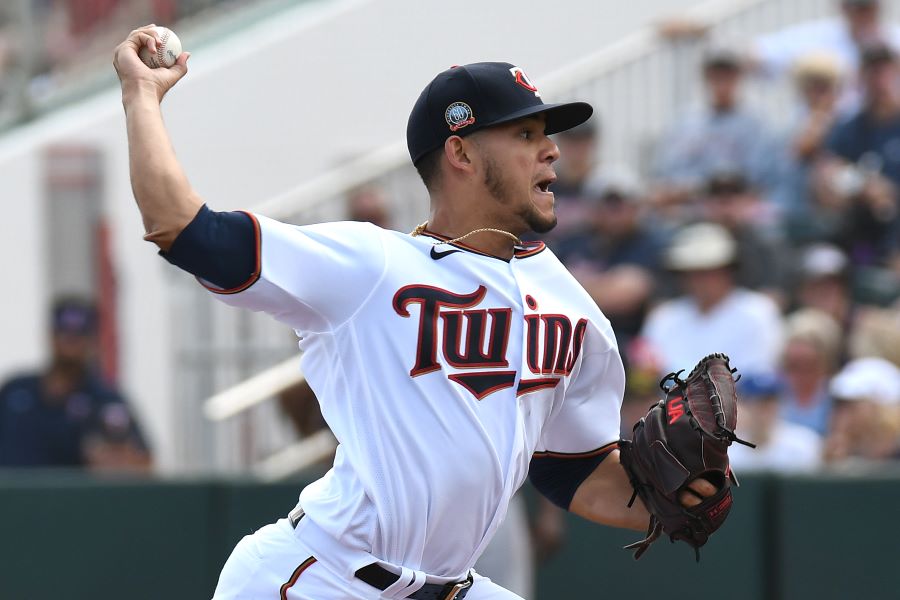 Watch José Berríos pitch, and the first thing that grabs you is his delivery. As good as Berríos’s stuff is, his high leg kick, crossfire stride pattern, and hyperkinetic finish make him especially compelling. All of that is also what makes Berríos’s future murky. Over the last three seasons, Berríos has blossomed into a solid frontline starting pitcher. He’ll turn 26 next week, before any MLB games are played in 2020, but before the onrush of the coronavirus, he looked like a strong candidate to break out this year, becoming a genuine Cy Young contender. He spent the winter training in a new, less intense way, the better to stand up to the rigors of a long season. He spent the spring tweaking the shape of his curveball, trying to get less horizontal sweep, more deception, and more whiffs from the pitch. Those attempted adjustments form an interesting juxtaposition, though, with Berríos’s delivery. In all of baseball, there are only two right-handed starters who consistently release the ball from as extreme a horizontal angle as Berríos: Jake Arrieta and Max Scherzer. Ranking every player-season with at least 2,500 pitches since 2015 (when Statcast began tracking this data) according to horizontal release point, Arrieta and Scherzer take up nine of the top 13 slots, and Berríos’s 2018 and 2019 are two of the remaining four in that group. Both Arrieta and Scherzer are famously intense in their workouts, as Berríos has been ever since he was drafted. They’re extraordinary physical specimens, with high-energy, high-intensity deliveries. Crucially, they’re also each a few inches taller than Berríos. That underscores what sets him apart from each of them: his funk and his crisscrossing limbwork are doubly unusual for a pitcher on the small side. To create the sharp angles he achieves, he has to not only stride somewhat toward the third-base dugout and throw across his body, but start on the third-base edge of the rubber, as well. It made some sense to do so, as long as Berríos was relying heavily on his four-seamer and his unique, two-plane curve. Scherzer thrives using that approach: 85 percent of his pitches are four-seamers or breaking pitches that move to the glove side. From that arm angle, the four-seamer and a good breaking ball can work optimally off of one another, even if that breaking ball ends up varying widely from the heater in both dimensions by the time it reaches home plate. However, Berríos used his sinker and changeup a combined 38.7 percent of the time last year, a career-high mark. If that’s his plan going forward (and I believe it should be), then a slightly less extreme horizontal angle from release to the strike zone could be called for. That goes double if he has, indeed, reshaped the curve into something that won’t sweep naturally off the plate horizontally. Arrieta is the more compelling comparison for Berríos, anyway. Their frames and their deliveries are more similar: compact, extremely athletic, obviously powerful, yet also, clearly vulnerable to occasional loss of command and repeatability. As one might guess, Arrieta’s repertoire (especially at his peak) is also a better fit to that of Berríos. Arrieta has long relied on his power sinker, and on a tight, two-plane curve. Because of misguided instruction in the Orioles system, Arrieta didn’t become the ace-caliber pitcher Berríos is poised to become until well after age 26; he wasn’t even established as a big-league starter until 28. Now, a mere half-decade after his peak, he’s on the brink of being pushed back out of the majors. His peak only lasted about three seasons. Obviously, Berríos has youth on his side in this comparison, but it’s worth wondering: can a pitcher remain both highly effective and healthy for a prolonged period using the delivery Berríos and Arrieta employ? The fact that Berríos goes through periods within seasons during which his velocity sags is a small red flag. The lack of a durable pitcher with whom he can be easily compared is, perhaps, a larger one. Yet, that might also be the strongest argument in favor of leaving Berríos alone: he’s a unique pitcher. Good decisions, in the age of biomechanics and pitch design, can and should be made without resorting solely to reasoning and evaluating via analogy. Arrieta didn’t realize his potential until the Cubs allowed him to go back to his natural delivery, after the Orioles tried to straighten him out. Perhaps Berríos (whose rookie season was marred by a severe alignment problem in his own delivery) would be similarly damaged by trying to do things more conventionally. Still, as he develops more trust in the pitches that move toward the arm side after release, and as he changes the shape of his curve, he might be wise to make adjustments to his mechanics (or his placement on the rubber) that match those tweaks in objective. MORE FROM TWINS DAILY — Latest Twins coverage from our writers — Recent Twins discussion in our forums — Follow Twins Daily via Twitter, Facebook or email
 -
Star power isn't everything in baseball. Still, do the Twins need a bit more of it?This month, a group of 30 Baseball Prospectus writers has wheeled through four rounds, drafting “franchise players” with whom to begin an imaginary organization. Contributor Kazuto Yamazaki proposed the exercise, an unusually expansive spin on a familiar idea. It’s still not complete, but the draft has been illuminating, not least in the way it’s helped me conceptualize the Twins’ current standing among MLB teams. For the purposes of this draft, we imagined that all contracts were thrown out. Participants were instructed not to ponder a player’s current salary or service time; the only criteria were present and future performance. As one would imagine, there remained a strong bias in favor of younger players (who wants to start their franchise with a 35-year-old, even if they’re a surefire Hall of Famer?), but without the universe of current contracts as an overriding consideration, we were free to weigh players’ strengths and weaknesses with unusual clarity. At present, BP has no plan to present this draft as a full-fledged public project, as other outlets have done with similar prompts in the past. However, the participants have taken it admirably seriously, and by going four rounds, we’ve pushed the concept further than most of those past efforts. It’s been eye-opening, because it’s forced us all to spend some time mulling the merits of a wide swath of candidates, and we’ve continued past the point at which obvious names ran out. Here are the Twins who have been taken so far, with less than half of one round remaining in the draft: José Berríos, 41stJorge Polanco, 79thMitch Garver, 96thRoyce Lewis, 100thByron Buxton, 104thObviously, in addition to those five players, the team has a handful of clear candidates to go in the 15 picks which remain as of this writing: Max Kepler, Luis Arráez, Miguel Sanó, Alex Kirilloff, Trevor Larnach, and Jordan Balazovic. Even if none of them are selected, though, the Twins will have been more than proportionally represented in the draft, overall, at least from a quantity perspective. Still, it’s interesting to note that no Twin cracked the top 30 (the threshold above which, ostensibly, a player is necessarily the envy of every team in the league to whom they don’t belong), and that only Berríos even fit into the top two rounds. Nor is that an especially controversial way for things to break down. A big believer in Lewis could have pushed him up the draft board. He certainly has a chance, in a few years, to make the group’s collective valuation of him look too conservative. For now, however, his star is a bit dimmed by the struggles he experienced at the plate in 2019, and by scouting reports that suggest there are tangible, persistent reasons for those problems. I’m particularly bullish on Kepler, and would have taken him before Buxton, let alone prospects Cristian Pache and Dylan Carlson, all of whom have been selected in the fourth round. Given his years of experience and demonstrated limitations in terms of hitting for average, though, it’s easy to see why he’s slipped down the board. Could Berríos have been taken higher? There’s a strong case to be made that he’s better (and of a sufficiently similar age and ceiling) to have gone above both Mike Soroka and Frankie Montas, the two hurlers taken just ahead of him in the second round. On the other hand, the two starters taken just after him (Shane Bieber and Jacob deGrom) are both much more accomplished than Berríos at this point, and seem to have plenty of miles left in their arms. One theme that pervaded the draft was that, without existing contracts as anchors and tiebreakers, large differences emerged between participants in terms of valuing pitchers. That was true not only with regard to weighing hitters against pitchers, but with regard to what drafters were looking for in the pitchers they did take. In general, the exercise made clear the extent to which the Twins’ chances in the foreseeable future hinge on depth, rather than star power. The Indians had two players drafted ahead of Berríos, and one (Bieber) immediately after him. The White Sox also clustered three draftees into the top 46 picks, and after them, had two additional players plucked before Polanco got the Twins back onto the board. It was clear, even as last season unfolded, that the Twins’ success was designed to be considerably less sexy than that of their divisional rivals. Their model centers on a unified offensive approach, an overhauled player development system, and betting wisely on veterans, rather than on finding and building around individual superstars. That’s wise; baseball generally rewards that approach. That doesn’t mean it’s an easy way to do things. The Dodgers had five players taken within the top 32 picks in this draft. The defending champion Nationals had four of the top 50, not counting Anthony Rendon, who just departed after the championship, nor Bryce Harper, who departed one year earlier. Superstars give teams with great processes and protocols in place a greater margin for error, and margin for error matters a great deal in baseball. That’s why the Twins were smart to pony up for the star power of Josh Donaldson this winter. They exposed themselves to some risk—even without his fresh contract to consider, Donaldson hasn’t been taken in the franchise player draft, because of his age and injury history—but made themselves less reliant on continued good luck in developing homegrown players into stars. Now, as this draft underscores, they need to keep trusting those processes, and hope that one of those players (Lewis, of course, being the obvious candidate) can become the centerpiece they currently lack. MORE FROM TWINS DAILY — Latest Twins coverage from our writers — Recent Twins discussion in our forums — Follow Twins Daily via Twitter, Facebook or email Click here to view the article
-
 This month, a group of 30 Baseball Prospectus writers has wheeled through four rounds, drafting “franchise players” with whom to begin an imaginary organization. Contributor Kazuto Yamazaki proposed the exercise, an unusually expansive spin on a familiar idea. It’s still not complete, but the draft has been illuminating, not least in the way it’s helped me conceptualize the Twins’ current standing among MLB teams. For the purposes of this draft, we imagined that all contracts were thrown out. Participants were instructed not to ponder a player’s current salary or service time; the only criteria were present and future performance. As one would imagine, there remained a strong bias in favor of younger players (who wants to start their franchise with a 35-year-old, even if they’re a surefire Hall of Famer?), but without the universe of current contracts as an overriding consideration, we were free to weigh players’ strengths and weaknesses with unusual clarity. At present, BP has no plan to present this draft as a full-fledged public project, as other outlets have done with similar prompts in the past. However, the participants have taken it admirably seriously, and by going four rounds, we’ve pushed the concept further than most of those past efforts. It’s been eye-opening, because it’s forced us all to spend some time mulling the merits of a wide swath of candidates, and we’ve continued past the point at which obvious names ran out. Here are the Twins who have been taken so far, with less than half of one round remaining in the draft: José Berríos, 41st Jorge Polanco, 79th Mitch Garver, 96th Royce Lewis, 100th Byron Buxton, 104th Obviously, in addition to those five players, the team has a handful of clear candidates to go in the 15 picks which remain as of this writing: Max Kepler, Luis Arráez, Miguel Sanó, Alex Kirilloff, Trevor Larnach, and Jordan Balazovic. Even if none of them are selected, though, the Twins will have been more than proportionally represented in the draft, overall, at least from a quantity perspective. Still, it’s interesting to note that no Twin cracked the top 30 (the threshold above which, ostensibly, a player is necessarily the envy of every team in the league to whom they don’t belong), and that only Berríos even fit into the top two rounds. Nor is that an especially controversial way for things to break down. A big believer in Lewis could have pushed him up the draft board. He certainly has a chance, in a few years, to make the group’s collective valuation of him look too conservative. For now, however, his star is a bit dimmed by the struggles he experienced at the plate in 2019, and by scouting reports that suggest there are tangible, persistent reasons for those problems. I’m particularly bullish on Kepler, and would have taken him before Buxton, let alone prospects Cristian Pache and Dylan Carlson, all of whom have been selected in the fourth round. Given his years of experience and demonstrated limitations in terms of hitting for average, though, it’s easy to see why he’s slipped down the board. Could Berríos have been taken higher? There’s a strong case to be made that he’s better (and of a sufficiently similar age and ceiling) to have gone above both Mike Soroka and Frankie Montas, the two hurlers taken just ahead of him in the second round. On the other hand, the two starters taken just after him (Shane Bieber and Jacob deGrom) are both much more accomplished than Berríos at this point, and seem to have plenty of miles left in their arms. One theme that pervaded the draft was that, without existing contracts as anchors and tiebreakers, large differences emerged between participants in terms of valuing pitchers. That was true not only with regard to weighing hitters against pitchers, but with regard to what drafters were looking for in the pitchers they did take. In general, the exercise made clear the extent to which the Twins’ chances in the foreseeable future hinge on depth, rather than star power. The Indians had two players drafted ahead of Berríos, and one (Bieber) immediately after him. The White Sox also clustered three draftees into the top 46 picks, and after them, had two additional players plucked before Polanco got the Twins back onto the board. It was clear, even as last season unfolded, that the Twins’ success was designed to be considerably less sexy than that of their divisional rivals. Their model centers on a unified offensive approach, an overhauled player development system, and betting wisely on veterans, rather than on finding and building around individual superstars. That’s wise; baseball generally rewards that approach. That doesn’t mean it’s an easy way to do things. The Dodgers had five players taken within the top 32 picks in this draft. The defending champion Nationals had four of the top 50, not counting Anthony Rendon, who just departed after the championship, nor Bryce Harper, who departed one year earlier. Superstars give teams with great processes and protocols in place a greater margin for error, and margin for error matters a great deal in baseball. That’s why the Twins were smart to pony up for the star power of Josh Donaldson this winter. They exposed themselves to some risk—even without his fresh contract to consider, Donaldson hasn’t been taken in the franchise player draft, because of his age and injury history—but made themselves less reliant on continued good luck in developing homegrown players into stars. Now, as this draft underscores, they need to keep trusting those processes, and hope that one of those players (Lewis, of course, being the obvious candidate) can become the centerpiece they currently lack. MORE FROM TWINS DAILY — Latest Twins coverage from our writers — Recent Twins discussion in our forums — Follow Twins Daily via Twitter, Facebook or email
 -
The Twins' left fielder might not be around much longer, unless he can adjust his mechanics to suit his approach—and go back to a plan of attack that suits his skills.In each of the last three seasons, Eddie Rosario has hit like a star for about half a year, then been average (or considerably worse) for about as long. That, more than his somewhat old-fashioned approach or his lack of fielding or baserunning value, is why he’s broadly seen more as a trade candidate than as a likely mainstay for the Twins. Yet, the dichotomy in his half-season splits speaks to the impact potential he still has. One key question underpins any effort to tell whether he can sustain more consistent success in the future: Can Rosario go the other way? Everywhere one turns (including here at Twins Daily!), there’s a simulation of the 2020 season happening, in one form or another and through one vendor or another. Visit Rosario’s Baseball Reference page, and the news is grim: his (real) brutal spring training has carried over into his (non-real) regular season, and he’s no longer a Twins regular. This imagined Rosario has a .404 OPS in 41 plate appearances. That feels dauntingly plausible, because when one watches Rosario at the plate during one of his slumps, it’s little stretch to say that he appears to have forgotten how to hit. An exceptionally aggressive hitter at the best of times, he seems to swipe hopelessly at the ball when going badly, missing some pitches badly and weakly mis-hitting others. Still, the primary problem isn’t how Rosario looks when going badly, just as evaluating him can’t be boiled down to how he looks (usually, great) when going well. The main issue, in forecasting Rosario’s near and medium-term future, is whether he can get himself going well more frequently, and going badly less often. To do so, he’s going to have to solve the shift. Last year, only seven batters saw more shifts than did Rosario, according to Baseball Info Solutions. Freddie Freeman, Anthony Rizzo, Cody Bellinger, Kyle Schwarber, Brandon Belt, Kole Calhoun, and Charlie Blackmon were those seven hitters, and the two immediately behind Rosario were Carlos Santana and Bryce Harper. It’s no surprise that all of those are left-handed batters (save Santana, who is a slow-footed switch hitter), but interestingly, most of the group is similar in other ways, especially in terms of approach. These are, by and large, patient hitters. Certainly, their patience correlates strongly with their success. It’s very hard to be a shift-prone (pull-happy) left-handed hitter and succeed, without being patient at the plate. That’s been true since long before the shift became widely used, though. It’s part of the design of baseball. Thus, the real question isn’t whether Rosario can conquer the shift (he actually hit better against it than against non-shifted defenses last year), but whether he can change the thing that led to all those shifts in the first place: his pull rate. Rosario hasn’t always been such a pull-conscious hitter. According to Baseball Savant, he pulled just 32.1 percent of his batted balls in 2017, but that number rose to 40.6 percent in 2018, and in 2019, it soared all the way to 44.4 percent. He’s becoming more one-dimensional, and given his ability to consistently make contact on such a wide array of pitches, that seems like the kind of concession he could avoid making if he rearranged his approach. Worse news: on pitches on the inner part of the plate (and just off it), Rosario has gotten steadily less productive over the last three years. In 2017, his wOBA on such pitches was .447. In 2018, it rose to .477. In 2019, though, it plunged to .391. A would-be left-handed slugger, especially one without the discipline to draw walks consistently, needs to do more damage than that on the inside pitch. Rosario hit those pitches harder than ever, on average, in 2019, but elevated it less, and the result was considerably less production—and more groundouts into the shift. Rosario hasn’t been hit by a pitch since July 29, 2016. That’s a little surprising, initially, because he has that familiar, closed stance, with his front foot near the inner line of the batter's box. To begin his swing, though, Rosario uses a toe tap, then strides forward and opens his front hip. In watching video of him, it sure looks like he’s become increasingly prone to letting the transition from his toe tap to his real stride carry him away from home plate, opening him up too much. As a result, he’s not hammering pitches on the inner half of the plate, and he’s not reaching pitches on the outer portion as cleanly. Opening up this way occasionally allows Rosario to yank a pitch on the outer part of the plate out of the park, but for that rare gain, he’s given away his ability to drive the ball to the opposite field. The effects on his handling of inside pitches help illustrate the problem, but it’s pitches down the middle and away from him that he could handle much better, and to do so, he’s going to need to clean up his stride pattern. If he does so, he can get a better look at the ball, keep opposing defenses honest, and give himself more chances to reach base. If he doesn’t, he’s going to end up on some other team soon after baseball resumes. MORE FROM TWINS DAILY — Latest Twins coverage from our writers — Recent Twins discussion in our forums — Follow Twins Daily via Twitter, Facebook or email Click here to view the article
-
 In each of the last three seasons, Eddie Rosario has hit like a star for about half a year, then been average (or considerably worse) for about as long. That, more than his somewhat old-fashioned approach or his lack of fielding or baserunning value, is why he’s broadly seen more as a trade candidate than as a likely mainstay for the Twins. Yet, the dichotomy in his half-season splits speaks to the impact potential he still has. One key question underpins any effort to tell whether he can sustain more consistent success in the future: Can Rosario go the other way? Everywhere one turns (including here at Twins Daily!), there’s a simulation of the 2020 season happening, in one form or another and through one vendor or another. Visit Rosario’s Baseball Reference page, and the news is grim: his (real) brutal spring training has carried over into his (non-real) regular season, and he’s no longer a Twins regular. This imagined Rosario has a .404 OPS in 41 plate appearances. That feels dauntingly plausible, because when one watches Rosario at the plate during one of his slumps, it’s little stretch to say that he appears to have forgotten how to hit. An exceptionally aggressive hitter at the best of times, he seems to swipe hopelessly at the ball when going badly, missing some pitches badly and weakly mis-hitting others. Still, the primary problem isn’t how Rosario looks when going badly, just as evaluating him can’t be boiled down to how he looks (usually, great) when going well. The main issue, in forecasting Rosario’s near and medium-term future, is whether he can get himself going well more frequently, and going badly less often. To do so, he’s going to have to solve the shift. Last year, only seven batters saw more shifts than did Rosario, according to Baseball Info Solutions. Freddie Freeman, Anthony Rizzo, Cody Bellinger, Kyle Schwarber, Brandon Belt, Kole Calhoun, and Charlie Blackmon were those seven hitters, and the two immediately behind Rosario were Carlos Santana and Bryce Harper. It’s no surprise that all of those are left-handed batters (save Santana, who is a slow-footed switch hitter), but interestingly, most of the group is similar in other ways, especially in terms of approach. These are, by and large, patient hitters. Certainly, their patience correlates strongly with their success. It’s very hard to be a shift-prone (pull-happy) left-handed hitter and succeed, without being patient at the plate. That’s been true since long before the shift became widely used, though. It’s part of the design of baseball. Thus, the real question isn’t whether Rosario can conquer the shift (he actually hit better against it than against non-shifted defenses last year), but whether he can change the thing that led to all those shifts in the first place: his pull rate. Rosario hasn’t always been such a pull-conscious hitter. According to Baseball Savant, he pulled just 32.1 percent of his batted balls in 2017, but that number rose to 40.6 percent in 2018, and in 2019, it soared all the way to 44.4 percent. He’s becoming more one-dimensional, and given his ability to consistently make contact on such a wide array of pitches, that seems like the kind of concession he could avoid making if he rearranged his approach. Worse news: on pitches on the inner part of the plate (and just off it), Rosario has gotten steadily less productive over the last three years. In 2017, his wOBA on such pitches was .447. In 2018, it rose to .477. In 2019, though, it plunged to .391. A would-be left-handed slugger, especially one without the discipline to draw walks consistently, needs to do more damage than that on the inside pitch. Rosario hit those pitches harder than ever, on average, in 2019, but elevated it less, and the result was considerably less production—and more groundouts into the shift. Rosario hasn’t been hit by a pitch since July 29, 2016. That’s a little surprising, initially, because he has that familiar, closed stance, with his front foot near the inner line of the batter's box. To begin his swing, though, Rosario uses a toe tap, then strides forward and opens his front hip. In watching video of him, it sure looks like he’s become increasingly prone to letting the transition from his toe tap to his real stride carry him away from home plate, opening him up too much. As a result, he’s not hammering pitches on the inner half of the plate, and he’s not reaching pitches on the outer portion as cleanly. Opening up this way occasionally allows Rosario to yank a pitch on the outer part of the plate out of the park, but for that rare gain, he’s given away his ability to drive the ball to the opposite field. The effects on his handling of inside pitches help illustrate the problem, but it’s pitches down the middle and away from him that he could handle much better, and to do so, he’s going to need to clean up his stride pattern. If he does so, he can get a better look at the ball, keep opposing defenses honest, and give himself more chances to reach base. If he doesn’t, he’s going to end up on some other team soon after baseball resumes. MORE FROM TWINS DAILY — Latest Twins coverage from our writers — Recent Twins discussion in our forums — Follow Twins Daily via Twitter, Facebook or email
 -
One accounting shows that the Twins shifted inefficiently in 2019. They might need to tweak their shifting paradigm in order to thrive defensively in the future.Only two teams used more total defensive shifts than the Minnesota Twins in 2019, but the team was barely above-average in terms of net outs created by the shift, according to Baseball Info Solutions (BIS). That might mean that the team needs to be more careful and precise in their deployment of shifts going forward—or it might not. Based on video analysis and batted-ball data, BIS estimated the Twins lost 162 outs on balls that would not have been hits had they not been in the shift, the second-highest total in MLB. That kind of miss rate, even given the 185 outs the company estimated the team gained through shifting, is frustrating and counterproductive. Among Twins pitchers, as individuals, José Berríos lost 21 outs because of the shift (though he gained 29). Jake Odorizzi and Taylor Rogers each lost 13 outs that way, and together, they only gained 26 outs through shifts, breaking even. Nor, surely, did it even feel like breaking even, for any of them. Our brains operate in fairly predictable, imperfect ways, and the principles of loss aversion and negativity dominance tell us those three hurlers experienced the frustration and disappointment of losing would-be outs because of the shift much more saliently than they felt the relief and affirmation of hits turned into outs by shifting. Other aspects of behavioral psychology come into play here, too. When an individual pitcher retroactively assesses their performance on a given day, they will do so with a biased internal eye. They’ll mentally treat the outs generated by shifts as having been a given, or as the product of their own successful pitching to the defense behind them. However, they’ll attribute the balls hit through empty infield halves to poor positional decision-making by the team. Because shifts are still counted as a separate strategy from the traditional defensive alignment, players, fans, and even members of the coaching staff and front office will tend to treat traditional alignments as the default. That leads to the false notion that deploying a shift is a more proactive decision than not doing so, and by extension, that hits created by the shift are errors of commission by the coaching staff, whereas hits through traditionally aligned defenses are errors of omission. Our minds forgive the latter much more readily than the former. As I chronicled for the Twins Daily Offseason Handbook back in the fall, the Twins were one of baseball’s most aggressive shifting teams early in the season, but that became less true during the middle and latter portions of the campaign. In particular, the team cut down its shift rate behind its starting pitchers. In light of the data above, that shouldn’t be terribly surprising. It’s likely that several influential members of the pitching staff grew frustrated and pessimistic about shifts, because the team’s shifts seemed to be relatively inefficient. It’s not clear that that’s true. The numbers from BIS say so, but those numbers are imperfect, themselves. The company uses video analysis and batted-ball data, and compares batted balls against shifts to similar ones without a shift in place, in order to estimate when a hit has been gained or lost due to the shift. However, the applied definition of shifts for this data set isn’t granular enough for us to be sure that apples are really being compared to apples, and oranges to oranges. More importantly, perhaps, the Twins had a porous defensive infield in 2019, with arguably the worst left side in baseball when Miguel Sanó and Jorge Polanco played side-by-side. Luis Arráez was a valuable addition to the regular lineup, thanks to his bat, but is not a strong defender at second base. It’s perfectly possible that the system, because of the way BIS designed and deploys it, counted as lost a healthy number of outs that the team would not have been able to convert even if they weren’t shifted—that is, that the system blames strategic choices for what were really the shortcomings of the personnel on hand. Josh Donaldson’s arrival pushes Sanó to first base, a dramatic upgrade when it comes to glovework at third base. In all likelihood, it will also permit the team to position Polanco a bit differently, and there could be cascading effects that make the Twins’ infield defense more effective, whether they’re in the shift or not. In the meantime, though, the overhauled coaching staff (absent Derek Shelton, Jeremy Hefner, and others) will need to communicate openly and consistently with the players, to assure full faith in shifts as a viable defensive strategy. Broadly, MLB teams need to continue to erode the idea (especially in the minds of players and coaches) that a shift is an active choice, while a traditional alignment is not one. If they can do so, they won’t need to wonder as much about what BIS (or any other data source) says about the efficacy of their shifts, and will be better able to position defenders optimally, according to the tendencies of the pitcher and opposing batter. MORE FROM TWINS DAILY — Latest Twins coverage from our writers — Recent Twins discussion in our forums — Follow Twins Daily via Twitter, Facebook or email Click here to view the article

