


Twins Video
Obviously, it will come as no great shock to Twins fans that Buxton is considered one of the league's biggest injury risks. He's battled concussion issues, shoulder injuries, and wrist trouble. He's suffered from back spasms, had toe trouble, and strained his groin. He's even had migraines, perhaps as a secondary symptom of repeated concussions.
Simmons is also known for his fragility, but since he's new in town, Twins fans might be surprised to learn that he is not only more likely to get hurt than Buxton, but more likely than any other big-league regular. Nonetheless, the highly sophisticated system co-created by Sports Info Solutions (SIS) colleagues John Shirley and Matt Manocherian says precisely that. To find out more, I talked to Shirley about how the analysis was performed, and on what it's based.
Video scouts employed by SIS watch every big-league game, every season. As far back as 2015, they have logged not only the movements and actions on every play of each game, but also all injury-related events. According to Shirley, this ranges from the obvious (and easily found elsewhere) like players being helped off the field with major leg injuries to the almost unnoticeable (and rarely logged), like a player rolling their ankle on a base but staying in the game, or being hit by a pitch in a certain body part, or grabbing their arm between pitches. All of those injury events are catalogued and cross-referenced with other sources, such as injured list transactions. Where needed, the company's injury coordinator, John Verros, follows up on the report.
"For instance," Shirley said, "John might check whether a player rolled an ankle inward or outward, and adjust the prognosis on that basis. It's that level of detail."
With that extremely detailed database in place, the co-creators separated hitters from pitchers, to build distinct models for the two player types. For each, they then used machine learning techniques to train the database to predict injuries over various periods—one month, two months, a full season.
Shirley noted that the number of layers and data points involved make it difficult to boil down any of the model's findings to a simple explanation. That's reasonable; that web of interdependencies is one reason why it's so hard to predict injuries at all. However, with Simmons, there are certain markers that pushed him toward the top of the list.
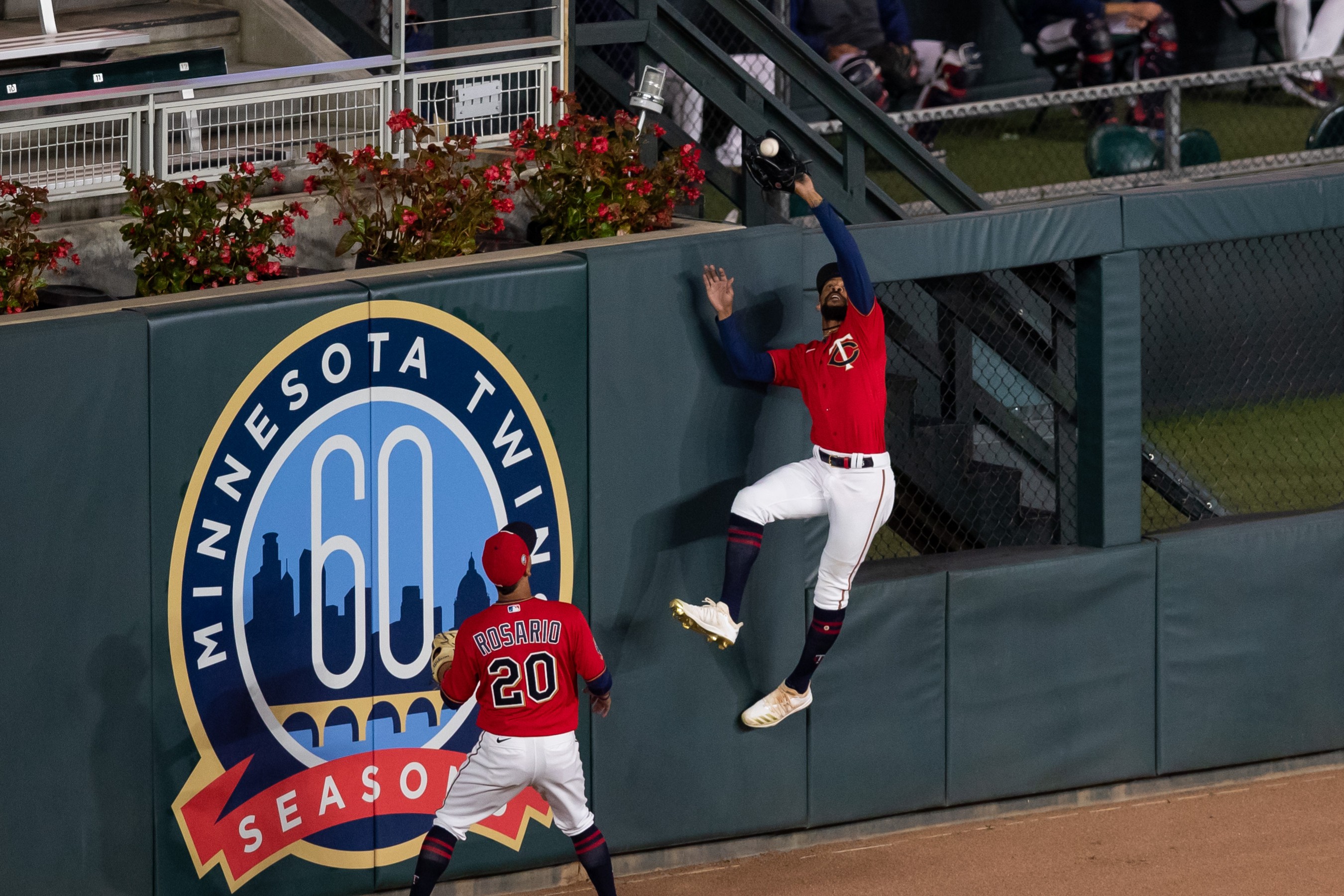
"I think just that he's such a high-usage player," Shirley said, noting that Simmons "makes a lot of diving plays, covers a lot of ground, is kind of willing to throw his body around a bit."
Much of that can also describe Buxton, of course, which has fueled many of his own injury issues over the years. Shirley also noted that, since Simmons has had ankle injuries in consecutive seasons, the model takes not of the risk that such issues can become chronic, or that they can cause injuries at different points in a player's kinetic chain.
Both Simmons and Buxton are elite defenders. That, as it turns out, can be a leading indicator of injury problems. Shirley's use of the term "high-usage player" is telling. In other sports, we have become accustomed to the idea that some players bear much heavier workloads than others, even on a per-play basis. Those players are more exposed to injury risk. The same is true in baseball, in ways we might not have fully appreciated until now. Because Simmons and Buxton can get to so many balls, they push their bodies to the limit in efforts to do so. That comes at a higher cost than anyone fully understood, prior to the collection of this much detailed information and the presentation of the findings it fueled.
One of the surprising things they found, Shirley said, was that the model often slightly decreased injury risk as players aged. Traditionally, we imagine that players grow more vulnerable to injuries as they age; our bodies break more easily and recover more slowly after age 25.
However, players also change their behavior as they age. No longer being able to make certain plays can encourage a guy not to overextend themselves, and they can become more durable even as they become (slightly) less valuable on a per-play basis.
For now, Simmons and Buxton are as likely as any other players in baseball to get hurt and miss time. That should sour any solace a Twins fan was finding in the White Sox's misfortune this week. The good news, though, is that the Twins are aware of this, too, and have built their club accordingly. Tomorrow, we'll discuss the implications of these findings when mapping the roster, for Opening Day and beyond.
MORE FROM TWINS DAILY
— Latest Twins coverage from our writers
— Recent Twins discussion in our forums
— Follow Twins Daily via Twitter, Facebook or email





Recommended Comments
Create an account or sign in to comment
You need to be a member in order to leave a comment
Create an account
Sign up for a new account in our community. It's easy!
Register a new accountSign in
Already have an account? Sign in here.
Sign In Now