



Matthew Trueblood
-
Posts
1,033 -
Joined
-
Last visited
Content Type
Profiles
News
Minnesota Twins Videos
2026 Minnesota Twins Top Prospects Ranking
2022 Minnesota Twins Draft Picks
Minnesota Twins Free Agent & Trade Rumors, Notes, & Tidbits
Guides & Resources
2023 Minnesota Twins Draft Picks
The Minnesota Twins Players Project
2024 Minnesota Twins Draft Picks
2025 Minnesota Twins Draft Pick Tracker
2026 Minnesota Twins Draft Tracker: Picks & Bonuses
Forums
Blogs
Events
Store
Downloads
Gallery
Everything posted by Matthew Trueblood
-
Image courtesy of © Matt Blewett-Imagn Images Don't lose sight of this: Being a good relief pitcher in the major leagues is hard. That said, it's not as hard as being a good starting pitcher, or a good shortstop or a good cleanup hitter. Relievers are role players. They enjoy the advantages of playing at a higher baseline level of effort, relative to the absolute maximum they can do, and of being sheltered (most of the time) from the worst matchups they might face if their manager weren't carefully selecting the situations in which they're used. You really just need one good thing, to be a good reliever. You have to have a calling card. That's not to say that overspecialization is advisable. In the age of the short start and the three-batter minimum rule, it pays to be versatile and durable. Still, because relievers play in such short bursts and under such favorable conditions, having one really good trait can be enough to keep you around. It might even be enough to make you a positive contributor on a winning club. Kody Funderburk entered 2025, though, without that one thing. He was an up-and-down relief arm in 2024, used more or less as cannon fodder. The Twins didn't view him as a well-built weapon against lefties, but nor has he ever been a reverse-splits guy. He does get lots of ground balls, but because he's generally struggled with walks and doesn't miss bats, he was always a bit too much of a risk to bring into a high-leverage situation, even to get a lefty batter out or to induce a double play. He was missing the kind of ingredient that cements a player in the majors, and keeps them off the shuttle to Triple A. Over the summer, though, he found it. Funderburk slightly lowered his arm angle and his release point this season. As a result of the mechanical tweak, he achieved more extension at release, which added a half-tick to his fastball. The change in angles also made it easier for him to keep his primarily east-west arsenal on the plate. Fully 53% of his pitches this year were in the strike zone, according to Statcast; that's up from just over 50% in 2024. He still walked batters at about the same rate, and there's work left to do with his sequencing to better convert the increase in strikes thrown to a decrease in free passes, but Funderburk no longer found himself working from behind in so many counts. He kept the ball in the park much better, because hitters couldn't sit on his cutter, and indeed, the lower angle opened up much greater usage of his sinker and changeup, each of which helped him seek grounders. Were Funderburk pitching in front of a better defense, he'd probably have put up even better numbers this season. As it was, he finished the campaign with a 3.51 ERA in 41 innings for the major-league team, most of them pitched after the trade deadline fire sale. That's sustainable. In fact, he can improve upon it next year. The Twins should pencil him into their relief mix heading into the offseason, which is a concrete improvement from where he slotted into their depth chart as recently as three months ago. It would be good, I think, to visualize this arm angle change in a couple of ways more concrete than that numerical chart. First, let's compare the arsenal Funderburk threw to lefties in 2024 with that for 2024, by looking at an animation of his pitch mix coming toward a lefty from an imagined lefty's vantage point. Slightly reducing the arm angle actually makes the cutter separate from his other offerings more than it did last year, for Funderburk, but that only sounds like a bad thing. It's actually exactly what he needed. Getting around the cutter a bit more allows him to drive it to the outside edge against lefties, while his sinker runs nicely back to the inside corner. He emphasized his slider more this year, at the expense of his sweeper. That sounds like a distinction without a difference, but it's not. Firstly, as he lowered his arm angle and brought his sinker forward as his primary fastball, Funderburk naturally went to the breaking ball that better tunnels with the sinker. His sweeper, as you can see in the upper half of the image above, tunnels better with the cutter; he's more deceptive with the slider taking over. Secondly, though, making the slider a primary weapon to lefties also made it easier to maintain that pitch and execute it consistently to righties. One challenge for a reliever is that their arsenal needs to overlap, from a matchup perspective, more than a starter's does. A starter who has three pitches that work against lefties and three that work against righties will get enough reps and enough time between starts to hone all of those offerings. A reliever has to be ready at all times, which usually means keeping the repertoire streamlined and sharp for whoever digs into the box. Here, you can really see why the sinker and cutter disguised one another better in 2025 than in 2024. The sweeper is turning into more of a curve, a pitch thrown ball-to-strike to catch the batter off-guard and steal a call. The slider and changeup stay on plane with the sinker and cutter longer, from a righty's perspective, despite the lower slot. Here's a glimpse of the change in video form. First, watch Funderburk throw a sinker to a lefty in 2024. NjQxdllfWGw0TUFRPT1fQjFWWEFRWU5VQW9BWFZBQ1ZBQUFBUVZlQUFBQ0JWTUFBbFlDVWxBSEJsSmRWUU5R.mp4 That's not a bad way to shoot for that corner, but Funderburk decidedly missed. Now, consider the way he went after another lefty, in August. UUEyclZfWGw0TUFRPT1fQndOU1ZsUUdWUVVBRHdkV1h3QUhVd1ZUQUZrRlZBVUFCbFJYQkFWVUIxVlRBVmRX.mp4 Though neither the velocity nor the simple movement metrics on that sinker changed much this year, it's easy to see why Funderburk now likes it enough to be throwing it more often. It's livelier. It's also more likely to find the zone. Let's freeze on the release point of each of those pitches. You can see the difference, in the angle of the arm relative to the shoulder. It's much harder to see from this angle, but Funderburk is also getting a bit deeper into his legs as he flies down the mound. Thence comes his better extension and the added deception of a change in release angle. Funderburk is not a future closer. His upside looks something like what Caleb Thielbar gave the Twins for a few years. Until this season, though, Funderburk looked like he might never get off the roster bubble. Changing his mechanics (and letting that inform changes in approach) got him off that bubble. It was a small thing, but it became a bigger one for both the player and the team after the July shakeup. In 2026, it might feel like a fairly big thing to have done. View full article
-
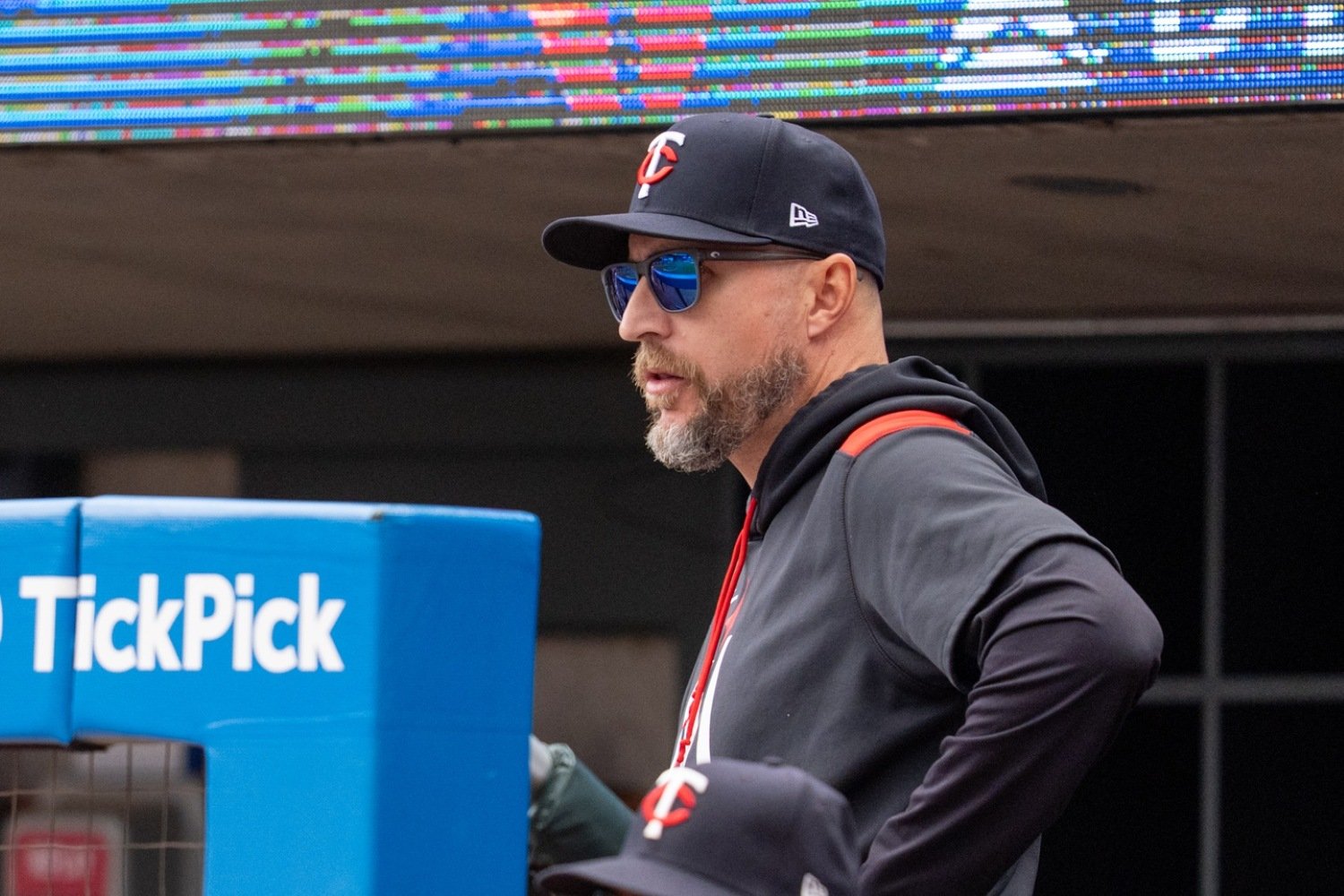 Rocco Baldelli couldn't pick up a bat and take the place of any of the hitters who lost touch with their talent in the second half of 2024, and he couldn't toe the rubber in the places of injured hurlers Pablo López, Zebby Matthews or Bailey Ober as the season fell apart in 2025. However, after failures of several different forms over the last half-decade, the team finally decided that a new voice was needed to lead the club out of the rut into which they've fallen. The Twins dismissed Baldelli Monday, the team announced, despite having picked up the 2026 option on his contract in June. Back then, it felt like they had little choice. Baldelli had just overseen a 13-game winning streak, and the team appeared to have turned around its season after a brutal sub-.500 start. Alas, that magic didn't last. Though they didn't immediately spiral out of contention after the end of that streak, they could only hover around .500. The loss of López to injury at the beginning of June and the persistent underachievement of several young hitters on whom the team had relied coming into the season conspired to slowly drag Minnesota down in the standings. For all involved, this year's failure felt uncomfortably like an extension of last year's, when the team was riding high in mid-August and then cratered, missing the playoffs because of a 12-27 plane crash of a finish. Baldelli held onto his job after that calamity, but couldn't survive the slow death of the 2025 team, accelerated by the trade deadline fire sale undertaken by the front office in July. The roster Baldelli was given was far from ideal. The fault for that lies (in large part) with the Pohlad family, who constricted spending, and with a front office who was too slow to change direction when their player development faltered. With no significant new spending on the horizon, though—and with the longer-tenured, equally unsuccessful Derek Falvey locked into his role via contract extension and promotion to president of both baseball and business operations—the franchise apparently felt that some visible, tangible change was needed. Baldelli's legacy achievements will be the 100-win record to which the team romped in his first year, 2019, hitting a record 307 home runs; and the snapping of the team's long drought between playoff victories, when the 2023 division-winning Twins beat the Toronto Blue Jays in the Wild Card Series at Target Field. He has been a fine steward of the organization's reputation and a liked and respected figure among players and media members. His approach—very much manager-as-delegator, allowing his assistant coaches to make significant contributions and rarely seizing the initiative by demanding a particular style of play or mode of preparation—sometimes frustrated fans, but he was good at the vital functions of the job: communicating with players, the media, and his bosses in the front office. Minnesota might now look to hire a skipper who takes a more proactive or specific tack in their coaching and direction-setting, but the front office loved Baldelli partially for the very pliability and openness to input he brought to the job. The team had too little success to justify keeping the manager around for an eighth season, but whether this change will prove to have been sufficient (or even necessary, as an alternative to overhauling the front office or the ownership suite) is a much murkier question.
 -
Image courtesy of © Matt Blewett-Imagn Images Rocco Baldelli couldn't pick up a bat and take the place of any of the hitters who lost touch with their talent in the second half of 2024, and he couldn't toe the rubber in the places of injured hurlers Pablo López, Zebby Matthews or Bailey Ober as the season fell apart in 2025. However, after failures of several different forms over the last half-decade, the team finally decided that a new voice was needed to lead the club out of the rut into which they've fallen. The Twins dismissed Baldelli Monday, the team announced, despite having picked up the 2026 option on his contract in June. Back then, it felt like they had little choice. Baldelli had just overseen a 13-game winning streak, and the team appeared to have turned around its season after a brutal sub-.500 start. Alas, that magic didn't last. Though they didn't immediately spiral out of contention after the end of that streak, they could only hover around .500. The loss of López to injury at the beginning of June and the persistent underachievement of several young hitters on whom the team had relied coming into the season conspired to slowly drag Minnesota down in the standings. For all involved, this year's failure felt uncomfortably like an extension of last year's, when the team was riding high in mid-August and then cratered, missing the playoffs because of a 12-27 plane crash of a finish. Baldelli held onto his job after that calamity, but couldn't survive the slow death of the 2025 team, accelerated by the trade deadline fire sale undertaken by the front office in July. The roster Baldelli was given was far from ideal. The fault for that lies (in large part) with the Pohlad family, who constricted spending, and with a front office who was too slow to change direction when their player development faltered. With no significant new spending on the horizon, though—and with the longer-tenured, equally unsuccessful Derek Falvey locked into his role via contract extension and promotion to president of both baseball and business operations—the franchise apparently felt that some visible, tangible change was needed. Baldelli's legacy achievements will be the 100-win record to which the team romped in his first year, 2019, hitting a record 307 home runs; and the snapping of the team's long drought between playoff victories, when the 2023 division-winning Twins beat the Toronto Blue Jays in the Wild Card Series at Target Field. He has been a fine steward of the organization's reputation and a liked and respected figure among players and media members. His approach—very much manager-as-delegator, allowing his assistant coaches to make significant contributions and rarely seizing the initiative by demanding a particular style of play or mode of preparation—sometimes frustrated fans, but he was good at the vital functions of the job: communicating with players, the media, and his bosses in the front office. Minnesota might now look to hire a skipper who takes a more proactive or specific tack in their coaching and direction-setting, but the front office loved Baldelli partially for the very pliability and openness to input he brought to the job. The team had too little success to justify keeping the manager around for an eighth season, but whether this change will prove to have been sufficient (or even necessary, as an alternative to overhauling the front office or the ownership suite) is a much murkier question. View full article
-
No offense to Funderburk at all, but there were two very interesting storylines of that game and neither had anything to do with him. :D
-
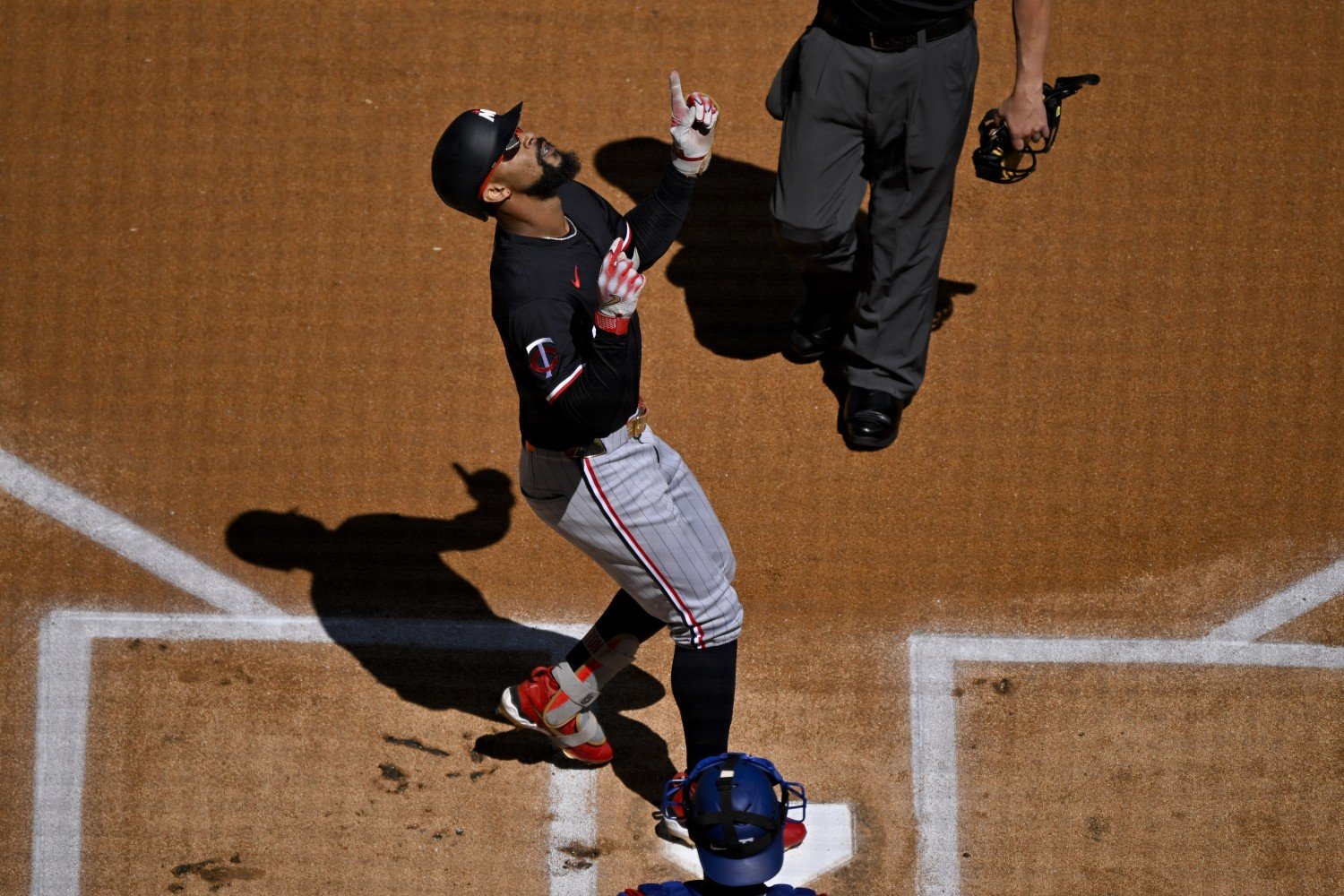 Box Score Starting Pitcher: Bailey Ober - 6 IP, 2 H, 1 BB, 5 SO (78 pitches, 52 strikes) Home Runs: Byron Buxton 2 (34) Top 3 WPA: Ober (.387), Buxton (.182), Kody Funderburk (.106) Win Probability Chart (per FanGraphs) We always list the top three win probability players for Twins wins, but this is what you call a classic two-man win. Byron Buxton hit two long home runs, and we're going to talk a lot about them. Bailey Ober worked six stellar innings to put a positive punctuation mark on a largely negative season. The bullpen did its job, too, but this win was all about two Twins veterans whose fortunes were among the biggest stories of the season, and who each did something remarkable as they close out the campaign. Let's start with the starter. Ober was great Thursday, teasing and frustrating the Rangers lineup (admittedly, a decimated one, at the end of a lost season and in a pitcher-friendly park) with a marvelous display of touch and feel. His fastball sat around 89, and dipped below 87 a time or two, but still, he was great. Back on August 20, Ober's velocity went over a cliff. It never came back. He's been down a full mile-per-hour, relative to his previous level, for the last five weeks. In that very game, though, Ober pitched 5 2/3 innings of three-hit, two-run ball against a tough Athletics lineup, striking out seven. After the game that night, two reporters asked Ober how concerned he was about the dip in his velocity, and he was clear: he wasn't, at all. In fact, he emphasized repeatedly that he had feel for moving the ball in both directions and landing his secondary offerings where he wanted to, so in his own opinion, he had above-average stuff that day. It just didn't come in the form of his best possible velocity. That's a legitimate stance. As much as the modern game has fallen in love with velocity, if a pitcher like Ober has the capacity to throw their fastball with good carry, one or more breaking balls, and a changeup with good depth, they don't need to throw very hard to have success. The rub, of course, lies in the fact that it's very hard to maintain the feel and the command to do all of that—a difficulty Ober ran into even during an improved stretch to finish his season. On Thursday, though, he had the good stuff—not heat, but the rest of it. To visualize that, we can set his pitch movement plot from his previous start (a rough, six-run effort against Cleveland in which he couldn't miss bats and had just one strikeout) side-by-side with the same chart for this one. He changed speeds on his slider throughout the game, manipulating it into what sometimes looked like a true slider and other times played more like a cutter. He also had great depth on his changeup. Despite topping out at 90.1 miles per hour, Ober had good stuff Thursday. In all, he had four starts like this one in his final seven for 2025. This is the roadmap for a successful 2026 for Ober, which the Twins need badly. Meanwhile, Buxton gave him all the support he needed—and more. He didn't just hit two home runs (one leading off the game and one with two men on in the top of the eighth, putting the contest on ice). He hit two carbon copies, of each other and of his homer the previous night. Three times in two days, he hit a ball 110 miles per hour—not 109, not 111—at a launch angle between 22 and 24 degrees, out of the spacious park in Arlington to something very like dead center field. It felt like watching a different sport, because in baseball, you hardly ever see a hitter do the same big thing so many times in such a short span. Even when a guy has a two-homer game, one will go to the opposite field, or he'll hit one no-doubter and one wall-scraper. A three-single day will probably include one grounder and one line drive, rather than the same hit on a loop. Buxton got so locked in during this set that it felt akin to watching Steph Curry come up the floor and hit a logo three—and then another, and another, all within a few minutes of one another, all because he could feel that he was dialed in and the other team had no way to stop him. Buxton now has 34 home runs this year, to go with his 24 stolen bases. Even as it takes its final, gasping breaths, his season gets more impressive. Only six players have hit more home runs in a season in a Twins uniform than Buxton has this year. Those of you with a keen eye for a Twins history nugget know that Bob Allison and Josh Willingham each topped out at 35, exactly, so a homer this weekend would draw Buxton level with them. It's a remarkable story, not only because it's such a relief that he's been able to stay on the field this year, but because he's dominated so thoroughly during the time he's had. Even in this relatively healthy season, he's made two trips to the injured list and can only top out at 127 games played. Yet, he's slugged a total of 62 extra-base hits. Watching him get hot one last time, as he occupies the leadoff spot on a daily basis and shows passion for the endeavor even with the team long eliminated, has been a delight. Buxton is also up to 61 Barrels this season, according to Statcast. Those are batted balls that turn into extra-base hits more often than not, and very often, they're homers. In the 11-season Statcast Era, only Nelson Cruz (who had 65 in 2019) has produced more of those high-quality batted balls than Buxton, who drew level with Josh Donaldson's 2021 with his two Barrels Thursday. Add in his early defensive heroics and his 24 steals without being caught, and it's fair to say that Buxton is having one of the best seasons in Twins history. Where, exactly, he ranks is an argument for another day, but Thursday was a reminder of just how explosive he's been. What's Next Joe Ryan (13-9, 3.47 ERA) will try to arrest the tailspin his season has gone into since the trade deadline and reclaim the exciting tenor of his first half Friday night. He'll toe the rubber for the Twins in Philadelphia, where they'll take on the NL East champion Phillies and Aaron Nola (4-10, 6.46 ERA). First pitch is scheduled for 5:45 PM CT. Postgame Interviews Rocco Baldelli - Postgame Conference 9/25/2025"> Bullpen Usage Chart SUN MON TUE WED THU TOT Hatch 0 0 0 0 0 0 Adams 14 0 0 16 0 30 Sands 20 0 6 0 12 38 Funderburk 14 0 11 0 14 39 Laweryson 0 0 0 12 0 12 Cabrera 0 0 0 11 0 11 Ohl 9 0 0 0 20 29 Tonkin 0 0 0 0 0 0
 -
Image courtesy of © Jerome Miron-Imagn Images Box Score Starting Pitcher: Bailey Ober - 6 IP, 2 H, 1 BB, 5 SO (78 pitches, 52 strikes) Home Runs: Byron Buxton 2 (34) Top 3 WPA: Ober (.387), Buxton (.182), Kody Funderburk (.106) Win Probability Chart (per FanGraphs) We always list the top three win probability players for Twins wins, but this is what you call a classic two-man win. Byron Buxton hit two long home runs, and we're going to talk a lot about them. Bailey Ober worked six stellar innings to put a positive punctuation mark on a largely negative season. The bullpen did its job, too, but this win was all about two Twins veterans whose fortunes were among the biggest stories of the season, and who each did something remarkable as they close out the campaign. Let's start with the starter. Ober was great Thursday, teasing and frustrating the Rangers lineup (admittedly, a decimated one, at the end of a lost season and in a pitcher-friendly park) with a marvelous display of touch and feel. His fastball sat around 89, and dipped below 87 a time or two, but still, he was great. Back on August 20, Ober's velocity went over a cliff. It never came back. He's been down a full mile-per-hour, relative to his previous level, for the last five weeks. In that very game, though, Ober pitched 5 2/3 innings of three-hit, two-run ball against a tough Athletics lineup, striking out seven. After the game that night, two reporters asked Ober how concerned he was about the dip in his velocity, and he was clear: he wasn't, at all. In fact, he emphasized repeatedly that he had feel for moving the ball in both directions and landing his secondary offerings where he wanted to, so in his own opinion, he had above-average stuff that day. It just didn't come in the form of his best possible velocity. That's a legitimate stance. As much as the modern game has fallen in love with velocity, if a pitcher like Ober has the capacity to throw their fastball with good carry, one or more breaking balls, and a changeup with good depth, they don't need to throw very hard to have success. The rub, of course, lies in the fact that it's very hard to maintain the feel and the command to do all of that—a difficulty Ober ran into even during an improved stretch to finish his season. On Thursday, though, he had the good stuff—not heat, but the rest of it. To visualize that, we can set his pitch movement plot from his previous start (a rough, six-run effort against Cleveland in which he couldn't miss bats and had just one strikeout) side-by-side with the same chart for this one. He changed speeds on his slider throughout the game, manipulating it into what sometimes looked like a true slider and other times played more like a cutter. He also had great depth on his changeup. Despite topping out at 90.1 miles per hour, Ober had good stuff Thursday. In all, he had four starts like this one in his final seven for 2025. This is the roadmap for a successful 2026 for Ober, which the Twins need badly. Meanwhile, Buxton gave him all the support he needed—and more. He didn't just hit two home runs (one leading off the game and one with two men on in the top of the eighth, putting the contest on ice). He hit two carbon copies, of each other and of his homer the previous night. Three times in two days, he hit a ball 110 miles per hour—not 109, not 111—at a launch angle between 22 and 24 degrees, out of the spacious park in Arlington to something very like dead center field. It felt like watching a different sport, because in baseball, you hardly ever see a hitter do the same big thing so many times in such a short span. Even when a guy has a two-homer game, one will go to the opposite field, or he'll hit one no-doubter and one wall-scraper. A three-single day will probably include one grounder and one line drive, rather than the same hit on a loop. Buxton got so locked in during this set that it felt akin to watching Steph Curry come up the floor and hit a logo three—and then another, and another, all within a few minutes of one another, all because he could feel that he was dialed in and the other team had no way to stop him. Buxton now has 34 home runs this year, to go with his 24 stolen bases. Even as it takes its final, gasping breaths, his season gets more impressive. Only six players have hit more home runs in a season in a Twins uniform than Buxton has this year. Those of you with a keen eye for a Twins history nugget know that Bob Allison and Josh Willingham each topped out at 35, exactly, so a homer this weekend would draw Buxton level with them. It's a remarkable story, not only because it's such a relief that he's been able to stay on the field this year, but because he's dominated so thoroughly during the time he's had. Even in this relatively healthy season, he's made two trips to the injured list and can only top out at 127 games played. Yet, he's slugged a total of 62 extra-base hits. Watching him get hot one last time, as he occupies the leadoff spot on a daily basis and shows passion for the endeavor even with the team long eliminated, has been a delight. Buxton is also up to 61 Barrels this season, according to Statcast. Those are batted balls that turn into extra-base hits more often than not, and very often, they're homers. In the 11-season Statcast Era, only Nelson Cruz (who had 65 in 2019) has produced more of those high-quality batted balls than Buxton, who drew level with Josh Donaldson's 2021 with his two Barrels Thursday. Add in his early defensive heroics and his 24 steals without being caught, and it's fair to say that Buxton is having one of the best seasons in Twins history. Where, exactly, he ranks is an argument for another day, but Thursday was a reminder of just how explosive he's been. What's Next Joe Ryan (13-9, 3.47 ERA) will try to arrest the tailspin his season has gone into since the trade deadline and reclaim the exciting tenor of his first half Friday night. He'll toe the rubber for the Twins in Philadelphia, where they'll take on the NL East champion Phillies and Aaron Nola (4-10, 6.46 ERA). First pitch is scheduled for 5:45 PM CT. Postgame Interviews Rocco Baldelli - Postgame Conference 9/25/2025"> Bullpen Usage Chart SUN MON TUE WED THU TOT Hatch 0 0 0 0 0 0 Adams 14 0 0 16 0 30 Sands 20 0 6 0 12 38 Funderburk 14 0 11 0 14 39 Laweryson 0 0 0 12 0 12 Cabrera 0 0 0 11 0 11 Ohl 9 0 0 0 20 29 Tonkin 0 0 0 0 0 0 View full article
-
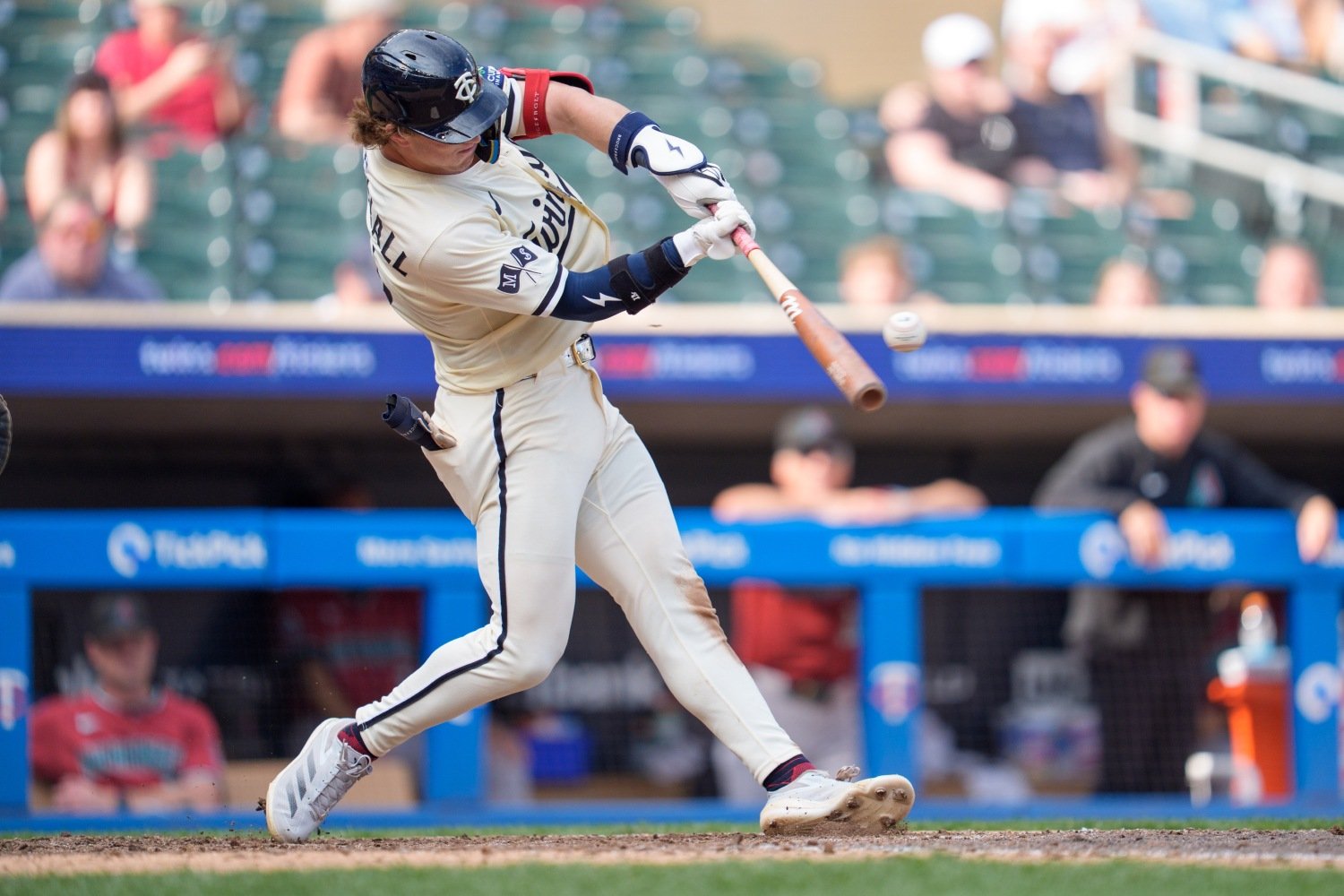 Say this for Luke Keaschall: the man knows how to set a high floor for his hitting profile. He has hits in 13 of his 14 games in September, even as the league adapts and adjusts to him. He's batting over .300 for the month. However, he's also only walked three times and hit two doubles this month; his slugging average is south of .350. Is Keaschall proving himself slump-proof, or is this just what a slump looks like for him? That question isn't answerable in the sample of playing time he's accrued this year, or that he will accrue before the season is over. It'll have to wait until next year, and perhaps well into that campaign, at that. There's little doubt that Keaschall has an elite raw hit tool, at this point. The league is forcing him to adjust and cover a bigger strike zone, though, and whether he can counteradjust will determine just how valuable he is going forward. As we've discussed before, Keaschall loves to hit the high pitch, despite the steep plane of his swing. He almost cuts off the lower rail of the zone, preferring to gamble on not having strikes called down there than to risk chasing a pitch he can't handle with his extremely compact stroke. As a result of this, Keaschall does nearly all his damage in the upper, inner quadrant of the strike zone. His most famous hit to date, the walkoff home run he drove to right-center against the Royals in mid-August, was on a pitch up and away, but most of the time, he's only going to really hurt you if the ball is near the middle of the zone, and a bit in from there. Even most of his well-struck singles come in that part of the zone. Because he takes a bunch of called strikes along the bottom edge and doesn't get the barrel to the ball if it's down and away, that lower, outer quadrant is where you're most likely to get him out. This chart shows his run value per 100 pitches by location. The league has this data, too. Heck, they had it while Keaschall was still in the minors. Thus, pitchers started hammering him away, away, away, practically the moment he came up. If we come as close as we can to splitting his rookie season exactly in half, to date, the dividing line comes August 22. Here's where Keaschall saw the most pitches through that date. Away, away, away. Preferably, down and away. Pitchers had the book and they tried to make him prove he could hit that pitch. He still can't, really. However, during that span, Keaschall had a .400 weighted on-base average (wOBA, a holistic offensive stat that scales neatly to on-base percentage; .400 is excellent). His average exit velocity was 87.9 miles per hour, and he only struck out 11.1% of the time. As it turns out, if you spend all your time trying to attack one side of the plate—especially to a hitter who, while he might not have a swing versatile enough to produce hard contact foul line-to-foul line or throughout the zone, does have a strong ability to spoil pitches and the speed to turn a squibber into an infield hit—you're going to end up making mistakes. The ball will wander into the middle of the plate too much, where it gets hit hard. The hitter, even if he's a rookie with a fairly stubborn philosophy, can start to cheat toward that pitch and cover it better than he ordinarily would. Keaschall foiled the basic plan of going after the so-called hole in his swing right away. Here's how pitchers have responded, since August 23. Wait! Don't do it! You're in danger! Except, no, they largely haven't been. Keaschall's wOBA is down to .338 during this stretch. His strikeout rate is 15.2%, and even when he puts it in play, his average exit velocity is down to a very unthreatening 84.3 miles per hour. Teasing that outside edge has worked, to some extent, because Keaschall's chase rate is up from 20% in the first half of his young career to 25% in this second half of it. Mostly, though, the league is making him cover the whole plate, and he's having a very hard time with that. More pitches on the inner third means being ready to pull the hands in or tilt downhill even more than usual, but to do that, Keaschall has to give up more capacity for covering the outer third. For many pitchers, feeling emboldened to go after him inside also means fewer mistakes over the middle. Again, so far, Keaschall has only consistently proved that he can punish meatballs in the middle of the zone—and, specifically, hanging stuff in the upper 80s. He doesn't hit even average fastballs for power, and if a pitch finds its target, he usually fights it off, rather than truly attacking it. That's not an indictment, per se. There are 'mistake' hitters in the Hall of Fame, and Keaschall's great blend of contact skill and speed allows him some margin for error. If he wants to be a truly productive hitter, though—a legitimate top-third hitter in a winning lineup, rather than a nice but empty batting average—it's time to see what Keaschall's next phase looks like. How he tweaks his swing and/or his approach to put the barrel on the ball more often or produce more bat speed while covering the whole zone will shape his career, and the final 10 games of 2025 will give us a glimpse of that.
 -
Image courtesy of © Matt Blewett-Imagn Images Say this for Luke Keaschall: the man knows how to set a high floor for his hitting profile. He has hits in 13 of his 14 games in September, even as the league adapts and adjusts to him. He's batting over .300 for the month. However, he's also only walked three times and hit two doubles this month; his slugging average is south of .350. Is Keaschall proving himself slump-proof, or is this just what a slump looks like for him? That question isn't answerable in the sample of playing time he's accrued this year, or that he will accrue before the season is over. It'll have to wait until next year, and perhaps well into that campaign, at that. There's little doubt that Keaschall has an elite raw hit tool, at this point. The league is forcing him to adjust and cover a bigger strike zone, though, and whether he can counteradjust will determine just how valuable he is going forward. As we've discussed before, Keaschall loves to hit the high pitch, despite the steep plane of his swing. He almost cuts off the lower rail of the zone, preferring to gamble on not having strikes called down there than to risk chasing a pitch he can't handle with his extremely compact stroke. As a result of this, Keaschall does nearly all his damage in the upper, inner quadrant of the strike zone. His most famous hit to date, the walkoff home run he drove to right-center against the Royals in mid-August, was on a pitch up and away, but most of the time, he's only going to really hurt you if the ball is near the middle of the zone, and a bit in from there. Even most of his well-struck singles come in that part of the zone. Because he takes a bunch of called strikes along the bottom edge and doesn't get the barrel to the ball if it's down and away, that lower, outer quadrant is where you're most likely to get him out. This chart shows his run value per 100 pitches by location. The league has this data, too. Heck, they had it while Keaschall was still in the minors. Thus, pitchers started hammering him away, away, away, practically the moment he came up. If we come as close as we can to splitting his rookie season exactly in half, to date, the dividing line comes August 22. Here's where Keaschall saw the most pitches through that date. Away, away, away. Preferably, down and away. Pitchers had the book and they tried to make him prove he could hit that pitch. He still can't, really. However, during that span, Keaschall had a .400 weighted on-base average (wOBA, a holistic offensive stat that scales neatly to on-base percentage; .400 is excellent). His average exit velocity was 87.9 miles per hour, and he only struck out 11.1% of the time. As it turns out, if you spend all your time trying to attack one side of the plate—especially to a hitter who, while he might not have a swing versatile enough to produce hard contact foul line-to-foul line or throughout the zone, does have a strong ability to spoil pitches and the speed to turn a squibber into an infield hit—you're going to end up making mistakes. The ball will wander into the middle of the plate too much, where it gets hit hard. The hitter, even if he's a rookie with a fairly stubborn philosophy, can start to cheat toward that pitch and cover it better than he ordinarily would. Keaschall foiled the basic plan of going after the so-called hole in his swing right away. Here's how pitchers have responded, since August 23. Wait! Don't do it! You're in danger! Except, no, they largely haven't been. Keaschall's wOBA is down to .338 during this stretch. His strikeout rate is 15.2%, and even when he puts it in play, his average exit velocity is down to a very unthreatening 84.3 miles per hour. Teasing that outside edge has worked, to some extent, because Keaschall's chase rate is up from 20% in the first half of his young career to 25% in this second half of it. Mostly, though, the league is making him cover the whole plate, and he's having a very hard time with that. More pitches on the inner third means being ready to pull the hands in or tilt downhill even more than usual, but to do that, Keaschall has to give up more capacity for covering the outer third. For many pitchers, feeling emboldened to go after him inside also means fewer mistakes over the middle. Again, so far, Keaschall has only consistently proved that he can punish meatballs in the middle of the zone—and, specifically, hanging stuff in the upper 80s. He doesn't hit even average fastballs for power, and if a pitch finds its target, he usually fights it off, rather than truly attacking it. That's not an indictment, per se. There are 'mistake' hitters in the Hall of Fame, and Keaschall's great blend of contact skill and speed allows him some margin for error. If he wants to be a truly productive hitter, though—a legitimate top-third hitter in a winning lineup, rather than a nice but empty batting average—it's time to see what Keaschall's next phase looks like. How he tweaks his swing and/or his approach to put the barrel on the ball more often or produce more bat speed while covering the whole zone will shape his career, and the final 10 games of 2025 will give us a glimpse of that. View full article
-
Small Mechanical Fix Has Made Big Difference for Taj Bradley
Matthew Trueblood posted an article in Twins
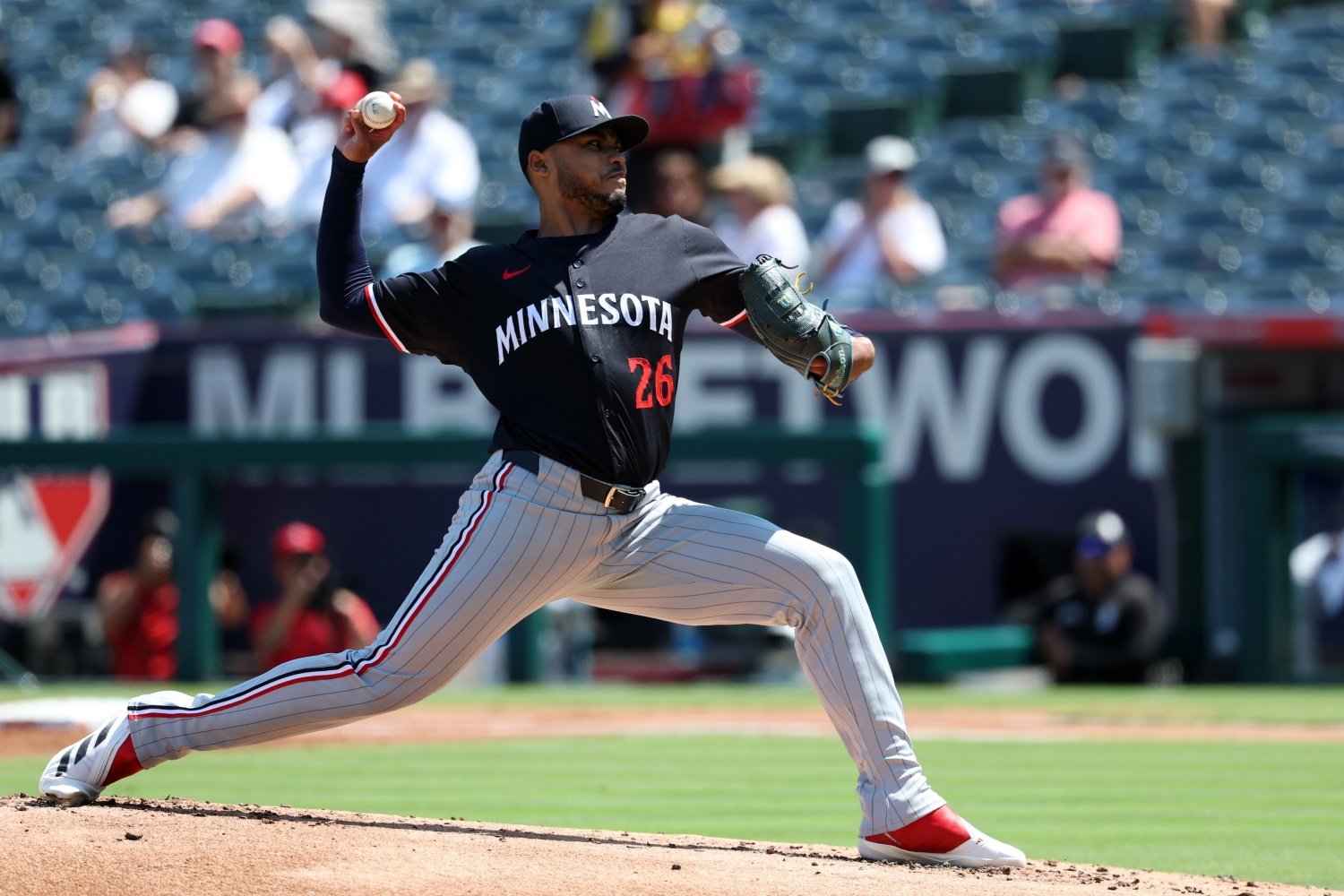 There have been several theories advanced to explain the unhappy denouement of Taj Bradley's tenure with the Rays. A promising prospect, Bradley did establish himself in the majors with Tampa, but he never got over the hump and made it even as a mid-rotation starter. After stalling out so profoundly that he was optioned to Triple A in July, he was dealt to the Twins in the Griffin Jax deal. For Minnesota, it made sense to roll the dice on Bradley, and Jax wanted out anyway, but it wasn't exactly an exciting time to get into the Taj Bradley business. So far, results have been mixed, but Bradley has shown some irrefutably intriguing things during his first handful of appearances with the Twins. As hideous as his ERA is, it's important to notice that his strikeout rate is slightly up; his walk rate is down; and he's allowing less hard contact. With better defensive support, he'd be looking like a perfectly viable starter. Besides, the under-the-hood stuff is much more encouraging. Bradley's fastball velocity is significantly higher since joining Minnesota. His 96.9-mph average on the heater in September is the highest he's posted in any month in his major-league career. Opponents are whiffing on 26.1% of swings against his four-seamer this month, the highest rate he's ever induced. To get from where he was to where he is now, the Twins had to clean up a delivery that had gotten downright hideous. Here's a fastball he threw on the mound at Target Field, but as a visitor, back in early July. ZzY4a1dfWGw0TUFRPT1fQmdkWlVWMENVbGNBREFaUlV3QUhCQVpUQUZoWFdsWUFBbEFGQkZaUlZRRUVCZ3BY.mp4 Obviously, this pitch is a mess on multiple levels. It's poorly located, in a way that doesn't even tempt Matt Wallner. It's also only 94.8 miles per hour, slower than his average even for that month. But a lot of his pitches looked like this during the last few months of his time with Tampa. Now, compare the above to a pitch he threw against another Twins familiar, but this time for the home side after the trade. ZzY4dmJfVjBZQUhRPT1fQmdKUVZGQUZWQVlBQ1FFQ0FBQUhWUWNIQUZnRlVBUUFDbDBBQVZFRkIxQUFWbE5S.mp4 This baby hums in at a robust 98.4 miles per hour, and it has some serious carry. It earns a whiff from a guy whose whole thing is not whiffing. Bradley has made some important strides. Let's talk about how. Some of his added carry comes from throwing from a slightly higher arm angle. The Twins have him getting down the mound slightly better and throwing with more extension, but his arm slot is higher even though his release point (relative to the ground or the batter's eye level) hasn't changed. That's a small help. There's a more important change to spot, though, because it informs that angle but also drives the uptick in velocity—and gives him a better chance to command the ball, to boot. Take a look at where he is when his left foot lands in the clip from July. This is what pitching people refer to as 'foot strike', and it's a crucial moment in the delivery. To understand what's going on with a pitcher mechanically, you have to know where they are and what they're doing at foot strike. Bradley had something really strange (and bad) going on in the back side of his delivery, back in July. After reaching back with the ball upon breaking his hands, he was bending his elbow to bring the ball back toward his head and start moving forward quite early, and quite flat. There's a movement the pitcher's arm has to go through to wind the ball up behind their head, to build tension and torque through the shoulders and upper arm muscles. In this clip, though, Bradley isn't getting the ball up high enough, early enough. Nor is he creating flexion in his spine, to store energy that gets released when he launches into spine extension by getting over that landing leg. Compare that image to where he was at foot strike on the pitch to Arraez. He's driven off the back leg better. That creates initial force. The ball is up higher, and will be on time, so less of that initial force will be wasted. And his spine is flexed, which will create more snap into extension in the next moment. This is the difference between 94.8 and 98.4, in a nutshell. Obviously, if you take any two given heaters, the differences won't always show up as this extreme, but there's a meaningful difference almost every time he fires. Bradley's stuff gets intense in a hurry, working with this improved mechanical profile. He can give hitters trouble in a lot more ways, even without an elite out pitch. His cutter, curveball and splitter probably need further refinement, but he's already killing spin better on the latter and throwing them all harder, too. Again, he's far from an ace, but the upside is apparent again. Bradley's heat plays very differently at 97 than it does at 95, and so does the rest of his arsenal when those extra ticks are there. As he takes the ball a couple more times to close out 2025, the Twins remain in evaluation mode, but Bradley increasingly looks like a good investment. They bought low, and the stock is already rising.
 -
Image courtesy of © Kiyoshi Mio-Imagn Images There have been several theories advanced to explain the unhappy denouement of Taj Bradley's tenure with the Rays. A promising prospect, Bradley did establish himself in the majors with Tampa, but he never got over the hump and made it even as a mid-rotation starter. After stalling out so profoundly that he was optioned to Triple A in July, he was dealt to the Twins in the Griffin Jax deal. For Minnesota, it made sense to roll the dice on Bradley, and Jax wanted out anyway, but it wasn't exactly an exciting time to get into the Taj Bradley business. So far, results have been mixed, but Bradley has shown some irrefutably intriguing things during his first handful of appearances with the Twins. As hideous as his ERA is, it's important to notice that his strikeout rate is slightly up; his walk rate is down; and he's allowing less hard contact. With better defensive support, he'd be looking like a perfectly viable starter. Besides, the under-the-hood stuff is much more encouraging. Bradley's fastball velocity is significantly higher since joining Minnesota. His 96.9-mph average on the heater in September is the highest he's posted in any month in his major-league career. Opponents are whiffing on 26.1% of swings against his four-seamer this month, the highest rate he's ever induced. To get from where he was to where he is now, the Twins had to clean up a delivery that had gotten downright hideous. Here's a fastball he threw on the mound at Target Field, but as a visitor, back in early July. ZzY4a1dfWGw0TUFRPT1fQmdkWlVWMENVbGNBREFaUlV3QUhCQVpUQUZoWFdsWUFBbEFGQkZaUlZRRUVCZ3BY.mp4 Obviously, this pitch is a mess on multiple levels. It's poorly located, in a way that doesn't even tempt Matt Wallner. It's also only 94.8 miles per hour, slower than his average even for that month. But a lot of his pitches looked like this during the last few months of his time with Tampa. Now, compare the above to a pitch he threw against another Twins familiar, but this time for the home side after the trade. ZzY4dmJfVjBZQUhRPT1fQmdKUVZGQUZWQVlBQ1FFQ0FBQUhWUWNIQUZnRlVBUUFDbDBBQVZFRkIxQUFWbE5S.mp4 This baby hums in at a robust 98.4 miles per hour, and it has some serious carry. It earns a whiff from a guy whose whole thing is not whiffing. Bradley has made some important strides. Let's talk about how. Some of his added carry comes from throwing from a slightly higher arm angle. The Twins have him getting down the mound slightly better and throwing with more extension, but his arm slot is higher even though his release point (relative to the ground or the batter's eye level) hasn't changed. That's a small help. There's a more important change to spot, though, because it informs that angle but also drives the uptick in velocity—and gives him a better chance to command the ball, to boot. Take a look at where he is when his left foot lands in the clip from July. This is what pitching people refer to as 'foot strike', and it's a crucial moment in the delivery. To understand what's going on with a pitcher mechanically, you have to know where they are and what they're doing at foot strike. Bradley had something really strange (and bad) going on in the back side of his delivery, back in July. After reaching back with the ball upon breaking his hands, he was bending his elbow to bring the ball back toward his head and start moving forward quite early, and quite flat. There's a movement the pitcher's arm has to go through to wind the ball up behind their head, to build tension and torque through the shoulders and upper arm muscles. In this clip, though, Bradley isn't getting the ball up high enough, early enough. Nor is he creating flexion in his spine, to store energy that gets released when he launches into spine extension by getting over that landing leg. Compare that image to where he was at foot strike on the pitch to Arraez. He's driven off the back leg better. That creates initial force. The ball is up higher, and will be on time, so less of that initial force will be wasted. And his spine is flexed, which will create more snap into extension in the next moment. This is the difference between 94.8 and 98.4, in a nutshell. Obviously, if you take any two given heaters, the differences won't always show up as this extreme, but there's a meaningful difference almost every time he fires. Bradley's stuff gets intense in a hurry, working with this improved mechanical profile. He can give hitters trouble in a lot more ways, even without an elite out pitch. His cutter, curveball and splitter probably need further refinement, but he's already killing spin better on the latter and throwing them all harder, too. Again, he's far from an ace, but the upside is apparent again. Bradley's heat plays very differently at 97 than it does at 95, and so does the rest of his arsenal when those extra ticks are there. As he takes the ball a couple more times to close out 2025, the Twins remain in evaluation mode, but Bradley increasingly looks like a good investment. They bought low, and the stock is already rising. View full article
-
Image courtesy of © Charles LeClaire-Imagn Images The nominees for the 2025 Roberto Clemente Award were announced Monday, as each of the 30 MLB teams selected the player they believe best embodies the league's values of character, community involvement, philanthropy and positive contributions on and off the field. The award is, in effect, the league's Man of the Year trophy, named after a player who had an enormous, transformative impact on the game—one very much akin to Robinson's. Though not the first Black player from Latin America to play in the majors, Clemente was very much the first star from that demographic, and like Robinson, he was unafraid to speak his mind or to back his thoughts and words with action. He endured slightly less focused racial animus than did Robinson, coming along more than half a decade into the integration of the National and American Leagues, but he had to deal with different prejudices, too—of culture and language, as well as skin color. Clemente was mercurial, but deeply dedicated to that which he believed in. He died in a plane crash, after he was so irrepressible in collecting and delivering relief supplies to an earthquake-stricken Nicaragua that he chartered a plane that wasn't airworthy and couldn't handle the load he'd amassed. That made Clemente baseball's closest facsimile of a saint, and has made it easy for the league to deify him as a symbol of charity and nobility ever since. That's not an inaccurate image of the man, but nor is it complete. The institution of baseball has always been comfortable with that. For that very reason, they're not sweating as much at the league's central office in New York today. Robinson, who died the same year as Clemente but had spent 15 years in post-playing career public life by then, left a legacy that could never be untangled from the racism and inequality that made up so much of the game's history. Clemente, however, had never been heralded as the same sort of trailblazer as Robinson; his story was mixed in with others somewhat like it. He was a phenomenal player with such a leonine off-field reputation that he could be upheld as the perfect confluence of baseball and personal virtue, in an uncomplicated narrative. Just as three rivers (not two) flow into one another in the city where Clemente became a baseball legend, though, there's a third element that needs to be part of a serious conversation about his impact. Clemente was born in Carolina, Puerto Rico, a majority-Black city that lies cheek-by-jowl alongside the larger, better-resourced, majority-White capital of San Juan. From a young age, he was aware of the tension of his own existence, and when he journeyed to the States and became a professional ballplayer, he never ceased to be. Clemente was born into a Puerto Rico whose future was still very much undecided, as the post-Spanish Caribbean basin took shape under the heavy influence of the United States. Throughout his childhood, though, the U.S. firmed up its control of the archipelago. Clemente was 16 years old when the U.S. military violently quashed a revolution by Puerto Rican nationalists, including by bombing the town of Jayuya and killing civilians who were American citizens. Clemente himself never took up the cause of Puerto Rican independence, but nor did he denounce it. He signed up to serve as an American military reservist, but as he experienced more of the country and its contradictions, he would go on to consider himself a "double outsider," which itself seemed to be a double-entendre. Both his Blackness and his Latino heritage alienated him from neighbors and fans in the States, while his life as a rich and famous boricua made him occasionally feel less welcome on his own home soil—though, of course, he's now virtually venerated there, as some idealized (and partially silenced) version of him is here. Though they have always wanted to trade on his exemplary attitude of service and his extraordinary, stylish play, the league has never wanted much to do with the third current of Clemente's story. Even in times when the political and cultural climate invited more attention to the history and the modern reality of racism and xenophobia, the league never used Roberto Clemente Day to talk much about it. In this climate—one that actively discourages such conversation and whitewashes history to serve the maintenance of an inequitable social order—they've been especially quiet on that front. In fact, in each of the past three years, the league announced the Clemente Award nominees earlier in September, leaving at least a bit more space to (specifically) honor Clemente and (generally) celebrate Hispanic Heritage Month. This year, they've held back those nominations until the day designated for Clemente, crowding the schedule. As for the nominees themselves, whereas 14 players of color were nominated in 2022 and 2023 and 12 in 2024, only seven of this year's 30 are people of color. It's a real shame that the league finds the waters of that third river too swift and too dangerous, because there's great power to be drawn from that current. At a moment when the world seems increasingly obsessed with mutual protection between self-selected tribes, it might be wonderful to make a bigger deal of the fact that Clemente wasn't rushing to his own home with the relief shipment that never made it. Nor was he seeking to serve his adopted hometown, or home nation. He'd only visited Nicaragua a few months earlier, while coaching Team Puerto Rico in the Amateur World Series, but that was enough to make him feel an obligation to his fellow humans. Clemente, who got used to being slapped with labels throughout his life and who came from a place that has lived in a colonialized limbo for over a century now, didn't pause a moment to consider whether the people affected by a disaster thousands of miles away were within his required circle of empathy or help. He took action, with conviction, because those people were worth as much to him as he himself was. We haven't resolved the colonial status of Puerto Rico in any satisfactory way, and life there gets more precarious by the year, as economic forces and climate change conspire against it. We also haven't resolved the sense of twice-baked alienation Clemente so often felt early in his baseball career. Preferring to read the direction of the wind and blow with it, the Commissioner's Office has abdicated any responsibility to address either issue. It can't be that way, for those of us who care a bit more about the game and the world it's played in than do Rob Manfred and his cohort. The history of American influence (sometimes imperialist, sometimes colonialist, sometimes covert, sometimes salutary, sometimes calamitous) in Puerto Rico, the Dominican Republic, Cuba, Venezuela and other places is inextricably connected to the growth and development of baseball. In a sport awash in Spanish speakers and immigrants and supported by no small number of people who sound and look like those players, baseball has a huge, urgent duty to speak up each September—not just about the virtue of a great throwing arm and mission work, but about the relationship between the U.S. and many of its neighbors, and about how wide our circles of empathy ought to sweep. The league doesn't want that conversation right now, so please, start it yourselves. Otherwise, we'll be paying just two-thirds tribute to the legacy of Clemente—and letting too much water flow under the bridge. View full article
-
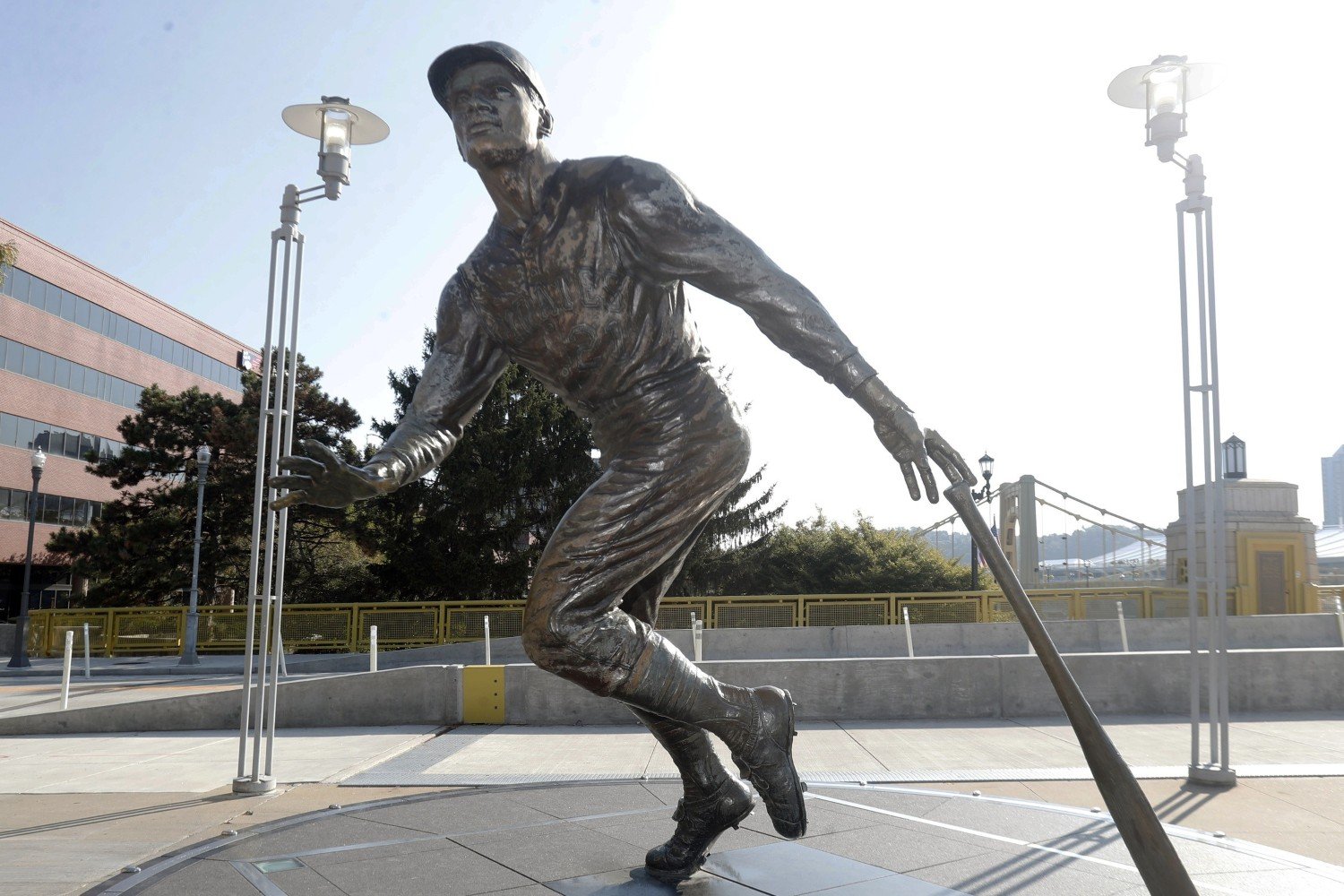 The nominees for the 2025 Roberto Clemente Award were announced Monday, as each of the 30 MLB teams selected the player they believe best embodies the league's values of character, community involvement, philanthropy and positive contributions on and off the field. The award is, in effect, the league's Man of the Year trophy, named after a player who had an enormous, transformative impact on the game—one very much akin to Robinson's. Though not the first Black player from Latin America to play in the majors, Clemente was very much the first star from that demographic, and like Robinson, he was unafraid to speak his mind or to back his thoughts and words with action. He endured slightly less focused racial animus than did Robinson, coming along more than half a decade into the integration of the National and American Leagues, but he had to deal with different prejudices, too—of culture and language, as well as skin color. Clemente was mercurial, but deeply dedicated to that which he believed in. He died in a plane crash, after he was so irrepressible in collecting and delivering relief supplies to an earthquake-stricken Nicaragua that he chartered a plane that wasn't airworthy and couldn't handle the load he'd amassed. That made Clemente baseball's closest facsimile of a saint, and has made it easy for the league to deify him as a symbol of charity and nobility ever since. That's not an inaccurate image of the man, but nor is it complete. The institution of baseball has always been comfortable with that. For that very reason, they're not sweating as much at the league's central office in New York today. Robinson, who died the same year as Clemente but had spent 15 years in post-playing career public life by then, left a legacy that could never be untangled from the racism and inequality that made up so much of the game's history. Clemente, however, had never been heralded as the same sort of trailblazer as Robinson; his story was mixed in with others somewhat like it. He was a phenomenal player with such a leonine off-field reputation that he could be upheld as the perfect confluence of baseball and personal virtue, in an uncomplicated narrative. Just as three rivers (not two) flow into one another in the city where Clemente became a baseball legend, though, there's a third element that needs to be part of a serious conversation about his impact. Clemente was born in Carolina, Puerto Rico, a majority-Black city that lies cheek-by-jowl alongside the larger, better-resourced, majority-White capital of San Juan. From a young age, he was aware of the tension of his own existence, and when he journeyed to the States and became a professional ballplayer, he never ceased to be. Clemente was born into a Puerto Rico whose future was still very much undecided, as the post-Spanish Caribbean basin took shape under the heavy influence of the United States. Throughout his childhood, though, the U.S. firmed up its control of the archipelago. Clemente was 16 years old when the U.S. military violently quashed a revolution by Puerto Rican nationalists, including by bombing the town of Jayuya and killing civilians who were American citizens. Clemente himself never took up the cause of Puerto Rican independence, but nor did he denounce it. He signed up to serve as an American military reservist, but as he experienced more of the country and its contradictions, he would go on to consider himself a "double outsider," which itself seemed to be a double-entendre. Both his Blackness and his Latino heritage alienated him from neighbors and fans in the States, while his life as a rich and famous boricua made him occasionally feel less welcome on his own home soil—though, of course, he's now virtually venerated there, as some idealized (and partially silenced) version of him is here. Though they have always wanted to trade on his exemplary attitude of service and his extraordinary, stylish play, the league has never wanted much to do with the third current of Clemente's story. Even in times when the political and cultural climate invited more attention to the history and the modern reality of racism and xenophobia, the league never used Roberto Clemente Day to talk much about it. In this climate—one that actively discourages such conversation and whitewashes history to serve the maintenance of an inequitable social order—they've been especially quiet on that front. In fact, in each of the past three years, the league announced the Clemente Award nominees earlier in September, leaving at least a bit more space to (specifically) honor Clemente and (generally) celebrate Hispanic Heritage Month. This year, they've held back those nominations until the day designated for Clemente, crowding the schedule. As for the nominees themselves, whereas 14 players of color were nominated in 2022 and 2023 and 12 in 2024, only seven of this year's 30 are people of color. It's a real shame that the league finds the waters of that third river too swift and too dangerous, because there's great power to be drawn from that current. At a moment when the world seems increasingly obsessed with mutual protection between self-selected tribes, it might be wonderful to make a bigger deal of the fact that Clemente wasn't rushing to his own home with the relief shipment that never made it. Nor was he seeking to serve his adopted hometown, or home nation. He'd only visited Nicaragua a few months earlier, while coaching Team Puerto Rico in the Amateur World Series, but that was enough to make him feel an obligation to his fellow humans. Clemente, who got used to being slapped with labels throughout his life and who came from a place that has lived in a colonialized limbo for over a century now, didn't pause a moment to consider whether the people affected by a disaster thousands of miles away were within his required circle of empathy or help. He took action, with conviction, because those people were worth as much to him as he himself was. We haven't resolved the colonial status of Puerto Rico in any satisfactory way, and life there gets more precarious by the year, as economic forces and climate change conspire against it. We also haven't resolved the sense of twice-baked alienation Clemente so often felt early in his baseball career. Preferring to read the direction of the wind and blow with it, the Commissioner's Office has abdicated any responsibility to address either issue. It can't be that way, for those of us who care a bit more about the game and the world it's played in than do Rob Manfred and his cohort. The history of American influence (sometimes imperialist, sometimes colonialist, sometimes covert, sometimes salutary, sometimes calamitous) in Puerto Rico, the Dominican Republic, Cuba, Venezuela and other places is inextricably connected to the growth and development of baseball. In a sport awash in Spanish speakers and immigrants and supported by no small number of people who sound and look like those players, baseball has a huge, urgent duty to speak up each September—not just about the virtue of a great throwing arm and mission work, but about the relationship between the U.S. and many of its neighbors, and about how wide our circles of empathy ought to sweep. The league doesn't want that conversation right now, so please, start it yourselves. Otherwise, we'll be paying just two-thirds tribute to the legacy of Clemente—and letting too much water flow under the bridge.
 -
I think the SIS Video Scouts would resent your characterization of them, and it's worth noting that Defensive Runs Saved uses data *in combination* with the insights of those scouts—but the most important thing to say here is that you've got the wrong stat there! Deserved Runs Prevented (DRP) is the one Cody cited here, and it doesn't make *any* use of human video review and judgment. It's built by starting with Statcast data and making important refinements via modeling.
- 54 replies
-
- 4
-

-

-
- byron buxton
- walker jenkins
- (and 3 more)
-
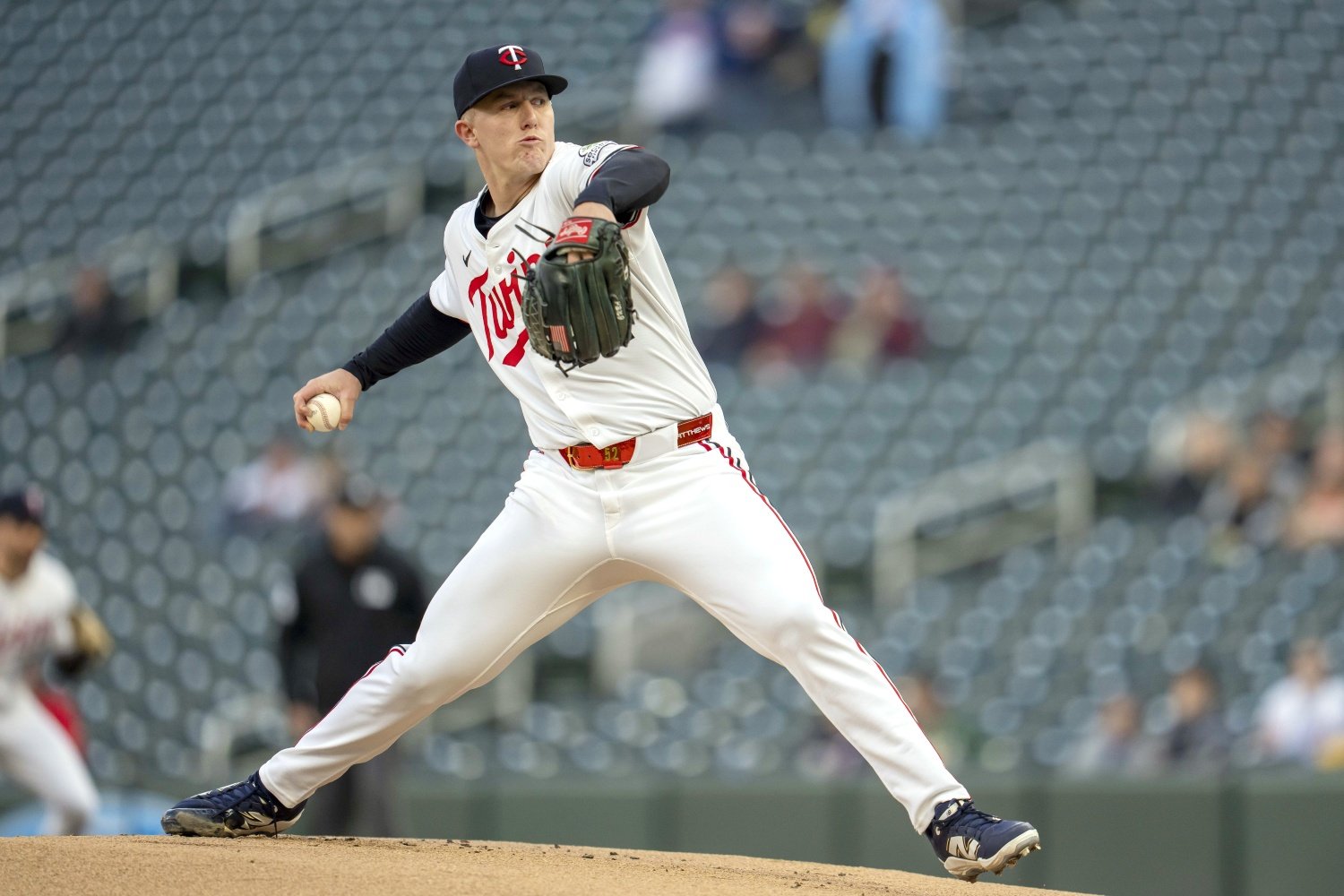 This isn't some gobsmacking revelation about baseball, but when you throw a fastball right down the middle, bad things tend to happen. Unless you throw 100 miles per hour and have electric movement, those pitches tend to get crushed—and even then, batters will sometimes sit on that offering and hit it hard somewhere. Matthews has allowed a .612 slugging average on heaters this year, despite a fairly lively pitch with two-plane movement and an average velocity north of 96 miles per hour. The problem is location. Matthews has great control, but he hasn't always had good command of his four-seamer within the strike zone. When you look at where he locates that pitch, it's not as much of a mystery that it tends to get hammered. Let's look at where he throws his heaters and where he has the most success with them, side-by-side, to illustrate the point. First, for righty batters: Whenever he can put the fastball on the top rail or along the outer edge of the plate, he does well with it. The pitch has more ride than the hitter would expect, based on Matthews's arm angle, and it also runs more to his arm side than his delivery suggests. That leads to righties sometimes giving up on a fastball away and taking a called strike, and to guys swinging under those balls at the top of the zone. Matthews gets into trouble, by contrast, when he ends up throwing the heater right down the middle, or in but belt-high. Those aren't unusual places for a pitcher to get hurt. What's unusual is that Matthews leaves such a glaring percentage of his heaters in the heart of the zone. You can see that he's trying to go up and away from righties, but he's ending up throwing far too many pipeshots. Part of the problem is that that natural arm-side movement works against his efforts to attack that upper and outer quadrant, rather than for them. Pitchers who can drill the upper, glove-side portion of the zone with their fastball drive hitters crazy (Chris Paddack talked to us about why it's such a staple of his arsenal back in April), but most of them can do that because they throw from a fairly high arm slot and/or have a fastball that cuts more than most four-seamers. Matthews's, by contrast, runs more than most similar pitches, so the tendency is for that ball he's aiming at the outer edge to wander over the meaty part of the dish—like this: WU9reTdfVjBZQUhRPT1fVUZSVUFRVUdWUVVBQ2dBQkJBQUhBbE1GQUFBTlVsZ0FDMWNBQ1FKVUJsZFhCVk5l.mp4 The story is slightly different against lefties, but the broad strokes are similar. Matthews still has success at the top of the zone and on the glove side, but he still throws too many of the things right down the middle, where success is almost impossible. As you can see, Matthews fares well almost everywhere but the center of the zone when throwing his fastball to lefties. This is where the deceptive run on that pitch comes into play for him. That the offering has horizontal movement a bit like a sinker but rides like a four-seamer gets a lot of lefties reacting oddly to it. He seems to be throwing it right at them, and they can read and adjust to the vertical movement, but they pull their hands in too far and hit lazy flies on balls down and in (which is usually a lefty's wheelhouse), not expecting it to tail back onto the plate instead of getting in on their hands. That only works, though, when he executes and gets that pitch down and in, or keeps it up on the top line of the zone. Just as he has against righties, Matthews has too often ended up leaving the pitch out over the middle of the plate to lefties. All of that is changing, though. Two starts ago, between his outing in Chicago and one at home against San Diego, Matthews slid over on the rubber. Instead of starting in the middle of the pitching plate, he now sets up on the first-base side. Here's a game-by-game chart of his average horizontal release point. As you can see, he moved over to that place in the center of the mound after returning from his shoulder injury this summer, but now, he's back where he started the season—and maybe even a hair farther toward first base. That's made a huge difference in Matthews's ability to attack the glove-side edge of the plate. Here's where his fastballs to lefties went over all his starts prior to the last one in August: Here's where those pitches have gone to those batters over his last two outings. Being more aligned with the inside edge to lefties (and the outside one to righties) means Matthews doesn't have to be quite as fine to locate there. Instead of coming back to the heart of the plate, a pitch with the same shape can come back from off the corner to a perfect location for called strikes. ZFh6M2pfWGw0TUFRPT1fQlFCVUJWTldWQVVBQzFRRFVRQUhCUU1DQUFCUlZsSUFWbHdEVmxKV0F3TUhCbFpX.mp4 When he does want to elevate, meanwhile, he can cut it loose and find the upper arm-side quadrant a bit more easily. Like this: ZFh6M2pfWGw0TUFRPT1fRGxkV1hWRU5BZ2NBWEFNR0J3QUhCRkJRQUZoVFVGTUFBMU1OVWdjTVVGSldCd3BV.mp4 Matthews is a better pronator than supinator, meaning that (although he's found a feel for two breaking balls and a cutter) he doesn't get the ball moving much toward the glove side. His breaking stuff all works more vertically than horizontally, and his four-seamer, sinker and changeup have considerable arm-side run. Moving to the side of the mound that gives his stuff more room to work in that direction (and that keeps him out of the middle of the plate better, with all his pitches) just makes good sense. In these two outings, Mstthews has worked 12 total innings, striking out eight, walking two, allowing 10 hits, and yielding just three earned runs in total. He might still run into home-run problems in the future, given the nature of his stuff and the imperfect feel he has for some of it, but this was an important shift for him. It should lead to less hard contact from opponents and, in the long run, a series of other benefits.
 -
Image courtesy of © Jesse Johnson-Imagn Images This isn't some gobsmacking revelation about baseball, but when you throw a fastball right down the middle, bad things tend to happen. Unless you throw 100 miles per hour and have electric movement, those pitches tend to get crushed—and even then, batters will sometimes sit on that offering and hit it hard somewhere. Matthews has allowed a .612 slugging average on heaters this year, despite a fairly lively pitch with two-plane movement and an average velocity north of 96 miles per hour. The problem is location. Matthews has great control, but he hasn't always had good command of his four-seamer within the strike zone. When you look at where he locates that pitch, it's not as much of a mystery that it tends to get hammered. Let's look at where he throws his heaters and where he has the most success with them, side-by-side, to illustrate the point. First, for righty batters: Whenever he can put the fastball on the top rail or along the outer edge of the plate, he does well with it. The pitch has more ride than the hitter would expect, based on Matthews's arm angle, and it also runs more to his arm side than his delivery suggests. That leads to righties sometimes giving up on a fastball away and taking a called strike, and to guys swinging under those balls at the top of the zone. Matthews gets into trouble, by contrast, when he ends up throwing the heater right down the middle, or in but belt-high. Those aren't unusual places for a pitcher to get hurt. What's unusual is that Matthews leaves such a glaring percentage of his heaters in the heart of the zone. You can see that he's trying to go up and away from righties, but he's ending up throwing far too many pipeshots. Part of the problem is that that natural arm-side movement works against his efforts to attack that upper and outer quadrant, rather than for them. Pitchers who can drill the upper, glove-side portion of the zone with their fastball drive hitters crazy (Chris Paddack talked to us about why it's such a staple of his arsenal back in April), but most of them can do that because they throw from a fairly high arm slot and/or have a fastball that cuts more than most four-seamers. Matthews's, by contrast, runs more than most similar pitches, so the tendency is for that ball he's aiming at the outer edge to wander over the meaty part of the dish—like this: WU9reTdfVjBZQUhRPT1fVUZSVUFRVUdWUVVBQ2dBQkJBQUhBbE1GQUFBTlVsZ0FDMWNBQ1FKVUJsZFhCVk5l.mp4 The story is slightly different against lefties, but the broad strokes are similar. Matthews still has success at the top of the zone and on the glove side, but he still throws too many of the things right down the middle, where success is almost impossible. As you can see, Matthews fares well almost everywhere but the center of the zone when throwing his fastball to lefties. This is where the deceptive run on that pitch comes into play for him. That the offering has horizontal movement a bit like a sinker but rides like a four-seamer gets a lot of lefties reacting oddly to it. He seems to be throwing it right at them, and they can read and adjust to the vertical movement, but they pull their hands in too far and hit lazy flies on balls down and in (which is usually a lefty's wheelhouse), not expecting it to tail back onto the plate instead of getting in on their hands. That only works, though, when he executes and gets that pitch down and in, or keeps it up on the top line of the zone. Just as he has against righties, Matthews has too often ended up leaving the pitch out over the middle of the plate to lefties. All of that is changing, though. Two starts ago, between his outing in Chicago and one at home against San Diego, Matthews slid over on the rubber. Instead of starting in the middle of the pitching plate, he now sets up on the first-base side. Here's a game-by-game chart of his average horizontal release point. As you can see, he moved over to that place in the center of the mound after returning from his shoulder injury this summer, but now, he's back where he started the season—and maybe even a hair farther toward first base. That's made a huge difference in Matthews's ability to attack the glove-side edge of the plate. Here's where his fastballs to lefties went over all his starts prior to the last one in August: Here's where those pitches have gone to those batters over his last two outings. Being more aligned with the inside edge to lefties (and the outside one to righties) means Matthews doesn't have to be quite as fine to locate there. Instead of coming back to the heart of the plate, a pitch with the same shape can come back from off the corner to a perfect location for called strikes. ZFh6M2pfWGw0TUFRPT1fQlFCVUJWTldWQVVBQzFRRFVRQUhCUU1DQUFCUlZsSUFWbHdEVmxKV0F3TUhCbFpX.mp4 When he does want to elevate, meanwhile, he can cut it loose and find the upper arm-side quadrant a bit more easily. Like this: ZFh6M2pfWGw0TUFRPT1fRGxkV1hWRU5BZ2NBWEFNR0J3QUhCRkJRQUZoVFVGTUFBMU1OVWdjTVVGSldCd3BV.mp4 Matthews is a better pronator than supinator, meaning that (although he's found a feel for two breaking balls and a cutter) he doesn't get the ball moving much toward the glove side. His breaking stuff all works more vertically than horizontally, and his four-seamer, sinker and changeup have considerable arm-side run. Moving to the side of the mound that gives his stuff more room to work in that direction (and that keeps him out of the middle of the plate better, with all his pitches) just makes good sense. In these two outings, Mstthews has worked 12 total innings, striking out eight, walking two, allowing 10 hits, and yielding just three earned runs in total. He might still run into home-run problems in the future, given the nature of his stuff and the imperfect feel he has for some of it, but this was an important shift for him. It should lead to less hard contact from opponents and, in the long run, a series of other benefits. View full article
-
Image courtesy of © Kiyoshi Mio-Imagn Images Box Score Starting Pitcher: Simeon Woods Richardson - 5 IP, 5 H, 3 ER, 1 BB, 6 K (89 pitches, 57 strikes) Home Runs: Royce Lewis 2 (12), James Outman (3) Top 3 WPA: Lewis (.451), Brooks Lee (.076), Luke Keaschall (.061) Win Probability Chart (Via FanGraphs): When Royce Lewis is going well, his swagger and charisma seem like another dimension of his game—somehow, a new source of value, rather than just a personality trait. Yes, Lewis swatted two two-run home runs Monday night, and obviously, the runs on the board are the real game-changers. When you watch the way he reacted to the sensation of bat meeting ball on each of them (and the moment when the ball snuck over the glove of center fielder Bryce Teodosio, on the first one), though, it feels like there's something more going on. His rituals make such a spectacle of it that you can't help wondering why opponents don't get angry at him more often. As a fan, though, it's exhilarating, and his teammates take to his authentic and irrepressible energy enthusiastically. For Twins fans looking ahead to 2026 (and wondering whether Lewis will be part of that team), the bat flip-dugout point-bullpen point-wrist tap-phantom injection-shimmy-shuffle-sky point-dugout roar is not the vital sequence of moves. Those come when he's in the batter's box. The fact that we've seen a lot of Lewis's celebrations lately, though, is a reflection of the fact that we're seeing more productive moves in the box, too. Lewis has moved much deeper in the box, starting roughly in mid-August. To give a clear look at the difference, though, let's compare June's version of him to the one we've seen this month. Here's Lewis's stance and stride animation, from Baseball Savant, for June. As you can see, he was catching the ball out in front of home plate, but not very far in front of himself. He was so spread-out (and got so incredibly spread-out by the time his double-move of a stride was finished) that he ended up rushing himself. Compare the above, though, to where he's setting up and how he's striding this month. This is the version of Lewis that was hitting .250/.299/.457 since the All-Star break, even before his outburst Monday night. No, those aren't star-caliber numbers, but they represent a huge step forward from where he was for the season before that. There's also something happening—more adjustments being made, and faster—right here in the last fortnight; he was not this deep in the box even in August. By giving himself more time and starting a bit more upright, Lewis is allowing himself to catch the ball out in front of his own body by more, even though he's catching it deeper, relative to home plate. This version of Lewis's swing is more adaptable, as he showed Monday night. It's less grooved, and he hasn't yet figured out how to make good swing decisions with this combination of timing mechanisms and moves to the ball, but the swing is more functional than it was throughout the first half. That's very good news. It was a night full of that for the Twins. Simeon Woods Richardson pitched better than his stat line indicated; he got little help from contest-winner catcher Mickey Gasper or oversold glove man James Outman. The latter failed to catch a ball Byron Buxton absolutely would have gotten to, which went for a two-run double in the bottom of the second. He also played a double into a triple to lead off the fifth, and Woods Richardson admirably pitched around that problem. Outman did partially redeem himself with a very long home run. Luke Keaschall and Austin Martin reached base a combined six times. The Angels compounded every good thing the Twins did by doing something bad to make things even better for the visitors, but still, it was a good game amid a dreary run to the finish line of this season. Lewis, in particular, left a bright mark. Later in the contest, he also made a charging play that took him across third base and up the line and required an on-the-run throw from an altered arm angle. He converted it flawlessly. This was as good a display of why the fan base fell in love with Lewis as we've seen since 2023. What’s Next: Zebby Matthews (4-4, 4.73) takes the hill Tuesday night, as the Twins try to press their advantage and seal a series win. The Angels will turn to veteran righty Kyle Hendricks (6-9, 4.81), in another 8:38 PM CT start. Postgame Interviews: Coming soon Bullpen Usage Chart: THU FRI SAT SUN MON TOT Hatch 0 0 66 0 0 66 Topa 0 13 0 28 0 41 Funderburk 0 15 0 22 0 37 Sands 0 0 0 14 0 14 Adams 31 0 0 0 38 69 Ohl 29 0 0 0 0 29 Cabrera 20 0 0 8 23 51 Tonkin 11 0 12 0 20 43 View full article
-
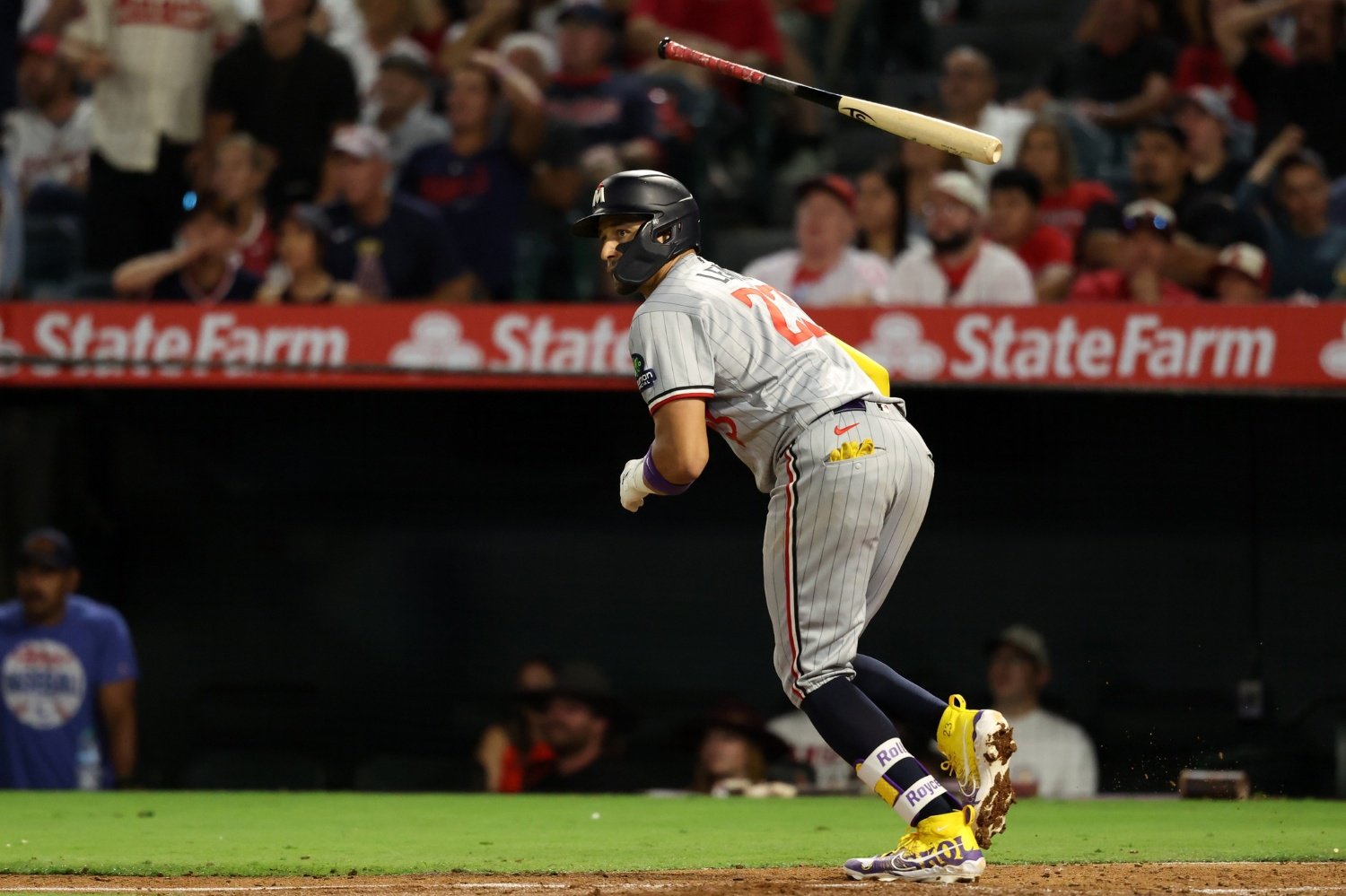 Box Score Starting Pitcher: Simeon Woods Richardson - 5 IP, 5 H, 3 ER, 1 BB, 6 K (89 pitches, 57 strikes) Home Runs: Royce Lewis 2 (12), James Outman (3) Top 3 WPA: Lewis (.451), Brooks Lee (.076), Luke Keaschall (.061) Win Probability Chart (Via FanGraphs): When Royce Lewis is going well, his swagger and charisma seem like another dimension of his game—somehow, a new source of value, rather than just a personality trait. Yes, Lewis swatted two two-run home runs Monday night, and obviously, the runs on the board are the real game-changers. When you watch the way he reacted to the sensation of bat meeting ball on each of them (and the moment when the ball snuck over the glove of center fielder Bryce Teodosio, on the first one), though, it feels like there's something more going on. His rituals make such a spectacle of it that you can't help wondering why opponents don't get angry at him more often. As a fan, though, it's exhilarating, and his teammates take to his authentic and irrepressible energy enthusiastically. For Twins fans looking ahead to 2026 (and wondering whether Lewis will be part of that team), the bat flip-dugout point-bullpen point-wrist tap-phantom injection-shimmy-shuffle-sky point-dugout roar is not the vital sequence of moves. Those come when he's in the batter's box. The fact that we've seen a lot of Lewis's celebrations lately, though, is a reflection of the fact that we're seeing more productive moves in the box, too. Lewis has moved much deeper in the box, starting roughly in mid-August. To give a clear look at the difference, though, let's compare June's version of him to the one we've seen this month. Here's Lewis's stance and stride animation, from Baseball Savant, for June. As you can see, he was catching the ball out in front of home plate, but not very far in front of himself. He was so spread-out (and got so incredibly spread-out by the time his double-move of a stride was finished) that he ended up rushing himself. Compare the above, though, to where he's setting up and how he's striding this month. This is the version of Lewis that was hitting .250/.299/.457 since the All-Star break, even before his outburst Monday night. No, those aren't star-caliber numbers, but they represent a huge step forward from where he was for the season before that. There's also something happening—more adjustments being made, and faster—right here in the last fortnight; he was not this deep in the box even in August. By giving himself more time and starting a bit more upright, Lewis is allowing himself to catch the ball out in front of his own body by more, even though he's catching it deeper, relative to home plate. This version of Lewis's swing is more adaptable, as he showed Monday night. It's less grooved, and he hasn't yet figured out how to make good swing decisions with this combination of timing mechanisms and moves to the ball, but the swing is more functional than it was throughout the first half. That's very good news. It was a night full of that for the Twins. Simeon Woods Richardson pitched better than his stat line indicated; he got little help from contest-winner catcher Mickey Gasper or oversold glove man James Outman. The latter failed to catch a ball Byron Buxton absolutely would have gotten to, which went for a two-run double in the bottom of the second. He also played a double into a triple to lead off the fifth, and Woods Richardson admirably pitched around that problem. Outman did partially redeem himself with a very long home run. Luke Keaschall and Austin Martin reached base a combined six times. The Angels compounded every good thing the Twins did by doing something bad to make things even better for the visitors, but still, it was a good game amid a dreary run to the finish line of this season. Lewis, in particular, left a bright mark. Later in the contest, he also made a charging play that took him across third base and up the line and required an on-the-run throw from an altered arm angle. He converted it flawlessly. This was as good a display of why the fan base fell in love with Lewis as we've seen since 2023. What’s Next: Zebby Matthews (4-4, 4.73) takes the hill Tuesday night, as the Twins try to press their advantage and seal a series win. The Angels will turn to veteran righty Kyle Hendricks (6-9, 4.81), in another 8:38 PM CT start. Postgame Interviews: Coming soon Bullpen Usage Chart: THU FRI SAT SUN MON TOT Hatch 0 0 66 0 0 66 Topa 0 13 0 28 0 41 Funderburk 0 15 0 22 0 37 Sands 0 0 0 14 0 14 Adams 31 0 0 0 38 69 Ohl 29 0 0 0 0 29 Cabrera 20 0 0 8 23 51 Tonkin 11 0 12 0 20 43
- 29 comments
-
- 5
-
-
- royce lewis
- simeon woods richardson
- (and 2 more)
-
Image courtesy of © Bruce Kluckhohn-Imagn Images Box Score SP: Taj Bradley - 5 IP, 8 H, 4 ER, 1 BB, 7 K (91 pitches, 59 strikes) Home Runs: Wallner (21), Clemens (15) Bottom 3 WPA: Travis Adams (-.392), Génesis Cabrera (-.227), Bradley (-.189) Win Probability Chart (via FanGraphs) There should be a mercy rule for games like these—one that can kick in before the first pitch is even thrown. When two teams in the throes of seasons as dreadful as those of the 2025 White Sox and Twins are delayed by rain for 90 minutes, everyone should get to draw a picture that tells the story of how they imagine the game would have gone, and no one should have to sit through the reality of that game. Rob Manfred has no imagination, though, and the Twins are desperate for every dollar they can scrape out of a season in which attendance is going to come in far below expectations. Thus, the White Sox and Twins did play a game Thursday night, closing out their season series and a four-game set at Target Field. It began at 8:10 PM, and while the official attendance was over 13,000, a better estimate of the fans in attendance would start by chopping off a zero and moving the comma accordingly. To the credit of both teams, they came out trying to give that bedraggled, disinterested crowd some interesting baseball to watch. Edgar Quero led off for the Sox, and after working a long at-bat against Taj Bradley, he flared a single down the left-field line. The ball died on the wet grass, and Quero decided to push for a hustle double. Austin Martin, moving well despite the slick surface, fielded the ball cleanly and made a good throw to nail Quero at second. That's a job well done, bv all parties involved, and it was fun to watch. Bradley took care of business to finish a clean first. Brooks Baldwin returned the favor to lead off the bottom of the first. Luke Keaschall tried to land a similar fly ball down the right-field line, but Baldwin raced over and made a diving catch near the line. Hopefully, the fans enjoyed those good plays, because things got sloppy quickly thereafter. Trevor Larnach singled after Keaschall, but was then picked off. Ryan Jeffers walked and Kody Clemens singled, but Royce Lewis struck out to quash the rally. Bradley didn't have the Sox fooled at all, all night. He danced around two hits in the second, but gave up three more hits and a walk in the third, leading to the first two runs of the night for the White Sox. Keaschall singled in the bottom of the third and advanced on a Cannon error, then stole third, but he was stranded. Bradley gave up a leadoff double in the fourth, too, although he was able to escape without allowing a run. In the bottom of the fourth, though, the Twins broke through. Walks by Matt Wallner and Martin got things started, and then a parade of singles brought home a scoreboard-flipping five runs. That required a lousy play by the Sox on a chopper to first base by Larnach, and it was made a bit less thrilling by the fact that Mickey Gasper pinch-hit for Jeffers (who had taken multiple foul balls off the mask earlier in the game) during the sequence, but still, the Twins had grabbed the lead. The Sox got one more run, thanks to yet another double, against Bradley in the fifth. Wallner swatted a home run in the bottom half of the frame to push the lead back to two runs, though, at 6-4. In the seventh, Minnesota tacked on another run, as Keaschall (on base seemingly all night, even after being robbed in the first) raced to third on a Larnach bloop single and came home on a Gasper groundout. It takes more than three runs to be comfortable against this mighty White Sox lineup, though—at least, it does for this husk of a Twins pitching staff. Three batters into the top of the seventh, the lead was gone, as two singles and a Kyle Teel home run off Travis Adams put a crooked number up in a hurry. One batter later, Adams was out of the game, but Génesis Cabrera proved a poor fireman. A combination of two hit batsmen, a sacrifice fly and a balk put two more White Sox runs on the board, and the Twins were working from behind again. They never did make it back. Keaschall had another hit in the seventh (he got the smallest piece possible of a two-strike slider but the dribbler proved too much for Teel), but went nowhere. In the top of the eighth, Lewis committed a throwing error, and Colson Montgomery immediately made that hurt by thwacking his umpteenth home run against the Twins in the last month. Clemens homered in the ninth, but the game ended in a hush, near midnight, 11-8. What’s Next? The Twins hit the road for three games against surging Wild Card hopefuls in Kansas City this weekend. Pablo López rides to the rescue, returning to the mound for the first time since early June. (There's nothing left to save, of course, but there's a bit of joy in seeing López fight his way back.) Michael Wacha will take the ball for the Royals, in a game that starts at 6:40 PM CT. Bullpen Usage Spreadsheet SUN MON TUE WED THU TOT Kriske 0 0 27 0 0 27 Hatch 0 0 64 0 0 64 Cabrera 0 20 0 0 20 40 Tonkin 37 0 0 0 11 48 Topa 0 17 0 18 0 35 Davis 0 0 33 0 25 58 Funderburk 0 31 0 0 0 31 Sands 0 0 0 18 0 18 Adams 0 6 0 0 31 37 View full article
-
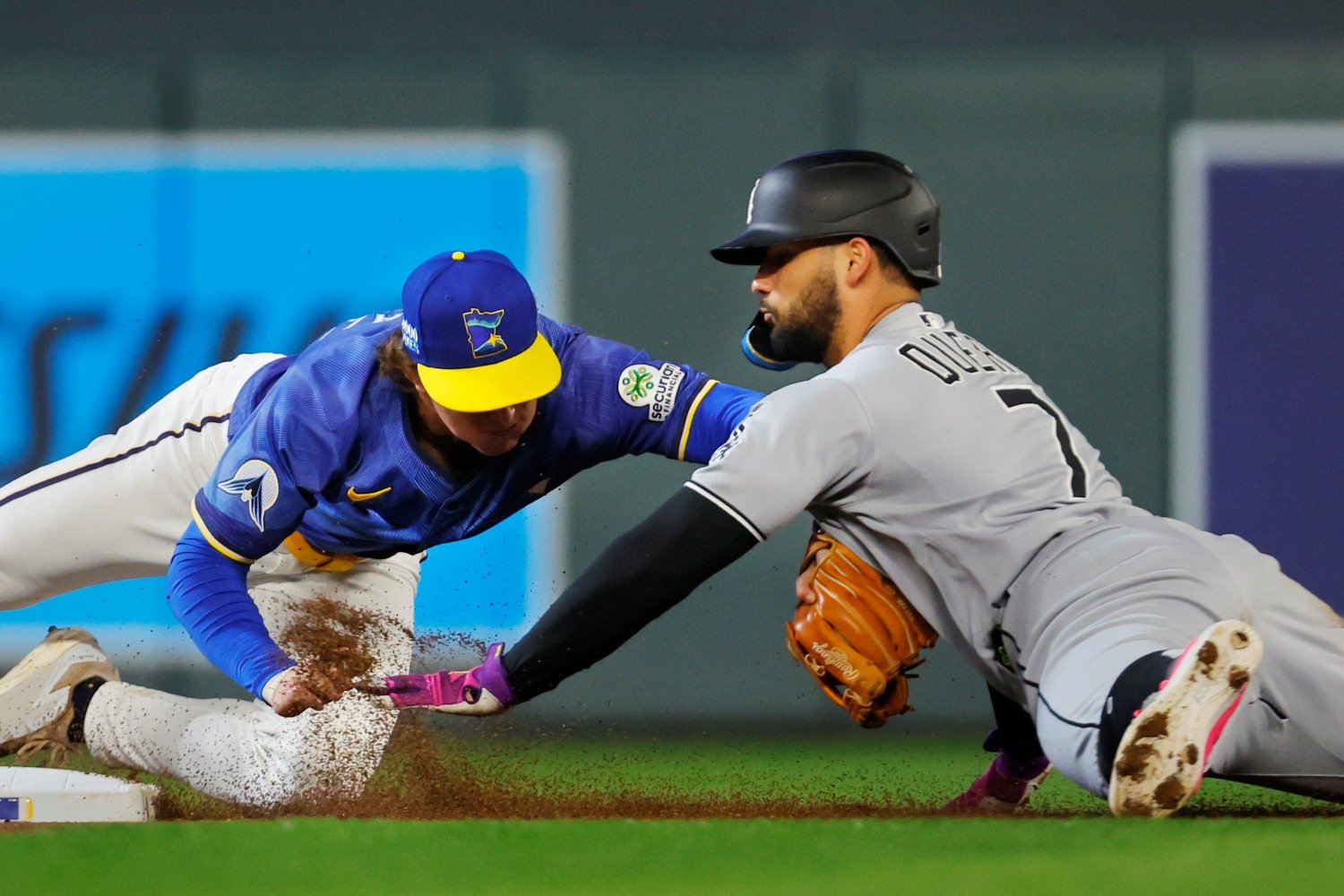 Box Score SP: Taj Bradley - 5 IP, 8 H, 4 ER, 1 BB, 7 K (91 pitches, 59 strikes) Home Runs: Wallner (21), Clemens (15) Bottom 3 WPA: Travis Adams (-.392), Génesis Cabrera (-.227), Bradley (-.189) Win Probability Chart (via FanGraphs) There should be a mercy rule for games like these—one that can kick in before the first pitch is even thrown. When two teams in the throes of seasons as dreadful as those of the 2025 White Sox and Twins are delayed by rain for 90 minutes, everyone should get to draw a picture that tells the story of how they imagine the game would have gone, and no one should have to sit through the reality of that game. Rob Manfred has no imagination, though, and the Twins are desperate for every dollar they can scrape out of a season in which attendance is going to come in far below expectations. Thus, the White Sox and Twins did play a game Thursday night, closing out their season series and a four-game set at Target Field. It began at 8:10 PM, and while the official attendance was over 13,000, a better estimate of the fans in attendance would start by chopping off a zero and moving the comma accordingly. To the credit of both teams, they came out trying to give that bedraggled, disinterested crowd some interesting baseball to watch. Edgar Quero led off for the Sox, and after working a long at-bat against Taj Bradley, he flared a single down the left-field line. The ball died on the wet grass, and Quero decided to push for a hustle double. Austin Martin, moving well despite the slick surface, fielded the ball cleanly and made a good throw to nail Quero at second. That's a job well done, bv all parties involved, and it was fun to watch. Bradley took care of business to finish a clean first. Brooks Baldwin returned the favor to lead off the bottom of the first. Luke Keaschall tried to land a similar fly ball down the right-field line, but Baldwin raced over and made a diving catch near the line. Hopefully, the fans enjoyed those good plays, because things got sloppy quickly thereafter. Trevor Larnach singled after Keaschall, but was then picked off. Ryan Jeffers walked and Kody Clemens singled, but Royce Lewis struck out to quash the rally. Bradley didn't have the Sox fooled at all, all night. He danced around two hits in the second, but gave up three more hits and a walk in the third, leading to the first two runs of the night for the White Sox. Keaschall singled in the bottom of the third and advanced on a Cannon error, then stole third, but he was stranded. Bradley gave up a leadoff double in the fourth, too, although he was able to escape without allowing a run. In the bottom of the fourth, though, the Twins broke through. Walks by Matt Wallner and Martin got things started, and then a parade of singles brought home a scoreboard-flipping five runs. That required a lousy play by the Sox on a chopper to first base by Larnach, and it was made a bit less thrilling by the fact that Mickey Gasper pinch-hit for Jeffers (who had taken multiple foul balls off the mask earlier in the game) during the sequence, but still, the Twins had grabbed the lead. The Sox got one more run, thanks to yet another double, against Bradley in the fifth. Wallner swatted a home run in the bottom half of the frame to push the lead back to two runs, though, at 6-4. In the seventh, Minnesota tacked on another run, as Keaschall (on base seemingly all night, even after being robbed in the first) raced to third on a Larnach bloop single and came home on a Gasper groundout. It takes more than three runs to be comfortable against this mighty White Sox lineup, though—at least, it does for this husk of a Twins pitching staff. Three batters into the top of the seventh, the lead was gone, as two singles and a Kyle Teel home run off Travis Adams put a crooked number up in a hurry. One batter later, Adams was out of the game, but Génesis Cabrera proved a poor fireman. A combination of two hit batsmen, a sacrifice fly and a balk put two more White Sox runs on the board, and the Twins were working from behind again. They never did make it back. Keaschall had another hit in the seventh (he got the smallest piece possible of a two-strike slider but the dribbler proved too much for Teel), but went nowhere. In the top of the eighth, Lewis committed a throwing error, and Colson Montgomery immediately made that hurt by thwacking his umpteenth home run against the Twins in the last month. Clemens homered in the ninth, but the game ended in a hush, near midnight, 11-8. What’s Next? The Twins hit the road for three games against surging Wild Card hopefuls in Kansas City this weekend. Pablo López rides to the rescue, returning to the mound for the first time since early June. (There's nothing left to save, of course, but there's a bit of joy in seeing López fight his way back.) Michael Wacha will take the ball for the Royals, in a game that starts at 6:40 PM CT. Bullpen Usage Spreadsheet SUN MON TUE WED THU TOT Kriske 0 0 27 0 0 27 Hatch 0 0 64 0 0 64 Cabrera 0 20 0 0 20 40 Tonkin 37 0 0 0 11 48 Topa 0 17 0 18 0 35 Davis 0 0 33 0 25 58 Funderburk 0 31 0 0 0 31 Sands 0 0 0 18 0 18 Adams 0 6 0 0 31 37
- 61 comments
-
- 2
-

-
- luke keaschall
- taj bradley
- (and 1 more)
-
Image courtesy of © Matt Marton-Imagn Images In 301 plate appearances since coming to the Minnesota Twins, Kody Clemens is batting .211/.281/.426. That's better than his career numbers, believe it or not, but it's far shy of the standard for first basemen in the major leagues. Clemens has spent some time at second base and in left field, but he's essentiall a first baseman, so he'd need to hit much better than that to provide real on-field value—at least in a role as large as the one he's played this year. Dig a bit deeper, though, and the news gets a bit better. For instance, Baseball Prospectus offers a metric called DRC+. It's akin to wRC+ or OPS+, in that it attempts to describe holistic offensive contributions and uses a scale wherein 100 is average and higher is better. The difference is that it estimates expected contribution—which means correcting not just for park and league factors, but for some elements of batted-ball luck and swing decisions, and for the plate appearance-by-plate appearance level of competition faced. Clemens's DRC+ this year is 106, which indicates that his process at the plate has been much better than the outcomes imply. What, specifically, does that look like? Consider: Clemens is swinging at the first pitch 28.7% of the time this year, up from roughly 18% in each of the previous two seasons. He's going to the plate ready to tee off, and it's working gorgeously. He's batting .385/.407/.808 on the first pitch, and .410/.410/.949 in 0-1 counts. Being more aggressive is how he's gotten to much more power this year than in the past—even though the change is more about taking what pitchers give him than about a conscious shift into a different mode. "It’s what you’re seeing, honestly. I mean, be aggressive early in the count," Clemens said. "If he leaves one over the plate that you’re looking for, it’s a great time to swing. It depends, situationally, what your plan of attack is. If our starter is out there for a longer inning and you’re up trying to have a longer at-bat because he was out there for a while, it switches up, but if you get your pitch early in the count, it’s obviously great to go and get the barrel out there." That kind of mindset—ready to hit as soon as he gets a pitch he likes, but equally willing to work the count, not only for its own sake but to protect his teammates when needed—is why Joe Ryan called Clemens "one of the best teammates we've ever had in [the Twins clubhouse]," a sentiment echoed by several others in the room over the months since he arrived. He's been a team-first guy since arriving, which doesn't automatically make him a better hitter but does help foster the right culture in the dugout and on the field. It's also smart to be flexible. Clemens might sometimes be shielding his pitchers from having to go back to the mound mere moments after a long inning, but he's also tapped into the value of a bifurcated approach. If you get your pitch early, you have to attack it. If you don't, it makes sense to wait the pitcher out and force them to earn their way back into the count. To wit, Clemens is getting into 2-0 and 3-0 counts considerably more this year than in the last two, despite swinging more often on the first and second pitches. That means that when pitchers fall behind, he's not bailing them out. Clemens said he knows what to look for, and has tried to be more ready when what he's looking for comes. That means having an idea of what segment of the strike zone he wants to attack, but not locking in so tightly on one pitch type that he can't adjust and do damage if he gets a different offering that still enters his wheelhouse. "You’re looking for a pitch in a general area," he explained, "but us hitters, if they throw a slider that they popped outside and it’s gonna come to that same area and you recognize it, I think it’s instinctual for hitters to, say you’re sitting fastball middle-in or whatever and they accidentally leave a changeup up and it kind of falls over the plate, you can recognize that and react." Whether Clemens is part of the Twins' future or not, his developmental arc this season is important, if it indicates that the team has a hitting infrastructure that works. That very thing has been in question all year. Clemens, though, said the team has helped him know when to go up there hacking. "They've emphasized, this pitcher gives up a ton of damage in 0-0 counts, or be ready to hit early, because this is the most damage that he’s given up," Clemens said. "That’s what they've emphasized over the course of the season." Clemens might not be back next season, but the team could do much worse than him as a platoon bat off the bench. He's a positive influence in the clubhouse and a positive contributor to the lineup, thanks to his evolving approach and the way he thinks about and listens to others' ideas on hitting. This approach comes with a low ceiling for OBP and hinges on connecting frequently enough to get to all of his power, but Clemens has shown an ability to maximize the value of that way of doing things. The Twins need more players who get the most out of their skills, not fewer. View full article
-
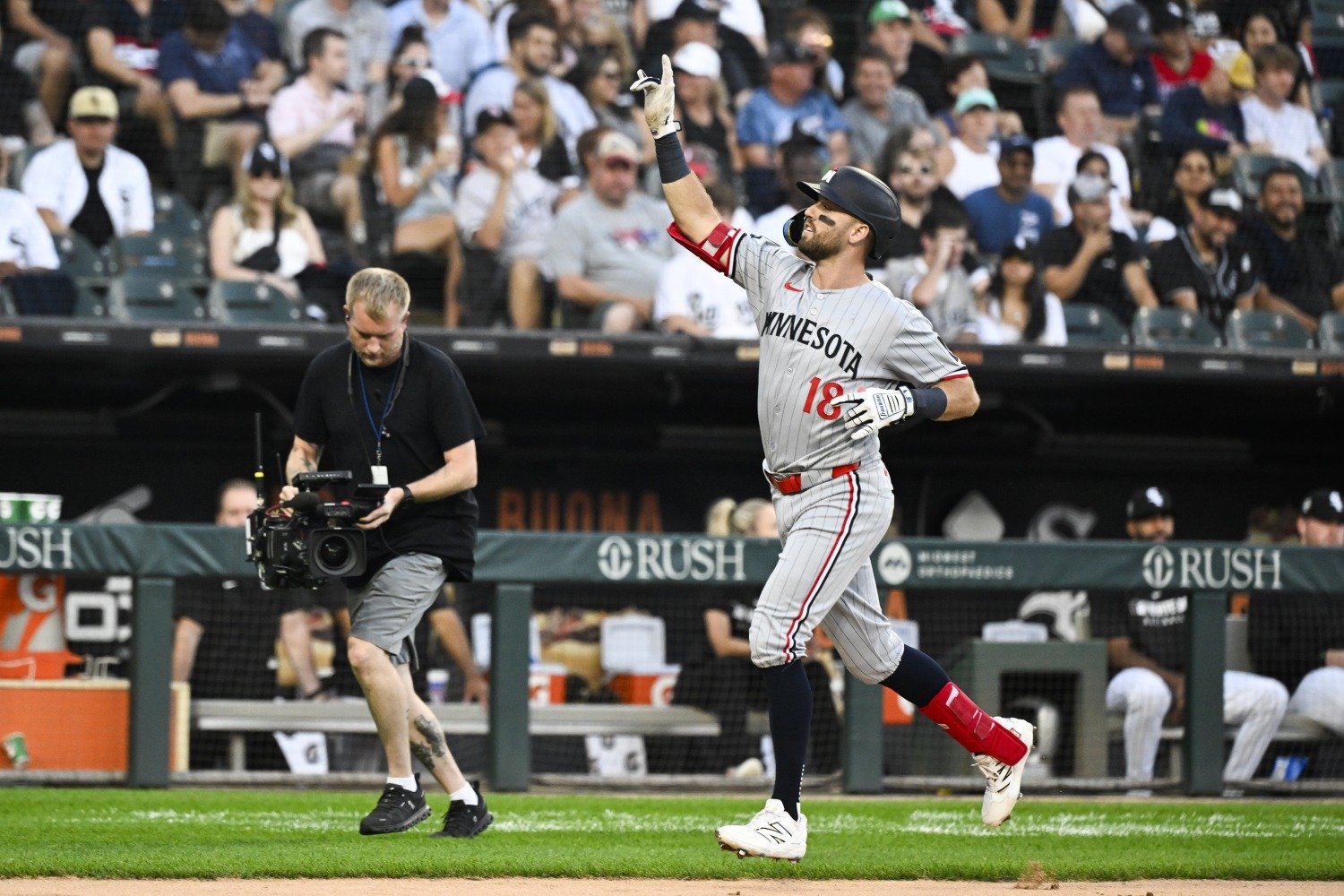 In 301 plate appearances since coming to the Minnesota Twins, Kody Clemens is batting .211/.281/.426. That's better than his career numbers, believe it or not, but it's far shy of the standard for first basemen in the major leagues. Clemens has spent some time at second base and in left field, but he's essentiall a first baseman, so he'd need to hit much better than that to provide real on-field value—at least in a role as large as the one he's played this year. Dig a bit deeper, though, and the news gets a bit better. For instance, Baseball Prospectus offers a metric called DRC+. It's akin to wRC+ or OPS+, in that it attempts to describe holistic offensive contributions and uses a scale wherein 100 is average and higher is better. The difference is that it estimates expected contribution—which means correcting not just for park and league factors, but for some elements of batted-ball luck and swing decisions, and for the plate appearance-by-plate appearance level of competition faced. Clemens's DRC+ this year is 106, which indicates that his process at the plate has been much better than the outcomes imply. What, specifically, does that look like? Consider: Clemens is swinging at the first pitch 28.7% of the time this year, up from roughly 18% in each of the previous two seasons. He's going to the plate ready to tee off, and it's working gorgeously. He's batting .385/.407/.808 on the first pitch, and .410/.410/.949 in 0-1 counts. Being more aggressive is how he's gotten to much more power this year than in the past—even though the change is more about taking what pitchers give him than about a conscious shift into a different mode. "It’s what you’re seeing, honestly. I mean, be aggressive early in the count," Clemens said. "If he leaves one over the plate that you’re looking for, it’s a great time to swing. It depends, situationally, what your plan of attack is. If our starter is out there for a longer inning and you’re up trying to have a longer at-bat because he was out there for a while, it switches up, but if you get your pitch early in the count, it’s obviously great to go and get the barrel out there." That kind of mindset—ready to hit as soon as he gets a pitch he likes, but equally willing to work the count, not only for its own sake but to protect his teammates when needed—is why Joe Ryan called Clemens "one of the best teammates we've ever had in [the Twins clubhouse]," a sentiment echoed by several others in the room over the months since he arrived. He's been a team-first guy since arriving, which doesn't automatically make him a better hitter but does help foster the right culture in the dugout and on the field. It's also smart to be flexible. Clemens might sometimes be shielding his pitchers from having to go back to the mound mere moments after a long inning, but he's also tapped into the value of a bifurcated approach. If you get your pitch early, you have to attack it. If you don't, it makes sense to wait the pitcher out and force them to earn their way back into the count. To wit, Clemens is getting into 2-0 and 3-0 counts considerably more this year than in the last two, despite swinging more often on the first and second pitches. That means that when pitchers fall behind, he's not bailing them out. Clemens said he knows what to look for, and has tried to be more ready when what he's looking for comes. That means having an idea of what segment of the strike zone he wants to attack, but not locking in so tightly on one pitch type that he can't adjust and do damage if he gets a different offering that still enters his wheelhouse. "You’re looking for a pitch in a general area," he explained, "but us hitters, if they throw a slider that they popped outside and it’s gonna come to that same area and you recognize it, I think it’s instinctual for hitters to, say you’re sitting fastball middle-in or whatever and they accidentally leave a changeup up and it kind of falls over the plate, you can recognize that and react." Whether Clemens is part of the Twins' future or not, his developmental arc this season is important, if it indicates that the team has a hitting infrastructure that works. That very thing has been in question all year. Clemens, though, said the team has helped him know when to go up there hacking. "They've emphasized, this pitcher gives up a ton of damage in 0-0 counts, or be ready to hit early, because this is the most damage that he’s given up," Clemens said. "That’s what they've emphasized over the course of the season." Clemens might not be back next season, but the team could do much worse than him as a platoon bat off the bench. He's a positive influence in the clubhouse and a positive contributor to the lineup, thanks to his evolving approach and the way he thinks about and listens to others' ideas on hitting. This approach comes with a low ceiling for OBP and hinges on connecting frequently enough to get to all of his power, but Clemens has shown an ability to maximize the value of that way of doing things. The Twins need more players who get the most out of their skills, not fewer.
 -
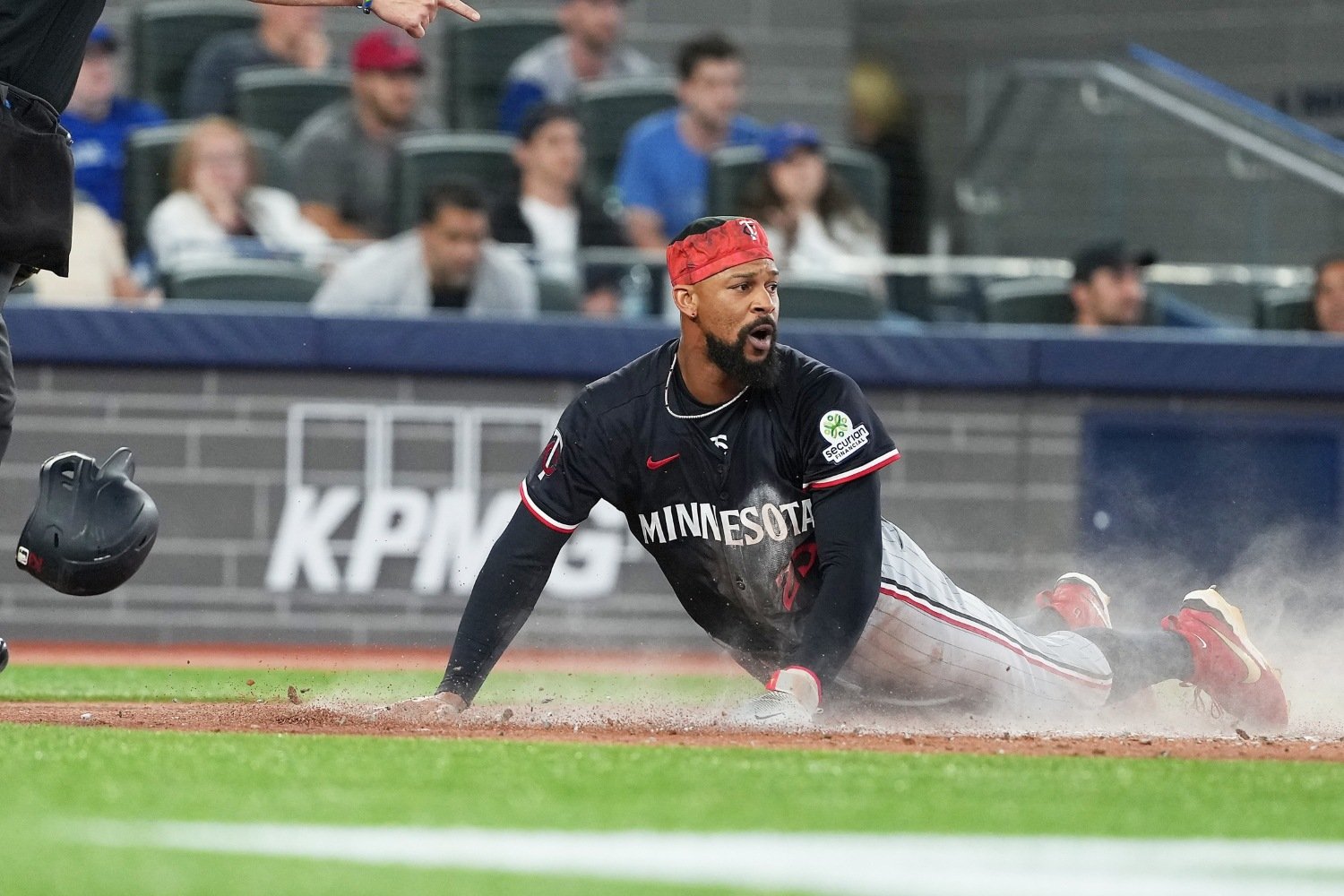 After a double and a triple Wednesday night, Byron Buxton is now slugging an even 1.000 during his seven-game hitting streak. He's come back to Earth very slightly from the heights he reached around the All-Star break, but he's still batting .273/.333/.559 for the season. He'll get to 30 home runs for the first time, and he's already 21-for-21 on stolen base attempts. It's been a phenomenal season, right at an age (31) where it becomes essentially impossible to think of Buxton as a phenom. Now, he's something more, although also something sadder: the fearless lion of the lineup, but for a truly terrible team. Playing out the string with the most depressing Twins team in several years, Buxton has made it through two separate stints on the injured list without letting either stretch or stop his march toward new career landmarks for durability. The only season in which he qualified for the batting title was 2017, when he was 23, but he's well on the way to doing so again this year. He won't match the number of games he played or the number of innings he spent in center field in that season, but he's already beyond the numbers he accumulated in any season since. Not counting 2017, Buxton's 767 innings in center field last year were the most he'd played. This season, he's already at 840, and will surely eclipse 900. It's not just how much he's played, though, but how much his success has given him to do. Buxton has reached base 156 times this year, including times reaching on error. Here's how many times he'd reached in each previous season of his career: 2015: 37 2016: 97 2017: 163 2018: 18 2019: 94 2020: 37 2021: 89 2022: 121 2023: 104 2024: 132 While watching Buxton slide headfirst (alas, out) into home plate in the fifth inning Wednesday night, I was struck by the thought that he's surely slid dozens more times this year than in any of those other years. He's spent more of his long, fluid strides covering ground in center and more of them wheeling around the bases. He's swung at 872 pitches, nearly 100 more than he did last year—which had been his post-2017 high-water mark. And that doesn't count the Home Run Derby or the All-Star Game. Counting each rep—each swing, each rounding of the bases, each throw, each mile covered in the outfield—is vital to the modern game. When we do so, it's clear that Buxton is taking on a volume of work that far exceeds what he's done in the past. That's not a bad thing, and the team doesn't need to shut him down or anything. It's just jarring to see a player whom the team had always handled with kid gloves, running all over the diamond each day at the end of a dead season. Buxton runs the bases so hard, swings so hard, and puts his body on the line for fly balls so unreservedly that it's impossible not to think about the workload piling up, even as one watches him thrive. It's possible Buxton will see more time as the DH down the stretch. The Twins could use a look at some of the other players in the mix for outfield playing time in 2026, including Austin Martin and James Outman. Either way, though, Buxton is stretching to a level of work he's never put his body through before—at least not this version of his body. It's been fun to watch him dominate on the field, and he's the only thing animating the team as it slouches toward the offseason. For the good of the team in 2026 and beyond, though, it might be wise to scale back his playing time in subtle ways over the final 20 games or so.
 -
Byron Buxton, in Uncharted Territory
Matthew Trueblood posted a topic in Twins Daily Front Page News
Image courtesy of © Nick Turchiaro-Imagn Images After a double and a triple Wednesday night, Byron Buxton is now slugging an even 1.000 during his seven-game hitting streak. He's come back to Earth very slightly from the heights he reached around the All-Star break, but he's still batting .273/.333/.559 for the season. He'll get to 30 home runs for the first time, and he's already 21-for-21 on stolen base attempts. It's been a phenomenal season, right at an age (31) where it becomes essentially impossible to think of Buxton as a phenom. Now, he's something more, although also something sadder: the fearless lion of the lineup, but for a truly terrible team. Playing out the string with the most depressing Twins team in several years, Buxton has made it through two separate stints on the injured list without letting either stretch or stop his march toward new career landmarks for durability. The only season in which he qualified for the batting title was 2017, when he was 23, but he's well on the way to doing so again this year. He won't match the number of games he played or the number of innings he spent in center field in that season, but he's already beyond the numbers he accumulated in any season since. Not counting 2017, Buxton's 767 innings in center field last year were the most he'd played. This season, he's already at 840, and will surely eclipse 900. It's not just how much he's played, though, but how much his success has given him to do. Buxton has reached base 156 times this year, including times reaching on error. Here's how many times he'd reached in each previous season of his career: 2015: 37 2016: 97 2017: 163 2018: 18 2019: 94 2020: 37 2021: 89 2022: 121 2023: 104 2024: 132 While watching Buxton slide headfirst (alas, out) into home plate in the fifth inning Wednesday night, I was struck by the thought that he's surely slid dozens more times this year than in any of those other years. He's spent more of his long, fluid strides covering ground in center and more of them wheeling around the bases. He's swung at 872 pitches, nearly 100 more than he did last year—which had been his post-2017 high-water mark. And that doesn't count the Home Run Derby or the All-Star Game. Counting each rep—each swing, each rounding of the bases, each throw, each mile covered in the outfield—is vital to the modern game. When we do so, it's clear that Buxton is taking on a volume of work that far exceeds what he's done in the past. That's not a bad thing, and the team doesn't need to shut him down or anything. It's just jarring to see a player whom the team had always handled with kid gloves, running all over the diamond each day at the end of a dead season. Buxton runs the bases so hard, swings so hard, and puts his body on the line for fly balls so unreservedly that it's impossible not to think about the workload piling up, even as one watches him thrive. It's possible Buxton will see more time as the DH down the stretch. The Twins could use a look at some of the other players in the mix for outfield playing time in 2026, including Austin Martin and James Outman. Either way, though, Buxton is stretching to a level of work he's never put his body through before—at least not this version of his body. It's been fun to watch him dominate on the field, and he's the only thing animating the team as it slouches toward the offseason. For the good of the team in 2026 and beyond, though, it might be wise to scale back his playing time in subtle ways over the final 20 games or so. View full article -
Walker JenkinsKaelen CulpepperEduardo TaitLuke KeaschallEmmanuel RodriguezKendry RojasConnor PrielippMick AbelDasan HillGabriel GonzalezMarek HoustonRiley QuickCharlee SotoBrandon WinokurAndrew MorrisKyler FedkoMarco RayaKyle DeBargeEduardo BeltreKhadim Diaw
-
Image courtesy of © Nick Turchiaro-Imagn Images The Twins closed August with a win Sunday, beating the Padres 7-2. It was a bad month for the team, who went 11-17 as they tried (and failed) to patch the holes punched in the roster by the trade deadline fire sale the front office executed to close out July. For many fans, though, it was less frustrating to watch the team for stretches of this month, with the pressure off and some new faces in the mix. While the pitching staff was far too thin to hold most of the leads the team was able to generate, the offense began to show signs of new life. Key to that revival (they scored a respectable 4.4 runs per game for the month) were the returns of two players who hadn't been part of the lineup in May, June or July: Luke Keaschall (injured since April) and Austin Martin (stashed in Triple A all year, until the deadline). Keaschall batted .303/.380/.506 after returning from the injured list in the first week of the month, while Martin managed a .271/.363/.371 line as a restored piece of the outfield mix. For a team that has had precious few reliable on-base guys over the last two seasons, Keaschall and Martin were a breath of fresh air. Both are right-handed batters with good athleticism, but both have shown limited defensive value in their young careers. Both are potential long-term pieces, but Keaschall is viewed as a part of the core, whereas Martin is more of a complementary option—and is unlikely to enter 2026 as a regular for the team. When you watch them play, you're left with an impression of two very different players. They have contrasting approaches, and they use their bodies differently. In terms of swings, though, they're a bit like—well, twins. Cody Schoenmann wrote about the unique combination of shortness and steepness in Keaschall's swing two weeks ago. Along the way, though, he also touched on the fact that Martin shares some key swing attributes with Keaschall. Here are their average swing speed, contact point (relative to their body), swing tilt and attack angle and direction, for comparison. Keaschall: 67.1 mph, 32.0 in., 35° tilt, 8° attack angle, 0° attack direction Martin: 67.1 mph, 29.5 in., 40° tilt, 10° attack angle, 3° Pull attack direction They have, in short, identical bat speed (although it doesn't quite play that way; more on that shortly), and each is steep to the baseball. Dipping one's barrel steeply, relative to one's hands, is a consistent and noteworthy characteristic. It's usually a good way to generate loft on batted balls, and it can be great for increasing one's margin for error to find the grass with a hit even when not perfectly on time. However, as you might imagine, swinging steeply tends to make it hard to hit high pitches. It's usually a characteristic of players who want to "drop the bat head" on the ball, like this. V0FkelJfWGw0TUFRPT1fVkFaWUIxVURBZ1FBQ1ZOVVZRQUhDQTlYQUZnRlV3VUFBbEVOQVFwVFV3dFNBQUJV.mp4 That creates a particular challenge for each of them, in a league full of pitchers who can pound the top of the zone with fastballs: how do you get to those high offerings with a swing that seems geared to attack the ball down? This is where things get interesting, because the two of them could not be more different in the ways they answer that question. For Martin, it's mostly a matter of laying off. "That’s not my approach," Martin said of handling the high heater. "I don’t look to do damage on fastballs up in the zone. So I think that also helps me in terms of not chasing up, because that’s not where I’m looking—but yes, with the steep swing, that makes it a little more difficult, because I’m not as flat to the ball." The key, the second-year big-leaguer said, is to recognize that pitch but not offer at it early in counts. Once he gets to two strikes, he has to protect the whole zone, but he's learned to simply flick the ball foul and fight to get a more hittable offering. If he can avoid whiffing and keep making good swing decisions, eventually, pitchers will either give in and throw him a breaking ball down—or miss with a heater that's not as elevated as they intended. "Obviously, there’s a skill gap between a major-league pitcher and a Triple-A pitcher," Martin said. But I haven’t felt at this moment that it’s an issue. I haven’t been attacked too much that way. Even though they’re capable of locating it more [consistently], doesn’t mean that they locate it that often, so it’s not anything that I’m concerned about." Indeed, you can easily see what Martin is looking for when he steps into the box: a pitch down and out over the plate, where he can feast. That approach makes Martin a bit more prone to chasing low and away than one might expect such a patient batter to be, but he's not getting himself out by expanding at the top of the zone. At least, when he does swing at a pitch down and away, he's taking a pass at a pitch he can theoretically handle. Again, with that extreme tilt on his swing, he's much better on the ball inside—but it has to be below the belly button, or it ties him up. Here's a heat map like the one above, but instead of showing his swing rate by location, it shows his run value above average per 100 pitches, by location. The ball away is hard on him, but because he's disciplined both low and high and dangerous on the inner third, we still see a lot of red here. What Martin's doing is working, even if his swing is unthreatening by the standards of most big-league batters. Keaschall's process is very different—not just because he's much less cerebral than Martin in his approach, but because he actually goes after the high pitch. He hits it, too. "It depends on your approach, depends on what you’re trying to do," Keaschall said, by way of explaining why a guy with a steep swing seems to like the ball up. "But there’s a lot more to hitting than what angle your swing is." He's right, of course. His swing is a symphony of unusual things, and watching him prepare for games gives a glimpse into how carefully it's been engineered. His pre-batting practice routine involves several reps in which he holds the bat in one hand (each, in turn) and practices a short, shadow version of his stroke, with the lower half and the explosive rotation of it all quieted down and everything slightly slowed. He's locking in the exceptionally short hand path that seems to deliver barrel to ball consistently—and his imaginary target always seems to be chest-high. His swing gets its steepness not from an attempt to whip the bat head down through the ball, but from an assiduous effort to maximize efficiency of movement. "I’ve worked really hard on my swing since high school, so it changes a lot," Keaschall said. "But at the end of the day, you’re built the way you’re built, and you’re gonna swing the way you swing. I’ve always had a pretty short swing, pretty quick to the ball, putting an emphasis on making contact, just being a consistent hitter in the box. I’d say it’s something you’re taught, but I mean, God gave you the tools that you have and God gave you a certain type of body. I’m a very tight individual, and that helps me stay short to the ball, as opposed to a big, loose person with a longer swing." That's the crucial insight, for him, and the distinguishing feature between him and Martin. Whereas Martin is a fluid athlete whose limbs always seem to be in motion, Keaschall gives the impression of being one big muscle, moving all at once. That can be a liability in the field (he's not very adaptable or smooth when the ball gets near him at second base), but at the plate, it lets him come so cleanly to the ball that he can handle pitches other hitters otherwise like him would have no chance to attack. He takes a much more expansive approach than does Martin, for that very reason. His compact movements make everything seem hittable. It's actually the high pitch on which Keaschall does most of his damage. He's that slight bit flatter than Martin, anyway, but he also has that hardwired handpath—with the violence and the extra space creation of his hard stride and explosive rotation built back in, come game time—on his side. Pitchers have to be good enough at commanding their stuff to consistently pound him away, or to hit a target above the letters with that fastball. Otherwise, they're in big trouble. That shortness and tightness in his frame makes it hard to get the good part of the wood on the ball low and away, and you can start to see how the league might eventually figure out Keaschall and force him through a tough set of adjustments. For now, though, he's covering everything nicely. He's just not doing it anything like the way Martin does. Let's circle back to the question of their bat speed. They each swing at 67.1 mph, well below the MLB average. Neither is a budding slugger, for that reason. However, each has ways to make up for that lack of sheer swing speed, and the different ways they do so help elucidate their differences in approach. Here's how each sets up in the box and strides into the baseball. As we've talked about before, Keaschall has a high-energy stride that carries him right into the baseball. He also doesn't stand especially deep in the batter's box. He's not trying to buy himself time in there, because even though he lacks elite swing speed, he gets started early and still makes good swing decisions. He's firing early and committing himself early, which lets him catch the ball out front even with a slow swing. That directness in the path of his hands helps in that regard, too. Martin, by contrast, stands very deep in the box and takes a small stride. He's close to the plate, to maximize the extent to which he can cover the outer edge despite a swing that doesn't use the full length of his lumber, horizontally. He's a later decider than Keaschall, so he necessarily catches the ball deeper. His best swings will be the ones where he's slightly early, but he provides himself a margin for error by being willing to get there a hair later. Keaschall has shown much more power so far, but Martin is drawing walks and getting on base at a stellar rate. Each has passed the first test the league poses to a steep-swing righty batter without elite bat speed, in their own way. Each has been fun to watch and helped make the team's offense more so in their first full month with the team. While they're destined to be defined by their differences, their shared swing quirks make them an interesting shared case study and provide a good window into the problem-solving ahead as the Twins try to build a more successful lineup in 2025. View full article



