Matthew Trueblood
-
Posts
1,033 -
Joined
-
Last visited
Content Type
Profiles
News
Minnesota Twins Videos
2026 Minnesota Twins Top Prospects Ranking
2022 Minnesota Twins Draft Picks
Minnesota Twins Free Agent & Trade Rumors, Notes, & Tidbits
Guides & Resources
2023 Minnesota Twins Draft Picks
The Minnesota Twins Players Project
2024 Minnesota Twins Draft Picks
2025 Minnesota Twins Draft Pick Tracker
2026 Minnesota Twins Draft Tracker: Picks & Bonuses
Forums
Blogs
Events
Store
Downloads
Gallery
Everything posted by Matthew Trueblood
-
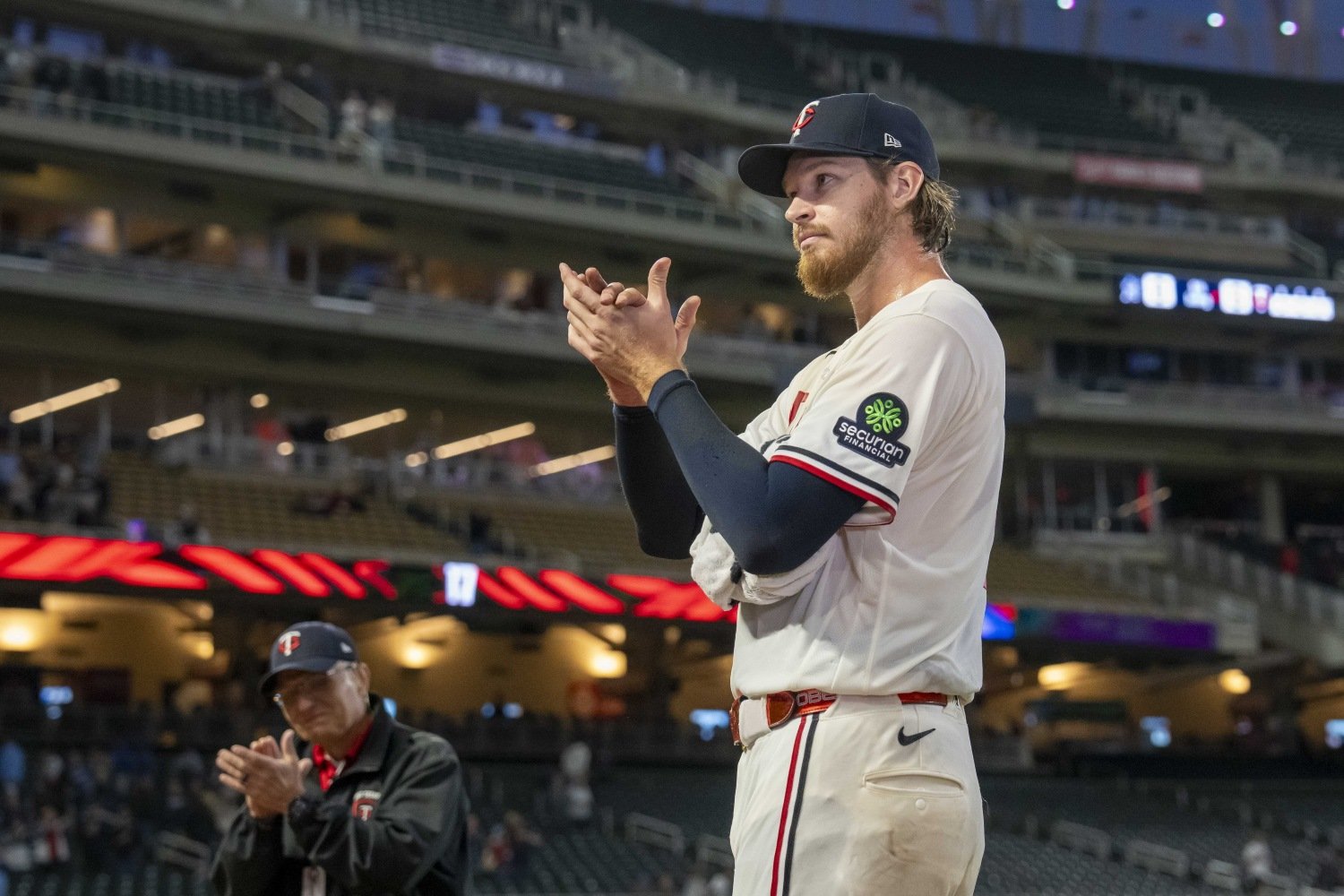 The Twins hosted Bark at the Park Night on Tuesday against the Marlins. It's a love-it-or-hate-it kind of event, and generally, I hate it. Dogs are wonderful creatures, of course, but the ballpark isn't a space built for them, and when things are good, the ballpark should be so full as to make the inclusion of dogs an unwelcome inconvenience. Often, that's exactly how it feels. Lately, of course, the Twins haven't had that problem. In fact, as it turned out, Bark at the Park was perfectly timed this spring. A crowd of just 13,471 (I don't care enough to check whether they do, but you have to actually buy a ticket for your dog now, so they should count, too) filed into Target Field, but by the end of the game, they were in full voice, sounding (for the first time since last July, and only a few times, even then) like more than their actual number and like a crowd with a real connection to its team. It was a great night for baseball, with a game-time temperature nearing 70°, with a stiff breeze to remind your it's still only mid-May in Minnesota. It was not a great night to be a hitter, however, especially in the early going. "The shadows are tough—tough on everyone, early," Twins catcher Ryan Jeffers acknowledged after the game. "I think both sides put some ugly swings on the ball the first few innings." Visiting players, especially, have long grumbled about the shadows for summertime 6:40 PM starts, when the sun is behind home plate and shines brightly off the batter's eye and the limestone above it. The shadow of the seating bowl and its roof stretches across the field slowly at first, leaving the plate in shadow right away but the mound in partial sunlight. This was the Twins' first home game in nine days and their first night game at home since May 1; it marked the first time this shadow effect played out at the venue this season. Both Eury Pérez and Bailey Ober took full advantage, though, in ways that go beyond simply profiting from hitters being distracted or scintillated. Pérez has some of the best raw stuff in the big leagues. "We have to stay on his fastball," manager Derek Shelton said of the team's plan against Pérez, before the game. "Because as hard as he throws, if you come off the fastball and you're looking for something else, you're not going to have a chance." Early on, whatever they were trying to do, that was exactly how it felt—like the team had no chance. Pérez carved through the top of the Twins lineup in the first inning, highlighted by a three-pitch dissection of Jeffers: Jeffers froze and watched Pérez's sweeper for strike one, then fouled off a sinker well up and in for strike two, almost in self-defense. After that, when Pérez dotted the outside corner with a four-seamer at 99.5 miles per hour, the at-bat was over before the ball hit catcher Joe Mack's mitt. Ober, of course, is the league's softest-tossing starting pitcher, which made for a sharp contrast with Pérez. Fairly quickly, though, it became clear that he wouldn't be easily outdueled. The young Marlins lineup has shown its upside this season, but they haven't seen a pitcher quite as in control as Ober was Tuesday night. Quickly, they got taken out of their game plan, and then they got taken out, period. After the game, Ober would talk a lot about being able to "get [his] hand in the right position" to throw all his pitches. This is a frequent refrain for Ober, whose huge frame and great extension make it both highly valuable and (at times) very difficult to manipulate the ball the way he needs to. He's at his best when he feels he can adjust his hand position at release without affecting the rest of his delivery, and often, that comes when the rest of his body is healthy and working correctly in sequence. It's remarkable, because it's something fans can't see with the naked eye, and that even turns to useless blur on replays, but when Ober can turn his wrist deftly in each direction and feel the ball coming off his fingers in just the right way, he knows that he has control of the action. In a world making fun of his lack of speed, he's assessing himself based on small adjustments being made at a speed faster than a TV camera's frame rate. All of that was happening Tuesday, and Ober talked about having good feel for all of his pitches—but the truth is that he barely needed three of them. Barely 20% of the pitches Ober threw Tuesday night were breaking balls. He has three flavors of breaker—slider, sweeper, curveball—and he utilized all three, but none were especially important. He got two outs on them almost by accident, with overeager 0-0 swings by Marlins batters when all Ober was really trying to do was steal a strike to start the at-bat. He also didn't throw his sinker at all. No, Ober cut through the Marlins with a simple mix: fastball high, changeup down. He left a few changeups up, but they missed the zone to his arm side, where they couldn't get him hurt. He brought a few fastballs down, but the hitters were sitting on the changeup in that area and couldn't punish those, either. Though Ober's fastball only sits at 88-89 MPH (he touched 90.6 Tuesday) and his changeup comes in at around 83, he can disrupt hitters' timing with the best of them, thanks to the exceptional shape on his four-seamer. Its vertical movement is extreme, considering how low his arm slot is. That's why models like Baseball Prospectus's StuffPro label it as an above-average pitch, despite his extreme dearth of velocity. When he can locate that fastball high and that changeup low, all the way across the plate, he becomes very tough to hit, because the shapes of the two pitches are so much more different than is typical of two offerings at relatively similar speeds. That's what was happening Tuesday night, which allowed Ober to sail through the first five innings with lots of weak, early contact. It was a scoreless tie at the game's halfway point. Ober was pitching masterfully, but Pérez was the one truly dominating. The Twins had cobbled together something almost like a rally twice in the early innings, thanks to walks by Pérez, a Luke Keaschall hit-by-pitch, a strikeout wild pitch, and a throwing error, but they didn't have a hit their first two times through the lineup. Pérez had two quick outs in the fifth, in fact, when Byron Buxton drew a walk to start the third turn for Twins batters. That turned out to be the pivot point of the game. Trevor Larnach hit a soft liner toward shortstop. In another world, it could have been an inning-ending groundout. In fact, under baseball's pre-2023 rules, it almost certainly would have been one. With Larnach ahead in the count 1-0, Buxton took off for second base with the pitch. Miami shortstop Otto Lopez broke to cover the bag, and Larnach's one-hopper floated through a vacant infield toward left fielder Heriberto Hernandez. If the Marlins had still been allowed to load the right side of their infield with three defenders, Lopez probably would have been coming to cover second from the other side, and third baseman Connor Norby would have been in position to field the ball. ek13MDlfWGw0TUFRPT1fVTFSVVVWRU5BRlFBQ0ZzRVZnQUhBZ01IQUZrRFdnVUFWMTFSVTFKVEFBTmNDUXRX.mp4 Because he wasn't, though, and because the ball was hit slowly with the play right in front of him, Buxton was able to hare around to third base. He and third-base coach Ramon Borrego even pondered trying to score. Hernandez fielded the ball and released it quickly, but his throw was an underhand wing to Lopez, near second. The Twins have scored more than once when an opponent underestimated their aggressiveness and threw too casually to the middle of the diamond, and they had it in mind to do it again. It would have been a dangerous play. However, in the context of the game, it would have been justifiable. With two outs in the inning and runs at such a premium, the opportunity to score one only needed to come with about a 25% expected success rate to be worth the attempt. Ultimately, Borrego and Buxton made the snap decision not to risk it, and they were probably right to eschew the try. Even with Buxton running, the ball being on the infield that early should have given the Marlins a four-in-five shot to nab him. Instead, things fell to Ryan Jeffers—but, on another 1-0 pitch, the Twins made things happen, instead of waiting for them to happen. Larnach and Buxton executed a double-steal, wherein Larnach's job was to draw a throw to second base and get in a rundown, allowing Buxton to score. That the Marlins threw through here speaks to the way the game was already tilting, and changing. The shadows had given way to the neutral golden shimmer that prevails when the sun is too low to cast shadows on the field but still bright enough to bounce its light off the mirror-windowed high-rise beyond left field, and off the white sign in center field. Buxton's speed had created a hit for Larnach and applied pressure to the Marlins, and the lineup was getting its third look at Pérez. Under that pressure, the rookie Mack made the wrong play, though he made it the right way. With Buxton as the lead runner, the visitors should have allowed Larnach to take second uncontested. Failing that, though, Mack's throw—immediate, without hesitation and right on the bag—was perfect. Xavier Edwards made the real error. He caught the ball and checked on Buxton, but when Buxton hesitated just long enough to fool him, Edwards turned to try to run down Larnach. That's when Buxton broke for home, just barely beating the throw. Had Edwards simply held the ball and forced Larnach back to first base, a lot of things might have been different. To Larnach's credit, he, too, set the trap well. He waited just far enough to avoid being tagged out easily, but close enough to demand that Edwards make a play on him. Had he retreated faster, Buxton probably would have had to hold. Had he been a half-step closer to Edwards, he might have been out before Buxton could score, one way or another. Larnach has messed up this very balance in the past, but he got it right this time. Buxton's speed had broken the game open, with a double-assist from the lefty slugger. Because the play at the plate was so close, Jeffers and Pérez had to wait out a replay review before the 2-0 offering could be thrown, with a runner now on second base. In those moments, the battle isn't between pitcher and batter, but between each player and themselves. Pérez lost his mental battle during the unwelcome downtime, lamenting the way a run had formed from almost nothing over the previous 10 pitches. Jeffers won his, and when Pérez made a mistake with a breaking ball on the first pitch after the interruption, Jeffers used it to triple the Twins' margin. The game was effectively over, right then. On Tuesday night, the Marlins weren't scoring three runs against Ober. For one thing, he had that fastball-changeup pairing going. For another, Marlins batters were anxious and unable to defend themselves. Miami challenges more aggressively with their catchers than any other team in baseball. As a counterbalance (and as a means of facilitating that strategy), though, they challenge less than all but one other team (the Red Sox) at the plate. Ober, who has now faced all three of the teams who most notably eschew hitter challenges (the Red Sox, the Reds and the Marlins), has a 29.6% strikeout rate in those three outings and an 11.7% mark in his other six games. He stole strikes at the edges of the zone four times, including one for a called third strike; no Marlins batter tapped his head. No matter. Ober's stuff was good enough to win even if those few calls had broken the other way. He was on his game, and despite the denigratiions of velocity lovers everywhere, Ober is still an above-average pitcher when he's on. His command and the contrasts in shape between the fastball and the changeup, with his great deception factored in, far outweigh his lack of power. He cruised so seamlessly through the sixth, seventh and eighth that there was little doubt he would start the ninth. He had only thrown 81 pitches to that point. However, when the towering righty climbed the dugout steps to head for the hill after the end of the eighth, a funny thing happened: the crowd erupted. Again, it was a small crowd. They didn't make an earsplitting roar; they weren't capable of that. But the volume and the passion of the pop that came from merely seeing Ober go out to finish what he'd begun was the perfect capstone to a great night of baseball. The outs Ober actually recorded to put the game away felt academic. They came easily. For one night, with the flair and cleverness of Buxton's speed, the thunder of Jeffers's bat, and Ober pitching an old-school masterpiece, the Twins' relationship with their fan base was repaired. No one left the park thinking the team's many ills were resolved, and no one is deluded about the heavy work still ahead as team and community try to weave themselves back together, but the fans were present and engaged on Tuesday night. The team rewarded them with beautiful baseball, and the fans gave that gift right back to Ober when his cleats hit the top step of the dugout. It might be only the brightest moment in another dark season, or the last flicker of what this team was a few years ago and arguably still should be. But it also might turn out to be a turning point. Ober, Buxton and Jeffers aren't the future of the Twins. Most of that future is currently at Triple-A St. Paul. They made the present bright and worthy of celebration, though, and they'll be the leaders to whom the next wave of talent looks when they arrive in Minneapolis this summer. If nothing else, Tuesday was a demonstration of how good the team's veterans can be for the players coming up behind them—and of how badly the fans still want to be there when it all happens.
 -
Image courtesy of © Jesse Johnson-Imagn Images The Twins hosted Bark at the Park Night on Tuesday against the Marlins. It's a love-it-or-hate-it kind of event, and generally, I hate it. Dogs are wonderful creatures, of course, but the ballpark isn't a space built for them, and when things are good, the ballpark should be so full as to make the inclusion of dogs an unwelcome inconvenience. Often, that's exactly how it feels. Lately, of course, the Twins haven't had that problem. In fact, as it turned out, Bark at the Park was perfectly timed this spring. A crowd of just 13,471 (I don't care enough to check whether they do, but you have to actually buy a ticket for your dog now, so they should count, too) filed into Target Field, but by the end of the game, they were in full voice, sounding (for the first time since last July, and only a few times, even then) like more than their actual number and like a crowd with a real connection to its team. It was a great night for baseball, with a game-time temperature nearing 70°, with a stiff breeze to remind your it's still only mid-May in Minnesota. It was not a great night to be a hitter, however, especially in the early going. "The shadows are tough—tough on everyone, early," Twins catcher Ryan Jeffers acknowledged after the game. "I think both sides put some ugly swings on the ball the first few innings." Visiting players, especially, have long grumbled about the shadows for summertime 6:40 PM starts, when the sun is behind home plate and shines brightly off the batter's eye and the limestone above it. The shadow of the seating bowl and its roof stretches across the field slowly at first, leaving the plate in shadow right away but the mound in partial sunlight. This was the Twins' first home game in nine days and their first night game at home since May 1; it marked the first time this shadow effect played out at the venue this season. Both Eury Pérez and Bailey Ober took full advantage, though, in ways that go beyond simply profiting from hitters being distracted or scintillated. Pérez has some of the best raw stuff in the big leagues. "We have to stay on his fastball," manager Derek Shelton said of the team's plan against Pérez, before the game. "Because as hard as he throws, if you come off the fastball and you're looking for something else, you're not going to have a chance." Early on, whatever they were trying to do, that was exactly how it felt—like the team had no chance. Pérez carved through the top of the Twins lineup in the first inning, highlighted by a three-pitch dissection of Jeffers: Jeffers froze and watched Pérez's sweeper for strike one, then fouled off a sinker well up and in for strike two, almost in self-defense. After that, when Pérez dotted the outside corner with a four-seamer at 99.5 miles per hour, the at-bat was over before the ball hit catcher Joe Mack's mitt. Ober, of course, is the league's softest-tossing starting pitcher, which made for a sharp contrast with Pérez. Fairly quickly, though, it became clear that he wouldn't be easily outdueled. The young Marlins lineup has shown its upside this season, but they haven't seen a pitcher quite as in control as Ober was Tuesday night. Quickly, they got taken out of their game plan, and then they got taken out, period. After the game, Ober would talk a lot about being able to "get [his] hand in the right position" to throw all his pitches. This is a frequent refrain for Ober, whose huge frame and great extension make it both highly valuable and (at times) very difficult to manipulate the ball the way he needs to. He's at his best when he feels he can adjust his hand position at release without affecting the rest of his delivery, and often, that comes when the rest of his body is healthy and working correctly in sequence. It's remarkable, because it's something fans can't see with the naked eye, and that even turns to useless blur on replays, but when Ober can turn his wrist deftly in each direction and feel the ball coming off his fingers in just the right way, he knows that he has control of the action. In a world making fun of his lack of speed, he's assessing himself based on small adjustments being made at a speed faster than a TV camera's frame rate. All of that was happening Tuesday, and Ober talked about having good feel for all of his pitches—but the truth is that he barely needed three of them. Barely 20% of the pitches Ober threw Tuesday night were breaking balls. He has three flavors of breaker—slider, sweeper, curveball—and he utilized all three, but none were especially important. He got two outs on them almost by accident, with overeager 0-0 swings by Marlins batters when all Ober was really trying to do was steal a strike to start the at-bat. He also didn't throw his sinker at all. No, Ober cut through the Marlins with a simple mix: fastball high, changeup down. He left a few changeups up, but they missed the zone to his arm side, where they couldn't get him hurt. He brought a few fastballs down, but the hitters were sitting on the changeup in that area and couldn't punish those, either. Though Ober's fastball only sits at 88-89 MPH (he touched 90.6 Tuesday) and his changeup comes in at around 83, he can disrupt hitters' timing with the best of them, thanks to the exceptional shape on his four-seamer. Its vertical movement is extreme, considering how low his arm slot is. That's why models like Baseball Prospectus's StuffPro label it as an above-average pitch, despite his extreme dearth of velocity. When he can locate that fastball high and that changeup low, all the way across the plate, he becomes very tough to hit, because the shapes of the two pitches are so much more different than is typical of two offerings at relatively similar speeds. That's what was happening Tuesday night, which allowed Ober to sail through the first five innings with lots of weak, early contact. It was a scoreless tie at the game's halfway point. Ober was pitching masterfully, but Pérez was the one truly dominating. The Twins had cobbled together something almost like a rally twice in the early innings, thanks to walks by Pérez, a Luke Keaschall hit-by-pitch, a strikeout wild pitch, and a throwing error, but they didn't have a hit their first two times through the lineup. Pérez had two quick outs in the fifth, in fact, when Byron Buxton drew a walk to start the third turn for Twins batters. That turned out to be the pivot point of the game. Trevor Larnach hit a soft liner toward shortstop. In another world, it could have been an inning-ending groundout. In fact, under baseball's pre-2023 rules, it almost certainly would have been one. With Larnach ahead in the count 1-0, Buxton took off for second base with the pitch. Miami shortstop Otto Lopez broke to cover the bag, and Larnach's one-hopper floated through a vacant infield toward left fielder Heriberto Hernandez. If the Marlins had still been allowed to load the right side of their infield with three defenders, Lopez probably would have been coming to cover second from the other side, and third baseman Connor Norby would have been in position to field the ball. ek13MDlfWGw0TUFRPT1fVTFSVVVWRU5BRlFBQ0ZzRVZnQUhBZ01IQUZrRFdnVUFWMTFSVTFKVEFBTmNDUXRX.mp4 Because he wasn't, though, and because the ball was hit slowly with the play right in front of him, Buxton was able to hare around to third base. He and third-base coach Ramon Borrego even pondered trying to score. Hernandez fielded the ball and released it quickly, but his throw was an underhand wing to Lopez, near second. The Twins have scored more than once when an opponent underestimated their aggressiveness and threw too casually to the middle of the diamond, and they had it in mind to do it again. It would have been a dangerous play. However, in the context of the game, it would have been justifiable. With two outs in the inning and runs at such a premium, the opportunity to score one only needed to come with about a 25% expected success rate to be worth the attempt. Ultimately, Borrego and Buxton made the snap decision not to risk it, and they were probably right to eschew the try. Even with Buxton running, the ball being on the infield that early should have given the Marlins a four-in-five shot to nab him. Instead, things fell to Ryan Jeffers—but, on another 1-0 pitch, the Twins made things happen, instead of waiting for them to happen. Larnach and Buxton executed a double-steal, wherein Larnach's job was to draw a throw to second base and get in a rundown, allowing Buxton to score. That the Marlins threw through here speaks to the way the game was already tilting, and changing. The shadows had given way to the neutral golden shimmer that prevails when the sun is too low to cast shadows on the field but still bright enough to bounce its light off the mirror-windowed high-rise beyond left field, and off the white sign in center field. Buxton's speed had created a hit for Larnach and applied pressure to the Marlins, and the lineup was getting its third look at Pérez. Under that pressure, the rookie Mack made the wrong play, though he made it the right way. With Buxton as the lead runner, the visitors should have allowed Larnach to take second uncontested. Failing that, though, Mack's throw—immediate, without hesitation and right on the bag—was perfect. Xavier Edwards made the real error. He caught the ball and checked on Buxton, but when Buxton hesitated just long enough to fool him, Edwards turned to try to run down Larnach. That's when Buxton broke for home, just barely beating the throw. Had Edwards simply held the ball and forced Larnach back to first base, a lot of things might have been different. To Larnach's credit, he, too, set the trap well. He waited just far enough to avoid being tagged out easily, but close enough to demand that Edwards make a play on him. Had he retreated faster, Buxton probably would have had to hold. Had he been a half-step closer to Edwards, he might have been out before Buxton could score, one way or another. Larnach has messed up this very balance in the past, but he got it right this time. Buxton's speed had broken the game open, with a double-assist from the lefty slugger. Because the play at the plate was so close, Jeffers and Pérez had to wait out a replay review before the 2-0 offering could be thrown, with a runner now on second base. In those moments, the battle isn't between pitcher and batter, but between each player and themselves. Pérez lost his mental battle during the unwelcome downtime, lamenting the way a run had formed from almost nothing over the previous 10 pitches. Jeffers won his, and when Pérez made a mistake with a breaking ball on the first pitch after the interruption, Jeffers used it to triple the Twins' margin. The game was effectively over, right then. On Tuesday night, the Marlins weren't scoring three runs against Ober. For one thing, he had that fastball-changeup pairing going. For another, Marlins batters were anxious and unable to defend themselves. Miami challenges more aggressively with their catchers than any other team in baseball. As a counterbalance (and as a means of facilitating that strategy), though, they challenge less than all but one other team (the Red Sox) at the plate. Ober, who has now faced all three of the teams who most notably eschew hitter challenges (the Red Sox, the Reds and the Marlins), has a 29.6% strikeout rate in those three outings and an 11.7% mark in his other six games. He stole strikes at the edges of the zone four times, including one for a called third strike; no Marlins batter tapped his head. No matter. Ober's stuff was good enough to win even if those few calls had broken the other way. He was on his game, and despite the denigratiions of velocity lovers everywhere, Ober is still an above-average pitcher when he's on. His command and the contrasts in shape between the fastball and the changeup, with his great deception factored in, far outweigh his lack of power. He cruised so seamlessly through the sixth, seventh and eighth that there was little doubt he would start the ninth. He had only thrown 81 pitches to that point. However, when the towering righty climbed the dugout steps to head for the hill after the end of the eighth, a funny thing happened: the crowd erupted. Again, it was a small crowd. They didn't make an earsplitting roar; they weren't capable of that. But the volume and the passion of the pop that came from merely seeing Ober go out to finish what he'd begun was the perfect capstone to a great night of baseball. The outs Ober actually recorded to put the game away felt academic. They came easily. For one night, with the flair and cleverness of Buxton's speed, the thunder of Jeffers's bat, and Ober pitching an old-school masterpiece, the Twins' relationship with their fan base was repaired. No one left the park thinking the team's many ills were resolved, and no one is deluded about the heavy work still ahead as team and community try to weave themselves back together, but the fans were present and engaged on Tuesday night. The team rewarded them with beautiful baseball, and the fans gave that gift right back to Ober when his cleats hit the top step of the dugout. It might be only the brightest moment in another dark season, or the last flicker of what this team was a few years ago and arguably still should be. But it also might turn out to be a turning point. Ober, Buxton and Jeffers aren't the future of the Twins. Most of that future is currently at Triple-A St. Paul. They made the present bright and worthy of celebration, though, and they'll be the leaders to whom the next wave of talent looks when they arrive in Minneapolis this summer. If nothing else, Tuesday was a demonstration of how good the team's veterans can be for the players coming up behind them—and of how badly the fans still want to be there when it all happens. View full article
-
The Twins Media Crunch Is Already Here
Matthew Trueblood replied to Cody Christie's topic in Twins Daily Front Page News
This is a great rhetorical question, Vanimal, and if you'll pardon a self-serving answer: Right here! Start here! We have an unusually good infrastructure here, to offer editorial support, compensation and visibility at the same time. Now, of course, TD is also the tip of a spear that includes 10 sites and lets people stretch their legs and their writing muscles throughout the league. Anyone in the community, if you know someone you'd like to hear more from about baseball and/or who you think has a future doing this kind of thing, tell them to reach out to us. We're always looking to help get people started. -
Image courtesy of © Jesse Johnson-Imagn Images Derek Shelton knows what he has, and how badly it's needed. Ramon Borrego is very much a valued part of the new skipper's staff. "He's been terrific for us," Shelton said during a pregame media availability early in the team's last homestand. "I think he's had four or five elite sends, already." Because the Twins offense is neither especially deep nor especially powerful, Shelton has been adamant from Day One that the team needs to be aggressive on the bases. They're not loaded with exceptionally fast runners, but they want to push the envelope whenever possible—to create runs on hits and long outs, without waiting for another positive event. Shelton has called multiple runs the team has tallied "elite sends" by Borrego. That's a strange notion, in a way. After all, players have to actually create the runs, with a blend of sheer speed, anticipation, fundamental play and physical creativity on close plays. There's no question that the third-base coach plays an important role, but the replacement level for the job is pretty high, right? And most stop/go decisions are pretty easy, right? I watched 75 plays on which the Twins scored to see just how often Borrego really influenced the play, and to what extent. It's time we get a firm handle on what an elite send is. To begin with, I culled the initial plays I reviewed (including a few non-scoring plays, it was over 80) down to 18 that we'll call 55-grade sends or better. As a refresher, the scouting scale that is one of baseball's essential shorthands runs from 20 to 80, with 50 denoting average. In theory, the scale is meant to track with a normal distribution of skills, so a player whose ability is one standard deviation above the average would get a 60 grade. A player with a skill a full standard deviation below average would be a 40. That part is simple enough. Slightly less intuitive or familiar, perhaps, is the mathematical implication of those numbers in terms of frequency. In a normal distribution, about 68% of the population should fall within one standard deviation of the average. About 95% should fall within two standard deviations. Therefore, only about 17% of a given sample should be better than a 60 on the scouting scale. Let's call it 20%, since the nature of that scale is to cluster people into grade buckets but the nature of a curve is continuous. I picked out just 18 sends that are even above-average, and of those, I graded seven as 55s. In other words, only about 15% of the plays I studied reached a 60 grade. Already, that's some evidence that a third-base coach might not have the same capacity to impact a play as players do (again: duh). However, I did give Borrego a 70 on five different plays—and one 80. Let's study those plays, to discuss what makes them elite and how it's possible that Borrego has had such a big impact already. April 2: Twins at Royals - Josh Bell Scores on Sacrifice Fly R0JyM2pfVjBZQUhRPT1fQmdZQ1VGd0NVUVlBV3dOUlh3QUhWQU5UQUZoVFVnSUFCRkJUQndRTlZGWUJCd0ZW.mp4 One thing should be clear to even a casual fan entering this discussion: It's hard for a third-base coach to have a major impact on a sacrifice fly. They get to advise the runner on whether to go or not, but there's usually a good bit of time to make that choice. The runner starts from a stationary position and can watch the ball and the defender while they wait to break, just as the coach can. I'm the first person I know of who has set themselves the task of grading third-base coach sends like this, but I would venture to guess that there's never been an 80-grade send on a sacrifice fly. Your job just isn't all that important on such a play. Here, however, Borrego does coach Josh Bell very well. Before the play, he probably reminded Bell of the situation: With one out in the inning already, the default aggressiveness on a sacrifice fly should have been set pretty high. As the ball sailed toward Royals center fielder Kyle Isbel, however, Borrego had to weigh a few factors that pushed against one another. The situation says send a runner if you're unsure, but Bell is extremely slow. Isbel has a strong arm, and had time to get behind the ball and catch it with a bit of momentum toward the plate. Borrego needed to use one of the third-base coach's key tools: a keen acuity for the depth of the ball. This one ended up almost 290 feet from home plate, and with Isbel throwing it in from dead center, there was a risk of hitting the mound and creating a bad bounce if he tried to throw a low, hard, one-hop strike. You can see Borrego signal to Bell to go, immediately, but he also runs with him for a few steps, reading Isbel's throw. If it had been especially good, Borrego had a split-second to recall Bell to his base. Instead, he correctly sees that the throw won't get even his slow-footed charge, and lets him go. It's a great play on a tricky one to call. GRADE: 65/70 April 3: Rays at Twins - James Outman Scores from Second Base on Single MDRYbDNfWGw0TUFRPT1fQUZSV1ZsWldCMU1BRGdkUUF3QUhBMU5XQUZrQkFGQUFDd01DVXdvQkJBcFNBQVJm.mp4 This is the kind of play on which a coach can more often have a visible and significant effect. With only one out, James Outman has to freeze for a moment on a ball in the air, and in this instance, he doesn't get a great start once he starts heading for third base. The ball is hit very hard, which means it gets to the defender quickly. On such plays, the third-base coach is the runner's eyes, and he has to read the defender for the runner. In this case, Cedric Mullins had to range slightly to his left, and with the ball hit so hard, that forced him to wait for it to come to him. Charging hard to pick the ball on a short hop would have required too tough an angle to risk. That was exacerbated by the way the ball slices slightly back toward dead center, so Mullins has to change direction a bit to get behind the ball as it arrives. He receives it before Outman reaches third base, but fairly flat-footed and fairly deep. That gives Borrego the leeway to send the speedy Outman. This was an important run, and with just one out, Borrego could plausibly have taken a more conservative tack. With two trailing runners, though, there would have been a force on the runner if he'd stayed at third, so getting him home there—avoiding the risk of an inning-ending double play or a fielder's choice that retired him at the plate from the next batter—was important. Borrego gave Outman the 'go' order right away, and it paid off. GRADE: 70 April 7: Tigers at Twins - Luke Keaschall Scores from First Base on Double eHl3T0RfWGw0TUFRPT1fVUFsV1hGWUVWQWNBV3dSWFVnQUhDQUZRQUZrTVUxWUFWd1pRQVZWUlVGVUFCQVFI (1).mp4 Now we're really going to have some fun. For a third-base coach, this is as big a play as the day-to-day grind of the season offers. Yet, almost half of it is a brainless endeavor, really. Ryan Jeffers shoots the ball into right field, and right away, Borrego knows he needs to wind up the windmill for one runner. But there are two runners in his care on this one, and the trailing runner will be the one where something of note actually happens. He has to make sure his lead runner is headed home without incident, but more importantly, he has to start working out all the relevant components of the play—picking up key details in the right sequences, while seeing the big picture the whole time. Luke Keaschall was on first base, trailing Austin Martin. He had a good secondary lead, and because the ball is hit behind him in a place far from any defender, he immediately knows it will get down and that he can take at least third base. Borrego's attention has to be on Martin for just a moment, but he can spare that, because the ball is clearly heading for the corner. Whether Keaschall will be able to score, though, depends in some measure on how things go in that corner, so that's where Borrego's eyes need to be. He can check the progress of his runner as Zach McKinstry chops down his stride while drawing near the wall, but he has to see how cleanly McKinstry fields the ball and whether he battles the sidewall at all. That will determine how quickly he gets off a throw, and how strong it is, which will determine whether or not there's a play at the plate. It's time to break out a toy that has lots of fun potential future applications for enjoying and understanding the game, but relatively few salient ones right now: Gameday 3D. On the MLB.com Gameday page for any given game, you can click on a play and choose to experience it in a 3D animation. Again, this doesn't often add much, in a world where we have access to multiple video feeds of every play and a remarkable number of numbers telling us what happened, but it can occasionally help us see parts of the field that aren't picked up by the broadcasts. It can also give us an interesting perspective on the game—like that of a third-base coach watching a tricky play developing. Here's the moment when McKinstry first reaches that ball. We can see Borrego waving Martin home, but look how far off Keaschall is. He's only halfway between second and third. Though McKinstry began the play pretty far from the line, he's covered the ground quickly, and it's not a very deep corner. Sending Keaschall here would be tough, if McKinstry were in position to make a strong throw the instant he got there. Borrego knows something this still frame can't convey, though: McKinstry is going to need an extra second to get rid of the ball. As you might be able to see (it's a jumble out there), the animation ends up placing three of McKinstry in that corner, because he has to move in ways the tracking technology doesn't deal with well, vis-a-vis the sidewall. He doesn't slam into it or anything, and he doesn't bobble the pickup. But he has to brace himself, and then he has to turn around to make a good throw. A left-handed right fielder would have had an advantage here that was denied to McKinstry, but Borrego doesn't have to think in hypotheticals. He knows that extra half-second will be needed. While watching and processing this, of course, he's waving his young runner on. Being a third-base coach, like hitting, requires a "Yes, yes, NO" mentality. You have to think you're sending the runner until you see something that stops you, and your runner has to think the same way. Borrego's real decision point, on this particular play, comes here: This is the moment McKinstry actually releases his throw down the line. Closer to us, you can see Gleyber Torres streaking over to take the relay position. Until now, Borrego has the chance to throw up a late stop sign. Because he knows Keaschall is a fast and aggressive runner coming in with that score-if-you-can mentality, though, he keeps waving him on. The Tigers' relay is virtually perfect. McKinstry has a strong arm; so does Torres. Both throws are very accurate. There's even an extra, tiny thing working against the Twins: Keaschall got his feet wrong going into third base and had to slow down slightly as he rounded it. But it doesn't quite matter. Keaschall is safe, and Borrego was right to bring him around, despite the defense's good execution. GRADE: 65/70 April 14: Red Sox at Twins - Byron Buxton Scores from First Base on Single Uk85OGFfWGw0TUFRPT1fVWxOVUFGQlNVUVFBWFZRTEF3QUhWUVJmQUFNSFd3Y0FVQVJYQkZBR1Z3ZGNWVkJl.mp4 Earlier in this same game, as you might remember, Byron Buxton scored on a single to center by Keaschall. That one was initially ruled an out and looks even more daring in the scorebook than this does, but if you break it down, you have to deduct points from Borrego for overaggressiveness. It was a line drive to center, played perfectly by Jarren Duran, and had Willson Contreras not leapt to ill-advisedly cut off the throw, Buxton really would have been dead meat at the plate. We're evaluating Borrego's process here, not just the results, so that play doesn't count as an elite send. This one, perhaps counterintuitively, does. There were no outs in the inning, and the Twins already led by four. They could afford to be a bit more conservative than they had been earlier in the game. Buxton was the trail runner when Trevor Larnach laced a ball into the corner, and though it was a full count, neither Buxton nor Tristan Gray had been attempting a steal on the play. On most balls that are barely doubles, even a fast runner won't score from first base, especially with another runner in front of them. But Borrego knew a few things. Firstly, he knew Gray would score easily, so he waved him by quickly and turned his attention to Buxton, and to right fielder Wilyer Abreu. He knew Abreu has a strong arm, but he also knew it was Buxton running, so again, he kept the wave up while he gathered data on the unfolding play. Larnach, no matter what the Twins' team-owned media sometimes says, is slow, and as Abreu raced into the corner, Borrego could see that there would be a very makeable play on Larnach if Abreu chose it. Abreu, like McKinstry, was quick to the ball, but unlike McKinstry, he does throw left-handed and would be able to get off a throw quite quickly. His second baseman was out in the same position Gleyber Torres had occupied, and was calling for the throw. Here's the moment at which Abreu committed himself to throw to second, instead of toward home. You can do the math several different ways, but that was probably the right choice for Abreu—made for the wrong reasons. He correctly diagnosed that he had a much better chance to get an out at second than at home, but that's because he was seeing and thinking about Gray. The lead runner still wasn't home, so as Abreu released a strong throw to the infield, he wasn't considering whether the trail runner would come, too. He wanted the out, and took for granted that Buxton would stop at third. If Borrego or Buxton had taken anything for granted at any point in the play, that would have been true. Look where Buxton is when Abreu pulls back his arm for the throw. As good as Abreu's arm is, if the throw were coming toward the plate, Borrego would have had to throw up the stop sign. In fact, if he'd even misread the play slightly and thought Abreu would come home, he might have thrown up a premature stop, and had he done that, Buxton wouldn't have been able to get going again and come home even after the throw went to the keystone. Buxton is always running flat-out and with home plate in his sights, though, and Borrego read the play right. He knew almost before Abreu did that the throw would come to second, and once it did, Buxton was in the clear. This was a case of feeling the rhythm of the play, knowing the spatial variables and the numbers, but also of guessing what the opponent would do in a stressful situation and seizing on an advantage. It's an instance of combined brilliance by Buxton and Borrego. GRADE: 70 April 21: Twins at Mets - Kody Clemens Scores from Second Base on Single bGJ3a0JfVjBZQUhRPT1fQmdWWlVRRURCUW9BVzFCV0J3QUhDVkpXQUFNQ1dsa0FCVlVHVkFWVFVBRURDVllG.mp4 One difference between being a player and being a coach on the field is that, while a player can benefit from good preparation, a coach can sometimes make a play entirely based on that preparation, with almost nothing else coming into play. This is one such instance, or close to it. Luke Keaschall hits the ball well, right over the head of Kody Clemens at second base. That's always nice, as a runner. Clemens knew this ball was going to get down right away, based on his pre-pitch check of where the outfielders were playing and on the trajectory of Keaschall's liner. Thus, even with one out, Clemens gets the kind of jump runners often get with two down. Borrego knew where the outfielders were before the play, too. Luis Robert Jr. had shaded Keaschall fairly strongly toward right-center, which meant this ball was going to force him to come in and over quite a bit. Borrego's angle on the play was far from ideal, because the slice we can see from the camera position high and behind home is tougher to notice from the side. That's what made this play a challenging one for Borrego. He had to read Robert's body and see the way he changed his initial route toward the ball; he had to know that that meant a little extra time getting under control and getting rid of the ball. It got to Robert more quickly because of its slice, but Borrego correctly perceived that it forced the outfielder into a slightly uncomfortable position. The rest of the play was just balancing situation with scouting report. Yes, with just one out, there would still be a chance to score Clemens from third without a hit, but the bottom of the batting order was due next. The best chance to score was to get Clemens home then and there. Clemens is good at getting around third base cleanly and taking a direct route to the plate without losing steam. Robert has average-plus arm strength, but it was pretty clear that he wasn't playing at full strength. The Twins probably had that in their advance report for the series, but either way, Borrego acted on what he saw. A good throw would have had a good chance to get Clemens, but a good throw would have been difficult for most center fielders on that play, and it proved impossible for Robert. This is what it looks like when a third-base coach smells blood and goes for the kill. GRADE: 80 April 27: Mariners at Twins - Josh Bell Scores from First Base on Double MnI0cWRfWGw0TUFRPT1fQVZVRVVWRlZYd0FBWGxwVFh3QUhWd01DQUFCUlVsUUFVUUVFQmdVTlYxZFZWbEZm.mp4 Once more, we return to the theme: you have to be "Yes, Yes, No" as a third-base coach. When Keaschall hit a ball down the line, Borrego's job is to see the ways he can get Josh Bell home. In the back of his mind, he has to know that the default decision will be to hold him, because it's Josh Bell, but if the window is open to score him, that has to happen. With two outs, it's especially crucial. With any ball down the line—and this is the third one we've seen—the first thing the third-base coach has to figure out is how close to the sidewall the ball will get and stay. With the play on which Keaschall scored against the Tigers, it was the way Zach McKinstry had to adjust to get a throw off that allowed Borrego to send his man. If the ball kicks off the wall and out into the playing field, instead of going to the corner, that often makes it easier for the defenses and forces a stop sign—but not always. In this case, that's very much the pivotal movement. because the ball pulls one of its most treacherous tricks on Rob Refsnyder. Keaschall didn't exactly blister it, and it's already rolling by the time it finds the sidewall, but because there's a small space between the ground and the padding along that wall, when the ball does get to the wall, it hits concrete. It's still moving faster than a fielder is thinking, given that the bounce has died, and it's still spinning in a slightly funky way. It hits the wall (and the rougher dirt under that padding), and it skips slightly. It barely comes off the ground at all, but that's enough to mess up Refsnyder, whose focus had been on getting parallel to the wall for what he thought would be an uncomplicated scoop. He doesn't get low enough—it's been over half a decade since he appeared as an infielder; this ball would be better for a player who still has that instinct to get down to the ball's level—and his barehand stab pushes the ball slightly behind him. That's Borrego's opening. He had set up and begun giving Bell the wave early. When Refsnyder misplayed the ball, the "no" after the "yes, yes" was flung away. Borrego knew the situation and saw the play develop in time to ensure that his runner never slowed down. It took a review to get it right, but the Twins got their run. GRADE: 70 I'll renew what I said before breaking down each play individually: Third-base coaches affect fewer plays in major ways than is implied by using the 20-80 scale. The decisions one coach would make aren't different enough from those of another coach to merit using that wide a scale. Maybe 30-70 makes more sense for them. However, going through these this way is still instructive. A third-base coach has to be thinking along with both their own team and the opponent, including riding the emotional wave of a play. Borrego stole another run in Toronto, for instance, when he correctly guessed that a bloop single followed by a high bounce fielded with his back to home plate would leave Daulton Varsho too flustered to throw to the right base. Varsho threw to second, and an extremely aggressive send paid off for the Twins. The coach has to be in the moment that way. They also have to have their spatial calculation machines turned on at all times. This is where being a baseball lifer is hugely valuable, and it's why you'll probably never see this particular job done by someone who hasn't played the game at a high level. Reading the ball off the bat, checking and remembering defensive positioning, and the simple pattern recognition that lets one estimate distances and read a runner's stride when they're still six steps away from third base all come from having spent a long time immersed in the game and its clock. Layered over all of that, though, the coach also has to be an analytics maven. They have to think about who's running, which defenders are involved in the developing play, and the score, inning, and base-out state. They have to have carefully calibrated, deeply internalized risk management systems on which they can dial aggressiveness up or down based on all those variables that get discussed as cold theories in pregame meetings and show up on reports. But all of those things are just filters. The coach still has to see the play clearly and make their send/hold decision based on how the actual play before them looks and feels. The Twins ran into two bad outs between third base and home plate on Thursday in Washington. Neither was Borrego's fault, exactly, but his aggressive approach does seem to have started creating situations wherein runners are in peril. By Shelton's reckoning, that's ok. The Twins are getting more value from those elite sends than they're losing when one goes wrong. They intend to keep testing defenses, because they probably can't score enough runs to win games consistently without doing so. Borrego will be little celebrated for his role in that, and much maligned when things go wrong—but he's an important part of the team's offense, and he's been a positive influence so far. View full article
- 13 replies
-
- 2
-

-
- ramon borrego
- luke keaschall
- (and 2 more)
-
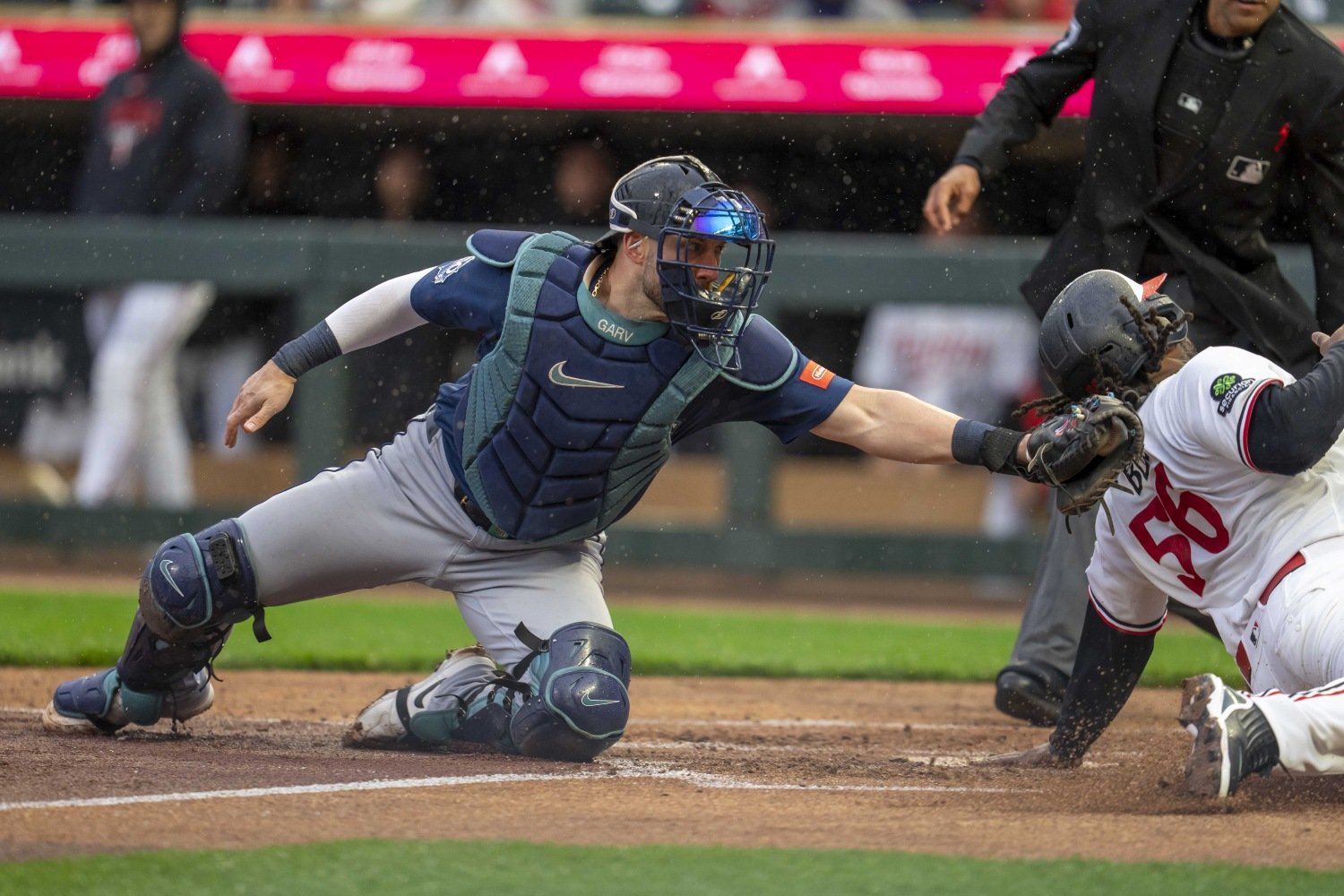 Derek Shelton knows what he has, and how badly it's needed. Ramon Borrego is very much a valued part of the new skipper's staff. "He's been terrific for us," Shelton said during a pregame media availability early in the team's last homestand. "I think he's had four or five elite sends, already." Because the Twins offense is neither especially deep nor especially powerful, Shelton has been adamant from Day One that the team needs to be aggressive on the bases. They're not loaded with exceptionally fast runners, but they want to push the envelope whenever possible—to create runs on hits and long outs, without waiting for another positive event. Shelton has called multiple runs the team has tallied "elite sends" by Borrego. That's a strange notion, in a way. After all, players have to actually create the runs, with a blend of sheer speed, anticipation, fundamental play and physical creativity on close plays. There's no question that the third-base coach plays an important role, but the replacement level for the job is pretty high, right? And most stop/go decisions are pretty easy, right? I watched 75 plays on which the Twins scored to see just how often Borrego really influenced the play, and to what extent. It's time we get a firm handle on what an elite send is. To begin with, I culled the initial plays I reviewed (including a few non-scoring plays, it was over 80) down to 18 that we'll call 55-grade sends or better. As a refresher, the scouting scale that is one of baseball's essential shorthands runs from 20 to 80, with 50 denoting average. In theory, the scale is meant to track with a normal distribution of skills, so a player whose ability is one standard deviation above the average would get a 60 grade. A player with a skill a full standard deviation below average would be a 40. That part is simple enough. Slightly less intuitive or familiar, perhaps, is the mathematical implication of those numbers in terms of frequency. In a normal distribution, about 68% of the population should fall within one standard deviation of the average. About 95% should fall within two standard deviations. Therefore, only about 17% of a given sample should be better than a 60 on the scouting scale. Let's call it 20%, since the nature of that scale is to cluster people into grade buckets but the nature of a curve is continuous. I picked out just 18 sends that are even above-average, and of those, I graded seven as 55s. In other words, only about 15% of the plays I studied reached a 60 grade. Already, that's some evidence that a third-base coach might not have the same capacity to impact a play as players do (again: duh). However, I did give Borrego a 70 on five different plays—and one 80. Let's study those plays, to discuss what makes them elite and how it's possible that Borrego has had such a big impact already. April 2: Twins at Royals - Josh Bell Scores on Sacrifice Fly R0JyM2pfVjBZQUhRPT1fQmdZQ1VGd0NVUVlBV3dOUlh3QUhWQU5UQUZoVFVnSUFCRkJUQndRTlZGWUJCd0ZW.mp4 One thing should be clear to even a casual fan entering this discussion: It's hard for a third-base coach to have a major impact on a sacrifice fly. They get to advise the runner on whether to go or not, but there's usually a good bit of time to make that choice. The runner starts from a stationary position and can watch the ball and the defender while they wait to break, just as the coach can. I'm the first person I know of who has set themselves the task of grading third-base coach sends like this, but I would venture to guess that there's never been an 80-grade send on a sacrifice fly. Your job just isn't all that important on such a play. Here, however, Borrego does coach Josh Bell very well. Before the play, he probably reminded Bell of the situation: With one out in the inning already, the default aggressiveness on a sacrifice fly should have been set pretty high. As the ball sailed toward Royals center fielder Kyle Isbel, however, Borrego had to weigh a few factors that pushed against one another. The situation says send a runner if you're unsure, but Bell is extremely slow. Isbel has a strong arm, and had time to get behind the ball and catch it with a bit of momentum toward the plate. Borrego needed to use one of the third-base coach's key tools: a keen acuity for the depth of the ball. This one ended up almost 290 feet from home plate, and with Isbel throwing it in from dead center, there was a risk of hitting the mound and creating a bad bounce if he tried to throw a low, hard, one-hop strike. You can see Borrego signal to Bell to go, immediately, but he also runs with him for a few steps, reading Isbel's throw. If it had been especially good, Borrego had a split-second to recall Bell to his base. Instead, he correctly sees that the throw won't get even his slow-footed charge, and lets him go. It's a great play on a tricky one to call. GRADE: 65/70 April 3: Rays at Twins - James Outman Scores from Second Base on Single MDRYbDNfWGw0TUFRPT1fQUZSV1ZsWldCMU1BRGdkUUF3QUhBMU5XQUZrQkFGQUFDd01DVXdvQkJBcFNBQVJm.mp4 This is the kind of play on which a coach can more often have a visible and significant effect. With only one out, James Outman has to freeze for a moment on a ball in the air, and in this instance, he doesn't get a great start once he starts heading for third base. The ball is hit very hard, which means it gets to the defender quickly. On such plays, the third-base coach is the runner's eyes, and he has to read the defender for the runner. In this case, Cedric Mullins had to range slightly to his left, and with the ball hit so hard, that forced him to wait for it to come to him. Charging hard to pick the ball on a short hop would have required too tough an angle to risk. That was exacerbated by the way the ball slices slightly back toward dead center, so Mullins has to change direction a bit to get behind the ball as it arrives. He receives it before Outman reaches third base, but fairly flat-footed and fairly deep. That gives Borrego the leeway to send the speedy Outman. This was an important run, and with just one out, Borrego could plausibly have taken a more conservative tack. With two trailing runners, though, there would have been a force on the runner if he'd stayed at third, so getting him home there—avoiding the risk of an inning-ending double play or a fielder's choice that retired him at the plate from the next batter—was important. Borrego gave Outman the 'go' order right away, and it paid off. GRADE: 70 April 7: Tigers at Twins - Luke Keaschall Scores from First Base on Double eHl3T0RfWGw0TUFRPT1fVUFsV1hGWUVWQWNBV3dSWFVnQUhDQUZRQUZrTVUxWUFWd1pRQVZWUlVGVUFCQVFI (1).mp4 Now we're really going to have some fun. For a third-base coach, this is as big a play as the day-to-day grind of the season offers. Yet, almost half of it is a brainless endeavor, really. Ryan Jeffers shoots the ball into right field, and right away, Borrego knows he needs to wind up the windmill for one runner. But there are two runners in his care on this one, and the trailing runner will be the one where something of note actually happens. He has to make sure his lead runner is headed home without incident, but more importantly, he has to start working out all the relevant components of the play—picking up key details in the right sequences, while seeing the big picture the whole time. Luke Keaschall was on first base, trailing Austin Martin. He had a good secondary lead, and because the ball is hit behind him in a place far from any defender, he immediately knows it will get down and that he can take at least third base. Borrego's attention has to be on Martin for just a moment, but he can spare that, because the ball is clearly heading for the corner. Whether Keaschall will be able to score, though, depends in some measure on how things go in that corner, so that's where Borrego's eyes need to be. He can check the progress of his runner as Zach McKinstry chops down his stride while drawing near the wall, but he has to see how cleanly McKinstry fields the ball and whether he battles the sidewall at all. That will determine how quickly he gets off a throw, and how strong it is, which will determine whether or not there's a play at the plate. It's time to break out a toy that has lots of fun potential future applications for enjoying and understanding the game, but relatively few salient ones right now: Gameday 3D. On the MLB.com Gameday page for any given game, you can click on a play and choose to experience it in a 3D animation. Again, this doesn't often add much, in a world where we have access to multiple video feeds of every play and a remarkable number of numbers telling us what happened, but it can occasionally help us see parts of the field that aren't picked up by the broadcasts. It can also give us an interesting perspective on the game—like that of a third-base coach watching a tricky play developing. Here's the moment when McKinstry first reaches that ball. We can see Borrego waving Martin home, but look how far off Keaschall is. He's only halfway between second and third. Though McKinstry began the play pretty far from the line, he's covered the ground quickly, and it's not a very deep corner. Sending Keaschall here would be tough, if McKinstry were in position to make a strong throw the instant he got there. Borrego knows something this still frame can't convey, though: McKinstry is going to need an extra second to get rid of the ball. As you might be able to see (it's a jumble out there), the animation ends up placing three of McKinstry in that corner, because he has to move in ways the tracking technology doesn't deal with well, vis-a-vis the sidewall. He doesn't slam into it or anything, and he doesn't bobble the pickup. But he has to brace himself, and then he has to turn around to make a good throw. A left-handed right fielder would have had an advantage here that was denied to McKinstry, but Borrego doesn't have to think in hypotheticals. He knows that extra half-second will be needed. While watching and processing this, of course, he's waving his young runner on. Being a third-base coach, like hitting, requires a "Yes, yes, NO" mentality. You have to think you're sending the runner until you see something that stops you, and your runner has to think the same way. Borrego's real decision point, on this particular play, comes here: This is the moment McKinstry actually releases his throw down the line. Closer to us, you can see Gleyber Torres streaking over to take the relay position. Until now, Borrego has the chance to throw up a late stop sign. Because he knows Keaschall is a fast and aggressive runner coming in with that score-if-you-can mentality, though, he keeps waving him on. The Tigers' relay is virtually perfect. McKinstry has a strong arm; so does Torres. Both throws are very accurate. There's even an extra, tiny thing working against the Twins: Keaschall got his feet wrong going into third base and had to slow down slightly as he rounded it. But it doesn't quite matter. Keaschall is safe, and Borrego was right to bring him around, despite the defense's good execution. GRADE: 65/70 April 14: Red Sox at Twins - Byron Buxton Scores from First Base on Single Uk85OGFfWGw0TUFRPT1fVWxOVUFGQlNVUVFBWFZRTEF3QUhWUVJmQUFNSFd3Y0FVQVJYQkZBR1Z3ZGNWVkJl.mp4 Earlier in this same game, as you might remember, Byron Buxton scored on a single to center by Keaschall. That one was initially ruled an out and looks even more daring in the scorebook than this does, but if you break it down, you have to deduct points from Borrego for overaggressiveness. It was a line drive to center, played perfectly by Jarren Duran, and had Willson Contreras not leapt to ill-advisedly cut off the throw, Buxton really would have been dead meat at the plate. We're evaluating Borrego's process here, not just the results, so that play doesn't count as an elite send. This one, perhaps counterintuitively, does. There were no outs in the inning, and the Twins already led by four. They could afford to be a bit more conservative than they had been earlier in the game. Buxton was the trail runner when Trevor Larnach laced a ball into the corner, and though it was a full count, neither Buxton nor Tristan Gray had been attempting a steal on the play. On most balls that are barely doubles, even a fast runner won't score from first base, especially with another runner in front of them. But Borrego knew a few things. Firstly, he knew Gray would score easily, so he waved him by quickly and turned his attention to Buxton, and to right fielder Wilyer Abreu. He knew Abreu has a strong arm, but he also knew it was Buxton running, so again, he kept the wave up while he gathered data on the unfolding play. Larnach, no matter what the Twins' team-owned media sometimes says, is slow, and as Abreu raced into the corner, Borrego could see that there would be a very makeable play on Larnach if Abreu chose it. Abreu, like McKinstry, was quick to the ball, but unlike McKinstry, he does throw left-handed and would be able to get off a throw quite quickly. His second baseman was out in the same position Gleyber Torres had occupied, and was calling for the throw. Here's the moment at which Abreu committed himself to throw to second, instead of toward home. You can do the math several different ways, but that was probably the right choice for Abreu—made for the wrong reasons. He correctly diagnosed that he had a much better chance to get an out at second than at home, but that's because he was seeing and thinking about Gray. The lead runner still wasn't home, so as Abreu released a strong throw to the infield, he wasn't considering whether the trail runner would come, too. He wanted the out, and took for granted that Buxton would stop at third. If Borrego or Buxton had taken anything for granted at any point in the play, that would have been true. Look where Buxton is when Abreu pulls back his arm for the throw. As good as Abreu's arm is, if the throw were coming toward the plate, Borrego would have had to throw up the stop sign. In fact, if he'd even misread the play slightly and thought Abreu would come home, he might have thrown up a premature stop, and had he done that, Buxton wouldn't have been able to get going again and come home even after the throw went to the keystone. Buxton is always running flat-out and with home plate in his sights, though, and Borrego read the play right. He knew almost before Abreu did that the throw would come to second, and once it did, Buxton was in the clear. This was a case of feeling the rhythm of the play, knowing the spatial variables and the numbers, but also of guessing what the opponent would do in a stressful situation and seizing on an advantage. It's an instance of combined brilliance by Buxton and Borrego. GRADE: 70 April 21: Twins at Mets - Kody Clemens Scores from Second Base on Single bGJ3a0JfVjBZQUhRPT1fQmdWWlVRRURCUW9BVzFCV0J3QUhDVkpXQUFNQ1dsa0FCVlVHVkFWVFVBRURDVllG.mp4 One difference between being a player and being a coach on the field is that, while a player can benefit from good preparation, a coach can sometimes make a play entirely based on that preparation, with almost nothing else coming into play. This is one such instance, or close to it. Luke Keaschall hits the ball well, right over the head of Kody Clemens at second base. That's always nice, as a runner. Clemens knew this ball was going to get down right away, based on his pre-pitch check of where the outfielders were playing and on the trajectory of Keaschall's liner. Thus, even with one out, Clemens gets the kind of jump runners often get with two down. Borrego knew where the outfielders were before the play, too. Luis Robert Jr. had shaded Keaschall fairly strongly toward right-center, which meant this ball was going to force him to come in and over quite a bit. Borrego's angle on the play was far from ideal, because the slice we can see from the camera position high and behind home is tougher to notice from the side. That's what made this play a challenging one for Borrego. He had to read Robert's body and see the way he changed his initial route toward the ball; he had to know that that meant a little extra time getting under control and getting rid of the ball. It got to Robert more quickly because of its slice, but Borrego correctly perceived that it forced the outfielder into a slightly uncomfortable position. The rest of the play was just balancing situation with scouting report. Yes, with just one out, there would still be a chance to score Clemens from third without a hit, but the bottom of the batting order was due next. The best chance to score was to get Clemens home then and there. Clemens is good at getting around third base cleanly and taking a direct route to the plate without losing steam. Robert has average-plus arm strength, but it was pretty clear that he wasn't playing at full strength. The Twins probably had that in their advance report for the series, but either way, Borrego acted on what he saw. A good throw would have had a good chance to get Clemens, but a good throw would have been difficult for most center fielders on that play, and it proved impossible for Robert. This is what it looks like when a third-base coach smells blood and goes for the kill. GRADE: 80 April 27: Mariners at Twins - Josh Bell Scores from First Base on Double MnI0cWRfWGw0TUFRPT1fQVZVRVVWRlZYd0FBWGxwVFh3QUhWd01DQUFCUlVsUUFVUUVFQmdVTlYxZFZWbEZm.mp4 Once more, we return to the theme: you have to be "Yes, Yes, No" as a third-base coach. When Keaschall hit a ball down the line, Borrego's job is to see the ways he can get Josh Bell home. In the back of his mind, he has to know that the default decision will be to hold him, because it's Josh Bell, but if the window is open to score him, that has to happen. With two outs, it's especially crucial. With any ball down the line—and this is the third one we've seen—the first thing the third-base coach has to figure out is how close to the sidewall the ball will get and stay. With the play on which Keaschall scored against the Tigers, it was the way Zach McKinstry had to adjust to get a throw off that allowed Borrego to send his man. If the ball kicks off the wall and out into the playing field, instead of going to the corner, that often makes it easier for the defenses and forces a stop sign—but not always. In this case, that's very much the pivotal movement. because the ball pulls one of its most treacherous tricks on Rob Refsnyder. Keaschall didn't exactly blister it, and it's already rolling by the time it finds the sidewall, but because there's a small space between the ground and the padding along that wall, when the ball does get to the wall, it hits concrete. It's still moving faster than a fielder is thinking, given that the bounce has died, and it's still spinning in a slightly funky way. It hits the wall (and the rougher dirt under that padding), and it skips slightly. It barely comes off the ground at all, but that's enough to mess up Refsnyder, whose focus had been on getting parallel to the wall for what he thought would be an uncomplicated scoop. He doesn't get low enough—it's been over half a decade since he appeared as an infielder; this ball would be better for a player who still has that instinct to get down to the ball's level—and his barehand stab pushes the ball slightly behind him. That's Borrego's opening. He had set up and begun giving Bell the wave early. When Refsnyder misplayed the ball, the "no" after the "yes, yes" was flung away. Borrego knew the situation and saw the play develop in time to ensure that his runner never slowed down. It took a review to get it right, but the Twins got their run. GRADE: 70 I'll renew what I said before breaking down each play individually: Third-base coaches affect fewer plays in major ways than is implied by using the 20-80 scale. The decisions one coach would make aren't different enough from those of another coach to merit using that wide a scale. Maybe 30-70 makes more sense for them. However, going through these this way is still instructive. A third-base coach has to be thinking along with both their own team and the opponent, including riding the emotional wave of a play. Borrego stole another run in Toronto, for instance, when he correctly guessed that a bloop single followed by a high bounce fielded with his back to home plate would leave Daulton Varsho too flustered to throw to the right base. Varsho threw to second, and an extremely aggressive send paid off for the Twins. The coach has to be in the moment that way. They also have to have their spatial calculation machines turned on at all times. This is where being a baseball lifer is hugely valuable, and it's why you'll probably never see this particular job done by someone who hasn't played the game at a high level. Reading the ball off the bat, checking and remembering defensive positioning, and the simple pattern recognition that lets one estimate distances and read a runner's stride when they're still six steps away from third base all come from having spent a long time immersed in the game and its clock. Layered over all of that, though, the coach also has to be an analytics maven. They have to think about who's running, which defenders are involved in the developing play, and the score, inning, and base-out state. They have to have carefully calibrated, deeply internalized risk management systems on which they can dial aggressiveness up or down based on all those variables that get discussed as cold theories in pregame meetings and show up on reports. But all of those things are just filters. The coach still has to see the play clearly and make their send/hold decision based on how the actual play before them looks and feels. The Twins ran into two bad outs between third base and home plate on Thursday in Washington. Neither was Borrego's fault, exactly, but his aggressive approach does seem to have started creating situations wherein runners are in peril. By Shelton's reckoning, that's ok. The Twins are getting more value from those elite sends than they're losing when one goes wrong. They intend to keep testing defenses, because they probably can't score enough runs to win games consistently without doing so. Borrego will be little celebrated for his role in that, and much maligned when things go wrong—but he's an important part of the team's offense, and he's been a positive influence so far.
- 13 comments
-
- 7
-
-

-
- ramon borrego
- luke keaschall
- (and 2 more)
-
Joe Ryan's MRI Sunday came back clean, a Twins source confirmed to Twins Daily Tuesday. As first reported by Dan Hayes of The Athletic, Ryan played catch Tuesday and will throw a bullpen session Wednesday, after which the team will evaluate when he might make his next start. Ryan left his last start Sunday after just two batters faced, with what the team called "elbow soreness". His scan revealed no damage to his UCL, but until he gets back onto a mound and pitches pain-free, the next steps in getting him back into the starting rotation will not become clear. Wednesday is the last day on which the team can make an injured list stint retroactive to Sunday, so the bullpen session will be important. If it goes well (and Ryan recovers from it well), the team might choose to skate by without placing him on the injured list. If, however, there's any lingering discomfort, a stint on the IL is likely. View full rumor
-
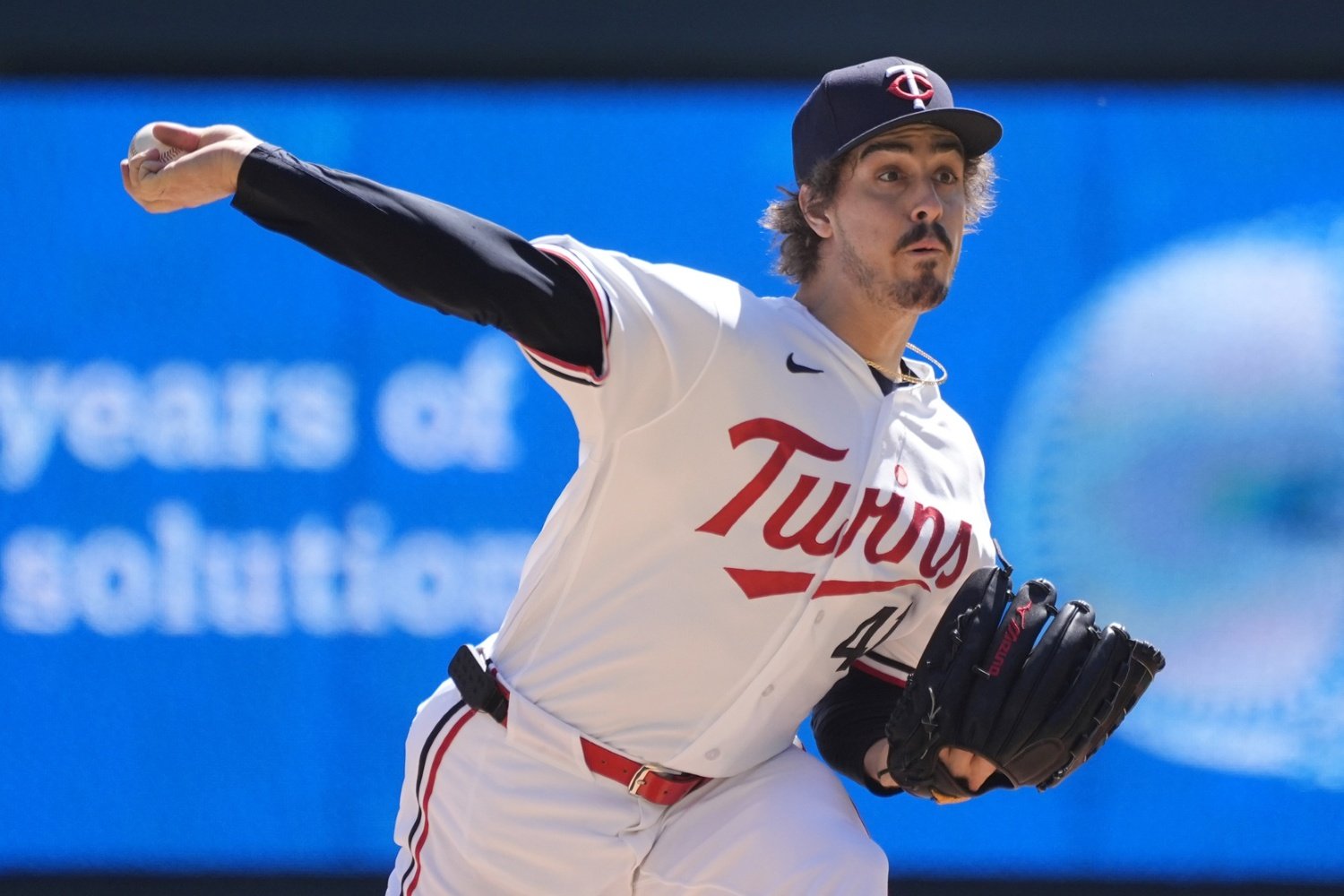 Joe Ryan's MRI Sunday came back clean, a Twins source confirmed to Twins Daily Tuesday. As first reported by Dan Hayes of The Athletic, Ryan played catch Tuesday and will throw a bullpen session Wednesday, after which the team will evaluate when he might make his next start. Ryan left his last start Sunday after just two batters faced, with what the team called "elbow soreness". His scan revealed no damage to his UCL, but until he gets back onto a mound and pitches pain-free, the next steps in getting him back into the starting rotation will not become clear. Wednesday is the last day on which the team can make an injured list stint retroactive to Sunday, so the bullpen session will be important. If it goes well (and Ryan recovers from it well), the team might choose to skate by without placing him on the injured list. If, however, there's any lingering discomfort, a stint on the IL is likely.
 -
 To be fair to Matt Wallner, the Twins have seen a crazy number of left-handed pitchers so far this year. Of the 109 plate appearances Wallner has accumulated over the team's first 31 games, a whopping 40 have come against southpaws. In 2024 (admittedly, an injury-disrupted year), Wallner only had 40 confrontations with fellow lefties all season. There's no question that being the lefty batter tasked with absorbing more of those left-on-left matchups than other Twins batters has contributed to Wallner's slow start. He also got hit in the ribcage with a mid-90s fastball two weeks ago, and can be seen most days since in the clubhouse with a huge wrap around his torso, suggesting there's considerable residual soreness there. All of that matters. It's not a set of excuses; it's a set of legitimate explanations for some of what's happening. The problem, of course, is that what's happening is untenable, no matter what's causing it. It's also getting hard to convince yourself that it will ever change. Wallner will turn 29 years old this winter. Though they haven't come without major interruptions, he has over 1,000 plate appearances in the majors. Right now, he doesn't look like a big league-caliber player—in either half of any given inning. Wallner is batting .168/.275/.284 this season, and striking out 38% of the time. He's lost speed this year and was never good at getting going, anyway, so he's become the worst defensive outfielder in the big leagues, with no serious rival. Last year, I wrote about Wallner's bat path flattening out, and the negative effects thereof. This season, it's flattened out even more. He's also lost some bat speed, though surely, part of that is due to both seeing more lefties (harder to swing with full conviction when you pick the ball up later) and the lingering issues from that plunking. He's just not a functional hitter right now, either. Defenders of Wallner are fond of observing that hitters with high strikeout rates can look disproportionately bad during cold spells, and that he's gotten equally hot at times in the past. That's true, to some extent, but it's not as helpful if you try to apply it broadly to all strikeout-prone hitters as if you analyze each player as an individual. Nor does it remain equally true over time. Wallner's swing is losing its ability to generate consistently lethal contact, even when he gets on time. His approach and pitch recognition have never been all that good, which has been proved for all to see since the advent of the ABS system. And again, he's almost 29. Players age faster than ever in the modern game, and Wallner is already moving out of his prime, physically. It's probably true that, given another 100 plate appearances, he would get on a streak and deliver enough power to invite the team to invest another 200 plate appearances in him. Now that the defense has gone terribly sour (and having seen that there's always another low valley after the next peak), though, that feels more like a threat than a promise: more wasted time, rather than a long-awaited breakthrough. As tantalizing as a homegrown, local product with light-tower power is, the allure is fading, for everyone involved. Even Derek Shelton, who tried to show abundant faith in Wallner by making him an everyday player to begin the season, is moving away from that plan now. Emmanuel Rodriguez is showing the same elite power potential Wallner once had, with Triple-A St. Paul. He's more disciplined than Wallner, and much, much more athletic. The Twins need better defense in the outfield, and they need a lefty slugger with more upside than Wallner offers at this point in his career. Rodriguez offers it. It's going to be awkward. It's going to be sad. Wallner has a minor-league option remaining, but once you admit that he can't hit in the big leagues after this long at that level and that you can no longer justify playing him, it's tough to think of any demotion as temporary or edifying. It's getting clearer all the time that Wallner (rather than Trevor Larnach or Austin Martin) will be the first player replaced by a top prospect arriving at Target Field, and the time for that replacement is extremely close. In all likelihood, we're seeing the final days of Matt Wallner's Twins career. That's exciting, because he'll give way to a player with every chance to be better than him right away and much more long-term upside. It's also an uneasy situation, though, and a sad ending for a player who was a key cog on one of the teams Twins fans will remember fondly: the 2023 streak-busters. He was great for that team. He's just not helping this one anymore.
 -
Image courtesy of © Jesse Johnson-Imagn Images To be fair to Matt Wallner, the Twins have seen a crazy number of left-handed pitchers so far this year. Of the 109 plate appearances Wallner has accumulated over the team's first 31 games, a whopping 40 have come against southpaws. In 2024 (admittedly, an injury-disrupted year), Wallner only had 40 confrontations with fellow lefties all season. There's no question that being the lefty batter tasked with absorbing more of those left-on-left matchups than other Twins batters has contributed to Wallner's slow start. He also got hit in the ribcage with a mid-90s fastball two weeks ago, and can be seen most days since in the clubhouse with a huge wrap around his torso, suggesting there's considerable residual soreness there. All of that matters. It's not a set of excuses; it's a set of legitimate explanations for some of what's happening. The problem, of course, is that what's happening is untenable, no matter what's causing it. It's also getting hard to convince yourself that it will ever change. Wallner will turn 29 years old this winter. Though they haven't come without major interruptions, he has over 1,000 plate appearances in the majors. Right now, he doesn't look like a big league-caliber player—in either half of any given inning. Wallner is batting .168/.275/.284 this season, and striking out 38% of the time. He's lost speed this year and was never good at getting going, anyway, so he's become the worst defensive outfielder in the big leagues, with no serious rival. Last year, I wrote about Wallner's bat path flattening out, and the negative effects thereof. This season, it's flattened out even more. He's also lost some bat speed, though surely, part of that is due to both seeing more lefties (harder to swing with full conviction when you pick the ball up later) and the lingering issues from that plunking. He's just not a functional hitter right now, either. Defenders of Wallner are fond of observing that hitters with high strikeout rates can look disproportionately bad during cold spells, and that he's gotten equally hot at times in the past. That's true, to some extent, but it's not as helpful if you try to apply it broadly to all strikeout-prone hitters as if you analyze each player as an individual. Nor does it remain equally true over time. Wallner's swing is losing its ability to generate consistently lethal contact, even when he gets on time. His approach and pitch recognition have never been all that good, which has been proved for all to see since the advent of the ABS system. And again, he's almost 29. Players age faster than ever in the modern game, and Wallner is already moving out of his prime, physically. It's probably true that, given another 100 plate appearances, he would get on a streak and deliver enough power to invite the team to invest another 200 plate appearances in him. Now that the defense has gone terribly sour (and having seen that there's always another low valley after the next peak), though, that feels more like a threat than a promise: more wasted time, rather than a long-awaited breakthrough. As tantalizing as a homegrown, local product with light-tower power is, the allure is fading, for everyone involved. Even Derek Shelton, who tried to show abundant faith in Wallner by making him an everyday player to begin the season, is moving away from that plan now. Emmanuel Rodriguez is showing the same elite power potential Wallner once had, with Triple-A St. Paul. He's more disciplined than Wallner, and much, much more athletic. The Twins need better defense in the outfield, and they need a lefty slugger with more upside than Wallner offers at this point in his career. Rodriguez offers it. It's going to be awkward. It's going to be sad. Wallner has a minor-league option remaining, but once you admit that he can't hit in the big leagues after this long at that level and that you can no longer justify playing him, it's tough to think of any demotion as temporary or edifying. It's getting clearer all the time that Wallner (rather than Trevor Larnach or Austin Martin) will be the first player replaced by a top prospect arriving at Target Field, and the time for that replacement is extremely close. In all likelihood, we're seeing the final days of Matt Wallner's Twins career. That's exciting, because he'll give way to a player with every chance to be better than him right away and much more long-term upside. It's also an uneasy situation, though, and a sad ending for a player who was a key cog on one of the teams Twins fans will remember fondly: the 2023 streak-busters. He was great for that team. He's just not helping this one anymore. View full article
-
Image courtesy of © Jesse Johnson-Imagn Images It's not always a well-received observation. When the fact that Byron Buxton's defensive metrics have gotten steadily worse over the years—indeed, that he's now roughly an average center fielder, and maybe not even that—came up on the Twins TV broadcast on Opening Day, Cory Provus, Glen Perkins and Justin Morneau practically rolled their eyes out loud. For many people who watch Buxton play every day, it's nigh unfathomable that he's no longer an elite defender. The very notion does more to dent their confidence in the endeavor of quantifying defensive performance than to diminish their faith in Buxton. I think some of that is simple allegiance, and an unwillingness to see what's really going on. Some of it, too, lies in the fact that even at his best, Buxton was not the same kind of great center fielder as (say) Pete Crow-Armstrong or Kevin Kiermaier. Those two are exemplars of a version of center field defense that relies on an extraordinarily good first step and read of the baseball. Crow-Armstrong sometimes makes near-miraculous catches, but they don't look like the ones Buxton made at his peak. They tend to look a lot like this one. NHlLcTZfWGw0TUFRPT1fVlFGV0JRVlhBd01BQUZKV1ZnQUhCUUpTQUFNQ1ZBQUFBVlVBQ0FkVUExQlJDRlFF.mp4 That line drive was only in the air for 3.5 seconds. Getting to it required anticipation, exceptionally quick acceleration, and the ability to keep moving fast all the way through the point where his arrow-straight route intercepted the ball. At his very best, Buxton sometimes made that kind of play, but his highlights have always tended to look more like this. QlhSTzlfWGw0TUFRPT1fVWdFQUFBSU5WRmNBQ1ZzTFZRQUFWd1JVQUFNRFZWUUFCMTBOQXdJSEF3Y0dVUWRW.mp4 This play is from June 30, 2019, when Buxton was 25 years old. He played, back then, like a man furious at any barrier that might dare impede him. He had the speed and the strength and the skills to make plays like this one; it seemed arbitrary and capricious to erect walls and permit hamstring strains. He played defense like a man fighting for his very way of life, because he sort of was. Buxton's ethos, back then, was that you have to be willing to run through a wall to earn your place on a big-league field. Being unable to do that is one thing; being unwilling to is another. It wasn't all that uncommon to see Buxton take on a wall at full speed. He did it a few times a year. Here's an especially bone-crunching instance, from 2017. Vk0wWHZfWGw0TUFRPT1fQkFCWFUxY0hWQVVBWEZvRlhnQUFBZ05VQUFOVFdsVUFBMU1GVVZCUkJ3c0FDQUlD.mp4 It didn't always end that happily, of course. Here's another ball Buxton chased fearlessly into a fence in 2017, but in vain. eDkxWktfWGw0TUFRPT1fVWdRQ0FWTUVVUUlBQ0FZTEJ3QUFCQUZTQUFBTlV3VUFWd1lBQmdBTkFsSldDVkVE.mp4 As we all know, collisions like that one also contributed to Buxton's major injury issues throughout those early years of his career. Yet, he kept doing it. As late as 2022, he would still tear across the ground like the Road Runner, leaving clouds of dust and throwing himself into walls when needed. dnpBRFdfWGw0TUFRPT1fVXdCWVhBY0JCRmNBV1ZGUUF3QUFBQVVGQUZsWFVBSUFCd2RUQVFOUlV3dFFWZ2NI (1).mp4 Since a nagging knee injury forced him to spend all of 2023 as a designated hitter, though, that version of Buxton has been gone. Since the start of 2024, Buxton has only caught one (1) of the 40 batted balls on which Statcast estimated the catch probability between 0% and 25%. Here's that one catch, from last May. ZU44NmJfWGw0TUFRPT1fQTFOWFZsWUZWRmNBQVZkUkJ3QUhCZ01FQUFNTldnTUFWRlFFQkFvRUIxSlZBQU5W.mp4 That's in the spirit of his old specialties, but it came with a bit less risk—and, again, it was in the air forever. It rated so well because Buxton ran nearly 120 feet to intercept it, rather than because he was extraordinarily quick in breaking for it or showed superhuman acceleration. Buxton has, in fact, never gotten especially good jumps, by Statcast's measurement. Even in 2017, at the peak of his elite athleticism and in what remained the most complete season of his career for a long time, he covered 0.4 feet less than an average center fielder in the first 1.5 seconds after contact. That's a difference so small as to be nearly meaningless, so we can call him average, but bsck then, that was the only average thing about Buxton's defensive game, so it's notable, anyway. He had the speed, explosiveness and acceleration ability to cover a foot or two more than a typical cetner fielder, even in such a short amount of time. He didn't do it, though. Instead, strategically, Buxton has always been a read-and-react fielder. Knowing that he has some of the best pure speed in the game, he prefers to wait a hair longer before embarking on his pursuit of the ball than most fielders would. He only graded out as essentially average, at his peak, because he made up for that partial beat of assessment within that teeny window. That's how quick and long his strides were. That's no longer true, though. Buxton can still get up to nearly an elite spring speed, but it takes longer than it used to. Both his knee and his hip have taken enough damage over the years that he now gets underway a bit more slowly, and turns a bit less easily. Last season, Buxton lost 1.6 feet relative to an average center fielder in that first 1.5 seconds of a ball's flight. This year, it's 1.9 feet. He's become one of the slowest center fielders in baseball off the metaphorical block. In fact, only two outfielders have lost more ground in that crucial first instant: Phillies rookie Justin Crawford, and Buxton's teammate, Twins right fielder Matt Wallner. Crucially, this doesn't mean Buxton is actually a bad center fielder. Part of his defensive decline is a conscious choice. He's been less daring, but another way to say that is, he's been less reckless. He's still presented with the occasional opportunity to plow into the wall; he still has the speed and the sense of how to adjust his body to secure a catch like that if he needs to. He just doesn't do it. bmJsMTlfWGw0TUFRPT1fQVZJRVUxd0hBRkFBREZjRVZ3QUhCMUpXQUZoVUFnTUFVQUJUQkZZRkExWmNBUVFG.mp4 That was a relatively important play in the game, back on the first weekend of the season. The Orioles already led, but catching that ball would have significantly reduced the likelihood of an extra insurance run scoring in the frame. Buston pulled up near the wall, though, choosing to position himself to play the ricochet. He's done this several times over the last two-plus seasons, and make no mistake: it's a matter of self-preservation. However, that doesn't mean it's selfish. Buxton has recognized that he's more valuable to the team on the field than on the injured list, and he's adjusting his risk management accordingly when he gets close to the wall. Here's another instance of the same calculation at work. He used to hurl himself into the wall on such plays; those days are gone. WU9rdzlfWGw0TUFRPT1fQmxBSFVnQUdWbEVBWGxFSFVBQUhBRlJmQUZnQVcxSUFCd01GQjFBRENBZFhCVkVI.mp4 Some of Buxton's lost value as a fly chaser, then, is a result of a conscious choice that helps the team in one way, even as it costs them in another. That makes it easy to forgive those non-catches. Even if you're predisposed to demand that a player leave it all on the field, we spent a solid half-decade watching Buxton actually break himself on the ground and against the fenses, and at a certain point, he's earned the right to stop doing so—especially because the team needs him on the field, and he can be on the field more often if he eschews those headlong collisions. What's left is to understand what makes Buxton good, in some ways, even at this relatively late stage of his career—and, in the same moment, to grapple with the real ways in which he's now much less than an elite defender. No one in baseball is better than Buxton at catching everything within the range he can reach. He's been above-average in getting to balls with a Catch Probability of 90% or lower in every season of his career, save 2025, in which he was exactly average. Meanwhile, he hasn't failed to come up with a ball that had a catch probability over 90% in almost exactly NINE YEARS, since getting turned around on this ball on May 4, 2017. ZHpiR0tfWGw0TUFRPT1fRGdCVFVnRU5VMU1BQVFCUUF3QUFWRkJYQUZnR0J3VUFVVndHVkZFQVZ3QlFBbEJU.mp4 However, there are balls elite defenders can get to in center that Buxton simply doesn't. Often, they look utterly innocuous. Even the seasoned eyes of ex-players in the broadcast booth don't see them as opportunities, because they (depending on the nature of their experience in the game, or on their relationship with Buxton, or some of each) forgive the slightly late breaks he gets toward the ball, and don't see that if he'd gotten a better one, he could have turned what looks like an inevitable single into a spectacular out. Here, for instance, is a standard-issue hit to center from last April. It looks like nothign could possibly have been done. M3k0b3ZfWGw0TUFRPT1fVWdSVUJ3VURVbFlBQ1ZSV1VRQUhWRmRmQUZnQldsQUFCd2NBVlFZQkNBZFFVUVZX.mp4 However, that play was essentially identical—in terms of the hang time on the ball and the distance Buxton needed to cover, and even in terms of the angle he would have had to diagnose and take—to this play by Crow-Armstrong over the weekend. WnhxWkRfV0ZRVkV3dEdEUT09X0J3TUVCUUlCVTFFQUNGWUJVZ0FIQ0FCV0FGZ0hWMU1BQlZFRkJGQUVCVmRUVmdNRg==.mp4 There are wrinkles Statcast doesn't perfectly account for, like wind and field conditions and whether the ball left the hitter's bat with funky spin or was hit much harder or softer than it looked based on the swing, and they might explain the differences between any two given plays. However, there are lots of examples like there. Here's Buxton not quite flagging down a sinking liner in the gap in Kansas City. WU9rM0RfWGw0TUFRPT1fRGxSVUFRVU5CQXNBV1FaVFhnQUhCZ0FIQUFNQ1cxSUFDZ2RSVVFaVFZRWlNVbEZR.mp4 Here's Kyle Isbel making (as nearly as you'll ever replicate such a thing) the same catch in the same stadium. Both even came off the bat of a left-handed hitter. RDFBMnlfWGw0TUFRPT1fQlZRRlZWTlhCVkFBWGxvRUJBQUhBUVZUQUFNQlZnY0FBMVVHQUZVRlV3ZFNWQWNE.mp4 The difference is the same in almost any pair of examples you can pull for study: Buxton doesn't get the elite jump off the bat that Crow-Armstrong, Isbel, and several other outfielders do. In fact, he's about as slow to break for the ball as anyone in the league. His routes are better; his body control is better; and he's more sure-handed. Those guys are all, however infinitesimally, more likely to botch a routine play or drop a ball even after they flag it down than Buxton is. It turns out, though, that what they do well is more valuable than what Buxton does well, and when their respective strengths and weaknesses are weighed, the game's top center fielders all come out ahead of Buxton. One reason, I think, why this has proved hard to accept is that it practically inverts our instinctive experience of Buxton as a defender. When we think of him in the outfield, we see in our minds the grace and the surety and the intelligence in his eyes, his gait and his glove. We see the blazing speed. We think, then, that he must be able to stretch the boundaries of a center fielder's range as well as anyone—that whatever he can't get to was ungettable. But it isn't so. As it turns out, Buxton—the guy who got famous by plastering himself on walls and flying like Super-Man to spear liners in alleys throughout the league—is an average-plus defender, but he derives all of his fielding value from his incredibly sound fundamentals. He's gone nearly a decade without missing a must-have ball, but it's been almost that long since he consistently demonstrated excellent range. He shores up his area gorgeously, but he doesn't extend it. He doesn't turn near-certain hits into outs; he just never turns near-certain outs into hits. Things might be different if this older, wiser Buxton were a bit less bruised. He might be better at flipping his hips to chase the ball laterally, especially to his right. He might be more willing to run into a wall now and then, and thus take away one or two doubles per year that he's allowed to fall since coming back to the spot in 2024. Because he's doing everything he can to keep his superb bat in the lineup and be there for his teammates more consistently, though, he lets that bit of value leak away, and because he's aging and was never great at off-the-bat reaction, anyway, he can't make up for that value as well as he might like. This revelation (some of which is new to me, too; I sat a long time with numbers and watched dozens upon dozens of clips to get a sense of how the data and reality interacted) does change some things. I've advocated moving Buxton to a corner spot, in the past. Barring the arrival of a player who shows that remarkable knack for stretching the range of the spot, I no longer feel that's necessary, or even prudent. There's much to be said for a generationally sure-handed center fielder who almost never even takes a shaky route. There's also some reason to doubt that a player who does his best work under high-arcing flies hit a long distance from him will be as good if moved to the corners, where the plays that separate good fielders from bad ones are more often sharp liners. It's a joy to watch Buxton in center field. He's no longer elite, or even close to it, but he's an extremely dignified presence in the center of the Twins outfield. At this and all times, dignity counts for something. So do all of those plays between the routine and the spectacular, where Buxton still does great work and finds his own joy in the game. View full article
-
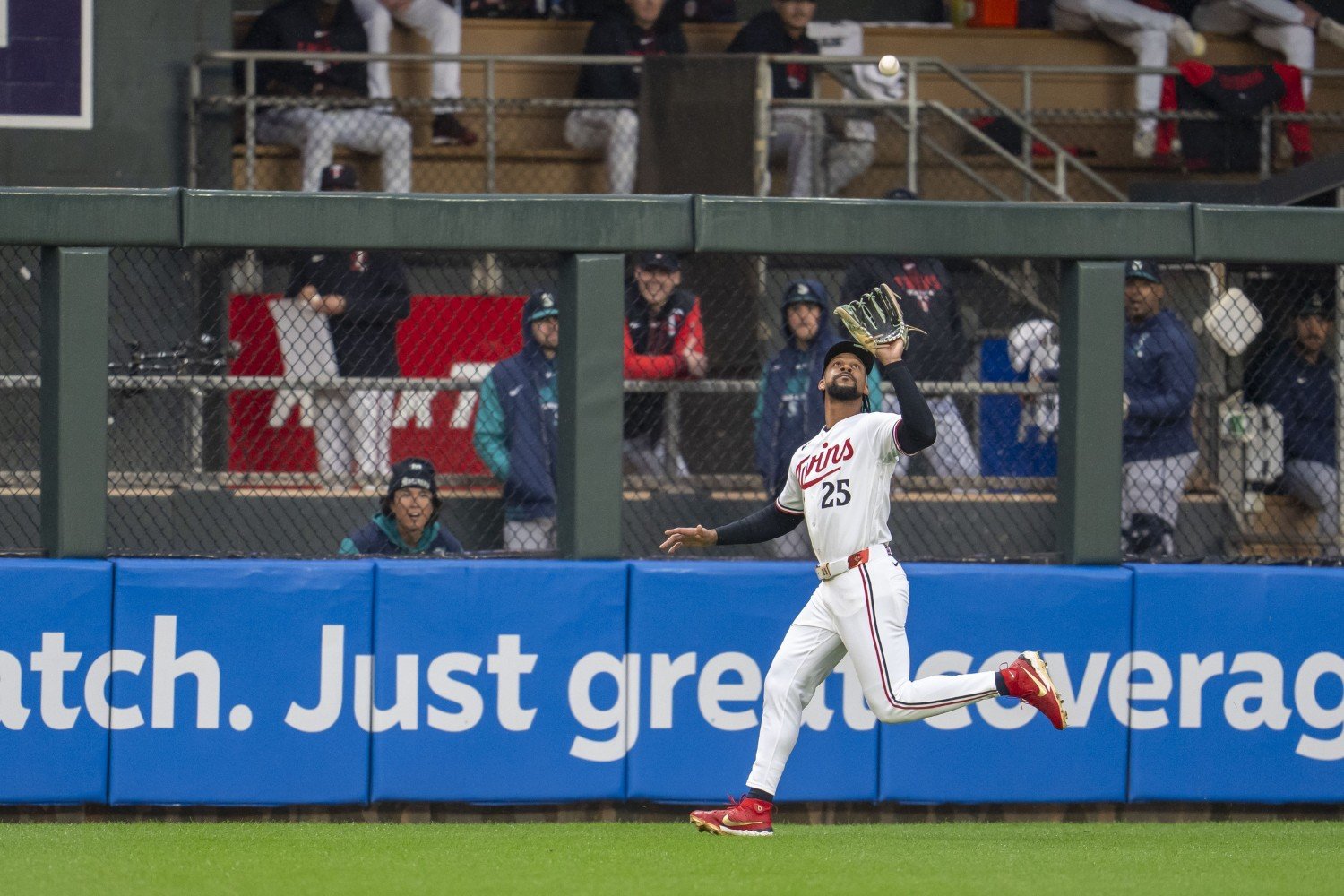 It's not always a well-received observation. When the fact that Byron Buxton's defensive metrics have gotten steadily worse over the years—indeed, that he's now roughly an average center fielder, and maybe not even that—came up on the Twins TV broadcast on Opening Day, Cory Provus, Glen Perkins and Justin Morneau practically rolled their eyes out loud. For many people who watch Buxton play every day, it's nigh unfathomable that he's no longer an elite defender. The very notion does more to dent their confidence in the endeavor of quantifying defensive performance than to diminish their faith in Buxton. I think some of that is simple allegiance, and an unwillingness to see what's really going on. Some of it, too, lies in the fact that even at his best, Buxton was not the same kind of great center fielder as (say) Pete Crow-Armstrong or Kevin Kiermaier. Those two are exemplars of a version of center field defense that relies on an extraordinarily good first step and read of the baseball. Crow-Armstrong sometimes makes near-miraculous catches, but they don't look like the ones Buxton made at his peak. They tend to look a lot like this one. NHlLcTZfWGw0TUFRPT1fVlFGV0JRVlhBd01BQUZKV1ZnQUhCUUpTQUFNQ1ZBQUFBVlVBQ0FkVUExQlJDRlFF.mp4 That line drive was only in the air for 3.5 seconds. Getting to it required anticipation, exceptionally quick acceleration, and the ability to keep moving fast all the way through the point where his arrow-straight route intercepted the ball. At his very best, Buxton sometimes made that kind of play, but his highlights have always tended to look more like this. QlhSTzlfWGw0TUFRPT1fVWdFQUFBSU5WRmNBQ1ZzTFZRQUFWd1JVQUFNRFZWUUFCMTBOQXdJSEF3Y0dVUWRW.mp4 This play is from June 30, 2019, when Buxton was 25 years old. He played, back then, like a man furious at any barrier that might dare impede him. He had the speed and the strength and the skills to make plays like this one; it seemed arbitrary and capricious to erect walls and permit hamstring strains. He played defense like a man fighting for his very way of life, because he sort of was. Buxton's ethos, back then, was that you have to be willing to run through a wall to earn your place on a big-league field. Being unable to do that is one thing; being unwilling to is another. It wasn't all that uncommon to see Buxton take on a wall at full speed. He did it a few times a year. Here's an especially bone-crunching instance, from 2017. Vk0wWHZfWGw0TUFRPT1fQkFCWFUxY0hWQVVBWEZvRlhnQUFBZ05VQUFOVFdsVUFBMU1GVVZCUkJ3c0FDQUlD.mp4 It didn't always end that happily, of course. Here's another ball Buxton chased fearlessly into a fence in 2017, but in vain. eDkxWktfWGw0TUFRPT1fVWdRQ0FWTUVVUUlBQ0FZTEJ3QUFCQUZTQUFBTlV3VUFWd1lBQmdBTkFsSldDVkVE.mp4 As we all know, collisions like that one also contributed to Buxton's major injury issues throughout those early years of his career. Yet, he kept doing it. As late as 2022, he would still tear across the ground like the Road Runner, leaving clouds of dust and throwing himself into walls when needed. dnpBRFdfWGw0TUFRPT1fVXdCWVhBY0JCRmNBV1ZGUUF3QUFBQVVGQUZsWFVBSUFCd2RUQVFOUlV3dFFWZ2NI (1).mp4 Since a nagging knee injury forced him to spend all of 2023 as a designated hitter, though, that version of Buxton has been gone. Since the start of 2024, Buxton has only caught one (1) of the 40 batted balls on which Statcast estimated the catch probability between 0% and 25%. Here's that one catch, from last May. ZU44NmJfWGw0TUFRPT1fQTFOWFZsWUZWRmNBQVZkUkJ3QUhCZ01FQUFNTldnTUFWRlFFQkFvRUIxSlZBQU5W.mp4 That's in the spirit of his old specialties, but it came with a bit less risk—and, again, it was in the air forever. It rated so well because Buxton ran nearly 120 feet to intercept it, rather than because he was extraordinarily quick in breaking for it or showed superhuman acceleration. Buxton has, in fact, never gotten especially good jumps, by Statcast's measurement. Even in 2017, at the peak of his elite athleticism and in what remained the most complete season of his career for a long time, he covered 0.4 feet less than an average center fielder in the first 1.5 seconds after contact. That's a difference so small as to be nearly meaningless, so we can call him average, but bsck then, that was the only average thing about Buxton's defensive game, so it's notable, anyway. He had the speed, explosiveness and acceleration ability to cover a foot or two more than a typical cetner fielder, even in such a short amount of time. He didn't do it, though. Instead, strategically, Buxton has always been a read-and-react fielder. Knowing that he has some of the best pure speed in the game, he prefers to wait a hair longer before embarking on his pursuit of the ball than most fielders would. He only graded out as essentially average, at his peak, because he made up for that partial beat of assessment within that teeny window. That's how quick and long his strides were. That's no longer true, though. Buxton can still get up to nearly an elite spring speed, but it takes longer than it used to. Both his knee and his hip have taken enough damage over the years that he now gets underway a bit more slowly, and turns a bit less easily. Last season, Buxton lost 1.6 feet relative to an average center fielder in that first 1.5 seconds of a ball's flight. This year, it's 1.9 feet. He's become one of the slowest center fielders in baseball off the metaphorical block. In fact, only two outfielders have lost more ground in that crucial first instant: Phillies rookie Justin Crawford, and Buxton's teammate, Twins right fielder Matt Wallner. Crucially, this doesn't mean Buxton is actually a bad center fielder. Part of his defensive decline is a conscious choice. He's been less daring, but another way to say that is, he's been less reckless. He's still presented with the occasional opportunity to plow into the wall; he still has the speed and the sense of how to adjust his body to secure a catch like that if he needs to. He just doesn't do it. bmJsMTlfWGw0TUFRPT1fQVZJRVUxd0hBRkFBREZjRVZ3QUhCMUpXQUZoVUFnTUFVQUJUQkZZRkExWmNBUVFG.mp4 That was a relatively important play in the game, back on the first weekend of the season. The Orioles already led, but catching that ball would have significantly reduced the likelihood of an extra insurance run scoring in the frame. Buston pulled up near the wall, though, choosing to position himself to play the ricochet. He's done this several times over the last two-plus seasons, and make no mistake: it's a matter of self-preservation. However, that doesn't mean it's selfish. Buxton has recognized that he's more valuable to the team on the field than on the injured list, and he's adjusting his risk management accordingly when he gets close to the wall. Here's another instance of the same calculation at work. He used to hurl himself into the wall on such plays; those days are gone. WU9rdzlfWGw0TUFRPT1fQmxBSFVnQUdWbEVBWGxFSFVBQUhBRlJmQUZnQVcxSUFCd01GQjFBRENBZFhCVkVI.mp4 Some of Buxton's lost value as a fly chaser, then, is a result of a conscious choice that helps the team in one way, even as it costs them in another. That makes it easy to forgive those non-catches. Even if you're predisposed to demand that a player leave it all on the field, we spent a solid half-decade watching Buxton actually break himself on the ground and against the fenses, and at a certain point, he's earned the right to stop doing so—especially because the team needs him on the field, and he can be on the field more often if he eschews those headlong collisions. What's left is to understand what makes Buxton good, in some ways, even at this relatively late stage of his career—and, in the same moment, to grapple with the real ways in which he's now much less than an elite defender. No one in baseball is better than Buxton at catching everything within the range he can reach. He's been above-average in getting to balls with a Catch Probability of 90% or lower in every season of his career, save 2025, in which he was exactly average. Meanwhile, he hasn't failed to come up with a ball that had a catch probability over 90% in almost exactly NINE YEARS, since getting turned around on this ball on May 4, 2017. ZHpiR0tfWGw0TUFRPT1fRGdCVFVnRU5VMU1BQVFCUUF3QUFWRkJYQUZnR0J3VUFVVndHVkZFQVZ3QlFBbEJU.mp4 However, there are balls elite defenders can get to in center that Buxton simply doesn't. Often, they look utterly innocuous. Even the seasoned eyes of ex-players in the broadcast booth don't see them as opportunities, because they (depending on the nature of their experience in the game, or on their relationship with Buxton, or some of each) forgive the slightly late breaks he gets toward the ball, and don't see that if he'd gotten a better one, he could have turned what looks like an inevitable single into a spectacular out. Here, for instance, is a standard-issue hit to center from last April. It looks like nothign could possibly have been done. M3k0b3ZfWGw0TUFRPT1fVWdSVUJ3VURVbFlBQ1ZSV1VRQUhWRmRmQUZnQldsQUFCd2NBVlFZQkNBZFFVUVZX.mp4 However, that play was essentially identical—in terms of the hang time on the ball and the distance Buxton needed to cover, and even in terms of the angle he would have had to diagnose and take—to this play by Crow-Armstrong over the weekend. WnhxWkRfV0ZRVkV3dEdEUT09X0J3TUVCUUlCVTFFQUNGWUJVZ0FIQ0FCV0FGZ0hWMU1BQlZFRkJGQUVCVmRUVmdNRg==.mp4 There are wrinkles Statcast doesn't perfectly account for, like wind and field conditions and whether the ball left the hitter's bat with funky spin or was hit much harder or softer than it looked based on the swing, and they might explain the differences between any two given plays. However, there are lots of examples like there. Here's Buxton not quite flagging down a sinking liner in the gap in Kansas City. WU9rM0RfWGw0TUFRPT1fRGxSVUFRVU5CQXNBV1FaVFhnQUhCZ0FIQUFNQ1cxSUFDZ2RSVVFaVFZRWlNVbEZR.mp4 Here's Kyle Isbel making (as nearly as you'll ever replicate such a thing) the same catch in the same stadium. Both even came off the bat of a left-handed hitter. RDFBMnlfWGw0TUFRPT1fQlZRRlZWTlhCVkFBWGxvRUJBQUhBUVZUQUFNQlZnY0FBMVVHQUZVRlV3ZFNWQWNE.mp4 The difference is the same in almost any pair of examples you can pull for study: Buxton doesn't get the elite jump off the bat that Crow-Armstrong, Isbel, and several other outfielders do. In fact, he's about as slow to break for the ball as anyone in the league. His routes are better; his body control is better; and he's more sure-handed. Those guys are all, however infinitesimally, more likely to botch a routine play or drop a ball even after they flag it down than Buxton is. It turns out, though, that what they do well is more valuable than what Buxton does well, and when their respective strengths and weaknesses are weighed, the game's top center fielders all come out ahead of Buxton. One reason, I think, why this has proved hard to accept is that it practically inverts our instinctive experience of Buxton as a defender. When we think of him in the outfield, we see in our minds the grace and the surety and the intelligence in his eyes, his gait and his glove. We see the blazing speed. We think, then, that he must be able to stretch the boundaries of a center fielder's range as well as anyone—that whatever he can't get to was ungettable. But it isn't so. As it turns out, Buxton—the guy who got famous by plastering himself on walls and flying like Super-Man to spear liners in alleys throughout the league—is an average-plus defender, but he derives all of his fielding value from his incredibly sound fundamentals. He's gone nearly a decade without missing a must-have ball, but it's been almost that long since he consistently demonstrated excellent range. He shores up his area gorgeously, but he doesn't extend it. He doesn't turn near-certain hits into outs; he just never turns near-certain outs into hits. Things might be different if this older, wiser Buxton were a bit less bruised. He might be better at flipping his hips to chase the ball laterally, especially to his right. He might be more willing to run into a wall now and then, and thus take away one or two doubles per year that he's allowed to fall since coming back to the spot in 2024. Because he's doing everything he can to keep his superb bat in the lineup and be there for his teammates more consistently, though, he lets that bit of value leak away, and because he's aging and was never great at off-the-bat reaction, anyway, he can't make up for that value as well as he might like. This revelation (some of which is new to me, too; I sat a long time with numbers and watched dozens upon dozens of clips to get a sense of how the data and reality interacted) does change some things. I've advocated moving Buxton to a corner spot, in the past. Barring the arrival of a player who shows that remarkable knack for stretching the range of the spot, I no longer feel that's necessary, or even prudent. There's much to be said for a generationally sure-handed center fielder who almost never even takes a shaky route. There's also some reason to doubt that a player who does his best work under high-arcing flies hit a long distance from him will be as good if moved to the corners, where the plays that separate good fielders from bad ones are more often sharp liners. It's a joy to watch Buxton in center field. He's no longer elite, or even close to it, but he's an extremely dignified presence in the center of the Twins outfield. At this and all times, dignity counts for something. So do all of those plays between the routine and the spectacular, where Buxton still does great work and finds his own joy in the game.
 -
Are you asking whether exit velocity correlates with production? If so: yes, very, very much so.
- 11 replies
-
- 1
-
-
- emmanuel rodriguez
- kaelen culpepper
- (and 1 more)
-
I think that's definitely been true of *some* version of Ryan's fastball. I'm not sure it's true of it right now. He's more dependent on mixing his pitches than ever—which is fine, of course! Just reflects the fact that he can't dominate with that pitch the way he once could. There are numbers for this kind of stuff, but I don't fully back any of them for an at-a-glance eval. I'm talking about a holistic assessment: how the pitch moves, where he can locate it, whether it misses bats without running into barrels when a batter does make contact, how it fits into his arsenal and sets up various sequences. I like Prielipp's slider better than any one pitch anyone else in the active group throws right now, edging out Ryan's and Bradley's fastballs and Ober's changeup. But I'm being subjective—informed by numbers, but ultimately making judgments. I'll happily hear arguments for Ryan's heater or any other pitch someone feels is better; making that assertion was just my way of emphasizing what I see in that pitch for Prielipp.
-
Image courtesy of © Jesse Johnson-Imagn Images It's only been two starts, but it's not too early to get deeply intrigued by Connor Prielipp's slider. Hell, it's practically too late. Where have you been? Why hasn't this fascination been gripping you for weeks, months, or years already? For now, though, we'll let you slide on that part. Let's focus on the present, and savor what has been an encouraging pair of starts by the young southpaw since his promotion to the majors earlier this month. Though he's run into a couple of rocky spots and given up four runs in his first nine big-league innings, it's felt more like Prielipp might have held his opponents to less than like they might have produced more. On Monday night in Minneapolis, he gave up just two runs in five frames against the Marinersne of them came home when Tristan Gray, struggling to read a foul fly ball not far behind third base but twisting toward the stands, had to accelerate slightly as he ran into the tarp, leaving him unable to get off a throw quickly and strongly enough to retire J.P. Crawford on what became a very shallow sacrifice fly. As it happens, though, that very pitch is a good place to start our discussion of what has made Prielipp stand out so much in these two outings. It was 3-1 on Mariners second baseman Cole Young, but Prielipp went to his slider—because that's what Prielipp does. Of the 166 pitches he's thrown in his first two appearances in the majors, Prielipp has selected the slider 78 times (47%). He is, above all, a slider monster. In the past, that profile—a slider-first lefty—wouldn't work in the starting rotation. Right now, though, it looks like Prielipp can make it work. For one thing, the pitch is really, really good, in a vacuum. Some context might help us see just how good that is. Here are the pitch movement and velocity profiles of three lefty pitchers. Two of them have made the American League All-Star team and drawn serious Cy Young Award consideration within the last half-decade. Prielipp doesn't have the run on the fastball or the consistent depth on the curve that Cole Ragans can boast. He doesn't have the velocity or carry on the heater that Shane McClanahan had at his best, before going through an elbow surgery wringer similar to the one Prielipp went through during an overlapping span. Of these three lefties with similar size, stuff, command and arm slots, though, Prielipp's is the standout slider. The similarities to the best of Ragans's version of the pitch are almost eerie. Here's Prielipp putting away a batter with his sharp breaker. WU8yQTlfVjBZQUhRPT1fQmxVRUFnVldVUUlBREFCVVhnQUhVMU5RQUZoUkFWTUFWQUZVVWdRQ0J3RmRVUXNG.mp4 Here's Prielipp looking very similar in shape, but throwing the pitch harder, with the same result. TzA0VmxfWGw0TUFRPT1fVndGU1VWQUdYZ3NBQ0ZGVUJBQUhBbFZTQUZnR0JsUUFCVklHQWdjQUFBQUJCVkZX.mp4 Prielipp's slider even has a similar spin profile to those of Ragans and McClanahan, but he can achieve a bit more velocity—or, at other times, more movement, at the expense of velocity. That's where he branches off from these two encouraging comparators, but also (perhaps) how he can eventually meet up with them on the high road among junior-circuit lefties. Notice that the distribution of Prielipp's shapes on the slider was a bit wider—the yellow blob a bit bigger—for Prielipp than for Ragans or McClanahan. Now, consider this, too: The above only shows his first start's slider movements. Here's another look at it, with a line drawn through the slider blob to show the orientation along which he manipulated the shape of the pitch against the Mets. Compare that to this chart, which corresponds to the above but for his start Monday against Seattle. The feel he showed for the slider on Monday has a chance to make him special. On a chilly, rainy night, Prielipp didn't throw quite as hard or get quite as much sheer spin as he did in his amped-up debut in New York. He showed the ability to shift the offering east and west, though, which proved important. In the game in New York, Prielipp got seven whiffs on 24 swings on the slider, but he also allowed eight batted balls in play with the pitch. Five of those were hit at least 95 miles per hour; four of them went for hits. On Monday night, he got six whiffs on 16 slider swings. The Mariners put six balls in play on the pitch, but only one was hit hard, and none went for hits. Prielipp's slider is, in truth, two or three different pitches. Pitchers say there are three ways for a good breaking ball to get outs: Strike-to-ball: the good, old-fashioned chase-inducer, aimed at getting a whiff; Ball-to-strike: the one that should freeze a batter, usually with a noticeable early break and more velocity difference from the fastball, prompting them to give up on a pitch that lands in the zone; and The in-zone: a pitch nasty enough to miss bats or induce weak, useless contact even when it both starts and ends inside the zone, with a blend of power and spin that a hitter can't outmuscle. Prielipp has shown all three of these, though it's not yet clear how consistently he can execute each. One thing is clear, though: there's no count in which he won't go to the slider. We saw him use it for a key out on a 3-1 pitch, above. Here are 10 instances of him starting right-handed batters with a slider on an 0-0 count, just in these two games. It's not as simple as one version of the pitch being confined to a given count or to a given matchup. Prielipp will throw a sharp, biting strike-to-ball slider on the first pitch in one at-bat against a given hitter, then take advantage of the fact that they're looking for that pitch by going ball-to-strike the next time. Indeed, he did just that to Julio Rodríguez Monday night. He's eager to get ahead, but doesn't feel any need to use his fastball to do so. That the in-zone slider—the one that slashes across the whole zone but never really threatens not to be within in—works so well to righties is a testament to its viciousness. Now, here are 10 of the whopping 36 times Prielipp has already thrown a slider with two strikes, trying (in various ways) to put hitters away. It's actually not an exceptional out pitch yet. Prielipp has seven strikeouts with it, but a pitch with this much potential can eventually put batters away at a better rate than 19.4%. Hitters are sitting on that pitch in those two-strike counts, though, which has allowed Prielipp to put them away with other stuff at times. He got two strikeouts with his fledgling curveball Monday night, and another with his changeup. Meanwhile, he's showing the capacity to use that slider in multiple forms even within similar counts and situations. The ball-to-strike slider isn't a great option with two strikes, but Prielipp certainly made some hay with the version that stays in the zone the whole time. Even when he leaves the pitch up, its firmness and sidespin make it deceptive. Neither Prielipp nor the slider are finished products. Hitters will adjust; they'll punish his mistakes more often. He needs to find ways to make them respect his fastball a bit more, but the four-seamer lives in the movement dead zone and his sinker doesn't really play to righties. He hasn't stepped into the majors and overwhelmed the best hitters in the world, the way some slightly higher-caliber pitching prospects have over the last few years. However, Prielipp's slider should have your full attention now. It's the best individual pitch in the Twins rotation, and it could become the engine of the rookie's drive for a long-term home in the starting group. View full article
-
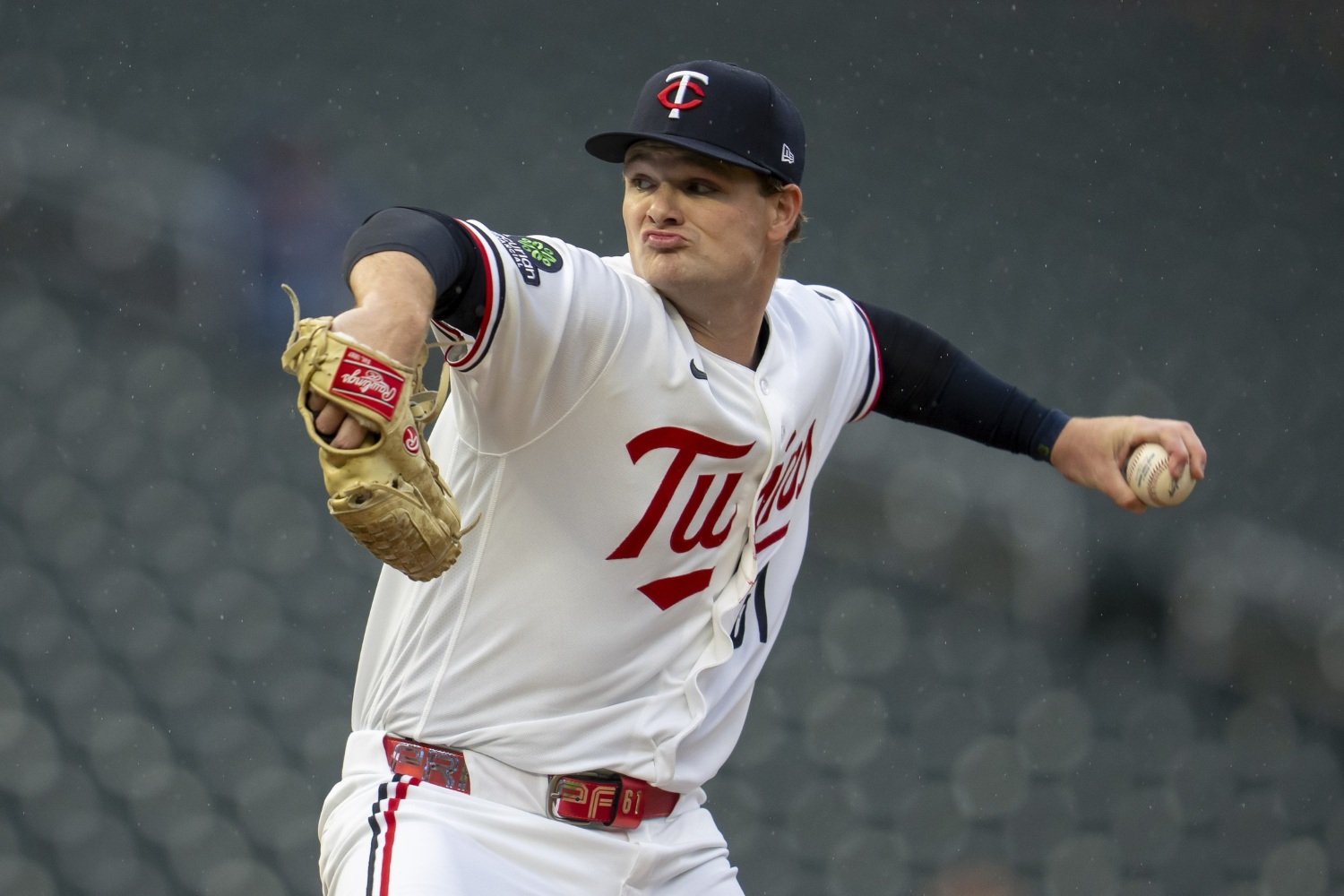 It's only been two starts, but it's not too early to get deeply intrigued by Connor Prielipp's slider. Hell, it's practically too late. Where have you been? Why hasn't this fascination been gripping you for weeks, months, or years already? For now, though, we'll let you slide on that part. Let's focus on the present, and savor what has been an encouraging pair of starts by the young southpaw since his promotion to the majors earlier this month. Though he's run into a couple of rocky spots and given up four runs in his first nine big-league innings, it's felt more like Prielipp might have held his opponents to less than like they might have produced more. On Monday night in Minneapolis, he gave up just two runs in five frames against the Marinersne of them came home when Tristan Gray, struggling to read a foul fly ball not far behind third base but twisting toward the stands, had to accelerate slightly as he ran into the tarp, leaving him unable to get off a throw quickly and strongly enough to retire J.P. Crawford on what became a very shallow sacrifice fly. As it happens, though, that very pitch is a good place to start our discussion of what has made Prielipp stand out so much in these two outings. It was 3-1 on Mariners second baseman Cole Young, but Prielipp went to his slider—because that's what Prielipp does. Of the 166 pitches he's thrown in his first two appearances in the majors, Prielipp has selected the slider 78 times (47%). He is, above all, a slider monster. In the past, that profile—a slider-first lefty—wouldn't work in the starting rotation. Right now, though, it looks like Prielipp can make it work. For one thing, the pitch is really, really good, in a vacuum. Some context might help us see just how good that is. Here are the pitch movement and velocity profiles of three lefty pitchers. Two of them have made the American League All-Star team and drawn serious Cy Young Award consideration within the last half-decade. Prielipp doesn't have the run on the fastball or the consistent depth on the curve that Cole Ragans can boast. He doesn't have the velocity or carry on the heater that Shane McClanahan had at his best, before going through an elbow surgery wringer similar to the one Prielipp went through during an overlapping span. Of these three lefties with similar size, stuff, command and arm slots, though, Prielipp's is the standout slider. The similarities to the best of Ragans's version of the pitch are almost eerie. Here's Prielipp putting away a batter with his sharp breaker. WU8yQTlfVjBZQUhRPT1fQmxVRUFnVldVUUlBREFCVVhnQUhVMU5RQUZoUkFWTUFWQUZVVWdRQ0J3RmRVUXNG.mp4 Here's Prielipp looking very similar in shape, but throwing the pitch harder, with the same result. TzA0VmxfWGw0TUFRPT1fVndGU1VWQUdYZ3NBQ0ZGVUJBQUhBbFZTQUZnR0JsUUFCVklHQWdjQUFBQUJCVkZX.mp4 Prielipp's slider even has a similar spin profile to those of Ragans and McClanahan, but he can achieve a bit more velocity—or, at other times, more movement, at the expense of velocity. That's where he branches off from these two encouraging comparators, but also (perhaps) how he can eventually meet up with them on the high road among junior-circuit lefties. Notice that the distribution of Prielipp's shapes on the slider was a bit wider—the yellow blob a bit bigger—for Prielipp than for Ragans or McClanahan. Now, consider this, too: The above only shows his first start's slider movements. Here's another look at it, with a line drawn through the slider blob to show the orientation along which he manipulated the shape of the pitch against the Mets. Compare that to this chart, which corresponds to the above but for his start Monday against Seattle. The feel he showed for the slider on Monday has a chance to make him special. On a chilly, rainy night, Prielipp didn't throw quite as hard or get quite as much sheer spin as he did in his amped-up debut in New York. He showed the ability to shift the offering east and west, though, which proved important. In the game in New York, Prielipp got seven whiffs on 24 swings on the slider, but he also allowed eight batted balls in play with the pitch. Five of those were hit at least 95 miles per hour; four of them went for hits. On Monday night, he got six whiffs on 16 slider swings. The Mariners put six balls in play on the pitch, but only one was hit hard, and none went for hits. Prielipp's slider is, in truth, two or three different pitches. Pitchers say there are three ways for a good breaking ball to get outs: Strike-to-ball: the good, old-fashioned chase-inducer, aimed at getting a whiff; Ball-to-strike: the one that should freeze a batter, usually with a noticeable early break and more velocity difference from the fastball, prompting them to give up on a pitch that lands in the zone; and The in-zone: a pitch nasty enough to miss bats or induce weak, useless contact even when it both starts and ends inside the zone, with a blend of power and spin that a hitter can't outmuscle. Prielipp has shown all three of these, though it's not yet clear how consistently he can execute each. One thing is clear, though: there's no count in which he won't go to the slider. We saw him use it for a key out on a 3-1 pitch, above. Here are 10 instances of him starting right-handed batters with a slider on an 0-0 count, just in these two games. It's not as simple as one version of the pitch being confined to a given count or to a given matchup. Prielipp will throw a sharp, biting strike-to-ball slider on the first pitch in one at-bat against a given hitter, then take advantage of the fact that they're looking for that pitch by going ball-to-strike the next time. Indeed, he did just that to Julio Rodríguez Monday night. He's eager to get ahead, but doesn't feel any need to use his fastball to do so. That the in-zone slider—the one that slashes across the whole zone but never really threatens not to be within in—works so well to righties is a testament to its viciousness. Now, here are 10 of the whopping 36 times Prielipp has already thrown a slider with two strikes, trying (in various ways) to put hitters away. It's actually not an exceptional out pitch yet. Prielipp has seven strikeouts with it, but a pitch with this much potential can eventually put batters away at a better rate than 19.4%. Hitters are sitting on that pitch in those two-strike counts, though, which has allowed Prielipp to put them away with other stuff at times. He got two strikeouts with his fledgling curveball Monday night, and another with his changeup. Meanwhile, he's showing the capacity to use that slider in multiple forms even within similar counts and situations. The ball-to-strike slider isn't a great option with two strikes, but Prielipp certainly made some hay with the version that stays in the zone the whole time. Even when he leaves the pitch up, its firmness and sidespin make it deceptive. Neither Prielipp nor the slider are finished products. Hitters will adjust; they'll punish his mistakes more often. He needs to find ways to make them respect his fastball a bit more, but the four-seamer lives in the movement dead zone and his sinker doesn't really play to righties. He hasn't stepped into the majors and overwhelmed the best hitters in the world, the way some slightly higher-caliber pitching prospects have over the last few years. However, Prielipp's slider should have your full attention now. It's the best individual pitch in the Twins rotation, and it could become the engine of the rookie's drive for a long-term home in the starting group.
 -
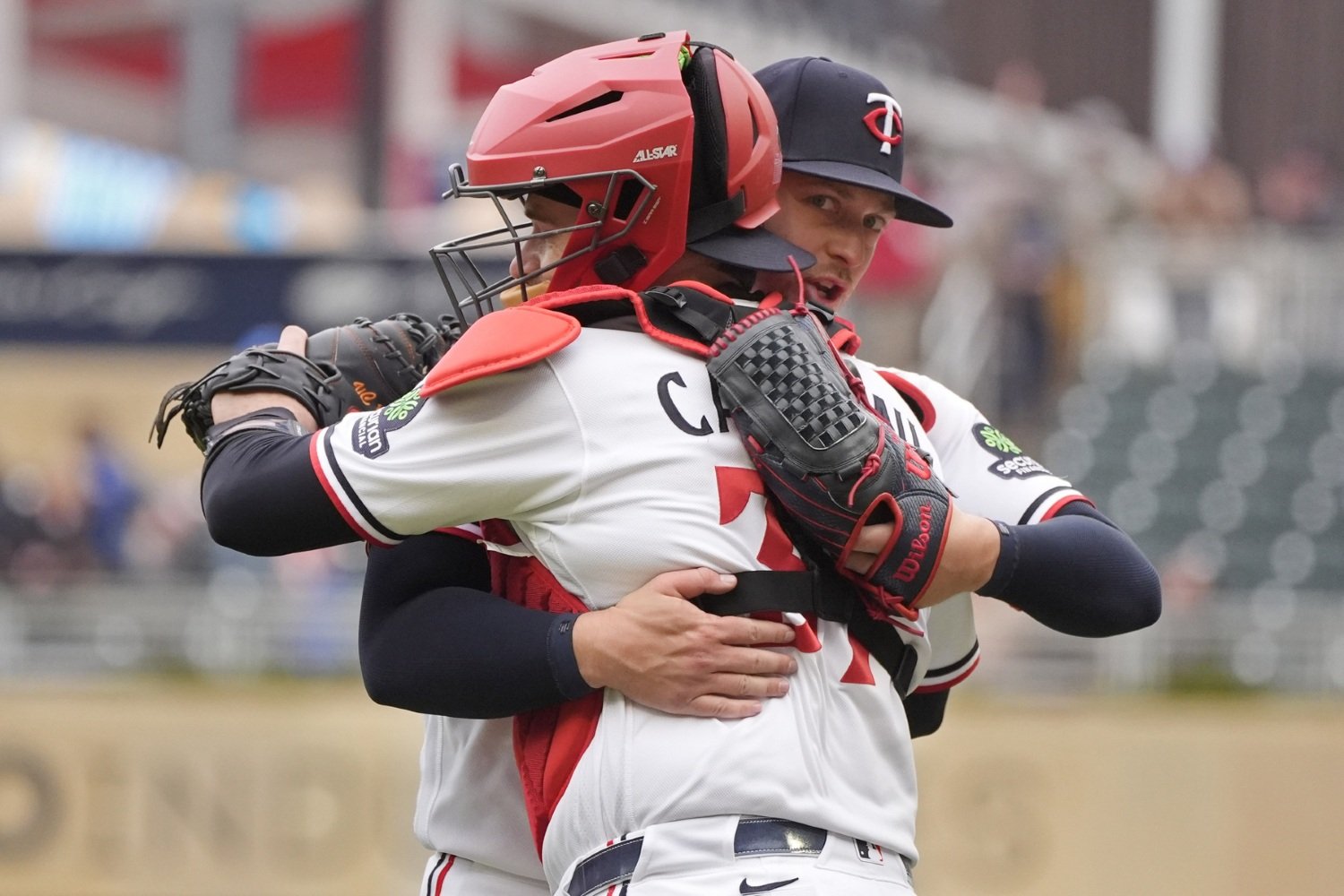 He's not going to make the All-Star team or anything. Victor Caratini has come back to Earth with a much less gentle splash than the Artemis II crew made earlier this spring. He batted a sturdy .271/.373/.354 through his first 14 games and 59 plate appearances of the season, and came up with a couple of big hits along the way. Since then, though, he's been awful: 3-for-24, with six strikeouts and a double-play grounder. Three times in the last seven games he's played, he's reduced the Twins' win probability by over 10% in his turns at bat. His OPS for the season is now .596. Behind the plate, though, he's turned out to be a genius—or, he's playing pretty well and getting a little lucky, to boot. The choice is (partially) yours. Caratini has been the better of the two Twins catchers at pitch framing, worth 1 run already, according to Statcast. He's also been better in the ABS challenge aspect, though—not just better than Ryan Jeffers, or better than average, but better than all but one other catcher in the big leagues. Taken together, those two skills (or is it three? One? Two and a half?) have made up for most of Caratini's shortcomings as a hitter. When the umpire calls a pitch Caratini catches a ball, he's very good at knowing whether or not to challenge. In 13 tries, he's won nine appeals, nudging his team toward the black by ensuring that the zone is the size it ought to be. Just as importantly, though, Caratini is still getting slightly more calls along the edges of the zone than most catchers do, and when opponents challenge those strikes, they lose. Batters are just 4-for-11 when challenging called strikes caught by Caratini this year. Pitch framing, as we've discussed many times, is a many-layered skill. There's some politicking in it. There's a bit of pitch-calling in it—knowing when to test the edges of the zone, and which edges each umpire is most likely to accommodate. Mostly, it's a physical skill, but the mechanics of good framing have evolved over time. When this part of the game was first quantified (around 2010), the best framers were guys with big, strong bodies, who held very quiet positions and caught the ball with minimal movement after setting their targets. Now, in the era of one-knee-down catching, catchers have changed the way they hunt calls. They stick out their mitts to present a target (which might be the real one, or not), then drop it toward the ground and try to catch the ball with the mitt in motion. It's not about being quiet. It's about making it look like the ball was right in the fat of the zone, whether that's remotely true or not. It makes fans howl a bit more about calls than they should, at times, but when you're on the field, it makes sense. This is how catchers have come to avail themselves of the rising baseline of athleticism throughout the league, which reaches down even into their squats. If you're Caratini, then, the goal is to catch the ball with a movement that anticipates the movement and location of the pitch and smoothly steer it toward the center of the zone, all in one movement. Umpires don't always fall for this, anymore. They've gotten steadily more accurate over the last two decades; the implementation of the ABS system is more about the technology finally being ready to boost the accuracy of the zone than about some pressing need to amend umpires failing at their jobs. They do fall for it sometimes, though, and they rarely punish catchers for being noisy when the pitch really is in the zone. After all, every catcher does this, now. Caratini has succeeded at that very often this year. To get a good look at how, let's focus on one corner of the zone: his glove-hand side, down. These are pitches low and in to righties, low and away from lefties. They look like this. cU93MFFfWGw0TUFRPT1fQndSU1ZsSURWZ2NBWFZWV0J3QUhCQWRSQUZsUVZnTUFBVndIQmxFR1UxRlhDVlFG.mp4 That's a good, solid catch on a pitch from Taylor Rogers that nailed its spot. It was a strike, and it was probably going to be called one, anyway. Caratini was actually a hair late, here, jerking the ball upward—ah, but maybe that was a good thing, rather than a bad one. As you can see at the tail end of the clip, Reds hitter Dane Myers challenged this call. He wrong to do so, and the choice to challenge was a dubious one, given the count and the location of the pitch, but Caratini's slightly late move might have fooled him (even if Caratini didn't really mean to do so) into costing his team a challenge for later in the game. Here's another instance of the same thing, only different. TzA0VmxfWGw0TUFRPT1fVTFOU0FRRlhWZ2NBRGdaVVZ3QUhDQTVTQUFBRVYxTUFVQVpSQXdGUVZWSmNBZ05m.mp4 This is a picture-perfect modern frame job by Caratini. The orientation of his body gives the umpire a good look at the pitch as it slants across the zone. His catch anticipates the ball trying to work its way off the corner, and he brings it up and holds it on the edge of the zone nicely. However, because the matchup here was left-on-left and the pitch was a slider, Juan Soto was fooled. Lefty batters make very bad decisions about challenging against lefty pitchers and on pitches along the outer edge; they do especially badly when both things are true. Soto's head turned slightly to follow the ball to the mitt, and maybe he saw the move from Caratini out of the corner of his eye. Maybe he just thought that pitch had to be a ball, given the angle of its movement away from him. Either way, he challenged this call, too, and was wrong again. Caratini isn't always as clean when catching the ball in that spot, but unlike Soto and Myers, he sees the ball exceptionally well when it's thrown there. He knows, for instance, when he's let a Taj Bradley fastball beat him to its spot and lost a call on a pitch that really nipped the zone. In the past, there would have been nothing to do but rue that loss, but now, he has a recourse—and he takes it. ckR3NW9fWGw0TUFRPT1fQVFaWkJnRlJCUUFBWEFRREFBQUhCUUpVQUZrQ1dsSUFWMUJRQWxZRVZBTUhCUVlE.mp4 In fact, this exact thing has happened with Bradley's heater three times this year: the pitch zips in on the high side of 97 MPH; Caratini can't quite catch it with a good enough frame to earn the call; but he challenges the call and earns the strike, anyway. Something slightly different happened here, with Mick Abel throwing a changeup. ZU53T0FfWGw0TUFRPT1fVUFBQVhRRUFVQVFBQUZCWEJ3QUhVbFZUQUFNQ1ZRUUFCUUFEVlZVSEFRdFZCd29B.mp4 This pitch tailed a bit more than Caratini thought it would, and he stabbed out toward the edge of the plate more than he'd expected to need to. However, even as he did that (and then brought the ball back to the zone), he knew it had been a strike, so when the call didn't come, he had the confidence to challenge it—even though it was the first inning. All told, relative to the expected challenges for and against him and the success rates of each, Caratini has earned the Twins 11.6 extra calls via the ABS system this year, according to Statcast. Only Cal Raleigh has earned more, mostly by fooling batters with his own noisy catching style: hitters are 2-for-18 when challenging Raleigh's calls. Put together framing and ABS-related value (which are distinct; Statcast's model grades framers based on the initial call to keep the two separate), and Caratini is one of the most valuable catchers in baseball. He often gets the calls on the edges, and when he doesn't, he's good at knowing whether he should have. In that low, mitt-hand corner of the zone, alone, he's earning a called strike rate of 38.3%, relative to the league's average of 30%—and he's added four more calls to that by challenging, while hurting the other team by prompting misbegotten challenges three times. That's a lot of value in a small amount of real estate. Statcast estimates that Caratini has been worth 3.1 runs relative to an average catcher, combining these two skills. He's on pace to be worth over 15 runs in that department, despite playing less than half the time behind the dish. That pace probably won't hold, but Caratini is a genius of the modern art of catching—of both crafting the zone and enforcing it, and tricking some opponents into self-defeating behavior. To whatever extent this skill proves real, it's enormously useful, especially for a Twins pitching staff that won't miss many bats and needs to steal strikes to survive their poor defense.
 -
Image courtesy of © Bruce Kluckhohn-Imagn Images He's not going to make the All-Star team or anything. Victor Caratini has come back to Earth with a much less gentle splash than the Artemis II crew made earlier this spring. He batted a sturdy .271/.373/.354 through his first 14 games and 59 plate appearances of the season, and came up with a couple of big hits along the way. Since then, though, he's been awful: 3-for-24, with six strikeouts and a double-play grounder. Three times in the last seven games he's played, he's reduced the Twins' win probability by over 10% in his turns at bat. His OPS for the season is now .596. Behind the plate, though, he's turned out to be a genius—or, he's playing pretty well and getting a little lucky, to boot. The choice is (partially) yours. Caratini has been the better of the two Twins catchers at pitch framing, worth 1 run already, according to Statcast. He's also been better in the ABS challenge aspect, though—not just better than Ryan Jeffers, or better than average, but better than all but one other catcher in the big leagues. Taken together, those two skills (or is it three? One? Two and a half?) have made up for most of Caratini's shortcomings as a hitter. When the umpire calls a pitch Caratini catches a ball, he's very good at knowing whether or not to challenge. In 13 tries, he's won nine appeals, nudging his team toward the black by ensuring that the zone is the size it ought to be. Just as importantly, though, Caratini is still getting slightly more calls along the edges of the zone than most catchers do, and when opponents challenge those strikes, they lose. Batters are just 4-for-11 when challenging called strikes caught by Caratini this year. Pitch framing, as we've discussed many times, is a many-layered skill. There's some politicking in it. There's a bit of pitch-calling in it—knowing when to test the edges of the zone, and which edges each umpire is most likely to accommodate. Mostly, it's a physical skill, but the mechanics of good framing have evolved over time. When this part of the game was first quantified (around 2010), the best framers were guys with big, strong bodies, who held very quiet positions and caught the ball with minimal movement after setting their targets. Now, in the era of one-knee-down catching, catchers have changed the way they hunt calls. They stick out their mitts to present a target (which might be the real one, or not), then drop it toward the ground and try to catch the ball with the mitt in motion. It's not about being quiet. It's about making it look like the ball was right in the fat of the zone, whether that's remotely true or not. It makes fans howl a bit more about calls than they should, at times, but when you're on the field, it makes sense. This is how catchers have come to avail themselves of the rising baseline of athleticism throughout the league, which reaches down even into their squats. If you're Caratini, then, the goal is to catch the ball with a movement that anticipates the movement and location of the pitch and smoothly steer it toward the center of the zone, all in one movement. Umpires don't always fall for this, anymore. They've gotten steadily more accurate over the last two decades; the implementation of the ABS system is more about the technology finally being ready to boost the accuracy of the zone than about some pressing need to amend umpires failing at their jobs. They do fall for it sometimes, though, and they rarely punish catchers for being noisy when the pitch really is in the zone. After all, every catcher does this, now. Caratini has succeeded at that very often this year. To get a good look at how, let's focus on one corner of the zone: his glove-hand side, down. These are pitches low and in to righties, low and away from lefties. They look like this. cU93MFFfWGw0TUFRPT1fQndSU1ZsSURWZ2NBWFZWV0J3QUhCQWRSQUZsUVZnTUFBVndIQmxFR1UxRlhDVlFG.mp4 That's a good, solid catch on a pitch from Taylor Rogers that nailed its spot. It was a strike, and it was probably going to be called one, anyway. Caratini was actually a hair late, here, jerking the ball upward—ah, but maybe that was a good thing, rather than a bad one. As you can see at the tail end of the clip, Reds hitter Dane Myers challenged this call. He wrong to do so, and the choice to challenge was a dubious one, given the count and the location of the pitch, but Caratini's slightly late move might have fooled him (even if Caratini didn't really mean to do so) into costing his team a challenge for later in the game. Here's another instance of the same thing, only different. TzA0VmxfWGw0TUFRPT1fVTFOU0FRRlhWZ2NBRGdaVVZ3QUhDQTVTQUFBRVYxTUFVQVpSQXdGUVZWSmNBZ05m.mp4 This is a picture-perfect modern frame job by Caratini. The orientation of his body gives the umpire a good look at the pitch as it slants across the zone. His catch anticipates the ball trying to work its way off the corner, and he brings it up and holds it on the edge of the zone nicely. However, because the matchup here was left-on-left and the pitch was a slider, Juan Soto was fooled. Lefty batters make very bad decisions about challenging against lefty pitchers and on pitches along the outer edge; they do especially badly when both things are true. Soto's head turned slightly to follow the ball to the mitt, and maybe he saw the move from Caratini out of the corner of his eye. Maybe he just thought that pitch had to be a ball, given the angle of its movement away from him. Either way, he challenged this call, too, and was wrong again. Caratini isn't always as clean when catching the ball in that spot, but unlike Soto and Myers, he sees the ball exceptionally well when it's thrown there. He knows, for instance, when he's let a Taj Bradley fastball beat him to its spot and lost a call on a pitch that really nipped the zone. In the past, there would have been nothing to do but rue that loss, but now, he has a recourse—and he takes it. ckR3NW9fWGw0TUFRPT1fQVFaWkJnRlJCUUFBWEFRREFBQUhCUUpVQUZrQ1dsSUFWMUJRQWxZRVZBTUhCUVlE.mp4 In fact, this exact thing has happened with Bradley's heater three times this year: the pitch zips in on the high side of 97 MPH; Caratini can't quite catch it with a good enough frame to earn the call; but he challenges the call and earns the strike, anyway. Something slightly different happened here, with Mick Abel throwing a changeup. ZU53T0FfWGw0TUFRPT1fVUFBQVhRRUFVQVFBQUZCWEJ3QUhVbFZUQUFNQ1ZRUUFCUUFEVlZVSEFRdFZCd29B.mp4 This pitch tailed a bit more than Caratini thought it would, and he stabbed out toward the edge of the plate more than he'd expected to need to. However, even as he did that (and then brought the ball back to the zone), he knew it had been a strike, so when the call didn't come, he had the confidence to challenge it—even though it was the first inning. All told, relative to the expected challenges for and against him and the success rates of each, Caratini has earned the Twins 11.6 extra calls via the ABS system this year, according to Statcast. Only Cal Raleigh has earned more, mostly by fooling batters with his own noisy catching style: hitters are 2-for-18 when challenging Raleigh's calls. Put together framing and ABS-related value (which are distinct; Statcast's model grades framers based on the initial call to keep the two separate), and Caratini is one of the most valuable catchers in baseball. He often gets the calls on the edges, and when he doesn't, he's good at knowing whether he should have. In that low, mitt-hand corner of the zone, alone, he's earning a called strike rate of 38.3%, relative to the league's average of 30%—and he's added four more calls to that by challenging, while hurting the other team by prompting misbegotten challenges three times. That's a lot of value in a small amount of real estate. Statcast estimates that Caratini has been worth 3.1 runs relative to an average catcher, combining these two skills. He's on pace to be worth over 15 runs in that department, despite playing less than half the time behind the dish. That pace probably won't hold, but Caratini is a genius of the modern art of catching—of both crafting the zone and enforcing it, and tricking some opponents into self-defeating behavior. To whatever extent this skill proves real, it's enormously useful, especially for a Twins pitching staff that won't miss many bats and needs to steal strikes to survive their poor defense. View full article
-
Image courtesy of © Nick Wosika-Imagn Images Since 1986, 19 different players have started an MLB season with an OBP of at least .515 in their first 23 games, with at least 60 plate appearances in those contests. As you'd guess, it's mostly superstars. Barry Bonds did that three times. Jason Giambi, John Olerud and Mike Trout did it twice each. The worst player to do so in the last 40 years is either Von Hayes or Wally Joyner, and even they were awfully good at their peak and never better than in the year they started that hot. That's the company Austin Martin is keeping now, after reaching base four times in Thursday night's game in New York. Martin is, of course, being shielded from some right-handed pitchers, and the Twins have faced an extraordinary number of lefty starters early on. Still, the numbers Martin is now putting up—.347/.515/.469, in 68 plate appearances—are remarkable, and the team is starting to take notice. Martin's start Thursday night came against a right-handed starter, at the expense of slugging teammate Matt Wallner. What's working so well? As you would guess, Martin is getting on base so much more by walking often, and he's walking often because he's swinging less than in the past. He's down from swinging just over 40% of the time to being under 32% this year—but when we break things down even further, the truth of the situation comes even more clearly into focus. Late last season, I talked to Martin about how he handled the high pitch, as a hitter with a steep bat path but not much bat speed. His answer was simple: try not to swing at it. Force pitchers down into the middle of the zone, if at all possible. He was decent at that, too. Naturally, this season, his swing rate in the top third of the zone has... risen, while his swing rate along the bottom third has dropped considerably. Wait, what? Martin is being much more patient, but not in the segment of the zone you'd expect to see him take that tack in. Instead, he's reaching down to the bottom of the zone much less often, despite a swing seemingly geared to get on plane with those offerings. What gives? Well, firstly, you need to know that the strike zone isn't where it was last year. That's the biggest driver of Martin's change in approach, and well it should be. This season, with the ABS challenge system in place, the top and bottom of the zone are no longer set by the umpire's best estimate of the height of the hollow of Martin's knee or the halfway point between his belt and his shoulders. Martin was measured before the season, and a strike on him should now be between 27% of his height (around 19 inches) and 53.5% of his height (around 37.5 inches) above the ground. That's a short zone. The 5-foot-10 Martin ends up with almost a perfectly square zone, whereas in the past, we've always thought of most players' zones as being noticeably taller than they are wide. Umpires don't enforce these top and bottom lines perfectly, of course, but the league changed the tolerances of umpire grading last season to force them to be more accurate, in anticipation of exactly this dynamic. They've been very observant of each player's new rulebook zone, as best they can be, and Martin has the challenges themselves to help ensure that. He's 3-for-4 on ABS appeals this year, always using them to question the top and bottom of the zone. Opponents, meanwhile, have tried to find the top rail by challenging called balls up there twice, with no luck. So, when we see Martin's swing rate in the top third of the zone rising, that's not really what's happening. Instead, the vertical thirds of the zone are getting smaller, and any increase in swing rate is happening in what used to be the middle of his strike zone. He's also dedicated himself to not chasing low pitches, because even though his swing tilt gets him in position to touch those balls easily, he can't drive them. He doesn't have the bat speed for that. He's chosen, instead, to lock in on things the opponents leave up a bit, where the lift is done for him and he can just hit the center of the ball. An altered zone means Martin can safely ignore what used to be the top third of his zone. Here's a side-by-side look at the results of pitches at which he didn't swing that came in at least 2.9 feet off the ground, for both 2025 and 2026. The raw height of the pitch when it got to home plate cuts off at the same point (34.8 inches) for both seasons, but look how many of those balls were in Martin's old zone and called strikes last year. This year, almost none are. It's hard to convey just how valuable being able to cut off that extra five inches or so at the top of the zone is, except by restating Martin's numbers. He's getting on base more than half the time, and hitting a ton of line drives in the process, because he has pressed a newfound advantage. He's not chasing down and out of the zone, and the top of the zone now seems to be much lower than it was in the past. That leaves a nice, squat square for him to defend, and his excellent hand-eye coordination is more than up to the challenge. That doesn't mean, of course, that his new true talent level is to hit .350. The matchups will even out; Martin will get less lucky; and the league will figure out how to pitch to the newly shrunken zone. For now, though, Martin's approach change—probably informed, via his coaches, by the installation of the ABS-influenced zone—suits his swing brilliantly, which has produced brilliant results. For a player who already had plenty of baserunning and defensive value, this could be the key to becoming a regular in the majors—or even a star. View full article
-
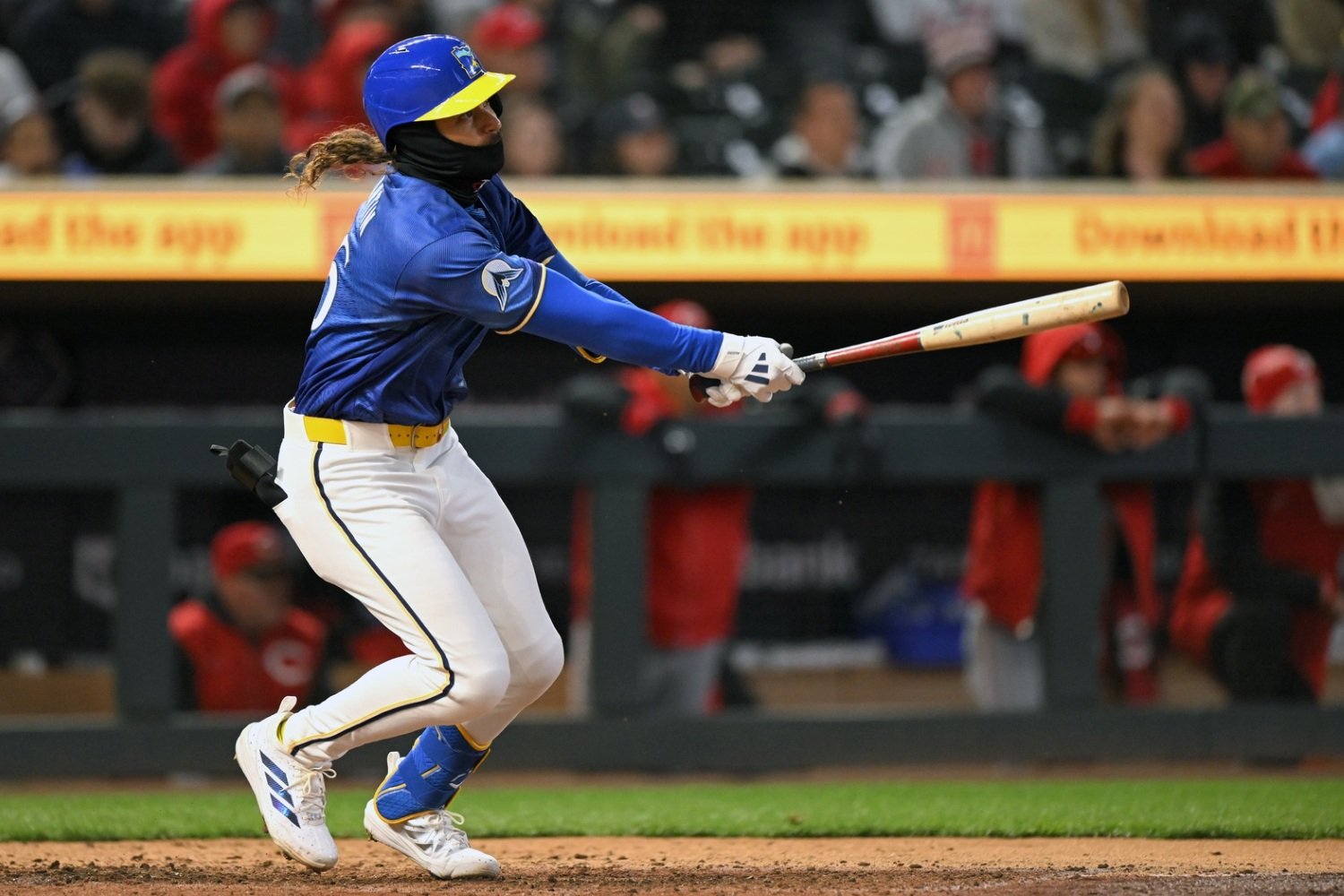 Since 1986, 19 different players have started an MLB season with an OBP of at least .515 in their first 23 games, with at least 60 plate appearances in those contests. As you'd guess, it's mostly superstars. Barry Bonds did that three times. Jason Giambi, John Olerud and Mike Trout did it twice each. The worst player to do so in the last 40 years is either Von Hayes or Wally Joyner, and even they were awfully good at their peak and never better than in the year they started that hot. That's the company Austin Martin is keeping now, after reaching base four times in Thursday night's game in New York. Martin is, of course, being shielded from some right-handed pitchers, and the Twins have faced an extraordinary number of lefty starters early on. Still, the numbers Martin is now putting up—.347/.515/.469, in 68 plate appearances—are remarkable, and the team is starting to take notice. Martin's start Thursday night came against a right-handed starter, at the expense of slugging teammate Matt Wallner. What's working so well? As you would guess, Martin is getting on base so much more by walking often, and he's walking often because he's swinging less than in the past. He's down from swinging just over 40% of the time to being under 32% this year—but when we break things down even further, the truth of the situation comes even more clearly into focus. Late last season, I talked to Martin about how he handled the high pitch, as a hitter with a steep bat path but not much bat speed. His answer was simple: try not to swing at it. Force pitchers down into the middle of the zone, if at all possible. He was decent at that, too. Naturally, this season, his swing rate in the top third of the zone has... risen, while his swing rate along the bottom third has dropped considerably. Wait, what? Martin is being much more patient, but not in the segment of the zone you'd expect to see him take that tack in. Instead, he's reaching down to the bottom of the zone much less often, despite a swing seemingly geared to get on plane with those offerings. What gives? Well, firstly, you need to know that the strike zone isn't where it was last year. That's the biggest driver of Martin's change in approach, and well it should be. This season, with the ABS challenge system in place, the top and bottom of the zone are no longer set by the umpire's best estimate of the height of the hollow of Martin's knee or the halfway point between his belt and his shoulders. Martin was measured before the season, and a strike on him should now be between 27% of his height (around 19 inches) and 53.5% of his height (around 37.5 inches) above the ground. That's a short zone. The 5-foot-10 Martin ends up with almost a perfectly square zone, whereas in the past, we've always thought of most players' zones as being noticeably taller than they are wide. Umpires don't enforce these top and bottom lines perfectly, of course, but the league changed the tolerances of umpire grading last season to force them to be more accurate, in anticipation of exactly this dynamic. They've been very observant of each player's new rulebook zone, as best they can be, and Martin has the challenges themselves to help ensure that. He's 3-for-4 on ABS appeals this year, always using them to question the top and bottom of the zone. Opponents, meanwhile, have tried to find the top rail by challenging called balls up there twice, with no luck. So, when we see Martin's swing rate in the top third of the zone rising, that's not really what's happening. Instead, the vertical thirds of the zone are getting smaller, and any increase in swing rate is happening in what used to be the middle of his strike zone. He's also dedicated himself to not chasing low pitches, because even though his swing tilt gets him in position to touch those balls easily, he can't drive them. He doesn't have the bat speed for that. He's chosen, instead, to lock in on things the opponents leave up a bit, where the lift is done for him and he can just hit the center of the ball. An altered zone means Martin can safely ignore what used to be the top third of his zone. Here's a side-by-side look at the results of pitches at which he didn't swing that came in at least 2.9 feet off the ground, for both 2025 and 2026. The raw height of the pitch when it got to home plate cuts off at the same point (34.8 inches) for both seasons, but look how many of those balls were in Martin's old zone and called strikes last year. This year, almost none are. It's hard to convey just how valuable being able to cut off that extra five inches or so at the top of the zone is, except by restating Martin's numbers. He's getting on base more than half the time, and hitting a ton of line drives in the process, because he has pressed a newfound advantage. He's not chasing down and out of the zone, and the top of the zone now seems to be much lower than it was in the past. That leaves a nice, squat square for him to defend, and his excellent hand-eye coordination is more than up to the challenge. That doesn't mean, of course, that his new true talent level is to hit .350. The matchups will even out; Martin will get less lucky; and the league will figure out how to pitch to the newly shrunken zone. For now, though, Martin's approach change—probably informed, via his coaches, by the installation of the ABS-influenced zone—suits his swing brilliantly, which has produced brilliant results. For a player who already had plenty of baserunning and defensive value, this could be the key to becoming a regular in the majors—or even a star.
 -
No player chooses to be platooned, is the thing. Everyone wants to play every day. Platoons aren't tools to optimize the performance of individuals. They optimize team production at the *expense* of individuals.
-
Trevor Larnach, or: When Disrupting the Routine is a Good Thing
Matthew Trueblood posted an article in Twins
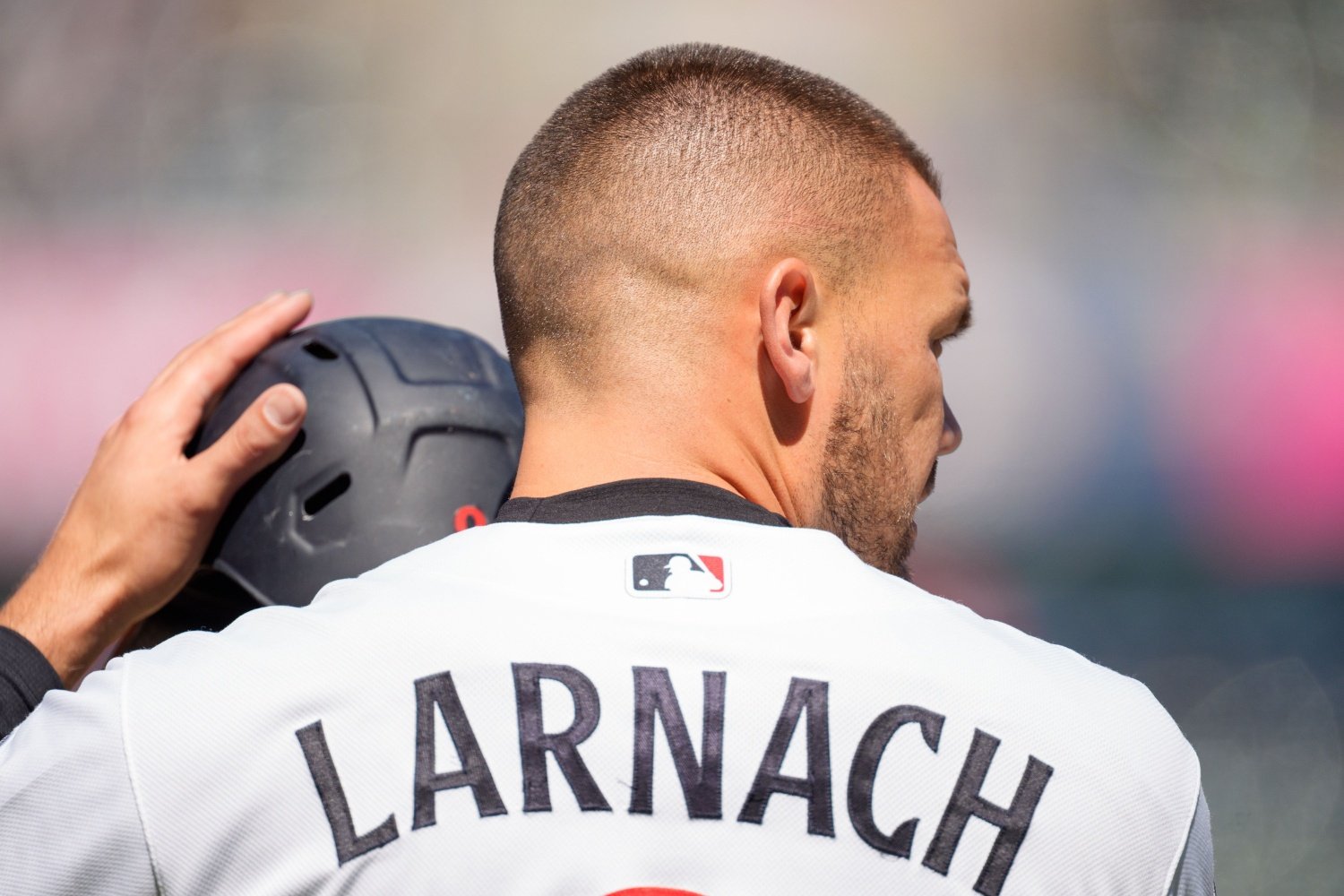 After 22 games, the Minnesota Twins have six batters with enough plate appearances to qualify for the batting title. Catcher Ryan Jeffers and fourth outfielder Austin Martin are just off that pace, with 65 and 62 plate appearances, respectively. Just below those eight players, there's a tier of three guys who have been part-timers this season, with between 40 and 50 plate appearances despite being active all year. For Kody Clemens and Tristan Gray, that's to be expected; these are the roles they're meant to play. For Trevor Larnach, though, 47 trips to the plate in 22 healthy games reflects the strangeness of the team's early schedule. Through a series of matchup coincidences, the Twins have faced left-handed starting pitchers 13 times in their 22 games. Larnach, a lefty batter who's had little luck against southpaws during his career, has therefore started only half of the 22. He's been in there all nine times against righties, but only twice in the 13 games against lefties—and then, partially because of injuries to other players. Normally, players hate having the routine of playing every day disrupted. Only good players get the privilege of assuming they'll be in the lineup for each game, and those clinging to the fringes of the majors are happy to fill in wherever and whenever they're needed, but Larnach has long been able to plan on playing at least five times a week, at least when he's been healthy enough to do so. This pattern of (dis)use is extremely unfamiliar to him, and it's begotten a very weird version of Larnach so far in 2026—but weird in a good way. Larnach is batting .265/.468/.412. In his 47 trips to the plate, he's drawn an eye-popping 13 walks, to go with three extra-base hits and just seven strikeouts. He's still whiffing at a catastrophic rate against everything but fastballs, and by now, fans know better than to expect anything else. Against fastballs, though, he's only whiffed once, and more importantly, he's been extremely patient. His swing rate was around 41% in both 2022 and 2023. It rose to 44% or so in 2024 and 2025. So far this season, he's swung at 33.8% of the pitches he's seen. Thence come all those walks—though also lots of questions. Generally, that low a swing rate isn't viable in the big leagues. That goes double for someone who swings and misses as much as Larnach does against anything offspeed or breaking. It's a recipe for too many strikeouts, even if it does come with a fair number of walks. It's also, certainly, not what Larnach is trying to do. The Twins are a slightly more patient team than they were last year. New hitting coach Keith Beauregard has them trying to wait for the right pitch a bit more. The difference isn't huge, though, and no one is telling Larnach to swing barely a third of the time. He's just not in enough of a rhythm to swing any more often. He can't get off his 'A' swing consistently enough to justify swinging at all, given not only the plan he's taking to the plate but the years of practice and programming that have gotten him this far. It doesn't help that, after being strictly a platoon guy in 2023 and 2024 and getting only partial exposure to lefties last year, he's seen them in 11 of his 47 trips so far this season. In this small sample, though, Larnach has benefited from being forced to behave bizarrely at the plate. Swinging much, much less is working for him, not only because he's not getting himself out, but because the strike zone is smaller this year and pitchers aren't throwing as many strikes. A more patient approach might suit him, after all. This level of selectivity will probably never profit such a whiff-prone slugger, but unless and until Larnach can get his swing ranged and start producing the power he only intermittently accessed last year, waiting hurlers out is a good plan. He might have tried a bit more of this, no matter what. Because he's not playing especially regularly and is seeing some tough matchups, though, he's had to lean into it—and the results are as peculiar as this stretch of lefties on the schedule was.
 -
Image courtesy of © Matt Blewett-Imagn Images After 22 games, the Minnesota Twins have six batters with enough plate appearances to qualify for the batting title. Catcher Ryan Jeffers and fourth outfielder Austin Martin are just off that pace, with 65 and 62 plate appearances, respectively. Just below those eight players, there's a tier of three guys who have been part-timers this season, with between 40 and 50 plate appearances despite being active all year. For Kody Clemens and Tristan Gray, that's to be expected; these are the roles they're meant to play. For Trevor Larnach, though, 47 trips to the plate in 22 healthy games reflects the strangeness of the team's early schedule. Through a series of matchup coincidences, the Twins have faced left-handed starting pitchers 13 times in their 22 games. Larnach, a lefty batter who's had little luck against southpaws during his career, has therefore started only half of the 22. He's been in there all nine times against righties, but only twice in the 13 games against lefties—and then, partially because of injuries to other players. Normally, players hate having the routine of playing every day disrupted. Only good players get the privilege of assuming they'll be in the lineup for each game, and those clinging to the fringes of the majors are happy to fill in wherever and whenever they're needed, but Larnach has long been able to plan on playing at least five times a week, at least when he's been healthy enough to do so. This pattern of (dis)use is extremely unfamiliar to him, and it's begotten a very weird version of Larnach so far in 2026—but weird in a good way. Larnach is batting .265/.468/.412. In his 47 trips to the plate, he's drawn an eye-popping 13 walks, to go with three extra-base hits and just seven strikeouts. He's still whiffing at a catastrophic rate against everything but fastballs, and by now, fans know better than to expect anything else. Against fastballs, though, he's only whiffed once, and more importantly, he's been extremely patient. His swing rate was around 41% in both 2022 and 2023. It rose to 44% or so in 2024 and 2025. So far this season, he's swung at 33.8% of the pitches he's seen. Thence come all those walks—though also lots of questions. Generally, that low a swing rate isn't viable in the big leagues. That goes double for someone who swings and misses as much as Larnach does against anything offspeed or breaking. It's a recipe for too many strikeouts, even if it does come with a fair number of walks. It's also, certainly, not what Larnach is trying to do. The Twins are a slightly more patient team than they were last year. New hitting coach Keith Beauregard has them trying to wait for the right pitch a bit more. The difference isn't huge, though, and no one is telling Larnach to swing barely a third of the time. He's just not in enough of a rhythm to swing any more often. He can't get off his 'A' swing consistently enough to justify swinging at all, given not only the plan he's taking to the plate but the years of practice and programming that have gotten him this far. It doesn't help that, after being strictly a platoon guy in 2023 and 2024 and getting only partial exposure to lefties last year, he's seen them in 11 of his 47 trips so far this season. In this small sample, though, Larnach has benefited from being forced to behave bizarrely at the plate. Swinging much, much less is working for him, not only because he's not getting himself out, but because the strike zone is smaller this year and pitchers aren't throwing as many strikes. A more patient approach might suit him, after all. This level of selectivity will probably never profit such a whiff-prone slugger, but unless and until Larnach can get his swing ranged and start producing the power he only intermittently accessed last year, waiting hurlers out is a good plan. He might have tried a bit more of this, no matter what. Because he's not playing especially regularly and is seeing some tough matchups, though, he's had to lean into it—and the results are as peculiar as this stretch of lefties on the schedule was. View full article
-
Image courtesy of © Bruce Kluckhohn-Imagn Images The Twins suffered a major loss on an off day Monday, as they're set to place right-handed starter Mick Abel on the 15-day injured list. Dan Hayes of The Athletic broke the news on Twitter. The initial diagnosis—inflammation in his throwing elbow—isn't the worst news you could hear about a player hitting the injured list between starts, but it's awfully close. The extent of Abel's injury won't be clear until the team provides further updates about any imaging taken on the arm, but right away, one must worry about a long-term absence. Inflammation isn't an injury in itself; it's a symptom of fatigue and/or damage, which has some cause. Finding out the cause of the inflammation will tell us whether Abel will be out a few weeks, the rest of the season, or somewhere in between. No matter what, though, it hurts the team badly to lose him now. Abel, 24, has a 3.98 ERA and a 24.7% strikeout rate through his first four appearances of the season, but that undersells what has been a thrilling upward trend over his last two outings. His dominance of the Red Sox last week at Target Field (7 innings, 4 hits, 10 strikeouts, no walks) felt like a step toward legitimate mid-rotation status, and Abel came out of that outing feeling great. Abel was scheduled to start Tuesday night in Queens. The team could turn, instead, to left-handed pitching prospect Connor Prielipp, who was on the taxi squad for the trip, anyway. Barring that, it's likely to be a bullpen day, but the team's roster isn't built for that right now. Short-term and long-term, this is a daunting disruption of the team's plans. They can only cross their fingers while they (and we) await more news on Abel's prognosis. UPDATE: Simeon Woods Richardson will start in Abel's stead Tuesday night, Hayes reports. Woods Richardson moves up a day to fill the gap for now, taking advantage of the off day for the team, but that doesn't answer the question for the longer term. To give a sense of how long an absence we're likely to be looking at, though, Baseball Prospectus's Return to Play tool shows that pitchers sidelined with elbow inflammation (that specific diagnosis, not surgery or a documented strain or tear, even if that later turned out to be the cause of the inflammation) in the months of March, April, May or June over the last three seasons missed an average of 72 days, with a median a bit lower. Abel is as likely as not to miss at least two months; the Twins need to find a long-term replacement. If Abel avoids elbow surgery and comes back at full strength, that's a win, from here. Doing it quickly would be a minor miracle. It's time for the young arms (be it Prielipp, Zebby Matthews, Andrew Morris or someone else) to step into the breach. View full article
-
Ugh: Twins to Place Mick Abel on 15-Day Injured List with Elbow Injury
Matthew Trueblood posted an article in Twins
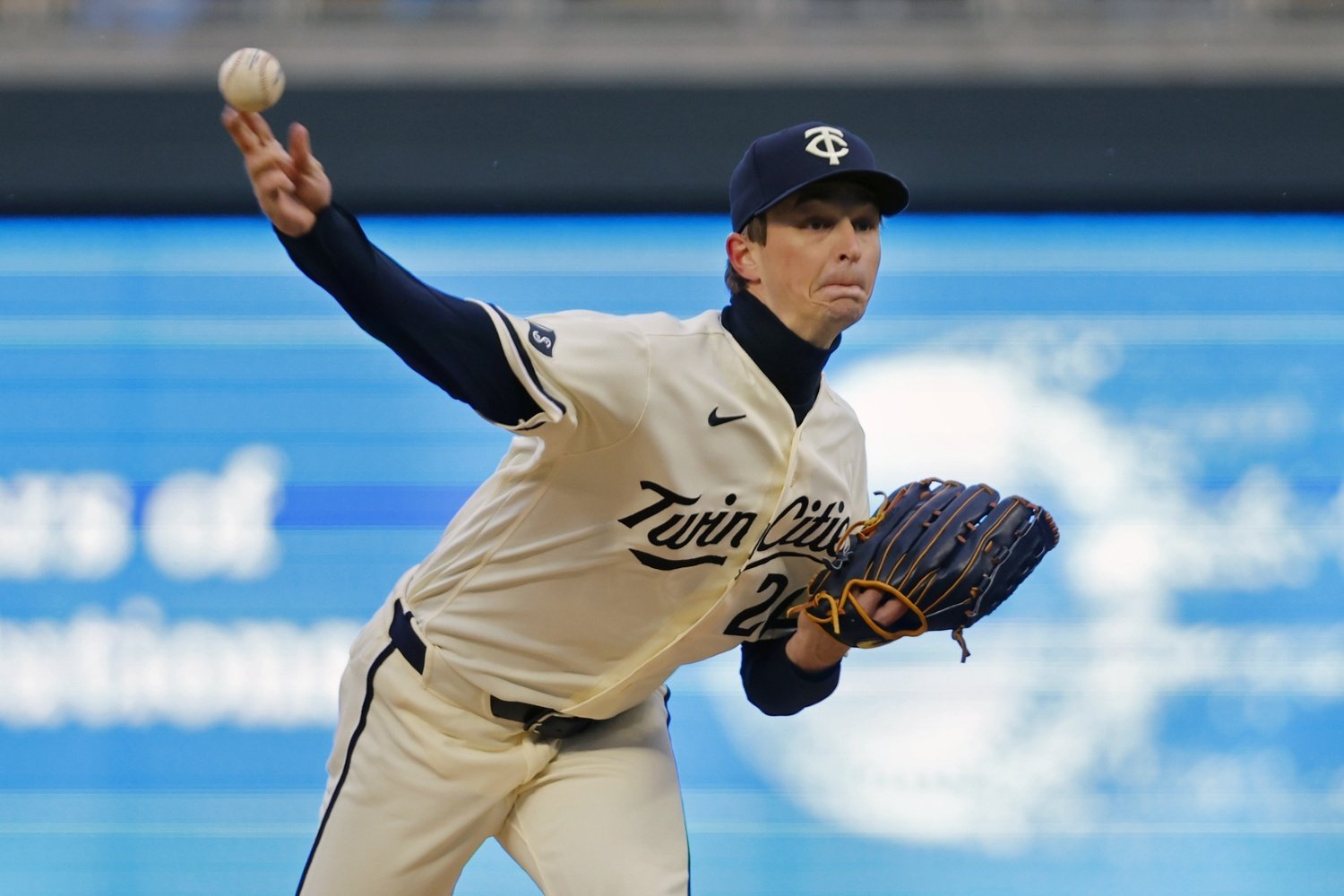 The Twins suffered a major loss on an off day Monday, as they're set to place right-handed starter Mick Abel on the 15-day injured list. Dan Hayes of The Athletic broke the news on Twitter. The initial diagnosis—inflammation in his throwing elbow—isn't the worst news you could hear about a player hitting the injured list between starts, but it's awfully close. The extent of Abel's injury won't be clear until the team provides further updates about any imaging taken on the arm, but right away, one must worry about a long-term absence. Inflammation isn't an injury in itself; it's a symptom of fatigue and/or damage, which has some cause. Finding out the cause of the inflammation will tell us whether Abel will be out a few weeks, the rest of the season, or somewhere in between. No matter what, though, it hurts the team badly to lose him now. Abel, 24, has a 3.98 ERA and a 24.7% strikeout rate through his first four appearances of the season, but that undersells what has been a thrilling upward trend over his last two outings. His dominance of the Red Sox last week at Target Field (7 innings, 4 hits, 10 strikeouts, no walks) felt like a step toward legitimate mid-rotation status, and Abel came out of that outing feeling great. Abel was scheduled to start Tuesday night in Queens. The team could turn, instead, to left-handed pitching prospect Connor Prielipp, who was on the taxi squad for the trip, anyway. Barring that, it's likely to be a bullpen day, but the team's roster isn't built for that right now. Short-term and long-term, this is a daunting disruption of the team's plans. They can only cross their fingers while they (and we) await more news on Abel's prognosis. UPDATE: Simeon Woods Richardson will start in Abel's stead Tuesday night, Hayes reports. Woods Richardson moves up a day to fill the gap for now, taking advantage of the off day for the team, but that doesn't answer the question for the longer term. To give a sense of how long an absence we're likely to be looking at, though, Baseball Prospectus's Return to Play tool shows that pitchers sidelined with elbow inflammation (that specific diagnosis, not surgery or a documented strain or tear, even if that later turned out to be the cause of the inflammation) in the months of March, April, May or June over the last three seasons missed an average of 72 days, with a median a bit lower. Abel is as likely as not to miss at least two months; the Twins need to find a long-term replacement. If Abel avoids elbow surgery and comes back at full strength, that's a win, from here. Doing it quickly would be a minor miracle. It's time for the young arms (be it Prielipp, Zebby Matthews, Andrew Morris or someone else) to step into the breach.
 -
I.... think you're massively overreacting to what is basically a short-term logistical maneuver that just happens to involve two high-upside arms.