


Twins Video
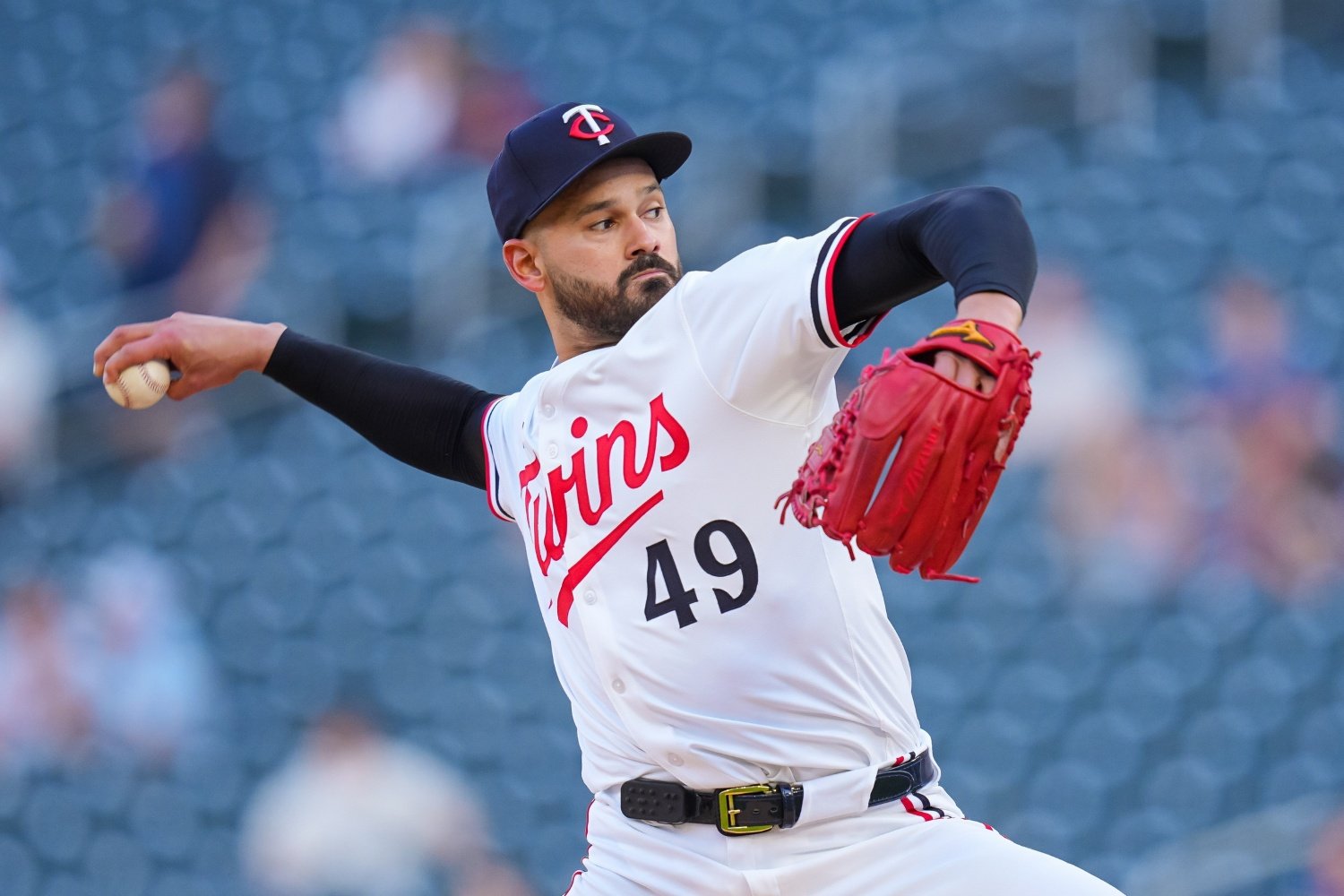
For much of the last two-plus seasons, Pablo López has been the Twins rotation's Super-Man. The bad news is, the first inning has been kryptonite. Since the start of 2023, and prior to Tuesday's tangle with the visiting Orioles, López had allowed a .270/.308/.474 batting line in the first inning, with 15 home runs in 293 batters faced and a 4.43 ERA. Because the best hitters hit at the top of teams' lineups, the first inning is always higher-scoring than the rest of the game (taken as a whole), but true aces tamp down that effect. López, though stellar the rest of the time, has been milquetoast in his first frame of games since joining the Twins.
That changed on Tuesday night, setting the tone for a dominant outing and a blowout Twins win. The first step was being willing to move off his fastball. The Orioles' first two hitters, Cedric Mullins and Gunnar Henderson, tried to sit on his heater—as teams often do early against López, with good reason. In general, he starts the game with heavy fastball usage, in the grand pitching tradition of establishing the heater. Here's his pitch usage by inning for the season, entering last night.
.jpeg.4bc156f5bea4ada496c99d598967f633.jpeg)
This time, though, López, catcher Ryan Jeffers and pitching coach Pete Maki had a more varied plan, and it worked. The veteran righty struck out the side in order, and only seven of the 18 pitches he threw in the frame were fastballs.
"The first step is just having a good plan—knowing your enemy," López said after the game. "We want to know ourselves, and we want to know our enemy. The pregame meeting with Pete and Jeffers was very specific and very thorough, which, I like to think of myself as a thorough person, so that gave me a lot of confidence."
As the game progressed, the fastball took more of a leading role, reversing the pattern we saw from him before Tuesday. He was pitching backward, not just on an atomic plate appearance level, but within the game. As he discovered ways to get the Orioles looking for something else, he realized the fastball would play as a putaway pitch on this particular evening.
"The fastball is traditionally the pitch that we're supposed to use the most. It's just the pitch that we should be able to command, control. Everything works off your fastball," López said. "But when you are trying to pepper the zone, and you're getting uncomfortable swings, uncomfortable takes, reads, weak contact, it's like, 'Ok, it's not only working to set things up. It's actually working today to put people away. Identifying that is really important—especially the batters that we can maneuver or exploit that a little better. So it's fun when you know it's more than a setup pitch, specific nights."
At one stretch, López went with a breaking or offspeed pitch on 0-0 to seven of nine batters. He wasn't leading with his heater, against the young hands and dangerous bat speed of the Orioles lineup. He first forced them to think about his whole arsenal, then zipped in the fastball when they weren't ready. Of his 44 two-strike pitches, 18 were fastballs, and he earned seven of his 11 strikeouts with the heater.
That was partially a product of that detailed pregame plan, but it was also because his new kick-change is doing some truly devastating things—thus far, alas, too devastating to be tempting. He threw seven kick-changes Tuesday night, most in leveraged counts with the hope of putting away Orioles batters, but all seven went for balls.
"You look at the 11 strikeouts, and they're nice. Obviously, I didn't get the length that I like to provide the team, but a lot of times, you have to take what the game gives you," López said. "I just tried to be on the mound, competing, competing, competing."
There were positives to take from the pitch even on a night when it yielded no positive results, because it's showing up as the best offering in his arsenal, according to StuffPro (Baseball Prospectus's pitch-modeling metric). Because the kick-change is not yet its own, distinct pitch classification and because López throws a separate changeup, the kick-change is labeled below as a splitter (FS).

That pitch caught Rocco Baldelli's eye, even though the Orioles didn't bite on it Tuesday night.
"The way that Pablo was getting swing-and-miss in the game today, you knew it was good. He put together an outing where he was missing bats with his fastball," Baldelli said in his postgame press conference. "He had some really interesting movement today on his changeup. It seemed like it was moving even more than in other outings. It almost looked like it was a curveball from the side, the way it was dropping. He had something going on today that was a little different from some of his other starts, in a good way. He wished he had a few more pitches to work with after the outing, but overall, just a fantastic outing by him."
Indeed, if López wants to get deeper into games, he needs to be able to put hitters away more efficiently when he gets ahead in the count. His new changeup is nastier than his old one, but seems much harder to place where hitters will feel any need to swing at it. Maybe throwing it helps set up the fastball, but even if so, it means taking two pitches to get from strike 2 to strike 3, instead of one.
The Orioles are prone to strikeouts, but one thing they do quite well is draw out at-bats in just the way we witnessed Tuesday night. The next step for the Twins' ace is to figure out why his kick-change isn't drawing swings, and see whether that can be amended. In the meantime, though, he had everything he needed to get great results, and at least for an evening, a tweak to his approach fixed his first-inning problem. With a wicked new weapon in the mix, we might see more high-strikeout performances from him in the near future.







Recommended Comments
Create an account or sign in to comment
You need to be a member in order to leave a comment
Create an account
Sign up for a new account in our community. It's easy!
Register a new accountSign in
Already have an account? Sign in here.
Sign In Now