


Twins Video
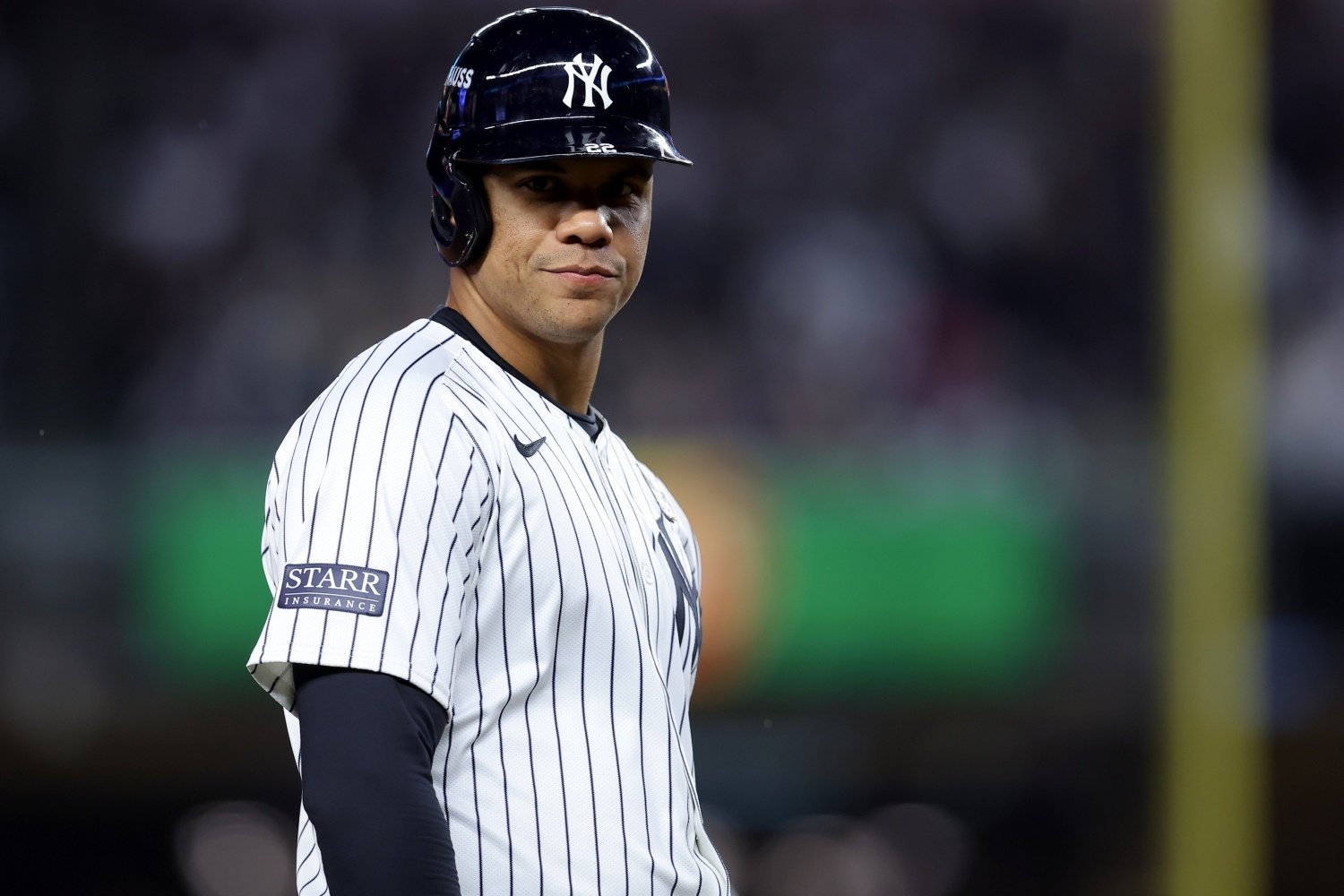
Ok, plainly, that's not the nature of the ripples Twins Territory will feel after Juan Soto and the Mets agreed on a gargantuan contract Sunday night. The Royals reportedly expressed interest, but one can only guess that when they and Soto's camp took the measure of each other, they all shared a hearty chuckle and agreed to part friends. There was no chance Soto would land in the AL Central, so his choice of a new team feels like only a small bit of influence. We might as well start there, though, and then go on to break down two other ways in which this deal figures to affect the Twins' matrix of options and their prospects for 2025.
1. He's out of the American League.
Although three AL Central clubs snuck into the postseason in 2024, by and large, it's going to be hard for anyone in the division to claim Wild Card berths. The Red Sox vied for Soto's services, and while they fell short, they sound especially aggressive as they pivot toward other ways to upgrade their roster for next season. They, the Yankees, and the Orioles remain formidable, and the Guardians and Royals have already acted decisively to hold onto key contributors this winter—Kansas City by extending Michael Wacha, and Cleveland by re-signing Shane Bieber.
Still, with Soto going to the Mets, Willy Adames signing with the Giants, and Blake Snell heading to the Dodgers, the biggest deals of the winter to date have all sequestered top talent in the National League. If it seems imposing to try to consistently attain October for the Twins, consider this: they're much better off than most of their division rivals and (arguably) all of their NL Central counterparts. So far, this winter has not seen a major step forward by any AL contender, unless you count the overexcited Angels as contenders. In an interview Monday morning on MLB Network, Derek Falvey reiterated that the Twins' focus is to win again in 2025, fueled by the roster they've already built over the last few years. As frustrating as the end of their season was, the flow of talent (not just Snell, Soto, and Adames, but Clay Holmes and Matthew Boyd, among early movers) leaves open some lanes through next year's schedule and onward into October—if the Twins act decisively.
2. There will be Carlos Correa rumors.
It still feels like little more than big-market arrogance, but Yankees media continues to sling around Correa as a name to which the Yankees could turn after having been spurned by Soto. It makes sense from their perspectives, but much less so from the Twins'. On the other hand, the Soto deal can only have acted to raise the going rate for star-caliber players, which also augments Correa's trade value. He'd be a steal at roughly $33 million per year over his four remaining guaranteed seasons, and he comes with a series of team-friendly options, to boot. If that salary was daunting even a few days ago, it's much less so now, after Soto got more than $50 million per year and the right to opt out of his deal—in effect, and in stark contrast with Correa's deal structure, a monstrous player option.
That doesn't mean the Twins should or will want to trade Correa, or that Correa (whose big consolation prize in this team-friendly deal is a full no-trade clause) would be open to being dealt. It merely proves that the surplus value on Correa's deal is considerable, even in the wake of a second straight season marred by plantar fasciitis. Unless and until the Yankees make a couple of huge free-agent outlays instead, Correa's name will keep coming up. Joel Sherman mentioned him as a target for New York on MLB Network Monday, although again, that felt more like an East Coast columnist feeling entitled to all the league's good players than like a sourced report.
3. New ownership is not going to solve the problems posed by the Mets' financial edge over the Twins.
While Soto never had a connection to the Twins at all, it's a little bit poignant to see him land with the same ham-fisted mega-market behemoth to whom the Twins had to trade Johan Santana nearly two decades ago. The staggering terms of this deal, which amounts to a five-year, $255-million deal with a 10-year player option worth $510 million (which the team can convert, if they choose, to a $550-million commitment to cancel the opt-out), make clear how wide the chasm has become between the league's haves and have-nots.
It's a good reminder that the league needs a dramatically expanded, comprehensive revenue-sharing system, and that the ugly collective bargaining agreement negotiations a year or two from now will really have three important parties: the players union, small-market owners, and large-market ones, all at crossed purposes. The Twins could be sold to as rich and competitive a magnate as is practically possible, and they would still be wildly unlikely to seriously battle with the Yankees, Mets, Dodgers, Phillies, or Red Sox for top free agents, given the scale to which those teams are now showing themselves able to spend. The league's wealth needs to be radically redistributed, and big-market owners will only be pulled into such an arrangement kicking and screaming. It's a big change, and much-needed, but the upheaval will not be fun. A work stoppage might be in the offing.
Which team do you dislike the most in the AL Central?
Follow Twins Daily For Minnesota Twins News & Analysis



- nclahammer, DannySD, Parfigliano and 1 other
-
 4
4


Recommended Comments
Create an account or sign in to comment
You need to be a member in order to leave a comment
Create an account
Sign up for a new account in our community. It's easy!
Register a new accountSign in
Already have an account? Sign in here.
Sign In Now