


Twins Video
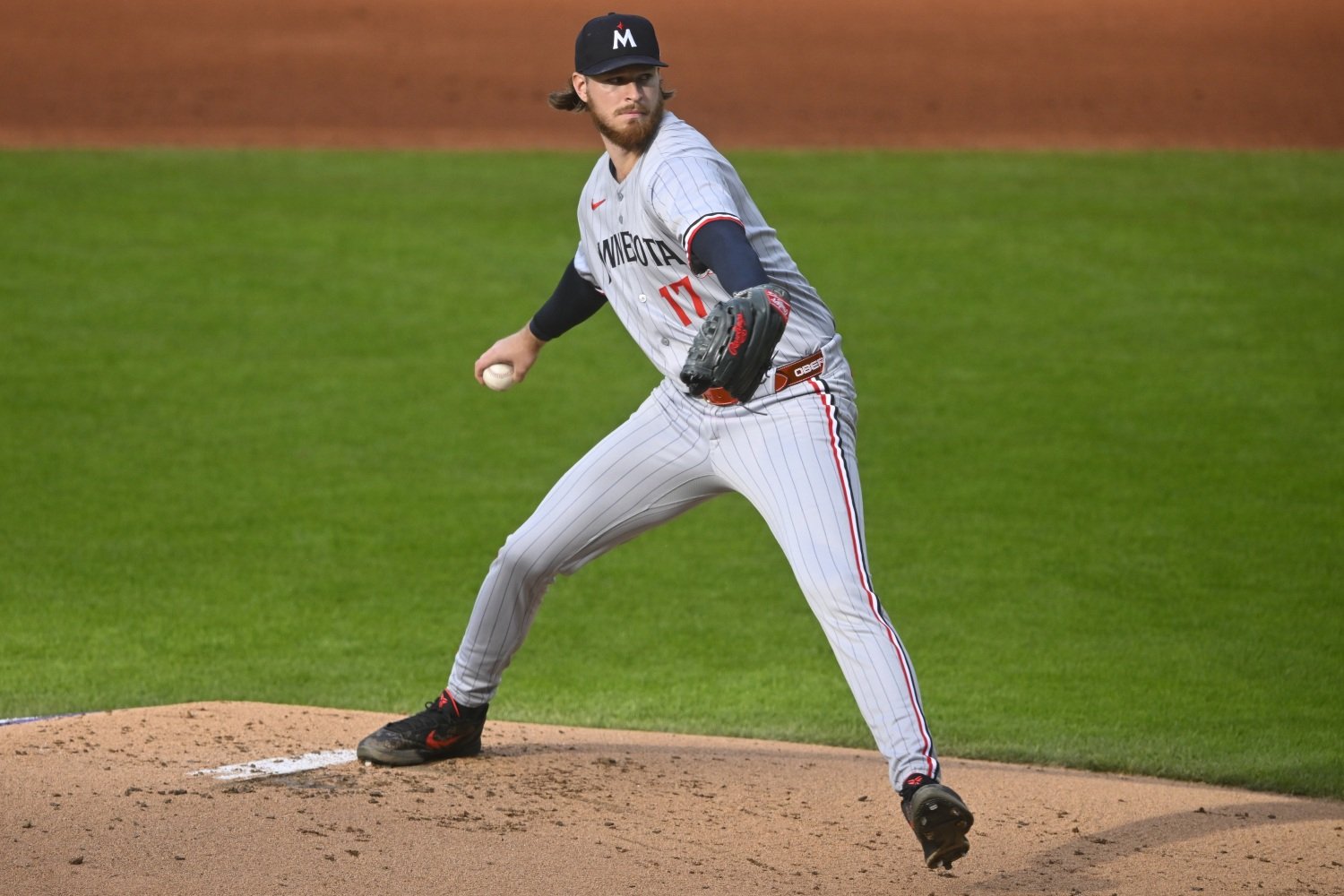
It would take a special talent for burying one's head in the sand not to notice, by now. Bailey Ober's velocity is down in 2025. He's generally been a starter who shows his best heat early in seasons—often, even during spring training—but unless he's made a drastic change to favor holding back his real fastball until June this time around, there's simply something missing. His average four-seamer now comes in on at less than 91 miles per hour.
You can see similar trends in his other pitches, too. Though he's not even 30 years old yet, the late-blooming Ober is a bit closer to going over the velocity cliff than we tend to remember. Given his huge frame, too, he could just be starting to lose a bit of raw stuff. As frustrating as that would be (for him, most of all, since he's yet to get a chance to cash in as handsomely as most pitchers in his class of performer do), it wouldn't be terribly unusual in the context of the modern game.

Don't sing him too sad a song of woe, though. Ober dominated the Cleveland Guardians Monday night, and is still very much a reliable mid-rotation starter. He's just having to rely less on the hard stuff. His four-seam fastball accounts for under 37% of his pitches thrown so far this year, which would be the lowest usage rate of his career. He's introduced a sinker this spring. He's relying a bit more on the breaking stuff.
In fact, over the last two seasons, Ober has cultivated two versions of the slider: a harder, tighter true slider, and a wider-moving sweeper. He's using both this year, again, as well as the curve—although in the early going, we've seen less of the sweeper than one might have expected.
"Yeah, [but] the sweeper the last two games has been feeling a lot better," Ober said at Target Field last week, before his latest outing. "It's also matchup-based, kind of seeing what guys—like if I can throw a hard spin better to people, or is big spin better? So it's just kind of seeing matchup-based and kind of going off that."
Because his raw stuff is not dominant, Ober needs to have a sound gameplan going into every start he makes. He's learned, though, how to make pivotal adjustments within games. The depth of that repertoire gives him, his catcher and Twins coaches options, so when one thing isn't working, they can usually find something else that will do.
"I mean, if you're going to need that certain pitch, you're going to have to find it," Ober said. "That's just how it is and that's part of pitching. But usually when you have four, five, six pitches, you're able to find which ones are going to be on that day and be able to use them and be effective."
In Cleveland, on Monday night, that pitch turned out to be the changeup. As always, the Guardians had their lineup chock-full of opposite-handed hitters, and early on, Ober realized (in the course of normal approaches the first time through the order) that the batters were all trying to sit on and attack the fastball. That demanded an adjustment, so the Twins made one. Ober used his changeup more often than in any other appearance this year.
It's not just how often he threw the change that's telling, though, but the way he leaned into it as he reached the middle innings and discovered Cleveland's plan against him. Then, once they did start trying to hunt the change, he went to the fastball for quick outs in the late stages of his outing.

Asked whether such contingency plans can be plotted out in advance or must be charted afresh to meet the exigencies of each contest, Ober broke it down.
"A little bit of both," he said. "There's always stuff you see mid-game, the conversations in the dugout are key to kind of adjust and make sure you and the catcher are on the same plan. But yeah, during our meetings, we have multiple ways of how we want to pitch guys and how we want to sequence guys. So there's always different plans and then obviously, like I said, if something shows up in-game where we're like, oh, this is actually open. where we thought it wasn't, then we can go from there and adjust."
Monday night was a clinic, in that regard. It was also further proof that, with his wide mix and his elite extension making up for some of the missing raw speed, Ober can excel without even approaching the mid-90s. His average fastball for the game was just 90.4 mph. More all the time, he's flirting with working in the 80s, but so far, he's been able to make that work. An impressive degree of pitchcraft, command, and mental toughness have brought him this far, even as his stuff wanes. There's a long season left, though, and the Twins would love if he rediscovered just a bit of the juice on his fastball as the weather warms.







Recommended Comments
Create an account or sign in to comment
You need to be a member in order to leave a comment
Create an account
Sign up for a new account in our community. It's easy!
Register a new accountSign in
Already have an account? Sign in here.
Sign In Now