


Twins Video
In 2022, the Minnesota Twins used an infield shift in MLB's sixth-highest share of all plate appearances against them. They had Carlos Correa at shortstop, but as usual, their overall infield defense reflected their team-building priorities--that is, it was weak, because they sacrificed a bit of glove for the thump they could find in the exchange. Sometimes, the best defense is a good offense.
Baseball saw a handful of important rule changes in 2023, though, including a ban on the defensive shift as we had previously known it. No longer could teams put more than two infielders on one side of second base. Nor could those infielders set up with their feet on the outfield grass, be it by a step or two or by dozens of feet, as they had done so often throughout history--but especially over the previous 20 years.
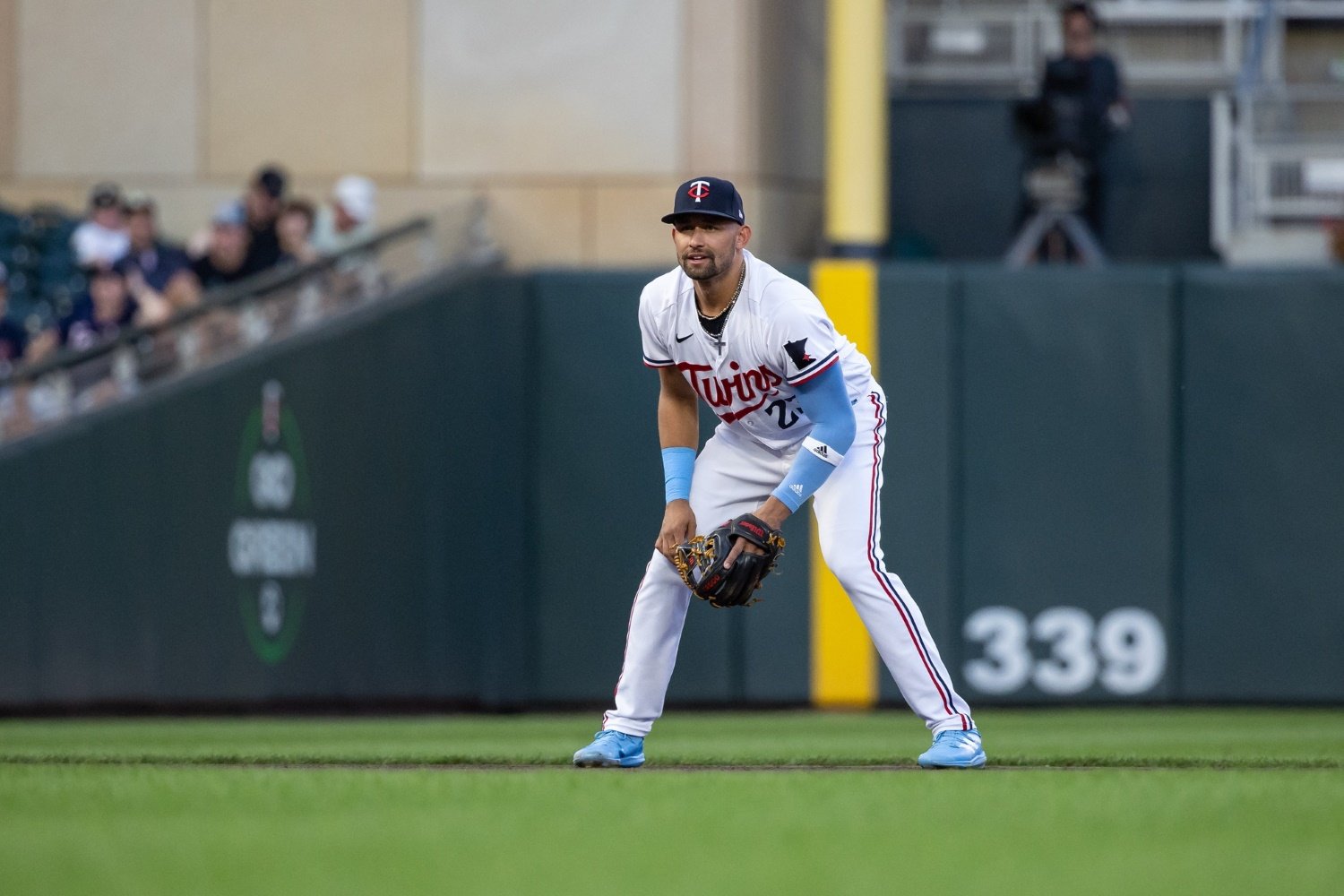
As will always happen when new constraints are put in place, teams adjusted and innovated, pushing those limits as far as they could but also bending to the new reality. Instead of the extreme shift, teams merely employed heavy shading--something used more often than is generally remembered, even as far back at the 1950s and certainly since the 1980s. With a left-handed batter at the plate, it wasn't uncommon to find a second baseman with his heels kissing the sides of the first blades of the grass, and wheeled over toward first base. The shortstop could be found, in those cases, lining themselves up as close to the imaginary line passing through the keystone en route to center field as the second-base umpire allowed.
After trading for Kyle Farmer over the winter and with Jorge Polanco turning 30 during the season, the team had an aging infield, and as they broke in Royce Lewis as a full-time third baseman and rookie Edouard Julien at second, they were again consciously trading off some defensive prowess for thump in the lineup. When injuries and ineffectiveness forced them to turn to Donovan Solano more often, and when Correa developed plantar fasciitis that limited his range, they got even more unathletic around the horn.
Shading was the team's way of making up for that. No team in baseball utilized Shades more often, overall, than the Twins did this past season.
| Team | Shade % v RHB | Team | Shade % v LHB |
| Atlanta | 24.3 | Texas | 74.1 |
| Miami | 23.1 | Minnesota | 62.9 |
| Tampa Bay | 22.5 | Detroit | 58.6 |
| Minnesota | 18.3 | Los Angeles (N) | 56.3 |
| Cincinnati | 11.5 | Houston | 56.3 |
This method made sense. It was a way for the team to get the bats of both Polanco and Julien in the lineup at some times, and to get both Polanco and Solano in the lineup at others. It reflected the team's strong lean toward fly balls and emphasis on strikeouts from the pitching staff. Why put your resources into bulking up an infield defense that will, by design, be depended on less than any of its counterparts throughout the league?
All that skirts the most important question, though: Did it work?







Recommended Comments
Create an account or sign in to comment
You need to be a member in order to leave a comment
Create an account
Sign up for a new account in our community. It's easy!
Register a new accountSign in
Already have an account? Sign in here.
Sign In Now