



Cody Schoenmann
-
Posts
768 -
Joined
-
Last visited
-
Days Won
1
Content Type
Profiles
News
Minnesota Twins Videos
2026 Minnesota Twins Top Prospects Ranking
2022 Minnesota Twins Draft Picks
Minnesota Twins Free Agent & Trade Rumors, Notes, & Tidbits
Guides & Resources
2023 Minnesota Twins Draft Picks
The Minnesota Twins Players Project
2024 Minnesota Twins Draft Picks
2025 Minnesota Twins Draft Pick Tracker
2026 Minnesota Twins Draft Tracker: Picks & Bonuses
Forums
Blogs
Events
Store
Downloads
Gallery
Everything posted by Cody Schoenmann
-
 Read about the eight international amateur free agents the Twins signed; other notable international moving and shaking; Dusty Baker, Tim Anderson, Amed Rosario; and more in today's morale-boosting table setter. Image courtesy of Twins Player Development on X No time of the year is more exciting than mid-January, especially during a polar vortex. Will your car start when you leave your home? Will you develop frostbite on your fingers if you don't wear gloves outside? Does your girlfriend still love you? (Sorry, I'm projecting my insecurities, disregard that last part.) While this challenge to our very existence is occurring in the natural world, most of us have the privilege of subjecting ourselves to a mind-numbingly excessive amount of sports-centric entertainment to distract ourselves. The NFL playoffs are in full swing, the NBA and NHL seasons are nearly halfway finished, and MLB free agency is, well, technically happening. Not much has occurred in the past few days, but transactions and other newsworthy tidbits are floating by every so often. Let's jump into the news, courtesy of the fine people at Twins Daily. Twins Sign Eight International Amateur Free Agents Jan. 15 marked the opening of the international free agent signing period. Although the players signed will need to undergo immense training through the minor leagues and other developmental programs, finding MLB contributors through the IFA market is one of the pillars for organizations forging sustainable, long-term success. Here are the eight players the team signed: Misael Rodríguez, SP Yoel Roque, P Eduardo Beltré, OF Merphy Hernández, OF Daniel Manzueta, P Daiber De Los Santos, OF Alver Medina, IF Enyer Cepeda, P Of the eight, Beltré (ranked 39th by MLB Pipeline) and De Los Santos (8th) are the standouts of the bunch. According to pundits, De Los Santos might have the best overall raw tools in the class and could fit the "Five-Tool Player" archetype at a young age. The most appealing aspects of his game are fast hands, a powerful arm, and plus raw power. The 17-year-old plays shortstop and projects to have the tools to stay there through the high minors and (potentially) even in MLB. Beltré is a prospect with a lower ceiling but a higher floor than De Los Santos. He mixes potentially elite defensive prowess in center field with an aggressive approach at the plate and the potential to develop a multitude of plus tools during his development. Immediately, this profile evokes Michael A. Taylor, the Twins' primary center fielder last season. Yet, Beltré could have his power be a more consistent and feared aspect of his game. It's much too early to feel sure of that, but the makings of a rangy slugger are there. Other Notable International Amateur Free Agent Signings The San Diego Padres landed the No. 1 international prospect, Leo De Vries, signing him to a $4.2-million bonus. De Vries is often compared to Cleveland Guardians star José Ramírez (though, to keep us all grounded in the uncertainty of this endeavor, Ramírez himself signed for $50,000 in 2009). The rest of the top-five list is rounded out by Paulino Santana (Rangers, $1.3 million), José Perdomo (Braves, $5 million), Fernando Cruz (Cubs, $4 million), and Adolfo Sánchez (Reds, $2.7 million). Cruz, who signed with the Cubs for $4 million, is the cousin of former MLB All-Star Starlin Castro. Vladi Miguel Guerrero (son of Vladimir Guerrero and half-brother Vladimir Guerrero Jr.) signed with the New York Mets. Dusty Baker Stays in MLB Late Monday evening, USA Today's Bob Nightengale reported that the San Francisco Giants hired Baker as a special assistant. Baker, who became a Giants coach almost the moment his playing days ended and managed the team from 1993-2002, will return to the organization to work with the team's president of baseball operations, Farhan Zaidi, and assist president Larry Baer with miscellaneous ownership duties. Baker is 74, so while it makes sense that he no longer feels up to managing a team's 26-man roster throughout a long season, it is nice to see one of the most prominent Black managers in MLB history stay in the game. Baker lives in Sacramento, California, so there is a plausible chance he will also take on an advisory role with the Giants' Triple-A affiliate, the Sacramento River Cats. Middling Shortstop Market Could Pick Up in Activity Soon After being spoiled with some of the most loaded free-agent shortstop classes in MLB history the last handful of offseasons, fans have grown accustomed to unsustainably enormous deals being handed out to numerous shortstops every winter. Unfortunately, this year's free-agent shortstop talent collection (headlined by Tim Anderson and Amed Rosario) is shallower than the kiddie pool that led to Betty Carver's husband's demise in What's Eating Gilbert Grape. [Ed. note: Look, film is the literature of our generation and I'm not going to stop a writer from alluding to a reasonably important one. Me, personally, I don't know how shallow that pool was, and I apologize if this reference constitutes a spoiler. Google tells me the movie's been out long enough that it's your own fault if you wanted to see it but haven't. Tim Anderson and Amed Rosario are rough headliners for a free-agent positional class, is the point.] We are less than one month away from spring training, and the number of reasonable landing spots for the two shortstops mentioned (and less desirable options like Elvis Andrus, Nick Ahmed, and Brandon Crawford) has become paper-thin. Anderson was linked to the Los Angeles Angels in November. Although Anaheim is a challenging environment to thrive in (unless your last name is Trout or Ohtani, which Anderson's doesn't seem to be), the acquisition would make sense, as Anderson could play the role of a stopgap, allowing the franchise the opportunity to further develop the 22-year-old Zach Neto at Triple A or to move around the versatile Luis Rengifo. Earlier this offseason, Rosario was rumored to be a possible target for the Boston Red Sox and Toronto Blue Jays. Yet, with both teams trading for or signing infielders (Vaughn Grissom for the Sox; Isiah Kiner-Falefa for the Jays) this past month, it appears Rosario is no longer an option for either franchise. Teams like the Miami Marlins, Los Angeles Dodgers, Tampa Bay Rays, Seattle Mariners, Oakland Athletics, and Pittsburgh Pirates make sense as potential suitors for the remaining available free-agent shortstops, but with the clock ticking and open roster spots dwindling, the final dollar amount earned by shortstops this offseason could be catastrophically low. Miscellaneous Twins Notes Joe Mauer has 83.3% of the Hall of Fame vote over 135 confirmed ballots. Mauer needs 68.9% of the vote to become the Twins' first first-ballot Hall of Fame since Kirby Puckett was elected in 2001. Both were career-long Twins. Former Twins Bartolo Colón (0.6%) and Torii Hunter (4.7%) have been eliminated from Hall of Fame contention. Hunter still has a chance to stick around on next year's ballot, though, if his support ticks up fractionally. Forgotten Star and Twins Daily have collaborated to make a beer that will be featured at Winter Meltdown (get your tickets here by becoming a Caretaker). Is Logan Gilbert the perfect trade candidate for the Twins to pursue? JD Cameron analyzes that question in his most recent piece here at Twins Daily. What do you think of the Twins' international amateur free-agent signings? Do De Los Santos or Beltré excite you? Do any of the other free agents stand out to you? What type of impact do you think Baker will make with the Giants, who seem so much adrift at the moment? Where will Anderson and Rosario sign? Join the discussion and comment below. View full article
 -
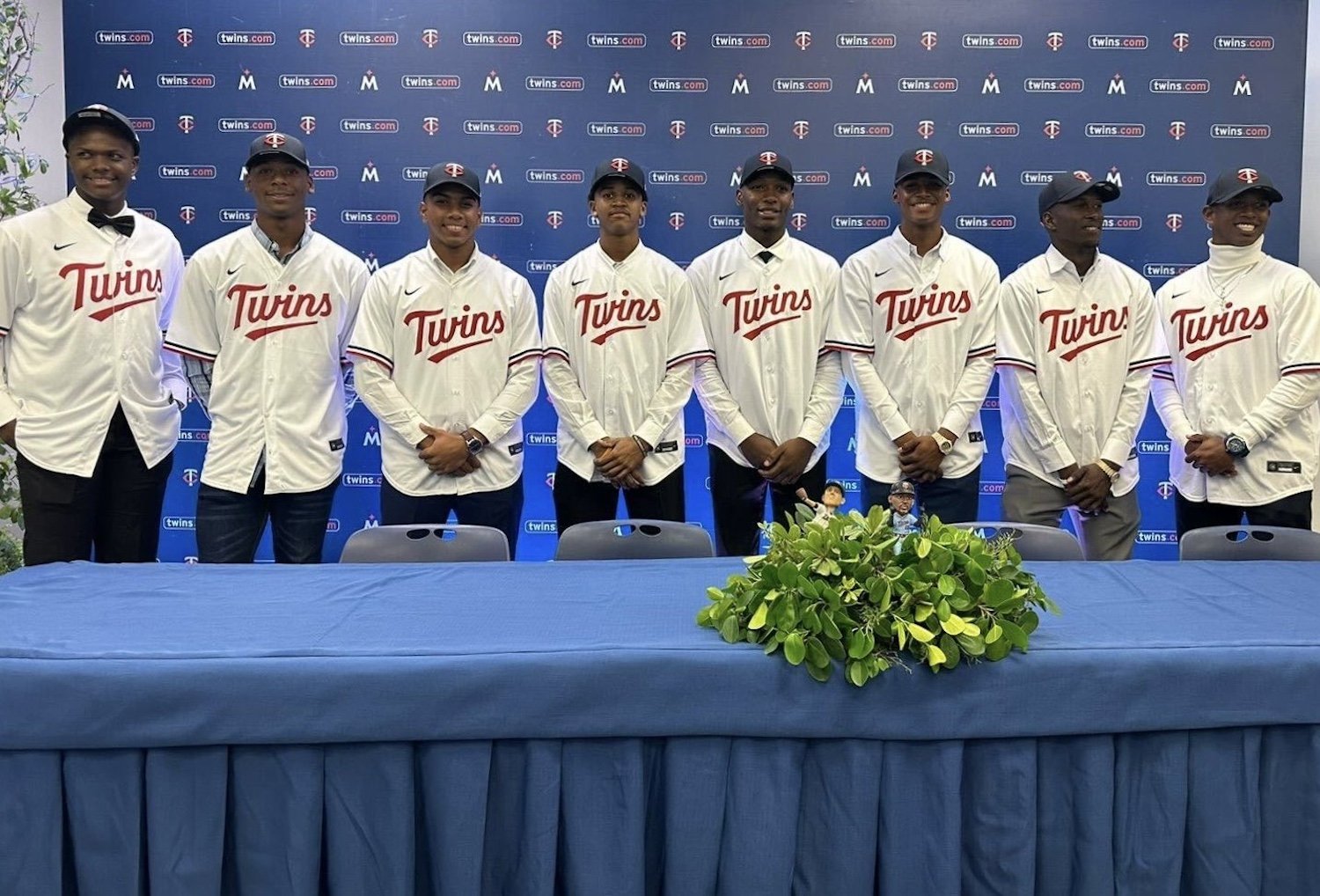 No time of the year is more exciting than mid-January, especially during a polar vortex. Will your car start when you leave your home? Will you develop frostbite on your fingers if you don't wear gloves outside? Does your girlfriend still love you? (Sorry, I'm projecting my insecurities, disregard that last part.) While this challenge to our very existence is occurring in the natural world, most of us have the privilege of subjecting ourselves to a mind-numbingly excessive amount of sports-centric entertainment to distract ourselves. The NFL playoffs are in full swing, the NBA and NHL seasons are nearly halfway finished, and MLB free agency is, well, technically happening. Not much has occurred in the past few days, but transactions and other newsworthy tidbits are floating by every so often. Let's jump into the news, courtesy of the fine people at Twins Daily. Twins Sign Eight International Amateur Free Agents Jan. 15 marked the opening of the international free agent signing period. Although the players signed will need to undergo immense training through the minor leagues and other developmental programs, finding MLB contributors through the IFA market is one of the pillars for organizations forging sustainable, long-term success. Here are the eight players the team signed: Misael Rodríguez, SP Yoel Roque, P Eduardo Beltré, OF Merphy Hernández, OF Daniel Manzueta, P Daiber De Los Santos, OF Alver Medina, IF Enyer Cepeda, P Of the eight, Beltré (ranked 39th by MLB Pipeline) and De Los Santos (8th) are the standouts of the bunch. According to pundits, De Los Santos might have the best overall raw tools in the class and could fit the "Five-Tool Player" archetype at a young age. The most appealing aspects of his game are fast hands, a powerful arm, and plus raw power. The 17-year-old plays shortstop and projects to have the tools to stay there through the high minors and (potentially) even in MLB. Beltré is a prospect with a lower ceiling but a higher floor than De Los Santos. He mixes potentially elite defensive prowess in center field with an aggressive approach at the plate and the potential to develop a multitude of plus tools during his development. Immediately, this profile evokes Michael A. Taylor, the Twins' primary center fielder last season. Yet, Beltré could have his power be a more consistent and feared aspect of his game. It's much too early to feel sure of that, but the makings of a rangy slugger are there. Other Notable International Amateur Free Agent Signings The San Diego Padres landed the No. 1 international prospect, Leo De Vries, signing him to a $4.2-million bonus. De Vries is often compared to Cleveland Guardians star José Ramírez (though, to keep us all grounded in the uncertainty of this endeavor, Ramírez himself signed for $50,000 in 2009). The rest of the top-five list is rounded out by Paulino Santana (Rangers, $1.3 million), José Perdomo (Braves, $5 million), Fernando Cruz (Cubs, $4 million), and Adolfo Sánchez (Reds, $2.7 million). Cruz, who signed with the Cubs for $4 million, is the cousin of former MLB All-Star Starlin Castro. Vladi Miguel Guerrero (son of Vladimir Guerrero and half-brother Vladimir Guerrero Jr.) signed with the New York Mets. Dusty Baker Stays in MLB Late Monday evening, USA Today's Bob Nightengale reported that the San Francisco Giants hired Baker as a special assistant. Baker, who became a Giants coach almost the moment his playing days ended and managed the team from 1993-2002, will return to the organization to work with the team's president of baseball operations, Farhan Zaidi, and assist president Larry Baer with miscellaneous ownership duties. Baker is 74, so while it makes sense that he no longer feels up to managing a team's 26-man roster throughout a long season, it is nice to see one of the most prominent Black managers in MLB history stay in the game. Baker lives in Sacramento, California, so there is a plausible chance he will also take on an advisory role with the Giants' Triple-A affiliate, the Sacramento River Cats. Middling Shortstop Market Could Pick Up in Activity Soon After being spoiled with some of the most loaded free-agent shortstop classes in MLB history the last handful of offseasons, fans have grown accustomed to unsustainably enormous deals being handed out to numerous shortstops every winter. Unfortunately, this year's free-agent shortstop talent collection (headlined by Tim Anderson and Amed Rosario) is shallower than the kiddie pool that led to Betty Carver's husband's demise in What's Eating Gilbert Grape. [Ed. note: Look, film is the literature of our generation and I'm not going to stop a writer from alluding to a reasonably important one. Me, personally, I don't know how shallow that pool was, and I apologize if this reference constitutes a spoiler. Google tells me the movie's been out long enough that it's your own fault if you wanted to see it but haven't. Tim Anderson and Amed Rosario are rough headliners for a free-agent positional class, is the point.] We are less than one month away from spring training, and the number of reasonable landing spots for the two shortstops mentioned (and less desirable options like Elvis Andrus, Nick Ahmed, and Brandon Crawford) has become paper-thin. Anderson was linked to the Los Angeles Angels in November. Although Anaheim is a challenging environment to thrive in (unless your last name is Trout or Ohtani, which Anderson's doesn't seem to be), the acquisition would make sense, as Anderson could play the role of a stopgap, allowing the franchise the opportunity to further develop the 22-year-old Zach Neto at Triple A or to move around the versatile Luis Rengifo. Earlier this offseason, Rosario was rumored to be a possible target for the Boston Red Sox and Toronto Blue Jays. Yet, with both teams trading for or signing infielders (Vaughn Grissom for the Sox; Isiah Kiner-Falefa for the Jays) this past month, it appears Rosario is no longer an option for either franchise. Teams like the Miami Marlins, Los Angeles Dodgers, Tampa Bay Rays, Seattle Mariners, Oakland Athletics, and Pittsburgh Pirates make sense as potential suitors for the remaining available free-agent shortstops, but with the clock ticking and open roster spots dwindling, the final dollar amount earned by shortstops this offseason could be catastrophically low. Miscellaneous Twins Notes Joe Mauer has 83.3% of the Hall of Fame vote over 135 confirmed ballots. Mauer needs 68.9% of the vote to become the Twins' first first-ballot Hall of Fame since Kirby Puckett was elected in 2001. Both were career-long Twins. Former Twins Bartolo Colón (0.6%) and Torii Hunter (4.7%) have been eliminated from Hall of Fame contention. Hunter still has a chance to stick around on next year's ballot, though, if his support ticks up fractionally. Forgotten Star and Twins Daily have collaborated to make a beer that will be featured at Winter Meltdown (get your tickets here by becoming a Caretaker). Is Logan Gilbert the perfect trade candidate for the Twins to pursue? JD Cameron analyzes that question in his most recent piece here at Twins Daily. What do you think of the Twins' international amateur free-agent signings? Do De Los Santos or Beltré excite you? Do any of the other free agents stand out to you? What type of impact do you think Baker will make with the Giants, who seem so much adrift at the moment? Where will Anderson and Rosario sign? Join the discussion and comment below.
- 10 comments
-
- 8
-

-
- daiber de los santos
- eduardo beltré
- (and 3 more)
-
Despite Twins ownership making a shortsighted decision to cut payroll when fan morale was as high as it has been in 20 years, it is crucial for those who follow the team not to follow in their footsteps. Luckily, there is a significant reason for Twins Territory to rekindle their optimism toward the team, even when those at the top act parsimoniously. Image courtesy of Erik Williams - USA TODAY Sports Entering the 2023 MLB season, a peculiar mixture of cautious optimism and impenetrable angst overhung the Twins. Carlos Correa was signed long-term, but his ankle could give out. Frontline starting pitcher Pablo López was acquired, but the team had to part ways with the beloved Luis Arráez to do so. The team had a respectable first half of the 2022 season, but the wheels fell off after the All-Star break, and they missed the postseason. Fans wanted to give themselves to the Twins, but, as with all professional Minnesota sports teams, empirical rationality wouldn't let them. Fast-forward to the following offseason, and the mood is vexingly similar, despite the organization winning their first playoff game since 2004. Much of the frustration surrounding the team is due to ownership imposing significant, unnecessary payroll cuts in response to not having a regional broadcasting deal. The Pohlad family had the opportunity to strike the iron while it was hot and allow the front office to fortify an already formidable roster, yet they are electing to wallow in self-inflicted paralysis in the name of saving tens of millions of dollars in the short term. The way Twins ownership is choosing to act is disheartening. It should be criticized, but that doesn't mean those who follow the team need to take a broadly pessimistic approach to a group that just provided fans the best moment this franchise has enjoyed since defeating the "Moneyball" A's in 2002. Suffering because of a sports team is a quintessentially Minnesotan behavior, but wouldn't it be nice to defy that stereotype? Over the past three seasons, the Twins' payroll has steadily increased, despite continually placing between 16th and 18th in MLB: 2021: $125.27 million (16 of 30) 2022: $134.40 million (18 of 30) 2023: $153.71 million (17 of 30) Twins ownership's choice to steadily increase payroll five out of the last six offseasons (2020 notwithstanding) has allowed the organization to become one of the two consistently contending teams in the lowly AL Central, alongside the Cleveland Guardians. Though the team has voluntarily regressed to their 2021 salary numbers, that doesn't mean the on-field product will be subject to the same backward trend. After ending the 18-game playoff losing streak and winning their first postseason series since 2002, the second-most significant highlight of the Twins' 2023 season was the unexpected youth movement headlined by three rookie position players: Royce Lewis, Edouard Julien, and Matt Wallner. This triumvirate, which generated 155 (Lewis), 136 (Julien), and 144 (Wallner) wRC+ marks over 901 combined plate appearances in 2023, is set to make an estimated $2.22 million in 2024. Beyond these three young core pieces of the franchise, other key contributors are estimated to be above-average players at owner-friendly rates as well: Joe Ryan: $740,000 Bailey Ober: $740,000 Louie Varland: $740,000 Jhoan Duran: $740,000 Griffin Jax: $740,000 Brock Stewart: $740,000 Kody Funderburk: $740,000 Ryan Jeffers: $2,425,000 Alex Kirilloff: $1,350,000 The 12 core contributors noted are expected to make $11,175,000 in 2024. This is also commonly referred to as "$175,000 more than what Joey Gallo made in 2023." To further illustrate how much of a bargain these players are for the World Series-hopeful Twins, the 12 of them (only one of whom will be over 30 years old in 2024) are projected to generate a combined 18.2 Wins Above Replacement at FanGraphs (fWAR) in 2024. Mixing this assortment of young, cost-effective talent with a veteran core of López, Correa, Byron Buxton, Jorge Polanco, and Max Kepler, the Twins have 17 of their 26-man roster filled and are expected to manufacture 32.9 fWAR at the price of $88,401,190 in 2024. President of baseball operations Derek Falvey and the Twins front office have done an admirable job constructing a balanced, winning roster for less than $100 million in total. Though the team's decision-makers' ability to assemble a roster that is projected to still win the AL Central despite abruptly being forced to cut payroll is honorable, it doesn't absolve the owners of their short-sightedness. Luckily, the Twins don't have any dire areas of need to address this offseason, but there are various moves the organization ought to explore making before entering the 2024 season. The list of additions the Twins need to consider includes: A frontline or back-of-the-rotation starting pitcher A mid- to high-leverage reliever An adequate center field insurance policy for the oft-injured Buxton A right-handed batter who could play first base, both corner outfield spots, and hit for power In a typical offseason, these areas of need could be adequately addressed for roughly $25-30 million, hypothetically increasing the Twins' payroll for 2024. If the Twins were receiving the roughly $60 million they were getting from Bally Sports North, how the front office addressed these needs could have been much different. The Twins could have offered Marcus Stroman a contract worth more than the two years and $37 million the New York Yankees gave him. The team could have offered Kevin Kiermaier more than the $10.50 million the Toronto Blue Jays gave him for one season. Instead, they will likely fill the roles these reliable veterans could have occupied with unproven commodities like Varland and Willi Castro. Frustration will remain prevalent, but it is crucial not to lose sight of the advantageous situation the Twins find themselves in. Whether a franchise resides in a large market with an owner (or ownership group) who is willing to splurge on free agents and trade targets (i.e., the Los Angeles Dodgers) or exists in a small market with a frugal owner (i.e., the Tampa Bay Rays), the most successful teams garner long-term success through signing international free agents and drafting and developing players in a sustainably successful manner. The Twins, who live in the middle section of that spectrum, sign, draft, and develop at a sustainably successful rate, which drives their success. It is reasonable to be upset at Twins ownership for not allowing the front office the luxury to spend on free agents the likes of Stroman or Kiermaier (who could help the team take the next step toward their World Series aspirations), but the organization still has one of the most robust foundations in the league. This type of foundation is an essential pillar for short- and long-term success. Though fans shouldn't have to endure this form of disappointment, it is vital not to lose sight of the bigger picture, something ownership has done by shortsightedly cutting payroll. Does this unfortunate reality give you a greater appreciation of the team's front office and player development department? How are you balancing excitement about the team with anger at the owners? Join the discussion and comment below. View full article
-
The Mariners acquired Anthony DeSclafani from the San Francisco Giants last Friday. Could they flip him to the starting pitching-needy Twins? Image courtesy of D. Ross Cameron - USA TODAY Sports When analyzing which starting pitchers the Twins could realistically acquire this offseason, it feels imperative to buck specific trends. The Twins front office is unlikely to land frontline starters Shane Bieber or Dylan Cease, since both play in their division. They could be in on the Brewers' Corbin Burnes, but that addition would come at a heavy cost. Given their financial constraints, they almost certainly aren't going to sign the remaining top free agents, Blake Snell or Jordan Montgomery So, who does that leave as viable options? Less-talked-about trade candidates such as Jesús Luzardo, Logan Gilbert, and Bryce Miller are more realistic options, yet due to them being young, cost-effective, and under team control for a significant amount of time, the team would need to send a package filled with substantial prospect capital, with second-ranked prospect Brooks Lee the likely headliner. That being the case, it feels like the most realistic avenues down which the Twins could venture are: Trading for an under-the-radar starting pitcher who has yet to blossom, similar to Pablo López last season Standing pat and having Louie Varland be the fifth-starter Signing a mid-tier free agent like Hyun Jin Ryu or Michael Lorenzen to a cheap one-year contract; or Trading for a starting pitcher of the same caliber. Though numerous players who could be acquired relatively cheaply fit this archetype, one specific pitcher will be highlighted in this piece: Anthony DeSclafani. Traded from the San Francisco Giants to the Seattle Mariners last Friday, the 33-year-old DeSclafani finds himself at a crossroads in his career. Will he be able to continue to contribute as age erodes his stuff, or is his career bound to fizzle out and come to a premature conclusion? In 2021, DeSclafani wangled a 3.17 ERA, 1.09 WHIP, and 3.0 Wins Above Replacement at FanGraphs (fWAR) over 167 2/3 innings pitched and 31 games started. Though DeSclafani's first year in the Bay Area went well, he has unfortunately scuffled, generating a combined 5.75 ERA, 1.62 WHIP, and 1.0 fWAR over 118 2/3 IP and 23 games started over the past two seasons. Though it is hard to pinpoint why a player struggled, it is safe to assume that the injuries that prematurely ended his 2022 and 2023 seasons are the main culprits. The injury that ended his 2023 campaign was a flexor strain in his right below. Though this type of injury is alarming for a starting pitcher, he did not require surgery, and it appears he will be ready for Opening Day in 2024. With DeSclafani looking to be healthy next season, would it be wise for the Twins to trade for the one year and $12 million left on his contract? FanGraphs' STEAMER projects DeSclafani will generate a 4.06 ERA, 1.24 WHIP, 7.9 K/9, and 0.6 fWAR over 88 IP with the Mariners as a reliever. Before getting traded to the Mariners, STEAMER projected DeSclafani would make 26 starts for the Giants, manufacturing a 1.4 fWAR over 148 IP. If DeSclafani were traded to the Twins, his 1.4 fWAR projection would be wedged between Chris Paddack (projected 1.8 fWAR over 145 IP) and Louie Varland (projected 1.3 fWAR over 136 IP). Though this type of performance from DeSclafani could be seen as underwhelming, having an effective, veteran back-of-the-rotation arm to complement Paddack and Varland (who are largely unknown commodities) could play a significant role in keeping the Twins afloat during the strenuous 162-game regular season. DeSclafani heavily relies on his slider, a pitch he threw 44.8 percent of the time in 2023. The Florida product's main complementary pitch is a sinker, which he threw 27.7 percent of the time last season. DeSclafani also utilizes a four-seam fastball, changeup, and curveball, leading to a five-pitch repertoire. Being a slider-first pitcher who uses a sinker/fastball as almost a secondary option, he fits what the Twins desire when pursuing pitching talent to a tee. Also, he seems comfortable using his four-seamer to attack the top of the zone, a trait the Twins significantly value when it comes to pitch location. Although it would be ideal if the Twins could acquire a frontline starter who could approximate the 4.1 fWAR Pablo López is projected to produce in 2024, acquiring a back-of-the-rotation starter with the potential to yield 1.4 or more fWAR would be an adequate consolation prize. Should the Twins trade for DeSclafani? Does his injury history worry you? Would you rather have DeSclafani or Varland be the team's fifth starter? Join the discussion and comment below. View full article
-
Could the Mariners Flip This Starting Pitcher to the Twins?
Cody Schoenmann posted an article in Twins
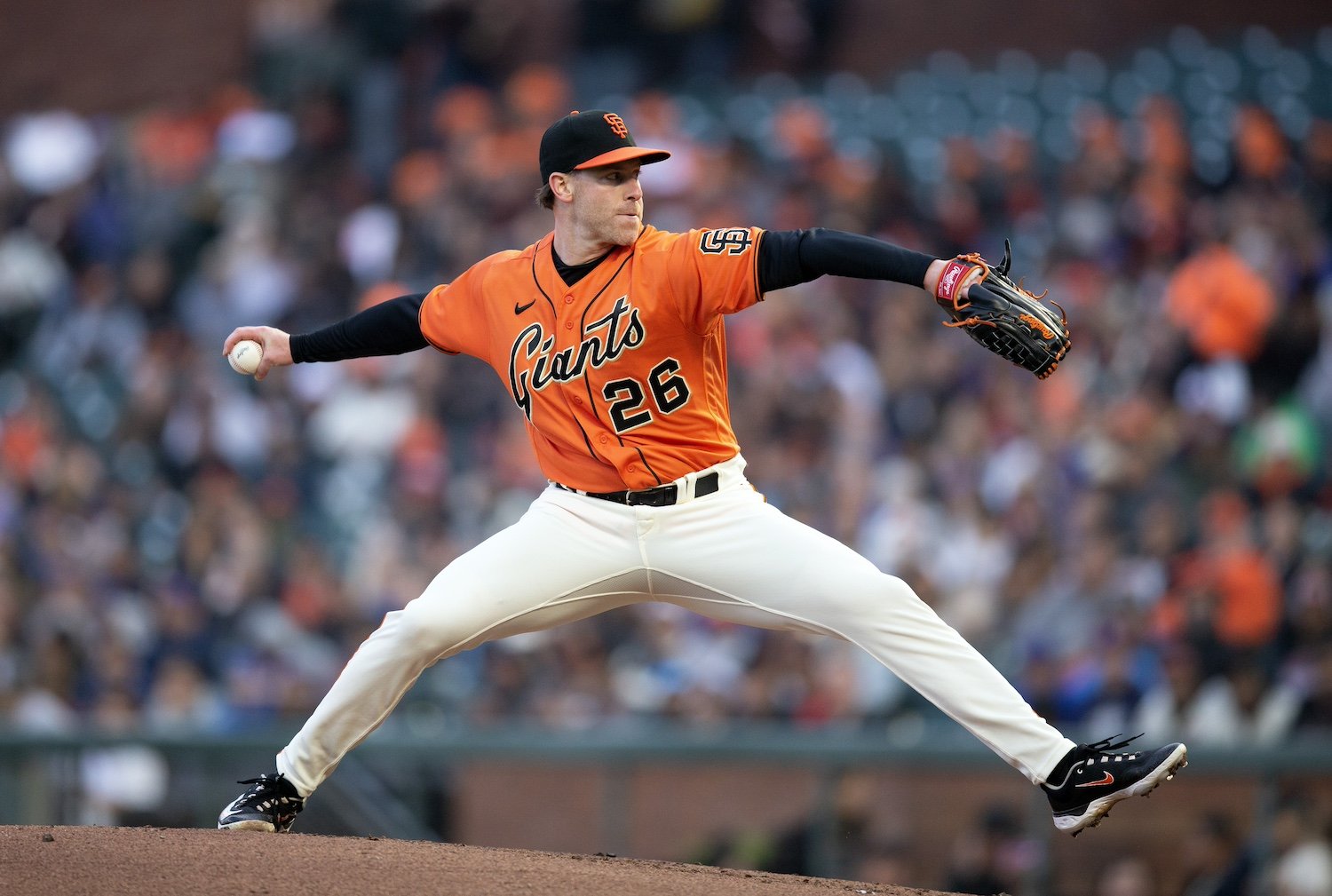 When analyzing which starting pitchers the Twins could realistically acquire this offseason, it feels imperative to buck specific trends. The Twins front office is unlikely to land frontline starters Shane Bieber or Dylan Cease, since both play in their division. They could be in on the Brewers' Corbin Burnes, but that addition would come at a heavy cost. Given their financial constraints, they almost certainly aren't going to sign the remaining top free agents, Blake Snell or Jordan Montgomery So, who does that leave as viable options? Less-talked-about trade candidates such as Jesús Luzardo, Logan Gilbert, and Bryce Miller are more realistic options, yet due to them being young, cost-effective, and under team control for a significant amount of time, the team would need to send a package filled with substantial prospect capital, with second-ranked prospect Brooks Lee the likely headliner. That being the case, it feels like the most realistic avenues down which the Twins could venture are: Trading for an under-the-radar starting pitcher who has yet to blossom, similar to Pablo López last season Standing pat and having Louie Varland be the fifth-starter Signing a mid-tier free agent like Hyun Jin Ryu or Michael Lorenzen to a cheap one-year contract; or Trading for a starting pitcher of the same caliber. Though numerous players who could be acquired relatively cheaply fit this archetype, one specific pitcher will be highlighted in this piece: Anthony DeSclafani. Traded from the San Francisco Giants to the Seattle Mariners last Friday, the 33-year-old DeSclafani finds himself at a crossroads in his career. Will he be able to continue to contribute as age erodes his stuff, or is his career bound to fizzle out and come to a premature conclusion? In 2021, DeSclafani wangled a 3.17 ERA, 1.09 WHIP, and 3.0 Wins Above Replacement at FanGraphs (fWAR) over 167 2/3 innings pitched and 31 games started. Though DeSclafani's first year in the Bay Area went well, he has unfortunately scuffled, generating a combined 5.75 ERA, 1.62 WHIP, and 1.0 fWAR over 118 2/3 IP and 23 games started over the past two seasons. Though it is hard to pinpoint why a player struggled, it is safe to assume that the injuries that prematurely ended his 2022 and 2023 seasons are the main culprits. The injury that ended his 2023 campaign was a flexor strain in his right below. Though this type of injury is alarming for a starting pitcher, he did not require surgery, and it appears he will be ready for Opening Day in 2024. With DeSclafani looking to be healthy next season, would it be wise for the Twins to trade for the one year and $12 million left on his contract? FanGraphs' STEAMER projects DeSclafani will generate a 4.06 ERA, 1.24 WHIP, 7.9 K/9, and 0.6 fWAR over 88 IP with the Mariners as a reliever. Before getting traded to the Mariners, STEAMER projected DeSclafani would make 26 starts for the Giants, manufacturing a 1.4 fWAR over 148 IP. If DeSclafani were traded to the Twins, his 1.4 fWAR projection would be wedged between Chris Paddack (projected 1.8 fWAR over 145 IP) and Louie Varland (projected 1.3 fWAR over 136 IP). Though this type of performance from DeSclafani could be seen as underwhelming, having an effective, veteran back-of-the-rotation arm to complement Paddack and Varland (who are largely unknown commodities) could play a significant role in keeping the Twins afloat during the strenuous 162-game regular season. DeSclafani heavily relies on his slider, a pitch he threw 44.8 percent of the time in 2023. The Florida product's main complementary pitch is a sinker, which he threw 27.7 percent of the time last season. DeSclafani also utilizes a four-seam fastball, changeup, and curveball, leading to a five-pitch repertoire. Being a slider-first pitcher who uses a sinker/fastball as almost a secondary option, he fits what the Twins desire when pursuing pitching talent to a tee. Also, he seems comfortable using his four-seamer to attack the top of the zone, a trait the Twins significantly value when it comes to pitch location. Although it would be ideal if the Twins could acquire a frontline starter who could approximate the 4.1 fWAR Pablo López is projected to produce in 2024, acquiring a back-of-the-rotation starter with the potential to yield 1.4 or more fWAR would be an adequate consolation prize. Should the Twins trade for DeSclafani? Does his injury history worry you? Would you rather have DeSclafani or Varland be the team's fifth starter? Join the discussion and comment below.
 -
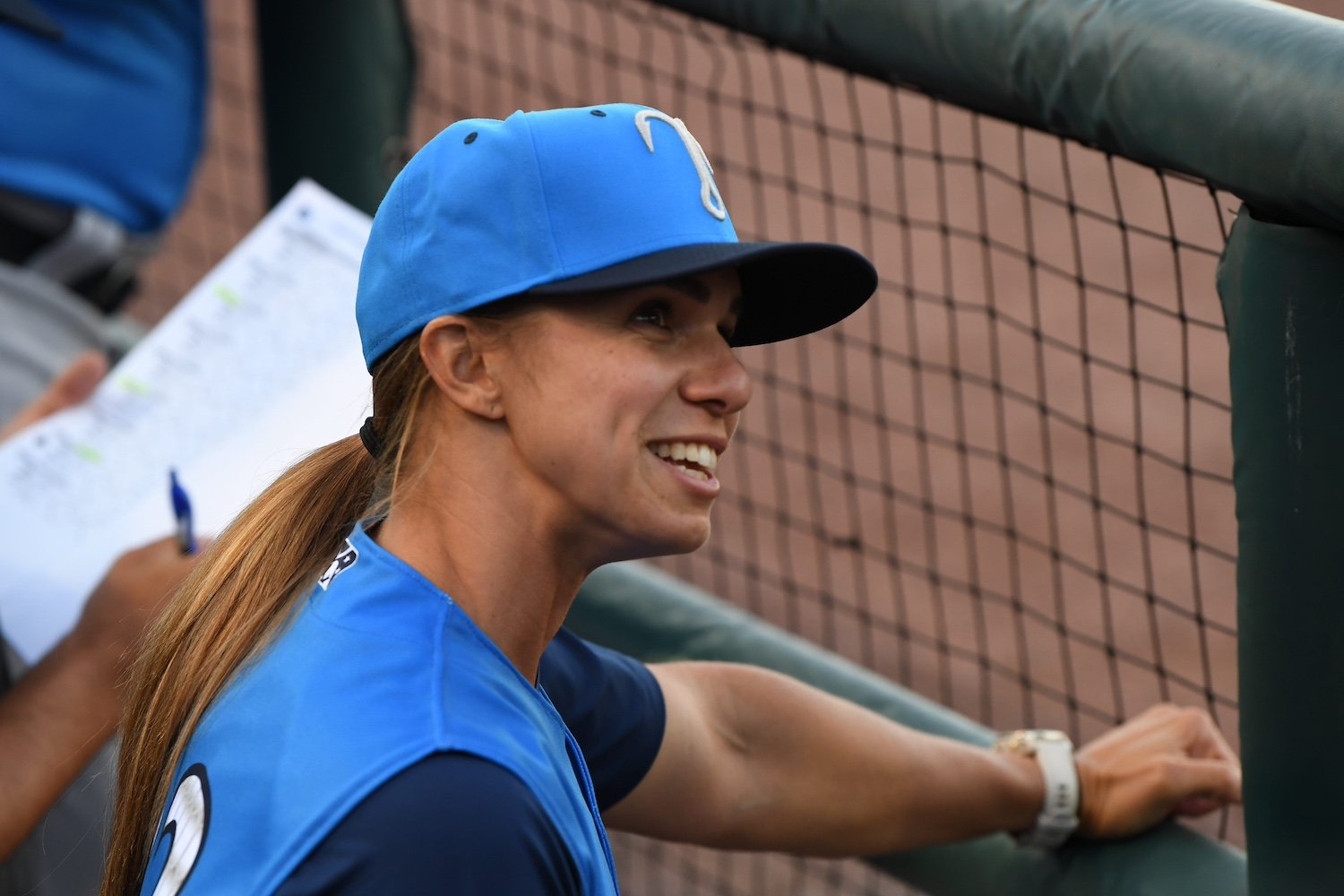 Though the MLB offseason is still moving deliberately, a groundbreaking hiring and a significant signing occurred Tuesday, headlining the most active day of the New Year. Let's get into the news: Marlins Hire Rachel Balkovec to Fill Prominent Front Office Role After becoming the first team to hire (and then to fire, or at least muscle out) a woman as their chief baseball decision-maker, the Marlins made another historic hire Tuesday. Balkovec, who has a background in advanced analytics, was the first woman to be a full-time manager for an MLB-affiliated minor-league team (the New York Yankees' High-A club); the first to be a full-time hitting coach in an MLB organization; and the first to work as a full-time strength and conditioning coach in affiliated baseball. Balkovec now joins the front office of the same organization that made Kim Ng the first woman entrusted with the whole baseball operation in MLB history, in 2020. If Balkovec and the Marlins' revamped, still-growing front office can lead the organization to its second straight playoff appearance, don't be surprised if she follows in Ng's footsteps, eventually. The Marlins ultimately envision a two-headed baseball leadership structure, with a GM working alongside president of baseball operations Peter Bendix, but are unlikely to fill that second role this winter. Described as a "trailblazer," Balkovec has become a beacon for women getting more opportunities in a traditionally male-dominated field. Hopefully, Ng and Balkovec's rise through the ranks will lead to women getting more opportunities within MLB. Shōta Imanaga Signs with the Chicago Cubs Rejoice, Cubs fans! Jed Hoyer did something! Amid a snowstorm that blanketed the Windy City, the Cubbies signed the NPB star to a multi-year deal worth roughly $15 million per year. Nicknamed "The Throwing Philosopher," Imanaga generated a 2.66 ERA and 1.01 WHIP, striking out 188 and walking only 24 over 159 innings pitched and 637 total batters faced pitching for the Yokohama DeNA BayStars in 2023. Imanaga joins fellow southpaw Justin Steele in what becomes arguably the best starting rotation duo in the NL Central. He also joins fellow ex-NPB star Seiya Suzuki on a team that is set to compete with the St. Louis Cardinals, Milwaukee Brewers, and Cincinnati Reds in what will likely be one of the tightest divisional battles in MLB next season. The Twins had interest in Imanaga on a short-term deal, after his market was affected by teams' concerns about a shoulder injury that required surgery in 2020. He would have been an ideal front-of-the-rotation replacement option for the recently departed Sonny Gray, but ultimately, the Cubs were willing to go considerably further than the Twins would have. Barring injury, expect Imanaga (whose fastball will likely have the most ride in MLB) to thrive in his first season in MLB with the Cubs. Inferior Chicago Baseball Team Publicly States Stipulations for Dylan Cease Trade On Tuesday, recently hired Chicago White Sox general manager Chris Getz stated that Cease has inspired trade interest from other teams, but that he won't trade the former Cy Young Award runner-up unless the deal improves the club. Though "better" is a vague and subjective term, the White Sox will hold out on trading Cease until they are offered a package they deem worthwhile. As noted by Ken Rosenthal in the clip above, the Baltimore Orioles, who have the prospect capital necessary to get a deal done, are an obvious fit for Cease. Yet, other teams (such as the Boston Red Sox, Los Angeles Dodgers, New York Mets, Atlanta Braves, Cincinnati Reds, Yankees, and Cardinals) have shown interest in the 28-year-old right-handed pitcher over the last handful of months. Besides him landing in Minnesota, which won't happen, the best outcome for the Twins would be if the White Sox traded Cease (who has pitched well against them in recent history) to an NL team. Miscellaneous Twins Notes Joe Mauer currently has 83.1% of the Hall of Fame vote. It's happening, folks. Tickets are on sale for the Twins Daily Winter Meltdown! TwinsFest is just around the corner, and so is our biggest annual community event. It's a great time to become a Twins Daily Caretaker, to ensure access. Former Twins Bartolo Colon (0.7%) and Torii Hunter (3.7%) will not be Hall of Fame inductees this year. Dan Szymborski released the Twins' 2024 ZiPS Projections, which Twins Daily writer Cody Christie admirably dissected in a piece published yesterday. Twins Daily's Jamie Cameron reviewed first-round selection Walker Jenkins as part of his incredible "Prospect Reviews" series. What do you think of the Marlins hiring Balkovec? Was it wise of the Cubs to sign Imanaga? Which team will trade for Cease? Do any of the "Miscellaneous Twins Notes" stand out to you? Join the discussion and comment below.
- 16 comments
-
- 4
-
-
- rachel balkovec
- shōta imanaga
- (and 1 more)
-
The Miami Marlins once more make history, as Rachel Balkovec becomes the franchise's director of player development. More on Balkovec, Shōta Imanaga, and other news around the league on today's Twins Daily table setter. Image courtesy of Robert Magobet - USA TODAY NETWORK Though the MLB offseason is still moving deliberately, a groundbreaking hiring and a significant signing occurred Tuesday, headlining the most active day of the New Year. Let's get into the news: Marlins Hire Rachel Balkovec to Fill Prominent Front Office Role After becoming the first team to hire (and then to fire, or at least muscle out) a woman as their chief baseball decision-maker, the Marlins made another historic hire Tuesday. Balkovec, who has a background in advanced analytics, was the first woman to be a full-time manager for an MLB-affiliated minor-league team (the New York Yankees' High-A club); the first to be a full-time hitting coach in an MLB organization; and the first to work as a full-time strength and conditioning coach in affiliated baseball. Balkovec now joins the front office of the same organization that made Kim Ng the first woman entrusted with the whole baseball operation in MLB history, in 2020. If Balkovec and the Marlins' revamped, still-growing front office can lead the organization to its second straight playoff appearance, don't be surprised if she follows in Ng's footsteps, eventually. The Marlins ultimately envision a two-headed baseball leadership structure, with a GM working alongside president of baseball operations Peter Bendix, but are unlikely to fill that second role this winter. Described as a "trailblazer," Balkovec has become a beacon for women getting more opportunities in a traditionally male-dominated field. Hopefully, Ng and Balkovec's rise through the ranks will lead to women getting more opportunities within MLB. Shōta Imanaga Signs with the Chicago Cubs Rejoice, Cubs fans! Jed Hoyer did something! Amid a snowstorm that blanketed the Windy City, the Cubbies signed the NPB star to a multi-year deal worth roughly $15 million per year. Nicknamed "The Throwing Philosopher," Imanaga generated a 2.66 ERA and 1.01 WHIP, striking out 188 and walking only 24 over 159 innings pitched and 637 total batters faced pitching for the Yokohama DeNA BayStars in 2023. Imanaga joins fellow southpaw Justin Steele in what becomes arguably the best starting rotation duo in the NL Central. He also joins fellow ex-NPB star Seiya Suzuki on a team that is set to compete with the St. Louis Cardinals, Milwaukee Brewers, and Cincinnati Reds in what will likely be one of the tightest divisional battles in MLB next season. The Twins had interest in Imanaga on a short-term deal, after his market was affected by teams' concerns about a shoulder injury that required surgery in 2020. He would have been an ideal front-of-the-rotation replacement option for the recently departed Sonny Gray, but ultimately, the Cubs were willing to go considerably further than the Twins would have. Barring injury, expect Imanaga (whose fastball will likely have the most ride in MLB) to thrive in his first season in MLB with the Cubs. Inferior Chicago Baseball Team Publicly States Stipulations for Dylan Cease Trade On Tuesday, recently hired Chicago White Sox general manager Chris Getz stated that Cease has inspired trade interest from other teams, but that he won't trade the former Cy Young Award runner-up unless the deal improves the club. Though "better" is a vague and subjective term, the White Sox will hold out on trading Cease until they are offered a package they deem worthwhile. As noted by Ken Rosenthal in the clip above, the Baltimore Orioles, who have the prospect capital necessary to get a deal done, are an obvious fit for Cease. Yet, other teams (such as the Boston Red Sox, Los Angeles Dodgers, New York Mets, Atlanta Braves, Cincinnati Reds, Yankees, and Cardinals) have shown interest in the 28-year-old right-handed pitcher over the last handful of months. Besides him landing in Minnesota, which won't happen, the best outcome for the Twins would be if the White Sox traded Cease (who has pitched well against them in recent history) to an NL team. Miscellaneous Twins Notes Joe Mauer currently has 83.1% of the Hall of Fame vote. It's happening, folks. Tickets are on sale for the Twins Daily Winter Meltdown! TwinsFest is just around the corner, and so is our biggest annual community event. It's a great time to become a Twins Daily Caretaker, to ensure access. Former Twins Bartolo Colon (0.7%) and Torii Hunter (3.7%) will not be Hall of Fame inductees this year. Dan Szymborski released the Twins' 2024 ZiPS Projections, which Twins Daily writer Cody Christie admirably dissected in a piece published yesterday. Twins Daily's Jamie Cameron reviewed first-round selection Walker Jenkins as part of his incredible "Prospect Reviews" series. What do you think of the Marlins hiring Balkovec? Was it wise of the Cubs to sign Imanaga? Which team will trade for Cease? Do any of the "Miscellaneous Twins Notes" stand out to you? Join the discussion and comment below. View full article
-
Louie Varland would be the 5th starter over Odorizzi or Keller, and Pomeranz is a reliever.
- 25 replies
-
- 3
-
-
- drew pomeranz
- brad keller
- (and 1 more)
-
Due to self-imposed payroll cuts, the Twins are unlikely to sign a noteworthy free-agent pitcher. Though that has dampened the excitement for this offseason, the front office will sign arms to fortify themselves. Would it make sense for the team to sign one of these three veteran hurlers as depth arms? Image courtesy of Raj Mehta - USA TODAY Sports Since the Twins signed reliever Josh Staumont to a one-year, $950,000 contract on December 27, the Atlanta Braves traded Vaughn Grissom to the Boston Red Sox for Chris Sale; the Seattle Mariners traded Robbie Ray to the San Francisco Giants for Mitch Haniger and Anthony DeSclafani; 10-foot-tall aliens were "discovered" in Miami, and, since the Twins (or "cheap pohlad") have yet to acquire a starting pitcher, Greggory Masterson has been forced to post 12 different versions of Shotgun Mario on Twitter. The world and (more relevantly) Twins Territory is in shambles, and nothing can cure our collective boredom but a significant transaction. Any worthwhile transaction will suffice, Derek Falvey. Please. Jokes aside, after the significant payroll cuts the Twins are willingly imposing due to uncertainty surrounding their television deal, the second-most plausible reason why the Twins have done essentially nothing is that, as Jim Bowden noted in his most recent piece at The Athletic, "(the Twins) don't really have a lot of needs, thanks to a roster filled with young players and a strong farm system." Bowden continued, "The Twins could use more starting pitching depth and a center fielder to complement Byron Buxton but they have time to fill both needs between now and the start of spring training." Though often misguided in his takes and insight, Bowden makes a valid point here that is important for Twins fans to remember during this moment of torpor: The Twins' 2024 roster is almost entirely set, and there's not much more they need to do. Trading for a frontline starting pitcher like Jesús Luzardo, Logan Gilbert, or Mitch Keller would be the ideal way to address the biggest remaining need, but consummating a trade of that magnitude would require the Twins to part with a significant prospect hau. A pitching market with inflationary price tags could cause them to err on the side of caution. With this being the state the Twins find themselves in, the most likely transactions for them are small ones that fortify their starting rotation and bullpen depth. Examples of such transactions include signing Staumont and A.J. Alexy, and claiming Ryan Jensen off waivers from the Miami Marlins. Although knowing whom the team will sign, trade for, or claim is nearly impossible due to the huge number of easily obtainable replacement-level pitchers, some candidates are more enticing than others. Here are three intriguing pitchers the Twins should consider signing to minor-league deals. Drew Pomeranz Pomeranz, a 35-year-old left-handed reliever, has missed the last two regular seasons due to various forearm and elbow injuries in his throwing arm. Though it would be understandable if, having finished a four-year, $34-million contract he signed with the San Diego Padres in 2020, he elected to ride off into the sunset, it appears the former All-Star has no plans to retire and wants to continue pitching in 2024. Soon-to-be 37-year-old Caleb Thielbar is the top left-handed reliever on the Twins' 26-man roster. Although the Minnesota native will retain that status at the beginning of the 2024 season, the combination of a nagging oblique injury and steady decline in performance in the latter half of last season has led the confidence of those who follow the team to wane. Twenty-six-year-old left-handed reliever Kody Funderburk will play a prominent role in the team's bullpen plans in 2024 as well, but with Brent Headrick being the third left-handed relief pitcher on the organization's depth chart, Pomeranz becomes an attractive option on a minor-league deal. Signing Pomeranz (without tying up a 40-man roster spot or guaranteeing him money that might encroach on spending in other areas) would give the Twins a potential low-cost, high-leverage left-handed relief arm. They could always cut bait with him if injuries keep him unable to perform at the level needed to pitch in MLB. Brad Keller Formerly an Opening Day starter for the Kansas City Royals, Keller is a pitcher Twins fans are exceedingly familiar with. Over the past five seasons, Keller has made 13 starts against the Twins, generating a 3.74 ERA, striking out 70 and walking 35 over 74 2/3 IP and 327 total batters faced. Though Keller used to be an integral part of the Royals rotation, the combination of a sharp decline in performance in 2023 (1.92 WHIP in 45 1/3 innings pitched) and his former team adding talented veterans in Michael Wacha and Seth Lugo to their starting rotation has left him without a home for 2024. Keller, 28, is a quality veteran depth piece who could get a big-league contract team with a team like the Washington Nationals or Oakland Athletics—who would look to flip him for prospects if he shows signs of success early in the season. Though this is a plausible outcome for Keller during free agency, there is a chance he could elect to sign a minor-league deal with a contender in hopes of being their sixth starter—the first depth option in case of injury or poor performance from one of their starters. If Keller goes this route, it would make sense for the Twins to make the former Royal a priority depth signing. Jake Odorizzi The final pitcher the Twins should consider signing to a minor-league deal is a familiar face. Odorizzi, 33, spent parts of three seasons with the Twins before signing a three-year, $23.5-million contract with the Houston Astros before the 2021 season. Odorizzi, the Twins' Opening Day starting pitcher in 2018, was a fan favorite, and fans would welcome a return to Twins Territory with open arms. Interestingly, Odorizzi would, too, as during a recent episode of Gleeman and the Geek, Dan Hayes of The Athletic said that Odorizzi's camp would be interested in a reunion with the franchise. Odorizzi is nearing the end of his MLB career, but still presents value as a sixth or seventh starter who can occasionally be a short-term injury replacement or make a spot start. Due to his extensive injury history and a recent drop-off in performance when healthy, Odorizzi shouldn't be relied on as an integral part of any club's five-pitcher rotation, let alone a team that intends on contending in 2024. Signing Odorizzi to a non-guaranteed contract and having him compete with young starting pitchers like Simeon Woods Richardson, David Festa, and Headrick as one of the team's primary depth starters could make sense for the World Series-hopeful Twins. Though making a trade for a frontline starting pitcher like Luzardo, Gilbert, or Keller is the transaction those who follow the Twins want to occur, the franchise is more likely to fortify their already formidable rotation and bullpen with depth signings on minor-league deals. Do any of these three pitchers intrigue you? Would you welcome a reunion between the Twins and Odorizzi? Join the discussion and comment below. View full article
- 25 replies
-
- 1
-
-
- drew pomeranz
- brad keller
- (and 1 more)
-
3 Intriguing Pitchers the Twins Could Sign to Minor-League Deals
Cody Schoenmann posted an article in Twins
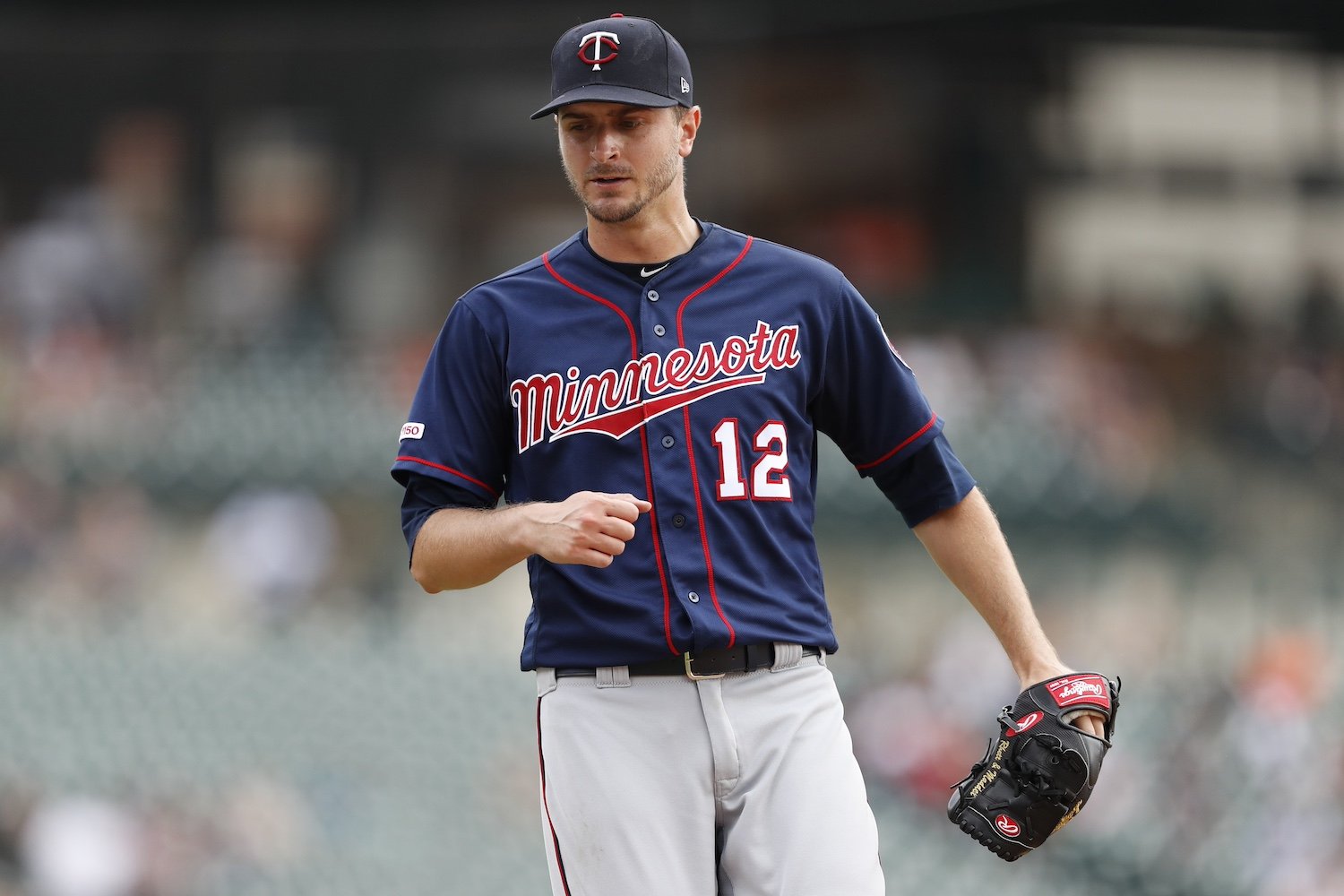 Since the Twins signed reliever Josh Staumont to a one-year, $950,000 contract on December 27, the Atlanta Braves traded Vaughn Grissom to the Boston Red Sox for Chris Sale; the Seattle Mariners traded Robbie Ray to the San Francisco Giants for Mitch Haniger and Anthony DeSclafani; 10-foot-tall aliens were "discovered" in Miami, and, since the Twins (or "cheap pohlad") have yet to acquire a starting pitcher, Greggory Masterson has been forced to post 12 different versions of Shotgun Mario on Twitter. The world and (more relevantly) Twins Territory is in shambles, and nothing can cure our collective boredom but a significant transaction. Any worthwhile transaction will suffice, Derek Falvey. Please. Jokes aside, after the significant payroll cuts the Twins are willingly imposing due to uncertainty surrounding their television deal, the second-most plausible reason why the Twins have done essentially nothing is that, as Jim Bowden noted in his most recent piece at The Athletic, "(the Twins) don't really have a lot of needs, thanks to a roster filled with young players and a strong farm system." Bowden continued, "The Twins could use more starting pitching depth and a center fielder to complement Byron Buxton but they have time to fill both needs between now and the start of spring training." Though often misguided in his takes and insight, Bowden makes a valid point here that is important for Twins fans to remember during this moment of torpor: The Twins' 2024 roster is almost entirely set, and there's not much more they need to do. Trading for a frontline starting pitcher like Jesús Luzardo, Logan Gilbert, or Mitch Keller would be the ideal way to address the biggest remaining need, but consummating a trade of that magnitude would require the Twins to part with a significant prospect hau. A pitching market with inflationary price tags could cause them to err on the side of caution. With this being the state the Twins find themselves in, the most likely transactions for them are small ones that fortify their starting rotation and bullpen depth. Examples of such transactions include signing Staumont and A.J. Alexy, and claiming Ryan Jensen off waivers from the Miami Marlins. Although knowing whom the team will sign, trade for, or claim is nearly impossible due to the huge number of easily obtainable replacement-level pitchers, some candidates are more enticing than others. Here are three intriguing pitchers the Twins should consider signing to minor-league deals. Drew Pomeranz Pomeranz, a 35-year-old left-handed reliever, has missed the last two regular seasons due to various forearm and elbow injuries in his throwing arm. Though it would be understandable if, having finished a four-year, $34-million contract he signed with the San Diego Padres in 2020, he elected to ride off into the sunset, it appears the former All-Star has no plans to retire and wants to continue pitching in 2024. Soon-to-be 37-year-old Caleb Thielbar is the top left-handed reliever on the Twins' 26-man roster. Although the Minnesota native will retain that status at the beginning of the 2024 season, the combination of a nagging oblique injury and steady decline in performance in the latter half of last season has led the confidence of those who follow the team to wane. Twenty-six-year-old left-handed reliever Kody Funderburk will play a prominent role in the team's bullpen plans in 2024 as well, but with Brent Headrick being the third left-handed relief pitcher on the organization's depth chart, Pomeranz becomes an attractive option on a minor-league deal. Signing Pomeranz (without tying up a 40-man roster spot or guaranteeing him money that might encroach on spending in other areas) would give the Twins a potential low-cost, high-leverage left-handed relief arm. They could always cut bait with him if injuries keep him unable to perform at the level needed to pitch in MLB. Brad Keller Formerly an Opening Day starter for the Kansas City Royals, Keller is a pitcher Twins fans are exceedingly familiar with. Over the past five seasons, Keller has made 13 starts against the Twins, generating a 3.74 ERA, striking out 70 and walking 35 over 74 2/3 IP and 327 total batters faced. Though Keller used to be an integral part of the Royals rotation, the combination of a sharp decline in performance in 2023 (1.92 WHIP in 45 1/3 innings pitched) and his former team adding talented veterans in Michael Wacha and Seth Lugo to their starting rotation has left him without a home for 2024. Keller, 28, is a quality veteran depth piece who could get a big-league contract team with a team like the Washington Nationals or Oakland Athletics—who would look to flip him for prospects if he shows signs of success early in the season. Though this is a plausible outcome for Keller during free agency, there is a chance he could elect to sign a minor-league deal with a contender in hopes of being their sixth starter—the first depth option in case of injury or poor performance from one of their starters. If Keller goes this route, it would make sense for the Twins to make the former Royal a priority depth signing. Jake Odorizzi The final pitcher the Twins should consider signing to a minor-league deal is a familiar face. Odorizzi, 33, spent parts of three seasons with the Twins before signing a three-year, $23.5-million contract with the Houston Astros before the 2021 season. Odorizzi, the Twins' Opening Day starting pitcher in 2018, was a fan favorite, and fans would welcome a return to Twins Territory with open arms. Interestingly, Odorizzi would, too, as during a recent episode of Gleeman and the Geek, Dan Hayes of The Athletic said that Odorizzi's camp would be interested in a reunion with the franchise. Odorizzi is nearing the end of his MLB career, but still presents value as a sixth or seventh starter who can occasionally be a short-term injury replacement or make a spot start. Due to his extensive injury history and a recent drop-off in performance when healthy, Odorizzi shouldn't be relied on as an integral part of any club's five-pitcher rotation, let alone a team that intends on contending in 2024. Signing Odorizzi to a non-guaranteed contract and having him compete with young starting pitchers like Simeon Woods Richardson, David Festa, and Headrick as one of the team's primary depth starters could make sense for the World Series-hopeful Twins. Though making a trade for a frontline starting pitcher like Luzardo, Gilbert, or Keller is the transaction those who follow the Twins want to occur, the franchise is more likely to fortify their already formidable rotation and bullpen with depth signings on minor-league deals. Do any of these three pitchers intrigue you? Would you welcome a reunion between the Twins and Odorizzi? Join the discussion and comment below.
- 25 comments
-
- 6
-

-
-
- drew pomeranz
- brad keller
- (and 1 more)
-
There is a chance Kody Funderburk will become one of the most heavily used relievers out of the Twins bullpen in 2024. Is that a good idea? Image courtesy of Matt Blewett - USA TODAY Sports Heading into the 2024 season, the Twins have four arms appointed as primary late-inning, high-leverage relievers: Jhoan Durán, Griffin Jax, Brock Stewart, and Caleb Thielbar. Behind this quartet of trustworthy hurlers is an amalgam of relatively unknown commodities who fit one of two molds: young, former starters who are now pursuing careers as relievers, or veterans attempting to bounce back from injuries and avoid a bleak conclusion to their once-promising careers. Though the former archetype has fascinating rebound options like Jorge Alcalá and the recently-signed Josh Staumont (both of whom could eventually become integral parts of the team's bullpen), the latter includes young arms who, by developing a sustainably effective pitch mix and approach, could become long-term, cost-controlled bullpen weapons, like Duran and Jax did in seasons past. Pitchers in that group include Cole Sands, Josh Winder, Jordan Balazovic, Simeon Woods Richardson, Matt Canterino, Brent Headrick, Ronny Henriquez, A.J. Alexy, and, most notably, Kody Funderburk. Funderburk, 27, made his debut last season in the middle of a pennant race, against the division-rival Cleveland Guardians. On Aug. 28, Funderburk entered the game in relief of a struggling Kenta Maeda and was able to pitch two scoreless innings, striking out three of six batters faced and generating a 0.66 Win Probability Added at FanGraphs (WPA), which tied Winder for the highest of any pitcher in that game. Though he stumbled in his next appearance, giving up a game-winning home run to Guardians' first baseman Kole Calhoun on August 30, the Dallas Baptist University product bounced back strong, generating a 0.00 ERA, 0.91 WHIP, 14.9 K/9, and zero home runs given up through his next 39 total batters faced to finish his rookie campaign. Funderburk didn't pitch in the postseason, but he firmly established himself as the Twins' second-most trusted left-handed relief pitcher (behind Thielbar) and a fixture in the team's bullpen for the upcoming 2024 season. Interestingly enough, Funderburk's progression coincides with the recent departure of Emilio Pagán, who became a mainstay in the Twins bullpen, throwing a combined 132 1/3 innings over the previous two seasons. Although Pagán's exit has been celebrated by many, replacing a reliever who managed a 2.99 ERA and 1.1 Wins Above Replacement at FanGraphs (fWAR) over 69 1/3 innings pitched in 2023 will not be easy. On the surface, Staumont, who was recently signed to a one-year, $950,000 contract, feels like the most plausible candidate to replace Pagán's contract. Yet, after pitching just 57 2/3 innings over the past two seasons and undergoing surgery for thoracic outlet syndrome this past July, it would be malpractice for the organization to expect Pagán's prolific production out of the 30-year-old reclamation project. So, who is the most likely candidate to replace Pagán's availability and reliability? Right-handed throwing Alcala could make sense as Pagán's successor, but with similar health concerns as Staumont, the most realistic option appears to be Funderburk. At first glance, the idea of “replacing” Pagán with Funderburk could be seen as incomprehensible, as the left-handed Funderburk is a noticeably different pitcher than the right-handed Pagán. Yet, once one peeks below the surface, they will find that their splits are not too dissimilar. Here are Funderburk's and Pagán's splits versus left-handed and right-handed batters: Versus Left-Handed Batters: Funderburk: 8 games, 4 1/3 innings pitched, 17 batters faced, 3 hits allowed, 1 home run, 1 walk, 6 strikeouts, 0.92 WHIP Pagán: 58 games, 29 1/3 innings pitched, 120 batters faced, 22 hits allowed, 2 home runs, 11 walks, 33 strikeouts, 1.13 WHIP Versus Right-Handed Batters: Funderburk: 11 games, 7 1/3 innings pitched, 30 batters faced, 3 hits allowed, 0 home runs, four walks, 13 strikeouts, 0.95 WHIP Pagán: 63 games, 39 2/3 innings pitched, 153 batters faced, 23 hits allowed, 3 home runs, 10 walks, 32 strikeouts, 0.83 WHIP Admittedly, there is a blatant discrepancy between Funderburk's and Pagán's sample sizes. Still, the former's encouraging numbers against right-handed hitters (most notably his sub-1.00 WHIP over 30 batters faced) lead one to believe that he is more than just a "lefty specialist." Funderburk, who stands 6-foot-4 and weighs 230 pounds, is an overbearing presence on the mound, utilizing a fastball and slider as a one-two punch alongside a deceptive sinker, which he tends to pinpoint on the lower-left side of the strike zone to dominate hitters of both handednesses. The one glaring weakness in Funderburk's game is that he lets up far too many walks, evidenced by his below-average 10.6% walk rate. Funderburk needs to be able to control the zone and add velocity to his fastball, which currently tops out around 93 MPH, if he wants to become a consistent high-leverage reliever for the Twins. If he can make these adjustments, the Twins could have a reliever who could replace Pagán’s production and usurp Thielbar as the team’s most effective left-handed reliever on their hands. Should Funderburk be trusted to take on Pagán's workload in 2024? If not Funderburk, then who? What do you think is Funderburk's ceiling as a reliever? Join the discussion and comment below. View full article
-
Expect Kody Funderburk to Bear a Prominent Bullpen Role in 2024
Cody Schoenmann posted an article in Twins
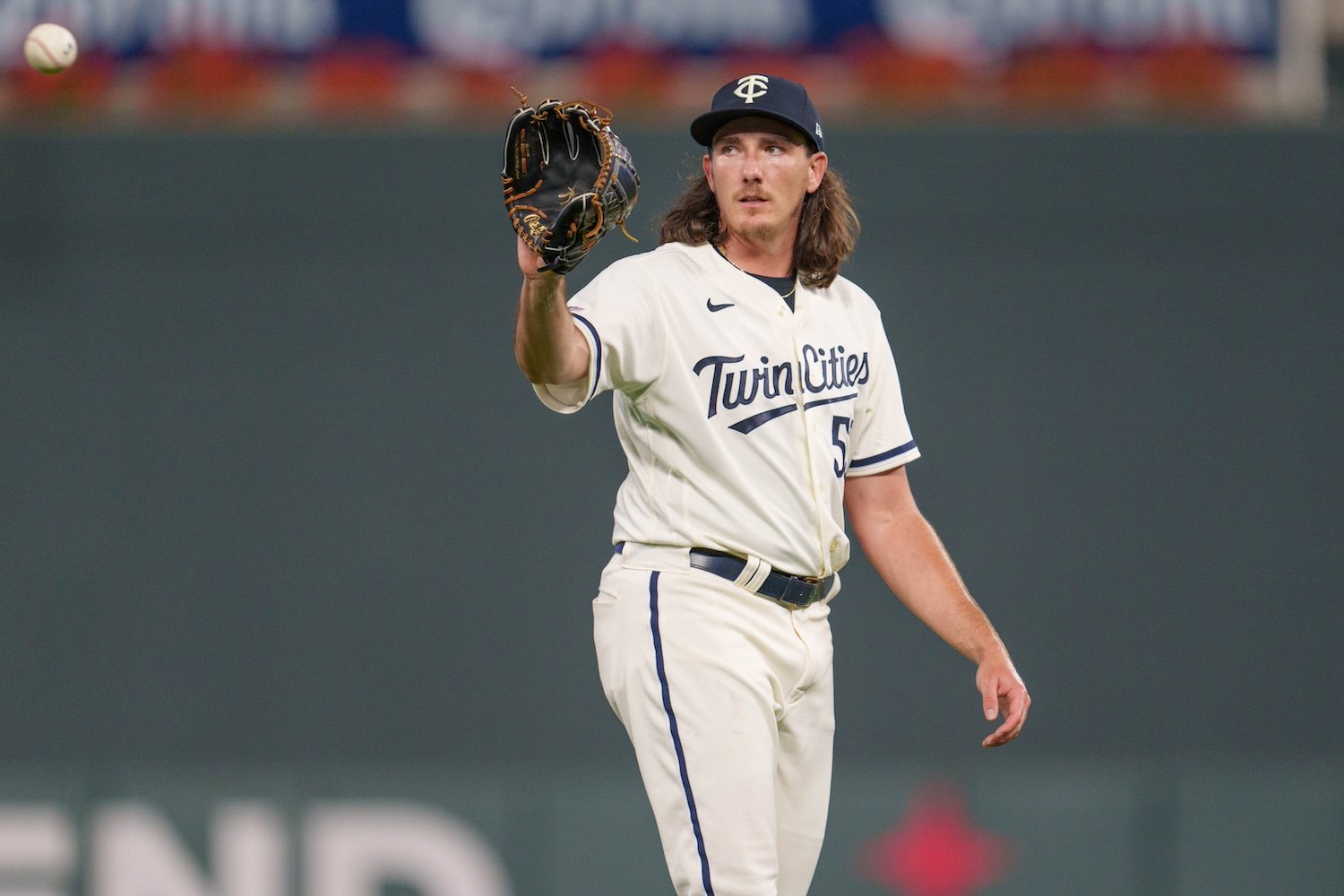 Heading into the 2024 season, the Twins have four arms appointed as primary late-inning, high-leverage relievers: Jhoan Durán, Griffin Jax, Brock Stewart, and Caleb Thielbar. Behind this quartet of trustworthy hurlers is an amalgam of relatively unknown commodities who fit one of two molds: young, former starters who are now pursuing careers as relievers, or veterans attempting to bounce back from injuries and avoid a bleak conclusion to their once-promising careers. Though the former archetype has fascinating rebound options like Jorge Alcalá and the recently-signed Josh Staumont (both of whom could eventually become integral parts of the team's bullpen), the latter includes young arms who, by developing a sustainably effective pitch mix and approach, could become long-term, cost-controlled bullpen weapons, like Duran and Jax did in seasons past. Pitchers in that group include Cole Sands, Josh Winder, Jordan Balazovic, Simeon Woods Richardson, Matt Canterino, Brent Headrick, Ronny Henriquez, A.J. Alexy, and, most notably, Kody Funderburk. Funderburk, 27, made his debut last season in the middle of a pennant race, against the division-rival Cleveland Guardians. On Aug. 28, Funderburk entered the game in relief of a struggling Kenta Maeda and was able to pitch two scoreless innings, striking out three of six batters faced and generating a 0.66 Win Probability Added at FanGraphs (WPA), which tied Winder for the highest of any pitcher in that game. Though he stumbled in his next appearance, giving up a game-winning home run to Guardians' first baseman Kole Calhoun on August 30, the Dallas Baptist University product bounced back strong, generating a 0.00 ERA, 0.91 WHIP, 14.9 K/9, and zero home runs given up through his next 39 total batters faced to finish his rookie campaign. Funderburk didn't pitch in the postseason, but he firmly established himself as the Twins' second-most trusted left-handed relief pitcher (behind Thielbar) and a fixture in the team's bullpen for the upcoming 2024 season. Interestingly enough, Funderburk's progression coincides with the recent departure of Emilio Pagán, who became a mainstay in the Twins bullpen, throwing a combined 132 1/3 innings over the previous two seasons. Although Pagán's exit has been celebrated by many, replacing a reliever who managed a 2.99 ERA and 1.1 Wins Above Replacement at FanGraphs (fWAR) over 69 1/3 innings pitched in 2023 will not be easy. On the surface, Staumont, who was recently signed to a one-year, $950,000 contract, feels like the most plausible candidate to replace Pagán's contract. Yet, after pitching just 57 2/3 innings over the past two seasons and undergoing surgery for thoracic outlet syndrome this past July, it would be malpractice for the organization to expect Pagán's prolific production out of the 30-year-old reclamation project. So, who is the most likely candidate to replace Pagán's availability and reliability? Right-handed throwing Alcala could make sense as Pagán's successor, but with similar health concerns as Staumont, the most realistic option appears to be Funderburk. At first glance, the idea of “replacing” Pagán with Funderburk could be seen as incomprehensible, as the left-handed Funderburk is a noticeably different pitcher than the right-handed Pagán. Yet, once one peeks below the surface, they will find that their splits are not too dissimilar. Here are Funderburk's and Pagán's splits versus left-handed and right-handed batters: Versus Left-Handed Batters: Funderburk: 8 games, 4 1/3 innings pitched, 17 batters faced, 3 hits allowed, 1 home run, 1 walk, 6 strikeouts, 0.92 WHIP Pagán: 58 games, 29 1/3 innings pitched, 120 batters faced, 22 hits allowed, 2 home runs, 11 walks, 33 strikeouts, 1.13 WHIP Versus Right-Handed Batters: Funderburk: 11 games, 7 1/3 innings pitched, 30 batters faced, 3 hits allowed, 0 home runs, four walks, 13 strikeouts, 0.95 WHIP Pagán: 63 games, 39 2/3 innings pitched, 153 batters faced, 23 hits allowed, 3 home runs, 10 walks, 32 strikeouts, 0.83 WHIP Admittedly, there is a blatant discrepancy between Funderburk's and Pagán's sample sizes. Still, the former's encouraging numbers against right-handed hitters (most notably his sub-1.00 WHIP over 30 batters faced) lead one to believe that he is more than just a "lefty specialist." Funderburk, who stands 6-foot-4 and weighs 230 pounds, is an overbearing presence on the mound, utilizing a fastball and slider as a one-two punch alongside a deceptive sinker, which he tends to pinpoint on the lower-left side of the strike zone to dominate hitters of both handednesses. The one glaring weakness in Funderburk's game is that he lets up far too many walks, evidenced by his below-average 10.6% walk rate. Funderburk needs to be able to control the zone and add velocity to his fastball, which currently tops out around 93 MPH, if he wants to become a consistent high-leverage reliever for the Twins. If he can make these adjustments, the Twins could have a reliever who could replace Pagán’s production and usurp Thielbar as the team’s most effective left-handed reliever on their hands. Should Funderburk be trusted to take on Pagán's workload in 2024? If not Funderburk, then who? What do you think is Funderburk's ceiling as a reliever? Join the discussion and comment below.
 -
Will the fifth overall pick sink or swim? Image courtesy of William Parmeter Despite the minor-league signings of Niko Goodrum and AJ Alexy and the one-year, $950,000 acquisition of reliever Josh Staumont, not much excitement has occurred in Twins Territory leading in the New Year. Though we could discuss the impending television deal for the umpteenth time, it feels like a fun time to project what a successful or unsuccessful career would look like for the most exciting prospect in recent Twins history, Walker Jenkins, while comparing him to players of baseball past and present. Here are the criteria for the exercise below: Each player selected as a placeholder for Jenkins' potential percentile outcome must have been a left-hitting outfield prospect selected between picks one and ten of the MLB Draft, from the years 2000 through 2020. Next to the player's name is how many Wins Above Replacement at FanGraphs (fWAR) they generated throughout their careers (the majority of player's careers are still ongoing). Now that the stipulations are laid out and, hopefully, understandable, let's jump into the list: "0th" Percentile - Drew Meyer - -0.2 Career fWAR Meyer, who was selected 10th overall by the Texas Rangers in the 2002 MLB Draft, spent three years in the Minors before making his big-league debut during the 2006 season. He hit .214/.214/.214 with three hits, zero home runs, zero walks, a 53.3% strikeout rate, and a 0 wRC+ over 15 plate appearances. After that bitter cup of coffee, Meyer bounced between the Rangers', Houston Astros', and Los Angeles Angels' minor-league systems, but he never made it back to the majors. Instead of being used as an actual player to whom Jenkins can be quantifiably compared, Meyer symbolizes the unfortunate possibility that Jenkins's potential could go entirely to waste. Meyer only played in those five MLB games, and if Jenkins were to do the same, his career would be deemed a colossal failure for the Twins, his agent Scott Boras, and himself. At the very least, Jenkins appears to be a genuine talent who will be an MLB player for an extended period. Yet, the bleak possibility of him having a similar career to Meyer's must be acknowledged. 10th Percentile - JJ Bleday - -0.2 Career fWAR The first player used as a genuine comparison was the fourth overall pick of the 2019 MLB Draft. Despite being a prized prospect out of college at Vanderbilt, Bleday has yet to find consistent footing at the highest level. Though the reason for his struggles has yet to be pinned down, many have blamed the combination of a hitch in his swing, his slim frame, and a lack of proper development by the Marlins for his lackluster performance. Though this is unfortunate for Bleday (now a member of the Oakland Athletics), Jenkins doesn't possess a hitch in his swing the same physical limitations. Also, the Twins have earned a reputation as one of the best franchises at developing young hitters, as evidenced by Royce Lewis, Edouard Julien, Alex Kirilloff, and Matt Wallner, among other success stories. Bleday could still turn his career around, but he is quickly leaving the realm of reclamation projects and entering "Quad-A" player territory. If Jenkins were to venture down the same path, his career would have been an unsatisfying disappointment. 20th Percentile - Jarred Kelenic - 0.7 Career fWAR Drafted sixth overall by the New York Mets in 2018, Kelenic has yet to find consistent footing in MLB. What separates the Waukesha, Wis. native from Bleday is that he has generated a handful of impressive months at the big-league level, while contributing to the competitive Seattle Mariners. As evidenced by being traded for by the consistently successful Atlanta Braves this past month, Kelenic still holds some appeal. He might yet live up to the lofty expectations placed on the former fourth-ranked prospect in baseball. Regardless, Jenkins, a left-handed hitting high school phenom, finds himself in a situation similar to Kelenic's when the Mets first selected him. Assuming Jenkins won't be part of a blockbuster trade like Kelenic was, Jenkins will be able to find stability with one organization as he develops, which is typically a vital part of maximizing a young player's initial success in the high minors and Major League level. 30th Percentile - David Dahl - 1.8 Career fWAR The Rockies' first-round pick back in 2012 provides a fascinating look into what qualifies as a successful career. After making his debut in 2016 at 22, the young outfielder posted three straight seasons with a wRC+ above 110, and even made the National League All-Star team in 2019. Then, Dahl fell off a cliff, posting a negative Wins Above Replacement at Baseball Reference (bWAR) in 2020 and 2021 with the Rockies and Rangers, respectively. After taking a year off in 2022, Dahl returned to MLB, playing four games for the San Diego Padres in 2023, generating one hit (a home run) over nine plate appearances before getting designated for assignment and electing free agency in June. The exact reason for the oft-injured Dahl's fall from grace is unknown. Yet, there is a direct correlation between his immense drop in production and a gruesome ankle injury he suffered in early August, 2019. Though Dahl's MLB career has likely come to a disheartening end, he symbolizes the idea of a young outfield prospect whose promising career was carried off course by injuries. Jenkins suffered relatively minor injuries in high school, including undergoing surgery for a hip impingement his freshman year and having to nurse a broken hamate bone his senior year before getting selected fifth overall by the Twins this summer. Nobody wants to think about injuries, especially when it comes to a top-five pick whose potential seems limitless. Yet, it is an unfortunately realistic outcome that must be considered when overturning every potential stone to assess a player's potential career outcomes. 40th Percentile - Austin Meadows - 5.8 Career fWAR Part of the infamous trade in which Pittsburgh sent Tyler Glasnow, Shane Baz, and himself to the Tampa Bay Rays for Chris Archer, Meadows quickly became one of the most promising young stars in Major League Baseball. In 2019, he posted a 144 OPS+ and finished 14th in American League Most Valuable Player voting. Unfortunately, like Dahl, professional baseball has not been kind to him since. Since his 4.5 fWAR 2019 season, Meadows has played in only 220 games, and his future in baseball has become a pressing question, as he was non-tendered by his most recent team, the Detroit Tigers, and has undergone significant physical and mental health challenges the last handful of seasons. Interestingly, Jenkins, a bulkier outfielder with a unique mix of speed and power, is often compared to Meadows by fans and pundits. If Jenkins can become the 2019 version of Meadows for a consistent period, the Twins will enjoy the services of one of the best young outfielders in the sport. 50th Percentile - Andrew Benintendi - 12.9 Career fWAR Selected seventh overall by the Boston Red Sox out of the University of Arkansas, Benintendi instantly became one of the highest-ranked prospects in Major League Baseball. Once dubbed a "once-in-a-decade hitter," Benintendi has combined exceptional hand-eye coordination and pitch recognition to produce above-average seasons with the Red Sox in 2018 and the Kansas City Royals/New York Yankees in 2021. Unfortunately (well, fortunately for the Twins), Benintendi was one of the worst players in baseball in 2023, mixing an uninspiring .652 OPS and -11 Outs Above Average (OAA) in left field to become a 0 fWAR player in the first year of his five-year, $75-million contract with the Chicago White Sox. Jenkins has the same elite hand-eye coordination and pitch recognition skills as Benintendi, but much more raw power that projects to translate well into in-game power and a more well-rounded defensive profile. He could stay in center field, instead of being one of the worst fielders at what is arguably the position lowest on the defensive spectrum. Despite shaky and inconsistent play throughout his career, Benintendi has plenty of tools that translate well to MLB. If Jenkins can mimic Benintendi in some aspects while excelling in others, the Twins will have a perennial All-Star and MVP candidate on their hands. 60th Percentile - Michael Conforto - 20.5 Career fWAR We have now reached the "positive outcome" section, and the first player who represents a positive was the 10th overall selection in the 2014 MLB Draft, by the Mets. After putting together a stretch of generating between 3.5-4.9 fWAR from 2017 through 2019, Conforto's performance has dipped, and he has yet to be the same player since. He missed the entire 2022 season after undergoing shoulder surgery earlier that season, before signing a two-year, $36 million contract with the San Francisco Giants this past January. Conforto isn't the player he once was. However, his above-average three-year peak and the fact that he is still a starting-caliber player entering his ninth season are, at the bare minimum, respectable outcomes for even a top-10 pick. Though Jenkins having the same career trajectory as Conforto would be viewed as a loss for those who follow the Twins, selecting a nine-year starter with the fifth pick in the draft would undoubtedly be a win from a resource allocation standpoint. 70th Percentile - Alex Gordon - 32 Career fWAR Gordon, the second overall pick in 2002, is another fascinating case of how success is defined. After posting only one season with a wRC+ above 100 in his first four seasons at the highest level, Gordon became one of the best players in baseball in 2011, producing a 140 wRC+ over 151 games played. After his incredible season, Gordon and the Royals went on one of the best runs in recent MLB history by going to back-to-back World Series in 2014 and 2015. During this stretch, Gordon produced a wRC+ above 120 in 2012, 2014, and 2015, while being a key cog in the Royals lineup and a defensive stalwart in left field. Unfortunately, Gordon returned to Earth and produced five consecutive seasons with a wRC+ below 100 from 2016 through 2020. Should a player who spent the majority of his career performing at a below-average rate be defined as a success story? In Gordon's case, the answer is undoubtedly yes, as the five-season peak he produced is greater than what the majority of players manage in their careers. He was an anchor of back-to-back World Series teams. If Jenkins has a career similar to that of Gordon, he would still have to be part of a terrific run of successful Twins teams to achieve the same recognition and goodwill. Jenkins projects to be a more consistently productive player, but whether he can reach the same heights as Gordon at the pinnacle of his success is yet to be seen. 80th Percentile - Nick Markakis - 28.7 Career fWAR Selected seventh overall in the 2003 Draft by the Baltimore Orioles, Markakis manufactured one of the most understated, respectable 15-year-long careers in baseball history. Playing for the Orioles and Braves, Markakis hit .288/.357/.423, with 2,388 hits and 189 home runs over 9,321 plate appearances and 2,154 games played. Markakis posted 11 seasons with an OPS+ over 100, but he netted only one All-Star nod (in 2019), despite posting a 7.4 bWAR season with the Orioles in 2008. Regardless, Markakis is one of the least talked-about success stories in recent MLB history. Though Jenkins projects to have a career with more extraordinary peaks, if he were able to produce 15 quality seasons where he never played fewer than 104 games, he would undoubtedly become one of the best outfielders in Twins, history alongside players like Torii Hunter, Bob Allison, Tony Oliva, and Kirby Puckett. 90th Percentile - Kyle Tucker - 16.3 Career fWAR Tucker is ahead of Markakis on this list, as he is one of the best young players in Major League Baseball right now. A newfound perennial MVP candidate, he has generated an fWAR above 4.7 in each of the past three seasons, while being a mainstay at the top of the always championship-caliber Astros lineup. If it weren't for the player below, Tucker and his production over the past three seasons could be the 100th-percentile outcome for Jenkins and the Twins using the abovementioned criteria. Tucker's smooth left-handed swing controls the zone like few others in the league, while possessing the ability to hit 30 home runs or more each year. If Tucker, 26, can produce at his current rate for the next six or so seasons, he will be considered one of the best players of the 2020s. If Jenkins can replicate Tucker's early-career success, the Twins could have one of the most formidable young outfielders in the game in the not-too-distant future. 100th Percentile - Bryce Harper - 47.5 Career fWAR Finally, the "100th-Percentile" outcome is none other than "Baseball's Chosen One." Selected first overall in the 2010 MLB Draft by the Washington Nationals, Harper has been one of the best players in Major League Baseball over the past decade. Whether it be winning Rookie of the Year in 2012, winning the Most Valuable Player Award for two different franchises, or posting what is arguably the greatest single-season offensive performance of the last decade in 2015, Harper has lived up to his phenom status in every way imaginable. He's yet to post a season with an OPS+ below 110. Although the Philadelphia Phillies recently announced the plan to transition Harper, who underwent Tommy John surgery in 2022, from the outfield to become their full-time first baseman, he was one of the best defensive right fielders in baseball for an extended stretch. If Jenkins can come close to mimicking Harper's production throughout his career, he will become a surefire Hall-of-Famer and debatably the best outfielder in Twins history. What is a successful career for Jenkins? Which player on this list do you think Jenkins will end up most like? Could he end up as good as Harper? Join the discussion and comment below. View full article
-
 Despite the minor-league signings of Niko Goodrum and AJ Alexy and the one-year, $950,000 acquisition of reliever Josh Staumont, not much excitement has occurred in Twins Territory leading in the New Year. Though we could discuss the impending television deal for the umpteenth time, it feels like a fun time to project what a successful or unsuccessful career would look like for the most exciting prospect in recent Twins history, Walker Jenkins, while comparing him to players of baseball past and present. Here are the criteria for the exercise below: Each player selected as a placeholder for Jenkins' potential percentile outcome must have been a left-hitting outfield prospect selected between picks one and ten of the MLB Draft, from the years 2000 through 2020. Next to the player's name is how many Wins Above Replacement at FanGraphs (fWAR) they generated throughout their careers (the majority of player's careers are still ongoing). Now that the stipulations are laid out and, hopefully, understandable, let's jump into the list: "0th" Percentile - Drew Meyer - -0.2 Career fWAR Meyer, who was selected 10th overall by the Texas Rangers in the 2002 MLB Draft, spent three years in the Minors before making his big-league debut during the 2006 season. He hit .214/.214/.214 with three hits, zero home runs, zero walks, a 53.3% strikeout rate, and a 0 wRC+ over 15 plate appearances. After that bitter cup of coffee, Meyer bounced between the Rangers', Houston Astros', and Los Angeles Angels' minor-league systems, but he never made it back to the majors. Instead of being used as an actual player to whom Jenkins can be quantifiably compared, Meyer symbolizes the unfortunate possibility that Jenkins's potential could go entirely to waste. Meyer only played in those five MLB games, and if Jenkins were to do the same, his career would be deemed a colossal failure for the Twins, his agent Scott Boras, and himself. At the very least, Jenkins appears to be a genuine talent who will be an MLB player for an extended period. Yet, the bleak possibility of him having a similar career to Meyer's must be acknowledged. 10th Percentile - JJ Bleday - -0.2 Career fWAR The first player used as a genuine comparison was the fourth overall pick of the 2019 MLB Draft. Despite being a prized prospect out of college at Vanderbilt, Bleday has yet to find consistent footing at the highest level. Though the reason for his struggles has yet to be pinned down, many have blamed the combination of a hitch in his swing, his slim frame, and a lack of proper development by the Marlins for his lackluster performance. Though this is unfortunate for Bleday (now a member of the Oakland Athletics), Jenkins doesn't possess a hitch in his swing the same physical limitations. Also, the Twins have earned a reputation as one of the best franchises at developing young hitters, as evidenced by Royce Lewis, Edouard Julien, Alex Kirilloff, and Matt Wallner, among other success stories. Bleday could still turn his career around, but he is quickly leaving the realm of reclamation projects and entering "Quad-A" player territory. If Jenkins were to venture down the same path, his career would have been an unsatisfying disappointment. 20th Percentile - Jarred Kelenic - 0.7 Career fWAR Drafted sixth overall by the New York Mets in 2018, Kelenic has yet to find consistent footing in MLB. What separates the Waukesha, Wis. native from Bleday is that he has generated a handful of impressive months at the big-league level, while contributing to the competitive Seattle Mariners. As evidenced by being traded for by the consistently successful Atlanta Braves this past month, Kelenic still holds some appeal. He might yet live up to the lofty expectations placed on the former fourth-ranked prospect in baseball. Regardless, Jenkins, a left-handed hitting high school phenom, finds himself in a situation similar to Kelenic's when the Mets first selected him. Assuming Jenkins won't be part of a blockbuster trade like Kelenic was, Jenkins will be able to find stability with one organization as he develops, which is typically a vital part of maximizing a young player's initial success in the high minors and Major League level. 30th Percentile - David Dahl - 1.8 Career fWAR The Rockies' first-round pick back in 2012 provides a fascinating look into what qualifies as a successful career. After making his debut in 2016 at 22, the young outfielder posted three straight seasons with a wRC+ above 110, and even made the National League All-Star team in 2019. Then, Dahl fell off a cliff, posting a negative Wins Above Replacement at Baseball Reference (bWAR) in 2020 and 2021 with the Rockies and Rangers, respectively. After taking a year off in 2022, Dahl returned to MLB, playing four games for the San Diego Padres in 2023, generating one hit (a home run) over nine plate appearances before getting designated for assignment and electing free agency in June. The exact reason for the oft-injured Dahl's fall from grace is unknown. Yet, there is a direct correlation between his immense drop in production and a gruesome ankle injury he suffered in early August, 2019. Though Dahl's MLB career has likely come to a disheartening end, he symbolizes the idea of a young outfield prospect whose promising career was carried off course by injuries. Jenkins suffered relatively minor injuries in high school, including undergoing surgery for a hip impingement his freshman year and having to nurse a broken hamate bone his senior year before getting selected fifth overall by the Twins this summer. Nobody wants to think about injuries, especially when it comes to a top-five pick whose potential seems limitless. Yet, it is an unfortunately realistic outcome that must be considered when overturning every potential stone to assess a player's potential career outcomes. 40th Percentile - Austin Meadows - 5.8 Career fWAR Part of the infamous trade in which Pittsburgh sent Tyler Glasnow, Shane Baz, and himself to the Tampa Bay Rays for Chris Archer, Meadows quickly became one of the most promising young stars in Major League Baseball. In 2019, he posted a 144 OPS+ and finished 14th in American League Most Valuable Player voting. Unfortunately, like Dahl, professional baseball has not been kind to him since. Since his 4.5 fWAR 2019 season, Meadows has played in only 220 games, and his future in baseball has become a pressing question, as he was non-tendered by his most recent team, the Detroit Tigers, and has undergone significant physical and mental health challenges the last handful of seasons. Interestingly, Jenkins, a bulkier outfielder with a unique mix of speed and power, is often compared to Meadows by fans and pundits. If Jenkins can become the 2019 version of Meadows for a consistent period, the Twins will enjoy the services of one of the best young outfielders in the sport. 50th Percentile - Andrew Benintendi - 12.9 Career fWAR Selected seventh overall by the Boston Red Sox out of the University of Arkansas, Benintendi instantly became one of the highest-ranked prospects in Major League Baseball. Once dubbed a "once-in-a-decade hitter," Benintendi has combined exceptional hand-eye coordination and pitch recognition to produce above-average seasons with the Red Sox in 2018 and the Kansas City Royals/New York Yankees in 2021. Unfortunately (well, fortunately for the Twins), Benintendi was one of the worst players in baseball in 2023, mixing an uninspiring .652 OPS and -11 Outs Above Average (OAA) in left field to become a 0 fWAR player in the first year of his five-year, $75-million contract with the Chicago White Sox. Jenkins has the same elite hand-eye coordination and pitch recognition skills as Benintendi, but much more raw power that projects to translate well into in-game power and a more well-rounded defensive profile. He could stay in center field, instead of being one of the worst fielders at what is arguably the position lowest on the defensive spectrum. Despite shaky and inconsistent play throughout his career, Benintendi has plenty of tools that translate well to MLB. If Jenkins can mimic Benintendi in some aspects while excelling in others, the Twins will have a perennial All-Star and MVP candidate on their hands. 60th Percentile - Michael Conforto - 20.5 Career fWAR We have now reached the "positive outcome" section, and the first player who represents a positive was the 10th overall selection in the 2014 MLB Draft, by the Mets. After putting together a stretch of generating between 3.5-4.9 fWAR from 2017 through 2019, Conforto's performance has dipped, and he has yet to be the same player since. He missed the entire 2022 season after undergoing shoulder surgery earlier that season, before signing a two-year, $36 million contract with the San Francisco Giants this past January. Conforto isn't the player he once was. However, his above-average three-year peak and the fact that he is still a starting-caliber player entering his ninth season are, at the bare minimum, respectable outcomes for even a top-10 pick. Though Jenkins having the same career trajectory as Conforto would be viewed as a loss for those who follow the Twins, selecting a nine-year starter with the fifth pick in the draft would undoubtedly be a win from a resource allocation standpoint. 70th Percentile - Alex Gordon - 32 Career fWAR Gordon, the second overall pick in 2002, is another fascinating case of how success is defined. After posting only one season with a wRC+ above 100 in his first four seasons at the highest level, Gordon became one of the best players in baseball in 2011, producing a 140 wRC+ over 151 games played. After his incredible season, Gordon and the Royals went on one of the best runs in recent MLB history by going to back-to-back World Series in 2014 and 2015. During this stretch, Gordon produced a wRC+ above 120 in 2012, 2014, and 2015, while being a key cog in the Royals lineup and a defensive stalwart in left field. Unfortunately, Gordon returned to Earth and produced five consecutive seasons with a wRC+ below 100 from 2016 through 2020. Should a player who spent the majority of his career performing at a below-average rate be defined as a success story? In Gordon's case, the answer is undoubtedly yes, as the five-season peak he produced is greater than what the majority of players manage in their careers. He was an anchor of back-to-back World Series teams. If Jenkins has a career similar to that of Gordon, he would still have to be part of a terrific run of successful Twins teams to achieve the same recognition and goodwill. Jenkins projects to be a more consistently productive player, but whether he can reach the same heights as Gordon at the pinnacle of his success is yet to be seen. 80th Percentile - Nick Markakis - 28.7 Career fWAR Selected seventh overall in the 2003 Draft by the Baltimore Orioles, Markakis manufactured one of the most understated, respectable 15-year-long careers in baseball history. Playing for the Orioles and Braves, Markakis hit .288/.357/.423, with 2,388 hits and 189 home runs over 9,321 plate appearances and 2,154 games played. Markakis posted 11 seasons with an OPS+ over 100, but he netted only one All-Star nod (in 2019), despite posting a 7.4 bWAR season with the Orioles in 2008. Regardless, Markakis is one of the least talked-about success stories in recent MLB history. Though Jenkins projects to have a career with more extraordinary peaks, if he were able to produce 15 quality seasons where he never played fewer than 104 games, he would undoubtedly become one of the best outfielders in Twins, history alongside players like Torii Hunter, Bob Allison, Tony Oliva, and Kirby Puckett. 90th Percentile - Kyle Tucker - 16.3 Career fWAR Tucker is ahead of Markakis on this list, as he is one of the best young players in Major League Baseball right now. A newfound perennial MVP candidate, he has generated an fWAR above 4.7 in each of the past three seasons, while being a mainstay at the top of the always championship-caliber Astros lineup. If it weren't for the player below, Tucker and his production over the past three seasons could be the 100th-percentile outcome for Jenkins and the Twins using the abovementioned criteria. Tucker's smooth left-handed swing controls the zone like few others in the league, while possessing the ability to hit 30 home runs or more each year. If Tucker, 26, can produce at his current rate for the next six or so seasons, he will be considered one of the best players of the 2020s. If Jenkins can replicate Tucker's early-career success, the Twins could have one of the most formidable young outfielders in the game in the not-too-distant future. 100th Percentile - Bryce Harper - 47.5 Career fWAR Finally, the "100th-Percentile" outcome is none other than "Baseball's Chosen One." Selected first overall in the 2010 MLB Draft by the Washington Nationals, Harper has been one of the best players in Major League Baseball over the past decade. Whether it be winning Rookie of the Year in 2012, winning the Most Valuable Player Award for two different franchises, or posting what is arguably the greatest single-season offensive performance of the last decade in 2015, Harper has lived up to his phenom status in every way imaginable. He's yet to post a season with an OPS+ below 110. Although the Philadelphia Phillies recently announced the plan to transition Harper, who underwent Tommy John surgery in 2022, from the outfield to become their full-time first baseman, he was one of the best defensive right fielders in baseball for an extended stretch. If Jenkins can come close to mimicking Harper's production throughout his career, he will become a surefire Hall-of-Famer and debatably the best outfielder in Twins history. What is a successful career for Jenkins? Which player on this list do you think Jenkins will end up most like? Could he end up as good as Harper? Join the discussion and comment below.
- 23 comments
-
- 9
-
-
- walker jenkins
- jarred kelenic
- (and 5 more)
-
Since the end of the 2021 season, the Twins have traded for two Cincinnati Reds starting pitchers. One trade worked out incredibly well, and the other, well, didn't. Could the Twins partner with the Reds on yet another trade for a starter? Image courtesy of Katie Stratman - USA TODAY Sports The Major League Baseball trade market is like a well. Parched front offices visit that well, hoping to find a player to quench their thirst and strengthen their team for a reasonable cost. Recently, the Cincinnati Reds have been a one-team well the Twins front office has often visited for starting pitching help. The first time Derek Falvey and company visited in need of a starting pitcher, they traded first-round pick Chase Petty for two years of Sonny Gray. The Petty-for-Gray trade went swimmingly for both sides, as the Twins got two above-average years from Gray, and the Reds got a borderline top-100 prospect who could join the Reds rotation as early as 2025. Then, on August 2, 2022, the well made the Twins sick. They traded three top prospects (Spencer Steer, Christian Encarnacion-Strand, and Steve Hajjar) for starting pitcher Tyler Mahle. Over the next season and change, Mahle made just nine starts for the Twins, before undergoing Tommy John surgery and signing a two-year, $22-million deal with the Texas Rangers last week. The Twins got essentially nothing, while the Reds got two starting-level position players in Steer and Encarnacion-Strand, and traded Hajjar to the Cleveland Guardians for starting outfielder Will Benson. Though the lousiness of this trade is often hyperbolized, as the process behind executing the trade was sound, the end result was undeniably a loss for the organization's decision-makers. If the last time a team was thirsty and went to a well, the water made them sick, should they return to that specific well, expecting it to be safe? What if the well was safe the first time, then, unbeknownst to them, became contaminated between visits? Interestingly, there is an enticing Reds starting pitcher who could force the Twins to reflect on these philosophical questions if he were to become available through trade. Graham Ashcraft - Cincinnati Reds - 145 2/3 IP, 4.76 ERA, 1.37 WHIP, 1.5 fWAR Deemed a young pitcher who has yet to perform to their potential, Ashcraft is an exciting trade candidate who possesses the exact pitching repertoire the Twins' front office values: a potentially elite slider mixed with a cutter that the team's coaching staff could help Ashcraft change into a more traditional four-seam fastball. As evidenced by his 4.76 ERA, 1.37 WHIP, and 5.06 FIP, Ashcraft floundered during his 2023 campaign. Though his struggles are undeniable, much of his lackluster numbers are a mix of poor luck and below-average results. In 2023, Ashcraft excelled in specific skill-based metrics such as Skill-Interactive Earned Run Average (SIERA), Stuff+, and Pitching+. In 2023, Ashcraft was the epitome of a two-pitch pitcher. He relied heavily on his aforementioned cutter and slider, throwing them 90.3 percent of the time. If one of his two primary pitches weren't working, outings would tend to blow up in Ashcraft's face, which contributed to his inflated face-value pitching statistics. Ashcraft's reliance on two pitches in 2023 was peculiar, considering he utilized a sinker and changeup during the 2022 season. Ashcraft's cutter and slider are effective and have the potential to be exceptional, but if he ever wants to become a consistently above-average rotation arm, he must add a third pitch, at a minimum. The former sixth-round pick could utilize his sinker to complement his cutter more to become an "east-to-west" pitcher who attacks the edges of the zone. Though this proposition is enticing, Ashcraft would seemingly benefit most from incorporating his changeup as a functional companion to his cutter and slider. Despite having highly effective pitches, evidenced by his 128 Stuff+ in 2023, Ashcraft struggled to strike batters out and generated a mere 17.8% K%. Walks weren't Ashcraft's issue, as he manufactured a modest BB% of 8.3%. Hence, his inability to strike batters out was likely due to an ineffective punch-out pitch, further pushing the narrative that he needs to expand his pitch mix and add a third offspeed pitch as a final touch. Ashcraft recently underwent surgery to repair a stress reaction in his right big toe, but should be ready by spring training. Ashcraft isn't a free agent until the end of the 2028 season and would require the Twins to surrender a significant package--one that could include Griffin Jax and an MLB-ready corner outfielder with upside, like Matt Wallner or Trevor Larnach. Though the Reds, like the Twins, need a frontline starting pitcher, the middle of their rotation is clogged with young, high-upside starting pitchers Andrew Abbott, Nick Lodolo, Brandon Williamson, and Ashcraft. The four young starting pitchers combine with ace Hunter Greene and veteran Nick Martinez to form a respectable prospective 2024 rotation. Yet, if they elect to sign or trade for another frontline starting pitcher like Lucas Giolito, Jordan Montgomery, or Shane Bieber, one of the four young starters could become available through trade. Then, the Twins could jump in and attempt to capitalize off the Reds' situation, while parting with a palatable package. Suppose Ashcraft can stay healthy in 2024, while fine-tuning his changeup into a consistently usable complementary pitch to his cutter and slider. In that case, he has the skill and raw stuff to become a frontline starting pitcher. Should the Twins trade for Ashcraft if he becomes available? Would it be wise to invest in a young pitcher with untapped upside? Join the conversation and comment below. View full article
-
Graham Ashcraft is An Enticing High-Ceiling Trade Candidate
Cody Schoenmann posted an article in Twins
 The Major League Baseball trade market is like a well. Parched front offices visit that well, hoping to find a player to quench their thirst and strengthen their team for a reasonable cost. Recently, the Cincinnati Reds have been a one-team well the Twins front office has often visited for starting pitching help. The first time Derek Falvey and company visited in need of a starting pitcher, they traded first-round pick Chase Petty for two years of Sonny Gray. The Petty-for-Gray trade went swimmingly for both sides, as the Twins got two above-average years from Gray, and the Reds got a borderline top-100 prospect who could join the Reds rotation as early as 2025. Then, on August 2, 2022, the well made the Twins sick. They traded three top prospects (Spencer Steer, Christian Encarnacion-Strand, and Steve Hajjar) for starting pitcher Tyler Mahle. Over the next season and change, Mahle made just nine starts for the Twins, before undergoing Tommy John surgery and signing a two-year, $22-million deal with the Texas Rangers last week. The Twins got essentially nothing, while the Reds got two starting-level position players in Steer and Encarnacion-Strand, and traded Hajjar to the Cleveland Guardians for starting outfielder Will Benson. Though the lousiness of this trade is often hyperbolized, as the process behind executing the trade was sound, the end result was undeniably a loss for the organization's decision-makers. If the last time a team was thirsty and went to a well, the water made them sick, should they return to that specific well, expecting it to be safe? What if the well was safe the first time, then, unbeknownst to them, became contaminated between visits? Interestingly, there is an enticing Reds starting pitcher who could force the Twins to reflect on these philosophical questions if he were to become available through trade. Graham Ashcraft - Cincinnati Reds - 145 2/3 IP, 4.76 ERA, 1.37 WHIP, 1.5 fWAR Deemed a young pitcher who has yet to perform to their potential, Ashcraft is an exciting trade candidate who possesses the exact pitching repertoire the Twins' front office values: a potentially elite slider mixed with a cutter that the team's coaching staff could help Ashcraft change into a more traditional four-seam fastball. As evidenced by his 4.76 ERA, 1.37 WHIP, and 5.06 FIP, Ashcraft floundered during his 2023 campaign. Though his struggles are undeniable, much of his lackluster numbers are a mix of poor luck and below-average results. In 2023, Ashcraft excelled in specific skill-based metrics such as Skill-Interactive Earned Run Average (SIERA), Stuff+, and Pitching+. In 2023, Ashcraft was the epitome of a two-pitch pitcher. He relied heavily on his aforementioned cutter and slider, throwing them 90.3 percent of the time. If one of his two primary pitches weren't working, outings would tend to blow up in Ashcraft's face, which contributed to his inflated face-value pitching statistics. Ashcraft's reliance on two pitches in 2023 was peculiar, considering he utilized a sinker and changeup during the 2022 season. Ashcraft's cutter and slider are effective and have the potential to be exceptional, but if he ever wants to become a consistently above-average rotation arm, he must add a third pitch, at a minimum. The former sixth-round pick could utilize his sinker to complement his cutter more to become an "east-to-west" pitcher who attacks the edges of the zone. Though this proposition is enticing, Ashcraft would seemingly benefit most from incorporating his changeup as a functional companion to his cutter and slider. Despite having highly effective pitches, evidenced by his 128 Stuff+ in 2023, Ashcraft struggled to strike batters out and generated a mere 17.8% K%. Walks weren't Ashcraft's issue, as he manufactured a modest BB% of 8.3%. Hence, his inability to strike batters out was likely due to an ineffective punch-out pitch, further pushing the narrative that he needs to expand his pitch mix and add a third offspeed pitch as a final touch. Ashcraft recently underwent surgery to repair a stress reaction in his right big toe, but should be ready by spring training. Ashcraft isn't a free agent until the end of the 2028 season and would require the Twins to surrender a significant package--one that could include Griffin Jax and an MLB-ready corner outfielder with upside, like Matt Wallner or Trevor Larnach. Though the Reds, like the Twins, need a frontline starting pitcher, the middle of their rotation is clogged with young, high-upside starting pitchers Andrew Abbott, Nick Lodolo, Brandon Williamson, and Ashcraft. The four young starting pitchers combine with ace Hunter Greene and veteran Nick Martinez to form a respectable prospective 2024 rotation. Yet, if they elect to sign or trade for another frontline starting pitcher like Lucas Giolito, Jordan Montgomery, or Shane Bieber, one of the four young starters could become available through trade. Then, the Twins could jump in and attempt to capitalize off the Reds' situation, while parting with a palatable package. Suppose Ashcraft can stay healthy in 2024, while fine-tuning his changeup into a consistently usable complementary pitch to his cutter and slider. In that case, he has the skill and raw stuff to become a frontline starting pitcher. Should the Twins trade for Ashcraft if he becomes available? Would it be wise to invest in a young pitcher with untapped upside? Join the conversation and comment below.
 -
As the New Year approaches, the Twins front office remains adrift in the offseason doldrums, and fans are getting antsy. Could trade winds blow in a pitcher from Baltimore to get things moving? Image courtesy of Tommy Gilligan - USA TODAY Sports In his novel Slaughterhouse-Five, author Kurt Vonnegut depicts an interaction between the protagonist of the novel, Billy Pilgrim, and a Tralfamadorian. That's the alien species who abduct Billy, put him on display in a zoo-like dome on their planet, and teach him their philosophy on life. During the interaction, the Tralfmadorians deliver Billy an enlightening truth about the universe and life. The conversation goes Though this passage addresses more introspective and existential trains of thought, it feels fitting to describe the present state of the offseason. Here we are, Twins fans: bugs trapped in amber. Though the organization presently finds itself in this state, the Twins will likely execute a significant trade or free-agent signing before the start of spring training. President of baseball operations Derek Falvey and the front office purposely idle and let the free-agent and trade markets play out, until they feel that making a move is the correct course of action. Remember, two of the most significant transactions in franchise history (the long-term signing of Carlos Correa and the Luis Arraez-for-Pablo López swap) didn't occur until mid-January. As we sit here in mid-December, the team's priority is to replace the recently departed American League Cy Young Award runner-up Sonny Gray and Kenta Maeda, who generated a combined 6.4 Wins Above Replacement at Baseball Reference (bWAR). Chris Paddack looks to be the one-for-one replacement for Maeda in the starting rotation, and while replacing Gray will be a much more strenuous endeavor, names like Corbin Burnes, Shane Bieber, Jesús Luzardo, and Logan Gilbert have been thrown around by many as potential replacement plans. Acquiring one of those guys would generate major buzz in Twins Territory, but the organization's likelihood of pulling off a trade that noteworthy again seems thin. Could it make sense, instead, for the front office to acquire a back-of-the-rotation starter who would effectively move Louie Varland to the "sixth starter" role and start the season at Triple-A St. Paul, similar to what Bailey Ober did in 2023, or let him join the bullpen in the place of newly-minted Reds reliever Emilio Pagán? If so, many arms are available who could be acquired for a package that would be palatable. Of those options, this steady, cost-controlled Baltimore Orioles right-handed starting pitcher could make sense. Dean Kremer - Baltimore Orioles - 172 2/3 innings, 4.12 ERA, 1.30 WHIP, 1.5 fWAR Kremer, 27, is the epitome of a consistent middle-to-back of the rotation starting pitcher who can put together a string of highly effective starts, similar to the campaign Varland put together last season. The difference between the two is that Kremer has been able to perform at this rate over 53 starts since the beginning of the 2022 season, while Varland only strung together five above-average starts before being sent down to Triple-A St. Paul and returning later in the season as a reliever. Also, Varland had a severe home-run issue as a starter, evidenced by the 20.6% HR/FB he yielded over the 56 innings pitched as a starter for the Twins last season. For reference, Kremer generated a 13.9% HR/FB over 172 2/3 innings he pitched for the 101-win Orioles. Also, Kremer performed better than Varland in specific park-adjusted metrics such as: (*100 is average, and lower is better) ERA- Varland - 110 Kremer - 98 FIP- Varland - 119 Kremer - 107 According to Baseball Savant's "Park Factors Leaderboard," Oriole Park at Camden Yards is the eighth-most hitter-friendly park in Major League Baseball, compared to Target Field, the 18th most hitter-friendly park. Kremer made 18 of his 32 starts (56%) of his starts in Baltimore, while Varland made four of his 10 (40%) at home in Minnesota; his other six starts came at ballparks that are considered more pitcher-friendly. To be specific, here are the other six stadiums at which Varland made starts, with their respective "Park Factors Leaderboard" ranking: Yankee Stadium (22nd) Guaranteed Rate Field (14th) Angel Stadium (13th) Minute Maid Park (17th) Tropicana Field (28th) Rogers Centre (15th) None of these parks are more hitter-friendly than Camden Yards, and only two of the six tilt toward being hitter-friendly. Even those parks are right around average. Nevertheless, Kremer pitched in a much less pitcher-friendly environment than Varland and could thrive if half his starts were at Target Field. I don't mean to bash Varland, but the idea of him being the Twins' fifth starter going into 2024 makes me uneasy. If the Twins front office elects not to shell out prospects for a frontline starter and to pursue a lower-tier option instead, then Kremer should be a top target. Kremer could slot in as the team's fourth starter behind Joe Ryan and Ober, rounding out a respectable back end of the rotation with Paddack. As illustrated in the video above, Kremer is a unique pitcher who utilizes entirely different pitches, depending on the handedness of the batter. The former 14th-round-pick is an "east-to-west" pitcher, using a fastball-cutter-sinker mix 90% of the time when facing same-handed hitters. Against lefties, though, he becomes a pitcher who leans on his changeup as a complement to his four-seam fastball. That's a fascinating and seemingly effective strategy, but it would be interesting to see if the Twins would encourage Kremer to lean on a more consistent approach that emphasizes his strengths. He and the team's coaching staff could thus fine-tune his pitch mix as the season develops and batters make adjustments to him. Kremer isn't a free agent until the end of the 2027 season, and that club control would compel the Twins to surrender something substantial for him. The Twins would probably need to send a package of David Festa (a near-MLB-ready arm) and José Miranda to the Orioles to acquire a cheap, controllable hurler like Kremer. Nevertheless, the Twins will acquire a starting pitcher this offseason. Though it would be ideal if the organization traded for an analog of Gray like Burnes, Bieber, Luzardo, or Gilbert, their budget and farm system might make that impossible. Is Kremer an attractive target? Would you trade Festa and Miranda for his services? Join the discussion and comment below. View full article
-
Should the Twins Trade For This Baltimore Orioles Starting Pitcher?
Cody Schoenmann posted an article in Twins
 In his novel Slaughterhouse-Five, author Kurt Vonnegut depicts an interaction between the protagonist of the novel, Billy Pilgrim, and a Tralfamadorian. That's the alien species who abduct Billy, put him on display in a zoo-like dome on their planet, and teach him their philosophy on life. During the interaction, the Tralfmadorians deliver Billy an enlightening truth about the universe and life. The conversation goes Though this passage addresses more introspective and existential trains of thought, it feels fitting to describe the present state of the offseason. Here we are, Twins fans: bugs trapped in amber. Though the organization presently finds itself in this state, the Twins will likely execute a significant trade or free-agent signing before the start of spring training. President of baseball operations Derek Falvey and the front office purposely idle and let the free-agent and trade markets play out, until they feel that making a move is the correct course of action. Remember, two of the most significant transactions in franchise history (the long-term signing of Carlos Correa and the Luis Arraez-for-Pablo López swap) didn't occur until mid-January. As we sit here in mid-December, the team's priority is to replace the recently departed American League Cy Young Award runner-up Sonny Gray and Kenta Maeda, who generated a combined 6.4 Wins Above Replacement at Baseball Reference (bWAR). Chris Paddack looks to be the one-for-one replacement for Maeda in the starting rotation, and while replacing Gray will be a much more strenuous endeavor, names like Corbin Burnes, Shane Bieber, Jesús Luzardo, and Logan Gilbert have been thrown around by many as potential replacement plans. Acquiring one of those guys would generate major buzz in Twins Territory, but the organization's likelihood of pulling off a trade that noteworthy again seems thin. Could it make sense, instead, for the front office to acquire a back-of-the-rotation starter who would effectively move Louie Varland to the "sixth starter" role and start the season at Triple-A St. Paul, similar to what Bailey Ober did in 2023, or let him join the bullpen in the place of newly-minted Reds reliever Emilio Pagán? If so, many arms are available who could be acquired for a package that would be palatable. Of those options, this steady, cost-controlled Baltimore Orioles right-handed starting pitcher could make sense. Dean Kremer - Baltimore Orioles - 172 2/3 innings, 4.12 ERA, 1.30 WHIP, 1.5 fWAR Kremer, 27, is the epitome of a consistent middle-to-back of the rotation starting pitcher who can put together a string of highly effective starts, similar to the campaign Varland put together last season. The difference between the two is that Kremer has been able to perform at this rate over 53 starts since the beginning of the 2022 season, while Varland only strung together five above-average starts before being sent down to Triple-A St. Paul and returning later in the season as a reliever. Also, Varland had a severe home-run issue as a starter, evidenced by the 20.6% HR/FB he yielded over the 56 innings pitched as a starter for the Twins last season. For reference, Kremer generated a 13.9% HR/FB over 172 2/3 innings he pitched for the 101-win Orioles. Also, Kremer performed better than Varland in specific park-adjusted metrics such as: (*100 is average, and lower is better) ERA- Varland - 110 Kremer - 98 FIP- Varland - 119 Kremer - 107 According to Baseball Savant's "Park Factors Leaderboard," Oriole Park at Camden Yards is the eighth-most hitter-friendly park in Major League Baseball, compared to Target Field, the 18th most hitter-friendly park. Kremer made 18 of his 32 starts (56%) of his starts in Baltimore, while Varland made four of his 10 (40%) at home in Minnesota; his other six starts came at ballparks that are considered more pitcher-friendly. To be specific, here are the other six stadiums at which Varland made starts, with their respective "Park Factors Leaderboard" ranking: Yankee Stadium (22nd) Guaranteed Rate Field (14th) Angel Stadium (13th) Minute Maid Park (17th) Tropicana Field (28th) Rogers Centre (15th) None of these parks are more hitter-friendly than Camden Yards, and only two of the six tilt toward being hitter-friendly. Even those parks are right around average. Nevertheless, Kremer pitched in a much less pitcher-friendly environment than Varland and could thrive if half his starts were at Target Field. I don't mean to bash Varland, but the idea of him being the Twins' fifth starter going into 2024 makes me uneasy. If the Twins front office elects not to shell out prospects for a frontline starter and to pursue a lower-tier option instead, then Kremer should be a top target. Kremer could slot in as the team's fourth starter behind Joe Ryan and Ober, rounding out a respectable back end of the rotation with Paddack. As illustrated in the video above, Kremer is a unique pitcher who utilizes entirely different pitches, depending on the handedness of the batter. The former 14th-round-pick is an "east-to-west" pitcher, using a fastball-cutter-sinker mix 90% of the time when facing same-handed hitters. Against lefties, though, he becomes a pitcher who leans on his changeup as a complement to his four-seam fastball. That's a fascinating and seemingly effective strategy, but it would be interesting to see if the Twins would encourage Kremer to lean on a more consistent approach that emphasizes his strengths. He and the team's coaching staff could thus fine-tune his pitch mix as the season develops and batters make adjustments to him. Kremer isn't a free agent until the end of the 2027 season, and that club control would compel the Twins to surrender something substantial for him. The Twins would probably need to send a package of David Festa (a near-MLB-ready arm) and José Miranda to the Orioles to acquire a cheap, controllable hurler like Kremer. Nevertheless, the Twins will acquire a starting pitcher this offseason. Though it would be ideal if the organization traded for an analog of Gray like Burnes, Bieber, Luzardo, or Gilbert, their budget and farm system might make that impossible. Is Kremer an attractive target? Would you trade Festa and Miranda for his services? Join the discussion and comment below.
 -
In a shocking turn of events, the baseball world discovered that Shohei Ohtani will make only $2 million per season during his 10-year contract with the Los Angeles Dodgers. Read about that and more in today's Twins Daily Table Setter. Image courtesy of Yukihito Taguchi - USA TODAY Sports Obviously, the biggest news of the day was that Shohei Ohtani will defer $68 million of his $70-million annual salary in each year of his 10-year, $700-million contract with the Los Angeles Dodgers. That could allow the team to keep spending, and potentially sign or trade for a frontline starting pitcher like Lucas Giolito, Tyler Glasnow, Dylan Cease, or, most notably, Yoshinobu Yamamoto. Ohtani's deferrals make the word "unprecedented" seem insufficient. Reportedly, the generational talent proposed the unique structure of the deal, as his off-the-field earnings are significant enough for him to maintain a lavish lifestyle. There are many intricacies within Ohtani's deal, and I highly recommend reading Fabian Ardaya's piece at The Athletic to understand how the deal came to be and its effects on the Dodgers and Major League Baseball. Other important, non-Ohtani contract tidbits and information around the league were shared on Monday, and the kind people at Twins Daily are here to help keep you engaged and informed fans of all things Major League Baseball. Do Not Go Gentle Into That Good Night Upon the news of Ohtani's official departure from the organization, the ever-persistent and often misguided Los Angeles Angels are swimming in deep waters. On Monday night, Ken Rosenthal of The Athletic reported that the Angels are in the trade market for Corbin Burnes, Glasnow, and Bieber. If the organization is unable to acquire one of the three pitchers listed above, it is believed they will shift to the second-tier free-agent starters market, with Marcus Stroman being brought up as a potential target. Though the Angels are probably better off undergoing an organizational reset in this post-Ohtani world, they are steadfast in attempting to compete in 2024. Will that come back to haunt them? Only time will tell, but as the popular maxim states, past performance is the best indicator of future performance. Yamamoto Meets With Big Market Teams After New York Mets owner Steve Cohen flew to Japan to meet with Yamamoto and his family in his home country, the former NPB star met with the San Francisco Giants on Sunday, the New York Yankees on Monday and is expected to meet with the Dodgers this upcoming Friday, in what has become a melee for baseball's top remaining free agent. As reported last week, Yamamoto's total contract is expected to surpass $300 million. Will the Dodgers spend $1 billion in total value in one offseason? Will one of the New York teams give Yamamoto an offer he can't refuse, out of desperation? Will franchises who need to make a splash, like the Giants or Toronto Blue Jays, hand Yamamoto and his representatives a blank check? The thrilling conclusion to Yamamoto's decision must come by January 4, 2024, the final day of the prized free agent's 45-day posting window. St. Louis Cardinals Discussing Extension With Former NL MVP On Monday, Derrick Goold of the St. Louis Post-Dispatch reported that the Cardinals are planning on approaching first baseman Paul Goldschmidt to discuss a contract extension. Goldschmidt, 36, is slated to make $26.5 million in the final year of an extension he signed with the Cardinals in 2019. Considering Goldschmidt's age and the Cardinals' struggles last season, the news of this development is surprising, from an outside perspective. Yet, considering the Cardinals' intentions to compete in 2024 and the former MVP expressing a strong desire to stay in "The Lou" in the past, the two sides coming to an agreement later this offseason feels inevitable. Kansas City Royals Remain Active in Pitching Market One of the more surprising developments during the first wave of free agency has been how aggressive the Royals have been in the pitching market. On Sunday, the team agreed on a one-year, $5-million contract with left-handed relief pitcher Will Smith. Following the unexpected signing of Smith on Monday, Mark Feinsand of MLB.com reported that the Royals have had discussions with starting pitchers Michael Wacha and Jack Flaherty. The Royals have also been linked to free-agent starters Stroman, Giolito, and Seth Lugo. Earlier this offseason, Royals General Manager J.J. Piccolo stated that he hopes to bolster the team's starting rotation, and news of their interest in the five starters noted earlier further pushes that narrative. What is the driving force behind the Royals' desire to acquire this level of help? While it is unlikely the Royals will be serious contenders to win the American League Central or earn a Wild Card spot, it would make sense for the organization to want to improve what was the fourth-worst rotation in baseball in 2023, according to Wins Above Replacement at FanGraphs. Miscellaneous Twins Notes Pitcher Louie Varland celebrated his 26th birthday on Monday. Joe Mauer is currently on track to become a first-ballot Hall of Fame entry, with 76.8% of the vote. (No, we are not afraid to keep a daily count. Yes, dear BBWAA voter reading this, we are watching you.) Read Theodore Tollefson's incredible piece on Wichita Wind Surge's head groundskeeper, Ben Hartman. Fun Fact: Willi Castro (projected $3.8 million salary) will make more money playing baseball in 2024 than Ohtani. Happy Tuesday, everyone. Let's talk baseball! Join the conversation and comment below. View full article
-
The Table Setter, Dec 12, 2023: Dodger Deferrals and Royal Paydays
Cody Schoenmann posted an article in Twins
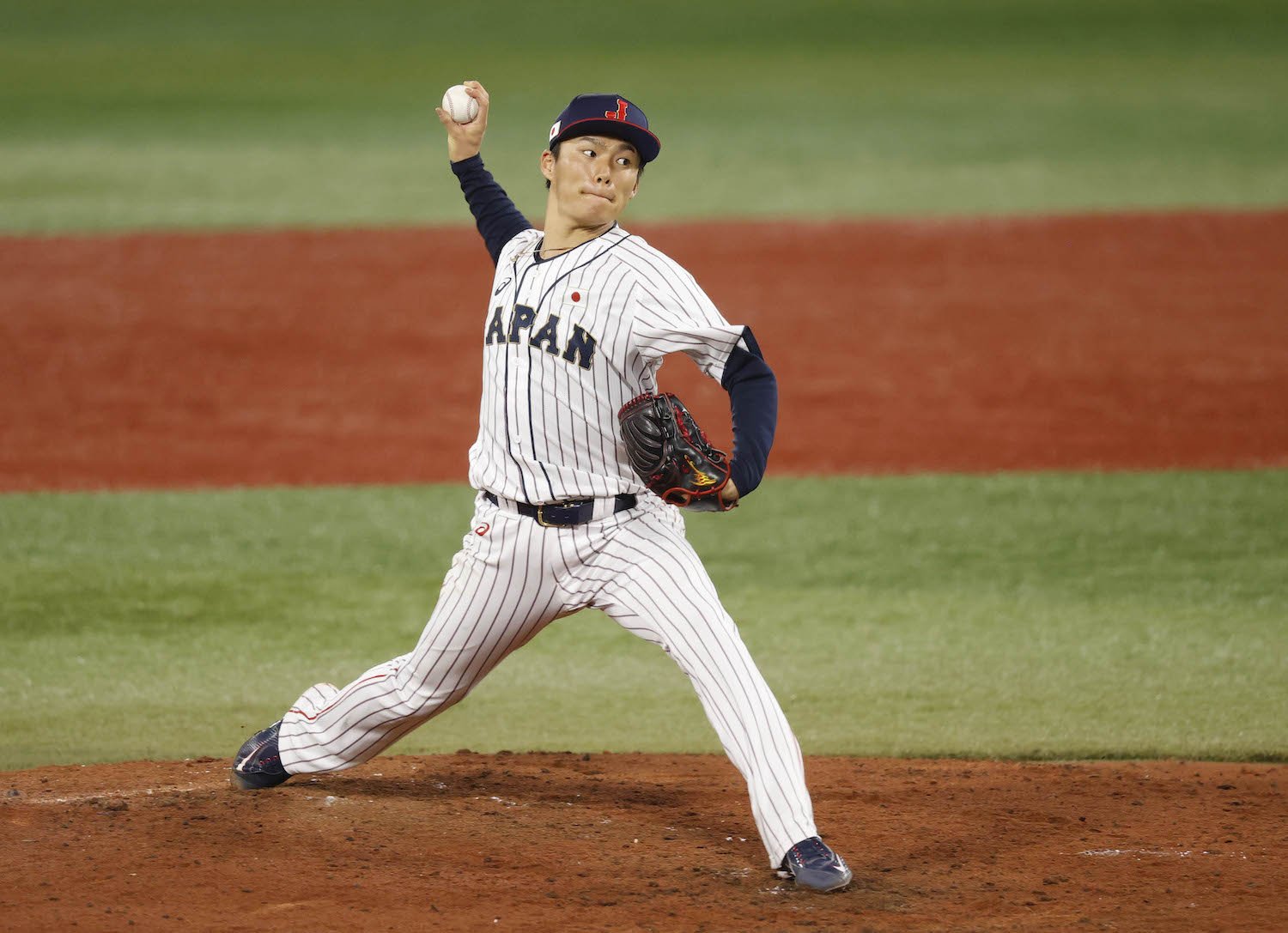 Obviously, the biggest news of the day was that Shohei Ohtani will defer $68 million of his $70-million annual salary in each year of his 10-year, $700-million contract with the Los Angeles Dodgers. That could allow the team to keep spending, and potentially sign or trade for a frontline starting pitcher like Lucas Giolito, Tyler Glasnow, Dylan Cease, or, most notably, Yoshinobu Yamamoto. Ohtani's deferrals make the word "unprecedented" seem insufficient. Reportedly, the generational talent proposed the unique structure of the deal, as his off-the-field earnings are significant enough for him to maintain a lavish lifestyle. There are many intricacies within Ohtani's deal, and I highly recommend reading Fabian Ardaya's piece at The Athletic to understand how the deal came to be and its effects on the Dodgers and Major League Baseball. Other important, non-Ohtani contract tidbits and information around the league were shared on Monday, and the kind people at Twins Daily are here to help keep you engaged and informed fans of all things Major League Baseball. Do Not Go Gentle Into That Good Night Upon the news of Ohtani's official departure from the organization, the ever-persistent and often misguided Los Angeles Angels are swimming in deep waters. On Monday night, Ken Rosenthal of The Athletic reported that the Angels are in the trade market for Corbin Burnes, Glasnow, and Bieber. If the organization is unable to acquire one of the three pitchers listed above, it is believed they will shift to the second-tier free-agent starters market, with Marcus Stroman being brought up as a potential target. Though the Angels are probably better off undergoing an organizational reset in this post-Ohtani world, they are steadfast in attempting to compete in 2024. Will that come back to haunt them? Only time will tell, but as the popular maxim states, past performance is the best indicator of future performance. Yamamoto Meets With Big Market Teams After New York Mets owner Steve Cohen flew to Japan to meet with Yamamoto and his family in his home country, the former NPB star met with the San Francisco Giants on Sunday, the New York Yankees on Monday and is expected to meet with the Dodgers this upcoming Friday, in what has become a melee for baseball's top remaining free agent. As reported last week, Yamamoto's total contract is expected to surpass $300 million. Will the Dodgers spend $1 billion in total value in one offseason? Will one of the New York teams give Yamamoto an offer he can't refuse, out of desperation? Will franchises who need to make a splash, like the Giants or Toronto Blue Jays, hand Yamamoto and his representatives a blank check? The thrilling conclusion to Yamamoto's decision must come by January 4, 2024, the final day of the prized free agent's 45-day posting window. St. Louis Cardinals Discussing Extension With Former NL MVP On Monday, Derrick Goold of the St. Louis Post-Dispatch reported that the Cardinals are planning on approaching first baseman Paul Goldschmidt to discuss a contract extension. Goldschmidt, 36, is slated to make $26.5 million in the final year of an extension he signed with the Cardinals in 2019. Considering Goldschmidt's age and the Cardinals' struggles last season, the news of this development is surprising, from an outside perspective. Yet, considering the Cardinals' intentions to compete in 2024 and the former MVP expressing a strong desire to stay in "The Lou" in the past, the two sides coming to an agreement later this offseason feels inevitable. Kansas City Royals Remain Active in Pitching Market One of the more surprising developments during the first wave of free agency has been how aggressive the Royals have been in the pitching market. On Sunday, the team agreed on a one-year, $5-million contract with left-handed relief pitcher Will Smith. Following the unexpected signing of Smith on Monday, Mark Feinsand of MLB.com reported that the Royals have had discussions with starting pitchers Michael Wacha and Jack Flaherty. The Royals have also been linked to free-agent starters Stroman, Giolito, and Seth Lugo. Earlier this offseason, Royals General Manager J.J. Piccolo stated that he hopes to bolster the team's starting rotation, and news of their interest in the five starters noted earlier further pushes that narrative. What is the driving force behind the Royals' desire to acquire this level of help? While it is unlikely the Royals will be serious contenders to win the American League Central or earn a Wild Card spot, it would make sense for the organization to want to improve what was the fourth-worst rotation in baseball in 2023, according to Wins Above Replacement at FanGraphs. Miscellaneous Twins Notes Pitcher Louie Varland celebrated his 26th birthday on Monday. Joe Mauer is currently on track to become a first-ballot Hall of Fame entry, with 76.8% of the vote. (No, we are not afraid to keep a daily count. Yes, dear BBWAA voter reading this, we are watching you.) Read Theodore Tollefson's incredible piece on Wichita Wind Surge's head groundskeeper, Ben Hartman. Fun Fact: Willi Castro (projected $3.8 million salary) will make more money playing baseball in 2024 than Ohtani. Happy Tuesday, everyone. Let's talk baseball! Join the conversation and comment below.
- 81 comments
-
- 8
-
-
- shohei ohtani
- yoshinobu yamamoto
- (and 5 more)
-
The Brewers have a surplus of young, cost-controlled outfielders, any of whom could immediately slot in as a high-level insurance policy for the oft-injured Byron Buxton. Should the Twins look to "the good land" for a cheap successor to Michael A. Taylor? Image courtesy of © Benny Sieu-USA TODAY Sports Michael A. Taylor, the Twins' primary center fielder during the 2023 regular season, has unexpectedly become one of the most talked-about names during the first wave of Major League Baseball free agency. Having already been linked to the Toronto Blue Jays, New York Mets, Boston Red Sox, Cincinnati Reds, and Los Angeles Dodgers, Taylor figures to sign soon, and the chances that it's a return engagement in Minnesota feel remote. Taylor, 32, hit .220/.278/.442 with 21 home runs and 14 doubles in 2023, generating a 96 wRC+ and 1.7 Wins Above Replacement at FanGraphs (fWAR) over 388 plate appearances. He mixed his roughly average offensive numbers with impressive defense, evidenced by 9 Outs Above Average (OAA) and elite arm strength, to become an above-average role player. Internal candidates to replace Taylor's production in center are Willi Castro, Nick Gordon, DaShawn Keirsey, and Austin Martin. Though Castro and Gordon will likely occupy 26-man roster spots in 2024, they are better utilized as nomadic utility players, used flexibly at multiple positions instead of being penciled in at the same position game-in and game-out. Keirsey and (most notably) Martin are young, talented prospects who garner optimism yet are unlikely to be handed significant roles on an American League Central title-seeking team out of spring training. Martin, the Twins' seventh-ranked prospect, could make the Twins' Opening Day roster, but his skill set would be best utilized as a utility player, especially if the team trades from its infield depth to shore up the pitching staff. If he hits well and shows the necessary defensive tools to occupy center, then transitioning him to a full-time role could make sense. Until then, planning for Martin to be that player is merely wishful thinking, and not yet an appropriate course of action for a franchise attempting to make the playoffs for the second straight season. Free-agent options Kevin Kiermaier, and Harrison Bader are enticing succession options for Taylor. The Twins were said to have expressed interest in Kiermaier, whose impending contract is expected to be within the organization's budget, in early November. Bader, who has struggled the past two seasons, is an intriguing low-risk, high-reward target. Yet, like with Keirsey and Martin, opting for a steadier successor would be in the organization's best interest. So, what is the best course of action the front office could take? Signing Kiermaier to a one- or two-year deal feels like the wisest choice, but if he elects to sign elsewhere, the front office should search the trade market. Upon first glance at the trade market, one will find that Jake Meyers (Houston Astros), Johan Rojas (Philadelphia Phillies), Leody Taveras (Texas Rangers), and Jack Suwinski (Pittsburgh Pirates) are attractive options who might not require hard-to-swallow packages to acquire. Although the four players listed are alluring trade candidates, their respective teams could easily elect not to trade them. Each provides valuable depth, while being affordable and possessing starting potential. Though the state these four franchises find themselves in makes it less likely they will part ways with young and inexpensive center-field talent, what if there was an organization that had a surplus of cost-effective young outfielders and an adequate amount of organizational depth to soften the blow of losing a young, starting-caliber outfielder? Enter the Milwaukee Brewers. The 414's professional baseball club finds itself in a unique predicament. On Dec. 4, the club officially announced they had extended 19-year-old prized prospect Jackson Chourio to an eight-year, $82-million contract, effectively cementing him as the team's starting center fielder and a franchise cornerstone. Not only is Chourio's extension a beacon for the Brewers organization, their fans, and Major League Baseball as a whole, but it also provides General Manager Matt Arnold the unique opportunity to ship off one or more of the team's other young outfielders (Garrett Mitchell, Tyrone Taylor, Joey Wiemer, or Sal Frelick) in exchange for an infielder who could immediately contribute to the big-league club. Coincidentally, the Twins have a surplus of infielders who would slot in as day-one starters for the Crew, in Jorge Polanco, Edouard Julien, Kyle Farmer, Jose Miranda, and potentially Brooks Lee. The only infield position at which the Brewers have a clearly satisfactory option for 2024 is shortstop, with Willy Adames. The club's projected first, second, and third basemen are Jake Bauers, Brice Turang, and Andruw Monasterio, respectively. During the 2023 season, the three players generated a combined 0.1 fWAR over 1,035 total plate appearances. To contextualize their struggles, consider that Farmer, whom many perceived as having a down year in 2023, generated 1.6 fWAR over 369 plate appearances. So, what would an ideal trade look like? Well, there are different tiers of trades, depending on how significant of a contributor each team wants to acquire. Tier III Trade Brewers receive: Farmer - .256/.317/.408, 369 plate appearances, 11 home runs, 101 wRC+, 1.6 fWAR Twins receive: Taylor - .234/.267/.446, 243 plate appearances, 10 home runs, 88 wRC+, 0.8 fWAR The first hypothetical trade scenario is a veteran one-for-one swap. The 33-year-old Farmer, with his $6.6 million projected 2024 salary, is the member of the Twins' crowded infield assortment most likely to be traded this offseason, even with recent news of the team receiving increased trade interest in Polanco. Trading Farmer for Taylor would be a relatively simple swap for both franchises, and each player could seamlessly insert themselves into better-defined roles for their new club. Farmer could become the full-time second or third baseman if Turang or Monasterio struggle, or be utilized as an all-encompassing infield utility, as he did for the Twins in 2023. Taylor, who is under team control for three more seasons, could replace Taylor as Buxton's insurance policy, as he has logged 709 innings at the position over the past two seasons. A Farmer-for-Taylor swap would be a low-risk, moderate-reward swap that would benefit both franchises. Tier II Trade Brewers receive: Polanco - .255/.355/.454, 343 plate appearances, 14 home runs, 118 wRC+, 1.5 fWAR Twins receive: Mitchell - .246/.315/.446, 73 plate appearances, three home runs, 103 wRC+, 0.4 fWAR This move involves the longest-tenured active Twin and a former Brewers first-round pick. As noted earlier, the Brewers intend to compete in 2024, so going out on a limb and sending Mitchell to Minnesota for an All-Star-caliber, switch-hitting top-of-the-lineup cog could make sense as a "win-now" proposition. Although parting with Polanco would be a blow to the Twins' culture and their fan base, netting a young, talented, cost-effective player like Mitchell under control through the end of the 2028 season would be a coup for the Twins. Along with Polanco, the Twins would likely have to part ways with a young pitcher with upside, like Cole Sands, Josh Winder, or Simeon Woods Richardson, to balance the deal, but parting with one of these young arms is a sacrifice most would be willing to make. The speedy Mitchell would slot in as a long-term platoon partner and replacement for Buxton, depending on Buxton's health. Polanco would instantly become the Brewers' best offensive infielder and, barring injuries, could be a driving force toward their second consecutive National League Central title. Tier I Trade Brewers receive: Julien - .263/.381/.459, 408 plate appearances, 16 home runs, 136 wRC+, 2.8 fWAR Twins receive: Frelick - .246/.341/.351, 223 plate appearances, three home runs, 92 wRC+, 1.4 fWAR Admittedly, this would be brutal to come to terms with, as Julien is one of my favorite current Twins. Regardless, a Julien-for-Frelick swap could significantly benefit both franchises from a short- and a long-term perspective. To begin, both players, who were rookies in 2023, are young, cost-effective, potentially star-caliber players who are under team control through 2029. Julien, who improved defensively toward the end of last season, could become an above-average, potentially elite offensive second base/first base/designated hitter in the Brewers' presently unintimidating lineup. Frelick, on the other hand, could slot in as an elite defender and high-OBP center fielder who, like Mitchell, could eventually become the Twins' long-term answer there. Julien and Frelick are two young players on the precipice of breaking out during their first full seasons at the major-league level. Though the Twins and Brewers are exhilarated by Julien and Frelick, respectively, if they were to exchange them, both franchises could benefit from each player's high upside at positions of greater need. Moves like these sometimes make baseball executives (a conservative bunch, by nature) too nervous. The Brewers might prefer to stick with their young options around the horn, and the Twins might stay hopeful on Buxton's defensive future and let their utility men stop any gaps. Nevertheless, these neighbors have inverse team needs and are in a unique situation, where each organization could benefit from the other's surplus. Should the Twins and Brewers execute an infielder-for-outfielder swap? Which hypothetical trade interests you the most? Join the conversation and comment below. View full article
-
 Michael A. Taylor, the Twins' primary center fielder during the 2023 regular season, has unexpectedly become one of the most talked-about names during the first wave of Major League Baseball free agency. Having already been linked to the Toronto Blue Jays, New York Mets, Boston Red Sox, Cincinnati Reds, and Los Angeles Dodgers, Taylor figures to sign soon, and the chances that it's a return engagement in Minnesota feel remote. Taylor, 32, hit .220/.278/.442 with 21 home runs and 14 doubles in 2023, generating a 96 wRC+ and 1.7 Wins Above Replacement at FanGraphs (fWAR) over 388 plate appearances. He mixed his roughly average offensive numbers with impressive defense, evidenced by 9 Outs Above Average (OAA) and elite arm strength, to become an above-average role player. Internal candidates to replace Taylor's production in center are Willi Castro, Nick Gordon, DaShawn Keirsey, and Austin Martin. Though Castro and Gordon will likely occupy 26-man roster spots in 2024, they are better utilized as nomadic utility players, used flexibly at multiple positions instead of being penciled in at the same position game-in and game-out. Keirsey and (most notably) Martin are young, talented prospects who garner optimism yet are unlikely to be handed significant roles on an American League Central title-seeking team out of spring training. Martin, the Twins' seventh-ranked prospect, could make the Twins' Opening Day roster, but his skill set would be best utilized as a utility player, especially if the team trades from its infield depth to shore up the pitching staff. If he hits well and shows the necessary defensive tools to occupy center, then transitioning him to a full-time role could make sense. Until then, planning for Martin to be that player is merely wishful thinking, and not yet an appropriate course of action for a franchise attempting to make the playoffs for the second straight season. Free-agent options Kevin Kiermaier, and Harrison Bader are enticing succession options for Taylor. The Twins were said to have expressed interest in Kiermaier, whose impending contract is expected to be within the organization's budget, in early November. Bader, who has struggled the past two seasons, is an intriguing low-risk, high-reward target. Yet, like with Keirsey and Martin, opting for a steadier successor would be in the organization's best interest. So, what is the best course of action the front office could take? Signing Kiermaier to a one- or two-year deal feels like the wisest choice, but if he elects to sign elsewhere, the front office should search the trade market. Upon first glance at the trade market, one will find that Jake Meyers (Houston Astros), Johan Rojas (Philadelphia Phillies), Leody Taveras (Texas Rangers), and Jack Suwinski (Pittsburgh Pirates) are attractive options who might not require hard-to-swallow packages to acquire. Although the four players listed are alluring trade candidates, their respective teams could easily elect not to trade them. Each provides valuable depth, while being affordable and possessing starting potential. Though the state these four franchises find themselves in makes it less likely they will part ways with young and inexpensive center-field talent, what if there was an organization that had a surplus of cost-effective young outfielders and an adequate amount of organizational depth to soften the blow of losing a young, starting-caliber outfielder? Enter the Milwaukee Brewers. The 414's professional baseball club finds itself in a unique predicament. On Dec. 4, the club officially announced they had extended 19-year-old prized prospect Jackson Chourio to an eight-year, $82-million contract, effectively cementing him as the team's starting center fielder and a franchise cornerstone. Not only is Chourio's extension a beacon for the Brewers organization, their fans, and Major League Baseball as a whole, but it also provides General Manager Matt Arnold the unique opportunity to ship off one or more of the team's other young outfielders (Garrett Mitchell, Tyrone Taylor, Joey Wiemer, or Sal Frelick) in exchange for an infielder who could immediately contribute to the big-league club. Coincidentally, the Twins have a surplus of infielders who would slot in as day-one starters for the Crew, in Jorge Polanco, Edouard Julien, Kyle Farmer, Jose Miranda, and potentially Brooks Lee. The only infield position at which the Brewers have a clearly satisfactory option for 2024 is shortstop, with Willy Adames. The club's projected first, second, and third basemen are Jake Bauers, Brice Turang, and Andruw Monasterio, respectively. During the 2023 season, the three players generated a combined 0.1 fWAR over 1,035 total plate appearances. To contextualize their struggles, consider that Farmer, whom many perceived as having a down year in 2023, generated 1.6 fWAR over 369 plate appearances. So, what would an ideal trade look like? Well, there are different tiers of trades, depending on how significant of a contributor each team wants to acquire. Tier III Trade Brewers receive: Farmer - .256/.317/.408, 369 plate appearances, 11 home runs, 101 wRC+, 1.6 fWAR Twins receive: Taylor - .234/.267/.446, 243 plate appearances, 10 home runs, 88 wRC+, 0.8 fWAR The first hypothetical trade scenario is a veteran one-for-one swap. The 33-year-old Farmer, with his $6.6 million projected 2024 salary, is the member of the Twins' crowded infield assortment most likely to be traded this offseason, even with recent news of the team receiving increased trade interest in Polanco. Trading Farmer for Taylor would be a relatively simple swap for both franchises, and each player could seamlessly insert themselves into better-defined roles for their new club. Farmer could become the full-time second or third baseman if Turang or Monasterio struggle, or be utilized as an all-encompassing infield utility, as he did for the Twins in 2023. Taylor, who is under team control for three more seasons, could replace Taylor as Buxton's insurance policy, as he has logged 709 innings at the position over the past two seasons. A Farmer-for-Taylor swap would be a low-risk, moderate-reward swap that would benefit both franchises. Tier II Trade Brewers receive: Polanco - .255/.355/.454, 343 plate appearances, 14 home runs, 118 wRC+, 1.5 fWAR Twins receive: Mitchell - .246/.315/.446, 73 plate appearances, three home runs, 103 wRC+, 0.4 fWAR This move involves the longest-tenured active Twin and a former Brewers first-round pick. As noted earlier, the Brewers intend to compete in 2024, so going out on a limb and sending Mitchell to Minnesota for an All-Star-caliber, switch-hitting top-of-the-lineup cog could make sense as a "win-now" proposition. Although parting with Polanco would be a blow to the Twins' culture and their fan base, netting a young, talented, cost-effective player like Mitchell under control through the end of the 2028 season would be a coup for the Twins. Along with Polanco, the Twins would likely have to part ways with a young pitcher with upside, like Cole Sands, Josh Winder, or Simeon Woods Richardson, to balance the deal, but parting with one of these young arms is a sacrifice most would be willing to make. The speedy Mitchell would slot in as a long-term platoon partner and replacement for Buxton, depending on Buxton's health. Polanco would instantly become the Brewers' best offensive infielder and, barring injuries, could be a driving force toward their second consecutive National League Central title. Tier I Trade Brewers receive: Julien - .263/.381/.459, 408 plate appearances, 16 home runs, 136 wRC+, 2.8 fWAR Twins receive: Frelick - .246/.341/.351, 223 plate appearances, three home runs, 92 wRC+, 1.4 fWAR Admittedly, this would be brutal to come to terms with, as Julien is one of my favorite current Twins. Regardless, a Julien-for-Frelick swap could significantly benefit both franchises from a short- and a long-term perspective. To begin, both players, who were rookies in 2023, are young, cost-effective, potentially star-caliber players who are under team control through 2029. Julien, who improved defensively toward the end of last season, could become an above-average, potentially elite offensive second base/first base/designated hitter in the Brewers' presently unintimidating lineup. Frelick, on the other hand, could slot in as an elite defender and high-OBP center fielder who, like Mitchell, could eventually become the Twins' long-term answer there. Julien and Frelick are two young players on the precipice of breaking out during their first full seasons at the major-league level. Though the Twins and Brewers are exhilarated by Julien and Frelick, respectively, if they were to exchange them, both franchises could benefit from each player's high upside at positions of greater need. Moves like these sometimes make baseball executives (a conservative bunch, by nature) too nervous. The Brewers might prefer to stick with their young options around the horn, and the Twins might stay hopeful on Buxton's defensive future and let their utility men stop any gaps. Nevertheless, these neighbors have inverse team needs and are in a unique situation, where each organization could benefit from the other's surplus. Should the Twins and Brewers execute an infielder-for-outfielder swap? Which hypothetical trade interests you the most? Join the conversation and comment below.
- 30 comments
-
- 3
-
-

-
- kyle farmer
- tyrone taylor
- (and 5 more)
-
Let's start the day strong with the latest intel from Day Two of the 2023 MLB Winter Meetings, held inside the Gaylord Opryland Resort & Convention Center in Nashville, Tennessee. Image courtesy of Brett Davis - USA TODAY Sports Day Two of the 2023 MLB Winter Meetings has passed, and it's fair to say the hot stove is on FIRE! Arson Judge--Wait, no, sorry, I was reciting the script from 2022; my apologies. Day Two of the 2023 MLB Winter Meetings has come and gone, and the hot stove is, well, freezing. Though the sport is at a standstill as the biggest domino (Shohei Ohtani) has yet to fall, news has slowly trickled out of baseball's biggest offseason event. Let's take a look at a few things that are going on. Twins Interested in a St. Louis Cardinals Outfielder? The St. Louis Cardinals, who recently signed AL Cy Young Award runner-up Sonny Gray, have a surplus of MLB-caliber outfield talent. The group includes Tyler O'Neill, Lars Nootbaar, Tommy Edman, Jordan Walker, and Dylan Carlson. Although depth like that is an excellent problem for the organization to have, Katie Woo of The Athletic is reporting that the Cardinals' plan is to use Nootbaar in left field, Edman in center, and Walker in right, with Carlson being the fourth outfielder for the upcoming season. In this scenario, the odd man out would be the 28-year-old O'Neill. During the 2023 MLB Trade Deadline, the Twins were reportedly interested in trading for the right-handed-hitting O'Neill. Could that interest still be there? When we asked John Bonnes's Magic 8 Ball, it responded, "Signs point to Yes." Central Division Teams Make Significant Coaching Decisions News broke around midday Monday that the Detroit Tigers and manager AJ Hinch have agreed to a "long-term" extension. Though the term and average annual value of Hinch's contract are unknown, those who follow the Twins should get used to seeing Hinch's face for years to come. The Tigers are on the rise, and though long stretches of ineffectiveness early in each of the last two seasons have torpedoed their hopes quickly, the up-and-coming Hinch-led team could pose the greatest threat to the Twins' AL Central supremacy as soon as this season. Shifting attention to the NL Central, it was announced that former Cardinals catcher Yadier Molina has agreed to join the team in an unspecified coaching role. It is safe to assume he will be tasked with coaching the Cardinals' catchers, notably Willson Contreras, in some capacity, but his role beyond that is unknown. The team wanted Molina as their bench coach for next year, earlier in the offseason, but he turned that opportunity down. The Cardinals' intention with Molina could be for the St. Louis legend to be a potential successor to current manager Oli Marmol if things don't work out again in 2024, but to suggest that is pure speculation. Nonetheless, monitoring Molina's future role with the Cardinals will be interesting. KBO Postings and Yoshinobu Yamamoto's Market Outfielder Jung Hoo Lee and closer Woo Suk Go were officially posted by their respective KBO teams on Monday. Though the Twins will likely show no interest in Go, a closer, the organization may express interest in the 25-year-old former KBO MVP outfielder Lee. Lee, who is a natural center fielder, has already drawn interest from teams who are willing to spend, like the New York Mets, San Francisco Giants, and San Diego Padres, so if a bidding war for his services arises, the cost-cutting Twins will likely end up a mere afterthought. With players coming over from foreign leagues, though, markets sometimes fail to materialize to the expected extent, so keep an eye on this. Speaking of cost-cutting, the dream of the Twins landing the NPB icon Yamamoto can officially be laid to rest. At the beginning of the offseason, Yamamoto, 25, was expected to sign a seven- or eight-year deal worth roughly $200 million. Those expectations, according to Bowden, have since been blown out of the water, as Yamamoto appears poised to become the first starting pitcher to sign a deal worth $300 million in total value since Gerrit Cole signed a nine-year, $324-million pact with the New York Yankees after the 2019 season. Noteworthy teams interested in signing Yamamoto include the Yankees, Mets, Giants, Los Angeles Dodgers, Boston Red Sox, and Chicago Cubs. Unsurprisingly, Yamamoto will likely end up with one of six big-market teams. Which one will it be? The answer might come down to which is willing to open their pocketbook the most. Twins Minor League Notes: Andrew Bechtold, a two-way player who spent his 2023 season in the Twins minor-league system, signed a MiLB deal with the Blue Jays as a pitcher. Twins minor leaguer Regi Grace was named the team's Minor League Players Union Representative for the coming year. The growth and development of the union for minor leaguers continues apace. Should the Twins trade for O'Neill? Was it wise of the Tigers to extend Hinch? What do you think Molina's role will be with the Cardinals? Will Yamamoto sign for $300 million? The table is set. Comment below. View full article
- 28 replies
-
- 1
-
-
- tyler oneill
- aj hinch
- (and 5 more)
-
 Day Two of the 2023 MLB Winter Meetings has passed, and it's fair to say the hot stove is on FIRE! Arson Judge--Wait, no, sorry, I was reciting the script from 2022; my apologies. Day Two of the 2023 MLB Winter Meetings has come and gone, and the hot stove is, well, freezing. Though the sport is at a standstill as the biggest domino (Shohei Ohtani) has yet to fall, news has slowly trickled out of baseball's biggest offseason event. Let's take a look at a few things that are going on. Twins Interested in a St. Louis Cardinals Outfielder? The St. Louis Cardinals, who recently signed AL Cy Young Award runner-up Sonny Gray, have a surplus of MLB-caliber outfield talent. The group includes Tyler O'Neill, Lars Nootbaar, Tommy Edman, Jordan Walker, and Dylan Carlson. Although depth like that is an excellent problem for the organization to have, Katie Woo of The Athletic is reporting that the Cardinals' plan is to use Nootbaar in left field, Edman in center, and Walker in right, with Carlson being the fourth outfielder for the upcoming season. In this scenario, the odd man out would be the 28-year-old O'Neill. During the 2023 MLB Trade Deadline, the Twins were reportedly interested in trading for the right-handed-hitting O'Neill. Could that interest still be there? When we asked John Bonnes's Magic 8 Ball, it responded, "Signs point to Yes." Central Division Teams Make Significant Coaching Decisions News broke around midday Monday that the Detroit Tigers and manager AJ Hinch have agreed to a "long-term" extension. Though the term and average annual value of Hinch's contract are unknown, those who follow the Twins should get used to seeing Hinch's face for years to come. The Tigers are on the rise, and though long stretches of ineffectiveness early in each of the last two seasons have torpedoed their hopes quickly, the up-and-coming Hinch-led team could pose the greatest threat to the Twins' AL Central supremacy as soon as this season. Shifting attention to the NL Central, it was announced that former Cardinals catcher Yadier Molina has agreed to join the team in an unspecified coaching role. It is safe to assume he will be tasked with coaching the Cardinals' catchers, notably Willson Contreras, in some capacity, but his role beyond that is unknown. The team wanted Molina as their bench coach for next year, earlier in the offseason, but he turned that opportunity down. The Cardinals' intention with Molina could be for the St. Louis legend to be a potential successor to current manager Oli Marmol if things don't work out again in 2024, but to suggest that is pure speculation. Nonetheless, monitoring Molina's future role with the Cardinals will be interesting. KBO Postings and Yoshinobu Yamamoto's Market Outfielder Jung Hoo Lee and closer Woo Suk Go were officially posted by their respective KBO teams on Monday. Though the Twins will likely show no interest in Go, a closer, the organization may express interest in the 25-year-old former KBO MVP outfielder Lee. Lee, who is a natural center fielder, has already drawn interest from teams who are willing to spend, like the New York Mets, San Francisco Giants, and San Diego Padres, so if a bidding war for his services arises, the cost-cutting Twins will likely end up a mere afterthought. With players coming over from foreign leagues, though, markets sometimes fail to materialize to the expected extent, so keep an eye on this. Speaking of cost-cutting, the dream of the Twins landing the NPB icon Yamamoto can officially be laid to rest. At the beginning of the offseason, Yamamoto, 25, was expected to sign a seven- or eight-year deal worth roughly $200 million. Those expectations, according to Bowden, have since been blown out of the water, as Yamamoto appears poised to become the first starting pitcher to sign a deal worth $300 million in total value since Gerrit Cole signed a nine-year, $324-million pact with the New York Yankees after the 2019 season. Noteworthy teams interested in signing Yamamoto include the Yankees, Mets, Giants, Los Angeles Dodgers, Boston Red Sox, and Chicago Cubs. Unsurprisingly, Yamamoto will likely end up with one of six big-market teams. Which one will it be? The answer might come down to which is willing to open their pocketbook the most. Twins Minor League Notes: Andrew Bechtold, a two-way player who spent his 2023 season in the Twins minor-league system, signed a MiLB deal with the Blue Jays as a pitcher. Twins minor leaguer Regi Grace was named the team's Minor League Players Union Representative for the coming year. The growth and development of the union for minor leaguers continues apace. Should the Twins trade for O'Neill? Was it wise of the Tigers to extend Hinch? What do you think Molina's role will be with the Cardinals? Will Yamamoto sign for $300 million? The table is set. Comment below.
- 28 comments
-
- 4
-
-
- tyler oneill
- aj hinch
- (and 5 more)
-
Twins starting pitcher Chris Paddack has been a hot topic over the last week, at the national level. Are the Twins making a mistake by expressing what appears to be unwavering faith in an unknown commodity? Or will proceeding with Paddack prove to be a shrewd decision by the front office? Let's take a look. Image courtesy of Jesse Johnson - USA TODAY Sports Between Royce Lewis's breakout postseason performance, Pablo López putting on one of the best postseason pitching performances in franchise history, and the cathartic ending of the Twins' 18-game playoff losing streak, there was a more understated (yet noteworthy) optimism-inducing occurrence late in 2023: The dominance of starter-turned-temporary-reliever Chris Paddack. For much of the 2023 season, Paddack existed more as an idea than as a pitcher who could make an impact on one of the best pitching staffs in Major League Baseball. "Will he be able to come back and pitch toward the end of the season?" fans wondered, as reporters provided occasional insight into how Paddack was progressing post-Tommy John surgery. Eventually, it was announced that Paddack would return from the 60-day injured list on September 24, right before the Twins started a series against the lowly Los Angeles Angels. Paddack was in line to make his debut against the Angels the same day, but a rain delay aborted what was supposed to be his grand return from a 16-month absence. Instead, Paddack returned against the Oakland Athletics on September 26, the same team he faced when he tore his ulnar collateral ligament (UCL) in 2022. He worked two innings, striking out four of the 11 batters he faced while giving up three earned runs, on four hits and one walk. Paddack struggled in his first appearance of 2023, but immediately bounced back against the Colorado Rockies on September 30, striking out four of the 11 batters he faced while giving up zero earned runs over two frames. Paddack's four innings pitched at the major-league level and the 14 innings he threw in the minors convinced the Twins' decision-makers that he would be a worthwhile addition to the 26-man Wild Card Series roster against the Toronto Blue Jays. Paddack didn't pitch against the Blue Jays in the first round, but he made his Twins postseason debut against the Houston Astros in the ALDS. In the two games he threw against the Astros, Paddack generated an incredible 0.27 WHIP and 14.7 K/9, striking out six of the 12 Astros batters he faced. He surrendered only one hit over 3 2/3 innings pitched. Though Paddack wasn't the only Twins reliever who excelled during the postseason, the long and tedious road he traveled to get there is what made his commanding performance truly special. Fast-forward to the present, and the Twins find themselves on the brink of reintegrating Paddack into the role they wanted him to fill when they acquired him on Opening Day of the 2022 season: that of a mid-rotation starter. The Twins transitioning Paddack back into that gig seemed like a relative certainty to those who follow the Twins closely, especially with the recent departures of Kenta Maeda and Sonny Gray. Yet, the decision to give Paddack a spot in 2024 has stirred some unexpected controversy at the national level. On November 28, Keith Law of The Athletic wrote an article wherein he recapped Maeda and Gray signing with the Detroit Tigers and St. Louis Cardinals, respectively, and how the Twins could realistically fill the holes the two veterans left in the starting rotation. In his article, Law states that the Twins "only have three true starters left on the roster: Pablo López, Joe Ryan, and Bailey Ober." Law then went on to state that the organization has several former starters turned relievers, including Louie Varland, who, according to Law, "was very homer-prone as a starter last season," which is true, evidenced by his 20.6% HR/FB over 10 games as a starter. Also, Law mentioned Jordan Balazovic, who "hasn't shown enough command to even be a good reliever yet," as another potential rotation option. Law was correct to say that Balazovic hasn't shown that he could be a good reliever yet, let alone a starter, but to mention his name as a potential rotation option for the Twins in 2024 feels like a statement someone who is out of touch with how the franchise is operating would make. Law is one of my favorite baseball analysts, so I don't want it to appear as if I am bashing him. Yet, I want to provide clarity and context to his coverage of the Twins and their mode of operation before sharing what he declared next. If one were to scroll down to the comment section of Law's article, they would see various Twins fans asking him why he mentioned Balazovic as a rotation option yet blatantly ignored Paddack. A specific commenter, "Jesse W." questioned Law's stance by stating, "I definitely agree with the conclusion that the Twins need another pitcher, but this was a weird write-up about their rotation. No mention of Chris Paddack, whom they're obviously planning on having in the starting rotation, but for some reason a mention of Balazovic, who is a guy they've pretty clearly given up on. Was this blurb written last year?" Law responded to Jesse W., saying, "(Paddack has) never made 30 starts or thrown 150 innings in any year. Anyone assuming he'll do either of those things after he threw just 14 total innings last year (minors + majors) is ... well, to quote someone else in this thread, 'lazy.'" Law finished, adding, "If the Twins want to be unrealistic, that's on them. That's not the world in which I operate. The point of my paragraph on them is what they need to do, not what they might internally believe." While it is understandable to question the Twins' seemingly unassailable confidence in Paddack, who pitched 18 (not 14) total innings in 2023 after his second Tommy John surgery in seven years and has never pitched an entire season as a starter anywhere in pro ball, to suggest he is not a viable rotation option--and maybe even that Balazovic is closer to being one--was bizarre. The front office must find a way to replace Maeda and Gray's contributions toward the rotation in 2023. They're not expecting Paddack to give them everything Gray did. He's a much better analog for Maeda, and that's the production they'll hope he can match. Replacing Gray will likely end up being a group effort, effected by multiple back-end starting pitchers. The team might make a cheap free-agent signing like Hyun-Jin Ryu or Michael Wacha, or throw a combination of young internal options like Varland, Simeon Woods Richardson, and David Festa at the problem. To expect Paddack to shoulder that burden would be unfair and unreasonable, a mode of thinking that should be avoided at all costs. No matter the outside perspective, Paddack will play a vital role in the success of the Twins' starting rotation in 2024. Whether he thrives in an expanded role or crumbles under pressure is yet to be seen, but when taking into account the front office's ability to trade for and further develop veteran starting pitchers (i.e., Gray and López) and watching Paddack thrive on the mound as recently October, there is reason to be optimistic about his outlook. Was it unfair of Law to include Balazovic and omit Paddack? Do you think the Twins are wise to have faith in Paddack? Do you think Padddack will perform well in 2024? Comment below. View full article

