



Cody Schoenmann
-
Posts
768 -
Joined
-
Last visited
-
Days Won
1
Content Type
Profiles
News
Minnesota Twins Videos
2026 Minnesota Twins Top Prospects Ranking
2022 Minnesota Twins Draft Picks
Minnesota Twins Free Agent & Trade Rumors, Notes, & Tidbits
Guides & Resources
2023 Minnesota Twins Draft Picks
The Minnesota Twins Players Project
2024 Minnesota Twins Draft Picks
2025 Minnesota Twins Draft Pick Tracker
2026 Minnesota Twins Draft Tracker: Picks & Bonuses
Forums
Blogs
Events
Store
Downloads
Gallery
Everything posted by Cody Schoenmann
-

How Twins and Red Sox Could Match Up on an Edouard Julien Trade
Cody Schoenmann posted an article in Twins
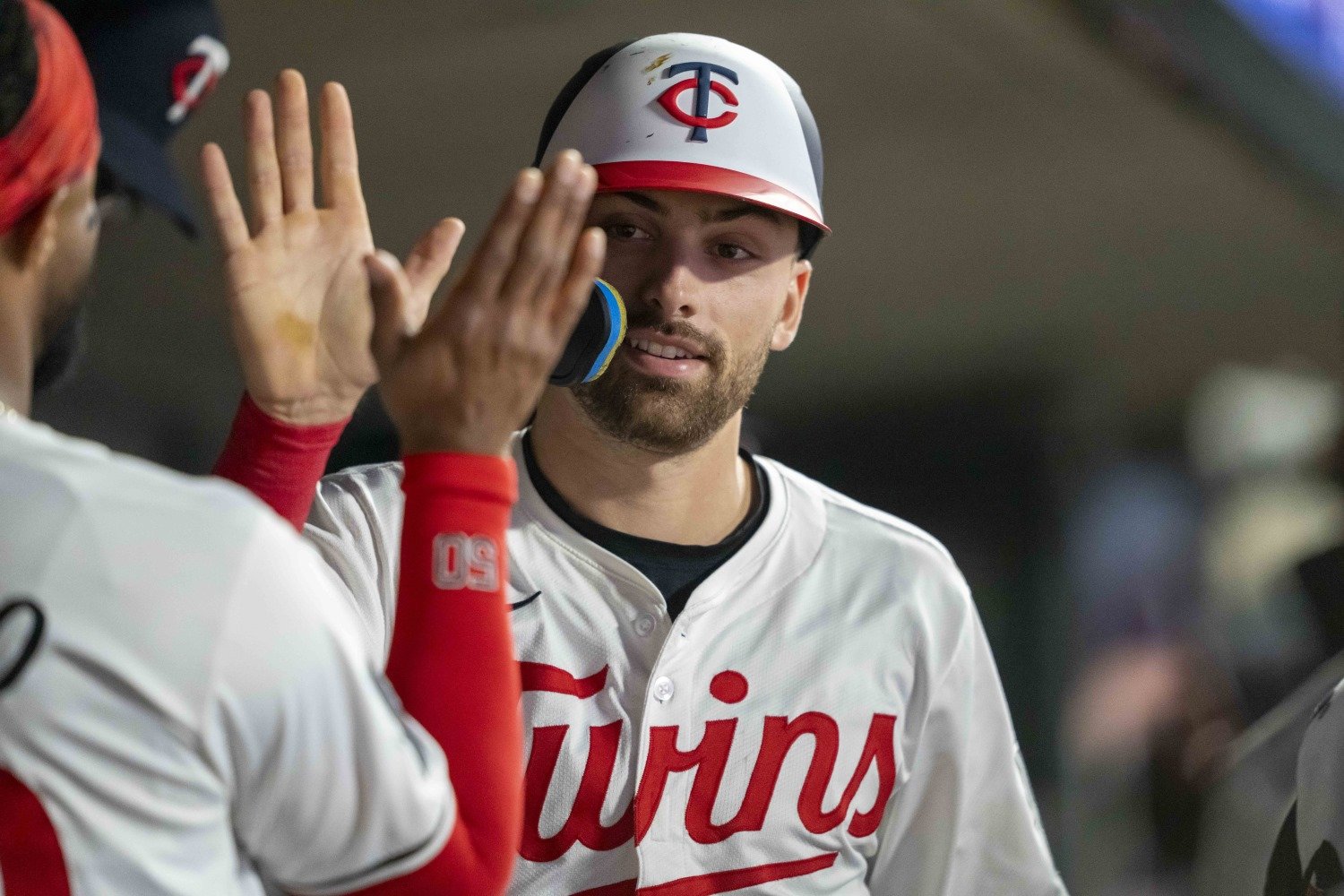 Over 93 games played, Boston Red Sox second basemen have netted a 68 wRC+. This ranks them second-to-last in offensive production at the keystone position. Second-year player Enmanuel Valdez (85 wRC+ over 182 plate appearances) has spent the most time of any Red Sox player at the position, notching 385 1/3 innings over 51 games. However, the 25-year-old infielder has since been demoted to Triple-A Worcester. The team has also cycled through an olio of other options at second base. Here is how the pieces of that rough-hewn jigsaw puzzle have performed this season offensively: Vaughn Grissom (186 innings at 2B) - 1 wRC+ over 87 plate appearances David Hamilton (118 innings at 2B) - 100 wRC+ over 205 plate appearances Jamie Westbrook (58 innings at 2B) - 81 wRC+ over 30 plate appearances Pablo Reyes (39 innings at 2B) - 24 wRC+ over 64 plate appearances Boston has performed well above expectations this season, sitting only a game and a half back from the Twins for the second AL Wild Card and possessing a 41.4% chance of earning a playoff spot, according to FanGraphs. Much of the organization's newfound success can be attributed to a starting pitching renaissance (seventh-best staff ERA in MLB) cultivated by former Twins pitcher turned baseball executive Craig Breslow, pitching coach Andrew Bailey, and director pitching of pitching Justin Willard (Twins pitching coordinator from 2021-2023). Interestingly, the Twins have a serviceable second baseman waiting in the wings at Triple-A in Edouard Julien, and they also have a need for starting pitching help. Would it be wise for Twins decision-makers to send the left-handed hitter to Boston, in return for starting pitching help? Let's take a look. The Twins' offense has become a powerhouse, posting the highest batting average, slugging, wOBA, and wRC+ in baseball since Apr. 21. Having been the hottest lineup in MLB for well over two months has made a few fringy contributors expendable. Willi Castro, José Miranda, Brooks Lee, and the soon-to-return Royce Lewis have fixed themselves as irreplaceable members of the team's infield, making Julien less so. Julien struggled to produce offensively with the Twins in May (42 wRC+ over 81 plate appearances) and when he was first demoted to Triple-A St. Paul in early June. However, Julien has significantly improved in July, and looks more like the disciplined, power-hitting lefty who posted a 136 wRC+ over 408 plate appearances last season. His recent offensive resurgence is an encouraging sign that team decision-makers could use to their benefit come Jul. 30, particularly with the second base-needy Red Sox. Flush with starters and relievers who are performing well, Boston could use their abundance of arms to entice the Twins enough to acquire the intriguing left-handed hitting infielder. At first glance, starting pitchers Nick Pivetta and Kutter Crawford catch one's attention as appealing right-handed hurlers who could fortify Minnesota's rotation. However, they have become staples of the Sox's resurgent rotation, making it highly unlikely that Breslow and company part ways with them amid a playoff push, especially with the team directly in front of them in the Wild Card standings. However, there is a thought-provoking mock trade idea that could benefit both teams in the short and long term: Minnesota receives left-handed reliever Brennan Bernardino and infield prospect Cutter Coffey (FanGraphs's 25th-ranked Red Sox prospect) Boston receives infielder Edouard Julien Bernardino has been a cog in Boston's bullpen, notching a 1.69 ERA, 2.76 FIP, and 22.1% strikeout rate over 32 innings pitched. The 32-year-old southpaw has also given up zero home runs this season, while leaving 82.5% of runners on base. He would instantly become Minnesota's best left-handed reliever, permitting the team to downgrade Steven Okert to a lower-leverage role, demote Kody Funderburk to Triple-A St. Paul, and potentially part ways with the aged and fading Caleb Thielbar. Coffey, 20, is an appealing middle infielder who could offset Julien's departure from the Twins system. He has an above-average arm at short (he threw 94 MPH as a pitcher in high school), while possessing plus raw power that could translate into formidable in-game power as he gets more at-bats. The recent trend of injuries to core infield members Lewis, Miranda, and Correa dampens the prospect of trading Julien in the immediate future. However, none of their injuries should hold them out long-term, meaning a lack of infield depth hope could easily be a non-issue come Jul. 30. In this hypothetical scenario, the Red Sox would acquire a steady defensive second baseman who performed 36% better than average at the plate just last season. He has starting second baseman potential and, at minimum, could function as a platoon partner with the right-handed hitting Hamilton. In return, the Twins would receive a reliever who would instantly become the club's best left-handed option out of the 'pen and could be a driving force in helping the team hunt down Cleveland in the standings. Also, Coffey would be a welcomed addition to a minor-league system rich with talent in the low minors. This challenge trade could be mutually beneficial for two parties residing right next to each other in the AL Wild Card standings.
 -
Keep An Eye on This Emerging 19-Year-Old Pitching Prospect
Cody Schoenmann posted an article in Minor Leagues
 A little over two weeks ago, FanGraphs released their "Minnesota Twins Top 43 Prospects" list. As on most lists, Walker Jenkins, Emmanuel Rodriguez, and Brooks Lee inhabited the top three spots. However, The list quickly became unconventional, with Dameury Pena, Rayne Doncon, and Daiber De Los Santos (none of whom appeared in Twins Daily's 2024 Top Prospect Rankings) residing 10th through 12th. Various other attention-catching placements can be found on FanGraphs's list, yet none were more surprising than 19-year-old starting pitching prospect Adrian Bohorquez claiming the 17th spot. What makes Bohorquez's placement interesting is that he is currently unranked in the following reputable platform's top prospect rankings: Twins Daily's Top 20 Twins Prospect Rankings Aaron Gleeman's 2024 Top 40 Twins Prospect Rankings at The Athletic Aram Leighton's 2024 Top 15 Twins Prospect Rankings at Just Baseball Jonathan Mayo's 2024 Twins Top 30 Prospect Rankings at MLB.com Baseball America's Updated Twins Top 30 Prospects, released just days ago FanGraphs is always unique with its prospect rankings. For example, in 2023, they ranked then-30-year-old Double-A reliever Jordan Brink as the team's 33rd-best prospect. However, to find Bohorquez ranked 17th above well-renowned prospects like Tanner Schobel (21st), Ka'lai Rosario (30th), and Brandon Winokur (31st) is genuinely surprising. Beyond FanGraphs, the only other reputable source to place Bohorquez in their top rankings is Twins' prospect guru Tom Froemming, who has him ranked 28th. So, what prompted FanGraphs and Froemming to rank the hard-throwing righty so highly? Let's take a look. Bohorquez, 19, joined the Twins after signing a minor-league contract with the organization on Jan. 15, 2023. The Venezuela-born pitcher was assigned to the Dominican Summer League (DSL) team in June, allowing a 5.25 ERA, 1.63 WHIP, and a .233 batting average over 24 innings pitched and posting an alarming 30-to-18 strikeout-to-walk ratio. Bohorquez struggled in his first cup of coffee in the DSL, which is expected of an 18-year-old making his first appearance in professional baseball. However, the now-19-year-old has jumped onto the scene in his second season in the system. Upon being promoted to the Twins' Florida Complex League (FCL) squad, he has generated a 3.52 ERA, 1.08 WHIP, and .171 batting average against, while allowing 19 hits over 30 2/3 innings pitched. He has also evinced a modest command improvement, posting a 34-to-14 strikeout-to-walk ratio. The steadily improving hurler topped out at 97 miles per hour in his most recent stretch relief appearance in the FCL, demonstrating the velocity necessary to be taken seriously as a prospect and potentially earn a promotion to Single-A Fort Myers. Admittedly, it is hard to properly scout and assess Bohorquez's performance, pitch mix, and physical traits, as there is limited DSL and FCL video for the general public to access. Despite appearing in the video for only ten seconds, it is evident that Bohorquez (who is listed at 6'1" and 190 pounds at MiLB.com) has an imposing stature that should bode well for him as he continues to mature and develop. His frame doesn't have obvious projection for growth, but it's already a viable pitcher's body. His best pitch is his fastball, which FanGraphs ranks 55/60 on their "20-80 scouting scale," meaning it is above average with the potential of being a true plus pitch. FanGraphs also ranks his curveball at 55/60, with his cutter sitting at 45/50, meaning it is currently below-average with the potential of becoming average. His most significant growth area as a pitcher is his command, which FanGraphs rates 25/55, meaning it is well below average but has a chance to get to above-average. Evidently, Bohorquez improving his command will be the deciding factor on whether he will rise through the ranks or fizzle out in the low minors. Those closely following Twins' prospects have witnessed the ascension of promising young arms like Simeon Woods Richardson, David Festa, Zebby Matthews, and Andrew Morris in the past two seasons. A sustainable pitching pipeline (buzzword, I know) ripe with homegrown talent is beginning to emerge, and having young, talented, hard-throwing arms like Bohorquez bloom this summer further emphasizes the encouraging state of the organization's long-term pitching depth. Bohorquez is an intriguing, hard-throwing starting pitching prospect who could eventually pop up on more Twins' top prospect lists if he improves his command and continues to pitch well for the FCL squad. If FanGraphs's Eric Longenhagen and Tess Taruskin have noticed him this favorably, though, you can bet that teams with whom the Twins will be talking about trades this month have, too.
 -
Will this 19-year-old pitching prospect be the next young, fire-throwing arm to vault up Twins prospect rankings? A little over two weeks ago, FanGraphs released their "Minnesota Twins Top 43 Prospects" list. Like most lists, Walker Jenkins, Emmanuel Rodriguez, and Brooks Lee inhabited the top three spots. However, The list quickly became unconventional, with Dameury Pena, Rayne Doncon, and Daiber De Los Santos (none in Twins Daily's 2024 Top Prospect Rankings) residing tenth, eleventh, and twelfth, respectively. Various other attention-catching placements can be found on FanGraphs's list, yet none were more surprising than 19-year-old starting pitching prospect Adrian Bohorquez claiming the 17th spot. What makes Bohorquez's occupation of the 17th spot in FanGraphs's ranking is that he is currently unranked in the following reputable platform's top prospect rankings: Twins Daily's Top 20 Twins Prospect Rankings Aaron Gleeman's 2024 Top 40 Twins Prospect Rankings at The Athletic Aram Leighton's 2024 Top 15 Twins Prospect Rankings at Just Baseball Jonathan Mayo's 2024 Twins Top 30 Prospect Rankings at MLB.com Baseball America(?) - (I don't have a membership, but I'm assuming Bohorquez is unranked) FanGraphs is always unconventional with its prospect rankings. For example, in 2023, they ranked then-30-year-old Double-A reliever Jordan Brink as the team's 33rd-best prospect. However, to find Bohorquez ranked 17th above well-renowned prospects like Tanner Schobel (21st), Ka'lai Rosario (30th), and Brandon Winokur (31st) is genuinely surprising. Beyond FanGraphs, the only other reputable source to place Bohorquez in their top rankings is Twins' prospect guru Tom Froemming, who has him ranked 28th. So, what prompted FanGraphs and Froemming to rank the hard-throwing righty so highly? Let's take a look. Bohorquez, 19, joined the Twins after signing a minor league contract with the organization on Jan. 15, 2023. The Venezuela-born pitcher was assigned to the Dominican Summer League (DSL) team in June, earning a 5.25 ERA, 1.63 WHIP, and a .233 batting average against while allowing 21 hits over 24 innings pitched and netting an alarming 30-to-18 strikeout-to-walk ratio. Bohorquez struggled in his first cup of coffee in the DSL, which is expected of an 18-year-old making his first appearance in professional baseball. However, the now-19-year-old has jumped onto the scene in his second season in the Twins' minor league system. Upon being promoted to the Twins' Florida Complex League (FCL) squad, he has generated a 3.52 ERA, 1.08 WHIP, and .171 batting average against while allowing 19 hits over 30 2/3 innings pitched. He has also illustrated a modest command improvement, posting a 34-to-14 strikeout-to-walk ratio. The steadily improving hurler also topped out at 97 miles per hour in his most recent stretch relief appearance in the FCL, demonstrating the velocity necessary to be taken seriously as a prospect and potentially earn a promotion to Single-A Fort Myers. Admittedly, it is hard to properly scout and assess Bohorquez's performance, pitch mix, and physical traits as there is limited DSL and FCL video for the general public to access. Despite appearing in the video for only ten seconds, it is evident that Bohorquez (who is listed at 6'1" and 190 lbs at MiLB.com) has an imposing stature that should bode well for him as he continues to mature and develop in the Twins minor league system. His best pitch is his fastball, which FanGraphs ranks 55/60 on their "20-80 scouting scale," meaning it is above average with the potential of being a plus pitch. FanGraphs also ranks his curveball at 55/60, with his cutter sitting at 45/50, meaning it is currently below average with the potential of becoming average. His most significant growth area as a pitcher is his command, which FanGraphs rates 25/55, meaning it is significantly well below-average with the potential of one day becoming above-average. Evidently, Bohorquez improving his command will likely be the deciding factor on if he will rise through the ranks or fizz out in the low minors. Those closely following Twins' prospects have witnessed the ascension of promising young arms like Simeon Woods Richardson, David Festa, Zebby Matthews, and Andrew Morris in the past two seasons. A sustainable pitching pipeline (buzzword, I know) ripe with homegrown talent is beginning to emerge (if it hasn't already), and having young, talented, hard-throwing arms like Bohorquez enter the blooming process this summer further emphasizes the encouraging state of the organization's long-term pitching depth. Nevertheless, Bohorquez is an intriguing, hard-throwing starting pitching prospect who could eventually pop up on more Twins' top prospect lists if he improves his command and continues to pitch well for the FCL squad. View full article
-
Dan Hayes of The Athletic stated that Vázquez "made changes to his lower half in his stance and is positioning his hands higher." Here's the article if you are interested: https://www.nytimes.com/athletic/5625498/2024/07/09/twins-christian-vazquez-sunday-celebration/?source=emp_shared_article
-
The vast majority of Vázquez's value resides in his defense, which has been great since he joined the Twins. Also, I would argue that recent performance is most relevant when analyzing a player.
-
No, the Twins front office isn't falling victim to a harmful cognitive bias by keeping the 33-year-old backstop. They have better reasons. Image courtesy of © Bruce Kluckhohn-USA TODAY Sports The term "sunk-cost fallacy" is often used in professional sports. While this distortionary influence exists in some situations (e.g., Anthony Rendon and the Los Angeles Angels), it wouldn't be appropriate to describe the situation the Twins find themselves in with catcher Christian Vázquez. Yes, he has been dreadful at the plate during most of his tenure with Minnesota. However, that doesn't mean he isn't providing any value. The Twins and Vázquez find themselves in a mutually beneficial relationship, even if it isn't manifesting in an easily identifiable way (aside from, you know, the odd walkoff homer). Vázquez is the superior defensive option behind the plate, and various metrics support this notion. Here is how the 33-year-old backstop fares in the following defensive metrics at Baseball Prospectus: Called Strikes Above Average (CSAA) - 9th Errant Pitches Above Average (EPAA) - 17th According to Baseball Prospectus's advanced metrics, Vázquez has created the ninth-most called strikes for his team, illustrating that he is an above-average pitch framer. He is also the 17th-best catcher in MLB at blocking pitches, not only avoiding passed balls but stopping wild pitches from resulting in advancement by the runner(s). These two metrics suggest that the two-time World Series champion is one of baseball's best receivers, which is a critical trait for a pitching staff that aggressively attacks the strike zone. Vázquez is also excelling in the following defensive metrics at Baseball Savant: 78th-percentile at Blocks Above Average (BAA) 55th-percentile at Caught Stealing Above Average (CSAA) 92nd-percentile at Framing 41st-percentile at Pop Time Baseball Savant rating Vázquez in the 92nd percentile in framing and 78th percentile in blocking further illustrates how vital he is for the Twins' pitching staff. Admittedly, he is subpar at controlling the running game by deterring basestealers, but variables such as the speed of the baserunner and the pitcher's ability to keep them close play more significant roles in suppressing stolen bases than a catcher's arm strength. Nevertheless, Vázquez is arguably a top-five defensive catcher in baseball, which provides significant value for a team over a 162-game season and the postseason. Also, Vázquez's offensive woes have been overstated of late. Yes, he was well below average to begin the season (7 wRC+ over 116 plate appearances), but he has picked it up of late. Since Jun. 1, the Twins' primary backstop has hit .271/.302/.508, with a 126 wRC+ over 65 plate appearances, including a momentous walk-off home run against his former team, the Houston Astros, this past Sunday. The average slash line for MLB catchers is .237/.301/.385, with a 94 wRC+, meaning Vázquez has been far clear of average for the position for over a month. His resurgence has come at a critical time, as fellow catcher Ryan Jeffers has cooled off from his hot start to the year, hitting just .194/.276/.313 with a well below-average 71 wRC+ in the same stretch. Vázquez has been the team's best catcher over their recent hot streak, providing a plus bat and top-tier defensive acumen. The notion that Vázquez provides little to no value for the Twins on the field needs to end, as it is objectively incorrect. He is one of the best defensive catchers in the sport, and has quietly become one of the hottest-hitting players at the position over the past six weeks, which is a substantial enough sample size to suggest he may have changed his approach at the plate for the better. Also, what are the real alternatives? What could the team actually do to improve at the position? Call up Jair Camargo, who has a .762 OPS against Triple-A pitching and the benefit of ABS in his favor? It would be wrong for the Twins to eat a significant portion of Vázquez's contract and replace him with Camargo. The 25-year-old Triple-A catcher is significantly worse defensively and would, at the very best, provide .080 to .100 extra points in OPS, and even that feels like an overly optimistic outlook. The team could give Jeffers more starts behind the plate. Yet, mixing his recent cold stretch at the plate with the fact that he is a significantly worse framer (16th-percentile at Baseball Savant) and blocker (22nd-percentile BAA at Baseball Savant) suggests that is an avenue team decision-makers should avoid until his bat heats back up or he demonstrates significant improvement in the field. Even before accounting for the organization's preference to keep their catchers fresh by alternating their starts, Vázquez provides significant value to the Twins despite his hefty price tag and a slow start at the plate. There is no sunk cost. He is presently the Twins' best option behind the plate, and parting ways with him would send ripples through the team's pitching staff. View full article
-
Keeping Christian Vázquez Isn't a Sunk-Cost Fallacy Situation
Cody Schoenmann posted an article in Twins
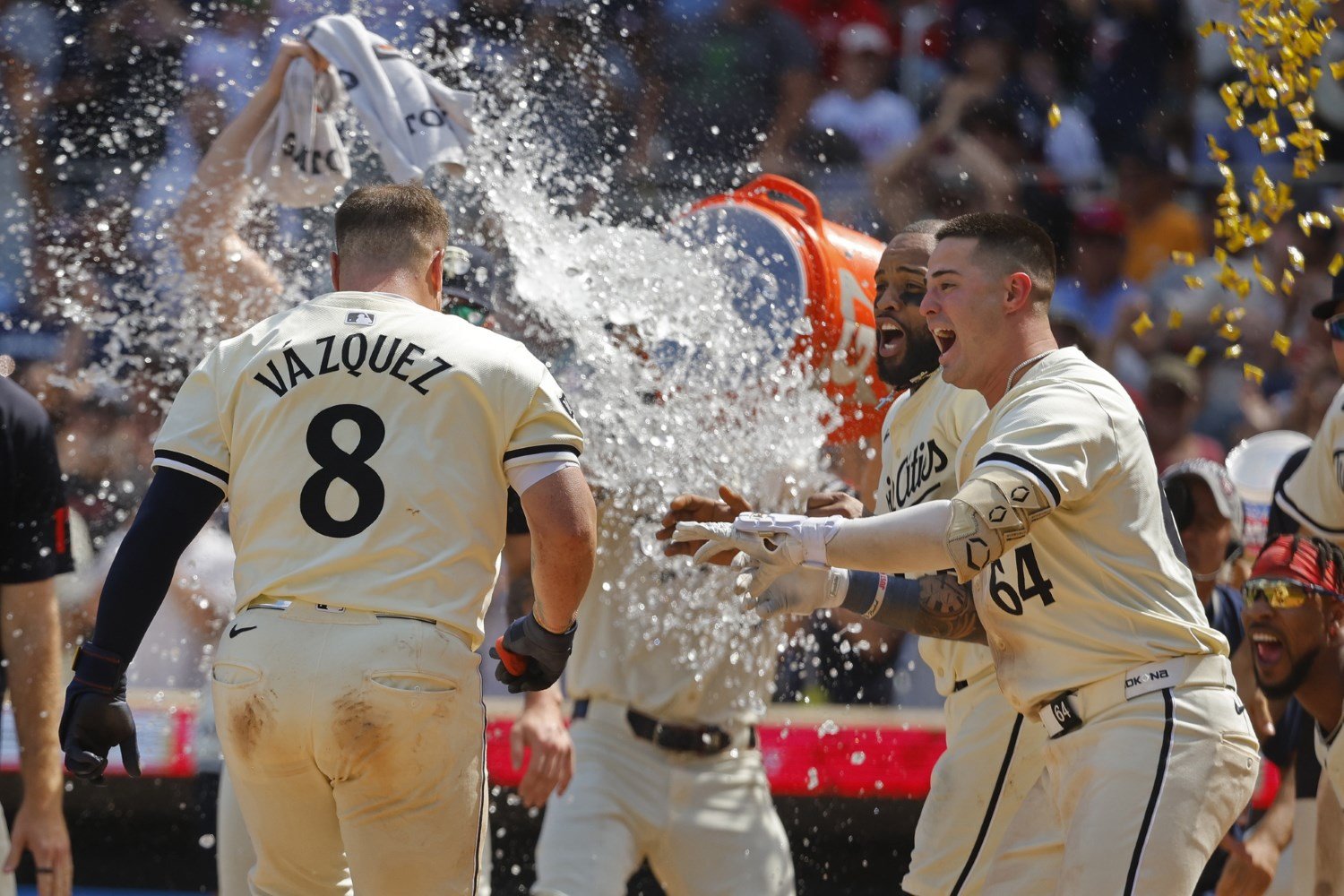 The term "sunk-cost fallacy" is often used in professional sports. While this distortionary influence exists in some situations (e.g., Anthony Rendon and the Los Angeles Angels), it wouldn't be appropriate to describe the situation the Twins find themselves in with catcher Christian Vázquez. Yes, he has been dreadful at the plate during most of his tenure with Minnesota. However, that doesn't mean he isn't providing any value. The Twins and Vázquez find themselves in a mutually beneficial relationship, even if it isn't manifesting in an easily identifiable way (aside from, you know, the odd walkoff homer). Vázquez is the superior defensive option behind the plate, and various metrics support this notion. Here is how the 33-year-old backstop fares in the following defensive metrics at Baseball Prospectus: Called Strikes Above Average (CSAA) - 9th Errant Pitches Above Average (EPAA) - 17th According to Baseball Prospectus's advanced metrics, Vázquez has created the ninth-most called strikes for his team, illustrating that he is an above-average pitch framer. He is also the 17th-best catcher in MLB at blocking pitches, not only avoiding passed balls but stopping wild pitches from resulting in advancement by the runner(s). These two metrics suggest that the two-time World Series champion is one of baseball's best receivers, which is a critical trait for a pitching staff that aggressively attacks the strike zone. Vázquez is also excelling in the following defensive metrics at Baseball Savant: 78th-percentile at Blocks Above Average (BAA) 55th-percentile at Caught Stealing Above Average (CSAA) 92nd-percentile at Framing 41st-percentile at Pop Time Baseball Savant rating Vázquez in the 92nd percentile in framing and 78th percentile in blocking further illustrates how vital he is for the Twins' pitching staff. Admittedly, he is subpar at controlling the running game by deterring basestealers, but variables such as the speed of the baserunner and the pitcher's ability to keep them close play more significant roles in suppressing stolen bases than a catcher's arm strength. Nevertheless, Vázquez is arguably a top-five defensive catcher in baseball, which provides significant value for a team over a 162-game season and the postseason. Also, Vázquez's offensive woes have been overstated of late. Yes, he was well below average to begin the season (7 wRC+ over 116 plate appearances), but he has picked it up of late. Since Jun. 1, the Twins' primary backstop has hit .271/.302/.508, with a 126 wRC+ over 65 plate appearances, including a momentous walk-off home run against his former team, the Houston Astros, this past Sunday. The average slash line for MLB catchers is .237/.301/.385, with a 94 wRC+, meaning Vázquez has been far clear of average for the position for over a month. His resurgence has come at a critical time, as fellow catcher Ryan Jeffers has cooled off from his hot start to the year, hitting just .194/.276/.313 with a well below-average 71 wRC+ in the same stretch. Vázquez has been the team's best catcher over their recent hot streak, providing a plus bat and top-tier defensive acumen. The notion that Vázquez provides little to no value for the Twins on the field needs to end, as it is objectively incorrect. He is one of the best defensive catchers in the sport, and has quietly become one of the hottest-hitting players at the position over the past six weeks, which is a substantial enough sample size to suggest he may have changed his approach at the plate for the better. Also, what are the real alternatives? What could the team actually do to improve at the position? Call up Jair Camargo, who has a .762 OPS against Triple-A pitching and the benefit of ABS in his favor? It would be wrong for the Twins to eat a significant portion of Vázquez's contract and replace him with Camargo. The 25-year-old Triple-A catcher is significantly worse defensively and would, at the very best, provide .080 to .100 extra points in OPS, and even that feels like an overly optimistic outlook. The team could give Jeffers more starts behind the plate. Yet, mixing his recent cold stretch at the plate with the fact that he is a significantly worse framer (16th-percentile at Baseball Savant) and blocker (22nd-percentile BAA at Baseball Savant) suggests that is an avenue team decision-makers should avoid until his bat heats back up or he demonstrates significant improvement in the field. Even before accounting for the organization's preference to keep their catchers fresh by alternating their starts, Vázquez provides significant value to the Twins despite his hefty price tag and a slow start at the plate. There is no sunk cost. He is presently the Twins' best option behind the plate, and parting ways with him would send ripples through the team's pitching staff.
 -
He's far from a star, but could a late-blooming Mets setup man become the next bright light in the Twins bullpen? Image courtesy of © Brad Penner-USA TODAY Sports Since Derek Falvey took over as the Minnesota Twins' President of Baseball Operations after the 2016 MLB season, he's traded for the following MLB-caliber relievers at the Trade Deadline: 2017 - Gabriel Moya 2018 - N/A 2019 - Sergio Romo, Sam Dyson 2020 - N/A 2021 - John Gant (technically a reliever, but started seven of the 14 games he pitched with Minnesota) 2022 - Jorge López, Michael Fulmer 2023 - Dylan Floro The Twins have traded for a reliever in five of Falvey's first seven seasons at the helm, taking swings on high-leverage, late-inning arms like Romo, Dyson (a horrible person, I know), Fulmer, and (most notably) López. Floro wasn't a buy, per se. Still, the team acquired the veteran righty with hopes of him blossoming into a steady arm that theoretically could have been used in mid-to-high leverage moments as the team pursued their third American League Central title in five seasons. Although the Twins are five games behind the seemingly indomitable force that is the first-place Cleveland Guardians, they hold the second Wild Card spot, with the resurgent Boston Red Sox and regressing Kansas City Royals two games behind. They're in the thick of contention, with FanGraphs giving them an 85.6% chance of earning a playoff spot. Having found themselves in this advantageous position, the front office will likely scour the relief market over the next month, hoping to fortify the seventh-best bullpen in MLB (according to Wins Above Replacement at FanGraphs (fWAR)). New York Mets right-handed reliever Reed Garrett could be the apple of the Twins front office's eye. Garrett, 31, was selected by the Texas Rangers in the 16th round of the 2014 MLB Draft, out of Virginia Military Institute (VMI). He spent the 2014 through 2018 seasons progressing from Low-A to Triple-A in Texas's farm system, before getting selected by the Detroit Tigers in the 2018 Rule 5 Draft. He appeared in 13 games as a reliever for Detroit, posting an uninspiring 8.22 ERA, 7.19 FIP, 59 ERA+, and 10-to-13 strikeout-to-walk-ratio over 15 1/3 innings pitched. The Tigers designated Garrett for assignment in mid-May. Returned to the Rangers organization, Garrett spent the remainder of the 2018 season with their Triple-A affiliate before confronting a career crossroads. He signed with the Saitama Seibu Lions of Nippon Professional Baseball (NPB) in 2019. The journeyman wouldn't make his return to the United States until 2022, when he signed a minor-league deal with the Nationals. He didn't stick there, though, and was designated for assignment by both Washington and the Orioles by the middle of 2023, when he was claimed by the Mets. New York was no instant balm for him. However, the nomadic 31-year-old reliever finally turned things around early in the 2024 campaign. Garrett burst onto the scene this spring, carving out a 0.57 ERA, 1.94 FIP, and 2.21 xFIP while striking out 28 and walking seven over 15 2/3 innings pitched and 61 total batters faced in April. Since the start of May, the ERA is 4.56, so he's come back to Earth, but there are still encouraging things under the hood, including a strikeout rate right around 29%. Garrett has been propelled into a prominent role, competing with fellow set-up relievers Adam Ottavino and Dedniel Núñez for high-leverage opportunities. The Mets were hot in June, posting a 16-8 record. New York's resurgence has placed them just two games out of the third and final National League Wild Card spot. However, the team's good fortunes could go for naught, as FanGraphs estimates the Mets have a mere 36% chance of earning a Wild Card spot. If New York reverts to their early season struggles, the organization could elect to part ways with expendable veteran players to net controllable prospect capital, and the invigorated Garrett is a prime trade piece. With closer Jhoan Durán undergoing an alarming dip in four-seam fastball velocity and uncertainty surrounding when or if set-up relievers Brock Stewart and Justin Topa can return to the Twins' bullpen, the front office could be incentivized to acquire another high-leverage right-handed arm. Garrett gets to that gaudy strikeout rate in impressive fashion. He is a true five-pitch reliever, using the following pitches to generate one of the highest whiff and chase rates in MLB: Splitter - 24.6% Cutter - 24.2% Sweeper - 22.8% Four-seam fastball - 18.4% Sinker - 10% The hard-tossing veteran’s repertoire aligns with the organization's preferences, making him an appealing option for a team needing a high-leverage, right-handed reliever whose services could be acquired at a price even the Twins' frugal ownership group could stomach. It'll be interesting to see whether he's available to them over the next few weeks. View full article
-
Should the Twins Trade For This Under-the-Radar New York Mets Reliever?
Cody Schoenmann posted an article in Twins
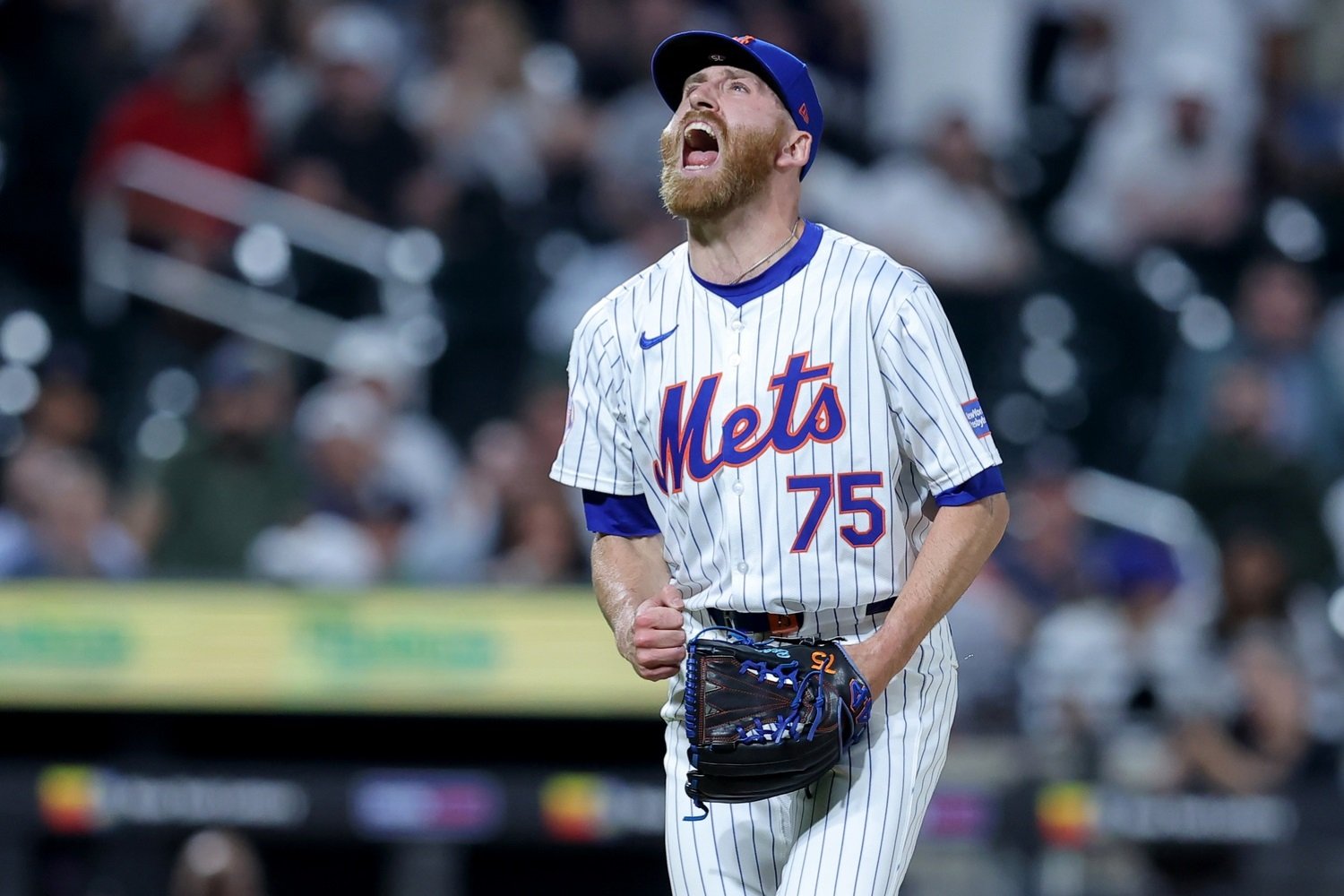 Since Derek Falvey took over as the Minnesota Twins' President of Baseball Operations after the 2016 MLB season, he's traded for the following MLB-caliber relievers at the Trade Deadline: 2017 - Gabriel Moya 2018 - N/A 2019 - Sergio Romo, Sam Dyson 2020 - N/A 2021 - John Gant (technically a reliever, but started seven of the 14 games he pitched with Minnesota) 2022 - Jorge López, Michael Fulmer 2023 - Dylan Floro The Twins have traded for a reliever in five of Falvey's first seven seasons at the helm, taking swings on high-leverage, late-inning arms like Romo, Dyson (a horrible person, I know), Fulmer, and (most notably) López. Floro wasn't a buy, per se. Still, the team acquired the veteran righty with hopes of him blossoming into a steady arm that theoretically could have been used in mid-to-high leverage moments as the team pursued their third American League Central title in five seasons. Although the Twins are five games behind the seemingly indomitable force that is the first-place Cleveland Guardians, they hold the second Wild Card spot, with the resurgent Boston Red Sox and regressing Kansas City Royals two games behind. They're in the thick of contention, with FanGraphs giving them an 85.6% chance of earning a playoff spot. Having found themselves in this advantageous position, the front office will likely scour the relief market over the next month, hoping to fortify the seventh-best bullpen in MLB (according to Wins Above Replacement at FanGraphs (fWAR)). New York Mets right-handed reliever Reed Garrett could be the apple of the Twins front office's eye. Garrett, 31, was selected by the Texas Rangers in the 16th round of the 2014 MLB Draft, out of Virginia Military Institute (VMI). He spent the 2014 through 2018 seasons progressing from Low-A to Triple-A in Texas's farm system, before getting selected by the Detroit Tigers in the 2018 Rule 5 Draft. He appeared in 13 games as a reliever for Detroit, posting an uninspiring 8.22 ERA, 7.19 FIP, 59 ERA+, and 10-to-13 strikeout-to-walk-ratio over 15 1/3 innings pitched. The Tigers designated Garrett for assignment in mid-May. Returned to the Rangers organization, Garrett spent the remainder of the 2018 season with their Triple-A affiliate before confronting a career crossroads. He signed with the Saitama Seibu Lions of Nippon Professional Baseball (NPB) in 2019. The journeyman wouldn't make his return to the United States until 2022, when he signed a minor-league deal with the Nationals. He didn't stick there, though, and was designated for assignment by both Washington and the Orioles by the middle of 2023, when he was claimed by the Mets. New York was no instant balm for him. However, the nomadic 31-year-old reliever finally turned things around early in the 2024 campaign. Garrett burst onto the scene this spring, carving out a 0.57 ERA, 1.94 FIP, and 2.21 xFIP while striking out 28 and walking seven over 15 2/3 innings pitched and 61 total batters faced in April. Since the start of May, the ERA is 4.56, so he's come back to Earth, but there are still encouraging things under the hood, including a strikeout rate right around 29%. Garrett has been propelled into a prominent role, competing with fellow set-up relievers Adam Ottavino and Dedniel Núñez for high-leverage opportunities. The Mets were hot in June, posting a 16-8 record. New York's resurgence has placed them just two games out of the third and final National League Wild Card spot. However, the team's good fortunes could go for naught, as FanGraphs estimates the Mets have a mere 36% chance of earning a Wild Card spot. If New York reverts to their early season struggles, the organization could elect to part ways with expendable veteran players to net controllable prospect capital, and the invigorated Garrett is a prime trade piece. With closer Jhoan Durán undergoing an alarming dip in four-seam fastball velocity and uncertainty surrounding when or if set-up relievers Brock Stewart and Justin Topa can return to the Twins' bullpen, the front office could be incentivized to acquire another high-leverage right-handed arm. Garrett gets to that gaudy strikeout rate in impressive fashion. He is a true five-pitch reliever, using the following pitches to generate one of the highest whiff and chase rates in MLB: Splitter - 24.6% Cutter - 24.2% Sweeper - 22.8% Four-seam fastball - 18.4% Sinker - 10% The hard-tossing veteran’s repertoire aligns with the organization's preferences, making him an appealing option for a team needing a high-leverage, right-handed reliever whose services could be acquired at a price even the Twins' frugal ownership group could stomach. It'll be interesting to see whether he's available to them over the next few weeks.
 -
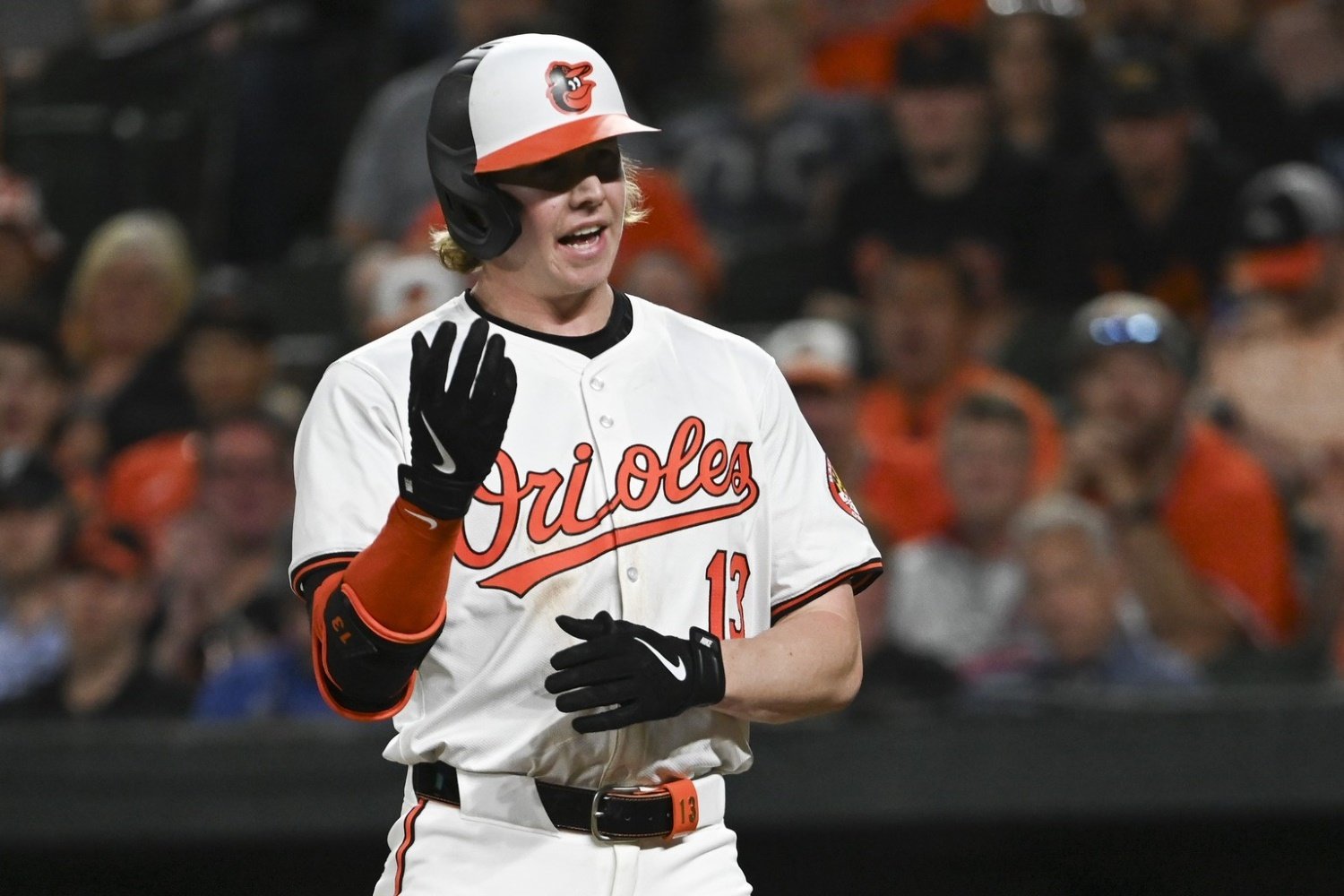 In his most recent piece at The Athletic, writer and former front office executive Jim Bowden wrote a piece looking at "trade targets for each contender, plus deadline priorities for all 30 teams." In the middle of the article, one will find Bowden's assessment and top needs for the Minnesota Twins, where he suggests that a "[right-handed-hitting] corner outfielder" and "pitching depth" should be the organization's priorities as the trade deadline nears. His reasoning behind this assessment is that the Twins are "looking for a platoon-type corner outfielder who hits right-handed. Like most teams, they also want to add some pitching depth, especially to their starting rotation, to protect from injuries." Thank you, Jim, for this excellent, in-depth analysis; I am delighted to pay $7.99 per month for this. (I'm just being facetious. Aaron Gleeman, Dan Hayes, and other great regional and national writers and podcasters make the subscription well worth it. Still, please follow and support local and independent writers for better and more thorough analysis than Bowden's. In fact, here comes some, now.) Regardless, Bowden names Erick Fedde, Patrick Sandoval, Luis Severino, and Trevor Williams (presently on the 15-day IL with a right muscle flexor strain) as pitching depth options. In contrast, he lists Luis Robert Jr., Heston Kjerstad, Randy Arozarena, and Lane Thomas as right-handed hitting corner outfield options. Acquiring Robert Jr. would be an incredi-... Wait, Robert Jr., Kjerstad, Arozarena, and Thomas... This doesn't add up. Oh yes, that's right, Kjerstad isn't right-handed. There is a difference between being pedantic and recognizing when someone is neglectfully wrong. In this instance, I swear, I'm doing the latter. Bowden got a crucial detail wrong. Nevertheless, he identified left-handed-hitting corner outfielder and top prospect Kjerstad as a potential trade candidate for the Twins. The 25-year-old corner outfielder and first baseman is an intriguing name, for a couple of reasons. Kjerstad, selected second overall by the Orioles in the 2020 MLB Draft, spent the better part of the 2022 and 2023 MiLB seasons excelling in the organization's system, before debuting on Sept. 14, 2023. The University of Arkansas product played in 13 games with the powerhouse Orioles last season, slashing .233/.281/.467, with seven hits, one double, two home runs, two walks, 10 strikeouts, and a 106 OPS+ over 30 plate appearances. Kjerstad didn't make the team's playoff roster, and started the 2024 season with the Triple-A Norfolk Tides before he was recalled in late April. In seven games with Baltimore spanning from late April to early May, MLB.com's 21st-ranked prospect slashed .143/.294/.143, with two hits, zero doubles, zero home runs, two walks, six strikeouts, and an uninspiring 34 OPS+ over 17 plate appearances. The power-hitting lefty performed poorly in an exceptionally small sample size and was optioned to Triple-A Norfolk in favor of fellow left-handed hitting outfield prospect Kyle Stowers. Kjerstad has struggled to find his footing at the major-league level. Yet, with Baltimore having a short leash and providing him only 47 plate appearances with the parent club over the past two seasons combined, it is nearly impossible to adequately assess how the former first-round pick will perform at the highest level. Despite not receiving an extended look with the Orioles (while other left-hitting outfielders Colton Cowser and the aforementioned Stowers have), Kjerstad has performed exceptionally well at Triple-A over the past two seasons, slashing a combined .306/.384/.564, with 148 hits, 33 doubles, and 25 home runs, plus 55 walks and 129 strikeouts over 564 plate appearances. Mixing a high on-base percentage with a high slugging average, Kjerstad has become one of the most dangerous offensive players in MiLB. Over the past two seasons at Triple-A, Kjerstad has generated a modest 23.3% strikeout rate. However, his strikeout rate tends to jump when promoted. In those two very brief stints with the Orioles, he's fanned in 32% of his trips to the plate. This deficiency appears to be the driving force behind the Orioles' reluctance to provide the power-hitting lefty an extended opportunity in "The Show." Kjerstad has performed like a high-strikeout, high-power corner outfielder in his brief stints in MLB. Although this type of player prototype strikes a chord with Twins fans (hello, Joey Gallo and Matt Wallner), it is vital not to misidentify him as an all-or-nothing bat. He has never finished a minor-league season with a strikeout rate above 27%, which suggests that his bloated rate over 47 MLB plate appearances is an inaccurate representation of his skillset. Kjerstad deserves an extended look in MLB, yet with Cowser, Stowers, Anthony Santander, Cedric Mullins, Ryan O'Hearn, Ryan Mountcastle, and other valuable MLB contributors, it appears that opportunity might not come any time soon in Baltimore. With Wallner and Alex Kirilloff struggling to produce at the major-league level this season; Trevor Larnach being an unpredictable source of offensive contribution who could seemingly regress at any moment; and the organization lacking other minor-league left-handed outfielders who could step in and immediately produce offensively, the Twins could be incentivized to trade for Kjerstad. If Kirilloff is on the outs (as you'd expect, at this point), the appeal of such a move increases. Despite Baltimore's surplus of prospects and the public perception of Kjerstad likely being lower than it should be after he struggled earlier this season, the cost to acquire the 2020 second-overall pick will undoubtedly be hefty. The Orioles are a well-rounded team without a glaring weakness. However, if there were one area of concern for Baltimore, it would be the back end of their bullpen. Despite ranking sixth in Wins Above Replacement at FanGraphs (fWAR) and fourth in bullpen FIP as a collective, their top late-inning arms are Craig Kimbrel, Cionel Pérez, Jacob Webb, and a regressing yet still productive Yennier Canó. The Orioles would benefit from acquiring a bona fide closer and potentially another a high-leverage set-up reliever, and although fire-throwing arms like Mason Miller, Edwin Díaz, and Ryan Helsley are enticing, acquiring their services would require taking on a hefty price tag or parting ways with multiple top prospects. The Orioles have the resources to acquire relievers the likes of Miller, Díaz, and Helsley. However, the Twins could present the most intriguing trade candidate, in Griffin Jax. Under control until the end of the 2027 MLB season, Jax becomes arbitration-eligible this offseason, meaning the price of retaining his services will gradually increase over the next three seasons. The Twins are a stingy organization, and they are particularly frugal regarding relievers. The Twins could trade Jax and another near-MLB-ready arm like Louie Varland (whom Baltimore could transition into a full-time reliever), David Festa, or Zebby Matthews to acquire the high-ceiling Kjerstad, who is under team control until the end of the 2029 season. Landing Kjerstad could be a pivotal move for the Twins in the short and longer term, as he could become an immediate contributor for the present-day, playoff-hopeful 2024 team with the potential of becoming a mainstay in an idealized future outfield with veteran Byron Buxton and fellow highly-touted and developing left-handed hitting prospects Emmanuel Rodriguez and Walker Jenkins.
 -
Many names will be linked to and speculated about in conjunction with the Twins as MLB's Trade Deadline slowly approaches. Could this right-handed, er, left-handed hitting top outfield prospect become an immediate contributor for the playoff-hopeful Twins? In his most recent piece at The Athletic (or is it The New York Times? The site's new URL confuses me), writer and former front office executive Jim Bowden wrote a piece looking at "trade targets for each contender, plus deadline priorities for all 30 teams." In the middle of the article, one will find Bowden's assessment and top needs for the Minnesota Twins, where he suggests that "Right-handed-hitting corner outfielder" and "pitching depth" should be the organization's priority target as the trade deadline nears. His reasoning behind this assessment is that "The Twins are looking for a platoon type corner outfielder who hits right-handed. Like most teams, they also want to add some pitching depth, especially to their starting rotation, to protect from injuries." Thank you, Jim, for this excellent, in-depth analysis; I am delighted to pay $7.99 per month for this (I'm just being facetious; Gleeman, Hayes, and other great regional and national writers and podcasters make the subscription well worth it. Still, please follow and support local and independent writers for better and more thorough analysis). Regardless, Bowden names Erick Fedde, Patrick Sandoval, Luis Severino, and Trevor Williams (presently on the 15-day IL with a right muscle flexor strain) as pitching depth options. In contrast, he lists Luis Robert Jr., Heston Kjerstad, Randy Arozarena, and Lane Thomas as right-handed hitting corner outfield options. Acquiring Robert Jr. would be an incredi-... Wait, Robert Jr., Kjerstad, Arozarena, and Thomas... This doesn't add up. Oh yes, that's right, Kjerstad isn't right-handed. There is a difference between being pedantic and recognizing when someone is neglectfully wrong; in this instance, Bowden is the latter. Nevertheless, Bowden identifies left-handed-hitting corner outfielder and top prospect Kjerstad as a potential trade candidate for the Twins. Despite misidentifying the batting handedness of the Baltimore Orioles prospect, the 25-year-old corner outfielder and first baseman is an intriguing trade candidate. Kjerstad, selected second overall by the Orioles in the 2020 MLB Draft, spent the better part of the 2022 and 2023 MiLB seasons excelling through the organization's system before debuting on September 14, 2023. The University of Arkansas product played in 13 games with the powerhouse Orioles last season, slashing .233/.281/.467 with seven hits, one double, two home runs, two walks, ten strikeouts, and a 106 OPS+ over 30 plate appearances. Kjerstad didn't make the team's playoff roster and started the 2024 season with the Triple-A Norfolk Tides before hewas recalled in late April. In seven games with Baltimore spanning from late April to early May, MLB.com's 21st-ranked prospect slashed .143/.294/.143 with two hits, zero doubles, zero home runs, two walks, six strikeouts, and an uninspiring 34 OPS+ over 17 plate appearances. The power-hitting lefty performed poorly in an exceptionally small sample size and was optioned to Triple-A Norfolk in favor of fellow left-handed hitting outfield prospect Kyle Stowers. Kjerstad has struggled to find his footing at the major league level. Yet, with Baltimore having a short leash and providing him only 47 plate appearances with the parent club over the past two seasons combined, it is nearly impossible to adequately assess how the former first-round pick will perform at the highest level. Despite not receiving an extended look with the Orioles while other left-handed hitting outfielders Colton Cowser and the previously mentioned Stowers have, Kjerstad has performed exceptionally well at Triple-A over the past two seasons, slashing a combined .306/.384/.564 with 148 hits, 33 doubles, and 25 home runs with 55 walks and 129 strikeouts over 564 plate appearances. Mixing a high on-base percentage with a high slugging percentage, Kjerstad has become one of the pristine offensive players in MiLB. Over the past two seasons at Triple-A, Kjerstad has generated a modest 23.3% strikeout rate over 564 plate appearances. However, his strikeout rate tends to jump when promoted. In his 33 plate appearances with the Orioles last season, he generated a 30.3% strikeout rate. In his 17 plate appearances with Baltimore this season, he generated an even more alarming 35.3% strikeout rate. This deficiency appears to be the driving force behind why the Orioles haven't provided the power-hitting lefty an extended opportunity in "The Show." Kjerstad has performed like a high-strikeout, high-power corner outfielder in his brief stints in MLB. Although this type of player prototype strikes a chord with Twins fans (hello, Joey Gallo and Matt Wallner), it is vital not to misidentify him as an all-or-nothing bat. He has never finished a minor league season with a strikeout rate above 27%, which suggests that his ballooned 32.8% strikeout rate over 47 MLB plate appearances is an inaccurate representation of his proper skillset. Kjerstad deserves an extended look in MLB, yet with Cowser, Stowers, Anthony Santander, Cedric Mullins, Ryan O'Hearn, Ryan Mountcastle, and other valuable MLB contributors, it appears that opportunity might not come any time soon in Baltimore. With Wallner and Alex Kirilloff struggling to produce at the major league level this season, Trevor Larnach being an unpredictable source of offensive contribution who could seemingly regress at any moment, and the organization lacking other minor league left-handed hitting outfielders who could step in and immediately produce offensively, the Twins could be incentivized to trade for Kjerstad. Despite Baltimore's surplus of plus-prospects and the public perception of Kjerstad likely being lower than it should be after he struggled with the Orioles earlier this season, the cost to acquire the 2020 second-overall pick will undoubtedly be hefty. The Orioles are a well-rounded team presenting little areas of growth offensively and defensively. However, if there were one area of concern for Baltimore, it would be the back end of their bullpen. Despite ranking sixth in Wins Above Replacement at FanGraphs (fWAR) and fourth in bullpen FIP as a collective, their top late-inning arms are Craig Kimbrel, Cionel Pérez, Jacob Webb, and a regressing yet still-productive Yennier Cano. The Orioles would benefit from acquiring a bonafide closer and potentially another a high-leverage set-up reliever, and although fire-throwing arms like Mason Miller, Edwin Díaz, and Ryan Helsley are enticing, acquiring their services would require taking on a hefty price tag or parting ways with multiple top prospects. The Orioles have the resources to acquire relievers the likes of Miller, Díaz, and Helsley. However, the Twins could present the most intriguing trade candidate in Griffin Jax. Under control until the end of the 2027 MLB season, Jax becomes arbitration-eligible this offseason, meaning the price of retaining his services will gradually become more expensive over the next three seasons. The Twins are a stingy organization and they are particularly frugal regarding relievers. The Twins could trade Jax and another near-MLB-ready arm like Louie Varland (who Baltimore could transition into a full-time reliever), David Festa, or Zebby Matthews to acquire the low-cost, high-potential left-handed hitting corner outfielder in Kjerstad, who is under team control until the end of the 2029 MLB season. Acquiring Kjerstad could be a fruitful acquisition for the Twins in the short- and long-term as he could become an immediate contributor for the present-day playoff-hopeful 2024 team with the potential of becoming a mainstay in an idealized future outfield with veteran Byron Buxton and fellow highly-touted and developing left-handed hitting prospects Emmanuel Rodriguez and Walker Jenkins. View full article
-
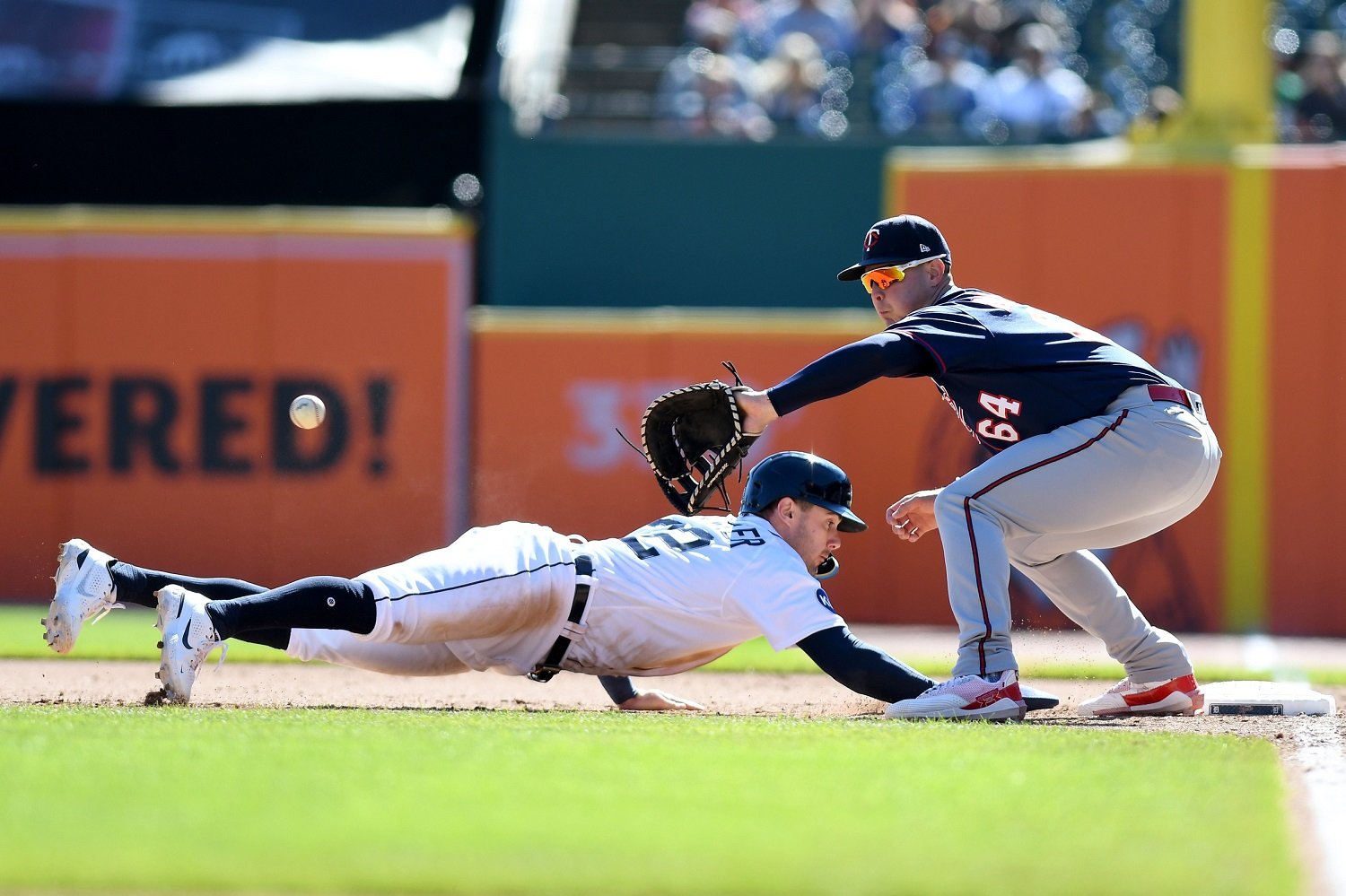 Minnesota Twins star third baseman Royce Lewis began a rehab assignment with the Triple-A St. Paul Saints Saturday, joining the squad to face the Toronto Blue Jays' Triple-A affiliate in beautiful upstate New York. Lewis's return to the diamond indicates that the 24-year-old franchise cornerstone will soon be joining the big-league club, with the expectation that the 2017 first-overall pick will return to form as a steady offensive force at the top of the lineup. The Junipero Serra Catholic High School product's return will be celebrated as a cause for renewed optimism about the lineup. However, Twins' decision-makers will be tasked with deciding which player to remove from the 26-man roster to make room for Lewis. At first glance, demoting a young position player like Trevor Larnach, Alex Kirilloff, or Edouard Julien makes the most sense. All three players have minor-league options, and all have struggled to produce offensively for most of May. However, Larnach and Kirilloff have recently provided an uptick in offensive production. Also, Julien has long been regarded as a mainstay in the team's lineup, which could make demoting him an uncomfortable blow for him and the team. The team could also designate a struggling veteran player like Manuel Margot, Carlos Santana, or Kyle Farmer for assignment. However, the Twins' front office values having adequate depth and will go to great lengths to keep veterans around. Newfound injury or other unforeseen circumstances could make the club's impending decision moot, but in all likelihood, a tough call is around the corner. However, there is one position player with minor league options who deserves immunity from the threat of demotion: José Miranda. Since taking over as the team's near-everyday third baseman in early May, Miranda has hit .279/.313/.467, with 34 hits, five home runs, and four walks over 125 plate appearances and 38 total games. Miranda has generated a 122 wRC+, which places him fourth behind team leaders Ryan Jeffers, Max Kepler, and Carlos Correa. Despite exhibiting shaky defense at third base, the 25-year-old has become one of the team's most well-rounded hitters, reverting to the player he was during his breakout 2022 campaign, wherein he hit .268/.325/.426 with 119 hits, 15 home runs, and 28 walks over 483 plate appearances and 125 games. The Twins and those who follow the team have welcomed Miranda's early career renaissance with open arms. However, no matter how much Miranda produces at the plate, third base will rightfully be handed back to Lewis once he returns from the IL. Lewis's immediate insertion into the hot corner doesn't mean Miranda needs to lose at-bats or get demoted to Triple-A St. Paul. Yet, figuring out where to play the hot-hitting right-handed bat will present a unique challenge for Twins decision-makers. Miranda could naturally slot in as the designated hitter against left-handed starting pitchers, though the team will face right-handed starting pitchers considerably more often. Miranda could play third base when Lewis needs a day off or is the designated hitter. Both avenues are natural fits, yet neither would present a meaningful opportunity for the former second-round pick to continue contributing to the Twins' inconsistent and often stagnant offense. Interestingly, ample opportunity could present itself at first base. According to Baseball Reference's spreadsheet showing position-by-position performance for each team, the Twins rank 18th in MLB at first base with -0.5 Wins Above Average (WAA). Most of the team's production at first base has come from the duo of Santana (177 plate appearances) and Kirilloff (32 plate appearances). Miranda generated four plate appearances at the position, having played 8 1/3 innings while starting against the Baltimore Orioles on April 17. Nevertheless, the stereotypically offensively rich position has left much to be desired for Minnesota, and Miranda could provide production--something the relatively lifeless duo of Santana and Kirilloff have yet to achieve this season. Miranda has long been considered a defensive liability at third, who needed to produce huge numbers offensively to justify playing significant time at the hot corner. Interestingly, despite being a lackluster defender at third base, Miranda is perceived as a worse defender at first base. As rare as that is, his advanced metrics match the eye test. In 2022, Miranda had 154 attempts at first base. In these attempts, he managed a 71% success rate against a 74% estimated (expected) success rate, resulting in -4 Outs Above Average at Baseball Savant (OAA). In contrast, he had 91 attempts at third base, resulting in a 62% success rate and 61% estimated success rate, earning 1 OAA. Miranda played only 2 1/3 innings at first base in 2023, leaving us nothing to analyze. However, his performance at third base dropped precipitously, garnering a 71% success rate against a 76% estimated success rate, resulting in an uninspiring -6 OAA over 109 attempts. Admittedly, Miranda did have a significant shoulder injury that limited his ability to throw and ultimately required the Puerto Rican native to undergo surgery. Yet, despite fully recovering from that issue, Miranda is still struggling at third base, generating a 65% success rate and a 69% estimated success rate. Miranda's performance at third base has earned him -3 OAA through 71 attempts. With Miranda being one of the most stable and well-rounded offensive contributors on the team, Lewis nearing a highly anticipated return from the 10-day IL, and Santana and Kirilloff leaving much to be desired out of first base, the Twins ought to give Miranda a real chance at first base, even though they've been reluctant to play him at the position. Santana's excellent glove work could allow them to get him into games late for defense, after Miranda's superior bat gives the team a lead with which to work. How would you distribute Miranda's playing time upon Lewis's reinstatement, positionally? Who should get the boot from the roster in the process? Sound off below.
 -
With Royce Lewis returning soon, many who follow the Twins believe the team should give present primary third baseman José Miranda more opportunity at first base. Is the hot-hitting 25-year-old a viable option at first base? Image courtesy of © Lon Horwedel-USA TODAY Sports Minnesota Twins star third baseman Royce Lewis began a rehab assignment with the Triple-A St. Paul Saints Saturday, joining the squad to face the Toronto Blue Jays' Triple-A affiliate in beautiful upstate New York. Lewis's return to the diamond indicates that the 24-year-old franchise cornerstone will soon be joining the big-league club, with the expectation that the 2017 first-overall pick will return to form as a steady offensive force at the top of the lineup. The Junipero Serra Catholic High School product's return will be celebrated as a cause for renewed optimism about the lineup. However, Twins' decision-makers will be tasked with deciding which player to remove from the 26-man roster to make room for Lewis. At first glance, demoting a young position player like Trevor Larnach, Alex Kirilloff, or Edouard Julien makes the most sense. All three players have minor-league options, and all have struggled to produce offensively for most of May. However, Larnach and Kirilloff have recently provided an uptick in offensive production. Also, Julien has long been regarded as a mainstay in the team's lineup, which could make demoting him an uncomfortable blow for him and the team. The team could also designate a struggling veteran player like Manuel Margot, Carlos Santana, or Kyle Farmer for assignment. However, the Twins' front office values having adequate depth and will go to great lengths to keep veterans around. Newfound injury or other unforeseen circumstances could make the club's impending decision moot, but in all likelihood, a tough call is around the corner. However, there is one position player with minor league options who deserves immunity from the threat of demotion: José Miranda. Since taking over as the team's near-everyday third baseman in early May, Miranda has hit .279/.313/.467, with 34 hits, five home runs, and four walks over 125 plate appearances and 38 total games. Miranda has generated a 122 wRC+, which places him fourth behind team leaders Ryan Jeffers, Max Kepler, and Carlos Correa. Despite exhibiting shaky defense at third base, the 25-year-old has become one of the team's most well-rounded hitters, reverting to the player he was during his breakout 2022 campaign, wherein he hit .268/.325/.426 with 119 hits, 15 home runs, and 28 walks over 483 plate appearances and 125 games. The Twins and those who follow the team have welcomed Miranda's early career renaissance with open arms. However, no matter how much Miranda produces at the plate, third base will rightfully be handed back to Lewis once he returns from the IL. Lewis's immediate insertion into the hot corner doesn't mean Miranda needs to lose at-bats or get demoted to Triple-A St. Paul. Yet, figuring out where to play the hot-hitting right-handed bat will present a unique challenge for Twins decision-makers. Miranda could naturally slot in as the designated hitter against left-handed starting pitchers, though the team will face right-handed starting pitchers considerably more often. Miranda could play third base when Lewis needs a day off or is the designated hitter. Both avenues are natural fits, yet neither would present a meaningful opportunity for the former second-round pick to continue contributing to the Twins' inconsistent and often stagnant offense. Interestingly, ample opportunity could present itself at first base. According to Baseball Reference's spreadsheet showing position-by-position performance for each team, the Twins rank 18th in MLB at first base with -0.5 Wins Above Average (WAA). Most of the team's production at first base has come from the duo of Santana (177 plate appearances) and Kirilloff (32 plate appearances). Miranda generated four plate appearances at the position, having played 8 1/3 innings while starting against the Baltimore Orioles on April 17. Nevertheless, the stereotypically offensively rich position has left much to be desired for Minnesota, and Miranda could provide production--something the relatively lifeless duo of Santana and Kirilloff have yet to achieve this season. Miranda has long been considered a defensive liability at third, who needed to produce huge numbers offensively to justify playing significant time at the hot corner. Interestingly, despite being a lackluster defender at third base, Miranda is perceived as a worse defender at first base. As rare as that is, his advanced metrics match the eye test. In 2022, Miranda had 154 attempts at first base. In these attempts, he managed a 71% success rate against a 74% estimated (expected) success rate, resulting in -4 Outs Above Average at Baseball Savant (OAA). In contrast, he had 91 attempts at third base, resulting in a 62% success rate and 61% estimated success rate, earning 1 OAA. Miranda played only 2 1/3 innings at first base in 2023, leaving us nothing to analyze. However, his performance at third base dropped precipitously, garnering a 71% success rate against a 76% estimated success rate, resulting in an uninspiring -6 OAA over 109 attempts. Admittedly, Miranda did have a significant shoulder injury that limited his ability to throw and ultimately required the Puerto Rican native to undergo surgery. Yet, despite fully recovering from that issue, Miranda is still struggling at third base, generating a 65% success rate and a 69% estimated success rate. Miranda's performance at third base has earned him -3 OAA through 71 attempts. With Miranda being one of the most stable and well-rounded offensive contributors on the team, Lewis nearing a highly anticipated return from the 10-day IL, and Santana and Kirilloff leaving much to be desired out of first base, the Twins ought to give Miranda a real chance at first base, even though they've been reluctant to play him at the position. Santana's excellent glove work could allow them to get him into games late for defense, after Miranda's superior bat gives the team a lead with which to work. How would you distribute Miranda's playing time upon Lewis's reinstatement, positionally? Who should get the boot from the roster in the process? Sound off below. View full article
-
Max Kepler has been one of the Twins' most consistent offensive contributors, despite hitting only four home runs. Why has the veteran right fielder not hit the ball out of the park, when the rest of his skill set seems to be humming so nicely? Let's take a look. Image courtesy of Brad Rempel-USA TODAY Sports Over 35 games played, Twins right fielder Max Kepler has garnered 131 plate appearances. Due to missing 13 games from a right knee contusion that placed him on the 10-day IL and five rest days, Kepler is not among the team leaders in plate appearances. However, the 31-year-old is among qualified team leaders in numerous offensive metrics: 2nd in Isolated Power (ISO) - .214 1st in Batting Average (BA) - .291 2nd in On-Base Percentage (OBP) - .354 2nd in Slugging Percentage (SLG) - .504 2nd in weighted On-Base Average (wOBA) - .372 2nd in wRC+ - 144 tied-2nd in Wins Above Replacement at FanGraphs (fWAR) - 1.3 Kepler has been the Twins' best offensive player (alongside catcher/designated hitter Ryan Jeffers), and he is doing so while excelling against both left- and right-handed pitchers. Here are the hot-hitting lefty's splits to begin his 2024 campaign: vs. LHP - .381/.409/619, 22 plate appearances, eight hits, two doubles, one home run, one walk, four strikeouts vs. RHP - .271/.343/.479, 109 plate appearances, 26 hits, 11 doubles, three home runs, 10 walks, 16 strikeouts Kepler has shined against same-handed pitchers, although (so far) only in a very small sample of opportunities. Moreover, his good fortune in limited plate appearances suggests that the Germany native is improving in an area in which he has struggled most of his career (.220 career BA over 1,021 plate appearances against left-handed pitchers). Kepler has always hit well against right-handed pitchers (.244 career BA and 131 home runs over 2,962 plate appearances), yet he is exhibiting enhanced results this season. Being in a great place mentally, reducing his leg kick, and good health have been cited as reasons for the long-time Twin's offensive renaissance, which really began last July. However, there is one difference between Kepler's success in the second half of last season and early this season: his number of home runs. During the second half of the 2023 season (July 14 through October 1), Kepler hit 12 home runs while generating a .243 ISO over 265 plate appearances. Interestingly, he has hit only four home runs over 123 plate appearances this season, despite sporting a similarly well-above-average .220 ISO. Why is Kepler's power not translating to home runs? Let's take a look. Lack of Exit Velocity at Higher Launch Angles Kepler's hardest-hit balls are being manufactured at launch angles that prevent hitters from getting the ball over the fence. When Kepler hits the ball at a 25- to 35-degree launch angle, he's sporting a 69.9 MPH 10th-percentile Exit Velocity (EV) and 102.1 MPH 90th-percentile EV. At a 35- to 45-degree launch angle, he has a 77.6 MPH 10th-percentile EV and a 97.1 MPH 90th-percentile EV. Balls hit in this exit velocity range can sneak over the wall when the conditions are especially favorable, but they're mostly flyouts or doubles, depending on the ballpark. Kepler's inability to hit balls with a 25- to 45-degree launch at especially high EVs provides insight into why he has been unable to hit more home runs. Despite not being able to generate the EV numbers necessary to lift balls with a launch angle between 25 and 45 degrees over the fence, he is hitting balls in lower bands exceptionally well. When hitting it at a launch angle between 5 and 15 degrees, Kepler generates an 84.8 MPH 10th-percentile EV and a 110.8 MPH 90th-percentile EV. Between 15 and 25 degrees, the numbers are: 85.2 MPH 10th-percentile, 107.1 90th-percentile EV. Kepler performs exceptionally well when hitting the ball at a launch angle between 5 and 25 degrees, evidenced by a combined .782 xWOBA. For reference, when hitting the ball at a launch angle between 25 and 45 degrees, he is manufacturing a less inspiring .337 wOBA. This is true of most hitters. On average, the league's best outcomes come between 2 and 25 degrees of launch angle. Unfortunately, lifting the ball over the fence at this angle is much more complicated than if he could generate a higher EV on balls hit at a launch angle between 25 and 45 degrees. That's what separates the league's great power hitters from the rest. Baltimore Orioles star shortstop Gunnar Henderson (tied for most home runs in MLB with 17) is performing at a similar rate as Kepler within the 15-to-25 band. Here is how the two compare: Kepler - .851 xWOBA, 1.500 SLG, 98 MPH EffVel, 85.2 MPH 10th-percentile EV, 107.1 MPH 90th-percentile EV Henderson - .835 xWOBA, 1.474 SLG, 99 MPH EffVel, 90.6 MPH 10th-percentile EV, 109.1 MPH 90th-percentile EV Although Henderson is generating a faster Effective Velocity, 10th-percentile EV, and 90th-percentile EV than Kepler, the two are producing at similar rates when fitting into that range, evidenced by their respective slugging averages. However, the Orioles' young shortstop separates himself from the Twins' veteran right fielder when it comes to their productivity when hitting the ball at a launch angle between 25 and 35 degrees. Here is how the two compare: Kepler - .639 xWOBA, 1.286 SLG, 75.8 MPH EffVel, 69.9 MPH 10th-percentile EV, 102.1 MPH 90th-percentile EV Henderson - 1.222 xWOBA, 2.857 SLG, 88.7 EffVel, 91.1 MPH 10th-percentile EV, 108 MPH 90th-percentile Despite performing well and still generating positive results when hitting the ball between 25 and 35 degrees, Kepler is generating a lower EV, resulting in more hits worth one or two bases and more flyouts. Conversely, Henderson is maximizing the velocity of the balls he hits between 25 and 35 degrees. Thus, they're clearing the fence. Another indicator of Kepler's inability to launch the ball over the fence at the rate you'd expect is his Well-Hit Launch Angle (Well-hit LA), which measures a player's launch angle when hitting the ball with a 95 MPH or greater EV. Kepler's Well-Hit LA is below average, residing at a 42nd-percentile 10.9 degrees. In contrast, Kepler's Well-Hit LA in 2019 (his best offensive season) resided at 12.7 degrees. He is making a lot of contact and putting the ball into play at a high rate. However, his hardest-hit balls don't have much air under them, resulting in flyouts, singles, and doubles rather than home runs. Research assistance provided by TruMedia Sports. View full article
-
Why is Max Kepler Hitting Well, but Not Hitting Home Runs?
Cody Schoenmann posted an article in Twins
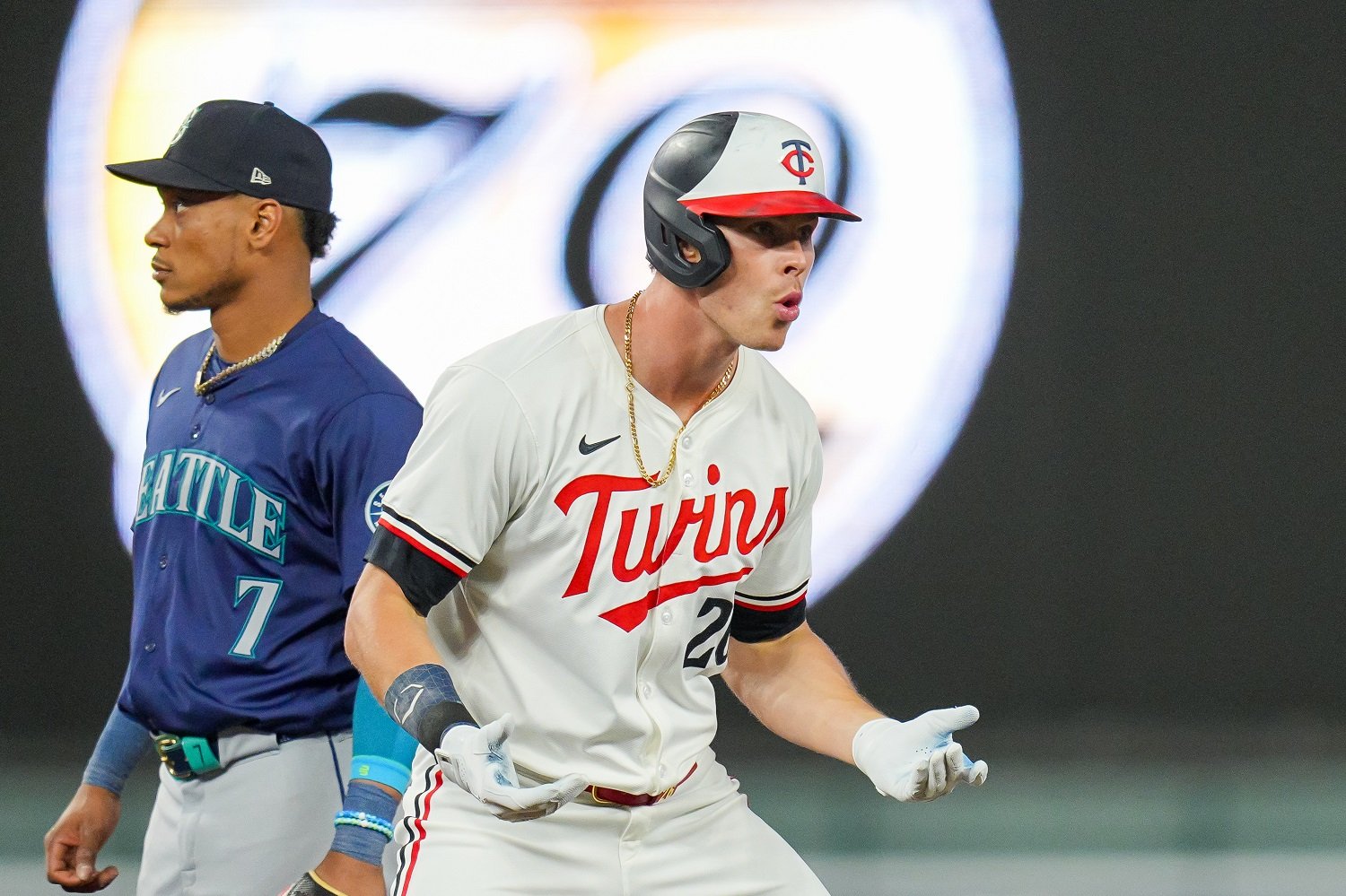 Over 35 games played, Twins right fielder Max Kepler has garnered 131 plate appearances. Due to missing 13 games from a right knee contusion that placed him on the 10-day IL and five rest days, Kepler is not among the team leaders in plate appearances. However, the 31-year-old is among qualified team leaders in numerous offensive metrics: 2nd in Isolated Power (ISO) - .214 1st in Batting Average (BA) - .291 2nd in On-Base Percentage (OBP) - .354 2nd in Slugging Percentage (SLG) - .504 2nd in weighted On-Base Average (wOBA) - .372 2nd in wRC+ - 144 tied-2nd in Wins Above Replacement at FanGraphs (fWAR) - 1.3 Kepler has been the Twins' best offensive player (alongside catcher/designated hitter Ryan Jeffers), and he is doing so while excelling against both left- and right-handed pitchers. Here are the hot-hitting lefty's splits to begin his 2024 campaign: vs. LHP - .381/.409/619, 22 plate appearances, eight hits, two doubles, one home run, one walk, four strikeouts vs. RHP - .271/.343/.479, 109 plate appearances, 26 hits, 11 doubles, three home runs, 10 walks, 16 strikeouts Kepler has shined against same-handed pitchers, although (so far) only in a very small sample of opportunities. Moreover, his good fortune in limited plate appearances suggests that the Germany native is improving in an area in which he has struggled most of his career (.220 career BA over 1,021 plate appearances against left-handed pitchers). Kepler has always hit well against right-handed pitchers (.244 career BA and 131 home runs over 2,962 plate appearances), yet he is exhibiting enhanced results this season. Being in a great place mentally, reducing his leg kick, and good health have been cited as reasons for the long-time Twin's offensive renaissance, which really began last July. However, there is one difference between Kepler's success in the second half of last season and early this season: his number of home runs. During the second half of the 2023 season (July 14 through October 1), Kepler hit 12 home runs while generating a .243 ISO over 265 plate appearances. Interestingly, he has hit only four home runs over 123 plate appearances this season, despite sporting a similarly well-above-average .220 ISO. Why is Kepler's power not translating to home runs? Let's take a look. Lack of Exit Velocity at Higher Launch Angles Kepler's hardest-hit balls are being manufactured at launch angles that prevent hitters from getting the ball over the fence. When Kepler hits the ball at a 25- to 35-degree launch angle, he's sporting a 69.9 MPH 10th-percentile Exit Velocity (EV) and 102.1 MPH 90th-percentile EV. At a 35- to 45-degree launch angle, he has a 77.6 MPH 10th-percentile EV and a 97.1 MPH 90th-percentile EV. Balls hit in this exit velocity range can sneak over the wall when the conditions are especially favorable, but they're mostly flyouts or doubles, depending on the ballpark. Kepler's inability to hit balls with a 25- to 45-degree launch at especially high EVs provides insight into why he has been unable to hit more home runs. Despite not being able to generate the EV numbers necessary to lift balls with a launch angle between 25 and 45 degrees over the fence, he is hitting balls in lower bands exceptionally well. When hitting it at a launch angle between 5 and 15 degrees, Kepler generates an 84.8 MPH 10th-percentile EV and a 110.8 MPH 90th-percentile EV. Between 15 and 25 degrees, the numbers are: 85.2 MPH 10th-percentile, 107.1 90th-percentile EV. Kepler performs exceptionally well when hitting the ball at a launch angle between 5 and 25 degrees, evidenced by a combined .782 xWOBA. For reference, when hitting the ball at a launch angle between 25 and 45 degrees, he is manufacturing a less inspiring .337 wOBA. This is true of most hitters. On average, the league's best outcomes come between 2 and 25 degrees of launch angle. Unfortunately, lifting the ball over the fence at this angle is much more complicated than if he could generate a higher EV on balls hit at a launch angle between 25 and 45 degrees. That's what separates the league's great power hitters from the rest. Baltimore Orioles star shortstop Gunnar Henderson (tied for most home runs in MLB with 17) is performing at a similar rate as Kepler within the 15-to-25 band. Here is how the two compare: Kepler - .851 xWOBA, 1.500 SLG, 98 MPH EffVel, 85.2 MPH 10th-percentile EV, 107.1 MPH 90th-percentile EV Henderson - .835 xWOBA, 1.474 SLG, 99 MPH EffVel, 90.6 MPH 10th-percentile EV, 109.1 MPH 90th-percentile EV Although Henderson is generating a faster Effective Velocity, 10th-percentile EV, and 90th-percentile EV than Kepler, the two are producing at similar rates when fitting into that range, evidenced by their respective slugging averages. However, the Orioles' young shortstop separates himself from the Twins' veteran right fielder when it comes to their productivity when hitting the ball at a launch angle between 25 and 35 degrees. Here is how the two compare: Kepler - .639 xWOBA, 1.286 SLG, 75.8 MPH EffVel, 69.9 MPH 10th-percentile EV, 102.1 MPH 90th-percentile EV Henderson - 1.222 xWOBA, 2.857 SLG, 88.7 EffVel, 91.1 MPH 10th-percentile EV, 108 MPH 90th-percentile Despite performing well and still generating positive results when hitting the ball between 25 and 35 degrees, Kepler is generating a lower EV, resulting in more hits worth one or two bases and more flyouts. Conversely, Henderson is maximizing the velocity of the balls he hits between 25 and 35 degrees. Thus, they're clearing the fence. Another indicator of Kepler's inability to launch the ball over the fence at the rate you'd expect is his Well-Hit Launch Angle (Well-hit LA), which measures a player's launch angle when hitting the ball with a 95 MPH or greater EV. Kepler's Well-Hit LA is below average, residing at a 42nd-percentile 10.9 degrees. In contrast, Kepler's Well-Hit LA in 2019 (his best offensive season) resided at 12.7 degrees. He is making a lot of contact and putting the ball into play at a high rate. However, his hardest-hit balls don't have much air under them, resulting in flyouts, singles, and doubles rather than home runs. Research assistance provided by TruMedia Sports.
 -
Is Cole Sands Heading Down the Same Path Jordan Balazovic Did in 2023?
Cody Schoenmann posted an article in Twins
 Since making his MLB debut on May 1, 2022, pitcher Cole Sands has yet to find a consistent home with the Twins. In 2022, the then-24-year-old right-handed hurler started three games and made eight relief appearances for the parent club. In his 11 total games, Sands generated a 5.87 ERA, 4.74 FIP, and 9.8% home-runs-per-fly-ball rate, while striking out 28 hitters and walking 13 over 30 2/3 innings pitched and 145 total batters faced. The Florida State product left much to be desired after his rookie campaign. Despite his peripheral numbers suggesting he performed worse during his sophomore campaign in the Majors (5.52 FIP), Sands put together a marginally impressive 2023 season, netting a 3.74 ERA and 13.8% homers-per-fly-ball rate, while striking out 21 hitters and walking 13 over 21 2/3 innings pitched and 98 total batters faced. Sands pitched fewer innings in 2023 than in 2022, due to taking on a new role as a "break-glass-in-case-of-emergency" stretch reliever who made an appearance strictly if the Twins were leading by a significant margin, losing by a significant margin, or had no other pitchers available. Inconsistency is the hallmark of young adulthood. Yet, asking young men Sands's age to handle difficult, unpredictable work with poise and consistency is typical in today's game. With the former fifth-round pick occupying a 40-man roster spot, the club needed to decide how they would use Sands this offseason. Would he be utilized as a starter who could help an organization with newfound rotation depth concerns (upon the departures of Tyler Mahle, Kenta Maeda, and Sonny Gray), or as a short reliever who could provide value in one-inning bursts and occasionally step up in medium- to high-leverage situations? As things played out at the end of spring training, they chose (for the most part) the latter role for him. Sands was exceptional in his first eight outings, sporting a 0.77 ERA, 2.28 FIP, and a mere 9.1% fly-ball-to-home-run rate while striking out 16 hitters and walking only two over 11 2/3 innings pitched and 44 batters faced. During his initial period of success, Sands relied heavily on a revamped cutter to complement his firmed-up four-seam fastball (1.3 MPH average increase from 2023 to 2024) and auxiliary curveball and splitter. The former Cape Cod Baseball League star was excelling at his first extended opportunity as a reliever. Then, the wheels fell off. Since April 28, Sands has generated a 12.00 ERA, 6.81 FIP, and an uninspiring 25% home-run-to-fly-ball rate, while striking out eight and walking one over six innings pitched and 31 total batters faced. Sands has been unable to consistently, effectively pound the zone, as he did over his first eight appearances, and hitters have manufactured more productive at-bats against the hard-throwing right-hander. Although Sands's regression is still a small sample size, his overall catalog with the Twins (4.89 ERA over 70 innings pitched) suggests he may never find sustained success in "The Show." Interestingly enough, Sands's fall from grace mimics what happened to fellow failed starting turned reliever pitching prospect Jordan Balazovic last season. Over his first 14 innings pitched in 2023, Balazovic posted a 1.29 ERA, 4.54 FIP, and 13.3% home-run-to-fly-ball rate while striking out 10 hitters and walking four over 14 innings pitched and 56 total batters faced. Like Sands this season, Balazovic was eventually thrown into high-leverage situations, preserving one- or two-run leads in the seventh or eighth innings. Unfortunately, Balazovic's production quickly plummeted, generating an 8.71 ERA, 8.00 FIP, and a dreadful 21.4% home-run-to-fly-ball rate over his final 10 1/3 innings pitched and 52 total batters faced--after which he was demoted to Triple-A St. Paul. He spent the rest of the 2023 season in the Saints bullpen. Sands and Balazovic are very different pitchers. Sands's peripheral numbers and improved pitch mix this season are much more encouraging than Balazovic's last season. However, they are undergoing similar timelines of success and regression in consecutive seasons. Balazovic performed exceptionally well for 14 innings before his performance plummeted, and Sands performed well for 11 2/3 innings before he faltered. Also, both pitchers' home-run-to-fly-ball rates skyrocketed north of 20% when their ERA, FIP, and other metrics plunged. This phenomenon provides a strong indication as to why both pitchers began to struggle immensely. If Sands remains ineffective on the mound, he could quickly lose his newfound mid-to-high-leverage reliever role to improving right-handed veteran relievers like Jay Jackson or Josh Staumont. It is too early to seriously consider demoting Sands to Triple-A St. Paul. However, with Ronny Henríquez impressive in his one appearance with the parent club earlier this season, Jorge Alcalá seemingly deserving of an extended look in MLB, and Caleb Boushley providing ancillary depth, Sands could eventually find himself jumping between CHS Field and Target Field for the third consecutive season.
 -
Cole Sands was one of the Twins' best relievers in April. However, his recent stretch of appearances has left more to be desired. Is the 26-year-old right-handed hurler heading down the same path as a prior failed starter turned reliever? Since making his MLB debut on May 1, 2022, pitcher Cole Sands has yet to find a consistent home with the Twins. In 2022, the then-24-year-old right-handed hurler started three games while netting eight relief appearances for the parent club. In his eleven appearances, Sands generated a 5.87 ERA, 4.74 FIP, and 9.8% home-run-to-fly-ball rate while striking out 28 hitters and walking 13 over 30 2/3 innings pitched and 145 total batters faced. The Florida State product left much to be desired after his rookie campaign. Despite his peripheral numbers suggesting he performed worse during his sophomore campaign in the Majors (5.52 FIP in 2023 compared to his 4.74 FIP in 2022), Sands put together a marginally impressive 2023 season, netting a 3.74 ERA and 13.8% home-run-to-fly-ball rate while striking out 21 hitters and walking 13 over 21 2/3 innings pitched and 98 total batters faced. Sands pitched fewer innings in 2023 than in 2022 due to taking on a new role as a "break glass in case of emergency" stretch reliever who made an appearance strictly if the Twins were leading by a significant margin, losing by a significant margin, or had no other pitchers available. Inconsistency is the essence of young adulthood. Yet, with the former fifth-round pick occupying a 40-man roster spot, the club needed to decide how they would use Sands this offseason. Would he be utilized as a starter who could help an organization with newfound rotation depth concerns upon the departure of Tyler Mahle, Kenta Maeda, and Sonny Gray, or as a short reliever who could provide value in short bursts? Assigning nomenclatures is one of the delights of baseball, and the Twins did just that, commissioning Sands as a "short reliever" to begin the 2024 regular season. Sands was exceptional in his first eight outings, sporting a 0.77 ERA, 2.28 FIP, and a mere 9.1% fly-ball-to-home-run rate while striking out 16 hitters and walking only two over 11 2/3 innings pitched and 44 batters faced. During his initial wave of success, Sands relied heavily on a revamped cutter to complement his velocity-increased four-seam fastball (1.3 MPH average increase from 2023 to 2024) and auxiliary curveball and splitter. The former Cape Cod Baseball League star was excelling at his first extended opportunity as a reliever. Then, the wheels fell off. Since April 28, Sands has generated a 12.00 ERA, 6.81 FIP, and an uninspiring 25% home-run-to-fly-ball rate while striking out eight and walking one over six innings pitched and 31 total batters faced. Sands has been unable to consistently and effectively pound the zone as he did over his first eight appearances, and hitters have been able to manufacture more productive at-bats against the hard-throwing right-hander. Although Sands regressing resides in a small sample size, his overall catalog with the Twins (4.89 ERA over 70 innings pitched) suggests he may never find sustained success in "The Show." Interestingly enough, Sands's fall from grace mimics what happened to fellow failed starting turned reliever pitching prospect Jordan Balazovic last season. Over his first 14 innings pitched in 2023, Balazovic manufactured a 1.29 ERA, 4.54 FIP, and 13.3% home-run-to-fly-ball rate while striking out ten hitters and walking four over 14 innings pitched and 56 total batters faced. Like Sands this season, Balazovic was eventually thrown into high-leverage situations while preserving one or two-run leads in the seventh or eighth innings. Unfortunately, Balazovic's production quickly plummeted, generating an 8.71 ERA, 8.00 FIP, and a dreadful 21.4% home-run-to-fly-ball rate over his final 10 1/3 innings pitched and 52 total batters faced before getting demoted to Triple-A St. Paul and spending the rest of the 2023 season in the Saints bullpen. Sands and Balazovic are functionally different pitchers. Sands's peripheral numbers and improved pitch mix this season are much more encouraging than what Balazovic strung together last season. However, they are undergoing similar timelines of success and regression in consecutive seasons. Balazovic performed exceptionally well for 14 innings before his performance plummeted, and Sands performed well for 11 2/3 innings before his success faded. Also, both pitchers' home-run-to-fly-ball rates skyrocketed north of 20% when their ERA, FIP, and other metrics plunged. This phenomenon provides a strong indication as to why both pitchers began to struggle immensely. If Sands remains ineffective on the mound, he could quickly lose his newfound mid-to-high-leverage reliever role to improving right-handed veteran relievers like Jay Jackson or Josh Staumont. It is too early to consider seriously demoting Sands to Triple-A St. Paul. However, with Ronny Henríquez impressing in his one appearance with the parent club earlier this season, Jorge Alcalá ever-deserving of an extended look in MLB, and Caleb Boushley providing ancillary depth, Sands could eventually find himself jumping between CHS Field and Target Field for the third consecutive season. View full article
-
How long should the Minnesota Twins' leash be with their homegrown, local, 26-year-old, power-hitting sophomore corner outfielder? Image courtesy of © Katie Stratman-USA TODAY Sports Last season, Twins outfielder Matt Wallner impressed everyone in his third stint in MLB, hitting .636/.714/1.000 with seven hits, one home run, and one double, a .364 Isolated Power (ISO), 0% strikeout rate, and 366 wRC+ over 14 plate appearances from May 23-28. Wallner's breakout was short-lived, though, as the team optioned the red-hot power-hitting corner outfielder to Triple-A St. Paul to activate fellow left-handed hitting outfielder Max Kepler off the 10-day injured list. The Forest Lake native spent two more months at Triple-A before returning to MLB in mid-July. The then-25-year-old would get rewarded with his first extended look with the parent club. Wallner didn't skip a beat, hitting .250/.351/.563 with eight hits, three home runs, one double, a .313 ISO, and 151 wRC+ over 38 plate appearances. Wallner's strikeout rate did jump to 35.1% in his return to the majors. Still, with the young outfielder producing at a 51% better than league-average clip, the Twins were understandably forgiving of the young outfielder's tendency to swing and miss. Wallner continued to hit well over the next two weeks, posting a 141 wRC+ and hitting three home runs (including a walk-off homer off Arizona Diamondbacks closer Paul Sewald) in 35 plate appearances. Wallner excelled, and began to look like a potential fixture in the Twins lineup for seasons to come. Then, he endured his first real test in "The Show." After his heroic walk-off home run against Arizona, the burly slugger hit .175/.299/.404 with 10 hits over 67 plate appearances. Despite continuing to manufacture an alarming 35.8% strikeout rate while watching his wRC+ drop to a below-league-average 97, Wallner continued hitting for power, smashing three more long balls over this stretch. Luckily for the Twins and Wallner, his skid quickly resided, and he hit .284/.411/.514 with 21 hits, four home runs, five doubles, a .230 ISO, a slightly more manageable 31.1% strikeout rate, and a well-above-average 157 wRC+. Wallner appeared to get his groove back just in time for his first postseason appearance. Alas: baseball makes fools of believers. Between the Wild Card Series against the Toronto Blue Jays and the ALDS against the Houston Astros, Wallner netted zero hits, three walks, and struck out eight times over 12 plate appearances. Being effectively non-present in the Twins' first extended playoff run in over 19 years, Wallner likely entered the offseason with a bitter taste in his mouth and a desire to show why he became one of the main contributors to what was arguably the best rookie class in Twins history. Unfortunately, he has yet to alleviate that wistful feeling three weeks into the 2024 season. In his first 31 plate appearances, Wallner is hitting .083/.258/.250 with two hits, one double, one home run, a 51.6% strikeout rate, and a 60 wRC+. Looking at Wallner's stat line, the one silver lining is the one home run. However, that home run came off a 61 MPH slider from Detroit Tigers utility infielder Zach McKinstry. Wallner's striking out in over half his plate appearances has led those who follow the team to compare him to former Twins strikeout-prone left-handed hitting outfielder Joey Gallo. However, hitting a home run off a position player is the icing on the cake. Now, I don't mean to be unabashedly rude to Wallner, and the comparisons to Gallo are likely premature and unfair (right?), but the 26-year-old looks uncompetitive at the plate and a shell of the force he was as a rookie last season. With Carlos Correa, Max Kepler, Royce Lewis, and Brooks Lee on the 10-day injured list and fellow left-handed hitting corner outfielder Trevor Larnach still on a rehab assignment for a turf toe diagnosis that sidelined to begin the season, the Twins have a finite number of MLB-caliber position players available to them. Yunior Severino and Emmanuel Rodriguez are the only other players on the 40-man roster the Twins could promote to the parent club. Although promoting Rodríguez to the majors is tempting, he needs to continue developing in the minors for now. Severino cannot play the outfield, and his 36.1% strikeout rate at St. Paul doesn't bode well for the 24-year-old to string together more productive at-bats than Wallner in the majors. Kepler's stint on the 10-day IL and Wallner's inability to produce at the plate have forced the Twins to rely primarily on Manuel Margot and Austin Martin in the corner outfield. Although the contact-skilled righties have filled in adequately, the Twins lack pop out of two positions expected to be primary sources of power entering the season. With Larnach nearing a return from his rehab assignment, the Twins could have a natural one-for-one replacement for Wallner if he continues to put together uncompetitive at-bats. Needing to demote Wallner to Triple-A less than one month into the season would mark a new level of uncertainty about the value of a player who was almost a cornerstone coming into spring training. However, the Minnesota native's lackluster performance could leave the club's decision-makers no choice. View full article
-
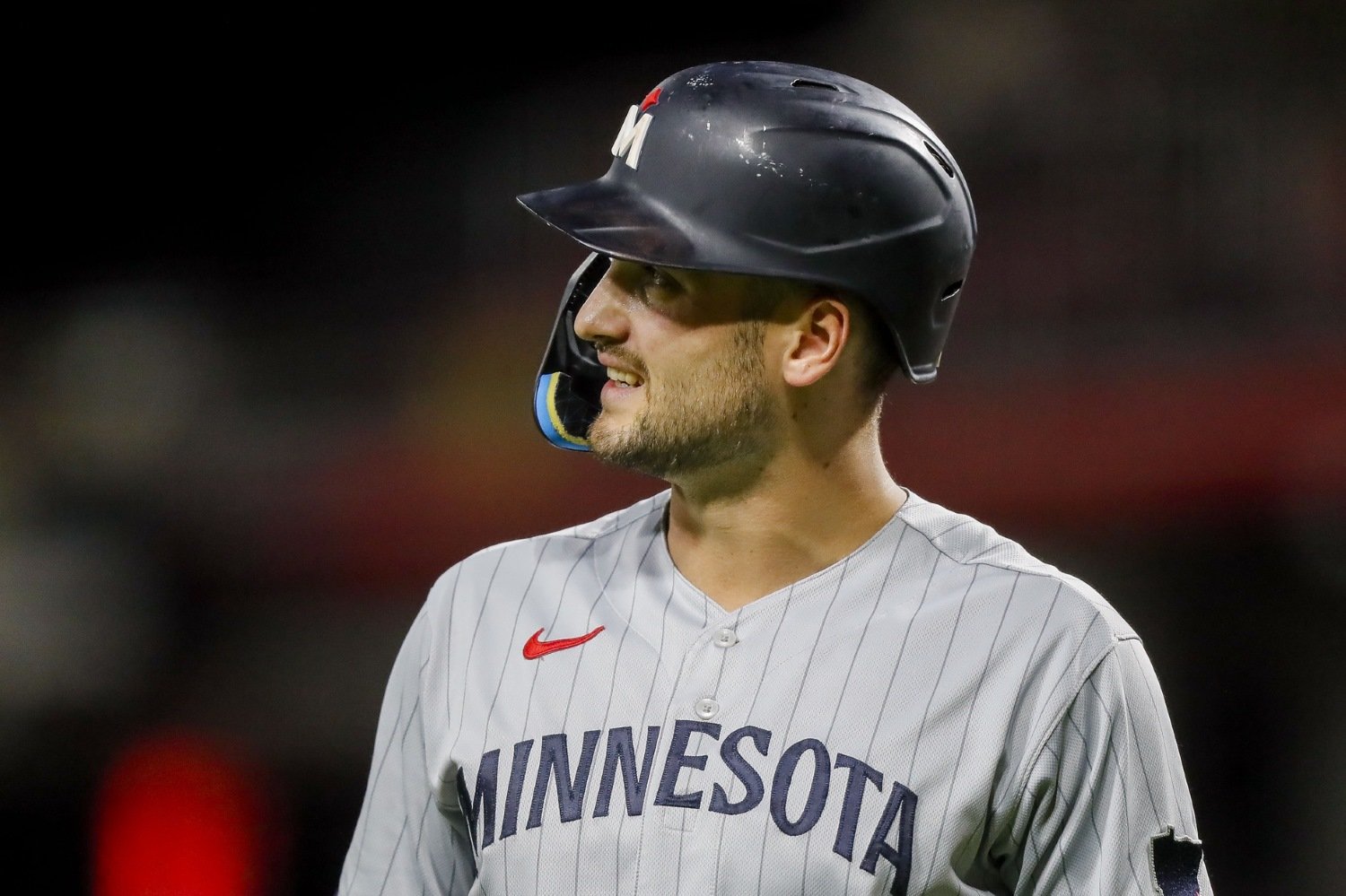 Last season, Twins outfielder Matt Wallner impressed everyone in his third stint in MLB, hitting .636/.714/1.000 with seven hits, one home run, and one double, a .364 Isolated Power (ISO), 0% strikeout rate, and 366 wRC+ over 14 plate appearances from May 23-28. Wallner's breakout was short-lived, though, as the team optioned the red-hot power-hitting corner outfielder to Triple-A St. Paul to activate fellow left-handed hitting outfielder Max Kepler off the 10-day injured list. The Forest Lake native spent two more months at Triple-A before returning to MLB in mid-July. The then-25-year-old would get rewarded with his first extended look with the parent club. Wallner didn't skip a beat, hitting .250/.351/.563 with eight hits, three home runs, one double, a .313 ISO, and 151 wRC+ over 38 plate appearances. Wallner's strikeout rate did jump to 35.1% in his return to the majors. Still, with the young outfielder producing at a 51% better than league-average clip, the Twins were understandably forgiving of the young outfielder's tendency to swing and miss. Wallner continued to hit well over the next two weeks, posting a 141 wRC+ and hitting three home runs (including a walk-off homer off Arizona Diamondbacks closer Paul Sewald) in 35 plate appearances. Wallner excelled, and began to look like a potential fixture in the Twins lineup for seasons to come. Then, he endured his first real test in "The Show." After his heroic walk-off home run against Arizona, the burly slugger hit .175/.299/.404 with 10 hits over 67 plate appearances. Despite continuing to manufacture an alarming 35.8% strikeout rate while watching his wRC+ drop to a below-league-average 97, Wallner continued hitting for power, smashing three more long balls over this stretch. Luckily for the Twins and Wallner, his skid quickly resided, and he hit .284/.411/.514 with 21 hits, four home runs, five doubles, a .230 ISO, a slightly more manageable 31.1% strikeout rate, and a well-above-average 157 wRC+. Wallner appeared to get his groove back just in time for his first postseason appearance. Alas: baseball makes fools of believers. Between the Wild Card Series against the Toronto Blue Jays and the ALDS against the Houston Astros, Wallner netted zero hits, three walks, and struck out eight times over 12 plate appearances. Being effectively non-present in the Twins' first extended playoff run in over 19 years, Wallner likely entered the offseason with a bitter taste in his mouth and a desire to show why he became one of the main contributors to what was arguably the best rookie class in Twins history. Unfortunately, he has yet to alleviate that wistful feeling three weeks into the 2024 season. In his first 31 plate appearances, Wallner is hitting .083/.258/.250 with two hits, one double, one home run, a 51.6% strikeout rate, and a 60 wRC+. Looking at Wallner's stat line, the one silver lining is the one home run. However, that home run came off a 61 MPH slider from Detroit Tigers utility infielder Zach McKinstry. Wallner's striking out in over half his plate appearances has led those who follow the team to compare him to former Twins strikeout-prone left-handed hitting outfielder Joey Gallo. However, hitting a home run off a position player is the icing on the cake. Now, I don't mean to be unabashedly rude to Wallner, and the comparisons to Gallo are likely premature and unfair (right?), but the 26-year-old looks uncompetitive at the plate and a shell of the force he was as a rookie last season. With Carlos Correa, Max Kepler, Royce Lewis, and Brooks Lee on the 10-day injured list and fellow left-handed hitting corner outfielder Trevor Larnach still on a rehab assignment for a turf toe diagnosis that sidelined to begin the season, the Twins have a finite number of MLB-caliber position players available to them. Yunior Severino and Emmanuel Rodriguez are the only other players on the 40-man roster the Twins could promote to the parent club. Although promoting Rodríguez to the majors is tempting, he needs to continue developing in the minors for now. Severino cannot play the outfield, and his 36.1% strikeout rate at St. Paul doesn't bode well for the 24-year-old to string together more productive at-bats than Wallner in the majors. Kepler's stint on the 10-day IL and Wallner's inability to produce at the plate have forced the Twins to rely primarily on Manuel Margot and Austin Martin in the corner outfield. Although the contact-skilled righties have filled in adequately, the Twins lack pop out of two positions expected to be primary sources of power entering the season. With Larnach nearing a return from his rehab assignment, the Twins could have a natural one-for-one replacement for Wallner if he continues to put together uncompetitive at-bats. Needing to demote Wallner to Triple-A less than one month into the season would mark a new level of uncertainty about the value of a player who was almost a cornerstone coming into spring training. However, the Minnesota native's lackluster performance could leave the club's decision-makers no choice.
 -
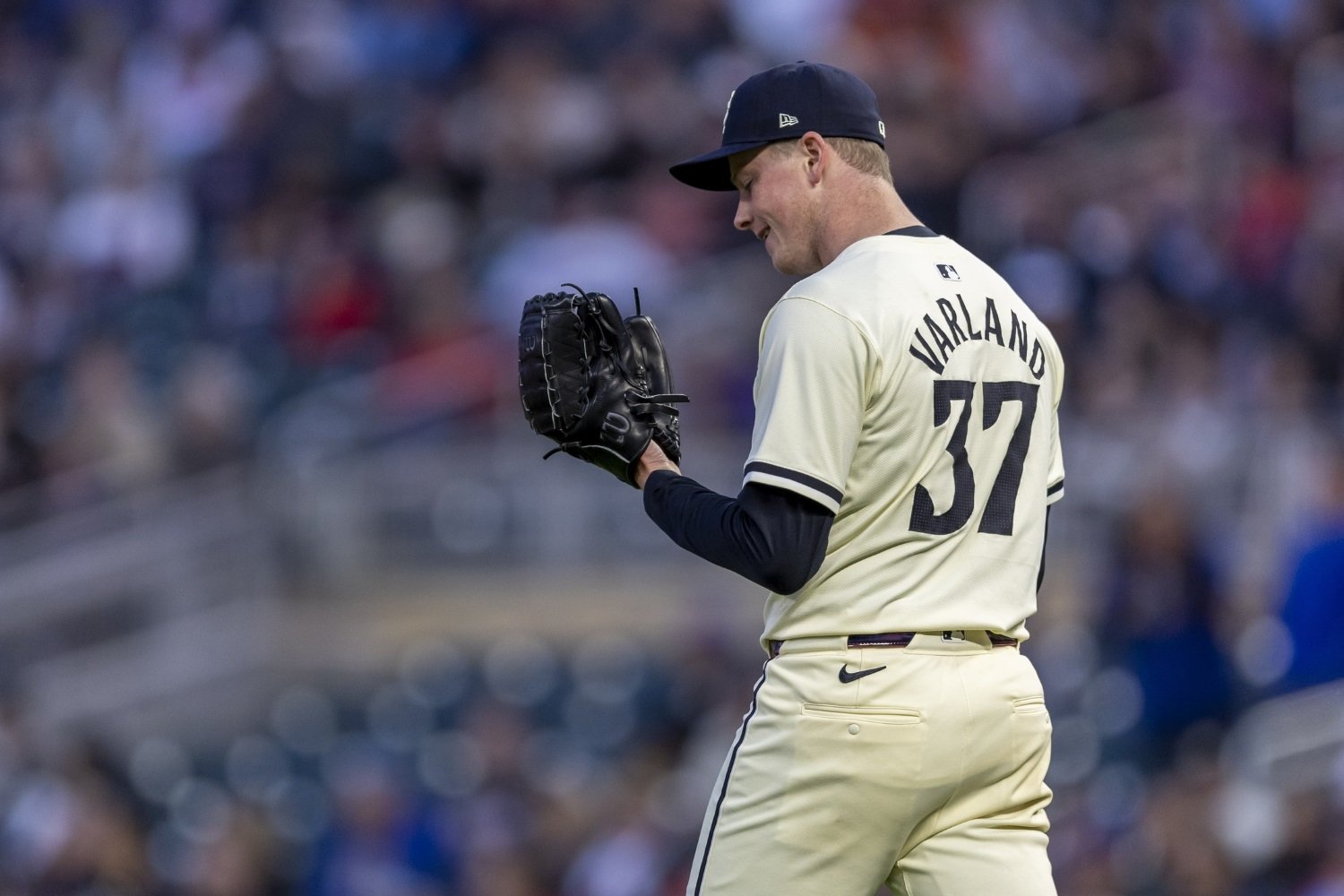 Twins 20th-ranked prospect Simeon Woods Richardson made his second career start against the Detroit Tigers at Comerica Park Saturday. It's the same site where he made his MLB debut 561 days earlier. Having begun the season at Triple-A St. Paul as the organization's sixth starter and the first line of defense if one of the initial five starting pitchers were to get injured or perform poorly, Woods Richardson was promoted to start the second game of a doubleheader. The 23-year-old performed exceptionally, tossing 80 pitches while giving up two hits, one walk, and one earned run, striking out five and generating 20 called strikes and whiffs (CSW) over six innings pitched. Woods Richardson overpowered Detroit's lineup, watching his four-seam fastball max out at 95.1 MPH and sit at 93 MPH, a 2.5-MPH increase from his one appearance in 2023. The ex-Mets and Blue Jays prospect threw his four-seam fastball 45 percent of the time while generating 10 CSW and averaging a respectable 2,210 revolutions per minute (RPM). Of the three appearances Woods Richardson has made in the majors, Saturday was by far his most encouraging performance, boosting fans' perception of the young righthander to an all-time high. By rule, he had to be demoted back to Triple-A St. Paul after the twin bill. Yet, his performance could have altered how the Twins front office will approach the starting rotation the rest of the season. Two times through the rotation, the quartet of Pablo López, Joe Ryan, Bailey Ober, and Chris Paddack have generated a 6.24 ERA, 5.18 FIP, 4.24 xFIP, and 23.05% strikeout rate over 52 innings pitched. Those numbers are bloated due to Ober's implosive outing against the Kansas City Royals, wherein he gave up eight earned runs over 1 1/3 innings pitched, and the team's xFIP indicates that. Ober had the worst outing of the unit, but the worst pitcher two times through the rotation has seemingly been fifth starter Louie Varland. Over two starts, Varland has generated a 9.00 ERA, 7.36 FIP, 3.99 xFIP, and 22.2% strikeout rate. Varland was supposed to begin the season at Triple-A St. Paul, playing the role Woods Richardson currently inhabits, but presumed fifth starter Anthony DeSclafani undergoing forearm flexor tendon surgery bumped the 26-year-old St. Paul native into the club's Opening Day five-man rotation. Though Varland earning the fifth spot in the starting rotation upon news of DeSclafani's unavailability was expected, it's hard to guess how long of a leash the team's decision-makers will have with the hard-throwing righty. Last season, Varland's most significant shortcomings were his inability to limit home runs and concerns over the effectiveness of his offspeed pitches. Although Varland has improved his secondary pitches, the long ball remains a problem, with most home runs surrendered coming off his four-seam fastball. Varland has struggled at suppressing home runs since beginning the 2022 minor-league season with the Double-A Wichita Wind Surge; he's surrendered 46 dingers in 311 innings pitched over the last two-plus years. With no improvement in sight on that front, his performance over two starts to begin the season is particularly concerning and could be a driving force in potentially losing his spot in the starting rotation. Beyond his inability to limit home runs remaining a thorn in the 15th-round pick's side, a new problem has arisen this season. Over 45 batters faced, Varland's walk rate has jumped from 6.6% over his 10 games as a starter last season to 11.1% in 2024. Varland has never struggled with command at any level, so his newfound inability to suppress free passes is particularly concerning. The primary cause for his concerning command issues could be his trying to implement his new and refined pitches--most notably his curveball and cutter--into his repertoire. Still, while tinkering with pitches is expected (especially early in the season), adding command and location issues to concerns over the long ball is a worst-case scenario for the hard-tossing hurler. With Varland's first two starts coming against two above-average National League teams in the Milwaukee Brewers and Los Angeles Dodgers, there is reason to suspect he could turn his luck around against lesser opponents. Unfortunately, he won't get that opportunity this week, as his next start is Monday against the formidable Baltimore Orioles. Varland still merits an extended opportunity to prove that he can remain a productive member of the Twins starting rotation. However, if the same issues that thwarted his hopes of staying in the Twins' starting rotation in 2023 remain, they could yet again force him to transition into a relief role, as he did toward the end of last season. If this scenario plays out and Woods Richardson can build off his impressive start against the Tigers by performing well at Triple-A St. Paul for the next few weeks, we could see the former consensus Top 100 prospect get his first extended opportunity in MLB.
 -
Did the 23-year-old prospect improve his chances of replacing the St. Paul native in the Twins rotation following his impressive start against the Detroit Tigers this past Saturday? This past Saturday, Minnesota Twins 20th-ranked prospect Simeon Woods Richardson made his second career against the Detroit Tigers at Comerica Park, the same site he made his MLB debut 561 days prior. Having begun the season at Triple-A St. Paul as the organization's sixth starter and the first line of defense if one of the initial five starting pitchers were to get injured or perform poorly, Woods Richardson was promoted to start the second game of Saturday's doubleheader. The 23-year-old embodied the role and performed exceptionally, tossing 80 pitches while giving up two hits, one walk, one earned run, and striking out five and generating 20 called strikes and whiffs (CS+Whiffs) over six innings pitched. Woods Richardson overpowered Detroit's lineup, watching his four-seam fastball max out at 95.1 MPH and sit at 93 MPH, a 2.5 MPH increase from his one appearance in 2023. The Texas High School product threw his four-seam fastball 45% of the time while generating ten CS+Whiffs and averaging a respectable 2210 Rotations Per Minute (RPM). Of the three appearances the 23-year-old Texas High School product has made in the majors, Saturday was by far his most encouraging performance, skyrocketing fans' perception of the young right-hander to an all-time high since joining the organization alongside Austin Martin at the 2021 MLB Trade Deadline. Woods Richardson will inevitably get demoted back to Triple-A St. Paul. Yet, his performance could have altered how the Twins front office will approach the starting rotation the rest of the season. Two times through the rotation, the quartet of Pablo López, Joe Ryan, Bailey Ober, and Chris Paddack have generated a 6.24 ERA, 5.18 FIP, 4.24 xFIP, and 23.05% strikeout rate over 52 innings pitched. The starting rotations numbers are inflated due to Ober's implosive outing against the Kansas City Royals, where he gave up eight earned runs over 1 1/3 innings pitched, and the team's xFIP indicates that. Ober had the worst outing of the unit, but the worst-performing pitcher two times through the rotation has seemingly been fifth-starter Louie Varland. Over two starts, Varland has generated a 9.00 ERA, 7.36 FIP, 3.99 xFIP, and 22.2% strikeout rate. Varland was supposed to begin the season at Triple-A St. Paul, residing in the role Woods Richardson currently inhabits, yet presumed fifth-starter Anthony DeSclafani, undergoing forearm flexor tendon surgery in late March, bumped the 26-year-old St. Paul native into the club's Opening Day five-person rotation. Though Varland earning the fifth spot in the starting rotation upon news of DeSclafani's season-ending surgery was expected, it is unknown how long of a leash the team's decision-makers will have with the hard-throwing righty. Last season, Varland's most significant shortcomings were his inability to limit home runs and concerns over the effectiveness of his offspeed pitches. Although Varland has improved his secondary pitches, he has generated an alarmingly below-average 50% home run to fly ball rate, with most home runs surrendered coming off his four-seam fastball. Varland has struggled at suppressing home runs since beginning the 2022 minor league season with the Double-A Wichita Wind Surge, averaging a well-below-average 13.2% home run-to-fly ball rate between Double-A and the parent club in 302 innings pitched between 2022 and 2023. Although Varland has struggled with quashing home runs for the better part of three seasons, his performance over two starts to begin the season is particularly concerning and could be a driving force in potentially losing his spot in the starting rotation. Beyond his inability to limit home runs remaining a thorn in the 15th-round pick's side, a new problem has arisen for the Concordia University, St. Paul product this season. Over 45 batters faced this season, Varland's walk rate has jumped from 6.6% over his ten games as a starter last season to 11.1% over his first two outings. Varland has never struggled with command at any level, so his newfound inability to suppress free passes is particularly concerning. The primary cause for his concerning command issues could be his trying to implement his new and refined pitches, most notably his curveball and cutter, into his repertoire. Still, while tinkering with pitches is expected (especially early in the season), adding command and location issues to concerns over the long ball is a worst-case scenario for the hard-tossing hurler. With Varland's first two starts coming against two above-average National League teams in the Milwaukee Brewers and Los Angeles Dodgers, there is reason to suspect he could turn his luck around against lesser opponents. Unfortunately, he will yet to be gifted that opportunity, as his next start is this Monday against the offensively skilled Baltimore Orioles. That said, Varland still merits an extended opportunity to prove that he can remain a productive member of the Twins starting rotation. However, if the same issues that plagued his ability to stay in the Twins' starting rotation in 2023 remain, they could yet again lead to his demise as a starter and force him to transition into a reliever as he did toward the end of last season. If this scenario plays out and Woods Richardson can build off his impressive start against the Tigers and perform well at Triple-A St. Paul for the next few weeks, we could see the former consensus Top 100 prospect get his first extended opportunity in MLB. View full article
-
Over the first six games of the 2024 season, the Minnesota Twins' hard-tossing bullpen has yielded positive results while eating a significant number of innings. Is this approach sustainable? Should those who follow the team expect the unit to maintain its effectiveness when veteran arms return from the injured list? Let's take a look. Image courtesy of © Benny Sieu-USA TODAY Sports In 2023, the Minnesota Twins bullpen ranked 21st in Wins Above Replacement at FanGraphs (fWAR), generating just 3.2 fWAR over 556 1/3 innings pitched. Star closer Jhoan Durán led the unit, generating 1.6 fWAR. Take away the debatably All-Star-worthy closer's production, and the team would have dropped two spots, to 23rd, behind the National League pennant-winning Arizona Diamondbacks and just in front of the much-less-accomplished Chicago White Sox (eek!). Despite generating little fWAR last season, the unit possessed redeeming qualities. Last season, the Twins bullpen was MLB's second-hardest-throwing unit, generating an average four-seam fastball velocity (vFA) of 95.3 MPH. The only team ahead of them was the Washington Nationals, who famously don't care how hard their pitchers throw ball four. The Twins bullpen also ranked favorably in these statistics: Strikeout Percentage (K%) - 25.2% (8th) Difference Between Strikeout Percentage and Walk Percentage (K-BB%) - 16.1% (8th) Batting Average Against (AVG) - .228 (8th) WHIP - 1.25 (7th) Left on Base Percentage - 73.3% (10th) The strikeouts were great; they helped the team escape some tough spots. That said, when opposing hitters did make hard contact against relievers, the results were disastrous for Minnesota's chances of winning games; they frequently blew one- or two-run leads. This phenomenon is evidenced by the 'pen ranking 17th in Win Advancement (+WPA), generating just 47.63 last season. At the same time, the bullpen did an impressive job of not advancing losses, ranking 10th in Loss Advancement (-WPA) last season. The 2023 Twins bullpen was a fickle bunch, including Durán, which is why it wasn't surprising when the front office elected to spend a significant portion of its limited resources to improve the unit this past offseason. During the four months between Game 4 of the ALDS on October 11, 2023, and pitchers and catchers reporting to Fort Myers on Valentine's Day, the Twins signed, claimed, or traded for MLB-caliber relievers Josh Staumont, Ryan Jensen, Justin Topa, Daniel Duarte, Zack Weiss, Jay Jackson, and Steven Okert. Entering Spring Training, Jensen and Duarte had been removed from the 40-man roster and retained on minor-league deals. Staumont, Topa, Jackson, and Okert were expected to figure into the team's Opening Day eight-reliever bullpen. Unfortunately, Staumont and Topa suffered injuries during camp, joining Durán and Caleb Thielbar as veteran arms unable to contribute for the time being. Among the multitude of additions made this offseason, the only players contributing to the parent club are Jackson, Okert, and Duarte. The three offseason additions joined returning arms Griffin Jax, Brock Stewart, Jorge Alcalá, Kody Funderburk, and Cole Sands to create the first iteration of the Twins' 2024 bullpen. Now, this group of arms is an unconventional cohort, and you would be hard-pressed to find a casual baseball fan able to name any of the hurlers who comprise it. That said, this isle of misfit arms has been the saving grace of the World Series-hopeful club. Primarily due to needing to mop up Bailey Ober's career-worst outing last Sunday, the club's bullpen ranks only 12th in fWAR, generating 0.1 fWAR. Yet, the group is thriving in nearly every other meaningful category. Since the Nationals began caring about how hard they throw ball four, they have presumably developed performance anxiety, allowing the Twins to take the top spot in vFA this season. On average, Minnesota's pen arms hit 96.4 MPH with their four-seam fastballs. Similar to last year, the bullpen has been able to reside toward the top of the league in many advanced metrics: K% - 29.6% (5th) K-BB% - 18.5% (9th) AVG - .139 (2nd) WHIP - 0.89 (4th) LOB% - 100% (2nd) The unit is also getting hitters to hit the ball softly in the air, evidenced by its ranking second in fly ball rate (FB%) and seventh in the percentage of balls in play that were hit with soft speed (Soft%). The team has been able to keep the ball in the ballpark, and while this is an encouraging sign, the numbers are likely skewed, having played most of their games in Kauffman Stadium, one of the least home run-friendly ballparks in MLB. Veterans Stewart, Jax, and Okert have shined in one-inning roles. However, Jackson, Alcalá, Duarte, Funderburk, and Sands have done an admirable job pitching multiple innings in close games. When starting pitcher Louie Varland struggled to get through four innings against the Milwaukee Brewers this past Tuesday, Alcalá and Jackson tossed four scoreless innings, almost helping the Twins construct a late-inning comeback win. Then, when fifth starter Chris Paddack weaved in and out of danger through four innings pitched against Milwaukee the next day, Duarte took the wheel for two innings, giving up a solo shot to Brewers rookie outfielder Jackson Chourio. Duarte's efforts led the way to a Twins comeback and allowed Stewart, Jax, and Okert to mow through the Brewers order in the game's final three innings and pull off a 7-3 victory to split the series. Despite losing the home opener to the Cleveland Guardians on Thursday, young relievers Funderburk and Sands kept the Twins in the game during the later innings, giving up zero runs in 3 1/3 innings of relief. The Twins' grouping of inexperienced high-velocity bullpen arms, Alcalá, Jackson, Duarte, Funderburk, and Sands, has been tasked with pitching multiple innings, preserving leads, and not letting games get out of hand to provide the offense with an opportunity to make a comeback. The four of them have answered the call, providing high-leverage relievers Okert, Stewart, and Jax the opportunity to thrive in single-inning spurts. With the offense sputtering and most of the starting rotation struggling to pitch four innings, the bullpen has been a saving grace for the Twins early this season. With veterans Staumont, Topa, Thielbar, and Durán set to return relatively soon, the unit should become even more formidable as the season continues. View full article
-
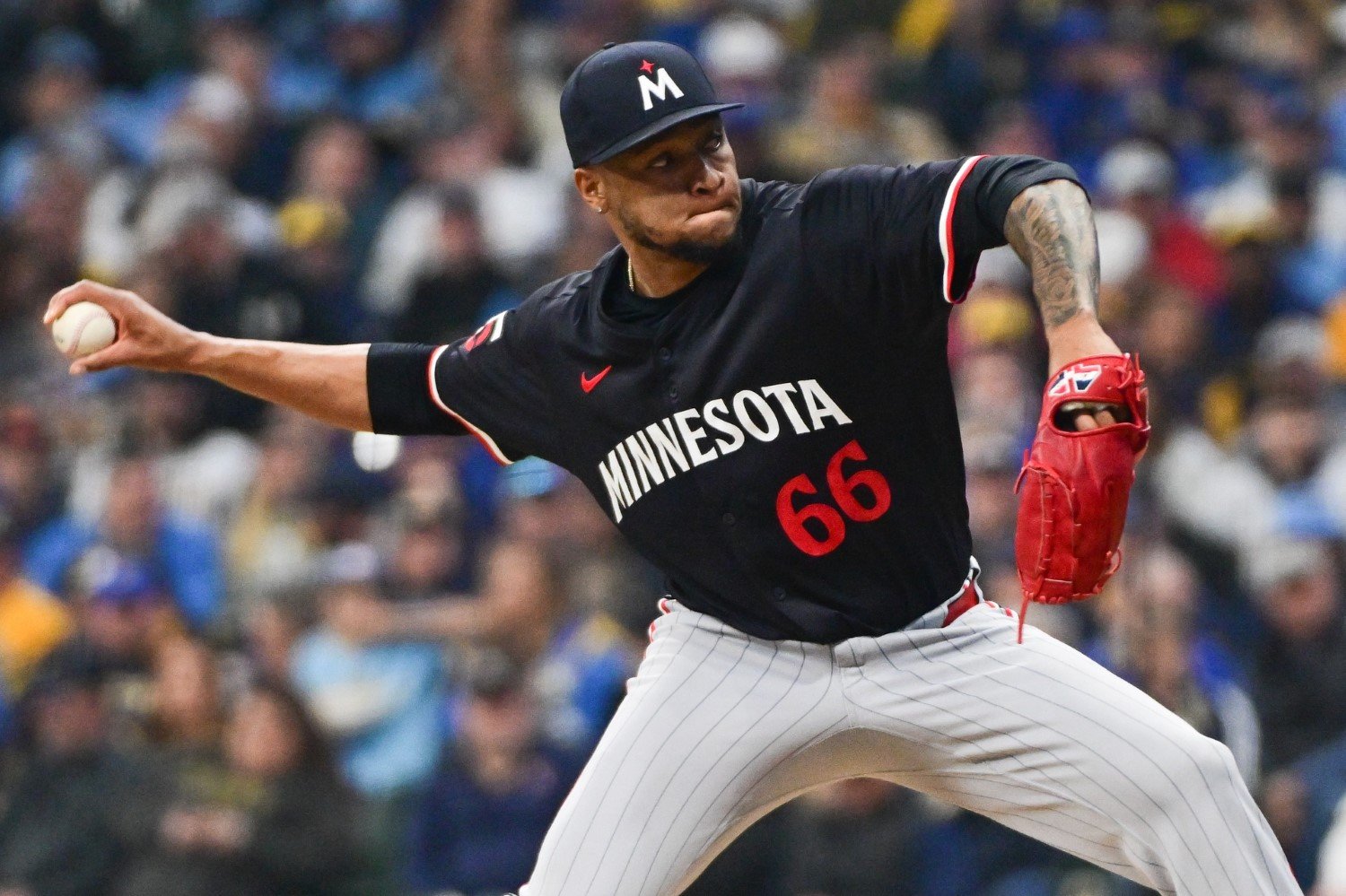 In 2023, the Minnesota Twins bullpen ranked 21st in Wins Above Replacement at FanGraphs (fWAR), generating just 3.2 fWAR over 556 1/3 innings pitched. Star closer Jhoan Durán led the unit, generating 1.6 fWAR. Take away the debatably All-Star-worthy closer's production, and the team would have dropped two spots, to 23rd, behind the National League pennant-winning Arizona Diamondbacks and just in front of the much-less-accomplished Chicago White Sox (eek!). Despite generating little fWAR last season, the unit possessed redeeming qualities. Last season, the Twins bullpen was MLB's second-hardest-throwing unit, generating an average four-seam fastball velocity (vFA) of 95.3 MPH. The only team ahead of them was the Washington Nationals, who famously don't care how hard their pitchers throw ball four. The Twins bullpen also ranked favorably in these statistics: Strikeout Percentage (K%) - 25.2% (8th) Difference Between Strikeout Percentage and Walk Percentage (K-BB%) - 16.1% (8th) Batting Average Against (AVG) - .228 (8th) WHIP - 1.25 (7th) Left on Base Percentage - 73.3% (10th) The strikeouts were great; they helped the team escape some tough spots. That said, when opposing hitters did make hard contact against relievers, the results were disastrous for Minnesota's chances of winning games; they frequently blew one- or two-run leads. This phenomenon is evidenced by the 'pen ranking 17th in Win Advancement (+WPA), generating just 47.63 last season. At the same time, the bullpen did an impressive job of not advancing losses, ranking 10th in Loss Advancement (-WPA) last season. The 2023 Twins bullpen was a fickle bunch, including Durán, which is why it wasn't surprising when the front office elected to spend a significant portion of its limited resources to improve the unit this past offseason. During the four months between Game 4 of the ALDS on October 11, 2023, and pitchers and catchers reporting to Fort Myers on Valentine's Day, the Twins signed, claimed, or traded for MLB-caliber relievers Josh Staumont, Ryan Jensen, Justin Topa, Daniel Duarte, Zack Weiss, Jay Jackson, and Steven Okert. Entering Spring Training, Jensen and Duarte had been removed from the 40-man roster and retained on minor-league deals. Staumont, Topa, Jackson, and Okert were expected to figure into the team's Opening Day eight-reliever bullpen. Unfortunately, Staumont and Topa suffered injuries during camp, joining Durán and Caleb Thielbar as veteran arms unable to contribute for the time being. Among the multitude of additions made this offseason, the only players contributing to the parent club are Jackson, Okert, and Duarte. The three offseason additions joined returning arms Griffin Jax, Brock Stewart, Jorge Alcalá, Kody Funderburk, and Cole Sands to create the first iteration of the Twins' 2024 bullpen. Now, this group of arms is an unconventional cohort, and you would be hard-pressed to find a casual baseball fan able to name any of the hurlers who comprise it. That said, this isle of misfit arms has been the saving grace of the World Series-hopeful club. Primarily due to needing to mop up Bailey Ober's career-worst outing last Sunday, the club's bullpen ranks only 12th in fWAR, generating 0.1 fWAR. Yet, the group is thriving in nearly every other meaningful category. Since the Nationals began caring about how hard they throw ball four, they have presumably developed performance anxiety, allowing the Twins to take the top spot in vFA this season. On average, Minnesota's pen arms hit 96.4 MPH with their four-seam fastballs. Similar to last year, the bullpen has been able to reside toward the top of the league in many advanced metrics: K% - 29.6% (5th) K-BB% - 18.5% (9th) AVG - .139 (2nd) WHIP - 0.89 (4th) LOB% - 100% (2nd) The unit is also getting hitters to hit the ball softly in the air, evidenced by its ranking second in fly ball rate (FB%) and seventh in the percentage of balls in play that were hit with soft speed (Soft%). The team has been able to keep the ball in the ballpark, and while this is an encouraging sign, the numbers are likely skewed, having played most of their games in Kauffman Stadium, one of the least home run-friendly ballparks in MLB. Veterans Stewart, Jax, and Okert have shined in one-inning roles. However, Jackson, Alcalá, Duarte, Funderburk, and Sands have done an admirable job pitching multiple innings in close games. When starting pitcher Louie Varland struggled to get through four innings against the Milwaukee Brewers this past Tuesday, Alcalá and Jackson tossed four scoreless innings, almost helping the Twins construct a late-inning comeback win. Then, when fifth starter Chris Paddack weaved in and out of danger through four innings pitched against Milwaukee the next day, Duarte took the wheel for two innings, giving up a solo shot to Brewers rookie outfielder Jackson Chourio. Duarte's efforts led the way to a Twins comeback and allowed Stewart, Jax, and Okert to mow through the Brewers order in the game's final three innings and pull off a 7-3 victory to split the series. Despite losing the home opener to the Cleveland Guardians on Thursday, young relievers Funderburk and Sands kept the Twins in the game during the later innings, giving up zero runs in 3 1/3 innings of relief. The Twins' grouping of inexperienced high-velocity bullpen arms, Alcalá, Jackson, Duarte, Funderburk, and Sands, has been tasked with pitching multiple innings, preserving leads, and not letting games get out of hand to provide the offense with an opportunity to make a comeback. The four of them have answered the call, providing high-leverage relievers Okert, Stewart, and Jax the opportunity to thrive in single-inning spurts. With the offense sputtering and most of the starting rotation struggling to pitch four innings, the bullpen has been a saving grace for the Twins early this season. With veterans Staumont, Topa, Thielbar, and Durán set to return relatively soon, the unit should become even more formidable as the season continues.
- 13 comments
-
- 6
-

-
- griffin jax
- brock stewart
- (and 5 more)
-
To boil it down, Outs Above Average (OAA) judges an infielder's ability based on how far they need to travel to reach the ball ("the intercept point") and how much time they take to get there. Essentially, OAA measures a fielder's range. Other metrics are used to determine arm strength, ability to field, etc. You can find more info at MLB.com's glossary.
-
I meant relegated in the sense that 3B is a more demanding position than LF on the defensive spectrum. But yes, I suppose "assigned" or "glued" could have been a better way to say that lol. Also, I agree with your Martin point. He would be a fun insertion to the lineup.
- 41 replies
-
- 1
-
-
- willi castro
- kyle farmer
- (and 1 more)

