



Cody Schoenmann
-
Posts
768 -
Joined
-
Last visited
-
Days Won
1
Content Type
Profiles
News
Minnesota Twins Videos
2026 Minnesota Twins Top Prospects Ranking
2022 Minnesota Twins Draft Picks
Minnesota Twins Free Agent & Trade Rumors, Notes, & Tidbits
Guides & Resources
2023 Minnesota Twins Draft Picks
The Minnesota Twins Players Project
2024 Minnesota Twins Draft Picks
2025 Minnesota Twins Draft Pick Tracker
2026 Minnesota Twins Draft Tracker: Picks & Bonuses
Forums
Blogs
Events
Store
Downloads
Gallery
Everything posted by Cody Schoenmann
-

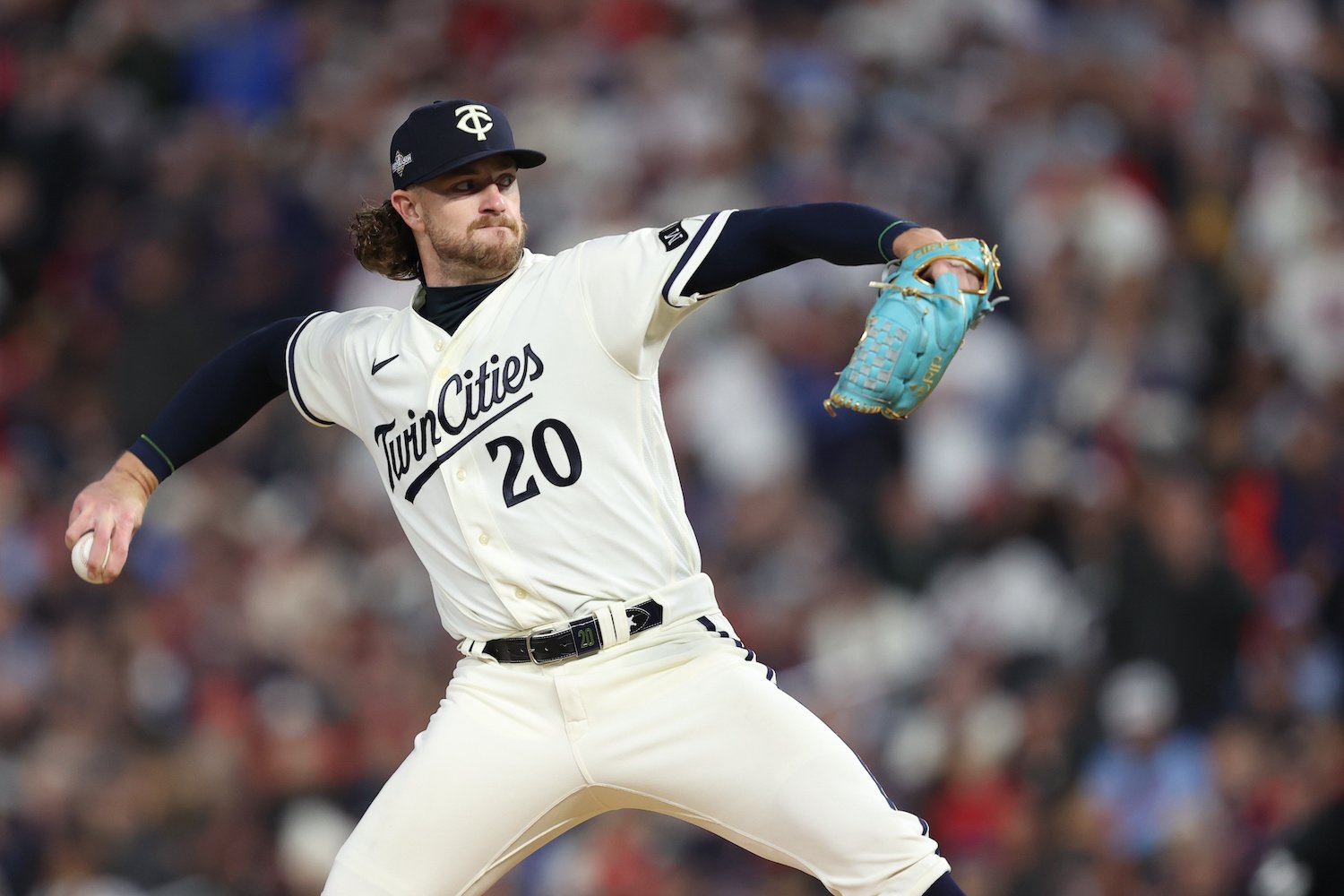 Between Royce Lewis's breakout postseason performance, Pablo López putting on one of the best postseason pitching performances in franchise history, and the cathartic ending of the Twins' 18-game playoff losing streak, there was a more understated (yet noteworthy) optimism-inducing occurrence late in 2023: The dominance of starter-turned-temporary-reliever Chris Paddack. For much of the 2023 season, Paddack existed more as an idea than as a pitcher who could make an impact on one of the best pitching staffs in Major League Baseball. "Will he be able to come back and pitch toward the end of the season?" fans wondered, as reporters provided occasional insight into how Paddack was progressing post-Tommy John surgery. Eventually, it was announced that Paddack would return from the 60-day injured list on September 24, right before the Twins started a series against the lowly Los Angeles Angels. Paddack was in line to make his debut against the Angels the same day, but a rain delay aborted what was supposed to be his grand return from a 16-month absence. Instead, Paddack returned against the Oakland Athletics on September 26, the same team he faced when he tore his ulnar collateral ligament (UCL) in 2022. He worked two innings, striking out four of the 11 batters he faced while giving up three earned runs, on four hits and one walk. Paddack struggled in his first appearance of 2023, but immediately bounced back against the Colorado Rockies on September 30, striking out four of the 11 batters he faced while giving up zero earned runs over two frames. Paddack's four innings pitched at the major-league level and the 14 innings he threw in the minors convinced the Twins' decision-makers that he would be a worthwhile addition to the 26-man Wild Card Series roster against the Toronto Blue Jays. Paddack didn't pitch against the Blue Jays in the first round, but he made his Twins postseason debut against the Houston Astros in the ALDS. In the two games he threw against the Astros, Paddack generated an incredible 0.27 WHIP and 14.7 K/9, striking out six of the 12 Astros batters he faced. He surrendered only one hit over 3 2/3 innings pitched. Though Paddack wasn't the only Twins reliever who excelled during the postseason, the long and tedious road he traveled to get there is what made his commanding performance truly special. Fast-forward to the present, and the Twins find themselves on the brink of reintegrating Paddack into the role they wanted him to fill when they acquired him on Opening Day of the 2022 season: that of a mid-rotation starter. The Twins transitioning Paddack back into that gig seemed like a relative certainty to those who follow the Twins closely, especially with the recent departures of Kenta Maeda and Sonny Gray. Yet, the decision to give Paddack a spot in 2024 has stirred some unexpected controversy at the national level. On November 28, Keith Law of The Athletic wrote an article wherein he recapped Maeda and Gray signing with the Detroit Tigers and St. Louis Cardinals, respectively, and how the Twins could realistically fill the holes the two veterans left in the starting rotation. In his article, Law states that the Twins "only have three true starters left on the roster: Pablo López, Joe Ryan, and Bailey Ober." Law then went on to state that the organization has several former starters turned relievers, including Louie Varland, who, according to Law, "was very homer-prone as a starter last season," which is true, evidenced by his 20.6% HR/FB over 10 games as a starter. Also, Law mentioned Jordan Balazovic, who "hasn't shown enough command to even be a good reliever yet," as another potential rotation option. Law was correct to say that Balazovic hasn't shown that he could be a good reliever yet, let alone a starter, but to mention his name as a potential rotation option for the Twins in 2024 feels like a statement someone who is out of touch with how the franchise is operating would make. Law is one of my favorite baseball analysts, so I don't want it to appear as if I am bashing him. Yet, I want to provide clarity and context to his coverage of the Twins and their mode of operation before sharing what he declared next. If one were to scroll down to the comment section of Law's article, they would see various Twins fans asking him why he mentioned Balazovic as a rotation option yet blatantly ignored Paddack. A specific commenter, "Jesse W." questioned Law's stance by stating, "I definitely agree with the conclusion that the Twins need another pitcher, but this was a weird write-up about their rotation. No mention of Chris Paddack, whom they're obviously planning on having in the starting rotation, but for some reason a mention of Balazovic, who is a guy they've pretty clearly given up on. Was this blurb written last year?" Law responded to Jesse W., saying, "(Paddack has) never made 30 starts or thrown 150 innings in any year. Anyone assuming he'll do either of those things after he threw just 14 total innings last year (minors + majors) is ... well, to quote someone else in this thread, 'lazy.'" Law finished, adding, "If the Twins want to be unrealistic, that's on them. That's not the world in which I operate. The point of my paragraph on them is what they need to do, not what they might internally believe." While it is understandable to question the Twins' seemingly unassailable confidence in Paddack, who pitched 18 (not 14) total innings in 2023 after his second Tommy John surgery in seven years and has never pitched an entire season as a starter anywhere in pro ball, to suggest he is not a viable rotation option--and maybe even that Balazovic is closer to being one--was bizarre. The front office must find a way to replace Maeda and Gray's contributions toward the rotation in 2023. They're not expecting Paddack to give them everything Gray did. He's a much better analog for Maeda, and that's the production they'll hope he can match. Replacing Gray will likely end up being a group effort, effected by multiple back-end starting pitchers. The team might make a cheap free-agent signing like Hyun-Jin Ryu or Michael Wacha, or throw a combination of young internal options like Varland, Simeon Woods Richardson, and David Festa at the problem. To expect Paddack to shoulder that burden would be unfair and unreasonable, a mode of thinking that should be avoided at all costs. No matter the outside perspective, Paddack will play a vital role in the success of the Twins' starting rotation in 2024. Whether he thrives in an expanded role or crumbles under pressure is yet to be seen, but when taking into account the front office's ability to trade for and further develop veteran starting pitchers (i.e., Gray and López) and watching Paddack thrive on the mound as recently October, there is reason to be optimistic about his outlook. Was it unfair of Law to include Balazovic and omit Paddack? Do you think the Twins are wise to have faith in Paddack? Do you think Padddack will perform well in 2024? Comment below.
 -
I know you were just kidding, I wasn't offended or anything. There was multiple comments about the "lovably eccentric personality" line, so I just left a comment under yours. Also, I like NC more than Duke as well, so we are on the same page lol
-
While Duke basketball players can often be questionable characters, I did mean what I said about Stroman as a genuine compliment. He is one of my favorite personalities in baseball.
-
Intersecting circumstances could lead to an unlikely partnership between the Twins and starting pitcher Marcus Stroman. Image courtesy of Matt Blewett - USA TODAY Sports As front office members, agents, insiders, writers, and more come together this upcoming week at the spacious Gaylord Opryland Resort & Convention Center in lovely Nashville, Tennessee, for Major League Baseball's annual Winter Meetings, one thing is evident: The Twins will not be, to quote Scott Boras, "fishing in the deep ocean." Though the cost-cutting Twins will be tasked with finding a center fielder who can adequately replace Michael A. Taylor, fortifying their bullpen, and acquiring a right-handed corner outfield bat to stabilize the lineup, their greatest challenge will be making up for the recently-departed 288 2/3 innings and 6.8 Wins Above Replacement at FanGraphs (fWAR) generated by Kenta Maeda (104 2/3 IP, 1.5 fWAR) and Sonny Gray (184 IP, 5.3 fWAR). Replacing Gray will be a more daunting challenge than doing the same with Maeda. Regardless, neither will be uncomplicated, particularly considering the Twins' self-imposed payroll restrictions. Now, young internal candidate Louie Varland could suffice as a seamless one-for-one replacement for Maeda, as evidenced by his 86 DRA- as a starting pitcher, which is a pitching metric created by Baseball Prospectus that focuses on expected contribution while isolating a pitcher's performance from uncontrollable factors like defense, park, and quality of opponents. Varland showed great promise as a reliever during the latter half of the 2023 regular season. Still, it would be in the Twins' best interest to allow the affordable soon-to-be 26-year-old to be a full-time rotation member for an extended period. Even if the Twins ultimately convert Varland into a reliever and opt to sign a veteran like Hyun-Jin Ryu or Wade Miley to a one-year deal for less than $10 million, they are still going to need to find a way to make up for Gray's exit from the organization. Expensive, top-tier free-agent starting pitchers like Yoshinobu Yamamoto, Blake Snell, Jordan Montgomery, and Eduardo Rodríguez are not realistic options, and though the Twins could realistically acquire frontline starting pitchers like Corbin Burnes or Logan Gilbert through trade, the idea of parting with potential franchise-altering prospects in Brooks Lee and Emmanuel Rodríguez is sure to give them pause. So, what realistic avenue could the Twins take to replace Gray's Cy Young Award-worthy 2023 production? The answer could be signing the high-risk, high-reward option, in Marcus Stroman. Stroman, 32, has long been among the more well-known starting pitchers in Major League Baseball due to his lovably eccentric personality and exceptional ability on the mound while a member of big-market franchises like the Toronto Blue Jays, New York Mets, and Chicago Cubs. Stroman began the 2023 season hot, generating a 2.28 ERA, 3.36 FIP, and 83.3 LOB%. He struck out 44 of the 187 batters faced through his first 47 1/3 innings pitched from March 30 through May 8. Unfortunately, after a rough outing against the Twins on May 14 in which he gave up six earned runs over 2 2/3 innings pitched, Stroman's performance began to deteriorate. From the rough outing against the Twins in mid-May through July 31, Stroman generated a 4.76 ERA, 3.70 FIP, and 60.6% LOB%, while striking out only 67 of 351 batters through 81 1/3 innings pitched. Cubs fans began to wonder what was wrong with Stroman, a consistently above-average starter throughout his career, and if his decline in production could be injury-related. Eventually, their concerns were confirmed, as it was announced that Stroman had a right rib cartilage fracture and that he would need to be sidelined for an unknown amount of time. Fortunately for Stroman, he could return to the Cubs as a reliever on September 15. Although he struggled after his return, evidenced by his 5.63 ERA and 12.5% HR/FB over eight innings pitched and 38 total batters faced, it was encouraging to see Stroman make it back before the end of the season. Upon the conclusion of the 2023 season, Stroman somewhat surprisingly opted out of the third year of his contract with the Cubs, giving up a guaranteed $21 million for the 2024 season. Though his struggles before the announcement of his injury were discouraging, many of his shortcomings were overstated, and much of his poor numbers were due to being unlucky, rather than the injury weighing him down to an extreme extent. Regardless, Stroman's market and potential earnings have likely been suppressed due to poor luck, injury, and an overall lackluster latter half of last season. Though the circumstance in which Stroman finds himself is unfortunate for both himself and (on a macro scale) workplace labor efforts, his dampened market provides an opportunity for the cash-strapped Twins to jump in and sign a frontline starter at a team-friendly rate. What Could Stroman's 2024 Contract Look Like? Though the annual average value of the contract Stroman could earn will be less than if he had avoided injury and sustained his first-half success, there is good reason to believe he'll command some multi-year variation on the deal he opted out of with the Cubs. When looking at what a contract might look like for Stroman in 2024, there's wide variance in the predictions. For example, a collective of three MLB Trade Rumors (MLBTR) writers predicted that Stroman would receive a two-year, $44-million contract. Notably, MLBTR writer Darragh McDonald predicted the Twins would be the team that signed Stroman to that contract. Though McDonald's prediction is reason for optimism, it should be noted that the writer made that prediction before the Twins' intentions of making significant payroll reductions were public knowledge. More recently, Jim Bowden of The Athletic predicted that Stroman would sign a three-year, $77-million contract with the Colorado Rockies. Now, though Bowden does have sources within the league and writes for a reputable company, much of what he says or predicts should be taken with a grain of salt. Nonetheless, Stroman's contract has a greater chance of aligning with MLBTR's prediction than Bowden's more expensive estimate. While hurlers like Yamamoto, Snell, and Montgomery will garner contracts for the longer term and an AAV closer to $30 million per season, there is a significant chance Stroman signs a two- or three-year "prove it" deal worth $20 million per season. Even a short-term deal at that level feels too rich for the Twins, given what they've indicated about their intentions for this winter. Yet, if they were to trade one or more of Christian Vázquez ($10 million owed in 2024), Jorge Polanco ($10.5 million), or Max Kepler ($10 million), Stroman's hypothetical contract becomes much more palatable. Like Dallas Keuchel, Stroman is a pitcher who relies on getting outs via the groundball. To further prove this point, here is Stroman's groundball percentage (GB%) from his past five seasons: (*Note: Stroman sat out the shortened 60-game 2020 COVID season) 2018 (Blue Jays) - 62.1% 2019 (Blue Jays & Mets) - 53.7% 2021 (Mets) - 50.8% 2022 (Cubs) - 51.7% 2023 (Cubs) - 57.1% Combining Stroman's high GB% with the fact that the Twins' infield defense struggled during 2023 is a reason for the Twins to shy away from pursuing his services in free agency. Though this is a reasonable cause for concern, the Twins' infield could realistically become an improved, more cohesive unit during the 2024 season. With Carlos Correa recovering from his struggles with plantar fasciitis, Royce Lewis having an offseason of continuity at one position, Edouard Julien building off his late-season defensive improvements, and Jorge Polanco and Kyle Farmer remaining consistently above-average fielders, this has the makeup of an above-average defensive infield unit. That could help someone like Stroman thrive with his new team. The Twins will be hard-pressed to find a solution for the recent departures of Maeda and Gray. Though they could part ways with high-end prospect capital and find a frontline starting pitcher through the trade market, it could make sense for them to sign the high-risk, high-reward option in Stroman. Should the Twins sign Stroman? Which path should the organization go down when attempting to find a replacement for Gray? Comment below. View full article
-
Is Marcus Stroman the Most Realistic Option to Replace Sonny Gray?
Cody Schoenmann posted an article in Twins
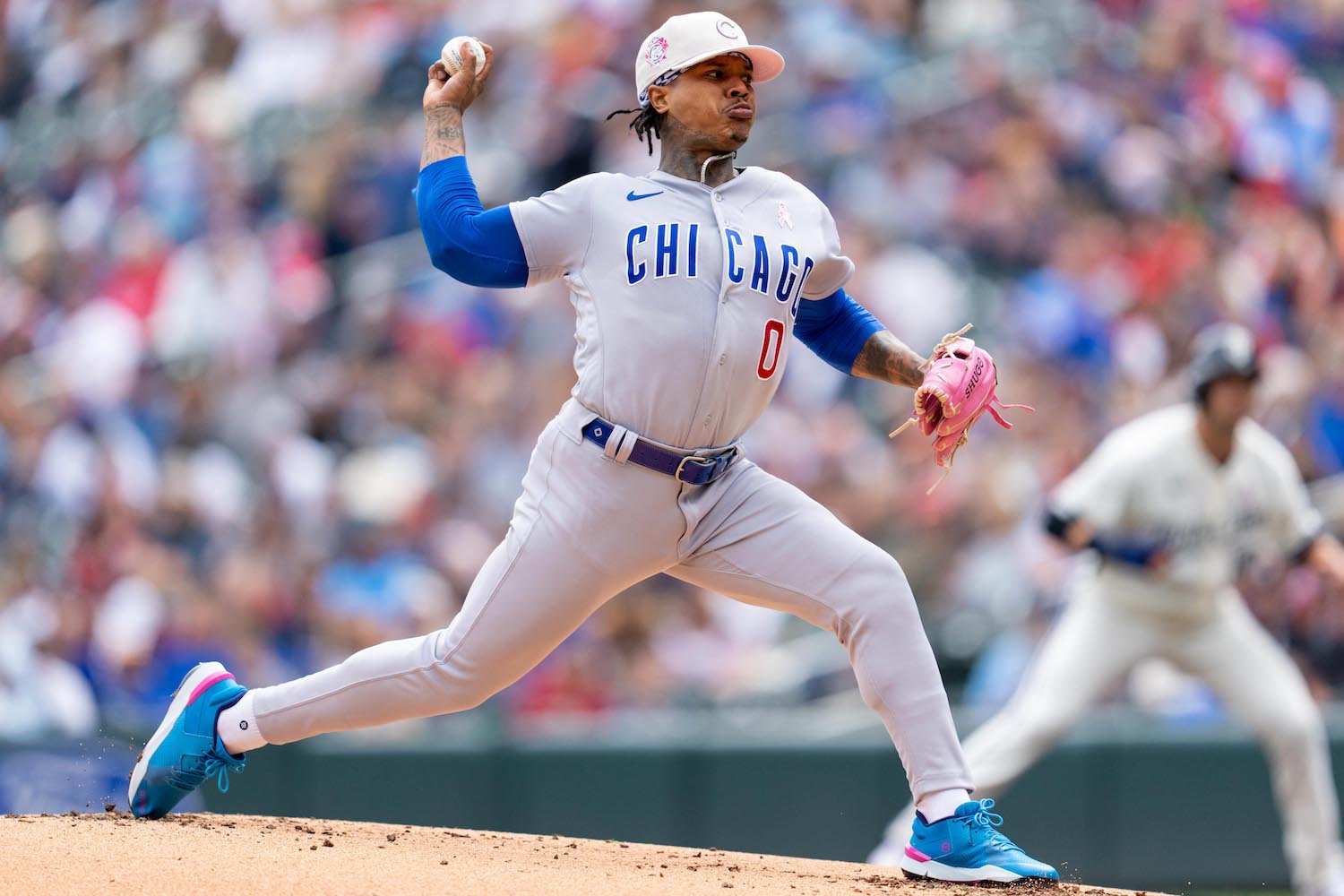 As front office members, agents, insiders, writers, and more come together this upcoming week at the spacious Gaylord Opryland Resort & Convention Center in lovely Nashville, Tennessee, for Major League Baseball's annual Winter Meetings, one thing is evident: The Twins will not be, to quote Scott Boras, "fishing in the deep ocean." Though the cost-cutting Twins will be tasked with finding a center fielder who can adequately replace Michael A. Taylor, fortifying their bullpen, and acquiring a right-handed corner outfield bat to stabilize the lineup, their greatest challenge will be making up for the recently-departed 288 2/3 innings and 6.8 Wins Above Replacement at FanGraphs (fWAR) generated by Kenta Maeda (104 2/3 IP, 1.5 fWAR) and Sonny Gray (184 IP, 5.3 fWAR). Replacing Gray will be a more daunting challenge than doing the same with Maeda. Regardless, neither will be uncomplicated, particularly considering the Twins' self-imposed payroll restrictions. Now, young internal candidate Louie Varland could suffice as a seamless one-for-one replacement for Maeda, as evidenced by his 86 DRA- as a starting pitcher, which is a pitching metric created by Baseball Prospectus that focuses on expected contribution while isolating a pitcher's performance from uncontrollable factors like defense, park, and quality of opponents. Varland showed great promise as a reliever during the latter half of the 2023 regular season. Still, it would be in the Twins' best interest to allow the affordable soon-to-be 26-year-old to be a full-time rotation member for an extended period. Even if the Twins ultimately convert Varland into a reliever and opt to sign a veteran like Hyun-Jin Ryu or Wade Miley to a one-year deal for less than $10 million, they are still going to need to find a way to make up for Gray's exit from the organization. Expensive, top-tier free-agent starting pitchers like Yoshinobu Yamamoto, Blake Snell, Jordan Montgomery, and Eduardo Rodríguez are not realistic options, and though the Twins could realistically acquire frontline starting pitchers like Corbin Burnes or Logan Gilbert through trade, the idea of parting with potential franchise-altering prospects in Brooks Lee and Emmanuel Rodríguez is sure to give them pause. So, what realistic avenue could the Twins take to replace Gray's Cy Young Award-worthy 2023 production? The answer could be signing the high-risk, high-reward option, in Marcus Stroman. Stroman, 32, has long been among the more well-known starting pitchers in Major League Baseball due to his lovably eccentric personality and exceptional ability on the mound while a member of big-market franchises like the Toronto Blue Jays, New York Mets, and Chicago Cubs. Stroman began the 2023 season hot, generating a 2.28 ERA, 3.36 FIP, and 83.3 LOB%. He struck out 44 of the 187 batters faced through his first 47 1/3 innings pitched from March 30 through May 8. Unfortunately, after a rough outing against the Twins on May 14 in which he gave up six earned runs over 2 2/3 innings pitched, Stroman's performance began to deteriorate. From the rough outing against the Twins in mid-May through July 31, Stroman generated a 4.76 ERA, 3.70 FIP, and 60.6% LOB%, while striking out only 67 of 351 batters through 81 1/3 innings pitched. Cubs fans began to wonder what was wrong with Stroman, a consistently above-average starter throughout his career, and if his decline in production could be injury-related. Eventually, their concerns were confirmed, as it was announced that Stroman had a right rib cartilage fracture and that he would need to be sidelined for an unknown amount of time. Fortunately for Stroman, he could return to the Cubs as a reliever on September 15. Although he struggled after his return, evidenced by his 5.63 ERA and 12.5% HR/FB over eight innings pitched and 38 total batters faced, it was encouraging to see Stroman make it back before the end of the season. Upon the conclusion of the 2023 season, Stroman somewhat surprisingly opted out of the third year of his contract with the Cubs, giving up a guaranteed $21 million for the 2024 season. Though his struggles before the announcement of his injury were discouraging, many of his shortcomings were overstated, and much of his poor numbers were due to being unlucky, rather than the injury weighing him down to an extreme extent. Regardless, Stroman's market and potential earnings have likely been suppressed due to poor luck, injury, and an overall lackluster latter half of last season. Though the circumstance in which Stroman finds himself is unfortunate for both himself and (on a macro scale) workplace labor efforts, his dampened market provides an opportunity for the cash-strapped Twins to jump in and sign a frontline starter at a team-friendly rate. What Could Stroman's 2024 Contract Look Like? Though the annual average value of the contract Stroman could earn will be less than if he had avoided injury and sustained his first-half success, there is good reason to believe he'll command some multi-year variation on the deal he opted out of with the Cubs. When looking at what a contract might look like for Stroman in 2024, there's wide variance in the predictions. For example, a collective of three MLB Trade Rumors (MLBTR) writers predicted that Stroman would receive a two-year, $44-million contract. Notably, MLBTR writer Darragh McDonald predicted the Twins would be the team that signed Stroman to that contract. Though McDonald's prediction is reason for optimism, it should be noted that the writer made that prediction before the Twins' intentions of making significant payroll reductions were public knowledge. More recently, Jim Bowden of The Athletic predicted that Stroman would sign a three-year, $77-million contract with the Colorado Rockies. Now, though Bowden does have sources within the league and writes for a reputable company, much of what he says or predicts should be taken with a grain of salt. Nonetheless, Stroman's contract has a greater chance of aligning with MLBTR's prediction than Bowden's more expensive estimate. While hurlers like Yamamoto, Snell, and Montgomery will garner contracts for the longer term and an AAV closer to $30 million per season, there is a significant chance Stroman signs a two- or three-year "prove it" deal worth $20 million per season. Even a short-term deal at that level feels too rich for the Twins, given what they've indicated about their intentions for this winter. Yet, if they were to trade one or more of Christian Vázquez ($10 million owed in 2024), Jorge Polanco ($10.5 million), or Max Kepler ($10 million), Stroman's hypothetical contract becomes much more palatable. Like Dallas Keuchel, Stroman is a pitcher who relies on getting outs via the groundball. To further prove this point, here is Stroman's groundball percentage (GB%) from his past five seasons: (*Note: Stroman sat out the shortened 60-game 2020 COVID season) 2018 (Blue Jays) - 62.1% 2019 (Blue Jays & Mets) - 53.7% 2021 (Mets) - 50.8% 2022 (Cubs) - 51.7% 2023 (Cubs) - 57.1% Combining Stroman's high GB% with the fact that the Twins' infield defense struggled during 2023 is a reason for the Twins to shy away from pursuing his services in free agency. Though this is a reasonable cause for concern, the Twins' infield could realistically become an improved, more cohesive unit during the 2024 season. With Carlos Correa recovering from his struggles with plantar fasciitis, Royce Lewis having an offseason of continuity at one position, Edouard Julien building off his late-season defensive improvements, and Jorge Polanco and Kyle Farmer remaining consistently above-average fielders, this has the makeup of an above-average defensive infield unit. That could help someone like Stroman thrive with his new team. The Twins will be hard-pressed to find a solution for the recent departures of Maeda and Gray. Though they could part ways with high-end prospect capital and find a frontline starting pitcher through the trade market, it could make sense for them to sign the high-risk, high-reward option in Stroman. Should the Twins sign Stroman? Which path should the organization go down when attempting to find a replacement for Gray? Comment below.
 -
The Twins haven't selected a player in the Rule 5 Draft since Tyler Kinley in 2017. Could this be the offseason wherein the six-year drought ends? Image courtesy of Rich Storry - USA TODAY Sports Rule 5 Draft season is upon us, and while it is much less of a spectacle than the traditional Major League Baseball Draft, it provides front offices the unique ability to acquire Major League-ready talent without having to shell out expensive contracts or part with valuable prospect capital. Typically, eight to 12 players are selected in the Rule 5 Draft, but only four or five stay with their new teams for the entire season. For example, in the 2022 Rule 5 Draft, 15 players were selected. Yet, only six (Thaddeus Ward, Ryan Noda, Jose Hernandez, Blake Sabol, Mason Englert, and Kevin Kelly) stayed at the big-league level all season. Of the six players listed, Noda (a first baseman for the Oakland Athletics) and Kelly (a relief pitcher for the Tampa Bay Rays) were the best of the bunch, generating 2.0 and 1.2 Wins Above Replacement at FanGraphs, respectively. Most players selected in the Rule 5 Draft are corner infielders or outfielders and relief pitchers, and, interestingly enough, those are two of the Twins' most significant positions of need. The Twins have not taken a player in the Rule 5 Draft since selecting Tyler Kinley in 2017. In a normal offseason, it would be fair to assume the Twins will yet again pass on making a Rule 5 selection, but self-imposed payroll restrictions could propel the Twins into making their pick in nearly seven years. So, which specific players should the Twins target in this year's Rule 5 Draft? Let's begin by venturing down South, to Jacksonville, Florida. Troy Johnston Johnston, 26, is a left-handed throwing and hitting first baseman/outfielder, selected by the Marlins in the 17th round of the 2019 MLB Draft out of Gonzaga University. Now, one might ask themselves, "Why would the Twins take another left-handed hitter at these positions, when Alex Kirilloff is on the roster?" Although this is a reasonable question, the reason is that due to injuries, Kirilloff has long been more of an idea or concept rather than a player the Twins can rely on going forward. With that in mind, it might be in the Twins' best interest to find a young, cheap, consistent left-handed hitter who fits Kirilloff's mold, and Johnston has the potential to be exactly that. To further push this idea, here are Johnston's numbers between Double and Triple-A during the 2023 MiLB season: .307/.399/.549 (.948), 512 AB, 157 hits, 26 home runs, 24 stolen bases, 18.3 K%, 10.0 BB%, .234 ISO, 143 wRC+ Johnston generated elite offensive numbers between Double and Triple A, while stealing 24 bases, showing signs of potentially being a rare five-tool first baseman. Johnston didn't play the outfield in 2023, but could play both corner outfield spots at the highest level, as that is where he played in college at Gonzaga and lower minor-league levels. If Kirilloff is healthy and able to produce as the Twins' first baseman in 2024, Johnston could slide into the role Joey Gallo had during the 2023 season, spending time at first base, designated hitter, and both corner outfield spots--while costing nearly $10 million less than Gallo did. If the Twins were to select Johnston, he could instantly slot in as a cheap insurance policy for the oft-injured Kirilloff, while competing with fellow left-handed corner outfielders Trevor Larnach and Nick Gordon and switch-hitting first baseman/designated hitter Yunior Severino for the final bench role on the Twins' 26-man roster. If Johnston performs poorly during Spring Training or is outperformed by Larnach, Gordon, Severino, or a healthy Kirilloff, the Twins could return him to the Marlins or trade him to a team with a sudden need for that kind of profile. Johnston is arguably the best position player available in this year's Rule 5 Draft, and if he were to be available when the Twins are on the board, it would make great sense for them to consider selecting the intriguing prospect. Blaine Crim Crim, 26, is a right-handed hitting first baseman and designated hitter, selected by the Rangers in the 19th round of the 2019 MLB Draft out of Mississippi College. Much like Johnston, Crim, an older prospect, finds himself unprotected after an admirable 2023 season in which he put up the following numbers: .289/.385/.506 (.891), 494 AB, 143 hits, 22 home runs, seven stolen bases, 18.4 K%, 12.2 BB%, .217 ISO, 114 wRC+ Crim possesses the ability to get on base at a sufficient rate while hitting for power, which is the perfect skillset for a player who fits the mold of a backup first baseman and offensive utility player. Despite playing 851 of the 902 innings (94%) he spent in the field at first base with Triple-A Round Rock, Crim also played 51 innings at third base. If the Twins were to select Crim in the Rule 5 Draft, he would likely compete with Severino and a potential free-agent signee for the role utility player Donovan Solano filled during the 2023 season. Contending with Severino, who has been a part of the Twins organization since 2017, would be a daunting task for Crim. Even so, it might be in the Twins' best interest to bring him in for his offensive upside and potential to platoon with the left-handed hitting Kirilloff at first base. Crim is more likely to be available than Johnston when they make their first selection in the Rule 5 Draft, and with the team needing a right-handed hitter, taking a flier on Crim could make sense for the (presently Solano-less) Twins. Anthony Hoopii-Tuionetoa The Twins initially selected Hoopii-Tuionetoa in the 16th round of the 2018 MLB Draft, but they didn't sign him. Later, he was selected and signed by the Rangers after being taken in the 30th round of the 2019 Draft out of Pierce College. Beyond his past connection to the Twins, Hoopii-Tuionetoa's pitch mix (headlined by a mid-to-high-90s fastball and a knockout slider) is exactly the type of profile the Twins' front office values and prioritizes when attempting to acquire bullpen talent. Of the players mentioned, Hoopii-Tuionetoa feels like the most apparent selection the Twins (who need high-velocity talent at the back end of their bullpen) could make, but there is one caveat: He has yet to pitch beyond High A. Though he hasn't pitched at the upper levels, though, Hoopii-Tuionetoa put up relatively inspiring numbers with the High-A Hickory Crawdads: 11 2/3 IP, 1.54 ERA, 3.65 FIP, 3.62 xFIP, 10.0 K/9, 3.1 BB/9, 95.2 LOB% Hoopii-Tuionetoa's 10.0 K/9 and 95.2% LOB% would play exceptionally well, but his home-run rates at the High-A is cause for concern over whether he could perform adequately at the Major League level. Despite demonstrating some obvious weaknesses, Hoopii-Tuionetoa's potential was on full display at the Arizona Fall League, where he struck out 10 hitters over 9 2/3 scoreless innings pitched. Regardless, similarly to Johnston and Crim, it would make sense for the Twins to bring Hoopii-Tuionetoa to Spring Training and have him compete with fellow back end-of-the-bullpen candidates Matt Canterino, Jorge Alcala, Jordan Balazovic, Josh Winder, Cole Sands, and Brent Headrick for the Twins eighth and final bullpen spot. If Hoopii-Tuionetoa is outperformed, the Twins could return him to the Rangers, with the only penalty being the team losing $50,000, which is a loss even the cost-cutting Twins could afford. CJ Van Eyk Van Eyk, 25, is a right-handed pitcher selected by the Blue Jays in the second round of the 2020 MLB Draft out of Florida State University. He underwent Tommy John surgery in September 2021--a unique proposition in this group, as (unlike the overpowering Hoopii-Tuionetoa) he is a lower-velocity finesse pitcher who sports one of the best curveballs in Minor League Baseball. To further illustrate Van Eyk's potential as a Major League relief pitcher, here are his numbers between Rookie Ball, Single-A, and his time with the Double-A New Hampshire Fisher Cats: 12 G, 34 1/3 IP, 33 strikeouts, 3.67 ERA, 1.19 WHIP, 3.75 FIP, 3.32 xFIP, 9.7 K/9, 2.3 BB/9, 77.3% LOB% Admittedly, Van Eyk's numbers could be more inspiring. Still, due to the small sample size, it's important not to extrapolate too heavily (whether positive or negative) from the 34 1/3 post-Tommy John innings between three Minor League levels he pitched in 2023. Van Eyk projects more as a potential back-end starter than as a relief pitcher, but there is reason to believe he could fulfill the same swingman role Simeon Woods Richardson, Sands, Headrick, and Winder occupied for the Twins during parts of the 2022 and 2023 seasons. Woods Richardson, Sands, Headrick, and Winder will be capable of cheaply filling that role again in 2024, but what is appealing about Van Eyk is his potential to progress beyond a stretch reliever role and join Kody Funderburk and Alcala as potentially stellar relief options in the Twins' bullpen hierarchy for the longer term. Other Rule 5 Draft Eligible Players the Twins Could Consider Selecting: Justin Slaten, Tanner Burns, Nasim Nuñez, Hudson Haskin, Kohl Franklin. Though contending teams are less likely to select players in the Rule 5 Draft, it could make sense for the cost-cutting Twins to make their first selection since drafting Kinley in 2017. Although selecting a first baseman/outfielder who provides a similar skillset as Gallo or Solano makes sense, they are most likely to select a young, cost-controlled relief pitching option like Hoopii-Tuionetoa or Van Eyk. Who do you like as a target for the Twins in this free talent draft next week? Should they make a selection, or pass? Let's weigh the options together. Should the Twins select a player in the Rule 5 Draft? Do any of the players mentioned stand out? Comment below. View full article
-
4 Eligible Players the Twins Should Consider in the Rule 5 Draft
Cody Schoenmann posted an article in Twins
 Rule 5 Draft season is upon us, and while it is much less of a spectacle than the traditional Major League Baseball Draft, it provides front offices the unique ability to acquire Major League-ready talent without having to shell out expensive contracts or part with valuable prospect capital. Typically, eight to 12 players are selected in the Rule 5 Draft, but only four or five stay with their new teams for the entire season. For example, in the 2022 Rule 5 Draft, 15 players were selected. Yet, only six (Thaddeus Ward, Ryan Noda, Jose Hernandez, Blake Sabol, Mason Englert, and Kevin Kelly) stayed at the big-league level all season. Of the six players listed, Noda (a first baseman for the Oakland Athletics) and Kelly (a relief pitcher for the Tampa Bay Rays) were the best of the bunch, generating 2.0 and 1.2 Wins Above Replacement at FanGraphs, respectively. Most players selected in the Rule 5 Draft are corner infielders or outfielders and relief pitchers, and, interestingly enough, those are two of the Twins' most significant positions of need. The Twins have not taken a player in the Rule 5 Draft since selecting Tyler Kinley in 2017. In a normal offseason, it would be fair to assume the Twins will yet again pass on making a Rule 5 selection, but self-imposed payroll restrictions could propel the Twins into making their pick in nearly seven years. So, which specific players should the Twins target in this year's Rule 5 Draft? Let's begin by venturing down South, to Jacksonville, Florida. Troy Johnston Johnston, 26, is a left-handed throwing and hitting first baseman/outfielder, selected by the Marlins in the 17th round of the 2019 MLB Draft out of Gonzaga University. Now, one might ask themselves, "Why would the Twins take another left-handed hitter at these positions, when Alex Kirilloff is on the roster?" Although this is a reasonable question, the reason is that due to injuries, Kirilloff has long been more of an idea or concept rather than a player the Twins can rely on going forward. With that in mind, it might be in the Twins' best interest to find a young, cheap, consistent left-handed hitter who fits Kirilloff's mold, and Johnston has the potential to be exactly that. To further push this idea, here are Johnston's numbers between Double and Triple-A during the 2023 MiLB season: .307/.399/.549 (.948), 512 AB, 157 hits, 26 home runs, 24 stolen bases, 18.3 K%, 10.0 BB%, .234 ISO, 143 wRC+ Johnston generated elite offensive numbers between Double and Triple A, while stealing 24 bases, showing signs of potentially being a rare five-tool first baseman. Johnston didn't play the outfield in 2023, but could play both corner outfield spots at the highest level, as that is where he played in college at Gonzaga and lower minor-league levels. If Kirilloff is healthy and able to produce as the Twins' first baseman in 2024, Johnston could slide into the role Joey Gallo had during the 2023 season, spending time at first base, designated hitter, and both corner outfield spots--while costing nearly $10 million less than Gallo did. If the Twins were to select Johnston, he could instantly slot in as a cheap insurance policy for the oft-injured Kirilloff, while competing with fellow left-handed corner outfielders Trevor Larnach and Nick Gordon and switch-hitting first baseman/designated hitter Yunior Severino for the final bench role on the Twins' 26-man roster. If Johnston performs poorly during Spring Training or is outperformed by Larnach, Gordon, Severino, or a healthy Kirilloff, the Twins could return him to the Marlins or trade him to a team with a sudden need for that kind of profile. Johnston is arguably the best position player available in this year's Rule 5 Draft, and if he were to be available when the Twins are on the board, it would make great sense for them to consider selecting the intriguing prospect. Blaine Crim Crim, 26, is a right-handed hitting first baseman and designated hitter, selected by the Rangers in the 19th round of the 2019 MLB Draft out of Mississippi College. Much like Johnston, Crim, an older prospect, finds himself unprotected after an admirable 2023 season in which he put up the following numbers: .289/.385/.506 (.891), 494 AB, 143 hits, 22 home runs, seven stolen bases, 18.4 K%, 12.2 BB%, .217 ISO, 114 wRC+ Crim possesses the ability to get on base at a sufficient rate while hitting for power, which is the perfect skillset for a player who fits the mold of a backup first baseman and offensive utility player. Despite playing 851 of the 902 innings (94%) he spent in the field at first base with Triple-A Round Rock, Crim also played 51 innings at third base. If the Twins were to select Crim in the Rule 5 Draft, he would likely compete with Severino and a potential free-agent signee for the role utility player Donovan Solano filled during the 2023 season. Contending with Severino, who has been a part of the Twins organization since 2017, would be a daunting task for Crim. Even so, it might be in the Twins' best interest to bring him in for his offensive upside and potential to platoon with the left-handed hitting Kirilloff at first base. Crim is more likely to be available than Johnston when they make their first selection in the Rule 5 Draft, and with the team needing a right-handed hitter, taking a flier on Crim could make sense for the (presently Solano-less) Twins. Anthony Hoopii-Tuionetoa The Twins initially selected Hoopii-Tuionetoa in the 16th round of the 2018 MLB Draft, but they didn't sign him. Later, he was selected and signed by the Rangers after being taken in the 30th round of the 2019 Draft out of Pierce College. Beyond his past connection to the Twins, Hoopii-Tuionetoa's pitch mix (headlined by a mid-to-high-90s fastball and a knockout slider) is exactly the type of profile the Twins' front office values and prioritizes when attempting to acquire bullpen talent. Of the players mentioned, Hoopii-Tuionetoa feels like the most apparent selection the Twins (who need high-velocity talent at the back end of their bullpen) could make, but there is one caveat: He has yet to pitch beyond High A. Though he hasn't pitched at the upper levels, though, Hoopii-Tuionetoa put up relatively inspiring numbers with the High-A Hickory Crawdads: 11 2/3 IP, 1.54 ERA, 3.65 FIP, 3.62 xFIP, 10.0 K/9, 3.1 BB/9, 95.2 LOB% Hoopii-Tuionetoa's 10.0 K/9 and 95.2% LOB% would play exceptionally well, but his home-run rates at the High-A is cause for concern over whether he could perform adequately at the Major League level. Despite demonstrating some obvious weaknesses, Hoopii-Tuionetoa's potential was on full display at the Arizona Fall League, where he struck out 10 hitters over 9 2/3 scoreless innings pitched. Regardless, similarly to Johnston and Crim, it would make sense for the Twins to bring Hoopii-Tuionetoa to Spring Training and have him compete with fellow back end-of-the-bullpen candidates Matt Canterino, Jorge Alcala, Jordan Balazovic, Josh Winder, Cole Sands, and Brent Headrick for the Twins eighth and final bullpen spot. If Hoopii-Tuionetoa is outperformed, the Twins could return him to the Rangers, with the only penalty being the team losing $50,000, which is a loss even the cost-cutting Twins could afford. CJ Van Eyk Van Eyk, 25, is a right-handed pitcher selected by the Blue Jays in the second round of the 2020 MLB Draft out of Florida State University. He underwent Tommy John surgery in September 2021--a unique proposition in this group, as (unlike the overpowering Hoopii-Tuionetoa) he is a lower-velocity finesse pitcher who sports one of the best curveballs in Minor League Baseball. To further illustrate Van Eyk's potential as a Major League relief pitcher, here are his numbers between Rookie Ball, Single-A, and his time with the Double-A New Hampshire Fisher Cats: 12 G, 34 1/3 IP, 33 strikeouts, 3.67 ERA, 1.19 WHIP, 3.75 FIP, 3.32 xFIP, 9.7 K/9, 2.3 BB/9, 77.3% LOB% Admittedly, Van Eyk's numbers could be more inspiring. Still, due to the small sample size, it's important not to extrapolate too heavily (whether positive or negative) from the 34 1/3 post-Tommy John innings between three Minor League levels he pitched in 2023. Van Eyk projects more as a potential back-end starter than as a relief pitcher, but there is reason to believe he could fulfill the same swingman role Simeon Woods Richardson, Sands, Headrick, and Winder occupied for the Twins during parts of the 2022 and 2023 seasons. Woods Richardson, Sands, Headrick, and Winder will be capable of cheaply filling that role again in 2024, but what is appealing about Van Eyk is his potential to progress beyond a stretch reliever role and join Kody Funderburk and Alcala as potentially stellar relief options in the Twins' bullpen hierarchy for the longer term. Other Rule 5 Draft Eligible Players the Twins Could Consider Selecting: Justin Slaten, Tanner Burns, Nasim Nuñez, Hudson Haskin, Kohl Franklin. Though contending teams are less likely to select players in the Rule 5 Draft, it could make sense for the cost-cutting Twins to make their first selection since drafting Kinley in 2017. Although selecting a first baseman/outfielder who provides a similar skillset as Gallo or Solano makes sense, they are most likely to select a young, cost-controlled relief pitching option like Hoopii-Tuionetoa or Van Eyk. Who do you like as a target for the Twins in this free talent draft next week? Should they make a selection, or pass? Let's weigh the options together. Should the Twins select a player in the Rule 5 Draft? Do any of the players mentioned stand out? Comment below.
- 24 comments
-
- 5
-

-
- troy johnston
- blaine crim
- (and 2 more)
-
Last offseason, the Twins struck gold, finding their ace for the foreseeable future in Pablo López. With the impending departure of 2023 AL Cy Young Award runner-up Sonny Gray, the Twins are once again in need of frontline starting pitching. Could this promising Los Angeles Angels left-handed starting pitcher be the 2024 version of López? Image courtesy of Kiyoshi Mio - USA TODAY Sports Roughly three weeks ago, I wrote an article on three left-handed starting pitchers the Twins should consider pursuing in free agency. In the article, Blake Snell, Eduardo Rodriguez, and Jordan Montgomery were highlighted as three top-tier options that could adequately counteract the impending departure of AL Cy Young Award runner-up Sonny Gray and his 5.3 fWAR. Many who follow the Twins had concocted mock offseason plans fueled by grand ambition due to the immense optimism sprung upon by the franchise finally ending their 18-game playoff losing streak and putting up a worthwhile fight against the then defending World Series Champion Houston Astros in the ALDS. Unfortunately, the embers of those plans have been smothered by the cold cup of water that was the announcement of the Twins planning to undergo "significant payroll cuts" for the 2024 season. As Kim Ki-taek eloquently stated in the 2019 film Parasite, "You know what kind of plan never fails? No plan at all. You know why? If you make a plan, life never works out that way." To shift from the pessimism just a smidge, though Snell, Rodriguez, or Montgomery are no longer realistic left-handed starting pitchers the Twins could pursue this offseason, that doesn't mean that specific market is closed. Cheaper secondary-market free-agent options like James Paxton, Wade Miley, and Hyun-jin Ryu are available. Yet, none of these three left-handed starting pitchers are viable one-for-one replacements for Gray's production. Unless the Twins unexpectedly become willing to dish out a significant multiyear contract to Gray himself or a viable replacement like Snell, Rodriguez, Montgomery, Lucas Giolito, or Yoshinobu Yamamoto -- or take a flier on an injury-prone high variance free agent like Frankie Montas or Marcus Stroman -- they will not be able to replace Gray through free agency. Luckily, there is another market the Twins can search to find a viable replacement for Gray. Well-known, above-average starting pitcher trade targets like Corbin Burnes, Freddy Peralta, Shane Bieber, Dylan Cease, and Tyler Glasnow are the first names that come to mind. Yet, there are less-known, above-average options which, once given resources available to them that their current team doesn't provide, could become the next Pablo López. One of those options is Los Angeles Angels left-handed starting pitcher Patrick Sandoval. Sandoval, 27, has been a member of the Angels since 2019, with his best season coming in 2022. Here are Sandoval's numbers during his breakout 2022 season: 148 2/3 innings pitched (IP), 638 TBF, 2.91 ERA, 3.09 FIP, 3.67 xFIP, 3.94 SIERA, 6.3% HR/FB, 23.7% K%, 9.4% BB%, 0.48 HR/9, 76.8% LOB%, 139 hits allowed, 60 walks, 151 SO, 3.7 fWAR Highlighted by a sub-three ERA and near-elite HR/FB ratio, Sandoval's 2022 campaign was fascinatingly similar to many of the underlying metrics Gray generated during his 2023 Cy Young Award-worthy campaign. To provide context, here are Gray's 2023 numbers compared to Sandoval's 2022 in specific metrics: ERA Gray - 2.79 Sandoval - 2.91 SIERA Gray - 3.95 Sandoval - 3.94 HR/9 Gray - 0.39 Sandoval - 0.48 LOB% Gray - 76.8% Sandoval - 76.8% xFIP Gray - 3.64 Sandoval - 3.67 There is an obvious caveat: Gray pitched 34 2/3 more innings in 2023 than Sandoval pitched in 2022. Regardless, Sandoval's 148 2/3 innings are a significant enough sample size compared to Gray's 184, which is essentially five to six more starts. Like Gray, Sandoval was able to post a sub-three ERA, suppress home runs, leave the majority of runners on base, and thrive in skill-based sabermetrics like xFIP and SIERA, which provide a more quantitative insight into the underlying skill level of pitchers. Now, the current iteration of Sandoval is not as skilled as Gray, as evidenced by his lackluster 2023 season, where he produced a 4.11 ERA, 5.00 SIERA, 0.75 HR/9, 65% LOB%, and 4.61 xFIP. Though Sandoval finds himself in this current state with the Angels, what if he found himself in a more favorable situation? Enter Pablo López. While with the Miami Marlins, López operated in an environment that struggled to find ways to use analytics in player development advantageously. On the Gleeman and the Geek podcast, Aaron Gleeman of The Athletic noted that López, upon his arrival, was approached with a plan concocted by Pete Maki and the Twins pitching coaches to adjust his pitch mix through, most notably, adding a sweeper to his repertoire and using his changeup less. Sandoval, who is in a similarly regressive situation in Los Angeles as López was in Miami, would likely benefit from the same revamp that López underwent upon his arrival with the Twins. Sandoval would have to be open-minded to the proposed ideas and adjustments like López was, but there is no reason to expect he wouldn't be, as most pitchers and MLB players are open to trying different techniques to advance and improve their craft. If the Twins were to trade for Sandoval, here is what a trade offer would likely look like: Twins Receive: Patrick Sandoval Angels Receive: Matt Wallner, Marco Raya Now, trading Wallner and Raya for Sandoval is merely a hypothetical trade, not a suggestion. Trading promising young talents in Wallner and Raya is likely an overpay. Yet, the Angels plan on competing in 2024, so they will likely want MLB-ready talent in return for Sandoval, an established Major League-caliber starting pitcher. Nevertheless, the Twins would have to send a significant package to the Angels to acquire Sandoval, who is 27 and under team control until 2027. As evidenced by his performance in 2022, Sandoval can be a frontline starting pitcher. Unfortunately, he has been the victim of an unstable and dreary situation where it is nearly impossible for a player to thrive unless they are at the skill level of Shohei Ohtani or Mike Trout. If Sandoval is given the opportunity to pitch in a more progressive and sustainable situation like López was given when he was traded from Miami to Minnesota, there is potential that he thrive and become a consistently above-average starting pitcher. Should the Twins trade for Sandoval? Could he benefit from joining the Twins like López? Comment below. View full article
-
Could This Los Angeles Angels Pitcher Be the Next Pablo López?
Cody Schoenmann posted an article in Twins
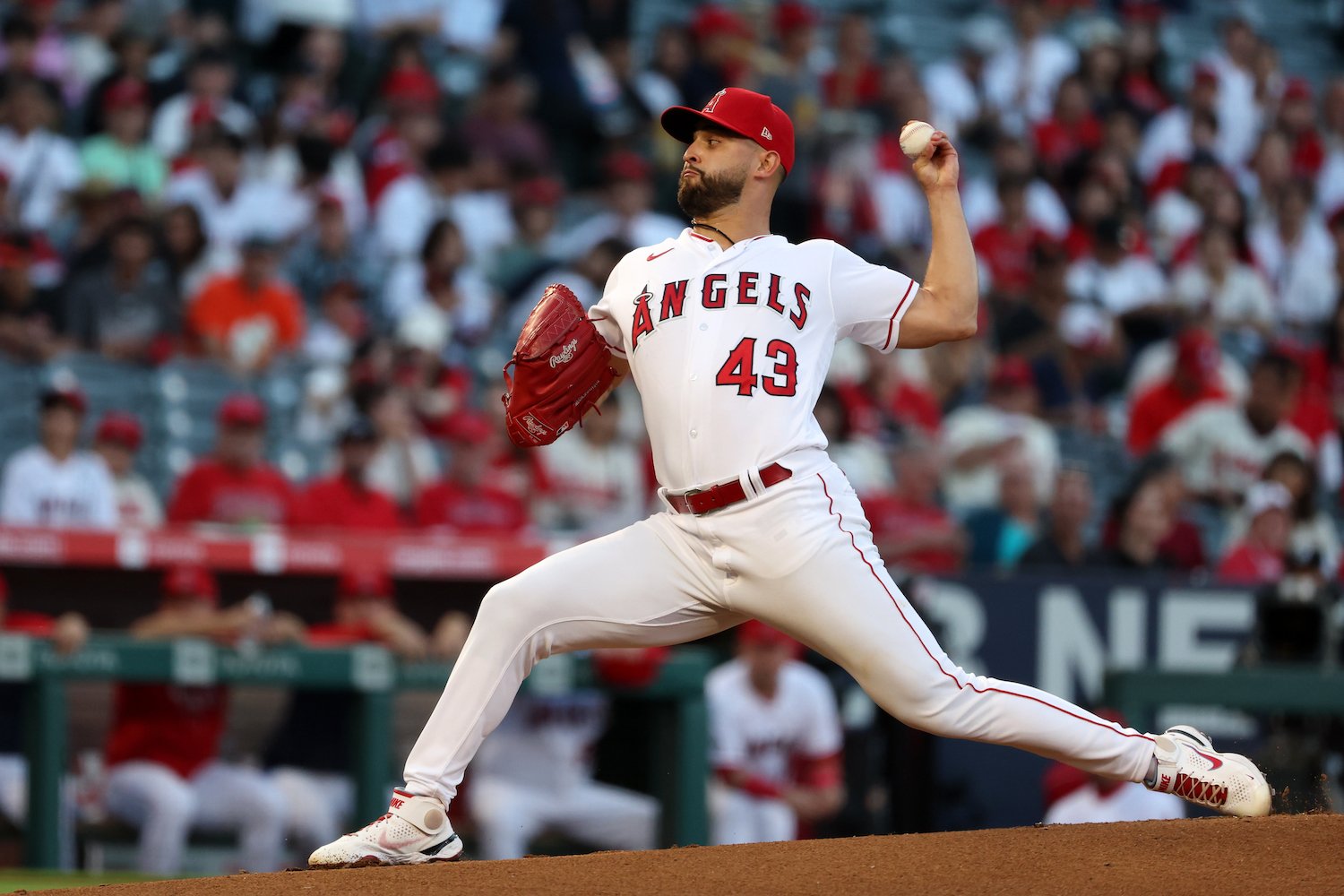 Roughly three weeks ago, I wrote an article on three left-handed starting pitchers the Twins should consider pursuing in free agency. In the article, Blake Snell, Eduardo Rodriguez, and Jordan Montgomery were highlighted as three top-tier options that could adequately counteract the impending departure of AL Cy Young Award runner-up Sonny Gray and his 5.3 fWAR. Many who follow the Twins had concocted mock offseason plans fueled by grand ambition due to the immense optimism sprung upon by the franchise finally ending their 18-game playoff losing streak and putting up a worthwhile fight against the then defending World Series Champion Houston Astros in the ALDS. Unfortunately, the embers of those plans have been smothered by the cold cup of water that was the announcement of the Twins planning to undergo "significant payroll cuts" for the 2024 season. As Kim Ki-taek eloquently stated in the 2019 film Parasite, "You know what kind of plan never fails? No plan at all. You know why? If you make a plan, life never works out that way." To shift from the pessimism just a smidge, though Snell, Rodriguez, or Montgomery are no longer realistic left-handed starting pitchers the Twins could pursue this offseason, that doesn't mean that specific market is closed. Cheaper secondary-market free-agent options like James Paxton, Wade Miley, and Hyun-jin Ryu are available. Yet, none of these three left-handed starting pitchers are viable one-for-one replacements for Gray's production. Unless the Twins unexpectedly become willing to dish out a significant multiyear contract to Gray himself or a viable replacement like Snell, Rodriguez, Montgomery, Lucas Giolito, or Yoshinobu Yamamoto -- or take a flier on an injury-prone high variance free agent like Frankie Montas or Marcus Stroman -- they will not be able to replace Gray through free agency. Luckily, there is another market the Twins can search to find a viable replacement for Gray. Well-known, above-average starting pitcher trade targets like Corbin Burnes, Freddy Peralta, Shane Bieber, Dylan Cease, and Tyler Glasnow are the first names that come to mind. Yet, there are less-known, above-average options which, once given resources available to them that their current team doesn't provide, could become the next Pablo López. One of those options is Los Angeles Angels left-handed starting pitcher Patrick Sandoval. Sandoval, 27, has been a member of the Angels since 2019, with his best season coming in 2022. Here are Sandoval's numbers during his breakout 2022 season: 148 2/3 innings pitched (IP), 638 TBF, 2.91 ERA, 3.09 FIP, 3.67 xFIP, 3.94 SIERA, 6.3% HR/FB, 23.7% K%, 9.4% BB%, 0.48 HR/9, 76.8% LOB%, 139 hits allowed, 60 walks, 151 SO, 3.7 fWAR Highlighted by a sub-three ERA and near-elite HR/FB ratio, Sandoval's 2022 campaign was fascinatingly similar to many of the underlying metrics Gray generated during his 2023 Cy Young Award-worthy campaign. To provide context, here are Gray's 2023 numbers compared to Sandoval's 2022 in specific metrics: ERA Gray - 2.79 Sandoval - 2.91 SIERA Gray - 3.95 Sandoval - 3.94 HR/9 Gray - 0.39 Sandoval - 0.48 LOB% Gray - 76.8% Sandoval - 76.8% xFIP Gray - 3.64 Sandoval - 3.67 There is an obvious caveat: Gray pitched 34 2/3 more innings in 2023 than Sandoval pitched in 2022. Regardless, Sandoval's 148 2/3 innings are a significant enough sample size compared to Gray's 184, which is essentially five to six more starts. Like Gray, Sandoval was able to post a sub-three ERA, suppress home runs, leave the majority of runners on base, and thrive in skill-based sabermetrics like xFIP and SIERA, which provide a more quantitative insight into the underlying skill level of pitchers. Now, the current iteration of Sandoval is not as skilled as Gray, as evidenced by his lackluster 2023 season, where he produced a 4.11 ERA, 5.00 SIERA, 0.75 HR/9, 65% LOB%, and 4.61 xFIP. Though Sandoval finds himself in this current state with the Angels, what if he found himself in a more favorable situation? Enter Pablo López. While with the Miami Marlins, López operated in an environment that struggled to find ways to use analytics in player development advantageously. On the Gleeman and the Geek podcast, Aaron Gleeman of The Athletic noted that López, upon his arrival, was approached with a plan concocted by Pete Maki and the Twins pitching coaches to adjust his pitch mix through, most notably, adding a sweeper to his repertoire and using his changeup less. Sandoval, who is in a similarly regressive situation in Los Angeles as López was in Miami, would likely benefit from the same revamp that López underwent upon his arrival with the Twins. Sandoval would have to be open-minded to the proposed ideas and adjustments like López was, but there is no reason to expect he wouldn't be, as most pitchers and MLB players are open to trying different techniques to advance and improve their craft. If the Twins were to trade for Sandoval, here is what a trade offer would likely look like: Twins Receive: Patrick Sandoval Angels Receive: Matt Wallner, Marco Raya Now, trading Wallner and Raya for Sandoval is merely a hypothetical trade, not a suggestion. Trading promising young talents in Wallner and Raya is likely an overpay. Yet, the Angels plan on competing in 2024, so they will likely want MLB-ready talent in return for Sandoval, an established Major League-caliber starting pitcher. Nevertheless, the Twins would have to send a significant package to the Angels to acquire Sandoval, who is 27 and under team control until 2027. As evidenced by his performance in 2022, Sandoval can be a frontline starting pitcher. Unfortunately, he has been the victim of an unstable and dreary situation where it is nearly impossible for a player to thrive unless they are at the skill level of Shohei Ohtani or Mike Trout. If Sandoval is given the opportunity to pitch in a more progressive and sustainable situation like López was given when he was traded from Miami to Minnesota, there is potential that he thrive and become a consistently above-average starting pitcher. Should the Twins trade for Sandoval? Could he benefit from joining the Twins like López? Comment below.
 -
To Trade, or Not To Trade Max Kepler: That Is the Question
Cody Schoenmann posted an article in Twins
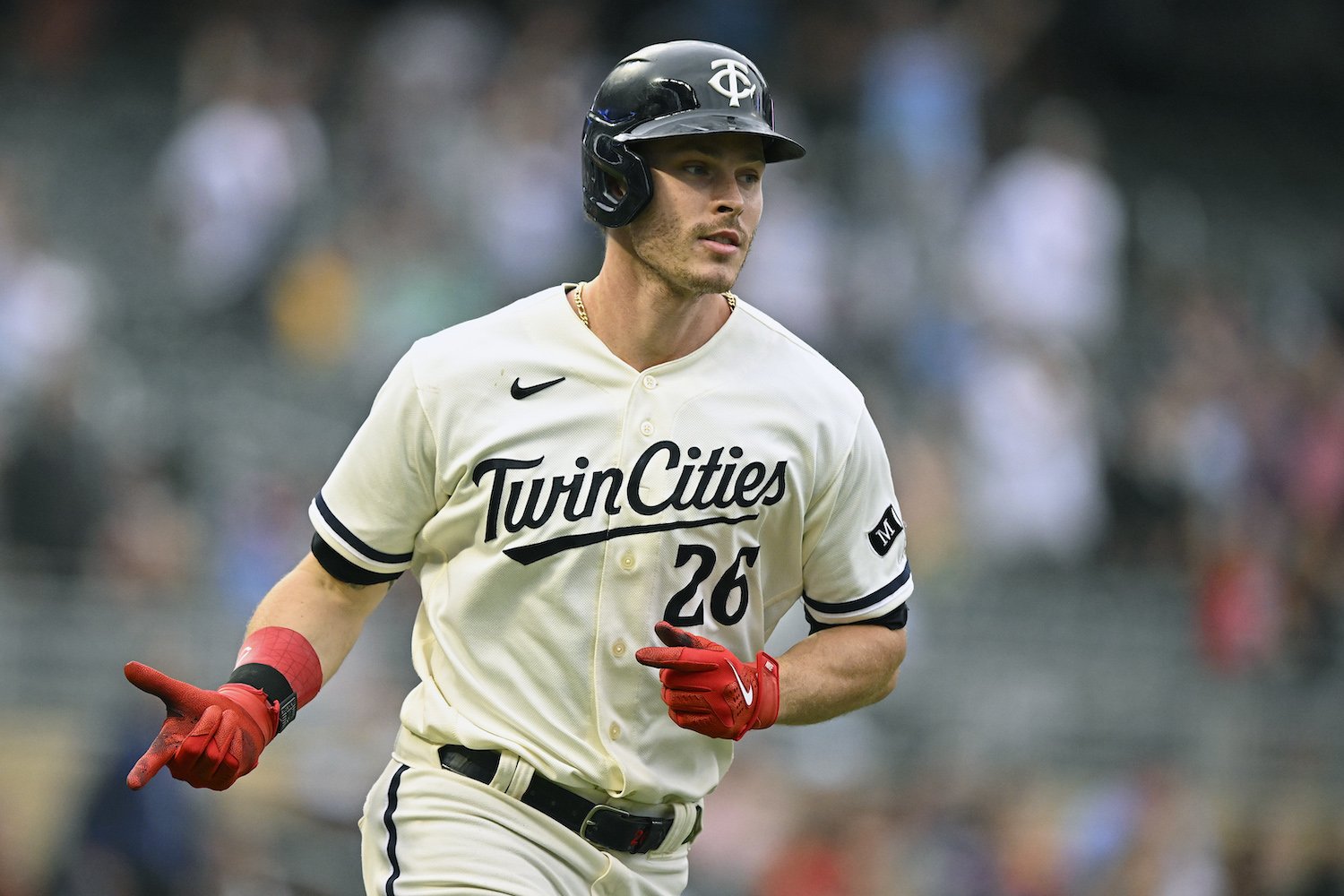 In the classic transcendentalist novel Walden, author Henry David Thoreau wrote, "In any weather, at any hour of the day or night, I have been anxious to improve the nick of time, and notch it on my stick too; to stand on the meeting of two eternities, the past and present, which is precisely the present moment; to toe that line." The Twins find themselves at the meeting of two eternities, deciding whether or not they should keep the third longest-tenured Minnesota Twins player, Max Kepler, or trade him. Critically analyzing Kepler's past, present, and future is essential when analyzing whether trading him would be in the Twins' best interest. The Past On September 27, 2015, Kepler debuted for the Twins, striking out while pinch-hitting for Twins legend Torii Hunter during a 7-1 victory over the Detroit Tigers. Since then, Kepler has played in 966 games for the Twins, hitting .236/.319/.434 (.753) with 800 hits, 153 home runs, 390 walks, and 709 strikeouts. Despite posting two above-average seasons with the Twins in 2019 (122 wRC+) and 2020 (109 wRC+), Kepler's tenure with the Twins has consistently been plagued by frustration, vexation, and wasted potential. Interestingly, Kepler, despite posting below-average seasons in 2021 (97 wRC+) and 2022 (95 wRC+), seemingly regained his 2019 Bomba Squad form and posted what was arguably his best season as a Major League Baseball player, hitting .260/.332/.484 (.816) with 24 home runs, generating 2.6 fWAR and a 124 wRC+ over 491 plate appearances. Halfway through the 2023 season, many who follow the Twins were ready to cut ties with Kepler, struggling for a third straight season, and replace him with the younger Matt Wallner, who was tearing up Triple-A pitching at the time. Luckily, the front office ignored our pleas, and Kepler became a cog in the Twins' resurgent post-All-Star Break lineup, helping the franchise win their first AL Central title since 2020. It was reported the Twins were shopping Kepler last offseason when his perceived value was much less than it is now, so should the Twins finally execute the decision they have been meandering over for some time now? The Present It is late November, and after the Twins exercised Kepler's $10 million team option for 2024, he will be under team control for one more season. For many reasons, above-average veteran players on expiring contracts are enticing to contending teams, and with the corner outfield free agent and trade market being scarce this offseason, teams may be willing to shell out surprisingly favorable offers to the Twins for Kepler's services. This train of thought was already expressed nationally when The Athletic's Keith Law wrote that he "sees the upside" with Kepler and wouldn't have been surprised if a team had offered him a 4-5 year contract worth $20-25 million per season on the open market. So, with Kepler's trade value rising, what type of package could the Twins net in return? If the Twins were to trade Kepler, it would make sense for them to make another position player for a starting pitcher swap, like they did trading Luis Arráez to the Miami Marlins for Pablo López last offseason. Similarly to last offseason, the Twins need a frontline starting pitcher, and they yet again have a surplus of Major League-ready left-handed corner bats, like Kepler, to trade. Starting pitchers the Twins could execute this trade for include Edward Cabrera of the Marlins, Alex Cobb of the Giants, and Nestor Cortes of the Yankees. Although these three pitchers possess value and would slot in as the Twins' number two starter behind López, the Twins could instead sign free-agent pitchers of similar value, like Michael Wacha or Seth Lugo, without having to part with their starting right fielder. The Future The Twins plan on reducing their payroll this offseason. Regardless, with Kepler costing only $10 million and the Twins not having a reliable corner outfield option beyond Wallner, who will likely be the Opening Day starting left fielder, it would be in the World Series-hopeful Twins best interest to keep Kepler at his current salary. Suppose the Twins keep Kepler, and he again produces at an above-average rate in 2024. In that case, the Twins will then be tasked with deciding whether to extend Kepler the qualifying offer, offer him a contract extension, or let him walk in free agency. The 2025 qualifying offer will likely be between $21-22 million, as it currently sits at $20.325 million and steadily increases every season. Offering Kepler, who will be 31-year-old, a four to five-year deal worth $20-25 million would likely come back to haunt the Twins as he is an inconsistent and moderately volatile player who could quickly revert to his late-2020-to-mid-2023 ways, but extending him the one-year, $21-22 million would make sense for both parties. The Twins could keep an elite defensive corner outfielder, who would be coming off two straight above-average offensive seasons, at a reasonable rate while not committing to a long-term contract that could backfire. On the other hand, Kepler could capitalize off two straight admirable seasons and earn his first big payday at 31 years old. Regardless, the Twins front office is tasked with making a tough decision this offseason. They could trade Kepler for an above-average starting pitcher or keep him and ride out his last season under team control in pursuit of their first World Series title since 1991. Should the Twins keep or trade Kepler? If the Twins traded Kepler, who would you want them to get in return? Comment below.
 -
After arguably his best season at the major-league level, Max Kepler's trade value is as high as it ever will be. Should the Twins take advantage of Kepler's sky-high market value or keep the 30-year-old veteran in the pursuit of a World Series run? Image courtesy of Nick Wosika - USA TODAY Sports In the classic transcendentalist novel Walden, author Henry David Thoreau wrote, "In any weather, at any hour of the day or night, I have been anxious to improve the nick of time, and notch it on my stick too; to stand on the meeting of two eternities, the past and present, which is precisely the present moment; to toe that line." The Twins find themselves at the meeting of two eternities, deciding whether or not they should keep the third longest-tenured Minnesota Twins player, Max Kepler, or trade him. Critically analyzing Kepler's past, present, and future is essential when analyzing whether trading him would be in the Twins' best interest. The Past On September 27, 2015, Kepler debuted for the Twins, striking out while pinch-hitting for Twins legend Torii Hunter during a 7-1 victory over the Detroit Tigers. Since then, Kepler has played in 966 games for the Twins, hitting .236/.319/.434 (.753) with 800 hits, 153 home runs, 390 walks, and 709 strikeouts. Despite posting two above-average seasons with the Twins in 2019 (122 wRC+) and 2020 (109 wRC+), Kepler's tenure with the Twins has consistently been plagued by frustration, vexation, and wasted potential. Interestingly, Kepler, despite posting below-average seasons in 2021 (97 wRC+) and 2022 (95 wRC+), seemingly regained his 2019 Bomba Squad form and posted what was arguably his best season as a Major League Baseball player, hitting .260/.332/.484 (.816) with 24 home runs, generating 2.6 fWAR and a 124 wRC+ over 491 plate appearances. Halfway through the 2023 season, many who follow the Twins were ready to cut ties with Kepler, struggling for a third straight season, and replace him with the younger Matt Wallner, who was tearing up Triple-A pitching at the time. Luckily, the front office ignored our pleas, and Kepler became a cog in the Twins' resurgent post-All-Star Break lineup, helping the franchise win their first AL Central title since 2020. It was reported the Twins were shopping Kepler last offseason when his perceived value was much less than it is now, so should the Twins finally execute the decision they have been meandering over for some time now? The Present It is late November, and after the Twins exercised Kepler's $10 million team option for 2024, he will be under team control for one more season. For many reasons, above-average veteran players on expiring contracts are enticing to contending teams, and with the corner outfield free agent and trade market being scarce this offseason, teams may be willing to shell out surprisingly favorable offers to the Twins for Kepler's services. This train of thought was already expressed nationally when The Athletic's Keith Law wrote that he "sees the upside" with Kepler and wouldn't have been surprised if a team had offered him a 4-5 year contract worth $20-25 million per season on the open market. So, with Kepler's trade value rising, what type of package could the Twins net in return? If the Twins were to trade Kepler, it would make sense for them to make another position player for a starting pitcher swap, like they did trading Luis Arráez to the Miami Marlins for Pablo López last offseason. Similarly to last offseason, the Twins need a frontline starting pitcher, and they yet again have a surplus of Major League-ready left-handed corner bats, like Kepler, to trade. Starting pitchers the Twins could execute this trade for include Edward Cabrera of the Marlins, Alex Cobb of the Giants, and Nestor Cortes of the Yankees. Although these three pitchers possess value and would slot in as the Twins' number two starter behind López, the Twins could instead sign free-agent pitchers of similar value, like Michael Wacha or Seth Lugo, without having to part with their starting right fielder. The Future The Twins plan on reducing their payroll this offseason. Regardless, with Kepler costing only $10 million and the Twins not having a reliable corner outfield option beyond Wallner, who will likely be the Opening Day starting left fielder, it would be in the World Series-hopeful Twins best interest to keep Kepler at his current salary. Suppose the Twins keep Kepler, and he again produces at an above-average rate in 2024. In that case, the Twins will then be tasked with deciding whether to extend Kepler the qualifying offer, offer him a contract extension, or let him walk in free agency. The 2025 qualifying offer will likely be between $21-22 million, as it currently sits at $20.325 million and steadily increases every season. Offering Kepler, who will be 31-year-old, a four to five-year deal worth $20-25 million would likely come back to haunt the Twins as he is an inconsistent and moderately volatile player who could quickly revert to his late-2020-to-mid-2023 ways, but extending him the one-year, $21-22 million would make sense for both parties. The Twins could keep an elite defensive corner outfielder, who would be coming off two straight above-average offensive seasons, at a reasonable rate while not committing to a long-term contract that could backfire. On the other hand, Kepler could capitalize off two straight admirable seasons and earn his first big payday at 31 years old. Regardless, the Twins front office is tasked with making a tough decision this offseason. They could trade Kepler for an above-average starting pitcher or keep him and ride out his last season under team control in pursuit of their first World Series title since 1991. Should the Twins keep or trade Kepler? If the Twins traded Kepler, who would you want them to get in return? Comment below. View full article
-
Minnesota Vikings and NFL analyst Arif Hasan joins me to examine how analytics are used and perceived among MLB and NFL fans, writers, and decision-makers. Image courtesy of Mark J. Rebilas and Trevor Ruszkowski-USA TODAY Sports The all-encompassing term "analytics" underwent much scrutiny among baseball fans and writers alike during the 2023 MLB Postseason. (What else is new?) Was the scrutiny justified? What is the overall perception of analytics, and why do executives use them when making decisions? To help answer these important questions, I wanted to get the perspective of someone who understands analytics and how they are used in a sport different from the one written about on Twins Daily. To pursue this, I reached out to Vikings/NFL writer and podcaster Arif Hasan of the Wide Left Substack and the Norse Code podcast with co-host James Pogatshnik fame. Hasan, who began writing about football because his college debate team at the University of Minnesota required him to join their fantasy football league, describes himself as "an enthusiast of analytical insights into football. I used analytics because that’s just how my brain thinks – I want to have as much evidence in front of me as possible to make a claim." Hasan wouldn't describe himself as an analytics writer in the same sense that Eno Sarris or Dan Szymborski of baseball or Timo Riske or Tej Seth of football, "whose writing on the concepts are informed by deeper statistical insight than what can be gleaned from a two-decades-old memory of AP Statistics," are but rather as someone who wanted to "use analytics much more aggressively than a number of other writers and enjoyed explaining the concepts just as much as (he) enjoyed using them." A football Aaron Gleeman, if you will. Using Hasan's immense knowledge, I wanted his perspective on a handful of Twins and analytics-centric questions. First, it would be appropriate to delve into a more recent event where data found itself in the national spotlight. Critical Nature of Analytics During and after Game 2 of the American Wild Card Series between the Minnesota Twins and Toronto Blue Jays, where the Twins ended up winning their first postseason series since 2002, many baseball fans and writers alike were hypercritical of Blue Jays' manager John Schneider pulling starting pitcher Jose Berríos after just three innings pitched and 47 pitches thrown. In a piece he wrote following the game, MLB writer and insider Ken Rosenthal, Hasan's former colleague at The Athletic, stated Schneider pulling Berríos is a decision he will "never understand" and subsequently went on to express a desire for teams to "bring back feel" and that he "(does not) care how much disdain (he) might incur from those who enjoy numbers dictating how baseball games are played." Rosenthal, arguably the most prominent media figure in baseball today, went out of his way to criticize what has been one of the more essential aspects of the sports he covers since Bill James released his first "Baseball Abstracts" in 1977. The umbrella term "analytics" has long been a punching bag for those who don't understand or agree with its usage in baseball, and Rosenthal's article was yet another example of that phenomenon occurring. To get an outside perspective, I asked Hasan if he noticed whether NFL fans and writers have placed a "boogeyman" label on analytics and how they are used in in-game strategy and overall decision-making. Hasan states, "What’s nice is that the overriding emotional tone of football matches the analytical trend – which is to say that the nerds want football teams to be more aggressive, and football teams are wired for that aggression. While the tendency to tradition is strong, it’s not surprising to see some of the teams most inclined to 'hard-nosed' style play, like the Detroit Lions and Baltimore Ravens, also comfortable with the notion of running a play on fourth down instead of giving up." What Hasan is referring to is the newfound trend of NFL teams aggressively running a play on fourth down, even sometimes deep in their own territory, instead of punting the ball away. Relating to controversy, aggressively running plays on fourth down is the NFL's version of pulling a starting pitcher to avoid having them face an opposing team's lineup a third time. However, it is a functionally different approach, as running a play is deemed aggressive, and pulling a pitcher is considered a conservative measure. Regardless, the functional difference between the desired outcomes data produces between the MLB and NFL exemplifies how analytics, the boogeyman that it has made out to be, doesn't tie managers and front offices hands behind their backs and force them to take pitchers out for the sake of playing it safe. Instead, the data guides decision-makers toward what is perceived to be the more favorable outcome, and whether that outcome is executed by being more aggressive or conservative has nothing to do with which action the data suggests to take. Differences and Similarities of How Analytics are Used in the NFL and MLB Major League Baseball is the most evolved professional sports league regarding analytics and how they are used and implemented within front offices, down to those who write about the game. Though the National Football League is lagging behind the MLB in data usage, analytics are finding their way into NFL front offices, and one of the more prominent examples of that can be found with the Vikings. Virtually every organization has analytically driven front offices that have invested resources in creating entire analytics departments. Andrew Miller, the Chief Operating Officer of the Vikings, used to be the Executive Vice President of Business Operations for the Toronto Blue Jays. Miller played a significant role in the Vikings' General Manager search after the 2021 season, ultimately leading to them hiring one of the most analytically driven GMs in the NFL in Kwesi Adofo-Mensah. An analytics revolution is occurring among NFL decision-makers, and former MLB executives may be the primary reason. When asked about for his view on this evolution, Hasan stated, "NFL teams are becoming more willing to put people with analytics backgrounds in positions of power, not just the Vikings. The Baltimore Ravens, San Francisco 49ers, Philadelphia Eagles, and Cleveland Browns have given a fair amount of influence to those with analytics backgrounds." "And, of course," Hasan added, "there’s still a strain of skepticism surrounding analytics. A scout who knows football but who can incorporate data is generally seen as superior because experience inside of football is given a premium given the atmosphere of inscrutability surrounding the sport. How can you determine if a player is good if you can’t tell the difference between man-match and man-coverage?" Traditionally, as Hasan noted, NFL decision-makers have professional or college experience playing the game. That is often the case with MLB decision-makers as well. For example, Twins President of Baseball Operations Derek Falvey played college baseball at Trinity College. However, some of baseball's other prominent decision-makers, like David Stearns, Alex Anthopolous, and Erik Neander, didn't play baseball beyond the high school level. The same can be said for Adofo-Mensah of the Vikings. Similar to what happened with those who got hired as decision-makers for MLB front offices after the modern-day analytics revolution, which occurred sometime around 2014, NFL teams like the Vikings are now opting to hire more analytically-driven decision-makers instead of simply selecting a candidate because they have been around the game for a long time. Since NFL franchises are hiring more analytically-driven general managers, are they also beginning to use analytics to make decisions as much as MLB front offices? According to Hasan, the two leagues are close in this area of data usage, and a great example of that is happening in Minnesota. "The Vikings seemingly have adopted an approach that is closer to using data-defined processes more than actual data to identify players for acquisition." Hasan states. He continues, adding, "That means process-oriented thinking, with Adofo-Mensah explaining his decisions using phrases like 'time horizons' and 'systems theory.'" Time horizons are a fixed point of time in the future, at which point specific processes will be evaluated or assumed to end. In baseball terms, MLB teams have time horizons for deciding whether a prospect can be counted on to become an effective player at the major-league level eventually. For example, with the Twins, Austin Martin's fixed point for being an effective big-league player appears to be upon us in 2024, while Keoni Cavaco's has unfortunately come to an assumed end. Hasan added, "NFL general managers are incredibly secretive about their processes, so we can only infer from what they do what their biases are. They love to buy low on players who have played well but are not valued highly on the market, primarily for injury reasons. That can be in the draft or free agency. They tend to offer those players short deals and then hope to let them prove they deserve long deals. Not much else tells us what they value at certain positions – they establish a statistical tendency one year and then completely break it the next." Does buying low on players who have played well but are not valued highly on the market, primarily for injury reasons, sound familiar? Not only are the Twins and other MLB front offices engaging in this practice, but decision-makers in other sports are also. It is easy to be hypercritical of the Twins and act like they are the only team signing low-risk, high-reward secondary market players. Yet, when put into perspective, it becomes evident that practices that are perceived to be Twins-centric are happening in entirely different sports leagues. Some Misfortunes Not Even Analytics Can Explain Finally, every Friday on his Wide Left Substack, Hasan makes note of Non-Football Related Work he enjoyed viewing that week, and earlier this year, he praised Chris Hanel's YouTube video on the Twins 18-game playoff losing streak titled "The Minnesota Twins and the Cruelest Streak in Sports." Knowing he watched Hanel's incredibly in-depth video on the streak, I asked Hasan his opinion on the statistically anomalous cloud that hung over Twins Territory for nearly 20 years. Hasan proclaimed, "I hesitate to say we’ll never see a particular kind of statistical anomaly again because, in an infinite time frame, everything happens. But it is essentially unrepeatable – especially because it’s a playoff streak; one has to be good enough to make the playoffs that often but not good enough to win them. If it were as simple as a losing or winning streak in the regular season, that would be much more likely." He finished stating, "I’m going to say that we probably won’t, at least not in our lifetimes. It’s a truly boggling streak and doesn’t make sense within its own context." There are things not even analytics can explain, and the Twins' 18-game playoff losing streak was undoubtedly one of them. Nonetheless, when discussing how analytics are used in baseball, or anything in life for that matter, it is crucial to search for the perspective of someone who can view the matter with unbiased yet informed eyes. People are fallible to conscious and unconscious bias. Still, when attempting to understand why one's favorite sports team acts in a specific manner, it is important to understand the reasoning and method behind their actions. What are your thoughts on how analytics are used in baseball? Does the information Hasan provided change your thoughts on how analytics are used in baseball relative to other sports like football? Comment below. Also, thank you to Arif Hasan for collaborating with me on this piece. Twins Daily readers can find Hasan on Twitter at ArifHasanNFL, Threads at arifmhasan, and on Bluesky at arif.bsky.social. View full article
- 16 replies
-
- 1
-
-
- arif hasan
- minnesota vikings
- (and 1 more)
-
 The all-encompassing term "analytics" underwent much scrutiny among baseball fans and writers alike during the 2023 MLB Postseason. (What else is new?) Was the scrutiny justified? What is the overall perception of analytics, and why do executives use them when making decisions? To help answer these important questions, I wanted to get the perspective of someone who understands analytics and how they are used in a sport different from the one written about on Twins Daily. To pursue this, I reached out to Vikings/NFL writer and podcaster Arif Hasan of the Wide Left Substack and the Norse Code podcast with co-host James Pogatshnik fame. Hasan, who began writing about football because his college debate team at the University of Minnesota required him to join their fantasy football league, describes himself as "an enthusiast of analytical insights into football. I used analytics because that’s just how my brain thinks – I want to have as much evidence in front of me as possible to make a claim." Hasan wouldn't describe himself as an analytics writer in the same sense that Eno Sarris or Dan Szymborski of baseball or Timo Riske or Tej Seth of football, "whose writing on the concepts are informed by deeper statistical insight than what can be gleaned from a two-decades-old memory of AP Statistics," are but rather as someone who wanted to "use analytics much more aggressively than a number of other writers and enjoyed explaining the concepts just as much as (he) enjoyed using them." A football Aaron Gleeman, if you will. Using Hasan's immense knowledge, I wanted his perspective on a handful of Twins and analytics-centric questions. First, it would be appropriate to delve into a more recent event where data found itself in the national spotlight. Critical Nature of Analytics During and after Game 2 of the American Wild Card Series between the Minnesota Twins and Toronto Blue Jays, where the Twins ended up winning their first postseason series since 2002, many baseball fans and writers alike were hypercritical of Blue Jays' manager John Schneider pulling starting pitcher Jose Berríos after just three innings pitched and 47 pitches thrown. In a piece he wrote following the game, MLB writer and insider Ken Rosenthal, Hasan's former colleague at The Athletic, stated Schneider pulling Berríos is a decision he will "never understand" and subsequently went on to express a desire for teams to "bring back feel" and that he "(does not) care how much disdain (he) might incur from those who enjoy numbers dictating how baseball games are played." Rosenthal, arguably the most prominent media figure in baseball today, went out of his way to criticize what has been one of the more essential aspects of the sports he covers since Bill James released his first "Baseball Abstracts" in 1977. The umbrella term "analytics" has long been a punching bag for those who don't understand or agree with its usage in baseball, and Rosenthal's article was yet another example of that phenomenon occurring. To get an outside perspective, I asked Hasan if he noticed whether NFL fans and writers have placed a "boogeyman" label on analytics and how they are used in in-game strategy and overall decision-making. Hasan states, "What’s nice is that the overriding emotional tone of football matches the analytical trend – which is to say that the nerds want football teams to be more aggressive, and football teams are wired for that aggression. While the tendency to tradition is strong, it’s not surprising to see some of the teams most inclined to 'hard-nosed' style play, like the Detroit Lions and Baltimore Ravens, also comfortable with the notion of running a play on fourth down instead of giving up." What Hasan is referring to is the newfound trend of NFL teams aggressively running a play on fourth down, even sometimes deep in their own territory, instead of punting the ball away. Relating to controversy, aggressively running plays on fourth down is the NFL's version of pulling a starting pitcher to avoid having them face an opposing team's lineup a third time. However, it is a functionally different approach, as running a play is deemed aggressive, and pulling a pitcher is considered a conservative measure. Regardless, the functional difference between the desired outcomes data produces between the MLB and NFL exemplifies how analytics, the boogeyman that it has made out to be, doesn't tie managers and front offices hands behind their backs and force them to take pitchers out for the sake of playing it safe. Instead, the data guides decision-makers toward what is perceived to be the more favorable outcome, and whether that outcome is executed by being more aggressive or conservative has nothing to do with which action the data suggests to take. Differences and Similarities of How Analytics are Used in the NFL and MLB Major League Baseball is the most evolved professional sports league regarding analytics and how they are used and implemented within front offices, down to those who write about the game. Though the National Football League is lagging behind the MLB in data usage, analytics are finding their way into NFL front offices, and one of the more prominent examples of that can be found with the Vikings. Virtually every organization has analytically driven front offices that have invested resources in creating entire analytics departments. Andrew Miller, the Chief Operating Officer of the Vikings, used to be the Executive Vice President of Business Operations for the Toronto Blue Jays. Miller played a significant role in the Vikings' General Manager search after the 2021 season, ultimately leading to them hiring one of the most analytically driven GMs in the NFL in Kwesi Adofo-Mensah. An analytics revolution is occurring among NFL decision-makers, and former MLB executives may be the primary reason. When asked about for his view on this evolution, Hasan stated, "NFL teams are becoming more willing to put people with analytics backgrounds in positions of power, not just the Vikings. The Baltimore Ravens, San Francisco 49ers, Philadelphia Eagles, and Cleveland Browns have given a fair amount of influence to those with analytics backgrounds." "And, of course," Hasan added, "there’s still a strain of skepticism surrounding analytics. A scout who knows football but who can incorporate data is generally seen as superior because experience inside of football is given a premium given the atmosphere of inscrutability surrounding the sport. How can you determine if a player is good if you can’t tell the difference between man-match and man-coverage?" Traditionally, as Hasan noted, NFL decision-makers have professional or college experience playing the game. That is often the case with MLB decision-makers as well. For example, Twins President of Baseball Operations Derek Falvey played college baseball at Trinity College. However, some of baseball's other prominent decision-makers, like David Stearns, Alex Anthopolous, and Erik Neander, didn't play baseball beyond the high school level. The same can be said for Adofo-Mensah of the Vikings. Similar to what happened with those who got hired as decision-makers for MLB front offices after the modern-day analytics revolution, which occurred sometime around 2014, NFL teams like the Vikings are now opting to hire more analytically-driven decision-makers instead of simply selecting a candidate because they have been around the game for a long time. Since NFL franchises are hiring more analytically-driven general managers, are they also beginning to use analytics to make decisions as much as MLB front offices? According to Hasan, the two leagues are close in this area of data usage, and a great example of that is happening in Minnesota. "The Vikings seemingly have adopted an approach that is closer to using data-defined processes more than actual data to identify players for acquisition." Hasan states. He continues, adding, "That means process-oriented thinking, with Adofo-Mensah explaining his decisions using phrases like 'time horizons' and 'systems theory.'" Time horizons are a fixed point of time in the future, at which point specific processes will be evaluated or assumed to end. In baseball terms, MLB teams have time horizons for deciding whether a prospect can be counted on to become an effective player at the major-league level eventually. For example, with the Twins, Austin Martin's fixed point for being an effective big-league player appears to be upon us in 2024, while Keoni Cavaco's has unfortunately come to an assumed end. Hasan added, "NFL general managers are incredibly secretive about their processes, so we can only infer from what they do what their biases are. They love to buy low on players who have played well but are not valued highly on the market, primarily for injury reasons. That can be in the draft or free agency. They tend to offer those players short deals and then hope to let them prove they deserve long deals. Not much else tells us what they value at certain positions – they establish a statistical tendency one year and then completely break it the next." Does buying low on players who have played well but are not valued highly on the market, primarily for injury reasons, sound familiar? Not only are the Twins and other MLB front offices engaging in this practice, but decision-makers in other sports are also. It is easy to be hypercritical of the Twins and act like they are the only team signing low-risk, high-reward secondary market players. Yet, when put into perspective, it becomes evident that practices that are perceived to be Twins-centric are happening in entirely different sports leagues. Some Misfortunes Not Even Analytics Can Explain Finally, every Friday on his Wide Left Substack, Hasan makes note of Non-Football Related Work he enjoyed viewing that week, and earlier this year, he praised Chris Hanel's YouTube video on the Twins 18-game playoff losing streak titled "The Minnesota Twins and the Cruelest Streak in Sports." Knowing he watched Hanel's incredibly in-depth video on the streak, I asked Hasan his opinion on the statistically anomalous cloud that hung over Twins Territory for nearly 20 years. Hasan proclaimed, "I hesitate to say we’ll never see a particular kind of statistical anomaly again because, in an infinite time frame, everything happens. But it is essentially unrepeatable – especially because it’s a playoff streak; one has to be good enough to make the playoffs that often but not good enough to win them. If it were as simple as a losing or winning streak in the regular season, that would be much more likely." He finished stating, "I’m going to say that we probably won’t, at least not in our lifetimes. It’s a truly boggling streak and doesn’t make sense within its own context." There are things not even analytics can explain, and the Twins' 18-game playoff losing streak was undoubtedly one of them. Nonetheless, when discussing how analytics are used in baseball, or anything in life for that matter, it is crucial to search for the perspective of someone who can view the matter with unbiased yet informed eyes. People are fallible to conscious and unconscious bias. Still, when attempting to understand why one's favorite sports team acts in a specific manner, it is important to understand the reasoning and method behind their actions. What are your thoughts on how analytics are used in baseball? Does the information Hasan provided change your thoughts on how analytics are used in baseball relative to other sports like football? Comment below. Also, thank you to Arif Hasan for collaborating with me on this piece. Twins Daily readers can find Hasan on Twitter at ArifHasanNFL, Threads at arifmhasan, and on Bluesky at arif.bsky.social.
- 16 comments
-
- 4
-
-
- arif hasan
- minnesota vikings
- (and 1 more)
-
 Headlined by rookies Royce Lewis, Edouard Julien, and Matt Wallner, the Minnesota Twins just underwent one of the most exponential youth movements in franchise history. These young players, mixed with stars like Carlos Correa and Pablo López, have seemingly ushered the Twins into a new era of baseball, one free of the burden that was the ever-looming Sisyphean 18-game playoff losing streak. Unfortunately, the sense of renewal and optimism that has reigned over Twins Territory since defeating the Toronto Blue Jays on October 4th has spiraled into yet another Pohlad-induced angst, as it was shared that the team is expected to undergo payroll cuts heading into the 2024 season. Expensive veteran contributors like Sonny Gray ($13.3 million), Joey Gallo ($11 million), Michael A. Taylor ($4.6 million), and Donovan Solano ($2.1 million) are likely to depart from the Twins this offseason. Instead of replacing them with similarly priced veterans through trade or the free agent market, the front office, hindered by payroll constraints, may opt for inexpensive internal options. While we are in the early stages of the offseason and have yet to learn what the front office's plans are to replace these veteran players' production for the upcoming 2024 season, a handful of young internal candidates may be called upon. Although replacing the production of more key contributors like Gray, Taylor, and Solano will be difficult, a likely candidate to replace Gallo's production has already emerged in 24-year-old power-hitting utility player Yunior Severino. Like Gallo, it is vital to emphasize power when discussing Severino, as he finished the 2023 season tied with Astros prospect Shay Whitcomb for the most home runs in Minor League Baseball with 35. Severino accomplished this feat by hitting 24 home runs with the Double-A Wichita Wind Surge and 11 home runs with the Triple-A St. Paul Saints after being promoted on August 3rd. Beyond his immense power, Severino possesses a versatile defensive profile similar to the one Gallo provided in 2023. During his time between Double-A Wichita and Triple-A St. Paul, Severino played 184 2/3 innings at second base, 556 1/3 at third base, 125 1/3 at first base, and was the designated hitter for 20 games. To put this into perspective, Gallo played 315 innings in left field, 46 1/3 innings in centerfield, 53 innings in right field, and 322 innings at first base, and was the designated hitter for one game during the 2023 regular season. Severino isn't a viable defensive Major League outfielder, so the Twins will need to look elsewhere to cover the 414 1/3 outfield innings Gallo provided. Regardless, Severino could easily find himself replacing the 322 innings Gallo provided at first, if not more, while serving as at least an emergency option at third. In theory, Severino, a switch-hitter, could increase his value and perception of flexibility more than Gallo, who hits exclusively left-handed, ever could. Gallo often found himself part of left-handed heavy platoon employments whenever the Twins would face a right-handed starting pitcher. Typically, switch-hitters like Severino are platoon-proof, but earning that distinction depends on whether the respective player can adequately hit pitchers of both handedness. Here are Severino's splits in Double-A and Triple-A during the 2023 season: Double-A Wichita Wind Surge Versus Left-Handed Pitching - .290/.355/.551 (.906) - 76 PA, 20 hits, three doubles, five home runs, five walks, 27 strikeouts Versus Right-Handed Pitching - .287/.368/.562 (.930) - 299 PA, 76 hits, 12 doubles, 19 home runs, 31 walks, 90 strikeouts Triple-A St. Paul Saints Versus Left-Handed Pitching - .286/.400/.429 (.829) - 25 PA, six hits, zero doubles, one home run, four walks, eight strikeouts Versus Right-Handed Pitching - .223/.305/.527 (.832) - 128 PA, 25 hits, two doubles, ten home runs, 11 walks, 48 strikeouts Despite a fairly significant drop-off in performance when facing right-handed pitching between Double and Triple-A, Severino still handled them exceptionally well, hitting 29 of his 35 home runs while generating a .881 OPS in 427 plate appearances against them. Severino manufactured incredible offensive numbers at both levels, which is why the Twins elected to add him to their 40-man roster to protect him from MiLB free agency and the Rule 5 Draft. If Severino hadn't been added to the 40-man roster, it is near-guarantee that a team would have selected him in the Rule 5 Draft as he is an MLB-caliber player. With Severino on the Twins' 40-man roster for the upcoming season, he will inevitably make his Major League debut in 2024. And with payroll cuts playing a prominent role in the Twins' decision-making process this season, it isn't far-fetched to expect Severino to be a key contributor for the Twins in 2024. Whether Severino can hit for power more efficiently than the current version of Gallo, who seemingly became an automatic strikeout toward the end of his tenure with the Twins, is yet to be determined. Regardless, it is reasonable to expect Severino to be an improvement. The Twins front office places a premium on power when analyzing which players to add and subtract from the 26-man roster, which is Severino's greatest strength. Severino did possess a roughly 33.9% K% to 9.7% BB% between Double and Triple-A, which is concerning but, at the same time, feasible. As long as Severino keeps his K% around 33.9% and does not skyrocket to the mid-40s, where Gallo lived most of the 2023 season, it is reasonable to think Severino could provide an upgrade for an AL Central Title-pursuing team. Assuming Severino's strikeout rate hovers around the lower 30s while effectively hitting for power from both sides of the plate, there is a significant chance he can put more than 0.7 fWAR, which Gallo generated during the 2023 season. Severino, being five years younger and roughly $10 million cheaper than Gallo, presents a unique opportunity for the Twins to immediately improve in a hyperspecific area of roster construction while saving an immense amount of money, which is the Pohlad family and, in turn, front office's main goal this offseason. With the Twins set to make relatively drastic payroll cuts this upcoming offseason, they will need to rely more on their young internal options than in past seasons. Though this is a daunting proposition, it could also be a silver lining, and the Twins could end up unearthing a viable power-hitting corner infielder who could provide more value than the $11 million risk they took in Gallo in 2023. Should the Twins put their faith in Severino to replace Gallo's production in 2024? Is giving him the opportunity too risky? Comment below.
 -
With the Twins planning to cut their payroll for 2024, the team won't be able to spend $11 million on a player of Gallo's skillset. Could 24-year-old power-hitting Yunior Severino be a cheaper and more productive replacement? Image courtesy of Ed Bailey, Wichita Wind Surge Headlined by rookies Royce Lewis, Edouard Julien, and Matt Wallner, the Minnesota Twins just underwent one of the most exponential youth movements in franchise history. These young players, mixed with stars like Carlos Correa and Pablo López, have seemingly ushered the Twins into a new era of baseball, one free of the burden that was the ever-looming Sisyphean 18-game playoff losing streak. Unfortunately, the sense of renewal and optimism that has reigned over Twins Territory since defeating the Toronto Blue Jays on October 4th has spiraled into yet another Pohlad-induced angst, as it was shared that the team is expected to undergo payroll cuts heading into the 2024 season. Expensive veteran contributors like Sonny Gray ($13.3 million), Joey Gallo ($11 million), Michael A. Taylor ($4.6 million), and Donovan Solano ($2.1 million) are likely to depart from the Twins this offseason. Instead of replacing them with similarly priced veterans through trade or the free agent market, the front office, hindered by payroll constraints, may opt for inexpensive internal options. While we are in the early stages of the offseason and have yet to learn what the front office's plans are to replace these veteran players' production for the upcoming 2024 season, a handful of young internal candidates may be called upon. Although replacing the production of more key contributors like Gray, Taylor, and Solano will be difficult, a likely candidate to replace Gallo's production has already emerged in 24-year-old power-hitting utility player Yunior Severino. Like Gallo, it is vital to emphasize power when discussing Severino, as he finished the 2023 season tied with Astros prospect Shay Whitcomb for the most home runs in Minor League Baseball with 35. Severino accomplished this feat by hitting 24 home runs with the Double-A Wichita Wind Surge and 11 home runs with the Triple-A St. Paul Saints after being promoted on August 3rd. Beyond his immense power, Severino possesses a versatile defensive profile similar to the one Gallo provided in 2023. During his time between Double-A Wichita and Triple-A St. Paul, Severino played 184 2/3 innings at second base, 556 1/3 at third base, 125 1/3 at first base, and was the designated hitter for 20 games. To put this into perspective, Gallo played 315 innings in left field, 46 1/3 innings in centerfield, 53 innings in right field, and 322 innings at first base, and was the designated hitter for one game during the 2023 regular season. Severino isn't a viable defensive Major League outfielder, so the Twins will need to look elsewhere to cover the 414 1/3 outfield innings Gallo provided. Regardless, Severino could easily find himself replacing the 322 innings Gallo provided at first, if not more, while serving as at least an emergency option at third. In theory, Severino, a switch-hitter, could increase his value and perception of flexibility more than Gallo, who hits exclusively left-handed, ever could. Gallo often found himself part of left-handed heavy platoon employments whenever the Twins would face a right-handed starting pitcher. Typically, switch-hitters like Severino are platoon-proof, but earning that distinction depends on whether the respective player can adequately hit pitchers of both handedness. Here are Severino's splits in Double-A and Triple-A during the 2023 season: Double-A Wichita Wind Surge Versus Left-Handed Pitching - .290/.355/.551 (.906) - 76 PA, 20 hits, three doubles, five home runs, five walks, 27 strikeouts Versus Right-Handed Pitching - .287/.368/.562 (.930) - 299 PA, 76 hits, 12 doubles, 19 home runs, 31 walks, 90 strikeouts Triple-A St. Paul Saints Versus Left-Handed Pitching - .286/.400/.429 (.829) - 25 PA, six hits, zero doubles, one home run, four walks, eight strikeouts Versus Right-Handed Pitching - .223/.305/.527 (.832) - 128 PA, 25 hits, two doubles, ten home runs, 11 walks, 48 strikeouts Despite a fairly significant drop-off in performance when facing right-handed pitching between Double and Triple-A, Severino still handled them exceptionally well, hitting 29 of his 35 home runs while generating a .881 OPS in 427 plate appearances against them. Severino manufactured incredible offensive numbers at both levels, which is why the Twins elected to add him to their 40-man roster to protect him from MiLB free agency and the Rule 5 Draft. If Severino hadn't been added to the 40-man roster, it is near-guarantee that a team would have selected him in the Rule 5 Draft as he is an MLB-caliber player. With Severino on the Twins' 40-man roster for the upcoming season, he will inevitably make his Major League debut in 2024. And with payroll cuts playing a prominent role in the Twins' decision-making process this season, it isn't far-fetched to expect Severino to be a key contributor for the Twins in 2024. Whether Severino can hit for power more efficiently than the current version of Gallo, who seemingly became an automatic strikeout toward the end of his tenure with the Twins, is yet to be determined. Regardless, it is reasonable to expect Severino to be an improvement. The Twins front office places a premium on power when analyzing which players to add and subtract from the 26-man roster, which is Severino's greatest strength. Severino did possess a roughly 33.9% K% to 9.7% BB% between Double and Triple-A, which is concerning but, at the same time, feasible. As long as Severino keeps his K% around 33.9% and does not skyrocket to the mid-40s, where Gallo lived most of the 2023 season, it is reasonable to think Severino could provide an upgrade for an AL Central Title-pursuing team. Assuming Severino's strikeout rate hovers around the lower 30s while effectively hitting for power from both sides of the plate, there is a significant chance he can put more than 0.7 fWAR, which Gallo generated during the 2023 season. Severino, being five years younger and roughly $10 million cheaper than Gallo, presents a unique opportunity for the Twins to immediately improve in a hyperspecific area of roster construction while saving an immense amount of money, which is the Pohlad family and, in turn, front office's main goal this offseason. With the Twins set to make relatively drastic payroll cuts this upcoming offseason, they will need to rely more on their young internal options than in past seasons. Though this is a daunting proposition, it could also be a silver lining, and the Twins could end up unearthing a viable power-hitting corner infielder who could provide more value than the $11 million risk they took in Gallo in 2023. Should the Twins put their faith in Severino to replace Gallo's production in 2024? Is giving him the opportunity too risky? Comment below. View full article
-
Is Harrison Bader a Viable Replacement for Michael A. Taylor?
Cody Schoenmann posted an article in Twins
 Most who follow the Twins have an unwavering appreciation of Byron Buxton, as evidenced by the standing ovation he received during his sole at-bat during the 2023 ALDS against the Houston Astros. In an ideal world, Buxton would be healthy enough to play 130 or more games annually, patrolling center field at a platinum-glove level while also being a power-hitting cog in the top half of the Twins lineup. Unfortunately, that is not the world we live in. In seasons past, the Twins front office would ignore this reality. Instead of investing resources into above-average backup center fielders like Kevin Pillar, Jackie Bradley Jr., or Jake Marisnick, who could step into a starting role fairly seamlessly, the Twins opted for replacement-level players such as Jake Cave, Rob Refsnyder, and Gilberto Celestino. The Twins also used to shift Max Kepler from right field to center field whenever Buxton had to miss games, but that is no longer a viable option either. Finally, the front office invested in a reliable center field contingency option when they traded for former Kansas City Royals starting center fielder Michael A. Taylor last January. The initial plan was for Taylor to be the Twins' fourth outfielder, but he quickly became the everyday center fielder. In his first and potentially lone season with the Twins, Taylor hit .220/.278/.442 (.720) with a 96 wRC+, 1.7 fWAR, and a career-high 21 home runs in 388 plate appearances over 129 games played. The MLB average for wRC+ among centerfielders during the 2023 season was 98, so Taylor was a relatively average center fielder offensively, which matches the eye test. He also made two incredible defensive plays during the postseason, most notably saving Twins reliever Louie Varland from giving up an RBI extra-base hit to Toronto Blue Jays third baseman Matt Chapman in Game 1 of the American League Wild Card Series. Nevertheless, Taylor fit in well and performed much better than the Caves, Refsnyders, and Celestinos of seasons past. Taylor is an unrestricted free agent this offseason. While the Twins could bring him back, there is reason to believe Taylor might not perform as well as he did in 2023, leaving the Twins with yet another below-average Buxton replacement. If the Twins elect to move on from Taylor, there is a younger free agent centerfielder with more upside the Twins could sign in Harrison Bader. After making his debut with the St. Louis Cardinals in 2017, Bader spent four more seasons with the Cardinals before getting traded to the New York Yankees for left-handed starting pitcher Jordan Montgomery during the 2022 Trade Deadline. Bader became the Yankees' primary center fielder before struggling with injuries during the 2023 season. Eventually, the Yankees waived Bader during the unprecedented roster max exodus performed by the Angels, Yankees, and other teams, and the Cincinnati Reds claimed him off waivers. Bader finished the 2023 season with the Reds, hitting .161/.235/.194 (.429) with five hits, one double, and zero home runs over 34 at-bats. Bader generated just a 15 wRC+ during his time in Cincinnati. Admittedly, Bader's numbers to end the season are uninspiring, but none of the players claimed off waivers post-trade deadline performed well. The real Bader, we hope, lies in his 2022 and early 2023 performances with the Yankees. Here are Bader's numbers with the Cardinals and Yankees in 2022 and before he was waived in 2023: 2022 - Cardinals, Yankees - .250/.294/.356 (.650), 313 PA, 73 hits, ten doubles, five home runs, 17 stolen bases, 19.8% K%, 4.8% BB%, .106 ISO, 85 wRC+ 2023 - Yankees - .240/.278/.365 (.643), 310 PA, 69 hits, 11 doubles, seven home runs, 17 stolen bases, 18.1% K%, 4.5% BB%, .125 ISO, 76 wRC+ Neither Bader's 2022 or 2023 season performances are encouraging, but once context is provided, Bader's lackluster numbers and intrigue begin to make more sense. First, Bader performs best when used in a platoon role. He struggles mightily versus right-handed pitching but hits left-handed pitching very well. Here are Bader's platoon splits with the Yankees in 2023: Versus Left-Handed Pitching - .343/.392/.687 (1.079), 74 PA, 23 hits, seven doubles, four home runs, five walks, 12 strikeouts Versus Right-Handed Pitching - .208/.243/.267 (.510), 236 PA, 46 hits, four doubles, three home runs, nine walks, 46 strikeouts Bader is below average when facing right-handed pitching, but he performs like an elite hitter against left-handed pitching. Also, Bader is a truly elite defensive centerfielder. Here are Bader's defensive metrics according to Baseball Savant: 95th-Percentile Range (OAA) 82nd-Percentile Arm Value 91st-Percentile Arm Strength 85th-Percentile Speed Taking Bader's formidable plate presence when facing left-handed pitching and adding to his premium defensive prowess in center field and immense speed, he becomes one of the best platoon players in baseball. Now, after taking this information in, you are probably thinking to yourself something along the lines of, "Aren't Taylor and Bader essentially the same player?" And, while reasonable to think, the difference between Taylor and Bader lies in their potential for the 2024 season. Bader (29) isn't much younger than Taylor (32) and he has a history of getting hurt year after year. But, as evidenced by his elite defensive center field prowess and plus base-running abilities, Bader provides higher-upside than the known commodity who is likely to regress in Taylor. The Twins have internal options in Willi Castro, Nick Gordon, Austin Martin, and DaShawn Keirsey, who could patrol centerfield if Buxton cannot. Still, it would be malpractice for a team hoping to make a deep playoff run to rely on players better used in utility roles in Gordon and Castro or an inexperienced player like Martin or Keirsey Jr. to start at what is one of the most vital positions in the sport. With this being recognized, signing a veteran right-handed hitting center fielder like Bader or Taylor to, at the very least, platoon with Gordon or Castro would be in the Twins' best interest. While there are more attractive free agent centerfield options in Cody Bellinger, Kevin Kiermaier, and Lee Jung-hoo, Bader is still an intriguing centerfield option with more upside than Taylor. Keith Law of The Athletic predicts Bader will net a one-year "prove it" deal worth $5-6 million. Fellow The Athletic writer Jim Bowden is essentially on the same page, predicting Bader will get a one-year, $8 million contract. With the announcement of the Twins planning to cut their payroll by $20-30 million this upcoming offseason, signing Bader to a one-year deal worth $5-8 million is one of the few places the organization could realistically spend money to improve the 26-man roster. Bader is a low-risk, high-reward platoon bat that the Twins could partner with Gordon, Castro, Martin, Keirsey, or, if the Twins are ever so fortunate, a healthy enough to play centerfield Buxton. Also, it is believed the Twins put in a claim on Bader when the Yankees waived him, so it is reasonable to think the Twins will express interest in him this offseason. Should the Twins sign Bader? Do you prefer Bader or Taylor? Do you think Bader would work well in a platoon with Gordon, Castro, Martin, or Keirsey? Comment below.
- 25 comments
-
- 1
-
-
- harrison bader
- michael a taylor
- (and 1 more)
-
Michael A. Taylor was an adequate center field replacement for Byron Buxton during the 2023 regular season. The Twins will need to find another center field backup plan for the 2024 season, with Taylor becoming a free agent. Should the Twins look to Harrison Bader to fill that role? Image courtesy of Sam Greene/The Enquirer / USA TODAY NETWORK Most who follow the Twins have an unwavering appreciation of Byron Buxton, as evidenced by the standing ovation he received during his sole at-bat during the 2023 ALDS against the Houston Astros. In an ideal world, Buxton would be healthy enough to play 130 or more games annually, patrolling center field at a platinum-glove level while also being a power-hitting cog in the top half of the Twins lineup. Unfortunately, that is not the world we live in. In seasons past, the Twins front office would ignore this reality. Instead of investing resources into above-average backup center fielders like Kevin Pillar, Jackie Bradley Jr., or Jake Marisnick, who could step into a starting role fairly seamlessly, the Twins opted for replacement-level players such as Jake Cave, Rob Refsnyder, and Gilberto Celestino. The Twins also used to shift Max Kepler from right field to center field whenever Buxton had to miss games, but that is no longer a viable option either. Finally, the front office invested in a reliable center field contingency option when they traded for former Kansas City Royals starting center fielder Michael A. Taylor last January. The initial plan was for Taylor to be the Twins' fourth outfielder, but he quickly became the everyday center fielder. In his first and potentially lone season with the Twins, Taylor hit .220/.278/.442 (.720) with a 96 wRC+, 1.7 fWAR, and a career-high 21 home runs in 388 plate appearances over 129 games played. The MLB average for wRC+ among centerfielders during the 2023 season was 98, so Taylor was a relatively average center fielder offensively, which matches the eye test. He also made two incredible defensive plays during the postseason, most notably saving Twins reliever Louie Varland from giving up an RBI extra-base hit to Toronto Blue Jays third baseman Matt Chapman in Game 1 of the American League Wild Card Series. Nevertheless, Taylor fit in well and performed much better than the Caves, Refsnyders, and Celestinos of seasons past. Taylor is an unrestricted free agent this offseason. While the Twins could bring him back, there is reason to believe Taylor might not perform as well as he did in 2023, leaving the Twins with yet another below-average Buxton replacement. If the Twins elect to move on from Taylor, there is a younger free agent centerfielder with more upside the Twins could sign in Harrison Bader. After making his debut with the St. Louis Cardinals in 2017, Bader spent four more seasons with the Cardinals before getting traded to the New York Yankees for left-handed starting pitcher Jordan Montgomery during the 2022 Trade Deadline. Bader became the Yankees' primary center fielder before struggling with injuries during the 2023 season. Eventually, the Yankees waived Bader during the unprecedented roster max exodus performed by the Angels, Yankees, and other teams, and the Cincinnati Reds claimed him off waivers. Bader finished the 2023 season with the Reds, hitting .161/.235/.194 (.429) with five hits, one double, and zero home runs over 34 at-bats. Bader generated just a 15 wRC+ during his time in Cincinnati. Admittedly, Bader's numbers to end the season are uninspiring, but none of the players claimed off waivers post-trade deadline performed well. The real Bader, we hope, lies in his 2022 and early 2023 performances with the Yankees. Here are Bader's numbers with the Cardinals and Yankees in 2022 and before he was waived in 2023: 2022 - Cardinals, Yankees - .250/.294/.356 (.650), 313 PA, 73 hits, ten doubles, five home runs, 17 stolen bases, 19.8% K%, 4.8% BB%, .106 ISO, 85 wRC+ 2023 - Yankees - .240/.278/.365 (.643), 310 PA, 69 hits, 11 doubles, seven home runs, 17 stolen bases, 18.1% K%, 4.5% BB%, .125 ISO, 76 wRC+ Neither Bader's 2022 or 2023 season performances are encouraging, but once context is provided, Bader's lackluster numbers and intrigue begin to make more sense. First, Bader performs best when used in a platoon role. He struggles mightily versus right-handed pitching but hits left-handed pitching very well. Here are Bader's platoon splits with the Yankees in 2023: Versus Left-Handed Pitching - .343/.392/.687 (1.079), 74 PA, 23 hits, seven doubles, four home runs, five walks, 12 strikeouts Versus Right-Handed Pitching - .208/.243/.267 (.510), 236 PA, 46 hits, four doubles, three home runs, nine walks, 46 strikeouts Bader is below average when facing right-handed pitching, but he performs like an elite hitter against left-handed pitching. Also, Bader is a truly elite defensive centerfielder. Here are Bader's defensive metrics according to Baseball Savant: 95th-Percentile Range (OAA) 82nd-Percentile Arm Value 91st-Percentile Arm Strength 85th-Percentile Speed Taking Bader's formidable plate presence when facing left-handed pitching and adding to his premium defensive prowess in center field and immense speed, he becomes one of the best platoon players in baseball. Now, after taking this information in, you are probably thinking to yourself something along the lines of, "Aren't Taylor and Bader essentially the same player?" And, while reasonable to think, the difference between Taylor and Bader lies in their potential for the 2024 season. Bader (29) isn't much younger than Taylor (32) and he has a history of getting hurt year after year. But, as evidenced by his elite defensive center field prowess and plus base-running abilities, Bader provides higher-upside than the known commodity who is likely to regress in Taylor. The Twins have internal options in Willi Castro, Nick Gordon, Austin Martin, and DaShawn Keirsey, who could patrol centerfield if Buxton cannot. Still, it would be malpractice for a team hoping to make a deep playoff run to rely on players better used in utility roles in Gordon and Castro or an inexperienced player like Martin or Keirsey Jr. to start at what is one of the most vital positions in the sport. With this being recognized, signing a veteran right-handed hitting center fielder like Bader or Taylor to, at the very least, platoon with Gordon or Castro would be in the Twins' best interest. While there are more attractive free agent centerfield options in Cody Bellinger, Kevin Kiermaier, and Lee Jung-hoo, Bader is still an intriguing centerfield option with more upside than Taylor. Keith Law of The Athletic predicts Bader will net a one-year "prove it" deal worth $5-6 million. Fellow The Athletic writer Jim Bowden is essentially on the same page, predicting Bader will get a one-year, $8 million contract. With the announcement of the Twins planning to cut their payroll by $20-30 million this upcoming offseason, signing Bader to a one-year deal worth $5-8 million is one of the few places the organization could realistically spend money to improve the 26-man roster. Bader is a low-risk, high-reward platoon bat that the Twins could partner with Gordon, Castro, Martin, Keirsey, or, if the Twins are ever so fortunate, a healthy enough to play centerfield Buxton. Also, it is believed the Twins put in a claim on Bader when the Yankees waived him, so it is reasonable to think the Twins will express interest in him this offseason. Should the Twins sign Bader? Do you prefer Bader or Taylor? Do you think Bader would work well in a platoon with Gordon, Castro, Martin, or Keirsey? Comment below. View full article
-
Finding bullpen help should be one of the Twins' top priorities during the offseason. Though they will likely acquire talent through trade, there are plenty of viable options on the free agent market. Here are three right-handed relief pitchers the Twins should consider signing. Image courtesy of Tommy Gilligan - USA TODAY Sports During the 2023 season, the Twins pitching staff put together one of their best performances in franchise history. Highlighted by soon-to-be Cy Young contender Sonny Gray and newfound long-term ace Pablo López, the Twins had the second-best starting rotation in baseball, finishing with 16.5 fWAR. Unfortunately, the starting rotation was responsible for most of the Twins' stellar pitching performance, as the bullpen generated only 3.2 fWAR, finishing 21st in Major League Baseball. Jhoan Duran was an All-Star-worthy closer, and Brock Stewart, Emilio Pagán, Caleb Thielbar, and Griffin Jax put together admirable seasons. Regardless, the latter half of the Twins bullpen was a revolving door of unstable veterans and untrustworthy young pitchers such as Oliver Ortega, Dylan Floro, Jovani Moran, Jordan Balazovic, Cole Sands, and Josh Winder. Duran, Stewart, Thielbar, Jax, and potentially above-average young bullpen arms in Louie Varland and Kody Funderburk are a strong baseline. Even so, the Twins need to add one or two more bullpen arms to improve what was one of the worst regular season bullpens in baseball during the 2023 season. Re-signing Pagán is a logical move the Twins could make, but even if they manage to bring back the 32-year-old hard-throwing reliever, there is no guarantee he can replicate his stellar 2023 performance. Scarily, there is a chance Pagán could duplicate his dreadful 2022 performance, and it would be understandable if the front office elects to move on from him entirely. The Twins ill be forced to make complex decisions in an attempt to fortify what is a robust front end of the bullpen. They could acquire players through trade, which is the more likely route they will decide to venture forth on, but there are plenty of viable options on the free-agent market. Minnesota appears set with their left-handed relief options in Theilbar and Funderburk, with Moran waiting in the wings at Triple-A, so they will likely pursue exclusively right-handed relief pitchers this offseason. Here are three right-handed relievers the Twins should consider pursuing. Shintaro Fujinami - 64 G, 79 IP, 23.2% K%, 12.6% BB%, 9.8% HR/FB, 7.18 ERA, 4.61 FIP, 0.2 fWAR We start this list off with the ever-polarizing Shintaro Fujinami. At first glance, the statistics many notice when looking at Fujinami's numbers are his 7.18 ERA and 9.8% HR/FB. Admittedly, a 7.18 ERA and 9.8% HR/FB are subpar. There is no way around it, but context needs to be provided to deliver a better understanding of Fujinami's struggles. Fujinami began the 2023 season as a starter for the eventual 50-112 Oakland Athletics. In his first four starts with the Athletics, Fujinami generated a 14.40 ERA, giving up 24 earned runs over just 15 innings pitched and 79 total batters faced. Fujinami was a trainwreck as a starter, so after his April 22 start against the Texas Rangers, the Athletics decided to convert Fujinami into a reliever. Upon joining the bullpen, Fujinami improved as he was able to generate a 6.03 ERA as a reliever for the Athletics from April 26 to July 18 while also slashing his HR/FB nearly in half from 13% as a starter to 7.9% as a reliever. Suddenly, Fujinami's world was flipped upside down as he went from pitching on one of the worst teams in baseball to being thrust into the middle of an unrelenting pennant race as the Baltimore Orioles traded minor league reliever Easton Lucas for Fujinami on July 19. Upon joining the Orioles, Fujinami's performance was a mixed bag. His reliever ERA dropped from 6.03 with the Athletics to 4.85 over 29 2/3 innings pitched and 126 total batters with the Orioles, but his HR/FB jumped from 7.9% with the Athletics to 9.7% as a member of the Orioles. Fujinami's first season in MLB with the Athletics and Orioles was in no way awe-inspiring. Even so, his constant improvement, specifically showing noticeable strides with the pennant-contending Orioles, is reason to believe he could become an above-average and potentially elite flame-throwing reliever in the majors. Complementing Duran, Stewart, Jax, and potentially Varland and Pagán with a 102 MPH throwing Fujinami would present the Twins with a copious amount of hard-throwing right-handed relief pitchers. Adding Fujinami to the bullpen could blow up in the Twins' face, but it could also lead to them having one of the most intimidating and overpowering bullpens in all of baseball. Fujinami signed a one-year, $3.5 million contract as a starter with the Oakland Athletics last offseason. With Fujinami becoming a full-time reliever, he is expected to make around the same amount of money, with the longer term being a possibility. Nonetheless, don't be surprised if Fujinami nets a one-year deal worth $2-4 million. Chris Stratton - 64 G, 82 2/3 IP, 24% K%, 7.4% K%, 7.7% HR/FB, 3.92 ERA, 3.53 FIP, 1.1 fWAR The second right-handed relief pitcher on this list comes in the form of a more low-ceiling, high-floor option in 32-year-old Chris Stratton. After starting his career with the San Francisco Giants in 2016, Stratton has become a journeyman, pitching for four organizations over the past five seasons. Stratton began 2023 with the St. Louis Cardinals but was traded to the Rangers alongside Jordan Montgomery in exchange for infield prospect Thomas Saggese and pitching prospects Tekoah Roby and John King on July 30. Stratton pitched well for the Cardinals in the first half of the season, generating a 4.19 ERA, 3.03 FIP, 6.9% HR/FB, and 59 strikeouts while giving up 45 hits, 25 earned runs, 17 walks, and four home runs over 53 2/3 innings pitched and 221 total batters faced. Stratton pitched a little less well after getting traded to the Rangers, sporting a 3.41 ERA, 4.46 FIP, 8.7% HR/FB, and 22 strikeouts while giving up 24 hits, 11 earned runs, eight walks, and four home runs over 29 innings pitched and 117 total batters faced. Still, his numbers were respectable for a back-half of the bullpen type reliever on a pennant-chasing team. Stratton was a mainstay for the Rangers in the second half of the season and played a role in Texas winning their first World Series in franchise history. Stratton now enters free agency after his best season as a major-league relief pitcher. Stratton was paid $2.8 million between the Cardinals and Rangers, and it is expected he will sign a one-year contract around the $3-4 million range for the 2024 season. He would be a serviceable veteran reliever who could adequately fortify the back half of the Twins bullpen, something they needed during the 2023 regular season. Reynaldo López - 68 G, 66 IP, 29.9% K%, 12.2 BB%, 11.6% HR/FB, 3.27 ERA, 3.91 FIP, 0.8 fWAR The final pitcher on this list comes in the form of recent divisional foe Reynaldo López. López's 2023 season was hectic, as he was traded from the Chicago White Sox to the Los Angeles Angels roughly a week before the 2023 trade deadline, then subsequently waived by the Angels during their infamous roster purge that landed Lucas Giolito, Matt Moore, and López with the Cleveland Guardians. López pitched well for the White Sox, Angels, and Guardians, patrolling the seventh or eighth-inning setup role for all three teams. López concluded the 2023 season generating a 0.00 ERA, 2.16 FIP, 0.0 HR/FB, and 12 strikeouts over 11 innings pitched for the aforementioned Guardians. Showing flashes of being an elite setup reliever with all three franchises, López illustrated he could also adequately occupy the closer role for a team if their primary closer were to have to miss a game due to rest or injury. If López were to sign with the Twins, he would instantly become the Twins' second or third-best reliever and quickly slot into contention for the role of seventh or eighth-inning setup reliever with Stewart, Jax, Thielbar, and potentially Varland. López is one of the more desirable relievers on the free agent market and will require the Twins to spend more money and offer more years than Fujinami or Stratton. Don't be surprised if López receives a two-year contract worth $6-7 million per season. Despite having a solid front end of the bullpen, the Twins need to fortify the back half. With Thielbar and Funderburk occupying the two left-handed relief roles, the Twins are inclined to pursue right-handed relief help through trade or the free-agent market. Fujinami, Stratton, and López are three intriguing free-agent options the Twins should consider pursuing. Should the Twins need to sign one or multiple relief pitchers? Does Fujinami, Stratton, or López intrigue you the most? Comment below. View full article
-
Three Right-Handed Relievers the Twins Should Consider Signing
Cody Schoenmann posted an article in Twins
 During the 2023 season, the Twins pitching staff put together one of their best performances in franchise history. Highlighted by soon-to-be Cy Young contender Sonny Gray and newfound long-term ace Pablo López, the Twins had the second-best starting rotation in baseball, finishing with 16.5 fWAR. Unfortunately, the starting rotation was responsible for most of the Twins' stellar pitching performance, as the bullpen generated only 3.2 fWAR, finishing 21st in Major League Baseball. Jhoan Duran was an All-Star-worthy closer, and Brock Stewart, Emilio Pagán, Caleb Thielbar, and Griffin Jax put together admirable seasons. Regardless, the latter half of the Twins bullpen was a revolving door of unstable veterans and untrustworthy young pitchers such as Oliver Ortega, Dylan Floro, Jovani Moran, Jordan Balazovic, Cole Sands, and Josh Winder. Duran, Stewart, Thielbar, Jax, and potentially above-average young bullpen arms in Louie Varland and Kody Funderburk are a strong baseline. Even so, the Twins need to add one or two more bullpen arms to improve what was one of the worst regular season bullpens in baseball during the 2023 season. Re-signing Pagán is a logical move the Twins could make, but even if they manage to bring back the 32-year-old hard-throwing reliever, there is no guarantee he can replicate his stellar 2023 performance. Scarily, there is a chance Pagán could duplicate his dreadful 2022 performance, and it would be understandable if the front office elects to move on from him entirely. The Twins ill be forced to make complex decisions in an attempt to fortify what is a robust front end of the bullpen. They could acquire players through trade, which is the more likely route they will decide to venture forth on, but there are plenty of viable options on the free-agent market. Minnesota appears set with their left-handed relief options in Theilbar and Funderburk, with Moran waiting in the wings at Triple-A, so they will likely pursue exclusively right-handed relief pitchers this offseason. Here are three right-handed relievers the Twins should consider pursuing. Shintaro Fujinami - 64 G, 79 IP, 23.2% K%, 12.6% BB%, 9.8% HR/FB, 7.18 ERA, 4.61 FIP, 0.2 fWAR We start this list off with the ever-polarizing Shintaro Fujinami. At first glance, the statistics many notice when looking at Fujinami's numbers are his 7.18 ERA and 9.8% HR/FB. Admittedly, a 7.18 ERA and 9.8% HR/FB are subpar. There is no way around it, but context needs to be provided to deliver a better understanding of Fujinami's struggles. Fujinami began the 2023 season as a starter for the eventual 50-112 Oakland Athletics. In his first four starts with the Athletics, Fujinami generated a 14.40 ERA, giving up 24 earned runs over just 15 innings pitched and 79 total batters faced. Fujinami was a trainwreck as a starter, so after his April 22 start against the Texas Rangers, the Athletics decided to convert Fujinami into a reliever. Upon joining the bullpen, Fujinami improved as he was able to generate a 6.03 ERA as a reliever for the Athletics from April 26 to July 18 while also slashing his HR/FB nearly in half from 13% as a starter to 7.9% as a reliever. Suddenly, Fujinami's world was flipped upside down as he went from pitching on one of the worst teams in baseball to being thrust into the middle of an unrelenting pennant race as the Baltimore Orioles traded minor league reliever Easton Lucas for Fujinami on July 19. Upon joining the Orioles, Fujinami's performance was a mixed bag. His reliever ERA dropped from 6.03 with the Athletics to 4.85 over 29 2/3 innings pitched and 126 total batters with the Orioles, but his HR/FB jumped from 7.9% with the Athletics to 9.7% as a member of the Orioles. Fujinami's first season in MLB with the Athletics and Orioles was in no way awe-inspiring. Even so, his constant improvement, specifically showing noticeable strides with the pennant-contending Orioles, is reason to believe he could become an above-average and potentially elite flame-throwing reliever in the majors. Complementing Duran, Stewart, Jax, and potentially Varland and Pagán with a 102 MPH throwing Fujinami would present the Twins with a copious amount of hard-throwing right-handed relief pitchers. Adding Fujinami to the bullpen could blow up in the Twins' face, but it could also lead to them having one of the most intimidating and overpowering bullpens in all of baseball. Fujinami signed a one-year, $3.5 million contract as a starter with the Oakland Athletics last offseason. With Fujinami becoming a full-time reliever, he is expected to make around the same amount of money, with the longer term being a possibility. Nonetheless, don't be surprised if Fujinami nets a one-year deal worth $2-4 million. Chris Stratton - 64 G, 82 2/3 IP, 24% K%, 7.4% K%, 7.7% HR/FB, 3.92 ERA, 3.53 FIP, 1.1 fWAR The second right-handed relief pitcher on this list comes in the form of a more low-ceiling, high-floor option in 32-year-old Chris Stratton. After starting his career with the San Francisco Giants in 2016, Stratton has become a journeyman, pitching for four organizations over the past five seasons. Stratton began 2023 with the St. Louis Cardinals but was traded to the Rangers alongside Jordan Montgomery in exchange for infield prospect Thomas Saggese and pitching prospects Tekoah Roby and John King on July 30. Stratton pitched well for the Cardinals in the first half of the season, generating a 4.19 ERA, 3.03 FIP, 6.9% HR/FB, and 59 strikeouts while giving up 45 hits, 25 earned runs, 17 walks, and four home runs over 53 2/3 innings pitched and 221 total batters faced. Stratton pitched a little less well after getting traded to the Rangers, sporting a 3.41 ERA, 4.46 FIP, 8.7% HR/FB, and 22 strikeouts while giving up 24 hits, 11 earned runs, eight walks, and four home runs over 29 innings pitched and 117 total batters faced. Still, his numbers were respectable for a back-half of the bullpen type reliever on a pennant-chasing team. Stratton was a mainstay for the Rangers in the second half of the season and played a role in Texas winning their first World Series in franchise history. Stratton now enters free agency after his best season as a major-league relief pitcher. Stratton was paid $2.8 million between the Cardinals and Rangers, and it is expected he will sign a one-year contract around the $3-4 million range for the 2024 season. He would be a serviceable veteran reliever who could adequately fortify the back half of the Twins bullpen, something they needed during the 2023 regular season. Reynaldo López - 68 G, 66 IP, 29.9% K%, 12.2 BB%, 11.6% HR/FB, 3.27 ERA, 3.91 FIP, 0.8 fWAR The final pitcher on this list comes in the form of recent divisional foe Reynaldo López. López's 2023 season was hectic, as he was traded from the Chicago White Sox to the Los Angeles Angels roughly a week before the 2023 trade deadline, then subsequently waived by the Angels during their infamous roster purge that landed Lucas Giolito, Matt Moore, and López with the Cleveland Guardians. López pitched well for the White Sox, Angels, and Guardians, patrolling the seventh or eighth-inning setup role for all three teams. López concluded the 2023 season generating a 0.00 ERA, 2.16 FIP, 0.0 HR/FB, and 12 strikeouts over 11 innings pitched for the aforementioned Guardians. Showing flashes of being an elite setup reliever with all three franchises, López illustrated he could also adequately occupy the closer role for a team if their primary closer were to have to miss a game due to rest or injury. If López were to sign with the Twins, he would instantly become the Twins' second or third-best reliever and quickly slot into contention for the role of seventh or eighth-inning setup reliever with Stewart, Jax, Thielbar, and potentially Varland. López is one of the more desirable relievers on the free agent market and will require the Twins to spend more money and offer more years than Fujinami or Stratton. Don't be surprised if López receives a two-year contract worth $6-7 million per season. Despite having a solid front end of the bullpen, the Twins need to fortify the back half. With Thielbar and Funderburk occupying the two left-handed relief roles, the Twins are inclined to pursue right-handed relief help through trade or the free-agent market. Fujinami, Stratton, and López are three intriguing free-agent options the Twins should consider pursuing. Should the Twins need to sign one or multiple relief pitchers? Does Fujinami, Stratton, or López intrigue you the most? Comment below.
- 8 comments
-
- 1
-
-
- shintaro fujinami
- chris stratton
- (and 1 more)
-
Thank you for your contributions, @DocBauer. I agree the Twins are more likely to go after a pitcher in the realm of Maeda, Giolito, or Ryu, (Giolito is my personal favorite!) but I think it is worth at least discussing the idea of them signing frontline starters like Snell, Rodriguez, and Montgomery.
-
Yes, the largest contract the Twins have given to a free agent starting pitcher was the Santana contract. They gave him 4 years, $55 million ($13.75 AAV).
- 37 replies
-
- 4
-
-
- blake snell
- eduardo rodriguez
- (and 1 more)
-
 The Twins haven't had a left-handed starting pitcher to be optimistic about since the departure of Francisco Liriano during the 2012 Trade Deadline. Despite that, the Twins are in a unique position this offseason, planning to fill their last rotation spot through free agency, trade, or a young right-handed internal option in Louie Varland, Simeon Woods Richardson, or David Festa. Though the Twins will likely seriously consider pursuing right-handed pitching free-agent options like Sonny Gray, Kenta Maeda, Michael Wacha, and Lucas Giolito, they may pursue the first optimism-inducing left-handed starting pitcher since Liriano left over 10 years ago. There is a surplus of second and third-tier left-handed starting pitching options the Twins could pursue in Wade Miley, James Paxton, and Hyun Jin Ryu, but there are three top-tier options the Twins should seriously consider signing. Here are three top-tier free-agent left-handed starting pitchers the Twins should consider signing: Blake Snell - 32 G, 180 IP, 31.5% K%, 13.3% BB%, 44.4% GB%, 2.25 ERA, 3.44 WHIP, 4.1 fWAR - San Diego Padres The first top-tier left-handed starting pitcher the Twins should consider signing comes in the form of soon-to-be 2023 NL Cy Young Award-winner Blake Snell. The most crucial characteristic of Snell's to note is that he is a highly volatile pitcher whose performance level undergoes extreme transformations. For example, from March 30 to May 19, Snell had a 5.40 ERA, 5.52 FIP, 18.8% HR/FB, 73.2% LOB%, and 27 walks and 48 strikeouts over 45 innings pitched and 202 total batters faced for the San Diego Padres. Then, seemingly out of nowhere, Snell's performance improved significantly, and he pitched himself to a 1.55 ERA, 2.92 FIP, 8.2% HR/FB, 90.3% LOB%, and 74 walks and 191 strikeouts over 139 IP and 559 total batters faced from late-May to the end of the 2023 regular season. Despite the extreme fluctuation in performance during the 2023 season, Snell is usually a predictably formidable left-handed pitcher who can dominate lineups at a rate very few can achieve. Snell's pitch mix includes the following: (*Percentages indicate how often Snell threw each pitch.) 4-Seam Fastball - (48.6%) Curveball - (19.8%) Changeup - (18.4%) Slider - (13.1%) Like most pitchers, Snell relies heavily on his 4-seam fastball, but he is unique in how equally distributed his off-speed pitches are. Snell's nearly identical curveball and changeup usage mixed with not-far-behind slider usage leaves hitters guessing, especially when he is ahead in counts. Snell is a high strikeout and swing-and-miss pitcher, evidenced by his 94th-percentile K% and 98th-percentile Whiff%. This archetype would fit perfectly with a Twins starting rotation that broke their single-season franchise strikeout record during the 2023 season. Snell's high K% and Whiff% are his greatest strengths as a starting pitcher. Unfortunately, the monkey's paw, of sorts, of Snell's high strikeout rate is that he gives up an immense amount of walks, evidenced by his 4th-percentile BB%. When assessing the risk of offering a 30-year-old pitcher a five-year contract worth over $100 million, teams must take Snell's volatile nature and high walk rate into account. Now, this type of financial commitment to a soon-to-be two-time Cy Young Award winner is nothing to large market teams like the Yankees and Dodgers that can afford this deal to blow up in their face (SEE: Carlos Rodón). Unfortunately, the Twins don't live in a world where they can take risks like this. Risk is a vehicle by which privilege reinforces itself, meaning only the privileged can take risks, and only risks are rewarded. The Twins can afford to have one behemoth contract, and that contract belongs to Carlos Correa. The Twins will have to be savvy and calculated with every other move they make, and signing Snell to an egregiously bloated contract would be neither savvy nor calculated. In a world where self-imposed spending restrictions didn't exist, Snell would be a perfect fit for the Twins. The Twins need a frontline start to complement Pablo López, and Snell is precisely that. Snell is signed to Boras Corporation, which famously has a great relationship with Derek Falvey, and this iteration of the Twins front office has expressed interest in trading for him in the past. However, to think the Twins have a legitimate chance of signing him this upcoming offseason is merely a hoop dream and nothing else. Jim Bowden's Contract Prediction for Snell: Five years, $122 million ($24.4 million AAV) Eduardo Rodriguez - 26 G, 152 2/3 IP, 23% K%, 7.7% BB%, 3.30 ERA, 3.66 FIP, 3.0 fWAR The next left-handed starting pitcher the Twins should consider signing comes in the form of former divisional foe Eduardo Rodriguez. When healthy, Rodriguez is a force to be reckoned with. Similarly to Snell, Rodriguez is a left-handed pitcher who can overpower hitters through his deep assortment of offspeed pitches. Rodriguez's pitch mix includes the following: 4-Seam Fastball (45.4%) Cutter (19.3%) Changeup (18.9%) Sinker (9.3%) Slider (7.2%) Similarly to former Rays great starting pitcher David Price, Rodriguez uses his sinker and cutter to paint the outside corner of the strike zone as an east-to-west pitcher. Rodriguez also uses his elite changeup as a knockout pitch for left and right-handed hitters. Now, the first two things that come to mind to those who follow baseball when Rodriguez's name is mentioned are his extended three-month leave of absence from the Detroit Tigers during the 2022 season and the fact that he exercised his no-trade clause to block a trade from the Tigers to the Dodgers during the 2023 Trade Deadline. These two occurrences have made some unfairly hypercritical of Rodriguez, his desire to win, and his love for baseball. These critiques are unfair, as we have minimal context as to why Rodriguez left the Tigers for three months in 2022 and blocked a trade to the Dodgers in 2023. When assessing whether or not the Twins should pursue Rodriguez, it is unfair to put much weight on these two occurrences. There is little reason to suspect Rodriguez wouldn't start a satisfactory amount of games for the Twins, as he has started a combined 108 games over the past four seasons. Nevertheless, this iteration of the Twins front office has expressed interest in both signing and trading for Rodriguez in years past. Ken Rosenthal of The Athletic even reported that the Twins discussed acquiring Rodriguez from the Tigers during the 2023 Trade Deadline before talks fell apart after he blocked a trade to the Dodgers. Much like Snell, Rodriguez would be a risk worth taking for the Twins, but it is doubtful the Twins front office would be comfortable pulling the trigger on a five-year deal worth roughly $100 million. Jim Bowden's Contract Prediction for Rodriguez: Five years, $90 million ($18 million AAV) Jordan Montgomery - 32 G, 188 2/3 IP, 21.4% K%, 6.2 BB%, 3.20 ERA, 3.56 FIP, 4.3 fWAR The final top-tier left-handed pitching free agent comes in the form of World Series champion Jordan Montgomery. Montgomery is a top-tier left-handed starting pitcher, but he isn't on the same level as Snell and Rodriguez talent-wise. In fact, Montgomery is the exact opposite of Snell in that he is a low-walk, low-strike-out pitcher, evidenced by his 34th-percentile K% and 82nd-percentile BB%. Montgomery effectively deceives hitters with his large assortment of offspeed pitches that complement his low-to-mid-90s sinker. Here is Montgomery's pitch mix: Sinker (42.6%) Changeup (23%) Curveball (22.2%) 4-Seam Fastball (10.7%) Cutter (1.6%) Montgomery separates himself from Snell and Rodriguez by not being as reliant on his traditional 4-seam fastball. Montgomery instead uses his lower-velocity but higher-movement sinker to get hitters to chase to set up his wide-array offspeed pitches, a coup de grâce for hitters behind in the count. Montgomery's ability to masterfully manage games and keep his team's head consistently above water by maneuvering out sticky situations was on full display against the Houston Astros. Montgomery picked apart the Astros' right-handed dominant lineup and was seemingly the only immovable object that could stop the impenetrable force that is the left-handed power-hitting phenom Yordan Alvarez. Montgomery continued his elite postseason performance into the World Series, cinching the red-hot flame that was the Arizona Diamondbacks' offense and helping the Texas Rangers win their first World Series in franchise history. Montgomery, represented by frequent Twins collaborator Boras Corporation, will likely demand a five-year contract worth around $100 million like Snell and Rodriguez. The Twins are unlikely to hand a contract out that large, and spending that much money on a middle-of-the-rotation type pitcher riding the high of a great postseason feels like a misallocation of funds. Jim Bowden's Contract Prediction for Montgomery: Five years, $127 million ($25.4 million AAV) The Twins will look to find a fifth starter for their final rotation spot this upcoming offseason. Whether it will be done by acquiring a pitcher through trade, signing a free agent, or promoting a young internal option has yet to be decided. Regardless of what the Twins do, deviating from the franchise norm and pursuing a top-tier left-handed starting pitcher like Snell, Rodriguez, or Montgomery could be in their best interest. Should the Twins consider signing a top-tier left-handed pitcher? Would you prefer Snell, Rodriguez, or Montgomery? Comment below.
 -
Four of the Twins' five rotation spots are occupied for the 2024 season. With the fifth spot up for grabs, should the Twins pursue one of these three top-tier left-handed starting pitchers? Image courtesy of Orlando Ramirez - USA TODAY Sports The Twins haven't had a left-handed starting pitcher to be optimistic about since the departure of Francisco Liriano during the 2012 Trade Deadline. Despite that, the Twins are in a unique position this offseason, planning to fill their last rotation spot through free agency, trade, or a young right-handed internal option in Louie Varland, Simeon Woods Richardson, or David Festa. Though the Twins will likely seriously consider pursuing right-handed pitching free-agent options like Sonny Gray, Kenta Maeda, Michael Wacha, and Lucas Giolito, they may pursue the first optimism-inducing left-handed starting pitcher since Liriano left over 10 years ago. There is a surplus of second and third-tier left-handed starting pitching options the Twins could pursue in Wade Miley, James Paxton, and Hyun Jin Ryu, but there are three top-tier options the Twins should seriously consider signing. Here are three top-tier free-agent left-handed starting pitchers the Twins should consider signing: Blake Snell - 32 G, 180 IP, 31.5% K%, 13.3% BB%, 44.4% GB%, 2.25 ERA, 3.44 WHIP, 4.1 fWAR - San Diego Padres The first top-tier left-handed starting pitcher the Twins should consider signing comes in the form of soon-to-be 2023 NL Cy Young Award-winner Blake Snell. The most crucial characteristic of Snell's to note is that he is a highly volatile pitcher whose performance level undergoes extreme transformations. For example, from March 30 to May 19, Snell had a 5.40 ERA, 5.52 FIP, 18.8% HR/FB, 73.2% LOB%, and 27 walks and 48 strikeouts over 45 innings pitched and 202 total batters faced for the San Diego Padres. Then, seemingly out of nowhere, Snell's performance improved significantly, and he pitched himself to a 1.55 ERA, 2.92 FIP, 8.2% HR/FB, 90.3% LOB%, and 74 walks and 191 strikeouts over 139 IP and 559 total batters faced from late-May to the end of the 2023 regular season. Despite the extreme fluctuation in performance during the 2023 season, Snell is usually a predictably formidable left-handed pitcher who can dominate lineups at a rate very few can achieve. Snell's pitch mix includes the following: (*Percentages indicate how often Snell threw each pitch.) 4-Seam Fastball - (48.6%) Curveball - (19.8%) Changeup - (18.4%) Slider - (13.1%) Like most pitchers, Snell relies heavily on his 4-seam fastball, but he is unique in how equally distributed his off-speed pitches are. Snell's nearly identical curveball and changeup usage mixed with not-far-behind slider usage leaves hitters guessing, especially when he is ahead in counts. Snell is a high strikeout and swing-and-miss pitcher, evidenced by his 94th-percentile K% and 98th-percentile Whiff%. This archetype would fit perfectly with a Twins starting rotation that broke their single-season franchise strikeout record during the 2023 season. Snell's high K% and Whiff% are his greatest strengths as a starting pitcher. Unfortunately, the monkey's paw, of sorts, of Snell's high strikeout rate is that he gives up an immense amount of walks, evidenced by his 4th-percentile BB%. When assessing the risk of offering a 30-year-old pitcher a five-year contract worth over $100 million, teams must take Snell's volatile nature and high walk rate into account. Now, this type of financial commitment to a soon-to-be two-time Cy Young Award winner is nothing to large market teams like the Yankees and Dodgers that can afford this deal to blow up in their face (SEE: Carlos Rodón). Unfortunately, the Twins don't live in a world where they can take risks like this. Risk is a vehicle by which privilege reinforces itself, meaning only the privileged can take risks, and only risks are rewarded. The Twins can afford to have one behemoth contract, and that contract belongs to Carlos Correa. The Twins will have to be savvy and calculated with every other move they make, and signing Snell to an egregiously bloated contract would be neither savvy nor calculated. In a world where self-imposed spending restrictions didn't exist, Snell would be a perfect fit for the Twins. The Twins need a frontline start to complement Pablo López, and Snell is precisely that. Snell is signed to Boras Corporation, which famously has a great relationship with Derek Falvey, and this iteration of the Twins front office has expressed interest in trading for him in the past. However, to think the Twins have a legitimate chance of signing him this upcoming offseason is merely a hoop dream and nothing else. Jim Bowden's Contract Prediction for Snell: Five years, $122 million ($24.4 million AAV) Eduardo Rodriguez - 26 G, 152 2/3 IP, 23% K%, 7.7% BB%, 3.30 ERA, 3.66 FIP, 3.0 fWAR The next left-handed starting pitcher the Twins should consider signing comes in the form of former divisional foe Eduardo Rodriguez. When healthy, Rodriguez is a force to be reckoned with. Similarly to Snell, Rodriguez is a left-handed pitcher who can overpower hitters through his deep assortment of offspeed pitches. Rodriguez's pitch mix includes the following: 4-Seam Fastball (45.4%) Cutter (19.3%) Changeup (18.9%) Sinker (9.3%) Slider (7.2%) Similarly to former Rays great starting pitcher David Price, Rodriguez uses his sinker and cutter to paint the outside corner of the strike zone as an east-to-west pitcher. Rodriguez also uses his elite changeup as a knockout pitch for left and right-handed hitters. Now, the first two things that come to mind to those who follow baseball when Rodriguez's name is mentioned are his extended three-month leave of absence from the Detroit Tigers during the 2022 season and the fact that he exercised his no-trade clause to block a trade from the Tigers to the Dodgers during the 2023 Trade Deadline. These two occurrences have made some unfairly hypercritical of Rodriguez, his desire to win, and his love for baseball. These critiques are unfair, as we have minimal context as to why Rodriguez left the Tigers for three months in 2022 and blocked a trade to the Dodgers in 2023. When assessing whether or not the Twins should pursue Rodriguez, it is unfair to put much weight on these two occurrences. There is little reason to suspect Rodriguez wouldn't start a satisfactory amount of games for the Twins, as he has started a combined 108 games over the past four seasons. Nevertheless, this iteration of the Twins front office has expressed interest in both signing and trading for Rodriguez in years past. Ken Rosenthal of The Athletic even reported that the Twins discussed acquiring Rodriguez from the Tigers during the 2023 Trade Deadline before talks fell apart after he blocked a trade to the Dodgers. Much like Snell, Rodriguez would be a risk worth taking for the Twins, but it is doubtful the Twins front office would be comfortable pulling the trigger on a five-year deal worth roughly $100 million. Jim Bowden's Contract Prediction for Rodriguez: Five years, $90 million ($18 million AAV) Jordan Montgomery - 32 G, 188 2/3 IP, 21.4% K%, 6.2 BB%, 3.20 ERA, 3.56 FIP, 4.3 fWAR The final top-tier left-handed pitching free agent comes in the form of World Series champion Jordan Montgomery. Montgomery is a top-tier left-handed starting pitcher, but he isn't on the same level as Snell and Rodriguez talent-wise. In fact, Montgomery is the exact opposite of Snell in that he is a low-walk, low-strike-out pitcher, evidenced by his 34th-percentile K% and 82nd-percentile BB%. Montgomery effectively deceives hitters with his large assortment of offspeed pitches that complement his low-to-mid-90s sinker. Here is Montgomery's pitch mix: Sinker (42.6%) Changeup (23%) Curveball (22.2%) 4-Seam Fastball (10.7%) Cutter (1.6%) Montgomery separates himself from Snell and Rodriguez by not being as reliant on his traditional 4-seam fastball. Montgomery instead uses his lower-velocity but higher-movement sinker to get hitters to chase to set up his wide-array offspeed pitches, a coup de grâce for hitters behind in the count. Montgomery's ability to masterfully manage games and keep his team's head consistently above water by maneuvering out sticky situations was on full display against the Houston Astros. Montgomery picked apart the Astros' right-handed dominant lineup and was seemingly the only immovable object that could stop the impenetrable force that is the left-handed power-hitting phenom Yordan Alvarez. Montgomery continued his elite postseason performance into the World Series, cinching the red-hot flame that was the Arizona Diamondbacks' offense and helping the Texas Rangers win their first World Series in franchise history. Montgomery, represented by frequent Twins collaborator Boras Corporation, will likely demand a five-year contract worth around $100 million like Snell and Rodriguez. The Twins are unlikely to hand a contract out that large, and spending that much money on a middle-of-the-rotation type pitcher riding the high of a great postseason feels like a misallocation of funds. Jim Bowden's Contract Prediction for Montgomery: Five years, $127 million ($25.4 million AAV) The Twins will look to find a fifth starter for their final rotation spot this upcoming offseason. Whether it will be done by acquiring a pitcher through trade, signing a free agent, or promoting a young internal option has yet to be decided. Regardless of what the Twins do, deviating from the franchise norm and pursuing a top-tier left-handed starting pitcher like Snell, Rodriguez, or Montgomery could be in their best interest. Should the Twins consider signing a top-tier left-handed pitcher? Would you prefer Snell, Rodriguez, or Montgomery? Comment below. View full article
-
I agree that Woods Richardson would likely benefit from going to an offseason program like Driveline, It will be interesting to monitor Woods Richardson's offseason and see how much and what type of work he puts in.
-
Recent history tells us it will likely be the Braves lol

