



Cody Schoenmann
-
Posts
768 -
Joined
-
Last visited
-
Days Won
1
Content Type
Profiles
News
Minnesota Twins Videos
2026 Minnesota Twins Top Prospects Ranking
2022 Minnesota Twins Draft Picks
Minnesota Twins Free Agent & Trade Rumors, Notes, & Tidbits
Guides & Resources
2023 Minnesota Twins Draft Picks
The Minnesota Twins Players Project
2024 Minnesota Twins Draft Picks
2025 Minnesota Twins Draft Pick Tracker
2026 Minnesota Twins Draft Tracker: Picks & Bonuses
Forums
Blogs
Events
Store
Downloads
Gallery
Everything posted by Cody Schoenmann
-
 I don't think Gordon is competing with Castro for a roster spot either. I think Castro has already earned the opportunity to be the Twins primary utility player in 2024. That being said, the Twins highly value versatility and that is Gordon's greatest skillset. I think he will be competing for the 26th spot on the Twins' Opening Day roster next season. If Gordon doesn't perform well enough to make it, I could see him getting traded or designated for assignment
- 49 replies
-
- 2
-

-

-
- nick gordon
- andrew stevenson
- (and 2 more)
-
I think Gordon for Stevenson is perfect one-for-one swap, but I don't know if he will be able to heal and get enough rehab at-bats to join the team before the end of September.
- 49 replies
-
- 1
-
-
- nick gordon
- andrew stevenson
- (and 2 more)
-
I think Castro has already cemented himself as a key member of the 2024 Twins. If Gordon is able to fully heal from his fractured shin, he will probably end up competing with Austin Martin, DaShawn Keirsey Jr., Trevor Larnach, Yunior Severino, or an upcoming off-season free agent signing for the 26th spot on the Twins roster to begin next season. I don't think the Twins should go out of their way to make sure Gordon is on the roster, but, like you said, I think he is an MLB-caliber player who deserves an opportunity. It's possible the Twins and Gordon do part ways, and that may be what ends up being in the best interest of both parties, but until then I don't think it's fair to count him out.
- 49 replies
-
- 2
-
-
- nick gordon
- andrew stevenson
- (and 2 more)
-
He was struggling, but I think Gordon is much closer to the player we saw in 2022 rather than the player he was to begin the 2023 season.
- 49 replies
-
- 3
-
-
-
- nick gordon
- andrew stevenson
- (and 2 more)
-
I think Gallo will spend the rest of the regular season on the IL.
- 49 replies
-
- 5
-
-
- nick gordon
- andrew stevenson
- (and 2 more)
-
Utility player Nick Gordon has begun ramping up baseball activity, increasing his chances of returning from the 60-day IL before the end of the 2023 regular season. With the Twins' 28-man roster already crowded, is there room left for the potentially soon-to-return Gordon? Image courtesy of Matt Blewett - USA TODAY Sports In the 2023 season, expectations for utility player Nick Gordon were as high as they have been since the Twins selected him fifth overall in the 2014 Major League Baseball draft. Following a strong 2022 season, where he hit .272/.316/.427 (.753) with an above-average wRC+ of 111 over 443 plate appearances, Gordon got the 2023 Opening Day start at second base in place of the then-injured Jorge Polanco. Whether it be second base, left field, centerfield, designated hitter, or shortstop, the left-handed-hitting Gordon was bound to find himself in the lineup whenever the Twins faced a right-handed starting pitcher. Gordon was the Twins' top left-handed-hitting utility player. Unfortunately, he wasn't able to keep that spot for long. On May 17, Gordon fouled a ball off his right shin, forcing him to exit in the fifth inning of a game against the Los Angeles Dodgers. Gordon underwent testing, and was announced that he had sustained a fractured right shin. Gordon was immediately placed on the 10-day IL following his diagnosis. On May 29, the Twins transferred Gordon to the 60-day IL, leaving many to wonder if his 2023 season had sadly come to an end. Tibia-fibula fractures typically take four to six months to fully recover from, so the only thing Gordon could do was gradually recover with the hope of being able to play in games by mid-to-late September. Luckily, the best-case scenario has occurred, and Gordon is participating in baseball activities, and a rehab assignment looks to be in his near future. While Gordon's quick recovery is incredible news, one has to wonder if there is a spot for him on the Twins' now 28-man roster if he can return from his fractured shin injury before the end of the regular season. Since Gordon was placed on the 60-day IL in late May, young players like Edouard Julien, Royce Lewis, Alex Kirilloff, Willi Castro, and Matt Wallner have emerged as full-time contributors, leading to the competition over playing time and at-bats. While Gordon had earned himself a vital role on the 2023 Twins before the regular season began, the situation the Twins and Gordon find themselves in has changed dramatically. With Gordon's return from the 60-day IL potentially happening in the next handful of weeks, the Twins may need to decide if they want to open up a spot for him on the 28-man roster, keep him on the 60-day IL, or designate him for assignment as he has run out of minor league options. The Twins designating Gordon for assignment feels unlikely as the 27-year-old utility player is young and provides value due to his flexibility and usually steady bat. The Twins could shut Gordon down for the rest of the season, but if he is confirmed to be healthy by the Twins' training staff and he expresses a desire to return, then shutting him down for the rest of the season could soon become a non-option. The Twins might need to make a tough decision soon, and the likely outcome is that the Twins will find Gordon and his versatility too valuable to cut bait. So, what corresponding roster move should the Twins make? Here are three options. The Likely Move: Designate Andrew Stevenson for Assignment The first transaction the Twins could make to active Gordon from the 60-day IL is to designate fan favorite Andrew Stevenson for assignment. Stevenson was an incredible story for the Triple-A St. Paul Saints this season and will likely win the Saints Most Valuable Player award after this season. Unfortunately, Stevenson has not produced offensively since earning a call-up on September 1. Since getting promoted from Triple-A St. Paul, Stevenson is hitting .235/.278/.235 (.513) with four hits and a 44 wRC+ over 18 plate appearances. Stevenson has performed well defensively in centerfield and joined Castro as one of the few Twins players who attempts to steal bases, but his performance at the plate has largely been uninspiring. Stevenson, who hits left-handed, primarily plays centerfield with the ability to play the corner outfield spots, so Gordon, who possesses a nearly identical player profile, could naturally slide into Stevenson's role. The Twins designating Stevenson for assignment in favor of Gordon is the most likely move to occur as things stand. Once again, Stevenson is an incredible story and deserves to be rewarded for his services at Triple-A St. Paul, but Gordon is the better player. The Plausible Move: Demote Jordan Luplow to Triple-A or Designate Him for Assignment The second transaction the Twins could make is optioning Luplow to Triple-A St. Paul or designating him for assignment. To preface, Luplow plays a distinct role for the Twins as a right-handed hitting corner outfielder who hits left-handed pitching well. This skill set is important, and most Major League Baseball teams have a player like this on their active roster, but as the season begins to dwindle with the Twins essentially locked into winning the AL Central, one has to wonder if keeping such a niche player like Luplow is still necessary. The most crucial factor to consider down the stretch when deciding if Luplow deserves a 28-man and eventually playoff roster spot is the front end of the rotations of the teams the Twins could face in the postseason. Right now, the Twins will face either the Texas Rangers or Toronto Blue Jays in the three-game Wild Card round at Target Field starting October 3. Here are the current starting rotations of both teams: Rangers - RHP Nathan Eovaldi, RHP Max Scherzer, LHP Jordan Montgomery, RHP Jon Gray, LHP Andrew Heaney Blue Jays - RHP Kevin Gausman, RHP José Berríos, RHP Chris Bassitt, LHP Hyun Jin Ryu, LHP Yusei Kikuchi Sixty percent of the pitchers listed above are right-handed, and most of them, besides Gray of the Rangers, are listed as front-of-the-rotation pitchers. If the Twins were to face the Rangers, they would likely face Eovaldi and Scherzer in Game 1 and Game 2, with the potential of facing the left-handed pitching Montgomery in Game 3. If the Twins were to face the Blue Jays, it is a near guarantee that they would face Gausman and Berríos in Game 1 and Game 2, with the potential of facing Bassitt in Game 3. So, out of the six above hypothetical games, the Twins would potentially face a left-handed starting pitcher in just one. Now, the Rangers and Blue Jays could use their left-handed starting pitchers as relief pitchers in playoffs. The Blue Jays currently have two left-handed relief pitchers, and the Rangers have five, so while it might not make sense for the Rangers to add Montgomery or Heaney to their presently left-handed dominant bullpen in the playoffs, the Blue Jays would be incentivized to add Ryu and Kikuchi to theirs. Both the Rangers and Blue Jays are bound to use left-handed pitchers at some point in the playoffs, so keeping Luplow on the 28-man roster down the stretch and eventually adding him to the playoff roster makes sense for the Twins. It is doubtful that Gordon will make the Twins' playoff roster if he can return from the 60-day IL. Plus, Gordon hits left-handed, so swapping Luplow out for Gordon makes little sense for the Twins. The Surprising Yet Unlikely Move: Demote Matt Wallner to Triple-A The final and least likely transaction the Twins could make to activate Gordon from the 60-day IL is to demote Wallner back down to Triple-A. Wallner, who has had an awe-inspiring second season with the Twins, has struggled as of late. Here are Wallner's hitting numbers since August 1: Wallner - .206/.336/.454 (.790), 116 PA, 20 hits, four doubles, six home runs, 10.3% BB%, 33.6% K%, .247 ISO, .344 wOBA, 120 wRC+ Admittedly, Wallner's numbers are impressive and do not indicate any signs of struggling. Yet, his performance has steadily regressed since the beginning of August, as evidenced by his OPS dropping from .915 on August 1 to .837 on September 9. This move feels highly unlikely, and there is plenty of reason to believe that Wallner can make the necessary adjustments to get out of his mini-slump before the beginning of the playoffs. Yet, the Twins demoting Wallner in favor of fellow left-handed hitting outfielder Gordon cannot be ruled out entirely. With Gordon appearing set to return from the 60-day IL, the Twins will likely be forced to make a complicated 28-man roster decision. Do you think the Twins should prioritize activating Gordon off the 60-day IL? If so, which Twins player should Gordon replace on the 28-man roster? Comment below. View full article
- 49 replies
-
- 1
-
-
- nick gordon
- andrew stevenson
- (and 2 more)
-
Nick Gordon's Potential Return Could Force Difficult Roster Choices
Cody Schoenmann posted an article in Twins
 In the 2023 season, expectations for utility player Nick Gordon were as high as they have been since the Twins selected him fifth overall in the 2014 Major League Baseball draft. Following a strong 2022 season, where he hit .272/.316/.427 (.753) with an above-average wRC+ of 111 over 443 plate appearances, Gordon got the 2023 Opening Day start at second base in place of the then-injured Jorge Polanco. Whether it be second base, left field, centerfield, designated hitter, or shortstop, the left-handed-hitting Gordon was bound to find himself in the lineup whenever the Twins faced a right-handed starting pitcher. Gordon was the Twins' top left-handed-hitting utility player. Unfortunately, he wasn't able to keep that spot for long. On May 17, Gordon fouled a ball off his right shin, forcing him to exit in the fifth inning of a game against the Los Angeles Dodgers. Gordon underwent testing, and was announced that he had sustained a fractured right shin. Gordon was immediately placed on the 10-day IL following his diagnosis. On May 29, the Twins transferred Gordon to the 60-day IL, leaving many to wonder if his 2023 season had sadly come to an end. Tibia-fibula fractures typically take four to six months to fully recover from, so the only thing Gordon could do was gradually recover with the hope of being able to play in games by mid-to-late September. Luckily, the best-case scenario has occurred, and Gordon is participating in baseball activities, and a rehab assignment looks to be in his near future. While Gordon's quick recovery is incredible news, one has to wonder if there is a spot for him on the Twins' now 28-man roster if he can return from his fractured shin injury before the end of the regular season. Since Gordon was placed on the 60-day IL in late May, young players like Edouard Julien, Royce Lewis, Alex Kirilloff, Willi Castro, and Matt Wallner have emerged as full-time contributors, leading to the competition over playing time and at-bats. While Gordon had earned himself a vital role on the 2023 Twins before the regular season began, the situation the Twins and Gordon find themselves in has changed dramatically. With Gordon's return from the 60-day IL potentially happening in the next handful of weeks, the Twins may need to decide if they want to open up a spot for him on the 28-man roster, keep him on the 60-day IL, or designate him for assignment as he has run out of minor league options. The Twins designating Gordon for assignment feels unlikely as the 27-year-old utility player is young and provides value due to his flexibility and usually steady bat. The Twins could shut Gordon down for the rest of the season, but if he is confirmed to be healthy by the Twins' training staff and he expresses a desire to return, then shutting him down for the rest of the season could soon become a non-option. The Twins might need to make a tough decision soon, and the likely outcome is that the Twins will find Gordon and his versatility too valuable to cut bait. So, what corresponding roster move should the Twins make? Here are three options. The Likely Move: Designate Andrew Stevenson for Assignment The first transaction the Twins could make to active Gordon from the 60-day IL is to designate fan favorite Andrew Stevenson for assignment. Stevenson was an incredible story for the Triple-A St. Paul Saints this season and will likely win the Saints Most Valuable Player award after this season. Unfortunately, Stevenson has not produced offensively since earning a call-up on September 1. Since getting promoted from Triple-A St. Paul, Stevenson is hitting .235/.278/.235 (.513) with four hits and a 44 wRC+ over 18 plate appearances. Stevenson has performed well defensively in centerfield and joined Castro as one of the few Twins players who attempts to steal bases, but his performance at the plate has largely been uninspiring. Stevenson, who hits left-handed, primarily plays centerfield with the ability to play the corner outfield spots, so Gordon, who possesses a nearly identical player profile, could naturally slide into Stevenson's role. The Twins designating Stevenson for assignment in favor of Gordon is the most likely move to occur as things stand. Once again, Stevenson is an incredible story and deserves to be rewarded for his services at Triple-A St. Paul, but Gordon is the better player. The Plausible Move: Demote Jordan Luplow to Triple-A or Designate Him for Assignment The second transaction the Twins could make is optioning Luplow to Triple-A St. Paul or designating him for assignment. To preface, Luplow plays a distinct role for the Twins as a right-handed hitting corner outfielder who hits left-handed pitching well. This skill set is important, and most Major League Baseball teams have a player like this on their active roster, but as the season begins to dwindle with the Twins essentially locked into winning the AL Central, one has to wonder if keeping such a niche player like Luplow is still necessary. The most crucial factor to consider down the stretch when deciding if Luplow deserves a 28-man and eventually playoff roster spot is the front end of the rotations of the teams the Twins could face in the postseason. Right now, the Twins will face either the Texas Rangers or Toronto Blue Jays in the three-game Wild Card round at Target Field starting October 3. Here are the current starting rotations of both teams: Rangers - RHP Nathan Eovaldi, RHP Max Scherzer, LHP Jordan Montgomery, RHP Jon Gray, LHP Andrew Heaney Blue Jays - RHP Kevin Gausman, RHP José Berríos, RHP Chris Bassitt, LHP Hyun Jin Ryu, LHP Yusei Kikuchi Sixty percent of the pitchers listed above are right-handed, and most of them, besides Gray of the Rangers, are listed as front-of-the-rotation pitchers. If the Twins were to face the Rangers, they would likely face Eovaldi and Scherzer in Game 1 and Game 2, with the potential of facing the left-handed pitching Montgomery in Game 3. If the Twins were to face the Blue Jays, it is a near guarantee that they would face Gausman and Berríos in Game 1 and Game 2, with the potential of facing Bassitt in Game 3. So, out of the six above hypothetical games, the Twins would potentially face a left-handed starting pitcher in just one. Now, the Rangers and Blue Jays could use their left-handed starting pitchers as relief pitchers in playoffs. The Blue Jays currently have two left-handed relief pitchers, and the Rangers have five, so while it might not make sense for the Rangers to add Montgomery or Heaney to their presently left-handed dominant bullpen in the playoffs, the Blue Jays would be incentivized to add Ryu and Kikuchi to theirs. Both the Rangers and Blue Jays are bound to use left-handed pitchers at some point in the playoffs, so keeping Luplow on the 28-man roster down the stretch and eventually adding him to the playoff roster makes sense for the Twins. It is doubtful that Gordon will make the Twins' playoff roster if he can return from the 60-day IL. Plus, Gordon hits left-handed, so swapping Luplow out for Gordon makes little sense for the Twins. The Surprising Yet Unlikely Move: Demote Matt Wallner to Triple-A The final and least likely transaction the Twins could make to activate Gordon from the 60-day IL is to demote Wallner back down to Triple-A. Wallner, who has had an awe-inspiring second season with the Twins, has struggled as of late. Here are Wallner's hitting numbers since August 1: Wallner - .206/.336/.454 (.790), 116 PA, 20 hits, four doubles, six home runs, 10.3% BB%, 33.6% K%, .247 ISO, .344 wOBA, 120 wRC+ Admittedly, Wallner's numbers are impressive and do not indicate any signs of struggling. Yet, his performance has steadily regressed since the beginning of August, as evidenced by his OPS dropping from .915 on August 1 to .837 on September 9. This move feels highly unlikely, and there is plenty of reason to believe that Wallner can make the necessary adjustments to get out of his mini-slump before the beginning of the playoffs. Yet, the Twins demoting Wallner in favor of fellow left-handed hitting outfielder Gordon cannot be ruled out entirely. With Gordon appearing set to return from the 60-day IL, the Twins will likely be forced to make a complicated 28-man roster decision. Do you think the Twins should prioritize activating Gordon off the 60-day IL? If so, which Twins player should Gordon replace on the 28-man roster? Comment below.
- 49 comments
-
- 2
-
-
- nick gordon
- andrew stevenson
- (and 2 more)
-
As we reach the home stretch of the 2023 MLB regular season, the Twins are in a two-team race for the AL Central division title with the Cleveland Guardians. Luckily, one of their best veteran players is coming into form at the right time. Is this veteran player's resurgence symbolic of things to come for the playoff-hopeful Twins? Image courtesy of Jeffrey Becker - USA TODAY Sports Coined "The Twins' Mr. Clutch" in an article by the Pioneer Press's Betsy Helfand in 2021, infielder Jorge Polanco has long been a fixture in modern Minnesota Twins lore. Whether it be hitting for the cycle at Citizens Bank Park in 2019, skipping a throw to then-Twins second-baseman Luis Arráez during the 2020 postseason, or simply existing as a reliable day-to-day player, Polanco has been a part of every recent Twins moment in perpetuity. The 2023 season began without Polanco on the diamond as he was forced to miss the Twins' first 19 games while recovering from right knee soreness. Luckily, Polanco returned on April 21 and played 23 games with the Twins, hitting .284/.327/.484 (.811) with 27 hits, seven doubles, four home runs, and a 122 wRC+ in 101 plate appearances. Unfortunately, Polanco was forced to return to the 10-day IL with a strained hamstring on May 18. Polanco returned from the IL on June 1, and played in seven games while hitting just .120/.154/.320 (.474) with a 20 wRC+ and was instantly put back on the 10-day IL on June 8 with the same injury. Polanco appeared to be suffering from a chronic hamstring injury, and many began to wonder if Polanco's tenure with the Twins was nearing a disparagingly anti-climactic injury-fueled conclusion. Polanco took over a month and a half off and returned to the Twins, this time with a new position after transitioning from second base to third base to open up more playing opportunities at second base for the thriving rookie Edouard Julien. Here are Polanco's numbers since returning from the 10-day IL on July 28, split into two time duration brackets: July 28-August 10: .182/.321/.318 (.639), 53 plate appearances (PA), eight hits, three doubles, one home run, 28.3% K%, .136 Isolated Power (ISO), .250 BABIP, 85 wRC+ August 11-September 3: .310/.420/.549 (.969), 88 PA, 22 hits, two doubles, five home runs, 23.9% K%, .239 ISO, .362 BABIP, 166 wRC+ Polanco started slow out the gate following his return from the 10-day IL on July 28 but quickly turned things around beginning August 11, hitting for a .969 OPS and 166 wRC+ over the next 22 days, including a massive three-run home run against the second-place Cleveland Guardians last Monday. Polanco followed up his massive three-run home run last Monday against the Guardians with a clutch lead-padding two-run home run against the Texas Rangers this past Friday. Polanco appears to have gotten his groove back, and it is happening at the most opportune time, as the mood surrounding a first-place team with a five-game lead couldn't be much worse. On Thursday, the second-place Cleveland Guardians claimed Matt Moore, Reynaldo López, and Lucas Giolito off of waivers from the Los Angeles Angels, leading to panic about whether the Twins will be able to maintain their lead over the Guardians and win the AL Central. While much of what happens with the Guardians going forward will be out of the Twins' hands, as they face them only three more times this season, what the Twins can do is make sure they perform well the rest of the season against teams that currently own losing records such as the Mets, White Sox, Angels, Athletics, and the Rockies. If the Twins want to make the playoffs, they must win at least four out of five of the upcoming series against the previously mentioned teams, if not all. While more remarkable collapses have happened, the Twins still own a 94.5% chance of making the playoffs, according to FanGraphs, and reinforcements are coming. Adding a healthy Alex Kirilloff, 100.1 mph throwing relief pitcher Louie Varland, and a potentially healthy Brock Stewart, Chris Paddack, and Jorge Alcala to an offense that ranks fifth in fWAR since the All-Star break and includes steady veterans inspiring young players should create a great sense of optimism. Unfortunately, that is not the case. Those who follow the Twins are panicking, and reasonably so. Admittedly, so am I. As Minnesota sports fans, we are all too familiar with the phenomenon of having the rug pulled out from underneath us. It is sad, and the emotional recovery is tedious and painstaking, yet we stick around clutching to a fleeting glimmer of hope, wishing this time will be different. I am not here to virtue signal or tell anyone their sense of doom is wrong, but what I will say is that while, according to FanGraphs, there is a 96.7% chance our hearts will get broken in the postseason, there is only a 5.5% chance that our hearts will get broken come to the end of the regular season. I will take those odds. Polanco's resurgence is not only fantastic for the Twins and himself, but it is also symbolic of what appears to be happening to the Twins as a whole. It feels like the amalgamation of pieces that form the Twins are collectively coming together at the most opportune time to create a whole that finally breaks the dreaded 0-18 playoff curse, and just because the Guardians claimed two above-average relievers in Moore and López and a solid starter in Giolito shouldn't deter fans from thinking as such. What do you make of Polanco's resurgence in August? Also, should fans still be optimistic about the Twins' playoff chances? Comment below. View full article
-
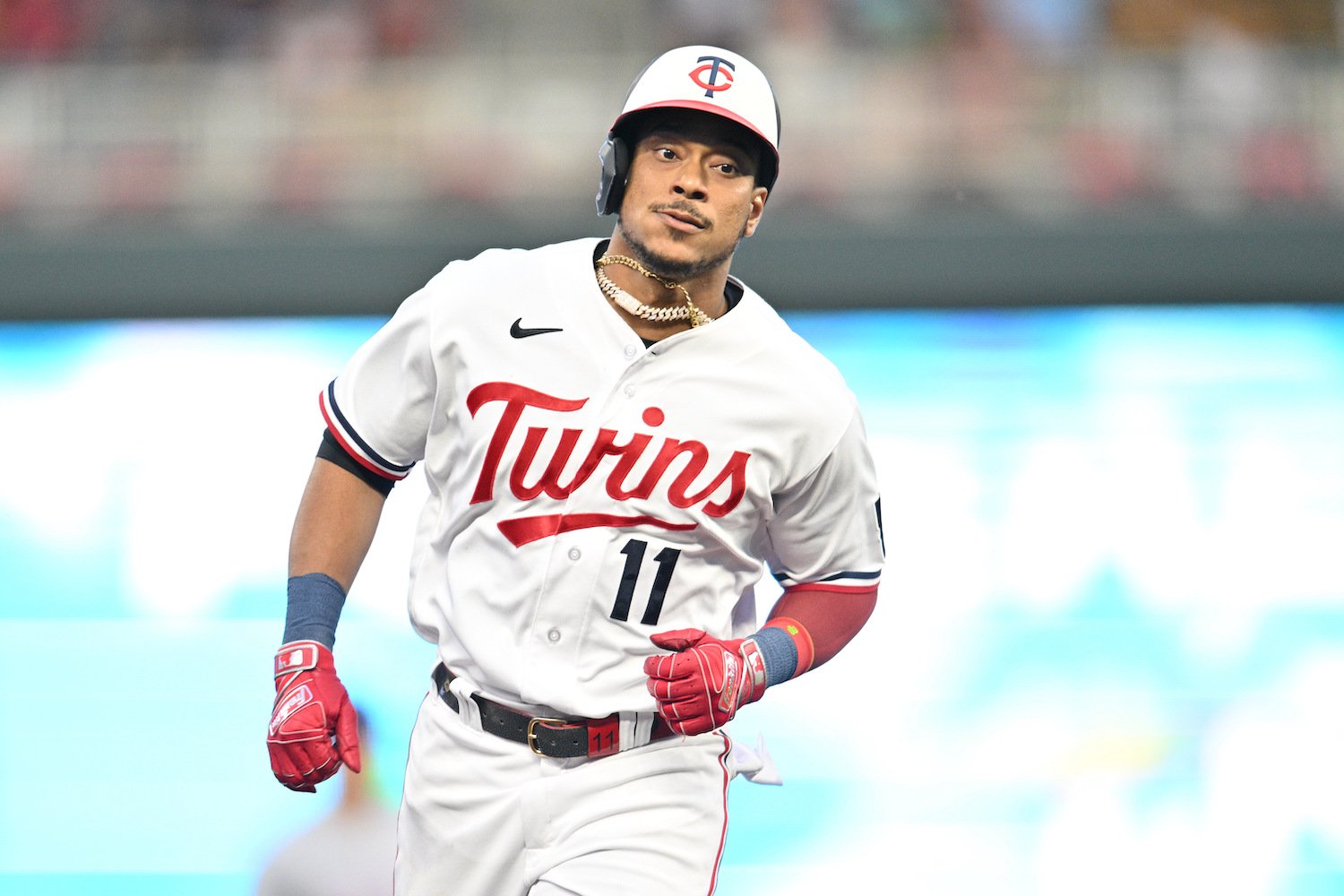 Coined "The Twins' Mr. Clutch" in an article by the Pioneer Press's Betsy Helfand in 2021, infielder Jorge Polanco has long been a fixture in modern Minnesota Twins lore. Whether it be hitting for the cycle at Citizens Bank Park in 2019, skipping a throw to then-Twins second-baseman Luis Arráez during the 2020 postseason, or simply existing as a reliable day-to-day player, Polanco has been a part of every recent Twins moment in perpetuity. The 2023 season began without Polanco on the diamond as he was forced to miss the Twins' first 19 games while recovering from right knee soreness. Luckily, Polanco returned on April 21 and played 23 games with the Twins, hitting .284/.327/.484 (.811) with 27 hits, seven doubles, four home runs, and a 122 wRC+ in 101 plate appearances. Unfortunately, Polanco was forced to return to the 10-day IL with a strained hamstring on May 18. Polanco returned from the IL on June 1, and played in seven games while hitting just .120/.154/.320 (.474) with a 20 wRC+ and was instantly put back on the 10-day IL on June 8 with the same injury. Polanco appeared to be suffering from a chronic hamstring injury, and many began to wonder if Polanco's tenure with the Twins was nearing a disparagingly anti-climactic injury-fueled conclusion. Polanco took over a month and a half off and returned to the Twins, this time with a new position after transitioning from second base to third base to open up more playing opportunities at second base for the thriving rookie Edouard Julien. Here are Polanco's numbers since returning from the 10-day IL on July 28, split into two time duration brackets: July 28-August 10: .182/.321/.318 (.639), 53 plate appearances (PA), eight hits, three doubles, one home run, 28.3% K%, .136 Isolated Power (ISO), .250 BABIP, 85 wRC+ August 11-September 3: .310/.420/.549 (.969), 88 PA, 22 hits, two doubles, five home runs, 23.9% K%, .239 ISO, .362 BABIP, 166 wRC+ Polanco started slow out the gate following his return from the 10-day IL on July 28 but quickly turned things around beginning August 11, hitting for a .969 OPS and 166 wRC+ over the next 22 days, including a massive three-run home run against the second-place Cleveland Guardians last Monday. Polanco followed up his massive three-run home run last Monday against the Guardians with a clutch lead-padding two-run home run against the Texas Rangers this past Friday. Polanco appears to have gotten his groove back, and it is happening at the most opportune time, as the mood surrounding a first-place team with a five-game lead couldn't be much worse. On Thursday, the second-place Cleveland Guardians claimed Matt Moore, Reynaldo López, and Lucas Giolito off of waivers from the Los Angeles Angels, leading to panic about whether the Twins will be able to maintain their lead over the Guardians and win the AL Central. While much of what happens with the Guardians going forward will be out of the Twins' hands, as they face them only three more times this season, what the Twins can do is make sure they perform well the rest of the season against teams that currently own losing records such as the Mets, White Sox, Angels, Athletics, and the Rockies. If the Twins want to make the playoffs, they must win at least four out of five of the upcoming series against the previously mentioned teams, if not all. While more remarkable collapses have happened, the Twins still own a 94.5% chance of making the playoffs, according to FanGraphs, and reinforcements are coming. Adding a healthy Alex Kirilloff, 100.1 mph throwing relief pitcher Louie Varland, and a potentially healthy Brock Stewart, Chris Paddack, and Jorge Alcala to an offense that ranks fifth in fWAR since the All-Star break and includes steady veterans inspiring young players should create a great sense of optimism. Unfortunately, that is not the case. Those who follow the Twins are panicking, and reasonably so. Admittedly, so am I. As Minnesota sports fans, we are all too familiar with the phenomenon of having the rug pulled out from underneath us. It is sad, and the emotional recovery is tedious and painstaking, yet we stick around clutching to a fleeting glimmer of hope, wishing this time will be different. I am not here to virtue signal or tell anyone their sense of doom is wrong, but what I will say is that while, according to FanGraphs, there is a 96.7% chance our hearts will get broken in the postseason, there is only a 5.5% chance that our hearts will get broken come to the end of the regular season. I will take those odds. Polanco's resurgence is not only fantastic for the Twins and himself, but it is also symbolic of what appears to be happening to the Twins as a whole. It feels like the amalgamation of pieces that form the Twins are collectively coming together at the most opportune time to create a whole that finally breaks the dreaded 0-18 playoff curse, and just because the Guardians claimed two above-average relievers in Moore and López and a solid starter in Giolito shouldn't deter fans from thinking as such. What do you make of Polanco's resurgence in August? Also, should fans still be optimistic about the Twins' playoff chances? Comment below.
 -
I like the Kyle Tucker comparison a lot. Extremely similar in many ways.
-
I appreciate what you have to add on to the list @DocBauer! Always very insightful.
- 29 replies
-
- 2
-
-
- walker jenkins
- yoyner fajardo
- (and 3 more)
-
I don't think Vázquez is blocking anyone in the minor league system either. Camargo has been a nice story, but I don't think he has the ability to be a serviceable backup at the Major League level, and I think your wRC+ example affirms that stance. Down the line, I think Isola or potentially even Winkel could be serviceable backup catchers, but Jeffers and Vázquez are by far the best catching options in the Twins organization.
-
Whenever I watch Jenkins the player that always comes to mind is Bryce Harper. I know it's just wishful thinking, but I think Jenkins could end up being an elite MLB outfielder.
- 29 replies
-
- 4
-
-
- walker jenkins
- yoyner fajardo
- (and 3 more)
-
August was an incredible month for Twins minor league hitters, but one promising young talent stood out among the rest. Image courtesy of Rob Thompson, St. Paul Saints August was the month of offensive outbursts from the Dominican Summer League Twins to the Major League club itself. Highlighted by top prospects and the new faces of the 2023 draft class, seemingly everyone wanted to showcase their hitting ability this month. Choosing only five hitters felt wrong, so let's begin by celebrating the honorable mentions. Honorable Mentions Moises Lopez - DSL Twins - .306/.405/.528 (.933), 42 PA, 11 Hits, 4 BB, 12 K, two doubles, two home runs Brandon Winokur - FCL Twins - .296/.345/.556 (.901), 58 PA, 16 Hits, 3 BB, 17 K, five doubles, three home runs Luke Keaschall - Fort Myers Mighty Mussels - .292/.426/.472 (.898), 94 PA, 21 Hits, 15 BB, 20 K, eight doubles, one home run Andrew Cossetti - Cedar Rapids Kernels - .259/.440/.537 (.977), 75 PA, 14 Hits, 16 BB, 20 K, two doubles, three home runs Carson McCusker - Cedar Rapids Kernels - .255/.305/.636 (.941), 59 PA, 14 Hits, 3 BB, 21 K, three doubles, six home runs Noah Miller - Cedar Rapids Kernels - .281/.350/.494 (.844), 100 PA, 25 Hits, 10 BB, 22 K, eight doubles, three home runs Emmanuel Rodriguez - Cedar Rapids Kernels - .260/.402/.479 (.881), 92 PA, 19 Hits, 18 BB, 25 K, two doubles, four home runs Hernan Perez - St. Paul Saints - .310/.383/.643 (1.026), 47 PA, 13 Hits, 5 BB, 8 K, two doubles, four home runs Andrew Stevenson - St. Paul Saints - .275/.363/.525 (.888), 91 PA, 22 Hits, 10 BB, 19 K, four doubles, four home runs #6. Walker Jenkins - FCL Twins/Fort Myers - .333/.362/.469 (.831), 74 PA, 23 Hits, 5 BB, 9 K, four doubles, two home runs The number five overall pick in the 2023 MLB Draft came out of the gates as advertised, lining a double over the FCL Rays third baseman head on his first-ever professional at-bat. After this memorable moment, Jenkins managed to hit .333/.390/.537 (.927) through 59 plate appearances with the FCL Twins before being promoted to the Fort Myers Might Mussels on August 22. Since joining Fort Myers, Jenkins has hit .333/.333/.400 (.733) through just 15 plate appearances, with his highlight moment coming last week when he hit a walk-off single in his second game with the Mighty Mussels. Jenkins has met expectations so far, and his somewhat surprising promotion to Single-A Fort Myers while being an 18-year-old fresh out of high school is a sign that the Twins view Jenkins as developmentally advanced. There is a lot of hype around Jenkins, and with hype comes pressure and expectations. Whether Jenkins will be able to meet those expectations long-term is yet to be seen, but he has undoubtedly impressed during his first cup of coffee in professional baseball. #5. Patrick Winkel - Wichita Wind Surge - .318/.410/.591 (1.001), 78 PA, 21 Hits, 11 BB, 18 K, six doubles, four home runs Number five on this list comes in the form of catching prospect Patrick Winkel. Winkel, 23, was drafted in the ninth round of the 2021 MLB Draft by the Minnesota Twins out of the University of Connecticut. While at the University of Connecticut, Winkel hit a .299/.357/.501 (.858) with 112 hits, 35 BB, 21 doubles, and 19 home runs over 430 plate appearances with the Huskies. Winkel had a relatively uninspiring 2022 season with the High-A Cedar Rapids Kernels, hitting just .254/.330/.391 (.721), but has elevated his game hitting .272/.373/.437 (.810) since joining the Double-A Wichita Wind Surge to begin the 2023 Texas League season. The left-handed hitting Winkel has a smooth and compact swing that stays in the strike zone, not too dissimilar to that of Max Kepler, which lends to him manufacturing good at-bats that tend to lead to production. Winkel has been incredible in August, exhibiting a great sense of contact while hitting an impressive six doubles and four home runs. Twins minor league catchers have been impressive this season, and Winkel is among the top of that group. Winkel's performance has landed him just behind another impressive standout member of the Wind Surge. #4. Yoyner Fajardo - Wichita Wind Surge - .341/.423/.568 (.991), 105 PA, 30 H, 12 BB, 15 K, six doubles, four home runs Number four on this list comes in the form of the speedy and versatile Fajardo. Fajardo started his professional career with the Pittsburgh Pirates organization, but began his first season in the Minnesota Twins minor league system in April with the Wichita Wind Surge. Fajardo, 24, has been impressive all season, but he elevated his performance to the next level in August. Beyond hitting .341/.423/.568 (.991), Fajardo stole 17 bases in August, nine more than the next closest player in the Twins minor league system. Fajardo steals bases at a high clip and has hit the ball hard all across the park, as illustrated by his 33 extra-base hits this season. Fajardo also provides value as a utility player, playing second base, third base, designated hitter, and all three outfield positions in his professional baseball career. Fajardo has predominately played left field this season at Double-A Wichita, but versatility is still a relevant aspect of his game. Fajardo has been a pleasant surprise this season, and hopefully he can finish out his best season as a professional baseball player on a high note. #3. DaShawn Keirsey Jr. - Wichita/St. Paul - .323/.458/.576 (1.034), 85 PA, 22 Hits, 12 BB, 16 K, three doubles, two home runs Keirsey Jr. started the month out at Double-A Wichita, but after just two games, he was promoted to Triple-A St. Paul. Since joining the Saints, Keirsey Jr. has hit .297/.416/.438 (.854) with 19 hits and four extra-base hits over 64 at-bats. Keirsey Jr. has played centerfield as well as both corner outfield spots and has been a steady left-handed bat at the top of the Wind Surge and now Saints lineup. Keirsey Jr., who I have ranked as the eighth-best prospect in the Twins system, is having his best season as a member of the Twins organization, leading those who follow the team to wonder if he has Major League aspirations in the near future. Keirsey Jr. is eligible for the Rule 5 Draft this upcoming offseason again, and if the Twins elect not to add him to the 40-man roster there is a relatively high chance he would get plucked by another team. If the Twins add Keirsey Jr. to the 40-man roster, Twins fans will likely watch him make his Major League debut next season. Keirsey Jr. had a great month of August, and his promotion to Triple-A St. Paul was well deserved. #2. Alex Isola - Wichita Wind Surge - .358/.424/.617 (1.041), 92 PA, 29 Hits, 10 BB, 17 K, three doubles, six home runs The runner-up for August 2023 Twins Minor League Hitter of the Month is C/1B/DH Alex Isola. Isola has built off his productive 2022 season with an even more impressive 2023 season, highlighted by his breakout month of August. Through 92 plate appearances, Isola has six home runs, which ties Carson McCusker of the Cedar Rapids Kernels for the minor league system lead in August. Not only is Isola hitting home runs, but he is making sufficient contact and hitting the ball around the park. Home runs are great, but when a C/1B/DH can consistently the ball around the field for contact it begins to feel like that player, in this case Isola, might be an exceptional talent. Isola has been incredible in August, and if it weren't for the resurgence of the winner below, he would have walked away with the honor of Twins Daily Hitter of the Month for August 2023. Winner: Austin Martin - St. Paul Saints - .357/.489/.600 (1.089), 90 PA, 25 Hits, 16 BB, 11 K, five doubles, four home runs The Twins Minor League Hitter of the Month for August 2023 is the number five overall pick in the 2020 MLB Draft, Austin Martin. For the first time since he joined the Twins minor league system, Martin is playing like the star he was at Vanderbilt. The most notable way Martin plays like that is by spraying the ball across the park while generating hard contact. Martin had 25 hits in August, which is incredible, and nine of them were extra-base hits. Now, while only 36% of a player's hits being extra-base hits isn't all too encouraging, having Martin regain form as a hitter who sprays singles around the field is encouraging. While Martin mainly shoots singles and the occasional double around the field, he has added an essential element of power to his game, showcased by the four home runs he hit in August. Martin will likely never be a power hitter - that's just not who he is - but if he can hit three to four home runs a month while being an elite contact hitter, the Twins would have themselves an exceptional player. Not only is Martin hitting the ball exceptionally well, but he is providing adequate defense at both second base and centerfield while making the occasional highlight-worthy play. Martin's incredible month at the plate has earned him the honor of Twins Daily Minor League Hitter of the Month for August 2023. View full article
-
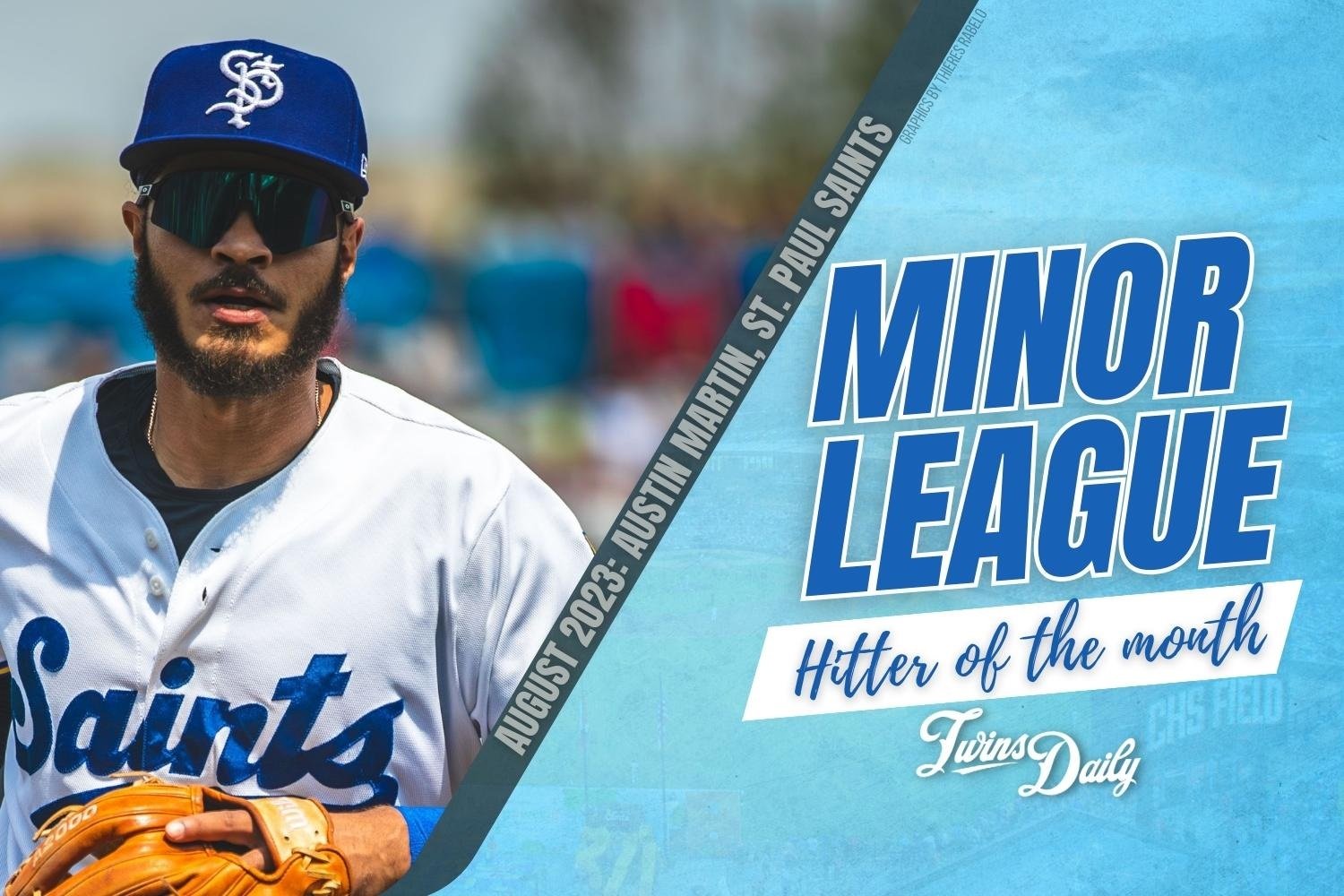 August was the month of offensive outbursts from the Dominican Summer League Twins to the Major League club itself. Highlighted by top prospects and the new faces of the 2023 draft class, seemingly everyone wanted to showcase their hitting ability this month. Choosing only five hitters felt wrong, so let's begin by celebrating the honorable mentions. Honorable Mentions Moises Lopez - DSL Twins - .306/.405/.528 (.933), 42 PA, 11 Hits, 4 BB, 12 K, two doubles, two home runs Brandon Winokur - FCL Twins - .296/.345/.556 (.901), 58 PA, 16 Hits, 3 BB, 17 K, five doubles, three home runs Luke Keaschall - Fort Myers Mighty Mussels - .292/.426/.472 (.898), 94 PA, 21 Hits, 15 BB, 20 K, eight doubles, one home run Andrew Cossetti - Cedar Rapids Kernels - .259/.440/.537 (.977), 75 PA, 14 Hits, 16 BB, 20 K, two doubles, three home runs Carson McCusker - Cedar Rapids Kernels - .255/.305/.636 (.941), 59 PA, 14 Hits, 3 BB, 21 K, three doubles, six home runs Noah Miller - Cedar Rapids Kernels - .281/.350/.494 (.844), 100 PA, 25 Hits, 10 BB, 22 K, eight doubles, three home runs Emmanuel Rodriguez - Cedar Rapids Kernels - .260/.402/.479 (.881), 92 PA, 19 Hits, 18 BB, 25 K, two doubles, four home runs Hernan Perez - St. Paul Saints - .310/.383/.643 (1.026), 47 PA, 13 Hits, 5 BB, 8 K, two doubles, four home runs Andrew Stevenson - St. Paul Saints - .275/.363/.525 (.888), 91 PA, 22 Hits, 10 BB, 19 K, four doubles, four home runs #6. Walker Jenkins - FCL Twins/Fort Myers - .333/.362/.469 (.831), 74 PA, 23 Hits, 5 BB, 9 K, four doubles, two home runs The number five overall pick in the 2023 MLB Draft came out of the gates as advertised, lining a double over the FCL Rays third baseman head on his first-ever professional at-bat. After this memorable moment, Jenkins managed to hit .333/.390/.537 (.927) through 59 plate appearances with the FCL Twins before being promoted to the Fort Myers Might Mussels on August 22. Since joining Fort Myers, Jenkins has hit .333/.333/.400 (.733) through just 15 plate appearances, with his highlight moment coming last week when he hit a walk-off single in his second game with the Mighty Mussels. Jenkins has met expectations so far, and his somewhat surprising promotion to Single-A Fort Myers while being an 18-year-old fresh out of high school is a sign that the Twins view Jenkins as developmentally advanced. There is a lot of hype around Jenkins, and with hype comes pressure and expectations. Whether Jenkins will be able to meet those expectations long-term is yet to be seen, but he has undoubtedly impressed during his first cup of coffee in professional baseball. #5. Patrick Winkel - Wichita Wind Surge - .318/.410/.591 (1.001), 78 PA, 21 Hits, 11 BB, 18 K, six doubles, four home runs Number five on this list comes in the form of catching prospect Patrick Winkel. Winkel, 23, was drafted in the ninth round of the 2021 MLB Draft by the Minnesota Twins out of the University of Connecticut. While at the University of Connecticut, Winkel hit a .299/.357/.501 (.858) with 112 hits, 35 BB, 21 doubles, and 19 home runs over 430 plate appearances with the Huskies. Winkel had a relatively uninspiring 2022 season with the High-A Cedar Rapids Kernels, hitting just .254/.330/.391 (.721), but has elevated his game hitting .272/.373/.437 (.810) since joining the Double-A Wichita Wind Surge to begin the 2023 Texas League season. The left-handed hitting Winkel has a smooth and compact swing that stays in the strike zone, not too dissimilar to that of Max Kepler, which lends to him manufacturing good at-bats that tend to lead to production. Winkel has been incredible in August, exhibiting a great sense of contact while hitting an impressive six doubles and four home runs. Twins minor league catchers have been impressive this season, and Winkel is among the top of that group. Winkel's performance has landed him just behind another impressive standout member of the Wind Surge. #4. Yoyner Fajardo - Wichita Wind Surge - .341/.423/.568 (.991), 105 PA, 30 H, 12 BB, 15 K, six doubles, four home runs Number four on this list comes in the form of the speedy and versatile Fajardo. Fajardo started his professional career with the Pittsburgh Pirates organization, but began his first season in the Minnesota Twins minor league system in April with the Wichita Wind Surge. Fajardo, 24, has been impressive all season, but he elevated his performance to the next level in August. Beyond hitting .341/.423/.568 (.991), Fajardo stole 17 bases in August, nine more than the next closest player in the Twins minor league system. Fajardo steals bases at a high clip and has hit the ball hard all across the park, as illustrated by his 33 extra-base hits this season. Fajardo also provides value as a utility player, playing second base, third base, designated hitter, and all three outfield positions in his professional baseball career. Fajardo has predominately played left field this season at Double-A Wichita, but versatility is still a relevant aspect of his game. Fajardo has been a pleasant surprise this season, and hopefully he can finish out his best season as a professional baseball player on a high note. #3. DaShawn Keirsey Jr. - Wichita/St. Paul - .323/.458/.576 (1.034), 85 PA, 22 Hits, 12 BB, 16 K, three doubles, two home runs Keirsey Jr. started the month out at Double-A Wichita, but after just two games, he was promoted to Triple-A St. Paul. Since joining the Saints, Keirsey Jr. has hit .297/.416/.438 (.854) with 19 hits and four extra-base hits over 64 at-bats. Keirsey Jr. has played centerfield as well as both corner outfield spots and has been a steady left-handed bat at the top of the Wind Surge and now Saints lineup. Keirsey Jr., who I have ranked as the eighth-best prospect in the Twins system, is having his best season as a member of the Twins organization, leading those who follow the team to wonder if he has Major League aspirations in the near future. Keirsey Jr. is eligible for the Rule 5 Draft this upcoming offseason again, and if the Twins elect not to add him to the 40-man roster there is a relatively high chance he would get plucked by another team. If the Twins add Keirsey Jr. to the 40-man roster, Twins fans will likely watch him make his Major League debut next season. Keirsey Jr. had a great month of August, and his promotion to Triple-A St. Paul was well deserved. #2. Alex Isola - Wichita Wind Surge - .358/.424/.617 (1.041), 92 PA, 29 Hits, 10 BB, 17 K, three doubles, six home runs The runner-up for August 2023 Twins Minor League Hitter of the Month is C/1B/DH Alex Isola. Isola has built off his productive 2022 season with an even more impressive 2023 season, highlighted by his breakout month of August. Through 92 plate appearances, Isola has six home runs, which ties Carson McCusker of the Cedar Rapids Kernels for the minor league system lead in August. Not only is Isola hitting home runs, but he is making sufficient contact and hitting the ball around the park. Home runs are great, but when a C/1B/DH can consistently the ball around the field for contact it begins to feel like that player, in this case Isola, might be an exceptional talent. Isola has been incredible in August, and if it weren't for the resurgence of the winner below, he would have walked away with the honor of Twins Daily Hitter of the Month for August 2023. Winner: Austin Martin - St. Paul Saints - .357/.489/.600 (1.089), 90 PA, 25 Hits, 16 BB, 11 K, five doubles, four home runs The Twins Minor League Hitter of the Month for August 2023 is the number five overall pick in the 2020 MLB Draft, Austin Martin. For the first time since he joined the Twins minor league system, Martin is playing like the star he was at Vanderbilt. The most notable way Martin plays like that is by spraying the ball across the park while generating hard contact. Martin had 25 hits in August, which is incredible, and nine of them were extra-base hits. Now, while only 36% of a player's hits being extra-base hits isn't all too encouraging, having Martin regain form as a hitter who sprays singles around the field is encouraging. While Martin mainly shoots singles and the occasional double around the field, he has added an essential element of power to his game, showcased by the four home runs he hit in August. Martin will likely never be a power hitter - that's just not who he is - but if he can hit three to four home runs a month while being an elite contact hitter, the Twins would have themselves an exceptional player. Not only is Martin hitting the ball exceptionally well, but he is providing adequate defense at both second base and centerfield while making the occasional highlight-worthy play. Martin's incredible month at the plate has earned him the honor of Twins Daily Minor League Hitter of the Month for August 2023.
- 29 comments
-
- 6
-
-
- walker jenkins
- yoyner fajardo
- (and 3 more)
-
Comparing Floro to Forsythe is a great comparison lol. The only difference is that the Twins are in contention this year unlike 2018.
- 24 replies
-
- 1
-
-
- dylan floro
- jorge lopez
- (and 1 more)
-
My best guess with López is that he is non-tendered and then accepts a minor league offer with an invitation to spring training from a non-contending team like the Royals or Pirates. When it comes to Floro, I think there is a chance he gets a Major League offer, potentially even from the Twins, depending on how well he pitches down the stretch. If he continues to pitch poorly, I could see him signing a minor league deal as well.
-
One month in, this reliever swap has not worked well for either team. Yet, there is still reason for optimism. Image courtesy of Jeffrey Becker - USA TODAY Sports On July 28, the Minnesota Twins traded relief pitcher Jorge López to the Miami Marlins for fellow relief pitcher Dylan Floro. This week, we passed the one-month anniversary of said trade. Unlike the win-win Luis Arráez for Pablo López, Jose Salas, and Byron Chourio trade executed between Kim Ng and Derek Falvey this prior off-season, this trade deadline swap has been anything but. Here are Floro and López's numbers through the first month with their respective new teams: López - Marlins - 9.26 ERA, 5.32 FIP, 5.63 xFIP, 11 2/3 IP, 20 hits given up, 12 earned runs, nine walks, eight strikeouts, 6.17 K/9, .442 BABIP, 58% LOB% Floro - Twins - 6.30 ERA, 3.07 FIP, 4.39 xFIP, 10 IP, 15 hits given up, seven earned runs, five walks, eight strikeouts, 9.00 K/9, .455 BABIP, 66.7 LOB% López's first five batters faced with the Marlins went well, giving up zero runs and zero hits through 1.2 innings pitched, but then the wheels began to fall off. Over Lopez's next 19 batters faced, he gave up eight hits and accumulated three earned runs while only striking out one batter and leaving just 55.6% on base. Floro's first handful of outings with the Twins went much more smoothly, giving up just three hits and zero earned runs over his first 14 batters faced. Floro's first rough outing came against the Detroit Tigers on August 10 against the Tigers, giving up four hits and two earned runs while facing seven batters over just one inning pitched. López and Floro rebounded nicely from their rough outings, with López going two straight outings without giving up a run and Floro going three straight outings without giving up a run. Then came the implosions. The bulk of López and Floro's inflated numbers are consequences of implosive outings, which occurred at similar times. López's implosion came on August 16 against the Houston Astros when he faced six batters, gave up two hits, walked three, and surrendered four earned runs. He recorded just one out. López became erratic and struggled to keep his pitches in the strike zone, a phenomenon all too familiar to those who follow the Twins. While López's shortcomings are unfortunate, he is no longer the Twins' problem, so it feels unnecessary to harp on his performance too much. So, let's shift our focus to Floro. Floro's implosive outing came on August 22 against the Milwaukee Brewers when he faced nine batters, gave up six hits, walked zero, and surrendered five earned runs in one inning. Floro is an interesting case, as he is a better pitcher than statistics like ERA would suggest. Fielding Independent Pitching, or FIP, is a sabermetric that measures what a pitcher's Earned Runs Allowed (ERA) would look like over a certain period if that pitcher were to experience league-average results on balls put in play. Unsurprisingly, FIP strongly correlates to the sabermetric Batting Average on Balls in Play, or BABIP. Floro's FIP currently sits at 3.07, which is 3.23 points lower than his ERA of 6.30. Floro is a reliever who pitches to contact, so most of the outs he generates will come from either ground outs or flyouts. Being a "pitch to contact" reliever, Floro's primary goal is to generate weak contact, which leads to shallow flyouts or weak groundouts. Floro has done an adequate job doing that, as evidenced by his Exit Velocity (EV), or the speed of the ball coming off the bat in miles per hour, of 83.9 mph. Unfortunately, balls put into play off of Floro are finding holes and landing for hits, as evidenced by his BABIP of .455, 160 points higher than the league average of .295 for relief pitchers. Now, the question that needs to be looked at next is whether Floro's poor numbers are a product of bad luck or Floro simply being ineffective. To start, the answer for Floro's implosive outing against the Brewers is bad luck, as they were able to essentially BABIP Floro into submission by hitting bloop single after bloop single, leading to an outburst of hits and runs. Although Floro's performance against the Brewers was uniquely unfortunate, I think similar conclusions of him being a victim of bad luck can also be made for his other outings. This conclusion feels rational because the same phenomenon occurred earlier this season with the Marlins. Over Floro's 39 2/3 innings pitched and 171 total batters faced as a reliever for the Marlins this season, Floro's had a 4.54 ERA and a 2.77 FIP. Similar to his performance with the Twins, there is a dramatic difference between Floro's ERA and FIP. Floro is struggling now and has all season, but reason for optimism lies within his underlying metrics and his most recent outing against the Texas Rangers this past Sunday. In his outing against the Rangers, Floro walked leadoff hitter Mitch Garver but was then able to get Travis Jankowski to strikeout on a high and outside fastball, Adolis Garcia to strikeout on a breaking ball down and away, and Jonah Heim to groundout to shortstop Carlos Correa, ending the top of the 13th inning. The Twins were then able to capitalize, winning on a walk-off walk manufactured by centerfielder Michael A. Taylor. Although a small sample, Floro's outing was encouraging and could be a sign of things to come. Floro becoming even a semi-reliable relief pitcher that can complement the front of the bullpen in Jhoan Duran, Griffin Jax, Caleb Thielbar, Emilio Pagán, and the potentially returning soon Brock Stewart would be an encouraging development for a team that has had back-end of the bullpen struggles all season. One month in, the López for Floro trade hasn't worked well for either team. But there is reason to believe Floro's performance could turn around rather quickly. What do you think of the López for Floro trade? Do you think Floro can turn things around? Comment below. View full article
-
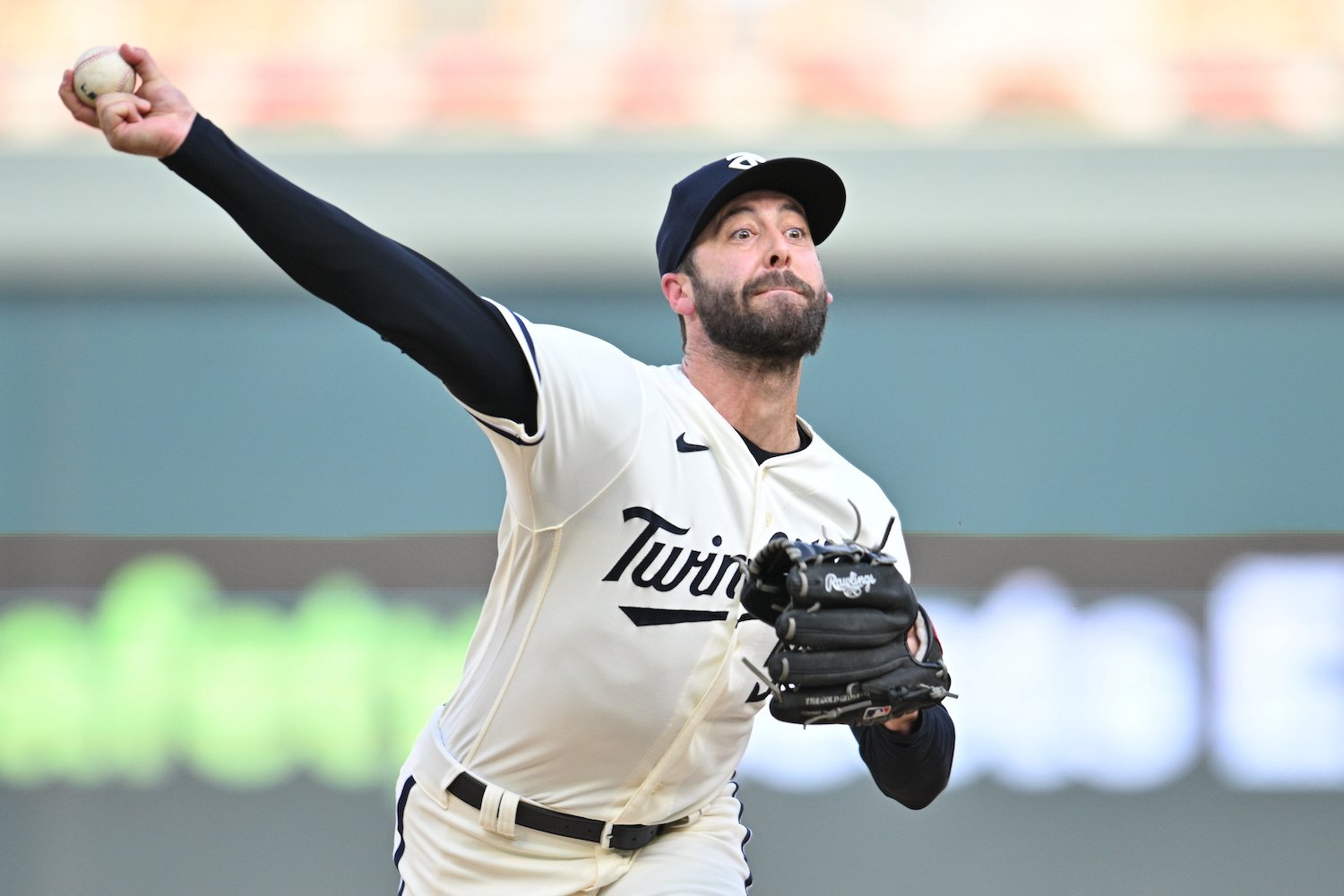 On July 28, the Minnesota Twins traded relief pitcher Jorge López to the Miami Marlins for fellow relief pitcher Dylan Floro. This week, we passed the one-month anniversary of said trade. Unlike the win-win Luis Arráez for Pablo López, Jose Salas, and Byron Chourio trade executed between Kim Ng and Derek Falvey this prior off-season, this trade deadline swap has been anything but. Here are Floro and López's numbers through the first month with their respective new teams: López - Marlins - 9.26 ERA, 5.32 FIP, 5.63 xFIP, 11 2/3 IP, 20 hits given up, 12 earned runs, nine walks, eight strikeouts, 6.17 K/9, .442 BABIP, 58% LOB% Floro - Twins - 6.30 ERA, 3.07 FIP, 4.39 xFIP, 10 IP, 15 hits given up, seven earned runs, five walks, eight strikeouts, 9.00 K/9, .455 BABIP, 66.7 LOB% López's first five batters faced with the Marlins went well, giving up zero runs and zero hits through 1.2 innings pitched, but then the wheels began to fall off. Over Lopez's next 19 batters faced, he gave up eight hits and accumulated three earned runs while only striking out one batter and leaving just 55.6% on base. Floro's first handful of outings with the Twins went much more smoothly, giving up just three hits and zero earned runs over his first 14 batters faced. Floro's first rough outing came against the Detroit Tigers on August 10 against the Tigers, giving up four hits and two earned runs while facing seven batters over just one inning pitched. López and Floro rebounded nicely from their rough outings, with López going two straight outings without giving up a run and Floro going three straight outings without giving up a run. Then came the implosions. The bulk of López and Floro's inflated numbers are consequences of implosive outings, which occurred at similar times. López's implosion came on August 16 against the Houston Astros when he faced six batters, gave up two hits, walked three, and surrendered four earned runs. He recorded just one out. López became erratic and struggled to keep his pitches in the strike zone, a phenomenon all too familiar to those who follow the Twins. While López's shortcomings are unfortunate, he is no longer the Twins' problem, so it feels unnecessary to harp on his performance too much. So, let's shift our focus to Floro. Floro's implosive outing came on August 22 against the Milwaukee Brewers when he faced nine batters, gave up six hits, walked zero, and surrendered five earned runs in one inning. Floro is an interesting case, as he is a better pitcher than statistics like ERA would suggest. Fielding Independent Pitching, or FIP, is a sabermetric that measures what a pitcher's Earned Runs Allowed (ERA) would look like over a certain period if that pitcher were to experience league-average results on balls put in play. Unsurprisingly, FIP strongly correlates to the sabermetric Batting Average on Balls in Play, or BABIP. Floro's FIP currently sits at 3.07, which is 3.23 points lower than his ERA of 6.30. Floro is a reliever who pitches to contact, so most of the outs he generates will come from either ground outs or flyouts. Being a "pitch to contact" reliever, Floro's primary goal is to generate weak contact, which leads to shallow flyouts or weak groundouts. Floro has done an adequate job doing that, as evidenced by his Exit Velocity (EV), or the speed of the ball coming off the bat in miles per hour, of 83.9 mph. Unfortunately, balls put into play off of Floro are finding holes and landing for hits, as evidenced by his BABIP of .455, 160 points higher than the league average of .295 for relief pitchers. Now, the question that needs to be looked at next is whether Floro's poor numbers are a product of bad luck or Floro simply being ineffective. To start, the answer for Floro's implosive outing against the Brewers is bad luck, as they were able to essentially BABIP Floro into submission by hitting bloop single after bloop single, leading to an outburst of hits and runs. Although Floro's performance against the Brewers was uniquely unfortunate, I think similar conclusions of him being a victim of bad luck can also be made for his other outings. This conclusion feels rational because the same phenomenon occurred earlier this season with the Marlins. Over Floro's 39 2/3 innings pitched and 171 total batters faced as a reliever for the Marlins this season, Floro's had a 4.54 ERA and a 2.77 FIP. Similar to his performance with the Twins, there is a dramatic difference between Floro's ERA and FIP. Floro is struggling now and has all season, but reason for optimism lies within his underlying metrics and his most recent outing against the Texas Rangers this past Sunday. In his outing against the Rangers, Floro walked leadoff hitter Mitch Garver but was then able to get Travis Jankowski to strikeout on a high and outside fastball, Adolis Garcia to strikeout on a breaking ball down and away, and Jonah Heim to groundout to shortstop Carlos Correa, ending the top of the 13th inning. The Twins were then able to capitalize, winning on a walk-off walk manufactured by centerfielder Michael A. Taylor. Although a small sample, Floro's outing was encouraging and could be a sign of things to come. Floro becoming even a semi-reliable relief pitcher that can complement the front of the bullpen in Jhoan Duran, Griffin Jax, Caleb Thielbar, Emilio Pagán, and the potentially returning soon Brock Stewart would be an encouraging development for a team that has had back-end of the bullpen struggles all season. One month in, the López for Floro trade hasn't worked well for either team. But there is reason to believe Floro's performance could turn around rather quickly. What do you think of the López for Floro trade? Do you think Floro can turn things around? Comment below.
- 24 comments
-
- 4
-
-
-
- dylan floro
- jorge lopez
- (and 1 more)
-
Twins Should Prioritize Resting Carlos Correa Down the Stretch
Cody Schoenmann posted an article in Twins
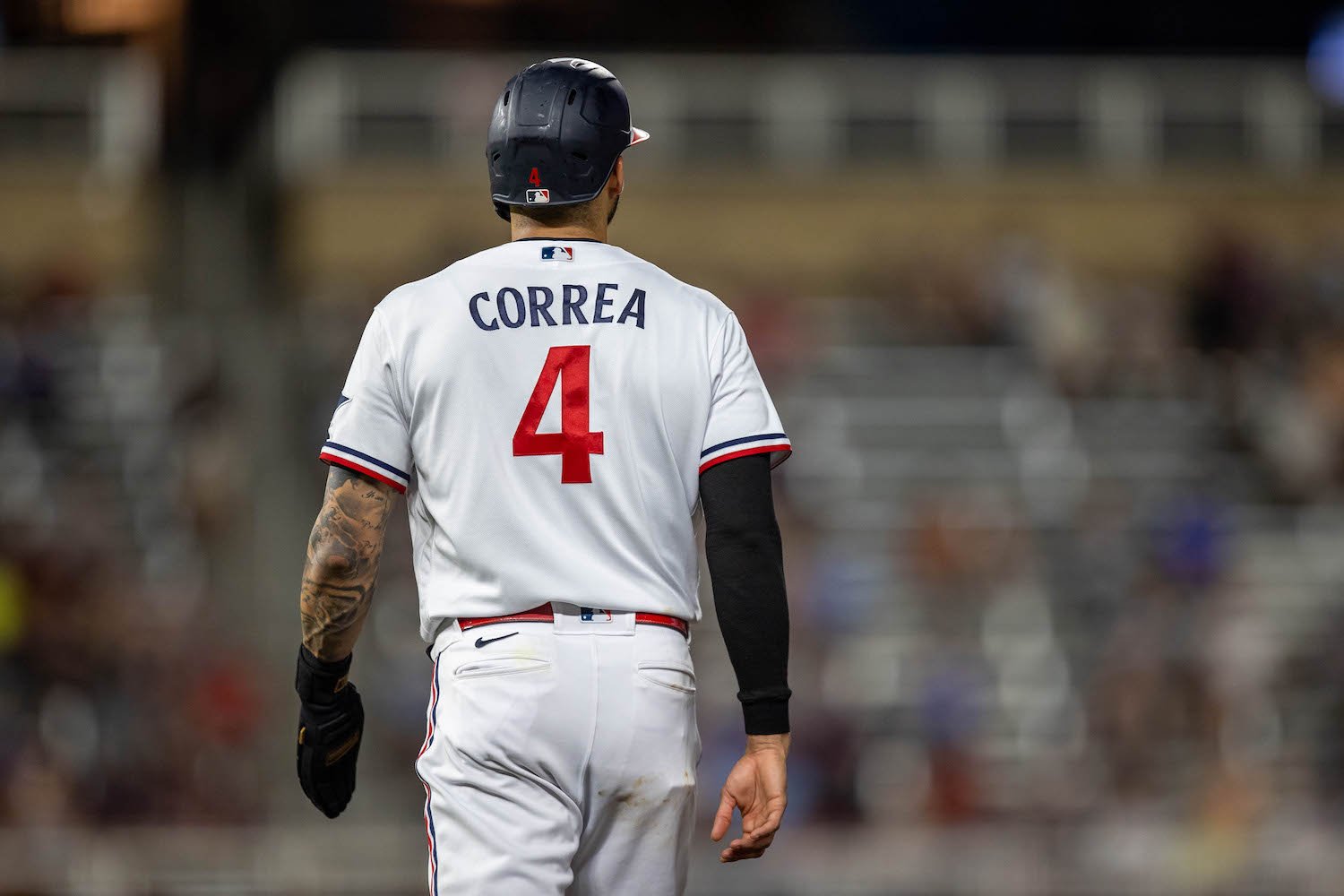 On May 25, Minnesota Twins shortstop Carlos Correa was diagnosed with plantar fasciitis. Correa's diagnosis sent shockwaves through the Twins franchise and Major League Baseball. Will Correa need to go on the IL? Will he be out for the rest of the season? What will the Twins do at shortstop if Correa is out for a significant period? Those who follow baseball ruminated on worst-case scenarios, and the all-too-familiar sense of panic flooded the collective consciousness of the cursed yet ever-optimistic Minnesota sports fan. Why us, and why now? Why Correa of all players? Then, seemingly out of nowhere, Correa was in the lineup the next day against the Toronto Blue Jays and made an incredible defensive play. Instead of going on the 10-day IL or sitting out for an extended amount of time, the plan for Correa was to manage his plantar fasciitis utilizing relatively frequent rest days and load management practices. Although Correa's play has been below his career averages, the plan to keep Correa on the field has gone exceptionally well. Here are Correa's numbers since his plantar fasciitis diagnosis on May 25 compared to league average statistics for shortstops during the 2023 season: Correa - .233/.312/.401 (.713), 314 PA, 65 H, 15 doubles, 10 homers, 22.6% K%, .168 ISO, .275 BABIP, 96 wRC+ League Average - .244/.308/.394 (.702), 22.8% K%, .150 ISO, .295 BABIP, 89 wRC+ Correa has been able to perform as a slightly above-average shortstop while dealing with plantar fasciitis, which is clearly hindering his performance. Not only has Correa performed above league average for shortstops while suffering from plantar fasciitis, but he has been a steady fixture in the Twins lineup, missing only 14 games this season. Correa's pain tolerance, resilience, and devotion to the Twins and the game of baseball should be appreciated, and he is a significant reason why the Twins currently own a 96.2% of making the playoffs, according to FanGraphs. On Wednesday, Dan Hayes of The Athletic reported that the Twins plan on playing current starting third baseman Royce Lewis at shortstop more often once Byron Buxton returns from the 10-day IL in early September. Shifting Lewis to shortstop opens up the opportunity for the Twins to give Correa more days off while being able to keep one of their star young players in the lineup down the stretch. The Twins also have Kyle Farmer and the soon-to-return from the 10-day IL Willi Castro as viable shortstop options, so Correa getting extended rest isn't exclusively contingent upon Lewis shifting over to shortstop. While it would be wise to give veteran players days off during the season's final month, especially those dealing with a persistent ailment like Correa, a different end of the spectrum exists for young players like Lewis, Edouard Julien, and Matt Wallner. If the Twins make the playoffs, this would be Lewis, Julien, and Wallner's first time in the postseason. While these three young position players have been vital fixtures for the Twins since the All-Star break, they have only 587 combined plate appearances this season. To put this into perspective, Correa has 506 plate appearances this season. Keeping Lewis, Julien, and Wallner in the lineup and, in turn, giving them more at-bats offers them more opportunity to, though it is incremental, hone their craft, sharpen their play, and gain experience as they hope to march into the postseason. Resting Correa while playing young and emerging position players more often is a win-win situation for the Twins, barring they can sustain their immense divisional lead. The main reason the Twins should rest Correa is the opportunity for Correa to heal from his bout with plantar fasciitis in hopes of being as healthy as possible for the postseason. Playing one or two games while taking the majority of games off during each remaining week could help Correa, as noted when Twins manager Rocco Baldelli interacted with reporters following Correa's initial diagnosis in late May. In the Twitter post above, Aaron Gleeman of The Athletic highlights Baldelli's personal battle with plantar fasciitis. Baldelli implies that resting and having the privilege of doing essentially no physical activity for a month healed his condition. Now, every person is different, but giving Correa extended time off could end up helping him with his plantar fasciitis the same way it helped Baldelli. Since Correa's initial diagnosis, the Twins have been entrenched in an unrelenting divisional battle with the Cleveland Guardians and Detroit Tigers, so giving him extended time off has yet to be a realistic option. Correa is hitting .258/.382/.500 (.882) with 16 hits, four homers, three doubles, 21.1% K%, .242 ISO, and 141 wRC+ over his past 76 plate appearances. Correa has been an integral part of why the Twins were able to go from 0.5 games behind the Guardians during the All-Star break to a six-game lead as of August 28. With just 31 games left in the regular season and the Twins possessing a formidable six-game lead over the second-place Cleveland Guardians, the Twins could soon find themselves in a spot where they can take their foot off the pedal and give Correa extended time off. As long as the Twins manage not to implode during their upcoming six games in nine days stretch versus the Guardians, they should reward Correa for his services by resting him as much as possible down the stretch. What do you think of Correa's performance while battling plantar fasciitis this season? Should the Twins give him extended rest? Comment below.
- 25 comments
-
- 4
-
-
- carlos correa
- rocco baldelli
- (and 1 more)
-
With the Twins holding a sizeable lead over the rest of the AL Central, their focus will likely soon shift to maximizing player's health and ability for the playoffs. The player at the top of that list should be star shortstop Carlos Correa. Image courtesy of Jesse Johnson - USA TODAY Sports On May 25, Minnesota Twins shortstop Carlos Correa was diagnosed with plantar fasciitis. Correa's diagnosis sent shockwaves through the Twins franchise and Major League Baseball. Will Correa need to go on the IL? Will he be out for the rest of the season? What will the Twins do at shortstop if Correa is out for a significant period? Those who follow baseball ruminated on worst-case scenarios, and the all-too-familiar sense of panic flooded the collective consciousness of the cursed yet ever-optimistic Minnesota sports fan. Why us, and why now? Why Correa of all players? Then, seemingly out of nowhere, Correa was in the lineup the next day against the Toronto Blue Jays and made an incredible defensive play. Instead of going on the 10-day IL or sitting out for an extended amount of time, the plan for Correa was to manage his plantar fasciitis utilizing relatively frequent rest days and load management practices. Although Correa's play has been below his career averages, the plan to keep Correa on the field has gone exceptionally well. Here are Correa's numbers since his plantar fasciitis diagnosis on May 25 compared to league average statistics for shortstops during the 2023 season: Correa - .233/.312/.401 (.713), 314 PA, 65 H, 15 doubles, 10 homers, 22.6% K%, .168 ISO, .275 BABIP, 96 wRC+ League Average - .244/.308/.394 (.702), 22.8% K%, .150 ISO, .295 BABIP, 89 wRC+ Correa has been able to perform as a slightly above-average shortstop while dealing with plantar fasciitis, which is clearly hindering his performance. Not only has Correa performed above league average for shortstops while suffering from plantar fasciitis, but he has been a steady fixture in the Twins lineup, missing only 14 games this season. Correa's pain tolerance, resilience, and devotion to the Twins and the game of baseball should be appreciated, and he is a significant reason why the Twins currently own a 96.2% of making the playoffs, according to FanGraphs. On Wednesday, Dan Hayes of The Athletic reported that the Twins plan on playing current starting third baseman Royce Lewis at shortstop more often once Byron Buxton returns from the 10-day IL in early September. Shifting Lewis to shortstop opens up the opportunity for the Twins to give Correa more days off while being able to keep one of their star young players in the lineup down the stretch. The Twins also have Kyle Farmer and the soon-to-return from the 10-day IL Willi Castro as viable shortstop options, so Correa getting extended rest isn't exclusively contingent upon Lewis shifting over to shortstop. While it would be wise to give veteran players days off during the season's final month, especially those dealing with a persistent ailment like Correa, a different end of the spectrum exists for young players like Lewis, Edouard Julien, and Matt Wallner. If the Twins make the playoffs, this would be Lewis, Julien, and Wallner's first time in the postseason. While these three young position players have been vital fixtures for the Twins since the All-Star break, they have only 587 combined plate appearances this season. To put this into perspective, Correa has 506 plate appearances this season. Keeping Lewis, Julien, and Wallner in the lineup and, in turn, giving them more at-bats offers them more opportunity to, though it is incremental, hone their craft, sharpen their play, and gain experience as they hope to march into the postseason. Resting Correa while playing young and emerging position players more often is a win-win situation for the Twins, barring they can sustain their immense divisional lead. The main reason the Twins should rest Correa is the opportunity for Correa to heal from his bout with plantar fasciitis in hopes of being as healthy as possible for the postseason. Playing one or two games while taking the majority of games off during each remaining week could help Correa, as noted when Twins manager Rocco Baldelli interacted with reporters following Correa's initial diagnosis in late May. In the Twitter post above, Aaron Gleeman of The Athletic highlights Baldelli's personal battle with plantar fasciitis. Baldelli implies that resting and having the privilege of doing essentially no physical activity for a month healed his condition. Now, every person is different, but giving Correa extended time off could end up helping him with his plantar fasciitis the same way it helped Baldelli. Since Correa's initial diagnosis, the Twins have been entrenched in an unrelenting divisional battle with the Cleveland Guardians and Detroit Tigers, so giving him extended time off has yet to be a realistic option. Correa is hitting .258/.382/.500 (.882) with 16 hits, four homers, three doubles, 21.1% K%, .242 ISO, and 141 wRC+ over his past 76 plate appearances. Correa has been an integral part of why the Twins were able to go from 0.5 games behind the Guardians during the All-Star break to a six-game lead as of August 28. With just 31 games left in the regular season and the Twins possessing a formidable six-game lead over the second-place Cleveland Guardians, the Twins could soon find themselves in a spot where they can take their foot off the pedal and give Correa extended time off. As long as the Twins manage not to implode during their upcoming six games in nine days stretch versus the Guardians, they should reward Correa for his services by resting him as much as possible down the stretch. What do you think of Correa's performance while battling plantar fasciitis this season? Should the Twins give him extended rest? Comment below. View full article
-
The Twins front office has stuck to their process all season. Has it worked to their advantage? Image courtesy of Brett Davis - USA TODAY Sports Stubbornness is a polarizing characteristic. Traditionally, people associate stubbornness as a flaw of character: Close-minded, stagnant, and unable to grow with the ever-changing environment surrounding oneself. Stubbornness can stunt progression, leading to an adverse reaction that can affect people on a micro or macro scale, depending on the situation. On the other hand, stubbornness can be great when blended with a sense of discernment and a strong foundation, especially in decision-making professions where multi-billion-dollar corporations' success and public image are on the line. Sound familiar? When stubbornness leads to success, the decision-maker gets praised for being decisive, focused, and having a clear vision. Like most things in life, specific decision-makers and corporations' stubbornness should not be considered exclusively good or bad. To think in absolutes is a fault in thought process, especially when analyzing the ever-changing state of professional sports teams. Notably the 2023 Minnesota Twins. The narrative behind the Minnesota Twins franchise and specific Twins players resides in a constant state of extreme fluctuation, and much of that flux in narrative resides in the decisions, or lack thereof, made by the front office. The Twins front office decision-making process, or lack thereof, has created a new angst amongst Twins fans that has yet to be felt since the front office did essentially nothing to enhance and fortify the World Series-hopeful 2019 Bomba Squad. Although the Twins have done relatively nothing to improve this year's roster besides trading Jorge López for Dylan Floro and claiming Jordan Luplow off waivers from the Toronto Blue Jays, the team benefits from sticking with a handful of players that the majority would have cut bait with long ago. While this is true, the other end of the spectrum exists, and the Twins have also suffered at the hand of their stagnation. Has the good outweighed the bad? Let's take a look. The outcomes manufactured by the Twins stubbornness overlap with the 1967 Spaghetti Western film aptly titled The Good, the Bad, and the Ugly, so it feels appropriate to categorize the decisions made as such. The Good: The Re-emergence of Max Kepler and Emilio Pagán The prominent cases that illustrate the Twins reaping the benefits of sticking with players when the majority believed they should part with them are the recent performances of Kepler and Pagán. Here are Kepler and Pagán's numbers since the end of the All-Star Break: Kepler - .297/.344/.576 (.920), 128 PA, 35 H, 9 2B, 8 HR, .280 ISO, 21.1% K%, 150 wRC+ Pagán - 1.04 ERA, 2.98 FIP, 92.1 LOB%, 4.3 HR/FB, 0.52 HR/9, 61 TBF, 17.1 IP, 5 H, 2 ER, 4 BB, 15 SO Kepler and Pagán have put up elite numbers since the All-Star break, propelling themselves into conversations of being the Twins current best position player and relief pitcher, respectively. Unfortunately, that was not the case earlier this season or last season for Pagán, and when discussing Kepler, this hasn't been the case since his breakout season in 2019. Kepler and Pagán's turnarounds have been encouraging. Although that doesn't guarantee future success, their production since the All-Star game has contributed significantly to the Twins having a 91.2% chance of making the playoffs, according to Fangraphs. The Twins front office's stubbornness has finally appeared to pay off with Kepler and Pagán, but this, unfortunately, isn't the end of their stubborn ways. The Bad: Unwavering Allegiance to Joey Gallo When the Twins signed Gallo to a one-year $11 million contract last December, a sense of optimism came with the addition. Many thought Gallo, like Sonny Gray, was a victim of the formidable pressure Yankees fans put on players. Once Gallo returned to a small market team, he could play loosely, thrive, and hit 41 home runs again, as he did for the Rangers in 2017. Right? Gallo has undoubtedly been better as a member of the Twins than the Yankees, but his numbers are less than inspiring in both cases. Here are Gallo's first 314 plate appearances with the Yankees compared to his first 313 plate appearances with the Twins: Gallo - Yankees - .167/.299/.380 (.679), 314 PA, 44 H, 16 HR, 38.2% K%, .213 ISO, 91 wRC+ Gallo - Twins - .180/.304/.447 (.751), 313 PA, 48 H, 20 HR, 42.8% K%, .267, 107 wRC+ Gallo has been better than many make him out to be and has provided defensive flexibility while hitting the occasional home run. Regardless, the Twins have better options to fulfill his roster spot waiting in the wings at Triple-A. It is reasonable to think that current Saints players Austin Martin, Chris Williams, Trevor Larnach, Anthony Prato, and potentially even recently promoted to Triple-A prospects Yunior Severino, DaShawn Keirsey Jr., and, most notably, Brooks Lee could help the Twins more than Gallo at this moment in the season. The Twins have done a great job at blending young hitters with their core veterans this season, but Gallo feels like the last roadblock that is stunting the development of a future full-time contributor like Martin, Larnach, or even Lee. Rostering Gallo for the rest of the regular season will likely prove insignificant as the Twins are all but locked into a playoff spot with a 91.2% chance of making the playoffs. However, suppose the Twins elect to start Gallo over a promising young player like Matt "Cement Bones" Wallner or Alex Kirilloff in a playoff game or prioritize pinch-hitting him for Royce Lewis or Donovan Solano in the late innings of a playoff game when a right-handed relief pitcher enters the game. In that case, flying too close to the sun could make the Twins like Icarus. The Ugly: Neglecting the Back End of the Bullpen The way the Twins front office's stubbornness has negatively affected the 2023 team the most is through neglecting the back end of the bullpen. While the front office choosing not to improve the back-end bullpen should be considered malpractice, their passivity hasn’t come back to haunt yet due to admirable performance from the front-half of the bullpen. Highlighted by Jhoan Duran, Griffin Jax, Caleb Thielbar, currently inactive Brock Stewart, Floro, and the previously mentioned Pagán, the Twins, according to Fangraphs, have the 22nd-ranked bullpen generating 2.1 fWAR. While the combination of Duran, Jax, Thielbar, Pagán, and Floro, to an extent, have performed well, they account for only five-eighths of the bullpen, leaving three bullpen spots relatively unclaimed and lacking production. Jordan Balazovic, Josh Winder, and Cole Sands currently fill the final three bullpen spots. However, their jobs are in a highly dynamic spot, as all three of these relievers could get optioned back to Triple-A St. Paul at any moment. A playoff team's sixth-best reliever has to be better than the likes of Balazovic, Winder, and Sands. The five other American League teams currently owning playoff spots are the Baltimore Orioles, Texas Rangers, Tampa Bay Rays, Houston Astros, and Seattle Mariners. While each team has relief pitching-induced shortcomings, they have established bullpens that most would deem playoff-ready and more well-rounded than the Twins. To put this into perspective, here is how much fWAR each playoff team's sixth, seventh, and eighth options have generated combined compared to the Twins with seeding: Orioles - Danny Coulombe, Cionel Pérez, Nick Vespi (1.5 fWAR) Rangers - Chris Stratton, Brock Burke, Grant Anderson (1.6 fWAR) Twins - Balazovic, Winder, Sands (-0.4 fWAR) Rays - Jake Diekman, Shawn Armstrong, Jacob Lopez (1.1 fWAR) Astros - Ryne Stanek, Rafael Montero, Seth Martinez (0.3 fWAR) Mariners - Tayler Saucedo, Isaiah Campbell, Eduard Bazardo (0.5 fWAR) While some of the advantages appear incremental, it cannot be understated how much less productive the bottom half of the Twins bullpen has performed in comparison to the other playoff-caliber teams in the American League. The Twins front office purposely rejected two opportunities to improve and fortify their bullpen by not acquiring a reliable veteran set-up man this past offseason and by not trading for another veteran relief arm to complement the acquisition of Floro. Electing to have faith in unreliable young relief options like Balazovic, Winder, Sands, Jovani Moran, and Oliver Ortega has proved to be the front office's greatest fault this season. Will it come back to haunt them in the playoffs? That remains unanswered, but if it does it is essential to note that it was entirely avoidable. The Twins front office has expressed a sense of stubbornness regarding roster decisions this season. While it will likely prove to be insignificant the rest of the regular season, it has the risk of being their Achilles heel come the post-season. What do you make of the Twins front office's stubbornness? Has it worked in their favor? Do you think they will come to regret it? Comment below. View full article
- 32 replies
-
- 1
-
-
- max kepler
- emilio pagan
- (and 3 more)
-
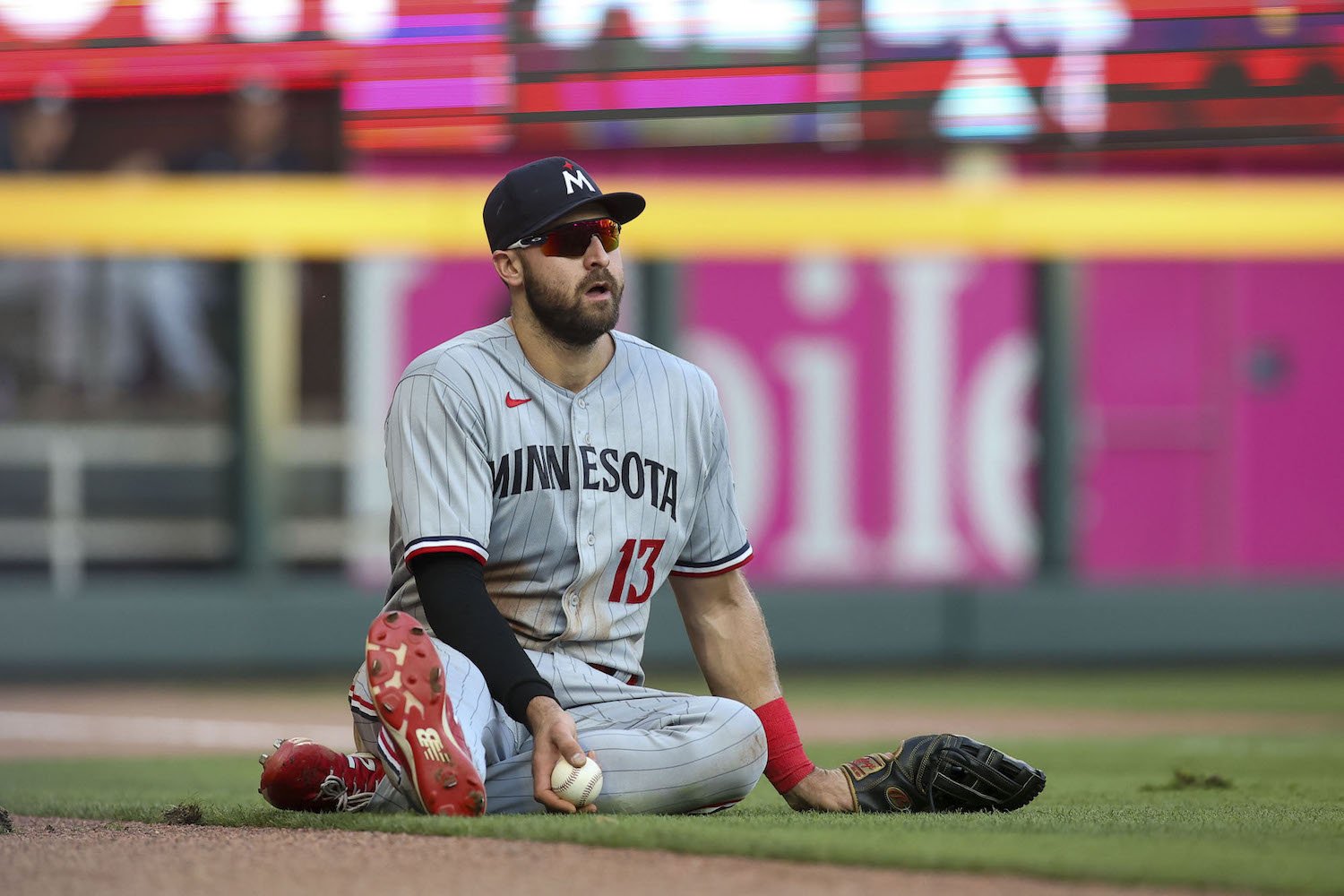 Stubbornness is a polarizing characteristic. Traditionally, people associate stubbornness as a flaw of character: Close-minded, stagnant, and unable to grow with the ever-changing environment surrounding oneself. Stubbornness can stunt progression, leading to an adverse reaction that can affect people on a micro or macro scale, depending on the situation. On the other hand, stubbornness can be great when blended with a sense of discernment and a strong foundation, especially in decision-making professions where multi-billion-dollar corporations' success and public image are on the line. Sound familiar? When stubbornness leads to success, the decision-maker gets praised for being decisive, focused, and having a clear vision. Like most things in life, specific decision-makers and corporations' stubbornness should not be considered exclusively good or bad. To think in absolutes is a fault in thought process, especially when analyzing the ever-changing state of professional sports teams. Notably the 2023 Minnesota Twins. The narrative behind the Minnesota Twins franchise and specific Twins players resides in a constant state of extreme fluctuation, and much of that flux in narrative resides in the decisions, or lack thereof, made by the front office. The Twins front office decision-making process, or lack thereof, has created a new angst amongst Twins fans that has yet to be felt since the front office did essentially nothing to enhance and fortify the World Series-hopeful 2019 Bomba Squad. Although the Twins have done relatively nothing to improve this year's roster besides trading Jorge López for Dylan Floro and claiming Jordan Luplow off waivers from the Toronto Blue Jays, the team benefits from sticking with a handful of players that the majority would have cut bait with long ago. While this is true, the other end of the spectrum exists, and the Twins have also suffered at the hand of their stagnation. Has the good outweighed the bad? Let's take a look. The outcomes manufactured by the Twins stubbornness overlap with the 1967 Spaghetti Western film aptly titled The Good, the Bad, and the Ugly, so it feels appropriate to categorize the decisions made as such. The Good: The Re-emergence of Max Kepler and Emilio Pagán The prominent cases that illustrate the Twins reaping the benefits of sticking with players when the majority believed they should part with them are the recent performances of Kepler and Pagán. Here are Kepler and Pagán's numbers since the end of the All-Star Break: Kepler - .297/.344/.576 (.920), 128 PA, 35 H, 9 2B, 8 HR, .280 ISO, 21.1% K%, 150 wRC+ Pagán - 1.04 ERA, 2.98 FIP, 92.1 LOB%, 4.3 HR/FB, 0.52 HR/9, 61 TBF, 17.1 IP, 5 H, 2 ER, 4 BB, 15 SO Kepler and Pagán have put up elite numbers since the All-Star break, propelling themselves into conversations of being the Twins current best position player and relief pitcher, respectively. Unfortunately, that was not the case earlier this season or last season for Pagán, and when discussing Kepler, this hasn't been the case since his breakout season in 2019. Kepler and Pagán's turnarounds have been encouraging. Although that doesn't guarantee future success, their production since the All-Star game has contributed significantly to the Twins having a 91.2% chance of making the playoffs, according to Fangraphs. The Twins front office's stubbornness has finally appeared to pay off with Kepler and Pagán, but this, unfortunately, isn't the end of their stubborn ways. The Bad: Unwavering Allegiance to Joey Gallo When the Twins signed Gallo to a one-year $11 million contract last December, a sense of optimism came with the addition. Many thought Gallo, like Sonny Gray, was a victim of the formidable pressure Yankees fans put on players. Once Gallo returned to a small market team, he could play loosely, thrive, and hit 41 home runs again, as he did for the Rangers in 2017. Right? Gallo has undoubtedly been better as a member of the Twins than the Yankees, but his numbers are less than inspiring in both cases. Here are Gallo's first 314 plate appearances with the Yankees compared to his first 313 plate appearances with the Twins: Gallo - Yankees - .167/.299/.380 (.679), 314 PA, 44 H, 16 HR, 38.2% K%, .213 ISO, 91 wRC+ Gallo - Twins - .180/.304/.447 (.751), 313 PA, 48 H, 20 HR, 42.8% K%, .267, 107 wRC+ Gallo has been better than many make him out to be and has provided defensive flexibility while hitting the occasional home run. Regardless, the Twins have better options to fulfill his roster spot waiting in the wings at Triple-A. It is reasonable to think that current Saints players Austin Martin, Chris Williams, Trevor Larnach, Anthony Prato, and potentially even recently promoted to Triple-A prospects Yunior Severino, DaShawn Keirsey Jr., and, most notably, Brooks Lee could help the Twins more than Gallo at this moment in the season. The Twins have done a great job at blending young hitters with their core veterans this season, but Gallo feels like the last roadblock that is stunting the development of a future full-time contributor like Martin, Larnach, or even Lee. Rostering Gallo for the rest of the regular season will likely prove insignificant as the Twins are all but locked into a playoff spot with a 91.2% chance of making the playoffs. However, suppose the Twins elect to start Gallo over a promising young player like Matt "Cement Bones" Wallner or Alex Kirilloff in a playoff game or prioritize pinch-hitting him for Royce Lewis or Donovan Solano in the late innings of a playoff game when a right-handed relief pitcher enters the game. In that case, flying too close to the sun could make the Twins like Icarus. The Ugly: Neglecting the Back End of the Bullpen The way the Twins front office's stubbornness has negatively affected the 2023 team the most is through neglecting the back end of the bullpen. While the front office choosing not to improve the back-end bullpen should be considered malpractice, their passivity hasn’t come back to haunt yet due to admirable performance from the front-half of the bullpen. Highlighted by Jhoan Duran, Griffin Jax, Caleb Thielbar, currently inactive Brock Stewart, Floro, and the previously mentioned Pagán, the Twins, according to Fangraphs, have the 22nd-ranked bullpen generating 2.1 fWAR. While the combination of Duran, Jax, Thielbar, Pagán, and Floro, to an extent, have performed well, they account for only five-eighths of the bullpen, leaving three bullpen spots relatively unclaimed and lacking production. Jordan Balazovic, Josh Winder, and Cole Sands currently fill the final three bullpen spots. However, their jobs are in a highly dynamic spot, as all three of these relievers could get optioned back to Triple-A St. Paul at any moment. A playoff team's sixth-best reliever has to be better than the likes of Balazovic, Winder, and Sands. The five other American League teams currently owning playoff spots are the Baltimore Orioles, Texas Rangers, Tampa Bay Rays, Houston Astros, and Seattle Mariners. While each team has relief pitching-induced shortcomings, they have established bullpens that most would deem playoff-ready and more well-rounded than the Twins. To put this into perspective, here is how much fWAR each playoff team's sixth, seventh, and eighth options have generated combined compared to the Twins with seeding: Orioles - Danny Coulombe, Cionel Pérez, Nick Vespi (1.5 fWAR) Rangers - Chris Stratton, Brock Burke, Grant Anderson (1.6 fWAR) Twins - Balazovic, Winder, Sands (-0.4 fWAR) Rays - Jake Diekman, Shawn Armstrong, Jacob Lopez (1.1 fWAR) Astros - Ryne Stanek, Rafael Montero, Seth Martinez (0.3 fWAR) Mariners - Tayler Saucedo, Isaiah Campbell, Eduard Bazardo (0.5 fWAR) While some of the advantages appear incremental, it cannot be understated how much less productive the bottom half of the Twins bullpen has performed in comparison to the other playoff-caliber teams in the American League. The Twins front office purposely rejected two opportunities to improve and fortify their bullpen by not acquiring a reliable veteran set-up man this past offseason and by not trading for another veteran relief arm to complement the acquisition of Floro. Electing to have faith in unreliable young relief options like Balazovic, Winder, Sands, Jovani Moran, and Oliver Ortega has proved to be the front office's greatest fault this season. Will it come back to haunt them in the playoffs? That remains unanswered, but if it does it is essential to note that it was entirely avoidable. The Twins front office has expressed a sense of stubbornness regarding roster decisions this season. While it will likely prove to be insignificant the rest of the regular season, it has the risk of being their Achilles heel come the post-season. What do you make of the Twins front office's stubbornness? Has it worked in their favor? Do you think they will come to regret it? Comment below.
- 32 comments
-
- 7
-
-

-
- max kepler
- emilio pagan
- (and 3 more)
-
It's all good!


