



Cody Schoenmann
-
Posts
768 -
Joined
-
Last visited
-
Days Won
1
Content Type
Profiles
News
Minnesota Twins Videos
2026 Minnesota Twins Top Prospects Ranking
2022 Minnesota Twins Draft Picks
Minnesota Twins Free Agent & Trade Rumors, Notes, & Tidbits
Guides & Resources
2023 Minnesota Twins Draft Picks
The Minnesota Twins Players Project
2024 Minnesota Twins Draft Picks
2025 Minnesota Twins Draft Pick Tracker
2026 Minnesota Twins Draft Tracker: Picks & Bonuses
Forums
Blogs
Events
Store
Downloads
Gallery
Everything posted by Cody Schoenmann
-
 The only declaration I make in the piece is that Taylor is an elite defensive centerfielder, which he is. I just analyzed his unexpected power surge and why I think it is happening. I never said whether I think he is good or bad offensively and I never said he was a starter on a great team.
 -
When the Twins traded for Michael A. Taylor in January, they expected to get an elite defensive centerfielder who provides a relatively productive bottom-of-the-order bat. Taylor has fit that bill to a tee. What the Twins likely didn't foresee was Taylor hitting for power. Where is Taylor's power surge coming from? Image courtesy of Jeff Curry - USA TODAY Sports Those who consume baseball on a grand scale tend to fall into the habit of putting players in boxes. For example, all who follow baseball closely view Martin Maldonado of the Astros strictly as a defensive catcher. That's where his value is, and if his defensive prowess were to decline to even average, he would likely no longer be an active Major League Baseball player. But what about when a player deviates from one or multiple preconceived notions placed on them and begins to decline or excel in a rather unexpected area of their game? This precise phenomenon is currently happening to Minnesota Twins centerfielder Michael A. Taylor. Throughout his almost ten-year Major League career, Taylor has garnered the reputation of being a defensive specialist in centerfield who hits for singles and the occasional extra-base hit with home runs coming sparingly. While maintaining a level of elite defense in centerfield, illustrated by currently possessing eight Outs Above Average (OAA), which ranks him seventh out of 42 qualified centerfielders, Taylor has added a new element to his game in his first year as a member of the Twins: power. When looking at centerfielders with at least 300 plate appearances, Taylor currently ranks seventh out of 27 centerfielders with an Isolated Power (ISO) of .206. To put this into perspective, here are the ten leaders in ISO for centerfielders: (Note: League average ISO for centerfielders stands at .168) Luis Robert Jr., White Sox - .291 Chas McCormick, Astros - .248 Jack Suwinski, Pirates - .243 Corbin Carroll, Diamondbacks - .232 Mike Trout, Angels - .230 Cody Bellinger, Cubs -.223 Taylor, Twins - .206 Cedric Mullins, Orioles - .195 Jarren Duran, Red Sox - .191 Julio Rodriguez, Mariners - .187 Admittedly, there is a significant drop off of .17 points from Bellinger to Taylor. Regardless, the fact that he is above star players like Mullins and Rodriguez and keeping company with some of the league's most recognizable power hitters in Bellinger and Trout is nothing to scoff at. Taylor sitting top ten in ISO for centerfielders is unexpected, and his career norms reiterate that notion. After taking out the 60-game 2020 season, where Taylor generated an ISO of .228 in just 99 plate appearances, here are Taylor's ISO numbers over the past five seasons: 2018, Nationals - (.130) 2019, Nationals - (.114) 2021, Royals - (.112) 2022, Royals - (.104) 2023, Twins - (presently .206) Subtracting 2020, Taylor's average ISO from 2018-2022 is .115, which is .46 points below the league average of that stretch of .161. Why is Taylor Suddenly Hitting for Power? Anytime an element of a hitter's game drastically changes out of seemingly nowhere, the first place one should look for answers is whether or not that player has changed something in their approach or their mechanics. In Taylor's case, there appears to be a noteworthy change in both. First, let's look at Taylor's approach. Through 320 plate appearances, Taylor has struck out 109 times and currently owns a Strikeout Percentage (K%) of 34.1%. Taylor's K% of 34.1% is on track to be 10.2 percentage points higher than the K% he had last year with the Royals, which was 23.9%. It is clear that Taylor, whether through the Twins' advice, on his account, or both, is sacrificing contact for power. Although Taylor's batting average and on-base percentage are lower than his career norms, he has hit 16 home runs so far in 2023 and is on track to surpass his career high in home runs which he set with the Washington Nationals in 2017, hitting 19 home runs. Next, let's look at Taylor's swing mechanics. When a hitter makes drastic changes in their hitting mechanics, there tends to be an increase or decline in specific ability-based statistics that back the change they underwent. In Taylor's case, there is a trend of mild-to-moderate change in specific power-relevant statistics. The four power-relevant statistics that Taylor has incurred a mild-to-moderate deviation in are Max Exit Velocity (Max EV), Expected Slugging (XSLG), Barrel Percentage (Barrel %), and Launch Angle. Here are Taylor's numbers in the four statistics provided compared to his averages from 2018-2022, once again subtracting 2020: Max EV 2018-2022 - (110.6) 2023 - (113.1) XSLG 2018-2022 - (.365) 2023 - (.437) Barrel % 2018-2022 - (6.7) 2023 - (13.2) Launch Angle 2018-2022 - (10.3) 2023 - (12.1) In all four statistics provided, Taylor's 2023 numbers are greater than his averages from 2018-2022, with sharp increases in his XSLG and Barrel % standing out in particular. While many factors go into the creation and continued development of one's swing, sometimes minor adjustments can lead to great discoveries and surprising results. After Taylor hit a two-run home run against the Pittsburgh Pirates on Friday night, Twins play-by-play announcer Dick Bremer stated that Taylor attributes his newfound power to utilizing a new leg kick, a technique he didn't use while with the Kansas City Royals. The logic behind hitters using a leg kick is to ensure they use their body's lower half. Occasionally, hitters find themselves not using their lower half in their swing mechanics, leading to a decrease in power, and that may have been the situation Taylor was finding himself in before joining the Twins. As shown in this video, when Taylor was with the Royals, the lower half of his body was essentially motionless. A stark contrast to the home run he hit as a member of the Twins. By incorporating a leg kick, Taylor activates his entire lower body once his foot plants on the ground. When a player like Taylor gets his quick and twitchy upper half in unison with a strong lower half acting as a foundation, then power outbreaks, like the one Taylor is going through right now, are more likely to occur. As the season continues, the Twins and Taylor will look to continue to benefit from Taylor's newfound leg kick as he brings an element of power from the bottom of the lineup, something very few teams can say they have. Are you impressed by Taylor's unexpected power surge? Comment below. View full article
-
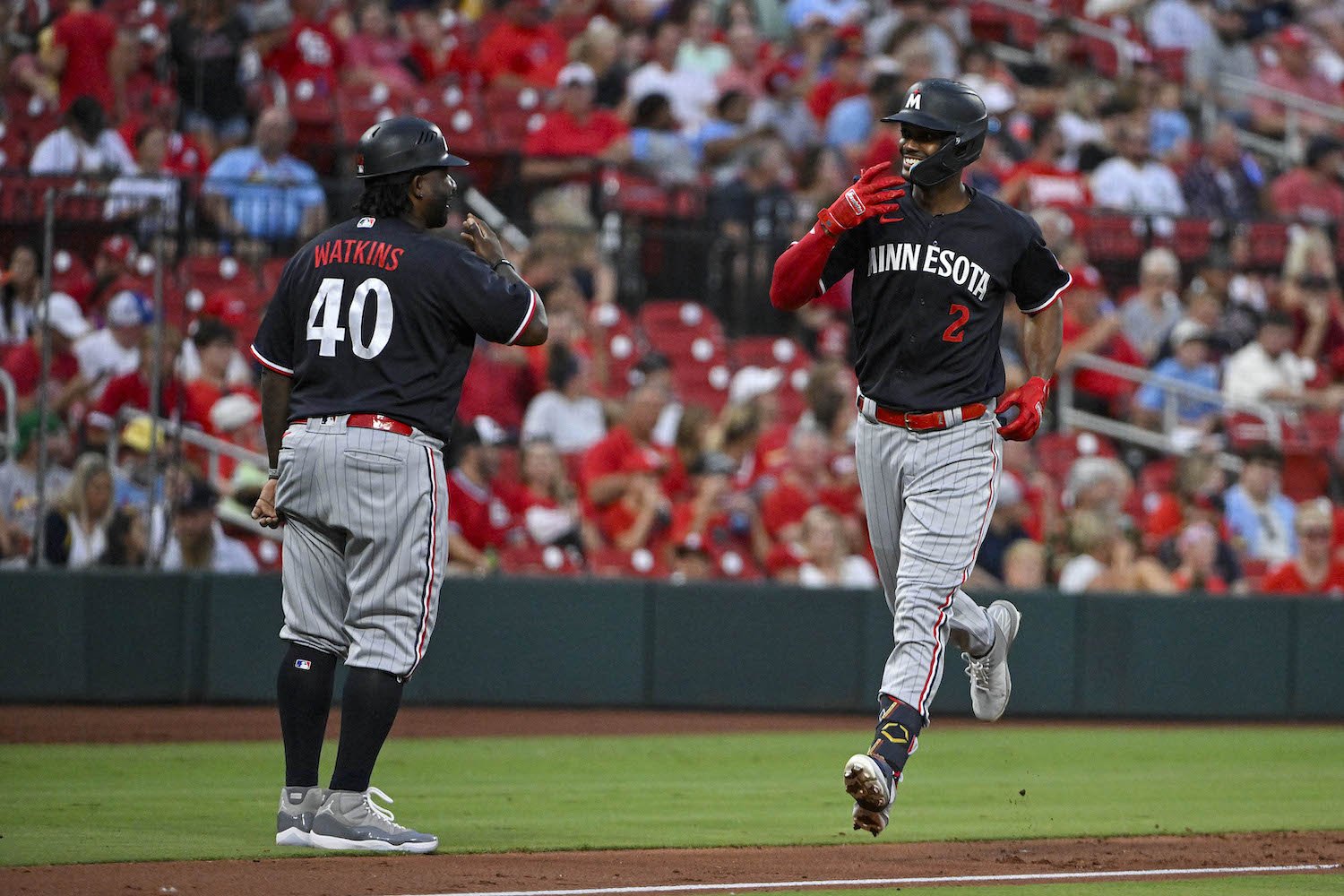 Those who consume baseball on a grand scale tend to fall into the habit of putting players in boxes. For example, all who follow baseball closely view Martin Maldonado of the Astros strictly as a defensive catcher. That's where his value is, and if his defensive prowess were to decline to even average, he would likely no longer be an active Major League Baseball player. But what about when a player deviates from one or multiple preconceived notions placed on them and begins to decline or excel in a rather unexpected area of their game? This precise phenomenon is currently happening to Minnesota Twins centerfielder Michael A. Taylor. Throughout his almost ten-year Major League career, Taylor has garnered the reputation of being a defensive specialist in centerfield who hits for singles and the occasional extra-base hit with home runs coming sparingly. While maintaining a level of elite defense in centerfield, illustrated by currently possessing eight Outs Above Average (OAA), which ranks him seventh out of 42 qualified centerfielders, Taylor has added a new element to his game in his first year as a member of the Twins: power. When looking at centerfielders with at least 300 plate appearances, Taylor currently ranks seventh out of 27 centerfielders with an Isolated Power (ISO) of .206. To put this into perspective, here are the ten leaders in ISO for centerfielders: (Note: League average ISO for centerfielders stands at .168) Luis Robert Jr., White Sox - .291 Chas McCormick, Astros - .248 Jack Suwinski, Pirates - .243 Corbin Carroll, Diamondbacks - .232 Mike Trout, Angels - .230 Cody Bellinger, Cubs -.223 Taylor, Twins - .206 Cedric Mullins, Orioles - .195 Jarren Duran, Red Sox - .191 Julio Rodriguez, Mariners - .187 Admittedly, there is a significant drop off of .17 points from Bellinger to Taylor. Regardless, the fact that he is above star players like Mullins and Rodriguez and keeping company with some of the league's most recognizable power hitters in Bellinger and Trout is nothing to scoff at. Taylor sitting top ten in ISO for centerfielders is unexpected, and his career norms reiterate that notion. After taking out the 60-game 2020 season, where Taylor generated an ISO of .228 in just 99 plate appearances, here are Taylor's ISO numbers over the past five seasons: 2018, Nationals - (.130) 2019, Nationals - (.114) 2021, Royals - (.112) 2022, Royals - (.104) 2023, Twins - (presently .206) Subtracting 2020, Taylor's average ISO from 2018-2022 is .115, which is .46 points below the league average of that stretch of .161. Why is Taylor Suddenly Hitting for Power? Anytime an element of a hitter's game drastically changes out of seemingly nowhere, the first place one should look for answers is whether or not that player has changed something in their approach or their mechanics. In Taylor's case, there appears to be a noteworthy change in both. First, let's look at Taylor's approach. Through 320 plate appearances, Taylor has struck out 109 times and currently owns a Strikeout Percentage (K%) of 34.1%. Taylor's K% of 34.1% is on track to be 10.2 percentage points higher than the K% he had last year with the Royals, which was 23.9%. It is clear that Taylor, whether through the Twins' advice, on his account, or both, is sacrificing contact for power. Although Taylor's batting average and on-base percentage are lower than his career norms, he has hit 16 home runs so far in 2023 and is on track to surpass his career high in home runs which he set with the Washington Nationals in 2017, hitting 19 home runs. Next, let's look at Taylor's swing mechanics. When a hitter makes drastic changes in their hitting mechanics, there tends to be an increase or decline in specific ability-based statistics that back the change they underwent. In Taylor's case, there is a trend of mild-to-moderate change in specific power-relevant statistics. The four power-relevant statistics that Taylor has incurred a mild-to-moderate deviation in are Max Exit Velocity (Max EV), Expected Slugging (XSLG), Barrel Percentage (Barrel %), and Launch Angle. Here are Taylor's numbers in the four statistics provided compared to his averages from 2018-2022, once again subtracting 2020: Max EV 2018-2022 - (110.6) 2023 - (113.1) XSLG 2018-2022 - (.365) 2023 - (.437) Barrel % 2018-2022 - (6.7) 2023 - (13.2) Launch Angle 2018-2022 - (10.3) 2023 - (12.1) In all four statistics provided, Taylor's 2023 numbers are greater than his averages from 2018-2022, with sharp increases in his XSLG and Barrel % standing out in particular. While many factors go into the creation and continued development of one's swing, sometimes minor adjustments can lead to great discoveries and surprising results. After Taylor hit a two-run home run against the Pittsburgh Pirates on Friday night, Twins play-by-play announcer Dick Bremer stated that Taylor attributes his newfound power to utilizing a new leg kick, a technique he didn't use while with the Kansas City Royals. The logic behind hitters using a leg kick is to ensure they use their body's lower half. Occasionally, hitters find themselves not using their lower half in their swing mechanics, leading to a decrease in power, and that may have been the situation Taylor was finding himself in before joining the Twins. As shown in this video, when Taylor was with the Royals, the lower half of his body was essentially motionless. A stark contrast to the home run he hit as a member of the Twins. By incorporating a leg kick, Taylor activates his entire lower body once his foot plants on the ground. When a player like Taylor gets his quick and twitchy upper half in unison with a strong lower half acting as a foundation, then power outbreaks, like the one Taylor is going through right now, are more likely to occur. As the season continues, the Twins and Taylor will look to continue to benefit from Taylor's newfound leg kick as he brings an element of power from the bottom of the lineup, something very few teams can say they have. Are you impressed by Taylor's unexpected power surge? Comment below.
 -
With the Twins operating short-handed at first base, they have resorted to giving a majority of starts to Joey Gallo, Donovan Solano, and even Christian Vázquez. Should hot-hitting Ryan Jeffers get an opportunity at first base? Image courtesy of Jesse Johnson-USA TODAY Sports After the All-Star break, the Twins appeared set to roll out a rotation of Joey Gallo, Donovan Solano, and Alex Kirilloff at first base, with Kirilloff being the primary starter. Initially, the Twins' plan worked flawlessly, highlighted by Kirilloff winning AL Player of the Week for July 17-23, hitting .345/.394/.793 (1.187) with three home runs, two doubles, a triple, and four multi-hit games. Unfortunately, Kirilloff was placed on the 10-day IL with a shoulder issue at the end of July and has been out since. Twins Current Situation at First Base With Kirilloff placed on the 10-day IL, the Twins have given substantial playing time to Gallo and Solano. On the surface, Gallo and Solano's numbers since Kirilloff went on the 10-day IL are shockingly incredible. Let's look at their numbers since July 30. Joey Gallo: .240/.406/.600 (1.006), 32 PA, six hits, three home runs, 40.6% Strikeout Percentage (K%), .360 Isolated Power (ISO), 177 wRC+ Donovan Solano: .500/.538/.542 (1.080), 26 PA, 12 hits, zero home runs, 15.4% K%, .042 ISO, 213 wRC+ Initially, these numbers are incredible. But, if you dig below the surface, there is more than meets the eye. If you were to take out Gallo's 4-for-4 performance against the Philadelphia Phillies last weekend, he is hitting .095/.296/.238 (.534) in 27 plate appearances with two hits, zero home runs, a 48.1% K%, .143 ISO, and a wRC+ of just 64. Gallo's incredible 4-for-4 game exemplifies how one substantial game can manipulate how great or lackluster a player's numbers can look over a small sample size, but it also changed how those who follow the Twins perceive Gallo, at least in the short term. If Gallo hadn't gone 4-for-4 with a walk and instead went 1-or-4 with a single and a walk, those who follow the Twins would be just as eager to move on from Gallo as they were less than a week ago. Gallo has bought himself more time, but his one-off outstanding performance should not be seen as the start of an upward trend for Gallo but as a one-off occurrence that likely will not happen again. On the other hand, Solano has been a solid player, and the numbers he has put up since Kirilloff was placed on the IL aren't nearly the mirage that Gallo's are. The only problem is that Solano sustained a right knee sprain while facing the Detroit Tigers last week, which looked much more severe during the initial play. Solano returned on Sunday, going 3-for-5 against the Philadelphia Phillies. Despite hitting well, Solano looked like he was physically struggling during the game showing signs of pain during his at-bats. In the game that Solano returned to the Twins lineup, catcher Christian Vázquez played first base. Vázquez starting at first base will not become a normal occurrence, but it illustrates how the Twins are desperately attempting to find competent players to play at first base for the time being. Another new element in this equation is Jordan Luplow. Despite being labeled as a first baseman, Luplow has only played 113 1/3 major-league innings at first base, with 107 1/3 of those innings coming with the Tampa Bay Rays in 2021. Luplow, in theory, could play first base, but the Twins seem inclined to play him in left field against left-handed starting pitching, as evidenced by the fact that he has played 27 innings in left field and just three innings at first base with the Twins. Gallo, Solano, Vázquez, and Luplow would work as a rotation at first base, but what if another member of the Twins' 26-man roster could play first base? And what if that player was stuck in a positional timeshare with the aforementioned Vázquez yet deserving more at-bats? Why Not Ryan Jeffers? Jeffers has been incredible since Kirilloff was placed on the 10-day IL and deserves increased playing time, and this is where he could slot in perfectly at first base. Here are Jeffers numbers since July 30: .278/.381/.694 (1.075), 42 PA, ten hits, four home runs, 33.3% K%, .417 ISO, 191 wRC+ Jeffers' numbers are impressive and fit the criteria of what an above-average power-hitting first baseman's ideal statistics would look like. Despite fitting the first base archetype, there is one caveat. Jeffers, 26, has played five professional innings at first base, which came in 2021 with the Triple-A St. Paul Saints. Jeffers' lack of playing time at first base is a reason for concern, and despite popular belief, first base isn't an elementary position that anyone can play adequately. There is nuance and complex positioning assignments that can be difficult for players to learn, especially on the fly. That being said, first base is one of the lowest positions on the defensive spectrum and, as shown with Vázquez, the Twins appear willing to push their limits at the position. So, why not put a player who has been contributing at a near-elite offensive level for quite some time? Another element of value that Jeffers possesses is that he is a right-handed hitter. Playing the right-handed hitting Jeffers at first base would give the Twins more flexibility for when they platoon versus left-handed starting pitchers. For example, the Twins could play Jeffers at first base, Vázquez at catcher, Solano at designated hitter, Luplow at left field, and so on. The Twins are in a pinch at first base and have been forced to play Gallo nearly every game, even when facing left-handed pitching. With Solano still hurt and Kirilloff likely not returning until at least late September, the Twins may be forced to take an unconventional approach to the position for the season's final months. Instead of continuing to give significant at-bats to a struggling Gallo and an injured Solano or being forced to play Vázquez at a position where his defensive value is essentially snuffed, the Twins could get the best of both worlds by playing the offensively surging and wide-framed Jeffers. Do you think the Twins should give Ryan Jeffers a look at first base? Comment below. View full article
-
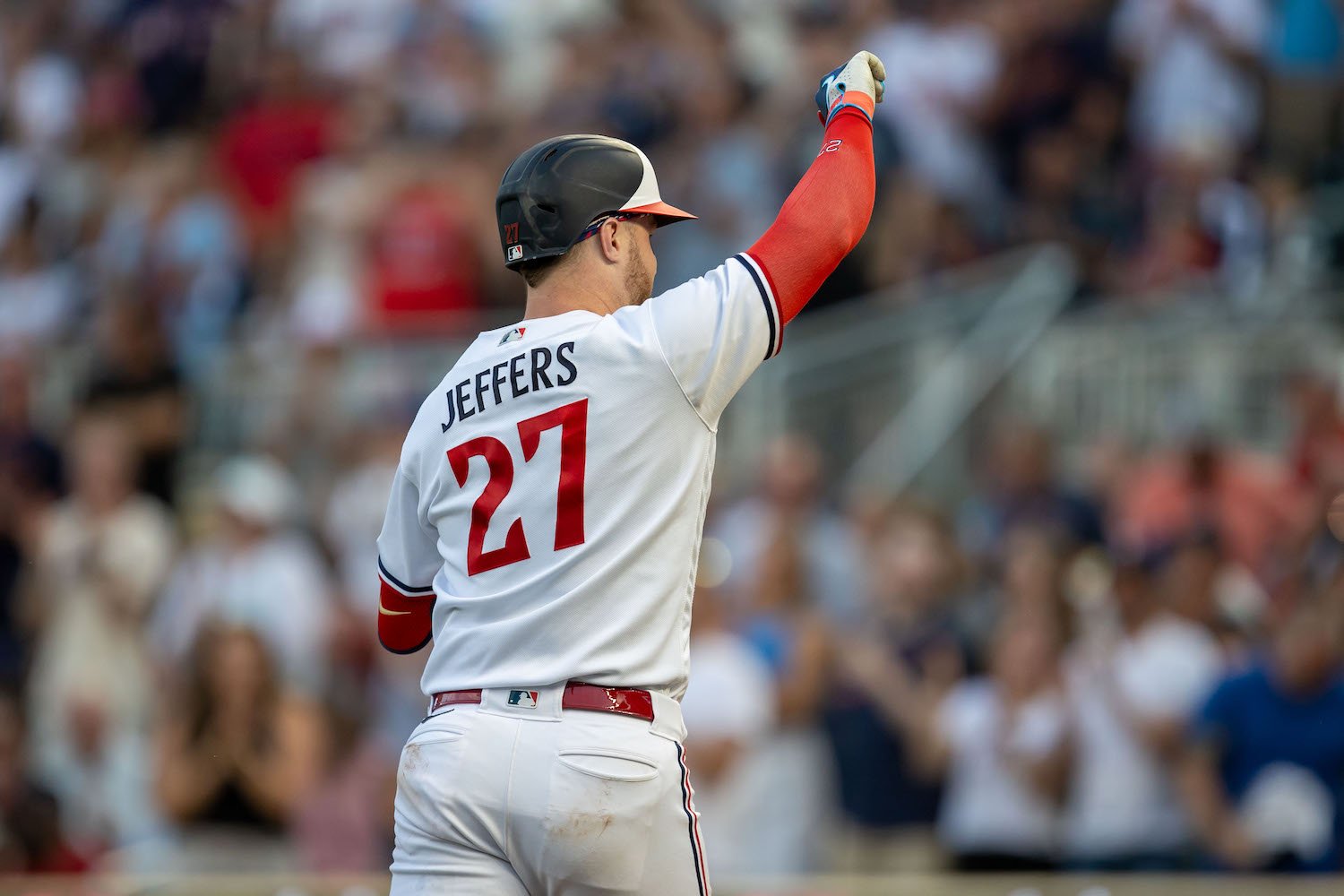 After the All-Star break, the Twins appeared set to roll out a rotation of Joey Gallo, Donovan Solano, and Alex Kirilloff at first base, with Kirilloff being the primary starter. Initially, the Twins' plan worked flawlessly, highlighted by Kirilloff winning AL Player of the Week for July 17-23, hitting .345/.394/.793 (1.187) with three home runs, two doubles, a triple, and four multi-hit games. Unfortunately, Kirilloff was placed on the 10-day IL with a shoulder issue at the end of July and has been out since. Twins Current Situation at First Base With Kirilloff placed on the 10-day IL, the Twins have given substantial playing time to Gallo and Solano. On the surface, Gallo and Solano's numbers since Kirilloff went on the 10-day IL are shockingly incredible. Let's look at their numbers since July 30. Joey Gallo: .240/.406/.600 (1.006), 32 PA, six hits, three home runs, 40.6% Strikeout Percentage (K%), .360 Isolated Power (ISO), 177 wRC+ Donovan Solano: .500/.538/.542 (1.080), 26 PA, 12 hits, zero home runs, 15.4% K%, .042 ISO, 213 wRC+ Initially, these numbers are incredible. But, if you dig below the surface, there is more than meets the eye. If you were to take out Gallo's 4-for-4 performance against the Philadelphia Phillies last weekend, he is hitting .095/.296/.238 (.534) in 27 plate appearances with two hits, zero home runs, a 48.1% K%, .143 ISO, and a wRC+ of just 64. Gallo's incredible 4-for-4 game exemplifies how one substantial game can manipulate how great or lackluster a player's numbers can look over a small sample size, but it also changed how those who follow the Twins perceive Gallo, at least in the short term. If Gallo hadn't gone 4-for-4 with a walk and instead went 1-or-4 with a single and a walk, those who follow the Twins would be just as eager to move on from Gallo as they were less than a week ago. Gallo has bought himself more time, but his one-off outstanding performance should not be seen as the start of an upward trend for Gallo but as a one-off occurrence that likely will not happen again. On the other hand, Solano has been a solid player, and the numbers he has put up since Kirilloff was placed on the IL aren't nearly the mirage that Gallo's are. The only problem is that Solano sustained a right knee sprain while facing the Detroit Tigers last week, which looked much more severe during the initial play. Solano returned on Sunday, going 3-for-5 against the Philadelphia Phillies. Despite hitting well, Solano looked like he was physically struggling during the game showing signs of pain during his at-bats. In the game that Solano returned to the Twins lineup, catcher Christian Vázquez played first base. Vázquez starting at first base will not become a normal occurrence, but it illustrates how the Twins are desperately attempting to find competent players to play at first base for the time being. Another new element in this equation is Jordan Luplow. Despite being labeled as a first baseman, Luplow has only played 113 1/3 major-league innings at first base, with 107 1/3 of those innings coming with the Tampa Bay Rays in 2021. Luplow, in theory, could play first base, but the Twins seem inclined to play him in left field against left-handed starting pitching, as evidenced by the fact that he has played 27 innings in left field and just three innings at first base with the Twins. Gallo, Solano, Vázquez, and Luplow would work as a rotation at first base, but what if another member of the Twins' 26-man roster could play first base? And what if that player was stuck in a positional timeshare with the aforementioned Vázquez yet deserving more at-bats? Why Not Ryan Jeffers? Jeffers has been incredible since Kirilloff was placed on the 10-day IL and deserves increased playing time, and this is where he could slot in perfectly at first base. Here are Jeffers numbers since July 30: .278/.381/.694 (1.075), 42 PA, ten hits, four home runs, 33.3% K%, .417 ISO, 191 wRC+ Jeffers' numbers are impressive and fit the criteria of what an above-average power-hitting first baseman's ideal statistics would look like. Despite fitting the first base archetype, there is one caveat. Jeffers, 26, has played five professional innings at first base, which came in 2021 with the Triple-A St. Paul Saints. Jeffers' lack of playing time at first base is a reason for concern, and despite popular belief, first base isn't an elementary position that anyone can play adequately. There is nuance and complex positioning assignments that can be difficult for players to learn, especially on the fly. That being said, first base is one of the lowest positions on the defensive spectrum and, as shown with Vázquez, the Twins appear willing to push their limits at the position. So, why not put a player who has been contributing at a near-elite offensive level for quite some time? Another element of value that Jeffers possesses is that he is a right-handed hitter. Playing the right-handed hitting Jeffers at first base would give the Twins more flexibility for when they platoon versus left-handed starting pitchers. For example, the Twins could play Jeffers at first base, Vázquez at catcher, Solano at designated hitter, Luplow at left field, and so on. The Twins are in a pinch at first base and have been forced to play Gallo nearly every game, even when facing left-handed pitching. With Solano still hurt and Kirilloff likely not returning until at least late September, the Twins may be forced to take an unconventional approach to the position for the season's final months. Instead of continuing to give significant at-bats to a struggling Gallo and an injured Solano or being forced to play Vázquez at a position where his defensive value is essentially snuffed, the Twins could get the best of both worlds by playing the offensively surging and wide-framed Jeffers. Do you think the Twins should give Ryan Jeffers a look at first base? Comment below.
- 93 comments
-
- 2
-

-
- ryan jeffers
- joey gallo
- (and 3 more)
-
Brooks LeeWalker JenkinsEmmanuel RodriguezMarco RayaDavid FestaCharlee SotoAustin MartinDaShawn Keirsey JrBrandon WinokurYunior SeverinoLuke KeaschallByron ChourioTanner SchobelBrent HeadrickAlerick SoularieSimeon Woods RichardsonCory LewisMatt CanterinoZebby MatthewsKala'i Rosario Hendry Chivilli is another name to keep an eye on in the coming years.
-
Brooks LeeWalker JenkinsEmmanuel RodriguezMarco RayaDavid FestaCharlee SotoAustin MartinDaShawn Keirsey JrBrandon WinokurYunior SeverinoLuke KeaschallByron ChourioTanner SchobelBrent HeadrickAlerick SoularieSimeon Woods RichardsonCory LewisMatt CanterinoZebby MatthewsKala'i Rosario Hendry Chivilli is another name to keep an eye on in the coming years.
-
great insight!
-
Despite the pleas of many to move him off the position, the Twins appear inclined to keep Edouard Julien at second base for at least the rest of the 2023 season and potentially long-term. Here is why I think that is the right decision. Image courtesy of Matt Blewett-USA TODAY Sports Watching Edouard Julien hit is a joy. Julien works counts, doesn't swing at balls outside of the zone, almost to a detriment to himself, and drives pitches to all sides of the field with power and authority. Watching Julien play defense earlier this season was a different story. Julien showed limited range, a below-average arm, evidenced by his 17th-percentile arm strength, and the ability to make relatively easy plays look difficult. Despite repeatedly demonstrating defensive shortcomings, that hasn't stopped the Twins from putting Julien at second base on nearly an everyday basis. Not only do the Twins continue to deploy Julien at second base, they have taken drastic measures while doing so. They asked Jorge Polanco, who had been the Twins starting second baseman since 2020, to shift over to third base. The Twins will not move Julien off of second base in 2023, and it wouldn't be rash to think he is the Twins' best option for the future too. Understandably, most who follow the Twins will find that statement ludicrous. Julien's defensive limitations have cost Twins pitchers several times. Whether not being able to field somewhat routine plays cleanly or struggling to turn double plays, opposing teams have capitalized on Julien's defensive miscues by extending innings and scoring opportunities. While this was the case earlier in the season, Julien appears to be turning a corner defensively. The routine plays don't feel like such a struggle, double plays are getting turned more consistently, and his range seems to be expanding, as shown by this highlight play he made against the Philadelphia Phillies on Sunday. To be clear, Julien will likely never become an above-average fielder at second base. But he is becoming at least passable, especially when considering his bat. Historically, second base has been a lackluster offensive position, highlighted by power deficiency and the inability to impact the game like other position players. While things have changed, especially with current second basemen Marcus Semien, Nolan Gorman, and more breaking the mold and hitting for power, second base remains a relatively offensively deficient position. Like Semien and Gorman, Julien is another example of a player breaking the mold of what a second baseman can do with the bat. Maybe in time, he can hit like Brian Dozier or Jeff Kent. Here are Julien's offensive numbers compared to the league average for second baseman: On-Base Percentage (OBP) League Average - (.319) Julien - (.378) Slugging Percentage (SLG) League Average - (.397) Julien - (.479) Isolated Power (ISO) League Average - (.145) Julien - (.198) Batting Average on Balls in Play (BABIP) League Average - (.293) Julien - (.383) Weighted On Base Average (wOBA) League Average - (.312) Julien - (.371) wRC+ League Average - (97) Julien - (140) Julien is above league average in all six advanced analytics provided. Also, Julien is over 50 points higher than the league average in every statistic besides wRC+, where he is 43 points higher. The only statistic that Julien is worse than the league average is Strikeout Percentage (K%). The league average K% for second baseman is 19.8%, while Julien currently owns a K% of 29.8%. Julien possesses the offensive profile of a left-handed hitting first baseman. Applying this profile at the traditionally offensively-deficient position of second base provides excellent value, even if it comes at the expense of below-average defensive performance. Although Julien is a below-average defender at second base that doesn’t mean he is unplayable at the position. Here is how Julien ranks compared to other Twins second baseman when it comes to Outs Above Average (OAA) this season:(Note: An Average OAA is Zero (0)) Kyle Farmer (1 OAA) Julien (-3 OAA) Polanco (-5 0AA) Surprisingly, Julien has been a better defensive second baseman than Polanco this season and is just a little behind Farmer. Despite being a slightly-worse defender than Farmer, like most second-base options in Major League Baseball, he has been a significantly better offensive option. Opting for marginal defensive improvement over above-average offensive production at a below-average offensive position makes no sense, and the Twins decision makers appear to agree. Moving Julien to a position like first base, left field, or designated hitter does make sense, but demoting him to a position so low on the defensive spectrum diminishes the significant value his bat provides while playing second base. With the return of Royce Lewis imminent, the Twins' infield will become even more crowded. Carlos Correa will continue to play shortstop as long as he is healthy, but the remaining defensive positions will remain a rotating door. Benching Julien when facing a left-handed pitcher in favor of Polanco or Farmer while having Lewis play third base is logical, and the Twins should continue doing so. But when facing right-handed pitching, the Twins need to continue playing Julien at second base, even if it comes at the expense of benching veteran players like Polanco and Farmer. Julien's above-average offensive production at second base and improving defense warrant him to be the primary second baseman for the rest of the 2023 season. Does Julien providing above-average offensive production at second base outweigh his defensive shortcomings? Comment below. View full article
- 39 replies
-
- 1
-
-
- edouard julien
- jorge polanco
- (and 1 more)
-
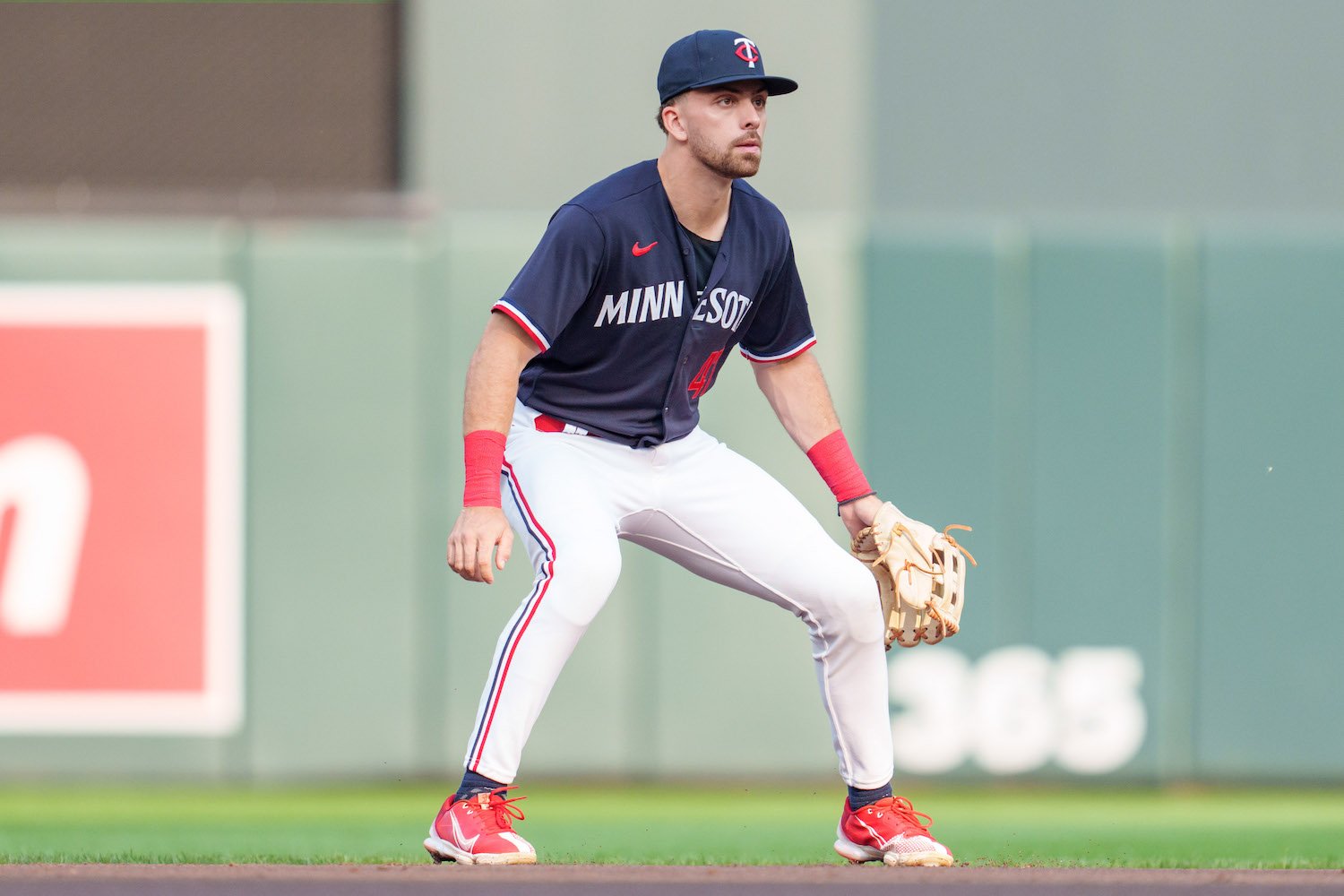 Watching Edouard Julien hit is a joy. Julien works counts, doesn't swing at balls outside of the zone, almost to a detriment to himself, and drives pitches to all sides of the field with power and authority. Watching Julien play defense earlier this season was a different story. Julien showed limited range, a below-average arm, evidenced by his 17th-percentile arm strength, and the ability to make relatively easy plays look difficult. Despite repeatedly demonstrating defensive shortcomings, that hasn't stopped the Twins from putting Julien at second base on nearly an everyday basis. Not only do the Twins continue to deploy Julien at second base, they have taken drastic measures while doing so. They asked Jorge Polanco, who had been the Twins starting second baseman since 2020, to shift over to third base. The Twins will not move Julien off of second base in 2023, and it wouldn't be rash to think he is the Twins' best option for the future too. Understandably, most who follow the Twins will find that statement ludicrous. Julien's defensive limitations have cost Twins pitchers several times. Whether not being able to field somewhat routine plays cleanly or struggling to turn double plays, opposing teams have capitalized on Julien's defensive miscues by extending innings and scoring opportunities. While this was the case earlier in the season, Julien appears to be turning a corner defensively. The routine plays don't feel like such a struggle, double plays are getting turned more consistently, and his range seems to be expanding, as shown by this highlight play he made against the Philadelphia Phillies on Sunday. To be clear, Julien will likely never become an above-average fielder at second base. But he is becoming at least passable, especially when considering his bat. Historically, second base has been a lackluster offensive position, highlighted by power deficiency and the inability to impact the game like other position players. While things have changed, especially with current second basemen Marcus Semien, Nolan Gorman, and more breaking the mold and hitting for power, second base remains a relatively offensively deficient position. Like Semien and Gorman, Julien is another example of a player breaking the mold of what a second baseman can do with the bat. Maybe in time, he can hit like Brian Dozier or Jeff Kent. Here are Julien's offensive numbers compared to the league average for second baseman: On-Base Percentage (OBP) League Average - (.319) Julien - (.378) Slugging Percentage (SLG) League Average - (.397) Julien - (.479) Isolated Power (ISO) League Average - (.145) Julien - (.198) Batting Average on Balls in Play (BABIP) League Average - (.293) Julien - (.383) Weighted On Base Average (wOBA) League Average - (.312) Julien - (.371) wRC+ League Average - (97) Julien - (140) Julien is above league average in all six advanced analytics provided. Also, Julien is over 50 points higher than the league average in every statistic besides wRC+, where he is 43 points higher. The only statistic that Julien is worse than the league average is Strikeout Percentage (K%). The league average K% for second baseman is 19.8%, while Julien currently owns a K% of 29.8%. Julien possesses the offensive profile of a left-handed hitting first baseman. Applying this profile at the traditionally offensively-deficient position of second base provides excellent value, even if it comes at the expense of below-average defensive performance. Although Julien is a below-average defender at second base that doesn’t mean he is unplayable at the position. Here is how Julien ranks compared to other Twins second baseman when it comes to Outs Above Average (OAA) this season:(Note: An Average OAA is Zero (0)) Kyle Farmer (1 OAA) Julien (-3 OAA) Polanco (-5 0AA) Surprisingly, Julien has been a better defensive second baseman than Polanco this season and is just a little behind Farmer. Despite being a slightly-worse defender than Farmer, like most second-base options in Major League Baseball, he has been a significantly better offensive option. Opting for marginal defensive improvement over above-average offensive production at a below-average offensive position makes no sense, and the Twins decision makers appear to agree. Moving Julien to a position like first base, left field, or designated hitter does make sense, but demoting him to a position so low on the defensive spectrum diminishes the significant value his bat provides while playing second base. With the return of Royce Lewis imminent, the Twins' infield will become even more crowded. Carlos Correa will continue to play shortstop as long as he is healthy, but the remaining defensive positions will remain a rotating door. Benching Julien when facing a left-handed pitcher in favor of Polanco or Farmer while having Lewis play third base is logical, and the Twins should continue doing so. But when facing right-handed pitching, the Twins need to continue playing Julien at second base, even if it comes at the expense of benching veteran players like Polanco and Farmer. Julien's above-average offensive production at second base and improving defense warrant him to be the primary second baseman for the rest of the 2023 season. Does Julien providing above-average offensive production at second base outweigh his defensive shortcomings? Comment below.
- 39 comments
-
- 9
-
-
- edouard julien
- jorge polanco
- (and 1 more)
-
My hope is that other front offices still view Larnach as a prospect rather than a Quad-A player. If Larnach still has the prospect aura around him, he could still net a reasonably substantial return, whether a one-for-one trade or part of a larger package. The Mets were essentially confirmed to be interested in Larnach, and that likely would have been in a trade for either Mark Canha or Tommy Pham. A trade for Canha or Pham would be pretty meager, like you said, but if that's the type of player Larnach may be netting by himself, I could see him being used in a package for a player like Dylan Carlson or Ryan Mountcastle, for example.
-
Personally, I view Larnach more as a trade piece than anything else at this moment. Wallner has supplanted him on the depth chart and i’m 99% sure the Twins are going to pick up Kepler’s $10 million team option for next season. Also, if Larnach doesn’t get traded by next season, I think Keirsey Jr. will also pass him on the OF depth chart.
-
Headrick has had some flashes too. I think he has the ability to become a reliable left-handed short reliever. Will it happen this season? Likely not. But i’m optimistic about next season for him.
- 38 replies
-
- 2
-
-
- ryan jeffers
- edouard julien
- (and 3 more)
-
To add context, Gallo had a wRC+ of 183 from 3/30-4/30. Since 4/30, Gallo has had a wRC+ of 76. The reason Gallo’s wRC+ was so high in April was because of the fact he hit seven home runs. In reality, Gallo is much closer to the 76 wRC+ version of himself rather than the player he was in April. Hopefully he can have another month length stretch like he did in April, but that feels very unlikely.
- 38 replies
-
- 3
-
-
- ryan jeffers
- edouard julien
- (and 3 more)
-
 In the workplace, inexperience often gets viewed as a flaw or a hurdle that those forced to deal with the inexperienced party at hand bear with until milestones get reached, and sustainable progress is made. Once that person reaches a certain threshold of competence, they are then thrust into action and forced to trust their instincts while sharpening the complex skills and concepts they, in the grand scheme of things, very recently learned. Fortunately, in most career paths, mistakes, even on a large scale, are forgiven, and if it takes months or even years for one to feel gratified with how they perform in their career of choice, that is perfectly fine. Unfortunately, the margin for error on a division title-seeking professional sports team is meager. If one makes a mistake, especially on a large scale, they will receive public scrutiny and have that moment dangled over their head for all time. Remember Bill Buckner or, dare I say, Gary Anderson? This level of daunting expectations mixed with unrelenting pressure would make most people fold. Yet, many fanbases expect professional athletes to keep a sense of composure and, if something goes wrong, pick themselves up by their bootstraps and focus on what is ahead. Possessing this specific mind frame is particularly expected of the veteran players on the team. The Twins' best position players entering the 2023 season were expected to be Byron Buxton, Carlos Correa, Max Kepler, Jose Miranda, Jorge Polanco, and off-season acquisitions Kyle Farmer, Joey Gallo, Michael A. Taylor, and Christian Vázquez. Despite playing different positions and having categorically different roles on the team, all of these players, except Miranda, shared one thing: veteran status. Traditionally, veteran players on a team tend to bring a sense of consistency that counteracts the volatile nature of younger players. Unfortunately, that has not been the case for the 2023 Twins. The opposite has been the case. Here is how much wRC+, which is the most comprehensive rate statistic for hitters as it takes into account the weight of offensive action and then adjusts them to the specific ballpark the action took place in, the eight veterans listed above have accumulated: (Note: League average for wRC+ is 100) Buxton (99) Correa (90) Kepler (109) Polanco (96) Farmer (92) Gallo (100) Taylor (89) Vázquez (66) Of the eight veterans listed, only one has generated an above-league-average wRC+, with Kepler creating 9% more runs than the league average. In a microlens, if someone were to state that at the 70% point of the season, seven out of eight of the players that were expected to be primary contributors were performing at a below-league-average rate, one would reasonably assume that the team is also performing at a below-league-average rate and has little to no chance at making the postseason. Oddly enough, the Twins are 59-54, in first place, and hold a 4.5 game lead over the second-place Cleveland Guardians. How has this happened? Initially, much of the credit needs to get handed to the Twins pitching staff. According to Fangraphs, the Twins have the second-best rotation in Major League Baseball by fWAR, accumulating 11.8 fWAR up to this point, and the eighteenth-best bullpen in baseball by fWAR, getting 2.5 fWAR to this point. Combining the rotation and bullpen, the Twins have the third-best pitching staff in baseball, accumulating 14.2 fWAR, which ranks just behind the Phillies with 16.6 fWAR and the Mariners with 15.2 fWAR. The Twins pitching staff has been incredible all season, particularly their starting rotation of Pablo López, Sonny Gray, Bailey Ober, Joe Ryan, and Kenta Maeda. With this in mind, what other faction of the 2023 Twins deserves the second-highest amount of credit? The answer lies within the Twins young position players. The Twins young position players, contrary to the struggling veterans on the team, have stepped up to the occasion and helped this team find their footing offensively. The offensive renaissance the 2023 Twins desperately needed has been headlined by Ryan Jeffers, Edouard Julien, Alex Kirilloff, Royce Lewis, and Matt Wallner. To do the same practice as earlier, here is how much wRC+ the five young players listed above have accumulated this season: Jeffers (151) Julien (151) Kirilloff (124) Lewis (131) Wallner (165) Unlike seven of the eight veterans listed earlier, all five young position players perform well above league average, highlighted by Julien creating 51% more runs than the league average in a relatively large sample size. Some of these statistics are bloated, as Wallner and Lewis have generated relatively low sample sizes this season. Even so, there has been little to no reason to suspect that they won't maintain an at least above-league-average rate of production. Small sample size aside, the Twins five young hitters have undoubtedly risen to the occasion and contributed game-to-game, especially when it felt like none of the veterans could. Not only are the Twins young position players performing well, but they are also stepping up in high-leverage moments and showing signs of possessing the perceived to be ever-important yet not real clutch gene. Lewis hit a game-tying single while facing the Astros on May 29 and against the Rays on June 7, Julien hit a game-tying home run versus the Royals on July 3, and Wallner most recently hit a walk-off home run off Paul Sewald of the Diamondbacks on August 7. Another recent distinguished moment was witnessing Jeffers, a catcher, hit two home runs on Joe Mauer's Twins Hall of Fame ceremony. Jeffers has finally caught on and is undoubtedly a top-five, likely top-three, catcher in the American League. Jeffers hitting two home runs that night could be perceived as a symbolic passing of the torch from the last Twins star catcher to the next. As the Twins march towards the end of the season, it has become more evident than ever that the Twins young homegrown position players are not only the team's primary run producers but also the heart and soul of this year's team on the offensive side. These young players deserve a tremendous amount of appreciation for their services, and hopefully, they will get rewarded for their efforts with a division title. What is happening with Jeffers, Julien, Kirilloff, Lewis, and Wallner at the Major League level feels genuinely special. And with other young position players yet to reach the Majors in Brooks Lee, Austin Martin, Yunior Severino, and DaShawn Keirsey Jr. waiting in the wings at Triple-A St. Paul, the Twins future position player-wise warrants genuine optimism. Do the Twins young position players deserve significant appreciation? Whose future are you looking forward to the most? Comment below.
- 38 comments
-
- 12
-
-

-
- ryan jeffers
- edouard julien
- (and 3 more)
-
With veteran players not performing well, most of the Twins offense is getting manufactured by young homegrown talent. It's time they get their flowers. Image courtesy of © Nick Wosika-USA TODAY Sports In the workplace, inexperience often gets viewed as a flaw or a hurdle that those forced to deal with the inexperienced party at hand bear with until milestones get reached, and sustainable progress is made. Once that person reaches a certain threshold of competence, they are then thrust into action and forced to trust their instincts while sharpening the complex skills and concepts they, in the grand scheme of things, very recently learned. Fortunately, in most career paths, mistakes, even on a large scale, are forgiven, and if it takes months or even years for one to feel gratified with how they perform in their career of choice, that is perfectly fine. Unfortunately, the margin for error on a division title-seeking professional sports team is meager. If one makes a mistake, especially on a large scale, they will receive public scrutiny and have that moment dangled over their head for all time. Remember Bill Buckner or, dare I say, Gary Anderson? This level of daunting expectations mixed with unrelenting pressure would make most people fold. Yet, many fanbases expect professional athletes to keep a sense of composure and, if something goes wrong, pick themselves up by their bootstraps and focus on what is ahead. Possessing this specific mind frame is particularly expected of the veteran players on the team. The Twins' best position players entering the 2023 season were expected to be Byron Buxton, Carlos Correa, Max Kepler, Jose Miranda, Jorge Polanco, and off-season acquisitions Kyle Farmer, Joey Gallo, Michael A. Taylor, and Christian Vázquez. Despite playing different positions and having categorically different roles on the team, all of these players, except Miranda, shared one thing: veteran status. Traditionally, veteran players on a team tend to bring a sense of consistency that counteracts the volatile nature of younger players. Unfortunately, that has not been the case for the 2023 Twins. The opposite has been the case. Here is how much wRC+, which is the most comprehensive rate statistic for hitters as it takes into account the weight of offensive action and then adjusts them to the specific ballpark the action took place in, the eight veterans listed above have accumulated: (Note: League average for wRC+ is 100) Buxton (99) Correa (90) Kepler (109) Polanco (96) Farmer (92) Gallo (100) Taylor (89) Vázquez (66) Of the eight veterans listed, only one has generated an above-league-average wRC+, with Kepler creating 9% more runs than the league average. In a microlens, if someone were to state that at the 70% point of the season, seven out of eight of the players that were expected to be primary contributors were performing at a below-league-average rate, one would reasonably assume that the team is also performing at a below-league-average rate and has little to no chance at making the postseason. Oddly enough, the Twins are 59-54, in first place, and hold a 4.5 game lead over the second-place Cleveland Guardians. How has this happened? Initially, much of the credit needs to get handed to the Twins pitching staff. According to Fangraphs, the Twins have the second-best rotation in Major League Baseball by fWAR, accumulating 11.8 fWAR up to this point, and the eighteenth-best bullpen in baseball by fWAR, getting 2.5 fWAR to this point. Combining the rotation and bullpen, the Twins have the third-best pitching staff in baseball, accumulating 14.2 fWAR, which ranks just behind the Phillies with 16.6 fWAR and the Mariners with 15.2 fWAR. The Twins pitching staff has been incredible all season, particularly their starting rotation of Pablo López, Sonny Gray, Bailey Ober, Joe Ryan, and Kenta Maeda. With this in mind, what other faction of the 2023 Twins deserves the second-highest amount of credit? The answer lies within the Twins young position players. The Twins young position players, contrary to the struggling veterans on the team, have stepped up to the occasion and helped this team find their footing offensively. The offensive renaissance the 2023 Twins desperately needed has been headlined by Ryan Jeffers, Edouard Julien, Alex Kirilloff, Royce Lewis, and Matt Wallner. To do the same practice as earlier, here is how much wRC+ the five young players listed above have accumulated this season: Jeffers (151) Julien (151) Kirilloff (124) Lewis (131) Wallner (165) Unlike seven of the eight veterans listed earlier, all five young position players perform well above league average, highlighted by Julien creating 51% more runs than the league average in a relatively large sample size. Some of these statistics are bloated, as Wallner and Lewis have generated relatively low sample sizes this season. Even so, there has been little to no reason to suspect that they won't maintain an at least above-league-average rate of production. Small sample size aside, the Twins five young hitters have undoubtedly risen to the occasion and contributed game-to-game, especially when it felt like none of the veterans could. Not only are the Twins young position players performing well, but they are also stepping up in high-leverage moments and showing signs of possessing the perceived to be ever-important yet not real clutch gene. Lewis hit a game-tying single while facing the Astros on May 29 and against the Rays on June 7, Julien hit a game-tying home run versus the Royals on July 3, and Wallner most recently hit a walk-off home run off Paul Sewald of the Diamondbacks on August 7. Another recent distinguished moment was witnessing Jeffers, a catcher, hit two home runs on Joe Mauer's Twins Hall of Fame ceremony. Jeffers has finally caught on and is undoubtedly a top-five, likely top-three, catcher in the American League. Jeffers hitting two home runs that night could be perceived as a symbolic passing of the torch from the last Twins star catcher to the next. As the Twins march towards the end of the season, it has become more evident than ever that the Twins young homegrown position players are not only the team's primary run producers but also the heart and soul of this year's team on the offensive side. These young players deserve a tremendous amount of appreciation for their services, and hopefully, they will get rewarded for their efforts with a division title. What is happening with Jeffers, Julien, Kirilloff, Lewis, and Wallner at the Major League level feels genuinely special. And with other young position players yet to reach the Majors in Brooks Lee, Austin Martin, Yunior Severino, and DaShawn Keirsey Jr. waiting in the wings at Triple-A St. Paul, the Twins future position player-wise warrants genuine optimism. Do the Twins young position players deserve significant appreciation? Whose future are you looking forward to the most? Comment below. View full article
- 38 replies
-
- 1
-
-
- ryan jeffers
- edouard julien
- (and 3 more)
-
When you mix Mauer's Twins Hall of Fame ceremony with the game itself, this is definitely one of the greatest nights in recent Twins history.
- 53 replies
-
- 5
-
-
- ryan jeffers
- matt wallner
- (and 3 more)
-
Joe Ryan has been incredible for the Twins since getting acquired from the Tampa Bay Rays in 2021. Unfortunately, seven out of his last eight starts have been poor, primarily due to giving up an inflated amount of home runs. Why is this happening all of a sudden? Here is my best guess as to why. Image courtesy of © Jeff Curry-USA TODAY Sports On June 19, I wrote a piece on Louie Varland and his struggles with giving up an unpalatable amount of home runs. The primary determination was that Varland gave up so many home runs due to poor pitch placement and subpar pitch mix. Varland is a young pitcher not expected to be a main contributor for the 2023 Twins. So, the Twins optioned Varland to Triple-A to let him iron out the most significant flaw in his game before reappearing at the Major League level. Roughly one and a half months later, we are at a similar spot with another young Twins pitcher, Joe Ryan. Through his last seven starts and 32.1 innings pitched, Ryan has given up 16 home runs. Ryan has been so flawed that, as Aaron Gleeman of The Athletic noted, Ryan set a new Twins record over his dreadful seven-start stretch. When a starting pitcher who is traditionally very efficient is struggling, it's hard to pin it down to specific reasons, let alone one reason. Even so, watching Ryan struggle to such an intense degree over his last seven starts, some alarming tendencies are standing out. What are they? Well, let's take a look. Possible Reason For Ryan's Recent Poor Performance: Poor Pitch Selection and Bad Sequencing? The main reason why Ryan is struggling so intensely could be because he only has two effective pitches. Ryan's fastball is undoubtedly his best pitch, moving 11 inches towards right-handed batters, four inches better than league average, while dropping 17 inches, two inches better than league average. Ryan's fastball, which he throws 57.6% of the time, was dominant earlier in the season, exemplified in the nine-inning shutout he threw against the Boston Red Sox on June 22. Ryan attacked the zone, throwing his "rising fastball" middle up and up and in on hitters of both handednesses with the same efficacy. Watching Ryan pitch when he can dissect the opposing team's lineups with his fastball is a beautiful sight. Sadly, we have not had that experience for quite some time now. Another potential reason why Ryan's performance has fallen off such a cliff is that hitting coaches and hitters themselves may have caught on to Ryan's fastball. Typically, pitchers can adjust when this phenomenon occurs, but Ryan's offspeed pitches aren't good enough to complement his compromised fastball. The combination of Ryan's fastball no longer being as effective as it once was and his offspeed pitches not being effective enough to counteract when his fastball isn't working is why Ryan is beginning to look like a landmine waiting to explode every time he takes the mound. To further illustrate Ryan's struggles, here are Ryan's numbers over his last seven starts compared to the league average this season: Earned Runs Allowed (ERA) Ryan - 8.63 League Average - 4.31 Fielding Independent Pitching (FIP) Ryan - 8.10 League Average - 4.31 Batting Average on Balls In Play (BABIP) Ryan - .413 League Average - .295 Home Runs per 9 Innings (HR/9) Ryan - 4.73 League Average - 1.20 Home Run to Fly Ball Ratio (HR/FB) Ryan - 32.1% League Average - 12.5% Admittedly, all of these statistics and Ryan's overall trend is alarming, but what is most discouraging is Ryan's HR/FB ratio of 32.1%. Over this dreadful seven-game stretch, Ryan has given up a home run on nearly one-third of every flyball he produced. This occurrence is especially discerning when considering that Ryan is a flyball pitcher, inducing flyballs or line drives in 67.3% of balls put in play off him. This upcoming statement is hyperbolic, but like Varland earlier this season, if Ryan cannot strike a hitter out, he is essentially pitching a glorified version of batting practice by Major League Baseball pitching standards. How Can Ryan Resolve This? The simple answer is to develop better off-speed pitches, particularly off-speed pitches that are more effective when facing right-handed hitters. To explain what I mean more in-depth, let's look at Ryan's splits this season: When Facing Left-Handed Hitters - 245 Batters Faced (BF), 46 H, 59 SO, 17 BB, 7 HR, 1.06 WHIP When Facing Right-Handed Hitters - 278 BF, 72 H, 93 SO, 8 BB, 18 HR, 1.20 WHIP Ryan has given up 11 more home runs to right-handed hitting batters while facing only 33 more this season. How could that be? The answer is likely subpar secondary pitch selection in certain situations. When facing right-handed hitters, also known as same-handed hitters, Ryan throws a mix of his fastball, split-finger, sweeper, and slider. While this is technically a four-pitch mix, Ryan almost exclusively uses his fastball and split-finger. Like most pitchers, Ryan's fastball works best when his other off-speed pitches complement it, but the off-speed pitch Ryan tends to throw most is his split-finger. Ryan throws his split-finger 28% of the time, 18 percentage points more than his sweeper and 24.5 percentage points more than his slider. Essentially, Ryan's sequence to same-handed hitters is working his fastball up in the middle of the zone and up in and in the zone and complements it by throwing his split-finger down, usually down and in but sometimes down and away depending on the hitter and situation at hand. Ryan's approach appears to need fixing, and with Ryan struggling with his command over his last seven starts, his fastball and split-finger are getting struck and over the fence at an alarming rate by right-handed hitters. A way to fix this issue would be for Ryan to use his sweeper and slider more. Although this is an easy fix, there is likely a reason why Ryan rarely uses his sweeper and slider. Could it be because pitching coach Pete Maki tells Ryan and the catcher calling his game to use his fastball and split-finger a combined 85.8% of the time? Possibly. But since we are on the outside, we will only truly know if it gets reported by someone with the Twins or if they leak or share that information with reliable reporters. Another possible option is that Ryan doesn't trust his sweeper or slider. Although Ryan doesn't use his sweeper or slider often, other Twins starting pitchers do. Here is how often other Twins starting pitchers use their sweeper or sliders: Sonny Gray - Sweeper (18.7%) Pablo López - Sweeper (20.9%) Kenta Maeda - Slider (35.8%) Bailey Ober - Slider (21.1%) On average, the Twins' four other starting pitchers use their sliders or sweepers 24.1% of the time, while Ryan uses his a combined 7.4% of the time. Considering Ryan's sweeper and slider are average if not slightly above average, it would likely be in the Twins and Ryan's best interest to jump his combined sweeper and slider usage from where it sits right now at 7.4% to how often López, Gray, and Ober use theirs, which hovers around 20.2% of the time. Ryan uses his fastball and split-finger to such an extreme extent that hitters on both sides of the plate can essentially scoff at his sweeper and slider as they know his fastball or split-finger will come eventually, as the odds are 85.8% in favor of that happening. Mixing Ryan's questionable pitch mix selection with it being likely that he is close to being if not already, burnt out as he hasn't missed a start and we are in the "dog days" of the Major League season, it is possible that a paradoxically appropriate perfect storm has occurred and Ryan is suffering from it. On August 2, the Twins placed Ryan on the 15-day IL with a left groin strain. Ryan's injury could have played an undetermined role in his struggles, but much of what has been happening with Ryan has been alarming, whether an injury is present. Increasing the usage of certain pitches this late into the season is arduous, and, likely, Ryan doesn't think his sweeper and slider should be used more than it is currently. Over the past seven starts, Ryan still has a Strikeout Percentage (K%) of 33.1%, 10.4 percentage points higher than the league average, and a Walk Percentage (BB%) of 6.4%, 2.2 percentage points better than the league average. Adding a high strikeout rate and low walk-out to the concept of regression to the mean itself, Ryan likely won't struggle as much as he has over his last seven starts. Will Ryan be able to return to his early season form? That is yet to be determined, but drastic changes in his approach are necessary to fix the monumental struggle he has endured since his June 27 start against the Atlanta Braves. What do you think Ryan needs to do to alleviate his immense struggles? Are you concerned about his future? Comment below. View full article
-
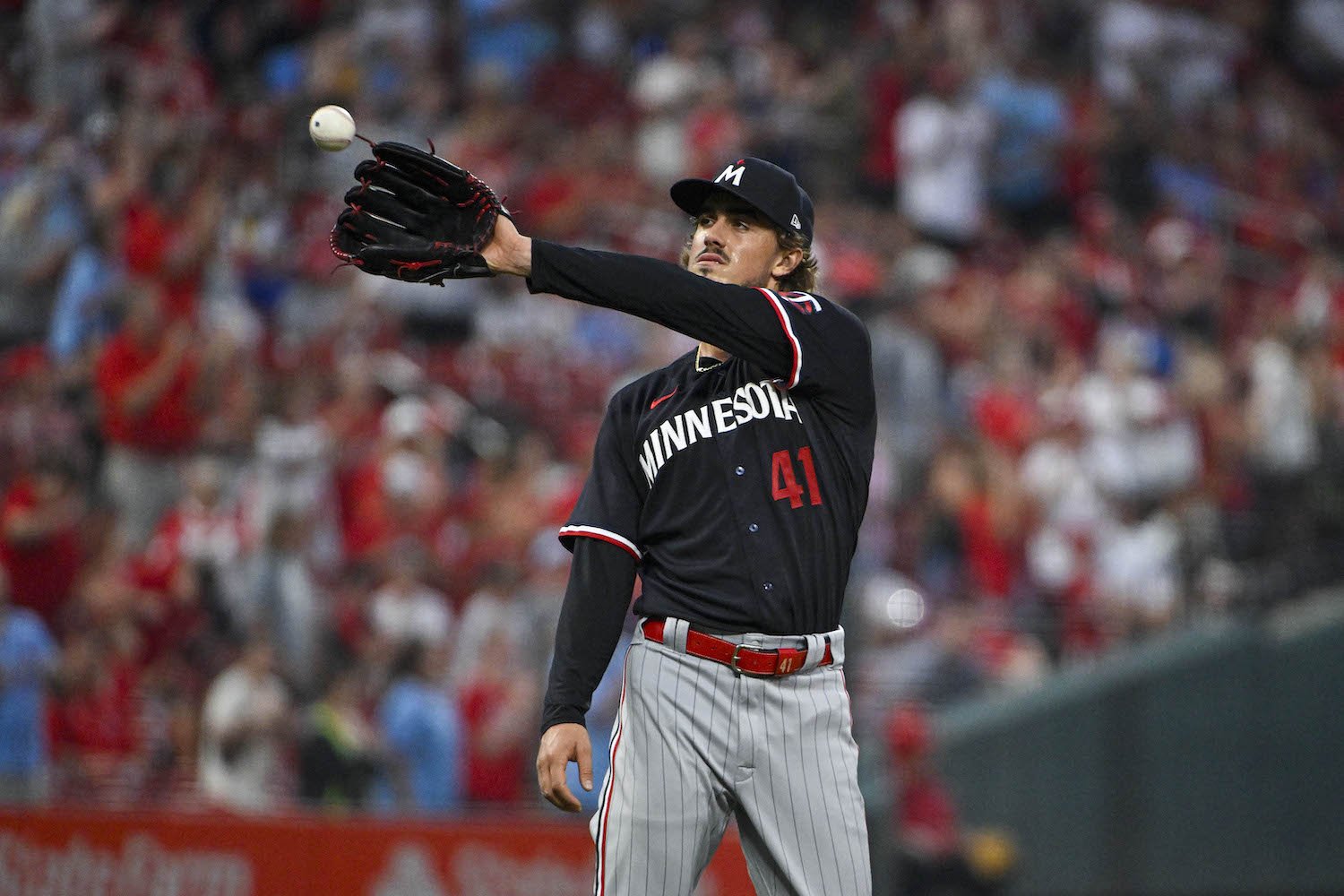 On June 19, I wrote a piece on Louie Varland and his struggles with giving up an unpalatable amount of home runs. The primary determination was that Varland gave up so many home runs due to poor pitch placement and subpar pitch mix. Varland is a young pitcher not expected to be a main contributor for the 2023 Twins. So, the Twins optioned Varland to Triple-A to let him iron out the most significant flaw in his game before reappearing at the Major League level. Roughly one and a half months later, we are at a similar spot with another young Twins pitcher, Joe Ryan. Through his last seven starts and 32.1 innings pitched, Ryan has given up 16 home runs. Ryan has been so flawed that, as Aaron Gleeman of The Athletic noted, Ryan set a new Twins record over his dreadful seven-start stretch. When a starting pitcher who is traditionally very efficient is struggling, it's hard to pin it down to specific reasons, let alone one reason. Even so, watching Ryan struggle to such an intense degree over his last seven starts, some alarming tendencies are standing out. What are they? Well, let's take a look. Possible Reason For Ryan's Recent Poor Performance: Poor Pitch Selection and Bad Sequencing? The main reason why Ryan is struggling so intensely could be because he only has two effective pitches. Ryan's fastball is undoubtedly his best pitch, moving 11 inches towards right-handed batters, four inches better than league average, while dropping 17 inches, two inches better than league average. Ryan's fastball, which he throws 57.6% of the time, was dominant earlier in the season, exemplified in the nine-inning shutout he threw against the Boston Red Sox on June 22. Ryan attacked the zone, throwing his "rising fastball" middle up and up and in on hitters of both handednesses with the same efficacy. Watching Ryan pitch when he can dissect the opposing team's lineups with his fastball is a beautiful sight. Sadly, we have not had that experience for quite some time now. Another potential reason why Ryan's performance has fallen off such a cliff is that hitting coaches and hitters themselves may have caught on to Ryan's fastball. Typically, pitchers can adjust when this phenomenon occurs, but Ryan's offspeed pitches aren't good enough to complement his compromised fastball. The combination of Ryan's fastball no longer being as effective as it once was and his offspeed pitches not being effective enough to counteract when his fastball isn't working is why Ryan is beginning to look like a landmine waiting to explode every time he takes the mound. To further illustrate Ryan's struggles, here are Ryan's numbers over his last seven starts compared to the league average this season: Earned Runs Allowed (ERA) Ryan - 8.63 League Average - 4.31 Fielding Independent Pitching (FIP) Ryan - 8.10 League Average - 4.31 Batting Average on Balls In Play (BABIP) Ryan - .413 League Average - .295 Home Runs per 9 Innings (HR/9) Ryan - 4.73 League Average - 1.20 Home Run to Fly Ball Ratio (HR/FB) Ryan - 32.1% League Average - 12.5% Admittedly, all of these statistics and Ryan's overall trend is alarming, but what is most discouraging is Ryan's HR/FB ratio of 32.1%. Over this dreadful seven-game stretch, Ryan has given up a home run on nearly one-third of every flyball he produced. This occurrence is especially discerning when considering that Ryan is a flyball pitcher, inducing flyballs or line drives in 67.3% of balls put in play off him. This upcoming statement is hyperbolic, but like Varland earlier this season, if Ryan cannot strike a hitter out, he is essentially pitching a glorified version of batting practice by Major League Baseball pitching standards. How Can Ryan Resolve This? The simple answer is to develop better off-speed pitches, particularly off-speed pitches that are more effective when facing right-handed hitters. To explain what I mean more in-depth, let's look at Ryan's splits this season: When Facing Left-Handed Hitters - 245 Batters Faced (BF), 46 H, 59 SO, 17 BB, 7 HR, 1.06 WHIP When Facing Right-Handed Hitters - 278 BF, 72 H, 93 SO, 8 BB, 18 HR, 1.20 WHIP Ryan has given up 11 more home runs to right-handed hitting batters while facing only 33 more this season. How could that be? The answer is likely subpar secondary pitch selection in certain situations. When facing right-handed hitters, also known as same-handed hitters, Ryan throws a mix of his fastball, split-finger, sweeper, and slider. While this is technically a four-pitch mix, Ryan almost exclusively uses his fastball and split-finger. Like most pitchers, Ryan's fastball works best when his other off-speed pitches complement it, but the off-speed pitch Ryan tends to throw most is his split-finger. Ryan throws his split-finger 28% of the time, 18 percentage points more than his sweeper and 24.5 percentage points more than his slider. Essentially, Ryan's sequence to same-handed hitters is working his fastball up in the middle of the zone and up in and in the zone and complements it by throwing his split-finger down, usually down and in but sometimes down and away depending on the hitter and situation at hand. Ryan's approach appears to need fixing, and with Ryan struggling with his command over his last seven starts, his fastball and split-finger are getting struck and over the fence at an alarming rate by right-handed hitters. A way to fix this issue would be for Ryan to use his sweeper and slider more. Although this is an easy fix, there is likely a reason why Ryan rarely uses his sweeper and slider. Could it be because pitching coach Pete Maki tells Ryan and the catcher calling his game to use his fastball and split-finger a combined 85.8% of the time? Possibly. But since we are on the outside, we will only truly know if it gets reported by someone with the Twins or if they leak or share that information with reliable reporters. Another possible option is that Ryan doesn't trust his sweeper or slider. Although Ryan doesn't use his sweeper or slider often, other Twins starting pitchers do. Here is how often other Twins starting pitchers use their sweeper or sliders: Sonny Gray - Sweeper (18.7%) Pablo López - Sweeper (20.9%) Kenta Maeda - Slider (35.8%) Bailey Ober - Slider (21.1%) On average, the Twins' four other starting pitchers use their sliders or sweepers 24.1% of the time, while Ryan uses his a combined 7.4% of the time. Considering Ryan's sweeper and slider are average if not slightly above average, it would likely be in the Twins and Ryan's best interest to jump his combined sweeper and slider usage from where it sits right now at 7.4% to how often López, Gray, and Ober use theirs, which hovers around 20.2% of the time. Ryan uses his fastball and split-finger to such an extreme extent that hitters on both sides of the plate can essentially scoff at his sweeper and slider as they know his fastball or split-finger will come eventually, as the odds are 85.8% in favor of that happening. Mixing Ryan's questionable pitch mix selection with it being likely that he is close to being if not already, burnt out as he hasn't missed a start and we are in the "dog days" of the Major League season, it is possible that a paradoxically appropriate perfect storm has occurred and Ryan is suffering from it. On August 2, the Twins placed Ryan on the 15-day IL with a left groin strain. Ryan's injury could have played an undetermined role in his struggles, but much of what has been happening with Ryan has been alarming, whether an injury is present. Increasing the usage of certain pitches this late into the season is arduous, and, likely, Ryan doesn't think his sweeper and slider should be used more than it is currently. Over the past seven starts, Ryan still has a Strikeout Percentage (K%) of 33.1%, 10.4 percentage points higher than the league average, and a Walk Percentage (BB%) of 6.4%, 2.2 percentage points better than the league average. Adding a high strikeout rate and low walk-out to the concept of regression to the mean itself, Ryan likely won't struggle as much as he has over his last seven starts. Will Ryan be able to return to his early season form? That is yet to be determined, but drastic changes in his approach are necessary to fix the monumental struggle he has endured since his June 27 start against the Atlanta Braves. What do you think Ryan needs to do to alleviate his immense struggles? Are you concerned about his future? Comment below.
 -
Twins Daily Hitter of the Month - July 2023
Cody Schoenmann replied to Cody Schoenmann's topic in Twins Daily Front Page News
I would include Farmer in this mix as well. A lot of the utility and role player-types have performed very well for the Twins this season.- 10 replies
-
- 1
-
-
- kyle farmer
- alex kirilloff
- (and 3 more)
-
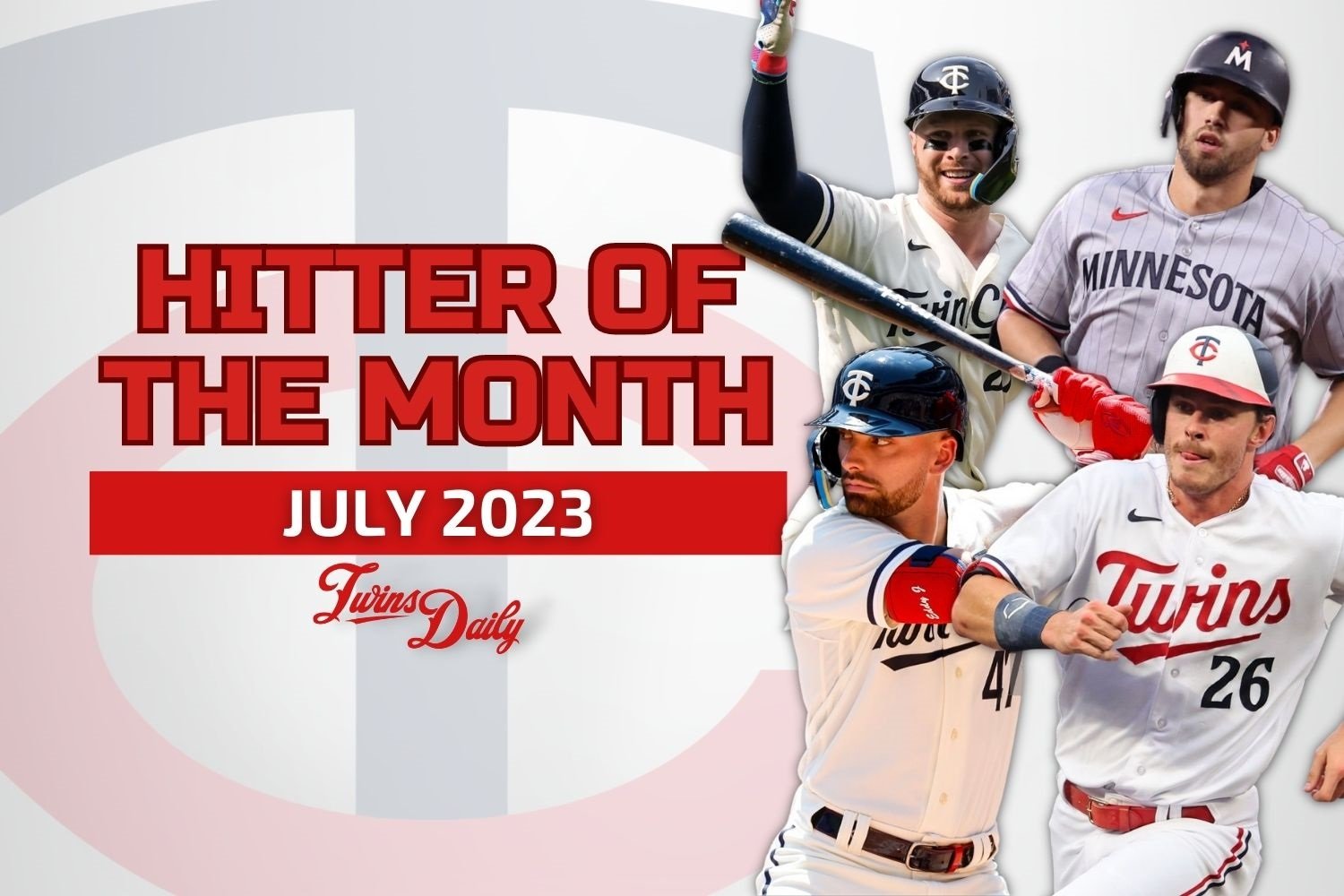 July was a story of ups and downs for the Twins offensively. Starting the month sluggishly until eventually picking up the pace after the All-Star Game, the Twins hit .256/.335/.454 (.789) with an above-average wRC+ of 118 in 931 total plate appearances in July. Despite an overall encouraging month from the offense, the Twins still struggled in critical aspects of the game, most notably possessing a strikeout rate of 27.7%, five percentage points higher than the league average for July. Although the Twins had high strikeout rates yet again, they were able to counteract their high strikeout percentage with an Isolated Power (ISO) rate of .198, twenty points higher than the league average, and a BB% of 9.0%, 0.6 points higher than the league average. The Twins will be a team that attempts to balance their high strikeout rates with high power and walk rates. When it doesn't work, it is miserable to watch. But when it does work, it is quite the sight to see, as shown in the Athletics and Mariners series after the All-Star Break. Overall, the Twins had an impressive month of hitting, and here are the players who led the charge. Honorable Mention: Kyle Farmer - .302/.367/.528 (.895), 60 PA, 16 H, 2 HR, 146 wRC+ We are starting the "Twins Hitter of the Month - July 2023" list with a bang in utility player extraordinaire Kyle Farmer. Farmer talked the talk during the players-only meeting in Atlanta, and he was finally able to walk the walk during July. Farmer often found himself on the right side of luck, evidenced by generating a BABIP of .378 throughout July. Despite getting lucky outcomes, Farmer was able to slice the ball around the field, taking advantage of ground balls that found their way out of the infield and occasionally hitting doubles hits in the opposite field gap. Despite not displaying much power, "Farm Dawg" put the ball in play with solid contact, something this Twins team has needed all season. Overall, Farmer had a very impressive July, and hopefully, he will be able to provide the same sense of stability and productivity over the final stretch of the regular season. #4: Alex Kirilloff - .270/.329/.527 (.856), 82 PA, 20 H, 4 HR, 133 wRC+ If you were to ask me who the Twins Hitter of the Month for July would be on July 24, I would have said it's a toss-up between Kirilloff and Julien. Kirilloff and Julien had just come off incredible post-All-Star Game series against the Athletics and Mariners, and Alex Kirilloff had just earned the honor of AL Player of the Week, hitting .345/.394/.793 (1.187) and hitting three home runs, two doubles, one triple, and generating three walks over that week's long stretch. Unfortunately, between the week of July 23-July 29, Kirilloff hit only .182/.217/.273 (.490) with four hits, zero home runs, two doubles, and a wRC+ of 32 over 23 plate appearances. Kirilloff's high level of performance fell off a cliff quickly, and the reason for that was likely due to Kirilloff sustaining a shoulder injury, which eventually placed him on the 10-day IL on July 30. Overall, Kirilloff had a solid month, and if he hadn't sustained the shoulder injury that likely caused a steep decline in his performance, he would have been higher on this list. #3: Max Kepler - .291/.340/.500 (.840), 94 PA, 25 H, 4 HR, 131 wRC+ German philosopher Friedrich Nietzsche once wrote, "And those who were seen enjoying Kepler's performance in July were thought to be insane by those who chose to remember April through June." I think that is how the quote went. It could have had more to do with dancing and music. Who's to say? Anyways, Max Kepler had an incredible July and, dare I say, looked somewhat like the player we all fell in love with in 2019 for a decent stretch of time. Consistently good at-bats, clutch hits, and a revived sense of power helped Kepler construct an impressive month of July, which he desperately needed. Kepler's highlight of the month was going 11-for-29 (.379 AVG) over seven games against the Seattle Mariners, stretching from July 17-20 and July 24-26. As we advance through the Twins' last 50 or so games, Kepler will have to confront the expectations of being a key contributor on a division title-seeking team. Will he be able to step up to the occasion finally? We shall see. #2: Ryan Jeffers - .368/.455/.526 (.981), 45 PA, 14 H, 2 HR, 180 wRC+ Despite Mitch Garver's breakout 2019 season, the Twins have been in flux at catcher since Joe Mauer converted to first base full-time in 2014. It has been a rocky road, but it feels like the Twins have finally found a trustworthy catching duo of Christian Vázquez and Jeffers, with Jeffers being the standout. Jeffers continued his incredible 2023 campaign with a great month of July. Having a 50/50 split with Vázquez, Ryan Jeffers could not put together a large sample size like other hitters on this list, but he performed incredibly well with the opportunities he was given. Mixing timely hitting with the ability to hit the ball all over the field with power, Jeffers looked like a nearly fully actualized version of the player who made his debut for the Twins in 2020. In 2023, Jeffers has been a rare commodity: a catcher who can hit well. If he continues to put up numbers relatively close to his performance in July, Jeffers could eventually start getting discussed in the same light as fellow American League catchers Jonah Heim and Adley Rutschman. Jeffers had an incredible offensive month, leading to him finishing second place in Twins Hitter of the Month for July 2023. Winner: Edouard Julien - .369/.461/.723 (1.184), 76 PA, 24 H, 6 HR, 225 wRC+ From Corey Koskie to Justin Morneau to now Edouard Julien, the Twins are great at finding left-handed Canadiens who can hit. Julien, aka "le beau jumeau," had one of the most remarkable offensive months in Twins rookie history, earning him the honors of "Twins Hitter of the Month." Congratulations to Julien and his family. The streets of beautiful Quebec City will be overflowed tonight in celebration, and rightfully so. In all seriousness, Julien had a remarkable month, highlighted by his remarkably absurd post-All-Star Game stretch where he hit .632/.682/1.000 (1.682) while generating a wRC+ of 366 over 22 plate appearances against the Athletics and Mariners. Julien's performance understandably quieted down after the Mariners series, but he was still an above-average hitter over the last week and a half of July. Julien's performance in July deservedly earned him a seemingly permanent spot on the roster. Going forward, Julien will have to continue to hit at a high rate if he wants to remain a fixture in the Twins lineup, as his defense at second base is below replacement level. Nonetheless, Edouard Julien had an incredible month in July and rightfully earned the honor Twins Hitter of the Month title. Do you agree with our choice for Twins Hitter of the Month list for July 2023? Did I leave any Twins hitters out? Comment below.
- 10 comments
-
- 2
-
-
- kyle farmer
- alex kirilloff
- (and 3 more)
-
The Twins were able to perform at an above-average level offensively in July. With a mix of both veteran and young players performing at high levels, which hitters stood out the most? July was a story of ups and downs for the Twins offensively. Starting the month sluggishly until eventually picking up the pace after the All-Star Game, the Twins hit .256/.335/.454 (.789) with an above-average wRC+ of 118 in 931 total plate appearances in July. Despite an overall encouraging month from the offense, the Twins still struggled in critical aspects of the game, most notably possessing a strikeout rate of 27.7%, five percentage points higher than the league average for July. Although the Twins had high strikeout rates yet again, they were able to counteract their high strikeout percentage with an Isolated Power (ISO) rate of .198, twenty points higher than the league average, and a BB% of 9.0%, 0.6 points higher than the league average. The Twins will be a team that attempts to balance their high strikeout rates with high power and walk rates. When it doesn't work, it is miserable to watch. But when it does work, it is quite the sight to see, as shown in the Athletics and Mariners series after the All-Star Break. Overall, the Twins had an impressive month of hitting, and here are the players who led the charge. Honorable Mention: Kyle Farmer - .302/.367/.528 (.895), 60 PA, 16 H, 2 HR, 146 wRC+ We are starting the "Twins Hitter of the Month - July 2023" list with a bang in utility player extraordinaire Kyle Farmer. Farmer talked the talk during the players-only meeting in Atlanta, and he was finally able to walk the walk during July. Farmer often found himself on the right side of luck, evidenced by generating a BABIP of .378 throughout July. Despite getting lucky outcomes, Farmer was able to slice the ball around the field, taking advantage of ground balls that found their way out of the infield and occasionally hitting doubles hits in the opposite field gap. Despite not displaying much power, "Farm Dawg" put the ball in play with solid contact, something this Twins team has needed all season. Overall, Farmer had a very impressive July, and hopefully, he will be able to provide the same sense of stability and productivity over the final stretch of the regular season. #4: Alex Kirilloff - .270/.329/.527 (.856), 82 PA, 20 H, 4 HR, 133 wRC+ If you were to ask me who the Twins Hitter of the Month for July would be on July 24, I would have said it's a toss-up between Kirilloff and Julien. Kirilloff and Julien had just come off incredible post-All-Star Game series against the Athletics and Mariners, and Alex Kirilloff had just earned the honor of AL Player of the Week, hitting .345/.394/.793 (1.187) and hitting three home runs, two doubles, one triple, and generating three walks over that week's long stretch. Unfortunately, between the week of July 23-July 29, Kirilloff hit only .182/.217/.273 (.490) with four hits, zero home runs, two doubles, and a wRC+ of 32 over 23 plate appearances. Kirilloff's high level of performance fell off a cliff quickly, and the reason for that was likely due to Kirilloff sustaining a shoulder injury, which eventually placed him on the 10-day IL on July 30. Overall, Kirilloff had a solid month, and if he hadn't sustained the shoulder injury that likely caused a steep decline in his performance, he would have been higher on this list. #3: Max Kepler - .291/.340/.500 (.840), 94 PA, 25 H, 4 HR, 131 wRC+ German philosopher Friedrich Nietzsche once wrote, "And those who were seen enjoying Kepler's performance in July were thought to be insane by those who chose to remember April through June." I think that is how the quote went. It could have had more to do with dancing and music. Who's to say? Anyways, Max Kepler had an incredible July and, dare I say, looked somewhat like the player we all fell in love with in 2019 for a decent stretch of time. Consistently good at-bats, clutch hits, and a revived sense of power helped Kepler construct an impressive month of July, which he desperately needed. Kepler's highlight of the month was going 11-for-29 (.379 AVG) over seven games against the Seattle Mariners, stretching from July 17-20 and July 24-26. As we advance through the Twins' last 50 or so games, Kepler will have to confront the expectations of being a key contributor on a division title-seeking team. Will he be able to step up to the occasion finally? We shall see. #2: Ryan Jeffers - .368/.455/.526 (.981), 45 PA, 14 H, 2 HR, 180 wRC+ Despite Mitch Garver's breakout 2019 season, the Twins have been in flux at catcher since Joe Mauer converted to first base full-time in 2014. It has been a rocky road, but it feels like the Twins have finally found a trustworthy catching duo of Christian Vázquez and Jeffers, with Jeffers being the standout. Jeffers continued his incredible 2023 campaign with a great month of July. Having a 50/50 split with Vázquez, Ryan Jeffers could not put together a large sample size like other hitters on this list, but he performed incredibly well with the opportunities he was given. Mixing timely hitting with the ability to hit the ball all over the field with power, Jeffers looked like a nearly fully actualized version of the player who made his debut for the Twins in 2020. In 2023, Jeffers has been a rare commodity: a catcher who can hit well. If he continues to put up numbers relatively close to his performance in July, Jeffers could eventually start getting discussed in the same light as fellow American League catchers Jonah Heim and Adley Rutschman. Jeffers had an incredible offensive month, leading to him finishing second place in Twins Hitter of the Month for July 2023. Winner: Edouard Julien - .369/.461/.723 (1.184), 76 PA, 24 H, 6 HR, 225 wRC+ From Corey Koskie to Justin Morneau to now Edouard Julien, the Twins are great at finding left-handed Canadiens who can hit. Julien, aka "le beau jumeau," had one of the most remarkable offensive months in Twins rookie history, earning him the honors of "Twins Hitter of the Month." Congratulations to Julien and his family. The streets of beautiful Quebec City will be overflowed tonight in celebration, and rightfully so. In all seriousness, Julien had a remarkable month, highlighted by his remarkably absurd post-All-Star Game stretch where he hit .632/.682/1.000 (1.682) while generating a wRC+ of 366 over 22 plate appearances against the Athletics and Mariners. Julien's performance understandably quieted down after the Mariners series, but he was still an above-average hitter over the last week and a half of July. Julien's performance in July deservedly earned him a seemingly permanent spot on the roster. Going forward, Julien will have to continue to hit at a high rate if he wants to remain a fixture in the Twins lineup, as his defense at second base is below replacement level. Nonetheless, Edouard Julien had an incredible month in July and rightfully earned the honor Twins Hitter of the Month title. Do you agree with our choice for Twins Hitter of the Month list for July 2023? Did I leave any Twins hitters out? Comment below. View full article
-
With Randal Grichuk, Mark Canha, and A.J. Pollock all traded in the last two days, right-handed hitting corner outfielders are beginning to fly off the board. Who are the four most realistic options left for the Twins? Image courtesy of Erik Williams-USA TODAY Sports A right-handed hitting corner outfielder who hits left-handed pitching well was the Twins' greatest need for the latter part of last off-season and remains so to this day. With right-handed hitting corner outfielders Randal Grichuk, Mark Canha, and AJ Pollock getting traded in the last two days, right-handed hitting corner outfielders are beginning to fly off the board. Luckily for the Twins, an immense amount of adequate options remain. Here are the four best remaining right-handed hitting corner outfielders the Twins could still trade for. #4. Adam Duvall - Red Sox - 173 PA, .261/.329/.542 (.871), 9 HR, 128 wRC+, 1.2 fWAR We start this list off with current Red Sox outfielder Adam Duvall. Duvall has been linked to contending National League teams like the Phillies and the Braves, with whom he won the World Series in 2021, but a trade to the Twins arguably makes the most sense. Duvall provides versatility in the outfield, as he can play left, center, and right field, while also being a plus right-handed bat, a player prototype the Twins are in dire need of. The only caveat with Duvall is that he hits right-handed pitching much better than left-handed pitching, which is why he is fourth on his list. Duvall's splits this season: When Facing Left-Handed Pitching: 46 PA, .238/.283/.405 (.688), 10 H, 0 HR, seven doubles, two BB, 16 K. When Facing Right-Handed Pitching: 127 PA, .270/.346/.595 (.941), 30 H, nine HR, seven doubles, 11 BB, 37 K. Duvall's splits are intense, and if the Twins acquired him, one has to wonder if he would do anything to help the Twins' struggles when facing left-handed pitching or if he would become part of the problem. Duvall is an intriguing option, but he doesn't do the one thing the Twins need out of a right-handed hitting outfielder: hit left-handed pitching well. Duvall would be a good addition, but his addition might be slightly redundant. Nonetheless, Duvall is a right-handed corner outfielder to keep tabs on over the next four or so hours. Expected Asset Cost For Duvall: Duvall would net a similar haul to what the Brewers gave up for Canha. If the Twins traded for Duvall, expect the Twins to part with a prospect towards the end of their Top 30 list (i.e., Zebby Matthews or Ben Ross, for example) or an assortment of unranked prospects in the lower minor league levels. #3. Lane Thomas - Nationals - 451 PA, .285/.333/.472 (.805), 16 HR, 115 wRC+, 2.1 fWAR The next right-handed corner outfielder comes in the form of the Nationals' current best player, Lane Thomas. Through 451 plate appearances, Thomas has been a revelation for the struggling Nationals, hitting for average and power while displaying elite speed on the base paths and in the outfield. Unlike Duvall, Thomas has mashed left-handed pitching, hitting .362/.407/.638 (1.045) with 47 hits, eight home runs, ten doubles, ten walks, and 26 strikeouts in 140 plate appearances. Thomas, 27, has team control through 2025, so he would cost more than the three other outfielders on this list, who are all rental options. Although Thomas would cost more, he is the best right-handed hitting corner outfielder on this list, and he could stay in Minnesota for two more seasons if the Twins elect to keep him by offering arbitration in 2024 and 2025. The Nationals' steep asking price will undoubtedly deter many people, but if the Twins want to attempt to resolve their right-handed hitting corner outfield woes genuinely, trading for Thomas should help them in the short and long term. Expected Asset Cost for Thomas: Thomas is different from Duvall in that he has two and a half years left of control, plus he is an overall better and younger player. If the Twins traded for Thomas, expect them to send over a handful of Top 30 prospects. It would likely be two-to-three top thirty prospects, with the first prospect being a top ten prospect (i.e., David Festa or Danny De Andrade, for example), the second prospect being a mid-teens to early twenties prospect (i.e., Brent Headrick or C.J. Culpepper, for example) and then a fringe Top 30 prospects (i.e., Cory Lewis or Ross again, for example). Thomas will cost a lot, but he is a legit starting right-handed hitting corner outfielder. #2. Teoscar Hernandez - Mariners - 441 PA, .238/.288/.408 (.696), 16 HR, 93 wRC+, 0.6 fWAR The second most realistic right-handed hitting corner outfielder the Twins could trade for is current Seattle Mariners right fielder Teoscar Hernandez. Hernandez's 2023 season has been a story of struggle, evidenced by his unimpressive stat line and below-league-average wRC+ of just 93. Hernandez appears to no longer be the player he once was with the Toronto Blue Jays. However, he is still a serviceable right-handed hitting corner outfielder, especially when facing left-handed pitching. Here are Hernandez's numbers when facing left-handed pitching this season: 92 Plate Appearances .295/.315/.568 (.883) 26 H Six Home Runs Six Doubles Three Walks 31 Strikeouts Hernandez has hit left-handed exceptionally well while showing immense power, as evidenced by a .568 slugging percentage. Hernandez has star potential, and if he can tap into that ability down the stretch, he could significantly help this Twins lineup down the stretch, and even if Hernandez continues to struggle, it is fair to assume that he will continue to mash left-handed pitching. Expected Asset Cost For Hernandez: The Mariners are both buying and selling, so if the Twins were to trade for Hernandez, expect them to send over a young player or even an MLB-ready veteran. Trading Larnach for Hernandez is too much. Yet, if the Twins could acquire Hernandez plus a reliever in Justin Topa, for example, the Twins could send Larnach plus an outside of the Top 30 prospect back to the Mariners. #1. Tommy Pham - Mets - 264 PA, .268/.348/.472 (.820), 10 HR, 127 wRC+, 1.7 fWAR The most realistic right-handed hitting corner outfielder the Twins could still trade for is current Mets outfielder Tommy Pham. Having already traded David Robertson to the Marlins, Max Scherzer to the Rangers, and the previously mentioned Canha to the Brewers, Pham will likely depart the Mets within the next handful of hours. Like Thomas and Hernandez, Pham fits the mold of a right-handed corner outfielder who hits left-handed pitching very well. Through 109 plate appearances, Pham has hit .255/.339/.532 (.871) with 24 hits, eight home runs, two doubles, 13 walks, and 23 strikeouts. Pham is an interesting character who has done some questionable things in the past, but this Twins clubhouse, which tends to appear uninspired at times, could use someone to shake up the clubhouse and bring a unique perspective. Despite not being the best player on this list, Pham, being a rental option and a team the Twins have had confirmed dialogue with, feels like the most likely option for the Twins. Expected Asset Cost For Pham: Acquiring Pham should be cheap and, as reported by Dan Hayes of The Athletic, the Twins have been having discussions with the Mets pertaining to the surplus amount of young left-handed corner outfield bats the Twins have, so a hypothetical trade of Pham and left-handed relief pitcher Brooks Raley to the Twins for Larnach would make sense. Which of these four corner outfielders do you think the Twins should trade for? Who do you think the Twins are most likely to trade for? Comment below. View full article
-
 A right-handed hitting corner outfielder who hits left-handed pitching well was the Twins' greatest need for the latter part of last off-season and remains so to this day. With right-handed hitting corner outfielders Randal Grichuk, Mark Canha, and AJ Pollock getting traded in the last two days, right-handed hitting corner outfielders are beginning to fly off the board. Luckily for the Twins, an immense amount of adequate options remain. Here are the four best remaining right-handed hitting corner outfielders the Twins could still trade for. #4. Adam Duvall - Red Sox - 173 PA, .261/.329/.542 (.871), 9 HR, 128 wRC+, 1.2 fWAR We start this list off with current Red Sox outfielder Adam Duvall. Duvall has been linked to contending National League teams like the Phillies and the Braves, with whom he won the World Series in 2021, but a trade to the Twins arguably makes the most sense. Duvall provides versatility in the outfield, as he can play left, center, and right field, while also being a plus right-handed bat, a player prototype the Twins are in dire need of. The only caveat with Duvall is that he hits right-handed pitching much better than left-handed pitching, which is why he is fourth on his list. Duvall's splits this season: When Facing Left-Handed Pitching: 46 PA, .238/.283/.405 (.688), 10 H, 0 HR, seven doubles, two BB, 16 K. When Facing Right-Handed Pitching: 127 PA, .270/.346/.595 (.941), 30 H, nine HR, seven doubles, 11 BB, 37 K. Duvall's splits are intense, and if the Twins acquired him, one has to wonder if he would do anything to help the Twins' struggles when facing left-handed pitching or if he would become part of the problem. Duvall is an intriguing option, but he doesn't do the one thing the Twins need out of a right-handed hitting outfielder: hit left-handed pitching well. Duvall would be a good addition, but his addition might be slightly redundant. Nonetheless, Duvall is a right-handed corner outfielder to keep tabs on over the next four or so hours. Expected Asset Cost For Duvall: Duvall would net a similar haul to what the Brewers gave up for Canha. If the Twins traded for Duvall, expect the Twins to part with a prospect towards the end of their Top 30 list (i.e., Zebby Matthews or Ben Ross, for example) or an assortment of unranked prospects in the lower minor league levels. #3. Lane Thomas - Nationals - 451 PA, .285/.333/.472 (.805), 16 HR, 115 wRC+, 2.1 fWAR The next right-handed corner outfielder comes in the form of the Nationals' current best player, Lane Thomas. Through 451 plate appearances, Thomas has been a revelation for the struggling Nationals, hitting for average and power while displaying elite speed on the base paths and in the outfield. Unlike Duvall, Thomas has mashed left-handed pitching, hitting .362/.407/.638 (1.045) with 47 hits, eight home runs, ten doubles, ten walks, and 26 strikeouts in 140 plate appearances. Thomas, 27, has team control through 2025, so he would cost more than the three other outfielders on this list, who are all rental options. Although Thomas would cost more, he is the best right-handed hitting corner outfielder on this list, and he could stay in Minnesota for two more seasons if the Twins elect to keep him by offering arbitration in 2024 and 2025. The Nationals' steep asking price will undoubtedly deter many people, but if the Twins want to attempt to resolve their right-handed hitting corner outfield woes genuinely, trading for Thomas should help them in the short and long term. Expected Asset Cost for Thomas: Thomas is different from Duvall in that he has two and a half years left of control, plus he is an overall better and younger player. If the Twins traded for Thomas, expect them to send over a handful of Top 30 prospects. It would likely be two-to-three top thirty prospects, with the first prospect being a top ten prospect (i.e., David Festa or Danny De Andrade, for example), the second prospect being a mid-teens to early twenties prospect (i.e., Brent Headrick or C.J. Culpepper, for example) and then a fringe Top 30 prospects (i.e., Cory Lewis or Ross again, for example). Thomas will cost a lot, but he is a legit starting right-handed hitting corner outfielder. #2. Teoscar Hernandez - Mariners - 441 PA, .238/.288/.408 (.696), 16 HR, 93 wRC+, 0.6 fWAR The second most realistic right-handed hitting corner outfielder the Twins could trade for is current Seattle Mariners right fielder Teoscar Hernandez. Hernandez's 2023 season has been a story of struggle, evidenced by his unimpressive stat line and below-league-average wRC+ of just 93. Hernandez appears to no longer be the player he once was with the Toronto Blue Jays. However, he is still a serviceable right-handed hitting corner outfielder, especially when facing left-handed pitching. Here are Hernandez's numbers when facing left-handed pitching this season: 92 Plate Appearances .295/.315/.568 (.883) 26 H Six Home Runs Six Doubles Three Walks 31 Strikeouts Hernandez has hit left-handed exceptionally well while showing immense power, as evidenced by a .568 slugging percentage. Hernandez has star potential, and if he can tap into that ability down the stretch, he could significantly help this Twins lineup down the stretch, and even if Hernandez continues to struggle, it is fair to assume that he will continue to mash left-handed pitching. Expected Asset Cost For Hernandez: The Mariners are both buying and selling, so if the Twins were to trade for Hernandez, expect them to send over a young player or even an MLB-ready veteran. Trading Larnach for Hernandez is too much. Yet, if the Twins could acquire Hernandez plus a reliever in Justin Topa, for example, the Twins could send Larnach plus an outside of the Top 30 prospect back to the Mariners. #1. Tommy Pham - Mets - 264 PA, .268/.348/.472 (.820), 10 HR, 127 wRC+, 1.7 fWAR The most realistic right-handed hitting corner outfielder the Twins could still trade for is current Mets outfielder Tommy Pham. Having already traded David Robertson to the Marlins, Max Scherzer to the Rangers, and the previously mentioned Canha to the Brewers, Pham will likely depart the Mets within the next handful of hours. Like Thomas and Hernandez, Pham fits the mold of a right-handed corner outfielder who hits left-handed pitching very well. Through 109 plate appearances, Pham has hit .255/.339/.532 (.871) with 24 hits, eight home runs, two doubles, 13 walks, and 23 strikeouts. Pham is an interesting character who has done some questionable things in the past, but this Twins clubhouse, which tends to appear uninspired at times, could use someone to shake up the clubhouse and bring a unique perspective. Despite not being the best player on this list, Pham, being a rental option and a team the Twins have had confirmed dialogue with, feels like the most likely option for the Twins. Expected Asset Cost For Pham: Acquiring Pham should be cheap and, as reported by Dan Hayes of The Athletic, the Twins have been having discussions with the Mets pertaining to the surplus amount of young left-handed corner outfield bats the Twins have, so a hypothetical trade of Pham and left-handed relief pitcher Brooks Raley to the Twins for Larnach would make sense. Which of these four corner outfielders do you think the Twins should trade for? Who do you think the Twins are most likely to trade for? Comment below.
