



Cody Schoenmann
-
Posts
768 -
Joined
-
Last visited
-
Days Won
1
Content Type
Profiles
News
Minnesota Twins Videos
2026 Minnesota Twins Top Prospects Ranking
2022 Minnesota Twins Draft Picks
Minnesota Twins Free Agent & Trade Rumors, Notes, & Tidbits
Guides & Resources
2023 Minnesota Twins Draft Picks
The Minnesota Twins Players Project
2024 Minnesota Twins Draft Picks
2025 Minnesota Twins Draft Pick Tracker
2026 Minnesota Twins Draft Tracker: Picks & Bonuses
Forums
Blogs
Events
Store
Downloads
Gallery
Everything posted by Cody Schoenmann
-
 The Minnesota Twins' immediate response to Royce Lewis's Opening Day injury was to move Kyle Farmer to third base. Although that was the right decision at the moment, the team might have a better defensive option on the 26-man roster. Image courtesy of © Jay Biggerstaff-USA TODAY Sports When starting third baseman Royce Lewis injured his right quadriceps aggressively rounding second base (with hopes to score) on a double down the left-field line by star shortstop Carlos Correa, manager Rocco Baldelli's immediate response was to shift second baseman Kyle Farmer to third and insert left-handed hitter Edouard Julien into the game at second. Turning to Julien was antithetical to the platoon-happy lineup the Twins deployed against rising star left-handed starting pitcher Cole Ragans. That said, they had no other choice. After Julien replaced Lewis in the third inning, the team's bench consisted of left-handed outfielder Matt Wallner, left-handed first baseman/designated hitter Alex Kirilloff, and right-handed backup catcher Christian Vázquez. Wallner, Kirilloff, and Vázquez all are basically unable to play third base, and the only other player on the field who could (Willi Castro) was stuck in left field with right-handed platoon mate Manuel Margot assigned to designated hitter duties. The Twins reacted to Lewis's injury as best they could, and although it ruined their initial plans for Ragans to face a near-exclusively right-handed lineup, their adjustments paid off, and the team concluded Opening Day with a 4-1 victory over Kansas City. Although the Twins handled Lewis's unexpected injury well at the moment, their course of action during his longish expected absence should deviate from what is currently perceived to be the plan. The Twins could hand Farmer the everyday job at third base until Lewis returns, and few would bat an eye. The former Cincinnati Reds starting shortstop is a steady veteran who can provide a meaningful sense of low-floor consistency (offensively and defensively) at the hot corner. This type of player possesses a lot of value, specifically this early in the season, but what if how Farmer is perceived doesn't match reality? As noted earlier, Castro was relegated to left field on Opening Day, with Margot restricted to designated hitter and Wallner providing less value against left-handed pitchers. Leaving Castro in left field was the right decision, given the way the Twins lineup was constructed and the specific bench restrictions in place. Farmer deserves to receive some playing time at third base during Lewis's absence. However, Castro is the better option, and the Twins should hand him the bulk of the newfound opportunities. Last season, Castro played 219 innings at third base. During his time at the hot corner, the 26-year-old utility player had 52 attempts straight up, 14 toward the shortstop/third base hole, and 12 close to the line. Here is Castro's success rate compared to his estimated success rate in his attempts: Straight up: 81% success rate; 74% estimated success rate Toward the SS/3B hole: 64% success rate; 70% estimated success rate Close to the line: 67% success rate; 68% estimated success rate Castro outperformed his estimated success rate straight up, performed below his estimated success rate toward the SS/3B hole, and nearly matched his estimated success rate close to the line. Showing exceptional range, Castro generated 3 Outs Above Average (OAA) at Baseball Savant, where 0 OAA is average. In 2023, Farmer played 276 1/3 innings at the hot corner, accounting for 57 2/3 more than Castro. The 33-year-old infielder had 33 attempts straight up, 30 close to the line, and 15 toward the shortstop/third base hole. So, despite playing nearly six-and-a-half more games at the position, Farmer received the same number of attempts at third base as Castro, with 78. Here is Farmer's success rate compared to his estimated success rate in his attempts: Straight up: 76% success rate; 74% estimated success rate Close to the line: 73% success rate; 74% estimated success rate Toward the SS/3B hole: 53% success rate; 66% estimated success rate Farmer outperformed his expected success rate straight up, nearly matched his estimated success rate close to the line, and significantly underperformed his estimated success rate toward the shortstop/third base hole. Showing slightly below-average range, Farmer generated -2 OAA at Baseball Savant. Farmer performed well on balls hit to him and down the line, but struggled mightily on balls hit toward the 5.5 hole, performing 13 percentage points worse than expected. Farmer showed more of the same tendencies against the Royals on Thursday. After replacing Lewis at third base in the bottom of the third inning, Royals first baseman Vinnie Pasquantino chopped a weak two-out dribbler against starting pitcher Pablo López, toward Farmer at third. Farmer fielded the chopper and tossed it over to first baseman Carlos Santana to end the inning. Easy enough. Two innings later, Kansas City second baseman Adam Frazier chopped a similar ground ball toward Farmer, yet the result was less favorable for the utility infielder. Farmer bobbled the ball in his glove, allowing Frazier (who had a 31st-percentile sprint speed in 2023) to reach base safely on an infield single. Although Frazier's hit was inconsequential, these are the types of plays more skilled and agile third basemen with stronger arms (like Lewis and Castro) are more prone to making. Farmer immediately redeemed himself, fielding an almost two-hop groundball straight up from Royals designated hitter Nelson Velázquez and executing a flawless double play with second baseman Julien. Farmer isn't a bad defender, but his limited range and weaker arm make the non-routine plays at the hot corner more of a struggle. Castro would provide more defensive value at the position, having a stronger arm and more range. Do you agree that Willi Castro should be the primary third baseman in Lewis's absence? Join the discussion with a comment below. View full article
 -
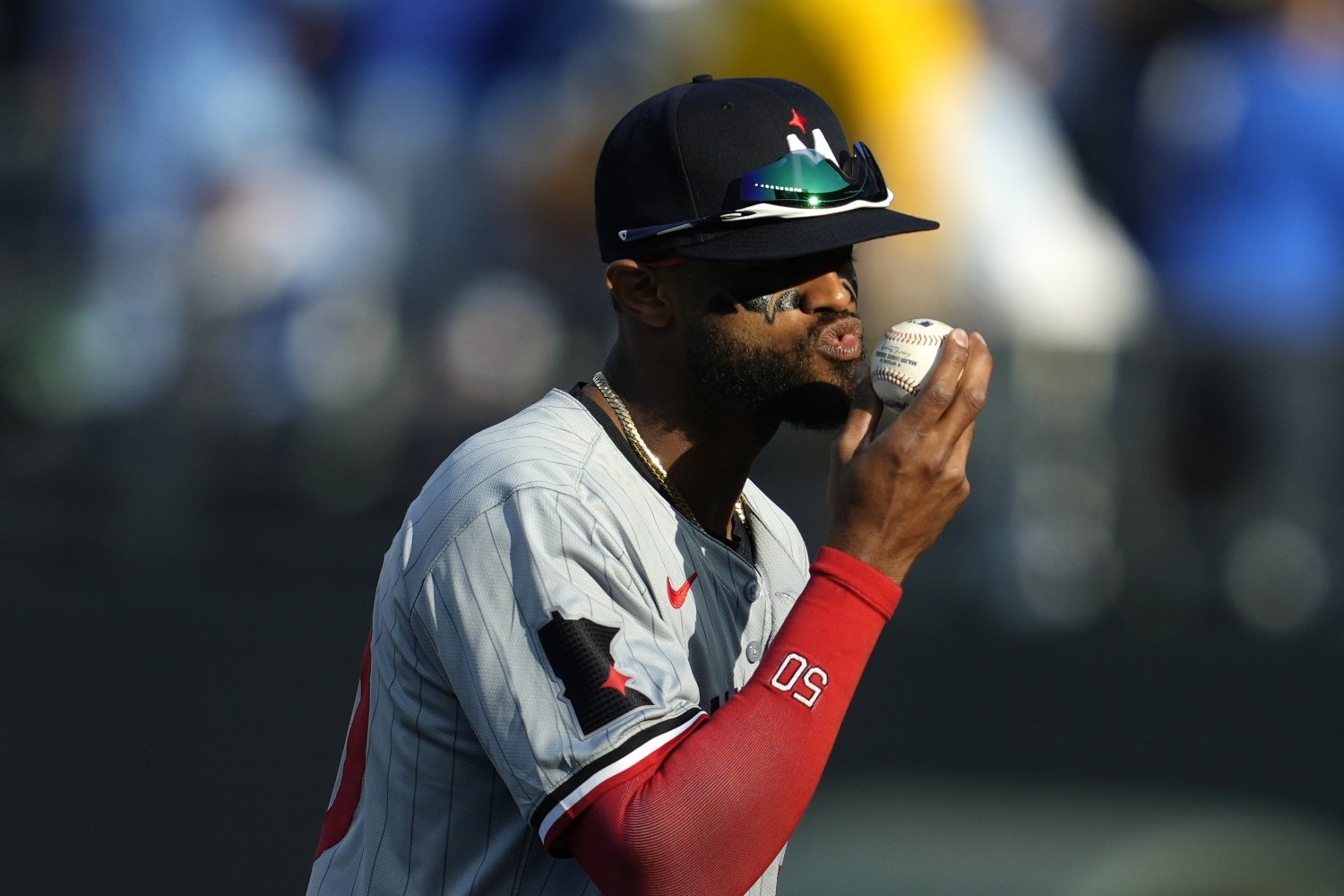 When starting third baseman Royce Lewis injured his right quadriceps aggressively rounding second base (with hopes to score) on a double down the left-field line by star shortstop Carlos Correa, manager Rocco Baldelli's immediate response was to shift second baseman Kyle Farmer to third and insert left-handed hitter Edouard Julien into the game at second. Turning to Julien was antithetical to the platoon-happy lineup the Twins deployed against rising star left-handed starting pitcher Cole Ragans. That said, they had no other choice. After Julien replaced Lewis in the third inning, the team's bench consisted of left-handed outfielder Matt Wallner, left-handed first baseman/designated hitter Alex Kirilloff, and right-handed backup catcher Christian Vázquez. Wallner, Kirilloff, and Vázquez all are basically unable to play third base, and the only other player on the field who could (Willi Castro) was stuck in left field with right-handed platoon mate Manuel Margot assigned to designated hitter duties. The Twins reacted to Lewis's injury as best they could, and although it ruined their initial plans for Ragans to face a near-exclusively right-handed lineup, their adjustments paid off, and the team concluded Opening Day with a 4-1 victory over Kansas City. Although the Twins handled Lewis's unexpected injury well at the moment, their course of action during his longish expected absence should deviate from what is currently perceived to be the plan. The Twins could hand Farmer the everyday job at third base until Lewis returns, and few would bat an eye. The former Cincinnati Reds starting shortstop is a steady veteran who can provide a meaningful sense of low-floor consistency (offensively and defensively) at the hot corner. This type of player possesses a lot of value, specifically this early in the season, but what if how Farmer is perceived doesn't match reality? As noted earlier, Castro was relegated to left field on Opening Day, with Margot restricted to designated hitter and Wallner providing less value against left-handed pitchers. Leaving Castro in left field was the right decision, given the way the Twins lineup was constructed and the specific bench restrictions in place. Farmer deserves to receive some playing time at third base during Lewis's absence. However, Castro is the better option, and the Twins should hand him the bulk of the newfound opportunities. Last season, Castro played 219 innings at third base. During his time at the hot corner, the 26-year-old utility player had 52 attempts straight up, 14 toward the shortstop/third base hole, and 12 close to the line. Here is Castro's success rate compared to his estimated success rate in his attempts: Straight up: 81% success rate; 74% estimated success rate Toward the SS/3B hole: 64% success rate; 70% estimated success rate Close to the line: 67% success rate; 68% estimated success rate Castro outperformed his estimated success rate straight up, performed below his estimated success rate toward the SS/3B hole, and nearly matched his estimated success rate close to the line. Showing exceptional range, Castro generated 3 Outs Above Average (OAA) at Baseball Savant, where 0 OAA is average. In 2023, Farmer played 276 1/3 innings at the hot corner, accounting for 57 2/3 more than Castro. The 33-year-old infielder had 33 attempts straight up, 30 close to the line, and 15 toward the shortstop/third base hole. So, despite playing nearly six-and-a-half more games at the position, Farmer received the same number of attempts at third base as Castro, with 78. Here is Farmer's success rate compared to his estimated success rate in his attempts: Straight up: 76% success rate; 74% estimated success rate Close to the line: 73% success rate; 74% estimated success rate Toward the SS/3B hole: 53% success rate; 66% estimated success rate Farmer outperformed his expected success rate straight up, nearly matched his estimated success rate close to the line, and significantly underperformed his estimated success rate toward the shortstop/third base hole. Showing slightly below-average range, Farmer generated -2 OAA at Baseball Savant. Farmer performed well on balls hit to him and down the line, but struggled mightily on balls hit toward the 5.5 hole, performing 13 percentage points worse than expected. Farmer showed more of the same tendencies against the Royals on Thursday. After replacing Lewis at third base in the bottom of the third inning, Royals first baseman Vinnie Pasquantino chopped a weak two-out dribbler against starting pitcher Pablo López, toward Farmer at third. Farmer fielded the chopper and tossed it over to first baseman Carlos Santana to end the inning. Easy enough. Two innings later, Kansas City second baseman Adam Frazier chopped a similar ground ball toward Farmer, yet the result was less favorable for the utility infielder. Farmer bobbled the ball in his glove, allowing Frazier (who had a 31st-percentile sprint speed in 2023) to reach base safely on an infield single. Although Frazier's hit was inconsequential, these are the types of plays more skilled and agile third basemen with stronger arms (like Lewis and Castro) are more prone to making. Farmer immediately redeemed himself, fielding an almost two-hop groundball straight up from Royals designated hitter Nelson Velázquez and executing a flawless double play with second baseman Julien. Farmer isn't a bad defender, but his limited range and weaker arm make the non-routine plays at the hot corner more of a struggle. Castro would provide more defensive value at the position, having a stronger arm and more range. Do you agree that Willi Castro should be the primary third baseman in Lewis's absence? Join the discussion with a comment below.
- 41 comments
-
- 6
-

-
- willi castro
- kyle farmer
- (and 1 more)
-
LIndor was great in 2022 and last season, I agree. But he's manufactured a 117 wRC+ in his time with the Mets, equalling 17% above average.
-
Matt Braun and Cody Schoenmann Predict the 2024 MLB Award Winners
Cody Schoenmann posted an article in Twins
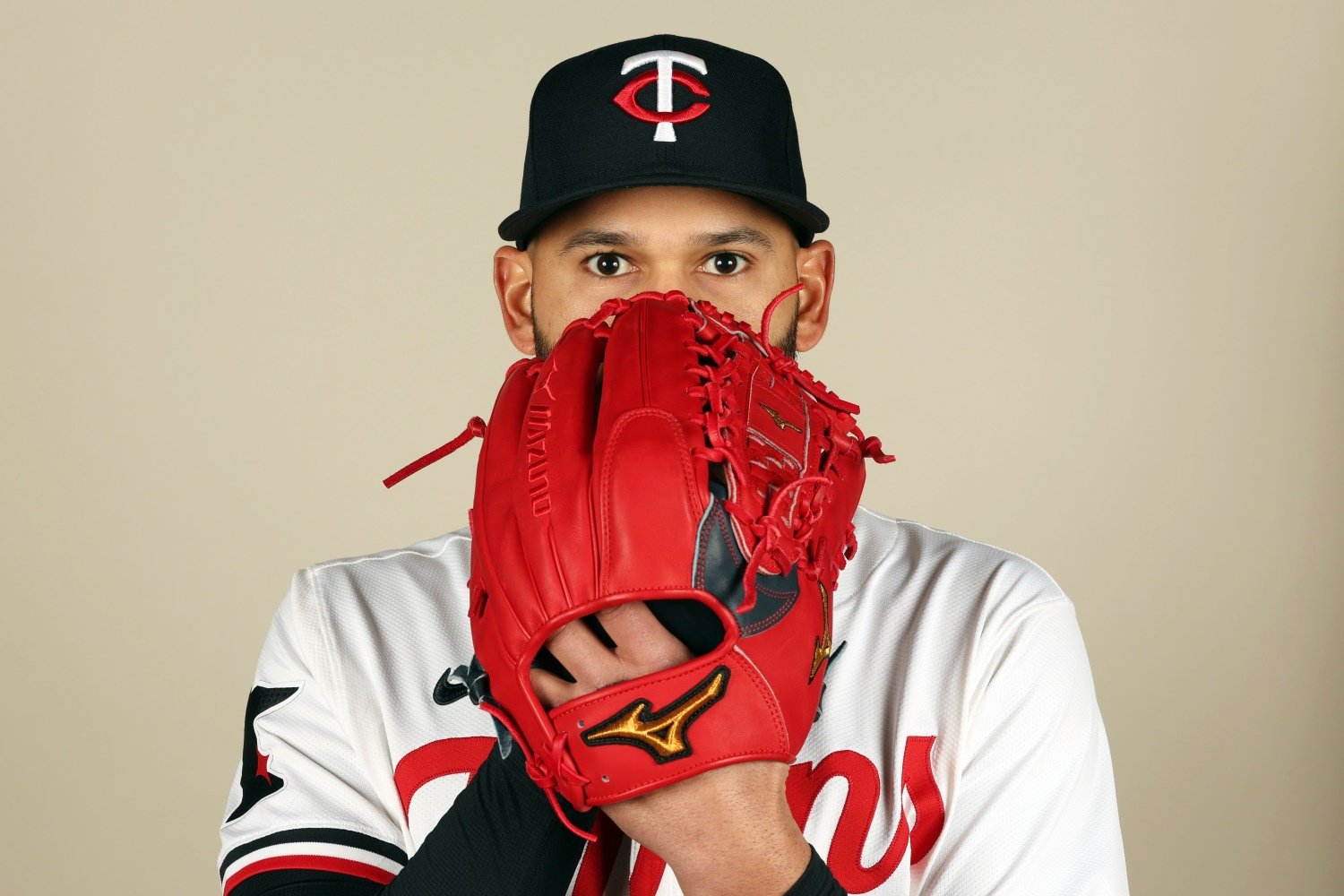 The MLB season has already started, and the Twins play their first game later this week. So, why not predict the winners of the game's most prestigious awards? American League Awards Predictions AL MVP Matt - Julio Rodríguez, Seattle Mariners I love Rodríguez. He showed up essentially fully formed and incredible in a tremendous 2022 season, then followed that up with a fourth-place finish in the AL MVP race. He did that as a 22-year-old. Brooks Lee is 23. Few players in the AL combine Rodríguez's absurd athleticism with such a polished all-around game and a demeanor matched only by the most ardent competitors ever to don a baseball uniform. The only thing potentially holding him back—it’s hilarious to write that about a guy with 11.3 career fWAR over two seasons—is his offensive aggression. He swings like Count Basie. That “limits” his upside compared to superhuman on-base gods like Aaron Judge and Corey Seager, but I’m confident he’ll iron out the few holes in his game. Heck, Seager is a free swinger in his own way. Rodríguez just needs to hone his aggression to the same extent. Cody - Bobby Witt Jr., Kansas City Royals After an exciting but ultimately average rookie season, Witt broke out with a stellar sophomore performance, generating 5.7 Wins Above Replacement at FanGraphs and a 115 wRC+. The 23-year-old’s mighty 2023 campaign earned him an 11-year, $288-million contract. Royals ownership’s motive behind extending Witt was likely to persuade the public to fund a stadium in downtown Kansas City. Still, the former second-overall pick deserves every penny. The deal makes plenty of sense even without an ulterior motive? Do I think the Royals will challenge the Twins for the AL Central title this upcoming season? Not in a serious manner. Do I think Witt is the best player in the AL Central? Yes. In 2022, Witt hit 20 home runs and stole 30 bases. The following season, he hit 30 home runs and stole 49 bases. He made those leaps while cutting his strikeout rate by 4% and increasing his walk rate by 1.1%. Expect the face of the Royals to progress even more in 2024, potentially hitting 35-plus home runs and stealing 50 or more bases. Juan Soto is also a smart choice. AL Cy Young Matt - Pablo López, Minnesota Twins I’m fascinated by this race. The top four finishers in last year’s vote are either hurt (Gerrit Cole, Kevin Gausman, and Kyle Bradish) or jumped ship to the NL (Sonny Gray). That leaves an extreme dearth of starters with a likely claim to win this award. So, López. Homerism? Sure. I can’t deny that. He’s in his athletic prime, though, and I think his peripherals align with his genuine talent more than his relatively unimpressive ERA does. He might win the award by default if he’s more in the 3.20 range, with a similar innings total and strikeout dominance. Luis Castillo and George Kirby are strong contenders here, too. Cody - George Kirby, Seattle Mariners Kirby is a strong contender--so strong that he’s my pick to win. In 190 ⅔ innings pitched last season, Kirby generated a 2.5% walk rate, the best in baseball. The 26-year-old righty's ability to minimize traffic on the bases guided him to an impressive 3.35 ERA, near-identical 3.34 FIP, and 4.4 fWAR in 2023. Utilizing a six-pitch (technically seven, if you count the knuckleball he threw twice) mix, Kirby overmatches hitters over elongated outings, averaging roughly 6 ⅓ innings per start. I love Matt’s pick of López, and as a fellow homer, I hope he wins the award. That said, Kirby is on the verge of elevating his game to an elite level while potentially tossing 200 or more innings, making me believe he will win his first AL Cy Young Award in 2024. Rookie of the Year Matt - Evan Carter, Texas Rangers I don’t care about small samples; Carter ran a 13.4% out-of-zone swing rate over a not-insignificant number of plate appearances. That’s a hell of a base on which to build one’s game. He’s already entrenched in the Opening Day lineup, giving him a leg up on an uber-prospect like Jackson Holliday or others needing an injury or (ahem) “defensive work” before they can earn serious playing time. Cody - Wyatt Langford, Texas Rangers I have more faith in small samples. For example, my girlfriend and I haven’t gotten along historically, but the last month and a half has gone very well. I’m convinced it’s sustainable. Regardless, I, like Matt, am selecting a young Texas Rangers outfielder to win AL Rookie of the Year. Unfortunately, the player I am selecting has only one first name. [Ed. note: Arguably, none. And this is now going to break my brain, so apologies in advance to both Evan Wyatt and Carter Langford for my errors.] Langford was great at Florida and has been tremendous at every minor-league level, jumping from rookie ball to Triple-A in half a season. The fourth overall selection in last year’s MLB Draft earned a spot on the Rangers' 2024 Opening Day roster. If he stays with Texas all season, there’s a real chance he will hit 30 home runs and become one of the reigning champions' primary offensive contributors. National League Awards Predictions NL MVP Matt - Corbin Carroll, Arizona Diamondbacks This exercise taught me that I have a bias toward outfielders. I’m not sure what this says about me. Carroll is a lot like Rodríguez; he was shockingly good at a young age and should only get better with seasoning. He’s the platonic ideal of a leadoff hitter: a rare combination of power, excellent swing decisions, and speed mixed with the kind of “hair on fire” hustle typically only matched in vigor by a dog bolting with a recently stolen cut of steak. Carroll has two factors working against him: a truly horrendous arm that negates all of his positive defensive value and an NL loaded with extraordinary talent. He might not even end up the third-best player in his division. I’m banking on the upside, though. Cody - Francisco Lindor, New York Mets The Mets will surprise many of those who follow the sport and make the playoffs. Fellow stars Kodai Senga, Edwin Díaz, Pete Alonso, Brandon Nimmo, and J.D. Martinez will play significant roles in their unexpected postseason push. Still, I think Lindor will be the driving force. Some have viewed Lindor’s three seasons with the Mets as disappointing. He's performed only 17% above league average while earning $34.1 million per season. That said, the former face of Cleveland baseball hit 31 home runs and stole 31 bases last season in 159 games played. If the 30-year-old star shortstop can replicate his 2023 campaign while guiding the potentially rejuvenated Mets to a postseason berth, the longtime beloved figure could win his first MVP award. NL Cy Young Matt - Logan Webb, San Francisco Giants Webb is what you get when you retrofit an '80s pitcher to the modern game. He’s perfectly content with allowing his infield to do the heavy lifting while he breezes through frames with fewer than 15 pitches per inning. The weirdly congested NL Cy Young race screwed him last year; he only dominated in innings and strikeout-to-walk ratio, which voters deemed less impressive than Blake Snell’s hyper-inefficient style but gaudy 2.25 ERA. I disagree. Webb’s unique workload capabilities make him a great bet to be the fallback Cy Young winner if Snell’s ERA regresses (likely) or Spencer Strider’s peripherals prove impossible to match. Cody - Bobby Miller, Los Angeles Dodgers When looking at the Dodgers' starting rotation, Yoshinobu Yamamoto and Tyler Glasnow jump off the page as more imminent Cy Young candidates, and rightfully so. Yamamoto signed a $12-year, $325-million deal with Los Angeles this offseason, and the organization shipped away promising young players Ryan Pepiot and Jonny DeLuca for the hard-throwing Glasnow’s services. Both pitchers are incredible, and I have no doubt they will perform well. That said, Miller is slated to be the workhorse of the team’s topheavy staff, lending him the greatest opportunity to come away with the prestigious award. Miller was incredible during his 2023 rookie campaign, generating a 3.76 ERA and 1.10 WHIP while sporting one of the best four-seam fastballs in MLB. Barring health, Miller could reasonably throw 170-plus innings while sporting one of the best five-pitch mixes in baseball, stuff and movement-wise. Voters could reward the young Dodger with the ultimate award for a starting pitcher in his second MLB season. NL Rookie of the Year Matt - Paul Skenes, Pittsburgh Pirates It’s unclear when Skenes will make his MLB debut, but I don’t care; he’s a stud. Skenes probably could have (and should have) been an MLB pitcher immediately following being drafted because, well, he’s a firehose of stuff built like Anthony Barr. His fastball routinely tops 100 miles per hour, and his slider may be the better pitch. Nerds will argue over his fastball shape, but—like I said before—I don’t care; he’s a stud. Cody - DL Hall, Milwaukee Brewers Despite being built more like Harrison Smith than Anthony Barr, Hall still provides incredible stuff, just not at the magnitude of the flamethrowing Skenes. Hall’s fastball averaged 95.6 MPH with the Baltimore Orioles last season, yet was a tick or two higher in the minors. Although the 25-year-old’s fastball doesn’t consistently touch 100+ MPH like Skenes, his elite release extension and flat Vertical Approach Angle (VAA) allow his heater to thrive at the top of the zone. Acquired alongside infielder Joey Ortiz and the 34th pick in the 2024 MLB Draft in the deal that sent Corbin Burnes to the Orioles, Hall will make the Brewers' Opening Day rotation. Milwaukee loves Hall and will give him every opportunity to stay in the rotation all season. Mix his favorable situation in the 414 with a tantalizing spring performance, and the young lefty has all the makings to be the first Brewer to win Rookie of the Year since Devin Williams in 2020. Who are your picks for the major awards in each league? What did we get right or wrong? Join the debate below.
- 6 comments
-
- 3
-
-
- julio rodriguez
- bobby witt jr
- (and 5 more)
-
Matt Braun and Cody Schoenmann predict the 2024 MLB Award winners. Will any Twins come away with prestigious honors? The MLB season has already started, and the Twins play their first game later this week. So, why not predict the winners of the game's most prestigious awards? American League Awards Predictions AL MVP: Matt - Julio Rodríguez, Seattle Mariners I love Rodríguez. He showed up essentially fully formed and incredible in a tremendous 2022 season, then followed that up with a 4th-place finish in the AL MVP race. As a 22-year-old. Brooks Lee is 23. Few players in the AL combine his absurd athleticism with such a polished all-around game and a demeanor matched only by the most psychopathic competitors ever to don a baseball uniform. The only thing potentially holding him back—it’s hilarious to write that about a guy with 11.3 career fWAR over two seasons—is his offensive aggression. He swings like Count Basie. That “limits” his upside compared to the superhuman on-base gods like Aaron Judge and Corey Seager, but I’m confident he’ll iron out the few holes in his game. Cody - Bobby Witt Jr., Kansas City Royals After an admirably average rookie season, Witt Jr. followed his MLB debut with a stellar sophomore performance, generating 5.7 Wins Above Replacement at FanGraphs (fWAR) and a 115 wRC+. The still-only-23-year-old’s mighty 2023 campaign earned him a $11-year, $288 million contract. Royals’ ownership’s motive behind extending Witt Jr. was likely to leverage the public to fund a stadium in downtown Kansas City. Still, the former second-overall pick deserves every penny, billionaires’ malevolence aside. Do I think the Royals will challenge the Twins for the AL Central title this upcoming season? Not in a serious manner. Do I think Bobby Witt Jr. is the best player in the AL Central? Yes. Two things can exist at once. In 2022, Witt Jr. hit 20 home runs and stole 30 bases. The following season, he hit 30 home runs and stole 49 bases. Witt Jr. hit ten more home runs and stole 19 more bases while cutting his strikeout rate by 4% and increasing his walk rate by 1.1%. Expect the face of the Royals to progress even more in 2024, potentially hitting 35+ home runs and stealing 50 or more bases. Juan Soto is also a smart choice. AL Cy Young: Matt - Pablo López, Minnesota Twins I’m fascinated by this race. The top four finishers in last year’s vote are either hurt (Gerrit Cole, Kevin Gausman, and Kyle Bradish) or jumped ship to the NL (Sonny Gray). That leaves an extreme dearth of starters with a decent claim to win this award. So, López. Homerism? Sure. I can’t deny that. He’s in his athletic prime, though, and I think his peripherals align with his genuine talent more than his relatively unimpressive ERA. He might win the award by default if he’s more in the 3.20 range with a similar innings total and strikeout dominance. Luis Castillo and George Kirby are strong contenders here, too. Cody - George Kirby, Seattle Mariners Kirby is a strong contender. So strong that he’s my pick to win. In 190 ⅔ innings pitched last season, Kirby generated a 2.5% walk rate, a 100-percentile outcome at Baseball Savant. The 26-year-old righty's ability to control the basepaths at maximum efficiency guided him toward notching an impressive 3.35 ERA, near-identical 3.34 FIP, and 4.4 fWAR in 2023. Utilizing a six-pitch (technically seven if you count the knuckleball he threw twice) mix, Kirby overmatches hitters over elongated outings, averaging roughly six ⅓ innings per start. I love Matt’s pick of López, and as a fellow homer, I hope Pablo wins the award. That said, Kirby is on the verge of elevating his game to an elite level while potentially tossing 200+ innings, making me believe he will win his first AL Cy Young Award in 2024. Rookie of the Year: Matt - Evan Carter, Texas Rangers I don’t care about small samples; Carter ran a 13.4 O-swing rate over a non-insignificant amount of plate appearances. That’s a hell of a base to build one’s game off of. He’s already entrenched as the Opening Day starter, giving him a leg-up on an uber-prospect like Jackson Holliday or others needing an injury or, cough, “defensive work” before they can earn serious playing time. Cody - Wyatt Langford, Texas Rangers I have more faith in small samples. For example, my girlfriend and I haven’t gotten along historically, but the last month-and-a-half has gone very well. I’m convinced it’s sustainable. Regardless, I, like Matt, am selecting a young Texas Rangers outfielder to win AL Rookie of the Year. Unfortunately, the player I am selecting has only one first name. Langford was great at Florida and has been tremendous at every minor league level, jumping from rookie ball to Triple-A in half a season. The fourth overall selection in last year’s MLB Draft earned a spot on the Rangers 2024 Opening Day roster. If he stays with Texas all season, there’s a real chance he will hit 30+ home runs and become one of the reigning World Champions' primary offensive contributors. National League Awards Predictions NL MVP: Matt - Corbin Carroll, Arizona Diamondbacks This exercise taught me that I have a bias towards outfielders. I’m not sure what this says about me. Carroll is a lot like Julio; he was shockingly good at a young age and should only get better with seasoning. He’s the platonic lead-off hitter: a rare combination of power, excellent swing decisions, and speed mixed with the kind of “hair on fire” hustle typically only matched in vigor by a dog bolting with a recently stolen cut of steak. Carroll has two factors working against him: a truly horrendous arm that negates all of his positive defensive value and an NL loaded with obscene talent. He might not even end up the 3rd-best player in his division. I’m banking on the upside, though. Cody - Francisco Lindor, New York Mets The Mets will surprise many of those who follow the sport and make the playoffs. Fellow stars Kodai Senga, Edwin Díaz, Pete Alonso, Brandin Nimmo, and J.D. Martinez will play significant roles in their unexpected postseason push. Still, I think Lindor will be the driving force of their aspirations. Some have viewed Lindor’s three seasons with the Mets as disappointing. He performed only 17% above league average while earning $34.1 million per season. That said, the former face of Cleveland baseball hit 31 home runs and stole 31 bases last season in 159 games played. If the 30-year-old star shortstop can replicate his 2023 campaign while guiding the potentially rejuvenated Mets to a postseason berth, the longtime beloved figure could win his first MVP award. NL Cy Young: Matt - Logan Webb, San Francisco Giants Webb is what you get when you retrofit an '80s pitcher to the modern game. He’s perfectly content with allowing his infield to do the heavy lifting while he breezes through frames with fewer than 15 pitchers per inning. The weirdly congested NL Cy Young race screwed him last year; he only dominated in innings and K/BB, which voters deemed less impressive than Blake Snell’s hyper-inefficient 2.25 ERA. I disagree. Webb’s unique workload capabilities make him a great bet to be the fallback Cy Young winner if Snell’s ERA regresses (likely) or Spencer Strider’s peripherals prove impossible to match. Cody - Bobby Miller, Los Angeles Dodgers When looking at the Dodgers starting rotation, Yoshinobu Yamamoto and Tyler Glasnow jump off the page as more imminent Cy Young Award candidates, and rightfully so. Yamamoto signed a $12-year, $325 million deal with Los Angeles this offseason, and the organization shipped away promising young players Ryan Pepiot and Jonny DeLuca for the hard-throwing Glasnow’s services. Both pitchers are incredible, and I have no doubt they will perform well over the long stretch of the 2024 season. That said, Miller is slated to be the workhorse of the team’s top-heavy staff, lending him the greatest opportunity to come away with the prestigious award. Miller was incredible during his 2023 rookie campaign, generating a 3.76 ERA and 1.10 WHIP while sporting one of the best four-seam fastballs in MLB. Barring health, Miller will reasonably throw 170+ innings next season while sporting one of the best five-pitch mixes in baseball, Stuff and movement-wise. Voters could reward the young Dodger with the ultimate award for a starting pitcher in his second MLB season. NL Rookie of the Year: Matt - Paul Skenes, Pittsburgh Pirates It’s unclear when Skenes will make his MLB debut, but I don’t care; he’s a stud. Skenes probably could have (should have) been an MLB pitcher immediately following being drafted because, well, he’s a firehose of stuff built like Anthony Barr. His fastball routinely sits 100, and his slider may be the better pitch. Nerds will argue over his fastball shape, but—like I said before—I don’t care; he’s a stud. Cody - DL Hall, Milwaukee Brewers Despite being built more like Harrison Smith than Anthony Barr, Hall still provides incredible stuff, just not at the magnitude of the fireball-throwing Skenes. Hall’s fastball averaged 95.6 MPH with the Baltimore Orioles last season, yet was a MPH-or-two higher in the minors. Although the 25-year-old’s fastball doesn’t consistently touch 100+ MPH like Skenes, his elite release extension and flat Vertical Approach Angle (VAA) allow his heater to thrive at the top of the zone. Acquired alongside infielder Joey Ortiz and the 34th pick in the 2024 MLB Draft in the deal that sent Corbin Burnes to the Orioles, Hall will make the Brewers Opening Day rotation. Milwaukee loves Hall and will give him every opportunity to stay in the team’s rotation all season. Mix his favorable situation in the 414 with a stellar spring performance, and the young lefty has all the makings to be the first Brewer to win Rookie of the Year since Devin Williams in 2020. View full article
-
Will the Twins Generate Enough Power at First Base in 2024?
Cody Schoenmann posted an article in Twins
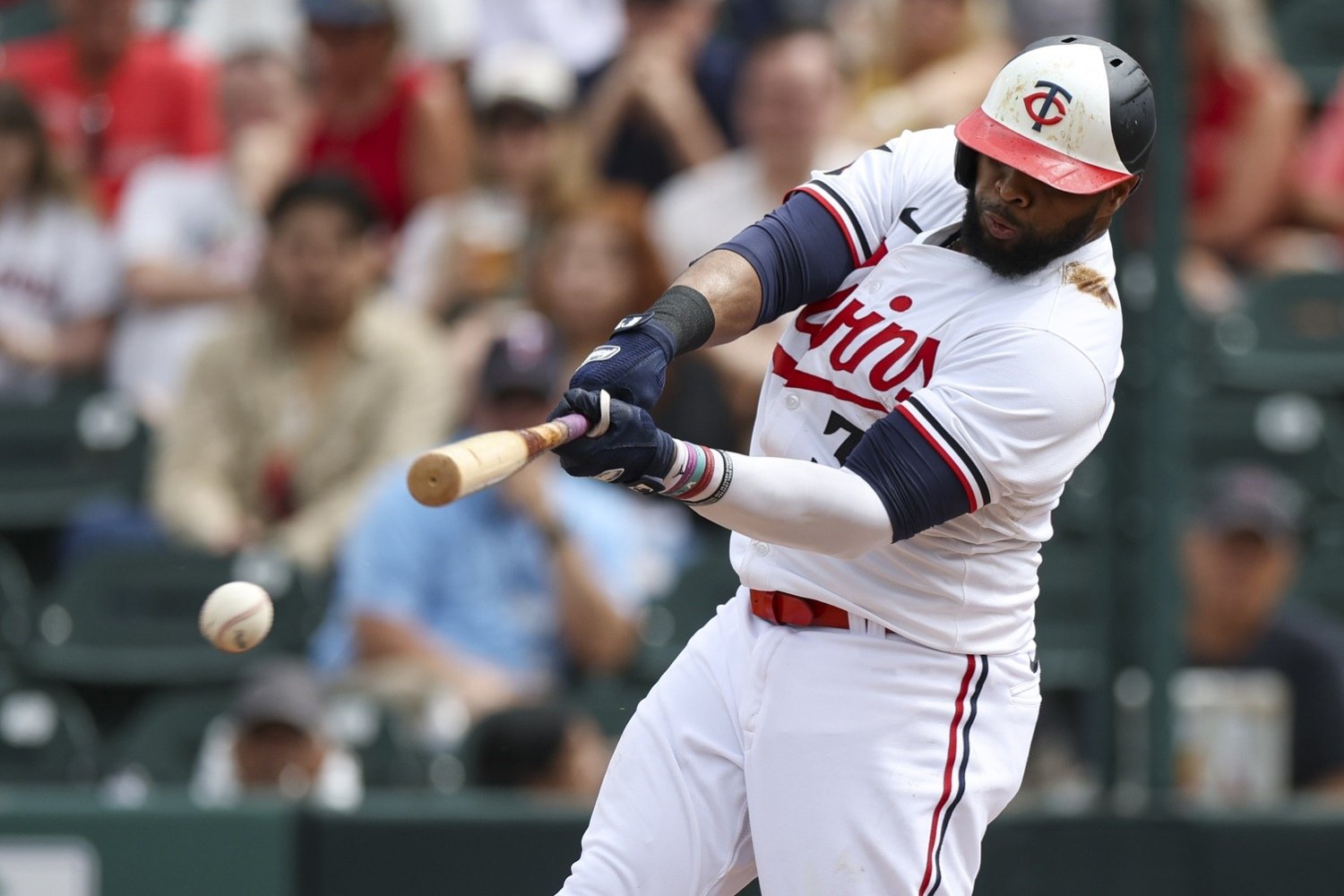 Last season, the Twins' primary first baseman was technically Joey Gallo. In 332 plate appearances, Gallo hit .177/.301/.440, swatting 21 home runs and cobbling together an above-average 104 wRC+. However, Gallo's numbers were inflated by a formidable April, wherein he hit .226/.349/.717 with seven home runs and a 182 wRC+ over 63 plate appearances. From May 1 to his final game as a member of the Twins on Sept. 5, Gallo was practically unusable, striking out 44.9% of the time and generating a subpar 85 wRC+. Gallo has since joined the Washington Nationals, striking out in over half his 27 plate appearances this spring. In response, the Twins have elected to undergo a course correction, signing the contact-skilled Carlos Santana to a one-year, $5.25-million contract. Will the team regret sacrificing power at first base and suffer an unwanted power outage from a short-sighted overcompensation? First, let's look at how the organization has approached the position and the results it has produced since Rocco Baldelli took over as manager in 2019. Over the last five years, the Minnesota Twins have hit 1,037 home runs, placing them fourth in that period behind only the Atlanta Braves, New York Yankees, and Los Angeles Dodgers. Considering the 2019 club hit the most home runs in a season with 307 (now tied with the 2023 Braves), their being toward the top of home run leaderboards shouldn't be a surprise. Yet, how they accomplished this feat has been unorthodox. In the past four seasons, the Braves, Yankees, and Dodgers have had power-hitting first basemen serve as key cogs in the middle of their power-hitting lineups. Freddie Freeman and Matt Olson hit 170 home runs for Atlanta, Luke Voit and Anthony Rizzo hit 106 home runs for New York, and the trio of Freeman, Max Muncy, and Cody Bellinger hit 278 home runs for Los Angeles. Since 2019, the Twins' first basemen with the most home runs are C.J. Cron, with 25 in 2019, and Alex Kirilloff, with 22 from 2021 through 2023. So, where are the home runs coming from? Since Baldelli took over, the Twins have hit an abundance of long balls from traditionally power-constrained positions. Right fielder Max Kepler leads the team with 97 home runs since 2019. Middle infielder Jorge Polanco is second with 89, and center fielder Byron Buxton is third with 87. With Kepler and Buxton expected to be primary offensive contributors for the team in 2024 and the powerful, left-handed hitting Edouard Julien replacing the departed Polanco at second base, the Twins are expected to produce excess power from those three positions again. FanGraphs's STEAMER projects the triumvirate of Kepler, Buxton, and Julien to hit a combined 67 home runs in 2024. Third baseman Royce Lewis is expected to hit 28, and shortstop Carlos Correa is projected to hit 21. That said, the team's primary first baseman, Santana, is expected to hit only 15 home runs over 448 plate appearances. Santana hit 19 home runs each year in 2021 and 2022, and 23 home runs last season--his highest single-season total since hitting 34 with Cleveland in 2019. Projecting Santana to hit just 15 home runs feels like a conservative estimate of his capabilities. That said, other reputable projection systems take similar stances on the switch-hitting 37-year-old: FanGraphs's ZiPS: 17 home runs over 522 plate appearances FanGraphs's THE BAT X: 14 home runs over 486 plate appearances Baseball Prospectus's PECOTA: 14 home runs over 441 plate appearances ZiPS has the most favorable projections for "El Oso," predicting he will slug 17 dingers. Nor is Santana the only Twins first baseman expected to have modest power production in 2024. STEAMER projects backup first baseman and expected primary designated hitter Kirilloff to hit just 12 home runs over 383 plate appearances this upcoming season. As with Santana, other reputable projection systems follow suit: ZiPS: 12 home runs over 383 plate appearances THE BAT X: 10 home runs over 378 plate appearances PECOTA: 10 home runs over 335 plate appearances On average, Santana and Kirilloff are projected to hit a combined 25-27 home runs next season. The Braves' primary first baseman (Olson) is projected to hit 39 home runs between the three projection systems, the Dodgers' (Freeman) is expected to hit 26, and the Yankees' (Rizzo) is projected to hit 21. Rizzo's platoon mate, DJ LeMahieu, is expected to notch 12 to complement the veteran lefty. If the Twins really do get fewer than 30 total bombs from the players who will take the majority of the playing time at first base and DH, it's hard not to see that as a shortfall. After a one-year experiment with the strikeout-prone Gallo, the Twins appear set to rely on generating power from traditionally unconventional positions. Their center fielder, third baseman, and right fielder are projected to hit the most home runs in 2024, and neither of their first basemen are likely to reach 20. That said, the organization is making a concerted effort to cut back on strikeouts after claiming the MLB record for punchouts in a season, with 1,654. Signing Santana, trading for fellow strikeout-resistant hitter Manuel Margot, and expecting a dip in strikeout percentage (K%) from primary role players Kyle Farmer, Christian Vázquez, Willi Castro, and Kirilloff and starters Buxton, Correa, Julien, and Lewis, the Twins are looking to deviate from the three-true-outcome offense they often were last season. Whether that approach is successful depends on Santana and Kirilloff's ability to hit for contact and let other positions generate power.
 -
Since 2019, the Twins have hit the fourth-most home runs in baseball, despite generating minimal power from first base. Will 2024 see another power outage from the position, or will the team's expected positional duo surprise us with the position's customary pop? Image courtesy of © Nathan Ray Seebeck-USA TODAY Sports Last season, the Twins' primary first baseman was technically Joey Gallo. In 332 plate appearances, Gallo hit .177/.301/.440, swatting 21 home runs and cobbling together an above-average 104 wRC+. However, Gallo's numbers were inflated by a formidable April, wherein he hit .226/.349/.717 with seven home runs and a 182 wRC+ over 63 plate appearances. From May 1 to his final game as a member of the Twins on Sept. 5, Gallo was practically unusable, striking out 44.9% of the time and generating a subpar 85 wRC+. Gallo has since joined the Washington Nationals, striking out in over half his 27 plate appearances this spring. In response, the Twins have elected to undergo a course correction, signing the contact-skilled Carlos Santana to a one-year, $5.25-million contract. Will the team regret sacrificing power at first base and suffer an unwanted power outage from a short-sighted overcompensation? First, let's look at how the organization has approached the position and the results it has produced since Rocco Baldelli took over as manager in 2019. Over the last five years, the Minnesota Twins have hit 1,037 home runs, placing them fourth in that period behind only the Atlanta Braves, New York Yankees, and Los Angeles Dodgers. Considering the 2019 club hit the most home runs in a season with 307 (now tied with the 2023 Braves), their being toward the top of home run leaderboards shouldn't be a surprise. Yet, how they accomplished this feat has been unorthodox. In the past four seasons, the Braves, Yankees, and Dodgers have had power-hitting first basemen serve as key cogs in the middle of their power-hitting lineups. Freddie Freeman and Matt Olson hit 170 home runs for Atlanta, Luke Voit and Anthony Rizzo hit 106 home runs for New York, and the trio of Freeman, Max Muncy, and Cody Bellinger hit 278 home runs for Los Angeles. Since 2019, the Twins' first basemen with the most home runs are C.J. Cron, with 25 in 2019, and Alex Kirilloff, with 22 from 2021 through 2023. So, where are the home runs coming from? Since Baldelli took over, the Twins have hit an abundance of long balls from traditionally power-constrained positions. Right fielder Max Kepler leads the team with 97 home runs since 2019. Middle infielder Jorge Polanco is second with 89, and center fielder Byron Buxton is third with 87. With Kepler and Buxton expected to be primary offensive contributors for the team in 2024 and the powerful, left-handed hitting Edouard Julien replacing the departed Polanco at second base, the Twins are expected to produce excess power from those three positions again. FanGraphs's STEAMER projects the triumvirate of Kepler, Buxton, and Julien to hit a combined 67 home runs in 2024. Third baseman Royce Lewis is expected to hit 28, and shortstop Carlos Correa is projected to hit 21. That said, the team's primary first baseman, Santana, is expected to hit only 15 home runs over 448 plate appearances. Santana hit 19 home runs each year in 2021 and 2022, and 23 home runs last season--his highest single-season total since hitting 34 with Cleveland in 2019. Projecting Santana to hit just 15 home runs feels like a conservative estimate of his capabilities. That said, other reputable projection systems take similar stances on the switch-hitting 37-year-old: FanGraphs's ZiPS: 17 home runs over 522 plate appearances FanGraphs's THE BAT X: 14 home runs over 486 plate appearances Baseball Prospectus's PECOTA: 14 home runs over 441 plate appearances ZiPS has the most favorable projections for "El Oso," predicting he will slug 17 dingers. Nor is Santana the only Twins first baseman expected to have modest power production in 2024. STEAMER projects backup first baseman and expected primary designated hitter Kirilloff to hit just 12 home runs over 383 plate appearances this upcoming season. As with Santana, other reputable projection systems follow suit: ZiPS: 12 home runs over 383 plate appearances THE BAT X: 10 home runs over 378 plate appearances PECOTA: 10 home runs over 335 plate appearances On average, Santana and Kirilloff are projected to hit a combined 25-27 home runs next season. The Braves' primary first baseman (Olson) is projected to hit 39 home runs between the three projection systems, the Dodgers' (Freeman) is expected to hit 26, and the Yankees' (Rizzo) is projected to hit 21. Rizzo's platoon mate, DJ LeMahieu, is expected to notch 12 to complement the veteran lefty. If the Twins really do get fewer than 30 total bombs from the players who will take the majority of the playing time at first base and DH, it's hard not to see that as a shortfall. After a one-year experiment with the strikeout-prone Gallo, the Twins appear set to rely on generating power from traditionally unconventional positions. Their center fielder, third baseman, and right fielder are projected to hit the most home runs in 2024, and neither of their first basemen are likely to reach 20. That said, the organization is making a concerted effort to cut back on strikeouts after claiming the MLB record for punchouts in a season, with 1,654. Signing Santana, trading for fellow strikeout-resistant hitter Manuel Margot, and expecting a dip in strikeout percentage (K%) from primary role players Kyle Farmer, Christian Vázquez, Willi Castro, and Kirilloff and starters Buxton, Correa, Julien, and Lewis, the Twins are looking to deviate from the three-true-outcome offense they often were last season. Whether that approach is successful depends on Santana and Kirilloff's ability to hit for contact and let other positions generate power. View full article
-
 When pitchers and catchers reported to Hammond Stadium at the Lee Health Sports Complex in Fort Myers this Valentine's Day, the Twins were seen to have one of the most formidable bullpens in baseball. FanGraphs projected the Minnesota bullpen to be the second-best bullpen in MLB, generating 4.5 Wins Above Replacement (fWAR), just behind the Philadelphia Phillies, at 4.9. At the time, most outlets projected the team's bullpen to be constructed of the following pitchers: Jhoan Durán - RHP Griffin Jax - RHP Brock Stewart - RHP Caleb Thielbar - LHP Justin Topa - RHP Steven Okert - LHP Jay Jackson - RHP Josh Staumont - RHP Durán was the closer, Jax, Stewart, and Thielbar were the primary set-up relievers, and Topa, Okert, Jackson, and Staumont would pilot the middle innings, with the potential of becoming high-leverage relievers if others higher on the totem pole became injured or performed poorly. Fast-forward a month, and much of the optimism surrounding the pen remains. FanGraphs still projects the unit to generate the second-most fWAR. The Twins acquired a bevy of veteran arms intending to assemble the deepest bullpen in MLB, equipping them with the unique privilege of being able to store multiple MLB-caliber relievers at Triple-A St. Paul. The Twins acquired Okert and Jackson knowing they no longer had minor-league options, which effectively guaranteed them spots on the 26-man roster. Fellow recently-acquired pitchers Topa and Staumont both have options remaining (Topa has two; Staumont has one), yet either of them beginning the season at Triple-A was deemed unlikely, as the organization sought after both players in trade and free agency, respectively. That being the case, returning relievers Jorge Alcalá and Kody Funderburk were seen to be the primary short-relief depth options at Triple-A alongside waiver claim Zack Weiss and non-roster invitees Daniel Duarte, Jeff Brigham, and Ronny Henriquez. The organization's philosophy of hoarding an abundance of replacement-level to above-average arms was applauded by most pundits and fans alike. Alas, recent injury updates have spoiled the front office's well-constructed plans. On Monday, the Twins announced Thielbar (hamstring) and Durán (oblique strain) will begin the season on the 15-day injured list. Thielbar, the Twins' primary left-handed bullpen arm, had been dealing with his issues since the beginning of camp. The 37-year-old Minnesota native had been ramping up earlier this month and recently threw live batting practice against infielder Kyle Farmer, as recorded by Twins Daily's Nick Nelson: The veteran had eyes on an eleventh-hour comeback attempt. Unfortunately, his nagging injury has sidelined him for at least the season's first week and a half. In response, the Twins will need to promote a short reliever initially anticipated to start the season at Triple-A. Fellow southpaw Funderburk would be the logical substitute. Yet, the 27-year-old has performed poorly this spring, evidenced by a 5.19 ERA over 8 2/3 innings pitched. The Dallas Baptist product has also battled control issues that weren't present in the 12 dominant innings he threw during his rookie campaign last season. Funderburk's inability to attack the zone could prompt the Twins to hand Alcalá the keys to Thielbar's spot in the bullpen. Alcalá has been quantifiably great in his outings, generating the fourth-highest Stuff+ among pitchers who have thrown a minimum of 100 pitches this spring. The hard-throwing righty has also posted a spare 2.57 ERA, while striking out seven hitters over seven innings pitched and 28 batters faced. Alcalá has long been viewed as a breakout candidate among the Twins faithful (ask Tom Froemming), but 2024 could be the season where the 28-year-old puts it all together and becomes the high-leverage reliever many thought he could become after his inspiring 2021 campaign. Durán landing on the injured list to begin the season was unexpected. The 26-year-old's early-season absence signifies an emergency test of the organization's stockpiled bullpen depth. With Alcalá replacing Thielbar, it is fair to assume Durán's injury has guaranteed Staumont a spot on the Opening Day 26-man roster. Staumont has struggled with command this spring, evidenced by five walks in just 4 2/3 innings pitched. Still, the former Royals reliever touched 98 miles per hour with his four-seam fastball in his most recent outing. Many questioned whether Staumont would make the roster just days ago. Now, he looks awfully safe. With Alcalá replacing Thielbar and Staumont replacing Durán, the team's eighth bullpen job will ultimately come down to whether they prefer a second left-handed reliever (in Funderburk) or an arm that can be stretched out over multiple innings. The Twins' preference has gone unknown this spring, but manager Rocco Baldelli shed light on which type of reliever the organization could bring to Kansas City. "We need length in our bullpen," the skipper told reporters Saturday. "Pete (Maki), in his last pitchers meeting, made the statement to the entire group: there might be a couple guys in this room who are likely gonna throw one inning, but everybody else who is a bullpen arm will have to throw more than one inning. "[The Twins] clearly cannot have six one-inning guys in the bullpen," Baldelli continued. "You can't get through, forget 162 games; you can't get through 13 games in a row over a decent stretch early in the season without a bunch of guys going at least two, if not more than two innings out of your bullpen." Baldelli's quotes suggest the Twins could be leaning toward rostering a stretch reliever at the beginning of the season. Cole Sands or Brent Headrick would be the favorites to inhabit that role. Although Headrick has outperformed Sands in Spring Training, the team will likely prefer to roster a righthander in that kind of job, giving Sands the upper hand. Baldelli strongly suggested the team could prioritize rostering relievers who can be stretched out. Barring further attrition, Jax, Stewart, Topa, Okert, and Jackson are locks to make the Opening Day bullpen, with Jax and Stewart receiving the bulk of save opportunities. Alcalá will, presumably, take Thielbar's vacated roster spot, Staumont will take Durán's spot, and whether the team's decision-makers elect to bring Funderburk or a stretch reliever to Kansas City on Opening Day will depend entirely on organizational preference. Reporter credit: @Nick Nelson
- 11 comments
-
- 8
-
-
- jhoan durán
- caleb thielbar
- (and 5 more)
-
Poor performances and injury concerns have muddied the Twins' plan at the bullpen heading into the season. What is the unit's outlook as Opening Day nears? When pitchers and catchers reported to Hammond Stadium at the Lee Health Sports Complex in Fort Myers this past Valentine's Day, the Twins were seen to have one of the most formidable bullpens in baseball. FanGraphs projected the Twins bullpen to be the second-best bullpen in MLB, generating 4.5 Wins Above Replacement at FanGraphs (fWAR), just behind the Philadelphia Phillies with 4.9. At the time, most projected the team's bullpen to be constructed of the following pitchers: Jhoan Durán - RHP Griffin Jax - RHP Brock Stewart - RHP Caleb Thielbar - LHP Justin Topa - RHP Steven Okert - LHP Jay Jackson - RHP Josh Staumont - RHP Durán was the closer, Jax, Stewart, and Thielbar were the primary set-up relievers, and Topa, Okert, Jackson, and Staumont would pilot the middle innings with the potential of becoming high-leverage relievers if others higher on the totem pole became injured or performed poorly. Fast forward a month later, and much of the optimism surrounding the 'pen remains. FanGraphs still projects the unit to generate the second most fWAR behind the Phillies. The Twins acquired a bevy of veteran arms intending to assemble one of (if not the) deepest bullpen in MLB. Yet, with a surplus of veteran depth comes a unique hurdle. The Twins acquired Okert and Jackson, knowing they no longer had minor league options, which effectively guaranteed them spots on the 26-man roster. Fellow recently acquired pitchers Topa and Staumont both have minor league options remaining (Topa has two; Staumont has one), yet either of them beginning the season at Triple-A was deemed unlikely, as the organization sought after both players in trade and free agency, respectively. That being the case, returning relievers Jorge Alcalá and Kody Funderburk were seen to be the primary short relief depth options at Triple-A alongside waiver claim Zack Weiss and non-roster invitees Daniel Duarte, Jeff Brigham, and Ronny Henriquez. The organization's plan was well thought out and applauded by most factions of the fanbase. Yet, the organization backed itself into a corner, purposely giving itself little room to maneuver. Seven of the Twins' eight bullpen spots were occupied, with the only wiggle room residing in whether the organization wanted to fill the eighth bullpen spot with Staumont or a stretch reliever in Cole Sands or Brent Headrick. Less than two weeks before the beginning of the 2024 regular season, it is still being determined whether the Twins want to hand the eighth and final bullpen spot to Staumont or a short reliever. However, recent injury updates and performances have shed light on what the team's bullpen construction will look like come March 28. Thielbar, the Twins' primary left-handed bullpen arm, has been dealing with hamstring issues since the beginning of camp. The 37-year-old Minnesota native had been ramping up earlier this month and recently threw live batting practice against infielder Kyle Farmer, as recorded by Twins Daily's Nick Nelson: Thielbar is behind schedule, and with Opening Day less than two weeks away, it will be difficult for the veteran southpaw to ramp up enough to partake in regular season game action when the Twins head for Kansas City. In response, the Twins will presumably need to hand one of its short relief spots to a reliever who was initially anticipated to be a Triple-A depth arm. Fellow left-handed reliever Funderburk would be the logical substitute. Yet, the 27-year-old has performed poorly this spring, evidenced by a 5.19 ERA over 8 2/3 innings pitched. The Dallas Baptist product has also displayed newfound control issues that weren't present in the 12 dominant innings he threw during his rookie campaign last season. With Funderburk not being a viable option, it appears the team will turn to Alcalá to take Thielbar's spot in the bullpen. Alcalá has been quantifiably great in his outings, generating the fourth-highest Stuff+ amongst pitchers who have thrown a minimum of 100 pitches this spring. The hard-throwing righty has also given up a mere 2.57 ERA while striking out seven hitters over seven innings pitched and 28 batters faced. Alcalá has long been viewed as a breakout candidate among Twins-faithful (ask Tom Froemming), but 2024 could be the season where the 28-year-old puts it all together and becomes the high-leverage reliever many thought he could become after his inspiring 2021 campaign. Performing well this spring has presumably given him the opportunity to achieve the lofty expectations placed upon him. With Alcalá likely replacing Thielbar in the bullpen, the team's eighth bullpen will ultimately come down to whether they prefer Staumont or a stretch reliever. The Twins' preference has gone unknown this spring, yet manager Rocco Baldelli shed light on which reliever the organization could bring to Kansas City. Baldelli told reporters on Saturday that "we need length in our bullpen." Baldelli continued, "Pete (Maki), in his last pitchers meeting, made the statement to the entire group: there might be a couple guys in this room who are likely gonna throw one inning, but everybody else who is a bullpen arm will have to throw more than one inning." Baldelli also noted that, "(the Twins) clearly cannot have six one-inning guys in the bullpen...You can't get through, forget 162 games; you can't get through 13 games in a row over a decent stretch early in the season without a bunch of guys going at least two, if not more than two innings out of your bullpen." Baldelli's quotes suggest the Twins could be leaning toward rostering a stretch reliever at the beginning of the season. As noted earlier, Sands or Headrick is the favorite to occupy that role. Headrick has outperformed Sands in Spring Training, though the team will likely prefer to roster a right-hand stretch arm, giving Sands the upper hand. Although Baldelli strongly suggested the team prioritizes rostering relievers who can be stretched out, short relief candidate Staumont has performed well this spring, illustrating a steady increase in velocity coming back from thoracic outlet syndrome surgery last August. Barring health, Durán, Jax, Stewart, Topa, Okert, and Jackson are locks to make the Opening Day bullpen. The Twins will likely enter the season with Okert being the only left-handed reliever in the bullpen. Alcalá will presumably take Thielbar's spot, and whether the team's decision-makers elect to bring Staumont or a stretch reliever to Kansas City on Opening Day will depend entirely on organizational preference. View full article
-
the Twins bullpen is substantially better right now than it was entering last season, so, barring health, I expect the number to be lower than the 17-19 range. Still, I expected non-roster invitees like Brigham, Duarte, Jensen, etc. to get some run this season.
-
You could add Randy Dobnak, Simeon Woods Richardson, and David Festa to the "Being used as a starter, but at least a few folks on TD...." section. I have seen them floated around as stretch relief or late-season short relief options, but I think it's (mostly) universally acknowledged they are going to be utilized as starters. Otherwise, you nailed it!
-
The Twins front office has acquired a surplus of relievers this offseason. Could this standout veteran non-roster invitee impact the team in unexpected ways? Image courtesy of Gregory Fisher-USA TODAY Sports The 2023 MLB regular season was an unmitigated disaster for the New York Mets. Led by spendthrift billionaire team owner Steve Cohen and since-outcasted general manager Billy Eppler, the Mets spent an MLB-record estimated $354 million on payroll. Despite being top-heavy with star veteran players Francisco Lindor, Pete Alonso, Brandon Nimmo, and standout rookie catcher Francisco Álvarez, the Mets lacked depth, lending to a catastrophic 75-87 fourth-place finish. The begrudged Mets cycled through many pitchers last season, though few made as many appearances as Jeff Brigham. Brigham, 32, was selected by the Los Angeles Dodgers in the 4th round of the 2014 MLB Draft. The University of Washington product spent a season and a half in Los Angeles's minor-league system before being traded to the Miami Marlins alongside Kevin Guzman and Victor Araujo for starting pitcher Mat Latos and right-handed power bat Michael Morse. Brigham made his MLB debut with Miami in 2018 as a starter, generating a 6.06 ERA, 6.04 FIP, and -0.2 Wins Above Replacement at FanGraphs (fWAR) over 16 ⅓ innings pitched and 77 batters faced. Miami quickly converted the then-26-year-old into a reliever, and he has stayed in the bullpen since. Brigham went on to manufacture a 4.52 ERA, 4.82 FIP, 11.6% HR/FB rate, and 79-to-37 K/BB over 79 ⅔ innings pitched and 344 batters faced as a reliever for the Marlins from 2019 to 2022. On November 18th, 2022, Brigham was shipped to the Mets alongside Elieser Hernandez for pitching prospect Franklin Sánchez and a player to be named later or cash. The veteran right-handed hurler spent the beginning of last season at Triple-A Syracuse before getting called up on April 18th. Despite spending the year between Syracuse and the parent club, Brigham threw the fifth-most innings for a Mets reliever, finishing the season with 37 innings pitched.In those 37 frames, he generated a 5.26 ERA, 5.96 FIP, 19.6% HR/FB rate, and 42-to-18 K/BB while facing 160 batters. Unfortunately, Brigham's tenure with the Mets lasted only one season, as the team elected to non-tender him last November. Brigham spent the offseason shuffling through minor-league options before signing with the Twins in mid-February. The Twins' front office prioritized bringing in bullpen depth, evidenced by President of Baseball Operations Derek Falvey and company signing, claiming, or trading for 16 relievers this offseason. However, Brigham's road to Minnesota is unique compared to most. In a piece written by the Star Tribune's Phil Miller, Brigham communicated that he chose the Twins despite having minor-league contract offers from other organizations due to his connection to former teammate Pablo López and a fondness for the organization's front office and player development staff, which showed him a blueprint on how they could save his dwindling career. The focus now is on improving his cutter as a secondary pitch to his four-seam fastball and helping him become a better pitch sequencer. Vice President of Baseball Operations Strategy and Innovations Josh Kalk, pitching coach Pete Maki, and the organization's coaching staff are guiding Brigham toward becoming a priority bullpen depth piece for the parent club early this upcoming season. Below is Brigham's pitch mix from 2023 with usage percentages: Sweeper (42.2%) Four-seam fastball (39.1%) Cutter (18.7%) Brigham is the epitome of a two-pitch pitcher, throwing his sweeper and four-seam fastball a combined 81.3% of the time last season. The Twins seek out pitchers who throw four-seam fastballs, with their main secondary pitch being some iteration of a sweeper or slider, explaining their interest in attaining Brigham's services in camp. The organization's coaching and player development staff has emphasized developing and refining pitchers' third and fourth pitches in their mix, thus explaining their desire to tinker with Brigham's cutter. Although the veteran right-handed hurler's fastball sits at 93.5 MPH (40th percentile outcome at Baseball Savant), he has a functional glove-side sweeper that's effective against same-handed hitters. Brigham and the Twins coaching staff are working to refine his cutter to make it effectively break in on left-handed hitters. The veteran reliever could be the team's next successful reclamation project if the two parties rectify his cutter while fortifying his already effective four-seam fastball and sweeper. Brigham has consistently strung together lackluster seasons in his cyclical career. Still, through electing to integrate himself into a pitching development program that has maximized past minor-league signings in Caleb Thielbar and Brock Stewart, there is reason to suspect he could become an idealized version of himself as a reliever. In three appearances this spring, Brigham has faced 13 batters, giving up one hit, walking two, and striking out one over three innings pitched. Brigham has performed well in a small sample size this spring, and if he can continue to build upon his first three outings, he could earn a spot in the team's bullpen mix in 2024. View full article
-
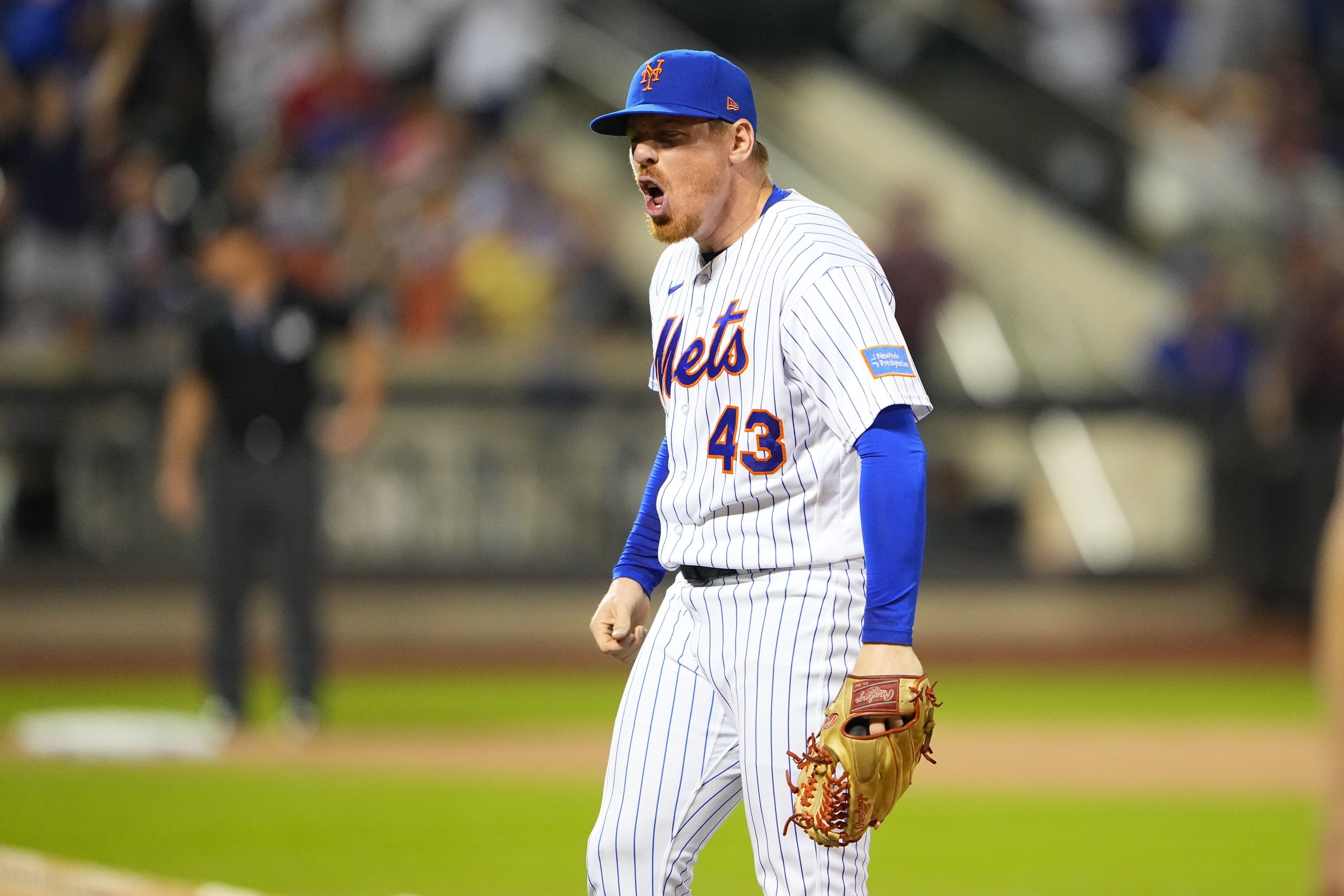 The 2023 MLB regular season was an unmitigated disaster for the New York Mets. Led by spendthrift billionaire team owner Steve Cohen and since-outcasted general manager Billy Eppler, the Mets spent an MLB-record estimated $354 million on payroll. Despite being top-heavy with star veteran players Francisco Lindor, Pete Alonso, Brandon Nimmo, and standout rookie catcher Francisco Álvarez, the Mets lacked depth, lending to a catastrophic 75-87 fourth-place finish. The begrudged Mets cycled through many pitchers last season, though few made as many appearances as Jeff Brigham. Brigham, 32, was selected by the Los Angeles Dodgers in the 4th round of the 2014 MLB Draft. The University of Washington product spent a season and a half in Los Angeles's minor-league system before being traded to the Miami Marlins alongside Kevin Guzman and Victor Araujo for starting pitcher Mat Latos and right-handed power bat Michael Morse. Brigham made his MLB debut with Miami in 2018 as a starter, generating a 6.06 ERA, 6.04 FIP, and -0.2 Wins Above Replacement at FanGraphs (fWAR) over 16 ⅓ innings pitched and 77 batters faced. Miami quickly converted the then-26-year-old into a reliever, and he has stayed in the bullpen since. Brigham went on to manufacture a 4.52 ERA, 4.82 FIP, 11.6% HR/FB rate, and 79-to-37 K/BB over 79 ⅔ innings pitched and 344 batters faced as a reliever for the Marlins from 2019 to 2022. On November 18th, 2022, Brigham was shipped to the Mets alongside Elieser Hernandez for pitching prospect Franklin Sánchez and a player to be named later or cash. The veteran right-handed hurler spent the beginning of last season at Triple-A Syracuse before getting called up on April 18th. Despite spending the year between Syracuse and the parent club, Brigham threw the fifth-most innings for a Mets reliever, finishing the season with 37 innings pitched.In those 37 frames, he generated a 5.26 ERA, 5.96 FIP, 19.6% HR/FB rate, and 42-to-18 K/BB while facing 160 batters. Unfortunately, Brigham's tenure with the Mets lasted only one season, as the team elected to non-tender him last November. Brigham spent the offseason shuffling through minor-league options before signing with the Twins in mid-February. The Twins' front office prioritized bringing in bullpen depth, evidenced by President of Baseball Operations Derek Falvey and company signing, claiming, or trading for 16 relievers this offseason. However, Brigham's road to Minnesota is unique compared to most. In a piece written by the Star Tribune's Phil Miller, Brigham communicated that he chose the Twins despite having minor-league contract offers from other organizations due to his connection to former teammate Pablo López and a fondness for the organization's front office and player development staff, which showed him a blueprint on how they could save his dwindling career. The focus now is on improving his cutter as a secondary pitch to his four-seam fastball and helping him become a better pitch sequencer. Vice President of Baseball Operations Strategy and Innovations Josh Kalk, pitching coach Pete Maki, and the organization's coaching staff are guiding Brigham toward becoming a priority bullpen depth piece for the parent club early this upcoming season. Below is Brigham's pitch mix from 2023 with usage percentages: Sweeper (42.2%) Four-seam fastball (39.1%) Cutter (18.7%) Brigham is the epitome of a two-pitch pitcher, throwing his sweeper and four-seam fastball a combined 81.3% of the time last season. The Twins seek out pitchers who throw four-seam fastballs, with their main secondary pitch being some iteration of a sweeper or slider, explaining their interest in attaining Brigham's services in camp. The organization's coaching and player development staff has emphasized developing and refining pitchers' third and fourth pitches in their mix, thus explaining their desire to tinker with Brigham's cutter. Although the veteran right-handed hurler's fastball sits at 93.5 MPH (40th percentile outcome at Baseball Savant), he has a functional glove-side sweeper that's effective against same-handed hitters. Brigham and the Twins coaching staff are working to refine his cutter to make it effectively break in on left-handed hitters. The veteran reliever could be the team's next successful reclamation project if the two parties rectify his cutter while fortifying his already effective four-seam fastball and sweeper. Brigham has consistently strung together lackluster seasons in his cyclical career. Still, through electing to integrate himself into a pitching development program that has maximized past minor-league signings in Caleb Thielbar and Brock Stewart, there is reason to suspect he could become an idealized version of himself as a reliever. In three appearances this spring, Brigham has faced 13 batters, giving up one hit, walking two, and striking out one over three innings pitched. Brigham has performed well in a small sample size this spring, and if he can continue to build upon his first three outings, he could earn a spot in the team's bullpen mix in 2024.
 -
The photo used for this article is one of Jose Miranda. I agree that it can be hard identifying players when they aren't wearing jerseys and their eyes are covered by sunglasses lol. Thanks for enjoying the piece!
- 32 replies
-
- 1
-
-
- josh staumont
- jose miranda
- (and 3 more)
-
Having one of the most well-rounded 26-man rosters in MLB, the Minnesota Twins' most prominent camp competitions will exist on the margins. What positions are up for grabs, and which players would capitalize most from strong performances this spring? Image courtesy of William Parmeter Coming off a successful season highlighted by winning their first playoff game since 2004 and postseason series since 2002, the Twins enter spring training as an essentially complete squad--despite being restricted by significant payroll reductions. Derek Falvey and the rest of the front office were able to plug the most significant holes on the roster. The organization fortified its bullpen by acquiring reliable veteran relievers Josh Staumont, Justin Topa, Jay Jackson, and Steven Okert; added depth in the back of the starting rotation by trading for Anthony DeSclafani; and signed a switch-hitting first baseman who can function as a non-traditional platoon partner with the left-handed hitting Alex Kirilloff, in Carlos Santana. Finding a viable center field insurance policy who hits left-handed pitching well was the final move the Twins needed to make this offseason. Fittingly, the organization traded glove-first minor league infielder Noah Miller to the Los Angeles Dodgers for prospect Rayne Doncon and outfielder Manuel Margot on Monday. Margot hits left-handed pitching well (109 career wRC+ over 877 plate appearances against them), and will serve as a viable backstop for Byron Buxton. After acquiring Margot, the Twins have no significant areas of need, meaning the camp competitions this year will exist on the margins. The team's eighth bullpen is up for grabs, but which reliever claims the spot will come down to the team's preference for player type rather than individual performance. That said, multiple players are fighting to keep their roles as primary depth options and avoid getting usurped on the organization's depth chart. Let's take a look at who needs to perform well this spring. Josh Staumont The battle for the Twins' final bullpen spot will come down to whether the organization prefers to roster a high-velocity, medium-leverage short reliever or a stretch reliever capable of throwing multiple innings in the event of poor performance or injury for one of the team's starters. That said, there is real competition for that job. The 30-year-old former Kansas City Royals reliever, Staumont, is the favorite to win it. Coming off thoracic outlet syndrome surgery last August, the hard-throwing righthander signed with the Twins in late December. The team landed the Azusa Pacific University product to a one-year, $950,000 contract. Barring further injury, Staumont (who has one minor league option year remaining) seemed like a lock to make the organization's Opening Day 26-man roster at the time of his signing, but the acquisitions of Topa, Jackson, and Okert have muddied his chances of making the 26-man roster out of camp. Staumont will compete with Zack Weiss, Kody Funderburk, and Jorge Alcalá. All four will feel firm pressure, but Staumont, being the favorite, has the most to lose. José Miranda Viewed as one of the organization's most promising young position players one year ago, the 73rd selection in the 2016 MLB Draft quickly became an afterthought. Earlier this offseason, Miranda was viewed as a dark horse pick to make the team's Opening Day 26-man roster, as a platoon partner with Kirilloff at first base. Yet, with the organization signing Santana to a one-year, $5.25-million contract less than one month ago, the 25-year-old is expected to begin this upcoming season in Triple-A. A shoulder injury probably contributed to his uninspiring .566 OPS and 57 wRC+ over 152 plate appearances last year, but even if he's truly healthy this spring, the doubts will linger. Miranda had surgery in early October to remove scar tissue from his right shoulder and rotator cuff. Though he has been taking fielding drills at third base this spring, the young corner infielder is not yet throwing across the diamond. His shoulder is still affecting his ability to field. Yet, he appears to be nearing full strength at the plate, as evidenced by him drilling a lineout at more than 100 MPH off the bat against the Minnesota Golden Gophers last Friday and hitting a home run off veteran left-handed hitter Caleb Thielbar in live batting practice last Wednesday. The recent acquisition of Margot means Miranda is no longer competing for the final spot on the bench. Assuming he begins the season at St. Paul, the Guaynabo, Puerto Rico product will compete for playing time at first base with fellow 40-man roster occupant Yunior Severino. The main goal for Miranda this spring and early this upcoming season is to prevent getting usurped by other promising young corner bats and take advantage of any MLB opportunities that present themselves. Simeon Woods Richardson Woods Richardson's 2023 campaign was a story of significant highs and disheartening lows. In early June, Woods Richardson sported a 7.38 ERA and 1.85 WHIP. Then, a switch flipped, and the 23-year-old yielded the lowest ERA, opponents' batting average, slugging average, and wOBA of all Triple-A starting pitchers from mid-June to mid-September. Despite finishing the season on a high note, Woods Richardson struggled with control, with a 61-to-39 strikeout-to-walk ratio over his three-and-a-half-month-long stretch of surface-level dominance. Woods Richardson didn't return to the majors after making one appearance on April 22 against the Washington Nationals as a stretch reliever. Yet, with the Twins losing significant starting pitching depth this offseason, the 23-year-old could make multiple appearances for the Twins as a starting pitcher this season. Woods Richardson displayed an increase in velocity and overall stuff in his first appearance this spring. Still, he will need to show sustained improvement of his hard, breaking, and offspeed pitches if he wants to stay ahead of emerging pitchers the likes of Matt Canterino, Brent Headrick, David Festa, and even Randy Dobnak on the organization's starting pitching depth chart. David Festa In 2022, Festa generated a 2.43 ERA, 2.92 FIP, 10.4 strikeouts per nine innings, and 2.70 walks per nine over 18 starts and 104 innings pitched between Low- and High-A. Unfortunately, the 23-year-old top prospect's counting stats regressed between Double- and Triple-A last season, as evidenced by a 4.19 ERA and 4.04 FIP. Control limitations marred Festa's breakout season. Despite struggling in the high minors, Festa remains a top-two pitching prospect in the Twins organization and projects to impact the parent club this upcoming season. Heading into camp, Festa is competing with Woods Richardson for the "seventh rotation spot" behind fifth starter DeSclafani and primary depth arm Louie Varland. As noted earlier, Woods Richardson impressed in his first appearance this spring, meaning Festa will need to follow suit if he wants to become part of the team's plans early this summer. Owning a 40-man roster spot and having made multiple MLB appearances, Woods Richardson will likely keep the upper hand as the Twins leave Fort Myers in late March. Still, a strong performance in camp would position him for an early look. Non-Roster Invitees Who Could Benefit Most From Performing Well This Spring: Niko Goodrum DaShawn Keirsey Daniel Duarte Ronny Henriquez Jeff Brigham The Twins have one of the most well-rounded rosters in MLB. The franchise has signed, drafted, or traded for and developed many young, cost-effective organizational depth arms and position players who could contribute to the team for future seasons. With the organization electing to act in a parsimonious manner this offseason, numerous young, cheap players are knocking on the door of the parent club and are at the forefront of the most prominent positional battles in camp. View full article
-
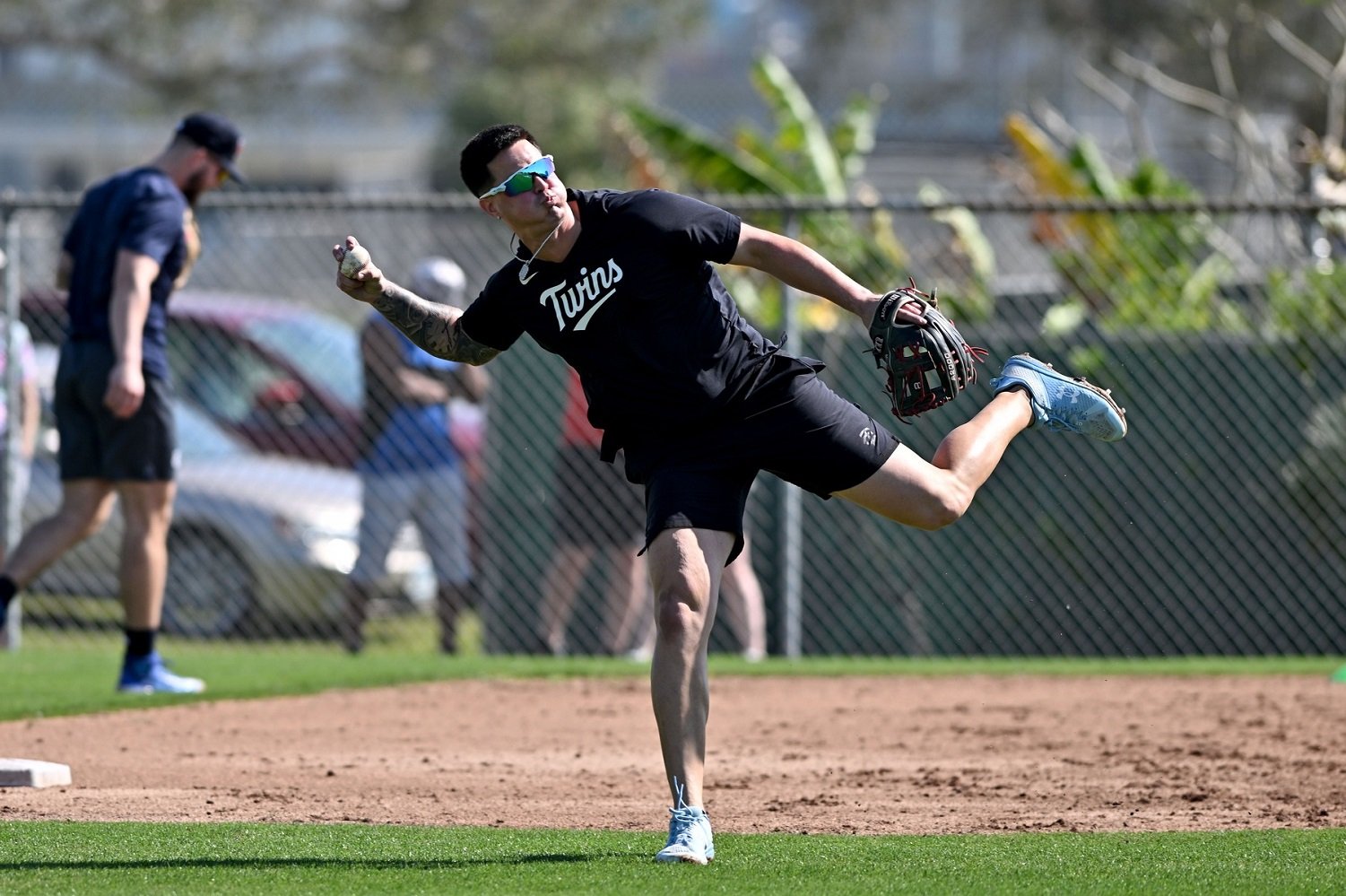 Coming off a successful season highlighted by winning their first playoff game since 2004 and postseason series since 2002, the Twins enter spring training as an essentially complete squad--despite being restricted by significant payroll reductions. Derek Falvey and the rest of the front office were able to plug the most significant holes on the roster. The organization fortified its bullpen by acquiring reliable veteran relievers Josh Staumont, Justin Topa, Jay Jackson, and Steven Okert; added depth in the back of the starting rotation by trading for Anthony DeSclafani; and signed a switch-hitting first baseman who can function as a non-traditional platoon partner with the left-handed hitting Alex Kirilloff, in Carlos Santana. Finding a viable center field insurance policy who hits left-handed pitching well was the final move the Twins needed to make this offseason. Fittingly, the organization traded glove-first minor league infielder Noah Miller to the Los Angeles Dodgers for prospect Rayne Doncon and outfielder Manuel Margot on Monday. Margot hits left-handed pitching well (109 career wRC+ over 877 plate appearances against them), and will serve as a viable backstop for Byron Buxton. After acquiring Margot, the Twins have no significant areas of need, meaning the camp competitions this year will exist on the margins. The team's eighth bullpen is up for grabs, but which reliever claims the spot will come down to the team's preference for player type rather than individual performance. That said, multiple players are fighting to keep their roles as primary depth options and avoid getting usurped on the organization's depth chart. Let's take a look at who needs to perform well this spring. Josh Staumont The battle for the Twins' final bullpen spot will come down to whether the organization prefers to roster a high-velocity, medium-leverage short reliever or a stretch reliever capable of throwing multiple innings in the event of poor performance or injury for one of the team's starters. That said, there is real competition for that job. The 30-year-old former Kansas City Royals reliever, Staumont, is the favorite to win it. Coming off thoracic outlet syndrome surgery last August, the hard-throwing righthander signed with the Twins in late December. The team landed the Azusa Pacific University product to a one-year, $950,000 contract. Barring further injury, Staumont (who has one minor league option year remaining) seemed like a lock to make the organization's Opening Day 26-man roster at the time of his signing, but the acquisitions of Topa, Jackson, and Okert have muddied his chances of making the 26-man roster out of camp. Staumont will compete with Zack Weiss, Kody Funderburk, and Jorge Alcalá. All four will feel firm pressure, but Staumont, being the favorite, has the most to lose. José Miranda Viewed as one of the organization's most promising young position players one year ago, the 73rd selection in the 2016 MLB Draft quickly became an afterthought. Earlier this offseason, Miranda was viewed as a dark horse pick to make the team's Opening Day 26-man roster, as a platoon partner with Kirilloff at first base. Yet, with the organization signing Santana to a one-year, $5.25-million contract less than one month ago, the 25-year-old is expected to begin this upcoming season in Triple-A. A shoulder injury probably contributed to his uninspiring .566 OPS and 57 wRC+ over 152 plate appearances last year, but even if he's truly healthy this spring, the doubts will linger. Miranda had surgery in early October to remove scar tissue from his right shoulder and rotator cuff. Though he has been taking fielding drills at third base this spring, the young corner infielder is not yet throwing across the diamond. His shoulder is still affecting his ability to field. Yet, he appears to be nearing full strength at the plate, as evidenced by him drilling a lineout at more than 100 MPH off the bat against the Minnesota Golden Gophers last Friday and hitting a home run off veteran left-handed hitter Caleb Thielbar in live batting practice last Wednesday. The recent acquisition of Margot means Miranda is no longer competing for the final spot on the bench. Assuming he begins the season at St. Paul, the Guaynabo, Puerto Rico product will compete for playing time at first base with fellow 40-man roster occupant Yunior Severino. The main goal for Miranda this spring and early this upcoming season is to prevent getting usurped by other promising young corner bats and take advantage of any MLB opportunities that present themselves. Simeon Woods Richardson Woods Richardson's 2023 campaign was a story of significant highs and disheartening lows. In early June, Woods Richardson sported a 7.38 ERA and 1.85 WHIP. Then, a switch flipped, and the 23-year-old yielded the lowest ERA, opponents' batting average, slugging average, and wOBA of all Triple-A starting pitchers from mid-June to mid-September. Despite finishing the season on a high note, Woods Richardson struggled with control, with a 61-to-39 strikeout-to-walk ratio over his three-and-a-half-month-long stretch of surface-level dominance. Woods Richardson didn't return to the majors after making one appearance on April 22 against the Washington Nationals as a stretch reliever. Yet, with the Twins losing significant starting pitching depth this offseason, the 23-year-old could make multiple appearances for the Twins as a starting pitcher this season. Woods Richardson displayed an increase in velocity and overall stuff in his first appearance this spring. Still, he will need to show sustained improvement of his hard, breaking, and offspeed pitches if he wants to stay ahead of emerging pitchers the likes of Matt Canterino, Brent Headrick, David Festa, and even Randy Dobnak on the organization's starting pitching depth chart. David Festa In 2022, Festa generated a 2.43 ERA, 2.92 FIP, 10.4 strikeouts per nine innings, and 2.70 walks per nine over 18 starts and 104 innings pitched between Low- and High-A. Unfortunately, the 23-year-old top prospect's counting stats regressed between Double- and Triple-A last season, as evidenced by a 4.19 ERA and 4.04 FIP. Control limitations marred Festa's breakout season. Despite struggling in the high minors, Festa remains a top-two pitching prospect in the Twins organization and projects to impact the parent club this upcoming season. Heading into camp, Festa is competing with Woods Richardson for the "seventh rotation spot" behind fifth starter DeSclafani and primary depth arm Louie Varland. As noted earlier, Woods Richardson impressed in his first appearance this spring, meaning Festa will need to follow suit if he wants to become part of the team's plans early this summer. Owning a 40-man roster spot and having made multiple MLB appearances, Woods Richardson will likely keep the upper hand as the Twins leave Fort Myers in late March. Still, a strong performance in camp would position him for an early look. Non-Roster Invitees Who Could Benefit Most From Performing Well This Spring: Niko Goodrum DaShawn Keirsey Daniel Duarte Ronny Henriquez Jeff Brigham The Twins have one of the most well-rounded rosters in MLB. The franchise has signed, drafted, or traded for and developed many young, cost-effective organizational depth arms and position players who could contribute to the team for future seasons. With the organization electing to act in a parsimonious manner this offseason, numerous young, cheap players are knocking on the door of the parent club and are at the forefront of the most prominent positional battles in camp.
- 32 comments
-
- 4
-
-
- josh staumont
- jose miranda
- (and 3 more)
-
At the beginning of the offseason, there was debate over whether Minnesota Twins pitcher Louie Varland would be a starter or reliever in 2024. The Twins' acquisitions of a surplus of relievers has revealed the 26-year-old's expected role for this season. Can he thrive as a starter in his third season in MLB? Image courtesy of © Reid Glenn / USA TODAY NETWORK In 10 games as a starting pitcher last season, Louie Varland posted a 5.30 ERA and a 5.49 FIP. He struck out 54 batters and walked 16 over 241 total batters faced and 56 innings pitched. Despite posting nominally solid peripheral stats, the then-25-year-old's sophomore season ended prematurely. Varland's Achilles' heel as a starter was his inability to suppress home runs, evidenced by a 20.6% home run rate on fly balls over his 10 starts. Varland's tendency to allow the long ball, particularly on his four-seam fastball, led to a demotion to Triple-A St. Paul on June 18, after giving up five home runs over a string of three poor starts. After two and a half months away from the team, Varland returned to the big leagues as a reliever in September. In his return, the Concordia-St. Paul product pitched three innings, striking out two batters and walking one over 11 batters faced. Over the season's final month, Varland's strikeouts per nine jumped to 12.8, while sporting an above-average 0.8 walks per nine frames. Varland left 100 percent of inherited runners on base. In his seven appearances as a reliever, Varland gave up only two home runs, both in a game against the New York Mets on September 9. Varland's exceptional performance as a reliever was fueled by an increase in the velocity of his four-seam fastball and the refining of his secondary pitches, highlighted by a cutter in the low 90s. Varland's slider and changeup remained average as a reliever, but the implementation of his cutter assisted the now 26-year-old in forming a functional four-pitch mix that bodes well for starting. Varland recorded only two outs against the Toronto Blue Jays in the Wild Card Round, meaning little can be gleaned from his postseason experience. Regardless, with the postseason in the past and veterans Sonny Gray, Kenta Maeda, and Tyler Mahle departing the organization this offseason, Varland looks to rejoin the starting rotation mix. At the beginning of the offseason, Jhoan Durán, Griffin Jax, Brock Stewart, and Caleb Thielbar were the four relievers guaranteed a spot in the Twins' 2024 bullpen. Uncertainty surrounded the last four spots in the bullpen which caused speculation that Varland (coming off a dominant month-long performance) could become a vital member of the team's bullpen mix in 2024. Quickly, the hands of those flaming the fire of Varland becoming a fixture in the 'pen were singed as the organization signed, claimed, or traded for relievers Josh Staumont, Ryan Jensen, Justin Topa, Daniel Duarte, Zack Weiss, Jay Jackson, and Steven Okert. 40-man roster spot inhabitants Staumont, Topa, Weiss, Jackson, Okert, and the returning Kody Funderburk and Jorge Alcalá will compete for the team's final bullpen spot, making clear Varland's role with the 2024 team. When pitchers and catchers reported to Fort Myers earlier this month, Varland was slated to compete with the recently acquired Anthony DeSclafani for the team's fifth rotation spot. In this circumstance, "compete" is a misnomer as the writing is on the wall for how Varland's 2024 campaign will begin. Varland has two minor-league options, and DeSclafani (a nine-year veteran) has none. Barring injury, the Twins Opening Day starting rotation will consist of Pablo López, Bailey Ober, Joe Ryan, Chris Paddack, and DeSclafani. With all five pitchers undergoing recent significant health or performance concerns, Varland could quickly join the team's starting rotation. In his first spring training appearance (Saturday), Varland topped out at 98.3 MPH on his four-seam fastball with an average of 95.7 MPH. The Twins' young hurler averaged 95.3 MPH on his fastball last season, so a 0.4 MPH uptick is minimal. Still, showing a marginal increase in average four-seam fastball velocity in late February is nothing to scoff at and should be a vehicle for increased optimism around the 26-year-old's upcoming season. Varland also showcased his cutter and sinker in the game, throwing them a combined 44 percent of the time. Despite decreasing velocity from last season on his secondary hard pitches, Varland's cutter and sinker had more vertical break, a trait the Twins pitching staff values highly. Expect Varland to use his fastball, cutter, and sinker high in the zone and often against either-handed hitters, with his changeup and slider working as glove and arm-side complements, respectively. At the beginning of the offseason, there was debate about whether Varland would be a starter or reliever for the Twins in 2024. Though both sides had merit in their arguments, the Twins acquiring a surplus of relievers has made it evident that the hard-throwing right-hander will begin the season as a starter. The team has sufficient veteran depth in the back-of-the-rotation in veterans Paddack and DeSclafani. Varland is presumably better than the aforementioned duo. Yet, having two minor league options, he will presumptively begin this season in Triple-A St. Paul as the organization's sixth starter. View full article
-
 In 10 games as a starting pitcher last season, Louie Varland posted a 5.30 ERA and a 5.49 FIP. He struck out 54 batters and walked 16 over 241 total batters faced and 56 innings pitched. Despite posting nominally solid peripheral stats, the then-25-year-old's sophomore season ended prematurely. Varland's Achilles' heel as a starter was his inability to suppress home runs, evidenced by a 20.6% home run rate on fly balls over his 10 starts. Varland's tendency to allow the long ball, particularly on his four-seam fastball, led to a demotion to Triple-A St. Paul on June 18, after giving up five home runs over a string of three poor starts. After two and a half months away from the team, Varland returned to the big leagues as a reliever in September. In his return, the Concordia-St. Paul product pitched three innings, striking out two batters and walking one over 11 batters faced. Over the season's final month, Varland's strikeouts per nine jumped to 12.8, while sporting an above-average 0.8 walks per nine frames. Varland left 100 percent of inherited runners on base. In his seven appearances as a reliever, Varland gave up only two home runs, both in a game against the New York Mets on September 9. Varland's exceptional performance as a reliever was fueled by an increase in the velocity of his four-seam fastball and the refining of his secondary pitches, highlighted by a cutter in the low 90s. Varland's slider and changeup remained average as a reliever, but the implementation of his cutter assisted the now 26-year-old in forming a functional four-pitch mix that bodes well for starting. Varland recorded only two outs against the Toronto Blue Jays in the Wild Card Round, meaning little can be gleaned from his postseason experience. Regardless, with the postseason in the past and veterans Sonny Gray, Kenta Maeda, and Tyler Mahle departing the organization this offseason, Varland looks to rejoin the starting rotation mix. At the beginning of the offseason, Jhoan Durán, Griffin Jax, Brock Stewart, and Caleb Thielbar were the four relievers guaranteed a spot in the Twins' 2024 bullpen. Uncertainty surrounded the last four spots in the bullpen which caused speculation that Varland (coming off a dominant month-long performance) could become a vital member of the team's bullpen mix in 2024. Quickly, the hands of those flaming the fire of Varland becoming a fixture in the 'pen were singed as the organization signed, claimed, or traded for relievers Josh Staumont, Ryan Jensen, Justin Topa, Daniel Duarte, Zack Weiss, Jay Jackson, and Steven Okert. 40-man roster spot inhabitants Staumont, Topa, Weiss, Jackson, Okert, and the returning Kody Funderburk and Jorge Alcalá will compete for the team's final bullpen spot, making clear Varland's role with the 2024 team. When pitchers and catchers reported to Fort Myers earlier this month, Varland was slated to compete with the recently acquired Anthony DeSclafani for the team's fifth rotation spot. In this circumstance, "compete" is a misnomer as the writing is on the wall for how Varland's 2024 campaign will begin. Varland has two minor-league options, and DeSclafani (a nine-year veteran) has none. Barring injury, the Twins Opening Day starting rotation will consist of Pablo López, Bailey Ober, Joe Ryan, Chris Paddack, and DeSclafani. With all five pitchers undergoing recent significant health or performance concerns, Varland could quickly join the team's starting rotation. In his first spring training appearance (Saturday), Varland topped out at 98.3 MPH on his four-seam fastball with an average of 95.7 MPH. The Twins' young hurler averaged 95.3 MPH on his fastball last season, so a 0.4 MPH uptick is minimal. Still, showing a marginal increase in average four-seam fastball velocity in late February is nothing to scoff at and should be a vehicle for increased optimism around the 26-year-old's upcoming season. Varland also showcased his cutter and sinker in the game, throwing them a combined 44 percent of the time. Despite decreasing velocity from last season on his secondary hard pitches, Varland's cutter and sinker had more vertical break, a trait the Twins pitching staff values highly. Expect Varland to use his fastball, cutter, and sinker high in the zone and often against either-handed hitters, with his changeup and slider working as glove and arm-side complements, respectively. At the beginning of the offseason, there was debate about whether Varland would be a starter or reliever for the Twins in 2024. Though both sides had merit in their arguments, the Twins acquiring a surplus of relievers has made it evident that the hard-throwing right-hander will begin the season as a starter. The team has sufficient veteran depth in the back-of-the-rotation in veterans Paddack and DeSclafani. Varland is presumably better than the aforementioned duo. Yet, having two minor league options, he will presumptively begin this season in Triple-A St. Paul as the organization's sixth starter.
 -
 Since middle school, my dream job has been baseball writer. I fantasized about having the privilege of sitting in the press box, traveling, and staying at nice hotels while getting paid to write about the team I loved, the Twins. [Ed. note: Nice hotels? Fantasized was a solid word choice.] Ten or so years later, that is not my life. This May, I will graduate with a degree in English Education, to become a middle or high school English teacher. I am not living my dream, but I have been allowed to write about the team I love for Twins Daily, and I will forever be grateful for the opportunity handed to me by the site's owners and everyone else who keeps the site alive and thriving. I have written for Twins Daily since last May, and while I have published many pieces analyzing, critiquing, or praising the Twins, I have yet to talk about myself in detail. Then again, why would I? This site provides a sense of escapism and allows people to think about and discuss their favorite baseball team. However, if there was ever a day to be vulnerable, now is the time. Yesterday, the Boston Red Sox signed reliever Liam Hendriks to a two-year, $10-million contract, with a mutual option for 2026. As most of you know, Hendriks is a former Twin and a cancer survivor. In December of 2022, Hendriks was diagnosed with Stage-4 non-Hodgkin lymphoma, a blood cancer. Hendriks found this out after going to the hospital to get tested, upon realizing a lymph node on the back of his neck had "swollen to the size of a walnut," and the ones under his jaw "jutted out and fattened his face." Now, you may ask yourself, "What does Hendriks having cancer have to do with Cody?" Well, despite not being Australian or able to throw a fastball at nearly 100 MPH, I, too, am a cancer survivor. Roughly 16 years before Hendriks's diagnosis, I was diagnosed with Ewing sarcoma, at the age of six. Like Hendriks, my cancer diagnosis was foreshadowed by something feeling off. Typically, six-year-olds are full of energy and spend their free time outside participating in leisurely activities like going to the park, riding their bikes, swimming, and playing sports. I used to be like that--until the Spring of 2006. Instead of coming home from school and wanting to go outside and have fun, I would walk over to the couch and fall asleep until it was time to have dinner. After dinner, I would go back to the couch and watch TV until I went to bed. I lived my life like this for months while complaining about a constant dull pain present in my upper left leg. The pain slowly got worse and worse, and I stayed inactive until my proactive mother took me to get evaluated at the Mayo Clinic in Rochester, Minnesota, seeking answers on what was wrong with me. After noting my constant leg pain, the doctors ordered I get an X-ray of my left leg to see if there was an undiagnosed injury of some sort. There wasn't an injury, but something much more dread-inducing: a small lump attached to my femur. Mind you, I was six years old, so I had no idea what was happening. Yet, the reality that something was wrong quickly set in with my parents. Days later, my parents received a phone call confirming that the mysterious lump was, in fact, a tumor. The following year and a half of my life consisted of me undergoing 14 rounds of chemotherapy and a barrage of surgeries, which included the insertion of my chemo port and the removal of the tumor. After enduring immense damage (both physically and mentally) for two years, doctors gave my parents and me the best news we had heard in years: I was officially cancer-free. Although the initial wave of cathartic relief and celebration was incredible, the mood quickly sobered upon learning I needed my chemo port removed. For those who don't know, a chemo tube is a thin, implantable silicon tube guided into a large vein above the right side of the heart, called the superior vena cava. I will spare you the rest of the details, but it was harrowing to have it put in, and I repress the memory of how it felt as best I can. Unfortunately, though, removing the port wasn't pleasant either, as the surgeon was tasked with dissecting the port catheter and reservoir from my heart valve and closing the insertion site, tunnel, and wound. If you have gotten this far, you probably wonder, "Why is he telling this specific story?" Well, here's the payoff. As the anesthesia wore off and I slowly regained consciousness from the indescribably powerful post-surgery fog, I remember fragments of a Twins game being broadcast on the TV in my hospital room. I don't remember the game's outcome, but one hyperspecific image from that day has remained in my mind: Joe Crede fielding a groundball at third base. Yes, of all players, Crede and the number 24 stitched to his white pinstriped home jersey were permanently deposited into my memory bank. I don't understand why, and I never will, but since that day, Crede and the number 24 have acted as a good omen for me, symbolizing new beginnings and the eradication of a life-threatening illness. Since that day, I am fortunate enough to have remained cancer-free. The pediatric hematology/oncology team at Mayo Clinic saved my leg and, more importantly, my life, allowing me to play baseball throughout high school and write about the Twins today. Baseball has been a saving grace, as it is the outlet I lean on most to help me combat the PTSD, anxiety, and overall existential dread I undergo as a result of the treatment I received and the fear of cancer returning one day. Seeing Hendriks return to pitch for the Chicago White Sox late last May and experiencing the absolute joy he and his family felt as he threw his first pitch was a wonderful experience. To see him get the opportunity to continue to do what he loves with Boston for the next two seasons was a victory for survivors everywhere.
 -
Join the discussion on Liam Hendriks, his recovery from cancer, and how the terrible disease affects us all. Image courtesy of © Kamil Krzaczynski-USA TODAY Sports Since middle school, my dream job has been baseball writer. I fantasized about having the privilege of sitting in the press box, traveling, and staying at nice hotels while getting paid to write about the team I loved, the Twins. [Ed. note: Nice hotels? Fantasized was a solid word choice.] Ten or so years later, that is not my life. This May, I will graduate with a degree in English Education, to become a middle or high school English teacher. I am not living my dream, but I have been allowed to write about the team I love for Twins Daily, and I will forever be grateful for the opportunity handed to me by the site's owners and everyone else who keeps the site alive and thriving. I have written for Twins Daily since last May, and while I have published many pieces analyzing, critiquing, or praising the Twins, I have yet to talk about myself in detail. Then again, why would I? This site provides a sense of escapism and allows people to think about and discuss their favorite baseball team. However, if there was ever a day to be vulnerable, now is the time. Yesterday, the Boston Red Sox signed reliever Liam Hendriks to a two-year, $10-million contract, with a mutual option for 2026. As most of you know, Hendriks is a former Twin and a cancer survivor. In December of 2022, Hendriks was diagnosed with Stage-4 non-Hodgkin lymphoma, a blood cancer. Hendriks found this out after going to the hospital to get tested, upon realizing a lymph node on the back of his neck had "swollen to the size of a walnut," and the ones under his jaw "jutted out and fattened his face." Now, you may ask yourself, "What does Hendriks having cancer have to do with Cody?" Well, despite not being Australian or able to throw a fastball at nearly 100 MPH, I, too, am a cancer survivor. Roughly 16 years before Hendriks's diagnosis, I was diagnosed with Ewing sarcoma, at the age of six. Like Hendriks, my cancer diagnosis was foreshadowed by something feeling off. Typically, six-year-olds are full of energy and spend their free time outside participating in leisurely activities like going to the park, riding their bikes, swimming, and playing sports. I used to be like that--until the Spring of 2006. Instead of coming home from school and wanting to go outside and have fun, I would walk over to the couch and fall asleep until it was time to have dinner. After dinner, I would go back to the couch and watch TV until I went to bed. I lived my life like this for months while complaining about a constant dull pain present in my upper left leg. The pain slowly got worse and worse, and I stayed inactive until my proactive mother took me to get evaluated at the Mayo Clinic in Rochester, Minnesota, seeking answers on what was wrong with me. After noting my constant leg pain, the doctors ordered I get an X-ray of my left leg to see if there was an undiagnosed injury of some sort. There wasn't an injury, but something much more dread-inducing: a small lump attached to my femur. Mind you, I was six years old, so I had no idea what was happening. Yet, the reality that something was wrong quickly set in with my parents. Days later, my parents received a phone call confirming that the mysterious lump was, in fact, a tumor. The following year and a half of my life consisted of me undergoing 14 rounds of chemotherapy and a barrage of surgeries, which included the insertion of my chemo port and the removal of the tumor. After enduring immense damage (both physically and mentally) for two years, doctors gave my parents and me the best news we had heard in years: I was officially cancer-free. Although the initial wave of cathartic relief and celebration was incredible, the mood quickly sobered upon learning I needed my chemo port removed. For those who don't know, a chemo tube is a thin, implantable silicon tube guided into a large vein above the right side of the heart, called the superior vena cava. I will spare you the rest of the details, but it was harrowing to have it put in, and I repress the memory of how it felt as best I can. Unfortunately, though, removing the port wasn't pleasant either, as the surgeon was tasked with dissecting the port catheter and reservoir from my heart valve and closing the insertion site, tunnel, and wound. If you have gotten this far, you probably wonder, "Why is he telling this specific story?" Well, here's the payoff. As the anesthesia wore off and I slowly regained consciousness from the indescribably powerful post-surgery fog, I remember fragments of a Twins game being broadcast on the TV in my hospital room. I don't remember the game's outcome, but one hyperspecific image from that day has remained in my mind: Joe Crede fielding a groundball at third base. Yes, of all players, Crede and the number 24 stitched to his white pinstriped home jersey were permanently deposited into my memory bank. I don't understand why, and I never will, but since that day, Crede and the number 24 have acted as a good omen for me, symbolizing new beginnings and the eradication of a life-threatening illness. Since that day, I am fortunate enough to have remained cancer-free. The pediatric hematology/oncology team at Mayo Clinic saved my leg and, more importantly, my life, allowing me to play baseball throughout high school and write about the Twins today. Baseball has been a saving grace, as it is the outlet I lean on most to help me combat the PTSD, anxiety, and overall existential dread I undergo as a result of the treatment I received and the fear of cancer returning one day. Seeing Hendriks return to pitch for the Chicago White Sox late last May and experiencing the absolute joy he and his family felt as he threw his first pitch was a wonderful experience. To see him get the opportunity to continue to do what he loves with Boston for the next two seasons was a victory for survivors everywhere. View full article
-
.jpg.584ee06dc14e09afb496d89602d7d049.jpg) In his recent "Baseball Bits" video titled "The Only Thing That Matters in Baseball," YouTuber Foolish Bailey highlighted how meaningful counts are in dictating the outcome of an at-bat. When starting ahead 1-0 in a count last season, hitters league-wide generated an .826 OPS. In contrast, when falling behind 0-1, hitters saw their production drop exponentially, manufacturing a lackluster .619 OPS. As the video continues, Bailey illustrates how dire counts are to both hitters and pitchers before highlighting which starting pitchers were best at getting ahead in counts in 2023. Atop the leaderboard, unsurprisingly, were some of the best starting pitchers in MLB: Max Scherzer, Spencer Strider, and George Kirby. Scroll down slightly, and one will find Minnesota Twins starting pitcher Joe Ryan ranked sixth, beginning 56.6% of at-bats with a first-pitch strike. The primary reason Ryan and other pitchers on this list could generate first-pitch strikes over half the time was because they threw their fastballs in the zone early and often. Specifically, Ryan threw a fastball on the first pitch of an at-bat 58.4% of the time Getting ahead in the count doesn't guarantee success, evidenced by Chicago Cubs starting pitcher Jameson Taillon ranking second on the list by beginning 58.8% of at-bats with a first-pitch strike in 2023 despite earning an uninspiring 4.84 ERA and 4.61 FIP over 154 ⅓ innings pitched last season. In the case of Ryan, though, it has been a marker of success for the entirety of his young career. Noted in Bailey's video, Ryan ranks third in MLB in winning plate appearances with the count advantage since 2020, getting hitters out at a 41.4% clip. Ryan's low arm angle is the driving force in getting his low-velocity fastball (23rd percentile on Baseball Savant) to make hitters swing and miss early and often in counts. The 27-year-old used his low arm slot to forge a 16.8% swinging strike rate (a 97th percentile outcome last season) while throwing 65% of his pitches high of the batter (92nd percentile) regardless of whether they were located in the zone. Ryan and the Twins' coaching staff know what he does well, and while he has justifiably used this approach to maximize early career success, there is reason to suspect he is nearing a crossroads in his career. Ryan straining his left groin before starting against the Atlanta Braves played a significant role in his decline in performance from June 27th through August 2nd. Still, a more significant concern follows the right-hander. In 2023, hitters swung at pitches from Ryan more than any other starting pitcher in MLB. The primary cause of this development was that hitters were unafraid of his lackluster secondary pitches, which consisted of an average splitter and a sweeper that often landed far outside the zone. Able to disregard his offspeed pitches, hitters could confidently sit on fastballs high in the zone, knowing he would throw it 57% of the time. Here are Ryan's numbers before and after straining his left groin: 4/2 - 6/22: 93 2/3 innings pitched (IP), 2.98 ERA, 2.77 FIP, 9.61 strikeouts per nine (K/9), 1.44 walks per nine (BB/9), 71.2 left on base percentage (LOB%), 6.7 home run to fly ball ratio (HR/FB) 8/26 - 9/29: 35 2/3 IP, 4.79 ERA, 4.12 FIP, 11.36 K/9, 2.27 BB/9, 75.3 LOB%, 16.3% HR/FB Judging Ryan's performance when he was injured is unfair. It would provide an inaccurate representation of the pitcher he is, but there are grounds to be concerned about his drop in performance before and after his injured list stint. Beyond his counting statistics (ERA and FIP) jumping two-fold, the most concerning development in the former Tampa Bay Rays' prospects' performance from August 26th through September 29th is the egregious spike in his home run-to-fly ball ratio. In seven games started in that timeframe, Ryan gave up a home run in five of them, including three at Coors Field against the Colorado Rockies in his final start of the season. Assuming Ryan has fully recovered from the left groin strain that was the leading cause in pitfalling to an 8.63 ERA, 8.08 FIP, and 32.1% home run to fly ball rate from June 27th through August 2nd, there is no reason to suspect he will perform that poorly. Ryan is a good pitcher who deserves to be in an MLB rotation, and Twins decision-makers agree. This past Saturday, Twins manager Rocco Baldelli told reporters at Fort Myers that "Joe showed us pretty much everything last year. The highs were very high, and the lows were what they are are, but Joe's proven himself as a good Major League starting pitcher." The team feels good about handing Ryan the ball every fifth day, but Baldelli acknowledged he needs to make adjustments, stating, "he knows that he can't go out there every start, or have a run of starts, where he's just relying on his fastball. He's gonna have to use those other pitches, and those pitches are good. They have real value in getting hitters out; it's learning how to use them and really the consistency." Baldelli further emphasized Ryan's consistency: "So, I think the consistency of his pitches needs to get better, and when he does that, he can go from good to great if he's able to do that." As Baldelli noted, the most significant adjustment Ryan needs to make to go from good to great is improving his offspeed pitches and becoming less reliant on his fastball. The first step Ryan could take in achieving this milestone is fine-tuning his adequate splitter. In 2023, Ryan got hitters to whiff on his splitter 21.8% of the time, which is fine, but the results showed his splitter profiles better as a third pitch instead of a main complement to his elite fastball. Last season, Ryan tried using a sweeper and slider as third pitches in his repertoire, but neither yielded good results as they were often too far out of the zone for hitters to chase. Ryan could be incentivized to fine-tune his sweeper in an attempt to use it again next season. Still, a shift to a slower, more compact gyro slider could benefit his velocity-deficient profile that relies on deception and a unique arm slot. Regardless, Ryan showing he has fine-tuned his splitter and added another viable secondary pitch that could directly complement his elite fastball would be the best outcome for the California native heading into 2024. Ryan has reached a crossroads in his young career. This upcoming season will play a significant role in deciding whether he is a frontline starting pitcher who can co-exist alongside Pablo López and Bailey Ober or if he is merely a steady back-of-the-rotation arm with hindrances that block him from becoming the actualized pitcher fans and pundits thought he could be early in his career. What is your confidence level in Joe Ryan heading into the 2024 season? Will he solidify himself as a frontline starter or further regress to the back of the rotation? Sound off in the comments!
In his recent "Baseball Bits" video titled "The Only Thing That Matters in Baseball," YouTuber Foolish Bailey highlighted how meaningful counts are in dictating the outcome of an at-bat. When starting ahead 1-0 in a count last season, hitters league-wide generated an .826 OPS. In contrast, when falling behind 0-1, hitters saw their production drop exponentially, manufacturing a lackluster .619 OPS. As the video continues, Bailey illustrates how dire counts are to both hitters and pitchers before highlighting which starting pitchers were best at getting ahead in counts in 2023. Atop the leaderboard, unsurprisingly, were some of the best starting pitchers in MLB: Max Scherzer, Spencer Strider, and George Kirby. Scroll down slightly, and one will find Minnesota Twins starting pitcher Joe Ryan ranked sixth, beginning 56.6% of at-bats with a first-pitch strike. The primary reason Ryan and other pitchers on this list could generate first-pitch strikes over half the time was because they threw their fastballs in the zone early and often. Specifically, Ryan threw a fastball on the first pitch of an at-bat 58.4% of the time Getting ahead in the count doesn't guarantee success, evidenced by Chicago Cubs starting pitcher Jameson Taillon ranking second on the list by beginning 58.8% of at-bats with a first-pitch strike in 2023 despite earning an uninspiring 4.84 ERA and 4.61 FIP over 154 ⅓ innings pitched last season. In the case of Ryan, though, it has been a marker of success for the entirety of his young career. Noted in Bailey's video, Ryan ranks third in MLB in winning plate appearances with the count advantage since 2020, getting hitters out at a 41.4% clip. Ryan's low arm angle is the driving force in getting his low-velocity fastball (23rd percentile on Baseball Savant) to make hitters swing and miss early and often in counts. The 27-year-old used his low arm slot to forge a 16.8% swinging strike rate (a 97th percentile outcome last season) while throwing 65% of his pitches high of the batter (92nd percentile) regardless of whether they were located in the zone. Ryan and the Twins' coaching staff know what he does well, and while he has justifiably used this approach to maximize early career success, there is reason to suspect he is nearing a crossroads in his career. Ryan straining his left groin before starting against the Atlanta Braves played a significant role in his decline in performance from June 27th through August 2nd. Still, a more significant concern follows the right-hander. In 2023, hitters swung at pitches from Ryan more than any other starting pitcher in MLB. The primary cause of this development was that hitters were unafraid of his lackluster secondary pitches, which consisted of an average splitter and a sweeper that often landed far outside the zone. Able to disregard his offspeed pitches, hitters could confidently sit on fastballs high in the zone, knowing he would throw it 57% of the time. Here are Ryan's numbers before and after straining his left groin: 4/2 - 6/22: 93 2/3 innings pitched (IP), 2.98 ERA, 2.77 FIP, 9.61 strikeouts per nine (K/9), 1.44 walks per nine (BB/9), 71.2 left on base percentage (LOB%), 6.7 home run to fly ball ratio (HR/FB) 8/26 - 9/29: 35 2/3 IP, 4.79 ERA, 4.12 FIP, 11.36 K/9, 2.27 BB/9, 75.3 LOB%, 16.3% HR/FB Judging Ryan's performance when he was injured is unfair. It would provide an inaccurate representation of the pitcher he is, but there are grounds to be concerned about his drop in performance before and after his injured list stint. Beyond his counting statistics (ERA and FIP) jumping two-fold, the most concerning development in the former Tampa Bay Rays' prospects' performance from August 26th through September 29th is the egregious spike in his home run-to-fly ball ratio. In seven games started in that timeframe, Ryan gave up a home run in five of them, including three at Coors Field against the Colorado Rockies in his final start of the season. Assuming Ryan has fully recovered from the left groin strain that was the leading cause in pitfalling to an 8.63 ERA, 8.08 FIP, and 32.1% home run to fly ball rate from June 27th through August 2nd, there is no reason to suspect he will perform that poorly. Ryan is a good pitcher who deserves to be in an MLB rotation, and Twins decision-makers agree. This past Saturday, Twins manager Rocco Baldelli told reporters at Fort Myers that "Joe showed us pretty much everything last year. The highs were very high, and the lows were what they are are, but Joe's proven himself as a good Major League starting pitcher." The team feels good about handing Ryan the ball every fifth day, but Baldelli acknowledged he needs to make adjustments, stating, "he knows that he can't go out there every start, or have a run of starts, where he's just relying on his fastball. He's gonna have to use those other pitches, and those pitches are good. They have real value in getting hitters out; it's learning how to use them and really the consistency." Baldelli further emphasized Ryan's consistency: "So, I think the consistency of his pitches needs to get better, and when he does that, he can go from good to great if he's able to do that." As Baldelli noted, the most significant adjustment Ryan needs to make to go from good to great is improving his offspeed pitches and becoming less reliant on his fastball. The first step Ryan could take in achieving this milestone is fine-tuning his adequate splitter. In 2023, Ryan got hitters to whiff on his splitter 21.8% of the time, which is fine, but the results showed his splitter profiles better as a third pitch instead of a main complement to his elite fastball. Last season, Ryan tried using a sweeper and slider as third pitches in his repertoire, but neither yielded good results as they were often too far out of the zone for hitters to chase. Ryan could be incentivized to fine-tune his sweeper in an attempt to use it again next season. Still, a shift to a slower, more compact gyro slider could benefit his velocity-deficient profile that relies on deception and a unique arm slot. Regardless, Ryan showing he has fine-tuned his splitter and added another viable secondary pitch that could directly complement his elite fastball would be the best outcome for the California native heading into 2024. Ryan has reached a crossroads in his young career. This upcoming season will play a significant role in deciding whether he is a frontline starting pitcher who can co-exist alongside Pablo López and Bailey Ober or if he is merely a steady back-of-the-rotation arm with hindrances that block him from becoming the actualized pitcher fans and pundits thought he could be early in his career. What is your confidence level in Joe Ryan heading into the 2024 season? Will he solidify himself as a frontline starter or further regress to the back of the rotation? Sound off in the comments! -
Despite early career success, the Twins' 27-year-old starting pitcher ran into significant hurdles last season. Can he make the necessary adjustments to become a reliable frontline starting pitcher in 2024? Image courtesy of Jeffrey Becker-USA TODAY Sports In his recent "Baseball Bits" video titled "The Only Thing That Matters in Baseball," YouTuber Foolish Bailey highlighted how meaningful counts are in dictating the outcome of an at-bat. When starting ahead 1-0 in a count last season, hitters league-wide generated an .826 OPS. In contrast, when falling behind 0-1, hitters saw their production drop exponentially, manufacturing a lackluster .619 OPS. As the video continues, Bailey illustrates how dire counts are to both hitters and pitchers before highlighting which starting pitchers were best at getting ahead in counts in 2023. Atop the leaderboard, unsurprisingly, were some of the best starting pitchers in MLB: Max Scherzer, Spencer Strider, and George Kirby. Scroll down slightly, and one will find Minnesota Twins starting pitcher Joe Ryan ranked sixth, beginning 56.6% of at-bats with a first-pitch strike. The primary reason Ryan and other pitchers on this list could generate first-pitch strikes over half the time was because they threw their fastballs in the zone early and often. Specifically, Ryan threw a fastball on the first pitch of an at-bat 58.4% of the time Getting ahead in the count doesn't guarantee success, evidenced by Chicago Cubs starting pitcher Jameson Taillon ranking second on the list by beginning 58.8% of at-bats with a first-pitch strike in 2023 despite earning an uninspiring 4.84 ERA and 4.61 FIP over 154 ⅓ innings pitched last season. In the case of Ryan, though, it has been a marker of success for the entirety of his young career. Noted in Bailey's video, Ryan ranks third in MLB in winning plate appearances with the count advantage since 2020, getting hitters out at a 41.4% clip. Ryan's low arm angle is the driving force in getting his low-velocity fastball (23rd percentile on Baseball Savant) to make hitters swing and miss early and often in counts. The 27-year-old used his low arm slot to forge a 16.8% swinging strike rate (a 97th percentile outcome last season) while throwing 65% of his pitches high of the batter (92nd percentile) regardless of whether they were located in the zone. Ryan and the Twins' coaching staff know what he does well, and while he has justifiably used this approach to maximize early career success, there is reason to suspect he is nearing a crossroads in his career. Ryan straining his left groin before starting against the Atlanta Braves played a significant role in his decline in performance from June 27th through August 2nd. Still, a more significant concern follows the right-hander. In 2023, hitters swung at pitches from Ryan more than any other starting pitcher in MLB. The primary cause of this development was that hitters were unafraid of his lackluster secondary pitches, which consisted of an average splitter and a sweeper that often landed far outside the zone. Able to disregard his offspeed pitches, hitters could confidently sit on fastballs high in the zone, knowing he would throw it 57% of the time. Here are Ryan's numbers before and after straining his left groin: 4/2 - 6/22: 93 2/3 innings pitched (IP), 2.98 ERA, 2.77 FIP, 9.61 strikeouts per nine (K/9), 1.44 walks per nine (BB/9), 71.2 left on base percentage (LOB%), 6.7 home run to fly ball ratio (HR/FB) 8/26 - 9/29: 35 2/3 IP, 4.79 ERA, 4.12 FIP, 11.36 K/9, 2.27 BB/9, 75.3 LOB%, 16.3% HR/FB Judging Ryan's performance when he was injured is unfair. It would provide an inaccurate representation of the pitcher he is, but there are grounds to be concerned about his drop in performance before and after his injured list stint. Beyond his counting statistics (ERA and FIP) jumping two-fold, the most concerning development in the former Tampa Bay Rays' prospects' performance from August 26th through September 29th is the egregious spike in his home run-to-fly ball ratio. In seven games started in that timeframe, Ryan gave up a home run in five of them, including three at Coors Field against the Colorado Rockies in his final start of the season. Assuming Ryan has fully recovered from the left groin strain that was the leading cause in pitfalling to an 8.63 ERA, 8.08 FIP, and 32.1% home run to fly ball rate from June 27th through August 2nd, there is no reason to suspect he will perform that poorly. Ryan is a good pitcher who deserves to be in an MLB rotation, and Twins decision-makers agree. This past Saturday, Twins manager Rocco Baldelli told reporters at Fort Myers that "Joe showed us pretty much everything last year. The highs were very high, and the lows were what they are are, but Joe's proven himself as a good Major League starting pitcher." The team feels good about handing Ryan the ball every fifth day, but Baldelli acknowledged he needs to make adjustments, stating, "he knows that he can't go out there every start, or have a run of starts, where he's just relying on his fastball. He's gonna have to use those other pitches, and those pitches are good. They have real value in getting hitters out; it's learning how to use them and really the consistency." Baldelli further emphasized Ryan's consistency: "So, I think the consistency of his pitches needs to get better, and when he does that, he can go from good to great if he's able to do that." As Baldelli noted, the most significant adjustment Ryan needs to make to go from good to great is improving his offspeed pitches and becoming less reliant on his fastball. The first step Ryan could take in achieving this milestone is fine-tuning his adequate splitter. In 2023, Ryan got hitters to whiff on his splitter 21.8% of the time, which is fine, but the results showed his splitter profiles better as a third pitch instead of a main complement to his elite fastball. Last season, Ryan tried using a sweeper and slider as third pitches in his repertoire, but neither yielded good results as they were often too far out of the zone for hitters to chase. Ryan could be incentivized to fine-tune his sweeper in an attempt to use it again next season. Still, a shift to a slower, more compact gyro slider could benefit his velocity-deficient profile that relies on deception and a unique arm slot. Regardless, Ryan showing he has fine-tuned his splitter and added another viable secondary pitch that could directly complement his elite fastball would be the best outcome for the California native heading into 2024. Ryan has reached a crossroads in his young career. This upcoming season will play a significant role in deciding whether he is a frontline starting pitcher who can co-exist alongside Pablo López and Bailey Ober or if he is merely a steady back-of-the-rotation arm with hindrances that block him from becoming the actualized pitcher fans and pundits thought he could be early in his career. What is your confidence level in Joe Ryan heading into the 2024 season? Will he solidify himself as a frontline starter or further regress to the back of the rotation? Sound off in the comments! View full article
-
As someone who lives in Milwaukee, I second that you should check out the milwaukee art museum. Also, third ward, the milwaukee public market, the area around fiserv forum, north point lighthouse, UWM and Marquette's campuses, grant park in south milwaukee, and shorewood and bay view are also really cool places to visit.
-
In 2023, the Minnesota Twins' eighth bullpen spot was occupied primarily by a young stretch reliever (usually Cole Sands or Josh Winder) who could be used in an emergency. Should the Twins have a different type of reliever occupy their last bullpen spot in 2024? Image courtesy of © Matt Blewett-USA TODAY Sports Entering the 2023 season, the Twins front office elected to part ways with talented veteran short relievers Danny Coulombe and Jeff Hoffman in the name of rostering a "stretch reliever" who could pitch multiple innings at a time, in case the starting pitcher performed poorly or became injured early in their start. Relatively inexperienced pitchers Cole Sands, Josh Winder, and Brent Headrick were the primary occupants of the stretch reliever role last season, yet the three appeared in just 48 total games. For perspective, Jorge López, who underwent an extended absence from the team before being traded to the Miami Marlins in late July, appeared in 37 games. The Twins bullpen ranked 21st in MLB in Wins Above Replacement at FanGraphs (fWAR), and although it was wise for the organization to roster a "break glass in case of emergency" pitcher in theory, keeping a viable short reliever like Coulombe or Hoffman to fortify the pen would have been in the team's best interest. With hindsight (and a greater understanding of the unavailing nature of the role they envisioned), will the Twins look to use their eighth bullpen spot differently in 2024? A definitive answer won't emerge until late March, but we have some inklings. Since the beginning of the offseason, the Twins have signed, claimed, or traded for relievers Josh Staumont, Ryan Jensen, Justin Topa, Daniel Duarte, Zack Weiss, Jay Jackson, and Steven Okert. Anthony DeSclafani (acquired alongside Topa from the Seattle Mariners) and Louie Varland could also fulfill short relief roles if necessary. Right now, though, the two are slated to compete for the team's fifth rotation spot. Caleb Thielbar, Brock Stewart, and the previously mentioned Jackson and Okert are out of options, effectively guaranteeing them spots on the 26-man roster out of Spring Training. The team could option Jhoan Durán or Griffin Jax, but that is an obscene notion even to consider. Durán, Jax, Thielbar, Stewart, Jackson and Okert makes six, leaving two unoccupied spots in the bullpen. Fellow recently acquired reliever Topa appeared to be a sure bet, but with multiple viable MLB relievers joining the mix since the team initially acquired the 32-year-old, his spot on the Opening Day roster has become less of a certainty. Topa has two minor-league options available, so if he struggles in camp, he could be optioned to Triple-A St. Paul to begin the season. Yet, he should be considered the favorite to earn the seventh bullpen spot. Considering the intricacies and dynamic variables at hand, who earns the eighth spot in the bullpen depends on whether the organization prefers to keep a stretch reliever or short reliever with dominant upside. Case For a Stretch Reliever The primary reason Minnesota would elect to roster a stretch reliever over a short reliever is because the former can absorb innings in losses, which was why they elected to keep one most of last season. Manager Rocco Baldelli hates "chasing wins" with his better relievers like Durán or Stewart when the team is trailing. So, instead of wasting his high-leverage bullpen arms on low-leverage situations, he would attempt a comeback with a marginal pitcher like Winder or Headrick on the mound. A secondary reason why the Twins value keeping a stretch reliever on the 26-man roster is that it provides Baldelli a reliable piggyback option if he needs to pull a starter early. In application, this situation would likely arise in games where Chris Paddack starts. Coming off missing 18 months from his second Tommy John surgery, Paddack must be sheltered from overuse early in the season. Also, Paddack has a thin repertoire, meaning the risk of a start imploding rises when facing the opposing team's lineup a second or third time. Last season's starting rotation was much more formidable than the current construction of this year's staff, meaning a stretch reliever was less necessary. Yet, entering the upcoming season with Paddack, DeSclafani, and Varland set to pitch a significant number of innings next season, rostering a stretch reliever becomes a greater necessity. Here are the Twins' stretch reliever candidates who are currently on the 40-man roster: Sands Winder Headrick Simeon Woods Richardson Matt Canterino Rostering a stretch reliever is less about the specific pitcher who inhabits the role and more about simply having someone who can mop up innings. The five names here could be viewed as an interchangeable taxi squad that rotates between Triple-A and the parent club, depending on who is fresh at any given moment. Though this is the case, Sands, Winder, and Headrick have the most experience operating as stretch relievers, while Woods Richardson and Canterino provide more upside. Having an assortment of arms who could interchangeably eat up innings early on would be a savvy decision for the Twins to make, especially at the beginning of a 162-game regular season. Case for a Short Reliever The central argument for the Twins rostering a short reliever with their eighth bullpen spot is upside. As constructed, the short relievers who would compete for the final spot in the Twins 'pen are: Staumont Weiss Kody Funderburk Jorge Alcalá If Staumont can prove he's healthy after undergoing thoracic outlet syndrome surgery last August, the former Royals reliever would be the favorite to beat out Funderburk, Alcalá, and Weiss in a camp competition. Regardless of which short reliever performs best in camp, though, their chances will all be subject to whether the team's decision-makers prefer to roster a high-strikeout, high-intensity short reliever or a stretch reliever capable of pitching multiple innings in a pinch. While having a stretch reliever on the roster at the beginning of the season would be wise and convenient, the Twins could be doing themselves a disservice. Yes, they could find themselves needing someone to navigate four innings after Paddack imploded in the second inning of a start in early April, and it would be nice to have a stretch reliever rostered at that time. At the same time, the team could find itself needing to get out of a jam in the 11th inning of an extra-innings game they need to win, and their only option is someone like Headrick. There are two sides to this coin, and both options make sense. With the Twins having fewer dependable, veteran starting pitchers than last season, they are highly incentivized to roster someone who could eat up multiple innings. Yet, they have the opportunity to create one of the most formidable bullpens in baseball if they elect to leave camp with a high-upside arm like Staumont or Funderburk. While they could easily flip between having a stretch reliever one day and a short reliever the next, it would be in the team's best interest not to shy away from making their bullpen a real strength. The way to do that is to keep a high-strikeout, high-intensity reliever. Which type of arm do you favor in filling out the bottom end of the Twins' reliever hierarchy? Who's your favorite arm for that job, entering camp? Make your voice heard below. View full article
-
How Should the Minnesota Twins Use Their Last Bullpen Spot?
Cody Schoenmann posted an article in Twins
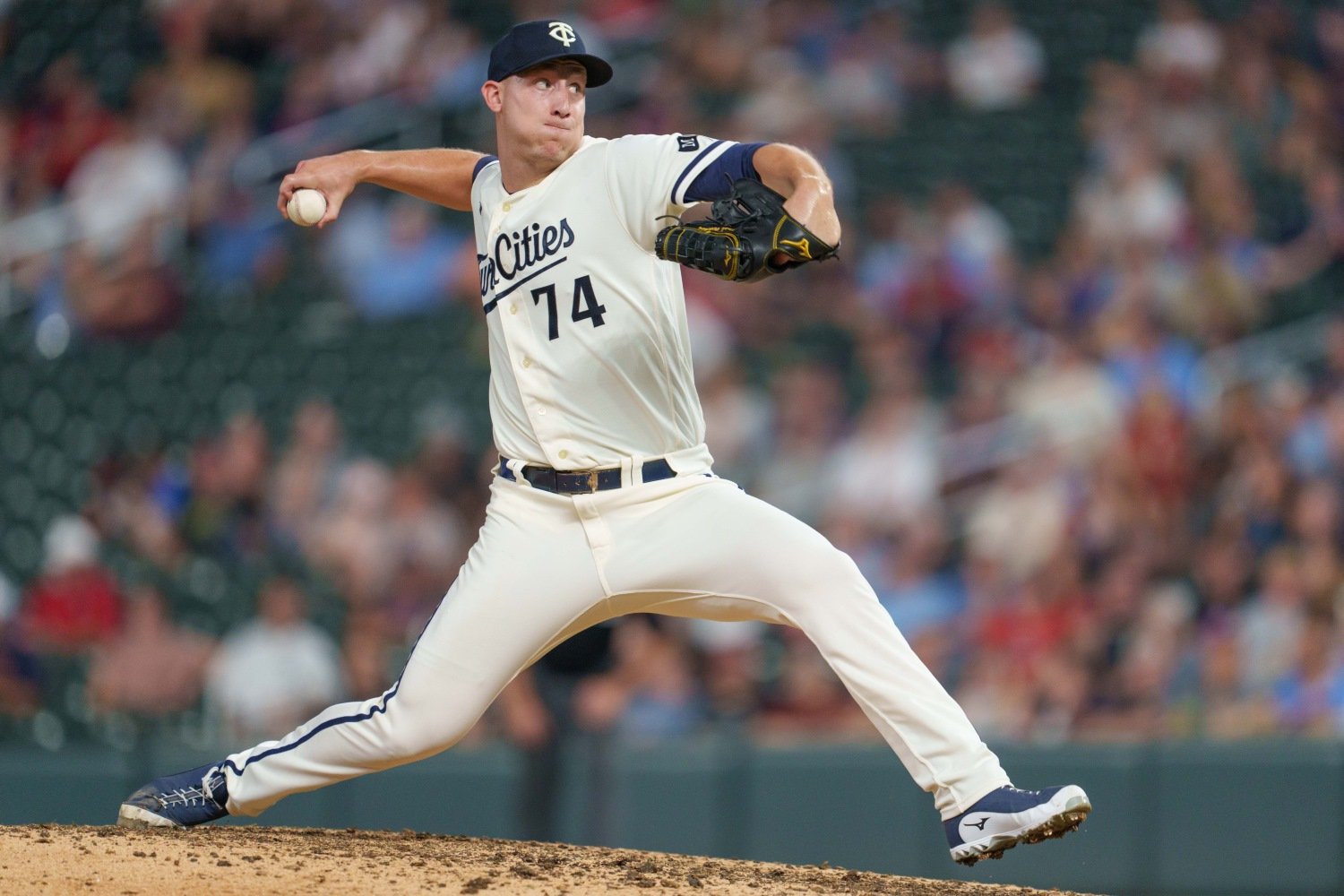 Entering the 2023 season, the Twins front office elected to part ways with talented veteran short relievers Danny Coulombe and Jeff Hoffman in the name of rostering a "stretch reliever" who could pitch multiple innings at a time, in case the starting pitcher performed poorly or became injured early in their start. Relatively inexperienced pitchers Cole Sands, Josh Winder, and Brent Headrick were the primary occupants of the stretch reliever role last season, yet the three appeared in just 48 total games. For perspective, Jorge López, who underwent an extended absence from the team before being traded to the Miami Marlins in late July, appeared in 37 games. The Twins bullpen ranked 21st in MLB in Wins Above Replacement at FanGraphs (fWAR), and although it was wise for the organization to roster a "break glass in case of emergency" pitcher in theory, keeping a viable short reliever like Coulombe or Hoffman to fortify the pen would have been in the team's best interest. With hindsight (and a greater understanding of the unavailing nature of the role they envisioned), will the Twins look to use their eighth bullpen spot differently in 2024? A definitive answer won't emerge until late March, but we have some inklings. Since the beginning of the offseason, the Twins have signed, claimed, or traded for relievers Josh Staumont, Ryan Jensen, Justin Topa, Daniel Duarte, Zack Weiss, Jay Jackson, and Steven Okert. Anthony DeSclafani (acquired alongside Topa from the Seattle Mariners) and Louie Varland could also fulfill short relief roles if necessary. Right now, though, the two are slated to compete for the team's fifth rotation spot. Caleb Thielbar, Brock Stewart, and the previously mentioned Jackson and Okert are out of options, effectively guaranteeing them spots on the 26-man roster out of Spring Training. The team could option Jhoan Durán or Griffin Jax, but that is an obscene notion even to consider. Durán, Jax, Thielbar, Stewart, Jackson and Okert makes six, leaving two unoccupied spots in the bullpen. Fellow recently acquired reliever Topa appeared to be a sure bet, but with multiple viable MLB relievers joining the mix since the team initially acquired the 32-year-old, his spot on the Opening Day roster has become less of a certainty. Topa has two minor-league options available, so if he struggles in camp, he could be optioned to Triple-A St. Paul to begin the season. Yet, he should be considered the favorite to earn the seventh bullpen spot. Considering the intricacies and dynamic variables at hand, who earns the eighth spot in the bullpen depends on whether the organization prefers to keep a stretch reliever or short reliever with dominant upside. Case For a Stretch Reliever The primary reason Minnesota would elect to roster a stretch reliever over a short reliever is because the former can absorb innings in losses, which was why they elected to keep one most of last season. Manager Rocco Baldelli hates "chasing wins" with his better relievers like Durán or Stewart when the team is trailing. So, instead of wasting his high-leverage bullpen arms on low-leverage situations, he would attempt a comeback with a marginal pitcher like Winder or Headrick on the mound. A secondary reason why the Twins value keeping a stretch reliever on the 26-man roster is that it provides Baldelli a reliable piggyback option if he needs to pull a starter early. In application, this situation would likely arise in games where Chris Paddack starts. Coming off missing 18 months from his second Tommy John surgery, Paddack must be sheltered from overuse early in the season. Also, Paddack has a thin repertoire, meaning the risk of a start imploding rises when facing the opposing team's lineup a second or third time. Last season's starting rotation was much more formidable than the current construction of this year's staff, meaning a stretch reliever was less necessary. Yet, entering the upcoming season with Paddack, DeSclafani, and Varland set to pitch a significant number of innings next season, rostering a stretch reliever becomes a greater necessity. Here are the Twins' stretch reliever candidates who are currently on the 40-man roster: Sands Winder Headrick Simeon Woods Richardson Matt Canterino Rostering a stretch reliever is less about the specific pitcher who inhabits the role and more about simply having someone who can mop up innings. The five names here could be viewed as an interchangeable taxi squad that rotates between Triple-A and the parent club, depending on who is fresh at any given moment. Though this is the case, Sands, Winder, and Headrick have the most experience operating as stretch relievers, while Woods Richardson and Canterino provide more upside. Having an assortment of arms who could interchangeably eat up innings early on would be a savvy decision for the Twins to make, especially at the beginning of a 162-game regular season. Case for a Short Reliever The central argument for the Twins rostering a short reliever with their eighth bullpen spot is upside. As constructed, the short relievers who would compete for the final spot in the Twins 'pen are: Staumont Weiss Kody Funderburk Jorge Alcalá If Staumont can prove he's healthy after undergoing thoracic outlet syndrome surgery last August, the former Royals reliever would be the favorite to beat out Funderburk, Alcalá, and Weiss in a camp competition. Regardless of which short reliever performs best in camp, though, their chances will all be subject to whether the team's decision-makers prefer to roster a high-strikeout, high-intensity short reliever or a stretch reliever capable of pitching multiple innings in a pinch. While having a stretch reliever on the roster at the beginning of the season would be wise and convenient, the Twins could be doing themselves a disservice. Yes, they could find themselves needing someone to navigate four innings after Paddack imploded in the second inning of a start in early April, and it would be nice to have a stretch reliever rostered at that time. At the same time, the team could find itself needing to get out of a jam in the 11th inning of an extra-innings game they need to win, and their only option is someone like Headrick. There are two sides to this coin, and both options make sense. With the Twins having fewer dependable, veteran starting pitchers than last season, they are highly incentivized to roster someone who could eat up multiple innings. Yet, they have the opportunity to create one of the most formidable bullpens in baseball if they elect to leave camp with a high-upside arm like Staumont or Funderburk. While they could easily flip between having a stretch reliever one day and a short reliever the next, it would be in the team's best interest not to shy away from making their bullpen a real strength. The way to do that is to keep a high-strikeout, high-intensity reliever. Which type of arm do you favor in filling out the bottom end of the Twins' reliever hierarchy? Who's your favorite arm for that job, entering camp? Make your voice heard below.
- 77 comments
-
- 7
-
-
- josh staumont
- josh winder
- (and 2 more)


.jpg.584ee06dc14e09afb496d89602d7d049.jpg)
