



Cody Schoenmann
-
Posts
768 -
Joined
-
Last visited
-
Days Won
1
Content Type
Profiles
News
Minnesota Twins Videos
2026 Minnesota Twins Top Prospects Ranking
2022 Minnesota Twins Draft Picks
Minnesota Twins Free Agent & Trade Rumors, Notes, & Tidbits
Guides & Resources
2023 Minnesota Twins Draft Picks
The Minnesota Twins Players Project
2024 Minnesota Twins Draft Picks
2025 Minnesota Twins Draft Pick Tracker
2026 Minnesota Twins Draft Tracker: Picks & Bonuses
Forums
Blogs
Events
Store
Downloads
Gallery
Everything posted by Cody Schoenmann
-
 I was just making a joke with Gregg lol. Pache already signed MiLB deal with Arizona.
- 14 replies
-
- 1
-

-
- austin davis
- bubba thompson
- (and 1 more)
-
Is 2025 The Year Cristian Pache Finally Breaks Out?
- 14 replies
-
- 1
-
-
- austin davis
- bubba thompson
- (and 1 more)
-
Despite not yet signing a player to a guaranteed MLB contract, the Twins have been active in the minor-league contract market. Which other potential contributors should they consider signing to non-roster deals? Image courtesy of © Tommy Gilligan-Imagn Images The Twins' most significant transaction this offseason has either been trading Jovani Morán to the Boston Red Sox for utility infielder Mickey Gasper or signing Mike Ford to a minor-league contract. Which of the two transactions should be deemed more consequential is really in the eye of the beholder. Still, the front office executing a flurry of these moves indicates they will be addressing the team's depth concerns on the margins, by either trading for Quadruple-A players with upside or signing journeyman veterans to minor-league deals, with hopes of them outplaying their contracts Due to the complicated nature of trades, we could see more of these low-risk signings by the team's front office this offseason. While depth at first base has seemingly been addressed by acquiring Gasper and Ford, the club has other areas of need, highlighted by the position groups below: Left-handed reliever Right-handed hitting corner outfielder Insurance for Byron Buxton in center field (if they don't trust DaShawn Keirsey) Free-agent options like Tanner Scott, Austin Hays, and Harrison Bader would be ideal candidates, respectively. Again, however, that is not a world where the Twins front office can function. That being the case, team decision-makers will likely continue to scour the minor-league free agent market for veteran depth pieces. Let's take a look at three intriguing options. Austin Davis Before a swarm of injuries concluded what was once a promising 2022 Twins campaign, the team provided opportunities to a handful of relievers who were less than effective. Tyler Thornburg and Juan Minaya are the first to come to mind. However, if you scroll far enough down that year's team Baseball Reference page, you will see that Davis threw 1 2/3 innings for the Twins in two appearances in early Sept. 2022, against the New York Yankees. One can easily forget that signing Davis would, technically, be a reunion. Since his brief stint with Minnesota, the now-31-year-old has jumped between the Houston Astros and San Diego Padres farm systems. He didn't pitch in the majors in 2023. However, he generated a 9.00 ERA for San Diego over seven innings pitched last season. Now, remember, if the Twins were to bring in Davis, it would be on a minor-league deal. He would likely be behind Kody Funderburk and Brent Headrick on the left-handed reliever hierarchy. However, if he performs well in spring training, he could become a valuable depth piece at a position group presently spread untenably thin. bHZ5MWRfWGw0TUFRPT1fVUFZSFVsVUZBd1FBWGdSVEJBQUFWd01EQUZoV0J3QUFWd2RSQVZBREJ3VlNDUU5l.mp4 Davis dropped his arm angle 11 degrees from 2022 to 2024, meaning he is a much different pitcher from his first stint in Minnesota. With San Diego last season, the journeyman southpaw employed a three-pitch mix, highlighted by a sinker-cutter combo he utilized 72% of the time. His third pitch was a sweeper that he used the remaining 28% of the time. If he were to join Minnesota, the team's pitching development staff would probably have him refine his sweeper and use it more as a true out pitch. Nevertheless, Davis is an intriguing option, and with options running thin, his familiarity with Minnesota could lead to a second stint. Bubba Thompson From Aaron Whitefield to Billy Hamilton, the Twins' front office has long shown an affinity for temporarily rostering speedy outfielders who could be viable defensive replacements for the oft-injured Buxton. Like Davis, the Twins did technically roster Thompson. However, unlike Davis, he never touched the field wearing Twins attire, making it difficult to determine whether signing Thompson would count as a reunion. It's the whole Isiah Kiner-Falefa thing. Nevertheless, Minnesota could be incentivized to bring Thompson back and keep him for more than two weeks. Thompson, 26, is a fascinating option. He possesses elite speed, while providing above-average defense in center field. These tools have provided the former first-round pick various opportunities in the majors with the Texas Rangers and Cincinnati Reds. However, he has spent the greater part of his career as a Quadruple-A player, because he cannot hit major league pitching. Over his 259 career plate appearances, Thompson has 56 hits. Forty-three of those hits are singles. Evidently, Thompson's offensive value is predicated on him using his speed to beat out chopped groundballs or get balls just past the infield. Z25aeWFfWGw0TUFRPT1fQmdNSFVsQUJCQXNBRFZOVFZ3QUFCUVpXQUFBRVZWY0FDbFVEVVFFTlZRTlhWRkZV.mp4 Obviously, if Minnesota brought Thompson back on a minor-league deal, there would be no offensive expectations. That said, bringing him in as a depth piece behind Buxton and his assumed backup, Keirsey, could be a wise move from an organizational depth perspective. Thompson could patrol center for the St. Paul Saints to begin the minor-league season. If Buxton were to sustain an injury early in the season, the speedy 26-year-old could function as an adequate platoon mate for Keirsey, meaning the club wouldn't be forced to promote top prospect Emmanuel Rodriguez prematurely. Harold Ramírez You know what's better than a reunion? A fresh beginning, which is something this right-handed bat could significantly benefit from. Ramírez, 30, is a well-known name in the baseball sphere. He performed exceptionally well for the Tampa Bay Rays from 2022 through 2023, posting a 118 and 124 OPS+ in each season, respectively. However, the formerly above-average hitter fell from grace last season, leading to him being designated for assignment by the Rays after posting a measly 70 OPS+ over 169 plate appearances. He quickly signed a minor-league deal with the Washington Nationals. However, his performance barely improved, and he ended his 2024 campaign with an uninspiring 80 OPS+ over 77 plate appearances with his new team. Now, there is debate surrounding whether Tampa Bay gave up on Ramírez prematurely. He was struggling, yes. However, there is reason to suspect he could again become the player who performed nearly 20% above league average at the plate just two seasons ago. Obviously, to assume that is unwise, and you wouldn't want the Twins to invest an amount that reflected such an expectation. However, if he can perform at even 70-80% of how he did from 2022 through 2023, a team could reap the benefits of an above-replacement level bat at little cost. WGducURfWGw0TUFRPT1fQlFaU1hBWlhBd1VBREZFREJRQUFCZ0JYQUFBTlZ3QUFCZ2NBQUFaUkF3VUdBbFFE.mp4 Ramírez is especially intriguing for Minnesota, because he could slot into the Kyle Garlick-turned-Jordan Luplow-turned-Manuel Margot role the front office has coveted for the last three seasons. Again, Ramírez struggled last season. However, in 2023, he hit .387/.411/.555 with 46 hits and four home runs over 124 plate appearances against left-handed pitching. The once highly-touted 30-year-old could step into that role while providing average defense at the corner outfield spots. However, he would likely be best utilized as a designated hitter or pinch-hitter against left-handed pitching. View full article
-
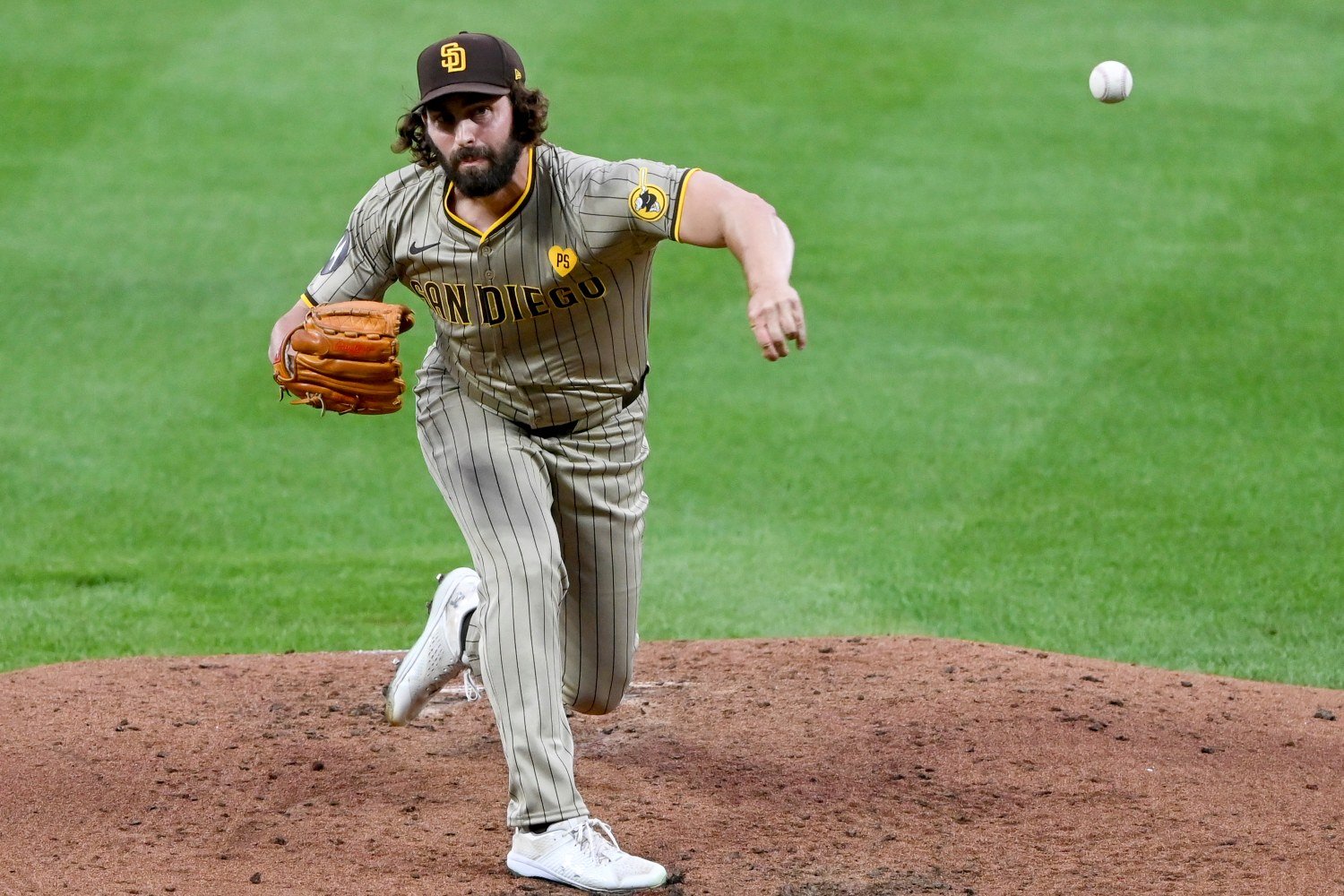 The Twins' most significant transaction this offseason has either been trading Jovani Morán to the Boston Red Sox for utility infielder Mickey Gasper or signing Mike Ford to a minor-league contract. Which of the two transactions should be deemed more consequential is really in the eye of the beholder. Still, the front office executing a flurry of these moves indicates they will be addressing the team's depth concerns on the margins, by either trading for Quadruple-A players with upside or signing journeyman veterans to minor-league deals, with hopes of them outplaying their contracts Due to the complicated nature of trades, we could see more of these low-risk signings by the team's front office this offseason. While depth at first base has seemingly been addressed by acquiring Gasper and Ford, the club has other areas of need, highlighted by the position groups below: Left-handed reliever Right-handed hitting corner outfielder Insurance for Byron Buxton in center field (if they don't trust DaShawn Keirsey) Free-agent options like Tanner Scott, Austin Hays, and Harrison Bader would be ideal candidates, respectively. Again, however, that is not a world where the Twins front office can function. That being the case, team decision-makers will likely continue to scour the minor-league free agent market for veteran depth pieces. Let's take a look at three intriguing options. Austin Davis Before a swarm of injuries concluded what was once a promising 2022 Twins campaign, the team provided opportunities to a handful of relievers who were less than effective. Tyler Thornburg and Juan Minaya are the first to come to mind. However, if you scroll far enough down that year's team Baseball Reference page, you will see that Davis threw 1 2/3 innings for the Twins in two appearances in early Sept. 2022, against the New York Yankees. One can easily forget that signing Davis would, technically, be a reunion. Since his brief stint with Minnesota, the now-31-year-old has jumped between the Houston Astros and San Diego Padres farm systems. He didn't pitch in the majors in 2023. However, he generated a 9.00 ERA for San Diego over seven innings pitched last season. Now, remember, if the Twins were to bring in Davis, it would be on a minor-league deal. He would likely be behind Kody Funderburk and Brent Headrick on the left-handed reliever hierarchy. However, if he performs well in spring training, he could become a valuable depth piece at a position group presently spread untenably thin. bHZ5MWRfWGw0TUFRPT1fVUFZSFVsVUZBd1FBWGdSVEJBQUFWd01EQUZoV0J3QUFWd2RSQVZBREJ3VlNDUU5l.mp4 Davis dropped his arm angle 11 degrees from 2022 to 2024, meaning he is a much different pitcher from his first stint in Minnesota. With San Diego last season, the journeyman southpaw employed a three-pitch mix, highlighted by a sinker-cutter combo he utilized 72% of the time. His third pitch was a sweeper that he used the remaining 28% of the time. If he were to join Minnesota, the team's pitching development staff would probably have him refine his sweeper and use it more as a true out pitch. Nevertheless, Davis is an intriguing option, and with options running thin, his familiarity with Minnesota could lead to a second stint. Bubba Thompson From Aaron Whitefield to Billy Hamilton, the Twins' front office has long shown an affinity for temporarily rostering speedy outfielders who could be viable defensive replacements for the oft-injured Buxton. Like Davis, the Twins did technically roster Thompson. However, unlike Davis, he never touched the field wearing Twins attire, making it difficult to determine whether signing Thompson would count as a reunion. It's the whole Isiah Kiner-Falefa thing. Nevertheless, Minnesota could be incentivized to bring Thompson back and keep him for more than two weeks. Thompson, 26, is a fascinating option. He possesses elite speed, while providing above-average defense in center field. These tools have provided the former first-round pick various opportunities in the majors with the Texas Rangers and Cincinnati Reds. However, he has spent the greater part of his career as a Quadruple-A player, because he cannot hit major league pitching. Over his 259 career plate appearances, Thompson has 56 hits. Forty-three of those hits are singles. Evidently, Thompson's offensive value is predicated on him using his speed to beat out chopped groundballs or get balls just past the infield. Z25aeWFfWGw0TUFRPT1fQmdNSFVsQUJCQXNBRFZOVFZ3QUFCUVpXQUFBRVZWY0FDbFVEVVFFTlZRTlhWRkZV.mp4 Obviously, if Minnesota brought Thompson back on a minor-league deal, there would be no offensive expectations. That said, bringing him in as a depth piece behind Buxton and his assumed backup, Keirsey, could be a wise move from an organizational depth perspective. Thompson could patrol center for the St. Paul Saints to begin the minor-league season. If Buxton were to sustain an injury early in the season, the speedy 26-year-old could function as an adequate platoon mate for Keirsey, meaning the club wouldn't be forced to promote top prospect Emmanuel Rodriguez prematurely. Harold Ramírez You know what's better than a reunion? A fresh beginning, which is something this right-handed bat could significantly benefit from. Ramírez, 30, is a well-known name in the baseball sphere. He performed exceptionally well for the Tampa Bay Rays from 2022 through 2023, posting a 118 and 124 OPS+ in each season, respectively. However, the formerly above-average hitter fell from grace last season, leading to him being designated for assignment by the Rays after posting a measly 70 OPS+ over 169 plate appearances. He quickly signed a minor-league deal with the Washington Nationals. However, his performance barely improved, and he ended his 2024 campaign with an uninspiring 80 OPS+ over 77 plate appearances with his new team. Now, there is debate surrounding whether Tampa Bay gave up on Ramírez prematurely. He was struggling, yes. However, there is reason to suspect he could again become the player who performed nearly 20% above league average at the plate just two seasons ago. Obviously, to assume that is unwise, and you wouldn't want the Twins to invest an amount that reflected such an expectation. However, if he can perform at even 70-80% of how he did from 2022 through 2023, a team could reap the benefits of an above-replacement level bat at little cost. WGducURfWGw0TUFRPT1fQlFaU1hBWlhBd1VBREZFREJRQUFCZ0JYQUFBTlZ3QUFCZ2NBQUFaUkF3VUdBbFFE.mp4 Ramírez is especially intriguing for Minnesota, because he could slot into the Kyle Garlick-turned-Jordan Luplow-turned-Manuel Margot role the front office has coveted for the last three seasons. Again, Ramírez struggled last season. However, in 2023, he hit .387/.411/.555 with 46 hits and four home runs over 124 plate appearances against left-handed pitching. The once highly-touted 30-year-old could step into that role while providing average defense at the corner outfield spots. However, he would likely be best utilized as a designated hitter or pinch-hitter against left-handed pitching.
- 14 comments
-
- 3
-
-
- austin davis
- bubba thompson
- (and 1 more)
-
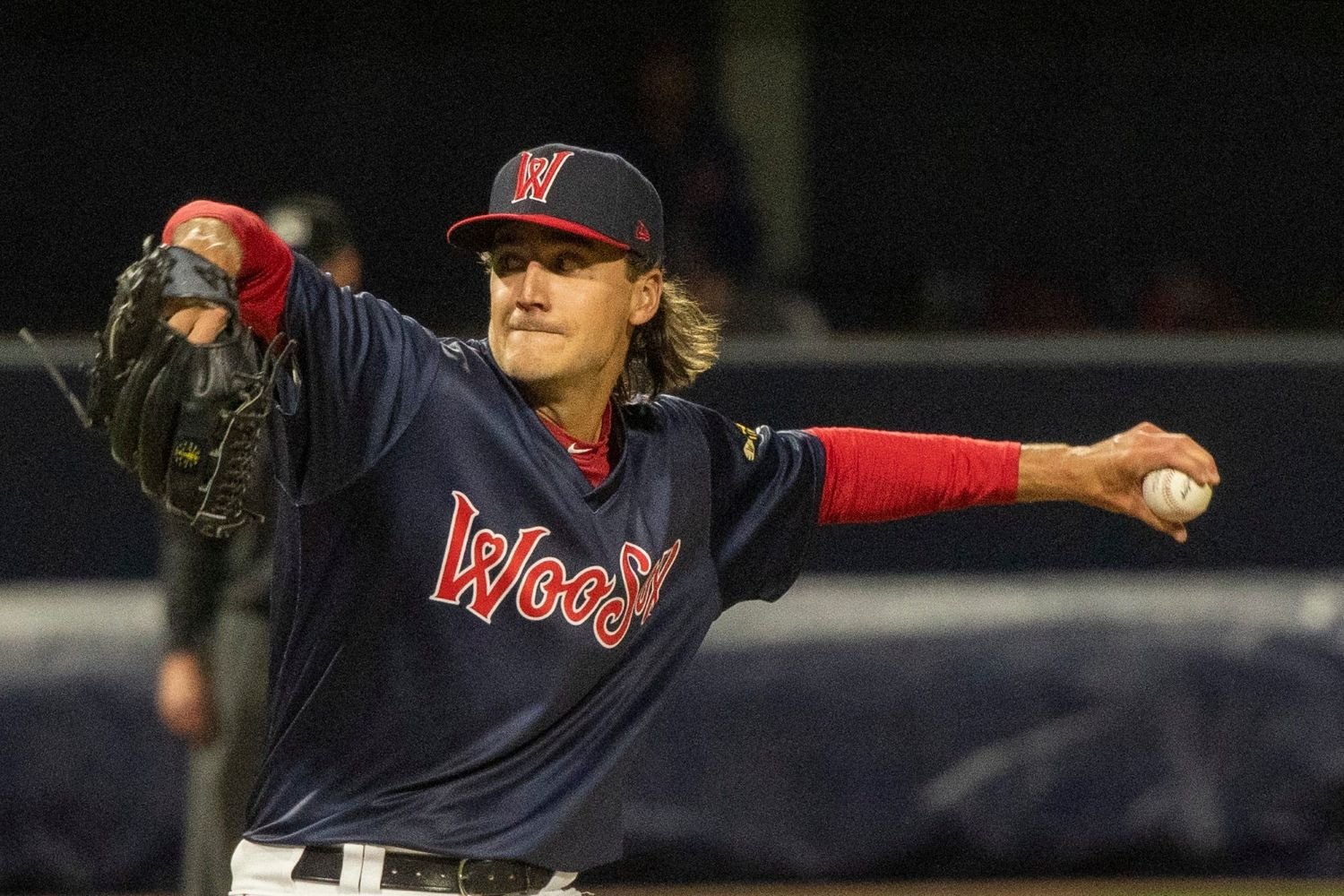 The year is 2018. (Not now, don't freak out. I'm setting a scene.) After posting four strong seasons in the Korea Baseball Organization (KBO), then-30-year-old right-handed starting pitcher Merrill Kelly has been rewarded for his efforts, signing a two-year, $5.5-million contract with the Arizona Diamondbacks. It's a leap of faith on both sides. Six seasons later, Arizona and Kelly have reaped the benefits of this once trivial signing. Kelly has generated 12.8 Wins Above Replacement at Baseball Reference (rWAR), with a 3.82 ERA over 824 1/3 innings pitched for the club while also playing an integral role in guiding Arizona to a World Series appearance in 2023. Arizona rewarded him for his accomplishments along the way, signing him to a two-year, $18-million extension after the 2022 MLB season. The year is 2023. (Again, figuratively.) Then-30-year-old right-handed starting pitcher Erick Fedde is looking to make the same transition, after generating an excellent 2.00 ERA season over 30 games started with KBO's NC Dinos. Several teams wooed the once-failed Washington Nationals starter, and he found a fairly lucrative landing spot, inking a two-year, $15-million contract with the Chicago White Sox. He excelled with the lowly White Sox, posting a 3.11 ERA and 108-to-34 strikeout-to-walk ratio over 121 2/3 innings pitched. His performance with the South Siders led to him getting shipped off to the St. Louis Cardinals at last season's trade deadline. He is now ensconced at the top of St. Louis's rotation, with playoff-hopeful franchises seeking a trade for the now-valuable mid-rotation arm. The year is now 2025 (for real!), and 32-year-old left-handed starting pitcher Kyle Hart is trying to make the same jump. Like Kelly and Fedde, Hart was once also a failed MLB starter. He mustered a mere 11 innings pitched for the Boston Red Sox during the 2020 COVID-shortened 60-game season. Hart never made it back to the majors, but instead of fizzling out in the high minors, the soft-tossing southpaw decided (like Fedde) to join the KBO's NC Dinos. Hart excelled with the Dinos, posting a 2.69 ERA and a 28.8% strikeout rate over 26 starts, leading to him winning the Choi Dong-won Award (KBO's equivalent to the Cy Young Award) last season. cU54QTFfWGw0TUFRPT1fQWxWVUFsTUZCUU1BV3djQVVRQUFBZ1pTQUFNRUFRVUFCQUZRQVFRTkNBdGRBQXRR.mp4 Hart's career revival in the KBO was sparked by the 32-year-old arm turning his plus slider into a true chase pitch by relying heavily on his fastball early in counts. He also utilizes his changeup as a complementary pitch. As noted earlier, Hart is a soft-tossing lefty, with his fastball hovering around 90-91 MPH. Still, despite a deficiency in velocity, his pitches have significantly improved since his days in Boston's minor-league system, causing him to be a sought-after free-agent target this winter. According to The Athletic's Will Sammon and Katie Woo, the Twins are among the teams most interested in signing Hart. In the article, Sammon and Woo noted that teams are mulling over signing Hart as a starting pitcher or multi-inning reliever due to concerns over his limited repertoire. Now, it is unclear which role Minnesota is interested in Hart fulfilling. Presumably, though, the number of teams vying for him means that Hart will land with someone who views him as a starter. Despite being an exceedingly effective starter with the Dinos, there is merit to the idea of Hart becoming a reliever, evidenced by his performance trends last season. When looking at Hart's starts, there is a stark contrast in effectiveness as the game progresses. Here are his opponent's batting averages over the first five innings: First inning - .184 Second inning - .232 Third inning - .304 Fourth inning - .157 Fifth inning - .212 In terms of opponent average, Hart's second-best inning is the first. That's pretty typical, since starters are fresh in the first and opponents haven't gotten a long look at them. As illustrated, his performance dips in the second and third frames, even though the opponent's best hitters usually come up in the first. Again, Hart excelled as a starter in the KBO and deserves a chance as a fifth starter in the majors next season. However, if he were to join the Twins, he could be best suited usurping Funderburk and Headrick and being the club's sole left-handed reliever on the 26-man roster to begin the 2025 campaign. Further evidence to support the claim Hart would be an effective left-handed reliever resides in his splits with the Dinos. Here is how he performed against same-handed and opposite-handed batters last season: Against left-handed batters - .193 AVG, 44 hits allowed, three home runs allowed, 77 strikeouts, seven walks Against right-handed batters - .229 AVG, 80 hits allowed, eight home runs allowed, 105 strikeouts, 31 walks Hart excelled against lefties. Despite still performing well against right-handed batters, he struggled with control, evidenced by a much less impressive strikeout-to-walk ratio. Hart performs well against right-handed hitters, and with MLB's three-batter minimum, he would inevitably have to face right-handed hitters during appearances even in the pen. Still, there is reason to believe he could excel against same-handed batters, a phenomenon those who follow the team have grown accustomed to watching with the recently-departed Caleb Thielbar over the previous five seasons. When discussing any potential Twins free-agent acquisition, one must note the ownership-imposed payroll limitations. Now, despite being roughly $12 million over the expected $130 million limit set for next season, the front office could still theoretically sign players before reaching the arbitrarily set limit. Hart could sign at any moment, meaning the team is unlikely to shed the $12 million necessary before the southpaw comes off the market. Still, with the Twins being genuinely interested in signing Hart, his price tag is projected not to be too substantial, meaning the club could sign him and still shed the money necessary to meet the ownership-imposed salary restrictions far before Spring Training begins.
 -
The Twins have been linked to this Choi Dong-won Award-winning starting pitcher. Could they realistically sign him, given the ownership-induced salary restrictions? Image courtesy of © Rick Cinclair/Telegram & Gazette via Imagn Content Services, LLC The year is 2018. (Not now, don't freak out. I'm setting a scene.) After posting four strong seasons in the Korea Baseball Organization (KBO), then-30-year-old right-handed starting pitcher Merrill Kelly has been rewarded for his efforts, signing a two-year, $5.5-million contract with the Arizona Diamondbacks. It's a leap of faith on both sides. Six seasons later, Arizona and Kelly have reaped the benefits of this once trivial signing. Kelly has generated 12.8 Wins Above Replacement at Baseball Reference (rWAR), with a 3.82 ERA over 824 1/3 innings pitched for the club while also playing an integral role in guiding Arizona to a World Series appearance in 2023. Arizona rewarded him for his accomplishments along the way, signing him to a two-year, $18-million extension after the 2022 MLB season. The year is 2023. (Again, figuratively.) Then-30-year-old right-handed starting pitcher Erick Fedde is looking to make the same transition, after generating an excellent 2.00 ERA season over 30 games started with KBO's NC Dinos. Several teams wooed the once-failed Washington Nationals starter, and he found a fairly lucrative landing spot, inking a two-year, $15-million contract with the Chicago White Sox. He excelled with the lowly White Sox, posting a 3.11 ERA and 108-to-34 strikeout-to-walk ratio over 121 2/3 innings pitched. His performance with the South Siders led to him getting shipped off to the St. Louis Cardinals at last season's trade deadline. He is now ensconced at the top of St. Louis's rotation, with playoff-hopeful franchises seeking a trade for the now-valuable mid-rotation arm. The year is now 2025 (for real!), and 32-year-old left-handed starting pitcher Kyle Hart is trying to make the same jump. Like Kelly and Fedde, Hart was once also a failed MLB starter. He mustered a mere 11 innings pitched for the Boston Red Sox during the 2020 COVID-shortened 60-game season. Hart never made it back to the majors, but instead of fizzling out in the high minors, the soft-tossing southpaw decided (like Fedde) to join the KBO's NC Dinos. Hart excelled with the Dinos, posting a 2.69 ERA and a 28.8% strikeout rate over 26 starts, leading to him winning the Choi Dong-won Award (KBO's equivalent to the Cy Young Award) last season. cU54QTFfWGw0TUFRPT1fQWxWVUFsTUZCUU1BV3djQVVRQUFBZ1pTQUFNRUFRVUFCQUZRQVFRTkNBdGRBQXRR.mp4 Hart's career revival in the KBO was sparked by the 32-year-old arm turning his plus slider into a true chase pitch by relying heavily on his fastball early in counts. He also utilizes his changeup as a complementary pitch. As noted earlier, Hart is a soft-tossing lefty, with his fastball hovering around 90-91 MPH. Still, despite a deficiency in velocity, his pitches have significantly improved since his days in Boston's minor-league system, causing him to be a sought-after free-agent target this winter. According to The Athletic's Will Sammon and Katie Woo, the Twins are among the teams most interested in signing Hart. In the article, Sammon and Woo noted that teams are mulling over signing Hart as a starting pitcher or multi-inning reliever due to concerns over his limited repertoire. Now, it is unclear which role Minnesota is interested in Hart fulfilling. Presumably, though, the number of teams vying for him means that Hart will land with someone who views him as a starter. Despite being an exceedingly effective starter with the Dinos, there is merit to the idea of Hart becoming a reliever, evidenced by his performance trends last season. When looking at Hart's starts, there is a stark contrast in effectiveness as the game progresses. Here are his opponent's batting averages over the first five innings: First inning - .184 Second inning - .232 Third inning - .304 Fourth inning - .157 Fifth inning - .212 In terms of opponent average, Hart's second-best inning is the first. That's pretty typical, since starters are fresh in the first and opponents haven't gotten a long look at them. As illustrated, his performance dips in the second and third frames, even though the opponent's best hitters usually come up in the first. Again, Hart excelled as a starter in the KBO and deserves a chance as a fifth starter in the majors next season. However, if he were to join the Twins, he could be best suited usurping Funderburk and Headrick and being the club's sole left-handed reliever on the 26-man roster to begin the 2025 campaign. Further evidence to support the claim Hart would be an effective left-handed reliever resides in his splits with the Dinos. Here is how he performed against same-handed and opposite-handed batters last season: Against left-handed batters - .193 AVG, 44 hits allowed, three home runs allowed, 77 strikeouts, seven walks Against right-handed batters - .229 AVG, 80 hits allowed, eight home runs allowed, 105 strikeouts, 31 walks Hart excelled against lefties. Despite still performing well against right-handed batters, he struggled with control, evidenced by a much less impressive strikeout-to-walk ratio. Hart performs well against right-handed hitters, and with MLB's three-batter minimum, he would inevitably have to face right-handed hitters during appearances even in the pen. Still, there is reason to believe he could excel against same-handed batters, a phenomenon those who follow the team have grown accustomed to watching with the recently-departed Caleb Thielbar over the previous five seasons. When discussing any potential Twins free-agent acquisition, one must note the ownership-imposed payroll limitations. Now, despite being roughly $12 million over the expected $130 million limit set for next season, the front office could still theoretically sign players before reaching the arbitrarily set limit. Hart could sign at any moment, meaning the team is unlikely to shed the $12 million necessary before the southpaw comes off the market. Still, with the Twins being genuinely interested in signing Hart, his price tag is projected not to be too substantial, meaning the club could sign him and still shed the money necessary to meet the ownership-imposed salary restrictions far before Spring Training begins. View full article
-
This Jhoan Durán Trade Could Jumpstart the Twins' Offseason Activity
Cody Schoenmann posted an article in Twins
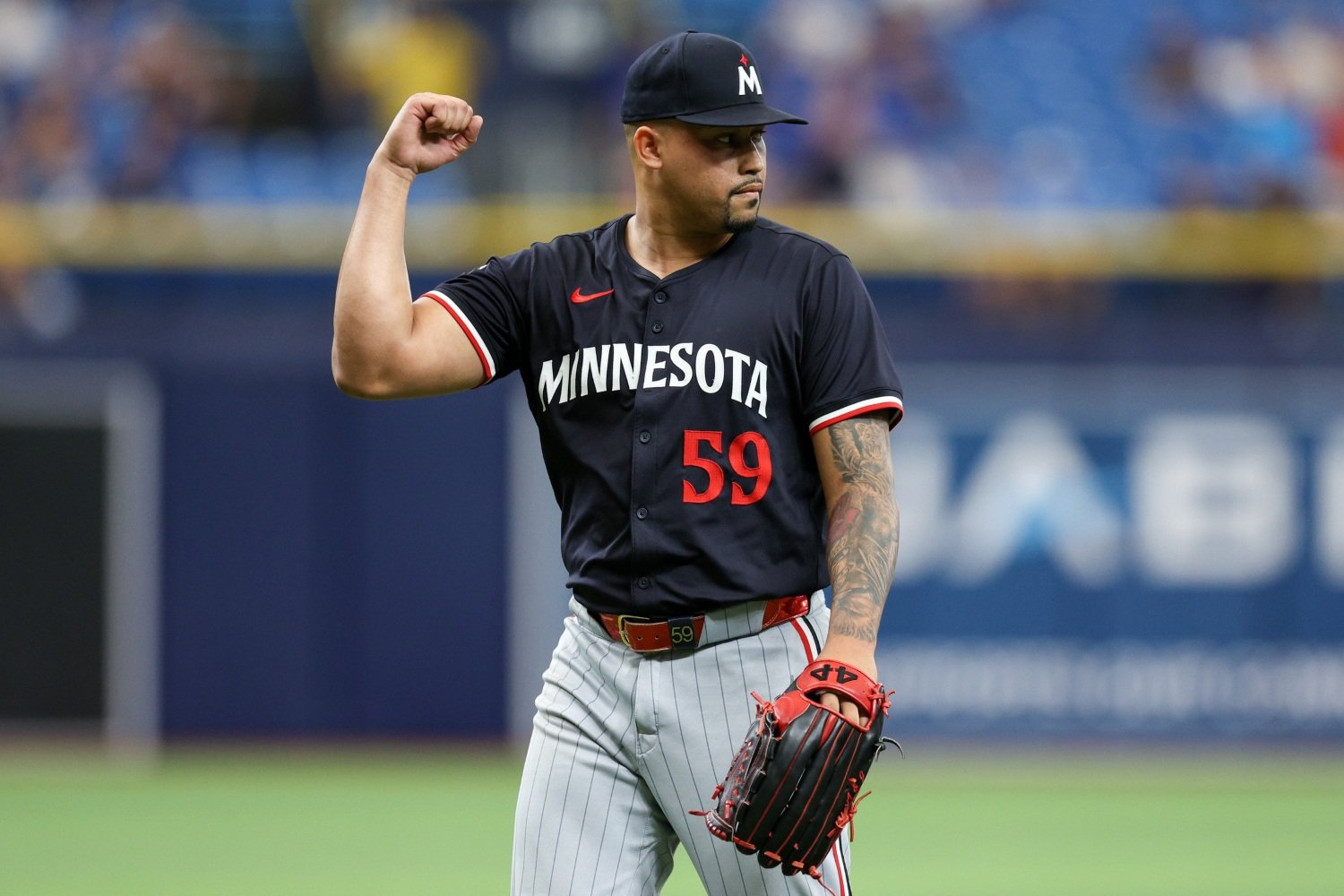 The Minnesota Twins and Los Angeles Dodgers almost seem to exist on different planes. Offseason after offseason, Los Angeles has pursued and signed the priciest, most sought-after free agents on the market, while Minnesota has been forced to sift through the secondary and tertiary market, investing its limited resources in reclamation projects or slightly-above-replacement-level veterans—especially the last two winters, under their sudden austerity budget. Coming off the eighth World Series championship in franchise history, the Dodgers have extended or signed the following players: Tommy Edman - five years, $74 million Blake Snell - five years, $182 million Michael Conforto - one year, $17 million Blake Treinen - two years, $22 million Teoscar Hernández - three years, $66 million Meanwhile, Minnesota (which has yet to sign a player to a guaranteed MLB contract) has acquired Mickey Gasper, a 29-year-old utility infielder/catcher not guaranteed to make the roster, and due only $800,000 in 2025. Still, despite spending $360.2 million less than the Dodgers so far this offseason, the Twins are in position to contend for the AL Central crown again, meaning not all is bleak. Given where each team has surplus talent and where they have needs, the Twins would be wise to execute their first significant offseason transaction with the reigning World Series champs. When assessing the Dodgers' 26-man roster, one will notice very few areas of weakness. They have a surplus of star power with position players Mookie Betts, Freddie Freeman, and Shohei Ohtani and starting pitchers Yoshinobu Yamamoto, Tyler Glasnow, and the aforementioned Snell (and Ohtani, of course). Los Angeles also has oodles of depth. That said, there is one area that could use more star power, and that is their bullpen. At a glance, their closer and top set-up relievers for next season are projected to be Michael Kopech, Evan Phillips, and the previously mentioned Treinen. Anthony Banda, Ryan Brasier, and Alex Vesia are expected to function as the team's primary mid-leverage relievers, with young arms Edgardo Henriquez and Michael Grove rounding out the eight-reliever unit. Now, the Dodger bullpen isn't a weakness, per se. However, it is not formidable, and would significantly benefit from acquiring an established high-leverage arm. Veteran arms like Tanner Scott, Jeff Hoffman, and Kirby Yates are still available on the free-agent market. Signing free agents means paying a tax of roughly $1 on every $1 at this stage, though, and those guys are non-superstars whose salaries would effectively become superstar prices after factoring in the competitive-balance tax. Los Angeles would be best advised to scour the trade market for a high-leverage late-inning arm instead, and the Twins' fire-throwing closer Jhoan Durán could be at the top of their list. Hindered by a 1.3 MPH decrease in his fastball velocity from 2023 to 2024, Durán struggled to keep hitters from reaching base and to strand inherited runners, which amounted to his worst regular season campaign as a Twin. He posted a career-high 3.64 ERA and 1.16 WHIP over 54 1/3 innings pitched. Despite this notable decline in performance, Durán was still an effective reliever last season, and his peripheral numbers (2.85 FIP and 2.70 xERA) indicate he was better than his counting statistics suggest. Nevertheless, there is a significant amount of perceived value surrounding Durán, meaning the Twins could net a prodigious package for him. The Dodgers organization has troves of major league-ready talent sitting at Triple A, waiting for an opportunity with the parent club. Several names could be bundled into a trade package. However, two Los Angeles prospects make the most sense for the Twins, lending to the hypothetical trade proposal below: Los Angeles receives: RHP Jhoan Durán Minnesota receives: C Hunter Feduccia, RHP Ben Casparius Trading Durán would not be an easy departure to stomach for the team or fans. However, parting ways with the hurler and his $1.8 million price tag could be the move that finally signals movement for the largely inactive Twins front office. Now, it should be noted that moving Durán to Los Angeles wouldn't be a move that clears salary. Feduccia and Caspirius's contracts would equal roughly $1.6 million, making the payroll space saved from Durán's departure functionally nil. Still, acquiring these two cost-controlled players could get the ball moving on further transactions that reduce the team's payroll. Feduccia, 27, is an MLB-caliber catcher who has been blocked by Los Angeles having arguably the best catching tandem in baseball in veterans Will Smith and Austin Barnes. Acquiring Feduccia would give Minnesota a viable catching partner for Ryan Jeffers, meaning the front office could comfortably part ways with Christian Vázquez and his $10 million price tag. TndlcjJfWGw0TUFRPT1fVlFkU0FRY0JBbEVBRFZKUUFBQUFVRmNEQUZoWFUxa0FWbGRSVVZGWEJsWlRCd0JS.mp4 Feduccia is an above-average defensive catcher whose contact-skilled profile from the left side of the plate would perfectly complement Jeffers's defensively deficient, power-skilled profile. Feduccia possesses enough talent to usurp Jeffers in the catching pecking order and function as a long-term option behind the plate, given that he's under team control until at least the end of the 2030 MLB season. Casparius offers similar value to Feduccia, in that he would function as a back-of-the-rotation option who could soften the blow of trading away Chris Paddack and his $7.5 million price tag. Casparius, 25, fits the mold of the ideal Twins pitching acquisition, utilizing a fastball-sweeper combo 85% of the time. Casparius's sweeper is an elite pitch that could become one of the best in baseball, given extended play at the major-league level. He could compete with Simeon Woods Richardson, David Festa, and Zebby Matthews for the club's fourth and fifth rotations spots while costing a mere $800,000 next season. Both he and Feduccia can still be optioned to the minors, too. In the long run, though, Casparius might lack the command to start, and he could slide in as more of a direct replacement for Durán over time. WU9BbERfV0ZRVkV3dEdEUT09X0JnZFdBUWNGQkFJQVcxWURVQUFBQ0ZOU0FBTlJVVklBQ3dFRkFsSUNWRkFHQlZjQQ==.mp4 Durán's departure would be a significant blow to the Twins bullpen. That said, the club's relief core is deep, meaning they should be able to absorb the loss. Griffin Jax or Brock Stewart could slot into the closer role, with Jorge Alcalá, Cole Sands, and Justin Topa taking on most of the other medium- to high-leverage situations. Durán's departure could also permit Louie Varland an extended opportunity to become a fixture in the back of the bullpen. Given their aspirations and a relative lack of needs elsewhere, Los Angeles would be wise to acquire a bona fide high-end closer. Durán fits the bill, and while watching him depart from Twins Territory after three seasons would be a tough pill to swallow, acquiring a cost-controlled platoon catcher and a high-octane swingman with untapped potential would be a worthwhile swap. Also, acquiring Feduccia and Casparius would provide Twins decision-makers the depth pieces necessary to part ways with Vázquez and Paddack comfortably. Trading Vázquez and Paddack would also give the Twins more salary flexibility, allowing them to attack the rest of the roster (albeit in cost-efficient fashion) more aggressively.
- 58 comments
-
- 4
-
-

-
- jhoan duran
- hunter feduccia
- (and 3 more)
-
Should the Twins send their star closer to Los Angeles for a package of young, controllable talent in areas of need? Image courtesy of © Nathan Ray Seebeck-Imagn Images The Minnesota Twins and Los Angeles Dodgers almost seem to exist on different planes. Offseason after offseason, Los Angeles has pursued and signed the priciest, most sought-after free agents on the market, while Minnesota has been forced to sift through the secondary and tertiary market, investing its limited resources in reclamation projects or slightly-above-replacement-level veterans—especially the last two winters, under their sudden austerity budget. Coming off the eighth World Series championship in franchise history, the Dodgers have extended or signed the following players: Tommy Edman - five years, $74 million Blake Snell - five years, $182 million Michael Conforto - one year, $17 million Blake Treinen - two years, $22 million Teoscar Hernández - three years, $66 million Meanwhile, Minnesota (which has yet to sign a player to a guaranteed MLB contract) has acquired Mickey Gasper, a 29-year-old utility infielder/catcher not guaranteed to make the roster, and due only $800,000 in 2025. Still, despite spending $360.2 million less than the Dodgers so far this offseason, the Twins are in position to contend for the AL Central crown again, meaning not all is bleak. Given where each team has surplus talent and where they have needs, the Twins would be wise to execute their first significant offseason transaction with the reigning World Series champs. When assessing the Dodgers' 26-man roster, one will notice very few areas of weakness. They have a surplus of star power with position players Mookie Betts, Freddie Freeman, and Shohei Ohtani and starting pitchers Yoshinobu Yamamoto, Tyler Glasnow, and the aforementioned Snell (and Ohtani, of course). Los Angeles also has oodles of depth. That said, there is one area that could use more star power, and that is their bullpen. At a glance, their closer and top set-up relievers for next season are projected to be Michael Kopech, Evan Phillips, and the previously mentioned Treinen. Anthony Banda, Ryan Brasier, and Alex Vesia are expected to function as the team's primary mid-leverage relievers, with young arms Edgardo Henriquez and Michael Grove rounding out the eight-reliever unit. Now, the Dodger bullpen isn't a weakness, per se. However, it is not formidable, and would significantly benefit from acquiring an established high-leverage arm. Veteran arms like Tanner Scott, Jeff Hoffman, and Kirby Yates are still available on the free-agent market. Signing free agents means paying a tax of roughly $1 on every $1 at this stage, though, and those guys are non-superstars whose salaries would effectively become superstar prices after factoring in the competitive-balance tax. Los Angeles would be best advised to scour the trade market for a high-leverage late-inning arm instead, and the Twins' fire-throwing closer Jhoan Durán could be at the top of their list. Hindered by a 1.3 MPH decrease in his fastball velocity from 2023 to 2024, Durán struggled to keep hitters from reaching base and to strand inherited runners, which amounted to his worst regular season campaign as a Twin. He posted a career-high 3.64 ERA and 1.16 WHIP over 54 1/3 innings pitched. Despite this notable decline in performance, Durán was still an effective reliever last season, and his peripheral numbers (2.85 FIP and 2.70 xERA) indicate he was better than his counting statistics suggest. Nevertheless, there is a significant amount of perceived value surrounding Durán, meaning the Twins could net a prodigious package for him. The Dodgers organization has troves of major league-ready talent sitting at Triple A, waiting for an opportunity with the parent club. Several names could be bundled into a trade package. However, two Los Angeles prospects make the most sense for the Twins, lending to the hypothetical trade proposal below: Los Angeles receives: RHP Jhoan Durán Minnesota receives: C Hunter Feduccia, RHP Ben Casparius Trading Durán would not be an easy departure to stomach for the team or fans. However, parting ways with the hurler and his $1.8 million price tag could be the move that finally signals movement for the largely inactive Twins front office. Now, it should be noted that moving Durán to Los Angeles wouldn't be a move that clears salary. Feduccia and Caspirius's contracts would equal roughly $1.6 million, making the payroll space saved from Durán's departure functionally nil. Still, acquiring these two cost-controlled players could get the ball moving on further transactions that reduce the team's payroll. Feduccia, 27, is an MLB-caliber catcher who has been blocked by Los Angeles having arguably the best catching tandem in baseball in veterans Will Smith and Austin Barnes. Acquiring Feduccia would give Minnesota a viable catching partner for Ryan Jeffers, meaning the front office could comfortably part ways with Christian Vázquez and his $10 million price tag. TndlcjJfWGw0TUFRPT1fVlFkU0FRY0JBbEVBRFZKUUFBQUFVRmNEQUZoWFUxa0FWbGRSVVZGWEJsWlRCd0JS.mp4 Feduccia is an above-average defensive catcher whose contact-skilled profile from the left side of the plate would perfectly complement Jeffers's defensively deficient, power-skilled profile. Feduccia possesses enough talent to usurp Jeffers in the catching pecking order and function as a long-term option behind the plate, given that he's under team control until at least the end of the 2030 MLB season. Casparius offers similar value to Feduccia, in that he would function as a back-of-the-rotation option who could soften the blow of trading away Chris Paddack and his $7.5 million price tag. Casparius, 25, fits the mold of the ideal Twins pitching acquisition, utilizing a fastball-sweeper combo 85% of the time. Casparius's sweeper is an elite pitch that could become one of the best in baseball, given extended play at the major-league level. He could compete with Simeon Woods Richardson, David Festa, and Zebby Matthews for the club's fourth and fifth rotations spots while costing a mere $800,000 next season. Both he and Feduccia can still be optioned to the minors, too. In the long run, though, Casparius might lack the command to start, and he could slide in as more of a direct replacement for Durán over time. WU9BbERfV0ZRVkV3dEdEUT09X0JnZFdBUWNGQkFJQVcxWURVQUFBQ0ZOU0FBTlJVVklBQ3dFRkFsSUNWRkFHQlZjQQ==.mp4 Durán's departure would be a significant blow to the Twins bullpen. That said, the club's relief core is deep, meaning they should be able to absorb the loss. Griffin Jax or Brock Stewart could slot into the closer role, with Jorge Alcalá, Cole Sands, and Justin Topa taking on most of the other medium- to high-leverage situations. Durán's departure could also permit Louie Varland an extended opportunity to become a fixture in the back of the bullpen. Given their aspirations and a relative lack of needs elsewhere, Los Angeles would be wise to acquire a bona fide high-end closer. Durán fits the bill, and while watching him depart from Twins Territory after three seasons would be a tough pill to swallow, acquiring a cost-controlled platoon catcher and a high-octane swingman with untapped potential would be a worthwhile swap. Also, acquiring Feduccia and Casparius would provide Twins decision-makers the depth pieces necessary to part ways with Vázquez and Paddack comfortably. Trading Vázquez and Paddack would also give the Twins more salary flexibility, allowing them to attack the rest of the roster (albeit in cost-efficient fashion) more aggressively. View full article
-
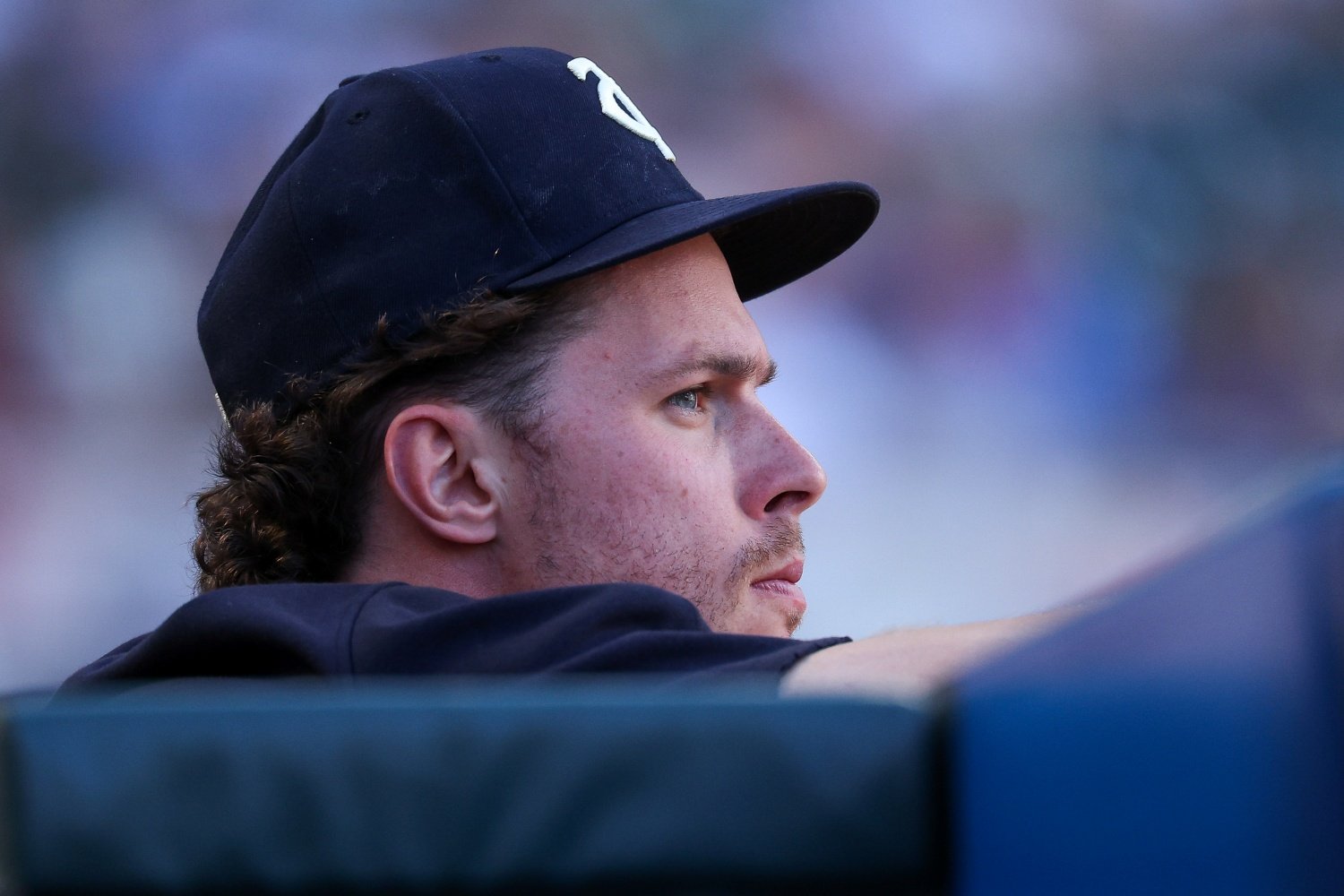 In a dread-inducing development for suburban mothers across Minnesota, veteran outfielder Max Kepler has officially parted ways with the Twins, signing a one-year, $10-million contract with the Philadelphia Phillies. The long-time Twin joins what is arguably the deepest and most formidable lineup in MLB, alongside Kyle Schwarber, Trea Turner, Bryce Harper, and others. Kepler's departure will mostly be felt in the field. He was consistently one of MLB's best defensive right fielders, evidenced by the now-31-year-old netting 66 Outs Above Average (OAA) over 10 seasons with Minnesota. That said, his presence will also be missed at the plate, as (despite his shortcomings) he hit .237/.318/.429 with a marginally above-average 102 OPS+ over 3,761 plate appearances during his Twins career Where Kepler will particularly be missed is having his bat in the lineup against right-handed pitchers. Over 3,170 plate appearances against opposite-handed pitchers, he hit .243/.326/.452, with 679 hits, 134 home runs, and a 108 tOPS+ (which compares a player's OPS for splits relative to their total OPS). Operating as a cog in the lineup against right-handed pitching, Kepler generated above-average numbers over his career, often operating out of the same spot in the lineup. Over the past three seasons, Kepler netted 126 starts in the cleanup spot, the most on the team during that stretch. He also functioned as the team's primary cleanup hitter last season, generating 43 starts in 89 total games played. Manager Rocco Baldelli would slot Kepler into the cleanup spot in the lineup exclusively against right-handed pitchers. The likely rationale was for the wily veteran to balance the lineup and utilize his contact-skilled profile to move high on-base percentage hitters like Carlos Correa and Royce Lewis over from one base to another and capitalize on opportunities where they were in scoring position. Despite not fitting the mold of traditional cleanup hitters of the past like David Ortiz and Edwin Encarnacion, Kepler performed well in the role (particularly early in the season) and will be a missed offensive contributor. Entering the 2025 season, the Twins will need to find a new bat to absorb most of the opportunities in the cleanup spot. Luckily, the club has numerous options who could fulfill the role. Kepler's final game started at cleanup occurred on Jul. 24, (fittingly) against the Phillies. Here is who received opportunities at the four-hole from Jul. 25 through Sept. 29: Matt Wallner - 19 starts Royce Lewis - 13 starts José Miranda - 10 starts Carlos Santana - eight starts Trevor Larnach - five starts Ryan Jeffers - four starts Byron Buxton - one start Edouard Julien - one start Wallner, Lewis, and Miranda each started double-digit games at the four-hole, with the amalgamation of Santana, Larnach, Jeffers, Buxton, and Julien sprinkled in on occasion. Looking at this collection of players, two could seamlessly take over Kepler's role: Wallner and Larnach. At first glance, Wallner is the perfect candidate to receive the majority of starts out of the cleanup spot. Being a daunting, power-skilled bat, Wallner fits the archetype. That said, Wallner fitting that bill could work against him. Baldelli seemingly slotted Kepler into the cleanup spot because he could balance the lineup and put the ball into play as a contact-skilled left-handed bat, not because he had game-changing power. Assuming Baldelli still values that type of contributor, there is reason to believe Larnach (who more closely fits Kepler's player mold) could receive more opportunity out of the four-hole than Wallner to begin the season. Twins second-ranked prospect Emmanuel Rodriguez could eventually take on Kepler's role in a more lasting fashion by midsummer. Still, slotting the 21-year-old into that role is merely wishcasting, until he can prove to be a sustainably productive contributor at the major-league level. With Santana no longer an option, there is reason to suspect Miranda (slated to become the team's primary first baseman after Santana's departure), Lewis, Jeffers, and Buxton will also receive more starts at the cleanup spot. Nevertheless, the four-hole will be a revolving door of players, with Wallner and Larnach likely receiving the bulk of opportunities against right-handed hitters and Miranda, Lewis, Jeffers, and Buxton welcoming the occasional start against left-handed starting pitchers to begin next season.
- 50 comments
-
- 4
-
-
- max kepler
- matt wallner
- (and 5 more)
-
Veteran outfielder Max Kepler has led the Twins at starts in the cleanup spot in each of the past three seasons. Who should take over the mantle as Minnesota's primary cleanup hitter in 2025? Image courtesy of © Matt Krohn-Imagn Images In a dread-inducing development for suburban mothers across Minnesota, veteran outfielder Max Kepler has officially parted ways with the Twins, signing a one-year, $10-million contract with the Philadelphia Phillies. The long-time Twin joins what is arguably the deepest and most formidable lineup in MLB, alongside Kyle Schwarber, Trea Turner, Bryce Harper, and others. Kepler's departure will mostly be felt in the field. He was consistently one of MLB's best defensive right fielders, evidenced by the now-31-year-old netting 66 Outs Above Average (OAA) over 10 seasons with Minnesota. That said, his presence will also be missed at the plate, as (despite his shortcomings) he hit .237/.318/.429 with a marginally above-average 102 OPS+ over 3,761 plate appearances during his Twins career Where Kepler will particularly be missed is having his bat in the lineup against right-handed pitchers. Over 3,170 plate appearances against opposite-handed pitchers, he hit .243/.326/.452, with 679 hits, 134 home runs, and a 108 tOPS+ (which compares a player's OPS for splits relative to their total OPS). Operating as a cog in the lineup against right-handed pitching, Kepler generated above-average numbers over his career, often operating out of the same spot in the lineup. Over the past three seasons, Kepler netted 126 starts in the cleanup spot, the most on the team during that stretch. He also functioned as the team's primary cleanup hitter last season, generating 43 starts in 89 total games played. Manager Rocco Baldelli would slot Kepler into the cleanup spot in the lineup exclusively against right-handed pitchers. The likely rationale was for the wily veteran to balance the lineup and utilize his contact-skilled profile to move high on-base percentage hitters like Carlos Correa and Royce Lewis over from one base to another and capitalize on opportunities where they were in scoring position. Despite not fitting the mold of traditional cleanup hitters of the past like David Ortiz and Edwin Encarnacion, Kepler performed well in the role (particularly early in the season) and will be a missed offensive contributor. Entering the 2025 season, the Twins will need to find a new bat to absorb most of the opportunities in the cleanup spot. Luckily, the club has numerous options who could fulfill the role. Kepler's final game started at cleanup occurred on Jul. 24, (fittingly) against the Phillies. Here is who received opportunities at the four-hole from Jul. 25 through Sept. 29: Matt Wallner - 19 starts Royce Lewis - 13 starts José Miranda - 10 starts Carlos Santana - eight starts Trevor Larnach - five starts Ryan Jeffers - four starts Byron Buxton - one start Edouard Julien - one start Wallner, Lewis, and Miranda each started double-digit games at the four-hole, with the amalgamation of Santana, Larnach, Jeffers, Buxton, and Julien sprinkled in on occasion. Looking at this collection of players, two could seamlessly take over Kepler's role: Wallner and Larnach. At first glance, Wallner is the perfect candidate to receive the majority of starts out of the cleanup spot. Being a daunting, power-skilled bat, Wallner fits the archetype. That said, Wallner fitting that bill could work against him. Baldelli seemingly slotted Kepler into the cleanup spot because he could balance the lineup and put the ball into play as a contact-skilled left-handed bat, not because he had game-changing power. Assuming Baldelli still values that type of contributor, there is reason to believe Larnach (who more closely fits Kepler's player mold) could receive more opportunity out of the four-hole than Wallner to begin the season. Twins second-ranked prospect Emmanuel Rodriguez could eventually take on Kepler's role in a more lasting fashion by midsummer. Still, slotting the 21-year-old into that role is merely wishcasting, until he can prove to be a sustainably productive contributor at the major-league level. With Santana no longer an option, there is reason to suspect Miranda (slated to become the team's primary first baseman after Santana's departure), Lewis, Jeffers, and Buxton will also receive more starts at the cleanup spot. Nevertheless, the four-hole will be a revolving door of players, with Wallner and Larnach likely receiving the bulk of opportunities against right-handed hitters and Miranda, Lewis, Jeffers, and Buxton welcoming the occasional start against left-handed starting pitchers to begin next season. View full article
-
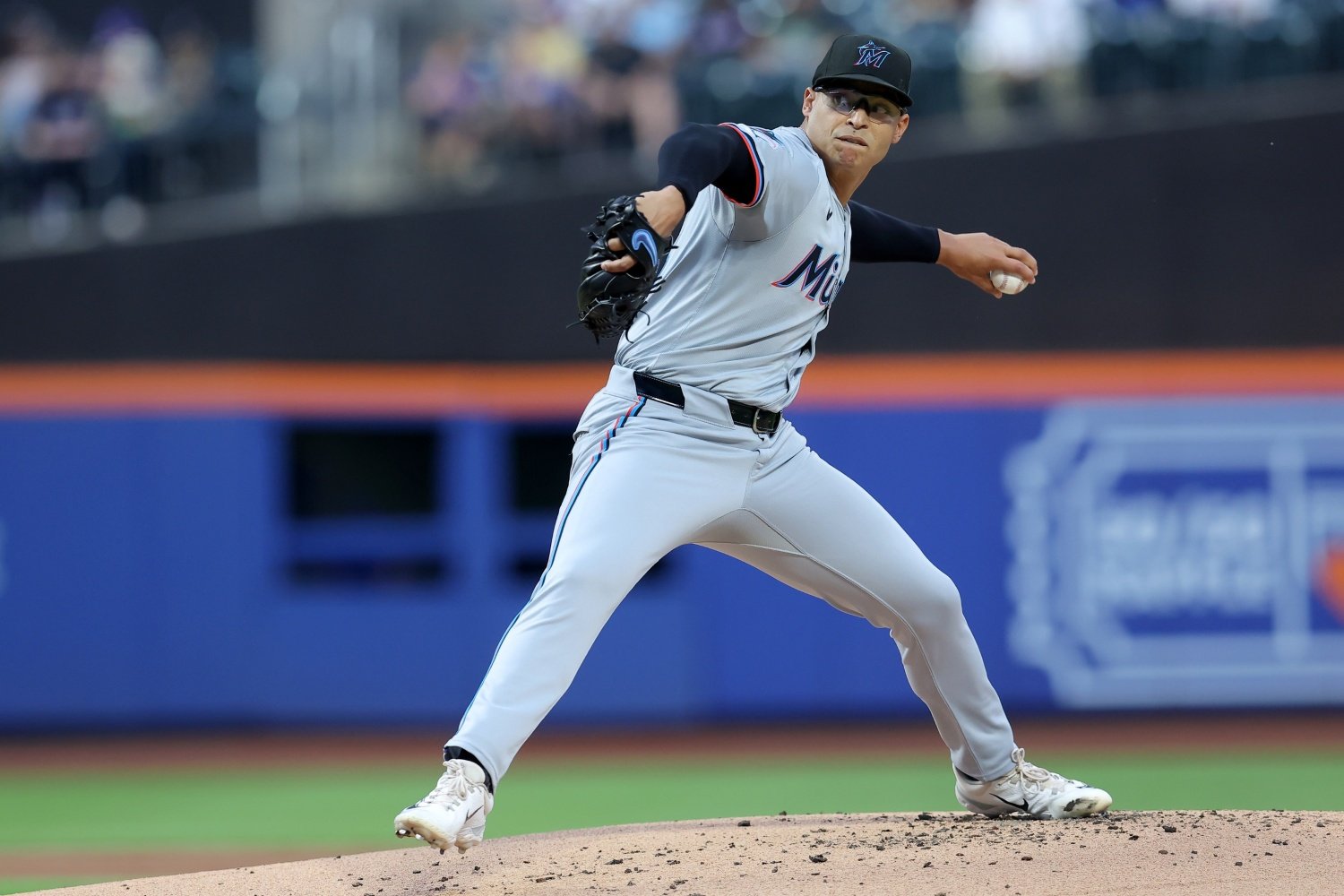 On Tuesday, Fish On First's Sean McCormick published a piece proposing three potential offseason deals involving Miami Marlins starting pitcher Jesús Luzardo. McCormick's first proposal sent the 27-year-old southpaw to the Chicago Cubs for highly-touted outfield prospect Owen Caissie and fellow left-handed pitcher Jordan Wicks. His second trade proposal sent Luzardo to the Baltimore Orioles in exchange for outfielder Heston Kjerstad, shortstop prospect Griff O'Ferrall (which, holy s***, what a name), outfield prospect Austin Overn, and right-handed pitcher Kevin Velasco. McCormick mocking Luzardo to the Cubs and Orioles makes oodles of sense. Chicago has been linked to the former third-round pick extensively the past week, an expression of their desire to acquire a frontline arm after fortifying their rotation depth by signing veteran Matthew Boyd to a two-year, $29 million contract earlier this month. Baltimore just signed NPB legend starting pitcher Tomoyuki Sugano to a one-year, $13-million deal. However, last season's ace Corbin Burnes is expected to sign with either the Toronto Blue Jays or San Francisco Giants this winter, leaving a 128 ERA+ over 194 1/3 innings-pitched-sized hole in their rotation. Adding Luzardo to a front-of-rotation mix of Zach Eflin and Grayson Rodriguez would be a savvy move by O's general manager Mike Elias. Again, McCormick's initial two mock trade proposals are sound and rooted in logic. Chicago and Baltimore are contending teams with money and prospects to spend. Evidently, Luzardo will likely end up with one of those two teams, the New York Yankees or Los Angeles Dodgers, right? Right?! Remember how I noted McCormick concocted three Luzardo trade proposals? Interestingly, the third team wasn't the Yankees, Dodgers, or David Stearns's new-look New York Mets. The third team was, in fact, your Minnesota Twins. A shock to the system of those residing in Twins Territory or admiring it from afar, crowds instantly push back against McCormick's notion. "They can't do that!" proclaim fans from Warroad to Lanesboro and beyond. "They'd be lucky to sign Spencer Turnbull after trading away half their starting infield," quips the most intelligent, well-adjusted individual in the Upper Midwest, as they disparage those who dream of a better future for the team they love. Well, the Twins could reasonably acquire Luzardo. The Cubs' deal for him, after all, appears to be dead. First, however, it should be noted that McCormick's mock trade sending Luzardo to Minnesota looks like this: Minnesota receives: Left-handed starting pitcher Jesús Luzardo, left-handed reliever Andrew Nardi Miami receives: Infield prospect Luke Keaschall, right-handed pitching prospect CJ Culpepper, Minnesota's Competitive Balance Round A Draft Pick In this hypothetical trade, the Twins would acquire a frontline starting pitcher at the cost of their third- (Keaschall) and 11th (Culpepper)-ranked prospects and a Competitive Balance Round A draft pick that figures to be in the mid-30s somewhere, overall. Admittedly, this is a hefty package for the front office to surrender. Still, if Minnesota were to acquire a healthy Luzardo who performed like the 2023 version of himself (131 ERA+ over 178 2/3 innings pitched), the price would be well worth it. When discussing any potential trades the Twins could be involved with this offseason, one must bring up the most significant hurdle the front office faces: strict owner-imposed spending restrictions. Ownership has set the 2025 payroll around $130 million, similar to last season. The organization's current payroll is hovering around $142 million, meaning they need to shed around $12 million to appease the spending restrictions placed on them. The front office will likely meet these requests by parting ways with veterans Christian Vázquez ($10 million) and Chris Paddack ($7.5 million). If Minnesota can successfully convince other teams to take on these players' entire contracts, that would give them roughly $5.5 million to play with. Luzardo ($8.6 million) and Nardi ($800,000) will make roughly $9.4 million next season. That being the case, the Twins would need to shed over $3 million from their books to make this trade plausible. This is where super-utility player Willi Castro comes into the equation. Minnesota could trade away Castro's $6.8-million 2025 salary, providing them the salary necessary to acquire Luzardo and Nardi and $2.9 million left to spend on a right-handed hitting corner outfielder or part-time first baseman. Neither Vázquez, Paddack, nor Castro would be traded to Miami in this hypothetical scenario. The Marlins are a rebuilding franchise that needs more young, controllable talent than veterans on one-year deals. That said, the Twins could recoup some of the prospect capital lost in the Luzardo/Nardi deal by shipping away the three veterans, with much of the value recouped by a Castro trade. Acquiring Luzardo and pairing him with current frontline starting trio Pablo López, Joe Ryan, and Bailey Ober would provide the Twins with one of MLB's most formidable and deepest starting rotations. Nardi could also step in as the team's primary left-handed starting reliever, meaning fellow left-handed relievers Kody Funderburk, Brent Headrick, and Jovani Moran could begin the season as depth options at Triple-A rather than being overstretched at the major-league level early in the season. They'd have a complete and very impressive pitching staff, and they'd still have Royce Lewis, Brooks Lee, Edouard Julien, José Miranda, and the rest of their core of young position players around Carlos Correa and Byron Buxton. Again, the prospect capital given up would be significant, and the front office would need to participate in salary gymnastics to make this deal plausible. Still, dipping into their prospect capital to acquire a frontline starting pitcher who could propel them into a World Series contender would be a shrewd challenge move by a front office hampered by significant spending restrictions.
- 86 comments
-
- 7
-

-
-
- jesus luzardo
- luke keaschall
- (and 1 more)
-
The salary-strapped front office could pull off a trade for the star Miami Marlins southpaw. Here's how. Image courtesy of © Brad Penner-Imagn Images On Tuesday, Fish On First's Sean McCormick published a piece proposing three potential offseason deals involving Miami Marlins starting pitcher Jesús Luzardo. McCormick's first proposal sent the 27-year-old southpaw to the Chicago Cubs for highly-touted outfield prospect Owen Caissie and fellow left-handed pitcher Jordan Wicks. His second trade proposal sent Luzardo to the Baltimore Orioles in exchange for outfielder Heston Kjerstad, shortstop prospect Griff O'Ferrall (which, holy s***, what a name), outfield prospect Austin Overn, and right-handed pitcher Kevin Velasco. McCormick mocking Luzardo to the Cubs and Orioles makes oodles of sense. Chicago has been linked to the former third-round pick extensively the past week, an expression of their desire to acquire a frontline arm after fortifying their rotation depth by signing veteran Matthew Boyd to a two-year, $29 million contract earlier this month. Baltimore just signed NPB legend starting pitcher Tomoyuki Sugano to a one-year, $13-million deal. However, last season's ace Corbin Burnes is expected to sign with either the Toronto Blue Jays or San Francisco Giants this winter, leaving a 128 ERA+ over 194 1/3 innings-pitched-sized hole in their rotation. Adding Luzardo to a front-of-rotation mix of Zach Eflin and Grayson Rodriguez would be a savvy move by O's general manager Mike Elias. Again, McCormick's initial two mock trade proposals are sound and rooted in logic. Chicago and Baltimore are contending teams with money and prospects to spend. Evidently, Luzardo will likely end up with one of those two teams, the New York Yankees or Los Angeles Dodgers, right? Right?! Remember how I noted McCormick concocted three Luzardo trade proposals? Interestingly, the third team wasn't the Yankees, Dodgers, or David Stearns's new-look New York Mets. The third team was, in fact, your Minnesota Twins. A shock to the system of those residing in Twins Territory or admiring it from afar, crowds instantly push back against McCormick's notion. "They can't do that!" proclaim fans from Warroad to Lanesboro and beyond. "They'd be lucky to sign Spencer Turnbull after trading away half their starting infield," quips the most intelligent, well-adjusted individual in the Upper Midwest, as they disparage those who dream of a better future for the team they love. Well, the Twins could reasonably acquire Luzardo. The Cubs' deal for him, after all, appears to be dead. First, however, it should be noted that McCormick's mock trade sending Luzardo to Minnesota looks like this: Minnesota receives: Left-handed starting pitcher Jesús Luzardo, left-handed reliever Andrew Nardi Miami receives: Infield prospect Luke Keaschall, right-handed pitching prospect CJ Culpepper, Minnesota's Competitive Balance Round A Draft Pick In this hypothetical trade, the Twins would acquire a frontline starting pitcher at the cost of their third- (Keaschall) and 11th (Culpepper)-ranked prospects and a Competitive Balance Round A draft pick that figures to be in the mid-30s somewhere, overall. Admittedly, this is a hefty package for the front office to surrender. Still, if Minnesota were to acquire a healthy Luzardo who performed like the 2023 version of himself (131 ERA+ over 178 2/3 innings pitched), the price would be well worth it. When discussing any potential trades the Twins could be involved with this offseason, one must bring up the most significant hurdle the front office faces: strict owner-imposed spending restrictions. Ownership has set the 2025 payroll around $130 million, similar to last season. The organization's current payroll is hovering around $142 million, meaning they need to shed around $12 million to appease the spending restrictions placed on them. The front office will likely meet these requests by parting ways with veterans Christian Vázquez ($10 million) and Chris Paddack ($7.5 million). If Minnesota can successfully convince other teams to take on these players' entire contracts, that would give them roughly $5.5 million to play with. Luzardo ($8.6 million) and Nardi ($800,000) will make roughly $9.4 million next season. That being the case, the Twins would need to shed over $3 million from their books to make this trade plausible. This is where super-utility player Willi Castro comes into the equation. Minnesota could trade away Castro's $6.8-million 2025 salary, providing them the salary necessary to acquire Luzardo and Nardi and $2.9 million left to spend on a right-handed hitting corner outfielder or part-time first baseman. Neither Vázquez, Paddack, nor Castro would be traded to Miami in this hypothetical scenario. The Marlins are a rebuilding franchise that needs more young, controllable talent than veterans on one-year deals. That said, the Twins could recoup some of the prospect capital lost in the Luzardo/Nardi deal by shipping away the three veterans, with much of the value recouped by a Castro trade. Acquiring Luzardo and pairing him with current frontline starting trio Pablo López, Joe Ryan, and Bailey Ober would provide the Twins with one of MLB's most formidable and deepest starting rotations. Nardi could also step in as the team's primary left-handed starting reliever, meaning fellow left-handed relievers Kody Funderburk, Brent Headrick, and Jovani Moran could begin the season as depth options at Triple-A rather than being overstretched at the major-league level early in the season. They'd have a complete and very impressive pitching staff, and they'd still have Royce Lewis, Brooks Lee, Edouard Julien, José Miranda, and the rest of their core of young position players around Carlos Correa and Byron Buxton. Again, the prospect capital given up would be significant, and the front office would need to participate in salary gymnastics to make this deal plausible. Still, dipping into their prospect capital to acquire a frontline starting pitcher who could propel them into a World Series contender would be a shrewd challenge move by a front office hampered by significant spending restrictions. View full article
- 86 replies
-
- 1
-
-
- jesus luzardo
- luke keaschall
- (and 1 more)
-
The Twins must free up money and acquire a serviceable left-handed reliever. I must stop being Ahab to Brennan Bernardino's Moby Dick. This potential creative challenge trade could achieve all three things. Image courtesy of © Nick Wosika-Imagn Images One thing stands true as Twins Territory delves deep into the holiday season: The front office has no money to play with. This unfortunate reality will continually be brought to the front of the minds of those who follow the Twins, as players like Blake Snell (who would have been an immaculate addition to Minnesota's rotation) sign for $36.4 million per year with the Dodgers. However, not all is bleak, and there are plenty of ways the organization can improve on the margins as they attempt to return to the postseason in 2025. If the Twins are to make those improvements, however, they will need to shed payroll. While crucial cogs of the Twins' ability to succeed next season (Pablo López, Willi Castro, or Ryan Jeffers) could be offloaded to alleviate ownership-imposed salary restrictions, the front office is more likely to part ways with their two fungible, expensive veterans to achieve that goal: Chris Paddack or Christian Vázquez. Here is what the two auxiliary players are due next season: Paddack - $7.5 million Vázquez - $10 million While parting ways with Vázquez and his $10 million obligation would provide the front office significant wiggle room, the organization's catching depth is alarmingly thin beyond him and Jeffers, meaning the 34-year-old veteran backstop will likely begin his 11th season in MLB with the Twins. That being the case, Minnesota's most plausible method of achieving payroll flexibility is offloading Paddack's contract. Despite suffering multiple severe arm injuries that have limited him to appearing in just 25 games for the Twins the prior three seasons, Paddack (and his cheap price tag for non-salary-restricted teams) should draw significant interest on the trade market, especially after witnessing not-too-dissimilar pitchers Frankie Montas (two years, $34 million) and Matthew Boyd (two years, $29 million) receive contracts worth nearly twice what Paddack will earn next season. Various teams like the Milwaukee Brewers and Oakland, er, Sacramento A's could be viable landing spots for "The Sherriff." However, one potential partner could offer a package that would benefit the Twins in multiple fashions: the Boston Red Sox. According to FanGraphs, Boston's starting rotation is projected with the following five arms: Tanner Houck Brayan Bello Kutter Crawford Richard Fitts Cooper Criswell Veterans Lucas Giolito and Garrett Whitlock are recovering from Tommy John surgery (Whitlock received the internal brace) and aren't expected to be ready to rejoin the team by Opening Day. Like Minnesota, the Red Sox's starting rotation is top-heavy, headlined by intriguing arms in Houck, Bello, and Crawford. Then, uncertainty arises. Fitts and Criswell are viable back-end rotation arms, but (like Simeon Woods Richardson, David Festa, and Zebby Matthews) a postseason-hopeful team would prefer to enter the season with them as the first line of defense at Triple A, rather than penciled in as the fourth and fifth starters. Boston has been linked to frontline arms Corbin Burnes and Max Fried this offseason. Still, Chief Baseball Officer Craig Breslow would be wise to add multiple veteran arms, and Paddack would fit the bill. Despite currently possessing a shaky rotation, Boston's bullpen is a bona fide strength, headlined by high-leverage arms Liam Hendriks, Justin Slaten, and the recently signed Aroldis Chapman. The acquisition of Chapman makes fellow Sox lefty reliever Brennan Bernardino expendable, and Twins decision-makers should target him as the return for Paddack. Bernardino, 32, netted a 4.06 ERA, 4.15 FIP, and 106 ERA+ over 51 innings pitched (IP) with Boston last season. The Cal State Dominguez Hills product also posted a 56-to-22 strikeout-to-walk ratio. ZW5QbnFfWGw0TUFRPT1fQVFnRFVsUUFCd1VBWGxFRFVRQUFBUTRFQUZsVFVnVUFWMVJYQkZBRVZRSldBRkJl.mp4 Bernardino's numbers don't pop off the page at first glance. However, what makes the 32-year-old southpaw intriguing is that he is effective against batters of both handednesses. Here are his 2024 splits: vs. LHB: .234/.291/.430 opponent slash line, 29 IP, 118 batters faced, 25 hits, five home runs, 17 earned runs, seven walks, 33 strikeouts vs. RHB: .284/.407/.375 opponent slash line, 22 IP, 108 BF, 25 hits, one home run, six earned runs, 15 walks, 23 strikeouts Bernardino is an east-west pitcher who utilizes his sinker and cutter against hitters on either side. Last season, he used his slider only 7% of the time. That said, the slider-enamored Twins pitching development staff would likely attempt to fortify that pitch and make it a more prominent element of his repertoire. Minnesota doesn't often pursue pitchers who rely on a sinker-cutter duo. Still, the front office pursued Justin Topa (a groundball-reliant reliever) last offseason, meaning they could be bucking the trend of reliever archetypes they value. Bernardino would immediately step in as the team's best left-handed reliever, meaning younger left-handed relievers like Kody Funderburk, Brent Headrick, and Jovani Morán (if healthy) could begin the 2025 season at Triple-A. S3d2WTRfWGw0TUFRPT1fVXdWVlZWMENBd3NBRDFRS1Z3QUFDUWNFQUZnSFVsZ0FCZ0ZUQmdjQlZBSlFCUU1I.mp4 Enhancing his attractiveness for the Twins, Bernardino will earn only $800,000 next season. He's under team control until the end of the 2029 MLB season and a minor-league option. Sending Paddack and his $7.5 million price tag to Boston would free up roughly $6.7 million in salary. Minnesota could use that money to pursue a right-handed hitting outfield option like Tommy Pham or a power-hitting first base/corner infielder in Patrick Wisdom. Swapping Paddack for Bernardino and (more importantly) notable salary relief would benefit the Twins in various ways and would be a wise creative challenge trade. View full article
-
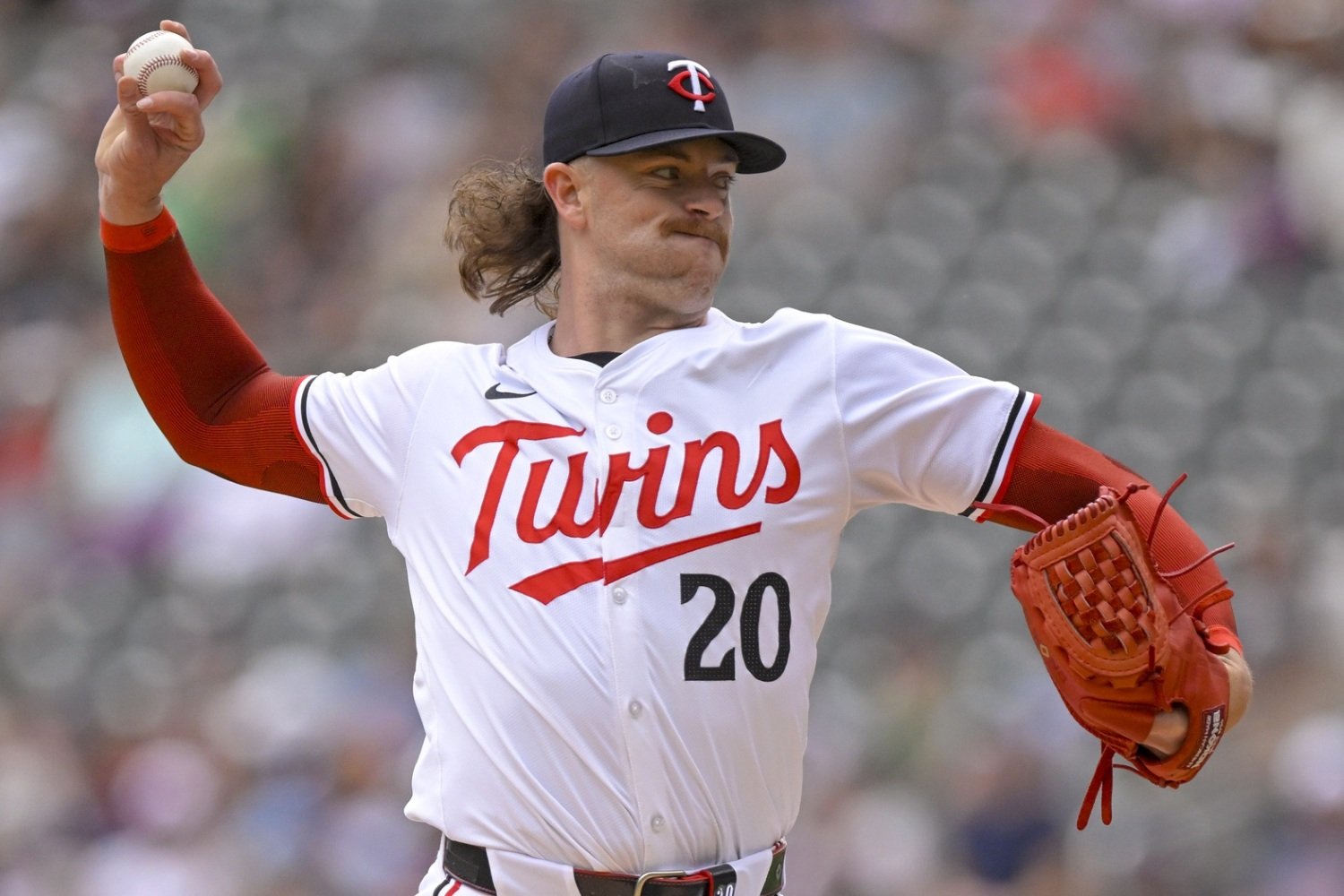 One thing stands true as Twins Territory delves deep into the holiday season: The front office has no money to play with. This unfortunate reality will continually be brought to the front of the minds of those who follow the Twins, as players like Blake Snell (who would have been an immaculate addition to Minnesota's rotation) sign for $36.4 million per year with the Dodgers. However, not all is bleak, and there are plenty of ways the organization can improve on the margins as they attempt to return to the postseason in 2025. If the Twins are to make those improvements, however, they will need to shed payroll. While crucial cogs of the Twins' ability to succeed next season (Pablo López, Willi Castro, or Ryan Jeffers) could be offloaded to alleviate ownership-imposed salary restrictions, the front office is more likely to part ways with their two fungible, expensive veterans to achieve that goal: Chris Paddack or Christian Vázquez. Here is what the two auxiliary players are due next season: Paddack - $7.5 million Vázquez - $10 million While parting ways with Vázquez and his $10 million obligation would provide the front office significant wiggle room, the organization's catching depth is alarmingly thin beyond him and Jeffers, meaning the 34-year-old veteran backstop will likely begin his 11th season in MLB with the Twins. That being the case, Minnesota's most plausible method of achieving payroll flexibility is offloading Paddack's contract. Despite suffering multiple severe arm injuries that have limited him to appearing in just 25 games for the Twins the prior three seasons, Paddack (and his cheap price tag for non-salary-restricted teams) should draw significant interest on the trade market, especially after witnessing not-too-dissimilar pitchers Frankie Montas (two years, $34 million) and Matthew Boyd (two years, $29 million) receive contracts worth nearly twice what Paddack will earn next season. Various teams like the Milwaukee Brewers and Oakland, er, Sacramento A's could be viable landing spots for "The Sherriff." However, one potential partner could offer a package that would benefit the Twins in multiple fashions: the Boston Red Sox. According to FanGraphs, Boston's starting rotation is projected with the following five arms: Tanner Houck Brayan Bello Kutter Crawford Richard Fitts Cooper Criswell Veterans Lucas Giolito and Garrett Whitlock are recovering from Tommy John surgery (Whitlock received the internal brace) and aren't expected to be ready to rejoin the team by Opening Day. Like Minnesota, the Red Sox's starting rotation is top-heavy, headlined by intriguing arms in Houck, Bello, and Crawford. Then, uncertainty arises. Fitts and Criswell are viable back-end rotation arms, but (like Simeon Woods Richardson, David Festa, and Zebby Matthews) a postseason-hopeful team would prefer to enter the season with them as the first line of defense at Triple A, rather than penciled in as the fourth and fifth starters. Boston has been linked to frontline arms Corbin Burnes and Max Fried this offseason. Still, Chief Baseball Officer Craig Breslow would be wise to add multiple veteran arms, and Paddack would fit the bill. Despite currently possessing a shaky rotation, Boston's bullpen is a bona fide strength, headlined by high-leverage arms Liam Hendriks, Justin Slaten, and the recently signed Aroldis Chapman. The acquisition of Chapman makes fellow Sox lefty reliever Brennan Bernardino expendable, and Twins decision-makers should target him as the return for Paddack. Bernardino, 32, netted a 4.06 ERA, 4.15 FIP, and 106 ERA+ over 51 innings pitched (IP) with Boston last season. The Cal State Dominguez Hills product also posted a 56-to-22 strikeout-to-walk ratio. ZW5QbnFfWGw0TUFRPT1fQVFnRFVsUUFCd1VBWGxFRFVRQUFBUTRFQUZsVFVnVUFWMVJYQkZBRVZRSldBRkJl.mp4 Bernardino's numbers don't pop off the page at first glance. However, what makes the 32-year-old southpaw intriguing is that he is effective against batters of both handednesses. Here are his 2024 splits: vs. LHB: .234/.291/.430 opponent slash line, 29 IP, 118 batters faced, 25 hits, five home runs, 17 earned runs, seven walks, 33 strikeouts vs. RHB: .284/.407/.375 opponent slash line, 22 IP, 108 BF, 25 hits, one home run, six earned runs, 15 walks, 23 strikeouts Bernardino is an east-west pitcher who utilizes his sinker and cutter against hitters on either side. Last season, he used his slider only 7% of the time. That said, the slider-enamored Twins pitching development staff would likely attempt to fortify that pitch and make it a more prominent element of his repertoire. Minnesota doesn't often pursue pitchers who rely on a sinker-cutter duo. Still, the front office pursued Justin Topa (a groundball-reliant reliever) last offseason, meaning they could be bucking the trend of reliever archetypes they value. Bernardino would immediately step in as the team's best left-handed reliever, meaning younger left-handed relievers like Kody Funderburk, Brent Headrick, and Jovani Morán (if healthy) could begin the 2025 season at Triple-A. S3d2WTRfWGw0TUFRPT1fVXdWVlZWMENBd3NBRDFRS1Z3QUFDUWNFQUZnSFVsZ0FCZ0ZUQmdjQlZBSlFCUU1I.mp4 Enhancing his attractiveness for the Twins, Bernardino will earn only $800,000 next season. He's under team control until the end of the 2029 MLB season and a minor-league option. Sending Paddack and his $7.5 million price tag to Boston would free up roughly $6.7 million in salary. Minnesota could use that money to pursue a right-handed hitting outfield option like Tommy Pham or a power-hitting first base/corner infielder in Patrick Wisdom. Swapping Paddack for Bernardino and (more importantly) notable salary relief would benefit the Twins in various ways and would be a wise creative challenge trade.
 -
Now is the Time for Twins to Convert Griffin Jax Into a Starter
Cody Schoenmann posted an article in Twins
 Late on Friday, the New York Mets signed former New York Yankees closer Clay Holmes to a three-year, $38 million contract. Although Holmes's move from the Bronx to Flushing will be the headline, a more captivating and consequential change of location is hidden under the surface: The former All-Star closer will convert into a starter. Holmes converting into a starter (which he also was in the Pittsburgh Pirates' farm system) is a surprise, considering he is 31 years old and has found significant success as a reliever. However, his decision to return to the rotation is part of a broader trend proliferating in MLB. In the past handful of seasons, the following erstwhile high-leverage relievers successfully converted into starting pitchers: Zack Littell, Tampa Bay Rays Michael King, New York Yankees Seth Lugo, San Diego Padres Jordan Hicks, San Francisco Giants Reynaldo López, Atlanta Braves Garrett Crochet, White Sox Crochet, Littell and King transitioned from reliever to starter with the teams where they were already established high-leverage relievers. On the other hand, Lugo, Hicks, and López didn't convert into starters until signing higher annual average value (AAV) contracts with new organizations in the offseason. Holmes joins the latter trio, and while this transition is much easier for pitchers to make with new organizations, the Twins find themselves in a unique spot and could follow the Rays', Yankees' and (yes) White Sox's footsteps. In the past, many who follow the Twins have speculated (and even written) that the team should consider converting star closer Jhoan Durán into a starting pitcher, which he was in the Arizona Diamondbacks and Twins minor-league systems. After enduring a disappointing 2024 campaign, the buzz surrounding Durán's potential conversion has mostly dimmed. That said, speculation has arisen with a different Twins reliever. In an interview with MLB Network Radio's Mike Ferrin earlier this offseason, Twins bench coach Jayce Tingler noted that the team is "leaving open the possibility" that Griffin Jax could move into the starting rotation. At an initial glance, this idea comes off as ludicrous. Jax has been one of the best relievers in baseball over the past three seasons, posting a 145 ERA+ over 208 2/3 innings pitched. He has also been a cog in the team's shaky bullpen structure, operating a steady force who could be entrusted when other late-inning arms like Durán, Jorge Alcalá, Caleb Thielbar, and Brock Stewart struggled or missed time due to injury. The obvious concern is that Jax rejoining the rotation could backfire, leading to a downward spiral that could negatively impact the team in various fashions. He could again struggle as a starting pitcher, as he did when he first came up, leaving a hole in the rotation and bullpen that wouldn't arise if Jax stayed a reliever. If he proved similarly ineffective, the organization would be forced to convert him back into a reliever midseason, increasing the threat of injury and newfound ineffectiveness in a role he has dominated for the better part of three seasons. To worry about such an outcome is reasonable, especially considering the 30-year-old's struggles as a starter in the past. That said, team decision-makers are operating under unique circumstances and could deem a mid-career shift for Jax worthwhile for the following reasons: Jax is a significantly better pitcher than he was in 2021 Teams with postseason aspirations need reliable, above-average relief arms like Jax to survive strenuous 162-game seasons. That said, teams with postseason aspirations also need starting pitchers who can be trusted to start playoff games, and Jax has the potential to become just that. In his sole season as a starter with the dreadful 2021 Twins, Jax generated a 6.37 ERA, 6.47 FIP, and 67 ERA+ over 14 starts and 82 innings pitched. Jax was ineffective as a starter, leading to the organization quickly turning him into a reliever in 2022. The United States Air Force Academy product held a multi-inning stretch reliever role with the team before blossoming into the elite late-inning stud we recognize today in June of that season. Since his last start in 2021, though, Jax has drastically improved his four-pitch mix, illustrated by a substantial velocity increase in his sweeper (5.5 MPH increase since 2021) and four-seam fastball (4.5 MPH increase since 2021). Jax's sweeper and fastball are elite and should serve as an effective one-two punch as a starter, even though a moderate velocity decrease should be expected as he will be required to pace himself through more innings pitched. His secondary pitches (changeup, sinker, and curve) have also blossomed into effective change-of-pace options, proving that he possesses the auxiliary pitches necessary to permit the pitch sequencing flexibility necessary as he faces lineups two or three times. With the help of Driveline and the Twins' pitching development staff, Jax has become an elite, rubber-armed hurler whose pitch mix is one of baseball's best and most eclectic. Given the state of the franchise, a move to the rotation could benefit both parties. Ownership-induced salary restrictions increase the likelihood of Jax converting back into a starter. At first glance, the Twins rotation has three starting pitchers one would feel comfortable entering a 162-game season with: Pablo López, Joe Ryan, and Bailey Ober. These three above-average arms are rightfully inscribed in the team's five-pitcher mix to begin the 2025 season. That said, confidence quickly begins to waver at the bottom of the rotation depth chart. Simeon Woods Richardson, David Festa, and Zebby Matthews showcased the skills necessary to become long-term rotation pieces. Still, with concerns over the efficacy of their primary and secondary pitches and how they could sustain themselves over an entire season, there is merit for skepticism surrounding whether they should be a part of the rotation out of spring training. The key thing is this: Rather than trying to find value by signing cheap, deeply flawed pitchers to support the back end of the rotation, a team in this position would do better to create value, which is effectively what this kind of transition does. Turning Jax from a dominant pitcher available for just 70 innings to one who might still flummox hitters if asked to throw 140 or 150 frames creates value, for free. It comes with risk, but so does spending on or trading for pitchers from outside the organization. If Jax were to join the rotation, the club would need to find an adequate replacement in the bullpen. As things stand, the relief corps will be constructed with the following eight arms: Jhoan Durán, RHP Griffin Jax, RHP Brock Stewart, RHP Jorge Alcalá, RHP Cole Sands, RHP Ronny Henriquez, RHP Michael Tonkin, RHP Kody Funderburk, LHP Louie Varland is on the outside looking in, and is presently on track to begin the season at Triple-A. Yet, if Jax were to join the rotation, Varland could take his bullpen spot. Justin Topa (who still has a minor-league option) could also function as a partial Jax replacement. Nevertheless, Minnesota would need to replace Jax in the aggregate to begin the season. The organization has viable depth, making that a plausible contingency plan. If the Twins were to do this, the hope would be a high-potential right-handed reliever like Stewart, Alcalá, Sands, Varland, or Topa could produce at a Jax-like rate, making his promotion more palatable. Given ownership-induced salary restrictions, the Twins don't have a viable path to acquiring a frontline starting pitcher this offseason. Even though he struggled as a starting pitcher three seasons ago, Jax has demonstrated significant growth, illustrating that he could blossom into a Ryan- or Ober-caliber starting pitcher. Through possessing adequate right-handed bullpen depth, the organization is well-equipped to take on his departure from the bullpen. Twins Territory needs a fresh start, and Jax could be the fresh starter to spark it.
 -
The salary-strapped Twins won't be able to acquire a frontline starter via free agency or trade this offseason. Yet, Griffin Jax could blossom into one if given the opportunity. This past Friday, the New York Mets signed former New York Yankees closer Clay Holmes to a three-year, $38 million contract. Although Holmes's move from the Bronx to Flushing will be the headline of this signing, a more captivating and consequential byline is hidden under the surface: The once-All-Star closer will convert into a starter. Holmes converting into a starter (which he also was in the Pittsburgh Pirates minor league system) is a surprise, considering he is 31 years old and has found significant success as a reliever. However, his decision to return to the rotation is part of a broader trend expanding through MLB. In the past handful of seasons, the following once-high-leverage relievers were successfully converted into starting pitchers: Zack Littell, Tampa Bay Rays Michael King, New York Yankees Seth Lugo, San Diego Padres Jordan Hicks, San Francisco Giants Reynaldo López, Atlanta Braves Littell and King transitioned from reliever to starter with the teams where they were already established high-leverage relievers. On the other hand, Lugo, Hicks, and López didn't convert into starters until signing higher average annual value (AAV) contracts with new organizations in the offseason. Holmes joins the latter, and while this transition is much easier for pitchers to make with new organizations, the Twins find themselves in a unique spot and could follow the Rays and Yankees footsteps. In the past, many who follow the Twins have speculated (and even written) that the team should consider converting star closer Jhoan Durán into a starting pitcher, which he was in the Arizona Diamondbacks and Twins minor league systems. After enduring a disappointing 2024 campaign, the buzz surrounding Durán's potential conversion has mostly dimmed. That said, speculation has arisen with a different Twins late-inning reliever. In an interview with MLB Network Radio's Mike Ferrin earlier this offseason, Twins bench coach Jayce Tingler noted that the team is "leaving open the possibility" that Griffin Jax could move into the starting rotation. At an initial glance, this idea comes off as ludicrous. Jax has been one of the best relievers in baseball over the past three seasons, posting a 145 ERA+ over 208 2/3 innings pitched. He has also been a cog in the team's shaky bullpen structure, operating a steady force who could be entrusted when other late-inning arms like Durán, Jorge Alcalá, Caleb Thielbar, and Brock Stewart struggled or missed time due to injury. The obvious concern is that Jax rejoining the rotation could backfire, leading to a downward spiral that could negatively impact the team in various fashions. He could again struggle as a starting pitcher, leaving a hole in the rotation and bullpen that wouldn't arise if Jax stayed a reliever. If he proved similarly ineffective, the organization would be forced to convert him back into a reliever midseason, increasing the threat of injury and newfound ineffectiveness in a role he has dominated for the better part of three seasons. To worry about an unideal outcome is reasonable, especially considering the 30-year-old's struggles as a starter in the past. That said, team decision-makers are operating under unique circumstances and could deem a mid-career shift for Jax worthwhile for the following reasons: Jax is a significantly better pitcher than he was in 2021 Teams with postseason aspirations need reliable, above-average relief arms like Jax to survive strenuous 162-game seasons. That said, teams with postseason aspirations also need starting pitchers who can be trusted to start playoff games, and Jax has the potential to become that. In his sole season as a starter with the dreadful 2021 Twins, Jax generated a 6.37 ERA, 6.47 FIP, and 67 ERA+ over 14 starts and 82 innings pitched. Jax was ineffective as a starter, leading to the organization quickly turning him into a reliever in 2022. The United States Air Force Academy product held a multi-inning stretch reliever role with the team before blossoming into the elite late-inning stud we recognize today in June of that season. Since his last start in 2021, Jax has drastically improved his four-pitch mix, illustrated by a substantial velocity increase in his sweeper (5.5 MPH increase since 2021) and four-seam fastball (4.5 MPH increase since 2021). Jax's sweeper and fastball are elite and should serve as an effective one-two punch as a starter, even though a moderate velocity decrease should be expected as he will be required to pace himself through more innings pitched. His secondary pitches (changeup, sinker, and curve) have also blossomed into sustainably effective change-of-pace options, illustrating he possesses the auxiliary pitches necessary to permit the pitch sequencing flexibility necessary to sustain himself as he faces lineups two or three times. With the help of Driveline and the Twins pitching development staff, Jax has become an elite rubber-armed whose pitch mix is one of baseball's best and most eclectic. Given the state of the franchise, a move to the rotation could benefit both parties. Ownership-induced salary restrictions increase the likelihood of Jax converting back into a starter. At first glance, the Twins rotation has three starting pitchers one would feel comfortable entering a 162-game season with: Pablo López, Joe Ryan, and Bailey Ober. These three above-average arms are rightfully ingrained in the team's five-pitcher to begin the 2025 season. That said, confidence quickly begins to waver. Simeon Woods Richardson, David Festa, and Zebby Matthews showcased the skills necessary to become long-term rotation pieces. Still, with concerns over the efficacy of their primary and secondary pitches and how they could sustain themselves over an entire season, there is merit for skepticism surrounding whether they should be a part of the five-pitcher rotation out of spring training. Veteran Chris Paddack is also a strong candidate to hold a rotation spot to begin the season. Still, the front office would be wise to unload his $7.5 million contract to create payroll flexibility and address more pressing areas of need. Even if the front office can trade Paddack's contract, there is no viable path for them to acquire a frontline starting pitcher this offseason. The team already has cheap, adequate depth, meaning signing a veteran arm like Cal Quantrill or Spencer Turnbull to a one-year deal in the $4-5 million range would be a blatant misuse of limited resources. Also, if the team wanted to sign a pitcher of this archetype, they ought to keep Paddack. Nevertheless, with no realistic path to acquiring an impact arm, the Twins should look inward with Jax. If Jax were to join the rotation, the club would need to find an adequate replacement in the bullpen. As things stand, the Twins 'pen will be constructed with the following eight arms: Jhoan Durán, RHP Griffin Jax, RHP Brock Stewart, RHP Jorge Alcalá, RHP Cole Sands, RHP Ronny Henriquez, RHP Michael Tonkin, RHP Kody Funderburk, LHP Louie Varland is on the outside looking in and is presently on path to begin the season at Triple-A. Yet, if Jax were to join the rotation, Varland could take his bullpen spot. Justin Topa (who still has a minor league option) could also function as a Jax replacement. Nevertheless, Minnesota would need to replace Jax in the aggregate to begin the season. The organization has viable depth, making that a plausible contingency plan. If the Twins were to do this, the hope would be a high-potential right-handed reliever like Stewart, Alcalá, Sands, Varland, or Topa could produce at a Jax-like rate, making his potential departure more palatable. Given ownership-induced salary restrictions, the Twins don't have a viable path to acquiring a frontline starting pitcher this offseason. Even though he struggled as a starting pitcher three seasons ago, Jax has demonstrated significant growth, illustrating that he could blossom into a Ryan or Ober-adjacent starting pitcher. Through possessing adequate right-handed bullpen depth, the organization is well-equipped to take on his departure from the bullpen. As Twins Territory nears a fresh start, it would be uplifting to say, "Happy New Year, Lieutenant Jax!" and look at him with a smile, knowing he got another chance to be a starter. View full article
-
Veteran Kyle Farmer signing with the Colorado Rockies leaves the Twins' infield depth sparse. Could this former divisional foe be a more cost-effective, higher-ceiling replacement? Image courtesy of © Kamil Krzaczynski-Imagn Images On Saturday, veteran infielder Kyle Farmer signed a one-year, $3.25 million deal with the Colorado Rockies. Despite managing only a lackluster 91 OPS+ over 611 plate appearances the past two seasons with Minnesota, Farmer's ability to play every infield position (yes, even first base, technically) played a vital role in the team's ability to maximize positional flexibility and plug holes when injuries to star infielders Carlos Correa and Royce Lewis arose. Rostering super utility player Willi Castro should mitigate much of the modularity lost from Farmer's departure. That said, the Twins' lack of infield depth beyond Castro is cause for concern. In theory, infielders Brooks Lee (second base, third base, shortstop), José Miranda (third base, first base), Edouard Julien (second base, first base), Austin Martin (second base), and Michael Helman (second base) should be able to replace Farmer's versatility in the aggregate. That said, injury concerns with Lee and Miranda and uncertainty surrounding whether Julien, Martin, and Helman can be consistent MLB-caliber contributors provide valid reasons for skepticism as to whether this collective of five young infielders could provide the production required for a postseason-hopeful club over a strenuous 162-game season. The Twins would be wise to scour free agency or the trade market for a viable Farmer replacement. As endlessly noted, the front office will be confined again by ownership-mandated salary restrictions, significantly limiting the available talent they could realistically pursue this offseason. Farmer replacement options like Jorge Polanco, Amed Rosario, or Paul DeJong could become available if the organization could free up $7-10 million by trading Chris Paddack or Christian Vázquez. However, if the team freed up money by parting ways with Paddack or Vázquez, that money would likely be spent on an essential transaction like re-signing veteran first baseman Carlos Santana or acquiring a back-of-the-rotation starting pitcher. That being the case, the organization's only conceivable option for replacing Farmer with an outside alternative is to explore the trade market for a more cost-controlled infield depth option. Washington Nationals infielder José Tena is an exceptionally enticing candidate. Acquired by Washington in the 2024 trade deadline deal that sent outfielder Lane Thomas to the Cleveland Guardians, Tena, 23, hit .274/.305/.363 with 43 hits, three home runs, and a 90 OPS+ over 157 plate appearances for the Nationals. The contact-skilled left-handed batter hit the ball hard during his time in the nation's capital, evidenced by a 49.2% hard-hit rate, though he also carried a 24.4% strikeout rate. He's highly aggressive, but he makes authoritative contact, and gets it in the air at a fair rate when he does so. R1pWNDlfWGw0TUFRPT1fVXdRQVZRQUJVQUlBWFFSUlZBQUFVQTRGQUFNRFVWSUFVUUVGQkZGVEJWQlZWQVFF.mp4 Tena is also a sure-handed infielder who posted 289 innings at third base and 66 1/3 at second base. Despite demonstrating positional flexibility, the young Nationals infielder struggled at times at third, indicating he may best be suited spending at second base. That said, Tena is still a viable piece around the horn, who could be mixed in at shortstop and first base in a pinch, like Farmer. The former Guardians prospect could also fill in as a long-term replacement for Lewis at third base if the franchise cornerstone talent were to suffer a significant injury that held him out for weeks or months. Despite nagging injuries not being a present concern with Tena, he presents a similar risk as Julien, Martin, and Helman. He is a relatively unknown commodity who could fizzle out and never become a consistent contributor at the major league level. Still, there is reason to believe he will perform better than Julien, Martin, and Helman next season. What makes Tena particularly intriguing is how well he hit against right-handed pitching in his debut season. Here are Tena's 2024 splits: Against left-handed pitching (LHP): .208/.208/.250, 48 plate appearances, 10 hits, zero walks, two doubles, zero home runs. Against right-handed pitching (RHP): .292/.333/.398, 120 plate appearances, 33 hits, seven walks, three doubles, three home runs. Understandably, Tena struggled against same-handed pitching. That said, he performed well against opposite-handed hurlers. This development is encouraging, especially considering that Julien and Martin (Helman didn't face a right-handed pitcher in the majors) performed at a below-average rate against right-handed pitchers last season, evidenced by their numbers below: Julien against RHP: .203/.295/.325, 268 plate appearances, 48 hits, 30 walks, eight doubles, seven home runs. Martin against RHP: .258/.313/.362, 177 plate appearances, 42 hits, 12 walks, 12 doubles, one home run. Due to their 2024 regular season struggles, Julien, Martin, and Helman should begin next season at Triple-A St. Paul. Combining this notion with the strong likelihood that Miranda and Lee will begin next season entrenched in full-time roles at first base and second base, respectively, the Twins seemingly do not have a viable replacement for Farmer on the 40-man roster. Veteran free agent options like Polanco, Rosario, and DeJong are enticing. However, their contracts will likely prove to be too expensive for the salary-restricted Twins. Despite being an unfortunate reality, the front office could still upgrade the position by acquiring a cost-effective outside successor, and the hard-hitting, contact-skilled Tena could be the ideal acquisition. View full article
-
 On Saturday, veteran infielder Kyle Farmer signed a one-year, $3.25 million deal with the Colorado Rockies. Despite managing only a lackluster 91 OPS+ over 611 plate appearances the past two seasons with Minnesota, Farmer's ability to play every infield position (yes, even first base, technically) played a vital role in the team's ability to maximize positional flexibility and plug holes when injuries to star infielders Carlos Correa and Royce Lewis arose. Rostering super utility player Willi Castro should mitigate much of the modularity lost from Farmer's departure. That said, the Twins' lack of infield depth beyond Castro is cause for concern. In theory, infielders Brooks Lee (second base, third base, shortstop), José Miranda (third base, first base), Edouard Julien (second base, first base), Austin Martin (second base), and Michael Helman (second base) should be able to replace Farmer's versatility in the aggregate. That said, injury concerns with Lee and Miranda and uncertainty surrounding whether Julien, Martin, and Helman can be consistent MLB-caliber contributors provide valid reasons for skepticism as to whether this collective of five young infielders could provide the production required for a postseason-hopeful club over a strenuous 162-game season. The Twins would be wise to scour free agency or the trade market for a viable Farmer replacement. As endlessly noted, the front office will be confined again by ownership-mandated salary restrictions, significantly limiting the available talent they could realistically pursue this offseason. Farmer replacement options like Jorge Polanco, Amed Rosario, or Paul DeJong could become available if the organization could free up $7-10 million by trading Chris Paddack or Christian Vázquez. However, if the team freed up money by parting ways with Paddack or Vázquez, that money would likely be spent on an essential transaction like re-signing veteran first baseman Carlos Santana or acquiring a back-of-the-rotation starting pitcher. That being the case, the organization's only conceivable option for replacing Farmer with an outside alternative is to explore the trade market for a more cost-controlled infield depth option. Washington Nationals infielder José Tena is an exceptionally enticing candidate. Acquired by Washington in the 2024 trade deadline deal that sent outfielder Lane Thomas to the Cleveland Guardians, Tena, 23, hit .274/.305/.363 with 43 hits, three home runs, and a 90 OPS+ over 157 plate appearances for the Nationals. The contact-skilled left-handed batter hit the ball hard during his time in the nation's capital, evidenced by a 49.2% hard-hit rate, though he also carried a 24.4% strikeout rate. He's highly aggressive, but he makes authoritative contact, and gets it in the air at a fair rate when he does so. R1pWNDlfWGw0TUFRPT1fVXdRQVZRQUJVQUlBWFFSUlZBQUFVQTRGQUFNRFVWSUFVUUVGQkZGVEJWQlZWQVFF.mp4 Tena is also a sure-handed infielder who posted 289 innings at third base and 66 1/3 at second base. Despite demonstrating positional flexibility, the young Nationals infielder struggled at times at third, indicating he may best be suited spending at second base. That said, Tena is still a viable piece around the horn, who could be mixed in at shortstop and first base in a pinch, like Farmer. The former Guardians prospect could also fill in as a long-term replacement for Lewis at third base if the franchise cornerstone talent were to suffer a significant injury that held him out for weeks or months. Despite nagging injuries not being a present concern with Tena, he presents a similar risk as Julien, Martin, and Helman. He is a relatively unknown commodity who could fizzle out and never become a consistent contributor at the major league level. Still, there is reason to believe he will perform better than Julien, Martin, and Helman next season. What makes Tena particularly intriguing is how well he hit against right-handed pitching in his debut season. Here are Tena's 2024 splits: Against left-handed pitching (LHP): .208/.208/.250, 48 plate appearances, 10 hits, zero walks, two doubles, zero home runs. Against right-handed pitching (RHP): .292/.333/.398, 120 plate appearances, 33 hits, seven walks, three doubles, three home runs. Understandably, Tena struggled against same-handed pitching. That said, he performed well against opposite-handed hurlers. This development is encouraging, especially considering that Julien and Martin (Helman didn't face a right-handed pitcher in the majors) performed at a below-average rate against right-handed pitchers last season, evidenced by their numbers below: Julien against RHP: .203/.295/.325, 268 plate appearances, 48 hits, 30 walks, eight doubles, seven home runs. Martin against RHP: .258/.313/.362, 177 plate appearances, 42 hits, 12 walks, 12 doubles, one home run. Due to their 2024 regular season struggles, Julien, Martin, and Helman should begin next season at Triple-A St. Paul. Combining this notion with the strong likelihood that Miranda and Lee will begin next season entrenched in full-time roles at first base and second base, respectively, the Twins seemingly do not have a viable replacement for Farmer on the 40-man roster. Veteran free agent options like Polanco, Rosario, and DeJong are enticing. However, their contracts will likely prove to be too expensive for the salary-restricted Twins. Despite being an unfortunate reality, the front office could still upgrade the position by acquiring a cost-effective outside successor, and the hard-hitting, contact-skilled Tena could be the ideal acquisition.
- 17 comments
-
- 3
-
-
-
- jose tena
- kyle farmer
- (and 3 more)
-
First base is arguably the Twins' greatest need this offseason. Though re-signing reliable veteran Carlos Santana would be a sound move, the organization could be incentivized to acquire this younger, more impactful option. Image courtesy of © Nathan Ray Seebeck-Imagn Images Keep your wits about you—a vital message to latch on to in dark times. We have been through this before and persevered, and we will survive again, as long as we organize, strategize, and lean on those we can unwaveringly trust. I am, of course, talking about enduring yet another offseason of mind-numbing inactivity from the Twins front office. Significant salary restrictions will effectively tie Twins decision-makers' hands behind their backs, making the proposition of a needle-moving offseason acquisition a mere fantasy, unless all or a part of the salaries for veterans like Christian Vázquez ($10 million) or Chris Paddack's ($7.5 million) are shed. The threat of this offseason becoming a dreadfully dull experience for Twins Territory is scarily plausible. However, that doesn't mean dormancy is a certainty. It would be malpractice to sulk in sorrow, write this offseason off as a wash, and not spend time envisioning who would be a worthwhile addition for the playoff-hopeful Twins. So, let's take an in-depth look at the Twins' greatest area of need this offseason: First base. The unexpected retirement of former top prospect Alex Kirilloff and the expected departure of surehanded veteran first baseman Carlos Santana has left the position bare. José Miranda (who has played 698 career innings at the position) is projected to become the primary starter, with Edouard Julien (19 1/3 innings) being his backup and potential platoon partner. Vázquez could also play the position in an emergency, but almost all of his value resides in his defensive prowess behind the plate. In theory, Miranda and Julien could work well in a platoon partnership at the position, but it would be a big risk with a smallish reward to expect that. Taking a flier on a cheap, veteran first base option like Joey Meneses, J.D. Davis, or Jared Walsh could make sense, but the Twins value flexibility and are unlikely to lock themselves into this player archetype unless they are willing to come in on a minor-league deal. They could pursue a player who can play first base alongside other positions like Brandon Drury, Mark Canha, or Justin Turner. However, it would be unwise for the salary-strapped organization to spend what minimal resources they have on a veteran who could realistically produce at a below-replacement-level rate. That said, the Twins can choose between two paths: They can roll with Miranda and Julien and hope both stay healthy and produce at a slightly above-average rate, or acquire a higher-caliber everyday starter at the position. They would be wise to pick the latter. At first glance, re-signing Santana would be a savvy choice. He displayed Gold Glove defense at the position while posting an admirable 114 wRC+ over 594 plate appearances. However, he might be outside Minnesota's price range: The 39-year-old veteran should have a robust market, and if a team like the Chicago Cubs or New York Mets (who are set to lose Pete Alonso) decides to offer a multi-year deal, the Twins could quickly become a non-factor in the Santana sweepstakes. Although Twins ownership's frugal mode of operation likely negates any opportunity for a reunion with Santana, that doesn't mean the Twins are entirely out of the first base market. While speaking with media last week at the General Managers Meetings in San Antonio, Twins President of Baseball Operations Derek Falvey noted that the team will have to "be creative if (they) want to make a lot of tweaks to the group." Like leaves falling from paper birch trees, the buzzword "creative" has become a fall tradition in the land of 10,000 lakes. Interestingly, there is a veteran impact first baseman the organization could use creative means to acquire: Yandy Díaz. Díaz, 33, spent his first two seasons in MLB with Cleveland before being sent to the Tampa Bay Rays before the 2019 season. Since joining the Rays, Díaz has hit .289/.374/.440 with 707 hits, 74 home runs, and a 130 OPS+. The high-average right-handed hitting veteran shifted between third base and first base his first four seasons with the Rays before settling down at first, netting a combined 1,942 2/3 innings played at the position the last two seasons. His best season came in 2023 when he posted a 157 OPS+ while earning an All-Star bid and finishing sixth in AL MVP voting. Díaz came down to earth last season. However, his performance was still commendable, slashing .281/.341/.414 with 158 hits, 14 home runs, and a 116 OPS+. The well-respected veteran is still among the most formidable bats in "the show", and would be a prized acquisition for the Twins. Díaz is slated to make $10 million next season, with a $12-million club option in 2024. At face value, this price tag is far too hefty for the parsimonious Twins. However, this is where the front office's knack for creativity comes into play. dzc0TE5fWGw0TUFRPT1fVlFCUUJnSlJWd1lBQzFBQUJRQUFBQUlIQUFNTlVsQUFBVmRRQ0ZjR0NWQmNWbFpT.mp4 The two impact trades the front office made last season (Jorge Polanco to the Seattle Mariners for Anthony DeSclafani, Justin Topa, Gabriel Gonzalez, and Darren Bowen; and Noah Miller to the Los Angeles Dodgers for Manuel Margot and Rayne Doncon) involved the partner team eating money. The Mariners (and San Francisco Giants) took on $8 million of DeSclafani's $12 million deal, and the Dodgers ate $6-$8 million of Margot's contract. Evidently, if the Twins acquire a veteran player under their current mode of salary-restricted operation, the partnering front office will have to take on most of the returning player's salary. Hypothetically, the Twins could acquire Díaz and his $10 million from Tampa, with the Rays taking on roughly $6 million of his deal. In exchange, Minnesota would need to part ways with a more highly-regarded prospect for the similarly frugal Rays to take on dead money. Although parting ways with a highly regarded prospect isn't an easy pill to swallow, the reward could be netting a season of one of the best-hitting first basemen in baseball. Also, if a new ownership group purchased the franchise before next season, the team could potentially exercise his $12-million club option for 2026. The long-time Rays corner infielder is a contact-skilled plus bat who would be a welcome insertion into the Twins' high-variance lineup. Díaz thrives against left-handed pitching (.923 OPS over 139 plate appearances last season) while holding his own against same-handed hurlers (.706 OPS over 482 PA). He could become the team's everyday first baseman, allowing Miranda to take on the role he did this past season of shifting between third base, first base, and designated hitter. Díaz joining the Twins also means the organization wouldn't have to rely on the inconsistent Julien, meaning the team could use him in a role that promotes flexibility or stash him at Triple-A as MLB-caliber depth. Despite being salary-restricted, the Twins front office should be able to create enough monetary flexibility to acquire at least one impact bat, and Díaz should be at the top of their wish list. View full article
- 19 replies
-
- 1
-
-
- yandy díaz
- jose miranda
- (and 1 more)
-
How the Twins Could Creatively Trade For This Star First Baseman
Cody Schoenmann posted an article in Twins
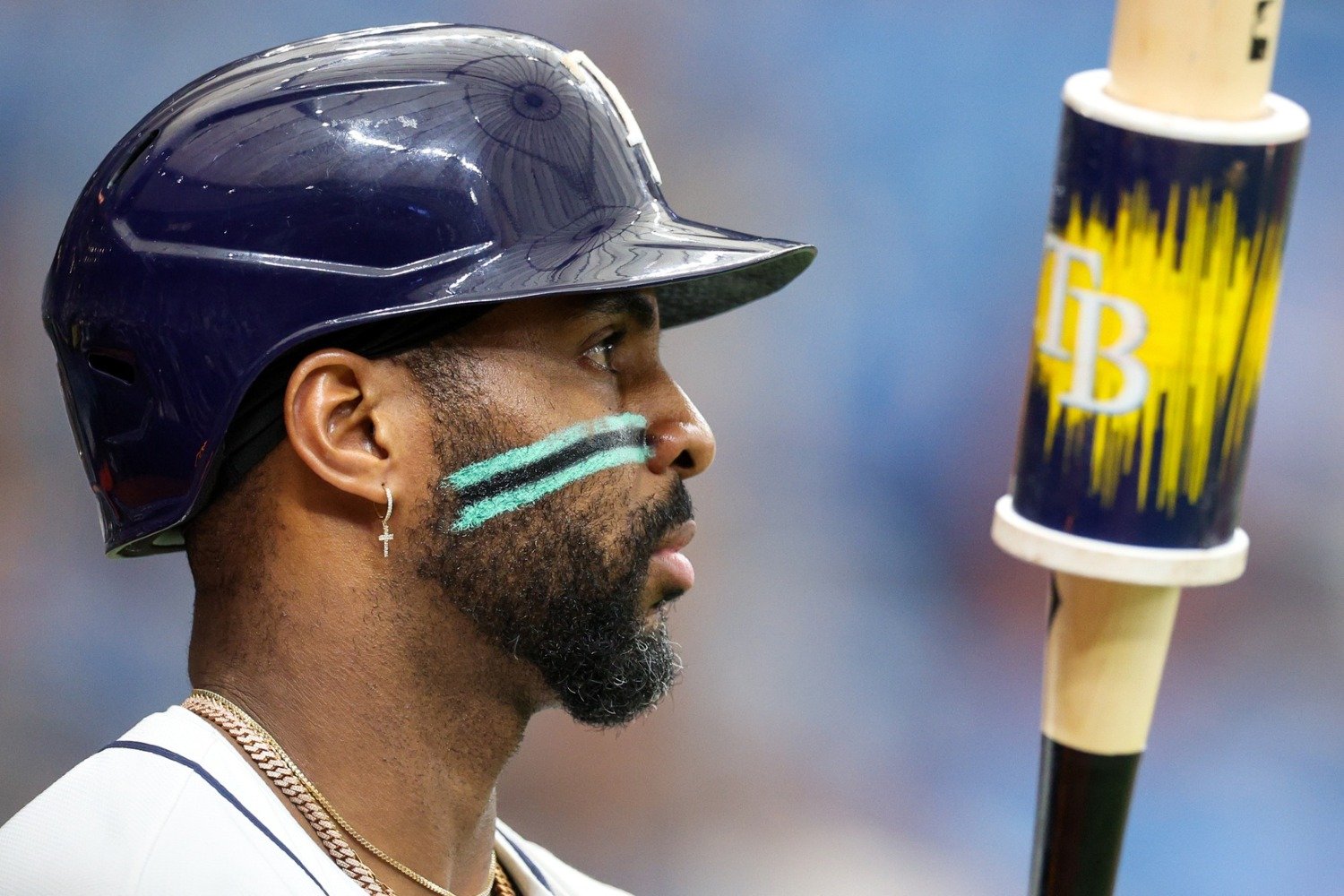 Keep your wits about you—a vital message to latch on to in dark times. We have been through this before and persevered, and we will survive again, as long as we organize, strategize, and lean on those we can unwaveringly trust. I am, of course, talking about enduring yet another offseason of mind-numbing inactivity from the Twins front office. Significant salary restrictions will effectively tie Twins decision-makers' hands behind their backs, making the proposition of a needle-moving offseason acquisition a mere fantasy, unless all or a part of the salaries for veterans like Christian Vázquez ($10 million) or Chris Paddack's ($7.5 million) are shed. The threat of this offseason becoming a dreadfully dull experience for Twins Territory is scarily plausible. However, that doesn't mean dormancy is a certainty. It would be malpractice to sulk in sorrow, write this offseason off as a wash, and not spend time envisioning who would be a worthwhile addition for the playoff-hopeful Twins. So, let's take an in-depth look at the Twins' greatest area of need this offseason: First base. The unexpected retirement of former top prospect Alex Kirilloff and the expected departure of surehanded veteran first baseman Carlos Santana has left the position bare. José Miranda (who has played 698 career innings at the position) is projected to become the primary starter, with Edouard Julien (19 1/3 innings) being his backup and potential platoon partner. Vázquez could also play the position in an emergency, but almost all of his value resides in his defensive prowess behind the plate. In theory, Miranda and Julien could work well in a platoon partnership at the position, but it would be a big risk with a smallish reward to expect that. Taking a flier on a cheap, veteran first base option like Joey Meneses, J.D. Davis, or Jared Walsh could make sense, but the Twins value flexibility and are unlikely to lock themselves into this player archetype unless they are willing to come in on a minor-league deal. They could pursue a player who can play first base alongside other positions like Brandon Drury, Mark Canha, or Justin Turner. However, it would be unwise for the salary-strapped organization to spend what minimal resources they have on a veteran who could realistically produce at a below-replacement-level rate. That said, the Twins can choose between two paths: They can roll with Miranda and Julien and hope both stay healthy and produce at a slightly above-average rate, or acquire a higher-caliber everyday starter at the position. They would be wise to pick the latter. At first glance, re-signing Santana would be a savvy choice. He displayed Gold Glove defense at the position while posting an admirable 114 wRC+ over 594 plate appearances. However, he might be outside Minnesota's price range: The 39-year-old veteran should have a robust market, and if a team like the Chicago Cubs or New York Mets (who are set to lose Pete Alonso) decides to offer a multi-year deal, the Twins could quickly become a non-factor in the Santana sweepstakes. Although Twins ownership's frugal mode of operation likely negates any opportunity for a reunion with Santana, that doesn't mean the Twins are entirely out of the first base market. While speaking with media last week at the General Managers Meetings in San Antonio, Twins President of Baseball Operations Derek Falvey noted that the team will have to "be creative if (they) want to make a lot of tweaks to the group." Like leaves falling from paper birch trees, the buzzword "creative" has become a fall tradition in the land of 10,000 lakes. Interestingly, there is a veteran impact first baseman the organization could use creative means to acquire: Yandy Díaz. Díaz, 33, spent his first two seasons in MLB with Cleveland before being sent to the Tampa Bay Rays before the 2019 season. Since joining the Rays, Díaz has hit .289/.374/.440 with 707 hits, 74 home runs, and a 130 OPS+. The high-average right-handed hitting veteran shifted between third base and first base his first four seasons with the Rays before settling down at first, netting a combined 1,942 2/3 innings played at the position the last two seasons. His best season came in 2023 when he posted a 157 OPS+ while earning an All-Star bid and finishing sixth in AL MVP voting. Díaz came down to earth last season. However, his performance was still commendable, slashing .281/.341/.414 with 158 hits, 14 home runs, and a 116 OPS+. The well-respected veteran is still among the most formidable bats in "the show", and would be a prized acquisition for the Twins. Díaz is slated to make $10 million next season, with a $12-million club option in 2024. At face value, this price tag is far too hefty for the parsimonious Twins. However, this is where the front office's knack for creativity comes into play. dzc0TE5fWGw0TUFRPT1fVlFCUUJnSlJWd1lBQzFBQUJRQUFBQUlIQUFNTlVsQUFBVmRRQ0ZjR0NWQmNWbFpT.mp4 The two impact trades the front office made last season (Jorge Polanco to the Seattle Mariners for Anthony DeSclafani, Justin Topa, Gabriel Gonzalez, and Darren Bowen; and Noah Miller to the Los Angeles Dodgers for Manuel Margot and Rayne Doncon) involved the partner team eating money. The Mariners (and San Francisco Giants) took on $8 million of DeSclafani's $12 million deal, and the Dodgers ate $6-$8 million of Margot's contract. Evidently, if the Twins acquire a veteran player under their current mode of salary-restricted operation, the partnering front office will have to take on most of the returning player's salary. Hypothetically, the Twins could acquire Díaz and his $10 million from Tampa, with the Rays taking on roughly $6 million of his deal. In exchange, Minnesota would need to part ways with a more highly-regarded prospect for the similarly frugal Rays to take on dead money. Although parting ways with a highly regarded prospect isn't an easy pill to swallow, the reward could be netting a season of one of the best-hitting first basemen in baseball. Also, if a new ownership group purchased the franchise before next season, the team could potentially exercise his $12-million club option for 2026. The long-time Rays corner infielder is a contact-skilled plus bat who would be a welcome insertion into the Twins' high-variance lineup. Díaz thrives against left-handed pitching (.923 OPS over 139 plate appearances last season) while holding his own against same-handed hurlers (.706 OPS over 482 PA). He could become the team's everyday first baseman, allowing Miranda to take on the role he did this past season of shifting between third base, first base, and designated hitter. Díaz joining the Twins also means the organization wouldn't have to rely on the inconsistent Julien, meaning the team could use him in a role that promotes flexibility or stash him at Triple-A as MLB-caliber depth. Despite being salary-restricted, the Twins front office should be able to create enough monetary flexibility to acquire at least one impact bat, and Díaz should be at the top of their wish list.
- 19 comments
-
- 4
-
-
- yandy díaz
- jose miranda
- (and 1 more)
-
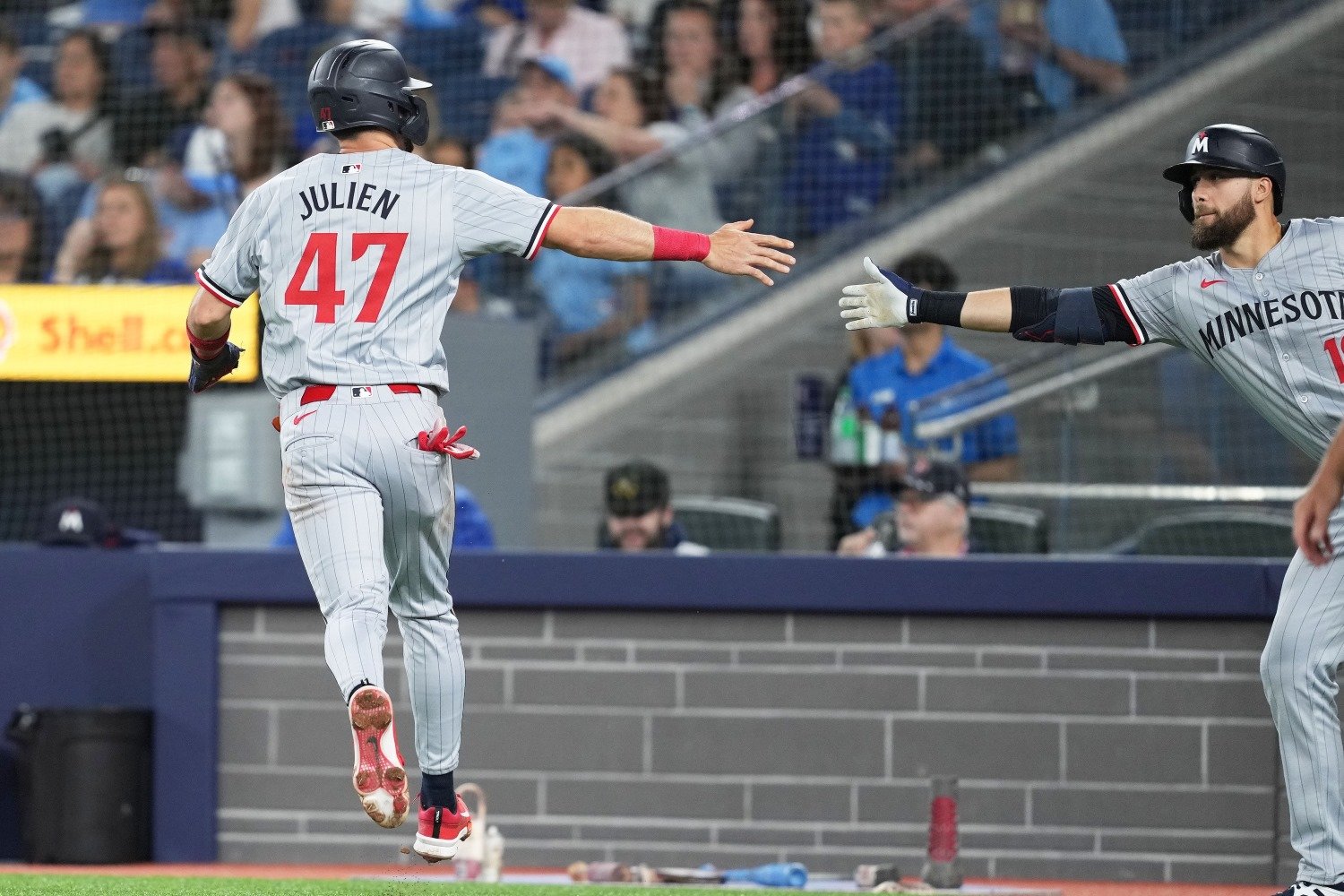 Less than two weeks after relieving hitting coach David Popkins and both of his assistants of their duties, the Minnesota Twins (known for taking their time) actively sought out and hired Matt Borgschulte for the same position. Borgschulte, 33, shuffled between minor-league hitting coach roles with Minnesota from 2018 to 2021 before joining the Baltimore Orioles' major-league coaching staff in 2022. Quantifying the impact Borgschulte made on Twins minor leaguers over his three seasons with the organization is nearly impossible. However, Borgschulte has been at the forefront of various hitting success stories since becoming the Orioles' co-hitting coach alongside Ryan Fuller. Whether it be extracting surplus value from older homegrown talent in Anthony Santander, Cedric Mullins, or Ryan Mountcastle; reviving reclamation projects like Ryan O'Hearn, Jorge Mateo, and Aaron Hicks; or serving as a guiding light to star young prospects in Adley Rutschman, Gunnar Henderson, Jordan Westburg, Colton Cowser, and Jackson Holliday, Borgschulte and Fuller captained one of the most effective offensive units in MLB over the past three seasons. Despite newfound success as an organization, Baltimore has fallen short come playoff time, failing to win a playoff game despite winning 101 games in 2023 and 91 games in 2024. Finding sustainable regular-season success is a virtue that should not be overlooked. However, what good is sustainable regular-season success for an organization if the rug unfailingly gets pulled out from beneath them early in the postseason? Baltimore found itself in this bittersweet predicament. Instead of parting ways with manager Brandon Hyde, the organization made coaching changes on the margins. The O's first parted ways with Fuller. However, they appeared content with Borgschulte on the 2025 staff while hiring a new co-hitting coach. Despite retaining his job with a young, successful team on the precipice of a World Series run, the 33-year-old former college baseball player chose to rejoin the Twins organization. Borgschulte will be the clear-cut, top hitting coach of an MLB club for the first time in his career. The Twins' hiring him for this role continues the organization's trend of opting for youth and innovation, as they did when hiring Popkins before the 2022 season. Interestingly, being young and relatively inexperienced aren't where the parallels between Popkins and Borgschulte end. Borgschulte's hitting philosophy centers on making purposeful swing decisions, controlling the strike zone, and prioritizing hard contact. His approach with Baltimore also stressed the importance of making loud contact and driving the ball into gaps and over the fence. Sound familiar? Now, hiring someone who appears to have the same philosophy as Popkins may seem counterproductive. However, there seems to be a distinct difference in how they communicate this approach, evidenced by this tweet from Twins Daily's Parker Hageman: A frequent fan critique of the Twins in recent years was that hitters appeared to stick to the game plan, even when opposing pitchers made adjustments that neutralized their pre-planned approach. Whether it was Edouard Julien skittishly overanalyzing every plate appearance or Ryan Jeffers staring at middle-middle fastballs in 2-2 counts, Twins hitters looked like they were drowning at the plate, evidenced by the team posting the fifth-worst wRC+ in MLB from Sept. 1 through Sept. 29. Fair or not, much of the blame fell on Popkins and assistant hitting coaches Rudy Hernandez and Derek Shomon. Again, it is tough to quantify how much praise or blame managers and hitting coaches deserve at the major-league level. However, there is no doubt that the mix of rigid game planning and an inability to make adequate in-game adjustments is the type of systematic error that led to the Twins' dramatic collapse during the season's final month and overall season-long struggles. Plagued by inconsistency, the 2024 Twins' lineup flaws were fatal, resulting in Popkins, Hernandez, and Shomon losing their jobs. Although these three came up short in their quest to build a sustainably productive, hard-hitting offense, that doesn't mean the approach they were trying to teach was dysfunctional. This is where Borgschulte comes into the equation. As stated earlier, Borgschulte is similar to Popkins in that he values purposeful swing decisions, controlling the strike zone, and prioritizing hard contact on balls in the zone. Borgschulte will continue to teach this approach with the Twins, just like Popkins will as he heads north of the border. Every MLB organization prioritizes these same traits. However, some do it better than others. The Twins have lower-quality offensive personnel than the Orioles had the previous three seasons. That said, the club's personnel is significantly better than they displayed this past September. Despite the Pohlad family recently announcing their intention to sell the franchise, the Twins' payroll will likely hover around $130 million again next season. This unfortunate reality means the team's lineup will include many of the same hitters as last season. Borgschulte's greatest indicator of success will be his ability to lessen the high-variance nature of the Twins lineup, in the name of manufacturing a more sustainable team-wide approach. Popkins successfully pulled off this high-wire act once during his tenure with Minnesota, and the result was the organization winning its first postseason game in 18 years. If Borgschulte can clearly communicate necessary hitting adjustments to players, create more flexible game plans, and be endowed with a relatively healthy assortment of players, the Twins could quickly return to the playoffs.
 -
The Twins' new hitting coach's most discernible indicator of success will be finding consistency, with a lineup constructed out of a patently inconsistent group of players. Image courtesy of © Nick Turchiaro-Imagn Images Less than two weeks after relieving hitting coach David Popkins and both of his assistants of their duties, the Minnesota Twins (known for taking their time) actively sought out and hired Matt Borgschulte for the same position. Borgschulte, 33, shuffled between minor-league hitting coach roles with Minnesota from 2018 to 2021 before joining the Baltimore Orioles' major-league coaching staff in 2022. Quantifying the impact Borgschulte made on Twins minor leaguers over his three seasons with the organization is nearly impossible. However, Borgschulte has been at the forefront of various hitting success stories since becoming the Orioles' co-hitting coach alongside Ryan Fuller. Whether it be extracting surplus value from older homegrown talent in Anthony Santander, Cedric Mullins, or Ryan Mountcastle; reviving reclamation projects like Ryan O'Hearn, Jorge Mateo, and Aaron Hicks; or serving as a guiding light to star young prospects in Adley Rutschman, Gunnar Henderson, Jordan Westburg, Colton Cowser, and Jackson Holliday, Borgschulte and Fuller captained one of the most effective offensive units in MLB over the past three seasons. Despite newfound success as an organization, Baltimore has fallen short come playoff time, failing to win a playoff game despite winning 101 games in 2023 and 91 games in 2024. Finding sustainable regular-season success is a virtue that should not be overlooked. However, what good is sustainable regular-season success for an organization if the rug unfailingly gets pulled out from beneath them early in the postseason? Baltimore found itself in this bittersweet predicament. Instead of parting ways with manager Brandon Hyde, the organization made coaching changes on the margins. The O's first parted ways with Fuller. However, they appeared content with Borgschulte on the 2025 staff while hiring a new co-hitting coach. Despite retaining his job with a young, successful team on the precipice of a World Series run, the 33-year-old former college baseball player chose to rejoin the Twins organization. Borgschulte will be the clear-cut, top hitting coach of an MLB club for the first time in his career. The Twins' hiring him for this role continues the organization's trend of opting for youth and innovation, as they did when hiring Popkins before the 2022 season. Interestingly, being young and relatively inexperienced aren't where the parallels between Popkins and Borgschulte end. Borgschulte's hitting philosophy centers on making purposeful swing decisions, controlling the strike zone, and prioritizing hard contact. His approach with Baltimore also stressed the importance of making loud contact and driving the ball into gaps and over the fence. Sound familiar? Now, hiring someone who appears to have the same philosophy as Popkins may seem counterproductive. However, there seems to be a distinct difference in how they communicate this approach, evidenced by this tweet from Twins Daily's Parker Hageman: A frequent fan critique of the Twins in recent years was that hitters appeared to stick to the game plan, even when opposing pitchers made adjustments that neutralized their pre-planned approach. Whether it was Edouard Julien skittishly overanalyzing every plate appearance or Ryan Jeffers staring at middle-middle fastballs in 2-2 counts, Twins hitters looked like they were drowning at the plate, evidenced by the team posting the fifth-worst wRC+ in MLB from Sept. 1 through Sept. 29. Fair or not, much of the blame fell on Popkins and assistant hitting coaches Rudy Hernandez and Derek Shomon. Again, it is tough to quantify how much praise or blame managers and hitting coaches deserve at the major-league level. However, there is no doubt that the mix of rigid game planning and an inability to make adequate in-game adjustments is the type of systematic error that led to the Twins' dramatic collapse during the season's final month and overall season-long struggles. Plagued by inconsistency, the 2024 Twins' lineup flaws were fatal, resulting in Popkins, Hernandez, and Shomon losing their jobs. Although these three came up short in their quest to build a sustainably productive, hard-hitting offense, that doesn't mean the approach they were trying to teach was dysfunctional. This is where Borgschulte comes into the equation. As stated earlier, Borgschulte is similar to Popkins in that he values purposeful swing decisions, controlling the strike zone, and prioritizing hard contact on balls in the zone. Borgschulte will continue to teach this approach with the Twins, just like Popkins will as he heads north of the border. Every MLB organization prioritizes these same traits. However, some do it better than others. The Twins have lower-quality offensive personnel than the Orioles had the previous three seasons. That said, the club's personnel is significantly better than they displayed this past September. Despite the Pohlad family recently announcing their intention to sell the franchise, the Twins' payroll will likely hover around $130 million again next season. This unfortunate reality means the team's lineup will include many of the same hitters as last season. Borgschulte's greatest indicator of success will be his ability to lessen the high-variance nature of the Twins lineup, in the name of manufacturing a more sustainable team-wide approach. Popkins successfully pulled off this high-wire act once during his tenure with Minnesota, and the result was the organization winning its first postseason game in 18 years. If Borgschulte can clearly communicate necessary hitting adjustments to players, create more flexible game plans, and be endowed with a relatively healthy assortment of players, the Twins could quickly return to the playoffs. View full article
-
 Throughout the 2024 MLB season, many encouraging trends surfaced. The league-wide strikeout rate decreased, baserunning improved, and pitchers netted a significantly lower ERA than last season. Expansive rule changes implemented by the league office just two seasons ago are working. Despite the on-field product demonstrating signs of sustainable improvement, a more impactful and sobering trend further reared its ugly head: the incessant greed of MLB owners. In theory, sports and entertainment are supposed to function as a Great Distraction from the way class struggle negatively affects working-class people every waking second of their existence. When one is unable to own the means of their production while having no real sense of ownership, autonomy, or social safety nets, it becomes vital to latch on to something that allows them a sense of stability or, at the very least, an outlet to turn their brain off and relax for a few hours. These outlets are essential when combating the big wheel of adult life that keeps on turning. Yet, many baseball fans have often been forced to confront this sobering reality, making what was supposed to be an “outlet” or method of escapism yet another cog of the machine that adds more and more weight onto their shoulders. In the past, this emotion was reserved for fans of teams like the Oakland Athletics, Tampa Bay Rays, or Miami Marlins. These organizations’ front offices have been applauded for coming up with creative avenues to combat this unnecessary burden by investing their minimal resources into player development and scouting programs. This investment has provided them the unique fortune of drafting and developing prospects into serviceable MLB players while simultaneously signing or trading for players deemed “reclamation projects” or "marginal MLB players" and teaching them adjustments and approaches necessary to perform well enough to help them in the short term before shipping them off in trade or watching them walk for more money in free agency. Again, this mode of survival deserves to be applauded. Yet, like a family struggling to scrounge enough money to afford groceries or pay hospital bills, one can only live like this for so long before the walls crumble. None of these three teams made the postseason this season, and Oakland’s fan base is being forced to mourn the loss of their once beloved franchise solely due to the greed of owner John Fisher. Since the opening of Target Field, Minnesota Twins fans have watched these organizations from a distance, finding themselves fortunate enough to never really know what it felt like to feel emotionally invested in a team whose ownership group was doing everything to work against one's best interest as a fan and community. Yet, this season, this disease surging through MLB headed north to Minnesota like a swarm of cicadas, consuming any sense of optimism left from a magical 2023 campaign that ended in the organization’s first postseason victory in 19 years. Unsurprisingly, immense anger has manifested within Twins Territory, and those who follow the team are flocking to hold a party accountable for the organization’s rapid decline in on-field performance that began upon the conclusion of the All-Star break. Unfortunately, a significant portion of blame has been directed toward the (mostly) undeserving. Now, it is easy to look at the team's debacle playing out day over day and blame the people who are most accessible. Whenever we witnessed Zebby Matthews, David Festa, or Simeon Woods Richardson implode in the third inning, the camera panned to manager Rocco Baldelli's face. And every time Ronny Henriquez or Louie Varland surrendered another late-inning lead, we were reminded of how the front office invested its few resources into relievers like Jay Jackson, Josh Staumont, or Steven Okert. Directing one's anger and frustration toward Baldelli and the front office became even easier when some local media outlets relentlessly claimed that Baldelli and the front office were the reason the season fell apart. Still, for those stuck in that emotionally draining cycle, I ask you to entertain the following hypothetical. You live in a school district that is facing budget concerns. The district's state has a $4 billion surplus in funds, but (for whatever reason) none can be given to the district to address the lack of money. In response, the district elects to entertain a referendum in hopes of receiving the funds necessary to retain staff, invest in arts and sports programs, and make sure students and teachers have access to the supplies and resources necessary to thrive and not just survive. Unfortunately, the referendum doesn't pass, causing the school district to make tough decisions. Art programs are cut, support staff is laid off, and administrators and teachers must pick themselves up by their bootstraps and persevere. The beginning of the school year goes well, and they even find themselves in a moment of true prosperity. Teachers are doing well, administrators are content, and students are receiving a worthwhile education. However, the second semester came along, and things began to break at the seams. The district-assigned laptops begin to wear down and break. Instead of continuing pre-planned lessons reliant on technology, teachers are forced to quickly turn to pen-and-paper, coming up with assignments on the fly. Student performance suffers as they are less inspired to come to class and perform well, have little to look forward to, and are forced to resort to archaic forms of education. This unfortunate outcome could have been avoided if the district had received extra funding. Administrators could have invested in better, more reliable laptops. Instead, they were forced to deal with the consequences of being given inadequate resources and no social safety net. As a result, the teacher's ability to manage the classroom and provide worthwhile lessons significantly dipped, resulting in an almost unfeasible end to the school year. When looking at this hypothetical scenario, who would you blame for the school district's unfortunate end to the school year? Would you blame the administrators and teachers who had to persevere through what was essentially an unnavigable situation? Or would you blame the state with the $4 billion surplus for not investing in the district and letting them wither away while watching from their pedestals where no one can access or critique them? The answer is simple. It is easier to exercise understanding and forgiveness toward a struggling school district and its teachers and administrators. That said, the same sense of grace should be extended toward Baldelli and the Twins' front office. The amount of money Baldelli and Derek Falvey make in relation to the Pohlad family is comparable to how much a teacher or administrator makes in relation to the lump of cash a state in surplus sits on. The Pohlad family could have allotted the team more money to patch roster holes, just like the state could have given the district more money to avoid the loss of technology necessary for a thriving classroom in the above hypothetical scenario. Instead, the parties in charge hoarded their resources and neglected those they were supposed to support and invest in.
- 65 comments
-
- 17
-
-
-
- joe pohlad
- jim pohlad
- (and 2 more)
-
The Pohlad family asked Twins decision-makers to pick themselves up from their bootstraps and persevere. Understandably, they couldn't. It is vital to extend grace at a time where it is easy to ridicule those who are most accessible. Throughout the 2024 MLB season, many encouraging trends surfaced. The league-wide strikeout rate decreased, baserunning improved, and pitchers netted a significantly lower ERA than last season. Expansive rule changes implemented by the league office just two seasons ago are working. Despite the on-field product demonstrating signs of sustainable improvement, a more impactful and sobering trend further reared its ugly head: the incessant greed of MLB owners. In theory, sports and entertainment are supposed to function as a Great Distraction from the way class struggle negatively affects working-class people every waking second of their existence. When one is unable to own the means of their production while having no real sense of ownership, autonomy, or social safety nets, it becomes vital to latch on to something that allows them a sense of stability or, at the very least, an outlet to turn their brain off and relax for a few hours. These outlets are essential when combating the big wheel of adult life that keeps on turning. Yet, many baseball fans have often been forced to confront this sobering reality, making what was supposed to be an “outlet” or method of escapism yet another cog of the machine that adds more and more weight onto their shoulders. In the past, this emotion was reserved for fans of teams like the Oakland Athletics, Tampa Bay Rays, or Miami Marlins. These organizations’ front offices have been applauded for coming up with creative avenues to combat this unnecessary burden by investing their minimal resources into player development and scouting programs. This investment has provided them the unique fortune of drafting and developing prospects into serviceable MLB players while simultaneously signing or trading for players deemed “reclamation projects” or "marginal MLB players" and teaching them adjustments and approaches necessary to perform well enough to help them in the short term before shipping them off in trade or watching them walk for more money in free agency. Again, this mode of survival deserves to be applauded. Yet, like a family struggling to scrounge enough money to afford groceries or pay hospital bills, one can only live like this for so long before the walls crumble. None of these three teams will make the postseason this season, and Oakland’s fan base is being forced to mourn the loss of their once beloved franchise solely due to the greed of owner John Fisher. Minnesota Twins fans have long watched these organizations from a distance, finding themselves fortunate enough to never really know what it felt like to feel emotionally invested in a team whose ownership group was doing everything to work against one's best interest as a fan and community. Yet, this season, this disease surging through MLB headed north to Minnesota like a swarm of cicadas, consuming any sense of optimism left from a magical 2023 campaign that ended in the organization’s first postseason victory in 19 years. Unsurprisingly, immense anger has manifested within Twins Territory, and those who follow the team are flocking to hold a party accountable for the organization’s rapid decline in on-field performance that began upon the conclusion of the All-Star break. Unfortunately, the bulk of the blame has been directed toward the (mostly) undeserving. Now, it is easy to look at the team's debacle playing out day over day and blame the people who are most accessible. Whenever we witnessed Zebby Matthews, David Festa, or Simeon Woods Richardson implode in the third inning, the camera panned to manager Rocco Baldelli's face. And every time Ronny Henriquez or Louie Varland surrendered another late-inning lead, we were reminded of how the front office invested its few resources into relievers like Jay Jackson, Josh Staumont, or Steven Okert. Directing one's anger and frustration toward Baldelli and the front office became even easier when some local media outlets relentlessly claimed that Baldelli and the front office were the reason the season fell apart. Still, for those stuck in that emotionally draining cycle, I ask you to entertain the following hypothetical. You live in a school district that is facing budget concerns. The district's state has a $4 billion surplus in funds, but (for whatever reason) none can be given to the district to address the lack of money. In response, the district elects to entertain a referendum in hopes of receiving the funds necessary to retain staff, invest in arts and sports programs, and make sure students and teachers have access to the supplies and resources necessary to thrive and not just survive. Unfortunately, the referendum doesn't pass, causing the school district to make tough decisions. Art programs are cut, support staff is laid off, and administrators and teachers must pick themselves up by their bootstraps and persevere. The beginning of the school year goes well, and they even find themselves in a moment of true prosperity. Teachers are doing well, administrators are content, and students are receiving a worthwhile education. However, the second semester came along, and things began to break at the seams. The district-assigned laptops begin to wear down and break. Instead of continuing pre-planned lessons reliant on technology, teachers are forced to quickly turn to pen-and-paper, coming up with assignments on the fly. Student performance suffers as they are less inspired to come to class and perform well, have little to look forward to, and are forced to resort to archaic forms of education. This unfortunate outcome could have been avoided if the district had received extra funding. Administrators could have invested in better, more reliable laptops. Instead, they were forced to deal with the consequences of being given inadequate resources and no social safety net. As a result, the teacher's ability to manage the classroom and provide worthwhile lessons significantly dipped, resulting in an almost unfeasible end to the school year. When looking at this hypothetical scenario, who would you blame for the school district's unfortunate end to the school year? Would you blame the administrators and teachers who had to persevere through what was essentially an unnavigable situation? Or would you blame the state with the $4 billion surplus for not investing in the district and letting them wither away while watching from their pedestals where no one can access or critique them? The answer is simple. It is easier to exercise understanding and forgiveness toward a struggling school district and its teachers and administrators. That said, the same sense of grace should be extended toward Baldelli and the Twins' front office. The amount of money Baldelli and Derek Falvey make in relation to the Pohlad family is comparable to how much a teacher or administrator makes in relation to the lump of cash a state in surplus sits on. The Pohlad family could have allotted the team more money to patch roster holes, just like the state could have given the district more money to avoid the loss of technology necessary for a thriving classroom in the above hypothetical scenario. Instead, the parties in charge hoarded their resources and neglected those they were supposed to support and invest in. View full article
- 65 replies
-
- 1
-
-
- joe pohlad
- jim pohlad
- (and 2 more)
-
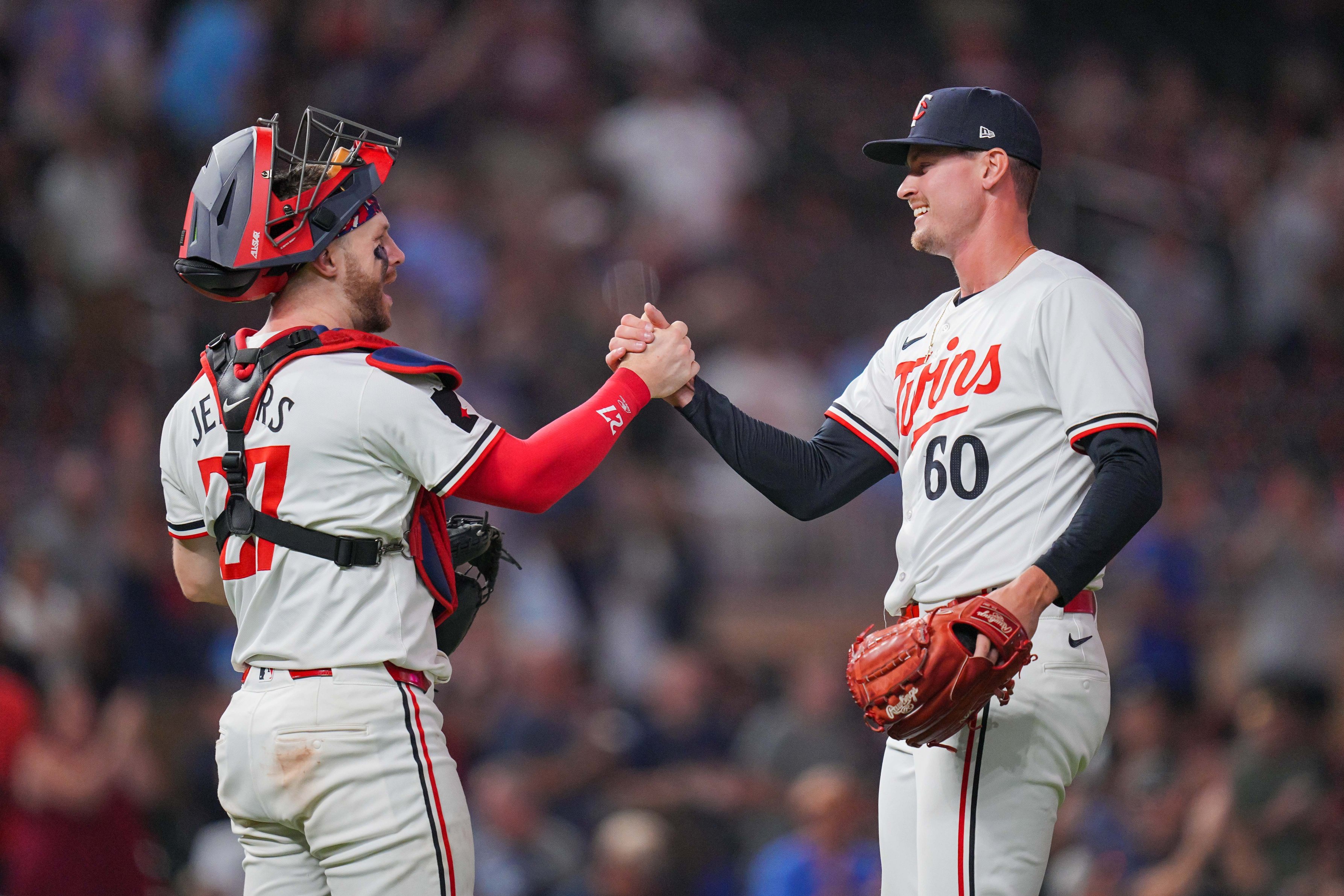 On Feb. 27, 2023, the Minnesota Twins signed pitcher Jeff Hoffman to a minor league contract. Deemed a reclamation project, the hard-tossing right-hander had just completed his seventh season in MLB (five with the Colorado Rockies and two with the Cincinnati Reds). He had yet to put together a stretch of sustained success as a starter or reliever, evidenced by accumulating only 0.9 Wins Above Replacement at FanGraphs (fWAR) over 348 1/3 innings pitched. Still, he was a veteran arm with an intriguing pitch mix primarily comprised of a four-seam fastball, slider, and splitter. Twins decision-makers elected to take a chance on him. Hoffman showed flashes of excellence during spring training with Minnesota, posting a 3.60 ERA, 2.41 FIP, and an astounding 42.1% strikeout rate over just five innings pitched as a reliever. The 30-year-old was in the mix to make the team's Opening Day bullpen. However, the Twins released him on Mar. 28, 2023, electing to round out their 'pen with younger relievers in Jorge Alcalá and Jovani Moran while adding Cole Sands as the de facto stretch reliever. Hoffman signed with the Philadelphia Phillies three days later, marking the beginning of a career renaissance. Now 31, the right-hander has quickly become one of baseball's best high-leverage set-up relievers, posting a combined 2.17 ERA, 2.41 FIP, and a resounding 141-to-33 strikeout-to-walk-ratio in two seasons with Philadelphia. He earned his first All-Star nod this season and has solidified himself as the best reliever on the team with the best record in the National League. Evidently, the Twins made a mistake. Yet, there was no way to know that a then-middling reliever brought in on a minor league contract as a reclamation project would blossom into one of baseball's most impactful high-leverage arms. While this outcome is unfortunate, the Twins bullpen has performed well during Hoffman's emergence in Philadelphia, ranking 20th in fWAR last season and seventh through 123 games this season. Jhoan Durán, Griffin Jax, Brock Stewart (when healthy), Alcalá, and Sands have developed into steady, high-leverage arms that any manager in MLB would love to have at their exposure. Still, having an emergent Hoffman in the back end of the bullpen with the five aforementioned arms would be a welcomed luxury - one the Twins must go without. However, the Twins may have stumbled upon an ultra-specific opportunity for redemption. Last Monday, Scott Blewett made his Twins debut against the Kansas City Royals. Making his first appearance in MLB since Sept. 19, 2021, the 28-year-old right-handed reliever excelled against his former team, causing Maikel Garcia to hit a groundball back to him for an easy out. He then struck out Kyle Isbel and got Michael Massey to fly out to centerfield in a 1-2-3 top of the ninth. The Twins decidedly won the contest with Kansas City 8-to-3, meaning Blewett's first appearance in nearly three years came in a low-leverage situation. Pitching against Kansas City, Blewett showcased a plus slider, splitter, and four-seam fastball. He heavily relied on his slider, throwing it nine times. He threw his splitter and four-seam fastball three times each. Interestingly, Blewett has an almost identical pitch mix to Hoffman. On his road to dominance in Philadelphia, Hoffman has relied on his slider, tossing it 43.8% of the time in the past two seasons. He has thrown his four-seam fastball a combined 36.5% of the time and his splitter 15% of the time during that stretch. Again, Hoffman has thrown 103 1/3 innings, while Blewett has thrown just one. Still, if one were to extrapolate Blewett's performance over the same stretch, there is reason to believe he would throw the same pitches a strikingly similar percentage of the time. When looking at Hoffman's pitches this season, they grade out in the following manner: Four-seam fastball: 119 Stuff+ Slider: 112 Stuff+ Splitter: 108 Stuff+ Hoffman possesses a cumulative 115 Stuff+ on all pitches and a 101 Location+, which assesses a pitcher's ability to put pitches in the right place. In Blewett's sole appearance, his pitches demonstrated high variance. His four-seam fastball had a 75 Stuff+. His splitter had a whopping 181 Stuff+, and his slider had a slightly above rating of 103 Stuff+. He manufactured a cumulative 113 Stuff+ (only two points below Hoffman) and 103 Location+ (two points above Hoffman). So, while his fastball graded much poorly than Hoffman's, Blewett could have a better splitter and a similarly effective slider. Again, it is vital to note that we are analyzing an inning pitched. Yet, there is no reason to believe Blewett's numbers would dramatically alter if he received more opportunities with Minnesota. It is on the basis of these traits that the Twins brought in Blewett and turned to him in the first place. Another striking similarity between Hoffman and Blewett is their frames. Hoffman stands at 6'5", 235 lbs. Blewett resides at 6'6", 245 lbs. Both pitchers utilize their height to net above-league-average extension, deceiving hitters with their mid-90s fastballs and offspeed and breaking pitches. Also, Blewett and Hoffman have very similar deliveries. Here is Hoffman throwing a 97 MPH four-seam fastball to Milwaukee Brewers' infielder Joey Ortiz on Jun. 5, 2024. jeff hoffman.mp4 Now, here is Blewett throwing a 95 MPH to Garcia in his Twins debut on Aug. 12, 2024. scott blewett.mp4 Hoffman holds the ball slightly lower pre-pitch than Blewett. However, Hoffman consistently releases the ball at six feet while Blewett releases the ball at six feet, two inches. The two relievers release the ball from relatively similar slots. The day after his Twins debut, he was designated for assignment to make room for Zebby Matthews on the 40-man roster. It was initially reported that Blewett accepted his outright assignment to Triple-A two days after he was designated for assignment on Aug. 15. However, his status with the organized quickly changed as it was reported he elected free agency on Aug. 16. Blewett entered the open market, likely trying to capitalize on his impressive debut with the Twins. This mode of operation for him and his representation was wise, as he was beginning to garner attention around different fanbases. Nevertheless, he returned to the Twins organization and was again assigned to Triple-A. Blewett could easily never make another appearance with the Twins, making this display of mental gymnastics a moot point. Considering his and Hoffman's similar frames, release points, and overall pitch quality, however, Blewett could provide the Twins a unique opportunity to redeem themselves for letting Hoffman go a little less than a year and a half ago. Still, if Blewett receives another opportunity with the Twins, they would gladly accept him being half the pitcher Hoffman has been since joining Philadelphia. Videos courtesy of Baseball Savant.

