Cody Schoenmann
-
Posts
768 -
Joined
-
Last visited
-
Days Won
1
Content Type
Profiles
News
Minnesota Twins Videos
2026 Minnesota Twins Top Prospects Ranking
2022 Minnesota Twins Draft Picks
Minnesota Twins Free Agent & Trade Rumors, Notes, & Tidbits
Guides & Resources
2023 Minnesota Twins Draft Picks
The Minnesota Twins Players Project
2024 Minnesota Twins Draft Picks
2025 Minnesota Twins Draft Pick Tracker
2026 Minnesota Twins Draft Tracker: Picks & Bonuses
Forums
Blogs
Events
Store
Downloads
Gallery
Everything posted by Cody Schoenmann
-
 In the ninth inning of Friday night's 4-1 victory over the Detroit Tigers, Minnesota Twins' catcher Christian Vázquez was hit by a pitch on his right arm, causing him to grimace while walking up the first base line as assistant trainer Masa Abe and manager Rocco Baldelli checked on his well-being. Vázquez remained in the game and caught Jhoan Durán's save. The 34-year-old narrowly avoided serious injury. However, watching him nearly leave Friday night's contest raised a serious question regarding Minnesota's depth: who is the club's third catching option? Earlier this season, the answer was Triple-A Jair Camargo. However, the 25-year-old will be sidelined for the rest of the 2025 season after undergoing Tommy John surgery earlier this month. Emergency catcher Mickey Gasper would have been a viable option in a pinch, too. Unfortunately, he was recently placed on the 7-day IL with bilateral plantar fasciitis, similarly sidelining the 29-year-old for what is anticipated to be an extended stretch. That being the case, the organization's Triple-A catching depth has been spread thin, resulting in recent catching opportunities for prospects Noah Cardenas and Patrick Winkel. Since Gasper was placed on the IL on Jun. 23, Cardenas has been rewarded two starts behind the plate compared to Winkel's one. Fellow young catcher Diego Cartaya will factor in the Triple-A catching mix, too. Yet, given his recent placement on the development list and inability to hit Triple-A pitching (58.5% strikeout rate over 65 plate appearances), he is not a serious promotion candidate. That being the case, Cardenas and Winkel are the two backstops likely to receive an opportunity if Jeffers or Vázquez were to get placed on the injured list. Interestingly, Cardenas might have the edge. Beginning his 2025 campaign at Double-A Wichita, Cardenas hit .257/.409/.416 with 26 hits, seven doubles, three home runs, and a 137 wRC+ over 127 plate appearances. The 25-year-old was subsequently promoted to Triple-A on Jun. 10. Since joining St. Paul, the former eighth-round pick has hit .185/.267/.556 with five hits, one double, three home runs, and a 102 wRC+ over 30 plate appearances. Cardenas's subpar batting average and on-base percentage are somewhat concerning. Yet, his ability to hit for power in the high minors has impressed, lending merit to the idea that he could produce offensively in the majors. Cardenas has demonstrated an ability to hit at an above-average rate since joining the organization in 2021. Interestingly, though, his calling card out of college was his glove, and his defense has remained superb throughout the high minors. The UCLA product is an above-average receiver who sports a strong arm. Plus-defensive catchers who can hit are a rare archetype. Yet, there is reason to believe Cardenas could develop into one at the major league level. If Jeffers or Vázquez were forced to miss time later this season, Cardenas would seemingly be the next backstop up. Also, with Vázquez set to depart from Minnesota after this season, there is reason to believe Cardenas could succeed the veteran as Jeffers's backup. View full article
 -
Image courtesy of © Gary A. Vasquez-Imagn Images There are decades where nothing happens; and there are weeks where decades happen. And no, I am not referring to the results of the New York City Democratic mayoral primary. Instead, I am discussing the flurry of minor-league starting pitching transactions that Twins' decision-makers have made over the past week. On Monday, Minnesota claimed right-handed starting pitcher Connor Gillispie off waivers from the Miami Marlins, before optioning him to Triple-A St. Paul. One day later, the club signed journeyman pitcher José Ureña to a minor-league contract, similarly assigning him to Triple-A. Ureña, 33, began his 2025 campaign as a member of the New York Mets’ Triple-A affiliate in Syracuse. He would eventually appear in one game for New York, before bouncing between the Toronto Blue Jays and Los Angeles Dodgers and subsequently joining Minnesota earlier this week. Between New York, Toronto, and Los Angeles (all teams on playoff trajectories, mind you), Ureña generated a 5.40 ERA, 6.35 FIP, and 10-to-5 strikeout-to-walk ratio over 18 1/3 innings pitched. Despite starting and opening a game for Toronto in early May, the hard-tossing righty has primarily functioned as a low-leverage reliever this season, pitching in one-to-two-inning spurts. akQ5TlhfWGw0TUFRPT1fVUZkV0FGY0RYd3NBWGdRSFV3QUhBZ1pTQUFCVFYxSUFCZ1JVVmdCUkExSlNBUUJX.mp4 For those who have followed baseball closely over the past decade, Ureña has become a household name (of sorts), pitching for a total of nine organizations over his 10-season career. The now 33-year-old is most well-known for his early career success in Miami, particularly his 2017 campaign, wherein he generated 1.7 Wins Above Replacement at FanGraphs (fWAR) over 169 2/3 innings pitched. Ureña still possesses a plus slider and high-velocity fastball. Unfortunately, however, his career has since spiraled, with him generating just 1.5 fWAR in the seven seasons since. TndaV09fWGw0TUFRPT1fVlZWUVZBVUZVRk1BV2xJRUFBQUFDUUpTQUFCUkJnSUFWZ1lCQlFVQUFRdFJCMVpl.mp4 Similar to Gillispie, Ureña gracing the mound in Twins attire would be an unfortunate outcome. Yet, given the rotation's recent trend of early-inning implosions, there is reason to believe team decision-makers could soon purchase the veteran's contract to function as a long reliever, similar to what the Dodgers did earlier this month. Given that Gillispie and fellow long-relief candidate Travis Adams already possess 40-man roster spots, Ureña is seemingly behind them on the organizational depth chart. With players like Ryan Fitzgerald, Joey Wentz, and Gillispie taking up spots on the 40-man right now, though, the club could make room for Ureña fairly easily. Again, Minnesota's starting pitching depth has become razor-thin. That said, the organization still possesses ample bullpen depth. Similar to Adams and Gillispie, Ureña exists between the two, in that he can operate as a starting pitcher, long reliever, or short reliever. Despite enduring one of the worst pitching months in franchise history and losing 10 of their last 12 games, Minnesota remains just 3 1/2 games out of the final Wild Card spot and maintains a 23.9% chance of making the playoffs. The club will need arms to eat innings until Pablo López and Zebby Matthews return from their respective injuries later this season. Adams, Gillispie, and Ureña won't save Minnesota's season. Yet, they could play a vital role in sponging up work while the starting rotation attempts to return to its early-season form. View full article
-
What Do Minnesota Twins Have in Minor-League Signee José Ureña?
Cody Schoenmann posted an article in Twins
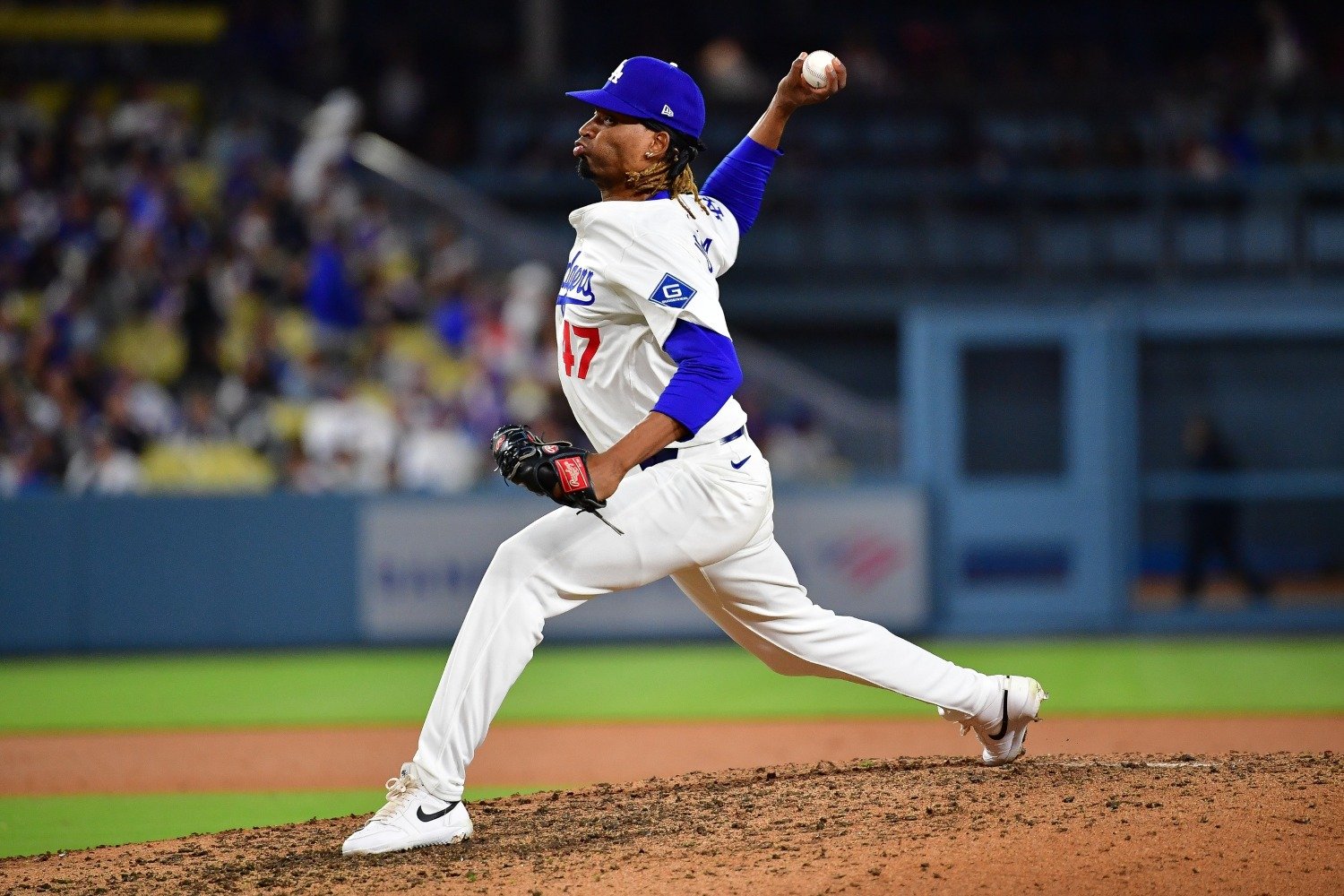 There are decades where nothing happens; and there are weeks where decades happen. And no, I am not referring to the results of the New York City Democratic mayoral primary. Instead, I am discussing the flurry of minor-league starting pitching transactions that Twins' decision-makers have made over the past week. On Monday, Minnesota claimed right-handed starting pitcher Connor Gillispie off waivers from the Miami Marlins, before optioning him to Triple-A St. Paul. One day later, the club signed journeyman pitcher José Ureña to a minor-league contract, similarly assigning him to Triple-A. Ureña, 33, began his 2025 campaign as a member of the New York Mets’ Triple-A affiliate in Syracuse. He would eventually appear in one game for New York, before bouncing between the Toronto Blue Jays and Los Angeles Dodgers and subsequently joining Minnesota earlier this week. Between New York, Toronto, and Los Angeles (all teams on playoff trajectories, mind you), Ureña generated a 5.40 ERA, 6.35 FIP, and 10-to-5 strikeout-to-walk ratio over 18 1/3 innings pitched. Despite starting and opening a game for Toronto in early May, the hard-tossing righty has primarily functioned as a low-leverage reliever this season, pitching in one-to-two-inning spurts. akQ5TlhfWGw0TUFRPT1fVUZkV0FGY0RYd3NBWGdRSFV3QUhBZ1pTQUFCVFYxSUFCZ1JVVmdCUkExSlNBUUJX.mp4 For those who have followed baseball closely over the past decade, Ureña has become a household name (of sorts), pitching for a total of nine organizations over his 10-season career. The now 33-year-old is most well-known for his early career success in Miami, particularly his 2017 campaign, wherein he generated 1.7 Wins Above Replacement at FanGraphs (fWAR) over 169 2/3 innings pitched. Ureña still possesses a plus slider and high-velocity fastball. Unfortunately, however, his career has since spiraled, with him generating just 1.5 fWAR in the seven seasons since. TndaV09fWGw0TUFRPT1fVlZWUVZBVUZVRk1BV2xJRUFBQUFDUUpTQUFCUkJnSUFWZ1lCQlFVQUFRdFJCMVpl.mp4 Similar to Gillispie, Ureña gracing the mound in Twins attire would be an unfortunate outcome. Yet, given the rotation's recent trend of early-inning implosions, there is reason to believe team decision-makers could soon purchase the veteran's contract to function as a long reliever, similar to what the Dodgers did earlier this month. Given that Gillispie and fellow long-relief candidate Travis Adams already possess 40-man roster spots, Ureña is seemingly behind them on the organizational depth chart. With players like Ryan Fitzgerald, Joey Wentz, and Gillispie taking up spots on the 40-man right now, though, the club could make room for Ureña fairly easily. Again, Minnesota's starting pitching depth has become razor-thin. That said, the organization still possesses ample bullpen depth. Similar to Adams and Gillispie, Ureña exists between the two, in that he can operate as a starting pitcher, long reliever, or short reliever. Despite enduring one of the worst pitching months in franchise history and losing 10 of their last 12 games, Minnesota remains just 3 1/2 games out of the final Wild Card spot and maintains a 23.9% chance of making the playoffs. The club will need arms to eat innings until Pablo López and Zebby Matthews return from their respective injuries later this season. Adams, Gillispie, and Ureña won't save Minnesota's season. Yet, they could play a vital role in sponging up work while the starting rotation attempts to return to its early-season form.
 -
Image courtesy of © Eric Hartline-Imagn Images This Monday, the Minnesota Twins claimed right-handed starting pitcher Connor Gillispie off waivers from the Miami Marlins and immediately optioned him to Triple-A St. Paul. Minnesota claimed the 27-year-old one day after starting pitching prospect Andrew Morris (who was next in line to join the Twins' starting rotation) was placed on the Triple-A injured list with a right forearm strain, signaling team decision-makers acquired the former Marlin to fortify their starting pitching depth. Ideally, Gillispie will not grace the mound at 1 Twins Way this season. However, given Minnesota's starting pitchers' recent proclivity for landing on the injured list and frontline starter Bailey Ober undergoing significant performance struggles while nursing a left hip injury, Twins decision-makers could soon be forced to yet again call upon minor-league reinforcements to fill out the five-pitcher starting rotation. NXkybjNfWGw0TUFRPT1fQkZJQ1ZnSlFCVk1BV1ZCWEFnQUhBUVJTQUFOUUFnUUFDbE5VVVFwVUJ3TldDQVpW.mp4 If another injury occurred, Travis Adams (who possesses a 40-man roster spot) could be the next Triple-A starting pitcher to make a spot start or join the rotation. Given the fact that Gillispie also occupies a 40-man roster spot and has started six major-league games this season, the soft-tossing righty may have usurped Adams on the organizational starting pitcher depth chart. As noted earlier, though, relying on Gillispie would be an undesirable outcome, evidenced by his early-season struggles with Miami. Over 26 innings pitched, Gillispie ran up an 8.65 ERA, 5.69 FIP, and a 23-to-11 strikeout-to-walk ratio. Generating a below-average 9.8% K-BB rate, Gillispie's struggles were primarily the product of him possessing five subpar pitches. The VCU product most prominently utilizes his sweeper and four-seamer, trailed by a cutter, a changeup, and occasional sinkers and curves. Only the fastball grades out decently. As noted earlier, none of Gillispie's primary or secondary pitchers are effective, evidenced by all of them generating positive run value per 100 pitches according to StuffPro (negative is better): The reason Gillispie's pitches have generated poor results this season is the unfortunate combination of him possessing below-average Stuff+, Location+, and velocity on all five pitches. Gillispie's pitches that generate the highest Stuff+ are his four-seam fastball (94 Stuff+) and sweeper (96 Stuff+). Given the club's longstanding ability to assist pitchers in maximizing their fastballs and sweepers/sliders, Gillispie could generate more favorable results with Minnesota after fine-tuning his repertoire in St. Paul. He's nothing more than emergency starting pitching depth. Yet, due to recent injury and performance concerns, Twins Territory could soon be forced to familiarize themselves with the former Marlin. View full article
-
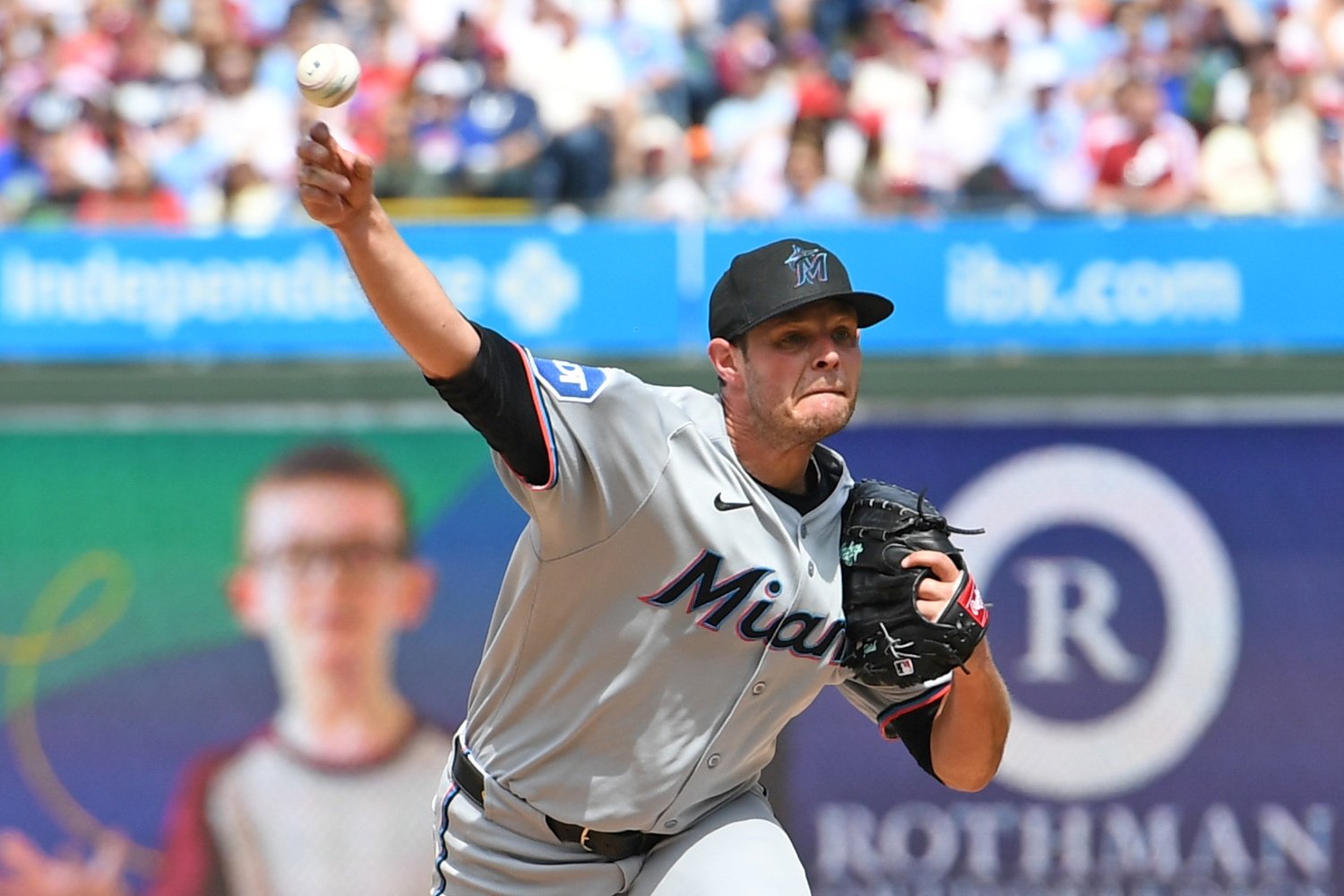 This Monday, the Minnesota Twins claimed right-handed starting pitcher Connor Gillispie off waivers from the Miami Marlins and immediately optioned him to Triple-A St. Paul. Minnesota claimed the 27-year-old one day after starting pitching prospect Andrew Morris (who was next in line to join the Twins' starting rotation) was placed on the Triple-A injured list with a right forearm strain, signaling team decision-makers acquired the former Marlin to fortify their starting pitching depth. Ideally, Gillispie will not grace the mound at 1 Twins Way this season. However, given Minnesota's starting pitchers' recent proclivity for landing on the injured list and frontline starter Bailey Ober undergoing significant performance struggles while nursing a left hip injury, Twins decision-makers could soon be forced to yet again call upon minor-league reinforcements to fill out the five-pitcher starting rotation. NXkybjNfWGw0TUFRPT1fQkZJQ1ZnSlFCVk1BV1ZCWEFnQUhBUVJTQUFOUUFnUUFDbE5VVVFwVUJ3TldDQVpW.mp4 If another injury occurred, Travis Adams (who possesses a 40-man roster spot) could be the next Triple-A starting pitcher to make a spot start or join the rotation. Given the fact that Gillispie also occupies a 40-man roster spot and has started six major-league games this season, the soft-tossing righty may have usurped Adams on the organizational starting pitcher depth chart. As noted earlier, though, relying on Gillispie would be an undesirable outcome, evidenced by his early-season struggles with Miami. Over 26 innings pitched, Gillispie ran up an 8.65 ERA, 5.69 FIP, and a 23-to-11 strikeout-to-walk ratio. Generating a below-average 9.8% K-BB rate, Gillispie's struggles were primarily the product of him possessing five subpar pitches. The VCU product most prominently utilizes his sweeper and four-seamer, trailed by a cutter, a changeup, and occasional sinkers and curves. Only the fastball grades out decently. As noted earlier, none of Gillispie's primary or secondary pitchers are effective, evidenced by all of them generating positive run value per 100 pitches according to StuffPro (negative is better): The reason Gillispie's pitches have generated poor results this season is the unfortunate combination of him possessing below-average Stuff+, Location+, and velocity on all five pitches. Gillispie's pitches that generate the highest Stuff+ are his four-seam fastball (94 Stuff+) and sweeper (96 Stuff+). Given the club's longstanding ability to assist pitchers in maximizing their fastballs and sweepers/sliders, Gillispie could generate more favorable results with Minnesota after fine-tuning his repertoire in St. Paul. He's nothing more than emergency starting pitching depth. Yet, due to recent injury and performance concerns, Twins Territory could soon be forced to familiarize themselves with the former Marlin.
 -
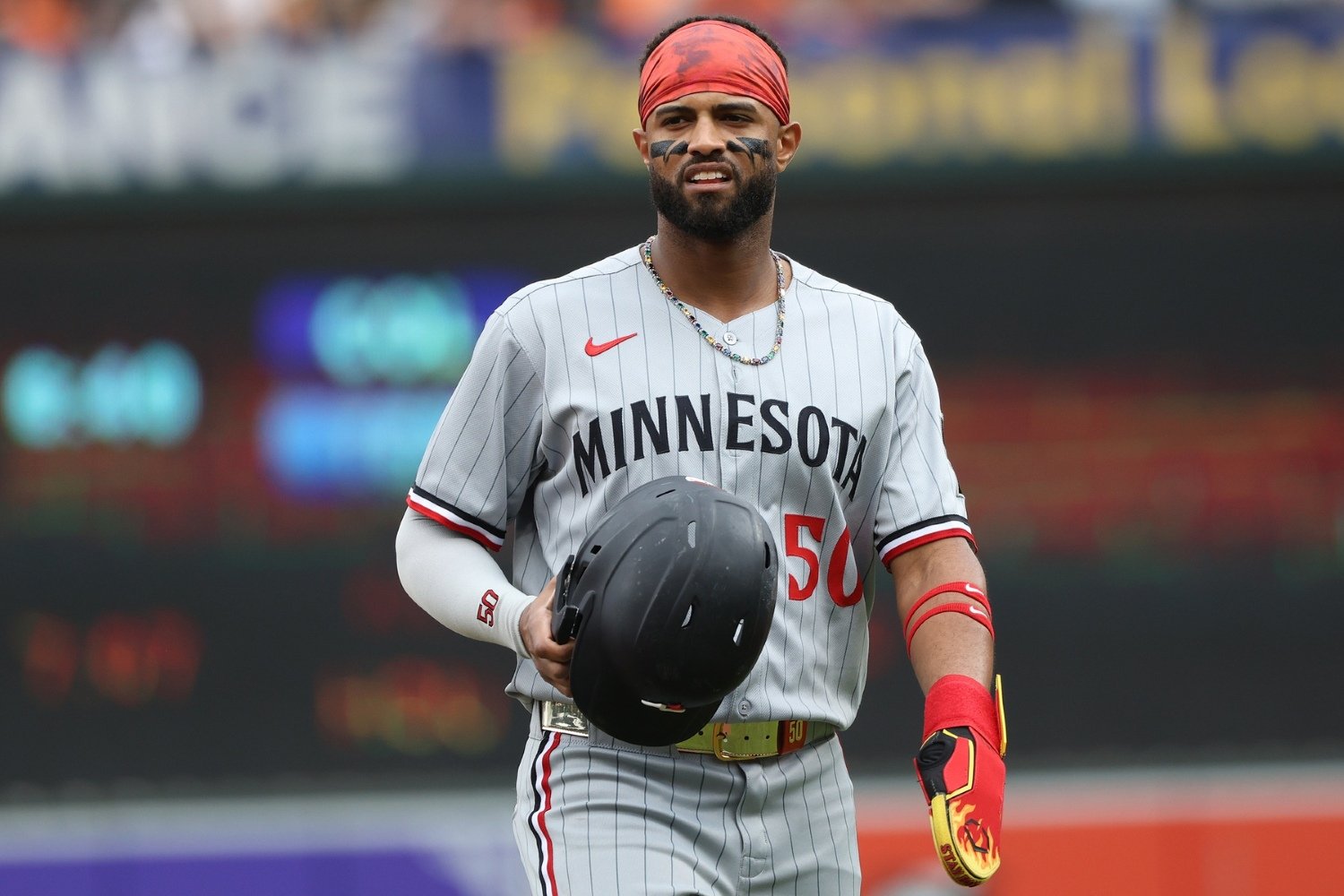 On Jun. 6's Friday night home game against the Toronto Blue Jays, Minnesota Twins utility player Willi Castro sported eye black resembling the Trans Pride Flag, shown below: Days and weeks after the Friday night game, Castro's gesture gradually garnered national attention, including star actor Pedro Pascal posting a picture of Castro on his Instagram story: Witnessing Castro wear eye black resembling the Trans Pride flag (the night before Pride Day at Target Field, no less) was a welcome sight, especially considering the national shift against trans rights from both major political parties. However, when asked about his gesture, Castro stated he was unaware of the implications of the color scheme. Now, we can all maintain our personal opinions of the honesty of that claim (and trust me, I have many). Yet, just as we should accept people for who they tell us they are, we should accept Castro's explanation as what he prefers to present to the world and respect his choice. The real issue (or predicament, if you will) here is not what Castro knew or intended, nor what he chose to say or not say. Instead, this incident perfectly embodies people's preferred mode of operation these days in that it's more about what we all saw and felt, rather than what Castro actually did. A mere decade ago, Pride (and the notion of LGBTQIA+ rights) had become widely normalized, most notably proven by the United States Supreme Court's 2015 decision in Obergefell v. Hodges, which legalized same-sex marriage in all 50 states. Acceptance was spreading, and equity was gaining a foothold. What this tea-kettle maelstrom exposes is how desperate people from the trans community now feel, all over again, for even a semi-visible, notable ally. It's about the fact that the question of many people's basic humanity and right to exist on the same terms as everyone else has been unjustly brought back to the table, as if it's a valid thing to question. If you felt seen and supported by Castro, that makes us here at Twins Daily very happy. We hope you still do, and we hope you feel seen and supported here, as well. Twins Territory doesn't know Castro's intentions, and won't attribute any advocacy to him that he declined to claim. Mostly, we hope that one day we can return to celebrating diversity and identity during festivals like Pride, rather than worrying that MLB will eliminate Pride Day at the park altogether or that those outside the league will make it an annual source of controversy. Trans rights are human rights, and if Castro's eyeblack meant something positive to you, let it continue to do so. That said, athletes cannot effect all the cultural and policy change we need right now, so don't count too heavily on Castro (or any athlete) being an activist, even if his advocacy would be a welcomed development at a time when the masses appear to be spiraling in a regressive direction. That we live in a moment that might need such activists is a problem those would(n't)-be activists can't solve. It's on all of us to do so, instead.
 -
Walker JenkinsLuke KeaschallEmmanuel RodriguezKaelen CulpepperDasan HillCharlee SotoAndrew MorrisKyle DeBargeConnor PrielippBilly AmickGabriel GonzalezKhadim DiawBrandon WinokurMarco RayaEduardo BeltrePayton EelesCJ CulpepperRicardo OlivarTravis AdamsNoah Cardenas
-
Walker JenkinsLuke KeaschallEmmanuel RodriguezKaelen CulpepperDasan HillCharlee SotoAndrew MorrisKyle DeBargeConnor PrielippBilly AmickGabriel GonzalezKhadim DiawBrandon WinokurMarco RayaEduardo BeltrePayton EelesCJ CulpepperRicardo OlivarTravis AdamsNoah Cardenas
-
Image courtesy of © Jay Biggerstaff-Imagn Images Entering the 2025 MLB regular season, the Boston Red Sox's catching plan was clear: Connor Wong would serve as the club's primary catcher, while offseason addition Carlos Narváez would mix in as his backup. That was the case from Mar. 27 through Apr. 7, with Wong netting seven starts at the position, compared to Narváez's five. Despite hitting a lousy .087/.192/.087 with a -21 wRC+ in 26 plate appearances to begin his 2025 campaign, Wong was slated to continue receiving the bulk of opportunities behind the dish for a while. However, the 29-year-old was placed on the 10-day IL with a left pinkie fracture, making Narváez the club's primary starting catcher in his absence. Narváez failed to seize on his opportunity at first, hitting a measly .175/.200/.333 with a 38 wRC+ over 65 plate appearances in Wong's absence. However, here is how the two catchers have performed since Wong returned from the injured list on May 2: Wong - .179/.289/.179, 45 plate appearances, seven hits, zero doubles, zero home runs, 22.2% strikeout rate, 38 wRC+ Narváez - .336/.437/.523, 126 plate appearances, 36 hits, 11 doubles, three home runs, 24.6% strikeout rate, 170 wRC+ While performing exponentially better than Wong at the plate over 81 more plate appearances during that stretch, Narváez has also outperformed Wong defensively, ranking fourth in MLB in Catcher Framing Runs and Blocks Above Average. One of the best receivers in baseball, Narváez has also blossomed into the AL catcher best at mitigating stolen bases, ranking first in the AL in Caught Stealing Above Average. Naturally, though, as Narváez has seized the spotlight, Wong has drifted into the shadows. Wong's subpar 2025 campaign is disappointing, especially considering his breakout 2024 season, wherein he hit .280/.333/.425 with 125 hits, 24 doubles, 13 home runs, a 23.4% strikeout rate, and a 110 wRC+ over 487 plate appearances. Even then, though, the 28-year-old's 110 wRC+ had to push against the negative value of being one of the worst defensive catchers in baseball, generating -13 blocks above average and -7 Catcher Framing Runs. In a total reversal, even as he's become one of the worst hitters in baseball this season, Wong has surprisingly turned his defensive fortunes, generating 3 Blocks Above Average and 1 Catcher Framing Run. He also boasts a plus arm. OGdZcWJfV0ZRVkV3dEdEUT09X0RnTllCVmNOVWdVQUMxRUxVQUFBQ1ZkV0FBTlRXd0lBQVZGUlUxSUVCUVJXQlZkZg==.mp4 Again, Wong has been horrendous at the plate this season. However, if he could return to his 2024 form at the plate while continuing to provide above-average defense, he could yet again function as an MLB-caliber starting catcher. With Narváez expected to earn the bulk of opportunities behind the plate for Boston in the foreseeable future, Wong likely won't get the consistent plate appearances necessary to shake off his slow start. With the former starting catcher stuck in limbo with his current team, Minnesota could be wise to buy low, especially considering the club's long-term outlook at the position. With veteran Christian Vázquez in the final season of the three-year, $30-million contract he signed before the 2023 season, current primary catcher Ryan Jeffers is the only MLB-caliber slated to be on the 26-man roster next year. Jair Camargo and (dare I say) Mickey Gasper are other 40-man roster inhabitants who could function as Jeffers's backstop to begin next season. However, entering a 162-game campaign with Camargo or Gasper one injury away from becoming a full-time starter would be a bleak outlook. Catching prospect Noah Cardenas was recently promoted to Triple-A St. Paul, after posting a 136 wRC+ over 127 plate appearances at Double-A. That said, his struggles at the plate with St. Paul (37 wRC+ over 15 plate appearances) suggest any aspirations of him becoming a viable backup catcher at the major-league level in the near future are fuzzy. Next season's backup catcher does not appear to be in the organization. Since Wong can still be optioned to the minors for the rest of this year, Minnesota could acquire him and demote to Triple-A to work through his issues at the plate, while Jeffers and Vázquez continue to split duties at the position for the rest of the season. Rostering backup catchers with MLB experience in Blake Sabol and Seby Zavala at Triple-A, Boston possesses the positional depth necessary to mitigate a Wong departure. Also, if Boston is hesitant to entrust Sabol or Zavala as Narváez's backup, Minnesota and Boston could execute a low-stakes challenge trade of sorts, flipping Wong for Camargo, who appeared in a major-league game last season. As Vázquez's impending departure from Minnesota nears, the organization needs to begin considering how the position will look beyond Jeffers, next season and beyond. Twins decision-makers would be wise to be proactive in attempting to solve potential depth concerns at the position by acquiring an MLB-caliber backstop before the July 31 trade deadline. With Wong sputtering in Boston and Narváez blossoming into the club's primary backstop, the organization could be willing to move on. If so, Minnesota should consider acquiring the 29-year-old backstop, allowing him to work through his offensive struggles in Triple-A with the hope of being able to enter next season as Jeffers's new partner behind the dish. View full article
-
Should Minnesota Twins Buy Low on Red Sox's Demoted Catcher?
Cody Schoenmann posted an article in Twins
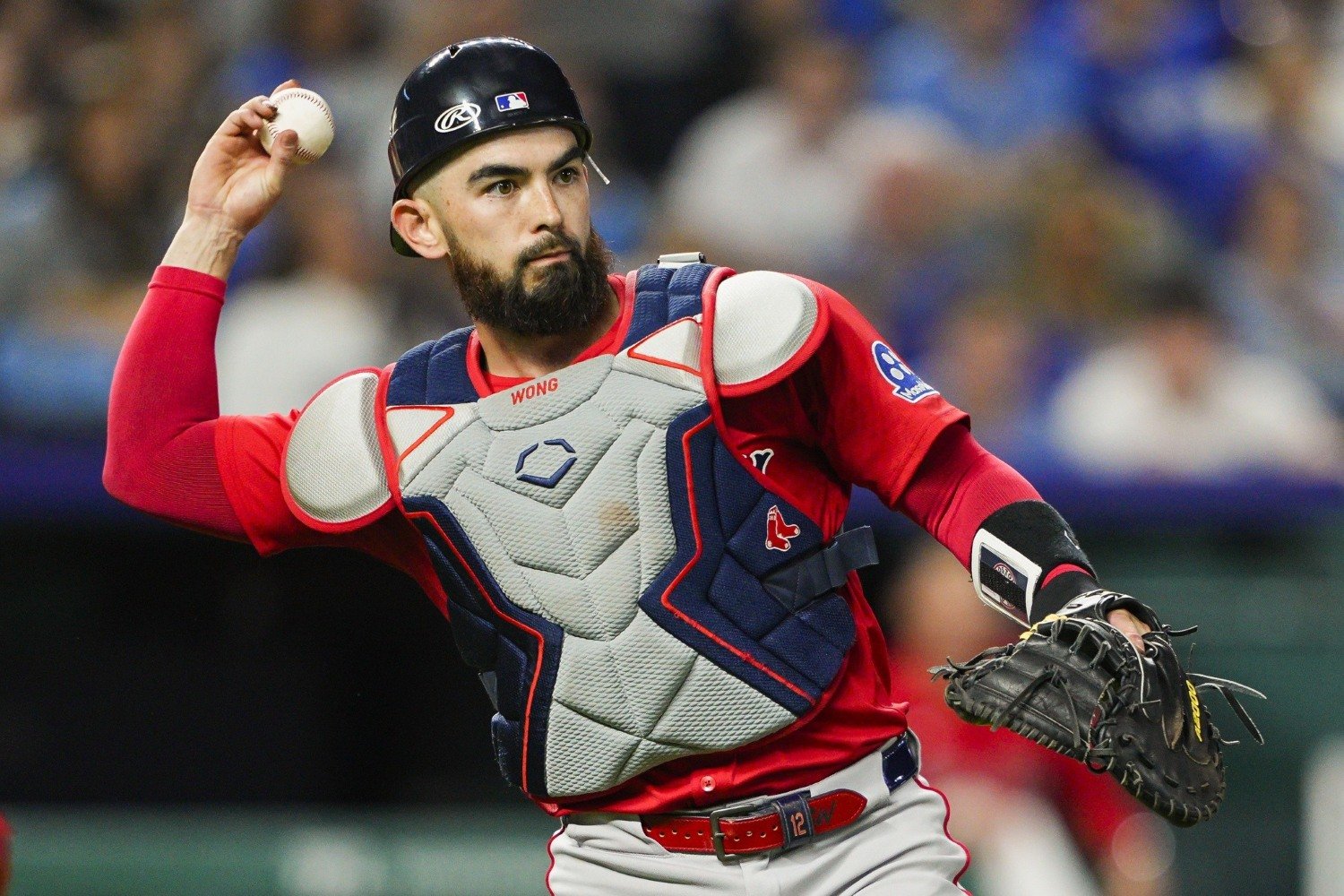 Entering the 2025 MLB regular season, the Boston Red Sox's catching plan was clear: Connor Wong would serve as the club's primary catcher, while offseason addition Carlos Narváez would mix in as his backup. That was the case from Mar. 27 through Apr. 7, with Wong netting seven starts at the position, compared to Narváez's five. Despite hitting a lousy .087/.192/.087 with a -21 wRC+ in 26 plate appearances to begin his 2025 campaign, Wong was slated to continue receiving the bulk of opportunities behind the dish for a while. However, the 29-year-old was placed on the 10-day IL with a left pinkie fracture, making Narváez the club's primary starting catcher in his absence. Narváez failed to seize on his opportunity at first, hitting a measly .175/.200/.333 with a 38 wRC+ over 65 plate appearances in Wong's absence. However, here is how the two catchers have performed since Wong returned from the injured list on May 2: Wong - .179/.289/.179, 45 plate appearances, seven hits, zero doubles, zero home runs, 22.2% strikeout rate, 38 wRC+ Narváez - .336/.437/.523, 126 plate appearances, 36 hits, 11 doubles, three home runs, 24.6% strikeout rate, 170 wRC+ While performing exponentially better than Wong at the plate over 81 more plate appearances during that stretch, Narváez has also outperformed Wong defensively, ranking fourth in MLB in Catcher Framing Runs and Blocks Above Average. One of the best receivers in baseball, Narváez has also blossomed into the AL catcher best at mitigating stolen bases, ranking first in the AL in Caught Stealing Above Average. Naturally, though, as Narváez has seized the spotlight, Wong has drifted into the shadows. Wong's subpar 2025 campaign is disappointing, especially considering his breakout 2024 season, wherein he hit .280/.333/.425 with 125 hits, 24 doubles, 13 home runs, a 23.4% strikeout rate, and a 110 wRC+ over 487 plate appearances. Even then, though, the 28-year-old's 110 wRC+ had to push against the negative value of being one of the worst defensive catchers in baseball, generating -13 blocks above average and -7 Catcher Framing Runs. In a total reversal, even as he's become one of the worst hitters in baseball this season, Wong has surprisingly turned his defensive fortunes, generating 3 Blocks Above Average and 1 Catcher Framing Run. He also boasts a plus arm. OGdZcWJfV0ZRVkV3dEdEUT09X0RnTllCVmNOVWdVQUMxRUxVQUFBQ1ZkV0FBTlRXd0lBQVZGUlUxSUVCUVJXQlZkZg==.mp4 Again, Wong has been horrendous at the plate this season. However, if he could return to his 2024 form at the plate while continuing to provide above-average defense, he could yet again function as an MLB-caliber starting catcher. With Narváez expected to earn the bulk of opportunities behind the plate for Boston in the foreseeable future, Wong likely won't get the consistent plate appearances necessary to shake off his slow start. With the former starting catcher stuck in limbo with his current team, Minnesota could be wise to buy low, especially considering the club's long-term outlook at the position. With veteran Christian Vázquez in the final season of the three-year, $30-million contract he signed before the 2023 season, current primary catcher Ryan Jeffers is the only MLB-caliber slated to be on the 26-man roster next year. Jair Camargo and (dare I say) Mickey Gasper are other 40-man roster inhabitants who could function as Jeffers's backstop to begin next season. However, entering a 162-game campaign with Camargo or Gasper one injury away from becoming a full-time starter would be a bleak outlook. Catching prospect Noah Cardenas was recently promoted to Triple-A St. Paul, after posting a 136 wRC+ over 127 plate appearances at Double-A. That said, his struggles at the plate with St. Paul (37 wRC+ over 15 plate appearances) suggest any aspirations of him becoming a viable backup catcher at the major-league level in the near future are fuzzy. Next season's backup catcher does not appear to be in the organization. Since Wong can still be optioned to the minors for the rest of this year, Minnesota could acquire him and demote to Triple-A to work through his issues at the plate, while Jeffers and Vázquez continue to split duties at the position for the rest of the season. Rostering backup catchers with MLB experience in Blake Sabol and Seby Zavala at Triple-A, Boston possesses the positional depth necessary to mitigate a Wong departure. Also, if Boston is hesitant to entrust Sabol or Zavala as Narváez's backup, Minnesota and Boston could execute a low-stakes challenge trade of sorts, flipping Wong for Camargo, who appeared in a major-league game last season. As Vázquez's impending departure from Minnesota nears, the organization needs to begin considering how the position will look beyond Jeffers, next season and beyond. Twins decision-makers would be wise to be proactive in attempting to solve potential depth concerns at the position by acquiring an MLB-caliber backstop before the July 31 trade deadline. With Wong sputtering in Boston and Narváez blossoming into the club's primary backstop, the organization could be willing to move on. If so, Minnesota should consider acquiring the 29-year-old backstop, allowing him to work through his offensive struggles in Triple-A with the hope of being able to enter next season as Jeffers's new partner behind the dish.
- 17 comments
-
- 2
-

-
- connor wong
- carlos narvaez
- (and 2 more)
-
On Jun. 6's Friday night home game against the Toronto Blue Jays, Minnesota Twins' utility player Willi Castro sported eye black resembling the Trans Pride Flag, shown below: Days and weeks after the Friday night game, Castro's gesture gradually garnered national attention, including star actor Pedro Pascal posting a picture of Castro on his Instagram story: Witnessing Castro wear eye black resembling the Trans Pride flag (the night before Pride Day at Target Field, nevertheless) was a welcomed sight, especially considering the national shift against trans rights from both major political parties. However, when asked about his gesture, Castro stated he was unaware of the implications of the color scheme. Now, we can all maintain our personal opinions of the honesty of that claim (and trust me, I have many). Yet, just as we should accept people for who they tell us they are, we should accept Castro's explanation as what he prefers to present to the world and respect his choice. The real issue (or predicament, if you will) here is not what Castro knew or intended, nor what he chose to say or not say. Instead, this incident perfectly embodies people's preferred mode of operation these days in that it's more about what we all saw and felt rather than what Castro actually did. A mere decade ago, Pride (and the notion of LGBTQIA+ rights) had become widely normalized, most notably proven by the United States Supreme Court's 2015 decision in Obergefell v. Hodges, which legalized same-sex marriage in all 50 states; acceptance was spreading, and equity was gaining a foothold. What this tea-kettle maelstrom exposes is how desperate people from the trans community now feel, all over again, for even a semi-visible, notable ally. It's about the fact that the question of many people's basic humanity and right to exist on the same terms as everyone else has been unjustly brought back to the table as if it's a valid thing to question. If you felt seen and supported by Castro, that makes us here at Twins Daily very happy. We hope you still do, and we hope you feel seen and supported here as well. Twins Territory doesn't know Castro's intentions and won't attribute any advocacy to him that he declined to claim. Mostly, we hope that one day we can return to celebrating diversity and identity during festivals like Pride rather than worrying that MLB will eliminate Pride Day at the park altogether or that those outside the league will make it an annual source of controversy. Trans rights are human rights, and if Castro's eyeblack meant something positive to you, let it continue to do so. That said, athletes cannot affect all the cultural and policy change we need right now, so don't count too heavily on Castro or any athlete being an activist, even if his advocacy would be a welcomed development at a time when the masses appear to be spiraling down a regressive direction. View full article
-
Image courtesy of © Tim Vizer-Imagn Images Entering the 2025 MLB season, the Minnesota Twins were deemed one the organizations most well-equipped to endure the threat of starting pitcher injuries, rostering prized young starting pitchers David Festa, Zebby Matthews, and Andrew Morris at Triple-A St. Paul. Luckily, Minnesota only needed to dip into their starting rotation depth during the first two months of the season, promoting Festa when ace Pablo López was placed on the 15-day injured list with a right hamstring strain on Apr. 11. Minnesota activated López from the 15-day IL on Apr. 25 and sent Festa back to the minors. The Twins rotation thus returned to its Opening Day five-pitcher rotation of López, Joe Ryan, Bailey Ober, Chris Paddack, and Simeon Woods Richardson. The status quo remained until Woods Richardson was demoted to Triple-A St. Paul on May 15, following a string of lackluster starts and a noticeable dip in his fastball velocity. Club decision-makers rewarded Matthews with Woods Richardson's rotation spot, providing the former top prospect his first extended opportunity of the year. The staff remained healthy and productive until López suffered a teres major strain during his June 3 start against the Athletics, which will sideline him for eight to 12 weeks. As a result, the front office was again forced to promote Festa. Five days later, Matthews was also placed on the 15-day IL with a right shoulder strain, forcing the team to recall Woods Richardson. That leaves Morris as the final line of reinforcement before starting pitching depth becomes a significant concern. Despite not possessing a 40-man roster spot and not yet making his major-league debut, Morris joining Minnesota's starting rotation would be a welcome development, given that he has generated a respectable 3.86 ERA and 4.36 FIP over 53 2/3 innings pitched in an offense-friendly league and home stadium. Still, depth beyond Morris has become a significant concern. Given the parent club's recent misfortune with starting pitcher injuries, however, the team may be forced to continue drawing on its minor-league starting pitching depth. Who is Minnesota most likely to call upon after Morris? Let's take a look at the most likely options: Travis Adams Despite earning his first promotion to the majors on Jun. 6, Adams was quickly optioned back to St. Paul on Jun. 9 to make room for Woods Richardson on the 26-man roster. The 25-year-old right-handed arm has yet to make his debut. That said, there is reason to believe Minnesota will be forced to call upon his services later this season. Ideally, Adams could take on a long relief role, effectively mimicking the one Cole Sands filled in 2023. If more starting pitching injuries arise, though, Adams could need to start games for the parent club. In that case, he would likely take on a bulk role, meaning a back-of-the-bullpen reliever like Justin Topa or Jorge Alcala would open the game, pitch to three or four batters, and hand the ball over to Adams for a multi-inning performance. Again, Minnesota being forced to rely on starting pitching depth beyond Morris would be a worst-case scenario. However, Adams would be a serviceable major-league arm whom the club could trust. Pitching prospect Marco Raya could also function as a bulk arm. That said, given his significant struggles at Triple A in his age-22 season, the club would be wise to go to drastic measures to avoid exposing him to major-league hitting. Darren McCaughan or Randy Dobnak This is where we, Twins Territory, really get into the weeds. McCaughan was initially brought to Minnesota this offseason as a multi-inning, low-leverage reliever, a role he fulfilled for the parent club over 5 ⅓ innings pitched in early April. However, his role has changed since his Apr. 6 demotion, earning starts in five of his nine appearances. The soft-tossing righty has generated a 4.06 ERA and 5.97 FIP over 37 ⅔ innings pitched, becoming a fixture in the Triple-A rotation. The 29-year-old’s transition into a starting pitcher has been relatively surprising. However, given that the organization has entrusted him with this newfound, more impactful role, there is reason to believe they could turn to him if a catastrophic number of starting rotation injuries were to arise. After making the 2025 Opening Day 26-man roster, Dobnak appeared in one game in a mop-up role, giving up one run over 5 ⅓ innings pitched. Dobnak could be deemed interchangeable with McCaughan. Both are veteran, minor-league options who would likely pitch in three- to four-inning spurts, similar to Adams or Raya. However, given Dobnak’s lackluster 5.87 ERA and 5.21 FIP over 30 ⅔ innings pitched with St. Paul, there is reason to believe McCaughan has a slight edge. Connor Prielipp Of the options named (including Morris), Prielipp presents the highest ceiling. Despite performing well at Double-A Wichita this season (3.13 ERA and 3.03 FIP over 31 ⅔ innings pitched), though, he won't be available for a while. The organization placed the 24-year-old on the 7-day IL with a blister on Tuesday. His 7-day IL stint follows the organization's recent placement of Prielipp on the developmental list to minimize his workload. Hopefully, Prielipp will pitch again later this season. Given his early season success, there is reason to believe he could earn a promotion to Triple-A, and eventually the majors. Still, given his perpetual health concerns and the team's desire to mitigate his workload, Adams, McCaughan, and Dobnak are more likely to receive immediate opportunities. If injuries arise later this season, Prielipp could be in line to make his major-league debut. View full article
-
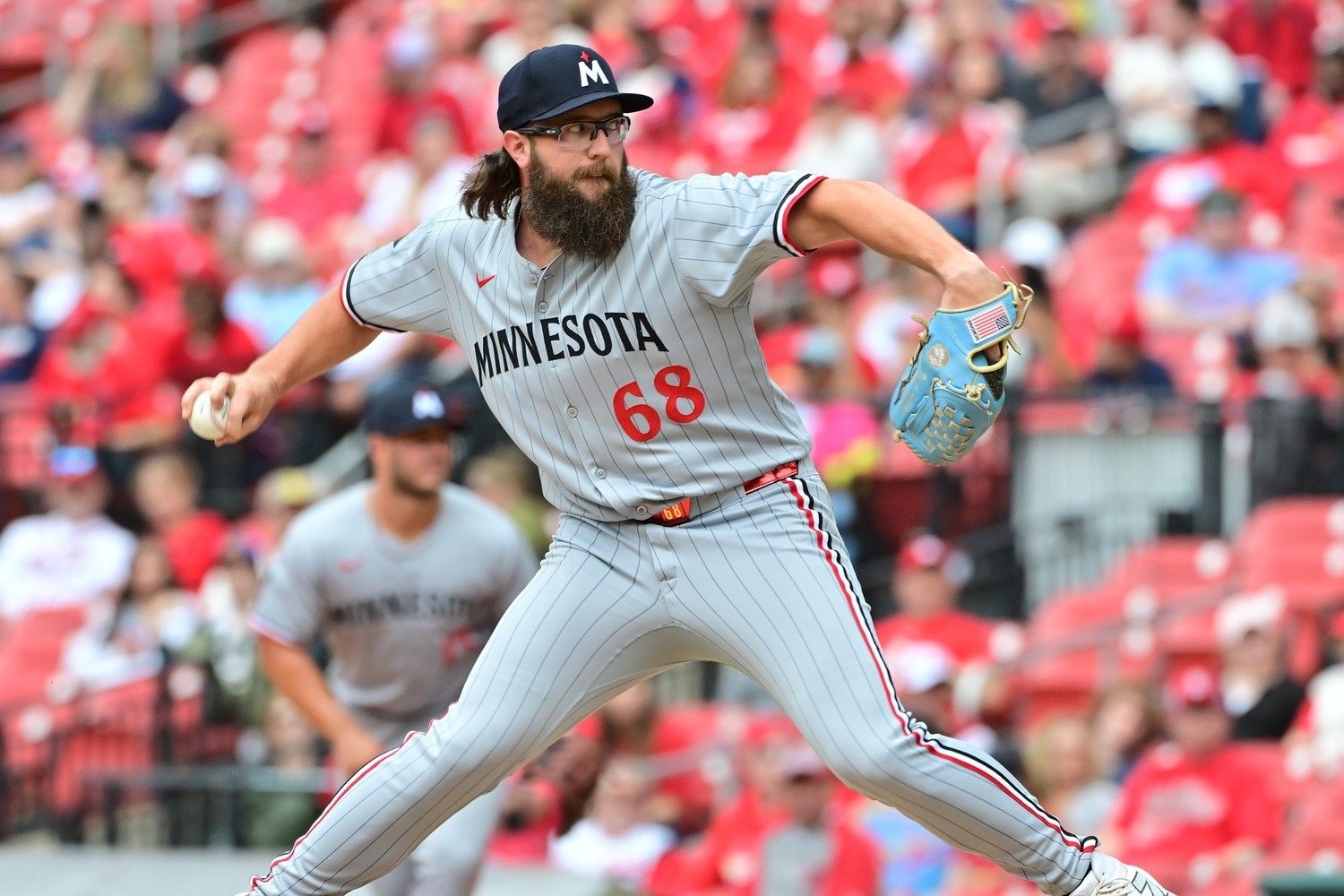 Entering the 2025 MLB season, the Minnesota Twins were deemed one the organizations most well-equipped to endure the threat of starting pitcher injuries, rostering prized young starting pitchers David Festa, Zebby Matthews, and Andrew Morris at Triple-A St. Paul. Luckily, Minnesota only needed to dip into their starting rotation depth during the first two months of the season, promoting Festa when ace Pablo López was placed on the 15-day injured list with a right hamstring strain on Apr. 11. Minnesota activated López from the 15-day IL on Apr. 25 and sent Festa back to the minors. The Twins rotation thus returned to its Opening Day five-pitcher rotation of López, Joe Ryan, Bailey Ober, Chris Paddack, and Simeon Woods Richardson. The status quo remained until Woods Richardson was demoted to Triple-A St. Paul on May 15, following a string of lackluster starts and a noticeable dip in his fastball velocity. Club decision-makers rewarded Matthews with Woods Richardson's rotation spot, providing the former top prospect his first extended opportunity of the year. The staff remained healthy and productive until López suffered a teres major strain during his June 3 start against the Athletics, which will sideline him for eight to 12 weeks. As a result, the front office was again forced to promote Festa. Five days later, Matthews was also placed on the 15-day IL with a right shoulder strain, forcing the team to recall Woods Richardson. That leaves Morris as the final line of reinforcement before starting pitching depth becomes a significant concern. Despite not possessing a 40-man roster spot and not yet making his major-league debut, Morris joining Minnesota's starting rotation would be a welcome development, given that he has generated a respectable 3.86 ERA and 4.36 FIP over 53 2/3 innings pitched in an offense-friendly league and home stadium. Still, depth beyond Morris has become a significant concern. Given the parent club's recent misfortune with starting pitcher injuries, however, the team may be forced to continue drawing on its minor-league starting pitching depth. Who is Minnesota most likely to call upon after Morris? Let's take a look at the most likely options: Travis Adams Despite earning his first promotion to the majors on Jun. 6, Adams was quickly optioned back to St. Paul on Jun. 9 to make room for Woods Richardson on the 26-man roster. The 25-year-old right-handed arm has yet to make his debut. That said, there is reason to believe Minnesota will be forced to call upon his services later this season. Ideally, Adams could take on a long relief role, effectively mimicking the one Cole Sands filled in 2023. If more starting pitching injuries arise, though, Adams could need to start games for the parent club. In that case, he would likely take on a bulk role, meaning a back-of-the-bullpen reliever like Justin Topa or Jorge Alcala would open the game, pitch to three or four batters, and hand the ball over to Adams for a multi-inning performance. Again, Minnesota being forced to rely on starting pitching depth beyond Morris would be a worst-case scenario. However, Adams would be a serviceable major-league arm whom the club could trust. Pitching prospect Marco Raya could also function as a bulk arm. That said, given his significant struggles at Triple A in his age-22 season, the club would be wise to go to drastic measures to avoid exposing him to major-league hitting. Darren McCaughan or Randy Dobnak This is where we, Twins Territory, really get into the weeds. McCaughan was initially brought to Minnesota this offseason as a multi-inning, low-leverage reliever, a role he fulfilled for the parent club over 5 ⅓ innings pitched in early April. However, his role has changed since his Apr. 6 demotion, earning starts in five of his nine appearances. The soft-tossing righty has generated a 4.06 ERA and 5.97 FIP over 37 ⅔ innings pitched, becoming a fixture in the Triple-A rotation. The 29-year-old’s transition into a starting pitcher has been relatively surprising. However, given that the organization has entrusted him with this newfound, more impactful role, there is reason to believe they could turn to him if a catastrophic number of starting rotation injuries were to arise. After making the 2025 Opening Day 26-man roster, Dobnak appeared in one game in a mop-up role, giving up one run over 5 ⅓ innings pitched. Dobnak could be deemed interchangeable with McCaughan. Both are veteran, minor-league options who would likely pitch in three- to four-inning spurts, similar to Adams or Raya. However, given Dobnak’s lackluster 5.87 ERA and 5.21 FIP over 30 ⅔ innings pitched with St. Paul, there is reason to believe McCaughan has a slight edge. Connor Prielipp Of the options named (including Morris), Prielipp presents the highest ceiling. Despite performing well at Double-A Wichita this season (3.13 ERA and 3.03 FIP over 31 ⅔ innings pitched), though, he won't be available for a while. The organization placed the 24-year-old on the 7-day IL with a blister on Tuesday. His 7-day IL stint follows the organization's recent placement of Prielipp on the developmental list to minimize his workload. Hopefully, Prielipp will pitch again later this season. Given his early season success, there is reason to believe he could earn a promotion to Triple-A, and eventually the majors. Still, given his perpetual health concerns and the team's desire to mitigate his workload, Adams, McCaughan, and Dobnak are more likely to receive immediate opportunities. If injuries arise later this season, Prielipp could be in line to make his major-league debut.
- 44 comments
-
- 6
-

-
-
- andrew morris
- travis adams
- (and 4 more)
-
VM, I wouldn't stress about that statement too much. All I'm saying is that he failed to produce in the six PAs the Phillies provided him earlier this season. I know six plate appearances is an almost negligible sample size. The more important element is that Philadelphia went out of its way to not play him.
-
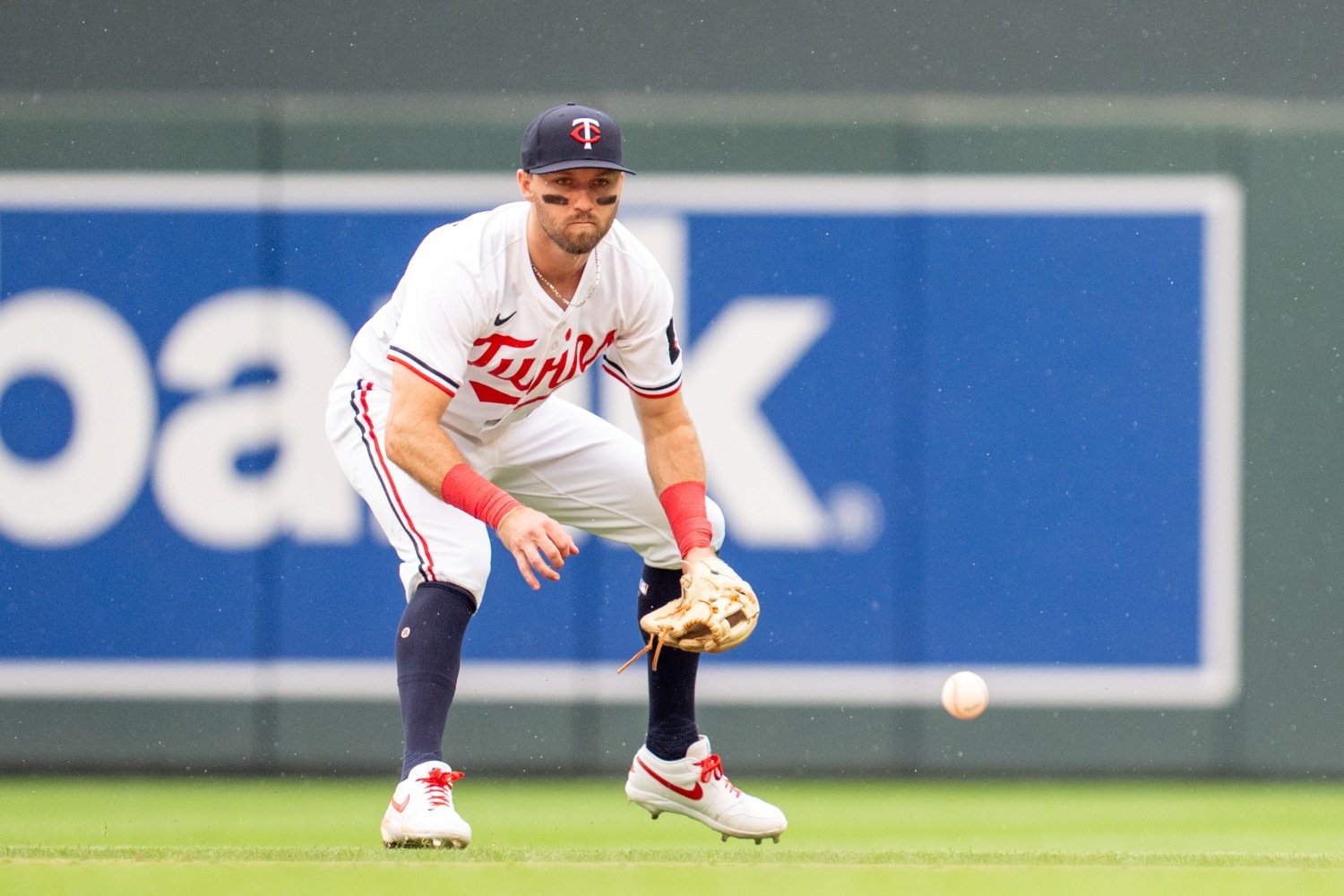 After winning the Philadelphia Phillies' final bench spot over right-handed utility infielder Buddy Kennedy this spring, Kody Clemens appeared in just six games from Mar. 29 through Apr. 18, hitting .000/.167/.000 with a -36 wRC+ over six plate appearances. With the journeyman receiving minimal playing time and demonstrating an inability to produce when provided opportunities, Philadelphia designated Clemens for assignment on Apr. 23. Three days later, they traded the 29-year-old to the Minnesota Twins, ending his two-season stint with them. Despite showcasing defensive flexibility, Clemens never performed at an above-average rate offensively for Philadelphia. He had a weak 73 wRC+ over 148 plate appearances with the club in 2023 and a 92 wRC+ over 120 plate appearances in 2024. Due to consistent struggles at the plate, the Texas product's departure from the City of Brotherly Love was rather unceremonious. Interestingly, though, the career sub-replacement level utility player quickly changed his fortunes with Minnesota, hitting .253/.354/.554 with 21 hits, six home runs, five doubles, 10 walks, and a 156 wRC+. Fueled by increased bat speed and a newfound knack for power, Clemens has become a revelation for Twins Territory, effectively replacing the production the organization had hoped to receive from Edouard Julien at the beginning of the season. Here is how Clemens performed from Apr. 24 through May 24 with the Twins: .319/.396/.723, 54 plate appearances, 15 hits, four home runs, five doubles, 29.6% strikeout rate, 212 wRC+ Sacrificing contact for power, Clemens enjoyed the best three-week stretch of his career, performing 112% better than league average. Again, he was a welcome jolt for a struggling Minnesota club. However, his ability to produce at the plate has begun to dip significantly, indicating he could be reverting to the player Philadelphia elected to part ways with. Here is how Clemens has performed since May 25: .167/.302/.333, 43 plate appearances, six hits, two home runs, zero doubles, 14% strikeout rate, 87 wRC+ Despite slashing his strikeout rate in half, Clemens' performance resembles that of the player he was with the Detroit Tigers and Phillies more than his first three weeks in Minnesota, a notion supported by rolling expected wOBA (50 plate appearances): Clemens regressing to something closer to the player he was with Detroit and Philadelphia is unsurprising. He was never going to continue performing at an Aaron Judge rate. Still, he was a significant contributor to the club's 13-game winning streak, whose positional versatility was necessary as the club navigated injuries to Matt Wallner, Willi Castro, Carlos Correa, and Byron Buxton. Still, with Wallner, Castro, Correa, and Buxton back in the fold and Trevor Larnach, Royce Lewis, Brooks Lee, and Ty France steadily improving at the plate, there is reason to believe Clemens's opportunities could continue to dwindle, until he is starting only once or twice a week and entering as a pinch-runner or late-game defensive substitution. With Luke Keaschall on the path toward returning from his nondisplaced forearm fracture and Payton Eeles performing at an above-average rate in Triple-A after returning from offseason knee surgery, even more roster pressure could soon weigh on Clemens.
 -
After winning the Philadelphia Phillies' final bench spot over right-handed utility infielder Buddy Kennedy, Kody Clemens appeared in just six games for Philadelphia from Mar. 29 through Apr. 18, hitting .000/.167/.000 with a -36 wRC+ over six plate appearances. Receiving minimal playing time and demonstrating an inability to produce when provided opportunities, Philadelphia designated Clemens for assignment on Apr. 23. Three days later, Phillies decision-makers traded the 29-year-old to the Minnesota Twins, ending his two-season stint with Philadelphia. Despite showcasing defensive flexibility, Clemens never performed at an above-average rate offensively for Philadelphia, evidenced by him generating a 73 wRC+ over 148 plate appearances with the club in 2023 and a 92 wRC+ over 120 plate appearances in 2024. Due to consistent struggles at the plate, the Texas product's departure from the City of Brotherly Love was rather unceremonious. Interestingly, though, the career sub-replacement level utility player quickly changed his fortunes with Minnesota, hitting .253/.354/.554 with 21 hits, six home runs, five doubles, 10 walks, and a 156 wRC+. Headlined by increased bat speed and a newfound knack for power, Clemens has become a revelation for Twins Territory, effectively replacing the production the organization had hoped to receive from Edouard Julien at the beginning of the season. Here is how Clemens performed from Apr. 24 through May 24 with the Twins: .319/.396/.723, 54 plate appearances, 15 hits, four home runs, five doubles, 29.6% strikeout rate, 212 wRC+ Sacrificing contact for power, Clemens executed the best three-week stretch of his career, performing 112% better than league average. Again, he was a welcomed jolt for a struggling Minnesota club. However, Roger's son's ability to produce at the plate has begun to dip significantly, indicating he could be reverting to the player Philadelphia elected to part ways with. Here is how Clemens has performed since May 25: .167/.302/.333, 43 plate appearances, six hits, two home runs, zero doubles, 14% strikeout rate, 87 wRC+ Despite slashing his strikeout rate in half, Clemens' performance resembles that of the player he was with the Detroit Tigers and Phillies more than his first three weeks in Minnesota, a notion supported by rolling expected wOBa (50 plate appearances): His expected rolling expected SLG (50 plate appearances) tells a similar story: Clemens regressing to something closer to the player he was with Detroit and Philadelphia is unsurprising. He was never going to continue performing at an Aaron Judge-esque rate. Still, he was a significant contributor to the club's 13-game winning streak, whose positional versatility was necessary as the club navigated injuries to Matt Wallner, Willi Castro, Carlos Correa, and Byron Buxton. Still, with Wallner, Castro, Correa, and Buxton back in the fold and Trevor Larnach, Royce Lewis, Brooks Lee, and Ty France steadily improving at the plate, there is reason to believe Clemens' opportunities could continue to dwindle until he is starting only once or twice a week and entering as a pinch-runner or late-game defensive substitution. With Luke Keaschall on the precipice of returning from his nondisplaced forearm fracture and Payton Eeles performing at an above-average rate in Triple-A after returning from offseason knee surgery, even more roster pressure could soon weigh over Clemens. View full article
-
Image courtesy of Rob Thompson, St. Paul Saints After missing the first two months of the minor-league season recovering from an offseason knee surgery, 25-year-old utility player Payton Eeles returned to baseball action last month with a rehab assignment divided between Low-A Fort Myers and High-A Cedar Rapids. Over his 13-game rehabilitation stint, the left-handed hitting fan favorite hit a combined .334/.420/.425 with 14 hits, two doubles, and a 144 wRC+ over 50 plate appearances. After a brief stint in the low minors, Eeles returned to Minnesota's state capital, rejoining the Triple-A St. Paul Saints, hoping to build on his breakout 2024 campaign. Over just four games played, the former Southern Maryland Blue Crab is hitting .353/.389/.353 with six hits, one walk, and a 102 wRC+ over 18 plate appearances. Now, 68 combined plate appearances are a notably small sample. However, Eeles has yet to hit a home run while netting only one extra-base hit, an outcome that is antithetical to the relative power surge the 25-year-old underwent at Triple A last season (eight home runs over 260 plate appearances). Eeles could course-correct and begin hitting for power again. For now, though, his contact-skilled profile has been on display early in his 2025 Triple-A campaign, evidenced by his well-above-average .353 batting average and 5.6% strikeout rate. Similar to last season, Eeles is demonstrating aggressiveness on the basepaths, stealing four bases during his low minors rehab assignment and two at Triple-A. While continuing to be a contact-skilled left-handed bat who provides value on the bases, Eeles has continued to exhibit defensive flexibility, garnering playing time at the following positions early this season: Shortstop (18 innings during rehab assignment; 19 innings at Triple-A) Left Field (21 innings during rehab assignment) Second Base (26 innings during rehab assignment; 18 innings at Triple-A) He also netted three starts as a designated hitter during his rehab assignment. Regardless, the young utility player has played exclusively at second base and shortstop at St. Paul. while also seeing time in left field during his rehab assignment. Like many of Minnesota's young, homegrown position players. Eeles isn't fixed to one position. Part of his value manifests from his positional flexibility. Combining Eeles's profile at the plate with his positional flexibility, there is reason to speculate he could soon earn a spot on the Twins' 40-man roster and make his major-league debut. Two weeks ago, this proclamation could have been deemed far-fetched. Eeles was still in the midst of his rehab assignment and the parent club was filled to the brim with healthy infielders, in Brooks Lee, Willi Castro, Kody Clemens, Royce Lewis, Jonah Bride, and Carlos Correa. However, given Lewis's recent struggles at the plate, Clemens showing signs of regression, Bride providing little-to-no value, and the offense's anemic state, there is reason to believe the playoff-hopeful club could benefit from inserting a jolt like Eeles into the mix. Purchasing Eeles's contract would be a straightforward transaction for Twins decision-makers, as they could designate minor-league journeyman Ryan Fitzgerald for assignment. Yes, Eeles will need to continue maintaining a high batting average and on-base percentage while showcasing some of the slugging capabilities he displayed with St. Paul last season to make his potential promotion to the next level realistic. However, given his promising start to his 2025 campaign (following a serious offseason procedure) and the current lackluster state of the parent club's offense, there is reason to believe the former Indy ball product could make his major-league debut before the All-Star break. View full article
-
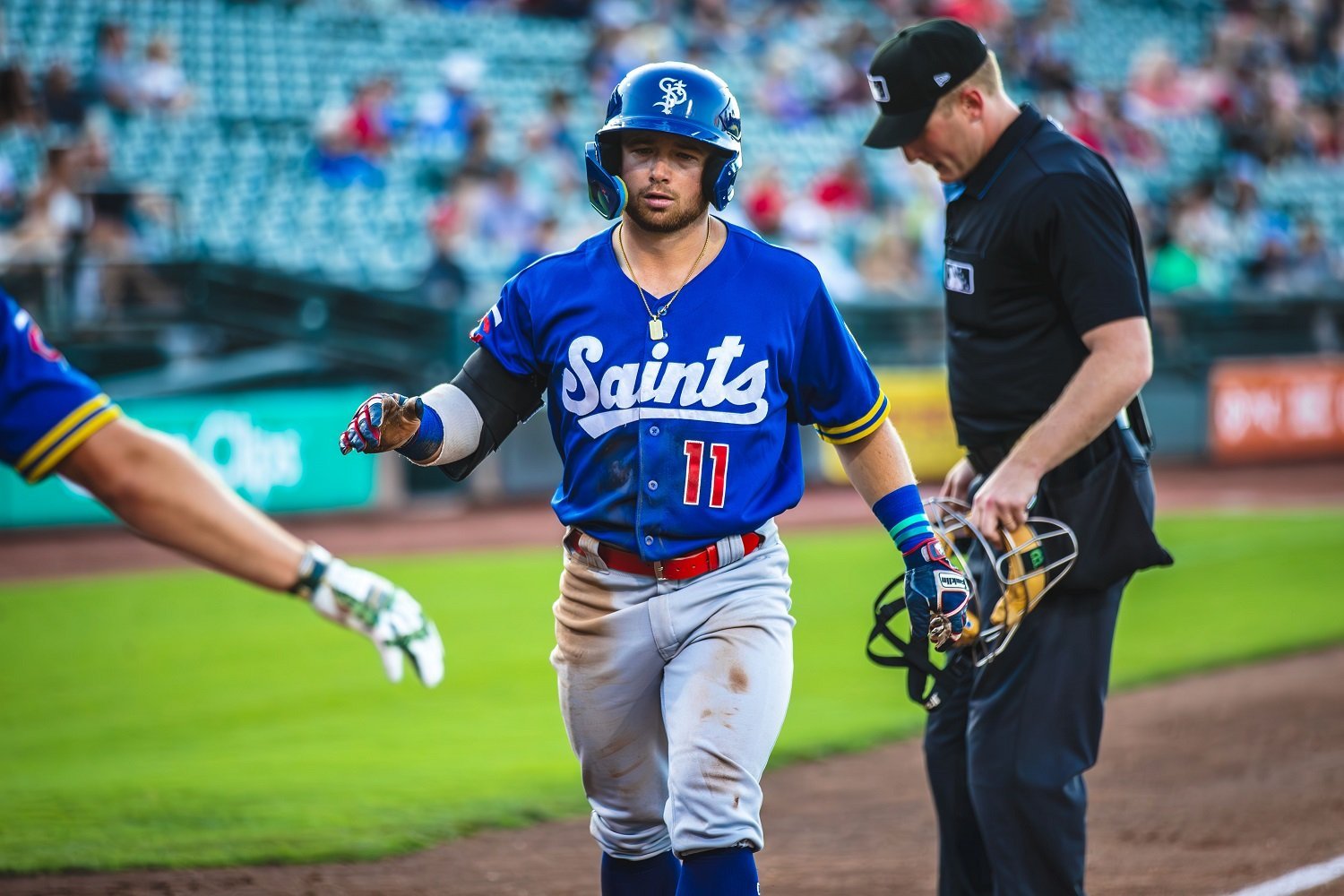 After missing the first two months of the minor-league season recovering from an offseason knee surgery, 25-year-old utility player Payton Eeles returned to baseball action last month with a rehab assignment divided between Low-A Fort Myers and High-A Cedar Rapids. Over his 13-game rehabilitation stint, the left-handed hitting fan favorite hit a combined .334/.420/.425 with 14 hits, two doubles, and a 144 wRC+ over 50 plate appearances. After a brief stint in the low minors, Eeles returned to Minnesota's state capital, rejoining the Triple-A St. Paul Saints, hoping to build on his breakout 2024 campaign. Over just four games played, the former Southern Maryland Blue Crab is hitting .353/.389/.353 with six hits, one walk, and a 102 wRC+ over 18 plate appearances. Now, 68 combined plate appearances are a notably small sample. However, Eeles has yet to hit a home run while netting only one extra-base hit, an outcome that is antithetical to the relative power surge the 25-year-old underwent at Triple A last season (eight home runs over 260 plate appearances). Eeles could course-correct and begin hitting for power again. For now, though, his contact-skilled profile has been on display early in his 2025 Triple-A campaign, evidenced by his well-above-average .353 batting average and 5.6% strikeout rate. Similar to last season, Eeles is demonstrating aggressiveness on the basepaths, stealing four bases during his low minors rehab assignment and two at Triple-A. While continuing to be a contact-skilled left-handed bat who provides value on the bases, Eeles has continued to exhibit defensive flexibility, garnering playing time at the following positions early this season: Shortstop (18 innings during rehab assignment; 19 innings at Triple-A) Left Field (21 innings during rehab assignment) Second Base (26 innings during rehab assignment; 18 innings at Triple-A) He also netted three starts as a designated hitter during his rehab assignment. Regardless, the young utility player has played exclusively at second base and shortstop at St. Paul. while also seeing time in left field during his rehab assignment. Like many of Minnesota's young, homegrown position players. Eeles isn't fixed to one position. Part of his value manifests from his positional flexibility. Combining Eeles's profile at the plate with his positional flexibility, there is reason to speculate he could soon earn a spot on the Twins' 40-man roster and make his major-league debut. Two weeks ago, this proclamation could have been deemed far-fetched. Eeles was still in the midst of his rehab assignment and the parent club was filled to the brim with healthy infielders, in Brooks Lee, Willi Castro, Kody Clemens, Royce Lewis, Jonah Bride, and Carlos Correa. However, given Lewis's recent struggles at the plate, Clemens showing signs of regression, Bride providing little-to-no value, and the offense's anemic state, there is reason to believe the playoff-hopeful club could benefit from inserting a jolt like Eeles into the mix. Purchasing Eeles's contract would be a straightforward transaction for Twins decision-makers, as they could designate minor-league journeyman Ryan Fitzgerald for assignment. Yes, Eeles will need to continue maintaining a high batting average and on-base percentage while showcasing some of the slugging capabilities he displayed with St. Paul last season to make his potential promotion to the next level realistic. However, given his promising start to his 2025 campaign (following a serious offseason procedure) and the current lackluster state of the parent club's offense, there is reason to believe the former Indy ball product could make his major-league debut before the All-Star break.
 -
Doctor Gast, this is not the time to debate dialectical materialism! Royce Lewis has a 14 wRC+!
-
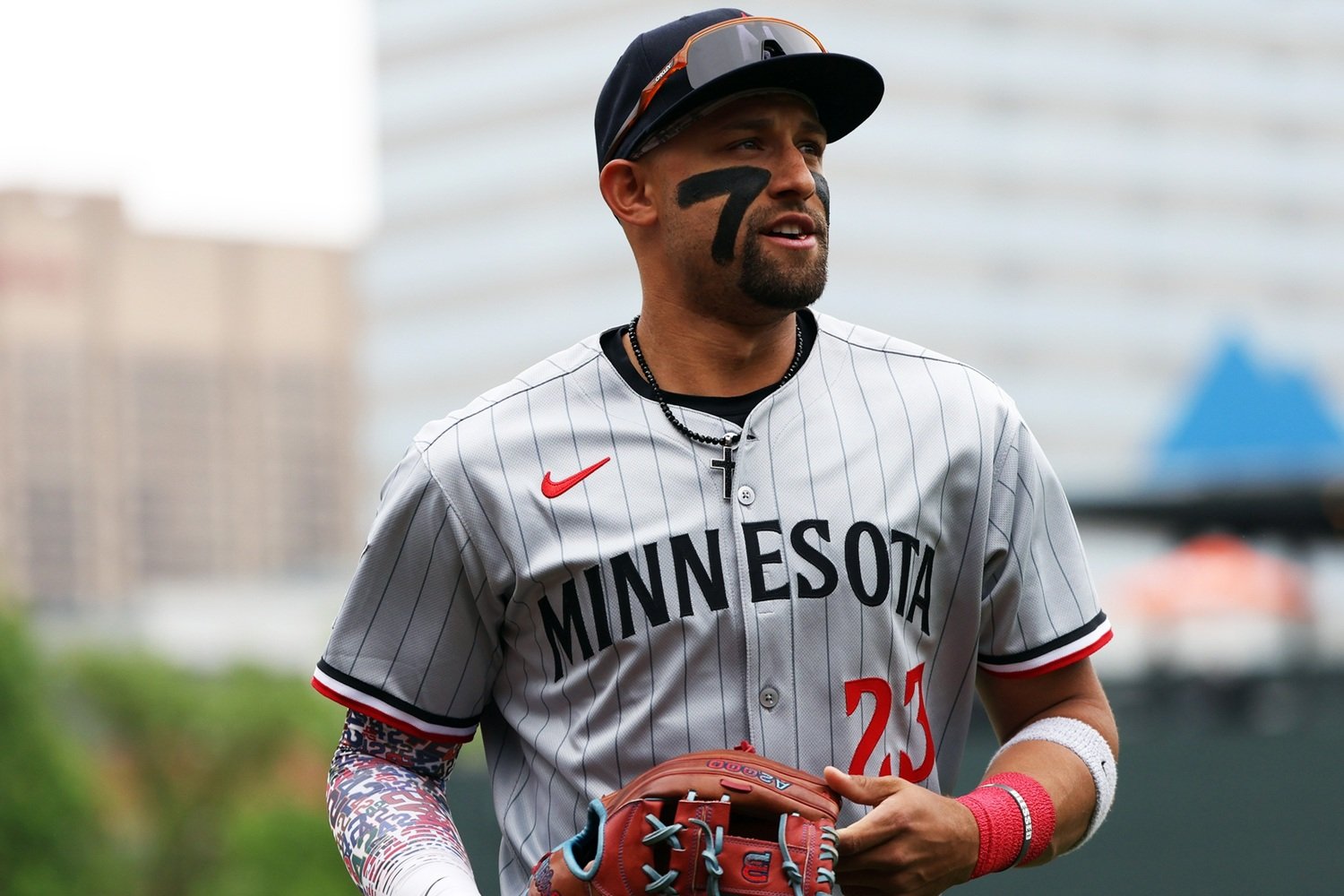 On this past Wednesday's episode of Effectively Wild, titled "Playing the Hits," podcast co-hosts Ben Lindbergh and Meg Rowley discussed Texas Rangers infielder Jake Burger's recent "minor league reset." Acquired in a trade with the Miami Marlins last offseason, Texas brought Burger to the Lone Star State with intentions of turning the right-handed hitting power bat into the club's primary starting first baseman. Unfortunately, the 29-year-old struggled his first month in Texas, hitting .190/.231/.330 with a 29.6% strikeout rate and 55 wRC+. Performing 45% worse than league average, Rangers decision-makers elected to demote the former Marlin to Triple-A Round Rock with intentions of him finding his footing at the plate and becoming the hitter that convinced Texas to trade for him in the first place. Spending 10 days in Round Rock, Burger refound his form, hitting .391/.462/.696 with a 193 wRC+ over 26 plate appearances. The corner infielder also significantly improved his strikeout rate at Triple-A, striking out only 7.7% of the time. Since being promoted back to the majors on May 12, Burger has returned to being an above-average major league hitter, hitting .237/.262/.508 with an improved 23% strikeout rate and 114 wRC+. Twenty-three of Burger's 61 plate appearances since returning from Triple-A have come against Colorado Rockies and Chicago White Sox pitching. Still, his return to form suggests that the offseason acquisition could become the offensive contributor Texas had hoped he would be after acquiring him last offseason. In the podcast episode, Lindbergh describes Burger's demotion as the "platonic ideal of the minor league reset" while also noting that "Maybe (Burger) was gonna hit better anyway, because he was expected to hit well. That's why they acquired him." Lindbergh later stated, "It would be kind of a shock to the system to bent sent back to Triple-A. And I guess that was the idea. And it was a good shock to the system. It sort of jump-started him. I think for me, it would do the opposite. I'd get even more in my head." Lindbergh's analysis was reasonable. A significant number of established major leaguers would not handle a demotion to Triple-A well. However, later in the episode, Rowley noted that "...What I've heard from scouts who interacted with (Burger) on the complex while he was working his way back through all of that is just that, like, he has a good perspective on things, he is a cheerful person, and you know, he by all rights could have been discouraged and seems like he was able to sort of weather the psychological load of all that impressively." Rowley continued, proclaiming, "And it seems like it's hard (to make adjustments in-season), and it takes time, and like, are you going to be able to actually do the work in game against like big league fastballs and big league breakers? Like impossible." She continues, "And, so, I do think for some of these guys, it's like not a relief to be sent down. Like, obviously, you want to be in the show. But to really have the room to work through it and readjust and reset seems like it would be meaningful and...on some level, it could be a relief if you're thinking about it the right way." While discussing the number of variables that would go into a minor league reset, Lindbergh and Rowley come to the justified consensus that the player undergoing the reset would need to possess the correct, optimistic mindset. If the specific player did not possess that mindset, then the club would run the risk of exacerbating the player's struggles. Burger possessed the correct mindset and, to this point, has benefited from his brief minor-league tune-up. Interestingly, presently struggling Minnesota Twins infielder Royce Lewis could also potentially benefit from a similar reset. Since returning from the IL on May 6, the 25-year-old corner infielder is hitting .138/.200/.215 with a 17 wRC+ over 70 plate appearances. Despite generating an impressive 14.3% strikeout rate and well-above-average bat speed and squared-up rate, Lewis has been unable to consistently produce meaningful results at the plate, a trend that dates back to late August last season. While it is unknown whether Lewis's newfound inability to produce at the plate is health-related or swing mechanics-related (or both), major league pitchers are exploiting his shortcomings, resulting in his worst start to a season in his young career. Whether Lewis's indomitable optimism is genuine or not is a matter for debate. However, considering his innate ability to perceive misfortune through rose-tinted glasses publicly, there is reason to believe Lewis would embody a positive outlook on a short-lived demotion to Triple-A, similar to how Burger handled his situation with Texas. The trio of Jonah Bride, Brooks Lee, and Willi Castro could viably fill the void at third base left by Lewis's hypothetical absence. However, given the overall club's anemic performance at the plate, Twins decision-makers might have no choice but to provide Lewis the opportunity to continue working through his offensive shortcomings at the major league level. Would a short demotion benefit or hurt Royce Lewis and the Twins? Let us know in the comments.
 -
Image courtesy of © Daniel Kucin Jr.-Imagn Images On this past Wednesday's episode of Effectively Wild, titled "Playing the Hits," podcast co-hosts Ben Lindbergh and Meg Rowley discussed Texas Rangers infielder Jake Burger's recent "minor league reset." Acquired in a trade with the Miami Marlins last offseason, Texas brought Burger to the Lone Star State with intentions of turning the right-handed hitting power bat into the club's primary starting first baseman. Unfortunately, the 29-year-old struggled his first month in Texas, hitting .190/.231/.330 with a 29.6% strikeout rate and 55 wRC+. Performing 45% worse than league average, Rangers decision-makers elected to demote the former Marlin to Triple-A Round Rock with intentions of him finding his footing at the plate and becoming the hitter that convinced Texas to trade for him in the first place. Spending 10 days in Round Rock, Burger refound his form, hitting .391/.462/.696 with a 193 wRC+ over 26 plate appearances. The corner infielder also significantly improved his strikeout rate at Triple-A, striking out only 7.7% of the time. Since being promoted back to the majors on May 12, Burger has returned to being an above-average major league hitter, hitting .237/.262/.508 with an improved 23% strikeout rate and 114 wRC+. Twenty-three of Burger's 61 plate appearances since returning from Triple-A have come against Colorado Rockies and Chicago White Sox pitching. Still, his return to form suggests that the offseason acquisition could become the offensive contributor Texas had hoped he would be after acquiring him last offseason. In the podcast episode, Lindbergh describes Burger's demotion as the "platonic ideal of the minor league reset" while also noting that "Maybe (Burger) was gonna hit better anyway, because he was expected to hit well. That's why they acquired him." Lindbergh later stated, "It would be kind of a shock to the system to bent sent back to Triple-A. And I guess that was the idea. And it was a good shock to the system. It sort of jump-started him. I think for me, it would do the opposite. I'd get even more in my head." Lindbergh's analysis was reasonable. A significant number of established major leaguers would not handle a demotion to Triple-A well. However, later in the episode, Rowley noted that "...What I've heard from scouts who interacted with (Burger) on the complex while he was working his way back through all of that is just that, like, he has a good perspective on things, he is a cheerful person, and you know, he by all rights could have been discouraged and seems like he was able to sort of weather the psychological load of all that impressively." Rowley continued, proclaiming, "And it seems like it's hard (to make adjustments in-season), and it takes time, and like, are you going to be able to actually do the work in game against like big league fastballs and big league breakers? Like impossible." She continues, "And, so, I do think for some of these guys, it's like not a relief to be sent down. Like, obviously, you want to be in the show. But to really have the room to work through it and readjust and reset seems like it would be meaningful and...on some level, it could be a relief if you're thinking about it the right way." While discussing the number of variables that would go into a minor league reset, Lindbergh and Rowley come to the justified consensus that the player undergoing the reset would need to possess the correct, optimistic mindset. If the specific player did not possess that mindset, then the club would run the risk of exacerbating the player's struggles. Burger possessed the correct mindset and, to this point, has benefited from his brief minor-league tune-up. Interestingly, presently struggling Minnesota Twins infielder Royce Lewis could also potentially benefit from a similar reset. Since returning from the IL on May 6, the 25-year-old corner infielder is hitting .138/.200/.215 with a 17 wRC+ over 70 plate appearances. Despite generating an impressive 14.3% strikeout rate and well-above-average bat speed and squared-up rate, Lewis has been unable to consistently produce meaningful results at the plate, a trend that dates back to late August last season. While it is unknown whether Lewis's newfound inability to produce at the plate is health-related or swing mechanics-related (or both), major league pitchers are exploiting his shortcomings, resulting in his worst start to a season in his young career. Whether Lewis's indomitable optimism is genuine or not is a matter for debate. However, considering his innate ability to perceive misfortune through rose-tinted glasses publicly, there is reason to believe Lewis would embody a positive outlook on a short-lived demotion to Triple-A, similar to how Burger handled his situation with Texas. The trio of Jonah Bride, Brooks Lee, and Willi Castro could viably fill the void at third base left by Lewis's hypothetical absence. However, given the overall club's anemic performance at the plate, Twins decision-makers might have no choice but to provide Lewis the opportunity to continue working through his offensive shortcomings at the major league level. Would a short demotion benefit or hurt Royce Lewis and the Twins? Let us know in the comments. View full article
-
How Much Longer Will Jonah Bride Be on Minnesota Twins' 26-Man Roster?
Cody Schoenmann posted an article in Twins
 Since being acquired from the Miami Marlins on April 16, infielder Jonah Bride has hit .289/.340/.333, with 13 hits, three walks, two doubles, and a 94 wRC+ over 50 plate appearances for the Minnesota Twins. Despite performing at a slightly below-average level, Bride has blossomed into a serviceable bench bat with the ability to play third base, first base, and second base—a player type Minnesota sorely needed after expected primary contributors Jose Miranda and Edouard Julien were demoted to Triple A upon abysmal starts to their respective 2025 campaigns. Bride was expected to provide minimal contributions in what was anticipated to be a short-lived stint with Minnesota. However, since Bride joined the club in mid-April, fellow infielders Luke Keaschall, Willi Castro, and Carlos Correa have required IL stints, allotting the 29-year-old extended time on the 26-man roster. Playing sparingly, Bride has provided steady corner infield defense while functioning as a viable bottom-of-the-order, platoon-proof hitter. That said, with core position players Byron Buxton and Matt Wallner expected to return from the IL this week, Bride's time with Minnesota could be nearing its conclusion. Buxton traveled with the club to Tampa Bay on Sunday night to begin a three-game series against the Rays. The 31-year-old center fielder hopes to be activated from the 7-day concussion IL during this series, or by the weekend, at the latest. Team decision-makers will, presumably, demote Carson McCusker to Triple A to clear a spot on the 26-man roster when Buxton is activated. Despite not traveling with the team to Florida, Matt Wallner will soon be activated from the IL, too, meaning the club will need to make another 26-man roster move to clear space for the fellow core outfielder. Assuming no other position players get injured before Wallner is activated (foolish, I know), the club will have two reasonable roster moves they can make to activate the power-hitting lefty: demote DaShawn Keirsey Jr., or designate Bride for assignment. At first glance, demoting the sparingly used Keirsey could be considered the most logical option. Despite often being utilized as a late-game defensive substitute or pinch-runner, the outfielder is collecting dust on the Twins' bench, netting only 57 plate appearances this season while having been on the 26-man roster since Opening Day. Farming out Keirsey could benefit his development at the plate. However, considering he is already 28 years old and has been one of the worst hitters in the majors this season, there is reason to believe his current role will be the pinnacle of his ability to become a contributor with the parent club. That being the case, it appears team decision-makers are comfortable with getting only limited, targeted use out of one bench spot, in the name of being able to deploy him in late-game scenarios where speed and defensive prowess are the desired traits. Despite being a superior hitter, Bride provides little value on the bases and in the field. With Correa, Castro, Royce Lewis, Brooks Lee, Ty France, and the presently thriving Kody Clemens all healthy and able to contribute, the infield is crowded, leaving little playing time for Bride. Thus, the front office could view the former Marlin as expendable, meaning he would be the odd player out upon Wallner's return. Bride has impressed with Minnesota. Yet, considering the club's newfound clean bill of health, crowded infield, and presumed preference to keep Keirsey in his current role, Bride's time with Minnesota could be nearing its end. If Minnesota does elect to cut him, he could still clear waivers and stay with the organization at Triple-A St. Paul, with the opportunity of returning to the majors later this season. Either way, a decision point looms, and will probably come some time before the end of this long road trip.
 -
Since being acquired from the Miami Marlins on Apr. 16, infielder Jonah Bride has hit .289/.340/.333 with 13 hits, three walks, two doubles, and a 94 wRC+ over 50 plate appearances for the Minnesota Twins. Despite performing at a slightly below league-average rate, Bride has blossomed into a serviceable bench bat with the ability to play third base, first base, and second base, a player type Minnesota direly needed after expected primary contributors José Miranda and Edouard Julien were demoted to Triple-A upon abysmal starts to their respective 2025 campaigns. Bride was expected to provide minimal contributions in what was anticipated to be a short-lived stint with Minnesota. However, since Bride joined the club in mid-April, fellow infielders Luke Keaschall, Willi Castro, and Carlos Correa have undergone IL stints, alloting the 29-year-old extended time on the 26-man roster. Playing sparingly, Bride has provided steady corner infield defense while functioning as a viable bottom-of-the-order platoon-proof hitter. That said, with core position players Byron Buxton and Matt Wallner expected to return from the IL this week, Bride's time with Minnesota could be nearing its conclusion. Buxton traveled with the club to Tampa Bay on Sunday night to begin a three-game series against the Rays. The 31-year-old centerfielder will presumably be activated from the 7-day concussion IL on Monday or Tuesday. Team decision-makers will assumably demote Carson McCusker to Triple-A when Buxton is activated to clear a spot on the 26-man roster. Despite not traveling with the team to Florida, Matt Wallner will soon be activated from the IL, too, meaning the club will need to make another 26-man roster move to clear space for the fellow core outfielder. Assuming no other position players get injured before Wallner is activated (foolish, I know), the club will have two reasonable roster moves they can make to activate the power-hitting lefty: demote DaShawn Keirsey Jr. to Triple-A or designated Jonah Bride for assignment. At first glance, demoting the sparingly used Keirsey Jr. to Triple-A could be considered the most logical option. Despite often being utilized as a late-game defensive substitute or pinch-runner, the outfielder is collecting dust on the Twins' bench, netting only 57 plate appearances this season despite having been on the 26-man roster since Opening Day. Demoting the left-handed hitting bat to Triple-A would benefit Keirsey Jr.'s development at the plate. However, considering he is already 28 years old and has been one of the worst hitters in the majors this season, there is reason to believe his current role will be the pinnacle of his ability to become a contributor with the parent club. That being the case, it appears team decision-makers are comfortable with Keirsey Jr. collecting dust on the bench in the name of being able to deploy him in late-game scenarios where speed and defensive prowess are the desired traits. Despite being a superior hitter, Bride provides little value on the bases and in the field. Also, with Correa, Castro, Royce Lewis, Brooks Lee, Ty France, and the presently thriving Kody Clemens all healthy and able to contribute, the infield is crowded, leaving little playing time for Bride. Thus, club decision-makers could view the former Marlin as expendable, meaning he would be the odd player upon Wallner's return. Bride has impressed with Minnesota. Yet, considering the club's newfound clean bill of health, crowded infield, and presumed preference to keep Keirsey Jr. in his current role, Bride's time with Minnesota could be nearing its end. If Minnesota elects to DFA him, however, he could reasonably clear waivers and stay with the organization at Triple-A St. Paul with the opportunity of returning to the majors later this season. View full article
-
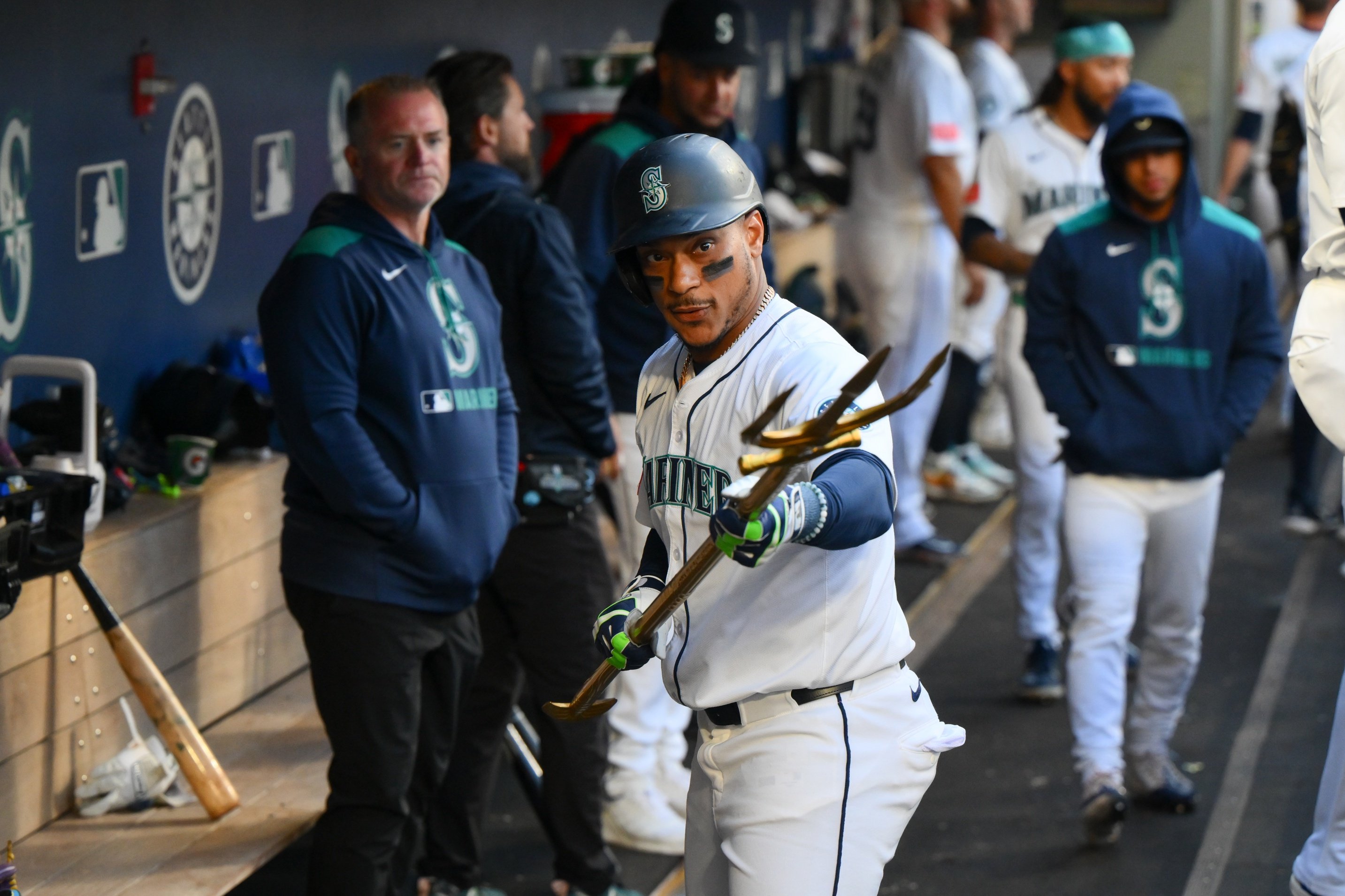 On Jan. 29, 2024, the Minnesota Twins traded fan-favorite infielder Jorge Polanco to the Seattle Mariners for starting pitcher Anthony DeSclafani, reliever Justin Topa, right-handed hitting prospect Gabriel Gonzalez, and right-handed pitching prospect Darren Bowen. Despite being undeserving of the "blockbuster" tag, the swap between Minnesota and Seattle served as both organization's most notable transactions two offseasons ago, with expectations of Polanco, DeSclafani, and Topa playing significant roles for their respective playoff-seeking clubs. Unfortunately, the trade's desired results did not come to fruition. Polanco struggled at the plate and in the field for Seattle, evidenced by him generating a substandard 92 wRC+ over 469 plate appearances and a -10 Outs Above Average (OAA). After undergoing forearm flexor tendon surgery, DeSclafani didn't throw a single pitch for Minnesota. Topa also battled significant injuries, resulting in the expected mid-to-high-leverage reliever tossing only 2 ⅓ innings for the already eliminated-from-playoff-contention Twins in late September. Gonzalez and Bowen also struggled at High-A Cedar Rapids last season, looking like a shell of the prospects they were in Seattle's system a season prior. Topa, Gonzalez, and Bowen remained with Minnesota, hoping to rebound from their lackluster 2024 campaigns. DeSclafani eventually departed from the Twins, going unsigned last offseason before agreeing to a minor league contract with the New York Yankees earlier this month. Polanco also reached free agency last offseason after the Mariners declined his $12 million team option. However, the veteran infielder somewhat surprisingly re-signed with Seattle in early February, agreeing to a one-year, $7 million deal with a vesting option for 2026. A once-exciting trade between Seattle and Minnesota quickly became a sunk-cost circumstance, with both organizations attempting to squeeze whatever minimal value remained from the players. Much to the surprise of both organizations, however, the petals of the once-detested deal have come to bloom a season later than expected. Polanco has evolved into one of baseball's best hitters this season, generating a 183 wRC+ over 126 plate appearances. Seattle has also mitigated his defensive shortcomings, starting the 31-year-old almost exclusively at designated hitter. Alongside star position players Cal Raleigh, Julio Rodriguez, and Randy Arozarena, Polanco's superb swing has guided Seattle to a one-and-a-half-game lead over the Texas Rangers in the AL West. Simultaneously, Topa has been a steady force in Minnesota's bullpen, generating 1.84 ERA and 2.90 FIP over 14 ⅔ innings pitched. The 34-year-old right-handed pitcher has grown into the mid-to-high leverage reliever the Twins hoped he would last season, resulting in the club finally generating value from the deal at the major league level. Gonzalez and Bowen are also finding their fitting at their respective minor league levels. Over 152 plate appearances at High-A, Gonzalez is hitting .319/.375/.526 with 43 hits, 12 walks, and a 145 wRC+. Last season's power outage also appears to be resolved for the 21-year-old, evidenced by him hitting five home runs (the same amount he hit at High-A last season) over 163 fewer plate appearances. Still sporting a plus eye at the plate, evidenced by his 13.8% strikeout rate, the former Top 100 prospect could quickly find himself climbing back up Twins' top prospect rankings list after undergoing a significant tumble last season. Bowen is thriving this season, too, manufacturing a 2.89 ERA over 28 innings pitched at Double-A. The 24-year-old's peripherals (6.03 FIP, 97.5% left on base rate, and an underwhelming 19.5% strikeout rate) suggest he is beneficiary of luck falling on his side early this season. However, considering his early season success and impressive fastball-slider combination, Bowen could eventually contribute to the parent club, even if it occurs as a reliever. Nevertheless, after initially looking like a defective deal, Seattle and Minnesota are finally benefitting from their late January 2024 swap, even though it's occurring a season later than expected.
- 23 comments
-
- 5
-
-
- jorge polanco
- anthony desclafani
- (and 3 more)