



Cody Schoenmann
-
Posts
768 -
Joined
-
Last visited
-
Days Won
1
Content Type
Profiles
News
Minnesota Twins Videos
2026 Minnesota Twins Top Prospects Ranking
2022 Minnesota Twins Draft Picks
Minnesota Twins Free Agent & Trade Rumors, Notes, & Tidbits
Guides & Resources
2023 Minnesota Twins Draft Picks
The Minnesota Twins Players Project
2024 Minnesota Twins Draft Picks
2025 Minnesota Twins Draft Pick Tracker
2026 Minnesota Twins Draft Tracker: Picks & Bonuses
Forums
Blogs
Events
Store
Downloads
Gallery
Everything posted by Cody Schoenmann
-

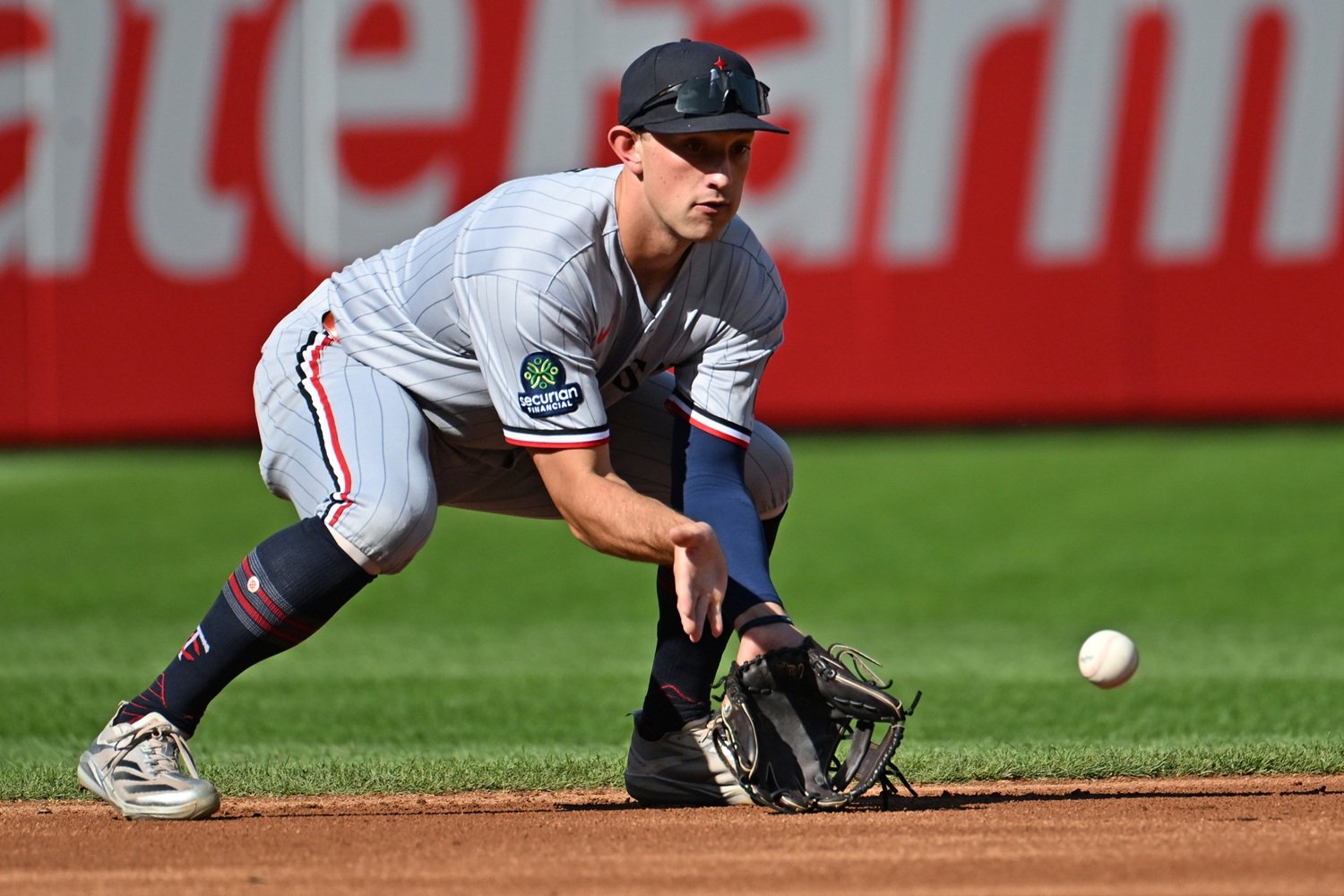 Entering the 2025 MLB regular season, Minnesota Twins infielder Brooks Lee was considered one of the club's "make-or-break" players, sporting a key role in the club's ability to return to the postseason following a cataclysmic late-season collapse in 2024. Unfortunately, Lee missed the first 15 games of the 2025 season after being placed on the 10-day IL in late March with a lumbar strain. The former first-round pick returned to the club's lineup on Apr. 13, stepping in as the club's primary third baseman with Royce Lewis on the 10-day IL with a left hamstring strain and José Miranda being demoted to Triple-A following a dreadful start to his 2025 campaign. Lee showcased minimal production for the largely sputtering Twins (sans a 13-game win streak in mid-May), hitting .252/.291/.382 with 78 hits, 10 doubles, 10 home runs, and an 85 wRC+ over 330 plate appearances from April 13 through July 31. During that stretch, the switch-hitting infielder shuffled between second base, third base, and shortstop, executing a utility infield role identical to the role he fulfilled during his 2024 rookie campaign. However, the second-year infielder's role quickly changed following the trade deadline mass exodus wherein Twins decision-makers traded starting shortstop Carlos Correa to the Houston Astros, making Lee the club's new primary shortstop in response. Despite finding himself in a newfound full-time role, the 24-year-old continued to struggle at the plate, hitting .208/.274/.348 with 37 hits, five doubles, six home runs, and a 72 wRC+ over 197 plate appearances. Possessing an above-average 15.7% strikeout rate, Lee demonstrated a plus eye at the plate, similar to his first-half performance. Yet, he failed to make quality contact, sporting a well-below-average Exit Velocity and Barrel rate this season. He also struggled defensively at shortstop this season, netting -8 Defensive Runs Saved (DRS) over 595 innings played at the position. In an ideal world, the Twins' front office could scour the shortstop market this winter, intending to sign a touted veteran like Bo Bichette or Trevor Story to a multiyear contract in an effort to solidify the position long-term. Yet, given that team decision-makers will again be operating under significant spending restrictions this offseason, Lee will likely enter the 2026 season as Minnesota's primary shortstop. Although this may be an inopportune short-term outlook over the position highest on the defensive spectrum, Lee could be demoted back to a utility infield role, contingent upon the development of the organization's second-ranked prospect. Posting a 138 wRC+ over 517 plate appearances between High-A and Double-A, Kaelen Culpepper was the recipient of the Sherry Robertson Award, crowning him the organization's 2025 Minor League Player of the Year. The 22-year-old earned this honor while sporting exceptional defense at shortstop, signaling he could blossom into a plus defensive shortstop at the major league level. That being the case, Culpepper is likely to begin his 2026 campaign at Triple-A St. Paul, knocking on the door of making his major league debut. Lee will be rewarded a window of opportunity wherein he can supplant the club's long-term answer at shortstop early next season. Yet, his leash will understandably be short. If he continues to struggle at the plate while sporting below-average defense at shortstop, there is reason Culpepper could usurp him at the position early next season. Interestingly, if Lee and Culpepper don't pan out at shortstop and transition to full-time roles at other positions or absorb utility roles, 2025 first-round pick Marek Houston could also develop into a long-term solution at the position. Despite undergoing one of the more dreadful seasons in team history, Minnesota possesses two top prospects who could blossom into long-term regulars at the position. If Lee continues to flounder at the major league level, the organization could quickly move on from the 2023 first-round pick, handing the position over to one of Culpepper or Houston.
- 61 comments
-
- 4
-

-

-
- brooks lee
- kaelen culpepper
- (and 1 more)
-
Entering the 2025 MLB regular season, Minnesota Twins infielder Brooks Lee was considered one of the club's "make-or-break" players, sporting a key role in the club's ability to return to the postseason following a cataclysmic late-season collapse in 2024. Unfortunately, Lee missed the first 15 games of the 2025 season after being placed on the 10-day IL in late March with a lumbar strain. The former first-round pick returned to the club's lineup on Apr. 13, stepping in as the club's primary third baseman with Royce Lewis on the 10-day IL with a left hamstring strain and José Miranda being demoted to Triple-A following a dreadful start to his 2025 campaign. Unfortunately, Lee showcased minimal production for the largely sputtering Twins (sans a 13-game win streak in mid-May), hitting .252/.291/.382 with 78 hits, ten doubles, ten home runs, and an 85 wRC+ over 330 plate appearances from Apr. 13 through July 31. During that stretch, the switch-hitting infielder shuffled between second base, third base, and shortstop, executing a utility infield role identical to the role he fulfilled during his 2024 rookie campaign. However, the second-year infielder's role quickly changed following the Trade Deadline mass exodus wherein Twins decision-makers traded starting shortstop Carlos Correa to the Houston Astros, making Lee the club's new primary shortstop in response. Despite finding himself in a newfound full-time role, the 24-year-old continued to struggle at the plate, hitting .208/.274/.348 with 37 hits, five doubles, six home runs, and a 72 wRC+ over 197 plate appearances. Possessing an above-average 15.7% strikeout rate, Lee demonstrated a plus eye at the plate, similar to his first-half performance. Yet, he failed to make quality contact, sporting a well-below-average Exit Velocity and Barrel rate this season. He also struggled defensively at shortstop this season, netting -8 Defensive Runs Saved (DRS) over 595 innings played at the position. In an ideal world, the Twins' front office could scour the shortstop market this winter, intending to sign a touted veteran like Bo Bichette or Trevor Story to a multiyear contract in an effort to solidify the position long-term. Yet, given that team decision-makers will again be operating under significant spending restrictions this offseason, Lee will likely enter the 2026 season as Minnesota's primary shortstop. Although this may be an inopportune short-term outlook over the position highest on the defensive spectrum, Lee could be demoted back to a utility infield role, contingent upon the development of the organization's second-ranked prospect. Posting a 138 wRC+ over 517 plate appearances between High-A and Double-A, Kaelen Culpepper was the recipient of the Sherry Robertson Award, crowning him the organization's 2025 Minor League Player of the Year. The 22-year-old earned this honor while sporting exceptional defense at shortstop, signaling he could blossom into a plus defensive shortstop at the major league level. That being the case, Culpepper is likely to begin his 2026 campaign at Triple-A St. Paul, knocking on the door of making his major league debut. Lee will be rewarded a window of opportunity wherein he can supplant the club's long-term answer at shortstop early next season. Yet, his leash will understandably be short. If he continues to struggle at the plate while sporting below-average defense at shortstop, there is reason Culpepper could usurp him at the position early next season. Interestingly, if Lee and Culpepper don't pan out at shortstop and transition to full-time roles at other positions or absorb utility roles, 2025 first-round pick Marek Houston could also develop into a long-term solution at the position. Despite undergoing one of the more dreadful seasons in team history, Minnesota possesses two top prospects who could blossom into long-term regulars at the position. If Lee continues to flounder at the major league level, the organization could quickly move on from the 2023 first-round pick, handing the position over to one of Culpepper or Houston. View full article
-
Laweryson already has a 40-man spot. Also, I mostly agree with the seven prospects you’re protecting. I could see them choosing not to protect Klein.
-
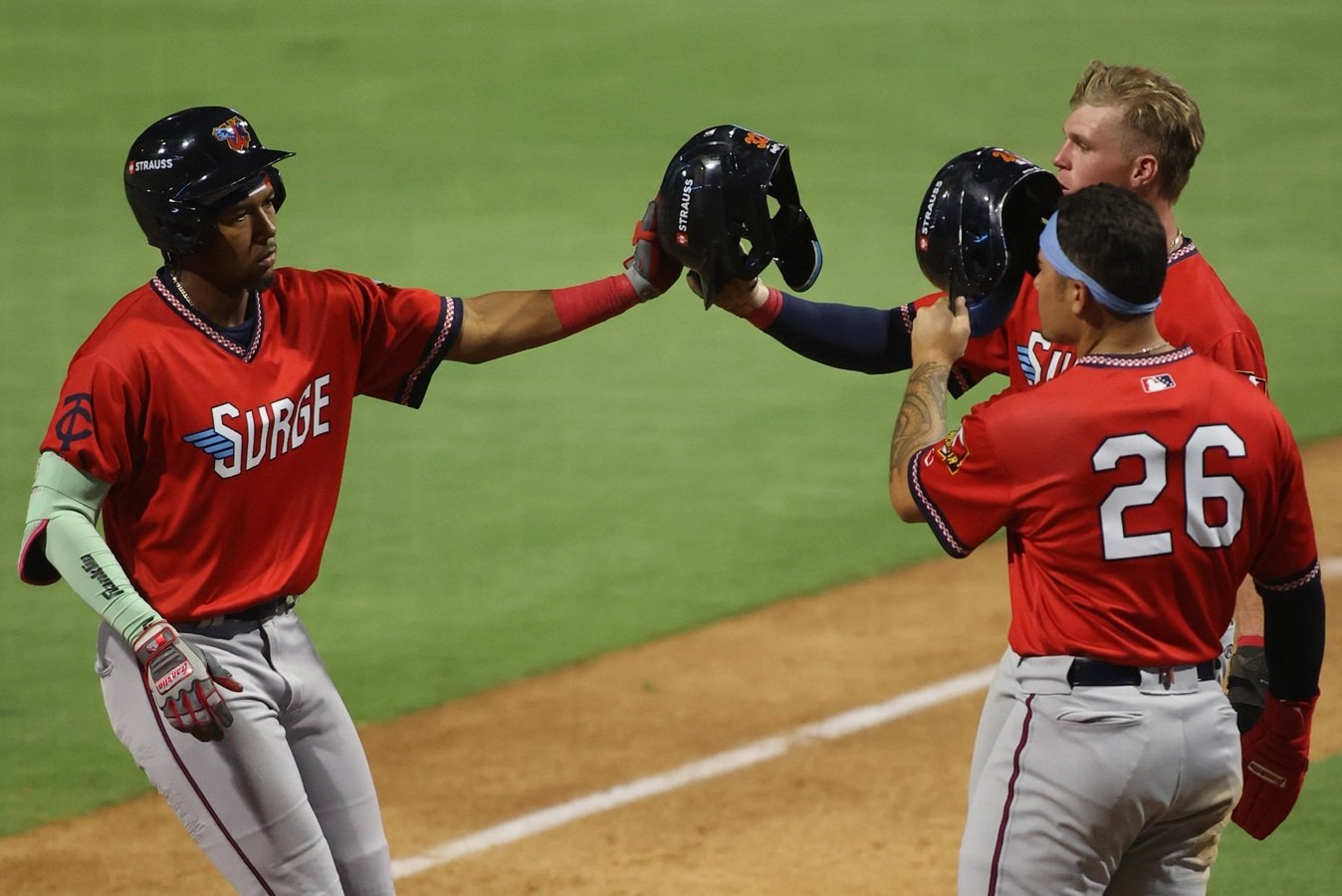 Amid the flurry that was the Minnesota Twins' 2025 trade deadline mass exodus came a lower-profile trade that sent right-handed outfielder Harrison Bader to the Philadelphia Phillies for left-handed hitting outfield prospect Hendry Mendez and right-handed starting pitching prospect Geremy Villoria. Similar to how he performed with Minnesota, Bader continued to impress at the plate with Philadelphia, hitting .305/.361/.463 with 54 hits, five home runs, and a 129 wRC+ over 194 plate appearances, while providing plus defense in all three outfield spots for the postseason-bound Phillies. Bader will likely secure a substantial contract this offseason, netting the 31-year-old significantly more money and years than the one-year, $6.25-million contract he signed with Minnesota last February. On the flip side, Mendez (the headliner in Minnesota's return package) performed exceptionally after joining Minnesota's minor-league system, hitting .324/.461/.450 with 36 hits, three doubles, three home runs, and a 160 wRC+ over 142 plate appearances. The 21-year-old has also demonstrated a plus eye at the plate, generating 27 walks to 21 strikeouts and a well-above league-average 14.8% strikeout rate. Possessing a contact-skilled profile, Mendez has excelled at all minor-league levels since signing with the Milwaukee Brewers out of the Dominican Republic, entering the 2020 season. Despite being with his third organization, the 22-year-old is a highly regarded prospect. Some pundits believe he could blossom into a high-average, high-OBP major-league hitter in the near future. Recently being revealed as part of Minnesota's Arizona Fall League (AFL) roster, Mendez appears to be on the verge of making it to "The Show," potentially as part of the club's 2026 Opening Day roster. Being Rule 5 Draft-eligible this upcoming December, Mendez is a near-lock to earn a 40-man roster spot. That being the case, earning a spot on next season's Opening Day roster would be a seamless roster move, given the club wouldn't need to remove anyone from the 40-man roster to reward the former Phillies prospect a spot. Still, possessing a 40-man roster spot alone won't be enough to make the Opening Day roster. Continuing to hit at an above-average rate while developing at a specific position could. That position is first base. According to reporting from MLB.com's Matthew Leach, Minnesota has Mendez taking reps at first base, and despite not yet playing the position in a game, he could make his debut at the position in the AFL. Like top prospects Walker Jenkins, Emmanuel Rodriguez, and Gabriel Gonzalez, Mendez making the club's 2026 Opening Day roster appears far-fetched at the moment. Yet, given all four prospects likely possessing 40-man roster spots come Spring Training, there is reason to believe Mendez could join one or multiple of the club's top prospects in the majors early next season, especially given how thin the parent club's depth at first base presently is. Now, Twins decision-makers electing to sign a veteran first baseman like Josh Naylor or Rhys Hoskins, or trading for a more cost-controlled, major league-ready option this offseason, would make this speculation moot. Yet, if the spending-restricted front office elects not to address the position over the offseason, Mendez (given his age, upside, and positional flexibility) could have the inside track on other internal options to become Kody Clemens's primary first base partner early next season. Despite earning a promotion to Triple-A this season, former first-round pick Aaron Sabato has struggled at the plate with St. Paul, yet again causing doubt surrounding his ability to produce at the major league level despite breaking out at Double-A earlier this season. Right-handed hitting utility player Kyler Fedko has hit well at Triple-A this season (115 wRC+ over 187 plate appearances) while spending time at first base. Yet, given that he is 26 years old and hasn't demonstrated sustainable success in the high minors until this season, Minnesota would be misguided in handing him a 26-man roster spot. Mendez is much more likely to possess a 40-man roster spot over Sabato and Fedko, further solidifying his chances of earning an Opening Day roster spot over them. Mendez, being a left-handed-hitting bat who primarily plays in the corner outfield, would make him a redundant skillset on Minnesota's 26-man roster, even if Trevor Larnach is non-tendered or traded this offseason. His redundant skillset is the driving factor in him needing to demonstrate meaningful progress at first base heading into Spring Training. If the 22-year-old can stand out at first base in the AFL while continuing to demonstrate the contact-skilled profile that made him a priority addition during the Trade Deadline, Mendez could quickly become a fixture in Minnesota's next position player core, potentially as part of next season's Opening Day roster.
 -
Image courtesy of Ed Bailey, Wichita Wind Surge Amidst the flurry that was the Minnesota Twins' 2025 Trade Deadline mass exodus came a mid-impact trade that sent right-handed outfielder Harrison Bader to the Philadelphia Phillies for left-handed hitting outfield prospect Hendry Mendez and right-handed throwing starting pitching prospect Geremy Villoria. Similar to how he performed with Minnesota, Bader continued to impress at the plate with Philadelphia, hitting .305/.361/.463 with 54 hits, five home runs, and a 129 wRC+ over 194 plate appearances while providing plus defense in all three outfield spots for the postseason-bound Phillies. That being the case, Bader will likely secure a substantial contract this offseason, netting the 31-year-old significantly more money and years than the one-year, $6.5 million contract he signed with Minnesota last February. On the flip side, Mendez (the headliner in Minnesota's return package) performed exceptionally after joining Minnesota's minor-league system, hitting .324/.461/.450 with 36 hits, three doubles, three home runs, and a 160 wRC+ over 142 plate appearances. The 21-year-old has also demonstrated a plus eye at the plate, generating 27 walks to 21 strikeouts and a well-above league-average 14.8% strikeout rate. Possessing a contact-skilled profile, Mendez has excelled at all minor league levels since signing with the Milwaukee Brewers out of the Dominican Republic, entering the 2020 season. Despite being with his third organization, the 22-year-old is a highly regarded prospect, many prospect pundits believe could blossom into a high-average, high-OBP major league hitter in the near future. Recently being revealed as part of Minnesota's Arizona Fall League (AFL) roster, Mendez appears to be on the verge of making it to "The Show," potentially as part of the club's 2026 Opening Day roster. Being Rule 5 Draft eligible this upcoming December, Mendez is a near-lock to earn a 40-man roster spot. That being the case, earning a spot on next season's Opening Day roster would be a seamless roster move, given the club wouldn't need to remove anyone from the 40-man roster to reward the former Phillies prospect a spot. Still, possessing a 40-man roster spot alone won't be enough to make the Opening Day roster. Yet, him continuing to hit at an above-average rate while developing at a specific position could. That position is first base. According to reporting from MLB.com's Matthew Leach, Minnesota has Mendez taking reps at first base, and despite not yet playing the position in a game, he could make his debut at the position in the AFL. Like top prospects Walker Jenkins, Emmanuel Rodriguez, and Gabriel Gonzalez, Mendez making the club's 2026 Opening Day roster appears far-fetched at the moment. Yet, given all four prospects likely possessing 40-man roster spots come Spring Training, there is reason to believe Mendez could join one or multiple of the club's top prospects in the majors early next season, especially given how thin the parent club's depth at first base presently is. Now, Twins decision-makers electing to sign a veteran first baseman like Josh Naylor or Rhys Hoskins, or trading for a more cost-controlled, major league-ready option this offseason, would make speculation surrounding Mendez's likelihood of making the club's Opening Day roster moot. Yet, if the spending-restricted front office elects not to address the position over the offseason, Mendez (given his age, upside, and positional flexibility) could have the inside track on other internal options to become Kody Clemens's primary first base partner early next season. Despite earning a promotion to Triple-A this season, former first-round pick Aaron Sabato has struggled at the plate with St. Paul, yet again causing doubt surrounding his ability to produce at the major league level despite breaking out at Double-A earlier this season. Right-handed hitting utility player Kyler Fedko has hit well at Triple-A this season (115 wRC+ over 187 plate appearances) while spending time at first base. Yet, given that he is 26 years old and hasn't demonstrated sustainable success in the high minors until this season, Minnesota would be misguided in handing him a 26-man roster spot. Also, Mendez is much more likely to possess a 40-man roster spot over Sabato and Fedko, further solidifying his chances of earning an Opening Day roster spot over them. Mendez, being a left-handed-hitting bat who primarily plays in the corner outfield, would make him a redundant skillset on Minnesota's 26-man roster, even if Trevor Larnach is non-tendered or traded this offseason. His redundant skillset is the driving factor in him needing to demonstrate meaningful progress at first base heading into Spring Training. Yet, if the 22-year-old can stand out at first base in the AFL while continuing to demonstrate the contact-skilled profile that made him a priority addition during the Trade Deadline, there is reason to believe Mendez could quickly become a fixture in Minnesota's next position player core, potentially as part of next season's Opening Day roster. View full article
-
Ideally, Clemens wouldn't have such a prominent role on this team, I agree. I'm not a Clemens defender. However, I think Twins decision-makers would have been more than happy with a 19 home run and 98 wRC+ over 379 plate appearances 2025 campaign from Julien.
-
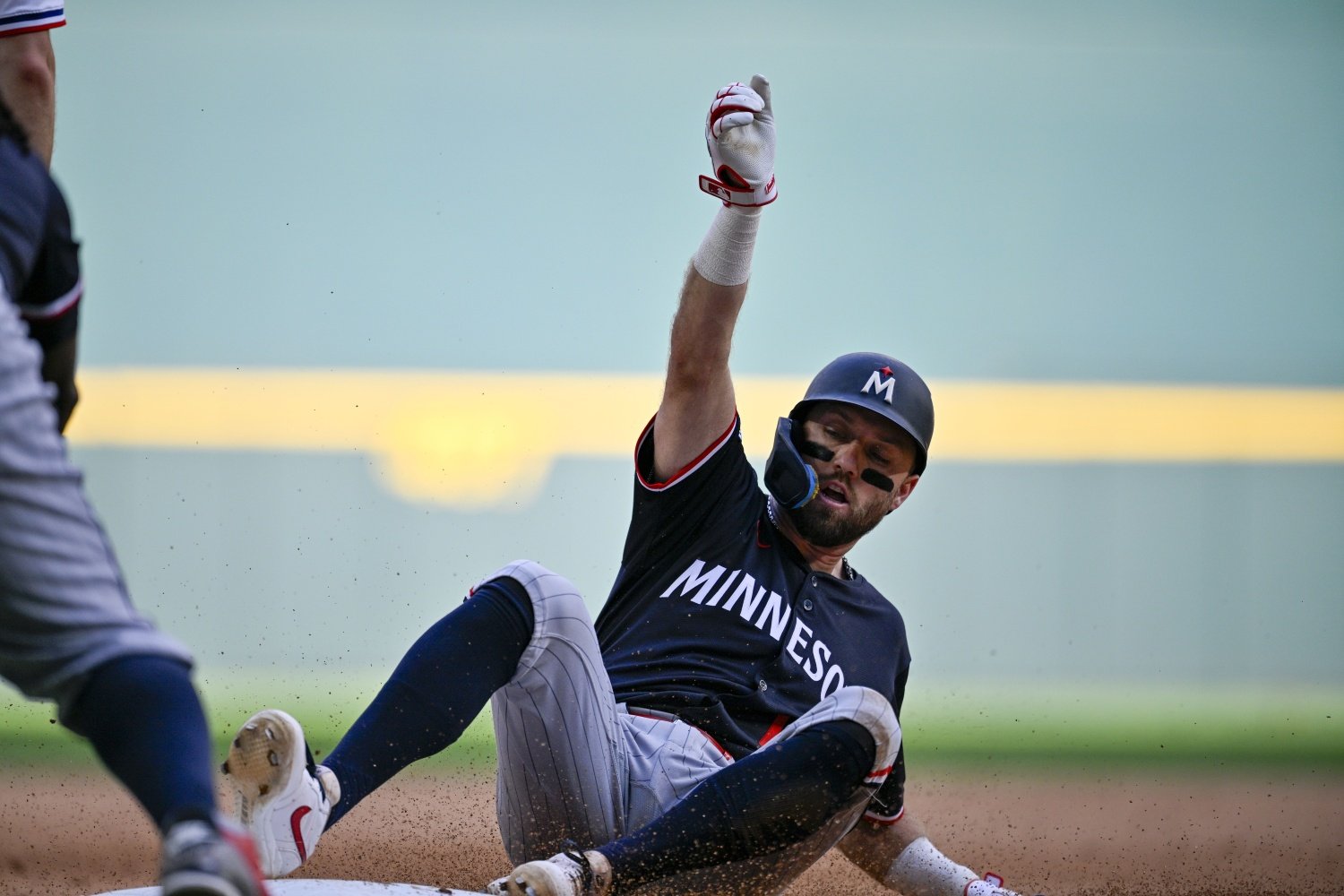 Entering the 2025 MLB regular season, former top Minnesota Twins prospect Edouard Julien was at a career crossroads. Making his major-league debut in early 2023, Julien instantly became (at least for a short while) one of the premier take-and-rake bats in baseball, hitting .263/.381/.459 with 16 home runs, 16 doubles, a 31.4% strikeout rate, and a 134 wRC+ over 408 plate appearances. The then-24-year-old rookie also played a pivotal role in guiding Minnesota to its first playoff win in 19 years and advancing to the ALDS, seemingly solidifying himself as a long-term core contributor to the Twins offense. Unfortunately, it's all been downhill since. Julien has batted .208/.299/.324, with 11 home runs, a 32% strikeout rate, and a 79 wRC+ over a combined 509 plate appearances across the last two seasons. With a near-identical strikeout rate and some vestigial capacity to drive the ball, Julien's approach and overall skill set haven't entirely disintegrated since his breakout rookie campaign. Yet, pitchers have been able to exploit his weaknesses more efficiently, throwing him a significant number of breaking and offspeed pitches that possess a movement profile antithetical to his swing path, making him unsteady at the plate and unable to feast on fastballs like he once did. Julien has been lost at the plate since early 2024. Unable to make meaningful strides toward combating opposing pitchers' adjustments, the one-time fan favorite's long-term prospects in Minnesota have been plunged into doubt, making him a non-tender candidate this offseason. Given Julien's struggles, an opportunity has arisen in Minnesota's infield, particularly at second and first base. Interestingly, a 2025 acquisition has capitalized on that opportunity, filling the role Twins Territory once hoped Julien would. Acquired from the Philadelphia Phillies in late April, Kody Clemens quickly cemented himself as an integral member of Minnesota's offense, hitting .304/.391/.696 with five home runs and an Aaron Judge-esque 195 wRC+ over his first 65 plate appearances with the club. Unfortunately, the 29-year-old's performance has significantly cooled since early June. Entering Sunday, he was hitting .202/.265/.397 with a well-below-league-average 80 wRC+ over his last 310 plate appearances. Still, for the season, Clemens generated an acceptable 97 wRC+, while hitting an impressive (albeit unexpected) 19 home runs, 14 more than his previous career-best. Being one of the lone sources of steady power in Minnesota's lineup, Roger's son has also provided defensive flexibility, appearing at first base, second base, left field, right field, and center field. Despite playing meaningful innings in the corner outfield, Clemens has primarily played on the right side of the infield, netting 388 innings at first base and 307 1/3 at second. Now, Julien was never going to factor into the corner outfield mix, meaning Clemens could have scratched out a utility role on Minnesota's roster regardless of Julien's performance. Yet, Clemens's ascension as a power-hitting left-handed bat who primarily plays second and first base has led to the former Phillie capitalizing on Julien's struggles, usurping the role from the once-promising rookie. Clemens will enter the offseason as the club's de facto primary first baseman. He's likely to be usurped, but he has plenty of ways to fit into the roster beyond that position. As noted earlier, Julien could no longer be with the organization by next Opening Day. Expectations weren't high for Julien entering the 2025 regular season. There was still an opportunity for him to revive his career in Minnesota this season, returning to being a cost-controlled core member of the club's long-term success. Instead, he (like many Twins position players) squandered his opportunity, potentially signaling a premature end to his once-promising major-league career.
 -
Entering the 2025 MLB regular season, former top Minnesota Twins prospect Edouard Julien was at a career crossroads. Making his major-league debut in early 2023, Julien instantly became (at least for a short while) one of the premier take-and-rake bats in baseball, hitting .263/.381/.459 with 16 home runs, 16 doubles, a 31.4% strikeout rate, and a 134 wRC+ over 408 plate appearances. The then-24-year-old rookie also played a pivotal role in guiding Minnesota to its first playoff win in 19 years and advancing to the ALDS, seemingly solidifying himself as a long-term core contributor to the Twins offense. Unfortunately, it's all been downhill since. Julien has batted .208/.299/.324, with 11 home runs, a 32% strikeout rate, and a 79 wRC+ over a combined 509 plate appearances across the last two seasons. With a near-identical strikeout rate and some vestigial capacity to drive the ball, Julien's approach and overall skill set haven't entirely disintegrated since his breakout rookie campaign. Yet, pitchers have been able to exploit his weaknesses more efficiently, throwing him a significant number of breaking and offspeed pitches that possess a movement profile antithetical to his swing path, making him unsteady at the plate and unable to feast on fastballs like he once did. Julien has been lost at the plate since early 2024. Unable to make meaningful strides toward combating opposing pitchers' adjustments, the one-time fan favorite's long-term prospects in Minnesota have been plunged into doubt, making him a non-tender candidate this offseason. Given Julien's struggles, an opportunity has arisen in Minnesota's infield, particularly at second and first base. Interestingly, a 2025 acquisition has capitalized on that opportunity, filling the role Twins Territory once hoped Julien would. Acquired from the Philadelphia Phillies in late April, Kody Clemens quickly cemented himself as an integral member of Minnesota's offense, hitting .304/.391/.696 with five home runs and an Aaron Judge-esque 195 wRC+ over his first 65 plate appearances with the club. Unfortunately, the 29-year-old's performance has significantly cooled since early June. Entering Sunday, he was hitting .202/.265/.397 with a well-below-league-average 80 wRC+ over his last 310 plate appearances. Still, for the season, Clemens has generated an admirable 97 wRC+ while hitting an impressive (albeit unexpected) 19 home runs, 14 more than his previous career-best. Being one of the lone sources of steady power in Minnesota's lineup, Roger's son has also provided defensive flexibility, appearing at first base, second base, left field, right field, and center field. Despite playing meaningful innings in the corner outfield, Clemens has primarily played on the right side of the infield, netting 388 innings at first base and 307 1/3 at second. Now, Julien was never going to factor into the corner outfield mix, meaning Clemens could have etched a utility role on Minnesota's roster regardless of Julien's performance. Yet, Clemens's ascension as a power-hitting left-handed bat who primarily plays second and first base has led to the former Phillie capitalizing on Julien's struggles, usurping the role from the once-promising rookie. Clemens will enter the offseason set to be the club's primary first baseman next season while continuing to mix in at second base and the corner outfield. As noted earlier, Julien, instead of possessing the right side infield role Clemens now possesses, could no longer be with the organization. Expectations weren't high for Julien entering the 2025 regular season. Yet, there was still an opportunity for him to revive his career in Minnesota, returning to being a cost-controlled core member of the club's long-term success. Instead, he (like many Twins position players) squandered his opportunity, potentially signaling a premature end to his once-promising major league career. View full article
-
I forgot to add Matthews, that's my bad. I just inserted him into the piece but I think he will be primary Triple-A starting pitching depth alongside Abel and Festa to begin next season. Thanks for the note.
- 67 replies
-
- 5
-
-

-
- ryan jeffers
- rhys hoskins
- (and 5 more)
-
Image courtesy of © Jesse Johnson-Imagn Images After plummeting from AL Central division title contenders in mid-May to sporting the league's second-worst record with one week left in the season, your Minnesota Twins' 2025 campaign can be summarized in one word: Disheartening. Witnessing franchise cornerstones like Carlos Correa and Jhoan Durán depart from the organization, while learning of the Pohlad family's intention to continue owning and operating the organization for the foreseeable future, those who closely follow the club would be justified in resigning from being emotionally invested in an organization that doesn't have their best interest in mind. Perhaps the Twins are unlikely to contend for the AL Central crown or an AL Wild Card spot in a serious manner next season. That doesn't mean the club won't be competitive or fun to watch. With the front office operating under significant spending restrictions, the 2026 Opening Day roster likely won't look much different from the current configuration. However, some notable changes may occur between now and next March. What could they be? Let's take a look: Catchers (2): Ryan Jeffers, Jhonny Pereda Entering the final week of the three-year, $30-million contract he signed with Minnesota in December 2022, veteran catcher Christian Vázquez is expected to go elsewhere this offseason, leaving a significant hole behind fellow backstop Ryan Jeffers. Since earning a promotion from Triple-A St. Paul on Sept. 5 following Jeffers sustaining a concussion, 29-year-old Jhonny Pereda has impressed in the field and at the plate, sporting a 143 wRC+ over 32 plate appearances while being a significantly better defensive catcher than fellow fill-in Mickey Gasper. Pereda has the upper hand on Gasper heading into next season, and given that team decision-makers are unlikely to spend their limited resources on the position during the offseason, Pereda could succeed Vázquez. Entering his final season under contract with Minnesota, Jeffers is one of the organization's few reasonable extension candidates. The club could reasonably lock up the 28-year-old backstop on a deal not much different than the one Vázquez is just completing. Jeffers is one of the AL's best-hitting catchers, and will generate significant interest from contending teams this offseason. Still, Minnesota would be wise to hold onto the former second-round pick—and lock him up beyond 2026. Infielders (5): Kody Clemens, Luke Keaschall, Royce Lewis, Brooks Lee, Rhys Hoskins As noted earlier, next season's team will closely resemble this year's, and this trend will be most noticeable in the infield. There is a strong chance Minnesota enters next season with Kody Clemens at first base (at least against righties), Luke Keaschall at second base, Royce Lewis at third base and Brooks Lee returning as the primary shortstop. Keaschall and Lewis appear set to patrol their respective positions for the foreseeable future. Despite struggling his first two seasons in the majors, Lee has the inside track on the shortstop job, too. If he struggles, top prospect Kaelen Culpepper could quickly usurp him, with Lee returning to an infield utility role or earning a demotion to Triple-A. I believe Twins decision-makers will use their limited spending resources at first base, signing former Philadelphia Phillies and Milwaukee Brewers slugger Rhys Hoskins to a one-year contract in the $7-9 million range. Battling through significant injuries with Milwaukee this season, Hoskins has effectively lost the starting job to Andrew Vaughn. That being the case, the 32-year-old is a virtual lock to depart from Milwaukee when he hits free agency this fall, making Minnesota a reasonable destination. Now, signing Hoskins doesn't mean he is guaranteed to stay with the club for the entirety of next season, especially if the Twins are out of contention come the trade deadline. As a righty with big power in his bat, though, he's a compelling fit for the roster. Outfielders (6): Austin Martin, Byron Buxton, Matt Wallner, Walker Jenkins, Alan Roden, James Outman Next March's primary outfield configuration could include present-day contributors like Martin, Buxton, Wallner, and Trevor Larnach. Here, though, I predict that team decision-makers will non-tender Larnach this winter. Larnach's departure could open the door for 2023 fifth-overall selection and top Twins prospect Jenkins to make his first Opening Day roster at 21 years old, given a strong performance during Spring Training. Minnesota is entering a new era, and if there is one thing that could light a spark under the most disillusioned fanbase in baseball, rewarding Jenkins with an Opening Day roster spot is it. Will he be a star out of the gate? Those who follow the team shouldn't be frustrated if he isn't. That said, his success is the most consequential variable in Minnesota's ability to return to contender status in the near future. Jenkins could primarily play right field, with Wallner being the designated hitter against right-handed starting pitchers. The star prospect could also play some center field, alongside Byron Buxton and James Outman, with eyes toward succeeding the former at the position long-term. Alan Roden and Austin Martin could platoon in left field. Starting Rotation (5): Pablo López, Joe Ryan, Bailey Ober, Simeon Woods Richardson, Taj Bradley Assuming the front office elects not to trade López or Ryan, Minnesota's starting rotation would be the club's strongest unit entering next season, possessing the potential of being one of the AL's most formidable units. Their success will heavily rely on López, Ryan, and Ober being able to return to performing like they did in 2023 and 2024. Still, given a full offseason of rest, there is reason to believe the three veteran arms could return to frontline status. Given his strong performance in September, Woods Richardson has the inside track on fellow young arms Zebby Matthews, Mick Abel and David Festa in earning one of the two final rotation spots entering next season. Despite possessing a lackluster 7.82 ERA and 5.08 FIP since joining Minnesota, Bradley has demonstrated flashes of blossoming into the hard-throwing mid-rotation arm many pundits believed he would become with Tampa Bay. That being the case, there is reason to believe the 24-year-old also has an inside edge on Matthews, Abel, and Festa for one of the last rotation spots, meaning the trio will likely begin next season in St. Paul as the club's starting pitching reinforcements. Bullpen (8): Cole Sands, Kody Funderburk, Travis Adams, Pierson Ohl, Cody Laweryson, Marco Raya, Connor Prielipp, Andrew Morris Despite being the weakest unit on the roster, I don't think this group will draw much of the team's attention this winter. The club could bring back Justin Topa on a $2-million team option. Yet, given his struggles and ownership becoming even more parsimonious, I don't expect that. Sans Topa, six spots could be open for competition next Spring Training, leading to one of the more wide-ranging positional battles in recent Twins history. Adams and Ohl (who worked in stretch roles this season) are strong candidates to transition into short relief roles. Laweryson has impressed in a small sample this September, giving him an inside track on a mid-leverage relief role heading into 2026. However, the final three spots are completely wide open. I expect team decision-makers to prioritize high-volatility young relievers who could blossom into the club's next crop of high-leverage arms. Marco Raya, Connor Prielipp and Andrew Morris have all had success at the Triple-A level this season, but each has warts that make them unlikely to thrive as big-league starters any time soon. A quick conversion could be best for both the team and their careers. Prielipp and Raya possess the potential of becoming Minnesota's next primary closer. Abel and Bradley could also figure into the high-leverage reliever mix, if they continue to struggle as starting pitchers in 2026. Regardless, Minnesota's bullpen configuration is nearly a complete unknown, with a significant number of young, high-upside arms possessing the opportunity to capitalize on extended opportunities in Spring Training. In that way, the pen is a microcosm of the whole roster, present and future. View full article
-
A Way-Too-Early Minnesota Twins 2026 Opening Roster Projection
Cody Schoenmann posted an article in Twins
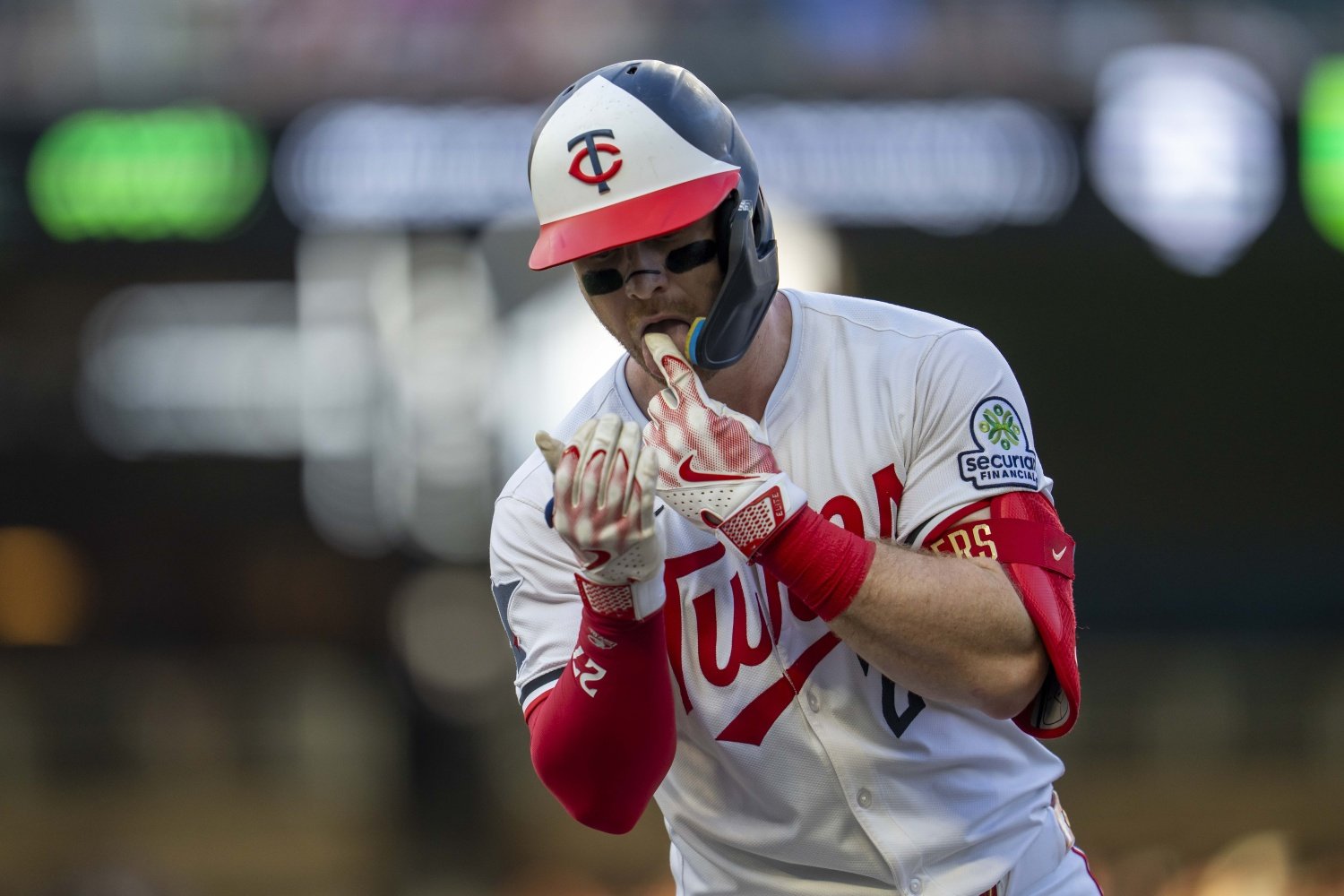 After plummeting from AL Central division title contenders in mid-May to sporting the league's second-worst record with one week left in the season, your Minnesota Twins' 2025 campaign can be summarized in one word: Disheartening. Witnessing franchise cornerstones like Carlos Correa and Jhoan Durán depart from the organization, while learning of the Pohlad family's intention to continue owning and operating the organization for the foreseeable future, those who closely follow the club would be justified in resigning from being emotionally invested in an organization that doesn't have their best interest in mind. Perhaps the Twins are unlikely to contend for the AL Central crown or an AL Wild Card spot in a serious manner next season. That doesn't mean the club won't be competitive or fun to watch. With the front office operating under significant spending restrictions, the 2026 Opening Day roster likely won't look much different from the current configuration. However, some notable changes may occur between now and next March. What could they be? Let's take a look: Catchers (2): Ryan Jeffers, Jhonny Pereda Entering the final week of the three-year, $30-million contract he signed with Minnesota in December 2022, veteran catcher Christian Vázquez is expected to go elsewhere this offseason, leaving a significant hole behind fellow backstop Ryan Jeffers. Since earning a promotion from Triple-A St. Paul on Sept. 5 following Jeffers sustaining a concussion, 29-year-old Jhonny Pereda has impressed in the field and at the plate, sporting a 143 wRC+ over 32 plate appearances while being a significantly better defensive catcher than fellow fill-in Mickey Gasper. Pereda has the upper hand on Gasper heading into next season, and given that team decision-makers are unlikely to spend their limited resources on the position during the offseason, Pereda could succeed Vázquez. Entering his final season under contract with Minnesota, Jeffers is one of the organization's few reasonable extension candidates. The club could reasonably lock up the 28-year-old backstop on a deal not much different than the one Vázquez is just completing. Jeffers is one of the AL's best-hitting catchers, and will generate significant interest from contending teams this offseason. Still, Minnesota would be wise to hold onto the former second-round pick—and lock him up beyond 2026. Infielders (5): Kody Clemens, Luke Keaschall, Royce Lewis, Brooks Lee, Rhys Hoskins As noted earlier, next season's team will closely resemble this year's, and this trend will be most noticeable in the infield. There is a strong chance Minnesota enters next season with Kody Clemens at first base (at least against righties), Luke Keaschall at second base, Royce Lewis at third base and Brooks Lee returning as the primary shortstop. Keaschall and Lewis appear set to patrol their respective positions for the foreseeable future. Despite struggling his first two seasons in the majors, Lee has the inside track on the shortstop job, too. If he struggles, top prospect Kaelen Culpepper could quickly usurp him, with Lee returning to an infield utility role or earning a demotion to Triple-A. I believe Twins decision-makers will use their limited spending resources at first base, signing former Philadelphia Phillies and Milwaukee Brewers slugger Rhys Hoskins to a one-year contract in the $7-9 million range. Battling through significant injuries with Milwaukee this season, Hoskins has effectively lost the starting job to Andrew Vaughn. That being the case, the 32-year-old is a virtual lock to depart from Milwaukee when he hits free agency this fall, making Minnesota a reasonable destination. Now, signing Hoskins doesn't mean he is guaranteed to stay with the club for the entirety of next season, especially if the Twins are out of contention come the trade deadline. As a righty with big power in his bat, though, he's a compelling fit for the roster. Outfielders (6): Austin Martin, Byron Buxton, Matt Wallner, Walker Jenkins, Alan Roden, James Outman Next March's primary outfield configuration could include present-day contributors like Martin, Buxton, Wallner, and Trevor Larnach. Here, though, I predict that team decision-makers will non-tender Larnach this winter. Larnach's departure could open the door for 2023 fifth-overall selection and top Twins prospect Jenkins to make his first Opening Day roster at 21 years old, given a strong performance during Spring Training. Minnesota is entering a new era, and if there is one thing that could light a spark under the most disillusioned fanbase in baseball, rewarding Jenkins with an Opening Day roster spot is it. Will he be a star out of the gate? Those who follow the team shouldn't be frustrated if he isn't. That said, his success is the most consequential variable in Minnesota's ability to return to contender status in the near future. Jenkins could primarily play right field, with Wallner being the designated hitter against right-handed starting pitchers. The star prospect could also play some center field, alongside Byron Buxton and James Outman, with eyes toward succeeding the former at the position long-term. Alan Roden and Austin Martin could platoon in left field. Starting Rotation (5): Pablo López, Joe Ryan, Bailey Ober, Simeon Woods Richardson, Taj Bradley Assuming the front office elects not to trade López or Ryan, Minnesota's starting rotation would be the club's strongest unit entering next season, possessing the potential of being one of the AL's most formidable units. Their success will heavily rely on López, Ryan, and Ober being able to return to performing like they did in 2023 and 2024. Still, given a full offseason of rest, there is reason to believe the three veteran arms could return to frontline status. Given his strong performance in September, Woods Richardson has the inside track on fellow young arms Zebby Matthews, Mick Abel and David Festa in earning one of the two final rotation spots entering next season. Despite possessing a lackluster 7.82 ERA and 5.08 FIP since joining Minnesota, Bradley has demonstrated flashes of blossoming into the hard-throwing mid-rotation arm many pundits believed he would become with Tampa Bay. That being the case, there is reason to believe the 24-year-old also has an inside edge on Matthews, Abel, and Festa for one of the last rotation spots, meaning the trio will likely begin next season in St. Paul as the club's starting pitching reinforcements. Bullpen (8): Cole Sands, Kody Funderburk, Travis Adams, Pierson Ohl, Cody Laweryson, Marco Raya, Connor Prielipp, Andrew Morris Despite being the weakest unit on the roster, I don't think this group will draw much of the team's attention this winter. The club could bring back Justin Topa on a $2-million team option. Yet, given his struggles and ownership becoming even more parsimonious, I don't expect that. Sans Topa, six spots could be open for competition next Spring Training, leading to one of the more wide-ranging positional battles in recent Twins history. Adams and Ohl (who worked in stretch roles this season) are strong candidates to transition into short relief roles. Laweryson has impressed in a small sample this September, giving him an inside track on a mid-leverage relief role heading into 2026. However, the final three spots are completely wide open. I expect team decision-makers to prioritize high-volatility young relievers who could blossom into the club's next crop of high-leverage arms. Marco Raya, Connor Prielipp and Andrew Morris have all had success at the Triple-A level this season, but each has warts that make them unlikely to thrive as big-league starters any time soon. A quick conversion could be best for both the team and their careers. Prielipp and Raya possess the potential of becoming Minnesota's next primary closer. Abel and Bradley could also figure into the high-leverage reliever mix, if they continue to struggle as starting pitchers in 2026. Regardless, Minnesota's bullpen configuration is nearly a complete unknown, with a significant number of young, high-upside arms possessing the opportunity to capitalize on extended opportunities in Spring Training. In that way, the pen is a microcosm of the whole roster, present and future.
- 67 comments
-
- 2
-
-
-
- ryan jeffers
- rhys hoskins
- (and 5 more)
-
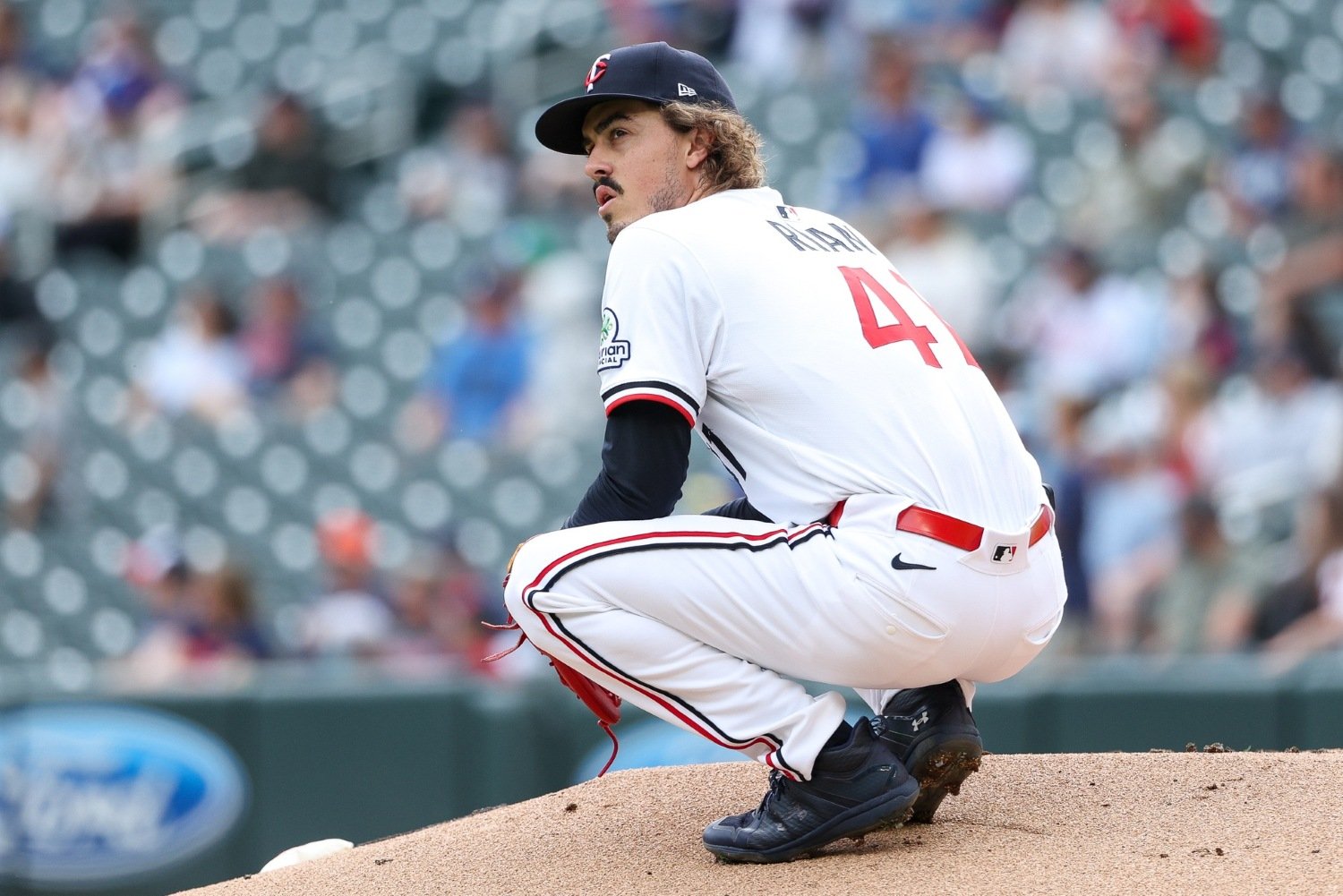 As so often happens, in the final minutes before the 2025 MLB trade deadline, a significant amount of misinformation whirled through Twitter, particularly from one notable legacy media account. At 4:37 PM CT on July 31, FOX Sports: MLB's official Twitter account posted that Minnesota starting pitcher Joe Ryan had been traded to the Boston Red Sox, per insider Jon Morosi. The post was quickly deleted, however, confusing fans of both franchises and Ryan himself. Obviously, no such trade was in place. Later, separate reports confirmed that a deal for Ryan was "not even close," citing that Boston approached Minnesota's front office too late in the process. Regardless, Boston did discuss Ryan with Twins decision-makers. That's reason enough to believe the two clubs could re-engage in talks this offseason, with Minnesota being more motivated to move the All-Star starting pitcher. Before July 31, Ryan was one of the best starters in baseball, generating a 2.82 ERA, a 3.23 FIP, and a 137-to-24 strikeout-to-walk ratio over 121 1/3 innings pitched. However, he has significantly regressed over nine starts since, posting a 5.24 ERA, a 5.27 FIP, and a much less inspiring 48-to-14 strikeout-to-walk ratio over 44 2/3 innings pitched. Despite poor results, Ryan's stuff and movement profile have remained relatively steady post-deadline, signaling that this rough stretch of starts is likely the result of him throwing the most innings of his major-league career and battling through fatigue, rather than a meaningful, long-term regression in skill and performance. That being the case, Ryan should garner considerable interest on the trade market this offseason. Even though Minnesota could reduce its payroll to the $100-110 million range this upcoming offseason, Ryan's expected to make between $6-7 million next season, a price range Twins ownership could easily stomach. Possessing two more seasons of cost-effective team control, Minnesota could hold onto the 29-year-old right-handed hurler. Yet, given the package Boston was allegedly willing to offer, it's worth re-opening the conversation about dealing him. According to WEEI's Rob Bradford, the Red Sox proposed various packages in exchange for Ryan, including Boston's top pitching prospect, Payton Tolle (left-handed starting pitcher); second-ranked prospect Jhostynxon Garcia (right-handed hitting outfielder); and third-ranked prospect Franklin Arias (right-handed hitting shortstop). Now, acquiring Tolle, Garcia, and Arias for Ryan is massively unlikely, especially given how poorly Ryan has performed since the deadline. Yet, there is reason to believe Minnesota could net two of Boston's top prospects, considering the value encompassed by frontline starting pitchers. In July, Derek Falvey prioritized acquiring young players who could immediately impact the major-league club, including Taj Bradley, Alan Roden, and Mick Abel. Tolle (13 1/3 innings pitched with Boston) and Garcia (nine plate appearances with Boston) fit a similar mold. Arias, 19, arguably possesses the most talent of the three. However, given that he was promoted to Double-A less than three weeks ago and is still a teenager, it seems unlikely that he would be able to contribute at the major-league level until 2027. Tolle and Garcia are the more appealing targets. If Minnesota were to send Ryan to Boston for Tolle and Garcia, the two prospects could become immediate fixtures for the parent club. Tolle (22 years old) would contend with Bradley, Abel, Simeon Woods Richardson, David Festa, Zebby Matthews and others for starting rotation spots to begin 2026. Given his struggles at the highest level this season (6.08 ERA and 5.99 FIP), Tolle could benefit from continuing to fine-tune his arsenal and pitch grips at Triple-A. However, he would instantly become one of Minnesota's most highly-touted pitching prospects, and maybe Ryan's successor at the top of the rotation. Like Tolle, Garcia has struggled in minimal exposure to the bigs (82 wRC+ over nine plate appearances). Yet, the right-handed-hitting outfielder could immediately insert himself into the club's outfield mix, becoming a high-upside option in a position group saturated with left-handed bats. The power-hitting 22-year-old could slot in alongside Byron Buxton, Matt Wallner, Trevor Larnach, and Austin Martin early next season, with a potential long-term outlook of being a central piece in Minnesota's next formidable outfield alongside Walker Jenkins and Emmanuel Rodriguez. (Of course, it's also possible one or more of those incumbents is in another organization by the spring.) Parting ways with Ryan would understandably tighten the knot that has resided in Twins Territory's collective stomach since ownership announced significant payroll cuts following the 2023 postseason. Still, a return package of Tolle and Garcia would ease the sting ever so slightly. The Twins are entering a new era, and even though ownership's purse strings might continue to tighten, that doesn't mean the team can't return to contender status in the near future. Acquiring Tolle and Garcia could accelerate that timeline, even if it comes at the cost of parting ways with a fan favorite.
 -
Image courtesy of © Matt Krohn-Imagn Images As so often happens, in the final minutes before the 2025 MLB trade deadline, a significant amount of misinformation whirled through Twitter, particularly from one notable legacy media account. At 4:37 PM CT on July 31, FOX Sports: MLB's official Twitter account posted that Minnesota starting pitcher Joe Ryan had been traded to the Boston Red Sox, per insider Jon Morosi. The post was quickly deleted, however, confusing fans of both franchises and Ryan himself. Obviously, no such trade was in place. Later, separate reports confirmed that a deal for Ryan was "not even close," citing that Boston approached Minnesota's front office too late in the process. Regardless, Boston did discuss Ryan with Twins decision-makers. That's reason enough to believe the two clubs could re-engage in talks this offseason, with Minnesota being more motivated to move the All-Star starting pitcher. Before July 31, Ryan was one of the best starters in baseball, generating a 2.82 ERA, a 3.23 FIP, and a 137-to-24 strikeout-to-walk ratio over 121 1/3 innings pitched. However, he has significantly regressed over nine starts since, posting a 5.24 ERA, a 5.27 FIP, and a much less inspiring 48-to-14 strikeout-to-walk ratio over 44 2/3 innings pitched. Despite poor results, Ryan's stuff and movement profile have remained relatively steady post-deadline, signaling that this rough stretch of starts is likely the result of him throwing the most innings of his major-league career and battling through fatigue, rather than a meaningful, long-term regression in skill and performance. That being the case, Ryan should garner considerable interest on the trade market this offseason. Even though Minnesota could reduce its payroll to the $100-110 million range this upcoming offseason, Ryan's expected to make between $6-7 million next season, a price range Twins ownership could easily stomach. Possessing two more seasons of cost-effective team control, Minnesota could hold onto the 29-year-old right-handed hurler. Yet, given the package Boston was allegedly willing to offer, it's worth re-opening the conversation about dealing him. According to WEEI's Rob Bradford, the Red Sox proposed various packages in exchange for Ryan, including Boston's top pitching prospect, Payton Tolle (left-handed starting pitcher); second-ranked prospect Jhostynxon Garcia (right-handed hitting outfielder); and third-ranked prospect Franklin Arias (right-handed hitting shortstop). Now, acquiring Tolle, Garcia, and Arias for Ryan is massively unlikely, especially given how poorly Ryan has performed since the deadline. Yet, there is reason to believe Minnesota could net two of Boston's top prospects, considering the value encompassed by frontline starting pitchers. In July, Derek Falvey prioritized acquiring young players who could immediately impact the major-league club, including Taj Bradley, Alan Roden, and Mick Abel. Tolle (13 1/3 innings pitched with Boston) and Garcia (nine plate appearances with Boston) fit a similar mold. Arias, 19, arguably possesses the most talent of the three. However, given that he was promoted to Double-A less than three weeks ago and is still a teenager, it seems unlikely that he would be able to contribute at the major-league level until 2027. Tolle and Garcia are the more appealing targets. If Minnesota were to send Ryan to Boston for Tolle and Garcia, the two prospects could become immediate fixtures for the parent club. Tolle (22 years old) would contend with Bradley, Abel, Simeon Woods Richardson, David Festa, Zebby Matthews and others for starting rotation spots to begin 2026. Given his struggles at the highest level this season (6.08 ERA and 5.99 FIP), Tolle could benefit from continuing to fine-tune his arsenal and pitch grips at Triple-A. However, he would instantly become one of Minnesota's most highly-touted pitching prospects, and maybe Ryan's successor at the top of the rotation. Like Tolle, Garcia has struggled in minimal exposure to the bigs (82 wRC+ over nine plate appearances). Yet, the right-handed-hitting outfielder could immediately insert himself into the club's outfield mix, becoming a high-upside option in a position group saturated with left-handed bats. The power-hitting 22-year-old could slot in alongside Byron Buxton, Matt Wallner, Trevor Larnach, and Austin Martin early next season, with a potential long-term outlook of being a central piece in Minnesota's next formidable outfield alongside Walker Jenkins and Emmanuel Rodriguez. (Of course, it's also possible one or more of those incumbents is in another organization by the spring.) Parting ways with Ryan would understandably tighten the knot that has resided in Twins Territory's collective stomach since ownership announced significant payroll cuts following the 2023 postseason. Still, a return package of Tolle and Garcia would ease the sting ever so slightly. The Twins are entering a new era, and even though ownership's purse strings might continue to tighten, that doesn't mean the team can't return to contender status in the near future. Acquiring Tolle and Garcia could accelerate that timeline, even if it comes at the cost of parting ways with a fan favorite. View full article
- 70 replies
-
- 1
-
-
- joe ryan
- payton tolle
- (and 2 more)
-
this is actually a good threshold lol
-
Image courtesy of © Matt Blewett-Imagn Images Following the July fire sale wherein they parted ways with 11 players from their 26-man roster, your 2025 Twins have endured the fifth-worst record in baseball, winning just 14 of their last 39 games. Times are dire in the land of 10,000 lakes, and those still following the club closely are either paid to do so or pure masochists—and if you are, that's fine. Twins Daily does not kink shame. [Ed. note: We also acknowledge the existence of overlap between those two groups of watchers.] That being the case, much of Twins Territory is understandably uninterested in discussing its hometown club, let alone its ability to contend for the postseason in the future. Yet, there is reason to believe Minnesota could again blossom into postseason contenders, potentially as soon as next season. Yes, I understand that making this statement could seem fabulistic. My reputation will likely be irreparably tarnished, and I understand if I'm accused of being nothing more than a Pohlad shill. That said, Minnesota does have a clear pathway toward contention, and that track will run through the position player group performing at a higher standard. Now, you may be asking yourself, "What exactly do you mean by 'better'?" In reply, I offer the following: Minnesota's 2026 position player group must clear "The Kody Clemens Bar." No, I'm not pitching an idea for a Forest Lake rooftop bar owned and operated by Roger Clemens. Instead, I propose that it be the minimum level of performance deemed acceptable by Twins decision-makers. Since Aug. 1, Clemens has generated an 84 wRC+ (16% below league average) over 137 plate appearances. If one were to exclude the 29-year-old's three-home-run performance against the Arizona Diamondbacks this past Sunday, they would notice that he had a well below league-average 49 wRC+ over 128 plate appearances. Now, it would be malpractice to ignore his best game because it's narratively inconvenient. Yet, it should be noted that he had performed like one of the worst hitters in baseball for over two months, making his newfound role as a productive veteran presence and overall cog in the lineup a product of circumstance—and arguably, a farce. Given his career averages and largely lackluster performance with Minnesota this season, Clemens should be viewed as a fringe major leaguer who would have been a candidate to be released from the 40-man roster this upcoming offseason if he were part of a winning organization. Yet, given that he resides on this iteration of the Minnesota Twins, there's probably room for him on next season's 26-man roster. If they are to return to contention, it would mean Clemens would need to revert to being an end-of-the-bench utility player, instead of being a platoon-proof lineup regular. There are currently five qualified Twins position players who have performed better than Clemens since the trade deadline: Austin Martin - 132 wRC+ over 128 plate appearances Luke Keaschall - 130 wRC+ over 152 plate appearances Matt Wallner - 119 wRC+ over 134 plate appearances Trevor Larnach - 118 wRC+ over 133 plate appearances Royce Lewis - 89 wRC+ over 155 plate appearances Byron Buxton (130 wRC+ over 121 plate appearances) and Ryan Jeffers (116 wRC+ over 121 plate appearances) have not generated enough plate appearances since Aug. 1 to reach qualified status. Yet, they have performed well since the deadline, hovering near their career norms. These seven players (including Lewis, who has also performed poorly) have solidified themselves as lineup cogs for next season. They should continue performing at similar rates, meaning Minnesota's position group could rebound from this season's lackluster performance with the acquisition or ascension of three above-average contributors who clear "The Kody Clemens Bar." Rostering Buxton (center field), Keaschall (second base/designated hitter), Martin (outfield), Larnach (corner outfield/designated hitter), Wallner (right field/designated hitter), Jeffers (catcher), and Lewis (third base) means Minnesota's most glaring positions of weakness this offseason will be first base and shortstop. Clemens could enter next season as the club's starting first baseman. Still, as mentioned earlier, team decision-makers need to aim higher if they want to return to contender status. Former top prospect Brooks Lee has ingrained himself as the club's starting shortstop. Yet, given his lackluster performance at the plate (71 wRC+ over 151 plate appearances) and questionable defense at the position, the club would be wise to enter next season with Lee in a diminished bench role, alongside Clemens—or in Triple-A. Possessing no viable primary first base options in the high minors, Minnesota would be wise to invest the majority of its offseason spending in a starting-caliber player at the position, like Josh Naylor, Rhys Hoskins, or Wilmer Flores. The club could also scour the trade market, pursuing a young, cost-controlled long-term option, which could be wise given that the team appears to be prioritizing its long-term ability to compete. If Minnesota were to move on from Lee as the full-time shortstop, top prospect Kaelen Culpepper is the most likely candidate to succeed him. Yet, given the 22-year-old prospect hasn't played a game above Double-A, team decision-makers would be wise to continue developing him in the high minors for a significant portion of next season. This summer's first-round selection, Marek Houston, could also blossom into a long-term solution at the position. However, he is currently in High-A and is not expected to reach the majors until 2027, provided he continues to perform well in Minnesota's minor-league system. A one-year placeholder free agency acquisition like Miguel Rojas or (gulp!) Isiah Kiner-Falefa could make sense for Minnesota. If they can do no better than them, though, they ought to continue starting Lee at the position instead. If the club were to move Lee off the position and back into a utility infield role, they would need to make a priority acquisition of a short- to medium-term solution, such as Nick Allen, one of the premier defensive shortstops in baseball, or ragged-edged but toolsy prospect Jordan Lawlar of the Diamondbacks. Regardless, Minnesota presently rosters seven position players who clear "The Kody Clemens Bar." Top outfield prospects Walker Jenkins, Emmanuel Rodriguez, and Gabriel Gonzalez could also make their major-league debuts early next season. If that occurs, the Twins would possess nine to 10 players who clear the threshold, making them an offensive unit that could complement what could be a plus pitching staff on the road back to contending in the AL. View full article
-
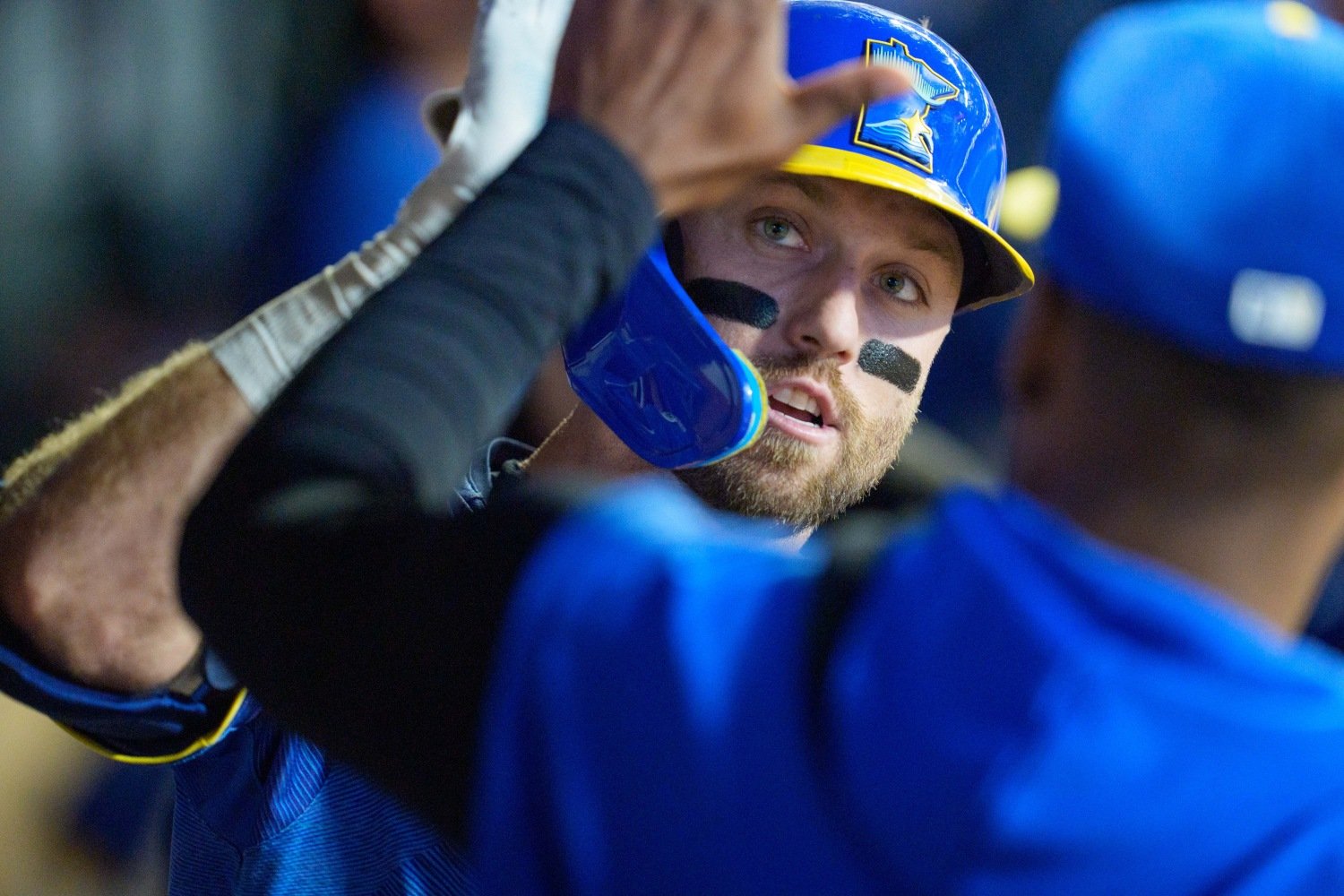 Following the July fire sale wherein they parted ways with 11 players from their 26-man roster, your 2025 Twins have endured the fifth-worst record in baseball, winning just 14 of their last 39 games. Times are dire in the land of 10,000 lakes, and those still following the club closely are either paid to do so or pure masochists—and if you are, that's fine. Twins Daily does not kink shame. [Ed. note: We also acknowledge the existence of overlap between those two groups of watchers.] That being the case, much of Twins Territory is understandably uninterested in discussing its hometown club, let alone its ability to contend for the postseason in the future. Yet, there is reason to believe Minnesota could again blossom into postseason contenders, potentially as soon as next season. Yes, I understand that making this statement could seem fabulistic. My reputation will likely be irreparably tarnished, and I understand if I'm accused of being nothing more than a Pohlad shill. That said, Minnesota does have a clear pathway toward contention, and that track will run through the position player group performing at a higher standard. Now, you may be asking yourself, "What exactly do you mean by 'better'?" In reply, I offer the following: Minnesota's 2026 position player group must clear "The Kody Clemens Bar." No, I'm not pitching an idea for a Forest Lake rooftop bar owned and operated by Roger Clemens. Instead, I propose that it be the minimum level of performance deemed acceptable by Twins decision-makers. Since Aug. 1, Clemens has generated an 84 wRC+ (16% below league average) over 137 plate appearances. If one were to exclude the 29-year-old's three-home-run performance against the Arizona Diamondbacks this past Sunday, they would notice that he had a well below league-average 49 wRC+ over 128 plate appearances. Now, it would be malpractice to ignore his best game because it's narratively inconvenient. Yet, it should be noted that he had performed like one of the worst hitters in baseball for over two months, making his newfound role as a productive veteran presence and overall cog in the lineup a product of circumstance—and arguably, a farce. Given his career averages and largely lackluster performance with Minnesota this season, Clemens should be viewed as a fringe major leaguer who would have been a candidate to be released from the 40-man roster this upcoming offseason if he were part of a winning organization. Yet, given that he resides on this iteration of the Minnesota Twins, there's probably room for him on next season's 26-man roster. If they are to return to contention, it would mean Clemens would need to revert to being an end-of-the-bench utility player, instead of being a platoon-proof lineup regular. There are currently five qualified Twins position players who have performed better than Clemens since the trade deadline: Austin Martin - 132 wRC+ over 128 plate appearances Luke Keaschall - 130 wRC+ over 152 plate appearances Matt Wallner - 119 wRC+ over 134 plate appearances Trevor Larnach - 118 wRC+ over 133 plate appearances Royce Lewis - 89 wRC+ over 155 plate appearances Byron Buxton (130 wRC+ over 121 plate appearances) and Ryan Jeffers (116 wRC+ over 121 plate appearances) have not generated enough plate appearances since Aug. 1 to reach qualified status. Yet, they have performed well since the deadline, hovering near their career norms. These seven players (including Lewis, who has also performed poorly) have solidified themselves as lineup cogs for next season. They should continue performing at similar rates, meaning Minnesota's position group could rebound from this season's lackluster performance with the acquisition or ascension of three above-average contributors who clear "The Kody Clemens Bar." Rostering Buxton (center field), Keaschall (second base/designated hitter), Martin (outfield), Larnach (corner outfield/designated hitter), Wallner (right field/designated hitter), Jeffers (catcher), and Lewis (third base) means Minnesota's most glaring positions of weakness this offseason will be first base and shortstop. Clemens could enter next season as the club's starting first baseman. Still, as mentioned earlier, team decision-makers need to aim higher if they want to return to contender status. Former top prospect Brooks Lee has ingrained himself as the club's starting shortstop. Yet, given his lackluster performance at the plate (71 wRC+ over 151 plate appearances) and questionable defense at the position, the club would be wise to enter next season with Lee in a diminished bench role, alongside Clemens—or in Triple-A. Possessing no viable primary first base options in the high minors, Minnesota would be wise to invest the majority of its offseason spending in a starting-caliber player at the position, like Josh Naylor, Rhys Hoskins, or Wilmer Flores. The club could also scour the trade market, pursuing a young, cost-controlled long-term option, which could be wise given that the team appears to be prioritizing its long-term ability to compete. If Minnesota were to move on from Lee as the full-time shortstop, top prospect Kaelen Culpepper is the most likely candidate to succeed him. Yet, given the 22-year-old prospect hasn't played a game above Double-A, team decision-makers would be wise to continue developing him in the high minors for a significant portion of next season. This summer's first-round selection, Marek Houston, could also blossom into a long-term solution at the position. However, he is currently in High-A and is not expected to reach the majors until 2027, provided he continues to perform well in Minnesota's minor-league system. A one-year placeholder free agency acquisition like Miguel Rojas or (gulp!) Isiah Kiner-Falefa could make sense for Minnesota. If they can do no better than them, though, they ought to continue starting Lee at the position instead. If the club were to move Lee off the position and back into a utility infield role, they would need to make a priority acquisition of a short- to medium-term solution, such as Nick Allen, one of the premier defensive shortstops in baseball, or ragged-edged but toolsy prospect Jordan Lawlar of the Diamondbacks. Regardless, Minnesota presently rosters seven position players who clear "The Kody Clemens Bar." Top outfield prospects Walker Jenkins, Emmanuel Rodriguez, and Gabriel Gonzalez could also make their major-league debuts early next season. If that occurs, the Twins would possess nine to 10 players who clear the threshold, making them an offensive unit that could complement what could be a plus pitching staff on the road back to contending in the AL.
 -
I don't understand what point you are trying to make. I listed and provided analysis for the same statistics you inserted into your comment.
- 37 replies
-
- 5
-
-
- ryan jeffers
- christian vazquez
- (and 2 more)
-
Image courtesy of © Denny Medley-Imagn Images Entering the 2025 MLB regular season, catching depth (behind veterans Ryan Jeffers and Christian Vázquez) was one of the most significant short- and long-term areas of concern for the Minnesota Twins. When the season began, Triple-A catchers Jair Camargo and Diego Cartaya were the primary high-minors fallback plans. Both possessing 40-man roster spots, either could have been called up to the majors if one of the two veterans had missed extended time early in the season. Yet, following Cartaya's significant struggles at the plate and in the field and Camargo undergoing Tommy John Surgery in June, both players were designated for assignment and have since parted ways with the organization. Interestingly, catcher was one of the few positions relatively unaffected by the trade deadline's mass exodus in the short term, as neither Jeffers nor Vázquez was traded. Yet, the organization seemingly gained a long-term solution at the position, acquiring top catching prospect Eduardo Tait alongside starting pitching prospect Mick Abel in the deal that sent star closer Jhoan Duran to the Philadelphia Phillies. Regardless, the position remained unchanged at the major-league level until Vázquez was placed on the 10-day IL with a left shoulder infection in early August. Since Vázquez was placed on the IL, 29-year-old rookie Mickey Gasper has supplanted him as Jeffers's primary backup, earning nine starts at the position. Gasper remained in this role until Jeffers was placed on the 7-day concussion IL retroactive to Sept. 5. In return, fellow 29-year-old backup backstop Jhonny Pereda was recalled from Triple-A St. Paul, inserting himself into the catching mix. With Jeffers and Vázquez both on the IL, Gasper and Pereda have become Minnesota's catching tandem since early September, with Pereda earning five starts to Gasper's three. This Saturday, MLB.com's Patrick Donnelly reported that Vázquez is hoping to return before Minnesota's final road trip, which begins Sept. 23. Yet, given the fact that Minnesota is out of playoff contention, there is reason to believe both Jeffers and Vázquez could remain sidelined for the rest of season, with eyes on advancing their respective recoveries into the offseason and entering next Spring Training healthy. That being the case, Gasper and Pereda could finish the 2025 regular season as Minnesota's catching tandem. These two being the only two options at the position is a rather bleak reality for the final month of the season. Yet, with Vázquez expected to depart the organization this offseason, there's at least some chance that Gasper and Pereda are in an active competition to become Jeffers's primary backup next season. Obviously, the competition won't be won or lost over the next month. Offseason training, Spring Training performance, and overall recency bias (which will manifest next March) will be the deciding factors. Presumably, the team will also explore external additions at that spot over the offseason. Yet, strong performances from one or both of Gasper and Pereda could function as a springboard toward earning the upper hand. Let's take a look at how both players have performed since Jeffers was placed on the IL on Sept. 5: Gasper - .154/.214/.154, 14 plate appearances, two hits, zero doubles, zero home runs, one walk, 14.3% strikeout rate, 5 wRC+ Pereda - .400/.471/.533, 17 plate appearances, six hits, two doubles, zero home runs, two walks, 23.5% strikeout rate, 184 wRC+ Obviously, 31 combined plate appearances is an exceptionally small sample. Yet, Pereda has significantly outperformed Gasper at the plate over the past two weeks. Pereda has driven the ball hard (54.5% hard hit rate) for extra bases, while posting a respectable 23.5% strikeout rate. On the other hand, Gasper has performed at a subpar rate, continuing the season-long trend of being one of the least effective hitters in baseball. When assessing the defensive acumen of both backstops, Pereda again has the edge, generating 1 Defensive Run Saved (DRS) over 44 innings at the position compared to Gasper's -1 DRS over 92 innings. Pereda has the upper hand in FanGraphs's framing metric, sporting -0.1 FRM (which is effectively average) compared to Gasper's -0.8 FRM. Pereda also sports better blocking, pop time, and caught stealing metrics than Gasper, lending merit to the idea that Pereda is the overall superior option and possesses the inside track on Gasper heading into 2026. Again, a poor Spring Training performance from Pereda, a strong Spring Training performance from Gasper, or team decision-makers ultimately electing to sign or trade for an established veteran catcher this offseason could make the prospect of Pereda winning the Opening Day backup catcher gig moot. Yet, given Minnesota's expected spending restrictions this offseason and Gasper's inability to perform at the plate or in the field, there is reason to believe Pereda is the favorite to begin next season as Jeffers's primary backup. View full article
-
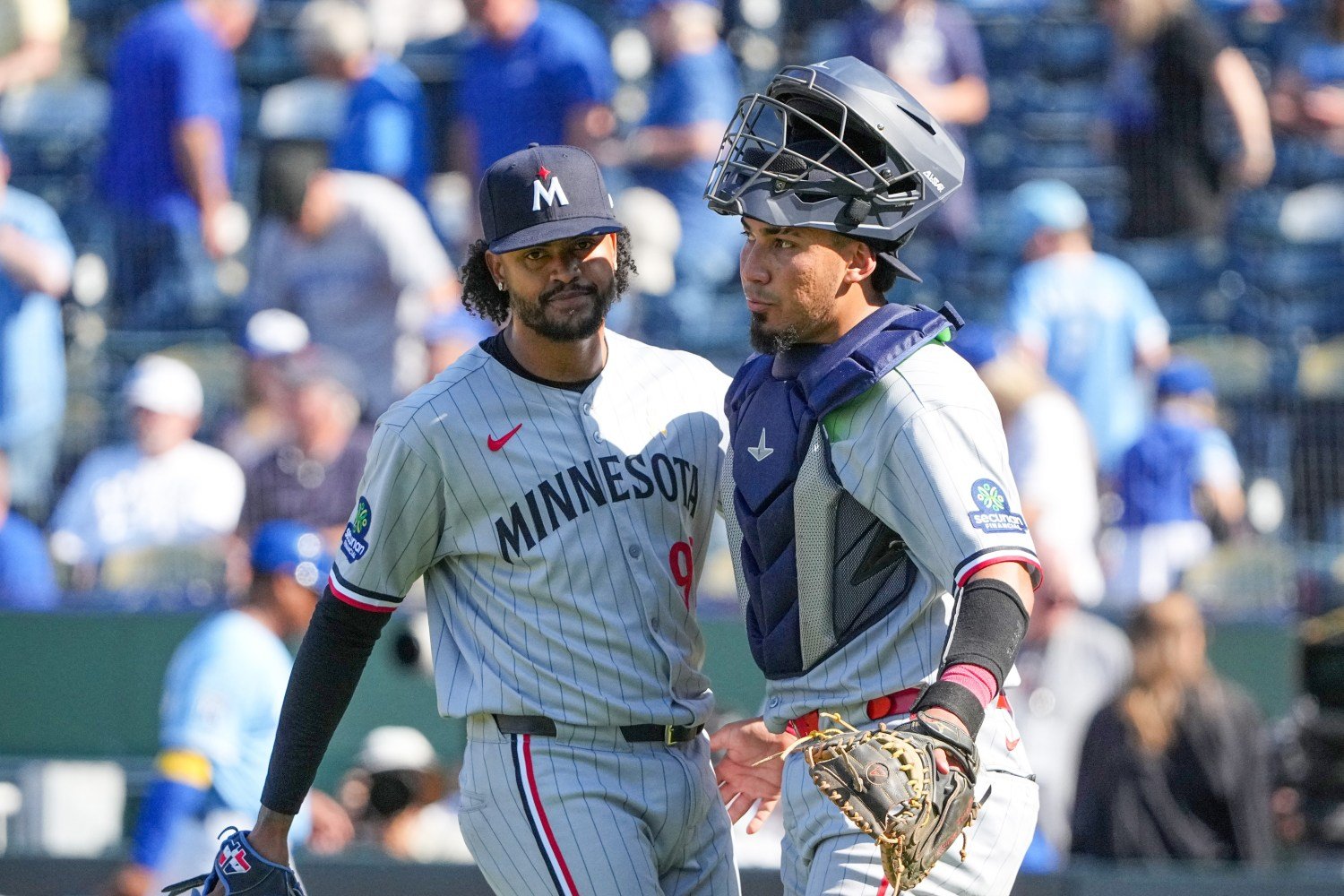 Entering the 2025 MLB regular season, catching depth (behind veterans Ryan Jeffers and Christian Vázquez) was one of the most significant short- and long-term areas of concern for the Minnesota Twins. When the season began, Triple-A catchers Jair Camargo and Diego Cartaya were the primary high-minors fallback plans. Both possessing 40-man roster spots, either could have been called up to the majors if one of the two veterans had missed extended time early in the season. Yet, following Cartaya's significant struggles at the plate and in the field and Camargo undergoing Tommy John Surgery in June, both players were designated for assignment and have since parted ways with the organization. Interestingly, catcher was one of the few positions relatively unaffected by the trade deadline's mass exodus in the short term, as neither Jeffers nor Vázquez was traded. Yet, the organization seemingly gained a long-term solution at the position, acquiring top catching prospect Eduardo Tait alongside starting pitching prospect Mick Abel in the deal that sent star closer Jhoan Duran to the Philadelphia Phillies. Regardless, the position remained unchanged at the major-league level until Vázquez was placed on the 10-day IL with a left shoulder infection in early August. Since Vázquez was placed on the IL, 29-year-old rookie Mickey Gasper has supplanted him as Jeffers's primary backup, earning nine starts at the position. Gasper remained in this role until Jeffers was placed on the 7-day concussion IL retroactive to Sept. 5. In return, fellow 29-year-old backup backstop Jhonny Pereda was recalled from Triple-A St. Paul, inserting himself into the catching mix. With Jeffers and Vázquez both on the IL, Gasper and Pereda have become Minnesota's catching tandem since early September, with Pereda earning five starts to Gasper's three. This Saturday, MLB.com's Patrick Donnelly reported that Vázquez is hoping to return before Minnesota's final road trip, which begins Sept. 23. Yet, given the fact that Minnesota is out of playoff contention, there is reason to believe both Jeffers and Vázquez could remain sidelined for the rest of season, with eyes on advancing their respective recoveries into the offseason and entering next Spring Training healthy. That being the case, Gasper and Pereda could finish the 2025 regular season as Minnesota's catching tandem. These two being the only two options at the position is a rather bleak reality for the final month of the season. Yet, with Vázquez expected to depart the organization this offseason, there's at least some chance that Gasper and Pereda are in an active competition to become Jeffers's primary backup next season. Obviously, the competition won't be won or lost over the next month. Offseason training, Spring Training performance, and overall recency bias (which will manifest next March) will be the deciding factors. Presumably, the team will also explore external additions at that spot over the offseason. Yet, strong performances from one or both of Gasper and Pereda could function as a springboard toward earning the upper hand. Let's take a look at how both players have performed since Jeffers was placed on the IL on Sept. 5: Gasper - .154/.214/.154, 14 plate appearances, two hits, zero doubles, zero home runs, one walk, 14.3% strikeout rate, 5 wRC+ Pereda - .400/.471/.533, 17 plate appearances, six hits, two doubles, zero home runs, two walks, 23.5% strikeout rate, 184 wRC+ Obviously, 31 combined plate appearances is an exceptionally small sample. Yet, Pereda has significantly outperformed Gasper at the plate over the past two weeks. Pereda has driven the ball hard (54.5% hard hit rate) for extra bases, while posting a respectable 23.5% strikeout rate. On the other hand, Gasper has performed at a subpar rate, continuing the season-long trend of being one of the least effective hitters in baseball. When assessing the defensive acumen of both backstops, Pereda again has the edge, generating 1 Defensive Run Saved (DRS) over 44 innings at the position compared to Gasper's -1 DRS over 92 innings. Pereda has the upper hand in FanGraphs's framing metric, sporting -0.1 FRM (which is effectively average) compared to Gasper's -0.8 FRM. Pereda also sports better blocking, pop time, and caught stealing metrics than Gasper, lending merit to the idea that Pereda is the overall superior option and possesses the inside track on Gasper heading into 2026. Again, a poor Spring Training performance from Pereda, a strong Spring Training performance from Gasper, or team decision-makers ultimately electing to sign or trade for an established veteran catcher this offseason could make the prospect of Pereda winning the Opening Day backup catcher gig moot. Yet, given Minnesota's expected spending restrictions this offseason and Gasper's inability to perform at the plate or in the field, there is reason to believe Pereda is the favorite to begin next season as Jeffers's primary backup.
- 37 comments
-
- 6
-
-
- ryan jeffers
- christian vazquez
- (and 2 more)
-
Image courtesy of © Jesse Johnson-Imagn Images Acquired alongside Simeon Woods Richardson in the blockbuster 2021 trade that sent frontline starting pitcher José Berríos to the Toronto Blue Jays, Austin Martin has long been an anomaly within the Minnesota Twins organization. Drafted fifth overall in the 2020 MLB Amateur Draft out of the University of Vanderbilt, the famed "Vandy Boy" was tabbed by many to quickly become an above-average MLB regular. FanGraphs's Eric Longenhagen tagged the first round selection with a 55 Future Value (FV) grade upon his selection. Five seasons into his professional career, however, the now-26-year-old has yet to live up to his lofty pre-draft expectations. He sports a 99 wRC+ over 356 major-league plate appearances. Yet, his recent performance with Minnesota suggests he could be turning a corner, potentially blossoming into an above-average hitter with ample defensive flexibility. Promoted to the Twins immediately after the 2025 trade deadline's mass exodus, Martin has hit .282/.378/.376, with 24 hits, three doubles, one home run, and a 116 wRC+ over 99 plate appearances. With a contact-centered profile, Martin has demonstrated meaningful signs of improvement at the plate and an above-average speed profile, resulting in him swiping six bases on nine attempts. While performing 16% better than average at the plate, the right-handed-hitting utility player has also displayed meaningful improvement defensively. He boasts a team-leading 4 Defensive Runs Saved (DRS) since rejoining the club on Aug. 1. He also offers positional utility, starting 20 games in left field, 11 in center field, and three at second base. Being one of the few bright spots on a club that has regressed into one of the worst in baseball, Martin has blossomed into a platoon-proof regular for Minnesota. The 26-year-old has impressed in his first extended opportunity with Minnesota. Barring injury, he will continue to be a staple in the club's lineup during the final three weeks of the season, with the opportunity of maintaining a load-bearing role heading into next season. If Twins decision-makers elect to part ways with left-handed-hitting corner outfielder Trevor Larnach this offseason, significant playing time would open in the outfield, particularly in left field. As noted earlier, Martin has primarily started in left field this season, meaning he could seamlessly slide in as Larnach's primary replacement early next season. Also, given fellow candidates James Outman and Alan Roden's struggles at the plate since joining Minnesota, Martin has a case to play above either of them. As the Twins enter a new era with even tighter spending restrictions, Martin has a surprisingly strong chance to stick on the team's 26-man roster for a while. That doesn't necessarily mean he is destined to become a full-time starter at one specific position. Walker Jenkins and Emmanuel Rodriguez are at Triple A. The two young, left-handed-hitting top prospects will make their major-league debuts next season, and could quickly become fixtures in both corner outfield spots, playing alongside franchise cornerstone Byron Buxton. That being the case, Martin's long-term future with Minnesota will likely be as a super utility player who can play all three outfield positions and second base, similar to the role Willi Castro occupied the previous two and a half seasons. Regardless, Martin has solidified himself as a primary offensive contributor entering next season. The former first-round pick could also become the club's platoon-proof primary left fielder early next season, before potentially transitioning into a long-term utility role upon the arrival of Jenkins, Rodriguez, Kaelen Culpepper, and other top position player prospects. View full article
-
 Acquired alongside Simeon Woods Richardson in the blockbuster 2021 trade that sent frontline starting pitcher José Berríos to the Toronto Blue Jays, Austin Martin has long been an anomaly within the Minnesota Twins organization. Drafted fifth overall in the 2020 MLB Amateur Draft out of the University of Vanderbilt, the famed "Vandy Boy" was tabbed by many to quickly become an above-average MLB regular. FanGraphs's Eric Longenhagen tagged the first round selection with a 55 Future Value (FV) grade upon his selection. Five seasons into his professional career, however, the now-26-year-old has yet to live up to his lofty pre-draft expectations. He sports a 99 wRC+ over 356 major-league plate appearances. Yet, his recent performance with Minnesota suggests he could be turning a corner, potentially blossoming into an above-average hitter with ample defensive flexibility. Promoted to the Twins immediately after the 2025 trade deadline's mass exodus, Martin has hit .282/.378/.376, with 24 hits, three doubles, one home run, and a 116 wRC+ over 99 plate appearances. With a contact-centered profile, Martin has demonstrated meaningful signs of improvement at the plate and an above-average speed profile, resulting in him swiping six bases on nine attempts. While performing 16% better than average at the plate, the right-handed-hitting utility player has also displayed meaningful improvement defensively. He boasts a team-leading 4 Defensive Runs Saved (DRS) since rejoining the club on Aug. 1. He also offers positional utility, starting 20 games in left field, 11 in center field, and three at second base. Being one of the few bright spots on a club that has regressed into one of the worst in baseball, Martin has blossomed into a platoon-proof regular for Minnesota. The 26-year-old has impressed in his first extended opportunity with Minnesota. Barring injury, he will continue to be a staple in the club's lineup during the final three weeks of the season, with the opportunity of maintaining a load-bearing role heading into next season. If Twins decision-makers elect to part ways with left-handed-hitting corner outfielder Trevor Larnach this offseason, significant playing time would open in the outfield, particularly in left field. As noted earlier, Martin has primarily started in left field this season, meaning he could seamlessly slide in as Larnach's primary replacement early next season. Also, given fellow candidates James Outman and Alan Roden's struggles at the plate since joining Minnesota, Martin has a case to play above either of them. As the Twins enter a new era with even tighter spending restrictions, Martin has a surprisingly strong chance to stick on the team's 26-man roster for a while. That doesn't necessarily mean he is destined to become a full-time starter at one specific position. Walker Jenkins and Emmanuel Rodriguez are at Triple A. The two young, left-handed-hitting top prospects will make their major-league debuts next season, and could quickly become fixtures in both corner outfield spots, playing alongside franchise cornerstone Byron Buxton. That being the case, Martin's long-term future with Minnesota will likely be as a super utility player who can play all three outfield positions and second base, similar to the role Willi Castro occupied the previous two and a half seasons. Regardless, Martin has solidified himself as a primary offensive contributor entering next season. The former first-round pick could also become the club's platoon-proof primary left fielder early next season, before potentially transitioning into a long-term utility role upon the arrival of Jenkins, Rodriguez, Kaelen Culpepper, and other top position player prospects.
 -
Walker JenkinsLuke KeaschallKaelen CulpepperEduardo TaitConnor PrielippEmmanuel RodriguezMarek HoustonMick AbelDasan HillGabriel GonzalezKendry RojasCharlee SotoKyle DeBargeBilly AmickQuentin YoungRiley QuickAndrew MorrisBrandon WinokurCJ CulpepperMarco Raya
-
Image courtesy of © Matt Blewett-Imagn Images Acquired alongside left-handed starting pitcher Kendry Rojas in the last-minute trade deadline deal that sent the pride of North St. Paul, Louis Varland, to the Toronto Blue Jays, left-handed hitting outfielder Alan Roden instantly got run in a full-time role with the new-look Minnesota Twins, playing in 12 of the club's first 13 post-trade deadline games. The 25-year-old prospect moved among all three outfield spots, earning eight starts in left field and two in center field. The former Blue Jay also mixed into right field, sliding over as a defensive substitution in two games. Despite quickly becoming a fixture in Minnesota's lineup, Roden sustained a left thumb sprain on Aug. 10 that became worse with further aggravation, resulting in him being placed on the 60-day IL on Aug. 16 and prematurely ending his rookie campaign. Before sustaining his injury, Roden struggled at the plate with Minnesota, hitting .158/.200/.263, with six hits, one double, one home run, and a 26 wRC+ over 40 plate appearances. The left-handed hitting rookie's struggles weren't unique to Minnesota; he'd hit a similarly lackluster .204/.283/.306, with 20 hits, five doubles, one home run, and a 66 wRC+ over 113 plate appearances with Toronto. Thankfully, Roden underwent successful thumb surgery on Friday, meaning he should be able to compete for a 26-man roster spot come Spring Training. Interestingly, though, some sections of Twins Territory have already soured on Roden, less than one month into his Twins tenure. Yes, Roden struggled at the plate over 40 plate appearances. Yet, much of the angst surrounding the 25-year-old outfielder is seemingly the result of those who follow the club feeling bitter that Twins decision-makers parted ways with a Minnesota-born fan favorite to acquire him. Of course, it's impossible to really judge Roden based on the small sample of playing time he's accrued in the majors so far. It's equally unwieldy, this particular summer, to consider a player and their relationship with the fan base outside the context of last month's fire sale. Right now, fans can only view Roden through the dingy curtain of that alienating sequence of events: players being traded, and then the franchise being taken off the market. Unlike the Pohlad family (and most billionaires), Roden is an accessible figure. Angered fans who watched the club post-deadline could identify the 25-year-old outfielder and direct their overwhelming sense of discontent and malaise onto him. Entering this offseason, though, those who follow the team should detach their initial perceptions of Roden from ownership's ineptitude, and instead analyze and assess him as a young, inexperienced outfielder who just graduated from prospect status. When assessing Roden through this lens, one soon realizes he possesses the tools necessary to quickly become an above-average MLB contributor in the field and at the plate. Sporting a hit-over-power profile with near-elite plate discipline, Roden has excelled in Toronto's minor-league system since being drafted in the third round of the 2022 MLB Draft, quickly ascending to Double-A in 2023 and generating a 138 wRC+ over 530 combined plate appearances between Double- and Triple-A in 2024. Roden's success in the high minors continued this season, as he hit .331/.423/.496 with a 9.2% strikeout rate and 149 wRC+ over 142 plate appearances for Triple-A Buffalo. As mentioned earlier, Roden's minor-league success has been the result of him making exceptional swing decisions, while possessing a high-contact profile and above-average power. Controlling the zone, the left-handed hitting outfielder can keep up with high-velocity pitches while being able to contend with breaking and offspeed pitches, meaning he should be able to counter adjustments made by major-league pitching. While he has yet to be able to effectively do so (again, he only has 153 major-league plate appearances), there is reason to hope that can change. Assuming Twins decision-makers part ways with veteran outfielder Trevor Larnach this offseason, Roden will be in line to become the club's Opening Day left fielder. Fellow left-handed hitting outfielders James Outman and Matt Wallner could cut into his playing time. Yet, given his plus defense in a corner outfield spot (a skillset Wallner does not possess) while possessing the potential to become an above-average hitter (a skillset Outman does not possess), he should find some real opportunities. That said, Roden's opportunity window to blossom into an everyday starting outfielder for Minnesota could be small, given top prospect Emmanuel Rodriguez and Walker Jenkins's proximity to the majors. Both top-ranked prospects could make their debuts in 2026. If they can produce at the plate while exhibiting good health, they could entrench themselves as everyday starting outfielders alongside franchise cornerstone centerfield Byron Buxton, making Wallner, Outman, and Roden's skillsets redundant. For now, though, Roden is well-positioned to become a full-time starter for Minnesota early next season. Despite his small-sample struggles with the Twins this season, there is reason to believe he could rise to the occasion. View full article
-
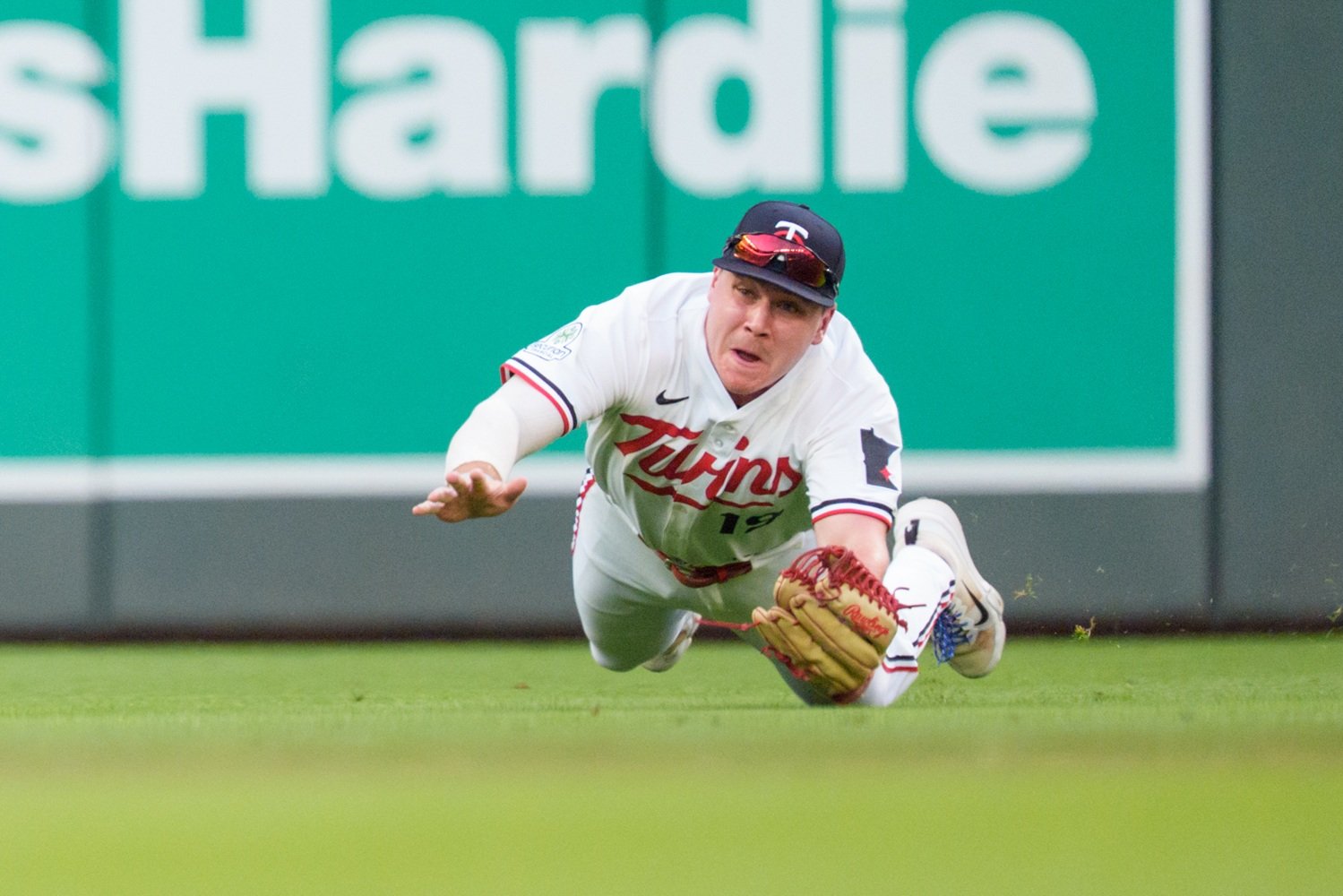 Acquired alongside left-handed starting pitcher Kendry Rojas in the last-minute trade deadline deal that sent the pride of North St. Paul, Louis Varland, to the Toronto Blue Jays, left-handed hitting outfielder Alan Roden instantly got run in a full-time role with the new-look Minnesota Twins, playing in 12 of the club's first 13 post-trade deadline games. The 25-year-old prospect moved among all three outfield spots, earning eight starts in left field and two in center field. The former Blue Jay also mixed into right field, sliding over as a defensive substitution in two games. Despite quickly becoming a fixture in Minnesota's lineup, Roden sustained a left thumb sprain on Aug. 10 that became worse with further aggravation, resulting in him being placed on the 60-day IL on Aug. 16 and prematurely ending his rookie campaign. Before sustaining his injury, Roden struggled at the plate with Minnesota, hitting .158/.200/.263, with six hits, one double, one home run, and a 26 wRC+ over 40 plate appearances. The left-handed hitting rookie's struggles weren't unique to Minnesota; he'd hit a similarly lackluster .204/.283/.306, with 20 hits, five doubles, one home run, and a 66 wRC+ over 113 plate appearances with Toronto. Thankfully, Roden underwent successful thumb surgery on Friday, meaning he should be able to compete for a 26-man roster spot come Spring Training. Interestingly, though, some sections of Twins Territory have already soured on Roden, less than one month into his Twins tenure. Yes, Roden struggled at the plate over 40 plate appearances. Yet, much of the angst surrounding the 25-year-old outfielder is seemingly the result of those who follow the club feeling bitter that Twins decision-makers parted ways with a Minnesota-born fan favorite to acquire him. Of course, it's impossible to really judge Roden based on the small sample of playing time he's accrued in the majors so far. It's equally unwieldy, this particular summer, to consider a player and their relationship with the fan base outside the context of last month's fire sale. Right now, fans can only view Roden through the dingy curtain of that alienating sequence of events: players being traded, and then the franchise being taken off the market. Unlike the Pohlad family (and most billionaires), Roden is an accessible figure. Angered fans who watched the club post-deadline could identify the 25-year-old outfielder and direct their overwhelming sense of discontent and malaise onto him. Entering this offseason, though, those who follow the team should detach their initial perceptions of Roden from ownership's ineptitude, and instead analyze and assess him as a young, inexperienced outfielder who just graduated from prospect status. When assessing Roden through this lens, one soon realizes he possesses the tools necessary to quickly become an above-average MLB contributor in the field and at the plate. Sporting a hit-over-power profile with near-elite plate discipline, Roden has excelled in Toronto's minor-league system since being drafted in the third round of the 2022 MLB Draft, quickly ascending to Double-A in 2023 and generating a 138 wRC+ over 530 combined plate appearances between Double- and Triple-A in 2024. Roden's success in the high minors continued this season, as he hit .331/.423/.496 with a 9.2% strikeout rate and 149 wRC+ over 142 plate appearances for Triple-A Buffalo. As mentioned earlier, Roden's minor-league success has been the result of him making exceptional swing decisions, while possessing a high-contact profile and above-average power. Controlling the zone, the left-handed hitting outfielder can keep up with high-velocity pitches while being able to contend with breaking and offspeed pitches, meaning he should be able to counter adjustments made by major-league pitching. While he has yet to be able to effectively do so (again, he only has 153 major-league plate appearances), there is reason to hope that can change. Assuming Twins decision-makers part ways with veteran outfielder Trevor Larnach this offseason, Roden will be in line to become the club's Opening Day left fielder. Fellow left-handed hitting outfielders James Outman and Matt Wallner could cut into his playing time. Yet, given his plus defense in a corner outfield spot (a skillset Wallner does not possess) while possessing the potential to become an above-average hitter (a skillset Outman does not possess), he should find some real opportunities. That said, Roden's opportunity window to blossom into an everyday starting outfielder for Minnesota could be small, given top prospect Emmanuel Rodriguez and Walker Jenkins's proximity to the majors. Both top-ranked prospects could make their debuts in 2026. If they can produce at the plate while exhibiting good health, they could entrench themselves as everyday starting outfielders alongside franchise cornerstone centerfield Byron Buxton, making Wallner, Outman, and Roden's skillsets redundant. For now, though, Roden is well-positioned to become a full-time starter for Minnesota early next season. Despite his small-sample struggles with the Twins this season, there is reason to believe he could rise to the occasion.
 -
Be Like MKE: What Can Minnesota Twins Learn from the Mighty Brewers?
Cody Schoenmann posted an article in Twins
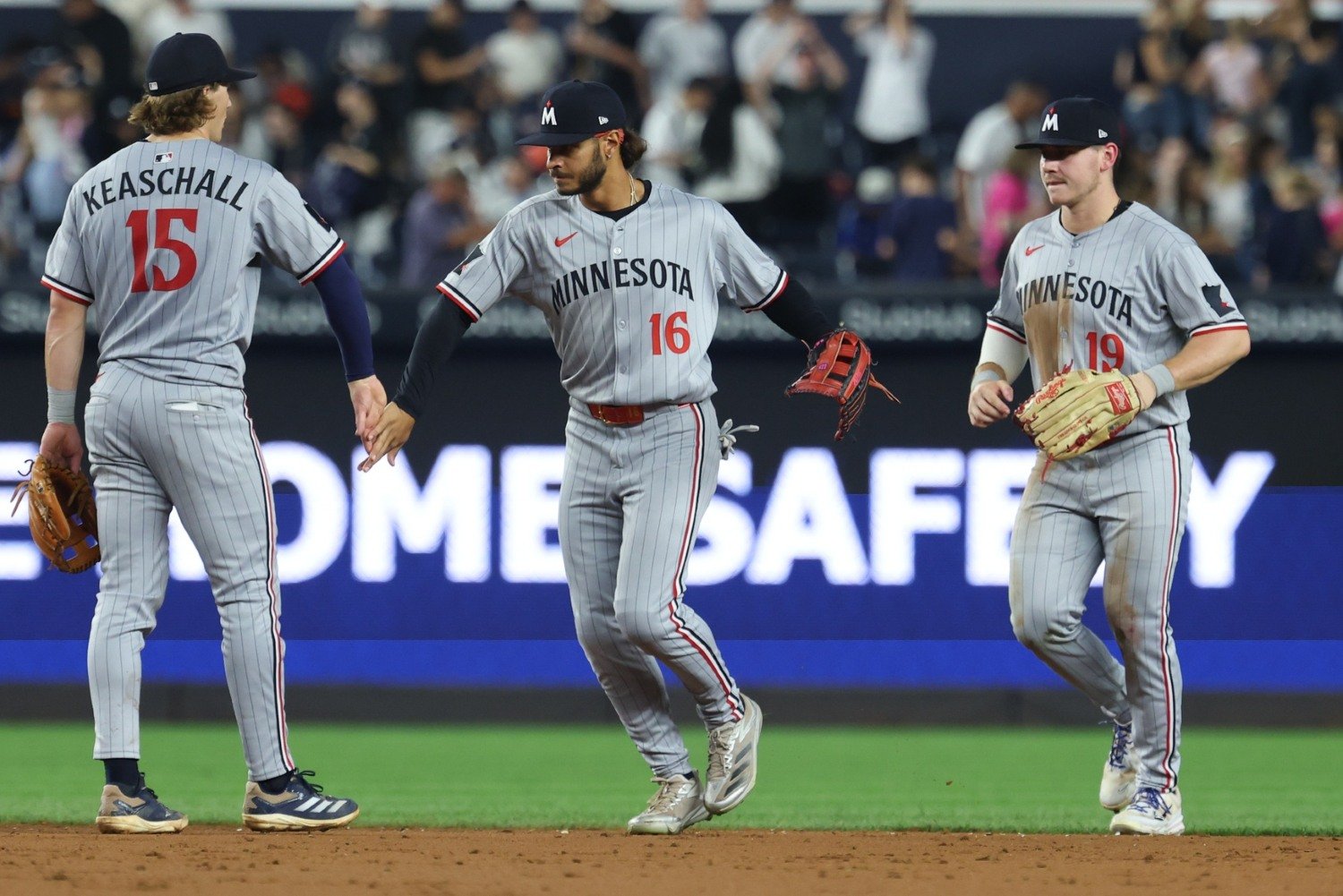 Admittedly, I was excited about Minnesota electing to undertake a massive roster reconstruction at the 2025 MLB trade deadline, parting ways with 11 players from its 26-man roster. Yes, it would have been nice to watch the Carlos Correa-led collective demonstrate resiliency, pick themselves up by their bootstraps, and triumphantly return to the postseason after enduring a cataclysmic collapse late last season, but the club losing four straight series out of the All-Star signaled they were, in fact, prepared to go gentle into that good night. Change was in order. Many assumed that the team's fire sale at the deadline was evidence that a sale was near. Recent comments from MLB commissioner Rob Manfred and a report from Front Office Sports reinforced a sense of confidence and optimism that the club would pass into the hands of a different billionaire or three. Unfortunately, instead, the family announced on Wednesday that they will remain principal owners, albeit with new limited partners coming aboard. So it goes. Thus, the Twins front office will be forced to continue operating under significant spending restrictions, with major implications for this upcoming offseason. As of right now, Minnesota has $48 million in committed salaries next season: Byron Buxton and Pablo López's contracts ($38 million) and $10 million owed to Correa. Including expected arbitration payouts, FanGraphs projects Minnesota's 2025 Opening Day payroll to be $66.8 million, which would be a $67.2 million decrease from its 2024 Opening Day payroll, which settled around $134 million. Despite how bleak times are in Twins Territory, there is reason to believe the Pohlad family (and their new partners-slash-benefactors) will be charitable enough to allow the front office to spend roughly $30-40 million, increasing the club's payroll to roughly $100-110 million. That's a fairly negative outlook; it would still constitute a $20-30 million decrease from this season. Still, if Minnesota were to allocate that much money toward the club's payroll, it would be operating under a payroll similar to the thriving Milwaukee Brewers. Milwaukee's 2025 payroll stands at $121 million. Like Minnesota, however, the Brewers are expected to have a significant amount of money come off the books this fall. FanGraphs expects Milwaukee's payroll to decrease to $60.4 million at the end of the season, placing them in a similar ballpark to Minnesota. (Importantly, these figures don't account for arbitration awards; both the Twins and the Brewers will almost certainly spend much more than their current projections, even if they don't make noteworthy forays into free agency.) Like Minnesota, Milwaukee is expected to raise its payroll back to the $115-120 million range. However, what separates Milwaukee from Minnesota is that the Brewers have been operating under these constraints for a significant amount of time, while recently blossoming into the platonic ideal of how a small-market team should construct its major-league roster (and farm system) to become sustainably successful. Under Derek Falvey, Minnesota already operates like Milwaukee in notable ways. For example, Minnesota, like Milwaukee, has grown a knack for drafting college pitchers from small schools and adding more velocity to their arsenal to make everything pop. The two organizations also similarly spread their money around in Latin America, rather than concentrating their bonus money on individuals perceived as the top prospects in each year's class. Also, the two clubs value depth in the high minors and at the major-league level. However, there are key differences between the two clubs that Minnesota needs to shore up if it wants to become a sustainable small-market winner in the same vein as Milwaukee. What separates Milwaukee from Minnesota (or Matt Arnold from Derek Falvey) is Milwaukee's nimble roster-building and willingness to transact often. A primary factor that led to Minnesota's descent after its magical 2023 run was Falvey's unwillingness to shake up the roster's core. Instead of parting ways with players like Max Kepler, Chris Paddack, and others at opportune times, Twins decision-makers elected to hold on to them, creating a sense of stagnancy within the club and restricting its ability to combat mediocrity. On the other hand, the contemporary, successful iteration of Milwaukee, led by Arnold (and formerly David Stearns), has been exceptionally active in recent seasons, trading away star players nearing free agency—like Josh Hader, Corbin Burnes, and Devin Williams—for hefty packages. Indirectly, the team got William Contreras by trading Hader. Directly, they acquired the left side of their infield (Caleb Durbin and Joey Ortiz) in trades that gave up Burnes and Williams, and those deals also yielded pitching depth and an extra draft pick. In prior seasons, Falvey demonstrated an unwillingness to make momentous transactions like Stearns or Arnold do. Yet, Minnesota's organization-altering deadline indicates that they (be it Falvey himself or Jeremy Zoll, the new nominal general manager) have become willing to make a meaningful shift in roster construction approach that more closely resonates with Milwaukee. If Minnesota continues to execute transactions similarly, star players like López (who possesses an expensive contract) and Ryan Jeffers (who will be a free agent after next season) could also be moved in the offseason. Trading López and Jeffers are moves Milwaukee decision-makers would seemingly make. However, if Minnesota were to mirror Milwaukee's mode of operation, it likely wouldn't part ways with Ryan, given that he's relatively inexpensive and an exceptionally talented pitcher. Beyond a willingness to make high-impact transactions, Minnesota should also become more like Milwaukee in its player development program. A driving factor in Milwaukee's success is its ability to field a roster filled with elite defensive players who make exceptional swing decisions at the plate. In recent seasons, Minnesota has existed on the complete opposite end of the spectrum. Instead of fielding players like Brice Turang, Sal Frelick, or Isaac Collins, Minnesota has provided extended opportunities to players like Trevor Larnach, Ty France, and Edouard Julien. Still, given the recent development of players like Luke Keaschall and Austin Martin, there is reason to believe Minnesota has already begun mimicking Milwaukee's approach to roster-building. Also, Minnesota has developed one of the more admirable internal pitching development programs in baseball, meaning the club should be able to continue developing cost-controlled, above-average starting pitching and reliever talent, like Milwaukee. Minnesota possesses the young, cost-controlled talent necessary to take the steps toward creating a major-league club that could win again in the near future. Twins decision-makers need to become more willing to make consequential transactions, while placing more emphasis on acquiring and developing good defensive players with exceptional plate discipline and contact skills. However, given the recent overhaul the front office engaged in during the deadline and prioritization of providing players like Keaschall, Martin, and Alan Roden extended opportunities, there is reason to believe the transition into being more like Milwaukee has already begun.

