


Twins Video
Twenty-four games into their season, the Minnesota Twins' catching tandem of Ryan Jeffers and Christian Vázquez ranks 26th in the major leagues. They've been exactly replacement-level. They're hitting .202/.253/.286, good for a 56 wRC+. The club's positional duo has taken a step back from last season, where they finished as the 19th-best tandem in baseball, and a significant step back from 2023, when they concluded the season as the league's ninth-best pairing. Jeffers and (more so) Vázquez are still sound game-planning, receiving, framing, and throwing catchers. They're the only catching corps in the league without a home run, though, and their hitting problems are too great to make up for even with great defense.
The tandem's ability to function offensively would always be contingent on Jeffers's ability to produce at the plate. Since joining the Twins, Vázquez has been a well-below-league-average offensive catcher, posting a 65 and 60 wRC+ the prior two seasons, respectively. He is performing especially poorly at the plate this season, hitting .100/.152/.167 with three hits, zero home runs, and a -12 wRC+ over 33 plate appearances. Still, expectations were practically nonexistent with Vázquez, making his slow start at the plate unsurprising.
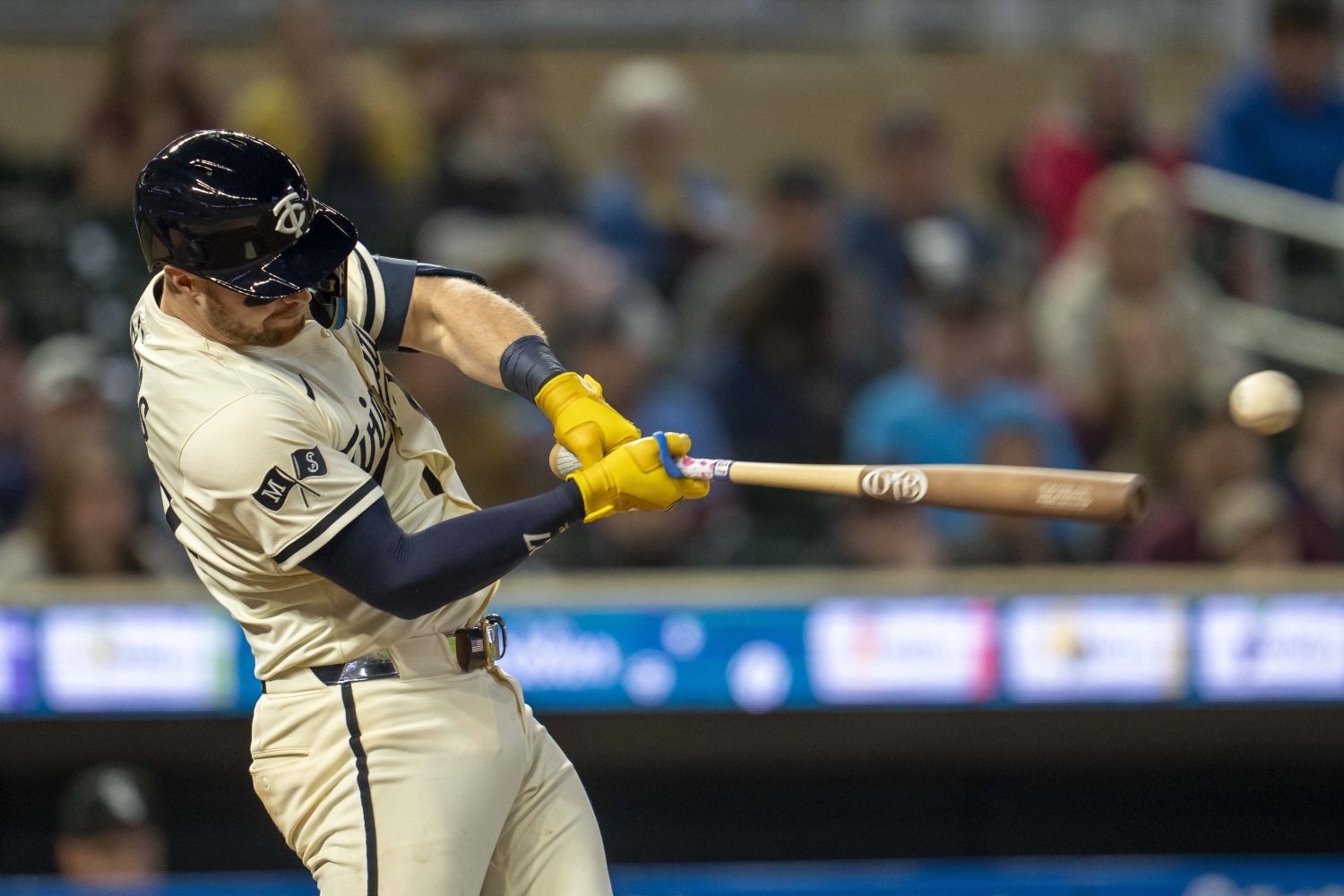
On the other hand, Jeffers is performing far worse than hoped or expected. The long-time Twins backstop possesses an admirable 19.4% strikeout rate and 9.0% walk rate, indicating he isn't struggling to see the ball. Instead, the problems arise when he takes the bat off his shoulder.
Here is how Jeffers's bat speed has trended since public data became available:
- 2023: 73.8 MPH
- 2024: 72.9 MPH
- 2025: 70.8 MPH
Jeffers's bat speed has gradually dropped, directly correlating to a steady drop in power and overall offensive production. While possessing 30th-percentile bat speed, the UNC-Wilmington product has also generated a deeper contact point this season. Here's how far his average intercept point on swings has been from his center of mass in each of the three seasons (two of them partial) for which we have this data:
- 2023: 30.3 in.
- 2024: 30.7 in.
- 2025: 26.7 in.
He's setting up deeper in the box, too, so his contact point has moved back from a few inches in front of home plate to a few inches behind the front edge thereof. Hitters make adjustments like that for various reasons, but in this case, it feels an awful lot like a hitter trying to buy a bit of extra space (and, therefore, time) for a barrel he knows is dragging more through the zone.
Decreased bat speed is often the product of a player playing through injury. The only documented injury Jeffers has sustained this season was when a ball hit his right hand, causing it to bleed and eventually swell. The right-handed hitting backstop was sidelined for two days before returning to the lineup. He has interestingly performed significantly better since injuring his thumb, propelling from a 46 wRC+ over 38 plate appearances before the injury to a 184 wRC+ over 29 plate appearances afterward.
Nevertheless, Jeffers's change in positioning and notably diminished bat speed are cause for concern. Vázquez will always be a below-average offensive catcher. Triple-A catchers Jair Camargo and Diego Cartaya are struggling at the plate, meaning the possibility of minor-league reinforcements impacting the parent club's catching tandem is remote. That being the case, Jeffers will need to turn things around the plate if the club expects to receive any offensive production from the position. If he cannot, the club could face a bleak outlook at the position with over 130 games remaining.
Are you optimistic about the Twins right now?

Follow Twins Daily For Minnesota Twins News & Analysis



- mikelink45, Karbo, Doctor Gast and 3 others
-
 6
6


Recommended Comments
Create an account or sign in to comment
You need to be a member in order to leave a comment
Create an account
Sign up for a new account in our community. It's easy!
Register a new accountSign in
Already have an account? Sign in here.
Sign In Now