



Cody Schoenmann
-
Posts
768 -
Joined
-
Last visited
-
Days Won
1
Content Type
Profiles
News
Minnesota Twins Videos
2026 Minnesota Twins Top Prospects Ranking
2022 Minnesota Twins Draft Picks
Minnesota Twins Free Agent & Trade Rumors, Notes, & Tidbits
Guides & Resources
2023 Minnesota Twins Draft Picks
The Minnesota Twins Players Project
2024 Minnesota Twins Draft Picks
2025 Minnesota Twins Draft Pick Tracker
2026 Minnesota Twins Draft Tracker: Picks & Bonuses
Forums
Blogs
Events
Store
Downloads
Gallery
Everything posted by Cody Schoenmann
-
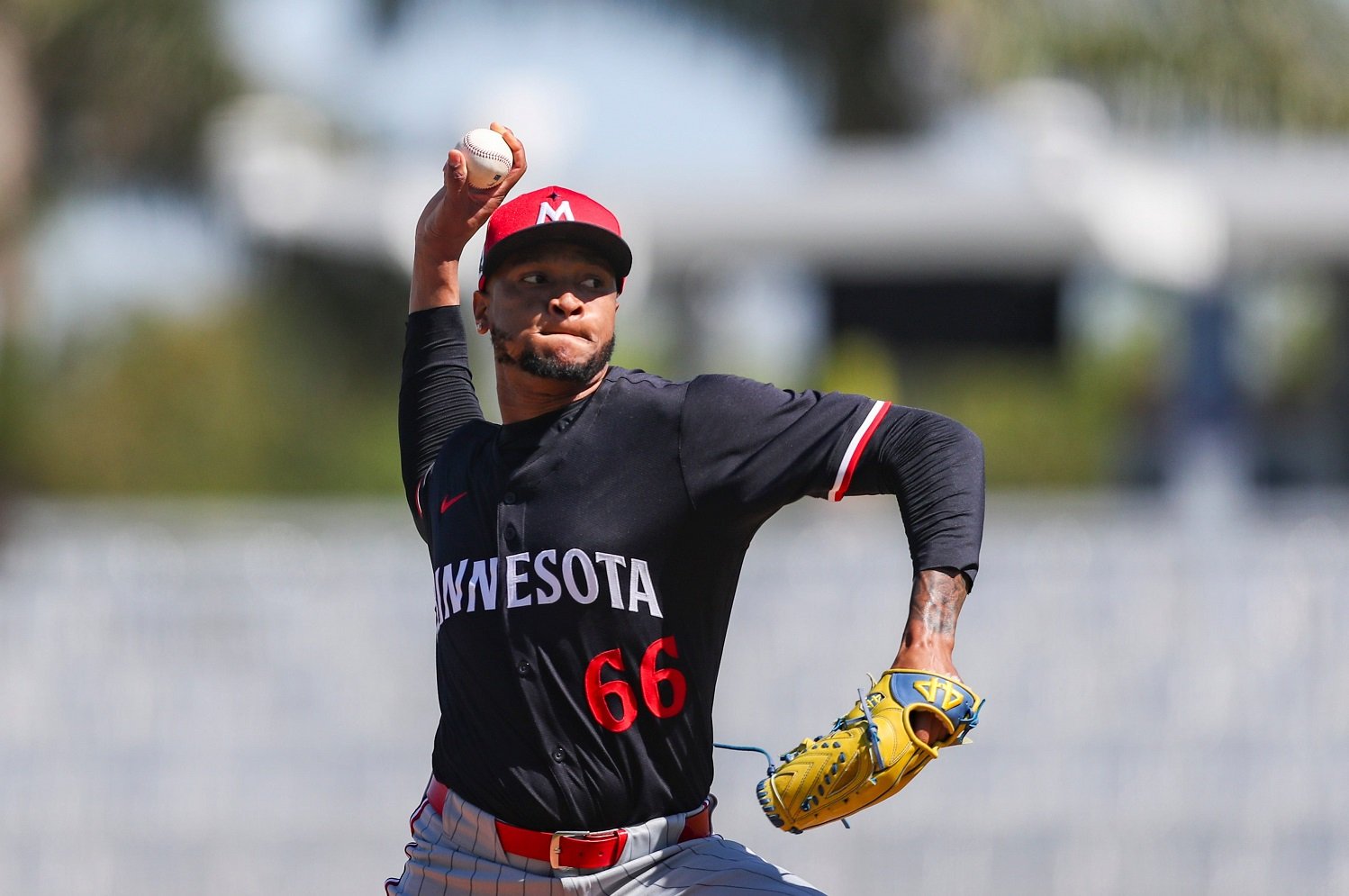 Entering the 2025 MLB regular season, the Minnesota Twins' greatest area of strength is their bullpen. Headlined by star closer Jhoan Durán, elite set-up reliever Griffin Jax, breakout high-leverage arm Cole Sands and bounce back candidate Brock Stewart, FanGraphs's ZiPS projects Minnesota's bullpen to lead MLB with 6.0 Wins Above Replacement (fWAR). Since newly-acquired reliever Danny Coulombe (ZiPS projects him to net 0.4 fWAR in 2025) had not yet signed with Minnesota when the club's ZiPS projection was published, the model presumably possesses loftier expectations for a unit rich with premium talent. After Durán, Jax, Sands, Stewart, and Coulombe, FanGraphs's roster resource expects the Twins' last three bullpen spots to be claimed by Jorge Alcalá, Michael Tonkin, and Eiberson Castellano. That said, recent roster projections from a handful of beat writers in Fort Myers suggest otherwise. On Monday, Bobby Nightengale of The Minnesota Star Tribune released his first roster projection of the offseason. In the article, Nightengale agreed that Durán, Jax, Sands, Stewart, Coulombe, Tonkin, and Alcalá would make the club out of spring training. However, he removed Castellano for starter-turned-reliever Louis Varland . Minnesota selected Castellano in the Rule 5 Draft, meaning the front office would need to keep the 23-year-old hurler on the 26-man roster for the entire season to maintain his services. The hard-tossing righty has yet to pitch past Double-A. Although he's an intriguing, young arm, electing to keep him in favor of more talented and experienced relievers would be a steep ask for a club with postseason aspirations. Nevertheless, entering the season with Varland over Castellano would be a wise decision for Twins decision-makers, even if it meant forfeiting Castellano's rights and returning him to the Philadelphia Phillies. In their second roster projection of the offseason, Dan Hayes and Aaron Gleeman of The Athletic expressed a similar train of thought, also predicting Durán, Jax, Stewart, Sands, Coulombe, Alcalá, and Tonkin to occupy seven of the unit's eight spots. However, the two writers expect right-handed reliever Justin Topa to beat out Castellano for the club's eighth bullpen spot instead of Varland. Those in touch with the club expect Castellano's time in Minnesota to be cut short. That said, inconsistency surrounding who they think will earn the eighth bullpen spot indicates more uncertainty encircles the unit. As noted, Nightengale chose Varland to usurp Castellano, while Hayes and Gleeman selected Topa. One will likely earn a bullpen spot to begin the season. But what if it's both? Yes, Varland and Topa both possess minor-league options. Yet, shouldn't the club be inclined to field its eight best relievers? If Varland and Topa impress during spring training, Minnesota could have no choice but to reward both hard-throwing righties with spots on the eight-pitcher unit. If that's the case, the odd pitcher out alongside Castellano could be Alcalá. In his piece, Nightengale noted, "Alcalá lacked consistency at times, but few pitchers on the staff can match the potency of his pitch mix." Despite generating an encouraging 3.24 ERA, 4.14 FIP, and 58-to-20 strikeout-to-walk ratio over 58 1/3 innings pitched last season, the hard-tossing righty was optioned to Triple-A three times last season, including a startling demotion for Cole Irvin (eek!) in mid-September. Alcalá's fastball, slider, and changeup are plus pitches that play at the major-league level. That said, the front office has demonstrated a willingness to demote the 29-year-old, particularly when those who follow the team least expect it. On the surface, optioning Alcalá to Triple-A to begin the season seems unlikely. He was better than Varland last season, and Topa is returning from a torn patellar tendon in his left knee that left him out for nearly all of 2024. That said, the front office values depth, especially in the bullpen. Interestingly, electing to hand Varland or Topa the final bullpen spot over Alcalá would be a wise decision from a depth-accruing perspective. Alcalá is eight games away from receiving five years of service time, meaning he can no longer be optioned to the minors without first being placed on waivers. If Minnesota were to place Alcalá on waivers, he would be claimed immediately, signaling team decision-makers would understandably do everything possible to avoid that lose-lose scenario. Varland is nowhere near five years of service time. Topa, on the other hand, is nearing five years of service. However, Minnesota has more leeway to take advantage of his remaining options than Alcalá. That being the case, if Varland, Topa, or the under-the-radar arms in Kody Funderburk, Matt Canterino, or Travis Adams shine in camp, the organization could reasonably decide to manipulate the little service time they still can with Alcalá. Should they?
- 33 comments
-
- 3
-

-
- jorge alcala
- louis varland
- (and 2 more)
-
 Could this high-leverage Twins reliever be the odd pitcher out of a packed bullpen? Entering the 2025 MLB regular season, the Minnesota Twins' greatest area of strength is unquestionably their bullpen. Headlined by star closer Jhoan Durán, elite set-up reliever Griffin Jax, breakout high-leverage arm Cole Sands and bounceback candidate Brock Stewart, FanGraphs's ZiPS projects Minnesota's bullpen to lead MLB with 6.0 Wins Above Replacements at FanGraphs (fWAR). Since newly-acquired reliever Danny Coulombe (ZiPS projects him to net 0.4 fWAR in 2025) had not yet signed with Minnesota when the club's ZiPS projection was published, the model presumably possesses loftier expectations for a unit rich with premium talent. After Durán, Jax, Sands, Stewart, and Coulombe, FanGraphs's roster resource expects the Twins' last three bullpen spots to be claimed by Jorge Alcalá, Michael Tonkin, and Eiberson Castellano. That said, recent roster projections from a handful of beat writers in Fort Myers suggest otherwise. On Monday, Bobby Nightengale of The Minnesota Star Tribune released his first roster projection of the offseason. In the article, Nightengale agreed that Durán, Jax, Sands, Stewart, Coulombe, Tonkin, and Alcalá would make the club out of spring training. However, he removed Castellano for starter-turned-reliever Louis Varland. Minnesota selected Castellano in the Rule 5 Draft, meaning the front office would need to keep the 23-year-old hurler on the 26-man roster for the entire season to maintain his services. The hard-tossing righty has yet to pitch past Double-A. Although he's an intriguing, young arm, electing to keep him in favor of more talented and experienced relievers would be a steep ask for a club with postseason aspirations. Nevertheless, entering the season with Varland over Castellano would be a wise decision for Twins decision-makers, even if it meant forfeiting Castellano's rights and returning him to the Philadelphia Phillies. In their second roster projection of the offseason, Dan Hayes and Aaron Gleeman of The Athletic expressed a similar train of thought, also predicting Durán, Jax, Stewart, Sands, Coulombe, Alcalá, and Tonkin to occupy seven of the unit's eight spots. However, the two writers expect right-handed reliever Justin Topa to beat out Castellano for the club's eighth bullpen spot instead of Varland. Those in touch with the club expect Castellano's time in Minnesota to be cut short. That said, inconsistency surrounding who they think will earn the eighth bullpen spot indicates more uncertainty encircles the unit. As noted, Nightengale chose Varland to usurp Castellano, while Hayes and Gleeman selected Topa. One will likely earn a bullpen spot to begin the season. But what if it's both? Yes, Varland and Topa both possess minor-league options. Yet, shouldn't the club be inclined to field its eight best relievers? If Varland and Topa impress during spring training, Minnesota could have no choice but to reward both hard-throwing righties with spots on the eight-pitcher unit. If that's the case, the odd pitcher out alongside Castellano could be Alcalá. In his piece, Nightengale noted, "Alcalá lacked consistency at times, but few pitchers on the staff can match the potency of his pitch mix." Despite generating an encouraging 3.24 ERA, 4.14 FIP, and 58-to-20 strikeout-to-walk ratio over 58 1/3 innings pitched last season, the hard-tossing righty was optioned to Triple-A three times last season, including a startling demotion for Cole Irvin (eek!) in mid-September. Alcalá's fastball, slider, and changeup are plus pitches that play at the major league level. That said, the front office has demonstrated a willingness to demote the 29-year-old, particularly when those who follow the team least expect it. On the surface, optioning Alcalá to Triple-A to begin the season seems unlikely. He was better than Varland last season, and Topa is returning from a torn patellar tendon in his left knee that nearly left him out for all of 2024. That said, the front office values depth, especially in the bullpen. Interestingly, electing to hand Varland or Topa the final bullpen spot over Alcalá would be a wise decision from a depth-accruing perspective. Alcalá is eight games away from receiving five years of service time, meaning he can no longer be optioned to the minors without first being placed on waivers. If Minnesota were to place Alcalá on waivers, he would be claimed immediately, signaling team decision-makers would understandably do everything possible to avoid that lose-lose scenario. Varland is nowhere near five years of service time. Topa, on the other hand, is nearing five years of service. However, Minnesota has more leeway to take advantage of his remaining options than Alcalá. That being the case, if Varland, Topa, or the under-the-radar arms in Kody Funderburk, Matt Canterino, or Travis Adams shine in camp, the organization could reasonably decide to manipulate the little service time they still can with Alcalá. View full article
 -
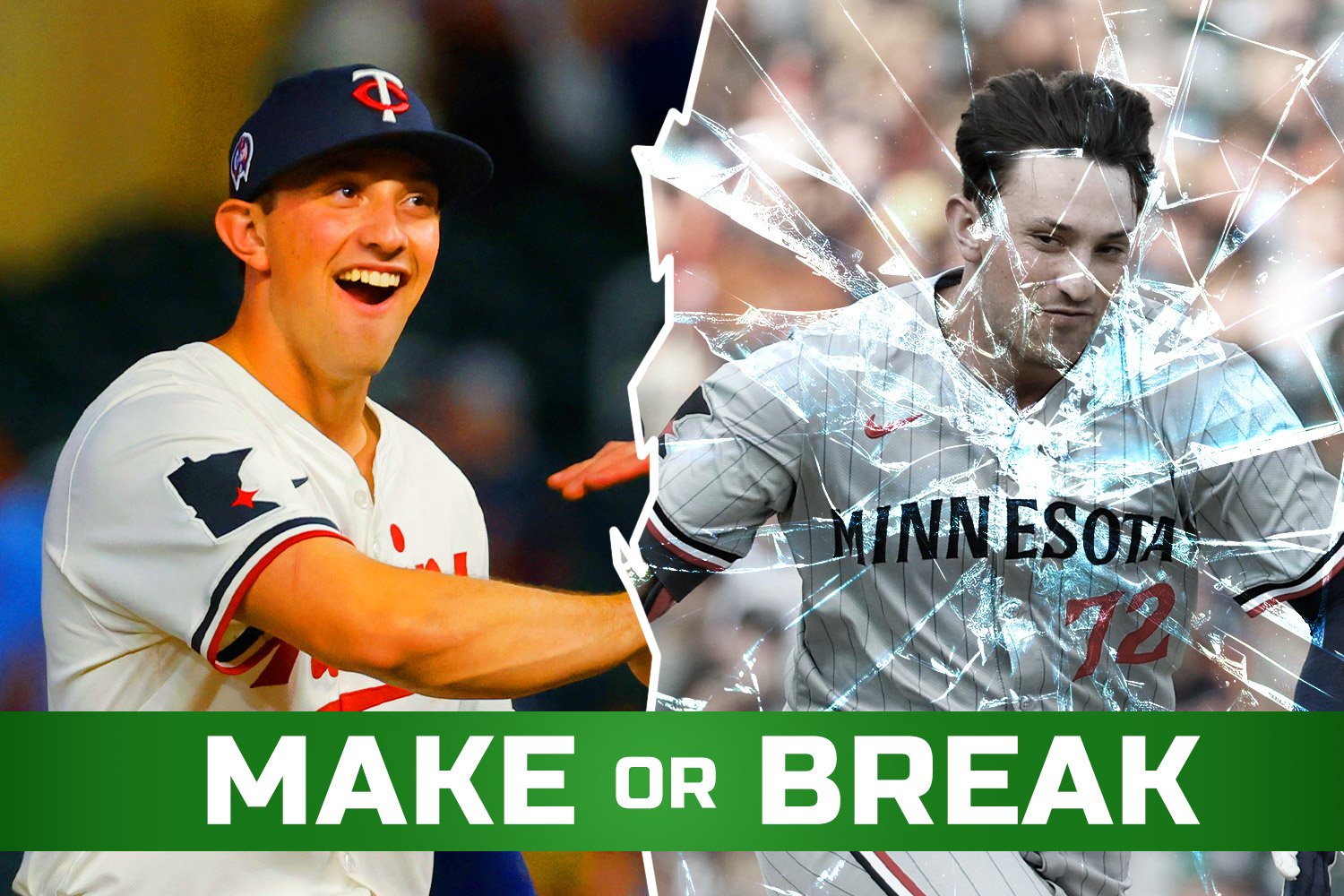 Second base was a revolving door for the Minnesota Twins last season. Sophomore Edouard Julien began the season as the presumptive starter. Unfortunately, he slumped, earning a demotion to Triple-A St. Paul on Jun. 2 after posting a 97 wRC+ over 194 plate appearances. Kyle Farmer struggled at the plate all season. Austin Martin and Willi Castro fit in as viable stopgaps. However, injuries elsewhere pushed the utility players to other positions. The club turned to former top prospect Brooks Lee to solve the instability at the keystone. Unfortunately, Lee stumbled, hitting .172/.250/.276 with a 41 wRC+ over 32 plate appearances while patrolling the position—and an only moderately less anemic .221/.265/.320 overall. Overall, Twins second basemen slashed .216/.302/.339 in 2024, 12 percent worse than the league average even at a spot where defense tends to be the priority. The collective of Julien, Castro, Martin, and soon-to-debut infield prospects Luke Keaschall and Payton Eeles should be better than that, almost by default. That said, Lee is positioned to make the most prominent impact. Lee has shined since being drafted eighth overall in the 2022 MLB Draft out of Cal Poly, generating the following numbers over his first three seasons in the Twins farm system: 2022 - .303/.388/.451, 139 plate appearances, four home runs, six doubles, 136 wRC+ (Florida Complex League (FCL), High-A, Double-A) 2023 - .275/.347/.461, 567 plate appearances, 16 home runs, 39 doubles, 107 wRC+ (Double-A, Triple-A) 2024 - .308/.368/.606, 114 plate appearances, 8 home runs, 10 doubles, 148 wRC+ (Triple-A; these data exclude his brief rehab stints at the lowest levels of the minors) Lee has lived up to his draft status in the minors, showcasing his contact-oriented, switch-hitting profile. He flashes plus range and a strong arm at second base, third base, and shortstop, across four levels. Substantial optimism surrounding the young infielder is still warranted. He possesses the tools and the astucity necessary to thrive in MLB. Since he's a switch-hitter, he could become a platoon-proof fixture at the position, similar to Jorge Polanco several seasons ago. That said, he struggled from both sides of the plate last season: As a left-handed hitter: .211/.263/.317, 133 plate appearances, 26 hits, 2 home runs, 5 doubles, 9 walks, 18 strikeouts, 60 wRC+ As a right-handed hitter: .245/.269/.327, 52 plate appearances, 12 hits, 1 home run, 1 double, 2 walks, 9 strikeouts, 67 wRC+ Lee performed better from the right side of the plate, but he netted those numbers through 81 fewer appearances. During his time in college and the minors, Lee performed better from the left side of the plate, fueling hopes that the prized young talent could develop into the everyday second baseman against right-handed starting pitching. If Lee struggles from the right side of the plate next season, he could transition into a platoon partnership with Castro or Martin early next season. Keaschall could also develop into a platoon partner by midsummer. "I just wanted to be (at spring training) a little earlier this year than the past and just get acclimated," Lee told reporters in Ft. Myers last week. "Yeah, I was excited to get going pretty soon." The youngster didn't change up his offseason routine much. However, he revealed he has been adjusting his swing. "(I've been working) on swing mechanics. That's the biggest thing, adjustments on that, not really focusing on pitches or anything, but just the way I enter the zone, the way my barrel is positioned," Lee said. "Those are big things. I think, you know, I always make contact, but it's just about how I impact the ball. And so I think that's gonna change a lot with better mechanics." Some core mechanical changes might get him to those positions and angles more consistently. "Just like, stance stuff," he said. "My hands are relatively in the same area, but just the way that they go back in my swing and they load is the biggest difference. My hands would raise pretty high, and I always have had a flat bat path, but you know, when they get too high, then I just don't enter the zone very good, and it's not efficient, and I could only hit a few pitches. But, you know, I've always hit differently than I did last year, and so I just got to get back to that. That's what I've been doing." Lee suffered from various injuries last season, including a herniated disk that kept him out the first two months of the season and a shoulder injury that sidelined him from Aug. 8 through Sept. 1. These injuries likely played a role in his offensive woes. Lee's lackluster second-half performance was one of the many factors that played into the club's dramatic late-season collapse. He could just as easily give them the boost they need to finish off a division title for 2025, though, especially by delivering more consistency at the keystone. Given the previously mentioned lack of depth at the position, Twins decision-makers should provide Lee substantial time to find his footing at second base, even if he struggles at the plate in the spring or to begin the season. Even though his long-term outlook is promising, the safety net can only extend so far, considering the club's postseason aspirations. Twins Daily's John Bonnes contributed on-site reporting.
 -
Will the former top prospect be able to rebound from his Jekyll and Hyde rookie campaign? Image courtesy of © Bruce Kluckhohn-Imagn Images / © Brian Bradshaw Sevald-Imagn Images Second base was a revolving door for the Minnesota Twins last season. Then-second-year player Edouard Julien began the season as the presumptive starter. Unfortunately, he could not rise to the occasion, earning a demotion to Triple-A on June 2 after posting a 97 wRC+ over 194 plate appearances. Kyle Farmer struggled at the plate all season. Austin Martin and Willi Castro fit in as viable stopgaps. However, the magnetic pull of nomadicity pushed the utility players to other positions. That being the case, the club turned to former top prospect Brooks Lee to solve the instability at the keystone position. Unfortunately, Lee stumbled, hitting .172/.250/.276 with a 41 wRC+ over 32 plate appearances while patrolling the position. Second base was a weak spot last season, as the collective group slashed a subpar .200/.282/.315 with a well-below-league-average 73 wRC+ over 419 plate appearances. The unit also hit only 10 home runs while generating a 29.8% strikeout rate. Evidently, witnessing the second base brass perform at a rate strikingly similar to Joey Gallo last season was cause for significant concern. The collective of Julien, Castro, Martin, and soon-to-debut infield prospects Luke Keaschall and Payton Eeles possess the offensive prowess necessary to guide the position group toward a more productive 2025 campaign. That said, Lee is positioned to make the most prominent impact as a sole contributor. Lee has shined since being drafted eighth overall in the 2022 MLB Amateur Draft out of Cal Poly, generating a combined the following numbers over his first three seasons in the Twins minor league system: 2022 - .303/.388/.451, 139 plate appearances, four home runs, six doubles, 136 wRC+ (Florida Complex League (FCL), High-A, Double-A) 2023 - .275/.347/.461, 567 plate appearances, 16 home runs, 39 doubles, 107 wRC+ (Double-A, Triple-A) 2024 - .308/.368/.606, 114 plate appearances, eight home runs, ten doubles, 148 wRC+ (FCL (rehab), Single-A (rehab), Triple-A) Lee has lived up to his priority draft status in the minors, showcasing his contact-skilled, switch-hitting profile. He also showcased flashes of his plus range and near-elite arm at second base, third base, and shortstop across four levels. Substantial optimism surrounding the young infielder is still warranted. He possesses the robust offensive and defensive skillset and astucity necessary to thrive in MLB. Given his switch-hitting nature, there is reason to speculate he could become a platoon-proof fixture at the position, similar to Jorge Polanco seasons ago. That said, he struggled from both sides of the plate last season, evidenced by the numbers below: As a left-handed hitter: .211/.263/.317, 133 plate appearances, 26 hits, two home runs, five doubles, nine walks, 18 strikeouts, 60 wRC+ As a right-handed hitter: .245/.269/.327, 52 plate appearances, 12 hits, one home run, one double, two walks, nine strikeouts, 67 wRC+ Lee performed better from the right side of the plate. That said, he netted those numbers through 81 fewer appearances as a right-handed hitter, meaning his superior performance can be chalked up to it being a small sample size. During his time at Cal Poly and the Twins minor league system, Lee performed better from the left side of the plate, giving merit to the notion that the prized young talent could develop into the team's everyday second baseman against right-handed starting pitching. If Lee struggles from the right side of the plate next season, he could transition into a platoon partnership with Castro or Martin early next season. Keaschall could also develop into a platoon partner by midsummer. When talking to reporters last week, Lee proclaimed, "I just wanted to be (at spring training) a little earlier this year than the past and just get acclimated. Yeah, I was excited to get going pretty soon." Lee continued, noting his offseason routine has remained mostly the same. However, he revealed he has been adjusting his swing, stating, "(I've been working) on swing mechanics. That's the biggest thing, adjustments on that, not really focusing on pitches or anything, but just the way I enter the zone, the way my barrel is positioned. Those are big things. I think, you know, I always make contact, but it's just about how I impact the ball. And so I think that's gonna change a lot with better mechanics." Alongside changing how he enters the zone and positions his barrel, Lee plans to improve upon his poor performance from last season by making core mechanical changes, stating, "(I'm working on) just like, stance stuff. Like my hands are relatively in the same area, but just the way that they go back in my swing and they load is the biggest difference. My hands would raise pretty high, and I always have had a flat bat path, but you know, when they get too high, then I just don't enter the zone very good, and it's not efficient, and I could only hit a few pitches. But, you know, I've always hit differently than I did last year, and so I just got to get back to that. That's what I've been doing." Lee excelled his first week in the majors, hitting .364/.371/.576 with 12 hits, two home runs, and a 165 wRC+ over 35 plate appearances. Unfortunately, the excitement surrounding the then-23-year-old top prospect waned as he hit .197/.280/.212 with 13 hits, zero home runs, one double, and a 43 wRC+ over his final 75 plate appearances. The former top prospect's late-season struggles were considerable. Lee suffered from various injuries last season, including a herniated disk that kept him out the first two months of the season and a shoulder injury that sidelined him from Aug. 8 through Sept. 1. These injuries likely played a role in his offensive woes last season. Yet, the Cal Poly product isn't employing last season's ailments as an excuse, stating, "My shoulders, whatever, I mean, yeah, I don't know if it did. If it did, and you know, it sucks, but it is what it is, I mean, I hit .221, so, I mean, either way, I think I could hit with, you know, half a body. So I should, I should be able to hit." Lee's lackluster second-half performance was one of the many factors that played into the club's dramatic late-season collapse. That said, like every position player on the 26-man roster (excluding new additions Harrison Bader and Ty France), Lee will be one of the primary returning bats responsible for the team's ability to rebound from last September's wretched tumble. Lee is currently projected to be the team's Opening Day second baseman. Given the previously mentioned lack of depth at the position, Twins decision-makers should provide Lee substantial time to find his footing at second base, even if he struggles at the plate to begin the season. Even though his long-term outlook is promising, the switch-hitting infielder's safety net can only extend so far, considering the club's postseason aspirations. Twins Daily's John Bonnes contributed to the reporting in this piece. View full article
-
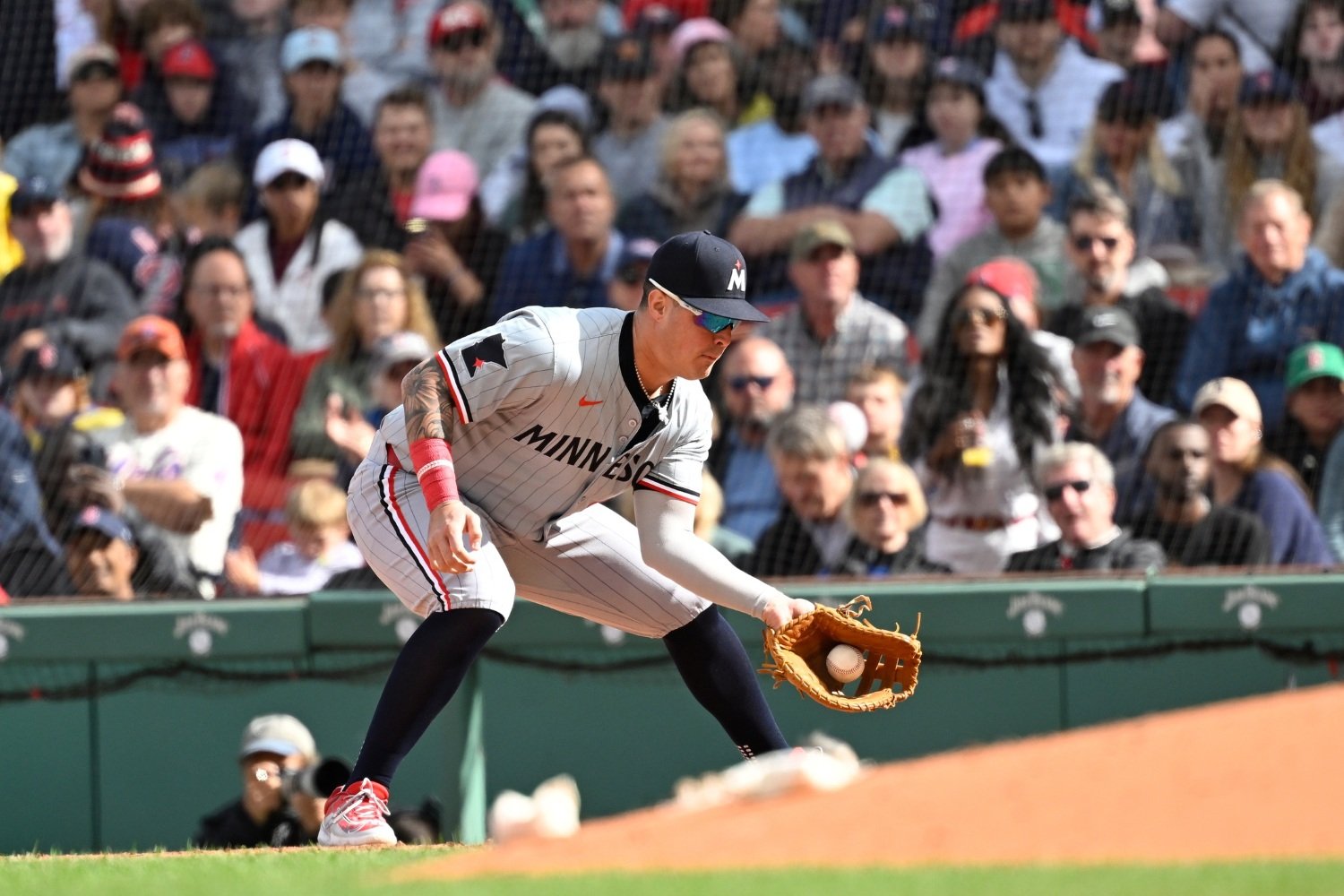 After being priced out of a reunion with beloved veteran first baseman Carlos Santana earlier this offseason, the Minnesota Twins have made a concerted effort to fortify the position on the margins, acquiring depth options Mickey Gasper (trade with the Boston Red Sox) and Mike Ford (MiLB contract) earlier this offseason. That trend continued Tuesday afternoon, when the organization shelled out some of its remaining financial resources, signing Ty France to a one-year, $1-million deal that will only be paid if he makes the team this spring. Acquired by the Seattle Mariners in 2020 as part of a trade package from the San Diego Padres, France excelled during his first two-and-a-half seasons in the Pacific Northwest, posting a combined 129 wRC+ over 1,357 plate appearances. Unfortunately, since the start of the 2023 season, the husky francophone (I don't know if he actually speaks French, but let's run with it) has a much less inspiring combined 99 wRC+ over 1,200 plate appearances. His offensive ineptitude reached a crisis point last summer, resulting in him posting a grim 65 wRC+ over 129 plate appearances from June through July. Seattle elected to part ways with France, sending him to the Cincinnati Reds for minor-league catcher Andruw Salcedo just days before the trade deadline. The then-29-year-old right-handed-hitting corner infielder did improve with the Reds. However, he still generated a below-average 82 wRC+ over 195 plate appearances. France has fallen from grace, causing him to go from being considered one of the most intriguing young first basemen in MLB to signing a non-guaranteed contract worth only $240,000 more than the league minimum in two-and-a-half seasons. Despite his recent struggles, Twins decision-makers elected to take a chance on the 30-year-old first baseman/designated hitter, hoping he can return to his pre-2023 form. Again, France's addition exists on the margins, meaning it won't affect the core of the team. That said, he could carve out extended opportunities at first base and designated hitter, meaning Edouard Julien and José Miranda could see fewer opportunities than they were expected to receive just a handful of days ago. However, the fact that Julien hits left-handed and can play second base (a trait neither France nor Miranda possesses) means he will presumably be able to carve out a role against right-handed starting pitching unimpacted by France. Miranda also possesses the ability to play a position France cannot, at this point: third base. Yet, as long as Royce Lewis and Brooks Lee stay healthy, other opportunities at the hot corner will be sparse. That being the case, France's addition will most significantly impact Miranda, as the two will compete for playing time at first base and designated hitter. The two will be able to coexist when the club faces left-handed starting pitchers, as one could play first base with the other being the designated hitter. Those opportunities will be limited, though, as facing a left-handed starting pitcher is an infrequent occurrence in today's game. Over his first 3,396 1/3 innings played at first base, France demonstrated league-average defense, netting -5 OAA over that stretch. However, he fell off a cliff last season defensively, generating -12 OAA over 1,105 innings. There is some reason to suspect last season was an outlier, and he is closer to the steadier force he was the previous three seasons. On the other hand, Miranda has netted just 698 innings at first base, yielding a similarly lackluster -4 OAA during that stretch. Both are underwhelming defensive options at first base, particularly considering Santana's Gold Glove-winning performance last season. Nevertheless, France netting 2,700 more innings at the position over his career could be enough reason for the club to provide him more opportunities to begin the season. Debating whether France or Miranda will earn more playing time at first base is an exhausting quandary that could have been avoided, if ownership were just a tad more charitable and allowed the front office to sign Santana or another veteran like Josh Bell or Paul Goldschmidt. Unfortunately, that is not the reality we live in. Miranda is the better and more promising player. Yet, given his relative inexperience at first base and tendency to undergo extreme fluctuations in performance (likely caused by injury), the Twins could reasonably opt to provide France the bulk of opportunities over Miranda to begin the season. If France can rediscover any semblance of his pre-2023 form, he could quickly become the team's primary first baseman. In that case, Miranda would inhabit the same role he played last season, switching between designated hitter, first base, and third base on a game-to-game basis, depending on his performance and the availability of other corner infielders. The Twins front office and manager Rocco Baldelli highly value positional flexibility, meaning Miranda will still receive ample opportunity on the field and at the plate. Still, the acquisition of France likely stunts any plans of him becoming the team's full-time starting first baseman.
 -
The Twins brought in the 30-year-old veteran first baseman on a one-year, $1 million non-guaranteed contract. What does his addition mean for presumed primary first baseman José Miranda? After being priced out of a reunion with beloved veteran first baseman Carlos Santana earlier this offseason, the Minnesota Twins have made a concerted effort to fortify the position on the margins, acquiring depth options Mickey Gasper (trade with the Boston Red Sox) and Mike Ford (MiLB contract) earlier this offseason. That trend continued mid-Tuesday afternoon as the organization shelled out its remaining financial resources, signing Ty France to a one-year, $1 million non-guaranteed deal. Acquired by the Seattle Mariners in 2020 as part of a trade package from the San Diego Padres, France excelled during his first two-and-a-half seasons in the Pacific Northwest, posting a combined 129 wRC+ over 1,357 plate appearances. Unfortunately, since the start of the 2023 MLB regular season, the husky francophone (I don't know if he actually speaks French, but my limited Gen-Z critical thinking skills tell me he has to, based on his last name) a less inspiring combined 99 wRC+ over 1,200 plate appearances. His offensive ineptitude reached a boiling point last summer, resulting in him posting a grim 65 wRC+ over 129 plate appearances from June through July. Seattle elected to part ways with France, sending him to the Cincinnati Reds for minor-league catcher Andruw Salcedo just days before the 2024 MLB Trade Deadline. The then-29-year-old right-handed hitting corner infielder did improve with the Reds. However, he still generated a below-league-average 82 wRC+ over 195 plate appearances. Evidently, France has fallen from grace, causing him to go from being considered one of the most offensive-skilled young first baseman in MLB to signing a non-guaranteed contract worth only $240,000 more than the league minimum in two-and-a-half seasons. Despite his recent struggles, Twins decision-makers elected to take a chance on the now 30-year-old first baseman/designated hitter, hoping he can return to his pre-2023 form. Again, France's addition exists on the margins, meaning it won't affect the core of the team. That said, he will carve out extended opportunities at first base and designated hitter, meaning Edouard Julien and José Miranda could experience fewer opportunities than they were expected to receive just a handful of days ago. However, the fact that Julien hits left-handed and can play second base (a trait neither France nor Miranda possesses) means he will presumably be able to carve out a role against right-handed starting pitching unimpacted by France. Miranda also possesses the ability to play a position France cannot in third base. Yet, as long as Royce Lewis and Brooks Lee stay healthy, Miranda's opportunities at the hot corner will be sparse. That being the case, France's addition will most significantly impact Miranda as the two will compete for playing time at first base and designated hitter. The two will be able to coexist when the club faces left-handed starting pitchers, as one could play first base with the other being the designated hitter. Those opportunities will be limited, though, as facing a left-handed starting pitcher is an infrequent occurrence in today's game. Over his first 3,396 1/3 innings played at first base, France demonstrated league-average defense, netting -5 OAA over that stretch. However, he fell off a cliff last season defensively, generating -12 OAA over 1,105 innings. Still, there is reason to suspect last season was an outlier, and he is closer to the steadier force he was the previous three seasons. On the other hand, Miranda has netted just 698 innings at first base, yielding a similarly lackluster -4 OAA during that stretch. Both are underwhelming defensive options at first base, particularly considering Santana's Gold Glove-winning performance last season. Nevertheless, France netting 3,803 1/3 more innings at the position over his career could be reason for the club to provide him more opportunities to begin the season. Debating whether France or Miranda will earn more playing time at first base is an exhausting quandary that could have been avoided if ownership were just a tad more charitable and allowed the front office to sign Santana or another veteran like Josh Bell or Paul Goldschmidt. Unfortunately, that is not the reality we live in. Miranda is the better and more promising player. Yet, given his relative inexperience at first base and tendency to undergo extreme fluctuations in performance (likely caused by injury), the Twins could reasonably opt to provide France the bulk of opportunities over Miranda at first base to begin the season. If France can rediscover any semblance of his pre-2023 form, he could quickly become the team's primary first baseman. In that case, Miranda would inhabit the same role he played last season, switching between designated hitter, first base, and third base on a game-to-game basis depending on his performance and the availability of other corner infielders. The Twins front office and Manager Rocco Baldelli highly value positional flexibility, meaning Miranda will still receive ample opportunity on the field and at the plate. Still, the acquisition of France likely stunts any plans of him becoming the team's full-time starting first baseman this season. View full article
-
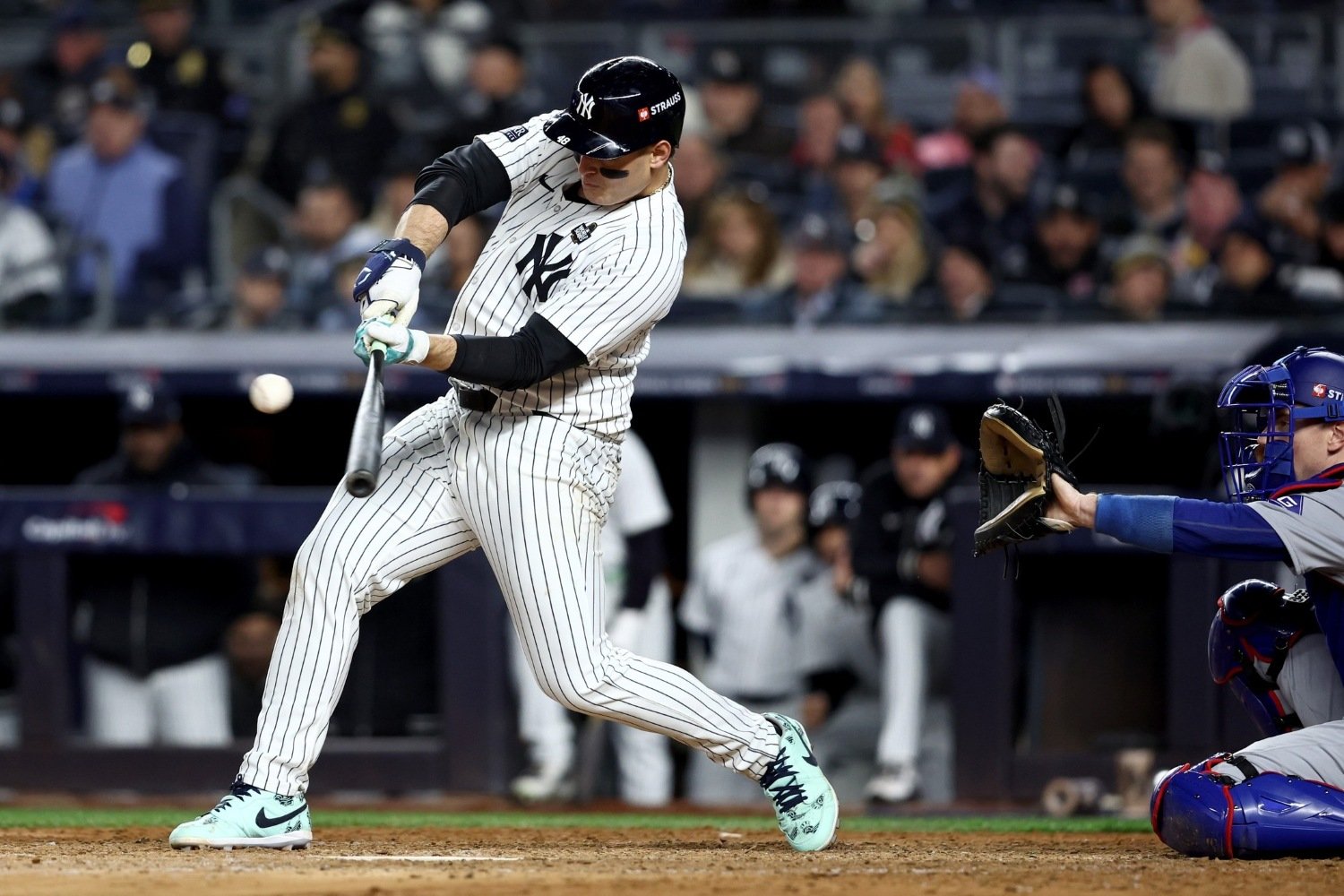 Over the weekend, the Minnesota Star Tribune's Bobby Nightengale published an article titled "Twins, granted a little more money to spend, seek to fortify roster depth." In the piece, Nightengale touched on how president of baseball operations Derek Falvey convinced executive vice president Joe Pohlad to provide the front office with extra spending space (thank you, kind overlords), and how the club used those resources on left-handed reliever Danny Coulombe and right-handed hitting outfielder Harrison Bader. Nightengale also noted that the club is pursuing a veteran backup shortstop (mentioning Paul DeJong and Luis Urías as candidates, although as we remarked last week, Urías is not a shortstop, so they clearly mean "infielder", more generally). The hope there is to ensure Willi Castro avoids burnout, which they believe stunted his ability to produce at the plate late last season Lost in Nightengale's comprehensive overview, however, was the beat writer noting, "The Twins are seeking a first baseman without any proven options on their roster." Interestingly, a day before Nightengale's story was published, fellow Twins beat reporter Dan Hayes of The Athletic noted that Minnesota thinks Castro could help them at first base next season, despite him having never played the position in 11 years of professional baseball. Now, you, valued reader, might be thinking numerous things. The first, presumably, is, "I've been reading this article for roughly a minute now, and all you've done is aggregate other peoples' work, Cody." And to that, I say: Fair, but I promise I'm going somewhere with this. The second thing you're thinking might be, "Why would Minnesota consider playing Castro at first base? Doesn't that cannibalize much of his value?" And the answer to that, valued reader, is yes. Yes, it does. Castro doesn't possess the offensive profile needed to provide plus value at the position, meaning that although extra versatility from the already uber-versatile 27-year-old utility player would be a welcome development, much of what makes him truly special is that he can function as a viable backup shortstop and center fielder. That being the case, the club deciding to push him off those two positions to decrease wear and tear could be a lose-lose proposition for both parties. The team would be wise to keep Castro in his current role, meaning that instead of pursuing a player like DeJong or Urías, the front office should instead use its remaining monetary resources on a viable first baseman who could function as a platoon partner for José Miranda or usurp him as the starter. Unfortunately, not many intriguing names are available on the free-agent market. Top free agent first basemen Christian Walker, Pete Alonso, Paul Goldschmidt, and Carlos Santana have all signed elsewhere. Realistically, the Twins were never a practical landing spot for these four players at the prices they commanded, even though Santana spent last season with the team. The secondary market is also drained, with Donovan Solano, Connor Joe, and Josh Bell having found their new homes, as well. Mark Canha is still an intriguing option. That said, Bader being in the mix seemingly makes signing Canha a redundant proposition, as a significant portion of his playing time would need to come in the corner outfield. Trading for a plus bat with team control, like Triston Casas, could make sense. Yet, Minnesota would likely be too uncomfortable parting with the prospect capital necessary to pry the star first baseman from the Boston Red Sox's grip. That being the case, the Twins' front office has two realistic options to meaningfully improve the position before spring training begins: Justin Turner or Anthony Rizzo. Both multi-time All Stars, Turner and Rizzo are nearing the ends of their respective MLB careers. The two cherished veterans have (understandably) regressed significantly since their peak seasons nearly a decade ago. Still, both could provide value to a club with postseason aspirations, at a very reasonable cost. Last season, Turner and Rizzo produced the following numbers: Turner: .259/.354/.383, 539 plate appearances, 119 hits, 11 home runs, 24 doubles, 17.6% strikeout rate, 10.9% walk rate, 117 wRC+ Rizzo: .228/.301/.335, 375 plate appearances, 77 hits, 8 home runs, 12 doubles, 17.3% strikeout rate, 7.2% walk rate, 84 wRC+ Turner was the far superior hitter last season. Even taking splits into account, he simply outplayed the younger man. Against right-handed pitching, Turner posted a 116 wRC+ over 398 plate appearances. Conversely, Rizzo generated a nearly-league-average 92 wRC+ over 278 plate appearances when he had what should have been a platoon advantage. Turner is the player the Twins should pursue, if they are seeking a plus bat at the position. That said, the team's decision-making process might not be that simple. Yes, the front office did already add close to $10 million in new money to this roster last week. However, uncertainty surrounds how much more they could add as the offseason dwindles. Urías might be had even on a split contract worth just over $1 million, but that's for a good reason: He's batted .193/.324/.336 since the start of 2023 and spent most of 2024 in the minors. DeJong could cost $3-4 million, after making $1.9 million in 2024 and hitting 24 home runs. Turner will likely cost somewhere in the $5-7 million range, meaning the veteran could be out of the club's price range even with ownership becoming unexpectedly charitable last week. If that is the case, Rizzo (projected to net a one-year deal in the same range as DeJong's, given his seemingly increasing decrepitude) could become the team's only plausible option, even if Turner is the more intriguing candidate. Again, Miranda is projected to be the team's primary first baseman next season. However, the team would be wise to find a veteran partner to split time with the 26-year-old. Minnesota has already acquired Mickey Gasper and Mike Ford as first base depth options. Yet, significant questions shroud their ability to produce at the major-league level. If the team were to spend its remaining resources on a veteran first baseman, Turner would be the best option, given that he is a superior hitter to Rizzo at this stage of their careers. However, the team could be priced out of Turner, making Rizzo the only viable candidate. Rizzo isn't what he used to be. Yet, signing him would raise the floor at the position, meaning the team wouldn't have to rely on Gasper, Ford, or Edouard Julien if Miranda were to get injured for an extended stretch or undergo significant performance concerns next season. He's also a respected clubhouse presence, and could replace some of what the team lost in that area when Santana returned to Cleveland. Whether the Twins have enough for Turner or need to settle for Rizzo, that's where their resources should be directed. A deeper, higher-floor first base role is a greater need than a backup infielder with a relatively low floor, which is what both DeJong and Urías are at this point.
- 38 comments
-
- 4
-

-
-
- justin turner
- anthony rizzo
- (and 1 more)
-
The Twins addressed two of their most significant needs last week, with a pair of low-grade but targeted free-agent signings. Could one of these veteran first basemen fill their most obvious remaining hole? Image courtesy of © Wendell Cruz-Imagn Images Over the weekend, the Minnesota Star Tribune's Bobby Nightengale published an article titled "Twins, granted a little more money to spend, seek to fortify roster depth." In the piece, Nightengale touched on how president of baseball operations Derek Falvey convinced executive vice president Joe Pohlad to provide the front office with extra spending space (thank you, kind overlords), and how the club used those resources on left-handed reliever Danny Coulombe and right-handed hitting outfielder Harrison Bader. Nightengale also noted that the club is pursuing a veteran backup shortstop (mentioning Paul DeJong and Luis Urías as candidates, although as we remarked last week, Urías is not a shortstop, so they clearly mean "infielder", more generally). The hope there is to ensure Willi Castro avoids burnout, which they believe stunted his ability to produce at the plate late last season Lost in Nightengale's comprehensive overview, however, was the beat writer noting, "The Twins are seeking a first baseman without any proven options on their roster." Interestingly, a day before Nightengale's story was published, fellow Twins beat reporter Dan Hayes of The Athletic noted that Minnesota thinks Castro could help them at first base next season, despite him having never played the position in 11 years of professional baseball. Now, you, valued reader, might be thinking numerous things. The first, presumably, is, "I've been reading this article for roughly a minute now, and all you've done is aggregate other peoples' work, Cody." And to that, I say: Fair, but I promise I'm going somewhere with this. The second thing you're thinking might be, "Why would Minnesota consider playing Castro at first base? Doesn't that cannibalize much of his value?" And the answer to that, valued reader, is yes. Yes, it does. Castro doesn't possess the offensive profile needed to provide plus value at the position, meaning that although extra versatility from the already uber-versatile 27-year-old utility player would be a welcome development, much of what makes him truly special is that he can function as a viable backup shortstop and center fielder. That being the case, the club deciding to push him off those two positions to decrease wear and tear could be a lose-lose proposition for both parties. The team would be wise to keep Castro in his current role, meaning that instead of pursuing a player like DeJong or Urías, the front office should instead use its remaining monetary resources on a viable first baseman who could function as a platoon partner for José Miranda or usurp him as the starter. Unfortunately, not many intriguing names are available on the free-agent market. Top free agent first basemen Christian Walker, Pete Alonso, Paul Goldschmidt, and Carlos Santana have all signed elsewhere. Realistically, the Twins were never a practical landing spot for these four players at the prices they commanded, even though Santana spent last season with the team. The secondary market is also drained, with Donovan Solano, Connor Joe, and Josh Bell having found their new homes, as well. Mark Canha is still an intriguing option. That said, Bader being in the mix seemingly makes signing Canha a redundant proposition, as a significant portion of his playing time would need to come in the corner outfield. Trading for a plus bat with team control, like Triston Casas, could make sense. Yet, Minnesota would likely be too uncomfortable parting with the prospect capital necessary to pry the star first baseman from the Boston Red Sox's grip. That being the case, the Twins' front office has two realistic options to meaningfully improve the position before spring training begins: Justin Turner or Anthony Rizzo. Both multi-time All Stars, Turner and Rizzo are nearing the ends of their respective MLB careers. The two cherished veterans have (understandably) regressed significantly since their peak seasons nearly a decade ago. Still, both could provide value to a club with postseason aspirations, at a very reasonable cost. Last season, Turner and Rizzo produced the following numbers: Turner: .259/.354/.383, 539 plate appearances, 119 hits, 11 home runs, 24 doubles, 17.6% strikeout rate, 10.9% walk rate, 117 wRC+ Rizzo: .228/.301/.335, 375 plate appearances, 77 hits, 8 home runs, 12 doubles, 17.3% strikeout rate, 7.2% walk rate, 84 wRC+ Turner was the far superior hitter last season. Even taking splits into account, he simply outplayed the younger man. Against right-handed pitching, Turner posted a 116 wRC+ over 398 plate appearances. Conversely, Rizzo generated a nearly-league-average 92 wRC+ over 278 plate appearances when he had what should have been a platoon advantage. Turner is the player the Twins should pursue, if they are seeking a plus bat at the position. That said, the team's decision-making process might not be that simple. Yes, the front office did already add close to $10 million in new money to this roster last week. However, uncertainty surrounds how much more they could add as the offseason dwindles. Urías might be had even on a split contract worth just over $1 million, but that's for a good reason: He's batted .193/.324/.336 since the start of 2023 and spent most of 2024 in the minors. DeJong could cost $3-4 million, after making $1.9 million in 2024 and hitting 24 home runs. Turner will likely cost somewhere in the $5-7 million range, meaning the veteran could be out of the club's price range even with ownership becoming unexpectedly charitable last week. If that is the case, Rizzo (projected to net a one-year deal in the same range as DeJong's, given his seemingly increasing decrepitude) could become the team's only plausible option, even if Turner is the more intriguing candidate. Again, Miranda is projected to be the team's primary first baseman next season. However, the team would be wise to find a veteran partner to split time with the 26-year-old. Minnesota has already acquired Mickey Gasper and Mike Ford as first base depth options. Yet, significant questions shroud their ability to produce at the major-league level. If the team were to spend its remaining resources on a veteran first baseman, Turner would be the best option, given that he is a superior hitter to Rizzo at this stage of their careers. However, the team could be priced out of Turner, making Rizzo the only viable candidate. Rizzo isn't what he used to be. Yet, signing him would raise the floor at the position, meaning the team wouldn't have to rely on Gasper, Ford, or Edouard Julien if Miranda were to get injured for an extended stretch or undergo significant performance concerns next season. He's also a respected clubhouse presence, and could replace some of what the team lost in that area when Santana returned to Cleveland. Whether the Twins have enough for Turner or need to settle for Rizzo, that's where their resources should be directed. A deeper, higher-floor first base role is a greater need than a backup infielder with a relatively low floor, which is what both DeJong and Urías are at this point. View full article
-
 In a world where one can be a gaslighter, gatekeeper, or girl-boss, Twins Territory chooses gatekeeper every time. Fans of the team have long tried to keep cult heroes in the shadows, making concerted efforts to limit outside spectators' access and keep these beloved players to themselves. During the Ron Gardenhire era, starting pitcher Boof Bonser was the heroic figure of choice. More recently, utility player Willians Astudillo gained legendary status, donning the illustrious nickname "La Tortuga." Since Astudillo left the Twins organization after a tumultuous 2021 campaign, Minnesota has been void of such an iconic figure. Happily, infield prospect Payton Eeles could become the next pop culture icon to grace the masses at 1 Twins Way. Signed for $500 out of independent baseball last May, Eeles excelled in the Twins system. The 25-year-old jumped four minor-league levels in less than a month, hitting a combined .303/.461/.471 with four home runs, 21 stolen bases, and a 170 wRC+ over 209 plate appearances and 47 games between the Florida Complex League and Single-A. After skipping Double-A, the 5-foot-5 phenom similarly excelled at Triple-A, hitting .306/.435/.497 with 64 hits, 20 stolen bases, and a 144 wRC+ over 260 plate appearances in 64 games. He also underwent a power surge at St. Paul, hitting double the number of home runs he had managed at the lower levels. Nevertheless, Eeles is a contact-skilled bat who will get most of his value from hitting singles and wreaking havoc on the bases. Advancing from playing indy ball to posting a wRC+ 44% greater than average at Triple-A in a little over a month is a remarkable feat. Despite being the subject of a profile from Baseball America, Eeles's story didn't take off nationally. For that, he'll have to reach the majors, and keep finding success. That said, he has earned the attention of popular national baseball outlets in the past month. Two weeks ago, Eeles appeared on Aram Leighton and Jack McMullen's podcast entitled The Call Up, to discuss his breakout campaign. His appearance on Leighton and McMullen's podcast indicated his folk tale-like story has expanded beyond the gatekeeping confines of Twins Territory. Then, four days ago, the floodgates were opened, as prominent baseball content creator Foolish Bailey released a YouTube video on Eeles titled "The Best Underdog of 2025." Over one week, Foolish Bailey's video has netted over 56,000 views, generating the most exposure Eeles has received since joining the Twins organization less than nine months ago. Eeles has gone mainstream, and stories on him from outlets like ESPN and The Athletic are likely around the corner. The attention surrounding Eeles and his story is justified. Still, his contribution to the organization could transcend being an endearing story of triumph and perseverance. A little over three weeks ago, Dan Szymborski of FanGraphs released his highly anticipated ZiPS projections for the 2025 Twins. Interestingly, ZiPS is high on the 25-year-old infielder, predicting him to produce at the following rate next season: .250/.345/.358, 475 plate appearances, 102 hits, 20 doubles, 4 home runs, 23 stolen bases, 18.1% strikeout rate, 106 wRC+ ZiPS projects Eeles to play an integral role at second base, alongside fellow young infielders Brooks Lee, Edouard Julien, and Austin Martin. Willi Castro and Royce Lewis weren't listed at second base in the projections, yet they are also expected to spend time at the position in 2025. Eeles's breakthrough is especially intriguing, considering the uncertainty surrounding second base headed into next season. Theoretically, the trio of Lee, Julien, and Castro should be able to produce above-average offensive numbers at the position while displaying adequate range and throwing skills. But what if Lee battles injuries or struggles at the plate? What if Julien, again, isn't close to the player he was in 2023? What if Castro is needed elsewhere full-time, or struggles like he did post-All-Star break last season? If any of these uncertainties manifest, Eeles could be the first line of defense at Triple-A, especially considering that prized infield prospect Luke Keaschall is projected to miss the beginning of the 2025 season while recovering from Tommy John surgery. Again, this is all conjecture. Eeles could easily spend the entire 2025 season in the minors. Still, with ZiPS projecting him to produce at an above-league-average rate, signs point toward him contributing for the Twins in some manner next season. If Eeles makes his major-league debut for the club next season and comes out of the gate hot, he could quickly become Twins Territory's next cult hero. However, unlike the Bonsers and Astudillos of seasons past, Eeles possesses the skills necessary to surpass cult hero status and become a genuinely valuable contributor for a playoff-contending club.
 -
Three months into the offseason, the right-handed hitting corner outfielder/first baseman is still the perfect free agent target for the Twins—and each of the best alternatives has flown off the shelves. Image courtesy of © Darren Yamashita-Imagn Images On Nov. 25, 2024, Aaron Gleeman and Dan Hayes of The Athletic published their annual "Twins roster projection 1.0" piece, looking at where the club's 26-man sat upon the season's conclusion and what position groups needed to be addressed over the offseason. Nearly two months later, the roster looks the same, plus or minus a few small pieces at the edges of the roster. The piece provided an in-depth look at the players currently under contract from Minnesota. However, Hayes inserted a suggestive nugget in the back half of the article. When discussing the outfield corps, Hayes wrote, "This is a spot where a righty bat like Mark Canha might make sense. It's clear the Twins could use someone to play first base and corner outfield. Even though Canha struggled in Detroit last season, he was still nearly a league-average bat, a status he retained over the final two months in San Francisco." He concluded, stating, "Between first base and the corners, he would give manager Rocco Baldelli the flexibility to balance the lineup." Again, Gleeman and Hayes published this piece over two months ago. Yet, with Canha still on the market and the Twins having yet to add a position player with MLB experience on a guaranteed deal this offseason, the sentiment remains the same: Canha remains a tremendous option. As noted by Hayes, Canha performed well last season for the Tigers and Giants, hitting .242/.344/.346 with 95 hits, 20 doubles, seven home runs, and a 102 wRC+ over 462 plate appearances. That constituted a down year, too. Canha had produced at an above-average to significantly above-average for the Oakland Athletics, New York Mets, and Milwaukee Brewers from 2018 through 2023, averaging a 124 wRC+ over that six-season stretch and topping out at a 146 wRC+ over 497 plate appearances in 2019. S3d4WmFfWGw0TUFRPT1fQkZNQUFRQUhCMWNBWFFBR1h3QUFBRkpTQUZrR0FsZ0FCVlVOQWdVTUJBQlJBVkZU.mp4 Over his nine-year career, the 35-year-old wily veteran has demonstrated a knack for being platoon-proof, posting a 113 wRC+ over 1,331 plate appearances against left-handed pitching and a 116 wRC+ over 2,270 plate appearances versus right-handed pitching. Again, he did have a relatively disappointing 2024 campaign, mostly due to a power outage; he's never had plus powwr and the two pitcher-friendly parks in which he played last year magnified that shortcoming. However, his ability to hit pitching of either handedness held firm, as he posted an above-average 124 wRC+ over 129 plate appearances against southpaws and a respectable 94 wRC+ over 333 plate appearances against righty pitchers. Evidently, signing Canha would provide the Twins and first-year hitting coach Matt Borgschulte with a stabilizing right-handed bat and a high OBP, which would be a welcome addition to what has been a high-variance, occasionally all-or-nothing lineup. Canha would also provide significant positional flexibility, a skillset Twins decision-makers value. Last season, the Cal-Berkeley product netted time at the following positions: First Base - 375 ⅓ innings Left Field - 185 innings Right Field - 103 ⅔ innings Third Base - one inning Canha also played 50 games as a designated hitter. He isn’t an exceptional fielder at first base or either corner outfield spot. However, he isn’t a disaster either, typically hovering around 0 in Outs Above Average (OAA) at all three positions. Given his adequate fielding prowess, Canha could serve as the primary backup for Trevor Larnach in left field, Matt Wallner in right field, and José Miranda at first base. He could also fill in for extended stretches if injury or significant performance concerns arise for Larnach, Wallner, or Miranda and serve as a viable designated hitter option against lefty starting pitchers. Minnesota agreed to sign veteran left-handed reliever Danny Coulombe earlier this week, to a one-year, $3-million contract. Coulombe's happy reunion likely further intensifies the strict financial restrictions ownership has placed upon the front office. Canha was originally expected to make $5-7 million on a one-year contract in 2025, meaning he would fall outside the team's price range. This late in the winter, though, prices fall. Canha's could be one of them. That said, the team could still part ways with one of Chris Paddack (one year, $7.5 million) or Christian Vázquez (one year, $10 million) in the coming days or week, permitting them to stretch a bit and meet Canha's asking price. They missed out on Ramón Laureano ($4 million to Baltimore) and Randal Grichuk ($5 million to Arizona) on Tuesday; it might be time to pony up and snag Canha. The Twins front office prides itself on finding creative solutions to improve the club. Signing a beloved veteran who could plug the team's last two definitive areas of need on the 26-man roster would be a superb demonstration of their clever roster-building strategy. View full article
-
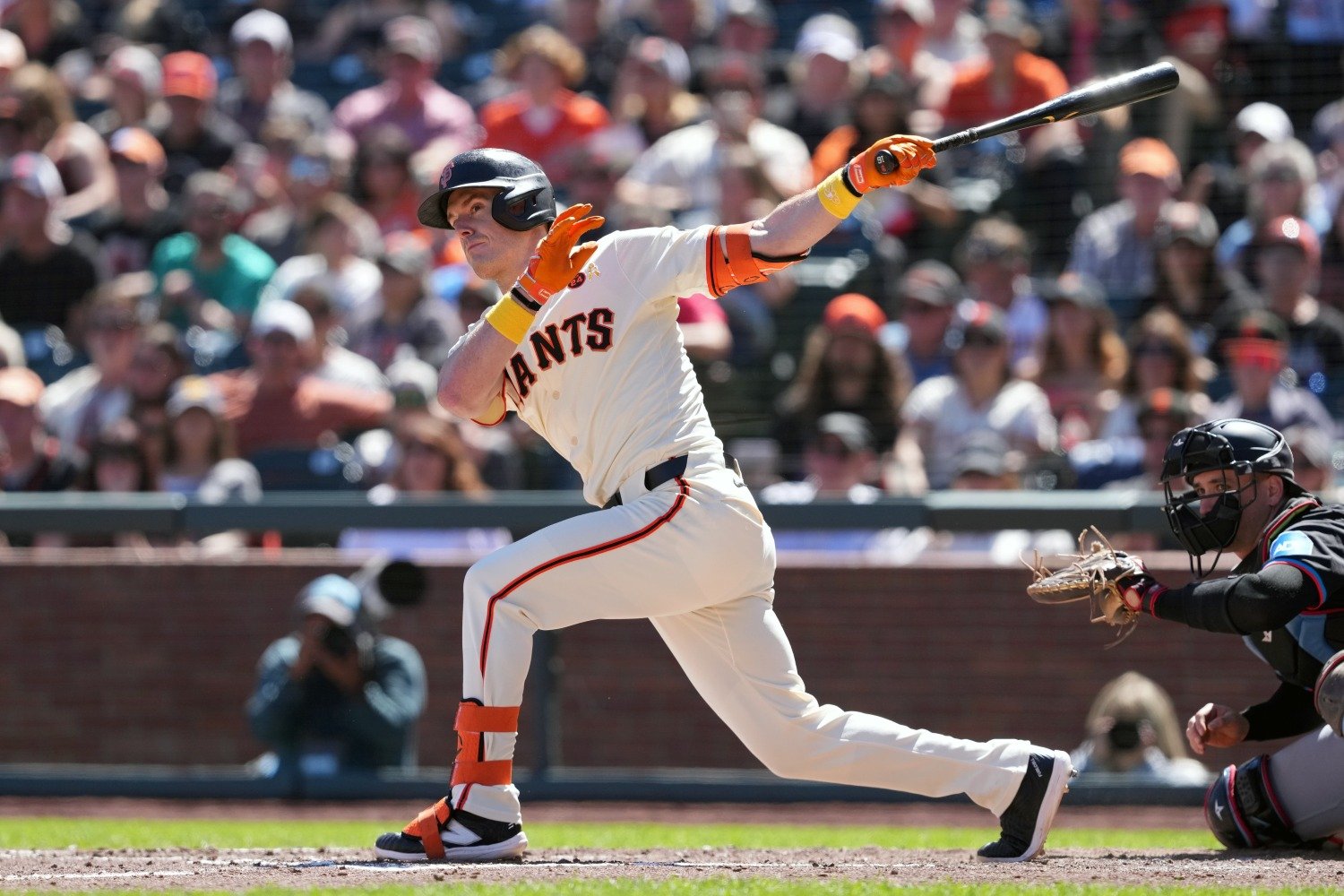 On Nov. 25, 2024, Aaron Gleeman and Dan Hayes of The Athletic published their annual "Twins roster projection 1.0" piece, looking at where the club's 26-man sat upon the season's conclusion and what position groups needed to be addressed over the offseason. Nearly two months later, the roster looks the same, plus or minus a few small pieces at the edges of the roster. The piece provided an in-depth look at the players currently under contract from Minnesota. However, Hayes inserted a suggestive nugget in the back half of the article. When discussing the outfield corps, Hayes wrote, "This is a spot where a righty bat like Mark Canha might make sense. It's clear the Twins could use someone to play first base and corner outfield. Even though Canha struggled in Detroit last season, he was still nearly a league-average bat, a status he retained over the final two months in San Francisco." He concluded, stating, "Between first base and the corners, he would give manager Rocco Baldelli the flexibility to balance the lineup." Again, Gleeman and Hayes published this piece over two months ago. Yet, with Canha still on the market and the Twins having yet to add a position player with MLB experience on a guaranteed deal this offseason, the sentiment remains the same: Canha remains a tremendous option. As noted by Hayes, Canha performed well last season for the Tigers and Giants, hitting .242/.344/.346 with 95 hits, 20 doubles, seven home runs, and a 102 wRC+ over 462 plate appearances. That constituted a down year, too. Canha had produced at an above-average to significantly above-average for the Oakland Athletics, New York Mets, and Milwaukee Brewers from 2018 through 2023, averaging a 124 wRC+ over that six-season stretch and topping out at a 146 wRC+ over 497 plate appearances in 2019. S3d4WmFfWGw0TUFRPT1fQkZNQUFRQUhCMWNBWFFBR1h3QUFBRkpTQUZrR0FsZ0FCVlVOQWdVTUJBQlJBVkZU.mp4 Over his nine-year career, the 35-year-old wily veteran has demonstrated a knack for being platoon-proof, posting a 113 wRC+ over 1,331 plate appearances against left-handed pitching and a 116 wRC+ over 2,270 plate appearances versus right-handed pitching. Again, he did have a relatively disappointing 2024 campaign, mostly due to a power outage; he's never had plus powwr and the two pitcher-friendly parks in which he played last year magnified that shortcoming. However, his ability to hit pitching of either handedness held firm, as he posted an above-average 124 wRC+ over 129 plate appearances against southpaws and a respectable 94 wRC+ over 333 plate appearances against righty pitchers. Evidently, signing Canha would provide the Twins and first-year hitting coach Matt Borgschulte with a stabilizing right-handed bat and a high OBP, which would be a welcome addition to what has been a high-variance, occasionally all-or-nothing lineup. Canha would also provide significant positional flexibility, a skillset Twins decision-makers value. Last season, the Cal-Berkeley product netted time at the following positions: First Base - 375 ⅓ innings Left Field - 185 innings Right Field - 103 ⅔ innings Third Base - one inning Canha also played 50 games as a designated hitter. He isn’t an exceptional fielder at first base or either corner outfield spot. However, he isn’t a disaster either, typically hovering around 0 in Outs Above Average (OAA) at all three positions. Given his adequate fielding prowess, Canha could serve as the primary backup for Trevor Larnach in left field, Matt Wallner in right field, and José Miranda at first base. He could also fill in for extended stretches if injury or significant performance concerns arise for Larnach, Wallner, or Miranda and serve as a viable designated hitter option against lefty starting pitchers. Minnesota agreed to sign veteran left-handed reliever Danny Coulombe earlier this week, to a one-year, $3-million contract. Coulombe's happy reunion likely further intensifies the strict financial restrictions ownership has placed upon the front office. Canha was originally expected to make $5-7 million on a one-year contract in 2025, meaning he would fall outside the team's price range. This late in the winter, though, prices fall. Canha's could be one of them. That said, the team could still part ways with one of Chris Paddack (one year, $7.5 million) or Christian Vázquez (one year, $10 million) in the coming days or week, permitting them to stretch a bit and meet Canha's asking price. They missed out on Ramón Laureano ($4 million to Baltimore) and Randal Grichuk ($5 million to Arizona) on Tuesday; it might be time to pony up and snag Canha. The Twins front office prides itself on finding creative solutions to improve the club. Signing a beloved veteran who could plug the team's last two definitive areas of need on the 26-man roster would be a superb demonstration of their clever roster-building strategy.
 -
Ooh, girl. Shock me like an electric eel. Baby girl, I'm buying stock in Payton Eeles. Image courtesy of Rob Thompson, St. Paul Saints In a world where one can be a gaslighter, gatekeeper, or girl-boss, Twins Territory chooses gatekeeper every time. Fans of the team have long tried to keep cult heroes in the shadows, making concerted efforts to limit outside spectators' access and keep these beloved players to themselves. During the Ron Gardenhire era, starting pitcher Boof Bonser was the heroic figure of choice. More recently, utility player Willians Astudillo gained legendary status, donning the illustrious nickname "La Tortuga." Since Astudillo left the Twins organization after a tumultuous 2021 campaign, Minnesota has been void of such an iconic figure. Happily, infield prospect Payton Eeles could become the next pop culture icon to grace the masses at 1 Twins Way. Signed for $500 out of independent baseball last May, Eeles excelled in the Twins system. The 25-year-old jumped four minor-league levels in less than a month, hitting a combined .303/.461/.471 with four home runs, 21 stolen bases, and a 170 wRC+ over 209 plate appearances and 47 games between the Florida Complex League and Single-A. After skipping Double-A, the 5-foot-5 phenom similarly excelled at Triple-A, hitting .306/.435/.497 with 64 hits, 20 stolen bases, and a 144 wRC+ over 260 plate appearances in 64 games. He also underwent a power surge at St. Paul, hitting double the number of home runs he had managed at the lower levels. Nevertheless, Eeles is a contact-skilled bat who will get most of his value from hitting singles and wreaking havoc on the bases. Advancing from playing indy ball to posting a wRC+ 44% greater than average at Triple-A in a little over a month is a remarkable feat. Despite being the subject of a profile from Baseball America, Eeles's story didn't take off nationally. For that, he'll have to reach the majors, and keep finding success. That said, he has earned the attention of popular national baseball outlets in the past month. Two weeks ago, Eeles appeared on Aram Leighton and Jack McMullen's podcast entitled The Call Up, to discuss his breakout campaign. His appearance on Leighton and McMullen's podcast indicated his folk tale-like story has expanded beyond the gatekeeping confines of Twins Territory. Then, four days ago, the floodgates were opened, as prominent baseball content creator Foolish Bailey released a YouTube video on Eeles titled "The Best Underdog of 2025." Over one week, Foolish Bailey's video has netted over 56,000 views, generating the most exposure Eeles has received since joining the Twins organization less than nine months ago. Eeles has gone mainstream, and stories on him from outlets like ESPN and The Athletic are likely around the corner. The attention surrounding Eeles and his story is justified. Still, his contribution to the organization could transcend being an endearing story of triumph and perseverance. A little over three weeks ago, Dan Szymborski of FanGraphs released his highly anticipated ZiPS projections for the 2025 Twins. Interestingly, ZiPS is high on the 25-year-old infielder, predicting him to produce at the following rate next season: .250/.345/.358, 475 plate appearances, 102 hits, 20 doubles, 4 home runs, 23 stolen bases, 18.1% strikeout rate, 106 wRC+ ZiPS projects Eeles to play an integral role at second base, alongside fellow young infielders Brooks Lee, Edouard Julien, and Austin Martin. Willi Castro and Royce Lewis weren't listed at second base in the projections, yet they are also expected to spend time at the position in 2025. Eeles's breakthrough is especially intriguing, considering the uncertainty surrounding second base headed into next season. Theoretically, the trio of Lee, Julien, and Castro should be able to produce above-average offensive numbers at the position while displaying adequate range and throwing skills. But what if Lee battles injuries or struggles at the plate? What if Julien, again, isn't close to the player he was in 2023? What if Castro is needed elsewhere full-time, or struggles like he did post-All-Star break last season? If any of these uncertainties manifest, Eeles could be the first line of defense at Triple-A, especially considering that prized infield prospect Luke Keaschall is projected to miss the beginning of the 2025 season while recovering from Tommy John surgery. Again, this is all conjecture. Eeles could easily spend the entire 2025 season in the minors. Still, with ZiPS projecting him to produce at an above-league-average rate, signs point toward him contributing for the Twins in some manner next season. If Eeles makes his major-league debut for the club next season and comes out of the gate hot, he could quickly become Twins Territory's next cult hero. However, unlike the Bonsers and Astudillos of seasons past, Eeles possesses the skills necessary to surpass cult hero status and become a genuinely valuable contributor for a playoff-contending club. View full article
-
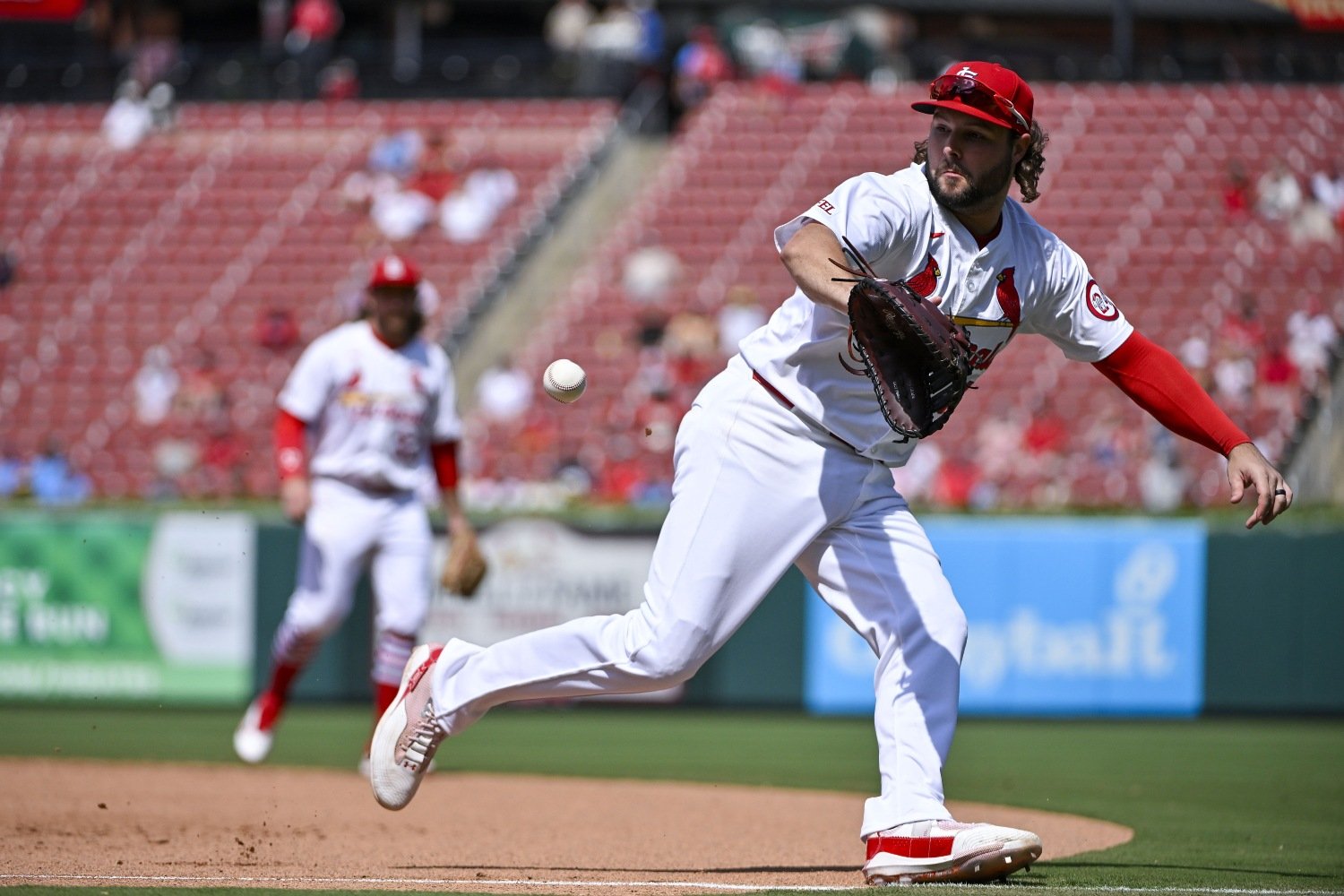 The St. Louis Cardinals trading third baseman Nolan Arenado has felt inevitable since the offseason began a little over three months ago. The organization nearly accomplished the feat in mid-December, agreeing to a trade that would have sent the 33-year-old to the Houston Astros. However, he invoked his no-trade clause, blocking what would have been a blockbuster transaction out of a desire to steer himself to a different destination. Now, Arenado is still a Cardinal, and the probability of him donning their red, white, yellow, and navy blue threads as the 2025 MLB regular season begins is steadily increasing. On the most recent episode of Seeing Red (a St. Louis Cardinals podcast), co-hosts Bernie Miklasz and Will Leitch dissected the difficult decisions President of Baseball Operations John Mozeliak and the Cardinals front office brass would need to steer through if Arenado stayed in St. Louis. In the episode, Miklasz discussed the implications of Arenado potentially staying put, proclaiming, "It means that maybe Thomas Saggese won't make the club out of spring training or would not have much of a role if he does." He continued, "Sure, it means maybe Brendan Donovan will be in left field a lot more than we thought, which means (Lars) Nootbar in center, who knows, more than we thought. "If anybody, if it hurts anybody, so to speak, with Arenado staying, the guy that affects the most, I think might be (Alec) Burleson, because there goes left field at-bats, there goes a ton of DH at-bats, and, you know, would he be around the club just to kind of back up (Willson) Contreras at first base?" Miklasz cotinued. "I don't know. I think it probably impacts him more than anyone." Evidently, the odd player out of a potential roster crunch in St. Louis could be Alec Burleson. If that becomes the case, the Twins should be proactive in trying to acquire him. Burleson, 26, jumped onto the scene in 2024 after struggling in his first two seasons with St. Louis, hitting .269/.314/420 with 147 hits, 35 walks, 20 doubles, 21 home runs, and a 104 OPS+ over 595 plate appearances. The left-handed hitter demonstrated a contact-skilled profile, posting a very low 12.8% strikeout rate while hitting the ball hard and spraying it around the field. Burleson did struggle with chasing pitches outside the zone, evidenced by a 34.5% chase rate. However, he broke out with St. Louis last season, blossoming into a more complete hitter with plus power. (Just don't think too much about his home run celebration. HE WAS A DJ IN COLLEGE, OKAY!?) RFhQOFhfWGw0TUFRPT1fQjFSU1ZsSURYd0VBQ2xRR1VnQUFWMUJlQUFCV1dsWUFBMUVHQVFJTlVnY0hCQUlB.mp4 Like most left-handed batters, Burleson struggled against same-handed pitching, slashing a neasky .195/.229/.286 over 142 plate appearances. That said, he excelled against right-handed pitching, hitting .292/.341/.464 with 18 home runs over 453 plate appearances. The power-hitting lefty also possesses defensive flexibility, playing the following positions last season: Right field - 324 innings Left field - 230 1/3 innings First base - 117 innings Interestingly, these three positions are where Minnesota is lacking depth, making a move for Burleson even more enticing. The idea of acquiring another left-handed bat could be perceived as redundant, if you get too hung up on imagining him as an outfielder. That said, the Twins would be wise to use their limited roster flexibility on a position player who excels at hitting, regardless of handedness. Burleson's value resides in the fact that he could become Minnesota's primary designated hitter or first baseman against righty starters. The club's front office finds themselves caught between a rock and a hard place, needing to improve the roster while adhering to strict payroll limitations. That's no problem here, as Burleson is yet to reach arbitration eligibility and will make only $800,000 next season. He's under team control until the end of the 2028 regular season. Minnesota prides itself on finding creative solutions to improve the team. Again, acquiring Burleson is seemingly contingent on Arenado staying in St. Louis. Still, the Twins would be wise to make a concerted effort to land the cost-controlled, power-hitting left-handed bat.
 -
Despite trade speculation surrounding the former All-Star third baseman this offseason, St. Louis could enter the season with him on their 26-man roster. If so, could their roster crunch lead to the Twins poaching a hard-hitting left-handed bat? Image courtesy of © Jeff Curry-Imagn Images The St. Louis Cardinals trading third baseman Nolan Arenado has felt inevitable since the offseason began a little over three months ago. The organization nearly accomplished the feat in mid-December, agreeing to a trade that would have sent the 33-year-old to the Houston Astros. However, he invoked his no-trade clause, blocking what would have been a blockbuster transaction out of a desire to steer himself to a different destination. Now, Arenado is still a Cardinal, and the probability of him donning their red, white, yellow, and navy blue threads as the 2025 MLB regular season begins is steadily increasing. On the most recent episode of Seeing Red (a St. Louis Cardinals podcast), co-hosts Bernie Miklasz and Will Leitch dissected the difficult decisions President of Baseball Operations John Mozeliak and the Cardinals front office brass would need to steer through if Arenado stayed in St. Louis. In the episode, Miklasz discussed the implications of Arenado potentially staying put, proclaiming, "It means that maybe Thomas Saggese won't make the club out of spring training or would not have much of a role if he does." He continued, "Sure, it means maybe Brendan Donovan will be in left field a lot more than we thought, which means (Lars) Nootbar in center, who knows, more than we thought. "If anybody, if it hurts anybody, so to speak, with Arenado staying, the guy that affects the most, I think might be (Alec) Burleson, because there goes left field at-bats, there goes a ton of DH at-bats, and, you know, would he be around the club just to kind of back up (Willson) Contreras at first base?" Miklasz cotinued. "I don't know. I think it probably impacts him more than anyone." Evidently, the odd player out of a potential roster crunch in St. Louis could be Alec Burleson. If that becomes the case, the Twins should be proactive in trying to acquire him. Burleson, 26, jumped onto the scene in 2024 after struggling in his first two seasons with St. Louis, hitting .269/.314/420 with 147 hits, 35 walks, 20 doubles, 21 home runs, and a 104 OPS+ over 595 plate appearances. The left-handed hitter demonstrated a contact-skilled profile, posting a very low 12.8% strikeout rate while hitting the ball hard and spraying it around the field. Burleson did struggle with chasing pitches outside the zone, evidenced by a 34.5% chase rate. However, he broke out with St. Louis last season, blossoming into a more complete hitter with plus power. (Just don't think too much about his home run celebration. HE WAS A DJ IN COLLEGE, OKAY!?) RFhQOFhfWGw0TUFRPT1fQjFSU1ZsSURYd0VBQ2xRR1VnQUFWMUJlQUFCV1dsWUFBMUVHQVFJTlVnY0hCQUlB.mp4 Like most left-handed batters, Burleson struggled against same-handed pitching, slashing a neasky .195/.229/.286 over 142 plate appearances. That said, he excelled against right-handed pitching, hitting .292/.341/.464 with 18 home runs over 453 plate appearances. The power-hitting lefty also possesses defensive flexibility, playing the following positions last season: Right field - 324 innings Left field - 230 1/3 innings First base - 117 innings Interestingly, these three positions are where Minnesota is lacking depth, making a move for Burleson even more enticing. The idea of acquiring another left-handed bat could be perceived as redundant, if you get too hung up on imagining him as an outfielder. That said, the Twins would be wise to use their limited roster flexibility on a position player who excels at hitting, regardless of handedness. Burleson's value resides in the fact that he could become Minnesota's primary designated hitter or first baseman against righty starters. The club's front office finds themselves caught between a rock and a hard place, needing to improve the roster while adhering to strict payroll limitations. That's no problem here, as Burleson is yet to reach arbitration eligibility and will make only $800,000 next season. He's under team control until the end of the 2028 regular season. Minnesota prides itself on finding creative solutions to improve the team. Again, acquiring Burleson is seemingly contingent on Arenado staying in St. Louis. Still, the Twins would be wise to make a concerted effort to land the cost-controlled, power-hitting left-handed bat. View full article
-
The Twins' veteran catcher has been a popular trade candidate this offseason. However, if injury were to strike, the repercussions of dealing him could qucikly turn catastrophic. Image courtesy of © Brian Fluharty-Imagn Images Since the offseason began, two Minnesota Twins players have been linked incessantly to trade rumors: Chris Paddack and Christian Vázquez. Most franchises would perceive these veteran players as crucial depth pieces who raise the floor of a team, which is an all-too-important role to fulfill during a 162-game season. Alas, Minnesota's front office must work around strict ownership-imposed salary limitations, meaning the team almost has to part ways with one of Paddack or Vázquez to create the monetary space necessary to sign or trade for an impact player—if, indeed, it's not too late for that already. At a glance, trading Paddack and his one-year, $7.5-million contract would be an easy pill for Twins decision-makers to swallow. The club's first four rotation spots are solidified, with Pablo López, Joe Ryan, Bailey Ober, and Simeon Woods Richardson. As of now, Paddack is slated to inhabit the fifth rotation spot. That said, young, higher-upside arms like David Festa or Zebby Matthews could seamlessly take the 29-year-old right-handed hurler's place. Replacing Vázquez, however, would be a significantly more challenging and perilous endeavor. Vázquez and his catching partner Ryan Jeffers have started every game at catcher for the Twins the past two seasons. In 2023, Vázquez started 56% of games behind the plate. His timeshare dipped to only 50% in 2024, but it's clear that the team values the savvy veteran's defensive prowess and ability to manage a pitching staff. Because trading him could free up as much as $10 million, though, it's an unavoidable consideration. On the surface, Jeffers's presence on the 26-man roster makes the notion of trading Vázquez rational. The 27-year-old budding star is one of the best-hitting backstops in the AL and has improved defensively over the past two seasons. The team certainly could convert him into the primary starting catcher, giving him something closer to a traditional starter's workload. Yet, the situation isn't that simple. Yes, Jeffers has improved defensively and presumably could start more than 47% of games at catcher (which is what he started the past two seasons combined). Ratcheting up his share of playing time would also increase the risks associated with him, though. What if playing more exposes his weaknesses? What if he gets hurt? Vázquez, Jeffers, Diego Cartaya, and Jair Camargo are the four catching options on the 40-man roster. Recently acquired Mickey Gasper has experience behind the plate, too, but the Twins don't view him as a viable catcher in anything more than an emergency situation. If the team were to trade Vázquez, one of Cartaya or Camargo would need to become the backup, or step all the way up into a rotational role. Having one of Cartaya or Camargo take on the backup catching role behind Jeffers wouldn't necessarily be an unfavorable scenario. Both boast potential—particularly Cartaya, who was once a consensus top-20 prospect in the minors. Yet, there is significant question as to whether either of them have the aptitude to take on a 60-40 split over a 162-game season, let alone a 53-47 split like Vázquez and Jeffers divvied things the previous two seasons. The Twins have been the beneficiaries of Vázquez and Jeffers not missing any time due to injury the past two seasons. Still, that rate of injury avoidance is not sustainable, especially if the playing time were less balanced. Say Jeffers were to sustain an injury that would cause him to miss an extended period of time. In that case, the team (as currently constructed) would need to rely entirely on Cartaya and Camargo. Now, relying on this duo for a series or two wouldn't be a catastrophe. Yet, the consequences could be dire if the team's catching duties were given to these two inexperienced players for a month or more. As noted earlier, Vázquez possesses the innate ability to manage a pitching staff. He's a seasoned leader. The value this quality presents cannot be quantified. However, he has undoubtedly played a role in López, Ryan, and Ober's excellent performances in 2023 and 2024. Despite not possessing the same game-changing attributes as Vázquez, Jeffers also has similar experience with these pitchers. If forced to be the team's catching duo, Cartaya and Camargo would likely struggle at the plate. The team would be able to (mostly) mask their lack of offensive production and place them in the eight- or nine-hole every game, as they have with Vázquez. Still, rostering two offensively deficient backstops would be a disadvantage that not even burying them in the lineup could comprehensively conceal. The real burden of relying on two young, inexperienced backstops would be their effect on the pitching staff. Cartaya and Camargo have demonstrated adequate pitch framing, blocking, and base-stealing management skills in the high minors. That said, neither has ever had to guide an MLB pitching staff through a game or series, let alone a month-long stretch. If forced to take on this tremendous responsibility, there is reason to suspect they would struggle. With the Twins planning on contending for an AL Central title in 2025, they don't necessarily have the luxury of letting young players battle through extensive struggles at the major-league level. Trading Vázquez and expecting Jeffers to perform at a rate consistent with his past production while maintaining a clean bill of health is a risky proposition, given the added pressure and heavier demands. If the Twins were to trade Vázquez, they would need to sign a veteran catcher to serve as Jeffers's backup. Intriguing options like James McCann and Yasmani Grandal are still on the market. However, they could sign at any moment. Minnesota may have no choice but to bring Vázquez back for the 2025 campaign, as being one Jeffers injury away from relying on two inexperienced catchers would be malpractice. View full article
-
The Potentially Catastrophic Repercussions of Trading Christian Vázquez
Cody Schoenmann posted an article in Twins
 Since the offseason began, two Minnesota Twins players have been linked incessantly to trade rumors: Chris Paddack and Christian Vázquez. Most franchises would perceive these veteran players as crucial depth pieces who raise the floor of a team, which is an all-too-important role to fulfill during a 162-game season. Alas, Minnesota's front office must work around strict ownership-imposed salary limitations, meaning the team almost has to part ways with one of Paddack or Vázquez to create the monetary space necessary to sign or trade for an impact player—if, indeed, it's not too late for that already. At a glance, trading Paddack and his one-year, $7.5-million contract would be an easy pill for Twins decision-makers to swallow. The club's first four rotation spots are solidified, with Pablo López, Joe Ryan, Bailey Ober, and Simeon Woods Richardson. As of now, Paddack is slated to inhabit the fifth rotation spot. That said, young, higher-upside arms like David Festa or Zebby Matthews could seamlessly take the 29-year-old right-handed hurler's place. Replacing Vázquez, however, would be a significantly more challenging and perilous endeavor. Vázquez and his catching partner Ryan Jeffers have started every game at catcher for the Twins the past two seasons. In 2023, Vázquez started 56% of games behind the plate. His timeshare dipped to only 50% in 2024, but it's clear that the team values the savvy veteran's defensive prowess and ability to manage a pitching staff. Because trading him could free up as much as $10 million, though, it's an unavoidable consideration. On the surface, Jeffers's presence on the 26-man roster makes the notion of trading Vázquez rational. The 27-year-old budding star is one of the best-hitting backstops in the AL and has improved defensively over the past two seasons. The team certainly could convert him into the primary starting catcher, giving him something closer to a traditional starter's workload. Yet, the situation isn't that simple. Yes, Jeffers has improved defensively and presumably could start more than 47% of games at catcher (which is what he started the past two seasons combined). Ratcheting up his share of playing time would also increase the risks associated with him, though. What if playing more exposes his weaknesses? What if he gets hurt? Vázquez, Jeffers, Diego Cartaya, and Jair Camargo are the four catching options on the 40-man roster. Recently acquired Mickey Gasper has experience behind the plate, too, but the Twins don't view him as a viable catcher in anything more than an emergency situation. If the team were to trade Vázquez, one of Cartaya or Camargo would need to become the backup, or step all the way up into a rotational role. Having one of Cartaya or Camargo take on the backup catching role behind Jeffers wouldn't necessarily be an unfavorable scenario. Both boast potential—particularly Cartaya, who was once a consensus top-20 prospect in the minors. Yet, there is significant question as to whether either of them have the aptitude to take on a 60-40 split over a 162-game season, let alone a 53-47 split like Vázquez and Jeffers divvied things the previous two seasons. The Twins have been the beneficiaries of Vázquez and Jeffers not missing any time due to injury the past two seasons. Still, that rate of injury avoidance is not sustainable, especially if the playing time were less balanced. Say Jeffers were to sustain an injury that would cause him to miss an extended period of time. In that case, the team (as currently constructed) would need to rely entirely on Cartaya and Camargo. Now, relying on this duo for a series or two wouldn't be a catastrophe. Yet, the consequences could be dire if the team's catching duties were given to these two inexperienced players for a month or more. As noted earlier, Vázquez possesses the innate ability to manage a pitching staff. He's a seasoned leader. The value this quality presents cannot be quantified. However, he has undoubtedly played a role in López, Ryan, and Ober's excellent performances in 2023 and 2024. Despite not possessing the same game-changing attributes as Vázquez, Jeffers also has similar experience with these pitchers. If forced to be the team's catching duo, Cartaya and Camargo would likely struggle at the plate. The team would be able to (mostly) mask their lack of offensive production and place them in the eight- or nine-hole every game, as they have with Vázquez. Still, rostering two offensively deficient backstops would be a disadvantage that not even burying them in the lineup could comprehensively conceal. The real burden of relying on two young, inexperienced backstops would be their effect on the pitching staff. Cartaya and Camargo have demonstrated adequate pitch framing, blocking, and base-stealing management skills in the high minors. That said, neither has ever had to guide an MLB pitching staff through a game or series, let alone a month-long stretch. If forced to take on this tremendous responsibility, there is reason to suspect they would struggle. With the Twins planning on contending for an AL Central title in 2025, they don't necessarily have the luxury of letting young players battle through extensive struggles at the major-league level. Trading Vázquez and expecting Jeffers to perform at a rate consistent with his past production while maintaining a clean bill of health is a risky proposition, given the added pressure and heavier demands. If the Twins were to trade Vázquez, they would need to sign a veteran catcher to serve as Jeffers's backup. Intriguing options like James McCann and Yasmani Grandal are still on the market. However, they could sign at any moment. Minnesota may have no choice but to bring Vázquez back for the 2025 campaign, as being one Jeffers injury away from relying on two inexperienced catchers would be malpractice.
- 91 comments
-
- 11
-
-

-
- christian vazquez
- ryan jeffers
- (and 2 more)
-
It really comes down to MiLB options. I agree that Topa and Varland are likely better but if those two and Henriquez perform similarly during Spring Training the FO would be wise to prioritize depth early in the season.
-
Ronny Henriquez is Nearing a Make-or-Break Spring With Minnesota Twins
Cody Schoenmann posted an article in Twins
 Last season, right-handed reliever Ronny Henriquez received his first extended appearance with the Minnesota Twins, finishing with a 3.26 ERA, 3.95 xFIP, and 18.3% strikeout rate over 19 ⅓ innings pitched. Sprinkled into low-, mid-, and high-leverage roles during his time with the club, Henriquez never assumed a solidified role. That said, the young hurler impressed in his first extended cup of coffee in the majors, functioning as a steady force in what became an injury-depleted unit late in the season. Now, Henriquez’s moderate success came during the team’s late-season collapse, naturally causing much of his positive output to be pushed to the wayside because, well, Twins Territory was trapped in the belly of a horrible machine, and the machine was bleeding to death. Still, the 24-year-old righty’s feats weren’t for naught. Right now, the Twins' bullpen hierarchy to enter the 2025 MLB regular season is projected to be the following, according to FanGraphs: Jhoan Durán Griffin Jax Cole Sands Brock Stewart Jorge Alcalá Michael Tonkin Kody Funderburk Eiberson Castellano At this moment, FanGraphs’s projection system ZiPS expects Minnesota to have the best bullpen in baseball in 2025. Much of this projection lies in the expectation that Durán will bounce back from a lackluster 2024 campaign, with Jax, Sands, and Stewart expected to continue to be high-leverage stalwarts. Still, the way the rest of the eight-pitcher unit will be constructed is open-ended. Alcalá is a near-lock to inhabit a spot, but the team has been wishy-washy on his bullpen role and could utilize the fact that he still has two minor-league options early next season. Tonkin is also a near-lock. Yet, given that he was designated for assignment or traded five times between the New York Mets, New York Yankees, and Twins last season, anything feels possible with the rubber-armed veteran hurler. The left-handed Funderburk and recent Rule 5 draftee Castellano are projected to occupy the seventh and eighth spots in the unit. However, if they perform poorly in spring, Funderburk could begin the season at Triple-A and Castellano could be returned to the Philadelphia Phillies. Uncertainty surrounds the middle-relief corps, and fellow MLB-caliber relievers Justin Topa, Louie Varland, and Brent Headrick could earn roles with strong Spring Training performances. That said, Topa, Varland, and Headrick having minor-league options (like Alcalá and Funderburk) muddies the equation and makes it more likely they begin their 2025 campaigns at Triple-A to prioritize early season depth. Henriquez, however, is an outlier in the group: he can't be optioned to the minors. Considering this, the Twins could prioritize keeping him on the 26-man roster. All of that, however, hinges on him carrying over the impressive things he showed in 2024 when the team reports to Fort Myers next month. Henriquez employs a four-pitch mix, headlined by a plus changeup he threw 34% of the time last season. He also utilizes a slider (33%), four-seam fastball (29%), and sinker (3%). Henriquez's changeup's movement profile hovers around league average. Yet, he throws it 4.6 MPH faster than an average change. (Obviously, velocity is a mixed blessing on a changeup, but it works in this case.) Given the pitch's plus velocity and steady movement profile, Henriquez has crafted a truly special offspeed out pitch. However, if his changeup isn't working, he's prone to having less-than-exceptional outings as he is forced to rely on his slider and four-seam fastball, which are both slightly below league-average pitches in terms of movement. YmtNQXpfV0ZRVkV3dEdEUT09X0FRZFlWQVlFVjFjQUFWRUFBQUFBQUZOVkFBQU1CbEFBVXdNTUNWVUZCZ3NBQXdvSA==.mp4 Henriquez throws his four-seam fastball one MPH faster than league average, so velocity isn't a concern. If he can refine his fastball and slider (the two pitches the Twins pitching development staff is known to get pitchers to maximize), he could mature into a consistently productive mid-to-high leverage arm. What also makes the 24-year-old reliever intriguing is how he tends to manufacture outs. Last season, Sands, Tonkin, Stewart, and Alcalá all generated significantly below-league-average groundball rates. Most of their outs were manufactured through strikeouts or flyouts. Evidently, this approach worked well for these four arms, as they were all effective medium- to high-leverage arms when healthy. However, the team would be wise to diversify the unit's skillset. Durán and Jax manufactured near-elite groundball rates last season. Yet, they are elite relievers who operate exclusively in late-inning, high-leverage situations. While having an elite primary set-up reliever and closer is a welcomed luxury, the team would benefit from rostering a mid-leverage right-handed reliever with a plus groundball rate. Henriquez, who generated a 53.3% groundball rate last, could fit the bill. Topa and Funderburk are also mid-leverage relief options who generate groundballs at a well-above-league-average rate. Again, if Henriquez, Topa, and Funderburk all impress this spring, the team would be wise to give Henriquez the final bullpen spot to prioritize early-season depth. Nevertheless, Henriquez is entering his fourth season in the Twins organization, and despite being a name those who follow the team have long been cognizant of, he has yet to earn a solidified role in the club's bullpen. If he performs well this spring, he could be rewarded with an opportunity to become a fixture in Minnesota's bullpen. However, if he performs poorly, his time in Twins Territory could come to an uneventful conclusion.
 -
Will the 24-year-old reliever earn a spot on the 26-man roster out of Spring Training? Image courtesy of © Jesse Johnson-Imagn Images Last season, right-handed reliever Ronny Henriquez received his first extended appearance with the Minnesota Twins, finishing with a 3.26 ERA, 3.95 xFIP, and 18.3% strikeout rate over 19 ⅓ innings pitched. Sprinkled into low-, mid-, and high-leverage roles during his time with the club, Henriquez never assumed a solidified role. That said, the young hurler impressed in his first extended cup of coffee in the majors, functioning as a steady force in what became an injury-depleted unit late in the season. Now, Henriquez’s moderate success came during the team’s late-season collapse, naturally causing much of his positive output to be pushed to the wayside because, well, Twins Territory was trapped in the belly of a horrible machine, and the machine was bleeding to death. Still, the 24-year-old righty’s feats weren’t for naught. Right now, the Twins' bullpen hierarchy to enter the 2025 MLB regular season is projected to be the following, according to FanGraphs: Jhoan Durán Griffin Jax Cole Sands Brock Stewart Jorge Alcalá Michael Tonkin Kody Funderburk Eiberson Castellano At this moment, FanGraphs’s projection system ZiPS expects Minnesota to have the best bullpen in baseball in 2025. Much of this projection lies in the expectation that Durán will bounce back from a lackluster 2024 campaign, with Jax, Sands, and Stewart expected to continue to be high-leverage stalwarts. Still, the way the rest of the eight-pitcher unit will be constructed is open-ended. Alcalá is a near-lock to inhabit a spot, but the team has been wishy-washy on his bullpen role and could utilize the fact that he still has two minor-league options early next season. Tonkin is also a near-lock. Yet, given that he was designated for assignment or traded five times between the New York Mets, New York Yankees, and Twins last season, anything feels possible with the rubber-armed veteran hurler. The left-handed Funderburk and recent Rule 5 draftee Castellano are projected to occupy the seventh and eighth spots in the unit. However, if they perform poorly in spring, Funderburk could begin the season at Triple-A and Castellano could be returned to the Philadelphia Phillies. Uncertainty surrounds the middle-relief corps, and fellow MLB-caliber relievers Justin Topa, Louie Varland, and Brent Headrick could earn roles with strong Spring Training performances. That said, Topa, Varland, and Headrick having minor-league options (like Alcalá and Funderburk) muddies the equation and makes it more likely they begin their 2025 campaigns at Triple-A to prioritize early season depth. Henriquez, however, is an outlier in the group: he can't be optioned to the minors. Considering this, the Twins could prioritize keeping him on the 26-man roster. All of that, however, hinges on him carrying over the impressive things he showed in 2024 when the team reports to Fort Myers next month. Henriquez employs a four-pitch mix, headlined by a plus changeup he threw 34% of the time last season. He also utilizes a slider (33%), four-seam fastball (29%), and sinker (3%). Henriquez's changeup's movement profile hovers around league average. Yet, he throws it 4.6 MPH faster than an average change. (Obviously, velocity is a mixed blessing on a changeup, but it works in this case.) Given the pitch's plus velocity and steady movement profile, Henriquez has crafted a truly special offspeed out pitch. However, if his changeup isn't working, he's prone to having less-than-exceptional outings as he is forced to rely on his slider and four-seam fastball, which are both slightly below league-average pitches in terms of movement. YmtNQXpfV0ZRVkV3dEdEUT09X0FRZFlWQVlFVjFjQUFWRUFBQUFBQUZOVkFBQU1CbEFBVXdNTUNWVUZCZ3NBQXdvSA==.mp4 Henriquez throws his four-seam fastball one MPH faster than league average, so velocity isn't a concern. If he can refine his fastball and slider (the two pitches the Twins pitching development staff is known to get pitchers to maximize), he could mature into a consistently productive mid-to-high leverage arm. What also makes the 24-year-old reliever intriguing is how he tends to manufacture outs. Last season, Sands, Tonkin, Stewart, and Alcalá all generated significantly below-league-average groundball rates. Most of their outs were manufactured through strikeouts or flyouts. Evidently, this approach worked well for these four arms, as they were all effective medium- to high-leverage arms when healthy. However, the team would be wise to diversify the unit's skillset. Durán and Jax manufactured near-elite groundball rates last season. Yet, they are elite relievers who operate exclusively in late-inning, high-leverage situations. While having an elite primary set-up reliever and closer is a welcomed luxury, the team would benefit from rostering a mid-leverage right-handed reliever with a plus groundball rate. Henriquez, who generated a 53.3% groundball rate last, could fit the bill. Topa and Funderburk are also mid-leverage relief options who generate groundballs at a well-above-league-average rate. Again, if Henriquez, Topa, and Funderburk all impress this spring, the team would be wise to give Henriquez the final bullpen spot to prioritize early-season depth. Nevertheless, Henriquez is entering his fourth season in the Twins organization, and despite being a name those who follow the team have long been cognizant of, he has yet to earn a solidified role in the club's bullpen. If he performs well this spring, he could be rewarded with an opportunity to become a fixture in Minnesota's bullpen. However, if he performs poorly, his time in Twins Territory could come to an uneventful conclusion. View full article
-
I could see them prioritizing depth early in the season and opting to keep Henriquez on the 26-man and option Topa or Funderburk. Whether they keep Castellano or send him back to PHI will also factor into the equation.
- 48 replies
-
- 3
-
-
- mickey gasper
- michael helman
- (and 3 more)
-
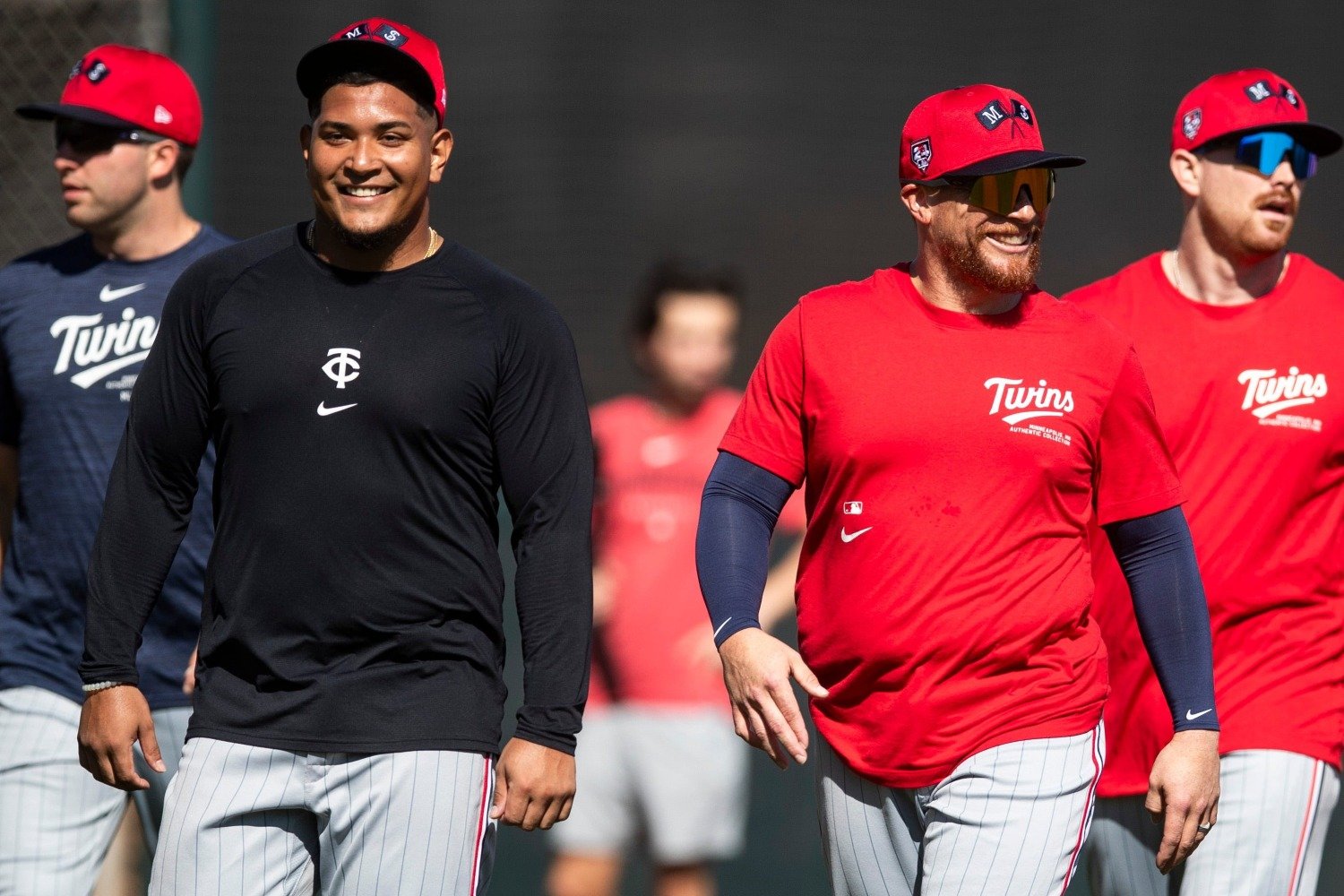 Entering the offseason, the Minnesota Twins had five spots open on their 40-man roster. Almost immediately, two of those spots were wisely given to right-handed pitching prospects Marco Raya and Travis Adams, to protect them from the Rule 5 Draft. The front office then partook in the Rule 5 Draft, selecting Philadelphia Phillies right-handed pitching prospect Eiberson Castellano, leaving the team with only two spots left. Soon thereafter, the club used their final two roster spots to acquire high-upside depth pieces, in utility infielder Mickey Gasper and once-highly-touted catching prospect Diego Cartaya. If Christian Vázquez ($10 million), Chris Paddack ($7.5 million), or another pricey veteran player are moved in the next couple of weeks, the club will have the salary space necessary to make one or two positive moves to bolster their big-league roster. Obviously, if the team moves Vázquez, Paddack, or a different veteran to create salary space, a 40-man roster space will open with their departure. That said, the front office would be wise to bring players on MLB deals in three position groups: First base, right-handed hitting outfielder, and left-handed reliever. The team could find themselves in a win-win situation by signing a player like Mark Canha, who hits right-handed and can play first base and both corner outfield spots. That said, an ideal offseason would include the team bringing in a position player and left-handed reliever. That being the case, team decision-makers will likely need to make a 40-man roster crunch at some point this offseason. Here are the players most likely to be the odd one out in that hypothetical scenario: #5 - Mickey Gasper Gasper is one of the more recent additions to the 40-man roster. Acquired in a trade that sent left-handed reliever Jovani Morán to the Boston Red Sox, Gasper provides flexibility as a utility infielder who could play first, second, or third base while functioning as an emergency catcher. The 29-year-old will likely factor most into the first-base mix, as the organization's depth is weak at the position. They carry only José Miranda, Edouard Julien, and minor-league signee Mike Ford. As noted earlier, if the club can manufacture salary space, they will likely prioritize spending a significant portion of that money on a player who can play first base. Canha, Justin Turner, and Ty France are fascinating veteran options who could be acquired cheaply. If Minnesota were to acquire one of these bats, Gasper could be the odd player out. That said, the team values Gasper beyond first base, and with FanGraphs projecting him to produce an above-average 109 wRC+ next season, the front office will likely prioritize keeping his switch-hitting bat, unless and until an unexpected opportunity arises. #4 - Michael Helman Added to the 40-man roster in early Sept. 2024, Helman could be one of the players most at risk of being cut if the front office finds itself in a crunch. A long-time fan favorite, the 28-year-old utility player made his major-league debut after a wave of injuries hampered the Twins' position-player depth late last season. Helman performed well in his brief stint, generating three hits in his 10 plate appearances with the team, with two of them being doubles. He also provided the defensive flexibility necessary for the team to survive the end of the season, logging innings at third base, centerfield, left field, and right field. Helman also spent significant time at shortstop and second base at Triple-A and is skilled enough to play those positions in the majors if needed. He could step into the Kyle Farmer role in 2025, while also being able to play all three outfield spots. That said, fellow borderline 26-man roster players like Austin Martin, Edouard Julien, DaShawn Keirsey Jr., and the aforementioned Gasper are seemingly ahead of Helman at their respective positions, potentially making him expendable. Still, multiple players are likelier to be cut loose over Helman, making him a near-lock to inhabit a 40-man roster to begin the 2025 MLB season. #3 - Ronny Henriquez Acquired alongside Isiah Kiner-Falefa in the trade that sent Mitch Garver to Texas, Henriquez is entering his fourth season in the Twins organization. The 24-year-old righty impressed in 19 1/3 innings pitched last season, posting a 3.26 ERA, 4.05 FIP, and 18.3% strikeout rate. Henriquez could begin the 2025 season at Triple-A St. Paul as a primary right-handed relief depth option—except, he is out of minor-league options, meaning he would need to make the initial eight-pitcher bullpen out of Spring Training if the front office wanted to guarantee he stays with them to begin the 2025 MLB season. The Twins are rich in right-handed relief depth, with medium- to low-leverage arms like Michael Tonkin, Justin Topa, Louie Varland, and Castellano seemingly slotted ahead of Henriquez on the right-handed reliever depth chart. Adams is also an option, although the organization might use him as a starting pitcher to begin the season and he has options. Driven by his above-average changeup, Henriquez is a fascinating reliever who could blossom into a bona fide high-leverage reliever at the major-league level. That said, team decision-makers could reasonably elect to part ways with a player toward the bottom of the depth chart of a position group rich with depth. #2 - Matt Canterino Drafted in the second round of the 2019 MLB Draft, Canterino has long existed more as a theory than as a person. Despite possessing high-end stuff and a formidable three-pitch mix, the 27-year-old has yet to make his MLB debut due to a series of arm injuries. If Canterino were fortunate enough to stay healthy long enough to make his debut, he could theoretically blossom into a high-leverage reliever who could complement arms like Jhoan Durán, Griffin Jax, Brock Stewart, and Jorge Alcalá in the back of the bullpen. That said, nothing can be counted on regarding Canterino's health, and it is reasonable to suspect his injuries have diminished the arm talent he once possessed. As noted earlier, the Twins have oodles of right-handed reliever depth ready to perform in the majors. Tonkin, Topa, Henriquez, Varland, and Castellano all rank above Canterino on the team's right-handed reliever hierarchy, leaving him little room for opportunity. If healthy and performing at his peak, Canterino is likely a more skilled pitcher than the six pitchers previously mentioned. However, there is reason to suspect his window is closing, if it hasn't closed already. If the team were to find itself in a 40-man roster crunch, risking losing the oft-injured Canterino on the waiver wire in favor of keeping more reliable MLB-caliber arms would be reasonable, even if his theoretical ceiling is still high. #1 - Jair Camargo Last offseason, Camargo was added to the 40-man roster to avoid him potentially getting nabbed in the 2023 Rule 5 Draft. The 25-year-old backstop maintained a spot on the organization's 40-man roster throughout the 2024 MLB season. However, he netted only six at-bats with the parent club last season, primarily due to catching tandem Ryan Jeffers and Vázquez not spending a single game on the injured list. Camargo entered the offseason as the team's third catching option. The acquisition of Cartaya changes things entirely. Earlier this offseason, the idea of Minnesota parting ways with Vázquez appeared inevitable. However, a recent report from The Minnesota Star Tribune's Bobby Nightengale may suggest otherwise. If the team only needs to trade away Paddack to clear up the space necessary to make moves, meaning Vázquez could play out the entirety of his three-year, $30 million contract with Minnesota, Camargo's spot on the 40-man roster becomes increasingly tenuous. Camargo sits behind Jeffers, Vázquez, and Cartaya on the organization's catching depth chart. Patrick Winkel (Camargo's catching partner at Triple-A last season) performed similarly to Camargo at the plate while demonstrating a more robust defensive profile. Evidently, after acquiring Cartaya, Minnesota has a surplus of organizational catching depth. If they don't part ways with Vázquez, the team should feel comfortable risking losing Camargo on waivers, as Cartaya and Winkel provide adequate depth at Triple-A.
- 48 comments
-
- 10
-
-
- mickey gasper
- michael helman
- (and 3 more)
-
If the Twins begin acquiring players on MLB contracts, they will need to create room on the 40-man roster. Which players will they be most comfortable with potentially losing on waivers? Image courtesy of © Jonah Hinebaugh/Naples Daily News/USA Today Network-Florida / USA TODAY NETWORK via Imagn Images Entering the offseason, the Minnesota Twins had five spots open on their 40-man roster. Almost immediately, two of those spots were wisely given to right-handed pitching prospects Marco Raya and Travis Adams, to protect them from the Rule 5 Draft. The front office then partook in the Rule 5 Draft, selecting Philadelphia Phillies right-handed pitching prospect Eiberson Castellano, leaving the team with only two spots left. Soon thereafter, the club used their final two roster spots to acquire high-upside depth pieces, in utility infielder Mickey Gasper and once-highly-touted catching prospect Diego Cartaya. If Christian Vázquez ($10 million), Chris Paddack ($7.5 million), or another pricey veteran player are moved in the next couple of weeks, the club will have the salary space necessary to make one or two positive moves to bolster their big-league roster. Obviously, if the team moves Vázquez, Paddack, or a different veteran to create salary space, a 40-man roster space will open with their departure. That said, the front office would be wise to bring players on MLB deals in three position groups: First base, right-handed hitting outfielder, and left-handed reliever. The team could find themselves in a win-win situation by signing a player like Mark Canha, who hits right-handed and can play first base and both corner outfield spots. That said, an ideal offseason would include the team bringing in a position player and left-handed reliever. That being the case, team decision-makers will likely need to make a 40-man roster crunch at some point this offseason. Here are the players most likely to be the odd one out in that hypothetical scenario: #5 - Mickey Gasper Gasper is one of the more recent additions to the 40-man roster. Acquired in a trade that sent left-handed reliever Jovani Morán to the Boston Red Sox, Gasper provides flexibility as a utility infielder who could play first, second, or third base while functioning as an emergency catcher. The 29-year-old will likely factor most into the first-base mix, as the organization's depth is weak at the position. They carry only José Miranda, Edouard Julien, and minor-league signee Mike Ford. As noted earlier, if the club can manufacture salary space, they will likely prioritize spending a significant portion of that money on a player who can play first base. Canha, Justin Turner, and Ty France are fascinating veteran options who could be acquired cheaply. If Minnesota were to acquire one of these bats, Gasper could be the odd player out. That said, the team values Gasper beyond first base, and with FanGraphs projecting him to produce an above-average 109 wRC+ next season, the front office will likely prioritize keeping his switch-hitting bat, unless and until an unexpected opportunity arises. #4 - Michael Helman Added to the 40-man roster in early Sept. 2024, Helman could be one of the players most at risk of being cut if the front office finds itself in a crunch. A long-time fan favorite, the 28-year-old utility player made his major-league debut after a wave of injuries hampered the Twins' position-player depth late last season. Helman performed well in his brief stint, generating three hits in his 10 plate appearances with the team, with two of them being doubles. He also provided the defensive flexibility necessary for the team to survive the end of the season, logging innings at third base, centerfield, left field, and right field. Helman also spent significant time at shortstop and second base at Triple-A and is skilled enough to play those positions in the majors if needed. He could step into the Kyle Farmer role in 2025, while also being able to play all three outfield spots. That said, fellow borderline 26-man roster players like Austin Martin, Edouard Julien, DaShawn Keirsey Jr., and the aforementioned Gasper are seemingly ahead of Helman at their respective positions, potentially making him expendable. Still, multiple players are likelier to be cut loose over Helman, making him a near-lock to inhabit a 40-man roster to begin the 2025 MLB season. #3 - Ronny Henriquez Acquired alongside Isiah Kiner-Falefa in the trade that sent Mitch Garver to Texas, Henriquez is entering his fourth season in the Twins organization. The 24-year-old righty impressed in 19 1/3 innings pitched last season, posting a 3.26 ERA, 4.05 FIP, and 18.3% strikeout rate. Henriquez could begin the 2025 season at Triple-A St. Paul as a primary right-handed relief depth option—except, he is out of minor-league options, meaning he would need to make the initial eight-pitcher bullpen out of Spring Training if the front office wanted to guarantee he stays with them to begin the 2025 MLB season. The Twins are rich in right-handed relief depth, with medium- to low-leverage arms like Michael Tonkin, Justin Topa, Louie Varland, and Castellano seemingly slotted ahead of Henriquez on the right-handed reliever depth chart. Adams is also an option, although the organization might use him as a starting pitcher to begin the season and he has options. Driven by his above-average changeup, Henriquez is a fascinating reliever who could blossom into a bona fide high-leverage reliever at the major-league level. That said, team decision-makers could reasonably elect to part ways with a player toward the bottom of the depth chart of a position group rich with depth. #2 - Matt Canterino Drafted in the second round of the 2019 MLB Draft, Canterino has long existed more as a theory than as a person. Despite possessing high-end stuff and a formidable three-pitch mix, the 27-year-old has yet to make his MLB debut due to a series of arm injuries. If Canterino were fortunate enough to stay healthy long enough to make his debut, he could theoretically blossom into a high-leverage reliever who could complement arms like Jhoan Durán, Griffin Jax, Brock Stewart, and Jorge Alcalá in the back of the bullpen. That said, nothing can be counted on regarding Canterino's health, and it is reasonable to suspect his injuries have diminished the arm talent he once possessed. As noted earlier, the Twins have oodles of right-handed reliever depth ready to perform in the majors. Tonkin, Topa, Henriquez, Varland, and Castellano all rank above Canterino on the team's right-handed reliever hierarchy, leaving him little room for opportunity. If healthy and performing at his peak, Canterino is likely a more skilled pitcher than the six pitchers previously mentioned. However, there is reason to suspect his window is closing, if it hasn't closed already. If the team were to find itself in a 40-man roster crunch, risking losing the oft-injured Canterino on the waiver wire in favor of keeping more reliable MLB-caliber arms would be reasonable, even if his theoretical ceiling is still high. #1 - Jair Camargo Last offseason, Camargo was added to the 40-man roster to avoid him potentially getting nabbed in the 2023 Rule 5 Draft. The 25-year-old backstop maintained a spot on the organization's 40-man roster throughout the 2024 MLB season. However, he netted only six at-bats with the parent club last season, primarily due to catching tandem Ryan Jeffers and Vázquez not spending a single game on the injured list. Camargo entered the offseason as the team's third catching option. The acquisition of Cartaya changes things entirely. Earlier this offseason, the idea of Minnesota parting ways with Vázquez appeared inevitable. However, a recent report from The Minnesota Star Tribune's Bobby Nightengale may suggest otherwise. If the team only needs to trade away Paddack to clear up the space necessary to make moves, meaning Vázquez could play out the entirety of his three-year, $30 million contract with Minnesota, Camargo's spot on the 40-man roster becomes increasingly tenuous. Camargo sits behind Jeffers, Vázquez, and Cartaya on the organization's catching depth chart. Patrick Winkel (Camargo's catching partner at Triple-A last season) performed similarly to Camargo at the plate while demonstrating a more robust defensive profile. Evidently, after acquiring Cartaya, Minnesota has a surplus of organizational catching depth. If they don't part ways with Vázquez, the team should feel comfortable risking losing Camargo on waivers, as Cartaya and Winkel provide adequate depth at Triple-A. View full article
- 48 replies
-
- 1
-
-
- mickey gasper
- michael helman
- (and 3 more)
-
He had a 76 wRC+ over 317 plate appearances at Triple-A last season, with the advantages of having ABS for an entire season and playing most of his games at offensive-friendly CHS Field. He is also below average at receiving and framing and has an average arm. His bat or glove would not play at the major league level over an extended stretch. He's much closer to catchers like Brian Serven or Payton Henry rather than solid backups like James McCann or Luis Torrens.
- 35 replies
-
- 2
-
-
-
- ryan jeffers
- christian vazquez
- (and 2 more)
-
The recent acquisition of a young catcher could signal the Minnesota front office's desire to move on from one of their incumbent veterans at the position. Which one should it be—if, indeed, either? Image courtesy of © Mark J. Rebilas-Imagn Images On Thursday, the Minnesota Twins made their first splashy (ripply? Breeze-across-a-placid-lake-y?) move of the offseason, acquiring Los Angeles Dodgers catching prospect Diego Cartaya for right-handed pitching prospect Jose Vasquez. A week ago, Cartaya was designated for assignment by Los Angeles to open a 40-man roster spot for recently signed Korean Baseball Organization (KBO) star Hyeseong Kim. Minnesota was proactive and avoided potentially losing Cartaya to another team during the waiver process by shipping a lottery ticket arm in Vasquez, who has yet to pitch in a competitive setting above the Dominican Summer League (DSL). A consensus Top-20 prospect before the 2023 MLB season, Cartaya's stock has dropped over the last two years. He is no longer a Top-100 prospect on credible rankings, and had dropped to the mid-20s in most Dodgers top prospects lists before the trade. The diminished perception surrounding Cartaya stemmed from offensive struggles in the high minors, evidenced by him hitting .221/.323/.363 between Double- and Triple-A last season. That said, the 23-year-old is an exceptional defensive backstop, causing many to believe he could still generate a respectable MLB career even if he struggles to hit at the major-league level. Despite not making his MLB debut yet, Cartaya has the defensive prowess to step in as a viable backup catcher immediately. Minnesota already has two starting-caliber catchers on their 26-man roster in Christian Vázquez and Ryan Jeffers, meaning Cartaya is slated to begin the 2025 season at Triple-A St. Paul. That said, things could quickly change. For the better part of the offseason, those who have speculated and hypothesized which moves the Twins front office could make to accommodate ownership-friendly payroll limitations had been operating under the assumption that the team's payroll was actively hovering around $140 million. Assuming this was the case, the suggestion of trading Vázquez ($10 million) or Chris Paddack ($7.5 million) had become such standard practice that it became the expectation. Many wondered when and where the team would trade Vázquez and/or Paddack—not whether they would do so at all. However, it is unclear where Minnesota sits in terms of that need to trim money, as a recent report from The Minnesota Star Tribune's Bobby Nightengale insinuated the front office may have already met their needs in that regard. Even if they aren't required to cut net salary, though, they still need to part ways with a veteran player. It's the only way to shed the salary necessary to sign a veteran corner outfielder, left-handed reliever, and/or first baseman. That being the case, Vázquez (or his tandem partner Jeffers, who signed a one-year deal for $4.5 million) could be on the way out. At first glance, Vázquez feels like the obvious candidate. He has one year left on the three-year, $30-million deal he signed before the 2023 season, meaning the veteran backstop’s time in Twins Territory could conclude sooner rather than later. Vázquez is a superb defensive catcher, fresh off posting the 15th-best Defensive Runs Above Average among players with at 700 innings played. However, he has significantly struggled at the plate during his time with Minnesota, hitting .222/.264/.323 with a 63 wRC+ over 670 plate appearances the past two seasons. Most of a catcher’s value resides in his prowess behind the plate and ability to gameplan with starting pitchers, which is why the 34-year-old has been able to carve out a 10-year career despite being offensively deficient. Nevertheless, signs point to Minnesota trading away Vázquez to clear the budgetary space necessary to pursue low-tier free agents like Mark Canha or Austin Hays. That, however, is not the only possibility. Jeffers, 27, is under contract until the end of the 2027 season. He's blossomed into a terrific slugger for his position, with a stellar 137 wRC+ in 2023 and a 107 mark last season that easily clears the standard for catchers. However, he's far inferior defensively. Last season, Jeffers ranked 100th in the aforementioned defensive metric among players with 700 innings played. (Again, Vázquez ranked 15th.) The 27-year-old particularly struggled with blocking and framing, which are Vázquez’s two greatest areas of strength. Interestingly, Jeffers has historically generated a quicker pop time and throws the ball harder to second base than Vázquez. While this skill is essential (especially with base stealing on the rise in contemporary baseball), a catcher's ability to manage a pitching staff, block, and frame are insurmountably more critical. Even though Vázquez excels at these ever-important qualities, any argument for keeping him and his bloated, expiring contract over the seven-years younger, $5.5-million cheaper, and vastly offensively superior Jeffers falls flat. Perhaps, if you're in an optimistic mood, Nightengale's aforementioned report makes any consideration of moving Vázquez or Jeffers moot. If the Twins are already hovering around the ceiling placed upon them by ownership, the front office could ride out the final year of Vázquez's contract and maintain what has been one of the most formidable catching duos in baseball. Doing this would permit Cartaya further time to develop at Triple-A, with hopes of him blossoming into Jeffers's partner in 2026. Also, if Vázquez or Jeffers miss extended time next season (something that didn't happen in 2023 or 2024), Cartaya would function as an intriguing depth piece who could step in as a defensively skilled plug-in until either returns. Jair Camargo isn't a viable MLB catcher and shouldn't be viewed as anything more than organizational depth. He could easily be designated for assignment later this offseason to make room on the 40-man roster for a veteran free-agent signee or trade acquisition. Mickey Gasper isn't a real catching option and should be viewed merely as an emergency guy, similar to the role Kyle Farmer occupied the previous two seasons. Acquiring Cartaya as a more credible backup option who could blossom into a starting catcher with time was a wise move for a salary-restricted front office. That said, expectations for the one highly-touted prospect's impact on the 2025 team should be tempered as long as Vázquez and Jeffers maintain a spot on the 26-man roster, which seems much more likely after Nightengale's recent report. View full article
-
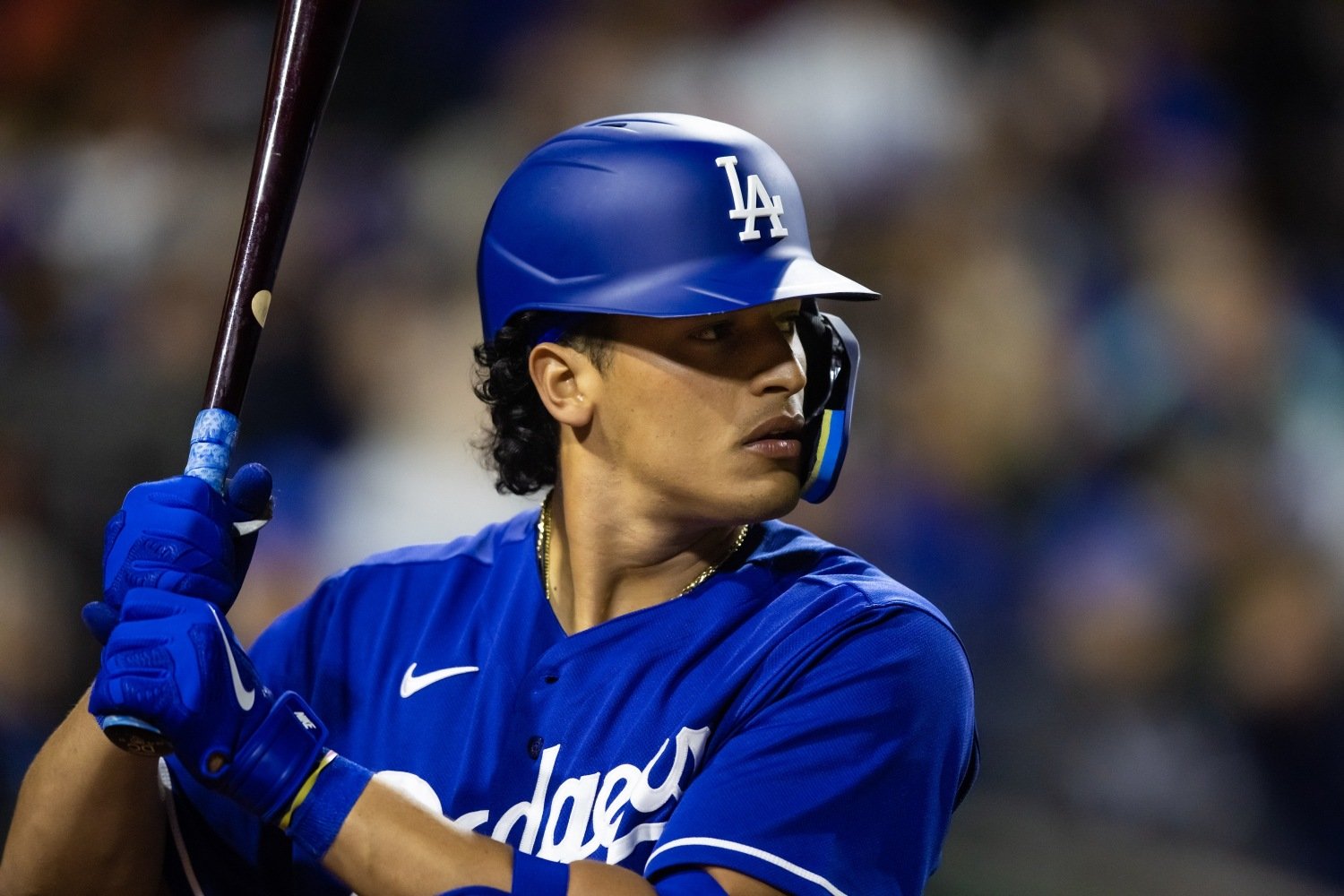 On Thursday, the Minnesota Twins made their first splashy (ripply? Breeze-across-a-placid-lake-y?) move of the offseason, acquiring Los Angeles Dodgers catching prospect Diego Cartaya for right-handed pitching prospect Jose Vasquez. A week ago, Cartaya was designated for assignment by Los Angeles to open a 40-man roster spot for recently signed Korean Baseball Organization (KBO) star Hyeseong Kim. Minnesota was proactive and avoided potentially losing Cartaya to another team during the waiver process by shipping a lottery ticket arm in Vasquez, who has yet to pitch in a competitive setting above the Dominican Summer League (DSL). A consensus Top-20 prospect before the 2023 MLB season, Cartaya's stock has dropped over the last two years. He is no longer a Top-100 prospect on credible rankings, and had dropped to the mid-20s in most Dodgers top prospects lists before the trade. The diminished perception surrounding Cartaya stemmed from offensive struggles in the high minors, evidenced by him hitting .221/.323/.363 between Double- and Triple-A last season. That said, the 23-year-old is an exceptional defensive backstop, causing many to believe he could still generate a respectable MLB career even if he struggles to hit at the major-league level. Despite not making his MLB debut yet, Cartaya has the defensive prowess to step in as a viable backup catcher immediately. Minnesota already has two starting-caliber catchers on their 26-man roster in Christian Vázquez and Ryan Jeffers, meaning Cartaya is slated to begin the 2025 season at Triple-A St. Paul. That said, things could quickly change. For the better part of the offseason, those who have speculated and hypothesized which moves the Twins front office could make to accommodate ownership-friendly payroll limitations had been operating under the assumption that the team's payroll was actively hovering around $140 million. Assuming this was the case, the suggestion of trading Vázquez ($10 million) or Chris Paddack ($7.5 million) had become such standard practice that it became the expectation. Many wondered when and where the team would trade Vázquez and/or Paddack—not whether they would do so at all. However, it is unclear where Minnesota sits in terms of that need to trim money, as a recent report from The Minnesota Star Tribune's Bobby Nightengale insinuated the front office may have already met their needs in that regard. Even if they aren't required to cut net salary, though, they still need to part ways with a veteran player. It's the only way to shed the salary necessary to sign a veteran corner outfielder, left-handed reliever, and/or first baseman. That being the case, Vázquez (or his tandem partner Jeffers, who signed a one-year deal for $4.5 million) could be on the way out. At first glance, Vázquez feels like the obvious candidate. He has one year left on the three-year, $30-million deal he signed before the 2023 season, meaning the veteran backstop’s time in Twins Territory could conclude sooner rather than later. Vázquez is a superb defensive catcher, fresh off posting the 15th-best Defensive Runs Above Average among players with at 700 innings played. However, he has significantly struggled at the plate during his time with Minnesota, hitting .222/.264/.323 with a 63 wRC+ over 670 plate appearances the past two seasons. Most of a catcher’s value resides in his prowess behind the plate and ability to gameplan with starting pitchers, which is why the 34-year-old has been able to carve out a 10-year career despite being offensively deficient. Nevertheless, signs point to Minnesota trading away Vázquez to clear the budgetary space necessary to pursue low-tier free agents like Mark Canha or Austin Hays. That, however, is not the only possibility. Jeffers, 27, is under contract until the end of the 2027 season. He's blossomed into a terrific slugger for his position, with a stellar 137 wRC+ in 2023 and a 107 mark last season that easily clears the standard for catchers. However, he's far inferior defensively. Last season, Jeffers ranked 100th in the aforementioned defensive metric among players with 700 innings played. (Again, Vázquez ranked 15th.) The 27-year-old particularly struggled with blocking and framing, which are Vázquez’s two greatest areas of strength. Interestingly, Jeffers has historically generated a quicker pop time and throws the ball harder to second base than Vázquez. While this skill is essential (especially with base stealing on the rise in contemporary baseball), a catcher's ability to manage a pitching staff, block, and frame are insurmountably more critical. Even though Vázquez excels at these ever-important qualities, any argument for keeping him and his bloated, expiring contract over the seven-years younger, $5.5-million cheaper, and vastly offensively superior Jeffers falls flat. Perhaps, if you're in an optimistic mood, Nightengale's aforementioned report makes any consideration of moving Vázquez or Jeffers moot. If the Twins are already hovering around the ceiling placed upon them by ownership, the front office could ride out the final year of Vázquez's contract and maintain what has been one of the most formidable catching duos in baseball. Doing this would permit Cartaya further time to develop at Triple-A, with hopes of him blossoming into Jeffers's partner in 2026. Also, if Vázquez or Jeffers miss extended time next season (something that didn't happen in 2023 or 2024), Cartaya would function as an intriguing depth piece who could step in as a defensively skilled plug-in until either returns. Jair Camargo isn't a viable MLB catcher and shouldn't be viewed as anything more than organizational depth. He could easily be designated for assignment later this offseason to make room on the 40-man roster for a veteran free-agent signee or trade acquisition. Mickey Gasper isn't a real catching option and should be viewed merely as an emergency guy, similar to the role Kyle Farmer occupied the previous two seasons. Acquiring Cartaya as a more credible backup option who could blossom into a starting catcher with time was a wise move for a salary-restricted front office. That said, expectations for the one highly-touted prospect's impact on the 2025 team should be tempered as long as Vázquez and Jeffers maintain a spot on the 26-man roster, which seems much more likely after Nightengale's recent report.
- 35 comments
-
- 4
-
-
- ryan jeffers
- christian vazquez
- (and 2 more)


