


Twins Video
Last season, the Twins' primary first baseman was technically Joey Gallo. In 332 plate appearances, Gallo hit .177/.301/.440, swatting 21 home runs and cobbling together an above-average 104 wRC+. However, Gallo's numbers were inflated by a formidable April, wherein he hit .226/.349/.717 with seven home runs and a 182 wRC+ over 63 plate appearances. From May 1 to his final game as a member of the Twins on Sept. 5, Gallo was practically unusable, striking out 44.9% of the time and generating a subpar 85 wRC+.
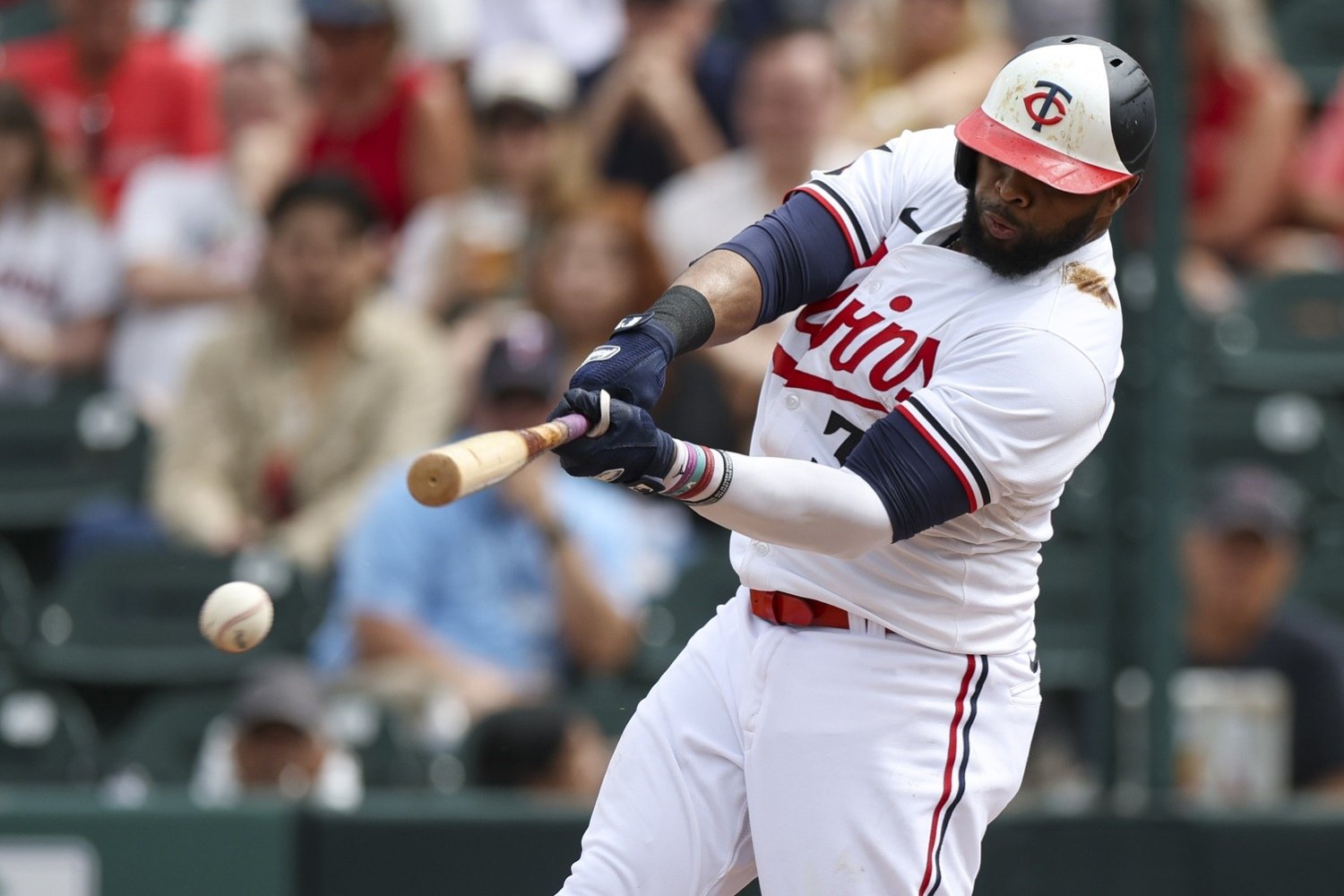
Gallo has since joined the Washington Nationals, striking out in over half his 27 plate appearances this spring. In response, the Twins have elected to undergo a course correction, signing the contact-skilled Carlos Santana to a one-year, $5.25-million contract. Will the team regret sacrificing power at first base and suffer an unwanted power outage from a short-sighted overcompensation? First, let's look at how the organization has approached the position and the results it has produced since Rocco Baldelli took over as manager in 2019.
Over the last five years, the Minnesota Twins have hit 1,037 home runs, placing them fourth in that period behind only the Atlanta Braves, New York Yankees, and Los Angeles Dodgers. Considering the 2019 club hit the most home runs in a season with 307 (now tied with the 2023 Braves), their being toward the top of home run leaderboards shouldn't be a surprise. Yet, how they accomplished this feat has been unorthodox. In the past four seasons, the Braves, Yankees, and Dodgers have had power-hitting first basemen serve as key cogs in the middle of their power-hitting lineups. Freddie Freeman and Matt Olson hit 170 home runs for Atlanta, Luke Voit and Anthony Rizzo hit 106 home runs for New York, and the trio of Freeman, Max Muncy, and Cody Bellinger hit 278 home runs for Los Angeles. Since 2019, the Twins' first basemen with the most home runs are C.J. Cron, with 25 in 2019, and Alex Kirilloff, with 22 from 2021 through 2023. So, where are the home runs coming from?
Since Baldelli took over, the Twins have hit an abundance of long balls from traditionally power-constrained positions. Right fielder Max Kepler leads the team with 97 home runs since 2019. Middle infielder Jorge Polanco is second with 89, and center fielder Byron Buxton is third with 87. With Kepler and Buxton expected to be primary offensive contributors for the team in 2024 and the powerful, left-handed hitting Edouard Julien replacing the departed Polanco at second base, the Twins are expected to produce excess power from those three positions again.
FanGraphs's STEAMER projects the triumvirate of Kepler, Buxton, and Julien to hit a combined 67 home runs in 2024. Third baseman Royce Lewis is expected to hit 28, and shortstop Carlos Correa is projected to hit 21. That said, the team's primary first baseman, Santana, is expected to hit only 15 home runs over 448 plate appearances. Santana hit 19 home runs each year in 2021 and 2022, and 23 home runs last season--his highest single-season total since hitting 34 with Cleveland in 2019. Projecting Santana to hit just 15 home runs feels like a conservative estimate of his capabilities. That said, other reputable projection systems take similar stances on the switch-hitting 37-year-old:
- FanGraphs's ZiPS: 17 home runs over 522 plate appearances
- FanGraphs's THE BAT X: 14 home runs over 486 plate appearances
- Baseball Prospectus's PECOTA: 14 home runs over 441 plate appearances
ZiPS has the most favorable projections for "El Oso," predicting he will slug 17 dingers. Nor is Santana the only Twins first baseman expected to have modest power production in 2024. STEAMER projects backup first baseman and expected primary designated hitter Kirilloff to hit just 12 home runs over 383 plate appearances this upcoming season. As with Santana, other reputable projection systems follow suit:
- ZiPS: 12 home runs over 383 plate appearances
- THE BAT X: 10 home runs over 378 plate appearances
- PECOTA: 10 home runs over 335 plate appearances
On average, Santana and Kirilloff are projected to hit a combined 25-27 home runs next season. The Braves' primary first baseman (Olson) is projected to hit 39 home runs between the three projection systems, the Dodgers' (Freeman) is expected to hit 26, and the Yankees' (Rizzo) is projected to hit 21. Rizzo's platoon mate, DJ LeMahieu, is expected to notch 12 to complement the veteran lefty. If the Twins really do get fewer than 30 total bombs from the players who will take the majority of the playing time at first base and DH, it's hard not to see that as a shortfall.
After a one-year experiment with the strikeout-prone Gallo, the Twins appear set to rely on generating power from traditionally unconventional positions. Their center fielder, third baseman, and right fielder are projected to hit the most home runs in 2024, and neither of their first basemen are likely to reach 20. That said, the organization is making a concerted effort to cut back on strikeouts after claiming the MLB record for punchouts in a season, with 1,654. Signing Santana, trading for fellow strikeout-resistant hitter Manuel Margot, and expecting a dip in strikeout percentage (K%) from primary role players Kyle Farmer, Christian Vázquez, Willi Castro, and Kirilloff and starters Buxton, Correa, Julien, and Lewis, the Twins are looking to deviate from the three-true-outcome offense they often were last season. Whether that approach is successful depends on Santana and Kirilloff's ability to hit for contact and let other positions generate power.







Recommended Comments
Create an account or sign in to comment
You need to be a member in order to leave a comment
Create an account
Sign up for a new account in our community. It's easy!
Register a new accountSign in
Already have an account? Sign in here.
Sign In Now