Cody Schoenmann
-
Posts
768 -
Joined
-
Last visited
-
Days Won
1
Content Type
Profiles
News
Minnesota Twins Videos
2026 Minnesota Twins Top Prospects Ranking
2022 Minnesota Twins Draft Picks
Minnesota Twins Free Agent & Trade Rumors, Notes, & Tidbits
Guides & Resources
2023 Minnesota Twins Draft Picks
The Minnesota Twins Players Project
2024 Minnesota Twins Draft Picks
2025 Minnesota Twins Draft Pick Tracker
2026 Minnesota Twins Draft Tracker: Picks & Bonuses
Forums
Blogs
Events
Store
Downloads
Gallery
Everything posted by Cody Schoenmann
-
 Image courtesy of © Vincent Carchietta-Imagn Images Admittedly, I was excited about Minnesota electing to undertake a massive roster reconstruction at the 2025 MLB trade deadline, parting ways with 11 players from its 26-man roster. Yes, it would have been nice to watch the Carlos Correa-led collective demonstrate resiliency, pick themselves up by their bootstraps, and triumphantly return to the postseason after enduring a cataclysmic collapse late last season, but the club losing four straight series out of the All-Star signaled they were, in fact, prepared to go gentle into that good night. Change was in order. Many assumed that the team's fire sale at the deadline was evidence that a sale was near. Recent comments from MLB commissioner Rob Manfred and a report from Front Office Sports reinforced a sense of confidence and optimism that the club would pass into the hands of a different billionaire or three. Unfortunately, instead, the family announced on Wednesday that they will remain principal owners, albeit with new limited partners coming aboard. So it goes. Thus, the Twins front office will be forced to continue operating under significant spending restrictions, with major implications for this upcoming offseason. As of right now, Minnesota has $48 million in committed salaries next season: Byron Buxton and Pablo López's contracts ($38 million) and $10 million owed to Correa. Including expected arbitration payouts, FanGraphs projects Minnesota's 2025 Opening Day payroll to be $66.8 million, which would be a $67.2 million decrease from its 2024 Opening Day payroll, which settled around $134 million. Despite how bleak times are in Twins Territory, there is reason to believe the Pohlad family (and their new partners-slash-benefactors) will be charitable enough to allow the front office to spend roughly $30-40 million, increasing the club's payroll to roughly $100-110 million. That's a fairly negative outlook; it would still constitute a $20-30 million decrease from this season. Still, if Minnesota were to allocate that much money toward the club's payroll, it would be operating under a payroll similar to the thriving Milwaukee Brewers. Milwaukee's 2025 payroll stands at $121 million. Like Minnesota, however, the Brewers are expected to have a significant amount of money come off the books this fall. FanGraphs expects Milwaukee's payroll to decrease to $60.4 million at the end of the season, placing them in a similar ballpark to Minnesota. (Importantly, these figures don't account for arbitration awards; both the Twins and the Brewers will almost certainly spend much more than their current projections, even if they don't make noteworthy forays into free agency.) Like Minnesota, Milwaukee is expected to raise its payroll back to the $115-120 million range. However, what separates Milwaukee from Minnesota is that the Brewers have been operating under these constraints for a significant amount of time, while recently blossoming into the platonic ideal of how a small-market team should construct its major-league roster (and farm system) to become sustainably successful. Under Derek Falvey, Minnesota already operates like Milwaukee in notable ways. For example, Minnesota, like Milwaukee, has grown a knack for drafting college pitchers from small schools and adding more velocity to their arsenal to make everything pop. The two organizations also similarly spread their money around in Latin America, rather than concentrating their bonus money on individuals perceived as the top prospects in each year's class. Also, the two clubs value depth in the high minors and at the major-league level. However, there are key differences between the two clubs that Minnesota needs to shore up if it wants to become a sustainable small-market winner in the same vein as Milwaukee. What separates Milwaukee from Minnesota (or Matt Arnold from Derek Falvey) is Milwaukee's nimble roster-building and willingness to transact often. A primary factor that led to Minnesota's descent after its magical 2023 run was Falvey's unwillingness to shake up the roster's core. Instead of parting ways with players like Max Kepler, Chris Paddack, and others at opportune times, Twins decision-makers elected to hold on to them, creating a sense of stagnancy within the club and restricting its ability to combat mediocrity. On the other hand, the contemporary, successful iteration of Milwaukee, led by Arnold (and formerly David Stearns), has been exceptionally active in recent seasons, trading away star players nearing free agency—like Josh Hader, Corbin Burnes, and Devin Williams—for hefty packages. Indirectly, the team got William Contreras by trading Hader. Directly, they acquired the left side of their infield (Caleb Durbin and Joey Ortiz) in trades that gave up Burnes and Williams, and those deals also yielded pitching depth and an extra draft pick. In prior seasons, Falvey demonstrated an unwillingness to make momentous transactions like Stearns or Arnold do. Yet, Minnesota's organization-altering deadline indicates that they (be it Falvey himself or Jeremy Zoll, the new nominal general manager) have become willing to make a meaningful shift in roster construction approach that more closely resonates with Milwaukee. If Minnesota continues to execute transactions similarly, star players like López (who possesses an expensive contract) and Ryan Jeffers (who will be a free agent after next season) could also be moved in the offseason. Trading López and Jeffers are moves Milwaukee decision-makers would seemingly make. However, if Minnesota were to mirror Milwaukee's mode of operation, it likely wouldn't part ways with Ryan, given that he's relatively inexpensive and an exceptionally talented pitcher. Beyond a willingness to make high-impact transactions, Minnesota should also become more like Milwaukee in its player development program. A driving factor in Milwaukee's success is its ability to field a roster filled with elite defensive players who make exceptional swing decisions at the plate. In recent seasons, Minnesota has existed on the complete opposite end of the spectrum. Instead of fielding players like Brice Turang, Sal Frelick, or Isaac Collins, Minnesota has provided extended opportunities to players like Trevor Larnach, Ty France, and Edouard Julien. Still, given the recent development of players like Luke Keaschall and Austin Martin, there is reason to believe Minnesota has already begun mimicking Milwaukee's approach to roster-building. Also, Minnesota has developed one of the more admirable internal pitching development programs in baseball, meaning the club should be able to continue developing cost-controlled, above-average starting pitching and reliever talent, like Milwaukee. Minnesota possesses the young, cost-controlled talent necessary to take the steps toward creating a major-league club that could win again in the near future. Twins decision-makers need to become more willing to make consequential transactions, while placing more emphasis on acquiring and developing good defensive players with exceptional plate discipline and contact skills. However, given the recent overhaul the front office engaged in during the deadline and prioritization of providing players like Keaschall, Martin, and Alan Roden extended opportunities, there is reason to believe the transition into being more like Milwaukee has already begun. View full article
 -
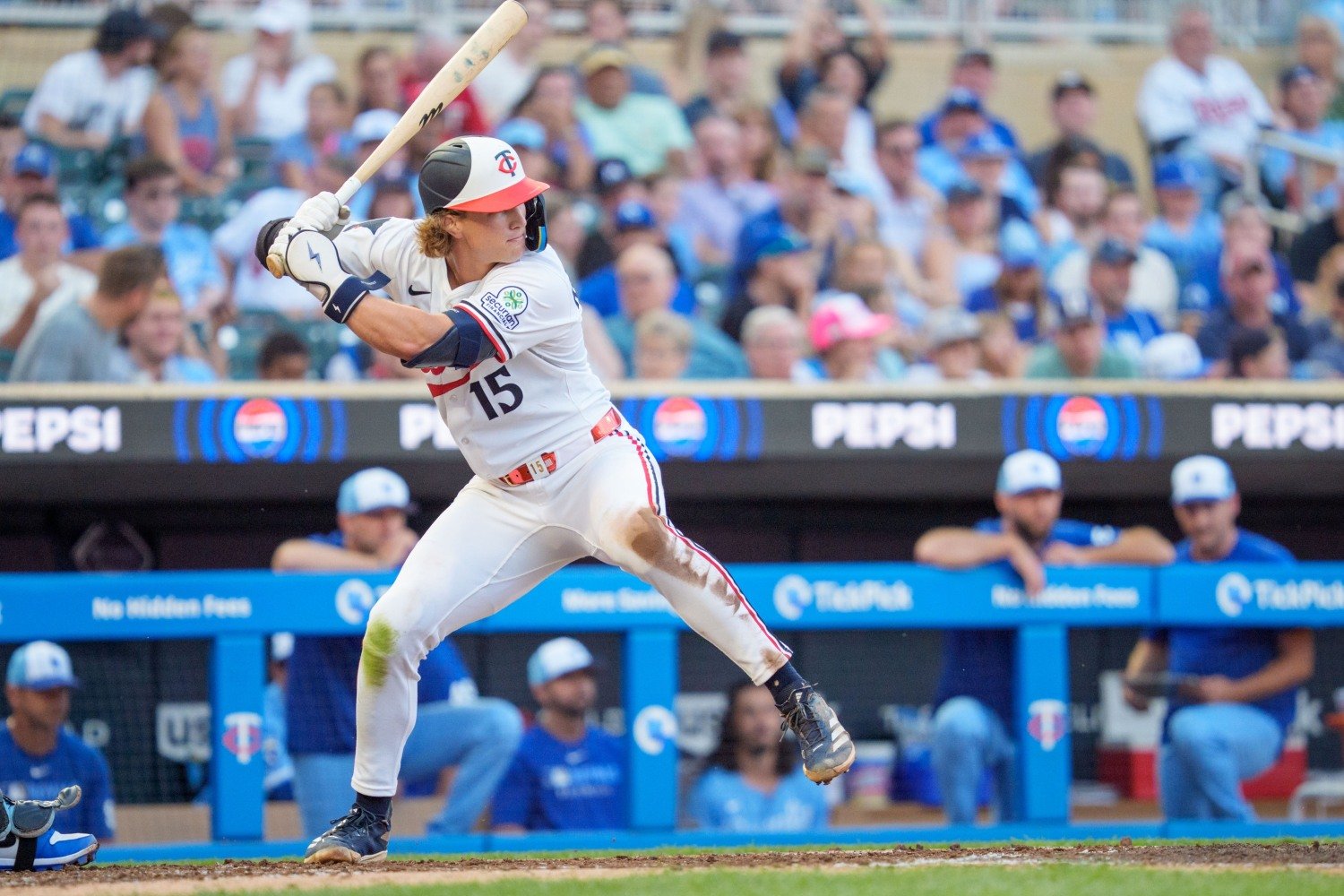 Heading into the 2023 MLB Draft, there was rampant speculation about where Grand Canyon University shortstop Jacob Wilson would land. Most mock drafts had the contact-oriented right-handed bat landing anywhere from pick No. 5 (held by the Minnesota Twins) through No. 20. Ultimately, he was selected by the Oakland Athletics with the sixth selection, signing for an under-slot bonus of $5.5 million. The Athletics quickly reaped the benefits of their selection, as the polished infielder ascended through the club's farm system, joining the major-league club before the end of his first full pro campaign. Despite performing at a below-league-average rate in 2024 (86 wRC+ over 103 plate appearances), the then-22-year-old showed signs of being a major-league regular, posting some of the best strikeout and whiff rates in baseball. As the club trekked to West Sacramento in 2025, Wilson blossomed into a star. He's hitting .335/.379/.468 with a 135 wRC+, and he earned his first All-Star nod during his rookie campaign. Finding success through a low-walk but very low-strikeout profile, the now 23-year-old is one of baseball's most adept young hitters. Interestingly, though, the Twins might have landed themselves a similar player—or an even better one. Forty-three selections after Oakland took Wilson, Minnesota drafted Arizona State University infielder Luke Keaschall, a right-handed hitting infielder who sported an elite strikeout rate in college. Sound familiar? Like Wilson, Keaschall also quickly moved through his club's minor league system, making his major-league debut roughly 21 months after being drafted despite undergoing Tommy John surgery in August 2024. After suffering a nondisplaced right forearm fracture just one week into his major-league career, he has yet to get a prolonged opportunity to show out the way Wilson has. However, given how well the Twins' young infielder has performed in an exceptionally small sample, he appears to be on a similar trajectory to Wilson's. Before getting hurt in April, Keaschall hit .368/.538/.526, with a 7.7% strikeout rate and 207 wRC+ over 26 plate appearances. The 22-year-old picked up where he left off after returning to Minnesota's lineup on Aug. 5, hitting 455/.455/.864 with a 4.5% strikeout rate and 267 wRC+ over 22 plate appearances. Keaschall has been incandescent over his first 48 plate appearances, hitting 114% better than league average with an elite 6.3% strikeout rate. Unless he proves to be the second coming of Aaron Judge, Keaschall's performance will inevitably dip over a larger sample. However, there is reason to believe he could produce at a rate similar to Wilson over an extended stretch, meaning he could blossom into one of baseball's best young hitters. Wilson and Keaschall's resemblances extend beyond their mirroring timelines and aesthetics. This year, there are six right-handed batters in the majors with a swing speed under 68 MPH and a swing tilt over 35 degrees. Those players are the following: Austin Martin Leo Rivas Luke Keaschall Alan Trejo Myles Straw Jacob Wilson Martin and Keaschall being on this list is an interesting development for Minnesota. However, that doesn't mean they are similar players. Keaschall shares a significant number of similarities with Myles Straw, specifically in terms of bat speed and tilt. However, Straw makes contact with the ball at a much deeper point than Keaschall, creating a considerable difference in their batted-ball data. Martin, Rivas, and Trejo make contact at similar points as Straw. All four of them have steep swing tilt, meaning that they take the time to get the barrel below their hands and catch the ball deeper in the hitting zone, rather than flatten their strokes and go get it earlier. That being the case, these four players possess significantly longer swings than Keaschall and Wilson. The latter two, therefore, can attack pitches up in the zone more successfully. These four players' inability to reach pitches Wilson and Keaschall can doesn't mean they can't succeed at the major-league level. Straw has carved out an eight-season big-league career, and Martin has impressed since earning a promotion from Triple-A St. Paul. Yet, it does indicate they likely won't be able to reach the heights Wilson and Keaschall have in their young careers, which underscores the important similarities between the two young hitters. Within the exceptionally niche group of six players Keaschall and Wilson belong to, the two right-handed hitters are most similar to each other, indicating the duo could have similar career trajectories. That would make the Twins getting Keaschall a full round later than the player taken right behind their spot in the first rather impressive. It's also worth noting that, in this very small sample size, Keaschall appears to be making earlier swing decisions and better use of his extreme brevity of swing. He catches the ball farther out in front and has a steeper attack angle at contact (9°) than does Wilson (3°), who creates most of the tilt in his swing right at the end. Wilson's short, slow swing therefore generates lots of weak contact and ground balls, whereas Keaschall has shown a knack for getting on plane early despite having no wasted motion in his swing at all. This means both that Keaschall lifts the ball more (15° launch angle, to Wilson's 8.2°) but that he can square the ball up more consistently. In fact, in a tiny sample, Keaschall leads MLB in the efficiency of his contact (the ratio of his actual exit velocities to the highest possible ones, given his swing speed and the speed of the incoming pitch). In that regard, he's not similar to Wilson, but to the one other short-swing, high-efficiency contact hitter in the majors: Luis Arraez. Given that Wilson and Keaschall possess elite contact tools while also sporting slightly above-average power (although Wilson's appears to be at least partially boosted by his home park in West Sacramento), they could carve out long-term major league careers while being consistently above-average offensive contributors. Given Wilson's defensive superiority to Keaschall, there is reason to believe Wilson could provide more value to the Athletics than Keaschall will to the Twins over an extended stretch. So far, though, Keaschall looks like the more patient and more powerful offensive player, and that the Twins ended up with anything akin to a clone of Wilson in the same draft where they got Walker Jenkins feels like a coup.
- 10 comments
-
- 4
-

-

-
- jacob wilson
- luke keaschall
- (and 1 more)
-
Heading into the 2023 MLB Amateur Draft, much consternation surrounded where Grand Canyon University shortstop Jacob Wilson would land, as most mock drafts had the contact-skilled right-handed bat landing anywhere from pick five (held by the Minnesota Twins) through twenty. Ultimately, the contact-skilled right-handed hitting bat was selected by the Oakland Athletics with the sixth selection in the draft, signing an under-slot bonus worth $5.5 million. The Athletics quickly reaped the benefits of their selection, as the skilled infielder ascended through the club's minor league system, joining the major league team in its penultimate 2024 season in Oakland. Despite performing at a below-league-average rate in his inaugural season (86 wRC+ over 103 plate appearances), the then-22-year-old showed signs of being a major league regular, posting one of the best strikeout and Whiff rates in baseball. As the club trekked to West Sacramento in 2025, Wilson blossomed into a star, hitting .335/.379/.468 with a 135 wRC+ and earning his first All-Star nod during his rookie campaign. Finding success through a contact-skilled, low strikeout profile, the now 23-year-old is one of baseball's most transcendent young stars. Interestingly, the Minnesota Twins might have a similarly transcendent young star. Forty-three selections later, Minnesota drafted Arizona State University infielder Luke Keaschall, a contact-skilled right-handed hitting infielder who sported an elite strikeout rate in college. Sound familiar? Like Wilson, Keaschall also quickly moved through his respective club's minor league system, making his major league debut less than two seasons after being drafted. However, after suffering a nondisplaced right forearm fracture just one week into his major league career, he has yet to be the beneficiary of an extended opportunity at the major league level like Wilson. However, given how well the Twins' young infielder has performed in an exceptionally small sample, he appears to be on a similar trajectory as Wilson. Before fracturing his right forearm, Keaschall hit .368/.538/.526 with a 7.7% strikeout rate and 207 wRC+ over 26 plate appearances. The 22-year-old picked up where he left off after returning to Minnesota on Aug. 5, hitting 455/.455/.864 with a 4.5% strikeout rate and 267 wRC+ over 22 plate appearances. Keaschall has performed at an incandescent clip over his first 48 plate appearances, hitting 114% better than league average with an elite 6.3% strikeout rate. Unless he proves to be the second coming of Aaron Judge, Keaschall's performance will inevitably dip over a larger sample. However, there is reason to believe he could produce at a rate similar to Wilson over an extended stretch, meaning he could blossom into one of baseball's best young hitters. Now, despite being selected in the same draft and earning their major league promotions in a similar timeframe, Wilson and Keaschall's resemblances extend beyond their mirroring timelines and aesthetics. Right now, there are six right-handed batters in the majors with a swing speed under 68 MPH and a swing tilt over 35 degrees. Those players are the following: Austin Martin Leo Rivas Luke Keaschall Alan Trejo Myles Straw Jacob Wilson Martin and Keaschall being on this list is an interesting development for Minnesota. However, that doesn't mean they are similar players necessarily. Keaschall shares a significant number of similarities with Myles Straw, specifically in terms of bat speed and tilt. However, Straw makes contact with the ball at a much deeper point than Keaschall, creating a considerable difference in their batted ball data. Martin, Rivas, and Trejo make contact at similar interpoints as Straw. Martin Rivas, Trejo, and Straw manufacture the extra tilt in their bats because of how deep they receive the ball in their swings. That being the case, these four respective players possess significantly longer swings than Keaschall and Wilson, meaning they are less equipped to catch up to certain high velocity pitches in and up in the zone, as opposed to Wilson and Keaschall. Now, these four players' inability to reach pitches Wilson and Keaschall can doesn't mean they can't succeed at the major league level. Straw has carved out an eight-season major league career and Martin has impressed since earning a promotion from Triple-A St. Paul. Yet, it does indicate they likely won't be able to reach the heights Wilson and Keaschall have in their young careers, further evidencing the similarities between the two young hitters. Within the exceptionally niche group of six players Keaschall and Wilson belong to, the two right-handed hitters are most similar to each other, indicating the duo could have similar career trajectories, health permitting. Given that Wilson and Keaschall possess elite contact tools and zone discipline while also sporting slightly above-average power, they could carve out long-term major league careers while being consistently above-average offensive contributors. Given Wilson's defensive superiority to Keaschall, there is reason to believe Wilson could provide more value to the Athletics than Keaschall will to the Twins over an extended stretch. Yet, there is reason to believe both players will continue to be transcendent offensive talents who will play key roles in turning their respective clubs into sustainable postseason contenders. View full article
-
Image courtesy of © Sam Navarro-Imagn Images Signed to a six-year, $200 million contract in January 2023, Carlos Correa joined forces with the Minnesota Twins on a long-term deal, signaling a new, celebrated era of Twins baseball. The club splurging on Correa beckoned a meaningful shift in the club ownership's willingness to open their pocketbooks to field a World Series contender. Unfortunately, that change was not sustainable, evidenced by the Pohlad family enforcing strict spending restrictions, mandating the front office to slash $30 million from the club's payroll two offseasons ago, and remaining unwilling to meaningfully raise payroll this past offseason. That being the case, Correa's behemoth contract ($33.33 million AAV) occupied over one-third of the club's payroll, meaning the star veteran would need to perform at an All-Star rate to justify him occupying such a significant amount of the club's available payroll. He failed to rise to expectations during the inaugural season of his long-term deal in 2023, evidenced by his production being worth a mere $14 million, according to FanGraphs's Value metric. However, given that he was able to lead the club to its first postseason victory in nearly 20 years while combating a severe case of plantar fasciitis, Twins Territory was willing to be charitable to the star shortstop. The fanbase's generosity paid off in 2024 as the then-29-year-old earned his first All-Star nod with Minnesota while generating a 152 wRC+ over 317 plate appearances. Unfortunately, Correa's bout with plantar fasciitis resurfaced, forcing the veteran to miss over three months before returning to a club that was nearing the conclusion of a cataclysmic late-season meltdown. Still, his strong first-half performance created a sense of optimism within Twins Territory, making those who follow the team believe he could still perform at an above-average rate, health permitting. Despite battling through left wrist soreness earlier this season, the now-30-year-old veteran has maintained a clean bill of health this season. Unfortunately, his numbers slipped to 2023 form, evidenced by him generating a below-league-average 97 wRC+ over his first 364 plate appearances this season. Correa's lackluster performance mimicked the Twins as a whole, with the club possessing an uninspiring 3.4% chance of earning a Wild Card spot on July 31. Destined to miss the postseason for the second season in a row, Twins decision-makers elected to undergo one of the more significant active roster teardowns in modern baseball history, parting ways with ten players on the club's 26-man roster, including Correa. The former first overall pick was sent back to his Houston Astros, the club with which he won a World Series title in 2017, in what was perceived by many to be a pure salary dump. However, given the highly paid veteran's inability to meet the expectations set by his hefty deal, Minnesota decision-makers were wise to part ways with him and his bloated contract once the opportunity arose. As reported by USA Today's Bob Nightengale, Correa's departure from Minnesota was primarily orchestrated by Astros' owner Jim Crane, Correa's agent Scott Boras, and Correa (who possessed a full no-trade clause) himself. Out of respect for the veteran, Twins President of Baseball and Business Operations Derek Falvey was going to greenlight a trade to any destination Correa requested. That being the case, Minnesota had little to no control over whether Correa would stay with the Twins or return to Houston. That being the case, Crane, Correa, and Boras handed Minnesota a reprieve, an unexpected development that those who follow the Twins should be incredibly grateful for. Sans the first half of the 2024 season, Correa has been unable to produce offensively for Minnesota since signing his six-year deal. Given his steady decline in defensive prowess at shortstop, Minnesota would have soon been forced to slide the veteran to shortstop, a move that Houston was able to undergo immediately by rostering Jeremy Pena, one of the best shortstops in baseball. Given the club's significant financial restrictions that will continue to exist as long as the Pohlad family owns the team, Minnesota couldn't afford to have a poor-hitting corner infielder consume such a significant portion of the club's payroll if it wants to earnestly contend for an AL Central title or Wild Card spot in the near future. Possessing a near-elite starting rotation and the makings of an offensive core that could produce at an above-average rate, Minnesota has not yet entered a full-fledged rebuild, meaning the club could meaningfully contend next season with a handful of bullpen reinforcements and a fortification of its lineup. I am not naive about the club's situation. I understand that if the Pohlad family still owns the team at the end of the season, the front office is unlikely to be handed meaningful spending flexibility. Still, there is reason to believe the club could afford to pursue and sign above-average veteran contributors like Josh Naylor, Luis Rengifo, Eugenio Suárez, or others who could add potency to what is presently a stagnant lineup, something the club wouldn't have been able to do if they were to have been still been bogged down by Correa's bloated contract. Again, given Minnesota's lack of control over the situation, it would be malpractice to celebrate Correa's departure as a form of front office savviness, similar to when club decision-makers got the New York Yankees to absorb the remainder of Josh Donaldson's contract. Still, to have Houston take on $71 million of the remaining $104 million left in Correa's deal should be a celebrated outcome, even though it was more so a gift that landed in Minnesota's lap rather than the result of shrewd decision-making. Minnesota is in a very unique spot. While times justifiably feel bleak for many at the moment, Twins Territory resides at the dawn of a new era. Having played a soulless brand of baseball for the better part of two seasons while being on the brink of missing the postseason for the fourth time in five seasons, Twins decision-makers were correct in gutting a core that had become rotten. Parting ways with Correa and his bloated contract was the transaction that needed to be made to spark a newfound sense of optimism surrounding this organization. While this front office likely won't be the ones who reap the benefits of this mass exodus, assuming new ownership hires a new collective, they should be celebrated for being able to rip the proverbial band-aid off what was a lifeless team. A baseball organization grows great when front office executives plant trees in whose shade they may never sit in. Twins decision-makers shedding Correa's contract and electing to undergo a significant overhaul was the correct long-term decision for the organization, even though persevering through short-term ramifications will likely be an unpleasant endeavor. View full article
-
Minnesota Twins Made the Correct Decision in Trading Carlos Correa
Cody Schoenmann posted an article in Twins
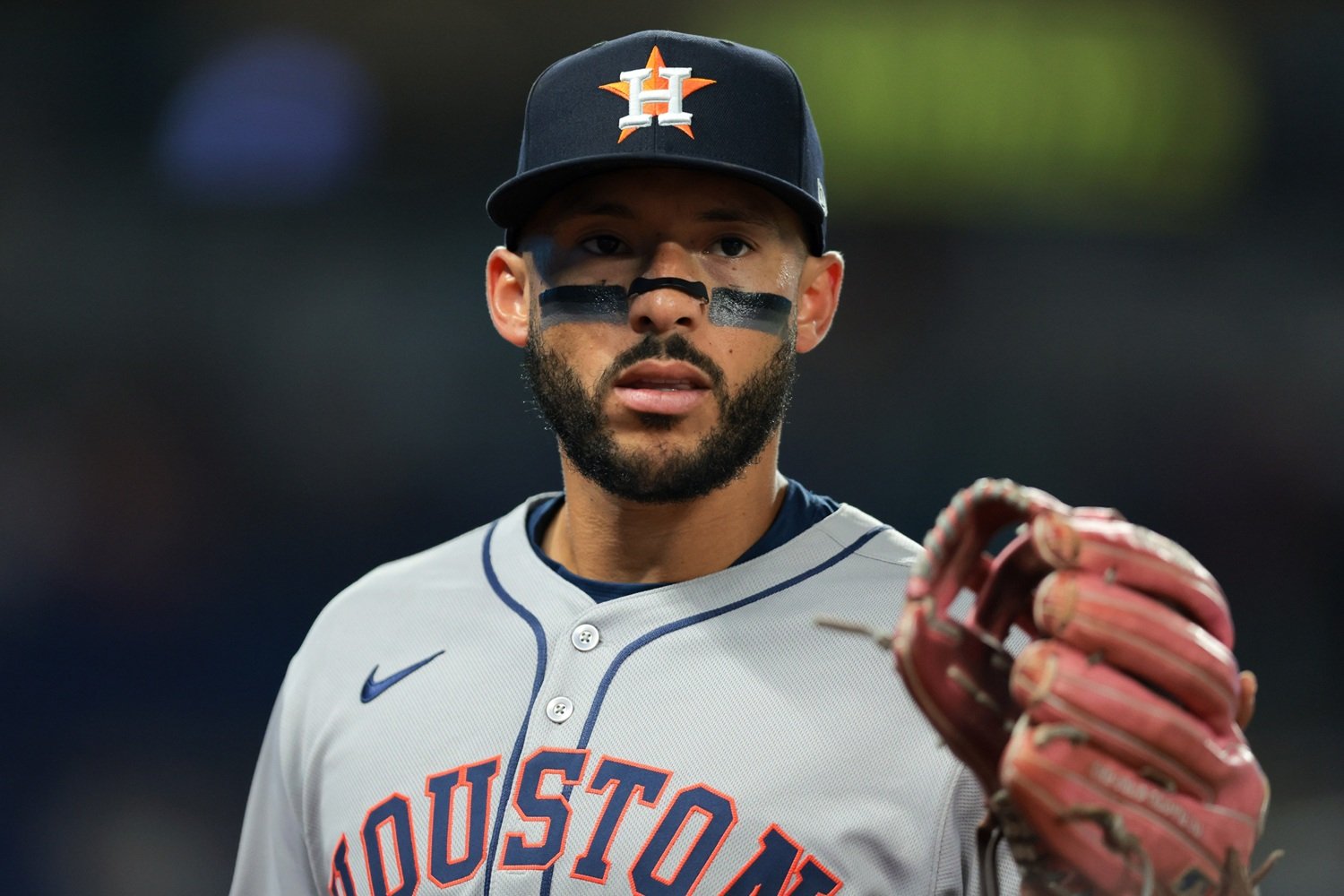 Signed to a six-year, $200 million contract in January 2023, Carlos Correa joined forces with the Minnesota Twins on a long-term deal, signaling a new, celebrated era of Twins baseball. The club splurging on Correa beckoned a meaningful shift in the club ownership's willingness to open their pocketbooks to field a World Series contender. Unfortunately, that change was not sustainable, evidenced by the Pohlad family enforcing strict spending restrictions, mandating the front office to slash $30 million from the club's payroll two offseasons ago, and remaining unwilling to meaningfully raise payroll this past offseason. That being the case, Correa's behemoth contract ($33.33 million AAV) occupied over one-third of the club's payroll, meaning the star veteran would need to perform at an All-Star rate to justify him occupying such a significant amount of the club's available payroll. He failed to rise to expectations during the inaugural season of his long-term deal in 2023, evidenced by his production being worth a mere $14 million, according to FanGraphs's Value metric. However, given that he was able to lead the club to its first postseason victory in nearly 20 years while combating a severe case of plantar fasciitis, Twins Territory was willing to be charitable to the star shortstop. The fanbase's generosity paid off in 2024 as the then-29-year-old earned his first All-Star nod with Minnesota while generating a 152 wRC+ over 317 plate appearances. Unfortunately, Correa's bout with plantar fasciitis resurfaced, forcing the veteran to miss over three months before returning to a club that was nearing the conclusion of a cataclysmic late-season meltdown. Still, his strong first-half performance created a sense of optimism within Twins Territory, making those who follow the team believe he could still perform at an above-average rate, health permitting. Despite battling through left wrist soreness earlier this season, the now-30-year-old veteran has maintained a clean bill of health this season. Unfortunately, his numbers slipped to 2023 form, evidenced by him generating a below-league-average 97 wRC+ over his first 364 plate appearances this season. Correa's lackluster performance mimicked the Twins as a whole, with the club possessing an uninspiring 3.4% chance of earning a Wild Card spot on July 31. Destined to miss the postseason for the second season in a row, Twins decision-makers elected to undergo one of the more significant active roster teardowns in modern baseball history, parting ways with ten players on the club's 26-man roster, including Correa. The former first overall pick was sent back to his Houston Astros, the club with which he won a World Series title in 2017, in what was perceived by many to be a pure salary dump. However, given the highly paid veteran's inability to meet the expectations set by his hefty deal, Minnesota decision-makers were wise to part ways with him and his bloated contract once the opportunity arose. As reported by USA Today's Bob Nightengale, Correa's departure from Minnesota was primarily orchestrated by Astros' owner Jim Crane, Correa's agent Scott Boras, and Correa (who possessed a full no-trade clause) himself. Out of respect for the veteran, Twins President of Baseball and Business Operations Derek Falvey was going to greenlight a trade to any destination Correa requested. That being the case, Minnesota had little to no control over whether Correa would stay with the Twins or return to Houston. That being the case, Crane, Correa, and Boras handed Minnesota a reprieve, an unexpected development that those who follow the Twins should be incredibly grateful for. Sans the first half of the 2024 season, Correa has been unable to produce offensively for Minnesota since signing his six-year deal. Given his steady decline in defensive prowess at shortstop, Minnesota would have soon been forced to slide the veteran to shortstop, a move that Houston was able to undergo immediately by rostering Jeremy Pena, one of the best shortstops in baseball. Given the club's significant financial restrictions that will continue to exist as long as the Pohlad family owns the team, Minnesota couldn't afford to have a poor-hitting corner infielder consume such a significant portion of the club's payroll if it wants to earnestly contend for an AL Central title or Wild Card spot in the near future. Possessing a near-elite starting rotation and the makings of an offensive core that could produce at an above-average rate, Minnesota has not yet entered a full-fledged rebuild, meaning the club could meaningfully contend next season with a handful of bullpen reinforcements and a fortification of its lineup. I am not naive about the club's situation. I understand that if the Pohlad family still owns the team at the end of the season, the front office is unlikely to be handed meaningful spending flexibility. Still, there is reason to believe the club could afford to pursue and sign above-average veteran contributors like Josh Naylor, Luis Rengifo, Eugenio Suárez, or others who could add potency to what is presently a stagnant lineup, something the club wouldn't have been able to do if they were to have been still been bogged down by Correa's bloated contract. Again, given Minnesota's lack of control over the situation, it would be malpractice to celebrate Correa's departure as a form of front office savviness, similar to when club decision-makers got the New York Yankees to absorb the remainder of Josh Donaldson's contract. Still, to have Houston take on $71 million of the remaining $104 million left in Correa's deal should be a celebrated outcome, even though it was more so a gift that landed in Minnesota's lap rather than the result of shrewd decision-making. Minnesota is in a very unique spot. While times justifiably feel bleak for many at the moment, Twins Territory resides at the dawn of a new era. Having played a soulless brand of baseball for the better part of two seasons while being on the brink of missing the postseason for the fourth time in five seasons, Twins decision-makers were correct in gutting a core that had become rotten. Parting ways with Correa and his bloated contract was the transaction that needed to be made to spark a newfound sense of optimism surrounding this organization. While this front office likely won't be the ones who reap the benefits of this mass exodus, assuming new ownership hires a new collective, they should be celebrated for being able to rip the proverbial band-aid off what was a lifeless team. A baseball organization grows great when front office executives plant trees in whose shade they may never sit in. Twins decision-makers shedding Correa's contract and electing to undergo a significant overhaul was the correct long-term decision for the organization, even though persevering through short-term ramifications will likely be an unpleasant endeavor.
 -
Image courtesy of © Brad Rempel-Imagn Images As MLB's trade deadline slowly consumes the collective consciousness of the baseballsphere, your 2025 Minnesota Twins will likely become significant sellers. Monday saw the team ship veteran pitchers Chris Paddack and Randy Dobnak to the Detroit Tigers. Fellow half-season rental veterans Willi Castro, Harrison Bader, and Danny Coulombe should soon depart Minnesota, too. However, star players like Jhoan Durán, Griffin Jax, Joe Ryan, and (quite shockingly) Carlos Correa could also be on the move. That being the case, a significant number of holes could open on Minnesota's 26-man roster, leading to opportunities for younger players with cost-friendly contracts and multiple years of team control. Which players could be the recipients of extra opportunities post-trade deadline? Let's take a look. Harrison Bader Bader has received significant interest from contending teams like the Los Angeles Dodgers, New York Mets, New York Yankees, and others, signaling that the right-handed hitting outfielder will no longer be a Minnesota Twin come Aug. 1. The 31-year-old's expected departure from Minnesota would create a significant gap in the club's outfield depth. Twins cornerstone and center fielder Byron Buxton is presently on the 10-day IL with costochondritis. Yet, his stay on the IL should be fairly short, meaning he should soon be able to return to patrolling center field at a full-time capacity. Thus, Bader's departure would most significantly impact left field, the position he has primarily occupied. This season, Matt Wallner has started exclusively in right field or at designated hitter, so the power-hitting 27-year-old likely wouldn't figure into the left field mix once Bader departs. Fellow corner outfielders Trevor Larnach and Dashawn Keirsey Jr. could receive the bulk of opportunities in left field, with Larnach receiving the majority of starts. Keirsey would take over as Buxton's primary backup. The 28-year-old should also blossom into a role that permits him more than one start a month. That said, given his substantial offensive shortcomings, there is reason to believe team decision-makers will go to significant lengths to keep Keirsey out of the lineup, even though he sports plus range at all three outfield positions. Austin Martin, oft-injured top prospect Emmanuel Rodriguez, and Carson McCusker could also find time as the Twins trudge further into autumnal irrelevancy. Willi Castro The switch-hitting utility player has rightfully received significant interest on the trade market. Sporting a plus bat and extensive defensive versatility (despite being a poor defender), Minnesota should net a significant package for the 28-year-old's services. However, his departure would leave a significant hole on Minnesota's 26-man roster, which would take a number of players to patch. Spending significant time in left and right field recently, Larnach, Wallner, Keirsey and the three aforementioned Triple-A players (Martin, Rodriguez, and McCusker) would also be the primary candidates to replace his production in the corner outfield. Yet, his departure would also leave significant holes at second and third base. On a rehab assignment in Triple-A, top prospect Luke Keaschall is a strong candidate to take Castro's spot on the 26-man roster once the Twins finish their trading. Keaschall could play second base, while also blending into the corner outfield mix. Other infielders residing in Triple-A should receive opportunities at the major-league level once Castro goes, too, with Edouard Julien being the most likely beneficiary. Despite significantly struggling at the major-league level, the 26-year-old French Canadian has excelled in Triple-A of late, posting a 136 wRC+ over 291 plate appearances this season. Julien deserves another opportunity at the major-league level, and Castro's departure would create an opening for him to receive playing time at second base. After extended opportunities at first base with St. Paul this season, Julien could also factor into that mix, alongside Ty France (who likely won't be traded) and Kody Clemens down the stretch. Danny Coulombe Coulombe has been a revelation since rejoining the Twins, posting a 1.16 ERA and 1.96 FIP over 31 innings pitched and asserting himself as one of the best left-handed relievers in baseball. The 35-year-old should net a rich return package for Minnesota. His departure would leave a significant hole in the club's bullpen, especially considering how thin the organization's left-handed pitching depth presently is. At first glance, Kody Funderburk would become the club's primary left-handed reliever. Yet, given Funderburk's struggles this season (7.41 ERA and 4.80 FIP over 17 innings pitched), there is reason to believe the 28-year-old could yet again get demoted to Triple-A shortly. Rapidly, it becomes clear that the team just needs to find the best available arm to backfill whenever they make a trade from their middle relief corps. Triple-A pitchers on the 40-man roster (like Travis Adams, Pierson Ohl, and Marco Raya) could receive extended opportunities as low- to medium-leverage relievers down the stretch, with the gallimaufry of Daniel Duarte (recovering from injury), Christian MacLeod, Erasmo Ramirez, Jaylen Nowlin, and others also potentially figuring into the mix. High-Leverage Relievers Twins closer Jhoan Duran and primary set-up reliever Griffin Jax have become popular names on the trade market, with it becoming increasingly likely that at least one of the high-leverage relievers gets moved at the deadline. If Durán were to get moved and Jax stayed with Minnesota, Jax would likely transition into the primary closer role, with Brock Stewart and Louis Varland becoming the club's primary set-up relievers. Yet, if Jax were to get traded, Durán would remain the club's closer, with Stewart and Varland replacing Jax as the club's primary set-up reliever. If both Durán and Jax were moved, Stewart and Varland would likely become closers by committee, with Cole Sands transitioning into a high-leverage reliever. Also, if Stewart and one of Duran and Jax are moved (which is becoming more possible, however unlikely, by the minute), Varland and whoever isn't moved between Duran and Jax would become the club's primary high-leverage relievers. There are still a huge number of potential outcomes. Still, Varland is set to take on a bigger role, assuming one of the club's three other high-leverage arms is moved. Carlos Correa The most recent and shocking development to manifest this trade deadline season is the Houston Astros' interest in a potential reunion with Correa. If Correa is moved (which is very unlikely, mind you), Brooks Lee would become the club's primary shortstop for the rest of the 2025 season, with him seemingly having a short-term grip over the position. Assuming Castro will also depart Minnesota, the club would be stretched for a backup shortstop after Lee. However, Ryan Fitzgerald (who possesses a 40-man roster spot) would likely step in as the club's primary backup shortstop. Again, Minnesota trading Correa to Houston is an extremely far-fetched proposition, especially given that Astros decision-makers would reportedly demand that the salary-restricted Twins eat a significant portion of his contract. Still, if the 30-year-old were to be part of a blockbuster trade back to his original franchise, Lee would step in as Minnesota's primary shortstop, with recent first-round selections Kaelen Culpepper and Marek Houston becoming the most likely long-term solutions at the position. One of the subtle benefits of a July fire sale is the extra space it opens for testing and evaluating young players. As the Twins head in that direction, these players are the key options at whom they might want a longer look. View full article
-
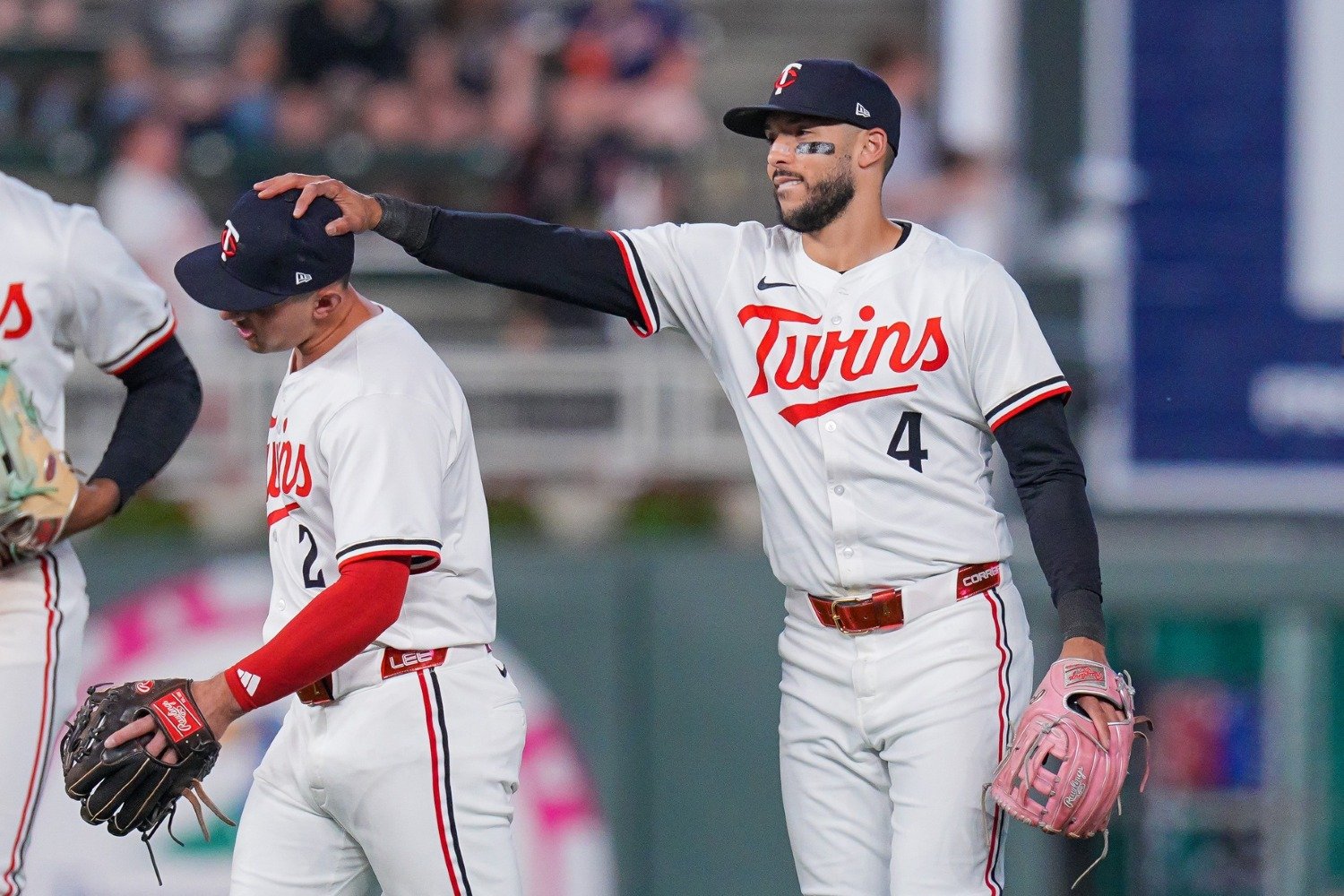 As MLB's trade deadline slowly consumes the collective consciousness of the baseballsphere, your 2025 Minnesota Twins will likely become significant sellers. Monday saw the team ship veteran pitchers Chris Paddack and Randy Dobnak to the Detroit Tigers. Fellow half-season rental veterans Willi Castro, Harrison Bader, and Danny Coulombe should soon depart Minnesota, too. However, star players like Jhoan Durán, Griffin Jax, Joe Ryan, and (quite shockingly) Carlos Correa could also be on the move. That being the case, a significant number of holes could open on Minnesota's 26-man roster, leading to opportunities for younger players with cost-friendly contracts and multiple years of team control. Which players could be the recipients of extra opportunities post-trade deadline? Let's take a look. Harrison Bader Bader has received significant interest from contending teams like the Los Angeles Dodgers, New York Mets, New York Yankees, and others, signaling that the right-handed hitting outfielder will no longer be a Minnesota Twin come Aug. 1. The 31-year-old's expected departure from Minnesota would create a significant gap in the club's outfield depth. Twins cornerstone and center fielder Byron Buxton is presently on the 10-day IL with costochondritis. Yet, his stay on the IL should be fairly short, meaning he should soon be able to return to patrolling center field at a full-time capacity. Thus, Bader's departure would most significantly impact left field, the position he has primarily occupied. This season, Matt Wallner has started exclusively in right field or at designated hitter, so the power-hitting 27-year-old likely wouldn't figure into the left field mix once Bader departs. Fellow corner outfielders Trevor Larnach and Dashawn Keirsey Jr. could receive the bulk of opportunities in left field, with Larnach receiving the majority of starts. Keirsey would take over as Buxton's primary backup. The 28-year-old should also blossom into a role that permits him more than one start a month. That said, given his substantial offensive shortcomings, there is reason to believe team decision-makers will go to significant lengths to keep Keirsey out of the lineup, even though he sports plus range at all three outfield positions. Austin Martin, oft-injured top prospect Emmanuel Rodriguez, and Carson McCusker could also find time as the Twins trudge further into autumnal irrelevancy. Willi Castro The switch-hitting utility player has rightfully received significant interest on the trade market. Sporting a plus bat and extensive defensive versatility (despite being a poor defender), Minnesota should net a significant package for the 28-year-old's services. However, his departure would leave a significant hole on Minnesota's 26-man roster, which would take a number of players to patch. Spending significant time in left and right field recently, Larnach, Wallner, Keirsey and the three aforementioned Triple-A players (Martin, Rodriguez, and McCusker) would also be the primary candidates to replace his production in the corner outfield. Yet, his departure would also leave significant holes at second and third base. On a rehab assignment in Triple-A, top prospect Luke Keaschall is a strong candidate to take Castro's spot on the 26-man roster once the Twins finish their trading. Keaschall could play second base, while also blending into the corner outfield mix. Other infielders residing in Triple-A should receive opportunities at the major-league level once Castro goes, too, with Edouard Julien being the most likely beneficiary. Despite significantly struggling at the major-league level, the 26-year-old French Canadian has excelled in Triple-A of late, posting a 136 wRC+ over 291 plate appearances this season. Julien deserves another opportunity at the major-league level, and Castro's departure would create an opening for him to receive playing time at second base. After extended opportunities at first base with St. Paul this season, Julien could also factor into that mix, alongside Ty France (who likely won't be traded) and Kody Clemens down the stretch. Danny Coulombe Coulombe has been a revelation since rejoining the Twins, posting a 1.16 ERA and 1.96 FIP over 31 innings pitched and asserting himself as one of the best left-handed relievers in baseball. The 35-year-old should net a rich return package for Minnesota. His departure would leave a significant hole in the club's bullpen, especially considering how thin the organization's left-handed pitching depth presently is. At first glance, Kody Funderburk would become the club's primary left-handed reliever. Yet, given Funderburk's struggles this season (7.41 ERA and 4.80 FIP over 17 innings pitched), there is reason to believe the 28-year-old could yet again get demoted to Triple-A shortly. Rapidly, it becomes clear that the team just needs to find the best available arm to backfill whenever they make a trade from their middle relief corps. Triple-A pitchers on the 40-man roster (like Travis Adams, Pierson Ohl, and Marco Raya) could receive extended opportunities as low- to medium-leverage relievers down the stretch, with the gallimaufry of Daniel Duarte (recovering from injury), Christian MacLeod, Erasmo Ramirez, Jaylen Nowlin, and others also potentially figuring into the mix. High-Leverage Relievers Twins closer Jhoan Duran and primary set-up reliever Griffin Jax have become popular names on the trade market, with it becoming increasingly likely that at least one of the high-leverage relievers gets moved at the deadline. If Durán were to get moved and Jax stayed with Minnesota, Jax would likely transition into the primary closer role, with Brock Stewart and Louis Varland becoming the club's primary set-up relievers. Yet, if Jax were to get traded, Durán would remain the club's closer, with Stewart and Varland replacing Jax as the club's primary set-up reliever. If both Durán and Jax were moved, Stewart and Varland would likely become closers by committee, with Cole Sands transitioning into a high-leverage reliever. Also, if Stewart and one of Duran and Jax are moved (which is becoming more possible, however unlikely, by the minute), Varland and whoever isn't moved between Duran and Jax would become the club's primary high-leverage relievers. There are still a huge number of potential outcomes. Still, Varland is set to take on a bigger role, assuming one of the club's three other high-leverage arms is moved. Carlos Correa The most recent and shocking development to manifest this trade deadline season is the Houston Astros' interest in a potential reunion with Correa. If Correa is moved (which is very unlikely, mind you), Brooks Lee would become the club's primary shortstop for the rest of the 2025 season, with him seemingly having a short-term grip over the position. Assuming Castro will also depart Minnesota, the club would be stretched for a backup shortstop after Lee. However, Ryan Fitzgerald (who possesses a 40-man roster spot) would likely step in as the club's primary backup shortstop. Again, Minnesota trading Correa to Houston is an extremely far-fetched proposition, especially given that Astros decision-makers would reportedly demand that the salary-restricted Twins eat a significant portion of his contract. Still, if the 30-year-old were to be part of a blockbuster trade back to his original franchise, Lee would step in as Minnesota's primary shortstop, with recent first-round selections Kaelen Culpepper and Marek Houston becoming the most likely long-term solutions at the position. One of the subtle benefits of a July fire sale is the extra space it opens for testing and evaluating young players. As the Twins head in that direction, these players are the key options at whom they might want a longer look.
- 29 comments
-
- 7
-
-
- harrison bader
- willi castro
- (and 5 more)
-
THIS IS RICH COMING FROM A BREWERS FAN (also, i'd love to take Brice Matthews off Houston's hands)
-
Three Under-the-Radar NL Teams That Could Trade for Willi Castro
Cody Schoenmann posted an article in Twins
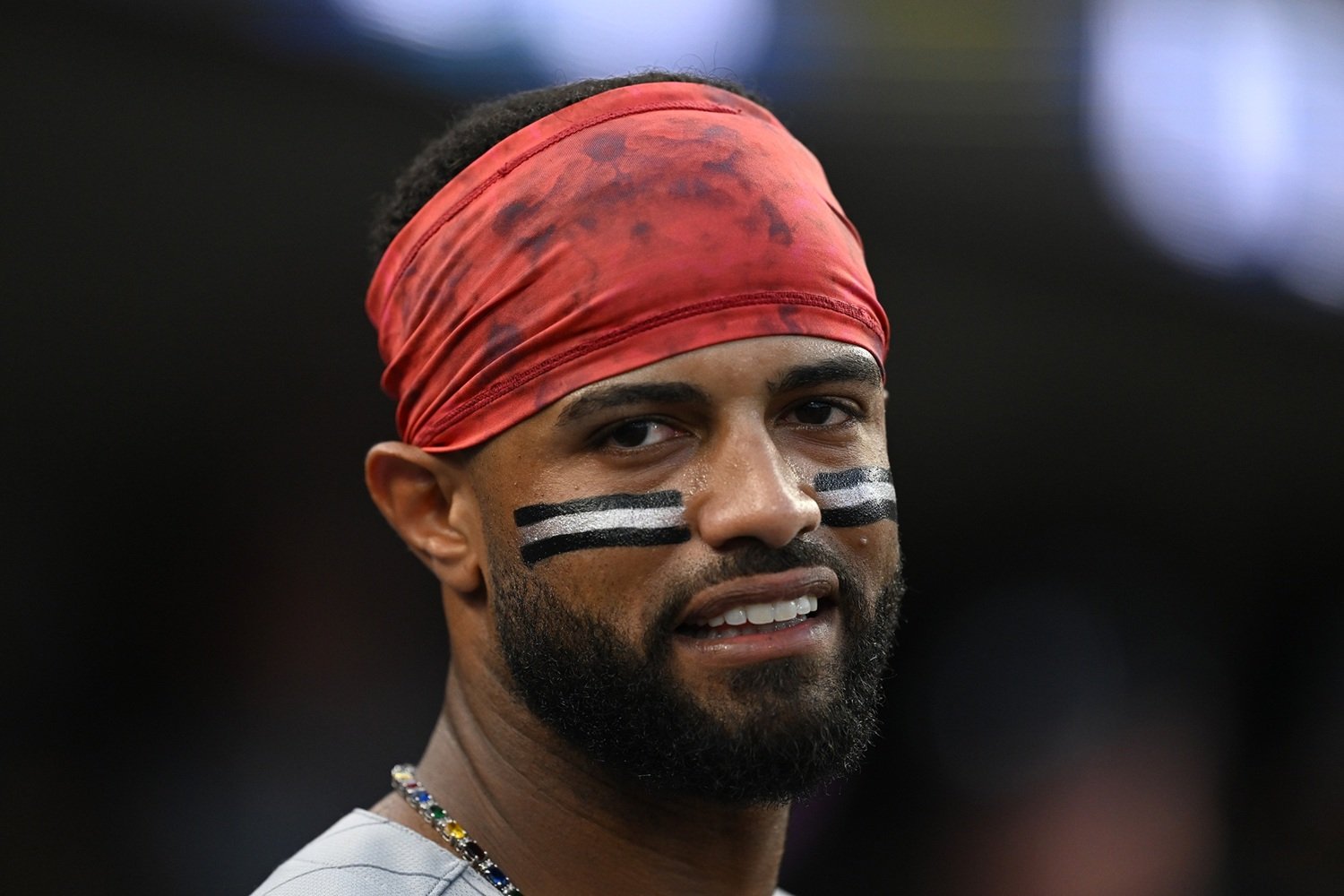 As MLB's trade deadline nears, left-handed reliever Danny Coulombe, right-handed hitting outfielder Harrison Bader, and switch-hitting utility player Willi Castro are the players most likely to no longer be Minnesota Twins come Aug. 1. All three players should net sizable returns for Minnesota. Yet, given his defensive versatility and platoon-proof offensive profile, Castro is the rental option most likely to generate the most substantial package for Twins decision-makers. Hitting .257/.346/.429 with 14 doubles, 10 home runs, a 24.8% strikeout rate, and 118 wRC+ over 319 plate appearances, Castro has been one of Minnesota's most productive hitters, resulting in him consistently hitting in the top half of the club's order. Performing 18% better than league-average at the plate, Castro's defensive versatility has yet again been in full effect, with the 28-year-old netting starts at the following positions: Second base - 26 starts Left field - 25 starts Right field - 16 starts Third base - nine starts Shortstop - two starts Admittedly, Castro hasn't provided plus value at these positions, sporting a cumulative -5 Outs Above Average (OAA). Even though he has regressed into a subpar defender this season, he is nevertheless serviceable. He can start or be inserted into a game as a defensive substitution at any of the five aforementioned positions, still making him an incredibly valuable asset. Possessing this value, contending teams will actively be vying for Castro's services. Which teams will be most aggressive in their pursuit? What type of packages could Minnesota net? Let's take a look. Milwaukee Brewers The first potential destination for Castro is Minnesota's "border rival," the Milwaukee Brewers. Concluding an 11-game win streak after a 1-0 loss against Logan Gilbert and the Seattle Mariners, Milwaukee has propelled itself into World Series contender status, sitting one game ahead of the Chicago Cubs in the NL Central standings at 60-41. Nineteen games above .500, Milwaukee's success has been driven by an above-average starting rotation, elite bullpen, and assortment of unexpected offensive contributors, including Isaac Collins, Caleb Durbin, and (very recently) Andrew Vaughn. The Brewers are a very deep team enriched with young, team-controlled talent. Yet, if there is one area of weakness, it would be the club's bench, which is highlighted by a lack of a viable utility player. As of now, Andruw Monasterio and Anthony Seigler are receiving the most opportunities off Milwaukee's bench. However, the two position players have generated a combined 47 wRC+ over 76 plate appearances. These two players are effectively unplayable, especially for a club contending for a division title. That being the case, Milwaukee would significantly benefit from acquiring a plus utility player: enter Castro. If acquired, Castro would likely slot primarily in the corner outfield and third base for Milwaukee, given that Brice Turang possesses a stronghold over second base. Castro could also mix in at shortstop. However, with primary starting shortstop Joey Ortiz's strong start out of the All-Star break and superb range at the position, there is reason to believe manager Pat Murphy will continue to provide the 27-year-old extended opportunities at the position. Nevertheless, Castro would be an exceptionally valuable acquisition for Milwaukee. Club decision-makers could demote one of Monasterio or Seigler to Triple-A Nashville and insert Castro's plus bat into the lineup on a game-to-game basis. Milwaukee possesses a deep prospect pool, meaning Minnesota could net a substantial package if it elects to send the 28-year-old utility player to the 414. That being the case, the Twins front office could poach two top-30 prospects from Milwaukee's farm system, with a package potentially being headlined by starting pitching prospect Tyson Hardin or infield prospect Blake Burke. San Diego Padres As long as AJ Preller is San Diego's head baseball executive, the Padres will be incredibly active at the trade deadline, and this season's deadline shouldn't be any different. Despite operating under significant spending restrictions, Preller will get creative in patching the holes in the Padres' 26-man roster. Interestingly, Castro could be the solution to nearly all of San Diego's position player shortcomings, sans catcher (which, don't rule out Ryan Jeffers to San Diego). Instead of an upgrade at a specific position, San Diego needs MLB-caliber hitters to insert into the bottom half of its order. If traded to the Padres, Castro could become the club's primary starting left fielder, the position he has netted the second-most starts at for Minnesota. Inserting Castro into left field would give San Diego another competent bat to complement the top half of its order. The Padres have one of the worst farm systems in baseball and one of the most aggressive executives in baseball, meaning that if Castro were sent to San Diego, the Twins front office could potentially poach one or multiple of their top prospects or MLB-ready talent, such as right-handed starting pitching prospects Ryan Bergert and Braden Nett or young, high-potential position player prospects in Cobb Hightower and Kale Fountain. Cincinnati Reds Despite operating as a super utility player in 2023 and 2024 for Minnesota, Castro has been limited to playing second base, third base, and the corner outfield this season, with third base arguably being the position he presently provides the most value at. Interestingly, Cincinnati is in the market for third base and corner outfield help, making Castro a viable solution to the club's most pressing needs. Now, labeling the Reds as "buyers" could be deemed a far-fetched proclamation. Yet, after going 15-11 in June and manufacturing a commendable 9-9 record so far in July, Cincinnati sits at 52-47 and just 1 1/2 games out of the final NL Wild Card spot. Possessing an 11% chance of earning an NL Wild Card spot, according to FanGraphs, the Reds hold worse playoff odds than Minnesota, which possesses a 12.6% chance of earning an AL Wild Card spot. Still, with Reds' General Manager Brad Meador stating the club could buy and sell at the deadline, Castro could end up in the Queen City. Unlike San Diego, Cincinnati has a robust farm system, meaning Minnesota could net a more alluring package for the versatile position player's services. Despite possessing a significant amount of high-end starting pitching prospects, Minnesota should target position player prospects with high-upside bats. That being the case, left-handed hitting outfield prospect Héctor Rodríguez would be the ideal headliner of a return package, with fellow left-handed hitting outfield prospects Carlos Jorge and Ethan O'Donnell being intriguing options, too.
 -
As MLB's trade deadline nears, left-handed reliever Danny Coulombe, right-handed hitting outfielder Harrison Bader, and switch-hitting utility player Willi Castro are the players most likely to no longer be Minnesota Twins come Aug. 1. All three players should net sizable returns for Minnesota. Yet, given his defensive versatility and platoon-proof offensive profile, Castro is the rental option most likely to generate the most substantial package for Twins decision-makers. Hitting .257/.346/.429 with 14 doubles, 10 home runs, a 24.8% strikeout rate, and 118 wRC+ over 319 plate appearances, Castro has been one of Minnesota's most productive hitters, resulting in him consistently hitting in the top half of the club's order. Performing 18% better than league-average at the plate, Castro's defensive versatility has yet again been in full effect, with the 28-year-old netting starts at the following positions: Second base - 26 starts Left field - 25 starts Right field - 16 starts Third base - nine starts Shortstop - two starts Admittedly, Castro hasn't provided plus value at these positions, sporting a cumulative -5 Outs Above Average (OAA). Even though he has regressed into a subpar defender this season, he is nevertheless servicable. He can start or be inserted into a game as a defensive substitution at any of the five aforementioned positions, still making him an incredibly valuable asset. Possessing this value, contending teams will actively be vying for Castro's services. Which teams will be most aggressive in their pursuit? What type of packages could Minnesota net? Let's take a look. Milwaukee Brewers The first potential destination for Castro is Minnesota's"border rival," the Milwaukee Brewers. Concluding an 11-game win streak after a 1-0 loss against Logan Gilbert and the Seattle Mariners, Milwaukee has propelled itself into World Series contender status, sitting one game ahead of the Chicago Cubs in the NL Central standings at 60-41. Nineteen games above .500, Milwaukee's success has been driven by an above-average starting rotation, elite bullpen, and assortment of unexpected offensive contributors, including Isaac Collins, Caleb Durbin, and (very recently) Andrew Vaughn. The Brewers are a very deep team enriched with young, team-controlled talent. Yet, if there is one area of weakness, it would be the club's bench, which is highlighted by a lack of a viable utility player. As of now, Andruw Monasterio and Anthony Seigler are receiving the most opportunities off Milwaukee's bench. However, the two position players have generated a combined 47 wRC+ over 76 plate appearances. These two players are effectively unplayable, especially for a club contending for a division title. That being the case, Milwaukee would significantly benefit from acquiring a plus utility player: enter Castro. If acquired, Castro would likely slot primarily in the corner outfield and third base for Milwaukee, given that Brice Turang possesses a stronghold over second base. Castro could also mix in at shortstop. However, with primary starting shortstop Joey Ortiz's strong start out of the All-Star break and superb range at the position, there is reason to believe manager Pat Murphy will continue to provide the 27-year-old extended opportunities at the position. Nevertheless, Castro would be an exceptionally valuable acquisition for Milwaukee. Club decision-makers could demote one of Monasterio or Seigler to Triple-A Nashville and insert Castro's plus bat into the lineup on a game-to-game basis. Milwaukee possesses a deep prospect pool, meaning Minnesota could net a substantial package if it elects to send the 28-year-old utility player to the 414. That being the case, the Twins front office could poach two top-30 prospects from Milwaukee's farm system, with a package potentially being headlined by starting pitching prospect Tyson Hardin or infield prospect Blake Burke. San Diego Padres As long as AJ Preller is San Diego's head baseball executive, the Padres will be incredibly active at the trade deadline, and this season's deadline shouldn't be any different. Despite operating under significant spending restrictions, Preller will get creative in patching the holes in the Padres' 26-man roster. Interestingly, Castro could be the solution to nearly all of San Diego's position player shortcomings, sans catcher (which, don't rule out Ryan Jeffers to San Diego). Instead of an upgrade at a specific position, San Diego needs MLB-caliber hitters to insert into the bottom half of its order. If traded to the Padres, Castro could become the club's primary starting left fielder, the position he has netted the second-most starts at for Minnesota. Inserting Castro into left field would give San Diego another competent bat to complement the top half of its order. The Padres have one of the worst farm systems in baseball and one of the most aggressive executives in baseball, meaning that if Castro were sent to San Diego, the Twins front office could potentially poach one or multiple of their top prospects or MLB-ready talent, such as right-handed starting pitching prospects Ryan Bergert and Braden Nett or young, high-potential position player prospects in Cobb Hightower and Kale Fountain. Cincinnati Reds Despite operating as a super utility player in 2023 and 2024 for Minnesota, Castro has been limited to playing second base, third base, and the corner outfield this season, with third base arguably being the position he presently provides the most value at. Interestingly, Cincinnati is in the market for third base and corner outfield help, making Castro a viable solution to the club's most pressing needs. Now, labeling the Reds as "buyers" could be deemed a far-fetched proclamation. Yet, after going 15-11 in June and manufacturing a commendable 9-9 record so far in July, Cincinnati sits at 52-47 and just 1 1/2 games out of the final NL Wild Card spot. Possessing an 11% chance of earning an NL Wild Card spot, according to FanGraphs, the Reds hold worse playoff odds than Minnesota, which possesses a 12.6% chance of earning an AL Wild Card spot. Still, with Reds' General Manager Brad Meador stating the club could buy and sell at the deadline, Castro could end up in the Queen City. Unlike San Diego, Cincinnati has a robust farm system, meaning Minnesota could net a more alluring package for the versatile position player's services. Despite possessing a significant amount of high-end starting pitching prospects, Minnesota should target position player prospects with high-upside bats. That being the case, left-handed hitting outfield prospect Héctor Rodríguez would be the ideal headliner of a return package, with fellow left-handed hitting outfield prospects Carlos Jorge and Ethan O'Donnell being intriguing options, too. View full article
-
Walker JenkinsLuke KeaschallKaelen CulpepperEmmanuel RodriguezMarek HoustonConnor PrielippDasan HillCharlee SotoRiley QuickBilly AmickAndrew MorrisMarco RayaGabriel GonzalezKyle DeBargeCJ CulpepperKhadim DiawBrandon WinokurQuentin YoungNoah CardenasEduardo Beltre
-
Walker JenkinsLuke KeaschallKaelen CulpepperEmmanuel RodriguezMarek HoustonConnor PrielippDasan HillCharlee SotoRiley QuickBilly AmickAndrew MorrisMarco RayaGabriel GonzalezKyle DeBargeCJ CulpepperKhadim DiawBrandon WinokurQuentin YoungNoah CardenasEduardo Beltre
-
 Coming out of the All-Star break, your 2025 Minnesota Twins continue to stumble. The club has lost three of its first five games, sinking to a mere 17.6% chance of earning an AL Wild Card spot, according to FanGraphs. Eight teams in the American League have better odds, and four of the six playoff spots seem completely sewn up. The Twins' best-case scenario is a road Wild Card Series. With the 2025 season all but lost, the Twins are seemingly becoming more open to the idea of selling come next week's trade deadline, as reported by MLB insider Jon Heyman below: The front office "seriously listening" to offers on veterans with expiring contracts in Danny Coulombe, Harrison Bader, and Willi Castro is an unsurprising development. Yet, Heyman, noting that the club "will listen" to offers on star closer Jhoan Duran and All-Star starting pitcher Joe Ryan constitutes a noteworthy shift in how President of Business and Baseball Operations Derek Falvey and General Manager Jeremy Zoll appear to perceive Minnesota's short- and medium-term ability to compete in the AL. Although taking this approach to the trade deadline can be seen as an admission of failure or inadequacy, it is nevertheless the correct approach for the front office to take. Minnesota's core is critically flawed, and significant changes are needed. That being the case, the front office would be wise to trade one or more of their core pieces, with Ryan being the apple of pursuing teams' eyes. Ryan has blossomed into an ace with Minnesota this season, generating a 2.63 ERA, 3.13 FIP, 0.90 WHIP, and 132-to-32 strikeout-to-walk ratio over 116 1/3 innings pitched and earning the first All-Star nod in his career. The 29-year-old achieved his best first-half performance by sporting the most effective four-seam fastball in baseball, tweaking his breaking and offspeed pitches, and significantly decreasing his proclivity to allow home runs. Indeed, he's yielding a career-best 1.01 home runs per nine innings pitched (HR/9). Under team control for two and a half more seasons at below-market rates set by the league's salary arbitration system, Ryan has become an increasingly sought-after trade deadline prize. Given Heyman's report, he is more available than previously thought. Ryan has been credibly linked to multiple teams, including the Boston Red Sox and New York Mets. However, no organization makes more sense as a destination for Ryan than the Chicago Cubs. Sitting at 60-41, Chicago stands tied with the Milwaukee Brewers atop the NL Central. They're near-locks to make the playoffs, but there are several similarly strong teams in the National League and they could easily slip to the second or third Wild Card without some reinforcements. Much of Chicago's success has been driven by its formidable offense, which ranks first in team Wins Above Replacement at FanGraphs (fWAR) and second in team wRC+, only behind the New York Yankees. Their starting rotation, however, is not the strength the team hoped it would be before the season began. According to FanGraphs, the Cubs have the eighth-worst starting rotation, according to fWAR, while ranking 12th in team ERA and 22nd in team FIP. Veteran left-handed starters Shota Imanaga and Matthew Boyd function as viable top-of-the-rotation arms, but without Justin Steele (who underwent Tommy John surgery in April), they're at least one high-end hurler short of a postseason-ready starting staff. That being the case, the club would be wise to acquire Ryan. Again, Minnesota would need to be blown away by an offer to justify parting ways with their beloved ace. Despite possessing a mid-tier farm system, Chicago has the top-end prospects necessary to appease Minnesota's demands. Here's the essential framework of a possible deal. Chicago receives: right-handed starting pitcher Joe Ryan Minnesota receives: catching/first base prospect Moisés Ballesteros, right-handed pitching prospect Jaxon Wiggins Ranked as Chicago's top prospect, according to North Side Baseball, Ballesteros would headline Chicago's return package to Minnesota. He struggled in 18 plate appearances with the Cubs earlier this season, but the left-handed hitting prospect has excelled in Triple-A Iowa, hitting .339/.397/.500 with 24 doubles, eight home runs, and a 130 wRC+ over 348 plate appearances. MTZxTVJfWGw0TUFRPT1fQWdJRUFWd0VCMU1BQ0ZCUUFnQUhVdzhIQUZoWFdnQUFBd0FNQlFjQkNBQlRVUU1E.mp4 While excelling at the plate at Triple-A, the 21-year-old has registered 426 1/3 innings at catcher, 19 innings at first base, and 24 games started at designated hitter. Given that Minnesota will be thin at catcher and first base next season, with the impending departures of Christian Vázquez and Ty France, the Cubs' top prospect could receive ample opportunity with Minnesota in 2026. Possessing a near-elite max exit velocity, strikeout rate, and zone swing rate, Ballesteros possesses the plate discipline and hard-hit tool necessary to hit at an above-average rate at the major-league level. There is reason to believe the 21-year-old will blossom into an above-average major-league hitter in the very near future. Ballesteros would be an exceptionally valuable acquisition for Minnesota, especially given the aforementioned uncertainty surrounding the club's short- and medium-term future at his two primary positions, catcher and first base. There are concerns over whether "Big Mo" will be able to stay at catcher long-term. If he can, though, he's a future All-Star, and even if he's restricted to first base and designated hitter, Minnesota would considerably benefit from obtaining a young, controllable bat of his caliber. FanGraphs lead prospect analyst Eric Longenhagen only graded 18 prospects this year as having at least a 40-grade present hit tool; a 50-grade (average) future hit tool; and a 50-grade future game power tool. Six of those players are already established big-leaguers, two-thirds of the way into the season. Of the other 12, Ballesteros is the fourth-youngest. He has a bat that can be special, especially if his approach can be refined and/or he can catch on at least a part-time basis. Drafted 68th overall in the 2023 MLB Draft out of the University of Arkansas, Wiggins has quickly moved through Chicago's farm system, progressing from starting last season with the Cubs' Complex League team to earning a promotion to Double-A Knoxville this May. The hard-throwing righty has excelled in Knoxville, generating a 2.25 ERA, 2.11 FIP, and a 48-to-15 strikeout-to-walk ratio over 62 1/3 innings pitched. According to North Side Baseball, Wiggins slots in just four slots below Ballesteros as Chicago's fifth-ranked prospect. The 23-year-old's fastball is near-elite, possessing a 70-grade value on FanGraphs's 20-80 grading scale. He complements his exceptional fastball with an above-average slider and changeup. Sporting a three-pitch mix, Wiggins is similar to Ryan in that he relies heavily on his plus fastball while utilizing an array of effective secondary pitches. Similar to concerns surrounding Ballesteros's viability at catcher, there is some fear that Wiggins could need to transition into a reliever due to control issues. Still, Wiggins possesses frontline stuff, and there is reason to believe he could quickly join Minnesota's pitching staff, potentially becoming a primary contributor alongside Ballesteros early next season. Again, Twins decision-makers will justifiably need to be blown away to part ways with Ryan. They'd probably need a small third piece included even to accept these two impressive pieces. Yet, receiving one of the best-hitting high-minors prospects in baseball and a hard-throwing arm who could be ready to join a major-league rotation early next season could be enough for Minnesota to send Ryan to Wrigleyville, as Chicago attempts to return to the World Series for the first time since 2016.
- 60 comments
-
- 2
-

-

-
- joe ryan
- moises ballesteros
- (and 1 more)
-
Coming out of the All-Star break, your 2025 Minnesota Twins continue to stumble, evidenced by the club losing three of its first four games and sinking to a mere 13.6% chance of earning an AL Wild Card spot, according to FanGraphs. With the 2025 season all but lost, team decision-makers are seemingly becoming more open to the idea of selling come next week's trade deadline, illustrated by MLB insider Jon Heyman below: The front office "seriously listening" to offers on veterans with expiring contracts in Danny Coulombe, Harrison Bader, and Willi Castro is an unsurprising development. Yet, Heyman, noting that the club "will listen" to offers on star closer Jhoan Durán and All-Star starting pitcher Joe Ryan, signals a noteworthy shift in how President of Business and Baseball Operations Derek Falvey and General Manager Jeremy Zoll appear to perceive Minnesota's short- and medium-term ability to compete in the AL meaningfully. Although taking this approach to the trade deadline can be seen as an admission of failure or inadequacy, it is nevertheless the correct approach for the front office to take. Minnesota's core is critically flawed, and significant changes are needed. That being the case, club decision-makers would be wise to trade one or multiple of their core pieces, with Ryan being the apple of pursuing teams' eyes. Earning the first All-Star nod in his career, Ryan has blossomed into an ace with Minnesota this season, generating a 2.63 ERA, 3.13 FIP, 0.90 WHIP, and 132-to-32 strikeout to walk ratio over 116 1/3 innings pitched. The 29-year-old achieved his career-best first half performance by sporting the most effective four-seam fastball in baseball, fortifying his breaking and offspeed pitches, and significantly decreasing his proclivity to allow home runs, evidenced by him sporting a career-best 1.01 home runs per nine innings pitched (HR/9). Possessing team control for two-and-a-half more seasons at a club-friendly rate, Ryan has become an increasingly sought-after trade deadline target. Given Heyman's report, he is more available than previously thought. Ryan has been credibly linked to multiple teams, including the Boston Red Sox and New York Mets, among others. However, no organization makes more sense as a destination for Ryan than the Chicago Cubs. Sitting at 59-41, Chicago trails the Milwaukee Brewers by one game in the NL Central, while firmly sitting atop the NL Wild Card standings. Possessing a 94.1% chance of making the postseason and a 6.3% chance of winning the World Series, according to FanGraphs, the Cubs are one of the NL's few genuine contenders. Much of Chicago's success has been driven by its formidable offense, which ranks first in team Wins Above Replacement at FanGraphs (fWAR) and second in team wRC+, only behind the New York Yankees. Yet, the primary reason Chicago lags behind Milwaukee and fellow NL contenders in the Los Angeles Dodgers, Philadelphia Phillies, and the aforementioned Mets is due to their subpar starting rotation. According to FanGraphs, the Cubs have the eighth-worst starting rotation, according to fWAR, while ranking 12th in team ERA and 22nd in team FIP. Veteran left-handed starters Shota Imanaga and Matthew Boyd function as viable top-of-the-rotation arms. Yet, one needs to undergo a significant amount of mental gymnastics to manufacture any semblance of confidence in either of these veterans starting Game 1 of a playoff series. That being the case, the club would be wise to acquire Ryan. Again, Minnesota would need to be blown away by an offer to justify parting ways with their beloved ace. Despite possessing a mid-tier farm system, Chicago has the top-end prospects necessary to appease Minnesota's demands, resulting in the proposed mock trade below: Chicago receives: right-handed starting pitcher Joe Ryan Minnesota receives: catching/first base prospect Moisés Ballesteros, right-handed pitching prospect Jaxon Wiggins Ranked as Chicago's top prospect, according to North Side Baseball, Ballesteros would headline Chicago's return package to Minnesota. Despite struggling in 18 plate appearances with the Cubs earlier this season, the left-handed hitting prospect has excelled in Triple-A Iowa this season, hitting .339/.397/.500 with 24 doubles, eight home runs, and a 130 wRC+ over 348 plate appearances. MTZxTVJfWGw0TUFRPT1fQWdJRUFWd0VCMU1BQ0ZCUUFnQUhVdzhIQUZoWFdnQUFBd0FNQlFjQkNBQlRVUU1E.mp4 While excelling at the plate at Triple-A, the 21-year-old has registered 426 1/3 innings at catcher, 19 innings at first base, and 24 games started at designated hitter with Iowa this season. Given that Minnesota will be thin at catcher and first base next season, with the impending departures of Christian Vázquez and Ty France, the Cubs' top prospect could receive ample opportunity with Minnesota in 2026. Possessing a near-elite max exit velocity, strikeout rate, and zone swing rate with Iowa, Ballesteros possesses the plate discipline and hard-hit tool necessary to hit at an above-average rate at the major league level. As mentioned earlier, he struggled in the majors earlier this season, generating a 41 wRC+ over 18 plate appearances. Yet, given his success at Triple-A this season and encouraging underlying metrics, there is reason to believe the 21-year-old will blossom into an above-average major league hitter in the near future. Ballesteros would be an exceptionally valuable acquisition for Minnesota, especially given the aforementioned uncertainty surrounding the club's short- and medium-term future at his two primary positions, catcher and first base. There are concerns over whether "Big Mo" will be able to stay at catcher long-term. Still, his bat should play at the major league level, and even if he's restricted to first base and designated hitter, Minnesota would considerably benefit from obtaining a young, controllable bat, something the current iteration of the club lacks. Drafted 68th overall in the 2023 MLB Draft out of the University of Arkansas, Wiggins has quickly moved through Chicago's minor league system, progressing from starting last season with the Cubs' complex league team to earning a promotion to Double-A Knoxville this May. The hard-tossing righty has excelled in Knoxville, generating a 2.25 ERA, 2.11 FIP, and a 48-to-15 strikeout to walk ratio over 62 1/3 innings pitched. According to North Side Baseball, Wiggins slots in just four slots below Ballesteros as Chicago's fifth highest-ranked prospect. The 23-year-old's fastball is near-elite, possessing a 70-grade value on FanGraphs' 20-80 grading scale. He complements his exceptional fastball with an above-average slider and changeup. Sporting a three-pitch mix, Wiggins is similar to Ryan in that he relies heavily on his plus fastball while utilizing an array of effective secondary pitches. Similar to concerns surrounding Ballesteros's viability at catcher, there is some fear that Wiggins could need to transition into a reliever due to control issues. Still, Wiggins possesses frontline stuff and there is reason to believe he could quickly join Minnesota's pitching staff, potentially becoming a primary contributor alongside Ballesteros early next season. Again, Twins decision-makers will justifiably need to be blown away to part ways with Ryan. Yet, receiving one of the best hitting high minors prospects in baseball and a hard-throwing arm who could be ready to join a major league rotation early next season could be enough for Minnesota to send Ryan to Wrigleyville as Chicago attempts to return to the World Series for the first time since 2016. View full article
- 60 replies
-
- 1
-
-
- joe ryan
- moises ballesteros
- (and 1 more)
-
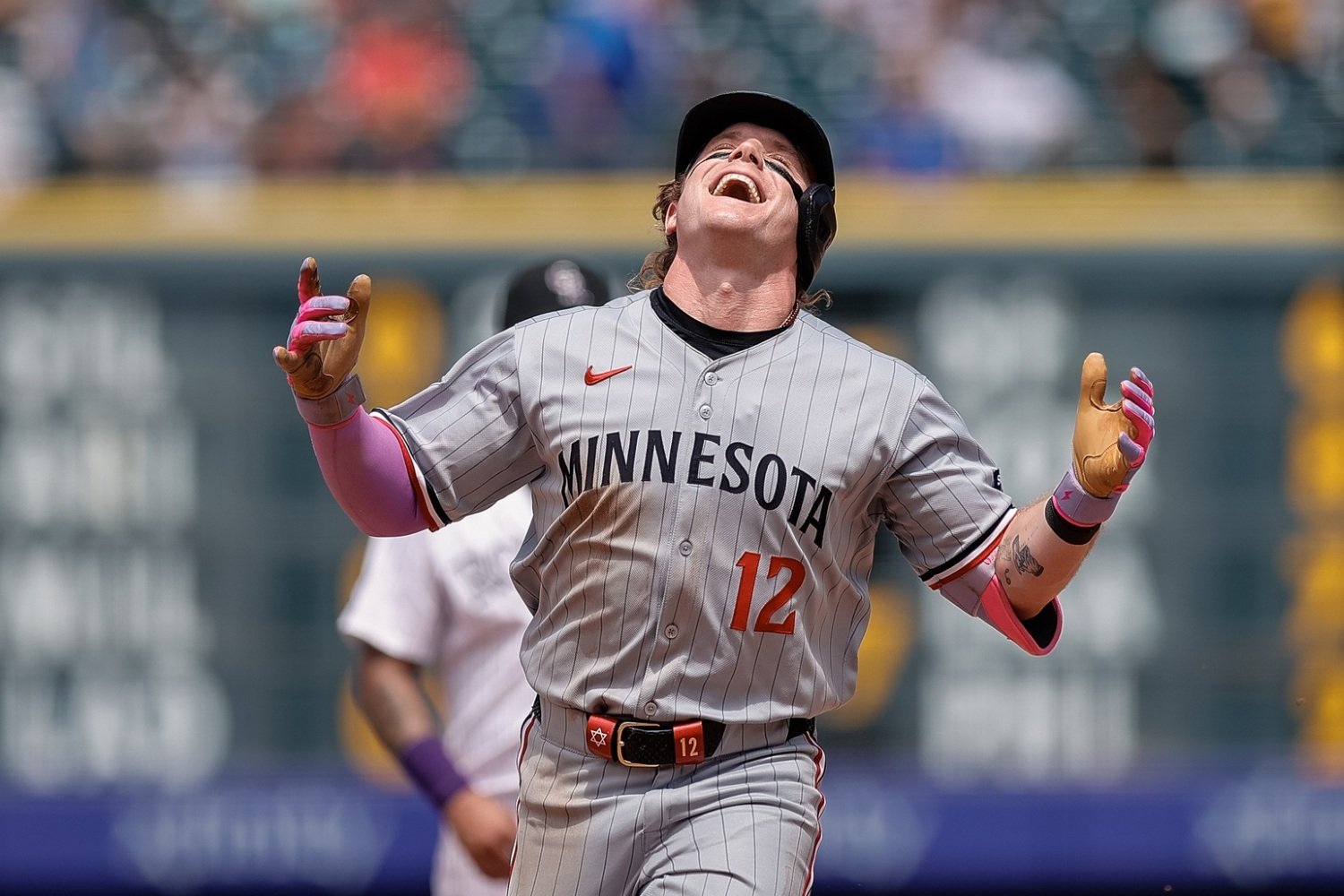 Following Friday and Saturday nights' losses to the Colorado Rockies in Coors Field (wherein the Minnesota Twins' punchless offense was frustrated to no end by two of MLB's most ineffective starting pitchers), the dreaded reality surrounding this club became even more apparent: Minnesota should sell at the trade deadline. Possessing a 13.2% chance of clinching a Wild Card spot, according to FanGraphs, your 2025 Twins are not out of the playoff mix, yet. However, times are becoming increasingly dire, and the front office should strongly consider undergoing a 2017-style retooling, if not a full-scale overhaul. If team decision-makers were to venture down that path, veterans in the final years of their contracts could become expendable. Willi Castro, Chris Paddack, and Danny Coulombe are veterans who fit that mold and will generate interest on the trade market later this month. Yet, none (besides Castro) are more intriguing than veteran outfielder Harrison Bader. Signed to a one-year, $6.5-million contract this past offseason, the 31-year-old outfielder has excelled in Minnesota, hitting .251/.330/.431 with 11 home runs and a 113 wRC+ over 270 plate appearances. In other words, Bader has hit 13% better than league average at the plate while providing elite outfield defense, primarily patrolling left field. Bader has provided a significant amount of value to Minnesota at the plate and in the field while playing on an expiring contract. That being the case, there is reason to believe the Twins could net a substantial return package if they elect to trade Bader at the July 31 trade deadline. According to The Athletic's MLB trade deadline Big Board 2.0, curated by Tim Britton, Chad Jennings, and Twins beat writer Aaron Gleeman, Bader is the 29th-most desirable trade piece this deadline season, with Cleveland, Philadelphia, and Tampa Bay listed as his best fits. With Cleveland listening to trade offers on star relievers Emmanuel Clase and Cade Smith, however, signs point toward the Guardians selling later this month. Also, since being recalled to Tampa Bay on Jun. 24, Chandler Simpson has impressed, posting a 138 wRC+ over 75 plate appearances and showing plus range in center field. The 24-year-old has entrenched himself as the club's starting center fielder of the present and future. Philadelphia seems like the most clear-cut destination for Bader. Right now, the Phillies' primary outfield construction consists of Nick Castellanos patrolling right field, with the left-handed hitting Brandon Marsh occupying center and (tell me if you've heard this name before) Max Kepler receiving most of the opportunities in left. The three of these veterans converge to be incredibly average, with a 94 wRC+ over 949 combined plate appearances. Kepler, however, has been the least effective of the bunch, running an 87 wRC+ over 317 plate appearances and playing spotty corner outfield defense. Johan Rojas mixes in as the club's fourth outfielder, who plays plus defense in center field. However, the right-handed-hitting 24-year-old has yet to produce offensively in his three major-league seasons, restricting him to a part-time role. Philadelphia would strongly benefit from inserting an above-average, right-handed-hitting outfielder who could provide plus range at all three outfield positions. Again, with Bader being on an expiring contract, Minnesota won't be able to net a major haul for him. Still, they should be able to get more than a low-minors lottery ticket. Twins decision-makers would be wise to target a position player who can impact the major-league club immediately, while still possessing minor-league options. Interestingly, Philadelphia possesses an intriguing position player who perfectly fits that mold in Otto Kemp. QXdhWk9fWGw0TUFRPT1fQVFOWUJWY0dBQW9BQUZkUVVnQUhCMU1FQUFBQkIxa0FBMUFNQTFJRUIxRUFCQVZV.mp4 Signed as an undrafted free agent in 2022, Kemp quickly moved through Philadelphia's farm system, progressing from Low-A Clearwater to Triple-A Lehigh Valley last season. The 25-year-old made his major-league debut on Jun. 7 and has maintained a spot on the club's 26-man roster since, hitting .250/.324/.348 with 23 hits, six doubles, one home run, a 28.4% strikeout rate, and a 91 wRC+ over 102 plate appearances. The right-handed hitting Phillie also possesses significant flexibility, playing 15 games at first base, nine in left field, and five at third base since joining the club a month-and-a-half ago. d2VXVlFfWGw0TUFRPT1fVWdaWEIxRUJVVkVBQUZFS0JBQUhCUThBQUFOUVZsZ0FCVndBQWdFTUF3SlhVUUlD.mp4 Given how the Twins swoon over versatility, Kemp could blossom into an actual target for Minnesota. Also, considering the fact that Philadelphia has its sights set on winning a championship this season, there is reason to believe top baseball executive Dave Dombrowski would be willing to part ways with a young, controllable asset to acquire Bader's services as the club attempts to fend off the New York Mets for the NL East title and make a deep playoff push. Despite being below-average at the plate this season, Kemp and his defensive flexibility would provide immediate value to Minnesota. He could be mixed into the corner outfield, at third base, and at first base. He also has experience playing second base at Triple A, meaning he could mix into the keystone position, too. With Willi Castro's departure looming, Kemp could assume his super-utility role, as the right-handed hitting 25-year-old can play every position except shortstop, center field, and catcher. Swapping Bader for Kemp could be a savvy one-for-one swap for Minnesota and Philadelphia, especially considering the significantly different competitive stages the two organizations are in.
- 22 comments
-
- 3
-
-
- harrison bader
- otto kemp
- (and 1 more)
-
Following Friday and Saturday nights losses to the Colorado Rockies in Coors Field, where the Minnesota Twins' punchless offense (sans Byron Buxton, Ryan Jeffers, and Willi Castro) got its teeth kicked in by two of MLB's most ineffective starting pitchers in Kyle Freeland and Antonio Senzatela, the dreaded reality surrounding this club became even more apparent: Minnesota should sell at the trade deadline. Possessing a 13.2% chance of clinching a Wild Card spot, according to FanGraphs, your 2025 Twins are not out of the playoff mix, yet. However, times are becoming increasingly dire, and team decision-makers should strongly consider undergoing a 2017-esque retooling, if not a full-scale overhaul. If team decision-makers were to venture down that similar path, veterans in the final years of their contract could become expendable. Willi Castro, Chris Paddack, and Danny Coulombe are veterans who fit that mold and will generate interest on the trade market later this month. Yet, none (besides Castro) are more intriguing than veteran outfielder Harrison Bader. Signed to a one-year, $6.5 million contract this past offseason, the 31-year-old outfielder has excelled in Minnesota, hitting .251/.330/.431 with 11 home runs and a 113 wRC+ over 270 plate appearances. The Florida product has performed 13% better than league average at the plate while providing elite outfield defense, primarily patrolling left field. Bader has provided a significant amount of value to Minnesota at the plate and in the field while playing on an expiring contract. That being the case, there is reason to believe Twins decision-makers could net a substantial return package if they elect to trade the 31-year-old at the July 31 trade deadline. According to The Athletic's MLB trade deadline Big Board 2.0, curated by Tim Britton, Chad Jennings, and Twins beat writer Aaron Gleeman, Bader is the 29th most-desirable trade piece this deadline season, with Cleveland, Philadelphia, and Tampa Bay listed as his best fits. With Cleveland listening to trade offers on star relievers Emmanuel Clase and Cade Smith, signs point toward Guardians decision-makers selling later this month. Also, since being recalled to Tampa Bay on Jun. 24, Chandler Simpson has impressed, manufacturing a 138 wRC+ over 75 plate appearances while sporting plus range in center field, signaling that the 24-year-old has entrenched himself as the club's starting center fielder of the present and future. That being the case, Philadelphia seems like the most clear-cut destination for Bader, even when assessing the 27 other MLB teams' outfield depth charts. Right now, Philadelphia's primary outfield construction consists of Nick Castellanos patrolling right field with the left-handed hitting Brandon Marsh occupying center and, tell me if you've heard this name before, Max Kepler receiving most of the opportunities in left. The three of these veterans converge to be incredibly average, with the three of them generating a 94 wRC+ over 949 combined plate appearances. Kepler, however, has been the least effective of the bunch, manufacturing an 87 wRC+ over 317 plate appearances while sporting spotty corner outfield defense. Johan Rojas mixes in as the club's fourth outfielder, who plays plus defensive center field. However, the right-handed-hitting 24-year-old has yet to produce offensively in his three major league seasons, restricting him to a part-time role. That being the case, Philadelphia would strongly benefit from inserting an above-average right-handed hitting outfielder who could provide plus range at all three outfield positions like Bader. Again, being on an expiring contract, Minnesota won't be able to net a significant haul for Bader. Still, Minnesota should be able to net more than a low-minors lottery ticket. That being the case, Twins decision-makers would be wise to target a position player who can impact the major league club immediately, while still possessing minor league options. Interestingly, Philadelphia possesses an intriguing position player who perfectly fits that mold in Otto Kemp. QXdhWk9fWGw0TUFRPT1fQVFOWUJWY0dBQW9BQUZkUVVnQUhCMU1FQUFBQkIxa0FBMUFNQTFJRUIxRUFCQVZV.mp4 Signed as an undrafted free agent in 2022, Kemp quickly moved through Philadelphia's minor league system, progressing from Low-A Clearwater to Triple-A Lehigh Valley last season. The 25-year-old made his major league debut on Jun. 7 this season and has maintained a spot on the club's 26-man roster since, hitting .250/.324/.348 with 23 hits, six doubles, one home run, a 28.4% strikeout rate, and a 91 wRC+ over 102 plate appearances. The right-handed hitting Phillie also possesses significant flexibility, playing 15 games at first base, nine in left field, and five at third base since joining the club a month-and-a-half ago. d2VXVlFfWGw0TUFRPT1fVWdaWEIxRUJVVkVBQUZFS0JBQUhCUThBQUFOUVZsZ0FCVndBQWdFTUF3SlhVUUlD.mp4 Given that Twins decision-makers swoon over versatility, Kemp could blossom into an actual target for Minnesota if they enter trade discussions with Philadelphia over Bader. Also, considering the fact that Philadelphia has its sights set on winning a championship this season, there is reason to believe President of Baseball Operations Dave Dombrowski would be willing to part ways with a young, controllable asset to acquire Bader's services as the club attempts to fend off the New York Mets for the NL East title and make a deep playoff push. Despite performing nine percent below league-average at the plate this season, Kemp and his defensive flexibility would provide immediate value to Minnesota, as he could be mixed in the corner outfield, third base, and first base. He also has experience playing second base at Triple-A, meaning he could mix into the keystone position, too. Additionally, with Castro's departure looming, Kemp could assume his super-utility role, as the right-handed hitting 25-year-old can play every position except shortstop, center field, and catcher. Swapping Bader for Kemp could be a savvy one-for-one swap for Minnesota and Philadelphia, especially considering the significantly different competitive stages the two organizations are in. View full article
-
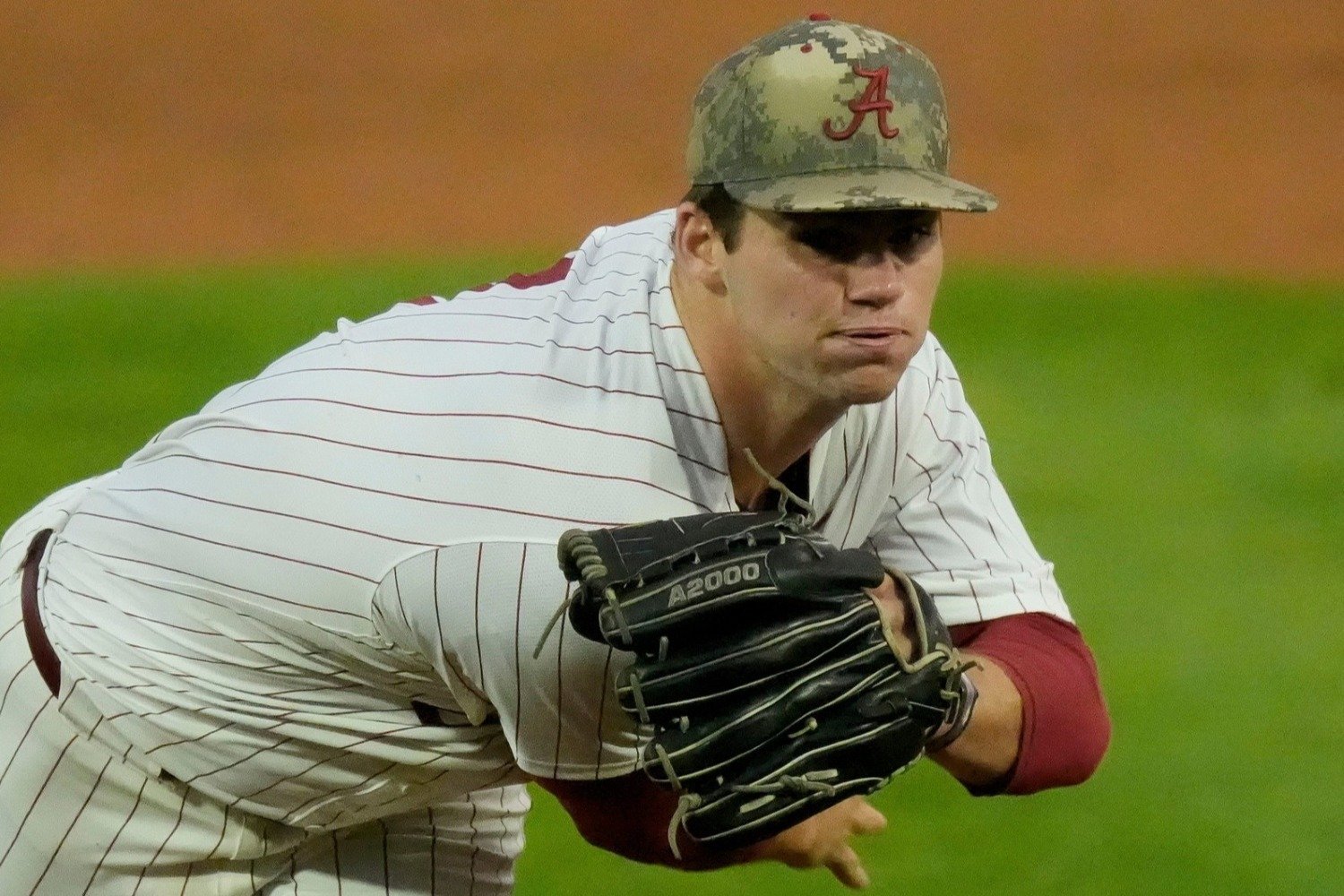 Last Sunday night, the Minnesota Twins (led by Vice President of Amateur Scouting Sean Johnson) selected Alabama Crimson Tide starting pitcher Riley Quick with the 36th selection in the first Competitive Balance Round. In recent drafts, Johnson has shown a proclivity to draft amateur arms in this area, evidenced by the club selecting right-handed high school arm Charlee Soto 34th overall in 2023 and fellow former Alabama pitcher Connor Prielipp 48th overall in 2022. Ranked 32nd on Jamie Cameron's MLB mock draft consensus board, Quick was selected in the range draft pundits predicted him to be. It was a reasonable selection from a draft slot perspective for Minnesota, then, but interestingly, Quick bucks a trend in what type of pitching arsenal Johnson and club decision-makers tend to prefer when assessing which young arms to select. Consider Soto, Prielipp, and fellow recent high draft pick Dasan Hill. Interestingly, all three young arms sport the same arsenal, relying on fastballs, sliders, and changeups as their primary pitches. Quick's primary three pitches are also his fastball, slider, and changeup. Yet, the type of primary fastballs he throws differentiates him from Hill, Soto, and Prielipp. Instead of relying on a four-seam fastball with plus vertical movement, Quick utilizes a sinker and cutter, two fastball variations that have been uncommon among amateur arms selected by Minnesota. Now, selecting young pitchers who throw high-velocity fastballs with plus Induced Vertical Break (IVB) is a sound process. Minnesota's three best starting pitchers (Joe Ryan, Pablo López, and Bailey Ober) all possess fastballs with plus IVB. Also, the best starting pitchers in baseball (Paul Skenes, Tarik Skubal, Zack Wheeler) tend to show that shape. The best pitchers on the Twins and the sport itself rely on pounding their fastballs high in the zone. Yet, there is also another, less common path to being a plus starting pitcher, which is what Quick could bring to Minnesota. Over the past five seasons, some of the most effective east-to-west starting pitchers who rely on their sinker and cutter as their primary fastball shapes include Corbin Burnes, Max Fried, and Yu Darvish. Despite being unconventional in the modern game, these three pitchers (and others who rely on sinkers and cutters) have been incredibly effective. Burnes won the NL Cy Young Award as a Milwaukee Brewer in 2021, Darvish is a multi-time All-Star who finished second in NL Cy Young voting as a Chicago Cub in 2020, and Fried is presently one of the favorites for the 2025 AL Cy Young Award in his first season as a New York Yankee. I'm not here to predict Quick will have a career like Burnes, Fried, or Darvish. What I am saying, however, is that there is proof of concept of Quick's arsenal working in the majors. Given the organization's willingness to push college arms quickly through its farm system (David Festa and Zebby Matthews, for example), there is reason to believe the 21-year-old could be in the high minors early next season and make his major-league debut just one season after being drafted. To go into further depth on Quick's pitch arsenal, here are the IVB and Horizontal Break (HB) profiles of his five-pitch mix, illustrated by the previously cited Cameron below: Quick used his cutter sparingly. However, there is meaningful data on the pitch, shown below: 93.1 MPH, 8.0 IVB, 2.5 HB, 5.7 ft release height, 28% Whiff, 9% usage rate He doesn't rely on his cutter as often as his sinker, slider, and changeup. Yet, given the recent shift in clubs inserting differing fastball variations into starting pitchers' arsenals for the sake of expanding their pitch mix, even if those pitches aren't necessarily plus offerings (evidenced by Ryan adding a sinker to his arsenal to use against right-handed hitters this season), there is reason to believe Minnesota's pitching development program will encourage Quick to continue tinkering with his cutter and using it in-game. Assuming that's the case, he could (no pun intended) quickly become Minnesota's first highly-regarded east-to-west starting pitcher since Johnson became Minnesota's scouting chief in 2022. As the Twins face a crossroads within what they've hoped would be a wide winning window, this arm could be one example of the team embracing a different way to succeed on the mound.
 -
Last Sunday night, the Minnesota Twins (led by Vice President of Amateur Scouting Sean Johnson) selected Alabama Crimson Tide starting pitcher Riley Quick with the 36th selection in the first Competitive Balance Round. In recent drafts, Johnson has possessed a similar affliction for drafting amateur arms in this area, evidenced by the club selecting right-handed high school arm Charlee Soto 34th overall in 2023 and fellow former Alabama pitcher Connor Prielipp 48th overall in 2022. Ranked 32nd on Jamie Cameron's MLB mock draft consensus board, Quick was selected in the range draft pundits predicted him to be. Yet, despite a reasonable selection from a draft slot perspective for Minnesota, he interestingly bucks a trend in what type of pitching arsenal Johnson and club decision-makers tend to prefer when assessing which young arms to select. To revisit Minnesota's most recent drafts, the club's highest-drafted amateur arms from the previous three drafts were Dasan Hill (69th overall in 2024), Soto, and Prielipp. Interestingly, all three young arms sport the same arsenal, relying on their fastballs, sliders, and changeups as their primary pitches. Quick's primary three pitches are also his fastball, slider, and changeup. Yet, the type of primary fastballs he throws differentiates him from Hill, Soto, and Prielipp. Instead of relying on a four-seam fastball with plus vertical movement, Quick utilizes a sinker and cutter, two fastball variations that have been uncommon amongst amateur arms selected by Minnesota in recent drafts. Now, selecting young pitchers who throw high-velocity fastballs with plus Induced Vertical Break (IVB) is a sound process. Minnesota's three best starting pitchers (Joe Ryan, Pablo López, and Bailey Ober) all possess fastballs with plus IVB. Also, the best starting pitchers in baseball (Paul Skenes, Tarik Skubal, Zack Wheeler) similarly possess plus IVB on their four-seam fastballs. The best pitchers on the Twins and the sport itself rely on pounding their plus fastballs high in the zone, which is an exceptionally sound approach. Yet, there is also another, less common path to being a plus starting pitcher, which is what Quick could bring to Minnesota. Over the past five seasons, some of the most effective east-to-west starting pitchers who rely on their sinker and cutter as their primary fastball shapes include Corbin Burnes, Max Fried, and Yu Darvish, amongst others. Despite being unconventional, these three pitchers and others who rely on sinkers and cutters have been incredibly effective. Burnes won the NL Cy Young Award as a Milwaukee Brewer in 2021, Darvish is a multi-time All-Star who finished second in NL Cy Young Award as a Chicago Cub in 2020, and Fried is presently one of the favorites for the 2025 AL Cy Young Award in his first season as a New York Yankee. Now, I am not here to predict Quick will have a career like Burnes, Fried, or Darvish. What I am saying, however, is that there is proof of concept of Quick's arsenal working in the majors. Given the organization's willingness to push college arms quickly through its minor league system in recent seasons (David Festa and Zebby Matthews), there is reason to believe the 21-year-old could be in the high minors early next season and make his major league debut just one season after being drafted. To go into further depth on Quick's pitch arsenal, here are the IVB and Horizontal Break (HB) profiles of his five-pitch mix, illustrated by the previously cited Cameron below: Quick used his cutter sparingly. However, there is meaningful data on the pitch, shown below: 93.1 MPH, 8.0 IVB, 2.5 HB, 5.7 ft release height, 28% Whiff, 9% usage rate He doesn't rely on his cutter as often as his sinker, slider, and changeup. Yet, given the recent shift in clubs inserting differing fastball variations into starting pitchers' arsenals for the sake of expanding their pitch mix, even if those pitches aren't necessarily plus pitches (evidenced by Ryan adding a sinker to his arsenal to use against right-handed hitters this season), there is reason to believe Minnesota's pitching development program will encourage Quick to continue tinkering with his cutter and using it in-game. Assuming that's the case, he could (no pun intended) quickly become Minnesota's first highly-regarded east-to-west starting pitcher since Johnson became Minnesota's Vice President of Amateur Scouting in 2022. View full article
-
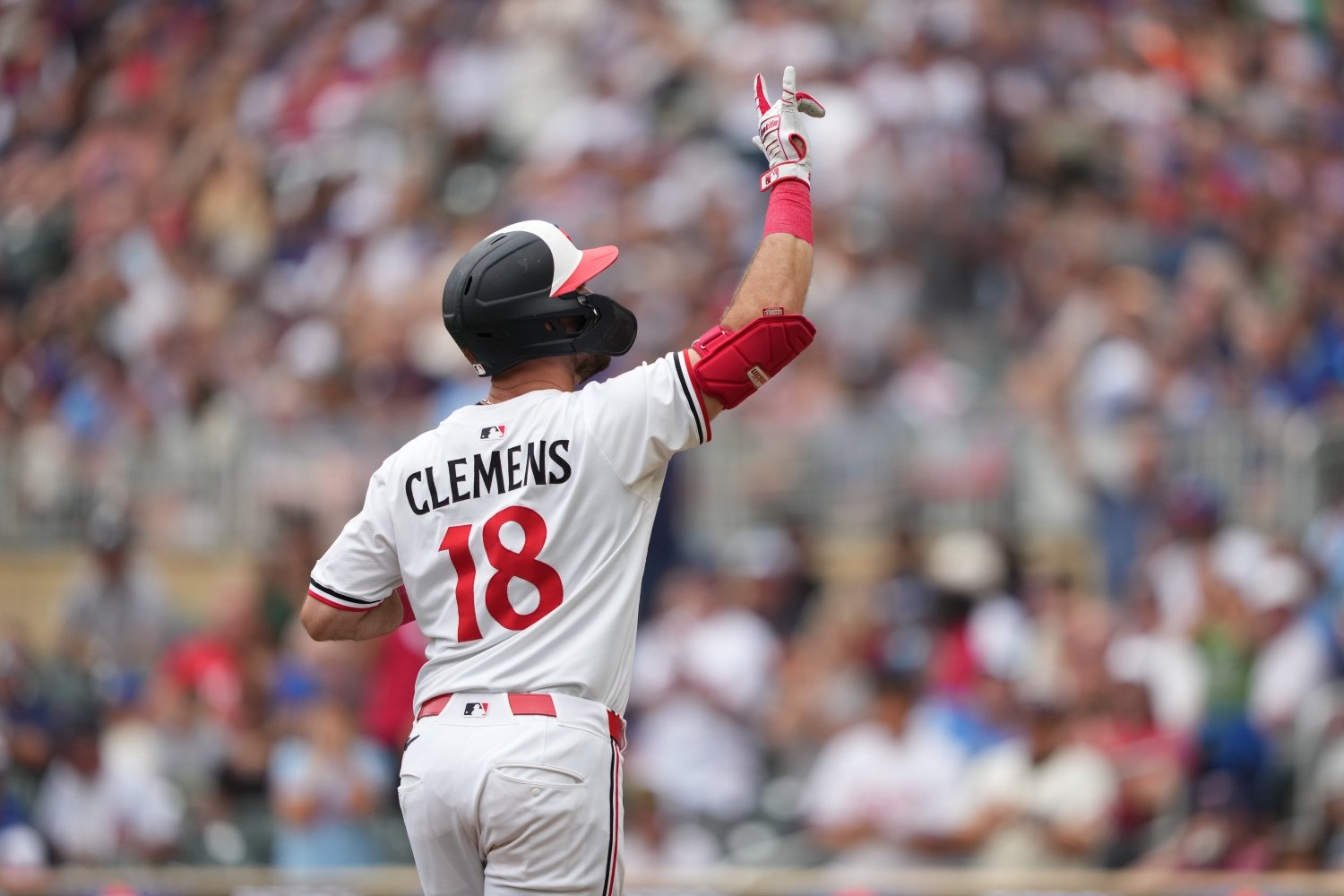 In early July, your 2025 Minnesota Twins traveled to South Florida to begin a three-game series against Peter Bendix's up-and-coming Miami Marlins. Minnesota ultimately lost the series two games to one, falling victim to incredible starts by hard-throwing budding stars in Edward Cabrera and Eury Pérez. Yet, something potentially more consequential arose from the club's disappointing three-game set in Miami: a shift in how manager Rocco Baldelli is approaching first base. Entering the season, offseason addition Ty France projected to be the club's primary starting baseman. It's largely played out that way, with the 31-year-old netting 83 of the club's 96 starts at the position. Yet, since the beginning of the Miami series on Jul. 1, early-season addition Kody Clemens has started six games at first base, which is only one fewer than France. Now, Clemens receiving more opportunities at first base than France could have merely been the product of Baldelli attempting to get the platoon advantage by deploying the left-handed hitting Clemens against right-handed starting pitchers, as the club faced only one left-handed starting pitcher (Shota Imanaga on Jul. 8). Yet, given the significant difference in the two veterans' recent performance at the plate, there is reason to believe Clemens has usurped France as the club's primary starting first baseman. Here is how the two bats have performed since Jul. 1: France - .080/.148/.120, 27 plate appearances, two hits, one double, zero home runs, one walk, 22.2% strikeout rate, -26 wRC+ Clemens - .261/.261/.652, 23 plate appearances, six hits, zero doubles, three home runs, zero walks, 34.8% strikeout rate, 148 wRC+ Despite being a more disciplined hitter, France has been significantly outproduced since the beginning of July. Clemens outperforming France at the plate has been a consistent trend since the former Philadelphia Phillie made his first appearance as a Twin on Apr. 28. He has a 125 wRC+ over 163 plate appearances, compared to France's 87 wRC+ over 242 plate appearances during the same stretch. An interesting statistic that distinguishes Clemens from France is his ability to perform significantly better than France in low- and medium-leverage situations, which typically occur during the first six to seven innings of games. Since joining Minnesota, Clemens has generated a 94 wRC+ over 80 low-leverage plate appearances, compared to France running a 59 wRC+ over 150 low-leverage plate appearances during that same stretch. France's performance improves during medium-leverage situations, to a 98 wRC+ over 111 plate appearances. Yet, Clemens again outperforms him, earning a 145 wRC+ over 68 plate appearances. Now, what differentiates France from nearly every MLB batter is that he effectively turns into Cal Raleigh during high-leverage scenarios, generating a 200 wRC+ over 30 high-leverage plate appearances since the beginning of his 2025 campaign and an even more surprising 214 wRC+ in 18 high-leverage scenarios since Clemens joined the club. Interestingly, Clemens also essentially turns into Raleigh in high-leverage scenarios since joining Minnesota, netting a similarly improbable 203 wRC+ over 15 plate appearances. These samples are tiny and (on their own) meaningless, but this is something France has done throughout his career. A player's ability to be clutch is largely random, and neither France nor Clemens (nor any MLB player for that matter) possesses a unique clutch gene, per se. Yet, both have been incredible in high-leverage scenarios for Minnesota. The separator between them is that Clemens has been solidly above-average the rest of the time, too, whereas France is quite poor unless the game is on the line. Again, there is value in being able to produce in high-leverage scenarios. However, one's ability to produce in those scenarios is highly volatile. That being the case, with Clemens performing 41% better than France in low- and medium-leverage situations (the majority of every position player's plate appearances) while not being a significant dropoff defensively, there is reason to believe he could receive more playing time at first base than the former Mariner over the second half of the season. Clemens's versatility will enable Baldelli to still use him at second base and in the corner outfield as future platoon matchups, injuries, and performance concerns arise. Still, don't be surprised if he continues to receive more opportunities than France at first base as the club resumes play on July 18 against the Colorado Rockies.
 -
In early July, your 2025 Minnesota Twins traveled to South Florida to begin a three-game series against Peter Bendix's young-and-upcoming Miami Marlins. Minnesota ultimately lost the series two games to one, falling victim to incredible starts by hard-throwing budding stars in Edward Cabrera and Eury Pérez. Yet, something potentially more consequential arose from the club's disappointing three-game set in Miami: A shift in how manager Rocco Baldelli is approaching first base. Entering the 2025 season, offseason addition Ty France was projected to be the club's primary starting baseman. Those projections have met to date, with the 31-year-old netting 83 of the club's 96 games at the position. Yet, since the beginning of the Miami series on Jul. 1, early-season addition Kody Clemens has started six games at first base, which is only one less start than France accrued in that time. Now, Clemens receiving more opportunities at first base than France could have merely been the product of Baldelli attempting to get the platoon advantage by deploying the left-handed hitting Clemens against right-handed starting pitchers, as the club faced only one left-handed starting pitcher in Shota Imanaga on Jul. 8. Yet, given the significant difference in the two veterans' recent performance at the plate, there is reason to believe Clemens has usurped France as the club's primary starting first baseman. Here is how the two bats have performed since Jul. 1: France - .080/.148/.120, 27 plate appearances, two hits, one double, zero home runs, one walk, 22.2% strikeout rate, -26 wRC+ Clemens - .261/.261/.652, 23 plate appearances, six hits, zero doubles, three home runs, zero walks, 34.8% strikeout rate, 148 wRC+ Despite being a more disciplined hitter, France has been significantly outproduced since the beginning of July, evidenced by Clemens hitting 174% better than France over four fewer plate appearances during that stretch. Clemens outperforming France at the plate has been a consistent trend since the former Philadelphia Phillie made his first appearance as a Twin on Apr. 28, as illustrated by Clemens netting a 125 wRC+ over 163 plate appearances, compared to France generating an 87 wRC+ over 242 plate appearances during the same stretch. An interesting statistic that distinguishes Clemens from France is his ability to perform significantly better than France in low- and medium-leverage situations, which typically occur during the first six to seven innings of games. Since joining Minnesota on Apr. 18, Clemens has generated a 94 wRC+ over 80 low-leverage plate appearances compared to France, netting a 59 wRC+ over 150 low-leverage plate appearances during that same stretch. France's performance improves during medium-leverage situations, evidenced by him accumulating a 98 wRC+ over 111 plate appearances since Apr. 18. Yet, Clemens again outperforms him, earning a 145 wRC+ over 68 plate appearances during the same stretch. Now, what interestingly differentiates France from nearly every MLB batter is that he effectively turns into Cal Raleigh during high-leverage scenarios, generating a 200 wRC+ over 30 high-leverage plate appearances since the beginning of his 2025 campaign and an even more surprising 214 wRC+ in 18 high-leverage scenarios since Apr. 18. Interestingly, Clemens also essentially turns into Raleigh in high-leverage scenarios since joining Minnesota, netting a similarly improbable 203 wRC+ over 15 plate appearances since Apr. 18. A player's ability to be clutch is not sustainable quality to rely on, and neither France nor Clemens (nor any MLB player for that matter) possesses a unique clutch gene, per se. Yet, both have been incredible in high-leverage scenarios for Minnesota. However, what separates Clemens from France is that he has been an above-average hitter in low- and medium-leverage situations (120 wRC+ over 148 plate appearances, whereas France has been virtually unplayable (79 wRC+ over 261 plate appearances) in low- and medium-leverage scenarios. Again, there is value in being able to produce in high-leverage scenarios. However, one's ability to produce in those scenarios is highly volatile and varies every plate appearance. That being the case, with Clemens performing 41% better than France in low-and-medium-leverage situations (the majority of every position player's plate appearances) while not being a significant drop off defensively, there is reason to believe he could receive more playing time at first base than the former Mariner over the second half of the season. Clemens's versatility will enable Baldelli to still use him at second base and in the corner outfield as future platoon matchups, injuries, and performance concerns arise. Still, don't be surprised if he continues to receive more opportunities than France at first base as the club resumes play on Jul. 18 against the Colorado Rockies. View full article
-
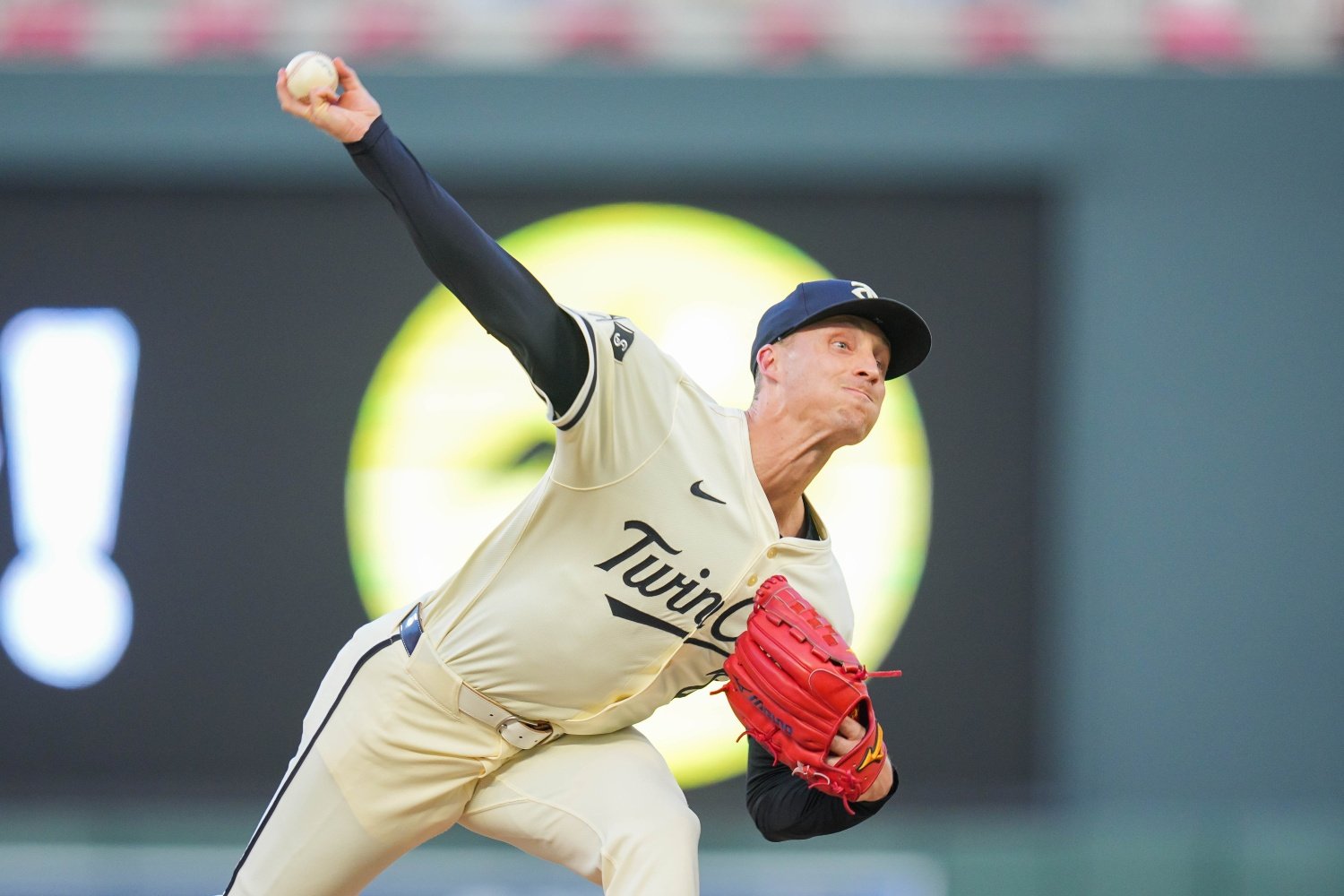 As MLB's trade deadline looms, your 2025 Minnesota Twins grow increasingly likely to undergo their first substantial sell-off since parting ways with then-ace starting pitcher José Berríos and beloved slugger Nelson Cruz at the 2021 trade deadline. Veteran players in the final season of their contracts (Harrison Bader, Danny Coulombe, Willi Castro and Chris Paddack) are the most likely candidates to depart from the land of 10,000 lakes. Yet, if the club were to push the envelope and undergo a genuinely significant change, Twins Territory could be subject to witnessing fan favorites like Jhoan Duran, Griffin Jax, or Joe Ryan bid adieu to 1 Twins Way. Trading any of those high-value, controllable hurlers is a longshot, but the Twins could find themselves in a unique position to test new methods of operation come August. If they've essentially pivoted toward next season by then, team decision-makers should consider revisiting a roster shakeup they were exploring early last offseason: converting Griffin Jax back into a starting pitcher. For those who don't remember (amid the emotional whirlwind that has been the first half of the 2025 regular season), Jax and the Twins were contemplating converting the starter-turned-reliever back into a starting pitcher. Ultimately, the 30-year-old elected to stay in the bullpen in late January. Despite possessing a subpar 4.12 ERA, Jax has performed well as Minnesota's primary set-up reliever, generating a 1.91 FIP and 64-to-10 strikeout-to-walk ratio while possessing some of the best raw stuff in the sport. Pitching backwards, the hard-tossing righty has been able to effectively attack hitters of either handedness, utilizing his elite sweeper and changeup. Jax still possesses a well-above-average fastball velocity. However, the pitch has been hit hard this season, resulting in him using it less (16% of the time) than ever. Another reason Jax's fastball usage rate is down is that he has implemented a sinker and cutter this season—pitches he's used a combined 13% of the time. The Air Force product naturally utilizes his sinker as a fastball variation to move in on right-handed hitters, and the cutter as a fastball variation to dive in on left-handed hitters. Considering he now has three fastballs, Jax is functionally using his fastball at 29% of the time, which resides in the same ballpark as his prior usage rates. With what is essentially a three-pitch mix while being able to add extra horizontal movement to his fastball variations, Jax possesses the diverse arsenal necessary to transition into a starting pitcher. In the past, Jax has mentioned that he is an adrenaline-based pitcher, meaning he believes he thrives in high-leverage scenarios and can add more velocity and movement to his pitches. While this is likely one factor behind his significantly improved velocity and movement profiles on his breaking and offspeed pitches since turning into a reliever, there is reason to believe he makes more mistakes due to the rush of adrenaline he endures, like misplaying balls that should be easily fielded or overthrowing first base on what should be routine plays for a major-league pitcher. Again, Jax possesses the arsenal and frame necessary to stick in the rotation, and if the club elects to part ways with Paddack at the July 31 deadline, a rotation spot could open up for Jax. Barring further injury, the impending return of Pablo López and Zebby Matthews will crowd the starting rotation. Yet, with uncertainty surrounding when or if Bailey Ober will rejoin the mix and performance concerns surrounding David Festa and Simeon Woods Richardson, there could be more space to maneuver Jax back into the rotation than previously anticipated. Jax departing from the bullpen would meaningfully thin the unit. Yet, with fellow high-leverage arms Duran, Louis Varland, and Brock Stewart also performing well, the club could absorb the impact of losing one of their late-inning right-handed throwers. They could stretch him out slowly over the balance of the season, getting him up to four innings per appearance or so by late September. That would give him a solid platform of volume, so that he's not artificially limited in terms of seasonal workload come 2026. Minnesota still has multiple years of team control left for frontline arms López, Ryan, and (hopefully) Ober. Yet, adding another possible ace to the mix would further bolster Minnesota's chances of returning to the postseason, while mitigating the growing pains younger arms like Festa, Woods Richardson, and Matthews are still enduring at the major-league level. It could also make it easier to stomach trading one of those pitchers, be it this month or this winter.
 -
As MLB's trade deadline looms, your 2025 Minnesota Twins (who rise as one, mind you) continue to grow increasingly more likely to undergo their first substantial sell-off since parting ways with then-ace starting pitcher José Berríos at the 2021 trade deadline. Veteran players in the final season of their contracts in Harrison Bader, Danny Coulombe, and Chris Paddack are the likely candidates to depart from the land of 10,000 lakes. Yet, if the club were to push the envelope and undergo a genuinely significant changeup, Twins Territory could be subject to witnessing fan favorites like Jhoan Durán, Griffin Jax, or Joe Ryan exit the graces of 1 Twins Way. Nevertheless, with a soft sell (at the very least) likely, the Twins could find themselves in a unique position to test new methods of operation come August. If Minnesota finds itself in that scenario, team decision-makers should consider revisiting a roster shakeup they were exploring early last offseason: converting Griffin Jax back into a starting pitcher. For those who don't remember (amidst the emotional whirlwind that has been the first half of the 2025 regular season), Jax and Twins decision-makers were contemplating converting the starter-turned-reliever back into a starting pitcher. Ultimately, the 30-year-old elected to stay in the bullpen in late January. Despite possessing a subpar 4.12 ERA, Jax has performed well as Minnesota's primary set-up reliever, generating a 1.91 FIP, 64-to-10 strikeout-to-walk ratio, while possessing some of the best raw stuff in the sport. Pitching backwards, the hard-tossing righty has been able to effectively attack hitters of either-handedness, utilizing his elite sweeper and change. Jax still possesses a well-above-league-average fastball velocity. However, the pitch has been hit hard this season, resulting in him using it less (16% of the time) than ever before since he converted to a full-time reliever in 2022. Another reason Jax's fastball usage rate is down is that he has implemented a sinker and cutter this season, pitches he has used a combined 13% of the time. The Air Force product naturally utilizes his sinker as a fastball variation to move in on right-handed hitters and cutter as a fastball variation to dive in on left-handed hitters. Still, considering he now has three fastball variations, Jax is functionally using his fastball at 29% of the time, which resides in the same ballpark as his prior usage rates. Nevertheless, what is essentially a three-pitch mix while being able to add extra horizontal movement to his fastball variations, Jax possesses the diverse pitch arsenal necessary to transition into a starting pitcher. In the past, Jax has mentioned that he is an adrenaline-based pitcher, meaning he believes he thrives in high-leverage scenarios and can add more velocity and movement to his pitches. While this is likely the case behind his significantly improved velocity and movement profiles on his breaking and offspeed pitches since turning into a reliever, there is reason to believe he makes more mistakes due to the rush of adrenaline he endures, causing him to make simple mistakes like misplaying balls that should be easily fielded or overthrowing first base on what should be routine plays for a major league pitcher. Again, Jax possesses the arsenal and frame necessary to stick in the rotation, and if the club elects to part ways with Paddack at the July 31 trade deadline, a rotation spot could open up for Jax. Barring further injury, the impending return of Pablo López and Zebby Matthews will crowd the starting rotation. Yet, with uncertainty surrounding when or if Bailey Ober will rejoin the club's rotation and performance concerns surrounding David Festa and Simeon Woods Richardson, there could be more space to maneuver Jax back into the rotation than previously anticipated. Now, Jax departing from the bullpen would meaningfully thin the unit. Yet, with fellow high-leverage arms Jhoan Durán, Louis Varland, and Brock Stewart also performing at well-above-average rates, there is reason to believe the club could absorb the impact of losing one of their late-inning right-handed throwing arms. The club would need to demote Jax to the minors (likely to High-A so he could train in Fort Myers) to stretch him out over multiple weeks. Yet, his short-term absence from the team could yield the fruits of the club unearthing an above-average starting pitcher who still has two-and-a-half seasons of club control remaining. Minnesota still has multiple years of team control left for frontline arms López, Ryan, and (hopefully) Ober. Yet, adding another frontline arm to the mix would further bolster Minnesota's chances of returning to the postseason, while mitigating the growing pains younger arms like Festa, Woods Richardson, and Matthews are still enduring at the major league level. View full article
-
Minnesota Twins, Milwaukee Brewers Could Line Up on Brock Stewart Trade
Cody Schoenmann posted an article in Twins
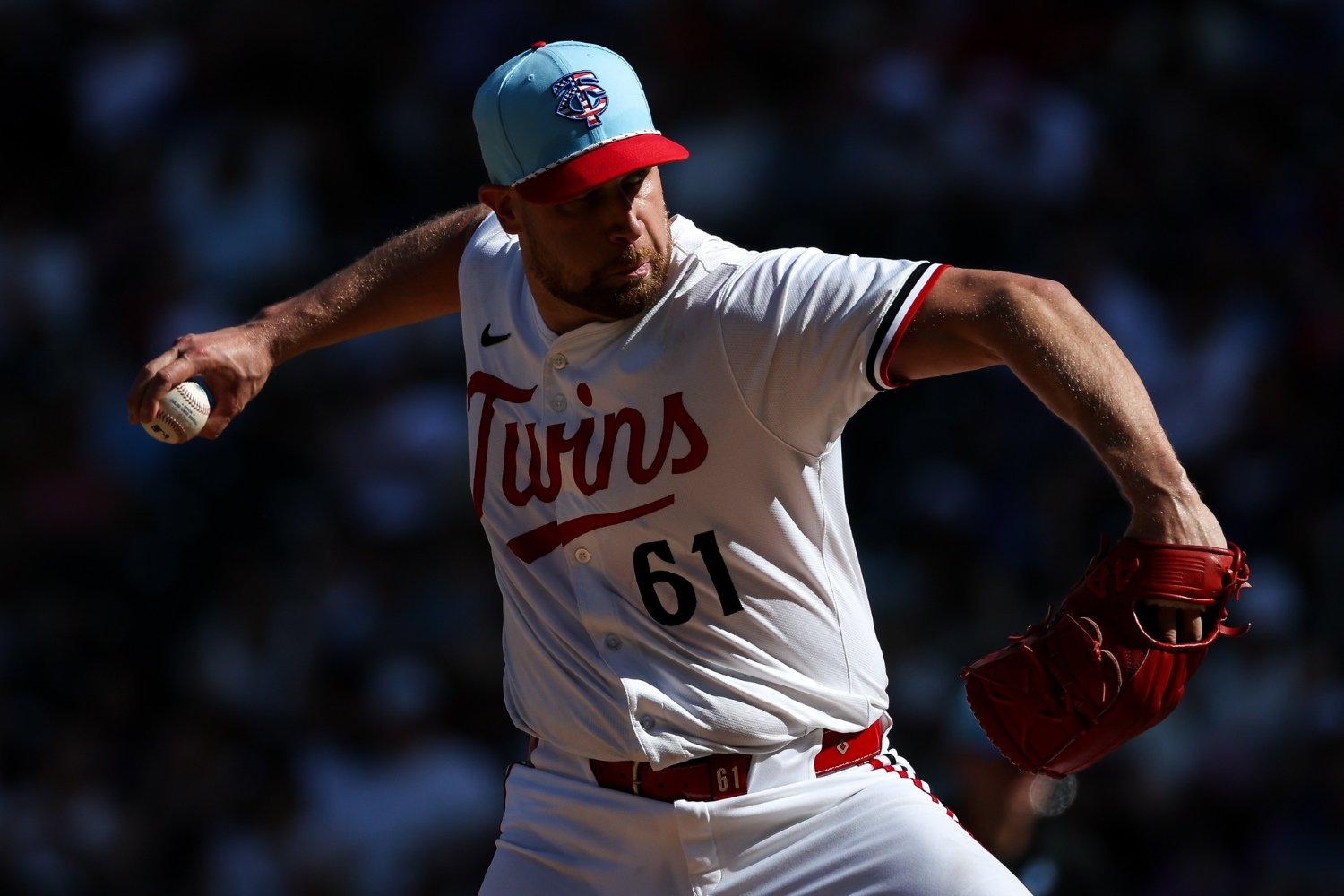 Entering the All-Star break, border "rivals" Minnesota Twins and Milwaukee Brewers are headed in different directions. Sitting 4 games back of the final Wild Card spot, currently held by the Seattle Mariners, the struggling Twins currently possess a 22.2% chance of making the postseason. Milwaukee, on the other hand, sits just 2 1/2 games back of the NL Central-leading Chicago Cubs while in sole possession of the NL's second wild card spot, sporting a 68.7% chance of earning a postseason spot. Now, Minnesota and Milwaukee's respective standings and situations could shift significantly by the July 31 MLB trade deadline, for better or worse. That said, as things stand, Minnesota is preparing to become sellers, while Milwaukee will be looking to fortify its club as it chases down Chicago for the NL Central crown. Milwaukee's second-most pressing need (after acquiring a power bat who can play first base and the corner outfield, a department in which the Twins unfortunately cannot assist them) is reinforcing the back end of its bullpen. Trevor Megill is enshrined as the club's closer, with Abner Uribe and Nick Mears functioning as the other high-leverage right-handed relievers. The Crew would benefit from one more right-handed late-inning reliever. Enter: Minnesota. Jhoan Duran and Griffin Jax are the most appealing arms in the back end of the Twins' bullpen, but given the significant price it would cost to acquire either high-leverage reliever's services, there is reason to believe Milwaukee (like almost every other team) will be unwilling to meet Minnesota's demands. Brock Stewart, however, would fit perfectly in the Brewers' bullpen. Since getting activated off the 15-day IL on Apr. 19, Stewart has been incredible for Minnesota, sporting a 2.67 ERA, 2.71 FIP, and a 36-to-10 strikeout-to-walk ratio over 27 innings pitched. The 33-year-old has played an integral role in the Twins having the second-best bullpen FIP and Wins Above Replacement (fWAR) in baseball, according to FanGraphs. Nevertheless, rostering Duran, Jax, Louis Varland, Cole Sands, and Danny Coulombe (who could also be moved at the deadline), Minnesota possesses the bullpen depth necessary to sustain the blow of parting ways with Stewart, making a trade with Milwaukee realistic. If Minnesota and Milwaukee were to align on a deal, there is reason to believe Twins decision-makers would opt to acquire a position player prospect, given how good the organization's pitching depth has become. Minnesota has become rich in outfield and infield prospects, with Walker Jenkins, Luke Keaschall, Kaelen Culpepper, and the oft-injured Emmanuel Rodriguez becoming near-consensus Top 100 prospects over the last two seasons. Alas, the organization's catching depth has become incredibly thin. Interestingly, a young, recently drafted catcher has quickly risen through Milwaukee's system this season, making plausible this swap: Brewers receive: right-handed reliever Brock Stewart Twins receive: catching prospect Marco Dinges Drafted in the fourth round of the 2024 MLB Draft out of Florida State University, Dinges had a robust start to his 2025 campaign, posting a 202 wRC+ over 112 plate appearances at Low-A Carolina. The 21-year-old has since earned a promotion to High-A Wisconsin, posting a similarly impressive 164 wRC+ over 244 plate appearances in Appleton. Ranked as Milwaukee's ninth-best prospect, according to Brewer Fanatic, Dinges possesses plus bat speed and raw speed and could develop into a 20+ home run hitter at the major-league level. Despite limited experience as a backstop (he began catching his senior year of high school), he's a plus athlete who possesses a near-elite arm and could stay at the position in the majors. Even if Dinges is unable to stick at catcher, there is reason to believe his bat could play at first base or in the corner outfield, making him an intriguing potential acquisition for Minnesota. Again, Stewart has been an incredible reliever (when healthy) since joining Minnesota halfway through the 2023 season. He's still under team control for two and a half years, although he can't be optioned to the minors and those injury issues are a real consideration. Asking Milwaukee to part ways with Dinges during his breakout 2025 campaign would be bold, and the Twins might need to throw in more on their side to get it done. Yet, given that Stewart remains controllable and cheap, this potential trade could make sense for both organizations' short- and long-term plans.
 -
Entering the All-Star break, border "rivals" Minnesota Twins and Milwaukee Brewers are headed in different directions. Sitting five games back of the final Wild Card spot, currently held by the Seattle Mariners, the struggling Twins currently possess a 19.5% chance of making the postseason. Milwaukee, on the other hand, sits just 3 1/2 games back of the NL Central-leading Chicago Cubs while in sole possession of the NL's second wild card spot, sporting a 65.2% chance of earning a postseason spot. Now, Minnesota and Milwaukee's respective standings and situations could shift significantly by the July 31 Trade Deadline, for better or worse. That said, as things stand, Minnesota is preparing to become sellers while Milwaukee will be looking to fortify its club as it chases down Milwaukee for the NL Central crown. Milwaukee's second-most pressing need (after acquiring a power bat who can play first base and the corner outfield, a department the Twins unfortunately cannot assist them in) is fortifying the back end of its bullpen. Trevor Megill is enshrined as the club's closer, with Abner Uribe and Nick Mears functioning as the other high-leverage right-handed relievers. Still, the club would benefit from one more right-handed throwing late-inning reliever: enter Minnesota. Jhoan Durán and Griffin Jax are the most appealing arms in the back-end of the Twins' bullpen. That said, given the significant price it would cost to acquire either high-leverage reliever's services, there is reason to believe Milwaukee (like almost every other team) will be unwilling to meet Minnesota's demands. Still, there are other high-leverage right-handed throwing Minnesota relievers who should be easier to acquire, headlined by Brock Stewart, who would fit perfectly in the Brewers' bullpen. Since getting activated off the 15-day IL on Apr. 19, Stewart has been incredible for Minnesota, sporting a 2.70 ERA, 2.78 FIP, and a 35-to-10 strikeout-to-walk ratio over 26 2/3 innings pitched. The 33-year-old has played an integral role in the Twins having the second-best bullpen FIP and Wins Above Replacement (fWAR) in baseball, according to FanGraphs. Nevertheless, rostering Durán, Jax, Louis Varland, Cole Sands, and Danny Coulombe (who could also be moved at the deadline), Minnesota possesses the bullpen depth necessary to sustain the blow of parting ways with Stewart, making a trade with Milwaukee realistic. If Minnesota and Milwaukee were to align on a trade, there is reason to believe Twins decision-makers would opt to acquire a position player prospect, given how deep the organization's pitching depth has become in recent seasons. Minnesota has become rich in outfield and infield prospect depth with Walker Jenkins, Luke Keaschall, Kaelen Culpepper, and the oft-injured Emmanuel Rodriguez becoming near-consensus Top 100 prospects the previous two seasons. That said, the organization's catching prospect depth has become incredibly thin. Interestingly, a young, recently drafted catcher has quickly risen through Milwaukee's system this season, meaning the two clubs could align the mock trade listed below: Brewers receive: right-handed reliever Brock Stewart Twins receive: catching prospect Marco Dinges Drafted in the fourth round of the 2024 MLB Amateur Draft out of Florida State University, Dinges underwent a robust start to his 2025 campaign, posting a 202 wRC+ over 112 plate appearances at Low-A Carolina. The 21-year-old has since earned a promotion to High-A, posting a similarly impressive 164 wRC+ over 244 plate appearances for Wisconsin (or, should I say, Appleton). Ranked as Milwaukee's ninth-best prospect, according to Brewer Fanatic, Dinges possesses plus bat speed and raw speed and could develop into a 20+ home run hitter at the major league level. Despite limited experience as a backstop (he began catching his senior year of high school), the Florida State product is a plus athlete who possesses a near-elite arm and could stay at the position at the major league level. Even if Dinges is unable to stick at catcher, there is reason to believe his bat could play at first base or the corner outfield, making him an intriguing potential acquisition for Minnesota. Again, Stewart has been an incredible reliever (when healthy) since joining Minnesota halfway through the 2023 season. With Minnesota's playoff hopes waning and Milwaukee set to fortify its bullpen as it pursues Chicago for the NL Central crown, Minnesota would be wise to trade from a unit of strength to acquire a prospect who could develop into its long-term catcher. Asking Milwaukee to part ways with Dinges during his breakout 2025 campaign would be a significant ask. Yet, given the fact that Stewart possesses two-and-a-half more seasons of control at cheap arb-2 and arb-3 salaries, this potential trade could make sense for both organizations' short and long-term plans. View full article
-
Has Noah Cardenas Blossomed into Minnesota Twins' Third Catcher?
Cody Schoenmann posted an article in Minor Leagues
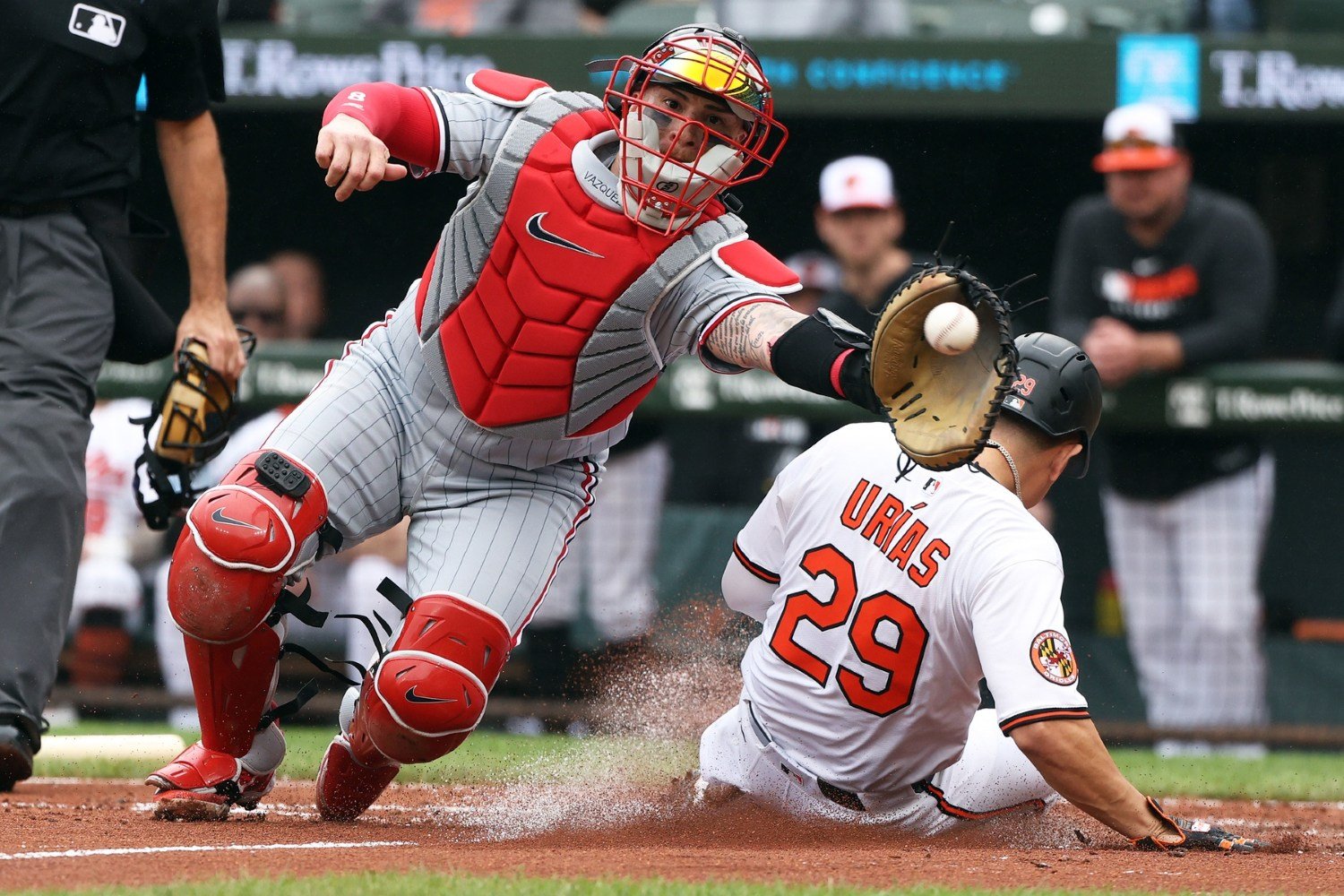 In the ninth inning of Friday night's 4-1 victory over the Detroit Tigers, Minnesota Twins catcher Christian Vázquez was hit by a pitch on his right arm, causing him to grimace while walking up the first base line as assistant trainer Masa Abe and manager Rocco Baldelli checked on him. Vázquez remained in the game and caught Jhoan Duran's save. The 34-year-old narrowly avoided serious injury. However, watching him nearly leave Friday night's contest raised a serious question regarding Minnesota's depth: who is the club's third catching option? Earlier this season, the answer was Triple-A backstop Jair Camargo. However, the 25-year-old will be sidelined for the rest of the 2025 season after undergoing Tommy John surgery earlier this month. Emergency catcher Mickey Gasper would have been a viable option in a pinch, too. Unfortunately, he was recently placed on the 7-day IL with bilateral plantar fasciitis, similarly sidelining the 29-year-old for what figures to be an extended period. The organization's Triple-A catching depth has been spread thin, resulting in recent catching opportunities for prospects Noah Cardenas and Patrick Winkel. Since Gasper was placed on the IL on June 23, Cardenas has been rewarded two starts behind the plate, compared to Winkel's one. Fellow young catcher Diego Cartaya will factor into the Triple-A catching mix, too. Yet, given his recent placement on the development list and inability to hit Triple-A pitching (58.5% strikeout rate over 65 plate appearances), Cartaya is not a serious promotion candidate. Cardenas and Winkel are the two backstops likely to receive an opportunity if Jeffers or Vázquez were to get placed on the injured list. Interestingly, Cardenas might have the edge. Beginning his 2025 campaign at Double-A Wichita, Cardenas hit .257/.409/.416 with 26 hits, seven doubles, three home runs, and a 137 wRC+ over 127 plate appearances. The 25-year-old was promoted to Triple-A on June 10. Since joining St. Paul, the former eighth-round pick has hit .185/.267/.556, with five hits, one double, three home runs, and a 102 wRC+ over 30 plate appearances. Cardenas's subpar batting average and on-base percentage are somewhat concerning. Yet, his ability to hit for power in the high minors has impressed, lending merit to the idea that he could produce offensively in the majors. Cardenas has demonstrated an ability to hit at an above-average rate since joining the organization in 2021. Interestingly, though, his calling card out of college was his glove, and his defense has remained superb throughout the high minors. The UCLA product is an above-average receiver who sports a strong arm. Plus defensive catchers who can hit are a rare archetype. Yet, there is reason to believe Cardenas could develop into one at the major-league level. If Jeffers or Vázquez were forced to miss time later this season, Cardenas would seemingly be the next backstop up. Also, with Vázquez set to depart from Minnesota after this season, there is reason to believe Cardenas could succeed the veteran as Jeffers's backup.