



Greggory Masterson
-
Posts
819 -
Joined
-
Last visited
-
Days Won
2
Content Type
Profiles
News
Minnesota Twins Videos
2026 Minnesota Twins Top Prospects Ranking
2022 Minnesota Twins Draft Picks
Minnesota Twins Free Agent & Trade Rumors, Notes, & Tidbits
Guides & Resources
2023 Minnesota Twins Draft Picks
The Minnesota Twins Players Project
2024 Minnesota Twins Draft Picks
2025 Minnesota Twins Draft Pick Tracker
2026 Minnesota Twins Draft Tracker: Picks & Bonuses
Forums
Blogs
Events
Store
Downloads
Gallery
Everything posted by Greggory Masterson
-
 Sweet Lou, Comrade Cody, and Ol Gregg dig into a spring training mailbag, answering questions from you, the listeners. They discuss second base, the rotation, the last bench spot, what constitutes a short king, and more! Gregg attempts to Stump the Schoen, and Lou might claims Mickey Gasper will be an Opening Day starter. You'll have to listen to know for sure. Listen using Apple Podcasts: https://podcasts.apple.com/us/podcast/the-twins-off-daily-podcast/id1741266056 Listen using Spotify: https://open.spotify.com/show/4tb78XlurcPTYYSsARdbD7 Listen using iHeartRadio: https://www.iheart.com/podcast/263-the-twins-off-daily-podcas-167548600/ Listen using Pocket Casts: https://pca.st/nvclbt0w Watch on YouTube: https://www.youtube.com/@twinsdaily
 -
 It's a double-whammy. All else being equal, it would have been great to keep Carew in Minnesota for his whole career (and could you imagine him playing half his games on the concrete Metrodome?), but also it would have been better for everyone if the context that led to him leaving never happened.
 -
Okay, I misunderstood what you were saying--carry on.
- 91 replies
-
- 1
-

-
- matt wallner
- edouard julien
- (and 4 more)
-
I didn't intend for this to come across saying his lineups were predominantly 4-5 lefties at a time; I think I said that a bit too strongly. I also misspoke and meant there would be 3 righties on the bench. What I meant was that he generally had 3 or so, and so you either have to have them 1-4-7, 2-5-8, or 3-6-9 to have them spaced out. And if he had any more than that (I suppose we could throw Castro in there, too), those compromised spots would come up in the lineup, but we're unlikely to see that happen nearly as often this season.
-
I’m not sure that’s wholly charitable. The past few years, there have been 3 or 4 lefties in the lineup each game. Like last year, Kirilloff, Larnach, Wallner, Kepler, and Julien could all be in the batting order at the beginning of the season. With that alignment, they’d go more every-other. Then the bench would often have 3 lefties. Now, they only have 3 true lefties, and that’s if Julien makes the team. It’s easier to spread them out so there are no spots where the other manager can put in a lefty reliever against a LRL sequence. I’m not sure that’s by design, but it changes the calculus nonetheless.
-
Off-days are back! It's the first Twins Off-Daily Podcast on an off-day since September 21st. Sweet Lou, Comrade Cody, Ol Gregg empty the notebook, discussing Chris Paddack, Zebby Matthews, David Festa, Louis Varland, Jorge Alcala, Harrison Bader, and so much more. Immaculate Gregg also returns! Listen using Apple Podcasts: https://podcasts.apple.com/us/podcast/the-twins-off-daily-podcast/id1741266056 Listen using Spotify: https://open.spotify.com/show/4tb78XlurcPTYYSsARdbD7 Listen using iHeartRadio: https://www.iheart.com/podcast/263-the-twins-off-daily-podcas-167548600/ Listen using Pocket Casts: https://pca.st/nvclbt0w Watch on YouTube: https://www.youtube.com/@twinsdaily View full article
-
Episode 32: Twins Camp Notes on the Return of Off-Day Podcasts
Greggory Masterson posted an article in Podcasts
 It's the first Twins Off-Daily Podcast on an off-day since September 21st. Sweet Lou, Comrade Cody, Ol Gregg empty the notebook, discussing Chris Paddack, Zebby Matthews, David Festa, Louis Varland, Jorge Alcala, Harrison Bader, and so much more. Immaculate Gregg also returns! Listen using Apple Podcasts: https://podcasts.apple.com/us/podcast/the-twins-off-daily-podcast/id1741266056 Listen using Spotify: https://open.spotify.com/show/4tb78XlurcPTYYSsARdbD7 Listen using iHeartRadio: https://www.iheart.com/podcast/263-the-twins-off-daily-podcas-167548600/ Listen using Pocket Casts: https://pca.st/nvclbt0w Watch on YouTube: https://www.youtube.com/@twinsdaily
 -
For what it's worth, Wallner hit .250 in 2023 and .260 in 2024. Sure, that's not what some fans will demand if their idealized leadoff hitter bats .280+, but there aren't many Twins who will do that. In Max Kepler's 2019 season, he hit leadoff with a .250 average and was largely successful, though there were the same grumbles about hit average.
- 91 replies
-
- 1
-
-
- matt wallner
- edouard julien
- (and 4 more)
-
Well I appreciate you reading it anyway. How would you approach the question of who the Twins leadoff guy should be?
- 91 replies
-
- 3
-
-
- matt wallner
- edouard julien
- (and 4 more)
-
Yes, Wallner has led off every game he has played in
- 91 replies
-
- 5
-
-
- matt wallner
- edouard julien
- (and 4 more)
-
The Twins don’t have a prototypical leadoff man in their lineup right now. But is their massive slugging right fielder actually the answer? Image courtesy of William Parmeter Leadoff hitters: They just don’t make ‘em like they used to. Every team can’t have their own Luis Arraez (though that’s not for lack of trying, given how many teams he’s played for in the last three years). The Twins don’t really have one, either. Edouard Julien, Arraez’s heir apparent, did a good job in the role in 2023, utilizing a patient approach that produced a .381 on-base percentage and 16 homers in 408 plate appearances, 241 of which came in the leadoff spot (and another 98 as the No. 2 hitter). Unfortunately, that performance didn’t carry over to 2024, and he’s now fighting for a roster spot, let alone the leadoff spot in the order. Beyond Julien, though, the Twins lack a true leadoff type. These are guys who classically get on base, run well, and see a lot of pitches, working a count to let their teammates get a good look at the pitcher. Last season, the Twins had four players who got at least 50 plate appearances in the leadoff spot—Julien (148), Willi Castro (227), Manuel Margot (149), and Trevor Larnach. I’m gonna need you to sit down for this next bit. Margot was the most successful player in that spot, primarily against lefties, batting .316. Castro is probably a more typical leadoff hitter than Larnach, given his speed, but neither has posted great on-base numbers—each were around .330. That’s good, but not great, compared to the league average over the last two years of .316, and it's certainly not where you set the target for the top spot in the order. I did a little bit of data analysis. It’s not some fancy formula, but I used it a couple of years ago to ask this same question ahead of a 2023 season in which the Twins didn’t have a clear leadoff hitter. Basically, I just ranked Twins projected to make the Opening Day roster (per FanGraphs's Roster Resource) on their ability to get on base, run the bases, and see pitches. At the time, this methodology told me Joey Gallo was the best option, followed by Jorge Polanco, Carlos Correa, and Byron Buxton. So here’s what I did again. I looked at every hitter projected to make the team out of spring training based on Roster Resource (plus Austin Martin, to be safe). I then compiled select stats from A) 2023-2024 and B) Steamer projections for each player. The players were ranked 1-14, based on their OBP; Fangraphs baserunning runs per 550 plate appearances; and average pitches per plate appearance (there aren’t projections for P/PA, so I used career averages for the projections). It won’t come as a surprise that Christian Vázquez was the worst candidate for leading off, which lends a smidgen of credibility to this exercise. So who did the numbers suggest should lead off? #4 Willi Castro (3rd Past, t-5th Projection) Past Rankings: 4th OBP (.334), 2nd BsR (1.6), 5th P/PA (3.92) 2025 Projections: 7th OBP (.317), 4th BsR (-0.3), 8th P/PA (3.80) Castro spent much of last season as the Twins’ leadoff hitter, and this exercise agrees that he’s not a bad choice. His on-base percentage is buoyed by a significant hit-by-pitch rate, which is sticky year-to-year, but not ideal for his health, especially as a player who relies on his speed. Of note, he’s projected to be the fourth-best player on the bases, but his projection is below-average, which speaks to how slow this team is. Buxton, Martin and Harrison Bader are the only three who project to be above-average. #3 Trevor Larnach (5th Past, 2nd Projection) Past Rankings: 6th OBP (.329), 5th BsR (0.1), 2nd P/PA (4.07) 2025 Projections: 6th OBP (.325), 9th BsR (-0.8), 2nd P/PA (4.05) Larnach saw some time as a leadoff hitter, and he ranked high in this exercise, if for no other reason than he wasn’t bad at any of the three traits. He gets on base fairly well, isn’t a disaster on the bases, and he sees a lot of pitches. He’s not an ideal leadoff hitter, but it could be worse. #2 Edouard Julien (1st Past, 3rd Projection) Past Rankings: 2nd OBP (.343), t-5th BsR (0.1), 1st P/PA (4.16) 2025 Projections: 2nd OBP (.347), 14th BsR (-1.2), 1st P/PA (4.17) I mean, obviously, if Julien can return to what he was doing in 2023, there’s no reason to do this exercise. He’s a decent runner who sees a lot of pitches and gets on base at a high clip. But he was not that guy last season, and it’s not even guaranteed that he’ll be on the Opening Day roster in 2025, which brings us to #1 Matt Wallner (2nd Past, 1st Projection) Past Rankings: 1st OBP (.371), t-5th BsR (0.1), 3rd P/PA (4.03) 2025 Projections: 4th OBP (.339), 7th BsR (-0.5), 3rd P/PA (4.02) So under this exercise, Wallner just barely edges out Julien. He’s got a great on-base percentage to this point in his career, and he’s the proverbial sneaky-fast, though his sprint speed has fallen pretty substantially each year of his career. He also sees a lot of pitches. Of course, it’s probably valid to ask whether OBP should be weighted equally to the other two, so if we count getting on base double, we have a tie between Julien and Wallner. Honestly, Julien and Wallner stand out so far in this exercise that it’s hard to ignore. They’re the only two Twins, under these parameters, that even slightly resemble a leadoff hitter. It's also valid to question whether there’s a need for a true leadoff hitter in modern baseball. Like, why do we need to wring our hands over this? Why not just stack the lineup with the best hitters at the top, giving them the most plate appearances over the course of the year. But Wallner is certainly one of the better hitters on this team. He’s got a three-true-outcomes approach, with 50% of his plate appearances resulting in a walk, strikeout, or home run. He’s a Temu Joey Gallo. But it’s worked for him, as he’s 40% better than average thus far in his career. Alongside Correa, Buxton, and Royce Lewis, he’s one of the best four hitters on the team, so putting him (and the three of them) at the top of the order is sensible. Leading Wallner off could result in some leadoff moonshots, which are great for setting the tone of a game, but it could also result in fewer guys being on base for those moonshots. There’s also another question at play: Rocco Baldelli. Baldelli has become notorious, infamous, whatever adjective you prefer, for his mid-game line switches, removing his lefties for right-handed pinch-hitters, even in the middle innings, to face lefty relievers. Julien, Larnach, and Wallner alike have been victims of that pattern. And if Wallner is indeed one of the Twins' best hitters, batting him leadoff sets him up for losing plate appearances, paradoxically. Think about it like this: when the Twins face lefty starters, Baldelli stacks the lineups with righties, often batting subpar bats like Kyle Farmer and Jordan Luplow high. Because they’re higher in the lineup, it’s easier to swap them out early, when the opposing lefty exits. Although that practice gets bats like Wallner’s into the game as soon as possible, batting Wallner himself at the top spot can do the opposite against righty starters, if a team goes to a lefty reliever in the fifth or sixth—especially now, as the Twins will have limited options for bench righties, it may be the case that they only have one pinch-hitting option per game, and if Wallner is the first to come up, that might mean losing him. That may be digging a bit too far into the weeds, but it could be a consideration. All in all, though, there are definitely worse options for leading off than Wallner, and it would get the Twins more plate appearances for one of their top bats. Sure, he may strike out more than you’d prefer, but I don’t think the Twins are unfounded in giving him an opportunity. They’ve clearly been trying it out, with Wallner leading off four of their first six games (all four that he’s started). View full article
-
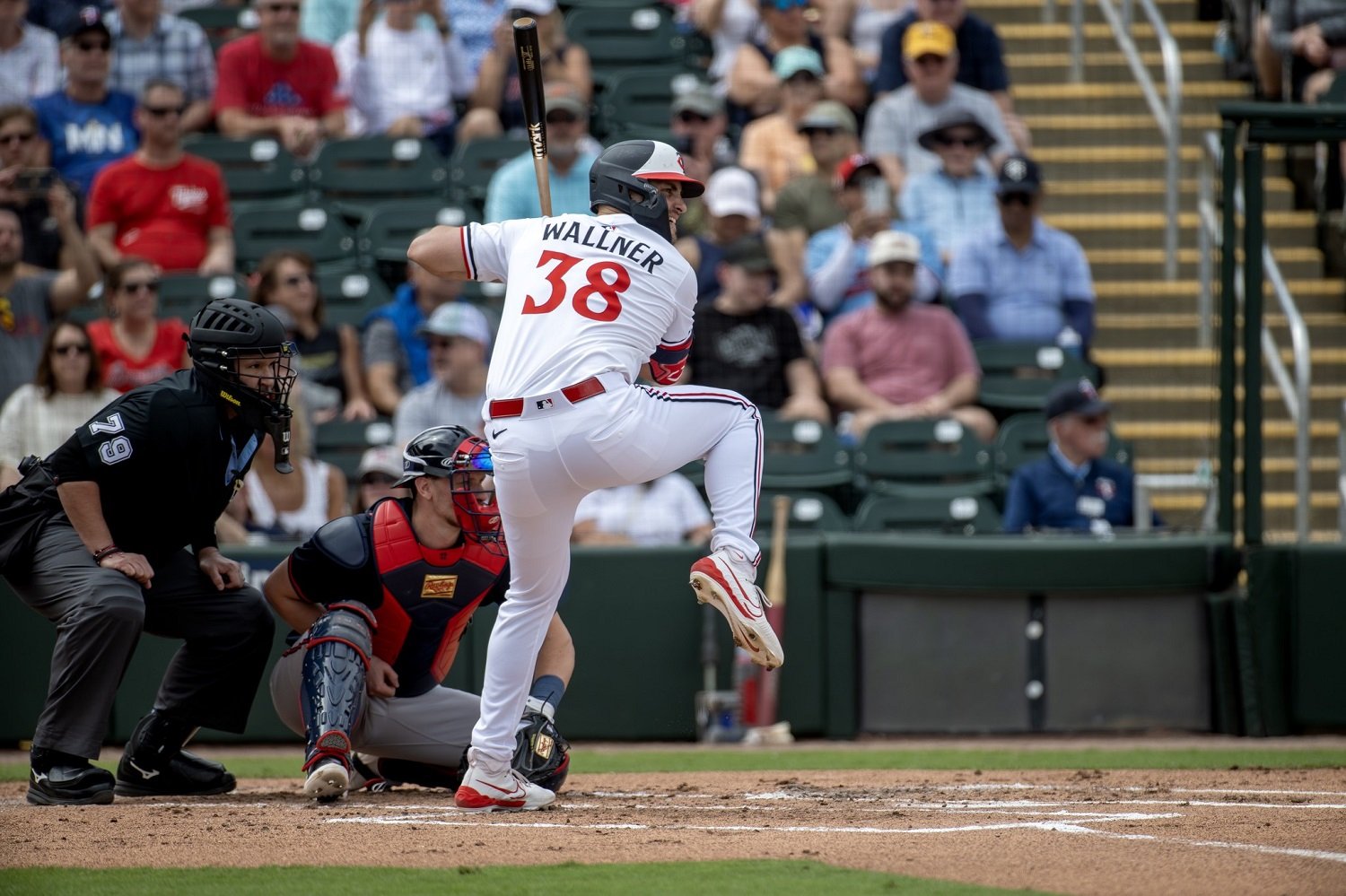 Leadoff hitters: They just don’t make ‘em like they used to. Every team can’t have their own Luis Arraez (though that’s not for lack of trying, given how many teams he’s played for in the last three years). The Twins don’t really have one, either. Edouard Julien, Arraez’s heir apparent, did a good job in the role in 2023, utilizing a patient approach that produced a .381 on-base percentage and 16 homers in 408 plate appearances, 241 of which came in the leadoff spot (and another 98 as the No. 2 hitter). Unfortunately, that performance didn’t carry over to 2024, and he’s now fighting for a roster spot, let alone the leadoff spot in the order. Beyond Julien, though, the Twins lack a true leadoff type. These are guys who classically get on base, run well, and see a lot of pitches, working a count to let their teammates get a good look at the pitcher. Last season, the Twins had four players who got at least 50 plate appearances in the leadoff spot—Julien (148), Willi Castro (227), Manuel Margot (149), and Trevor Larnach. I’m gonna need you to sit down for this next bit. Margot was the most successful player in that spot, primarily against lefties, batting .316. Castro is probably a more typical leadoff hitter than Larnach, given his speed, but neither has posted great on-base numbers—each were around .330. That’s good, but not great, compared to the league average over the last two years of .316, and it's certainly not where you set the target for the top spot in the order. I did a little bit of data analysis. It’s not some fancy formula, but I used it a couple of years ago to ask this same question ahead of a 2023 season in which the Twins didn’t have a clear leadoff hitter. Basically, I just ranked Twins projected to make the Opening Day roster (per FanGraphs's Roster Resource) on their ability to get on base, run the bases, and see pitches. At the time, this methodology told me Joey Gallo was the best option, followed by Jorge Polanco, Carlos Correa, and Byron Buxton. So here’s what I did again. I looked at every hitter projected to make the team out of spring training based on Roster Resource (plus Austin Martin, to be safe). I then compiled select stats from A) 2023-2024 and B) Steamer projections for each player. The players were ranked 1-14, based on their OBP; Fangraphs baserunning runs per 550 plate appearances; and average pitches per plate appearance (there aren’t projections for P/PA, so I used career averages for the projections). It won’t come as a surprise that Christian Vázquez was the worst candidate for leading off, which lends a smidgen of credibility to this exercise. So who did the numbers suggest should lead off? #4 Willi Castro (3rd Past, t-5th Projection) Past Rankings: 4th OBP (.334), 2nd BsR (1.6), 5th P/PA (3.92) 2025 Projections: 7th OBP (.317), 4th BsR (-0.3), 8th P/PA (3.80) Castro spent much of last season as the Twins’ leadoff hitter, and this exercise agrees that he’s not a bad choice. His on-base percentage is buoyed by a significant hit-by-pitch rate, which is sticky year-to-year, but not ideal for his health, especially as a player who relies on his speed. Of note, he’s projected to be the fourth-best player on the bases, but his projection is below-average, which speaks to how slow this team is. Buxton, Martin and Harrison Bader are the only three who project to be above-average. #3 Trevor Larnach (5th Past, 2nd Projection) Past Rankings: 6th OBP (.329), 5th BsR (0.1), 2nd P/PA (4.07) 2025 Projections: 6th OBP (.325), 9th BsR (-0.8), 2nd P/PA (4.05) Larnach saw some time as a leadoff hitter, and he ranked high in this exercise, if for no other reason than he wasn’t bad at any of the three traits. He gets on base fairly well, isn’t a disaster on the bases, and he sees a lot of pitches. He’s not an ideal leadoff hitter, but it could be worse. #2 Edouard Julien (1st Past, 3rd Projection) Past Rankings: 2nd OBP (.343), t-5th BsR (0.1), 1st P/PA (4.16) 2025 Projections: 2nd OBP (.347), 14th BsR (-1.2), 1st P/PA (4.17) I mean, obviously, if Julien can return to what he was doing in 2023, there’s no reason to do this exercise. He’s a decent runner who sees a lot of pitches and gets on base at a high clip. But he was not that guy last season, and it’s not even guaranteed that he’ll be on the Opening Day roster in 2025, which brings us to #1 Matt Wallner (2nd Past, 1st Projection) Past Rankings: 1st OBP (.371), t-5th BsR (0.1), 3rd P/PA (4.03) 2025 Projections: 4th OBP (.339), 7th BsR (-0.5), 3rd P/PA (4.02) So under this exercise, Wallner just barely edges out Julien. He’s got a great on-base percentage to this point in his career, and he’s the proverbial sneaky-fast, though his sprint speed has fallen pretty substantially each year of his career. He also sees a lot of pitches. Of course, it’s probably valid to ask whether OBP should be weighted equally to the other two, so if we count getting on base double, we have a tie between Julien and Wallner. Honestly, Julien and Wallner stand out so far in this exercise that it’s hard to ignore. They’re the only two Twins, under these parameters, that even slightly resemble a leadoff hitter. It's also valid to question whether there’s a need for a true leadoff hitter in modern baseball. Like, why do we need to wring our hands over this? Why not just stack the lineup with the best hitters at the top, giving them the most plate appearances over the course of the year. But Wallner is certainly one of the better hitters on this team. He’s got a three-true-outcomes approach, with 50% of his plate appearances resulting in a walk, strikeout, or home run. He’s a Temu Joey Gallo. But it’s worked for him, as he’s 40% better than average thus far in his career. Alongside Correa, Buxton, and Royce Lewis, he’s one of the best four hitters on the team, so putting him (and the three of them) at the top of the order is sensible. Leading Wallner off could result in some leadoff moonshots, which are great for setting the tone of a game, but it could also result in fewer guys being on base for those moonshots. There’s also another question at play: Rocco Baldelli. Baldelli has become notorious, infamous, whatever adjective you prefer, for his mid-game line switches, removing his lefties for right-handed pinch-hitters, even in the middle innings, to face lefty relievers. Julien, Larnach, and Wallner alike have been victims of that pattern. And if Wallner is indeed one of the Twins' best hitters, batting him leadoff sets him up for losing plate appearances, paradoxically. Think about it like this: when the Twins face lefty starters, Baldelli stacks the lineups with righties, often batting subpar bats like Kyle Farmer and Jordan Luplow high. Because they’re higher in the lineup, it’s easier to swap them out early, when the opposing lefty exits. Although that practice gets bats like Wallner’s into the game as soon as possible, batting Wallner himself at the top spot can do the opposite against righty starters, if a team goes to a lefty reliever in the fifth or sixth—especially now, as the Twins will have limited options for bench righties, it may be the case that they only have one pinch-hitting option per game, and if Wallner is the first to come up, that might mean losing him. That may be digging a bit too far into the weeds, but it could be a consideration. All in all, though, there are definitely worse options for leading off than Wallner, and it would get the Twins more plate appearances for one of their top bats. Sure, he may strike out more than you’d prefer, but I don’t think the Twins are unfounded in giving him an opportunity. They’ve clearly been trying it out, with Wallner leading off four of their first six games (all four that he’s started).
- 91 comments
-
- 7
-
-

-
- matt wallner
- edouard julien
- (and 4 more)
-
I think Aaron Hicks might be the most recent to debut on Opening Day (2013)?
-
France. Ty France. Sweet Lou, Comrade Cody, and Ol Gregg are joined by the Pride of Twins Daily Nick Nelson to litigate the most controversial non-guaranteed million dollar contract the Twins have ever given. Fun was had by all, except Lou. The group made bold predictions for the season (Gregg misunderstands the assignment) and had a conversation about presidents, too (Cody didn't have the most outrageous take for once). Listen using Apple Podcasts: https://podcasts.apple.com/us/podcast/the-twins-off-daily-podcast/id1741266056 Listen using Spotify: https://open.spotify.com/show/4tb78XlurcPTYYSsARdbD7 Listen using iHeartRadio: https://www.iheart.com/podcast/263-the-twins-off-daily-podcas-167548600/ Listen using Pocket Casts: https://pca.st/nvclbt0w Watch on YouTube: https://www.youtube.com/@twinsdaily View full article
-
 Sweet Lou, Comrade Cody, and Ol Gregg are joined by the Pride of Twins Daily Nick Nelson to litigate the most controversial non-guaranteed million dollar contract the Twins have ever given. Fun was had by all, except Lou. The group made bold predictions for the season (Gregg misunderstands the assignment) and had a conversation about presidents, too (Cody didn't have the most outrageous take for once). Listen using Apple Podcasts: https://podcasts.apple.com/us/podcast/the-twins-off-daily-podcast/id1741266056 Listen using Spotify: https://open.spotify.com/show/4tb78XlurcPTYYSsARdbD7 Listen using iHeartRadio: https://www.iheart.com/podcast/263-the-twins-off-daily-podcas-167548600/ Listen using Pocket Casts: https://pca.st/nvclbt0w Watch on YouTube: https://www.youtube.com/@twinsdaily
 -
If you’re among the crowd who prefers that the Twins let their young lefty hitters see lefty pitching, one Rocco Baldelli comment might be cause for optimism. Image courtesy of © Orlando Ramirez-Imagn Images It’s no secret the Twins have liked to employ platoons. At times over the past handful of seasons, the Twins have run out full lineups of right-handed hitters against southpaw starters. It’s a strategy that’s given playing time to righties like Kyle Farmer, Manuel Margot, Donovan Solano, Kyle Garlick, and Jordan Luplow, often at the expense of younger lefty hitters (who aren't all that young anymore) whom many Twins fans have wished to see have a chance at some left-on-left action, like Matt Wallner or Trevor Larnach. Well, if that fan is you, then you’re in luck. You know, maybe. On Saturday, manager Rocco Baldelli commented on how he intends to use newly signed outfielder Harrison Bader. “He's going to play. We're going to get him a lot of work in left field to reintegrate him out there to left where he hasn't played a ton since college," Baldelli said. "But he has experience out there, so I think we're going to get him out there. At our ballpark, when you're talking about the corners, [that's] a much bigger playing surface than right field. "So I think putting one of the best outfielders in the game in left field as opposed to right makes some sense, and there will be times this year where he's going to play some center field, too. But Buck is going to remain our primary center fielder, and Harrison is going to fill that role.” Now, this may be reading a bit too deeply into a single quote, but there seems to be something notable here. Bader is going to be working on adapting to playing left field. He has not played outside of center field since 2018, so it might take some time for him to adjust to the different angles, and the Twins intend to first work him out in left, in addition to his work in center—a necessary step as he assumes the role of the team’s fourth outfielder. However, the team's choice of left field for him is peculiar. There is validity to preferring a rangy outfielder in left at Target Field, given its dimensions, but focusing on left field limits the Twins’ options a bit. Bader will play in one of the corners against lefties, assuming Buxton is also in the lineup. He’s not a prototypical lefty masher, but he’s held his own enough (121 OPS+) to feel fine if he’s giving Wallner or Larnach the day off against a left-handed starter. However, if Bader isn’t going to play much right field, the Twins don’t have many other options to start over the lefties. There are some questions about which of Brooks Lee, Edouard Julien, Ty France, and Austin Martin will make the team out of camp, but that doesn’t change the calculus. Outside of Bader, Wallner, and Larnach, the only other player on the team who has played an MLB inning in right field is Willi Castro. Castro made 40 appearances in right field in 2022 for the Tigers, four in 2023 for the Twins, and none last season. He’s got twice that number of appearances in center and three times as many in left. And let’s talk about Castro. Despite technically hitting right-handed as a switch-hitter, Castro has been a below-average hitter against lefties and has not had a season in which he’s been at least average from the right side of the plate since 2020. If the pitcher is left-handed, Bader is in left field, and Castro is in right, then the Twins are playing a below-average bat in a position where they’ve clearly been apprehensive about playing him. Beyond Castro, the only other right-handed outfielder on the 40-man roster is Martin, who has played left and center field in the majors and has only one appearance in right at any level (2022 at Double-A). His arm troubles have rendered his throwing somewhere around “poor,” and he’s not a leading candidate for a right-field platoon role, if he even gets a roster spot. Every other outfielder on the 40-man roster (e.g., Emmanuel Rodriguez, DaShawn Keirsey Jr.) is left-handed. So what does this mean? I suppose, if Baldelli’s comments are meaningful and informative (which is a big if), then we might see Wallner or Larnach get the nod against lefties. Maybe it’s an every-other-game thing, but someone has to patrol right field. Neither has had much success at all against lefties in their careers. Wallner has a career OPS of .510 (19 OPS+) against lefties, and Larnach isn’t much higher, at .570 (58 OPS+). They both stepped it up a bit last season, with Wallner reaching a .611 OPS (74 OPS+), and Larnach sitting at .579 (63 OPS+). Neither is exciting, and it would be nice to have a real platoon partner for them, but they’re not catastrophically far below Castro’s performance last season (.674 OPS; 89 OPS+). We saw Max Kepler get plenty of opportunities against lefties, and although he never mastered it, he eventually reached the point where he was average-ish (102 OPS+ in 2023 and 2024, across 179 plate appearances). He also had a valuable glove no matter whom he was facing, a luxury that Wallner and Larnach don’t have, but beggars can’t be choosers if you’re pining for them to get more opportunities. Playing one of the two of them in right field also reduces a little roster bloat. Margot and Farmer were primarily rostered to hit lefties last season. Farmer was a bit above average (112 OPS+) and Margot sat right at league average (101 OPS+). Of course, Twins fans would be ecstatic to see those numbers from Wallner or Larnach against lefties, but those numbers aren’t so high that they justify a platoon role, especially when neither Margot nor Farmer were plus defenders. If the Twins do indeed play Bader in left against southpaws and let Wallner and Larnach split time in right, that leaves a little more flexibility on the bench. It also allows the two lefties to acclimate to big-league left-handed pitchers more consistently. Everyone’s happy. This is all yarn being spun from a single quote, though. Don’t get your hopes too high. I’m just Greggory. John Bonnes contributed to this report. View full article
-
What Harrison Bader Means to Matt Wallner: Anti-Platooners, Rejoice!
Greggory Masterson posted an article in Twins
.png.145b98547a4f5f3190a2dbf047cbcce8.png) It’s no secret the Twins have liked to employ platoons. At times over the past handful of seasons, the Twins have run out full lineups of right-handed hitters against southpaw starters. It’s a strategy that’s given playing time to righties like Kyle Farmer, Manuel Margot, Donovan Solano, Kyle Garlick, and Jordan Luplow, often at the expense of younger lefty hitters (who aren't all that young anymore) whom many Twins fans have wished to see have a chance at some left-on-left action, like Matt Wallner or Trevor Larnach. Well, if that fan is you, then you’re in luck. You know, maybe. On Saturday, manager Rocco Baldelli commented on how he intends to use newly signed outfielder Harrison Bader. “He's going to play. We're going to get him a lot of work in left field to reintegrate him out there to left where he hasn't played a ton since college," Baldelli said. "But he has experience out there, so I think we're going to get him out there. At our ballpark, when you're talking about the corners, [that's] a much bigger playing surface than right field. "So I think putting one of the best outfielders in the game in left field as opposed to right makes some sense, and there will be times this year where he's going to play some center field, too. But Buck is going to remain our primary center fielder, and Harrison is going to fill that role.” Now, this may be reading a bit too deeply into a single quote, but there seems to be something notable here. Bader is going to be working on adapting to playing left field. He has not played outside of center field since 2018, so it might take some time for him to adjust to the different angles, and the Twins intend to first work him out in left, in addition to his work in center—a necessary step as he assumes the role of the team’s fourth outfielder. However, the team's choice of left field for him is peculiar. There is validity to preferring a rangy outfielder in left at Target Field, given its dimensions, but focusing on left field limits the Twins’ options a bit. Bader will play in one of the corners against lefties, assuming Buxton is also in the lineup. He’s not a prototypical lefty masher, but he’s held his own enough (121 OPS+) to feel fine if he’s giving Wallner or Larnach the day off against a left-handed starter. However, if Bader isn’t going to play much right field, the Twins don’t have many other options to start over the lefties. There are some questions about which of Brooks Lee, Edouard Julien, Ty France, and Austin Martin will make the team out of camp, but that doesn’t change the calculus. Outside of Bader, Wallner, and Larnach, the only other player on the team who has played an MLB inning in right field is Willi Castro. Castro made 40 appearances in right field in 2022 for the Tigers, four in 2023 for the Twins, and none last season. He’s got twice that number of appearances in center and three times as many in left. And let’s talk about Castro. Despite technically hitting right-handed as a switch-hitter, Castro has been a below-average hitter against lefties and has not had a season in which he’s been at least average from the right side of the plate since 2020. If the pitcher is left-handed, Bader is in left field, and Castro is in right, then the Twins are playing a below-average bat in a position where they’ve clearly been apprehensive about playing him. Beyond Castro, the only other right-handed outfielder on the 40-man roster is Martin, who has played left and center field in the majors and has only one appearance in right at any level (2022 at Double-A). His arm troubles have rendered his throwing somewhere around “poor,” and he’s not a leading candidate for a right-field platoon role, if he even gets a roster spot. Every other outfielder on the 40-man roster (e.g., Emmanuel Rodriguez, DaShawn Keirsey Jr.) is left-handed. So what does this mean? I suppose, if Baldelli’s comments are meaningful and informative (which is a big if), then we might see Wallner or Larnach get the nod against lefties. Maybe it’s an every-other-game thing, but someone has to patrol right field. Neither has had much success at all against lefties in their careers. Wallner has a career OPS of .510 (19 OPS+) against lefties, and Larnach isn’t much higher, at .570 (58 OPS+). They both stepped it up a bit last season, with Wallner reaching a .611 OPS (74 OPS+), and Larnach sitting at .579 (63 OPS+). Neither is exciting, and it would be nice to have a real platoon partner for them, but they’re not catastrophically far below Castro’s performance last season (.674 OPS; 89 OPS+). We saw Max Kepler get plenty of opportunities against lefties, and although he never mastered it, he eventually reached the point where he was average-ish (102 OPS+ in 2023 and 2024, across 179 plate appearances). He also had a valuable glove no matter whom he was facing, a luxury that Wallner and Larnach don’t have, but beggars can’t be choosers if you’re pining for them to get more opportunities. Playing one of the two of them in right field also reduces a little roster bloat. Margot and Farmer were primarily rostered to hit lefties last season. Farmer was a bit above average (112 OPS+) and Margot sat right at league average (101 OPS+). Of course, Twins fans would be ecstatic to see those numbers from Wallner or Larnach against lefties, but those numbers aren’t so high that they justify a platoon role, especially when neither Margot nor Farmer were plus defenders. If the Twins do indeed play Bader in left against southpaws and let Wallner and Larnach split time in right, that leaves a little more flexibility on the bench. It also allows the two lefties to acclimate to big-league left-handed pitchers more consistently. Everyone’s happy. This is all yarn being spun from a single quote, though. Don’t get your hopes too high. I’m just Greggory. John Bonnes contributed to this report.
It’s no secret the Twins have liked to employ platoons. At times over the past handful of seasons, the Twins have run out full lineups of right-handed hitters against southpaw starters. It’s a strategy that’s given playing time to righties like Kyle Farmer, Manuel Margot, Donovan Solano, Kyle Garlick, and Jordan Luplow, often at the expense of younger lefty hitters (who aren't all that young anymore) whom many Twins fans have wished to see have a chance at some left-on-left action, like Matt Wallner or Trevor Larnach. Well, if that fan is you, then you’re in luck. You know, maybe. On Saturday, manager Rocco Baldelli commented on how he intends to use newly signed outfielder Harrison Bader. “He's going to play. We're going to get him a lot of work in left field to reintegrate him out there to left where he hasn't played a ton since college," Baldelli said. "But he has experience out there, so I think we're going to get him out there. At our ballpark, when you're talking about the corners, [that's] a much bigger playing surface than right field. "So I think putting one of the best outfielders in the game in left field as opposed to right makes some sense, and there will be times this year where he's going to play some center field, too. But Buck is going to remain our primary center fielder, and Harrison is going to fill that role.” Now, this may be reading a bit too deeply into a single quote, but there seems to be something notable here. Bader is going to be working on adapting to playing left field. He has not played outside of center field since 2018, so it might take some time for him to adjust to the different angles, and the Twins intend to first work him out in left, in addition to his work in center—a necessary step as he assumes the role of the team’s fourth outfielder. However, the team's choice of left field for him is peculiar. There is validity to preferring a rangy outfielder in left at Target Field, given its dimensions, but focusing on left field limits the Twins’ options a bit. Bader will play in one of the corners against lefties, assuming Buxton is also in the lineup. He’s not a prototypical lefty masher, but he’s held his own enough (121 OPS+) to feel fine if he’s giving Wallner or Larnach the day off against a left-handed starter. However, if Bader isn’t going to play much right field, the Twins don’t have many other options to start over the lefties. There are some questions about which of Brooks Lee, Edouard Julien, Ty France, and Austin Martin will make the team out of camp, but that doesn’t change the calculus. Outside of Bader, Wallner, and Larnach, the only other player on the team who has played an MLB inning in right field is Willi Castro. Castro made 40 appearances in right field in 2022 for the Tigers, four in 2023 for the Twins, and none last season. He’s got twice that number of appearances in center and three times as many in left. And let’s talk about Castro. Despite technically hitting right-handed as a switch-hitter, Castro has been a below-average hitter against lefties and has not had a season in which he’s been at least average from the right side of the plate since 2020. If the pitcher is left-handed, Bader is in left field, and Castro is in right, then the Twins are playing a below-average bat in a position where they’ve clearly been apprehensive about playing him. Beyond Castro, the only other right-handed outfielder on the 40-man roster is Martin, who has played left and center field in the majors and has only one appearance in right at any level (2022 at Double-A). His arm troubles have rendered his throwing somewhere around “poor,” and he’s not a leading candidate for a right-field platoon role, if he even gets a roster spot. Every other outfielder on the 40-man roster (e.g., Emmanuel Rodriguez, DaShawn Keirsey Jr.) is left-handed. So what does this mean? I suppose, if Baldelli’s comments are meaningful and informative (which is a big if), then we might see Wallner or Larnach get the nod against lefties. Maybe it’s an every-other-game thing, but someone has to patrol right field. Neither has had much success at all against lefties in their careers. Wallner has a career OPS of .510 (19 OPS+) against lefties, and Larnach isn’t much higher, at .570 (58 OPS+). They both stepped it up a bit last season, with Wallner reaching a .611 OPS (74 OPS+), and Larnach sitting at .579 (63 OPS+). Neither is exciting, and it would be nice to have a real platoon partner for them, but they’re not catastrophically far below Castro’s performance last season (.674 OPS; 89 OPS+). We saw Max Kepler get plenty of opportunities against lefties, and although he never mastered it, he eventually reached the point where he was average-ish (102 OPS+ in 2023 and 2024, across 179 plate appearances). He also had a valuable glove no matter whom he was facing, a luxury that Wallner and Larnach don’t have, but beggars can’t be choosers if you’re pining for them to get more opportunities. Playing one of the two of them in right field also reduces a little roster bloat. Margot and Farmer were primarily rostered to hit lefties last season. Farmer was a bit above average (112 OPS+) and Margot sat right at league average (101 OPS+). Of course, Twins fans would be ecstatic to see those numbers from Wallner or Larnach against lefties, but those numbers aren’t so high that they justify a platoon role, especially when neither Margot nor Farmer were plus defenders. If the Twins do indeed play Bader in left against southpaws and let Wallner and Larnach split time in right, that leaves a little more flexibility on the bench. It also allows the two lefties to acclimate to big-league left-handed pitchers more consistently. Everyone’s happy. This is all yarn being spun from a single quote, though. Don’t get your hopes too high. I’m just Greggory. John Bonnes contributed to this report.- 80 comments
-
- 12
-
-
- harrison bader
- matt wallner
- (and 2 more)
-
He did report to spring training with pitchers and catchers, and he’s been catching bullpens the last couple days. That said, he played second and first in his cup of coffee last year and probably isn’t more than an emergency catcher.
-
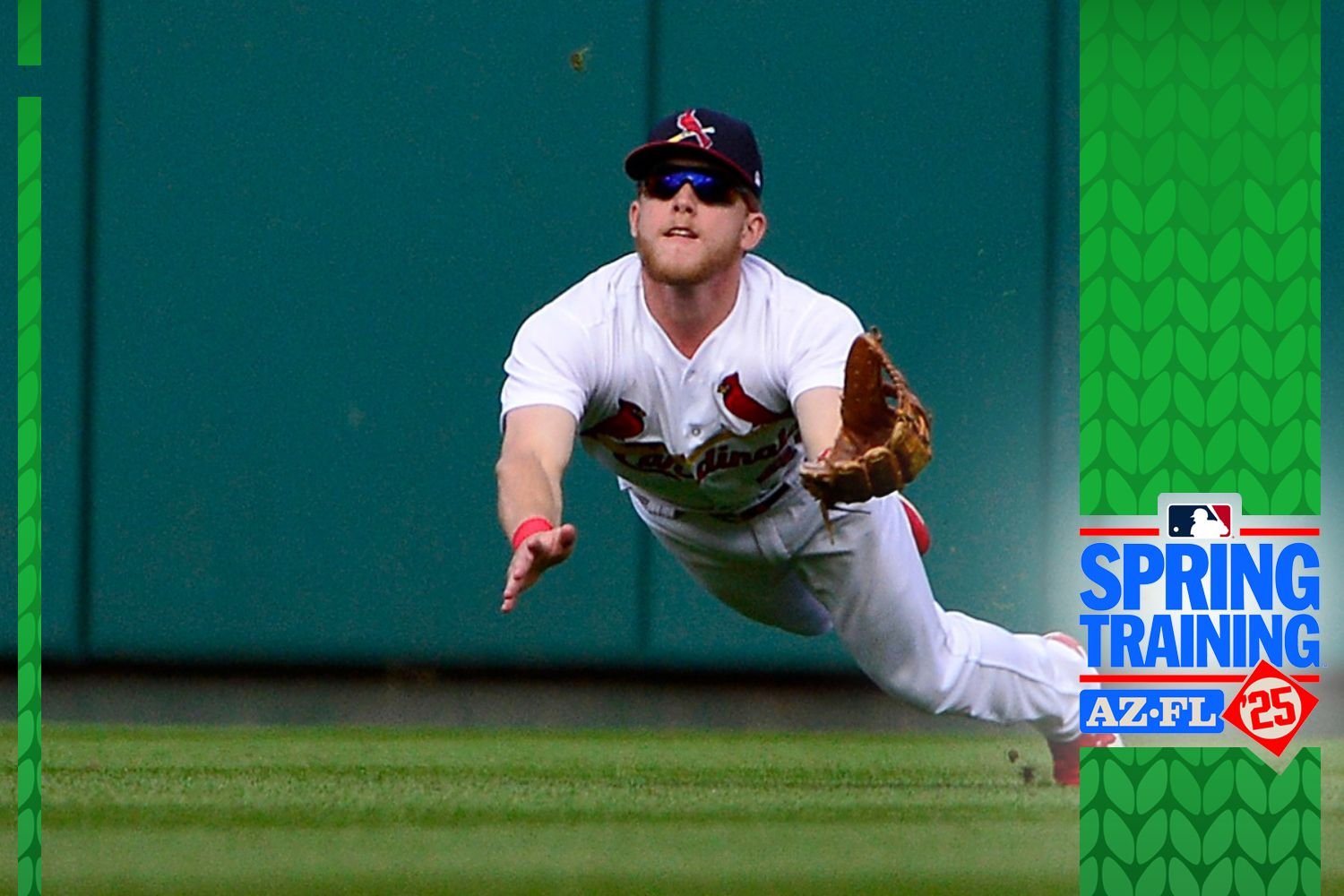
The Twins have a new batch of faces at spring training this year. Who are they? Why are they here? Where did they come from? Here’s your guide. Image courtesy of © Jeff Curry-Imagn Images Armando Alvarez (3B/1B/LF - RH) Alvarez joined the Twins on a minor league contract with an invitation to spring training on January 2nd. He made his MLB debut with Oakland last season but was released in November. He’s primarily played third, first, and second base, but he also saw some time in left field last season. Alvarez figures to be organizational depth at Triple-A St. Paul but could get a cup of coffee under the right (or wrong) circumstances. Harrison Bader (CF - RH) Bader signed the largest free agent contract for the Twins this offseason at $6.25 million guaranteed on February 7th. He’s played for St. Louis, both New York teams, and Cincinnati, winning a Gold Glove in center field in 2021. He figures to be Byron Buxton’s lead backup option and will see some time in the corners, mostly against lefty pitching to spell Trevor Larnach and Matt Wallner. He’s got a mutual option for next year, too, as if that means anything. Diego Cartaya (C - RH) Cartaya was waived by the Dodgers on January 3rd and traded to Minnesota a few days later for Rookie ball pitcher Jose Vasquez. Cartaya was one of the top prospects in baseball as recently as 2022, but his 2023 and 2024 seasons at Double- and Triple-A have been lackluster. He’s on the 40-man roster, but the catcher position is crowded with Ryan Jeffers, Christian Vázquez, and Jair Camargo. If the 23-year-old can get his offense back on track, he can still have a good MLB career and even make the big leagues this season, but his stock is way down. Eiberson Castellano (RHP) Castellano was acquired in the Rule 5 draft from the Phillies organization after winning the organization’s minor league pitcher of the year award in 2024. This means that Castellano will need to remain on the active roster or injured list all season (unless the Twins make a trade for his rights with Philadelphia, at which point they can demote him). He’ll get every chance to prove himself this spring, and if he makes the team, he’ll mostly be used as a long reliever. Danny Coulombe (LHP) Coulombe returned to the Twins on a one-year, $3 million deal on February 7th after spending the last two seasons in Baltimore’s bullpen. Baltimore did not exercise his $4 million option for 2025. Previously with the Twins from 2020 to 2022, he was sold to Baltimore before the 2023 season after the Twins decided that he would not make the Opening Day roster. He’s been an effective lefty reliever since 2020. He slots in somewhere around the middle of the Twins’ bullpen hierarchy and is the only lefty projected to make the team. Mike Ford (1B - LH) Ford is probably the most recognizable name on the Twins’ list of non-roster invitees signed this offseason. He was released by the Reds in May of 2024 and had a brief stint in Japan’s NPB before signing a minor league deal with the Twins on January 2nd. The lefty first baseman has played at the big league level for six different teams, having very good partial years in 2019 for the Yankees and 2023 for the Mariners. The first base spot is in flux right now, and Ford could factor in, somehow, but he’s far down the depth chart right now. Ty France (1B - RH) France will sign a non-guaranteed MLB contract, pending physical, for $1 million if he makes the team out of camp. The Twins do need to devote a 40-man roster spot for the time being, but if he gets cut before the season, the team won’t owe him his salary. Hampered by injury over the past year and a half, he has struggled but might still have some juice in his bat, even if he doesn’t play at his 2021 level. The Twins have a few weeks to parse that out. Mickey Gasper (1B/2B/C - SH) Gasper, for a while, was the Twins’ biggest addition this offseason, having been traded for Jovani Morán from Boston on December 24th. He has experience at catcher, first base, and second base, but he will likely play first base if he gets any opportunity. He made a brief debut with the Red Sox in 2024, but he’s 29, so the time is now. He could factor into the first base and DH mix as a high-OBP switch hitter, and the Twins clearly see something in him. Darren McCaughan (RHP) McCaughan is a right-handed pitcher who has primarily started in the minors but has made spot starts and mop-up appearances in the majors for three different teams, most recently Miami. He signed a minor league deal with Minnesota on December 4th, which includes an invite to spring training. He’ll be depth for the Twins in 2025, though likely only if the pitching staff suffers significant injury or Minnesota’s player development unlocks something for the 28-year-old. Anthony Misiewicz (LHP) Misiewicz is in his eighth organization at age 30, signing a minor league contract with an invite to spring training on January 21st. A lefty with 115 ⅔ innings in the big leagues since 2020, Misiewicz (pronounced similar to Mientkiewicz) figures to be lefty middle relief depth behind Danny Coulombe and Kody Funderburk—the only two southpaw hurlers on the Twins’ 40-man roster. Alex Speas (RHP) Speas is a fireballing right-handed reliever who signed a minor league contract with an invitation to spring training. Only 26, he is already in his sixth organization, but the 2016 second-round pick is one of the more enticing players at Twins camp with a fastball that averages 100 miles per hour, although he’s relied chiefly on a cutter that averages 92 in his four career big league innings. He could be a legit relief option if they figure it out. Huascar Ynoa (RHP) Ynoa signed a minor league contract with an invitation to spring training on December 9th. Twins fans may best remember Ynoa as the 19-year-old traded for Jaime Garcia in 2017. The prodigal son returned after being released in November from Atlanta. He emerged as a solid starter as a 23-year-old in 2021, helping the Braves in their World Series season, but he's missed most of the last three years to injury and may be a reliever from here on, if the Twins even get him healthy enough for that. Let us know which new Twins player interests you the most in our comments below. View full article
-
 Armando Alvarez (3B/1B/LF - RH) Alvarez joined the Twins on a minor league contract with an invitation to spring training on January 2nd. He made his MLB debut with Oakland last season but was released in November. He’s primarily played third, first, and second base, but he also saw some time in left field last season. Alvarez figures to be organizational depth at Triple-A St. Paul but could get a cup of coffee under the right (or wrong) circumstances. Harrison Bader (CF - RH) Bader signed the largest free agent contract for the Twins this offseason at $6.25 million guaranteed on February 7th. He’s played for St. Louis, both New York teams, and Cincinnati, winning a Gold Glove in center field in 2021. He figures to be Byron Buxton’s lead backup option and will see some time in the corners, mostly against lefty pitching to spell Trevor Larnach and Matt Wallner. He’s got a mutual option for next year, too, as if that means anything. Diego Cartaya (C - RH) Cartaya was waived by the Dodgers on January 3rd and traded to Minnesota a few days later for Rookie ball pitcher Jose Vasquez. Cartaya was one of the top prospects in baseball as recently as 2022, but his 2023 and 2024 seasons at Double- and Triple-A have been lackluster. He’s on the 40-man roster, but the catcher position is crowded with Ryan Jeffers, Christian Vázquez, and Jair Camargo. If the 23-year-old can get his offense back on track, he can still have a good MLB career and even make the big leagues this season, but his stock is way down. Eiberson Castellano (RHP) Castellano was acquired in the Rule 5 draft from the Phillies organization after winning the organization’s minor league pitcher of the year award in 2024. This means that Castellano will need to remain on the active roster or injured list all season (unless the Twins make a trade for his rights with Philadelphia, at which point they can demote him). He’ll get every chance to prove himself this spring, and if he makes the team, he’ll mostly be used as a long reliever. Danny Coulombe (LHP) Coulombe returned to the Twins on a one-year, $3 million deal on February 7th after spending the last two seasons in Baltimore’s bullpen. Baltimore did not exercise his $4 million option for 2025. Previously with the Twins from 2020 to 2022, he was sold to Baltimore before the 2023 season after the Twins decided that he would not make the Opening Day roster. He’s been an effective lefty reliever since 2020. He slots in somewhere around the middle of the Twins’ bullpen hierarchy and is the only lefty projected to make the team. Mike Ford (1B - LH) Ford is probably the most recognizable name on the Twins’ list of non-roster invitees signed this offseason. He was released by the Reds in May of 2024 and had a brief stint in Japan’s NPB before signing a minor league deal with the Twins on January 2nd. The lefty first baseman has played at the big league level for six different teams, having very good partial years in 2019 for the Yankees and 2023 for the Mariners. The first base spot is in flux right now, and Ford could factor in, somehow, but he’s far down the depth chart right now. Ty France (1B - RH) France will sign a non-guaranteed MLB contract, pending physical, for $1 million if he makes the team out of camp. The Twins do need to devote a 40-man roster spot for the time being, but if he gets cut before the season, the team won’t owe him his salary. Hampered by injury over the past year and a half, he has struggled but might still have some juice in his bat, even if he doesn’t play at his 2021 level. The Twins have a few weeks to parse that out. Mickey Gasper (1B/2B/C - SH) Gasper, for a while, was the Twins’ biggest addition this offseason, having been traded for Jovani Morán from Boston on December 24th. He has experience at catcher, first base, and second base, but he will likely play first base if he gets any opportunity. He made a brief debut with the Red Sox in 2024, but he’s 29, so the time is now. He could factor into the first base and DH mix as a high-OBP switch hitter, and the Twins clearly see something in him. Darren McCaughan (RHP) McCaughan is a right-handed pitcher who has primarily started in the minors but has made spot starts and mop-up appearances in the majors for three different teams, most recently Miami. He signed a minor league deal with Minnesota on December 4th, which includes an invite to spring training. He’ll be depth for the Twins in 2025, though likely only if the pitching staff suffers significant injury or Minnesota’s player development unlocks something for the 28-year-old. Anthony Misiewicz (LHP) Misiewicz is in his eighth organization at age 30, signing a minor league contract with an invite to spring training on January 21st. A lefty with 115 ⅔ innings in the big leagues since 2020, Misiewicz (pronounced similar to Mientkiewicz) figures to be lefty middle relief depth behind Danny Coulombe and Kody Funderburk—the only two southpaw hurlers on the Twins’ 40-man roster. Alex Speas (RHP) Speas is a fireballing right-handed reliever who signed a minor league contract with an invitation to spring training. Only 26, he is already in his sixth organization, but the 2016 second-round pick is one of the more enticing players at Twins camp with a fastball that averages 100 miles per hour, although he’s relied chiefly on a cutter that averages 92 in his four career big league innings. He could be a legit relief option if they figure it out. Huascar Ynoa (RHP) Ynoa signed a minor league contract with an invitation to spring training on December 9th. Twins fans may best remember Ynoa as the 19-year-old traded for Jaime Garcia in 2017. The prodigal son returned after being released in November from Atlanta. He emerged as a solid starter as a 23-year-old in 2021, helping the Braves in their World Series season, but he's missed most of the last three years to injury and may be a reliever from here on, if the Twins even get him healthy enough for that. Let us know which new Twins player interests you the most in our comments below.
 -
Episode 30: Harrison Bader, Danny Coulombe, Who's Next?
Greggory Masterson posted an article in Podcasts
 Sweet Lou, Comrade Cody, and Ol Gregg have a timely discussion of the Twins two biggest and latest offseason moves, and they ask who might be next, if anyone. Lou asks who needs to be in the best shape of their lives this spring training and tries to Stump the Schoen, Gregg gripes about the Super Bowl, and the gang unveils a new segment. Listen using Apple Podcasts: https://podcasts.apple.com/us/podcast/the-twins-off-daily-podcast/id1741266056 Listen using Spotify: https://open.spotify.com/show/4tb78XlurcPTYYSsARdbD7 Listen using iHeartRadio: https://www.iheart.com/podcast/263-the-twins-off-daily-podcas-167548600/ Listen using Pocket Casts: https://pca.st/nvclbt0w Watch on YouTube: https://www.youtube.com/@twinsdaily
 -
The Twins have rounded out their roster; are there more moves coming? Sweet Lou, Comrade Cody, and Ol Gregg have a timely discussion of the Twins two biggest and latest offseason moves, and they ask who might be next, if anyone. Lou asks who needs to be in the best shape of their lives this spring training and tries to Stump the Schoen, Gregg gripes about the Super Bowl, and the gang unveils a new segment. Listen using Apple Podcasts: https://podcasts.apple.com/us/podcast/the-twins-off-daily-podcast/id1741266056 Listen using Spotify: https://open.spotify.com/show/4tb78XlurcPTYYSsARdbD7 Listen using iHeartRadio: https://www.iheart.com/podcast/263-the-twins-off-daily-podcas-167548600/ Listen using Pocket Casts: https://pca.st/nvclbt0w Watch on YouTube: https://www.youtube.com/@twinsdaily View full article
-
He also created a successful chain of pharmacies. But most people only remember him for the lightbulb.
- 51 replies
-
- 6
-
-

-
- harrison bader
- manuel margot
- (and 5 more)
.png.145b98547a4f5f3190a2dbf047cbcce8.png)

