


Twins Video
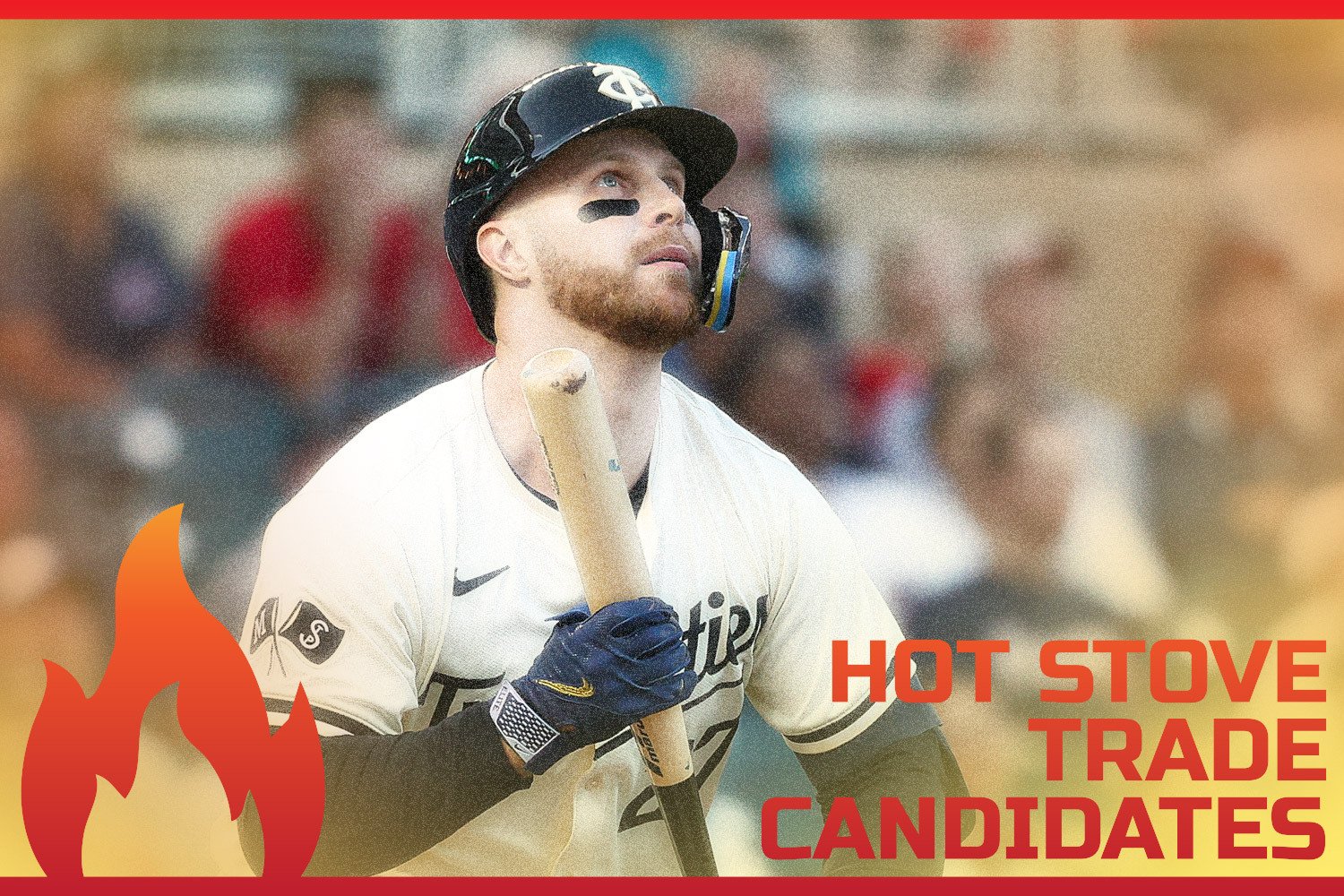
Okay, we can quibble over semantics—yes, Ryan Jeffers did catch one more inning in 2024 than Christian Vazquez. But let me have this hook (Vazquez has caught 150 innings more in total over the last two years in the Twins alternating setup, anyway).
What's Up with Ryan Jeffers
Jeffers just completed his fifth season in a Twins uniform. He’s had his ups and downs both at and behind the plate, but on the whole, he’s averaged out to being a solid big-league starting catcher. Over the first two months of the 2024 season, he was one of the best hitters on the squad, if not the best, boasting an OPS about 50% above league average. However, he spent most of the final four months in a slump, finishing with an OPS+ of 105—league average. Mind you, that’s still pretty good for a catcher and matches his career OPS+ of 103.
Defensively, it seems like Jeffers has lost something. Lauded for his skills as a pitch framer at his debut, the backstop has seen his performance decline year-over-year until he graded out as one of the worst pitch framers in baseball in 2024. He’s never been good at blocking, and 2024 was the only season that he’s been even an average blocker.
And, yet, he’s still a solid, young catcher with a few years of team control.
The Case for Trading Ryan Jeffers
One of the biggest talking points this offseason has been the Twins’ payroll limitations. The club is seemingly already past their own self-imposed spending limit before making a single addition. One of the positions consistently highlighted as a potential target for payroll deductions is catcher. Jeffers and Vazquez are slated to earn a combined $15 million or so in 2025 to split duties (perhaps 50-50) behind the plate. That’s not a terrible sum—unless a team like the Twins is trying to create spending room in any way possible.
It’s almost impossible to discuss the case for trading Jeffers without discussing Vazquez (especially given most of the discourse around trading a catcher has been focused on Vazquez), so I apologize if I repeat the points raised by Brandon Glick in his feature.
Although Vazquez is in the last year of his deal, and Jeffers has been seen as the catcher of the future, the younger backstop has only two years of team control left. That is to say, it’s not like either catcher (barring an extension) is going to be around for the long haul anymore. Jeffers is regarded by most as the more talented catcher, with his offense making up for what he lacks behind the dish compared to Vazquez.
According to MLB Trade Rumors, he’s also due less than half of Vazquez’s salary in arbitration this year, $4.7 million. He’s not a terribly consistent player, but his highs are high, and teams can dream on what he could be in their uniforms to a degree that’s impossible with Vazquez at this stage of his career. And if the Twins want to get value out of dumping one of their starting catchers, not just salary relief, the choice has to be Jeffers.
Note: If you’d like to see an in-depth analysis of how the two compare at the plate (it might be closer than you expect), see Matthew Trueblood’s Offseason Handbook article).
Comparable Trades of the Past
You don’t have to look far to find a case of the Twins trading their popular, bat-first starting catcher with two years of team control left; look no further than 2022. In March of that year, the Twins traded 2020 Silver Slugger catcher Mitch Garver to Texas for shortstop Isiah Kiner-Falefa and pitcher Ronny Henriquez. The trade moved value from a position of surplus (making room for a young Jeffers) to a position of need, as to that point, the team had not signed Carlos Correa to fill their gaping hole at shortstop.
Kiner-Falefa was eventually (and by eventually, I mean the following day) traded to New York in the Josh Donaldson trade, but he turned in a good year for the Yankees. He would have been a solid enough starting shortstop for the Twins had he stayed in town longer than a day. Henriquez has converted to the pen and could be a factor in the 2025 season. Overall, that’s a solid value return, given the squad's needs.
It’s actually pretty difficult to find instances of starting catchers being traded over the offseason. Sometimes, a high-quality catcher will be traded at the deadline if he’s on an expiring contract, as happened with Vazquez himself in 2022 when he was traded for Emmanuel Valdez and Wilyer Abreu, who appears to be a mainstay in Boston’s outfield for years to come. There was also the trade between Oakland, Milwaukee, and Atlanta in which All-Star catchers William Contreras and Sean Murphy were swapped, but that’s an exception to the rule.
In 2019, after a good year behind the dish, Seattle flipped Omar Narvaez to Milwaukee for a middling pitching prospect and a second-round compensation pick? Mike Zunino—with two years of arbitration remaining—was part of a package that brought back Mallex Smith and Jake Fraley? I don’t know, I’m grasping at straws here for other examples. Starting-caliber catchers tend to get traded early in their big league career, right before they debut, or on an expiring contract. There’s little precedent for a trade like this, but this series aims to prime readers for what could happen and why.
Potential Trade Partners
One of the factors that makes a Jeffers trade difficult is that “starting catcher” isn’t a general need. Most teams have one, and if you already have one, what’s the point of getting another unless your owner is feeling generous *cough*?
However, a handful of playoff contenders don’t have great catching cores at present, which could give the Twins a lane to close a deal.
San Diego Padres
San Diego was one of the best teams in baseball this year, but its catching room leaves a lot to be desired. Their former catcher of the future, Luis Campusano, has not impressed over his early career on either side of the ball, outside of a productive 49-game season in 2023. Their top prospect, catcher Ethan Salas, still projects to need at least another year before cracking the big league roster.
Jeffers could be an option to hold Salas’s spot warm and would slot in well amid one of the most exciting lineups in baseball. The Padres have a shallow farm system, but a return package could include Campusano himself amid other prospects or big-league talent if the Twins see a way to get his young career back on track.
Boston Red Sox
Boston is coming off a mediocre year, but if they’re looking to compete in 2025, catcher could be a spot they try to upgrade at. Like San Diego’s Salas, Boston also has a high-profile catcher nearing MLB readiness in Kyle Teel. Their current everyday catcher, Connor Wong, is a 28-year-old coming off his best season at the plate, though he was one of the worst defensive catchers in baseball, and Boston could seek an upgrade in the interim.
If they were to take a liking to Jeffers, he could serve as a stopgap and split duties with the prospect Teel, protecting the younger player from tough lefties. Boston has a very healthy farm system and can deal from that surplus to improve in 2025 and 2026.
Tampa Bay Rays
Dealing with Tampa is always fun, and no team has ever regretted trading with Tampa! Hey, put away the Delmon Young Trade Tree. I’m still updating those numbers!
Tampa is a bit of a wildcard, coming off their worst season in seven years, but they’re always a factor and have never shied away from unorthodox trades. They currently have a bunch of catchers who swing limp pool noodles, including former Twin Ben Rortvedt, so Jeffers could find work—if they’re willing to open their pocketbooks. Tampa, like Boston, has a great farm system, so it’s a possibility.
The Field
I mean, I’m sure there is a bevy of competing teams who won’t necessarily turn down the option to add Jeffers to their roster. If a team really likes him and wants to pair him with who they’ve already got, even in a timeshare like that he’s been part of throughout his entire career in Minnesota. So if an owner is feeling generous, a Jeffers trade could be, well, almost anywhere.
Conclusions
As I’ve stated, there isn’t a ton of precedent for this type of trade. There aren’t many competing teams that you can circle and say, “This team absolutely needs Ryan Jeffers.” But he is an asset; he has a couple of years of team control, and he’s inexpensive. If the team needs to move one of the two catchers for payroll reasons, and they want to get something of value in return, the move is Jeffers, though it may not hurt as much as we might initially believe.








Recommended Comments
Create an account or sign in to comment
You need to be a member in order to leave a comment
Create an account
Sign up for a new account in our community. It's easy!
Register a new accountSign in
Already have an account? Sign in here.
Sign In Now