


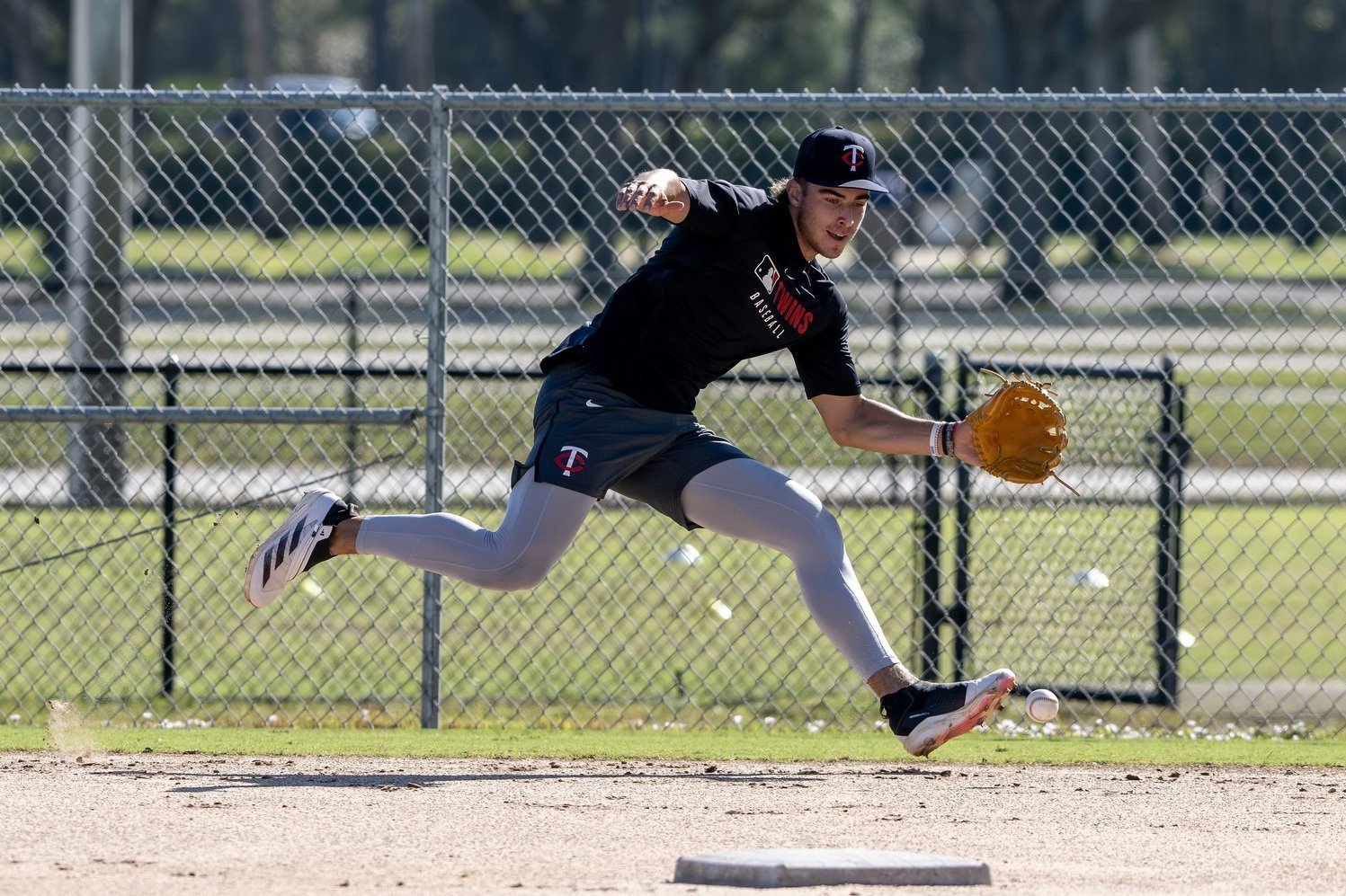
Twins Video
There are certain prospects who force their way into the conversation before the industry is quite ready to include them. Marek Houston might already be one of those players.
When the Twins selected Houston in the first round, the selling point was obvious. He was the best defensive shortstop in his class and arguably one of the safest bets in the entire draft. What has changed since then is not the glove. That has only become more convincing in pro ball. What has changed is the discussion around how real the bat might be, and that is where top-100 status starts to come into play.
If the defensive grades are even close to accurate, it becomes difficult to ignore the broader profile. Houston looks like a legitimate plus defender at shortstop with the instincts, range, and internal clock that separate good fielders from elite ones. Watching him handle the position in his first taste of pro ball only reinforced that belief. There are not many minor-league shortstops who move the way he does, and it would not be surprising to see him competing for Gold Gloves at the highest level someday.
That type of defensive foundation gives him a remarkably high floor. It also means he does not need to be a star offensively to provide significant value. But the reason he is creeping toward top-100 conversations is that there are signs he might be more than just a good glove.
The offensive profile is where opinions start to split. Skeptics see a contact-oriented hitter without much impact, someone who might top out as a bottom-of-the-lineup bat. That concern is not unfounded. His professional debut showed flashes of that reality. He dominated Low-A pitching with a .370 average over a dozen games, then hit a wall after a promotion, batting just .152 in High-A.
Even within those struggles, there were encouraging signs. His approach remained steady. He controlled the zone, made consistent swing decisions, and did not look overwhelmed. Those traits tend to translate. What lagged behind was the impact. The exit velocity data did not jump off the page, and the lack of power production will remain the biggest question hanging over his profile.
Still, there is a case to be made that the offensive arrow is pointing up. Houston’s track record at Wake Forest suggests real growth. He went from a light-hitting freshman to a middle-of-the-order force as a junior, posting a 1.055 OPS with 15 home runs while matching his walk and strikeout totals. That kind of year-over-year improvement is not accidental. It speaks to adjustments, work ethic, and the ability to translate coaching into results.
The Twins are now trying to build on that foundation. Houston has already begun refining his swing path to create better contact quality without sacrificing the approach that makes him unique. There is also an expectation that added strength could unlock more consistent damage. His max exit velocities and physical projection leave just enough room for optimism.
In his first nine games of 2026, he went 11-for-38 (.289 BA) with four total extra-base hits, including two home runs. His walk rate increased by 2% with an .883 OPS and a 137 wRC+. Houston is also doing most of his damage against older pitchers, where he had a .937 OPS. That is where the top-100 case starts to form.
An elite defensive shortstop who controls the strike zone and has shown the ability to make offensive adjustments is a valuable player. If Houston proves he can be even an average hitter with modest power, the overall profile becomes incredibly appealing. That combination often lands comfortably inside top-100 lists, especially given how quickly a player like that can move. Right now, he feels like a player on the edge of that group rather than firmly inside it.
To take the next step, the checklist is fairly clear. He needs to show that the High-A struggles to end last season were more about adjustment than limitation. That means producing more consistent contact quality, driving the ball with authority, and proving that the power gains from his final college season can carry over into pro ball. He does not need to hit 25 home runs, but he does need to make enough noise to keep pitchers honest.
If that happens, the conversation changes quickly. Houston already looks like a big league shortstop defensively. That part is not in question. What will determine whether he is simply a useful player or a cornerstone-type prospect is what he becomes in the batter’s box. Given his track record of improvement and the ease with which he plays the game, betting against him making those adjustments feels risky.
By the end of this season, it would not be surprising if the rest of the industry starts to catch up to what is already becoming clear. Marek Houston is closer to the top 100 than many might think, and he has a real chance to make that jump sooner rather than later.
Is Houston on his way to being a top-100 prospect? Leave a comment and start the discussion.
Which team do you dislike the most in the AL Central?
Interested in learning more about the Minnesota Twins' top prospects? Check out our comprehensive top prospects list that includes up-to-date stats, articles and videos about every prospect, scouting reports, and more!
View Twins Top ProspectsFollow Twins Daily For Minnesota Twins News & Analysis



- Wedman13, mikelink45, Patzky and 7 others
-
 10
10


Recommended Comments
Create an account or sign in to comment
You need to be a member in order to leave a comment
Create an account
Sign up for a new account in our community. It's easy!
Register a new accountSign in
Already have an account? Sign in here.
Sign In Now