


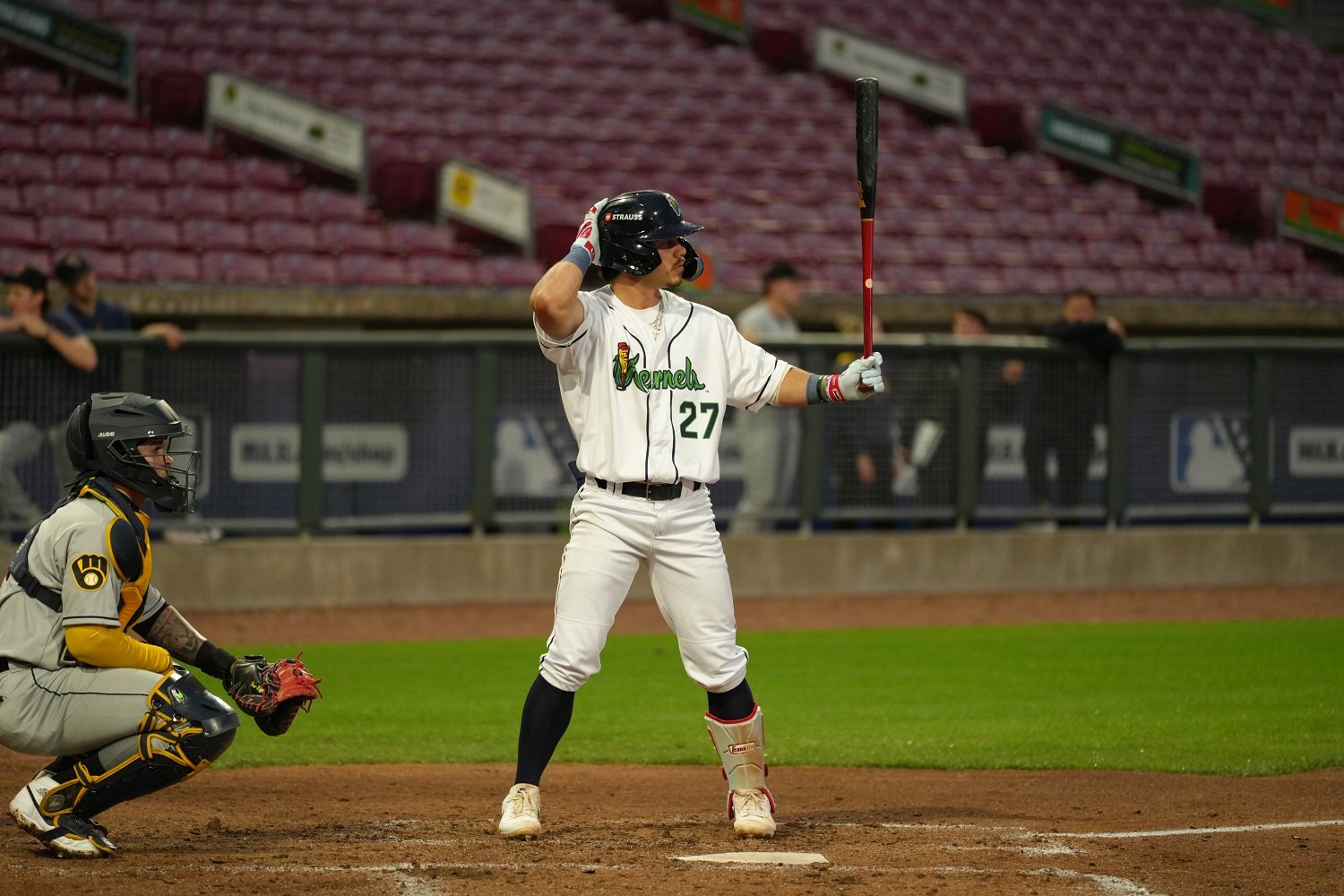
Twins Video
Kyle DeBarge has quietly emerged as one of the Minnesota Twins’ most intriguing young bats, following a familiar developmental path walked most recently by breakout infielder Luke Keaschall. The Twins selected DeBarge out of Louisiana-Lafayette in the supplemental first round (33rd overall) of the 2024 MLB Draft. He signed for just under $2.4 million and was immediately tested in Low‑A Fort Myers, where he showed flashes of the same contact prowess and speed that defined his collegiate career.
In 26 games with the Mighty Mussels, he posted a .235/.322/.343 slash line with six extra‑base hits, and swiped 15 bases. Rewarded with a promotion to High‑A Cedar Rapids to begin 2025, he's taken to Iowa like a fish to water. He's batting .273/.367/.455, with eight extra‑base hits, 10 stolen bases, and a solid walk‑to‑strikeout ratio (12 walks vs. 15 punchouts) in 18 games. This performance is even more impressive, given that 80% of his plate appearances have come against pitchers older than him.
The Twins selected DeBarge, in large part, based on his advanced feel for the strike zone and ability to make consistent contact against more polished competition. He's translated those skills to the professional ranks nicely. Like Keaschall, DeBarge’s defensive flexibility (capable of playing both infield and outfield spots) and strong baserunning add layers to his profile, making him a candidate to be Minnesota’s next breakout bat.
Tools and Approach Changes
DeBarge’s offensive profile centers on an advanced, contact-oriented approach. He rarely chases pitches out of the zone. He also maintains one of the lowest swing‑and‑miss rates among his prospect peers. Last season, he had a 24.1% strikeout rate in his professional debut, but he's dropped that to 16.7% in 2025. He’s done this while also increasing his walk rate by more than three percentage points.
His twitchy hands and flat swing generate gap power, and there have been signs of a makeover in his mechanics. DeBarge is pulling the ball significantly more this season, with a 13.4 Pull% increase compared to last year. He’s also hitting the ball more regularly in the air, with his fly-ball rate increasing from 24.6% to 39.3%. This has helped him post a .386 wOBA and a 131 wRC+ to start the year. It’s been a small sample, but these are positive signs of his long-term prospect development.
“I feel like I’m making adjustments at the plate and some stuff has definitely helped,” DeBarge said. “Tightening up my approach, just swinging at the pitches I can hit. Defensively, just been working hard on that, too. Clean up the kind of like dumb errors, make the plays that you really should make all the time. It’s just making sure I’m making those. I feel really good right now."
What sets him apart is a blend of plus speed and defensive adaptability. He’s capable of manning both middle‑infield and outfield spots, allowing the Twins to maximize his skill set the same way they did with Keaschall. This versatility, combined with his threat on the bases, creates a balanced contributor who can use his college experience to move up the organizational ladder.
Following in Keaschall’s Footsteps
Keaschall’s meteoric rise provides a clear blueprint for DeBarge. He had a swift ascent through the Twins’ system and a willingness to embrace multiple positions. Keaschall’s blend of on‑base savvy, athleticism, and defensive flexibility allowed him to carve out a role in Minnesota’s lineup sooner than most.
DeBarge mirrors that trajectory, showcasing an elite hit tool in college (1.112 OPS in 2024) and already passing key developmental milestones in his first full professional season. If his early promise in Cedar Rapids holds and he continues to perform well against older competition, the Twins may soon have a young, high‑floor contributor in the mold of their other breakout bats.
Outlook and Next Steps
With his ceiling initially defined by hit‑for‑average potential and plus speed, DeBarge’s focus moving forward will be on generating consistent extra‑base power and honing the mechanics needed to drive the ball in the air more frequently. Minnesota’s development staff has encouraged him to maintain his strike‑zone discipline while adding loft to his swing, a refinement that could transform gap doubles into occasional home runs.
Defensively, continued reps across multiple spots will both raise his floor and accelerate his timeline. He has seen less time at shortstop this season, but continues to play second base and outfield. Should he maintain his current trajectory, DeBarge could find himself at Double A in the season’s second half, which could put him on a path to debut in 2026.
“He’s a gritty, gritty baseball player,” said Kernels Manager Brian Meyer. “Just all-around talented: defense, hitting, can run the bases really well. He’s a gamer, an absolute gamer. One of those kids who you are glad he’s on your team. If he was on the other team, he’s just a pain in the butt to deal with."
What stands out about DeBarge so far this season? Can he continue to follow in Keaschall’s footsteps? Leave a comment and start the discussion.
Which team do you dislike the most in the AL Central?
Interested in learning more about the Minnesota Twins' top prospects? Check out our comprehensive top prospects list that includes up-to-date stats, articles and videos about every prospect, scouting reports, and more!
View Twins Top ProspectsFollow Twins Daily For Minnesota Twins News & Analysis



- Jack, glunn, nclahammer and 7 others
-
 10
10



Recommended Comments
Create an account or sign in to comment
You need to be a member in order to leave a comment
Create an account
Sign up for a new account in our community. It's easy!
Register a new accountSign in
Already have an account? Sign in here.
Sign In Now