Jump to content
Twins Daily
  • Create Account

Recommended Posts

Posted

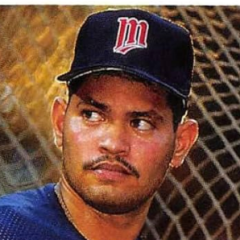
Steve Braun was a Twins player in the 1970s who would go on to greater personal and team success elsewhere in a long Major League Baseball career. Baseball Reference’s Bullpen page wrote, “Steve Braun played 15 seasons in the Major Leagues and ended his career as one of the more successful pinch hitters in history.” Let’s take a deeper look at Mr. Braun.

Stephen Russell Braun was born May 8, 1948, in Trenton, New Jersey. He was the oldest of nine children. The family loved all sports. Steve’s first love was basketball, but it was baseball at which he would excel.

The Minnesota Twins chose Steve Braun in the tenth round of the 1966 Major League Baseball June Amateur Draft from Hopewell Valley Central High School in Penington, New Jersey. He played two seasons in the minor leagues before being drafted into the United States Army during the Vietnam War, where he was stationed in Germany. Around that time, he obtained and studied a book called The Science of Hitting by Ted Williams. Braun said the book helped him develop into the hitter he became; after missing the entire 1968 while in the service, Braun returned to minor league baseball for 1969 and 1970.

Braun’s first spring training was in 1971. Multiple sources talk about the wonderful welcome he received from Harmon Killebrew. Harmon was down to earth and told Braun he would do fine. This relaxed the young player to the point that he had a tremendous spring and made the Twin's Opening Day roster despite never having played above Class A. He debuted in the majors on April 6, 1971. The 5-foot 10-inch, 180-pound Braun pinch hit in the seventh inning on Opening Day but grounded into a fielder’s choice as the Twins lost to the Brewers, 7-2.

After being used as a pinch hitter in his first five career games, Braun finally got his first start and first hit on April 16, 1971, against Dave LaRoche of the Angels. The Twins lost 4-1. Braun hit his first home run in a 10-1 Twins shellacking of the Oakland A’s on May 21. The home run was against pitcher Darold Knowles in the ninth inning. Braun followed that with another homer the very next day off Hall of Famer Catfish Hunter.

Braun was a left-handed hitting and right-handed throwing player who contributed mainly as a third baseman and left fielder but was versatile enough to log innings at all positions except catcher and pitcher. Later in his career, he was almost strictly a pinch hitter.

Braun scored a fair number of runs during his time in the Twins uniform because of his excellent on-base skills. In 1975 and 1976, Braun finished in the top ten in the American League in On-Base Percentage. In his six seasons in Minnesota, he walked more times than he struck out in five seasons. The only exception was his rookie season in 1971.

In 1977, two expansion teams were added to the American League. Seattle chose Braun from the Twins in the expansion draft, making him their primary left fielder. Braun had asked to be exposed to the draft because he was sick of Twins tightwad owner Calvin Griffith. He was a replacement-level player for the Mariners for a season and a half before being traded to the Kansas City Royals, where he played for parts of three seasons. The Royals released him in June of 1980, but he was quickly picked up by the Toronto Blue Jays, where he finished the 1980 season. That offseason, Braun reached free agency and signed with the St. Louis Cardinals and his former Royals manager Whitey Herzog who was now leading the Cardinals. He would play five seasons in St. Louis to finish his career. 

By this point, Braun was almost exclusively a pinch hitter and had accepted that role. Pinch hitting was a valuable skill set in the National League, at least in those days prior to the universal designated hitter, because of opportunities provided by frequent double switches. Braun was noted for his determined preparation as a pinch hitter. He studied the opposing pitchers endlessly – not just starters, but the relievers he would likely face. After struggling a little in 1981, Braun hit his stride with three straight seasons with an OPS+ over 104. Braun was part of the 1982 World Series Champion St. Louis Cardinals alongside another former Twin, Jim Kaat. 

Braun appeared in three 1982 World Series games. His biggest and most lasting contribution was during a 5-4 Cardinals win in game two. In a tie game in the eighth inning, Braun pinch-hit for David Green with the bases loaded. Braun’s walk against Pete Ladd drove in the decisive run in the Cardinals' victory. That win evened the series after the Brewers clobbered the Cards 10-0 in the opening game. In game seven, Braun’s single drove in an insurance run in the eighth inning for the final run of a 6-3 Cardinals win. Safe to say, he didn’t win the World Series for the Cardinals, but he contributed to a couple of big wins in the hard-fought seven-game series to make St. Louis kings of the baseball world in 1982.

Braun played three more seasons in St. Louis, mostly used as a pinch hitter. His final regular season game was on October 6, 1985. But that was not the end, as the Cardinals advanced to the National League Championship Series and ultimately the World Series against a former team and intra-state rival, Kansas City Royals. He provided neither a hit nor a walk in his two appearances in the NLCS. He grounded out in games two and six. Late in the sixth game, Braun’s teammate, Jack Clark, hit a three-run home run in the top of the ninth to send the Cardinals to the World Series.

The Cardinals appeared on their way to winning their second World Series in four seasons. They were winning game six, which would have been the series clincher, but the ill-timed incorrect call by Don Denkinger at first base with the leadoff hitter Jorge Orta started a series of unfortunate events. His blown call jump-started the Royals, who won and forced a game seven, where they whipped the Cardinals 11-0. Braun’s only 1985 World Series appearance would occur as a pinch hitter in the blowout seventh game. He flew out in the seventh inning of a game that was already out of hand. He missed his shot at a second World Series victory. 

Steven Braun put together a lengthy, 15-year major league career. His final batting line was .271/.371/.367. One hundred points of isolated discipline! That’s a lot of walks. He walked more times than he struck out, 579 to 433. He had 52 home runs and 388 runs batted in. He amassed a career WAR of 17.4 and an OPS+ of 109. In his first seven seasons (six of which were with the Twins), he had at least 402 plate appearances. But then there was a shift in his usage. He transformed into almost a full-time pinch hitter in his last eight seasons, rarely playing in the field. His ability to draw walks was a huge part of his pinch-hitting success, but he could also hit. His 113 pinch hits are the 12th most in Major League history. Braun definitely made the most of his talent and opportunities.

After his playing career, Braun carved out a second career as a coach in the Cardinals, Red Sox, and Yankees organizations. He later ran his own hitting school in his Trenton, New Jersey hometown.


What are your memories of Mr. Braun and the 1970s Twins? Please consider checking out my previous entries at Remembering Random Twins.

[Sources include www.baseball-reference.com, www.fangraphs.com, and www.sabr.org]


View full article

Posted

Great article.  I remember when Steve Braun came up in 1971.  Bob Allison was doing color commentary on WTCN Channel 11. Bob was overly excited about Steve's prospects, called him Stevie Wonder!  Bob had just retired after the 1970 season and his uniform #4 was reissued to Braun. 

Joining Bob in the booth was Frank Buetel doing play by play. Halsey Hall would join them for a few innings leaving the radio booth.  There were less than 50 games televised in those days.  

Posted

My favorite non-star from the Twins lineup back in the 70s.   Even though by the standards of the time I knew he was an effective player because he got on base and don't forget he was a versatile (but probably not great) positional player that played just about every position.

One of the reasons I loved Bill James' analysis from the first time I read his material in 1982 was it laid out things I always suspected.   Baseball people owe a huge debt to Bill James for opening up a whole new world in this game.

Create an account or sign in to comment

You need to be a member in order to leave a comment

Create an account

Sign up for a new account in our community. It's easy!

Register a new account

Sign in

Already have an account? Sign in here.

Sign In Now
The Twins Daily Caretaker Fund

You all care about this site. The next step is caring for it. We’re asking you to caretake this site so it can remain the premier Twins community on the internet.

×
×
  • Create New...