Jump to content
Twins Daily
  • Create Account

Berardino: Suzuki on Stats


Seth Stohs

Recommended Posts

Posted

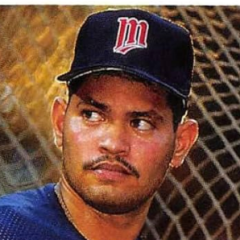
At Pioneer Press, Mike Berardino chatted with Twins catcher Kurt Suzuki for an article showing why he is still wary of advanced statistics, particularly the defensive ones.


Here is the article.

Here are some additional Outtakes from Berardino's conversation with the catcher.


I find it interesting. These guys are being bombarded with numbers. Probably way too many numbers for their own good. They should probably show some interest, but I personally don't care which ones they know, don't know, don't care about, etc. I also don't care if they know what they mean. Their job is to play. The manager and front office and coaches need to worry about the numbers. That's not to say that they can't look at them and work with the coaching staff to try to improve certain areas. 


I just find the discussion interesting. I personally miss the days of pitchers really working and earning some strike zone expansion. The human element is there. 

Posted

So, he wants different rules for different people? Ugh. Every player should get balls and strikes called according to the rules, not their tenure. I find his opinion very odd. should a great chess player get to play by different rules? Should a tennis player get balls she clearly hit out, called good, because she is a veteran player playing against a rookie player?


I don't miss the human element at all. The human element is the players, not the umpires having teams play by different rules. That's not even close to a fair competition.


And, I find it funny Seth and Suzuki are arguing for the human element, and against framing as a skill.........

Posted

Some thoughts:


For most things we are able to do today, some relatively simple and that we take for granted, there was a time when someone said 'You can't do it'.


Because people don't believe something is possible, doesn't mean it isn't.


This quote: '"I think you earn your stripes," Suzuki said. "I think as a rookie, you shouldn't get the same calls as a Torii Hunter or a Joe Mauer. Guys like Torii and Joe, they shouldn't have that borderline pitch called on them. It's that respect factor. That's just how it should be.'--this quote is ridiculous.  Everyone should have the same guidelines.  This is old school poppycock nonsense.  Not only does it say some batters should have different strike zones than the others, it also says pitchers should only get calls against certain batters and not others.  HEY what if it's a veteran pitcher and a veteran hitter? Who gets the benefit of the doubt? or does the world just explode?


Posted

I'm also not sold on defensive metrics or pitch framing as when I watch games there does seem to be a rather sizable human factor still at play, but perhaps I've just watched Joe West too often.


However when Suzuki decries that there is actually a defined box for the strikezone now, and he laments the fact that vets don't get better calls than rookies, then he is saying that any human element in the calls can be calculated and he is in fact making the arguement that pitch framing statistics are legit.


Suzuki doesn't realize that he is contradicting himself; it does tend to make his disagreements quite a bit less credible.

Posted

The outtakes article is a bit less damning of Suzuki - after reading that he obviously understands that pitch framing is a real thing. He makes a good point though, that the pitcher's performance should somehow be included in determining pitch framing.

I think that a pitcher that can't consistently hit his catcher's target gets fewer strikes called than a guy that can throw a pitch that moves a glove more subtly.

My guess (without asking anybody) is that horizontal glove movement is more noticeable to the plate umpire than vertical movement. I'd be interested to see some data on pitches that break to the left or right vs pitches that mostly have downward break.


Posted

If any are interested the best source for catcher numbers (not just framing) is BP. BP data also factors in pitch count and evaluates ability to limit passed balls/wild pitches.


http://www.baseballprospectus.com/sortable/index.php?cid=1819124


Go back and look over the years. You will notice the range from top to bottom is much smaller now. In 2011 it was 60 runs. The season isn't over yet but today it is 24 from top to bottom. It probably will end around 30.


Catchers and teams have studied video and improved. Umpires have studied video and improved. Some guys that couldn't improve are no longer catching. The shocking difference between Molina and Doumit as the studies first appeared no longer exist among catchers. The competitive advantage gained or lost isn't nearly as significant.

Posted

Ironic that his catcher ERA was higher than the players he competed with at previous stops.....


"catcher wins and losses"......uhhhh, what? So if he's catching a game where the pitcher gives up 5 runs in 5 innings, but his team scores 10 runs, the pitcher and catcher did something good?


He was doing great until the last few questions, then he ...... wasn't so great.

Posted


I'm also not sold on defensive metrics or pitch framing as when I watch games there does seem to be a rather sizable human factor still at play, but perhaps I've just watched Joe West too often.


However when Suzuki decries that there is actually a defined box for the strikezone now, and he laments the fact that vets don't get better calls than rookies, then he is saying that any human element in the calls can be calculated and he is in fact making the arguement that pitch framing statistics are legit.


Suzuki doesn't realize that he is contradicting himself; it does tend to make his disagreements quite a bit less credible.


yeah - there's a clarification missing from the quotes. I'd love to ask a follow up question about what he means about getting certain calls. It's implied that he's saying that pitches that are borderline should favor the side of the veteran player.


If I give Suzuki the benefit of the doubt, I'm assuming he means if it's a pitch that is close to being call one way or the other, it should favor the player that has had experience and judgement to know the difference. Can't say I agree with that, but it's a bit less nonsensical.


Molitor, on the other hand,  had a statement early in the season that he hates the term "borderline pitch" - he has said that a pitch is either a strike or a ball, the job of the umpire is to know the difference.  

Posted


Ironic that his catcher ERA was higher than the players he competed with at previous stops.....


"catcher wins and losses"......uhhhh, what? So if he's catching a game where the pitcher gives up 5 runs in 5 innings, but his team scores 10 runs, the pitcher and catcher did something good?


He was doing great until the last few questions, then he ...... wasn't so great.

Unfortunately, Suzuki doesn't "catch to the score" like Jack Morris allegedly pitched to it.

Posted

Also, this line from Berardino: What about the human element that baseball had always worked so hard to protect in the century before replay review and pace-of-game clocks?


I'm not sure anyone really "worked so hard to protect" the human element so much as some people don't like change and fear technology.  There used to be only one umpire, then two for quite awhile.  More were added to help fix human error as were hand held pitch counters, defined baselines from home to 1st and from 3rd to home, foul poles, less restrictive umpiring gear and pre-determined and unique stadium ground rules.  The game has always been coming up with new ways to reduce human error. Using computers looks to be a whole different tool, but it's really not.

Posted

The great part about the human element is humans adapt. Umpires and teams have worked hard to improve. The metric pointed out a competitive advantage that was relatively unseen. Once realized, humans did the work to reduce that advantage significantly. There is value in the metric. There is value in the human response to the data.

Posted


The great part about the human element is humans adapt. Umpires and teams have worked hard to improve. The metric pointed out a competitive advantage that was relatively unseen. Once realized, humans did the work to reduce that advantage significantly. There is value in the metric. There is value in the human response to the data.


Yup.......a great example of how market inefficiencies are destroyed by public information.

Posted

I also noted that discrepancy, that if (newer?) umpires are calling strike zones more consistently, then pitch framing might have less importance.


I'm also interested in Suzuki's pitch calling. Seems like the Twins are near the bottom in allowing 0-2 pitches to be put in play. Our bullpen is at the bottom in strikeout rate. When Eddie Rosario came up, he seemed to have a very good eye for balls and strikes--until the count ran 3-2, at which point he swung at anything. And the opposing pitcher took advantage of that. Do we keep a book on opponents like that, and does that information get communicated all the way through to the pitcher when he's on the mound? I also wonder if the bullpen coach has that type of data during the game.

Posted

There are unique factors, including a human element, in all sports. But, generally speaking, if a ball goes through a hoop in basketball, it goes through, and there is no debate. If a ball crosses the goal line in football, it's a touchdown. If a ball is hit over the fence in baseball, it's a homerun.


I think the best correlation where the "human element" comes in to play would be the calling of balls and strikes in baseball vs calling a penalty in basketball or football. (baseball has little in the way of a "penalty" that can ever be called) A borderline ball/strike call is akin to pass interference in football, or possibly a charge call in basketball. The rules may be defined in black and white, but the interpretation of those rules can vary from umpire/referee to umpire/referee. It is inefficient and maddening at times. But one person's mild hand check, "gotta let 'em play some" is another person's pass interference. 


But other than the leagues themselves doing a better job of explaining, detailing, and supervising those who supervise, how else can you find better consistency? There will always be error, there will always be interpretation and angles to consider.


In baseball, I absolutely DO NOT agree in different rules for different players, regardless of star status or tenure. (just as I don't buy an NBA all-star always getting the blocking foul, etc.) But what I can understand, if not necessarily get behind fully, is a borderline call. If an umpire sees a pitch that is borderline, he MUST make a decision. He can't call "close" and have a do-over. So if you have a pitcher who hits that mark, hits it again, hits it again, I can see where the pitcher "gets the call". Likewise, I think if a batter lets a borderline pitch go by, and said batter has a reputation for a great eye, I can see the umpire nudging his decision with a little "helping" influence from the batter. Again, there is always going to be some human element involved with these calls.


But different rules, stretching or shrinking a zone for a veteran player, calling a strike because a veteran catcher has a reputation for framing, absolutely not! The umpire should be neutral, and he should be educated, and he is paid to be a professional and make a decision. An accurate one.

Posted

I'm also curious about velocity on throws to bases and throwing behind runners. It doesn't seem like Suzuki's throws have much zip, though I could be wrong. I also can't recall the last time Suzuki picked off a base runner (haven't followed all the games, I'm sure it's happened, etc etc)


Suzuki does have some great intangibles, but do they balance out his slipping skills? Though I admit that's more of a question for the front office than Suzuki and not in the scope of this article.

Archived

This topic is now archived and is closed to further replies.

The Twins Daily Caretaker Fund

You all care about this site. The next step is caring for it. We’re asking you to caretake this site so it can remain the premier Twins community on the internet.

×
×
  • Create New...