



Jamie Cameron
-
Posts
1,341 -
Joined
-
Last visited
-
Days Won
4
Content Type
Profiles
News
Minnesota Twins Videos
2026 Minnesota Twins Top Prospects Ranking
2022 Minnesota Twins Draft Picks
Minnesota Twins Free Agent & Trade Rumors, Notes, & Tidbits
Guides & Resources
2023 Minnesota Twins Draft Picks
The Minnesota Twins Players Project
2024 Minnesota Twins Draft Picks
2025 Minnesota Twins Draft Pick Tracker
2026 Minnesota Twins Draft Tracker: Picks & Bonuses
Forums
Blogs
Events
Store
Downloads
Gallery
Everything posted by Jamie Cameron
-
A few musings from the comment on a great writeup from Jeremy: - Draft pool bonus for moving up in the lottery is amazing. The Twins essentially get enough additional funds to sign a Comp A player, that's a pretty legit caliber prospect. -Big fan of this big picture with 4 top 100 picks. The way I have heard it recently presented is a group of 7-8 guys at the top starting to separate, then great depth in 20-35 and generally through round 4. That's a great place to be for the Twins. -Also wouldn't be surprised if Dollander was available. There's also a GREAT group of college pitchers in the 30-45 range on the consensus board (Kuehler, Witt, Watts-Brown, Sproat etc.). I think the Twins will stick with their trends (bats through round 2-3, then college arms). -For the teams ahead. I think Crews, Skenes are trending 1-1 and 1-2. Detroit has alternated prep and college guys with their most recent 1st round picks, but their college players have struggled (Tork, Mize to injury). Rangers have gone college the last 4 years. -Finally, getting more excited about the two prep guys (Clark and Jenkins). Their both GREAT prospects. There's some anti-prep bias because their season can lag (Clark got started like 2 weeks ago) and the Twins model pushes them college. Prep bats I'm much better with than prep arms. -I think the Twins are adding multiple great prospects in the draft. It's a really deep class. Can't wait to nerd it up with y'all along the way.
-
Absolutely! I'm sure there are a ton of non social media opportunities to do this, to cater to all folks. Great point.
- 52 replies
-
- 2
-

-
- rocco baldelli
- derek falvey
- (and 1 more)
-
How Can the Twins Communicate More Effectively About Player Injuries?
Jamie Cameron posted an article in Twins
 I want to talk about injuries. They derailed a solid-if-not-spectacular Twins squad in 2022. Minnesota was reduced to trotting out a quad-A lineup for the last month of the year as the season sputtered to an anticlimactic close. I’d argue, though, that the reaction of Twins fans to injury news was disproportional even for a fanbase that can careen toward toxicity at the best of times. There are factors that underpin that, some the Twins organization can control, some they can’t. In this piece, I’ll try and highlight those tensions, and propose reasonable, easily implementable solutions the organization could implement in 2023. Before digging into a topic that can be contentious, I want to be clear about some things I’m not advocating for. I don’t think the Twins owe fans anything regarding player timelines as they recover from injury. I also want to acknowledge that players suffer setbacks. That’s normal, and it’s never going to change. Despite some of the worst injury luck going last year, I have a contention: the Twins organization does not yet have consistent and proactive systems and structures in place to communicate about player injuries. Let’s lay out the challenges, and propose some solutions. Problem: No One Owns Communication Regarding Players Injuries To my limited knowledge, the Twins don’t have an owner of injury communication. There’s no one person with whom injury updates sit. Rocco Baldelli often gives injury updates in pre and postgame press conferences. It’s natural for reporters to ask injury-related questions after the game (it’s news/proximity to the event). I’m not suggesting Baldelli never communicates about injuries, more pointing out that it’s clearly an area of his media responsibilities he found uncomfortable or frustrating. Derek Falvey also communicates updates about injuries and player status when he has media availability. If there isn’t a responsible party of the majority of injury updates, communication can become muddled, unclear, or even contradictory. Solution: Release a Weekly Injury Bulletin The Twins social media has taken a huge step forward early in 2023. Behind the scenes access such as ‘The Diamond’, redesigned social media visuals, and an excellent communications team make the Twins set up to take the majority of the communication out of Rocco Baldelli’s hands. The Twins should release a ‘injury bulletin’ on a regular cadence to provide updates to media and fans who want access. Predictable communication structures promote consistency and trust. Problem: Too Often, Communication is Reactive, Instead of Proactive The second challenge I’ve noticed with the Twins injury-related communication is a reactive approach, instead of a proactive one. Last year, Trevor Larnach suffered from a core muscle injury. The timeline communicated by the Twins and the actual timeline of his return were vastly discrepant. I’d argue that although the setbacks and the longer recovery time are frustrating to fans, the bigger frustration is expecting one outcome or timeline, and experiencing another, an experience that could be improved with more consistent communication. Solution: Over Communicate Updates via Social Media For players with mid-to-long-term injuries, the Twins should communicate updates on their status at least weekly, using social media. The great thing about this solution, is there’s already an exemplar out there, the Golden State Warriors. Here’s an example of how they communicated updates leveraging twitter, during Steph Curry’s recent recovery from injury. The upside is clear here. Overcommunicating updates instill confidence that progress is being made and player needs are being attended to. Problem: Communication Around Injuries is Often Unclear The final prevalent issue with the Twins approach to communicating around player injuries is a symptom of the first two challenges. Because there is no clear owner of communication and updates tended to get ‘backed up’ until a presser in which Baldelli or Falvey would have to reel off a list of players and their current status, updates felt lacking in detail, specificity, and clarity. Of course, it’s the Twins prerogative how much information they reveal to the public about injuries. Obviously, they want to and should respect the players’ privacy. I’d argue, however, that there’s no competitive advantage to vague communication. Solution: Follow a Simple Formula When Communicating Injury-Related News I’m not a doctor, healthcare professional, or anything in the field, but a simple formula for communicating injury updates would increase clarity tremendously. Diagnosis + current treatment + next step. The diagnosis re-grounds folks in the player’s injury, the current treatment plan reminds fans that the organization is working on solutions (because we know they are), the next step previews for fans when they can expect further updates or information. Perhaps all of these offerings aren't aligned with what the Twins organization is willing to communicate, that’s their choice. I’d argue, however, that there are some quick and easy wins to be had in how the Twins communicate around player health. These solutions would increase trust and perception from fans of something we should all believe to be true; that the organization is doing everything they can to keep players on the field and maintain a winning team. What are your thoughts on these potential solutions? Are they feasible? Would there be any concerns with these options from the Twins perspective? Would these solutions be enough to stop fans from questioning things so often? Leave your COMMENTS below.
- 52 comments
-
- 1
-
-
- rocco baldelli
- derek falvey
- (and 1 more)
-
Injuries derailed the 2022 Twins. While they are unavoidable, setbacks normal, and timelines unpredictable, the Twins could be much more effective in how they communicate about player injuries. In this article, we'll dive into organizational communication tendencies and how the Twins could improve them in 2023. Image courtesy of Orlando Ramirez, USA Today Sports I want to talk about injuries. They derailed a solid-if-not-spectacular Twins squad in 2022. Minnesota was reduced to trotting out a quad-A lineup for the last month of the year as the season sputtered to an anticlimactic close. I’d argue, though, that the reaction of Twins fans to injury news was disproportional even for a fanbase that can careen toward toxicity at the best of times. There are factors that underpin that, some the Twins organization can control, some they can’t. In this piece, I’ll try and highlight those tensions, and propose reasonable, easily implementable solutions the organization could implement in 2023. Before digging into a topic that can be contentious, I want to be clear about some things I’m not advocating for. I don’t think the Twins owe fans anything regarding player timelines as they recover from injury. I also want to acknowledge that players suffer setbacks. That’s normal, and it’s never going to change. Despite some of the worst injury luck going last year, I have a contention: the Twins organization does not yet have consistent and proactive systems and structures in place to communicate about player injuries. Let’s lay out the challenges, and propose some solutions. Problem: No One Owns Communication Regarding Players Injuries To my limited knowledge, the Twins don’t have an owner of injury communication. There’s no one person with whom injury updates sit. Rocco Baldelli often gives injury updates in pre and postgame press conferences. It’s natural for reporters to ask injury-related questions after the game (it’s news/proximity to the event). I’m not suggesting Baldelli never communicates about injuries, more pointing out that it’s clearly an area of his media responsibilities he found uncomfortable or frustrating. Derek Falvey also communicates updates about injuries and player status when he has media availability. If there isn’t a responsible party of the majority of injury updates, communication can become muddled, unclear, or even contradictory. Solution: Release a Weekly Injury Bulletin The Twins social media has taken a huge step forward early in 2023. Behind the scenes access such as ‘The Diamond’, redesigned social media visuals, and an excellent communications team make the Twins set up to take the majority of the communication out of Rocco Baldelli’s hands. The Twins should release a ‘injury bulletin’ on a regular cadence to provide updates to media and fans who want access. Predictable communication structures promote consistency and trust. Problem: Too Often, Communication is Reactive, Instead of Proactive The second challenge I’ve noticed with the Twins injury-related communication is a reactive approach, instead of a proactive one. Last year, Trevor Larnach suffered from a core muscle injury. The timeline communicated by the Twins and the actual timeline of his return were vastly discrepant. I’d argue that although the setbacks and the longer recovery time are frustrating to fans, the bigger frustration is expecting one outcome or timeline, and experiencing another, an experience that could be improved with more consistent communication. Solution: Over Communicate Updates via Social Media For players with mid-to-long-term injuries, the Twins should communicate updates on their status at least weekly, using social media. The great thing about this solution, is there’s already an exemplar out there, the Golden State Warriors. Here’s an example of how they communicated updates leveraging twitter, during Steph Curry’s recent recovery from injury. The upside is clear here. Overcommunicating updates instill confidence that progress is being made and player needs are being attended to. Problem: Communication Around Injuries is Often Unclear The final prevalent issue with the Twins approach to communicating around player injuries is a symptom of the first two challenges. Because there is no clear owner of communication and updates tended to get ‘backed up’ until a presser in which Baldelli or Falvey would have to reel off a list of players and their current status, updates felt lacking in detail, specificity, and clarity. Of course, it’s the Twins prerogative how much information they reveal to the public about injuries. Obviously, they want to and should respect the players’ privacy. I’d argue, however, that there’s no competitive advantage to vague communication. Solution: Follow a Simple Formula When Communicating Injury-Related News I’m not a doctor, healthcare professional, or anything in the field, but a simple formula for communicating injury updates would increase clarity tremendously. Diagnosis + current treatment + next step. The diagnosis re-grounds folks in the player’s injury, the current treatment plan reminds fans that the organization is working on solutions (because we know they are), the next step previews for fans when they can expect further updates or information. Perhaps all of these offerings aren't aligned with what the Twins organization is willing to communicate, that’s their choice. I’d argue, however, that there are some quick and easy wins to be had in how the Twins communicate around player health. These solutions would increase trust and perception from fans of something we should all believe to be true; that the organization is doing everything they can to keep players on the field and maintain a winning team. What are your thoughts on these potential solutions? Are they feasible? Would there be any concerns with these options from the Twins perspective? Would these solutions be enough to stop fans from questioning things so often? Leave your COMMENTS below. View full article
-
2023 Prospect Previews: The Best of the Rest
Jamie Cameron replied to Jamie Cameron's topic in Twins Minor League Talk
You aren't being 'that guy', but there's more to it than Johnson. The Twins are good at adding velo as an org. It's been widely known and written about, whether internally, or engaging guys at Driveline etc. P. Lopez, Ryan, Jax, Ober all have velo jumps. TONS of their prospects have also. Johnson certainly and fairly have earned this reputation, but there's even video of Sean Johnson talking about this as an organizational strength after the draft last year. -
2023 Prospect Previews: The Best of the Rest
Jamie Cameron replied to Jamie Cameron's topic in Twins Minor League Talk
His knuckleball is definitely not the focus, just a cool add on. His profile is really similar to someone like Odorizzi. Fastball that plays up in the zone, and Twins are great at adding velo. I like him as a name to watch.- 13 replies
-
- 4
-
-
- omari daniel
- cory lewis
- (and 2 more)
-
2023 Prospect Previews: The Best of the Rest
Jamie Cameron replied to Jamie Cameron's topic in Twins Minor League Talk
Thanks for reading and commenting! For catchers, there's 4 guys in my top 56 right now, some of them high school level so play other positions. Kyle Teel (Virginia), Blake Mitchell (Prep), Gavin Grahovac (Prep), and Ralphy Velazquez (Prep). Teel and Mitchell are the legit guys at each level, both top 25 ish prospects. Teel is having a particularly loud spring offensively. Sproat just threw a one-hitter last week. He was on the consensus board last year but returned to school. There's a cluster of good college pitcher the Twins could target at 34 or 49, so a good name to watch. Dollander is still part of the consensus top 4, but there's so much time for things to change. I'd be shocked if Langford was available at 5, despite the injury. I would sprint to the podium with his name in hand if he was.- 13 replies
-
- 2
-
-
- omari daniel
- cory lewis
- (and 2 more)
-
.jpg.9f4de750d65fa15e2bf24daa63f28bd9.jpg.d5560856f9339357de2b707bdbd9668a.jpg) In the past five editions of this series, we’ve looked at the Twins first five picks in the 2022 MLB Draft. In each case, we’ve looked at scouting reports, the amateur careers, and where they are likely to start the 2023 season. In this final installment, we’ll turn our attention to rounds dix through twenty, to highlight interesting prospects or tools to look out for from remaining picks. Unsigned Players The Twins ended the 20 round draft with just two unsigned players, their final two rounds of the draft. In the 19th round, they drafted Garrett McMillan, a left-handed pitcher who returned to school for his senior year. In the 20th round, the Twins drafted prep outfielder Korbyn Dickerson, who opted to fulfill his commitment to Louisville. Best of the Rest Listed as a shortstop, the Twins drafted Jorel Ortega in the sixth round for $50k under slot. Ortega was part of an incredible Tennessee team that put together one of the best college seasons in recent memory. Playing as their primary second baseman, Ortega slugged .672 with 18 home runs. Ortega’s offensive breakout may be partially due to Lindsey Nelson Stadium being a launching pad, as scouts had mixed reviews on his offensive upside. He had a two-run single in his first and only at-bat in 2022 for the Fort Myers Mighty Mussels. On the play, he hurt his wrist and his season ended. In the 9th round, the Twins drafted UC-Santa Barbara’s Friday night starter, Cory Lewis. I’m not going to bury the lede here; Lewis throws a knuckleball that scouts think may be a viable pitch in his professional arsenal. Lewis is a classic Twins pick, highlighting a few exceptional skills and some inefficiencies the Twins can work to improve. Lewis’s fastball sits in the low 90s but has elite ride and vertical break. Lewis also gets great extension to get plenty of swing and miss up in the zone. Lewis also features a solid curveball and an emerging changeup. The Twins will likely use him as a starter and work to develop more velocity on his fastball. In the 10th round, the Twins drafted infielder Dalton Shuffield for just $20k. Shuffield is a classic organizational player. In college, he strung together over 200 games from Texas State over five seasons, punctuating his career with a .397/.444/.668 line with 20 doubles and 14 home runs. With the raft of Twins injuries in 2022, Shuffield saw time at three different MiLB levels, making it all the way to Triple-A. In 25 games, he hit .305/.380/.537 with four home runs and 10 walks. Shuffield is a versatile infield gamer with surprising pop. The Twins used some of their savings in previous rounds to draft shortstop Omari Daniel in the 14th round for $232,800. Daniel was a slightly surprising sign to me, as he seemed likely to follow through on his commitment to Oregon. He’s a true defensive shortstop with strong tools across the board (plus arm and above average speed). Before Tommy John surgery in 2022, Daniel had shown the ability to drive the ball hard but an inconsistent offensive skill set. Daniel has plenty of tools, but needs health and playing time. Who are your favorite picks outside the top five rounds? Are there particular players or tools you are excited to see in 2023? Share your thoughts below. Previous Articles in the Series Brooks Lee Connor Prielipp Tanner Schobel Andrew Morris Ben Ross
In the past five editions of this series, we’ve looked at the Twins first five picks in the 2022 MLB Draft. In each case, we’ve looked at scouting reports, the amateur careers, and where they are likely to start the 2023 season. In this final installment, we’ll turn our attention to rounds dix through twenty, to highlight interesting prospects or tools to look out for from remaining picks. Unsigned Players The Twins ended the 20 round draft with just two unsigned players, their final two rounds of the draft. In the 19th round, they drafted Garrett McMillan, a left-handed pitcher who returned to school for his senior year. In the 20th round, the Twins drafted prep outfielder Korbyn Dickerson, who opted to fulfill his commitment to Louisville. Best of the Rest Listed as a shortstop, the Twins drafted Jorel Ortega in the sixth round for $50k under slot. Ortega was part of an incredible Tennessee team that put together one of the best college seasons in recent memory. Playing as their primary second baseman, Ortega slugged .672 with 18 home runs. Ortega’s offensive breakout may be partially due to Lindsey Nelson Stadium being a launching pad, as scouts had mixed reviews on his offensive upside. He had a two-run single in his first and only at-bat in 2022 for the Fort Myers Mighty Mussels. On the play, he hurt his wrist and his season ended. In the 9th round, the Twins drafted UC-Santa Barbara’s Friday night starter, Cory Lewis. I’m not going to bury the lede here; Lewis throws a knuckleball that scouts think may be a viable pitch in his professional arsenal. Lewis is a classic Twins pick, highlighting a few exceptional skills and some inefficiencies the Twins can work to improve. Lewis’s fastball sits in the low 90s but has elite ride and vertical break. Lewis also gets great extension to get plenty of swing and miss up in the zone. Lewis also features a solid curveball and an emerging changeup. The Twins will likely use him as a starter and work to develop more velocity on his fastball. In the 10th round, the Twins drafted infielder Dalton Shuffield for just $20k. Shuffield is a classic organizational player. In college, he strung together over 200 games from Texas State over five seasons, punctuating his career with a .397/.444/.668 line with 20 doubles and 14 home runs. With the raft of Twins injuries in 2022, Shuffield saw time at three different MiLB levels, making it all the way to Triple-A. In 25 games, he hit .305/.380/.537 with four home runs and 10 walks. Shuffield is a versatile infield gamer with surprising pop. The Twins used some of their savings in previous rounds to draft shortstop Omari Daniel in the 14th round for $232,800. Daniel was a slightly surprising sign to me, as he seemed likely to follow through on his commitment to Oregon. He’s a true defensive shortstop with strong tools across the board (plus arm and above average speed). Before Tommy John surgery in 2022, Daniel had shown the ability to drive the ball hard but an inconsistent offensive skill set. Daniel has plenty of tools, but needs health and playing time. Who are your favorite picks outside the top five rounds? Are there particular players or tools you are excited to see in 2023? Share your thoughts below. Previous Articles in the Series Brooks Lee Connor Prielipp Tanner Schobel Andrew Morris Ben Ross- 13 comments
-
- 5
-
-
- omari daniel
- cory lewis
- (and 2 more)
-
2023 Prospect Previews: The Best of the Rest
Jamie Cameron posted a topic in Twins Minor League Talk
Brooks Lee and Connor Prielipp headlined an exciting 2022 MLB Draft for the Minnesota Twins. Who are some lesser known prospects who have a chance to develop and shine? In the final installment of the prospect preview series, we look at some intriguing pick in rounds six through twenty. Image courtesy of Thieres Rabelo In the past five editions of this series, we’ve looked at the Twins first five picks in the 2022 MLB Draft. In each case, we’ve looked at scouting reports, the amateur careers, and where they are likely to start the 2023 season. In this final installment, we’ll turn our attention to rounds dix through twenty, to highlight interesting prospects or tools to look out for from remaining picks. Unsigned Players The Twins ended the 20 round draft with just two unsigned players, their final two rounds of the draft. In the 19th round, they drafted Garrett McMillan, a left-handed pitcher who returned to school for his senior year. In the 20th round, the Twins drafted prep outfielder Korbyn Dickerson, who opted to fulfill his commitment to Louisville. Best of the Rest Listed as a shortstop, the Twins drafted Jorel Ortega in the sixth round for $50k under slot. Ortega was part of an incredible Tennessee team that put together one of the best college seasons in recent memory. Playing as their primary second baseman, Ortega slugged .672 with 18 home runs. Ortega’s offensive breakout may be partially due to Lindsey Nelson Stadium being a launching pad, as scouts had mixed reviews on his offensive upside. He had a two-run single in his first and only at-bat in 2022 for the Fort Myers Mighty Mussels. On the play, he hurt his wrist and his season ended. In the 9th round, the Twins drafted UC-Santa Barbara’s Friday night starter, Cory Lewis. I’m not going to bury the lede here; Lewis throws a knuckleball that scouts think may be a viable pitch in his professional arsenal. Lewis is a classic Twins pick, highlighting a few exceptional skills and some inefficiencies the Twins can work to improve. Lewis’s fastball sits in the low 90s but has elite ride and vertical break. Lewis also gets great extension to get plenty of swing and miss up in the zone. Lewis also features a solid curveball and an emerging changeup. The Twins will likely use him as a starter and work to develop more velocity on his fastball. In the 10th round, the Twins drafted infielder Dalton Shuffield for just $20k. Shuffield is a classic organizational player. In college, he strung together over 200 games from Texas State over five seasons, punctuating his career with a .397/.444/.668 line with 20 doubles and 14 home runs. With the raft of Twins injuries in 2022, Shuffield saw time at three different MiLB levels, making it all the way to Triple-A. In 25 games, he hit .305/.380/.537 with four home runs and 10 walks. Shuffield is a versatile infield gamer with surprising pop. The Twins used some of their savings in previous rounds to draft shortstop Omari Daniel in the 14th round for $232,800. Daniel was a slightly surprising sign to me, as he seemed likely to follow through on his commitment to Oregon. He’s a true defensive shortstop with strong tools across the board (plus arm and above average speed). Before Tommy John surgery in 2022, Daniel had shown the ability to drive the ball hard but an inconsistent offensive skill set. Daniel has plenty of tools, but needs health and playing time. Who are your favorite picks outside the top five rounds? Are there particular players or tools you are excited to see in 2023? Share your thoughts below. Previous Articles in the Series Brooks Lee Connor Prielipp Tanner Schobel Andrew Morris Ben Ross View full article- 13 replies
-
- 1
-
-
- omari daniel
- cory lewis
- (and 2 more)
-
Ben Ross has an exceptional athletic profile and had the type of breakout in his final season in college that should have Twins fans paying attention to his performance in 2023. Come and read about the 144th pick in the 2022 MLB Draft and why he's 'one to watch'. Image courtesy of William Parmeter ‘In these rounds, you’re looking for something special, something unique’, Sean Johnson, Scouting Director for the Minnesota Twins offered, reflecting on day 2 of the 2022 MLB Draft. Johnson went on to highlight the organization's focus on unique tools coupled with breakout performances as two elements used to hone in on talent. In Ben Ross, the Twins landed a prospect with plenty of interesting clay to mold. With the 144th overall pick in the 2022 MLB Draft, the Twins selected Ben Ross, a shortstop out of Notre Dame College in Ohio. The school only started its baseball program in 2005. In 2013, they jumped from NAIA to Division II. Hence, Ross was not ranked in Baseball America’s Top 500 prospects heading into the draft. He signed for the Twins for $220,000, significant savings on the $398,500 draft slot. The savings from Ross and others were later applied to talented shortstop Omari Daniel, who the Twins pried away from a commitment to Oregon, in the 14th round. Scouting Notes Ross is a 6’1 shortstop and an exceptional athlete. While Ross may not have been highly ranked on draft boards, he’s exactly the kind of breakout athlete the Twins target on Day 2 of the draft. Ross has a compact swing and is short to the ball. Ross had an all-around breakout in his final season at Notre Dame College, putting together 14 home runs, 60 RBI, a .747 SLG, and 15 stolen bases in 17 attempts in 52 games. Not bad. Ross’s breakout continued in the summer in advance of the draft after playing in the Northwoods League (a college wood bat league). Ross hit .421/.502/.649 with 10 HR, 27 BB, and 28 K. Ross has a plus run tool and is an intelligent base runner and successful base stealer. He has an above-average arm and an athletic profile that could play all over the diamond. Ross’s swing is such that he should be able to continue his power breakout with a short, powerful stroke. Ben Ross debuted in late 2022, playing two games of Rookie ball before being promoted to Low-A Fort Myers. In his first 22 games, Ross managed a .371 OBP (.817 OPS), with three homers and 13 RBI. Ross was also 6-for-6 in stolen base attempts, an impressive debut for the 21-year-old. Likely to Start At: Low-A Fort Myers It’s likely Ross begins 2023 with a deep group of young prospects at Fort Myers. He will have a whole season to show he can continue to translate his exceptional athleticism into tangible developments on the field. Some fans might grumble at Ross’s low ranking or placement on pre-draft lists; I’d argue he’s a name to watch in the low minors in 2023. What did you think of the Ben Ross pick? What do you think his ceiling is with the Twins? For more Ben Ross content on Twins Daily, click here. View full article
-
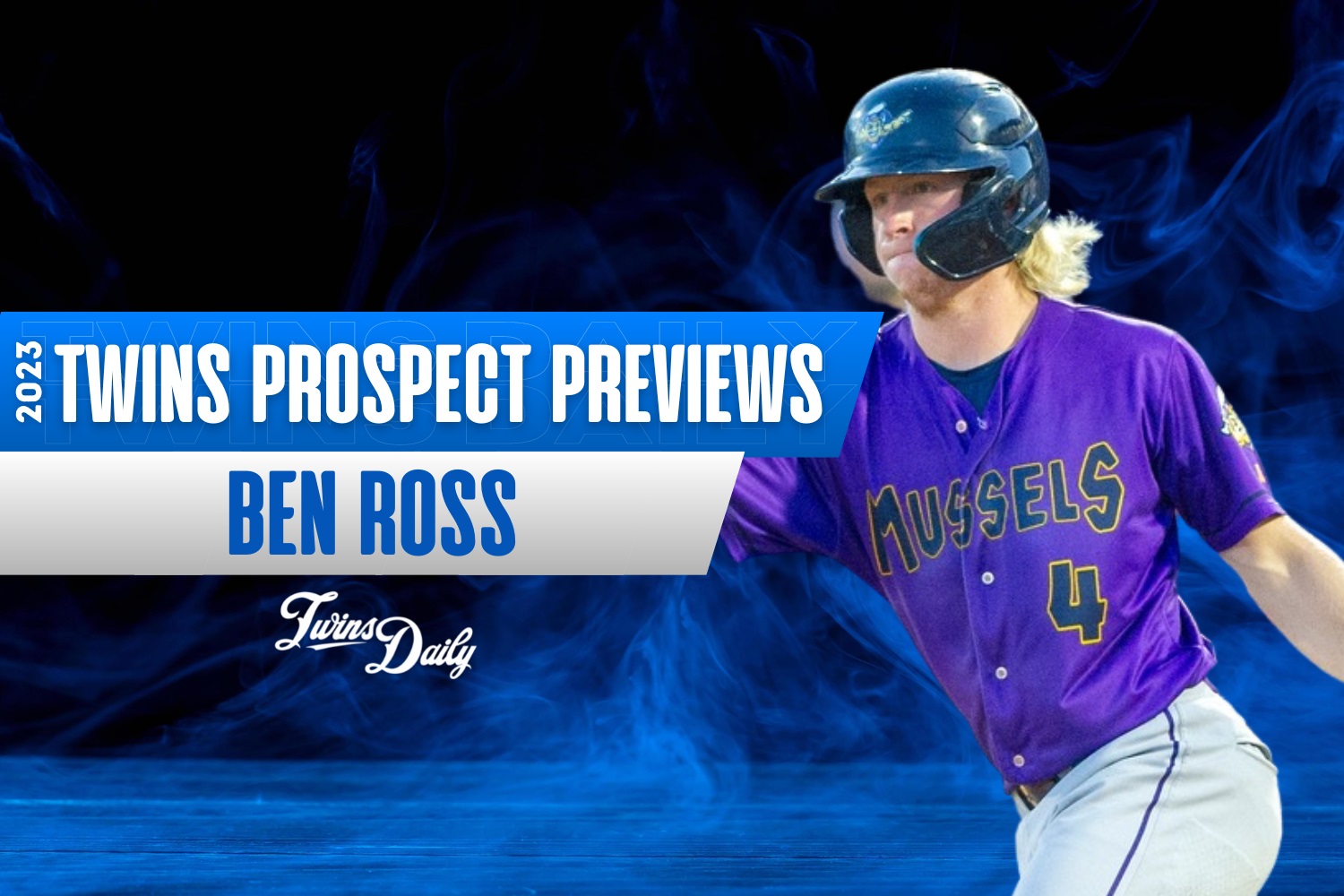 ‘In these rounds, you’re looking for something special, something unique’, Sean Johnson, Scouting Director for the Minnesota Twins offered, reflecting on day 2 of the 2022 MLB Draft. Johnson went on to highlight the organization's focus on unique tools coupled with breakout performances as two elements used to hone in on talent. In Ben Ross, the Twins landed a prospect with plenty of interesting clay to mold. With the 144th overall pick in the 2022 MLB Draft, the Twins selected Ben Ross, a shortstop out of Notre Dame College in Ohio. The school only started its baseball program in 2005. In 2013, they jumped from NAIA to Division II. Hence, Ross was not ranked in Baseball America’s Top 500 prospects heading into the draft. He signed for the Twins for $220,000, significant savings on the $398,500 draft slot. The savings from Ross and others were later applied to talented shortstop Omari Daniel, who the Twins pried away from a commitment to Oregon, in the 14th round. Scouting Notes Ross is a 6’1 shortstop and an exceptional athlete. While Ross may not have been highly ranked on draft boards, he’s exactly the kind of breakout athlete the Twins target on Day 2 of the draft. Ross has a compact swing and is short to the ball. Ross had an all-around breakout in his final season at Notre Dame College, putting together 14 home runs, 60 RBI, a .747 SLG, and 15 stolen bases in 17 attempts in 52 games. Not bad. Ross’s breakout continued in the summer in advance of the draft after playing in the Northwoods League (a college wood bat league). Ross hit .421/.502/.649 with 10 HR, 27 BB, and 28 K. Ross has a plus run tool and is an intelligent base runner and successful base stealer. He has an above-average arm and an athletic profile that could play all over the diamond. Ross’s swing is such that he should be able to continue his power breakout with a short, powerful stroke. Ben Ross debuted in late 2022, playing two games of Rookie ball before being promoted to Low-A Fort Myers. In his first 22 games, Ross managed a .371 OBP (.817 OPS), with three homers and 13 RBI. Ross was also 6-for-6 in stolen base attempts, an impressive debut for the 21-year-old. Likely to Start At: Low-A Fort Myers It’s likely Ross begins 2023 with a deep group of young prospects at Fort Myers. He will have a whole season to show he can continue to translate his exceptional athleticism into tangible developments on the field. Some fans might grumble at Ross’s low ranking or placement on pre-draft lists; I’d argue he’s a name to watch in the low minors in 2023. What did you think of the Ben Ross pick? What do you think his ceiling is with the Twins? For more Ben Ross content on Twins Daily, click here.
 -
2023 Prospect Previews: Andrew Morris
Jamie Cameron replied to Jamie Cameron's topic in Twins Minor League Talk
I hear what you're saying. It's likely because the Twins are really good at it and they try and do it with everyone. My guess, for someone who spent 3 years at a D II school and one year at a Big 12 school is that there's room for more. Bet the Twins have already accessed it some. -
2023 Prospect Previews: Andrew Morris
Jamie Cameron replied to Jamie Cameron's topic in Twins Minor League Talk
Just one ranking, wouldn't read to much into it. Twins also like to target guys 'on the rise' in these rounds. He had a really good stretch middle to end of season and some outlets aren't updating rankings past the top 100-150 in that much depth. -
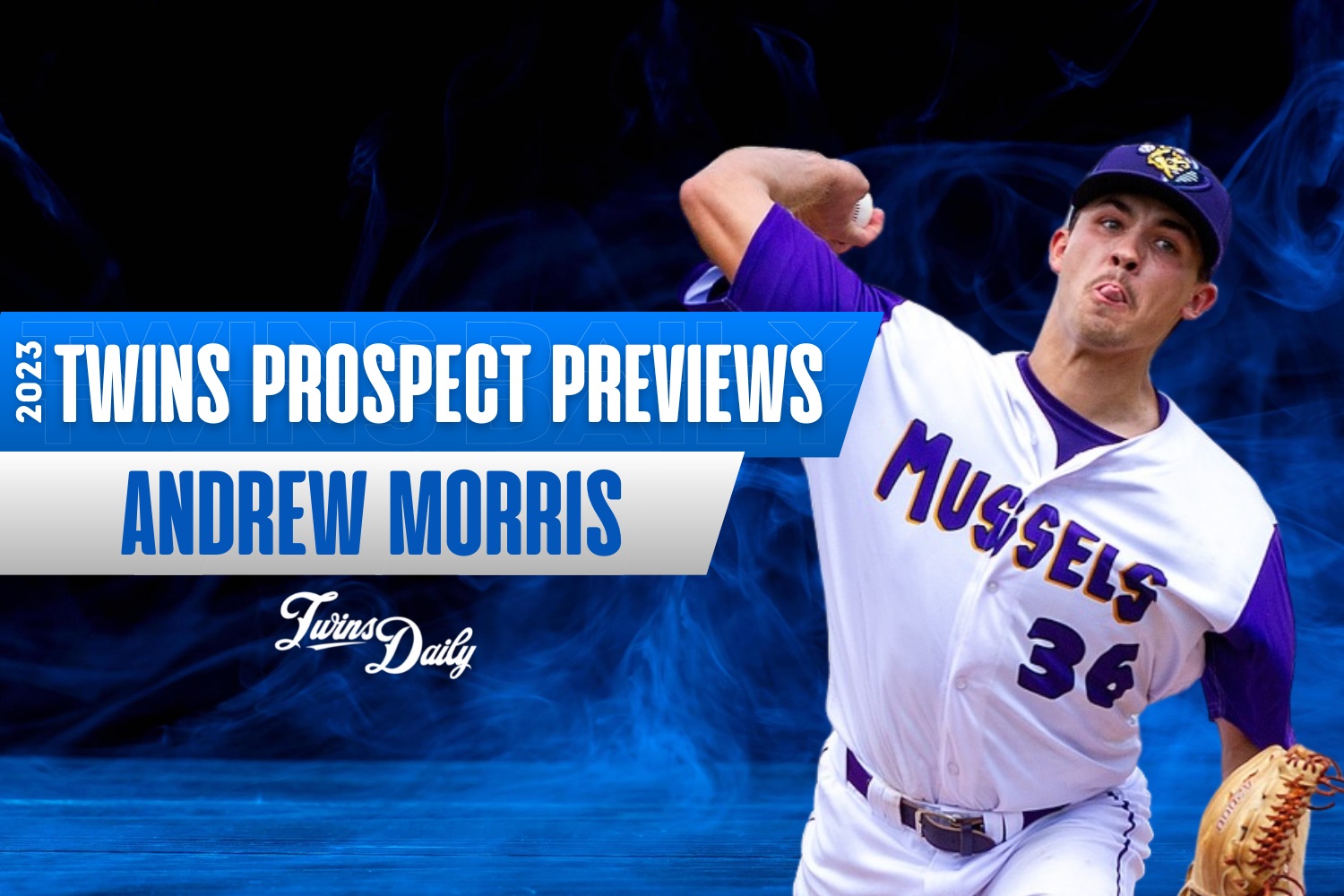 Andrew Morris signed with the Twins for an even $500,000, slightly under the pick value of $533,300. Morris was a fourth-year senior for the Red Raiders, having transferred after spending his previous three seasons at Division II Colorado-Mesa (the same college as one Sergio Romo). In his final season for the Mavericks, he posted a 2.19 ERA, with a 115:19 K/BB ratio in 78 innings. Clearly too good for the competition, Morris arrived in Lubbock with some buzz attached. Scouting Notes As a 17-year-old freshman at Colorado-Mesa, Morris helped his team reach the Division II National Championship Game. After transferring to Lubbock, Morris slotted into a rotation with Chase Hampton (drafted by the Yankees in the sixth round) and Brandon Birdsell (drafted by the Cubs in the 5th round, and previously by the Twins in 2021). Morris is 6’0 tall and 195 pounds. He has a "tweener" delivery, operating somewhere in the middle of a three-quarter and over-the-top arm slot with pronounced shoulder tilt. His fastball sits between 91-94 mph and tops out at 96 mph with some riding life. It’s likely the Twins will work to add some more velocity as he spends more time in the organization. Morris’s best secondary pitch is a curveball with good vertical break. He used this pitch at Tech as a strikeout pitch but also showed an ability to land it for strikes in the middle of at-bats. Morris features a changeup that has fade but is a work in progress and needs improved command. Finally, Morris has a sweeping slider the Twins will likely work to enhance and develop. Morris’ unusual mechanics create solid deception in his delivery. He handled the step up in competition well at Texas Tech, striking out 91 hitters in 88 1/3 innings of work against high quality opposition. With a BB% pushing 32%, he’ll need to refine his command significantly if he is going to stick as a starter. Morris has a nice platform, though. A deceptive fastball with good life and a good breaking ball give the Twins clay to mold. Likely to Start At: Low A Fort Myers Morris pitched just one professional inning in 2022, a hitless inning in which he struck out a batter for the FCL Twins. He also pitched in one game for Fort Myers in the playoffs, tossing three scoreless innings. It’s likely he spends the majority of 2023 at Fort Myers, getting bulk innings as a starter in his first extended experience of pro ball. What did you think of the Andrew Morris pick? What do you think his ceiling is with the Twins? Previous Articles in the Series Brooks Lee Connor Prielipp Tanner Schobel
 -
With the 114th overall pick in the 2022 MLB Draft, the Twins selected Andrew Morris, a right-handed pitcher out of Texas Tech University. Morris was ranked 228th overall by MLB dot com on their final pre-draft big board. Image courtesy of William Parmeter Andrew Morris signed with the Twins for an even $500,000, slightly under the pick value of $533,300. Morris was a fourth-year senior for the Red Raiders, having transferred after spending his previous three seasons at Division II Colorado-Mesa (the same college as one Sergio Romo). In his final season for the Mavericks, he posted a 2.19 ERA, with a 115:19 K/BB ratio in 78 innings. Clearly too good for the competition, Morris arrived in Lubbock with some buzz attached. Scouting Notes As a 17-year-old freshman at Colorado-Mesa, Morris helped his team reach the Division II National Championship Game. After transferring to Lubbock, Morris slotted into a rotation with Chase Hampton (drafted by the Yankees in the sixth round) and Brandon Birdsell (drafted by the Cubs in the 5th round, and previously by the Twins in 2021). Morris is 6’0 tall and 195 pounds. He has a "tweener" delivery, operating somewhere in the middle of a three-quarter and over-the-top arm slot with pronounced shoulder tilt. His fastball sits between 91-94 mph and tops out at 96 mph with some riding life. It’s likely the Twins will work to add some more velocity as he spends more time in the organization. Morris’s best secondary pitch is a curveball with good vertical break. He used this pitch at Tech as a strikeout pitch but also showed an ability to land it for strikes in the middle of at-bats. Morris features a changeup that has fade but is a work in progress and needs improved command. Finally, Morris has a sweeping slider the Twins will likely work to enhance and develop. Morris’ unusual mechanics create solid deception in his delivery. He handled the step up in competition well at Texas Tech, striking out 91 hitters in 88 1/3 innings of work against high quality opposition. With a BB% pushing 32%, he’ll need to refine his command significantly if he is going to stick as a starter. Morris has a nice platform, though. A deceptive fastball with good life and a good breaking ball give the Twins clay to mold. Likely to Start At: Low A Fort Myers Morris pitched just one professional inning in 2022, a hitless inning in which he struck out a batter for the FCL Twins. He also pitched in one game for Fort Myers in the playoffs, tossing three scoreless innings. It’s likely he spends the majority of 2023 at Fort Myers, getting bulk innings as a starter in his first extended experience of pro ball. What did you think of the Andrew Morris pick? What do you think his ceiling is with the Twins? Previous Articles in the Series Brooks Lee Connor Prielipp Tanner Schobel View full article
-
.png.aa7c3b9a332e510906042efbf1d2500d.png) After the collective amazement at the Twins drafting a pitcher that Minnesota fandom clamored for at #48 had worn off, we began moving into the nether regions of the draft. Famously random, the MLB Draft is incredibly unpredictable, even more so after you pass the first 50-75 prospects. The Twins, however, have shown preferences based on their drafting model after their top 1-2 picks. They are likely to draft college players, particularly position players, with solid floors that have shown significant development in an area of value in the previous season. Enter Tanner Schobel. Schobel was a draft-eligible sophomore when the Twins selected him at #68 overall in the 2022 draft. He signed for a bonus just over $1 million. For a young player, Schobel has a ton of experience, starting every game for Virginia Tech as a true freshman, before playing well in the Cape Cod league at the end of the season prior to assuming the starting shortstop role ahead of his second season in Blacksburg. Scouting and Signing Hit: 50 Power: 45 Run: 50 Arm: 50 Field: 50 Overall: 45 (scouting grades courtesy of MLB.com) As a freshman at Virginia Tech, Schobel put together a .279/.339/.441 (.780) line with seven home runs. His performance on the Cape (a wood-bat league), was a good barometer for the positive development he made in 2022. As the Hokies everyday shortstop, Schobel hit .363/.445/.689 (1.134) with 19 home runs. By any standards, that is a significant power breakout, owing largely to his ability to get more loft on the ball. It’s likely that Schobel’s sophomore power breakout doesn’t carry over into the professional game. It's the kind of development you want to see from a young prospect drafted after the first two rounds as it points to continuous improvement and development. Schobel ended up at Low-A Fort Myers at the end of last season, managing a solid .367 OBP bolstered by an 18 BB%. Schobel is one of those prospects who has good tools across the board, but maybe not yet any one that is outstanding. He’s a solid defender with a good arm. The Twins moved him between shortstop and second base in his first professional half season. It’s likely he continues to be moved around the diamond in 2023 to bolster his versatility. Likely to Start At: Low A Fort Myers It’s likely Schobel starts the season in Fort Myers, despite an impressive end to 2022. As a college player with good versatility and solid tools, he should be a fast mover. It’s likely he moves to Cedar Rapids in short order if he has a strong start in 2023. Schobel’s future with the Twins depends largely on the development of his hit and power tools. If he can translate his power breakout to wood bats, the Twins will have found something significant. If not, he profiles as a strong utility infielder with average to above average hit and power tools, a valuable depth piece for the Twins. What did you think of the Tanner Schobel pick? What do you think his ceiling is with the Twins?
After the collective amazement at the Twins drafting a pitcher that Minnesota fandom clamored for at #48 had worn off, we began moving into the nether regions of the draft. Famously random, the MLB Draft is incredibly unpredictable, even more so after you pass the first 50-75 prospects. The Twins, however, have shown preferences based on their drafting model after their top 1-2 picks. They are likely to draft college players, particularly position players, with solid floors that have shown significant development in an area of value in the previous season. Enter Tanner Schobel. Schobel was a draft-eligible sophomore when the Twins selected him at #68 overall in the 2022 draft. He signed for a bonus just over $1 million. For a young player, Schobel has a ton of experience, starting every game for Virginia Tech as a true freshman, before playing well in the Cape Cod league at the end of the season prior to assuming the starting shortstop role ahead of his second season in Blacksburg. Scouting and Signing Hit: 50 Power: 45 Run: 50 Arm: 50 Field: 50 Overall: 45 (scouting grades courtesy of MLB.com) As a freshman at Virginia Tech, Schobel put together a .279/.339/.441 (.780) line with seven home runs. His performance on the Cape (a wood-bat league), was a good barometer for the positive development he made in 2022. As the Hokies everyday shortstop, Schobel hit .363/.445/.689 (1.134) with 19 home runs. By any standards, that is a significant power breakout, owing largely to his ability to get more loft on the ball. It’s likely that Schobel’s sophomore power breakout doesn’t carry over into the professional game. It's the kind of development you want to see from a young prospect drafted after the first two rounds as it points to continuous improvement and development. Schobel ended up at Low-A Fort Myers at the end of last season, managing a solid .367 OBP bolstered by an 18 BB%. Schobel is one of those prospects who has good tools across the board, but maybe not yet any one that is outstanding. He’s a solid defender with a good arm. The Twins moved him between shortstop and second base in his first professional half season. It’s likely he continues to be moved around the diamond in 2023 to bolster his versatility. Likely to Start At: Low A Fort Myers It’s likely Schobel starts the season in Fort Myers, despite an impressive end to 2022. As a college player with good versatility and solid tools, he should be a fast mover. It’s likely he moves to Cedar Rapids in short order if he has a strong start in 2023. Schobel’s future with the Twins depends largely on the development of his hit and power tools. If he can translate his power breakout to wood bats, the Twins will have found something significant. If not, he profiles as a strong utility infielder with average to above average hit and power tools, a valuable depth piece for the Twins. What did you think of the Tanner Schobel pick? What do you think his ceiling is with the Twins? -
The Twins drafted Tanner Schobel with the 68th pick in the 2022 draft. How does he profile? What can we expect in 2023 from the infielder who had a big power breakout in college? After the collective amazement at the Twins drafting a pitcher that Minnesota fandom clamored for at #48 had worn off, we began moving into the nether regions of the draft. Famously random, the MLB Draft is incredibly unpredictable, even more so after you pass the first 50-75 prospects. The Twins, however, have shown preferences based on their drafting model after their top 1-2 picks. They are likely to draft college players, particularly position players, with solid floors that have shown significant development in an area of value in the previous season. Enter Tanner Schobel. Schobel was a draft-eligible sophomore when the Twins selected him at #68 overall in the 2022 draft. He signed for a bonus just over $1 million. For a young player, Schobel has a ton of experience, starting every game for Virginia Tech as a true freshman, before playing well in the Cape Cod league at the end of the season prior to assuming the starting shortstop role ahead of his second season in Blacksburg. Scouting and Signing Hit: 50 Power: 45 Run: 50 Arm: 50 Field: 50 Overall: 45 (scouting grades courtesy of MLB.com) As a freshman at Virginia Tech, Schobel put together a .279/.339/.441 (.780) line with seven home runs. His performance on the Cape (a wood-bat league), was a good barometer for the positive development he made in 2022. As the Hokies everyday shortstop, Schobel hit .363/.445/.689 (1.134) with 19 home runs. By any standards, that is a significant power breakout, owing largely to his ability to get more loft on the ball. It’s likely that Schobel’s sophomore power breakout doesn’t carry over into the professional game. It's the kind of development you want to see from a young prospect drafted after the first two rounds as it points to continuous improvement and development. Schobel ended up at Low-A Fort Myers at the end of last season, managing a solid .367 OBP bolstered by an 18 BB%. Schobel is one of those prospects who has good tools across the board, but maybe not yet any one that is outstanding. He’s a solid defender with a good arm. The Twins moved him between shortstop and second base in his first professional half season. It’s likely he continues to be moved around the diamond in 2023 to bolster his versatility. Likely to Start At: Low A Fort Myers It’s likely Schobel starts the season in Fort Myers, despite an impressive end to 2022. As a college player with good versatility and solid tools, he should be a fast mover. It’s likely he moves to Cedar Rapids in short order if he has a strong start in 2023. Schobel’s future with the Twins depends largely on the development of his hit and power tools. If he can translate his power breakout to wood bats, the Twins will have found something significant. If not, he profiles as a strong utility infielder with average to above average hit and power tools, a valuable depth piece for the Twins. What did you think of the Tanner Schobel pick? What do you think his ceiling is with the Twins? View full article
-
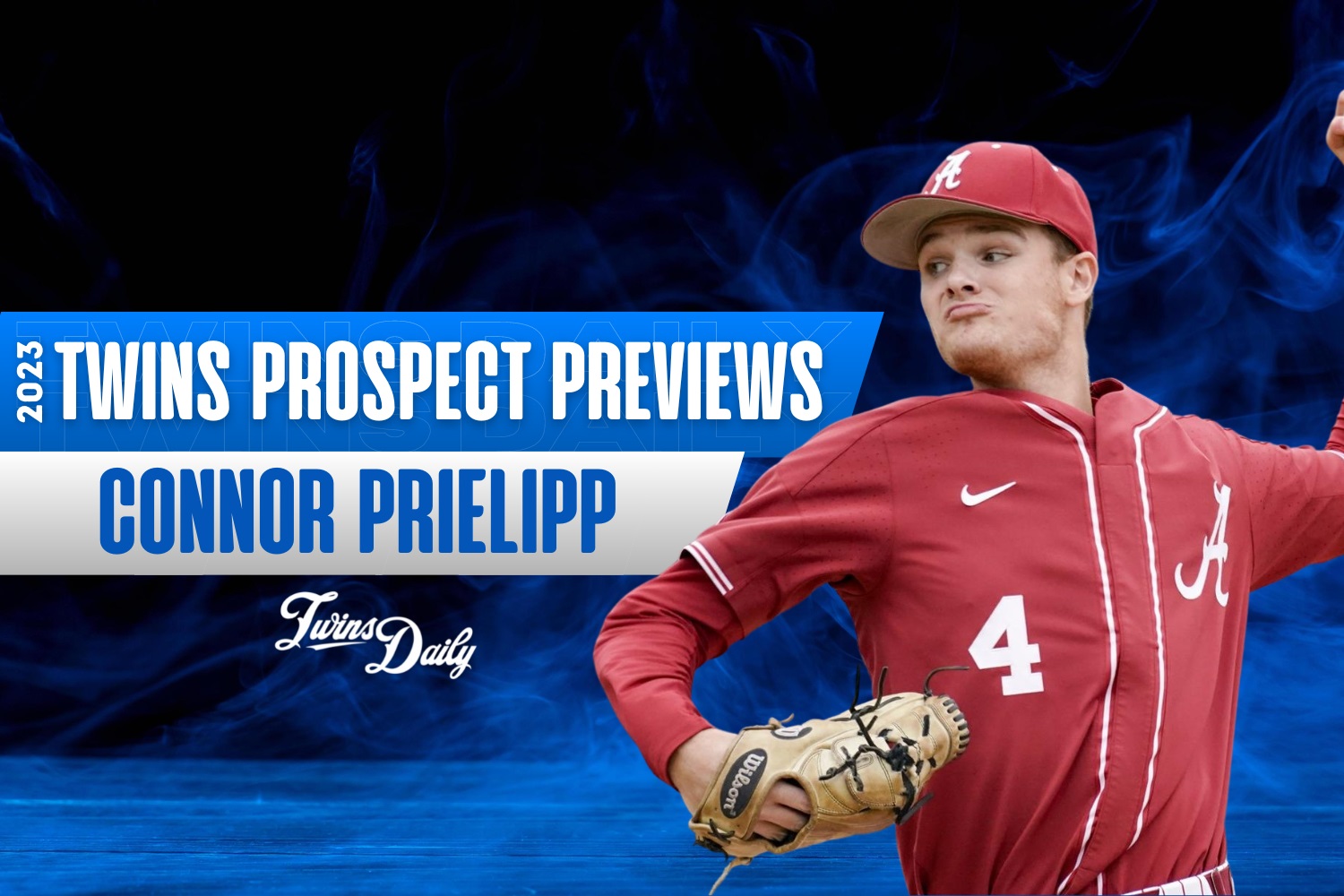 A Prospective Ace? As the Minnesota Twins prepared to make their second selection in the 2022 MLB Draft, Twins fandom held its collective breath. A fanbase rarely coalesces around a prospect so uniformly. It’s rarer still that said prospect is still available to be selected by the team whose fan base is obsessing over them. Rarest of all is the team selecting said player. With the 48th overall selection in the draft, the Twins selected Connor Prielipp, and the universe momentarily moved into perfect alignment. Prielipp is a left-handed pitcher from Tomah, Wisconsin, a town famous for existing on the I-90 corridor between the Twin Cities and Madison, where there are a lot of gas stations and not much else. The Twins drafted Prielipp in the second round and signed him to a $1.825 million bonus resulting in the rare actualization of many fans' draft fantasies. Most thought he would go in the middle to the end of the first round. Here's a quick video overview of Prielipp from Tom Froemming: Scouting and Signing Fastball: 60 Slider: 70 Changeup: 55 Control: 55 (scouting grades courtesy of Baseball America) Suppose our timeline had skewed into a different tangent, like Marty McFly's in Back to the Future 2. In that timeline Prielipp, a 6’0, 210 pound pitcher out of the University of Alabama, would have been a top ten draft pick. He posted a 0.98 ERA in 28 innings of work in 2020 pre-COVID, racking up an eye-watering 45.6 K%, with an 11.7 BB% against good competition. That is an incredible stat line. Prielipp’s 2021 season was cruelly ended by Tommy John surgery. Suddenly, the best left-handed pitching prospect in the draft was shrouded in uncertainty. Prielipp had to rely on pre-draft bullpen showcases to convince MLB scouts he was on the road to recovery. The Twins jumped at the chance, recognizing that a pitcher of his caliber would only be available to them with the 48th pick. Pitchers are generally a high-variance bunch, and Prielipp is an extreme example. The floor is never fully recovering from his arm injury. The ceiling? Well, let’s examine. To date, Prielipp has relied on three pitches. His fastball sits in the low 90s but can reach as high as 95 mph. He has a changeup that sits 82-85 mph that had a good whiff percentage early in his college career but had less usage than his fastball or slider because he didn’t need to use it. The pitch to write home to mama about is his slider. It’s immediately in contention to be the best in the Twins system (with Raya and anyone else you’d care to mention). Pre-injury it was one of the best pitches in the entire 2022 draft class and generated a 50% whiff rate that scouts placed between a 65-70 grade pitch with an extremely high spin rate. Likely to Start At: Extended Spring Training During his pre-draft bullpens, Prielipp showed solid stuff but spotty command of his pitches, to be expected when a pitcher is recovering from a major injury. Talent evaluators seemed interested, as over 100 attended one of his bullpen sessions in the run-up to the draft. I’d expect the Twins to be extremely cautious with Prielipp (who's already working out in Fort Myers). Some extended time in Fort Myers followed by an assignment to low A to continue to build him up and monitor his arm seems likely. Prielipp is a challenging prospect to project because he has no track record. With an injury-free, effective season, I’d be surprised if he wasn’t in top 100 prospect lists by the beginning of the 2024 season. If you want a pitcher to dream on, Prielipp is it. Injuries may not allow him to get there, but he has the tools to become a front-line starting pitcher. How excited are you by Connor Prielipp? What was your reaction to the Twins drafting him? What would constitute a successful 2023 season? Add your thoughts in the comments.
 -
The Twins selected Connor Prielipp with the 48th pick in the 2022 draft. A pitching prospect with the tools to become a front-of-the-rotation arm, 2023 will be a pivotal season for Prielipp. What can Twins fans expect as he works his way back from injury? A Prospective Ace? As the Minnesota Twins prepared to make their second selection in the 2022 MLB Draft, Twins fandom held its collective breath. A fanbase rarely coalesces around a prospect so uniformly. It’s rarer still that said prospect is still available to be selected by the team whose fan base is obsessing over them. Rarest of all is the team selecting said player. With the 48th overall selection in the draft, the Twins selected Connor Prielipp, and the universe momentarily moved into perfect alignment. Prielipp is a left-handed pitcher from Tomah, Wisconsin, a town famous for existing on the I-90 corridor between the Twin Cities and Madison, where there are a lot of gas stations and not much else. The Twins drafted Prielipp in the second round and signed him to a $1.825 million bonus resulting in the rare actualization of many fans' draft fantasies. Most thought he would go in the middle to the end of the first round. Here's a quick video overview of Prielipp from Tom Froemming: Scouting and Signing Fastball: 60 Slider: 70 Changeup: 55 Control: 55 (scouting grades courtesy of Baseball America) Suppose our timeline had skewed into a different tangent, like Marty McFly's in Back to the Future 2. In that timeline Prielipp, a 6’0, 210 pound pitcher out of the University of Alabama, would have been a top ten draft pick. He posted a 0.98 ERA in 28 innings of work in 2020 pre-COVID, racking up an eye-watering 45.6 K%, with an 11.7 BB% against good competition. That is an incredible stat line. Prielipp’s 2021 season was cruelly ended by Tommy John surgery. Suddenly, the best left-handed pitching prospect in the draft was shrouded in uncertainty. Prielipp had to rely on pre-draft bullpen showcases to convince MLB scouts he was on the road to recovery. The Twins jumped at the chance, recognizing that a pitcher of his caliber would only be available to them with the 48th pick. Pitchers are generally a high-variance bunch, and Prielipp is an extreme example. The floor is never fully recovering from his arm injury. The ceiling? Well, let’s examine. To date, Prielipp has relied on three pitches. His fastball sits in the low 90s but can reach as high as 95 mph. He has a changeup that sits 82-85 mph that had a good whiff percentage early in his college career but had less usage than his fastball or slider because he didn’t need to use it. The pitch to write home to mama about is his slider. It’s immediately in contention to be the best in the Twins system (with Raya and anyone else you’d care to mention). Pre-injury it was one of the best pitches in the entire 2022 draft class and generated a 50% whiff rate that scouts placed between a 65-70 grade pitch with an extremely high spin rate. Likely to Start At: Extended Spring Training During his pre-draft bullpens, Prielipp showed solid stuff but spotty command of his pitches, to be expected when a pitcher is recovering from a major injury. Talent evaluators seemed interested, as over 100 attended one of his bullpen sessions in the run-up to the draft. I’d expect the Twins to be extremely cautious with Prielipp (who's already working out in Fort Myers). Some extended time in Fort Myers followed by an assignment to low A to continue to build him up and monitor his arm seems likely. Prielipp is a challenging prospect to project because he has no track record. With an injury-free, effective season, I’d be surprised if he wasn’t in top 100 prospect lists by the beginning of the 2024 season. If you want a pitcher to dream on, Prielipp is it. Injuries may not allow him to get there, but he has the tools to become a front-line starting pitcher. How excited are you by Connor Prielipp? What was your reaction to the Twins drafting him? What would constitute a successful 2023 season? Add your thoughts in the comments. View full article
-
Good trade for the Twins. An elite defender to back up Buxton and allow more flexibility to push him into DH at bats. Twins have an incredible collection of outfield defenders at the moment with Buxton, Gallo, Kepler, and Taylor. Also like the flexibility this gives you to trade more, if you wish. Kepler, Celestino, Gordon, there are a number of names that could make sense for the right price, but the Twins can comfortably wait for an offer they like or just hold their cards. The J.A. Happ trade grows a branch, is welcome and hella unexpected. Lots of things coming up pretty nice since that Carlos Correa fella resigned a while back. I'm ready for spring training (let's take Michael Fulmer in some luggage, please).
- 37 replies
-
- 6
-
-
- michael a taylor
- evan sisk
- (and 2 more)
-
The Twins traded away Luis Arraez on Friday, trading him to the Miami Marlins in exchange for Pablo López, Jose Salas, and Byron Chourio. Here's what you need to know about the two prospects involved in the deal. Image courtesy of Mark J. Rebilas, USA Today Sports In a move sure to spark heated debated, fan favorite Luis Arraez was traded to the Miami Marlins on Friday for a package that includes right-handed pitcher Pablo López, infielder Jose Salas, and outfielder Byron Chourio. Let’s get to know the two prospects in the deal. Just as it emerged that the trade talks between the Twins and Marlins were at a standstill, a deal was completed in the early afternoon hours on Friday. Dan Hayes had recently reported that the Twins weren’t willing to trade Arraez for López straight up. So it proved to be, with the Twins also acquiring significant prospect capital in exchange for the 2022 AL batting champion. What do we know about the prospects involved in this deal? Let’s dig in. Jose Salas Grades (courtesy of BA) Hit: 55 Power: 50 Run: 45 Arm: 55 Field: 50 Let’s get clear, Salas is a legitimately excellent prospect. In Baseball Prospectus’ Top 101 (released this morning) he was ranked 93rd, he was 83rd in Fangraphs most recent Top 100 at the end of the 2022 season. Although not a consensus Top 100 prospect (not in MLB or Baseball America lists), he can be seen as a fringy top 100 player and one of four excellent Marlins prospects (Perez, Max Meyer, Berry), likely, the one you haven’t heard of. In Salas, the Twins have acquired an infielder who has good projectability left. He is just 19 years old and stands at 6’2. He has strong tools across the board. Salas was born in Florida, but split his time between Orlando and Venezuela growing up. Salas was signed by the Marlins during the 2019 International Free Agency period, receiving a hefty $2.8 million bonus. Salas crushed when he debuted, boasting a .578 SLG in 28 games of rookie ball before getting a debut in Low-A ball at 18 years old. After an initial drop off in his offensive output at the tail end of 2021, he began 2022 in Jupiter and adjusted nicely, increasing his Slugging Percentage from .315 to .421 before spending the second half of the season at High-A. Salas is a switch hitter who hits well from both sides of the plate. He projects to have above average power as he continues to fill out (20-25 home runs). Salas has a low-effort swing that has been ground ball prone early in his career. If he can work towards contacting the ball earlier in the strike zone, he should have a good hit tool. Salas success on the base paths are more a reflection of outstanding baserunning than great speed. In two minor league season, he's stolen 47 bases. Salas’ defensive home remains uncertain. He has a strong arm but may slow as he fills out meaning a transition to another infield position. A member of an NL operations department said of Salas: 'His tools are pretty damn impressive. He will probably be a bottom of the scale runner, hurting his chances to keep playing shortstop of even second base'. Salas’ work ethic and drive have been praised by coaches he has worked with. Bottom Line: Salas is an exciting prospect with strong tools across the board. The Twins have added another fringy top 100 prospect to their system (in addition to Royce Lewis, Brooks Lee, Emmanuel Rodriguez, Marco Raya, and Edouard Julien) and helped replenish the hit they took at the 2022 trade deadline. Salas is an exciting addition to a talented system. Byron Chourio At first glance, Chourio may seem like the lottery ticket acquisition in the Luis Arraez/Pablo Lopez trade. A Venezuelan outfielder signed by the Marlins in 2022, Chourio is just 17 years old. At 6’2, and 171 pounds, there’s plenty of room for him to add some mass as he grows and develops. The Twins seem to like what they have acquired in Chourio. Assigned to the DSL Marlins, Chourio debuted last season, hitting .344/.429/.410 (.838) with nine doubles and one home run, 23 runs batted in, and 19 stolen bases in 51 games in his first professional season in the Dominican Summer League. We’ll continue to add more information about Chourio as we get it. What are you impressions of the Twins return for Arraez? What do you think of Salas? What’s your evaluation of the trade? Join the discussion below. View full article
-
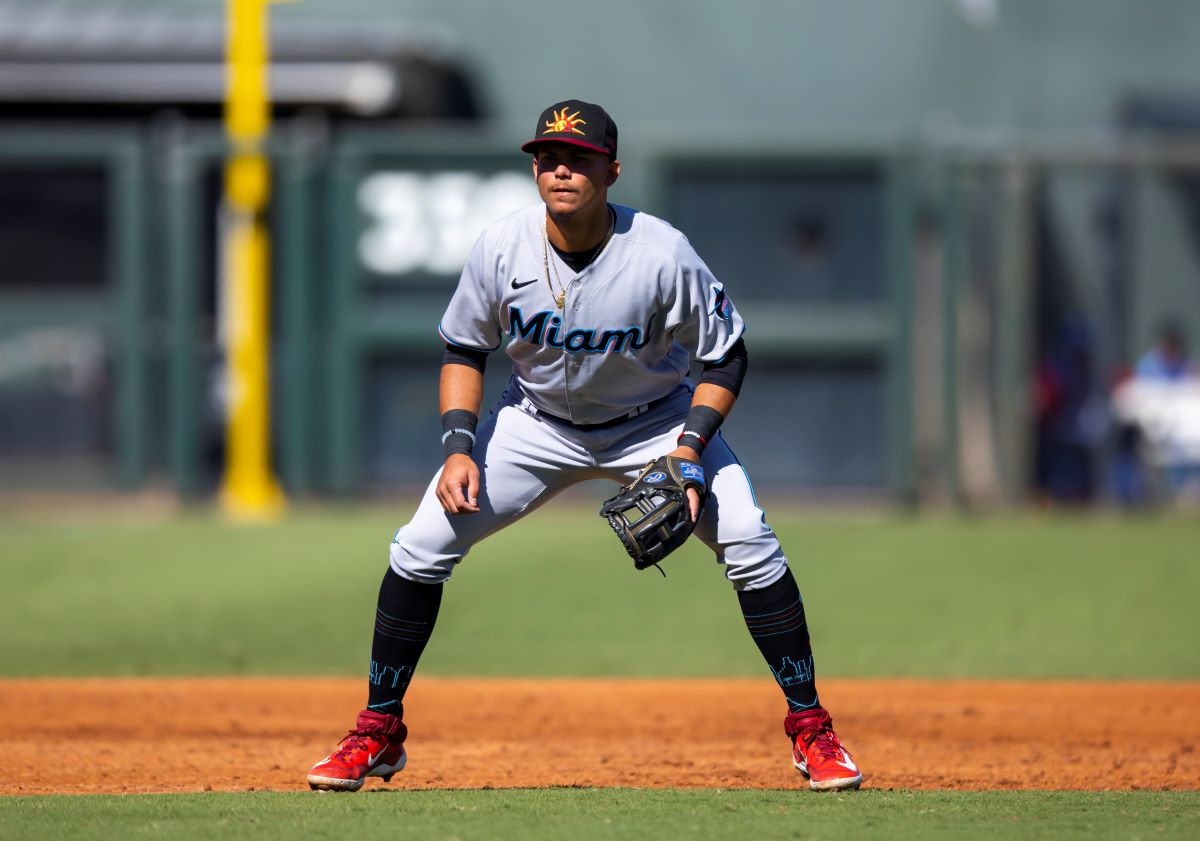 In a move sure to spark heated debated, fan favorite Luis Arraez was traded to the Miami Marlins on Friday for a package that includes right-handed pitcher Pablo López, infielder Jose Salas, and outfielder Byron Chourio. Let’s get to know the two prospects in the deal. Just as it emerged that the trade talks between the Twins and Marlins were at a standstill, a deal was completed in the early afternoon hours on Friday. Dan Hayes had recently reported that the Twins weren’t willing to trade Arraez for López straight up. So it proved to be, with the Twins also acquiring significant prospect capital in exchange for the 2022 AL batting champion. What do we know about the prospects involved in this deal? Let’s dig in. Jose Salas Grades (courtesy of BA) Hit: 55 Power: 50 Run: 45 Arm: 55 Field: 50 Let’s get clear, Salas is a legitimately excellent prospect. In Baseball Prospectus’ Top 101 (released this morning) he was ranked 93rd, he was 83rd in Fangraphs most recent Top 100 at the end of the 2022 season. Although not a consensus Top 100 prospect (not in MLB or Baseball America lists), he can be seen as a fringy top 100 player and one of four excellent Marlins prospects (Perez, Max Meyer, Berry), likely, the one you haven’t heard of. In Salas, the Twins have acquired an infielder who has good projectability left. He is just 19 years old and stands at 6’2. He has strong tools across the board. Salas was born in Florida, but split his time between Orlando and Venezuela growing up. Salas was signed by the Marlins during the 2019 International Free Agency period, receiving a hefty $2.8 million bonus. Salas crushed when he debuted, boasting a .578 SLG in 28 games of rookie ball before getting a debut in Low-A ball at 18 years old. After an initial drop off in his offensive output at the tail end of 2021, he began 2022 in Jupiter and adjusted nicely, increasing his Slugging Percentage from .315 to .421 before spending the second half of the season at High-A. Salas is a switch hitter who hits well from both sides of the plate. He projects to have above average power as he continues to fill out (20-25 home runs). Salas has a low-effort swing that has been ground ball prone early in his career. If he can work towards contacting the ball earlier in the strike zone, he should have a good hit tool. Salas success on the base paths are more a reflection of outstanding baserunning than great speed. In two minor league season, he's stolen 47 bases. Salas’ defensive home remains uncertain. He has a strong arm but may slow as he fills out meaning a transition to another infield position. A member of an NL operations department said of Salas: 'His tools are pretty damn impressive. He will probably be a bottom of the scale runner, hurting his chances to keep playing shortstop of even second base'. Salas’ work ethic and drive have been praised by coaches he has worked with. Bottom Line: Salas is an exciting prospect with strong tools across the board. The Twins have added another fringy top 100 prospect to their system (in addition to Royce Lewis, Brooks Lee, Emmanuel Rodriguez, Marco Raya, and Edouard Julien) and helped replenish the hit they took at the 2022 trade deadline. Salas is an exciting addition to a talented system. Byron Chourio At first glance, Chourio may seem like the lottery ticket acquisition in the Luis Arraez/Pablo Lopez trade. A Venezuelan outfielder signed by the Marlins in 2022, Chourio is just 17 years old. At 6’2, and 171 pounds, there’s plenty of room for him to add some mass as he grows and develops. The Twins seem to like what they have acquired in Chourio. Assigned to the DSL Marlins, Chourio debuted last season, hitting .344/.429/.410 (.838) with nine doubles and one home run, 23 runs batted in, and 19 stolen bases in 51 games in his first professional season in the Dominican Summer League. We’ll continue to add more information about Chourio as we get it. What are you impressions of the Twins return for Arraez? What do you think of Salas? What’s your evaluation of the trade? Join the discussion below.
- 27 comments
-
- 3
-
-
- luis arraez
- pablo lopez
- (and 2 more)
-
2023 Prospect Previews: Brooks Lee
Jamie Cameron replied to Jamie Cameron's topic in Twins Minor League Talk
I remember going back and forth with you about how none of those guys would make it to the Twins lol. Agree with your assessment too. I think people tend to undervalue great hit tool players. I think he'll be good defensively at 2B or 3B (average at worst). Agree with you, a great pick! -
A candidate to go #1 overall, Brooks Lee fell to the Twins and the #8 pick in the 2022 MLB Draft. What can we expect from Lee heading into the 2023 season? What's his ceiling? Where might he start the year? Image courtesy of Steve Buhr (graphics by Thieres Rabelo) In advance of the 2022 draft, a clear top six industry prospects emerged in the pre-draft process. The Twins appeared to be on the outside looking in, selecting at number eight overall in the first round. The only predictable thing about the MLB Draft, however, is its lack of predictability. The Rangers shook up the draft taking Kumar Rocker at number three. The Twins ended up in the enviable position of being able to pick between Brooks Lee, Kevin Parada, and Cam Collier and opted for Lee, the prospect with the safest floor of the three, and a contender to go number one overall. Scouting and Signing Hitting: 70 Power: 50 Run: 40 Fielding: 50 Arm: 55 (scouting grades courtesy of Baseball America) Lee signed a $5.675 million bonus with the Twins, second behind Jacob Berry for all college players. Lee had a track record as a prospect, ranking as a consensus top 50 pick as early as 2019. After an injury plagued 2020 season, Lee hit well in 2021, and took off in 2022. In 58 games at Cal Poly he put up a .357 average with 15 home runs, 46 walks, and just 28 strikeouts. Lee had the best hit tool in the 2022 draft class. He’s a true switch hitter, although more effective from the left side of the plate. Projecting forwards, Lee should be a .300 hitter at the major league level, with the ability to continue to develop power (15-20 home run range). While he has good hands and a strong arm, the critique of his play at shortstop in college was a lack of lateral agility. It’s likely that he moved to third base long term (particularly with Carlos Correa locked in at shortstop for the foreseeable future). Early Returns The Twins weren’t shy about throwing Lee into the mix at a variety of levels of pro ball when he made his debut in late 2022. After starting at the Complex League, Lee played 25 games at High-A Cedar Rapids. In 114 plate appearances he managed a 140 wRC+, walking 14% of the time and striking out just 15.8%. Lee was promoted to Double-A for their playoff run last fall and has already lived up to his billing as a fast mover. Likely to Start At: Wichita Wind Surge (AA) Lee dominated most of the pitching he saw in 2022. It’s likely he starts 2023 at AA Wichita. Expectations from Twins fans have understandably been high for such a promising prospect. In a very small samples size, Lee has delivered. If he can stay healthy, the smart money would be on a major league debut in 2023, a blistering pace that could have Lee with the Twins before he’s completed a full calendar year in the minors. If the Twins hold onto Lee and he stays healthy, he should be a starting infielder who hits .300 with average to above average power for the big league team for the next decade. What are your hopes for Brooks Lee in 2023? Where do you think his defensive home will be? What do you think his ceiling is? Join the discussion and leave your thoughts in the comments. View full article
-
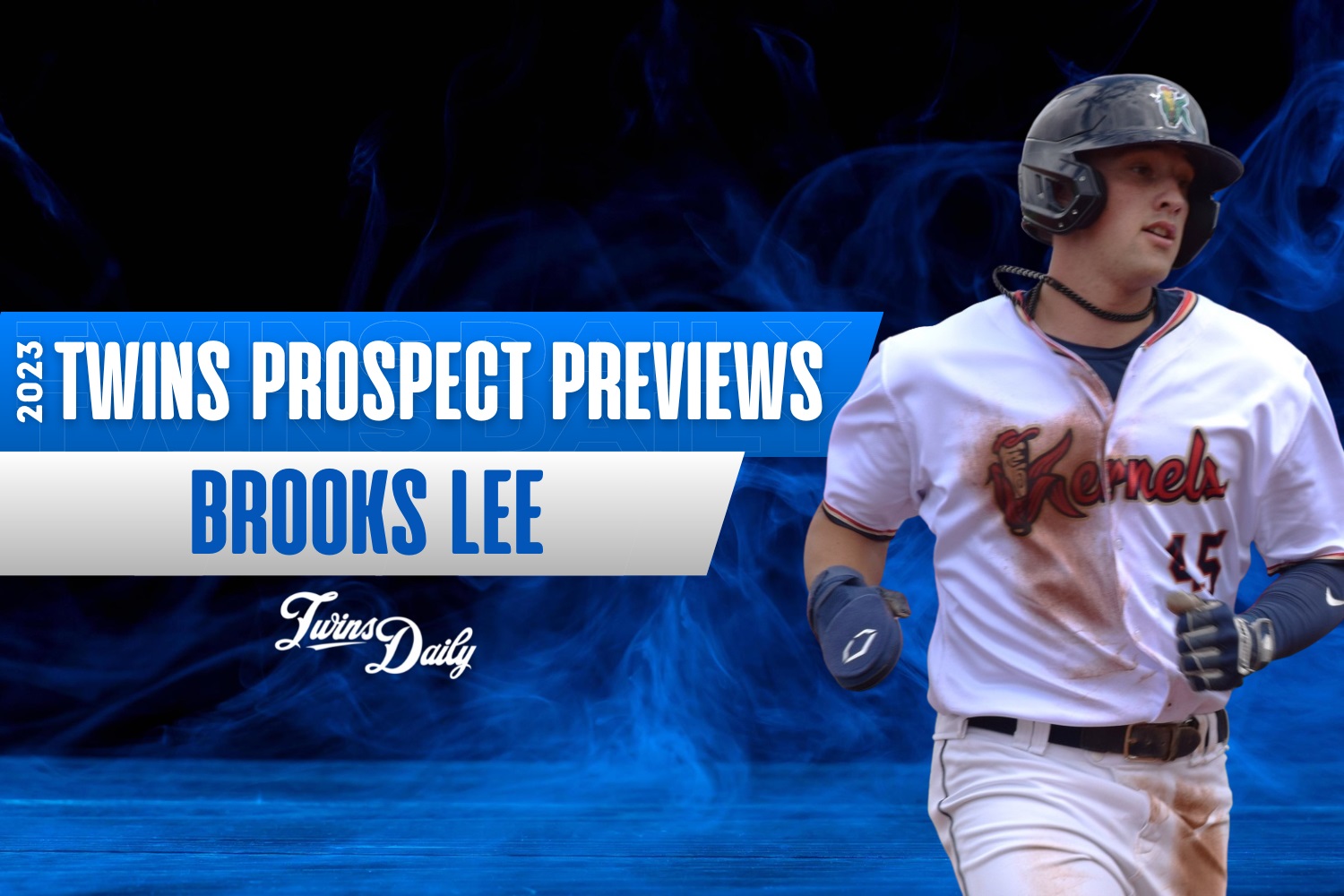 In advance of the 2022 draft, a clear top six industry prospects emerged in the pre-draft process. The Twins appeared to be on the outside looking in, selecting at number eight overall in the first round. The only predictable thing about the MLB Draft, however, is its lack of predictability. The Rangers shook up the draft taking Kumar Rocker at number three. The Twins ended up in the enviable position of being able to pick between Brooks Lee, Kevin Parada, and Cam Collier and opted for Lee, the prospect with the safest floor of the three, and a contender to go number one overall. Scouting and Signing Hitting: 70 Power: 50 Run: 40 Fielding: 50 Arm: 55 (scouting grades courtesy of Baseball America) Lee signed a $5.675 million bonus with the Twins, second behind Jacob Berry for all college players. Lee had a track record as a prospect, ranking as a consensus top 50 pick as early as 2019. After an injury plagued 2020 season, Lee hit well in 2021, and took off in 2022. In 58 games at Cal Poly he put up a .357 average with 15 home runs, 46 walks, and just 28 strikeouts. Lee had the best hit tool in the 2022 draft class. He’s a true switch hitter, although more effective from the left side of the plate. Projecting forwards, Lee should be a .300 hitter at the major league level, with the ability to continue to develop power (15-20 home run range). While he has good hands and a strong arm, the critique of his play at shortstop in college was a lack of lateral agility. It’s likely that he moved to third base long term (particularly with Carlos Correa locked in at shortstop for the foreseeable future). Early Returns The Twins weren’t shy about throwing Lee into the mix at a variety of levels of pro ball when he made his debut in late 2022. After starting at the Complex League, Lee played 25 games at High-A Cedar Rapids. In 114 plate appearances he managed a 140 wRC+, walking 14% of the time and striking out just 15.8%. Lee was promoted to Double-A for their playoff run last fall and has already lived up to his billing as a fast mover. Likely to Start At: Wichita Wind Surge (AA) Lee dominated most of the pitching he saw in 2022. It’s likely he starts 2023 at AA Wichita. Expectations from Twins fans have understandably been high for such a promising prospect. In a very small samples size, Lee has delivered. If he can stay healthy, the smart money would be on a major league debut in 2023, a blistering pace that could have Lee with the Twins before he’s completed a full calendar year in the minors. If the Twins hold onto Lee and he stays healthy, he should be a starting infielder who hits .300 with average to above average power for the big league team for the next decade. What are your hopes for Brooks Lee in 2023? Where do you think his defensive home will be? What do you think his ceiling is? Join the discussion and leave your thoughts in the comments.
.jpg.9f4de750d65fa15e2bf24daa63f28bd9.jpg.d5560856f9339357de2b707bdbd9668a.jpg)
.png.aa7c3b9a332e510906042efbf1d2500d.png)
