



Jamie Cameron
-
Posts
1,341 -
Joined
-
Last visited
-
Days Won
4
Content Type
Profiles
News
Minnesota Twins Videos
2026 Minnesota Twins Top Prospects Ranking
2022 Minnesota Twins Draft Picks
Minnesota Twins Free Agent & Trade Rumors, Notes, & Tidbits
Guides & Resources
2023 Minnesota Twins Draft Picks
The Minnesota Twins Players Project
2024 Minnesota Twins Draft Picks
2025 Minnesota Twins Draft Pick Tracker
2026 Minnesota Twins Draft Tracker: Picks & Bonuses
Forums
Blogs
Events
Store
Downloads
Gallery
Everything posted by Jamie Cameron
-
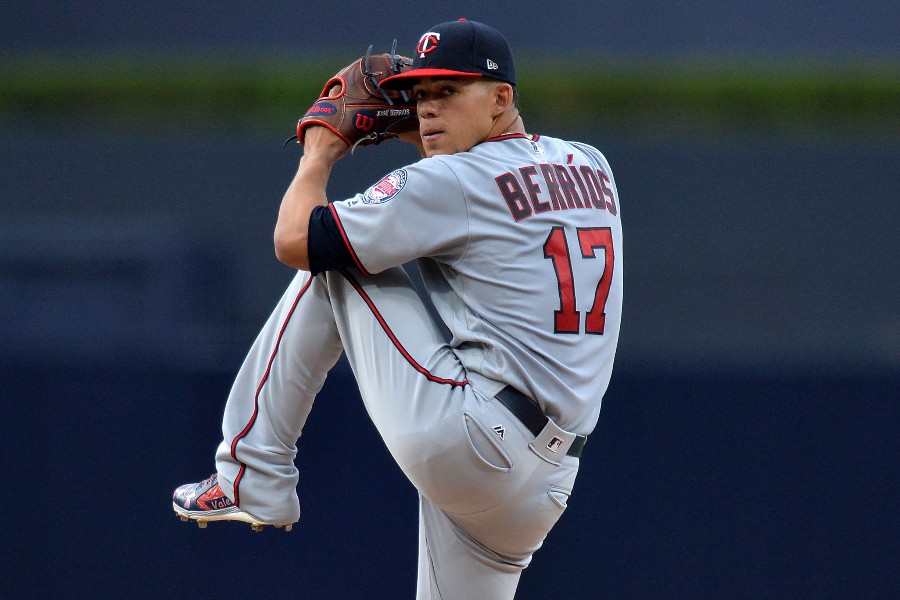 Jamie Cameron here. If you haven’t been reading John Olson’s Four-Six-Three Blog at Twins Daily, get on it. He’s been churning out some really great content. John is also a great Twitter follow (@Four_Six_Three). Recently he posted a thread which caught my attention, essentially attempting to answer the question; does a given team need an ace in order to win the World Series? So I did what any Twitter secret admirer would do, and slid into John’s DMs. "John, you don’t know me, but this thread is super interesting, how would you feel about writing a collaborative piece for Twins Daily?," was my smooth pickup line. John, ever the good sport, agreed, so we came up with a premise; let’s have a debate within an article. Let’s go toe to toe and try to answer the question; do the Twins need an ace to win the World Series? John will argue for, I will argue against. We’d love you to weigh in, and your thoughts on the format. Thanks in advance for reading! Ace up your Sleeve: The necessity of a “true” number one by John Olson Throughout the past offseason, I have been adamant about the necessity of an ace. If the Twins truly want to take the next step, they need to have a front-line, No. 1, ace starter. Assembling a decent rotation, something stable enough to win you some games in a weak division, maybe secure the second Wild Card – well, that’s all fine and well, I suppose. If the goal is to win the last game, it may be a near impossible task to do it without having a true No. 1 starter. I think we need to get some semantics out of the way first, before we can make any cogent arguments. There isn’t a good way to, non-subjectively, define an ace pitcher. If you simply define an ace as a teams’ number one pitcher in the rotation, their Opening Day starter, then well, every team in the league already has one. This isn’t true; I think we can all agree. Even with the incredible season Ervin Santana had last season, I don’t think he fits the mold, either. Like Justice Stewart said, in 1964 when asked to define the threshold of obscenity: “I know it when I see it.” All right – Get on with it, already So, what’s the point, right? Laid out plainly, take a look at the last 10 World Series winners. What do all of them, invariably, have in common? They all either had, or acquired at some point during the season, at least one ace in their rotation. This seems like a very “cherry-picked” piece of evidence – not all teams are built the same. Some teams have had the league MVP, others had a league-leading offense, some the best overall pitching staff, others were somewhere in between. What they all did have is the ability to hand the ball, every fifth day, to an established No. 1 starter. Admittedly, having an ace in the rotation doesn’t guarantee any championships – just ask the LA Dodgers – but an ace does seem to be a prerequisite for any team that considers itself a true contender. Plenty of teams, for example the 2014 Oakland A's who added Jon Lester at the deadline, have anted up for the postseason when they felt their window was open. Anything can happen in the MLB Postseason, but... Bats get hot; bats get cold and the same goes for pitching. Clayton Kershaw, one of the greatest left-handed pitchers in MLB history, has had the label of pitching outstandingly in the regular season but falling flat come October. Some of that’s fair – but push comes to shove, ideally, you’re giving the ball to Kershaw. He’s your Ace. He’s your Stopper. He’s” the guy” that will right the ship. That’s why teams pay out the nose for them in trade, that’s why when they come on the free agent market, they’re a unicorn. If we take a look back in recent history, there isn’t a team which has won it all, without having at least one Ace pitcher. The Astros, ’17 Champions, had Dallas Keuchel (who had a 1.67 ERA pre-All Star break), who was hampered with injuries mid-season, felt the need to add another ace-quality pitcher, Justin Verlander, to the rotation. That seemed to work out. Verlander pitched to the tune of a 1.95 ERA in the second half, was the winning pitcher in Games 1 and 4 in the ALDS, Games 2 and 6 in the ALCS. Verlander was a force in the 2017 postseason, and one of the Astros most potent weapons. The 2016 Chicago Cubs had a three-headed monster rotation of Jon Lester, Jake Arrieta and Kyle Hendricks. None of those pitchers had an ERA higher than 3.10 during the season, but Lester in particular led that staff in xFIP, K/9 and IP. He pitched Games 1, 5 AND appeared in 3 innings of relief in Game 7 to break the curse in Chicago. The 2015 Royals, perhaps the weakest case for "necessity of an ace" in the last 10 years, wanted to add to their arsenal prior to heading into the playoffs. The Royals traded for Johnny Cueto, who had a 2.73 ERA and 113K’s with the Reds in the first half. Slotting him alongside rising star Yordano Ventura and Edinson Volquez, the Royals poised themselves for a World Series run. Although Cueto pitched poorly in the second half of the regular season, he started (and won) Game 2 of the World Series, pitching nine innings of one-run baseball. Giants ace Madison Bumgarner had the most impressive overall pitching performance, in my opinion, in World Series history in 2014. Jon Lester (again) led the Red Sox as their number one starter in 2013. Bumgarner (again) pitched the Giants to a World Series win with a 0.00 ERA over 7 IP in their 2012 Series sweep. Chris Carpenter in 2011. Tim Lincecum in 2010. CC Sabathia in 2009. Cole Hamels in 2008. All of these pitchers, all aces at that point in their careers. All of them World Series Champions. In fact, 2005 is the last year in recent memory where a group of pitchers – none of whom is considered a true ace – were part of a World Series winner. So, what does this have to do with the Twins, exactly? In a one game play-in, who do you want to take the ball? Santana was excellent in 2017, but to call him an ace is overselling him. He has a career ERA of 4.02 and a career FIP of 4.24; he has been brilliant in short bursts and he is what he is – a decent No. 2 or 3 starter on a good team. It's wholly unfair to pin last year’s Wild Card loss on Ervin; the entire roster lost that one. I would expect they would say the same. I like Santana; I just don't like him as my No. 1. The Twins are sorely in need of a pitcher who, when handed the ball, can pitch out of a jam reliably. Get the strikeout when you really need it. A starter who knows he can depend on his defense, but can also generate those outs on his own. As I mentioned previously, Santana had a great season, but his Fielding Independent Pitching (FIP) - out of 58 total qualifying pitchers per FanGraphs – was 43rd. That mark lodges him solidly between Ty Blach, Ivan Nova and Dan Straily. His 4.46 FIP, paired next to a 3.28 ERA, gives a 1.18 point discrepancy – or simply put, he depended heavily on the defense behind him. This isn't meant to pick on Erv. He had a good season. He finished seventh in Cy Young voting. But don't be mistaken, he's not an ace. Perhaps the Twins are where the Astros were in 2015. Maybe Jose Berrios will develop into that guy, or Fernando Romero or Stephen Gonsalves or someone else. Maybe our version of Keuchel and Lance McCullers is staring us in the face. Whoever that pitcher is, if we expect to compete in October, we’ll need an established front-line guy. Preferably two. Aces Low: Why You Don’t Need an Ace to be World Champions By Jamie Cameron Do you need an ace to win the World Series? Absolutely not. Can the Twins win the World Series without a true, legitimate No. 1 starting pitcher? Yes they can. For this half of the debate we’re going to use a team as a case study – the 2015 Kansas City Royals. Who needs an ace when you have a super-bullpen? Let’s dig into what most folks remember about the 2015 Royals: their bullpen. The Royals actually didn’t have the best bullpen in MLB during the regular season. What they did have was four guys who could dominate four consecutive innings in Greg Holland, Wade Davis, Kelvin Herrera and Ryan Madson. The Royals bullpen threw the fifth most innings in the majors during the regular season, trailing only the D-Backs, Rockies, Reds and Phillies (who were all average to terrible teams). In other words, no other good team relied on its bullpen the way the 95-win Royals did. The Royals bullpen ranked 17th in K/9 (8.38), 10th in FIP (3.56), and seventh in WAR (4.8). If you isolate these stats just accounting for their top four guys, they tell a more dominant story. Madson, Herrera, Holland and Davis combined for a 9.2 K/9, a 3.02 FIP, and 4.2 of the bullpen’s entire 4.8 WAR, over 243 regular season innings. There’s a recipe for post-season success if I’ve ever seen one. What about their rotation? OK, everyone remembers, the bullpen was good, but what about the rotation? KC’s rotation must have at least been solid to support an outstanding bullpen. Not really. Interestingly, 2015 was a record-breaking season. There were 2,006 occasions where starting pitchers did not make it through the sixth inning (Twins fans know all about that, amirite?) There are only 2,430 MLB games in the regular season, that’s just under 83% of games where starters are not making it through six innings. By 2015, the bullpen revolution was well and truly on with teams like the Yankees stacking the back-end of their bullpen. The Royals just did it better than anyone else. The Royals rotation in the regular season was pretty poor. They ranked 23rd in the league in WAR (7.9), 24th in inning pitched (912.2), 26th in K/9 at 6.49, and 29th in xFIP at 4.48. Hardly intimidating numbers going into the post-season. As a frame of reference, the Twins starters combined for an xFIP of 4.92 in 2017 (using 16 starting pitchers), and an absurd number of sub-par arms. The homegrown, high quality offense The Royals did have a really strong offense in 2015 which was anchored by lots of good hitters and an excellent defense. Looking back, there are some pretty obvious similarities between the 2015 KC offense and the 2017 Twins offense. Both were constructed around a young core of talented players who rose through their teams’ minor league ranks. In the case of KC this group was comprised of Eric Hosmer, Mike Moustakas, Salvador Perez and Lorenzo Cain. KC was seventh in runs scored with 724. They hit 139 HR, well below the MLB average of 164 that year. The Royals did rank third in the league in doubles (300), sixth in triples (42) and 10th in OPS (.734). Their offense, similarly to the Twins, was built around a terrific outfield anchored by Alex Gordon and Cain (combined 10 WAR). For comparison, the Twins offense in 2017 was one of the best in baseball, finishing seventh in runs scored (815), 13th in doubles (286), 10th in triples (31) and 9th in OPS (.768). An ace in the hole and the story of the 2015 post-season Let’s address the elephant in the room. The Royals DID have an ace. On July 26th 2015, the Royals traded for Brandon Finnegan, John Lamb and Cody Reed for Johnny Cueto. Royals’ fans must have been beside themselves at the time. In the first half of the season with the Cincinnati Reds, Cueto had been dominant. In 130 IP, he had a 2.62 ERA, 0.93 WHIP, 2.0 BB/9 and 8.3 K/9. After he was traded to KC, he struggled mightily, amassing a 4.76 ERA and 1.45 WHIP the rest of the way. The Royals may have had an ace, but he certainly didn’t perform like one in that portion of the regular season. Luckily for the Royals, they did have strong performers in their rotation, including Edinson Volquez and the late Yordano Ventura. Conclusion Cueto ultimately played a big role in the Royals postseason. Yet, even in the highest-leverage situations, his results were mixed. In the unbelievable ALDS vs. the Astros he had one excellent start and one awful start. He had another poor start in the ALCS vs. the Blue Jays, and one incredible start in the World Series against a flat New York Mets team. While Cueto was a bonus for Kansas City, he certainly wasn’t the reason they won the World Series. The similarity for me between the '15 Royals and this year's Twins club is their strong offensive lineups and pitching staffs which can keep them in most games. It remains to be seen whether the Twins will have enough depth in their rotation and enough stability in their bullpen to hold as many leads like those '15 Royals. The Royals had an ace by name but not by performance. Their offense and their bullpen was good enough to ameliorate the limitations of their rotation, which was OK, but still better than the Twins rotation. If the Twins want to contend for a World Series, they don’t need an ace, but they absolutely need more depth in their starting rotation. In addition to using the 2015 Royals to argue the case against needing an ace pitcher, for me, they offer the Twins a blueprint. KC's incredible bullpen would be tough to emulate, but the Twins could be on the front end of a trend such as bullpen stacking. The conclusion after the conclusion – from John We’re in the middle of a paradigm shift in baseball. Teams are tanking, racing to the bottom trying to ensure a high draft spot. Young, controllable talent is the currency of a franchise. The Yankees, Dodgers and other high payroll/large market teams are trimming the fat to get under luxury tax thresholds and the penalties associated with repeat offenders. Raise your hand, and be honest, if you knew about terms like exit velocity, launch angle and heat maps even two years ago. The establishment of an ace pitcher as a staple of a rotation isn’t quite as “new age” as some of these things, but it’s there. Who do you give the ball to in a must-win game? That’s a no-brainer in Dodgertown. Maybe it depends on the matchup with the teams that boast having two or more of these guys (looking at you, Chicago Cubs/Houston Astros). Any way you look at it, you've got to like your odds of winning when you have an ace up your sleeve. What are your thoughts? Is having a true number one pitcher necessary or luxury when it comes to winning a World Series? Let us know!
 -
Aces High or Aces Low? Do you Need an Ace to Win the World Series?
Jamie Cameron posted a blog entry in Curveball Blog
Jamie Cameron here. If you haven’t been reading John Olson’s Four-Six-Three Blog at Twins Daily, get on it. He’s been churning out some really great content. John is also a great Twitter follow. Recently he posted a thread which caught my attention, essentially attempting to answer the question; does a given team need an ace in order to win the World Series? So I did what any Twitter secret admirer would do, and slid into John’s DMs. ‘John, you don’t know me, but this thread is super interesting, how would you feel about writing a collaborative piece for Twins Daily?’ was my smooth pickup line. John, ever the good sport, agreed, so we came up with a premise; let’s have a debate within an article. Let’s go toe to toe and try to answer the question; do the Twins need an ace to win the World Series? John will argue for, I will argue against. We’d love you to weigh in, and your thoughts on the format. Thanks in advance for reading! Ace up your Sleeve: The necessity of a “true” number one by John Olson Throughout the past offseason, I have been adamant about the necessity of an ace. If the Twins truly want to take the next step, they need to have a front-line, no. 1, ace starter. Assembling a decent rotation, something stable enough to win you some games in a weak division, maybe secure the second Wild Card – well, that’s all fine and well, I suppose. If the goal is to win the last game, it may be a near impossible task to do it without having a true number one starter. I think we need to get some semantics out of the way, first, before we can make any cogent arguments. There isn’t a good way to, non-subjectively, define what an ace pitcher “is”. If you simply define an ace as a teams’ number one pitcher in the rotation, their Opening Day starter, then well, every team in the league already has one – case closed. This isn’t true; I think we can all agree. Even with the incredible season Ervin Santana had last season, I don’t think he fits the mold, either. Like Justice Stewart said, in 1964 when asked to define the threshold of obscenity - “I know it when I see it.” Alright – Get on with it, already So, what’s the point, right? Laid out plainly, take a look at the last 10 World Series winners. What do all of them, invariably, have in common? They all either had, or acquired at some point during the season, at least one ace in their rotation. This seems like a very “cherry-picked” piece of evidence – not all teams are built the same. Some teams have had the league MVP, others had a league leading offense, some the best overall pitching staff, others were somewhere in between. What they all did have is the ability to hand the ball, every fifth day, to an established number 1 starter. Admittedly, having an ace in the rotation doesn’t guarantee any Championships – just ask the LA Dodgers – but an ace does seem to be a prerequisite for any team that considers itself a true contender. Plenty of teams, for example the 2014 Oakland A's who added Jon Lester at the trade deadline that year, have anted up for the postseason when they felt their window was open. Anything can happen in the MLB Postseason, but... Bats get hot; bats get cold and the same goes for pitching. Clayton Kershaw, one of the greatest left-handed pitchers in MLB history, has had the label of pitching outstandingly in the regular season but falling flat come October. Some of that’s fair, some of its not – but push comes to shove, ideally, you’re giving the ball to Kershaw. He’s your Ace. He’s your Stopper. He’s” the guy” that will right the ship. Nine times out of ten, he’s giving you the best possible chance at winning that game. That’s why teams pay out the nose for them in trade, that’s why when they come on the free agent market, they’re a unicorn. If we take a look back in recent history, there isn’t a team who has won it all, without having at least one Ace pitcher. The Astros, ’17 Champions, had Dallas Keuchel (who had a 1.67 ERA pre-All Star break), though hampered with injuries mid-season, felt the need to add another ace-quality pitcher, Justin Verlander, to the rotation. That seemed to work out. Verlander pitched to the tune of a 1.95 ERA in the second half, was the winning pitcher in games 1 and 4 in the ALDS, games 2 and 6 in the ALCS. Verlander was a force in the 2017 postseason, and one of the Astros most potent weapons. The 2016 Chicago Cubs had a three-headed monster rotation of Jon Lester, Jake Arrieta and Kyle Hendricks. None of those pitchers had an ERA higher than 3.10 during the season, but Lester in particular lead that staff in xFIP, K/9, and IP. He pitched games 1, 5 AND appeared in 3 innings of relief in game 7 to break the curse in Chicago. The 2015 Royals, perhaps the weakest case for 'necessity of an ace' in the last 10 years, wanted to add to their arsenal prior to heading into the playoffs. The Royals, at the deadline, traded for Johnny Cueto who had a 2.73 ERA and 113K’s with the Reds in the first half. Slotting him alongside rising star Yordano Ventura and Edinson Volquez, the Royals poised themselves for a World Series run. Although Cueto pitched poorly in the second half of the regular season, he started (and won) game 2 of the World Series, pitching 9 innings of 1 run baseball. Giants ace Madison Bumgarner had the most impressive overall pitching performance, in my opinion, in World Series history in 2014. Jon Lester (again) led the Red Sox as their number one starter in 2013. Bumgarner (again) pitched the Giants to a World Series win a 0.00 ERA over 7 IP in their 2012 Series sweep. Chris Carpenter in 2011. Tim Lincecum in 2010. CC Sabathia in 2009. Cole Hamels in 2008. All of these pitchers, all aces at that point in their careers. All of them World Series Champions. In fact, 2005 is the last year in recent memory where a group of pitchers – none of whom considered a true ace – were part of a World Series winner. So, what does this have to do with the Twins, exactly? In a one game play-in, who do you want to take the ball? Santana was excellent in 2017, but to call him an ace is overselling him. He has a career ERA of 4.02 and a career FIP of 4.24; he has been brilliant in short bursts and he is what he is – a decent number 2 or 3 starter on a good team. It's wholly unfair to pin last year’s Wild Card loss on Ervin; the entire roster lost that one. I would expect they would say the same. I like Santana; I just don't like him as my number 1. The Twins are sorely in need of a pitcher who, when handed the ball, can pitch out of a jam reliably. Get the strikeout, when you really need it. A starter that knows he can depend on his defense, but can also generate those outs on his own. As I mentioned previously, Santana had a great season, but his Fielding Independent Pitching (FIP) - out of 58 total qualifying pitchers per Fangraphs – was 43rd. That mark lodges him solidly between Ty Blach, Ivan Nova and Dan Straily. His 4.46 FIP, paired next to a 3.28 ERA, gives a 1.18 point discrepancy – or simply put, he depended heavily on the defense behind him. This isn't meant to pick on Erv. He had a good season. He finished 7th in Cy Young voting. But don't be mistaken, he's not an ace. Perhaps the Twins are where the Astros were in 2015. Maybe Jose Berrios will develop into that guy, or Romero or Gonsalves or someone else. Maybe our version of Keuchel and McCullers is staring us in the face. Whoever that pitcher is, if we expect to compete in October – not just “get there”, but actually be a threat to win it all – we’ll need an established front-line guy. Preferably, two. Aces Low: Why You Don’t Need an Ace to be World Champions By Jamie Cameron Do you need an ace to win the World Series? Absolutely not. Sure, it helps, but it’s certainly no guarantee, ask the Dodgers (side bar – we both included this reference prior to comparing pieces, so I left it in). Can the Twins win the World Series without a true, legitimate number one starting pitcher? Yes they can. For this half of the debate we’re going to use a team as a case study – the 2015 Kansas City Royals. Who needs an ace when you have a super-bullpen? Let’s dig into what most folks remember about the 2015 Royals, their bullpen. The Royals actually didn’t have the best bullpen in MLB during the regular season. What they did have is 4 guys who could dominate 4 consecutive innings in Greg Holland, Wade Davis (remember when they were on the same team), Kelvin Herrera, and Ryan Madson. The Royals threw the fifth most innings in the majors during the regular season, trailing only the Dbacks, Rockies, Reds, and Phillies (who were all average to terrible teams). In other words, no other good team relied on their bullpen the way the 95 win Royals did. The Royals bullpen ranked 17th in K/9 (8.38), 10th in FIP (3.56), and 7th in WAR (4.8). If you isolate these stats just accounting for their top 4 guys, they tell a more dominant story. Madson, Herrera, Holland, and Davis combined for a 9.2 K/9, a 3.02 FIP, and 4.2 of the bullpen’s entire 4.8 WAR, over 243 regular season innings. There’s a recipe for post-season success if I’ve ever seen one. What about their rotation? OK, everyone remembers, the bullpen was good, but what about the rotation? KC’s rotation must have at least been solid to support an outstanding bullpen. Not really. Interestingly 2015 was a record breaking season. There were 2,006 occasions where starting pitchers did not make it through the sixth inning (Twins fans know all about that, amirite?) There are only 2,430 MLB games in the regular season, that’s just under 83% of games where starters are not making it through six innings (we are not alone, Twins fans). By 2015, the bullpen revolution was well and truly on with team like the Yankees stacking the backend of their bullpen. The Royals just did it better than anyone else. The Royals rotation in the regular season was pretty poor. They ranked 23rd in the league in WAR (7.9), 24th in inning pitched (912.2), 26th in K/9 at 6.49, and 29th in xFIP at 4.48. Hardly intimidating numbers going into the post-season. As a frame of reference, the Twins starters combined for an xFIP of 4.92 in 2017 (using 16 starting pitchers), and an absurd amount of sub-par arms. The homegrown, high quality offense The Royals did have a really strong offense in 2015 which was anchored by lots of good hitters and an excellent defense. Looking back, there are some pretty obvious similarities between the 2015 KC offense and the 2017 Twins offense. Both were constructed around a young core of talented layers who rose through their teams’ minor league ranks. In the case of KC this group was comprised of Hosmer, Moustakas, Salvador Perez, and Lorenzo Cain. KC was 7th in runs scored in 2015 with 724. They hit 139 HR, well below the MLB average of 164 for the 2015 season. The Royals did rank third in the league in doubles (300), sixth in triples (42), and 10th in OPS (.734). The Royals offense, similarly to the Twins, was built around a terrific outfield anchored by Alex Gordon and Lorenzo Cain (combined 10 WAR). So, the Royals had a solid offensive core anchored around an excellent outfield. Sounds familiar. For comparison, the Twins offense in 2017 was one of the best in baseball, finishing 7th in runs scored (815), 13th in doubles (286), 10th in triples (31), and 9th in OPS (.768). An ace in the hole and the story of the 2015 post-season Let’s address the elephant in the room. The Royals DID have an ace. On July 26th 2015, the Royals traded for Brandon Finnegan, John Lamb, and Cody Reed for Johnny Cueto. Royals’ fans must have been beside themselves at the time. In the first half of the season with the Cincinnati Reds, Cueto has been dominant. In 130 IP, he had a 2.62 ERA, 0.93 WHIP, 2.0 BB/9, and 8.3 K/9. After he was trades to KC he struggled mightily, amassing a 4.76 ERA the rest of the way, giving up a 1.45 WHIP, and giving up a ton more contact. My point here is simply that while the Royals may have ‘had an ace’, he certainly didn’t perform like one in the portion of the regular season he was with KC (as a sidebar, this is exactly the type of trade the Twins should be looking to make if they are in contention in July). While Cueto didn’t pitch well for the Royals in the regular season, they did have strong performers in their rotation, including Edinson Volquez, and the late Yordano Ventura, both of whom had strong seasons. Conclusion Cueto did ultimately play a big role in the Royals postseason. Yet, even in the highest leverage situations, his results were mixed. In the unbelievable ALDS VS Astros he had one excellent start and one awful start. He had one poor start in the ALCS VS Blue Jays, and one incredible start in the World Series against a flat New York Mets team. While Cueto was a bonus for Kansas City, he certainly wasn’t the reason they won the World Series. For me, the similarity for me between the Royals 2015 team and the Twins in 2018 is strong offensive lineups, with pitching staffs which can keep them in most games. It remains to be seen whether the 2018 Twins have enough depth in their rotation and enough stability in their bullpen to hold as many leads as the 2015 Royals created for themselves. The Royals had an ace by name but not by performance. Their offense and their bullpen was good enough to ameliorate the limitations of their rotation, which was OK, but still better than the Twins rotation. If the Twins want to contend for a World Series, they don’t need an ace, but they absolutely need more depth in their starting rotation. In addition to using the 2015 Royals to argue the case against needing an ace pitcher, for me, they offer the Twins a blueprint. Not specifically by imitating their incredible bullpen, but rather, being on the front end of a trend such as bullpen stacking which can give a mid-market team the shove it needs into the post-season, where anything can happen. The conclusion after the conclusion – from John We’re in the middle of a paradigm shift in baseball. Teams are tanking, racing to the bottom trying to ensure a high draft spot. Young, controllable talent is the currency of a franchise. The Yankees, Dodgers and other high payroll/large media market teams are trimming the fat to get under Luxury Tax thresholds and the penalties associated with repeat offenders. Raise your hand, and be honest, if you knew about – let alone used in conversation – the terms exit velocity, launch angle and heat maps even 2 years ago. The establishment of an ace pitcher as a staple of a rotation isn’t quite as “new age” as some of these things, but it’s there. Who do you give the ball to in a must-win game? That’s a no-brainer in Dodgertown. Maybe it depends on the matchup with the teams that boast having two or more of these guys (looking at you, Chicago Cubs/Houston Astros). Any way you look at it, you've got to like your odds of winning when you have an ace up your sleeve. What are your thoughts? Is having a true number one pitcher necessary or luxury when it comes to winning a World Series? Let us know! -
LoMo in SloMo: What Happened to Logan Morrison in 2017?
Jamie Cameron posted a blog entry in Curveball Blog
The Twins made another exciting off-season move this weekend, signing ex-Rays and Marlins 1B/DH Logan Morrison to a 1 year deal worth $6.5 million. The Twins continued their strong push in free-agency this winter. Morrison’s deal has a team option which will vest at 600 plate appearances. With escalators, he can earn a maximum of $16.5 million over the next two seasons. It’s worth noting that the Twins have positioned themselves carefully and strategically this off-season, maintaining financial flexibility through inking their additions to one or two year deals. Minnesota remains poised with a deep pool of talent on the farm to make in-season acquisitions if and when necessary. Most projection systems have Morrison as around a 1-2 win player in 2018, which, if true, is another bargain for the cost-opportunistic Twins front office in a stagnant winter of free agency. Morrison is a fascinating player. His power surge made him the Statcast poster boy for the 2017 season. Before 2017 Morrison’s career high for HR was 23, in his first full season with the Marlins in 2011. Adjustments in Morrison’s approach at the plate led to an increase in HR from 14 to 38 (albeit with considerably more plate appearances), an increase in OBP from .319 in 2016 to .353 in 2017, and a huge climb in BB%, from 9.3% in 2016, to 13.5% in 2017, (good for 14th in the league among hitters who made at least 500 PA). Per Statcast, Morrison increased his launch angle from 12.1 degrees to 17.4 degrees in 2017 in an attempt to hit more balls in the air. Boy, did that ever work. Along with his adjusted launch angle, how did Morrison’s approach at the plate differ in 2017? Is his 2017 season a sign of things to come, or a statistical anomaly? David Laurila of Fangraphs captured some interesting comments from Morrison that get at the heart of his different approach as of 2017: ‘I’ve looked at the all-stars in the league, and what they believe. I’ve heard guys say if they fly out 3 or 4 times a night, that’s a good night. I was always taught to hit the ball on the ground and run, and I’m not even fast. Now my ‘back to basics' is hitting a fly ball up the middle (instead of a ground ball up the middle). Valuing that side of it – launch angle and stuff – has helped me a lot.’ Morrison’s shift in approach is obvious from the ground-out from a pitch up in the zone when he was still a member of the Marlins, versus the slobberknocker he deposits from Buck Farmer of the Tigers when with the Rays in 2017, where he is clearly sitting on a pitch up. Morrison also shared some thoughts on pitch location: ‘As far as pitch location, I’m more of an up-and-middle, middle-away guy. I just think there’s a lot of stuff down and in that can get you out if you’re actually looking there.’ Morrison showed a tendency in 2017 to ere on the side of pulling the ball, while attempting to jump on pitches middle high. In 2017 Morrison put around 5% more pitches in play to center field than he did in 2016 and reduced his pitches in play to opposite field slightly to boot. This is born out in a heat map of portions of the strike zone Morrison swung at in 2017. This is interesting given the trend of pitchers working fastballs up in the zone which the Rays themselves pioneered. That is exactly what Morrison is looking for. Morrison may well not replicate his incredible 2017. Even if Morrison is a 22-28 home run hitter in 2018, he provides valuable insurance with Miguel Sano expected to begin the season suspended, and adds another potent bat at DH to an already formidable lineup when Sano returns. If Morrison can stay with his approach of hitting fly-balls to center field, a good number of them should exit Target Field as souvenirs this summer. -
In echoing the thoughts of others throughout the winter, it’s extremely difficult to be disappointed as a Twins fan this off-season. The team has added six pitchers, including a necessary starting pitching addition in Jake Odorizzi. Minnesota has added established bullpen arms (Reed) and others with either upside (Rodney), or bounce back potential (Duke). While we can bemoan the Twins inability to land a marquee arm like Yu Darvish, the Twins have established themselves a platform for being competitive in a weak division. Solid rotation, good bullpen, excellent lineup.The Falvey and Levine regime, let’s call them The Falvgime, deserves credit for the rapidity of their organizational overhaul. After a year of assessment and modest additions in 2017, they have added exciting, progressive coaching voices such as James Rowson and Garvin Alston. They have beefed up their research and analytics department both quantitatively and qualitatively, adding reputable names such as Josh Kalk, John Manuel and Daniel Adler. (If you haven’t listened to Adler’s recent appearance on Ben Lindbergh’s Effectively Wild podcast, you’re doing yourself an injustice). It’s easy to be swept up into The Falvgime hype train, but what are the mistakes they have made along the way so far? Are there any opportunities missed which may end up as organizational regrets? Let’s rewind a few years to June 4th 2012. The 2012 amateur player draft will forever be remembered by Twins fans as the draft that landed them Byron Buxton and Jose Berrios. If both Buxton and Berrios continue their respective careers at their current trajectories, this draft would be remembered as monumentally successful. The 2012 Draft also marked a trend of the Twins drafting an increasing number of high velocity arms, adding Luke Bard with the 42nd pick, Mason Melotakis with the 63rd pick, and J.T. Chargois with the 72nd pick. More on those three shortly. The 2012 draft also netted the Twins Tyler Duffey at 160th overall, and Taylor Rogers at 340th overall, both of whom have become significant role players in the Twins’ bullpen. Of the three 2012 draft arms, only Melotakis remains. The 27-year-old Bard was claimed by the Angels in the Rule 5 draft, after amassing a 2.76 ERA over 65 innings between Chattanooga and Rochester in 2017. Bard managed a 13.6 SO/9 in those innings. Chargois was claimed by the 104-win LA Dodgers last week after being placed on waivers to make extra space available on the Twins 40-man roster. Chargois, also 27, has been plagued by injuries, but is intriguing as the Twins former top relief prospect and one of only five Twins pitchers to throw a pitch 99mph or higher since 2008. Reaction to Chargois being claimed has been mixed, with most cautioning against a snap reaction until the Twins fill the final spot on their 40-man roster. Thad Levine indicated some regret in the Twins’ loss, telling Twin Cities’ media "we were 29/30ths of the way there." The Dodgers are certainly an interesting team to claim Chargois, having put together the fourth best bullpen ERA in 2017, the third best strikeout total, and the second best batting average against in MLB. Melotakis successfully passed through waivers during the 2017, much to the ire of Twins fans, who struggled to understand the rationale of placing a former top (left-handed) relief pitching product who was having an excellent season at risk. All three of the Bard, Melo, and Chargois triumvirate had struggled throughout their minor league careers with injuries, and that may well be a decisive factor in the front office’s decision-making process. It does, however, seem that the organization has let significant arm talent slip from its grasp in Bard and Chargois, right when they appeared ready to make a more significant major league contribution. Rewind again to 2014. Nick Gordon was selected fifth overall by the Twins. Minnesota proceeded to select an entire bullpen after him, including several more high velocity arms such as Nick Burdi (second round), Jake Reed (fifth round) and John Curtiss (sixth round). It’s easy to pretend as if the old Twins regime did nothing about the teams’ bullpen struggles year after year, but it was a problem which was recognized and drafted toward several years before Derrick Falvey and Thad Levine took over the organization. Burdi fits the familiar pattern of the Twins 2012 drafted relief pitchers. He has a massive arm with the ability to hit triple digits. In 104 MiLB innings, he has managed 142 K's. Burdi seemed to be putting it all together at AA in 2017, giving up just one earned run in 17 IP until Tommy John surgery derailed his season. Burdi was selected by the Phillies in the Rule 5 draft before being traded to the Pirates. John Curtiss and Jake Reed are the two remaining arms from the 2014 draft who have made the steadiest progress towards the major league team, Curtiss making, and struggling in, his MLB debut last year. Curtiss dominated minor league competition to the tune of 68 K's in 48.1 IP and a miserly .135 avg. Reed spent 2017 split between Chattanooga and Rochester, turning it up at AAA and giving up a 2.05 ERA whilst striking out 25 in 30 innings. Both are strong contenders to contribute at the major league level this year. Looking through the Twins current top 30 prospects as a whole (MLB Pipeline list), there’s still some depth at reliever. The names featured are Tyler Jay (8th), John Curtiss (20th), and Jake Reed (26th). The recently departed Chargois was listed at 21. While this may be in no way indicative of how much help the Twins bullpen may receive from the minor leagues in 2018, it raises an interesting question. Did "The Falvgime" completely press the reset button on Twins relief pitching prospects when they took over the organization? While this seems counter-intuitive the front office has certainly been more aggressive at exposing relief pitching options via waivers and the Rule 5 draft than we might have expected. The common denominator surrounding high-end relief pitching prospects the Twins have lost is a history of significant injuries. It seems likely that on a team with several necessary areas of improvement (between the rotation and the bullpen) Falvey and Levine have been careful not to pin their hopes to prospects who have struggled to stay healthy, perhaps recognizing that they are entering a window of contention with the Tigers and Royals entering rebuilds and the White Sox in the midst of one. They have taken some gambles with exposing these players, some seemingly paying off, others have not. What do y’all think? Has "The Falvgime" made mistakes in how they have handled Twins’ relief pitching prospects? Do you think they should have prioritized keeping Bard and Burdi? Will they regret losing Chargois? Click here to view the article
- 27 replies
-
- 2
-

-
- j.t. chargois
- luke bard
- (and 3 more)
-
Arms Race: Will the Twins Front Office Regret Losing High-Impact Arms?
Jamie Cameron posted an article in Twins
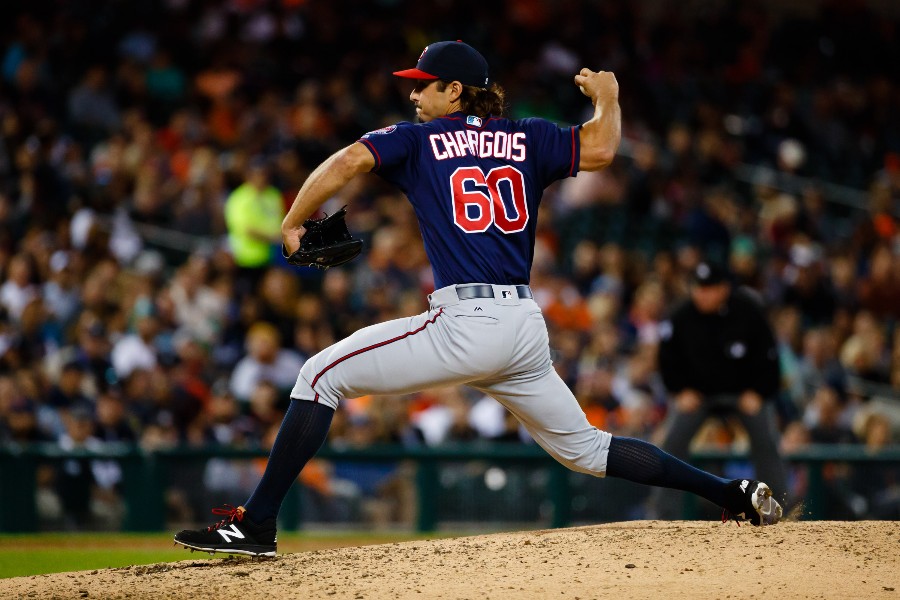 The Falvey and Levine regime, let’s call them The Falvgime, deserves credit for the rapidity of their organizational overhaul. After a year of assessment and modest additions in 2017, they have added exciting, progressive coaching voices such as James Rowson and Garvin Alston. They have beefed up their research and analytics department both quantitatively and qualitatively, adding reputable names such as Josh Kalk, John Manuel and Daniel Adler. (If you haven’t listened to Adler’s recent appearance on Ben Lindbergh’s Effectively Wild podcast, you’re doing yourself an injustice). It’s easy to be swept up into The Falvgime hype train, but what are the mistakes they have made along the way so far? Are there any opportunities missed which may end up as organizational regrets? Let’s rewind a few years to June 4th 2012. The 2012 amateur player draft will forever be remembered by Twins fans as the draft that landed them Byron Buxton and Jose Berrios. If both Buxton and Berrios continue their respective careers at their current trajectories, this draft would be remembered as monumentally successful. The 2012 Draft also marked a trend of the Twins drafting an increasing number of high velocity arms, adding Luke Bard with the 42nd pick, Mason Melotakis with the 63rd pick, and J.T. Chargois with the 72nd pick. More on those three shortly. The 2012 draft also netted the Twins Tyler Duffey at 160th overall, and Taylor Rogers at 340th overall, both of whom have become significant role players in the Twins’ bullpen. Of the three 2012 draft arms, only Melotakis remains. The 27-year-old Bard was claimed by the Angels in the Rule 5 draft, after amassing a 2.76 ERA over 65 innings between Chattanooga and Rochester in 2017. Bard managed a 13.6 SO/9 in those innings. Chargois was claimed by the 104-win LA Dodgers last week after being placed on waivers to make extra space available on the Twins 40-man roster. Chargois, also 27, has been plagued by injuries, but is intriguing as the Twins former top relief prospect and one of only five Twins pitchers to throw a pitch 99mph or higher since 2008. Reaction to Chargois being claimed has been mixed, with most cautioning against a snap reaction until the Twins fill the final spot on their 40-man roster. Thad Levine indicated some regret in the Twins’ loss, telling Twin Cities’ media "we were 29/30ths of the way there." The Dodgers are certainly an interesting team to claim Chargois, having put together the fourth best bullpen ERA in 2017, the third best strikeout total, and the second best batting average against in MLB. Melotakis successfully passed through waivers during the 2017, much to the ire of Twins fans, who struggled to understand the rationale of placing a former top (left-handed) relief pitching product who was having an excellent season at risk. All three of the Bard, Melo, and Chargois triumvirate had struggled throughout their minor league careers with injuries, and that may well be a decisive factor in the front office’s decision-making process. It does, however, seem that the organization has let significant arm talent slip from its grasp in Bard and Chargois, right when they appeared ready to make a more significant major league contribution. Rewind again to 2014. Nick Gordon was selected fifth overall by the Twins. Minnesota proceeded to select an entire bullpen after him, including several more high velocity arms such as Nick Burdi (second round), Jake Reed (fifth round) and John Curtiss (sixth round). It’s easy to pretend as if the old Twins regime did nothing about the teams’ bullpen struggles year after year, but it was a problem which was recognized and drafted toward several years before Derrick Falvey and Thad Levine took over the organization. Burdi fits the familiar pattern of the Twins 2012 drafted relief pitchers. He has a massive arm with the ability to hit triple digits. In 104 MiLB innings, he has managed 142 K's. Burdi seemed to be putting it all together at AA in 2017, giving up just one earned run in 17 IP until Tommy John surgery derailed his season. Burdi was selected by the Phillies in the Rule 5 draft before being traded to the Pirates. John Curtiss and Jake Reed are the two remaining arms from the 2014 draft who have made the steadiest progress towards the major league team, Curtiss making, and struggling in, his MLB debut last year. Curtiss dominated minor league competition to the tune of 68 K's in 48.1 IP and a miserly .135 avg. Reed spent 2017 split between Chattanooga and Rochester, turning it up at AAA and giving up a 2.05 ERA whilst striking out 25 in 30 innings. Both are strong contenders to contribute at the major league level this year. Looking through the Twins current top 30 prospects as a whole (MLB Pipeline list), there’s still some depth at reliever. The names featured are Tyler Jay (8th), John Curtiss (20th), and Jake Reed (26th). The recently departed Chargois was listed at 21. While this may be in no way indicative of how much help the Twins bullpen may receive from the minor leagues in 2018, it raises an interesting question. Did "The Falvgime" completely press the reset button on Twins relief pitching prospects when they took over the organization? While this seems counter-intuitive the front office has certainly been more aggressive at exposing relief pitching options via waivers and the Rule 5 draft than we might have expected. The common denominator surrounding high-end relief pitching prospects the Twins have lost is a history of significant injuries. It seems likely that on a team with several necessary areas of improvement (between the rotation and the bullpen) Falvey and Levine have been careful not to pin their hopes to prospects who have struggled to stay healthy, perhaps recognizing that they are entering a window of contention with the Tigers and Royals entering rebuilds and the White Sox in the midst of one. They have taken some gambles with exposing these players, some seemingly paying off, others have not. What do y’all think? Has "The Falvgime" made mistakes in how they have handled Twins’ relief pitching prospects? Do you think they should have prioritized keeping Bard and Burdi? Will they regret losing Chargois?
 -
Arms Race: Will the Twins Front Office Regret Losing High Impact Arms?
Jamie Cameron posted a blog entry in Curveball Blog
In echoing the thoughts of others throughout the winter, it’s extremely difficult to be disappointed as a Twins fan this off-season. The team has added six pitchers, including a necessary starting pitching addition in Jake Odorizzi. Minnesota has added established bullpen arms (Reed) and others with either upside (Rodney), or bounce back potential (Duke). While we can bemoan the Twins inability to land a marquee arm like Yu Darvish, the Twins have established themselves a platform for being competitive in a weak division. Solid rotation, good bullpen, excellent lineup. The Falvey and Levine regime, let’s call them ‘The Falvgime’, deserves credit for the rapidity of their organizational overhaul. After a year of assessment and modest additions in 2017, they have added exciting, progressive coaching voices such as James Rowson and Garvin Alston. They have beefed up their research and analytics department both quantitatively and qualitatively, adding reputable names such as Josh Kalk, John Manuel, and Daniel Adler. (If you haven’t listened to Adler’s recent appearance on Ben Lindbergh’s Effectively Wild podcast, you’re doing yourself an injustice). It’s easy to be swept up into The Falvgime hype train, but what are the mistakes they have made along the way so far? Are there any opportunities missed which may end up as organizational regrets? Let’s rewind a few years to June 4th 2012. The 2012 amateur player draft will forever be remembered by Twins fans as the draft that landed them Byron Buxton and Jose Berrios. If both Buxton and Berrios continue their respective careers at their current trajectories, this draft would be remembered as monumentally successful. 2012 also marked a trend of the Twins drafting an increasing number of high velocity arms, adding Luke Bard with the 42nd pick, Mason Melotakis with the 63rd pick, and J.T. Chargois with the 72nd pick. More on those three shortly. The 2012 draft also netted the Twins Tyler Duffey at 160th overall, and Tyler Rogers at 340th overall, both of whom have become significant role players in the Twins’ bullpen. Of the three 2012 draft arms, only Melotakis remains. The 27 year old Bard was claimed by the Angels in the Rule 5 draft, after amassing a 2.76 ERA over 65 innings between Chattanooga and Rochester in 2017. Bard managed a 13.6 SO/9 in those innings. Chargois was claimed by the 104 win LA Dodgers last week after being placed on waivers to make extra space available on the Twins 40 man roster. Chargois, also 27, has been plagued by injuries, but is intriguing as the Twins former top relief prospect and one of only five Twins pitchers to throw a pitch 99mph or higher since 2008. Reaction to Chargois being claimed has been mixed, with most cautioning against a snap reaction until the Twins fill the final spot on their 40 man roster. Thad Levine indicated some regret in the Twins’ loss, telling Twin Cities’ media ‘we were 29/30ths of the way there’. The Dodgers are certainly an interesting team to claim Chargois, having put together the fourth best bullpen ERA in 2017, the third best strikeout total, and the second best batting average against in MLB. Melotakis successfully passed through waivers during the 2017, much to the ire of Twins fans, who struggled to understand the rationale of placing a former top (left-handed) relief pitching product who was having an excellent season at risk. All three of the Bard, Melo, and Chargois triumvirate had struggled throughout their minor league careers with injuries, and that may well be a decisive factor in the front office’s decision making process. It does however, seem that the organization has let significant arm talent slip from its grasp in Bard and Chargois, right when they appeared ready to make a more significant major league contribution. Rewind again to 2014. Nick Gordon was selected 5th overall by the Twins. Minnesota proceeded to select an entire bullpen after him, including several more high velocity arms such as Nick Burdi (2nd round), Jake Reed (5th round) and John Curtiss (6th round). It’s easy to pretend as if the old Twins regime did nothing about the teams’ bullpen struggles year after year, but it was a problem which was recognized and drafted towards several years before Derrick Falvey and Thad Levine took over the organization. Burdi fits the familiar pattern of the Twins 2012 drafted relief pitchers. He has a massive arm with the ability to hit triple digits. In 104 MiLB innings, he has managed 142 Ks. Burdi seemed to be putting it all together at AA in 2017, giving up just one earned run in 17 IP until Tommy John surgery derailed his season. Burdi was selected by the Phillies in the Rule 5 draft before being traded to the Pirates. John Curtiss and Jake Reed are the two remaining arms from the 2014 draft who have made the steadiest progress towards the major league team, Curtiss making, and struggling in his MLB debut last year. Curtiss dominated minor league competition to the tune of 68Ks in 48.1 IP and a miserly .135 avg. Reed spent 2017 split between Chattanooga and Rochester, turning it up at AAA and giving up a 2.05 ERA whilst striking out 25 in 30 innings. Both are strong contenders to contribute at the major league level this year. Looking through the Twins current top 30 prospects as a whole (MLB list), there’s still some depth at reliever. The names featured are Tyler Jay (8th), John Curtiss (20th), and Jake Reed (26th). The recently departed Chargois was listed at 21. While this may be in no way indicative of how much help the Twins bullpen may receive from the minor leagues in 2018, it raises an interesting question. Did ‘The Falvgime’ completely press the reset button on Twins relief pitching prospects when they took over the organization? While this seems counter intuitive the front office has certainly been more aggressive at exposing relief pitching options via waivers and the Rule 5 draft than we might have expected. The common denominator surrounding high end relief pitching prospects the Twins have lost is a history of significant injuries. It seems likely that in a team with several necessary areas of improvement (between the rotation and the bullpen) Falvey and Levine have been careful not to pin their hopes to prospects who have struggled to stay healthy, perhaps recognizing that they are entering a window of contention with the Tigers and Royals entering rebuilds and the White Sox in the midst of one. They have taken some gambles with exposing these players, some seemingly paying off, others have not. What do y’all think? Has ‘The Falvgime’ made mistakes in how they have handled Twins’ relief pitching prospects? Do you think they should have prioritized keeping Bard and Burdi? Will they regret losing Chargois? -
Will the Real Kyle Gibson Please Stand Up?
Jamie Cameron commented on Jamie Cameron's blog entry in Curveball Blog
These are all great points that I wish I had included in this piece lol! -
Will the Real Kyle Gibson Please Stand Up?
Jamie Cameron commented on Jamie Cameron's blog entry in Curveball Blog
Thanks for reading! -
Will the Real Kyle Gibson Please Stand Up?
Jamie Cameron commented on Jamie Cameron's blog entry in Curveball Blog
Thanks for reading, Parker! Great point about the slider. Gibson with something approaching an out pitch is definitely a different ceiling than the Gibson we are used to. -
Will the Real Kyle Gibson Please Stand Up?
Jamie Cameron commented on Jamie Cameron's blog entry in Curveball Blog
Definitely understand the lack of enthusiasm. I tend to think this year will be interesting as the second half of 2017 was the first time he changed his MO as a pitcher. Showing he can adapt hopefully means he can do so if necessary. -
With the Twins off-season moves seemingly drawing to a close, fans would be hard pressed not to be enthused by the clubs’ upgrades. At the beginning of the 2017 season, fans were frustrated with a lifeless offseason which involved adding Jason Castro, Matt Belisle, and newly reinvented Craig Breslow. Most cautioned that ‘Falvine’ (there’s my garage band name of the future) were assessing the organization and its infrastructure before making hasty free agent additions. This off-season, the front office has been aggressive, acquiring Jacob Pearson and David Banuelos from the Angels and Mariners for international slot money, adding Michael Pineda, Zach Duke, Fernando Rodney, Addison Reed, Annibal Sanchez, and trading for Jake Odorizzi. Falvey and Lavine deserve credit for creatively adding to the Twins 2018 chances whilst maintaining strong organizational depth for 2019 and beyond. I would argue that the Twins punched a little above off-season expectations in their bullpen additions (with the addition of Reed) and a little below their expectations for the rotation given the earnestness of their interest in Yu Darvish. While the Twins have improved their starting five, the lack of a higher quality add like Darvish or Archer (although unsurprising) heightens the pressure on Kyle Gibson to build on his string second half performance in 2017. So who is the real Kyle Gibson? What can Twins fans expect in 2018? One question I pondered before I dug into Gibson’s numbers; Did/do Twins fans have unreasonable expectations for Gibson? There has always been a contention that Gibson has not lived up to the hype. The Twins first round selection (22nd overall) in 2009, Gibson ascended to fairly lofty prospect status, reaching a peak of #34 overall (Baseball America). The Twins have struggled to draft and develop front line starting pitching for a significant period of time, making the pressure on Gibson to be ‘the answer’ immense when he made his big league debut in 2013. It should also be noted that in spite of Gibson falling a little in the draft due to his injury history, the Twins have had other late first round pick pitchers who couldn’t establish themselves in the majors at all (such as Alex Wimmers). With Ervin Santana out and until May and rotation with a top end of 2/3 types (Berrios and Odorizzi), the Twins need Gibson to be at least solid. So who is Kyle Gibson? Is he the 2015 version who threw almost 200 innings and had an xFIP of 3.95? Is the second half of 2017 version who had a K/9 of almost 9.0 and help opposing hitters to a .379 SLG? Or is he the pitcher who struggled significantly throughout the first half of last season, to the tune of a .389 OBP against whilst surrendering 16 HR in 80 innings? Matthew Trueblood wrote an excellent article for Baseball Prospectus when Gibson was picking up steam in the second half of 2017. He isolated four primary factors in Gibson’s breakthrough; a lower release point, moving to the middle of the rubber to combat control problems, using his legs more effectively, and an evolving pitch mix. Gibson’s velocity improved as a result, his average fastball increasing almost 1 mph from 2016. New Twins pitching coach Garvin Alston is one of the most fascinating stories not to be talked about this offseason. Minnesota owe much of their 2017 success to then new hitting coach James Rowson. Throughout the season when the Twins young hitters made breakthroughs, Rowson continued to emphasize one central tenet of his coaching; the swing belongs to the hitter, they must own it and feel empowered to tweak it. When introduced to Twin Cities’ media, Alston emphasized his own central teaching: ‘First, one of the biggest things I teach is commanding the zone with the fastball’. Consider then, Gibson’s fastball command from the first half of 2017 to the second half. Comparing Gibson’s fastball location from the first half of his season to the second, he clusters his strike throwing with greater consistency in the portion of the zone up and away from RHH. Additionally, he more intentionally uses the opposite corner of the zone, down and in from RHH or down and away for LHH. Between April and the end of July 2017, Gibson gave up a .300 BAA with his fastball, a SLG of .640, and .340 ISO. Over the same period of time, he gave up .342 BAA on his sinker. After tweaking his pitch mix, Gibson’s results improved dramatically. Throughout the rest of the season, his gave up a .529 SLG, and .193 ISO on his fastball. It was still being hit, but much less hard. Similarly, he gave up a .267 BAA on his sinker. This makes a ton of sense. Gibson has always been a sinker ball pitcher, known for keeping the ball down in the zone. It doesn’t take a ton of research for good hitter to be able to pick up on his location tendencies when his mix was so predictable. By using more of the zone and varying his fastball and sinkerball usage, Gibson induced more groundballs, increased his strikeout rate, and most important for a pitcher without a real plus pitch, reduced hard contact. Gibson’s fastball command and usage had a significant impact on hitters. Opposing hitters O-Swing % (the amount opposing hitters swing at a pitch outside the strike zone) increased from 18% to over 25%. Additionally, Gibson was able to generate more swings inside the zone with his fastball increasing that number 18% to 61%, a career high. In other words, if your stuff isn’t outstanding, you better to be able to keep hitters off balance by moving it around in the zone, or command the strike zone, as Alston would call it. It will be fascinating to see if Alston can further leverage this improvement Gibson made in the second half of 2017 for a successful 2018. Gibson is likely going to continue to make adjustments to stay ahead of the curve in keeping hitters off-balance. Ultimately, the construction of the Twins’ off-season speaks to Falvine’s understanding of that they have on their roster, and what they don’t have. The Twins now have several intriguing back end bullpen options between Trevor Hildenberger, Zach Duke, Fernando Rodney, and Addison Reed. The pen is much more likely to be able to bail out a bad start than in 2017. If Gibson can continue to tweak his approach and forms and effective partnership with Alston, the Twins may find themselves with a fourth starting pitcher who gives them more consistent innings and can pitch deeper into games. How do you think Kyle Gibson will perform for the Twins in 2018? Do you think he will establish himself as a consistent middle of the rotation starter? Or will he continue to have varied and inconsistent results?
-
Article: Adalberto Mejia: High Floor or More?
Jamie Cameron replied to Jamie Cameron's topic in Twins Daily Front Page News
This is a super interesting point. I wish I'd considered it more. Hopefully Alston can have a similar impact on some of our young arms that Rowson did on hitters. -
Article: Adalberto Mejia: High Floor or More?
Jamie Cameron replied to Jamie Cameron's topic in Twins Daily Front Page News
-
Article: Adalberto Mejia: High Floor or More?
Jamie Cameron replied to Jamie Cameron's topic in Twins Daily Front Page News
This is super interesting. Wish I had dug into the comparison in greater depth now! If Mejia can improve his control, he certainly has the ability to be a number 4 type guy IMO. -
Article: Adalberto Mejia: High Floor or More?
Jamie Cameron replied to Jamie Cameron's topic in Twins Daily Front Page News
Agree with this. I think he'll have a month or two to shoe he can be more efficient and contribute more lastingly to the Twins rotation. It will be interesting to see if he takes his opportunity. -
Adalberto Mejia: High Floor or More?
Jamie Cameron commented on Jamie Cameron's blog entry in Curveball Blog
Agree that he shouldn't block out prospects. Given where Romero and Gonsalves are likely starting (AAA), I think Mejia will have a couple of months to show he can be more efficient and contribute to the rotation meaningfully. -
Few moments in life result in genuine anticipation. For me, they are predictable. My wedding day, the birth of my daughter and waiting for a starting pitcher to sign this offseason. In an effort to fill this continually unexciting, and harrowingly stagnant alternate reality in which starting pitchers are no longer required to complete baseball games, I’m taking a stand. I’m going to forget about all the upside that could improve the Twins rotation and focus on what we already have. Namely, Adalberto Mejia.Mejia ‘hasn’t gotten a ton of ink’ at Twins Daily this offseason. Those are Tom Froemming’s words, I can’t pull that sentence off. The point remains, Mejia can be an afterthought in a Twins rotation resplendent with uncertain back end options. He’s most likely the leading candidate for the fifth starter role in 2018, but should he be? The Twins acquired Mejia in a sell-high swap of Eduardo Nunez, traded on the back of an outstanding(ly lucky) first half for Minnesota in 2016. Mejia was one of the Giants’ better thought of prospects (No. 10 according to Baseball Prospectus) in a weaker system. At the time, he was thought of more as having a high floor than high ceiling. After an up and down 2017 season, what does Mejia offer the Twins? And what does he need to do to take a step forward and cement his position as a more consistent back of the rotation starter? Let’s start with what Mejia has. He’s a 6-foot-3 lefty, who checks in at 195 lbs. according to FanGraphs (lies!). He relies in a pretty typical four-pitch mix. Mejia throws a four seam fastball (avg. 93 mph), a slider (avg. 84 mph), a changeup (avg. 84 mpg) and a sinker (avg. 92 mph). All four of his pitches have slightly above average velocity, but none of them are going to blow you away. Mejia’s mechanics went through some adjustments over the course of the 2017 season. In April (a month in which Mejia struggled significantly) his release point was significantly lower on all four of his pitches than it was by the season’s end. His average fastball started the season with a release point of 6.0 ft. and finished with a release point of 6.31 ft., a significant difference. This ‘straightening up’ allowed Mejia to generate a little more vertical movement on all of his off-speed pitches as the season progressed. The graphs below track Mejia's vertical release point and vertical movement for his four primary pitches throughout the 2017 season. Download attachment: Mejia1.jpeg Download attachment: Mejia2.jpeg In spite of this increase in movement, Mejia struggled to generate a consistently strong secondary pitch throughout the 2017 season. Mejia left a few of his sliders over the plate, which, with minimal break on the pitch, led to said few being crushed for home runs. His lack of a strong secondary pitch most impacted his fastball, however, allowing hitters to wait on it and tee off on the pitch to the tune of a .921 OPS. Mejia did split his breaking pitch mix between his slider and a curveball (which he threw around 10 percent of the time). Mejia’s curveball showed promise, registering at season’s end as his only plus pitch. If there is one factor in determining whether Mejia can solidify himself as a solid back end option for the Twins, it is his fastball control. Overall, Mejia had an ugly walk rate of 4.04 BB/9 in 2017. Mejia was only able to generate 34 percent ground balls on his fastball. Looking at his heat map for first-pitch fastballs, it’s easy to see why. The heat map below shows the location of Mejia’s fastball when deployed as the first pitch to right-handed hitters. It’s notable that Mejia 1) struggles to find the zone and establish his fastball against RHH, and 2) Mejia leaves a considerable number of the fastballs which do find the strike zone over the middle of the plate. Download attachment: Mejia3.gif One of the limitations of Mejia’s fastball in 2018 is how eminently hittable it is. This is noticeable in a comparison between Mejia’s fastball and that of Jose Berrios. O-Contact% measures the amount of contact hitters make with a particular pitch when it is thrown outside the strike zone. In 2017, opposing hitters made contact with around 60 percent of Berrios’ fastballs located outside the strike zone. For Mejia the figure was just under 80 percent. Over the course of the season, this equates to around 150 extra fastballs which weren’t in the strike zone getting contacted when comparing Berrios and Mejia. When your fastball isn’t a plus pitch, that’s a big deal. Mejia doesn’t have the movement or velocity to blow people away or create much deception in his pitches. In order to be successful, he needs to develop his ability to control his fastball and command it using the strike zone more deliberately. Finally, it’s interesting to note exactly when Mejia got himself into his biggest messes on the mound. You might think that a pitcher struggling with control would walk more hitters with men on base, but these situations were actually where Mejia clamped down. His greatest struggles came in low leverage situations in which he had a BB/9 of 5.34, as opposed to 1.29 in high-leverage situations. To put this another way, Mejia had a BB/9 of 5.73 when the bases where empty, as opposed to just 2.67 with men on base. Mejia remains an interesting option for the Twins going into the 2018 season. He will remain a bargain, given the price Minnesota paid for him. His 2018 impact is really dependent on two key factors moving forwards: Getting ahead of hitters and improving one of his breaking pitches to offset his fastball more effectively. If Mejia can take steps forward in these areas, the Twins should have a solid No. 5. Who do you think is the favorite for the Twins fifth starting pitching roster spot ahead of spring training? Click here to view the article
-
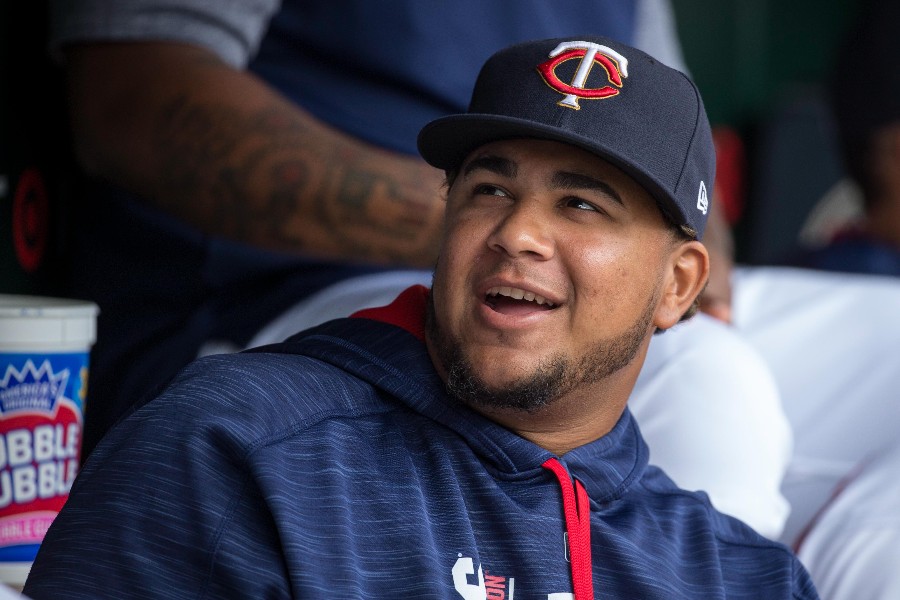 Mejia ‘hasn’t gotten a ton of ink’ at Twins Daily this offseason. Those are Tom Froemming’s words, I can’t pull that sentence off. The point remains, Mejia can be an afterthought in a Twins rotation resplendent with uncertain back end options. He’s most likely the leading candidate for the fifth starter role in 2018, but should he be? The Twins acquired Mejia in a sell-high swap of Eduardo Nunez, traded on the back of an outstanding(ly lucky) first half for Minnesota in 2016. Mejia was one of the Giants’ better thought of prospects (No. 10 according to Baseball Prospectus) in a weaker system. At the time, he was thought of more as having a high floor than high ceiling. After an up and down 2017 season, what does Mejia offer the Twins? And what does he need to do to take a step forward and cement his position as a more consistent back of the rotation starter? Let’s start with what Mejia has. He’s a 6-foot-3 lefty, who checks in at 195 lbs. according to FanGraphs (lies!). He relies in a pretty typical four-pitch mix. Mejia throws a four seam fastball (avg. 93 mph), a slider (avg. 84 mph), a changeup (avg. 84 mpg) and a sinker (avg. 92 mph). All four of his pitches have slightly above average velocity, but none of them are going to blow you away. Mejia’s mechanics went through some adjustments over the course of the 2017 season. In April (a month in which Mejia struggled significantly) his release point was significantly lower on all four of his pitches than it was by the season’s end. His average fastball started the season with a release point of 6.0 ft. and finished with a release point of 6.31 ft., a significant difference. This ‘straightening up’ allowed Mejia to generate a little more vertical movement on all of his off-speed pitches as the season progressed. The graphs below track Mejia's vertical release point and vertical movement for his four primary pitches throughout the 2017 season. In spite of this increase in movement, Mejia struggled to generate a consistently strong secondary pitch throughout the 2017 season. Mejia left a few of his sliders over the plate, which, with minimal break on the pitch, led to said few being crushed for home runs. His lack of a strong secondary pitch most impacted his fastball, however, allowing hitters to wait on it and tee off on the pitch to the tune of a .921 OPS. Mejia did split his breaking pitch mix between his slider and a curveball (which he threw around 10 percent of the time). Mejia’s curveball showed promise, registering at season’s end as his only plus pitch. If there is one factor in determining whether Mejia can solidify himself as a solid back end option for the Twins, it is his fastball control. Overall, Mejia had an ugly walk rate of 4.04 BB/9 in 2017. Mejia was only able to generate 34 percent ground balls on his fastball. Looking at his heat map for first-pitch fastballs, it’s easy to see why. The heat map below shows the location of Mejia’s fastball when deployed as the first pitch to right-handed hitters. It’s notable that Mejia 1) struggles to find the zone and establish his fastball against RHH, and 2) Mejia leaves a considerable number of the fastballs which do find the strike zone over the middle of the plate. One of the limitations of Mejia’s fastball in 2018 is how eminently hittable it is. This is noticeable in a comparison between Mejia’s fastball and that of Jose Berrios. O-Contact% measures the amount of contact hitters make with a particular pitch when it is thrown outside the strike zone. In 2017, opposing hitters made contact with around 60 percent of Berrios’ fastballs located outside the strike zone. For Mejia the figure was just under 80 percent. Over the course of the season, this equates to around 150 extra fastballs which weren’t in the strike zone getting contacted when comparing Berrios and Mejia. When your fastball isn’t a plus pitch, that’s a big deal. Mejia doesn’t have the movement or velocity to blow people away or create much deception in his pitches. In order to be successful, he needs to develop his ability to control his fastball and command it using the strike zone more deliberately. Finally, it’s interesting to note exactly when Mejia got himself into his biggest messes on the mound. You might think that a pitcher struggling with control would walk more hitters with men on base, but these situations were actually where Mejia clamped down. His greatest struggles came in low leverage situations in which he had a BB/9 of 5.34, as opposed to 1.29 in high-leverage situations. To put this another way, Mejia had a BB/9 of 5.73 when the bases where empty, as opposed to just 2.67 with men on base. Mejia remains an interesting option for the Twins going into the 2018 season. He will remain a bargain, given the price Minnesota paid for him. His 2018 impact is really dependent on two key factors moving forwards: Getting ahead of hitters and improving one of his breaking pitches to offset his fastball more effectively. If Mejia can take steps forward in these areas, the Twins should have a solid No. 5. Who do you think is the favorite for the Twins fifth starting pitching roster spot ahead of spring training?
 -
Few moments in life result in genuine anticipation. For me, they are predictable. My wedding day, the birth of my daughter, and waiting for a starting pitcher to sign this off-season. In an effort to fill this continually vacuous, and harrowingly stagnant alternate reality in which starting pitchers are no longer required to complete baseball games, I’m taking a stand. I’m going to forget about all the upside that could improve the Twins rotation, and focus on what we already have. Namely, Adalberto Mejia. Mejia ‘hasn’t gotten a ton of ink’ at Twins Daily this off-season. Those are Tom Froemming’s words, I can’t pull that sentence off. The point remains, Mejia can be an afterthought in a Twins rotation resplendent with uncertain back end options. He’s most likely the leading candidate for the fifth start role in 2018, but should he be? The Twins acquired Mejia in a sell high trade for Eduardo Nunez, traded on the back of an outstanding(ly lucky) first half for Minnesota in 2016. Mejia was one of the Giants’ better thought of prospects (No 10 according to Baseball Prospectus) in a weaker system. At the time he was thought of more as high floor than high ceiling. After an up and down 2017 season, what does Mejia offer the Twins? And what does he need to do to take a step forward and cement his position as a more consistent back of the rotation starter? Let’s start with what Mejia has. He’s a 6’3 lefty, who checks in at 195 lbs. according to Fangraphs (lies!). He relies in a pretty typical four pitch mix. Mejia throws a four seam fastball (avg. 93mph), a slider (avg. 84 mph), a changeup (avg. 84 mpg), and a sinker (avg. 92 mph). All four of his pitches have slightly above average velocity, but none of them are going to blow you away. Mejia’s mechanics went through some adjustments over the course of the 2017 season. In April (a month in which Mejia struggled significantly) his release point was significantly lower on all four of his pitches than it was by the season’s end. His average fastball, started the season with a release point of 6ft and finished with a release point of 6.31 ft. a significant difference. This ‘straightening up’ allowed Mejia to generate a little more vertical movement on all of his off-speed pitches as the season progressed. The graphs below track Mejia's vertical release point and vertical movement for his four primary pitches throughout the 2017 season. In spite of this increase in movement, Mejia struggled to generate a consistently strong secondary pitch throughout the 2017 season. Mejia left a few of his sliders over the plate, which, with minimal break on the pitch led to said few being crushed for home runs. His lack of a strong secondary pitch however, most impacted his fastball, allowing hitters to wait on it and tee off on the pitch to the tune of a .921 OPS. Mejia did split his breaking pitch mix between his slider and a curveball (which he threw around 10% of the time). Mejia’s curveball showed promise, registering at season’s end as his only plus pitch. If there is one factor in determining whether Mejia can solidify himself as a solid back end option for the Twins, it is his fastball control. Overall, Mejia had an ugly walk rate of 4.04 BB/9 in 2017. Mejia was only able to generate 34% ground balls on his fastball. Looking at his heat map for first pitch fastballs, it’s easy to see why. The heat map below shows the location of Mejia’s fastball, when it was the first pitch he threw to right handed hitters. It’s notable that Mejia 1) struggles to find the zone and establish his fastball against RHH and 2) Mejia leaves a considerable number of the fastballs which do find the strike zone over the middle of the plate. One of the limitations of Mejia’s fastball in 2018 is how eminently hittable it is. This is noticeable in a comparison between Mejia’s fastball and that of Jose Berrios. O-Contact% measures the amount of contact hitters make with a particular pitch when it is thrown outside the strike zone. In 2017 opposing hitters made contact with around 60% of Berrios’ fastballs located outside the strike zone. For Mejia the figure was just under 80%. Over the course of the season, this equates to around 150 extra fastballs which weren’t in the strike zone getting contacted when comparing Berrios and Mejia. When your fastball isn’t a plus pitch, that’s a big deal. Mejia doesn’t have the movement or velocity to blow people away or create much deception in his pitches. In order to be successful, he needs to develop his ability to control his fastball and command it using the strike zone more deliberately. Lastly, it’s interesting to note exactly when Mejia got himself into his biggest messes on the mound. You might think that a pitcher struggling with control would walk more hitters with men on base, these situations were actually where Mejia clamped down. His greatest struggles came in low leverage situations in which he had a BB/9 of 5.34, as opposed to 1.29 in high leverage situations. To put this another way, Mejia had a BB/9 of 5.73 when the bases where empty, as opposed to just 2.67 with men on base. Mejia remains an interesting option for the Twins going into the 2018 season. He will remain a bargain, given the price Minnesota paid for him. His 2018 impact is really dependent on two key factors moving forwards; getting, and staying ahead of hitters, and improving one of his breaking pitches to offset his fastball more effectively. If Mejia can take steps forward in these areas, the Twins should have a solid number five. Who do you think is the favorite for the Twins fifth starting pitching roster spot ahead of spring training?
-
Love his mindset around potentially being in the pen and anything to help the team vibe. Can't wait to see what he can do!
-
Bullish - The Upside of the 2018 Bullpen
Jamie Cameron commented on Jamie Cameron's blog entry in Curveball Blog
Thank you! Definitely excited to see how they stack up! -
Bullish - The Upside of the 2018 Bullpen
Jamie Cameron commented on Jamie Cameron's blog entry in Curveball Blog
Thanks for the kinds words, I appreciate it! -
Kintzler, Duffey, Pressly, Belisle, Rogers, Hughes, Hildenberger, Gee, Boshers, Busenitz, Breslow, Tonkin, Haley, Turley, Slegers, Wilk, Curtiss, Wimmers, Moya, Perkins, Rucinski, Enns, Melville, Wheeler, Rosario, Tepesch, Heston, and Chris Gimenez. These are the 27 pitchers and one intrepid catcher who made up the Twins relief pitching corps in 2017. By sheer volume alone, the Twins bullpen left a lot to be desired in 2017. There were some bright spots. Brandon Kintzler, who departed to the Nationals via trade, was excellent. Trevor Hildenberger, whose unique approach should make him a staple of the Twins bullpen for the foreseeable future, emerged as a potential bullpen star. The rest of the pen was about as effective as a Matt Asiata run up in middle from inside the five yard line. So where did the Twins stack up against other bullpens when the 2017 season was all said and done? 2017 Bullpen Performance Just for the sake of comparison, the Yankees, whose relievers threw an arsenal of sonic-boom inducing fastballs that blew the Twins straight out of the wild card game, used 19 relief pitchers last season. The Dodgers, who had an exceptional bullpen, also used 19. While the number of relievers used is hardly an important metric, it is indicative of a contrast in stability in some of MLB’s top bullpens, and that of the Twins. Minnesota’s bullpen pen logged the tenth most innings of any bullpen in 2017 (looking at you Kyle Gibson and Adalberto Mejia), struck out the fifth fewest hitters (482), and walked the seventh fewest number of hitters (187). Tale as old as time, right? So far, we’ve established that the pen was overworked, didn’t walk many guys, and didn’t strike a lot out either. What about when opposing hitters made contact? The Twins had a significant issue here, giving up the fourth worst Hard% (hard contact percentage) and generating the second worst Soft% (soft contact percentage, significant because there’s a medium contact %) in the league. Essentially, when the Twins gave up contact to opposing hitters, they made a lot of good contact. The Twins bullpen performance in 2017 was actually similar to 2016 (a difference of 0.1 in bullpen WAR), accomplished in a very different way. In short, the pen needed a significant overhaul before the 2018 season. In an organization with a strong offensive lineup and in a market where high level starting pitching is difficult to attract via free agency, the bullpen was the lowest hanging fruit for the Twins front office to attack during free agency. What was Missing? So what was the Twins bullpen lacking? One area the Twins pen did improve in 2017 was generating groundballs, improving from 23rd in MLB in 2016, to 12th in 2017. This is an area of strength the Twins chose to build upon in 2018, adding Zach Duke and Fernando Rodney to one year deals. In Duke’s last full season before injury, he logged a GB% of 58%, which is elite. Rodney wasn’t too shabby himself, generating GB% of 52% in 2017. Looking at the most effective bullpens of 2017, an even more integral stat is K/9. This makes a ton of sense, not much can go wrong if you’re striking hitters out on a consistent basis. In 2017, there were 9 teams with a bullpen K/9 of at least 9.5. Between them, these clubs averaged a WAR of 6.5 for their bullpen. The Twins bullpen WAR in 2017 was 2.2, not a disaster, good for 22nd in MLB. By K/9, the Twins ranked 29th, with just 7.66 strikeouts per nine innings. Hardly surprising, when you are cycling through nearly 30 relievers over the course of the season. So how do the Twins new additions stack up in generating more strikeouts? In short, pretty darn well. If you average out the K/9 for Duke, Rodney, and Reed over their last two full seasons of pitching (excluding years significantly impacted by injury), they sit at an average K/9 of 10.00. That’s the kind of strikeout power you want sitting at the back end of your bullpen, particularly if you throw Hildenberger’s 2017 K/9 of 9.43 into the mix too. While past performance isn’t necessarily a good indicator of future results, this is certainly an encouraging trend in remedying a weakness Twins fans have bemoaned, and has impeded the team for years. Apples and Oranges? The Twins additions are even more interesting if considered in comparison to another team attempting to ramp up the quality of their bullpen, the Rockies. Colorado spent a Ron Swanson-esque ‘all of the money’ on adding Wade Davis, Jake McGee, and Bryan Shaw this offseason. The Rockies added their relief upgrades for a cost of $30.5 million in 2018. The Twins, by contrast, added Duke, Rodney, and Reed for around $14.65 million in 2018, or around $1.5 million less than it took the Rockies to sign Davis alone for a single year. The average of the Rockies additions K/9 over their last two full seasons pitched is 9.39. While they offer more consistency than a back end containing an ageing Fernando Rodney and Zach Duke returning from Tommy John surgery, the comparison is striking. There are two more avenues which make this comparison interesting. When looking at the cumulative WAR of the three new relief pitching options for each team over the last two seasons, the Twins trio contributed 6.3 WAR, to the Rockies triumvirates 5.2. While WAR has been put through the ringer in the baseball writing community recently, it is, if nothing else, a useful starting point for a comparison. Perhaps the Rockies new additions were so much more highly paid because they pitched in higher leverage situations, earning the moniker of ‘super-reliever’ for their respective 2017 teams? WPA (Win Probability Added) examines changes in win probability and reflects how much a player impacted their team’s chances of winning a game. Duke, Rodney and Reed combined for a WPA of 6.08 in their last full season pitched (using 2016 for Duke as 2017 was lost to injury), compared to Davis, McGee, and Shaw’s combined 5.52 in 2017. While the majority of WPA and WAR added for each team was bound up in Reed for the Twins and Davis for the Rockies, comparing the additions in groups of three offers a glimpse at what their cumulative impact on their new teams might be in 2018 in the highest leverage situations each team will face. This is not to say the Twins signed three better guys than the Rockies, but for a team with their bottom line, they added a significant amount of upside for excellent value, in an area that badly needed to be addressed. As a smaller market team, the Twins don’t have the luxury not to consider short and long term viability when balancing the upside of their free agent signings with the cost it takes to sign them. While the Twins likely won’t have one of the top bullpens in MLB next year, consider the floor significantly raised. If Rodney, Duke, and Reed can maintain a similar level of performance, the Twins will have a much improved pen, cemented by a particularly strong back end that closes the gap between Minnesota and Cleveland.
- 6 comments
-
- 3
-
-
- addison reed
- zach duke
- (and 1 more)
-
The Twins made an unexpected addition to their burgeoning bullpen over the weekend, adding former Mets and Red Sox reliever Addison Reed on a two-year pact worth $16.75 million. The deal profiles well for the Twins on a number of fronts. At 29, Reed is at the younger end of a relief pitching market deep in high quality back end bullpen arms. Reed represents the first multi-year deal the Twins have ever signed with an outside reliever in free agency. In spite of this, the Twins locked Reed up on a short contract, at a price which they undoubtedly would have had to surpass had they signed him earlier in free agency. Reed joins a Twins bullpen shaping up to be vastly different, and potentially much improved over its 2017 iteration. In addition to returning standout Trevor Hildenberger, the Twins have added Fernando Rodney, presumably filling the vacant ninth inning role, and Zach Duke, returning from an injury-plagued 2017 season. In the former trio, the Twins seemed to have established a penchant for the traits they are pursuing in improving their bullpen; inducing ground balls and a lot of strikeouts, hardly a pioneering recipe for success. In Reed however, they have added a pitcher who generates more fly balls, so what about Reed has made him such a consistent a reliable late inning reliever? There’s no real intricacy in Reed’s pitch mix. He throws a four seem fastball around 66% of the time, a slider 33% of the time, and a changeup about as often as Byron Buxton gets caught stealing a base. Reed has excellent control, posting a walk rate of 1.51 BB/9 in 2016 and 1.78 BB/9 in 2017. Reed’s 2017 BB/9 was good for 11th among relievers who pitched at least 50 innings. This level of control was not always a staple of Reed’s pitching. In his first 3 seasons in MLB his BB/9 oscillated between 2.90 and 3.05. While this may seem like a trivial difference, this is a difference of around 10-11 walks over a 75 inning sample, a big deal when you’re constantly pitching in high leverage situations. So what is at the root of Reed’s improved control since the beginning of the 2016 season? In 2016, Reed produced a dramatic improvement in his overall numbers. In addition to refining his control, Reed stranded around 5% more baserunners, increased his K/9 from 8.2 to 10.55 and dropped his xFIP from 4.04 to 2.09. Reed has never had elite velocity. While some have commented on a dip in velocity throughout the past two seasons, his average four seam fastball velocity has remained fairly consistent, dropping from 93.66 mph in April of 2015 to 92.72 mph in October of 2017. So if Reed isn’t blowing hitters away, how did his K/9 improve and stick above 9.0 in his last two seasons? The number that jumps out in Reed’s improvement from 2015 to 2016 is his F-Strike% (percentage of the time Reed is throwing a first pitch strike). In 2015 Reed’s F-Strike% was around 56%. In 2016, it jumped to 70%. For the sake of comparison, old friend Pat Neshek had an F-Strike% of 71.1% in 2017 and had an incredible BB/9 of 0.87. This is a dramatic improvement from Reed which is even more impressive when visualized. Here’s a look at Reed’s heat map from 2015. This charts the percentage a pitch falls within a sub-location of the strike zone. For all three of these searches I looked at heat maps representing the first pitch of a plate appearance, exclusively when Reed threw his four seem fastball. You’ll immediately notice a stark contrast between 2015 and 2016. Reed improved in two notable areas, pounding the strike zone with a greater level of consistency, and using a greater portion of the strike zone when throwing first pitch strikes. We see a similar performance in 2017 (although not quite as impressive). Interestingly, Reed’s obvious trend in locating his first pitch strikes higher in the zone in resulted in opposing batters OPS increasing from .587 in 2016, to .862 in 2017. So where does Reed fit in the back end of a Twins bullpen which has been dramatically upgraded from a year ago? Initially, there was contention that adding Reed might create a closer controversy in Minnesota. The Twins had recently added Fernando Rodney to the pen on a one year deal. It seems as if the Twins will stick with Rodney as their primary ninth inning option. Since taking on his role with the Twins, Paul Molitor has been criticized in his bullpen management for traditionalism, a tendency to use each of his relievers in a pre-determined role. Intractably funneling Rodney into save situations may allow Molitor the luxury of using both Reed and Trevor Hildenberger as more flexible relievers, whose appearances are dictated by the leverage of a given situation, rather than the inning they are pitching in. In addition to providing Molitor with another quality arm, Reed may provide the impetus for Molitor to get more creative in facilitating the evolution of the Twins bullpen, maximizing the potential of a vastly upgraded group.
- 1 comment
-
- 6
-
-
- addison reed
- trevor hildenberger
- (and 1 more)
-
That's a great question. I think it's critical to Hildy's success that his sinker and changeup are released from a virtually identical arm slot. I think the only reason the different slot is not taken advantage of more, is that he throws his fastball so infrequently. Nonetheless, his fastball is probably his least successful pitch.
