



Jamie Cameron
-
Posts
1,341 -
Joined
-
Last visited
-
Days Won
4
Content Type
Profiles
News
Minnesota Twins Videos
2026 Minnesota Twins Top Prospects Ranking
2022 Minnesota Twins Draft Picks
Minnesota Twins Free Agent & Trade Rumors, Notes, & Tidbits
Guides & Resources
2023 Minnesota Twins Draft Picks
The Minnesota Twins Players Project
2024 Minnesota Twins Draft Picks
2025 Minnesota Twins Draft Pick Tracker
2026 Minnesota Twins Draft Tracker: Picks & Bonuses
Forums
Blogs
Events
Store
Downloads
Gallery
Everything posted by Jamie Cameron
-
Notebook: Instagram Wars, Expanded Rosters, and a New FA Offer at DH?
Jamie Cameron posted an article in Twins
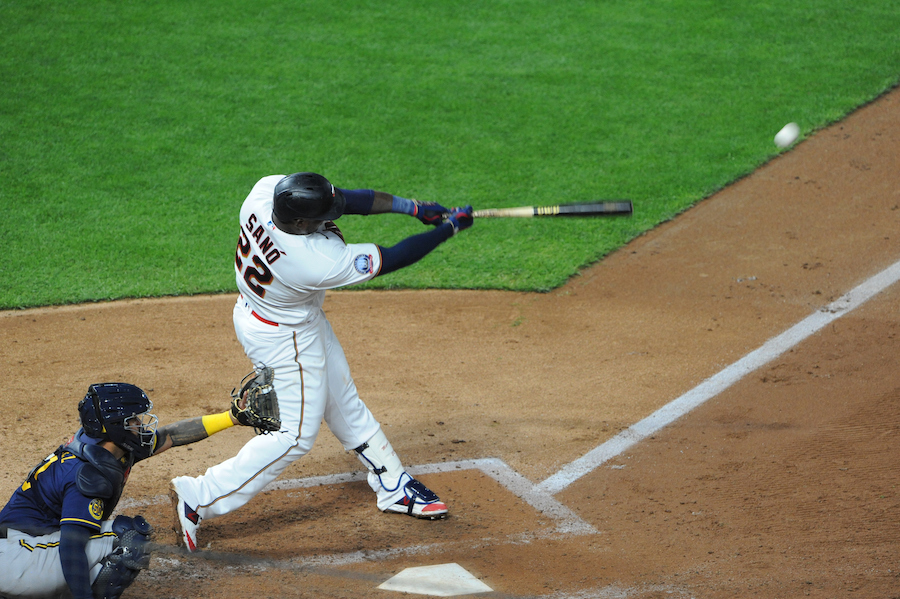 Twins Instagram Feud Eddie Rosario and Miguel Sano got into a bit of an Instagram feud. This is my favorite Twins content of the day (click link to see the full Tweet thread, translation thanks to Twitter user @Crewsett). Here's the juiciest part of their interaction: https://twitter.com/Crewsett/status/1356722953304563717 At the end of the exchange, both Rosario and Sano apologized and said it was a misunderstanding. Let us know in the comments if you’re Team Eddie or Team Miguel. Twins and Nelson Cruz Still in a Standoff? The Twins and Nelson Cruz seem to be in another staring match, with the sides allegedly still not close enough on money. With Cruz losing leverage from a lack of clarity about universal DH, it is being suggested that the Twins could pivot to other options, Nelly appears to be running out of time and options. https://twitter.com/AaronGleeman/status/1356748851026124803 KTSP reported tonight that the Twins have made Ozuna an offer. https://twitter.com/jzulgad/status/1356779923004874753 Andrelton Simmons Opens up About Mental Health Jeff Fletcher detailed an incredible story of new Twins SS Andrelton Simmons and his battle with depression and thoughts of suicide leading to his opt out at the end of the 2020 season. Simmons reached out to a reporter after not naming his reasons for opting out in his introductory press conference for the Twins. In the article, Simmons states he hopes his openness allows others struggling to seek help and support, in addition to voicing his fears that his story will be misinterpreted by those reading. I’d encourage everyone to read it’s a brave step to take and an incredibly important topic to normalize. Nolan Arenado Trade Finalized The unbelievable complex of Nolan Arenado from the beleaguered Colorado Rockies to the St. Louis Cardinals is complete. Here is the full prospect ‘package’: https://twitter.com/BaseballAmerica/status/1356754412153294848 Additionally, the Rockies sent around $50 million in salary relief to the Cardinals to complete the deal (yes, you read that correctly). Rockies GM Jeff Bridich commented that he believes the Rockies are ‘not in a rebuild’. Presented without comment. Expanded Rosters Information about the shape and texture of the 2021 season continues to trickle slowly to its organizations, players, and audience. Today, it was confirmed that expanded rosters are here to stay. https://twitter.com/jonmorosi/status/1356593894587305984 The CBA and Labor Relations With labor relations growing increasingly tense, Eugene Freedman provided a useful thread on the nature and status of the CBA. https://twitter.com/EugeneFreedman/status/1356456806629978112 As Freedman notes, the incredulity around the lack of a counter-proposal from the MLBPA is misguided, given that would re-open the current agreement in place and lose the players association leverage for the forthcoming renegotiation of the CBA after the 2021 season. Mickey Callaway In incredible reporting from the Athletic (subscription required), current Angels pitching coach Mickey Callaway is subject to accusations of lewd behavior towards female reporters when employed by three different teams in a five-year span. The Angels have suspended Callaway pending an investigation, which would seem likely to cost him his job, following a similar story regarding former Mets GM Jared Porter last week. Drew Robinson Speaking of incredible stories, Jeff Passan’s longform about Drew Robinson is a must read from ESPN today. Transactions from Around the League The Phillies signed Hector Rondon and David Paulino to MiLB deals. The Padres extended GM A.J. Preller through 2026. The Reds signed Sean Doolittle to a 1 year, $1.5 million deal (I forgot he was a FA). The Rangers signed Spencer Patton to a MiLB deal. The Yankees signed Kyle Barraclough to a MiLB deal. The Rays signed Chris Archer to a one-year, $6.5 million deal. On initial glance this seems expensive given Archer’s recent performance and injury history. Additionally, it potentially heightens the market for remaining FA SPs (Odorizzi, Paxton) and brings full circle for Pittsburgh, the nightmare that was trading Tyler Glasnow, Shane Baz, and Austin Meadows for Archer in 2018, with the Rays eventually returning Archer anyway. Denard Span Back with Tampa Lastly, Tampa native and former Twins CF is back with the Rays in a baseball Ops role. Could there be a better place to learn? https://twitter.com/jonmorosi/status/1356656255826296833 SEE ALSO Free Agent Market May Push Twins Away From Nelson Cruz 2021 Twins PECOTA Projections: 5 Free Agents Team Could Target 2021 Twins PECOTA Projections: 5 Big Takeaways STONKS! The 3 Minnesota Twins Player Stocks You Need to Invest In Right Now
 -
Baseball Savant continues to be a carousel of innovation and wizardry for analytics and metrics. On Friday, they released a new leaderboard showing a rolling average of enhanced game score. I took a look at the background of this metric, and three ways Twins fans can use it.Game score The original game score metric was introduced by Bill James in the 80s to measure pitcher performance. It presents a figure between 0-100, but more typically, between 40-70. In its original format, a game score of 40 was replacement level, 50 was average, with game scores in the 80s and 90s being considered impressive or outstanding performances. Simply put, a game score is calculated by assessing runs, hits, walks, strikeouts, and innings pitched by a given starter. The starting point of each game score in the original iteration was 50. Updated Game score Tom Tango since updated the game score metric, shifting the starting point for a game score to 40, updating the value of walks vs hits, and factoring HR into the metric, which were not part of a pitchers’ line score when the original game score stat was released. The new tool on Savant is a rolling average of enhanced game score for all pitchers over the last 1,000 days, with more recent games being weighted more heavily. There are a few interesting applications of the enhanced game score tool when examining starting pitchers. Assessing Free Agent Signings in Context The leaderboard gives an excellent context for all starting pitchers from 2002 onwards. Additionally, it gives an easy ‘at a glance’ of a specific pitcher’s performance over time. Download attachment: Happ.png The above plot of J.A. Happ’s career is a good example. It sets some clear parameters for Happ with the Twins, essentially setting a range of his performances from slightly below average to slightly above average (45-55). Additionally, it helps set context to his extremely poor 2019 as a relative outlier given the years preceding it, in addition to his uptick in a shortened 2020. Happ is a model of solidly average starting pitching, a definite need for the Twins this offseason. Assessing the Impact of New Front Offices/Coaching Staffs Another interesting application is assessing the impact new front offices and coaching staffs have on individual pitchers. We’ll use the chart for Kenta Maeda below as an example. Download attachment: Maeda .png We know the Falvey/Levine front office has placed an emphasis on slider usage during their time leading the organization. Wes Johnson has also been critical in maximizing velocity, approach, and optimizing/tweaking pitch mix for Twins starters since he was hired. Comparing multiple starters across a team after the arrival of a new pitching coach or front office can help us notice organizational trends or approaches to pitching which are working, and others which are not. Maeda’s career chart shows a consistently average starter over his career taking a significant step forwards 2020 after the Twins traded for him. Ranking Pitchers Against the Competition at a Specific Point in Time One final application for the leaderboard is assessing starters league ranking by enhanced game score. This is helpful in assessing pitcher performance against the rest of the league and gauging pitcher performance against some of the truly elite pitchers in the league. Download attachment: Comparison.png The final chart plots Pineda, Berrios, and Maeda against Scherzer (unfair I know). 2020 data shows Maeda had a peak league ranking of 13th, Berrios 17th, and Pineda 49th (Scherzer is 1st for large chunks of 2018-2020). This is effective in assessing the Twins starters in the context of their own rotation, which, while predicted to be the ninth-best in baseball in 2021, seems to be underrated outside the community of Twins fandom. This feature also allows an easy side by side stacking of rotations against each other, to compare across teams. I’ll be using this leaderboard to track Twins starters throughout the season in addition to helping assess the effectiveness of any other addition to the rotation. If you have any other ideas for its use, drop a comment below. SEE ALSO What Does 2021 Hold for Berríos? 5 Things for Twins Fans to Know About J.A. Happ How the Twins Might Tweak J.A. Happ Free Agent Faceoff: Jake Odorizzi vs. James Paxton Click here to view the article
-
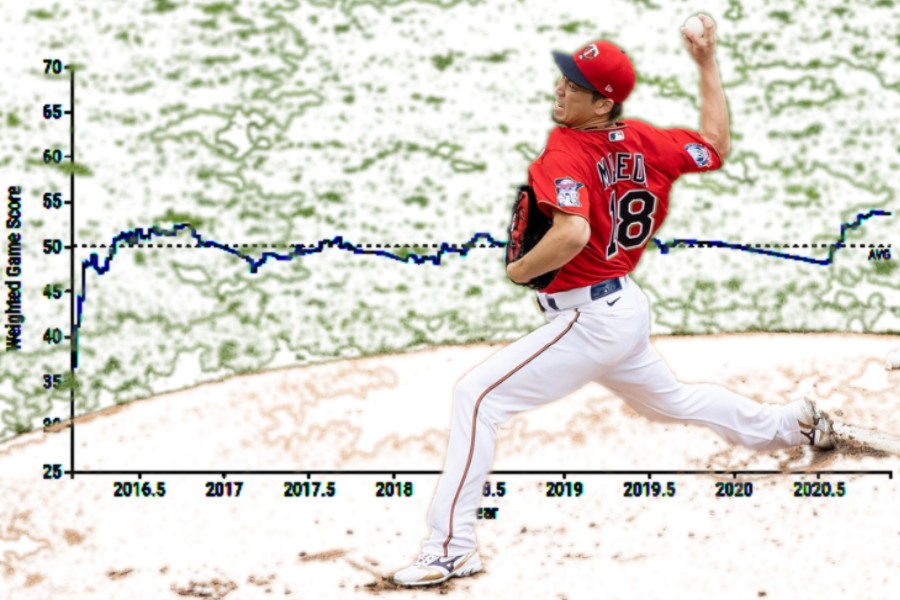 Game score The original game score metric was introduced by Bill James in the 80s to measure pitcher performance. It presents a figure between 0-100, but more typically, between 40-70. In its original format, a game score of 40 was replacement level, 50 was average, with game scores in the 80s and 90s being considered impressive or outstanding performances. Simply put, a game score is calculated by assessing runs, hits, walks, strikeouts, and innings pitched by a given starter. The starting point of each game score in the original iteration was 50. Updated Game score Tom Tango since updated the game score metric, shifting the starting point for a game score to 40, updating the value of walks vs hits, and factoring HR into the metric, which were not part of a pitchers’ line score when the original game score stat was released. The new tool on Savant is a rolling average of enhanced game score for all pitchers over the last 1,000 days, with more recent games being weighted more heavily. There are a few interesting applications of the enhanced game score tool when examining starting pitchers. Assessing Free Agent Signings in Context The leaderboard gives an excellent context for all starting pitchers from 2002 onwards. Additionally, it gives an easy ‘at a glance’ of a specific pitcher’s performance over time. The above plot of J.A. Happ’s career is a good example. It sets some clear parameters for Happ with the Twins, essentially setting a range of his performances from slightly below average to slightly above average (45-55). Additionally, it helps set context to his extremely poor 2019 as a relative outlier given the years preceding it, in addition to his uptick in a shortened 2020. Happ is a model of solidly average starting pitching, a definite need for the Twins this offseason. Assessing the Impact of New Front Offices/Coaching Staffs Another interesting application is assessing the impact new front offices and coaching staffs have on individual pitchers. We’ll use the chart for Kenta Maeda below as an example. We know the Falvey/Levine front office has placed an emphasis on slider usage during their time leading the organization. Wes Johnson has also been critical in maximizing velocity, approach, and optimizing/tweaking pitch mix for Twins starters since he was hired. Comparing multiple starters across a team after the arrival of a new pitching coach or front office can help us notice organizational trends or approaches to pitching which are working, and others which are not. Maeda’s career chart shows a consistently average starter over his career taking a significant step forwards 2020 after the Twins traded for him. Ranking Pitchers Against the Competition at a Specific Point in Time One final application for the leaderboard is assessing starters league ranking by enhanced game score. This is helpful in assessing pitcher performance against the rest of the league and gauging pitcher performance against some of the truly elite pitchers in the league. The final chart plots Pineda, Berrios, and Maeda against Scherzer (unfair I know). 2020 data shows Maeda had a peak league ranking of 13th, Berrios 17th, and Pineda 49th (Scherzer is 1st for large chunks of 2018-2020). This is effective in assessing the Twins starters in the context of their own rotation, which, while predicted to be the ninth-best in baseball in 2021, seems to be underrated outside the community of Twins fandom. This feature also allows an easy side by side stacking of rotations against each other, to compare across teams. I’ll be using this leaderboard to track Twins starters throughout the season in addition to helping assess the effectiveness of any other addition to the rotation. If you have any other ideas for its use, drop a comment below. SEE ALSO What Does 2021 Hold for Berríos? 5 Things for Twins Fans to Know About J.A. Happ How the Twins Might Tweak J.A. Happ Free Agent Faceoff: Jake Odorizzi vs. James Paxton
 -
There’s no doubt that the Falvey/Levine regime in Minnesota has stamped the organization with its own unique culture and identity. Since their arrival in advance of the 2020 season, leadership has taken the holistic approach needed to bring an organization like the Twins up to speed, to become and remain a competitor. Falvey and Levine have focused their systematic overhaul on a number of key areas - individual development plans for players, innovative and creative coaching hires, and building out an incredibly robust analytical department. A maxim Falvey has used since his arrival in Minnesota is his desire to build a sustainable winner, an annually playoff bound team with enough organizational and prospect depth to remain a perennial challenger. In recent years, fans have seen this strategy play out through their approach to free agency, signing high floor, veteran adds on short term deals to accent the homegrown core, built upon by the gambit of signing Josh Donaldson last offseason. Another key trend of the front office has been taking advantage of market depth, something exemplified by their inking Andrelton Simmons to a 1 year, $10.5 million contract on Tuesday night. To explore this, let’s examine the corner outfield situation in 2017, the year Falvey and Lavine arrived, to today. While Simmons and Donaldson would have been an all time left side of the infield 3-5 years ago, they still provide a telling contrast defensively between then and now. In 2017, the Twins corner infield consisted of Miguel Sano and Eduardo Escobar at 3rd and Jorge Polanco and Ehire Adrianza at SS. This quarter combined in 2017 for an OAA -5 collectively. By contrast, in 2019, the last full season in which Donaldson and Simmons were relatively healthy, they combined for 25 OAA. Looking at fielding range provides an even more stark contrast. In 2017, the Twins left side quarter combined for a UZR/150 of -26.2, while in 2019, Donaldson and Simmons combined for UZR/150 of 15.9. Clearly, these aren’t apples to apples comparisons, but the point remains, the 2021 Twins left side of the infield, if healthy, is elite, where it used to be a legitimate weakness. The positive defensive outcomes Twins fans are hoping for will be dependent on many factors, not least of which, is the health (calves and ankles) of their infielders. What is interesting, is what the combination continues to prove about Falvey and Levine, that they will continue to prioritize organizational flexibility and market depth to improve the team. While this slow and late approach hasn’t always worked out for the team (see Logan Morrison and Lance Lynn), the Twins front office continues to build a case that they are adept and nimble in constructing and regenerating their roster, a recipe for sustained success.
-
Hansel Robles: The Beginning of the Bullpen Rebuild
Jamie Cameron posted a blog entry in Curveball Blog
The day the Padres officially announced their status as contenders by officially landing Blake Snell and Yu Darvish, the Twins countered with their own power move for, *squints at notes*, Hansel Robles. Jokes aside, Twins fans should be encouraged that an initial move has been made to deepen a bullpen losing several key 2020 cornerstones. What should we make of Robles, his stuff, his profile, and his fit? Robles had a dire 2020 that should be largely thrown out as his 317 recorded pitches amounted to less than one third of any of his other five MLB seasons besides his debut year. Robles is a mostly 3 pitch righty, with a hard fastball with some decent ride that sits 95-97mph. Robles fastball was his undoing in 2020, with opposing hitters lighting it up to the tune of a .667 SLG, with a bloated BaBIP that should normalize with a 900ish pitch sample in 2021. Robles' other two pitches are likely what the Twins hope to capitalize on. He throws a changeup around 35% of the time (often to lefties) and a slider around 12% of the time, mostly to righties. While the Twins are becoming known as a slider loving organization, it's Robles’ changeup which has been his most effective pitch, holding opposing hitters to a wRC+ of 11 on the pitch in 2019, by far his best year, and 86 in a very poor 2020. Expect the Twins to tinker with his pitch mix significantly, as they have with other bullpen additions in recent years. While Robles isn’t someone to write to your momma about, he’s not a scrapheap guy either. He’s a solid MLB pitcher with a 5 year track record. He essentially offered a 1st percentile season in 2020 and a 99th percentile season in 2019. In 2021 he should be good for 50ish innings (season length dependent) of work in low to mid leverage spots. While perhaps underwhelming given some of the other moves made around MLB yesterday, Robles pitch mix gives him the versatility to throw to just about anyone, and he offers solid upside in a bullpen severely lacking in depth. Over to you Wes Johnson. -
Agree on team effort. Berrios threw his changeup a lot more this season so I'd envision part of the offseason process is stepping back and analyzing how his mix played situationally throughout the season and using that data to inform scouting and plans of attack for hitters in 2020.
-
Thanks for reading. Agree with your comment. It's essentially a math problem for the Twins to work on this offseason. Looking forward to seeing what they come up with.
-
Thanks for reading! I don't think he'll ever ascend to that level, but Berrios has always been a pitcher who seems determined to get every ounce out of himself as possible. I know the Twins have broached extension talks with him multiple times. Hopefully they can be successful this offseason.
-
Thanks for reading. It's hard to know what Berrios' off-season approach is with pitch design. That would be a fascinating question for someone to ask him.
-
Jose Berrios balances excellent raw stuff with an unrelenting work ethic. What does the Twins only returning starter need to do to take it to the next level in 2020?Berrios' Development and Work Ethic Aspiring to greatness. Since the day Jose Berrios was drafted by the Minnesota Twins, the simple phrase sums up, more than any other, the thirst with which Berrios has sought to hone his craft. Berrios has always been easy to root for. His offseasons are punctuated by social media postings of workouts more typically found in the CrossFit Games than in midwinter conditioning. His in-season goals balance the tantalizing tension of attainable and barely out of current reach that all impactful targets should. Berrios has filled a void for the Twins vacant since the early 2000s: a talented, likable, hardworking, and homegrown starting pitcher. Berrios’ output for the Twins has matched his work ethic toward his game since an ugly debut in 2016, a slow but relentless grind towards improvement. Finishing his second full season for the Twins in 2019, Berrios hit career highs in IP (200.1) and fWAR (4.4) leaving fans to question how he will develop in 2020 and asking if he can continue to develop into an elite starter. So here are the basics on Berrios since has has been a big league pitcher. He’s improved his control, consistently achieved an effective to good strikeout rate. Conversely, he gives up more home runs than you’d want and has some exploitable weaknesses. Overall, he’s a top 20-30 starting pitcher in MLB. Trouble with the Curve One of Berrios’ calling cards since being called up has been his curveball. When it’s on song, it’s a thing of beauty, generating a 16.3 SwStr% in 2018, with opposing hitters managing just a .363 SLG against the pitch. Berrios’ curveball is an unusual one, taking a slurvy action with massive horizontal break and below- average vertical break. It’s notable that it was significantly less effective in 2019, generating around 30 fewer Ks and opposing hitters batting 60 points higher on the pitch than in 2018. Comparing Berrios’ curveball location in 2018 (right) and 2019 (left), he left more curveballs over the heart of the plate, and buried fewer down and away, particularly to RHH. Download attachment: Screen Shot 2019-11-06 at 9.08.13 PM.png Download attachment: Screen Shot 2019-11-06 at 9.09.01 PM.png Developing Pitch Mix Berrios’ pitch mix has developed since the beginning of 2018, more frequently throwing a changeup to add to his four-seam fastball, two-seam fastball, and curve. Download attachment: Brooksbaseball-Chart.jpeg In order to increase his effectiveness in 2020, Berrios needs to tweak his pitch mix situationally. In 2019, Berrios’ threw his curve around 35% of the time to RH hitters and just 23% of the time to lefties. In spite of this, Berrios enjoyed greater success throwing the pitch to LH batters. The massive horizontal action on the pitch frequently jammed lefties and generated weak contact, while the lapses in command against righties resulted in greater struggles with the pitch in 2019. Conversely, Berrios threw his changeup twice as much to lefties (approximately 10%) as he did to righties, yet his results against RHH were far superior. Opposing RHH generated just a .212 average against Berrios’ changeup, while enjoying a vastly superior whiff% than against LHH. Berrios then, has a pitch mix challenge ahead of him heading into 2020: How can he use an increasingly effective changeup and find the right mix to keep opposing hitters off balance. It’s uncertain if Berrios can build on his excellent 2019 (although I’m not going to bet against him). What is certain is that in order to continue his climb amongst AL starters, he needs to live on the fringes of the strike zone (he gets hammered in the heart of the plate), refine his curveball command, and alter his pitch mix to take advantage of what has worked well against both LHH and RHH. What do you think lies ahead for Berrios in 2020? Please share your thoughts in the comments below. Not registered? Click here to create an account. To stay up to date, follow Twins Daily on Twitter and Facebook. MORE FROM TWINS DAILY — 2020 Offseason Handbook Now Available for Download Click here to view the article
-
 Berrios' Development and Work Ethic Aspiring to greatness. Since the day Jose Berrios was drafted by the Minnesota Twins, the simple phrase sums up, more than any other, the thirst with which Berrios has sought to hone his craft. Berrios has always been easy to root for. His offseasons are punctuated by social media postings of workouts more typically found in the CrossFit Games than in midwinter conditioning. His in-season goals balance the tantalizing tension of attainable and barely out of current reach that all impactful targets should. Berrios has filled a void for the Twins vacant since the early 2000s: a talented, likable, hardworking, and homegrown starting pitcher. Berrios’ output for the Twins has matched his work ethic toward his game since an ugly debut in 2016, a slow but relentless grind towards improvement. Finishing his second full season for the Twins in 2019, Berrios hit career highs in IP (200.1) and fWAR (4.4) leaving fans to question how he will develop in 2020 and asking if he can continue to develop into an elite starter. So here are the basics on Berrios since has has been a big league pitcher. He’s improved his control, consistently achieved an effective to good strikeout rate. Conversely, he gives up more home runs than you’d want and has some exploitable weaknesses. Overall, he’s a top 20-30 starting pitcher in MLB. Trouble with the Curve One of Berrios’ calling cards since being called up has been his curveball. When it’s on song, it’s a thing of beauty, generating a 16.3 SwStr% in 2018, with opposing hitters managing just a .363 SLG against the pitch. Berrios’ curveball is an unusual one, taking a slurvy action with massive horizontal break and below- average vertical break. It’s notable that it was significantly less effective in 2019, generating around 30 fewer Ks and opposing hitters batting 60 points higher on the pitch than in 2018. Comparing Berrios’ curveball location in 2018 (right) and 2019 (left), he left more curveballs over the heart of the plate, and buried fewer down and away, particularly to RHH. Developing Pitch Mix Berrios’ pitch mix has developed since the beginning of 2018, more frequently throwing a changeup to add to his four-seam fastball, two-seam fastball, and curve. In order to increase his effectiveness in 2020, Berrios needs to tweak his pitch mix situationally. In 2019, Berrios’ threw his curve around 35% of the time to RH hitters and just 23% of the time to lefties. In spite of this, Berrios enjoyed greater success throwing the pitch to LH batters. The massive horizontal action on the pitch frequently jammed lefties and generated weak contact, while the lapses in command against righties resulted in greater struggles with the pitch in 2019. Conversely, Berrios threw his changeup twice as much to lefties (approximately 10%) as he did to righties, yet his results against RHH were far superior. Opposing RHH generated just a .212 average against Berrios’ changeup, while enjoying a vastly superior whiff% than against LHH. Berrios then, has a pitch mix challenge ahead of him heading into 2020: How can he use an increasingly effective changeup and find the right mix to keep opposing hitters off balance. It’s uncertain if Berrios can build on his excellent 2019 (although I’m not going to bet against him). What is certain is that in order to continue his climb amongst AL starters, he needs to live on the fringes of the strike zone (he gets hammered in the heart of the plate), refine his curveball command, and alter his pitch mix to take advantage of what has worked well against both LHH and RHH. What do you think lies ahead for Berrios in 2020? Please share your thoughts in the comments below. Not registered? Click here to create an account. To stay up to date, follow Twins Daily on Twitter and Facebook. MORE FROM TWINS DAILY — 2020 Offseason Handbook Now Available for Download
 -
1) Agreed, for performance and leadership 2) Also agreed, I like Smith (obvi) and Pomeranz as FA options. 3) I don't think they'll give Dyson that kind of deal. RP is so volatile year on year and they've shown an ability to get internal guys there which makes him moot for the Twins by 2021 I think, although I see the logic behind it.
-
Thanks for reading! I'd like to see Romo back. I'd also say Stashak has an inside track to a pen spot. I'd like to see them add a lefty like Will Smith or Drew Pomeranz but agreed that their pen is set up well over the next few years to be a strength.
-
Thanks for reading and for the kind words, appreciate it!
-
Despite having a clear need in their bullpen, the Twins spent last offseason focusing on offensive upgrades. Their only addition was fungible reliever Blake Parker, who assumed the likeness of Robert Hays from the movie ‘Airplane’ every time he took the mound. Parker was eventually designated for assignment around midseason and the Twins seem to have made the right choice in focusing on developing in-house options. One of the most impressive internal leaps in 2019 was taken by Tyler Duffey.Duffey put together a second half for the ages, giving up just a .208 wOBA, a .245 SLG and striking out 47 hitters in 29.1 second half innings. What led to Duffey’s surge to dominance? Here are three important steps he took in 2019. Changing pitch mix and increased velocity Duffey’s pitch mix has changed markedly from the beginning of 2018, as evidenced below (visual via Baseball Savant): Download attachment: DuffeyChart1.jpeg At the beginning of 2019, Duffey all but did away with his ineffective sinker, beginning to rely more heavily on his slider. In addition to ditching a pitch altogether, Duffey’s location began to shift dramatically. In 2018, Duffey was working primarily middle and down in the strike zone. This did not work well. In 2018, Duffey’s fastball was annihilated to the tune of a 1.011 OPS and 180 wRC+ against, making it a truly dysfunctional pitch. Download attachment: Fastball 2018.png In 2019, Duffey began to shift his fastball location up in the zone (visuals via Brooks Baseball). Download attachment: Fastball 2019.png Duffey’s fastball velocity is another data point of note. His four-seamer maxed out at 97.4 mph in 2019, almost three mph more than in his big league debut in 2015. This combination of increased velocity, elevation, and solid fastball spin rate (63rd percentile in MLB) transformed Duffey’s fastball into a strength. In 2019, opposing hitters managed just a .599 OPS and 66 wRC+ against it. In short, it became a dominant pitch. The Development of a Super Slider Duffey’s slider is unusual in that it has more vertical drop on average than any other slider in MLB (about 33% more than typical). Duffey’s slider performs opposite to that of Sergio Romo (who achieves a large amount of horizontal movement resulting in consistent soft contact). Duffey’s simply bottoms out, resulting in a 16.2 SwStr% in 2019. Indeed, Duffey’s vertical movement on his slider increased significantly in 2019 (visual via Baseball Savant) Download attachment: Duffey3.jpeg Duffey’s increase in slider velocity (+2 mph in 2019) and his ability to command it had devastating effects. He gave up just a .257 wOBA and 69 wRC+ on the pitch in 2019 and took 150 points of opposing OPS off the pitch. Duffey now has two plus pitches, all you need to be an outstanding major league reliever. Finally, Duffey showed outstanding command of his slider (image courtesy of FanGraphs). There is a tight clustering of the pitch down and away from right-handed hitters. Duffey rarely hung the pitch. When he missed with it, he tended to miss low and away. His ability to locate his slider down and away to right-handed hitters combined with it’s precipitous drop made it the second devastating pitch from a pitcher who began the season at Triple-A Rochester. After his impressive second half, Duffey finished in the 94th percentile in MLB in K%, and 85th percentile in xSLG. Download attachment: Duffey4.png Looking Back, Looking Ahead The 28-year-old Duffey should remind Twins fans of a few truths heading into 2020. Player development is not linear. Much like Mitch Garver, Duffey’s rise to prominence should make fans throw out old nonsense notions about ‘age’, ‘development’ and ‘ceiling’. Secondly, he should reaffirm Twins fans faith in their front office, analytics and player development departments. Duffey has transformed into a modern reliever. A high velocity fastball with a solid spin located up in the zone and a wipe- out slider which he throws a ton. I’ll be interested to see if the Twins choose to add externally to their bullpen this offseason. I’ll be more interested to try and pick apart who the next internal guy for a makeover might be. Click here to view the article
-
Three Critical Developments in Tyler Duffey's Progression to Dominance
Jamie Cameron posted an article in Twins
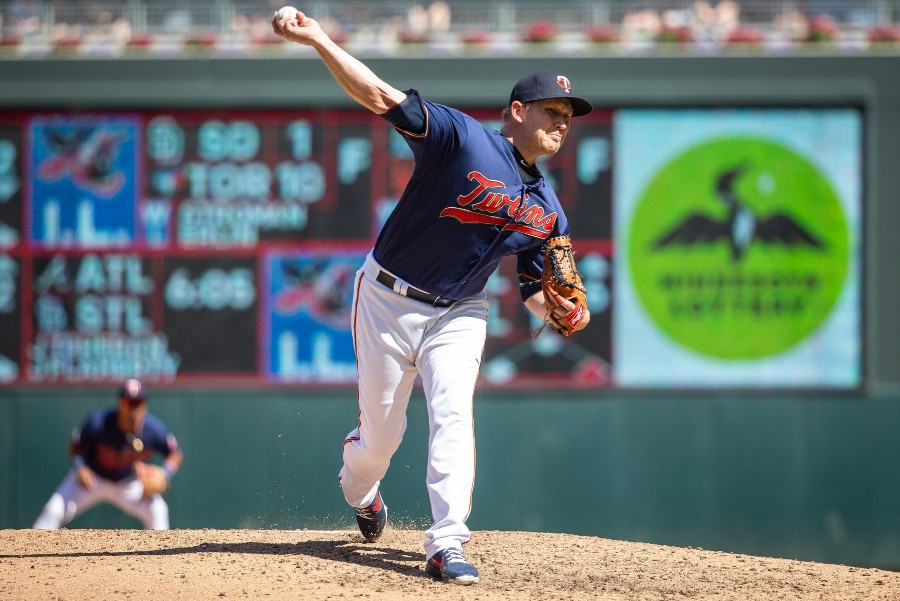 Duffey put together a second half for the ages, giving up just a .208 wOBA, a .245 SLG and striking out 47 hitters in 29.1 second half innings. What led to Duffey’s surge to dominance? Here are three important steps he took in 2019. Changing pitch mix and increased velocity Duffey’s pitch mix has changed markedly from the beginning of 2018, as evidenced below (visual via Baseball Savant): At the beginning of 2019, Duffey all but did away with his ineffective sinker, beginning to rely more heavily on his slider. In addition to ditching a pitch altogether, Duffey’s location began to shift dramatically. In 2018, Duffey was working primarily middle and down in the strike zone. This did not work well. In 2018, Duffey’s fastball was annihilated to the tune of a 1.011 OPS and 180 wRC+ against, making it a truly dysfunctional pitch. In 2019, Duffey began to shift his fastball location up in the zone (visuals via Brooks Baseball). Duffey’s fastball velocity is another data point of note. His four-seamer maxed out at 97.4 mph in 2019, almost three mph more than in his big league debut in 2015. This combination of increased velocity, elevation, and solid fastball spin rate (63rd percentile in MLB) transformed Duffey’s fastball into a strength. In 2019, opposing hitters managed just a .599 OPS and 66 wRC+ against it. In short, it became a dominant pitch. The Development of a Super Slider Duffey’s slider is unusual in that it has more vertical drop on average than any other slider in MLB (about 33% more than typical). Duffey’s slider performs opposite to that of Sergio Romo (who achieves a large amount of horizontal movement resulting in consistent soft contact). Duffey’s simply bottoms out, resulting in a 16.2 SwStr% in 2019. Indeed, Duffey’s vertical movement on his slider increased significantly in 2019 (visual via Baseball Savant) Duffey’s increase in slider velocity (+2 mph in 2019) and his ability to command it had devastating effects. He gave up just a .257 wOBA and 69 wRC+ on the pitch in 2019 and took 150 points of opposing OPS off the pitch. Duffey now has two plus pitches, all you need to be an outstanding major league reliever. Finally, Duffey showed outstanding command of his slider (image courtesy of FanGraphs). There is a tight clustering of the pitch down and away from right-handed hitters. Duffey rarely hung the pitch. When he missed with it, he tended to miss low and away. His ability to locate his slider down and away to right-handed hitters combined with it’s precipitous drop made it the second devastating pitch from a pitcher who began the season at Triple-A Rochester. After his impressive second half, Duffey finished in the 94th percentile in MLB in K%, and 85th percentile in xSLG. Looking Back, Looking Ahead The 28-year-old Duffey should remind Twins fans of a few truths heading into 2020. Player development is not linear. Much like Mitch Garver, Duffey’s rise to prominence should make fans throw out old nonsense notions about ‘age’, ‘development’ and ‘ceiling’. Secondly, he should reaffirm Twins fans faith in their front office, analytics and player development departments. Duffey has transformed into a modern reliever. A high velocity fastball with a solid spin located up in the zone and a wipe- out slider which he throws a ton. I’ll be interested to see if the Twins choose to add externally to their bullpen this offseason. I’ll be more interested to try and pick apart who the next internal guy for a makeover might be.
 -
In a season filled with incredible stories, the emergence of Luis Arraez and his unique skill set is one of the most impressive and unexpected. Beyond Arraez’ value as a spark plug for the Twins offense, he offers a long term infield solution and another young building block which will allow the Twins to add to their emerging competitive window.Arraez has put up an incredible rookie campaign in 2019. In 92 games, he managed a .344/.399/.439 line with a 2.1 fWAR and 125 wRC+. Digging into some of Arraez Statcast numbers tells a conflicting story. Arraez has a high BaBIP (.355), an extremely low 2.7% barrel % (Jorge Polanco 6.7%), and a hard hit rate of 22.1% (Jorge Polanco 33%). Throughout his minor league career, Arraez has put up remarkably similar (and impressive hitting lines). So how is he sustaining success without a great deal of hard contact? Diving into Arraez’ strike zone control is integral in understanding his future value to the Twins. Looking at Arraez swing take profile is a useful starting point. Put simply, Arraez combines an exceptional understanding of the strike zone with elite bat to ball skills. Arraez is particularly successful in taking pitches he has little opportunity to take advantage of (‘chase’ and ‘waste’ pitches). Compared to league average, Arraez barely ever gives away a swinging strike. Download attachment: ArraezA.png Download attachment: ArraezB.png Arraez amazing strike zone control is represented in a different way below. On the left is the league swing % profile for 2019 for a minimum five swings. In the right is Arraez’ swing profile for a minimum of five swings. He simply doesn’t swing at the ball outside of the strike zone. The outcome here is he is making lots of contact with pitches in and around the heart of the strike zone (because he spits on everything else). Hard contact is not as integral to Arraez has he’s always getting great pitches to hit. Download attachment: ArraezC.png Download attachment: ArraezD.png So what can Twins fans expect from Arraez moving forwards? Arraez shares similar numbers with another diminutive Venezuelan from early in his career, Jose Altuve. In 2014 Altuve emerged as a star for the Astros. In 158 games, Altuve managed a .341/.377/.453 line similar to Arraez’ 2019 debut. While some of Altuve’s early value was derived from base-running (53 swipes in 2014, a tendency and skill sert Arraez does not share), their similarities run beyond their hitting lines. Arraez and Altuve share similar batted ball profiles (Arraez 2019, Altuve 2014), with Arraez at approximately 30% LD% to Altuve’s 23% and sharing a FB% of around 29%. During his emergence, Altuve managed a Hard% 23.8%, compared to Arraez’ 34.7%. Since his 2014 season, in which he hit seven HR, Altuve has increased his Hard%, FB%, Barrel %, and exit velocity, increasing his HR totals to a career high 31 in 2019. It seems likely that if Arraez can progress in the amount of quality contact he makes, his HR totals can progress well beyond the four he hit in 2019, already an increase from the six he hit across five previous MiLB seasons. In his rookie season, Arraez already has superior plate discipline numbers to Altuve. While there is no predicting player development. There is no reason Arraez can’t turn into a top of the lineup hitter who puts up 15 HR, hits .300, and scores 100 runs on a consistent basis. With a remarkable 2019 debut, Arraez has cemented himself firmly in the Twins long term infield plans. The Twins getting back their offensive catalyst against the Yankees would be an added bonus. Click here to view the article
-
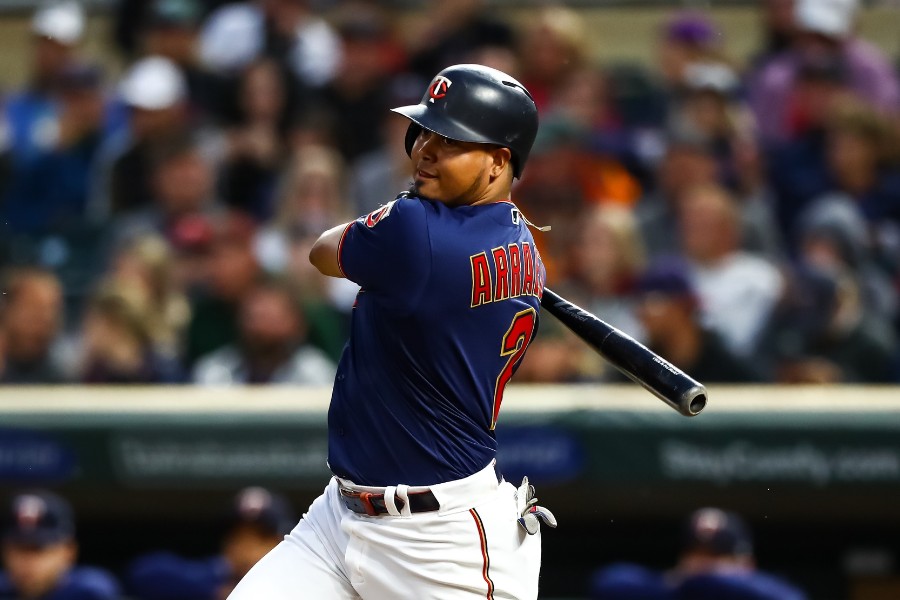 Arraez has put up an incredible rookie campaign in 2019. In 92 games, he managed a .344/.399/.439 line with a 2.1 fWAR and 125 wRC+. Digging into some of Arraez Statcast numbers tells a conflicting story. Arraez has a high BaBIP (.355), an extremely low 2.7% barrel % (Jorge Polanco 6.7%), and a hard hit rate of 22.1% (Jorge Polanco 33%). Throughout his minor league career, Arraez has put up remarkably similar (and impressive hitting lines). So how is he sustaining success without a great deal of hard contact? Diving into Arraez’ strike zone control is integral in understanding his future value to the Twins. Looking at Arraez swing take profile is a useful starting point. Put simply, Arraez combines an exceptional understanding of the strike zone with elite bat to ball skills. Arraez is particularly successful in taking pitches he has little opportunity to take advantage of (‘chase’ and ‘waste’ pitches). Compared to league average, Arraez barely ever gives away a swinging strike. Arraez amazing strike zone control is represented in a different way below. On the left is the league swing % profile for 2019 for a minimum five swings. In the right is Arraez’ swing profile for a minimum of five swings. He simply doesn’t swing at the ball outside of the strike zone. The outcome here is he is making lots of contact with pitches in and around the heart of the strike zone (because he spits on everything else). Hard contact is not as integral to Arraez has he’s always getting great pitches to hit. So what can Twins fans expect from Arraez moving forwards? Arraez shares similar numbers with another diminutive Venezuelan from early in his career, Jose Altuve. In 2014 Altuve emerged as a star for the Astros. In 158 games, Altuve managed a .341/.377/.453 line similar to Arraez’ 2019 debut. While some of Altuve’s early value was derived from base-running (53 swipes in 2014, a tendency and skill sert Arraez does not share), their similarities run beyond their hitting lines. Arraez and Altuve share similar batted ball profiles (Arraez 2019, Altuve 2014), with Arraez at approximately 30% LD% to Altuve’s 23% and sharing a FB% of around 29%. During his emergence, Altuve managed a Hard% 23.8%, compared to Arraez’ 34.7%. Since his 2014 season, in which he hit seven HR, Altuve has increased his Hard%, FB%, Barrel %, and exit velocity, increasing his HR totals to a career high 31 in 2019. It seems likely that if Arraez can progress in the amount of quality contact he makes, his HR totals can progress well beyond the four he hit in 2019, already an increase from the six he hit across five previous MiLB seasons. In his rookie season, Arraez already has superior plate discipline numbers to Altuve. While there is no predicting player development. There is no reason Arraez can’t turn into a top of the lineup hitter who puts up 15 HR, hits .300, and scores 100 runs on a consistent basis. With a remarkable 2019 debut, Arraez has cemented himself firmly in the Twins long term infield plans. The Twins getting back their offensive catalyst against the Yankees would be an added bonus.
 -
Super appreciate the feedback, add ons, and extra knowledge. Banked.
-
Since Derek Falvey took over the Twins in 2016, there has been an organizational emphasis in gaining an edge in and optimizing player development. Over the next few weeks, I’ll look at some Twins who are out-performing their projections, how they are doing it, and wonder how they might serve as a blueprint for future Twins prospects.In their book The MVP Machine, Ben Lindbergh and Travis Sawchik succinctly summarized the focal point of the player development revolution: "Every team now knows which players are projected to be good. But the best teams are discovering ways for players to accomplish what they aren’t projected to do." Amidst an incredible 2019 Twins team full of surprises, no one player encompasses this tenet of player development more than Mitch Garver, who has transformed himself from fringey, solid hitting backup catcher, to a bat whose potency rivals that of Trout, Bellinger, and Yellich. It’s time for a saucy ode to Mitch-a-palooza, an incredible story in the ceiling of the player development revolution. Background Garver came to the Twins as a ninth-round pick in the 2013 Amateur draft (230th overall). Starting at Rookie ball in 2013, Garver progressed through approximately one level of the minors per season He quickly establishing himself has having a solid hit tool, strong on base skills and flashing some power -- hitting 29 home runs between two full seasons at AA and AAA. In 2017, Garver put himself firmly in the realm of intriguing Twins prospects, adding significant power to his swing which resulted in an additional .113 points of OPS from his 2016 stint at Rochester (more on this later). Garver got a cup of coffee in the majors in 2017 in which he struggled in the smattering of games he played but which laid the foundation for 2018. In 2018 Garver played 103 games with the Twins, putting together a .268/.335/.414 (.749) line, with seven home runs. In essence, Garver was a league average hitter (strong for the catcher position), with poor defense, who, nevertheless, put himself in a position to open the 2019 season splitting time with Jason Castro, himself returning from an injury ravaged 2018. Good to Great After his two home run performance on Monday night against the Yankees, Garver’s 2019 output ascended to new levels of incredulity. Among hitters with at least 200 plate appearances, Garver’s 1.059 OPS and 171 wRC+ ranked fourth among all hitters, behind only Mike Trout (1.111 and 187), Cody Bellinger (1.124 and 183), and Christian Yellich (1.156 and 185). Rarified air indeed. To add more color and context to Garver’s hitting performance, he’s 3rd in the league in SLG, fourth in OPS, second in ISO. Garver’s 162 game fWAR pace is 8.4. In short, he’s a superstar. So what turned Garver from promising hitter, into one who upped his Barrel % from 5.5% in 2018 to 15.5% in 2019? Mechanical changes Towards the end of the 2018 season, Roy Smalley detailed some of Garver’s swing changes on FSN. Garver, he explained, had an uphill swing, meaning the torso/upper body is not well centered, resulting in Garver losing the barrel of the bat throughout his swing. Smalley went on the explain that James Rowson was working with Garver to be ‘short to the ball’, pulling the hands in front of the chest towards the ball and maximizing the amount of time the barrel of the bat is moving powerfully through the plane of the swing. Parker Hageman has posted several great twitter threads detailing Garver’s swing changes between his minor and major league careers. The following stills are taken from a video of his swing in a game in Toronto earlier in the 2019 season. In the first picture, Garver’s hands have dropped and pulled the bat down to maximize barrel time through the zone Download attachment: Garver 1.jpg In the second screen shot, Garver’s barrel has now dropped lower, to just above his right hip, angled slightly upward to hit the ball in the air. His legs are positioned to torque and fire his hips as he completes his swing. Download attachment: Garver 2.jpg In the final picture, the ball is finally in the frame. Garver’s bat has been accelerated through the zone and is ready to meet the ball. It’s an incredibly efficient swing with little to no unnecessary movement. Download attachment: Garver 3.jpg Garver has transformed from having a promising hit tool, to having an extremely efficient, compact swing which maximized barrel time on plane, and, as a result, Garver has transformed himself into one of the best fastball hitters in baseball. Defense Another aspect of Garver’s development between 2018 and 2019 is his defensive work as a catcher. Garver’s defense was a noticeable hindrance to his ability to be a first option big league catcher in 2018. In 2018, Garver was worth -16 DRS (defensive runs saved) and -10.1 FRM (catcher framing runs above average. In 385 innings caught in 2019 (ahead of Wednesday’s rubber game against the Yankees), Garver has been worth +3 DRS and +0.5 FRM. Both Garver, and Twins Minor League Catching Coordinator Tanner Swanson deserve a ton of credit for this defensive improvement. In short, Garver has transformed from a poor defensive backup, to a slightly above average defensive catcher. Therein lies a key component of the Twins player development plans under Derek Falvey, amplify your strengths, and work to raise the floor of your weaknesses. Garver’s StatCast catching metrics show similar steady improvement. In 2018, Garver’s average pop time of 2.08 seconds was good for 72nd among 85 qualified catchers. In 2019, Garver’s pop time speed has averaged 2.00 seconds. That may seem like a nominal difference, but it’s huge when considering the margins involved in stealing bases (and that the best in MLB is around 1.90). Garver’s average of 2.00 is now good for 28th out of 64 qualified catchers. Why Doesn’t he Play Every Day? With Garver’s transformation into one of the elite bats in the AL, a relevant question for the Twins has become ‘is he getting enough ABs’? Garver is splitting time approximately 50/50 with Jason Castro behind the plate. It’s worth exploring getting Garver DH/1B ABs. Accruing Garver an extra 50-75 ABs over the course of the season seems like an easy way to optimize a lineup that has looked more like it’s May iteration in a tough series against the Yankees, an option the Rocco Baldelli should certainly consider for a playoff series. Garver is evidence that the fruits of Derek Falvey’s push to optimize player development are producing results. Indeed, as a 28 year old in his second MLB season, Garver is forcing us to reconsider notions of what to expect from prospects and the idea that players have a fixed ceiling. No one saw this coming. The Twins now have the best hitting catcher in baseball locked down until 2024. What do you think of Garver’s development this year? Do you expect him to sustain his current levels of performance? Who do you think is the Twins greatest player development success story this season? Click here to view the article
-
GarvSauce - A Proof Point in Falvey's Quest to Optimize Player Development
Jamie Cameron posted an article in Twins
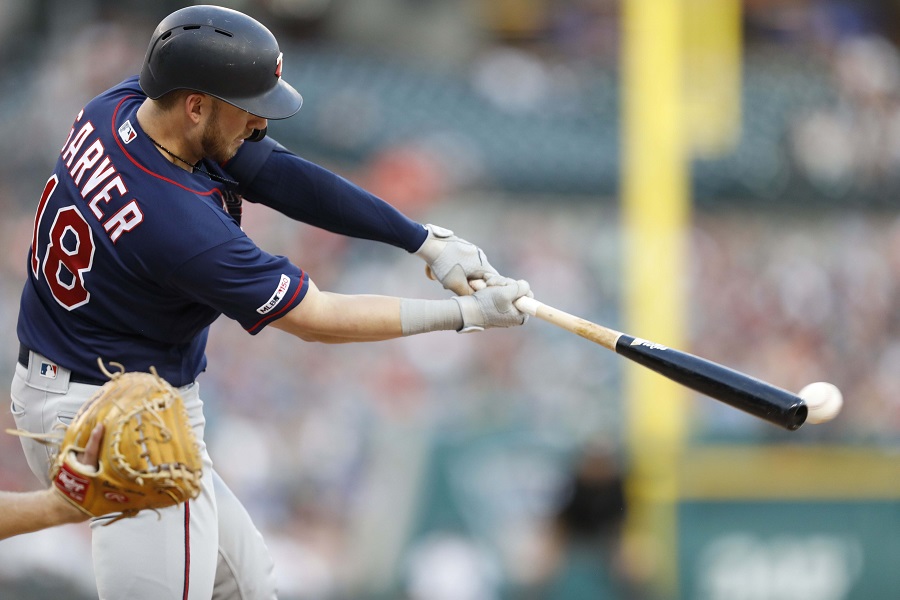 In their book The MVP Machine, Ben Lindbergh and Travis Sawchik succinctly summarized the focal point of the player development revolution: "Every team now knows which players are projected to be good. But the best teams are discovering ways for players to accomplish what they aren’t projected to do." Amidst an incredible 2019 Twins team full of surprises, no one player encompasses this tenet of player development more than Mitch Garver, who has transformed himself from fringey, solid hitting backup catcher, to a bat whose potency rivals that of Trout, Bellinger, and Yellich. It’s time for a saucy ode to Mitch-a-palooza, an incredible story in the ceiling of the player development revolution. Background Garver came to the Twins as a ninth-round pick in the 2013 Amateur draft (230th overall). Starting at Rookie ball in 2013, Garver progressed through approximately one level of the minors per season He quickly establishing himself has having a solid hit tool, strong on base skills and flashing some power -- hitting 29 home runs between two full seasons at AA and AAA. In 2017, Garver put himself firmly in the realm of intriguing Twins prospects, adding significant power to his swing which resulted in an additional .113 points of OPS from his 2016 stint at Rochester (more on this later). Garver got a cup of coffee in the majors in 2017 in which he struggled in the smattering of games he played but which laid the foundation for 2018. In 2018 Garver played 103 games with the Twins, putting together a .268/.335/.414 (.749) line, with seven home runs. In essence, Garver was a league average hitter (strong for the catcher position), with poor defense, who, nevertheless, put himself in a position to open the 2019 season splitting time with Jason Castro, himself returning from an injury ravaged 2018. Good to Great After his two home run performance on Monday night against the Yankees, Garver’s 2019 output ascended to new levels of incredulity. Among hitters with at least 200 plate appearances, Garver’s 1.059 OPS and 171 wRC+ ranked fourth among all hitters, behind only Mike Trout (1.111 and 187), Cody Bellinger (1.124 and 183), and Christian Yellich (1.156 and 185). Rarified air indeed. To add more color and context to Garver’s hitting performance, he’s 3rd in the league in SLG, fourth in OPS, second in ISO. Garver’s 162 game fWAR pace is 8.4. In short, he’s a superstar. So what turned Garver from promising hitter, into one who upped his Barrel % from 5.5% in 2018 to 15.5% in 2019? Mechanical changes Towards the end of the 2018 season, Roy Smalley detailed some of Garver’s swing changes on FSN. Garver, he explained, had an uphill swing, meaning the torso/upper body is not well centered, resulting in Garver losing the barrel of the bat throughout his swing. Smalley went on the explain that James Rowson was working with Garver to be ‘short to the ball’, pulling the hands in front of the chest towards the ball and maximizing the amount of time the barrel of the bat is moving powerfully through the plane of the swing. Parker Hageman has posted several great twitter threads detailing Garver’s swing changes between his minor and major league careers. The following stills are taken from a video of his swing in a game in Toronto earlier in the 2019 season. In the first picture, Garver’s hands have dropped and pulled the bat down to maximize barrel time through the zone In the second screen shot, Garver’s barrel has now dropped lower, to just above his right hip, angled slightly upward to hit the ball in the air. His legs are positioned to torque and fire his hips as he completes his swing. In the final picture, the ball is finally in the frame. Garver’s bat has been accelerated through the zone and is ready to meet the ball. It’s an incredibly efficient swing with little to no unnecessary movement. Garver has transformed from having a promising hit tool, to having an extremely efficient, compact swing which maximized barrel time on plane, and, as a result, Garver has transformed himself into one of the best fastball hitters in baseball. Defense Another aspect of Garver’s development between 2018 and 2019 is his defensive work as a catcher. Garver’s defense was a noticeable hindrance to his ability to be a first option big league catcher in 2018. In 2018, Garver was worth -16 DRS (defensive runs saved) and -10.1 FRM (catcher framing runs above average. In 385 innings caught in 2019 (ahead of Wednesday’s rubber game against the Yankees), Garver has been worth +3 DRS and +0.5 FRM. Both Garver, and Twins Minor League Catching Coordinator Tanner Swanson deserve a ton of credit for this defensive improvement. In short, Garver has transformed from a poor defensive backup, to a slightly above average defensive catcher. Therein lies a key component of the Twins player development plans under Derek Falvey, amplify your strengths, and work to raise the floor of your weaknesses. Garver’s StatCast catching metrics show similar steady improvement. In 2018, Garver’s average pop time of 2.08 seconds was good for 72nd among 85 qualified catchers. In 2019, Garver’s pop time speed has averaged 2.00 seconds. That may seem like a nominal difference, but it’s huge when considering the margins involved in stealing bases (and that the best in MLB is around 1.90). Garver’s average of 2.00 is now good for 28th out of 64 qualified catchers. Why Doesn’t he Play Every Day? With Garver’s transformation into one of the elite bats in the AL, a relevant question for the Twins has become ‘is he getting enough ABs’? Garver is splitting time approximately 50/50 with Jason Castro behind the plate. It’s worth exploring getting Garver DH/1B ABs. Accruing Garver an extra 50-75 ABs over the course of the season seems like an easy way to optimize a lineup that has looked more like it’s May iteration in a tough series against the Yankees, an option the Rocco Baldelli should certainly consider for a playoff series. Garver is evidence that the fruits of Derek Falvey’s push to optimize player development are producing results. Indeed, as a 28 year old in his second MLB season, Garver is forcing us to reconsider notions of what to expect from prospects and the idea that players have a fixed ceiling. No one saw this coming. The Twins now have the best hitting catcher in baseball locked down until 2024. What do you think of Garver’s development this year? Do you expect him to sustain his current levels of performance? Who do you think is the Twins greatest player development success story this season?
 -
It's no secret, the Twins will be seeking bullpen help as the trade deadline approaches. The current group of relievers have helped get the Twins where they are, but let's face it, there is plenty of evidence upgrades are required. Today, we'll take a look at Tigers closer Shane Green.Shane Greene, RHP, 30-years-old Detroit Tigers (26-50, 5th in AL Central) Under team control via arbitration through 2020 2019: 0.90 ERA, 0.87 WHIP, 9.0 K/9, 2.7 BB/9 in 30 IP 2018: 5.12 ERA, 1.37 WHIP, 9.2 K/9, 2.7 BB/9 in 63.1 IP Greene has a fascinating and up and down resume since breaking into the majors with the Tigers in 2016. He’s operated on an ‘even year bad, odd year great’ mode in his time with Detroit. Luckily for Greene, this is an odd year. Green was originally drafted by the New York Yankees in the 15th round of the 2009 draft. He was acquired by Detroit in a three-team trade that saw Robbie Ray head to the Diamondbacks and Didi Gregorious shift to the Yankees. Greene is earning a reasonable $4 million this season, and is under team control via arbitration through the end of the 2020 season. What’s to Like? Greene is essentially a three-pitch pitcher. He throws a 93 mph sinker (45%), an 88 mph cutter (28%), and an 81 mph slider (21% - a few miscellaneous pitches make up his remaining mix). Despite having very up and down numbers, there is lots to like about the consistency present in Greene’s peripherals. In his last two seasons of work, Greene has maintained a K/9 of at least 9.00 and a BB/9 of less than 3.00. Additionally, Greene has average a GB% of 46% over the last two seasons (it’s up 12% this year and a big reason for his success in 2019). Concerns There are a ton of indicators that Greene may be due for some regression in the near future. His 0.93 ERA is paired with a 3.56 FIP and 4.16 xFIP, in addition to an unsustainable .181 BaBIP. His BaBIP throughout his career has varied wildly and is supported this year by an almost elite ground ball rate. Greene’s 2019 .217 wOBA is in the top 2% of all pitchers, an increase in the usage of his cutter has supported this. In 2019, the pitch has generated an xBA (expected batting average) of just .143. It’s likely that Greene continues to pitch effectively and put up effective numbers in 2019. Greene would be a solid upgrade for the Twins bullpen but only as part of a two pitcher upgrade. He would give the Twins a controllable, solid high leverage arm but does not have the ceiling of Taylor Rogers and is not likely to continue to put up his gaudy 2019 numbers. See Also Felipe Vázquez, LHP, Pirates Will Smith, LHP, Giants Liam Hendriks, RHP, Athletics Ty Buttrey, RHP, Angels Ken Giles, RHP, Blue Jays Sam Dyson, RHP, Giants Brad Hand, LHP, Indians Oliver Perez, LHP Cleveland Robert Stephenson, RHP, Reds John Gant, RHP, Cardinals Alex Colome, RHP, White Sox Seth Lugo, RHP, Mets Greg Holland, RHP, Diamondbacks Sean Doolittle, LHP, Nationals Kirby Yates, RHP, Padres 10 Relievers Minnesota Could Target Click here to view the article
-
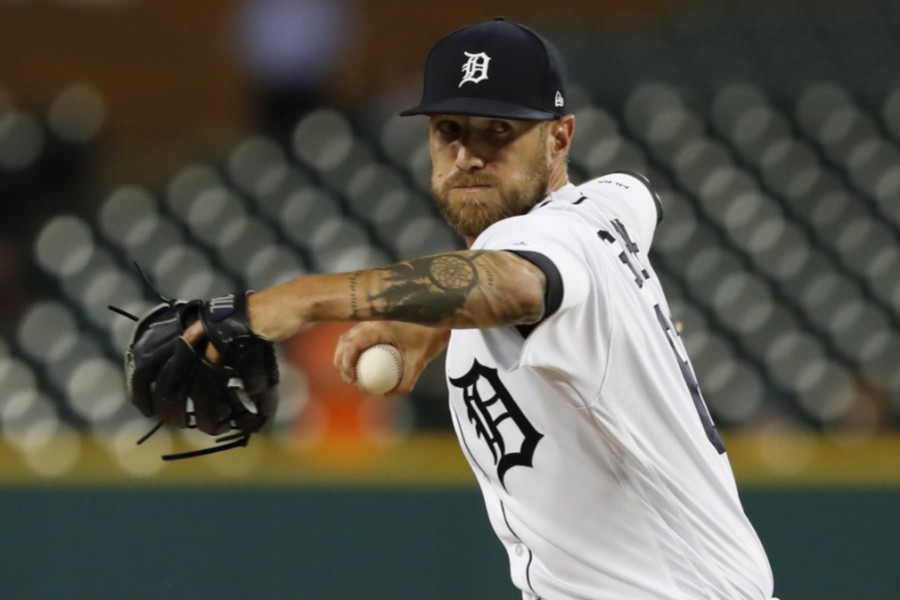 Shane Greene, RHP, 30-years-old Detroit Tigers (26-50, 5th in AL Central) Under team control via arbitration through 2020 2019: 0.90 ERA, 0.87 WHIP, 9.0 K/9, 2.7 BB/9 in 30 IP 2018: 5.12 ERA, 1.37 WHIP, 9.2 K/9, 2.7 BB/9 in 63.1 IP Greene has a fascinating and up and down resume since breaking into the majors with the Tigers in 2016. He’s operated on an ‘even year bad, odd year great’ mode in his time with Detroit. Luckily for Greene, this is an odd year. Green was originally drafted by the New York Yankees in the 15th round of the 2009 draft. He was acquired by Detroit in a three-team trade that saw Robbie Ray head to the Diamondbacks and Didi Gregorious shift to the Yankees. Greene is earning a reasonable $4 million this season, and is under team control via arbitration through the end of the 2020 season. What’s to Like? Greene is essentially a three-pitch pitcher. He throws a 93 mph sinker (45%), an 88 mph cutter (28%), and an 81 mph slider (21% - a few miscellaneous pitches make up his remaining mix). Despite having very up and down numbers, there is lots to like about the consistency present in Greene’s peripherals. In his last two seasons of work, Greene has maintained a K/9 of at least 9.00 and a BB/9 of less than 3.00. Additionally, Greene has average a GB% of 46% over the last two seasons (it’s up 12% this year and a big reason for his success in 2019). Concerns There are a ton of indicators that Greene may be due for some regression in the near future. His 0.93 ERA is paired with a 3.56 FIP and 4.16 xFIP, in addition to an unsustainable .181 BaBIP. His BaBIP throughout his career has varied wildly and is supported this year by an almost elite ground ball rate. Greene’s 2019 .217 wOBA is in the top 2% of all pitchers, an increase in the usage of his cutter has supported this. In 2019, the pitch has generated an xBA (expected batting average) of just .143. It’s likely that Greene continues to pitch effectively and put up effective numbers in 2019. Greene would be a solid upgrade for the Twins bullpen but only as part of a two pitcher upgrade. He would give the Twins a controllable, solid high leverage arm but does not have the ceiling of Taylor Rogers and is not likely to continue to put up his gaudy 2019 numbers. See Also Felipe Vázquez, LHP, Pirates Will Smith, LHP, Giants Liam Hendriks, RHP, Athletics Ty Buttrey, RHP, Angels Ken Giles, RHP, Blue Jays Sam Dyson, RHP, Giants Brad Hand, LHP, Indians Oliver Perez, LHP Cleveland Robert Stephenson, RHP, Reds John Gant, RHP, Cardinals Alex Colome, RHP, White Sox Seth Lugo, RHP, Mets Greg Holland, RHP, Diamondbacks Sean Doolittle, LHP, Nationals Kirby Yates, RHP, Padres 10 Relievers Minnesota Could Target
 -
It's no secret, the Twins will be seeking bullpen help as the trade deadline approaches. The current group of relievers has helped get the Twins where they are, but let's face it, there is plenty of evidence that suggests upgrades are required. Who may be available? Today we're going to look at a Ty Buttrey of the Angels.Ty Buttrey, RHP, 26-years-old LA Angels (38-39, 3rd in AL West) Under team control via arbitration through 2024 2019: 2.52 ERA, 1.26 WHIP, 10.60 K/9, 2.78 BB/9 in 35.2 IP 2018: 3.31 ERA, 1.22 WHIP, 11.02 K/9, 2.76 BB/9 in 16.1 IP Ty Buttrey is a relative newcomer on the scene for the LA Angels bullpen, and a welcome one. Buttrey was originally a fourth-round pick of the Boston Red Sox in the 2012 draft but came to the Angels from the Red Sox in exchange for Ian Kinsler at the 2018 deadline. It could work out to be a great deal for the Angels if Buttrey can maintain his current level of performance. Buttrey became the Angels closer at the end of the 2018 season. In a smattering of late big league innings, he put together a rare combination of a K/9 of over 11 and a BB/9 of under 3. He will be under team control through the end of the 2024 season. What’s to Like? Buttrey has a classic combination of size and tools to handle a role at the back end of any bullpen. At 6-6, 230 lbs, Buttrey has a 70-grade fastball which averages 97.5 mph in 2019 but he can crank all the way up to 100 mph. Buttrey throws his fastball approximately 60% of the time but also features a curveball (30%) and a strong changeup (10%). In addition to big velocity and strong command, Buttrey also has an excellent ground ball rate (around 45%), a combination which should allow him to occupy a high leverage relief role for the next 5+ years. Concerns There’s not a ton to be concerned about with Buttrey. His biggest concern is the lack of an established big league track record, which also means he has fewer miles on his arm than other options. Buttrey’s peripheral numbers are slightly worse than his ERA in 2019 (the reverse was true in 2018) with a FIP of 3.09. Buttrey’s ground ball rate has dropped significantly in 2019 (56% to 43%) although his 2018 MLB debut was only 16 innings. The biggest concern with Buttrey may be the price. With so much team control available to the Angels and a core featuring Mike Trout and Shohei Ohtani, there’s no good reason to move the Angels best bullpen arm. If they did, he would be one of the best arms available to the Twins at the deadline. See Also Ken Giles, RHP, Blue Jays Sam Dyson, RHP, Giants Brad Hand, LHP, Indians Oliver Perez, LHP Cleveland Robert Stephenson, RHP, Reds John Gant, RHP, Cardinals Alex Colome, RHP, White Sox Seth Lugo, RHP, Mets Greg Holland, RHP, Diamondbacks Sean Doolittle, LHP, Nationals Kirby Yates, RHP, Padres 10 Relievers Minnesota Could Target Click here to view the article
-
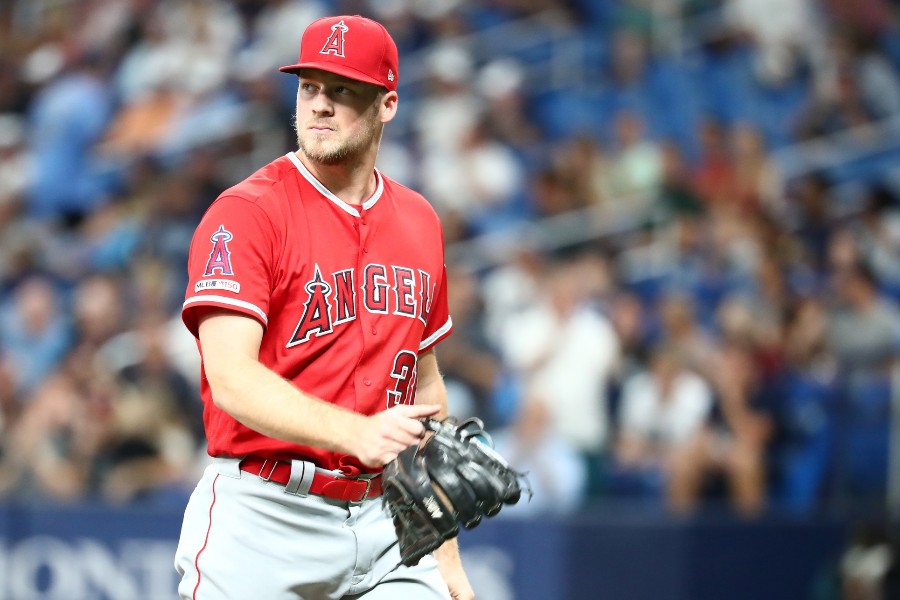 Ty Buttrey, RHP, 26-years-old LA Angels (38-39, 3rd in AL West) Under team control via arbitration through 2024 2019: 2.52 ERA, 1.26 WHIP, 10.60 K/9, 2.78 BB/9 in 35.2 IP 2018: 3.31 ERA, 1.22 WHIP, 11.02 K/9, 2.76 BB/9 in 16.1 IP Ty Buttrey is a relative newcomer on the scene for the LA Angels bullpen, and a welcome one. Buttrey was originally a fourth-round pick of the Boston Red Sox in the 2012 draft but came to the Angels from the Red Sox in exchange for Ian Kinsler at the 2018 deadline. It could work out to be a great deal for the Angels if Buttrey can maintain his current level of performance. Buttrey became the Angels closer at the end of the 2018 season. In a smattering of late big league innings, he put together a rare combination of a K/9 of over 11 and a BB/9 of under 3. He will be under team control through the end of the 2024 season. What’s to Like? Buttrey has a classic combination of size and tools to handle a role at the back end of any bullpen. At 6-6, 230 lbs, Buttrey has a 70-grade fastball which averages 97.5 mph in 2019 but he can crank all the way up to 100 mph. Buttrey throws his fastball approximately 60% of the time but also features a curveball (30%) and a strong changeup (10%). In addition to big velocity and strong command, Buttrey also has an excellent ground ball rate (around 45%), a combination which should allow him to occupy a high leverage relief role for the next 5+ years. Concerns There’s not a ton to be concerned about with Buttrey. His biggest concern is the lack of an established big league track record, which also means he has fewer miles on his arm than other options. Buttrey’s peripheral numbers are slightly worse than his ERA in 2019 (the reverse was true in 2018) with a FIP of 3.09. Buttrey’s ground ball rate has dropped significantly in 2019 (56% to 43%) although his 2018 MLB debut was only 16 innings. The biggest concern with Buttrey may be the price. With so much team control available to the Angels and a core featuring Mike Trout and Shohei Ohtani, there’s no good reason to move the Angels best bullpen arm. If they did, he would be one of the best arms available to the Twins at the deadline. See Also Ken Giles, RHP, Blue Jays Sam Dyson, RHP, Giants Brad Hand, LHP, Indians Oliver Perez, LHP Cleveland Robert Stephenson, RHP, Reds John Gant, RHP, Cardinals Alex Colome, RHP, White Sox Seth Lugo, RHP, Mets Greg Holland, RHP, Diamondbacks Sean Doolittle, LHP, Nationals Kirby Yates, RHP, Padres 10 Relievers Minnesota Could Target

