



Jamie Cameron
-
Posts
1,345 -
Joined
-
Last visited
-
Days Won
4
Content Type
Profiles
News
Minnesota Twins Videos
2026 Minnesota Twins Top Prospects Ranking
2022 Minnesota Twins Draft Picks
Minnesota Twins Free Agent & Trade Rumors, Notes, & Tidbits
Guides & Resources
2023 Minnesota Twins Draft Picks
The Minnesota Twins Players Project
2024 Minnesota Twins Draft Picks
2025 Minnesota Twins Draft Pick Tracker
2026 Minnesota Twins Draft Tracker: Picks & Bonuses
Forums
Blogs
Events
Store
Downloads
Gallery
Everything posted by Jamie Cameron
-
Ben Ross has been called up to the Twins with September rosters expanding. He has transformed himself from organizational depth to a prospect with a shot as a major league utility infielder in just six months. How did he do it? How did he fare in St. Paul? What role might he play for the big league team? View full video
-
Ben Ross has been called up to the Twins with September rosters expanding. He has transformed himself from organizational depth to a prospect with a shot as a major league utility infielder in just six months. How did he do it? How did he fare in St. Paul? What role might he play for the big league team?
-
Image courtesy of Rob Thompson, St. Paul Saints The Twins are calling up top prospect Walker Jenkins, sources have confirmed to Twins Daily. The No. 1 prospect in the organization and (arguably) one of the top 10 prospects in baseball will join the team at Target Field on Friday, with the Twins' postseason hopes on life support entering a crucial series against the division-leading Chicago White Sox. Jonathan Mayo of MLB.com broke the news first. Jenkins, 21, joins the team despite navigating recurring injuries in his minor-league career. In 69 games in 2026 for Triple-A St. Paul, Jenkins managed a .308/.407/.532 line, with 32 extra-base hits, a 13.3% walk rate, and a stellar 15.4% strikeout rate. The promotion is likely to come as a corresponding move to Byron Buxton hitting the IL, after Buxton left Tuesday’s game in West Sacramento with an as-yet-unspecified hip injury. After the Twins declined to add Jenkins amid a torrid offensive performance in August, injury has finally forced a debut for one of the game's top prospects. Jenkins was the fifth overall selection in a loaded 2023 draft class. The Twins were the biggest beneficiary of the inaugural MLB Draft Lottery the previous December, vaulting into the top five selections of what was considered a five-player draft. Jenkins was selected after Paul Skenes, Dylan Crews, Wyatt Langford, and recent MLB debutant Max Clark. Jenkins's promotion will spark particular excitement, as it comes on the heels of the recent promotion of fellow top-100 prospect Kaelen Culpepper, who was called up on August 7 and has settled in as the Twins’ regular shortstop. The timing of his promotion is significant, too. Jenkins can no longer amass 45 days of service time before the end of the season (that deadline passed more than a week ago), and thanks to waiting an extra handful of days, the team can also promote him now without worrying about whether he’ll reach 130 at-bats. Even if he plays every day, he won’t do so, so he’ll retain rookie eligibility heading into 2027 and could net Minnesota a Prospect Promotion Incentive (PPI) draft pick if he wins the Rookie of the Year Award or finishes in the top three in MVP voting before becoming arbitration-eligible. Jenkins has a well-rounded skill set highlighted by elite bat-to-ball skills and excellent swing decisions, giving him a strong on-base floor to accompany above-average speed and defense in center field. Despite some prospect fatigue setting in during his journey up the minor-league ladder, Jenkins has retained strong positioning on national lists, being featured as the No. 4 overall prospect on FanGraphs and No. 10 phenom at Baseball America after midseason updates. Jenkins joins a crowded outfield picture, with the Twins retaining several other left-handed options on the 40-man roster. In the immediate future, though, he’ll be the most anticipated Twins prospect to debut since Buxton. He also comes up to a team that desperately needs a spark. Whether he's able to deliver that or not, this marks the full arrival of a new era of Twins baseball. View full article
-
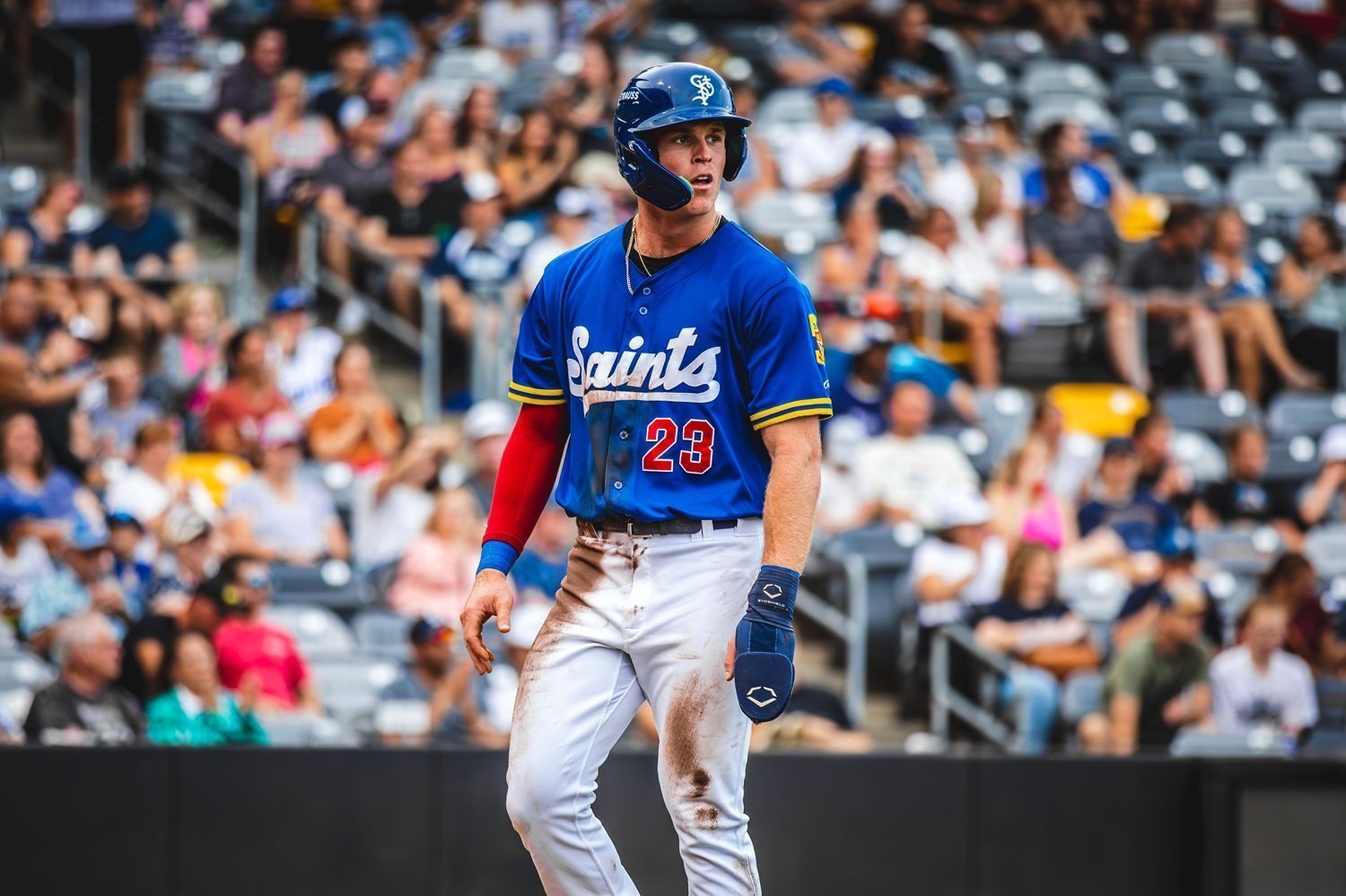 The Twins are calling up top prospect Walker Jenkins, sources have confirmed to Twins Daily. The No. 1 prospect in the organization and (arguably) one of the top 10 prospects in baseball will join the team at Target Field on Friday, with the Twins' postseason hopes on life support entering a crucial series against the division-leading Chicago White Sox. Jonathan Mayo of MLB.com broke the news first. Jenkins, 21, joins the team despite navigating recurring injuries in his minor-league career. In 69 games in 2026 for Triple-A St. Paul, Jenkins managed a .308/.407/.532 line, with 32 extra-base hits, a 13.3% walk rate, and a stellar 15.4% strikeout rate. The promotion is likely to come as a corresponding move to Byron Buxton hitting the IL, after Buxton left Tuesday’s game in West Sacramento with an as-yet-unspecified hip injury. After the Twins declined to add Jenkins amid a torrid offensive performance in August, injury has finally forced a debut for one of the game's top prospects. Jenkins was the fifth overall selection in a loaded 2023 draft class. The Twins were the biggest beneficiary of the inaugural MLB Draft Lottery the previous December, vaulting into the top five selections of what was considered a five-player draft. Jenkins was selected after Paul Skenes, Dylan Crews, Wyatt Langford, and recent MLB debutant Max Clark. Jenkins's promotion will spark particular excitement, as it comes on the heels of the recent promotion of fellow top-100 prospect Kaelen Culpepper, who was called up on August 7 and has settled in as the Twins’ regular shortstop. The timing of his promotion is significant, too. Jenkins can no longer amass 45 days of service time before the end of the season (that deadline passed more than a week ago), and thanks to waiting an extra handful of days, the team can also promote him now without worrying about whether he’ll reach 130 at-bats. Even if he plays every day, he won’t do so, so he’ll retain rookie eligibility heading into 2027 and could net Minnesota a Prospect Promotion Incentive (PPI) draft pick if he wins the Rookie of the Year Award or finishes in the top three in MVP voting before becoming arbitration-eligible. Jenkins has a well-rounded skill set highlighted by elite bat-to-ball skills and excellent swing decisions, giving him a strong on-base floor to accompany above-average speed and defense in center field. Despite some prospect fatigue setting in during his journey up the minor-league ladder, Jenkins has retained strong positioning on national lists, being featured as the No. 4 overall prospect on FanGraphs and No. 10 phenom at Baseball America after midseason updates. Jenkins joins a crowded outfield picture, with the Twins retaining several other left-handed options on the 40-man roster. In the immediate future, though, he’ll be the most anticipated Twins prospect to debut since Buxton. He also comes up to a team that desperately needs a spark. Whether he's able to deliver that or not, this marks the full arrival of a new era of Twins baseball.
 -
Twins right-handed pitcher Adrian Bohorquez was just promoted from Cedar Rapids to Double-A Wichita. He's in the middle of a hot streak, striking out a ton of batters thanks to electric stuff and a decreased walk rate. What role might he occupy if he maintains his improved strike throwing? What does his pitch mix look like? Bohorquez is another sleeper arm for the Twins, who need starters to develop in the middle levels of the MiLB system. View full video
-
Twins right-handed pitcher Adrian Bohorquez was just promoted from Cedar Rapids to Double-A Wichita. He's in the middle of a hot streak, striking out a ton of batters thanks to electric stuff and a decreased walk rate. What role might he occupy if he maintains his improved strike throwing? What does his pitch mix look like? Bohorquez is another sleeper arm for the Twins, who need starters to develop in the middle levels of the MiLB system.
-
Caden Kendle has flown under the radar in 2026 on the way to a huge breakout, balancing strong bat-to-ball skills with burgeoning power for Double-A Wichita. Who is Kendle? What has changed in 2026, and where should he sit on Twins prospect lists? View full video
-
Caden Kendle has flown under the radar in 2026 on the way to a huge breakout, balancing strong bat-to-ball skills with burgeoning power for Double-A Wichita. Who is Kendle? What has changed in 2026, and where should he sit on Twins prospect lists?
-
KLAW and I don't align in our views on a lot of draft items, which is fine. Look, I'm a homer. I'm going to try and see the vision with these drafts because I want them to work out. What I appreciate is the Twins tweaking the approach with the pitching, given not enough viable arms came out of '23 and '24.
-
Thanks so much for the kind words. Really appreciate it. I love the draft content so plenty more next year.
-
Thanks so much for the kind words. UDFAs so far Tyler Bryan, RHP, Houston Ryne Palmer, RHP, Cal Baptist Jackson Sleeper, RHP, Jacksonville St
-
I don't think anyone in 11-20 will be more than 150K. The Twins tend to draft pretty straight up in that they (unlike the Brewers) don't sign HS players in the second half. I wouldn't expect any of those players to impact the bonus pool. Lay, Klecker, and Raab will constitute the savings needed for Wachsmann. For the arms, Burns should be a fast moving reliever. Of the later guys, I think Lay and Raab are interesting. Bouchard is a good candidate to be much more interesting if he ca. add a bit more velo. Thanks for reading!
-
2026 Minnesota Twins MLB Draft Recap: 21 Thoughts on 21 Draftees
Jamie Cameron posted an article in MLB Draft
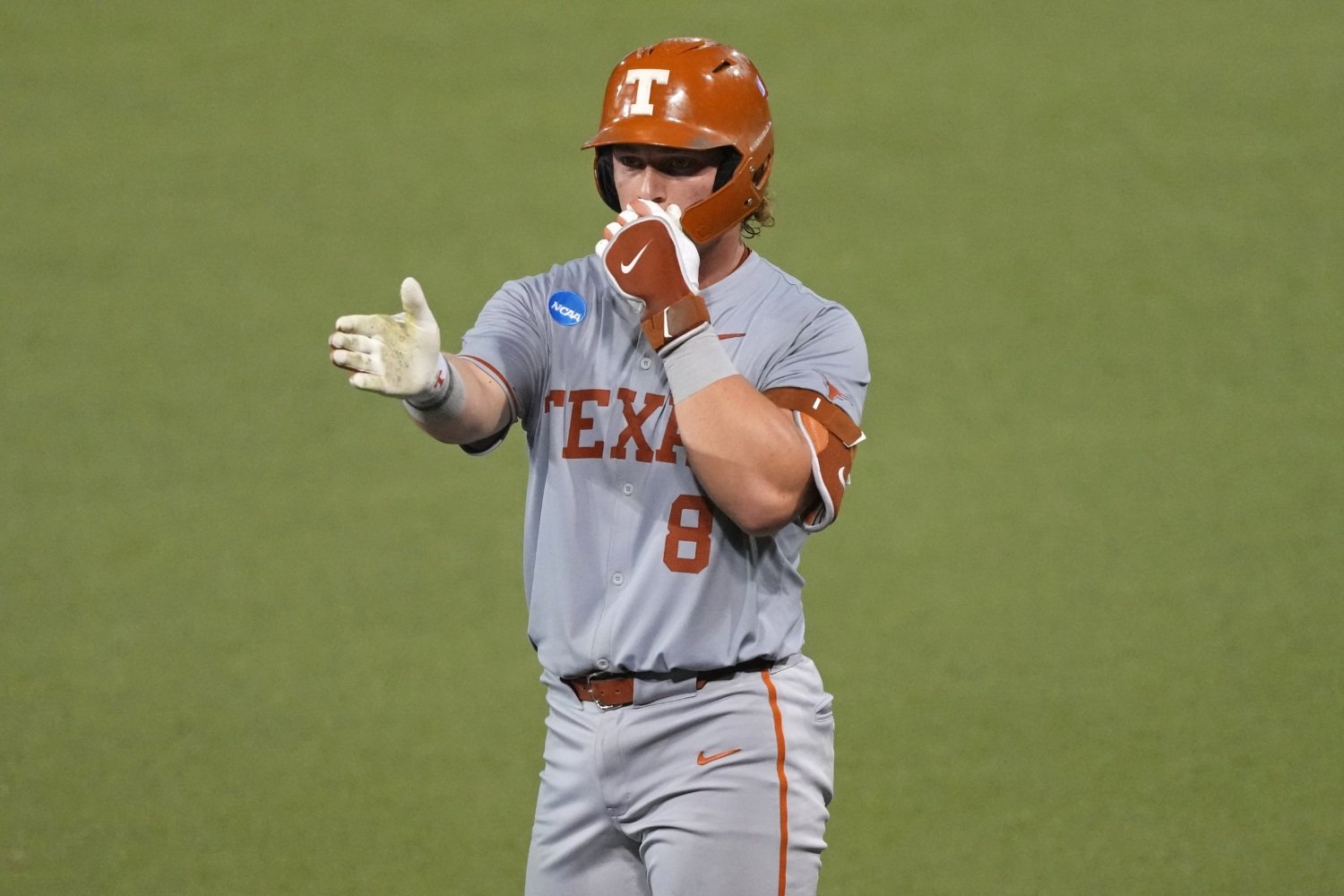 The Twins' 2026 draft is in the books. Let's recap it, with a thought for each of their 21 selections. Round 1: Pick 3, Vahn Lackey, C, Georgia Tech The Twins got their guy. Plus defensive catchers who put up a 170 wRC+ in the ACC are outlier prospects. In his draft recap, Eric Longenhagen said of Lackey’s strengths: "everything". He has a chance to solve a big problem for the Twins for at least five years. A special player. Round 2: Pick 43, Carson Tinney, C, Texas It seems like the Twins got scooped here, on Logan Reddemann and Chase Brunson. Tinney is an extremely fun prospect, though. He hit 22 bombs in the SEC while walking about 20% of the time and putting up a 154 wRC+. The catching improved, too. If he can be viable behind the plate, great, but he’s there to endanger the lives of fans in the second deck. Comp B: Pick 74, Brett Renfrow, RHP, Virginia Tech Labeling Renfrow as the ‘pitchability’ arm on day one doesn’t do justice to his stuff. It’s a ton of strikes (7.9 BB%), but the fastball sits 94-96 MPH, and the Twins will have a strong game plan for pitch design with his arsenal. He should profile as a very solid fourth or fifth starter. Round 3: Pick 79, Ethan Wachsmann, RHP, Grandview HS, CO This is elite arm talent. Wachsmann has been up to 101 MPH with a high-spin fastball. He spins his curve around 3,000 RPM and has a nascent changeup. Despite throwing a little erratically at the combine, there were plenty of strikes in high school. Said Sean Johnson of Wachsmann: "He’s the kind of pitcher you see going to Wake Forest and coming out on the other side as a first-round pick." The Twions will pay him an overslot bonus to prevent that from happening. Round 4: Pick 107, Tommy LaPour, RHP, TCU LaPour has a ton of arm talent, but he needs a little more touch and feel. The fastball is a solid shape and has been up to triple digits. He hasn’t struck out as many guys in college as his arm talent indicates he might, and he’ll need to up his strike rate (62% in 2026). LaPour dealt with a flexor strain; the Twins would not have been able to access him this late but for his injury. He has a chance to start. Round 5: Pick 139, Steele Murdock, RHP, UC San Diego Member of the 2026 MLB Draft All Names team, Murdock is one of four college arms the Twins took out of California. His fastball is up to 99 MPH with good shape. There are two distinct, quality breaking pitches, but there’s reliever risk due to erratic command. Round 6: Pick 168, Ethan Lay, RHP, Sacramento State How do you sign Ethan Wachsmann? Draft three seniors in the first 10 rounds. Lay is the first in that set, It’s a track record of performance (3.78 ERA in 88 innings) and strikes (4.3% walk rate in 2026). His curveball is his best pitch. It induced a 44% whiff rate in 2026. Round 7: Pick 197, Max Bayles, RHP, UC Santa Clara Bayles transitioned to a starting role after beginning his collegiate career as a reliever. He put up outrageously good strikeout numbers in 2026 (34.3%). It’s a good fastball shape that gets up to 95 MPH with two breaking pitches (that blur together, right now) and not enough strikes. Round 8: Pick 227, Thomas Burns, RHP, Texas The first pure reliever the Twins drafted, Burns has one of the best fastballs in the entire draft. It’s a triple-digit monster that averaged 21 inches of induced vertical break. He’s a prime candidate to reduce to 2-3 pitches and move on the fast track to the bullpen. Round 9: Pick 257, JT Raab, RHP, Georgetown Raab has an outlier fastball, too. It averaged almost 23 inches of IVB, and he throws it for strikes over 70% of the time (up to 95 MPH). The rest of his arsenal (change, slider, cutter) needs untangling, because it all looks the same on his plot. Raab will be a savings pick, as he’s a grad player. Round 10: Pick 287, Kole Klecker, RHP, Arizona State One final money-saving pick to pay for Wachsmann. Klecker pitched for ASU this year after three seasons at TCU. His fastball isn’t great, but he has two interesting, distinct breaking pitches in his slider and curveball. Both had whiff rates over 35% in 2026. Feel for spin is the carrying trait here. Round 11: Pick 317, Aidan Teel, OF, Mississippi St Teel is the younger brother of White Sox catcher Kyle Teel. He had a down 2026, but a .979 OPS as a sophomore gives you an idea of what he can do. At his best, it’s a contact-driven offensive profile with above-average supplementary tools. He profiles as a fourth outfielder. Round 12: Pick 347, Colby Turner, 2B, Michigan Colby Turner’s production at Michigan is hard to come by in this portion of the draft. He managed a 1.057 OPS with 14 home runs as a junior. There’s above-average bat-to-ball skills and above-average impact here. The bad news? An insane chase rate (roughly 37%) that will only be harder to correct against pro pitchers. Round 13: Pick 377, Isaiah Lane, SS, Hope International Is this an un-Twins-y pick? Lane played in the same high school infield as Marcelo Mayer before stints at Oklahoma and UC San Diego—then, he was kicked off the team for violating team rules. Lane managed a 154 wRC+ in 2025 with strong bat-to-ball skills and an excellent approach. He’ll be a wild card coming into the Twins system, after spending 2026 at New Hope. Round 14: Pick 407, Alec Bouchard, RHP, Wofford Bouchard is a slender college righty coming off an excellent 2026 season. He managed a 3.75 FIP, striking out 29% of hitters and walking 7.5% in 86 innings for Wofford. His fastball has been up to 94 MPH with a two-seamer, changeup and slurvy breaking ball in the mix. He’s a prime "might be good with a few more ticks on the stuff" candidate. Round 15: Pick 437, Charlie Schlovin, SS, Toledo Every player in the draft has a superpower. Schlovin’s is getting hit by pitches (65 in 112 games in his final two seasons at Toledo). He’s the grinder, org warrior-type player in this class (think Harry Genth). He managed a 152 wRC+ in a contact-driven offensive profile. Round 16: Pick 467, Connor Mattison, RHP, Kentucky A combo starter/reliever from Kentucky, Mattison throws from a much lower launch than most hurlers, generating good whiff rates from his changeup and two-seamer. An east-west movement profile with some interesting release traits. Round 17: Pick 497, Hideki Prather, C, Cal Some are saying that the Twins draft too many catchers. Prather is a barrel magnet. Like many Twins draftees, he has an excellent average exit velocity, without registering great top-end exit velocities. Prather slugged 14 home runs and managed a 123 wRC+ for Cal, despite chasing a ton. The defensive skill set is fringy, but he’s already an air-pull master. Round 18: Pick 527, Colter McAnelly, RHP, Utah McAnelly was poor in 2026, but he had a strong 2025 season as a starter at Utah (3.79 ERA, 14.5 K-BB%). He’s a bit light on velo, but it's an interesting fastball shape. McAnelly has an excellent curveball, a 3,000-RPM breaker that produced a 43% whiff rate in 2026. Round 19: Pick 557, PJ Moutzouridis, SS, Arizona State Moutzouridis is a well-rounded college player. A contact- and approach-driven D1 average bat, he’s a good defender at shortstop (and anywhere else on the infield you care to play him). Org guy. Round 20:, Pick 587, Michael Barnett, RHP, UCLA Barnett threw up to seven different pitches in college, but a lot of his shapes blend together. There’s not a ton of velocity, but he did get an outrageous amount of whiff and chase on his changeup, which is easily his best pitch. Likely lower-minors starter filler.
- 44 comments
-
- 15
-

-

-
- vahn lackey
- 2026 mlb draft
- (and 4 more)
-
The Twins 2026 draft is in the books. Let's recap it with a thought for each of their 21 selections. Round 1: Pick 3, Vahn Lackey, C, Georgia Tech The Twins got their guy. Plus defensive catchers who put up a 170 wRC+ in the ACC are outlier prospects. In his draft recap, Eric Longenhagen said of Lackey’s strengths; ‘everything’. He has a chance to solve a big problem for the Twins for at least 5 years. A special prospect. Round 2: Pick 43, Carson Tinney, C, Texas It’s likely the Twins got scooped here (Reddemann, Brunson). Tinney is an extremely fun prospect, though. He hit 22 bombs in the SEC while walking ~20% of the time and putting up a 154 wRC+. The catching improved too. If he can be viable behind the plate, great, but he’s there to endanger the lives of fans in the second deck. Comp B: Pick 74, Brett Renfrow, RHP, Virginia Tech Labelling Renfrow as the ‘pitchability’ arm on day one doesn’t do justice to his stuff. It’s a ton of strikes (7.9 BB%), but the fastball sits 94-96 mph and the Twins will have a strong game plan for pitch design with his arsenal. He should profile as a very solid 4-5. Round 3: Pick 79, Ethan Wachsmann, RHP, Grandview HS, CO This is elite arm talent. Wachsmann has been up to 101 mph with a high spin fastball. He spins his curve around 3,000 rpms and has a nascent changeup. Despite throwing a little erratically at the combine, there were plenty of strikes in high school. Said Sean Johnson of Wachsmann ‘he’s the kind of pitcher you see going to Wake Forest and coming out on the other side as a first round pick. Round 4: Pick 107, Tommy LaPour, RHP, TCU LaPour has a ton of arm talent but needs a little more touch and feel. The fastball is a solid shape and has been up to triple digits. He hasn’t struck out as many guys in college as his arm talent indicates he might, and he’ll need to up his strike rate (62% in 2026). LaPour dealt with a flexor strain and the Twins would not have been able to access him this late but for his injury. He has a chance to start. Round 5: Pick 139, Steele Murdock, RHP, UC San Diego Member of the 2026 MLB Draft All Names team. Murdock is one of four college arms the Twins took out of California. His fastball is up to 99 mph with good shape. There are two, distinct, quality breaking pitches, but there’s reliever risk due to erratic command. Round 6: Pick 168, Ethan Lay, RHP, Sacramento State How do you sign Ethan Wachsmann? Draft three seniors in the first ten rounds. Lay is the first, It’s a track record of performance (3.78 ERA in 88 innings) and strikes (4.3% walk rate in 2026). His curvebal is his best pitch. It induced a 44% whiff rate in 2026. Round 7: Pick 197, Max Bayles, RHP, UC Santa Clara Bayles transitioned to a starting role after beginning his collegiate career as a reliever. He put up outrageously god strikeout numbers in 2026 (34.3%). It’s a good fastball shape that gets up to 95 mph with two breaking pitches that blur together and not enough strikes. Round 8: Pick 227, Thomas Burns, RHP, Texas The first pure reliever the Twins drafted. Burns has one of the best fastballs in the entire draft. It’s a triple digit monster that averaged 21 inches of induced vertical break. He’s a prime candidate to reduce to 2-3 pitches and move quickly on the fast track to the bullpen. Round 9: Pick 257, JT Raab, RHP, Georgetown Raab has an outlier fastball, too. It averaged almost 23 inches of IVB and he throws it for strikes over 70% of the time (up to 95 mph). The rest of his arsenal (change, slider, cutter) needs untangling because it all looks the same on his plot. Raab will be a savings pick as he’s a grad player. Round 10: Pick 287, Kole Klecker, RHP, Arizona State One final money saving pick to pay for Wachsmann. Klecker pitched for ASU this year after three seasons at TCU. His fastball isn’t great but he has two interesting, distinct breaking pitches in his slider and curveball. Both had whiff rates over 35% in 2026. Feel for spin is the carrying trait here. Round 11: Pick 317, Aidan Teel, OF, Mississippi St Teel is the younger brother of White Sox catcher Kyle Teel. He had a down 2026, but a .979 OPS as a sophomore gives you an idea of what he can do. At his best, it’s a contact driven offensive profile with above average supplementary tools. He profiles as a fourth outfielder. Round 12: Pick 347, Colby Turner, 2B, Michigan Colby Turner’s production at Michigan is hard to come by in this portion of the draft. He managed a 1.057 OPS with 14 home runs as a junior. There’s above average bat-to-ball skills and above average impact here. The bad news? An insane chase rate (~37%). Round 13: Pick 377, Isaiah Lane, SS, Hope International Is this an un-Twinsy pick? Lane played in the same high school infield as Marcelo Mayer, before stints at Oklahoma and UC San Diego before he was kicked off the team for violating team rules. Lane managed a 154 wRC+ in 2025 with strong bat-to-ball skills and an excellent approach. He’ll be a wild card coming into the Twins system after spending 2026 at New Hope. Round 14: Pick 407, Alec Bouchard, RHP, Wofford Bouchard is a slender college righty coming off an excellent 2026 season. He managed a 3.75 FIP, striking out 29% of hitters and walking 7.5% in 86 innings for Wofford. His fastball has been up to 94 mph with a two seamer, changeup and slurvy breaking ball in the max. He’s a prime ‘might be good with a few more ticks on the stuff’ candidate. Round 15: Pick 437, Charlie Schlovin, SS, Toledo Every player in the draft has a super power. Schlovin’s is getting hit by pitches (65 in 112 games in his final two seasons at Toledo. He’s the grinder, org warrior type player in this class (think Harry Genth). He managed a 152 wRC+ in a contact driven offensive profile. Round 16: Pick 467, Connor Mattison, RHP, Kentucky A combo starter/reliever from Kentucky, Mattison throws from a much lower launch, generating good whiff rates from his changeup and two seamer. An east-west movement profile with some interesting release traits. Round 17: Pick 497, Hideki Prather, C, Cal Some are saying that the Twins draft too many catchers. Prather is a barrel magnet. Like many Twins draftees, he has an excellent average exit velocity, without registering great top end exit velocities. Prather slugged 14 home runs and managed a 123 wRC+ for Cal in spite of chasing a ton. The defensive skill set is fringy but he’s already an air-pull master. Round 18: Pick 527, Colter McAnelly, RHP, Utah McAnelly was poor in 2026 but had a strong 2025 season as a starter at Utah (3.79 ERA, 14.5 K-BB%). He’s a bit light on velo but it's an interesting fastball shape. McAnelly has an excellent curveball, a 3,000 rpm breaker that produced a 43% whiff rate in 2026. Round 19: Pick 557, PJ Moutzouridis, SS, Arizona State Moutzouridis is a well rounded college player. A contact and approach driven D1 average bat, he’s a good defender at shortstop (and anywhere else on the infield you care to play him). Round 20:, Pick 587, Michael Barnett, RHP, UCLA Barnett threw up to seven different pitches in college but a lot of his shapes blend together. There’s not a ton of velocity but he did get an outrageous amount of whiff and chase on his changeup, which is easily his best pitch. Likely lower minors starter filler. View full article
-
Big thank you to everyone who has followed along with draft coverage this cycle! You can find the final draft board here. For anyone interested in a day one stream (we'll break down all 135 picks), you can follow along during the draft at Destination: The Show's Live Stream Event
-
Image courtesy of © Brett Davis-Imagn Images I take MLB mock draft rankings from major industry outlets like MLB Pipeline, ESPN, The Athletic (and many others) to form a consensus board, with a working hypothesis that using this approach will eliminate some of the noise and variance in MLB Draft mock rankings. This is the final mock draft board, locked in just before the 2026 MLB Draft on Saturday, July 11. Round 1: Grady Emerson, SS, Fort Worth Christian HS, TX Emerson is a UT commit and the number one prep prospect in the 2026 class. There might be a little prospect fatigue with Emerson by draft day, as he's been well known since he was 15, and there's less transparency around both data and benchmarks for the top prep prospects in the country. Make no mistake, though, Emerson is a prize in this draft. He might be the best overall hitter in it. It's a relaxed setup, a direct, short left-handed swing, and some adjustability that allows Emerson to keep his barrel in the zone as long as possible and take what he's given by a pitcher. Everything is good here, offensively. During the 2025 summer showcase circuit, Emerson showcased strong bat-to-ball skills, excellent swing decisions, and improved bat speed that indicates above-average power may be on the way. Emerson is a plus runner, to boot. Defensively, he has all the ingredients to stick at the position, with a strong glove, excellent throwing arm, and a good level of defensive polish for his age at the position. Emerson should be one of the first names off the board in July. Round 2: Brody Bumila, LHP, Bishop Feehan HS, MA Draft aficionados will be used to the concept of a cold-weather arm rising throughout the cycle. They don't all look like Brody Bumila, though. The 6'9 two-sport star committed to Texas has been making waves this spring. As you might expect from such a unique frame, there's unique stuff to match. Bumila relies on a fastball that has been as high as 101 mph. It sits in the high 90s, coming at hitters from a drop and drive delivery and a lower launch, with good ride at the top of the zone, making it a nightmare for prep hitters in MA. There's plenty of work to do on the secondary arsenal. Bumila relies most heavily on a changeup, thrown in the low 80s, but he'll mix in a slider and a curveball, too. This is a size and stuff over polish prep arm in what could be one of the higher risk, higher reward plays of the entire class. NOTE: Bumila is dealing with a UCL injury that became public on 07.06. It's unclear the extent of the injury, but it will certainly cloud his draft status. Competitive Balance Round B: Brett Renfrow, RHP, Virginia Tech Renfrow was previously a two-way player who began to focus solely on pitching when he got to campus at Virginia Tech. This is a class draft 'type', a college starter where stuff and production haven't quite met. I'd classify Renfrow as someone with a significant 'up arrow' this spring, though. It's a good frame, and he's about to surpass 70 innings for the third consecutive season. Renfrow has slowly ticked up his strikeout rate while reducing his walk rate, exactly what you want to see. In terms of stuff, the fastball is good. It sits at 94 mph and has been up to 97 mph, playing well at the top of the zone. There's a slider/cutter hybrid he throws in the upper 80s, a curveball with plenty of depth that sits in the low 80s, and a changeup with good horizontal action. Renfrow is a pitcher you can see making significant strides in a pro organization. There are plenty of starter traits here. In 73.2 innings in 2026, Renfrow managed a 4.67 FIP, while striking out 27.7% of hitters and walking just 7.9%. Round 3: Ethan Kleinschmidt, LHP, Oregon State Kleinschmidt was a JUCO lefty who transferred to Oregon State after his freshman year. Since then, he's been a mainstay in the Beavers' rotation, posting with consistency as a supplement to otherworldly righty Dax Whitney. Kleinschmidt has a long arm stroke from the left side of the plate. His fastball has been up to 95 mph with good tail, but typically sits in the 90-93 mph range. There's an above-average slider and changeup in the mix, too, along with the ability to throw strikes with consistency. Kleinschmidt has produced consistently strong results in two seasons for the Beavers. If he's able to add some more strength and get an uptick in velocity as a pro, he has starter traits. In 2026, he managed a 4.11 FIP, striking out 29.7% of hitters while walking 8.3% in 77 innings of work. Round 4: Savion Sims, RHP, Prestonwood Christian Academy HS, TX Sims has some of the best raw pitching clay in the class. He's a 6'8 right-handed pitcher out of Texas, committed to Oklahoma, who will be 19 on draft day. The lanky frame and long limbs produce ridiculous velocity with ease. Sims has been over 100 mph with his fastball, and it'll comfortably sit 96-97 mph. His secondary arsenal requires work; there's a two-plane slider he throws in the mid-80s and a high-80s changeup. Both of his secondary pitches have somewhat inconsistent shapes. There are delivery traits to like too, as Sims can get to 7 plus feet of extension down the mound and creates a steepness in his delivery after raising his arm slot. Sims will be a slow burn, and there's a ton of work to do on the arsenal, but this is uncommon arm talent, Curious to see the players around the Minnesota Twins' picks in the draft? Click on the button below to view the entire mock draft board! View full article
-
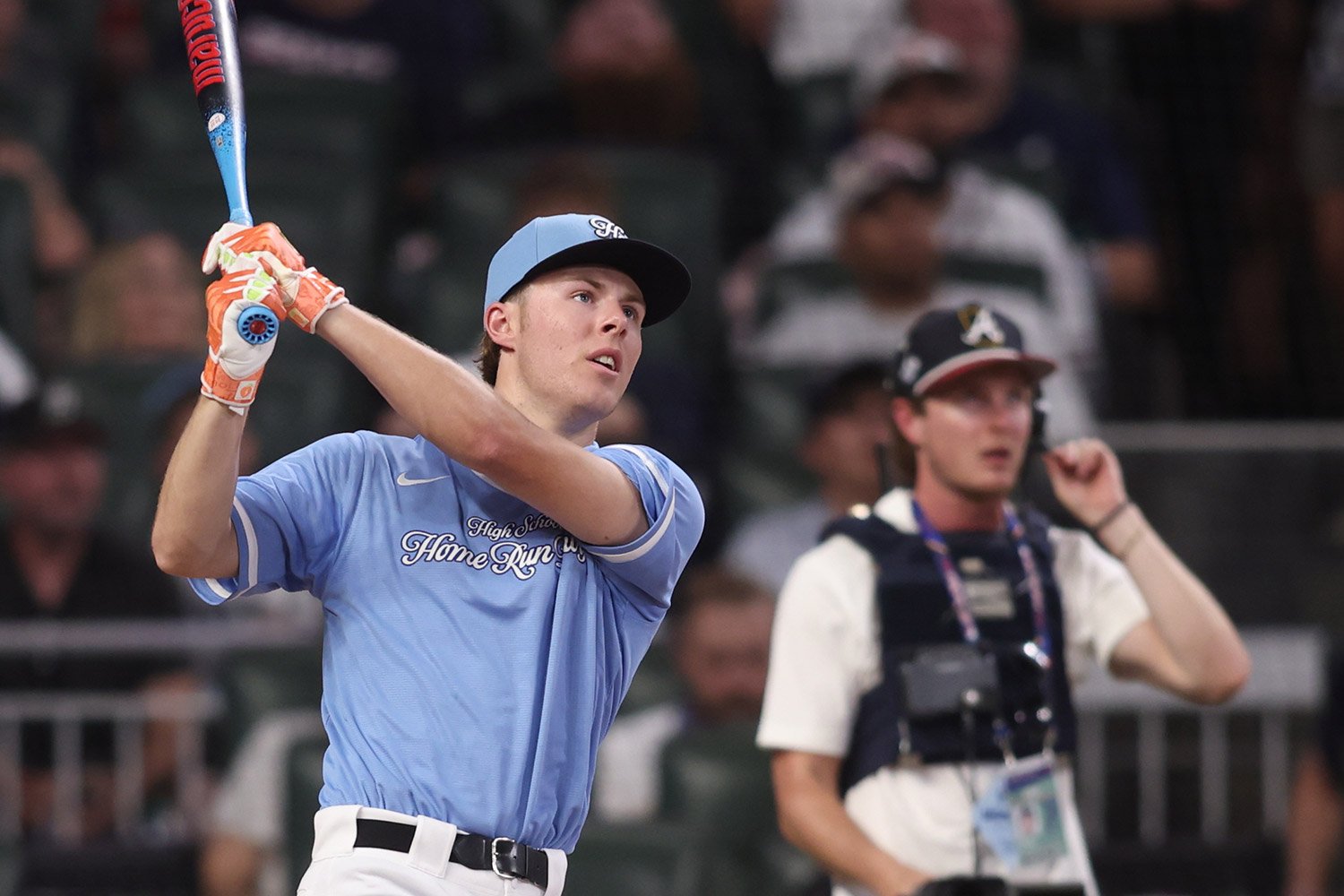 I take MLB mock draft rankings from major industry outlets like MLB Pipeline, ESPN, The Athletic (and many others) to form a consensus board, with a working hypothesis that using this approach will eliminate some of the noise and variance in MLB Draft mock rankings. This is the final mock draft board, locked in just before the 2026 MLB Draft on Saturday, July 11. Round 1: Grady Emerson, SS, Fort Worth Christian HS, TX Emerson is a UT commit and the number one prep prospect in the 2026 class. There might be a little prospect fatigue with Emerson by draft day, as he's been well known since he was 15, and there's less transparency around both data and benchmarks for the top prep prospects in the country. Make no mistake, though, Emerson is a prize in this draft. He might be the best overall hitter in it. It's a relaxed setup, a direct, short left-handed swing, and some adjustability that allows Emerson to keep his barrel in the zone as long as possible and take what he's given by a pitcher. Everything is good here, offensively. During the 2025 summer showcase circuit, Emerson showcased strong bat-to-ball skills, excellent swing decisions, and improved bat speed that indicates above-average power may be on the way. Emerson is a plus runner, to boot. Defensively, he has all the ingredients to stick at the position, with a strong glove, excellent throwing arm, and a good level of defensive polish for his age at the position. Emerson should be one of the first names off the board in July. Round 2: Brody Bumila, LHP, Bishop Feehan HS, MA Draft aficionados will be used to the concept of a cold-weather arm rising throughout the cycle. They don't all look like Brody Bumila, though. The 6'9 two-sport star committed to Texas has been making waves this spring. As you might expect from such a unique frame, there's unique stuff to match. Bumila relies on a fastball that has been as high as 101 mph. It sits in the high 90s, coming at hitters from a drop and drive delivery and a lower launch, with good ride at the top of the zone, making it a nightmare for prep hitters in MA. There's plenty of work to do on the secondary arsenal. Bumila relies most heavily on a changeup, thrown in the low 80s, but he'll mix in a slider and a curveball, too. This is a size and stuff over polish prep arm in what could be one of the higher risk, higher reward plays of the entire class. NOTE: Bumila is dealing with a UCL injury that became public on 07.06. It's unclear the extent of the injury, but it will certainly cloud his draft status. Competitive Balance Round B: Brett Renfrow, RHP, Virginia Tech Renfrow was previously a two-way player who began to focus solely on pitching when he got to campus at Virginia Tech. This is a class draft 'type', a college starter where stuff and production haven't quite met. I'd classify Renfrow as someone with a significant 'up arrow' this spring, though. It's a good frame, and he's about to surpass 70 innings for the third consecutive season. Renfrow has slowly ticked up his strikeout rate while reducing his walk rate, exactly what you want to see. In terms of stuff, the fastball is good. It sits at 94 mph and has been up to 97 mph, playing well at the top of the zone. There's a slider/cutter hybrid he throws in the upper 80s, a curveball with plenty of depth that sits in the low 80s, and a changeup with good horizontal action. Renfrow is a pitcher you can see making significant strides in a pro organization. There are plenty of starter traits here. In 73.2 innings in 2026, Renfrow managed a 4.67 FIP, while striking out 27.7% of hitters and walking just 7.9%. Round 3: Ethan Kleinschmidt, LHP, Oregon State Kleinschmidt was a JUCO lefty who transferred to Oregon State after his freshman year. Since then, he's been a mainstay in the Beavers' rotation, posting with consistency as a supplement to otherworldly righty Dax Whitney. Kleinschmidt has a long arm stroke from the left side of the plate. His fastball has been up to 95 mph with good tail, but typically sits in the 90-93 mph range. There's an above-average slider and changeup in the mix, too, along with the ability to throw strikes with consistency. Kleinschmidt has produced consistently strong results in two seasons for the Beavers. If he's able to add some more strength and get an uptick in velocity as a pro, he has starter traits. In 2026, he managed a 4.11 FIP, striking out 29.7% of hitters while walking 8.3% in 77 innings of work. Round 4: Savion Sims, RHP, Prestonwood Christian Academy HS, TX Sims has some of the best raw pitching clay in the class. He's a 6'8 right-handed pitcher out of Texas, committed to Oklahoma, who will be 19 on draft day. The lanky frame and long limbs produce ridiculous velocity with ease. Sims has been over 100 mph with his fastball, and it'll comfortably sit 96-97 mph. His secondary arsenal requires work; there's a two-plane slider he throws in the mid-80s and a high-80s changeup. Both of his secondary pitches have somewhat inconsistent shapes. There are delivery traits to like too, as Sims can get to 7 plus feet of extension down the mound and creates a steepness in his delivery after raising his arm slot. Sims will be a slow burn, and there's a ton of work to do on the arsenal, but this is uncommon arm talent, Curious to see the players around the Minnesota Twins' picks in the draft? Click on the button below to view the entire mock draft board!
 -
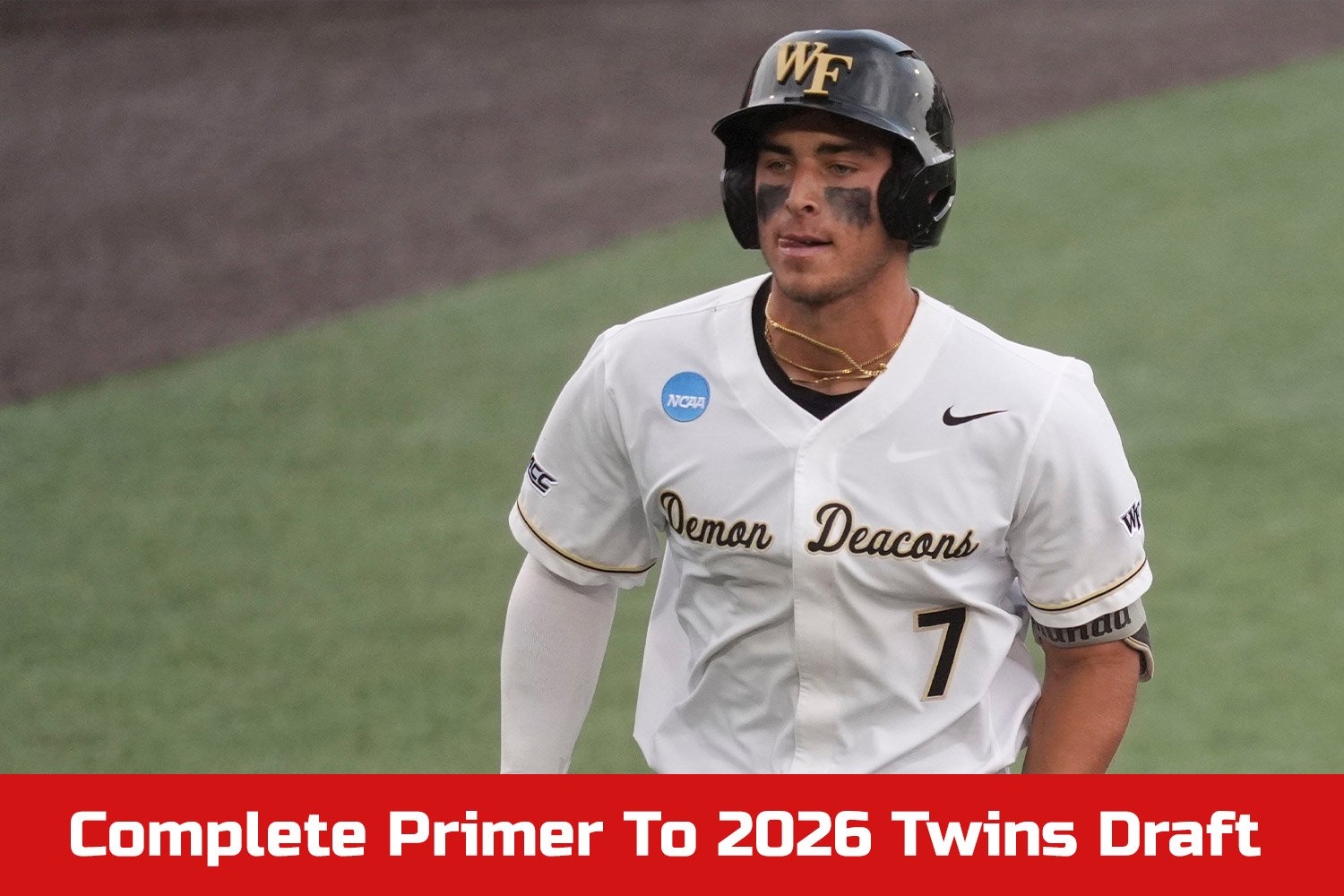 This guide is a comprehensive look at the 2026 MLB Draft with a focus on the Minnesota Twins. You’ll find a list of key dates for the draft cycle, including the release of bonus pools and pick values, the MLB Draft combine, and a breakdown of the draft itself. Additionally, you’ll find an overview of the draft combine and MLB draft weekend, in addition to links to other important draft resources like the consensus board. Twins 2025 MLB Draft Recap The Twins picked in the middle of the first round in 2025. After a run on up-the-middle prep bats, Minnesota opted for glove-first shortstop Marek Houston out of Wake Forest with the 16th overall pick. The Twins leaned into velocity in drafting college arms earlier than in previous years. They nabbed Alabama righty Riley Quick with their Comp A pick (36th), DBU flamethrower James Ellwanger in the third round, and ent-like righty Jason Reitz (6’11) in the fourth round. The Twins added some additional prep bats with upside, selecting towering, power-forward infielder Quenton Young (nephew of Delmon and Dmitri) in the second round (54th overall) and Bruin Agbayani out of Hawaii, a hit-first infielder, in the 6th round (179th). When Is The 2026 MLB Draft? April 1st 2026 - MLB announced draft bonus pools and pick values June 2026 - MLB Draft Combine (Chase Field, Arizona) July 11th - 12th: 2026 MLB Draft (Philadelphia, PA) July 11th - Rounds 1-4 (time TBA) July 12th - Round 5 through Round 20 (time TBA) 2026 MLB Draft Combine The draft combine is a newer event that started in the 2021 draft cycle. Held over a five-day period around a month before the draft itself, it serves as an opportunity for prospects to showcase their talents and boost their draft stock, while giving organizations better access to potential picks. In addition to medical examinations and educational programming, players have an opportunity to meet with teams in advance of the draft. Additionally, there are a number of televised workouts, featuring infield and outfield drills, batting practice for hitters, and bullpens for pitchers, all of which is tracked and underpinned by Statcast data. There is an incentive for players to attend and complete medicals, as prospects are guaranteed 75 percent of their draft slot bonus if they participate and complete medicals. How Many Rounds Are There In The MLB Draft? There is yet another design shift ahead of the 2026 draft cycle. It was shortened from a three-day event to a two-day event. Previously, day one included rounds 1 through the supplemental second round, day two included rounds 3 through 10, and day three included rounds 10 through 20. For the 2026 cycle, day one will be adjusted to include rounds one through four (~135 picks). The draft will conclude on day two with rounds five through twenty. MLB Draft Day One Explained The first day of the draft can be chaotic as there are additional rounds and picks in play beyond rounds one and two. The top of the draft (top 6 picks) is now determined by the draft lottery. Every non-playoff team is entered into the lottery, giving them the opportunity to move up in the draft order. Non-lottery eligible teams pick in the order they are eliminated from the postseason, with regular-season record-breaking ties. After the first round, prospect promotion incentive picks take place. If an eligible player wins Rookie of the Year, they earn their organization an extra pick immediately after the completion of the first round. Next come compensation picks, where teams who extend the qualifying offer to a player (who rejects it) earn an additional draft pick. Compensation pick positions depend on the contract size signed by the player rejecting the qualifying offer, in addition to the payroll of the organization receiving them (there are additional compensation picks after competitive balance round B and the fourth round). After any compensation picks, comes the competitive balance round A. Teams that have one of the ten smallest markets or ten smallest revenue pools receive an additional pick in round A or round B, on an annually rotating basis. The first day of the draft is capped by the second round, competitive balance round B, and the third round, which typically takes us through approximately 100 picks. MLB Draft Bonus Pool Allocations & Pick Values Prior to the draft, in April, MLB announces each team's bonus pool for the forthcoming draft cycle and pick values for every pick in the top ten rounds of the draft. Each pick in the first ten rounds of the draft is assigned a value, with the total of the slots for the picks each organization has in the top ten rounds comprising their total ‘bonus pool’. Organizations can sign a player to a deal greater than a slot or less than a slot, depending on their negotiations with the player, so it’s useful to think of the slots as ‘guidelines’ and little more. Organizations are allowed to spend up to 5% more than their total pool without incurring a penalty, a choice many teams take advantage of. The Twins and the Rockies are the only teams that have never spent any overage on their bonus pool. Any amount up to 5% over the pool is met with a 75% tax on the overage. If a team spends between 5-10% more than their pool, the penalty is 75% tax on the overage and loss of a future first-rounder. Any team that exceeds its bonus pool by more than 10% up to 15% pays 100% tax on the overage and will lose a first and second-round future pick. Any team that exceeds its bonus pool by more than 15% loses two future first-round picks in addition to paying 100% tax on the overage. Rounds 11-20 work differently from the first half of the draft. These picks do not come with an assigned slot value. Teams can spend up to $150,000 per pick without that spending coming out of their bonus pool. If they spend over that amount, any overage will be deducted from their bonus pool. For example, an 11th-round pick signing for $250,000 will result in $100,000 being subtracted from that team’s bonus pool. This is where some financial strategy comes into play. Often, teams will look to accrue some ‘savings’ from their bonus pool so they can spend over the maximum of $150,000 for a prospect in the second half of the draft. The first day of the draft is capped by the second round, competitive balance round B, and the third and fourth rounds, which typically takes us through approximately 135 picks. NOTE: Slot values increased by 2.5% from 2025 to 2026. View Twins Mock Draft Board Twins 2026 MLB Draft Bonus Pool Round Pick Slot Value Round 1 3rd $9,740,100 Round 2 43rd $2,333,200 Comp B 74th $1,138,600 Round 3 79th $1,052,700 Round 4 107th $733,100 Round 5 139th $536,900 Round 6 168th $406,800 Round 7 197th $319,600 Round 8 227th $253,300 Round 9 257th $215,400 Round 10 287th $199,900 Total Bonus Pool Allocation $16,929,600 (4th in MLB)
 -
Image courtesy of © Ken Ruinard / USA Today Network South Carolina / USA TODAY NETWORK via Imagn Images Each year, I endeavor to project the draft not by claiming to know every player who will be taken, but by standing on the shoulders of giants. I take MLB mock draft rankings from major industry outlets like MLB Pipeline, ESPN, The Athletic and many others to form a consensus board, with a working hypothesis that using this approach will eliminate some of the noise and variance in MLB Draft mock rankings. This year, that all feels especially important for the Twins, who pick high enough in the first round to make this draft a pivotal moment for the franchise. The Minnesota Twins’ first five picks are: Round 1: 3rd Overall Round 2: 43rd Overall Competitive Balance Round B: 74th Overall Round 3: 79th Overall Round 4: 107th Overall Here's a look at who might be available to them at each stop. Round 1: Vahn Lackey, C, Georgia Tech Every draft cycle seems to produce 2-3 first-round catchers, most of whom have warts offensively, defensively, or both. Georgia Tech's Vahn Lackey may be the most complete college catcher in recent seasons and has a case to make as college baseball’s most improved player in 2026. Lackey entered 2026 viewed as an excellent defensive catcher, with athleticism uncommon for the position, in addition to having strong bat-to-ball skills. He’s continued to look excellent behind the plate, with good receiving and blocking skills, an excellent arm and strong pop and transfer times. He has all the ingredients to be a plus defensive catcher. Offensively, his power has taken a step forward. After hitting 6 home runs in 60 games in 2025, he managed 20 in 61 games in 2026, with more walks than strikeouts, adding a high on-base floor to his profile. Lackey ended 2026 hitting .397/.519/.772, with 39 extra-base hits, a 17.7 BB%, a 13.4 K%, and 15 steals (94%). Simply put, he’s one of the most complete profiles in this draft class. Round 2: Aiden Ruiz, SS, The Stony Brook HS (NY) Ruiz is a diminutive, switch-hitting shortstop currently committed to Vanderbilt. He'll be a fascinating follow on draft day. He'll be 19 and is listed at 5-foot-10 and 170 pounds with limited power projection, so he'll test some of our assumptions about what prospect profiles and traits organizations will and won't lean into. Ruiz is arguably the best defensive shortstop in the entire class. He has a quick first step, soft hands, and a big arm. He can make any play from any spot in the infield, it's plus defense at one of the most important positions on the field. Offensively, Ruiz is a switch hitter, with a contact-oriented approach. It's exceptional bat-to-ball skills from both sides of the plate. Ruiz will expand the zone a little, at times, so there's some risk his quality of contact is diminished unless he tightens his approach. There's never going to be a ton of power, but Ruiz is an above-average runner and should be a pesky threat on the basepaths. The defense and contact skills headline this profile, it's a combination that can rack up plenty of value for a drafting organization. Competitive Balance Round B: Brett Renfrow, RHP, Virginia Tech Renfrow was previously a two-way player who began to focus solely on pitching when he got to campus at Virginia Tech. This is a classic draft 'type', a college starter where stuff and ingredients don't line up neatly with outcomes. I'd classify Renfrow as someone with a significant 'up arrow' this spring, though. It's a good frame, and he's about to surpass 70 innings for the third consecutive season. Renfrow has slowly ticked up his strikeout rate while reducing his walk rate—exactly what you want to see. In terms of stuff, the fastball is good. It sits 94 mph and has been up to 97 mph, playing well at the top of the zone. There's a slider/cutter hybrid he throws in the upper 80s, a curveball with plenty of depth that sits in the low 80s, and a changeup with good horizontal action. Renfrow is a pitcher you can see making significant strides in a pro organization. There are plenty of starter traits here. In 73.2 innings in 2026, Renfrow managed a 4.67 FIP, while striking out 27.7% of hitters and walking just 7.9%. Round 3: Beau Peterson, 3B, Mill Valley HS (KS) Peterson is one of the more physically imposing frames on the prep side in 2026. The Kansas prepster is committed to Texas and has played third base, corner outfield, catcher and pitcher in recent years. Peterson has a left-handed swing with good bat speed. He has easy raw power, while currently getting into more line drive power in games. When he learns to add loft with more consistency, he'll be a 25-home run threat as a pro hitter. He has good bat-to-ball skills, too, and controls the strike zone well, giving him a well-rounded offensive profile. Peterson projects to be an average runner (at best) as he continues to fill out. Despite the lack of foot speed, the glove will play just fine at third base. He's been up to 95 mph on the mound, so there's plenty of arm for the hot corner or a corner outfield spot. Curious to see the players around the Minnesota Twins picks in the draft? Click on the button below to view the entire mock draft board! View full article
-
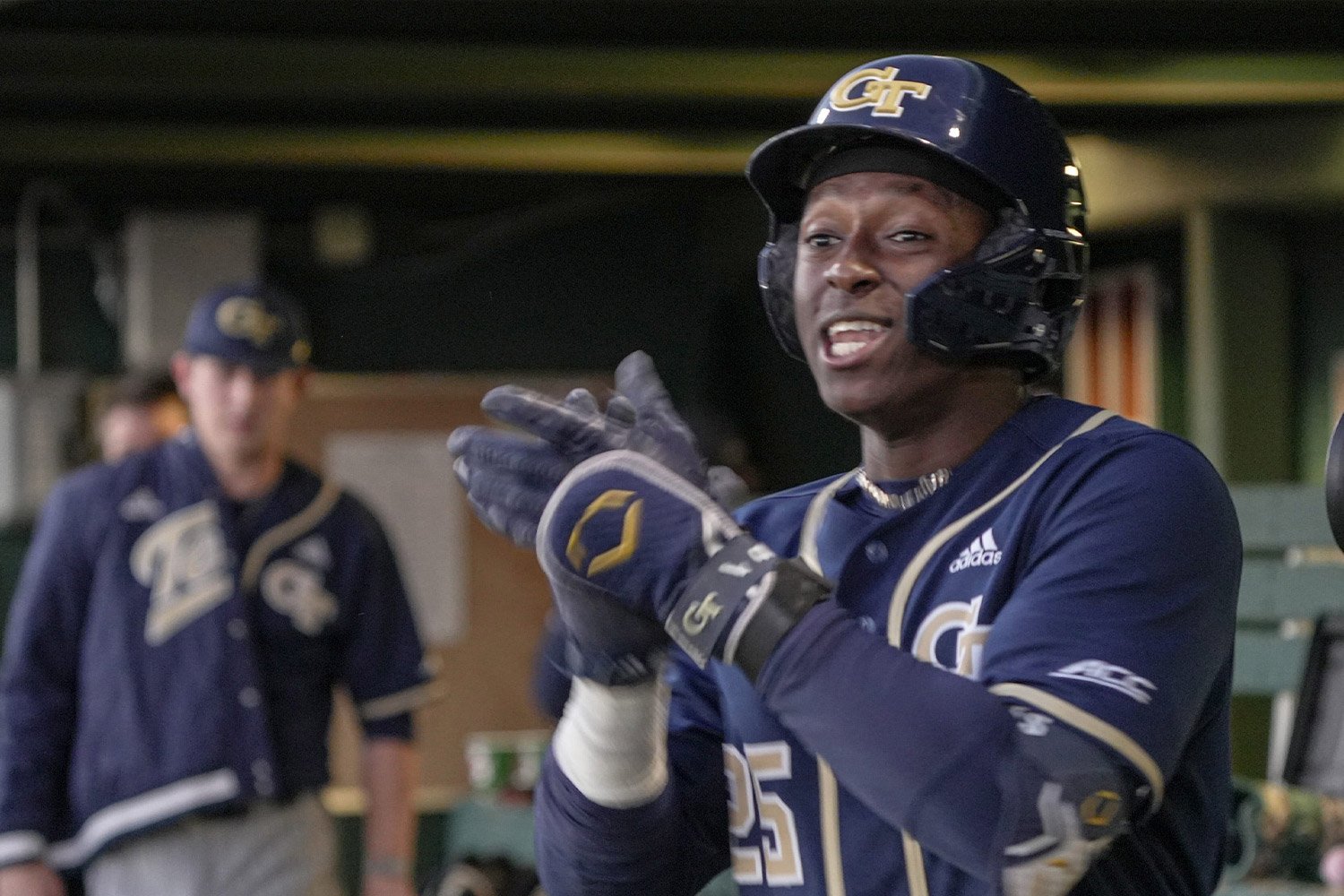 Each year, I endeavor to project the draft not by claiming to know every player who will be taken, but by standing on the shoulders of giants. I take MLB mock draft rankings from major industry outlets like MLB Pipeline, ESPN, The Athletic and many others to form a consensus board, with a working hypothesis that using this approach will eliminate some of the noise and variance in MLB Draft mock rankings. This year, that all feels especially important for the Twins, who pick high enough in the first round to make this draft a pivotal moment for the franchise. The Minnesota Twins’ first five picks are: Round 1: 3rd Overall Round 2: 43rd Overall Competitive Balance Round B: 74th Overall Round 3: 79th Overall Round 4: 107th Overall Here's a look at who might be available to them at each stop. Round 1: Vahn Lackey, C, Georgia Tech Every draft cycle seems to produce 2-3 first-round catchers, most of whom have warts offensively, defensively, or both. Georgia Tech's Vahn Lackey may be the most complete college catcher in recent seasons and has a case to make as college baseball’s most improved player in 2026. Lackey entered 2026 viewed as an excellent defensive catcher, with athleticism uncommon for the position, in addition to having strong bat-to-ball skills. He’s continued to look excellent behind the plate, with good receiving and blocking skills, an excellent arm and strong pop and transfer times. He has all the ingredients to be a plus defensive catcher. Offensively, his power has taken a step forward. After hitting 6 home runs in 60 games in 2025, he managed 20 in 61 games in 2026, with more walks than strikeouts, adding a high on-base floor to his profile. Lackey ended 2026 hitting .397/.519/.772, with 39 extra-base hits, a 17.7 BB%, a 13.4 K%, and 15 steals (94%). Simply put, he’s one of the most complete profiles in this draft class. Round 2: Aiden Ruiz, SS, The Stony Brook HS (NY) Ruiz is a diminutive, switch-hitting shortstop currently committed to Vanderbilt. He'll be a fascinating follow on draft day. He'll be 19 and is listed at 5-foot-10 and 170 pounds with limited power projection, so he'll test some of our assumptions about what prospect profiles and traits organizations will and won't lean into. Ruiz is arguably the best defensive shortstop in the entire class. He has a quick first step, soft hands, and a big arm. He can make any play from any spot in the infield, it's plus defense at one of the most important positions on the field. Offensively, Ruiz is a switch hitter, with a contact-oriented approach. It's exceptional bat-to-ball skills from both sides of the plate. Ruiz will expand the zone a little, at times, so there's some risk his quality of contact is diminished unless he tightens his approach. There's never going to be a ton of power, but Ruiz is an above-average runner and should be a pesky threat on the basepaths. The defense and contact skills headline this profile, it's a combination that can rack up plenty of value for a drafting organization. Competitive Balance Round B: Brett Renfrow, RHP, Virginia Tech Renfrow was previously a two-way player who began to focus solely on pitching when he got to campus at Virginia Tech. This is a classic draft 'type', a college starter where stuff and ingredients don't line up neatly with outcomes. I'd classify Renfrow as someone with a significant 'up arrow' this spring, though. It's a good frame, and he's about to surpass 70 innings for the third consecutive season. Renfrow has slowly ticked up his strikeout rate while reducing his walk rate—exactly what you want to see. In terms of stuff, the fastball is good. It sits 94 mph and has been up to 97 mph, playing well at the top of the zone. There's a slider/cutter hybrid he throws in the upper 80s, a curveball with plenty of depth that sits in the low 80s, and a changeup with good horizontal action. Renfrow is a pitcher you can see making significant strides in a pro organization. There are plenty of starter traits here. In 73.2 innings in 2026, Renfrow managed a 4.67 FIP, while striking out 27.7% of hitters and walking just 7.9%. Round 3: Beau Peterson, 3B, Mill Valley HS (KS) Peterson is one of the more physically imposing frames on the prep side in 2026. The Kansas prepster is committed to Texas and has played third base, corner outfield, catcher and pitcher in recent years. Peterson has a left-handed swing with good bat speed. He has easy raw power, while currently getting into more line drive power in games. When he learns to add loft with more consistency, he'll be a 25-home run threat as a pro hitter. He has good bat-to-ball skills, too, and controls the strike zone well, giving him a well-rounded offensive profile. Peterson projects to be an average runner (at best) as he continues to fill out. Despite the lack of foot speed, the glove will play just fine at third base. He's been up to 95 mph on the mound, so there's plenty of arm for the hot corner or a corner outfield spot. Curious to see the players around the Minnesota Twins picks in the draft? Click on the button below to view the entire mock draft board!
 -
I'm with ya. I still think long term the prognosis for the rotation is pretty good. Ryan (for now), Pablo next year, Taj, Abel, Zebby all good options. Flora is probably the only dark horse candidate I can talk myself into, but I'd rank the top arms from the previous two years above him so I'd rather just stick with whoever is there of Roch, Emerson, or Lackey.
- 26 replies
-
- 7
-
-
-
- jackson flora
- drew burress
- (and 1 more)
-
Image courtesy of © Matt Bush/Special to the Clarion Ledger / USA TODAY NETWORK via Imagn Images Over the last few weeks at Twins Daily, we’ve spent time digging into the top three players in the 2026 MLB Draft. After breaking down Georgia Tech catcher Vahn Lackey, we detailed top overall prospect Roch Cholowsky and Grady Emerson, the best high school prospect in the class. As we approach Day One, it’s easier to characterize the class. It’s top-heavy in terms of impact talent, with a clear, consensus top three. There’s plenty of depth in the 30-100 range, too. In short, picking third in this class is a great spot to be. We also know that the MLB Draft yields plenty of surprises. Should the Twins deviate from a consensus top-three player to move some money to their other picks (or just because their reports buck the consensus), here are some of their primary options. Jackson Flora, RHP, UC Santa Barbara Flora is the best pitcher (college or high school) entering draft weekend. He’s an arm who marries performance and projection, although I’d rank him behind the top college arm from 2025 (Kade Anderson) and the top college arm from 2024 (Chase Burns). Flora pitched behind second overall pick Tyler Bremner in 2025, and returned a year later to headline the Gauchos' rotation. He has an ideal frame for a starter, at 6-foot-5 and 205 pounds, with some additional strength still to be added. After pitching primarily as a reliever as a freshman, Flora took on a starting role as a sophomore and thrived, managing a 3.15 FIP in 75 innings while striking out close to 28% of the hitters he faced. The stuff is loud. Flora relies on a fastball, slider, changeup combination, though he does access a cutter and curveball occasionally, too. It's a high-spin heater (up to 2,600 RPM), with about 17 inches of vert, topping out at 100 MPH (averaging 98) from a lowish three-quarter angle. Flora throws two iterations of his slider: a harder version around 84-86 MPH, and a sweeper that generates 17-19 inches of horizontal movement. He incorporated a kick-change in 2026, which sits 86-90 and generated huge whiff rates. To add to this intriguing arsenal, Flora has been an excellent strike-thrower in college, walking just 8% of hitters in 2026. Flora separated himself as SP1 in the 2026 cycle. There's room for development and refinement of his pitch shapes and arsenal, but this is front-of-the-rotation arm talent and upside. In general, drafting a pitcher in the top three gives me pause. An organization has to be incredibly convicted on their evaluation and the level of talent. I’m not sure Flora established the level of dominance of some of his counterparts from recent drafts—the level that would give me enough confidence to pull the trigger at three. Drew Burress, OF, Georgia Tech Burress has been the most consistently productive college hitter since he set foot on campus at Georgia Tech. There's no arguing the track record, but there's a limited catalogue of right-handed impact bats in the big leagues who stood 5-foot-9. Burress has a ton of moving pieces in his swing that can get a little convoluted and may be problematic against better pitching in professional baseball. It's good (not outstanding) bat-to-ball skills, with tremendous quality of contact that has resulted in 44 home runs in his first two collegiate seasons. Burress rarely expands the zone and walked significantly more than he struck out in his first two seasons in Atlanta. He also has strong supplementary tools. A plus arm and above-average speed and defense give him a chance to stick in center field, at least in the infancy of his pro career. After a slow start, Burress finished 2026 with a .358/.473/.657 line with 16 home runs, a 15.8 BB%, a 13.8 K%, and a 143 wRC+. He will get a ton of credit in draft models for his performance in his first two collegiate seasons, but there are too many questions for me to select him in the top three. Jacob Lombard, SS, Gulliver Prep HS, FL Jacob Lombard is the younger brother of George Lombard, a 2023 Yankees draftee and consensus top-100 prospect in his own right. Lombard the younger has some of the loudest tools in the entire draft class, but qualifies as a high-risk, high-reward prep option for teams picking in the first round. Lombard hits from the right-hand side of the plate. There's plus bat speed and easy raw power to all fields. The biggest questions in his offensive profile surround his hit tool, with concerns about the levels of swing-and-miss in the 2025 summer showcase circuit. He's incredibly athletically gifted. He plays smooth shortstop, has a solid arm and double-plus speed. This might be the highest-upside play in the entire draft class. He could be a 30-30 type player if he can hit enough after turning pro. The Field EJ Booth is a compact, twitchy, athletic outfielder committed to Vanderbilt. It's a bit of an unconventional swing from the left side that can look better in batting practice than in games, but it's underpinned by serious bat speed and an emerging ability to do damage on contact. All told, Booth has a chance to have above-average hit and power tools. He's a nightmare on the base paths with 70-grade speed and is one of the fastest runners of the class. As one might imagine, this supports excellent range in the outfield. While his arm is fringe-average, he should have little challenge tracking down almost anything and could settle into any outfield spot defensively. Booth will turn 18 a few days before the draft. Tyler Bell was a supplemental second-rounder in 2024 who was selected by the Rays, but he found his way to campus in Lexington. Two years later, he's a draft-eligible sophomore and top-20 draft prospect ahead of the 2026 cycle. Bell is a switch-hitter who has solid, clean swings from both sides of the plate. As a freshman, he did a little bit of everything well, capping his first collegiate season with 29 extra-base hits and a .907 OPS. If he can elevate the ball with more consistency, it's a 55-hit, 50-power combination potential as a pro. He has all the ingredients to be a solid pro shortstop, with a good first step, an above-average arm, and a good glove. While Bell missed some time from the outset of the 2026 season, he finished strong, hitting .343/.510/.608 with 9 home runs (19 XBH), a 15.5 BB%, an 18.6 K%, and a 152 wRC+ in 41 games. Rumors persist that Bell could be an under-slot top-5 selection. That makes it worth mentioning him in this group, as the Twins weigh all of their options. View full article
-
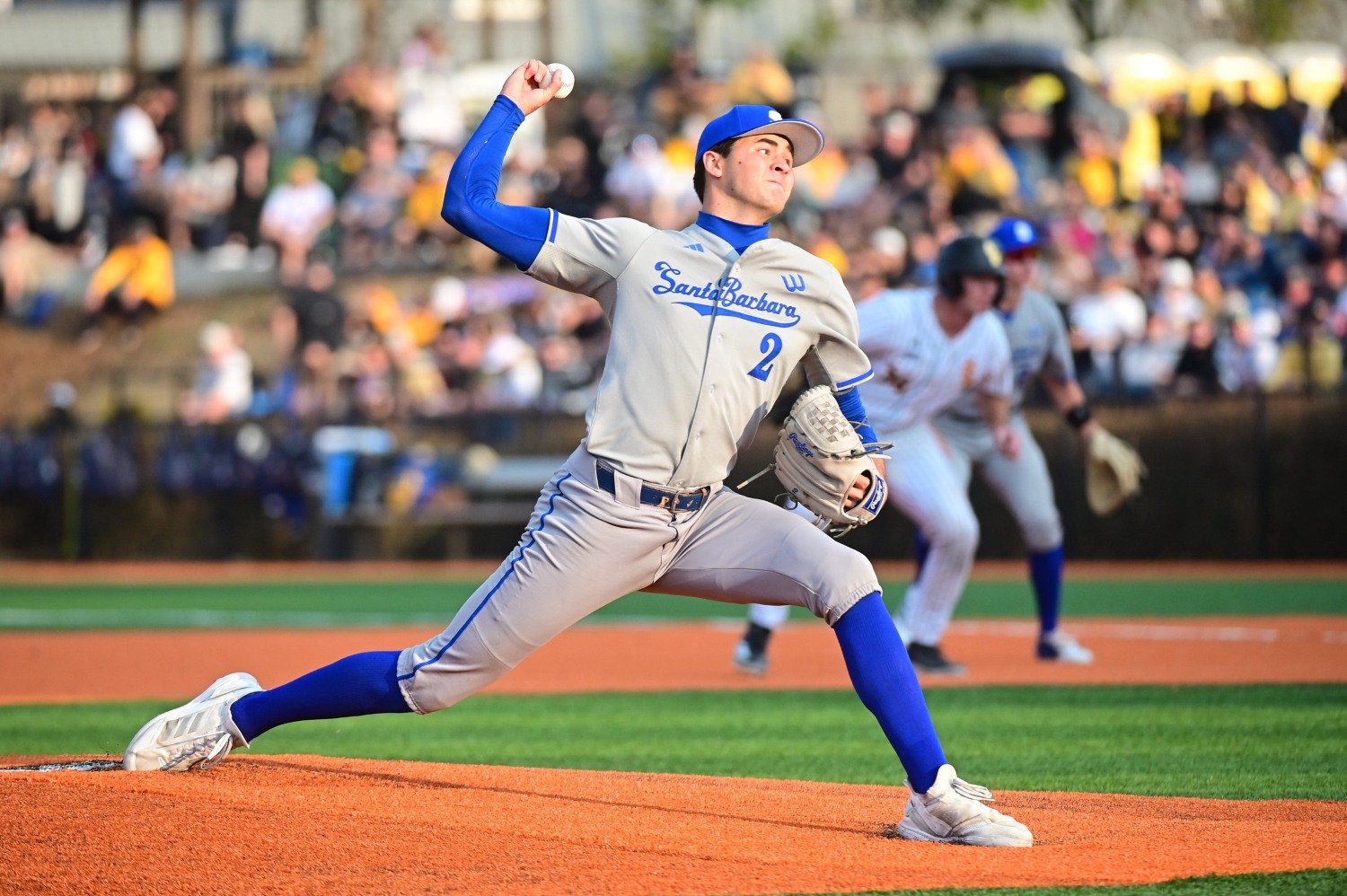 Over the last few weeks at Twins Daily, we’ve spent time digging into the top three players in the 2026 MLB Draft. After breaking down Georgia Tech catcher Vahn Lackey, we detailed top overall prospect Roch Cholowsky and Grady Emerson, the best high school prospect in the class. As we approach Day One, it’s easier to characterize the class. It’s top-heavy in terms of impact talent, with a clear, consensus top three. There’s plenty of depth in the 30-100 range, too. In short, picking third in this class is a great spot to be. We also know that the MLB Draft yields plenty of surprises. Should the Twins deviate from a consensus top-three player to move some money to their other picks (or just because their reports buck the consensus), here are some of their primary options. Jackson Flora, RHP, UC Santa Barbara Flora is the best pitcher (college or high school) entering draft weekend. He’s an arm who marries performance and projection, although I’d rank him behind the top college arm from 2025 (Kade Anderson) and the top college arm from 2024 (Chase Burns). Flora pitched behind second overall pick Tyler Bremner in 2025, and returned a year later to headline the Gauchos' rotation. He has an ideal frame for a starter, at 6-foot-5 and 205 pounds, with some additional strength still to be added. After pitching primarily as a reliever as a freshman, Flora took on a starting role as a sophomore and thrived, managing a 3.15 FIP in 75 innings while striking out close to 28% of the hitters he faced. The stuff is loud. Flora relies on a fastball, slider, changeup combination, though he does access a cutter and curveball occasionally, too. It's a high-spin heater (up to 2,600 RPM), with about 17 inches of vert, topping out at 100 MPH (averaging 98) from a lowish three-quarter angle. Flora throws two iterations of his slider: a harder version around 84-86 MPH, and a sweeper that generates 17-19 inches of horizontal movement. He incorporated a kick-change in 2026, which sits 86-90 and generated huge whiff rates. To add to this intriguing arsenal, Flora has been an excellent strike-thrower in college, walking just 8% of hitters in 2026. Flora separated himself as SP1 in the 2026 cycle. There's room for development and refinement of his pitch shapes and arsenal, but this is front-of-the-rotation arm talent and upside. In general, drafting a pitcher in the top three gives me pause. An organization has to be incredibly convicted on their evaluation and the level of talent. I’m not sure Flora established the level of dominance of some of his counterparts from recent drafts—the level that would give me enough confidence to pull the trigger at three. Drew Burress, OF, Georgia Tech Burress has been the most consistently productive college hitter since he set foot on campus at Georgia Tech. There's no arguing the track record, but there's a limited catalogue of right-handed impact bats in the big leagues who stood 5-foot-9. Burress has a ton of moving pieces in his swing that can get a little convoluted and may be problematic against better pitching in professional baseball. It's good (not outstanding) bat-to-ball skills, with tremendous quality of contact that has resulted in 44 home runs in his first two collegiate seasons. Burress rarely expands the zone and walked significantly more than he struck out in his first two seasons in Atlanta. He also has strong supplementary tools. A plus arm and above-average speed and defense give him a chance to stick in center field, at least in the infancy of his pro career. After a slow start, Burress finished 2026 with a .358/.473/.657 line with 16 home runs, a 15.8 BB%, a 13.8 K%, and a 143 wRC+. He will get a ton of credit in draft models for his performance in his first two collegiate seasons, but there are too many questions for me to select him in the top three. Jacob Lombard, SS, Gulliver Prep HS, FL Jacob Lombard is the younger brother of George Lombard, a 2023 Yankees draftee and consensus top-100 prospect in his own right. Lombard the younger has some of the loudest tools in the entire draft class, but qualifies as a high-risk, high-reward prep option for teams picking in the first round. Lombard hits from the right-hand side of the plate. There's plus bat speed and easy raw power to all fields. The biggest questions in his offensive profile surround his hit tool, with concerns about the levels of swing-and-miss in the 2025 summer showcase circuit. He's incredibly athletically gifted. He plays smooth shortstop, has a solid arm and double-plus speed. This might be the highest-upside play in the entire draft class. He could be a 30-30 type player if he can hit enough after turning pro. The Field EJ Booth is a compact, twitchy, athletic outfielder committed to Vanderbilt. It's a bit of an unconventional swing from the left side that can look better in batting practice than in games, but it's underpinned by serious bat speed and an emerging ability to do damage on contact. All told, Booth has a chance to have above-average hit and power tools. He's a nightmare on the base paths with 70-grade speed and is one of the fastest runners of the class. As one might imagine, this supports excellent range in the outfield. While his arm is fringe-average, he should have little challenge tracking down almost anything and could settle into any outfield spot defensively. Booth will turn 18 a few days before the draft. Tyler Bell was a supplemental second-rounder in 2024 who was selected by the Rays, but he found his way to campus in Lexington. Two years later, he's a draft-eligible sophomore and top-20 draft prospect ahead of the 2026 cycle. Bell is a switch-hitter who has solid, clean swings from both sides of the plate. As a freshman, he did a little bit of everything well, capping his first collegiate season with 29 extra-base hits and a .907 OPS. If he can elevate the ball with more consistency, it's a 55-hit, 50-power combination potential as a pro. He has all the ingredients to be a solid pro shortstop, with a good first step, an above-average arm, and a good glove. While Bell missed some time from the outset of the 2026 season, he finished strong, hitting .343/.510/.608 with 9 home runs (19 XBH), a 15.5 BB%, an 18.6 K%, and a 152 wRC+ in 41 games. Rumors persist that Bell could be an under-slot top-5 selection. That makes it worth mentioning him in this group, as the Twins weigh all of their options.
- 26 comments
-
- 7
-
-
- jackson flora
- drew burress
- (and 1 more)
-
That is a great question and something I wondered about too. Maybe. It makes so much sense.
-
Image courtesy of © Brett Davis-Imagn Images This week at Twins Daily, we’re continuing our series of deep dives into candidates for the third overall pick in the 2026 draft. After examining Georgia Tech catcher Vahn Lackey and UCLA shortstop Roch Chowlowsky, we're turning our attention to the top high school player in the class. It’s a testament to Grady Emerson’s skills and tools as a baseball player that he hasn’t suffered from more prospect fatigue just three weeks away from being drafted. He’s been famous (in amateur baseball circles) since he was 15. Emerson has gone wire-to-wire as the consensus top high school player in the 2026 class, only behind Roch Cholowsky in terms of overall draft stock. I think you may even see his name atop industry rankings before the draft kicks off on July 11. Let’s dig into his profile. Bio and Background Emerson grew up in Argyle, Texas, around 40 miles northwest of Dallas. The University of Texas commit has a lengthy track record in amateur baseball. He was the first player to be selected to four consecutive US National Teams, rotating through every infield position. Additionally, he was named 2026 Gatorade National Player of the Year. It’s fair to say he’s got an impressive pedigree. Emerson played the majority of his high school career at Argyle High School before transferring as a rising senior to Fort Worth Christian School, a smaller, private school (playing inferior competition) under the tutelage of former big-leaguer Rusty Greer. According to MaxPreps, Emerson hit .532/.648/.1.013 in 2026 with seven home runs, nine doubles, and four triples in 108 plate appearances. Emerson had a strong 2025 summer circuit, managing an .873 OPS in 143 plate appearances, while showing a combination of excellent contact skills and bat speed. Scouting Report Emerson hits from the left side of the plate. He sets up in an open stance, with a high hand set that will sit around shoulder height. It’s a quiet operation in general, with little additional or wasted movement loading his hands. His path to the ball is direct, giving the barrel of the bat plenty of time on plane. Emerson’s offensive profile starts with an excellent approach. He makes strong swing decisions, rarely expanding the zone at this early stage of his career. That, combined with his excellent bat-to-ball skills, makes him a brutal at-bat for pitchers. While Emerson’s profile is hit over power for now, that’s selling his bat speed short, for me. It’s likely 20-25 home run power as a pro. This aspect of his game is a little overlooked, as he rarely (if ever) sells out for power in games. Instead, he sprays line drives all over the field. Defensively, Emerson is a strong bet to stick at shortstop. He has a plus arm and can make all the throws the position requires. Additionally, there’s a good internal clock, and he looks equally comfortable ranging to either side of his body or charging the ball, maintaining a level of fluidity and body control that bodes well for his chances of sticking at short. Emerson has posted plenty of plus run times, too. He’s either a 60 runner or a 55 in terms of speed, depending on how you think his frame will develop in the coming years. Shifting Dynamics at the Top of the Draft How should we think of Emerson as part of the consensus top three in this draft? How does he stack up against Roch Cholowsky and Vahn Lackey? What do we know about the draft tendencies of the teams picking above the Twins? Emerson has been the number two player in this draft since day one. He’s never really been under threat from another prep player. He’s also closing the gap at the top of the board, getting closer to Cholowsky. The most logical comparison to make here is between Emerson and Cholowsky, as they play the same position. The consensus in the industry seems to be that Emerson is a better player at the same stage than Cholowsky (who was ranked 35th on our board as a high schooler ahead of the 2023 draft). If you’re the White Sox, do you take a risk on Emerson’s upside, or go with the greater certainty Cholowsky offers? It’s notable that both the White Sox and Twins had interest in drafting Cholowsky out of high school. It’s also worth considering how the Rays factor in at the top of the first round. The Rays took prep players with four of their first five selections in 2025, and three of their first four selections in 2024. In general, they seem to favor left-handed-hitting high school bats (Theo Gillen, Nathan Flewelling, Cooper Flemming, to name a few) and have a strong track record of developing them. Given industry speculation around the White Sox' consideration of Emerson and the Rays' recent track record, it feels less likely Emerson will be on the board at three than it was a month ago. The Twins have done (and will continue to do) extensive work on a number of players under consideration at three. In our final installment of this series, we’ll consider some dark horse candidates. For what it’s worth, I remain confident it’ll be one of Cholowsky, Emerson, or Lackey. View full article
