



Jamie Cameron
-
Posts
1,349 -
Joined
-
Last visited
-
Days Won
4
Content Type
Profiles
News
Minnesota Twins Videos
2026 Minnesota Twins Top Prospects Ranking
2022 Minnesota Twins Draft Picks
Minnesota Twins Free Agent & Trade Rumors, Notes, & Tidbits
Guides & Resources
2023 Minnesota Twins Draft Picks
The Minnesota Twins Players Project
2024 Minnesota Twins Draft Picks
2025 Minnesota Twins Draft Pick Tracker
2026 Minnesota Twins Draft Tracker: Picks & Bonuses
Forums
Blogs
Events
Store
Downloads
Gallery
Everything posted by Jamie Cameron
-
That is a great question and something I wondered about too. Maybe. It makes so much sense.
-
Image courtesy of © Brett Davis-Imagn Images This week at Twins Daily, we’re continuing our series of deep dives into candidates for the third overall pick in the 2026 draft. After examining Georgia Tech catcher Vahn Lackey and UCLA shortstop Roch Chowlowsky, we're turning our attention to the top high school player in the class. It’s a testament to Grady Emerson’s skills and tools as a baseball player that he hasn’t suffered from more prospect fatigue just three weeks away from being drafted. He’s been famous (in amateur baseball circles) since he was 15. Emerson has gone wire-to-wire as the consensus top high school player in the 2026 class, only behind Roch Cholowsky in terms of overall draft stock. I think you may even see his name atop industry rankings before the draft kicks off on July 11. Let’s dig into his profile. Bio and Background Emerson grew up in Argyle, Texas, around 40 miles northwest of Dallas. The University of Texas commit has a lengthy track record in amateur baseball. He was the first player to be selected to four consecutive US National Teams, rotating through every infield position. Additionally, he was named 2026 Gatorade National Player of the Year. It’s fair to say he’s got an impressive pedigree. Emerson played the majority of his high school career at Argyle High School before transferring as a rising senior to Fort Worth Christian School, a smaller, private school (playing inferior competition) under the tutelage of former big-leaguer Rusty Greer. According to MaxPreps, Emerson hit .532/.648/.1.013 in 2026 with seven home runs, nine doubles, and four triples in 108 plate appearances. Emerson had a strong 2025 summer circuit, managing an .873 OPS in 143 plate appearances, while showing a combination of excellent contact skills and bat speed. Scouting Report Emerson hits from the left side of the plate. He sets up in an open stance, with a high hand set that will sit around shoulder height. It’s a quiet operation in general, with little additional or wasted movement loading his hands. His path to the ball is direct, giving the barrel of the bat plenty of time on plane. Emerson’s offensive profile starts with an excellent approach. He makes strong swing decisions, rarely expanding the zone at this early stage of his career. That, combined with his excellent bat-to-ball skills, makes him a brutal at-bat for pitchers. While Emerson’s profile is hit over power for now, that’s selling his bat speed short, for me. It’s likely 20-25 home run power as a pro. This aspect of his game is a little overlooked, as he rarely (if ever) sells out for power in games. Instead, he sprays line drives all over the field. Defensively, Emerson is a strong bet to stick at shortstop. He has a plus arm and can make all the throws the position requires. Additionally, there’s a good internal clock, and he looks equally comfortable ranging to either side of his body or charging the ball, maintaining a level of fluidity and body control that bodes well for his chances of sticking at short. Emerson has posted plenty of plus run times, too. He’s either a 60 runner or a 55 in terms of speed, depending on how you think his frame will develop in the coming years. Shifting Dynamics at the Top of the Draft How should we think of Emerson as part of the consensus top three in this draft? How does he stack up against Roch Cholowsky and Vahn Lackey? What do we know about the draft tendencies of the teams picking above the Twins? Emerson has been the number two player in this draft since day one. He’s never really been under threat from another prep player. He’s also closing the gap at the top of the board, getting closer to Cholowsky. The most logical comparison to make here is between Emerson and Cholowsky, as they play the same position. The consensus in the industry seems to be that Emerson is a better player at the same stage than Cholowsky (who was ranked 35th on our board as a high schooler ahead of the 2023 draft). If you’re the White Sox, do you take a risk on Emerson’s upside, or go with the greater certainty Cholowsky offers? It’s notable that both the White Sox and Twins had interest in drafting Cholowsky out of high school. It’s also worth considering how the Rays factor in at the top of the first round. The Rays took prep players with four of their first five selections in 2025, and three of their first four selections in 2024. In general, they seem to favor left-handed-hitting high school bats (Theo Gillen, Nathan Flewelling, Cooper Flemming, to name a few) and have a strong track record of developing them. Given industry speculation around the White Sox' consideration of Emerson and the Rays' recent track record, it feels less likely Emerson will be on the board at three than it was a month ago. The Twins have done (and will continue to do) extensive work on a number of players under consideration at three. In our final installment of this series, we’ll consider some dark horse candidates. For what it’s worth, I remain confident it’ll be one of Cholowsky, Emerson, or Lackey. View full article
-
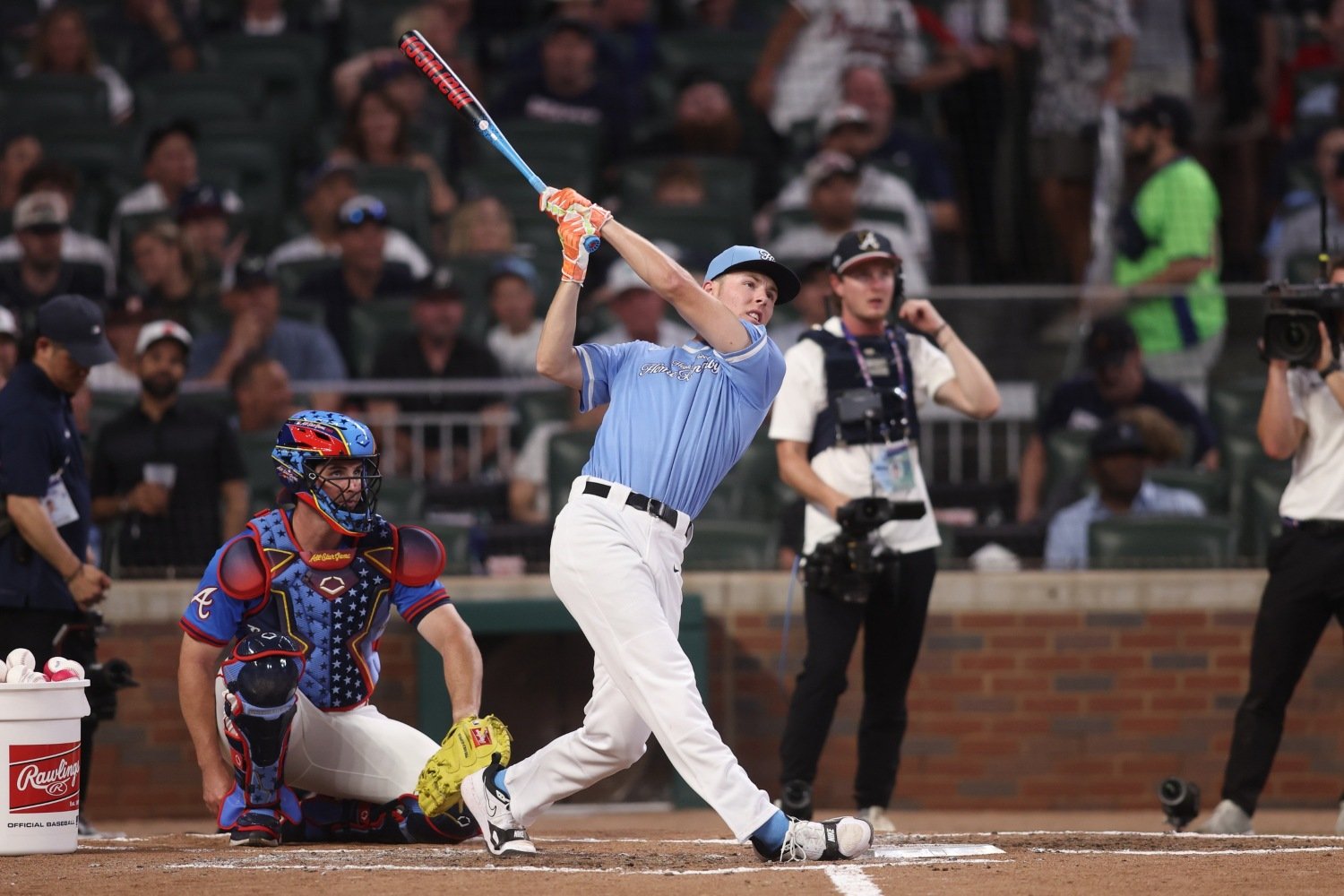 This week at Twins Daily, we’re continuing our series of deep dives into candidates for the third overall pick in the 2026 draft. After examining Georgia Tech catcher Vahn Lackey and UCLA shortstop Roch Chowlowsky, we're turning our attention to the top high school player in the class. It’s a testament to Grady Emerson’s skills and tools as a baseball player that he hasn’t suffered from more prospect fatigue just three weeks away from being drafted. He’s been famous (in amateur baseball circles) since he was 15. Emerson has gone wire-to-wire as the consensus top high school player in the 2026 class, only behind Roch Cholowsky in terms of overall draft stock. I think you may even see his name atop industry rankings before the draft kicks off on July 11. Let’s dig into his profile. Bio and Background Emerson grew up in Argyle, Texas, around 40 miles northwest of Dallas. The University of Texas commit has a lengthy track record in amateur baseball. He was the first player to be selected to four consecutive US National Teams, rotating through every infield position. Additionally, he was named 2026 Gatorade National Player of the Year. It’s fair to say he’s got an impressive pedigree. Emerson played the majority of his high school career at Argyle High School before transferring as a rising senior to Fort Worth Christian School, a smaller, private school (playing inferior competition) under the tutelage of former big-leaguer Rusty Greer. According to MaxPreps, Emerson hit .532/.648/.1.013 in 2026 with seven home runs, nine doubles, and four triples in 108 plate appearances. Emerson had a strong 2025 summer circuit, managing an .873 OPS in 143 plate appearances, while showing a combination of excellent contact skills and bat speed. Scouting Report Emerson hits from the left side of the plate. He sets up in an open stance, with a high hand set that will sit around shoulder height. It’s a quiet operation in general, with little additional or wasted movement loading his hands. His path to the ball is direct, giving the barrel of the bat plenty of time on plane. Emerson’s offensive profile starts with an excellent approach. He makes strong swing decisions, rarely expanding the zone at this early stage of his career. That, combined with his excellent bat-to-ball skills, makes him a brutal at-bat for pitchers. While Emerson’s profile is hit over power for now, that’s selling his bat speed short, for me. It’s likely 20-25 home run power as a pro. This aspect of his game is a little overlooked, as he rarely (if ever) sells out for power in games. Instead, he sprays line drives all over the field. Defensively, Emerson is a strong bet to stick at shortstop. He has a plus arm and can make all the throws the position requires. Additionally, there’s a good internal clock, and he looks equally comfortable ranging to either side of his body or charging the ball, maintaining a level of fluidity and body control that bodes well for his chances of sticking at short. Emerson has posted plenty of plus run times, too. He’s either a 60 runner or a 55 in terms of speed, depending on how you think his frame will develop in the coming years. Shifting Dynamics at the Top of the Draft How should we think of Emerson as part of the consensus top three in this draft? How does he stack up against Roch Cholowsky and Vahn Lackey? What do we know about the draft tendencies of the teams picking above the Twins? Emerson has been the number two player in this draft since day one. He’s never really been under threat from another prep player. He’s also closing the gap at the top of the board, getting closer to Cholowsky. The most logical comparison to make here is between Emerson and Cholowsky, as they play the same position. The consensus in the industry seems to be that Emerson is a better player at the same stage than Cholowsky (who was ranked 35th on our board as a high schooler ahead of the 2023 draft). If you’re the White Sox, do you take a risk on Emerson’s upside, or go with the greater certainty Cholowsky offers? It’s notable that both the White Sox and Twins had interest in drafting Cholowsky out of high school. It’s also worth considering how the Rays factor in at the top of the first round. The Rays took prep players with four of their first five selections in 2025, and three of their first four selections in 2024. In general, they seem to favor left-handed-hitting high school bats (Theo Gillen, Nathan Flewelling, Cooper Flemming, to name a few) and have a strong track record of developing them. Given industry speculation around the White Sox' consideration of Emerson and the Rays' recent track record, it feels less likely Emerson will be on the board at three than it was a month ago. The Twins have done (and will continue to do) extensive work on a number of players under consideration at three. In our final installment of this series, we’ll consider some dark horse candidates. For what it’s worth, I remain confident it’ll be one of Cholowsky, Emerson, or Lackey.
 -
Describing anything in the draft as having no chance just demonstrates a lack of ball knowledge, sadly. It might be slim but there's definitely a chance. Even a cursory reading of industry rankings, mocks, and analysis would yield that conclusion.
-
Thanks for reading and commenting. I'd say Flora has a chance, he's still the number four player in this class, by consensus. I think there is now an established tier break after the top three so I think it's most likely he's not the selection. Don't think the Twins have rules him out either, though.
-
I like the Callis odds on Cholowsky to the Twins, ~25% feels about right, which is significantly higher than we should have projected a couple of months ago.
-
This week at Twins Daily, we’re continuing our series of deep dives into candidates for the number three overall pick in the 2026 draft. It has long been considered a given that UCLA shortstop Roch Cholowsky is a lock to be the first wire-to-wire number one ranked player since Adley Rutschman in 2019. While it's still more likely than not that Cholowsky is the pick at number one (or two), Texas HS shortstop Grady Emerson and Georgia Tech catcher Vahn Lackey have narrowed the gap significantly. Cholowsky is no longer the number one player on every major industry board. The UCLA shortstop recently made it to pick three in a recent Keith Law mock draft. Let’s be prepared and dig into Roch’s profile. Bio and Background Originally hailing from Chandler, Arizona, Cholowsky grew up around baseball. His father was a standout college player at Cal, and played 9 MiLB seasons after being drafted by the Cardinals in 1991, before becoming a long-time scout. Unlike Vahn Lackey, Cholowsky has been on the map as a notable prospect for a long time. Cholowsky was ranked as the 35th player overall by consensus ahead of the 2023 MLB Draft. You’ll remember that draft class was absolutely loaded. In addition to its famous top five (Skenes, Crews, Langford, Clark, and Jenkins), other top-50 notables include Aidan Miller, Kevin McGonigle, and Colt Emerson. The Twins were one of a handful of teams interested in signing Cholowsky as a prep prospect (the White Sox were another) with their Comp A pick. They eventually used that selection on Charlee Soto after Cholowsky would not be dissuaded from his commitment to UCLA. Cholowsky was the highest-ranked unselected player in his class. College Stats Cholowsky played 52 games as a freshman, with around two-thirds coming at third base, and the rest at shortstop. He showed right away why he was such a highly regarded prep prospect. Cholowsky hit .308/.399/.500 (115 wRC+) with 8 home runs (21 XBH) in 235 plate appearances. It was a debut season that put the college baseball world on notice and raised expectations significantly ahead of his sophomore season. As a sophomore, Cholowsky ascended. After taking over as the Bruins everyday shortstop, he managed a .353/.480/.710 line with 23 home runs (43 XBH), a 13.9 BB%, a 9.3 K%, and a 164 wRC+, one of the best offensive seasons in college baseball in 2025. Cholowsky also developed his least discussed superpower, getting hit by 21 pitches along the way. In particular, Cholowsky’s bat-to-ball numbers in-zone improved markedly as a sophomore, as did his approach at the plate. Let’s get to the center of the Cholowsky discourse, his junior season. Was it a fall-off, or is it prospect fatigue? While 2026 wasn’t as exceptional as 2025, it’s a similar trap Drew Burress set for himself after his freshman and sophomore seasons: an almost impossibly high bar. In 2026, Cholowsky hit .320/.452/.636 with 21 home runs (31 XBH), matching 12% walk and strikeout rates, and a 146 wRC+. Not as exceptional as 2025, but not too shabby, either. Cholowsky was hit by a further 25 pitches in 2026. Perhaps it was his (and UCLA’s) uninspiring performance in the postseason, crashing out to St. Mary’s during Regionals, that left a bad taste. Still, I think the narrative of a fall-off might be overthinking it a bit. Unpacking Cholowsky’s numbers further cements his prospect case as fairly unimpeachable. An overall contact rate over 80% (approaching 90% in zone), a chase rate just over 20%, an average EV and EV90 above the 90th percentile in D1 baseball. Roch Cholowsky has a complete offensive profile. Let’s dig into his swing, though, as I do think you can level some minor criticisms here. I don’t love it (who cares?). Cholowsky has, from this seat, some inefficient rotation in his swing, a tendency that might give him some fits against velocity, especially up, or be out in front enough to maximize pulled fly balls. It hasn’t slowed him during his amateur baseball career, but I’d watch out for it as he begins to face better pitching in pro ball. Wood Bat Performance As when we examined Lackey, we should take a moment to examine Cholowsky’s record with wooden bats. Similarly to Lackey, it’s not an extensive history or a particularly impressive one. Cholowsky played for Orleans for a brief stint on the Cape in 2024, managing a .666 OPS in 65 plate appearances. This was immediately following Cholowsky’s freshman college season. While it’d be nice to have Cape performance as a feather in his cap, this run of games was before he’d truly taken off as a collegiate prospect. Defensive Profile There’s been so much discussion and conjecture on Cholowsky as a hitter in 2026, that his defense has been given short shrift. In my write up of Roch ahead of the 2023 draft, I described him as a ‘legitimately excellent defensive shortstop.’ He’s done nothing but cement that sterling defensive reputation in his three years at UCLA. In his sophomore season, Cholowsky was the top college shortstop in the country, amassing +20 DRS (per D1 Baseball). For context, he’s the only shortstop to accrue 20 runs saved or more since D1 began tracking defense using the metric in 2023. While he isn’t the smoothest mover, he’s athletic and explosive at the position. Cholowsky has a history as a high school quarterback and it’s easy to see the parallels in his defensive game at shortstop. He’s particularly adept at making throws on the run, leveraging outstanding body control, a plus arm, and a pinpoint internal clock to augment extremely soft and reliable hands. He’s a lock to stick at the position and Brandon Crawford defensive comps (a player Cholowsky has long admired) are not out of pocket. What Teammates and Coaches Say Cholowsky has earned a reputation as a vocal leader on and off the diamond. Away from baseball, Cholowsky became known at UCLA for finding creative ways to promote team togetherness. "He's always planning things, which is really important as a leader," shared teammate Phoenix Call. "He’ll always make sure everyone (on our team) is there’" Cholowsky developed a close relationship with UCLA Head Coach John Savage in his time in Westwood. Cholowsky credited Savage for sticking with him while he was adjusting to college baseball as a freshman. Savage, in turn, reflected glowingly on having an asset like Cholowsky on his team, remarking that "there’s nothing better than your best player playing the way he plays. He was the offensive player of the year, he was the defensive player of the year (in 2025). That’s a combination you just don’t see’" It remains unlikely that Roch falls out of the top two in the draft. We’re also accustomed to expect chaos in round one. In the unlikely event that he falls, I’d be hard pressed to imagine a scenario where the Twins don’t take Cholowsky, a player they have long coveted, at number three overall. That’s his floor in this draft. View full article
-
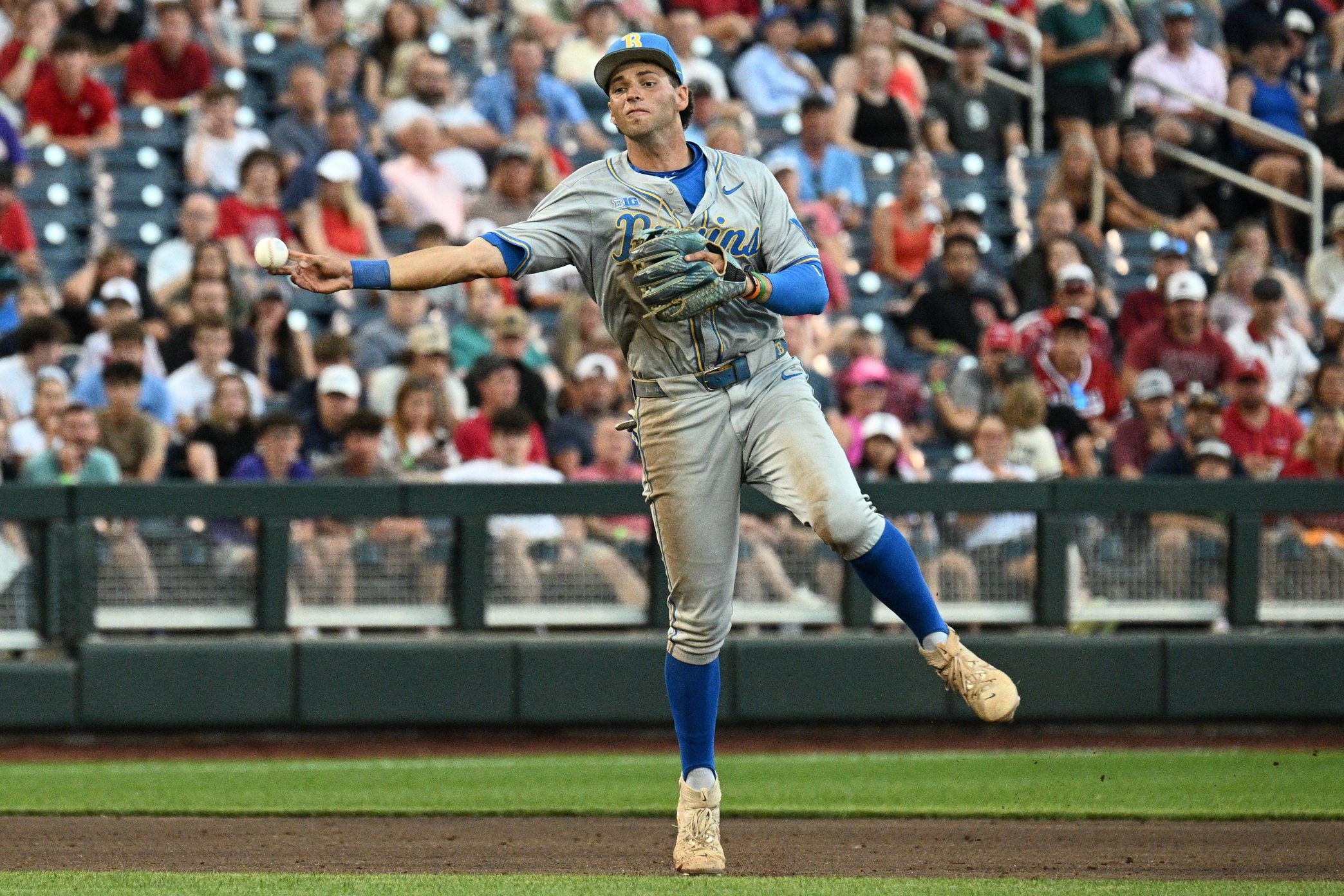 This week at Twins Daily, we’re continuing our series of deep dives into candidates for the number three overall pick in the 2026 draft. It has long been considered a given that UCLA shortstop Roch Cholowsky is a lock to be the first wire-to-wire number one ranked player since Adley Rutschman in 2019. While it's still more likely than not that Cholowsky is the pick at number one (or two), Texas HS shortstop Grady Emerson and Georgia Tech catcher Vahn Lackey have narrowed the gap significantly. Cholowsky is no longer the number one player on every major industry board. The UCLA shortstop recently made it to pick three in a recent Keith Law mock draft. Let’s be prepared and dig into Roch’s profile. Bio and Background Originally hailing from Chandler, Arizona, Cholowsky grew up around baseball. His father was a standout college player at Cal, and played 9 MiLB seasons after being drafted by the Cardinals in 1991, before becoming a long-time scout. Unlike Vahn Lackey, Cholowsky has been on the map as a notable prospect for a long time. Cholowsky was ranked as the 35th player overall by consensus ahead of the 2023 MLB Draft. You’ll remember that draft class was absolutely loaded. In addition to its famous top five (Skenes, Crews, Langford, Clark, and Jenkins), other top-50 notables include Aidan Miller, Kevin McGonigle, and Colt Emerson. The Twins were one of a handful of teams interested in signing Cholowsky as a prep prospect (the White Sox were another) with their Comp A pick. They eventually used that selection on Charlee Soto after Cholowsky would not be dissuaded from his commitment to UCLA. Cholowsky was the highest-ranked unselected player in his class. College Stats Cholowsky played 52 games as a freshman, with around two-thirds coming at third base, and the rest at shortstop. He showed right away why he was such a highly regarded prep prospect. Cholowsky hit .308/.399/.500 (115 wRC+) with 8 home runs (21 XBH) in 235 plate appearances. It was a debut season that put the college baseball world on notice and raised expectations significantly ahead of his sophomore season. As a sophomore, Cholowsky ascended. After taking over as the Bruins everyday shortstop, he managed a .353/.480/.710 line with 23 home runs (43 XBH), a 13.9 BB%, a 9.3 K%, and a 164 wRC+, one of the best offensive seasons in college baseball in 2025. Cholowsky also developed his least discussed superpower, getting hit by 21 pitches along the way. In particular, Cholowsky’s bat-to-ball numbers in-zone improved markedly as a sophomore, as did his approach at the plate. Let’s get to the center of the Cholowsky discourse, his junior season. Was it a fall-off, or is it prospect fatigue? While 2026 wasn’t as exceptional as 2025, it’s a similar trap Drew Burress set for himself after his freshman and sophomore seasons: an almost impossibly high bar. In 2026, Cholowsky hit .320/.452/.636 with 21 home runs (31 XBH), matching 12% walk and strikeout rates, and a 146 wRC+. Not as exceptional as 2025, but not too shabby, either. Cholowsky was hit by a further 25 pitches in 2026. Perhaps it was his (and UCLA’s) uninspiring performance in the postseason, crashing out to St. Mary’s during Regionals, that left a bad taste. Still, I think the narrative of a fall-off might be overthinking it a bit. Unpacking Cholowsky’s numbers further cements his prospect case as fairly unimpeachable. An overall contact rate over 80% (approaching 90% in zone), a chase rate just over 20%, an average EV and EV90 above the 90th percentile in D1 baseball. Roch Cholowsky has a complete offensive profile. Let’s dig into his swing, though, as I do think you can level some minor criticisms here. I don’t love it (who cares?). Cholowsky has, from this seat, some inefficient rotation in his swing, a tendency that might give him some fits against velocity, especially up, or be out in front enough to maximize pulled fly balls. It hasn’t slowed him during his amateur baseball career, but I’d watch out for it as he begins to face better pitching in pro ball. Wood Bat Performance As when we examined Lackey, we should take a moment to examine Cholowsky’s record with wooden bats. Similarly to Lackey, it’s not an extensive history or a particularly impressive one. Cholowsky played for Orleans for a brief stint on the Cape in 2024, managing a .666 OPS in 65 plate appearances. This was immediately following Cholowsky’s freshman college season. While it’d be nice to have Cape performance as a feather in his cap, this run of games was before he’d truly taken off as a collegiate prospect. Defensive Profile There’s been so much discussion and conjecture on Cholowsky as a hitter in 2026, that his defense has been given short shrift. In my write up of Roch ahead of the 2023 draft, I described him as a ‘legitimately excellent defensive shortstop.’ He’s done nothing but cement that sterling defensive reputation in his three years at UCLA. In his sophomore season, Cholowsky was the top college shortstop in the country, amassing +20 DRS (per D1 Baseball). For context, he’s the only shortstop to accrue 20 runs saved or more since D1 began tracking defense using the metric in 2023. While he isn’t the smoothest mover, he’s athletic and explosive at the position. Cholowsky has a history as a high school quarterback and it’s easy to see the parallels in his defensive game at shortstop. He’s particularly adept at making throws on the run, leveraging outstanding body control, a plus arm, and a pinpoint internal clock to augment extremely soft and reliable hands. He’s a lock to stick at the position and Brandon Crawford defensive comps (a player Cholowsky has long admired) are not out of pocket. What Teammates and Coaches Say Cholowsky has earned a reputation as a vocal leader on and off the diamond. Away from baseball, Cholowsky became known at UCLA for finding creative ways to promote team togetherness. "He's always planning things, which is really important as a leader," shared teammate Phoenix Call. "He’ll always make sure everyone (on our team) is there’" Cholowsky developed a close relationship with UCLA Head Coach John Savage in his time in Westwood. Cholowsky credited Savage for sticking with him while he was adjusting to college baseball as a freshman. Savage, in turn, reflected glowingly on having an asset like Cholowsky on his team, remarking that "there’s nothing better than your best player playing the way he plays. He was the offensive player of the year, he was the defensive player of the year (in 2025). That’s a combination you just don’t see’" It remains unlikely that Roch falls out of the top two in the draft. We’re also accustomed to expect chaos in round one. In the unlikely event that he falls, I’d be hard pressed to imagine a scenario where the Twins don’t take Cholowsky, a player they have long coveted, at number three overall. That’s his floor in this draft.
 -
I think the Twins would take Emerson at #3. Not saying Burress is ruled out, I'm sure he's in the mix, but I, personally, would be disappointed coming away without one of the consensus T3 players in the draft. I'm reminded of 2023 when the Twins were being consistently linked to Jacob Gonzalez over Walker Jenkins, only for history to play out as it did (nothing against Gonzalez, who is having an amazing season).
- 13 replies
-
- 1
-

-
- vahn lackey
- jackson flora
- (and 2 more)
-
Image courtesy of Rob Thompson, St. Paul Saints The Twins are making a move, promoting outfield prospect Kyler Fedko to join the big-league team for their week-long road trip, sources told Twins Daily. Orlando Arcia has been designated assignment to make room on both the 26-man and the 40-man rosters. Fedko, a 12th-round selection in the 2021 MLB Draft (369th overall), was a $125,000 signing out of UConn. A late bloomer who spent his early minor-league years repeating levels of the system frequently, He took off at Double-A during the 2025 season. In 130 games combined at Wichita and at Triple-A St. Paul, he hit .258/.367/.476, with 28 home runs and 38 stolen bases at an 83% success rate. After a slow start with the Saints in 2026, Fedko has heated up in May and June. Through 58 games for St. Paul, he’s hitting .286/.372/.578 (138 wRC+) with 15 home runs among 28 extra-base hits and 9 stolen bases. Fedko brings an intriguing skill set. His recent power surge is anchored in pulling the ball in the air, as opposed to huge bat speed or upper-end exit velocities. Fedko has a knack for finding the barrel, with a 46% hard-hit rate in 2026. There are some orange flags in the offensive profile. Fedko chases at a troublesome clip (34%), a tendency major-league pitchers will attempt to exploit. He can certainly help the big-league team, though. The Twins have needed additional right-handed help in the outfield for several years, and Fedko has above-average speed and a solid glove, with the versatility to move throughout outfield spots defensively. It’s also worth noting that Fedko mashes left-handed pitching, managing a 1.262 OPS against southpaws in 2026. We should see him spell other outfield positions regularly, be in the lineup with consistency against left-handed pitching, and have a chance to establish himself as a fourth outfielder for the Twins. It's possible he grows into even more than that, but as Derek Shelton moves the pieces around his chessboard, Fedko comes in as another good one who can be utilized in the proper turns, rather than leaned on to do everything. View full article
-
BREAKING: Twins to Promote Kyler Fedko for Major-League Debut
Jamie Cameron posted an article in Twins
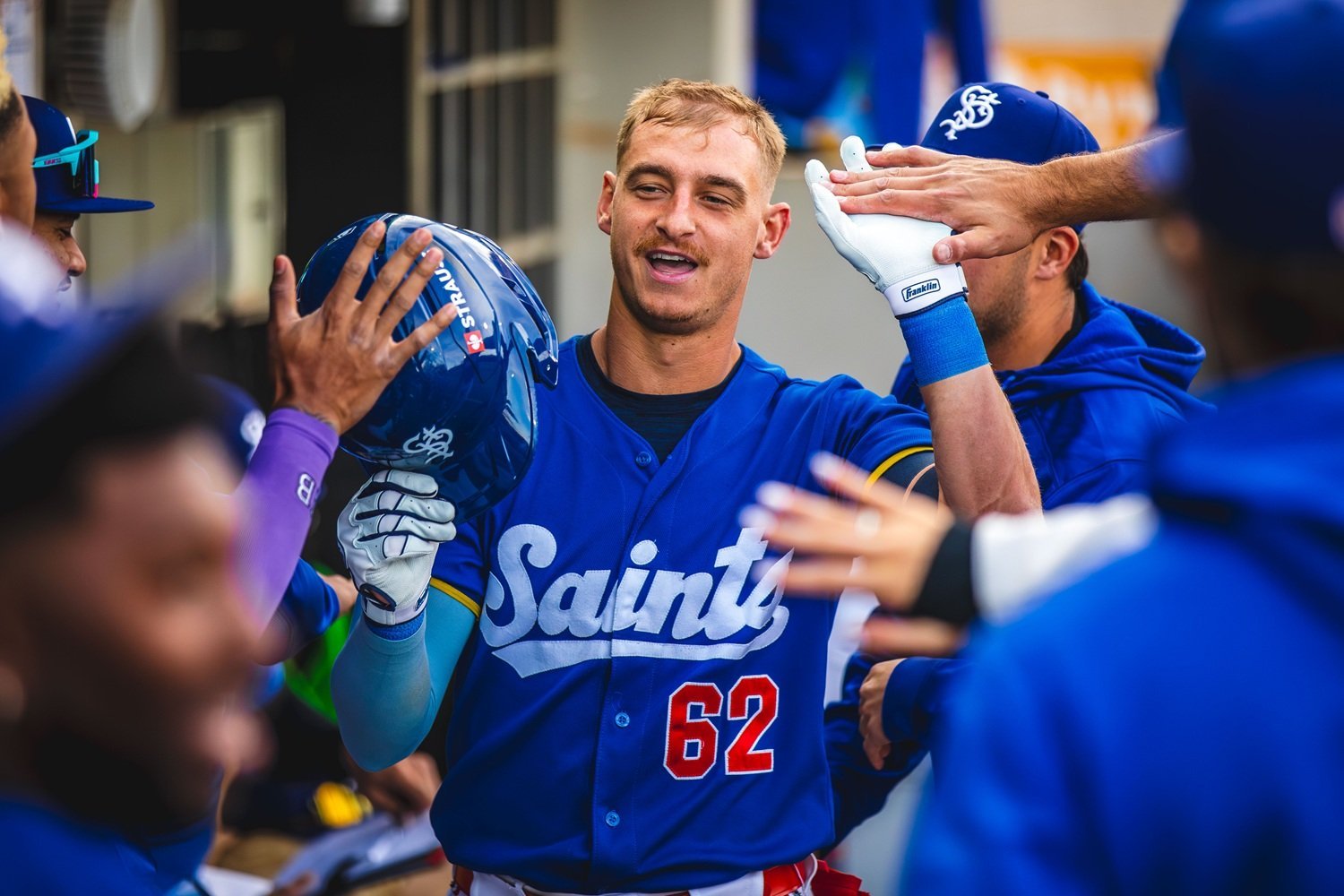 The Twins are making a move, promoting outfield prospect Kyler Fedko to join the big-league team for their week-long road trip, sources told Twins Daily. Orlando Arcia has been designated assignment to make room on both the 26-man and the 40-man rosters. Fedko, a 12th-round selection in the 2021 MLB Draft (369th overall), was a $125,000 signing out of UConn. A late bloomer who spent his early minor-league years repeating levels of the system frequently, He took off at Double-A during the 2025 season. In 130 games combined at Wichita and at Triple-A St. Paul, he hit .258/.367/.476, with 28 home runs and 38 stolen bases at an 83% success rate. After a slow start with the Saints in 2026, Fedko has heated up in May and June. Through 58 games for St. Paul, he’s hitting .286/.372/.578 (138 wRC+) with 15 home runs among 28 extra-base hits and 9 stolen bases. Fedko brings an intriguing skill set. His recent power surge is anchored in pulling the ball in the air, as opposed to huge bat speed or upper-end exit velocities. Fedko has a knack for finding the barrel, with a 46% hard-hit rate in 2026. There are some orange flags in the offensive profile. Fedko chases at a troublesome clip (34%), a tendency major-league pitchers will attempt to exploit. He can certainly help the big-league team, though. The Twins have needed additional right-handed help in the outfield for several years, and Fedko has above-average speed and a solid glove, with the versatility to move throughout outfield spots defensively. It’s also worth noting that Fedko mashes left-handed pitching, managing a 1.262 OPS against southpaws in 2026. We should see him spell other outfield positions regularly, be in the lineup with consistency against left-handed pitching, and have a chance to establish himself as a fourth outfielder for the Twins. It's possible he grows into even more than that, but as Derek Shelton moves the pieces around his chessboard, Fedko comes in as another good one who can be utilized in the proper turns, rather than leaned on to do everything.
 -
Image courtesy of © Ken Ruinard / USA Today Network Vahn Lackey has a strong case to make for college baseball’s most improved player in 2026. It’s been a meteoric rise for the Georgia Tech backstop who is about to be the latest first round selection from ‘Catcher U’ (joining Jason Varitek, Matt Wieters, Joey Bart, and Kevin Parada). It’s worth noting that Lackey doesn’t turn 21 until four days before the draft. Along with Jackson Flora, he’s one of the youngest college prospects likely to hear their name called in the first round come July. This will appeal to the draft models of pro organizations. BIO AND BACKGROUND Originally hailing from Suwanee, Georgia, Lackey wasn’t a hailed recruit coming out of high school. Rated as the #16 catcher in the state as a senior by Perfect Game coming out of Collins Hill HS, he was named a team captain in his senior year. A growth spurt in his senior year caught the eye of Georgia Tech and mitigated Lackey having few college offers as a prep player. Lackey entered his collegiate career with a reputation as a defense first catcher. His offensive profile was anchored in good bat-to-ball skills and the bet that a physical late bloomer with standout athleticism could develop a well rounded offensive skillset. COLLEGE STATS AND PERFORMANCE Lackey played 36 games as a freshman, hitting .214/.330/.381 with 4 home runs, an 11.7% walk rate, a 17.5 K%, and a modest 60 wRC+. The roots of Lackey’s offensive skillset were evident though, even in a season with mediocre production. Lackey showed excellent bat-to-ball skills from day one, managing an 82% contact rate (93% in zone) as a freshman. Lackey also showcased his excellent approach, rarely expanding the zone, and taking plenty of free passes, despite a lack of extra base impact. As a sophomore, Lackey improved significantly. Moving into the starting catcher’s role full time, he managed a .347/.421/.500 line with 6 home runs (21 XBH), while walking 9.4% of the time and maintaining his excellent contact skills, managing a 14.3 K%. As a sophomore, Lackey produced a 110 wRC+, also stealing 18 bases at 86%. The impact and added strength began to show up in his second year, despite not adding much home run power, Lackey supplied plenty of extra base hits, and saw jumps in both his average EV and EV90, both of which jumped above the 75th percentile among D1 teams. Lackey’s damage on contact was limited by an elevated (pun intended) ground ball rate. Let’s take a moment to dig into his swing. Lackey sets up at the plate in a neutral stance with a chin-high hand set, often planting himself deep in the batter’s box. Lackey loads and prepares to swing early, getting into a medium-to-significant leg kick while pulling his hands behind his front shoulder. Lackey gets a ton of stretch in his swing, rotating well with increased bat speed and often meeting the ball in front of the plate. It’s a violent, pretty swing (as right-handed swings go). As a junior, Lackey ascended offensively, trading off a marginal degree of his batted ball excellent for significant extra base impact. In 61 games, he hit .397/.519/.772 with 20 home runs (39 extra base hits), a 17.7 BB%, a 13.4 K%, all while stealing 15 bases at 94%. In 2026, he managed a 170 wRC+. Sheesh. That's some of the best offensive production in college baseball, regardless of position. Unpacking those numbers further presents an equally rosy picture. Lackey maintained an overall contact rate of 83% (88% in zone). He doesn’t chase too much (~17%), his average EV and EV90 are both north of the 95th percentile in D1 baseball. Finally, Lackey has figured out how to pull the ball in the air with consistency. For the Baseball Savant slider truthers, it’s a sea of red. In short, it’s a complete offensive profile. WOOD BAT PERFORMANCE It’s worth unpacking Lackey’s performance with wooden bats. In 2024, he managed a .640 OPS in the Northwoods League with Traverse City (through 176 plate appearances). A year later he had a .314 OPS in 26 plate appearances on the Cape for Hyannis. Normally, I'd spend more time unpacking this, but the truth is, Lackey simply isn’t the same player offensively as he was in 2025, and certainly in 2024. Call it an orange flag if you want to, I’m not taking much stock in it, given how he’s performed offensively in 2026. DEFENSIVE PROFILE So, what about the defense that has earned Patrick Bailey comps? Folks will know I don’t like comps, I think they place unrealistic and unfair expectations on players too early, and we’re often not clear with what we’re comping (a swing, production, etc.). What’s universally agreed upon is Lackey has a chance to be a plus defensive catcher. Operating from a one-knee down setup, it’s easily a plus arm, and while his career caught stealing percentage (~25%) might seem light, this is more of a reflection of a need for more precision with his throws, at times, than a lack of arm strength. Lackey put up similar numbers in controlling the running game on the Cape (33 % caught stealing). While there’s some refinement needed to maximize the tools here, the tools are in place, as Lackey routinely posts pop times between 1.85-1.95 seconds. While he can continue to refine his receiving game, Lackey has snappy wrists and moves fluidly enough to suggest he’ll be able to steal plenty of strikes as a pro. Lackey’s lateral movement might be his most impressive defensive trait. He works side to side incredibly smoothly, or with explosive precision when the need arises. It’s a rare level of body control we can find examples of throughout his defensive play. Lackey has a characteristic ‘lateral shuffle’ when positioning his body to throw out a would-be base stealer, that gives him a clear throwing lane, and a better angle to second base. He’ll use his explosiveness to catch base runners off guard, too, backpicking four hitters in 2026 alone. WHAT TEAMMATES AND COACHES SAY Lackey is a high-energy player, earning rave reviews for both his work ethic and how he carries himself as a team mate. Teammate and fellow first round prospect Drew Burress had this to say after Georgia Tech were eliminated from postseason play. Head Coach Jacob Ramsey described recruiting Lackey to Georgia Tech as ‘watching a shortstop play catcher’. It’s a backhanded compliment, describing both his natural athletic ability and the level of rawness with which he entered collegiate baseball. Ramsey played Lackey in every defensive position except pitcher in a non-conference game in early 2026, to showcase his versatility. FINAL THOUGHTS Twins fans have been clamoring for a succession plan for Ryan Jeffers for several years. Lackey (if available) is the rare intersection of pick position, value, and an area of organizational need. He appears to be a unicorn prospect, a catcher with contact skills, power and speed, and the foundations of excellent defense. If he’s on the board at number three, he’d be an excellent, fast moving addition to the Twins system, locking up one of the toughest defensive positions to fill for the next half decade. View full article
- 13 replies
-
- 1
-

-
- vahn lackey
- jackson flora
- (and 2 more)
-
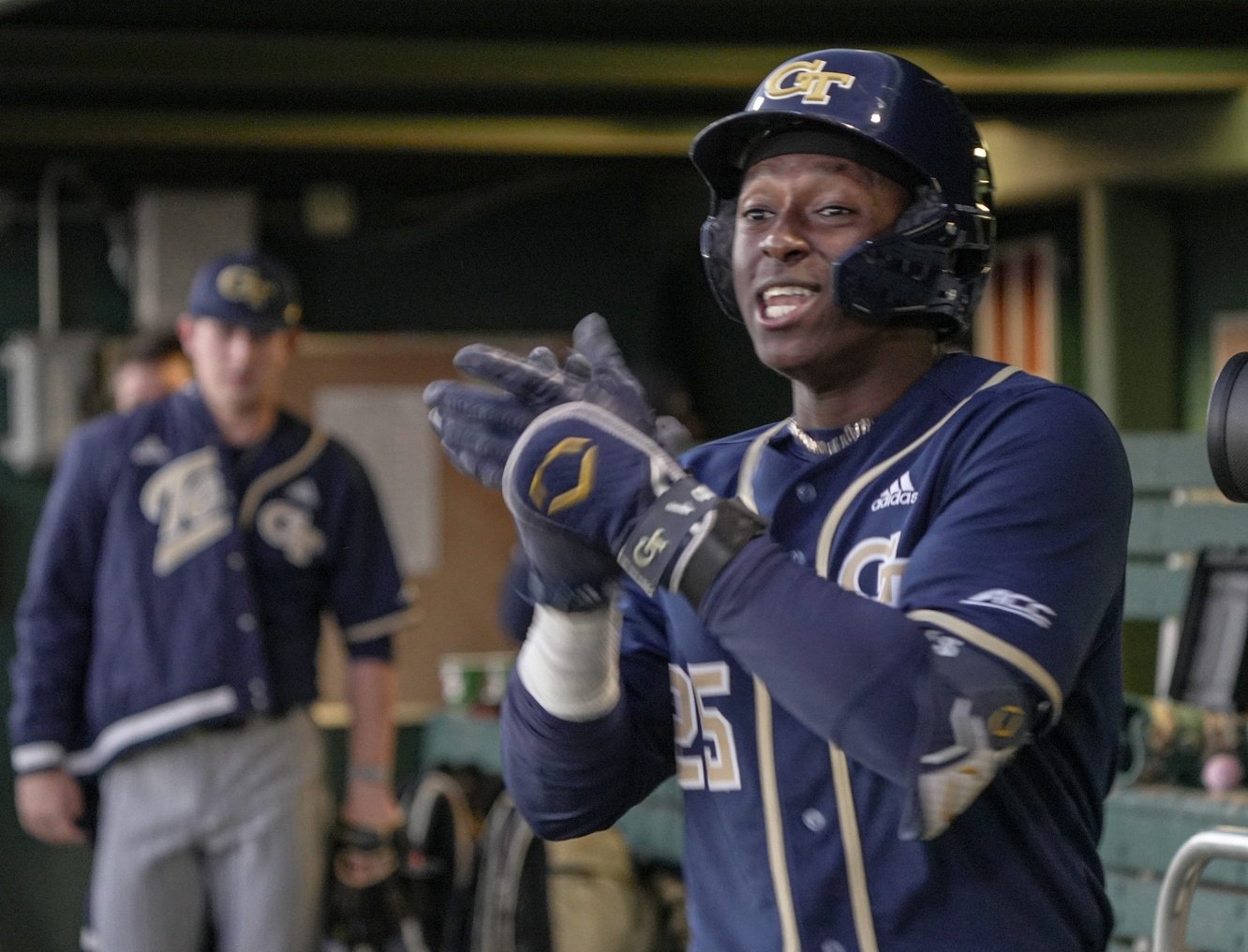 Vahn Lackey has a strong case to make for college baseball’s most improved player in 2026. It’s been a meteoric rise for the Georgia Tech backstop who is about to be the latest first round selection from ‘Catcher U’ (joining Jason Varitek, Matt Wieters, Joey Bart, and Kevin Parada). It’s worth noting that Lackey doesn’t turn 21 until four days before the draft. Along with Jackson Flora, he’s one of the youngest college prospects likely to hear their name called in the first round come July. This will appeal to the draft models of pro organizations. BIO AND BACKGROUND Originally hailing from Suwanee, Georgia, Lackey wasn’t a hailed recruit coming out of high school. Rated as the #16 catcher in the state as a senior by Perfect Game coming out of Collins Hill HS, he was named a team captain in his senior year. A growth spurt in his senior year caught the eye of Georgia Tech and mitigated Lackey having few college offers as a prep player. Lackey entered his collegiate career with a reputation as a defense first catcher. His offensive profile was anchored in good bat-to-ball skills and the bet that a physical late bloomer with standout athleticism could develop a well rounded offensive skillset. COLLEGE STATS AND PERFORMANCE Lackey played 36 games as a freshman, hitting .214/.330/.381 with 4 home runs, an 11.7% walk rate, a 17.5 K%, and a modest 60 wRC+. The roots of Lackey’s offensive skillset were evident though, even in a season with mediocre production. Lackey showed excellent bat-to-ball skills from day one, managing an 82% contact rate (93% in zone) as a freshman. Lackey also showcased his excellent approach, rarely expanding the zone, and taking plenty of free passes, despite a lack of extra base impact. As a sophomore, Lackey improved significantly. Moving into the starting catcher’s role full time, he managed a .347/.421/.500 line with 6 home runs (21 XBH), while walking 9.4% of the time and maintaining his excellent contact skills, managing a 14.3 K%. As a sophomore, Lackey produced a 110 wRC+, also stealing 18 bases at 86%. The impact and added strength began to show up in his second year, despite not adding much home run power, Lackey supplied plenty of extra base hits, and saw jumps in both his average EV and EV90, both of which jumped above the 75th percentile among D1 teams. Lackey’s damage on contact was limited by an elevated (pun intended) ground ball rate. Let’s take a moment to dig into his swing. Lackey sets up at the plate in a neutral stance with a chin-high hand set, often planting himself deep in the batter’s box. Lackey loads and prepares to swing early, getting into a medium-to-significant leg kick while pulling his hands behind his front shoulder. Lackey gets a ton of stretch in his swing, rotating well with increased bat speed and often meeting the ball in front of the plate. It’s a violent, pretty swing (as right-handed swings go). As a junior, Lackey ascended offensively, trading off a marginal degree of his batted ball excellent for significant extra base impact. In 61 games, he hit .397/.519/.772 with 20 home runs (39 extra base hits), a 17.7 BB%, a 13.4 K%, all while stealing 15 bases at 94%. In 2026, he managed a 170 wRC+. Sheesh. That's some of the best offensive production in college baseball, regardless of position. Unpacking those numbers further presents an equally rosy picture. Lackey maintained an overall contact rate of 83% (88% in zone). He doesn’t chase too much (~17%), his average EV and EV90 are both north of the 95th percentile in D1 baseball. Finally, Lackey has figured out how to pull the ball in the air with consistency. For the Baseball Savant slider truthers, it’s a sea of red. In short, it’s a complete offensive profile. WOOD BAT PERFORMANCE It’s worth unpacking Lackey’s performance with wooden bats. In 2024, he managed a .640 OPS in the Northwoods League with Traverse City (through 176 plate appearances). A year later he had a .314 OPS in 26 plate appearances on the Cape for Hyannis. Normally, I'd spend more time unpacking this, but the truth is, Lackey simply isn’t the same player offensively as he was in 2025, and certainly in 2024. Call it an orange flag if you want to, I’m not taking much stock in it, given how he’s performed offensively in 2026. DEFENSIVE PROFILE So, what about the defense that has earned Patrick Bailey comps? Folks will know I don’t like comps, I think they place unrealistic and unfair expectations on players too early, and we’re often not clear with what we’re comping (a swing, production, etc.). What’s universally agreed upon is Lackey has a chance to be a plus defensive catcher. Operating from a one-knee down setup, it’s easily a plus arm, and while his career caught stealing percentage (~25%) might seem light, this is more of a reflection of a need for more precision with his throws, at times, than a lack of arm strength. Lackey put up similar numbers in controlling the running game on the Cape (33 % caught stealing). While there’s some refinement needed to maximize the tools here, the tools are in place, as Lackey routinely posts pop times between 1.85-1.95 seconds. While he can continue to refine his receiving game, Lackey has snappy wrists and moves fluidly enough to suggest he’ll be able to steal plenty of strikes as a pro. Lackey’s lateral movement might be his most impressive defensive trait. He works side to side incredibly smoothly, or with explosive precision when the need arises. It’s a rare level of body control we can find examples of throughout his defensive play. Lackey has a characteristic ‘lateral shuffle’ when positioning his body to throw out a would-be base stealer, that gives him a clear throwing lane, and a better angle to second base. He’ll use his explosiveness to catch base runners off guard, too, backpicking four hitters in 2026 alone. WHAT TEAMMATES AND COACHES SAY Lackey is a high-energy player, earning rave reviews for both his work ethic and how he carries himself as a team mate. Teammate and fellow first round prospect Drew Burress had this to say after Georgia Tech were eliminated from postseason play. Head Coach Jacob Ramsey described recruiting Lackey to Georgia Tech as ‘watching a shortstop play catcher’. It’s a backhanded compliment, describing both his natural athletic ability and the level of rawness with which he entered collegiate baseball. Ramsey played Lackey in every defensive position except pitcher in a non-conference game in early 2026, to showcase his versatility. FINAL THOUGHTS Twins fans have been clamoring for a succession plan for Ryan Jeffers for several years. Lackey (if available) is the rare intersection of pick position, value, and an area of organizational need. He appears to be a unicorn prospect, a catcher with contact skills, power and speed, and the foundations of excellent defense. If he’s on the board at number three, he’d be an excellent, fast moving addition to the Twins system, locking up one of the toughest defensive positions to fill for the next half decade.
- 13 comments
-
- 9
-
-
-
- vahn lackey
- jackson flora
- (and 2 more)
-
It's time to check back in with another Twins mock. The MLB Draft is just five weeks away. This class is as muddled as any I've covered, though it's plenty deep in talent. You can find our consensus board here. Let's check in on some player profiles it's currently mocking to the Twins with their first few picks in July At #3, the Twins Select Vahn Lackey, Catcher, Georgia Tech Every draft cycle seems to produce 2-3 first-round catchers, most of whom have warts offensively, defensively, or both. Georgia Tech's Vahn Lackey may be the most complete college catcher in recent seasons and has been the name with the most helium associated with it in the early going in 2026. Lackey entered 2026 viewed as an excellent defensive catcher, with athleticism uncommon for the position, in addition to having strong bat-to-ball skills. He continues to look excellent behind the plate, with good receiving and blocking skills, an excellent arm and strong pop and transfer times. Offensively, his power has taken a step forward. After hitting 6 home runs in 60 games in 2025, he has 9 in his first 25 in 2026, with more walks than strikeouts, adding a high on-base floor to his profile. He'll need to continue to prove it in conference play, but a continuation of his early-season improvements will push Lackey into top-5 consideration due to the completeness of his skill sets on both sides of the ball. At #43, the Twins Select Archer Horn, SS/RHP, St. Ignatius College Prep, CA Horn is a two-way prospect out of Northern California, currently committed to Stanford. He's a talented pitcher who has been up to 95 mph with his fastball, also mixing in a good changeup and a solid curveball that has strong spin traits. Most evaluators think his future is as a hitter, however. In the box, Horn has good bat speed, barrel feel, and demonstrates the ability to consistently generate loft in his left-handed swing. I think he'll eventually be a power over hit profile, but he currently has the potential to be at least solid average in both tools. Defensively, it's likely he moves off shortstop eventually, but he has a future on the first at second or third base. His commitment to Stanford, and his placement on the board in the 40-60 range generate some skepticism around his signability. Riojas pitched for two seasons at UTSA prior to transferring to Texas. He's continued to take steps forward in his two seasons with the Longhorns, capped by an excellent 2026 season. At #74, the Twins Select Ruger Riojas, RHP, Texas Riojas is undersized for a starter at 6'0, 195 pounds. He'll also be 23 on draft day, one of the older prospects selected in the entire class. His fastball sits 94-96 mph with good carry and will peak at 97-98 mph. It's backed up by a splitter that sits in the mid 80s, a cutter, a sweeper and a curveball to round out a well-developed arsenal. Riojas has a strikeout rate north of 35% heading into the end of the regular season, combined with an impressive 5.2% walk rate. He'll be drafted in the first 3 rounds as a priority senior sign that will allow an organization some financial flexibility with other early picks. At #79, the Twins Select Taylor Rabe, RHP, Ole Miss Taylor Rabe is a 6’5, right-handed pitcher for Ole’ Miss, who has been a significant late riser on draft boards down the stretch of the 2026 season. After blowing out his elbow in his senior year of high school, he made it to campus and spent his 2024 season recovering from TJ surgery. Rabe transitioned into a starting role in 2026, after functioning primarily as a reliever his sophomore season. Entering Super Regional play, he’s logged a career high 63.1 innings, posting a strikeout rate north of 34%, while managing a 3.82 FIP, an excellent mark given the quality of the competition he’s facing regularly. Rabe has an excellent fastball that sits 95-97 mph but has touched triple digits. It’s primarily complemented by a cutter (86 mph), a slider (82 mph), and a changeup (87 mph), giving Rabe a solid four pitch mix with which to transition into pro ball. There’s excellent strike throwing here. Rabe has walked just 3.8% of hitters in 2026. That’s actually up from 2025 (2.5%) and he gets good extension down the mound. There’s a ton of starter traits here, and I like Rabe a ton to polish up his arsenal and optimize his approach with an offseason in a pro system under his belt. The arrow is firmly up here. View full article
-
 It's time to check back in with another Twins mock. The MLB Draft is just five weeks away. This class is as muddled as any I've covered, though it's plenty deep in talent. You can find our consensus board here. Let's check in on some player profiles it's currently mocking to the Twins with their first few picks in July At #3, the Twins Select Vahn Lackey, Catcher, Georgia Tech Every draft cycle seems to produce 2-3 first-round catchers, most of whom have warts offensively, defensively, or both. Georgia Tech's Vahn Lackey may be the most complete college catcher in recent seasons and has been the name with the most helium associated with it in the early going in 2026. Lackey entered 2026 viewed as an excellent defensive catcher, with athleticism uncommon for the position, in addition to having strong bat-to-ball skills. He continues to look excellent behind the plate, with good receiving and blocking skills, an excellent arm and strong pop and transfer times. Offensively, his power has taken a step forward. After hitting 6 home runs in 60 games in 2025, he has 9 in his first 25 in 2026, with more walks than strikeouts, adding a high on-base floor to his profile. He'll need to continue to prove it in conference play, but a continuation of his early-season improvements will push Lackey into top-5 consideration due to the completeness of his skill sets on both sides of the ball. At #43, the Twins Select Archer Horn, SS/RHP, St. Ignatius College Prep, CA Horn is a two-way prospect out of Northern California, currently committed to Stanford. He's a talented pitcher who has been up to 95 mph with his fastball, also mixing in a good changeup and a solid curveball that has strong spin traits. Most evaluators think his future is as a hitter, however. In the box, Horn has good bat speed, barrel feel, and demonstrates the ability to consistently generate loft in his left-handed swing. I think he'll eventually be a power over hit profile, but he currently has the potential to be at least solid average in both tools. Defensively, it's likely he moves off shortstop eventually, but he has a future on the first at second or third base. His commitment to Stanford, and his placement on the board in the 40-60 range generate some skepticism around his signability. Riojas pitched for two seasons at UTSA prior to transferring to Texas. He's continued to take steps forward in his two seasons with the Longhorns, capped by an excellent 2026 season. At #74, the Twins Select Ruger Riojas, RHP, Texas Riojas is undersized for a starter at 6'0, 195 pounds. He'll also be 23 on draft day, one of the older prospects selected in the entire class. His fastball sits 94-96 mph with good carry and will peak at 97-98 mph. It's backed up by a splitter that sits in the mid 80s, a cutter, a sweeper and a curveball to round out a well-developed arsenal. Riojas has a strikeout rate north of 35% heading into the end of the regular season, combined with an impressive 5.2% walk rate. He'll be drafted in the first 3 rounds as a priority senior sign that will allow an organization some financial flexibility with other early picks. At #79, the Twins Select Taylor Rabe, RHP, Ole Miss Taylor Rabe is a 6’5, right-handed pitcher for Ole’ Miss, who has been a significant late riser on draft boards down the stretch of the 2026 season. After blowing out his elbow in his senior year of high school, he made it to campus and spent his 2024 season recovering from TJ surgery. Rabe transitioned into a starting role in 2026, after functioning primarily as a reliever his sophomore season. Entering Super Regional play, he’s logged a career high 63.1 innings, posting a strikeout rate north of 34%, while managing a 3.82 FIP, an excellent mark given the quality of the competition he’s facing regularly. Rabe has an excellent fastball that sits 95-97 mph but has touched triple digits. It’s primarily complemented by a cutter (86 mph), a slider (82 mph), and a changeup (87 mph), giving Rabe a solid four pitch mix with which to transition into pro ball. There’s excellent strike throwing here. Rabe has walked just 3.8% of hitters in 2026. That’s actually up from 2025 (2.5%) and he gets good extension down the mound. There’s a ton of starter traits here, and I like Rabe a ton to polish up his arsenal and optimize his approach with an offseason in a pro system under his belt. The arrow is firmly up here.
 -
Could Top Prospect Roch Cholowsky Fall to the Minnesota Twins?
Jamie Cameron posted an article in MLB Draft
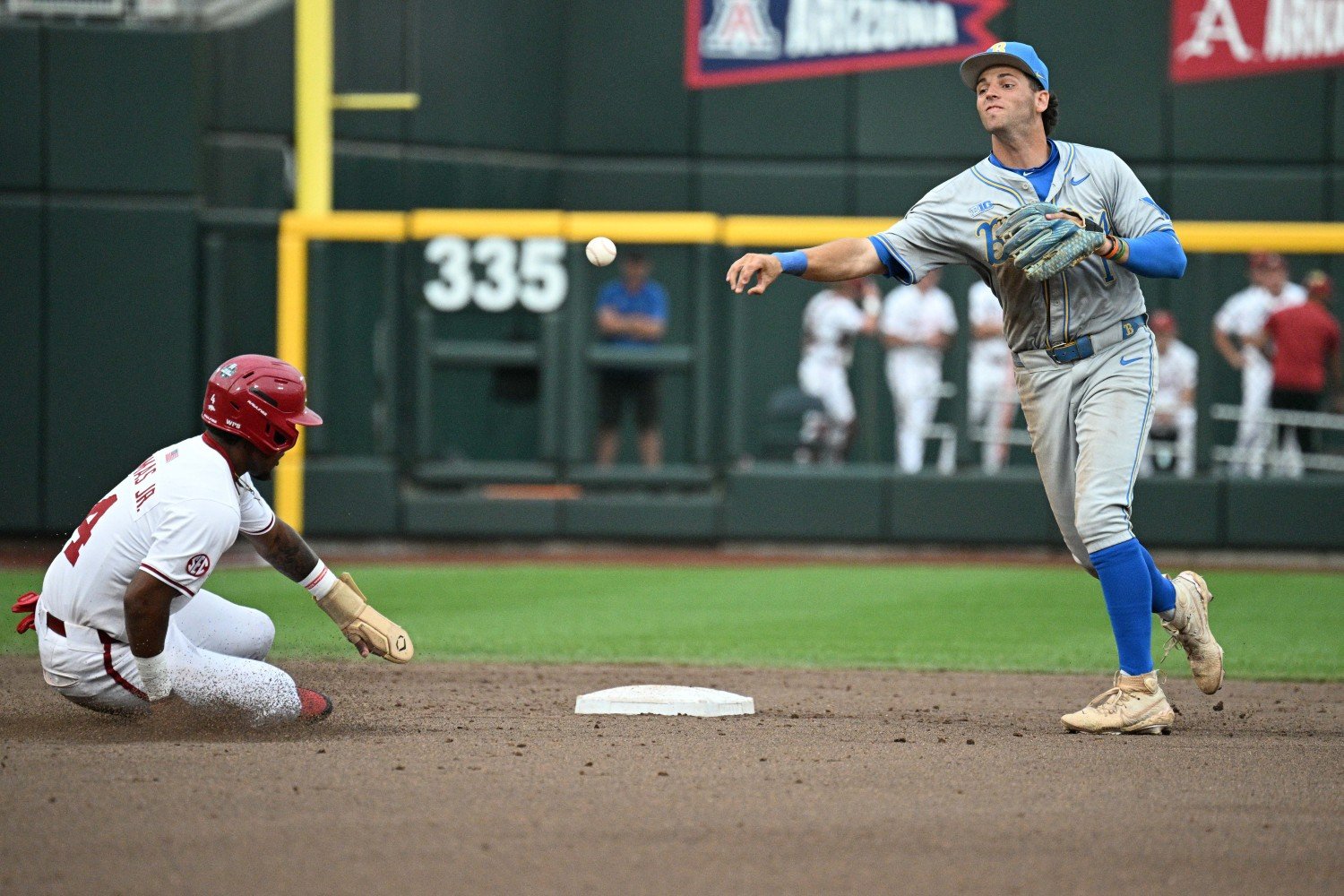 We all know who is going to be selected first overall in the 2026 MLB Draft in July by the Chicago White Sox. What if we don't, though? This weekend, in one of the more stunning upsets in the history of postseason collegiate baseball, No. 1 national seed UCLA was eliminated by fourth-seeded St. Mary’s. A few months ago, the Bruins looked like a shoo-in for Omaha. In truth, they had been sputtering for weeks, peaking too early, scraping through the B1G Ten conference tournament, and losing key personnel (such as Friday night starter Logan Reddemann) to injury. Roch Cholowsky has been the presumptive No. 1 pick in the 2026 MLB Draft since the 2025 event took place, marking the possibility that an amateur prospect goes wire-to-wire in the consensus top spot in industry rankings for the first time since Adley Rutschman in 2019. This morning, however, Over Slot published their updated top-500 draft rankings, with a new name at the top of the pile: Georgia Tech catcher Vahn Lackey. With all this in mind, let’s walk through a quick update on each of the top three players in the class. Roch Cholowsky, SS, UCLA Cholowsky had a strong season, even if the end was muted. Despite going 2-12 in regional play, the top player in the class hit .320/.452/.636 on the season, with 21 home runs. Cholowsky walked and struck out a matching 12% of the time. Add his offensive performance together, and you have a 146 wRC+, which down from 2025 (164 wRC+), but impressive when you consider he's probably the best defensive shortstop in the class. Cholowsky has a path to four plus tools (speed being the exception). There are some concerns around his swing and load being elongated and impacting his rotation against higher velocity in pro pitching, but he’s not encountered a litmus test for that concern in amateur baseball. Grady Emerson, SS, Fort Worth Christian HS It’s a testament to the quality of Emerson’s profile that he’s been relatively insulated from prospect fatigue. He’s been famous (in youth baseball terms) for several years, playing for four different iterations of the US National team (and playing every infield position with them). Emerson is probably a better player at the same age than Cholowsky was, with the best hit tool in the draft class. Questions around his future profile center more on how much power he will develop. He’s seen as a lock to stick at shortstop as a professional, with evaluators placing him in the same caliber of prep prospects as Max Clark and Walker Jenkins from the 2023 cycle. Notably, the Rays (picking ahead of the Twins) have leaned heavily into left-handed-hitting prep bats in recent classes. Vahn Lackey, C, Georgia Tech Lackey has had the most impressive season of any college player. While he doesn’t have the same historical prospect pedigree as Cholowsky, he’s had an incredible 2026, punctuated by two 450-foot home runs during regional play this weekend. Lackey has hit .407/.529/.790 on the season with 20 home runs (175 wRC+), walking 18% of the time and striking out 13.3%. He’s stolen 15 bases at a 94% success rate and earns Patrick Bailey comps for his defensive work. There are undoubtedly front offices who see him as the best prospect in the class. Such has been his rise in 2026. In recent weeks, we’ve seen the arc of the top pick narrative slowly shift. Initially, the White Sox were doing ‘due diligence’ on other candidates at number one. On May 7, MLB Pipeline draft expert Jim Callis opined that ‘the vibe right now is 55-60 percent that the White Sox take Roch Cholowsky’. Today, on June 1, for the first time, he’s not the number one prospect on every major industry draft board. The next few weeks of postseason collegiate play will dictate the extent to which this narrative continues to be spun. Will Lackey continue to swing a hot bat? Do you think Roch Cholowsky’s grip on the number one spot in industry draft rankings is under threat? Let us know how you think it will play out in the comments.
- 16 comments
-
- 9
-
-
- roch cholowsky
- vahn lackey
- (and 1 more)
-
Image courtesy of © Steven Branscombe-Imagn Images We all know who is going to be selected first overall in the 2026 MLB Draft in July by the Chicago White Sox. What if we don't, though? This weekend, in one of the more stunning upsets in the history of postseason collegiate baseball, No. 1 national seed UCLA was eliminated by fourth-seeded St. Mary’s. A few months ago, the Bruins looked like a shoo-in for Omaha. In truth, they had been sputtering for weeks, peaking too early, scraping through the B1G Ten conference tournament, and losing key personnel (such as Friday night starter Logan Reddemann) to injury. Roch Cholowsky has been the presumptive No. 1 pick in the 2026 MLB Draft since the 2025 event took place, marking the possibility that an amateur prospect goes wire-to-wire in the consensus top spot in industry rankings for the first time since Adley Rutschman in 2019. This morning, however, Over Slot published their updated top-500 draft rankings, with a new name at the top of the pile: Georgia Tech catcher Vahn Lackey. With all this in mind, let’s walk through a quick update on each of the top three players in the class. Roch Cholowsky, SS, UCLA Cholowsky had a strong season, even if the end was muted. Despite going 2-12 in regional play, the top player in the class hit .320/.452/.636 on the season, with 21 home runs. Cholowsky walked and struck out a matching 12% of the time. Add his offensive performance together, and you have a 146 wRC+, which down from 2025 (164 wRC+), but impressive when you consider he's probably the best defensive shortstop in the class. Cholowsky has a path to four plus tools (speed being the exception). There are some concerns around his swing and load being elongated and impacting his rotation against higher velocity in pro pitching, but he’s not encountered a litmus test for that concern in amateur baseball. Grady Emerson, SS, Fort Worth Christian HS It’s a testament to the quality of Emerson’s profile that he’s been relatively insulated from prospect fatigue. He’s been famous (in youth baseball terms) for several years, playing for four different iterations of the US National team (and playing every infield position with them). Emerson is probably a better player at the same age than Cholowsky was, with the best hit tool in the draft class. Questions around his future profile center more on how much power he will develop. He’s seen as a lock to stick at shortstop as a professional, with evaluators placing him in the same caliber of prep prospects as Max Clark and Walker Jenkins from the 2023 cycle. Notably, the Rays (picking ahead of the Twins) have leaned heavily into left-handed-hitting prep bats in recent classes. Vahn Lackey, C, Georgia Tech Lackey has had the most impressive season of any college player. While he doesn’t have the same historical prospect pedigree as Cholowsky, he’s had an incredible 2026, punctuated by two 450-foot home runs during regional play this weekend. Lackey has hit .407/.529/.790 on the season with 20 home runs (175 wRC+), walking 18% of the time and striking out 13.3%. He’s stolen 15 bases at a 94% success rate and earns Patrick Bailey comps for his defensive work. There are undoubtedly front offices who see him as the best prospect in the class. Such has been his rise in 2026. In recent weeks, we’ve seen the arc of the top pick narrative slowly shift. Initially, the White Sox were doing ‘due diligence’ on other candidates at number one. On May 7, MLB Pipeline draft expert Jim Callis opined that ‘the vibe right now is 55-60 percent that the White Sox take Roch Cholowsky’. Today, on June 1, for the first time, he’s not the number one prospect on every major industry draft board. The next few weeks of postseason collegiate play will dictate the extent to which this narrative continues to be spun. Will Lackey continue to swing a hot bat? Do you think Roch Cholowsky’s grip on the number one spot in industry draft rankings is under threat? Let us know how you think it will play out in the comments. View full article
-
Who are the Twins' Next Top 100 Prospects?
Jamie Cameron replied to Jamie Cameron's topic in Twins Minor League Talk
Totally, and that person is likely a T30 prospect in the game the moment they are drafted.- 21 replies
-
- 2
-
-
- marek houston
- riley quick
- (and 1 more)
-
Who are the Twins' Next Top 100 Prospects?
Jamie Cameron replied to Jamie Cameron's topic in Twins Minor League Talk
A pretty egregious oversight, imo- 21 replies
-
- 2
-
-
- marek houston
- riley quick
- (and 1 more)
-
Image courtesy of William Parmeter The Twins' farm system is in good health, with several top-100 prospects, depending on your list of choice. It's also top-heavy, in a good way: the best of their talent is clustered in the upper minors or has already touched the brass ring that is the majors. Connor Prielipp has looked excellent in his first five big-league starts, while Walker Jenkins, Emmanuel Rodriguez, and Kaelen Culpepper are all playing (or injured) in Lowertown. Who are the next prospects knocking on the door of industry-wide top-100 prospect lists? Let’s dig in. For the purpose of this thought exercise, I omitted anyone who has appeared on a top-100 prospect list in the last 12 months. That includes Eduardo Tait, Dasan Hill, and Charlee Soto. Here are the next three prospects who could soon garner such consideration. Marek Houston, SS, Cedar Rapids 32 G, 149 PA, .295/.358/.417 (.775), 3 HR (9 XBH), 8.1 BB%, 20.1 K%, 8SB (89%), 102 wRC+ Houston was the 16th overall pick in the 2025 draft and entered pro ball with a reputation as a truly exceptional defensive shortstop. The question about his profile has been ‘will he hit’? So far, he’s held serve. It’s been solid, if unspectacular. After an initial 12-game stretch at Cedar Rapids in 2025 in which he looked tired, Houston returned in 2026, looking much more ready for the challenge. Through 32 games, he’s been a contact-driven league-average hitter. Houston makes good swing decisions. He doesn’t chase much (around 23%) and makes contact frequently. His patient approach hasn’t translated into free passes, though. In college, Houston walked 13-15% of the time. As a pro, it's just 8.1% so far. This is an area of his game that, if improved, would mitigate some of the worries about a dearth of power. Still, Houston is off to a much better start in 2026. He may never be an impact bat, but the glove is so good, it might not matter. If he continues to be an above-average hitter for the level, he’ll start earning top-100 consideration due to the value of his defense in a premium position. Yasser Mercedes, OF, Cedar Rapids 26 G, 119 PA, .333/.445/.657 (1.102), 7 HR (16 XBH), 16.8 BB%, 21 K%, 15 SB (88%), 187 wRC+ You know what the Twins could really use? A win on the international market. It’s been pretty barren the past few years, while the Brewers are seemingly unearthing top prospects the world over on a regular basis. Enter Yasser Mercedes, a 21-year-old born in Puerto Rico who was part of the 2022 international free agent class because his family later moved to the Dominican Republic. He's returning to Fort Myers at the beginning of 2026 for his third stint at the level. It all came together rather quickly this year. Mercedes looked like a different player at Fort Myers, putting up a 107.4 mph EV90 with vastly improved bat-to-ball skills and a much better approach. He’s already stolen 72 bases in his last three campaigns, so there’s another useful facet of his game. Mercedes is a little passive in the zone, so he’ll need to pick his moments to attack pitches he can do damage on, but if his remarkable improvements continue, he’ll be rocketing up lists by midseason. Riley Quick, RHP, Cedar Rapids 17.2 IP, 1.53 ERA, 2.91 FIP, 40.9 K%, 12.1 BB% When interviewed immediately after the 2025 draft, Sean Johnson described Riley Quick as ‘a prospect we had a first-round grade on’. So it has proven to be. Quick left his last start at Cedar Rapids with thumb cramps, struggling to throw strikes. That’s about as difficult as his life has been in 18 pro innings to date. He’s already put Fort Myers in the rear-view mirror, and the stuff looks just as dominant at Cedar Rapids. Quick already has a diverse arsenal. While his fastballs (four-seam and two-seam) aren’t elite shape-wise, they have enough velocity behind them (sitting 96 mph) to be effective in the lower minors. The Twins have ramped up Quick’s cutter usage, and his slider and changeup are both rocking chase rates north of 50%. On top of all this, it’s around seven feet of extension for the 22-year-old. Quick will be in Double-A before the end of the season, at least. If the quality of the strikes remains solid, he’ll continue to fly through the minors and be a top-100 prospect before the end of the season. View full article
-
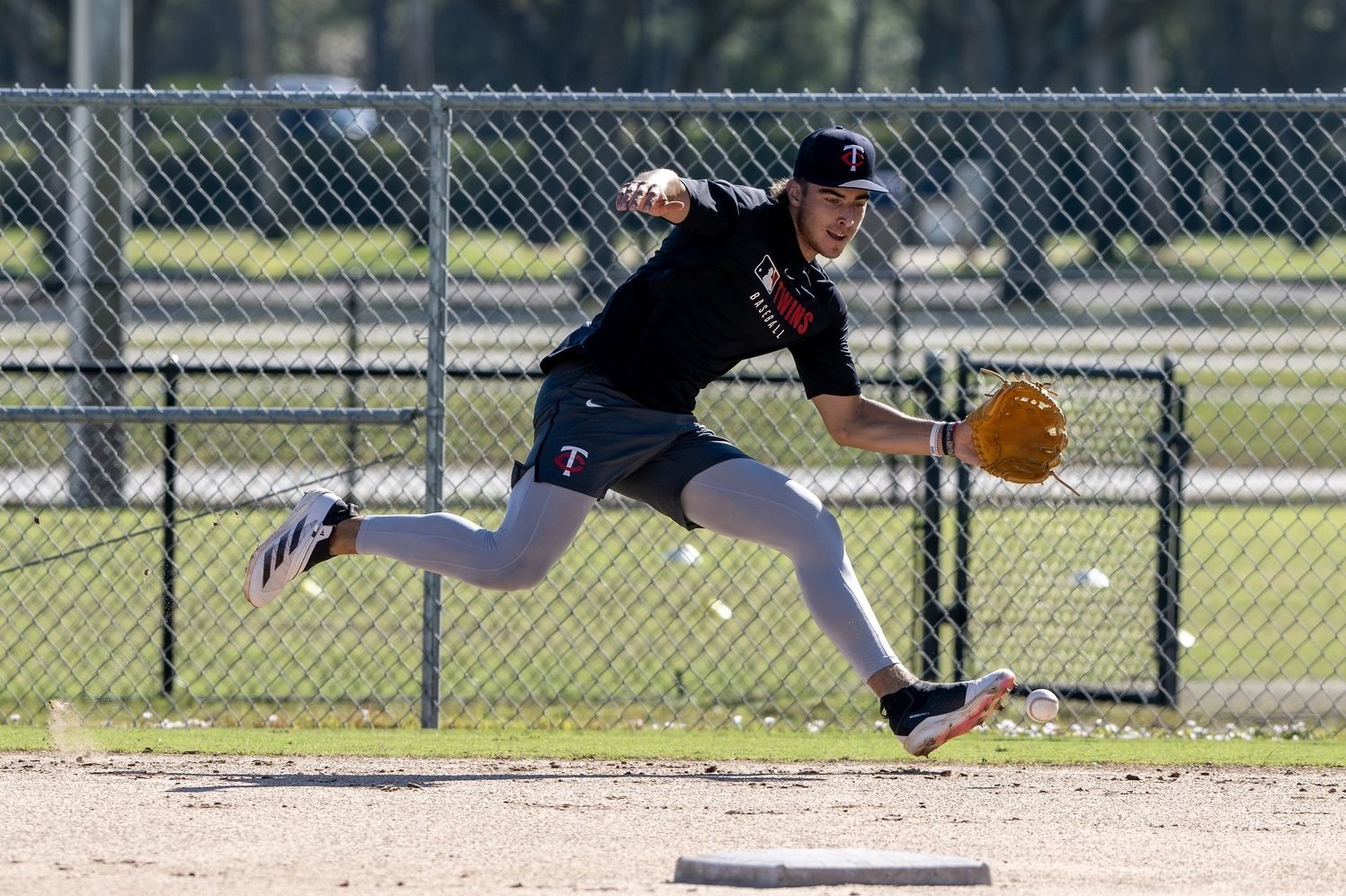 The Twins' farm system is in good health, with several top-100 prospects, depending on your list of choice. It's also top-heavy, in a good way: the best of their talent is clustered in the upper minors or has already touched the brass ring that is the majors. Connor Prielipp has looked excellent in his first five big-league starts, while Walker Jenkins, Emmanuel Rodriguez, and Kaelen Culpepper are all playing (or injured) in Lowertown. Who are the next prospects knocking on the door of industry-wide top-100 prospect lists? Let’s dig in. For the purpose of this thought exercise, I omitted anyone who has appeared on a top-100 prospect list in the last 12 months. That includes Eduardo Tait, Dasan Hill, and Charlee Soto. Here are the next three prospects who could soon garner such consideration. Marek Houston, SS, Cedar Rapids 32 G, 149 PA, .295/.358/.417 (.775), 3 HR (9 XBH), 8.1 BB%, 20.1 K%, 8SB (89%), 102 wRC+ Houston was the 16th overall pick in the 2025 draft and entered pro ball with a reputation as a truly exceptional defensive shortstop. The question about his profile has been ‘will he hit’? So far, he’s held serve. It’s been solid, if unspectacular. After an initial 12-game stretch at Cedar Rapids in 2025 in which he looked tired, Houston returned in 2026, looking much more ready for the challenge. Through 32 games, he’s been a contact-driven league-average hitter. Houston makes good swing decisions. He doesn’t chase much (around 23%) and makes contact frequently. His patient approach hasn’t translated into free passes, though. In college, Houston walked 13-15% of the time. As a pro, it's just 8.1% so far. This is an area of his game that, if improved, would mitigate some of the worries about a dearth of power. Still, Houston is off to a much better start in 2026. He may never be an impact bat, but the glove is so good, it might not matter. If he continues to be an above-average hitter for the level, he’ll start earning top-100 consideration due to the value of his defense in a premium position. Yasser Mercedes, OF, Cedar Rapids 26 G, 119 PA, .333/.445/.657 (1.102), 7 HR (16 XBH), 16.8 BB%, 21 K%, 15 SB (88%), 187 wRC+ You know what the Twins could really use? A win on the international market. It’s been pretty barren the past few years, while the Brewers are seemingly unearthing top prospects the world over on a regular basis. Enter Yasser Mercedes, a 21-year-old born in Puerto Rico who was part of the 2022 international free agent class because his family later moved to the Dominican Republic. He's returning to Fort Myers at the beginning of 2026 for his third stint at the level. It all came together rather quickly this year. Mercedes looked like a different player at Fort Myers, putting up a 107.4 mph EV90 with vastly improved bat-to-ball skills and a much better approach. He’s already stolen 72 bases in his last three campaigns, so there’s another useful facet of his game. Mercedes is a little passive in the zone, so he’ll need to pick his moments to attack pitches he can do damage on, but if his remarkable improvements continue, he’ll be rocketing up lists by midseason. Riley Quick, RHP, Cedar Rapids 17.2 IP, 1.53 ERA, 2.91 FIP, 40.9 K%, 12.1 BB% When interviewed immediately after the 2025 draft, Sean Johnson described Riley Quick as ‘a prospect we had a first-round grade on’. So it has proven to be. Quick left his last start at Cedar Rapids with thumb cramps, struggling to throw strikes. That’s about as difficult as his life has been in 18 pro innings to date. He’s already put Fort Myers in the rear-view mirror, and the stuff looks just as dominant at Cedar Rapids. Quick already has a diverse arsenal. While his fastballs (four-seam and two-seam) aren’t elite shape-wise, they have enough velocity behind them (sitting 96 mph) to be effective in the lower minors. The Twins have ramped up Quick’s cutter usage, and his slider and changeup are both rocking chase rates north of 50%. On top of all this, it’s around seven feet of extension for the 22-year-old. Quick will be in Double-A before the end of the season, at least. If the quality of the strikes remains solid, he’ll continue to fly through the minors and be a top-100 prospect before the end of the season.
- 21 comments
-
- 8
-
-
-
- marek houston
- riley quick
- (and 1 more)
-
I'd put the over/under on about 30-40 more games at AAA (barring injury).
-
Image courtesy of © Kevin Jairaj-Imagn Images If the Triple-A season were a round of golf, Kaelen Culpepper might be two under par through the first five holes. It’s not been a scorching start, but he’s within touching distance of a great front nine. Botched metaphor aside, Culpepper has surpassed 30 games at St. Paul, so it’s time to dig into his numbers and make some initial assessments of his performance. Upon first glance, it’s a solid start. Through 34 games, Culpepper is hitting .250/.335/.465, with 8 home runs among 15 extra-base hits. He’s walking a healthy 10.4% of the time, and striking out just 20.1% of the time, good for a 103 wRC+ through the first month-plus of games. Not bad. Let’s start with Culpepper’s bat-to-ball skills. Is he making enough contact? Definitely. Culpepper is running an overall contact rate of 79.2% (on the high end of average for a big leaguer). His in-zone contact rate is 89.5% (an average big-leaguer hovers around 85%). Why is this significant? Well, Culpepper’s data hasn’t been widely publicly available since he debuted in 2024. Additionally, before 2026, he hadn’t played a game at the Triple-A level. This is his first month at the doorstep of the majors, which makes what we've seen so far really encouraging stuff. Coming out of college, scouting reports had mixed reviews on Culpepper’s ability to hit for power. He wasn’t a prolific power hitter in college, maxing out at 11 home runs in his junior season in an environment that maximizes offensive production. Conversely, it was a pretty right-handed swing with good bat speed that looked geared towards maximizing pull-side loft. How is all that playing out in Lowertown? Pretty well, so far. After clubbing 20 home runs in 113 MiLB games in 2025, Culpepper has 8 more through 31 in 2026, with those 15 extra-base hits overall. His exit velocity numbers look solid, too. He’s currently running an average EV of 91 mph, with a MaxEV of 110.2 mph. We can shoehorn those numbers confidently into a 50-55 power grade, good for somewhere in the range of 20-26 home runs in a given season. Culpepper is hitting the ball hard with regularity, running a hard-hit rate of 48.2%, well above the major-league average of around 38%. Ok, so far, so good. What about that pesky ground ball rate though? Culpepper ran a ground ball percentage of 50% in 2025—problematically high, no matter how hard you hit the ball or how solid your bat-to-ball skills are. He’s cut that significantly in the early going in 2026. It’s currently sitting at 43.2%, in the region of where it should be, with an average launch angle of 12.4°. Far too rosy a picture so far, right? There has to be a bugaboo in this increasingly solid-looking offensive profile? Well, there is. Culpepper chases a lot. His current rate sits at 31.1%, which is high enough that it could expose him a bit in the majors. It’s not crippling, though. For context, there are around 100 big-league hitters who currently have a higher chase rate. Culpepper has always chased. He was an aggressive swinger in college. That’s a trait the Twins aren’t afraid of drafting. It’ll likely always be part of his game. How he’s chased has changed, though, which is a development worth spending a moment on. The scouting report is out on Culpepper. Breaking and off-speed stuff, down and away. Here’s the simplest visual possible, the number of pitches he’s been thrown at Triple-A to date, by zone location. That’s a lot down and away. Here’s the good news, though. While Culpepper is still chasing a lot, he’s chasing less down and away, and more inside. Why is that helpful? Inside is Culpepper’s nitro zone. Peep the visual below, which shows Culpepper’s slugging percentage by zone location. If you’re going to chase, chase where you can do damage, and show that it's a result of having honed your focus on one productive part of the strike zone, rather than a result of being defensive or deceived. Through the end of the week-long series in Vegas, Culpepper was running a .269 BABIP. There’s not much about his contact skills, quality of contact, or batted-ball profile to suggest there’s some underlying issue here. In short, despite his solid 103 wRC+, I think Culpepper is about to heat up and produce more. The Twins are encouraged by Culpepper’s play at shortstop. He’d easily be the Twins' best defensive infielder right now. I feel relatively confident calling him likely to be an average big-league shortstop (complimentary), if not slightly better. His arm will allow the skill set to work excellently at third base, too (don’t tell Royce, anyone). If his first 34 games at Triple-A can be relied on, Culpepper can soon fill several voids the Twins desperately need him to. An above-average defensive infielder, and at the very least, a solid, two-win, everyday player. In another 30 games or so, I expect him to be knocking on the door a little more loudly. View full article
-
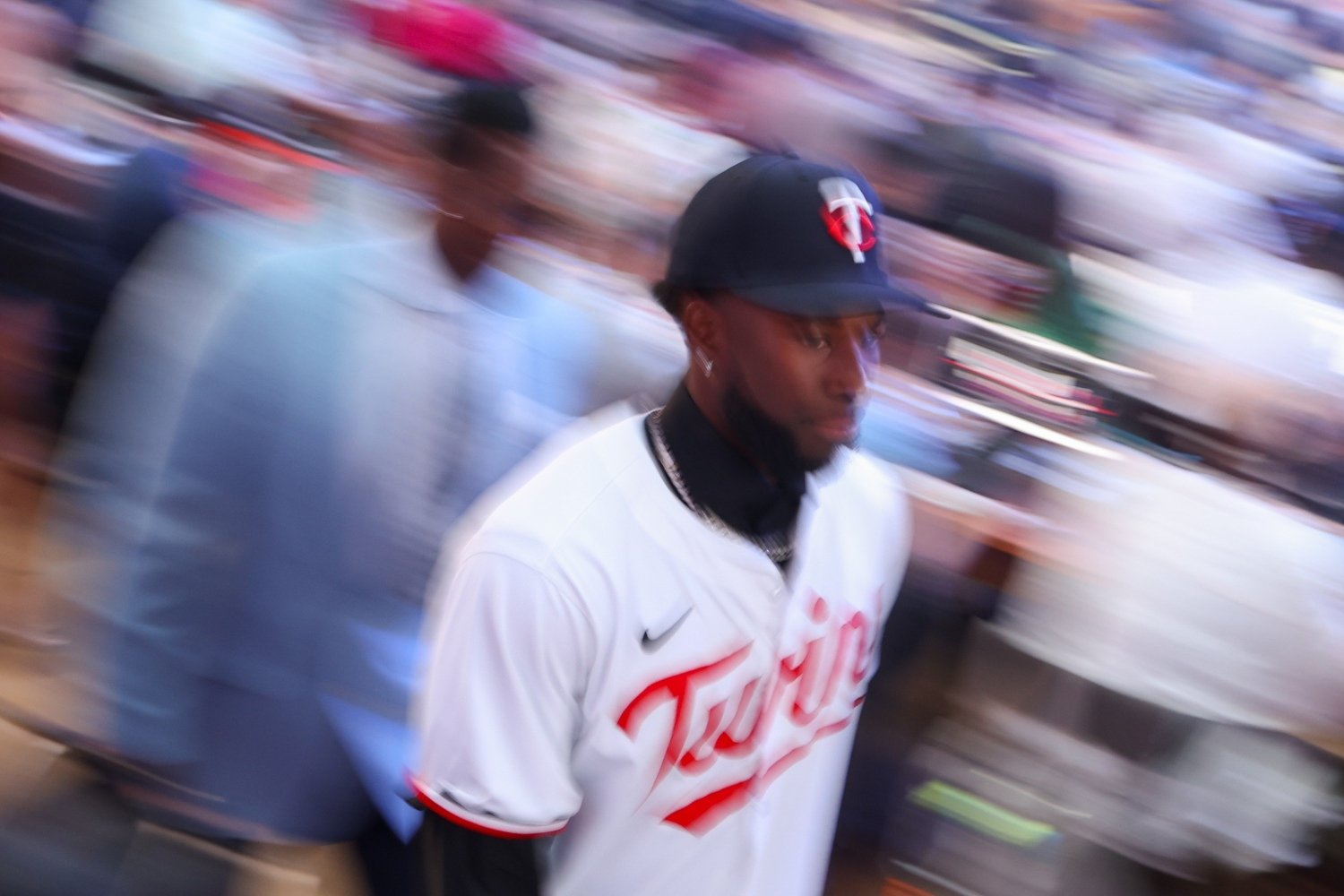 If the Triple-A season were a round of golf, Kaelen Culpepper might be two under par through the first five holes. It’s not been a scorching start, but he’s within touching distance of a great front nine. Botched metaphor aside, Culpepper has surpassed 30 games at St. Paul, so it’s time to dig into his numbers and make some initial assessments of his performance. Upon first glance, it’s a solid start. Through 34 games, Culpepper is hitting .250/.335/.465, with 8 home runs among 15 extra-base hits. He’s walking a healthy 10.4% of the time, and striking out just 20.1% of the time, good for a 103 wRC+ through the first month-plus of games. Not bad. Let’s start with Culpepper’s bat-to-ball skills. Is he making enough contact? Definitely. Culpepper is running an overall contact rate of 79.2% (on the high end of average for a big leaguer). His in-zone contact rate is 89.5% (an average big-leaguer hovers around 85%). Why is this significant? Well, Culpepper’s data hasn’t been widely publicly available since he debuted in 2024. Additionally, before 2026, he hadn’t played a game at the Triple-A level. This is his first month at the doorstep of the majors, which makes what we've seen so far really encouraging stuff. Coming out of college, scouting reports had mixed reviews on Culpepper’s ability to hit for power. He wasn’t a prolific power hitter in college, maxing out at 11 home runs in his junior season in an environment that maximizes offensive production. Conversely, it was a pretty right-handed swing with good bat speed that looked geared towards maximizing pull-side loft. How is all that playing out in Lowertown? Pretty well, so far. After clubbing 20 home runs in 113 MiLB games in 2025, Culpepper has 8 more through 31 in 2026, with those 15 extra-base hits overall. His exit velocity numbers look solid, too. He’s currently running an average EV of 91 mph, with a MaxEV of 110.2 mph. We can shoehorn those numbers confidently into a 50-55 power grade, good for somewhere in the range of 20-26 home runs in a given season. Culpepper is hitting the ball hard with regularity, running a hard-hit rate of 48.2%, well above the major-league average of around 38%. Ok, so far, so good. What about that pesky ground ball rate though? Culpepper ran a ground ball percentage of 50% in 2025—problematically high, no matter how hard you hit the ball or how solid your bat-to-ball skills are. He’s cut that significantly in the early going in 2026. It’s currently sitting at 43.2%, in the region of where it should be, with an average launch angle of 12.4°. Far too rosy a picture so far, right? There has to be a bugaboo in this increasingly solid-looking offensive profile? Well, there is. Culpepper chases a lot. His current rate sits at 31.1%, which is high enough that it could expose him a bit in the majors. It’s not crippling, though. For context, there are around 100 big-league hitters who currently have a higher chase rate. Culpepper has always chased. He was an aggressive swinger in college. That’s a trait the Twins aren’t afraid of drafting. It’ll likely always be part of his game. How he’s chased has changed, though, which is a development worth spending a moment on. The scouting report is out on Culpepper. Breaking and off-speed stuff, down and away. Here’s the simplest visual possible, the number of pitches he’s been thrown at Triple-A to date, by zone location. That’s a lot down and away. Here’s the good news, though. While Culpepper is still chasing a lot, he’s chasing less down and away, and more inside. Why is that helpful? Inside is Culpepper’s nitro zone. Peep the visual below, which shows Culpepper’s slugging percentage by zone location. If you’re going to chase, chase where you can do damage, and show that it's a result of having honed your focus on one productive part of the strike zone, rather than a result of being defensive or deceived. Through the end of the week-long series in Vegas, Culpepper was running a .269 BABIP. There’s not much about his contact skills, quality of contact, or batted-ball profile to suggest there’s some underlying issue here. In short, despite his solid 103 wRC+, I think Culpepper is about to heat up and produce more. The Twins are encouraged by Culpepper’s play at shortstop. He’d easily be the Twins' best defensive infielder right now. I feel relatively confident calling him likely to be an average big-league shortstop (complimentary), if not slightly better. His arm will allow the skill set to work excellently at third base, too (don’t tell Royce, anyone). If his first 34 games at Triple-A can be relied on, Culpepper can soon fill several voids the Twins desperately need him to. An above-average defensive infielder, and at the very least, a solid, two-win, everyday player. In another 30 games or so, I expect him to be knocking on the door a little more loudly.
 -
Walker JenkinsEmmanuel RodriguezKaelen CulpepperConnor PrielippEduardo TaitRiley QuickDasan HillMarek HoustonKendry RojasCharlee SotoGabriel GonzalezAndrew MorrisRyan GallagherHendry MendezKhadim DiawJames EllwangerKyle DeBargeCJ CulpepperBrandon WinokurQuentin Young
