



Jamie Cameron
-
Posts
1,341 -
Joined
-
Last visited
-
Days Won
4
Content Type
Profiles
News
Minnesota Twins Videos
2026 Minnesota Twins Top Prospects Ranking
2022 Minnesota Twins Draft Picks
Minnesota Twins Free Agent & Trade Rumors, Notes, & Tidbits
Guides & Resources
2023 Minnesota Twins Draft Picks
The Minnesota Twins Players Project
2024 Minnesota Twins Draft Picks
2025 Minnesota Twins Draft Pick Tracker
2026 Minnesota Twins Draft Tracker: Picks & Bonuses
Forums
Blogs
Events
Store
Downloads
Gallery
Everything posted by Jamie Cameron
-
Twins 9, Royals 0: Complimentary Baseball Wins Twins the Series
Jamie Cameron posted an article in Twins
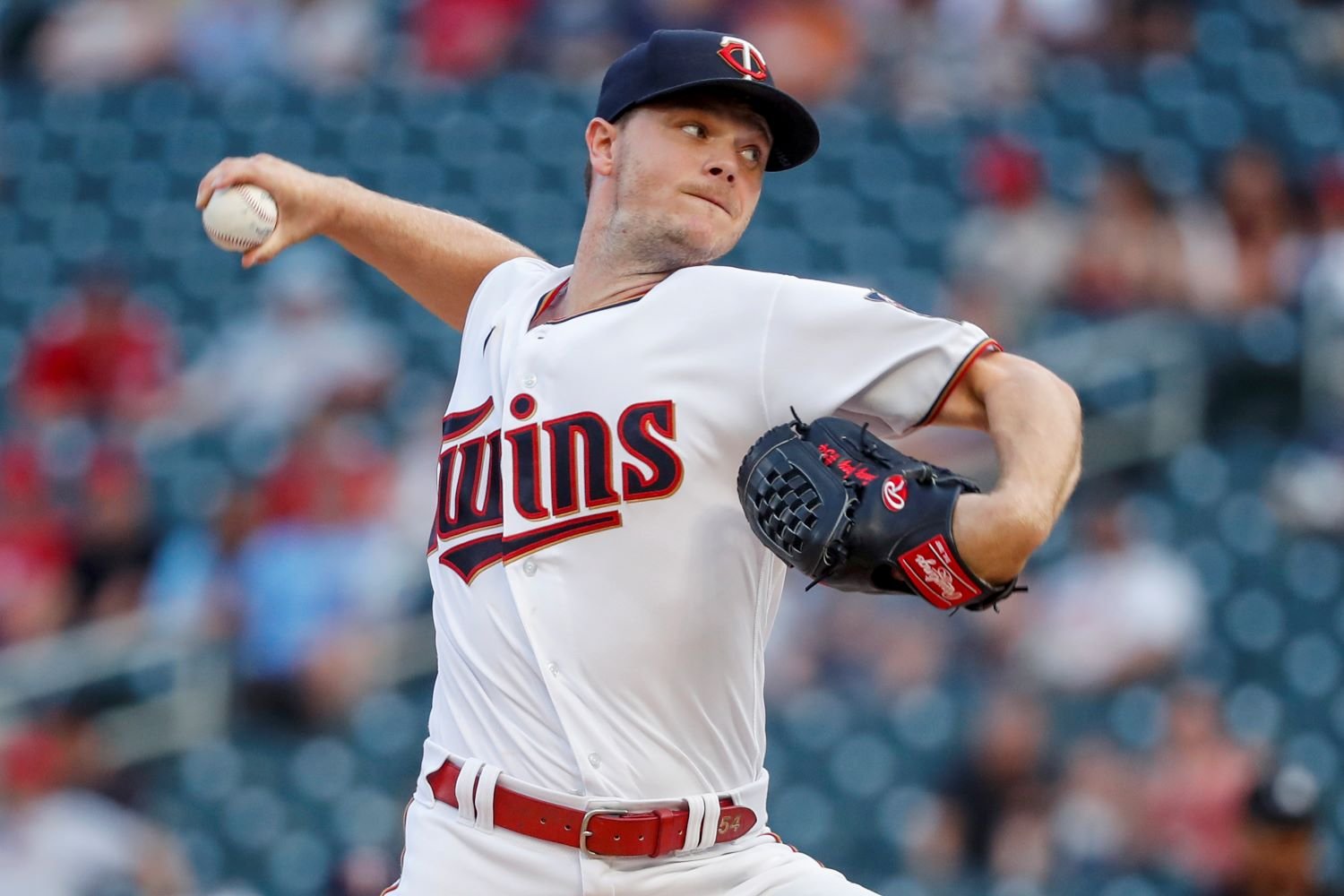 Box Score Starting Pitcher: Sonny Gray 6.0 IP, 3 H, 0 R, 0 ER, 1 BB, 10 SO Homeruns: Gilberto Celestino (2) Top 3 WPA: Sonny Gray .179, Caleb Thielbar .158, Gilberto Celestino .125 Win Probability Chart (via FanGraphs) After doing ‘just enough’ on Monday night, the Twins were back at it on Tuesday, looking to get a winning streak, and some momentum going in their efforts to chase down the Cleveland Guardians. Here’s how they lined up against Zack Greinke. Jorge Polanco was the notable absentee after being lifted from the series opener with knee soreness after an awkward slide. Prior to the game, a pensive sounding Sonny Gray, somewhat carefully, stated his desire to pitch deeper into ballgames. I’d love to hear folks thoughts on Gray’s interview in the comments. Gray Dominates Weak Royals Lineup Whatever Sonny Gray was alluding to in his pre-game interview, he sure delivered in the mound. The Twins recent weeks have been incredibly frustrating to watch. Games have been punctuated by a sputtering offense, poor pitching, or both. Boy, did Gray hold up his end of the bargain on Tuesday night. After cruising through six innings, Gray ran into trouble in the seventh, giving up back to back singles to Salvador Perez and Vinnie Pasquantino. Gray was close to his best however, throwing 61 strikes in 92 pitches while racking up ten strikeouts, tying a season high. Gray was relieved by Caleb Thielbar with two men on and no outs in the seventh innings. Lots of Hits, Not Enough Big Hits Early for Twins Offense The offensive showing was painfully familiar through the firsttwo-thirdss of the game. Through five innings, the Twins had managed 8 hit, but managed just three runs off Zack Greinke. Going back to their poor final two games in the Angels series, the Twins were 4 for their last 34 (.117) with runners in scoring position. The Twins scored twice in the second inning. After a Gio Urshela single, Gilberto Celestino reached on a fielding error. A Sandy Leon bunt scored Urshela, while a Luis Arraez single brought home Celestino. Celestino added a solo home run in his next at bat in the fourth inning, his second in his last five games. With limited right-handed flexibility in the lineup, Celestino developing any kind of line drive power would be a welcome surprise for the Twins. Thielbar Snuffs out Runners, Twins Add On Despite Gray running into trouble in the top of the seventh inning, the Twins had the perfect foil in Caleb Thielbar. With two men on and no outs, he pitched a scoreless frame, striking out two. Thielbar has been one of the Twins best relievers in 2022, and outside April, has been the lone bullpen success story to start the season with the Twins not name Jhoan Duran. The Twins did what they have struggled to do in recent games in the bottom of the seventh inning, add on. A Max Kepler groundout, Gio Urshela single, and a Nick Gordon double added on three runs, increasing the lead to 6-0 and offering the kind of all around offensive output the Twins will need to continue to win the AL Central. Michael Fulmer and Cole Sands pitched the final two (scoreless) innings of the game for Minnesota. In the bottom of the eighth, the Twins added three more runs, courtesy of singles from Jose Miranda, Gio Urshela, and Nick Gordon. After the wreckage had cleared, the Twins managed 16 hits and ended the game 6-18 with runners in scoring position. Elsewhere in the AL Central, the Guardians lost, allowing the Twins to close within a game of Cleveland, having played two less games. Bullpen Usage Chart FRI SAT SUN MON TUES TOT Duran 15 19 0 10 0 44 López 10 19 0 13 0 42 Fulmer 12 0 20 0 7 39 Thielbar 0 13 0 8 17 38 Jax 0 13 0 14 0 27 Megill 0 0 26 0 0 26 Pagan 0 9 10 0 0 19 Sands 0 0 0 0 19 19 Next Up On Wednesday, the Twins will conclude their series against Kansas City. Tyler Mahle goes for the Twins against Daniel Lynch for the Royals. First pitch is 12:10pm CT Postgame Interviews
- 40 comments
-
- 3
-

-
- sonny gray
- gilberto celestino
- (and 3 more)
-
This is a more than fair point, so let me expand on what I mean a little more. I think the biggest frustration at the moment, is the feeling of inevitability of what is going to happen after you have burned Jax and Duran. In this case, Jax was used in the seventh, Duran the eighth. I'm sure, in an ideal world, they would have loved to to use Duran again in the ninth, but he struggled (uncharacteristically). It's more than fair to shift this blame/narrative to a failing of the front office, it just felt like, in the game, when Williams and Hader were staggered in the 8th and 9th, compared to Jax and Duran in the 7th and 8th, it was advantage Brewers. The Twins have plenty of OK-ish MLB relievers, but realistically, they need two more guys who can perform in high leverage. Pagan, Duffey, Cotton, Smith - have all shown that they are categorically not those guys, but because there are only two (maybe three with Thielbar) really reliable relievers, they have to take turns in important innings, it usually goes poorly. If the write up tonight was a little gloomy, it's just because I perceive the bullpen construction as such an abject failure by this front office. I think the Twins need two good relievers to have a good October bullpen. This is especially true when you think about how October games are won (short starts, lots of pitching changes and matchup coordination). So back to the original point, absolutely fair, the pen was fine in this game, it just not constructed in a way that gives the Twins a shot at winning enough times when it comes down to our pen VS an opponents.
- 43 replies
-
- 5
-
-
- byron buxton
- gio urshela
- (and 2 more)
-
Brewers 7, Twins 6: Poor Pitching Dooms Twins to Drop Series Opener
Jamie Cameron posted an article in Twins
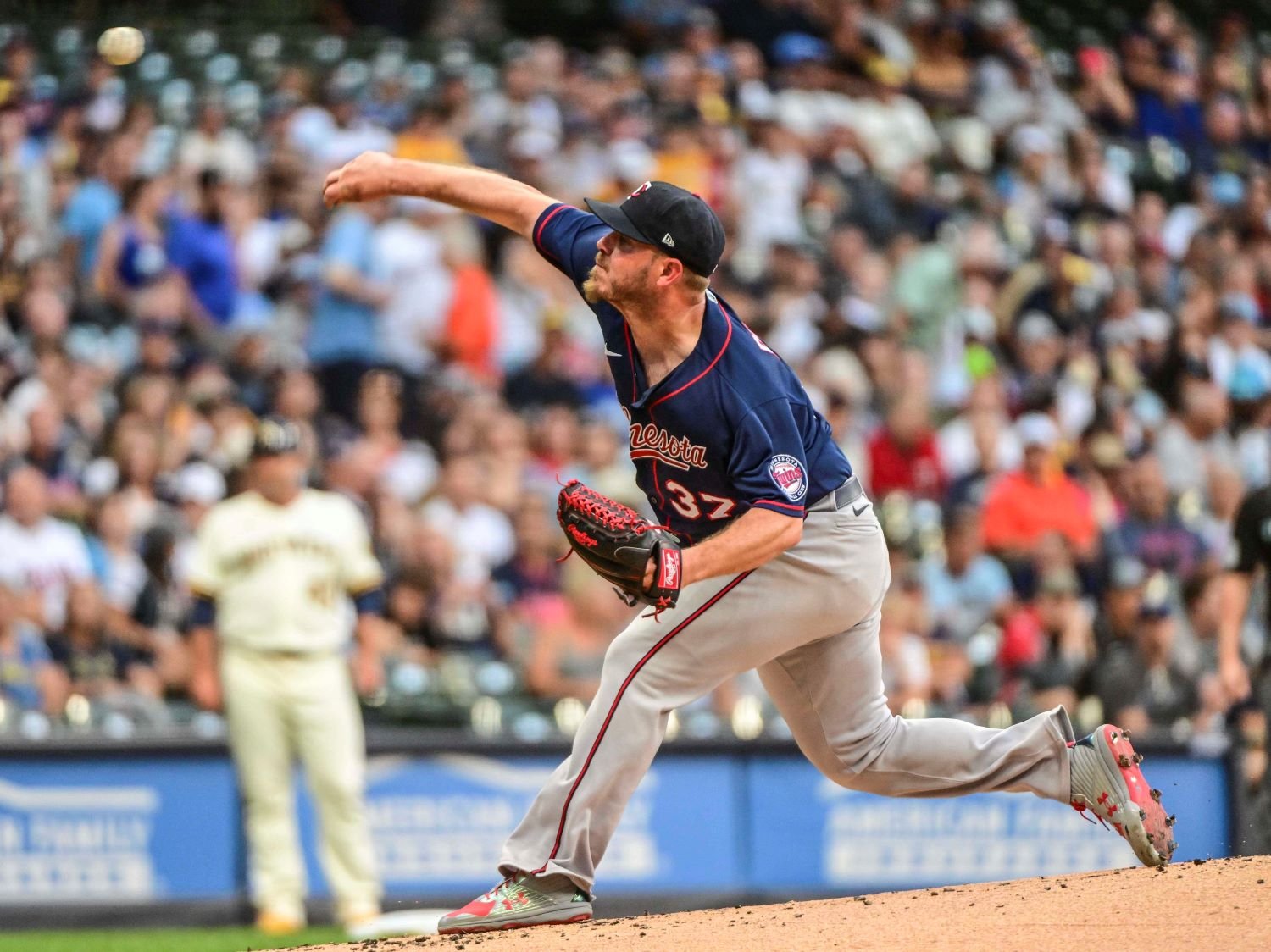 Box Score Starting Pitcher: Bundy 4.0 IP, 7 H, 5 R, 5 ER, 2 BB, 5 SO, 2 HR (77 pitches, 50 strikes) Homeruns: Buxton (24), Urshela (9) Bottom 3 WPA: Duffey -.360, Bundy -.327, Kirilloff -.155 Win Probability Chart (via FanGraphs) After an easy two-game sweep of the Tigers, Byron Buxton was looking to keep things moving in the right direction for the AL Central-leading Minnesota Twins, just one week away from the trade deadline. Buxton crushed a fastball 112 mph, 449 feet for a home run in the first at-bat of the inning. The Twins didn’t manage to add on, despite a Carlos Correa double and Kyle Garlick being gifted two bases by an errant infield throw. The end of the first inning and the bottom of the second were the perfect amalgam of the 2022 Twins weaknesses, rolled into a painfully predictable 10-minute sequence. In the bottom of the second Dylan Bundy gave up two soft singles, before surrendering a blistering, three-run home run to left field off the bat Hunter Renfroe. The Brewers added another run, increasing the lead to 4-1. It was the useful reminder no Twins fans needed, that Bundy is simply not an effective major league caliber starting pitcher. The margin of error, when topping out at 90 mph, is just too small. Jose Miranda laced a two-run double to left field in the top of the third inning to score Byron Buxton and Jorge Polanco, cutting the lead to 4-3. Bundy immediately returned the favor in the bottom of the third, surrendering another long home run to Luis Urias to make the lead 5-3. In the top of the fifth, the Twins took their second lead of the night. A Jose Miranda single and a walk from Jorge Polanco set the stage for an impressive three-run home run from Gio Urshela, who has made a habit of big moments in his first season in Minnesota. Joe Smith relieved Dylan Bundy. It went about as expected. Smith got through an inning, but gave up the game-tying run, a solo home run from Kolton Wong. Emilio Pagan followed in sixth and worked a scoreless inning, but the pitching order of Bundy, Smith, and Pagan was an obvious reminder of the Twins lack of high-end pitching depth against a fellow division leader. The Twins could have taken the lead in the top of the seventh. Jorge Polanco walked and Jose Miranda followed up with his third hit of the night, an infield single. A Gio Urshela fly ball looked as if it would drop but for a shoe-string intervention from Brewers centerfielder Jonathan Davis. Griffin Jax pitched a scoreless, efficient inning for the Twins in the seventh, taking the game into the eighth inning tied 6-6. Devin Williams pitched a scoreless eighth for the Brewers, making Twins hitters not named Luis Arraez look silly in the process. Jhoan Duran took over for the Twins in the bottom of the inning and struggled. After beginning the inning with a strikeout, the Brewers got a runner on first via a Luis Urias single. Two walks followed and Duran had loaded the bases (and walked two hitters for the first time in his career) with Willy Adames at the plate. After throwing nothin but triple digit fastballs, Duran peeled off a bowel-locking curveball that froze Adames to end the threat. Hader pitched a clean and much too easy ninth inning, getting Buxton, Correa, and Polanco on just nine pitches. Tyler Duffey relieved Duran, who had thrown 32 pitches in the eighth. After a quick out, Duffey surrendered a single and two walks to load the bases with one out. Luis Urias won the game for the Brewers on a sacrifice fly to right field. In a battle of the bullpens, the vastly superior bullpen will usually win. Outside of Joe Ryan, Sonny Gray, Griffin Jax, and Jhoan Duran the Twins pitching staff looks like an Escher painting of question marks at a critical juncture of their season. The Twins continue to teeter in the AL Central, seemingly the least flawed team in an ugly division, but, as currently constructed, so obviously falling short of the type of roster that could legitimately threaten in October. With the trade deadline imminent, the next week promises to be extremely interesting in Twins Territory. Bullpen Usage Chart FRI SAT SUN MON TUE TOT Duran 0 11 0 0 32 43 Duffey 0 11 0 0 25 36 Smith 0 0 16 0 17 33 Moran 0 28 0 0 0 28 Jax 0 0 13 0 12 25 Pagan 0 2 0 0 20 22 Cotton 0 0 11 0 0 11 Megill 0 7 0 0 0 7 Thielbar 0 0 0 0 0 0 Next Up On Wednesday, the Twins will conclude their series in Milwaukee. Chris Archer takes the mound for the Twins, against Corbin Burnes of the Brewers. First pitch is 1:10 CT Postgame Interviews
- 43 comments
-
- 1
-
-
- byron buxton
- gio urshela
- (and 2 more)
-
The Twins lost 7-6 to the Brewers on Tuesday. Despite an excellent fightback and a solid overall offensive performance, the Twins couldn't overcome a poor start from Dylan Bundy, and ran out of effective relivers at the end of the game. Box Score Starting Pitcher: Bundy 4.0 IP, 7 H, 5 R, 5 ER, 2 BB, 5 SO, 2 HR (77 pitches, 50 strikes) Homeruns: Buxton (24), Urshela (9) Bottom 3 WPA: Duffey -.360, Bundy -.327, Kirilloff -.155 Win Probability Chart (via FanGraphs) After an easy two-game sweep of the Tigers, Byron Buxton was looking to keep things moving in the right direction for the AL Central-leading Minnesota Twins, just one week away from the trade deadline. Buxton crushed a fastball 112 mph, 449 feet for a home run in the first at-bat of the inning. The Twins didn’t manage to add on, despite a Carlos Correa double and Kyle Garlick being gifted two bases by an errant infield throw. The end of the first inning and the bottom of the second were the perfect amalgam of the 2022 Twins weaknesses, rolled into a painfully predictable 10-minute sequence. In the bottom of the second Dylan Bundy gave up two soft singles, before surrendering a blistering, three-run home run to left field off the bat Hunter Renfroe. The Brewers added another run, increasing the lead to 4-1. It was the useful reminder no Twins fans needed, that Bundy is simply not an effective major league caliber starting pitcher. The margin of error, when topping out at 90 mph, is just too small. Jose Miranda laced a two-run double to left field in the top of the third inning to score Byron Buxton and Jorge Polanco, cutting the lead to 4-3. Bundy immediately returned the favor in the bottom of the third, surrendering another long home run to Luis Urias to make the lead 5-3. In the top of the fifth, the Twins took their second lead of the night. A Jose Miranda single and a walk from Jorge Polanco set the stage for an impressive three-run home run from Gio Urshela, who has made a habit of big moments in his first season in Minnesota. Joe Smith relieved Dylan Bundy. It went about as expected. Smith got through an inning, but gave up the game-tying run, a solo home run from Kolton Wong. Emilio Pagan followed in sixth and worked a scoreless inning, but the pitching order of Bundy, Smith, and Pagan was an obvious reminder of the Twins lack of high-end pitching depth against a fellow division leader. The Twins could have taken the lead in the top of the seventh. Jorge Polanco walked and Jose Miranda followed up with his third hit of the night, an infield single. A Gio Urshela fly ball looked as if it would drop but for a shoe-string intervention from Brewers centerfielder Jonathan Davis. Griffin Jax pitched a scoreless, efficient inning for the Twins in the seventh, taking the game into the eighth inning tied 6-6. Devin Williams pitched a scoreless eighth for the Brewers, making Twins hitters not named Luis Arraez look silly in the process. Jhoan Duran took over for the Twins in the bottom of the inning and struggled. After beginning the inning with a strikeout, the Brewers got a runner on first via a Luis Urias single. Two walks followed and Duran had loaded the bases (and walked two hitters for the first time in his career) with Willy Adames at the plate. After throwing nothin but triple digit fastballs, Duran peeled off a bowel-locking curveball that froze Adames to end the threat. Hader pitched a clean and much too easy ninth inning, getting Buxton, Correa, and Polanco on just nine pitches. Tyler Duffey relieved Duran, who had thrown 32 pitches in the eighth. After a quick out, Duffey surrendered a single and two walks to load the bases with one out. Luis Urias won the game for the Brewers on a sacrifice fly to right field. In a battle of the bullpens, the vastly superior bullpen will usually win. Outside of Joe Ryan, Sonny Gray, Griffin Jax, and Jhoan Duran the Twins pitching staff looks like an Escher painting of question marks at a critical juncture of their season. The Twins continue to teeter in the AL Central, seemingly the least flawed team in an ugly division, but, as currently constructed, so obviously falling short of the type of roster that could legitimately threaten in October. With the trade deadline imminent, the next week promises to be extremely interesting in Twins Territory. Bullpen Usage Chart FRI SAT SUN MON TUE TOT Duran 0 11 0 0 32 43 Duffey 0 11 0 0 25 36 Smith 0 0 16 0 17 33 Moran 0 28 0 0 0 28 Jax 0 0 13 0 12 25 Pagan 0 2 0 0 20 22 Cotton 0 0 11 0 0 11 Megill 0 7 0 0 0 7 Thielbar 0 0 0 0 0 0 Next Up On Wednesday, the Twins will conclude their series in Milwaukee. Chris Archer takes the mound for the Twins, against Corbin Burnes of the Brewers. First pitch is 1:10 CT Postgame Interviews View full article
-
The 2022 MLB Draft is in the books. Aside from an outstanding first day, how did the Twins do? What conclusions can we draw from their picks? Here are some insights and some thoughts from Sean Johnson, the Twins Vice President, Amateur Scouting. An Update on the Consensus Big Board The Consensus Big Board worked well in its first year. All of the consensus top 56 we profiled at Twins Daily were drafted. Only 3 players in the 76 I ranked (Tristan Smith, Cam Smith, and Max Martin) were not drafted. They are all high school players going to college. The Minnesota Twins gained 29 draft spots of consensus ranking value with their first two picks. Brooks Lee (ranked 4th, selected 8th), and Connor Prielipp (ranked 23rd, selected 48th), both reflected high value plays by the Twins front office. Barring health issues (which is a big hurdle to clear), the first two picks played out perfectly. Additionally, the consensus board was pretty accurate in the first few rounds. After day one (through 80 picks), 63 of our top 70 players had been drafted. That’s certainly something to build on for next year. In 2023, some of my thoughts on additions will be: Adding more sources (Fangraphs, Perfect Game, etc.) Expanding to 100 picks Limiting the writeups I have a suspicion that the usefulness of the board will be capped at around 75 players, but we’ll use next year to test that theory. Thanks to everyone who commented, gave feedback and interacted with all our pre-draft content at Twins Daily. Now, onto the Twins draft. After Lee and Prielipp, the Twins went heavy on signable college players. That’s not necessarily a trend. Twins VP of Amateur Scouting Sean Johnson says that the Twins "drafted players they liked organically", as opposed to trying to explicitly make savings in later rounds to pay up for initial picks. There were, however, some noticeable trends this year among picks. Here are three. The Twins Targeted Athletes ‘Geez, how many shortstops do the Twins need?' An incredibly tiring refrain tweeted out by many an egg-profile picture sporting twitter account on draft day. The answer is…an infinite number. The Twins picked six shortstops in twenty rounds of the 2022 draft. Brooks Lee (1st), Tanner Schobel (CB-B), Ben Ross (5th), Dalton Shuffield (10th), Omari Daniel (14th), and Jankel Ortiz (16th). Simply, shortstops are typically the best athletes on a given team, the Twins (like many other teams) target athletic players. If a player can play at short, they can play anywhere on the infield (and likely other positions), so please, let’s toss the ridiculous notion that the 'Twins drafted too many shortstops’ out the window forever. Twins are Buying Power Breakouts This may seem obvious, but I think there are some noteworthy case studies here. Competitive Balance pick Tanner Schobel (who Jeremy Nygaard reported has already reached an agreement with the Twins) had a power breakout in 2022. He went from seven home runs and 10 doubles in 2021 to 19 home runs in 2022 with increased elevation and pull-side power. Jorel Ortega, the Twins 6th round pick (and another middle infielder), had a similar breakthrough in 2022. He hit 18 home runs and slugged .672 for the Vols, compared to just one home run and .296 slugging in 2021 in his return from Tommy John surgery. "Just a really strong performer on one of the best college teams in America", says Sean Johnson. Although Ortega is an extreme example, the Twins draft class is littered with them, whether in college, the Cape, or the Northwoods League. Ben Ross is another example. "It's a higher bar to clear (coming from a Division II school), especially on our model, but he held up well on our board", says Johnson of Ross. The Twins are known to value exit velocity in their model. They are also jumping on players who have breakthrough years as a development that may translate to the professional level. Twins Value K/BB Ratio for Pitchers, Confident in Their Ability to add Velocity As John Vittas (play-by-play for Fort Myers) alluded to, the Twins use K:BB as a driving metric for their pitchers. If we look at the pitchers drafted outside of the three mentioned by Vittas, the trend continues: Andrew Morris (91 K, 28 BB) Ben Ethridge (39 K, 7 BB) Zachary Veen (59 K, 3 BB) Garrett McMillan (83 K, 26 BB) Johnson had plenty of interesting insights to share regarding the pitchers the Twins selected. "In these rounds (day 2 and 3), you're looking for one special pitch, something unique", before adding that the Twins feel extremely confident in their player development department in adding velocity to incoming pitchers. Interestingly, Johnson also mentioned careful consideration of the school a pitcher attended, highlighting the additional development possibilities for players who had less access to elite coaching and playing technology in their college programs. On specific pitchers, Johnson had additional insights. "Andrew Morris is a good strike thrower, four solid pitches across the board, we see him as a starter for us". On Zebby Matthews, Johnson noted, "We had him here for a pre-draft workout. He has a chance to throw really hard." When prompted to reflect on the success of last year's draft, particularly with pitchers (Hajjar, Povich, Festa etc.), Johnson noted that no one could have predicted Festa's breakout season, even the scouts who advocated for drafting him. "If you have draft ten guys like him, one might have a breakthrough like that," shares Johnson. What’s not yet clear to me is the extent to which the Twins target raw velocity in their pitchers. In a recent graphic (that I now cannot find), the MLB team was producing some of the most consistently high exit velocities and some of the most consistently low velocities from pitching. It’s likely the front office is working to course correct this in the minors and it just hasn’t shown up yet at the MLB level (besides Duran). What are your takeaways from the draft? What players are you excited to watch? Any Twins draft regrets? View full article
- 11 replies
-
- 1
-
-
- tanner schobel
- brooks lee
- (and 3 more)
-
.jpg.9f4de750d65fa15e2bf24daa63f28bd9.jpg.f9ed298b196d7fee5816b934f26e46af.jpg) An Update on the Consensus Big Board The Consensus Big Board worked well in its first year. All of the consensus top 56 we profiled at Twins Daily were drafted. Only 3 players in the 76 I ranked (Tristan Smith, Cam Smith, and Max Martin) were not drafted. They are all high school players going to college. The Minnesota Twins gained 29 draft spots of consensus ranking value with their first two picks. Brooks Lee (ranked 4th, selected 8th), and Connor Prielipp (ranked 23rd, selected 48th), both reflected high value plays by the Twins front office. Barring health issues (which is a big hurdle to clear), the first two picks played out perfectly. Additionally, the consensus board was pretty accurate in the first few rounds. After day one (through 80 picks), 63 of our top 70 players had been drafted. That’s certainly something to build on for next year. In 2023, some of my thoughts on additions will be: Adding more sources (Fangraphs, Perfect Game, etc.) Expanding to 100 picks Limiting the writeups I have a suspicion that the usefulness of the board will be capped at around 75 players, but we’ll use next year to test that theory. Thanks to everyone who commented, gave feedback and interacted with all our pre-draft content at Twins Daily. Now, onto the Twins draft. After Lee and Prielipp, the Twins went heavy on signable college players. That’s not necessarily a trend. Twins VP of Amateur Scouting Sean Johnson says that the Twins "drafted players they liked organically", as opposed to trying to explicitly make savings in later rounds to pay up for initial picks. There were, however, some noticeable trends this year among picks. Here are three. The Twins Targeted Athletes ‘Geez, how many shortstops do the Twins need?' An incredibly tiring refrain tweeted out by many an egg-profile picture sporting twitter account on draft day. The answer is…an infinite number. The Twins picked six shortstops in twenty rounds of the 2022 draft. Brooks Lee (1st), Tanner Schobel (CB-B), Ben Ross (5th), Dalton Shuffield (10th), Omari Daniel (14th), and Jankel Ortiz (16th). Simply, shortstops are typically the best athletes on a given team, the Twins (like many other teams) target athletic players. If a player can play at short, they can play anywhere on the infield (and likely other positions), so please, let’s toss the ridiculous notion that the 'Twins drafted too many shortstops’ out the window forever. Twins are Buying Power Breakouts This may seem obvious, but I think there are some noteworthy case studies here. Competitive Balance pick Tanner Schobel (who Jeremy Nygaard reported has already reached an agreement with the Twins) had a power breakout in 2022. He went from seven home runs and 10 doubles in 2021 to 19 home runs in 2022 with increased elevation and pull-side power. Jorel Ortega, the Twins 6th round pick (and another middle infielder), had a similar breakthrough in 2022. He hit 18 home runs and slugged .672 for the Vols, compared to just one home run and .296 slugging in 2021 in his return from Tommy John surgery. "Just a really strong performer on one of the best college teams in America", says Sean Johnson. Although Ortega is an extreme example, the Twins draft class is littered with them, whether in college, the Cape, or the Northwoods League. Ben Ross is another example. "It's a higher bar to clear (coming from a Division II school), especially on our model, but he held up well on our board", says Johnson of Ross. The Twins are known to value exit velocity in their model. They are also jumping on players who have breakthrough years as a development that may translate to the professional level. Twins Value K/BB Ratio for Pitchers, Confident in Their Ability to add Velocity As John Vittas (play-by-play for Fort Myers) alluded to, the Twins use K:BB as a driving metric for their pitchers. If we look at the pitchers drafted outside of the three mentioned by Vittas, the trend continues: Andrew Morris (91 K, 28 BB) Ben Ethridge (39 K, 7 BB) Zachary Veen (59 K, 3 BB) Garrett McMillan (83 K, 26 BB) Johnson had plenty of interesting insights to share regarding the pitchers the Twins selected. "In these rounds (day 2 and 3), you're looking for one special pitch, something unique", before adding that the Twins feel extremely confident in their player development department in adding velocity to incoming pitchers. Interestingly, Johnson also mentioned careful consideration of the school a pitcher attended, highlighting the additional development possibilities for players who had less access to elite coaching and playing technology in their college programs. On specific pitchers, Johnson had additional insights. "Andrew Morris is a good strike thrower, four solid pitches across the board, we see him as a starter for us". On Zebby Matthews, Johnson noted, "We had him here for a pre-draft workout. He has a chance to throw really hard." When prompted to reflect on the success of last year's draft, particularly with pitchers (Hajjar, Povich, Festa etc.), Johnson noted that no one could have predicted Festa's breakout season, even the scouts who advocated for drafting him. "If you have draft ten guys like him, one might have a breakthrough like that," shares Johnson. What’s not yet clear to me is the extent to which the Twins target raw velocity in their pitchers. In a recent graphic (that I now cannot find), the MLB team was producing some of the most consistently high exit velocities and some of the most consistently low velocities from pitching. It’s likely the front office is working to course correct this in the minors and it just hasn’t shown up yet at the MLB level (besides Duran). What are your takeaways from the draft? What players are you excited to watch? Any Twins draft regrets?
An Update on the Consensus Big Board The Consensus Big Board worked well in its first year. All of the consensus top 56 we profiled at Twins Daily were drafted. Only 3 players in the 76 I ranked (Tristan Smith, Cam Smith, and Max Martin) were not drafted. They are all high school players going to college. The Minnesota Twins gained 29 draft spots of consensus ranking value with their first two picks. Brooks Lee (ranked 4th, selected 8th), and Connor Prielipp (ranked 23rd, selected 48th), both reflected high value plays by the Twins front office. Barring health issues (which is a big hurdle to clear), the first two picks played out perfectly. Additionally, the consensus board was pretty accurate in the first few rounds. After day one (through 80 picks), 63 of our top 70 players had been drafted. That’s certainly something to build on for next year. In 2023, some of my thoughts on additions will be: Adding more sources (Fangraphs, Perfect Game, etc.) Expanding to 100 picks Limiting the writeups I have a suspicion that the usefulness of the board will be capped at around 75 players, but we’ll use next year to test that theory. Thanks to everyone who commented, gave feedback and interacted with all our pre-draft content at Twins Daily. Now, onto the Twins draft. After Lee and Prielipp, the Twins went heavy on signable college players. That’s not necessarily a trend. Twins VP of Amateur Scouting Sean Johnson says that the Twins "drafted players they liked organically", as opposed to trying to explicitly make savings in later rounds to pay up for initial picks. There were, however, some noticeable trends this year among picks. Here are three. The Twins Targeted Athletes ‘Geez, how many shortstops do the Twins need?' An incredibly tiring refrain tweeted out by many an egg-profile picture sporting twitter account on draft day. The answer is…an infinite number. The Twins picked six shortstops in twenty rounds of the 2022 draft. Brooks Lee (1st), Tanner Schobel (CB-B), Ben Ross (5th), Dalton Shuffield (10th), Omari Daniel (14th), and Jankel Ortiz (16th). Simply, shortstops are typically the best athletes on a given team, the Twins (like many other teams) target athletic players. If a player can play at short, they can play anywhere on the infield (and likely other positions), so please, let’s toss the ridiculous notion that the 'Twins drafted too many shortstops’ out the window forever. Twins are Buying Power Breakouts This may seem obvious, but I think there are some noteworthy case studies here. Competitive Balance pick Tanner Schobel (who Jeremy Nygaard reported has already reached an agreement with the Twins) had a power breakout in 2022. He went from seven home runs and 10 doubles in 2021 to 19 home runs in 2022 with increased elevation and pull-side power. Jorel Ortega, the Twins 6th round pick (and another middle infielder), had a similar breakthrough in 2022. He hit 18 home runs and slugged .672 for the Vols, compared to just one home run and .296 slugging in 2021 in his return from Tommy John surgery. "Just a really strong performer on one of the best college teams in America", says Sean Johnson. Although Ortega is an extreme example, the Twins draft class is littered with them, whether in college, the Cape, or the Northwoods League. Ben Ross is another example. "It's a higher bar to clear (coming from a Division II school), especially on our model, but he held up well on our board", says Johnson of Ross. The Twins are known to value exit velocity in their model. They are also jumping on players who have breakthrough years as a development that may translate to the professional level. Twins Value K/BB Ratio for Pitchers, Confident in Their Ability to add Velocity As John Vittas (play-by-play for Fort Myers) alluded to, the Twins use K:BB as a driving metric for their pitchers. If we look at the pitchers drafted outside of the three mentioned by Vittas, the trend continues: Andrew Morris (91 K, 28 BB) Ben Ethridge (39 K, 7 BB) Zachary Veen (59 K, 3 BB) Garrett McMillan (83 K, 26 BB) Johnson had plenty of interesting insights to share regarding the pitchers the Twins selected. "In these rounds (day 2 and 3), you're looking for one special pitch, something unique", before adding that the Twins feel extremely confident in their player development department in adding velocity to incoming pitchers. Interestingly, Johnson also mentioned careful consideration of the school a pitcher attended, highlighting the additional development possibilities for players who had less access to elite coaching and playing technology in their college programs. On specific pitchers, Johnson had additional insights. "Andrew Morris is a good strike thrower, four solid pitches across the board, we see him as a starter for us". On Zebby Matthews, Johnson noted, "We had him here for a pre-draft workout. He has a chance to throw really hard." When prompted to reflect on the success of last year's draft, particularly with pitchers (Hajjar, Povich, Festa etc.), Johnson noted that no one could have predicted Festa's breakout season, even the scouts who advocated for drafting him. "If you have draft ten guys like him, one might have a breakthrough like that," shares Johnson. What’s not yet clear to me is the extent to which the Twins target raw velocity in their pitchers. In a recent graphic (that I now cannot find), the MLB team was producing some of the most consistently high exit velocities and some of the most consistently low velocities from pitching. It’s likely the front office is working to course correct this in the minors and it just hasn’t shown up yet at the MLB level (besides Duran). What are your takeaways from the draft? What players are you excited to watch? Any Twins draft regrets?- 11 comments
-
- 8
-
-
- tanner schobel
- brooks lee
- (and 3 more)
-
I think good points here. The Twins were interested in him at 8 (or certainly ranked him higher than 48) so I think it's likely he will get more than slot AND I think it's likely he signs. You fall if you don't have a track record in college, he doesn't have a track record. So, absolutely it's a 'risky' pick in that sense. Twins will be extremely careful in bringing him along though. I feel pretty confident about it as a play with major upside.
-
I think a fairly safe conclusion to draw from this pick, is the Twins are going to deal from the dearth of infield prospects they have at the trade deadline. I like Steer as a comp. I also like pre-power up Brian Dozier.
-
2022 MLB Draft Day 2 Thread
Jamie Cameron replied to Jeremy Nygaard's topic in Twins Minor League Talk
For folks interested. Here's some updated on the Consensus Board, which worked pretty well as a first time concept. 63 of the top 70 players on the board were taken in the first 80 picks (aka last night). I only ranked 75 consensus players (and wrote up 56) but that's pretty encouraging preliminary data given how much of a hot mess the draft usually is. Twins don't pick again until 114, but here's the few remaining players on the board and their overall ranking (unless I missed someone which is possible because I got deep into the weeds writing about Prielipp and Schobel last night): Brock Porter - 13 (going to Clemson?) Jonathan Cannon - 52 (RHP, Georgia) Tristian Smith - 61 (LHP, prep) Cameron Smith - 63 (SS, prep) Brady Neal - 64 (C, prep) Brandon Sproat - 68 (RHP, Florida) Gavin Kilen - 70 (SS, prep) Connor Staine - 71 (RHP, Central Florida) Gavin Turley - 72 (OF, Prep) Jake Madden - 74 (RHP, JUCO) Max Martin - 75 (SS, Prep) Sonny DiChiaara - 76 (1B, Auburn) -
2022 MLB Draft Day 2 Thread
Jamie Cameron replied to Jeremy Nygaard's topic in Twins Minor League Talk
Man, just came here to say, what a first day! Twins grab a consensus top 7 players AND one of the pitchers they were linked with for number eight overall. Genuinely amped about that outcome. Also just want to gas up Jeremy. The amount he's put into the threads, the content, the planning etc. for the draft (both here and at Brewer Fanatic) is amazing. Enjoy day two everyone. -
The Minnesota Twins selected Tanner Schobel at number 68 overall in the 2022 MLB Draft. Schobel is a shortstop out of Virginia Tech University. Tanner Schobel is a 5'10, 170-pound shortstop out of Virginia Tech. Although he didn't make the consensus top 56 players, Schobel checked in at 73rd overall on our consensus big board and is drafted around the range one would expect based on his evaluations. Schobel is young as a draft-eligible sophomore (he recently turned 21). In his freshman season at Virginia Tech who moved around the infield frequently, spending time at shortstop and second base. In his first season with the Hokies, he had a middling offensive output, putting up .279/.359/.441 with 7 home runs and 10 doubles. In between his freshman and sophomore seasons at Virginia Tech, Schobel played in the Cape Cod league, managing a .378 OBP and 3 home runs in 29 games. He showed additional pop in the 2022 season, hitting .362/.445/.689 with 19 home runs and 74 RBIs in 59 games and lifting more batted balls in the air, particularly to the pull side. Schobel is a solid player defensively and has versatility around the infield. He profiles as a good utility player who can move around the infield and do everything solidly. While his pull side power may not hold up professionally in a wooden bat environment, Schobel will still have solid line drive power, particularly to the pull side. Schobel's long term upside with the Twins will hinge on whether his newly developed pull side power can be maintained at the pro level (the Twins have been developing bats well in recent years). If it can, he has a chance to stick as a regular instead of a utility man. Either way, he will be a useful prospect for the Twins. The slot value for the #68 pick in $1 million. Schobel was recommended by Twins scout John Wilson What do you think of the Twins selecting Tanner Schobel at #68 overall? Which of the Twins picks from day one of the draft are you most excited for? Share your thoughts in the comments. View full article
-
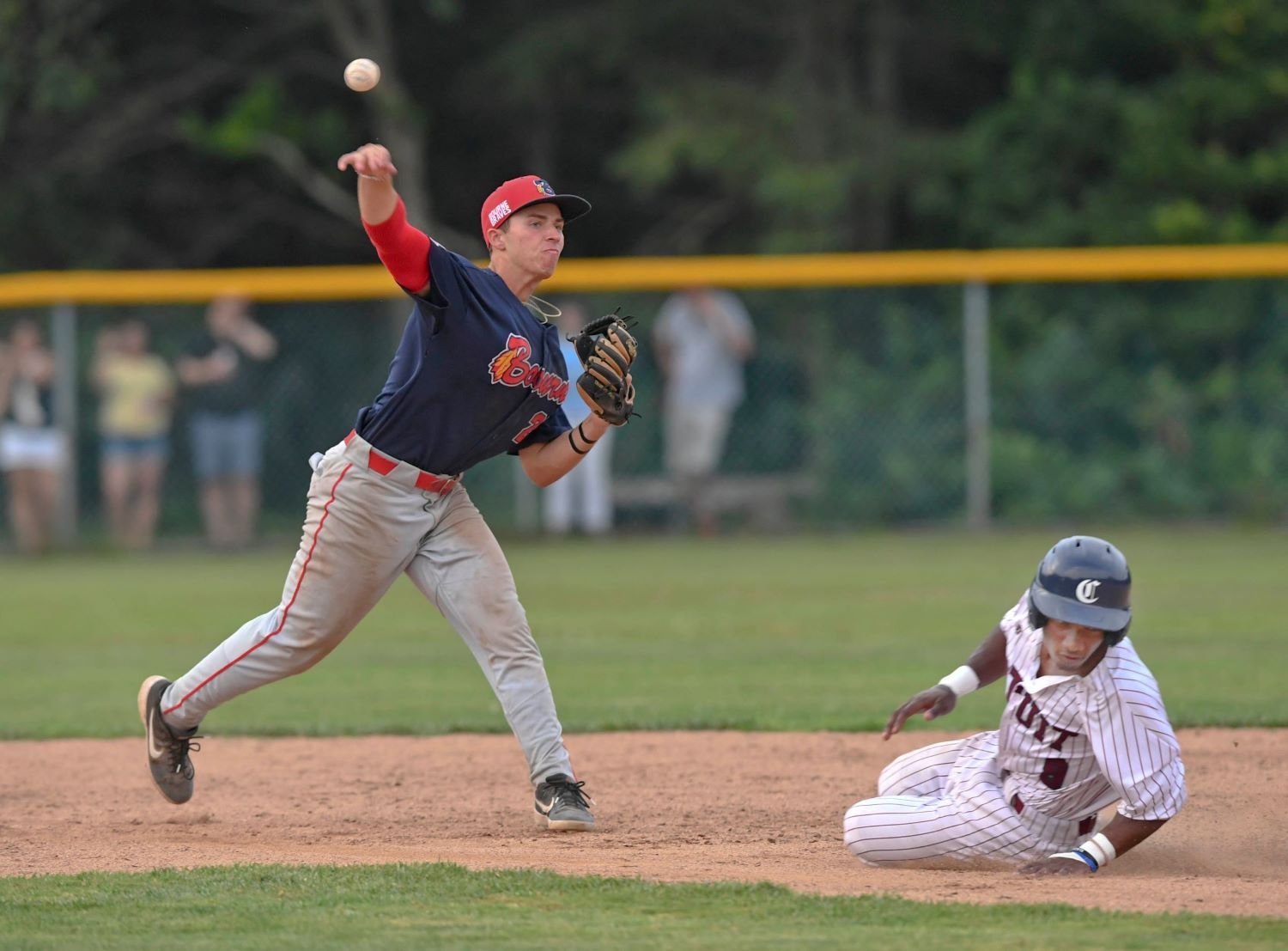 Tanner Schobel is a 5'10, 170-pound shortstop out of Virginia Tech. Although he didn't make the consensus top 56 players, Schobel checked in at 73rd overall on our consensus big board and is drafted around the range one would expect based on his evaluations. Schobel is young as a draft-eligible sophomore (he recently turned 21). In his freshman season at Virginia Tech who moved around the infield frequently, spending time at shortstop and second base. In his first season with the Hokies, he had a middling offensive output, putting up .279/.359/.441 with 7 home runs and 10 doubles. In between his freshman and sophomore seasons at Virginia Tech, Schobel played in the Cape Cod league, managing a .378 OBP and 3 home runs in 29 games. He showed additional pop in the 2022 season, hitting .362/.445/.689 with 19 home runs and 74 RBIs in 59 games and lifting more batted balls in the air, particularly to the pull side. Schobel is a solid player defensively and has versatility around the infield. He profiles as a good utility player who can move around the infield and do everything solidly. While his pull side power may not hold up professionally in a wooden bat environment, Schobel will still have solid line drive power, particularly to the pull side. Schobel's long term upside with the Twins will hinge on whether his newly developed pull side power can be maintained at the pro level (the Twins have been developing bats well in recent years). If it can, he has a chance to stick as a regular instead of a utility man. Either way, he will be a useful prospect for the Twins. The slot value for the #68 pick in $1 million. Schobel was recommended by Twins scout John Wilson What do you think of the Twins selecting Tanner Schobel at #68 overall? Which of the Twins picks from day one of the draft are you most excited for? Share your thoughts in the comments.
 -
With the 48th overall pick in the 2022 MLB Draft, the Minnesota Twins selected Connor Prielipp, a left-handed pitcher out of the University of Alabama. Industry buzz had the Twins interested in Connor Prielipp at number eight overall in the draft. Instead, they were able to nab him with their second pick at #48 overall. The slot value for the #48 pick is $1.62 million. Jeremy Nygaard drafted Prielipp at #8 overall for the Twins in the Prospects Live Mock Draft. Prielipp already has two plus pitches. The first is a 60 grade fastball that sits 93-95 mph. His slider is his best secondary pitch and one of the better offerings in the entire draft. It generated 50% whiffs when he threw it in college. Finally, he has a serviceable changeup that is already above average, and can be developed further. Prielipp had good command pre-surgery, but this may take some time to return. Prielipp didn't allow a run in 21 innings pitched in the 2021 season before COVID halted play in the SEC. He struck out 35 hitters. Prielipp is 6'2, 205 pounds and still has a ton of projectability to add velocity, an endeavor the Twins have shown proficiency with. When he is fully recovered, I'd expect them to be able to add a tick or two to his fastball as he fills out more. Prielipp missed the entire 2022 season due to Tommy John surgery. The Tomah, Wisconsin native was in line to be a top ten overall talent in the draft has he remained healthy. With his surgery and rehab behind him, Prielipp was able to throw multiple times in front of talent evaluators in late spring, including at the MLB Combine. Expect the Twins to bring Prielipp along slowly, but the upside here is a front of the rotation arm. Prielipp fell due to such a limited track record. If he can remain healthy, the Twins may have a steal at 48 overall. Prielipp was recommended by Twins scout Matt Williams. What do you think of the Twins taking Connor Prielipp at #48 overall? View full article
-
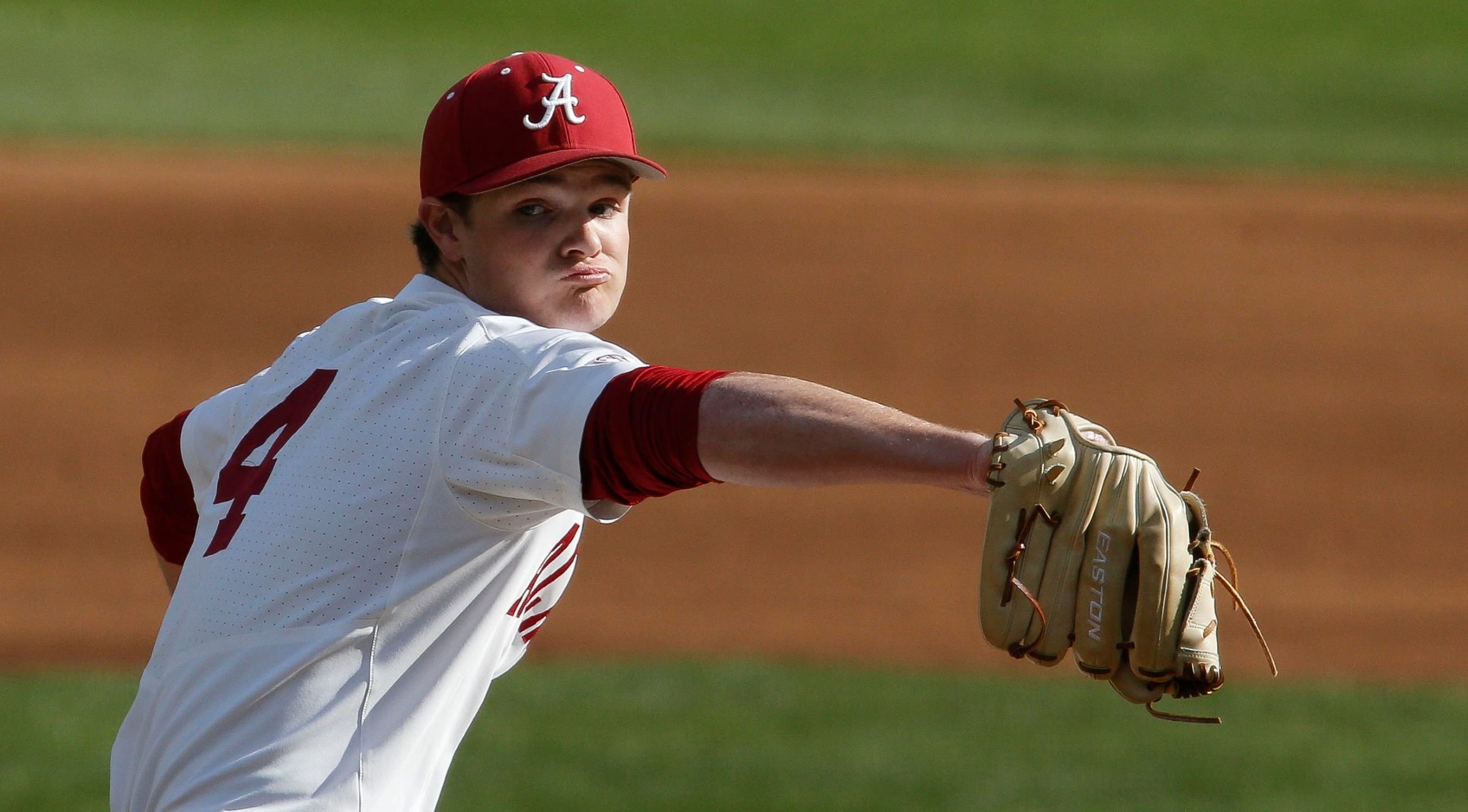 Industry buzz had the Twins interested in Connor Prielipp at number eight overall in the draft. Instead, they were able to nab him with their second pick at #48 overall. The slot value for the #48 pick is $1.62 million. Jeremy Nygaard drafted Prielipp at #8 overall for the Twins in the Prospects Live Mock Draft. Prielipp already has two plus pitches. The first is a 60 grade fastball that sits 93-95 mph. His slider is his best secondary pitch and one of the better offerings in the entire draft. It generated 50% whiffs when he threw it in college. Finally, he has a serviceable changeup that is already above average, and can be developed further. Prielipp had good command pre-surgery, but this may take some time to return. Prielipp didn't allow a run in 21 innings pitched in the 2021 season before COVID halted play in the SEC. He struck out 35 hitters. Prielipp is 6'2, 205 pounds and still has a ton of projectability to add velocity, an endeavor the Twins have shown proficiency with. When he is fully recovered, I'd expect them to be able to add a tick or two to his fastball as he fills out more. Prielipp missed the entire 2022 season due to Tommy John surgery. The Tomah, Wisconsin native was in line to be a top ten overall talent in the draft has he remained healthy. With his surgery and rehab behind him, Prielipp was able to throw multiple times in front of talent evaluators in late spring, including at the MLB Combine. Expect the Twins to bring Prielipp along slowly, but the upside here is a front of the rotation arm. Prielipp fell due to such a limited track record. If he can remain healthy, the Twins may have a steal at 48 overall. Prielipp was recommended by Twins scout Matt Williams. What do you think of the Twins taking Connor Prielipp at #48 overall?
 -
Ahead of the draft, which starts on Sunday night, let's check in with the Twins 2021 draft to see how last year's draft class is shaking out. 2022 Prospect PreviewToo often, as the draft approaches, we focus on the first-round pick and nothing else. That’s a mistake we’re doomed to repeat over and over again. It’s also true retrospectively, and it clouds our analysis and judgment. For example, thinking about the 2020 draft, folks immediately think about Aaron Sabato and less about Marco Raya. With that in mind ahead of draft kickoff on Sunday night, let’s check in with the Minnesota Twins draft class of 2021. It’s shaping up to be incredibly impressive. Round 1: Chase Petty, RHP (A-Ball) Petty was an exciting pick for the Twins, bucking a trend of not selecting prep pitchers in early rounds. A 102 mph fastball also added to the excitement (let’s hope they stick with the high-velocity trend). Petty was traded in the off-season to the Reds for Sonny Gray. So far in 2022, Petty has struck out 58 in 61 innings of work to go along with a 3.39 ERA in A ball, a solid start for a 19-year-old. (2022 Prospect Preview) (Preseason #9 Prospect) Competitive Balance A: Noah Miller, SS (Fort Myers) Miller is still just 19 and has spent all of 2022 at Fort Myers. A legitimate shortstop prospect, he has the defensive chops, movement, and range to stay at the position long-term. While Miller’s hitting is still a work in progress (.238 average) he has incredible strike zone control and has worked 50 walks in 73 games in 2022 (.365 OBP). Patience is key with Miller, but things are ticking over nicely in Fort Myers. (2022 Prospect Preview) (Sire of Ft. Myers Consideration) 2: Steven Hajjar, LHP (Fort Myers) The first of a pair of talented left-handed starters drafted by the Twins, Hajjar has battled injuries in 2022 but has been completely dominant when on the mound. Despite walks being an issue (23 in 37 innings), Hajjar has struck out 61 batters and limited opposing offenses to a .160 batting average. (2022 Prospect Preview) 3: Cade Povich, LHP (Cedar Rapids) Povich is another exciting talent from the early rounds of the 2021 draft that is proving abundant for the organization. Povich has a 3.62 ERA at Cedar Rapids in 69 2/3 innings of work in 2022. He’s also managed an eye-popping 97 strikeouts in that time. Povich has added velocity as he has filled out and has a ton more projectability in his frame. He’s one to watch for the Twins. (2022 Prospect Preview) (Twins Spotlight Interview) 4: Christian Encarnacion-Strand, 1B/3B (Wichita) Encarnacion Strand is another incredible success story in 2022, with a Jose Miranda-like breakout. He’s already crushed 26 home runs in his first 98 minor league games across three levels. After putting up a .370 OBP at Cedar Rapids he was promoted to Wichita. In his second Double-A game on Friday night, he clobbered two home runs. In 76 games this season across two levels, he’s managed a .616 SLG, 22 home runs, and 74 RBIs. Based purely on performance, Encarnacion-Strand would be a first-round pick in a redraft of 2021 selections. 5: Christian MacLeod, LHP (Rookie Ball) MacLeod has pitched just 1 2/3 innings so far in his pro career. His career with the Twins is yet to get off the ground because he had Tommy John surgery during spring training. 6: Travis Adams, RHP (Fort Myers) Adams has been in the rotation for Fort Myers all season, accumulating 14 starts. He’s pitched well overall, striking out 64 batters in 64 2/3 innings to go along with a 3.62 ERA and pinpoint control (15 walks). 7: Jake Rucker, 3B (Cedar Rapids) A 22-year-old third baseman, Rucker has played at two levels in 2022, recently being promoted to Cedar Rapids. In his first 12 games in Iowa, he has a .367 OBP. 8: Noah Cardenas, C (Fort Myers) The Twins eighth-round pick out of UCLA has been at Fort Myers all season after getting his feet wet in rookie ball at the end of 2021. Cardenas has shown excellent strike zone control, racking up 50 walks in 63 games, contributing to a gaudy .409 OBP. 9: Pat Winkel, C (Cedar Rapids) A college teammate of Kyler Fedko, Winkel is currently at Cedar Rapids. His season was delayed by almost two months on the Injured List. The Twins 9th round pick has a .726 OPS through his first 25 games at High A. 10: Ernie Yake, SS (St. Paul) Yake has played at four levels in 2022, mostly to plug holes for other promotions. He began the season in Ft. Myers but was called up to St. Paul when needed. He then spent time in Wichita. Currently, he is rehabbing in the FCL. Speaks to the confidence the organization has in his makeup, and his defense. 11: Brandon Birdsell, RHP (did not sign) Birdsell was a pitcher who fell in the draft due to injury concerns and opted to return to school at Texas Tech. He struck out 106 in 85 innings of work in college in 2022 and promises to be a top 150 pick this July. 12: Kyler Fedko, OF (Cedar Rapids) An outfielder selected out of UConn, Fedko lit up Fort Myers early in the 2022 season to the tune of a .422 OBP through 26 games. He was promoted to Cedar Rapids, where the on-base numbers still look good (.340). (Three Questions With... Interview) 13: David Festa, RHP (Cedar Rapids) Festa is one of the greatest early success stories of the 2021 draft. A weekend starter for Seton Hall, he checks in at 6’6, 185 pounds (so plenty of projectability left). Festa struck out 33 batters in just 24 innings at Fort Myers, sporting a 1.50 ERA. He was the starter in the Mussels first no-hitter of the season. After being promoted to Cedar Rapids, he’s kept at it. In 48-plus innings at High A, he has a 1.86 ERA with 51 punch outs. Festa sports an upper 90s fastball and is a rising star in the Twins system. (2022 Prospect Preview) (Twins Spotlight Interview) 14: Pierson Ohl, RHP (Fort Myers) Ohl was a pitcher Seth interviewed and we wrote up prior to the 2022 season. Drafted as a control pitcher, Ohl has put up impressive strikeout numbers so far at Fort Myers. In 55 innings, he’s struck out 65 batters. His great challenge is lower velocity. He’s surrendering a .282 batting average against in his 12 starts so far this season. (2022 Prospect Preview) (Twins Spotlight Interview) 15: Mikey Perez, SS (Fort Myers) The 22-year-old infielder already has 240 at-bats at Fort Myers in 2022. He’s hitting .222/.327/.396 through 70 games so far this season. 16: Jonathan Lavallee, RHP Lavallee has pitched very limited innings in 2022. After starting at rookie ball, he was moved up to Fort Myers. The 22-year-old is yet to give up a run in five innings of work in A ball, striking out six batters. 17: Dylan Neuse, SS (Cedar Rapids) An older prospect at 23, Neuse started the season at Fort Myers but was moved up to Cedar Rapids. He’s struggled in his first 26 games with the bat, hitting just .198, but is on base plenty (.343). His brother Sheldon plays for the Oakland A's. 18: Mike Paredes, RHP (Fort Myers) A 21-year-old right-handed pitcher, Paredes is at Fort Myers in 2022. In 54 plus innings pitched this season, he surrendered just a 2.15 ERA, striking out 44, and walking just 10. His highlight may be throwing the first six innings of one of the Mighty Mussels no-hitters. 19: Jaylen Nowlin, LHP (Fort Myers) Nowlin is a developmental arm to watch. Pitching for Fort Myers, largely in a starting role in 2022, he’s racked up 68 strikeouts in just 41.2 innings pitched. Walks have been a problem (25 so far in 2022), but he’s giving up a .226 average to opposing hitters. Keep an eye out for his development. 20: Dillon Tatum, C (Fort Myers) The 22 year old catcher drafted out of UC-Irvine is currently at Fort Myers. In 145 at-bats, he’s hitting just .166 with five home runs. He has also been the catcher for both of the Mussels no-hitters this season. How do you think the Twins 2021 draft class is shaping up? Who are the prospects you are most excited about? View full article
- 7 replies
-
- 1
-
-
- cade povich
- steven hajjar
- (and 3 more)
-
.jpg.9f4de750d65fa15e2bf24daa63f28bd9.jpg.420f95c72488aebb63c14be2f4d91794.jpg) 2022 Prospect PreviewToo often, as the draft approaches, we focus on the first-round pick and nothing else. That’s a mistake we’re doomed to repeat over and over again. It’s also true retrospectively, and it clouds our analysis and judgment. For example, thinking about the 2020 draft, folks immediately think about Aaron Sabato and less about Marco Raya. With that in mind ahead of draft kickoff on Sunday night, let’s check in with the Minnesota Twins draft class of 2021. It’s shaping up to be incredibly impressive. Round 1: Chase Petty, RHP (A-Ball) Petty was an exciting pick for the Twins, bucking a trend of not selecting prep pitchers in early rounds. A 102 mph fastball also added to the excitement (let’s hope they stick with the high-velocity trend). Petty was traded in the off-season to the Reds for Sonny Gray. So far in 2022, Petty has struck out 58 in 61 innings of work to go along with a 3.39 ERA in A ball, a solid start for a 19-year-old. (2022 Prospect Preview) (Preseason #9 Prospect) Competitive Balance A: Noah Miller, SS (Fort Myers) Miller is still just 19 and has spent all of 2022 at Fort Myers. A legitimate shortstop prospect, he has the defensive chops, movement, and range to stay at the position long-term. While Miller’s hitting is still a work in progress (.238 average) he has incredible strike zone control and has worked 50 walks in 73 games in 2022 (.365 OBP). Patience is key with Miller, but things are ticking over nicely in Fort Myers. (2022 Prospect Preview) (Sire of Ft. Myers Consideration) 2: Steven Hajjar, LHP (Fort Myers) The first of a pair of talented left-handed starters drafted by the Twins, Hajjar has battled injuries in 2022 but has been completely dominant when on the mound. Despite walks being an issue (23 in 37 innings), Hajjar has struck out 61 batters and limited opposing offenses to a .160 batting average. (2022 Prospect Preview) 3: Cade Povich, LHP (Cedar Rapids) Povich is another exciting talent from the early rounds of the 2021 draft that is proving abundant for the organization. Povich has a 3.62 ERA at Cedar Rapids in 69 2/3 innings of work in 2022. He’s also managed an eye-popping 97 strikeouts in that time. Povich has added velocity as he has filled out and has a ton more projectability in his frame. He’s one to watch for the Twins. (2022 Prospect Preview) (Twins Spotlight Interview) 4: Christian Encarnacion-Strand, 1B/3B (Wichita) Encarnacion Strand is another incredible success story in 2022, with a Jose Miranda-like breakout. He’s already crushed 26 home runs in his first 98 minor league games across three levels. After putting up a .370 OBP at Cedar Rapids he was promoted to Wichita. In his second Double-A game on Friday night, he clobbered two home runs. In 76 games this season across two levels, he’s managed a .616 SLG, 22 home runs, and 74 RBIs. Based purely on performance, Encarnacion-Strand would be a first-round pick in a redraft of 2021 selections. 5: Christian MacLeod, LHP (Rookie Ball) MacLeod has pitched just 1 2/3 innings so far in his pro career. His career with the Twins is yet to get off the ground because he had Tommy John surgery during spring training. 6: Travis Adams, RHP (Fort Myers) Adams has been in the rotation for Fort Myers all season, accumulating 14 starts. He’s pitched well overall, striking out 64 batters in 64 2/3 innings to go along with a 3.62 ERA and pinpoint control (15 walks). 7: Jake Rucker, 3B (Cedar Rapids) A 22-year-old third baseman, Rucker has played at two levels in 2022, recently being promoted to Cedar Rapids. In his first 12 games in Iowa, he has a .367 OBP. 8: Noah Cardenas, C (Fort Myers) The Twins eighth-round pick out of UCLA has been at Fort Myers all season after getting his feet wet in rookie ball at the end of 2021. Cardenas has shown excellent strike zone control, racking up 50 walks in 63 games, contributing to a gaudy .409 OBP. 9: Pat Winkel, C (Cedar Rapids) A college teammate of Kyler Fedko, Winkel is currently at Cedar Rapids. His season was delayed by almost two months on the Injured List. The Twins 9th round pick has a .726 OPS through his first 25 games at High A. 10: Ernie Yake, SS (St. Paul) Yake has played at four levels in 2022, mostly to plug holes for other promotions. He began the season in Ft. Myers but was called up to St. Paul when needed. He then spent time in Wichita. Currently, he is rehabbing in the FCL. Speaks to the confidence the organization has in his makeup, and his defense. 11: Brandon Birdsell, RHP (did not sign) Birdsell was a pitcher who fell in the draft due to injury concerns and opted to return to school at Texas Tech. He struck out 106 in 85 innings of work in college in 2022 and promises to be a top 150 pick this July. 12: Kyler Fedko, OF (Cedar Rapids) An outfielder selected out of UConn, Fedko lit up Fort Myers early in the 2022 season to the tune of a .422 OBP through 26 games. He was promoted to Cedar Rapids, where the on-base numbers still look good (.340). (Three Questions With... Interview) 13: David Festa, RHP (Cedar Rapids) Festa is one of the greatest early success stories of the 2021 draft. A weekend starter for Seton Hall, he checks in at 6’6, 185 pounds (so plenty of projectability left). Festa struck out 33 batters in just 24 innings at Fort Myers, sporting a 1.50 ERA. He was the starter in the Mussels first no-hitter of the season. After being promoted to Cedar Rapids, he’s kept at it. In 48-plus innings at High A, he has a 1.86 ERA with 51 punch outs. Festa sports an upper 90s fastball and is a rising star in the Twins system. (2022 Prospect Preview) (Twins Spotlight Interview) 14: Pierson Ohl, RHP (Fort Myers) Ohl was a pitcher Seth interviewed and we wrote up prior to the 2022 season. Drafted as a control pitcher, Ohl has put up impressive strikeout numbers so far at Fort Myers. In 55 innings, he’s struck out 65 batters. His great challenge is lower velocity. He’s surrendering a .282 batting average against in his 12 starts so far this season. (2022 Prospect Preview) (Twins Spotlight Interview) 15: Mikey Perez, SS (Fort Myers) The 22-year-old infielder already has 240 at-bats at Fort Myers in 2022. He’s hitting .222/.327/.396 through 70 games so far this season. 16: Jonathan Lavallee, RHP Lavallee has pitched very limited innings in 2022. After starting at rookie ball, he was moved up to Fort Myers. The 22-year-old is yet to give up a run in five innings of work in A ball, striking out six batters. 17: Dylan Neuse, SS (Cedar Rapids) An older prospect at 23, Neuse started the season at Fort Myers but was moved up to Cedar Rapids. He’s struggled in his first 26 games with the bat, hitting just .198, but is on base plenty (.343). His brother Sheldon plays for the Oakland A's. 18: Mike Paredes, RHP (Fort Myers) A 21-year-old right-handed pitcher, Paredes is at Fort Myers in 2022. In 54 plus innings pitched this season, he surrendered just a 2.15 ERA, striking out 44, and walking just 10. His highlight may be throwing the first six innings of one of the Mighty Mussels no-hitters. 19: Jaylen Nowlin, LHP (Fort Myers) Nowlin is a developmental arm to watch. Pitching for Fort Myers, largely in a starting role in 2022, he’s racked up 68 strikeouts in just 41.2 innings pitched. Walks have been a problem (25 so far in 2022), but he’s giving up a .226 average to opposing hitters. Keep an eye out for his development. 20: Dillon Tatum, C (Fort Myers) The 22 year old catcher drafted out of UC-Irvine is currently at Fort Myers. In 145 at-bats, he’s hitting just .166 with five home runs. He has also been the catcher for both of the Mussels no-hitters this season. How do you think the Twins 2021 draft class is shaping up? Who are the prospects you are most excited about?
2022 Prospect PreviewToo often, as the draft approaches, we focus on the first-round pick and nothing else. That’s a mistake we’re doomed to repeat over and over again. It’s also true retrospectively, and it clouds our analysis and judgment. For example, thinking about the 2020 draft, folks immediately think about Aaron Sabato and less about Marco Raya. With that in mind ahead of draft kickoff on Sunday night, let’s check in with the Minnesota Twins draft class of 2021. It’s shaping up to be incredibly impressive. Round 1: Chase Petty, RHP (A-Ball) Petty was an exciting pick for the Twins, bucking a trend of not selecting prep pitchers in early rounds. A 102 mph fastball also added to the excitement (let’s hope they stick with the high-velocity trend). Petty was traded in the off-season to the Reds for Sonny Gray. So far in 2022, Petty has struck out 58 in 61 innings of work to go along with a 3.39 ERA in A ball, a solid start for a 19-year-old. (2022 Prospect Preview) (Preseason #9 Prospect) Competitive Balance A: Noah Miller, SS (Fort Myers) Miller is still just 19 and has spent all of 2022 at Fort Myers. A legitimate shortstop prospect, he has the defensive chops, movement, and range to stay at the position long-term. While Miller’s hitting is still a work in progress (.238 average) he has incredible strike zone control and has worked 50 walks in 73 games in 2022 (.365 OBP). Patience is key with Miller, but things are ticking over nicely in Fort Myers. (2022 Prospect Preview) (Sire of Ft. Myers Consideration) 2: Steven Hajjar, LHP (Fort Myers) The first of a pair of talented left-handed starters drafted by the Twins, Hajjar has battled injuries in 2022 but has been completely dominant when on the mound. Despite walks being an issue (23 in 37 innings), Hajjar has struck out 61 batters and limited opposing offenses to a .160 batting average. (2022 Prospect Preview) 3: Cade Povich, LHP (Cedar Rapids) Povich is another exciting talent from the early rounds of the 2021 draft that is proving abundant for the organization. Povich has a 3.62 ERA at Cedar Rapids in 69 2/3 innings of work in 2022. He’s also managed an eye-popping 97 strikeouts in that time. Povich has added velocity as he has filled out and has a ton more projectability in his frame. He’s one to watch for the Twins. (2022 Prospect Preview) (Twins Spotlight Interview) 4: Christian Encarnacion-Strand, 1B/3B (Wichita) Encarnacion Strand is another incredible success story in 2022, with a Jose Miranda-like breakout. He’s already crushed 26 home runs in his first 98 minor league games across three levels. After putting up a .370 OBP at Cedar Rapids he was promoted to Wichita. In his second Double-A game on Friday night, he clobbered two home runs. In 76 games this season across two levels, he’s managed a .616 SLG, 22 home runs, and 74 RBIs. Based purely on performance, Encarnacion-Strand would be a first-round pick in a redraft of 2021 selections. 5: Christian MacLeod, LHP (Rookie Ball) MacLeod has pitched just 1 2/3 innings so far in his pro career. His career with the Twins is yet to get off the ground because he had Tommy John surgery during spring training. 6: Travis Adams, RHP (Fort Myers) Adams has been in the rotation for Fort Myers all season, accumulating 14 starts. He’s pitched well overall, striking out 64 batters in 64 2/3 innings to go along with a 3.62 ERA and pinpoint control (15 walks). 7: Jake Rucker, 3B (Cedar Rapids) A 22-year-old third baseman, Rucker has played at two levels in 2022, recently being promoted to Cedar Rapids. In his first 12 games in Iowa, he has a .367 OBP. 8: Noah Cardenas, C (Fort Myers) The Twins eighth-round pick out of UCLA has been at Fort Myers all season after getting his feet wet in rookie ball at the end of 2021. Cardenas has shown excellent strike zone control, racking up 50 walks in 63 games, contributing to a gaudy .409 OBP. 9: Pat Winkel, C (Cedar Rapids) A college teammate of Kyler Fedko, Winkel is currently at Cedar Rapids. His season was delayed by almost two months on the Injured List. The Twins 9th round pick has a .726 OPS through his first 25 games at High A. 10: Ernie Yake, SS (St. Paul) Yake has played at four levels in 2022, mostly to plug holes for other promotions. He began the season in Ft. Myers but was called up to St. Paul when needed. He then spent time in Wichita. Currently, he is rehabbing in the FCL. Speaks to the confidence the organization has in his makeup, and his defense. 11: Brandon Birdsell, RHP (did not sign) Birdsell was a pitcher who fell in the draft due to injury concerns and opted to return to school at Texas Tech. He struck out 106 in 85 innings of work in college in 2022 and promises to be a top 150 pick this July. 12: Kyler Fedko, OF (Cedar Rapids) An outfielder selected out of UConn, Fedko lit up Fort Myers early in the 2022 season to the tune of a .422 OBP through 26 games. He was promoted to Cedar Rapids, where the on-base numbers still look good (.340). (Three Questions With... Interview) 13: David Festa, RHP (Cedar Rapids) Festa is one of the greatest early success stories of the 2021 draft. A weekend starter for Seton Hall, he checks in at 6’6, 185 pounds (so plenty of projectability left). Festa struck out 33 batters in just 24 innings at Fort Myers, sporting a 1.50 ERA. He was the starter in the Mussels first no-hitter of the season. After being promoted to Cedar Rapids, he’s kept at it. In 48-plus innings at High A, he has a 1.86 ERA with 51 punch outs. Festa sports an upper 90s fastball and is a rising star in the Twins system. (2022 Prospect Preview) (Twins Spotlight Interview) 14: Pierson Ohl, RHP (Fort Myers) Ohl was a pitcher Seth interviewed and we wrote up prior to the 2022 season. Drafted as a control pitcher, Ohl has put up impressive strikeout numbers so far at Fort Myers. In 55 innings, he’s struck out 65 batters. His great challenge is lower velocity. He’s surrendering a .282 batting average against in his 12 starts so far this season. (2022 Prospect Preview) (Twins Spotlight Interview) 15: Mikey Perez, SS (Fort Myers) The 22-year-old infielder already has 240 at-bats at Fort Myers in 2022. He’s hitting .222/.327/.396 through 70 games so far this season. 16: Jonathan Lavallee, RHP Lavallee has pitched very limited innings in 2022. After starting at rookie ball, he was moved up to Fort Myers. The 22-year-old is yet to give up a run in five innings of work in A ball, striking out six batters. 17: Dylan Neuse, SS (Cedar Rapids) An older prospect at 23, Neuse started the season at Fort Myers but was moved up to Cedar Rapids. He’s struggled in his first 26 games with the bat, hitting just .198, but is on base plenty (.343). His brother Sheldon plays for the Oakland A's. 18: Mike Paredes, RHP (Fort Myers) A 21-year-old right-handed pitcher, Paredes is at Fort Myers in 2022. In 54 plus innings pitched this season, he surrendered just a 2.15 ERA, striking out 44, and walking just 10. His highlight may be throwing the first six innings of one of the Mighty Mussels no-hitters. 19: Jaylen Nowlin, LHP (Fort Myers) Nowlin is a developmental arm to watch. Pitching for Fort Myers, largely in a starting role in 2022, he’s racked up 68 strikeouts in just 41.2 innings pitched. Walks have been a problem (25 so far in 2022), but he’s giving up a .226 average to opposing hitters. Keep an eye out for his development. 20: Dillon Tatum, C (Fort Myers) The 22 year old catcher drafted out of UC-Irvine is currently at Fort Myers. In 145 at-bats, he’s hitting just .166 with five home runs. He has also been the catcher for both of the Mussels no-hitters this season. How do you think the Twins 2021 draft class is shaping up? Who are the prospects you are most excited about?- 7 comments
-
- 1
-
-
- cade povich
- steven hajjar
- (and 3 more)
-
Thanks for reading! We are on the same page one thousand percent.
-
I had totally forgotten that, and now i am sad lol! Great callback.
-
Thanks for reading and taking the time to comment. Agreed, only about 50% of first rounders make the majors in any capacity. Crazy to try and evaluate it. I think they'll take an arm, just think it's more likely at 48 than 8.
-
Thanks for all your engagement with all the draft stuff, much appreciated. I have grown to like Jett more and more. The Bregman comp hooked me in lol. Neto is an interesting option, they could save there to spend more on an arm at 48. I'm also pro Cross over Berry. Sunday should be a lot of fun.
-
I've gotten more and more into the idea of the Twins selecting a catcher relatively early (I like Rushing a lot too). I think it's a strong possibility they alternate college/high school with their first two picks also save in one slot and pay up in another. Thanks for commenting!
-
.jpg.9f4de750d65fa15e2bf24daa63f28bd9.jpg.812bafd64a05ac1fa03e76af405b2e80.jpg) I’ve been working on this project for Twins Daily for a long time. As part of our draft coverage this season, we are not releasing a ‘Top 50 Prospects’ piece. Instead, we’re going to do something different, that I hope will grow and evolve over time, a ‘Consensus Big Board’. If you missed it, here's a link to part 1 (prospects 56-26). What and Why? I’ve always enjoyed draft coverage and analysis, in all sports. Arif Hasan of The Athletic releases a consensus big board for the NFL Draft each year. The concept is simple, there’s value in consensus. Why rely on one set of rankings, or one big board, when you can rely on many? The consensus big board is simply an amalgamation of a few key industry sources on the MLB draft that will (hopefully) give more and greater insight into how prospects are viewed and the variance of those evaluations, a level of variance that is typically greater in MLB than in other major sports. How? As this is a first version of this process I kept things simple. I combined rankings from Baseball America, MLB Pipeline, ESPN (Kiley McDaniel), The Athletic (Keith Law), and Prospects Live to form a consensus top 56 prospects for the 2022 MLB draft. This is part two (prospects 25-1). I hope that this is a valuable resource for Twins fans and Twins Daily readers. Ultimately, I hope it is a useful resource for baseball fans of any team. If it’s well received, I plan on expanding the 2023 version to be a top 100 and include more sources. Additionally, I’d welcome any constructive feedback folks have, or simply to know whether you value this type of content. Notes For each prospect, they are listed by name, position, then high school or college attended. Their listed age is their age on draft day (July 17th). Additionally, you’ll notice a ‘high’ and ‘low’ number. These indicate what was the highest position that player appeared in a ranking from the sources I used and what was the lowest, giving an idea of if the evaluations are clustered or if there is a greater range for that prospect. Finally, ties (there were only a few) were broken by median, then mode. If they were still tied after that, I averaged the middle two evaluations. There’s a brief write up of each player to try and give a flavor of what the strengths and areas of growth in their games, but the majority of the work was compiling the data that went into the rankings. Let’s get stuck in to part two. 25. Carson Whisenhunt, LHP, East Carolina Age: 21 B/T: L/L High: 17 Low: 40 Evaluators were eagerly awaiting Whisenhunt’s 2022 season when he was ruled ineligible for the year after failing a drug test. Whisenhunt maintained the failed test was unintentional and due to supplements taken in the offseason. Whisenhunt has a fastball that sits between 92-95 mph and one of the best changeups in the draft (it generated close to 60% whiffs in 2021). Lastly, he has an average curveball and above average command. Whisenhunt has a polished skillset, with an elite off-speed pitch. Combine that with some projectability and its likely his name is called in the first round on July 17th. 24. Sterlin Thompson, OF, Florida Age: 21 B/T: L/R High: 19 Low: 36 Thompson is a 6’4 outfielder out of Florida who has shown a plus hit tool in his time with the Gators. Although he didn’t display obvious power, Thompson has a strong, line drive swing that could produce more power based on the size of his frame. Thompson has a good arm in the field and is likely destined for a corner outfield spot at the big league level. Thompson is a high floor, lower ceiling type prospect that makes sense at the back of the first round of beginning of the second. 23. Connor Prielipp, LHP, Alabama Age: 21 B/T: L/L High: 17 Low: 37 Prielipp looked destined to be a top ten overall pick before needing Tommy John surgery in 2021. With that out the way, Prelipp made his return and has thrown multiple bullpen sessions for evaluators in late spring. Prielipp boasts the type of arsenal that could make its way to the top 25 of global prospect lists. Two plus pitches, a good fastball and a devastating slider, an above average changeup and solid command. While he has a limited track record of pitching in games, Prielipp has the tools to become a frontline starting pitcher. He is one of the few pitchers the Twins have been linked to in the pre-draft process (along with Cade Horton). If the Twins want to gamble on a high upside arm, he should be available at eight. 22. Gabriel Hughes, RHP, Gonzaga Age: 20 B/T: R/R High: 22 Low: 30 With a range of just eight in his evaluations across five major industry outlets, Hughes represents one of the most consistently evaluated college pitching prospects in this draft class. Hughes has the prototypical starting pitching body, at 6’4, 220 lbs. Hughes has a fastball that sits 93-94 mph but can reach 97 mph. He has a good but inconsistent slider that has the spin profile to become a plus pitch. Hughes also has a changeup that needs further development. There’s plenty of projectability here with a big frame and being just 20 years old on draft day. In a pretty thin class of college arms, Hughes is a safe bet to be a back of the rotation starter. 21. Jordan Beck, OF, Tennessee Age: 21 B/T: R/R High: 14 Low: 36 Beck was a name evaluators linked to the Twins in early spring, connecting his profile to a player type the Derek Falvey led front office has often targeted in early rounds. Beck is a 6’3 outfielder with a strong athletic profile. He has good bat speed and generates good power, while having good speed for his size and a strong arm. The questions around Beck are rooted in his contact rates, as he can be overly aggressive at the plate. If his hit tool develops, Beck will be a very strong all around player and good value in the mid to late first round. 20. Chase DeLauter, OF, James Madison Age: 20 B/T: L/L High: 15 Low: 35 DeLauter was close to a consensus top ten pick for the majority of the spring (except Law) before slipping at the end of the season. DeLauter put up incredible numbers at James Madison, albeit against middling opposition. A broken foot ended his 2022 season after a solid start. If DeLauter hits, he profiles as a middle of the order, bat first outfielder. He has plus raw power, is a good athlete with solid speed, and should be a solid defensive corner outfielder. 19. Justin Crawford, Bishop Gorman HS, NV Age: 18 B/T: L/R High: 13 Low: 27 Justin Crawford is the son of Carl, former Tampa Bay Rays outfielder, speedster, and former All Star. Unsurprisingly, Crawford’s tools are set of by 70-grade speed and a 60-grade arm. Crawford already has a good hit tool, with strong bat to ball skills and has begun to generate hard contact and drive the ball with more consistency. Crawford is committed to LSU, but the opportunity for him to be an outstanding defensive center fielder with the potential for his hitting to continue to develop make him a safe bet for the middle of the first round. Someone is buying. 18. Drew Gilbert, OF, Tennessee Age: 21 B/T: L/L High: 11 Low: 32 Minnesota represent. Stillwater’s own Drew Gilbert has rocketed up draft boards this spring due to his strong performance for an incredible Volunteers team. Although undersized at 5’9, he hit 10 home runs and 20 doubles in 54 games for the Vols and was consistently the best hitter on the best regular season team in the country. Gilbert doesn’t have a weak tool and doesn’t have an outstanding one either. Some evaluators are split on whether there is more projectability in his game due to his smaller size. There has been steam linking him to the Twins in recent weeks, but it may be little more than a home town connection. Gilbert is the kind of player opposition players hate playing against and opposing fans love to hate. He’s likely to be a mid first round selection. 17. Cole Young, North Allegheny High School, PA Age: 18 B/T: L/R High: 12 Low: 33 Pennsylvania is hardly a prep baseball hotbed. Alas, it produces one of the better high school prospects in the 2022 draft. Young’s plus tool currently is hit bat, with good contact skills. Young has a good enough arm and defense to remain at shortstop permanently, and has plenty of room and time to build on his already excellent hit tool. He is committed to Duke. 16. Brandon Barriera, LHP, American Heritage High School, FL Age: 18 B/T: L/L High: 15 Low: 22 Barriera is a high school prep arm to dream on. The Vanderbilt commit has a fastball the regularly touches 96 mph, a good slider with a ton of horizontal movement, and a solid changeup. Add already above average command, some remaining projectability and a remarkably tight cluster of evaluations for a prep pitcher (a range of 15-22) and Barriera has the upside of a mid-rotation starting pitcher, with an already fairly polished skillset. 15. Jett Williams, SS/OF, Rockwall-Heath High School, TX Age: 18 B/T: S/R High: 11 Low: 21 Williams is one of the smallest players in the entire draft class, but he packs some excellent tools into a small package. Williams has good bat speed, leading to an above average hit tool and room to grow into more power. Williams has good strike zone control and rarely swings and misses. He has plus speed (has to with that name!). If a team thinks he can stick at shortstop, his already advanced plate approach should have him drafted in the teens. 14. Daniel Susac, C, Arizona Age: 21 B/T: R/R High: 11 Low: 23 Susac has been a prospect of interest to Twins Daily readers due to a lack of organizational depth at catcher. Susac is a draft eligible sophomore, just turned 21. Despite his large frame (6’4) he moves well, has a rocket of an arm, and should be at least an average defender behind the plate. He has above average hit and power tools at the plate, hitting 12 home runs and 19 doubles in 2022 for the Wildcats. While he does chase off-speed and breaking balls, Susac has the ability to be a well above average offensive big-league backstop, with at least average defense. 13. Brock Porter, RHP, Orchard Lake St. Mary’s High School, MI Age: 19 B/T: R/R High: 9 Low: 24 Like Cole Young, Porter is another excellent prep prospect from a state that doesn’t typically produce that many. With Dylan Lesko recovering from Tommy John surgery, Porter is the best healthy prep arm in the draft class. At 6’3, 188 pounds, Porter has good amount of projectability left as he fills out. Porter already has two 70-grade pitches, a fastball that sits in the upper 90s, and a changeup that has a ton of horizontal action. Porter is committed to Clemson, but has a good chance to be the first pitcher off the board in a draft lacking in high end arm talent. 12. Zach Neto, SS, Campbell Age: 21 B/T: R/R High: 9 Low: 17 Neto is a prospect whose stock is on the rise, and has been connected with the Twins at eight overall considerably in recent weeks. The shortstop prospect is likely to be Campbell’s first ever first round pick. Simply put, he does everything well. Neto slugged .751 over three collegiate seasons, and excelled in the Cape Cod league prior to the 2022 season. Neto is an aggressive base runner and has a great arm (he hit 93 mph as a relief pitcher in college). His arm, movement, and defense make him likely to stick a shortstop, although he played all infield positions in college and that defensive versatility never hurts. Neto is one of a handful of players who might be considered ‘favorites’ to be drafted by the Twins at eight. 11. Dylan Lesko, RHP, Buford High School, GA Age: 18 B/T: R/R High: 8 Low: 15 Lesko was a lock to be a top 10 pick and was trending towards the top five when he was hurt and Tommy John surgery ended his season. On talent alone, he’s the best prep arm in the class and could prove a good value pick in the teens. Lesko has a mid 90s fastball that tops out at 97 mph with the ability to command it well. This is paired with a devastating, 70-grade changeup, one that has been called ‘one of the best prep changeups ever scouted’. Lesko also features an above average curveball and good command. In 2021, he struck out 112 batters in just 60 innings of work. He has the tools needed to be a front of the rotation starting pitcher, but his injury has clouded his status ahead of Sunday. 10. Jacob Berry, CI, LSU Age: 21 B/T: S/R High: 7 Low: 27 Berry is a switch hitting corner outfielder who has drawn comparisons for his offensive game to Andrew Vaughn. Berry has good plate discipline, 60-grade hit and power tools, and is equally effective from both sides of the plate. While Berry is a little positionless, he probably fits best long term at first base. Many Twins fans have balked at the idea of drafting Berry as a stale, uninteresting pattern of the front office (bat first college players), but the bat is a true weapon. He’s one of three college hitters (Cross and Neto) most likely to be drafted by the Twins at eight IF the first round sticks to the consensus board through seven picks. 9. Jace Jung, 2B, Texas Tech Age: 21 B/T: L/R High: 8 Low: 13 The younger brother of Texas Rangers prospect Josh Jung, Jace is another bat first college player whose offensive tools deserve plenty of respect. Like Berry, Jung as 60-grade hit and power tools, displaying line drive ability all over the field. Jung has great discipline, owning a career 19 BB%. Similarly to Berry, his defensive home is uncertain. Jung’s bat more than makes up for this however, as there’s .285 hitter with 25-30 home run power upside. 8. Gavin Cross, OF, Virginia Tech Age: 21 B/T: L/L High: 8 Low: 10 Cross has some of the most consistent evaluations in the entire draft class, with a range of just two across five evaluations on the consensus big board, ridiculous. The strong, athletic outfielder is a half step below Berry and Jung in terms of his hit and power tools, but miles ahead defensively. Although he played center field for the Hokies, he profiles as a defensively strong corner outfielder at the big league level with a solid arm and good speed. I’d bet Cross is among the first 12 picks on July 17th and is player who has been consistently linked to the Twins, who will value his outstanding exit velocities. 7. Kevin Parada, C, Georgia Tech Age: 21 B/T: R/R High: 6 Low: 7 College catchers don’t often have seasons like Parada did in 2022. In 59 games he hit 26 home runs and drove in 88 runners. Parada has a weird setup at the plate, laying the barrel of hit bat almost flat on his back, pointing straight down at the ground. Whatever works though, right? Parada grades out with 60-grade hit and power tools (around .285, 25 home run power). Although his defense is not yet a strength, it’s solid enough for him to be at least average behind the dish. Hitters with his upside and production at premium defensive positions don’t come around often. Parada will likely be off the board in the first six picks. 6. Cam Collier, 3B, Chipola JC Age: 17 B/T: L/R High: 2 Low: 8 Along with Walter Ford, Collier is one of two 17 year old's in the consensus top 56. Collier is a third baseman with big league bloodlines. He left high school after his sophomore year and transferred to Chipola, one of the best JC programs in the country (Andrew Bechtold is an alum). Collier slugged .537 with eight home runs. Collier already has a 60-grade hit tool and above average power. At 6’2, 210 pounds, there’s plenty left in the tank too. With a cannon of an arm, he’ll easily stick at third base. Collier could become an absolute monster if he hits a solid percentile on his development trajectory. He’s been mocked to the Twins plenty, but chances are he’s going in the first seven picks. He’s currently committed to Louisville. 5. Elijah Green, OF, IMG Academy, FL Age: 18 B/T: R/R High: 2 Low: 7 Green is the best athlete in this class, bar none. Son of a Pro-Bowl tight end, Green’s tools are off the charts. A recent mock described him as a ‘more physical Byron Buxton’. Wow. Green has 70-grade power and is a 70-grade runner. A plus arm, combined with his athleticism mean he should be able to play elite center field defense. His remaining question marks are around his hit tool. If he can continue to develop it to be above average, Green could be an franchise caliber player. 4. Brooks Lee, SS, Cal-Poly Age: 21 B/T: S/R High: 2 Low: 5 The Twins have been doing their due diligence scouting Lee in recent days. While there have been mock drafts where he made it to eight, it’s likely the floor is too high, and the hit tool too good, for that to happen. If it did, the Twins should be sprinting to the podium. Lee played at Cal Poly under the coaching of his father (and well respected hitting coach) Larry Lee. He has a legit 70-grade hit tool, with the ability to develop above average power. He has a good glove and excellent arm but limited quickness inhibit his infield range and its likely he eventually moves to third base. Lee hardly ever strikes out, with elite bat to ball skills. He put together a .667 SLG in a spell in the Cape Cod league against solid competition. He has the best hit tool in college baseball and he’s as safe a pick as you can get in the top five. 3. Termarr Johnson, 2B/SS Mays High School, GA Age: 18 B/T: L/R High: 2 Low: 7 Johnson has been consistently at the top of draft boards since the beginning of the pre-draft process. A compact 5’8, he has an elite hit tool and approach for a high-school player, with one of the smoothest swings in the draft. Don’t let his height fool you, however, Johnson has plus power as well thanks to great bat speed and barrel control. Johnson has a solid arm and a good glove, but is likely destined for second base long term. The Twins have been said to be interested in both Johnson and Collier, were one of the prep bats fall to them at eight. 2. Jackson Holliday, SS, Stillwater High School, OK Age: 18 B/T: L/R High: 2 Low: 6 Holliday ascended to the top of draft boards in the second half of the spring, and boy was it a rapid rise. The son of former Cardinal Matt Holliday, Jackson seems like a lock for a top three pick. An increase in size and weight this spring boosted Holliday’s stock, such that he already has above average power to go with plus hit, a plus arm, and a plus run tool. His uncle would stand to be his head coach in college if he makes it to campus, but Holliday is beginning to look more and more like a future star. 1. Druw Jones, OF, Wesleyan High School, GA Age: 18 B/T: R/R High: 1 Low: 1 It’s simple. Druw Jones is the consensus number one prospect ahead of the draft. Like, on every big board you can find. The son of should-be-Hall-of-Famer Andruw Jones, there’s plenty that reminds of the great center fielder in his son’s game. Simply put, Jones is a five tool talent. Jones has a swing that is still developing but will generate plus power and is already driving the ball to all fields against good pitching. His athleticism really shines in the field, with plus speed, a plus arm, and incredible defense that should make him an elite center fielder for a decade. Jones is committed to Vanderbilt but should be the first or second overall selection. Who would you like to see the Twins take at 8? How about at 48? Where do you think the two Minnesotan's in the consensus 56 will go? Share your thoughts in the chat.
I’ve been working on this project for Twins Daily for a long time. As part of our draft coverage this season, we are not releasing a ‘Top 50 Prospects’ piece. Instead, we’re going to do something different, that I hope will grow and evolve over time, a ‘Consensus Big Board’. If you missed it, here's a link to part 1 (prospects 56-26). What and Why? I’ve always enjoyed draft coverage and analysis, in all sports. Arif Hasan of The Athletic releases a consensus big board for the NFL Draft each year. The concept is simple, there’s value in consensus. Why rely on one set of rankings, or one big board, when you can rely on many? The consensus big board is simply an amalgamation of a few key industry sources on the MLB draft that will (hopefully) give more and greater insight into how prospects are viewed and the variance of those evaluations, a level of variance that is typically greater in MLB than in other major sports. How? As this is a first version of this process I kept things simple. I combined rankings from Baseball America, MLB Pipeline, ESPN (Kiley McDaniel), The Athletic (Keith Law), and Prospects Live to form a consensus top 56 prospects for the 2022 MLB draft. This is part two (prospects 25-1). I hope that this is a valuable resource for Twins fans and Twins Daily readers. Ultimately, I hope it is a useful resource for baseball fans of any team. If it’s well received, I plan on expanding the 2023 version to be a top 100 and include more sources. Additionally, I’d welcome any constructive feedback folks have, or simply to know whether you value this type of content. Notes For each prospect, they are listed by name, position, then high school or college attended. Their listed age is their age on draft day (July 17th). Additionally, you’ll notice a ‘high’ and ‘low’ number. These indicate what was the highest position that player appeared in a ranking from the sources I used and what was the lowest, giving an idea of if the evaluations are clustered or if there is a greater range for that prospect. Finally, ties (there were only a few) were broken by median, then mode. If they were still tied after that, I averaged the middle two evaluations. There’s a brief write up of each player to try and give a flavor of what the strengths and areas of growth in their games, but the majority of the work was compiling the data that went into the rankings. Let’s get stuck in to part two. 25. Carson Whisenhunt, LHP, East Carolina Age: 21 B/T: L/L High: 17 Low: 40 Evaluators were eagerly awaiting Whisenhunt’s 2022 season when he was ruled ineligible for the year after failing a drug test. Whisenhunt maintained the failed test was unintentional and due to supplements taken in the offseason. Whisenhunt has a fastball that sits between 92-95 mph and one of the best changeups in the draft (it generated close to 60% whiffs in 2021). Lastly, he has an average curveball and above average command. Whisenhunt has a polished skillset, with an elite off-speed pitch. Combine that with some projectability and its likely his name is called in the first round on July 17th. 24. Sterlin Thompson, OF, Florida Age: 21 B/T: L/R High: 19 Low: 36 Thompson is a 6’4 outfielder out of Florida who has shown a plus hit tool in his time with the Gators. Although he didn’t display obvious power, Thompson has a strong, line drive swing that could produce more power based on the size of his frame. Thompson has a good arm in the field and is likely destined for a corner outfield spot at the big league level. Thompson is a high floor, lower ceiling type prospect that makes sense at the back of the first round of beginning of the second. 23. Connor Prielipp, LHP, Alabama Age: 21 B/T: L/L High: 17 Low: 37 Prielipp looked destined to be a top ten overall pick before needing Tommy John surgery in 2021. With that out the way, Prelipp made his return and has thrown multiple bullpen sessions for evaluators in late spring. Prielipp boasts the type of arsenal that could make its way to the top 25 of global prospect lists. Two plus pitches, a good fastball and a devastating slider, an above average changeup and solid command. While he has a limited track record of pitching in games, Prielipp has the tools to become a frontline starting pitcher. He is one of the few pitchers the Twins have been linked to in the pre-draft process (along with Cade Horton). If the Twins want to gamble on a high upside arm, he should be available at eight. 22. Gabriel Hughes, RHP, Gonzaga Age: 20 B/T: R/R High: 22 Low: 30 With a range of just eight in his evaluations across five major industry outlets, Hughes represents one of the most consistently evaluated college pitching prospects in this draft class. Hughes has the prototypical starting pitching body, at 6’4, 220 lbs. Hughes has a fastball that sits 93-94 mph but can reach 97 mph. He has a good but inconsistent slider that has the spin profile to become a plus pitch. Hughes also has a changeup that needs further development. There’s plenty of projectability here with a big frame and being just 20 years old on draft day. In a pretty thin class of college arms, Hughes is a safe bet to be a back of the rotation starter. 21. Jordan Beck, OF, Tennessee Age: 21 B/T: R/R High: 14 Low: 36 Beck was a name evaluators linked to the Twins in early spring, connecting his profile to a player type the Derek Falvey led front office has often targeted in early rounds. Beck is a 6’3 outfielder with a strong athletic profile. He has good bat speed and generates good power, while having good speed for his size and a strong arm. The questions around Beck are rooted in his contact rates, as he can be overly aggressive at the plate. If his hit tool develops, Beck will be a very strong all around player and good value in the mid to late first round. 20. Chase DeLauter, OF, James Madison Age: 20 B/T: L/L High: 15 Low: 35 DeLauter was close to a consensus top ten pick for the majority of the spring (except Law) before slipping at the end of the season. DeLauter put up incredible numbers at James Madison, albeit against middling opposition. A broken foot ended his 2022 season after a solid start. If DeLauter hits, he profiles as a middle of the order, bat first outfielder. He has plus raw power, is a good athlete with solid speed, and should be a solid defensive corner outfielder. 19. Justin Crawford, Bishop Gorman HS, NV Age: 18 B/T: L/R High: 13 Low: 27 Justin Crawford is the son of Carl, former Tampa Bay Rays outfielder, speedster, and former All Star. Unsurprisingly, Crawford’s tools are set of by 70-grade speed and a 60-grade arm. Crawford already has a good hit tool, with strong bat to ball skills and has begun to generate hard contact and drive the ball with more consistency. Crawford is committed to LSU, but the opportunity for him to be an outstanding defensive center fielder with the potential for his hitting to continue to develop make him a safe bet for the middle of the first round. Someone is buying. 18. Drew Gilbert, OF, Tennessee Age: 21 B/T: L/L High: 11 Low: 32 Minnesota represent. Stillwater’s own Drew Gilbert has rocketed up draft boards this spring due to his strong performance for an incredible Volunteers team. Although undersized at 5’9, he hit 10 home runs and 20 doubles in 54 games for the Vols and was consistently the best hitter on the best regular season team in the country. Gilbert doesn’t have a weak tool and doesn’t have an outstanding one either. Some evaluators are split on whether there is more projectability in his game due to his smaller size. There has been steam linking him to the Twins in recent weeks, but it may be little more than a home town connection. Gilbert is the kind of player opposition players hate playing against and opposing fans love to hate. He’s likely to be a mid first round selection. 17. Cole Young, North Allegheny High School, PA Age: 18 B/T: L/R High: 12 Low: 33 Pennsylvania is hardly a prep baseball hotbed. Alas, it produces one of the better high school prospects in the 2022 draft. Young’s plus tool currently is hit bat, with good contact skills. Young has a good enough arm and defense to remain at shortstop permanently, and has plenty of room and time to build on his already excellent hit tool. He is committed to Duke. 16. Brandon Barriera, LHP, American Heritage High School, FL Age: 18 B/T: L/L High: 15 Low: 22 Barriera is a high school prep arm to dream on. The Vanderbilt commit has a fastball the regularly touches 96 mph, a good slider with a ton of horizontal movement, and a solid changeup. Add already above average command, some remaining projectability and a remarkably tight cluster of evaluations for a prep pitcher (a range of 15-22) and Barriera has the upside of a mid-rotation starting pitcher, with an already fairly polished skillset. 15. Jett Williams, SS/OF, Rockwall-Heath High School, TX Age: 18 B/T: S/R High: 11 Low: 21 Williams is one of the smallest players in the entire draft class, but he packs some excellent tools into a small package. Williams has good bat speed, leading to an above average hit tool and room to grow into more power. Williams has good strike zone control and rarely swings and misses. He has plus speed (has to with that name!). If a team thinks he can stick at shortstop, his already advanced plate approach should have him drafted in the teens. 14. Daniel Susac, C, Arizona Age: 21 B/T: R/R High: 11 Low: 23 Susac has been a prospect of interest to Twins Daily readers due to a lack of organizational depth at catcher. Susac is a draft eligible sophomore, just turned 21. Despite his large frame (6’4) he moves well, has a rocket of an arm, and should be at least an average defender behind the plate. He has above average hit and power tools at the plate, hitting 12 home runs and 19 doubles in 2022 for the Wildcats. While he does chase off-speed and breaking balls, Susac has the ability to be a well above average offensive big-league backstop, with at least average defense. 13. Brock Porter, RHP, Orchard Lake St. Mary’s High School, MI Age: 19 B/T: R/R High: 9 Low: 24 Like Cole Young, Porter is another excellent prep prospect from a state that doesn’t typically produce that many. With Dylan Lesko recovering from Tommy John surgery, Porter is the best healthy prep arm in the draft class. At 6’3, 188 pounds, Porter has good amount of projectability left as he fills out. Porter already has two 70-grade pitches, a fastball that sits in the upper 90s, and a changeup that has a ton of horizontal action. Porter is committed to Clemson, but has a good chance to be the first pitcher off the board in a draft lacking in high end arm talent. 12. Zach Neto, SS, Campbell Age: 21 B/T: R/R High: 9 Low: 17 Neto is a prospect whose stock is on the rise, and has been connected with the Twins at eight overall considerably in recent weeks. The shortstop prospect is likely to be Campbell’s first ever first round pick. Simply put, he does everything well. Neto slugged .751 over three collegiate seasons, and excelled in the Cape Cod league prior to the 2022 season. Neto is an aggressive base runner and has a great arm (he hit 93 mph as a relief pitcher in college). His arm, movement, and defense make him likely to stick a shortstop, although he played all infield positions in college and that defensive versatility never hurts. Neto is one of a handful of players who might be considered ‘favorites’ to be drafted by the Twins at eight. 11. Dylan Lesko, RHP, Buford High School, GA Age: 18 B/T: R/R High: 8 Low: 15 Lesko was a lock to be a top 10 pick and was trending towards the top five when he was hurt and Tommy John surgery ended his season. On talent alone, he’s the best prep arm in the class and could prove a good value pick in the teens. Lesko has a mid 90s fastball that tops out at 97 mph with the ability to command it well. This is paired with a devastating, 70-grade changeup, one that has been called ‘one of the best prep changeups ever scouted’. Lesko also features an above average curveball and good command. In 2021, he struck out 112 batters in just 60 innings of work. He has the tools needed to be a front of the rotation starting pitcher, but his injury has clouded his status ahead of Sunday. 10. Jacob Berry, CI, LSU Age: 21 B/T: S/R High: 7 Low: 27 Berry is a switch hitting corner outfielder who has drawn comparisons for his offensive game to Andrew Vaughn. Berry has good plate discipline, 60-grade hit and power tools, and is equally effective from both sides of the plate. While Berry is a little positionless, he probably fits best long term at first base. Many Twins fans have balked at the idea of drafting Berry as a stale, uninteresting pattern of the front office (bat first college players), but the bat is a true weapon. He’s one of three college hitters (Cross and Neto) most likely to be drafted by the Twins at eight IF the first round sticks to the consensus board through seven picks. 9. Jace Jung, 2B, Texas Tech Age: 21 B/T: L/R High: 8 Low: 13 The younger brother of Texas Rangers prospect Josh Jung, Jace is another bat first college player whose offensive tools deserve plenty of respect. Like Berry, Jung as 60-grade hit and power tools, displaying line drive ability all over the field. Jung has great discipline, owning a career 19 BB%. Similarly to Berry, his defensive home is uncertain. Jung’s bat more than makes up for this however, as there’s .285 hitter with 25-30 home run power upside. 8. Gavin Cross, OF, Virginia Tech Age: 21 B/T: L/L High: 8 Low: 10 Cross has some of the most consistent evaluations in the entire draft class, with a range of just two across five evaluations on the consensus big board, ridiculous. The strong, athletic outfielder is a half step below Berry and Jung in terms of his hit and power tools, but miles ahead defensively. Although he played center field for the Hokies, he profiles as a defensively strong corner outfielder at the big league level with a solid arm and good speed. I’d bet Cross is among the first 12 picks on July 17th and is player who has been consistently linked to the Twins, who will value his outstanding exit velocities. 7. Kevin Parada, C, Georgia Tech Age: 21 B/T: R/R High: 6 Low: 7 College catchers don’t often have seasons like Parada did in 2022. In 59 games he hit 26 home runs and drove in 88 runners. Parada has a weird setup at the plate, laying the barrel of hit bat almost flat on his back, pointing straight down at the ground. Whatever works though, right? Parada grades out with 60-grade hit and power tools (around .285, 25 home run power). Although his defense is not yet a strength, it’s solid enough for him to be at least average behind the dish. Hitters with his upside and production at premium defensive positions don’t come around often. Parada will likely be off the board in the first six picks. 6. Cam Collier, 3B, Chipola JC Age: 17 B/T: L/R High: 2 Low: 8 Along with Walter Ford, Collier is one of two 17 year old's in the consensus top 56. Collier is a third baseman with big league bloodlines. He left high school after his sophomore year and transferred to Chipola, one of the best JC programs in the country (Andrew Bechtold is an alum). Collier slugged .537 with eight home runs. Collier already has a 60-grade hit tool and above average power. At 6’2, 210 pounds, there’s plenty left in the tank too. With a cannon of an arm, he’ll easily stick at third base. Collier could become an absolute monster if he hits a solid percentile on his development trajectory. He’s been mocked to the Twins plenty, but chances are he’s going in the first seven picks. He’s currently committed to Louisville. 5. Elijah Green, OF, IMG Academy, FL Age: 18 B/T: R/R High: 2 Low: 7 Green is the best athlete in this class, bar none. Son of a Pro-Bowl tight end, Green’s tools are off the charts. A recent mock described him as a ‘more physical Byron Buxton’. Wow. Green has 70-grade power and is a 70-grade runner. A plus arm, combined with his athleticism mean he should be able to play elite center field defense. His remaining question marks are around his hit tool. If he can continue to develop it to be above average, Green could be an franchise caliber player. 4. Brooks Lee, SS, Cal-Poly Age: 21 B/T: S/R High: 2 Low: 5 The Twins have been doing their due diligence scouting Lee in recent days. While there have been mock drafts where he made it to eight, it’s likely the floor is too high, and the hit tool too good, for that to happen. If it did, the Twins should be sprinting to the podium. Lee played at Cal Poly under the coaching of his father (and well respected hitting coach) Larry Lee. He has a legit 70-grade hit tool, with the ability to develop above average power. He has a good glove and excellent arm but limited quickness inhibit his infield range and its likely he eventually moves to third base. Lee hardly ever strikes out, with elite bat to ball skills. He put together a .667 SLG in a spell in the Cape Cod league against solid competition. He has the best hit tool in college baseball and he’s as safe a pick as you can get in the top five. 3. Termarr Johnson, 2B/SS Mays High School, GA Age: 18 B/T: L/R High: 2 Low: 7 Johnson has been consistently at the top of draft boards since the beginning of the pre-draft process. A compact 5’8, he has an elite hit tool and approach for a high-school player, with one of the smoothest swings in the draft. Don’t let his height fool you, however, Johnson has plus power as well thanks to great bat speed and barrel control. Johnson has a solid arm and a good glove, but is likely destined for second base long term. The Twins have been said to be interested in both Johnson and Collier, were one of the prep bats fall to them at eight. 2. Jackson Holliday, SS, Stillwater High School, OK Age: 18 B/T: L/R High: 2 Low: 6 Holliday ascended to the top of draft boards in the second half of the spring, and boy was it a rapid rise. The son of former Cardinal Matt Holliday, Jackson seems like a lock for a top three pick. An increase in size and weight this spring boosted Holliday’s stock, such that he already has above average power to go with plus hit, a plus arm, and a plus run tool. His uncle would stand to be his head coach in college if he makes it to campus, but Holliday is beginning to look more and more like a future star. 1. Druw Jones, OF, Wesleyan High School, GA Age: 18 B/T: R/R High: 1 Low: 1 It’s simple. Druw Jones is the consensus number one prospect ahead of the draft. Like, on every big board you can find. The son of should-be-Hall-of-Famer Andruw Jones, there’s plenty that reminds of the great center fielder in his son’s game. Simply put, Jones is a five tool talent. Jones has a swing that is still developing but will generate plus power and is already driving the ball to all fields against good pitching. His athleticism really shines in the field, with plus speed, a plus arm, and incredible defense that should make him an elite center fielder for a decade. Jones is committed to Vanderbilt but should be the first or second overall selection. Who would you like to see the Twins take at 8? How about at 48? Where do you think the two Minnesotan's in the consensus 56 will go? Share your thoughts in the chat. -
In part two of our rankings, we profile the top 25 players in the 2022 MLB Draft based on consensus rankings from The Athletic, ESPN, MLB Pipeline, Baseball America, and Prospects Live. I’ve been working on this project for Twins Daily for a long time. As part of our draft coverage this season, we are not releasing a ‘Top 50 Prospects’ piece. Instead, we’re going to do something different, that I hope will grow and evolve over time, a ‘Consensus Big Board’. If you missed it, here's a link to part 1 (prospects 56-26). What and Why? I’ve always enjoyed draft coverage and analysis, in all sports. Arif Hasan of The Athletic releases a consensus big board for the NFL Draft each year. The concept is simple, there’s value in consensus. Why rely on one set of rankings, or one big board, when you can rely on many? The consensus big board is simply an amalgamation of a few key industry sources on the MLB draft that will (hopefully) give more and greater insight into how prospects are viewed and the variance of those evaluations, a level of variance that is typically greater in MLB than in other major sports. How? As this is a first version of this process I kept things simple. I combined rankings from Baseball America, MLB Pipeline, ESPN (Kiley McDaniel), The Athletic (Keith Law), and Prospects Live to form a consensus top 56 prospects for the 2022 MLB draft. This is part two (prospects 25-1). I hope that this is a valuable resource for Twins fans and Twins Daily readers. Ultimately, I hope it is a useful resource for baseball fans of any team. If it’s well received, I plan on expanding the 2023 version to be a top 100 and include more sources. Additionally, I’d welcome any constructive feedback folks have, or simply to know whether you value this type of content. Notes For each prospect, they are listed by name, position, then high school or college attended. Their listed age is their age on draft day (July 17th). Additionally, you’ll notice a ‘high’ and ‘low’ number. These indicate what was the highest position that player appeared in a ranking from the sources I used and what was the lowest, giving an idea of if the evaluations are clustered or if there is a greater range for that prospect. Finally, ties (there were only a few) were broken by median, then mode. If they were still tied after that, I averaged the middle two evaluations. There’s a brief write up of each player to try and give a flavor of what the strengths and areas of growth in their games, but the majority of the work was compiling the data that went into the rankings. Let’s get stuck in to part two. 25. Carson Whisenhunt, LHP, East Carolina Age: 21 B/T: L/L High: 17 Low: 40 Evaluators were eagerly awaiting Whisenhunt’s 2022 season when he was ruled ineligible for the year after failing a drug test. Whisenhunt maintained the failed test was unintentional and due to supplements taken in the offseason. Whisenhunt has a fastball that sits between 92-95 mph and one of the best changeups in the draft (it generated close to 60% whiffs in 2021). Lastly, he has an average curveball and above average command. Whisenhunt has a polished skillset, with an elite off-speed pitch. Combine that with some projectability and its likely his name is called in the first round on July 17th. 24. Sterlin Thompson, OF, Florida Age: 21 B/T: L/R High: 19 Low: 36 Thompson is a 6’4 outfielder out of Florida who has shown a plus hit tool in his time with the Gators. Although he didn’t display obvious power, Thompson has a strong, line drive swing that could produce more power based on the size of his frame. Thompson has a good arm in the field and is likely destined for a corner outfield spot at the big league level. Thompson is a high floor, lower ceiling type prospect that makes sense at the back of the first round of beginning of the second. 23. Connor Prielipp, LHP, Alabama Age: 21 B/T: L/L High: 17 Low: 37 Prielipp looked destined to be a top ten overall pick before needing Tommy John surgery in 2021. With that out the way, Prelipp made his return and has thrown multiple bullpen sessions for evaluators in late spring. Prielipp boasts the type of arsenal that could make its way to the top 25 of global prospect lists. Two plus pitches, a good fastball and a devastating slider, an above average changeup and solid command. While he has a limited track record of pitching in games, Prielipp has the tools to become a frontline starting pitcher. He is one of the few pitchers the Twins have been linked to in the pre-draft process (along with Cade Horton). If the Twins want to gamble on a high upside arm, he should be available at eight. 22. Gabriel Hughes, RHP, Gonzaga Age: 20 B/T: R/R High: 22 Low: 30 With a range of just eight in his evaluations across five major industry outlets, Hughes represents one of the most consistently evaluated college pitching prospects in this draft class. Hughes has the prototypical starting pitching body, at 6’4, 220 lbs. Hughes has a fastball that sits 93-94 mph but can reach 97 mph. He has a good but inconsistent slider that has the spin profile to become a plus pitch. Hughes also has a changeup that needs further development. There’s plenty of projectability here with a big frame and being just 20 years old on draft day. In a pretty thin class of college arms, Hughes is a safe bet to be a back of the rotation starter. 21. Jordan Beck, OF, Tennessee Age: 21 B/T: R/R High: 14 Low: 36 Beck was a name evaluators linked to the Twins in early spring, connecting his profile to a player type the Derek Falvey led front office has often targeted in early rounds. Beck is a 6’3 outfielder with a strong athletic profile. He has good bat speed and generates good power, while having good speed for his size and a strong arm. The questions around Beck are rooted in his contact rates, as he can be overly aggressive at the plate. If his hit tool develops, Beck will be a very strong all around player and good value in the mid to late first round. 20. Chase DeLauter, OF, James Madison Age: 20 B/T: L/L High: 15 Low: 35 DeLauter was close to a consensus top ten pick for the majority of the spring (except Law) before slipping at the end of the season. DeLauter put up incredible numbers at James Madison, albeit against middling opposition. A broken foot ended his 2022 season after a solid start. If DeLauter hits, he profiles as a middle of the order, bat first outfielder. He has plus raw power, is a good athlete with solid speed, and should be a solid defensive corner outfielder. 19. Justin Crawford, Bishop Gorman HS, NV Age: 18 B/T: L/R High: 13 Low: 27 Justin Crawford is the son of Carl, former Tampa Bay Rays outfielder, speedster, and former All Star. Unsurprisingly, Crawford’s tools are set of by 70-grade speed and a 60-grade arm. Crawford already has a good hit tool, with strong bat to ball skills and has begun to generate hard contact and drive the ball with more consistency. Crawford is committed to LSU, but the opportunity for him to be an outstanding defensive center fielder with the potential for his hitting to continue to develop make him a safe bet for the middle of the first round. Someone is buying. 18. Drew Gilbert, OF, Tennessee Age: 21 B/T: L/L High: 11 Low: 32 Minnesota represent. Stillwater’s own Drew Gilbert has rocketed up draft boards this spring due to his strong performance for an incredible Volunteers team. Although undersized at 5’9, he hit 10 home runs and 20 doubles in 54 games for the Vols and was consistently the best hitter on the best regular season team in the country. Gilbert doesn’t have a weak tool and doesn’t have an outstanding one either. Some evaluators are split on whether there is more projectability in his game due to his smaller size. There has been steam linking him to the Twins in recent weeks, but it may be little more than a home town connection. Gilbert is the kind of player opposition players hate playing against and opposing fans love to hate. He’s likely to be a mid first round selection. 17. Cole Young, North Allegheny High School, PA Age: 18 B/T: L/R High: 12 Low: 33 Pennsylvania is hardly a prep baseball hotbed. Alas, it produces one of the better high school prospects in the 2022 draft. Young’s plus tool currently is hit bat, with good contact skills. Young has a good enough arm and defense to remain at shortstop permanently, and has plenty of room and time to build on his already excellent hit tool. He is committed to Duke. 16. Brandon Barriera, LHP, American Heritage High School, FL Age: 18 B/T: L/L High: 15 Low: 22 Barriera is a high school prep arm to dream on. The Vanderbilt commit has a fastball the regularly touches 96 mph, a good slider with a ton of horizontal movement, and a solid changeup. Add already above average command, some remaining projectability and a remarkably tight cluster of evaluations for a prep pitcher (a range of 15-22) and Barriera has the upside of a mid-rotation starting pitcher, with an already fairly polished skillset. 15. Jett Williams, SS/OF, Rockwall-Heath High School, TX Age: 18 B/T: S/R High: 11 Low: 21 Williams is one of the smallest players in the entire draft class, but he packs some excellent tools into a small package. Williams has good bat speed, leading to an above average hit tool and room to grow into more power. Williams has good strike zone control and rarely swings and misses. He has plus speed (has to with that name!). If a team thinks he can stick at shortstop, his already advanced plate approach should have him drafted in the teens. 14. Daniel Susac, C, Arizona Age: 21 B/T: R/R High: 11 Low: 23 Susac has been a prospect of interest to Twins Daily readers due to a lack of organizational depth at catcher. Susac is a draft eligible sophomore, just turned 21. Despite his large frame (6’4) he moves well, has a rocket of an arm, and should be at least an average defender behind the plate. He has above average hit and power tools at the plate, hitting 12 home runs and 19 doubles in 2022 for the Wildcats. While he does chase off-speed and breaking balls, Susac has the ability to be a well above average offensive big-league backstop, with at least average defense. 13. Brock Porter, RHP, Orchard Lake St. Mary’s High School, MI Age: 19 B/T: R/R High: 9 Low: 24 Like Cole Young, Porter is another excellent prep prospect from a state that doesn’t typically produce that many. With Dylan Lesko recovering from Tommy John surgery, Porter is the best healthy prep arm in the draft class. At 6’3, 188 pounds, Porter has good amount of projectability left as he fills out. Porter already has two 70-grade pitches, a fastball that sits in the upper 90s, and a changeup that has a ton of horizontal action. Porter is committed to Clemson, but has a good chance to be the first pitcher off the board in a draft lacking in high end arm talent. 12. Zach Neto, SS, Campbell Age: 21 B/T: R/R High: 9 Low: 17 Neto is a prospect whose stock is on the rise, and has been connected with the Twins at eight overall considerably in recent weeks. The shortstop prospect is likely to be Campbell’s first ever first round pick. Simply put, he does everything well. Neto slugged .751 over three collegiate seasons, and excelled in the Cape Cod league prior to the 2022 season. Neto is an aggressive base runner and has a great arm (he hit 93 mph as a relief pitcher in college). His arm, movement, and defense make him likely to stick a shortstop, although he played all infield positions in college and that defensive versatility never hurts. Neto is one of a handful of players who might be considered ‘favorites’ to be drafted by the Twins at eight. 11. Dylan Lesko, RHP, Buford High School, GA Age: 18 B/T: R/R High: 8 Low: 15 Lesko was a lock to be a top 10 pick and was trending towards the top five when he was hurt and Tommy John surgery ended his season. On talent alone, he’s the best prep arm in the class and could prove a good value pick in the teens. Lesko has a mid 90s fastball that tops out at 97 mph with the ability to command it well. This is paired with a devastating, 70-grade changeup, one that has been called ‘one of the best prep changeups ever scouted’. Lesko also features an above average curveball and good command. In 2021, he struck out 112 batters in just 60 innings of work. He has the tools needed to be a front of the rotation starting pitcher, but his injury has clouded his status ahead of Sunday. 10. Jacob Berry, CI, LSU Age: 21 B/T: S/R High: 7 Low: 27 Berry is a switch hitting corner outfielder who has drawn comparisons for his offensive game to Andrew Vaughn. Berry has good plate discipline, 60-grade hit and power tools, and is equally effective from both sides of the plate. While Berry is a little positionless, he probably fits best long term at first base. Many Twins fans have balked at the idea of drafting Berry as a stale, uninteresting pattern of the front office (bat first college players), but the bat is a true weapon. He’s one of three college hitters (Cross and Neto) most likely to be drafted by the Twins at eight IF the first round sticks to the consensus board through seven picks. 9. Jace Jung, 2B, Texas Tech Age: 21 B/T: L/R High: 8 Low: 13 The younger brother of Texas Rangers prospect Josh Jung, Jace is another bat first college player whose offensive tools deserve plenty of respect. Like Berry, Jung as 60-grade hit and power tools, displaying line drive ability all over the field. Jung has great discipline, owning a career 19 BB%. Similarly to Berry, his defensive home is uncertain. Jung’s bat more than makes up for this however, as there’s .285 hitter with 25-30 home run power upside. 8. Gavin Cross, OF, Virginia Tech Age: 21 B/T: L/L High: 8 Low: 10 Cross has some of the most consistent evaluations in the entire draft class, with a range of just two across five evaluations on the consensus big board, ridiculous. The strong, athletic outfielder is a half step below Berry and Jung in terms of his hit and power tools, but miles ahead defensively. Although he played center field for the Hokies, he profiles as a defensively strong corner outfielder at the big league level with a solid arm and good speed. I’d bet Cross is among the first 12 picks on July 17th and is player who has been consistently linked to the Twins, who will value his outstanding exit velocities. 7. Kevin Parada, C, Georgia Tech Age: 21 B/T: R/R High: 6 Low: 7 College catchers don’t often have seasons like Parada did in 2022. In 59 games he hit 26 home runs and drove in 88 runners. Parada has a weird setup at the plate, laying the barrel of hit bat almost flat on his back, pointing straight down at the ground. Whatever works though, right? Parada grades out with 60-grade hit and power tools (around .285, 25 home run power). Although his defense is not yet a strength, it’s solid enough for him to be at least average behind the dish. Hitters with his upside and production at premium defensive positions don’t come around often. Parada will likely be off the board in the first six picks. 6. Cam Collier, 3B, Chipola JC Age: 17 B/T: L/R High: 2 Low: 8 Along with Walter Ford, Collier is one of two 17 year old's in the consensus top 56. Collier is a third baseman with big league bloodlines. He left high school after his sophomore year and transferred to Chipola, one of the best JC programs in the country (Andrew Bechtold is an alum). Collier slugged .537 with eight home runs. Collier already has a 60-grade hit tool and above average power. At 6’2, 210 pounds, there’s plenty left in the tank too. With a cannon of an arm, he’ll easily stick at third base. Collier could become an absolute monster if he hits a solid percentile on his development trajectory. He’s been mocked to the Twins plenty, but chances are he’s going in the first seven picks. He’s currently committed to Louisville. 5. Elijah Green, OF, IMG Academy, FL Age: 18 B/T: R/R High: 2 Low: 7 Green is the best athlete in this class, bar none. Son of a Pro-Bowl tight end, Green’s tools are off the charts. A recent mock described him as a ‘more physical Byron Buxton’. Wow. Green has 70-grade power and is a 70-grade runner. A plus arm, combined with his athleticism mean he should be able to play elite center field defense. His remaining question marks are around his hit tool. If he can continue to develop it to be above average, Green could be an franchise caliber player. 4. Brooks Lee, SS, Cal-Poly Age: 21 B/T: S/R High: 2 Low: 5 The Twins have been doing their due diligence scouting Lee in recent days. While there have been mock drafts where he made it to eight, it’s likely the floor is too high, and the hit tool too good, for that to happen. If it did, the Twins should be sprinting to the podium. Lee played at Cal Poly under the coaching of his father (and well respected hitting coach) Larry Lee. He has a legit 70-grade hit tool, with the ability to develop above average power. He has a good glove and excellent arm but limited quickness inhibit his infield range and its likely he eventually moves to third base. Lee hardly ever strikes out, with elite bat to ball skills. He put together a .667 SLG in a spell in the Cape Cod league against solid competition. He has the best hit tool in college baseball and he’s as safe a pick as you can get in the top five. 3. Termarr Johnson, 2B/SS Mays High School, GA Age: 18 B/T: L/R High: 2 Low: 7 Johnson has been consistently at the top of draft boards since the beginning of the pre-draft process. A compact 5’8, he has an elite hit tool and approach for a high-school player, with one of the smoothest swings in the draft. Don’t let his height fool you, however, Johnson has plus power as well thanks to great bat speed and barrel control. Johnson has a solid arm and a good glove, but is likely destined for second base long term. The Twins have been said to be interested in both Johnson and Collier, were one of the prep bats fall to them at eight. 2. Jackson Holliday, SS, Stillwater High School, OK Age: 18 B/T: L/R High: 2 Low: 6 Holliday ascended to the top of draft boards in the second half of the spring, and boy was it a rapid rise. The son of former Cardinal Matt Holliday, Jackson seems like a lock for a top three pick. An increase in size and weight this spring boosted Holliday’s stock, such that he already has above average power to go with plus hit, a plus arm, and a plus run tool. His uncle would stand to be his head coach in college if he makes it to campus, but Holliday is beginning to look more and more like a future star. 1. Druw Jones, OF, Wesleyan High School, GA Age: 18 B/T: R/R High: 1 Low: 1 It’s simple. Druw Jones is the consensus number one prospect ahead of the draft. Like, on every big board you can find. The son of should-be-Hall-of-Famer Andruw Jones, there’s plenty that reminds of the great center fielder in his son’s game. Simply put, Jones is a five tool talent. Jones has a swing that is still developing but will generate plus power and is already driving the ball to all fields against good pitching. His athleticism really shines in the field, with plus speed, a plus arm, and incredible defense that should make him an elite center fielder for a decade. Jones is committed to Vanderbilt but should be the first or second overall selection. Who would you like to see the Twins take at 8? How about at 48? Where do you think the two Minnesotan's in the consensus 56 will go? Share your thoughts in the chat. View full article
-
Thanks for taking the time to read and comment. I really appreciate it.
-
Thank you for taking the time to read and post, really appreciate the kind words. 1. I really like Rushing as a C option for the Twins in the second round. Big bat, and the Twins have shown an affinity for improving C defense. 3. The reason there are so few good ones is that, especially in high school, the best arms don't need one. They can rely on a fastball slider combo and are so dominant, their changeups get very little play. A lot are developmental pitches that they incorporate more actively after they turn pro. Thanks again for reading.
.jpg.9f4de750d65fa15e2bf24daa63f28bd9.jpg.f9ed298b196d7fee5816b934f26e46af.jpg)
.jpg.9f4de750d65fa15e2bf24daa63f28bd9.jpg.420f95c72488aebb63c14be2f4d91794.jpg)
.jpg.9f4de750d65fa15e2bf24daa63f28bd9.jpg.812bafd64a05ac1fa03e76af405b2e80.jpg)