



Nick Nelson
-
Posts
8,325 -
Joined
-
Last visited
-
Days Won
56
Content Type
Profiles
News
Minnesota Twins Videos
2026 Minnesota Twins Top Prospects Ranking
2022 Minnesota Twins Draft Picks
Minnesota Twins Free Agent & Trade Rumors, Notes, & Tidbits
Guides & Resources
2023 Minnesota Twins Draft Picks
The Minnesota Twins Players Project
2024 Minnesota Twins Draft Picks
2025 Minnesota Twins Draft Pick Tracker
2026 Minnesota Twins Draft Tracker: Picks & Bonuses
Forums
Blogs
Events
Store
Downloads
Gallery
Everything posted by Nick Nelson
-
 The Twins offense has been mostly miserable this year, and it's not showing signs of improvement as key young hitters get shipped out to work on their game in the minors. Not a great sign for the relatively inexperienced and unaccomplished individual currently serving in the hitting coach role. Is David Popkins on the hot seat? Image courtesy of Matt Blewett-USA TODAY Sports Normally, I would say it is way too soon to viably have this conversation, knowing the tendencies of this Twins front office and baseball operation. They tend to not make rash, reactive decisions. Firing the hitting coach, who was handpicked by this same regime only 18 months ago? That would certainly qualify. However, there are a few different factors in play here that, from my view, at least raise this possibility as a somewhat realistic one. For example: David Popkins doesn't have a much of a track record to fall back on. Much like they did with Wes Johnson when they plucked him out of college (or Pete Maki when they elevated from from an analyst role, for that matter), the Twins based their evaluation of Popkins more on projection and potential than concrete proven experience. When the Twins hired him after the 2021 season to replace Edgar Varela, Popkins had been the hitting coach for Los Angeles' Single-A team. That was his highest level of coaching experience. Popkins is only 33 years old and frankly there seems to be a reasonable chance he's in over his head, based on the evidence. The offense did not perform particularly well last year, in his first season on the job, but that was pretty easy to excuse amid the onslaught of injuries. There were some decent signs for Popkins, such as the improvements certain hitters made during the season, and the (related) positive reviews he was getting from players. This year, it's a very different story so far. There aren't many excuses for the ongoing struggles of the offense. No one could reasonably fault Popkins for failing to elevate an absolutely ravaged lineup in the second half of last season. The greatest hitting coach in baseball history isn't going to weaponize an outfield comprising Mark Contreras, Gilberto Celestino and Jake Cave. This year, however, the Twins have been quite healthy – at least in terms of keeping players on the field. When you've got a batting order filled with established quality hitters who are all getting lost in these ongoing funks, failing to find answers or step to the plate with confident plans, it doesn't reflect well on the guy charged with guiding them through it. This is especially striking in a few specific cases. Young talented hitters are getting completely overwhelmed. To be clear, I'm writing this article from the standpoint that Popkins could be on the hot seat, not that I necessarily think he should be. But this is probably the biggest factor that would compel me to consider it a valid course of action. Seeing Trevor Larnach, Jose Miranda, and Nick Gordon all just completely fall flat on their faces has been really tough to watch. Developing these kinds of emergent MLB-ready bats – helping them navigate challenges and combat adjustments that come along with the sport's harshest transition – strikes me as one of the most vital responsibilities of a hitting coach. Based on results, it's hard to see how Popkins could be faring worse in this regard. In many of these cases, there are seemingly clear flaws holding these hitters back, be it Larnach's susceptibility to offspeed pitching or Miranda's hitchy swing that beckons opponents to blow him away with high fastballs. I'm not saying these are easy things to fix, but ... they're not getting fixed. At all. None of the issues plaguing hitters throughout the lineup seem to be getting addressed in a meaningful way. And while it's still early in the season, it's not THAT early. We're coming up on the quarter-mark, and ... This team has high expectations and heavy pressure to perform. I perceived the past offseason as an emphatic statement from Twins ownership and executives: We're going to pump money into this franchise – ambitious rebranding, ballpark enhancements, Correa – now we better see some results that make a clear impact on the fanbase and revenue. So far the crowds have been fairly sparse at Target Field, owing partially to cool spring weather but also to a product that is failing to energize and erase lingering skepticism from last year. The Twins are leading a hideously bad AL Central and hanging above .500, sure, but the bar is higher than that. It needs to be. And right now this underperforming offense is the clear and undeniable culprit in keeping them short of it, as the pitching staff continues to go above and beyond. Now that Miranda's been sent out, there aren't really any remaining roster changes to be made at the moment. The Twins' lineup kind of is what it is for the time being. The question is whether they'll stick with the status quo or seek to shake things up and bring in a new voice. That would beg the question of "who," which of course is really the burning question here. Finding a new coach at this point of the season is not easy, though I suspect they have some candidates they like internally. Moving on from Popkins would not necessarily be an admission that the Twins were wrong to believe in him, but perhaps that they were a little early on him. There is risk attached to the upside of targeting up-and-comers and pushing them right into the big chair (e.g. Wes Johnson). Popkins is one of the youngest hitting coaches in baseball. He hasn't had a whole lot of time to establish himself and find his footing. In some ways it feels very unfair that this discussion is even taking place. But it feels like a pivotal time in the Twins' high-stakes season: ascend to the top tier or trudge toward mediocrity. Much is on the line and things are trending badly. Right now Popkins is a simple, semi-credible scapegoat, which puts him at risk. Such is life with the most volatile job in baseball. View full article
 -
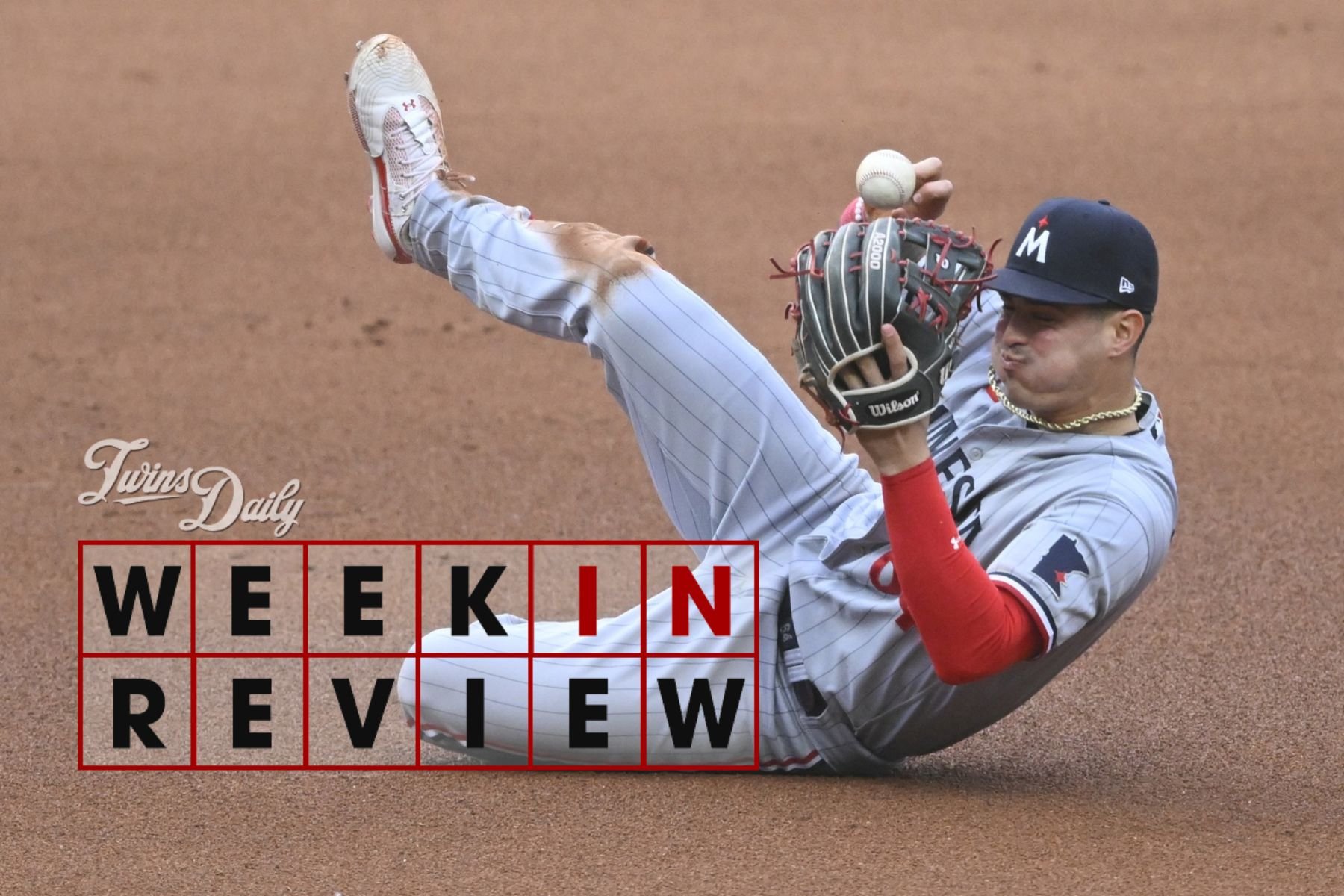
An uninspiring road trip saw the Twins drop two series against division foes, failing to expand their AL Central lead as the bats remained bottled up. Image courtesy of © David Richard-USA TODAY Sports Weekly Snapshot: Mon, 5/1 through Sun, 5/7 *** Record Last Week: 2-4 (Overall: 19-16) Run Differential Last Week: +0 (Overall: +26) Standing: 1st Place in AL Central (2.5 GA) Last Week's Game Results: Game 30 | CWS 3, MIN 2: Another Ryan Gem Wasted in Walk-Off Loss Game 31 | CWS 6, MIN 4: Missed Chances Lead to Late Swing of Fortunes Game 32 | MIN 7, CWS 3: Twins Grind Out Extra-Inning Win to Avoid Sweep Game 33 | MIN 2, CLE 0: Pitchers Dominate Hapless Cleveland Lineup Game 34 | CLE 4, MIN 3: Gray Loses Control, Bats Remain Cold Game 35 | CLE 2, MIN 0: Lineup Held to One Hit as Twins Drop Series NEWS & NOTES Things came to a head more quickly than expected with the Alex Kirilloff situation. Despite being pronounced physically ready, and affirming that billing with his play at Triple-A, the 25-year-old was seemingly stymied by a lack of opportunity on the big-league team. That is, until Trevor Larnach made the decision easier for the front office by slumping very badly at the exact wrong time. An 0-for-9 series in Chicago, including eight strikeouts, sealed Larnach's fate as he was shipped out prior to the Cleveland series, making room in the lineup for Kirilloff. The handling of the move was a little odd – Larnach had been announced as the No. 8 hitter on Friday night before being optioned ahead of the game. There was no apparent reason for urgency in promoting Kirilloff, who didn't start on Friday or Saturday anyway. Perhaps the Twins are angling to make Larnach available again as soon as possible, since a player must wait 10 days after being optioned to return. This dynamic actually might've played a role in the timing at play here. Given that 10 days hadn't passed since Kirilloff was optioned, an injury was needed to bring him back, so he was actually swapped for Caleb Thielbar. The lefty reliever went on the injured list with a right oblique strain. With that, it looks like we're back into full rotating-door mode at the back end of the bullpen. Long reliever Dereck Rodríguez was called up to temporarily fill Thielbar's spot, and then Josh Winder was swapped out for Jorge Alcala the following day. To make room for Rodríguez on the 40-man roster, Tyler Mahle was placed on the 60-day IL, meaning he won't return until at least the 4th of July, with the season half over. HIGHLIGHTS Starting pitching continues to be this team's calling card, and a fine one at that. The Twins are in basically every game; while the losses are frustrating, they almost never feel out of reach. The rotation is setting a really high floor and a strong basis for success with their routinely quality work. Bailey Ober has been sensational since getting his opportunity to step in, and kept the momentum rolling on Friday with seven shutout innings against the Guardians. Ober allowed just three hits while lowering his ERA to 0.98, and he has yet to allow a home run through three starts. A day earlier, Pablo López got back on track in a dignity-salvaging victory against the White Sox, hurling seven innings of two-run ball with eight strikeouts and one walk. Only three American League pitchers have tallied more strikeouts than López, who has pitched at least into the seventh in four of his seven starts. The righty has been everything the Twins could've hoped, which is great news as Luis Arraez continues to tear it up in Miami with a league-leading .420 average. Joe Ryan started twice and turned in a couple more quality starts, hurling six shutout innings against the White Sox and then limiting the Guardians to two runs in six frames on Sunday, although his charmed run support finally ran dry in the latter when he suffered his first loss of the season. Nonetheless, Ryan's numbers are stellar across the board: a 5-1 record, 2.45 ERA, 2.88 FIP, 0.84 WHIP and 47-to-6 K/BB ratio in 44 innings of work. He's completed six-plus innings every time out. While Thielbar's loss hurts for a bullpen that has been quite strong in the early going, the addition of Brock Stewart has proven to be a huge boost. The right-hander made three appearances last week and didn't allow a hit. He has now provided six scoreless innings since being called up, and leads all Twins relievers in Win Probability Added. LOWLIGHTS Wednesday's loss to the White Sox was symbolic of the larger trend that's held Minnesota back from a true breakthrough this season. The offense was having a decent game, knocking Dylan Cease out after five innings and erasing an early deficit. In the seventh inning, with the game tied 4-4, the Twins had a chance to open up a big lead against Chicago's bullpen when they loaded the bases with no outs for the 3-through-5 spots in their lineup. And then: Carlos Correa grounded out, Byron Buxton grounded out, and Larnach struck out swinging. Threat over. Chicago scratched across runs in each of the next two innings to take the series. Correa has been a prevalent contributor to the ongoing offensive misfires. His production continues to not materialize as he keeps appearing in the most critical lineup spots. The past week saw Correa go 4-for-25, dropping his season slash line to .193/.271/.378. You may recall Correa getting off to a slow start last year but it was nothing compared to this. Through 31 games in 2022, he was comparatively slashing .275/.346/.400, with his bat already awakening from an early swoon that was far less drastic. Correa might be the most high-profile culprit in this offense's woes but he's hardly the only one. With the exception of Buxton and Max Kepler, bats have pretty much gone ice-cold throughout the lineup – even those that had previously been productive: Joey Gallo went 0-for-15, and has seen his OPS plummet by nearly 200 points here in June. On the bright side, he's not striking out a crazy amount and is still drawing walks, but the hits and homers have gone amiss. Christian Vazquez, whose offensive output in the first couple of weeks was a pleasant surprise, has fallen into a deep slump. He went 1-for-13 in four starts last week and is slashing .200/.262/.250 in the past month. Donovan Solano went 0-for-10 in the series, dropping his OPS to .637. His usefulness to the team is waning with Kirilloff back in the mix, so it'll be interesting to see how much longer the Twins stick with the struggling veteran. The last time he played a full nine-inning game for Minnesota was April 18th, nearly three full weeks ago. Then of course there is Jose Miranda, who remains unable to snap out of his prolonged funk. His 2-for-21 week, which included six strikeouts and zero walks, dropped his line on the season to .219/.275/.313. What might seem like a mere five-week slump at the plate is actually considerably more substantial if you extend it back to last year, after his rookie hot streak faded. To make matters worse, Miranda also had some brutal defensive moments at third base, cementing his current status as a two-way liability. Something needs to change. It's likely about to. TRENDING STORYLINE Kyle Farmer has been rehabbing in Triple-A (I watched him hit a home run in St. Paul on Sunday) and it sounds like he'll be ready to be activated and rejoin the team at Target Field on Tuesday. So who goes to make room? While Willi Castro is a possibility, it's looking like the more likely candidate is Miranda, whose broken plate approach is pretty clearly meriting of a minor-league reset. The idea of both Larnach and Miranda in Triple-A, optionally, five weeks into the season is not something anyone would've envisioned as an ideal scenario. But it speaks to the strength and depth of the Twins roster that they not only have readily available quality alternatives in Kirilloff and Farmer, but that they'll soon have prospects potentially pushing those replacements in Matt Wallner, Edouard Julien, and Royce Lewis. LOOKING AHEAD Here comes the National League! Fans who are interested in catching a few visiting teams we've rarely had the opportunity to see are in luck, with the Padres and Cubs coming to Target Field as part of Major League Baseball's newly diversified schedule mix. Both clubs are off to solid starts and should present a challenge – especially the star-studded Padres who will be rolling in with Juan Soto, Fernando Tatis Jr., Manny Machado, Xander Bogaerts, and our old friend Nelson Cruz. TUESDAY, 5/9: PADRES @ TWINS – RHP Michael Wacha v. RHP Louie Varland WEDNESDAY, 5/10: PADRES @ TWINS – RHP Seth Lugo v. RHP Pablo Lopez THURSDAY, 5/11: PADRES @ TWINS – RHP Yu Darvish v. RHP Bailey Ober FRIDAY, 5/12: CUBS @ TWINS – LHP Drew Smyly v. RHP Sonny Gray SATURDAY, 5/13: CUBS @ TWINS – RHP Hayden Wesneski v. RHP Joe Ryan SUNDAY, 5/14: CUBS @ TWINS – RHP Marcus Stroman v. RHP Louie Varland View full article
-
 Weekly Snapshot: Mon, 5/1 through Sun, 5/7 *** Record Last Week: 2-4 (Overall: 19-16) Run Differential Last Week: +0 (Overall: +26) Standing: 1st Place in AL Central (2.5 GA) Last Week's Game Results: Game 30 | CWS 3, MIN 2: Another Ryan Gem Wasted in Walk-Off Loss Game 31 | CWS 6, MIN 4: Missed Chances Lead to Late Swing of Fortunes Game 32 | MIN 7, CWS 3: Twins Grind Out Extra-Inning Win to Avoid Sweep Game 33 | MIN 2, CLE 0: Pitchers Dominate Hapless Cleveland Lineup Game 34 | CLE 4, MIN 3: Gray Loses Control, Bats Remain Cold Game 35 | CLE 2, MIN 0: Lineup Held to One Hit as Twins Drop Series NEWS & NOTES Things came to a head more quickly than expected with the Alex Kirilloff situation. Despite being pronounced physically ready, and affirming that billing with his play at Triple-A, the 25-year-old was seemingly stymied by a lack of opportunity on the big-league team. That is, until Trevor Larnach made the decision easier for the front office by slumping very badly at the exact wrong time. An 0-for-9 series in Chicago, including eight strikeouts, sealed Larnach's fate as he was shipped out prior to the Cleveland series, making room in the lineup for Kirilloff. The handling of the move was a little odd – Larnach had been announced as the No. 8 hitter on Friday night before being optioned ahead of the game. There was no apparent reason for urgency in promoting Kirilloff, who didn't start on Friday or Saturday anyway. Perhaps the Twins are angling to make Larnach available again as soon as possible, since a player must wait 10 days after being optioned to return. This dynamic actually might've played a role in the timing at play here. Given that 10 days hadn't passed since Kirilloff was optioned, an injury was needed to bring him back, so he was actually swapped for Caleb Thielbar. The lefty reliever went on the injured list with a right oblique strain. With that, it looks like we're back into full rotating-door mode at the back end of the bullpen. Long reliever Dereck Rodríguez was called up to temporarily fill Thielbar's spot, and then Josh Winder was swapped out for Jorge Alcala the following day. To make room for Rodríguez on the 40-man roster, Tyler Mahle was placed on the 60-day IL, meaning he won't return until at least the 4th of July, with the season half over. HIGHLIGHTS Starting pitching continues to be this team's calling card, and a fine one at that. The Twins are in basically every game; while the losses are frustrating, they almost never feel out of reach. The rotation is setting a really high floor and a strong basis for success with their routinely quality work. Bailey Ober has been sensational since getting his opportunity to step in, and kept the momentum rolling on Friday with seven shutout innings against the Guardians. Ober allowed just three hits while lowering his ERA to 0.98, and he has yet to allow a home run through three starts. A day earlier, Pablo López got back on track in a dignity-salvaging victory against the White Sox, hurling seven innings of two-run ball with eight strikeouts and one walk. Only three American League pitchers have tallied more strikeouts than López, who has pitched at least into the seventh in four of his seven starts. The righty has been everything the Twins could've hoped, which is great news as Luis Arraez continues to tear it up in Miami with a league-leading .420 average. Joe Ryan started twice and turned in a couple more quality starts, hurling six shutout innings against the White Sox and then limiting the Guardians to two runs in six frames on Sunday, although his charmed run support finally ran dry in the latter when he suffered his first loss of the season. Nonetheless, Ryan's numbers are stellar across the board: a 5-1 record, 2.45 ERA, 2.88 FIP, 0.84 WHIP and 47-to-6 K/BB ratio in 44 innings of work. He's completed six-plus innings every time out. While Thielbar's loss hurts for a bullpen that has been quite strong in the early going, the addition of Brock Stewart has proven to be a huge boost. The right-hander made three appearances last week and didn't allow a hit. He has now provided six scoreless innings since being called up, and leads all Twins relievers in Win Probability Added. LOWLIGHTS Wednesday's loss to the White Sox was symbolic of the larger trend that's held Minnesota back from a true breakthrough this season. The offense was having a decent game, knocking Dylan Cease out after five innings and erasing an early deficit. In the seventh inning, with the game tied 4-4, the Twins had a chance to open up a big lead against Chicago's bullpen when they loaded the bases with no outs for the 3-through-5 spots in their lineup. And then: Carlos Correa grounded out, Byron Buxton grounded out, and Larnach struck out swinging. Threat over. Chicago scratched across runs in each of the next two innings to take the series. Correa has been a prevalent contributor to the ongoing offensive misfires. His production continues to not materialize as he keeps appearing in the most critical lineup spots. The past week saw Correa go 4-for-25, dropping his season slash line to .193/.271/.378. You may recall Correa getting off to a slow start last year but it was nothing compared to this. Through 31 games in 2022, he was comparatively slashing .275/.346/.400, with his bat already awakening from an early swoon that was far less drastic. Correa might be the most high-profile culprit in this offense's woes but he's hardly the only one. With the exception of Buxton and Max Kepler, bats have pretty much gone ice-cold throughout the lineup – even those that had previously been productive: Joey Gallo went 0-for-15, and has seen his OPS plummet by nearly 200 points here in June. On the bright side, he's not striking out a crazy amount and is still drawing walks, but the hits and homers have gone amiss. Christian Vazquez, whose offensive output in the first couple of weeks was a pleasant surprise, has fallen into a deep slump. He went 1-for-13 in four starts last week and is slashing .200/.262/.250 in the past month. Donovan Solano went 0-for-10 in the series, dropping his OPS to .637. His usefulness to the team is waning with Kirilloff back in the mix, so it'll be interesting to see how much longer the Twins stick with the struggling veteran. The last time he played a full nine-inning game for Minnesota was April 18th, nearly three full weeks ago. Then of course there is Jose Miranda, who remains unable to snap out of his prolonged funk. His 2-for-21 week, which included six strikeouts and zero walks, dropped his line on the season to .219/.275/.313. What might seem like a mere five-week slump at the plate is actually considerably more substantial if you extend it back to last year, after his rookie hot streak faded. To make matters worse, Miranda also had some brutal defensive moments at third base, cementing his current status as a two-way liability. Something needs to change. It's likely about to. TRENDING STORYLINE Kyle Farmer has been rehabbing in Triple-A (I watched him hit a home run in St. Paul on Sunday) and it sounds like he'll be ready to be activated and rejoin the team at Target Field on Tuesday. So who goes to make room? While Willi Castro is a possibility, it's looking like the more likely candidate is Miranda, whose broken plate approach is pretty clearly meriting of a minor-league reset. The idea of both Larnach and Miranda in Triple-A, optionally, five weeks into the season is not something anyone would've envisioned as an ideal scenario. But it speaks to the strength and depth of the Twins roster that they not only have readily available quality alternatives in Kirilloff and Farmer, but that they'll soon have prospects potentially pushing those replacements in Matt Wallner, Edouard Julien, and Royce Lewis. LOOKING AHEAD Here comes the National League! Fans who are interested in catching a few visiting teams we've rarely had the opportunity to see are in luck, with the Padres and Cubs coming to Target Field as part of Major League Baseball's newly diversified schedule mix. Both clubs are off to solid starts and should present a challenge – especially the star-studded Padres who will be rolling in with Juan Soto, Fernando Tatis Jr., Manny Machado, Xander Bogaerts, and our old friend Nelson Cruz. TUESDAY, 5/9: PADRES @ TWINS – RHP Michael Wacha v. RHP Louie Varland WEDNESDAY, 5/10: PADRES @ TWINS – RHP Seth Lugo v. RHP Pablo Lopez THURSDAY, 5/11: PADRES @ TWINS – RHP Yu Darvish v. RHP Bailey Ober FRIDAY, 5/12: CUBS @ TWINS – LHP Drew Smyly v. RHP Sonny Gray SATURDAY, 5/13: CUBS @ TWINS – RHP Hayden Wesneski v. RHP Joe Ryan SUNDAY, 5/14: CUBS @ TWINS – RHP Marcus Stroman v. RHP Louie Varland
- 28 comments
-
- 1
-

-
- joe ryan
- jose miranda
- (and 3 more)
-
Larnach demoted (after initially appearing in Friday night's lineup), Kirilloff called up. I'm pretty surprised by the quickness of this and wonder if something specific triggered it, given the way it went down. It's gonna be a real bummer for Larnach if he has to sit in Triple-A mashing for weeks and waiting for another chance based on a demotion of questionable merit. But as we always say, these things tend to work themselves out.
- 80 replies
-
- 1
-
-
- alex kirilloff
- trevor larnach
- (and 1 more)
-
Gordon's barely playing so I don't see it as a solution. (Actually, I've been kinda worried about his future in the org because he's OOO and has such a small role after Farmer/Lewis return.) An injury or DFA to Gordon might open up a roster spot for AK but it's not gonna create playing time. Couldn't agree more with the second part of your post!
-
It's 7 at-bats! Byron Buxton struck out 7 straight times earlier this year and since then he's slugging like .800. I get that Larnach is no Buxton but the point is that players slump and letting young guys work through that is part of the developmental process. Let's be clear here - even with this slump going on Larnach still ranks 4th on the team in OPS+, and he leads it in RBIs and walks. Playing good solid defense in LF. The guy has not been terrible, and the perception that he has seems very influenced by overreaction to me.
- 80 replies
-
- 2
-
-
- alex kirilloff
- trevor larnach
- (and 1 more)
-
It is though. For the reasons I shared. Sending down Larnach is literally the only thing that would open up regular ABs right now and that strikes me as a short-sighted decision.
-
Where did I advocate "hoping" anyone should get hurt? There are a lot of people wanting to see AK up in the majors so I'm explaining what would need to happen to facilitate it in the short term. I don't personally think sending Larnach down to make room for Kirilloff is an easy choice. If going to Triple-A is the best thing for Larnach's development so be it, but I'm far from convinced that is true. The guy is 26, they're just going to make him sit in the minors and stagnate because he slumped for a bit? If he'd been truly horrible over the first month or looked as bad as Miranda it'd be another matter. I'm sensitive to the idea that they should do wrong by one of their key young players to do right by another. Kirilloff is behind in line because of his injury rehab, plain and simple.
-
5 Scenarios That Could Open Up Regular Playing Time for Alex Kirilloff
Nick Nelson posted an article in Twins
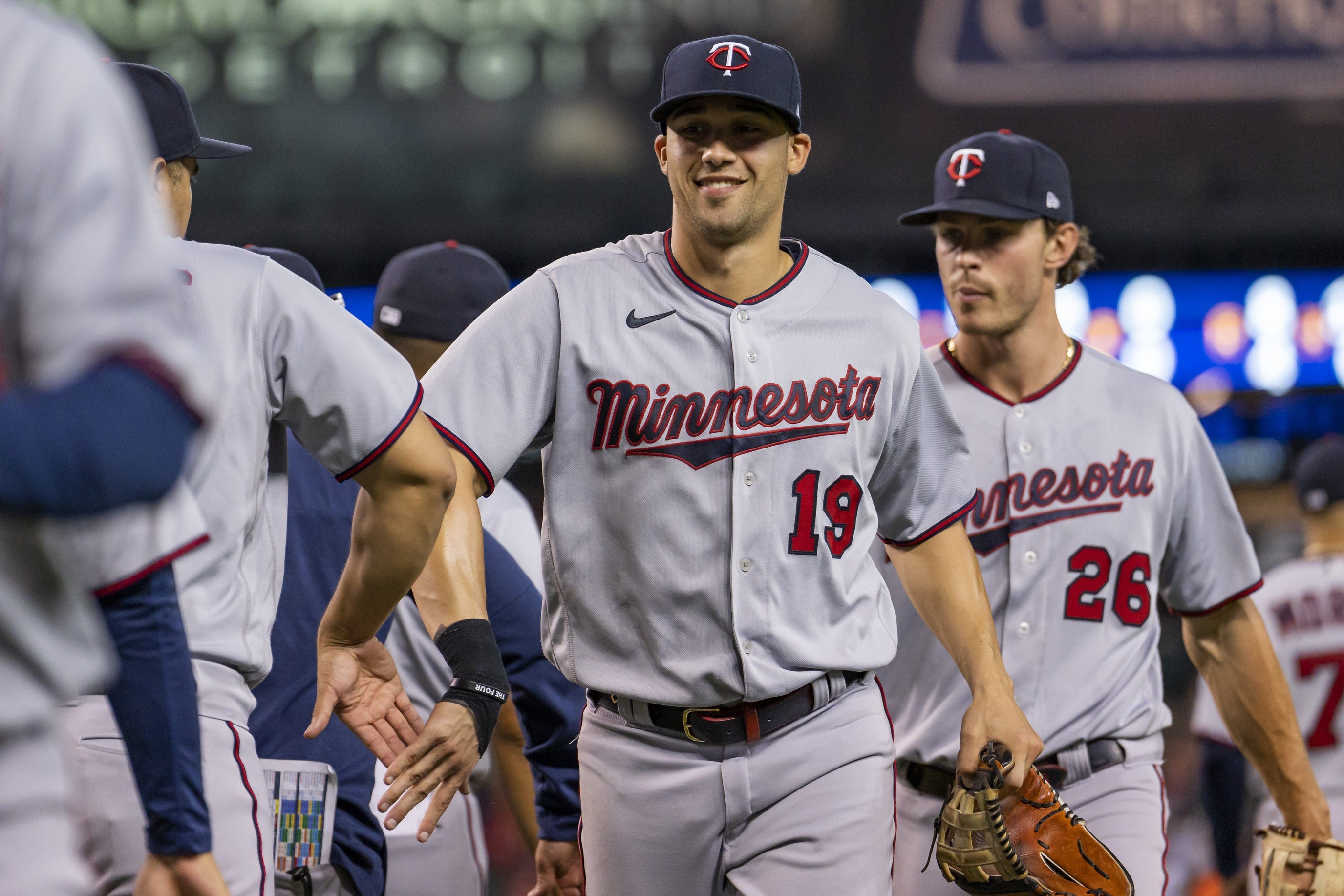 Alex Kirilloff has completed his minor-league injury rehab after a lengthy recovery from undergoing a second wrist surgery. He is physically ready to return to the majors by decree of the team trainer, and Kirilloff's on-field performance in Triple-A suggests that he's ready in every other way. We know what the former top draft pick and top prospect is capable of bringing to the lineup, and it's especially desirable in the wake of a mostly flat offensive showing against the White Sox this week. The idea of Kirilloff's impact bat awakening this sleepy bunch is very enticing indeed. The problem, of course, is that there's not really any space for Kirilloff right now. Finding a spot on the roster isn't so much the problem – optioning Willi Castro would be simple enough – but rather freeing up regular at-bats, particularly against right-handed pitchers. The four different positions where Kirilloff could plug in – 1B, LF, RF, DH – are all occupied by regular fixtures at the moment, leaving him to wait in St. Paul until something changes. Here are five things that could happen to open up an opportunity for Kirilloff in the near term. Joey Gallo gets hurt When the Twins signed Gallo to a one-year deal during the offseason, the move immediately struck me as Kirilloff insurance. He's not exactly similar offensively to the high-contact, liner-spraying AK, but Gallo profiles about the same as an impact hitter who can play both outfield corners as well as first base. The latter happens to be Kirilloff's best (and likely future) position, and it's one where Gallo has been a mainstay against right-handers, starting there nearly every game. He's also been the team's best hitter, so there is clearly no thought of voluntarily taking him out of the lineup. The veteran slugger spent brief time on the injured list in April, but has otherwise looked healthy. Gallo getting hurt and opening up first base would be the cleanest fit for Kirilloff, but would obviously be a major hit to the team given how good Gallo has been. Max Kepler gets hurt While first base might be the position Kirilloff plays best, right field is where he has by far the most experience. Kepler has been the everyday starter there outside of his own short April IL stint, so if he were to go down again it would create a natural opportunity for Kirilloff to take over as primary right fielder. (Or first baseman, if the Twins prefer an alignment with him there and Gallo in right, which is probable.) Kepler, like Gallo, looks healthy at the moment but he's made six different trips to the IL since 2020. Byron Buxton gets hurt The 29-year-old has managed to start 28 of the Twins' first 32 games thanks to a DH-exclusive arrangement that enables him to play through ongoing knee issues. For now. As we know all too well, Buxton is always one swing, sprint, or slide away from a return to the shelf. Naturally, Kirilloff would be a fine fit as the regular designated hitter given his offensive prowess. Like Gallo, losing Buxton would be a devastating blow the lineup, but one softened by the availability of Kirilloff and his high-upside bat to step in. Michael A. Taylor gets hurt (maybe) I'm not entirely sure a Taylor injury would create a path for Kirilloff, but it's possible. The idea is that Gallo or Kirilloff, or even Buxton, could take over in center – thus opening up 1B, RF, or DH for Kirilloff. The thing is, I'm not sure the Twins would opt to go any of those routes. Gallo and Kepler strike me more as emergency options in center field (Gallo hasn't started a game there since 2019, Kepler since 2021), and I don't think they view Buxton as physically equipped for it. Then again, they don't have a ton of other options aside from Nick Gordon, who is batting .161. I'd be quite curious to see how things would play out in this scenario. Taylor's been as much of a fixture at his position as anyone on this team, starting all but four games in center. Trevor Larnach gets hurt, or keeps slumping badly I saved this one for last because it's the only short-term scenario I can envision creating an opportunity for Kirilloff that doesn't necessarily involve an injury. Of course if Larnach, who's started 22 of the team's games in left field but was injured for most of the past two seasons, were to get hurt it would create a seamless transition to Kirilloff (or Gallo, with AK going to first). But unlike the four veterans listed above, a minor-league demotion is also on the table for Larnach, and it's increasingly plausible as his performance slides following a hot start. Since the opening road trip to Kansas City and Miami, Larnach is batting .173 with just two home runs, and of late the strikeouts and futile at-bats have been mounting. There is certainly a case to be made for swapping Kirilloff in for Larnach, should this trend continue. But I do think the Twins will be somewhat hesitant to do so, and should be. The numbers have been bad lately but overall Larnach hasn't been close to one of the team's worst hitters and up until the past week or so had rated as a pretty solid regular. He's also 26 years old. Unless Larnach's current slump really spirals and it becomes clear he needs a mental break, or it's determined that something is physically or mechanically amiss, sending him down to accommodate Kirilloff seems counterproductive. Does Larnach have issues at the plate he needs to fix? Absolutely. Is he going to be able to address them meaningfully while walloping Triple-A pitching, just as Kirilloff has? That seems doubtful. I would agree with the notion that Larnach is on watch, because Kirilloff's readiness creates some level of pressure, but I don't think the clock is ticking down on him too intensely at the moment. I could be wrong. For now, Kirilloff will likely need to wait for one of these five players to get hurt because the Twins are simply too healthy to make room for one of their most talented offensive players. What a world.
- 80 comments
-
- 6
-
-
- alex kirilloff
- trevor larnach
- (and 1 more)
-
We all want to see AK mashing in the big leagues. Right now there is simply no playing time available to him. Here are a few developments that could change that. Image courtesy of Raj Mehta-USA TODAY Sports Alex Kirilloff has completed his minor-league injury rehab after a lengthy recovery from undergoing a second wrist surgery. He is physically ready to return to the majors by decree of the team trainer, and Kirilloff's on-field performance in Triple-A suggests that he's ready in every other way. We know what the former top draft pick and top prospect is capable of bringing to the lineup, and it's especially desirable in the wake of a mostly flat offensive showing against the White Sox this week. The idea of Kirilloff's impact bat awakening this sleepy bunch is very enticing indeed. The problem, of course, is that there's not really any space for Kirilloff right now. Finding a spot on the roster isn't so much the problem – optioning Willi Castro would be simple enough – but rather freeing up regular at-bats, particularly against right-handed pitchers. The four different positions where Kirilloff could plug in – 1B, LF, RF, DH – are all occupied by regular fixtures at the moment, leaving him to wait in St. Paul until something changes. Here are five things that could happen to open up an opportunity for Kirilloff in the near term. Joey Gallo gets hurt When the Twins signed Gallo to a one-year deal during the offseason, the move immediately struck me as Kirilloff insurance. He's not exactly similar offensively to the high-contact, liner-spraying AK, but Gallo profiles about the same as an impact hitter who can play both outfield corners as well as first base. The latter happens to be Kirilloff's best (and likely future) position, and it's one where Gallo has been a mainstay against right-handers, starting there nearly every game. He's also been the team's best hitter, so there is clearly no thought of voluntarily taking him out of the lineup. The veteran slugger spent brief time on the injured list in April, but has otherwise looked healthy. Gallo getting hurt and opening up first base would be the cleanest fit for Kirilloff, but would obviously be a major hit to the team given how good Gallo has been. Max Kepler gets hurt While first base might be the position Kirilloff plays best, right field is where he has by far the most experience. Kepler has been the everyday starter there outside of his own short April IL stint, so if he were to go down again it would create a natural opportunity for Kirilloff to take over as primary right fielder. (Or first baseman, if the Twins prefer an alignment with him there and Gallo in right, which is probable.) Kepler, like Gallo, looks healthy at the moment but he's made six different trips to the IL since 2020. Byron Buxton gets hurt The 29-year-old has managed to start 28 of the Twins' first 32 games thanks to a DH-exclusive arrangement that enables him to play through ongoing knee issues. For now. As we know all too well, Buxton is always one swing, sprint, or slide away from a return to the shelf. Naturally, Kirilloff would be a fine fit as the regular designated hitter given his offensive prowess. Like Gallo, losing Buxton would be a devastating blow the lineup, but one softened by the availability of Kirilloff and his high-upside bat to step in. Michael A. Taylor gets hurt (maybe) I'm not entirely sure a Taylor injury would create a path for Kirilloff, but it's possible. The idea is that Gallo or Kirilloff, or even Buxton, could take over in center – thus opening up 1B, RF, or DH for Kirilloff. The thing is, I'm not sure the Twins would opt to go any of those routes. Gallo and Kepler strike me more as emergency options in center field (Gallo hasn't started a game there since 2019, Kepler since 2021), and I don't think they view Buxton as physically equipped for it. Then again, they don't have a ton of other options aside from Nick Gordon, who is batting .161. I'd be quite curious to see how things would play out in this scenario. Taylor's been as much of a fixture at his position as anyone on this team, starting all but four games in center. Trevor Larnach gets hurt, or keeps slumping badly I saved this one for last because it's the only short-term scenario I can envision creating an opportunity for Kirilloff that doesn't necessarily involve an injury. Of course if Larnach, who's started 22 of the team's games in left field but was injured for most of the past two seasons, were to get hurt it would create a seamless transition to Kirilloff (or Gallo, with AK going to first). But unlike the four veterans listed above, a minor-league demotion is also on the table for Larnach, and it's increasingly plausible as his performance slides following a hot start. Since the opening road trip to Kansas City and Miami, Larnach is batting .173 with just two home runs, and of late the strikeouts and futile at-bats have been mounting. There is certainly a case to be made for swapping Kirilloff in for Larnach, should this trend continue. But I do think the Twins will be somewhat hesitant to do so, and should be. The numbers have been bad lately but overall Larnach hasn't been close to one of the team's worst hitters and up until the past week or so had rated as a pretty solid regular. He's also 26 years old. Unless Larnach's current slump really spirals and it becomes clear he needs a mental break, or it's determined that something is physically or mechanically amiss, sending him down to accommodate Kirilloff seems counterproductive. Does Larnach have issues at the plate he needs to fix? Absolutely. Is he going to be able to address them meaningfully while walloping Triple-A pitching, just as Kirilloff has? That seems doubtful. I would agree with the notion that Larnach is on watch, because Kirilloff's readiness creates some level of pressure, but I don't think the clock is ticking down on him too intensely at the moment. I could be wrong. For now, Kirilloff will likely need to wait for one of these five players to get hurt because the Twins are simply too healthy to make room for one of their most talented offensive players. What a world. View full article
-
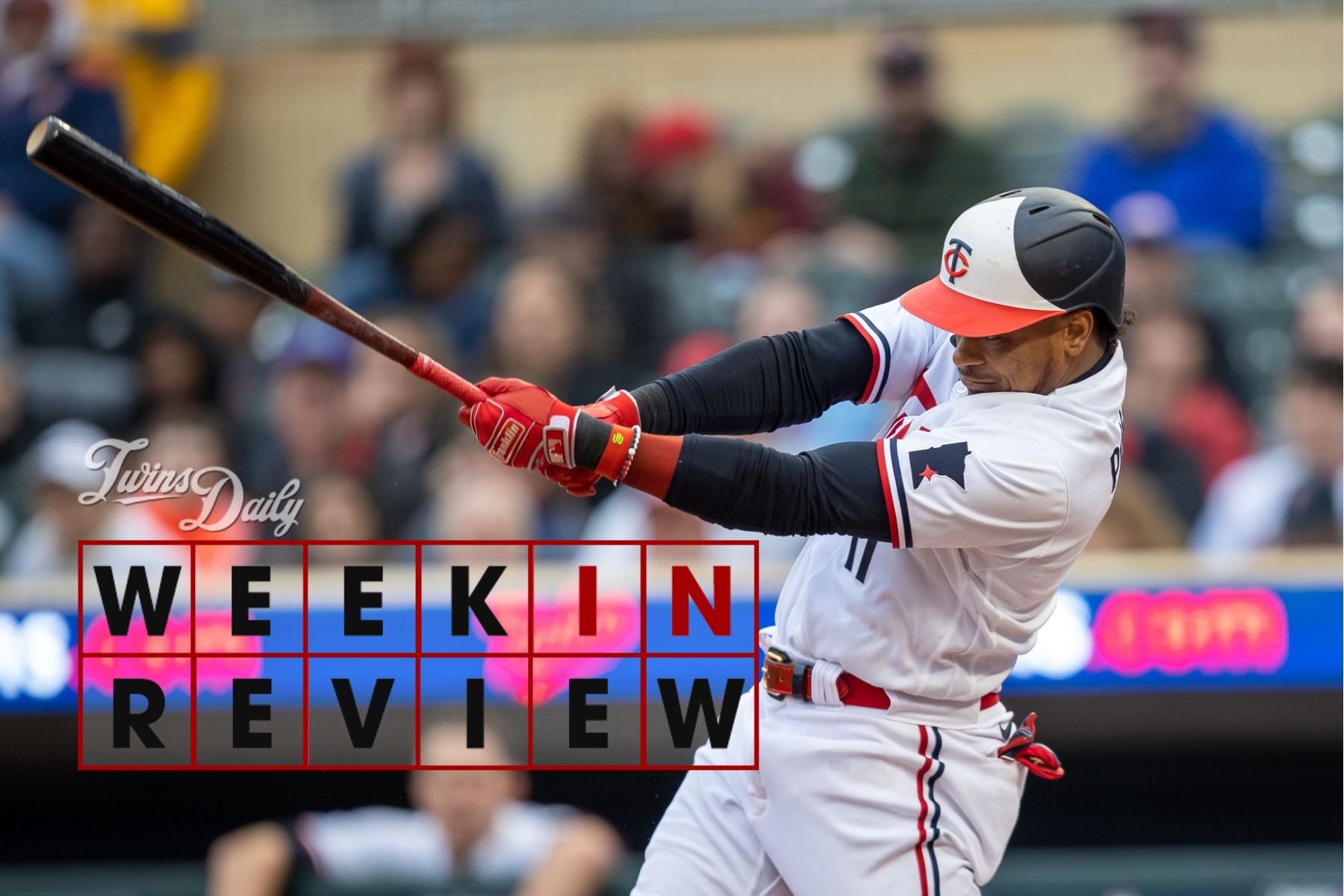 Weekly Snapshot: Mon, 4/24 through Sun, 4/30 *** Record Last Week: 5-2 (Overall: 17-12) Run Differential Last Week: +14 (Overall: +26) Standing: 1st Place in AL Central (3.5 GA) Last Week's Game Results: Game 23 | MIN 6, NYY 1: Gray Tosses Another Gem, Shuts Down Yanks Game 24 | MIN 6, NYY 2: Twins Take Season Series with Clean Win Game 25 | NYY 12, MIN 6: Maeda Struggles in Blowout Loss Game 26 | MIN 7, KC 1: Bats Pile On Early, Arms Take Care of the Rest Game 27 | MIN 8, KC 6: Twins Fend Off Late Comeback from Royals Game 28 | KC 3, MIN 2: Offense Leaves Too Much Meat on the Bone Game 29 | MIN 8, KC 4: Big Early Lead Holds as Twins Take Series NEWS & NOTES The front office's decision to build a rotation essentially seven-deep with MLB-caliber starters has paid dividends quickly, as two Minnesota starters are already down. That this scenario raises no major alarms is a big credit to the way this contingency-laden Twins pitching staff was built. Kenta Maeda and Tyler Mahle came out of starts on consecutive days last week with arm issues, and both are going to be shut down for a while. Maeda was placed on the injured list with a right triceps strain, replaced by Bailey Ober, who'd been optioned days earlier. For Mahle, the diagnosis is a posterior impingement and a flexor pronator strain, necessitating a month-long (at least) hiatus from throwing and re-evaluation. Louie Varland is in line to replace him. The bullpen got a boost with the addition of Brock Stewart, a resurgent former Dodgers prospect who is reinventing himself as a hard-throwing reliever at age 31. He's looked great so far, tossing three scoreless innings with four strikeouts. Brent Headrick, who plugged in admirably as long reliever for 10 days, got optioned back to Triple-A to make room for Stewart, but his impressive debut will put him at the top of the list when the teams finds itself needing length in the pen again. It currently seems unlikely that Josh Winder, called up Thursday, is going to be able to provide that effectively. He looked brutal in his season debut Sunday. Finally, Kyle Farmer is officially on the comeback trail. Having gotten his face fixed up after a very scary HBP to the mouth a few weeks ago, Farmer appears set to start a rehab assignment in the coming week. HIGHLIGHTS By taking two of three from New York at Target Field last week, the Twins won a season series against the Yankees for the first time since 2001 – meaning Rocco Baldelli accomplished a feat that eluded both Ron Gardenhire and Paul Molitor over a span of 22 years. These performances against premier heavy hitters in the American League – they're now 6-4 against the Astros and Yankees – provide some early-season evidence of this Twins team's legitimacy. They are not merely the least bad team in a crummy division. But let's make no mistake: this is a crummy division. This was reiterated when the worst of the worst in the AL Central came to town for a long weekend series. The Royals arrived having lost seven straight, and the Twins extended that streak to nine en route to a 3-1 series victory that leaves them 6-1 against KC this year. Propelling Minnesota's success this past week was a powerful breakthrough from the offense, which produced 43 runs in seven games (6.1 R/G) thanks to 13 homers, 13 doubles, and three triples. With the exception of a disappointing showing on Saturday, the lineup was consistently on point, making opposing pitchers miserable with a steady rhythm of good ABs and hearty contact. Leading the way? Jorge Polanco, whose return has made an emphatic impact at the top of the batting order. His switch-hitting power bat is everything the Twins needed, rolling into the season on an eight-game hitting streak before Sunday's 0-for-4 snapped it. Starting six of seven games last week, Polanco went 8-for-26 with with three doubles, one home run, and one... ALMOST home run. Polanco's rejuvenating punch was more than welcome, but he was hardly alone in delivering at the plate. Other notable performances included: Joey Gallo bashing his way to five extra-base hits (two homers, two doubles, and a triple) as he continues to make the Twins look smart with his resurgent start. Max Kepler shaking off his rough start with an 8-for-22 week that saw him reaching base consistently and making things happen, redeeming Rocco Baldelli's ongoing preference to place him atop the batting order. José Miranda launching three home runs and a double after managing just two extra-base hits through his first 22 games. And of course, Byron Buxton doing his damn thing with a game-changing series of offensive performances that perfectly justified his usage in the designated hitter spot. He went 7-for-23 with four home runs and 10 RBIs in n utterly dominant stretch that reminded us of his absolutely elite slugging prowess. On the one hand, it's kind of a bummer that Buxton is limited to DH. On the other hand, he's played in 26 of the team's first 29 games, starting 25, and he's been a huge factor in their strong start. Who can complain? The situation is easier to abide with Michael A. Taylor continuing to look as good as he has. His defense in center field is top-notch and Taylor also brings a differentiating quality to the lineup, as he showed with an athletic flurry that included a bunt-double and steal-of-third on Friday. As we saw over the weekend, aggressive and disruptive base-running is pretty much the only tool in Kansas City's kit. But it's nice for Minnesota to be able to at least brandish it on occasion. LOWLIGHTS The Twins have gotten off to a strong start and jumped out to an early lead in the division while receiving very little from their biggest offseason (re)acquisition, and arguably their greatest talent. Carlos Correa had a really bad April. Through one month, the shortstop has graded out as essentially a replacement-level player. Outside of a two-game burst in New York, he's been almost devoid of big moments at the plate, churning outs on the way to a .202/.283/.351 slash line. The past week saw him go 4-for-24 with as many GIDP (2) as RBIs. Correa's swing seems slow, as reflected by a spray chart that shows a lot of difficulty turning on the ball and pulling it with authority. Correa's poor production has consistently come in the most critical lineup spots – he batted second in every start before moving to the three-hole on Sunday – which has an outsized effect on the offense's overall strength. This is not to say Correa should be benched or even moved down in the lineup, but it does underline the upside of how much better this team can be once he gets going. The other low point of the past week that deserves to be repeated is the mere attrition of the pitching staff. No two ways about it: losing two rotation members on back-to-back days is a really rough blow, especially when one of those guys had the upside of a 28-year-old Tyler Mahle. The availability of Ober and Varland mitigates the damage of these injuries, and one could even argue that the rotation will even be improved. All part of the plan. But I don't think that anyone could suggest losing both Maeda and Mahle within the first month of the season was anywhere near an ideal scenario. Maybe one, or both, can work their way back into a meaningful rotation role this season. To be honest, I doubt it, and I don't know why anyone would feel otherwise. TRENDING STORYLINE Two key questions are looming over the Twins as the calendar flips to May: How long until Alex Kirilloff joins this roster, and how long until Nick Gordon exits it? Both outcomes feel inevitable – a matter of when, not if. Their fates are not necessarily directly tied to one another, but ultimately the 2016 first-round pick is destined to supplant the 2014 first-rounder as a permanent fixture on the roster as a lefty-swinging corner bat. Before the season began it was already apparent that Gordon might have a tough time finding regular playing time on a mostly healthy Twins roster. That's been exactly the case: Gordon's start on Sunday was just his 14th in the team's 29 games, and that includes just three starts in the past 16. In his limited time, Gordon has been one of the least productive hitters in the majors. He's serving no value to this roster at the moment. The trouble, of course, is that Gordon is out of options, meaning that the Twins can't send him down without exposing him to waivers. They shouldn't let that reality hold them hostage, and I don't think they will, but it does mean they'll probably wait as long as they can to make a move. I see Gordon's timeline as being tied to Farmer and his return. Swapping in Kirilloff for Gordon (or Willi Castro) doesn't really work, because the barrier isn't roster space but playing time. Yeah, you can open up a spot by waiving Gordon but that doesn't create at-bats because he wasn't getting any, nor is Castro, who ain't starting against righties anyway. With Gallo, Larnach, and Kepler all playing well, and Buxton implanted at DH, there's just no clear path to any kind of regular playing time for Kirilloff at the moment. His rehab window expired on Sunday and he was optioned to the minors, which is a workable solution for now, but this has become an active situation. If Kirilloff keeps raking in Triple-A it becomes very difficult to justify leaving him down there regardless of what's happening in the big leagues. LOOKING AHEAD The AL Central is very bad, and the Twins took advantage of that fact last week to build their buffer to 3 ½ games. They can continue to assert their dominance in the coming week by asserting their dominance against the two other purported contenders in the division: the White Sox, who've already made themselves irrelevant with a truly pathetic opening month, and the Guardians, who are worth taking somewhat seriously despite also looking quite egregiously bad thus far. TUESDAY, 5/2: TWINS @ WHITE SOX – RHP Joe Ryan v. RHP Michael Kopech WEDNESDAY, 5/4: TWINS @ WHITE SOX – RHP Louie Varland v. RHP Dylan Cease THURSDAY, 5/5: TWINS @ WHITE SOX – RHP Pablo Lopez v. RHP Lucas Giolito FRIDAY, 5/6: TWINS @ GUARDIANS – RHP Bailey Ober v. RHP Zach Plesac SATURDAY, 5/7: TWINS @ GUARDIANS – RHP Sonny Gray v. LHP Logan Allen SUNDAY, 5/8: TWINS @ GUARDIANS – RHP Joe Ryan v. RHP Cal Quantrill
- 17 comments
-
- 3
-
-
- jorge polanco
- carlos correa
- (and 2 more)
-
For the first time in more than 20 years, the Twins clinched a winning season against the dreaded New York Yankees. They followed by taking care of business against a very bad Royals team, with their success fueled by barrage of bombas harkening back to 2019. It was a good week. Image courtesy of Jesse Johnson-USA TODAY Sports Weekly Snapshot: Mon, 4/24 through Sun, 4/30 *** Record Last Week: 5-2 (Overall: 17-12) Run Differential Last Week: +14 (Overall: +26) Standing: 1st Place in AL Central (3.5 GA) Last Week's Game Results: Game 23 | MIN 6, NYY 1: Gray Tosses Another Gem, Shuts Down Yanks Game 24 | MIN 6, NYY 2: Twins Take Season Series with Clean Win Game 25 | NYY 12, MIN 6: Maeda Struggles in Blowout Loss Game 26 | MIN 7, KC 1: Bats Pile On Early, Arms Take Care of the Rest Game 27 | MIN 8, KC 6: Twins Fend Off Late Comeback from Royals Game 28 | KC 3, MIN 2: Offense Leaves Too Much Meat on the Bone Game 29 | MIN 8, KC 4: Big Early Lead Holds as Twins Take Series NEWS & NOTES The front office's decision to build a rotation essentially seven-deep with MLB-caliber starters has paid dividends quickly, as two Minnesota starters are already down. That this scenario raises no major alarms is a big credit to the way this contingency-laden Twins pitching staff was built. Kenta Maeda and Tyler Mahle came out of starts on consecutive days last week with arm issues, and both are going to be shut down for a while. Maeda was placed on the injured list with a right triceps strain, replaced by Bailey Ober, who'd been optioned days earlier. For Mahle, the diagnosis is a posterior impingement and a flexor pronator strain, necessitating a month-long (at least) hiatus from throwing and re-evaluation. Louie Varland is in line to replace him. The bullpen got a boost with the addition of Brock Stewart, a resurgent former Dodgers prospect who is reinventing himself as a hard-throwing reliever at age 31. He's looked great so far, tossing three scoreless innings with four strikeouts. Brent Headrick, who plugged in admirably as long reliever for 10 days, got optioned back to Triple-A to make room for Stewart, but his impressive debut will put him at the top of the list when the teams finds itself needing length in the pen again. It currently seems unlikely that Josh Winder, called up Thursday, is going to be able to provide that effectively. He looked brutal in his season debut Sunday. Finally, Kyle Farmer is officially on the comeback trail. Having gotten his face fixed up after a very scary HBP to the mouth a few weeks ago, Farmer appears set to start a rehab assignment in the coming week. HIGHLIGHTS By taking two of three from New York at Target Field last week, the Twins won a season series against the Yankees for the first time since 2001 – meaning Rocco Baldelli accomplished a feat that eluded both Ron Gardenhire and Paul Molitor over a span of 22 years. These performances against premier heavy hitters in the American League – they're now 6-4 against the Astros and Yankees – provide some early-season evidence of this Twins team's legitimacy. They are not merely the least bad team in a crummy division. But let's make no mistake: this is a crummy division. This was reiterated when the worst of the worst in the AL Central came to town for a long weekend series. The Royals arrived having lost seven straight, and the Twins extended that streak to nine en route to a 3-1 series victory that leaves them 6-1 against KC this year. Propelling Minnesota's success this past week was a powerful breakthrough from the offense, which produced 43 runs in seven games (6.1 R/G) thanks to 13 homers, 13 doubles, and three triples. With the exception of a disappointing showing on Saturday, the lineup was consistently on point, making opposing pitchers miserable with a steady rhythm of good ABs and hearty contact. Leading the way? Jorge Polanco, whose return has made an emphatic impact at the top of the batting order. His switch-hitting power bat is everything the Twins needed, rolling into the season on an eight-game hitting streak before Sunday's 0-for-4 snapped it. Starting six of seven games last week, Polanco went 8-for-26 with with three doubles, one home run, and one... ALMOST home run. Polanco's rejuvenating punch was more than welcome, but he was hardly alone in delivering at the plate. Other notable performances included: Joey Gallo bashing his way to five extra-base hits (two homers, two doubles, and a triple) as he continues to make the Twins look smart with his resurgent start. Max Kepler shaking off his rough start with an 8-for-22 week that saw him reaching base consistently and making things happen, redeeming Rocco Baldelli's ongoing preference to place him atop the batting order. José Miranda launching three home runs and a double after managing just two extra-base hits through his first 22 games. And of course, Byron Buxton doing his damn thing with a game-changing series of offensive performances that perfectly justified his usage in the designated hitter spot. He went 7-for-23 with four home runs and 10 RBIs in n utterly dominant stretch that reminded us of his absolutely elite slugging prowess. On the one hand, it's kind of a bummer that Buxton is limited to DH. On the other hand, he's played in 26 of the team's first 29 games, starting 25, and he's been a huge factor in their strong start. Who can complain? The situation is easier to abide with Michael A. Taylor continuing to look as good as he has. His defense in center field is top-notch and Taylor also brings a differentiating quality to the lineup, as he showed with an athletic flurry that included a bunt-double and steal-of-third on Friday. As we saw over the weekend, aggressive and disruptive base-running is pretty much the only tool in Kansas City's kit. But it's nice for Minnesota to be able to at least brandish it on occasion. LOWLIGHTS The Twins have gotten off to a strong start and jumped out to an early lead in the division while receiving very little from their biggest offseason (re)acquisition, and arguably their greatest talent. Carlos Correa had a really bad April. Through one month, the shortstop has graded out as essentially a replacement-level player. Outside of a two-game burst in New York, he's been almost devoid of big moments at the plate, churning outs on the way to a .202/.283/.351 slash line. The past week saw him go 4-for-24 with as many GIDP (2) as RBIs. Correa's swing seems slow, as reflected by a spray chart that shows a lot of difficulty turning on the ball and pulling it with authority. Correa's poor production has consistently come in the most critical lineup spots – he batted second in every start before moving to the three-hole on Sunday – which has an outsized effect on the offense's overall strength. This is not to say Correa should be benched or even moved down in the lineup, but it does underline the upside of how much better this team can be once he gets going. The other low point of the past week that deserves to be repeated is the mere attrition of the pitching staff. No two ways about it: losing two rotation members on back-to-back days is a really rough blow, especially when one of those guys had the upside of a 28-year-old Tyler Mahle. The availability of Ober and Varland mitigates the damage of these injuries, and one could even argue that the rotation will even be improved. All part of the plan. But I don't think that anyone could suggest losing both Maeda and Mahle within the first month of the season was anywhere near an ideal scenario. Maybe one, or both, can work their way back into a meaningful rotation role this season. To be honest, I doubt it, and I don't know why anyone would feel otherwise. TRENDING STORYLINE Two key questions are looming over the Twins as the calendar flips to May: How long until Alex Kirilloff joins this roster, and how long until Nick Gordon exits it? Both outcomes feel inevitable – a matter of when, not if. Their fates are not necessarily directly tied to one another, but ultimately the 2016 first-round pick is destined to supplant the 2014 first-rounder as a permanent fixture on the roster as a lefty-swinging corner bat. Before the season began it was already apparent that Gordon might have a tough time finding regular playing time on a mostly healthy Twins roster. That's been exactly the case: Gordon's start on Sunday was just his 14th in the team's 29 games, and that includes just three starts in the past 16. In his limited time, Gordon has been one of the least productive hitters in the majors. He's serving no value to this roster at the moment. The trouble, of course, is that Gordon is out of options, meaning that the Twins can't send him down without exposing him to waivers. They shouldn't let that reality hold them hostage, and I don't think they will, but it does mean they'll probably wait as long as they can to make a move. I see Gordon's timeline as being tied to Farmer and his return. Swapping in Kirilloff for Gordon (or Willi Castro) doesn't really work, because the barrier isn't roster space but playing time. Yeah, you can open up a spot by waiving Gordon but that doesn't create at-bats because he wasn't getting any, nor is Castro, who ain't starting against righties anyway. With Gallo, Larnach, and Kepler all playing well, and Buxton implanted at DH, there's just no clear path to any kind of regular playing time for Kirilloff at the moment. His rehab window expired on Sunday and he was optioned to the minors, which is a workable solution for now, but this has become an active situation. If Kirilloff keeps raking in Triple-A it becomes very difficult to justify leaving him down there regardless of what's happening in the big leagues. LOOKING AHEAD The AL Central is very bad, and the Twins took advantage of that fact last week to build their buffer to 3 ½ games. They can continue to assert their dominance in the coming week by asserting their dominance against the two other purported contenders in the division: the White Sox, who've already made themselves irrelevant with a truly pathetic opening month, and the Guardians, who are worth taking somewhat seriously despite also looking quite egregiously bad thus far. TUESDAY, 5/2: TWINS @ WHITE SOX – RHP Joe Ryan v. RHP Michael Kopech WEDNESDAY, 5/4: TWINS @ WHITE SOX – RHP Louie Varland v. RHP Dylan Cease THURSDAY, 5/5: TWINS @ WHITE SOX – RHP Pablo Lopez v. RHP Lucas Giolito FRIDAY, 5/6: TWINS @ GUARDIANS – RHP Bailey Ober v. RHP Zach Plesac SATURDAY, 5/7: TWINS @ GUARDIANS – RHP Sonny Gray v. LHP Logan Allen SUNDAY, 5/8: TWINS @ GUARDIANS – RHP Joe Ryan v. RHP Cal Quantrill View full article
-
The Twins front office understandably planned around a variety of injury scenarios during the offseason, building in multiple layers of depth across the roster. Dealing with potential overcrowding if people mostly stayed healthy was filed under the 'nice problem to have' label. However, coming up on one month into the season ... we might already be reaching that territory. Image courtesy of Vincent Carchietta-USA TODAY Sports One of the less-discussed pleasant surprises in this young 2023 Twins season (perhaps because no one wants to jinx anything) is that the team has enjoyed pretty good health so far. With the exception of Kyle Farmer's scary HBP incident, the team has mostly avoided any serious injuries. Meanwhile, Jorge Polanco and Alex Kirilloff have been trekking along the comeback trail at a pace ahead of expectations. Polanco's already back and Kirilloff is making a case for his readiness at Triple-A. Farmer himself doesn't figure to be sidelined for too terribly long. It's interesting to envision a Twins roster with all three of these players on it, because you then have to consider who gets pushed off to make room. Willi Castro is the one clearly expendable piece on the bench at present. We can view him as a pretty clean one-for-one swap with Farmer, offering the same ability to play around the infield and hit from the right side. But how does Kirilloff fit in? Like it or not, the Twins aren't bailing on Max Kepler this early. Joey Gallo is locked in and looks great. That leaves Nick Gordon and Trevor Larnach as the players whose roster spots are at risk. Neither is off to a particularly good start, but Gordon has been far worse. In 49 plate appearances, he has produced three singles, two doubles, one walk, and ... that's it. Among 301 players to accrue 40 or more plate appearances through Sunday, Gordon's .120 wOBA ranked dead last. This despite being shielded almost entirely from left-handed pitchers, whom he's only faced three times total. Larnach hasn't been great, but he's been a lot better than Gordon and is also a much clearer fixture in the Twins' future. Even if the production hasn't been there for Larnach since the first week, he's still taking good at-bats and making a lot of good contact. Not so much for Gordon. All other things being equal, sending Gordon down would be an easy call. He's barely playing as it is, with just one start in the team's past nine games. But all other things are not equal. Gordon is out of options, meaning that if the Twins want to take him off the roster, they'll need to expose him to waivers and likely lose him. I might argue that's ... not the worst thing? Obviously Gordon is not as bad as he's looked so far, but even at his best he's sort of an odd fit on this roster – not the 1A starter at any position and maybe not even the top backup anywhere. The Twins could have made a semi-firm commitment to him in the offseason by trading Kepler and opening a corner spot, but instead they went the opposite direction by signing Gallo and further clogging up the lefty logjam. Less than one month into the season, there are already experiencing the fallout of that decision. Gordon's time with the Twins is likely short. And Kepler could very well be next in the crosshairs, as his maddeningly underwhelming play continues and Matt Wallner carries a 1.000 OPS at Triple-A. Sometimes tough decisions are necessary, and ultimately for the best, even if they hurt at the time. The Twins are going to need to bear down and make some difficult calls, and circumstances are dictating that they'll need to do so sooner rather than later. View full article
-
 One of the less-discussed pleasant surprises in this young 2023 Twins season (perhaps because no one wants to jinx anything) is that the team has enjoyed pretty good health so far. With the exception of Kyle Farmer's scary HBP incident, the team has mostly avoided any serious injuries. Meanwhile, Jorge Polanco and Alex Kirilloff have been trekking along the comeback trail at a pace ahead of expectations. Polanco's already back and Kirilloff is making a case for his readiness at Triple-A. Farmer himself doesn't figure to be sidelined for too terribly long. It's interesting to envision a Twins roster with all three of these players on it, because you then have to consider who gets pushed off to make room. Willi Castro is the one clearly expendable piece on the bench at present. We can view him as a pretty clean one-for-one swap with Farmer, offering the same ability to play around the infield and hit from the right side. But how does Kirilloff fit in? Like it or not, the Twins aren't bailing on Max Kepler this early. Joey Gallo is locked in and looks great. That leaves Nick Gordon and Trevor Larnach as the players whose roster spots are at risk. Neither is off to a particularly good start, but Gordon has been far worse. In 49 plate appearances, he has produced three singles, two doubles, one walk, and ... that's it. Among 301 players to accrue 40 or more plate appearances through Sunday, Gordon's .120 wOBA ranked dead last. This despite being shielded almost entirely from left-handed pitchers, whom he's only faced three times total. Larnach hasn't been great, but he's been a lot better than Gordon and is also a much clearer fixture in the Twins' future. Even if the production hasn't been there for Larnach since the first week, he's still taking good at-bats and making a lot of good contact. Not so much for Gordon. All other things being equal, sending Gordon down would be an easy call. He's barely playing as it is, with just one start in the team's past nine games. But all other things are not equal. Gordon is out of options, meaning that if the Twins want to take him off the roster, they'll need to expose him to waivers and likely lose him. I might argue that's ... not the worst thing? Obviously Gordon is not as bad as he's looked so far, but even at his best he's sort of an odd fit on this roster – not the 1A starter at any position and maybe not even the top backup anywhere. The Twins could have made a semi-firm commitment to him in the offseason by trading Kepler and opening a corner spot, but instead they went the opposite direction by signing Gallo and further clogging up the lefty logjam. Less than one month into the season, there are already experiencing the fallout of that decision. Gordon's time with the Twins is likely short. And Kepler could very well be next in the crosshairs, as his maddeningly underwhelming play continues and Matt Wallner carries a 1.000 OPS at Triple-A. Sometimes tough decisions are necessary, and ultimately for the best, even if they hurt at the time. The Twins are going to need to bear down and make some difficult calls, and circumstances are dictating that they'll need to do so sooner rather than later.
 -
The Twins lost two series against last-place teams, failing to find any sustained rhythm during a frustrating stretch filled with miscues, sloppy play, and uninspiring at-bats. Minnesota remains in first place, but is failing to create separation and take advantage of flat early play from divisional opponents. Image courtesy of Nick Wosika-USA TODAY Sports Weekly Snapshot: Mon, 4/17 through Sun, 4/23 *** Record Last Week: 2-4 (Overall: 12-10) Run Differential Last Week: -6 (Overall: +12) Standing: 1st Place in AL Central (1.0 GA) Last Week's Game Results: Game 17 | BOS 5, MIN 4: Odd Game Ends in 10th-Inning Walk-Off Loss Game 18 | MIN 10, BOS 4: Bats Lead the Way in Lopsided Victory Game 19 | BOS 11, MIN 5: Maeda Leaves Early, Bullpen Melts Down Game 20 | WAS 3, MIN 2: Twins Blow Late Lead as Offense Scuffles Game 21 | WAS 10, MIN 4: Death by a Thousand Paper Cuts Game 22 | MIN 3, WAS 1: Twins Salvage a Win Against Lowly Nats NEWS & NOTES Jorge Polanco is back. The second baseman was slowed in spring training by lingering knee soreness, and spent much of April rehabbing in the minors, but was pronounced ready last week and rejoined the team at Target Field for their weekend series against the Nationals. Edouard Julien was optioned back to Triple-A to make room. The scuffling Twins offense could sure use a boost of any kind, so they'll happily take back Polanco, who batted fifth in all three games against Washington while going 5-for-13 with a homer and a double. There was understandably a lot of skepticism surrounding the second baseman as last year's knee tendinitis carried over to this spring, with no clear explanation or fix. But in his first series back Polanco looked healthy and locked in. He's the first in a string of reinforcements capable of making a pivotal impact for the Twins this season. In other roster moves: Joey Gallo was activated from the injured list on Wednesday, with Kyle Garlick heading back to Triple-A. Jorge Alcala was optioned following a rough day for the bullpen Thursday, with Simeon Woods Richardson called up to fill in as a long reliever. SWR tossed 4 ⅔ innings Saturday, and was then swapped out for Bailey Ober to make a spot start on Sunday. HIGHLIGHTS Upon being activated from IL, Gallo wasted no time in making his presence felt, homering and driving in three runs against Boston in his first game back on Wednesday. He launched another bomb at Target Field on Friday, pushing his season total to five through 10 games played. Last year Gallo's fifth home run came on May 15th, in his 31st game. Gallo was one of the few standouts in a lineup whose success was mostly concentrated in a single game – Wednesday's 10-run outburst that also included three hits for Julien and four RBIs for Trevor Larnach. Otherwise, most of the high points once again came from the pitching staff. This included Joe Ryan picking up his fourth win in four tries (naturally, he pitched on Wednesday, playing to his penchant for ample run support), and Brent Headrick made his MLB debut the same day, tossing three innings in long relief to pick up a quirky save. Sonny Gray fired five innings of one-run ball against Boston, while Tyler Mahle delivered his best start of the year so far on Friday: 6 ⅓ innings, three hits, no walks, one run. Making his long-awaited first start of the season as a Twin on Sunday, Ober was able to overcome some control issues in the cold weather, holding the Nats to one run on three hits in 5 ⅔ to substantiate the "loaded depth" narrative attached to this stellar Twins rotation. LOWLIGHTS Sloppy, ugly baseball was the story of the week for the Twins. Slumps happen and sometimes the breaks don't go your way – they experienced plenty of that – but there's no excuse for the kind of listless and scatterbrained play we repeatedly saw from the team during these two very winnable series. Where to begin? There were plenty of micro-moments of malaise throughout the week, with fielders failing to secure balls in their gloves, uncorking errant throws, and committing mental gaffes. The miscues that stand out most included: Max Kepler overrunning third base and getting nabbed for the final out on Thursday. Michael A. Taylor lazily lobbing in a ball he dropped in the outfield on Saturday, allowing the runner an extra base. Christian Vazquez putting together a big ol' mess of a game behind the plate on Monday in Boston. These lapses are especially tough because they betray the exact strengths these players are supposed to bring to the table: Kepler's speed and baserunning instincts, Taylor's CF specialization, Vazquez's reputed receiving chops. Meanwhile, the offense can't find any sense of rhythm because too many bat-first players aren't showing up. It's nice that guys like Gallo and Polanco can come off the IL and provide a jolt, but the Twins aren't getting nearly enough from key mainstays they're depending on to anchor the lineup. José Miranda is a prime perpetrator, as he just can't seem to get going at the plate. After collecting seven singles in 26 at-bats last week, Miranda is now slashing .244/.301/.267 with more than twice as many GIDPs (5) than XBHs (2) on the season. He still has yet to hit a home run after blasting five during spring training. The Twins are wise to stick it out with Miranda – we all saw what happened after he shook off a slow start in his rookie season – but the trouble is that his defensive deficiencies become much more glaring when he's not hitting at all. At the moment, he doesn't have much serious competition for playing time at third base, much less anyone threatening to bump him off the roster, but that could change as Kyle Farmer works his way back and Brooks Lee continues to impress in the minors. Miranda is among a sea of under-performers on the offense. Nick Gordon went 1-for-8 and has a .268 OPS on the season. Larnach's bat has gone cold after the strong start; he's slashing just .160/.259/.260 in 15 games since the Miami series, with huge issues against offspeed stuff throttling his production. Carlos Correa seemingly broke out from his early-season funk in New York, when he homered in both of the first two games against the Yankees, but since then he's 5-for-30 (.167) with zero extra-base hits in eight games, during which the team has gone 2-6. A whole lineup full of talented hitters who aren't clicking is a vexing problem. The Twins have little choice but to wait it out for the most part, which is frustrating as winnable games slip away and the team fails to take advantage of an early opportunity to separate atop the division. Cleveland has lost five of its last seven and the Twins have gained not one game in the standings. Even as the rotation continues to excel, the starting pitchers aren't going to always be perfect (as demonstrated by Pablo López in a snakebit five-run outing on Saturday) nor is the bullpen. The offense has GOT to do more early scoring to build leads instead of forcing the pitchers to constantly work with no margin for error. TRENDING STORYLINE Alex Kirilloff played his fourth rehab game at Triple-A on Sunday and launched his first home run there, going oppo with a 103 MPH drive over the left field fence at CHS Field. Later in the game, he added a second, pulling a three-run blast over the wall in right-center. AK is batting .462 with a 1.589 OPS for the Saints. From all appearances, he looks ready, and the Twins could use his bat as desperately as Polanco's, if not more. However, they seem inclined to take it slow, and it sounds like the team might keep him in the minors beyond his 20-day rehab window, which closes in one week. As Aaron Gleeman writes in The Athletic: "Multiple team sources indicated Friday that the Twins may decide to option Kirilloff to St. Paul once his rehab assignment is over, an approach they also took in the middle of last season. To do so again would mean the 25-year-old former top prospect has been deemed healthy, but questions remain about his readiness to step back into a big-league lineup after so much missed time." They did indeed do this last year. I'm not sure we can say in retrospect it was a very good call? Kirilloff spent a month absolutely decimating Triple-A pitchers – he slashed .385/.477/.725 with 10 homers in 28 games before getting recalled. As it turns out, he might have wasted a lot of his best swings down there, because the wrist problem quickly resurfaced in the majors and he was shut down after several unproductive weeks. Tending toward a more conservative approach with Kirilloff is understandable, but given the way he's swinging in St. Paul, it feels like overkill? We'll see if the explosive performance on Sunday affects the front office's thinking. Could be that what's driving their noncommittal attitude is the current major-league roster situation. With Garlick and Julien already optioned, there are no obvious candidates to swap out for Kirilloff, save for Willi Castro who has been a pretty useful piece on the bench. It's tough to manage a roster loaded with similar player types – a challenge the Twins walked into when they signed Gallo and kept Max Kepler to round out a lefty-swinging corner mix including Gordon, Larnach, and Kirilloff. Now, the Twins are reaching a point where they're gonna need to figure it out. Larnach and Gordon are really going to start feeling the pressure here if they can't get their bats going against righties. LOOKING AHEAD The Yankees are coming to town. The Twins will face Jhony Brito, who they clobbered in their first meeting, and Domingo Germán, who controversially dominated them with a resin-coated hand at Yankee Stadium. Should be interesting. The following four-game series against the Royals represents a fine opportunity to fatten up, but as we've seen, taking advantage cannot be taken for granted with the Twins. MONDAY, 4/24: YANKEES @ TWINS – RHP Jhony Brito v. RHP Sonny Gray TUESDAY, 4/25: YANKEES @ TWINS – LHP Nestor Cortes v. RHP Joe Ryan WEDNESDAY, 4/26: YANKEES @ TWINS – RHP Domingo Germán v. RHP Kenta Maeda THURSDAY, 4/27: ROYALS @ TWINS – RHP Zack Greinke v. RHP Tyler Mahle FRIDAY, 4/28: ROYALS @ TWINS – RHP Jordan Lyles v. RHP Pablo López SATURDAY, 4/29: ROYALS @ TWINS – RHP Brad Keller v. RHP Sonny Gray SUNDAY, 4/30: ROYALS @ TWINS – RHP Brady Singer v. RHP Joe Ryan View full article
- 15 replies
-
- 1
-
-
- jose miranda
- jorge polanco
- (and 1 more)
-
 Weekly Snapshot: Mon, 4/17 through Sun, 4/23 *** Record Last Week: 2-4 (Overall: 12-10) Run Differential Last Week: -6 (Overall: +12) Standing: 1st Place in AL Central (1.0 GA) Last Week's Game Results: Game 17 | BOS 5, MIN 4: Odd Game Ends in 10th-Inning Walk-Off Loss Game 18 | MIN 10, BOS 4: Bats Lead the Way in Lopsided Victory Game 19 | BOS 11, MIN 5: Maeda Leaves Early, Bullpen Melts Down Game 20 | WAS 3, MIN 2: Twins Blow Late Lead as Offense Scuffles Game 21 | WAS 10, MIN 4: Death by a Thousand Paper Cuts Game 22 | MIN 3, WAS 1: Twins Salvage a Win Against Lowly Nats NEWS & NOTES Jorge Polanco is back. The second baseman was slowed in spring training by lingering knee soreness, and spent much of April rehabbing in the minors, but was pronounced ready last week and rejoined the team at Target Field for their weekend series against the Nationals. Edouard Julien was optioned back to Triple-A to make room. The scuffling Twins offense could sure use a boost of any kind, so they'll happily take back Polanco, who batted fifth in all three games against Washington while going 5-for-13 with a homer and a double. There was understandably a lot of skepticism surrounding the second baseman as last year's knee tendinitis carried over to this spring, with no clear explanation or fix. But in his first series back Polanco looked healthy and locked in. He's the first in a string of reinforcements capable of making a pivotal impact for the Twins this season. In other roster moves: Joey Gallo was activated from the injured list on Wednesday, with Kyle Garlick heading back to Triple-A. Jorge Alcala was optioned following a rough day for the bullpen Thursday, with Simeon Woods Richardson called up to fill in as a long reliever. SWR tossed 4 ⅔ innings Saturday, and was then swapped out for Bailey Ober to make a spot start on Sunday. HIGHLIGHTS Upon being activated from IL, Gallo wasted no time in making his presence felt, homering and driving in three runs against Boston in his first game back on Wednesday. He launched another bomb at Target Field on Friday, pushing his season total to five through 10 games played. Last year Gallo's fifth home run came on May 15th, in his 31st game. Gallo was one of the few standouts in a lineup whose success was mostly concentrated in a single game – Wednesday's 10-run outburst that also included three hits for Julien and four RBIs for Trevor Larnach. Otherwise, most of the high points once again came from the pitching staff. This included Joe Ryan picking up his fourth win in four tries (naturally, he pitched on Wednesday, playing to his penchant for ample run support), and Brent Headrick made his MLB debut the same day, tossing three innings in long relief to pick up a quirky save. Sonny Gray fired five innings of one-run ball against Boston, while Tyler Mahle delivered his best start of the year so far on Friday: 6 ⅓ innings, three hits, no walks, one run. Making his long-awaited first start of the season as a Twin on Sunday, Ober was able to overcome some control issues in the cold weather, holding the Nats to one run on three hits in 5 ⅔ to substantiate the "loaded depth" narrative attached to this stellar Twins rotation. LOWLIGHTS Sloppy, ugly baseball was the story of the week for the Twins. Slumps happen and sometimes the breaks don't go your way – they experienced plenty of that – but there's no excuse for the kind of listless and scatterbrained play we repeatedly saw from the team during these two very winnable series. Where to begin? There were plenty of micro-moments of malaise throughout the week, with fielders failing to secure balls in their gloves, uncorking errant throws, and committing mental gaffes. The miscues that stand out most included: Max Kepler overrunning third base and getting nabbed for the final out on Thursday. Michael A. Taylor lazily lobbing in a ball he dropped in the outfield on Saturday, allowing the runner an extra base. Christian Vazquez putting together a big ol' mess of a game behind the plate on Monday in Boston. These lapses are especially tough because they betray the exact strengths these players are supposed to bring to the table: Kepler's speed and baserunning instincts, Taylor's CF specialization, Vazquez's reputed receiving chops. Meanwhile, the offense can't find any sense of rhythm because too many bat-first players aren't showing up. It's nice that guys like Gallo and Polanco can come off the IL and provide a jolt, but the Twins aren't getting nearly enough from key mainstays they're depending on to anchor the lineup. José Miranda is a prime perpetrator, as he just can't seem to get going at the plate. After collecting seven singles in 26 at-bats last week, Miranda is now slashing .244/.301/.267 with more than twice as many GIDPs (5) than XBHs (2) on the season. He still has yet to hit a home run after blasting five during spring training. The Twins are wise to stick it out with Miranda – we all saw what happened after he shook off a slow start in his rookie season – but the trouble is that his defensive deficiencies become much more glaring when he's not hitting at all. At the moment, he doesn't have much serious competition for playing time at third base, much less anyone threatening to bump him off the roster, but that could change as Kyle Farmer works his way back and Brooks Lee continues to impress in the minors. Miranda is among a sea of under-performers on the offense. Nick Gordon went 1-for-8 and has a .268 OPS on the season. Larnach's bat has gone cold after the strong start; he's slashing just .160/.259/.260 in 15 games since the Miami series, with huge issues against offspeed stuff throttling his production. Carlos Correa seemingly broke out from his early-season funk in New York, when he homered in both of the first two games against the Yankees, but since then he's 5-for-30 (.167) with zero extra-base hits in eight games, during which the team has gone 2-6. A whole lineup full of talented hitters who aren't clicking is a vexing problem. The Twins have little choice but to wait it out for the most part, which is frustrating as winnable games slip away and the team fails to take advantage of an early opportunity to separate atop the division. Cleveland has lost five of its last seven and the Twins have gained not one game in the standings. Even as the rotation continues to excel, the starting pitchers aren't going to always be perfect (as demonstrated by Pablo López in a snakebit five-run outing on Saturday) nor is the bullpen. The offense has GOT to do more early scoring to build leads instead of forcing the pitchers to constantly work with no margin for error. TRENDING STORYLINE Alex Kirilloff played his fourth rehab game at Triple-A on Sunday and launched his first home run there, going oppo with a 103 MPH drive over the left field fence at CHS Field. Later in the game, he added a second, pulling a three-run blast over the wall in right-center. AK is batting .462 with a 1.589 OPS for the Saints. From all appearances, he looks ready, and the Twins could use his bat as desperately as Polanco's, if not more. However, they seem inclined to take it slow, and it sounds like the team might keep him in the minors beyond his 20-day rehab window, which closes in one week. As Aaron Gleeman writes in The Athletic: "Multiple team sources indicated Friday that the Twins may decide to option Kirilloff to St. Paul once his rehab assignment is over, an approach they also took in the middle of last season. To do so again would mean the 25-year-old former top prospect has been deemed healthy, but questions remain about his readiness to step back into a big-league lineup after so much missed time." They did indeed do this last year. I'm not sure we can say in retrospect it was a very good call? Kirilloff spent a month absolutely decimating Triple-A pitchers – he slashed .385/.477/.725 with 10 homers in 28 games before getting recalled. As it turns out, he might have wasted a lot of his best swings down there, because the wrist problem quickly resurfaced in the majors and he was shut down after several unproductive weeks. Tending toward a more conservative approach with Kirilloff is understandable, but given the way he's swinging in St. Paul, it feels like overkill? We'll see if the explosive performance on Sunday affects the front office's thinking. Could be that what's driving their noncommittal attitude is the current major-league roster situation. With Garlick and Julien already optioned, there are no obvious candidates to swap out for Kirilloff, save for Willi Castro who has been a pretty useful piece on the bench. It's tough to manage a roster loaded with similar player types – a challenge the Twins walked into when they signed Gallo and kept Max Kepler to round out a lefty-swinging corner mix including Gordon, Larnach, and Kirilloff. Now, the Twins are reaching a point where they're gonna need to figure it out. Larnach and Gordon are really going to start feeling the pressure here if they can't get their bats going against righties. LOOKING AHEAD The Yankees are coming to town. The Twins will face Jhony Brito, who they clobbered in their first meeting, and Domingo Germán, who controversially dominated them with a resin-coated hand at Yankee Stadium. Should be interesting. The following four-game series against the Royals represents a fine opportunity to fatten up, but as we've seen, taking advantage cannot be taken for granted with the Twins. MONDAY, 4/24: YANKEES @ TWINS – RHP Jhony Brito v. RHP Sonny Gray TUESDAY, 4/25: YANKEES @ TWINS – LHP Nestor Cortes v. RHP Joe Ryan WEDNESDAY, 4/26: YANKEES @ TWINS – RHP Domingo Germán v. RHP Kenta Maeda THURSDAY, 4/27: ROYALS @ TWINS – RHP Zack Greinke v. RHP Tyler Mahle FRIDAY, 4/28: ROYALS @ TWINS – RHP Jordan Lyles v. RHP Pablo López SATURDAY, 4/29: ROYALS @ TWINS – RHP Brad Keller v. RHP Sonny Gray SUNDAY, 4/30: ROYALS @ TWINS – RHP Brady Singer v. RHP Joe Ryan
- 15 comments
-
- 1
-
-
- jose miranda
- jorge polanco
- (and 1 more)
-
All but one player on the list has played in the majors and 3 are established big-leaguers. I don't think there's any doubting Royce's ability based on what we've seen. The "proof" is already there. Lee is the only untested rookie on the list and as mentioned, I view him in a different light than guys you mentioned like Julien, Hicks, and Rooker (who never appeared nearly as high on consensus top prospect lists). Different class.
- 64 replies
-
- 1
-
-
- alex kirilloff
- jorge polanco
- (and 3 more)
-
I considered adding him but unlike these guys, I consider his return more of a bonus than an expectation. If he comes back I'm guessing it'll be as a reliever in August or September. He could be helpful but I don't seem him on then same level of potential impact. For 2024? Different story.
- 64 replies
-
- 2
-
-
- alex kirilloff
- jorge polanco
- (and 3 more)
-
5 Reinforcements Who Can Make a Pivotal Impact for the Twins This Year
Nick Nelson posted an article in Twins
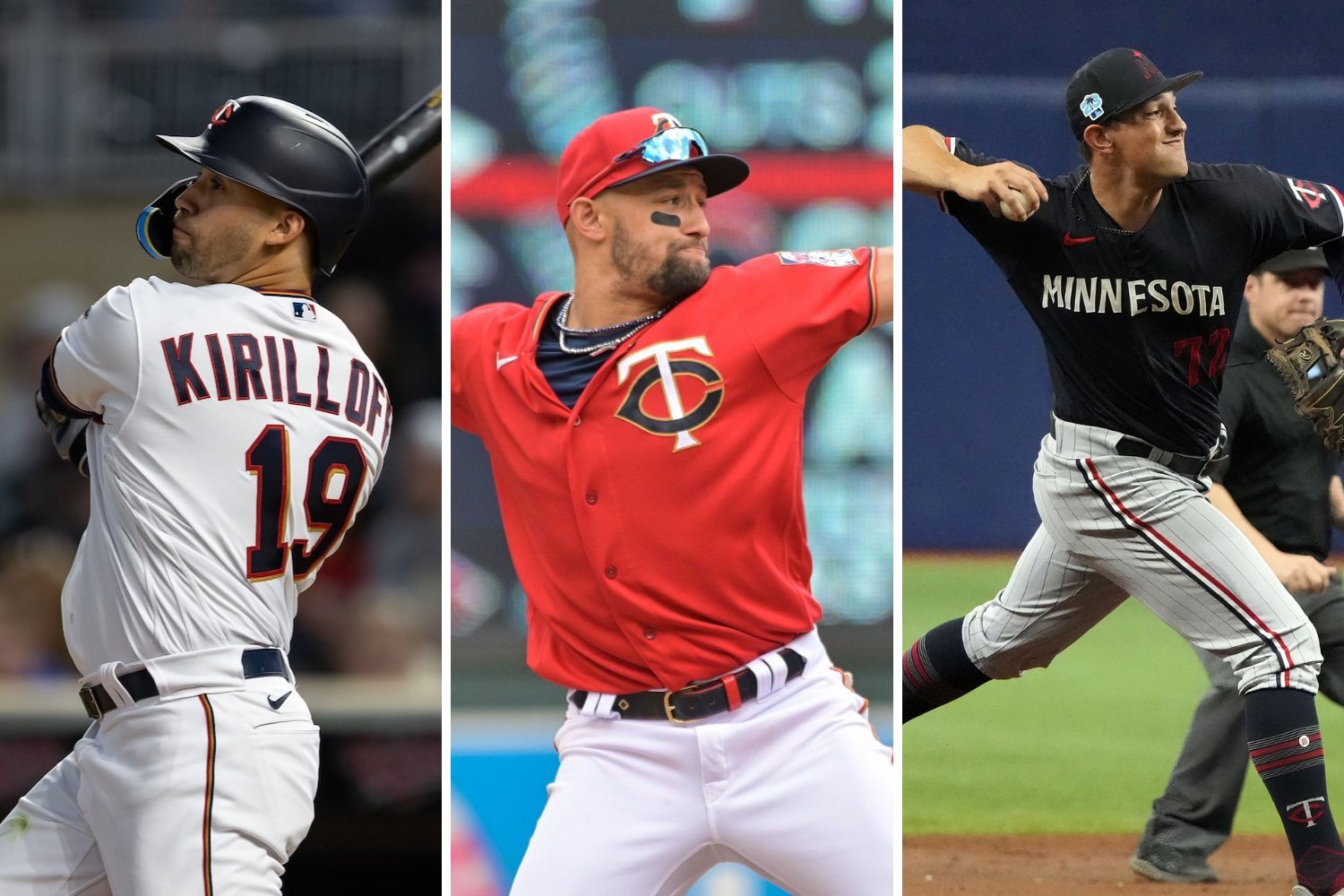 We all know that injuries and attrition are inevitable during the baseball season. This reality has been made painfully clear to Twins fans. So it comes as a nice change of pace here in 2023 that players joining the fold, rather than exiting it, is a storyline worth looking forward to. The Twins have already lost several players to the injured list in the early weeks, and they're certain to lose more in the months ahead. But there are a handful of difference-makers in the wings, either working back from injury or waiting their turn, who are capable of offsetting some of this inevitable attrition, while adding strength to a team that has already jumped out to a strong start in the Central. While the timelines aren't firm, we can confidently expect all five of the players below to join the Twins at some point this spring or summer, barring injury or the unforeseen. Each has the ability to make a substantial impact on the team's fortunes, going well beyond your typical role player or wild-card rookie. They are listed below in order of estimated arrival, starting with a former All-Star shortstop whose return is growing imminent. Jorge Polanco, 2B ETA: Late April Polanco was slowed in spring training by lingering knee soreness, so the Twins and trainer Nick Paparesta decided to take it slow with him, employing an extended build-up approach that spilled over into the regular season. Polanco doesn't appear to be all that far behind, however – he initiated a Single-A rehab stint shortly after the season started, and is now six games in. The 29-year-old seems to have reached a good place physically, evidenced by the fact he played a full game for Fort Myers on Saturday night, then started and played a full noon game on Sunday. He's in line for a move up to Triple-A in the near future, and from there, a return to the majors could happen within days. With the Twins offense struggling to find traction, Polanco's bat could be a godsend. He has a 111 career OPS+, including 117 since 2019, and even last year while slowed by the knee issues, Polanco's production was 16% better than average. His switch-hitting stick with patience and power can revitalize the top of the lineup, which has been noticeably short on weapons in his absence. Alex Kirilloff, 1B ETA: Early May Recovering from a second straight offseason wrist surgery, Kirilloff is a little behind Polanco's timeline but not by much. Both players started back-to-back games at Single-A for the first time over the weekend, and Kirilloff is starting to get the regular reps he needs following an offseason and spring disrupted by his gradual rehab. Given the circumstances, I assume the Twins will opt to use the entirety of Kirilloff's 20-day window, which leads right up to May 1st. But barring a setback or reassignment, he'll need to be up to the majors by then, giving him five months to try and finally establish himself at the major-league level. We've seen flashes of what AK is capable of during his time with the Twins, but never for a prolonged period thanks to the recurring wrist issues. Time will tell whether those are resolved, but when he's right Kirilloff is legitimately capable of being the best hitter in the Minnesota lineup – a power-hitting, run-producing force in the heart of the order. Or: exactly what this team could use right now. It's reasonable to be skeptical of getting that version of Kirilloff, and to wonder if the last-ditch procedure will deliver the desired results after so many starts and stops. But the fact that Kirilloff is already well into his rehab, ahead of the expected schedule, and playing quite well – he has a .900 OPS through four games – sure seems promising. Bailey Ober, SP ETA: May Unlike Polanco and Kirilloff, health is not the factor holding Ober back from the majors, but rather an intentional abundance of starting pitching depth for the Twins. Minnesota's rotation success has been the story of their season thus far, and the presence of Ober helps you believe they can keep their front-to-back excellence clicking long-term. The addition of Pablo López late in the offseason was bad news for Ober, ticketing him to open in the minors despite his proven big-league track record. But it was great news for the Twins, precisely because it shifted Ober to Triple-A, where he's now serving as stellar rotation depth, ready to step in should anything go amiss. The Twins have been fortunate so far in terms of rotation health, with mostly everyone looking strong and healthy. I say "mostly" because Kenta Maeda has experienced some fatigue – not too surprising or concerning at age 35 after a year off – and was skipped for his latest turn. Ober probably would've been the fill-in had the decision had been made a day earlier. Instead it was Louie Varland, another notable depth piece in this rotation mix. Varland pitched well, and he adds confidence to this unit's outlook, but not to the same degree as Ober, who's fully proven himself as at least a mid-rotation starter in the majors and looked flat-out fantastic in spring training. Ober's timeline is a little harder to peg than others on this list because unlike the others, it's dictated by matters outside of his control. He's simply waiting for an opportunity to arise. With that said, I have to think one way or another Ober will be up by the end of May if he's healthy and throwing well. I can't envision the team leaving a 27-year-old Ober sitting in the minors for anything approaching half the season. Royce Lewis, UTIL ETA: June In his brief major-league debut last season, Lewis showed everything that made him a first overall draft pick and fixture near the top of prospect rankings for years. He was an electric force on the field, making plays with his athleticism and smashing drives with his bat. He looked capable at shortstop while flashing a skill set that can play almost anywhere. It all came to an end too soon, of course, but Lewis is now in the late stages of his lengthy rehab trail from a second straight ACL tear. While nothing is a given in that situation, all signs have been positive. Lewis looked mostly unencumbered while taking part in workouts during spring training, and was cleared to run bases and take live batting practice by the end. At the time, the Twins said they hoped to have Lewis playing in minor-league games around mid-April, and while I've not heard anything on him specifically of late, I would guess we'll receive an update on his next milestone soon. Because he is on the 60-day injured list, Lewis is unable to return before June regardless of how well he takes back to the field. However, the Twins set a 12-to-13 month timeline when he underwent surgery on June 21st of last year and he sure seems to be tracking toward the front end of that. If this pace holds, the Twins might get Lewis for a majority of this season, providing a jolt for the second half that could prove highly consequential. Brooks Lee, INF ETA: July Unlike everyone listed above, Lee has yet to appear in the major leagues. His impact is entirely theoretical in comparison to those more established commodities. He's also in just his full professional season. How much can you realistically expect from the kid? Normally I'd say, not that much. And it's why I didn't include other near-ready prospects on this list like Edouard Julien, Matt Wallner, and Austin Martin – even though I could envision any of these talented youngsters coming up and making a real difference. It's just hard to take for granted that'll happen instantly, for reasons made evident during the brief MLB glimpses from Julien and Wallner. It's a very difficult transition! Yet I can't help but set that instinct aside when I look at Lee. There's something different and special about him, and it was very noticeable in spring training, where he piled up MLB shortstop reps as the youngest player in camp, handling it all with aplomb. Last year he worked his way to Double-A during a two-month pro debut, and now he's back there at age 22, batting .323 with an .898 OPS through his first eight games. There are a variety of different ways Lee could slot in for the Twins, even as he continues to play shortstop exclusively at Wichita. His switch-hitting bat is the real attraction, and the club will be hard-pressed to keep it bottled in the minors all summer if they feel he can help their contending cause.
- 64 comments
-
- 13
-
-

-
- alex kirilloff
- jorge polanco
- (and 3 more)
-
One of the most intriguing aspects of the 2023 Minnesota Twins is how their roster is set up to receive progressive waves of key reinforcements over the course of the campaign. With the team off to a strong start, these late arrivals stand to play a critical role in sustaining and bolstering the team's success as the marathon MLB season plays out. Image courtesy of Jordan Johnson, Jeffrey Becker, Dave Nelson–USA TODAY Sports We all know that injuries and attrition are inevitable during the baseball season. This reality has been made painfully clear to Twins fans. So it comes as a nice change of pace here in 2023 that players joining the fold, rather than exiting it, is a storyline worth looking forward to. The Twins have already lost several players to the injured list in the early weeks, and they're certain to lose more in the months ahead. But there are a handful of difference-makers in the wings, either working back from injury or waiting their turn, who are capable of offsetting some of this inevitable attrition, while adding strength to a team that has already jumped out to a strong start in the Central. While the timelines aren't firm, we can confidently expect all five of the players below to join the Twins at some point this spring or summer, barring injury or the unforeseen. Each has the ability to make a substantial impact on the team's fortunes, going well beyond your typical role player or wild-card rookie. They are listed below in order of estimated arrival, starting with a former All-Star shortstop whose return is growing imminent. Jorge Polanco, 2B ETA: Late April Polanco was slowed in spring training by lingering knee soreness, so the Twins and trainer Nick Paparesta decided to take it slow with him, employing an extended build-up approach that spilled over into the regular season. Polanco doesn't appear to be all that far behind, however – he initiated a Single-A rehab stint shortly after the season started, and is now six games in. The 29-year-old seems to have reached a good place physically, evidenced by the fact he played a full game for Fort Myers on Saturday night, then started and played a full noon game on Sunday. He's in line for a move up to Triple-A in the near future, and from there, a return to the majors could happen within days. With the Twins offense struggling to find traction, Polanco's bat could be a godsend. He has a 111 career OPS+, including 117 since 2019, and even last year while slowed by the knee issues, Polanco's production was 16% better than average. His switch-hitting stick with patience and power can revitalize the top of the lineup, which has been noticeably short on weapons in his absence. Alex Kirilloff, 1B ETA: Early May Recovering from a second straight offseason wrist surgery, Kirilloff is a little behind Polanco's timeline but not by much. Both players started back-to-back games at Single-A for the first time over the weekend, and Kirilloff is starting to get the regular reps he needs following an offseason and spring disrupted by his gradual rehab. Given the circumstances, I assume the Twins will opt to use the entirety of Kirilloff's 20-day window, which leads right up to May 1st. But barring a setback or reassignment, he'll need to be up to the majors by then, giving him five months to try and finally establish himself at the major-league level. We've seen flashes of what AK is capable of during his time with the Twins, but never for a prolonged period thanks to the recurring wrist issues. Time will tell whether those are resolved, but when he's right Kirilloff is legitimately capable of being the best hitter in the Minnesota lineup – a power-hitting, run-producing force in the heart of the order. Or: exactly what this team could use right now. It's reasonable to be skeptical of getting that version of Kirilloff, and to wonder if the last-ditch procedure will deliver the desired results after so many starts and stops. But the fact that Kirilloff is already well into his rehab, ahead of the expected schedule, and playing quite well – he has a .900 OPS through four games – sure seems promising. Bailey Ober, SP ETA: May Unlike Polanco and Kirilloff, health is not the factor holding Ober back from the majors, but rather an intentional abundance of starting pitching depth for the Twins. Minnesota's rotation success has been the story of their season thus far, and the presence of Ober helps you believe they can keep their front-to-back excellence clicking long-term. The addition of Pablo López late in the offseason was bad news for Ober, ticketing him to open in the minors despite his proven big-league track record. But it was great news for the Twins, precisely because it shifted Ober to Triple-A, where he's now serving as stellar rotation depth, ready to step in should anything go amiss. The Twins have been fortunate so far in terms of rotation health, with mostly everyone looking strong and healthy. I say "mostly" because Kenta Maeda has experienced some fatigue – not too surprising or concerning at age 35 after a year off – and was skipped for his latest turn. Ober probably would've been the fill-in had the decision had been made a day earlier. Instead it was Louie Varland, another notable depth piece in this rotation mix. Varland pitched well, and he adds confidence to this unit's outlook, but not to the same degree as Ober, who's fully proven himself as at least a mid-rotation starter in the majors and looked flat-out fantastic in spring training. Ober's timeline is a little harder to peg than others on this list because unlike the others, it's dictated by matters outside of his control. He's simply waiting for an opportunity to arise. With that said, I have to think one way or another Ober will be up by the end of May if he's healthy and throwing well. I can't envision the team leaving a 27-year-old Ober sitting in the minors for anything approaching half the season. Royce Lewis, UTIL ETA: June In his brief major-league debut last season, Lewis showed everything that made him a first overall draft pick and fixture near the top of prospect rankings for years. He was an electric force on the field, making plays with his athleticism and smashing drives with his bat. He looked capable at shortstop while flashing a skill set that can play almost anywhere. It all came to an end too soon, of course, but Lewis is now in the late stages of his lengthy rehab trail from a second straight ACL tear. While nothing is a given in that situation, all signs have been positive. Lewis looked mostly unencumbered while taking part in workouts during spring training, and was cleared to run bases and take live batting practice by the end. At the time, the Twins said they hoped to have Lewis playing in minor-league games around mid-April, and while I've not heard anything on him specifically of late, I would guess we'll receive an update on his next milestone soon. Because he is on the 60-day injured list, Lewis is unable to return before June regardless of how well he takes back to the field. However, the Twins set a 12-to-13 month timeline when he underwent surgery on June 21st of last year and he sure seems to be tracking toward the front end of that. If this pace holds, the Twins might get Lewis for a majority of this season, providing a jolt for the second half that could prove highly consequential. Brooks Lee, INF ETA: July Unlike everyone listed above, Lee has yet to appear in the major leagues. His impact is entirely theoretical in comparison to those more established commodities. He's also in just his full professional season. How much can you realistically expect from the kid? Normally I'd say, not that much. And it's why I didn't include other near-ready prospects on this list like Edouard Julien, Matt Wallner, and Austin Martin – even though I could envision any of these talented youngsters coming up and making a real difference. It's just hard to take for granted that'll happen instantly, for reasons made evident during the brief MLB glimpses from Julien and Wallner. It's a very difficult transition! Yet I can't help but set that instinct aside when I look at Lee. There's something different and special about him, and it was very noticeable in spring training, where he piled up MLB shortstop reps as the youngest player in camp, handling it all with aplomb. Last year he worked his way to Double-A during a two-month pro debut, and now he's back there at age 22, batting .323 with an .898 OPS through his first eight games. There are a variety of different ways Lee could slot in for the Twins, even as he continues to play shortstop exclusively at Wichita. His switch-hitting bat is the real attraction, and the club will be hard-pressed to keep it bottled in the minors all summer if they feel he can help their contending cause. View full article
-
 Weekly Snapshot: Mon, 4/10 through Sun, 4/16 *** Record Last Week: 4-3 (Overall: 10-6) Run Differential Last Week: +5 (Overall: +18) Standing: 1st Place in AL Central (1.0 GA) Last Week's Game Results: Game 10 | CWS 4, MIN 3: Sloppy Sox Squeak by Behind Cease Game 11 | MIN 4, CWS 3: Bunt and Error Lead to 10th-Inning Walk-Off Game 12 | MIN 3, CWS 1: Pitching Paves Way in Painful Series Clincher Game 13 | MIN 11, NYY 2: Nine-Run First Sparks Blowout Bronx Victory Game 14 | MIN 4, NYY 3: Clutch Correa Fuels Late Comeback Win Game 15 | NYY 6, MIN 1: Germán, Yankees Stick It to Twins Game 16 | NYY 2, MIN 0: Cole Dominates in Two-Hit Shutout NEWS & NOTES We're barely halfway through April and the injury-related developments are mounting for the Twins. Not all news was negative on the health front last week, and we'll get to the positives shortly, but already this team is going through it from a physical standpoint. The most harrowing moment of the week came in Wednesday afternoon's win over the White Sox, when shortstop Kyle Farmer was hit directly in the face by a 92 MPH fastball from Lucas Giolito. Farmer was on the ground for a while before walking off on his own power, face bloodied and buried in a towel. He underwent emergency surgery to repair his teeth and a jaw laceration, but thankfully avoided any fracture. Replaced on the roster by Kyle Garlick, Farmer is out indefinitely. Later in the same game, Byron Buxton had a scary collision on the basepaths that caused him to flip over and land on his head. He avoided serious injury and was back in the lineup on Thursday. He seems to be fine although his performance since casts a bit of doubt on that. Joey Gallo, like Max Kepler before him, was unable to avoid the injured list, but his intercostal issue seems fairly minor as Gallo was already appearing in rehab games for St. Paul by the weekend. The Kepler and Gallo IL moves opened the door for top prospects Matt Wallner and Edouard Julien to join the big-league roster, with Julien debuting last Wednesday at Target Field. He wasted no time showcasing his potent bat, homering in his second game while drawing three starts in the leadoff spot. Kepler was activated from the IL on Saturday, sending Wallner back to Triple-A after he went 0-for-8 in his short stint with the Twins. He'll surely be back soon enough. Meanwhile, Jorge Polanco was joined on his rehab stint at Class-A Fort Myers by Alex Kirilloff, who made his first official 2023 game appearance for the Mighty Mussels on Tuesday, playing first and batting third. The two are now solidly on the path back to MLB action, and both took a big step on Sunday by starting a day game following a night game. Kirilloff is still a little farther off, but Polanco's return feels near. He'll likely move up to Triple-A in the days ahead, and it wouldn't be a huge shock if he was back in the majors by this time next week. HIGHLIGHTS Carlos Correa was off to another slow start, with a .492 OPS and two RBIs through his first eight games of the season, before back spasms sidelined him for the entire White Sox series last week. C4 came back with a bang for the Yankees series, where his bat awakened and made a huge impact in the series split. The shortstop homered as part of Minnesota's nine-run outburst in the first on Thursday at Yankee Stadium, contributing to an 11-2 shellacking, but he was far more pivotal in Friday's comeback win. Correa's solo homer off Nestor Cortes in the sixth cut New York's lead down to one, and two innings later he delivered a clutch two-run double against star closer Clay Holmes to put the Twins in front. Huge hits in huge moments against top competition: exactly what the Twins need from Correa if they are to stay on this course and fulfill their potential. The move to re-sign Correa paid off big last week, as did a few of the front office's lower-key pickups from late in the offseason. That includes Donovan Solano, whose addition in early spring training now looks like a brilliant move – he's been leaned on heavily amidst early injuries, helping make up for the absence of Luis Arraez by batting .340 in a 1B/DH role, including 10-for-27 last week while starting every game. A more surprising factor in the offense was Michael A. Taylor, who entered the week with a .194/.219/.258 slash line before breaking out for three homers, including two in Thursday's series-opening win against the Yankees. We discussed Taylor here last week as a weak link in the offense – a "designated fielder" necessitated by Buxton's entrenchment at DH – but against Chicago and New York, he flashed some ability with the bat. Taylor is never going to be a true asset offensively, and his brutal 21-to-0 K/BB ratio should keep optimism surrounding this hot streak in check. However, he has shown in the past he can hit for a bit of power. If Taylor can knock one out of the park here and there, it'll make Buxton's strict DH usage much easier to abide. While some of the hitters started to click, the Twins pitching staff continued to excel. Pablo López had perhaps his most impressive performance yet, rebounding from a rough opening against the White Sox on Tuesday to retire 23 straight hitters en route to this final line: 7.2 IP, 3 H, 2 ER, 1 BB, 10 K. He then added six innings of two-run ball against the Yankees on Sunday, although he was outdueled by a lights-out Gerrit Cole. While the offense stole the show in Thursday's 11-2 beatdown, Joe Ryan's performance was equally impressive. Staked with a huge early lead, Ryan fired strikes and cruised through seven innings of one-run ball, striking out 10 with no walks and three hits allowed. A very notable aspect of Ryan's strong rookie season was how starkly divided his results were based on quality of opponent: he consistently obliterated weak lineups like the Royals and Tigers, but tended to struggle against power-laden units packing dangerous bats. As such, Ryan's past two outings against the Astros and Yankees have served as big statements, signaling that he's ready to turn the corner to true frontline starter. Add in Sonny Gray's five shutout frames on Wednesday, when he pitched through illness to lower his ERA to 0.53, and it's been an extremely encouraging start to the season for the top of Minnesota's rotation. Twins fans came into this year wondering if there was an ace or even a clear-cut No. 1 within this bunch of quality starters, and here in April we've got three different guys pitching to that standard. We also saw Minnesota's back-end starting pitching depth come into play when Louie Varland was called up Friday for a spot start, delivering a solid effort with three runs allowed in six innings. Giving fatigued Kenta Maeda a break, Varland struck out eight and walked one, looking every bit like the MLB-caliber starter we know him to be. And he was only the choice because Bailey Ober was unavailable after throwing six shutout innings at Triple-A the day before. The Twins are in ridiculously good shape on the starting pitching front. (Knock on wood, etc.) We shouldn't let that overshadow what's going on in the bullpen, though. In a week where Jhoan Durán had a couple of rare hiccups, surrendering two home runs and blowing a lead against Chicago, his co-closer counterpart Jorge López showed the same form that made him an elite reliever and All-Star in the first-half of 2022. López pitched twice in close games, firing shutout innings against the White Sox on Wednesday and the Yankees on Friday to protect slim leads in eventual victories. Last year after the trade, López's pitches were all over the place, exhibiting an obvious lack of command and confidence. This year he's got both back in spades, and it's resulting in near-perfection on the mound. In 6 ⅔ scoreless innings, the righty has allowed two singles, a double, and – crucially – no walks. This bullpen is cooking with López locked in alongside Durán and Griffin Jax, who also delivered in a couple of huge high-leverage spots last week, and ranks second among MLB relievers in Win Probability Added. LOWLIGHTS At his best, Buxton is a game-changing offensive force that you love to have at the heart of your lineup, even as designated hitter. We saw that during the first six weeks last year, when he slashed .259/.330/.706 through May 15th to generate early MVP buzz. We saw it at the start of this season, when he went 6-for-13 in the Royals series while spraying balls all over the field and making big plays with his legs. But after May 15th last year, Buxton slashed just .212/.299/.467 with a 31% K-rate, becoming more of an all-or-nothing slugger than dynamic offensive force. And since that season-opening KC series this year, he's slashed .166/.239/.310 with a 46% K-rate. His slump snowballed to a crescendo over the weekend when he struck out in all seven plate appearances on Saturday and Sunday while the offense failed to find life. It's possible Buxton is still feeling the effects of his collision at second base on Wednesday; he's gone 0-for-12 with 10 strikeouts since. But there are no evident signs of anything amiss physically – his approach is frankly a mess. Buxton doesn't strike me as as guy who takes failure too well. It's gotta be tough on him mentally to keep whiffing and then stewing in the dugout about it for several innings. You wonder if the Twins will consider giving him some time in center as a way to help get him right at the plate. Elsewhere, the return of Kepler did nothing to bolster the Twins' run-scoring prowess. He'd been heating up slightly before he got hurt, but Kepler fell right back into his old habits, compiling ineffective at-bats on the way to an 0-for-6 showing in two games, which included a rally-killing 4-6-3 GIDP. Kepler is now slashing .091/.130/.227 on the season. Minnesota's offense shows the potential to be top-tier, especially if they can get Polanco and Kirilloff back at something resembling full strength in the near future. But it's going to be tough to find consistency when their DH and right fielder aren't giving them much of anything. TRENDING STORYLINE Gallo's placement on IL last Tuesday was retroactive to April 8th, meaning he's already eligible to return this coming Tuesday, when the Twins open their next series at Fenway against the Red Sox. Given that the veteran appears fully healthy, they probably won't wait to make a move. The question is: who comes off the roster to make room for Gallo? Garlick would be a straightforward answer, given that his niche usage makes him a fairly extraneous piece on the bench. He does have concrete value though, and showed it on Friday when he started against the left-hander Cortes and homered off him. Julien is probably the most likely to go. As a lefty corner bat, he's more redundant with Gallo (and Kepler, and Larnach, and Gordon), and he's hardly been dominating during his initial MLB stint despite some nice flashes. Like Wallner's, the demotion would not be permanent. Beyond the roster shuffle, Gallo's impact on the day-to-day lineups will be interesting. Solano's been hitting too well to justify benching regularly, even against right-handers. Trevor Larnach isn't going to sit. So long as Buxton remains the everyday DH, that doesn't leave a lot of room for Gallo ... unless Kepler is out of the lineup. I expect we'll start seeing that happen with increasing frequency, and it could be the first step toward parting ways with the long-time right field stalwart midway through the season. LOOKING AHEAD The Twins get a bit of a respite from their April gauntlet, facing two big-market teams that won World Series as recently 2018 and 2019 but are both in varying states of rebuild. Theoretically Minnesota should be favored in all of these games. It's the kind of opportunity you want to take advantage of, especially coming off a pair of flat performances to close out the New York series. TUESDAY, 4/18: TWINS @ RED SOX – RHP Sonny Gray v. LHP Chris Sale WEDNESDAY, 4/19: TWINS @ RED SOX – RHP Joe Ryan v. RHP Corey Kluber THURSDAY, 4/20: TWINS @ RED SOX – RHP Tyler Mahle v. RHP Tanner Houck FRIDAY, 4/21 NATIONALS @ TWINS – RHP Trevor Williams v. RHP Kenta Maeda SATURDAY, 4/22: NATIONALS @ TWINS – RHP Chad Kuhl v. RHP Pablo Lopez SUNDAY, 4/23: NATIONALS @ TWINS – LHP Patrick Corbin v. RHP Sonny Gray
- 22 comments
-
- 6
-
-
- kyle farmer
- carlos correa
- (and 2 more)
-
The Twins battled through attrition, came up big in key spots, and made some assertive statements in a winning week against two of their top rivals that featured plenty of drama. The offense remains a work in progress but this pitching staff is pristine. Image courtesy of Vincent Carchietta-USA TODAY Sports Weekly Snapshot: Mon, 4/10 through Sun, 4/16 *** Record Last Week: 4-3 (Overall: 10-6) Run Differential Last Week: +5 (Overall: +18) Standing: 1st Place in AL Central (1.0 GA) Last Week's Game Results: Game 10 | CWS 4, MIN 3: Sloppy Sox Squeak by Behind Cease Game 11 | MIN 4, CWS 3: Bunt and Error Lead to 10th-Inning Walk-Off Game 12 | MIN 3, CWS 1: Pitching Paves Way in Painful Series Clincher Game 13 | MIN 11, NYY 2: Nine-Run First Sparks Blowout Bronx Victory Game 14 | MIN 4, NYY 3: Clutch Correa Fuels Late Comeback Win Game 15 | NYY 6, MIN 1: Germán, Yankees Stick It to Twins Game 16 | NYY 2, MIN 0: Cole Dominates in Two-Hit Shutout NEWS & NOTES We're barely halfway through April and the injury-related developments are mounting for the Twins. Not all news was negative on the health front last week, and we'll get to the positives shortly, but already this team is going through it from a physical standpoint. The most harrowing moment of the week came in Wednesday afternoon's win over the White Sox, when shortstop Kyle Farmer was hit directly in the face by a 92 MPH fastball from Lucas Giolito. Farmer was on the ground for a while before walking off on his own power, face bloodied and buried in a towel. He underwent emergency surgery to repair his teeth and a jaw laceration, but thankfully avoided any fracture. Replaced on the roster by Kyle Garlick, Farmer is out indefinitely. Later in the same game, Byron Buxton had a scary collision on the basepaths that caused him to flip over and land on his head. He avoided serious injury and was back in the lineup on Thursday. He seems to be fine although his performance since casts a bit of doubt on that. Joey Gallo, like Max Kepler before him, was unable to avoid the injured list, but his intercostal issue seems fairly minor as Gallo was already appearing in rehab games for St. Paul by the weekend. The Kepler and Gallo IL moves opened the door for top prospects Matt Wallner and Edouard Julien to join the big-league roster, with Julien debuting last Wednesday at Target Field. He wasted no time showcasing his potent bat, homering in his second game while drawing three starts in the leadoff spot. Kepler was activated from the IL on Saturday, sending Wallner back to Triple-A after he went 0-for-8 in his short stint with the Twins. He'll surely be back soon enough. Meanwhile, Jorge Polanco was joined on his rehab stint at Class-A Fort Myers by Alex Kirilloff, who made his first official 2023 game appearance for the Mighty Mussels on Tuesday, playing first and batting third. The two are now solidly on the path back to MLB action, and both took a big step on Sunday by starting a day game following a night game. Kirilloff is still a little farther off, but Polanco's return feels near. He'll likely move up to Triple-A in the days ahead, and it wouldn't be a huge shock if he was back in the majors by this time next week. HIGHLIGHTS Carlos Correa was off to another slow start, with a .492 OPS and two RBIs through his first eight games of the season, before back spasms sidelined him for the entire White Sox series last week. C4 came back with a bang for the Yankees series, where his bat awakened and made a huge impact in the series split. The shortstop homered as part of Minnesota's nine-run outburst in the first on Thursday at Yankee Stadium, contributing to an 11-2 shellacking, but he was far more pivotal in Friday's comeback win. Correa's solo homer off Nestor Cortes in the sixth cut New York's lead down to one, and two innings later he delivered a clutch two-run double against star closer Clay Holmes to put the Twins in front. Huge hits in huge moments against top competition: exactly what the Twins need from Correa if they are to stay on this course and fulfill their potential. The move to re-sign Correa paid off big last week, as did a few of the front office's lower-key pickups from late in the offseason. That includes Donovan Solano, whose addition in early spring training now looks like a brilliant move – he's been leaned on heavily amidst early injuries, helping make up for the absence of Luis Arraez by batting .340 in a 1B/DH role, including 10-for-27 last week while starting every game. A more surprising factor in the offense was Michael A. Taylor, who entered the week with a .194/.219/.258 slash line before breaking out for three homers, including two in Thursday's series-opening win against the Yankees. We discussed Taylor here last week as a weak link in the offense – a "designated fielder" necessitated by Buxton's entrenchment at DH – but against Chicago and New York, he flashed some ability with the bat. Taylor is never going to be a true asset offensively, and his brutal 21-to-0 K/BB ratio should keep optimism surrounding this hot streak in check. However, he has shown in the past he can hit for a bit of power. If Taylor can knock one out of the park here and there, it'll make Buxton's strict DH usage much easier to abide. While some of the hitters started to click, the Twins pitching staff continued to excel. Pablo López had perhaps his most impressive performance yet, rebounding from a rough opening against the White Sox on Tuesday to retire 23 straight hitters en route to this final line: 7.2 IP, 3 H, 2 ER, 1 BB, 10 K. He then added six innings of two-run ball against the Yankees on Sunday, although he was outdueled by a lights-out Gerrit Cole. While the offense stole the show in Thursday's 11-2 beatdown, Joe Ryan's performance was equally impressive. Staked with a huge early lead, Ryan fired strikes and cruised through seven innings of one-run ball, striking out 10 with no walks and three hits allowed. A very notable aspect of Ryan's strong rookie season was how starkly divided his results were based on quality of opponent: he consistently obliterated weak lineups like the Royals and Tigers, but tended to struggle against power-laden units packing dangerous bats. As such, Ryan's past two outings against the Astros and Yankees have served as big statements, signaling that he's ready to turn the corner to true frontline starter. Add in Sonny Gray's five shutout frames on Wednesday, when he pitched through illness to lower his ERA to 0.53, and it's been an extremely encouraging start to the season for the top of Minnesota's rotation. Twins fans came into this year wondering if there was an ace or even a clear-cut No. 1 within this bunch of quality starters, and here in April we've got three different guys pitching to that standard. We also saw Minnesota's back-end starting pitching depth come into play when Louie Varland was called up Friday for a spot start, delivering a solid effort with three runs allowed in six innings. Giving fatigued Kenta Maeda a break, Varland struck out eight and walked one, looking every bit like the MLB-caliber starter we know him to be. And he was only the choice because Bailey Ober was unavailable after throwing six shutout innings at Triple-A the day before. The Twins are in ridiculously good shape on the starting pitching front. (Knock on wood, etc.) We shouldn't let that overshadow what's going on in the bullpen, though. In a week where Jhoan Durán had a couple of rare hiccups, surrendering two home runs and blowing a lead against Chicago, his co-closer counterpart Jorge López showed the same form that made him an elite reliever and All-Star in the first-half of 2022. López pitched twice in close games, firing shutout innings against the White Sox on Wednesday and the Yankees on Friday to protect slim leads in eventual victories. Last year after the trade, López's pitches were all over the place, exhibiting an obvious lack of command and confidence. This year he's got both back in spades, and it's resulting in near-perfection on the mound. In 6 ⅔ scoreless innings, the righty has allowed two singles, a double, and – crucially – no walks. This bullpen is cooking with López locked in alongside Durán and Griffin Jax, who also delivered in a couple of huge high-leverage spots last week, and ranks second among MLB relievers in Win Probability Added. LOWLIGHTS At his best, Buxton is a game-changing offensive force that you love to have at the heart of your lineup, even as designated hitter. We saw that during the first six weeks last year, when he slashed .259/.330/.706 through May 15th to generate early MVP buzz. We saw it at the start of this season, when he went 6-for-13 in the Royals series while spraying balls all over the field and making big plays with his legs. But after May 15th last year, Buxton slashed just .212/.299/.467 with a 31% K-rate, becoming more of an all-or-nothing slugger than dynamic offensive force. And since that season-opening KC series this year, he's slashed .166/.239/.310 with a 46% K-rate. His slump snowballed to a crescendo over the weekend when he struck out in all seven plate appearances on Saturday and Sunday while the offense failed to find life. It's possible Buxton is still feeling the effects of his collision at second base on Wednesday; he's gone 0-for-12 with 10 strikeouts since. But there are no evident signs of anything amiss physically – his approach is frankly a mess. Buxton doesn't strike me as as guy who takes failure too well. It's gotta be tough on him mentally to keep whiffing and then stewing in the dugout about it for several innings. You wonder if the Twins will consider giving him some time in center as a way to help get him right at the plate. Elsewhere, the return of Kepler did nothing to bolster the Twins' run-scoring prowess. He'd been heating up slightly before he got hurt, but Kepler fell right back into his old habits, compiling ineffective at-bats on the way to an 0-for-6 showing in two games, which included a rally-killing 4-6-3 GIDP. Kepler is now slashing .091/.130/.227 on the season. Minnesota's offense shows the potential to be top-tier, especially if they can get Polanco and Kirilloff back at something resembling full strength in the near future. But it's going to be tough to find consistency when their DH and right fielder aren't giving them much of anything. TRENDING STORYLINE Gallo's placement on IL last Tuesday was retroactive to April 8th, meaning he's already eligible to return this coming Tuesday, when the Twins open their next series at Fenway against the Red Sox. Given that the veteran appears fully healthy, they probably won't wait to make a move. The question is: who comes off the roster to make room for Gallo? Garlick would be a straightforward answer, given that his niche usage makes him a fairly extraneous piece on the bench. He does have concrete value though, and showed it on Friday when he started against the left-hander Cortes and homered off him. Julien is probably the most likely to go. As a lefty corner bat, he's more redundant with Gallo (and Kepler, and Larnach, and Gordon), and he's hardly been dominating during his initial MLB stint despite some nice flashes. Like Wallner's, the demotion would not be permanent. Beyond the roster shuffle, Gallo's impact on the day-to-day lineups will be interesting. Solano's been hitting too well to justify benching regularly, even against right-handers. Trevor Larnach isn't going to sit. So long as Buxton remains the everyday DH, that doesn't leave a lot of room for Gallo ... unless Kepler is out of the lineup. I expect we'll start seeing that happen with increasing frequency, and it could be the first step toward parting ways with the long-time right field stalwart midway through the season. LOOKING AHEAD The Twins get a bit of a respite from their April gauntlet, facing two big-market teams that won World Series as recently 2018 and 2019 but are both in varying states of rebuild. Theoretically Minnesota should be favored in all of these games. It's the kind of opportunity you want to take advantage of, especially coming off a pair of flat performances to close out the New York series. TUESDAY, 4/18: TWINS @ RED SOX – RHP Sonny Gray v. LHP Chris Sale WEDNESDAY, 4/19: TWINS @ RED SOX – RHP Joe Ryan v. RHP Corey Kluber THURSDAY, 4/20: TWINS @ RED SOX – RHP Tyler Mahle v. RHP Tanner Houck FRIDAY, 4/21 NATIONALS @ TWINS – RHP Trevor Williams v. RHP Kenta Maeda SATURDAY, 4/22: NATIONALS @ TWINS – RHP Chad Kuhl v. RHP Pablo Lopez SUNDAY, 4/23: NATIONALS @ TWINS – LHP Patrick Corbin v. RHP Sonny Gray View full article
-
Minnesota's rotation has been the class of the major leagues early on. Their stellar starters led the team to a series victory against the defending champs over the weekend, making a statement in front of home fans after last year's sad 0-6 showing versus the dreaded Astros. Image courtesy of Matt Blewett-USA TODAY Sports Weekly Snapshot: Mon, 4/3 through Sun, 4/9 *** Record Last Week: 3-3 (Overall: 6-3) Run Differential Last Week: +9 (Overall: +13) Standing: 1st Place in AL Central (0.5 GA) Last Week's Game Results: Game 4 | MIN 11, MIA 1: Twins Bash Four Homers in Blowout Win Game 5 | MIA 1, MIN 0: Silent Offense Has No Answer for Alcantara Game 6 | MIA 5, MIN 2: Lineup Muffled by Marlins, Twins Drop Series Game 7 | MIN 3, HOU 2: Gray Dominates, Twins Rally for Walk-Off Game 8 | MIN 9, HOU 6: Pair of Three-Run Homers Bury Astros Game 9 | HOU 5, MIN 1: Houston Handles Finale to Avoid Sweep NEWS & NOTES It didn't take long for Minnesota's abundance of lefty-hitting corner outfield depth to come into play. Max Kepler tweaked his knee running through first on Monday, and when it hadn't improved enough after several days, he was placed on the injured list. Kepler is replaced by prospect Matt Wallner, who made his Twins 2023 debut on Sunday. Joey Gallo has also been sidelined, dealing with some seemingly mild side soreness, but he hasn't yet joined Kepler on the IL. He hopes to avoid that outcome. We'll see. Josh Winder, slowed by a shoulder issue (again) this spring, opened up a rehab stint at Fort Myers with two scoreless innings on Friday. One day earlier, Jorge Polanco embarked on his own rehab assignment with the Class-A Mighty Mussels. More on that shortly. HIGHLIGHTS The Twins pitching staff continues to dazzle day after day. The rotation has been better than anyone could have imagined, pacing the entire league in a variety of stat categories while delivering consistently strong outings regardless of the opponent. All is going pretty much exactly how the front office drew it up: quality starting pitchers from front to back, with no real weak point to disrupt the competitive flow and give opponents a break. Or, as Sonny Gray put it following his brilliant 13-strikeout performance in the home opener: "We’re not constantly waiting to get back to the top of the rotation for a good outing or a good start. We’ve got five guys that, say I go out there and s*** the bed, the next guy picks me up." Fortunately, bed accidents haven't been much of a concern thus far, with each member of the rotation looking tremendous without exception. Joe Ryan followed Gray on Saturday with an outing far more impressive than his final line (4 ER in 6 IP) suggests; Ryan had one bad sequence in the third, culminating in a Yordan Alvarez grand slam, but otherwise shut Houston down with 10 strikeouts and one walk. Pablo López showed ace form in seven masterful innings Wednesday against the Marlins, continuing to stymy hitters with an upgraded arsenal that now includes a whiff-inducing sweeper. Tyler Mahle looked great in both of his starts, posting a 13-to-2 K/BB ratio in 11 innings while exhibiting no signs of shoulder trouble. What an absurd asset to have as your "fourth starter." Even Kenta Maeda – the biggest question mark of the group coming off a long absence and rough spring – sparkled in his season debut, holding the Marlins to one run over five innings with nine strikeouts on Tuesday. He's the only rotation member we've seen just once. Monday's match-up against the White Sox will be telling after Maeda came out of his first start due to fatigue. Already painting a stark contrast to last year, every starting pitcher has delivered at least five innings in every start, never letting a game get out of range on their watch. The success of the rotation has, in turn, reduced the burden on the bullpen, which has largely gotten the job done through nine games. Jhoan Durán has been doing his thing, posting three scoreless appearances in key spots. Saturday's save, which saw the righty slam the door on three pitches, exemplified the way his excellence has almost become casual. Minnesota's offense was much more of a mixed bag, but one big standout deserves mention: Trevor Larnach is blossoming before our eyes. He has played a vital role, slotting into the No. 2, 3, and 4 spots in the lineup while Polanco is sidelined, and Larnach is paying off his manager's vote of confidence. He went 6-for-23 last week with a homer, triple, and four walks, showing impressive patience at the plate and his signature all-fields pop. Larnach has reached base at least once in every game. LOWLIGHTS The Twins lineup went from slugging to sluggish in Miami, scoring 11 runs on four homers Monday and then managing two total runs in the final two games to drop the series. In Friday's home opener, the bats were mostly silenced before rallying for a pair of runs in the 10th to win. They awakened with a nine-run outburst on Saturday, but then were were held to two hits on Sunday. As Yogi would say, it's déjà vu all over again. Cold bats in the early weeks aren't unusual, and the great Twins pitching has largely offset the run-scoring struggles. Still, fans can't be blamed for feeling apprehensive about what they're seeing, having watched the 2022 lineup short-circuit so frequently. (They were held to two or fewer runs in one-third of their games.) Several key hitters are struggling, but for what it's worth, there aren't a ton of underlying signs here that cause alarm. Nick Gordon is batting .091 despite striking out zero times in 24 plate appearances. That won't hold up. José Miranda doesn't have an extra-base hit yet. That won't hold up. Carlos Correa has a .492 OPS. You KNOW that won't hold up. Things are going to give. In addition to waiting out those inevitabilities, there are some actions at the team's disposal to give the offense a boost. One of them would be pulling Byron Buxton back from his strict DH relegation: the byproduct of his starting there exclusively is that Michael A. Taylor is occupying a daily spot in the batting order. Taylor has looked horrible at the plate, and while he's not going to hit .194 all year, he will likely continue to be an offensive liability – especially against righties. Buxton's presence in the lineup is crucial, and he's been in it for eight of the first nine games. So, I can see why the Twins would take a "why fix it" mindset. But the lineup does need some fixing, and getting Buxton into center to free up the DH spot here and there would be a simple incremental improvement. I'm just not sure the Twins are willing to go there at this point. TRENDING STORYLINE Another clear path to improving the Twins lineup is getting Polanco back near the top of it. Larnach's emergence has been a huge help, but the absence of Polanco's switch-hitting stick along with Luis Arraez's departure is definitely being felt at the front of the order. (Arraez, naturally, is leading the NL with a .471 batting average.) Although Polanco's return isn't imminent, for the first time since early spring training, it feels like we have a solid timeline taking shape. Polanco kicked off an official rehab stint at Fort Myers, playing five innings on Thursday and seven on Saturday for the Mighty Mussels. Because the 29-year-old didn't get much of a spring training experience due to lingering knee soreness, he's going to need a full ramp-up, and it'd be no surprise if the Twins used nearly their full 20-day rehab window (or even extended it) to acclimate him. That said, Polanco probably has the ability to accelerate his own timeline. If he's feeling and looking good on the field in the coming week, playing full games and producing, he'll be in line for a move to Triple-A and the majors soon after. As for Alex Kirilloff, whose bat could be a pivotal difference-maker for the middle of the lineup? Doesn't sound like he's particularly close. LOOKING AHEAD The gauntlet is underway. Minnesota is off to a good start, having notched a series win against an Astros team that completely demolished them in every meeting last year, but their challenge is only beginning. In a full-slate week ahead with seven games scheduled, the Twins will face arguably their two most-hated rivals, the White Sox and Yankees. Plenty of top-tier pitching is on deck, including three top-10 Cy Young finishers from 2022. The early-season proving ground continues. If the Twins come out of this stretch with a winning record we should all be feeling ecstatic. MONDAY, 4/10: WHITE SOX @ TWINS – RHP Dylan Cease v. RHP Kenta Maeda TUESDAY, 4/11: WHITE SOX @ TWINS – RHP Lance Lynn v. RHP Pablo Lopez WEDNESDAY, 4/12: WHITE SOX @ TWINS – RHP Lucas Giolito v. RHP Sonny Gray THURSDAY, 4/13: TWINS @ YANKEES – RHP Joe Ryan vs TBD FRIDAY, 4/14: TWINS @ YANKEES – RHP Tyler Mahle v. LHP Nestor Cortes SATURDAY, 4/15: TWINS @ YANKEES – RHP Kenta Maeda v. RHP Domingo German SUNDAY, 4/16: TWINS @ YANKEES – RHP Pablo Lopez v. RHP Gerrit Cole View full article
-
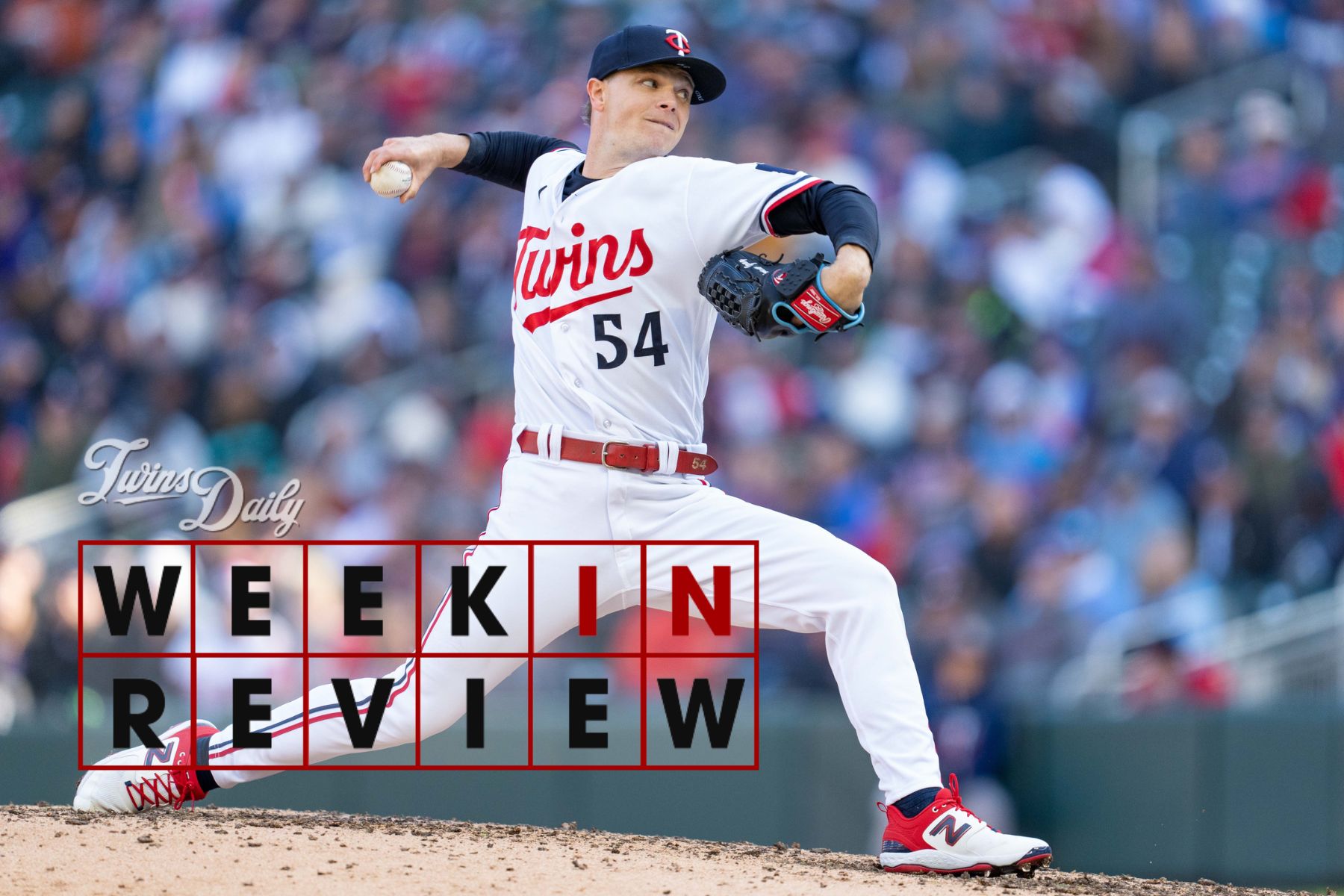 Weekly Snapshot: Mon, 4/3 through Sun, 4/9 *** Record Last Week: 3-3 (Overall: 6-3) Run Differential Last Week: +9 (Overall: +13) Standing: 1st Place in AL Central (0.5 GA) Last Week's Game Results: Game 4 | MIN 11, MIA 1: Twins Bash Four Homers in Blowout Win Game 5 | MIA 1, MIN 0: Silent Offense Has No Answer for Alcantara Game 6 | MIA 5, MIN 2: Lineup Muffled by Marlins, Twins Drop Series Game 7 | MIN 3, HOU 2: Gray Dominates, Twins Rally for Walk-Off Game 8 | MIN 9, HOU 6: Pair of Three-Run Homers Bury Astros Game 9 | HOU 5, MIN 1: Houston Handles Finale to Avoid Sweep NEWS & NOTES It didn't take long for Minnesota's abundance of lefty-hitting corner outfield depth to come into play. Max Kepler tweaked his knee running through first on Monday, and when it hadn't improved enough after several days, he was placed on the injured list. Kepler is replaced by prospect Matt Wallner, who made his Twins 2023 debut on Sunday. Joey Gallo has also been sidelined, dealing with some seemingly mild side soreness, but he hasn't yet joined Kepler on the IL. He hopes to avoid that outcome. We'll see. Josh Winder, slowed by a shoulder issue (again) this spring, opened up a rehab stint at Fort Myers with two scoreless innings on Friday. One day earlier, Jorge Polanco embarked on his own rehab assignment with the Class-A Mighty Mussels. More on that shortly. HIGHLIGHTS The Twins pitching staff continues to dazzle day after day. The rotation has been better than anyone could have imagined, pacing the entire league in a variety of stat categories while delivering consistently strong outings regardless of the opponent. All is going pretty much exactly how the front office drew it up: quality starting pitchers from front to back, with no real weak point to disrupt the competitive flow and give opponents a break. Or, as Sonny Gray put it following his brilliant 13-strikeout performance in the home opener: "We’re not constantly waiting to get back to the top of the rotation for a good outing or a good start. We’ve got five guys that, say I go out there and s*** the bed, the next guy picks me up." Fortunately, bed accidents haven't been much of a concern thus far, with each member of the rotation looking tremendous without exception. Joe Ryan followed Gray on Saturday with an outing far more impressive than his final line (4 ER in 6 IP) suggests; Ryan had one bad sequence in the third, culminating in a Yordan Alvarez grand slam, but otherwise shut Houston down with 10 strikeouts and one walk. Pablo López showed ace form in seven masterful innings Wednesday against the Marlins, continuing to stymy hitters with an upgraded arsenal that now includes a whiff-inducing sweeper. Tyler Mahle looked great in both of his starts, posting a 13-to-2 K/BB ratio in 11 innings while exhibiting no signs of shoulder trouble. What an absurd asset to have as your "fourth starter." Even Kenta Maeda – the biggest question mark of the group coming off a long absence and rough spring – sparkled in his season debut, holding the Marlins to one run over five innings with nine strikeouts on Tuesday. He's the only rotation member we've seen just once. Monday's match-up against the White Sox will be telling after Maeda came out of his first start due to fatigue. Already painting a stark contrast to last year, every starting pitcher has delivered at least five innings in every start, never letting a game get out of range on their watch. The success of the rotation has, in turn, reduced the burden on the bullpen, which has largely gotten the job done through nine games. Jhoan Durán has been doing his thing, posting three scoreless appearances in key spots. Saturday's save, which saw the righty slam the door on three pitches, exemplified the way his excellence has almost become casual. Minnesota's offense was much more of a mixed bag, but one big standout deserves mention: Trevor Larnach is blossoming before our eyes. He has played a vital role, slotting into the No. 2, 3, and 4 spots in the lineup while Polanco is sidelined, and Larnach is paying off his manager's vote of confidence. He went 6-for-23 last week with a homer, triple, and four walks, showing impressive patience at the plate and his signature all-fields pop. Larnach has reached base at least once in every game. LOWLIGHTS The Twins lineup went from slugging to sluggish in Miami, scoring 11 runs on four homers Monday and then managing two total runs in the final two games to drop the series. In Friday's home opener, the bats were mostly silenced before rallying for a pair of runs in the 10th to win. They awakened with a nine-run outburst on Saturday, but then were were held to two hits on Sunday. As Yogi would say, it's déjà vu all over again. Cold bats in the early weeks aren't unusual, and the great Twins pitching has largely offset the run-scoring struggles. Still, fans can't be blamed for feeling apprehensive about what they're seeing, having watched the 2022 lineup short-circuit so frequently. (They were held to two or fewer runs in one-third of their games.) Several key hitters are struggling, but for what it's worth, there aren't a ton of underlying signs here that cause alarm. Nick Gordon is batting .091 despite striking out zero times in 24 plate appearances. That won't hold up. José Miranda doesn't have an extra-base hit yet. That won't hold up. Carlos Correa has a .492 OPS. You KNOW that won't hold up. Things are going to give. In addition to waiting out those inevitabilities, there are some actions at the team's disposal to give the offense a boost. One of them would be pulling Byron Buxton back from his strict DH relegation: the byproduct of his starting there exclusively is that Michael A. Taylor is occupying a daily spot in the batting order. Taylor has looked horrible at the plate, and while he's not going to hit .194 all year, he will likely continue to be an offensive liability – especially against righties. Buxton's presence in the lineup is crucial, and he's been in it for eight of the first nine games. So, I can see why the Twins would take a "why fix it" mindset. But the lineup does need some fixing, and getting Buxton into center to free up the DH spot here and there would be a simple incremental improvement. I'm just not sure the Twins are willing to go there at this point. TRENDING STORYLINE Another clear path to improving the Twins lineup is getting Polanco back near the top of it. Larnach's emergence has been a huge help, but the absence of Polanco's switch-hitting stick along with Luis Arraez's departure is definitely being felt at the front of the order. (Arraez, naturally, is leading the NL with a .471 batting average.) Although Polanco's return isn't imminent, for the first time since early spring training, it feels like we have a solid timeline taking shape. Polanco kicked off an official rehab stint at Fort Myers, playing five innings on Thursday and seven on Saturday for the Mighty Mussels. Because the 29-year-old didn't get much of a spring training experience due to lingering knee soreness, he's going to need a full ramp-up, and it'd be no surprise if the Twins used nearly their full 20-day rehab window (or even extended it) to acclimate him. That said, Polanco probably has the ability to accelerate his own timeline. If he's feeling and looking good on the field in the coming week, playing full games and producing, he'll be in line for a move to Triple-A and the majors soon after. As for Alex Kirilloff, whose bat could be a pivotal difference-maker for the middle of the lineup? Doesn't sound like he's particularly close. LOOKING AHEAD The gauntlet is underway. Minnesota is off to a good start, having notched a series win against an Astros team that completely demolished them in every meeting last year, but their challenge is only beginning. In a full-slate week ahead with seven games scheduled, the Twins will face arguably their two most-hated rivals, the White Sox and Yankees. Plenty of top-tier pitching is on deck, including three top-10 Cy Young finishers from 2022. The early-season proving ground continues. If the Twins come out of this stretch with a winning record we should all be feeling ecstatic. MONDAY, 4/10: WHITE SOX @ TWINS – RHP Dylan Cease v. RHP Kenta Maeda TUESDAY, 4/11: WHITE SOX @ TWINS – RHP Lance Lynn v. RHP Pablo Lopez WEDNESDAY, 4/12: WHITE SOX @ TWINS – RHP Lucas Giolito v. RHP Sonny Gray THURSDAY, 4/13: TWINS @ YANKEES – RHP Joe Ryan vs TBD FRIDAY, 4/14: TWINS @ YANKEES – RHP Tyler Mahle v. LHP Nestor Cortes SATURDAY, 4/15: TWINS @ YANKEES – RHP Kenta Maeda v. RHP Domingo German SUNDAY, 4/16: TWINS @ YANKEES – RHP Pablo Lopez v. RHP Gerrit Cole
- 22 comments
-
- 10
-
-
- joe ryan
- sonny gray
- (and 3 more)
-
The Twins opened their season with a winning road trip against relatively unimposing teams. Now the schedule is about to get a whole lot harder. Are they ready for the challenge? Image courtesy of Gregory Fisher, Troy Taormina-USA TODAY Sports The Twins are off to a nice start. They opened up with back-to-back shutouts on the road, on the way to a season-opening sweep and winning road trip. Sure, they fell to earth with a pair of low-scoring losses on the back end, but there's no shame in struggling against premier pitching in early April, as your hitters find their grooves. At least, that's the charitable take. The less charitable take is that the Twins took care of business against two sub-par teams, but let some opportunities slip away due to an underwhelming offense with some carryover sleepiness from last season. The 2022 Twins, despite ranking 11th among MLB teams in OPS, were 17th in runs scored, thanks to a warped distribution: While apt to blow up occasionally, they scored two or fewer in nearly one-third (32%) of their games. Now, the 2023 Twins have opened up by scoring two or fewer in four of their first six. Again, it's an easy thing to downplay and excuse, all things considered. But this Minnesota lineup was a question mark coming in, especially down multiple key pieces out of the gate. And while they've still managed a winning record thus far, the difficulty level is about to rise immensely Starting with Friday's home opener, the Twins will play 10 of their next 19 games against the Astros and Yankees. There's also a three-game homestand against a key division rival, the Chicago White Sox, mixed in there. It's proving time, to say the least. Minnesota's pitching stuff looks up to the challenge, but we shouldn't expect the same kind of success as the they saw against the Royals and Marlins. In order to come out of this early-season gauntlet in a reasonably good place, the Twins are going to need to get their offense going. Some key questions: Can the right-handed bats start producing some power? The Twins have hit six home runs so far, with lefty hitters (Joey Gallo, Trevor Larnach, Max Kepler) accounting for all but one. Byron Buxton, Jose Miranda, and Carlos Correa have yet to go yard. The Twins could use some punch from this group. What's up with Kepler? He started his season 0-for-13, broke out on Monday with two hits including a homer ... then tweaked his knee running to first, and hasn't played since. It sounds like he should return to the lineup soon, but how soon, and can he recapture the momentum that was starting to finally materialize? Kepler might not seem like a crucial part of the offense but as we've seen, the byproduct of him not playing is that Willi Castro does. When will Jorge Polanco return? Or Alex Kirilloff, for that matter, but Polanco seems significantly closer. On Thursday night, he opens an official rehab stint at Class-A Ft. Myers, where he's batting second and starting at second base. It's plausible he could return to the fold during this 19-game stretch. Getting back Polanco at something resembling full strength would be a game-changer for this offense, particularly with some high-caliber opposing pitchers about to come through. Yes, the Twins are off a nice start, but fans know better by now than to let that get them too confident. In 2021, the team started 5-2 before the bottom fell out. Last year they also looked promising, and things noticeably started to take a turn when they welcomed (drumroll) the Astros into town for a three-game set in May. It was there that the Twins, who entered the series seven games above .500 at 18-11, started to really show their flaws against superior competition. Already mired by injuries, they were swept and outscored 21-3 in front of the home fans. Justin Verlander nearly no-hit their slump-prone offense. (Not to be confused with the other time he almost no-hit them last year.) The acrobatic act that helped Chris Archer jump out to a 3.26 ERA in his first five starts gave way, as the Astros pummeled him for five runs in three innings. Around this time we also learned that Chris Paddack, who came out of a start in the previous series with elbow soreness, would undergo Tommy John surgery. Beyond that disastrous series, most Twins fans have plenty of negative associations with the Astros, who most recently swept Minnesota out of the playoffs and have recently made a habit of clobbering the hometown nine while dynastically dominating the American League. The Yankees? Well, nothing further needs to be said on that front. Showdowns with these two opponents have produced some of the most devastating moments and ominous turning points for Twins teams over the past couple decades, and both clubs are looking very strong as expected this season. Can the Twins break one of their most frustrating patterns and hang in there against these giants of the AL, showing they belong in the conversation rather than customarily shrinking in the moment? That's the kind of statement that would really energize and engage an understandably skeptical fan base. It will require the Twins to clean up some of the flaws that have been on display against mediocre opponents in the first week, while continuing to throw the living hell out of the ball. Yeah, it's been a nice start. Now the real work begins. View full article
