



Hans Birkeland
-
Posts
458 -
Joined
-
Days Won
1
Content Type
Profiles
News
Minnesota Twins Videos
2026 Minnesota Twins Top Prospects Ranking
2022 Minnesota Twins Draft Picks
Minnesota Twins Free Agent & Trade Rumors, Notes, & Tidbits
Guides & Resources
2023 Minnesota Twins Draft Picks
The Minnesota Twins Players Project
2024 Minnesota Twins Draft Picks
2025 Minnesota Twins Draft Pick Tracker
2026 Minnesota Twins Draft Tracker: Picks & Bonuses
Forums
Blogs
Events
Store
Downloads
Gallery
Everything posted by Hans Birkeland
-
The Twins have not excelled on getaway days this year. Sadly, Sunday's tilt proved no exception, despite knocking former Twin Tyler Mahle out of the game after the third inning. Jorge Alcalá did not have it, and although Carlos Santana once again brought his team back with a late-inning home run, his misplay at first base allowed the Rangers to walk it off in the 10th. Image courtesy of © Jerome Miron-USA TODAY Sports The Twins have not excelled on getaway days this year. Sadly, Sunday's tilt proved no exception, despite knocking former Twin Tyler Mahle out of the game after the third inning. Jorge Alcalá did not have it, and although Carlos Santana once again brought his team back with a late-inning home run, his misplay at first base allowed the Rangers to walk it off in the 10th. Box Score: Starting Pitcher: Pablo López: 6 IP, 6 H, 0 ER, 3 BB, 3 K (107 Pitches, 66.3%) Home Runs: Ryan Jeffers (19), Carlos Santana (18) Bottom 3 WPA: Jorge Alcalá (-.686), José Miranda (-.247), Matt Wallner (-.108) Win Probability Chart (Via Fangraphs): Following a three-game span in which the Twins insisted on kicking the defending champs while they were down, they were greeted in the fourth game of the series by old friend (or perhaps nemesis?) Tyler Mahle, making his third start of the year since returning from a UCL tear suffered while pitching for the Twins. That part went well for the Twins, at least. Mahle only made nine starts for the Twins after being acquired at the 2022 trade deadline. I normally would never blame an individual for the injuries they suffer, especially pitchers. However, with Mahle, it was reported that he didn't do the shoulder strengthening exercises prescribed to him during the 2022 stretch run, and his insistence that he was "fine" despite throwing his fastball in the mid-80s (he sat in mid-90s at his healthy best) certainly rubbed me and many Twins fans the wrong way. Despite all that, he performed pretty well for the Twins, posting a 3.64 ERA. So it was a little cathartic to see Mahle throw quite a few fastballs at 88-89 MPH, while facing the Twins in a game that could vault Minnesota to within a game of Cleveland for the division lead. Rocco Baldelli stacked right-handers against Mahle, who has reverse splits for his career, and following a strikeout by leadoff man Willi Castro, José Miranda rifled an 89-MPH fastball just over left fielder Wyatt Langford's glove for a triple. He would score on a Trevor Larnach double, before Ryan Jeffers jumped on a 90-MPH fastball at the top of the zone and deposited it in the bullpen from a 21-degree launch angle (translation: he hit a 2-iron). The balls put in play in the first inning in terms of exit velocity: 105, 110, 105, 92, and 103 MPH. How was Mahle feeling? He'll never tell. Besides his fastball, his split-changeup had very little action, and he only threw his slider six times, all taken for balls. Meanwhile, Pablo López was sweating through multiple jerseys trying to keep the under-performing but powerful Rangers lineup off the board. Marcus Semien greeted López with a soft single, and all-world shortstop Corey Seager struck out on a perfectly placed sinker. A single, fly-out and a walk loaded the bases for one of the stars of last year's playoffs, Josh Jung. But Jung flew out weakly to end the threat. López threw 31 pitches in the first inning, all told. He issued a leadoff walk to Langford in the second, but stranded him at third base, with Semien popping out to end the frame. He entered the third inning with over 50 pitches thrown, and at that point almost largely abandoned his sweeper in favor of his curveball. He started allowing more contact, but none of it was damaging, and López got through the third and fourth innings efficiently. His fastball had good life and velocity all day, sitting at 95-96 and hitting 98 MPH on occasion. Mahle allowed an RBI single to Jeffers in the third, and following an inning-ending double play from the suddenly cold Matt Wallner, Mahle's afternoon was over, as Armando Garabito took over to start the fourth. The Twins had a hard time adjusting to the live arm of Garabito, who had previously started games for the Rangers, and went scoreless in the fourth and fifth innings. López usually struggles when hitters can eliminate his sweeper from consideration, and it looked like his luck might run out in the fifth, with Semien singling to start the frame, bringing up Seager, who rarely lets a pitcher get him out three times in a row. He took some prodigious hacks on Lopez's best velocity of the day, but ultimately got jammed on an inside fastball, softly lining a ball up the middle. López initially tried to snag it, but pulled his glove down just in time, allowing Castro to field the ball on the bounce, right at second base, and relay to first for an easy double play. I was thinking that Baldelli might pull López before the sixth, but with no off day until Thursday, they tried to squeeze another inning out of him. Adolis García greeted him with a screaming liner off the wall in left. He then hit Nathaniel Lowe on an 0-2 pitch. López was allowed to face Jung, who rapped into what was initially called a double play, but was overturned on review. Langford then flew out weakly, bringing up the hot-hitting Carson Kelly. With the count 2-2, the Twins' ace threw a 97-MPH fastball by Kelly on his 107th pitch, somehow completing six scoreless innings despite oodles of traffic and a 3/3 strikeout/walk ratio. It's a good thing the Rangers were scoreless to that point, because Jorge Alcalá's afternoon started with a single to the nine-hole hitter, Leody Taveras, then a ringing double off the bat of Semien, followed by another sharp double from Seager. After retiring Josh Smith on a fly ball, Alcalá tried to sneak a 2-0 fastball up and away to García, who pummeled it 389 feet to tie the game in the blink of an eye. After striking out Lowe on a nice changeup, Alcalá again got too much of the plate, this time to the always-hacking Jung, who smashed a 1-2 fastball 420 feet to give the Rangers the lead. It didn't look good, with the Rangers having the dominant David Robertson and Kirby Yates available to close the game out. Robertson, for his part, pitched a shutdown eighth inning, but Yates, after taking the loss in Thursday's game, gave up a mammoth home run to Carlos Santana to tie the game at five. It was the first blown save of the season for Yates, and approximately the 17th time this year Santana has brought his team back from the dead in the late innings. Griffin Jax came on to pitch the ninth. For a moment, it looked like Garcia hit a walk-off home run with two outs, but he was just a hair out front on a changeup, and flew out to the warning track in left. Facing lefty Andrew Chafin in the 10th, Castro advanced the zombie runner, Edouard Julien, to third, but Miranda grounded into the drawn in infield and Julien was retired at home plate. Christian Vázquez then pinch hit for Larnach and struck out, handing the Rangers a golden opportunity to walk it off. Jhoan Durán was called upon for the fourth time in five days, and predictably, he did not have his A stuff, sitting 98-99 MPH with his fastball. He did strike out Lowe swinging for the first out, but then Jung hit a tapper to Miranda that evoked some memories of the 2004 ALCS in which Alex Rodríguez swatted away a ball that was in pitcher Bronson Arroyo's glove as he covered first. In that case, the play was called an out, but today Santana caught the ball and made a swipe tag of Jung. Unlike A-Rod, Jung did not make any sort of swatting motion, but the ball was jarred loose by his body and the ball trickled away, allowing García to score the winning run. Trends: Healthy Hurt Performing Great Fine Poor IL/Minors C Ryan Jeffers 📈 Christian Vazquez 📈 1B Carlos Santana 📈 Alex Kirilloff 📉 Jose Miranda 📈 2B Edouard Julien 📉 Kyle Farmer 📈' 3B Royce Lewis 📈 SS Carlos Correa 📈 Brooks Lee 📉 LF Matt Wallner 📉 Trevor Larnach 📈 Austin Martin 📈 CF Byron Buxton 📉 Manuel Margot 📉 RF Max Kepler 📉 UTIL Willi Castro 📈 SP Pablo Lopez 📈 Bailey Ober 📈 Joe Ryan 📉 Chris Paddack 📉 Louie Varland 📈 RSP David Festa 📈 Zebby Matthews 📈 Simeon Woods Richardson 📈 CR Jhoan Duran 📈 Griffin Jax 📈 SR Brock Stewart 📉 Jorge Alcala 📈 Cole Sands 📈 MR Trevor Richards 📈 Caleb Thielbar 📈 Steven Okert 📉 LR Josh Winder 📈 Ronny Henriquez 📈 Randy Dobnak 📉 Stray Notes: -Willi Castro has been dealing with some sort of back issue in recent weeks, and appeared to aggravate his injury beating out an infield single in the third. He was checked out by trainers in the dugout but remained in the game. -After stealing a crucial base against closer Kirby Yates in game one of the series, Wallner timed up Garabito and stole second again without a throw in the sixth. Wallner's sprint speed is decent (27.2 MPH) and I wonder if he has taken some pointers from Carlos Santana, who seems to really enjoy opportunistic base-stealing. What’s Next: Zebby Matthews (1-0, 3.60 ERA) faces Michael King (10-6, 3.19 ERA) as the Twins head to San Diego to take on the surging Padres. Those Padres have the game's best record since the All-Star break, and are putting a scare into the perennially great Dodgers in the NL West division. King is a converted reliever having a lot of success now that he has been given a chance to start, quite similar to the Royals' Seth Lugo. Matthews makes his second career start after delivering an impressive performance against the Royals last Tuesday. Postgame Interviews: (Coming soon) Bullpen Usage Chart: WED THU FRI SAT SUN TOT Durán 22 18 13 0 6 59 Alcalá 0 20 0 9 19 48 Richards 33 0 0 0 13 46 Jax 0 15 19 0 9 43 Sands 0 0 18 9 0 27 Henríquez 0 0 0 27 0 27 Okert 15 0 8 0 0 23 Thielbar 0 0 18 0 0 18 View full article
-
.png.6fa4328ec90b65fc3d18ed2bf94701f6.png) Box Score: Starting Pitcher: Zebby Matthews: 5 IP, 5 H, 2 ER, 0 BB, 5 K (77 Pitches, 49 Strikes, 63.6%) Home Runs: Christian Vazquez (7), Max Kepler (8), Kyle Farmer (1) Top 3 WPA: Jose Miranda (.185), Matt Wallner (.116), Matthews (.099) Win Probability Chart (Via Fangraphs): Excitement was in the air on Tuesday, as Twins fans awaited the debut of Daniel Zebulon "Zebby" Matthews. His arrival was hastened as a result of Joe Ryan's (likely) season-ending teres major strain, but Matthews has a lot of helium as a prospect. He started the year in single A but his overwhelming dominance (114/7 strikeout/walk ratio) prompted the Twins to turn to him, potentially over the more experienced Louie Varland, to fill the fifth spot in their rotation. Matthews was sharp around the zone, showcasing his elite strike-throwing ability. After a long fly out to leadoff hitter Michael Massey in the first, Matthews struck out MVP candidate Bobby Witt Jr. on three swinging strikes, going cutter-cutter-slider, a truly impressive display. While Matthews continued to paint the edges of the strike zone, he quickly got a crash course in how major league hitters can still hurt you if they know, or guess, what's coming. MJ Melendez, one of the more mediocre hitters in baseball (though with some power) guessed that Matthews was going to bust him inside and pulled his hands in, crushing a Matthews cutter 405 feet for the Royals' first run in the second. Opposing Matthews was the sort of pitcher he may become someday, Seth Lugo. Lugo throws about a hundred different pitches and commands them all well. He doesn't issue any walks and can throw his fastball as hard as 96-97 MPH. Kept in captivity by some dysfunctional Mets teams as a security blanket reliever for several years, he was finally allowed to start in 2023 with the Padres and pitched well, prompting the Royals to sign him to a multi-year deal this past off-season. He's been even better in 2024, making his first all-star team, and holding the Twins to a single run in 12 innings, but his league leading 155 2/3 innings have perhaps started to wear on him, as he hasn't been as effective lately, while skipping between start throwing sessions. It didn't take long for the Twins to take advantage. Willi Castro led off the first with a ringing double off the wall in right-center. Royce Lewis then worked a long at-bat that ended with him shortening up and lining a single up the middle to score Castro. Matt Wallner, now in the third spot in the lineup, hit a ball of the end of his bat and still drove it over the right fielder's head for a double. Jose Miranda, fighting a slump and zero for his last eleven, grounded to the third baseman Maikel Franco, who hesitated on whether he should throw home with Lewis going from third on contact. Franco decided against that, and threw wildly to first, with Miranda ending up at second and both Lewis and Wallner scoring to make the score 3-0. Facing Melendez again in the fourth inning, Matthews nibbled himself into a 3-1 count. He challenged the outfielder with a couple fastballs at 95 MPH down the middle that were fouled back. Matthews then finished off the at-bat with a backdoor slider. The at-bat was a good example of two affirmations for the rookie: A) He can beat hitters in the zone when he needs to and B) He needs to be conscious of not throwing too many strikes. Even better for the rookie, the Twins kept adding on against Lugo. Miranda doubled home Wallner in the third, and the red-hot Christian Vazquez homered to dead center field in the fourth (Should he move up in the order?). Matthews' best sequence came in the fifth, though not without some consternation. He struck out Adam Frazier on a cutter darting in on his hands, and then struck out Garcia on a 95 MPH fastball dotted at the bottom of the zone. Unfortunately, Kyle Isbel bounced a ball just out of the reach of a diving Austin Martin, and Massey lined a ball just short of Max Kepler's glove, with the ball rolling away and allowing Isbel to score. That brought up Witt Jr. for the third time, and after getting ahead with a painted first pitch slider, Matthews got Witt reaching for a fastball outside and induced a weak fly out to Kepler, a good sign in gauging the rookie's intestinal fortitude. Twins Daily's winning "Make It Official!" game recaps are sponsored by Official Fried Chicken, which you can find in center field of Target Field. With a name like "Official," we know we have to be the best in the game every day, and from your first bite, you'll know that's a promise we make good on. Matthews was done after five innings, and the lineup set out to make sure he earned a win in his debut. In the bottom of the fifth, Miranda and Wallner singled, and Carlos Santana walked to load the bases. Kepler then singled, which ended the night for Lugo. Facing Twins punching bag Chris Stratton, Manuel Margot produced an infield single of Garcia's glove and Vazquez delivered a sacrifice fly to make the score 8-2. I was unsure about the health/mental state of Kepler, who looked visibly frustrated striking out his first two times up and hasn't hit for much power lately. He must be fine though, as he delivered the aforementioned dagger to Lugo and then, facing lefty Will Smith in the sixth, golfed a three run home run to officially put the game out of reach. He later singled in the eighth to complete a three hit night. The Twins added some more runs off of Smith in the seventh, courtesy of a Kyle Farmer home run. Steven Okert, Caleb Thielbar and Josh Winder pitched the last four innings to seal the win. Trends: Healthy/Performing Healthy/Trending Up Key: Hurt/Performing Hurt/Trending Up Healthy/Slumping Healthy/Trending Down Hurt/Slumping Hurt/Trending Down Dead/IL/Minors C Ryan Jeffers Christian Vazquez 1B Carlos Santana Alex Kirilloff Jose Miranda 2B Edouard Julien Kyle Farmer 3B Royce Lewis SS Carlos Correa Brooks Lee LF Matt Wallner Trevor Larnach Austin Martin CF Byron Buxton Manuel Margot RF Max Kepler UTIL Willi Castro SP Pablo Lopez Bailey Ober Joe Ryan Chris Paddack Louie Varland RSP David Festa Zebby Matthews Simeon Woods Richardson CR Jhoan Duran Griffin Jax SR Brock Stewart Jorge Alcala Cole Sands MR Trevor Richards Caleb Thielbar Steven Okert Kody Funderburk LR Josh Winder Stray Notes: Miranda looks back, delivering a classic double to left-center and spraying the ball around with authority. He finished a home run shy of the cycle. Steven Okert returned from bereavement, and had the misfortune of facing Salvador Perez, who launched a home run to dead center in the sixth. Okert had given up a .931 to righties entering play. He may need to outpitch Trevor Richards down the stretch to keep his roster spot. Kyle Farmer hit his first home run of the year, an upper decker in the seventh to further ruin the day of Will Smith. Since last Friday's doubleheader, Jhoan Duran and Griffin Jax have combined for one appearance. That could be crucial as the Twins are in the midst of playing 14 games in 13 days. Buxton's MRI showed no significant damage and he remains day-to-day. His hip has popped up as an issue several times since 2021. What’s Next: Louie Varland (0-4, 6.46) looks to build off an encouraging start in the second game of the Cleveland series (outside of that one curveball) opposing lefty Cole Ragans (9-7, 3.27 ERA). Ragans has electric stuff but has looked human against the Twins thus far, losing both games he started and allowing five runs in eleven innings. Postgame Interviews: Bullpen Usage Chart: FRI SAT SUN MON TUE TOT Thielbar 20 0 32 0 14 66 Winder 0 29 0 0 26 55 Richards 9 0 0 25 0 34 Alcalá 16 0 15 0 0 31 Sands 18 0 9 0 0 27 Jax 12 0 0 12 0 24 Okert 0 0 0 0 15 15 Durán 14 0 0 0 0 14
Box Score: Starting Pitcher: Zebby Matthews: 5 IP, 5 H, 2 ER, 0 BB, 5 K (77 Pitches, 49 Strikes, 63.6%) Home Runs: Christian Vazquez (7), Max Kepler (8), Kyle Farmer (1) Top 3 WPA: Jose Miranda (.185), Matt Wallner (.116), Matthews (.099) Win Probability Chart (Via Fangraphs): Excitement was in the air on Tuesday, as Twins fans awaited the debut of Daniel Zebulon "Zebby" Matthews. His arrival was hastened as a result of Joe Ryan's (likely) season-ending teres major strain, but Matthews has a lot of helium as a prospect. He started the year in single A but his overwhelming dominance (114/7 strikeout/walk ratio) prompted the Twins to turn to him, potentially over the more experienced Louie Varland, to fill the fifth spot in their rotation. Matthews was sharp around the zone, showcasing his elite strike-throwing ability. After a long fly out to leadoff hitter Michael Massey in the first, Matthews struck out MVP candidate Bobby Witt Jr. on three swinging strikes, going cutter-cutter-slider, a truly impressive display. While Matthews continued to paint the edges of the strike zone, he quickly got a crash course in how major league hitters can still hurt you if they know, or guess, what's coming. MJ Melendez, one of the more mediocre hitters in baseball (though with some power) guessed that Matthews was going to bust him inside and pulled his hands in, crushing a Matthews cutter 405 feet for the Royals' first run in the second. Opposing Matthews was the sort of pitcher he may become someday, Seth Lugo. Lugo throws about a hundred different pitches and commands them all well. He doesn't issue any walks and can throw his fastball as hard as 96-97 MPH. Kept in captivity by some dysfunctional Mets teams as a security blanket reliever for several years, he was finally allowed to start in 2023 with the Padres and pitched well, prompting the Royals to sign him to a multi-year deal this past off-season. He's been even better in 2024, making his first all-star team, and holding the Twins to a single run in 12 innings, but his league leading 155 2/3 innings have perhaps started to wear on him, as he hasn't been as effective lately, while skipping between start throwing sessions. It didn't take long for the Twins to take advantage. Willi Castro led off the first with a ringing double off the wall in right-center. Royce Lewis then worked a long at-bat that ended with him shortening up and lining a single up the middle to score Castro. Matt Wallner, now in the third spot in the lineup, hit a ball of the end of his bat and still drove it over the right fielder's head for a double. Jose Miranda, fighting a slump and zero for his last eleven, grounded to the third baseman Maikel Franco, who hesitated on whether he should throw home with Lewis going from third on contact. Franco decided against that, and threw wildly to first, with Miranda ending up at second and both Lewis and Wallner scoring to make the score 3-0. Facing Melendez again in the fourth inning, Matthews nibbled himself into a 3-1 count. He challenged the outfielder with a couple fastballs at 95 MPH down the middle that were fouled back. Matthews then finished off the at-bat with a backdoor slider. The at-bat was a good example of two affirmations for the rookie: A) He can beat hitters in the zone when he needs to and B) He needs to be conscious of not throwing too many strikes. Even better for the rookie, the Twins kept adding on against Lugo. Miranda doubled home Wallner in the third, and the red-hot Christian Vazquez homered to dead center field in the fourth (Should he move up in the order?). Matthews' best sequence came in the fifth, though not without some consternation. He struck out Adam Frazier on a cutter darting in on his hands, and then struck out Garcia on a 95 MPH fastball dotted at the bottom of the zone. Unfortunately, Kyle Isbel bounced a ball just out of the reach of a diving Austin Martin, and Massey lined a ball just short of Max Kepler's glove, with the ball rolling away and allowing Isbel to score. That brought up Witt Jr. for the third time, and after getting ahead with a painted first pitch slider, Matthews got Witt reaching for a fastball outside and induced a weak fly out to Kepler, a good sign in gauging the rookie's intestinal fortitude. Twins Daily's winning "Make It Official!" game recaps are sponsored by Official Fried Chicken, which you can find in center field of Target Field. With a name like "Official," we know we have to be the best in the game every day, and from your first bite, you'll know that's a promise we make good on. Matthews was done after five innings, and the lineup set out to make sure he earned a win in his debut. In the bottom of the fifth, Miranda and Wallner singled, and Carlos Santana walked to load the bases. Kepler then singled, which ended the night for Lugo. Facing Twins punching bag Chris Stratton, Manuel Margot produced an infield single of Garcia's glove and Vazquez delivered a sacrifice fly to make the score 8-2. I was unsure about the health/mental state of Kepler, who looked visibly frustrated striking out his first two times up and hasn't hit for much power lately. He must be fine though, as he delivered the aforementioned dagger to Lugo and then, facing lefty Will Smith in the sixth, golfed a three run home run to officially put the game out of reach. He later singled in the eighth to complete a three hit night. The Twins added some more runs off of Smith in the seventh, courtesy of a Kyle Farmer home run. Steven Okert, Caleb Thielbar and Josh Winder pitched the last four innings to seal the win. Trends: Healthy/Performing Healthy/Trending Up Key: Hurt/Performing Hurt/Trending Up Healthy/Slumping Healthy/Trending Down Hurt/Slumping Hurt/Trending Down Dead/IL/Minors C Ryan Jeffers Christian Vazquez 1B Carlos Santana Alex Kirilloff Jose Miranda 2B Edouard Julien Kyle Farmer 3B Royce Lewis SS Carlos Correa Brooks Lee LF Matt Wallner Trevor Larnach Austin Martin CF Byron Buxton Manuel Margot RF Max Kepler UTIL Willi Castro SP Pablo Lopez Bailey Ober Joe Ryan Chris Paddack Louie Varland RSP David Festa Zebby Matthews Simeon Woods Richardson CR Jhoan Duran Griffin Jax SR Brock Stewart Jorge Alcala Cole Sands MR Trevor Richards Caleb Thielbar Steven Okert Kody Funderburk LR Josh Winder Stray Notes: Miranda looks back, delivering a classic double to left-center and spraying the ball around with authority. He finished a home run shy of the cycle. Steven Okert returned from bereavement, and had the misfortune of facing Salvador Perez, who launched a home run to dead center in the sixth. Okert had given up a .931 to righties entering play. He may need to outpitch Trevor Richards down the stretch to keep his roster spot. Kyle Farmer hit his first home run of the year, an upper decker in the seventh to further ruin the day of Will Smith. Since last Friday's doubleheader, Jhoan Duran and Griffin Jax have combined for one appearance. That could be crucial as the Twins are in the midst of playing 14 games in 13 days. Buxton's MRI showed no significant damage and he remains day-to-day. His hip has popped up as an issue several times since 2021. What’s Next: Louie Varland (0-4, 6.46) looks to build off an encouraging start in the second game of the Cleveland series (outside of that one curveball) opposing lefty Cole Ragans (9-7, 3.27 ERA). Ragans has electric stuff but has looked human against the Twins thus far, losing both games he started and allowing five runs in eleven innings. Postgame Interviews: Bullpen Usage Chart: FRI SAT SUN MON TUE TOT Thielbar 20 0 32 0 14 66 Winder 0 29 0 0 26 55 Richards 9 0 0 25 0 34 Alcalá 16 0 15 0 0 31 Sands 18 0 9 0 0 27 Jax 12 0 0 12 0 24 Okert 0 0 0 0 15 15 Durán 14 0 0 0 0 14- 52 comments
-
- 9
-

-
- zebby matthews
- matt wallner
- (and 3 more)
-
With Byron Buxton hurt, and Zebby Matthews arriving, Twins fans had a right to be both hopeful and terrified going into Tuesday's tilt with Kansas City. Matthews was as-advertised, pounding the strike zone and holding the Royals to two runs in five innings, while the lineup obliterated All-Star spin doctor Seth Lugo en route to a convincing win. Image courtesy of © Brad Rempel-USA TODAY Sports With Byron Buxton hurt, and Zebby Matthews arriving, Twins fans had a right to be both hopeful and terrified going into Tuesday's tilt with Kansas City. Matthews was as-advertised, pounding the strike zone and holding the Royals to two runs in five innings, while the lineup obliterated All-Star spin doctor Seth Lugo en route to a convincing win. Box Score: Starting Pitcher: Zebby Matthews: 5 IP, 5 H, 2 ER, 0 BB, 5 K (77 Pitches, 49 Strikes, 63.6%) Home Runs: Christian Vazquez (7), Max Kepler (8), Kyle Farmer (1) Top 3 WPA: Jose Miranda (.185), Matt Wallner (.116), Matthews (.099) Win Probability Chart (Via Fangraphs): Excitement was in the air on Tuesday, as Twins fans awaited the debut of Daniel Zebulon "Zebby" Matthews. His arrival was hastened as a result of Joe Ryan's (likely) season-ending teres major strain, but Matthews has a lot of helium as a prospect. He started the year in single A but his overwhelming dominance (114/7 strikeout/walk ratio) prompted the Twins to turn to him, potentially over the more experienced Louie Varland, to fill the fifth spot in their rotation. Matthews was sharp around the zone, showcasing his elite strike-throwing ability. After a long fly out to leadoff hitter Michael Massey in the first, Matthews struck out MVP candidate Bobby Witt Jr. on three swinging strikes, going cutter-cutter-slider, a truly impressive display. While Matthews continued to paint the edges of the strike zone, he quickly got a crash course in how major league hitters can still hurt you if they know, or guess, what's coming. MJ Melendez, one of the more mediocre hitters in baseball (though with some power) guessed that Matthews was going to bust him inside and pulled his hands in, crushing a Matthews cutter 405 feet for the Royals' first run in the second. Opposing Matthews was the sort of pitcher he may become someday, Seth Lugo. Lugo throws about a hundred different pitches and commands them all well. He doesn't issue any walks and can throw his fastball as hard as 96-97 MPH. Kept in captivity by some dysfunctional Mets teams as a security blanket reliever for several years, he was finally allowed to start in 2023 with the Padres and pitched well, prompting the Royals to sign him to a multi-year deal this past off-season. He's been even better in 2024, making his first all-star team, and holding the Twins to a single run in 12 innings, but his league leading 155 2/3 innings have perhaps started to wear on him, as he hasn't been as effective lately, while skipping between start throwing sessions. It didn't take long for the Twins to take advantage. Willi Castro led off the first with a ringing double off the wall in right-center. Royce Lewis then worked a long at-bat that ended with him shortening up and lining a single up the middle to score Castro. Matt Wallner, now in the third spot in the lineup, hit a ball of the end of his bat and still drove it over the right fielder's head for a double. Jose Miranda, fighting a slump and zero for his last eleven, grounded to the third baseman Maikel Franco, who hesitated on whether he should throw home with Lewis going from third on contact. Franco decided against that, and threw wildly to first, with Miranda ending up at second and both Lewis and Wallner scoring to make the score 3-0. Facing Melendez again in the fourth inning, Matthews nibbled himself into a 3-1 count. He challenged the outfielder with a couple fastballs at 95 MPH down the middle that were fouled back. Matthews then finished off the at-bat with a backdoor slider. The at-bat was a good example of two affirmations for the rookie: A) He can beat hitters in the zone when he needs to and B) He needs to be conscious of not throwing too many strikes. Even better for the rookie, the Twins kept adding on against Lugo. Miranda doubled home Wallner in the third, and the red-hot Christian Vazquez homered to dead center field in the fourth (Should he move up in the order?). Matthews' best sequence came in the fifth, though not without some consternation. He struck out Adam Frazier on a cutter darting in on his hands, and then struck out Garcia on a 95 MPH fastball dotted at the bottom of the zone. Unfortunately, Kyle Isbel bounced a ball just out of the reach of a diving Austin Martin, and Massey lined a ball just short of Max Kepler's glove, with the ball rolling away and allowing Isbel to score. That brought up Witt Jr. for the third time, and after getting ahead with a painted first pitch slider, Matthews got Witt reaching for a fastball outside and induced a weak fly out to Kepler, a good sign in gauging the rookie's intestinal fortitude. Twins Daily's winning "Make It Official!" game recaps are sponsored by Official Fried Chicken, which you can find in center field of Target Field. With a name like "Official," we know we have to be the best in the game every day, and from your first bite, you'll know that's a promise we make good on. Matthews was done after five innings, and the lineup set out to make sure he earned a win in his debut. In the bottom of the fifth, Miranda and Wallner singled, and Carlos Santana walked to load the bases. Kepler then singled, which ended the night for Lugo. Facing Twins punching bag Chris Stratton, Manuel Margot produced an infield single of Garcia's glove and Vazquez delivered a sacrifice fly to make the score 8-2. I was unsure about the health/mental state of Kepler, who looked visibly frustrated striking out his first two times up and hasn't hit for much power lately. He must be fine though, as he delivered the aforementioned dagger to Lugo and then, facing lefty Will Smith in the sixth, golfed a three run home run to officially put the game out of reach. He later singled in the eighth to complete a three hit night. The Twins added some more runs off of Smith in the seventh, courtesy of a Kyle Farmer home run. Steven Okert, Caleb Thielbar and Josh Winder pitched the last four innings to seal the win. Trends: Healthy/Performing Healthy/Trending Up Key: Hurt/Performing Hurt/Trending Up Healthy/Slumping Healthy/Trending Down Hurt/Slumping Hurt/Trending Down Dead/IL/Minors C Ryan Jeffers Christian Vazquez 1B Carlos Santana Alex Kirilloff Jose Miranda 2B Edouard Julien Kyle Farmer 3B Royce Lewis SS Carlos Correa Brooks Lee LF Matt Wallner Trevor Larnach Austin Martin CF Byron Buxton Manuel Margot RF Max Kepler UTIL Willi Castro SP Pablo Lopez Bailey Ober Joe Ryan Chris Paddack Louie Varland RSP David Festa Zebby Matthews Simeon Woods Richardson CR Jhoan Duran Griffin Jax SR Brock Stewart Jorge Alcala Cole Sands MR Trevor Richards Caleb Thielbar Steven Okert Kody Funderburk LR Josh Winder Stray Notes: Miranda looks back, delivering a classic double to left-center and spraying the ball around with authority. He finished a home run shy of the cycle. Steven Okert returned from bereavement, and had the misfortune of facing Salvador Perez, who launched a home run to dead center in the sixth. Okert had given up a .931 to righties entering play. He may need to outpitch Trevor Richards down the stretch to keep his roster spot. Kyle Farmer hit his first home run of the year, an upper decker in the seventh to further ruin the day of Will Smith. Since last Friday's doubleheader, Jhoan Duran and Griffin Jax have combined for one appearance. That could be crucial as the Twins are in the midst of playing 14 games in 13 days. Buxton's MRI showed no significant damage and he remains day-to-day. His hip has popped up as an issue several times since 2021. What’s Next: Louie Varland (0-4, 6.46) looks to build off an encouraging start in the second game of the Cleveland series (outside of that one curveball) opposing lefty Cole Ragans (9-7, 3.27 ERA). Ragans has electric stuff but has looked human against the Twins thus far, losing both games he started and allowing five runs in eleven innings. Postgame Interviews: Bullpen Usage Chart: FRI SAT SUN MON TUE TOT Thielbar 20 0 32 0 14 66 Winder 0 29 0 0 26 55 Richards 9 0 0 25 0 34 Alcalá 16 0 15 0 0 31 Sands 18 0 9 0 0 27 Jax 12 0 0 12 0 24 Okert 0 0 0 0 15 15 Durán 14 0 0 0 0 14 View full article
- 52 replies
-
- 2
-
-
- zebby matthews
- matt wallner
- (and 3 more)
-
 Box Score: Starting Pitcher: David Festa: 3 1/3 IP, 3 H, 1 ER, 3 BB, 3 K (70 Pitches, 46 Strikes, 65.7%) Home Runs: Byron Buxton 2 (16) Bottom 3 WPA: Cole Sands (-.251), Caleb Thielbar (-.157), Festa (-.090) Win Probability Chart (Via Fangraphs): To dramatic sorts who believe that a 3.5-game deficit is somehow insurmountable with more than a quarter of the season to go, this was a pretty big game. The Twins took the first two games of the four-game set via a doubleheader sweep before falling 2-1 on Saturday, with Gavin Williams dominating a Royce Lewis-less Minnesota lineup. The series finale featured rookie David Festa against de facto Cleveland ace Tanner Bibee. A win would put the Twins 1.5 games back with 45 games to play. Festa started the day by walking Steven Kwan, with the Cleveland left fielder laying off some close pitches. Kwan has speed, but he stayed at first, with, hold on. Will Brennan was hitting second. I simply cannot fathom an organization with a sterling reputation for being analytics-forward playing a hitter whom they had just recently called up from the minors, with a career 89 OPS+ in 754 plate appearances, in the second spot. In a lineup that thinks of itself World Series contending, no less. It's not like they don't have options: José Ramírez, Josh Naylor and David Fry all hit behind the Quadruple-A outfielder. I'm fairly certain even Ron Gardenhire wouldn't do something this foolish if he were managing today. Brennan would finish 1-5. Anyway, Brennan, Ramírez and Naylor all went down quietly. Tanner Bibee, for his part, has been an excellent starting pitcher since debuting early in 2023. With Shane Bieber and Triston McKenzie both out of the picture (though McKenzie could return shortly following his demotion), Bibee has assumed the number-one spot in Cleveland's rotation. He relies on good velocity on his four-seam fastball that plays off his above-average secondary offerings, and he locates everything quite well. Following an injury scare involving his shoulder, Bibee had a bullpen session on Friday that went well enough for him to pitch today. He looked okay, staying off of the barrels of Twins bats while painting the edges of the zone. He was sailing through the first four hitters, before he left a first-pitch fastball in the middle of the zone to Byron Buxton, who launched it 107 MPH into the left-field bleachers to score the game's first run. He somehow left an even fatter pitch to Max Kepler, who roped it 109 MPH for a single. Kyle Farmer then nearly delivered a two-run homer, which would have been his first of the year, off a high slider. Meanwhile, Festa was cruising, with a change-up heavy approach that Cleveland was aggressive against, resulting in a lot of quick outs. Festa flew a little too close to the sun against Ramírez in the fourth, though, as he left a change-up in the zone. Ramírez crushed it to tie the game. Following a Naylor single on another changeup, a massive (though seemingly innocuous) call went against Festa against David Fry. Behind 2-1, Festa threw a change right on the corner, clearly a strike. It was called a ball instead, which made the count 3-1. Fry then walked on another close pitch, putting two Cleveland runners on with nobody out. The Guardians ended up loading the bases following a groundout by Andrés Giménez and a walk to Cody Schneeman. That prompted Rocco Baldelli to pull Festa from the game in favor of Jorge Alcalá, who induced two weak flyouts to escape any further damage. I cannot help but wonder what would have happened had the fourth pitch to Fry been called correctly. The expected numbers on a 3-1 count (1.026 OPS) are just massively different than a 2-2 (.586 OPS). Of course, no runs scored, but Festa may have remained in the game a bit longer had he recorded an out in the Fry at-bat. The next eight outs went by in a flash for both teams. with Bibee and Alcalá breezing though the bottom of the fourth and top of the fifth, respectively. With two outs in the fifth, Christian Vázquez came about one inch from making the game 2-1, with his moonshot landing on top of the padding in left field and coming back to the field of play. Willi Castro then singled to right, but the ball was hit too hard, even with two outs, to score the plodding Vázquez. Brennan did throw home, resulting in Castro trying to take second on the throw. He was initially ruled out on the throw from catcher Bo Naylor, but confirmed safe after a challenge from Baldelli. It was all for naught, as Trevor Larnach struck out on a diving slider from Bibee. Of course, these are the Guardians, and David Fry launched a no-doubt home run to break the tie off of Caleb Thielbar in the next frame. Thielbar labored, after that, throwing 30 pitches and issuing two walks. He retired Bo Naylor, and was then relieved in favor of Cole Sands. In true Guardians fashion, Brayan Rocchio broke his bat and got a single, Steven Kwan rolled a dribbler (.140 xBA) by Castro at short and Brennan had slightly harder contact on his single to score Rocchio. The score was 5-1 when all was said and done, and somehow, my laptop survived being thrown out the window. It is truly astounding how this Guardians team has two functional starting pitchers and five of their lineup regulars wouldn't start on any other playoff team, yet they continue to torment the Twins. Randy Dobnak delivered three scoreless innings, while the Twins were held scoreless by the the top two setup options for manager Steven Vogt, Cade Smith and Hunter Gaddis. For some reason, Vogt elected to lift Gaddis with two outs and a man on in the eighth inning, opting for the struggling Nick Sandlin against Buxton. Buxton launched a splitter in the middle of the zone into the flower beds in left field for his second homer, making it a 5-3 game. Vogt made another questionable call in the ninth. With the first two batters aboard, Fry tried to bunt, and laid it down right in front of the plate, Vázquez picked it up and fired to third to record an out. Royce Lewis then relayed to first to get the double play, extinguishing the Cleveland rally. The Twins made some noise in the ninth against Emmanuel Clase. Kepler dumped a Cleveland-style flare single to left, and Farmer drew a walk. Vázquez then lined a sharp single to left with two strikes, making it a bases-loaded, no-out situation. He finished the day 3-4 with two doubles. After a Castro strikeout, Larnach grounded a ball sharply up the middle that Platinum Glove winner Giménez expertly turned into a game-ending double play. Trends: Key: Healthy/Performing Healthy/Trending Up Hurt/Performing Hurt/Trending Up Healthy/Slumping Healthy/Trending Down Hurt/Slumping Hurt/Trending Down Dead/IL/Minors C Ryan Jeffers Christian Vazquez 1B Carlos Santana Alex Kirilloff Jose Miranda 2B Edouard Julien Kyle Farmer 3B Royce Lewis SS Carlos Correa Brooks Lee LF Matt Wallner Trevor Larnach Austin Martin CF Byron Buxton Manuel Margot RF Max Kepler UTIL Willi Castro SP Pablo Lopez Bailey Ober Joe Ryan Simeon Woods Richardson Chris Paddack Louie Varland David Festa CR Jhoan Duran Griffin Jax SR Brock Stewart Jorge Alcala Cole Sands MR Trevor Richards Caleb Thielbar Steven Okert Kody Funderburk LR Randy Dobnak What’s Next: Pablo López (10-8, 4.74 ERA) takes on Brady Singer (8-7, 3.03 ERA) as the Twins welcome the Kansas City Royals to town for a three game set featuring the second and third wild card teams in the American League. The sinker-slider heavy Singer was a first round pick and highly touted as a prospect. He appeared to break out in 2022, with a 3.23 ERA and decent peripherals, was awful in 2023 and has rebounded to form a three headed rotation monster with Seth Lugo and Cole Ragans. López stumbled against the Cubs his last time out, but was clearly fighting his command all night. He'll look to continue his strong second half against the offensively-challenged Royals. Postgame Interviews: Bullpen Usage Chart: WED THU FRI SAT SUN TOT Winder 42 0 0 29 0 71 Richards 41 0 9 0 0 50 Thielbar 25 0 20 0 32 77 Sands 26 0 18 0 9 53 Alcalá 0 0 16 0 15 31 Durán 0 0 14 0 0 14 Jax 0 0 12 0 0 12 Blewett 9 0 0 0 0 9 Dobnak 0 0 0 0 51 51
- 45 comments
-
- 3
-

-
-
- david festa
- byron buxton
- (and 2 more)
-
The Twins entered Sunday's tilt with the Guardians with a chance to cut the division deficit to 1.5 games. Instead, Tanner Bibee was nails, and the Guardians offense came alive against the middle of the Twins bullpen to win the game and split the series. Image courtesy of Jordan Johnson-USA TODAY Sports The Twins entered Sunday's tilt with the Guardians with a chance to cut the division deficit to 1.5 games. Instead, Tanner Bibee was nails, and the Guardians offense came alive against the middle of the Twins bullpen to win the game and split the series. Box Score: Starting Pitcher: David Festa: 3 1/3 IP, 3 H, 1 ER, 3 BB, 3 K (70 Pitches, 46 Strikes, 65.7%) Home Runs: Byron Buxton 2 (16) Bottom 3 WPA: Cole Sands (-.251), Caleb Thielbar (-.157), Festa (-.090) Win Probability Chart (Via Fangraphs): To dramatic sorts who believe that a 3.5-game deficit is somehow insurmountable with more than a quarter of the season to go, this was a pretty big game. The Twins took the first two games of the four-game set via a doubleheader sweep before falling 2-1 on Saturday, with Gavin Williams dominating a Royce Lewis-less Minnesota lineup. The series finale featured rookie David Festa against de facto Cleveland ace Tanner Bibee. A win would put the Twins 1.5 games back with 45 games to play. Festa started the day by walking Steven Kwan, with the Cleveland left fielder laying off some close pitches. Kwan has speed, but he stayed at first, with, hold on. Will Brennan was hitting second. I simply cannot fathom an organization with a sterling reputation for being analytics-forward playing a hitter whom they had just recently called up from the minors, with a career 89 OPS+ in 754 plate appearances, in the second spot. In a lineup that thinks of itself World Series contending, no less. It's not like they don't have options: José Ramírez, Josh Naylor and David Fry all hit behind the Quadruple-A outfielder. I'm fairly certain even Ron Gardenhire wouldn't do something this foolish if he were managing today. Brennan would finish 1-5. Anyway, Brennan, Ramírez and Naylor all went down quietly. Tanner Bibee, for his part, has been an excellent starting pitcher since debuting early in 2023. With Shane Bieber and Triston McKenzie both out of the picture (though McKenzie could return shortly following his demotion), Bibee has assumed the number-one spot in Cleveland's rotation. He relies on good velocity on his four-seam fastball that plays off his above-average secondary offerings, and he locates everything quite well. Following an injury scare involving his shoulder, Bibee had a bullpen session on Friday that went well enough for him to pitch today. He looked okay, staying off of the barrels of Twins bats while painting the edges of the zone. He was sailing through the first four hitters, before he left a first-pitch fastball in the middle of the zone to Byron Buxton, who launched it 107 MPH into the left-field bleachers to score the game's first run. He somehow left an even fatter pitch to Max Kepler, who roped it 109 MPH for a single. Kyle Farmer then nearly delivered a two-run homer, which would have been his first of the year, off a high slider. Meanwhile, Festa was cruising, with a change-up heavy approach that Cleveland was aggressive against, resulting in a lot of quick outs. Festa flew a little too close to the sun against Ramírez in the fourth, though, as he left a change-up in the zone. Ramírez crushed it to tie the game. Following a Naylor single on another changeup, a massive (though seemingly innocuous) call went against Festa against David Fry. Behind 2-1, Festa threw a change right on the corner, clearly a strike. It was called a ball instead, which made the count 3-1. Fry then walked on another close pitch, putting two Cleveland runners on with nobody out. The Guardians ended up loading the bases following a groundout by Andrés Giménez and a walk to Cody Schneeman. That prompted Rocco Baldelli to pull Festa from the game in favor of Jorge Alcalá, who induced two weak flyouts to escape any further damage. I cannot help but wonder what would have happened had the fourth pitch to Fry been called correctly. The expected numbers on a 3-1 count (1.026 OPS) are just massively different than a 2-2 (.586 OPS). Of course, no runs scored, but Festa may have remained in the game a bit longer had he recorded an out in the Fry at-bat. The next eight outs went by in a flash for both teams. with Bibee and Alcalá breezing though the bottom of the fourth and top of the fifth, respectively. With two outs in the fifth, Christian Vázquez came about one inch from making the game 2-1, with his moonshot landing on top of the padding in left field and coming back to the field of play. Willi Castro then singled to right, but the ball was hit too hard, even with two outs, to score the plodding Vázquez. Brennan did throw home, resulting in Castro trying to take second on the throw. He was initially ruled out on the throw from catcher Bo Naylor, but confirmed safe after a challenge from Baldelli. It was all for naught, as Trevor Larnach struck out on a diving slider from Bibee. Of course, these are the Guardians, and David Fry launched a no-doubt home run to break the tie off of Caleb Thielbar in the next frame. Thielbar labored, after that, throwing 30 pitches and issuing two walks. He retired Bo Naylor, and was then relieved in favor of Cole Sands. In true Guardians fashion, Brayan Rocchio broke his bat and got a single, Steven Kwan rolled a dribbler (.140 xBA) by Castro at short and Brennan had slightly harder contact on his single to score Rocchio. The score was 5-1 when all was said and done, and somehow, my laptop survived being thrown out the window. It is truly astounding how this Guardians team has two functional starting pitchers and five of their lineup regulars wouldn't start on any other playoff team, yet they continue to torment the Twins. Randy Dobnak delivered three scoreless innings, while the Twins were held scoreless by the the top two setup options for manager Steven Vogt, Cade Smith and Hunter Gaddis. For some reason, Vogt elected to lift Gaddis with two outs and a man on in the eighth inning, opting for the struggling Nick Sandlin against Buxton. Buxton launched a splitter in the middle of the zone into the flower beds in left field for his second homer, making it a 5-3 game. Vogt made another questionable call in the ninth. With the first two batters aboard, Fry tried to bunt, and laid it down right in front of the plate, Vázquez picked it up and fired to third to record an out. Royce Lewis then relayed to first to get the double play, extinguishing the Cleveland rally. The Twins made some noise in the ninth against Emmanuel Clase. Kepler dumped a Cleveland-style flare single to left, and Farmer drew a walk. Vázquez then lined a sharp single to left with two strikes, making it a bases-loaded, no-out situation. He finished the day 3-4 with two doubles. After a Castro strikeout, Larnach grounded a ball sharply up the middle that Platinum Glove winner Giménez expertly turned into a game-ending double play. Trends: Key: Healthy/Performing Healthy/Trending Up Hurt/Performing Hurt/Trending Up Healthy/Slumping Healthy/Trending Down Hurt/Slumping Hurt/Trending Down Dead/IL/Minors C Ryan Jeffers Christian Vazquez 1B Carlos Santana Alex Kirilloff Jose Miranda 2B Edouard Julien Kyle Farmer 3B Royce Lewis SS Carlos Correa Brooks Lee LF Matt Wallner Trevor Larnach Austin Martin CF Byron Buxton Manuel Margot RF Max Kepler UTIL Willi Castro SP Pablo Lopez Bailey Ober Joe Ryan Simeon Woods Richardson Chris Paddack Louie Varland David Festa CR Jhoan Duran Griffin Jax SR Brock Stewart Jorge Alcala Cole Sands MR Trevor Richards Caleb Thielbar Steven Okert Kody Funderburk LR Randy Dobnak What’s Next: Pablo López (10-8, 4.74 ERA) takes on Brady Singer (8-7, 3.03 ERA) as the Twins welcome the Kansas City Royals to town for a three game set featuring the second and third wild card teams in the American League. The sinker-slider heavy Singer was a first round pick and highly touted as a prospect. He appeared to break out in 2022, with a 3.23 ERA and decent peripherals, was awful in 2023 and has rebounded to form a three headed rotation monster with Seth Lugo and Cole Ragans. López stumbled against the Cubs his last time out, but was clearly fighting his command all night. He'll look to continue his strong second half against the offensively-challenged Royals. Postgame Interviews: Bullpen Usage Chart: WED THU FRI SAT SUN TOT Winder 42 0 0 29 0 71 Richards 41 0 9 0 0 50 Thielbar 25 0 20 0 32 77 Sands 26 0 18 0 9 53 Alcalá 0 0 16 0 15 31 Durán 0 0 14 0 0 14 Jax 0 0 12 0 0 12 Blewett 9 0 0 0 0 9 Dobnak 0 0 0 0 51 51 View full article
-
.png.35209a416b0edb6dffe0091fce2b949d.png) Box Score: Starting Pitcher: Simeon Woods Richardson: 4 IP 6 H, 3 ER, 3 BB 6 K (89 Pitches, 54 Strikes, 60.6%) Home Runs: Royce Lewis (13) Bottom 3 WPA: Max Kepler (.125), José Miranda (.094), Woods Richardson (.075) Win Probability Chart (Via Fangraphs): With the Guardians and Royals playing quite well of late, it was imperative that the Twins take advantage of a sad, hopeless, dysfunctional White Sox team. They took the first two games, despite both contests being oddly close for the first seven and a half innings. But never fear, the gods provided an offering in the form of Chris Flexen. He's a perfectly reasonable (I didn't say good) major-league pitcher most days, but not today, with his team riding a 19-game losing streak. It looked like Flexen might squeeze out of trouble in the first. Willi Castro singled, but was quickly picked off of first, and Trevor Larnach swung through a middle-middle fastball shortly after that to record the second out of the inning. Byron Buxton, who entered the game 8-11 against Flexen, walked, as did Royce Lewis behind him. Max Kepler then dribbled a grounder to the second base side, but rookie infielder Brooks Baldwin botched it and everyone was safe, including Buxton speeding home from second base. José Miranda then scorched a liner up the middle to score Lewis and make the score 2-0. Simeon Woods Richardson struggled his last time out, failing to complete four innings against a hot Mets lineup. Today, his command was an issue from the start, as he walked leadoff man Miguel Vargas. After a couple of strikeouts, he allowed a single to Andrew Vaughn and walked Lenyn Sosa to load the bases. He coaxed a groundout from Andrew Benintendi, though, to end the threat. It's hard to gauge a pitcher's performance when a lineup includes just two or three MLB-caliber hitters. For example, Woods Richardson retired Nick Senzel, Nicky Lopez, and Korey Lee in order in the second. He was having trouble locating his slider and fastball, but White Sox hitters were happy to let him get away with it, at least for a while. The Twins were not so kind to Flexen in the second. After a leadoff walk from Austin Martin, Christian Vázquez flied out to deep left center. Castro roped a double down the left-field line to score him, and then scored on a single to the gap from Trevor Larnach. Buxton was working the count, and I looked down at my laptop for a moment before hearing the loudest sound I think I have ever heard a bat make, as Buxton obliterated a fastball 113 MPH to left field. If Benintendi had had time to react, he may have been able to jump and catch it, since the ball was hit barely ten feet off the ground at any point.* *Sidenote: Does anyone look less interested in playing baseball right now than Benintendi? There were two or three plays in this series on which he could have dived to record an out, but chose not to, including Castro's single in the first that nearly landed on his foot. Then, in the fifth, he nearly homered off of Cole Sands, but instead, the ball got stuck underneath the padding in right-center, which to any moderately engaged player means an automatic triple. But he just coasted into second looking like he was in line at the bank. Royce Lewis then launched a fastball the other way for a three-run home run to make the score 7-0. Following another single from Miranda, Matt Wallner demolished a sweeper from new pitcher, lefty Sammy Peralta 407 feet off the high wall in right center for a triple to score Miranda. SWR wasn't going to find his command just because he was given a lead, and gave up three runs over the next two innings, as White Sox hitters sat on his fastball and hit line drives all over the park. He was only able to get through four innings, allowing nine baserunners in the process. If Zebby Matthews were pitching better in Triple A (he's not, don't look it up), I might suggest some sort of manufactured IL stint for SWR to give him a blow and to see what Matthews has. As it stands, the Twins will have to stick with SWR and hope the encouraging signs from David Festa are legitimate. Otherwise we may get a dose of the 2021-2022 Twins, where the front of the rotation needed to be perfect not just to win games, but to save the bullpen from their inevitable overuse in relief of the back of the rotation. Twins Daily's winning "Make It Official!" game recaps are sponsored by Official Fried Chicken, which you can find in center field of Target Field. With a name like "Official," we know we have to be the best in the game every day, and from your first bite, you'll know that's a promise we make good on. The Twins' at-bats deteriorated once Flexen left the game, chasing quite a few pitches and making outs early in counts. While they cruised along, the White Sox got three runs back against SWR and Benintendi took Jorge Alcala deep with a man on to cut the lead to three in the seventh. Fortunately, the White Sox turned to former Twins farmhand Prelander Berroa in the bottom half of the seventh. After retiring Miranda, he walked Wallner and Martin, then allowed a sharp single off of Lopez's glove to load the bases for Castro. A wild pitch from new pitcher, lefty Fraser Ellard, brought home Wallner and Castro drew a walk to reload the bags. Ryan Jeffers pinch hit and delivered a sacrifice fly to score the Twins' tenth run. The White Sox continued to make it interesting, with Robert Jr. and Vaughn (the aforementioned two major league caliber hitters the White Sox feature) hitting run scoring doubles off of Randy Dobnak, who had decent stuff, but was too often in the middle of the zone. The Twins added three more runs in the eighth on a bases-loaded walk from Vazquez and a two run single from Castro. Trends: (My general vibe about each player following today's game, based on zero inside information) Key: Healthy/Performing Healthy/Trending Up Hurt/Performing Hurt/Trending Up Healthy/Slumping Healthy/Trending Down Hurt/Slumping Hurt/Trending Down True Neutral Dead/IL/Minors C Ryan Jeffers Christian Vazquez 1B Carlos Santana Alex Kirilloff Jose Miranda 2B Edouard Julien Kyle Farmer 3B Royce Lewis SS Carlos Correa Brooks Lee LF Matt Wallner Trevor Larnach Austin Martin CF Byron Buxton Manuel Margot RF Max Kepler UTIL Willi Castro SP Pablo Lopez Bailey Ober Joe Ryan Simeon Woods Richardson Chris Paddack Louie Varland David Festa CR Jhoan Duran Griffin Jax SR Brock Stewart Jorge Alcala Cole Sands MR Trevor Richards Caleb Thielbar Steven Okert LR Randy Dobnak Notes: Buxton slammed into the high wall in right-center in the sixth, saving a run for Cole Sands and ending the inning, but was taken out of the game the next inning. He did not head into the clubhouse and remained in the dugout. After playing the first two games of the series, it's possible he may have gotten the day off had the Twins not been facing Flexen. The Twins drew a total of nine walks, including three from Wallner. What’s Next: David Festa (1-2, 6.98 ERA) starts for the Twins on Monday as they start a brief road trip against the other Chicago team, the Cubs. Kyle Hendricks (3-9, 6.86 ERA) goes for the northsiders as they play out the string on a lost season that began with some hope to contend in the NL Central. Hendricks has long been a poor man's Greg Maddux, baffling hitters with excellent command and diving offspeed pitches despite sitting in the mid 80's with his fastball velocity. However, similar to old friend Dallas Keuchel, he lost a few extra ticks off the fastball as he got into his mid-30's and just doesn't have enough to keep hitters honest, resulting in a dreadful 2024 season. Postgame Interviews: Bullpen Usage Chart: WED THU FRI SAT SUN TOT Alcalá 0 0 6 0 23 29 Jax 0 0 8 14 0 22 Dobnak 28 0 0 0 25 53 Durán 17 0 0 6 0 23 Thielbar 0 0 0 0 0 0 Richards 0 0 9 0 22 31 Sands 6 0 0 0 33 39 Okert 0 0 0 0 3 3
Box Score: Starting Pitcher: Simeon Woods Richardson: 4 IP 6 H, 3 ER, 3 BB 6 K (89 Pitches, 54 Strikes, 60.6%) Home Runs: Royce Lewis (13) Bottom 3 WPA: Max Kepler (.125), José Miranda (.094), Woods Richardson (.075) Win Probability Chart (Via Fangraphs): With the Guardians and Royals playing quite well of late, it was imperative that the Twins take advantage of a sad, hopeless, dysfunctional White Sox team. They took the first two games, despite both contests being oddly close for the first seven and a half innings. But never fear, the gods provided an offering in the form of Chris Flexen. He's a perfectly reasonable (I didn't say good) major-league pitcher most days, but not today, with his team riding a 19-game losing streak. It looked like Flexen might squeeze out of trouble in the first. Willi Castro singled, but was quickly picked off of first, and Trevor Larnach swung through a middle-middle fastball shortly after that to record the second out of the inning. Byron Buxton, who entered the game 8-11 against Flexen, walked, as did Royce Lewis behind him. Max Kepler then dribbled a grounder to the second base side, but rookie infielder Brooks Baldwin botched it and everyone was safe, including Buxton speeding home from second base. José Miranda then scorched a liner up the middle to score Lewis and make the score 2-0. Simeon Woods Richardson struggled his last time out, failing to complete four innings against a hot Mets lineup. Today, his command was an issue from the start, as he walked leadoff man Miguel Vargas. After a couple of strikeouts, he allowed a single to Andrew Vaughn and walked Lenyn Sosa to load the bases. He coaxed a groundout from Andrew Benintendi, though, to end the threat. It's hard to gauge a pitcher's performance when a lineup includes just two or three MLB-caliber hitters. For example, Woods Richardson retired Nick Senzel, Nicky Lopez, and Korey Lee in order in the second. He was having trouble locating his slider and fastball, but White Sox hitters were happy to let him get away with it, at least for a while. The Twins were not so kind to Flexen in the second. After a leadoff walk from Austin Martin, Christian Vázquez flied out to deep left center. Castro roped a double down the left-field line to score him, and then scored on a single to the gap from Trevor Larnach. Buxton was working the count, and I looked down at my laptop for a moment before hearing the loudest sound I think I have ever heard a bat make, as Buxton obliterated a fastball 113 MPH to left field. If Benintendi had had time to react, he may have been able to jump and catch it, since the ball was hit barely ten feet off the ground at any point.* *Sidenote: Does anyone look less interested in playing baseball right now than Benintendi? There were two or three plays in this series on which he could have dived to record an out, but chose not to, including Castro's single in the first that nearly landed on his foot. Then, in the fifth, he nearly homered off of Cole Sands, but instead, the ball got stuck underneath the padding in right-center, which to any moderately engaged player means an automatic triple. But he just coasted into second looking like he was in line at the bank. Royce Lewis then launched a fastball the other way for a three-run home run to make the score 7-0. Following another single from Miranda, Matt Wallner demolished a sweeper from new pitcher, lefty Sammy Peralta 407 feet off the high wall in right center for a triple to score Miranda. SWR wasn't going to find his command just because he was given a lead, and gave up three runs over the next two innings, as White Sox hitters sat on his fastball and hit line drives all over the park. He was only able to get through four innings, allowing nine baserunners in the process. If Zebby Matthews were pitching better in Triple A (he's not, don't look it up), I might suggest some sort of manufactured IL stint for SWR to give him a blow and to see what Matthews has. As it stands, the Twins will have to stick with SWR and hope the encouraging signs from David Festa are legitimate. Otherwise we may get a dose of the 2021-2022 Twins, where the front of the rotation needed to be perfect not just to win games, but to save the bullpen from their inevitable overuse in relief of the back of the rotation. Twins Daily's winning "Make It Official!" game recaps are sponsored by Official Fried Chicken, which you can find in center field of Target Field. With a name like "Official," we know we have to be the best in the game every day, and from your first bite, you'll know that's a promise we make good on. The Twins' at-bats deteriorated once Flexen left the game, chasing quite a few pitches and making outs early in counts. While they cruised along, the White Sox got three runs back against SWR and Benintendi took Jorge Alcala deep with a man on to cut the lead to three in the seventh. Fortunately, the White Sox turned to former Twins farmhand Prelander Berroa in the bottom half of the seventh. After retiring Miranda, he walked Wallner and Martin, then allowed a sharp single off of Lopez's glove to load the bases for Castro. A wild pitch from new pitcher, lefty Fraser Ellard, brought home Wallner and Castro drew a walk to reload the bags. Ryan Jeffers pinch hit and delivered a sacrifice fly to score the Twins' tenth run. The White Sox continued to make it interesting, with Robert Jr. and Vaughn (the aforementioned two major league caliber hitters the White Sox feature) hitting run scoring doubles off of Randy Dobnak, who had decent stuff, but was too often in the middle of the zone. The Twins added three more runs in the eighth on a bases-loaded walk from Vazquez and a two run single from Castro. Trends: (My general vibe about each player following today's game, based on zero inside information) Key: Healthy/Performing Healthy/Trending Up Hurt/Performing Hurt/Trending Up Healthy/Slumping Healthy/Trending Down Hurt/Slumping Hurt/Trending Down True Neutral Dead/IL/Minors C Ryan Jeffers Christian Vazquez 1B Carlos Santana Alex Kirilloff Jose Miranda 2B Edouard Julien Kyle Farmer 3B Royce Lewis SS Carlos Correa Brooks Lee LF Matt Wallner Trevor Larnach Austin Martin CF Byron Buxton Manuel Margot RF Max Kepler UTIL Willi Castro SP Pablo Lopez Bailey Ober Joe Ryan Simeon Woods Richardson Chris Paddack Louie Varland David Festa CR Jhoan Duran Griffin Jax SR Brock Stewart Jorge Alcala Cole Sands MR Trevor Richards Caleb Thielbar Steven Okert LR Randy Dobnak Notes: Buxton slammed into the high wall in right-center in the sixth, saving a run for Cole Sands and ending the inning, but was taken out of the game the next inning. He did not head into the clubhouse and remained in the dugout. After playing the first two games of the series, it's possible he may have gotten the day off had the Twins not been facing Flexen. The Twins drew a total of nine walks, including three from Wallner. What’s Next: David Festa (1-2, 6.98 ERA) starts for the Twins on Monday as they start a brief road trip against the other Chicago team, the Cubs. Kyle Hendricks (3-9, 6.86 ERA) goes for the northsiders as they play out the string on a lost season that began with some hope to contend in the NL Central. Hendricks has long been a poor man's Greg Maddux, baffling hitters with excellent command and diving offspeed pitches despite sitting in the mid 80's with his fastball velocity. However, similar to old friend Dallas Keuchel, he lost a few extra ticks off the fastball as he got into his mid-30's and just doesn't have enough to keep hitters honest, resulting in a dreadful 2024 season. Postgame Interviews: Bullpen Usage Chart: WED THU FRI SAT SUN TOT Alcalá 0 0 6 0 23 29 Jax 0 0 8 14 0 22 Dobnak 28 0 0 0 25 53 Durán 17 0 0 6 0 23 Thielbar 0 0 0 0 0 0 Richards 0 0 9 0 22 31 Sands 6 0 0 0 33 39 Okert 0 0 0 0 3 3- 50 comments
-
- 4
-
-
- byron buxton
- royce lewis
- (and 4 more)
-
The Twins needed to take care of business against one of the worst teams in baseball history, and while the game got a little close for comfort in the late innings, they ultimately prevailed behind contributions throughout the batting order, handing the White Sox their 20th straight loss. Image courtesy of © Bruce Kluckhohn-USA TODAY Sports The Twins needed to take care of business against one of the worst teams in baseball history, and while the game got a little close for comfort in the late innings, they ultimately prevailed behind contributions throughout the batting order, handing the White Sox their 20th straight loss. Box Score: Starting Pitcher: Simeon Woods Richardson: 4 IP 6 H, 3 ER, 3 BB 6 K (89 Pitches, 54 Strikes, 60.6%) Home Runs: Royce Lewis (13) Bottom 3 WPA: Max Kepler (.125), José Miranda (.094), Woods Richardson (.075) Win Probability Chart (Via Fangraphs): With the Guardians and Royals playing quite well of late, it was imperative that the Twins take advantage of a sad, hopeless, dysfunctional White Sox team. They took the first two games, despite both contests being oddly close for the first seven and a half innings. But never fear, the gods provided an offering in the form of Chris Flexen. He's a perfectly reasonable (I didn't say good) major-league pitcher most days, but not today, with his team riding a 19-game losing streak. It looked like Flexen might squeeze out of trouble in the first. Willi Castro singled, but was quickly picked off of first, and Trevor Larnach swung through a middle-middle fastball shortly after that to record the second out of the inning. Byron Buxton, who entered the game 8-11 against Flexen, walked, as did Royce Lewis behind him. Max Kepler then dribbled a grounder to the second base side, but rookie infielder Brooks Baldwin botched it and everyone was safe, including Buxton speeding home from second base. José Miranda then scorched a liner up the middle to score Lewis and make the score 2-0. Simeon Woods Richardson struggled his last time out, failing to complete four innings against a hot Mets lineup. Today, his command was an issue from the start, as he walked leadoff man Miguel Vargas. After a couple of strikeouts, he allowed a single to Andrew Vaughn and walked Lenyn Sosa to load the bases. He coaxed a groundout from Andrew Benintendi, though, to end the threat. It's hard to gauge a pitcher's performance when a lineup includes just two or three MLB-caliber hitters. For example, Woods Richardson retired Nick Senzel, Nicky Lopez, and Korey Lee in order in the second. He was having trouble locating his slider and fastball, but White Sox hitters were happy to let him get away with it, at least for a while. The Twins were not so kind to Flexen in the second. After a leadoff walk from Austin Martin, Christian Vázquez flied out to deep left center. Castro roped a double down the left-field line to score him, and then scored on a single to the gap from Trevor Larnach. Buxton was working the count, and I looked down at my laptop for a moment before hearing the loudest sound I think I have ever heard a bat make, as Buxton obliterated a fastball 113 MPH to left field. If Benintendi had had time to react, he may have been able to jump and catch it, since the ball was hit barely ten feet off the ground at any point.* *Sidenote: Does anyone look less interested in playing baseball right now than Benintendi? There were two or three plays in this series on which he could have dived to record an out, but chose not to, including Castro's single in the first that nearly landed on his foot. Then, in the fifth, he nearly homered off of Cole Sands, but instead, the ball got stuck underneath the padding in right-center, which to any moderately engaged player means an automatic triple. But he just coasted into second looking like he was in line at the bank. Royce Lewis then launched a fastball the other way for a three-run home run to make the score 7-0. Following another single from Miranda, Matt Wallner demolished a sweeper from new pitcher, lefty Sammy Peralta 407 feet off the high wall in right center for a triple to score Miranda. SWR wasn't going to find his command just because he was given a lead, and gave up three runs over the next two innings, as White Sox hitters sat on his fastball and hit line drives all over the park. He was only able to get through four innings, allowing nine baserunners in the process. If Zebby Matthews were pitching better in Triple A (he's not, don't look it up), I might suggest some sort of manufactured IL stint for SWR to give him a blow and to see what Matthews has. As it stands, the Twins will have to stick with SWR and hope the encouraging signs from David Festa are legitimate. Otherwise we may get a dose of the 2021-2022 Twins, where the front of the rotation needed to be perfect not just to win games, but to save the bullpen from their inevitable overuse in relief of the back of the rotation. Twins Daily's winning "Make It Official!" game recaps are sponsored by Official Fried Chicken, which you can find in center field of Target Field. With a name like "Official," we know we have to be the best in the game every day, and from your first bite, you'll know that's a promise we make good on. The Twins' at-bats deteriorated once Flexen left the game, chasing quite a few pitches and making outs early in counts. While they cruised along, the White Sox got three runs back against SWR and Benintendi took Jorge Alcala deep with a man on to cut the lead to three in the seventh. Fortunately, the White Sox turned to former Twins farmhand Prelander Berroa in the bottom half of the seventh. After retiring Miranda, he walked Wallner and Martin, then allowed a sharp single off of Lopez's glove to load the bases for Castro. A wild pitch from new pitcher, lefty Fraser Ellard, brought home Wallner and Castro drew a walk to reload the bags. Ryan Jeffers pinch hit and delivered a sacrifice fly to score the Twins' tenth run. The White Sox continued to make it interesting, with Robert Jr. and Vaughn (the aforementioned two major league caliber hitters the White Sox feature) hitting run scoring doubles off of Randy Dobnak, who had decent stuff, but was too often in the middle of the zone. The Twins added three more runs in the eighth on a bases-loaded walk from Vazquez and a two run single from Castro. Trends: (My general vibe about each player following today's game, based on zero inside information) Key: Healthy/Performing Healthy/Trending Up Hurt/Performing Hurt/Trending Up Healthy/Slumping Healthy/Trending Down Hurt/Slumping Hurt/Trending Down True Neutral Dead/IL/Minors C Ryan Jeffers Christian Vazquez 1B Carlos Santana Alex Kirilloff Jose Miranda 2B Edouard Julien Kyle Farmer 3B Royce Lewis SS Carlos Correa Brooks Lee LF Matt Wallner Trevor Larnach Austin Martin CF Byron Buxton Manuel Margot RF Max Kepler UTIL Willi Castro SP Pablo Lopez Bailey Ober Joe Ryan Simeon Woods Richardson Chris Paddack Louie Varland David Festa CR Jhoan Duran Griffin Jax SR Brock Stewart Jorge Alcala Cole Sands MR Trevor Richards Caleb Thielbar Steven Okert LR Randy Dobnak Notes: Buxton slammed into the high wall in right-center in the sixth, saving a run for Cole Sands and ending the inning, but was taken out of the game the next inning. He did not head into the clubhouse and remained in the dugout. After playing the first two games of the series, it's possible he may have gotten the day off had the Twins not been facing Flexen. The Twins drew a total of nine walks, including three from Wallner. What’s Next: David Festa (1-2, 6.98 ERA) starts for the Twins on Monday as they start a brief road trip against the other Chicago team, the Cubs. Kyle Hendricks (3-9, 6.86 ERA) goes for the northsiders as they play out the string on a lost season that began with some hope to contend in the NL Central. Hendricks has long been a poor man's Greg Maddux, baffling hitters with excellent command and diving offspeed pitches despite sitting in the mid 80's with his fastball velocity. However, similar to old friend Dallas Keuchel, he lost a few extra ticks off the fastball as he got into his mid-30's and just doesn't have enough to keep hitters honest, resulting in a dreadful 2024 season. Postgame Interviews: Bullpen Usage Chart: WED THU FRI SAT SUN TOT Alcalá 0 0 6 0 23 29 Jax 0 0 8 14 0 22 Dobnak 28 0 0 0 25 53 Durán 17 0 0 6 0 23 Thielbar 0 0 0 0 0 0 Richards 0 0 9 0 22 31 Sands 6 0 0 0 33 39 Okert 0 0 0 0 3 3 View full article
-
Rocco Baldelli Said The Time Is Now. The Twins Should Listen.
Hans Birkeland posted an article in Twins
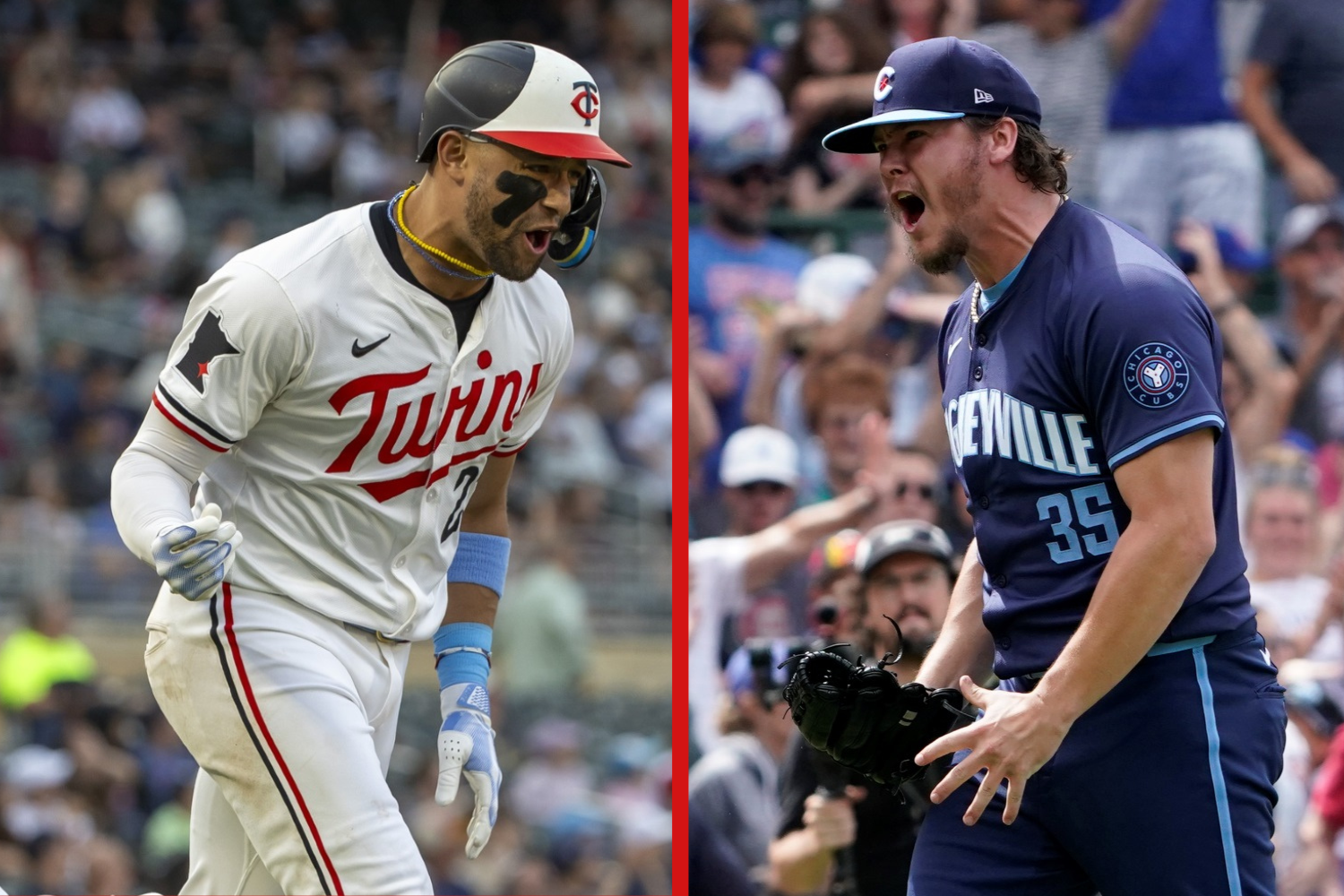 On the business side of things, the Twins are an absolute mess. Attendance is down, revenue is down, and while the TV contract situation nosed up in a small way recently, it still looks horrifying for 2025 and beyond. Ownership has been tone-deaf, making self-serving moves and proclamations, with little regard for the front office, team or fans. Like most private equity firms, they focus only on the short term while neglecting consumers and those who manage day-to-day operations. However, it's important to notice how good a job the baseball operations department has been doing the past few years. The farm system is one of the strongest 10 in the game; the lineup has performed admirably; and the pitching has stayed remarkably healthy, even if it hasn’t reached the peaks of effectiveness we saw in 2023. This team is a dark horse for the pennant, and nobody seems to acknowledge it. Last year, the Twins made noise in the playoffs, and this year, they have flown under the radar while maintaining the fourth-best record in the American League. The lineup has been a force of baseball nature since mid-April. The starting pitching has been serviceable, if rather unlucky, and the bullpen has several pieces it could turn to for the stretch run. Just like in 2023, when perhaps no bullpen could match the firepower of Jhoan Durán, Griffin Jax, Brock Stewart, Louie Varland, Caleb Thielbar, Chris Paddack and Emilio Pagán. The top three remain the same, with the potential to add Varland back along with the emergence of Jorge Alcalá as a sub-2.00 ERA demon from the right side. Justin Topa also exists, at least in theory. The rotation could use some top-end talent, but that is truly the team’s only flaw. But considering Pablo López’s recent playoff track record, it may be the most minute flaw of any contender. Let’s review: Baltimore: issues with both rotation and bullpen. New York Yankees: lineup depth issues, pitching has come back to Earth Seattle: Simply cannot hit, even after adding Randy Arozarena Houston: Patchwork rotation, could still be a threat if Justin Verlander returns strong Cleveland: Lineup holes, no clear number two starter behind Tanner Bibee, who is not a clear number one. Kansas City: Kind of like the Yankees with two elite hitters, but Salvador Perez is no Aaron Judge and the supporting cast is even worse. Also, they have a bad bullpen. Milwaukee: Christian Yelich’s injury was the last thing they needed. No number-two starter. Philadelphia: Late-game bullpen has been a sore spot. Addressed by trading for Carlos Estévez. Atlanta: No depth. I told you. LA Dodgers: Pitching issues. Evan Phillips has struggled, Walker Buehler hasn’t looked the same since Tommy John surgery, Yoshinobu Yamamoto is questionable to return this year, and Clayton Kershaw just came back. Some of these holes will be addressed at the deadline, but those acquisitions are an inexact science. Estévez looks like a perfect add for the Phillies, but the man has only pitched for the Rockies and Angels; who knows how he’ll react when presented with real pressure. The point is that the Twins are in really, truly great shape. The American League, as a whole, is definitely not. There should be a buzz around the Twins, but there are two roadblocks with that. One, Twins fans and media never put the cart before the horse, and the national media has absolutely no idea why the Twins are even in playoff position. Case in point, I listened to a couple of minutes of Jomboy Media’s Talkin' Baseball podcast, where they examined why all the top teams were struggling. Team by team, they listed flaws similar to what I mentioned above. When they got to the Twins, Jake Storiale, who suggested last year that the Blue Jays lose on purpose to face the Twins in the playoffs, described the Twins as “ssstruggling..?” Trevor Plouffe then reminded Storiale they just took two of three from the Phillies without their three best hitters. I don’t blame Storiale, who is more informed on the Twins than most analysts. National baseball media cares about two things: cute stories and counting stats. The Twins were somewhat cute last year, with a bunch of rookies led by Royce Lewis announcing their arrival by breaking one of sport's most notorious curses. But there were no counting stats to be had, with Max Kepler leading the team with 24 home runs and 66 RBIs. López and Sonny Gray led the team with 11 wins each, while Durán had 27 saves.. This year is more of the same, but without the cute narrative. Ryan Jeffers and Carlos Santana lead the team in home runs with 14, tied for 66th in baseball. The RBI lead is a tie between Jeffers, Correa and Santana, at 47, tied for 70th in baseball. Correa has a high batting average, but that seems fleeting with his injury, and if he misses another week of games, he may not qualify for the batting title. On the pitching side, Durán has come back to Earth, while Ober and Joe Ryan have respectable but not attention-grabbing ERAs in the high threes. López will need a monumental second half to get his ERA below 4.00. They do, however, lead the league in strikeout rate as a pitching staff. Counting stats are fun. We all remember Joe Mauer hitting .365 with 28 homers in 2009. We remember Brad Radke winning 20 games in 1997, and Johan Santana striking out 250 batters on an annual basis with a sub-3.00 ERA. But even if no one on the team gets to 30 homers, and no starter has an ERA under 3.00, this team could easily be elite in offense and relief pitching. In basketball and football, the currency of trades is draft picks. In baseball, it's prospects. Walker Jenkins, Emmanuel Rodríguez, Brooks Lee and Zebby Matthews should all be in play to acquire either Tarik Skubal or Garrett Crochet. I’d lean toward Skubal, given Crochet’s extension demands. Failing those intradivisional options, maybe Justin Steele of the Cubs is available. Next year is next year, and payroll will likely drop even further. But Kepler and Kyle Farmer will drop off the books, so you should be able to lower payroll a bit and still get two shots at a title with a team that is elite in all three phases of the game. The team will probably be terrible by 2028. That’s baseball in a small market, when the ownership group chooses to behave according to those norms. Let's go out in a blaze of glory.
- 123 comments
-
- 9
-
-
- pablo lopez
- royce lewis
- (and 4 more)
-
The Twins are good. Actually, they are really good, and the American League no longer is. Nobody seems to care, but that shouldn't stop the Twins front office from dangling some of their elite prospects to acquire a pitcher to put them over the top. Image courtesy of Jesse Johnson, David Banks - USA Today Sports The Twins are good. Actually, they are really good, and the American League no longer is. Nobody seems to care, but that shouldn't stop the Twins front office from dangling some of their elite prospects to acquire a pitcher to put them over the top. On the business side of things, the Twins are an absolute mess. Attendance is down, revenue is down, and while the TV contract situation nosed up in a small way recently, it still looks horrifying for 2025 and beyond. Ownership has been tone-deaf, making self-serving moves and proclamations, with little regard for the front office, team or fans. Like most private equity firms, they focus only on the short term while neglecting consumers and those who manage day-to-day operations. However, it's important to notice how good a job the baseball operations department has been doing the past few years. The farm system is one of the strongest 10 in the game; the lineup has performed admirably; and the pitching has stayed remarkably healthy, even if it hasn’t reached the peaks of effectiveness we saw in 2023. This team is a dark horse for the pennant, and nobody seems to acknowledge it. Last year, the Twins made noise in the playoffs, and this year, they have flown under the radar while maintaining the fourth-best record in the American League. The lineup has been a force of baseball nature since mid-April. The starting pitching has been serviceable, if rather unlucky, and the bullpen has several pieces it could turn to for the stretch run. Just like in 2023, when perhaps no bullpen could match the firepower of Jhoan Durán, Griffin Jax, Brock Stewart, Louie Varland, Caleb Thielbar, Chris Paddack and Emilio Pagán. The top three remain the same, with the potential to add Varland back along with the emergence of Jorge Alcalá as a sub-2.00 ERA demon from the right side. Justin Topa also exists, at least in theory. The rotation could use some top-end talent, but that is truly the team’s only flaw. But considering Pablo López’s recent playoff track record, it may be the most minute flaw of any contender. Let’s review: Baltimore: issues with both rotation and bullpen. New York Yankees: lineup depth issues, pitching has come back to Earth Seattle: Simply cannot hit, even after adding Randy Arozarena Houston: Patchwork rotation, could still be a threat if Justin Verlander returns strong Cleveland: Lineup holes, no clear number two starter behind Tanner Bibee, who is not a clear number one. Kansas City: Kind of like the Yankees with two elite hitters, but Salvador Perez is no Aaron Judge and the supporting cast is even worse. Also, they have a bad bullpen. Milwaukee: Christian Yelich’s injury was the last thing they needed. No number-two starter. Philadelphia: Late-game bullpen has been a sore spot. Addressed by trading for Carlos Estévez. Atlanta: No depth. I told you. LA Dodgers: Pitching issues. Evan Phillips has struggled, Walker Buehler hasn’t looked the same since Tommy John surgery, Yoshinobu Yamamoto is questionable to return this year, and Clayton Kershaw just came back. Some of these holes will be addressed at the deadline, but those acquisitions are an inexact science. Estévez looks like a perfect add for the Phillies, but the man has only pitched for the Rockies and Angels; who knows how he’ll react when presented with real pressure. The point is that the Twins are in really, truly great shape. The American League, as a whole, is definitely not. There should be a buzz around the Twins, but there are two roadblocks with that. One, Twins fans and media never put the cart before the horse, and the national media has absolutely no idea why the Twins are even in playoff position. Case in point, I listened to a couple of minutes of Jomboy Media’s Talkin' Baseball podcast, where they examined why all the top teams were struggling. Team by team, they listed flaws similar to what I mentioned above. When they got to the Twins, Jake Storiale, who suggested last year that the Blue Jays lose on purpose to face the Twins in the playoffs, described the Twins as “ssstruggling..?” Trevor Plouffe then reminded Storiale they just took two of three from the Phillies without their three best hitters. I don’t blame Storiale, who is more informed on the Twins than most analysts. National baseball media cares about two things: cute stories and counting stats. The Twins were somewhat cute last year, with a bunch of rookies led by Royce Lewis announcing their arrival by breaking one of sport's most notorious curses. But there were no counting stats to be had, with Max Kepler leading the team with 24 home runs and 66 RBIs. López and Sonny Gray led the team with 11 wins each, while Durán had 27 saves.. This year is more of the same, but without the cute narrative. Ryan Jeffers and Carlos Santana lead the team in home runs with 14, tied for 66th in baseball. The RBI lead is a tie between Jeffers, Correa and Santana, at 47, tied for 70th in baseball. Correa has a high batting average, but that seems fleeting with his injury, and if he misses another week of games, he may not qualify for the batting title. On the pitching side, Durán has come back to Earth, while Ober and Joe Ryan have respectable but not attention-grabbing ERAs in the high threes. López will need a monumental second half to get his ERA below 4.00. They do, however, lead the league in strikeout rate as a pitching staff. Counting stats are fun. We all remember Joe Mauer hitting .365 with 28 homers in 2009. We remember Brad Radke winning 20 games in 1997, and Johan Santana striking out 250 batters on an annual basis with a sub-3.00 ERA. But even if no one on the team gets to 30 homers, and no starter has an ERA under 3.00, this team could easily be elite in offense and relief pitching. In basketball and football, the currency of trades is draft picks. In baseball, it's prospects. Walker Jenkins, Emmanuel Rodríguez, Brooks Lee and Zebby Matthews should all be in play to acquire either Tarik Skubal or Garrett Crochet. I’d lean toward Skubal, given Crochet’s extension demands. Failing those intradivisional options, maybe Justin Steele of the Cubs is available. Next year is next year, and payroll will likely drop even further. But Kepler and Kyle Farmer will drop off the books, so you should be able to lower payroll a bit and still get two shots at a title with a team that is elite in all three phases of the game. The team will probably be terrible by 2028. That’s baseball in a small market, when the ownership group chooses to behave according to those norms. Let's go out in a blaze of glory. View full article
-
Coming off a tough loss in the middle game of a three game set in Detroit, the Twins got a gem from Bailey Ober, who coasted through a depleted Tigers lineup, allowing one hit in eight innings to give the Twins a win in both the series and the season series against Detroit. Image courtesy of © Rick Osentoski-USA TODAY Sports Coming off a tough loss in the middle game of a three game set in Detroit, the Twins got a gem from Bailey Ober, who coasted through a depleted Tigers lineup, allowing one hit in eight innings to give the Twins a win in both the series and the season series against Detroit. Box Score: Starting Pitcher: Bailey Ober: 8 IP, 1 H, 0 ER, 2 BB, 11 K (98 Pitches, 65 Strikes, 66.3%) Home Runs: None Top 3 WPA: Ober (.471), Matt Wallner (.101), Manuel Margot (.091) Win Probability Chart (Via Fangraphs): Following a "scheduled" loss against the magnificent Tarik Skubal, the Twins embarked on a rubber game featuring the surging Bailey Ober, against the dregs of the Detroit Tigers bullpen. Of course, the Tigers are feisty, as indicated by them winning the season series in 2023, and by them splitting the series so far in 2024. The afternoon started off with the first two Twins batters reaching. However, the second of those was José Miranda, fresh off the IL, and he took a 95-MPH shot to his head from Tigers opening pitcher Alex Faedo. It was gruesome in real time, but Miranda did walk off the field under his own power and passed initial concussion tests. The Twins let Faedo off the hook by not scoring that inning, and the son of former Twins first-round pick Lenny Faedo likely was pleased with his outing. He was asked to pitch to Manuel Margot to start the second, and Margot greeted him with a sharp single. Faedo then gave way to lefty Easton Lucas, who wasn't able to retire Max Kepler. Brooks Lee nearly hit a three-run home run, but instead settled for a sacrifice fly to make the game 1-0. Ober was cruising, even in the context of facing a mediocre lineup without its two best hitters in a cavernous ballpark. After a 12-pitch first inning, he needed only six pitches to complete the second, 11 for the third and 12 for the fourth. His changeup looked filthy, and played well off of his cutter. The fastball sat at 91-92 MPH, but with good location. At some points, it seemed like Ober could throw anywhere in the zone and Tigers hitters would not be able to square the ball up enough to do any damage in massive Comerica Park. There were quite a few 350 foot fly outs to center field. The Twins added another run in the third, with Carlos Santana bringing in Willi Castro with another sacrifice fly against Kenta Maeda. It was sort of nice to see Maeda have some success, though. The sac fly by Santana was charged to Lucas, and Maeda ended up completing four scoreless innings, allowing three hits and striking out three, with his fastball sitting 91-92 MPH. The Tigers sent Maeda out for a fifth inning, and that's when he ran out of gas. Castro led off with a single, and Austin Martin, who replaced Miranda in the first, rocketed a ball to left field on which left fielder Ryan Vilade made a leaping catch. Wallner then tested Vilade again, but this time with a liner more toward the gap in left center. The ball hopped off the wall and easily scored Castro from first. Ober had to work a little harder as the outing progressed, with Tigers hitters adjusting to try and work counts, but he still didn't allow a Detroit runner into scoring position. He struck out the side in the eighth inning, and ended upon getting 12 whiffs on his changeup while throwing it a total of 31 times. The Tigers brought their closer, Jason Foley, into the game in the ninth behind 3-0. Christian Vazquez greeted him with a single up the middle, and Castro walked. Martin doubled into the gap to bring home Vazquez, and Foley's day was done. Royce Lewis pinch hit for Wallner with lefty Andrew Chafin coming in, and was intentionally walked. The struggling Ryan Jeffers then blooped a single to left to score Castro on a first pitch slider to make the score 5-0, surely making Baldelli ponder the idea of letting Ober finish the game. Twins Daily's winning "Make It Official!" game recaps are sponsored by Official Fried Chicken, which you can find in center field of Target Field. With a name like "Official," we know we have to be the best in the game every day, and from your first bite, you'll know that's a promise we make good on. With Ober's pitch count at 98, Baldelli made the rational decision to pull his starter and let Caleb Thielbar finish the win. The Good: -Ober was amazing. His changeup has looked like an elite pitch for a while now and his command was exceptional. -Castro had three hits plus a walk and survived getting decked by Wallner as they grappled for a foul flyout to end the sixth. -Margot had three hits, all off righties. The Bad: -Ryan Jeffers looks completely out of whack, striking out on three pitches multiple times. He does have a foot injury but its not listed on any injury report. This looks like to me like one of those classic instances of a player saying he's fine until the season ends and then he explains his poor stats by saying he was hurt the whole year. -You have to feel bad for Miranda. After going through his shoulder injury last year and falling out of the Twins' plans, he resurfaces and becomes arguably the teams best hitter only to have his back injury stall his momentum. And now we wait to see how his brain recovers from today's hit by pitch. What’s Next: Simeon Woods Richardson (3-1, 3.27 ERA) goes against the team that drafted him, the New York Mets, as they counter with lefty José Quintana (5-6, 4.02 ERA) to start the series in Queens on Monday. The Mets have been on a fast-food mascot inspired tear lately, and are in playoff position, so they will not be rolling over for anyone. Postgame Interviews: Bullpen Usage Chart: WED THU FRI SAT SUN TOT Thielbar 22 0 16 0 25 63 Staumont 0 0 17 21 0 38 Durán 10 0 0 0 0 10 Stewart 17 0 0 18 0 35 Okert 14 0 0 21 0 35 Jax 0 0 0 0 0 0 Alcalá 0 0 0 0 0 0 Sands 0 0 0 0 0 0 View full article
-
Make it Official: Twins 5, Tigers 0: Bailey Ober Dominates Yet Again
Hans Birkeland posted an article in Twins
(26).png.c6d5b9855293eec63b2d8a1b941460fd.png) Box Score: Starting Pitcher: Bailey Ober: 8 IP, 1 H, 0 ER, 2 BB, 11 K (98 Pitches, 65 Strikes, 66.3%) Home Runs: None Top 3 WPA: Ober (.471), Matt Wallner (.101), Manuel Margot (.091) Win Probability Chart (Via Fangraphs): Following a "scheduled" loss against the magnificent Tarik Skubal, the Twins embarked on a rubber game featuring the surging Bailey Ober, against the dregs of the Detroit Tigers bullpen. Of course, the Tigers are feisty, as indicated by them winning the season series in 2023, and by them splitting the series so far in 2024. The afternoon started off with the first two Twins batters reaching. However, the second of those was José Miranda, fresh off the IL, and he took a 95-MPH shot to his head from Tigers opening pitcher Alex Faedo. It was gruesome in real time, but Miranda did walk off the field under his own power and passed initial concussion tests. The Twins let Faedo off the hook by not scoring that inning, and the son of former Twins first-round pick Lenny Faedo likely was pleased with his outing. He was asked to pitch to Manuel Margot to start the second, and Margot greeted him with a sharp single. Faedo then gave way to lefty Easton Lucas, who wasn't able to retire Max Kepler. Brooks Lee nearly hit a three-run home run, but instead settled for a sacrifice fly to make the game 1-0. Ober was cruising, even in the context of facing a mediocre lineup without its two best hitters in a cavernous ballpark. After a 12-pitch first inning, he needed only six pitches to complete the second, 11 for the third and 12 for the fourth. His changeup looked filthy, and played well off of his cutter. The fastball sat at 91-92 MPH, but with good location. At some points, it seemed like Ober could throw anywhere in the zone and Tigers hitters would not be able to square the ball up enough to do any damage in massive Comerica Park. There were quite a few 350 foot fly outs to center field. The Twins added another run in the third, with Carlos Santana bringing in Willi Castro with another sacrifice fly against Kenta Maeda. It was sort of nice to see Maeda have some success, though. The sac fly by Santana was charged to Lucas, and Maeda ended up completing four scoreless innings, allowing three hits and striking out three, with his fastball sitting 91-92 MPH. The Tigers sent Maeda out for a fifth inning, and that's when he ran out of gas. Castro led off with a single, and Austin Martin, who replaced Miranda in the first, rocketed a ball to left field on which left fielder Ryan Vilade made a leaping catch. Wallner then tested Vilade again, but this time with a liner more toward the gap in left center. The ball hopped off the wall and easily scored Castro from first. Ober had to work a little harder as the outing progressed, with Tigers hitters adjusting to try and work counts, but he still didn't allow a Detroit runner into scoring position. He struck out the side in the eighth inning, and ended upon getting 12 whiffs on his changeup while throwing it a total of 31 times. The Tigers brought their closer, Jason Foley, into the game in the ninth behind 3-0. Christian Vazquez greeted him with a single up the middle, and Castro walked. Martin doubled into the gap to bring home Vazquez, and Foley's day was done. Royce Lewis pinch hit for Wallner with lefty Andrew Chafin coming in, and was intentionally walked. The struggling Ryan Jeffers then blooped a single to left to score Castro on a first pitch slider to make the score 5-0, surely making Baldelli ponder the idea of letting Ober finish the game. Twins Daily's winning "Make It Official!" game recaps are sponsored by Official Fried Chicken, which you can find in center field of Target Field. With a name like "Official," we know we have to be the best in the game every day, and from your first bite, you'll know that's a promise we make good on. With Ober's pitch count at 98, Baldelli made the rational decision to pull his starter and let Caleb Thielbar finish the win. The Good: -Ober was amazing. His changeup has looked like an elite pitch for a while now and his command was exceptional. -Castro had three hits plus a walk and survived getting decked by Wallner as they grappled for a foul flyout to end the sixth. -Margot had three hits, all off righties. The Bad: -Ryan Jeffers looks completely out of whack, striking out on three pitches multiple times. He does have a foot injury but its not listed on any injury report. This looks like to me like one of those classic instances of a player saying he's fine until the season ends and then he explains his poor stats by saying he was hurt the whole year. -You have to feel bad for Miranda. After going through his shoulder injury last year and falling out of the Twins' plans, he resurfaces and becomes arguably the teams best hitter only to have his back injury stall his momentum. And now we wait to see how his brain recovers from today's hit by pitch. What’s Next: Simeon Woods Richardson (3-1, 3.27 ERA) goes against the team that drafted him, the New York Mets, as they counter with lefty José Quintana (5-6, 4.02 ERA) to start the series in Queens on Monday. The Mets have been on a fast-food mascot inspired tear lately, and are in playoff position, so they will not be rolling over for anyone. Postgame Interviews: Bullpen Usage Chart: WED THU FRI SAT SUN TOT Thielbar 22 0 16 0 25 63 Staumont 0 0 17 21 0 38 Durán 10 0 0 0 0 10 Stewart 17 0 0 18 0 35 Okert 14 0 0 21 0 35 Jax 0 0 0 0 0 0 Alcalá 0 0 0 0 0 0 Sands 0 0 0 0 0 0
Box Score: Starting Pitcher: Bailey Ober: 8 IP, 1 H, 0 ER, 2 BB, 11 K (98 Pitches, 65 Strikes, 66.3%) Home Runs: None Top 3 WPA: Ober (.471), Matt Wallner (.101), Manuel Margot (.091) Win Probability Chart (Via Fangraphs): Following a "scheduled" loss against the magnificent Tarik Skubal, the Twins embarked on a rubber game featuring the surging Bailey Ober, against the dregs of the Detroit Tigers bullpen. Of course, the Tigers are feisty, as indicated by them winning the season series in 2023, and by them splitting the series so far in 2024. The afternoon started off with the first two Twins batters reaching. However, the second of those was José Miranda, fresh off the IL, and he took a 95-MPH shot to his head from Tigers opening pitcher Alex Faedo. It was gruesome in real time, but Miranda did walk off the field under his own power and passed initial concussion tests. The Twins let Faedo off the hook by not scoring that inning, and the son of former Twins first-round pick Lenny Faedo likely was pleased with his outing. He was asked to pitch to Manuel Margot to start the second, and Margot greeted him with a sharp single. Faedo then gave way to lefty Easton Lucas, who wasn't able to retire Max Kepler. Brooks Lee nearly hit a three-run home run, but instead settled for a sacrifice fly to make the game 1-0. Ober was cruising, even in the context of facing a mediocre lineup without its two best hitters in a cavernous ballpark. After a 12-pitch first inning, he needed only six pitches to complete the second, 11 for the third and 12 for the fourth. His changeup looked filthy, and played well off of his cutter. The fastball sat at 91-92 MPH, but with good location. At some points, it seemed like Ober could throw anywhere in the zone and Tigers hitters would not be able to square the ball up enough to do any damage in massive Comerica Park. There were quite a few 350 foot fly outs to center field. The Twins added another run in the third, with Carlos Santana bringing in Willi Castro with another sacrifice fly against Kenta Maeda. It was sort of nice to see Maeda have some success, though. The sac fly by Santana was charged to Lucas, and Maeda ended up completing four scoreless innings, allowing three hits and striking out three, with his fastball sitting 91-92 MPH. The Tigers sent Maeda out for a fifth inning, and that's when he ran out of gas. Castro led off with a single, and Austin Martin, who replaced Miranda in the first, rocketed a ball to left field on which left fielder Ryan Vilade made a leaping catch. Wallner then tested Vilade again, but this time with a liner more toward the gap in left center. The ball hopped off the wall and easily scored Castro from first. Ober had to work a little harder as the outing progressed, with Tigers hitters adjusting to try and work counts, but he still didn't allow a Detroit runner into scoring position. He struck out the side in the eighth inning, and ended upon getting 12 whiffs on his changeup while throwing it a total of 31 times. The Tigers brought their closer, Jason Foley, into the game in the ninth behind 3-0. Christian Vazquez greeted him with a single up the middle, and Castro walked. Martin doubled into the gap to bring home Vazquez, and Foley's day was done. Royce Lewis pinch hit for Wallner with lefty Andrew Chafin coming in, and was intentionally walked. The struggling Ryan Jeffers then blooped a single to left to score Castro on a first pitch slider to make the score 5-0, surely making Baldelli ponder the idea of letting Ober finish the game. Twins Daily's winning "Make It Official!" game recaps are sponsored by Official Fried Chicken, which you can find in center field of Target Field. With a name like "Official," we know we have to be the best in the game every day, and from your first bite, you'll know that's a promise we make good on. With Ober's pitch count at 98, Baldelli made the rational decision to pull his starter and let Caleb Thielbar finish the win. The Good: -Ober was amazing. His changeup has looked like an elite pitch for a while now and his command was exceptional. -Castro had three hits plus a walk and survived getting decked by Wallner as they grappled for a foul flyout to end the sixth. -Margot had three hits, all off righties. The Bad: -Ryan Jeffers looks completely out of whack, striking out on three pitches multiple times. He does have a foot injury but its not listed on any injury report. This looks like to me like one of those classic instances of a player saying he's fine until the season ends and then he explains his poor stats by saying he was hurt the whole year. -You have to feel bad for Miranda. After going through his shoulder injury last year and falling out of the Twins' plans, he resurfaces and becomes arguably the teams best hitter only to have his back injury stall his momentum. And now we wait to see how his brain recovers from today's hit by pitch. What’s Next: Simeon Woods Richardson (3-1, 3.27 ERA) goes against the team that drafted him, the New York Mets, as they counter with lefty José Quintana (5-6, 4.02 ERA) to start the series in Queens on Monday. The Mets have been on a fast-food mascot inspired tear lately, and are in playoff position, so they will not be rolling over for anyone. Postgame Interviews: Bullpen Usage Chart: WED THU FRI SAT SUN TOT Thielbar 22 0 16 0 25 63 Staumont 0 0 17 21 0 38 Durán 10 0 0 0 0 10 Stewart 17 0 0 18 0 35 Okert 14 0 0 21 0 35 Jax 0 0 0 0 0 0 Alcalá 0 0 0 0 0 0 Sands 0 0 0 0 0 0- 49 comments
-
- 8
-
-
- bailey ober
- matt wallner
- (and 1 more)
-
Brewers 8, Twins 7: Missed Opportunities, Homers Lead to Brewers Sweep
Hans Birkeland posted an article in Twins
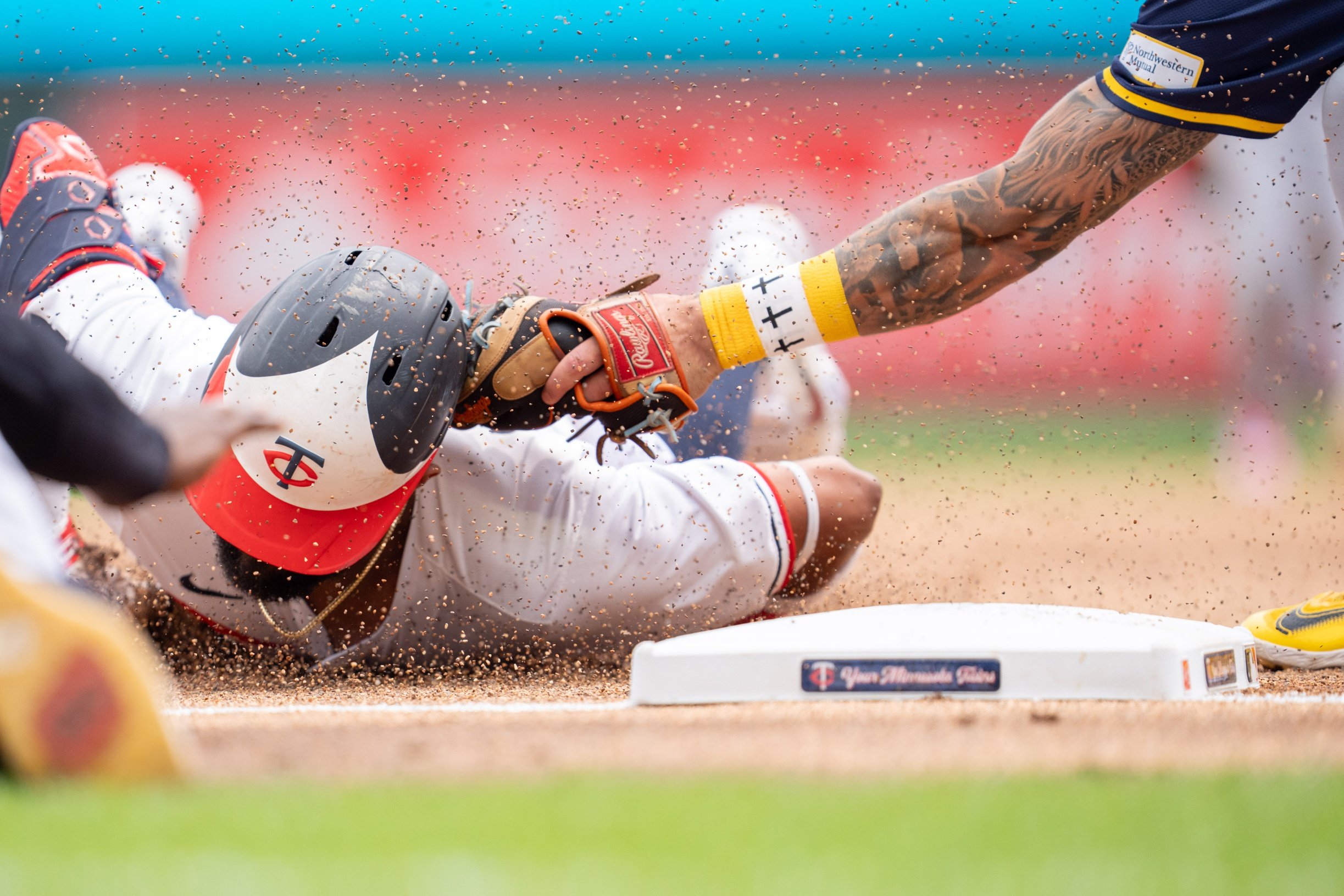 Box Score Starting Pitcher: Joe Ryan: 6 IP, 7 H, 4 ER, 0 BB, 6 K (88 Pitches, 65 Strikes, 73.9%) Home Runs: Byron Buxton 2 (11), Trevor Larnach (10) Bottom 3 WPA: Caleb Thielbar (-.311), Ryan (-.160), Manuel Margot (-.147) Win Probability Chart (Via Fangraphs): The Twins began the second half of the season with a disheartening extra-inning loss to the Brewers, getting thoroughly out-executed despite some late-inning heroics from Carlos Santana and Diego Castillo. After a brief rain delay, the Brewers turned to recent Twins punching bag Aaron Civale opposing Joe Ryan. Ryan cruised early as he sought to put his history of poor second halves behind him, hitting 95 MPH with his fastball and getting whiffs and strikeouts with his sweeper along the way. Civale immediately gave up a ringing double to Willi Castro, but the Twins leadoff hitter got greedy and was thrown out trying to stretch for a triple. That inning ended quietly from there, but the second inning was anything but, despite zero hits being recorded. Max Kepler and Santana led off the frame with walks, and with two outs Edouard Julien drew another walk on a 3-2 pitch that appeared to clip the zone. Civale then induced a soft liner up the middle from Christian Vazquez, but stud fielder Bryce Turang inexplicably tried to get Julien at second instead of throwing to first to retire the slow-footed Vazquez. The feed was wide, and two runners scored on the play. Ryan continued to roll along, but perhaps forgot that Brewers catcher Eric Haase is a notorious Twins killer, as he obliterated a middle-middle sweeper from Ryan to cut the lead in half. Byron Buxton brought the lead back to two in the third. After being fooled by a breaking ball away, Civale threw a backup slider that stayed inside and Buxton demolished it 411 feet. That was an extra good sign as it was Buxton's first hit since he had missed a few games with an elbow injury. Ryan ran into trouble in the fifth. After a Rhys Hoskins bloop single, Garret Mitchell laid down a perfect bunt with one out, bringing up wunderkind Jackson Chourio. The 20 year-old Chourio didn't chase on a couple of close pitches and eventually got a 2-2 fastball thigh high that he roped into the left center gap, scoring two. Haase wasn't done, either, as he tapped a ground ball up the middle that ticked off Castro's glove into center field to score Chourio and give the Brewers the lead. That would not hold, as following a leadoff walk to Castro, the never streaking (never hot, never cold, just .740 OPS) Trevor Larnach jumped all over a hanging curveball to take the lead back. Ryan could have conceivably gone out to start the seventh, but with a one-run lead the Twins opted to turn to Jorge Alcala. The problem was that Chourio led off the inning, and he jumped on a 1-0 fastball and pummeled it 443 feet to tie the game, Alcala's first allowed this year. After the Twins threatened but did not score in the seventh, Hoskins made Griffin Jax pay for a hittable fastball ahead 0-2 and crushed it for a two-run home run to give the Brewers a 7-5 lead. The Twins had a golden opportunity to claw back in the eighth. Facing hard-throwing reliever Elvis Peguero, Brooks Lee led off with a single, Matt Wallner singled, and Julien drew a walk. But Manuel Margot flew out while Castro and Jeffers struck out to extinguish the threat. The Good: Buxton is going to need to carry this offense with Miranda, Correa and Lewis out, and it looks like he is up to the challenge. Ryan pitched well, but made two key mistakes to Haase and Chourio that tarnished his final pitching line. The Bad: Austin Martin has been piling up strikeouts in both games post All-Star break, struggling to make contact on breaking balls away. There is a reason why Detroit stopped playing Castro at shortstop. He is serviceable there, but he doesn't transfer the ball from his glove to his throwing arm particularly quickly, leading to a couple of Brewers hits in the series. He also could have smothered Haase's hit in the fifth and prevented a run. He did reach base four times, however. Every Twins reliever gave up a home run. What’s Next: Bailey Ober (8-5, 4.14 ERA) goes against Phillies All-Star left-hander Ranger Suarez (10-4, 2.76 ERA) as the Twins host the Phillies for a three game set starting Monday. Philadelphia boasts the best record in baseball, with a dominant rotation and star-studded lineup that has gotten healthier lately, welcoming back Bryce Harper, Kyle Schwarber, Trea Turner and J.T. Realmuto in the past few weeks. Postgame Interviews: (Coming Soon) Bullpen Usage Chart: WED THU FRI SAT SUN TOT Sands 0 0 0 10 0 10 Jax 0 0 0 14 15 29 Durán 0 0 0 12 0 12 Staumont 0 0 0 20 0 20 Alcalá 0 0 0 17 16 33 Henriquez 0 0 0 0 0 0 Thielbar 0 0 0 0 16 16 Okert 0 0 0 11 0 11
- 54 comments
-
- 1
-
-
- joe ryan
- byron buxton
- (and 2 more)
-
The Twins and Brewers always play each other tough, and coming off a back-and-forth 12-inning game Saturday, Sunday's game did not disappoint, with several lead changes and dramatic home runs. In the end it was a late home run off the bat of journeyman catcher Eric Haase that proved the difference as the Brewers completed the two-game sweep. Image courtesy of Matt Blewett-USA TODAY Sports The Twins and Brewers always play each other tough, and coming off a back-and-forth 12-inning game Saturday, Sunday's game did not disappoint, with several lead changes and dramatic home runs. In the end it was a late home run off the bat of journeyman catcher Eric Haase that proved the difference as the Brewers completed the two-game sweep. Box Score Starting Pitcher: Joe Ryan: 6 IP, 7 H, 4 ER, 0 BB, 6 K (88 Pitches, 65 Strikes, 73.9%) Home Runs: Byron Buxton 2 (11), Trevor Larnach (10) Bottom 3 WPA: Caleb Thielbar (-.311), Ryan (-.160), Manuel Margot (-.147) Win Probability Chart (Via Fangraphs): The Twins began the second half of the season with a disheartening extra-inning loss to the Brewers, getting thoroughly out-executed despite some late-inning heroics from Carlos Santana and Diego Castillo. After a brief rain delay, the Brewers turned to recent Twins punching bag Aaron Civale opposing Joe Ryan. Ryan cruised early as he sought to put his history of poor second halves behind him, hitting 95 MPH with his fastball and getting whiffs and strikeouts with his sweeper along the way. Civale immediately gave up a ringing double to Willi Castro, but the Twins leadoff hitter got greedy and was thrown out trying to stretch for a triple. That inning ended quietly from there, but the second inning was anything but, despite zero hits being recorded. Max Kepler and Santana led off the frame with walks, and with two outs Edouard Julien drew another walk on a 3-2 pitch that appeared to clip the zone. Civale then induced a soft liner up the middle from Christian Vazquez, but stud fielder Bryce Turang inexplicably tried to get Julien at second instead of throwing to first to retire the slow-footed Vazquez. The feed was wide, and two runners scored on the play. Ryan continued to roll along, but perhaps forgot that Brewers catcher Eric Haase is a notorious Twins killer, as he obliterated a middle-middle sweeper from Ryan to cut the lead in half. Byron Buxton brought the lead back to two in the third. After being fooled by a breaking ball away, Civale threw a backup slider that stayed inside and Buxton demolished it 411 feet. That was an extra good sign as it was Buxton's first hit since he had missed a few games with an elbow injury. Ryan ran into trouble in the fifth. After a Rhys Hoskins bloop single, Garret Mitchell laid down a perfect bunt with one out, bringing up wunderkind Jackson Chourio. The 20 year-old Chourio didn't chase on a couple of close pitches and eventually got a 2-2 fastball thigh high that he roped into the left center gap, scoring two. Haase wasn't done, either, as he tapped a ground ball up the middle that ticked off Castro's glove into center field to score Chourio and give the Brewers the lead. That would not hold, as following a leadoff walk to Castro, the never streaking (never hot, never cold, just .740 OPS) Trevor Larnach jumped all over a hanging curveball to take the lead back. Ryan could have conceivably gone out to start the seventh, but with a one-run lead the Twins opted to turn to Jorge Alcala. The problem was that Chourio led off the inning, and he jumped on a 1-0 fastball and pummeled it 443 feet to tie the game, Alcala's first allowed this year. After the Twins threatened but did not score in the seventh, Hoskins made Griffin Jax pay for a hittable fastball ahead 0-2 and crushed it for a two-run home run to give the Brewers a 7-5 lead. The Twins had a golden opportunity to claw back in the eighth. Facing hard-throwing reliever Elvis Peguero, Brooks Lee led off with a single, Matt Wallner singled, and Julien drew a walk. But Manuel Margot flew out while Castro and Jeffers struck out to extinguish the threat. The Good: Buxton is going to need to carry this offense with Miranda, Correa and Lewis out, and it looks like he is up to the challenge. Ryan pitched well, but made two key mistakes to Haase and Chourio that tarnished his final pitching line. The Bad: Austin Martin has been piling up strikeouts in both games post All-Star break, struggling to make contact on breaking balls away. There is a reason why Detroit stopped playing Castro at shortstop. He is serviceable there, but he doesn't transfer the ball from his glove to his throwing arm particularly quickly, leading to a couple of Brewers hits in the series. He also could have smothered Haase's hit in the fifth and prevented a run. He did reach base four times, however. Every Twins reliever gave up a home run. What’s Next: Bailey Ober (8-5, 4.14 ERA) goes against Phillies All-Star left-hander Ranger Suarez (10-4, 2.76 ERA) as the Twins host the Phillies for a three game set starting Monday. Philadelphia boasts the best record in baseball, with a dominant rotation and star-studded lineup that has gotten healthier lately, welcoming back Bryce Harper, Kyle Schwarber, Trea Turner and J.T. Realmuto in the past few weeks. Postgame Interviews: (Coming Soon) Bullpen Usage Chart: WED THU FRI SAT SUN TOT Sands 0 0 0 10 0 10 Jax 0 0 0 14 15 29 Durán 0 0 0 12 0 12 Staumont 0 0 0 20 0 20 Alcalá 0 0 0 17 16 33 Henriquez 0 0 0 0 0 0 Thielbar 0 0 0 0 16 16 Okert 0 0 0 11 0 11 View full article
-
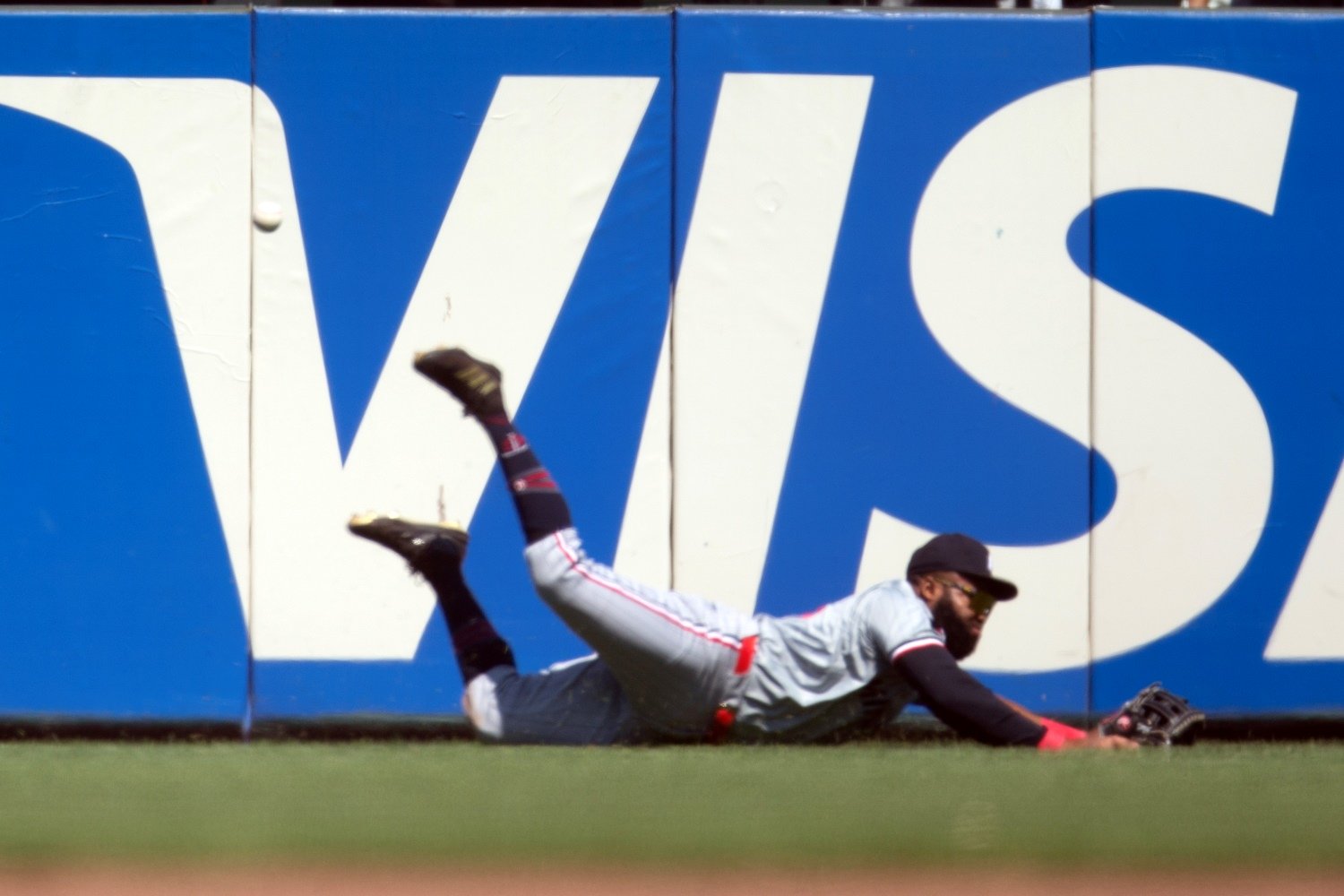 Box Score: Starting Pitcher: Chris Paddack : 5 IP 5 H 2 R 1 ER 1 BB 6 K (90 Pitches, 59 Strikes, 65.5%) Home Runs: None Bottom 3 WPA: Jhoan Durán (-.368) Willi Castro (-.220), Brooks Lee (-.152) Win Probability Chart (Via Fangraphs): Fresh off a wild victory in game two of the series, the short-handed Twins entered Sunday's rubber match with a lot of discouragement for a team that had won six series in a row, with a chance for seven. José Miranda has turned into a lineup force but is on the IL now with back soreness. Byron Buxton is having an incredible resurgence, but is out for the second day in row with elbow soreness resulting from a crash into the center field wall at Oracle Park on Friday. Worst of all, news came out on Sunday that Carlos Correa now has plantar fasciitis in his other foot. With Royce Lewis already on the IL, the Twins were left without their top four right-handed hitters going against reigning Cy Young winning lefty, Blake Snell. Snell got a late start to the year, as teams balked at his asking price. He has incredible stuff (last year's Cy was his second) featuring an electric change-up and curveball, but doesn't pitch deep into games and does not give in to hitters, preferring to walk them over throwing something hittable to get back into the count. His walk rate and overall efficiency suffer for this and teams were thus leery of investing 200M in him. The Giants ended up giving him a two year deal March 19th with an opt out after the first year and with no spring training, he has struggled, with a 7.85 ERA entering play and two IL stints. The Twins stood no chance early on, as Snell was perfect through four innings. Twins hitters tried to sit on Snell's fastball, but the velocity on that pitch was in the 96-97 MPH range with good carry, and induced quite a few whiffs. Opposing Snell was Chris Paddack making his second start since his IL stint for shoulder fatigue. His command looked decent early on but the velocity of his fastball sat in the 92 MPH range, dipping down to 89-90 MPH at various points. Hitters were able to be patient and lay off Paddack's change-up when thrown out of the zone. The Twins defense was responsible for the first Giants run in the second inning. With one out, and on Michael Conforto on first, Matt Chapman rolled over on a pitch and grounded to shortstop Willi Castro. The feed and relay were crisp, but the usually solid Carlos Santana dropped the ball at first, allowing Chapman to reach. After a walk to Mike Yastrzemski, the ice cold Thairo Estrada jumped on a first pitch slider from Paddack and singled sharply to left, bringing home Chapman. The Giants added another in the third. After Lamonte Wade Jr. crushed a one out double off an elevated change-up, Patrick Bailey jumped on the first pitch, another elevated change-up, and blooped a single to score Wade and double the lead. Outside of that, Paddack stayed out of the middle of the zone and was able to get enough weak contact to keep the Twins in the game. Meanwhile Snell was on cruise control, keeping a low pitch count and not walking a single Twin. That part was surprising given Snell's track record, but he also did not allow an exit velocity over 100 MPH his entire outing, which is more on brand. Also part of Snell's brand is a propensity to struggle the third time through a lineup (famously held against Snell in game six of the 2020 World Series), and Manuel Margot looped a single to left to lead off the seventh inning, ending Snell's chance at a perfecto. No rally ensured, however, as Willi Castro quickly grounded into a tailor-made double play. The Twins went down quietly against reliever Tyler Rogers in the eighth, but the game changed in the ninth against flame-throwing closer Camilo Doval. New 40-man addition Diego Castillo led off with a walk, and pinch-hitter Trevor Larnach then roped a double down the right field line. Matt Wallner struck out, but Margot launched a ball into the left-center field gap to score both runs and tie the game. The Good times would not last, however, as four pitches into Jhoan Duran's outing in the bottom of the ninth, Yastrzemski drove a ball into the gap that Margot dove on and missed, allowing Yastrzemski to reach third. Lee's throw to third was unnecessary and bad, ending up in the dugout and giving Yastrzemski another base, ending the game. The Good: -Paddack's command -Jorge Alcala continues to excel in a fireman role, retiring Estrada with runners on second and third in the sixth. -Margot hasn't been bad in quite a while, and woke everyone up with his double in the ninth. The Bad: -Paddack's velocity -Steven Okert has had an up and down year, and today gave up a walk and a double to the two lefties he faced in the sixth. -Brooks Lee was hitless in the series, had a bad at-bat with the go-ahead run on second in the ninth, and then made the error that lost the game in the bottom of the ninth. He's a rookie; it happens. What’s Next: Willi Castro and (maybe) Carlos Correa represent the Twin at the All-Star game, held on Tuesday at Globe Life Field in Arlington, Texas. The Twins will get an extra day off and resume the season on Saturday at home against Milwaukee, The starters will presumably be Pablo Lopez (8-7, 5.11 ERA) facing Freddy Peralta (6-5, 4.11 ERA). Postgame Interviews: Bullpen Usage Chart: WED THU FRI SAT SUN TOT Sands 28 0 0 16 0 44 Jax 18 0 0 13 8 39 Durán 10 0 0 16 4 30 Staumont 0 0 22 0 5 27 Alcalá 11 0 0 7 2 20 Funderburk 0 0 17 0 0 17 Thielbar 0 0 14 0 12 26 Okert 9 0 0 0 18 27
- 36 comments
-
- 3
-
-
- chris paddack
- jorge alcala
- (and 1 more)
-
The suddenly depleted Twins looked dead on arrival against a resurgent Blake Snell. Although their pitching kept the game close, the lineup was a few bats short. They made some noise in the ninth, briefly tying the game, but the Giants immediately walked it off on a triple from Mike Yastrzemski and a decisive error. Image courtesy of © D. Ross Cameron-USA TODAY Sports The suddenly depleted Twins looked dead on arrival against a resurgent Blake Snell. Although their pitching kept the game close, the lineup was a few bats short. They made some noise in the ninth, briefly tying the game, but the Giants immediately walked it off on a triple from Mike Yastrzemski and a decisive error. Box Score: Starting Pitcher: Chris Paddack : 5 IP 5 H 2 R 1 ER 1 BB 6 K (90 Pitches, 59 Strikes, 65.5%) Home Runs: None Bottom 3 WPA: Jhoan Durán (-.368) Willi Castro (-.220), Brooks Lee (-.152) Win Probability Chart (Via Fangraphs): Fresh off a wild victory in game two of the series, the short-handed Twins entered Sunday's rubber match with a lot of discouragement for a team that had won six series in a row, with a chance for seven. José Miranda has turned into a lineup force but is on the IL now with back soreness. Byron Buxton is having an incredible resurgence, but is out for the second day in row with elbow soreness resulting from a crash into the center field wall at Oracle Park on Friday. Worst of all, news came out on Sunday that Carlos Correa now has plantar fasciitis in his other foot. With Royce Lewis already on the IL, the Twins were left without their top four right-handed hitters going against reigning Cy Young winning lefty, Blake Snell. Snell got a late start to the year, as teams balked at his asking price. He has incredible stuff (last year's Cy was his second) featuring an electric change-up and curveball, but doesn't pitch deep into games and does not give in to hitters, preferring to walk them over throwing something hittable to get back into the count. His walk rate and overall efficiency suffer for this and teams were thus leery of investing 200M in him. The Giants ended up giving him a two year deal March 19th with an opt out after the first year and with no spring training, he has struggled, with a 7.85 ERA entering play and two IL stints. The Twins stood no chance early on, as Snell was perfect through four innings. Twins hitters tried to sit on Snell's fastball, but the velocity on that pitch was in the 96-97 MPH range with good carry, and induced quite a few whiffs. Opposing Snell was Chris Paddack making his second start since his IL stint for shoulder fatigue. His command looked decent early on but the velocity of his fastball sat in the 92 MPH range, dipping down to 89-90 MPH at various points. Hitters were able to be patient and lay off Paddack's change-up when thrown out of the zone. The Twins defense was responsible for the first Giants run in the second inning. With one out, and on Michael Conforto on first, Matt Chapman rolled over on a pitch and grounded to shortstop Willi Castro. The feed and relay were crisp, but the usually solid Carlos Santana dropped the ball at first, allowing Chapman to reach. After a walk to Mike Yastrzemski, the ice cold Thairo Estrada jumped on a first pitch slider from Paddack and singled sharply to left, bringing home Chapman. The Giants added another in the third. After Lamonte Wade Jr. crushed a one out double off an elevated change-up, Patrick Bailey jumped on the first pitch, another elevated change-up, and blooped a single to score Wade and double the lead. Outside of that, Paddack stayed out of the middle of the zone and was able to get enough weak contact to keep the Twins in the game. Meanwhile Snell was on cruise control, keeping a low pitch count and not walking a single Twin. That part was surprising given Snell's track record, but he also did not allow an exit velocity over 100 MPH his entire outing, which is more on brand. Also part of Snell's brand is a propensity to struggle the third time through a lineup (famously held against Snell in game six of the 2020 World Series), and Manuel Margot looped a single to left to lead off the seventh inning, ending Snell's chance at a perfecto. No rally ensured, however, as Willi Castro quickly grounded into a tailor-made double play. The Twins went down quietly against reliever Tyler Rogers in the eighth, but the game changed in the ninth against flame-throwing closer Camilo Doval. New 40-man addition Diego Castillo led off with a walk, and pinch-hitter Trevor Larnach then roped a double down the right field line. Matt Wallner struck out, but Margot launched a ball into the left-center field gap to score both runs and tie the game. The Good times would not last, however, as four pitches into Jhoan Duran's outing in the bottom of the ninth, Yastrzemski drove a ball into the gap that Margot dove on and missed, allowing Yastrzemski to reach third. Lee's throw to third was unnecessary and bad, ending up in the dugout and giving Yastrzemski another base, ending the game. The Good: -Paddack's command -Jorge Alcala continues to excel in a fireman role, retiring Estrada with runners on second and third in the sixth. -Margot hasn't been bad in quite a while, and woke everyone up with his double in the ninth. The Bad: -Paddack's velocity -Steven Okert has had an up and down year, and today gave up a walk and a double to the two lefties he faced in the sixth. -Brooks Lee was hitless in the series, had a bad at-bat with the go-ahead run on second in the ninth, and then made the error that lost the game in the bottom of the ninth. He's a rookie; it happens. What’s Next: Willi Castro and (maybe) Carlos Correa represent the Twin at the All-Star game, held on Tuesday at Globe Life Field in Arlington, Texas. The Twins will get an extra day off and resume the season on Saturday at home against Milwaukee, The starters will presumably be Pablo Lopez (8-7, 5.11 ERA) facing Freddy Peralta (6-5, 4.11 ERA). Postgame Interviews: Bullpen Usage Chart: WED THU FRI SAT SUN TOT Sands 28 0 0 16 0 44 Jax 18 0 0 13 8 39 Durán 10 0 0 16 4 30 Staumont 0 0 22 0 5 27 Alcalá 11 0 0 7 2 20 Funderburk 0 0 17 0 0 17 Thielbar 0 0 14 0 12 26 Okert 9 0 0 0 18 27 View full article
- 36 replies
-
- 1
-
-
- chris paddack
- jorge alcala
- (and 1 more)
-
After some captivating baseball in the first two games of the series, the rubber match featured some good pitching, bad baserunning and another multiple hit game for Brooks Lee. And all three runs were driven in by Christian Vázquez, with one of those being the result of a walk-off home run off of Josh Hader. Image courtesy of © Bruce Kluckhohn-USA TODAY Sports After some captivating baseball in the first two games of the series, the rubber match featured some good pitching, bad baserunning and another multiple hit game for Brooks Lee. And all three runs were driven in by Christian Vázquez, with one of those being the result of a walk-off home run off of Josh Hader. Box Score: Starting Pitcher: Simeon Woods Richardson: 6 IP 3 H 2 ER 2 BB 4 K (88 Pitches, 59 Strikes, 67%) Home Runs: Christian Vázquez (4) Top 3 WPA: Vázquez (.353), Matt Wallner (.143), Jhoan Durán (.136) Win Probability Chart (Via Fangraphs): After a chippy first two games of the series against the red-hot Astros, the Twins turned to Houston native Simeon Woods Richardson as they hoped to win two of three for the fifth series in a row. Woods Richardson has seen middling results lately, with hitters punishing his change-up in particular. Spencer Arrighetti took the ball for Houston, a rookie with a good strikeout rate and not much else. Woods Richardson looked pretty good, stuff-wise. After an easy first inning, however, the patient Astros laid off numerous chaneg-ups and sliders on the corners that were called balls in the second. After a Jon Singleton single, SWR walked Jake Meyers and Chas McCormick. A sacrifice fly followed for the first run, and then SWR made his only true mistake of the inning, an elevated change-up to Jose Altuve, and that's been an automatic hit for the second baseman for about 12 years. Jeremy Pena was retired quickly afterward, limiting the damage. The Twins had trouble stringing together hits against Arrighetti, but had consistent traffic throughout the day. A scary moment occurred when the Houston rookie lost his grip on a fastball and hit Carlos Correa on the hand (because of course it hit his hand). Correa exited the game but X-rays were negative. In the second, Byron Buxton, who is hitting in the .270's these days, rolled a single through the right side and then the newly-recalled Matt Wallner worked a ten pitch at-bat that ended in a walk, fouling off some high fastballs we are all used to him swinging through in the past. Christian Vázquez then looped a single over (definitely not his listed 6'0") Alex Bregman's head to cut the lead in half. Vázquez wasn't done. After a Jose Altuve error (later changed to a base hit) allowed Brooks Lee to reach, Wallner scorched a 117 MPH line drive into the right-center gap to put runners on the corners with no outs. Vázquez grounded to Bregman, who probably could have started a traditional double play as he threw to second to retire Wallner. But Altuve threw home to try to cut down the advancing Lee, who would have been out by several steps had catcher Cesar Salazar held on to the throw, but he instead dropped the ball three separate times as Lee slid in to tie the game. Vazquez then was caught too far off first base for some reason so that two outs were, in fact, recorded on the play. SWR continued to command the ball well, and got several quick pop outs in the middle innings to extend his outing, generally just by pumping fastball after fastball in good locations. He retired 13 in a row to end his day. He only allowed three hits to one of the hottest offenses in baseball over the past month, albeit one without Kyle Tucker and Yordan Alvarez. Jose Miranda didn't start the day following the conclusion of his historic hitting streak, but was called up on to pinch hit for Farmer in the seventh and promptly lined a sharp single to left. He then got a great jump off of reliever Bryan Abreu but had a poor slide and was thrown out stealing, courtesy of a seed from Salazar. Twins Daily's winning "Make It Official!" game recaps are sponsored by Official Fried Chicken, which you can find in center field of Target Field. With a name like "Official," we know we have to be the best in the game every day, and from your first bite, you'll know that's a promise we make good on. The Astros led off the top of the eighth with a double from folk hero Joey Loperfido, but even with Altuve, Pena and Bregman coming up, they could not get a hit against Griffin Jax. Altuve was caught looking at a 3-2 fastball and Bregman swung through a beautiful sweeper to end the frame. The Twins then led off their half with a walk from Kepler, and an infield hit from Buxton. Lee then rolled a ball up the middle that Pena made a great play on, taking it himself to retire Buxton and firing to first to nab Lee for the double play. Manuel Margot then grounded out to end the threat. After a nice inning from Jhoan Duran, at least stuff-wise, Vázquez led off the bottom of the ninth against all-world closer Josh Hader. Naturally, he drove in his third run of the game with a walk-off bomb into the flower beds in left field; a thrilling end to a great series against a hot opponent. The Good: -SWR had a good combination of stuff and command. His fastball reached 95 MPH and he had very few misses over the plate. -Josh Staumont has pretty pedestrian underlying numbers, but has hit 99 MPH in his last outing, and hit 101 MPH today. I can't think of any other pitcher with Thoracic Outlet Surgery who has recovered this well. I can't even think of anyone who lasted more than a couple of years in the league after that surgery. -Wallner only got two plate appearances, but both were excellent in quality. -Vázquez has been taking more competitive at-bats lately, and was rewarded for it today. The Bad: -Correa may not have broken a bone, but a deep bruise could easily still result in a few days off, or even an IL stint, which is exactly what happened in 2022 when Royce Lewis was first called up. Lee did move over to shortstop in the eighth after Miranda pinch-hit for Farmer. What’s Next: Chris Paddack (5-3, 5.29 ERA) starts the first of a three game set in Chicago opposing Chris Flexen (2-7, 5.08). Chicago, you may have heard, is pretty bad this year. Flexen was once a good number four starter for the Mariners, but has played for several teams since then and hasn't been the same. Paddack had a difficult last few starts, and was placed on the IL with shoulder fatigue, which may have just been a way to give him a break and limit his innings. Facing a bad offense like the White Sox might be the perfect confidence boost. Postgame Interviews: Bullpen Usage Chart: WED THU FRI SAT SUN TOT Funderburk 37 0 26 0 0 63 Winder 0 0 43 0 0 43 Sands 0 14 0 28 0 42 Alcalá 0 0 24 2 0 26 Thielbar 9 0 0 9 0 18 Jax 0 0 0 0 16 16 Durán 0 0 0 0 22 22 Staumont 13 0 0 0 9 22 Okert 0 0 0 0 0 0 View full article
-
(21).png.0041014c1707ccf9c04a539cdf20cc7a.png) Box Score: Starting Pitcher: Simeon Woods Richardson: 6 IP 3 H 2 ER 2 BB 4 K (88 Pitches, 59 Strikes, 67%) Home Runs: Christian Vázquez (4) Top 3 WPA: Vázquez (.353), Matt Wallner (.143), Jhoan Durán (.136) Win Probability Chart (Via Fangraphs): After a chippy first two games of the series against the red-hot Astros, the Twins turned to Houston native Simeon Woods Richardson as they hoped to win two of three for the fifth series in a row. Woods Richardson has seen middling results lately, with hitters punishing his change-up in particular. Spencer Arrighetti took the ball for Houston, a rookie with a good strikeout rate and not much else. Woods Richardson looked pretty good, stuff-wise. After an easy first inning, however, the patient Astros laid off numerous chaneg-ups and sliders on the corners that were called balls in the second. After a Jon Singleton single, SWR walked Jake Meyers and Chas McCormick. A sacrifice fly followed for the first run, and then SWR made his only true mistake of the inning, an elevated change-up to Jose Altuve, and that's been an automatic hit for the second baseman for about 12 years. Jeremy Pena was retired quickly afterward, limiting the damage. The Twins had trouble stringing together hits against Arrighetti, but had consistent traffic throughout the day. A scary moment occurred when the Houston rookie lost his grip on a fastball and hit Carlos Correa on the hand (because of course it hit his hand). Correa exited the game but X-rays were negative. In the second, Byron Buxton, who is hitting in the .270's these days, rolled a single through the right side and then the newly-recalled Matt Wallner worked a ten pitch at-bat that ended in a walk, fouling off some high fastballs we are all used to him swinging through in the past. Christian Vázquez then looped a single over (definitely not his listed 6'0") Alex Bregman's head to cut the lead in half. Vázquez wasn't done. After a Jose Altuve error (later changed to a base hit) allowed Brooks Lee to reach, Wallner scorched a 117 MPH line drive into the right-center gap to put runners on the corners with no outs. Vázquez grounded to Bregman, who probably could have started a traditional double play as he threw to second to retire Wallner. But Altuve threw home to try to cut down the advancing Lee, who would have been out by several steps had catcher Cesar Salazar held on to the throw, but he instead dropped the ball three separate times as Lee slid in to tie the game. Vazquez then was caught too far off first base for some reason so that two outs were, in fact, recorded on the play. SWR continued to command the ball well, and got several quick pop outs in the middle innings to extend his outing, generally just by pumping fastball after fastball in good locations. He retired 13 in a row to end his day. He only allowed three hits to one of the hottest offenses in baseball over the past month, albeit one without Kyle Tucker and Yordan Alvarez. Jose Miranda didn't start the day following the conclusion of his historic hitting streak, but was called up on to pinch hit for Farmer in the seventh and promptly lined a sharp single to left. He then got a great jump off of reliever Bryan Abreu but had a poor slide and was thrown out stealing, courtesy of a seed from Salazar. Twins Daily's winning "Make It Official!" game recaps are sponsored by Official Fried Chicken, which you can find in center field of Target Field. With a name like "Official," we know we have to be the best in the game every day, and from your first bite, you'll know that's a promise we make good on. The Astros led off the top of the eighth with a double from folk hero Joey Loperfido, but even with Altuve, Pena and Bregman coming up, they could not get a hit against Griffin Jax. Altuve was caught looking at a 3-2 fastball and Bregman swung through a beautiful sweeper to end the frame. The Twins then led off their half with a walk from Kepler, and an infield hit from Buxton. Lee then rolled a ball up the middle that Pena made a great play on, taking it himself to retire Buxton and firing to first to nab Lee for the double play. Manuel Margot then grounded out to end the threat. After a nice inning from Jhoan Duran, at least stuff-wise, Vázquez led off the bottom of the ninth against all-world closer Josh Hader. Naturally, he drove in his third run of the game with a walk-off bomb into the flower beds in left field; a thrilling end to a great series against a hot opponent. The Good: -SWR had a good combination of stuff and command. His fastball reached 95 MPH and he had very few misses over the plate. -Josh Staumont has pretty pedestrian underlying numbers, but has hit 99 MPH in his last outing, and hit 101 MPH today. I can't think of any other pitcher with Thoracic Outlet Surgery who has recovered this well. I can't even think of anyone who lasted more than a couple of years in the league after that surgery. -Wallner only got two plate appearances, but both were excellent in quality. -Vázquez has been taking more competitive at-bats lately, and was rewarded for it today. The Bad: -Correa may not have broken a bone, but a deep bruise could easily still result in a few days off, or even an IL stint, which is exactly what happened in 2022 when Royce Lewis was first called up. Lee did move over to shortstop in the eighth after Miranda pinch-hit for Farmer. What’s Next: Chris Paddack (5-3, 5.29 ERA) starts the first of a three game set in Chicago opposing Chris Flexen (2-7, 5.08). Chicago, you may have heard, is pretty bad this year. Flexen was once a good number four starter for the Mariners, but has played for several teams since then and hasn't been the same. Paddack had a difficult last few starts, and was placed on the IL with shoulder fatigue, which may have just been a way to give him a break and limit his innings. Facing a bad offense like the White Sox might be the perfect confidence boost. Postgame Interviews: Bullpen Usage Chart: WED THU FRI SAT SUN TOT Funderburk 37 0 26 0 0 63 Winder 0 0 43 0 0 43 Sands 0 14 0 28 0 42 Alcalá 0 0 24 2 0 26 Thielbar 9 0 0 9 0 18 Jax 0 0 0 0 16 16 Durán 0 0 0 0 22 22 Staumont 13 0 0 0 9 22 Okert 0 0 0 0 0 0
Box Score: Starting Pitcher: Simeon Woods Richardson: 6 IP 3 H 2 ER 2 BB 4 K (88 Pitches, 59 Strikes, 67%) Home Runs: Christian Vázquez (4) Top 3 WPA: Vázquez (.353), Matt Wallner (.143), Jhoan Durán (.136) Win Probability Chart (Via Fangraphs): After a chippy first two games of the series against the red-hot Astros, the Twins turned to Houston native Simeon Woods Richardson as they hoped to win two of three for the fifth series in a row. Woods Richardson has seen middling results lately, with hitters punishing his change-up in particular. Spencer Arrighetti took the ball for Houston, a rookie with a good strikeout rate and not much else. Woods Richardson looked pretty good, stuff-wise. After an easy first inning, however, the patient Astros laid off numerous chaneg-ups and sliders on the corners that were called balls in the second. After a Jon Singleton single, SWR walked Jake Meyers and Chas McCormick. A sacrifice fly followed for the first run, and then SWR made his only true mistake of the inning, an elevated change-up to Jose Altuve, and that's been an automatic hit for the second baseman for about 12 years. Jeremy Pena was retired quickly afterward, limiting the damage. The Twins had trouble stringing together hits against Arrighetti, but had consistent traffic throughout the day. A scary moment occurred when the Houston rookie lost his grip on a fastball and hit Carlos Correa on the hand (because of course it hit his hand). Correa exited the game but X-rays were negative. In the second, Byron Buxton, who is hitting in the .270's these days, rolled a single through the right side and then the newly-recalled Matt Wallner worked a ten pitch at-bat that ended in a walk, fouling off some high fastballs we are all used to him swinging through in the past. Christian Vázquez then looped a single over (definitely not his listed 6'0") Alex Bregman's head to cut the lead in half. Vázquez wasn't done. After a Jose Altuve error (later changed to a base hit) allowed Brooks Lee to reach, Wallner scorched a 117 MPH line drive into the right-center gap to put runners on the corners with no outs. Vázquez grounded to Bregman, who probably could have started a traditional double play as he threw to second to retire Wallner. But Altuve threw home to try to cut down the advancing Lee, who would have been out by several steps had catcher Cesar Salazar held on to the throw, but he instead dropped the ball three separate times as Lee slid in to tie the game. Vazquez then was caught too far off first base for some reason so that two outs were, in fact, recorded on the play. SWR continued to command the ball well, and got several quick pop outs in the middle innings to extend his outing, generally just by pumping fastball after fastball in good locations. He retired 13 in a row to end his day. He only allowed three hits to one of the hottest offenses in baseball over the past month, albeit one without Kyle Tucker and Yordan Alvarez. Jose Miranda didn't start the day following the conclusion of his historic hitting streak, but was called up on to pinch hit for Farmer in the seventh and promptly lined a sharp single to left. He then got a great jump off of reliever Bryan Abreu but had a poor slide and was thrown out stealing, courtesy of a seed from Salazar. Twins Daily's winning "Make It Official!" game recaps are sponsored by Official Fried Chicken, which you can find in center field of Target Field. With a name like "Official," we know we have to be the best in the game every day, and from your first bite, you'll know that's a promise we make good on. The Astros led off the top of the eighth with a double from folk hero Joey Loperfido, but even with Altuve, Pena and Bregman coming up, they could not get a hit against Griffin Jax. Altuve was caught looking at a 3-2 fastball and Bregman swung through a beautiful sweeper to end the frame. The Twins then led off their half with a walk from Kepler, and an infield hit from Buxton. Lee then rolled a ball up the middle that Pena made a great play on, taking it himself to retire Buxton and firing to first to nab Lee for the double play. Manuel Margot then grounded out to end the threat. After a nice inning from Jhoan Duran, at least stuff-wise, Vázquez led off the bottom of the ninth against all-world closer Josh Hader. Naturally, he drove in his third run of the game with a walk-off bomb into the flower beds in left field; a thrilling end to a great series against a hot opponent. The Good: -SWR had a good combination of stuff and command. His fastball reached 95 MPH and he had very few misses over the plate. -Josh Staumont has pretty pedestrian underlying numbers, but has hit 99 MPH in his last outing, and hit 101 MPH today. I can't think of any other pitcher with Thoracic Outlet Surgery who has recovered this well. I can't even think of anyone who lasted more than a couple of years in the league after that surgery. -Wallner only got two plate appearances, but both were excellent in quality. -Vázquez has been taking more competitive at-bats lately, and was rewarded for it today. The Bad: -Correa may not have broken a bone, but a deep bruise could easily still result in a few days off, or even an IL stint, which is exactly what happened in 2022 when Royce Lewis was first called up. Lee did move over to shortstop in the eighth after Miranda pinch-hit for Farmer. What’s Next: Chris Paddack (5-3, 5.29 ERA) starts the first of a three game set in Chicago opposing Chris Flexen (2-7, 5.08). Chicago, you may have heard, is pretty bad this year. Flexen was once a good number four starter for the Mariners, but has played for several teams since then and hasn't been the same. Paddack had a difficult last few starts, and was placed on the IL with shoulder fatigue, which may have just been a way to give him a break and limit his innings. Facing a bad offense like the White Sox might be the perfect confidence boost. Postgame Interviews: Bullpen Usage Chart: WED THU FRI SAT SUN TOT Funderburk 37 0 26 0 0 63 Winder 0 0 43 0 0 43 Sands 0 14 0 28 0 42 Alcalá 0 0 24 2 0 26 Thielbar 9 0 0 9 0 18 Jax 0 0 0 0 16 16 Durán 0 0 0 0 22 22 Staumont 13 0 0 0 9 22 Okert 0 0 0 0 0 0- 110 comments
-
- 10
-
-

-
- simeon woods richardson
- christian vazquez
- (and 1 more)
-
The Twins have been winning their rubber matches lately, but they certainly made it difficult today. Depending on your point of view, five to seven Mariners hitters reached due to Twins misplays, but Trevor Larnach crushed the go-ahead home run in the eighth inning and the bullpen held on for the hard-fought win. Image courtesy of © John Froschauer-USA TODAY Sports The Twins have been winning their rubber matches lately, but they certainly made it difficult today. Depending on your point of view, five to seven Mariners hitters reached due to Twins misplays, but Trevor Larnach crushed the go-ahead home run in the eighth inning and the bullpen held on for the hard-fought win. Box Score: Starting Pitcher: Joe Ryan: 5 2/3 IP, 6 H, 2 R, 1 ER, 0 BB 10 K (99 Pitches, 73 Strikes, 73.7%) Home Runs: Trevor Larnach (8) Top 3 WPA: Larnach (.400), Ryan (.135), Austin Martin (.102) Win Probability Chart (Via Fangraphs): With an offense that has been clicking in June, and some improvement on the pitching side lately, the Twins looked to triple-up on their road series winning formula of lose-win-win against Luis Castillo and the Mariners. Joe Ryan has been the Twins' most reliable starter in 2024, but he took the ball coming off of a rocky outing against the Diamondbacks. In that appearance, Ryan gave up four runs in the first two innings, then looked dominant over the last four, at one point retiring 13 batters in a row. He also antagonized Joc Pederson by giving him the crane pose after striking him out, for no apparent reason (perhaps they are the same fantasy football league?). Today started quite a bit better, despite a misplay by second baseman Austin Martin in the first putting runners on the corners with one out in the first. Ryan pitched around that trouble by striking out Cal Raleigh and Luke Raley, featuring some dotted fastballs. Following a leadoff single from star leadoff hitter Willi Castro and subsequent stolen base, the snakebit Trevor Larnach finally found some good fortune and blooped a single to center to score the game´s first run. Castillo tends to struggle in the first inning, and Larnach has had some success against him, with a big triple last summer. In the second, Ryan, who entered todayś game with one hit batter all year, hit both Mitch Garver (who had to exit the game, forfeiting Seattle's DH) and Ty France, but he struck out Dylan Moore on a splitter and then got J.P. Crawford to fly out lazily to end the threat. The fourth started with a Raley ringing double, but Ryan recovered again by striking out the pitcher Castillo (who wasn't swinging), Jorge Polanco and Ty France. This all proved pretty important because Castillo was pitching well after generally struggling in June to this point. His fastball was hitting 97, and the Twins were not putting good swings on his slider. That is, until the fifth, when following a Max Kepler scratch single, Martin jumped on a hanger and nearly hit it out to left-center field, instead settling for an RBI double to double the score. After a Christian Vazquez sacrifice bunt, Castro struck out, which brought up the blistering-hot Jose Miranda, who worked the count full before delivering a flare single to left for the game's third run. Twins Daily's winning "Make It Official!" game recaps are sponsored by Official Fried Chicken, which you can find in center field of Target Field. With a name like "Official," we know we have to be the best in the game every day, and from your first bite, you'll know thats a promise we make good on. The bottom of the fifth was one of the weirdest half innings I have ever seen. It began with a sharp triple off the bat of Moore, just out of the reach of Buxton's outstretched glove (who smartly did not dive). Crawford then lined a ball to Kepler in right field, which fooled Moore into coming off the base, and he was unable to tag up and score. Rojas then grounded back to Ryan, who tried a play I have not seen since I once executed it as a poor fielding little league pitcher- throwing home on a comebacker with the runner not breaking home, and Vazquez was unable to retire the batter at first on the relay. The fun didn't stop there. Rodriguez hit a ball back to Ryan again, who bobbled the ball and was unable to retire Moore at home (after review- it was initially called an out). Raleigh then lifted a fly ball to Buxton, who lost the ball in the sun and allowed the Seattle catcher to reach, but without a run scoring. Raley then grounded to Martin at second, but Carlos Santana dove for it, and Ryan didn't cover first, allowing the second run to score. To Ryan's credit, he bounced back to strike out pinch-hitter Ryan Bliss, and then got Polanco to pop out. Somehow, the Twins still had the lead after Ryan, if you really think about it, got seven outs in the inning. After the Twins went quietly in the top of the sixth, Ryan got the first two batters and was then lifted for the struggling Caleb Thielbar. Thielbar was squeezed on a couple of pitches but ultimately walked the first two batters, Crawford and Rojas, that he faced. Mercifully, Rodriguez's line drive found Santana's glove for the final out. They wouldn't be so fortunate in the seventh. After Raley singled following a ten pitch at-bat with Steven Okert, he avoided a double play by running on a ground ball off the bat of Victor Robles. Polanco then launched a 3-0 fastball from Cole Sands over Kepler's head in right for a long single, bringing in the tying run. The game wouldn't be tied for long. After a Miranda one out single, Larnach demolished a Ryne Stanek change-up 406 feet to make the score 5-3. Clinging to that two run lead, the Twins chose to go to Kody Funderburk in the eighth over Josh Staumont. With Crawford and Rojas the first two batters up, the choice was defensible. It looked even better once he retired them and Rodriguez easily on weak ground balls. Jhoan Duran pitched a 1-2-3 ninth for the save. The Good: -Ryan had great stuff despite his and his teammates fielding deficiencies. Seattle's lineup isn't that formidable with Rodriguez slumping, but it was still encouraging. -Miranda is stinging the ball all over the place. The leap we were hoping for last year has certainly arrived. -It's really nice to see Charlie Brown Larnach get rewarded for his good contact. The Bad: -Despite his protest, Lewis is not dictating his at-bats and is in a 1-23 slide. He may need to be reminded that even the greats have slumps. Yes, even Derek Jeter. He did make two excellent fielding plays. -The rest of the team's fielding was atrocious. Ryan made three mistakes in the fifth inning alone, Martin booted a grounder, Buxton lost a ball, and Vazquez went 0-3 cutting down stolen base attempts. What’s Next: The Twins have an off day Monday, then return home to face Cy Young front-runner Tarik Skubal (9-3, 2.32 ERA) on Tuesday. Simeon Woods Richardson (3-1, 3.41 ERA) goes for the Twins as they face the Tigers for the first time since they were on death's door in April (a loss to Detroit made them 7-13 on April 21st). Postgame Interviews: Bullpen Usage Chart: WED THU FRI SAT SUN TOT Alcalá 0 0 10 21 0 31 Jax 0 0 25 13 0 38 Okert 19 0 0 17 16 52 Funderburk 0 34 0 0 10 44 Sands 0 9 5 0 15 29 Thielbar 0 19 0 0 16 35 Durán 3 0 15 0 19 37 Staumont 5 0 0 0 0 5 View full article
-
(19).png.fe95038176e4569117a88531dab87959.png) Box Score: Starting Pitcher: Joe Ryan: 5 2/3 IP, 6 H, 2 R, 1 ER, 0 BB 10 K (99 Pitches, 73 Strikes, 73.7%) Home Runs: Trevor Larnach (8) Top 3 WPA: Larnach (.400), Ryan (.135), Austin Martin (.102) Win Probability Chart (Via Fangraphs): With an offense that has been clicking in June, and some improvement on the pitching side lately, the Twins looked to triple-up on their road series winning formula of lose-win-win against Luis Castillo and the Mariners. Joe Ryan has been the Twins' most reliable starter in 2024, but he took the ball coming off of a rocky outing against the Diamondbacks. In that appearance, Ryan gave up four runs in the first two innings, then looked dominant over the last four, at one point retiring 13 batters in a row. He also antagonized Joc Pederson by giving him the crane pose after striking him out, for no apparent reason (perhaps they are the same fantasy football league?). Today started quite a bit better, despite a misplay by second baseman Austin Martin in the first putting runners on the corners with one out in the first. Ryan pitched around that trouble by striking out Cal Raleigh and Luke Raley, featuring some dotted fastballs. Following a leadoff single from star leadoff hitter Willi Castro and subsequent stolen base, the snakebit Trevor Larnach finally found some good fortune and blooped a single to center to score the game´s first run. Castillo tends to struggle in the first inning, and Larnach has had some success against him, with a big triple last summer. In the second, Ryan, who entered todayś game with one hit batter all year, hit both Mitch Garver (who had to exit the game, forfeiting Seattle's DH) and Ty France, but he struck out Dylan Moore on a splitter and then got J.P. Crawford to fly out lazily to end the threat. The fourth started with a Raley ringing double, but Ryan recovered again by striking out the pitcher Castillo (who wasn't swinging), Jorge Polanco and Ty France. This all proved pretty important because Castillo was pitching well after generally struggling in June to this point. His fastball was hitting 97, and the Twins were not putting good swings on his slider. That is, until the fifth, when following a Max Kepler scratch single, Martin jumped on a hanger and nearly hit it out to left-center field, instead settling for an RBI double to double the score. After a Christian Vazquez sacrifice bunt, Castro struck out, which brought up the blistering-hot Jose Miranda, who worked the count full before delivering a flare single to left for the game's third run. Twins Daily's winning "Make It Official!" game recaps are sponsored by Official Fried Chicken, which you can find in center field of Target Field. With a name like "Official," we know we have to be the best in the game every day, and from your first bite, you'll know thats a promise we make good on. The bottom of the fifth was one of the weirdest half innings I have ever seen. It began with a sharp triple off the bat of Moore, just out of the reach of Buxton's outstretched glove (who smartly did not dive). Crawford then lined a ball to Kepler in right field, which fooled Moore into coming off the base, and he was unable to tag up and score. Rojas then grounded back to Ryan, who tried a play I have not seen since I once executed it as a poor fielding little league pitcher- throwing home on a comebacker with the runner not breaking home, and Vazquez was unable to retire the batter at first on the relay. The fun didn't stop there. Rodriguez hit a ball back to Ryan again, who bobbled the ball and was unable to retire Moore at home (after review- it was initially called an out). Raleigh then lifted a fly ball to Buxton, who lost the ball in the sun and allowed the Seattle catcher to reach, but without a run scoring. Raley then grounded to Martin at second, but Carlos Santana dove for it, and Ryan didn't cover first, allowing the second run to score. To Ryan's credit, he bounced back to strike out pinch-hitter Ryan Bliss, and then got Polanco to pop out. Somehow, the Twins still had the lead after Ryan, if you really think about it, got seven outs in the inning. After the Twins went quietly in the top of the sixth, Ryan got the first two batters and was then lifted for the struggling Caleb Thielbar. Thielbar was squeezed on a couple of pitches but ultimately walked the first two batters, Crawford and Rojas, that he faced. Mercifully, Rodriguez's line drive found Santana's glove for the final out. They wouldn't be so fortunate in the seventh. After Raley singled following a ten pitch at-bat with Steven Okert, he avoided a double play by running on a ground ball off the bat of Victor Robles. Polanco then launched a 3-0 fastball from Cole Sands over Kepler's head in right for a long single, bringing in the tying run. The game wouldn't be tied for long. After a Miranda one out single, Larnach demolished a Ryne Stanek change-up 406 feet to make the score 5-3. Clinging to that two run lead, the Twins chose to go to Kody Funderburk in the eighth over Josh Staumont. With Crawford and Rojas the first two batters up, the choice was defensible. It looked even better once he retired them and Rodriguez easily on weak ground balls. Jhoan Duran pitched a 1-2-3 ninth for the save. The Good: -Ryan had great stuff despite his and his teammates fielding deficiencies. Seattle's lineup isn't that formidable with Rodriguez slumping, but it was still encouraging. -Miranda is stinging the ball all over the place. The leap we were hoping for last year has certainly arrived. -It's really nice to see Charlie Brown Larnach get rewarded for his good contact. The Bad: -Despite his protest, Lewis is not dictating his at-bats and is in a 1-23 slide. He may need to be reminded that even the greats have slumps. Yes, even Derek Jeter. He did make two excellent fielding plays. -The rest of the team's fielding was atrocious. Ryan made three mistakes in the fifth inning alone, Martin booted a grounder, Buxton lost a ball, and Vazquez went 0-3 cutting down stolen base attempts. What’s Next: The Twins have an off day Monday, then return home to face Cy Young front-runner Tarik Skubal (9-3, 2.32 ERA) on Tuesday. Simeon Woods Richardson (3-1, 3.41 ERA) goes for the Twins as they face the Tigers for the first time since they were on death's door in April (a loss to Detroit made them 7-13 on April 21st). Postgame Interviews: Bullpen Usage Chart: WED THU FRI SAT SUN TOT Alcalá 0 0 10 21 0 31 Jax 0 0 25 13 0 38 Okert 19 0 0 17 16 52 Funderburk 0 34 0 0 10 44 Sands 0 9 5 0 15 29 Thielbar 0 19 0 0 16 35 Durán 3 0 15 0 19 37 Staumont 5 0 0 0 0 5
Box Score: Starting Pitcher: Joe Ryan: 5 2/3 IP, 6 H, 2 R, 1 ER, 0 BB 10 K (99 Pitches, 73 Strikes, 73.7%) Home Runs: Trevor Larnach (8) Top 3 WPA: Larnach (.400), Ryan (.135), Austin Martin (.102) Win Probability Chart (Via Fangraphs): With an offense that has been clicking in June, and some improvement on the pitching side lately, the Twins looked to triple-up on their road series winning formula of lose-win-win against Luis Castillo and the Mariners. Joe Ryan has been the Twins' most reliable starter in 2024, but he took the ball coming off of a rocky outing against the Diamondbacks. In that appearance, Ryan gave up four runs in the first two innings, then looked dominant over the last four, at one point retiring 13 batters in a row. He also antagonized Joc Pederson by giving him the crane pose after striking him out, for no apparent reason (perhaps they are the same fantasy football league?). Today started quite a bit better, despite a misplay by second baseman Austin Martin in the first putting runners on the corners with one out in the first. Ryan pitched around that trouble by striking out Cal Raleigh and Luke Raley, featuring some dotted fastballs. Following a leadoff single from star leadoff hitter Willi Castro and subsequent stolen base, the snakebit Trevor Larnach finally found some good fortune and blooped a single to center to score the game´s first run. Castillo tends to struggle in the first inning, and Larnach has had some success against him, with a big triple last summer. In the second, Ryan, who entered todayś game with one hit batter all year, hit both Mitch Garver (who had to exit the game, forfeiting Seattle's DH) and Ty France, but he struck out Dylan Moore on a splitter and then got J.P. Crawford to fly out lazily to end the threat. The fourth started with a Raley ringing double, but Ryan recovered again by striking out the pitcher Castillo (who wasn't swinging), Jorge Polanco and Ty France. This all proved pretty important because Castillo was pitching well after generally struggling in June to this point. His fastball was hitting 97, and the Twins were not putting good swings on his slider. That is, until the fifth, when following a Max Kepler scratch single, Martin jumped on a hanger and nearly hit it out to left-center field, instead settling for an RBI double to double the score. After a Christian Vazquez sacrifice bunt, Castro struck out, which brought up the blistering-hot Jose Miranda, who worked the count full before delivering a flare single to left for the game's third run. Twins Daily's winning "Make It Official!" game recaps are sponsored by Official Fried Chicken, which you can find in center field of Target Field. With a name like "Official," we know we have to be the best in the game every day, and from your first bite, you'll know thats a promise we make good on. The bottom of the fifth was one of the weirdest half innings I have ever seen. It began with a sharp triple off the bat of Moore, just out of the reach of Buxton's outstretched glove (who smartly did not dive). Crawford then lined a ball to Kepler in right field, which fooled Moore into coming off the base, and he was unable to tag up and score. Rojas then grounded back to Ryan, who tried a play I have not seen since I once executed it as a poor fielding little league pitcher- throwing home on a comebacker with the runner not breaking home, and Vazquez was unable to retire the batter at first on the relay. The fun didn't stop there. Rodriguez hit a ball back to Ryan again, who bobbled the ball and was unable to retire Moore at home (after review- it was initially called an out). Raleigh then lifted a fly ball to Buxton, who lost the ball in the sun and allowed the Seattle catcher to reach, but without a run scoring. Raley then grounded to Martin at second, but Carlos Santana dove for it, and Ryan didn't cover first, allowing the second run to score. To Ryan's credit, he bounced back to strike out pinch-hitter Ryan Bliss, and then got Polanco to pop out. Somehow, the Twins still had the lead after Ryan, if you really think about it, got seven outs in the inning. After the Twins went quietly in the top of the sixth, Ryan got the first two batters and was then lifted for the struggling Caleb Thielbar. Thielbar was squeezed on a couple of pitches but ultimately walked the first two batters, Crawford and Rojas, that he faced. Mercifully, Rodriguez's line drive found Santana's glove for the final out. They wouldn't be so fortunate in the seventh. After Raley singled following a ten pitch at-bat with Steven Okert, he avoided a double play by running on a ground ball off the bat of Victor Robles. Polanco then launched a 3-0 fastball from Cole Sands over Kepler's head in right for a long single, bringing in the tying run. The game wouldn't be tied for long. After a Miranda one out single, Larnach demolished a Ryne Stanek change-up 406 feet to make the score 5-3. Clinging to that two run lead, the Twins chose to go to Kody Funderburk in the eighth over Josh Staumont. With Crawford and Rojas the first two batters up, the choice was defensible. It looked even better once he retired them and Rodriguez easily on weak ground balls. Jhoan Duran pitched a 1-2-3 ninth for the save. The Good: -Ryan had great stuff despite his and his teammates fielding deficiencies. Seattle's lineup isn't that formidable with Rodriguez slumping, but it was still encouraging. -Miranda is stinging the ball all over the place. The leap we were hoping for last year has certainly arrived. -It's really nice to see Charlie Brown Larnach get rewarded for his good contact. The Bad: -Despite his protest, Lewis is not dictating his at-bats and is in a 1-23 slide. He may need to be reminded that even the greats have slumps. Yes, even Derek Jeter. He did make two excellent fielding plays. -The rest of the team's fielding was atrocious. Ryan made three mistakes in the fifth inning alone, Martin booted a grounder, Buxton lost a ball, and Vazquez went 0-3 cutting down stolen base attempts. What’s Next: The Twins have an off day Monday, then return home to face Cy Young front-runner Tarik Skubal (9-3, 2.32 ERA) on Tuesday. Simeon Woods Richardson (3-1, 3.41 ERA) goes for the Twins as they face the Tigers for the first time since they were on death's door in April (a loss to Detroit made them 7-13 on April 21st). Postgame Interviews: Bullpen Usage Chart: WED THU FRI SAT SUN TOT Alcalá 0 0 10 21 0 31 Jax 0 0 25 13 0 38 Okert 19 0 0 17 16 52 Funderburk 0 34 0 0 10 44 Sands 0 9 5 0 15 29 Thielbar 0 19 0 0 16 35 Durán 3 0 15 0 19 37 Staumont 5 0 0 0 0 5- 51 comments
-
- 4
-
-
- joe ryan
- jose miranda
- (and 2 more)
-
Honestly, what is their deal? And why do they keep beating teams with twice as much talent? Image courtesy of © David Richard-USA TODAY Sports Honestly, what is their deal? And why do they keep beating teams with twice as much talent? Have you ever played tennis against someone just one step worse than you? Not saying you’re Roger Federer and they’re Jerry’s tennis instructor on Seinfeld, but y’know, you have a real stroke to your shots, you can put some top spin on them, maybe you took some lessons at some point. And your opponent is just running around trying their best to block the ball back to you, using a racket they bought in 2006. Anybody who’s played knows what happens: your good shots get returned back to you, and you keep hitting good shots back until you make a mistake. You lock in and start trying to hit winners back since nothing that's being hit to you is hard to get to, at all. You get one in, you feel vindicated. This is gonna be a breeze. The next shot you hit is just out. You hit another good one, but your opponent just gets to it and is able to lob it back to you. You try an overhand smash and it goes right into the net. You lose the match, or set, or whatever you’re playing. You tried your best, but you just made too many mistakes. It happens; tennis can be a random game sometimes. But the pain isn’t over. Your opponent doesn’t interpret the results that way. They beat you, which means that in their mind, they are a better tennis player than you. Au contraire, you say! You try to explain why your own mistakes caused the result, but that sure sounds like sour grapes. You then think, I can explain this by focusing on my opponent. They can’t say they’re a better tennis player than you when their serve goes 45 MPH. Again, sour grapes, and a little vindicating to your opponent, who now thinks they dominate the mental game. But it’s true! You know its true! You put the time in to become an okay tennis player. They didn’t! Maybe it doesn’t matter who’s better. Maybe we just need to enjoy the game and stop trying to evaluate the games of you and your friends like you’re trying out for Wimbledon. But you’re not trying out for anything. You’re just a fan of the Minnesota Twins watching the Cleveland Guardians tap the ball back to you, their old-timey pluckiness and outsized confidence sucking all the joy you gain from sports, while kicking you repeatedly in the balls and making you doubt your soundness of mind, as the events play out like some George Will fanfiction: “Of course the Twins choice to insert their closer into the eighth inning would backfire, as our hero José "the Prizefighter" Ramírez steps to the plate. They said the shift rule would never need to be enforced, but they never met Carlos Correa.” I mean look, the Guardians have holes all throughout their lineup; their second-best starter has a torn UCL; and their best starter is out for the year for a torn UCL. Their best young pitcher has a torn UCL. Their best fielders don’t play premium defensive positions. They still don’t have much hitting in the outfield. Their center fielder is a shortstop just pretending. But they know how to beat teams with more talent than them. As I write this, Cleveland has just beaten the mighty Orioles 10-8, after their starting pitcher went three innings and allowed six runs. Last year, the talent disparity almost felt a little closer than it does now, considering Shane Bieber was available the whole year. Naturally, the Guardians won the season series and put a scare into the Twins long after the division should have been decided. The year before that, they won four or five games against Emilio Pagán alone. And that was before the Twins lost 19 players (approx.) to season-ending injuries. (It’s quite the opposite of the Twins’ parlays with the Yankees over the years, in which it is pretty clear, in most years, that the Yankees are in another class of talent. But the Yankees don’t play tennis; they play Calvinball or something.) It’s like when Homer Simpson rises to the top of the boxing world because his skull is so thick that everyone gets tired trying to knock him out. The Guardians keep fouling pitches off, extending innings and making nice defensive plays until they look up and the Twins haven’t scored a run in seven innings, and Will Brennan’s two-run tapper down the line in the fifth has won them the game. The Boxcar Twins fall again. Is it fair? It’s more than fair; the Guardians are operating with about $40 million less in payroll than the Twins have. Is it good for baseball? Besides José Ramírez’s contract depressing third base salaries for a generation, I’d say it's nice to have a different fundamental approach to the game than most other teams. The fact that they are actually successful means we may get another Michael Lewis book out of the deal. It's fun to see a powerful team like the Orioles or Yankees succumb to death by a thousand paper cuts. If I wasn't a Twins fan, Minnesota-Cleveland matchups would be the absolute best, in terms of pure baseball content. Power versus singles hitters. Athletic Specimen versus 5'7" Kinda Chubby Guy. Two goofy brothers versus three first overall picks. Is it good baseball? It’s incredible baseball. It's a football team winning entirely because of special teams and turnovers. It's a little blue-collar. It’s Seve Ballesteros combined with Robert Horry. It will make little sense, until we can start quantifying Confidence+ on Fangraphs. Furthermore, the rise of sports betting has created a certain arrogance in certainty that the Guardians fly in the face of. What passes for analysis these days is saying “Looking at the National League this year, there are thirteen teams that are close to the playoff picture, but it's the top six in the standings that have really impressed thus far.” Teams like the Guardians screw up that recent-results-based calculus, making betting experts and even MLB Network goons have to consider, “well, they are the Guardians.” That’s beautiful. It would be even prettier if it stayed the [redacted] away from me and my own favorite team. View full article
- 17 replies
-
- 2
-
-
-
- carlos correa
- byron buxton
- (and 1 more)
-
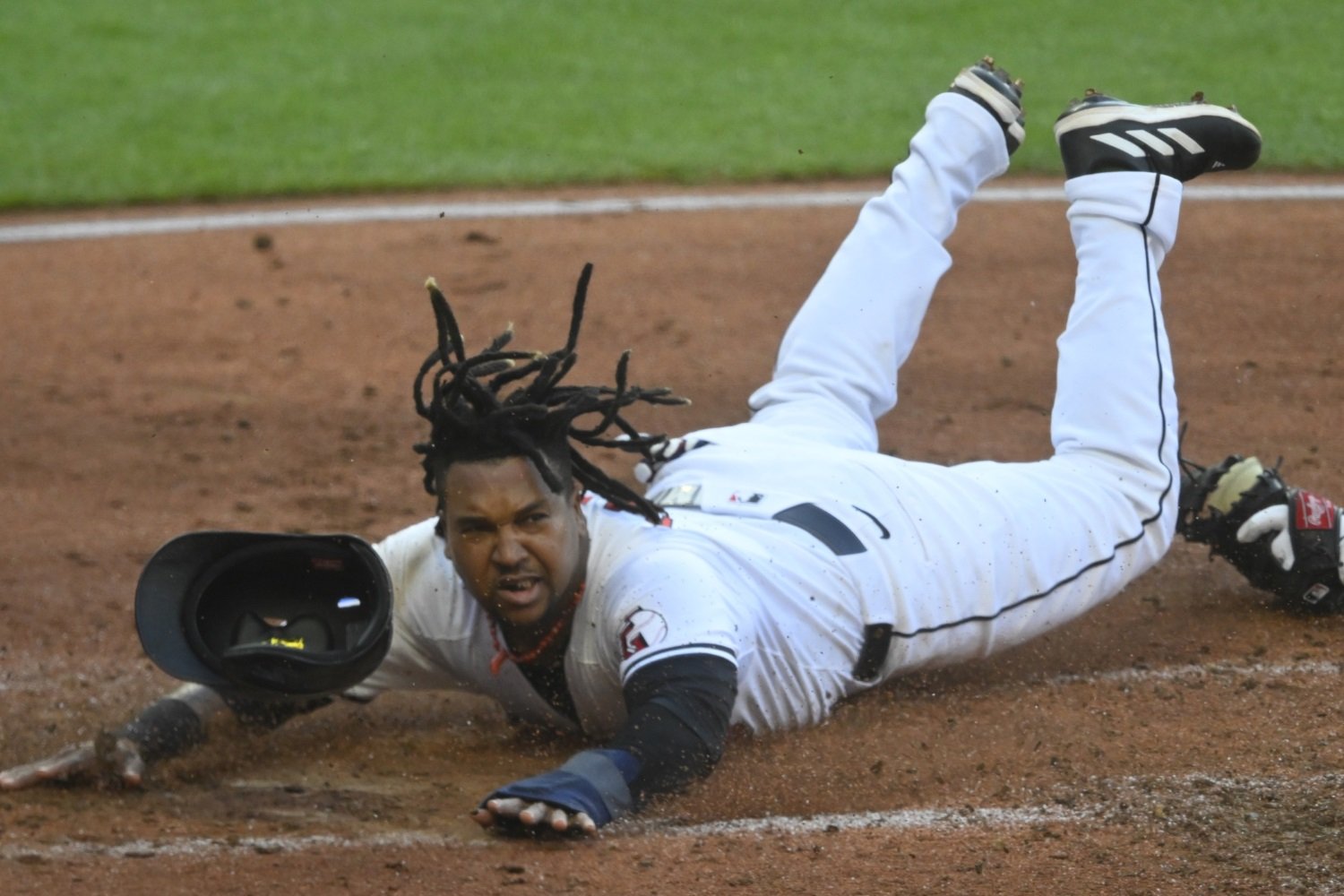 Have you ever played tennis against someone just one step worse than you? Not saying you’re Roger Federer and they’re Jerry’s tennis instructor on Seinfeld, but y’know, you have a real stroke to your shots, you can put some top spin on them, maybe you took some lessons at some point. And your opponent is just running around trying their best to block the ball back to you, using a racket they bought in 2006. Anybody who’s played knows what happens: your good shots get returned back to you, and you keep hitting good shots back until you make a mistake. You lock in and start trying to hit winners back since nothing that's being hit to you is hard to get to, at all. You get one in, you feel vindicated. This is gonna be a breeze. The next shot you hit is just out. You hit another good one, but your opponent just gets to it and is able to lob it back to you. You try an overhand smash and it goes right into the net. You lose the match, or set, or whatever you’re playing. You tried your best, but you just made too many mistakes. It happens; tennis can be a random game sometimes. But the pain isn’t over. Your opponent doesn’t interpret the results that way. They beat you, which means that in their mind, they are a better tennis player than you. Au contraire, you say! You try to explain why your own mistakes caused the result, but that sure sounds like sour grapes. You then think, I can explain this by focusing on my opponent. They can’t say they’re a better tennis player than you when their serve goes 45 MPH. Again, sour grapes, and a little vindicating to your opponent, who now thinks they dominate the mental game. But it’s true! You know its true! You put the time in to become an okay tennis player. They didn’t! Maybe it doesn’t matter who’s better. Maybe we just need to enjoy the game and stop trying to evaluate the games of you and your friends like you’re trying out for Wimbledon. But you’re not trying out for anything. You’re just a fan of the Minnesota Twins watching the Cleveland Guardians tap the ball back to you, their old-timey pluckiness and outsized confidence sucking all the joy you gain from sports, while kicking you repeatedly in the balls and making you doubt your soundness of mind, as the events play out like some George Will fanfiction: “Of course the Twins choice to insert their closer into the eighth inning would backfire, as our hero José "the Prizefighter" Ramírez steps to the plate. They said the shift rule would never need to be enforced, but they never met Carlos Correa.” I mean look, the Guardians have holes all throughout their lineup; their second-best starter has a torn UCL; and their best starter is out for the year for a torn UCL. Their best young pitcher has a torn UCL. Their best fielders don’t play premium defensive positions. They still don’t have much hitting in the outfield. Their center fielder is a shortstop just pretending. But they know how to beat teams with more talent than them. As I write this, Cleveland has just beaten the mighty Orioles 10-8, after their starting pitcher went three innings and allowed six runs. Last year, the talent disparity almost felt a little closer than it does now, considering Shane Bieber was available the whole year. Naturally, the Guardians won the season series and put a scare into the Twins long after the division should have been decided. The year before that, they won four or five games against Emilio Pagán alone. And that was before the Twins lost 19 players (approx.) to season-ending injuries. (It’s quite the opposite of the Twins’ parlays with the Yankees over the years, in which it is pretty clear, in most years, that the Yankees are in another class of talent. But the Yankees don’t play tennis; they play Calvinball or something.) It’s like when Homer Simpson rises to the top of the boxing world because his skull is so thick that everyone gets tired trying to knock him out. The Guardians keep fouling pitches off, extending innings and making nice defensive plays until they look up and the Twins haven’t scored a run in seven innings, and Will Brennan’s two-run tapper down the line in the fifth has won them the game. The Boxcar Twins fall again. Is it fair? It’s more than fair; the Guardians are operating with about $40 million less in payroll than the Twins have. Is it good for baseball? Besides José Ramírez’s contract depressing third base salaries for a generation, I’d say it's nice to have a different fundamental approach to the game than most other teams. The fact that they are actually successful means we may get another Michael Lewis book out of the deal. It's fun to see a powerful team like the Orioles or Yankees succumb to death by a thousand paper cuts. If I wasn't a Twins fan, Minnesota-Cleveland matchups would be the absolute best, in terms of pure baseball content. Power versus singles hitters. Athletic Specimen versus 5'7" Kinda Chubby Guy. Two goofy brothers versus three first overall picks. Is it good baseball? It’s incredible baseball. It's a football team winning entirely because of special teams and turnovers. It's a little blue-collar. It’s Seve Ballesteros combined with Robert Horry. It will make little sense, until we can start quantifying Confidence+ on Fangraphs. Furthermore, the rise of sports betting has created a certain arrogance in certainty that the Guardians fly in the face of. What passes for analysis these days is saying “Looking at the National League this year, there are thirteen teams that are close to the playoff picture, but it's the top six in the standings that have really impressed thus far.” Teams like the Guardians screw up that recent-results-based calculus, making betting experts and even MLB Network goons have to consider, “well, they are the Guardians.” That’s beautiful. It would be even prettier if it stayed the [redacted] away from me and my own favorite team.
- 17 comments
-
- 8
-
-
-
- carlos correa
- byron buxton
- (and 1 more)
-
The Twins bullpen got a nice day off on Saturday, with Bailey Ober pitching his first career complete game. Pablo López decided to extend that vacation (except for Griffin Jax) coming off one of the worst stretches of his career, striking out 14 across eight shutout innings. Byron Buxton had a homer and an RBI double to fuel the offense. Image courtesy of © D. Ross Cameron-USA TODAY Sports The Twins bullpen got a nice day off on Saturday, with Bailey Ober pitching his first career complete game. Pablo López decided to extend that vacation (except for Griffin Jax) coming off one of the worst stretches of his career, striking out 14 across eight shutout innings. Byron Buxton had a homer and an RBI double to fuel the offense. Box Score: Starting Pitcher: Pablo López: 8 IP 2 H 0 ER 1 BB 14 K (102 Pitches, 68 Strikes, 66.6%) Home Runs: Byron Buxton (5) Top 3 WPA: López (.473), Buxton (.169), Willi Castro (.056) Win Probability Chart (Via Fangraphs): Coming off a brutal stretch that saw his ERA swell to 5.66, Pablo López was approaching the point where some uncomfortable discussions would need to be had if he couldn't bounce back and deliver an encouraging start against the A's on Sunday. Pitchers with that kind of (lack of) run prevention over 15 starts are either cooked, injured or not that good, no matter what their underlying metrics would indicate. López came out like a man eager to prove that he was healthy, obviously in his prime and still really good, starting by emphasizing his fastball heavily in the first inning. It looked good sitting at 94-96 MPH, and he appeared to command it pretty well. The A's were clearly hoping to hit some sweepers and changeups, as the run value of those pitches has come in at the third and fourth percentile, respectively, thus far this year. López and Christian Vázquez responded by mixing in some sinkers and curveballs to keep the A's off-balance. He was tentative with the changeup at first, throwing them for chase pitches while he tried to gain a feel for the pitch. He ended up striking out seven of the nine batters he faced in the first three innings. It would improve in depth and the conviction it was thrown with as the outing went along. Twins Daily's winning "Make It Official!" game recaps are sponsored by Official Fried Chicken, which you can find in center field of Target Field. With a name like "Official," we know we have to be the best in the game every day, and from your first bite, you'll know that's a promise we make good on. Opposite López was lefty Hogan Harris, who got off to a shaky start against the Twins' lefty-mashing lineup. Manuel Margot led off with a sharp single, Carlos Correa was hit by a pitch, and Royce Lewis lifted a hanging curveball to deep left field. Fortunately for Harris, the fly ball was caught at the wall by Miguel Andujar, the former Yankee slugger who now multiple teams have tried to hide defensively. Andujar then made a heads-up throw to third base to nab a tagging Margot, and all of a sudden there were two outs and just a lone baserunner. However in the second, Harris wasn't able to escape throwing a flat fastball on the outside edge of the plate to Byron Buxton, as Buxton torched it 112 MPH over the left field wall for a solo shot. Harris settled in after that, setting down the next ten batters by commanding his 93 fastball at all corners of the zone. The Twins were close to barreling him up, but were just off much of the time, resulting in quite a few medium-deep fly balls. Harris was able to play his curveball and his slider off of each other to decent effect, whereas he entered the game with his slider being pummeled thus far. By the fifth inning, López was starting to feel some confidence in his changeup, starting off All-Star DH Brent Rooker in the fifth with a right-on-right change for a strike, and then finishing Rooker off with another changeup down and in. He carried a perfect game into the sixth, and struck out the first two batters with challenge fastballs. Lawrence Butler then jumped on a first pitch curveball and lined a clean single to right, ending the perfecto and the no-hitter. In a one run game, Max Schuemann then inexplicably bunted back to López for the third out. The Twins were finally able to add on in the seventh. After Carlos Santana waited back on a fastball and punched it back through the right side for a leadoff single, Willi Castro blooped a ball off his hands into center field, with Santana aggressively taking the extra base and reaching third when J.J. Bleday bobbled the ball, Buxton then delivered his second RBI of the day, rifling a slider into the left-center gap for a double that scored Santana and left with Twins with runners on second and third and nobody out. Kyle Farmer then grounded a ball up the middle, and second baseman Zach Geloff smartly threw to third base to nab an advancing Buxton. it did appear that third baseman Tyler Nevin obstructed the base as Buxton slid in, but after conferring, the umpire crew decided the out call would stand. The third run did score on the play. López fell behind in a few more counts in the seventh and eighth innings, but was able to make enough quality pitches to emerge unscathed before Griffin Jax took over in the ninth. The Good: -López pitched as angry as I have ever seen him. it reminded me of the episode of the Simpsons where Ned Flanders gets mad and cusses out the whole town. I half expected him to tell Rooker, ¨I don´t know you but I´m sure you´re a jerk" after he struck him out with 97 MPH down the middle in the seventh. The Bad: -Kyle Farmer made another out on the bases, ending the rally in the seventh by getting thrown out attempting to steal second, his fifth caught stealing of the year in eight tries. -Lewis was due a bad game, and went 0-4 while striking out on a pitch at his eyes in the eighth. What’s Next: Joe Ryan (5-5, 3.13 ERA) goes against Brandon Pfaadt (3-6, 4.37 ERA) as the Twins begin a series in Arizona against the Diamondbacks. Ryan looks to build on his case for his first All-Star selection, while Pfaadt, who was a highly touted prospect and started games in the World Series last year, looks to get his season going after some middling results thus far. Postgame Interviews: Bullpen Usage Chart: WED THU FRI SAT SUN TOT Alcalá 20 0 16 0 0 36 Durán 10 0 19 0 0 29 Sands 23 20 0 0 0 43 Okert 19 15 0 0 0 34 Staumont 32 0 0 0 0 32 Jax 0 20 0 0 15 35 Funderburk 0 0 22 0 0 22 Thielbar 0 14 0 0 0 14 View full article
- 52 replies
-
- 2
-
-
- pablo lopez
- byron buxton
- (and 1 more)
-
.png.62488b20f18838c31d1b2c4b052280eb.png) Box Score: Starting Pitcher: Pablo López: 8 IP 2 H 0 ER 1 BB 14 K (102 Pitches, 68 Strikes, 66.6%) Home Runs: Byron Buxton (5) Top 3 WPA: López (.473), Buxton (.169), Willi Castro (.056) Win Probability Chart (Via Fangraphs): Coming off a brutal stretch that saw his ERA swell to 5.66, Pablo López was approaching the point where some uncomfortable discussions would need to be had if he couldn't bounce back and deliver an encouraging start against the A's on Sunday. Pitchers with that kind of (lack of) run prevention over 15 starts are either cooked, injured or not that good, no matter what their underlying metrics would indicate. López came out like a man eager to prove that he was healthy, obviously in his prime and still really good, starting by emphasizing his fastball heavily in the first inning. It looked good sitting at 94-96 MPH, and he appeared to command it pretty well. The A's were clearly hoping to hit some sweepers and changeups, as the run value of those pitches has come in at the third and fourth percentile, respectively, thus far this year. López and Christian Vázquez responded by mixing in some sinkers and curveballs to keep the A's off-balance. He was tentative with the changeup at first, throwing them for chase pitches while he tried to gain a feel for the pitch. He ended up striking out seven of the nine batters he faced in the first three innings. It would improve in depth and the conviction it was thrown with as the outing went along. Twins Daily's winning "Make It Official!" game recaps are sponsored by Official Fried Chicken, which you can find in center field of Target Field. With a name like "Official," we know we have to be the best in the game every day, and from your first bite, you'll know that's a promise we make good on. Opposite López was lefty Hogan Harris, who got off to a shaky start against the Twins' lefty-mashing lineup. Manuel Margot led off with a sharp single, Carlos Correa was hit by a pitch, and Royce Lewis lifted a hanging curveball to deep left field. Fortunately for Harris, the fly ball was caught at the wall by Miguel Andujar, the former Yankee slugger who now multiple teams have tried to hide defensively. Andujar then made a heads-up throw to third base to nab a tagging Margot, and all of a sudden there were two outs and just a lone baserunner. However in the second, Harris wasn't able to escape throwing a flat fastball on the outside edge of the plate to Byron Buxton, as Buxton torched it 112 MPH over the left field wall for a solo shot. Harris settled in after that, setting down the next ten batters by commanding his 93 fastball at all corners of the zone. The Twins were close to barreling him up, but were just off much of the time, resulting in quite a few medium-deep fly balls. Harris was able to play his curveball and his slider off of each other to decent effect, whereas he entered the game with his slider being pummeled thus far. By the fifth inning, López was starting to feel some confidence in his changeup, starting off All-Star DH Brent Rooker in the fifth with a right-on-right change for a strike, and then finishing Rooker off with another changeup down and in. He carried a perfect game into the sixth, and struck out the first two batters with challenge fastballs. Lawrence Butler then jumped on a first pitch curveball and lined a clean single to right, ending the perfecto and the no-hitter. In a one run game, Max Schuemann then inexplicably bunted back to López for the third out. The Twins were finally able to add on in the seventh. After Carlos Santana waited back on a fastball and punched it back through the right side for a leadoff single, Willi Castro blooped a ball off his hands into center field, with Santana aggressively taking the extra base and reaching third when J.J. Bleday bobbled the ball, Buxton then delivered his second RBI of the day, rifling a slider into the left-center gap for a double that scored Santana and left with Twins with runners on second and third and nobody out. Kyle Farmer then grounded a ball up the middle, and second baseman Zach Geloff smartly threw to third base to nab an advancing Buxton. it did appear that third baseman Tyler Nevin obstructed the base as Buxton slid in, but after conferring, the umpire crew decided the out call would stand. The third run did score on the play. López fell behind in a few more counts in the seventh and eighth innings, but was able to make enough quality pitches to emerge unscathed before Griffin Jax took over in the ninth. The Good: -López pitched as angry as I have ever seen him. it reminded me of the episode of the Simpsons where Ned Flanders gets mad and cusses out the whole town. I half expected him to tell Rooker, ¨I don´t know you but I´m sure you´re a jerk" after he struck him out with 97 MPH down the middle in the seventh. The Bad: -Kyle Farmer made another out on the bases, ending the rally in the seventh by getting thrown out attempting to steal second, his fifth caught stealing of the year in eight tries. -Lewis was due a bad game, and went 0-4 while striking out on a pitch at his eyes in the eighth. What’s Next: Joe Ryan (5-5, 3.13 ERA) goes against Brandon Pfaadt (3-6, 4.37 ERA) as the Twins begin a series in Arizona against the Diamondbacks. Ryan looks to build on his case for his first All-Star selection, while Pfaadt, who was a highly touted prospect and started games in the World Series last year, looks to get his season going after some middling results thus far. Postgame Interviews: Bullpen Usage Chart: WED THU FRI SAT SUN TOT Alcalá 20 0 16 0 0 36 Durán 10 0 19 0 0 29 Sands 23 20 0 0 0 43 Okert 19 15 0 0 0 34 Staumont 32 0 0 0 0 32 Jax 0 20 0 0 15 35 Funderburk 0 0 22 0 0 22 Thielbar 0 14 0 0 0 14
Box Score: Starting Pitcher: Pablo López: 8 IP 2 H 0 ER 1 BB 14 K (102 Pitches, 68 Strikes, 66.6%) Home Runs: Byron Buxton (5) Top 3 WPA: López (.473), Buxton (.169), Willi Castro (.056) Win Probability Chart (Via Fangraphs): Coming off a brutal stretch that saw his ERA swell to 5.66, Pablo López was approaching the point where some uncomfortable discussions would need to be had if he couldn't bounce back and deliver an encouraging start against the A's on Sunday. Pitchers with that kind of (lack of) run prevention over 15 starts are either cooked, injured or not that good, no matter what their underlying metrics would indicate. López came out like a man eager to prove that he was healthy, obviously in his prime and still really good, starting by emphasizing his fastball heavily in the first inning. It looked good sitting at 94-96 MPH, and he appeared to command it pretty well. The A's were clearly hoping to hit some sweepers and changeups, as the run value of those pitches has come in at the third and fourth percentile, respectively, thus far this year. López and Christian Vázquez responded by mixing in some sinkers and curveballs to keep the A's off-balance. He was tentative with the changeup at first, throwing them for chase pitches while he tried to gain a feel for the pitch. He ended up striking out seven of the nine batters he faced in the first three innings. It would improve in depth and the conviction it was thrown with as the outing went along. Twins Daily's winning "Make It Official!" game recaps are sponsored by Official Fried Chicken, which you can find in center field of Target Field. With a name like "Official," we know we have to be the best in the game every day, and from your first bite, you'll know that's a promise we make good on. Opposite López was lefty Hogan Harris, who got off to a shaky start against the Twins' lefty-mashing lineup. Manuel Margot led off with a sharp single, Carlos Correa was hit by a pitch, and Royce Lewis lifted a hanging curveball to deep left field. Fortunately for Harris, the fly ball was caught at the wall by Miguel Andujar, the former Yankee slugger who now multiple teams have tried to hide defensively. Andujar then made a heads-up throw to third base to nab a tagging Margot, and all of a sudden there were two outs and just a lone baserunner. However in the second, Harris wasn't able to escape throwing a flat fastball on the outside edge of the plate to Byron Buxton, as Buxton torched it 112 MPH over the left field wall for a solo shot. Harris settled in after that, setting down the next ten batters by commanding his 93 fastball at all corners of the zone. The Twins were close to barreling him up, but were just off much of the time, resulting in quite a few medium-deep fly balls. Harris was able to play his curveball and his slider off of each other to decent effect, whereas he entered the game with his slider being pummeled thus far. By the fifth inning, López was starting to feel some confidence in his changeup, starting off All-Star DH Brent Rooker in the fifth with a right-on-right change for a strike, and then finishing Rooker off with another changeup down and in. He carried a perfect game into the sixth, and struck out the first two batters with challenge fastballs. Lawrence Butler then jumped on a first pitch curveball and lined a clean single to right, ending the perfecto and the no-hitter. In a one run game, Max Schuemann then inexplicably bunted back to López for the third out. The Twins were finally able to add on in the seventh. After Carlos Santana waited back on a fastball and punched it back through the right side for a leadoff single, Willi Castro blooped a ball off his hands into center field, with Santana aggressively taking the extra base and reaching third when J.J. Bleday bobbled the ball, Buxton then delivered his second RBI of the day, rifling a slider into the left-center gap for a double that scored Santana and left with Twins with runners on second and third and nobody out. Kyle Farmer then grounded a ball up the middle, and second baseman Zach Geloff smartly threw to third base to nab an advancing Buxton. it did appear that third baseman Tyler Nevin obstructed the base as Buxton slid in, but after conferring, the umpire crew decided the out call would stand. The third run did score on the play. López fell behind in a few more counts in the seventh and eighth innings, but was able to make enough quality pitches to emerge unscathed before Griffin Jax took over in the ninth. The Good: -López pitched as angry as I have ever seen him. it reminded me of the episode of the Simpsons where Ned Flanders gets mad and cusses out the whole town. I half expected him to tell Rooker, ¨I don´t know you but I´m sure you´re a jerk" after he struck him out with 97 MPH down the middle in the seventh. The Bad: -Kyle Farmer made another out on the bases, ending the rally in the seventh by getting thrown out attempting to steal second, his fifth caught stealing of the year in eight tries. -Lewis was due a bad game, and went 0-4 while striking out on a pitch at his eyes in the eighth. What’s Next: Joe Ryan (5-5, 3.13 ERA) goes against Brandon Pfaadt (3-6, 4.37 ERA) as the Twins begin a series in Arizona against the Diamondbacks. Ryan looks to build on his case for his first All-Star selection, while Pfaadt, who was a highly touted prospect and started games in the World Series last year, looks to get his season going after some middling results thus far. Postgame Interviews: Bullpen Usage Chart: WED THU FRI SAT SUN TOT Alcalá 20 0 16 0 0 36 Durán 10 0 19 0 0 29 Sands 23 20 0 0 0 43 Okert 19 15 0 0 0 34 Staumont 32 0 0 0 0 32 Jax 0 20 0 0 15 35 Funderburk 0 0 22 0 0 22 Thielbar 0 14 0 0 0 14- 52 comments
-
- 7
-
-
-
- pablo lopez
- byron buxton
- (and 1 more)
-
(15).png.c5e4eb56b71c8e341318317dde91c00c.png) Box Score: Starting Pitcher: Bailey Ober: 6 1/3 IP, 6 H, 1 ER, 2 BB, 8 K (96 Pitches, 64 Strikes, 66.6%) Home Runs: Carlos Correa 2 (8), Royce Lewis (6), Carlos Santana (11) Top 3 WPA: Ober (.220), Correa (.213), Lewis (.073) Win Probability Chart (Via Fangraphs): It's been quite a homestand for the Twins thus far, featuring the triumphant return of Louie Varland; (perhaps) the end of Caleb Thielbar; the Buxton-Correa-Lewis trio clicking for the first time.. ever; Flo Rida; and an overall record of five wins in six games. After Saturday's game was rained out, the Twins turned to the scuffling Bailey Ober in game one of a Fathers Day twinbill. Ober seemed to be on the cusp of settling into one of his patented grooves in his last start, until Henry Davis and Andrew McCutchen wore him down with two outs in the fifth, seeing 17 combined pitches with each batter walking. Bryan Reynolds and Connor Joe made Ober pay, ruining his pitching line for the day. This, after he pitched his guts out in New York, beaten only because of a jam shot off the bat of Aaron Judge. Ober started the day well, spotting a fastball that has proven more hittable this year. It was consistently 93 MPH, and his changeup looked as good as it has been this year, even to righties. Overall, the change accounted for four of his eight strikeouts, with eight whiffs on that pitch alone. He cruised the first time through the lineup, but then faced the visitors' best hitter, old friend Brent Rooker, in the third with two men on. This time, Ober did what he couldn't in Pittsburgh, dotting a change-up below Rooker's bat to end the threat. Also unlike in Pittsburgh, the defense made some excellent plays behind him. Opposing Ober was A's lefty J.P. Sears, a really nice number four starter they acquired for the husk of Frankie Montas at the 2022 trade deadline. However, in a change from the rest of the post-COVID Twins teams, this one can hit lefties. The resurgent Manuel Margot drew a tough walk to start the game against Sears, and then Carlos Correa unloaded on a high fastball for a two-run home run that surprised no one, given how unconscious Correa has been since that fateful tweet from a certain former-beat-reporter-turned-columnist whose distance from the center of things is starting to show. Twins Daily's winning "Make It Official!" game recaps are sponsored by Official Fried Chicken, which you can find in center field of Target Field. With a name like "Official," we know we have to be the best in the game every day, and from your first bite, you'll know that's a promise we make good on. And then Royce Lewis did something even less surprising, homering on the first pitch to the overhang in right field. Correa wasn't done, though, as he back-legged a sweeper from Sears in the fourth 408 feet for his third hit of the day, making the game 4-0. And with Ober in his biggest pickle of the day in the sixth, Correa made the unassisted double play off a hot ground ball from Soderstrom to preserve the shutout and hopefully give his starter something to build off of. After Daz Cameron spoiled Ober's quest for a seven inning shut out by hammering an elevated change-up to make the score 4-1, Carlos Santana provided the insurance with a home run off lefty Brady Basso. Jorge Alcala pitched 1 2/3 scoreless innings before giving away to Cole Sands to finish off the win. The Good: -Correa's dominance is great, but for me as a fan of Larry David, the spite aspect of his "raking" makes it even better. -Ober was not at his absolute best, but reversed a few trends in this start. He finished hitters off, as his eight strikeouts attest, and his changeup was a weapon.. until the last one he threw to Daz Cameron. -Of Alcala's 22 pitches, 17 were strikes. Considering how high-octane his stuff is, that's real nice. The Bad: -Not a lot of bad stuff here, but Kyle Farmer made another out on the bases, which you would like to see less of. -Sands struggled after he attempted to make an acrobatic play on a ball hit off of his body to start the ninth. After allowing two hits and a walk, Jhoan Duran was summoned in a 6-2 game to get the final out. What’s Next: Chris Paddack (5-3, 4.79 ERA) opposes Joey Estes (2-2, 4.78 ERA) as the Twins look to sweep the doubleheader and the series. Estes is a 22-year-old right-hander who has held his own thus far in his career, but features below-average fastball velocity and was the eleventh ranked prospect in Oakland's fairly weak farm system entering the year. Paddack was much better against Colorado last time out, and his velocity has been on the rise since he battled a dead arm period a few weeks ago. Postgame Interviews: Bullpen Usage Chart: WED THU FRI SAT SUN TOT Sands 0 0 25 0 27 52 Jax 0 19 23 0 0 42 Thielbar 22 0 0 0 0 22 Durán 16 0 20 0 9 45 Staumont 0 0 15 0 0 15 Alcalá 10 13 0 0 22 45 Jackson 22 0 0 0 0 22 Okert 18 0 0 0 0 18
Box Score: Starting Pitcher: Bailey Ober: 6 1/3 IP, 6 H, 1 ER, 2 BB, 8 K (96 Pitches, 64 Strikes, 66.6%) Home Runs: Carlos Correa 2 (8), Royce Lewis (6), Carlos Santana (11) Top 3 WPA: Ober (.220), Correa (.213), Lewis (.073) Win Probability Chart (Via Fangraphs): It's been quite a homestand for the Twins thus far, featuring the triumphant return of Louie Varland; (perhaps) the end of Caleb Thielbar; the Buxton-Correa-Lewis trio clicking for the first time.. ever; Flo Rida; and an overall record of five wins in six games. After Saturday's game was rained out, the Twins turned to the scuffling Bailey Ober in game one of a Fathers Day twinbill. Ober seemed to be on the cusp of settling into one of his patented grooves in his last start, until Henry Davis and Andrew McCutchen wore him down with two outs in the fifth, seeing 17 combined pitches with each batter walking. Bryan Reynolds and Connor Joe made Ober pay, ruining his pitching line for the day. This, after he pitched his guts out in New York, beaten only because of a jam shot off the bat of Aaron Judge. Ober started the day well, spotting a fastball that has proven more hittable this year. It was consistently 93 MPH, and his changeup looked as good as it has been this year, even to righties. Overall, the change accounted for four of his eight strikeouts, with eight whiffs on that pitch alone. He cruised the first time through the lineup, but then faced the visitors' best hitter, old friend Brent Rooker, in the third with two men on. This time, Ober did what he couldn't in Pittsburgh, dotting a change-up below Rooker's bat to end the threat. Also unlike in Pittsburgh, the defense made some excellent plays behind him. Opposing Ober was A's lefty J.P. Sears, a really nice number four starter they acquired for the husk of Frankie Montas at the 2022 trade deadline. However, in a change from the rest of the post-COVID Twins teams, this one can hit lefties. The resurgent Manuel Margot drew a tough walk to start the game against Sears, and then Carlos Correa unloaded on a high fastball for a two-run home run that surprised no one, given how unconscious Correa has been since that fateful tweet from a certain former-beat-reporter-turned-columnist whose distance from the center of things is starting to show. Twins Daily's winning "Make It Official!" game recaps are sponsored by Official Fried Chicken, which you can find in center field of Target Field. With a name like "Official," we know we have to be the best in the game every day, and from your first bite, you'll know that's a promise we make good on. And then Royce Lewis did something even less surprising, homering on the first pitch to the overhang in right field. Correa wasn't done, though, as he back-legged a sweeper from Sears in the fourth 408 feet for his third hit of the day, making the game 4-0. And with Ober in his biggest pickle of the day in the sixth, Correa made the unassisted double play off a hot ground ball from Soderstrom to preserve the shutout and hopefully give his starter something to build off of. After Daz Cameron spoiled Ober's quest for a seven inning shut out by hammering an elevated change-up to make the score 4-1, Carlos Santana provided the insurance with a home run off lefty Brady Basso. Jorge Alcala pitched 1 2/3 scoreless innings before giving away to Cole Sands to finish off the win. The Good: -Correa's dominance is great, but for me as a fan of Larry David, the spite aspect of his "raking" makes it even better. -Ober was not at his absolute best, but reversed a few trends in this start. He finished hitters off, as his eight strikeouts attest, and his changeup was a weapon.. until the last one he threw to Daz Cameron. -Of Alcala's 22 pitches, 17 were strikes. Considering how high-octane his stuff is, that's real nice. The Bad: -Not a lot of bad stuff here, but Kyle Farmer made another out on the bases, which you would like to see less of. -Sands struggled after he attempted to make an acrobatic play on a ball hit off of his body to start the ninth. After allowing two hits and a walk, Jhoan Duran was summoned in a 6-2 game to get the final out. What’s Next: Chris Paddack (5-3, 4.79 ERA) opposes Joey Estes (2-2, 4.78 ERA) as the Twins look to sweep the doubleheader and the series. Estes is a 22-year-old right-hander who has held his own thus far in his career, but features below-average fastball velocity and was the eleventh ranked prospect in Oakland's fairly weak farm system entering the year. Paddack was much better against Colorado last time out, and his velocity has been on the rise since he battled a dead arm period a few weeks ago. Postgame Interviews: Bullpen Usage Chart: WED THU FRI SAT SUN TOT Sands 0 0 25 0 27 52 Jax 0 19 23 0 0 42 Thielbar 22 0 0 0 0 22 Durán 16 0 20 0 9 45 Staumont 0 0 15 0 0 15 Alcalá 10 13 0 0 22 45 Jackson 22 0 0 0 0 22 Okert 18 0 0 0 0 18
.png.6fa4328ec90b65fc3d18ed2bf94701f6.png)
.png.35209a416b0edb6dffe0091fce2b949d.png)

(26).png.c6d5b9855293eec63b2d8a1b941460fd.png)
(21).png.0041014c1707ccf9c04a539cdf20cc7a.png)
(19).png.fe95038176e4569117a88531dab87959.png)
.png.62488b20f18838c31d1b2c4b052280eb.png)
(15).png.c5e4eb56b71c8e341318317dde91c00c.png)