



Hans Birkeland
-
Posts
458 -
Joined
-
Days Won
1
Content Type
Profiles
News
Minnesota Twins Videos
2026 Minnesota Twins Top Prospects Ranking
2022 Minnesota Twins Draft Picks
Minnesota Twins Free Agent & Trade Rumors, Notes, & Tidbits
Guides & Resources
2023 Minnesota Twins Draft Picks
The Minnesota Twins Players Project
2024 Minnesota Twins Draft Picks
2025 Minnesota Twins Draft Pick Tracker
2026 Minnesota Twins Draft Tracker: Picks & Bonuses
Forums
Blogs
Events
Store
Downloads
Gallery
Everything posted by Hans Birkeland
-
Build a Team Like the Braves? The Twins Already Did (Sorta)
Hans Birkeland posted an article in Twins
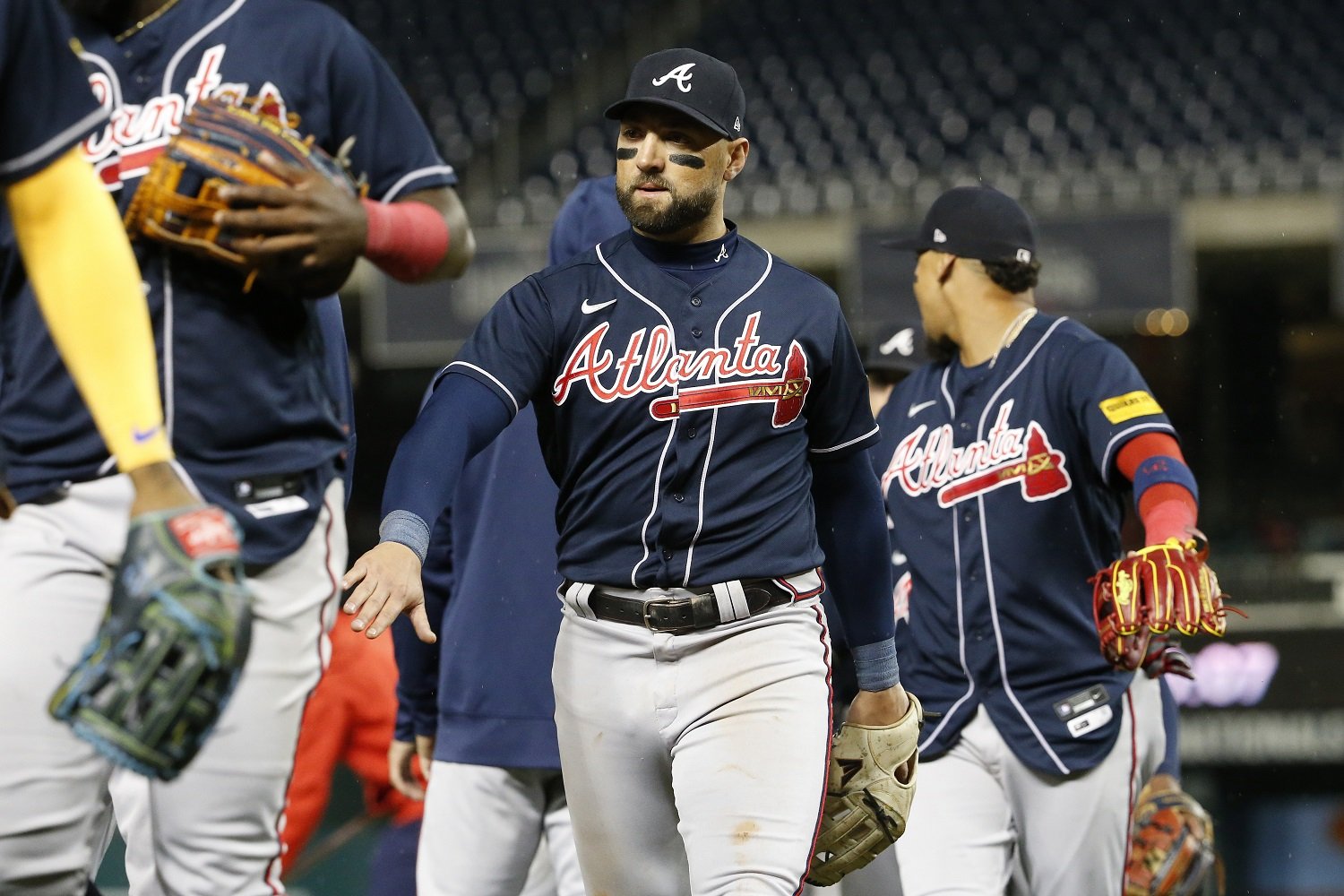 The Atlanta Braves are the class of MLB right now, and the breathless admiration of them from those in the game and those who analyze will continue whether you like it or not. The Braves tied the 2019 Twins home run record of 307 and have steamrolled the competition, including a decisive sweep of the Twins in June. They possess the best record in baseball and have all the underlying numbers to back it up. Don’t misunderstand me; they are really good. But how did they build this? A key aspect of their success is their penchant for extending star core players early in their career to team-friendly extensions. Ronald Acuna Jr., Ozzie Albies, Austin Riley, Michael Harris II, Matt Olson, Spencer Strider and Sean Murphy are all excellent players under the age of thirty and will be with the team through at least 2028. None of those contracts have turned into regrets, either (so far) like the contracts for Evan White, Jon Singleton, or even Randy Dobnak did. Max Fried and Strider lead the rotation, and are great development stories. Bryce Elder is too, but their strength isn’t pitching, and they don’t have much beyond those three and Morton. That isn’t the worst thing; two aces and two mid rotation guys will play fine in October, and their team ERA is still a respectable 14th in baseball. So what makes the Brave's core precarious, and why do the Twins have a chance to supplant them in as the next homegrown powerhouse? Depth The Braves are top-heavy in both the pitching and hitting departments. No one has noticed on the hitting side because none of their players are hurt. Almost ever. Carlos Correa leads the Twins with 135 games played, which is solid considering his foot issues. The next highest is Donovan Solano with 127. All eight of the Braves non-catchers have played 130 games or more. And all of them, plus their great catching core, are healthy and available for the playoffs. That’s absurd, bordering on the absurdity of the Cleveland Guardians and their nearly injury-free 2022 season. Should anyone get hurt, Nicky Lopez and Kevin Pillar are their only options. The Braves also have the 27th ranked farm system according to MLB Pipeline and they already have $174 million committed to next year’s payroll, not counting arbitration salaries (about $80 million more than the Twins). Their only top 100 prospect is pitcher AJ Smith-Shawver, who is 20 and made it to the majors this year. If he isn’t great right away, Max Fried heads to free agency after next year, leaving Strider and the unproven Elder. Maybe Kyle Wright can return to form (he will miss 2024 rehabbing an injury). And what should occur if somehow one of their hitters actually deals with a significant injury (or underperformance)? There is no “next man up” outside of Vaughn Grissom, who is a decent prospect but probably can’t handle shortstop, where they are already playing Orlando Arcia and his career .681 OPS. What they are now, is what they are. Grissom also represents the best trade piece the Braves could use to acquire frontline starting pitching, which they may need as soon as this offseason. If he goes, Nicky Lopez steps in. The Twins have a multitude of A and B level prospects they could flip for pitching if they really needed to. Comparing Cores More credit should go towards the Twins front office for building a core similar to the Braves, but for less money and hardly any fanfare. It should last through the Carlos Correa and Byron Buxton contracts since most of the Twins contributors are making the minimum MLB salary. And although those team-friendly extensions could save the Braves some money, none of those players have hit six years of service time yet. They would still be controllable through this year with only Olson and Albies set to hit free agency this offseason had the Braves gone year to year. Let's compare the infielders each team has assembled for the future. The Twins have Lewis, Alex Kirilloff, Edouard Julien, and Brooks Lee, with Austin Martin and Jose Miranda as high upside depth pieces. They also signed Carlos Correa. They’ve traded away homegrown talents Luis Arraez, Spencer Steer and Christian Encarnacion-Strand, too. The Braves have Riley, Olson, Albies, Arcia and Grissom. I'm not saying the Twins can bang with that group as currently constructed, but they have a lot more options if things go wrong (they do). Are the Braves infielders durable and capable of producing great counting stats? Sure. But that has very little predictive value and those 155 game seasons add up quickly in terms of health and performance. In the outfield, the Twins have Matt Wallner, Lewis, Trevor Larnach, Kirilloff, Martin, Emmanuel Rodriguez and Walker Jenkins (with Buxton once in a while), all system-developed. The Braves have two homegrown (and great) outfielders in Harris and Acuna Jr., but you have to scroll a bit on their prospect lists to even find another hitter, much less an outfielder. Nobody matches Acuna, but in Jenkins and Lewis the Twins at least have some hope to develop a generational superstar of their own. To Extend or not Extend The Twins have the opportunity to extend, Braves-style, some of those players, but as luck would have it, none of them are set to become free agents until after the 2027 season. They could lock up guys like Kirilloff, Ryan Jeffers, Julien and Lewis, but only Jeffers will even reach three years of service time when the season is over. They have some time to decide who to commit to long-term, and who, like the Braves with Dansby Swanson, they decide to just go year to year with. Right now, every extension the Braves have handed out has worked flawlessly. But as I mentioned earlier, none of those contracts has entered into the years of potential free agency yet. It is those "bonus" years that will prove the extensions either smart, or disastrous. Consider the Twins' extensions of Max Kepler and Jorge Polanco. Their respective performance and health have been up and down, but the contracts they signed only really kicked in this year. Had they been up for free agency last offseason, as they were on track for originally, would the Twins have even offered them a qualifying offer? Probably not, but these things are tricky; Polanco and Kepler have been integral parts of the Twins' second half surge this year. Contrast that to Riley's contract. He would have been team controlled for two more years after this one, but with his massive contract (ten years, 212M), they are now locked into the next nine years, whether he remains effective or not. The Twins haven't proven much of anything yet, but they have seven homegrown players who could start on any playoff team, Correa, star-caliber depth in the minor leagues, and some (though not a lot) payroll space to supplement. The Braves are still good, I promise that I believe that. They have the star power to go 11-0 this October and would wipe the floor with the Twins in a playoff matchup currently. The greater point, is that the Twins have really built something here. Some draft luck played a part, as talents like Lee and Jenkins should not have been available to a contending club. But here we are, with potential/actual star position players as far as the eye can see, and a decent rotation floor with Pablo Lopez, Joe Ryan, and Bailey Ober all team-controlled for at least the next four years. Not only that, but unlike the Braves lineup, there are backup plans if things go south. Correa may continue to have foot issues, some of the Twins prospects will flame out, and injuries will always be a factor, but you have to like the Twins chances to feel confident in an assortment of plan B's. The Braves have won six straight division titles; the Twins should be able to follow suit in the Central.
- 6 comments
-
- 4
-

-
- walker jenkins
- royce lewis
- (and 2 more)
-
Everyone loves exalting the virtues of the Atlanta Braves championship core. But it won't last as long as you think, and the Twins have built a roster about 90% as good, that is cheaper and potentially more sustainable. Image courtesy of Amber Searls-USA TODAY Sports Everyone loves exalting the virtues of the Atlanta Braves championship core. But it won't last as long as you think, and the Twins have built a roster about 90% as good, that is cheaper and potentially more sustainable. The Atlanta Braves are the class of MLB right now, and the breathless admiration of them from those in the game and those who analyze will continue whether you like it or not. The Braves tied the 2019 Twins home run record of 307 and have steamrolled the competition, including a decisive sweep of the Twins in June. They possess the best record in baseball and have all the underlying numbers to back it up. Don’t misunderstand me; they are really good. But how did they build this? A key aspect of their success is their penchant for extending star core players early in their career to team-friendly extensions. Ronald Acuna Jr., Ozzie Albies, Austin Riley, Michael Harris II, Matt Olson, Spencer Strider and Sean Murphy are all excellent players under the age of thirty and will be with the team through at least 2028. None of those contracts have turned into regrets, either (so far) like the contracts for Evan White, Jon Singleton, or even Randy Dobnak did. Max Fried and Strider lead the rotation, and are great development stories. Bryce Elder is too, but their strength isn’t pitching, and they don’t have much beyond those three and Morton. That isn’t the worst thing; two aces and two mid rotation guys will play fine in October, and their team ERA is still a respectable 14th in baseball. So what makes the Brave's core precarious, and why do the Twins have a chance to supplant them in as the next homegrown powerhouse? Depth The Braves are top-heavy in both the pitching and hitting departments. No one has noticed on the hitting side because none of their players are hurt. Almost ever. Carlos Correa leads the Twins with 135 games played, which is solid considering his foot issues. The next highest is Donovan Solano with 127. All eight of the Braves non-catchers have played 130 games or more. And all of them, plus their great catching core, are healthy and available for the playoffs. That’s absurd, bordering on the absurdity of the Cleveland Guardians and their nearly injury-free 2022 season. Should anyone get hurt, Nicky Lopez and Kevin Pillar are their only options. The Braves also have the 27th ranked farm system according to MLB Pipeline and they already have $174 million committed to next year’s payroll, not counting arbitration salaries (about $80 million more than the Twins). Their only top 100 prospect is pitcher AJ Smith-Shawver, who is 20 and made it to the majors this year. If he isn’t great right away, Max Fried heads to free agency after next year, leaving Strider and the unproven Elder. Maybe Kyle Wright can return to form (he will miss 2024 rehabbing an injury). And what should occur if somehow one of their hitters actually deals with a significant injury (or underperformance)? There is no “next man up” outside of Vaughn Grissom, who is a decent prospect but probably can’t handle shortstop, where they are already playing Orlando Arcia and his career .681 OPS. What they are now, is what they are. Grissom also represents the best trade piece the Braves could use to acquire frontline starting pitching, which they may need as soon as this offseason. If he goes, Nicky Lopez steps in. The Twins have a multitude of A and B level prospects they could flip for pitching if they really needed to. Comparing Cores More credit should go towards the Twins front office for building a core similar to the Braves, but for less money and hardly any fanfare. It should last through the Carlos Correa and Byron Buxton contracts since most of the Twins contributors are making the minimum MLB salary. And although those team-friendly extensions could save the Braves some money, none of those players have hit six years of service time yet. They would still be controllable through this year with only Olson and Albies set to hit free agency this offseason had the Braves gone year to year. Let's compare the infielders each team has assembled for the future. The Twins have Lewis, Alex Kirilloff, Edouard Julien, and Brooks Lee, with Austin Martin and Jose Miranda as high upside depth pieces. They also signed Carlos Correa. They’ve traded away homegrown talents Luis Arraez, Spencer Steer and Christian Encarnacion-Strand, too. The Braves have Riley, Olson, Albies, Arcia and Grissom. I'm not saying the Twins can bang with that group as currently constructed, but they have a lot more options if things go wrong (they do). Are the Braves infielders durable and capable of producing great counting stats? Sure. But that has very little predictive value and those 155 game seasons add up quickly in terms of health and performance. In the outfield, the Twins have Matt Wallner, Lewis, Trevor Larnach, Kirilloff, Martin, Emmanuel Rodriguez and Walker Jenkins (with Buxton once in a while), all system-developed. The Braves have two homegrown (and great) outfielders in Harris and Acuna Jr., but you have to scroll a bit on their prospect lists to even find another hitter, much less an outfielder. Nobody matches Acuna, but in Jenkins and Lewis the Twins at least have some hope to develop a generational superstar of their own. To Extend or not Extend The Twins have the opportunity to extend, Braves-style, some of those players, but as luck would have it, none of them are set to become free agents until after the 2027 season. They could lock up guys like Kirilloff, Ryan Jeffers, Julien and Lewis, but only Jeffers will even reach three years of service time when the season is over. They have some time to decide who to commit to long-term, and who, like the Braves with Dansby Swanson, they decide to just go year to year with. Right now, every extension the Braves have handed out has worked flawlessly. But as I mentioned earlier, none of those contracts has entered into the years of potential free agency yet. It is those "bonus" years that will prove the extensions either smart, or disastrous. Consider the Twins' extensions of Max Kepler and Jorge Polanco. Their respective performance and health have been up and down, but the contracts they signed only really kicked in this year. Had they been up for free agency last offseason, as they were on track for originally, would the Twins have even offered them a qualifying offer? Probably not, but these things are tricky; Polanco and Kepler have been integral parts of the Twins' second half surge this year. Contrast that to Riley's contract. He would have been team controlled for two more years after this one, but with his massive contract (ten years, 212M), they are now locked into the next nine years, whether he remains effective or not. The Twins haven't proven much of anything yet, but they have seven homegrown players who could start on any playoff team, Correa, star-caliber depth in the minor leagues, and some (though not a lot) payroll space to supplement. The Braves are still good, I promise that I believe that. They have the star power to go 11-0 this October and would wipe the floor with the Twins in a playoff matchup currently. The greater point, is that the Twins have really built something here. Some draft luck played a part, as talents like Lee and Jenkins should not have been available to a contending club. But here we are, with potential/actual star position players as far as the eye can see, and a decent rotation floor with Pablo Lopez, Joe Ryan, and Bailey Ober all team-controlled for at least the next four years. Not only that, but unlike the Braves lineup, there are backup plans if things go south. Correa may continue to have foot issues, some of the Twins prospects will flame out, and injuries will always be a factor, but you have to like the Twins chances to feel confident in an assortment of plan B's. The Braves have won six straight division titles; the Twins should be able to follow suit in the Central. View full article
-
Facing a surefire Hall-of-Famer in Justin Verlander, the Twins staged a rally against the Astros' bullpen after falling behind early. Jorge Polanco and Royce Lewis homered, but Yordan Alvarez homered twice, and Bryan Abreu and Ryan Pressley held the last two innings to secure the win in game one. Image courtesy of © Erik Williams-USA TODAY Sports Facing a surefire Hall-of-Famer in Justin Verlander, the Twins staged a rally against the Astros' bullpen after falling behind early. Jorge Polanco and Royce Lewis homered, but Yordan Alvarez homered twice, and Bryan Abreu and Ryan Pressley held the last two innings to secure the win in game one. Box Score: Starting Pitcher: Bailey Ober: 3 IP, 4 H, 3 ER, 0 BB, 2 K (43 Pitches, 28 Strikes, 65%) Home Runs: Jorge Polanco (1), Royce Lewis (3) Bottom 3 WPA: Ober (-.159), Alex Kirilloff (-.130), Matt Wallner (-0.96) Win Probability Chart (Via Fangraphs): The Twins took care of business at home against a mercurial Toronto Blue Jays team, allowing one run over the two games en route to the first postseason sweep in Twins/Senators history. Pablo Lopez and Sonny Gray were as advertised, but the offense let quite a few opportunities slip away. Against the defending champion Astros, the lineup would likely need to produce. The Astros were the only AL team that outhit the Twins in the second half, and still feature a menacing, experienced lineup. The Twins turned to Bailey Ober for game one, citing the Astros lack of at-bats against him, as well as Joe Ryan's inability to keep the ball in the ballpark. It would seem Ober had the moxie to take on a tough team on the road, given his domination this year against the Orioles in Baltimore (7 IP, 0 ER), and against the Dodgers in LA (6 IP, 1 ER). The Astros started the legendary Justin Verlander. He has not quite pitched to the elite level he had established over the years, but maintains decent velocity, exceptional command and knee-buckling breaking stuff. The casual fan might think this was a lopsided pitching matchup, and they would be proven right. The first inning started great. Edouard Julien drew a walk as Verlander had trouble commanding his breaking pitches. Jorge Polanco then drove a hanging curveball for a sharp single. Royce Lewis then got ahead in the count before grounding into a double play to extinguish most of the rally. Max Kepler then walked, but Verlander got Alex Kirilloff to tap out to end the threat. A 23 pitch inning with only 10 strikes from Verlander might have been considered a win. But as he has done so often, Jose Altuve jumped on a first pitch fastball and crushed it 377 feet for a 1-0 Houston lead. Ober settled down after that, getting pop-ups from Alex Bregman and Jose Abreu and convincingly striking out Yordan Alvarez on a high fastball to limit the damage. The Twins built another threat in the second. After Carlos Correa bounced a single off the second base bag, Matt Wallner lined out. Ryan Jeffers then drove a hanging breaking ball into left field, giving the Twins runners on first and second with one out. Michael A. Taylor then jumped on the first pitch, a fastball, and tapped into an inning-ending double play. After an uneventful bottom of the second, Julien started the third by banging an 0-2 fastball off the wall in left-center field for a double. But after a Polanco strikeout, Royce Lewis lined a grounder sharply to Bregman, who caught Julien trying to advance and tagged him out after a brief run-down. Kepler then struck out on a beautiful curveball from Verlander to end the inning. After impressively getting Altuve to pop out to start the third, Ober had a slide slip out of his hand that hit Bregman. He then threw a middle-middle changeup to Alvarez, who does not miss such pitches. 3-0 Astros. That spelled the end of Ober's outing. Kenta Maeda was warming prior to Alvarez's home run, and entered to start the fourth. It is unclear whether Ober would have been allowed to go longer had he kept the score 1-0, but in any event Maeda worked a scoreless fourth. He pitched around a single and walk to Martin Maldonado, but got Altuve to ground out to end the frame. Unfortunately for the Twins, Verlander had found his command by that point and started mowing down hitters with ruthless efficiency. Taylor was mercifully hit with a pitch behind in the count in the fifth, but Julien and Polanco struck out on curveballs to end whatever threat that represented. The Astros added insurance in the fifth. Bregman singled and Alvarez drew a walk. After a Tucker lineout, Abreu popped up to left field. However, Wallner was shading Abreu to the gap and couldn't it down, allowing the fourth run to score. Chas McCormick then singled sharply to Wallner, who came up firing to nab Alvarez at home. Abreu deked Kirilloff into cutting the ball off to retire him at third while Alvarez score the fifth run. It is hard to say if Wallner's throw would have been in time, but it certainly looked like there was a chance. Chris Paddack took over for Maeda in the sixth and pitched a perfect inning. Good timing, because Verlander was out of the game after six. Wallner led off the seventh with one of his customary hit-by-pitches, Jeffers singled, and after two strikeouts, Polanco launched a Hector Neris fastball for a three-run homer. Lewis then followed with a homer of his own to cut the lead to one. Unfortunately for the Twins, Alvarez was due up the next inning. After Paddack retired Bregman on strikes, Rocco Baldelli brought in Caleb Thielbar to face "Air Yordan." Thielbar has struggled with the home run ball, and Alvarez doesn't care who pitches to him. A curveball was left up just a little, and the Astros' DH crushed it to make it a two-run game. This was crucial not just for its impact on the game, but the rest of the series. The Twins purposely did not carry Kody Funderburk this round, mainly because the Astros lefties don't have much in the way of platoon splits. If Thielbar was supposed to represent the Twins' counter to Alvarez/Tucker, that didn't get off to a great start. It will interesting to see whether Thielbar gets another crack at them. Another key play happened after Abreu walked. Trying to advance on a wild pitch, Jeffers gunned him down as he appeared to coast into second Correa seemed to deke Abreu by motioning for Jeffers not to throw, then made a quick tag for the final out. The Twins threatened again in the eighth, with Correa delivering his second hit, a leadoff double against Bryan Abreu. But Wallner and Jeffers struck out, while Willi Castro grounded out sharply to Altuve to end the frame. Ryan Pressley pitched a 1-2-3 ninth for the save. The good: Polanco took good swings all night and looked more comfortable at third, making a nice spear of Tucker's line drive in the fifth. Lewis got his first hit since his second home in game one against Toronto, and made it count with a long home run in the seventh. Paddack was sharp, retiring all four batters he faced. The Twins got to Neris for four runs and forced ace reliever Bryan Abreu to throw 29 pitches. Correa had two hits and was again impressive in the field. Jhoan and Duran did not have to pitch, while Abreu and Pressley did, portending a potential advantage in game two. The bad: Ober made two bad pitches, and paid a big price. Maeda was dinked and dunked into allowing his two runs, but clearly wasn't the shutdown reliever he had been with the Dodgers. Julien made his crucial baserunning mistake after his double to start the third. He may have thought there were two outs, or he just lost focus. Either way, it cost the Twins while Verlander was still finding his command. What’s Next: Pablo Lopez (11-8, 3.66 ERA) faces off against Framber Valdez (12-11, 3.45) as the Twins look to even the series. Postgame Interviews: MON TUE WED THU FRI SAT TOT Maeda 0 0 0 0 0 43 43 Thielbar 0 10 4 0 0 18 32 Durán 0 14 13 0 0 0 27 Jax 0 8 15 0 0 0 23 Paddack 0 0 0 0 0 19 19 Varland 0 2 17 0 0 0 19 Pagán 0 0 0 0 0 14 14 Stewart 0 0 13 0 0 0 13 Funderburk 0 0 0 0 0 0 0 View full article
- 62 replies
-
- 1
-
-
- jorge polanco
- ryan jeffers
- (and 3 more)
-
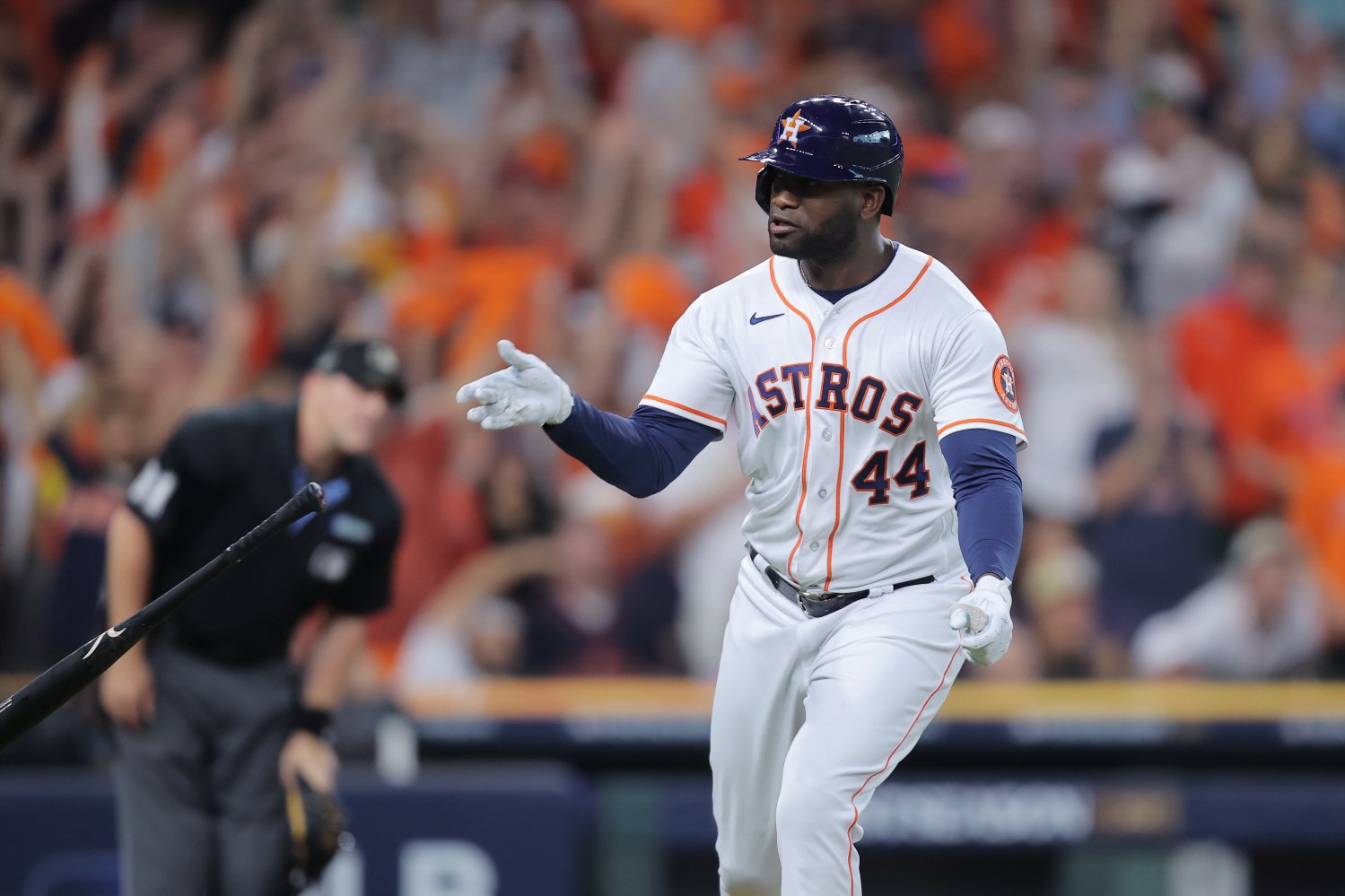 Box Score: Starting Pitcher: Bailey Ober: 3 IP, 4 H, 3 ER, 0 BB, 2 K (43 Pitches, 28 Strikes, 65%) Home Runs: Jorge Polanco (1), Royce Lewis (3) Bottom 3 WPA: Ober (-.159), Alex Kirilloff (-.130), Matt Wallner (-0.96) Win Probability Chart (Via Fangraphs): The Twins took care of business at home against a mercurial Toronto Blue Jays team, allowing one run over the two games en route to the first postseason sweep in Twins/Senators history. Pablo Lopez and Sonny Gray were as advertised, but the offense let quite a few opportunities slip away. Against the defending champion Astros, the lineup would likely need to produce. The Astros were the only AL team that outhit the Twins in the second half, and still feature a menacing, experienced lineup. The Twins turned to Bailey Ober for game one, citing the Astros lack of at-bats against him, as well as Joe Ryan's inability to keep the ball in the ballpark. It would seem Ober had the moxie to take on a tough team on the road, given his domination this year against the Orioles in Baltimore (7 IP, 0 ER), and against the Dodgers in LA (6 IP, 1 ER). The Astros started the legendary Justin Verlander. He has not quite pitched to the elite level he had established over the years, but maintains decent velocity, exceptional command and knee-buckling breaking stuff. The casual fan might think this was a lopsided pitching matchup, and they would be proven right. The first inning started great. Edouard Julien drew a walk as Verlander had trouble commanding his breaking pitches. Jorge Polanco then drove a hanging curveball for a sharp single. Royce Lewis then got ahead in the count before grounding into a double play to extinguish most of the rally. Max Kepler then walked, but Verlander got Alex Kirilloff to tap out to end the threat. A 23 pitch inning with only 10 strikes from Verlander might have been considered a win. But as he has done so often, Jose Altuve jumped on a first pitch fastball and crushed it 377 feet for a 1-0 Houston lead. Ober settled down after that, getting pop-ups from Alex Bregman and Jose Abreu and convincingly striking out Yordan Alvarez on a high fastball to limit the damage. The Twins built another threat in the second. After Carlos Correa bounced a single off the second base bag, Matt Wallner lined out. Ryan Jeffers then drove a hanging breaking ball into left field, giving the Twins runners on first and second with one out. Michael A. Taylor then jumped on the first pitch, a fastball, and tapped into an inning-ending double play. After an uneventful bottom of the second, Julien started the third by banging an 0-2 fastball off the wall in left-center field for a double. But after a Polanco strikeout, Royce Lewis lined a grounder sharply to Bregman, who caught Julien trying to advance and tagged him out after a brief run-down. Kepler then struck out on a beautiful curveball from Verlander to end the inning. After impressively getting Altuve to pop out to start the third, Ober had a slide slip out of his hand that hit Bregman. He then threw a middle-middle changeup to Alvarez, who does not miss such pitches. 3-0 Astros. That spelled the end of Ober's outing. Kenta Maeda was warming prior to Alvarez's home run, and entered to start the fourth. It is unclear whether Ober would have been allowed to go longer had he kept the score 1-0, but in any event Maeda worked a scoreless fourth. He pitched around a single and walk to Martin Maldonado, but got Altuve to ground out to end the frame. Unfortunately for the Twins, Verlander had found his command by that point and started mowing down hitters with ruthless efficiency. Taylor was mercifully hit with a pitch behind in the count in the fifth, but Julien and Polanco struck out on curveballs to end whatever threat that represented. The Astros added insurance in the fifth. Bregman singled and Alvarez drew a walk. After a Tucker lineout, Abreu popped up to left field. However, Wallner was shading Abreu to the gap and couldn't it down, allowing the fourth run to score. Chas McCormick then singled sharply to Wallner, who came up firing to nab Alvarez at home. Abreu deked Kirilloff into cutting the ball off to retire him at third while Alvarez score the fifth run. It is hard to say if Wallner's throw would have been in time, but it certainly looked like there was a chance. Chris Paddack took over for Maeda in the sixth and pitched a perfect inning. Good timing, because Verlander was out of the game after six. Wallner led off the seventh with one of his customary hit-by-pitches, Jeffers singled, and after two strikeouts, Polanco launched a Hector Neris fastball for a three-run homer. Lewis then followed with a homer of his own to cut the lead to one. Unfortunately for the Twins, Alvarez was due up the next inning. After Paddack retired Bregman on strikes, Rocco Baldelli brought in Caleb Thielbar to face "Air Yordan." Thielbar has struggled with the home run ball, and Alvarez doesn't care who pitches to him. A curveball was left up just a little, and the Astros' DH crushed it to make it a two-run game. This was crucial not just for its impact on the game, but the rest of the series. The Twins purposely did not carry Kody Funderburk this round, mainly because the Astros lefties don't have much in the way of platoon splits. If Thielbar was supposed to represent the Twins' counter to Alvarez/Tucker, that didn't get off to a great start. It will interesting to see whether Thielbar gets another crack at them. Another key play happened after Abreu walked. Trying to advance on a wild pitch, Jeffers gunned him down as he appeared to coast into second Correa seemed to deke Abreu by motioning for Jeffers not to throw, then made a quick tag for the final out. The Twins threatened again in the eighth, with Correa delivering his second hit, a leadoff double against Bryan Abreu. But Wallner and Jeffers struck out, while Willi Castro grounded out sharply to Altuve to end the frame. Ryan Pressley pitched a 1-2-3 ninth for the save. The good: Polanco took good swings all night and looked more comfortable at third, making a nice spear of Tucker's line drive in the fifth. Lewis got his first hit since his second home in game one against Toronto, and made it count with a long home run in the seventh. Paddack was sharp, retiring all four batters he faced. The Twins got to Neris for four runs and forced ace reliever Bryan Abreu to throw 29 pitches. Correa had two hits and was again impressive in the field. Jhoan and Duran did not have to pitch, while Abreu and Pressley did, portending a potential advantage in game two. The bad: Ober made two bad pitches, and paid a big price. Maeda was dinked and dunked into allowing his two runs, but clearly wasn't the shutdown reliever he had been with the Dodgers. Julien made his crucial baserunning mistake after his double to start the third. He may have thought there were two outs, or he just lost focus. Either way, it cost the Twins while Verlander was still finding his command. What’s Next: Pablo Lopez (11-8, 3.66 ERA) faces off against Framber Valdez (12-11, 3.45) as the Twins look to even the series. Postgame Interviews: MON TUE WED THU FRI SAT TOT Maeda 0 0 0 0 0 43 43 Thielbar 0 10 4 0 0 18 32 Durán 0 14 13 0 0 0 27 Jax 0 8 15 0 0 0 23 Paddack 0 0 0 0 0 19 19 Varland 0 2 17 0 0 0 19 Pagán 0 0 0 0 0 14 14 Stewart 0 0 13 0 0 0 13 Funderburk 0 0 0 0 0 0 0
- 62 comments
-
- 2
-
-
- jorge polanco
- ryan jeffers
- (and 3 more)
-
Twins fans are going through a lot right now. Let's try to make sense of it all and see if we can keep a level head. Image courtesy of Brad Penner-USA TODAY Sports Twins fans are going through a lot right now. Let's try to make sense of it all and see if we can keep a level head. As the Twins enter the playoff field for the seventh time since the 0-18 streak began, the emotions started coming back for me. Let’s explore them. 1) Unrelenting dread: "Going anywhere near the Twins’ bandwagon is a bitter blend of Lucy pulling the ball back from Charlie Brown, a dash of Bill Buckner, a little hubris, that meme of Michael Scott saying I’m ready to get hurt again, the Timberwolves, and a general aesthetic of being both old-fashioned and a little brother. Imagine a toddler wearing a baseball uniform from 1910 and just getting kicked in the nuts repeatedly. If you’re new to the Twins, that’s kind of where we’re at." I wrote this last December. If the Twins get swept on Wednesday, the narrative gets reinforced. The differing takes Twins players have offered about the streak will undergo yet another cycle. “This team is different.” “No one on those teams is part of this one.” “We don’t care about it.” “We’re going to win for the fans.” “Slay the dragon.” If the streak reaches 20 games, what will the next crop of playoff hopefuls even try to say? Baseball is a romantic sport, and it also has the deepest and oldest brand of statistical analysis. But for a streak that has beaten 69 Billion-to-one odds, the challenge is almost entirely mental. CJ Cron has never missed a catch like that. Jorge Polanco has never made a flip as bad as that. Jason Kubel has never taken an at-bat that bad. The pressure is real, and merciless. The intrusive thoughts play a part. Sam Darnold, the former Jets quarterback of the future, described (on a hot mic) playing against the rival Patriots as “Seeing ghosts.” That’s what we’re dealing with here. Louie Varland may have all the confidence in the world about the release of his wonderful new cutter, but leading a game 2-1 in the seventh, a thought might go through his head like, “They’re going to crush this pitch.” Whether the pitch is crushed or not is what the Twins are up against. Ask Cody Stashak or Juan Rincon or Joe Nathan how that usually goes. 2) Appeals to logic: The Twins have the third best wRC+ (124) in all of baseball in the second half, when this offense finally gelled. The Blue Jays are 14th best in hitting for the year. The Twins have battered Kevin Gausman and Jose Berrios in the recent past. Even against lefties, the Twins’ hitting Achilles heel in the first half, the lineup is well-equipped now. They had a 125 wRC+ against southpaws in the second half, ahead of Atlanta. The pitching staff tied for the AL lead in fewest runs allowed. But these games aren’t decided on logic, stats, or who stacks up better on paper. The baseball gods are not concerned. 3) This year is different: The entire zeitgeist of Twins fandom has tried to appeal to this emotion in endless ways. They have pitching this year. They have Royce Lewis this year. They aren’t playing the Yankees. They beat the Yankees in the season series. They aren’t betting underdogs against the Blue Jays. They aren’t injured as in years past. But we’ve been through this before. The only shred of hope that I have is that the Blue Jays have their own demons to face down. They have lost five consecutive playoff games, which is a lot for a typical franchise. At the start of 2022, their star player, Vladimir Guerrero Jr., declared that the 2021 season, in which the Jays missed the playoffs but contended until the end, was the trailer and 2022 was the movie. He was mocked for that statement, and even more so when Toronto was swept in the AL Wild Card series by the Mariners (another tragically cursed team at the time). They had an 8-1 lead at home in Game 2 of that series, before the Mariners eventually clawed back and tied the game on a bloop double by JP Crawford, causing two of the Jays stars, Bo Bichette and George Springer to collide while all three baserunners trotted home. It brought to mind the image of Byron Buxton getting picked off as he tried to make an impact as a pinch runner fighting severe concussion symptoms in the last Twins playoff loss. Perhaps an immovable object meeting an unstoppable force is what needs to happen in order for all this to end. 4) The humiliation: Its hard to hear how the Twins are talked about by outsiders at this point. They have every right to chuckle when discussing the Twins’ chances. “Yeah they stack up well, but its the Twins.” The Twinkies. The Yankees’ little brother. Not worth the playoff spot they take up. It’s easy to tell the world we don’t care because we know what kind of team we have. But what if we could just be a normal team? Plenty of talking heads will take the Diamondbacks and Marlins, two flawed teams that made the postseason despite themselves, to advance past the Wild Card round. Some might take the Twins, too. But it's pity. They pick the Twins because they feel bad for Twins fans and on paper they know the Twins have a quality roster. But they know. We know. But what is that? Is it embarrassment? Is it pure ego? I mean, what do we care what members of the media think about our team? It’s like one of those horrible 2000’s makeover shows, where getting a nose job and porcelain veneers was considered empowering. Hopefully those contestants knew that looking like a model had nothing to do with their self-worth, but they still went through with everything. They just didn’t want their appearance to be what held them back. The Twins should know that their team is good. And no one should ever care what Greg Amsinger thinks. But to shove a playoff run down everyone’s throats would be the sweetest victory any Minnesota sports team could ever accomplish. It’s not rational. Winning one game wouldn’t materially change what the team faces as it navigates October. But wouldn’t it be nice to go from the saddest playoff team in sports history, to what the Twins were before all this madness: scrappy underdogs who play hard and who can never be counted out. It’s one victory away. View full article
-
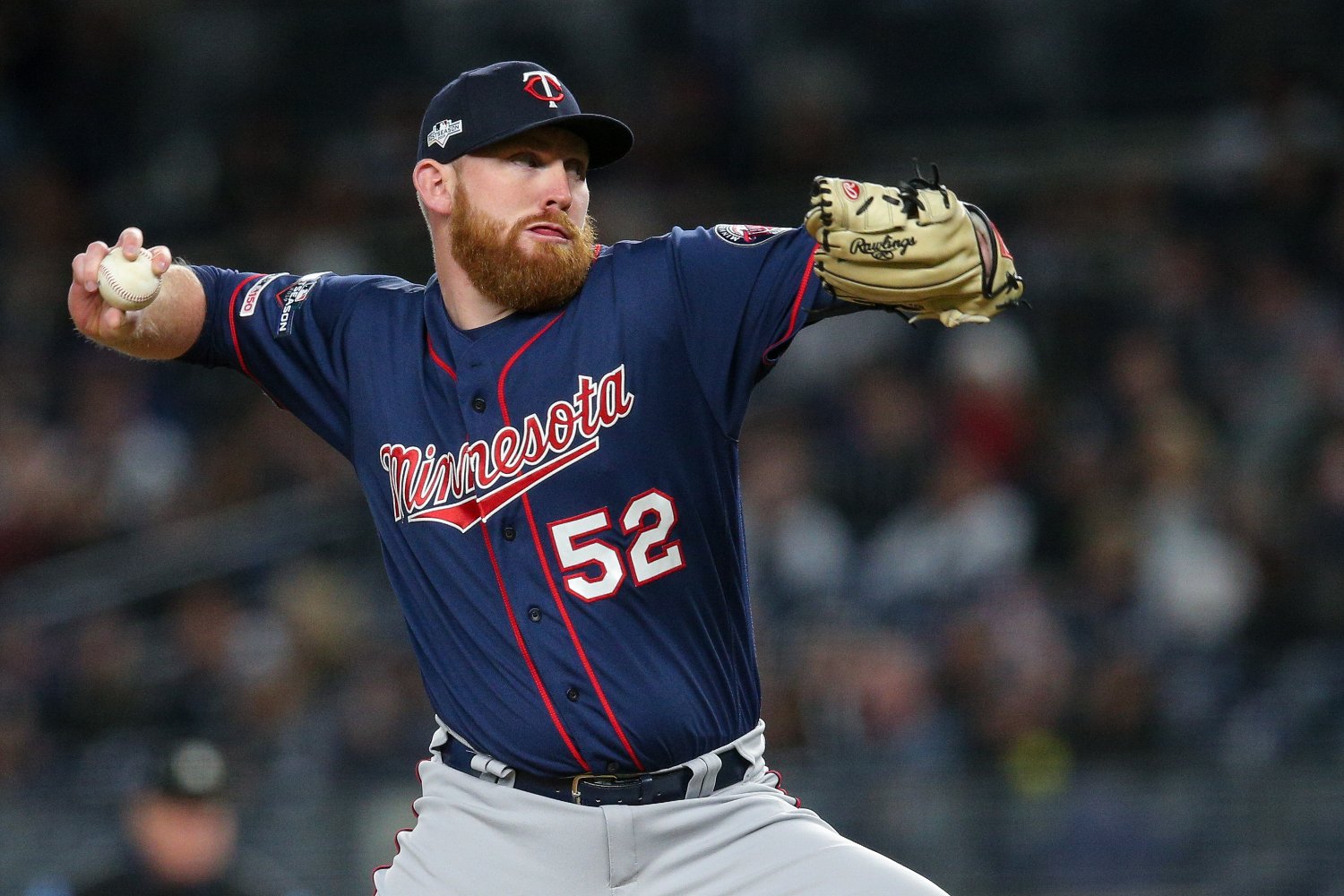 As the Twins enter the playoff field for the seventh time since the 0-18 streak began, the emotions started coming back for me. Let’s explore them. 1) Unrelenting dread: "Going anywhere near the Twins’ bandwagon is a bitter blend of Lucy pulling the ball back from Charlie Brown, a dash of Bill Buckner, a little hubris, that meme of Michael Scott saying I’m ready to get hurt again, the Timberwolves, and a general aesthetic of being both old-fashioned and a little brother. Imagine a toddler wearing a baseball uniform from 1910 and just getting kicked in the nuts repeatedly. If you’re new to the Twins, that’s kind of where we’re at." I wrote this last December. If the Twins get swept on Wednesday, the narrative gets reinforced. The differing takes Twins players have offered about the streak will undergo yet another cycle. “This team is different.” “No one on those teams is part of this one.” “We don’t care about it.” “We’re going to win for the fans.” “Slay the dragon.” If the streak reaches 20 games, what will the next crop of playoff hopefuls even try to say? Baseball is a romantic sport, and it also has the deepest and oldest brand of statistical analysis. But for a streak that has beaten 69 Billion-to-one odds, the challenge is almost entirely mental. CJ Cron has never missed a catch like that. Jorge Polanco has never made a flip as bad as that. Jason Kubel has never taken an at-bat that bad. The pressure is real, and merciless. The intrusive thoughts play a part. Sam Darnold, the former Jets quarterback of the future, described (on a hot mic) playing against the rival Patriots as “Seeing ghosts.” That’s what we’re dealing with here. Louie Varland may have all the confidence in the world about the release of his wonderful new cutter, but leading a game 2-1 in the seventh, a thought might go through his head like, “They’re going to crush this pitch.” Whether the pitch is crushed or not is what the Twins are up against. Ask Cody Stashak or Juan Rincon or Joe Nathan how that usually goes. 2) Appeals to logic: The Twins have the third best wRC+ (124) in all of baseball in the second half, when this offense finally gelled. The Blue Jays are 14th best in hitting for the year. The Twins have battered Kevin Gausman and Jose Berrios in the recent past. Even against lefties, the Twins’ hitting Achilles heel in the first half, the lineup is well-equipped now. They had a 125 wRC+ against southpaws in the second half, ahead of Atlanta. The pitching staff tied for the AL lead in fewest runs allowed. But these games aren’t decided on logic, stats, or who stacks up better on paper. The baseball gods are not concerned. 3) This year is different: The entire zeitgeist of Twins fandom has tried to appeal to this emotion in endless ways. They have pitching this year. They have Royce Lewis this year. They aren’t playing the Yankees. They beat the Yankees in the season series. They aren’t betting underdogs against the Blue Jays. They aren’t injured as in years past. But we’ve been through this before. The only shred of hope that I have is that the Blue Jays have their own demons to face down. They have lost five consecutive playoff games, which is a lot for a typical franchise. At the start of 2022, their star player, Vladimir Guerrero Jr., declared that the 2021 season, in which the Jays missed the playoffs but contended until the end, was the trailer and 2022 was the movie. He was mocked for that statement, and even more so when Toronto was swept in the AL Wild Card series by the Mariners (another tragically cursed team at the time). They had an 8-1 lead at home in Game 2 of that series, before the Mariners eventually clawed back and tied the game on a bloop double by JP Crawford, causing two of the Jays stars, Bo Bichette and George Springer to collide while all three baserunners trotted home. It brought to mind the image of Byron Buxton getting picked off as he tried to make an impact as a pinch runner fighting severe concussion symptoms in the last Twins playoff loss. Perhaps an immovable object meeting an unstoppable force is what needs to happen in order for all this to end. 4) The humiliation: Its hard to hear how the Twins are talked about by outsiders at this point. They have every right to chuckle when discussing the Twins’ chances. “Yeah they stack up well, but its the Twins.” The Twinkies. The Yankees’ little brother. Not worth the playoff spot they take up. It’s easy to tell the world we don’t care because we know what kind of team we have. But what if we could just be a normal team? Plenty of talking heads will take the Diamondbacks and Marlins, two flawed teams that made the postseason despite themselves, to advance past the Wild Card round. Some might take the Twins, too. But it's pity. They pick the Twins because they feel bad for Twins fans and on paper they know the Twins have a quality roster. But they know. We know. But what is that? Is it embarrassment? Is it pure ego? I mean, what do we care what members of the media think about our team? It’s like one of those horrible 2000’s makeover shows, where getting a nose job and porcelain veneers was considered empowering. Hopefully those contestants knew that looking like a model had nothing to do with their self-worth, but they still went through with everything. They just didn’t want their appearance to be what held them back. The Twins should know that their team is good. And no one should ever care what Greg Amsinger thinks. But to shove a playoff run down everyone’s throats would be the sweetest victory any Minnesota sports team could ever accomplish. It’s not rational. Winning one game wouldn’t materially change what the team faces as it navigates October. But wouldn’t it be nice to go from the saddest playoff team in sports history, to what the Twins were before all this madness: scrappy underdogs who play hard and who can never be counted out. It’s one victory away.
- 5 comments
-
- 5
-

-
-
- byron buxton
- royce lewis
- (and 3 more)
-
With nothing to play for, the Twins decided to flex their offensive muscles against an overmatched Rockies pitching staff. Four lefty hitters contributed home runs, many of them tape measure shots, while Chris Paddack pitched an encouraging three innings in the blowout win. Image courtesy of © John Leyba-USA TODAY Sports With nothing to play for, the Twins decided to flex their offensive muscles against an overmatched Rockies pitching staff. Four lefty hitters contributed home runs, many of them tape measure shots, while Chris Paddack pitched an encouraging three innings in the blowout win. Box Score: Bulk Pitcher: Chris Paddack 3 IP, 2 H, 0 ER, 0 BB, 4 K (39 Pitches, 27 Strikes, 69.2%) Home Runs: Trevor Larnach (8), Max Kepler (24), Matt Wallner (14), Edouard Julien (16) Top 3 WPA: Larnach (.183), Paddack (.122) Wallner (.119) Win Probability Chart (Via Fangraphs): Tonight was a battle of the bullpens, featuring two teams going in completely different directions, and both with nothing to play for. In fact, Kyle Farmer and Jorge Polanco operated as co-managers for Minnesota. Much of the playoff roster implications had been either decided or will be decided based on health in the coming days. The Twins opener was Emilio Pagan, who worked a 1-2-3 inning 20 hours after closing out the opening game of the series. Matt Koch opened for the Rockies, and worked around a leadoff single to Edouard Julien before setting down the next three hitters. The first consequential outing was Chris Paddack's, starting in the second inning. "The Sheriff" looked sharp with his command; a highlight being a dotted right on-right changeup to Elehuris Montero for strike three as part of a 1-2-3 second inning to begin his night. Although his velocity topped out at 96 MPH, he used his offspeed pitches effectively. The Twins offense got to work when Colorado brought in bulk pitcher Karl Kauffmann, a right-handed rookie with the same walk and strikeout percentage (10.4%). Matt Wallner scorched a double the opposite way to score Donovan Solano, and Christian Vazquez brought in Wallner with a single up the middle against a drawn-in infield. The third inning was even better. After an Alex Kirilloff double, Solano was hit by a pitch and Wallner walked, loading the bases for Trevor Larnach. Larnach worked the count and then launched a 3-2 breaking ball into the right field stands for yet another Twins grand slam (remember when theTwins struggled with the bases loaded?), making the score 6-0. Somewhat surprisingly, Paddack was allowed to pitch three full innings, and unlike his return outing earlier this week, he remained effective throughout his appearance. When he was first brought over in the Taylor Rogers trade, Paddack was talked up similarly to Pablo Lopez- he had the fastball-changeup combo down but was working on making his breaking ball an effective third pitch. 16 months later, and with a surgically repaired elbow, Paddack's curveball was used frequently, and effectively, despite the thin air of Denver taking some of the bite out of it. He struck out four and walked none. A Julien double and a wild pitch added some insurance in the sixth inning. Max Kepler likely cemented his second career .800 OPS season later in the inning with a three-run home run to turn the game into a laugher. Not to be outdone, Wallner roped a 22 degree 2-iron 432 feet (111 MPH) in the seventh. And finally, Julien crushed a two-run homer later in the same inning 452 feet (105 MPH) to make it 14-0. The bullpen struggled after that, with Caleb Thielbar and (mainly) Dallas Keuchel allowing a lot of hard contact along with six meaningless late-inning runs. The good: Paddack made his best case for being included on the playoff roster. His fastball hasn't played up to the level of Louie Varland's, sitting 94-94 MPH, but he showed good command, used all three of his pitches and didn't give the Rockies anything to hit. Wallner continues to smoke the ball and take good at-bats, with a ringing double, walk and the aforementioned howitzer home run. Larnach's recent production is probably too little, too late. But it is nice to see him driving the ball after his struggles in both the majors and Triple-A. The bad: Kirilloff has said his shoulder injury is something he still manages. He has received a couple off days recently and was removed in the seventh in tonight's game. His removal was not necessarily related to the shoulder, and he did lace a double over the left fielder's head (103 MPH) in the third. Him feeling comfortable swinging could be a big x-factor in any extended postseason run. Caleb Thielbar gave up two long home runs, and that has been a minor issue for him. He has now given up seven home runs in just over 30 innings this year. What’s Next: Bailey Ober (8-6, 3.53 ERA) will start the final regular season game for the Twins opposing Chase Anderson (1-6, 5.42 ERA). Anderson has had some success in the big leagues, but is very homer prone. Ober will be trying to make his final case to start game one of a potential ALDS matchup. Playoff Implications: The Blue Jays lost, Houston won, Texas won and Seattle was eliminated. This means Toronto or Houston could be in play for the Twins to face at Target Field on Tuesday. The Blue Jays probably wouldn't mind dropping to the six seed, as they likely prefer to face the Twins over the 98-win Rays. Houston can win their division if they win and Texas loses, so they have incentive to use their ace Framber Valdez (UPDATE: Christian Javier will start for Houston on Sunday, leaving Valdez to start a potential game one). The Astros win the tiebreaker over Texas, but lose the tiebreaker to Toronto. Postgame Interviews: Bullpen Usage Chart: TUE WED THU FRI SAT TOT Keuchel 0 28 0 0 78 106 Paddack 40 0 0 0 39 79 Maeda 0 0 62 0 0 62 Jax 17 8 0 0 19 44 Pagán 0 18 0 9 15 42 Stewart 16 0 0 25 0 41 Thielbar 0 18 0 3 9 30 Funderburk 0 0 0 28 0 28 Durán 0 14 0 0 11 25 Varland 0 0 19 0 0 19 View full article
- 30 replies
-
- 1
-
-
- chris paddack
- matt wallner
- (and 3 more)
-
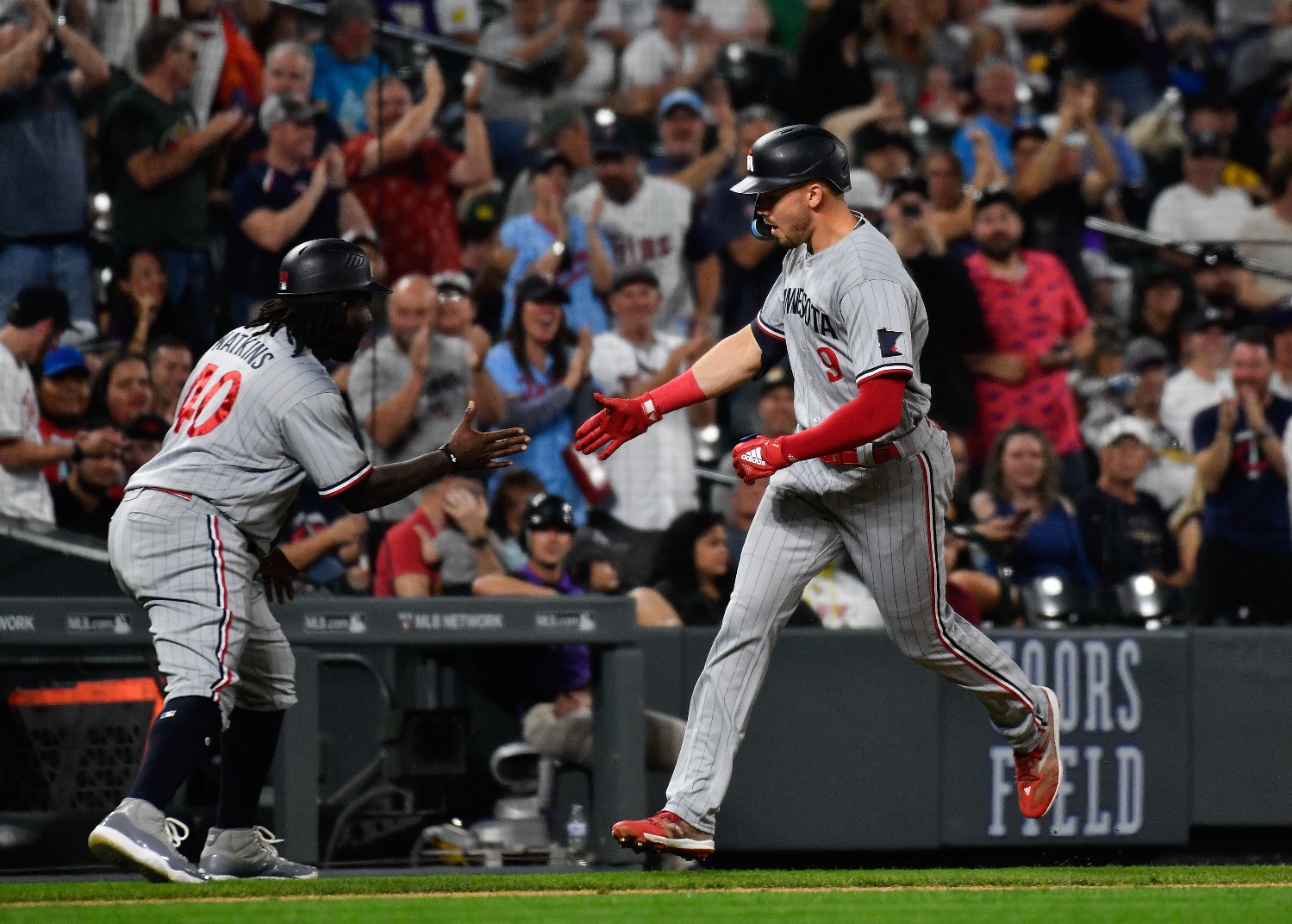 Box Score: Bulk Pitcher: Chris Paddack 3 IP, 2 H, 0 ER, 0 BB, 4 K (39 Pitches, 27 Strikes, 69.2%) Home Runs: Trevor Larnach (8), Max Kepler (24), Matt Wallner (14), Edouard Julien (16) Top 3 WPA: Larnach (.183), Paddack (.122) Wallner (.119) Win Probability Chart (Via Fangraphs): Tonight was a battle of the bullpens, featuring two teams going in completely different directions, and both with nothing to play for. In fact, Kyle Farmer and Jorge Polanco operated as co-managers for Minnesota. Much of the playoff roster implications had been either decided or will be decided based on health in the coming days. The Twins opener was Emilio Pagan, who worked a 1-2-3 inning 20 hours after closing out the opening game of the series. Matt Koch opened for the Rockies, and worked around a leadoff single to Edouard Julien before setting down the next three hitters. The first consequential outing was Chris Paddack's, starting in the second inning. "The Sheriff" looked sharp with his command; a highlight being a dotted right on-right changeup to Elehuris Montero for strike three as part of a 1-2-3 second inning to begin his night. Although his velocity topped out at 96 MPH, he used his offspeed pitches effectively. The Twins offense got to work when Colorado brought in bulk pitcher Karl Kauffmann, a right-handed rookie with the same walk and strikeout percentage (10.4%). Matt Wallner scorched a double the opposite way to score Donovan Solano, and Christian Vazquez brought in Wallner with a single up the middle against a drawn-in infield. The third inning was even better. After an Alex Kirilloff double, Solano was hit by a pitch and Wallner walked, loading the bases for Trevor Larnach. Larnach worked the count and then launched a 3-2 breaking ball into the right field stands for yet another Twins grand slam (remember when theTwins struggled with the bases loaded?), making the score 6-0. Somewhat surprisingly, Paddack was allowed to pitch three full innings, and unlike his return outing earlier this week, he remained effective throughout his appearance. When he was first brought over in the Taylor Rogers trade, Paddack was talked up similarly to Pablo Lopez- he had the fastball-changeup combo down but was working on making his breaking ball an effective third pitch. 16 months later, and with a surgically repaired elbow, Paddack's curveball was used frequently, and effectively, despite the thin air of Denver taking some of the bite out of it. He struck out four and walked none. A Julien double and a wild pitch added some insurance in the sixth inning. Max Kepler likely cemented his second career .800 OPS season later in the inning with a three-run home run to turn the game into a laugher. Not to be outdone, Wallner roped a 22 degree 2-iron 432 feet (111 MPH) in the seventh. And finally, Julien crushed a two-run homer later in the same inning 452 feet (105 MPH) to make it 14-0. The bullpen struggled after that, with Caleb Thielbar and (mainly) Dallas Keuchel allowing a lot of hard contact along with six meaningless late-inning runs. The good: Paddack made his best case for being included on the playoff roster. His fastball hasn't played up to the level of Louie Varland's, sitting 94-94 MPH, but he showed good command, used all three of his pitches and didn't give the Rockies anything to hit. Wallner continues to smoke the ball and take good at-bats, with a ringing double, walk and the aforementioned howitzer home run. Larnach's recent production is probably too little, too late. But it is nice to see him driving the ball after his struggles in both the majors and Triple-A. The bad: Kirilloff has said his shoulder injury is something he still manages. He has received a couple off days recently and was removed in the seventh in tonight's game. His removal was not necessarily related to the shoulder, and he did lace a double over the left fielder's head (103 MPH) in the third. Him feeling comfortable swinging could be a big x-factor in any extended postseason run. Caleb Thielbar gave up two long home runs, and that has been a minor issue for him. He has now given up seven home runs in just over 30 innings this year. What’s Next: Bailey Ober (8-6, 3.53 ERA) will start the final regular season game for the Twins opposing Chase Anderson (1-6, 5.42 ERA). Anderson has had some success in the big leagues, but is very homer prone. Ober will be trying to make his final case to start game one of a potential ALDS matchup. Playoff Implications: The Blue Jays lost, Houston won, Texas won and Seattle was eliminated. This means Toronto or Houston could be in play for the Twins to face at Target Field on Tuesday. The Blue Jays probably wouldn't mind dropping to the six seed, as they likely prefer to face the Twins over the 98-win Rays. Houston can win their division if they win and Texas loses, so they have incentive to use their ace Framber Valdez (UPDATE: Christian Javier will start for Houston on Sunday, leaving Valdez to start a potential game one). The Astros win the tiebreaker over Texas, but lose the tiebreaker to Toronto. Postgame Interviews: Bullpen Usage Chart: TUE WED THU FRI SAT TOT Keuchel 0 28 0 0 78 106 Paddack 40 0 0 0 39 79 Maeda 0 0 62 0 0 62 Jax 17 8 0 0 19 44 Pagán 0 18 0 9 15 42 Stewart 16 0 0 25 0 41 Thielbar 0 18 0 3 9 30 Funderburk 0 0 0 28 0 28 Durán 0 14 0 0 11 25 Varland 0 0 19 0 0 19
- 30 comments
-
- 2
-
-
-
- chris paddack
- matt wallner
- (and 3 more)
-
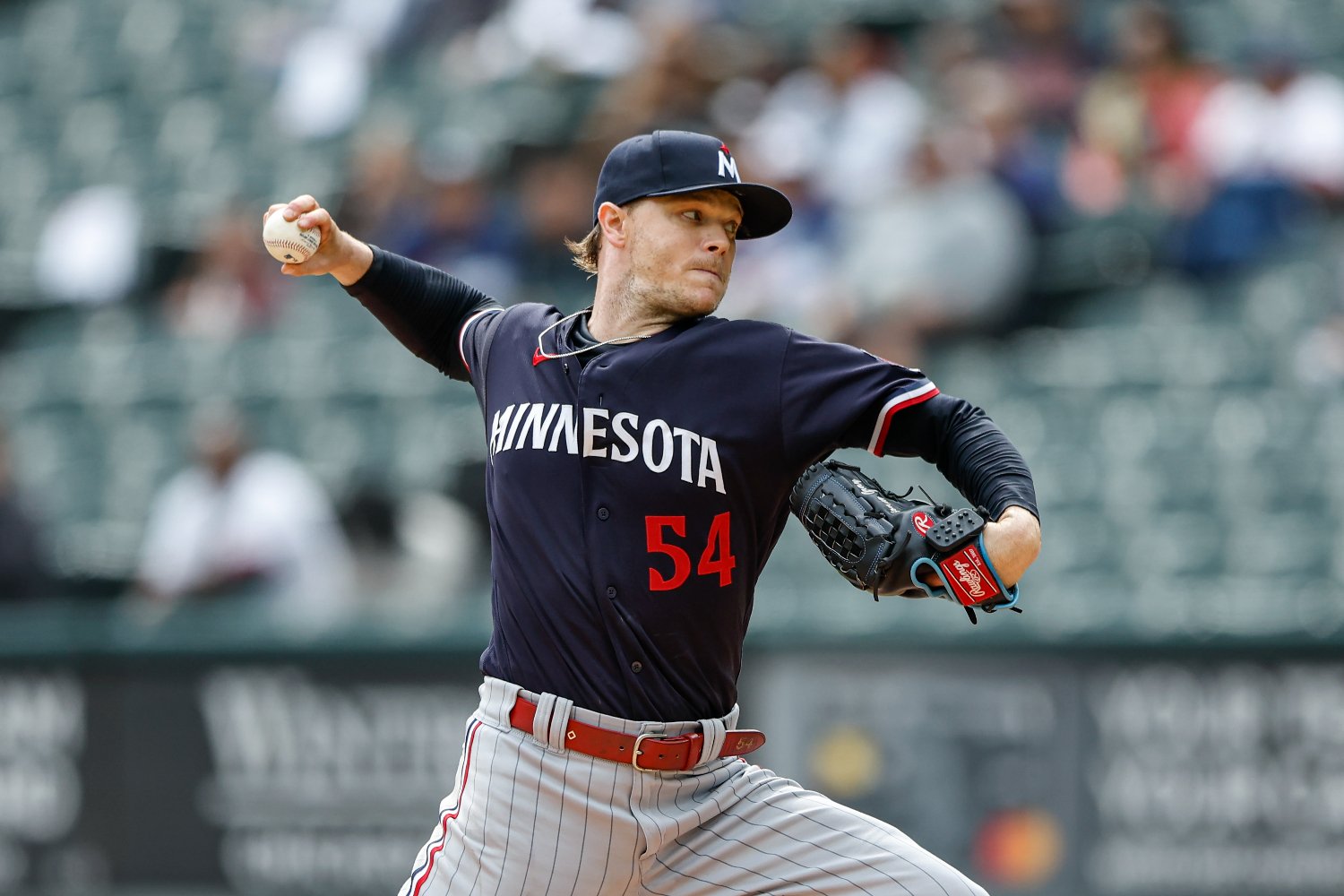 Box Score: Starting Pitcher: Sonny Gray: 6 IP, 4 H, 1 ER, 0 BB, 8 K (93 pitches, 61 Strikes, 65.6%) Home Runs: None Bottom 3 WPA: Edouard Julien (-.229), Matt Wallner (-.120), Trevor Larnach (-.107) Win Probability Chart (Via Fangraphs): The day after a thrilling night in which the Twins clinched the Central Division and celebrated appropriately, Sonny Gray took the mound in front of a "hangover" lineup opposing the hapless Angels. The kids would call this a "scheduled loss," and that seemed apt with Andrew Stevenson leading off despite facing a lefty starter, Jordan Luplow playing first base, and Kyle Farmer hitting cleanup. Gray started strong, however. His breaking pitches had some good bite on them, which is a good indication that Gray would be in command and deliver a quality outing. Occasionally Gray will start throwing backup breaking balls and get forced into throwing fastballs just to stay in counts- it has been a few months since we've seen that, fortunately. His breaking stuff, particularly the sweeper, was in prime form this afternoon. Opposing Gray was Kenny Rosenberg, a soft-tossing lefty probably best suited for Triple-A work. The Twins first two batters, Andrew Stevenson and Donovan Solano, struck out. But Edouard Julien walked, Kyle Farmer singled and Michael A. Taylor walked to load the bases. Matt Wallner worked the count to 3-2 before flying out to end the frame. The Twins continued to put runners on base, but couldn't push anything across through the first three innings. Gray cruised through three innings, getting a lot of called strikes on breaking pitches and keeping the Angels off balance. Jo Adell, the Angels center-fielder and a former top ten global prospect with prodigious raw power (that he has had trouble getting to thus far), absolutely crushed a Gray fastball into the bullpen to start the fourth. Gray quickly set down the next three batters, but all of a sudden the Twins were facing a deficit against Rosenberg. Christian Vazquez got his second single of the game with one out in the fourth inning, and Trevor Larnach followed with a rocket to right-center. The ball died on the warning track, surprising the broadcast crew, and Jordan Luplow quickly popped out to end the frame. That sequence defined the Twins results against Rosenberg, who ultimately Dallas Keuchel'd his way through five scoreless innings. The strength of this depleted Angels roster may be its relief pitching. Jimmy "The Human Glitch" Herget pitched a scoreless sixth, and flame-throwing rookie Ben Joyce pitched a quick seventh. Jose Soriano was bailed out by a tremendous defensive play from shortstop David Fletcher in the eighth. After Solano was hit by a pitch, Julien hit a 106 MPH smash up the middle that Fletcher somehow managed to glove and flip to second, almost behind his back. Julien was retired for the double play, still not running hard as he works through his hamstring issues. Closer Carlos Estévez began the ninth inning by smoking Farmer on the elbow, but struck out Taylor and Wallner before getting Vazquez to fly out to end the game. The good: Kyle Farmer continues to blister the baseball, and with his second hit of the game in the third inning, made it on base in seven of eight plate appearances. He will be a key part of any Twins attack against a lefty in the playoffs, and if Carlos Correa and/or Royce Lewis are unavailable, he would slot in for either. He looks to be getting hot at the right time. For good measure, he gunned down Nolan Schanuel at the plate on a relay in the eighth to keep the score 1-0. Gray was electric, allowing four hits while striking out eight. Outside of the one fastball to Adell, he looks ready to dominate in the playoffs. The bad: Donovan Solano has struggled of late, hitting .220 in September thus far. He started the game with a strikeout, ground out and double play grounder. Jordan Luplow looked pretty rough at first base, with a misplay in the second resulting in a throwing error being charged to Solano. What’s Next: Joe Ryan (10-10, 4.30 ERA) goes against Tyler Anderson (6-6, 5.43) as the Twins look to take the series against the Angels. It will be a good chance for Ryan to build confidence against a struggling lineup as he auditions for the number three slot in the postseason rotation. Anderson was a big offseason pickup for the Angels, coming off a sub 3.00 ERA season with the Dodgers. The ability is there, and he is a lefty, so the Twins will have to lock in to defeat him. Postgame Interviews: Bullpen Usage Chart: TUE WED THU FRI SAT TOT Winder 0 29 0 0 35 64 Durán 0 21 0 34 0 55 Thielbar 16 0 0 20 0 36 Funderburk 20 0 0 0 0 20 Pagán 8 0 0 0 10 18 Jax 0 17 0 0 0 17 Floro 16 0 0 0 1 17 Varland 0 0 0 11 0 11 Keuchel 0 0 0 0 0 0
 -
Facing a struggling and unfortunate Angels team, the Twins threw out a true hangover lineup and the game proceeded about how you would expect. Sonny Gray was good, as usual, but the offense only mustered five singles and were shut down completely by Angels pitching in a loss that practically cements their positioning as the third seed in the playoffs. Image courtesy of Kamil Krzaczynski-USA TODAY Sports Facing a struggling and unfortunate Angels team, the Twins threw out a true hangover lineup and the game proceeded about how you would expect. Sonny Gray was good, as usual, but the offense only mustered five singles and were shut down completely by Angels pitching in a loss that practically cements their positioning as the third seed in the playoffs. Box Score: Starting Pitcher: Sonny Gray: 6 IP, 4 H, 1 ER, 0 BB, 8 K (93 pitches, 61 Strikes, 65.6%) Home Runs: None Bottom 3 WPA: Edouard Julien (-.229), Matt Wallner (-.120), Trevor Larnach (-.107) Win Probability Chart (Via Fangraphs): The day after a thrilling night in which the Twins clinched the Central Division and celebrated appropriately, Sonny Gray took the mound in front of a "hangover" lineup opposing the hapless Angels. The kids would call this a "scheduled loss," and that seemed apt with Andrew Stevenson leading off despite facing a lefty starter, Jordan Luplow playing first base, and Kyle Farmer hitting cleanup. Gray started strong, however. His breaking pitches had some good bite on them, which is a good indication that Gray would be in command and deliver a quality outing. Occasionally Gray will start throwing backup breaking balls and get forced into throwing fastballs just to stay in counts- it has been a few months since we've seen that, fortunately. His breaking stuff, particularly the sweeper, was in prime form this afternoon. Opposing Gray was Kenny Rosenberg, a soft-tossing lefty probably best suited for Triple-A work. The Twins first two batters, Andrew Stevenson and Donovan Solano, struck out. But Edouard Julien walked, Kyle Farmer singled and Michael A. Taylor walked to load the bases. Matt Wallner worked the count to 3-2 before flying out to end the frame. The Twins continued to put runners on base, but couldn't push anything across through the first three innings. Gray cruised through three innings, getting a lot of called strikes on breaking pitches and keeping the Angels off balance. Jo Adell, the Angels center-fielder and a former top ten global prospect with prodigious raw power (that he has had trouble getting to thus far), absolutely crushed a Gray fastball into the bullpen to start the fourth. Gray quickly set down the next three batters, but all of a sudden the Twins were facing a deficit against Rosenberg. Christian Vazquez got his second single of the game with one out in the fourth inning, and Trevor Larnach followed with a rocket to right-center. The ball died on the warning track, surprising the broadcast crew, and Jordan Luplow quickly popped out to end the frame. That sequence defined the Twins results against Rosenberg, who ultimately Dallas Keuchel'd his way through five scoreless innings. The strength of this depleted Angels roster may be its relief pitching. Jimmy "The Human Glitch" Herget pitched a scoreless sixth, and flame-throwing rookie Ben Joyce pitched a quick seventh. Jose Soriano was bailed out by a tremendous defensive play from shortstop David Fletcher in the eighth. After Solano was hit by a pitch, Julien hit a 106 MPH smash up the middle that Fletcher somehow managed to glove and flip to second, almost behind his back. Julien was retired for the double play, still not running hard as he works through his hamstring issues. Closer Carlos Estévez began the ninth inning by smoking Farmer on the elbow, but struck out Taylor and Wallner before getting Vazquez to fly out to end the game. The good: Kyle Farmer continues to blister the baseball, and with his second hit of the game in the third inning, made it on base in seven of eight plate appearances. He will be a key part of any Twins attack against a lefty in the playoffs, and if Carlos Correa and/or Royce Lewis are unavailable, he would slot in for either. He looks to be getting hot at the right time. For good measure, he gunned down Nolan Schanuel at the plate on a relay in the eighth to keep the score 1-0. Gray was electric, allowing four hits while striking out eight. Outside of the one fastball to Adell, he looks ready to dominate in the playoffs. The bad: Donovan Solano has struggled of late, hitting .220 in September thus far. He started the game with a strikeout, ground out and double play grounder. Jordan Luplow looked pretty rough at first base, with a misplay in the second resulting in a throwing error being charged to Solano. What’s Next: Joe Ryan (10-10, 4.30 ERA) goes against Tyler Anderson (6-6, 5.43) as the Twins look to take the series against the Angels. It will be a good chance for Ryan to build confidence against a struggling lineup as he auditions for the number three slot in the postseason rotation. Anderson was a big offseason pickup for the Angels, coming off a sub 3.00 ERA season with the Dodgers. The ability is there, and he is a lefty, so the Twins will have to lock in to defeat him. Postgame Interviews: Bullpen Usage Chart: TUE WED THU FRI SAT TOT Winder 0 29 0 0 35 64 Durán 0 21 0 34 0 55 Thielbar 16 0 0 20 0 36 Funderburk 20 0 0 0 0 20 Pagán 8 0 0 0 10 18 Jax 0 17 0 0 0 17 Floro 16 0 0 0 1 17 Varland 0 0 0 11 0 11 Keuchel 0 0 0 0 0 0 View full article
-
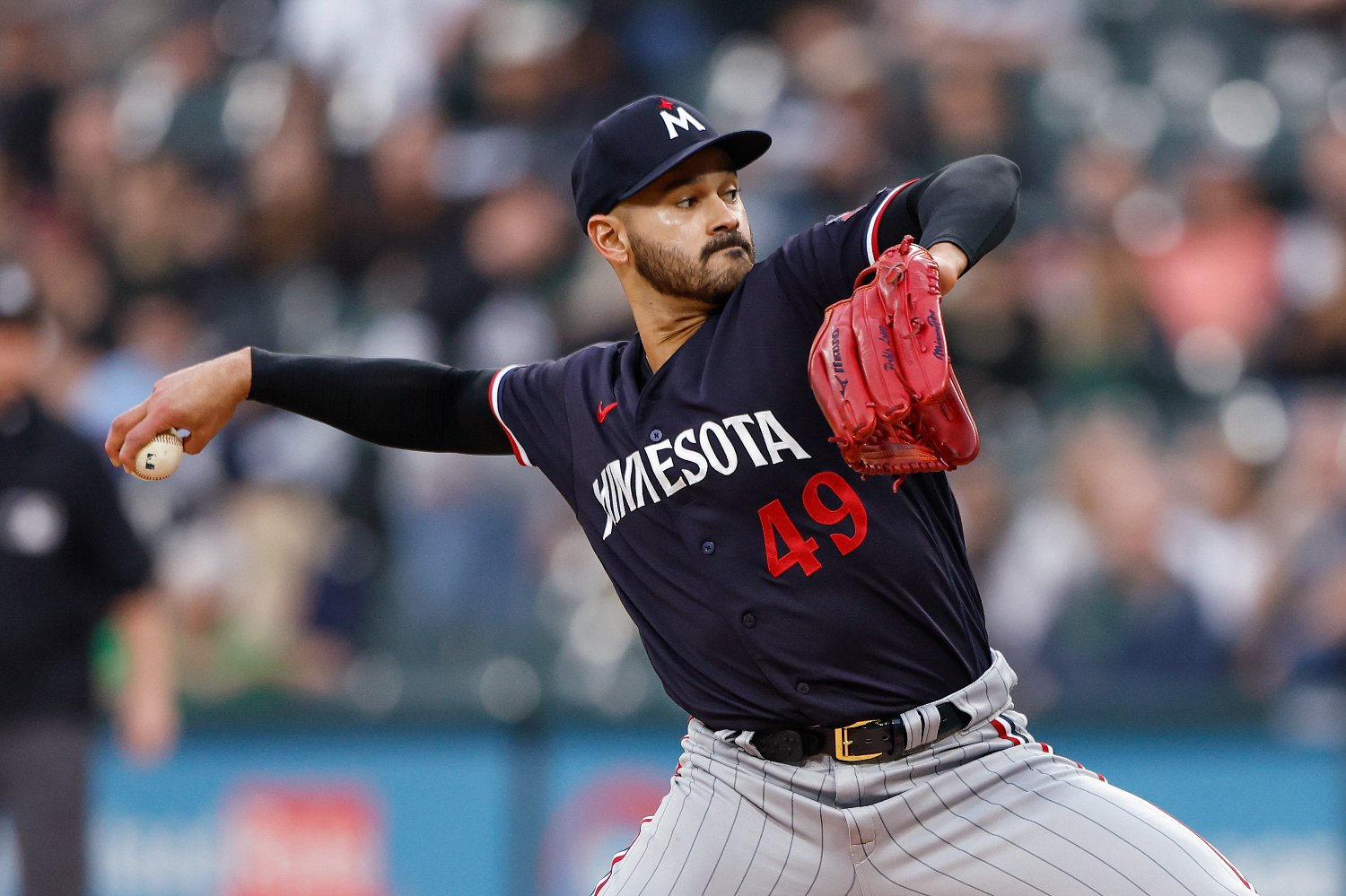 Box Score: Starting Pitcher: Pablo López: 5 IP, 8 H, 5 ER, 0 BB, 8 K (85 Pitches, 62 Strikes, 73%) Home Runs: None Bottom 3 WPA: López (-.335), Willi Castro (-.270), Max Kepler (-.158) Win Probability Chart (Via Fangraphs): After consecutive 10-2 trouncings of the dysfunctional White Sox, the Twins turned to one of their aces in Pablo López as they looked to continue their September roll. With a good start, López could have strengthened his burgeoning case for the AL Cy-Young. The White Sox had other ideas. The evening started out well. Facing one of the worst right-handed pitchers in baseball, Touki Toussaint, Edouard Julien laced a double to the right-center field gap and scored on a sharp single from (who else) Royce Lewis. Toussaint limited the damage, though, and López began his night with a one run lead. That lead was short lived. Lewis made an ill-advised throw on Tim Anderson's leadoff swinging bunt, throwing wildly and allowing Anderson to reach second. After Andrew Benintendi struck out, Eloy Jimenez unloaded on a center cut fastball to make the score 2-1. Unlike his last start against the Mets, when López had pinpoint command of his breaking pitches en route to eight shutout innings, he left a few up to the White Sox. After two more singles, Gavin Sheets crushed a low curveball for a three-run homer and a 5-1 Chicago lead. After the Twins went down 1-2-3 against Toussaint in the second, the White Sox went right back to work, or so it appeared. Backup catcher Carlos Perez and Anderson led off with consecutive singles before López struck out Benintendi and Luis Robert for the second time each. He then got Jimenez on a nice sweeper to end the frame. Toussaint showed why he comes with the pedigree of a former first round draft pick despite his career-long (5.43 ERA, 14.3% walk rate) struggles. He relied on an effective changeup and curveball located on both low corners for strikes and uncomfortable swings. The Twins were likely expecting control problems from the righty, and instead saw a slew of offspeed pitches for strikes that left them behind in the count. Toussaint struck out six Twins in the first three innings. He was pitching on three days rest after being obliterated by the Royals his last time out, so perhaps that bodes well for him to continue his career as a reliever. His final line was five innings, one run and eight strikeouts. For López's part, he at least held the score where it was, firing four scoreless innings after his adventurous first. His eight strikeouts leave him one K short of league leader Kevin Gausman. Immediately following Toussaint's departure, the Twins put a threat together against struggling lefty Aaron Bummer. They loaded the bases on an infield single, a chopper over the first baseman, and a walk, bringing up the suddenly hot-hitting Kyle Farmer as the tying run. He came about an inch from clearing the bases on a foul liner, but eventually struck out looking on a dotted fastball from Bummer. Josh Winder relieved López and after a strong sixth inning, gave up some hard contact in the seventh, allowing two more runs to score. The Twins made some noise in the eighth against Gregory Santos and his 101 MPH sinker. Polanco and Lewis walked, Kepler and Correa singled, and Kyle Farmer grounded into a fielders choice to score three runs and make the Chicago faithful a little queasy. Matt Wallner then hit a chopper to first baseman Andrew Vaughn, who fumbled the ball and allowed Wallner to reach, scoring the Twins' fifth run. Curiously, Christian Vázquez was not pinch-hit for as the tying run. He popped out weakly while Ryan Jeffers (and Andrew Stevenson and Jordan Luplow) looked on. The Twins rallied again in the ninth, down two runs. Polanco singled with one out, and Lewis added one of his own. Lefty Tanner Banks was brought in to face Kepler, who struck out looking after running the count full. Correa and Farmer walked, bringing up Willi Castro who popped out to end the game. The good: -Matt Wallner's at-bats have looked a lot better. His walk against Bryan Shaw in the seventh gave the Twins some life, and came after he fell behind 0-2. -Jhoan Duran pitched a quick 1-2-3 eighth inning. He's rested a lot lately, to good effect. -Lewis had another three hits. Ho hum. The bad: -López was ambushed by Sheets, giving up his homer on a curveball down in the zone, but the homer he allowed to Jimenez came on the sort of fastball he can't throw in the playoffs, middle-middle. López was good for the final four innings, however. -Lewis made two bad throws in the first inning. Both he could have held onto, as neither batter was going to be retired. Lewis has been okay at third base, but it appears that isn't his long-term home; shorter throws seem to suit him better, and it may be Brooks Lee who profiles as the third baseman of the future. -A first half issue reared its ugly head in that the lineup did not appear able to adjust to their initial game plan against Toussaint. They wanted to work counts and get mistakes, but Toussaint refused to make them. You know what you're getting from Gausman, Jon Gray and Luis Castillo, three starters the Twins might face in game one of their upcoming playoff series, so there's that, at least. What’s Next: Sonny Gray (7-7, 2.96 ERA) tries to win the series opposing Sox ace Dylan Cease (7-7 4.87 ERA). Gray has been good and has an outside shot at the Cy Young award, while Cease has struggled all year despite retaining elite raw stuff. Postgame Interviews: Bullpen Usage Chart: TUE WED THU FRI SAT TOT Varland 31 0 0 29 0 60 Winder 0 0 14 0 25 39 Jax 0 16 0 16 0 32 Pagán 0 29 0 0 0 29 Thielbar 11 17 0 0 0 28 Durán 10 0 0 0 9 19 Funderburk 0 0 0 16 0 16 Floro 0 13 0 0 0 13
- 6 comments
-
- 1
-
-
- pablo lopez
- royce lewis
- (and 2 more)
-
After winning two games in which the Twins exposed the White Sox for the trainwreck that they are, the Sox reminded the Twins and Pablo López that they still have a few good hitters, rocking the Twins righty for five first inning runs. Touki Toussaint was much more in control than he usually is and the Twins never recovered, despite some scintillating rallies late. Image courtesy of Kamil Krzaczynski-USA TODAY Sports After winning two games in which the Twins exposed the White Sox for the trainwreck that they are, the Sox reminded the Twins and Pablo López that they still have a few good hitters, rocking the Twins righty for five first inning runs. Touki Toussaint was much more in control than he usually is and the Twins never recovered, despite some scintillating rallies late. Box Score: Starting Pitcher: Pablo López: 5 IP, 8 H, 5 ER, 0 BB, 8 K (85 Pitches, 62 Strikes, 73%) Home Runs: None Bottom 3 WPA: López (-.335), Willi Castro (-.270), Max Kepler (-.158) Win Probability Chart (Via Fangraphs): After consecutive 10-2 trouncings of the dysfunctional White Sox, the Twins turned to one of their aces in Pablo López as they looked to continue their September roll. With a good start, López could have strengthened his burgeoning case for the AL Cy-Young. The White Sox had other ideas. The evening started out well. Facing one of the worst right-handed pitchers in baseball, Touki Toussaint, Edouard Julien laced a double to the right-center field gap and scored on a sharp single from (who else) Royce Lewis. Toussaint limited the damage, though, and López began his night with a one run lead. That lead was short lived. Lewis made an ill-advised throw on Tim Anderson's leadoff swinging bunt, throwing wildly and allowing Anderson to reach second. After Andrew Benintendi struck out, Eloy Jimenez unloaded on a center cut fastball to make the score 2-1. Unlike his last start against the Mets, when López had pinpoint command of his breaking pitches en route to eight shutout innings, he left a few up to the White Sox. After two more singles, Gavin Sheets crushed a low curveball for a three-run homer and a 5-1 Chicago lead. After the Twins went down 1-2-3 against Toussaint in the second, the White Sox went right back to work, or so it appeared. Backup catcher Carlos Perez and Anderson led off with consecutive singles before López struck out Benintendi and Luis Robert for the second time each. He then got Jimenez on a nice sweeper to end the frame. Toussaint showed why he comes with the pedigree of a former first round draft pick despite his career-long (5.43 ERA, 14.3% walk rate) struggles. He relied on an effective changeup and curveball located on both low corners for strikes and uncomfortable swings. The Twins were likely expecting control problems from the righty, and instead saw a slew of offspeed pitches for strikes that left them behind in the count. Toussaint struck out six Twins in the first three innings. He was pitching on three days rest after being obliterated by the Royals his last time out, so perhaps that bodes well for him to continue his career as a reliever. His final line was five innings, one run and eight strikeouts. For López's part, he at least held the score where it was, firing four scoreless innings after his adventurous first. His eight strikeouts leave him one K short of league leader Kevin Gausman. Immediately following Toussaint's departure, the Twins put a threat together against struggling lefty Aaron Bummer. They loaded the bases on an infield single, a chopper over the first baseman, and a walk, bringing up the suddenly hot-hitting Kyle Farmer as the tying run. He came about an inch from clearing the bases on a foul liner, but eventually struck out looking on a dotted fastball from Bummer. Josh Winder relieved López and after a strong sixth inning, gave up some hard contact in the seventh, allowing two more runs to score. The Twins made some noise in the eighth against Gregory Santos and his 101 MPH sinker. Polanco and Lewis walked, Kepler and Correa singled, and Kyle Farmer grounded into a fielders choice to score three runs and make the Chicago faithful a little queasy. Matt Wallner then hit a chopper to first baseman Andrew Vaughn, who fumbled the ball and allowed Wallner to reach, scoring the Twins' fifth run. Curiously, Christian Vázquez was not pinch-hit for as the tying run. He popped out weakly while Ryan Jeffers (and Andrew Stevenson and Jordan Luplow) looked on. The Twins rallied again in the ninth, down two runs. Polanco singled with one out, and Lewis added one of his own. Lefty Tanner Banks was brought in to face Kepler, who struck out looking after running the count full. Correa and Farmer walked, bringing up Willi Castro who popped out to end the game. The good: -Matt Wallner's at-bats have looked a lot better. His walk against Bryan Shaw in the seventh gave the Twins some life, and came after he fell behind 0-2. -Jhoan Duran pitched a quick 1-2-3 eighth inning. He's rested a lot lately, to good effect. -Lewis had another three hits. Ho hum. The bad: -López was ambushed by Sheets, giving up his homer on a curveball down in the zone, but the homer he allowed to Jimenez came on the sort of fastball he can't throw in the playoffs, middle-middle. López was good for the final four innings, however. -Lewis made two bad throws in the first inning. Both he could have held onto, as neither batter was going to be retired. Lewis has been okay at third base, but it appears that isn't his long-term home; shorter throws seem to suit him better, and it may be Brooks Lee who profiles as the third baseman of the future. -A first half issue reared its ugly head in that the lineup did not appear able to adjust to their initial game plan against Toussaint. They wanted to work counts and get mistakes, but Toussaint refused to make them. You know what you're getting from Gausman, Jon Gray and Luis Castillo, three starters the Twins might face in game one of their upcoming playoff series, so there's that, at least. What’s Next: Sonny Gray (7-7, 2.96 ERA) tries to win the series opposing Sox ace Dylan Cease (7-7 4.87 ERA). Gray has been good and has an outside shot at the Cy Young award, while Cease has struggled all year despite retaining elite raw stuff. Postgame Interviews: Bullpen Usage Chart: TUE WED THU FRI SAT TOT Varland 31 0 0 29 0 60 Winder 0 0 14 0 25 39 Jax 0 16 0 16 0 32 Pagán 0 29 0 0 0 29 Thielbar 11 17 0 0 0 28 Durán 10 0 0 0 9 19 Funderburk 0 0 0 16 0 16 Floro 0 13 0 0 0 13 View full article
-
Agreed. Just like I hated Dobnak and Stashak being left to rot against the Yankees, I would hate to end up seeing Luplow or Vazquez in the 9th down a run because Rocco "went for it" in the 5th inning.
-
Exactly. Turn 5 of Griffin Jax's 10 losses and turn them into wins (making the record 81-65) and the fanbase would be buzzing.
- 25 replies
-
- 3
-
-

-
- edouard julien
- royce lewis
- (and 3 more)
-
After last year when they lost to the Guardians in the ALWC, I would imagine Tampa is very focused on beating out Baltimore to attain a first round bye. For example, they are starting Yandy Diaz today even after his, um, incident last night.
- 25 replies
-
- 2
-
-
- edouard julien
- royce lewis
- (and 3 more)
-
The 2023 Twins may not accumulate the type of win total that really get fanbases fired up, but taken for the sum of their parts, they represent the best chance for a Twins playoff run in arguably decades. If you're a casual fan who's been waiting for the Twins bandwagon to be worth joining, here's your chance. Image courtesy of © Jordan Johnson-USA TODAY Sports The 2023 Twins may not accumulate the type of win total that really get fanbases fired up, but taken for the sum of their parts, they represent the best chance for a Twins playoff run in arguably decades. If you're a casual fan who's been waiting for the Twins bandwagon to be worth joining, here's your chance. Casual fans are the lifeblood of this country. They don't take things too personally, they don't experience the highs and lows obsessive fans do, and they generally have richer, fuller lives. The ultra-fans of musicians, politicians, celebrities, and sports teams are a pestilence whose maniacal need to defend their chosen cultural obsession is tired at this point. I am part of that pestilence, with my obsessive fandom revolving around the Minnesota Twins. I'm a native Minnesotan and something in my neurodivergent brain was drawn to baseball- the rest is history. I live and die on every pitch, which is at least better than living and dying on every tweet from and about some celebrity (I might be fooling myself). The casual fan is beset with fandom requests- they don't care and continue making genuine contributions to society. They should be commended for their restraint and perspective. But they'll like this Twins team. Casual fans will watch a crucial September game if it fits their schedule. And they love playoff runs. The critical games in September are hopefully over with Cleveland repeatedly tripping over themselves, but a playoff run should be the expectation for this team. The Twins are hitting well as a group right now. Edouard Julien has been a revelation as a leadoff hitter, with the league's best chase percentage. Max Kepler has reemerged, this time as the primary cleanup hitter. He's been one of baseball's top five right fielders since July, after a brutal start that left many fans and analysts calling for him to be cut loose from the team (not this one). Jorge Polanco has returned from several injuries to be a pest with power from both sides of the plate. He's been perpetually underrated as an unassuming star for several years now. Carlos Correa is starting to pick it up despite ongoing issues with plantar fasciitis, still plays a good shortstop, and has hit the seventh most home runs (18) in postseason history, tied with Reggie Jackson and Mickey Mantle. Ryan Jeffers has cooled off a bit but still ranks first among catchers in OPS. He hasn't played as much as the elite two-way catchers (of which there are maybe three), but factoring in his above-average defense and game-calling, Jeffers has a claim as one of the most valuable Twins (he does have the highest bWAR among Twins hitters). Matt Wallner is going through a rough patch right now, but his numbers are still decent overall, and he does possess what the old-school scouts call light tower power. When he connects, the ball is gone. Alex Kirilloff is back and has looked good thus far, with some hard balls hit to left-center. When on his game, Kirilloff offers power to all fields, excellent plate coverage, and, new this year, a keen batting eye. He gives me toned-down Mark Teixiera vibes. His health is always a question, but he can usually go a month before something breaks down, so he's lined up pretty well to at least get to October. Michael A. Taylor is a great guy to root for, given his personality and charitable work on rare diseases. He also plays excellent center field defense and hits home runs! Willi Castro plays everywhere, gets clutch hits, and steals bases! The guy we traded Luis Arraez for, Pablo López, has been really good, bordering on Cy-Young contending while nearly pacing the league in strikeouts (the most for a Twins pitching season since Johan Santana). After he got back in gear in August, Sonny Gray has been even better. He represents, along with López, the best one-two punch the Twins have thrown out for a playoff series since Jack Morris and Scott Erickson. The closer, Jhoan Duran, is brilliant. He throws the fastest fastball in all of baseball, which isn't even his best pitch. That would be his curveball, one of the best pitches in baseball (when he's commanding it). The bullpen is full of guys who throw 98 MPH and expect reinforcements while already adding Louie Varland, the St. Paul kid who has thrown 100 MPH since converting to relief work. Then there's Joe Ryan and Bailey Ober, who have pitched like top-of-the-rotation starters at different points this year. I have yet to get to the most important hitter for the Twins this year, 35-year-old journeyman infielder Donovan Solano. Line drive after line drive off his bat has found outfield grass at crucial times this season, and his soft triple to center last week may have ended Cleveland's season. And yes, Byron Buxton is injured. He is trying to rehab to the point that he can play center field by the end of September, but it's anyone's guess when and if he'll be available. It would be great fun if he could contribute something, even just a base hit, this October. In short, there are a lot of hitters on this club who all do different things, supporting one of the better pitching staffs in recent memory. Key to it all will be Royce Lewis, who sports the charisma and clutch hitting that evokes memories of the one and only Kirby Puckett. He could go 0-75 down the stretch and still be seen as a threat every time he steps in with the game on the line. Home runs or fought-off sliders the other way, whatever you need, Lewis has it. There are reinforcements in the event of an ill-timed injury, too. Brooks Lee is among the top 20 prospects in baseball, a line drive machine drafted eighth overall just last year. Austin Martin had such a ranking at one point, too, and looks healthy again as a speedy on-base machine who sprays singles and doubles all over the park. Chris Paddack has been an excellent major league pitcher around his injuries and will join the team in a couple of weeks following a second Tommy John surgery. The team played poorly in the first half, and that will put a cap on their overall record when the year is done. But they have looked like a contender since the All-Star break, with the old core of players (Kepler, Polanco) blending into the new core (Lewis, Kirilloff, Julien, Duran). They proved they had enough left-handed bats to cover the loss of Arraez, and with the addition of López, the starting staff is capable of holding down a seasoned and skilled October lineup- they even lead the league in pitcher strikeouts (although it should be noted that they also lead in hitting strikeouts). This will be an 85-win team, but that's different from who they are, especially in a short series. This is the best chance the Twins have had to win a playoff game since at least 2010, maybe even 2002. Teams respond well to removing monkeys from their backs; just ask the post-2004 Boston Red Sox, or last year's Mariners. The first game of the AL Wild Card series is October 3rd. All aboard. View full article
- 25 replies
-
- 2
-
-
-
- edouard julien
- royce lewis
- (and 3 more)
-
This Twins Team Should Spark Playoff Excitement Among Casual Fans
Hans Birkeland posted an article in Twins
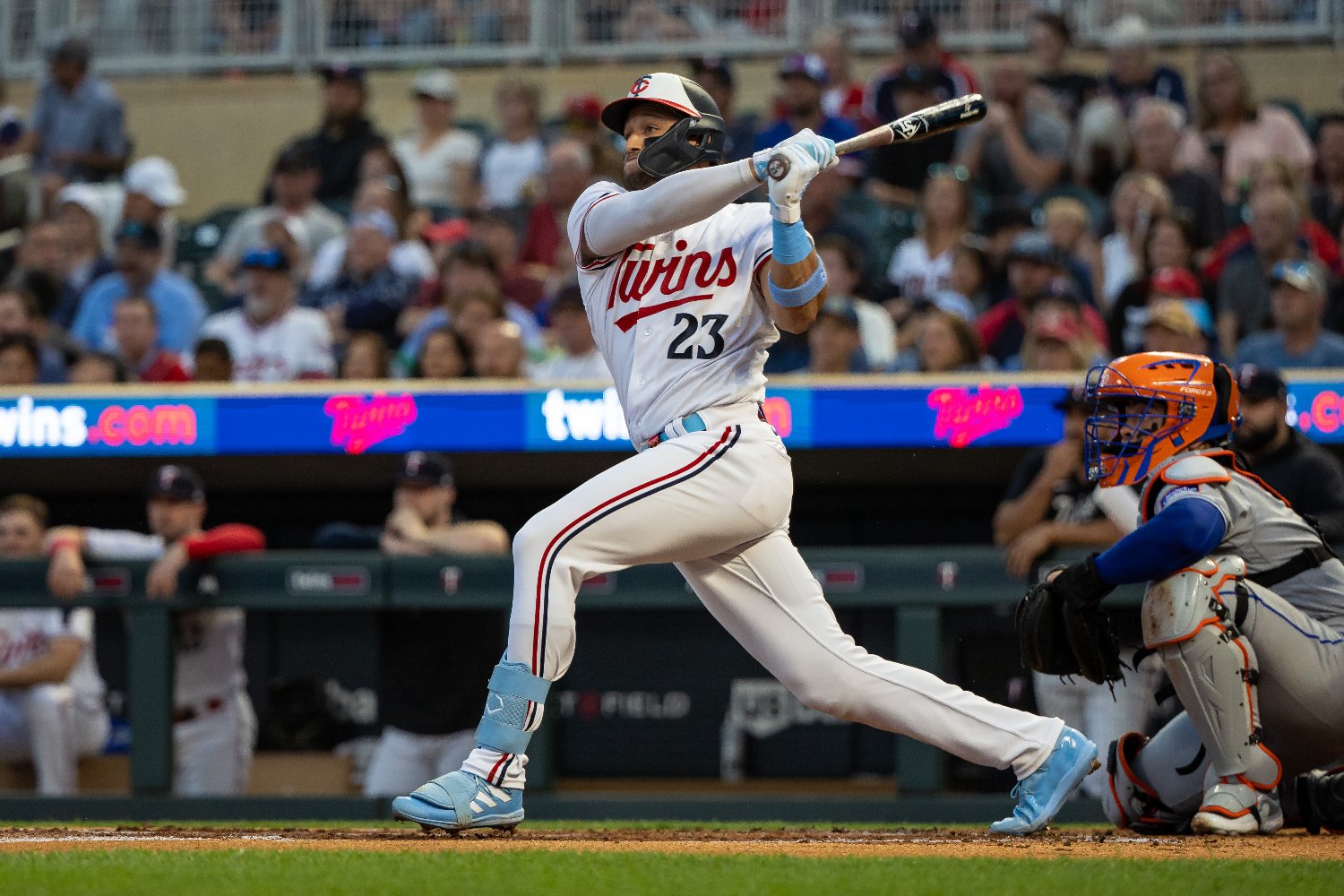 Casual fans are the lifeblood of this country. They don't take things too personally, they don't experience the highs and lows obsessive fans do, and they generally have richer, fuller lives. The ultra-fans of musicians, politicians, celebrities, and sports teams are a pestilence whose maniacal need to defend their chosen cultural obsession is tired at this point. I am part of that pestilence, with my obsessive fandom revolving around the Minnesota Twins. I'm a native Minnesotan and something in my neurodivergent brain was drawn to baseball- the rest is history. I live and die on every pitch, which is at least better than living and dying on every tweet from and about some celebrity (I might be fooling myself). The casual fan is beset with fandom requests- they don't care and continue making genuine contributions to society. They should be commended for their restraint and perspective. But they'll like this Twins team. Casual fans will watch a crucial September game if it fits their schedule. And they love playoff runs. The critical games in September are hopefully over with Cleveland repeatedly tripping over themselves, but a playoff run should be the expectation for this team. The Twins are hitting well as a group right now. Edouard Julien has been a revelation as a leadoff hitter, with the league's best chase percentage. Max Kepler has reemerged, this time as the primary cleanup hitter. He's been one of baseball's top five right fielders since July, after a brutal start that left many fans and analysts calling for him to be cut loose from the team (not this one). Jorge Polanco has returned from several injuries to be a pest with power from both sides of the plate. He's been perpetually underrated as an unassuming star for several years now. Carlos Correa is starting to pick it up despite ongoing issues with plantar fasciitis, still plays a good shortstop, and has hit the seventh most home runs (18) in postseason history, tied with Reggie Jackson and Mickey Mantle. Ryan Jeffers has cooled off a bit but still ranks first among catchers in OPS. He hasn't played as much as the elite two-way catchers (of which there are maybe three), but factoring in his above-average defense and game-calling, Jeffers has a claim as one of the most valuable Twins (he does have the highest bWAR among Twins hitters). Matt Wallner is going through a rough patch right now, but his numbers are still decent overall, and he does possess what the old-school scouts call light tower power. When he connects, the ball is gone. Alex Kirilloff is back and has looked good thus far, with some hard balls hit to left-center. When on his game, Kirilloff offers power to all fields, excellent plate coverage, and, new this year, a keen batting eye. He gives me toned-down Mark Teixiera vibes. His health is always a question, but he can usually go a month before something breaks down, so he's lined up pretty well to at least get to October. Michael A. Taylor is a great guy to root for, given his personality and charitable work on rare diseases. He also plays excellent center field defense and hits home runs! Willi Castro plays everywhere, gets clutch hits, and steals bases! The guy we traded Luis Arraez for, Pablo López, has been really good, bordering on Cy-Young contending while nearly pacing the league in strikeouts (the most for a Twins pitching season since Johan Santana). After he got back in gear in August, Sonny Gray has been even better. He represents, along with López, the best one-two punch the Twins have thrown out for a playoff series since Jack Morris and Scott Erickson. The closer, Jhoan Duran, is brilliant. He throws the fastest fastball in all of baseball, which isn't even his best pitch. That would be his curveball, one of the best pitches in baseball (when he's commanding it). The bullpen is full of guys who throw 98 MPH and expect reinforcements while already adding Louie Varland, the St. Paul kid who has thrown 100 MPH since converting to relief work. Then there's Joe Ryan and Bailey Ober, who have pitched like top-of-the-rotation starters at different points this year. I have yet to get to the most important hitter for the Twins this year, 35-year-old journeyman infielder Donovan Solano. Line drive after line drive off his bat has found outfield grass at crucial times this season, and his soft triple to center last week may have ended Cleveland's season. And yes, Byron Buxton is injured. He is trying to rehab to the point that he can play center field by the end of September, but it's anyone's guess when and if he'll be available. It would be great fun if he could contribute something, even just a base hit, this October. In short, there are a lot of hitters on this club who all do different things, supporting one of the better pitching staffs in recent memory. Key to it all will be Royce Lewis, who sports the charisma and clutch hitting that evokes memories of the one and only Kirby Puckett. He could go 0-75 down the stretch and still be seen as a threat every time he steps in with the game on the line. Home runs or fought-off sliders the other way, whatever you need, Lewis has it. There are reinforcements in the event of an ill-timed injury, too. Brooks Lee is among the top 20 prospects in baseball, a line drive machine drafted eighth overall just last year. Austin Martin had such a ranking at one point, too, and looks healthy again as a speedy on-base machine who sprays singles and doubles all over the park. Chris Paddack has been an excellent major league pitcher around his injuries and will join the team in a couple of weeks following a second Tommy John surgery. The team played poorly in the first half, and that will put a cap on their overall record when the year is done. But they have looked like a contender since the All-Star break, with the old core of players (Kepler, Polanco) blending into the new core (Lewis, Kirilloff, Julien, Duran). They proved they had enough left-handed bats to cover the loss of Arraez, and with the addition of López, the starting staff is capable of holding down a seasoned and skilled October lineup- they even lead the league in pitcher strikeouts (although it should be noted that they also lead in hitting strikeouts). This will be an 85-win team, but that's different from who they are, especially in a short series. This is the best chance the Twins have had to win a playoff game since at least 2010, maybe even 2002. Teams respond well to removing monkeys from their backs; just ask the post-2004 Boston Red Sox, or last year's Mariners. The first game of the AL Wild Card series is October 3rd. All aboard.
- 25 comments
-
- 9
-
-
-

-
- edouard julien
- royce lewis
- (and 3 more)
-
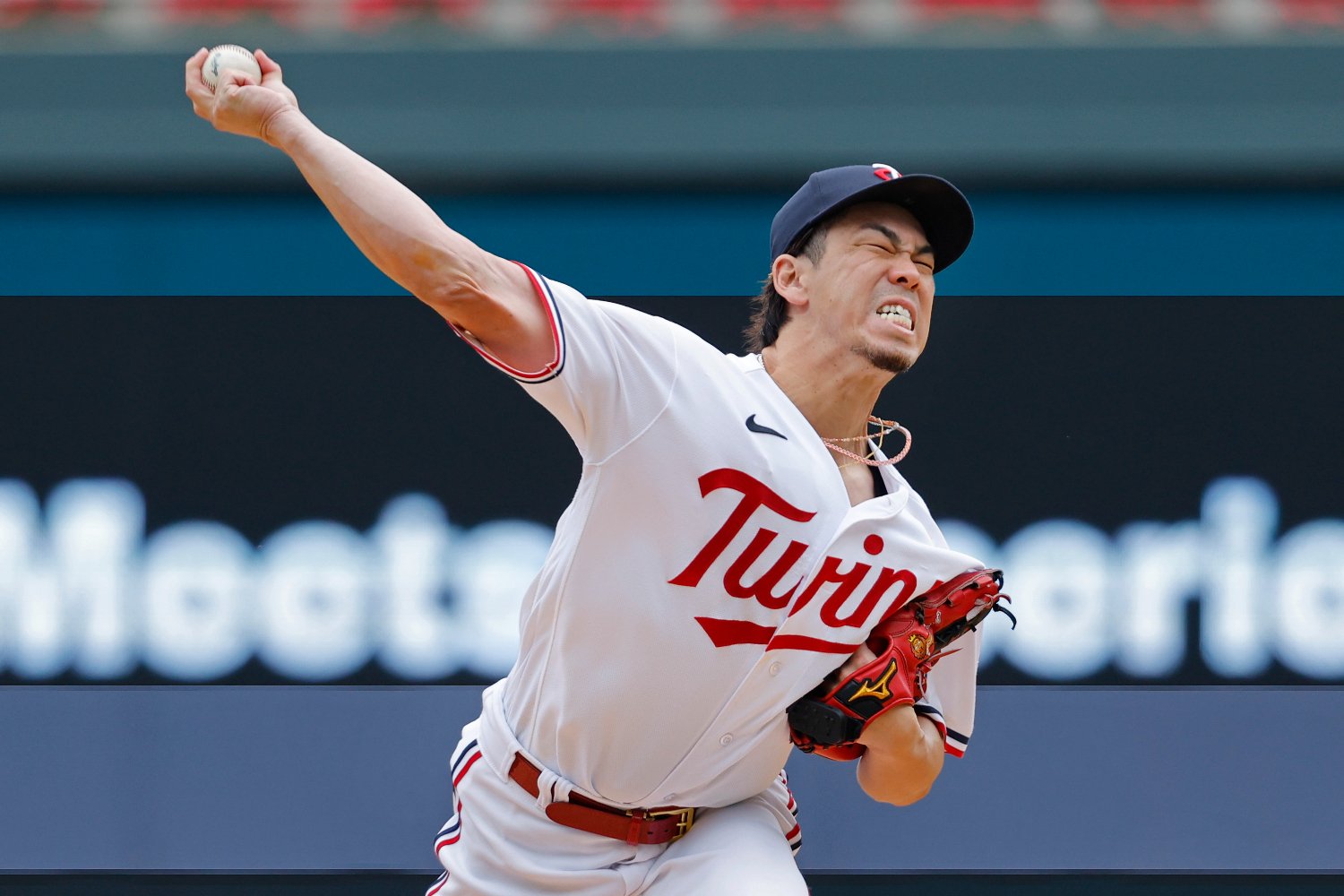 Box Score: Starting Pitcher: Kenta Maeda: 5 1/3 IP, 2 ER, 1 BB, 2 K (83 Pitches, 55 Strikes, 66%) Home Runs: Willi Castro (6) Top 3 WPA: Donovan Solano (.196), Max Kepler (.163), Kyle Farmer (.143), Win Probability Chart (Via Fangraphs): After an impressive comeback win Friday night against the bumbling Mets and their league-leading payroll, the Twins faced a deficit almost immediately on Saturday. Brandon Nimmo led the game off with an opposite field home run off a splitter from Kenta Maeda, and after a single and steal from the scrappy Jeff McNeil, Daniel "Burgers" Vogelbach drove him home with a sharp single up the middle. The Twins mounted an immediate threat to counter, or so it seemed. After Solano was hit by a pitch leading off, Jorge Polanco singled to set the stage for Royce Lewis. Unfortunately for the Twins, sixth starter extraordinaire David Peterson was able to strike out Lewis, Carlos Correa and Jordan Luplow consecutively to extinguish the rally. Peterson has a jumpy fastball and used it along with a sharp slider to strike out five Twins batters the first time through the order. But the Twins were not to be deterred, starting with a hard hit single from Ryan Jeffers off a fastball with one out in the second inning. Castro followed with a blistering two-out double into the left field corner and Solano drove both home with a single to left. The inning could have really gotten out of hand if Pete Alonso didn't time his jump perfectly on a Jorge Polanco liner headed for the right field corner to record the final out. Continuing a recent trend, Maeda again struggled to spot his breaking pitches, and was fortunate on several occasions to avoid damage. His third inning, for instance, included a hit-by-pitch to Alonso while ahead in the count, a 101 MPH single from Francisco Lindor, and three warning track fly balls, resulting in zero runs. Another two-out rally followed in the Twins' half of the third. Luplow doubled down the right field line past a diving Alonso, and Farmer delivered a Guardians Special™ bloop single (70 MPH) to score the go-ahead run. Maeda continued to battle and the Mets increasingly fell into his crafty-veteran trap, trying to jump on seemingly hittable pitches early in at-bats but unable to truly get the barrel to the ball. That resulted in not only outs, but quick outs, and after five innings, Maeda had thrown only 74 pitches. After retiring Lindor to start the sixth, Maeda walked Vogelbach, which prompted Rocco Baldelli to bring in the rookie Kody Funderburk. The lefty struggled with his control but was able to retire the side with the lead intact. Meanwhile, Peterson was settling in, hitting the corners with his fastball and secondary pitches and not allowing much hard contact. Pitching for a spot in next year's rotation, the former first round pick showed why Mets fans had high hopes for him after his 125 ERA+ during his rookie campaign in 2020. A play that certainly helped Peterson's line came in his sixth and final inning. After Luplow reached on a swinging bunt single, Farmer singled to the gap, allowing Luplow to reach third with one out. Jeffers then attempted a safety squeeze bunt, a play he had executed well several times this year already. This time the ugly side of that strategy reared its head: Jeffers missed the bunt and Luplow had strayed too far off third in anticipation, allowing catcher Omar Narvaez to gun him down before he could scamper back. As they did last night, the Twins went to work as soon as the Mets bullpen got involved in the proceedings. After Castro was caught stealing following a leadoff single, Alex Kirilloff drew a pinch hit walk, Lewis singled and Correa walked. Kepler then pinch hit for Luplow, worked the count to 2-2 and fouled off a few tough pitches before demolishing a Drew Smith slider for a bases clearing triple. Farmer finished off the inning with a another bloop double to score Kepler. After a pair of solo homers against Louie Varland, Willi Castro hit the first Twins home run of the game to extend the lead back to four and allow Jhoan Duran the day off, with Dylan Floro pitching a scoreless ninth to secure the victory. Overall, seven of the Twins' runs came with two outs. The Good: Solano continues to terrorize opposing pitchers with his big two-run single; Maeda got better as the game wore on, finishing his offspeed pitches better and keeping them off the barrel of Mets hitters. He only struck out two, but this start was encouraging given the middling results he has shown lately. Kepler had been scuffling a bit (.192 batting average in September), so his big three-run triple was a welcome sight. The Bad: Matt Wallner struck out twice on the first six pitches he faced from Peterson and later grounded out weakly. The Twins have rotated which lefty hitter gets a shot against lefty starters between Wallner, Edouard Julien, Kirilloff and Kepler, and so far only Kepler has shown the ability to hold his own. Louie Varland, making his second career relief appearance after three scoreless against Cleveland, left 1-2 a changeup up to Pete Alonso, who crushed it 427 feet for his 43rd home run leading off the eighth. Varland then gave up a long home run to hot-hitting D.J Stewart on a 99 MPH fastball. Home runs were an issue for Varland as a starter (14 allowed in ten starts) so this was not a positive sign. Castro and Farmer were both caught trying to steal second in addition to Luplow's shenanigans off third base in the sixth. What’s Next: Pablo López (10-7, 3.64 ERA) takes on Tylor Megill (8-7, 5.28 ERA), younger brother of former Twins luminary Trevor Megill, as the Twins look to sweep the series against the Mets. Postgame Interviews: Bullpen Usage Chart: TUE WED THU FRI SAT TOT Varland 0 43 0 0 20 63 Thielbar 10 0 0 15 10 35 Funderburk 0 11 0 0 15 26 Jax 17 0 0 8 0 25 Pagán 12 0 0 11 0 23 Durán 0 0 0 14 0 14 Floro 0 0 0 0 11 11 Headrick 0 0 0 0 0 0 Winder 0 0 0 0 0 0
- 20 comments
-
- 7
-
-
- donovan solano
- kenta maeda
- (and 3 more)
-
Trying to maintain momentum after a big series win in Cleveland and a strong showing in Friday's series opener against the Mets, the Twins scratched a few runs across early and bludgeoned the Mets' bullpen late. Kenta Maeda was strong over 5 1/3 innings as the Twins clinched a series win against a talented, albeit underperforming, team. Image courtesy of © Bruce Kluckhohn-USA TODAY Sports Trying to maintain momentum after a big series win in Cleveland and a strong showing in Friday's series opener against the Mets, the Twins scratched a few runs across early and bludgeoned the Mets' bullpen late. Kenta Maeda was strong over 5 1/3 innings as the Twins clinched a series win against a talented, albeit underperforming, team. Box Score: Starting Pitcher: Kenta Maeda: 5 1/3 IP, 2 ER, 1 BB, 2 K (83 Pitches, 55 Strikes, 66%) Home Runs: Willi Castro (6) Top 3 WPA: Donovan Solano (.196), Max Kepler (.163), Kyle Farmer (.143), Win Probability Chart (Via Fangraphs): After an impressive comeback win Friday night against the bumbling Mets and their league-leading payroll, the Twins faced a deficit almost immediately on Saturday. Brandon Nimmo led the game off with an opposite field home run off a splitter from Kenta Maeda, and after a single and steal from the scrappy Jeff McNeil, Daniel "Burgers" Vogelbach drove him home with a sharp single up the middle. The Twins mounted an immediate threat to counter, or so it seemed. After Solano was hit by a pitch leading off, Jorge Polanco singled to set the stage for Royce Lewis. Unfortunately for the Twins, sixth starter extraordinaire David Peterson was able to strike out Lewis, Carlos Correa and Jordan Luplow consecutively to extinguish the rally. Peterson has a jumpy fastball and used it along with a sharp slider to strike out five Twins batters the first time through the order. But the Twins were not to be deterred, starting with a hard hit single from Ryan Jeffers off a fastball with one out in the second inning. Castro followed with a blistering two-out double into the left field corner and Solano drove both home with a single to left. The inning could have really gotten out of hand if Pete Alonso didn't time his jump perfectly on a Jorge Polanco liner headed for the right field corner to record the final out. Continuing a recent trend, Maeda again struggled to spot his breaking pitches, and was fortunate on several occasions to avoid damage. His third inning, for instance, included a hit-by-pitch to Alonso while ahead in the count, a 101 MPH single from Francisco Lindor, and three warning track fly balls, resulting in zero runs. Another two-out rally followed in the Twins' half of the third. Luplow doubled down the right field line past a diving Alonso, and Farmer delivered a Guardians Special™ bloop single (70 MPH) to score the go-ahead run. Maeda continued to battle and the Mets increasingly fell into his crafty-veteran trap, trying to jump on seemingly hittable pitches early in at-bats but unable to truly get the barrel to the ball. That resulted in not only outs, but quick outs, and after five innings, Maeda had thrown only 74 pitches. After retiring Lindor to start the sixth, Maeda walked Vogelbach, which prompted Rocco Baldelli to bring in the rookie Kody Funderburk. The lefty struggled with his control but was able to retire the side with the lead intact. Meanwhile, Peterson was settling in, hitting the corners with his fastball and secondary pitches and not allowing much hard contact. Pitching for a spot in next year's rotation, the former first round pick showed why Mets fans had high hopes for him after his 125 ERA+ during his rookie campaign in 2020. A play that certainly helped Peterson's line came in his sixth and final inning. After Luplow reached on a swinging bunt single, Farmer singled to the gap, allowing Luplow to reach third with one out. Jeffers then attempted a safety squeeze bunt, a play he had executed well several times this year already. This time the ugly side of that strategy reared its head: Jeffers missed the bunt and Luplow had strayed too far off third in anticipation, allowing catcher Omar Narvaez to gun him down before he could scamper back. As they did last night, the Twins went to work as soon as the Mets bullpen got involved in the proceedings. After Castro was caught stealing following a leadoff single, Alex Kirilloff drew a pinch hit walk, Lewis singled and Correa walked. Kepler then pinch hit for Luplow, worked the count to 2-2 and fouled off a few tough pitches before demolishing a Drew Smith slider for a bases clearing triple. Farmer finished off the inning with a another bloop double to score Kepler. After a pair of solo homers against Louie Varland, Willi Castro hit the first Twins home run of the game to extend the lead back to four and allow Jhoan Duran the day off, with Dylan Floro pitching a scoreless ninth to secure the victory. Overall, seven of the Twins' runs came with two outs. The Good: Solano continues to terrorize opposing pitchers with his big two-run single; Maeda got better as the game wore on, finishing his offspeed pitches better and keeping them off the barrel of Mets hitters. He only struck out two, but this start was encouraging given the middling results he has shown lately. Kepler had been scuffling a bit (.192 batting average in September), so his big three-run triple was a welcome sight. The Bad: Matt Wallner struck out twice on the first six pitches he faced from Peterson and later grounded out weakly. The Twins have rotated which lefty hitter gets a shot against lefty starters between Wallner, Edouard Julien, Kirilloff and Kepler, and so far only Kepler has shown the ability to hold his own. Louie Varland, making his second career relief appearance after three scoreless against Cleveland, left 1-2 a changeup up to Pete Alonso, who crushed it 427 feet for his 43rd home run leading off the eighth. Varland then gave up a long home run to hot-hitting D.J Stewart on a 99 MPH fastball. Home runs were an issue for Varland as a starter (14 allowed in ten starts) so this was not a positive sign. Castro and Farmer were both caught trying to steal second in addition to Luplow's shenanigans off third base in the sixth. What’s Next: Pablo López (10-7, 3.64 ERA) takes on Tylor Megill (8-7, 5.28 ERA), younger brother of former Twins luminary Trevor Megill, as the Twins look to sweep the series against the Mets. Postgame Interviews: Bullpen Usage Chart: TUE WED THU FRI SAT TOT Varland 0 43 0 0 20 63 Thielbar 10 0 0 15 10 35 Funderburk 0 11 0 0 15 26 Jax 17 0 0 8 0 25 Pagán 12 0 0 11 0 23 Durán 0 0 0 14 0 14 Floro 0 0 0 0 11 11 Headrick 0 0 0 0 0 0 Winder 0 0 0 0 0 0 View full article
- 20 replies
-
- 1
-
-
- donovan solano
- kenta maeda
- (and 3 more)
-
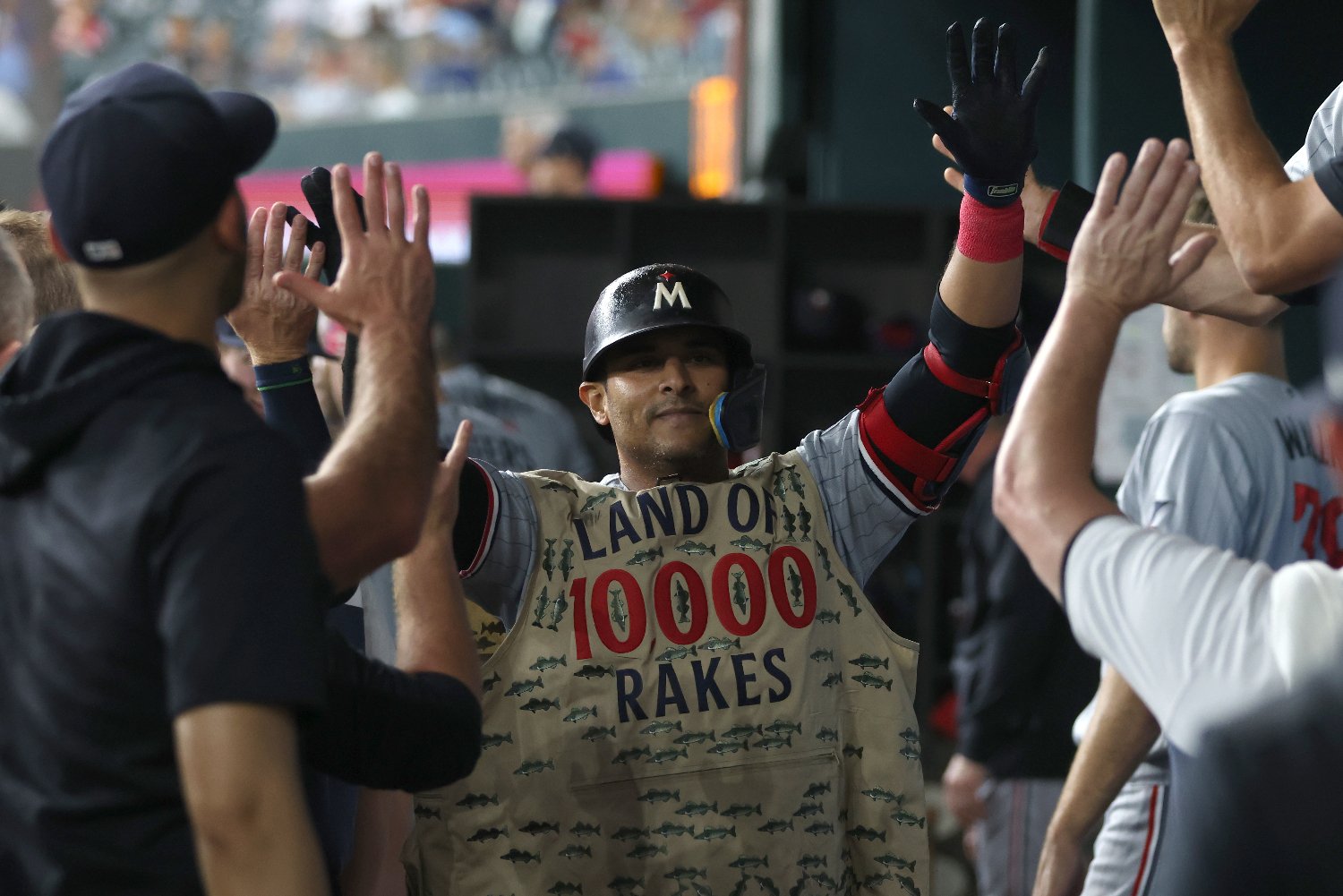 Box Score: Starting Pitcher: Dallas Keuchel: 3 1/3 IP, 5 H, 5 ER, 1 BB, 2 K (57 Pitches, 35 Strikes, 61.4%) Home Runs: Donovan Solano (5), Top 3 WPA: Solano (.259), Jorge Polanco (.249), Michael A. Taylor (.199) Win Probability Chart (Via Fangraphs): Coming off a much-needed win in game one of the series (in which Max Scherzer was dominant), the Twins turned to Dallas Keuchel in game two. On the surface, it looked like a mismatch, as the Rangers were starting Jordan Montgomery, who completely stifled the Twins in Minnesota for five innings only to have his outing ruined by the first of Royce Lewis's grand slams (off reliever Chris Stratton) that week. The lefty Montgomery pitched out of trouble in the first after Solano and Jorge Polanco led the game with singles. He got Lewis to ground into a double play and Carlos Correa to bounce out to end the threat. Keuchel was not so lucky. After allowing a sharp leadoff double to Marcus Semien, he retired the dangerous Corey Seager and hit-machine Nathaniel Lowe on grounders to bring up Adolis Garcia. Behind in the count, Garcia got a backdoor cutter from Keuchel and punished the mistake into the left field stands for the game's first two runs. That cutter was 85 MPH with an inch of horizontal break. History repeated itself in the second. After allowing a near-home run (reviewed by the umpires) to Robbie Grossman, Keuchel got Ezequiel Duran to pop out weakly. But Sam Huff, a catcher just called up with rosters expanding and operating as the DH, crushed a first-pitch cutter 430 feet for another two-run home run. The Twins started to chip away in the third, with Solano crushing a two-out home run to get the Twins on the board. They added on in a big fourth inning. After two quick outs, Jordan Luplow blooped a single to center, and Kyle Farmer walked. Fooled on a two-strike changeup, Ryan Jeffers poked a single through the five-hole to score a run. Matt Wallner fell behind in the count but worked a walk to load the bases. Michael A. Taylor drove a sharp single to tie the game at four, taking second on the throw, and Solano smacked his third hit of the game, a single, to make the game 6-4 and knocking Montgomery from the game. Playing with a sore hamstring, Taylor looked pretty hobbled scoring on the play and was removed afterward. It was an impressive rally, as Montgomery is not only a lefty but a quality one (115 career ERA+ over 135 games, 134 starts) who had been given a four-run lead. He also did not strike out a single Twins batter. After a quick third inning, Keuchel couldn't make it through the fourth, allowing a walk and a hit before being lifted for Dylan Floro, who allowed one of the runners to score. His sinker looked okay, but he threw 18 cutter/sliders, two of which were socked for home runs. Command of that pitch will be critical for him going forward. The bullpens were lock-down through the middle innings. On the Twins side, Kody Funderburk and Josh Winder needed only 15 pitches to navigate through the fifth and sixth innings. The Rangers got scoreless innings from Chris Stratton, Martin Perez, Jose Leclerc, and Will Smith. Emilio Pagan had a rough eighth inning, walking three before settling down to retire the next three batters. However, one of those batters was Robbie Grossman, and his sacrifice fly made it a 6-6 game. After Brent Headrick pitched a 1-2-3 ninth against the top of the Rangers' order, the game went to extra innings. Jorge Polanco advanced to third with no outs on a wild pitch when facing Aroldis Chapman. Carlos Correa and Max Kepler hit solid singles to make it an 8-6 game, ending Chapman's night. Ryan Jeffers then added a sacrifice fly for the final Twins ru Jhoan Duran got the tenth and began his outing with a 3-2 102 MPH fastball that struck out Lowe. After a short flyout from Garcia, Jonah Heim fought off a high fastball for a single, and Grossman added his third hit of the game, a deflection off of Duran's glove. Duran then buckled pinch-hitter Josh Smith with a beautiful 1-2 curveball to end the game. The good: Solano was unconscious, hitting four rockets for hits and ending up with three RBI. He also made a potentially game-saving over-the-shoulder catch in the eighth; Funderburk, Winder, Jax, and Thielbar were solid in protecting a one-run lead; Correa hit the ball hard with two sharp singles. Three of his batted balls were clocked over 102 MPH. The bad: Keuchel was roughed up, leaving numerous cutters up in the zone. He wasn't quite as bad as his line suggests, but regardless, he put the team in a deep hole and was fortunate the offense bailed him out; Royce Lewis swung early and often, grounding into a rally-killing double play in the first, then two lazy fly balls and a strikeout, before walking in the tenth. His average is now below .300. Emilio Pagan walked the first three batters he faced, pitching with a one-run lead in the eighth. He did retire the next three batters but allowed the game-tying sacrifice fly to Grossman. What's Next: Kenta Maeda (3-7, 4.69 ERA) goes against Jon Gray (8-7, 3.79 ERA) as the Twins look to complete the series sweep in Arlington. Maeda struggled his last time out against the Guardians, giving up six runs over four innings and escaping with a no-decision thanks to Royce Lewis's second grand slam of the week. Gray has been decent but has allowed eight runs over his last two starts, spanning ten innings. Bullpen Usage Chart: TUE WED THU FRI SAT TOT Durán 0 20 0 9 21 50 Pagán 14 0 0 0 24 38 Thielbar 0 16 0 8 6 30 Jax 0 8 0 11 7 26 Sands 24 0 0 0 0 24 Funderburk 0 8 0 0 9 17 Headrick 0 0 0 0 15 15 Floro 0 0 0 0 8 8 Winder 0 0 0 0 6 6
- 33 comments
-
- 2
-
-
- donovan solano
- dallas keuchel
- (and 2 more)
-
With the Guardians winning in extra innings against the Rays, the pressure was on the Twins to hold off a struggling but talented Rangers team. Things started rough with Dallas Keuchel unable to get through four innings, but the offense, led by Donovan Solano, clawed back and eventually prevailed against Aroldis Chapman in the tenth. Image courtesy of © Tim Heitman-USA TODAY Sports With the Guardians winning in extra innings against the Rays, the pressure was on the Twins to hold off a struggling but talented Rangers team. Things started rough with Dallas Keuchel unable to get through four innings, but the offense, led by Donovan Solano, clawed back and eventually prevailed against Aroldis Chapman in the tenth. Box Score: Starting Pitcher: Dallas Keuchel: 3 1/3 IP, 5 H, 5 ER, 1 BB, 2 K (57 Pitches, 35 Strikes, 61.4%) Home Runs: Donovan Solano (5), Top 3 WPA: Solano (.259), Jorge Polanco (.249), Michael A. Taylor (.199) Win Probability Chart (Via Fangraphs): Coming off a much-needed win in game one of the series (in which Max Scherzer was dominant), the Twins turned to Dallas Keuchel in game two. On the surface, it looked like a mismatch, as the Rangers were starting Jordan Montgomery, who completely stifled the Twins in Minnesota for five innings only to have his outing ruined by the first of Royce Lewis's grand slams (off reliever Chris Stratton) that week. The lefty Montgomery pitched out of trouble in the first after Solano and Jorge Polanco led the game with singles. He got Lewis to ground into a double play and Carlos Correa to bounce out to end the threat. Keuchel was not so lucky. After allowing a sharp leadoff double to Marcus Semien, he retired the dangerous Corey Seager and hit-machine Nathaniel Lowe on grounders to bring up Adolis Garcia. Behind in the count, Garcia got a backdoor cutter from Keuchel and punished the mistake into the left field stands for the game's first two runs. That cutter was 85 MPH with an inch of horizontal break. History repeated itself in the second. After allowing a near-home run (reviewed by the umpires) to Robbie Grossman, Keuchel got Ezequiel Duran to pop out weakly. But Sam Huff, a catcher just called up with rosters expanding and operating as the DH, crushed a first-pitch cutter 430 feet for another two-run home run. The Twins started to chip away in the third, with Solano crushing a two-out home run to get the Twins on the board. They added on in a big fourth inning. After two quick outs, Jordan Luplow blooped a single to center, and Kyle Farmer walked. Fooled on a two-strike changeup, Ryan Jeffers poked a single through the five-hole to score a run. Matt Wallner fell behind in the count but worked a walk to load the bases. Michael A. Taylor drove a sharp single to tie the game at four, taking second on the throw, and Solano smacked his third hit of the game, a single, to make the game 6-4 and knocking Montgomery from the game. Playing with a sore hamstring, Taylor looked pretty hobbled scoring on the play and was removed afterward. It was an impressive rally, as Montgomery is not only a lefty but a quality one (115 career ERA+ over 135 games, 134 starts) who had been given a four-run lead. He also did not strike out a single Twins batter. After a quick third inning, Keuchel couldn't make it through the fourth, allowing a walk and a hit before being lifted for Dylan Floro, who allowed one of the runners to score. His sinker looked okay, but he threw 18 cutter/sliders, two of which were socked for home runs. Command of that pitch will be critical for him going forward. The bullpens were lock-down through the middle innings. On the Twins side, Kody Funderburk and Josh Winder needed only 15 pitches to navigate through the fifth and sixth innings. The Rangers got scoreless innings from Chris Stratton, Martin Perez, Jose Leclerc, and Will Smith. Emilio Pagan had a rough eighth inning, walking three before settling down to retire the next three batters. However, one of those batters was Robbie Grossman, and his sacrifice fly made it a 6-6 game. After Brent Headrick pitched a 1-2-3 ninth against the top of the Rangers' order, the game went to extra innings. Jorge Polanco advanced to third with no outs on a wild pitch when facing Aroldis Chapman. Carlos Correa and Max Kepler hit solid singles to make it an 8-6 game, ending Chapman's night. Ryan Jeffers then added a sacrifice fly for the final Twins ru Jhoan Duran got the tenth and began his outing with a 3-2 102 MPH fastball that struck out Lowe. After a short flyout from Garcia, Jonah Heim fought off a high fastball for a single, and Grossman added his third hit of the game, a deflection off of Duran's glove. Duran then buckled pinch-hitter Josh Smith with a beautiful 1-2 curveball to end the game. The good: Solano was unconscious, hitting four rockets for hits and ending up with three RBI. He also made a potentially game-saving over-the-shoulder catch in the eighth; Funderburk, Winder, Jax, and Thielbar were solid in protecting a one-run lead; Correa hit the ball hard with two sharp singles. Three of his batted balls were clocked over 102 MPH. The bad: Keuchel was roughed up, leaving numerous cutters up in the zone. He wasn't quite as bad as his line suggests, but regardless, he put the team in a deep hole and was fortunate the offense bailed him out; Royce Lewis swung early and often, grounding into a rally-killing double play in the first, then two lazy fly balls and a strikeout, before walking in the tenth. His average is now below .300. Emilio Pagan walked the first three batters he faced, pitching with a one-run lead in the eighth. He did retire the next three batters but allowed the game-tying sacrifice fly to Grossman. What's Next: Kenta Maeda (3-7, 4.69 ERA) goes against Jon Gray (8-7, 3.79 ERA) as the Twins look to complete the series sweep in Arlington. Maeda struggled his last time out against the Guardians, giving up six runs over four innings and escaping with a no-decision thanks to Royce Lewis's second grand slam of the week. Gray has been decent but has allowed eight runs over his last two starts, spanning ten innings. Bullpen Usage Chart: TUE WED THU FRI SAT TOT Durán 0 20 0 9 21 50 Pagán 14 0 0 0 24 38 Thielbar 0 16 0 8 6 30 Jax 0 8 0 11 7 26 Sands 24 0 0 0 0 24 Funderburk 0 8 0 0 9 17 Headrick 0 0 0 0 15 15 Floro 0 0 0 0 8 8 Winder 0 0 0 0 6 6 View full article
- 33 replies
-
- 2
-
-
- donovan solano
- dallas keuchel
- (and 2 more)
-
True, there isn't much to unlock beyond getting Gallo and Luplow off the roster, but I look at the Twins like an NFL team with an elite quarterback and some decent players around him. The Orioles are like the a team with a total game manager QB and a slightly better team around him. Both teams can win a playoff game or two but I wouldn't buy stock in the second team. If I was a betting man I'd go with the Astros for the pennant but the Twins wouldn't have to get too lucky to beat anyone else in a short series.
-
Game 1: Kyle Bradish versus Sonny Gray, Kevin Gausman, Luis Castillo, Justin Verlander, Max Scherzer, Tyler Glasnow, Game 2: Kyle Gibson (maybe Dean Kremer) versus Pablo Lopez, Jose Berrios, George Kirby, Framber Valdez, Jon Gray, Zach Eflin They're running on vibes and I'm not buyin.
-
Subjective, but: I made the case that the Twins are relying on players not playing above their talent level. The way the Twins have won recently is certainly not a formula (comeback against Rangers, blowout against Rangers, and comeback 13 inning win against Rangers, comeback from 4-0 against Guardians) None of our prospects are post hype (maybe Kirilloff), our bullpen isn't great but it is a high strikeout bullpen, which was my point (you can disagree with the point) And we have done pretty okay against good pitching, we just hung 6 on Corbin Burnes, although Scherzer did get us pretty good. Dunning was having a great year before we got to him.
-
Randy Dobnak ain't pitching game two.

