



Hans Birkeland
-
Posts
458 -
Joined
-
Days Won
1
Content Type
Profiles
News
Minnesota Twins Videos
2026 Minnesota Twins Top Prospects Ranking
2022 Minnesota Twins Draft Picks
Minnesota Twins Free Agent & Trade Rumors, Notes, & Tidbits
Guides & Resources
2023 Minnesota Twins Draft Picks
The Minnesota Twins Players Project
2024 Minnesota Twins Draft Picks
2025 Minnesota Twins Draft Pick Tracker
2026 Minnesota Twins Draft Tracker: Picks & Bonuses
Forums
Blogs
Events
Store
Downloads
Gallery
Everything posted by Hans Birkeland
-
Fair point, I considered making that caveat. The 2014-15 Royals are the exception, although their competition was not exactly elite. They beat the A's who never win in October, the Angels, who are cursed beyond recognition, the Orioles who were starting Chris Tillman in game one, Bud Norris in game two and Wei-Yin Chen in game three, and then got beaten by the Giants. The next year they beat the Astros before they were the ASTROS and barely did that. The Blue Jays, who they beat in the ALCS that year, were really good, but the Mets were pretty cute.
-
A lotta power, an ace in Viola, and a completely decimated Cardinals lineup. Cute could win back then.
- 27 replies
-
- 3
-

-
- jhoan duran
- royce lewis
- (and 3 more)
-
Baseball postseason history is littered with cute teams with good stories who fold in the playoffs, including many Twins teams of the past 20 years. This year's team isn't great, but unlike the AL leading Orioles, they at least aren't cute. Image courtesy of Frank Victores-USA TODAY Sports Baseball postseason history is littered with cute teams with good stories who fold in the playoffs, including many Twins teams of the past 20 years. This year's team isn't great, but unlike the AL leading Orioles, they at least aren't cute. MLB Network's Matt Vasgersian reflected upon the Twins’ recent excruciating win over Texas with the following statement: “Those are the kind of wins that make you feel like a team of destiny.” That statement made me a little nauseous. Let me be clear, this is not a team of destiny, and anyone who watches their games will agree. Not only have they not played to that level, but also I look at that branding as a negative. Generally, teams that are proclaimed as such are nothing more than what I call "cute stories," a baseball trope I have been following for years. The teams that represent the cutest stories never advance past the Divisional Series. I think there is something to that. Let me explain. First, let's establish what constitutes a “cute story” type of team: The easiest to define criteria is that they play above their talent level. They may have stars or even superstars but, in broad strokes, their run differential won’t be great and they end up with 89-93 wins, give or take. Think about the 2022 Guardians, 2021 White Sox, 2016 Rangers, 2013 Pirates, 2010 Braves or the 2003, 2009, and 2017 Twins. If you are using the phrase "pure magic" to describe a team eliminated in the Divisional Series, you may be talking about a cute story. Next, they rely on a “formula” to win games. This might involve a post-hype prospect the league hasn’t adjusted to (think Jose Tabata or Kevin Newman types) getting on base and getting driven in by a waiver claim slugger having a career year hitting a high volume of mistake pitches (think Mike Ford or Jesus Aguilar). The starter (often with a below average strikeout rate) keeps them in the game and turns it over to a (usually) strong bullpen without great peripheral numbers. Their closer then comes in, only when there is a lead, and nails down the win. We’ve seen this. It doesn’t work. In the playoffs every tendency is broken down and weaknesses are exploited. The post-hype prospect goes 1-for-12 with an infield hit (and gets thrown out trying to steal following the hit), and the waiver claim slugger strikes out 15 times because they have huge holes in their swing and struggle against elite pitching. If they somehow have a lead, the closer riles up the crowd and throws their signature pitch... except it's rocked for a first pitch home run or double. Then they start to nibble, walk some guys (“they don’t usually do this!” says the broadcast) and before you know it, a rally has started. The problem with cute story teams is that there is generally a lack of substance to their success beyond just raw run differential. They thrive off of good vibes, rags-to-riches narratives and general "underdoggery." The 2003 Twins were saved by Shannon Stewart and rode a hot second half to a playoff berth, despite a rotation that consisted of five guys whose best ERA+ was 101. Thankfully, Johan Santana was allowed to step in and front the rotation, but when the playoffs rolled around Brad Radke and Kyle Lohse were no match for the Yankees’ number two and three starters (Andy Pettitte and Roger Clemens, respectively). Doug Mientkiewicz went 2-for-15. Luis Rivas went 0-for-13. Christian Guzman went 2-for-13. Jacque Jones, who was known to struggle against lefties, was left to die against Pettitte. These were not competitive answers to what the Yankees were throwing at the Twins. It stems, I think, from expecting success based on the numbers their players have accumulated during their nice little run in the regular season. As human beings, the team wants to “reward” them for their success, even if logically they had no business featuring prominently in a playoff roster. For example, Mientkiewicz and Matt LeCroy had good numbers for the 2003 Twins, but they were still Doug Mientkiewicz and Matt LeCroy. Brian Duensing had a great stretch run for the 2009 Twins, but he was still Brian Duensing. Jason Grilli and Mark Melancon both had good years as closers on playoff teams, but they were who they were. Now let’s take a look at the 2023 Twins. Compared to cute teams of the past, they look pretty good. All of their contributors are having either a down year (Carlos Correa, Byron Buxton, Jorge Polanco) or are performing pretty in line with what they’ve done before (Donovan Solano, Sonny Gray, Pablo Lopez, Jhoan Duran). The only players playing above their previous norms, and it is debatable, are Max Kepler, Michael A. Taylor and Ryan Jeffers. It isn’t exactly clear why Kepler is suddenly an offensive force, but Jeffers was projected as a plus offensive catcher and has shown plenty of flashes in the past. The rotation is indisputably solid and playoff caliber, ranking first in Fangraphs’ metric for rotation quality. The offense is powered by a trio of rookies in Royce Lewis, Edouard Julien and Matt Wallner. Although their success couldn’t have necessarily been predicted, no one should be surprised based on their track record as prospects. Alex Kirilloff appears close to a rehab assignment. That could give him plenty of time to get his timing back before October. Byron Buxton will attempt to play center field upon his return which may be around the same time. Take a look at their projected lineup against a right-hander in the playoffs if both of those scenarios come to fruition: Edouard Julien DH Jorge Polanco 2B Carlos Correa SS Byron Buxton CF Alex Kirilloff 1B Royce Lewis 3B Max Kepler RF Matt Wallner LF Ryan Jeffers C This configuration is a lot of things, but it isn’t cute. The two highly-paid stars, Buxton and Correa, might be its weakest links. Now, some of those guys will go cold in the next month or so, and it's fairly likely that one or two will get hurt. However, Donovan Solano is a good fallback option, and in most years Austin Martin would be a potential late-season sparkplug. Now compare that to the Baltimore Orioles, my favorite for this year’s cutest team. Think about who starts Game 1 of a playoff series for them. It’s probably Kyle Bradish, who is having a nice year, but doesn’t have an overwhelming strikeout percentage and has never been a Top 100 prospect. He also has no real track record of success and is fast approaching his career high of 145 1/3 innings pitched. Their next choice is Kyle Gibson and his 85 ERA+. Twins fans are familiar with his work. Their third choice is probably Grayson Rodriguez, who was a Top 5 global prospect going into the year and has tons of potential, but has pitched to a 5.38 ERA over 17 starts. They have a decent crop of above average hitters, but none are superstars, even if Gunnar Henderson and Adley Rutschman certainly have that projection. Their offense has been carried at points by Ryan O’Hearn, who they picked up off waivers with a career 83 OPS+ prior to this year. And their dominant closer, Felix Bautista, is now out with a damaged UCL, leaving former Twin Yennier Cano to close out tight games in a pennant race. He’s been good, but his strikeout rate is below average (23.9%) and he is unproven. I like their chances for the next five years, but this year they are too cute by half. The nice thing for the Orioles is that they will likely get a first round bye, but in terms of who wins more playoff games, I would take the Twins getting one over the Orioles (or any other cute teams, I’m looking at you Diamondbacks) getting any. What do you think? Would you rather take a talented team that under-performs, or a nice little story? Sound off in the comments! View full article
-
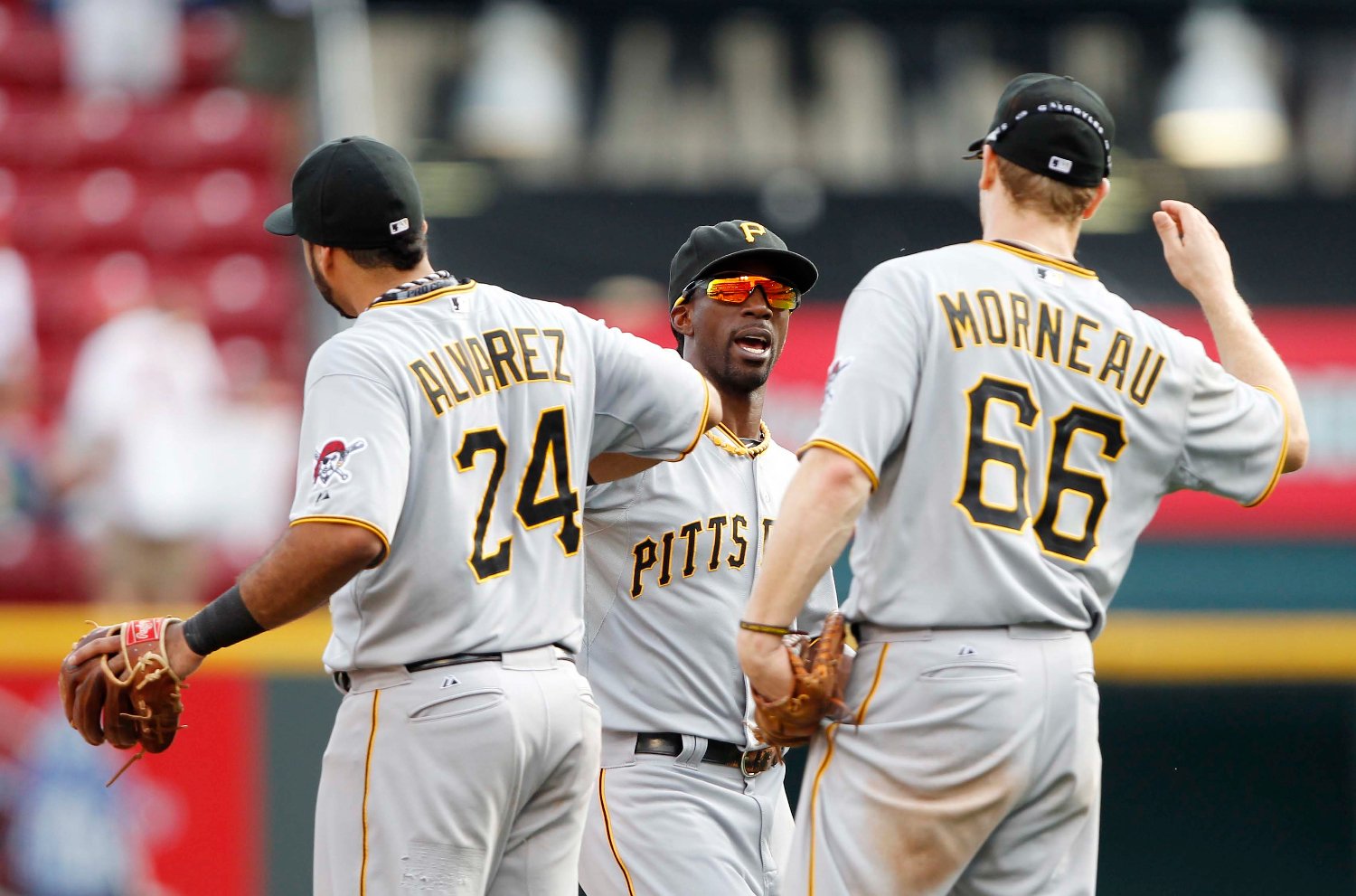 MLB Network's Matt Vasgersian reflected upon the Twins’ recent excruciating win over Texas with the following statement: “Those are the kind of wins that make you feel like a team of destiny.” That statement made me a little nauseous. Let me be clear, this is not a team of destiny, and anyone who watches their games will agree. Not only have they not played to that level, but also I look at that branding as a negative. Generally, teams that are proclaimed as such are nothing more than what I call "cute stories," a baseball trope I have been following for years. The teams that represent the cutest stories never advance past the Divisional Series. I think there is something to that. Let me explain. First, let's establish what constitutes a “cute story” type of team: The easiest to define criteria is that they play above their talent level. They may have stars or even superstars but, in broad strokes, their run differential won’t be great and they end up with 89-93 wins, give or take. Think about the 2022 Guardians, 2021 White Sox, 2016 Rangers, 2013 Pirates, 2010 Braves or the 2003, 2009, and 2017 Twins. If you are using the phrase "pure magic" to describe a team eliminated in the Divisional Series, you may be talking about a cute story. Next, they rely on a “formula” to win games. This might involve a post-hype prospect the league hasn’t adjusted to (think Jose Tabata or Kevin Newman types) getting on base and getting driven in by a waiver claim slugger having a career year hitting a high volume of mistake pitches (think Mike Ford or Jesus Aguilar). The starter (often with a below average strikeout rate) keeps them in the game and turns it over to a (usually) strong bullpen without great peripheral numbers. Their closer then comes in, only when there is a lead, and nails down the win. We’ve seen this. It doesn’t work. In the playoffs every tendency is broken down and weaknesses are exploited. The post-hype prospect goes 1-for-12 with an infield hit (and gets thrown out trying to steal following the hit), and the waiver claim slugger strikes out 15 times because they have huge holes in their swing and struggle against elite pitching. If they somehow have a lead, the closer riles up the crowd and throws their signature pitch... except it's rocked for a first pitch home run or double. Then they start to nibble, walk some guys (“they don’t usually do this!” says the broadcast) and before you know it, a rally has started. The problem with cute story teams is that there is generally a lack of substance to their success beyond just raw run differential. They thrive off of good vibes, rags-to-riches narratives and general "underdoggery." The 2003 Twins were saved by Shannon Stewart and rode a hot second half to a playoff berth, despite a rotation that consisted of five guys whose best ERA+ was 101. Thankfully, Johan Santana was allowed to step in and front the rotation, but when the playoffs rolled around Brad Radke and Kyle Lohse were no match for the Yankees’ number two and three starters (Andy Pettitte and Roger Clemens, respectively). Doug Mientkiewicz went 2-for-15. Luis Rivas went 0-for-13. Christian Guzman went 2-for-13. Jacque Jones, who was known to struggle against lefties, was left to die against Pettitte. These were not competitive answers to what the Yankees were throwing at the Twins. It stems, I think, from expecting success based on the numbers their players have accumulated during their nice little run in the regular season. As human beings, the team wants to “reward” them for their success, even if logically they had no business featuring prominently in a playoff roster. For example, Mientkiewicz and Matt LeCroy had good numbers for the 2003 Twins, but they were still Doug Mientkiewicz and Matt LeCroy. Brian Duensing had a great stretch run for the 2009 Twins, but he was still Brian Duensing. Jason Grilli and Mark Melancon both had good years as closers on playoff teams, but they were who they were. Now let’s take a look at the 2023 Twins. Compared to cute teams of the past, they look pretty good. All of their contributors are having either a down year (Carlos Correa, Byron Buxton, Jorge Polanco) or are performing pretty in line with what they’ve done before (Donovan Solano, Sonny Gray, Pablo Lopez, Jhoan Duran). The only players playing above their previous norms, and it is debatable, are Max Kepler, Michael A. Taylor and Ryan Jeffers. It isn’t exactly clear why Kepler is suddenly an offensive force, but Jeffers was projected as a plus offensive catcher and has shown plenty of flashes in the past. The rotation is indisputably solid and playoff caliber, ranking first in Fangraphs’ metric for rotation quality. The offense is powered by a trio of rookies in Royce Lewis, Edouard Julien and Matt Wallner. Although their success couldn’t have necessarily been predicted, no one should be surprised based on their track record as prospects. Alex Kirilloff appears close to a rehab assignment. That could give him plenty of time to get his timing back before October. Byron Buxton will attempt to play center field upon his return which may be around the same time. Take a look at their projected lineup against a right-hander in the playoffs if both of those scenarios come to fruition: Edouard Julien DH Jorge Polanco 2B Carlos Correa SS Byron Buxton CF Alex Kirilloff 1B Royce Lewis 3B Max Kepler RF Matt Wallner LF Ryan Jeffers C This configuration is a lot of things, but it isn’t cute. The two highly-paid stars, Buxton and Correa, might be its weakest links. Now, some of those guys will go cold in the next month or so, and it's fairly likely that one or two will get hurt. However, Donovan Solano is a good fallback option, and in most years Austin Martin would be a potential late-season sparkplug. Now compare that to the Baltimore Orioles, my favorite for this year’s cutest team. Think about who starts Game 1 of a playoff series for them. It’s probably Kyle Bradish, who is having a nice year, but doesn’t have an overwhelming strikeout percentage and has never been a Top 100 prospect. He also has no real track record of success and is fast approaching his career high of 145 1/3 innings pitched. Their next choice is Kyle Gibson and his 85 ERA+. Twins fans are familiar with his work. Their third choice is probably Grayson Rodriguez, who was a Top 5 global prospect going into the year and has tons of potential, but has pitched to a 5.38 ERA over 17 starts. They have a decent crop of above average hitters, but none are superstars, even if Gunnar Henderson and Adley Rutschman certainly have that projection. Their offense has been carried at points by Ryan O’Hearn, who they picked up off waivers with a career 83 OPS+ prior to this year. And their dominant closer, Felix Bautista, is now out with a damaged UCL, leaving former Twin Yennier Cano to close out tight games in a pennant race. He’s been good, but his strikeout rate is below average (23.9%) and he is unproven. I like their chances for the next five years, but this year they are too cute by half. The nice thing for the Orioles is that they will likely get a first round bye, but in terms of who wins more playoff games, I would take the Twins getting one over the Orioles (or any other cute teams, I’m looking at you Diamondbacks) getting any. What do you think? Would you rather take a talented team that under-performs, or a nice little story? Sound off in the comments!
- 27 comments
-
- 4
-
-
- jhoan duran
- royce lewis
- (and 3 more)
-
The Rays have an impressive record, and have been considered World Series contenders at points during the year. Injuries (particularly to two frontline lefty starters) and a franchise-altering scandal have changed that calculus. They may now present the best matchup for the Twins come October. Image courtesy of © Kim Klement Neitzel-USA TODAY Sports The Rays have an impressive record, and have been considered World Series contenders at points during the year. Injuries (particularly to two frontline lefty starters) and a franchise-altering scandal have changed that calculus. They may now present the best matchup for the Twins come October. The playoffs are around the corner, and the Twins will likely be a part of the field. Their options as far as opponents (the six-seeded wild card team) are pretty scary: The dynamic Blue Jays offense with Kevin Gausman fronting their rotation; The Julio Rodriguez-led Mariners with Luis Castillo and George Kirby leading theirs; and lastly, the defending champion Astros with newly acquired Justin Verlander. I'm not too fond of the Twins' chances in any of those matchups, even if all we're looking for is one win to break the horrible playoff futility streak. One matchup I like, which is more likely than you think, is the Rays. Early in the season, the Rays looked unstoppable. They had a powerful and multi-faceted offense led by Randy Arozarena and Yandy Diaz, with some highly effective platoon players putting up runs in droves, no matter the competition. They featured aggressive baserunning and elite defense around the diamond- typical Rays. Their rotation was dominant, and they waited on the return of Tyler Glasnow and later acquired Aaron Civale at the deadline amid his breakout year. The Rays always find a way to form incredibly effective, high-velocity bullpens; this year was no exception. They demolished the Twins in June, sweeping a series in St. Petersburg fairly easily. Why would the Twins want to face a team like that? Injuries. And the Wander Franco situation. The Rays have stunningly lost four frontline starting pitchers to Tommy John surgery this year (three if you omit the unestablished Shane Baz). Drew Rasmussen has posted a 135 ERA+ since the start of 2022 but succumbed to elbow surgery in May. Lefty Jeffrey Springs had a 165 ERA+ since 2022 but dropped in April. Most recently, the Rays lost ace Shane McClanahan, who had contributed a 135 ERA+ while striking out 28.4% of batters over the past two years. He's also a lefty. Glasnow is back and is dealing, but has never pitched more than 111 innings in a year due to injury (80 so far this year) and has a 5.75 postseason ERA. Civale is solid but is probably pitching above his talent level, with a 2.44 ERA and a 3.32 FIP buoyed by an unsustainably low home run rate (.5 HR allowed per nine innings). He also blew up in the ALDS last year against the Yankees, putting the Guardians in a deficit they could not overcome in the deciding game five. Zach Eflin has proven to be a shrewd pickup, having a career year with a 115 ERA+ while striking out 25% of batters. But he has battled knee injuries throughout his career and has missed time this year, exiting a start against Miami in late July. He didn't miss a start and has been solid since, but it is something Rays fans are watching closely. The Rays' starting rotation issues are so prevalent that they use former Twins reliever Zack Littell in that role. If you forgot, Littell was responsible for throwing eight pitches in the fifth inning of game one of the 2019 ALDS, with the game still in the balance, managing only one strike and taking the loss. He was cut loose after a brutal 2020 season and has bounced since. Admittedly, he has been decent for the Rays. As for the offense, well, it's still pretty good, but the Rays have lost some key pieces. Taylor Walls was a plus offensively (for a while) in addition to playing excellent defense at either short or third base, but he is down with an oblique strain, and his return is not imminent. Manuel Margot has been a staple of the Rays' attack for several years, playing great outfield defense with average or better offense. He's also a great base runner but will be out, possibly for the year, with elbow surgery. And then there is Wander Franco, the team's $182M man. He is on the restricted list due to what looks to be an alarming relationship with a minor, possibly multiple minors. We don't know all the details; frankly, I don't want to know. But his career may be over; at the least, he won't be playing for the team this year. Franco has been electric on the field when not benched for lack of effort. He has hit for a 126 OPS+ with 30 steals, 17 home runs, and elite shortstop defense, adding up to 5.5 bWAR in only 112 games. The Rays offense ran through him, and he was only getting better at age 22. Arozarena and Diaz are great players, but the former is streaky, and the latter isn't a significant power threat despite a career-high 16 home runs this year. The team was scuffling even before Franco's last game on August 12th. They have been 20-23 since the start of July but have recently taken advantage of a soft part of their schedule, winning series against the Angels, Rockies, Yankees, Tigers, and Guardians in August. They will face a sterner test in the coming weeks, going against the Red Sox and Mariners before arriving in Minnesota to meet the Twins in September. But, hold on, aren't the Rays 26 games over .500? Why would they fall to the sixth seed in the AL? The answer is no fault of their own - the Mariners are playing out of their minds right (two eight-game winning streaks so far in August) after having some World Series buzz pre-season. The Astros, currently the fifth seed, are a juggernaut, and the division-leading Rangers are too solid on both sides of the ball to take many more steps backward. The Blue Jays have picked up 5.5 games on the Rays since the start of July and look formidable, although they are more of a longshot. Only two teams must pass the Rays for Tampa to fall into the sixth seed. The wild card picture is seriously competitive now that the Mariners have arrived. It shines a light on how unfair it is that the Twins will likely get to play a 95-win team at home despite middling play all season that will give them 85 or so division-inflated wins. But that's baseball, baby. The matchup of the Rays and Twins is juicy beyond the roster attrition Tampa has experienced: Stuff-wise, no Twins pitcher can match up to Glasnow, but the pitching advantage will certainly swing toward the Twins against Civale and Eflin. The Rays have a better lineup on paper, but when you factor in that all three Rays starters are righties, the outlook looks murkier; the Twins are a playoff-caliber lineup against righties, especially if Alex Kirilloff is available. Defense and baserunning will favor the Rays, but in terms of matching up against any of the other potential playoff teams, you have to like the Twins' chances against this version of the Rays. It's not about the team you field in April, but the one you field come October. If only they had picked up a bullpen arm at the deadline. View full article
-
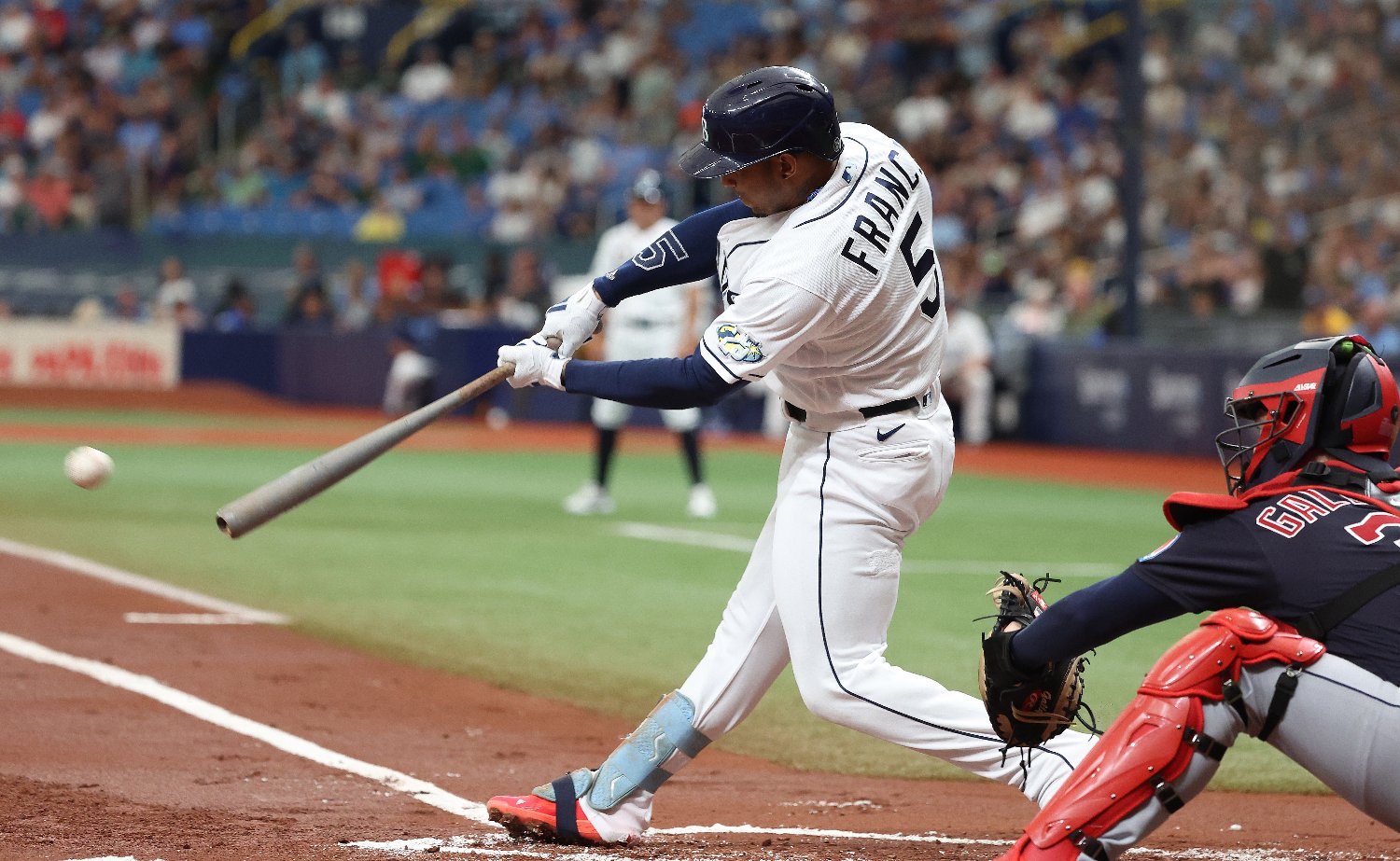 The playoffs are around the corner, and the Twins will likely be a part of the field. Their options as far as opponents (the six-seeded wild card team) are pretty scary: The dynamic Blue Jays offense with Kevin Gausman fronting their rotation; The Julio Rodriguez-led Mariners with Luis Castillo and George Kirby leading theirs; and lastly, the defending champion Astros with newly acquired Justin Verlander. I'm not too fond of the Twins' chances in any of those matchups, even if all we're looking for is one win to break the horrible playoff futility streak. One matchup I like, which is more likely than you think, is the Rays. Early in the season, the Rays looked unstoppable. They had a powerful and multi-faceted offense led by Randy Arozarena and Yandy Diaz, with some highly effective platoon players putting up runs in droves, no matter the competition. They featured aggressive baserunning and elite defense around the diamond- typical Rays. Their rotation was dominant, and they waited on the return of Tyler Glasnow and later acquired Aaron Civale at the deadline amid his breakout year. The Rays always find a way to form incredibly effective, high-velocity bullpens; this year was no exception. They demolished the Twins in June, sweeping a series in St. Petersburg fairly easily. Why would the Twins want to face a team like that? Injuries. And the Wander Franco situation. The Rays have stunningly lost four frontline starting pitchers to Tommy John surgery this year (three if you omit the unestablished Shane Baz). Drew Rasmussen has posted a 135 ERA+ since the start of 2022 but succumbed to elbow surgery in May. Lefty Jeffrey Springs had a 165 ERA+ since 2022 but dropped in April. Most recently, the Rays lost ace Shane McClanahan, who had contributed a 135 ERA+ while striking out 28.4% of batters over the past two years. He's also a lefty. Glasnow is back and is dealing, but has never pitched more than 111 innings in a year due to injury (80 so far this year) and has a 5.75 postseason ERA. Civale is solid but is probably pitching above his talent level, with a 2.44 ERA and a 3.32 FIP buoyed by an unsustainably low home run rate (.5 HR allowed per nine innings). He also blew up in the ALDS last year against the Yankees, putting the Guardians in a deficit they could not overcome in the deciding game five. Zach Eflin has proven to be a shrewd pickup, having a career year with a 115 ERA+ while striking out 25% of batters. But he has battled knee injuries throughout his career and has missed time this year, exiting a start against Miami in late July. He didn't miss a start and has been solid since, but it is something Rays fans are watching closely. The Rays' starting rotation issues are so prevalent that they use former Twins reliever Zack Littell in that role. If you forgot, Littell was responsible for throwing eight pitches in the fifth inning of game one of the 2019 ALDS, with the game still in the balance, managing only one strike and taking the loss. He was cut loose after a brutal 2020 season and has bounced since. Admittedly, he has been decent for the Rays. As for the offense, well, it's still pretty good, but the Rays have lost some key pieces. Taylor Walls was a plus offensively (for a while) in addition to playing excellent defense at either short or third base, but he is down with an oblique strain, and his return is not imminent. Manuel Margot has been a staple of the Rays' attack for several years, playing great outfield defense with average or better offense. He's also a great base runner but will be out, possibly for the year, with elbow surgery. And then there is Wander Franco, the team's $182M man. He is on the restricted list due to what looks to be an alarming relationship with a minor, possibly multiple minors. We don't know all the details; frankly, I don't want to know. But his career may be over; at the least, he won't be playing for the team this year. Franco has been electric on the field when not benched for lack of effort. He has hit for a 126 OPS+ with 30 steals, 17 home runs, and elite shortstop defense, adding up to 5.5 bWAR in only 112 games. The Rays offense ran through him, and he was only getting better at age 22. Arozarena and Diaz are great players, but the former is streaky, and the latter isn't a significant power threat despite a career-high 16 home runs this year. The team was scuffling even before Franco's last game on August 12th. They have been 20-23 since the start of July but have recently taken advantage of a soft part of their schedule, winning series against the Angels, Rockies, Yankees, Tigers, and Guardians in August. They will face a sterner test in the coming weeks, going against the Red Sox and Mariners before arriving in Minnesota to meet the Twins in September. But, hold on, aren't the Rays 26 games over .500? Why would they fall to the sixth seed in the AL? The answer is no fault of their own - the Mariners are playing out of their minds right (two eight-game winning streaks so far in August) after having some World Series buzz pre-season. The Astros, currently the fifth seed, are a juggernaut, and the division-leading Rangers are too solid on both sides of the ball to take many more steps backward. The Blue Jays have picked up 5.5 games on the Rays since the start of July and look formidable, although they are more of a longshot. Only two teams must pass the Rays for Tampa to fall into the sixth seed. The wild card picture is seriously competitive now that the Mariners have arrived. It shines a light on how unfair it is that the Twins will likely get to play a 95-win team at home despite middling play all season that will give them 85 or so division-inflated wins. But that's baseball, baby. The matchup of the Rays and Twins is juicy beyond the roster attrition Tampa has experienced: Stuff-wise, no Twins pitcher can match up to Glasnow, but the pitching advantage will certainly swing toward the Twins against Civale and Eflin. The Rays have a better lineup on paper, but when you factor in that all three Rays starters are righties, the outlook looks murkier; the Twins are a playoff-caliber lineup against righties, especially if Alex Kirilloff is available. Defense and baserunning will favor the Rays, but in terms of matching up against any of the other potential playoff teams, you have to like the Twins' chances against this version of the Rays. It's not about the team you field in April, but the one you field come October. If only they had picked up a bullpen arm at the deadline.
- 10 comments
-
- 4
-
-
- eduoard julien
- pablo lopez
- (and 2 more)
-
After a chippy, but fairly easy win against the Pirates on Friday night, the Twins ran into a sharp Mitch Keller on Saturday. Sonny Gray was perfect through five but ran out of gas, while Jordan Balazovic gave up a key three-run home run to Andrew McCutchen in the ninth. Image courtesy of Matt Blewett-USA TODAY Sports After a chippy, but fairly easy win against the Pirates on Friday night, the Twins ran into a sharp Mitch Keller on Saturday. Sonny Gray was perfect through five but ran out of gas, while Jordan Balazovic gave up a key three-run home run to Andrew McCutchen in the ninth. Box Score: Starting Pitcher: Sonny Gray: 6 2/3 IP, 4 H 4 ER 3 BB 7 K (93 Pitches, 60 Strikes, 64.5%) Home Runs: None Bottom 3 WPA: Royce Lewis (-.212), Joey Gallo (-.174), Donovan Solano (-.162) Win Probability Chart (Via Fangraphs): Sonny Gray has been sharp lately, both due to better command of his breaking pitches, and a concerted effort to challenge hitters more. His 2.78 FIP coming into the game led baseball, as did his rate of home runs allowed. With Gerrit Cole's blowup against the Red Sox (4 IP, 6 ER), a good outing would position Gray well in his quest for a first Cy Young award (though Pablo Lopez might have something to say about that). It sure started off well. Fresh off of blanking the hot-hitting Phillies over six innings last Sunday, Gray got right to work against the struggling Pirates' lineup in the first. He struck out Ji-Hwan Bae and Bryan Reynolds on three pitches each (featuring some devastating sweepers), then got ahead of Andrew McCutchen 0-2. With the first immaculate inning in Twins history* hanging in the balance, the veteran McCutchen spoiled the fun by flying out lazily to Max Kepler. *The Twins' broadcast mentioned that Scott Baker once threw an immaculate inning, which is not true, Baker did, however, strike out four men in one inning in 2008, which may have produced the confusion. Opposing Gray was Mitch Keller of the Pirates, a former high draft pick (from Cedar Rapids) and top prospect who had a few lean years before appearing to break out earlier this year, pitching to a 3.31 ERA with a 27% strikeout rate in the first half. He has struggled mightily since then, with a 7.71 ERA and 20% strikeout rate. The Twins added to his struggles in the first, starting with Jorge Polanco, who smacked a one-out single into right field and promptly stole second. With two outs, Kepler hit a grounder up the middle that would have been right at Pirates shortstop Liover Peguero... except the ball struck Keller in the foot and caromed into right field for a double and the game's first run. Keller recovered to strike out the streaking Royce Lewis, which would be a theme in the early innings. Keller's sinker and sweeper confounded Twins hitters and resulted in a whopping eight strikeouts through the first three innings. He finished with 12. But at that point, Gray was untouchable. Through the first five innings, he threw only 47 pitches, eliciting weak contact and confusing an inexperienced Pittsburgh lineup with his vast assortment of pitches. In the fifth, Richie Palacios appeared to break up the perfecto as well as the no-hitter, hitting a sharp grounder up the middle with second baseman Eduoard Julien shading towards first. But Julien ranged to his right, popped up off of a knee and delivered a strong throw to retire Palacios. It wasn't just an impressive play by Julien, but a legitimately impressive play, period. The Twins added some insurance in the bottom of the inning. Following a rare Joey Gallo ground ball double play, Christian Vázquez delivered an opposite field double which was then followed by a soft single by Michael A. Taylor to double the lead. After retiring his 16th straight batter of the night, Gray then induced a soft ground ball off the bat of Peguero that was fielded by Polanco at third. Polanco's throw was wide, however, and Peguero took a circuitous route to the bag, possibly interfering with first baseman Donovan Solano's glove. But the out was not recorded, and Peguero was awarded a hit, ending the possibility of any sort of history being made. A bloop hit and a walk followed, bringing up Reynolds with the bases loaded. Gray set him down on three pitches, but threw a mistake pitch to McCutchen ahead in the count, who drove a single up the middle to tie the game 2-2. Ke'Bryan Hayes then broke the tie with a sharp single to left. The Twins had a golden opportunity to bounce back in the bottom of the sixth. Following a Polanco leadoff walk, Correa and Kepler both singled, bringing up Lewis with the bases loaded. Perhaps expecting the sinker down 0-2, Lewis swung through a four-seamer a few inches outside for a crucial strikeout. That brought up Solano, who fell behind on a questionable strike one call and eventually struck out on a beautiful sweeper, bringing up Gallo with two strikes. He worked the count full, but succumbed to strike three on a fastball up in the zone, ending the threat. Keller was pretty electric, overall. The fates had more misery for the Twins in the top of the seventh. After a Jack Suwinski walk, Peguero grounded to third base. Polanco threw to second , and while Julien made his relay, Suwinski interfered by continuing to charge forward, clearly altering Julien's throwing motion. The throw was high and Solano appeared to still get his foot down before Peguero's, but this was the infamous Laz Diaz's umpire crew, and not only did they not call interference, they also called Peguero safe at first. The Twins challenged both plays, and somehow were denied on both counts. You don't have to watch a lot of baseball to know that Bae then doubled home Peguero to extend the lead to 4-2. The Good: Vázquez had two doubles, after entering the game with 12 extra base hits all season; Correa got on base twice more, with a sharp single and a walk. He came into the game with a 1.149 OPS over his previous ten games; The Bad: Gray fell into some of his old habits by walking three men, all in crucial spots late in his outing; Lewis had a series of bad at-bats, including his bases loaded strikeout. He later swung wildly at what would have been ball four inside, resulting in a strike out to lead off the eighth inning. Balazovic had a tough outing, giving up three hits, three runs and three walks without recording a strikeout. The smoke and mirrors success he had early on has not proven sustainable, and McCutchen's home run off of him sealed the loss tonight. What’s Next: Dallas Keuchel (0-1, 9.45 ERA) goes for the series win against Osvaldo Bido (2-3, 5.05 ERA). Keuchel is on thin ice, having not struck out a batter over his first two outings, while Joe Ryan had a successful rehab outing on Friday. Postgame Interviews: Bullpen Usage Chart: TUE WED THU FRI SAT TOT Balazovic 0 18 0 0 36 54 Floro 14 6 0 0 27 47 Jax 0 33 0 11 0 44 Pagán 11 15 0 11 0 37 Durán 14 0 0 17 0 31 Winder 0 28 0 0 0 28 Thielbar 9 0 0 10 0 19 Sands 0 0 0 0 8 8 View full article
- 32 replies
-
- 1
-
-
- sonny gray
- royce lewis
- (and 2 more)
-
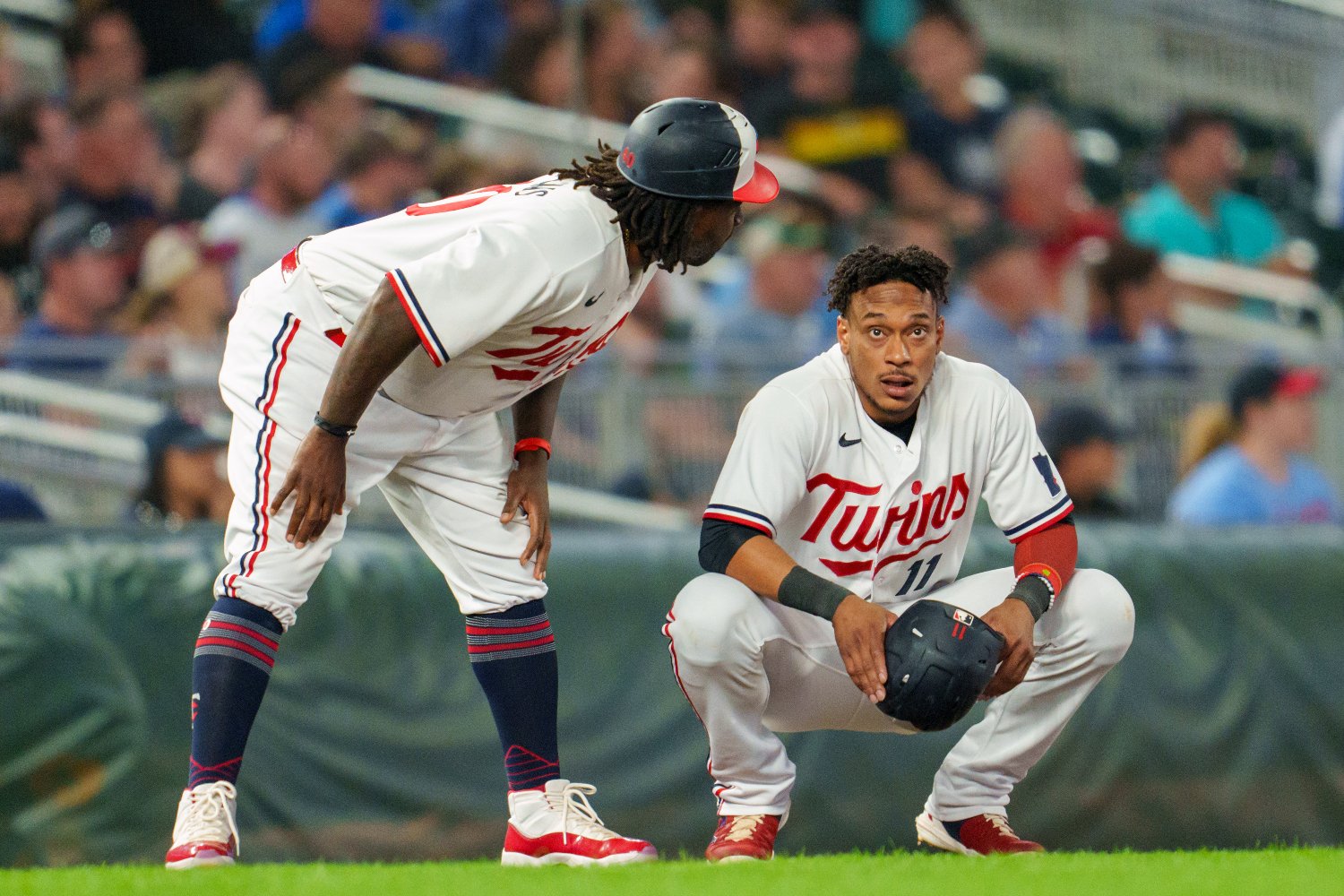 Box Score: Starting Pitcher: Sonny Gray: 6 2/3 IP, 4 H 4 ER 3 BB 7 K (93 Pitches, 60 Strikes, 64.5%) Home Runs: None Bottom 3 WPA: Royce Lewis (-.212), Joey Gallo (-.174), Donovan Solano (-.162) Win Probability Chart (Via Fangraphs): Sonny Gray has been sharp lately, both due to better command of his breaking pitches, and a concerted effort to challenge hitters more. His 2.78 FIP coming into the game led baseball, as did his rate of home runs allowed. With Gerrit Cole's blowup against the Red Sox (4 IP, 6 ER), a good outing would position Gray well in his quest for a first Cy Young award (though Pablo Lopez might have something to say about that). It sure started off well. Fresh off of blanking the hot-hitting Phillies over six innings last Sunday, Gray got right to work against the struggling Pirates' lineup in the first. He struck out Ji-Hwan Bae and Bryan Reynolds on three pitches each (featuring some devastating sweepers), then got ahead of Andrew McCutchen 0-2. With the first immaculate inning in Twins history* hanging in the balance, the veteran McCutchen spoiled the fun by flying out lazily to Max Kepler. *The Twins' broadcast mentioned that Scott Baker once threw an immaculate inning, which is not true, Baker did, however, strike out four men in one inning in 2008, which may have produced the confusion. Opposing Gray was Mitch Keller of the Pirates, a former high draft pick (from Cedar Rapids) and top prospect who had a few lean years before appearing to break out earlier this year, pitching to a 3.31 ERA with a 27% strikeout rate in the first half. He has struggled mightily since then, with a 7.71 ERA and 20% strikeout rate. The Twins added to his struggles in the first, starting with Jorge Polanco, who smacked a one-out single into right field and promptly stole second. With two outs, Kepler hit a grounder up the middle that would have been right at Pirates shortstop Liover Peguero... except the ball struck Keller in the foot and caromed into right field for a double and the game's first run. Keller recovered to strike out the streaking Royce Lewis, which would be a theme in the early innings. Keller's sinker and sweeper confounded Twins hitters and resulted in a whopping eight strikeouts through the first three innings. He finished with 12. But at that point, Gray was untouchable. Through the first five innings, he threw only 47 pitches, eliciting weak contact and confusing an inexperienced Pittsburgh lineup with his vast assortment of pitches. In the fifth, Richie Palacios appeared to break up the perfecto as well as the no-hitter, hitting a sharp grounder up the middle with second baseman Eduoard Julien shading towards first. But Julien ranged to his right, popped up off of a knee and delivered a strong throw to retire Palacios. It wasn't just an impressive play by Julien, but a legitimately impressive play, period. The Twins added some insurance in the bottom of the inning. Following a rare Joey Gallo ground ball double play, Christian Vázquez delivered an opposite field double which was then followed by a soft single by Michael A. Taylor to double the lead. After retiring his 16th straight batter of the night, Gray then induced a soft ground ball off the bat of Peguero that was fielded by Polanco at third. Polanco's throw was wide, however, and Peguero took a circuitous route to the bag, possibly interfering with first baseman Donovan Solano's glove. But the out was not recorded, and Peguero was awarded a hit, ending the possibility of any sort of history being made. A bloop hit and a walk followed, bringing up Reynolds with the bases loaded. Gray set him down on three pitches, but threw a mistake pitch to McCutchen ahead in the count, who drove a single up the middle to tie the game 2-2. Ke'Bryan Hayes then broke the tie with a sharp single to left. The Twins had a golden opportunity to bounce back in the bottom of the sixth. Following a Polanco leadoff walk, Correa and Kepler both singled, bringing up Lewis with the bases loaded. Perhaps expecting the sinker down 0-2, Lewis swung through a four-seamer a few inches outside for a crucial strikeout. That brought up Solano, who fell behind on a questionable strike one call and eventually struck out on a beautiful sweeper, bringing up Gallo with two strikes. He worked the count full, but succumbed to strike three on a fastball up in the zone, ending the threat. Keller was pretty electric, overall. The fates had more misery for the Twins in the top of the seventh. After a Jack Suwinski walk, Peguero grounded to third base. Polanco threw to second , and while Julien made his relay, Suwinski interfered by continuing to charge forward, clearly altering Julien's throwing motion. The throw was high and Solano appeared to still get his foot down before Peguero's, but this was the infamous Laz Diaz's umpire crew, and not only did they not call interference, they also called Peguero safe at first. The Twins challenged both plays, and somehow were denied on both counts. You don't have to watch a lot of baseball to know that Bae then doubled home Peguero to extend the lead to 4-2. The Good: Vázquez had two doubles, after entering the game with 12 extra base hits all season; Correa got on base twice more, with a sharp single and a walk. He came into the game with a 1.149 OPS over his previous ten games; The Bad: Gray fell into some of his old habits by walking three men, all in crucial spots late in his outing; Lewis had a series of bad at-bats, including his bases loaded strikeout. He later swung wildly at what would have been ball four inside, resulting in a strike out to lead off the eighth inning. Balazovic had a tough outing, giving up three hits, three runs and three walks without recording a strikeout. The smoke and mirrors success he had early on has not proven sustainable, and McCutchen's home run off of him sealed the loss tonight. What’s Next: Dallas Keuchel (0-1, 9.45 ERA) goes for the series win against Osvaldo Bido (2-3, 5.05 ERA). Keuchel is on thin ice, having not struck out a batter over his first two outings, while Joe Ryan had a successful rehab outing on Friday. Postgame Interviews: Bullpen Usage Chart: TUE WED THU FRI SAT TOT Balazovic 0 18 0 0 36 54 Floro 14 6 0 0 27 47 Jax 0 33 0 11 0 44 Pagán 11 15 0 11 0 37 Durán 14 0 0 17 0 31 Winder 0 28 0 0 0 28 Thielbar 9 0 0 10 0 19 Sands 0 0 0 0 8 8
- 32 comments
-
- 1
-
-
- sonny gray
- royce lewis
- (and 2 more)
-
You're unlikely to build an inning if it starts with the top 6-7 guys just taking huge hacks and hoping to get a mistake. That's where guys like Martin can help. It just has to be in context- if you have a team full of guys like that you end up as the Guardians. But you are right, there's a reason there aren't a lot of .380 OBP guys without power in the league. Long-term, Martin will likely have to develop 10-15 HR power to truly stick around as an impact player.
- 48 replies
-
- 3
-
-
- austin martin
- brooks lee
- (and 3 more)
-
You never know how minor league numbers will translate. Certainly Pena and Stott were much bigger prospects than Williams, and their success hasn't been entirely linear since their arrival. It's probably a stretch to think Williams will contribute much, but in a small sample a streaky power bat like his could ambush pitchers more than say, Gallo, who has very little chance if a pitcher just executes their game plan against him.
-
The Triple-A team in St. Paul is cooking on a daily basis, it seems, with live arms and powerful bats. Which Saints players stand a chance to impact the Twins' playoff run in September, and how can room be made for them? Image courtesy of Rob Thompson, St. Paul Saints (photo of Austin Martin) The Triple-A team in St. Paul is cooking on a daily basis, it seems, with live arms and powerful bats. Which Saints players stand a chance to impact the Twins' playoff run in September, and how can room be made for them? Young players are wild cards. Sometimes they pop right up, like Edouard Julien and Matt Wallner, and become instant contributors. Sometimes they flop, like Jose Miranda (though a healthy shoulder could certainly improve things). But the energy that a young star can provide to a lagging team is immeasurable, especially in the postseason. Jeremy Pena and Bryson Stott proved that last year in their team’s respective runs. Sometimes a young guy plays a bit part that changes the scope of how a team operates, like Terrance Gore as pinch runner extraordinaire for the Royals’ World Series teams, or David Price in the bullpen for the 2008 Tampa Bay Rays. Do the Twins have anyone that can provide the sort of youthful magnetism that sparks runs through the playoffs? Yeah, there’s a few. Austin Martin Martin has created some potential call-up buzz with his hot start to August. He offers elite speed, controls the strike zone and hits right-handed, all strengths the major-league team seems to lack. If he played for, say, the Rays or Orioles, his skillset wouldn’t matter nearly as much. Those teams have plenty of dynamic young players who can hit lefties and spark a rally. He also doesn’t have power, and frankly, that may only help the Twins. Since the departure of Luis Arraez, they could use a guy the opposing pitcher knows is not trying to go bridge with every swing (something I wrote about previously). In the playoffs, that can be terrifying when a single in the right moment can swing the outcome of a game. Similarly, if Martin reaches base late in the game (his OBP is currently .381 for the Saints) that can create high anxiety for a pitcher, especially if they struggle to hold runners on. The team is certainly keeping a close eye on his progress to see if they want to bite the bullet and add Martin to the 40-man and active roster before rosters expand. DaShawn Keirsey A late-blooming outfielder, Keirsey played well this year for the Wind Surge before being called up to St. Paul less than two weeks ago. He is a major speed threat (33 steals in 2023) who plays a strong center field and can pop the occasional home run. A lefty, he could be a platoon-mate for Michael A. Taylor, much like Nick Gordon before his injury. He’s 26, so the Twins should see what they have in Keirsey before they have to make a 40-man decision on him this offseason. Chris Williams Williams has major power from the right side of the plate, plays first base and can play catcher as well. He tends to go on major home run heaters, and a well-timed one could be a boon to an offense lacking in both right-handed bats and first basemen. He has posted a .919 OPS for the Saints this year and, like Keirsey, would have to be added to the 40-man this offseason or else be exposed to the Rule 5 draft (as they both have the last two years). Andrew Stevenson The speedster has played left and center field for the Saints after being picked up off waivers from Washington after playing parts of five seasons in the big leagues with the Nationals. He has an .895 OPS this year, with 38 steals and 14 home runs. He could be a lightning-in-a-bottle-type who plays with the sort of urgency you can only get from a 29-year-old trying to prove he belongs. However, he hits left-handed and is better suited for left-field, so he wouldn’t make sense without an injury or two to the current crop of Twins lefty corner bats. Brooks Lee Lee is still adjusting to Triple-A. He looks the part of an impact bat and has since before he was drafted eighth overall in 2022. He offers pop from both sides of the plate and controls the strike zone. He has a line-drive swing that looked like it would lead to a lot of doubles coming out of college. Potentially more of those liners will turn into home runs as he fills out (and he has). Where the Twins could put him is a big question mark, and they may internally think he’s better off adjusting to Triple-A and playing every day for the time being unless a major infield injury occurs. It would be exciting to see a polished young bat like his in a postseason lineup facing a guy without a full scouting report on him yet. Yunior Severino Severino is a poor man’s Lee, but he’s a little older (24 in October) and has more current power in his profile. He has played both second base and third base, and he can switch-hit. His numbers have improved each of the last three years as he has moved up the system, culminating in a .913 OPS this year with 25 homers (all but one in Wichita). He has also been playing some first base recently, meaning the Twins may be looking at him if Joey Gallo continues to struggle and Alex Kirilloff isn’t able to return from his shoulder injury. Kody Funderburk Funderburk is a left-handed reliever, and the Twins currently only have one in their pen in 36-year-old Caleb Thielbar. It may be worth seeing if Funderburk, 26, can contribute in the big leagues. He has struck out 36% of batters thus far in 2023. His walk rate is a little high (11.2%), but he isn’t Jovani Moran. Surprising a playoff opponent with a lefty they have never faced could be an advantage in a short series. Roster Implications None of these guys are on the 40-man roster, so adding them to the active roster would require some difficult decisions. It is possible. If the team were to add, say, two players to the 40-man, they could move Jose Miranda and Jorge Alcala to the 60-day IL. They could also outright Oliver Ortega, who had a nice run but doesn’t look like an impact arm long-term. Adding players to the active roster is trickier. Gallo is a DFA candidate if his recent adjustments are a mirage, while Kyle Farmer has just one more year of arbitration and hasn’t done the thing he’s most skilled at (crushing lefties) this year. The presence of Donovan Solano and Royce Lewis make him, arguably, redundant, though he is beloved in the clubhouse. Willi Castro and Jordan Luplow both have options, as well. I would hazard a guess that at least one of the players currently on the 26-man roster will succumb to some sort of injury in the coming weeks. But this team shouldn’t wait. Players need to be on the 40-man before rosters expand to be eligible for the playoffs (although they can be creative with injury replacements), and trotting out a lineup that features Luplow and Castro at the top of it as they did in Philadelphia this weekend borders on unserious. Getting a speed threat who hits better than Castro would be nice. Getting a first baseman who can show a little fight behind in the count would help, as well (sorry Joey). And one more reliever who isn’t composed mostly of home run induced scar tissue would be lovely (I still appreciate you, EP). Also available are old friends Gilberto Celestino, Trevor Larnach, and Randy Dobnak, as well as Triple-A stalwarts Jair Camargo and Anthony Prato. All represent quite an improvement on the options the team had last year, when we were mulling the addition of Michael Helman (currently injured), and no one else. What do you think? Should the team continue to trust its veteran depth pieces or shock the system with some of its young talent stockpile? Sound off in the comments! View full article
-
That's One Fine Looking Saints Team.. Why Don't the Twins Look Like That?
Hans Birkeland posted an article in Twins
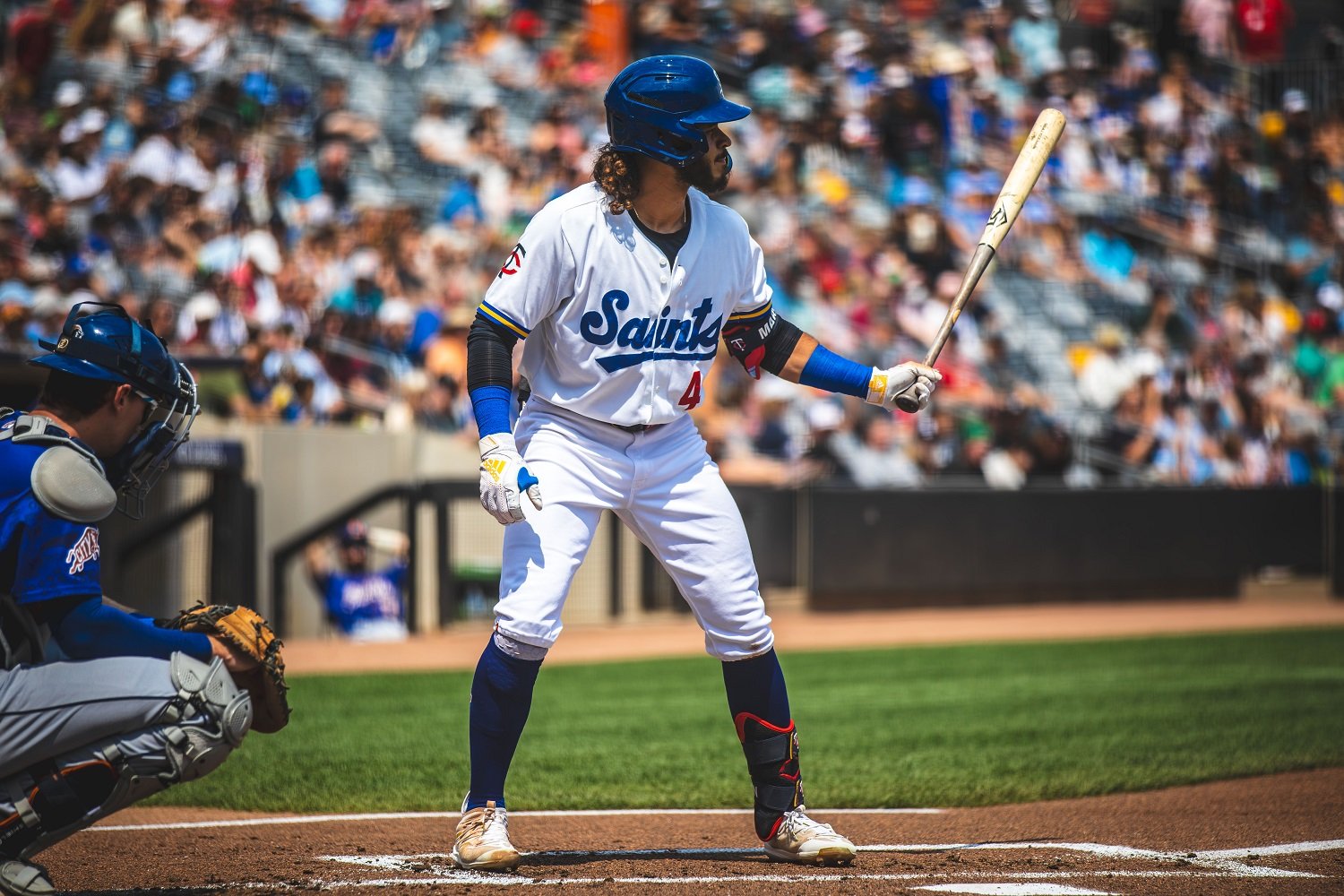 Young players are wild cards. Sometimes they pop right up, like Edouard Julien and Matt Wallner, and become instant contributors. Sometimes they flop, like Jose Miranda (though a healthy shoulder could certainly improve things). But the energy that a young star can provide to a lagging team is immeasurable, especially in the postseason. Jeremy Pena and Bryson Stott proved that last year in their team’s respective runs. Sometimes a young guy plays a bit part that changes the scope of how a team operates, like Terrance Gore as pinch runner extraordinaire for the Royals’ World Series teams, or David Price in the bullpen for the 2008 Tampa Bay Rays. Do the Twins have anyone that can provide the sort of youthful magnetism that sparks runs through the playoffs? Yeah, there’s a few. Austin Martin Martin has created some potential call-up buzz with his hot start to August. He offers elite speed, controls the strike zone and hits right-handed, all strengths the major-league team seems to lack. If he played for, say, the Rays or Orioles, his skillset wouldn’t matter nearly as much. Those teams have plenty of dynamic young players who can hit lefties and spark a rally. He also doesn’t have power, and frankly, that may only help the Twins. Since the departure of Luis Arraez, they could use a guy the opposing pitcher knows is not trying to go bridge with every swing (something I wrote about previously). In the playoffs, that can be terrifying when a single in the right moment can swing the outcome of a game. Similarly, if Martin reaches base late in the game (his OBP is currently .381 for the Saints) that can create high anxiety for a pitcher, especially if they struggle to hold runners on. The team is certainly keeping a close eye on his progress to see if they want to bite the bullet and add Martin to the 40-man and active roster before rosters expand. DaShawn Keirsey A late-blooming outfielder, Keirsey played well this year for the Wind Surge before being called up to St. Paul less than two weeks ago. He is a major speed threat (33 steals in 2023) who plays a strong center field and can pop the occasional home run. A lefty, he could be a platoon-mate for Michael A. Taylor, much like Nick Gordon before his injury. He’s 26, so the Twins should see what they have in Keirsey before they have to make a 40-man decision on him this offseason. Chris Williams Williams has major power from the right side of the plate, plays first base and can play catcher as well. He tends to go on major home run heaters, and a well-timed one could be a boon to an offense lacking in both right-handed bats and first basemen. He has posted a .919 OPS for the Saints this year and, like Keirsey, would have to be added to the 40-man this offseason or else be exposed to the Rule 5 draft (as they both have the last two years). Andrew Stevenson The speedster has played left and center field for the Saints after being picked up off waivers from Washington after playing parts of five seasons in the big leagues with the Nationals. He has an .895 OPS this year, with 38 steals and 14 home runs. He could be a lightning-in-a-bottle-type who plays with the sort of urgency you can only get from a 29-year-old trying to prove he belongs. However, he hits left-handed and is better suited for left-field, so he wouldn’t make sense without an injury or two to the current crop of Twins lefty corner bats. Brooks Lee Lee is still adjusting to Triple-A. He looks the part of an impact bat and has since before he was drafted eighth overall in 2022. He offers pop from both sides of the plate and controls the strike zone. He has a line-drive swing that looked like it would lead to a lot of doubles coming out of college. Potentially more of those liners will turn into home runs as he fills out (and he has). Where the Twins could put him is a big question mark, and they may internally think he’s better off adjusting to Triple-A and playing every day for the time being unless a major infield injury occurs. It would be exciting to see a polished young bat like his in a postseason lineup facing a guy without a full scouting report on him yet. Yunior Severino Severino is a poor man’s Lee, but he’s a little older (24 in October) and has more current power in his profile. He has played both second base and third base, and he can switch-hit. His numbers have improved each of the last three years as he has moved up the system, culminating in a .913 OPS this year with 25 homers (all but one in Wichita). He has also been playing some first base recently, meaning the Twins may be looking at him if Joey Gallo continues to struggle and Alex Kirilloff isn’t able to return from his shoulder injury. Kody Funderburk Funderburk is a left-handed reliever, and the Twins currently only have one in their pen in 36-year-old Caleb Thielbar. It may be worth seeing if Funderburk, 26, can contribute in the big leagues. He has struck out 36% of batters thus far in 2023. His walk rate is a little high (11.2%), but he isn’t Jovani Moran. Surprising a playoff opponent with a lefty they have never faced could be an advantage in a short series. Roster Implications None of these guys are on the 40-man roster, so adding them to the active roster would require some difficult decisions. It is possible. If the team were to add, say, two players to the 40-man, they could move Jose Miranda and Jorge Alcala to the 60-day IL. They could also outright Oliver Ortega, who had a nice run but doesn’t look like an impact arm long-term. Adding players to the active roster is trickier. Gallo is a DFA candidate if his recent adjustments are a mirage, while Kyle Farmer has just one more year of arbitration and hasn’t done the thing he’s most skilled at (crushing lefties) this year. The presence of Donovan Solano and Royce Lewis make him, arguably, redundant, though he is beloved in the clubhouse. Willi Castro and Jordan Luplow both have options, as well. I would hazard a guess that at least one of the players currently on the 26-man roster will succumb to some sort of injury in the coming weeks. But this team shouldn’t wait. Players need to be on the 40-man before rosters expand to be eligible for the playoffs (although they can be creative with injury replacements), and trotting out a lineup that features Luplow and Castro at the top of it as they did in Philadelphia this weekend borders on unserious. Getting a speed threat who hits better than Castro would be nice. Getting a first baseman who can show a little fight behind in the count would help, as well (sorry Joey). And one more reliever who isn’t composed mostly of home run induced scar tissue would be lovely (I still appreciate you, EP). Also available are old friends Gilberto Celestino, Trevor Larnach, and Randy Dobnak, as well as Triple-A stalwarts Jair Camargo and Anthony Prato. All represent quite an improvement on the options the team had last year, when we were mulling the addition of Michael Helman (currently injured), and no one else. What do you think? Should the team continue to trust its veteran depth pieces or shock the system with some of its young talent stockpile? Sound off in the comments!
- 48 comments
-
- 7
-
-
- austin martin
- brooks lee
- (and 3 more)
-
Walker JenkinsBrooks LeeEmmanuel RodriguezCharlee SotoDavid FestaMarco RayaAustin MartinTanner SchobelYunior SeverinoLuke KeaschallBrandon WinokurYasser MercedesJose RodriguezDanny De AndradeKala'i RosarioJose SalasCory LewisBrent HeadrickCJ CulpepperAlerick Soularie
-
Trying to end a four-game skid on the road against one of baseball's hottest teams, the Twins played one of their best games of the season. Joey Gallo hit two home runs and wasn't retired on the night. Pablo López had perhaps his best start of the year, going six scoreless against a tough Phillies lineup. Image courtesy of Kyle Ross-USA TODAY Sports Trying to end a four-game skid on the road against one of baseball's hottest teams, the Twins played one of their best games of the season. Joey Gallo hit two home runs and wasn't retired on the night. Pablo López had perhaps his best start of the year, going six scoreless against a tough Phillies lineup. Coming off of a loss that is certainly in the running for worst loss of the year (the second game against the Mariners at Target Field is my choice), the Twins needed to bring a lot more energy to stop their losing streak and establish some positive momentum at the end of a difficult road trip. The Guardians did their part, blowing a 5-3 lead in the ninth inning against Tampa Bay to extend their run of futility, and giving the Twins a chance to retake a 4.5 game lead in the AL Central. The Twins delivered, and then some. Box Score Starting pitcher: Pablo López: 6 IP, 4 H, 0 ER, 1 BB, 7 K (92 Pitches, 60 Strikes, 65.2%) Home Runs: Matt Wallner (8), Joey Gallo 2 (20), Carlos Correa (15) Top 3 WPA: López (.329), Gallo (.152) Correa (.083) Win Probability Chart (Via Fangraphs): Things started out promising. Facing a solid but unspectacular right-handed pitcher in Taijuan Walker, the night began with walks to Edouard Julien and Jorge Polanco. After Carlos Correa hit a grounder soft enough to avoid a double play and advance the runners, Max Kepler hit a grounder up the middle to score Julien. Ryan Jeffers also drew a walk before Matt Wallner lined out sharply to Jake Cave in center. The Twins put runners on base in the second and third innings, as well, but came up empty even as Walker's control wavered. Pablo López also started out positively, getting dominating strikeouts against Kyle Schwarber and Bryce Harper sandwiched around a liner from Alec Bohm that struck López on the inner thigh. López was fortunate to avoid injury and didn't appear any worse for the wear. After drawing five walks against Walker in the first three innings, the Twins decided to do some actual damage in the fourth, starting with an impressive homer off the bat of Wallner. He stayed back on a curveball on the outside edge of the plate and hammered it 108 MPH, a homer in all 30 parks. Wallner's ability to adjust to a pitch he may have been fooled by caused me to outwardly exclaim that he is fundamentally a different hitter than Joey Gallo, someone I was worried would represent Wallner's ceiling. Wallner is still no sure-thing, but being able to adjust mid-pitch and crush a breaking ball is something Gallo rarely does. On queue, Gallo took a splitter from Walker and bashed it the other way, just over the fence in left field. Is it possible that Gallo is making an adjustment to let the ball travel a bit more? Testing the theory, he later managed to line a 1-2 slider of the right field wall facing lefty Matt Strahm in the sixth. Finally, he broke the game open with a three-run homer in the seventh. He added a two-strike single in the ninth. If nothing else, he at least is giving himself a chance in deeper counts, and that's a nice development. Meanwhile, López cruised through the fourth inning, racking up strikeouts and spotting his sweeper and change-up where he wanted. He got away with a few fastballs in the middle of the plate, but Phillies' hitters were late on it, perhaps with offspeed on their minds. Things got hairier in the fifth inning, López allowed a sharp single to the red-hot Trea Turner before striking our JT Realmuto on a 3-2 fastball way outside the zone. With López's sweeper seemingly not cooperating, Cave then looped one to right field for a single before Rodolfo Castro got the barrel on a 2-1 change-up and lined out to Kepler. That brought up reigning NL home run champ Kyle Schwarber, capable of tying the game at three with one swing, but López got the Phillies' leadoff hitter to pop out to end the threat, preserving the 3-0 advantage. The Phillies put up a potential rally in the sixth, as well. Bryce Harper ripped a one-out double before Nick Castellanos roped a line drive to the left-center gap. Somehow, Michael A. Taylor caught up to the hooking liner, making an excellent diving catch to quell the uprising. Bryson Stott grounded out to end the inning, giving López six shutout innings when the Twins really needed them. Correa then added some insurance off tough lefty Gregory Soto, hitting a 1-1 slider out to left field to extend the lead to 4-0, but the Twins weren't done. Kepler followed with a booming double off Soto and scored on a single from Wallner. Gallo then added his second home run, a three-run shot that put the game out of reach. The add-on runs are a welcome sight. The good: Kepler stroking a 99 MPH fastball from a lefty off the wall in right-center after battling back from an 0-2 count; Whatever strides Gallo is making; his OPS (.770) and batting average (.185) are now higher than Schwarber's, who somehow continues to hit leadoff for a playoff team. López has managed to string together a few great starts, and has his ERA down to 3.66. He has to be the front-runner to start game one of a playoff series. The bad: Julien looks like he has lost his timing a little. He still is only swinging at strikes, but is also swinging and missing a lot. He also has not yet had an extra-base hit in August. Correa looked a little slow rounding the bases on his home run, and was removed for Farmer in the seventh. The team was up 8-0 at that point, so it may have been just a precautionary move. What’s Next: Sonny Gray (5-5, 3.18 ERA) faces lefty Ranger Suarez (2-5, 3.96 ERA) as the Twins try for a series victory in Philadelphia. Suarez has been solid for the Phillies since coming up in 2021, but never dominant, and his baseball savant page is hardly impressive. However, he is a lefty. Postgame Interviews: Bullpen Usage Chart: TUE WED THU FRI SAT TOT Winder 42 0 0 43 0 85 Balazovic 0 39 0 0 18 57 Sands 28 0 0 0 0 28 Floro 0 0 28 0 0 28 Durán 0 0 18 0 0 18 Jax 0 0 0 0 15 15 Thielbar 0 0 0 0 15 15 Pagán 0 14 0 0 0 14 View full article
- 27 replies
-
- 2
-
-
- pablo lopez
- matt wallner
- (and 3 more)
-
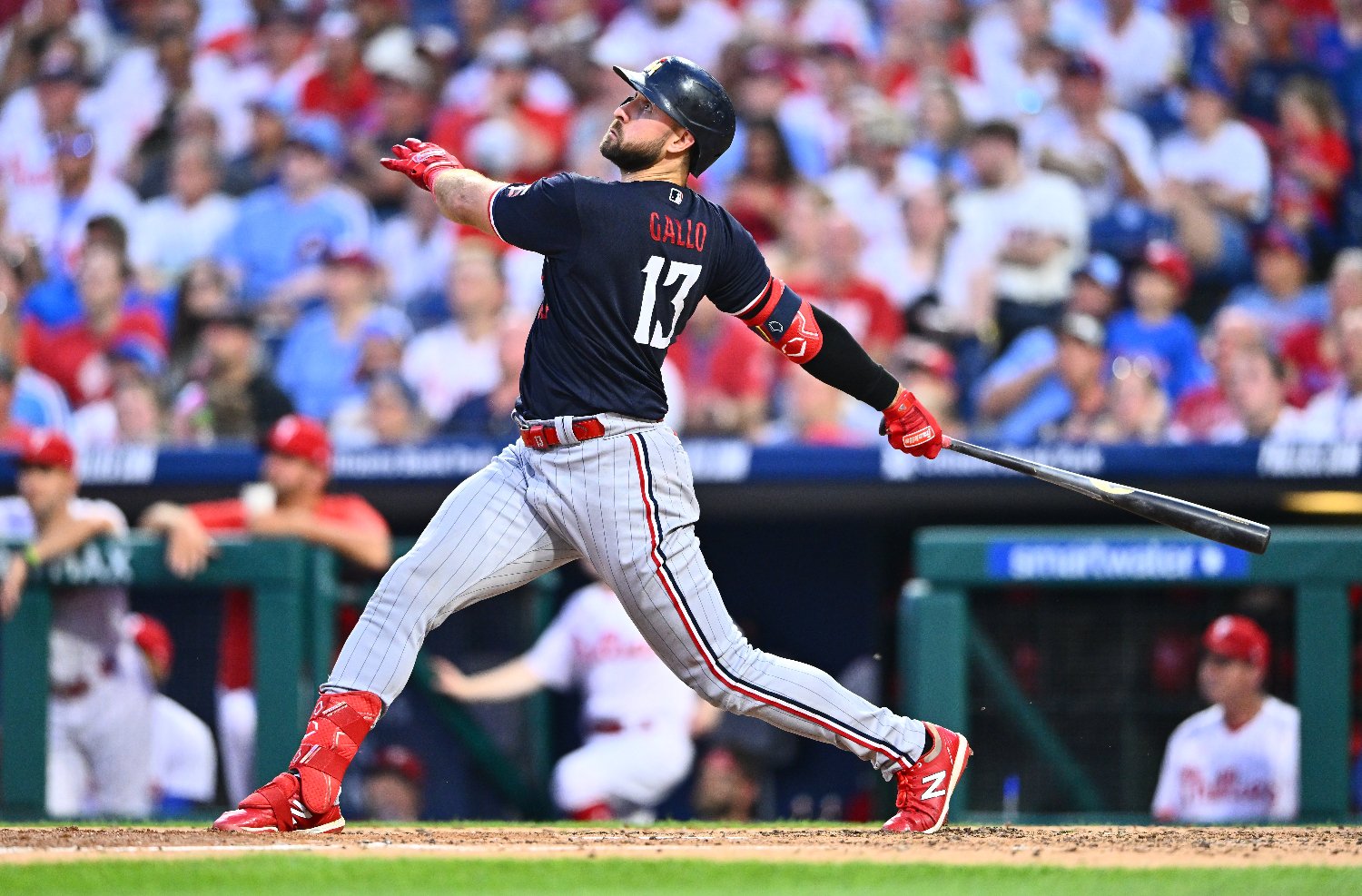 Coming off of a loss that is certainly in the running for worst loss of the year (the second game against the Mariners at Target Field is my choice), the Twins needed to bring a lot more energy to stop their losing streak and establish some positive momentum at the end of a difficult road trip. The Guardians did their part, blowing a 5-3 lead in the ninth inning against Tampa Bay to extend their run of futility, and giving the Twins a chance to retake a 4.5 game lead in the AL Central. The Twins delivered, and then some. Box Score Starting pitcher: Pablo López: 6 IP, 4 H, 0 ER, 1 BB, 7 K (92 Pitches, 60 Strikes, 65.2%) Home Runs: Matt Wallner (8), Joey Gallo 2 (20), Carlos Correa (15) Top 3 WPA: López (.329), Gallo (.152) Correa (.083) Win Probability Chart (Via Fangraphs): Things started out promising. Facing a solid but unspectacular right-handed pitcher in Taijuan Walker, the night began with walks to Edouard Julien and Jorge Polanco. After Carlos Correa hit a grounder soft enough to avoid a double play and advance the runners, Max Kepler hit a grounder up the middle to score Julien. Ryan Jeffers also drew a walk before Matt Wallner lined out sharply to Jake Cave in center. The Twins put runners on base in the second and third innings, as well, but came up empty even as Walker's control wavered. Pablo López also started out positively, getting dominating strikeouts against Kyle Schwarber and Bryce Harper sandwiched around a liner from Alec Bohm that struck López on the inner thigh. López was fortunate to avoid injury and didn't appear any worse for the wear. After drawing five walks against Walker in the first three innings, the Twins decided to do some actual damage in the fourth, starting with an impressive homer off the bat of Wallner. He stayed back on a curveball on the outside edge of the plate and hammered it 108 MPH, a homer in all 30 parks. Wallner's ability to adjust to a pitch he may have been fooled by caused me to outwardly exclaim that he is fundamentally a different hitter than Joey Gallo, someone I was worried would represent Wallner's ceiling. Wallner is still no sure-thing, but being able to adjust mid-pitch and crush a breaking ball is something Gallo rarely does. On queue, Gallo took a splitter from Walker and bashed it the other way, just over the fence in left field. Is it possible that Gallo is making an adjustment to let the ball travel a bit more? Testing the theory, he later managed to line a 1-2 slider of the right field wall facing lefty Matt Strahm in the sixth. Finally, he broke the game open with a three-run homer in the seventh. He added a two-strike single in the ninth. If nothing else, he at least is giving himself a chance in deeper counts, and that's a nice development. Meanwhile, López cruised through the fourth inning, racking up strikeouts and spotting his sweeper and change-up where he wanted. He got away with a few fastballs in the middle of the plate, but Phillies' hitters were late on it, perhaps with offspeed on their minds. Things got hairier in the fifth inning, López allowed a sharp single to the red-hot Trea Turner before striking our JT Realmuto on a 3-2 fastball way outside the zone. With López's sweeper seemingly not cooperating, Cave then looped one to right field for a single before Rodolfo Castro got the barrel on a 2-1 change-up and lined out to Kepler. That brought up reigning NL home run champ Kyle Schwarber, capable of tying the game at three with one swing, but López got the Phillies' leadoff hitter to pop out to end the threat, preserving the 3-0 advantage. The Phillies put up a potential rally in the sixth, as well. Bryce Harper ripped a one-out double before Nick Castellanos roped a line drive to the left-center gap. Somehow, Michael A. Taylor caught up to the hooking liner, making an excellent diving catch to quell the uprising. Bryson Stott grounded out to end the inning, giving López six shutout innings when the Twins really needed them. Correa then added some insurance off tough lefty Gregory Soto, hitting a 1-1 slider out to left field to extend the lead to 4-0, but the Twins weren't done. Kepler followed with a booming double off Soto and scored on a single from Wallner. Gallo then added his second home run, a three-run shot that put the game out of reach. The add-on runs are a welcome sight. The good: Kepler stroking a 99 MPH fastball from a lefty off the wall in right-center after battling back from an 0-2 count; Whatever strides Gallo is making; his OPS (.770) and batting average (.185) are now higher than Schwarber's, who somehow continues to hit leadoff for a playoff team. López has managed to string together a few great starts, and has his ERA down to 3.66. He has to be the front-runner to start game one of a playoff series. The bad: Julien looks like he has lost his timing a little. He still is only swinging at strikes, but is also swinging and missing a lot. He also has not yet had an extra-base hit in August. Correa looked a little slow rounding the bases on his home run, and was removed for Farmer in the seventh. The team was up 8-0 at that point, so it may have been just a precautionary move. What’s Next: Sonny Gray (5-5, 3.18 ERA) faces lefty Ranger Suarez (2-5, 3.96 ERA) as the Twins try for a series victory in Philadelphia. Suarez has been solid for the Phillies since coming up in 2021, but never dominant, and his baseball savant page is hardly impressive. However, he is a lefty. Postgame Interviews: Bullpen Usage Chart: TUE WED THU FRI SAT TOT Winder 42 0 0 43 0 85 Balazovic 0 39 0 0 18 57 Sands 28 0 0 0 0 28 Floro 0 0 28 0 0 28 Durán 0 0 18 0 0 18 Jax 0 0 0 0 15 15 Thielbar 0 0 0 0 15 15 Pagán 0 14 0 0 0 14
- 27 comments
-
- 10
-
-
- pablo lopez
- matt wallner
- (and 3 more)
-
His age, mostly. But I will say he's making that decision tougher and tougher
- 53 replies
-
- 3
-
-
- ryan jeffers
- matt wallner
- (and 3 more)
-
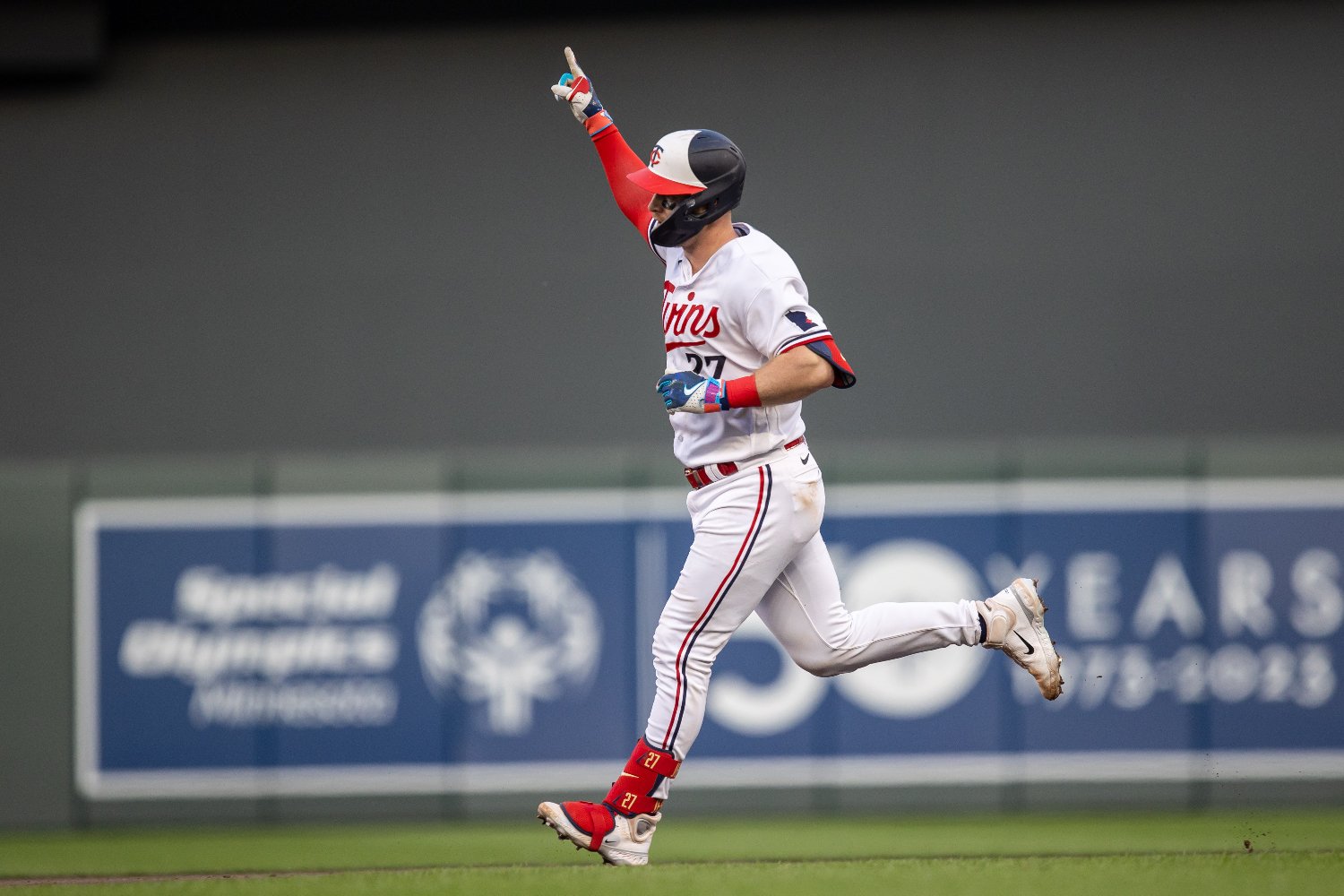 Trying to win back to back series following their debilitating sweep in Kansas City and subsequent egg-laying at the trade deadline, the Twins were delayed about a half hour by the festivities surrounding Joe Mauer's Twins Hall of Fame induction (check out a great tribute to Mauer here). Once underway they delivered one of their better performances of the year while their division rivals were throwing punches at each other, pushing the division lead to 3.5 games. Box Score: Starting Pitcher: Kenta Maeda: 6 IP 2 H 1 ER 0 BB 7 K (87 Pitches, 54 Strikes, 62%) Home Runs: Ryan Jeffers 2 (8), Michael A. Taylor (15), Max Kepler (17) Top 3 WPA: Willi Castro (.180), Jeffers (.150), Matt Wallner (.110) Win Probability Chart (Via Fangraphs): Maeda was sharp early, but a couple of close pitches called balls (particularly low in the zone) resulted in some hitters counts and ultimately the first run of the game, a home run off the bat of Lourdes Gurriel Jr. Opposing Maeda was rookie Ryne Nelson, a second round draft pick who struck out a lot of hitters in the minors but who has struggled to get swing and miss in the majors. He relies on his 94 MPH fastball to get weak contact from hitters, and throws it over half the time. His secondary pitches don't rate very highly, and given that and that fact that Nelson throws right-handed put him right in the Twins' cross-hairs. They went to work against Nelson in the second. Matt Wallner led off the inning with a broken bat single, and Willi Castro scorched a ground ball through the right side all the way to the warning track to score him. With Joe Mauer in the booth, Ryan Jeffers then demolished a Nelson fastball over the wall in right center field to make it a 3-1 game, part of another offensive onslaught that raised his OPS to a Mauer-like .895. After Jorge Polanco was called out on a check swing that he truly did check in the third inning, Max Kepler drove a single up the middle and Carlos Correa ended an 0-for-17 drought with a hard single off the limestone in right field (home run in 16/30 parks). Wallner then doubled down the right field line to score Kepler and Willi Castro drove home Correa with a drive to the gap in left center field that Gurriel made a nice catch on. Jeffers then smacked a hanging slider from Nelson down the left field line for a double to score Wallner, making it a 6-1 game. Meanwhile, Maeda was in cruise control, spotting his offspeed and sitting 91-92 MPH with his fastball. He continued to get squeezed by home plate umpire Emil Jimenez, but kept executing pitches and the slumping Diamondbacks lineup had no answer. When he struck out Arizona's superstar rookie Corbin Carroll to end the sixth (and his outing), he had set down 14 men in a row. Not to be outdone, Jeffers added yet another home run (115.8 MPH) in the sixth, this time off of mop-up lefty (and no-hitter throwing) Tyler Gilbert. Jeffers is unconscious right now and may need some DH at-bats going forward. The last run was delivered by newcomer Jordan Luplow, who singled off of position player Carson Kelly to score the team's 12th run. The good: Jeffers, who might need to play a little more. His improvements against right-handers (.310/.403/.500 entering the game) might mean he should represent the strong side of the platoon with Christian Vazquez. Didn't have that one on my bingo card to start the year. Michael A. Taylor has homered in three straight games, adding a solo shot the other way in the fourth inning. Kepler hit a 435 foot home run off of the lefty Gilbert. Jhoan Duran got the night off, and the team won. The bad: Tomorrow's mound opponent; Jorge Polanco struck out three times; Jovani Moran is in a major funk; Mauer's speech was pretty long. What’s Next: Dallas Keuchel (First start of 2023) faces off against Arizona ace Zac Gallen (11-5, 3.41 ERA) as the Twins try to complete a perfect home stand on Sunday. Gallen has been good, but his team has been playing at a .250 clip (7-21) since early July. Keuchel faces one of the teams that cut bait on him last year as he tries to prove that his numbers with the Saints (1.13 ERA) can carry over to a major league pennant race. Postgame Interviews: Bullpen Usage Chart: TUE WED THU FRI SAT TOT Durán 14 0 15 19 0 48 Winder 0 36 0 0 0 36 Morán 0 0 0 0 30 30 Jax 14 0 13 0 0 27 Pagán 16 0 0 11 0 27 Balazovic 0 0 0 0 26 26 Thielbar 0 11 0 12 0 23 Floro 0 0 0 19 0 19
- 53 comments
-
- 2
-
-
- ryan jeffers
- matt wallner
- (and 3 more)
-
After winning a nail-biter on Friday night, the Twins made it easier on themselves on Saturday by winning in a rout. Ryan Jeffers continues to mash and led the way with two home runs, while Kenta Maeda kept Arizona hitters off balance all night in an easy victory. Image courtesy of Jesse Johnson-USA TODAY Sports After winning a nail-biter on Friday night, the Twins made it easier on themselves on Saturday by winning in a rout. Ryan Jeffers continues to mash and led the way with two home runs, while Kenta Maeda kept Arizona hitters off balance all night in an easy victory. Trying to win back to back series following their debilitating sweep in Kansas City and subsequent egg-laying at the trade deadline, the Twins were delayed about a half hour by the festivities surrounding Joe Mauer's Twins Hall of Fame induction (check out a great tribute to Mauer here). Once underway they delivered one of their better performances of the year while their division rivals were throwing punches at each other, pushing the division lead to 3.5 games. Box Score: Starting Pitcher: Kenta Maeda: 6 IP 2 H 1 ER 0 BB 7 K (87 Pitches, 54 Strikes, 62%) Home Runs: Ryan Jeffers 2 (8), Michael A. Taylor (15), Max Kepler (17) Top 3 WPA: Willi Castro (.180), Jeffers (.150), Matt Wallner (.110) Win Probability Chart (Via Fangraphs): Maeda was sharp early, but a couple of close pitches called balls (particularly low in the zone) resulted in some hitters counts and ultimately the first run of the game, a home run off the bat of Lourdes Gurriel Jr. Opposing Maeda was rookie Ryne Nelson, a second round draft pick who struck out a lot of hitters in the minors but who has struggled to get swing and miss in the majors. He relies on his 94 MPH fastball to get weak contact from hitters, and throws it over half the time. His secondary pitches don't rate very highly, and given that and that fact that Nelson throws right-handed put him right in the Twins' cross-hairs. They went to work against Nelson in the second. Matt Wallner led off the inning with a broken bat single, and Willi Castro scorched a ground ball through the right side all the way to the warning track to score him. With Joe Mauer in the booth, Ryan Jeffers then demolished a Nelson fastball over the wall in right center field to make it a 3-1 game, part of another offensive onslaught that raised his OPS to a Mauer-like .895. After Jorge Polanco was called out on a check swing that he truly did check in the third inning, Max Kepler drove a single up the middle and Carlos Correa ended an 0-for-17 drought with a hard single off the limestone in right field (home run in 16/30 parks). Wallner then doubled down the right field line to score Kepler and Willi Castro drove home Correa with a drive to the gap in left center field that Gurriel made a nice catch on. Jeffers then smacked a hanging slider from Nelson down the left field line for a double to score Wallner, making it a 6-1 game. Meanwhile, Maeda was in cruise control, spotting his offspeed and sitting 91-92 MPH with his fastball. He continued to get squeezed by home plate umpire Emil Jimenez, but kept executing pitches and the slumping Diamondbacks lineup had no answer. When he struck out Arizona's superstar rookie Corbin Carroll to end the sixth (and his outing), he had set down 14 men in a row. Not to be outdone, Jeffers added yet another home run (115.8 MPH) in the sixth, this time off of mop-up lefty (and no-hitter throwing) Tyler Gilbert. Jeffers is unconscious right now and may need some DH at-bats going forward. The last run was delivered by newcomer Jordan Luplow, who singled off of position player Carson Kelly to score the team's 12th run. The good: Jeffers, who might need to play a little more. His improvements against right-handers (.310/.403/.500 entering the game) might mean he should represent the strong side of the platoon with Christian Vazquez. Didn't have that one on my bingo card to start the year. Michael A. Taylor has homered in three straight games, adding a solo shot the other way in the fourth inning. Kepler hit a 435 foot home run off of the lefty Gilbert. Jhoan Duran got the night off, and the team won. The bad: Tomorrow's mound opponent; Jorge Polanco struck out three times; Jovani Moran is in a major funk; Mauer's speech was pretty long. What’s Next: Dallas Keuchel (First start of 2023) faces off against Arizona ace Zac Gallen (11-5, 3.41 ERA) as the Twins try to complete a perfect home stand on Sunday. Gallen has been good, but his team has been playing at a .250 clip (7-21) since early July. Keuchel faces one of the teams that cut bait on him last year as he tries to prove that his numbers with the Saints (1.13 ERA) can carry over to a major league pennant race. Postgame Interviews: Bullpen Usage Chart: TUE WED THU FRI SAT TOT Durán 14 0 15 19 0 48 Winder 0 36 0 0 0 36 Morán 0 0 0 0 30 30 Jax 14 0 13 0 0 27 Pagán 16 0 0 11 0 27 Balazovic 0 0 0 0 26 26 Thielbar 0 11 0 12 0 23 Floro 0 0 0 19 0 19 View full article
- 53 replies
-
- 1
-
-
- ryan jeffers
- matt wallner
- (and 3 more)
-
The top of the Twins' system is rich in position players. And if we don't pick up options on Polanco and Kepler, let Gray, Maeda, Gallo, Farmer and Solano walk there will be some money to spend but I wouldn't be surprised if our payroll drops to 130M or so.
- 40 replies
-
- 3
-
-
- joey gallo
- trade deadline
- (and 3 more)
-
I don't think the team's future would be compromised if we traded away Cody Lawyerson and Jose Rodriguez.
- 40 replies
-
- 4
-
-

-
- joey gallo
- trade deadline
- (and 3 more)
-
Revenues down, team-record payroll, unwilling to trade low level prospects for obvious needs. No explanation. That's pretty simple.
- 40 replies
-
- 3
-
-
- joey gallo
- trade deadline
- (and 3 more)
-
 In my never-ending quest to grapple with unfavorable realities by saying what things are similar to other things, I took a look at the 2022 White Sox to try and figure out why this Twins team did nothing at the trade deadline and then gave us an excuse on par with a sixth grader who forgot their math homework. The White Sox were last year's Twins - they had more talent than the rest of the division, but couldn't get out of their own way, had some injuries, and generally just hovered around .500. Every winning streak became a losing streak. Every breakout performance turned into an injury. The opposition crushed every 3-2 pitch with a game on the line. And when the deadline came around, the White Sox did nothing. It was inexplicable. They made one trade, sending their backup catcher, Reese McGuire, for struggling lefty reliever Jake Diekman. GM Rick Hahn had the following to say: "We're disappointed that we weren't able to do more to improve this club, I think you saw a year ago at this time, you've seen it for the last several years, arguably the last couple of decades, that it's our nature to try to improve this club at any opportunity we have. Unfortunately, we weren't able to line up on some of our other potential targets." That is probably a bit more direct than Derek Falvey's explanation for the Twins' inaction, and White Sox fans crucified Hahn's. They had five quality starters (sound familiar?), but they had a true ace in Dylan Cease, who finished runner-up for the Cy Young. They had lineup stars in Tim Anderson, Eloy Jimenez, Luis Robert Jr. , Andrew Vaughn, Jose Abreu, Yasmani Grandal, Yoan Moncada, and a great (though expensive) bullpen. It made even less sense for that team to be .500 then for the current Twins to be .500. They needed any playable outfielder and a bullpen piece at the deadline. Sound familiar? When the season concluded, it came to light that the White Sox were operating with a cap on their spending, and that was at least part of the reason for their inaction. Even with the additions of Andrew Benintendi and Mike Clevinger, they opened the 2023 season with a payroll of about $13 million less than what they ended 2022 with. Could this be a reason the Twins stood pat, as well? In Chicago's case, they had a thin farm system and probably assumed that the Twins and Guardians would return to earth in the second half, so they could avoid adding any payroll (They were right about the Twins, at least). The Twins are in a similar spot. Their farm system is weak but has a few impact guys floating around in Brooks Lee, Marco Raya, and Emmanuel Rodriguez. They could have cashed those guys in and gone for it, knowing they were likely to host a playoff series, but could the team have afforded/gotten ownership approval for adding on Paul Goldschmidt's salary? Juan Soto's? Even the $5 million owed to Teoscar Hernandez over the rest of the year? We have no indications that they either could or could not, so what follows is theory, not fact. What we do have are half-baked explanations that they didn't want to remove anyone off the 26-man roster of a team with a .500 record and had a couple of sellers turn into buyers last minute. One way to divert attention from being at your spending limit is to say you don't want to give up your prospects, but they certainly had no problem offering up Cade Povich and Christian Encarnacion-Strand last year and didn't even offer that excuse this time around. Moderately tuned-in Twins fans have tried for years to quell the masses claiming "cheap Pohlads" and "poverty franchise" at every missed free agent. While all that was true in 1999, we tried to explain that the payrolls have risen to be mid-pack. We signed Carlos Correa! We extended Pablo Lopez! There's plenty of blame to go toward the front office, but their mistakes don't have anything to do with money! It was annoying work, but someone had to do it. The team is now running into some real financial limitations, some of which are out of their control, but nonetheless could have steered the front office away from adding anyone with anything above a minimum salary the rest of the way. First, the Diamond Sports situation could greatly impact payroll flexibility. While they agreed to pay the Twins for their 2023 contract, the team is a free agent at the end of the year. And it seems increasingly unlikely that whatever media partnership they enter into for 2024 will not be nearly as lucrative as the one they had with Bally (court documents revealed that the deal was worth $54.8 million per year)- there's a reason it was hemorrhaging money beyond just mismanagement. With streaming and general shifts in the media landscape, TV deals just don't hit like they used to ten or even five years ago. If $20 million or so gets knocked off the team's revenues for 2024, that will impact the team's payroll, one way or the other. Not to mention the team is already running a franchise record $153 million payroll after signing Correa to the biggest deal in team history. Second, ticket sales have not been great. They are up over 2022 at roughly 24,000 per game, but that pales compared to 2019 (28,000/game) and 2013 (30,000/game). Twins president Dave St. Peter famously stated last August that he didn't understand why fans weren't coming to games, citing the likable, contending (at the time) team. Not noted by St. Peter was any awareness of the public perception of the team, which had yet to collapse at that point. My theory is that Falvey and Levine were directed not to add to the payroll for this year. That may have to do with the team's lackluster performance, or it might have to do with a lack of future revenue. Either way, it would seem ownership told the front office to make something up about believing in their guys and not wanting to boot anyone off the roster. I've supported most of what this front office has done, or at least could see the thinking behind their weirder decisions. But if the team is fabricating excuses for not having authorization to add a couple million to its payroll, that's dysfunctional. Adding Connor Joe and Michael Fulmer wouldn't have made this team that much more of an attraction. But don't tell me you couldn't address obvious weaknesses that wouldn't cost much in prospect capital because the market didn't shape up exactly how you anticipated or didn't want to hurt Joey Gallo's feelings. If you weren't authorized to add payroll, say that. We get that; we're Twins fans.
- 40 comments
-
- 4
-
-
- joey gallo
- trade deadline
- (and 3 more)
-
The front office had conversations and could have made moves. Their explanations for not doing so don't hold water, so the only explanation I can think of is that ownership didn't approve adding payroll, just like the 2022 White Sox. Image courtesy of David Berding-USA TODAY Sports The front office had conversations and could have made moves. Their explanations for not doing so don't hold water, so the only explanation I can think of is that ownership didn't approve adding payroll, just like the 2022 White Sox. In my never-ending quest to grapple with unfavorable realities by saying what things are similar to other things, I took a look at the 2022 White Sox to try and figure out why this Twins team did nothing at the trade deadline and then gave us an excuse on par with a sixth grader who forgot their math homework. The White Sox were last year's Twins - they had more talent than the rest of the division, but couldn't get out of their own way, had some injuries, and generally just hovered around .500. Every winning streak became a losing streak. Every breakout performance turned into an injury. The opposition crushed every 3-2 pitch with a game on the line. And when the deadline came around, the White Sox did nothing. It was inexplicable. They made one trade, sending their backup catcher, Reese McGuire, for struggling lefty reliever Jake Diekman. GM Rick Hahn had the following to say: "We're disappointed that we weren't able to do more to improve this club, I think you saw a year ago at this time, you've seen it for the last several years, arguably the last couple of decades, that it's our nature to try to improve this club at any opportunity we have. Unfortunately, we weren't able to line up on some of our other potential targets." That is probably a bit more direct than Derek Falvey's explanation for the Twins' inaction, and White Sox fans crucified Hahn's. They had five quality starters (sound familiar?), but they had a true ace in Dylan Cease, who finished runner-up for the Cy Young. They had lineup stars in Tim Anderson, Eloy Jimenez, Luis Robert Jr. , Andrew Vaughn, Jose Abreu, Yasmani Grandal, Yoan Moncada, and a great (though expensive) bullpen. It made even less sense for that team to be .500 then for the current Twins to be .500. They needed any playable outfielder and a bullpen piece at the deadline. Sound familiar? When the season concluded, it came to light that the White Sox were operating with a cap on their spending, and that was at least part of the reason for their inaction. Even with the additions of Andrew Benintendi and Mike Clevinger, they opened the 2023 season with a payroll of about $13 million less than what they ended 2022 with. Could this be a reason the Twins stood pat, as well? In Chicago's case, they had a thin farm system and probably assumed that the Twins and Guardians would return to earth in the second half, so they could avoid adding any payroll (They were right about the Twins, at least). The Twins are in a similar spot. Their farm system is weak but has a few impact guys floating around in Brooks Lee, Marco Raya, and Emmanuel Rodriguez. They could have cashed those guys in and gone for it, knowing they were likely to host a playoff series, but could the team have afforded/gotten ownership approval for adding on Paul Goldschmidt's salary? Juan Soto's? Even the $5 million owed to Teoscar Hernandez over the rest of the year? We have no indications that they either could or could not, so what follows is theory, not fact. What we do have are half-baked explanations that they didn't want to remove anyone off the 26-man roster of a team with a .500 record and had a couple of sellers turn into buyers last minute. One way to divert attention from being at your spending limit is to say you don't want to give up your prospects, but they certainly had no problem offering up Cade Povich and Christian Encarnacion-Strand last year and didn't even offer that excuse this time around. Moderately tuned-in Twins fans have tried for years to quell the masses claiming "cheap Pohlads" and "poverty franchise" at every missed free agent. While all that was true in 1999, we tried to explain that the payrolls have risen to be mid-pack. We signed Carlos Correa! We extended Pablo Lopez! There's plenty of blame to go toward the front office, but their mistakes don't have anything to do with money! It was annoying work, but someone had to do it. The team is now running into some real financial limitations, some of which are out of their control, but nonetheless could have steered the front office away from adding anyone with anything above a minimum salary the rest of the way. First, the Diamond Sports situation could greatly impact payroll flexibility. While they agreed to pay the Twins for their 2023 contract, the team is a free agent at the end of the year. And it seems increasingly unlikely that whatever media partnership they enter into for 2024 will not be nearly as lucrative as the one they had with Bally (court documents revealed that the deal was worth $54.8 million per year)- there's a reason it was hemorrhaging money beyond just mismanagement. With streaming and general shifts in the media landscape, TV deals just don't hit like they used to ten or even five years ago. If $20 million or so gets knocked off the team's revenues for 2024, that will impact the team's payroll, one way or the other. Not to mention the team is already running a franchise record $153 million payroll after signing Correa to the biggest deal in team history. Second, ticket sales have not been great. They are up over 2022 at roughly 24,000 per game, but that pales compared to 2019 (28,000/game) and 2013 (30,000/game). Twins president Dave St. Peter famously stated last August that he didn't understand why fans weren't coming to games, citing the likable, contending (at the time) team. Not noted by St. Peter was any awareness of the public perception of the team, which had yet to collapse at that point. My theory is that Falvey and Levine were directed not to add to the payroll for this year. That may have to do with the team's lackluster performance, or it might have to do with a lack of future revenue. Either way, it would seem ownership told the front office to make something up about believing in their guys and not wanting to boot anyone off the roster. I've supported most of what this front office has done, or at least could see the thinking behind their weirder decisions. But if the team is fabricating excuses for not having authorization to add a couple million to its payroll, that's dysfunctional. Adding Connor Joe and Michael Fulmer wouldn't have made this team that much more of an attraction. But don't tell me you couldn't address obvious weaknesses that wouldn't cost much in prospect capital because the market didn't shape up exactly how you anticipated or didn't want to hurt Joey Gallo's feelings. If you weren't authorized to add payroll, say that. We get that; we're Twins fans. View full article
- 40 replies
-
- 2
-
-
- joey gallo
- trade deadline
- (and 3 more)
-
He would look great in the 6 hole to me
-
 Byron Buxton has had a couple of nice games lately, staying on pitches a little better and hitting some balls hard since he returned from the paternity list. He also had a two-homer game against Lance Lynn last week. Is he back? That's a tricky question to answer because not only do we not know his physical status given all his injuries, but we also don't know if his injuries have piled up to the point that his being "back" isn't nearly the same as it once was. Even when he's been amid several hot stretches this year, the results have not been as astounding and dynamic as his 2020-2022 seasons when he was healthy. He still swings and misses too much, isn't barrelling the ball as often as he used to, and can't touch lefties, and this is all without any wear and tear related to playing the outfield. What used to be a five-tool player has suddenly become one-tool (maybe two if his knees feel good enough to steal a base). He still has power, but his hit tool is gone, maybe forever, and his fielding and arm strength are moot points. Although his contract isn't debilitating, especially given the escalators that could inflate its value, it does mean the team has to figure out ways for Buxton to help the team, even in his diminished state. A corollary, unfortunately, can be found in the Yankees' Giancarlo Stanton. Stanton arrived as a much-hyped power prospect and had big seasons for Miami from 2010-2017. He could play a decent right field with a cannon arm and had a 70th percentile sprint speed as recently as 2017, his last in Miami. That year he also challenged the MLB home run record, finishing with 59 bombs. He even had a few years where he hit between .270 and .290. New York did well in terms of the prospects they gave up to acquire Stanton. They gave up Starlin Castro, by then on the downside of his career, and two prospects who appeared in the majors in 2021 but have washed out since. However, New York did take on Stanton's contract, a 13-year, $325M whopper signed in 2015. After hitting for a combined 142 OPS+ with Miami, Stanton has hit a 125 OPS+ in New York. That seems okay, but he has averaged 83 games per season due to injury, and his performance is trending down, not up. He has a 93 OPS+ this year while playing in about half of his team's games. Leg injuries are the prime culprit for Stanton, as he has missed time with a strained posterior cruciate ligament in his right knee (2019), a strained left hamstring (2020), a strained left quadriceps (2021) right ankle inflammation, and left Achilles tendinitis (2022) and another strained left hamstring this year. His stance has gotten increasingly awkward at the plate, as he utilizes an overly closed stance to try and drive pitches out over the plate, leaving him flailing at anything thrown inside. He still hits home runs; he has fourteen this year and hit 31 last year (with a Buxtonish .211/.297/.462 slash line). His speed is gone, down to the fifth percentile, and it's best not to look whenever he gets an opportunity in the outfield. Regardless of his declining performance, the Yankees continue to play Stanton. The rest of the lineup isn't hitting, so it's not like they have better options. He is mainly playing DH, which has limited the lineup flexibility of the Yankees, and possibly cost them injuries to their other players who could rest at DH once in a while. The slumping DJ LeMahieu and Anthony Rizzo are older players forced to play the field daily so Stanton can hit choppers to the left side and lightly jog to first. They also have $118M owed to him over the next four years, so even if they wanted to cut bait, it just isn't feasible. Stanton is a hard worker doing his best to contribute, but the optics aren't good for an underperforming team. What does this mean for Buxton? A couple of things. For one, he needs to hope Stanton isn't his future; a shell of a former great trying to drown out the boos while his body continually fails him. Two, he also needs to find out if an operation can fix his ailing knees and hips. Magglio Ordonez fixed his knees with shock-wave therapy and played five more effective years; on the other side, Jose Valentin got a ligament transplant from a cadaver but couldn't get back to playing shape (he was 38 then). Those were radical Hail Marys, but rest, rehab, and clean-up procedures haven't done the trick for Buxton. Third, the team needs to determine if it can rely on Buxton to be a superstar anchor in its lineup, whether he plays the field or not. One of the Yankees' errors is depending on Stanton to carry their offense along with Aaron Judge. They have made massive investments in their pitching, but supplementing Judge and Stanton hasn't been a priority. Not surprisingly, the Yankees' offense has stalled for long stretches over the past few years, lacking a multi-dimensional offensive threat to give Judge a break. Meanwhile, they continue to write the likes of Franchy Cordero, Jake Bauers, Oswaldo Cabrera, Greg Allen, and Isiah Kiner-Falefa into their lineup. The Twins traded away Luis Arraez partially on the assumption that Buxton and Correa could anchor the lineup. But that just hasn't happened. The team goes when rookie Edouard Julien and Alex Kirilloff go, and now Kirilloff has hit the IL with a shoulder injury he could not play through. Like the Yankees, the Twins have struggled to score (the past few weeks notwithstanding) and have relied heavily on the home run ball when they do. If Buxton is just Stanton, a one-dimensional slugger with a sub .300 OBP who looks hopeless in the box half the time, then this lineup has a problem. Relying on rookies and Max Kepler to put up runs against high-level pitching is too much to ask. Not being able to cycle guys through the DH slot so Buxton can strike out four times a game isn't a winning strategy, either. If he isn't going to hit, those at-bats need to go to Matt Wallner, Kirilloff, Julien, Royce Lewis, and possibly a right-handed deadline acquisition. Maybe pinch-hitting is his role for this year. He may need a lengthy IL stint. The calculus changes if Buxton can use his legs again in the batter's box and starts hitting lefties. The team would still be a right-handed bat short, but having a true thumper in the middle of the lineup would drastically alter how opposing pitchers navigate it. As currently constructed, any Ryan Yarbrough-type can thoroughly dominate the Twins' offensive attack, knowing they don't have to worry as much about the Juliens and Kirilloffs of the world and can focus on coming up with a plan to set down Donovan Solano and Kyle Farmer. The Twins are in a tough spot. They built this team around Buxton to a large extent. If he's good, they're good - that's been true for nearly a decade. Maybe he needs to close his stance a little.
